
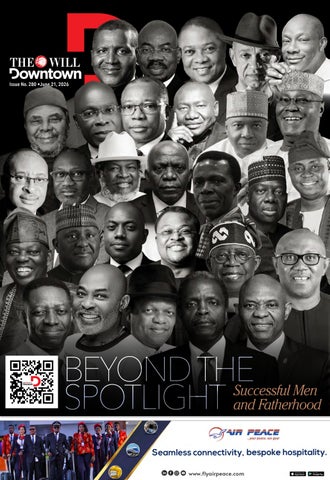
Successful Men and Fatherhood




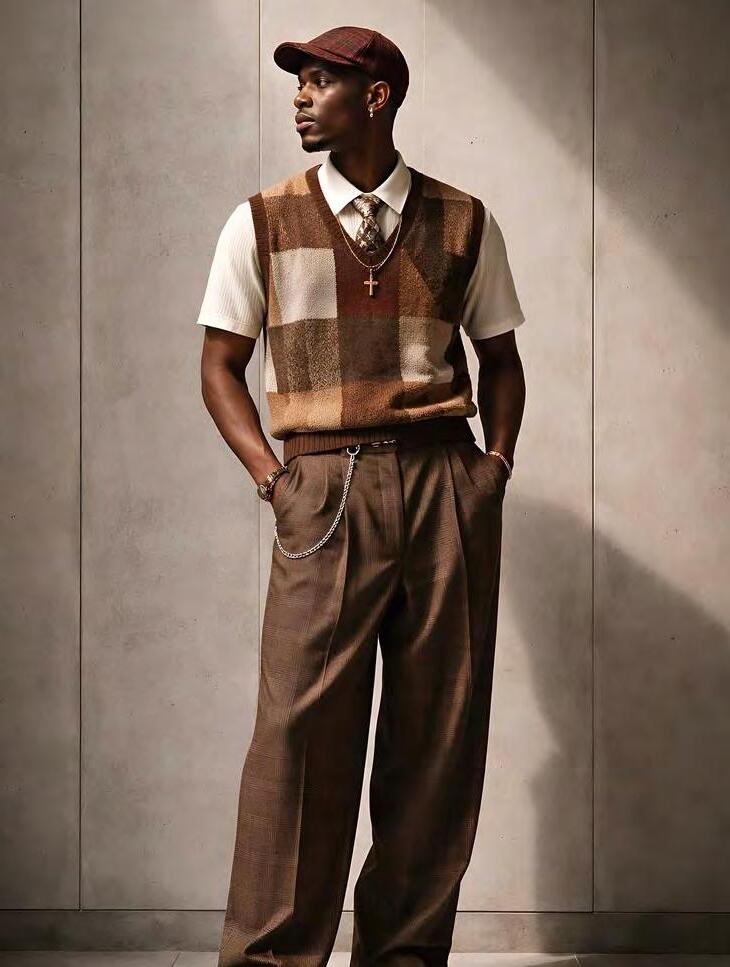
TPhoto: Kola Oshalusi @insignamedia Makeup: Zaron
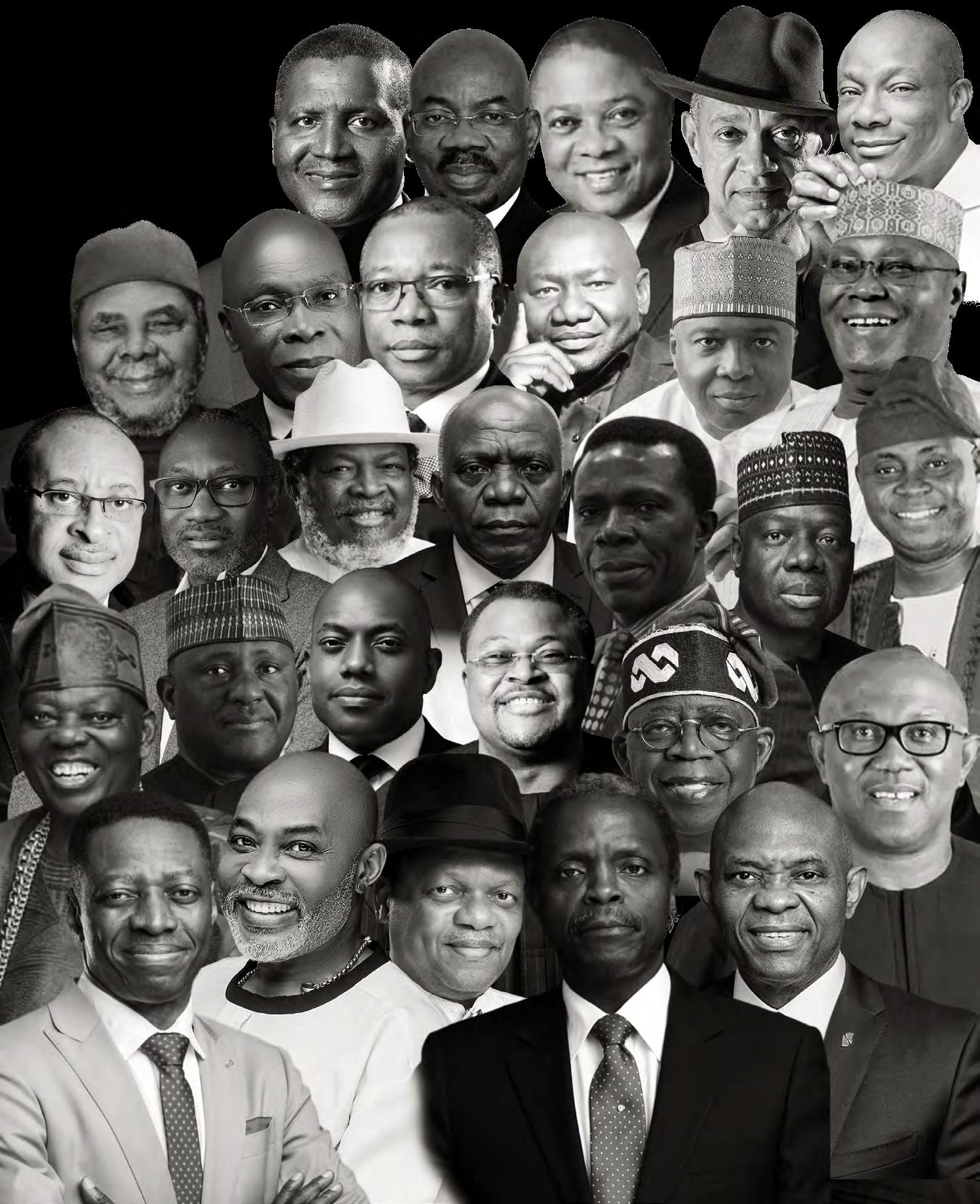
he men featured in our cover story come from different worlds. Some built businesses that transformed industries. Others shaped public policy, influenced national conversations, pioneered innovation, or entertained millions. Their journeys are defined by ambition, perseverance, vision, and achievement. Yet despite their different paths, they share something far more universal: the responsibility and privilege of fatherhood.
In a world that often defines success by status, wealth, or public acclaim, these stories remind us that true influence begins much closer to home. The lessons shared at the dinner table, the guidance offered during life's challenges, the values shown through everyday actions, and the support given in moments of uncertainty often leave a deeper impact than any professional accomplishment. While their names may be recognised by millions, their most important audience has always been their children and families.
As Father's Day is celebrated around the world, we salute not only the men featured in these pages but also fathers everywhere who continue to guide, nurture, and inspire. Beyond the spotlight, beyond the titles, and beyond the accomplishments, fatherhood remains one of life's most meaningful and enduring callings. It is a legacy that transcends generations and continues to shape the future.
Read our Father’s Day piece on pages 8 through 12. June is Men’s Mental Health Month, and so we have a little something on mental health. Many men are taught to keep their feelings to themselves. While selfcontrol is necessary, constantly suppressing emotions can increase stress. Unfortunately, from a very young age, men are told to suck it up. Apparently, this makes them more of a man. However, doctors have come to find out that this mindset takes a toll on their mental health.
We break down some of the things hurting men’s mental health.
Until next week, enjoy your read.


AUSTYN OGANNAH PUBLISHER/EDITOR-IN-CHIEF
Executive Editor: Onah Nwachukwu @onahluciaa
Writers:Dorcas Akintoye, Johnson Chukwueke & Evi-Ben Ezaga Design & Layout: Hogan Effiom
Digital Media: Oladimeji Balogun, Victoria Dairo & Olamide Abolarin
Consulting Art Director: Sunny Hughes ‘SunZA’


Boluwatife Adesina @bolugramm
- Contributing Writer
Boluwatife Adesina is a media writer and the helmer of the Downtown Review page. He’s probably in a cinema near you.

Sally Chiwuzie @unshakable.is.a.state.of.mind - Contributing Writer
Sally Chiwuzie is a non-practising barrister who owns the brand #Unshakable. She is the author of Silent Symphonies, a fictional love story, and the creator of the podcast Chronicles of #Unshakable Truths.

Ada Obiajunwa @aaddaahh
- Contributing Writer
Ada Obiajunwa writes from Lagos about the big truths tucked inside ordinary moments — friendship, self-discovery, and the quiet revolutions of everyday life. She believes in the power of presence, good banter, and decoding the unsaid. Through her fragrance studio, WhiffWonders, she also crafts scents that weave memory and emotion into experiences that feel like home.


4 Pieces That Do Everything
BY DORCAS AKINTOYE
Acapsule wardrobe is a small collection of clothing that can be mixed and matched to create many outfits. Instead of owning too many clothes, you focus on a few quality pieces that always work. It saves time, reduces stress, and makes dressing up easier every day. For men, it also helps you look clean, sharp, and intentional without overdoing it. In this article, we will show you four essential pieces that can handle almost any occasion when styled properly.
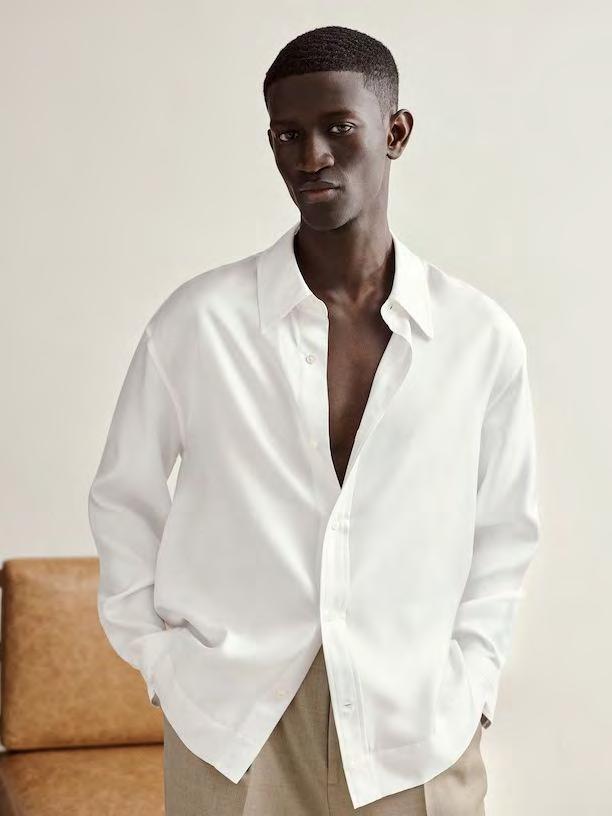
A white shirt is one of the most important items in a man’s wardrobe. It is simple, but very flexible.You can wear it with jeans for a relaxed look or with trousers for a more polished look. If you add a jacket or blazer, it becomes smart enough for meetings, events, or dinners. The most important thing is the fit. It should sit well on your shoulders, neither too tight nor too loose. A good white shirt always looks fresh and neat, even when you keep the rest of your outfit simple. It also matches every colour, which makes it easy to style in different ways.
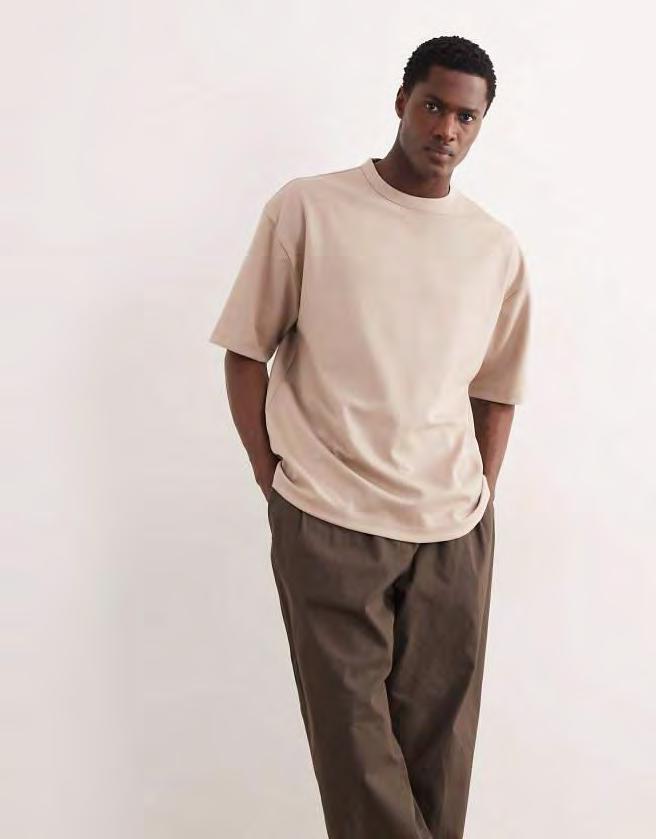
Dark jeans are more versatile than light or ripped jeans because they look cleaner and more mature. A well-fitted pair can take you from casual outings to semi-formal settings, depending on how you style them. You can pair dark jeans with a T-shirt for a simple everyday look.You can also wear them with a shirt for a slightly dressedup vibe. Add a jacket, and you instantly look more put-together.
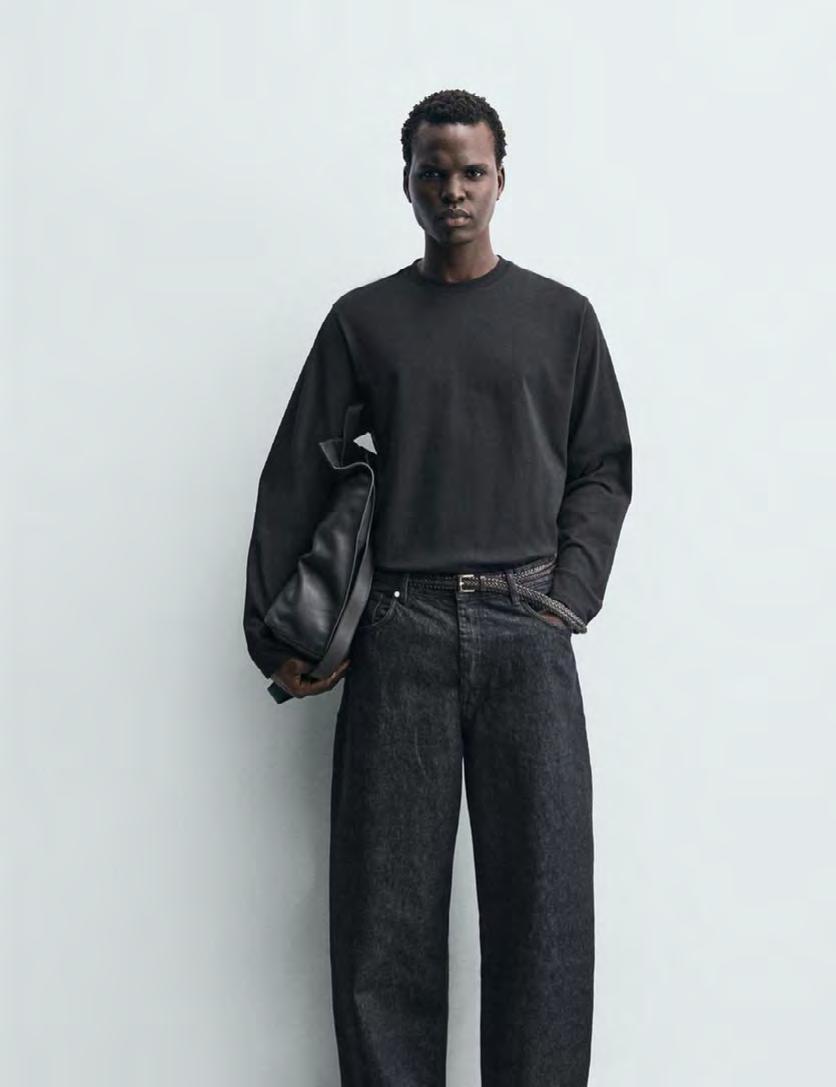
Neutral T-shirts in colours like white, black, grey, navy, or beige are essential. They are the base of many outfits and work in almost every situation.You can wear them alone for a clean casual look or layer them under shirts, jackets, or sweaters.The key is to avoid loud prints or heavy graphics. Simplicity makes them more useful.
Chinos are the balance between casual and formal wear.They are more polished than jeans but not as strict as suit trousers.This makes them very useful for many occasions.You can wear chinos with a T-shirt for a smart-casual look or with a shirt for a more refined look. Colours like beige, black, navy, or olive work best because they are easy to match.
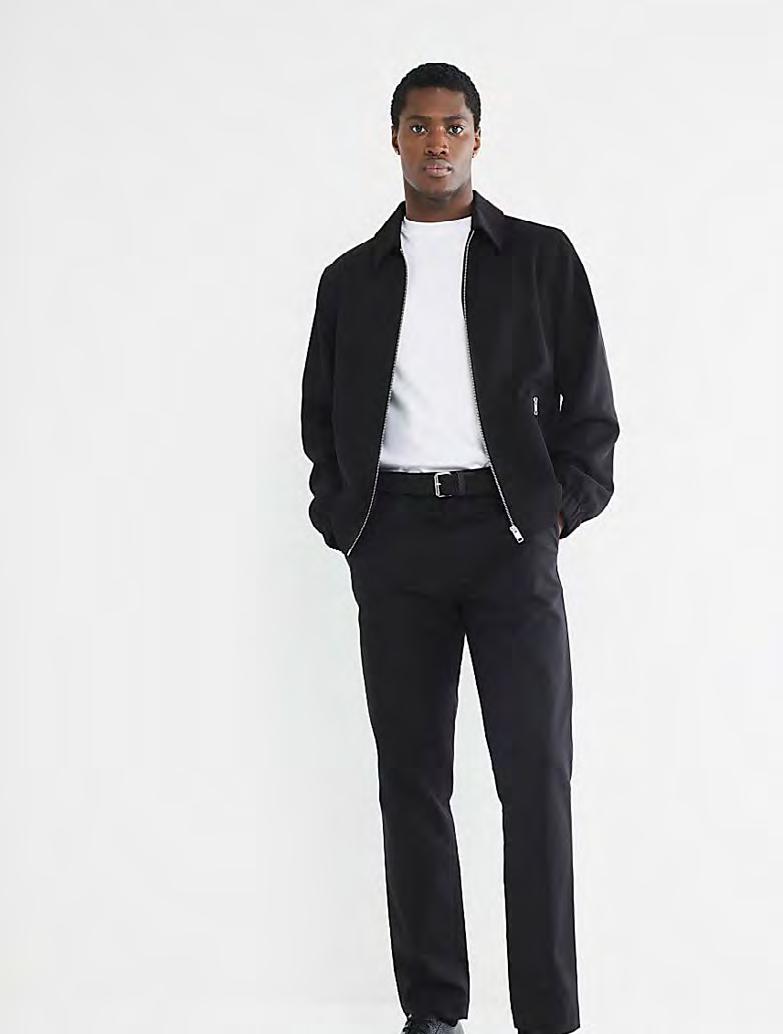
A capsule wardrobe is not about having fewer clothes for the sake of it. It is about having the right clothes that work together. With just a white shirt, dark jeans, neutral T-shirts, a classic jacket, and smart trousers, you already have enough to build multiple strong outfits. The key is fit, simplicity, and how well each piece works with the others.



SALLY CHIWUZIE @unshakable.is.a.state.of.mind
Recently, life has found me in interesting spaces, with interesting people, having conversations that have reminded me to pay closer attention. I have become more intentional about the rooms I enter, the energy I entertain, and the things I allow near my spirit. There are seasons when survival teaches you to endure almost anything, then there are seasons when growth demands that you become more selective. You begin to understand that not everything deserves access to you. Some places feed your soul. Some people expand your vision. Some encounters leave you quietly recalibrated.
Unit VII, a café in Watford, did that to me.
I thought I was going for coffee.
What I found was inspiration.
The location itself was unexpected, tucked away in an industrial estate, where one might anticipate warehouses, mechanics, tyres, tools, and the practical machinery of everyday work.

Yet there it was: colour, warmth, vintage cars, food that felt considered, and a space that carried the unmistakable fingerprint of people who had dared to build from passion rather than formula.
There was something audacious about it, carried not by arrogance but by the quiet confidence of a place that seemed to ask: Why not here? Why not this? Why not us?
That question stayed with me.

What a shame to leave this world having never explored the possibilities that kept knocking from within.
Of course, not everyone will become Michael Jackson. Not everyone will fill stadiums, shift culture, or leave the kind of legacy that echoes across generations. Yet that cannot become an excuse for silence. Greatness is not the only acceptable outcome. Exploration matters too. Expression matters. Obedience to the gift matters.
We owe something to the world, to ourselves, and to God. We owe the honest attempt. We owe the courage to ask what might happen if we stopped turning down the volume on the things that make us feel alive.
Perhaps this is why #Unshakable has always resisted being one thing. It is a brand, a podcast, a column, a shop, a state of mind, and a reminder that survival is not the full story. It is multifaceted because I am multifaceted, and perhaps that is no longer something to apologise for.

When I spoke to Zarina, one of the creative forces behind Unit VII, I understood why the space felt alive. It was not accidental. It was built from merged passions, from hospitality, food, cars, family, vision, and the courage to create something that did not need to make sense to everyone before it could exist.
Some of my favourite podcast conversations are
like that. They begin as interviews and become reminders. They leave me hungry, thirsty, and slightly restless in the best possible way. They remind me that people are still dreaming, building, risking, and refusing to be reduced by practicality alone.
That is what the conversation with Zarina did.

It reminded me that we were all born with something. A gift. A talent. A pull. A flicker. In some people, it is understated. In creatives, it can be impossibly loud inside the mind, even when the outside world hears very little of it.
That is the tragedy.
There are people carrying full symphonies inside them, yet living as though they were only assigned background noise. There are ideas that have been rehearsing for years in private, waiting for permission that may never arrive. There are books unwritten, businesses unbuilt, songs unsung, brands unfinished, rooms unopened, and dreams still folded away because someone decided survival was more respectable than audacity. What a shame.
The recent cycle has stirred something in me. It has woken up a hunger to finish the recalibration and begin the next phase with more colour, more clarity, and more audacity. Unit VII reminded me that passion needs somewhere to go. It cannot remain forever as a private ache, hidden behind sensible excuses.
Some places do that. They wake the dream back up.
Perhaps the #Unshakable truth is this:
Your gift was not given to be buried quietly inside you.
You may not know how far it will go. You may not know who it will reach.
You may not know whether the world will clap, ignore, misunderstand, or finally make room for it.
Still, you owe it the dignity of exploration.
Let there be evidence that you were here.
Let your life leave fingerprints.
Let your legacy say, in whatever voice it can manage: I was here.
My conversation with Zarina at Unit VII is available on the podcast if you would like to listen to something that may remind you to dream again.
‘See’ you next week.
BY NATO CHIMA
Fatherhood has long been associated with responsibility, sacrifice, guidance, and protection. Traditionally, fathers have been viewed as pillars of their homes, providers, mentors, and steady hands who help shape the lives of their children. Yet in today's world, the influence of a father often extends far beyond the walls of his home. Through leadership, creativity, entrepreneurship, philanthropy, entertainment, sports, and public service, many men have become father figures to communities, industries, and even entire generations.
As society evolves, so does our understanding of what it means to be a father. While the role remains deeply rooted in family, its impact can ripple outward in remarkable ways. Some fathers inspire through their professional achievements, demonstrating resilience, discipline, and excellence. Others influence through mentorship, using their experiences to guide younger people as they navigate life's opportunities and challenges. Their stories remind us that fatherhood is not only about raising children but also about shaping values, creating opportunities, and leaving a meaningful legacy.
This Father's Day, THEWILL DOWNTOWN turns its attention to the men behind the accomplishments. Beyond the spotlight of success are fathers who have spent years building not only careers and institutions but also families, values, and legacies. Their journeys reveal that fatherhood is not separate from success; rather, it often shapes the character, discipline, and sense of purpose that drive achievement.
The individuals featured in this cover story have influenced industries, inspired communities, and contributed to national development in various ways. Yet their stories also include school runs, family conversations, life lessons, and the quiet moments that define parenthood. Through their experiences, we gain a deeper understanding of what it means to lead both in public and at home.
As we celebrate Father's Day, we honour these remarkable men whose greatest achievements may not simply be what they have built, but the values they continue to pass on to the next generation.
Visionaries are often remembered for the institutions they build, and Jim Ovia's name is permanently etched into Nigeria's financial history through the creation of Zenith Bank. Yet beyond the remarkable business success is a man who understands that the most enduring legacies are not found in balance sheets or skyscrapers, but in family. Over the years, Ovia has championed education, mentorship, and personal development, believing that success carries a responsibility to prepare the next generation for greater opportunities. His journey from a young professional to one of Africa's most respected bankers reflects the values of discipline, perseverance, and long-term thinking, qualities that also define his approach to fatherhood. Behind the boardroom accomplishments is a father committed to nurturing a legacy that extends beyond business.
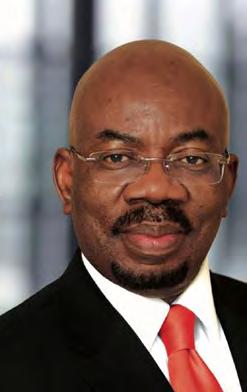
Known for his brilliance in business and finance, Atedo Peterside has spent decades helping to shape institutions, mentor leaders, and contribute to national development. Yet beyond the accolades and corporate milestones lies a man who understands the enduring value of family. Throughout his career, Peterside has championed integrity, excellence, and responsible leadership, qualities that extend beyond the workplace and into fatherhood. His life reflects a belief that true success is measured not only by professional achievements but also by the values passed on to one's children. While many admire his contributions to business and governance, those closest to him know a father whose legacy is rooted in wisdom, guidance, and the quiet influence that shapes lives across generations.
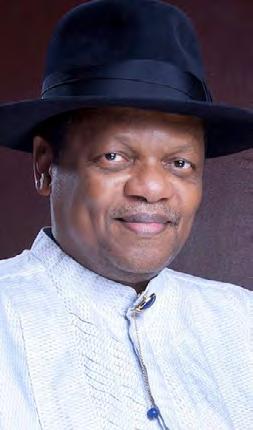
For many Nigerians, Bola Ahmed Tinubu is defined by politics, leadership, and his journey to the nation's highest office. Yet beyond the demands of public life lies a father whose story is also one of family, resilience, and legacy. Over decades in the public eye, Tinubu has navigated the pressures of leadership while raising a family under constant scrutiny. The values of perseverance, ambition, and service that have shaped his political career are the same principles that underpin his approach to fatherhood. While history will remember his contributions to Nigeria's political landscape, fatherhood remains one of the most personal chapters of his journey. It is a role that exists beyond campaigns, policies, and public office, rooted instead in guidance, responsibility, and family.
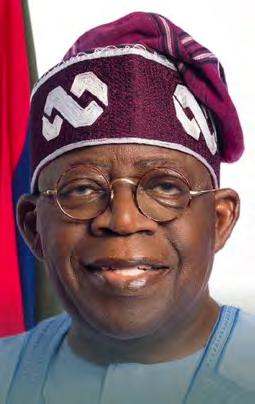
For many Nigerians, Peter Obi's appeal has always gone beyond politics. Long before becoming one of the country's most talked-about public figures, he built a reputation for prudence, humility, and an unwavering commitment to service. Those same qualities have also shaped his life as a husband and father. Despite the demands of business and public life, Obi has consistently projected an image rooted in simplicity, family values, and personal accountability. His story serves as a reminder that leadership does not begin on a campaign stage or in public office—it begins with the values cultivated at home. Beyond the headlines, speeches, and public engagements is a father whose emphasis on integrity, education, and responsible living continues to inspire not only his family but countless Nigerians seeking a model of purposeful leadership.

When the courtroom goes quiet in Nigeria, it is often because a voice has risen that treats law not as decoration but as a weapon for justice, to be used with precision and courage.
Femi Falana has built a reputation as one of Nigeria’s most fearless legal minds, a senior advocate whose career has been defined by relentless advocacy for human rights, civil liberties, and accountability in governance. For decades, he has stood at the front lines of landmark constitutional battles, challenging the excesses of power and protecting ordinary citizens in moments when silence would have been easier.
Beyond high-profile cases, his influence stretches into activism, legal mentorship, and public discourse, where he has shaped generations of lawyers and civic thinkers who see the law as a tool for societal balance rather than privilege. His work consistently bridges the gap between courtroom advocacy and national conscience, making him a constant reference point in conversations about justice in Nigeria.
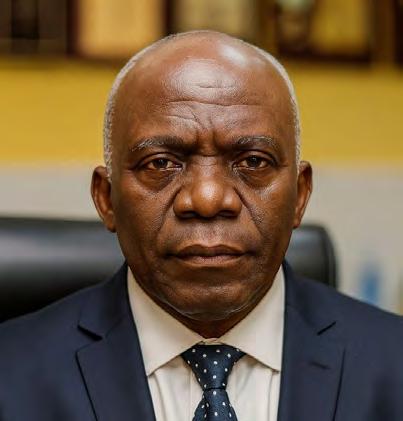
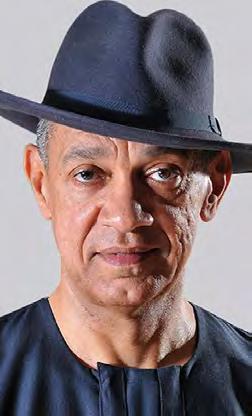
If there is one thing Ben Murray-Bruce has never been afraid to do, it is think big. From building one of Africa's most recognisable entertainment brands through Silverbird Group to serving in the Senate and championing national conversations, he has spent decades inspiring people to dream beyond limitations. But behind the entrepreneur, broadcaster, and public commentator is a devoted family man who understands that influence begins at home. Throughout his journey, Murray-Bruce has often spoken about the importance of values, education, resilience, and preparing younger generations for success. His life reflects a belief that fatherhood is not simply about providing opportunities but encouraging children to pursue their ambitions with confidence and purpose. Beyond the spotlight of business and public life stands a father whose greatest pride lies in the family legacy he continues to nurture and inspire.
For Fela Durotoye, leadership has never been a profession; it is a calling. Whether speaking to thousands of young Africans, championing transformational leadership through the Gemstone Nation Builders Foundation, or driving conversations around national values, his mission has always been to inspire people to become their best selves. But perhaps his most important audience has always been much closer to home. As a husband and father of three, Durotoye has often emphasised the importance of intentional parenting, character development, and leading by example. Together with his wife, Tara, he has built a family rooted in purpose, faith, and service. While many know him as a leadership expert and nation-builder, fatherhood remains one of the roles that best reflects the values he teaches every day.

Ideas have been Pat Utomi's lifelong currency. For decades, the renowned professor, economist, entrepreneur, and thought leader has challenged Nigerians to think differently about leadership, governance, and nation-building. Yet beyond the lectures, books, boardrooms, and public conversations lies a father who understands that the most important lessons are often taught at home. Throughout his distinguished career, Utomi has championed values such as integrity, responsibility, and service, principles that have guided both his professional journey and family life. Balancing academia, business, and public engagement is no small feat, but he has consistently demonstrated that success and fatherhood are not competing priorities. Behind the intellectual influence is a devoted family man committed to raising children equipped to navigate life with purpose, character, and conviction.
While the world may know him as the billionaire businessman behind Pacific Holdings and the father of global music superstar Davido, Dr Adedeji Adeleke's greatest achievement cannot be measured solely by wealth. Over the years, he has built a reputation as a visionary entrepreneur, education advocate, philanthropist, and institution builder, creating opportunities that extend far beyond his own family. Yet amid the demands of business and public life, family has remained at the heart of his journey. His support for his children's ambitions, coupled with his commitment to education through Adeleke University, reflects a belief that success should empower future generations. Behind the business empire is a father whose influence is felt not only in what he has built, but also in the values, confidence, and opportunities he has passed on to those who bear his name.
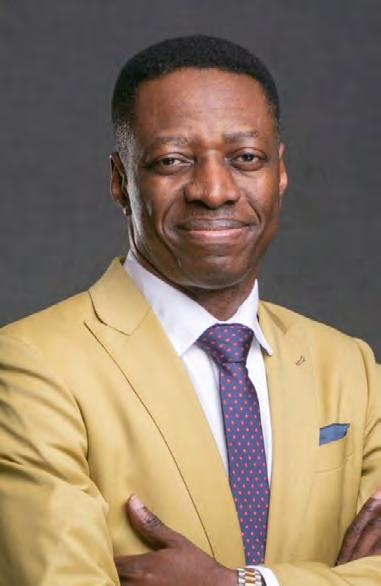
Long before leadership became a buzzword, Sam Adeyemi was teaching people how to unlock their potential and become positive influences in society. As the founder of Daystar Christian Centre, a leadership coach, author, and mentor, he has spent decades helping individuals pursue purpose and excellence. Yet beneath the global platform and widespread influence is a father who believes that true leadership begins within the family. Alongside his wife, Nike, he has built a home founded on faith, learning, and personal growth, principles that have shaped both his ministry and parenting philosophy. For Adeyemi, raising children is not merely about providing opportunities but nurturing confidence, values, and vision. His story demonstrates that some of life's greatest leadership lessons are first learned around the family table.
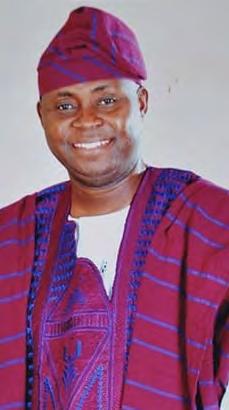
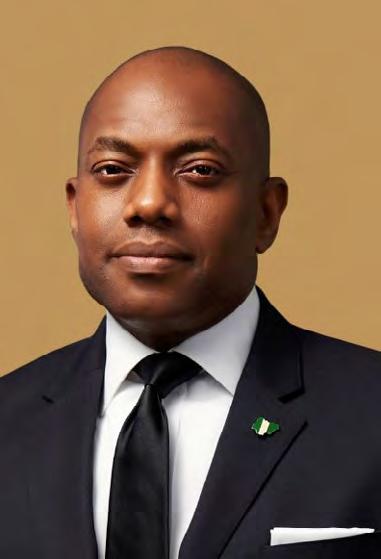
Building Africa's largest industrial empire demands vision, sacrifice, and relentless focus. For Aliko Dangote, however, success has never been solely about business expansion or financial milestones.
As the founder of the Dangote Group and one of the world's most influential entrepreneurs, he has spent decades transforming industries and contributing to Africa's economic growth. Yet beyond the factories, refineries, and boardrooms is a father who understands the importance of legacy. With children who have grown up under the spotlight of one of the continent's most recognisable names, Dangote has sought to balance extraordinary success with family responsibility. His journey reflects a belief that true wealth is not merely what is accumulated, but the values, opportunities, and example passed on to future generations.
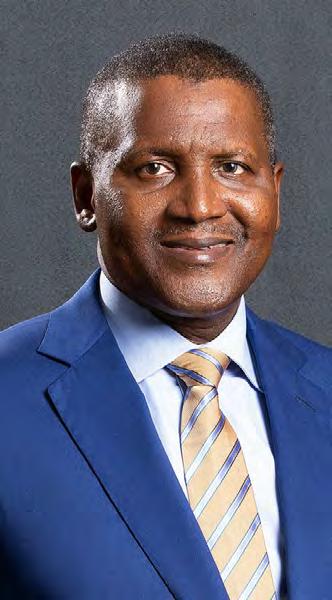
Long before entrepreneurship became a national conversation, Fola Adeola was helping to redefine what Nigerian business leadership could look like. As co-founder of Guaranty Trust Bank and founder of FATE Foundation, he has dedicated much of his life to creating opportunities for others, particularly young entrepreneurs. That commitment to nurturing potential is not limited to the public sphere. A husband and father of six, Adeola has built a life around the principles of hard work, responsibility, and service. His decision to establish FATE Foundation grew from a desire to empower the next generation, a philosophy that mirrors his approach to fatherhood. Beyond his achievements in banking and philanthropy is a father who believes that the greatest investment anyone can make is in people.
Excellence is rarely accidental, and Segun Agbaje's career is proof of what vision, discipline, and consistency can achieve. As the Group Chief Executive Officer of GTCO, he has spent more than three decades helping to build one of Africa's most respected financial institutions, steering it through innovation, growth, and global recognition. Yet beyond the numbers, accolades, and boardroom decisions is a father who understands that lasting success begins at home. The same principles that have defined his leadership, integrity, resilience, and long-term thinking also shape his approach to family life. Behind the corporate accomplishments is a family man committed to building not just a world-class institution, but a legacy of values and purpose for future generations.
When Cosmas Maduka speaks about success, he rarely starts with wealth. Instead, he speaks about faith, perseverance, family, and purpose, the principles that carried him from humble beginnings to becoming one of Nigeria's most celebrated entrepreneurs. As the founder of Coscharis Group, he built a business empire through resilience and determination, but he has always viewed fatherhood as one of life's most important responsibilities. Throughout his journey, Maduka has openly shared lessons about marriage, parenting, and raising children with strong values. His life serves as a reminder that while business success can create opportunities, it is character that sustains them. Beyond the luxury brands and boardroom achievements stands a father whose greatest desire is to leave behind a legacy of faith, integrity, and family unity.
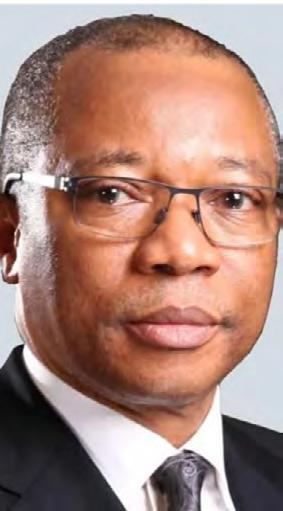
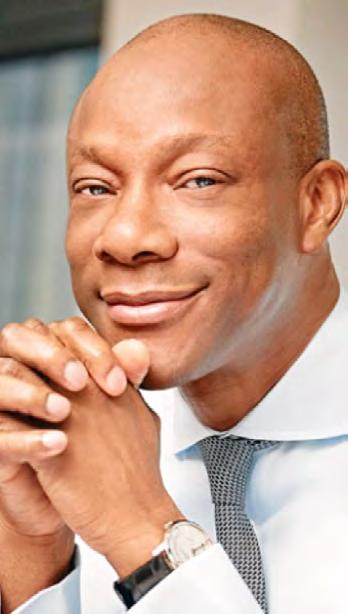
Every successful family business begins with a story of sacrifice, and few stories capture that spirit better than that of Dr Cletus Ibeto. From his early days as an apprentice in the spare-parts trade to building the Ibeto Group into one of Nigeria's leading indigenous conglomerates, his journey reflects resilience, determination, and vision. Yet behind the industrial success is a father who understands that legacy must be intentionally preserved. Over the years, Ibeto has built not only factories and enterprises but also a foundation of values designed to outlive him. His life demonstrates that fatherhood, much like entrepreneurship, requires patience, guidance, and long-term thinking. Beyond the boardroom stands a family man whose greatest ambition is to see future generations build upon what he started.
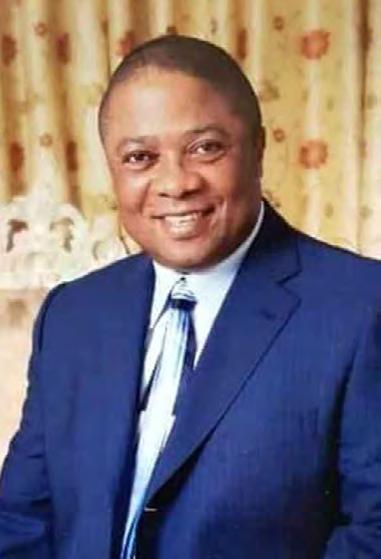
For decades, Richard Mofe-Damijo has remained one of Nigeria's most admired entertainers, captivating audiences with his charisma, talent, and enduring relevance. Yet beyond the fame and accolades is a man whose life has been shaped by a deep commitment to family. Through the highs and lows of an extraordinary career, RMD has often spoken about the importance of fatherhood, growth, and being present for the people who matter most. As a father, he has embraced the responsibility of guiding his children while allowing them the freedom to chart their own paths. His ability to balance celebrity status with family life has made him an example to many. Beyond the spotlight, he is a father whose legacy is rooted in love, wisdom, and intentional parenting.
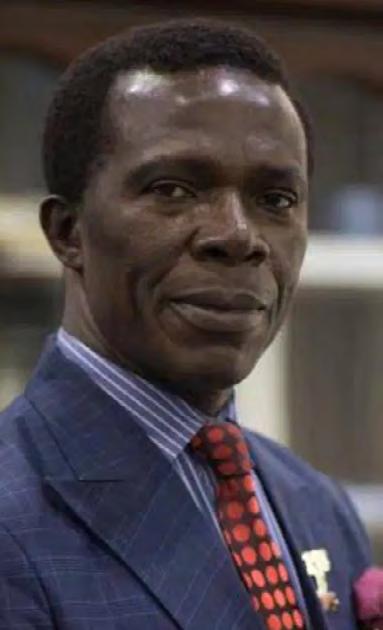
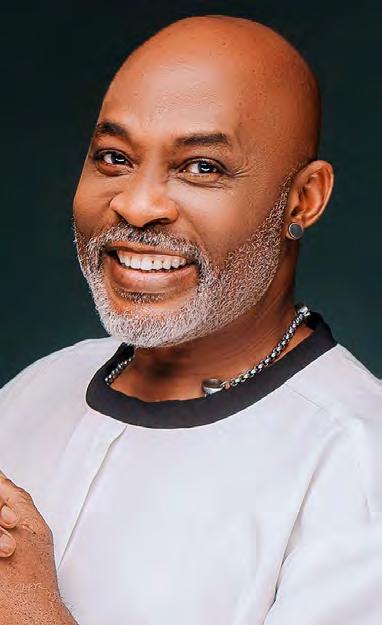
Success often comes with numbers, revenues, investments, factories, and milestones. For Abdul Samad Rabiu, however, some of life's most meaningful achievements cannot be measured on a balance sheet. As the founder of BUA Group and one of Africa's most respected industrialists, he has built an empire that spans multiple sectors and contributes significantly to economic growth. Away from the boardroom, he is a father who understands the importance of nurturing values alongside ambition. His commitment to philanthropy, education, and social impact reflects a belief in creating opportunities not only for today's generation but for those yet to come. Beyond the industrial giant is a family man whose greatest legacy may ultimately be the principles and purpose he passes on to his children.
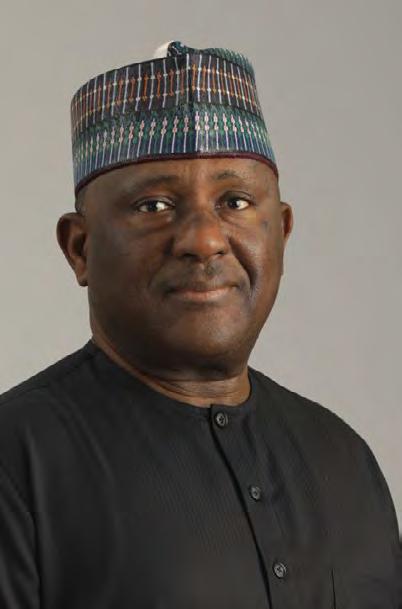
Prof. Yemi Osinbajo
There is a calmness that has come to define Yemi Osinbajo's public image, a blend of intellect, humility, and purpose that has earned him respect across generations. As a professor, lawyer, pastor, and former Vice President, he has spent much of his life guiding others through leadership, mentorship, and service. Yet beyond the public roles is a devoted family man who has often spoken about the importance of faith, character, and strong family values. For Osinbajo, fatherhood is not simply about providing for children but helping them develop integrity, compassion, and a sense of purpose. His journey reminds us that success is most meaningful when it is accompanied by the wisdom and values that can be passed on to future generations.
Premier Oiwoh
Premier Oiwoh is the managing director slash CEO of the Nigeria Inter-Bank Settlement System (NIBSS), the technology backbone of the country's financial ecosystem. With over two decades of experience in payment systems, digital innovation and enterprise management, he has been instrumental in driving initiatives that power seamless banking services. A fellow of the Institute of Management Consultants and a seasoned tech leader, Oiwoh is known for a strategic mind and quiet strength. Beyond his professional accomplishments, he is a devoted father who values integrity, hard work and purpose, raising his children with the same dedication he brings to building systems that serve millions of Nigerians every day.
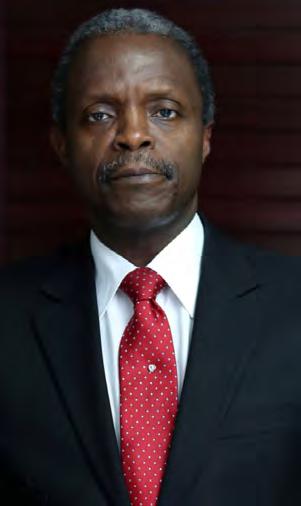
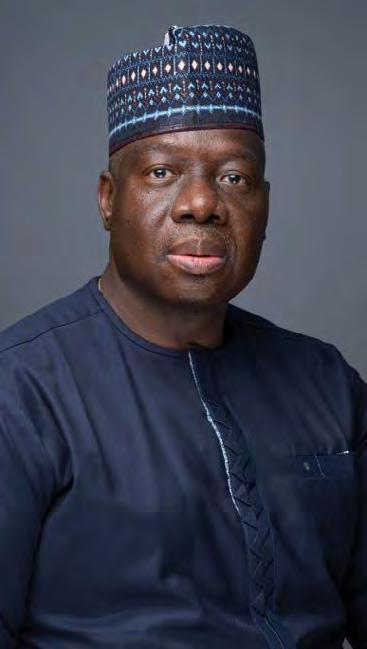
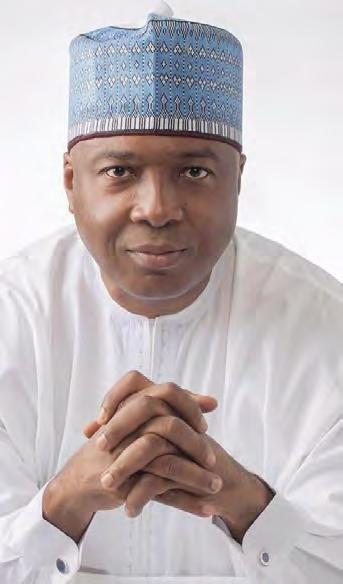
Leadership has been a defining thread throughout Bukola Saraki's life. From medicine and business to public service at the highest levels, he has built a career centred on responsibility and impact. Yet beyond the demands of politics and national leadership is a father who understands the importance of being present, supportive, and intentional. Married to Toyin Saraki and blessed with children who have grown up in the public eye, Saraki has navigated the challenge of balancing family life with the pressures of public office. The same commitment and discipline that shaped his journey as Governor of Kwara State and President of the Senate are reflected in his role as a father. Beyond the political arena stands a family man whose legacy is also measured by the values he passes on to the next generation.
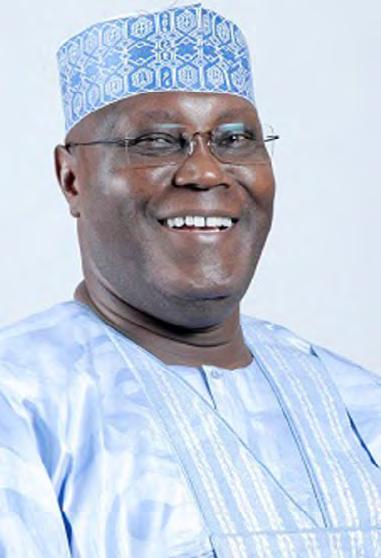
Behind the scenes of building a reputation as one of Nigeria's most prominent political figures, Atiku Abubakar was building a life defined by ambition, enterprise, and family. Over the years, he has worn many hats: businessman, statesman, philanthropist, and political leader, but fatherhood has remained a constant thread throughout his journey. As the patriarch of a large family, Atiku has often emphasised the importance of education, hard work, and opportunity, values that have influenced both his children and the institutions he has helped establish. His investment in education, including the founding of the American University of Nigeria, reflects a broader commitment to empowering future generations. Beyond politics and public life stands a father whose legacy is measured not only by achievements but by the lives he has helped shape and inspire.
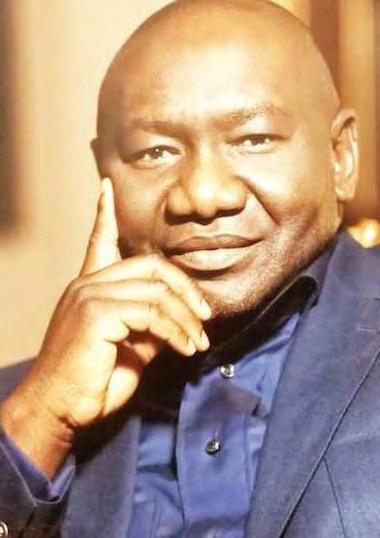
Benedict Peters is the founder and driving force behind Aiteo Group, one of Africa’s leading indigenous energy companies with interests spanning oil exploration, production, and servicing. From reshaping upstream oil operations in Nigeria to building a panAfrican energy footprint, he stands as a symbol of highstakes enterprise and strategic ambition. Beyond the deals and drilling fields, his story reflects a deeper narrative of fatherhood—building not just wealth, but legacy systems that endure. In him, success is measured in infrastructure, influence, and the generations his vision is designed to outlast.
Some fathers leave behind family businesses; others create entirely new industries. Leo Stan Ekeh belongs to the latter category. Widely regarded as one of the pioneers of Nigeria's technology revolution, the founder of Zinox Group has spent decades proving that African innovation can compete on a global stage. But beyond the technology breakthroughs, entrepreneurial milestones, and digital transformation projects lies a man deeply invested in family and legacy. A husband and father, Ekeh has often viewed leadership as a responsibility that extends beyond the workplace into the home. As he continues to champion innovation, entrepreneurship, and education, he remains equally committed to preparing the next generation to lead with integrity and purpose. His journey demonstrates that true success is not only about building companies but also about building people.
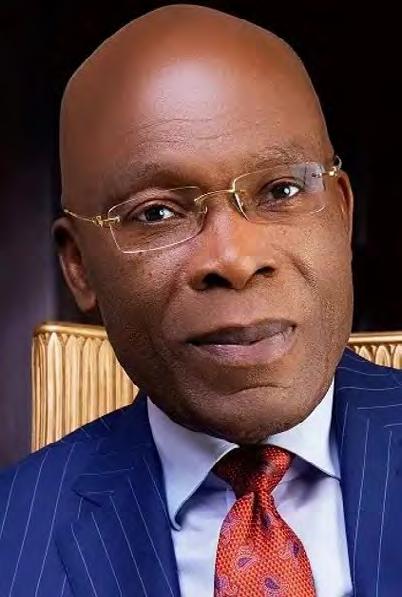
Every great family story begins with a dream, and Razaq Okoya's dream helped shape one of Nigeria's most remarkable business journeys. From humble beginnings to building the iconic Eleganza Group, he transformed determination into a lasting legacy. Yet for all the success attached to his name, Okoya's proudest accomplishment may be the family he has built alongside his business empire. Over the years, he has demonstrated that wealth is most meaningful when accompanied by strong values, unity, and continuity. As he watches a new generation step into leadership roles, his story serves as a reminder that fatherhood is about more than providing opportunities; it is about preparing others to sustain and build upon them. His legacy lives not only in industry but also in family.
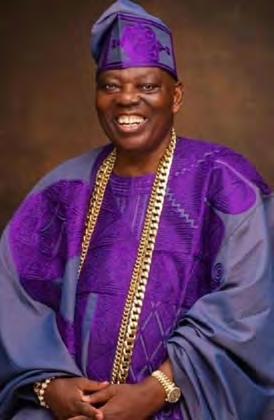
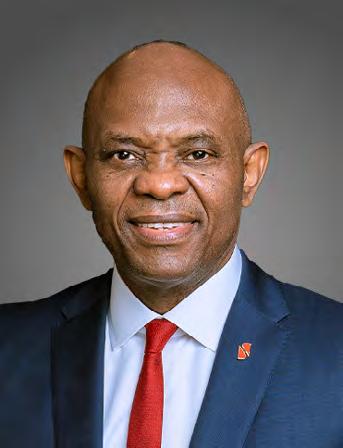
Behind the boardrooms, billion-dollar investments, and continental influence is a devoted family man who has often spoken about the importance of values, discipline, and purpose. While Tony Elumelu's business achievements have earned global recognition, fatherhood remains one of the roles he holds most dearly. As a husband and father of seven, he has consistently emphasised the importance of raising grounded children despite extraordinary success. His approach to leadership at home mirrors his philosophy in business, empowering others to discover their potential. Beyond the spotlight of entrepreneurship and philanthropy lies a father committed to building not only successful enterprises but a legacy of character, responsibility, and excellence for the next generation.
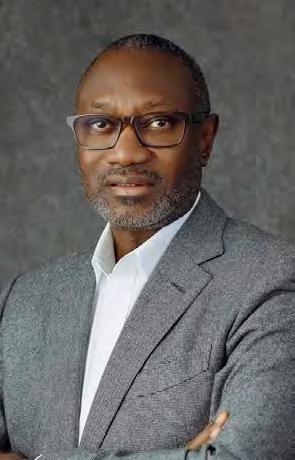
Luxury, business success, and influence have long been associated with Femi Otedola, but behind the public image is a father whose family remains central to his story. Over the years, Nigerians have watched his children grow into accomplished individuals in their own right, a reflection of the values and support he has provided. While his achievements in business have earned widespread recognition, Otedola's role as a father reveals a different dimension of success, one defined by presence, encouragement, and legacy. Whether celebrating his children's milestones or supporting their ambitions, he has demonstrated that fatherhood is not separate from success but an essential part of it. Beyond the spotlight stands a man deeply committed to family and future generations.
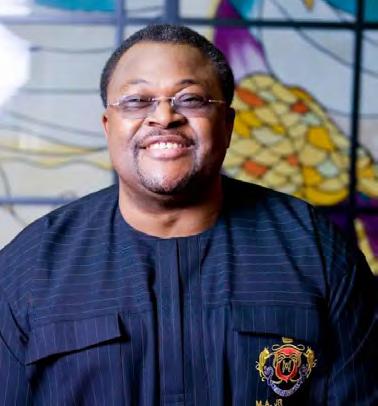
Some men build companies; Mike Adenuga built institutions that transformed industries. As the founder of Globacom and one of Africa's most successful entrepreneurs, he has spent decades shaping the telecommunications and energy sectors while maintaining a famously private lifestyle. Away from the headlines and business milestones, Adenuga is a devoted family man who has carefully nurtured a legacy that extends beyond corporate success. Despite operating one of the continent's largest business empires, he has consistently prioritised family, raising children who have increasingly taken on leadership roles and responsibilities of their own. His story reflects a belief that true success is not only about creating wealth, but also about building a strong foundation of values, responsibility, and purpose that can endure for generations.
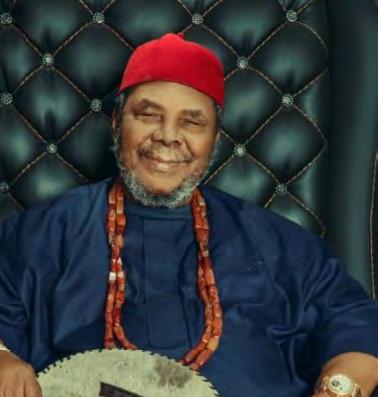
For generations of Nigerians, Pete Edochie has been the embodiment of wisdom, authority, and timeless values. His commanding presence on screen made him a household name, but his most enduring role has been away from the cameras, as a husband, father, and family patriarch. Married for decades and blessed with six children, Edochie has consistently spoken about the importance of discipline, respect, hard work, and cultural values. While his remarkable career earned him legendary status in Nollywood, he has remained grounded in the belief that family is life's greatest institution. Beyond the iconic performances and numerous accolades stands a father whose influence is reflected not only in his accomplishments but in the values he has passed on through generations.
Nduka Obaigbena is widely recognised as the founder and Chairman of the THISDAY/ ARISE Media Group, creator of THISDAY Newspaper, ARISE News, ARISE Fashion Week, and the THISDAY Awards.
Few individuals have shaped Nigeria's modern media landscape as boldly as he has. As the founder of THISDAY Newspaper and ARISE News Channel, he built platforms that have influenced public discourse, elevated African storytelling, and connected global audiences to African perspectives. Yet beyond the headlines, television studios, and high-profile events is a father whose legacy extends beyond journalism and media entrepreneurship. Throughout a career defined by innovation and resilience, Obaigbena has demonstrated the importance of vision, courage, and perseverance, qualities that also underpin effective fatherhood. While his professional accomplishments have earned him recognition as one of Africa's foremost media pioneers, his role as a father reflects a quieter but equally meaningful commitment to nurturing values, character, and opportunity within his family. Beyond the spotlight stands a man dedicated not only to building institutions but also to shaping the next generation.
What emerges from these profiles is a portrait of fatherhood that is both inspiring and relatable. It is not about perfection or having all the answers. Rather, it is about showing up, leading by example, and creating an environment where future generations can grow, thrive, and dream. These men have proven that success and fatherhood are not competing priorities. In many ways, each strengthens the other. Their stories also serve as a reminder that every father has the potential to leave a lasting legacy. Whether through words, actions, sacrifices, or values, fathers help shape the people who will one day shape the world. That influence cannot be measured solely by awards, bank accounts, or public recognition.
BY DORCAS AKINTOYE
Our hands go through a lot every day. From washing dishes and typing on phones to using sanitisers and cleaning products, the skin on our hands can easily become dry, rough, and tiredlooking. That is why a good hand cream is important. In this article, we will show you how to choose the best hand creams for nourished, nongreasy hands.

LOOK FOR LIGHTWEIGHT FORMULAS
One of the first things to check is the texture of the hand cream. Thick creams may work well for very dry skin, but some of them can leave your hands feeling heavy and greasy. If you want something comfortable for everyday use, go for lightweight or fast-absorbing formulas. Hand creams labelled “non-greasy,” “quick absorbing,” or “lightweight” are usually better choices.

CHECK THE INGREDIENTS CAREFULLY
The ingredients matter a lot. Some ingredients help keep your skin soft and hydrated without making it oily. Look for ingredients like glycerin, aloe vera, shea butter, vitamin E, and hyaluronic acid. These ingredients help nourish the skin and lock in moisture. At the same time, avoid creams that contain too much heavy oil if you dislike greasy products. While oils can be good for dry skin, too much of them may leave residue on your hands.

CONSIDER WHEN AND HOW YOU WILL USE IT
Think about your daily routine before choosing a hand cream. If you need one for daytime use, choose a light cream that absorbs quickly. But for nighttime, you can use a slightly richer cream that deeply repairs dry hands while you sleep.




PAY ATTENTION TO THE FINISH ON YOUR SKIN

A good hand cream should leave your hands feeling soft, smooth, and comfortable, not slippery. Before buying, try testing the product if possible. After applying it, notice how your skin feels after a few minutes.

CHOOSE A CREAM BASED ON YOUR SKIN TYPE

Not every hand cream works for everyone. If your hands are extremely dry or cracked, you may need a richer cream for deep moisture, especially at night. But if your skin is only mildly dry, a lighter lotion may be enough. People with sensitive skin should also choose fragrancefree or gentle products to avoid irritation. Understanding your skin type helps you avoid buying products that feel too heavy or do not work well for your needs.

Choosing the best hand cream does not have to be difficult. The right product should keep your hands soft, healthy, and moisturised without leaving behind an uncomfortable, greasy feeling. By paying attention to the texture, ingredients, skin type, and how the cream feels on your skin, you can easily find one that works perfectly for you.

BY JOHNSON CHUKWUEKE
In recent years, "protecting your peace" has become one of the most popular wellness phrases online. People are becoming more aware of their mental health and emotional well-being, and of the importance of avoiding unnecessary stress. While that awareness is a positive thing, some people have taken it so far that they begin to isolate themselves completely from others.
The truth is that protecting your peace does not mean cutting everyone off, avoiding difficult conversations, or disappearing whenever life feels overwhelming. Healthy wellness is about balance. It is possible to protect your mental and emotional well-being while still maintaining meaningful relationships with family, friends, colleagues, and loved ones.
The goal is not isolation; it is creating healthier ways to engage with people and situations.

One of the most effective ways to protect your peace is by setting clear boundaries. Boundaries help people understand what you are comfortable with and what you are not. Whether it is protecting your personal time, limiting unnecessary demands, or communicating your needs respectfully, boundaries help prevent resentment and emotional exhaustion. Healthy boundaries strengthen relationships because they create clarity and mutual respect.

Not every disagreement deserves your energy. Many people become emotionally drained because they feel obligated to respond to every criticism, argument, or negative comment they encounter. Learning when to engage and when to walk away can significantly protect your peace. Sometimes, preserving your energy is more valuable than winning an argument.

Self-care is not selfish. Taking time to rest, recharge, enjoy hobbies, exercise, or simply spend time alone can improve emotional wellbeing. The key is finding a balance between caring for yourself and maintaining important relationships. People often show up better for others when they have first taken care of themselves.

When stress builds up, many people choose silence instead of communication. However, withdrawing completely can create misunderstandings and distance in relationships. Honest conversations about how you feel, what you need, and what is affecting you often lead to healthier outcomes than shutting people out entirely. Communication protects relationships while protecting your wellbeing, too.
The people around you can significantly influence your mental and emotional health. Supportive friendships, healthy relationships, and positive environments often make it easier to maintain peace. This does not mean avoiding everyone who disagrees with you, but it does mean paying attention to relationships that consistently leave you feeling drained, stressed, or undervalued. The right people should add to your peace, not constantly take away from it.
Protecting your peace is an important part of modern wellness, but it should not come at the cost of meaningful human connection. True emotional well-being comes from learning how to set boundaries, manage stress, communicate effectively, and build healthy relationships. Because the goal is not to shut the world out—it is to create a life where peace and connection can exist together.

ADA
OBIAJUNWA
@aaddaahh
Nneka was talking about her mother.
Not a finished story. The kind still happening, still being worked out in the telling. Her mother was ill for three months last autumn, and then less ill, and then difficult about the less ill. The particular grip of someone who had learned to hold the room through sickness and didn't know how to release it once the sickness had passed.
It was a Thursday. Nneka's kitchen, the week's mail still at one end of the table, a candle lit because the overhead light was too much. They had been there for two hours.
She listened.
There was a sentence she could have said. True, and probably right, and not useful here. She let it pass.
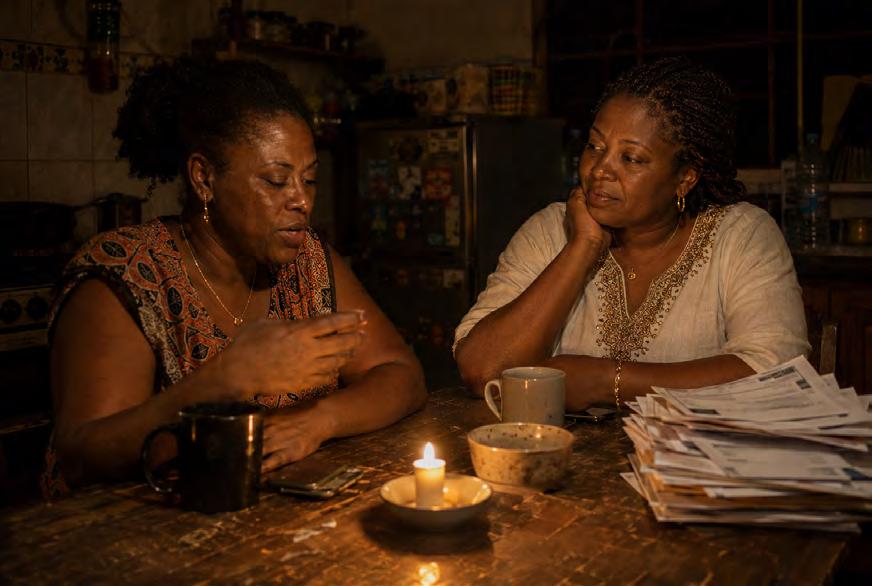
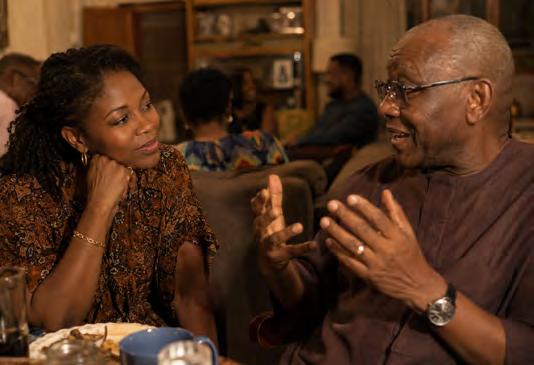
She made no sound that required Nneka to attend to her. She kept her face where it was. And Nneka kept going, and what came out over the next twenty minutes was something she had not been able to say to Kunle, who turned practical at the first sign of difficulty, or to her sister, who had her own feelings about their mother and couldn't hold them aside long enough.
Sola's husband for an hour.
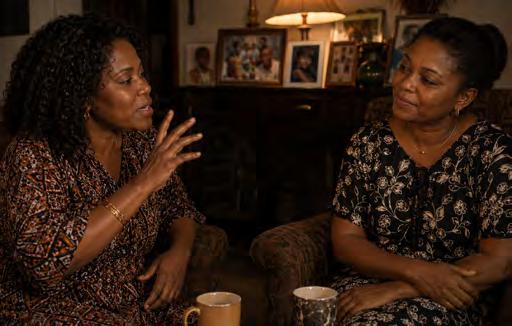
Nneka needed somewhere to put it. That was all. Afterwards, she drove home thinking about nothing in particular. The night traffic on the bridge. Her hands on the wheel.
She has been doing this for so long that she does not always notice.
At a birthday party last year, she sat with Auntie
friendship carefully during that time. Not dramatically. She had managed herself slightly downward at each meeting, not performing closeness but not withdrawing either.
Chidinma didn't know this. That was the nature of it.
Chidinma called her
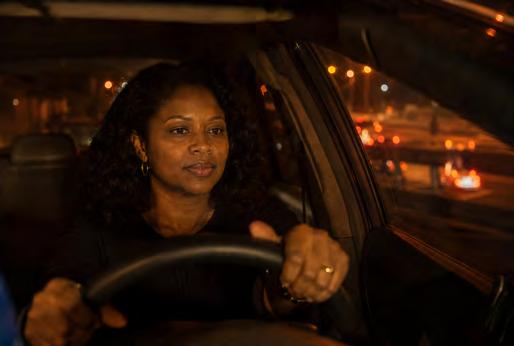
He is not easy to sit with. Nobody in the family talks to him for more than a few minutes. She found the angle, asked about the thing he knew a lot about, and let him go. He was happy. Auntie Sola caught her eye across the room, and she looked away before anything could be communicated.
It was not a sacrifice. She found it, if she is honest, slightly interesting.
But it was something she did because it kept the room from having a difficult corner. And keeping rooms from having difficult corners was a thing she did.
Chidinma used to call it the gift she never knew she was giving. She had laughed when Chidinma said it. She hadn't believed it. She thought of herself as someone who simply didn't speak at the wrong moment. That was not a gift. That was just not making things worse.
They had had four difficult years in their thirties. Something had shifted between them, not a single thing but a long drift, and she had held the
when her father died. Not Kunle. Not her sister. Her.
She had been the right person to call. She knows this. She does not say it. There was a colleague, Emeka, with whom she had worked for nearly a decade. He could receive almost nothing difficult without it becoming about him, not from malice, just from how he was made. She had carried difficult things to him in a particular order, a particular tone, the way you carry something across a room for someone who does not know they have bad hands. He delivered an entire restructure that summer without the panic she had spent months managing quietly out of his path. He thought he was steady under pressure.
She had been making him steady. She had been doing it for years.
There is another version of this.
The one where she was disappearing carefully.
She knows that version too.
The whole truth is Nneka's kitchen table. It is four years of held-back withdrawal. It is Emeka delivering that summer without knowing why he could. The things that held because she was careful enough with them.
She was that person.
And the things that held because she was, those were real.
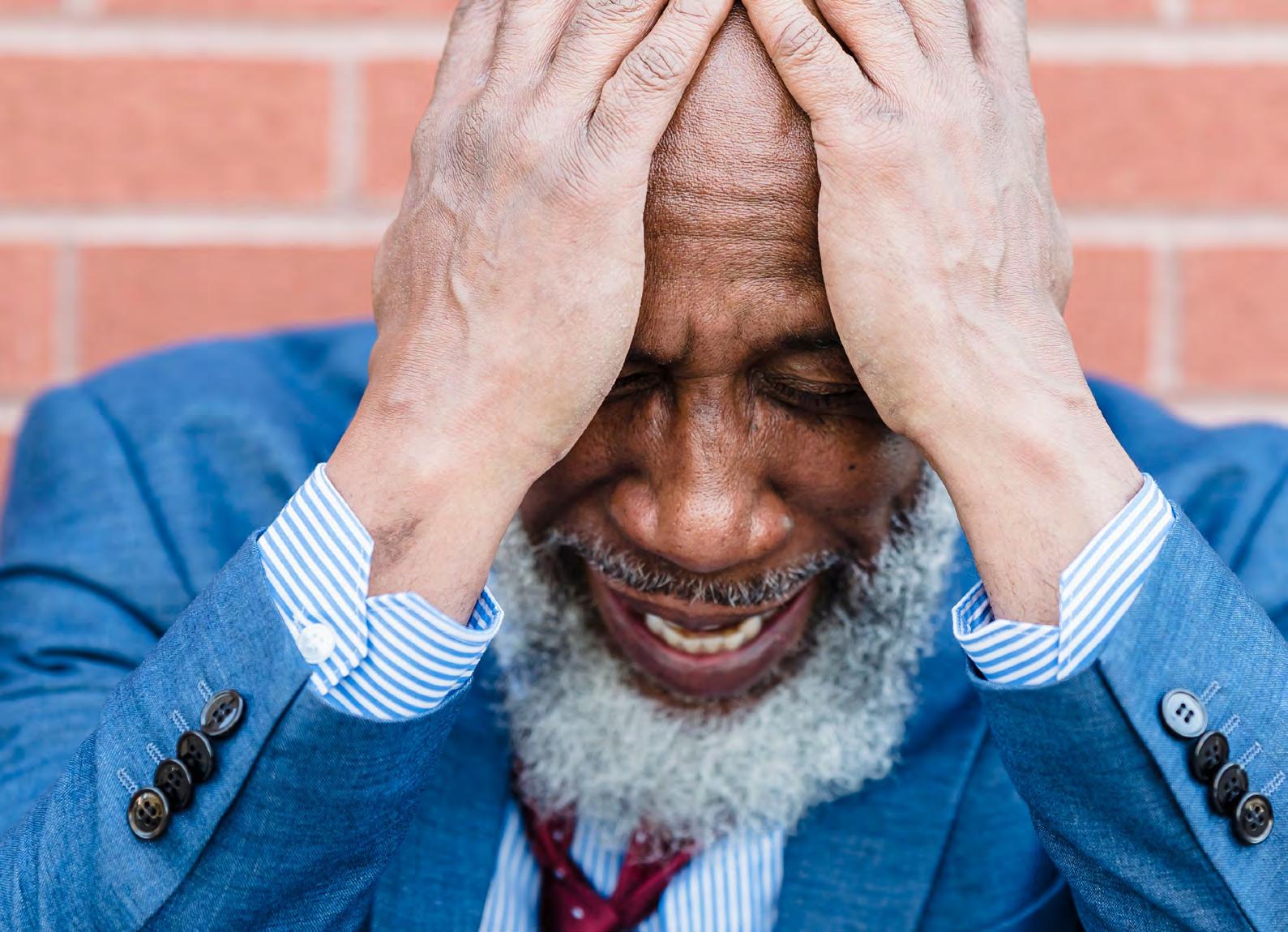
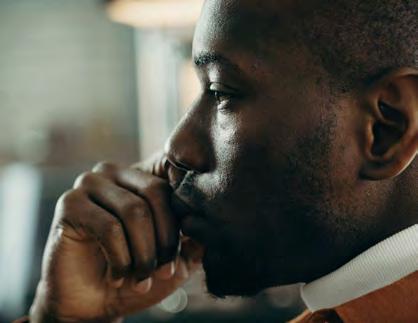
Many men are taught to keep their feelings to themselves. While self-control is necessary, constantly suppressing sadness, fear, or disappointment can increase stress and emotional exhaustion. Expressing emotions in healthy ways helps improve overall wellbeing.

One of the most common misconceptions about men’s mental health is that silence is a sign of strength. The pressure to always appear strong prevents many men from seeking support when they need it. Mental Health professionals encourage men to communicate openly with others and share their struggles. Whether with friends, family, or mental health professionals, asking for help can offer a valuable perspective and emotional relief during difficult times.
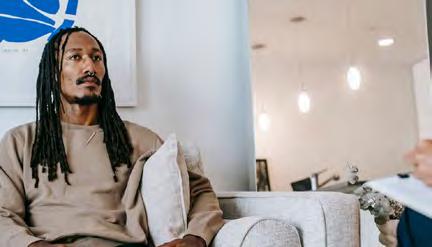
Not every struggle is visible. Depression, anxiety, and burnout do not always look obvious. Many men continue with their daily routines while silently battling emotional challenges. Because of this, these struggles are often missed or misunderstood. Recognising the signs and encouraging open conversations can lead to earlier support and better outcomes.
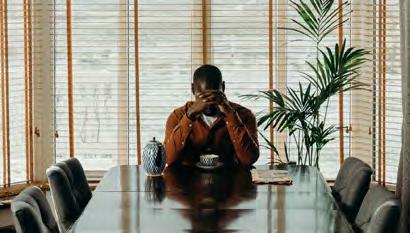
There is a constant expectation for many men to be providers, problem-solvers and emotionally stable, no matter what they are going through. Over time, that kind of pressure can become exhausting. It leaves every little room for rest or honesty. Learning to pause, breathe and acknowledge stress is not a weakness; it is part of staying well, mentally and physically.
BY VICTORIA DAIRO
For generations, many young boys have been hearing it: “Be a Man.” Sometimes it’s said to be a form of encouragement or motivation. Other times, there’s an added implication. Be a man. Don’t cry. Don’t show weakness. Don’t ask for help. For years, society has told men that strength, toughness and emotional reserve equal masculinity. Doctors are starting to see that this mindset can take a serious toll on mental health. Men get stressed out, anxious, feel depressed, grieve, and experience emotional pain just like everyone. But “being a man” can make it harder for some men to talk about their emotions and seek help when they need it. Here are just a few of the reasons doctors wish people would stop saying these three words.

Strength is often misunderstood as silence or emotional control. But it also includes vulnerability. Being able to admit when things are difficult or when support is needed takes real courage. Vulnerability does not take away from strength; it often deepens it. It allows people to connect better, heal properly and cope in healthier ways.
The phrase “Be a Man” may not sound harmful on its own, but the expectations attached to it can quietly shape how men deal with emotions. Mental health is just as important as physical health, and no one should feel the need to suffer in silence to be seen as strong. Redefining strength to include openness, honesty and emotional awareness is not just necessary, it is much needed.


One of the most important steps in balancing parenthood and a professional career is prioritisation. Identify the most important tasks and responsibilities in both your personal and professional life. Calendars, planners, and checklists are great tools to organise your day. Planning ahead can help you assign time efficiently and ensure that essential tasks are completed without missing out on family time.
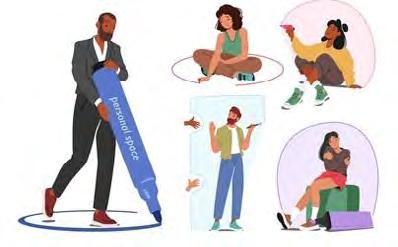
Setting boundaries around the things you condone is important for creating balance. Establish clear boundaries between work and home life, and stick to them to make it a lifestyle. Communicate your work hours to your family and your availability to your employer. This clarity helps prevent work from encroaching on family time and vice versa. This way, you know what part of your life needs attention each time.

Many employers now offer flexible work arrangements such as remote work, flexible hours, and compressed workweeks. If your workplace offers such options, it’s best to take advantage of them to better manage your time and responsibilities. Flexible work schedules can help you attend important family events and reduce commuting stress.
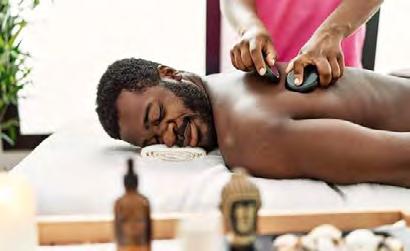
Balancing multiple roles can be physically, mentally, and emotionally draining. It's essential to take care of yourself to maintain your overall well-being. Make time for activities that rejuvenate you, such as exercise, hobbies, and relaxation. Remember, it takes a healthy mind and body to stay productive and manage stress effectively. You need to stay healthy and take care of yourself to care for your family and carry out professional duties.
BY JOHNSON CHUKWUEKE
Being a parent is a full-time job; even individuals who aren’t parents can attest to how taxing it can be. Juggling the responsibilities of parenthood and a demanding professional career can often feel like walking a tightrope. Both roles require significant dedication, time, and energy, making it challenging to strike a balance that satisfies both personal and professional goals. However, with thoughtful planning, effective time management, and the right support systems, it's possible to thrive in both areas. Here are some strategies to help you manoeuvre the complexities of balancing parenthood and a professional career.

Don’t hesitate to assign tasks at work and at home. At work, give out tasks to capable colleagues to prevent burnout. At home, involve your partner and older children in household chores and childcare. Additionally, consider hiring help for tasks like cleaning or tutoring to ease your workload.
It’s not easy to find a balance, but once you achieve an equilibrium between your parenthood and your career, the reward is immense. In addition, always communicate with the people around you and be flexible with your plans. Emergencies arise, and finding ways to get around them would be very important in such situations.
BY NATO CHIMA
We all have those days. You're hungry, tired, busy, or simply not in the mood to spend an hour standing in the kitchen. The temptation to order takeout or skip a proper meal altogether can be strong. But what if you could put together something delicious, satisfying, and homemade in just a few minutes?
The good news is that great food does not always require complicated recipes or endless preparation. With a few simple ingredients and a little creativity, you can make meals and snacks that taste far more impressive than the effort required.
Here are some quick recipes perfect for those days when cooking feels like a chore.
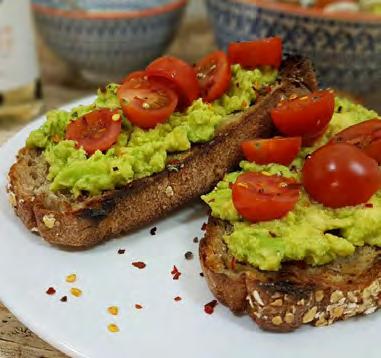
AVOCADO TOAST WITH A TWIST
Simple, healthy, and surprisingly satisfying.
Ingredients:
2 slices toasted bread
1 ripe avocado
A squeeze of lemon juice
Pinch of salt and black pepper
Process:
Mash the avocado, mix in the lemon juice and seasoning, then spread generously over the toast. For extra flavour, add sliced tomatoes or a boiled egg if available.
TUNA MAYO WRAP
A quick lunch option that feels much more substantial than a sandwich.
Ingredients:
1 tortilla wrap
1 can tuna
2 tablespoons mayonnaise
Lettuce or cucumber slices
Process:
Mix the tuna and mayonnaise together, place them inside the wrap with the vegetables, roll tightly, and enjoy. Fast, simple, and filling.
YOGHURT BERRY PARFAIT
A great snack that feels like dessert.
Ingredients:
1 cup yoghurt
Mixed berries or chopped fruit
Granola
Process:


Layer the yoghurt, fruit, and granola in a glass or bowl. Repeat the layers and serve immediately. It looks impressive and takes almost no effort.

CHEESY EGG MUG SCRAMBLE
Perfect when you need something warm and satisfying.
Ingredients:
2 eggs
2 tablespoons grated cheese
A pinch of salt and pepper
Process:
Beat the eggs in a microwave-safe mug, add cheese and seasoning, then microwave for about 60–90 seconds. Stir halfway through for an even texture.

This is perfect for breakfast or a quick energy boost.
Ingredients:
1 ripe banana
2 tablespoons peanut butter
1 cup milk
A few ice cubes
Process: Add everything to a blender and blend until smooth. In less than five minutes, you have a creamy, filling drink packed with flavour and energy.

Not every meal needs to be a major cooking project. Sometimes, the best recipes are the ones that save time while still delivering flavour and satisfaction. On those days when motivation is low and hunger is high, these simple five-minute recipes prove that good food can still be quick, easy, and enjoyable.


It had been one of those weeks where everything felt heavy. Work was stressful, my friends were busy, and I was tired of pretending I was okay. So when my cousin texted me to come out for a drink, I nearly said no.
I wish I had.
But at some point, things changed.
The place was crowded and loud. Music filled every corner, and people seemed happier than I felt. I sat alone for a while, scrolling through my phone and wondering why I even came. That's when he sat beside me.
"Bad night?" he asked.
I looked up. He had a calm smile, the kind that
made you feel like he wasn't trying too hard.
"Is it that obvious?" I replied. "A little."
We laughed, and somehow that small conversation turned into a much longer one.
I don't know what it was about him. Maybe it was because he knew nothing about me. Maybe it was because I knew nothing about him.
For the first time in a long time, I felt seen. We talked about everything and nothing. Childhood memories. Bad relationships. Dreams we hadn't achieved yet. Hours passed so quickly that I didn't notice
most of the crowd had already left.
My cousin had already disappeared about an hour after we arrived.
Not that I was surprised.
She had a habit of abandoning me whenever she found someone interesting enough to distract her.
I checked my messages, and I saw her text.
"Don't wait up for me."
I rolled my eyes and slipped my phone back into my purse.
Josh and I had already been talking for a while. The conversation flowed so easily that it almost felt strange. Usually, I was careful around new people. Usually, I thought before I spoke.
But that night, something was different.
When the bar finally started closing, neither of us seemed ready to end the conversation.
"I live a few minutes away," he said casually. "If you want, we can continue talking there."
The offer should have made me say no immediately, but I didn't. Something in me knew what that meant. Something in me also said yes.
Still, walking beside him, I was having a full, silent conversation with myself. I was low-key scared, but I followed him anyway.
His apartment was small and clean. We sat on his couch and kept talking, and then at some point, he said he'd be right back.
He came back in a plain white t-shirt and grey shorts.
I don't know why that undid something in me. The shorts were short and loose, and my eyes went somewhere they had no business going, and I forced them back up and looked at the ceiling briefly like I was admiring the architecture.
But the warmth in the room, the music he was playing, and the way he was looking at me made me feel something I hadn't felt all day.
So I thought to myself, "What is the worst that could happen?"
"Can I kiss you?" I heard myself say.
He smiled slowly. "You sure you're okay with that?"
I didn't answer. I just leaned in.
His lips were soft and unhurried, and for a moment, everything went quiet and still.
Then his hands moved.
He lifted me like it was nothing, and I was suddenly on his lap, facing him, my breath catching somewhere in my throat. He settled me there deliberately, making sure I felt exactly where I was sitting. Then he squeezed my butt.
The sound that left my mouth wasn't planned. It just escaped.
I don't know what time it was when we finally stopped. Late. Or early, depending on how you look at it.
We went again. And again after that.
At some point, I thought about texting Tola. At some point, I forgot about Tola entirely.
When I finally lay still, staring at a ceiling that wasn't mine, my body warm and exhausted in the best possible way, I started laughing quietly.
"What?" he murmured beside me.
"I was having a terrible day," I said.
He turned to look at me, amused. "And now?"
I thought about it honestly.
"Best bad day I've ever had."
BY BOLUWATIFE ADESINA

AIcould never do what The Furious does. Although the whirling limbs and feats of strength are thrilling in themselves, what really makes Kenji Tanigaki’s pan-Asian action spectacle so awe-inspiring is the fact that everything you see is being done for real by human beings. Yes, humans can run that fast. We can jump that high and punch that hard and keep fighting at a ferocious pace for 15 minutes straight without collapsing from exhaustion. The performers who can do these things have dedicated their lives to the pursuit of their art, and the passion and dedication that it takes to sculpt a human body into a tough, yet agile martial-arts fighting machine are clearly visible in their work. An actual machine couldn’t replicate that if it tried.
Born in Japan, writer-director Tanigaki — also a respected stunt coordinator with dozens of credits — got his start as a member of Donnie Yen’s stunt team, which accounts both for his reverence for the art form and his international approach. Set in an unnamed country in Southeast Asia and performed largely in English, The Furious brings together martial-arts stars from China, Indonesia, and Thailand, as well as JapaneseAmerican and Vietnamese-American fighters, combining each of their individual approaches into a veritable Olympics of ass-kicking.
Some of these actors will be more familiar to mainstream audiences than others: Star Joe Taslim played Sub-Zero in the 2021 Mortal Kombat remake, for example, while his co-lead Xie Miao is more famous in mainland China. Notable supporting players include Brian Le, who you may recognise as the pants-less security guard who fights Michelle Yeoh in Everything Everywhere All at Once, and Yayan Ruhian, best known as the villainous Mad Dog in The Raid (2011), another all-time Asian action film. (Ruhian also played Tasu Leech in The Force Awakens, for the Star Wars fans.) All of this is to say that, for action fans, The Furious is an all-star affair.
A pre-existing relationship with martialarts movies also helps when it comes to appreciating The Furious on a plot level. The film’s action choreography builds on recent international hits like The Raid and The Night Comes for Us, with an emphasis on bone-crunching intensity and creative weaponry. But the characters and tropes reach further back to a simpler, some might say more cliché
era, and its black-and-white sense of morality can either be nostalgic or simplistic, depending on your point of view.
Wang Wei (Xie) is a classic reluctant hero, a deaf handyman who’s busy raising his young daughter Rainy (Enyou Yang) as the story begins. We get the impression that there’s more to this quiet man than he lets on, but while Wang Wei tries to stay out of trouble, trouble always manages to find him. When Rainy is stolen off the street by a human-trafficking syndicate in broad daylight, Wang Wei teams up with Navin (Taslim), a journalist whose wife, played by Jeeja Yanin, has been captured by the same gang.
This puts both of them in the path of Paklung (Joey Iwanaga), the sociopathic son-in-law of a high-level gangster eager to prove that he’s ruthless enough to run the family business. Sealed in an immaculate white mansion surrounded by luxury, Paklung and his household are as distant from the source of their wealth as any other capitalists, except in this case, the money comes from kidnapping children for unspeakable purposes. The Furious is too broadly sketched to detail the specifics of the scheme: These are simply evil people who do evil things because they’re evil, which means that we don’t have to feel too bad about the excitement we get from watching their faces get smashed into jelly.
That’s the real point of a movie like this one, and The Furious delivers on that promise in a series of exhilarating action sequences — some of them clocking in at 15-plus minutes that build with relentless forward momentum to a brutal climactic showdown. Along the way, we see kids in outrageous amounts of peril, bloody beatdowns in factories and police stations, two men holding back a warehouse’s worth of thugs using only a wooden palette and brute strength, a gunfight in a nightclub where dollar bills fall like rain, and a character return that produced audible hooting and applause at my 2am screening of the film.
It’s an audacious, over-the-top celebration of the human body and its potential for violent athleticism, and if it doesn’t give you at least a little bit of a kick, you might want to check your pulse.
Rating: 9.5/10
See. This. Immediately. Like, at the first possible opportunity. My favourite movie this year so far by a MILE.
The Furious opens in theatres only on June 12.

Scan this with your camera or click to access the playlist (Youtube Music)
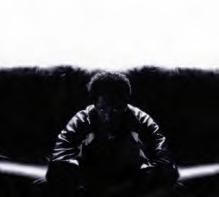

I’m always sceptical of a TV series that stretches out a film-length story to 10 episodes, but this new adaptation of John D. MacDonald’s 1957 novel The Executioners – which was first made into a 1962 film and again in 1991 starring Nick Nolte and Robert De Niro – is a slick, clever update of the original.
With Martin Scorsese (who directed the 1991 film) and Steven Spielberg as executive directors, it’s no surprise this is a big-budget affair, and it looks incredible.
Once again set in Georgia, there are two attorneys who are now the target of the newly released con Max Cady. Anna Bowden (Amy Adams, most recently seen in Nightbitch) and her husband Tom (Fargo’s Patrick Wilson) were Cady’s respective defence lawyer and prosecutor. They met during Cady’s trial 17 years earlier for the murder of his wife and unborn child. (The weirdly rapey themes of the ’91 version have been changed.)
Anna now works for a non-profit organisation – alongside her boss Noa (C.C.H. Pounder) – that re-examines death row prisoners’ cases, and works to free the wrongly convicted. Tom is still a slightly slimy prosecutor, and with their two teenage children, Natalie (Lily Collias), whose dad is from a previous relationship, and Zach (Joe Anders, son of Kate Winslet and Sam Mendes), they live a fabulous life in an opulent house in Savannah, surrounded by lush southern oak trees draped in Spanish moss.
But life isn’t as perfect as it seems: Tom is on the verge of having an affair, Zach has

Scan this with your camera or click to access the playlist (Spotify)

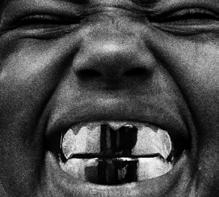


been isolated from school and friends after uploading intimate photos of his former girlfriend, and Natalie feels that her parents’ attention is solely devoted to her troubled brother.
But these woes seem trivial once Max Cady, played with unnerving gusto by bad-guy specialist Javier Bardem, is released from prison. Max wastes little time terrorising the family, but he does so, as a TV series-length allows, incrementally.
He first runs into Anna and Tom at an event for one of Anna’s newly released prisoners, where he makes a speech to much applause, and assures the pair he holds no grudges. But boy, does he hold grudges.
Adapted by writer/producer Nick Antosca, this version of Cape Fear is an unusual marriage of the original source material and the modern; the soundtrack from the 1962 film – also used, in rearranged form, for the ’91 version – remains the same, and much of the cinematography, like the original film, is Hitchcockian in style. There’s not a drone shot in sight, and the colour palette, all blues and subtropical Georgia greens, is a bold, melodramatic choice.
century, with technology playing a large part, from location-tracking devices to Wi-Fi jammers and even AI deepfakes.
There are twists aplenty, and even, just occasionally, moments where we almost empathise with Cady; everyone in the terrific cast is in some way flawed, and your feelings for almost every character will vacillate as the unhinged story progresses, and the Bowden family’s collective paranoia increases.
And just like the 1991 Scorsese film, this remake features a couple of call-back cameos. Yes, things get meta, but this is a gripping, horrifying remake also doubling as something of an homage.
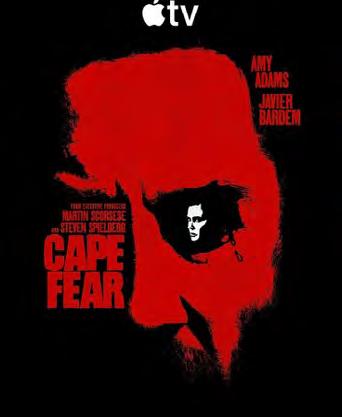
But the ways in which the expanded story unfurls are thoroughly 21st