fter Titi Ogufere studied interior design and worked internationally, it became very clear to her that design was never just about aesthetics. According to her, when you look at places like Europe, you quickly realise that design operates as a serious economic ecosystem connected to manufacturing, hospitality, retail, tourism, real estate, and culture. The global furniture industry alone is worth hundreds of billions of dollars, and the interior design industry continues to grow rapidly across residential, commercial, and hospitality sectors.
For Ogufere, the question became: if design contributes this significantly to global economies, why were Africa, and particularly Nigeria, not participating at scale? When she returned to Nigeria, she realised Nigerians had immense talent, artisans, manufacturers, and creatives, but were still operating on a very limited scale because the supporting systems were weak.
She realised that we lacked strong educational structures, manufacturing pipelines, prototyping systems, policy support, and access to global markets. That realisation shaped much of her work. She understood very early that if we wanted to build a real design economy, we had to move beyond simply creating beautiful spaces. We had to begin building systems.
Read Titi Ogufere’s inspiring story on pages 8 through 10.
Sunburn occurs when the skin is exposed to too much ultraviolet (UV) rays from the sun. It damages the skin's outer layer, and while it can be uncomfortable, sunburn can be easily treated at home. Page 12 shows you effective ways to soothe and heal sunburn.
Our living piece talks about romanticising your life. What this simply means is slowing down and enjoying small moments that already exist in your daily life. We show you ways in which you can romanticise your life on page 17.
Digital Media: Oladimeji Balogun, Victoria Dairo & Olamide Abolarin
Consulting Art Director: Sunny Hughes ‘SunZA’
Designing Homes That Match Your Mood, Not Just Your Budget Things Doctors Wish More Young People Paid Attention To Perfect Timing Afrobeats On The 2026 World Cup Stage
Boluwatife Adesina @bolugramm - Contributing Writer Boluwatife Adesina is a media writer and the helmer of the Downtown Review page. He’s probably in a cinema near you.
Sally Chiwuzie is a non-practising barrister who owns the brand #Unshakable. She is the author of Silent Symphonies, a fictional love story, and the creator of the podcast Chronicles of #Unshakable Truths.
Ada Obiajunwa @aaddaahh - Contributing Writer
Ada Obiajunwa writes from Lagos about the big truths tucked inside ordinary moments — friendship, self-discovery, and the quiet revolutions of everyday life. She believes in the power of presence, good banter, and decoding the unsaid. Through her fragrance studio, WhiffWonders, she also crafts scents that weave memory and emotion into experiences that feel like home.
4 THINGS STYLISH WOMEN ALWAYS DO
BY DORCAS AKINTOYE
Looking stylish is not always about wearing expensive clothes or following every fashion trend online. A stylish woman can wear something simple and still stand out because of the way she puts everything together. From the way she dresses to the way she takes care of herself, there are certain habits that always make her look polished and attractive. Here are four things stylish women always do.
THEY WEAR CLOTHES THAT FIT THEM PROPERLY
One thing stylish women understand is that good-fitting clothes can completely change how an outfit looks. Even the most expensive outfit will not look nice if it is too tight, too loose, or uncomfortable.
Stylish women choose clothes that flatter their body type rather than wear something just because it is trending.They know their size and pay attention to how clothes fit their bodies.
THEY BUILD A SIGNATURE STYLE
Most stylish women do not copy every trend they see online. Instead, they create a style that feels natural to them. Some love classy outfits, some prefer casual looks, while others enjoy bold fashion pieces. Having a signature style helps them dress with confidence because they already know what works for them. They do not waste time trying to become someone else through fashion.
THEY PAY ATTENTION TO SMALL DETAILS
Stylish women know that little things matter a lot.They pay attention to details that many people ignore.This includes neat hair, clean shoes, fresh-looking clothes, matching accessories, and even good posture.
Stylish women also know how to keep things balanced. If their outfit is bold, they may keep their accessories simple. If their clothes are simple, they may add a nice bag, jewellery, or shoes to complete the look.They understand that style is not about doing too much.
THEY CARRY THEMSELVES WITH CONFIDENCE
Confidence is one of the biggest things that makes a woman look stylish. Stylish women wear their outfits proudly and do not constantly look uncomfortable or unsure of themselves. Even a simple outfit can look elegant when worn with confidence.The way a woman walks, talks, smiles, and carries herself affects her overall appearance more than people realise.They are comfortable trying new looks while still staying true to themselves.
Being stylish is not about having the most expensive wardrobe or wearing designer brands every day. It is about knowing yourself, paying attention to details, and dressing in a way that makes you feel confident and comfortable.
SALLY CHIWUZIE @unshakable.is.a.state.of.mind
#UNSHAKABLE TRUTHS
Maintenance Is Also Faith UNTOLD TRUTHS
June began with an invitation to pause, notice, and think about what we were quietly hoping for.
Since then, the question has shifted. After the pause, after the lighter luggage, after the decision to make room for something new, what happens to the things we planted?
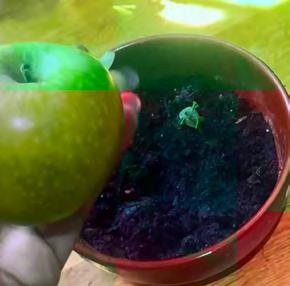
A few weeks ago, I planted seeds quietly.
I wrote something down, folded it away, placed it beneath the soil, and left the words between myself and God. I will not say exactly what I wrote because some prayers need privacy before they can survive exposure. Some hopes are too tender to be discussed before they have roots.
So, I planted and then waited.
I did not dig up the soil every morning to check whether anything was happening beneath the surface. I did not interrogate the seed, demand proof, or accuse it of failure because I could not yet see movement.
I watered it. I checked the light. I moved it when the atmosphere needed adjusting. I watched without disturbing. I hoped without interfering.
Then one day, the soil broke. A small green shoot appeared, and although it was not the harvest, it was evidence. It was proof that something had been happening in the dark.
Perhaps that is where many of us misunderstand growth. We think faith means doing nothing.
We think patience means abandoning what we planted. We think trust means walking away completely and hoping life sorts itself out without our participation. That is not faith. Sometimes, that is neglect wearing holy language.
There is another mistake too. Some of us do not abandon the seed. We suffocate it. We hover with panic, checking, prodding, questioning, forcing, and measuring. We disturb what needs time, then wonder why growth feels delayed.
That is not discipline. Sometimes, that is anxiety pretending to be commitment.
The truth lives somewhere in the middle.
You do not dig up the seed to prove it is growing, but you do not leave it to die either. You water it. You check whether it has enough light. You adjust the conditions. You remove what may choke it. You protect it without suffocating it. You participate without pretending you control everything. That is maintenance.
This past week reminded me that maintenance is rarely glamorous. It does not always look like grand transformation. Sometimes it looks like making the bed, skincare, supplements, a smoothie, a quiet workout, or choosing rest because the body has asked for it.
Sometimes it looks like recording the podcast, preparing the monologue, watering the plant, keeping the appointment, answering the email, or refusing to shrink when life feels uncertain.
Small things can look ordinary until you realise they are holding your life together.
Maintenance is what happens between prayer and testimony.
It is the discipline of tending what you say you believe in. It is the honesty of asking whether your habits match your hopes. It is the humility of admitting that growth needs atmosphere, not just ambition.
What have you planted this month? What quiet intention did you fold into the soil of your life? What are you hoping will break through by the 30th of June? More importantly, how are you maintaining it?
Are you watering the thing you say you want, or are you simply staring at it?
Are you giving it light, or are you keeping it hidden in conditions where nothing can thrive? Are you protecting it, or are you suffocating it with fear? Are you calling it faith when, in truth, you have stopped showing up?
These are uncomfortable questions, but growth is not offended by honesty. Growth requires it. The seed breaking through the soil is not the full testimony. It is not the finished dream, the answered prayer, or the completed transformation.
It is simply proof of life.
Sometimes, that is enough for now. Enough to keep watering. Enough to keep showing up. Enough to believe that the unseen work was not wasted.
Perhaps the #Unshakable truth is this: Faith is not neglect. Patience is not abandonment, and maintenance is not panic. Sometimes, maintenance is the miracle between planting and testimony.
‘See’ you next week.
COVER
Interior design in Nigeria has become a visible and respected part of the country’s creative economy. Today, it is no longer limited to decorating homes and offices; it has expanded into a thriving industry that includes exhibitions, design festivals, studio showcases, and international collaborations. Different platforms have emerged to help bring designers, architects, and creative thinkers together in one space, where ideas are shared, and African design is presented to global audiences with pride and confidence.
At the centre of this transformation is Titi Ogufere. Early in her journey, Titi Ogufere saw a clear gap in the industry, and she understood that if Africa was going to build a real design economy, it would not be enough to only create beautiful spaces. There had to be systems, institutions, and opportunities that enabled design to grow from inspiration to impact. This belief led her to establish the Interior Designers Association of Nigeria (IDAN), expand industry conversations through the Africa Design Network, create Design Week Lagos, and establish the Design Innovation Hub of Nigeria. Much of Titi Ogufere's work today is focused on advocacy around education, industrial development, manufacturing, incubation, and helping African creatives move from ideas into commercially viable products and sustainable businesses.
In this interview with THEWILL DOWNTOWN's Executive Editor, Onah Nwachukwu, Titi Ogufere discusses the journey of building Africa’s design ecosystem, the challenges of shaping a structured creative industry, and why design must be treated as a tool for economic development rather than just aesthetics. She also shares insights from her groundbreaking role as the first African President of the International Federation of Interior Architects/Designers (IFI), her work as an author and cultural documentarian, and her vision for a future where African design stands confidently on the global stage.
TITI OGUFERE
Redefining African Design
What were the earliest experiences or observations that shaped your understanding of interior design as more than aesthetics, but as a cultural and economic force?
After studying interior design and working internationally, one of the things that became very clear to me was that design was never just about aesthetics. When you look at places like Europe, you quickly realise that design operates as a serious economic ecosystem connected to manufacturing, hospitality, retail, tourism, real estate, and culture. The global furniture industry alone is worth hundreds of billions of dollars, and the interior design industry continues to grow rapidly across residential, commercial, and hospitality sectors. So for me, the question became: if design contributes this significantly to economies globally, why was Africa and particularly Nigeria, not participating at scale?
When I returned to Nigeria, I realised we had immense talent, artisans, manufacturers, and creatives, but we were still operating on a very limited scale because the supporting systems were weak. We lacked strong educational structures, manufacturing pipelines, prototyping systems, policy support, and access to global markets. That realisation shaped much of my work. I understood very early that if we wanted to build a real design economy, we had to move beyond simply creating beautiful spaces. We had to begin building systems. That is part of why I founded the Interior Designers Association of Nigeria (IDAN), expanded conversations through the Africa Design Network, created Design Week Lagos, and now the Design Innovation Hub of Nigeria. Much of my work today focuses on advocacy around education, industrialisation, manufacturing, incubation, and helping African creatives move from ideas into commercially viable products and sustainable businesses.
In building the Africa Design Network, what gap in the African creative ecosystem were you most determined to solve first, and how did you approach it practically?
The biggest gap was fragmentation. Across Africa, there were incredibly talented designers doing important work, but many were operating in isolation. There was very little collaboration between countries, very little documentation, and very few systems connecting creativity to industry. The Africa Design Network became a way to begin connecting those ecosystems. Over time, however, the vision expanded into multiple layers. Design Week Lagos became the publicfacing platform for conversations, exhibitions, visibility, and global exchange. But one thing became very clear after years of exhibitions and international showcases: visibility alone was not enough. Designers were creating extraordinary prototypes and receiving international attention, but many still faced major challenges around manufacturing, scalability, logistics, quality control, and market access. That realisation became one of the driving forces behind the Design Innovation Hub of Nigeria and our growing focus on incubation, manufacturing partnerships, prototyping, education, and commercialisation. Because the reality is this: talent alone does not build industries. Systems do. A lot of our work now focuses on how we improve standards, strengthen education, connect designers to manufacturers, and help creatives move from prototypes into scalable production. The larger goal is to industrialise African creativity without losing cultural identity.
"When I
returned to Nigeria, I realised we had immense talent, artisans, manufacturers, and creatives, but we were still operating on a very limited scale because the supporting systems were weak."
Design Week Lagos has become a major platform for African design conversations. What was the original vision, and how has reality
challenged or expanded that vision over time? The original vision for Design Week Lagos was never simply to create an event. It was to build an ecosystem. When you look at cities like Milan, what makes them important globally is not just the fairs or exhibitions themselves, but the way design becomes woven into the life of the city. You have established brands, emerging designers, trade platforms, collectable design, culture, hospitality, manufacturing, installations, education, and global industry conversations all happening simultaneously. Design operates there as both culture and industry. That was always my vision for Lagos. I wanted to create a platform where African creativity could exist at multiple levels at once, where established brands could sit alongside emerging designers, where conversations around manufacturing and trade could happen alongside cultural storytelling and experimentation. So Design Week Lagos was intentionally designed to be layered. On one side, we have the Made by Design Show, which focuses on showcasing some of the best furniture, interior, and product brands across Nigeria. This year, especially, we are positioning it as a national showcase of Nigerian design excellence, bringing together brands and manufacturers from different parts of the country to demonstrate the scale, sophistication, and quality of what is being produced locally. At the same time, supporting emerging designers has remained incredibly important to us. Through exhibitions, mentorship, incubation, and international exposure opportunities such as Milan Design Week, we have tried to create pathways for younger designers to move from visibility into long-term growth. What became very clear over time, however, was that visibility alone was not enough. Designers were creating incredible prototypes and receiving international attention, but many still faced challenges around manufacturing, scalability, logistics, quality control, and access to markets. Our recent exhibition in Milan reinforced this reality even more strongly. We saw genuine global interest in African-designed products, but interest alone is not enough. The real challenge begins after the exhibition production capacity, supply chains, pricing, distribution, and the ability to manufacture consistently at scale while preserving the integrity of the design. That realisation has significantly expanded our focus. Increasingly, we are thinking not only about exhibitions, but about infrastructure. How do we help designers move from concepts into commercially viable products? How do we build manufacturing partnerships? How do we create systems that allow African creativity to compete globally, not just aesthetically, but industrially? That thinking is a major part of what led to the creation of the Design Innovation Hub of Nigeria, which focuses on education, incubation, prototyping, manufacturing partnerships, and helping creatives move from ideas into sustainable businesses. So today, Design Week Lagos exists across multiple layers. It is a cultural platform, a trade platform, a space for established brands, a launchpad for emerging designers, and increasingly, part of a larger ecosystem focused on building sustainable
design industries across Africa. I believe the future of African design lies not only in visibility but in building the systems that allow creativity to scale.
You’ve worked across media, exhibitions, education, manufacturing, and interior design. How do you intentionally connect such diverse sectors without diluting focus or impact?
"The
Africa Design Network became a way to begin connecting those ecosystems. Over time, however, the vision expanded into multiple layers. "
For me, they are not separate sectors. They are all interconnected parts of one ecosystem. Media documents and amplifies stories. Exhibitions create visibility and markets. Education develops talent. Manufacturing creates economic sustainability. Interior design becomes the applied outcome. The mission has always remained the same: building a stronger African design industry. One of the biggest mistakes creative industries make is separating creativity from economics. Design must be both culturally meaningful and commercially viable. That is why our work today increasingly focuses on connecting designers not only to audiences, but also to manufacturers, investors, retailers, and global distribution opportunities. A prototype is only the beginning. Moving from prototype to commercial production requires testing, refinement, manufacturing systems, logistics, quality control, and significant investment. That is the ecosystem we are trying to help build through Design Week Lagos and the Design Innovation Hub.
As founder of both the Interior Designers Association of Nigeria and African Council for Interior Architects/ Designers, what structural problems in the African interior design industry were you trying to address, and how far do you think those institutions have come in solving them?
"One of the biggest mistakes creative industries make is separating creativity from economics. Design must be both culturally meaningful and commercially viable. "
One of the major issues was the absence of professional structure and educational standards within the industry. When I founded IDAN, one of the visions was to help professionalise the field to create standards, advocacy, recognition, and a stronger sense of industry identity. Later, through continental initiatives and eventually becoming the 21st President of the International Federation of Interior Architects/Designers (IFI), I became even more focused on education policy and global standards. Serving in that role gave me a unique opportunity to bridge conversations between mature design economies and emerging creative ecosystems. One thing that became very clear to me was that Africa does not lack creativity. What we often lack are systems of education, prototyping, infrastructure, and industrial support that allow creativity to compete globally at scale. I always say that I am not an educator in the traditional sense; I am more of an advocate. My work has largely focused on pushing for higher standards in interiors, furniture design, product design, and manufacturing education because we still do not fully have those systems in Nigeria yet. That is why initiatives like the Design Innovation Hub are important to me. They focus not only on inspiration, but on training, incubation, prototyping, manufacturing partnerships, and long-term industry development.
Becoming the first African President of IFI is historic. What did that role reveal to you about how African design is perceived globally versus how it actually functions on the ground?
Becoming the first African and 21st President of the International Federation of Interior Architects/ Designers revealed to me that there is still a major gap between how African design is perceived
COVER
globally and what is actually happening on the ground. Globally, African design is often admired through the lens of culture, craft, heritage, colour, and ornamentation. Those things are important, but they are only one part of the story. On the ground, African design is also dealing with very serious questions around professionalism, education, construction, real estate development, safety, standards, manufacturing, and the quality of the built environment. In Nigeria, for example, we have a rapidly growing construction and real estate sector, but we still do not have enough formally trained interior designers to meet the scale of development happening. Many people also do not fully understand the difference between interior decoration and interior design. Interior decoration is largely about furnishing, styling, and the visual appearance of a space. Interior design is a professional discipline that deals with space planning, technical knowledge, materials, ergonomics, accessibility, and the health, safety, and welfare of people within the built environment. That distinction is very important because interiors are not just beautiful rooms. They affect how people live, work, heal, learn, move, and interact with space. So if we are building at scale across Africa, we also need to develop professionals who understand the responsibility that comes with shaping interior environments. That was one of the things I tried to address during my time at IFI. One of the milestones I am particularly proud of was co-chairing the review of IFI’s global education policy with professors and educators from different parts of the world. The previous policy had last been developed in 1980, so updating it was very significant. For me, it was also important that Africa was part of that global conversation around education, standards, and the future of professional practice. Another thing my presidency revealed was how underrepresented Africa was within global design institutions. At the time, IFI represented over 110 nations, but in Africa, only Nigeria and South Africa were active members. That showed me that we needed a stronger regional voice. It became one of the reasons I began working towards the African Council
for Interior Architects and Designers, as a regional body to support collaboration, advocacy, education, and professional standards across the continent. So what that role revealed to me is that Africa is not lacking creativity. The talent is there. The cultural intelligence is there. But if African design is going to be properly understood globally and function effectively locally, we must build the systems around it: education, regulation, professional standards, manufacturing, and industry infrastructure.
In your experience, what are the most persistent misconceptions about African interior design within global design circles? One of the biggest misconceptions about African interior design is that it is often reduced primarily to craft, ethnicity, ornamentation, or the use of traditional materials and patterns. While those elements are valuable and part of our cultural identity, they are only one small aspect of what interior design actually is. Interior design is first and foremost about people. It is about how human beings experience space psychologically, emotionally, physically, and socially. Whether you are designing in Africa, Europe, Asia, or anywhere else in the world, the core responsibility of interior design remains the same: creating environments that support the health, safety, welfare, comfort, and wellbeing of people. That is why I always say there is a difference between craft and interior design. Craft may contribute to the aesthetic or cultural language of a space, but interior design itself is a much broader professional discipline. It involves space planning, ergonomics, lighting, acoustics, materials, accessibility, human behaviour, and understanding how environments affect the way people live, work, heal, learn, and interact. Good design should ultimately be universal in its understanding of humanity. We may express design differently culturally, but human beings everywhere respond to comfort, functionality, beauty, safety, emotional connection, and spatial wellbeing. I think sometimes
global conversations around African design focus so heavily on identity and aesthetics that they overlook the sophistication, technical thinking, and human-centred problem-solving happening across the continent. African designers are not simply creating visually interesting spaces; many are responding to urbanisation, housing, sustainability, changing family structures, hospitality, wellness, and evolving ways of living and working. Another misconception is that African design exists outside of modernity or innovation. In reality, many African designers are deeply contemporary in their thinking and are exploring technology, sustainability, manufacturing, material research, and new approaches to living. For me, the future of African interior design is not about limiting ourselves to what the world expects African spaces to look like. It is about creating environments that are intelligent, globally relevant, culturally grounded, and ultimately designed to improve the human experience.
You’ve authored over 27 books and professional guides. What drives your commitment to documentation, and why do you think written records are critical in a field that is often visually driven? Documentation is power. For me, research has always been an essential part of design. You cannot build meaningful spaces, industries, or systems without knowledge, context, and documentation. One of the challenges I experienced when I moved back to Nigeria was how difficult it was to find professional resources, guides, research materials, and industry references that were relevant to our region and realities. I found myself constantly conducting my own research, developing frameworks, and gathering information simply because many of the resources we needed did not exist locally in an accessible way. Over time, I realised that a lot of this work should not remain private. It needed to be documented and shared because industries grow when knowledge becomes accessible. One of the books I am particularly proud of is the Interior Design Professional Guide for Africa and the Middle East. It became an important resource across the region because it addressed practical and professional issues the industry needed, everything from understanding fee structures and contracts to defining professional standards, project processes, and what it truly means to operate as a professional interior designer. Another important publication for me was In Conversation with Demas Nwoko, which explored African design, culture, architecture, and creative identity through conversations with one of Africa’s most important creative thinkers. Projects like that are important because they help preserve intellectual and cultural history while also contributing to contemporary design discourse. I have always believed that design is visual, but industries are built through research, education, archives, and written knowledge systems. Documentation creates continuity. It allows future generations to learn, build, improve, and avoid starting from zero each time. That belief is also part of why I founded Essential Interiors Magazine. African designers deserved platforms that documented their work seriously, professionally, and from our own perspective.
Looking ahead, what structural changes must happen for African design to move from being “emerging” to being fully embedded and influential in global design systems?
We need stronger infrastructure. That includes manufacturing, research institutions, museums, design education, funding systems, prototyping labs, policy support, and global distribution channels. We also need stronger collaboration between the government, private industry, education, and creative sectors. Africa does not lack creativity. What we need now are systems that allow creativity to scale sustainably and competitively. We must move from isolated talent to an organised industry. And perhaps most importantly, we must begin to see design not as a luxury conversation, but as part of economic development, cultural diplomacy, industrial growth, and export strategy. I believe the future of African design lies not in seeking validation, but in building institutions, industries, and markets that position Africa as a contributor to the future of global design on its own terms.
THE FIRST TIME SHE HEARD HERSELF BEING DESCRIBED
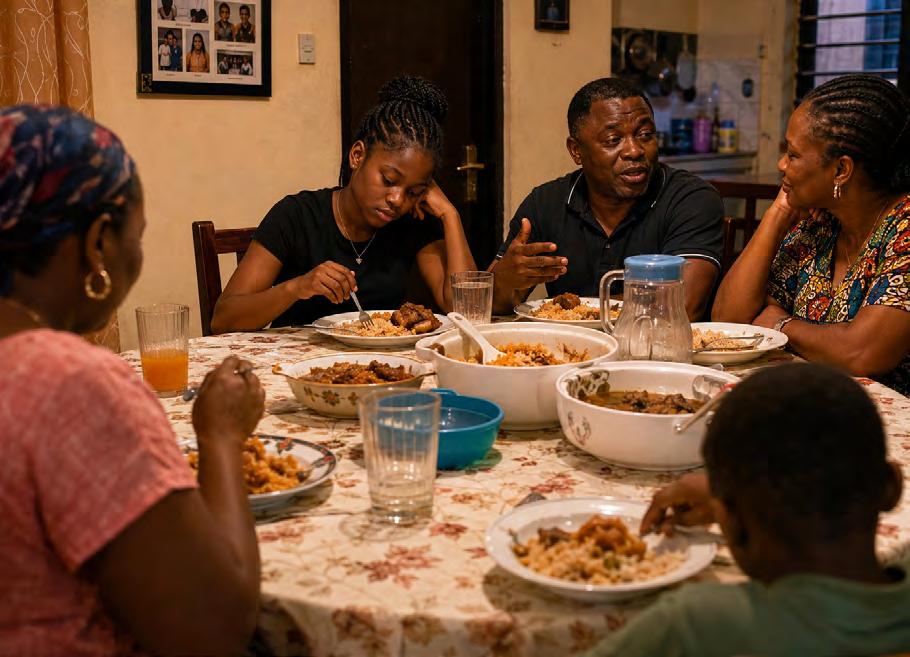
She was sixteen or seventeen. A Sunday. Auntie Cynthia had been in the sitting room since three, the visit stretching the way her visits always did, needing to be fed before anyone thought about leaving. Her mother had put food on. The smell of it had been coming through the house for an hour.
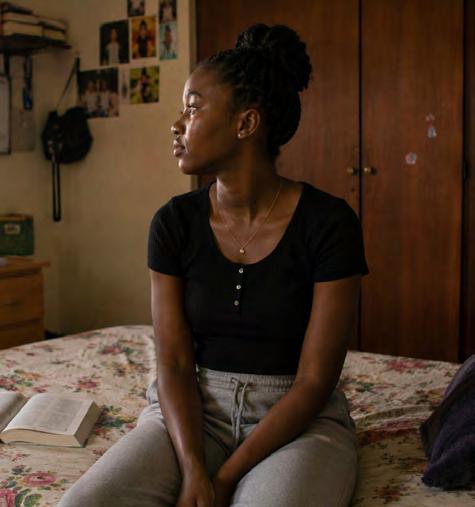
She had been in her room reading. She came out for water.
She was in the corridor, just past the sitting room door, when she caught it.
She's very sure of herself. She stopped.
Not because the words were wrong. She was sure of herself. She had her opinions. She shared them at family dinners, in arguments with her brothers, and in class when the teacher was wrong about something, which happened often enough.
She had not thought of this as a quality that required preparing anyone for. It had just been how she was. She waited for what came after.
What came after was laughter. Something the other voice said that she couldn't make out. Then Auntie Cynthia again, moving on.
She went to the kitchen. She filled her glass at the sink and stood there longer than she needed to, looking out of the window. The neighbour's compound. A crow on the fence. On the way back, her mother was at the sitting room door.
up the book that was open there, and she did not read it.
Before that corridor, she had experienced herself from the inside.
Her feelings arrived, and she felt them. She moved through things before she knew to watch herself moving through them. She was just there, the way children are just
Come and greet Auntie Cynthia's friend.
She went in. The woman was seated near the window. A relative visiting from Port Harcourt, large and warm, with good shoes and the kind of smile that meant she had already been told things.
I've heard a lot about you.
She smiled. She asked the woman about her journey. She was easy, polite, and careful. She is not sure she knew she was being careful.
She stayed a few minutes, and then she excused herself.
In her room, she sat on the edge of the bed.
She had not been tired. She was not upset. She picked
there, before the part of them that observes switches on.
Something shifted in that corridor. Not dramatically. Not with the clarity of a lesson learned. More like the air in the room had changed temperature very slightly, and she had felt it on her skin before she understood what had changed.
A small observer entered. Quiet. Not hostile. Just present.
The part of her that had heard herself described began, slowly and without announcement, to wonder how she was being read.
That evening at dinner, she started a sentence and stopped herself in the middle of it. Her mother looked up. She finished it differently from how she had started.
She had not done that before.
She has sometimes wondered what would have happened if she had come out of her room one minute later. If the conversation had moved on before she reached the corridor. If the words had never reached her.
Maybe nothing would have changed.
Maybe she would have arrived here anyway, this particular woman in this particular life, careful in the same ways. There would have been another room.
Or maybe she would have had a few more years of moving through rooms without wondering how she was landing.
WAYS TO SOOTHE AND HEAL A SUNBURN
BY DORCAS AKINTOYE
Sunburn happens when the skin is exposed to too much ultraviolet (UV) rays from the sun. It damages the outer layer of the skin and causes redness, pain, warmth, and sometimes peeling or swelling. While it can be uncomfortable, most sunburns are mild and can heal at home if treated properly. Let us show you five effective ways to soothe and heal sunburn.
COOL THE SKIN IMMEDIATELY
The first step after noticing a sunburn is to cool the skin as quickly as possible. This helps reduce heat trapped in the skin and eases pain and swelling. You can take a cool shower or bath, or gently place a clean cloth soaked in cool water on the affected areas. Do this for about 10 to 20 minutes and repeat it several times a day if needed. Avoid using ice directly because it can irritate the skin and make things worse. Cooling the skin helps calm the burn and prepares it for healing.
MOISTURISE TO PREVENT DRYNESS
Sunburn dries out the skin, making it tight, itchy, and uncomfortable. After cooling the skin, apply a gentle, fragrance-free moisturiser or aloe vera gel. Aloe vera is especially helpful because it soothes heat and supports skin repair. Apply it softly without rubbing too hard, as the skin is very sensitive at this stage. Do this regularly throughout the day, especially after washing or cooling the skin. Avoid products with alcohol or strong scents because they can sting and delay healing.
DRINK ENOUGH WATER
Sunburn not only affects the surface of the skin; it also dehydrates the body. When the skin is damaged, the body loses more fluid as it tries to repair itself. This can make you feel tired or weak. Drinking plenty of water helps your body recover faster and supports skin healing from within. You can also eat water-rich foods like watermelon, cucumber, and oranges to stay hydrated. Keeping your body hydrated helps reduce discomfort and speeds up recovery.
PROTECT YOUR SKIN FROM MORE SUN
Once your skin is sunburned, it becomes extra sensitive, so further sun exposure can make it worse. It is important to stay indoors or in shaded areas while healing. If you need to go out, wear loose, soft clothing that does not irritate the skin and covers the affected areas gently; also, do not forget to apply sunscreen. Also, try not to scratch or peel the skin even if it starts flaking, as this can lead to infection.
USE PAIN RELIEF IF NEEDED
Sunburn can sometimes be painful, especially when it is moderate or widespread. In such cases, simple pain relievers can help reduce discomfort and inflammation. You can also use cooling gels designed for sunburn to soothe the skin. Rest is equally important because it allows your body to focus on healing. If the sunburn is severe, with blisters, fever, or intense pain, it is important to seek medical help.
Sunburn may be common, but it should still be treated with care. Cooling the skin, moisturising, staying hydrated, protecting it from more sun, and managing pain are simple steps that help the skin heal properly. With the right care, most sunburns improve within a few days without complications.
Your Back Is Tired
EASY MOVES TO FIX THE STRAIN FROM SITTING ALL DAY
BY NATO CHIMA
There’s a moment most people recognise. You’ve been sitting for hours, working through emails, meetings, and deadlines, and when you finally stand up, your back pushes back. Not always with sharp pain, but with stiffness, tightness, and that quiet discomfort that lingers longer than it should. The good news? A few targeted gym movements can help correct that imbalance, strengthen your back, and ease the tension that builds up daily.
RESET YOUR POSTURE WITH THE SEATED CABLE ROW
This is one of the best ways to undo that rounded-shoulder position from sitting. Sit at a cable machine with your feet braced and hold the handle with both hands. Keep your chest lifted, then pull the handle toward your torso while squeezing your shoulder blades together. Slowly return to the starting position. Focus on control, not speed. This movement helps retrain your upper back to stay engaged instead of collapsing forward.
STRENGTHEN YOUR UPPER BACK WITH FACE PULLS
Face pulls are perfect for correcting poor posture and relieving tension around your neck and upper back. Using a rope attachment on a cable machine, pull the rope toward your face with your elbows high and wide. As you pull, focus on squeezing your upper back and keeping your shoulders down. It may feel light, but done properly, it targets the exact muscles that weaken when you sit too much.
BUILD SUPPORT WITH THE LAT PULLDOWN
Your lats play a big role in supporting your back, and this exercise helps bring them back into action. Sit at a lat pulldown machine, grip the bar slightly wider than shoulder-width, and pull it down toward your chest. Keep your torso steady and avoid leaning too far back. This movement builds strength through your upper and mid-back, helping reduce the strain your lower back often takes on.
EASE LOWER BACK TENSION WITH THE BACK EXTENSION
If your lower back feels tight after long hours of sitting, this movement helps strengthen and release it. Using a back extension bench, position your hips against the pad and slowly lower your upper body forward. Then raise yourself back up until your body is in a straight line, no need to overextend. Controlled movement here helps build strength without adding more strain.
STABILISE YOUR CORE WITH THE PLANK
Your back works better when your core is doing its job. The plank is simple, but very effective. Hold your body in a straight line, supported on your forearms and toes. Keep your core tight and avoid letting your lower back sag. Start with short holds and build up gradually. This helps create the support your back needs throughout the day.
Sitting all day may be part of your routine, but the tension that comes with it doesn’t have to be. With the right exercises, you can reset your posture, strengthen your back, and move through your day with less discomfort. It’s not about doing everything, it’s about doing the right things consistently.
EVI-BEN EZAGA
AFROBEATS ON THE 2026 WORLD CUP STAGE CULTURE
Few stages are bigger than the FIFA World Cup. Every four years, the tournament brings together millions of fans from around the world, united by football and the culture that surrounds it.
When FIFA, in partnership with Universal Music Group and executive producers Nadir Khayat (RedOne) and Wassim Slaiby, unveiled the official FIFA World Cup 2026 album in early June, it wasn’t just the scale of the project that drew attention.
The 18-song playlist brings together artists from different parts of the world, blending Afrobeats, Pop, Hip-Hop, Latin and K-Pop into one release that captures the diversity of today's global music scene.
While music has always been part of the World Cup experience, Afrobeats’ presence in 2026 feels more pronounced than before.
Four years ago, Davido made history as the first Nigerian artist to appear on an official FIFA World Cup soundtrack. In 2026, Afrobeats is no longer carried by a single voice. Instead, four of Nigeria’s biggest stars, Burna Boy, Davido, Rema and Ayra Starr, feature across the official album, sharing space with artists from different regions and musical backgrounds.
It is a reflection of how far Afrobeats has travelled. Over the past decade, Nigerian artists have gone from breaking into international spaces to being among the artists global audiences want to hear from, filling arenas across Europe and North America, topping charts and collaborating with some of the biggest names in music.
The World Cup album mirrors that journey. Burna Boy appears on “Dai Dai”, the tournament’s official anthem, alongside Shakira. Davido features on “No Place Like Home” with Major Lazer and Nelly Furtado, Ayra Starr joins Latto on “Show Me”, while Rema features on “Goals” with LISA (from BLACKPINK) and Anitta. Afrobeats is no longer a special guest at the
Beyond the album, the
artists are
Davido co-headlined the World Cup Countdown Concert in Los Angeles on June 10 alongside Major Lazer and Nelly Furtado. Burna Boy and Shakira headlined the opening ceremony in Mexico on June 11, while Rema performed at the US opening ceremony with LISA and Anitta on June 12.
Football and music have long shared a natural relationship. Both move
across borders, transcend language and create shared moments that resonate far beyond the event itself. The World Cup has always carried that blend of sport and culture.
Seen through that lens, Afrobeats at the heart of the 2026 tournament feels less like a highlight and more like the latest chapter in a shift that has been building for years.
What began as a sound rooted in Lagos clubs and studios has grown into one that now moves comfortably within global pop culture spaces.
From Davido’s historic entry in 2022 to the wider representation of Nigerian stars in 2026, Afrobeats is no longer simply appearing on global stages. It is helping shape how those stages sound.
World Cup; it has become part of the soundtrack of the tournament itself.
also billed for performances tied to World Cup celebrations across host cities in the United States, Canada and Mexico.
Things Doctors Wish More Young People AttentionPaidTo
REGULAR HEALTH CHECKS MATTER
Many people only visit a hospital when they feel sick. However, regular health screenings can help identify potential problems before symptoms become obvious. Blood pressure checks, blood sugar tests, cholesterol screenings, and routine medical examinations provide valuable information about your overall health. Sometimes, the most important health issues are the ones you cannot immediately see or feel.
IGNORING SYMPTOMS CAN BE RISKY
Many young people dismiss persistent headaches, unusual fatigue, body pain, digestive issues, or other recurring symptoms. While not every symptom indicates a serious condition, ongoing changes in your health deserve attention. Paying attention to your body and seeking medical advice when necessary can prevent small issues from becoming bigger problems later.
SLEEP IS NOT OPTIONAL
Sleep is often sacrificed in the pursuit of work, entertainment, or social activities. But poor sleep affects almost every part of the body, including concentration, mood, energy levels, immunity, and long-term health. Consistently getting quality sleep is one of the simplest ways to support both physical and mental wellbeing. Your body performs some of its most important recovery work while you sleep.
STRESS AFFECTS PHYSICAL HEALTH TOO
Stress is often viewed as purely emotional, but it can also affect the body physically. Chronic stress may contribute to fatigue, headaches, sleep problems, muscle tension, digestive discomfort, and other health concerns. Managing stress through exercise, rest, healthy routines, and relaxation is an important part of overall health. Mental wellbeing and physical wellbeing are closely connected.
BY NATO CHIMA
Many young people assume serious health concerns are problems they can worry about later in life. As long as they feel fine, they often believe everything is okay. But health professionals consistently stress that good health is not just about how you feel today—it is also about the habits and decisions that shape your future wellbeing. Modern life is fast-paced, stressful, and often filled with unhealthy routines that many people have normalised. Long work hours, poor sleep, excessive screen time, unhealthy eating habits, and avoiding medical checkups have quietly become part of everyday life. The good news is that many health problems can be prevented or detected early when people pay closer attention to their bodies and health habits. Here are some of the things doctors often wish more young people took seriously.
YOUR DAILY HABITS SHAPE YOUR FUTURE HEALTH
Many of the biggest health outcomes later in life are influenced by everyday habits. Regular movement, balanced nutrition, hydration, adequate sleep, and routine health checks may seem simple, but they create a strong foundation for long-term wellbeing. Small, healthy choices made consistently often yield the greatest benefits over time.
Good health is not something people should think about only when problems arise. The habits, decisions, and health checks you prioritise today can significantly influence your wellbeing in the future. Sometimes, the best way to take care of yourself is simply paying closer attention to the signals your body has been giving you all along.
DÉCOR
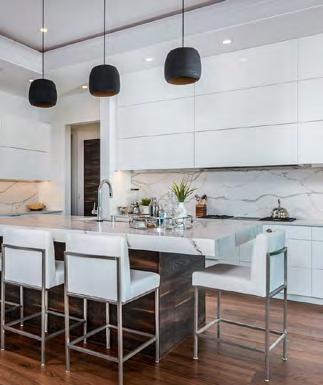
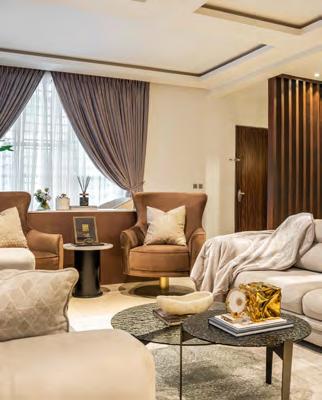
Designing Homes That Match Your Mood, Not Just Your Budget
BY JOHNSON CHUKWUEKE
Walk into some homes, and you instantly feel it. The calm. The warmth. The personality. It’s not always about expensive furniture or giant chandeliers hanging dramatically from the ceiling. Sometimes, it’s the soft lighting in the corner, the cosy throw pillow that looks perfectly imperfect, the scent of vanilla floating through the air, or the way sunlight hits a creamcoloured wall at 4pm. That feeling? That’s mood-driven design, and it’s changing the way people think about home decor.
For years, people decorated based on trends, price tags, or what looked good online. But now, there’s a new wave of interior styling taking over: homes designed around emotion, comfort, and energy. People are asking different questions. Instead of “How expensive does this look?” they’re asking, “How does this space make me feel?” And honestly? That changes everything.
CHOOSE COLOURS THAT SPEAK YOUR LANGUAGE
Colours affect energy more than people realise. Warm neutrals create calmness, earthy tones feel grounding, while brighter colours can instantly energise a room. The goal isn’t to follow every trend, it’s to create a mood. Your bedroom should feel like an exhale. Your living room should feel welcoming. Your home office should make you feel focused and inspired.
STOP DECORATING FOR GUESTS
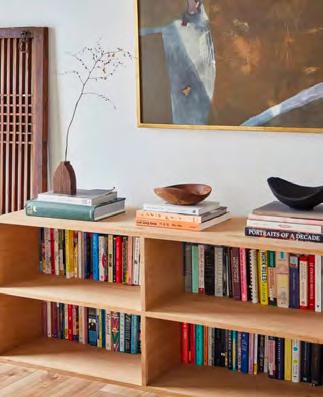
One of the biggest decor mistakes people make is styling their homes for visitors rather than for themselves. If you love books, let them become part of your decor. If candles make you happy, scatter them around. If you enjoy playful colours, embrace them boldly. Your home should feel like your personality in physical form.
LIGHTING IS A MOODCHANGER
Nothing transforms a space faster than lighting. Harsh white lights can make even beautiful rooms feel cold. Warm lighting instantly creates softness and comfort. Add bedside lamps, soft yellow bulbs, fairy lights, or even candles. Good lighting doesn’t just change your home, it changes your entire mood.
COMFORT IS THE NEW LUXURY
Forget stiff “showroom” spaces nobody can touch. The modern dream home feels lived-in, relaxed, and comforting. Soft rugs, layered cushions, cosy corners, oversized throws, these little details create emotional comfort. A beautiful home should invite people to stay, not scare them into sitting carefully.
CREATE SMALL JOY CORNERS
Every home deserves one corner dedicated purely to happiness. Maybe it’s a reading chair near a window, a mini coffee station, or a balcony setup for evening relaxation. Tiny spaces can carry big energy when styled intentionally.
At the end of the day, the best homes are not the most expensive ones; they’re the ones that make people feel something. So forget perfection. Forget chasing every online trend. Design a home that feels peaceful, exciting, expressive, and fully yours. Because when your space matches your mood, home stops being just a place you live in and becomes a place that truly lives with you.
Ways to Romanticise Your Life
MAKE YOUR MORNINGS FEEL INTENTIONAL
How you start your morning can affect your whole day. Instead of rushing out of bed and immediately checking your phone, try to make your mornings calm and gentle. You can wake up a little earlier and take your time. Open your window and let in some fresh air. Drink water slowly instead of rushing. The goal is not to make your morning perfect. The goal is to make it feel peaceful instead of stressful.
CREATE A SPACE THAT FEELS LIKE YOU
Your environment affects your mood more than you think. If your space is messy or dull, it can make your mind feel the same way. Try to create a small space that feels comforting to you. It does not have to be expensive or perfect.
TURN ORDINARY MOMENTS INTO EXPERIENCES
A big part of romanticising life is learning to treat normal things like they matter. Even simple activities can feel special if you are present. For example, instead of just eating your food quickly, sit down and actually enjoy it. When you are walking, look around you instead of being lost in your thoughts or phone. Notice the sky, the trees, or even the movement of people.
DRESS IN A WAY THAT MAKES YOU FEEL GOOD
You do not need expensive clothes to feel beautiful or confident. Romanticising your life also includes dressing for yourself, not for anyone else. Wear clothes that make you feel comfortable and confident. Even if you are at home, you can still dress in a way that lifts your mood. It can be simple outfits, clean styles, or colours that make you feel calm and happy.
BY DORCAS AKINTOYE
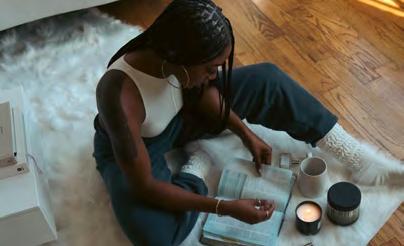
Life can sometimes feel like a routine, but the truth is, your life does not have to feel boring or heavy. You can make it feel softer, more beautiful, and more meaningful by the way you choose to experience it. This is what people mean when they say “romanticise your life.” It does not mean fake happiness or pretending everything is perfect. It simply means slowing down and enjoying small moments that already exist in your daily life. In this article, we will show you five simple ways to romanticise your life.
CAPTURE AND APPRECIATE YOUR MOMENTS
Life moves fast, and we often forget beautiful moments because we are not paying attention. One way to romanticise your life is to capture and appreciate your daily experiences. You can take simple photos of things you enjoy, like your food, the sky, your outfit, or moments that make you smile. You can also write small notes in your phone or journal about your day.
Romanticising your life is not about living in fantasy. It is about seeing beauty in what is already around you. It is about slowing down, paying attention, and treating your everyday life with care. When you start doing this, life does not necessarily change, but the way you experience it does.
TURKISH DELIGHTS BON APPÉTIT
RECIPES THAT BRING THE MEDITERRANEAN HOME
BY JOHNSON CHUKWUEKE
When you think of Mediterranean cuisine, Turkey shines as one of the richest culinary crossroads—where East meets West, and tradition meets flavour. From street food stalls in Istanbul to family kitchens along the Aegean coast, Turkish cooking blends spices, textures, and aromas that feel like pure magic. The good news? You don’t need a plane ticket to enjoy it. With these five Turkish delights, you can bring the Mediterranean home one recipe at a time.
MENEMEN (TURKISH SCRAMBLED EGGS)
Think of this as breakfast with personality. Menemen is a cosy mix of eggs scrambled with tomatoes, green peppers, onions, and a touch of chilli. Fluffy, saucy, and best eaten with crusty bread, it’s Turkey’s answer to a hearty morning pick-me-up.
KÖFTE (TURKISH MEATBALLS)
Köfte are more than just meatballs— they’re spiced little parcels of joy. Made with ground beef or lamb, breadcrumbs, herbs, and warm spices like cumin and paprika, they can be grilled, baked, or fried. Pair with yoghurt sauce or tuck into pita bread for a true street-style bite.
LAHMACUN (TURKISH FLATBREAD PIZZA)
IMAM
(STUFFED EGGPLANT)
Often called “Turkish pizza,” lahmacun is a thin flatbread topped with spiced minced meat, onions, parsley, and tomatoes. Rolled up with fresh lemon juice and greens, it’s light yet bursting with flavour—perfect for lunch or a quick snack.
This vegetarian gem literally means “the Imam fainted”—legend has it, from sheer delight after tasting it. Eggplants are stuffed with onions, garlic, and tomatoes, then slow-cooked in olive oil until silky soft. It’s a meltin-your-mouth dish that showcases Turkey’s love affair with vegetables.
BAKLAVA (LAYERED PASTRY DESSERT)
No Turkish meal is complete without something sweet, and baklava is the crown jewel. Layers of flaky phyllo pastry are filled with chopped nuts, drenched in honey or syrup, and baked to golden perfection. Served with Turkish tea or coffee, it’s indulgence at its finest.
From savoury breakfasts to decadent desserts, Turkish recipes embody the
and vibrancy of the
Whether you’re whipping up quick menemen on a Sunday morning or tackling the art of baklava for a dinner party, these dishes transform your kitchen into a little slice of Istanbul. Ready to try? Your Mediterranean feast awaits.
warmth
Mediterranean lifestyle.
BAYILDI
cassy’s chronicles
PERFECT TIMING
My alarm rang at 5:30 a.m., and for a few seconds, I stared at the ceiling, trying to convince myself that sleep was more important than fitness.
But I had paid for a three-month membership, it was my first day too, and my account balance was already judging me.
So I dragged myself out of bed.
By the time I got to the gym, I was already tired.
The place was packed. People were lifting weights like they had no problems in life. Meanwhile, I was fighting for my life on a treadmill.
Ten minutes in, I was sweating like I had run
from Lagos to Ibadan.
"You're going too fast."
I turned and saw a guy standing beside me.
He was smiling.
Not the annoying kind of smile. The friendly kind.
"I think the treadmill is trying to kill me," I said. He laughed.
"Reduce the speed before you collapse."
I rolled my eyes, but did exactly what he said.
"My name is Tobi," he said.
"Cassy", I replied
That was how we started talking.
At first, it was just small talk between sets. Then he showed me how to use machines I didn’t understand. Then it became me complaining every five minutes while he kept laughing like I was the most entertaining thing in the room.
Somehow, I forgot I was tired.
Before I knew it, hours had passed.
When we finally left the gym, the sun was already high. My body was sore in places I didn’t know existed, but I didn’t feel like going home yet.
“You’re heading where?” he asked as we stepped outside.
“Home”, I said.
We entered the same cab; it was when we simultaneously said where we were going that we realised we were staying in the same apartment building.
Then he pointed slightly. “Don’t tell me…”
I squinted. “You live there too?”
He nodded slowly. “Third floor.”
I blinked.
“I’m on the third floor too.”
We both laughed at the same time.
“I guess we were neighbours all along,” I said.
“Apparently,” he replied.
The air between us felt different now. Like the day had shifted into something neither of us was ready to name.
When we got upstairs, neither of us went straight inside.
We stood there outside my door, still talking softly, like we were avoiding the end of something good.
“I had a good day,” he said.
“Me too,” I replied.
Then there was this awkward silence.
He looked at me for a moment longer than necessary.
“So… what now?” he asked.
I smiled a little.
“I think we just take it one day at a time.”
He nodded, like that made sense.
Then we stepped inside together.
Minutes later, he was sitting in his apartment, sharing food and talking. The conversation stretched for hours. Luckily, it was a weekend, and neither of us had anywhere to go.
We talked about childhood dreams. Past relationships. The mistakes we had made. The things we still hoped to achieve. There was something comforting about him.
I just couldn't stop smiling. It’s funny how I had gone to the gym hoping to lose weight. I didn't expect to find a neighbour. I definitely didn't expect to find a connection.
Anyway, the rest of the day didn’t need too many words. It was epic!
BY BOLUWATIFE ADESINA
MOVIE REVIEW:
Backrooms
There’s
as much buzz about how Backrooms came to the screen as there is about the movie itself — and there is a lot of buzz about the movie.
There deserves to be. This movie will mess you up, in the best horror-movie ways.
But the lore around the film is already legendary. Director Kane Parsons is only 20, the youngest director of a film distributed by A24, ever. He’s directing a couple of Oscar nominees, Chiwetel Ejiofor and Renate Reinsve.
Soon he’ll be old enough to buy a beer to celebrate.
Oh, and he's made a really good movie.
In Backrooms, Chiwetel Ejiofor plays furniture store owner Clark, who finds himself in an otherworldly dimension known as the Backrooms.
The film began life as a photo taken in 2002 of a furniture store in Wisconsin that was undergoing renovations. You can see various rooms through the openings; the walls and carpet are a sickly yellow, as if the building had jaundice. Fluorescent lights complete the creepy photo (which was just meant to document the renovation).
In the late 2010s, the photo began showing up online and blossomed into a full-on sensation. Long story short: Parsons, who wasn’t born when the original photo was taken, turned it into The Backrooms (Found Footage), a short horror film, and expanded it into a series of short films.
But in much the same way a film based on a novel has to stand on its own — there shouldn’t be a prerequisite for enjoying a movie — Backrooms has to work as a standalone movie, apart from all that’s come before. In other words, you need to be able to walk in cold and still enjoy it.
With Backrooms, you can, with the warning that it is mind-bending and scary (and if you’re claustrophobic, you’ll go nuts). Parsons proves expert at creating dread; the movie is practically soaking in it. There are some visual scares, and the set design is wild, contributing a lot to the feeling of suspense. You just know something is going to go wrong. As with the original photo, everything is a little off. Until it’s really off.
If this is all a bit vague, that’s by design. The details are best left to discover on your own. Set in California in 1990, it begins with found footage of someone exploring the rooms, and things going awry. Then we meet Clark (Ejiofor), the manager of Cap’n Clark’s Ottoman Empire, one of those sad, tacky furniture outlets that haunt shopping centres.
Clark is a frustrated architect who has had to take this job. We learn this through his sessions with Mary (Reinsve), his therapist. He’s frustrated and angry, with a temper. Role-playing exercises are particularly painful and volcanic. One day at work, as he’s closing up, Clark sees flickering lights from the stairway to the basement. He goes down to investigate and discovers a portal which leads him through the wall.
On the other side, Clark finds an empty room (inspired by the furniture store photo). But it’s… off somehow. As he explores the other rooms in the basement, things get even weirder. A stop sign with the word “stop” backwards. Partially sunken furniture. Shattered furniture. And most disturbingly, it sounds like someone or something else is down there with him.
Clark enlists the help of Kat (Lukita Maxwell), one of his employees, and her video-camera-wielding boyfriend Bobby (Finn Bennett), to explore further. When that goes south, Mary, who has her own suppressed history, finds herself heading to Cap’n Clark’s to investigate further.
What she finds there is unsettling, to say the least. The film deals with the unreliability of memory, with repressed trauma, and with the inability to be honest with yourself and others. It deals with these things in about as creepy a way as possible.
That’s not all. There’s another layer to everything, which devotees of the short films will recognise. If you are the sort of movie fan who appreciates a director who doesn’t tie everything up in neat little bows, you’ll love this. It’s at times confusing, at times frustrating.
But it feels as if Parsons maintains control over every frame of the film. He knows where he wants to go, even if at times, like in the Backrooms, it’s sometimes hard to follow. That’s the mark of a good filmmaker. After all of what led to making The Backrooms, it will be interesting to see what comes next. You don't have to fully understand his film to appreciate it, and that's maybe the highest compliment of all.
Rating: 7.7/10
You
WATCH OF THE WEEK
SPIDER-NOIR
Spider-Noir comes with two different ways to watch.
It’s not exactly a choose-your-ownadventure, but a choose-your-own-viewing experience.
If you watch it in black-and-white, SpiderNoir takes on even more of the tone and style of the classic Hollywood genre from which it heavily borrows.
There are long shadows, and in greyscale, the secrets and lies of its characters seem even murkier.
Or you could watch it in full colour, vibrant and dynamic, the opposite of the dull colour-grading weirdly favoured by so many modern productions. Here, the jewel tones pop off the screen, situating this series not just in its art deco era but also in the hyper-realism of its superhero genre.
Both choices are rewarding in their own ways, but for the record, Nicolas Cage would love it if you did it in black-andwhite. Just FYI.
Spider-Noir has its origins in the Marvel comics as an alternate version of SpiderMan who lives in New York City during the Great Depression, and first appeared on the page in 2009. On screen, this enterprise was born out of Cage’s voice appearance in the 2018 animated film Spider-Man: Into the Spider-Verse.
Cage’s velvety take on a film noir SpiderMan was a massive hit, which triggered the wish-fulfilment of a spin-off. But in live-action!
That’s how we ended up with Spider-Noir, an eight-episode crime thriller in which Cage plays Ben Reilly, a private detective with a coat, a hat, a witty secretary and a habit for getting into trouble, see?
It’s 1930s New York, and crime is rampant, even more so since the mysterious superhero known as The Spider disappeared some years ago, which allowed mob boss Silvermane (Brendan Gleeson, in full Irish accent) to spread influence and fear further across the city.
The Spider was Reilly, who hung up his balaclava after the death of his fiancée, the tragic Ruby (Amanda Schull) – of course, Reilly feels responsible. As a kind-of atonement, he hasn’t allowed himself to be a hero because he doesn’t feel like one, and mostly stakes out philandering spouses.
One such job sets off a chain of connected events. He’s hired to follow a client’s “wife”, who turns out to be Cat Hardy (Li Jun Li), a nightclub singer connected to Silvermane and the mayor, and this series’ classic femme fatale.
doesn’t give her up to the client but still becomes embroiled in whatever is going on, especially since, you know, feminine wiles.
Cage is such a distinctive performer, and it’s difficult to imagine anyone else could have played this noir version of SpiderMan.
Reilly is grizzled, disillusioned and carrying great pain, but he’s also playful, especially when he has to perform certain personas in front of different characters, whether that’s to throw suspicion off him or to elicit something specific.
He also has great screen chemistry with Li, Karen Rodriguez as his secretary, Janet, and Lamorne Morris as resourceful journalist Robbie Robertson, who knows Reilly’s great secret.
Cage is Spider-Noir’s best asset, and its filmmakers, including producers Phil Lord and Chris Miller, know it.
The show is more derivative than it is original, and the story doesn’t rise to the same level as Cage’s performance, but there is a lot of like in Spider-Noir, especially if you’re tickled by the thought of watching Cage contracting his limbs into a spider pose or shooting webs from his wrists.
Reilly can smell something’s off with the assignment, and he