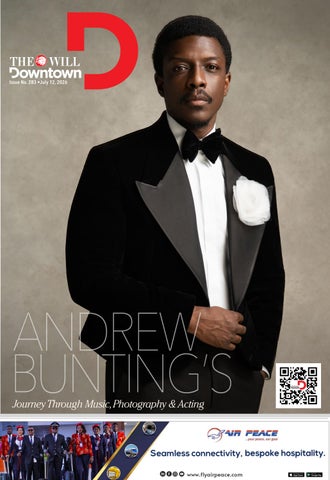
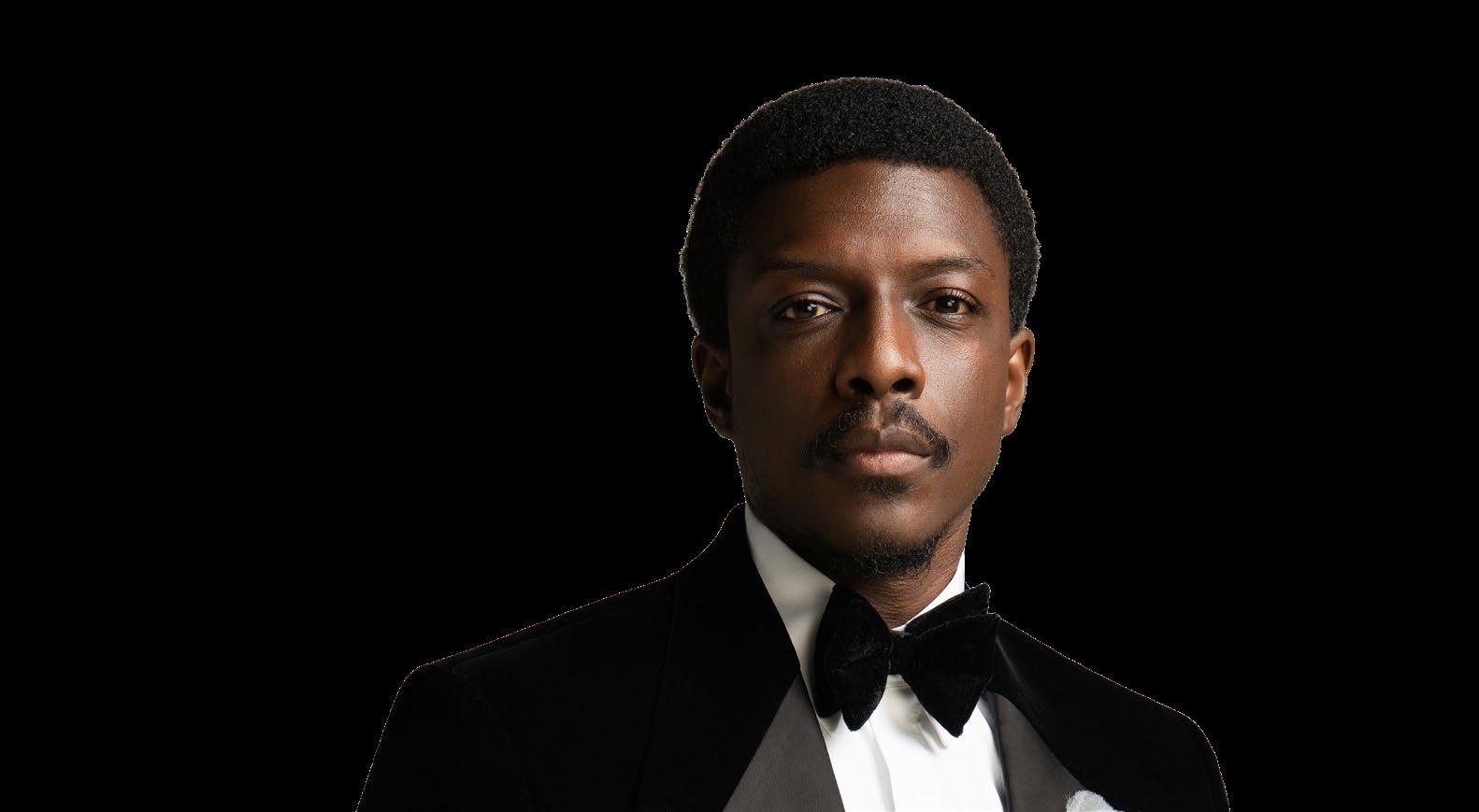
ANDREW BUNTING’S
Journey Through Music, Photography & Acting
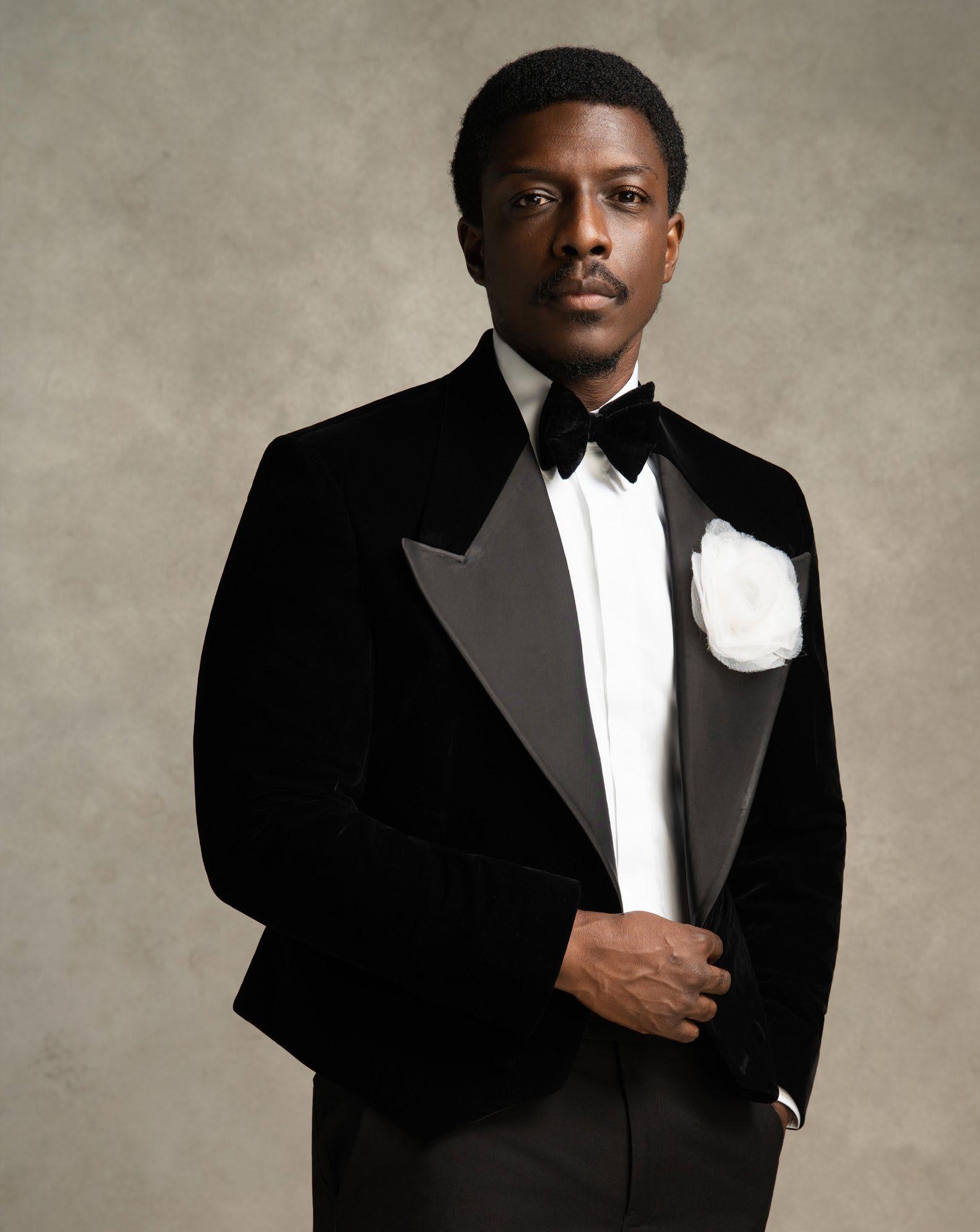



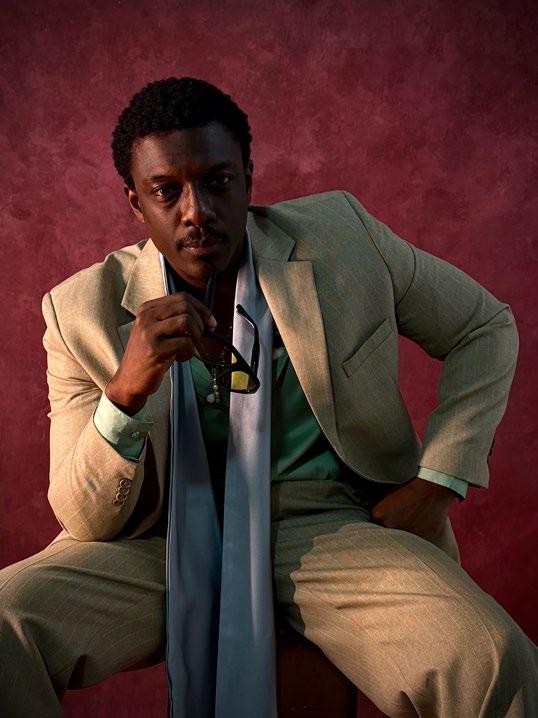
Photo: Kola Oshalusi @insignamedia Makeup: Zaron
very so often, a conversation reminds me that the most compelling careers are rarely defined by speed but by purpose. Andrew Bunting's journey is one of those stories. In an industry that often celebrates overnight success, his path has been shaped by patience, reinvention, and an unwavering commitment to storytelling, even when the spotlight was elsewhere.
Before Nollywood audiences came to know him, Bunting had already lived several creative lives. From music to photography, each chapter sharpened the perspective he now brings to the screen. Today, with memorable performances in Water & Garri, Princess on a Hill, Love Lockdown, My Body, God's Temple, and Call of My Life, he continues to prove that every step along the way mattered.
In this issue, Bunting reflects on the seasons that tested his resolve, the craft that continues to inspire him, and the role that made him embrace vulnerability in a new way.
Read Andrew Bunting’s story on pages 8 through 10. I hope you'll find his story as thoughtful, honest, and encouraging as I did.
The promise of the soft life once felt like a refreshing alternative to hustle culture, offering a vision of ease, joy, and intentional living. Today, as rising living costs reshape everyday realities, that ideal is being questioned. In this issue, we explore whether the soft life has evolved beyond curated aesthetics into something more honest, practical, and deeply personal on page 16.
We’ve all promised ourselves, “I’ll start tomorrow.” Yet tomorrow has a way of slipping away. This issue is a reminder that fitness doesn’t begin with perfect timing or endless motivation—it starts with one small decision made today. Break the cycle, take the first step, and let consistency do the rest.
Until next week, enjoy your read.


@onahluciaa +2348033239132

AUSTYN OGANNAH PUBLISHER/EDITOR-IN-CHIEF
Executive Editor: Onah Nwachukwu @onahluciaa
Writers:Dorcas Akintoye, Johnson Chukwueke & Evi-Ben Ezaga Design & Layout: Hogan Effiom
Digital Media: Oladimeji Balogun, Victoria Dairo & Olamide Abolarin
Consulting Art Director: Sunny Hughes ‘SunZA’

Lagos Leather Fair



Andrew Bunting’s Journey Through Music, Photography & Acting Is the Soft Life Era Losing Its Shine? Health Conditions Showing Up Earlier Than Expected
Old Feelings Five Reasons Rwanda Should Be Your Next Weekend Getaway It's Nothing
Burundi Arabica Africa’s Next Beauty-Origin Story
Boluwatife Adesina @bolugramm - Contributing Writer
Boluwatife Adesina is a media writer and the helmer of the Downtown Review page. He’s probably in a cinema near you.
Sally Chiwuzie @unshakable.is.a.state.of.mind - Contributing Writer
Sally Chiwuzie is a non-practising barrister who owns the brand #Unshakable. She is the author of Silent Symphonies, a fictional love story, and the creator of the podcast Chronicles of #Unshakable Truths.
Ada Obiajunwa @aaddaahh - Contributing Writer
Ada Obiajunwa writes from Lagos about the big truths tucked inside ordinary moments — friendship, self-discovery, and the quiet revolutions of everyday life. She believes in the power of presence, good banter, and decoding the unsaid. Through her fragrance studio, WhiffWonders, she also crafts scents that weave memory and emotion into experiences that feel like home.


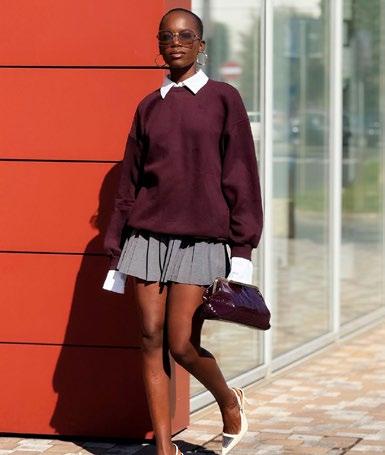
HOW TO STYLE A MINISKIRT
BY DORCAS AKINTOYE
Miniskirts are stylish, fun, and easy to wear when paired with the right pieces. They can be dressed up for special occasions or dressed down for everyday outings. The key to styling a miniskirt is to create a balanced look that makes you feel comfortable and confident. Whether you prefer a casual, classy, or trendy style, this article shows you different ways to make a miniskirt work for you
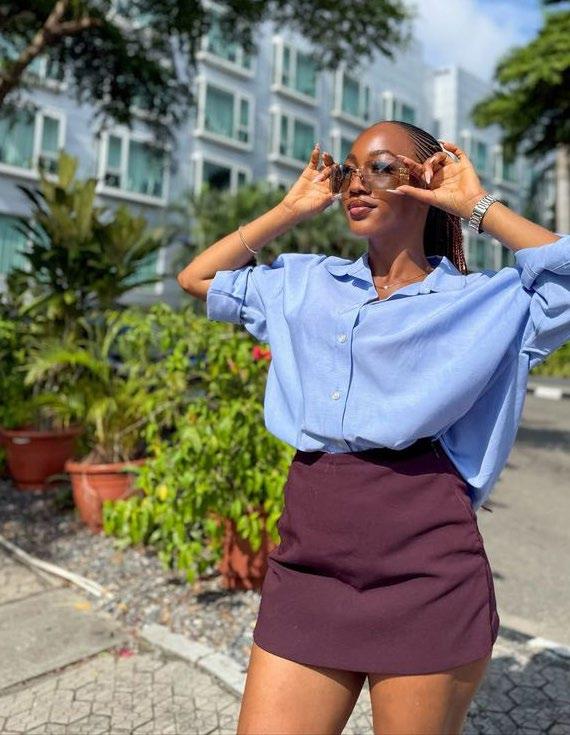
PAIR IT WITH AN OVERSIZED SHIRT
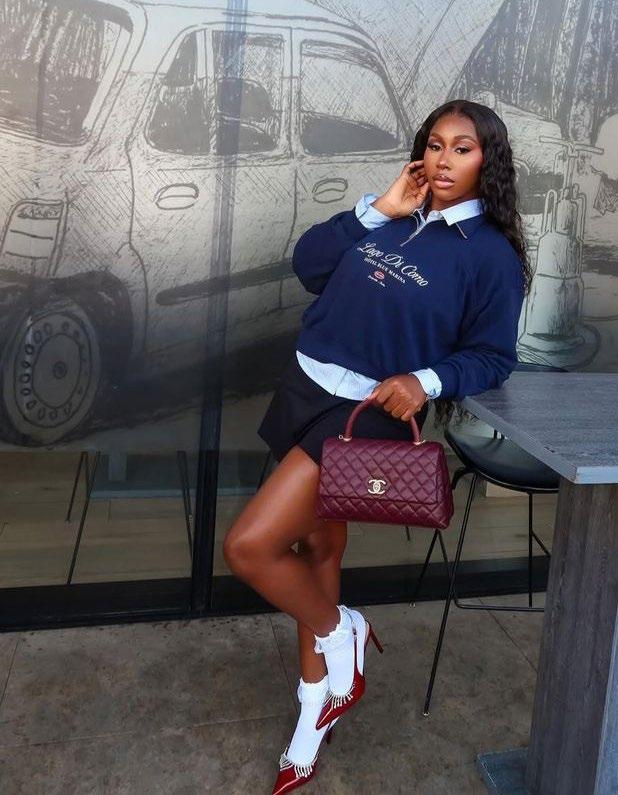
One of the easiest ways to style a mini skirt is with an oversized shirt.The shirt’s loose fit balances the skirt’s shorter length, creating a relaxed and fashionable look.You can wear a white button-down shirt, a striped shirt, or even an oversized denim shirt.Tuck one side of the shirt in for a more stylish look or leave it loose for a laid-back vibe. Complete the outfit with sneakers, sandals, or ankle boots, depending on where you're going.
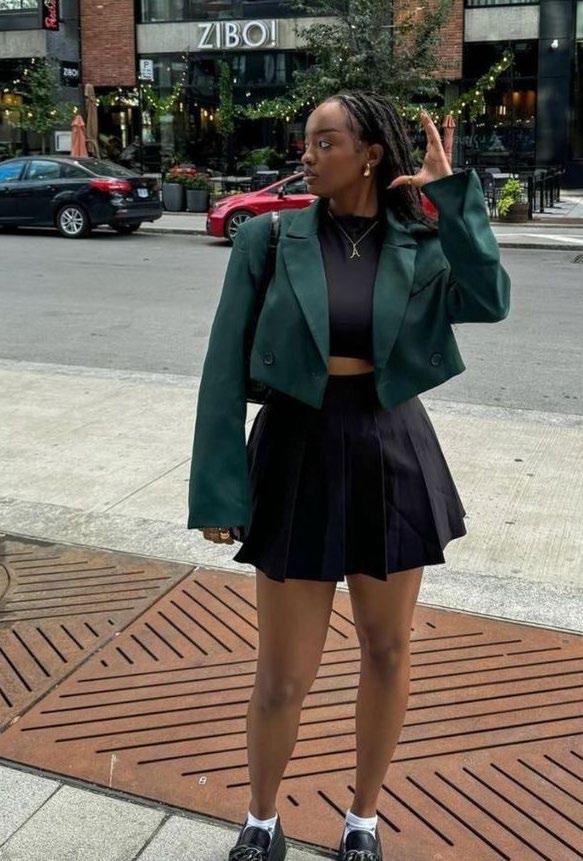
LAYER WITH A BLAZER
If you want your mini skirt to look more classy and sophisticated, add a blazer. A blazer instantly makes the outfit look more polished while still keeping it stylish. You can wear a fitted or slightly oversized blazer over a simple top. Neutral shades like black, beige, white, or grey are easy to pair with most miniskirts. Finish the outfit with loafers, heels, or ankle boots for an elegant touch.
WEAR IT WITH A FITTED TOP
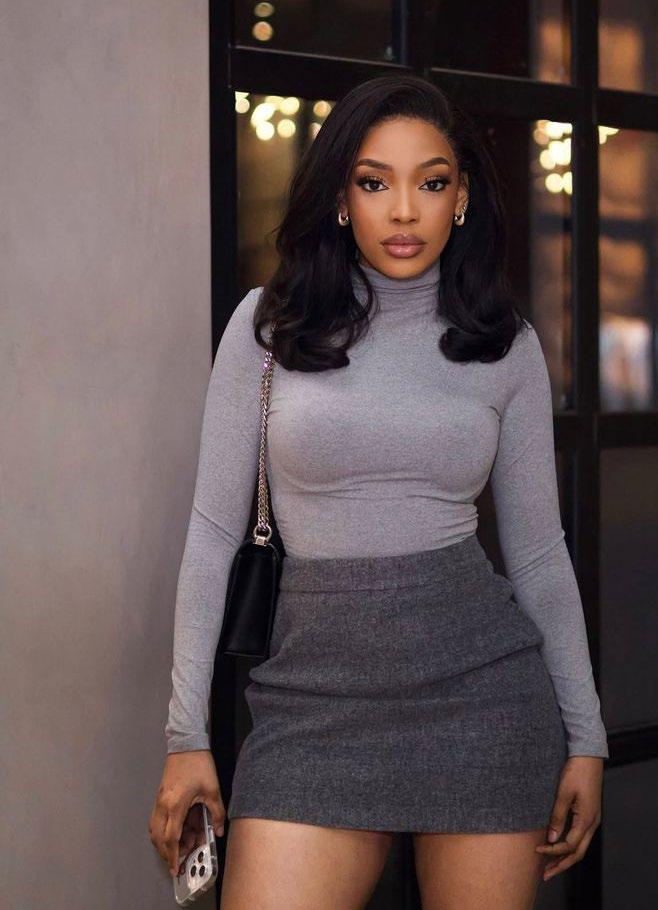
A fitted top and a miniskirt create a clean, flattering outfit. Since the skirt already draws attention to your legs, a fitted top helps keep the look balanced and polished.You can choose a basic T-shirt, a tank top, a bodysuit, or a fitted blouse. Neutral colours create a simple, elegant look, while bright colours can make the outfit stand out.Add simple accessories such as a handbag, necklace, or sunglasses to complete the look.This style works well for dates, casual events, and weekend outings.
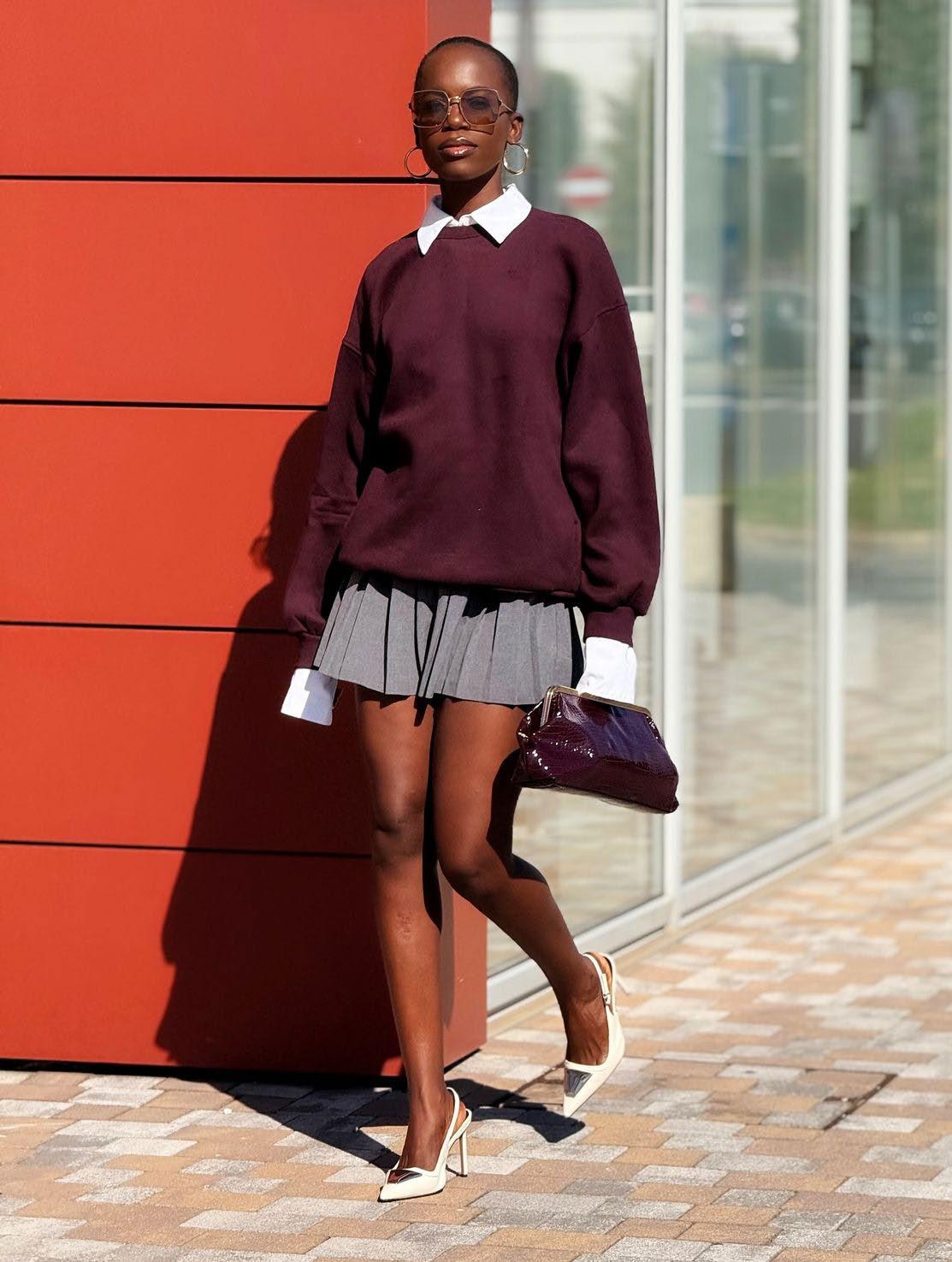
STYLE IT WITH A SWEATER
A cosy sweater paired with a miniskirt creates a fashionable outfit, especially in cooler weather.The sweater’s soft, relaxed look balances the shorter skirt beautifully.You can wear the sweater tucked in slightly at the front or leave it loose for a comfortable feel. Kneehigh boots, ankle boots, or sneakers pair well with this combination.
A miniskirt is a versatile wardrobe piece that can be styled in many ways. Whether you pair it with an oversized shirt, a fitted top, a blazer, or a sweater, the right combination can help you create a stylish and confident look.



SALLY CHIWUZIE
@unshakable.is.a.state.of.mind
TRUTHS
The Moon Was Already There UNTOLD TRUTHS
Iwentfor a run one evening last week and found myself standing on a bridge, watching the day quietly surrender to the night.
Cars continued their journeys, a gentle breeze skimmed across the water, and people walked past without breaking their stride. It was, by every measure, an ordinary evening.
Then something remarkable happened.
The sun loosened its grip on the sky.
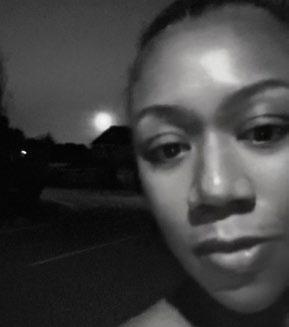
The colours softened from gold to amber, then to deep blue. Almost unnoticed, the moon began to appear. There was no dramatic announcement, no countdown, no applause. The extraordinary arrived with such quiet confidence that most of us would have missed it entirely.
Standing there, I wondered whether nature has been trying to teach us something all along.
Perhaps we have misunderstood how extraordinary things happen.
Somewhere along the way, we became addicted to lightning.
We wait for the conversation that changes everything, the promotion that validates years of effort, the relationship that finally makes sense of heartbreak, the diagnosis that forces us to live differently, or the breakthrough that divides life neatly into before and after.
Trust is earned in conversations nobody remembers. Strength is forged in repetitions too ordinary to photograph.
Perhaps that is why so many people abandon the very things that would eventually change their lives. The work feels too small. The results arrive too slowly. The bridge between where they are and where they want to be looks painfully ordinary.
Yet every extraordinary destination is reached by crossing ordinary bridges.
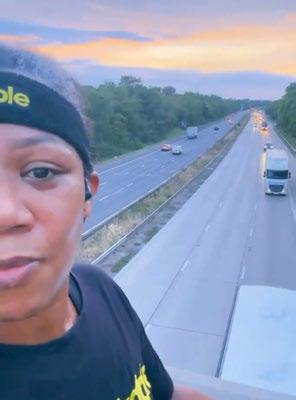
As I left the bridge and continued my run, nothing about the structure itself had changed. It remained exactly where it had always been, connecting one side to another without asking for recognition.
The sky, however, had become something entirely different.
I had set out thinking I was going to watch a sunset.
Instead, I had watched transition.
I have carried that evening with me ever since.
We expect transformation to be dramatic because dramatic stories are easier to tell.
Nature, however, tells a different story.
The sunset never arrives all at once. The moon does not suddenly appear. At the beginning of July, one month quietly gave way to another while most of us were asleep. Time did not pause to ask whether we felt ready. It simply continued doing what it has always done.
Everything remarkable I witnessed that evening had already begun long before I noticed it.
Perhaps that explains why we are so quick to dismiss our own progress.
We call it just another run.
Just another workout.
Just another difficult conversation.
Just another article.
Just another application.
Just another ordinary Tuesday.
Yet lives are rarely transformed by isolated moments. They are transformed by accumulation.
People love the phrase "overnight success."
Nature has no equivalent.
An oak tree never wakes up surprised by its own height. The tide never demands recognition for changing direction. The moon never apologises because it was invisible an hour earlier.
Only human beings insist that transformation should arrive with witnesses.
The irony is that most of the things that shape us happen in near silence.
Confidence is built before anyone notices it. Healing begins long before the scars disappear.
There was something fitting about watching one month quietly give way to another. The calendar changed without fireworks. No grand announcement declared that a new chapter had begun. Time simply continued doing what time has always done.
Perhaps that is why I cannot stop thinking about that bridge. It reminded me that life is rarely transformed by dramatic moments. More often, it changes in quiet transitions we only recognise when we stop long enough to notice them.
Perhaps that is the invitation before us every single day.
Not to wait for lightning.
Not to postpone our lives until something spectacular happens.
But to trust that today's ordinary choices are quietly becoming tomorrow's extraordinary story.
Perhaps the #Unshakable truth is this:
We spend our lives waiting for lightning, while life quietly keeps sending us sunsets.
The breakthrough we are praying for may already be unfolding so gently that we mistake it for another ordinary day.
Sometimes the moon has already risen. We simply have not looked up yet.
'See' you next week.
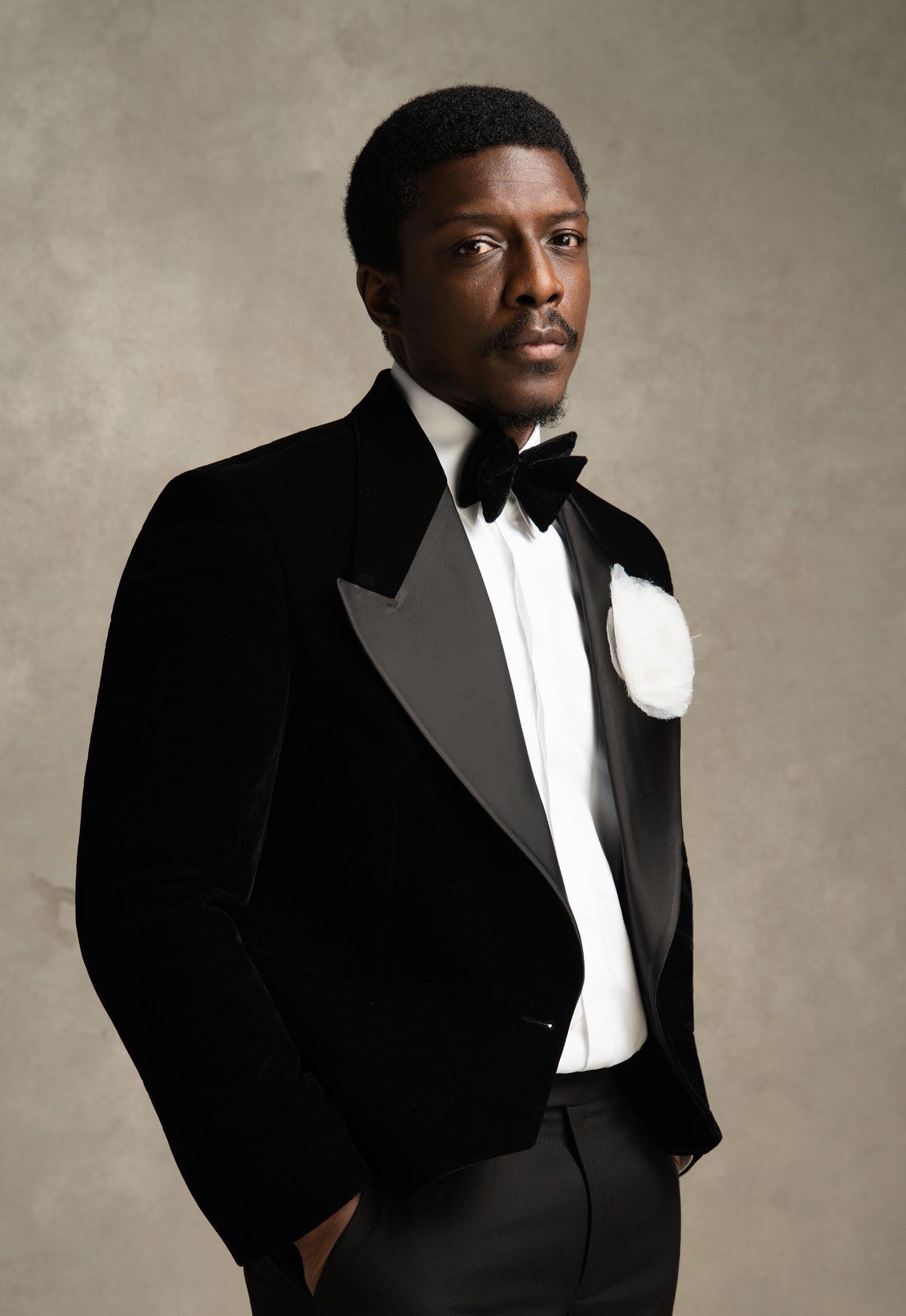
ANDREW BUNTING’S
Journey Through Music, Photography & Acting
Andrew Bunting’s story is the kind that reminds you that success does not always arrive in a straight line. Sometimes, it takes years of trying, learning, changing direction, and holding on through the quiet seasons before everything finally begins to make sense. In an industry that often celebrates overnight fame, Bunting’s journey stands out for a different reason because it is built on patience, persistence, and a deep love for storytelling in all its forms.
Long before audiences began to notice him in Nollywood, Andrew Bunting was already building a creative life across different worlds. Born to Ghanaian roots and shaped by experiences in the UK, he first found his voice in music, spent years behind the lens as a photographer, and explored visual storytelling through film before fully stepping into acting. Today, he is one of the rising faces in Nollywood, with standout roles in Water & Garri, Princess on a Hill, Love Lockdown, My Body, God’s Temple, and the romantic comedy Call of My Life. Whether he is on screen or behind the camera, Bunting brings an energy that continues to set him apart.
In this interview with THEWILL DOWNTOWN’s Dorcas Akintoye, Andrew Bunting discusses his journey from music to acting, the lessons photography and filmmaking have taught him about performance, the seasons of doubt and persistence that shaped his career, and why Nollywood was the place that made his dream feel real. He also opens up about typecasting, creative growth, and what drew him to Eli, the gentle romantic lead in Call of My Life.
You originally set out to pursue music, but today, many people know you primarily as an actor. Was there a defining moment when you realised acting was no longer just an interest, but something you wanted to build a career around?
Yes, my first love is music, so naturally, I wanted to pursue that. I spent a large part of my formative years learning and playing different instruments. I was also a part of a few theatre/drama clubs, both in and out of school. I’ve always had ‘Hollywood’ dreams, but I think it crystallised after my first project in Nigeria. That’s when it all felt real. I had done some TV and short experimental work in Ghana, but Nigeria made a career seem possible.
How have your experiences in music, photography, and filmmaking influenced the way you approach acting today? My experiences in music, photography, and filmmaking have taught me one thing: it is a team sport. Getting an idea off the ground and forming a tangible finished piece of art
requires cooperation, understanding, and collaboration. I respect every member of any creative team I work with and endeavour to give my best so that everyone else can give their best. I also enjoy learning. Every new set feels like an opportunity to learn something new and improve.
Photography was a significant part of your journey. Is that still something you’re actively involved in, and what does photography give you that acting doesn’t?
Yes, I’m still actively doing these things, and while acting allows me to step into another person's perspective, being behind the lens lets me explore my own. I consider it the art of noticing. I get to slow down and observe. It allows me to choose the frame rather than being in it. I learned to appreciate how a change in light, composition, and angles can affect the emotion of a frame or a scene. It’s almost like painting.
I am right now.
As an actor, have you ever found yourself being considered primarily for a certain type of role? How do you navigate the challenge of avoiding being boxed into one category?
Truth be told, I don’t really know what people presume to know about me. That being said, I'm always tickled when it comes as a surprise to many that I’m not Nigerian.
Was there ever a period in your career when you questioned whether acting was truly worth pursuing? What helped you push through that uncertainty?
"I’ve always had ‘Hollywood’ dreams, but I think it crystallised after my first project in Nigeria. That’s when it all felt real."
Oh, I quit all the time! I just never give up. If that makes sense? Much like anything else in life, the thing about this work is that it has its seasons. There is an ebb and flow. There are moments of flux and stagnation. Times in which it seems like nothing is moving are especially hard. There was a time I was working part-time at a coffee shop, and a customer recognised me. They were excited and then almost immediately disappointed that I was working there instead of being a celebrity. That was awful because I was chasing the dream; auditioning, doing bit parts here and there, but nothing had materialised yet, and there didn’t seem to be much on the horizon. I considered quitting altogether, but at the same time, I didn't want to give up. I had to learn to take things one step at a time, and I’m grateful that I’m where
"Getting
So far, it’s safe to say that most of my characters have had a strong love connection, even if the circumstances may not always be the same. However, I have had a few roles that have been far removed from that. Type casting is not new to the industry as a whole, and I don’t hate it. I think the onus is on me to choose characters that challenge me. I think with the right script and someone willing to take a risk with me, there's always an opportunity to pivot from one type of role to another.
The conversation around African cinema is evolving rapidly, with more films finding global audiences. What do you think Nollywood and the wider African film industry still need to improve on?
No industry is perfect and, as with anything we do in life, there will always be room for improvement.
In your recent movie Call of My Life, Eli came into Soluchi’s life at a moment when she was trying to heal from heartbreak. What was the most interesting aspect of Eli’s character for you to explore as an actor?
an idea off the ground and forming a tangible finished piece of art requires cooperation, understanding, and collaboration. I respect every member of any creative team I work with and endeavour to give my best so that everyone else can give their best."
One interesting thing about Eli, which is honestly quite different from the other characters I’ve played, is that he carries no extra baggage. He doesn’t have some sordid history, no deep-seated trauma, no hidden agenda. This is not to say that he has no depth, far from it. Yes, we all carry different kinds of pain, but not everyone presents with it. He’s a real person, a good person with one goal: to love Soluchi wholeheartedly, if she’ll allow it.
Romantic comedies often rely on chemistry between the leads. How did you and Uzoamaka Power work together
COVER
to make Eli and Soluchi’s connection feel believable and relatable?
First of all, Uzoamaka is a brilliant woman and a true artist. We worked together briefly on my first Nigerian film, and since then, we’ve built a particular trust in each other. As a co-star, she’s generous; she offers vulnerability, truth, and preparation on and off camera. Our job as actors is to be honest with our characters and to be faithful to the story. Naturally, Uzo (who is an accomplished writer) had written something that could be ripped out of the pages of a novel. We had a fantastic director, and the rest was cinema.
What is one thing people assume about
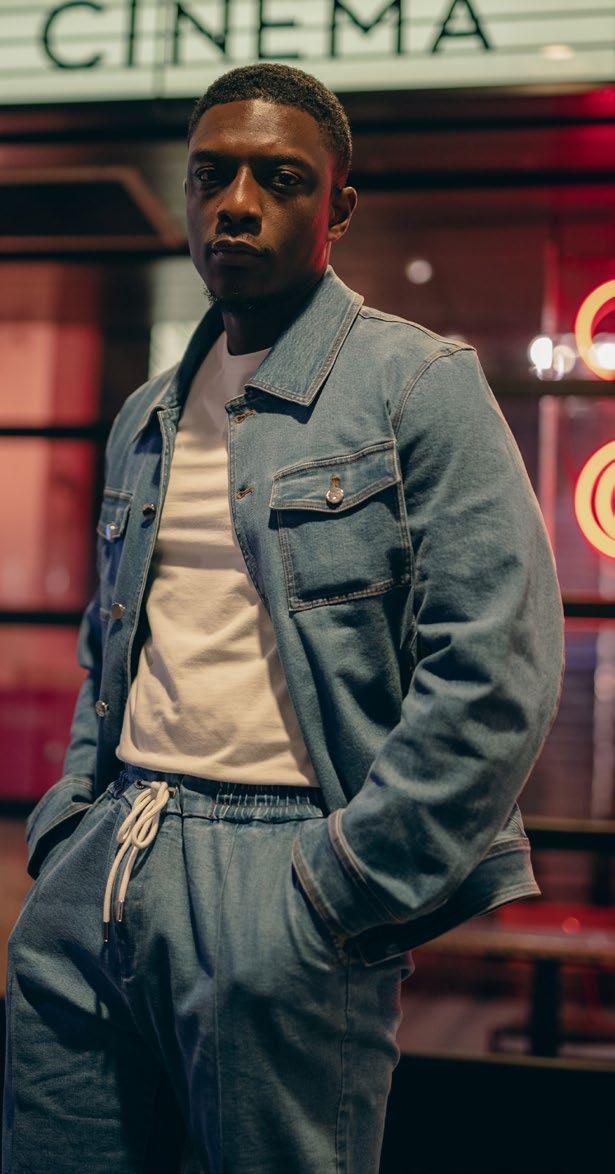
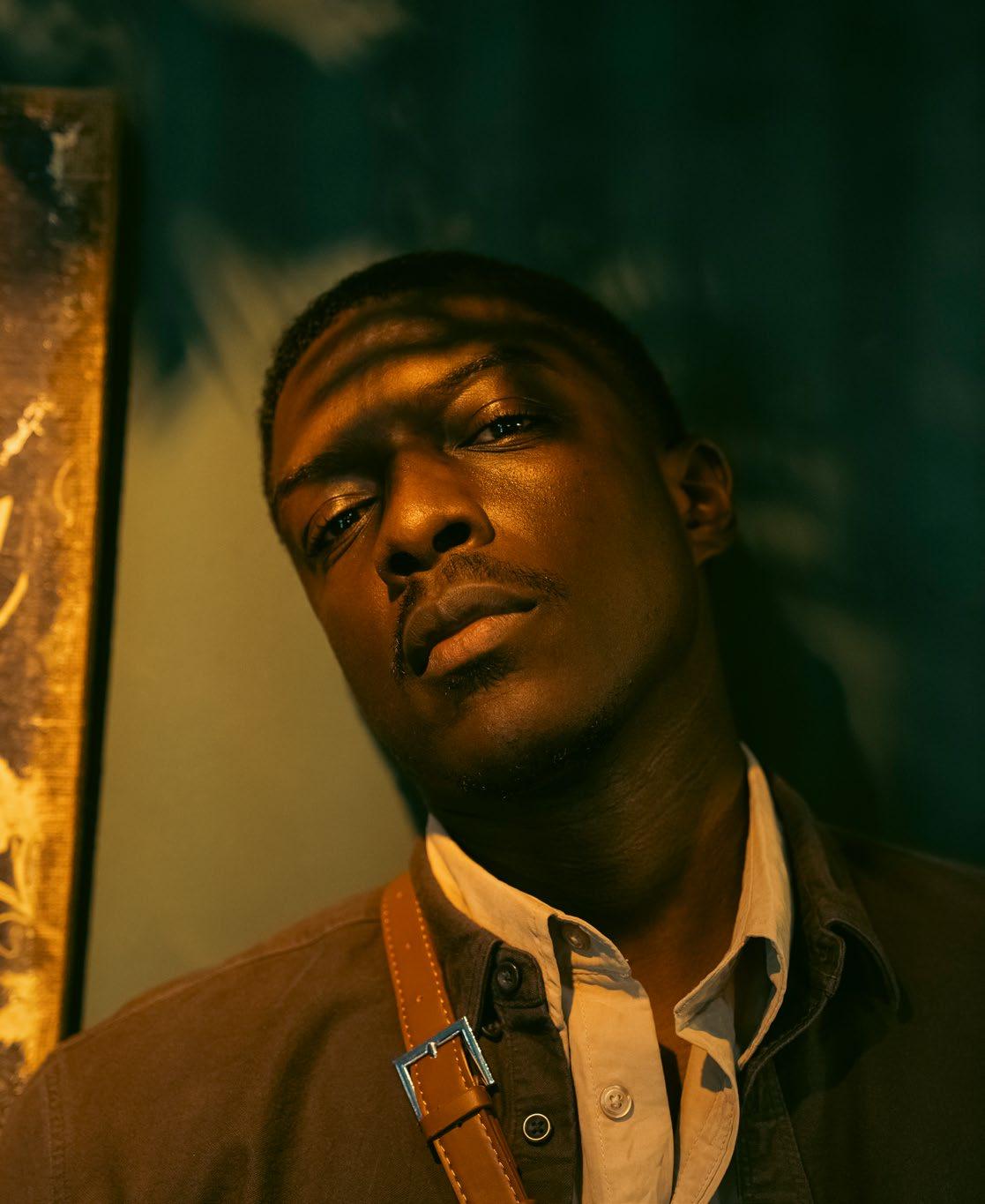
Andrew Yaw Bunting that is completely inaccurate?
Truth be told, I don’t really know what people presume to know about me. That being said, I'm always tickled when it comes as a surprise to many that I’m not Nigerian.
If audiences could take away one thing from your journey so far, what would you want it to be?
I’d want people to know that everyone’s path is different and everything has its season. There will be lessons and momentary setbacks, but I believe that when preparation meets opportunity, efforts are rewarded.
She had already started telling it.
"That reminds me of"
The words were out before she looked up.
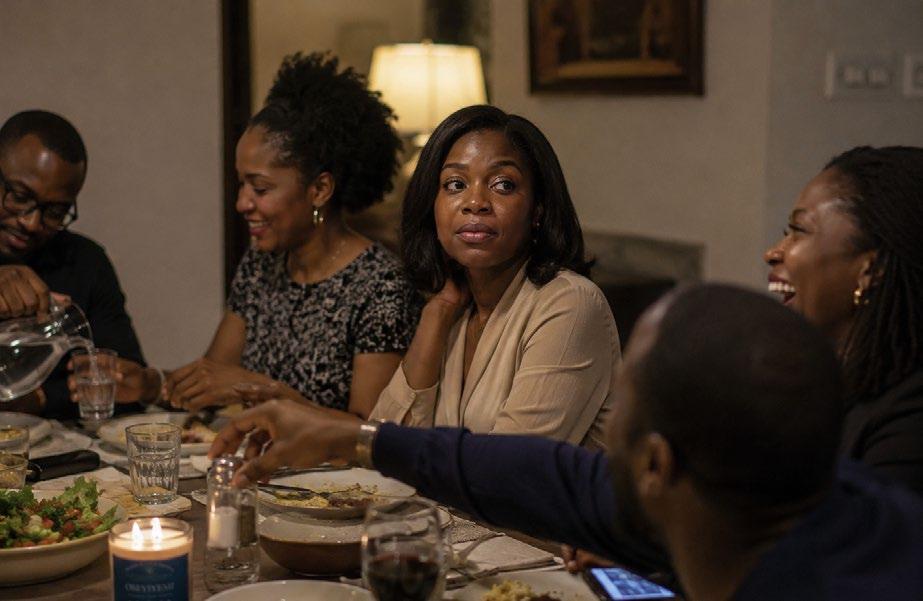
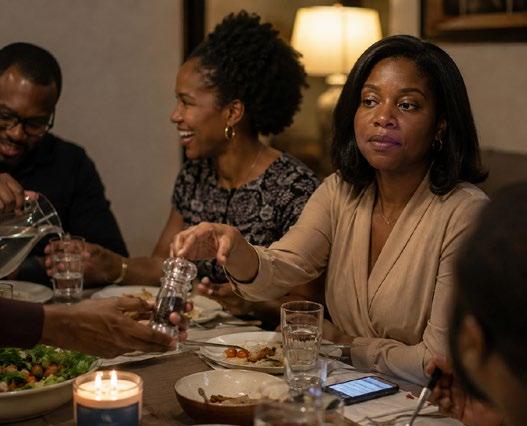
Around the table, someone was reaching for the salt.
Someone else is asking for more water.
A phone lighting up beside a plate.
She stopped. Actually… She smiled instead. "It's nothing." The conversation carried on.
Nobody noticed that a story had just disappeared. Not because they wouldn't have listened.
They would have. Kindly.
Patiently.
She simply knew where the story was about to go.
IT'S NOTHING
Before anyone understood why it was funny, they'd need to know who everyone was.
Why one person could never be mentioned without another.
Why something that sounded ordinary wasn't ordinary at all.
By then, the conversation would already have wandered somewhere else. It happened so quickly now that it no longer felt like choosing.
The sentence simply changed direction while it was still being spoken.
Every so often, another story made it this far. "That reminds me…"
She almost tried anyway. Maybe she could begin with the door. No.
A broken door wasn't funny on its own. Not unless you knew the flat. So perhaps the flat.
Four adults.
Three bedrooms.
One leaking tap. No.
LUXURY SILK
"Ada?"
She looked up.
"Sorry?"
"Could you pass the pepper?"
She passed the pepper.
The salt had already reached the other end of the table.
The person beside her was laughing at something she'd completely missed.
Someone else had already begun,
"That reminds me of…"
Another story had quietly taken the place that hers
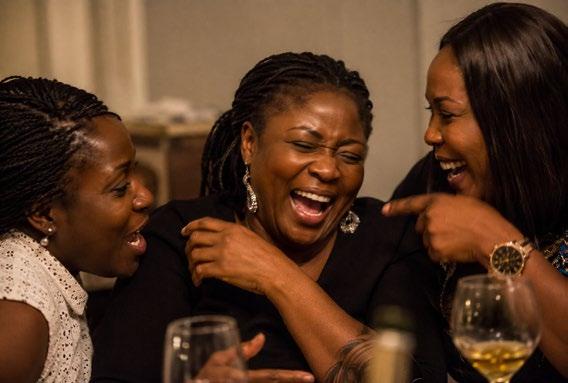
The flat only worked if you knew Kelechi. Not the Kelechi everyone knew now. The other one. The one who ironed his only good shirt on the kitchen floor because there wasn't an ironing board. Except Kelechi brought Sir Reginald with him. Whose name wasn't Reginald.
Nobody could remember when that joke had become permanent.
Explaining that would take longer than the joke itself. Maybe she could start there instead. No.
Sir Reginald only became Sir Reginald after the flat. Every version of the story reached backwards for another story.
She wasn't trying to remember anymore. She was trying to find a place where it could begin without bringing everyone with it.
There wasn't one.
By now, Kelechi had wandered back in.
Sir Reginald was standing behind him.
Someone was still checking whether the front door was locked.
A voice from the kitchen wanted to know whose turn it was to buy bread.
Someone else was complaining that the electricity had gone out again.
The flat was getting crowded. She still hadn't reached the story.
never reached.
She smiled.
"It's nothing."
The conversation carried on.
The strange thing was that it almost never happened with old friends.
Someone would begin,
"Do you remember…"
"No," somebody else would laugh.
"You're starting in the wrong place."
"That's because you're forgetting Musa."
"Musa came later."
"No, he didn't."
"He absolutely did."
Someone remembered the next line before you said it.
Someone else supplied the part you'd forgotten.
Nobody stopped to explain who anybody was.
Nobody needed to.
And perhaps that was why, every now and then, someone would begin,
"That reminds me of—" pause, smile, and quietly decide,
"It's nothing."
When, really, it had been almost an entire life.
BEAUTY BURUNDI ARABICA
AFRICA’S NEXT BEAUTYORIGIN STORY
BY CYNTHIA ODIBELI
When most people think of Burundi Arabica, they think first of coffee as a beverage — a high-altitude crop grown in Burundi’s hills and traded into global markets. But being in Burundi now, meeting stakeholders and spending time closer to the people, land, and systems behind the crop, I am beginning to see something bigger. Burundi Arabica is not just a coffee story. It is a beauty origin story in the making — one that sits at the intersection of agriculture, ingredient innovation, wellness, cultural identity, and African value creation. It raises an important question: what happens when we stop seeing African raw materials only as export commodities and begin to imagine them as premium ingredients, rituals and globally relevant beauty narratives?

RED BOURBON
The beauty industry is no longer captivated by ingredients simply because they sound exotic. Today, value lies in efficacy, provenance, sustainability and authentic origin stories. This is where Burundi Red Bourbon stands apart. Unlike many coffee-producing nations where multiple varietals dominate, more than 80% of Burundi's coffee is Red Bourbon, giving the country a rare and distinctive varietal identity. That concentration creates a powerful foundation for positioning Burundi Arabica not just as coffee, but as a premium African beauty ingredient with its own quality profile, cultural heritage and luxury appeal.

THE INGREDIENT OPPORTUNITY
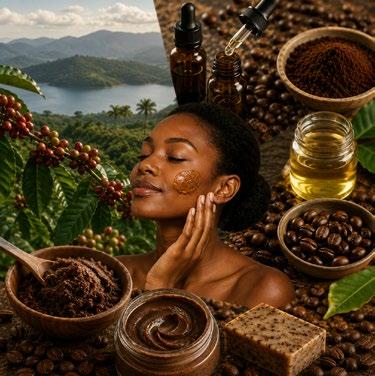
The opportunity is not limited to one hero product. Burundi Arabica could support an entire ingredient ecosystem: coffee oil for body and facial treatments, coffee extract for antioxidant-rich skincare, coffee ferment for barrier-support and bioactive formulations, coffee exfoliants for scrubs and spa rituals, and coffee antioxidants for revitalising, protective skincare. Together, they create a far more interesting beauty architecture than most people assume.
ORIGIN MATTERS IN BEAUTY
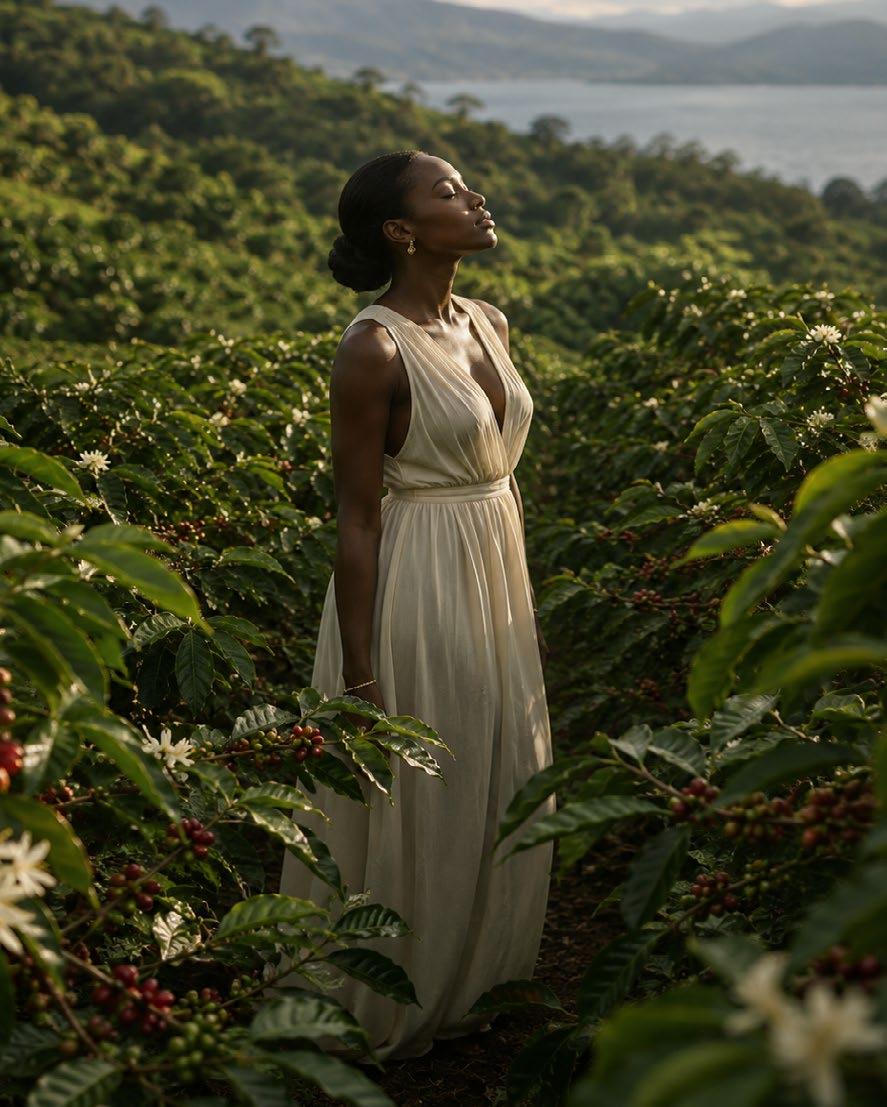


AFRICA MUST OWN THE STORY
For too long, African countries have supplied valuable raw materials while others captured the real value through branding, processing, storytelling and premium positioning. Burundi Arabica presents an opportunity to change that model. If approached strategically, Burundi should not only be known for producing excellent coffee but also for shaping a beauty-ingredient story, a wellness story, and an origin story with global commercial relevance.
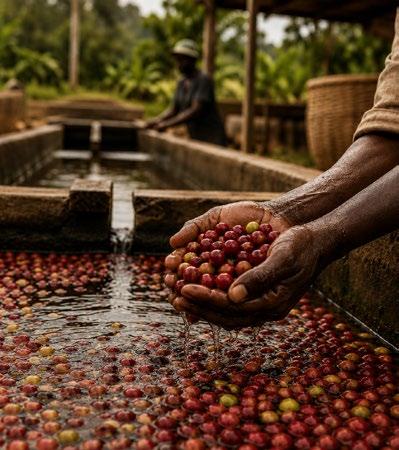
Beauty today is built not just by formulation, but by origin, trust and emotional resonance. We have seen regions around the world build entire beauty identities around place — from Moroccan argan to Japanese rice rituals. Burundi Arabica has the potential to join that conversation, transforming a respected coffee origin into a globally legible language of beauty and wellness.


BURUNDI ARABICA: BEYOND PRODUCT
What excites me most is that I do not see Burundi Arabica as a single cream or scrub. I see it as a platform: a future that could include formulations, spa rituals, hospitality experiences, research partnerships, export-ready beauty products and a new kind of African storytelling that links beauty with agriculture, commerce and culture.

Burundi Arabica is not compelling simply because it is coffee. It is compelling because it may hold the ingredients of a much bigger idea: that one African origin story can move from farm to formulation, from commodity to culture, and from local resource to global relevance.
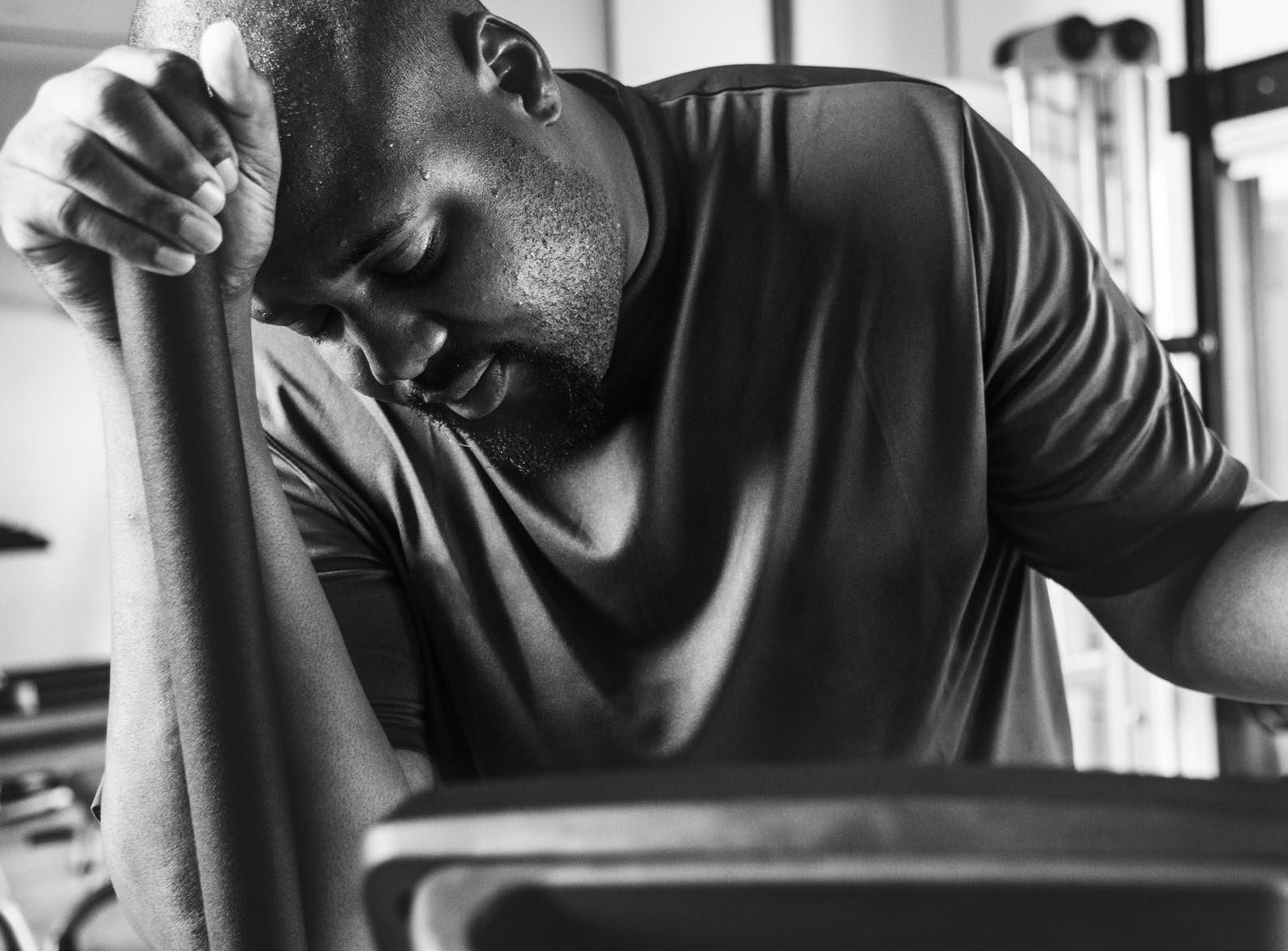
Breaking The “I’ll Start Tomorrow” Fitness Cycle
BY NATO CHIMA
Almost everybody has said it before.
"I’ll start next week."
"I’ll begin after this project." "I’ll get serious about fitness next month." And somehow, that day never seems to arrive.
One of the biggest obstacles in fitness is not the workout itself, but getting started. Many people genuinely want to exercise more, improve their health, and become more active, but they keep putting off taking action. Between busy schedules, work pressure, family responsibilities, and everyday distractions, fitness becomes something people plan for rather than do. The truth is, waiting for the perfect time rarely works. Fitness is often built through small, consistent decisions, not through sudden bursts of motivation. If you've been trapped in the "I'll start tomorrow" cycle, it may be time to break it.

STOP WAITING FOR MOTIVATION
Many people believe they need to feel motivated before they can start exercising. The reality is often the opposite. Action usually creates motivation, not the other way around. Most people who stay active consistently do not wake up excited every day; they simply show up anyway. Sometimes, starting with one workout is enough to build momentum.
MAKE YOUR GOALS SMALLER
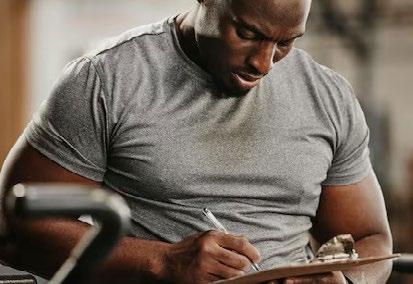
One reason people delay starting a fitness routine is that they find the process overwhelming. You do not need to train six days a week immediately or spend hours in the gym. Start with realistic goals. Three workouts a week, a 30-minute gym session, or a simple walking routine can be enough to create progress. Small goals feel easier to achieve and easier to maintain.
SCHEDULE FITNESS LIKE AN APPOINTMENT
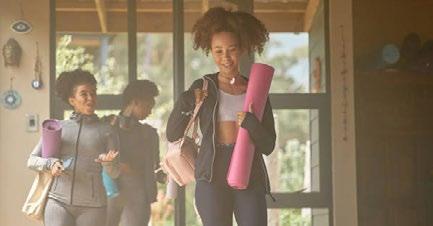
People rarely miss important meetings because they are already on their schedules. Treat fitness the same way. Instead of exercising whenever you "find time," decide exactly when it will happen. Whether it is before work, after work, or during weekends, having a dedicated time makes consistency much easier. What gets scheduled usually gets done.

FOCUS ON FEELING BETTER, NOT LOOKING PERFECT
Many people become discouraged because they expect dramatic physical changes immediately. But fitness offers benefits long before a visible transformation appears. Better energy, improved mood, reduced stress, better sleep, and increased confidence often happen much earlier than physical results. When you focus on how exercise makes you feel, consistency becomes easier.
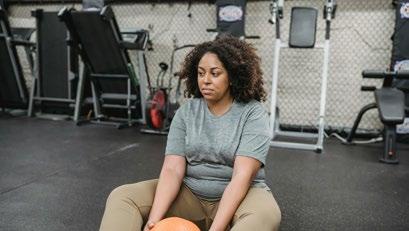
REMEMBER WHY YOU STARTED
There will be days when you feel tired, busy, or completely unmotivated. That is why it helps to remember your personal reason for getting active. Whether it is improving your health, increasing your energy, reducing stress, building strength, or simply feeling better each day, having a clear purpose helps you stay committed when motivation fades. Your reason matters more than your excuses.
The biggest fitness breakthrough for many people is not discovering a perfect workout; it is finally stopping the habit of postponing. The longer you wait for the ideal time, the easier it becomes to keep delaying. Because the truth is simple: tomorrow has probably heard enough promises already. The best time to start moving is today.
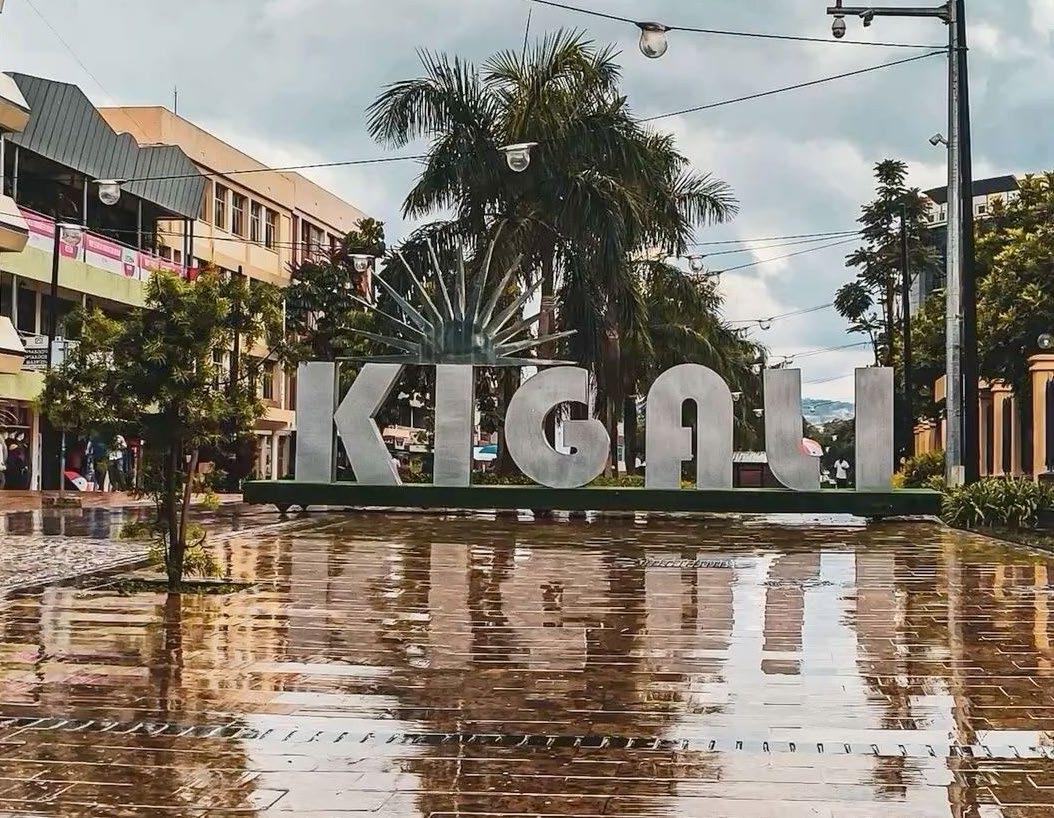
FIVE REASONS RWANDA SHOULD BE YOUR NEXT WEEKEND GETAWAY
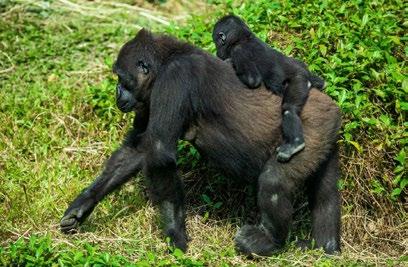
DISCOVER INCREDIBLE WILDLIFE
Rwanda is one of the few places in the world where you can stand just metres away from a wild mountain gorilla in its natural habitat. Volcanoes National Park makes this possible, and the experience is unlike anything else on the continent. It is not a safari park or a zoo; it is real, raw, and completely unforgettable. Rwanda puts you face-to-face with nature in a way that stays with you long after you land back home.
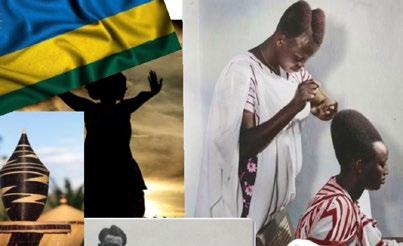
IMMERSE YOURSELF IN RICH CULTURE
Rwanda’s culture is rich. From the Intore traditional dance to the handwoven Agaseke baskets sold in local craft markets, there is a deliberate effort to preserve identity and culture while embracing the modern world. Kigali also has a growing contemporary arts scene that sits comfortably alongside its traditions, making it a destination that rewards anyone who takes the time to look beyond the surface.
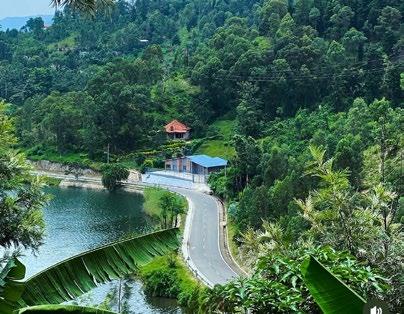
EXPERIENCE BREATHTAKING SCENERY
Rwanda is called the Land of a Thousand Hills, and once you arrive, you will understand why. The landscape is dominated by an endless, breathtaking expanse of rolling mountains, deep valleys, and terraced hills. Lake Kivu, which sits on the border with the Democratic Republic of Congo, is calm and stunning in a way that feels almost too good to be real. Whether you are driving through the hills or watching the sun go down by the lake, Rwanda is the kind of place your eyes will thank you for visiting.
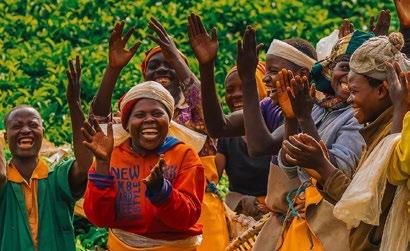
MEET THE WARMEST PEOPLE
Rwandans carry a warmth that is understated but genuine. The people welcome visitors in a dignified, unhurried and intentional manner. Their hospitality is genuinely sincere. Many travellers leave Rwanda talking about the people just as much as the places. That says everything.
BY OLAMIDE ABOLARIN
Some trips not only take you somewhere new but also change how you see things. Rwanda is that trip. Located in the heart of East Africa, this small, beautiful country has quietly become one of the continent’s most compelling travel destinations. If you have been looking for a place that offers beauty, culture, and relaxation without the stress of long travel, Rwanda deserves to be at the top of your list. Here is why.
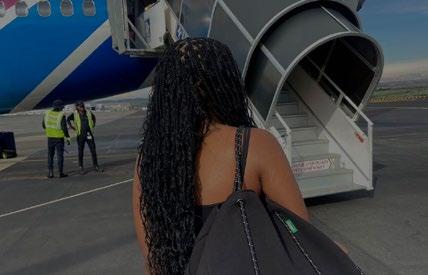
One of the biggest barriers to international travel is the visa process. Rwanda removes that entirely. Nigerian passport holders receive a visa on arrival, and the flight from Lagos takes roughly two hours. There is no embassy appointment, no document stress, and no long waiting period. It is one of the most accessible international destinations available to Nigerian travellers right now, and that alone makes it worth serious consideration. ENJOY EASY, VISA-FREE ACCESS
Rwanda is not just a beautiful country; it is an experience that leaves a lasting impression. If you have been waiting for a sign to finally book that trip, this is it. Rwanda is closer, easier, and far more rewarding than most people realise. Sometimes the best decision you can make is to simply go.
HEALTH CONDITIONS SHOWING UP EARLIER THAN EXPECTED

High Blood Pressure
Once considered a condition that primarily affected older adults, high blood pressure is increasingly being diagnosed in younger people. Poor diets high in sodium, lack of exercise, obesity, stress, and insufficient sleep are major contributors. Because high blood pressure often presents no obvious symptoms, regular medical check-ups are essential. Left untreated, it can increase the risk of heart disease, stroke, and kidney problems.
Type 2 Diabetes
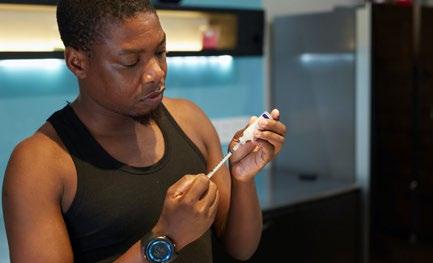
Type 2 diabetes is now being diagnosed in people much younger than previous generations. Sedentary lifestyles, processed foods, sugary drinks, and rising obesity rates have contributed significantly to this trend. Early symptoms may include increased thirst, fatigue, frequent urination, and unexplained weight changes. Early detection can help prevent serious long-term complications.

Mental Health Disorders
Anxiety, depression, and burnout are becoming increasingly common among younger adults and even teenagers. Academic pressure, financial concerns, social media comparisons, workplace stress, and global uncertainty have all played a role. Mental health deserves the same attention as physical health, and seeking professional support should never be viewed as a sign of weakness.

Fatty Liver Disease
Non-alcoholic fatty liver disease was once more common among older adults, but doctors are now seeing it more frequently in younger populations. Poor dietary habits, obesity, and lack of physical activity are major risk factors. In many cases, the condition develops quietly without noticeable symptoms, making routine health screenings particularly important.
BY JOHNSON CHUKWUEKE
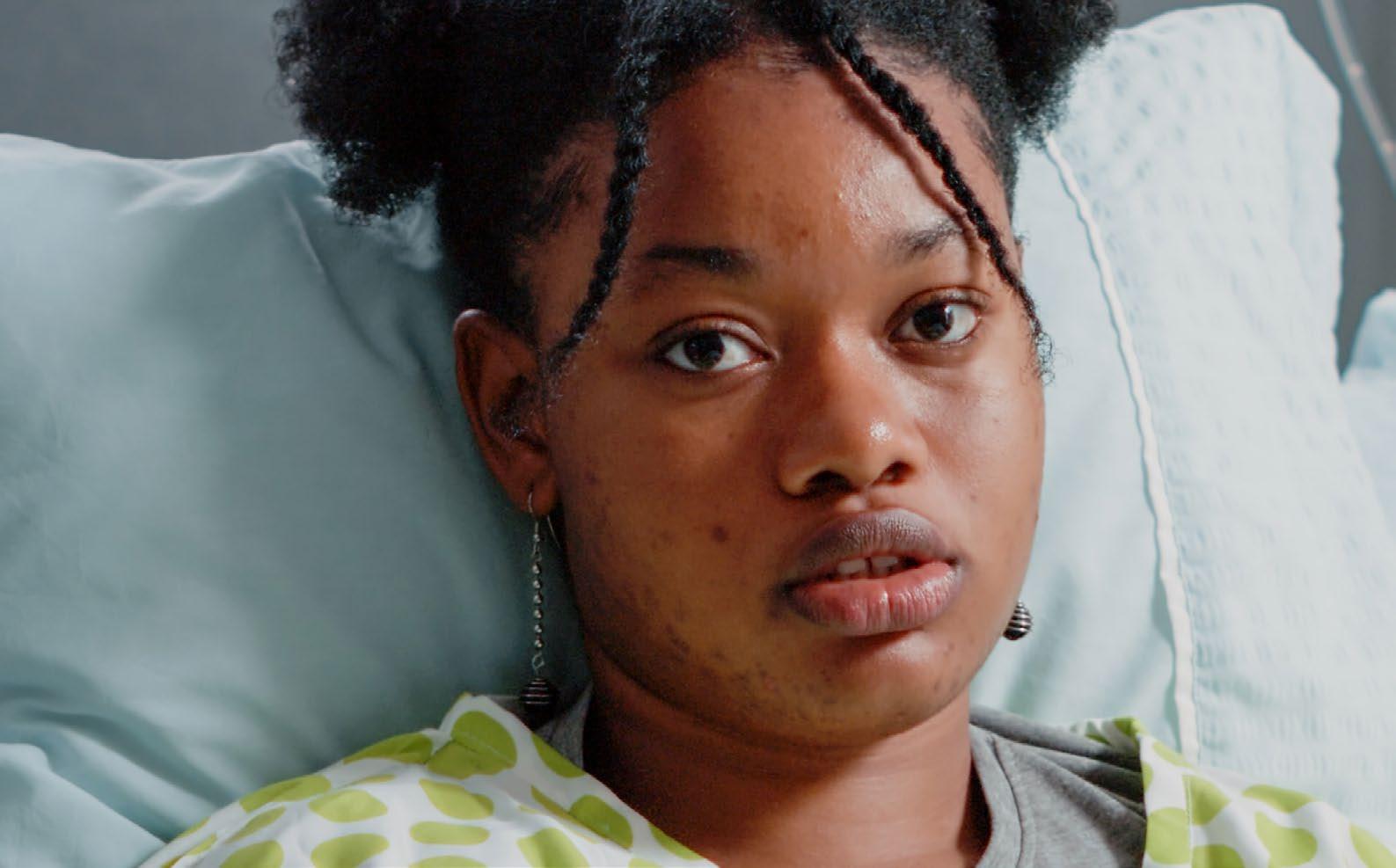
For many years, certain health conditions were considered problems that mainly affected older adults. High blood pressure, Type 2 diabetes, heart disease, and even chronic stress-related illnesses were often associated with people in their fifties and beyond. Today, however, doctors and health experts are seeing a worrying trend: many of these conditions are appearing much earlier than expected.
Modern lifestyles have changed dramatically. Long hours sitting at desks, poor eating habits, inadequate sleep, increased screen time, and chronic stress are all contributing to health challenges among younger generations. While advances in medicine have improved awareness and diagnosis, they have also revealed that age is no longer the protective factor many people assume it to be. Understanding these emerging health concerns can encourage people to take preventive action before small problems become serious conditions.

Heart Disease Risk Factors
Heart attacks may still be more common among older adults, but many of the risk factors begin much earlier in life. High cholesterol, obesity, smoking, chronic stress, and physical inactivity can gradually damage cardiovascular health over time. Paying attention to these warning signs early can significantly reduce future health risks.
The idea that serious health conditions only affect older people is becoming increasingly outdated. Many illnesses that were once associated with later life are now appearing in younger generations due to changing lifestyles and health habits. The good news is that many of these conditions can be prevented, managed, or detected early through regular check-ups, healthier eating, exercise, stress management, and quality sleep. Taking health seriously today can help prevent major health challenges tomorrow.
EZAGA EVI-BEN
IS THE SOFT LIFE ERA LOSING ITS SHINE? CULTURE
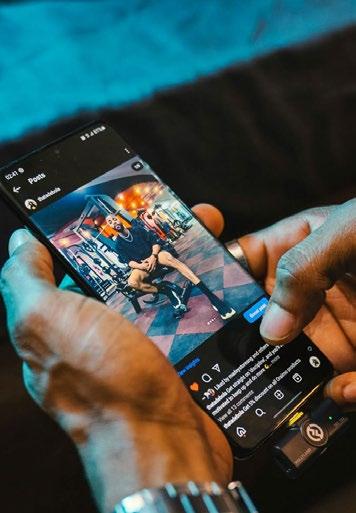
Ascroll through social media often feels like a tour of the good life: luxury vacations, aesthetic apartments and expensive dinners, all paired with captions celebrating a life free from stress.
For years, this image of the “soft life” has been one of the most popular lifestyles online, especially among young Nigerians.
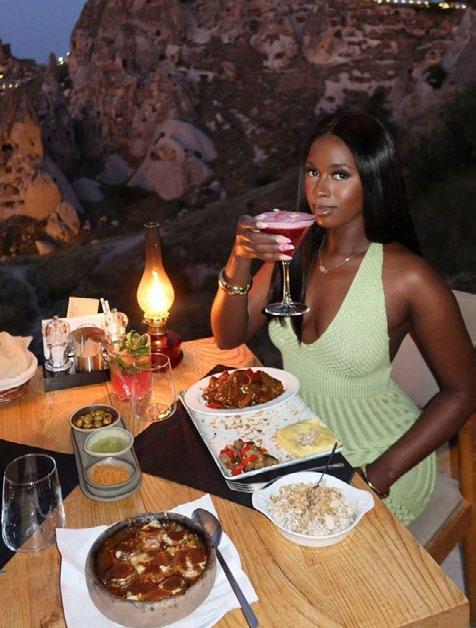
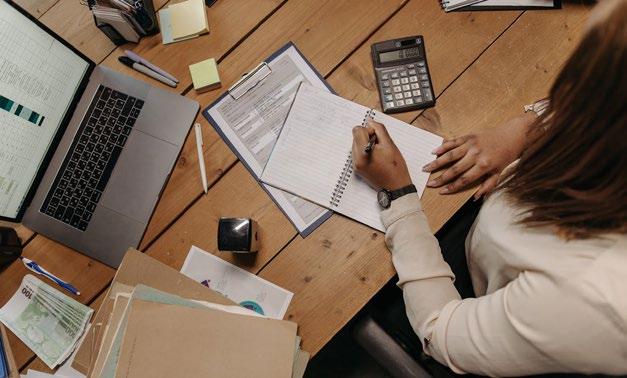
But alongside these carefully curated posts, another trend has quietly emerged. More people are posting about rising rent, expensive food prices, unpaid bills, and the struggle to balance work and personal life in a difficult economy. Funny videos about being broke often attract just as much attention as luxury content because of how relatable they are.
a daily reality for many young Nigerians. As
Influencers and content creators showcased travel, fashion, fine dining and unbothered leisure, shaping an image of what an ideal lifestyle could look like. The message was simple: life should be enjoyed, not only endured.
However, that image has become harder to maintain for many people. The cost of living is still rising, and financial uncertainty is
visuals to sell an idea, the “broke” content thrives on shared recognition. A joke about choosing between transport fare and lunch lands because so many people have lived it. It is less about complaining and more about finding company in a struggle that can feel isolating when experienced alone.
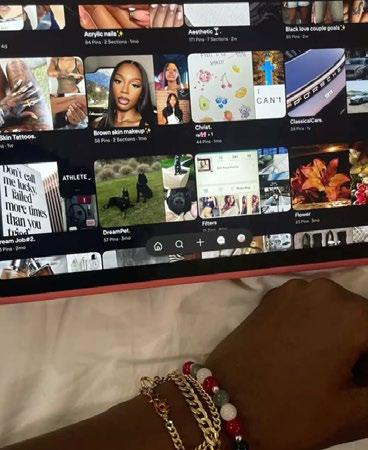
As these conversations grow, a question arises: Is the soft life era losing its appeal, or is it simply evolving?
The soft life movement gained popularity as a rejection of constant hustle culture. It encouraged comfort, rest, and enjoyment rather than celebrating hardship and sacrifice. For many young Nigerians, it offered a vision of a better life that felt both attractive and achievable.
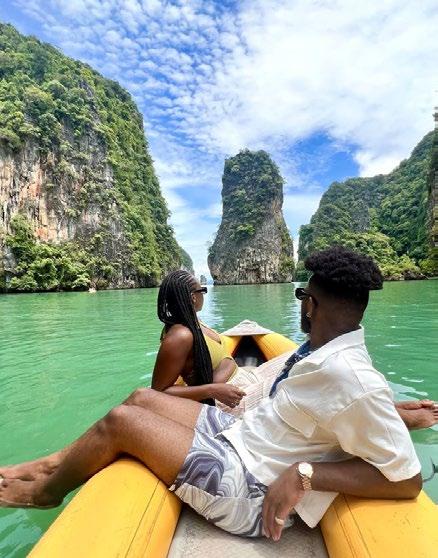
Social media played a major role in spreading this idea.
Yet social media still rewards the appearance of ease. Behind edited photos and curated videos, many people feel pressure to look as though they are doing well, even when their circumstances tell a different story. The gap between what is shown and what is lived has become harder to ignore.
Online conversations are beginning to reflect this shift. More creators are openly discussing budgeting, saving money, building careers, side hustles and navigating financial challenges. Rather than presenting a perfect lifestyle, many are now embracing a more balanced picture of everyday life.

a result, the polished version of soft life often seen online can feel increasingly out of reach and disconnected from reality.
This is where the humour comes in. Unlike the soft life aesthetic, which leans on
There is also a quiet irony here. The soft life was meant to be a release from constantly performing effort. For some, performing softness has become its own kind of burden, another image to maintain rather than a state to actually live in.
The era may not be losing its shine after all. It may simply be a redefinition of what a soft life means, one that reflects both people's aspirations and the realities they face every day, revealing what life actually looks like behind the camera.

5 WAYS TO FIGURE OUT YOUR CAREER PATH
PAY ATTENTION TO WHAT YOU ENJOY DOING NATURALLY
Start by noticing what you enjoy without force. What do you do that makes time pass quickly? It could be writing, talking to people, editing videos, solving problems, or even organising things. These small moments matter. They often point to your real interests. Don’t overthink it. Just observe what feels easy and enjoyable. What you enjoy often shows what you are meant to explore further.

NOTICE WHAT YOU ARE GOOD AT
Think about tasks that people praise you for. What do you do better than average without too much stress? Sometimes your natural skills are hiding in plain sight. It could be communication, creativity, leadership, or analysis. You don’t need to be perfect at it. Just notice what comes more easily to you than others. Your strengths are strong clues to what you can build a future around.

TRY DIFFERENT THINGS WITHOUT PRESSURE
You will not find clarity by thinking alone. You have to try things. Take small steps. Join projects, learn new skills, or volunteer for tasks. Do not wait until you feel fully ready. Action gives you answers that thinking cannot. Even if you fail or lose interest, you are learning what is not for you. That is still progress.

PAY ATTENTION TO WHAT DRAINS AND WHAT EXCITES YOU
After doing something, check how you feel. Do you feel tired and unhappy, or alive and motivated? Some activities will drain you no matter how good you are at them. Others will give you energy even if you are still learning. The ones that give you energy are worth paying attention to. They often point toward your real direction.
BY DORCAS AKINTOYE
Many people feel confused about what they really want to do in life. One day you feel excited about something, the next day you lose interest. This can make life feel unclear and frustrating. If you are unsure about your path, you are not lost. You are simply in a process of discovery. Here are five simple ways to help you understand what you actually want to do with your life.

IMAGINE YOUR LIFE WITHOUT FEAR OR PRESSURE
Sometimes fear and expectations block clarity. Ask yourself: if nobody judged me and money were not a problem, what would I do every day? Be honest, even if the answer feels unrealistic. This question helps you see your true interests without the noise of the outside world. It may not give you a full plan, but it will give you direction.
Figuring out what you want is not a one-time answer. It is a process of learning about yourself. The more you pay attention, try new things, and reflect, the clearer things become. You don’t need to rush. You just need to keep moving and observing.
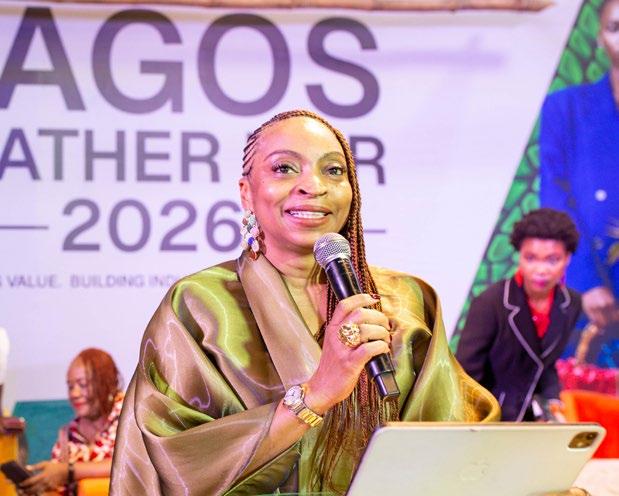
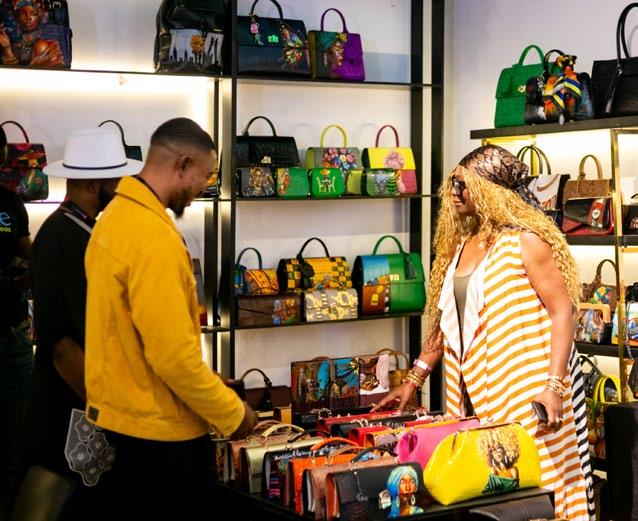
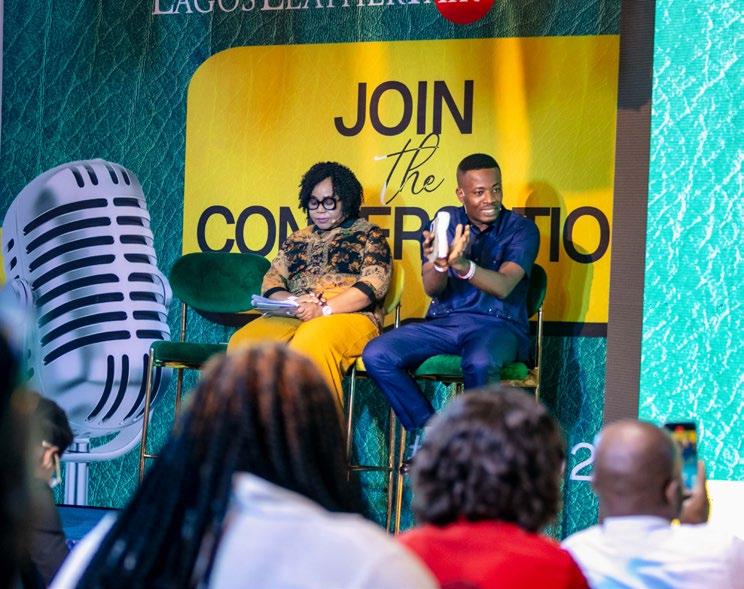
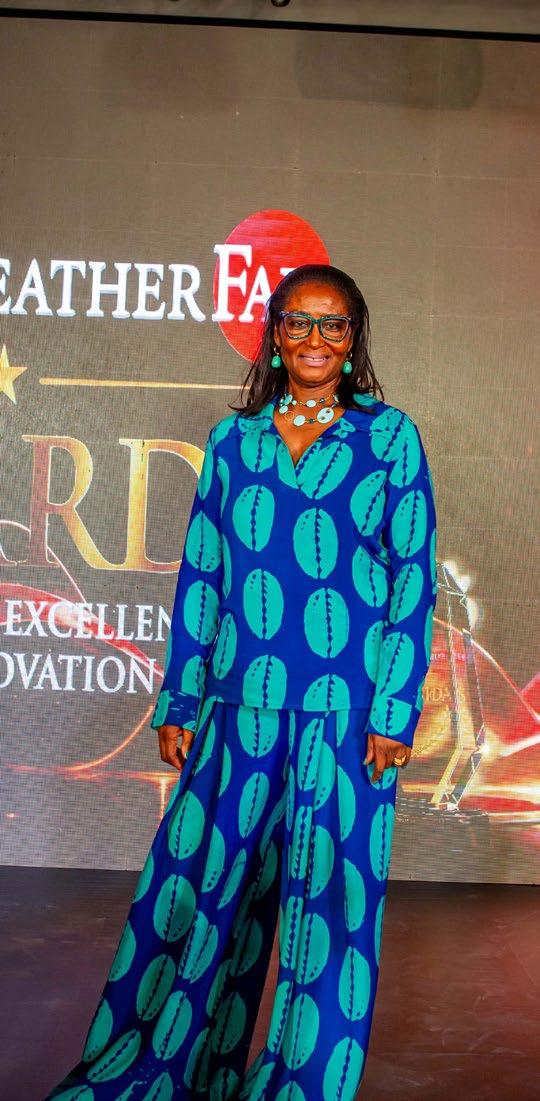
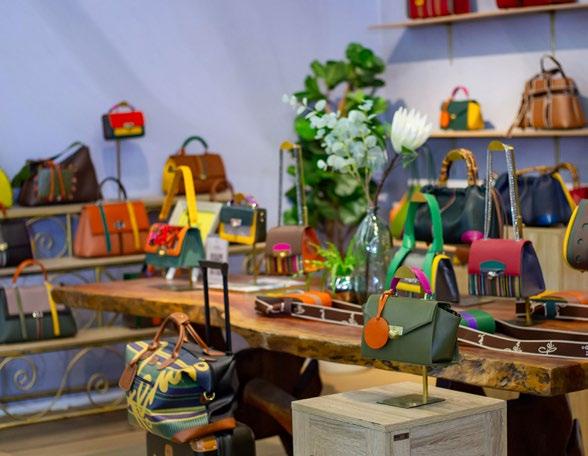

LAGOS LEATHER FAIR 2026
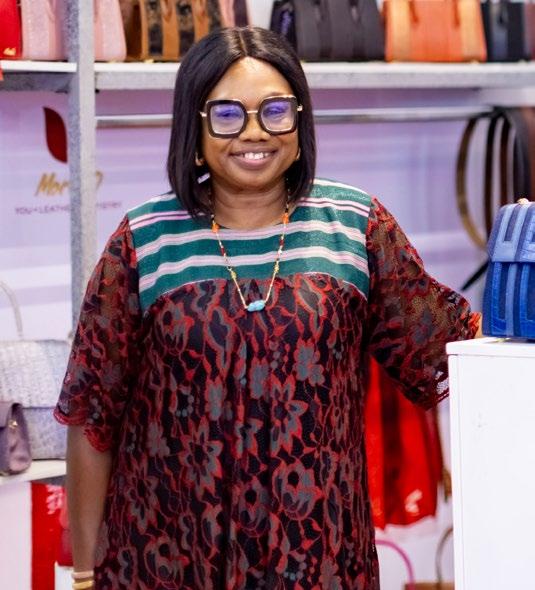
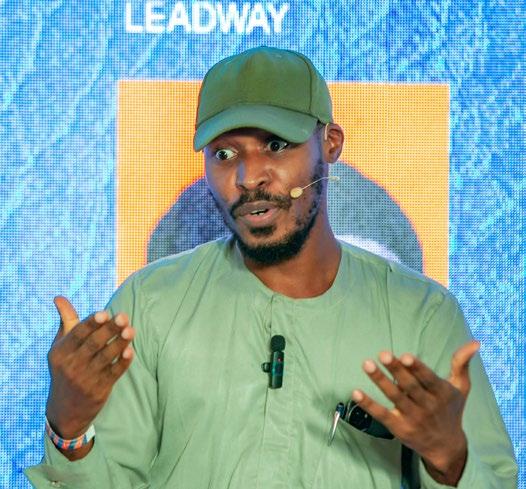
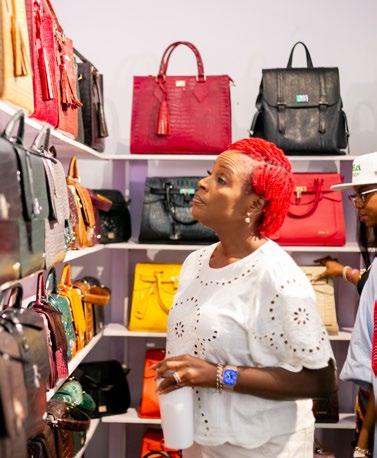
Lagos Leather Fair (LLF2026) concluded its landmark two-day edition, bringing together artisans, buyers, suppliers, and policymakers to advance Africa’s leather industry through innovation, collaboration, and commerce.
The event featured exhibitions, networking, and expertled sessions, including a fireside chat on building globally competitive leather brands and a masterclass exploring AI-assisted leatherworking, digital patternmaking, and sustainable manufacturing. Live demonstrations at the Maker’s Bench and LLF Atelier showcased traditional and modern craftsmanship.
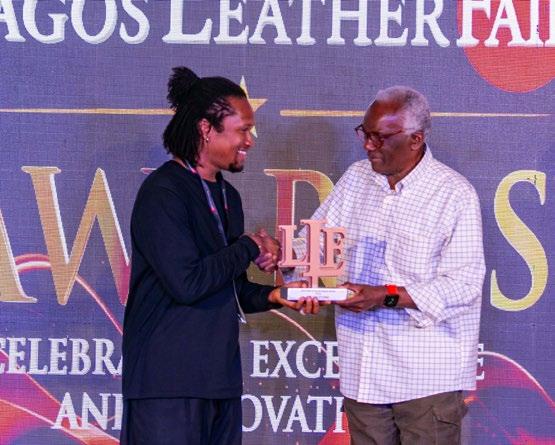
The fair culminated in the LLF Awards, recognising excellence across the industry. Honourees included Mona Matthews, January by Wande, HankerandReech Leather Goods, Nichole by Haguanna, Maliko, Elastan Signature, Sole Inspiration, Elisha Kuranga, Leather Change Makers Obiora Ononye (Obi Leather) and Obafemi Olayebi (FemiHandbags).
LLF2026 closed with renewed optimism for a future driven by innovation, sustainability, and world-class African craftsmanship.
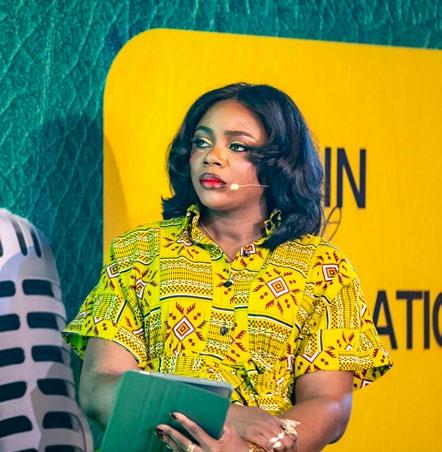
MORIN OBAWEYA
JUMOKE ODUWOLE
ELISHA KURANGA & OLUFUNKE JONES
SANUSI ABUBAKAR
OKWY OHAGWA ONYEDUM & EKE JAMES LEATHER EXHIBITOR
FEMI OLAYEBI
FEMI HANDBAGS STAND
MALIKO & BANKOLE OLAYEBI
OMOBOYE ODU
SAMUEL OLAWOYIN

cassy’s chronicles
OLD FEELINGS
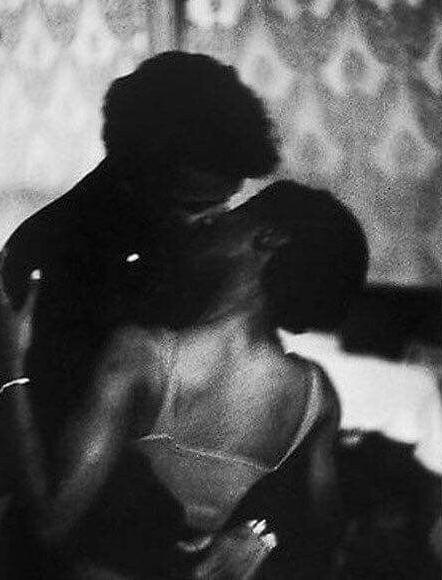
The last person I expected to see at my university reunion was Tobi.
Out of everyone who walked through the gate that afternoon, he was the only one who made my heart forget how to beat properly.
Back then, we were never officially together. We were just complicated.
He was my sneaky link.
Nobody knew. At least, nobody was supposed to know.
During our final year, we had mastered the art of pretending we barely knew each other in public. We would argue in class like strangers, then end up sharing food outside campus later that evening. Sometimes he would send a simple text saying, “Come outside,” and I already knew he was waiting by the hostel gate with his old Toyota, which made funny sounds whenever it started.
Whatever happened between us started by accident.
We were assigned to the same group for a class presentation. At first, he was just another coursemate who talked too much and liked to tease me over the smallest things.
Somewhere between late-night tutorials, shared meals after lectures, and random walks around campus, the teasing turned into flirting. The chemistry between us was impossible to ignore.
Every time he looked at me, I felt it. Every time he brushed past me, I became painfully aware of how close we were. It wasn't love, at least not the kind either of us was willing to admit. It was attraction, curiosity, and two young adults trying to act like they had everything under control.
One evening after tutorial, he walked me back to my hostel. Before I went inside, he held my hand for a second longer than necessary.
Neither of us said anything.
We didn't have to.
From that day on, we became each other's little
secret.
We never asked each other where the relationship was going.
Maybe we were too scared.
Or maybe it was easier to enjoy the moment than to define it.
After graduation, life happened.
NYSC took us to different states. Work became stressful. Phone calls became fewer until they completely stopped. One day, I realised I hadn't heard from him in almost three years.
Still, there were days I'd see an old Toyota on the road and think of him. I would wonder where he was, whether he was happy, whether he had found someone else. I wanted to reach out more than once, but pride has a funny way of convincing you to stay silent.
And somehow, life moved on.
Or at least I thought it did.
"Cassy?"
I turned around.
There he was.
Still wearing that annoying smile that used to make me forgive him too easily.
For a few seconds, neither of us moved. I wasn't sure if I should hug him or just wave. Three years suddenly felt much longer.
"You haven't changed," he finally said.
I laughed. "You're lying. I've gained weight."
He smiled.
"You're still beautiful."
The reunion became background noise as we caught up. We talked about work, family, rent, Lagos traffic, and how adulthood had humbled all of us. We laughed over old lecturers, failed tests, and hostel gossip we once thought was the biggest problem in the world.
It felt easy.
Like no time had passed.
As the reunion started coming to an end, neither of us seemed ready to say goodbye.
"Are you in a hurry?" he asked.
I shook my head.
Since it was a Saturday and I had nowhere else to be, I agreed to go with him to his apartment.
We spent hours talking, laughing, and teasing each other over memories we had almost forgotten. At some point, we fell into a comfortable silence.
I looked at him and asked the question that had stayed with me for years.
"Why didn't we ever date?"
He let out a quiet laugh before looking down at his glass.
"I thought there would always be time."
I nodded slowly.
"And then life happened."
"And then life happened," he repeated.
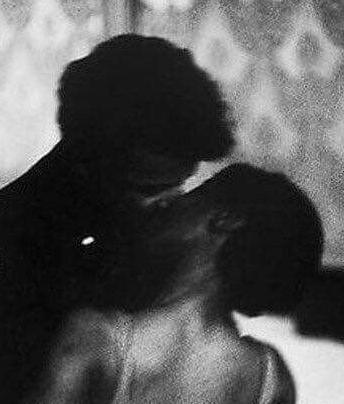
The distance between us disappeared naturally, and when we finally gave in to the feelings we had buried for years, it felt less like chasing an old flame and more like finding something that had been waiting patiently for us all along.
MOVIE REVIEW:
Supergirl

In Supergirl, Milly Alcock does a lot of crawling. Her titular punk party girl, whose given name is Kara, can be seen drunkenly crawling out of bed after a bender or across floors in the middle of a smackdown. At one point, she even crawls out from under a large alien’s butt. It’s a humiliation ritual that Alcock does well, taking a beating and coming out the other end with all her flinty and resilient charms intact.
I’m hoping that’s how it works out for Alcock when she crawls out from under the mess that is this movie.
The Australian star, who broke out playing the young Rhaenyra Targaryen in House of the Dragon, is Supergirl’s best asset.
Alcock isn’t escaping the charges that she was cast because of how comically inebriated she appeared to be onstage when House of the Dragon won best drama series at the 2023 Golden Globes. Supergirl leans hard on the way she can make herself appear messy and out of her depth, and still win everyone over. To that end, Alcock throws around a medley of furrowed brows, sleepy glares and insolent grins while hinting at a soulfulness that the movie directed by Craig Gillespie is barely equipped to tap.
Gillespie made I, Tonya and Cruella. He’s acquitted himself well enough with those superficial entertainments starring Margot Robbie and Emma Stone, as chaotic women making a spectacle of their dastardly acts. It’s funny then, just how hard Gillespie stumbles when dealing with a woman meant to be genuinely heroic. Though I’m sure the whole franchise apparatus, with all its incoherent action and hideous CGI-heavy landscapes, shoulders most of the blame.
Gillespie and writer Ana
BY BOLUWATIFE ADESINA
Nogueira are picking up from James Gunn’s Superman, in which the chief executive officer of DC Studios brought his Guardians of the Galaxy stylings to a franchise overhaul. He also amplified the Man of Steel’s immigrant status, while introducing Alcock’s Supergirl and her rascally dog, Krypto.
Supergirl adapts the Woman of Tomorrow comic book series, in which Kara stars opposite Eve Ridley’s Ruthye, a child offering bounty for revenge after her family is brutally massacred by marauders who call themselves Brigands. Kara has her own reasons for hunting the Brigands across galaxies. Their leader, Krem, played very hyena-like by Matthias Schoenaerts, hits Krypto with a poisonous dart, for which he carries the antidote. And since her dog is her only connection to home and the Kryptonian family she lost, she’s ready to go John Wick on the perpetrators.
And hey, why not free some of the young girls that Krem and the Brigands keep as sex slaves, an unsettling side detail Supergirl borrows from Mad Max: Fury Road, without the fury (heh) or intention that it warrants.
Instead, it’s tossed in as part of Gillespie and Nogueira’s impotent and incoherent attempt at melding Gunn’s cheeky, deeply unserious house style with George Miller’s grimy diesel-andrust aesthetic.
Almost everything about Supergirl feels tossed in or tossed aside, barely leaving behind any residue. Jason Momoa, for instance, rolls in as the motorcycle-riding demigod Lobo, doing his usual gimmick in bits that play like an afterthought, adding no material value to the action. His presence feels like an accounting decision that adds a bit of testosterone to the marquee.
Even Alcock can feel like she’s cycling through different schticks. She’s the unbothered party girl. She’s the wisecracking superhero. She’s the immigrant who, like Superman, can make the dutiful themes of trauma and isolation digestible if not meaningful.
Superman (2025) was an energetic, fun, and unusually thematically coherent superhero film, far better than the DC universe had managed for some time. Supergirl is watchable enough if you take movies like Justice League (2017) as a baseline, but it’s a disappointment compared to its immediate predecessor.
Rating:6.5/10 Still better than Disclosure Day

Scan this with your camera or click to access the playlist (Youtube Music)

WATCH OF THE WEEK
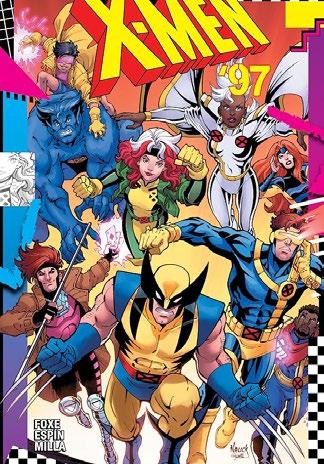
X-MEN ‘97
SEASON 2
In 2024, X-Men ‘97 took audiences by storm. As a continuation of the fan-favourite X-Men animated series from the ‘90s, the new series brought back beloved voice actors, along with some new ones, to bring everyone’s fave mutants to life once more.
The start of the new series was a hit with critics and fans alike, myself included.
In just a few days, X-Men ‘97 is back for season two, and I am happy to report that season 2 is fixing to be just as good as the first. I have only seen the first four episodes, but I was instantly all-in as soon as the new season started playing on my screen.
The second season has the X-Men displaced across different time periods. While some are still in the ‘90s, other team members find themselves stuck in either the past or the future. As a result, each group faces its own set of issues while trying to find its way back to its proper place in time. It makes for an exciting season, with a lot to look forward to.
Perhaps the most exciting thing this season is the introduction of Apocalypse. As one of the X-Men’s most recognisable and formidable villains, we get to see Apocalypse’s start. This is probably one of the best parts of season two that I’ve seen thus far. The writers did a fantastic job with En Sabah Nur’s backstory, showcasing his origins and how they

Scan this with your camera or click to access the playlist (Spotify)


culminate in the creation of the villain who becomes the X-Men’s strongest foe.
Similar to season one, X-Men ‘97 boasts strong storytelling that focuses on the relationships among our favourite mutants. In season two, perhaps the best reflection of this is the kinship between Professor Xavier and Magneto. They have an exceptionally poignant arc in the latest season that does a great service to everything enjoyable about their characters and what they mean to each other.
Of course, we cannot talk about the series without talking about the animation. Again, the series does an expert job of blending the animation style from the original animated series while elevating it for a modern audience. The way the animation pops on the screen, especially when the characters use their various powers, is phenomenal and will definitely keep your eyes glued to the screen. Trust me, you will not want to limit any screen time when it comes to watching X-Men ‘97.
Although the first 3 episodes of season two are as close to pitch-perfect as you can get, my one critique would be the story’s density. Since the storyline mainly deals with time travel, certain characters are sometimes left behind. With so much going on, it’s easy for some of the characters to be placed on the back burner. In addition, casual viewers unfamiliar with the characters, particularly
newcomers, might find the story a bit dense and hard to follow. Time travel can be a tricky subject to tackle, but throughout the four episodes of season two, the series maintains an even rhythm.
Not only is X-Men ’97 Marvel Animation’s best project, but it might be Marvel’s best existing project in general. If the first four episodes are anything to go by, season two is shaping up to be a thrilling and exciting television event. Balancing the time-spanning adventures, action, emotional stakes, and character development with ease, X-Men ‘97 proves once more that it is one of the best TV series, animated or otherwise, available today.
Vince Staples - 7 In The Morning
Kashcoming - Hello Hello
Isaiah Rashad - 719 FREESTYLE
THEHONESTGUY - WAHALA RIDDIM
Heart - Crazy On You
Jorja Smith - All of This (Jorja Smith x GuiltyBeatz)