

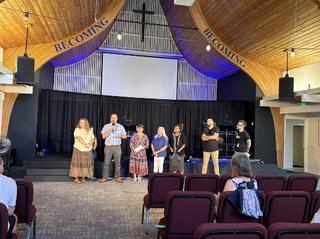
Adam Gray, Senior Pastor of Riverside Church at Park and King, Jacksonville, FL y
Pastoring an AWAB church in Jacksonville, Florida often feels like living in two worlds at once. Inside the sanctuary, our community sings of grace and belonging, embraces LGBTQ+ siblings, and works for justice. Outside our doors, the broader political climate can feel suffocating laws designed to erase queer stories from classrooms, attacks on immigrants and people of color, and a steady drumbeat of suspicion toward anyone who doesn’t fit the mold of Christian nationalism - white, straight, and cisgender.
It reminds me of John the Baptist, standing waist-deep in the Jordan River, crying out to a people living under Roman occupation. His message wasn’t delivered in a season of peace and prosperity. It was spoken when despair felt normal, when oppression was baked into daily life, and when it seemed like nothing would ever change. Yet John dared to lift his voice and say, “Prepare the way of the Lord.” Right when things were as bad as they had ever been, he proclaimed that something new was about to break in.
Jacksonville is not an easy place to pastor as a progressive. On any given Sunday, a visitor may slip into a pew with relief in their eyes, whispering, “I didn’t know churches like this existed here.” They come weary from being told they don’t belong in God’s family, or frightened after yet another hateful law passes at the statehouse. They come because they are looking for water in a desert.
And we, like John, offer what we can: truth spoken plainly, love without condition, and the reminder that God’s society is always near even here. Our church often feels like a wilderness outpost, a place where those wounded by religion can catch their breath and find hope again.
But wilderness life is never comfortable. For every person who finds sanctuary, there are neighbors, coworkers, and sometimes even family members who call us “radical,” “political,” or things rather less suitable for print in this esteemed newsletter. The pressure to conform is real.
The temptation to retreat into silence is strong. Yet if John the Baptist could proclaim good news on the banks of the Jordan with Roman soldiers and Herodian spies listening, then surely we can proclaim it on the banks of the St. Johns River.
Proclaiming Change Before It Comes
If John the Baptist could proclaim good news...then surely we can.
John didn’t just tell people that God loved them; he announced that change was on the horizon. He called people to repentance not as guilt, but as a turning toward life. He invited them to live differently now, in anticipation of the One who was coming.
That’s what we try to do in Jacksonville. We live as if the future we hope for is already breaking in. We ordain women, bless queer marriages, march for racial justice, and teach children that they are beloved of God. We try to embody the community we believe Jesus is making possible, even if the wider culture scoffs or legislates against it.
It doesn’t always feel glamorous. Sometimes it feels like shouting in the wilderness, with little to show for it but tired voices and muddy feet. But John reminds us that faithful proclamation is never wasted. His words prepared the ground for Jesus. Our witness, too, may be preparing the ground for something we cannot yet see.
One unexpected grace in this kind of ministry is that it forces us to be clear about who we are. We are not the biggest church in town. We do not have the political power of the megachurches that line our highways. What we do have is the freedom to tell the truth without apology: that Jesus sides with the oppressed, that love is stronger than fear, and that all means all.
In a hostile environment, clarity becomes a gift. People know exactly who we are and why we matter. That honesty draws those who are thirsty for
living water. It also shapes us into a resilient community, one that knows how to survive in the wilderness. It invites us into a family that is more than a metaphor, but is rather the deep commitments to one another that have always buoyed human resilience.
Rev. Madison Hilt, our Pastor for Advocacy and the first trans minister in our 117 year history, can lead proudly in our community, knowing that her voice is amplified by our church’s credibility, and that her church sees her worth even when the state tries to erase her existence. Like John the Baptist, she does not conform to cultural conventions or polite expectations. But also like the Baptizer of the Wilderness, her effectiveness comes from the clear vision of hope: a better world is coming, and God wants us to help build it.
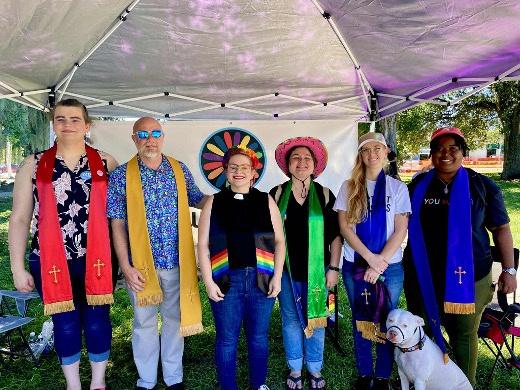
When I look around Jacksonville, I see reasons for worry. But when I look around our sanctuary, I see signs of hope. I see children learning to pray without fear. I see queer couples holding hands at the communion table. I see white-haired saints singing side by side with young activists. I see a community that, simply by existing, is announcing: “Prepare the way of the Lord.”
We are not naïve. We know the wilderness is real. But we also know the story doesn’t end there. John’s message was not about the wilderness itself it was about the One who was coming. Jesus showed up, bringing healing, liberation, and love that even death could not contain.
That is the story we dare to live out here in Florida. We are preparing the way, trusting that God is already on the move, and believing that even in this place, as hard as it can be, the world is about to change.

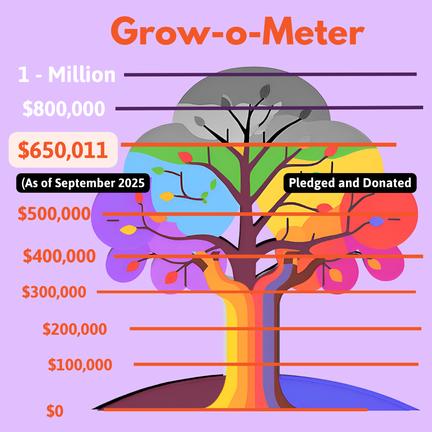
Our 1-Million Dollar ‘Here We Grow’ Campaign is a significant step towards strengthening and empowering AWAB. Success allows us to build a robust and collaborative staff and an engaged board of directors, enabling us to provide highquality LGBTQ+ resources to Baptists worldwide.
As of September 10th, 2025 we have already received funds or pledges totaling $650,011!
The Welcoming Spirit is a publication of the Association of Welcoming and Affirming Baptists. Its contents do not necessarily reflect the views or opinions of the Association unless explicitly stated To submit an article for consideration, please contact our Executive Director, Brian Henderson, at Brian@awab.org. or visit our website www.awab.org/newsletter for more information.
admin@awab
Perspective from the Desk of our Board Chair

Lauren Ng Chair of the Board of Directors
“So let us not grow weary in doing what is right, for we will reap at harvest time, if we do not give up.” (Galatians 6:9)
I am now squarely in my late 40s and everything in my body is slowing. My muscles are losing their mass, my bones their density, my skin its regenerative quality, my gut its metabolism, and my brain its precision. Whenever I seek advice from a medical practitioner or an elderly person who is managing to outpace me as we hike up a mountainous incline, the answer is always the same: Keep moving, they say. Keep eating healthy foods, keep hydrating, keep lifting weights. Whatever you do, just don’t stop.
Paul instructed the Galatians in the same way. Amidst an intra-Christian dispute, the apostle tells his beloved churches to stay the course, to keep on keeping on, and to remain consistent if they are to produce a harvest. In their first century context, this meant being consistent in love instead of bitterness and hatred. It meant being consistent in generosity instead of selfishness. It meant being consistent in the study, interpretation, and living out of God’s word instead of assuming all there is to know has already been discovered.
In our contemporary context, consistency looks, well, pretty consistent with how it looked back then. And AWAB is remaining faithful to Paul’s instruction. Along with you, our members and partners and thanks to an extraordinary staff and board of directors AWAB has maintained consistent relationship-building, outreach, resource development, innovative programs and projects, top-notch events, and frontline advocacy efforts. Just flip through the pages of this edition of The Welcoming Spirit to read about our upcoming book on AWAB’s history
or the amicus brief filed with the U.S. Supreme Court to which we recently added our name in an effort to uphold Colorado’s Minor Conversion Therapy Law (MCTL), which prohibits licensed mental health professionals from engaging in so-called “conversion therapy” with minors.
Consistency is key. Join today to keep awab here tomorrow! For as low as $10 a month
The work continues, but we do not grow weary in doing what is right. We stay the course, and we keep moving. Whatever we do, we will not stop. May the Lord bless you as you remain consistent, never giving up, and fortified by the inclusive, all-encompassing love of Jesus Christ.


Views & Inspiration from our Executive Director

Brian Henderson Executive Director
Recently, the Rev. Dr. George Mason, AWAB friend and Pastor Emeritus of Wilshire Baptist Church in Dallas, Texas, posted on Facebook a quote by Michael Wear, political strategist, and President and CEO of the Center for Christianity and Public Life, a nonpartisan nonprofit based in Washington, D.C.: “It is not just the act of violence but the spirit of violence that must be opposed. It is not just the action to harm another which must be opposed but the desire that harm would fall to another. "
“If we do not have the courage to pursue a politics of love, our political heart will become consumed by hate.”
AWAB family and friends, may these words be a clarion call for we who are experiencing the realities of this time in history. I don’t know about you, but I’ve been overwhelmed this week with emotions and feelings over events, news stories, social media posts, and general vitriol I’ve heard from complete strangers and people I know well, or at least who I thought I knew well. And I suspect we are each feeling what we are differently based on where we live in the country or world…based on who we are or from whence we have come…based on our sexual orientation or gender identity…based on our political or theological persuasions.
It feels like we are living in a “damned if you do, damned if you don’t” season of history. Do we speak our convictions or should we withhold comment for fear we will be criticized by folk, by colleagues and friends, to our left or to our right? But as Audre Lorde’s words echo through the corridors of time and space remind us, “Your silence will not protect you.”
And I would add, nor will being silent help us cultivate the grace necessary to incrementally influence for the better welcoming and affirming spaces where we each are free to be our best selves.
How do we pursue love when family members say or post what they do? How do we love when we are afraid for our lives and livelihoods, or the lives and livelihoods of those who are near and dear to us? How do we love when so much seems hopeless?
In this issue of The Welcoming Spirit you will not find simple answers to any of these real and existential questions. What you may find, though, are words and glimpses of how others are doing what they can to contribute incrementally in the ways they can to keep on keeping on in these difficult days. I am grateful for the witness of Riverside Church at Park and King, for the courage of First Baptist Church of Moorestown, for the wisdom of Cody Sanders, for the bravery of new AWAB member churches, for lifegiving writing projects like Imago Dei, for the legacy of people like Elaine Stephens, for the vision and leadership of Board Chair Lauren Ng, for the prophetic presence of Pastor Mia McClain, and for so many others herein whose lives and ministries you’ll see reflect a larger community of people, connected by the “mystic chords” of time and space that are empowering “the better angels of our nature” for such a time as this. And lest we forget…
If we do not have the courage to pursue a politics of love, our political heart will become consumed by hate.
Thank you AWAB family and friends. Your witness, our combined witness, is helping our better angels prevail. And for this, I am grateful and in this may we each find the courage to keep on keeping on.

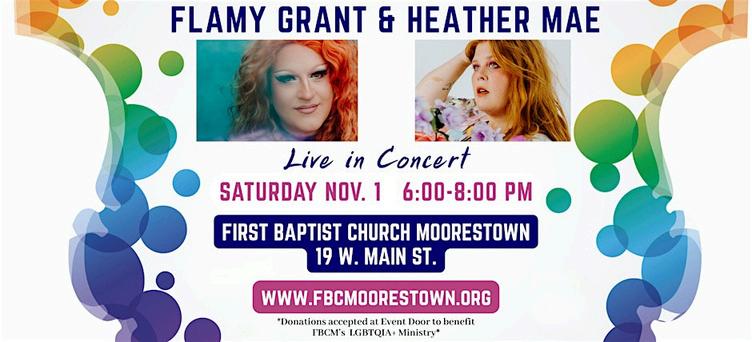
First Baptist Church of Moorestown, NJ invites you to Flamy Grant and Heather Mae LIVE in Concert on Saturday, November 1, from 6:00 to 8:00 PM. Flamy is a shame-slaying, hip-swaying, Billboard-topping, #1 on iTunes, singing-songwriting Christian drag queen. Her music centers on the Queer spiritual journey, telling stories of resilience and recovery from religious trauma where LGBTQIA+ people are frequently ignored by, harmed in, or ejected from religious spaces.
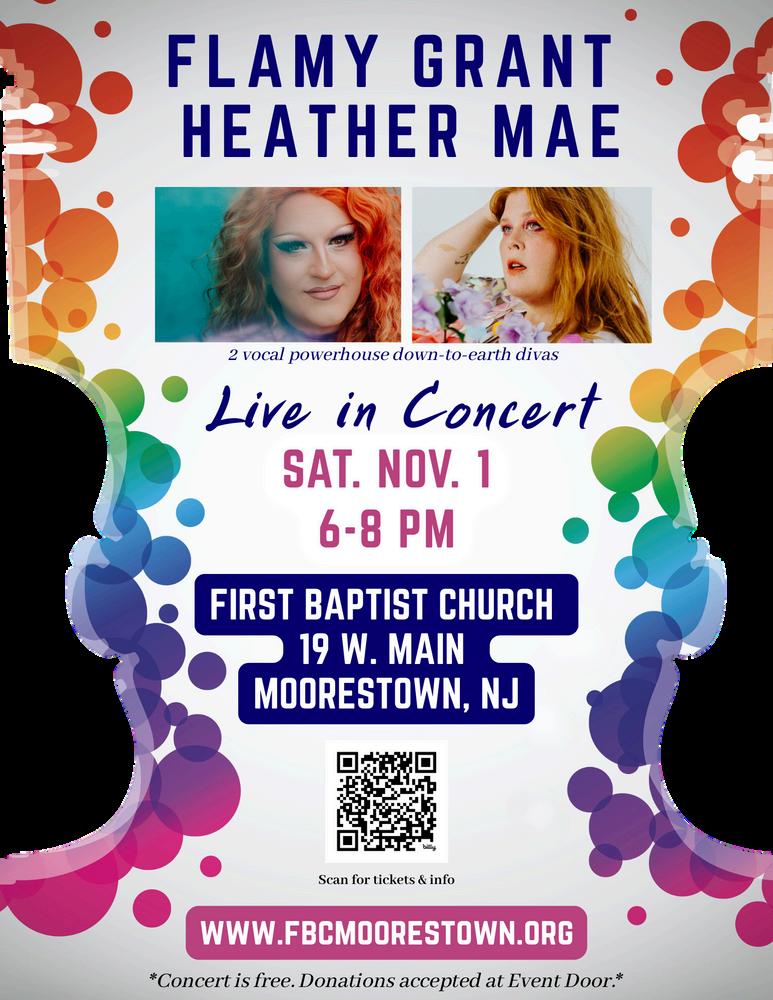
Heather Mae is a queer, award-winning social justice singer-songwriter and powerhouse vocalist. The driving force behind her growing must-see reputation is her unforgettable live show and roof-lifting vocals. A deftlytimed comic and mesmerizing storyteller, she confidently shepherds audiences through performances that are part concert, part communal catharsis. She is the winner of the Northeast Regional Folk Alliance ArtistActivist of the Year award.
Flamy and Heather's concert will deliver its own kind of church where the "sermon" is in the drag, the hymns are queer anthems, and a safe space is had by all. To register for tickets on Eventbrite or for more info, use this link- http://bit.ly/4maE2bp or scan the QR Code on the event flyer. If you would like a flyer to post in your church or on social media, please email FBCMQmunity@gmail.com.
by Cody J. Sanders
[This article first appeared in Christian Ethics Today in the Spring Issue, 2025, and is reprinted here with permission.]
Lately, I’ve been working to make hope mean something to me and to the communities that I serve that moves beyond wishful thinking that things will all work out in the end, or a thin theological sentiment that gets us off the hook from worrying too much about what’s going on in the world.
But I don’t want to give you a theological or philosophical treatise on hope that will help you think better about the subject but fail to address your real concerns. What I imagine those to be in an era like ours, with climate collapse looming and our political fabric being torn apart, goes something like this: What good is hope in a world on the brink of collapse, and how do we practice it?
So, I want to offer you ten ingredients for the practice of hope in an era of collapse.
1. Hope of any use must be undomesticated from its captivity to ideas of progress and optimism.
Progress says: Things are always getting better, discoveries and inventions in science and technology will save us, history is an upward movement toward greater good. It’s not that there isn’t progress, of course. We benefit from it every time we don’t die from a minor infection (if we have access to medical care). But progress isn’t linear and, more importantly, it’s not hope. Optimism says: Look on the bright side, keep your thinking positive, everything will be ok! And while that might be psychologically helpful for us to believe in some circumstances, it isn’t always true; and, most importantly, it isn’t hope.
This de-domestication of hope from the thin ideological and emotional experiences of progress and optimism is the first step toward a re-wilding of hope – that I call feral hope. But that’s still a little too philosophical. And practicing hope isn’t all about how we think about hope.
2. Hope of any use must become something we practice and not just something we either have or don’t.
Joanna Macy describes this as active hope – something we do, rather than something we have. So if you’re sitting around feeling hopeless because you can’t feel confident that things are going to work out, you’re not hopeless. You’re a realist. And realist hope looks with eyes wide open at the present realities of the world yet refuses to accept them as the final word.
Hope is a full-bodied orientation toward a future that is yet-to-be. Nurturing a future that is trying, through struggle, to be born.
If you still care – about the ecological web of life, about democracy, about lives that are on the brink – then you’re still orienting yourself toward hope. If you’re putting your care into practice, then you are already practicing hope. Whether that’s working on climate science, or environmental policy issues. Whether it’s organizing to protect our trans siblings from the onslaught of anti-trans legislation in the country. Whether it’s working to preserve the freedom of inquiry and campus diversity of our educational institutions.
Even if you don’t necessarily believe that disaster will be averted and things will work out in the way you wish they would, your active orientation toward a future that you long to see come to fruition is the tangible evidence of your hope.
3. To practice genuine hope in this era, we must know – really know – that things may not work out as we wish they would, yet nurture our imaginations toward new possibilities anyway.
Certainty is an enemy of hope. Because if we only hope within the confines of what we already know is possible, we never reach beyond the status quo toward something that may seem impossible now. (See Romans 8:24.) And meaningfully addressing climate collapse likely falls into that category of seeming impossibility in our political moment in the world.
But hope pushes us beyond certainty over possibilities we believe are locked in and invites us to imagine new possibilities. The quickest way to slide into a place of hopelessness is to succumb to the belief that the way things are is the way they will always be.
Nurturing your imagination for otherwise possibilities fuels hopeful orientations toward possibilities beyond the present status quo and keeps us nimble for the practice of hope. Transgender sci-fi writer, Charlie Jane Anders, says, “Visualizing a happier, more just world is a direct assault on the forces that are trying to break your heart.” Whether that’s through reading science fiction like Anders or Octavia Butler or Kim Stanley Robinson, or by gathering regularly with people who are imagining possibilities beyond the status quo in churches or book groups or community organizing collectives, do whatever you can to nurture your hopeful imaginations so as not to let the present status quo have the last word on what is possible in your life or in our world.
4. To practice genuine hope in this era, we must also practice grief.
It’s easy for a pastor or professor of pastoral care to say that grief is an important part of our experience of life in the world right now and that we need to make space to grieve together all that we are losing. But when a scientist says that grief is a necessary part of addressing climate change, you should really pay attention. Grief isn’t their subject matter. It’s their visceral experience of being in the midst of trying to address a climate emergency that is unfolding too fast while our collective will is developing too slowly, if at all. Here’s how human-environment relations geographer Leslie Head puts it:
The evidence is mounting that we are well past the point where climate change response can be a planned, gradual transition…We need to deal with at least the possibility of catastrophe.
Yet daily life continues more or less unchanged, in varying combinations of struggle and contentment. We are in collective denial. We are grieving.
Grief may not look a whole lot like hope to you; but if you’re not grieving in community all that we’re losing, including the rapidly vanishing species we share life with on this planet, then your hope is likely not rooted in the reality of the wild world we live in. Grief keeps our hearts tender to all that is breaking while not allowing our own hearts to break completely in the process. Grief gives elasticity to hope. Grieving together is hoping together.
5. Hope is fully embodied. We are inspirited bodyminds and whatever hope we manage to practice must be nurtured with spirit, mind, and body.
Hope isn’t a matter of our positive thinking. It is our full-bodied orientation toward possibilities of life in the world. And that means caring for our bodies, our minds, and our spirits. Acknowledging that we are whole beings – inspirited bodyminds – and caring for the wholeness of our selves allows us practice hope will the fulness of our self: putting our bodies where they need to be – whether in the woods or on the protest line – orienting our minds toward imagination and possibility, and nurturing our spirits toward wonder shared with the wider web of life. Hope is a practice of our whole lives – body, mind, spirit – not just our heads.
6. To practice hope, we must cultivate communities of hope. Hope is not a solo enterprise.
Loneliness is an enemy of hope. We know from myriad studies –physiological, psychological, neurological, etc. – that loneliness is harmful to our health. But loneliness and isolation are also harmful to our hoping abilities. When we become mired in loneliness, we become more cynical of others and, ironically, less satisfied with the relationships that we do have.
Loneliness is normal. We all experience it. In fact, about half of adults in the U.S. experience loneliness regularly, according to the former Surgeon General. But loneliness is our evolutionary mechanism that signals to our brains that we are in danger. Deeper in our evolutionary history, this meant literal bodily danger – getting separated from our community might mean being attacked by a wild animal or starving. But loneliness is still experienced by our bodies as a warning signal that flashes in our brains and says: Turn toward other people! Increase your connection to others! You need others to live!
And you need others to hope. If your hope is lacking, then focus on nurturing your relationships.
7. To practice hope within community, those communities must include the ecological web of life, not just human community.
Our lives and our fates are entirely and totally and inextricably bound up with the wider ecological web of life. There is no escape for us. The earth is our home and all that is in it is our kin. This further makes our hoping feral, when it becomes undomesticated and then joins up with the wild.
Practicing hope in a world on the brink means learning to talk to trees and listen to lakes and rivers. Rushing home to spend time in the backyard with squirrels and birds because they’re companions we’ve missed seeing all day. Being in relationship with other earth beings, not just admirers of them.
Most of us don’t grow up learning to communicate with our more-thanhuman ecological kin. So, it’ll feel funny at first. But the communicative cosmos is deeply rooted in many of our religious traditions.
Psalm 148 portrays the sun and moon and stars praising God, the sea monsters and wild animals and cattle, the creeping things and flying birds –all with voices unique to their beingness. And for some reason, we act as if that is just metaphorical poetic language when in “reality” the celestial bodies are inert and the animals voiceless. But at the end of the Psalm,
humans join the cacophonous chorus of creation with their praise – all genders and ages – and we don’t understand that as metaphor, do we?
The earth creatures – animal, vegetal, and geological – have a language. It’s our work to learn to listen. Increasing the types of voices you’re listening to will also increase your ability to practice hope in a world on the brink, as we’re all woven together in this web of life.
8. To practice hope when the world feels on edge and so much of what we care about is being pushed to the brink, we must be grounded by spiritual practices.
Some might call this faith. Others, more specific name like God. But no matter the specific religious or spiritual orientation, practicing hope summons us beyond our bounded individual selves toward something that is larger than us, which sets life within an ultimate context.
And that is not “belief” in something beyond us. It is grounding ourselves in practices that move us toward something that is beyond us: Prayer. The serious study of sacred texts. Singing songs of faith with others. Disciplined meditation. Faithful service to our community.
If you don’t have any spiritual practices – perhaps you don’t even have a faith tradition – then find some friends who do and ask them about those practices. Get them to teach you what they mean and how they practice them. Then try a few of them out for yourself over a set course of time as a spiritual experiment.
9. Hope looks and feels a lot like courage. Hope is risky, especially right now.
The risk is not hoping and being wrong – that’s just the nature of hope. We may not get what we wish for in the end. The real risk of practicing hope is that we live our lives in such a way that the hoped for reality is the reality out of which we live, and that will put our bodies in dangerous places.
It takes courage to live as if the ecological web of life matters as much our human comfort and demands that we live differently. It takes courage to stand up to the gatekeepers of the status quo in defiance, as Augsburg University recently has in signing on to the national letter to oppose government overreach into higher education and live in the reality that freedom of inquiry and classrooms of rich diversity is the reality out of which we will live, even when that vision is under dire threat. We may be punished for living in a different reality than the one imposed upon us, with different values and guiding principles, but that is the beautiful danger of hopeful practice.
Hope and courage are about as close to one another as you can get.
10. Hope looks and feels a lot like love. Hope loses any point if there is nothing that we love enough to live our lives in audacious and courageous ways.
For Christians, it should be of special significance to us that the Apostle Paul in 1 Corinthians 13 said, “And now faith, hope, and love remain, these three, and the greatest of these is love” (v. 13, NRSVue). Not hope. Not even faith! But love. Or that the writer of 1 John, when reaching for something that we could understand that could be equated with God said, “everyone who loves is born of God and knows God…for God is love.” (4:7-8, NRSVue).
So, if you feel at the end of your rope and hope is absolutely too tall of an order that you cannot possibly manage, that’s ok. Just let go of your worry about hope for the moment and turn to others and to the ecological web of life and love it all instead.
In loving the world and all that is in it and receiving that love back in return wherever it can be found, you will taste something even greater than hope itself. In and through love, you will know God.
Cody J. Sanders, Ph.D., is Associate
Professor of Congregational and Community Care Leadership at Luther Seminary in Saint Pau, MN.
ArticleReferences: CodyJ.Sanders,“FeralHopeforFuturistLeaders,”Word&World44(3)(2024).
1 JoannaMacyandChrisJohnstone,ActiveHope:HowtoFacetheMessWe’reinwithoutGoingCrazy (Novato,CA:NewWorldLibrary,2012),3.
2 AshonCrawleydescribes“otherwisepossibility”thisway:“Imagination,thepracticeofotherwise possibility,isnotthelackoffear,itdoesnotmeanoneisn’tafraid Imagination,thepracticeofotherwise possibility,istherecognitionof–andhonoringassacred–fearandbeingafraidandmovinginthe directionofthealternativeanyway,anyhow,inspiteof.”“It’sOktoBeAfraid,”accessedApril26,2025.
3 CharlieJaneAnders,NeverSayYouCan’tSurvive:HowtoGetThroughHardTimesbyMakingUp Stories(NewYork:Tordotcom,2021),2-3
4 LesleyHead,HopeandGriefintheAnthropocene:Re-ConceptualisingHuman-NatureRelations.New York:Routledge,2016,1
5 OfficeoftheSurgeonGeneral,OurEpidemicofLonelinessandIsolation:TheUS SurgeonGeneral’s AdvisoryontheHealingEffectsofSocialConnectionandCommunity(Rockville,MD:U.S.Departmentof HealthandHumanServices,2023),8-9 Availableonlineat: https://wwwhhsgov/sites/default/files/surgeon-general-social-connection-advisorypdf
7
6 Atthetimeofthiswriting,14collegesanduniversitiesinMinnesotahavesignedtheletter.ErinAdler, “MoreMinnesotaCollegesandUniversitiesSignontoNationalLetterOpposing‘Unprecedented GovernmentOverreach,’”TheMinnesotaStarTribune,April24,2025, https://www.startribune.com/more-minnesota-colleges-and-universities-sign-on-to-national-letteropposing-unprecedented-government-overreach/601337794
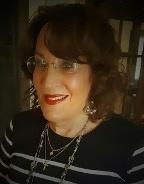
Deborah Elaine Stephens FEBRUARY 7, 1946 – SEPTEMBER 3, 2025
AWAB mourns the unexpected loss of Elaine Stephens Elaine was an active and beloved member at AWAB congregation, Baptist Church of the Covenant in Birmingham, Alabama. In 2019 Baptist Church of the Covenant, hosted an AWAB led worship service during the Cooperative Baptist Fellowship’s General Assembly gathering. Elaine was part of the team of people who offered Communion.
AWAB Executive Director, Brian Henderson notes, “Elaine Stephens was a woman who showed us all how to serve and love in the most inclusive of ways. Her life, love, and legacy will live on as we seek to follow in her courageous example.”

The Association of Welcoming & Affirming Baptists (AWAB) is honored to add our name to an amicus curiae (“friend of the court”) brief filed with the U.S. Supreme Court by Americans United for Separation of Church & State. The case Chiles v. Salazar challenges Colorado’s Minor Conversion Therapy Law (MCTL), which prohibits licensed mental health professionals from engaging in so-called “conversion therapy” with minors.
At its core, this case asks whether states can protect children from harmful and discredited practices, even when those practices are framed as religious or protected speech. Conversion therapy has been widely condemned by major medical and mental health organizations, including the American Psychological Association. Research and survivor testimony show that these efforts to change a young person’s sexual orientation or gender identity increase rates of trauma, depression, and suicide.
Colorado’s law is neutral and generally applicable. It protects children by upholding professional standards of care. AWAB joins this brief to make clear: conversion therapy is not ministry it is abuse. Joining this effort alongside interfaith partners is one way we live out our mission of full inclusion for LGBTQ+ people in Baptist life.
To read the full amicus brief click here.
What does it mean to be both queer and Baptist? For many, the answer is complicated. Some of us were nurtured by Baptist churches even as those same churches struggled or outright refused to affirm us. Some walked away, weary of hypocrisy. Others stayed, even at great personal cost. And more and more of us have found ways to live fully and faithfully, both queer and Baptist, urging the church to wrestle honestly with these questions.
A new book project, IMAGO DEI: Queer Baptists Reflect on How They Know Themselves in Relationship to the Church, is inviting personal essays from queer Baptists across the spectrum of experience. This collection will bring together stories of gratitude, grief, resilience, and courage from those who have navigated life at this intersection.
The book will feature an introduction by Rev. Dr. Cody Sanders, former AWAB Board Member, now Associate Professor of Congregational and Community Care Leadership at Luther Seminary, and a leading voice in LGBTQIA+ spiritual care. Cody’s scholarship and ministry have long helped the wider church listen more deeply to queer voices.
If you are a queer Baptist with a story to tell, this is your chance to add your voice. The editor, Dr. Paula Garrett, is welcoming submissions of personal essays that explore the complexity, tension, and beauty of being both queer and Baptist.
Essays should:
Offer a carefully crafted personal reflection. Be no longer than 20 double-spaced pages. Be submitted by January 30, 2026, to Paula Garrett at pgarrett@warren-wilson.edu.
This is more than a call for papers; it’s a call to witness. By sharing your story, you help shape the narrative of how queer Baptists know themselves and how we continue to call the church into fuller faithfulness.
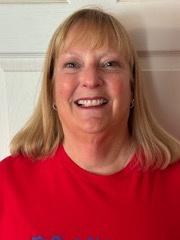
Dr. Paula Garrett is Professor of English and American Studies at Warren Wilson College in Asheville, NC. She offers numerous queer studies courses there. Her primary research area is in 19thcentury women, including their understandings of same-sex relationships. She is currently an MDiv student supported by AWAB Education Partner, the Baptist House of Studies at SMU’s Perkins School of
Theology. A Baptist preacher’s daughter and sister, Paula is deeply interested in the center of the Venn diagram between queer people and people of faith. She and her wife, Donna Read, live in Swannanoa, NC, with their teenage son, Read. They are members of AWAB member congregation, First Baptist Church of Asheville.
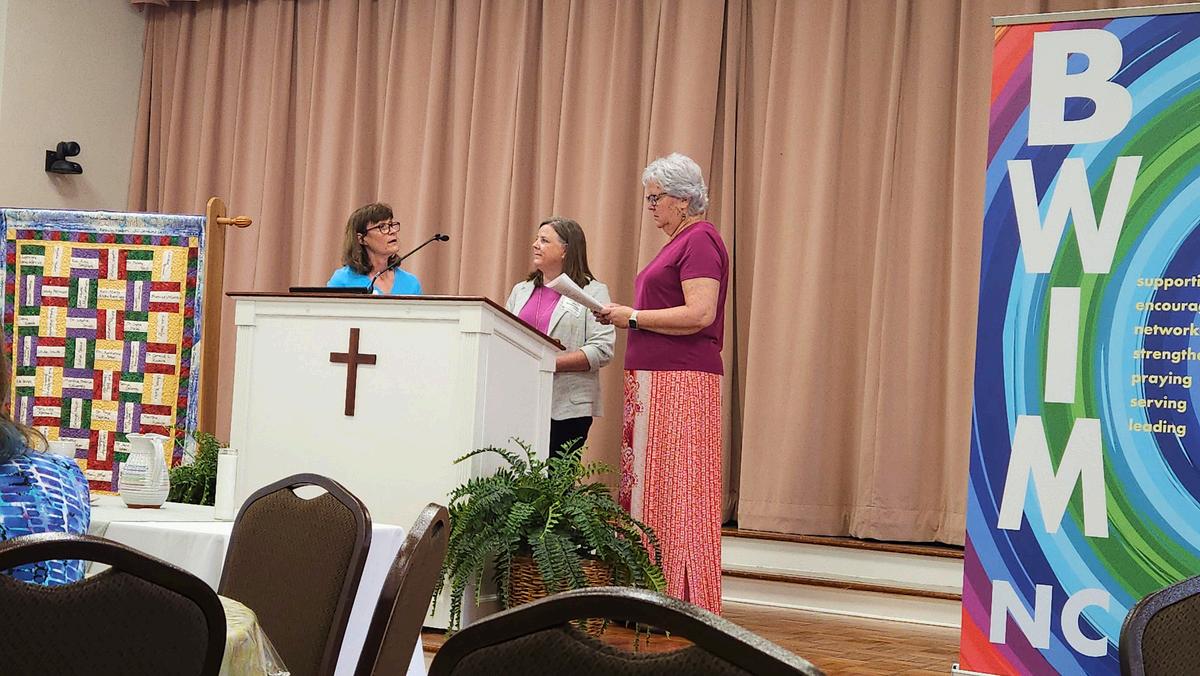
On September 11, 2025, AWAB was honored to attend Baptist Women in Ministry North Carolina’s Annual Symposium at Hayes Barton Baptist Church. This year’s gathering included the installation of Rev. Leslie Park as BWIMNC’s new Executive Director. Following the ceremony, Rev. Park delivered her first sermon in this new role.
We are grateful that, at AWAB’s request, Rev. Park graciously shared a reflection drawn from that sermon for our readers:
My very first sermon as Executive Director of Baptist Women in Ministry of North Carolina started with these questions:
Who were the ones that first showed us that God loves us? The ones who showed us that God needs our unique voices, our unique perspectives? Who were the ones who engaged us in ministry? Who encouraged us to listen for God’s call? Who empowered us with their stories and examples of what it looks like to live into ALL that God has gifted us to become?
Breathe a prayer of gratitude for those who paved the way for you…
And then turn and look to see who might be watching you; who might be hearing God for the very first time; understanding how God moves for the very first time, by seeing how God works through you…
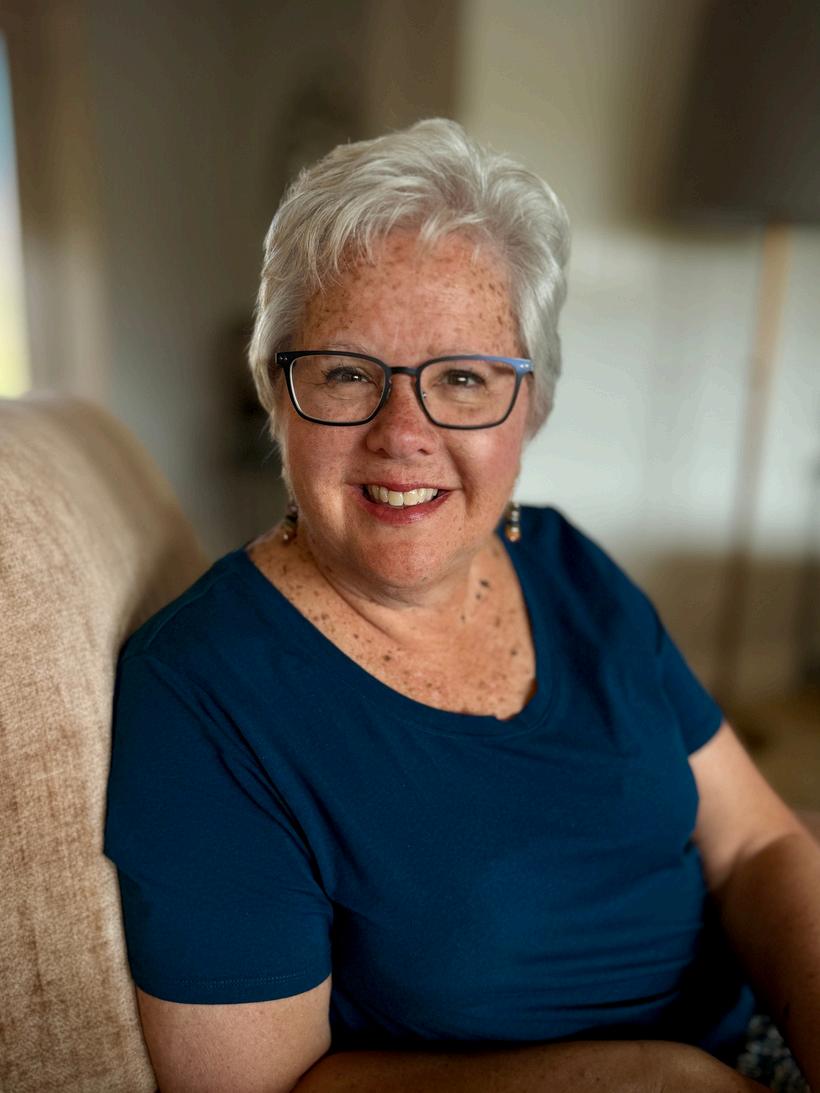
As the new Executive Director of BWIMNC, I covet your prayers. My focus for the first six months is to connect with as many siblings across the state as I can. I want to get to know you. I want to hear your story. I want to pray with you and for you. I want to find out what you need and work to meet those needs.
All love,
Rev. Leslie Park (she/her)
Executive Director, Baptist Women in Ministry of North Carolina

By recent vote AWAB welcomes new members to the AWAB Board of Directors
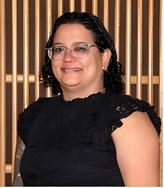

Rev. Abigail Medina-Betancourt is a dedicated pastor, intercultural leader, and advocate for culturally responsive ministry within the American Baptist Churches USA denomination. She currently serves as Associate Pastor at La Primera Iglesia Bautista de Sabana Llana in San Juan, Puerto Rico, and as the National Coordinator for Intercultural Engagement and as Associate Director of Creciendo Juntos at the American Baptist Home Mission Societies (ABHMS) Through these roles, she supports leaders and congregations in cultivating cultural sensitivity and ministering effectively in diverse contexts
Evann Hasenauer is a recent graduate of Colgate Rochester Crozer Divinity School, gaining a Masters of Divinity with a focus on LGBT+ ministry and social justice Evann previously earned a Bachelor’s in English from St Lawrence University with a focus in Writing Evann is currently working at Lake Avenue Baptist Church as the Director of Community Outreach and through the Genesee Area Campus Ministries as an Associate Chaplain Evann also serves on the Board of Vick and Pathfinder Camp and Conference Ministries as Board Secretary
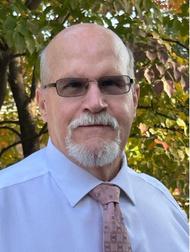
Allen was born and grew up in Atlanta, Georgia He started college at the Georgia Institute of Technology but transferred to Texas Christian University in Fort Worth during his junior year to pursue the Environmental Science program, which ultimately led to his bachelor's degree Right after graduation, Allen married Eileen Fielden, and together they moved to Atlanta for his first career in the environmental field. Eventually, Allen and Eileen moved to Louisville, KY. Allen owned his own business in environmental work and finally worked in accounting after additional education at Bellarmine University. Allen is an active member at Crescent Hill Baptist Church, where he has served on the Church Council, Personnel, and Finance committees. Currently, he is one of the trustees, who are responsible for the church’s assets.
By vote of the Board of Directors
we welcome the following churches into our association:
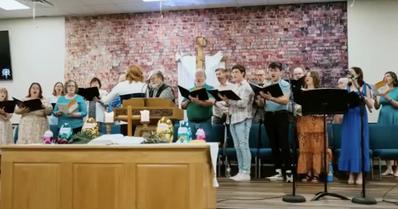
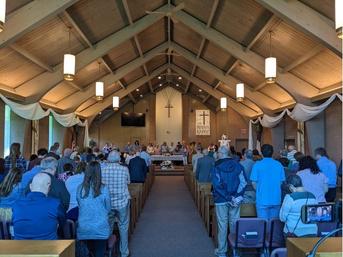
NorthHaven Church, Norman, OK
North Hills Community Baptist Church, Pittsburgh, PA The Quest, Novato, CA

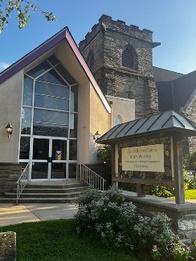
AWAB was honored to visit CBF and Alliance affiliated congregation, Emmanuel Baptist Fellowship in Columbia, SC.
As well as Central Baptist Church, Wayne, PA, a founding AWAB congregation
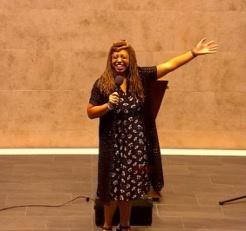
On a recent trip, AWAB congratulated Pastor Mia McClain, Senior Pastor of Riverside Church in Washington, D.C., as she and the congregation celebrated her third anniversary.

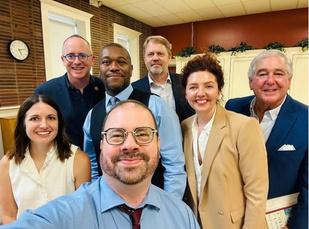
AWAB Staff visiting with Jeff Street Baptist Church at Liberty (Louisville, KY) Pastor Amy Armstrong
William Johnson Lecture, Crescent Hill Baptist Church, Louisville, KY - With Guest Lecturer, Dr. Cody J. Sanders, panelists: Dr. Anna Bowden, Dr. Brian Henderson, Dr. Lewis Brogdon, Dr Jason Jordan, Rev Erica Whitaker, Hon. Jerry Abramson
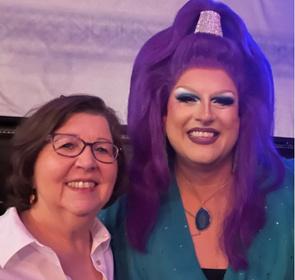
AWAB Administrative Coordinator, Janet Cole, hanging out with award winning songwriter and musician/artist, Flamy Grant
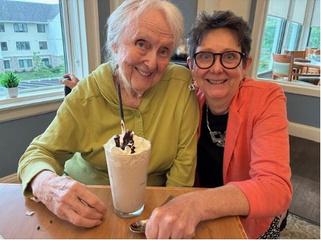
Rev. Dr. Jill McCrory visiting long-time AWAB leader and supporter, Peggy Campolo
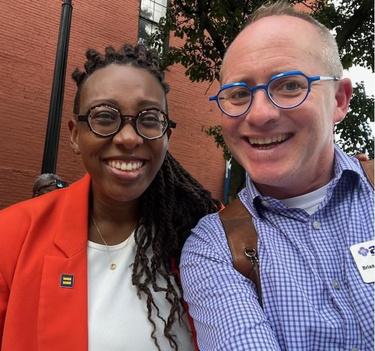
AWAB Executive Director Brian Henderson had a chance to visit in Cleveland, OH, with Human Rights Campaign President, Kelly Robinson
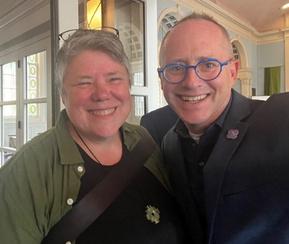
It’s always good to run into former AWAB Board members, here Executive Director Brian Henderson is with Ann-Louise Haak in Chicago
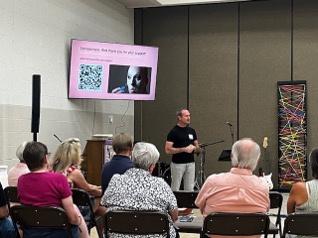
Jeremy Fackenthal, Co-Producer of the documentary, “What Did You Drag Me Into: The Flamy Grant Story” offers an early preview of this soon to be released production at AWAB member congregation, Royersford Baptist Church, in Royersford, PA.
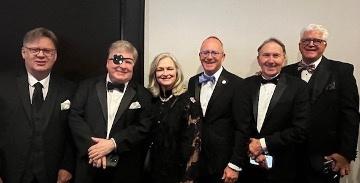
AWAB Board Members, Scott Green and Aubin Petersen, along with their spouses, Brian Henderson, and AWAB supporter Paul Dwyer, attended the annual National Dinner of the Human Rights Campaign in Washington, D.C.
AWAB is pleased to partner with the Cooperative Baptist Fellowship and we are grateful for CBF’s willingness to allow AWAB congregations to participate in one of its Lilly funded Thriving Congregations programs. Here is a TC cohort of churches in the Philadelphia region being led by Rev Dr Jill McCrory, former AWAB Board Chair

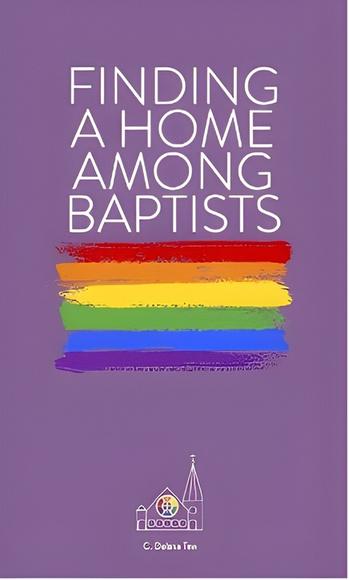
We’re excited to reveal the new cover of Finding a Home Among Baptists! Copies have officially been printed and are on their way to AWAB’s offices. In the coming weeks, we’ll share how you can get your own copy.
If you’d like to support this project, it’s not too late visit awab.org/50th-anniversarybook to learn more.
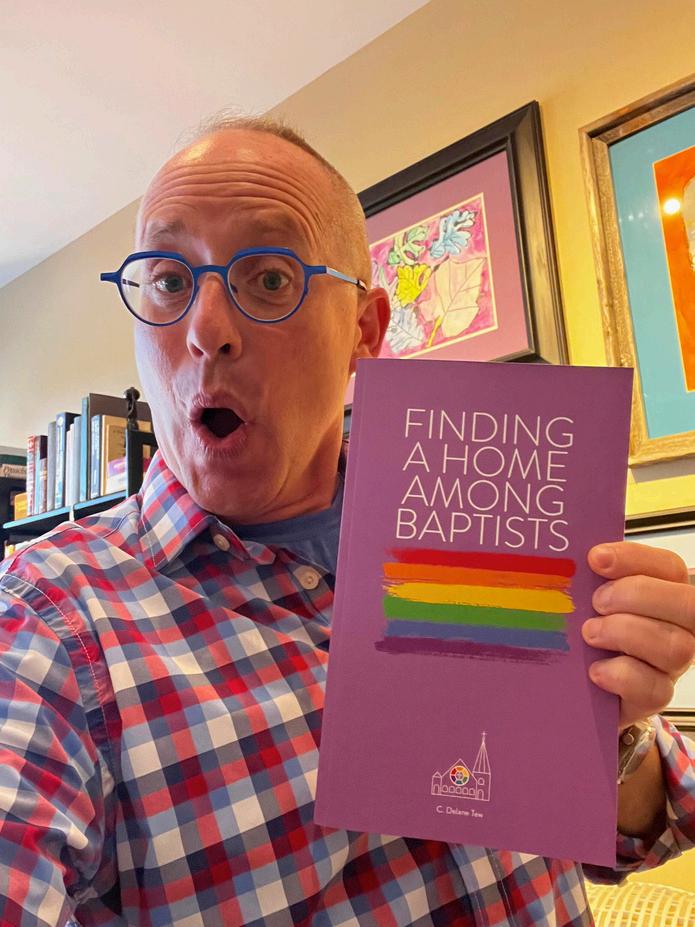
Our ED, Brian excited as he opens the first print copy of the book!