


Luke 7:1-10, Matthew 8:5-13
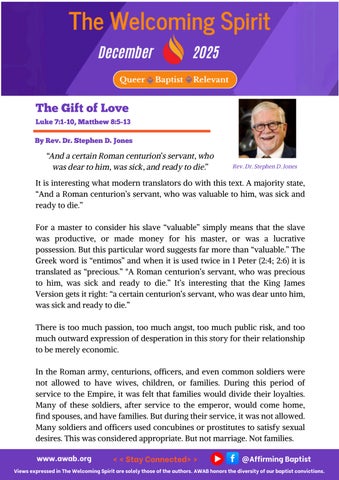
By Rev. Dr. Stephen D. Jones
“And a certain Roman centurion’s servant, who was dear to him, was sick, and ready to die.”
It is interesting what modern translators do with this text. A majority state, “And a Roman centurion’s servant, who was valuable to him, was sick and ready to die.”
For a master to consider his slave “valuable” simply means that the slave was productive, or made money for his master, or was a lucrative possession. But this particular word suggests far more than “valuable.” The Greek word is “entimos” and when it is used twice in 1 Peter (2:4; 2:6) it is translated as “precious.” "A Roman centurion’s servant, who was precious to him, was sick and ready to die.” It’s interesting that the King James Version gets it right: “a certain centurion’s servant, who was dear unto him, was sick and ready to die.”
There is too much passion, too much angst, too much public risk, and too much outward expression of desperation in this story for their relationship to be merely economic.
In the Roman army, centurions, officers, and even common soldiers were not allowed to have wives, children, or families. During this period of service to the Empire, it was felt that families would divide their loyalties. Many of these soldiers, after service to the emperor, would come home, find spouses, and have families. But during their service, it was not allowed. Many soldiers and officers used concubines or prostitutes to satisfy sexual desires. This was considered appropriate. But not marriage. Not families.
So, here we have this Roman centurion, who does not have a wife, or children, and he lives with a male servant. And he discovers that his slave, who has become dear to him, is dying. He could surely say to himself, “Get over it, get rid of the slave, let him die, he’s replaceable.”
There is one cardinal rule of slavery: the master never risks his own wellbeing on behalf of the slave. The slave’s well-being serves the master. Always.
But this Roman centurion finds his slave to be so endearing that he risks expressing public passion and recruits Jewish leaders in Capernaum to go with him in broad daylight to find Jesus, an unlicensed Jewish rabbi/healer, and beg for his intervention. Any of these leaders could have questioned why this slave was so important to him, as it violates the cardinal rule of slavery. But they didn’t. They accepted on face value that the centurion and his “beloved slave” were “precious and dear” to each other. And his priority, to save the slave at all costs, now became their urgent priority as well.
“This Centurion broke every rule to save the one who was dear to him.”
The Roman centurion is presented as a God-Fearer, persons relatively common throughout the first-century Jewish world, Gentiles who deeply respected the Jewish faith, respected its monotheism and its deep sense of justice, and respected that the Jews worshipped a loving God who cares deeply for all of creation. This loving God attracted many Gentiles, as their gods were often characterized as petulant, petty and demanding.
The Roman centurion was such a God-Fearer that out of his own wealth, he had built a synagogue for the Jews of Capernaum. Would the Jews of Capernaum be suspicious of an extravagant gift of this kind? What does the centurion expect in return? If he does something offensive to our people or to our faith, does he expect this gift to buy our silence?
On the other hand, what would the centurion’s superiors think of such a gift? Are you giving this gift because you are sympathetic to the Jewish faith? You are an agent of the Roman Caesar, whom we consider divine. Is this an act of disloyalty to the emperor?
In this story, the master “lowers himself”, allowing others to see his deep feelings of endearment, his desperation, his willingness to enlist anyone to the cause of saving this “dear and precious” slave. If it costs him his reputation, so be it. The cost is irrelevant to this centurion. Surely, in a
“If love costs him his reputation, so be it. The cost is irrelevant.”
now-compromised position, the centurion would have been quickly demoted or relocated by his superiors.
And now to Jesus. What does he do? He accepts the centurion’s vulnerability, meeting the centurion in his moment of crisis.
No judging questions, such as: “What’s really going on between the two of you?” No, in fact the opposite: Jesus so deeply admires the centurion’s love, and his faith, that Jesus comes to his rescue.
There’s no pretending with Jesus. No overlooking what must be said. Jesus is genuine. He is authentic. That’s what we see in this story. Jesus is the real thing. And here’s the real story:
Two men in a beloved relationship together will do anything and risk everything to save the other from harm. The other part of this context is that Roman centurions were kept on a tight leash by their military hierarchy. As they gave unquestioned orders to their soldiers, so they abided by unquestioned orders from their superiors. And if these Roman superiors sensed that this centurion was compromising himself by his love for his slave, humiliating himself as well as the emperor whom he represents, making himself look weak in public, lowering his reputation, it would be career-ending. The centurion saved his partner but no doubt lost his career.
Jesus doesn’t judge! Instead, Jesus affirms the faith of the centurion, and behind his affirmation is an acceptance of the deep love that exists between these two men. No judgment. No sarcasm. No turning away. No hesitancy. No reservation. This servant is saved from death as Jesus honors the deep passion and faith of this Roman centurion.
But there is more to this story, for in Matthew’s version, this story presents an opportunity for Jesus to stretch into new ways of thinking. The centurion is a Gentile, obviously, not a Jew. So, Jesus’ assumption is that he would not be a person of deep faith. As a centurion, he would be a devotee of emperor worship. In Matthew’s account, the centurion comes before Jesus and says, “Lord, I am not worthy to have you come under my roof; but only speak the word, and my servant will be healed.” A Gentile of such complete faith in Jesus.
Jesus responds, “Truly, in no one in Israel have I found such faith! I tell you, many will come from east and west and will eat with Abraham and Isaac and Jacob in the kingdom of God, while those who assume they are heirs to this kingdom will be thrown into outer darkness.” (Mt 8:10-11). Bit by bit, God is opening Jesus’ vision, even blowing Jesus’ mind, that his mission started with the Jews but now far extends to include every person he encounters, Roman or Palestinian, man or woman, young or old, righteous or sinner, slave or free, Greek, Roman or Jewish. Bit by bit, Jesus is embracing a world-wide compassion that includes us today. And Jesus learned this from a Gentile, a Roman centurion, no less!
Continue on Page 11
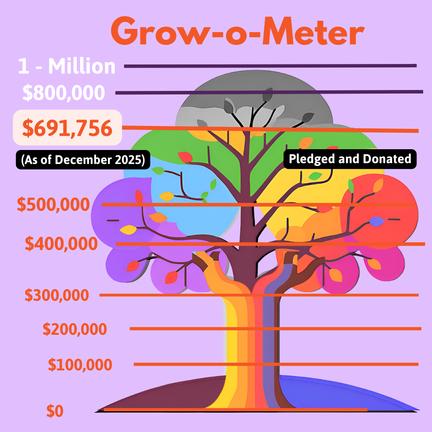
Our 1-Million Dollar ‘Here We Grow’ Campaign is a significant step towards strengthening and empowering AWAB. Success allows us to build a robust and collaborative staff and an engaged board of directors, enabling us to provide highquality LGBTQ+ resources to Baptists worldwide.

As of December 10th, 2025 we have already received funds or pledges totaling $691,756!
The Welcoming Spirit is a publication of the Association of Welcoming and Affirming Baptists. Its contents do not necessarily reflect the views or opinions of the Association unless explicitly stated To submit an article for consideration, please contact our Executive Director, Brian Henderson, at Brian@awab.org. or visit our website www.awab.org/newsletter for more information.
admin@awab
Perspective from the Desk of our Board Chair

Lauren Ng Chair of the Board of Directors
“While We Wait.
But if we hope for what we do not see, we wait for it with patience. (Romans 8:25)
I recently attended an Asian American Christian conference, spending three days with my multiethnic Asian siblings from a variety of church traditions. The Asian American church tends to be moderate to conservative on the issue of LGBTQ+ inclusion and so, I strive to show up in spaces like this one with authenticity, boldness, and patience.
As a Chinese American in Asian American contexts, I work hard to create inroads through proximity to help my people address something they’d prefer to ignore, through thoughtful dialogue and invitations to share one another’s stories.
And so, I continue to wait.
In these spaces, progress often feels incremental. Victories nuanced. Setbacks colossal. There is so much waiting. I wait for a willingness to “go there,” for a word of affirmation spoken in private, for a gesture of welcome offered in public, and for hearts and minds to be transformed. While I wish I could hurry everything and everyone along, I understand the complexity of culture, tradition, theology, and how they intertwine. And so, I continue to wait. I wait actively, not passively, knowing that the work I do is in preparation for what is to come.
This is the season of waiting. Advent, yes, but every day of our lives as we advocate for our LGBTQ+ siblings’ right to exist, to thrive without fear, and to be celebrated and affirmed in the church and beyond. Whenever I speak with all of you in our AWAB family, I hear about the ways you are actively waiting, with vigor, steadfastness, faith, and hope.
Together, may we hope for what we do not yet see, waiting for it with a patience that is active and unrelenting. May we always remember that we have the full assurance of God’s promise to us in Jesus Christ: hope, peace, joy, love, and holy belonging for each and every one of us.



Views & Inspiration from our Executive Director
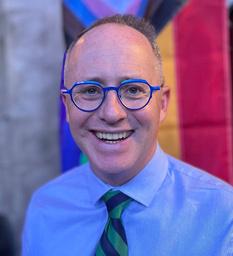
Brian Henderson Executive Director
As we approach the end of another year, I am struck by the many sacred threads that weave this season together threads of remembrance, hope, gratitude, and courageous love. This is a time that calls us to pause and reflect on both the joys and the burdens carried across the months now behind us. With each holy day and observance, we are reminded of who we are as a people and who God calls us to be.
In recent days, we observed Transgender Day of Remembrance, holding in our hearts the names and stories of transgender and nonbinary siblings whose lives were taken by violence and hatred. Their memory urges us to deepen our commitment to safety, advocacy, and the creation of communities where trans lives are celebrated, protected, and fully affirmed. Their resilience is a sacred witness.
On December 1, we also marked World AIDS Day, a moment to honor beloved ones we have lost and to recognize the ongoing work of healing and justice. The call to dismantle stigma, expand compassion, and walk alongside those affected by HIV and AIDS continues to shape our shared ministry.
Amid these solemn moments, we also enter a season of celebration Advent, Christmas, and many other holy days across our diverse communities. These traditions invite renewal and remind us that hope is born again and again, even in uncertain times.
This season also brings Giving Tuesday, when people around the world choose generosity as an act of solidarity and imagination. For AWAB, it is a reminder that our ministry is only possible because so many give, serve, advocate, and pray toward the same vision of a church where all are welcomed and affirmed.
In reflecting on the work before us, I am drawn to the words of Alexis Pauline Gumbs, who writes:
“Our definition of queer is that which fundamentally transforms our state of being and the possibilities for life. That which is queer is that which does not reproduce the status quo.”
This vision of queerness — as transformative, life-giving, and disruptive of injustice mirrors the very heart of our calling. It is the work of the gospel itself: to expand what is possible, to challenge what constrains, and to create spaces where God’s liberating love can flourish.
This year, AWAB celebrates and honors the courage of our member churches, education partners, ministries, and faithful donors. You are the ones who make transformation possible. Your commitments allow us to do together what none of us could do alone.
As we look toward a new year, may we continue to embody a faith that does not reproduce the status quo but boldly transforms the world with welcome, affirmation, and love.
With deep gratitude, thank you AWAB family and friends for all you do.

As we enter this season of hope and light, AWAB is proud to share our 2025 Advent Directory. Discover how our member churches are celebrating Advent and Christmas, and find welcoming, affirming spaces for worship and connection. Visit awab.org/advent to explore the full directory, browse events near you, and share it with others who may be looking for a spiritual home this season.
And there’s another point: if you find yourself in a superior position to the one you love, give it up! If you are a master and slave, that superior/inferior relationship would surely have to end. The centurion’s mind must have been blown. He races home - he finds his loved one fully well and whole –and he realizes that in Jesus’ economy, he and his slave now stand as equal – no longer one above the other – for the centurion has just given up everything for his friend. He can never again be “just a slave” to the Roman. In true love there is no hierarchy. Just partnership, just mutuality.
In this story, Jesus represents a deep commitment to healing, restoring wholeness not only to the servant but to this desperate household. This healing is an expression of shalom. The master lowered himself, elevating the slave, and Jesus’ healing introduces equality in the household.
This story shows us that sexual expression is most respectful in compassionate and supportive relationships. It isn’t something for sale. Sexual expression should never manipulate other people without regard for their well-being. It should never be cheap or one-sided. The Roman centurion and his slave have surely entered a more equal relationship in which each contributes to the other. The depth of their mutual affection and respect is unmistakable.
This story is one of scripture’s most captivating examples of agape love, love willing to sacrifice oneself for the good of another. The centurion engaged in agape love, risking his career and reputation for the one whom he loved.
So may it be for us!
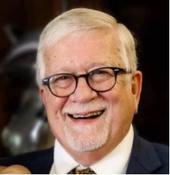
Rev. Dr. Stephen Jones retired in March after 54 years as an American Baptist pastor, serving in AWAB churches or AWAB-friendly churches. He's the author of 9 books (latest, "Jesus and the Howling Monster," a children's picture book), many hymn tunes and articles. Steve has been active in social justice and peace-making actions throughout his career. He is married to Jan Jones for 55 years, and they have two grown children and three young granddaughters who are the love of his life! They live in Kansas City, MO.

Written by AWAB pastor, Rev. Ben Dubow, Riverfront Family Church, Hartford, CT

What do we do now? In a season of fear, disinformation, and performative power, RESIST offers a clear, practical path for faithful Christian resistance rooted in Luke–Acts and the way of Jesus. This accessible guide reframes resistance as stubborn love: nonviolent, truthful, neighbor-centered, and full of hope. With Bible-rich teaching, real stories, and step-by-step practices, it equips individuals, families, small groups, and churches to resist harm while building communities of hospitality, peace, and healing.
Inside RESIST you’ll find:
A Jesus-centered theology of resistance: nonviolence, noncooperation, solidarity, sanctuary, and prophetic imagination.
Practical “Next Steps” for everyday disciples at home, at work, online, and in public life.
Tools for discernment and courage: prayers, liturgies, and weekly practices that form resilient character.
Small-group helps in every chapter: discussion questions, reflection prompts, and simple action plans.
Stories that move us from transactional charity to kinship, so we resist not against people but for our neighbors’ dignity.
If you’re longing for a faithful, un-anxious way to follow Jesus in precarious political times, RESIST is your field guide clear enough to start today, deep enough to sustain the long journey.
Written by Stephen Sprinkle
Over 13,000 Americans have been murdered in the late twentieth and early twenty-first centuries because of their sexual orientation and gender presentation. In Unfinished Lives: Reviving the Memory of LGBTQ Hate Crimes
Victims, Stephen Sprinkle puts a human face on the outrage and loss suffered when people die from anti-gay hatred.

Beginning with new developments in the story of Matthew Shepard's murder in Laramie, Wyoming, Sprinkle tells the stories of fourteen representative LGBTQ victims whose lives were savagely cut short due to homophobia and transphobia. These are stories about people who could be your neighbor, classmate, co-worker, or friend - real, everyday people whose love was foreclosed, relationships brutally terminated, and future contributions stolen from us by outrageous, irrational hatred. Told lovingly yet unflinchingly, Unfinished Lives lifts the stories of these LGBTQ victims from undeserved obscurity, allowing their memory to live again. Relying on personal interviews and visits to the locations where these people lived, loved, and died, Sprinkle records the raw emotions, powerful movements for social change, and unexpectedly hopeful communities that arise from the ruins of those people whose only "offense" was to live as they were born to be.
Part portraiture, part crime narrative, and part ethnography, Unfinished Lives is poised to change the conversation on hate crimes in the United States.
Stephen V Sprinkle is Emeritus Professor of Practical Theology at Brite Divinity School, located on the campus of Texas Christian University in Fort Worth, Texas. A native of North Carolina, he is an ordained minister of the Alliance of Baptists. Dr. Sprinkle was named 2010 Hero of Hope by the Cathedral of Hope in Dallas, Texas for his advocacy on behalf of the LGBTQ community, and is an active member and Theologian-in-Residence at The Episcopal Church of Saint Thomas the Apostle (Dallas, Texas). Dr. Sprinkle is also friend to many AWAB members and supporters.
Written By Dr. C. Delane Tew
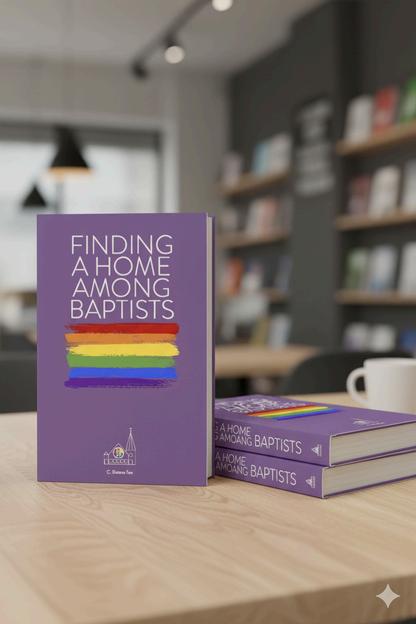
We are thrilled to share that Finding a Home Among Baptists, the longawaited new book by C. Delane Tew, PhD, is now available. This powerful work traces the arc of welcoming and affirming ministry across Baptist life, offering the most comprehensive look yet at how our movement has taken shape over the past fifty years.
Dr. Tew situates the Baptist journey within the wider history of LGBTQ+ inclusion in the United States lifting up the courage of congregations and individuals who chose welcome over fear and justice over silence. Through careful research and storytelling, the book honors the pastors, lay leaders, advocates, and churches whose faithfulness helped create the Welcoming and Affirming movement we know today.
In his foreword, AWAB Executive Director Brian Henderson reflects: “I believe that Baptists, at our best, can create a truly good home in which we may be fully and freely our authentic selves.”
We celebrate this important contribution to Baptist history and LGBTQ+ Christian witness. We hope it inspires you as it has inspired us to continue building communities where every person is embraced as beloved.
Copies are available to purchase now at www.awab.org/book.
In recent weeks, AWAB’s work and witness have been featured across Baptist News Global, highlighting our role in advancing LGBTQ+ inclusion, faith-based justice, and public advocacy.

Below are three stories that lift up AWAB’s ministry and the broader movement for radical welcome:
Baptist News Global covered AWAB’s 4th Annual Lecture, where Rev. Dr. Justin Sabia-Tanis explored how queer and trans artists reveal sacred truths through their work. The lecture emphasized the power of art to heal, resist, and expand our understanding of spiritual life.
Read the full story
2. Conversion Therapy Case Represents “a Pivotal Moment,” AU’s Rachel Laser Says
In reporting on Chiles v. Salazar, the Supreme Court case challenging Colorado’s ban on conversion therapy, BNG highlighted AWAB’s participation as an amicus partner. AWAB joined other faith-based organizations in affirming that conversion therapy is harmful, unethical, and incompatible with the gospel’s call to love and justice.
Read the full story
When the Supreme Court declined to revisit the 2015 Obergefell v. Hodges decision, AWAB issued a statement celebrating the continued protection of marriage equality BNG reported on AWAB’s response and reaffirmed our commitment to safeguarding the dignity and equal treatment of LGBTQ+ people in both church and society.
Read the full story
By vote of the Board of Directors
we welcome the following churches into our association:
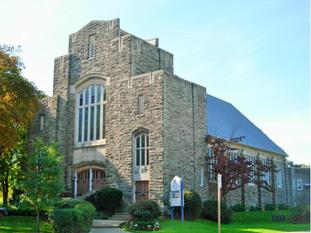
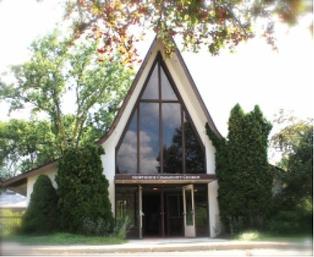
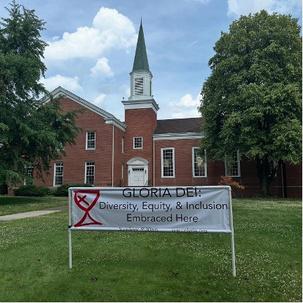
MacNeill Baptist Church, Hamilton, Ontario, Canada
Northside Community Church, Ann Arbor, MI
Washington Avenue Christian Church, Elyria, OH

AWAB Pastors, Rev. Dave Olgilvie of Burlington Baptist Church (Ontario, Canada) and Rev Brent Helwig (FBC Guelph, Canada) at Brent’s ordination service on November 16. Congratulations, Brent!
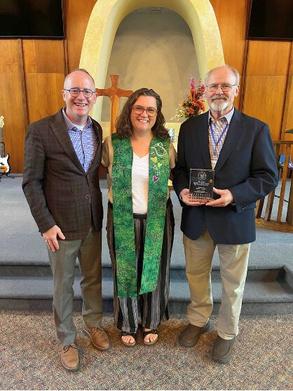
AWAB Executive Director with Pastor Sarah Strosahl-Kagi of Royersford Baptist Church, with church member and Randle R. Mixon Award recipient, Rev Dr Reid Trulson
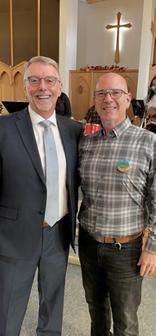
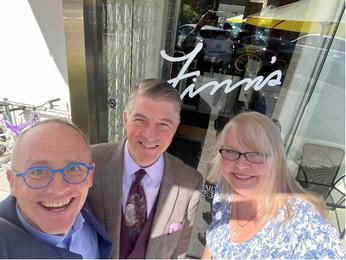
Rev. Dr. Curtis and Katy Price at FBC Salt Lake City, UT
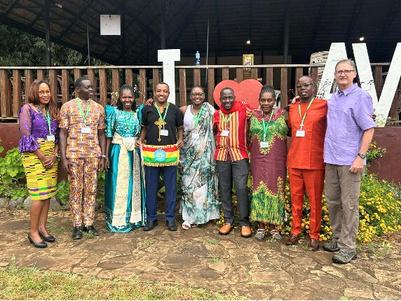
AWAB Member ministry leader, Rev. Philip Stargate with IM Global Servant Ray Schelinger at the African Peace Warriors Gathering in Tanzania
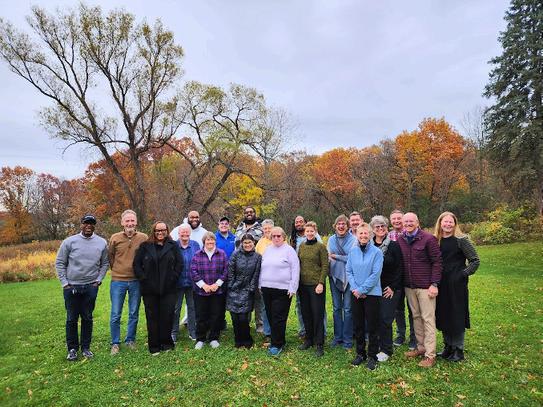
AWAB was invited to participate in the Carpenter Foundation Consultation that studied the current state of the welcoming (and affirming) church movement.
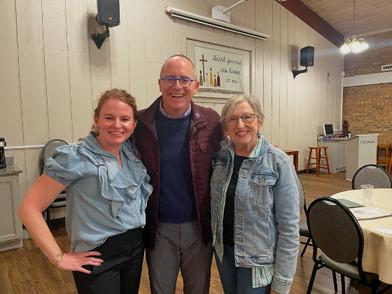
ED Brian Henderson offered a presentation on “Living Into our W&A Statement” for Faith Baptist Church in Georgetown, KY, and is seen here with co-interim pastors, Mary Alice Birdwhistell and Susan Lockwood.
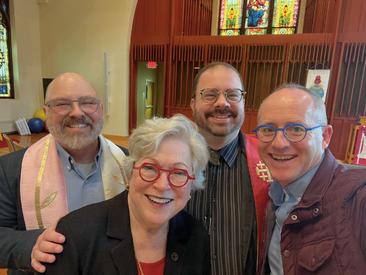
Here are AWAB friends with ED Brian Henderson, Drs. Justin Sabia-Tanis, Cody Sanders, and Molly T. Marshall, all attending an installation service for a congregation in Minneapolis.
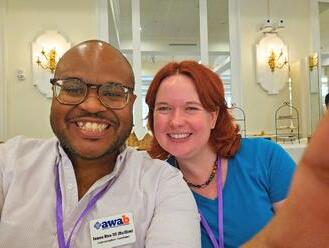
AWAB’s Communications Coordinator, James Rice III, attended the BWIM National Conference in Atlanta and is seen here with AWAB Pastor Anita Laffoon of Ginter Park Baptist Church (Richmond, VA).
As we close out another year of The Welcoming Spirit, we are grateful for the pastors, scholars, lay leaders, storytellers, and advocates who have shaped our cover stories and reflections. Their contributions have deepened our collective understanding of what welcome, justice, and faithful imagination look like in Baptist life today.
In 2026, we hope to expand that circle.
AWAB is seeking a broader range of writers people with diverse identities, backgrounds, and experiences—who can speak to the many ways LGBTQ+ affirmation and Baptist faithfulness intersect in our communities. We are especially eager to welcome voices we have not heard enough from: writers of color, women and femme-identifying writers, trans and nonbinary writers, young adults, rural and small-church voices, and those whose stories broaden and enrich the movement we are building together.
If you have a story to tell, a reflection to offer, an experience to share, or an idea you feel The Welcoming Spirit should explore, we would love to hear from you. Our publication features a variety of pieces—cover stories, theological reflections, ministry spotlights, book and resource highlights, and narratives of welcome from AWAB congregations and partners.
Whether you have written for years or are hoping to contribute for the first time, your voice is welcome here.
To pitch an idea or express interest in writing for a future edition, please email: James Rice III, Communications Coordinator — James@awab.org.