



FROM REPORT TO MOVEMENT
The Rise, entrepreneurs of the UK Black Business Entrepreneurs Conference
THE BUSINESS OF HIGHER EDUCATION
Exploring the gap between White and racially minoritised
THE FUTURE IS FEMALE
From north London to the world

NB. This is the preview version of the 12th edition of the UK Black Business Guide. The final version of the UK Black Business Guide will be ready for distribution at the end of August 2026.


If you would like to promote your business in the final version, please contact Garfield Robinson immediately at 07812 591 080.
The Voice Media Group (GV Media Group Ltd)
Telephone: 020 7510 0340 Website: www.voice-online.co.uk
Facebook: @voicenews Twitter: @TheVoiceNews Instagram: @thevoicenewspaper
To advertise: 020 7510 0340 or email: advertising@thevoicemediagroup.co.uk
To share your stories: newsdesk@thevoicemediagroup.co.uk
Subscribe and get your copy of the Voice newspaper delivered to your door: subscriptions@thevoicemediagroup.co.uk
Supporting businesses in our community for 45 years!
Get in touch with us and share your stories!




BBy Dr Carlton Brown
lack British entrepreneurship is routinely framed as a story of resilience. That framing is now economically insufficient and politically convenient. It obscures a harder question: why does a consistently productive entrepreneurial cohort remain structurally under-capitalised in one of the world’s most sophisticated financial systems?
The UK is not lacking Black entrepreneurs. It is failing to scale them.
Estimates of the economic contribution of Black and ethnic minority -owned businesses are approximately £25 billion annually, with broader ethnic minority enterprises contributing significantly more to GDP and employment (Lloyds Banking Group, 2021). The British Business Bank similarly confirms that ethnic minority entrepreneurs are active, persistent, and disproportionately represented in start-up formation (British Business Bank, 2020).
Yet capital access remains structurally uneven. This is where the language of “access” becomes misleading. Access implies neutrality. The evidence increasingly suggests otherwise.
Black entrepreneurs report lower engagement with bank finance, weaker conversion rates for applications, and higher reliance on personal funding networks (Lloyds Banking Group, 2021). The British Business Bank further identifies that ethnic minority-led firms are significantly less likely to receive external
equity investment, even when controlling for business stage and sector (British Business Bank, 2021).
As set out in my earlier research, The Black Entrepreneur Report 2021, Black British entrepreneurship is defined not by a lack of formation, but by constrained scale and structurally uneven access to capital (Brown, 2021).
The UK financial system is often described as meritocratic. But meritocracy assumes symmetrical information and equal trust conditions. Neither exists here. The Black Entrepreneur Report 2021 identifies a recurring pattern, where entrepreneurs face anticipatory exclusion, where expectations of rejection shape behaviour before applications are even made (Brown, 2021). This is not perception alone. It is market conditioning. The consequence is a parallel economy of entrepreneurship, vibrant, innovative, but structurally detached from mainstream capital flows.
Any serious assessment must move beyond constraints and recognise existing high-performance ecosystems.
In logistics and infrastructure-linked services, entrepreneurs such as Tevin Tobun, founder of GRC Group, have built multi-vertical logistics and investment platforms operating across the supply chain, property, and venture activity. Tobun’s trajectory reflects a broader shift: Black British entrepreneurs moving from single-sector operations into diversified asset structures, precisely the kind of scaling behaviour the UK economy claims to incentivise but rarely funds at an early stage.
In health, innovation and consumer goods, Byron Dixon, founder of Micro Fresh, represents a different form of structural innovation, science-led consumer hygiene products developed in the UK manufacturing ecosystem and exported internationally. His business sits at the intersection of health innovation, supply chain manufacturing, and consumer trust economies, yet like

Various financial institutions have introduced diversity initiatives, targeted funding schemes, and entrepreneurship programmes. Yet outcomes remain uneven. The uncomfortable question is whether the issue is one of insufficient intervention or structurally embedded allocation bias.
If similar quality firms consistently receive different financing outcomes depending on network proximity, referral pathways, or founder identity, then the system is not neutral; it is stratified. At present, there is no formal regulatory framework that audits entrepreneurial finance outcomes through an equality or bias-adjusted lens. There should be.
“Inclusion” has become the dominant policy framing. But inclusion assumes fairness with uneven participation. The evidence suggests something more structural, uneven systems producing predictable disparities.
Three implications follow.
First, capital allocation is heavily influenced by informal networks that advantage proximity over potential.
Second, diversity programmes without measurable capital deployment outcomes risk becoming symbolic rather than structural.
Third, under-capitalisation of high-potential entrepreneurs represents a direct constraint on UK productivity growth.
This is not a diversity issue alone. It is a national economic inefficiency.
many Black-founded firms in FMCG, scale has been achieved despite capital friction rather than because of institutional support.
In food innovation and premium consumer brands, Segun Odunaiya, founder of Gym Kitchen, has built a high-growth health-focused food brand aligned with modern consumer demand for protein-led, lifestyle-oriented nutrition. Gym Kitchen’s positioning within major UK retail channels demonstrates that Black-founded businesses are not confined to niche cultural markets; they are competing directly in mainstream supermarket economies.
These examples matter because they disrupt a persistent analytical flaw, the assumption that Black entrepreneurship is concentrated only in culturally expressive or low-margin sectors. In reality, Black founders are already operating in logistics, FMCG innovation, health, retail supply chains, and diversified investment structures.
The constraint is not ambition. It is capital depth.
Survival rates among Black-owned businesses are broadly comparable to UK averages, with some cohorts outperforming early-stage survival benchmarks (Brown, 2021). The issue emerges at the point of scaling.
British Business Bank data shows ethnic minority-led firms remain underrepresented in high-growth financing channels such as venture capital and equity investment (British Business Bank, 2021). This matters because productivity is a function of scale, not survival.
Black British entrepreneurship is not emerging. It is established, but constrained.
From Tevin Tobun’s logistics and investment diversification, to Byron Dixon’s manufacturing-led consumer innovation, to Segun Odunaiya’s mainstream FMCG scaling, the evidence is clear: Black entrepreneurs are already building scalable, high-value enterprises within the UK economy.
The question is no longer capability. It is architecture. Britain must decide whether its financial system is designed merely to permit entrepreneurship or to fully capitalise it.
Because until capital allocation aligns with entrepreneurial output, the UK will continue to underperform against its own economic potential.
And that is not a narrative problem. It is a productivity one.
• British Business Bank (2020) Alone Together: Entrepreneurship and Diversity in the UK. London: British Business Bank.
• British Business Bank (2021). Unlocking the Potential of Diverse Entrepreneurs. London: British Business Bank.
• Brown, C. (2021) The Black Entrepreneur Report 2021 Aspire Consultancy.
• Lloyds Banking Group (2021) Black. British. in Business & Proud. London: Lloyds Banking Group.
Black-owned businesses are no longer an emerging force in the UK economy, they are an essential one. Research from the Federation of Small Businesses and Aston University’s Centre for Research in Ethnic Minority Entrepreneurship (CREME) estimated that businesses led by Black and minority ethnic entrepreneurs contribute around £25 billion to the UK economy.
They help to create jobs, drive innovation and invest in the communities they serve.
Yet despite their growing economic impact, many continue to face barriers to growth, from limited access to finance and networks to a lack of visibility and commercial opportunities.
That is precisely why publications such as The Voice's Black Business Guide matter.
For 44 years, The Voice has informed, inspired and championed Britain's Black community. This guide continues that mission by shining a spotlight on Black-owned businesses, helping consumers, corporations and investors discover enterprises they may otherwise never encounter.
Visibility matters. Representation matters. When successful Black businesses are celebrated, they challenge outdated perceptions, inspire the next generation of entrepreneurs, and demonstrate the depth of talent, innovation and resilience that exists across our community.
The same is true of events like the UK Black Business Entrepreneurs Conference (BBEC).
More than just another business gathering, the conference provides a platform for entrepreneurs to connect, learn, collaborate and access the knowledge and relationships that can help take their businesses to the next level.
Its impressive line-up of speakers reflects the growing influence and ambition of Black entrepreneurship in Britain.
This year's theme—Innovation, Technology and Doing Business Globally—could not be more timely.
Business is changing at an unprecedented pace. Artificial
intelligence, digital transformation and increasingly connected global markets are reshaping how companies compete and grow. For Black entrepreneurs, embracing these changes is no longer simply an advantage; it is becoming a necessity.
Artificial intelligence, in particular, has the potential to level the playing field for small and medium-sized businesses.
From automating routine administration and improving customer service to analysing market trends and creating marketing content, AI can help entrepreneurs work more efficiently, make smarter decisions and focus on strategic growth.
Those who embrace these technologies early will be better placed to reach new customers, expand into international markets and compete with larger organisations.
But building a stronger Black business sector is not solely the responsibility of entrepreneurs. It also depends on the choices we make as consumers.
Every purchase is a vote for the kind of economy we want to build.
Supporting Black-owned businesses is about more than buying a product or service; it is an investment in local communities, future jobs and long-term prosperity.
As businesses grow, they create employment, mentor a future generation of entrepreneurs, generate wealth and reinvest in the neighbourhoods they emerge from.
In doing so, they strengthen the wider economy and enrich British society as a whole.
Supporting Black businesses is not about excluding anyone else. It’s about recognising that intentional support can help address longstanding inequalities while building a more diverse, innovative and resilient economy.
As you read this year's Black Business Guide, we hope you discover new businesses, new products and services and opportunities to support the remarkable entrepreneurs featured in these pages.
Their success is not simply a win for the Black community, it is a win for Britain.
If you would like to advertise in the next edition, please contact us at: advertising@thevoicemediagroup.co.uk

Established in 1976, July 2026 sees Sackville Travel proudly celebrate 50 years in business. Over the past five decades, we have built a reputation for exceptional service, expert travel advice and a commitment to creating unforgettable travel experiences for our clients.
As one of London's longest-serving independent travel agencies, we remain dedicated to providing trusted advice and personalised service which is almost impossible to find. Our longevity is a testament to the loyalty of our customers, the service we provide, the strength of our industry relationships and our passion for the destinations we specialise in.
Known for our Caribbean expertise, we also offer a wide range of African destinations. As more travellers seek to discover and reconnect with Africa, demand continues to grow. Increased direct and indirect flight options now make it easier than ever to explore multiple destinations in one unforgettable holiday. Popular choices include Nigeria, Ghana, Zanzibar, Tanzania, The Gambia, Ethiopia, Eritrea, Uganda and Rwanda, each offering a unique blend of culture, history, wildlife and breathtaking landscapes.,
Our specialist regions are Caribbean, Africa & USA where we offer flights and package holidays. Beyond individual bookings, we also specialise in travel for groups, families and couples. Our clients travel for a wide variety of reasons including birthday celebrations, family reunions, carnivals, music festivals, safaris, relaxation, destination weddings, cultural experiences, sporting events and other special occasions. We have a large portfolio of hotels, car hire and ground handlers to support you
At Sackville Travel, you benefit from a personalised service. Our experienced team can secure competitive fares and recommend the best flight routes. You'll continue to earn airline loyalty points, and on selected flights and holidays, you can spread the cost with a low deposit and flexible payment options at no extra charge.
As an ATOL-protected travel company, your booking is financially protected, giving you complete peace of mind. Whether you're travelling for business, visiting family, joining a group trip or embarking on a dream holiday, we're here to make your journey seamless and stress-free.
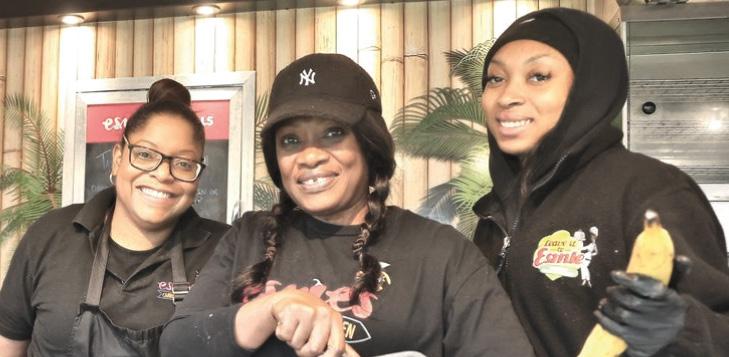
AUTHENTIC: Authentic: Esmie Stewart & Team
You know your business better than anyone. So when you need finance to grow, you deserve a lender who understands too. A growing network of lenders who specialise in listening to entrepreneurs’ plans and spotting their potential backs hundreds of black founders every year.
What connects a specialist care business, a multiple award-winning marketing and influencing agency working with international brands, a premier bespoke wig-maker, a Caribbean Street Food stall, and a community interest company successfully addressing long-standing health inequalities across the UK?
All of these black owned and led businesses are thriving. All wanted to invest in their businesses, for marketing, product development, new services, or even to refinance existing loans on better terms. And all of them discovered that a ‘responsible finance’ provider, also known as a community development finance institution or CDFI could offer them a flexible loan with fair and transparent terms, designed to enable their business growth.
CDFIs are locally based, rooted in the communities they serve. They specialise in supporting fantastic micro and small businesses who want and can afford to repay a loan, and they’re routinely praised for being able to make fair lending deci-
sions based on understanding a business, not what an algorithm says. They treat entrepreneurs as a human being, not a number on a spreadsheet, and give thousands of hours of practical business support to strengthen firms and build long-term success.
This kind of support proved invaluable to Bernadette Charehwa, the managing director of Woodleigh Healthcare. This care services provider works with young people with autism and learning disabilities and had faced costly short-term funding challenges. But a £150,000 loan from CDFI, First Enterprise, enabled Woodleigh to manage cash flow, expand and open a third site.
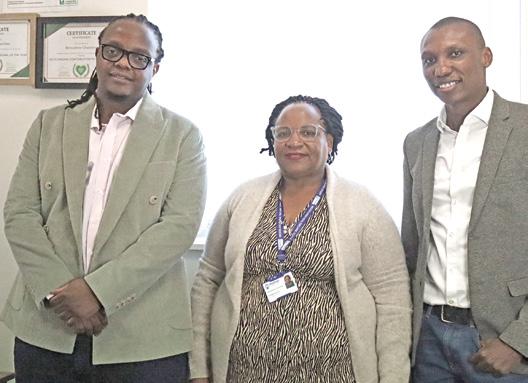
Bernadette says, “I truly appreciated our Investment Manager, Shaun, taking the time to meet us in person and understand our care model.”
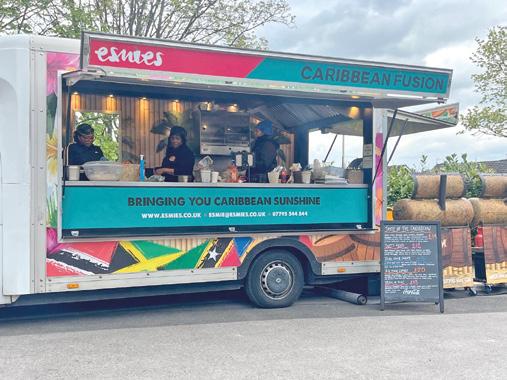
Esmie Stewart, another CDFI customer, had left Vodafone after 12 years and “wanted to do something I love, hospitality. So I went to study for my degree and had to work in the kitchen for the first semester. And I absolutely loved it.”
But Esmie was less enamoured by a lack of good quality, authentic Caribbean food in the UK: “I knew what Caribbean food should be, and most of the food I tasted did not taste like it. It wasn't fresh. You’d go into a restaurant and hear the microwave pinging. I wanted to change that.”
So that’s what she did. Esmie created a popular, tasty destination restaurant at her college, then decided to launch her own business. And with a £48,000 loan from a CDFI, Esmie created a fantastic food truck selling delicious street food. She had provided her business plan, financial projections and other information and says the responsible finance provider was easy to deal with:
“They asked lots of questions and went through everything with us to make sure it would work and the figures made sense. It was like getting free business consultancy. They want to make sure that your business will survive.”
For Charles Kwaku-Odoi, chief executive of the Caribbean & African Health Network (CAHN), a CDFI was a “godsend.” CAHN addresses health inequalities through advocacy, education, and
frontline services including hospital discharge support, family health and wellbeing hubs, counselling, and a helpline. It holds public sector and NHS contracts, and used CDFI finance to navigate the reorganisation of the health and social care landscape and maintain vital frontline services in London and Manchester.
“They were an active listener,” says Charles, “and proactively supportive.” After taking on the CDFI funding, CAHN employs 50 people.
Responsible Finance, which represents the UK’s CDFIs, says its members increased business lending by 28% (to £181.7m) in 2025. CDFIs’ growth loans to SMEs had an average value of £97,000 and their start-up loans were typically around £12,500. One in five of these loans were to black and ethnic minority led businesses, so CDFIs’ lending is more than double that of representation in business leadership, and significantly higher than most financial institutions.
Its members and their positive impact on entrepreneurship have been recognised by newspapers and media including The Voice, The Times, Financial Times, BBC, ITV and Channel 4, and chief executive Theodora Hadjimichael says that despite a record year of lending in 2025, “we’re just getting started.”
So whether you’re starting out, growing or looking for the right support to move forward, find your local CDFI at https://www. findingfinance.org.uk/campaign-1/ ethnic-minority-business
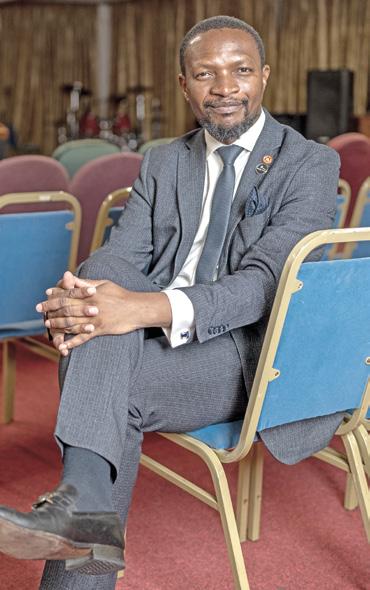


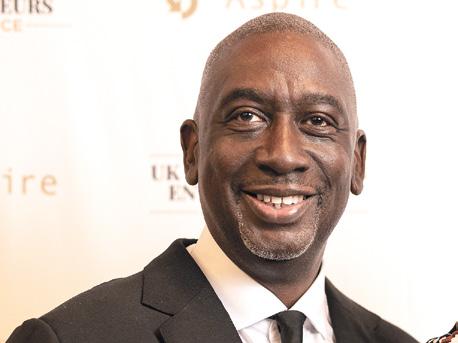
By Dr Carlton Brown
In the UK’s increasingly crowded landscape of business awards, accelerators, and networking forums, a deeper question persists beneath the surface: what drives economic transformation for Black entrepreneurs, recognition, or evidence-led structural change?
The UK Black Business Entrepreneurs Conference (BBEC) was founded in response to that question. It did not emerge as an industry spectacle or awards platform. It emerged from research and a quest to improve the social and economic position of black entrepreneurs in the UK and their contribution to the British economy.
At its core sits The Black Entrepreneur Report 2021, a body of work that examined the lived realities of Black British entrepreneurship, exposing persistent gaps in access to finance, procurement pathways, and institutional trust. The report’s central finding was not abstract: Black entrepreneurs are not underrepresented in ambition or business formation but constrained at the point of scale by structural barriers embedded within finance, networks, and institutional behaviour. That evidence base became the foundation for BBEC.
The conference, first launched in 2022, was designed explicitly as a translation mechanism—moving insight into action, and data into dialogue.
Its founding principles are simple but deliberate: Empower, Educate, Engage. These are not rhetorical values. They are structural design choices.
The intention, as articulated through the conference frame-
work, is to bring together entrepreneurs, policymakers, financial institutions, and corporate leaders into a shared space where the “distance between insight and implementation” is reduced. In practice, this means confronting a long-standing tension in UK business culture, the separation between diversity discourse and economic allocation.
Early iterations of BBEC highlighted this gap clearly. While ethnic minority entrepreneurs represent a significant proportion of UK business formation, procurement spend and investment flows remain disproportionately concentrated (as highlighted in the foundational Black Entrepreneur Report 2021).
Unlike many business forums that prioritise visibility, BBEC was deliberately constructed around credibility and evidence-led discourse.
From its inception, it has positioned itself against what might be described as “awards-first ecosystems” where recognition often precedes measurable impact. Instead, BBEC has consistently foregrounded structural questions: access to capital, supply chain inclusion, scaling barriers, and the mechanics of economic mobility.
This positioning has made it less a ceremonial event and more a working forum for economic analysis and intervention.
By its fourth year, BBEC had already become widely recognised as a “mecca for Black British entrepreneurs”, bringing together more than hundreds of business leaders, policymakers and founders to interrogate both barriers and opportunities in the UK economy.
The significance of BBEC is not simply its convening power, but its economic framing.
Its impact can be understood through three interconnected pillars:
The conference places strong emphasis on understanding how capital flows, venture funding, debt finance, procurement systems, and institutional investment behaviour. This is not motivational content; it is economic literacy designed to close information asymmetries. But also an opportunity to share stories and insights from successful entrepreneurs
Rather than abstract panels, BBEC has consistently foregrounded applied business knowledge, scaling strategies, risk management, procurement access, and sector-specific growth path-
ways. Speakers have included leading figures across business, media, policy, and academia, contributing practical frameworks rather than symbolic narratives.
Perhaps most critically, BBEC actively engages banks, corporates, and policymakers in direct dialogue with entrepreneurs, forcing visibility of structural gaps in real time rather than through retrospective reports.
This triadic model distinguishes it from conventional diversity programming.
The Black Entrepreneur Report 2021 identified a central paradox: despite increasing appetite for diversity within institutions, systemic constraints persist in procurement access, financial trust, and network-based capital allocation.
It described what has been termed the “Race Paradox “, a condition in which institutional intent for inclusion is frequently undermined by structural inertia, cultural bias, and legacy systems embedded in decision-making frameworks.
BBEC was created as a direct response to that paradox: not as a critique alone, but as infrastructure.
The fifth anniversary of BBEC marks a significant inflexion point. The 2026 conference is framed around innovation, technology, and global business positioning, signalling a shift from diagnostic discussion to growth architecture.
It also coincides with the highly anticipated Black Entrepreneur Report 2026, which will extend the original 2021 findings into a new phase of longitudinal analysis, capturing shifts in access to capital, regional entrepreneurship patterns, and sectoral evolution across the UK diaspora entrepreneurial ecosystem.
This evolution is significant. It signals that BBEC is no longer only a convening space; it is becoming a longitudinal data and policy reference point.
A recurring critique in the broader ecosystem of Black entrepreneurship is the dominance of visibility over velocity, where
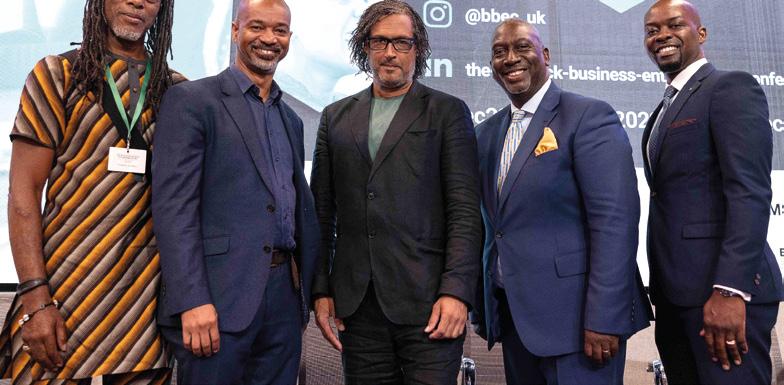
L-R -
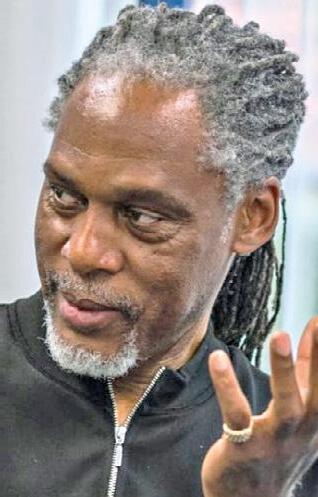
Professor William 'Lez' Henry, Dr David Dunkley, Professor David Adetayo Olusoga, Dr Carlton Brown and Dr Dave Thomas
recognition, awards, and celebration are often decoupled from measurable economic outcomes.
BBEC has positioned itself deliberately against this drift. Its emphasis has remained fixed on tangible outcomes:
• Business growth and scaling pathways
• Procurement access and institutional contracts
• Investment readiness and capital deployment
• Cross-sector partnerships
• Policy influence grounded in lived entrepreneurial data
In this sense, its contribution is not performative; it is infrastructural.
Over the years, BBEC has also become a platform for thought leadership that extends beyond entrepreneurship into economics, policy, and structural inequality.
Speakers have included leading business figures, academics, and cultural commentators who collectively reflect the complexity of Black British enterprise, not as a monolith, but as a diverse and evolving economic force spanning technology, creative industries, finance, logistics, and professional services.
This diversity of sectoral representation challenges outdated narratives that confine Black entrepreneurship to narrow or culturally defined markets. Instead, it reflects participation in mainstream economic structures, often under-recognised, but increasingly significant.
The UK Black Business Entrepreneurs Conference has evolved beyond its original conception as an annual gathering. It is now part of a wider ecosystem linking research, policy dialogue, and entrepreneurial practice.
Its significance lies not in its visibility but in its positioning, at the intersection of data, dialogue, and economic action. As the UK approaches the fifth anniversary and the publication of the Black Entrepreneur Report 2026, the central question is no longer whether Black entrepreneurship is visible.
It is whether the structures surrounding it are finally prepared to measure it, fund it, and scale it accordingly. Because without that shift, the UK will continue to celebrate entrepreneurship in rhetoric, while underperforming. The Black Business Entrepreneur, entrepreneur, “If nothing changes, nothing changes “
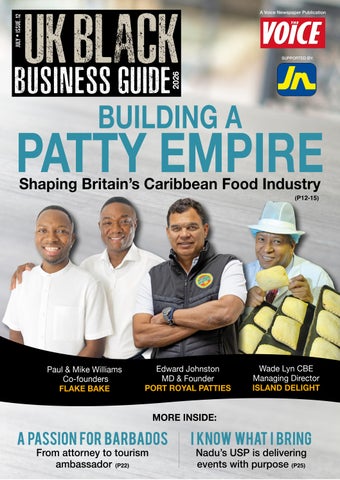
When Caribbean migrants stepped off the Empire Windrush and the ships and planes that followed in the 1950s and 1960s, they carried little more than suitcases, determination and the recipes that reminded them of home.
Few could have imagined that one of those recipes – the humble Jamaican patty – would one day become a fixture in
Britain's supermarkets and convenience stores, generating millions of pounds for Black-owned businesses.
Born out of necessity rather than ambition, the patty became far more than a comforting taste of home.
It offered a livelihood to migrants who, shut out of many jobs by discrimination and denied equal access to housing and finance, turned to entrepreneurship instead.
Small bakeries, grocery shops and takeaway counters sprang up across Britain's Caribbean communities, producing patties by hand to meet growing demand.
Today, their spirit of enterprise has helped create one of the UK's most successful Black food sectors.
The core Caribbean food market is now worth almost £100 million, while the wider market for Caribbean-inspired products, including sauces and condiments,

exceeds £1.12 billion according to the Caribbean Export Development Agency reflecting the growing appetite for Caribbean flavours among consumers of all backgrounds.
The journey has been remarkable. Events such as the Notting Hill Carnival became vital trading opportunities in the 1960s and 70s, helping many businesses establish loyal customer bases.
But as Britain's food culture became increasingly diverse, the Jamaican patty crossed into the mainstream.
Unlike many ethnic foods adapted to suit wider tastes, patties have largely remained true to their traditional recipes, with their authenticity becoming one of their greatest commercial strengths.
Behind today's thriving industry are pioneering entrepreneurs whose vision helped transform family businesses into nationally recognised brands while remaining true to their roots.
Their stories reflect the innovation and determination that helped turn a simple recipe into one of the Windrush generation's most enduring business legacies.
Here, we meet three of the companies that have helped shape that remarkable success story.
When Mike and Paul Williams appeared on Channel 4's Aldi's Next Big Thing, few could have predicted the life-changing impact it would have on their family business. The father-and-son owners of Flake Bake, the Peckham bakery producing authentic Jamaican patties, beat hundreds of hopefuls to win the baking category and secured a major contract with Aldi.
But for Mike, the real story began decades earlier with his late uncle, Trevor Delroy Miller.
Like many members of the Windrush generation, Trevor arrived in Britain in the late 1960s determined to build a better future. Facing the barriers experienced by many Caribbean migrants, he chose entrepreneurship, establishing Sunsplash Bakery in the 1980s and becoming one
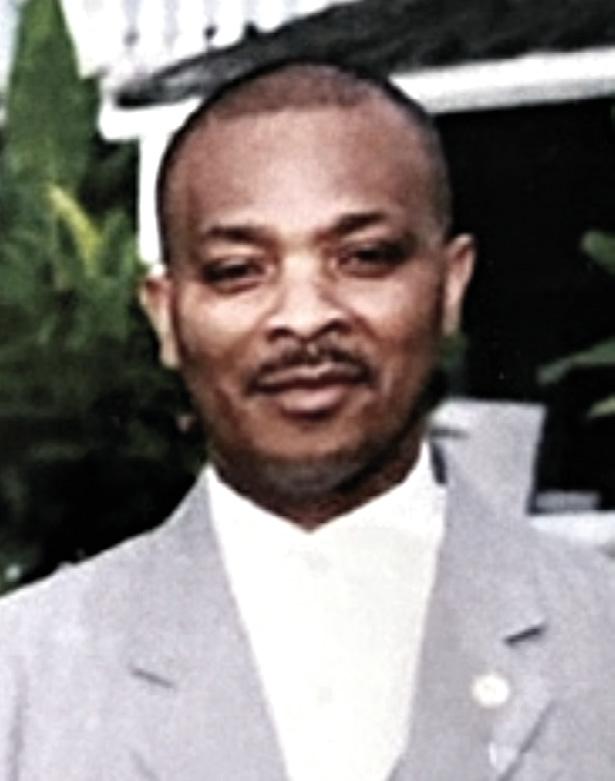
The late Trevor Delroy Miller, a Windrush generation entrepreneur who inspired the Flake Bake business, helping lay the foundations for a family legacy of Caribbean baking in the UK.
of the first Caribbean bakers to secure a supermarket contract, supplying hardo bread to Sainsbury's.
"The Flake Bake story genuinely starts with him," Mike says. "He got a lot of family members involved in the business, including my dad when he came to the UK in the late 1990s. Uncle Trevor was one of the first Caribbean bakers to get a contract with a big supermarket. That was a huge deal."
Paul, who had baked and sold goods on the roadside in Jamaica, honed his skills in Trevor's bakery before he and Mike spotted the growing popularity of Caribbean food. In 2013 they launched Flake Bake, developing their own recipes and building a reputation as one of south London's leading patty producers.
Success did not come easily. The busi-
ness battled rising costs after the pandemic and Mike even considered closing the company following the death of his mother and the pressures facing the business.
Everything changed when a friend encouraged him to apply for Aldi's Next Big Thing. After improving the patties' packaging and shelf life with the help of a food scientist, Flake Bake secured an order for more than 1,000 Aldi stores. The patties sold out nationwide within 48 hours.
Mike believes his uncle would have been immensely proud. "I'd always hear Uncle Trevor say he was proud of me because I was supporting my dad. If he was here now to see we've gone into a major supermarket, he'd probably cry with pride that another family member has achieved what he did, just with a different product."
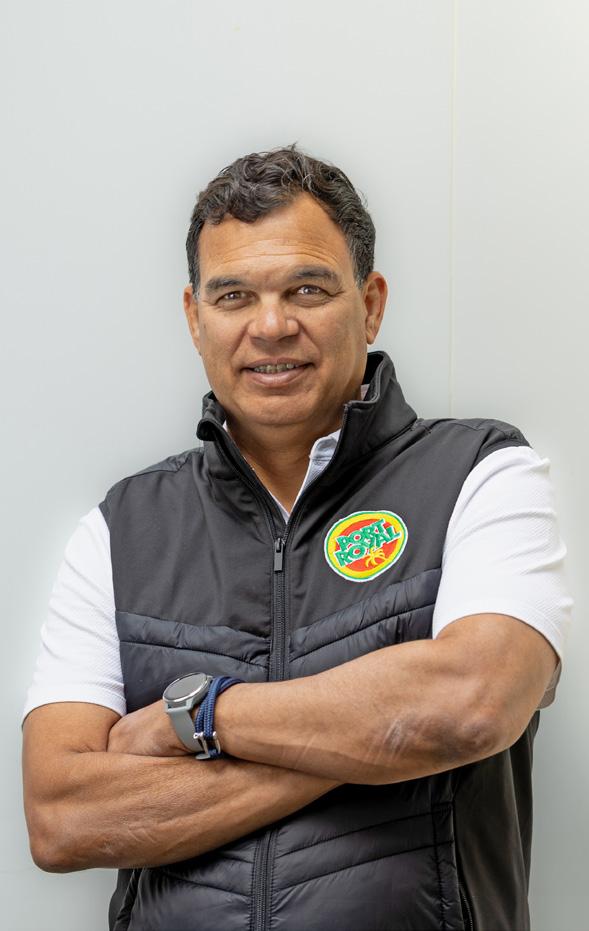
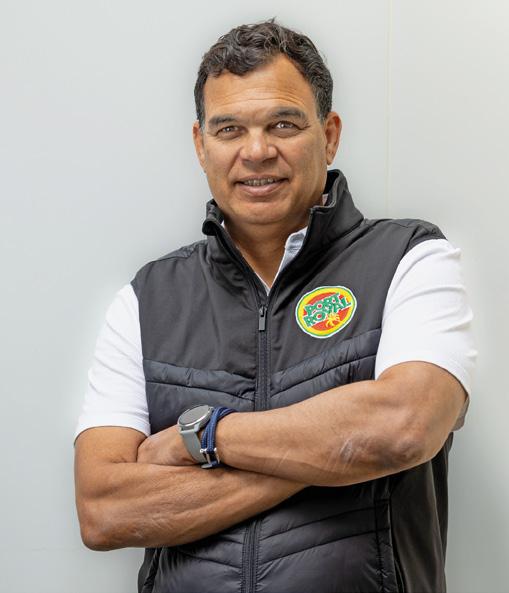
Twenty-five years ago, Edward Johnston spotted what he believed was a gap in the UK food market: Jamaican patties that didn’t taste quite right.
What followed was a decision that would turn his frustration into one of Britain’s most recognisable Caribbean food brands.
“I was always eating patties in Jamaica, and I wasn’t very happy with the patties being sold over here, especially in the supermarkets at the time, and I thought I could do better,” he said during a recent interview on the Micah McClean Talks podcast. That conviction became Port Royal Patties, founded on what Johnston describes as consistency, cultural pride and bold flavour.
Today, the company’s golden, buttery pastry and richly seasoned fillings are a familiar sight in shops across the UK, with
Edward Johnston, founder of Port Royal Patties, who turned a frustration with supermarket Jamaican patties into a 25-year business success story
customers often telling him the patties “taste like home”.
But Johnston’s story stretches far beyond personal taste. Business, he says, runs in his blood. “I grew up in a business environment,” he explains. “My great grandfather founded Jamaica Banana Producers. He used to export bananas from Jamaica into the UK, ripen them here, and sell them to supermarkets.”
That early exposure to trade, shipping and UK retail would later shape his ambitions.
After completing an MBA at City University, Johnston turned a coursework business plan for a patty company into a real venture, leaving his job at Jamaica Producers to launch Port Royal.
Investors were brought in early, creating rapid pressure to scale. “It was a big gamble,” he admits. “We invested quite a lot of money from the get-go, and I had to find the sales to satisfy that investment.”
Retail success followed, with listings in Asda, Tesco and Morrisons, before expansion into Caribbean pies, slow-cooked oxtail and jerk chicken meals.
Now, Port Royal is moving into catering for weddings and events, bringing what Johnston calls “Port Royal energy” to celebrations.
Johnson sees his company’s success as part of a wider legacy.
“All those individuals on the Windrush were basically entrepreneurs and risk-takers,” he said. “Somebody on that boat probably started the first Jamaican patty company way back in the 50s, so total respect to them, and I think their spirit continues in the generation we have now.”
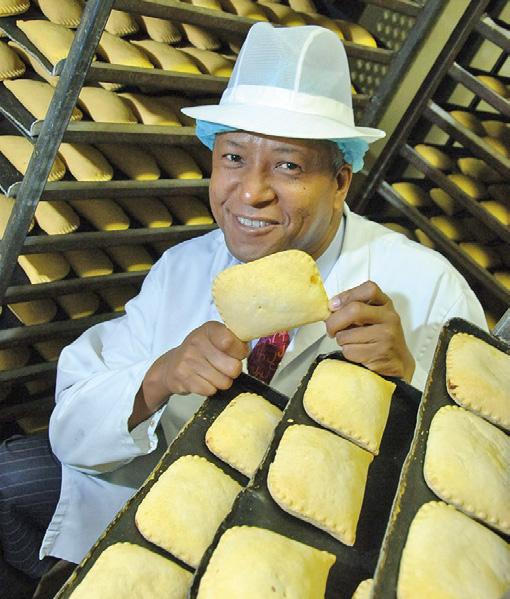
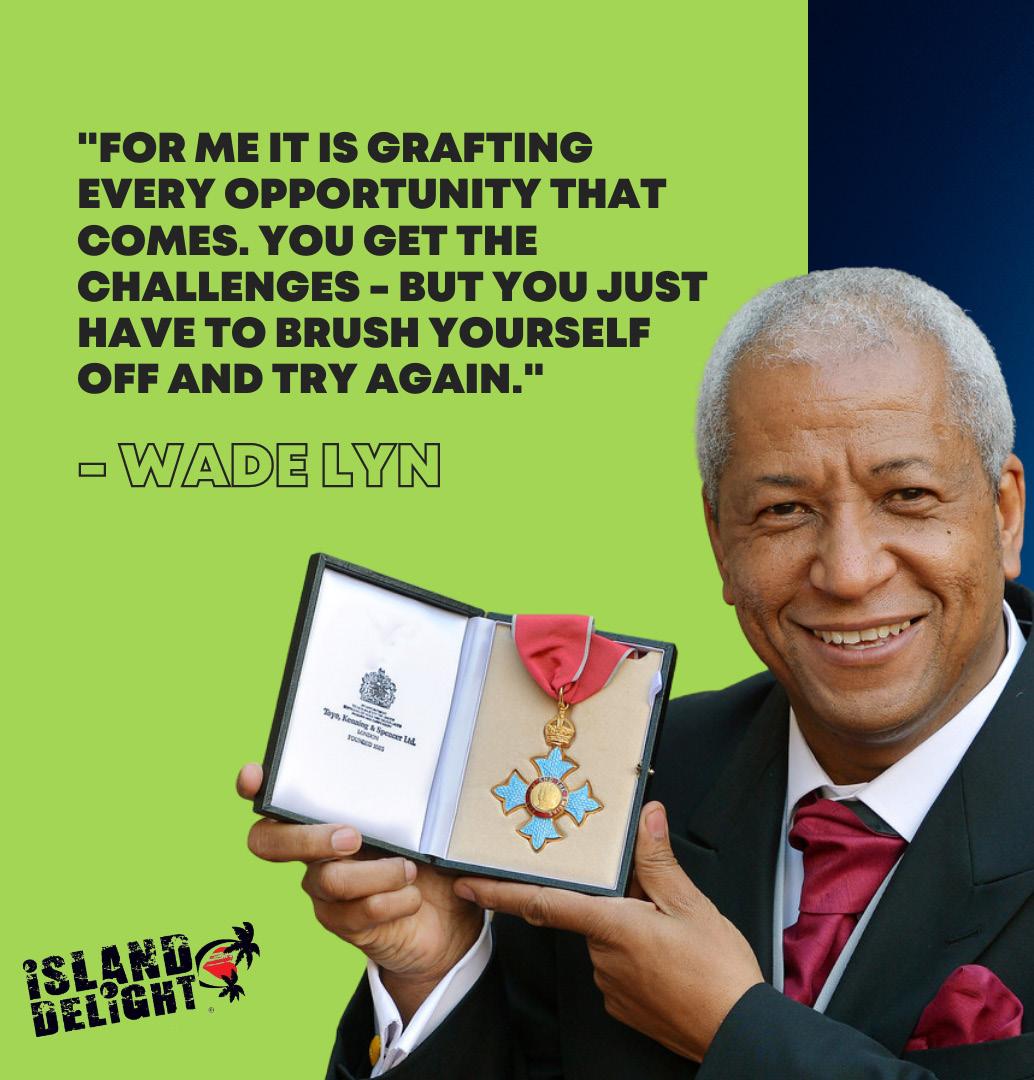
Wade Lyn’s first memory of business is not a boardroom or a factory floor, but a garage forecourt where petrol was sold for 18p a gallon.
It was, he says, an early lesson in enterprise that would eventually lead to him building a hugely successful Jamaican patty company.
Arriving in the UK from Jamaica as a child in the 1960s, Lyn was initially set on a career in teaching. Instead, he drifted into food manufacturing after taking a job in Wolverhampton making patties. What he saw there convinced him he could do better.
“The problem was packaging. There was no recognisable brand,” he recalls. “It was clear to me what was needed was branded packaging that customers would come to recognise and demand.”
In 1989, he launched Cleone Foods and the Island Delight brand from small premises in Birmingham’s Alma Street, pro -
ducing around 5,000 patties a week with just five staff. Early expansion was driven by persistence rather than certainty, with Lyn initially banking on grant support that never materialised.
Growth came steadily. A move to larger premises in the Jewellery Quarter allowed production to scale from 16,000 patties a week to national distribution across major supermarkets.
Today, Cleone produces more than 100,000 patties and slices weekly, employing around 50 to 60 staff, and supplying most major UK retailers.
Beyond commercial success, Lyn has built Cleone into a community-focused employer, offering training, mentoring and
local jobs in one of Birmingham’s most deprived areas. “It is important for businesspeople to put something back,” he says.
He also serves as a Business Ambassador for the Prince of Wales in the West Midlands and has been recognised by organisations including the Association of Jamaican Nationals.
Despite success, Lyn remains hands-on, tasting products daily and maintaining a flat, informal structure. “I can go away for weeks,” he says, “but I still wake at three in the morning sometimes thinking about the business.”
Wade Lyn, founder of Cleone Foods, whose Birmingham-based company has become hugely successful, supplying major supermarkets nationwide. •

Celebrating Black British excellence
More than a brand, we’re a movement
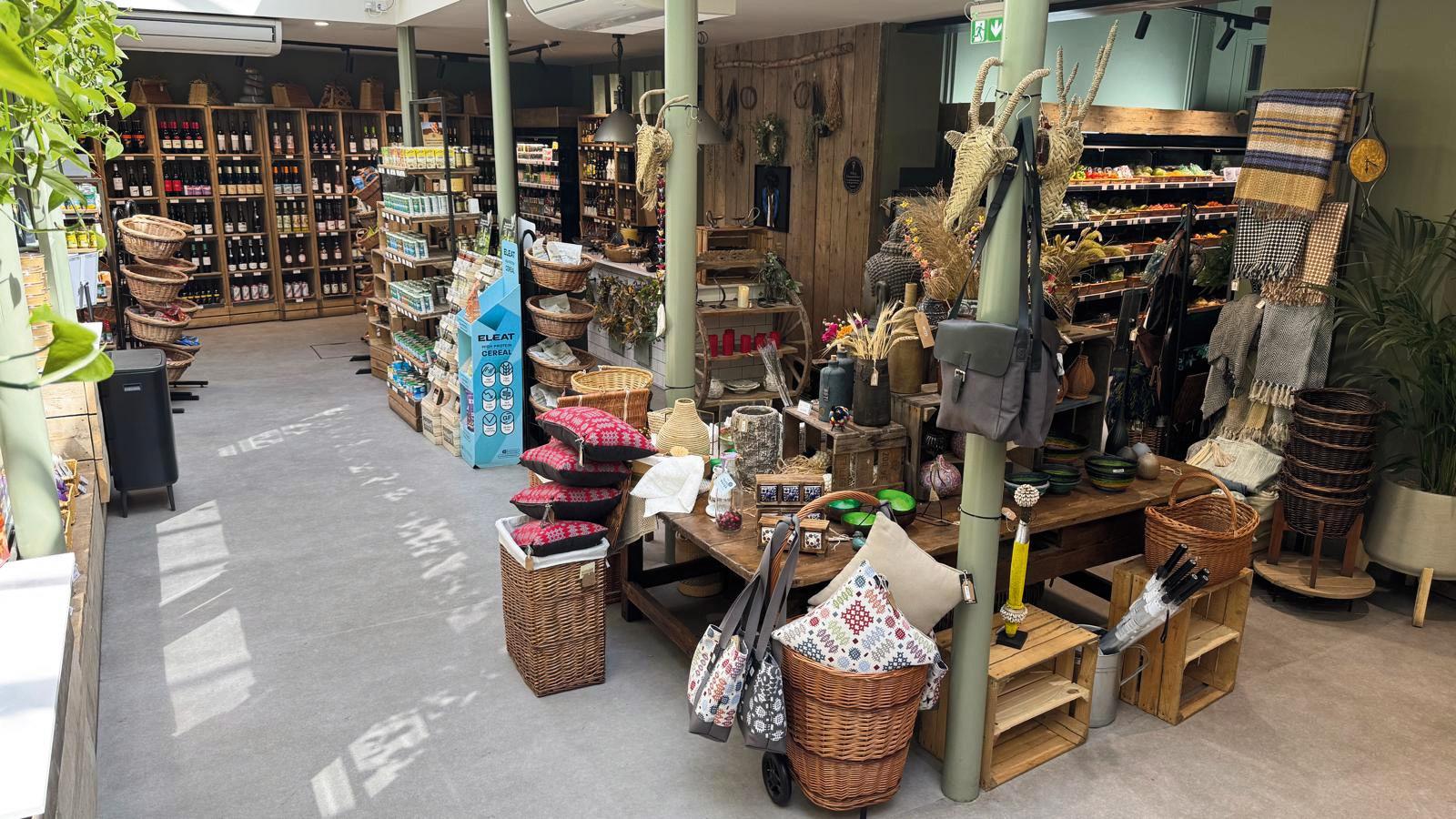
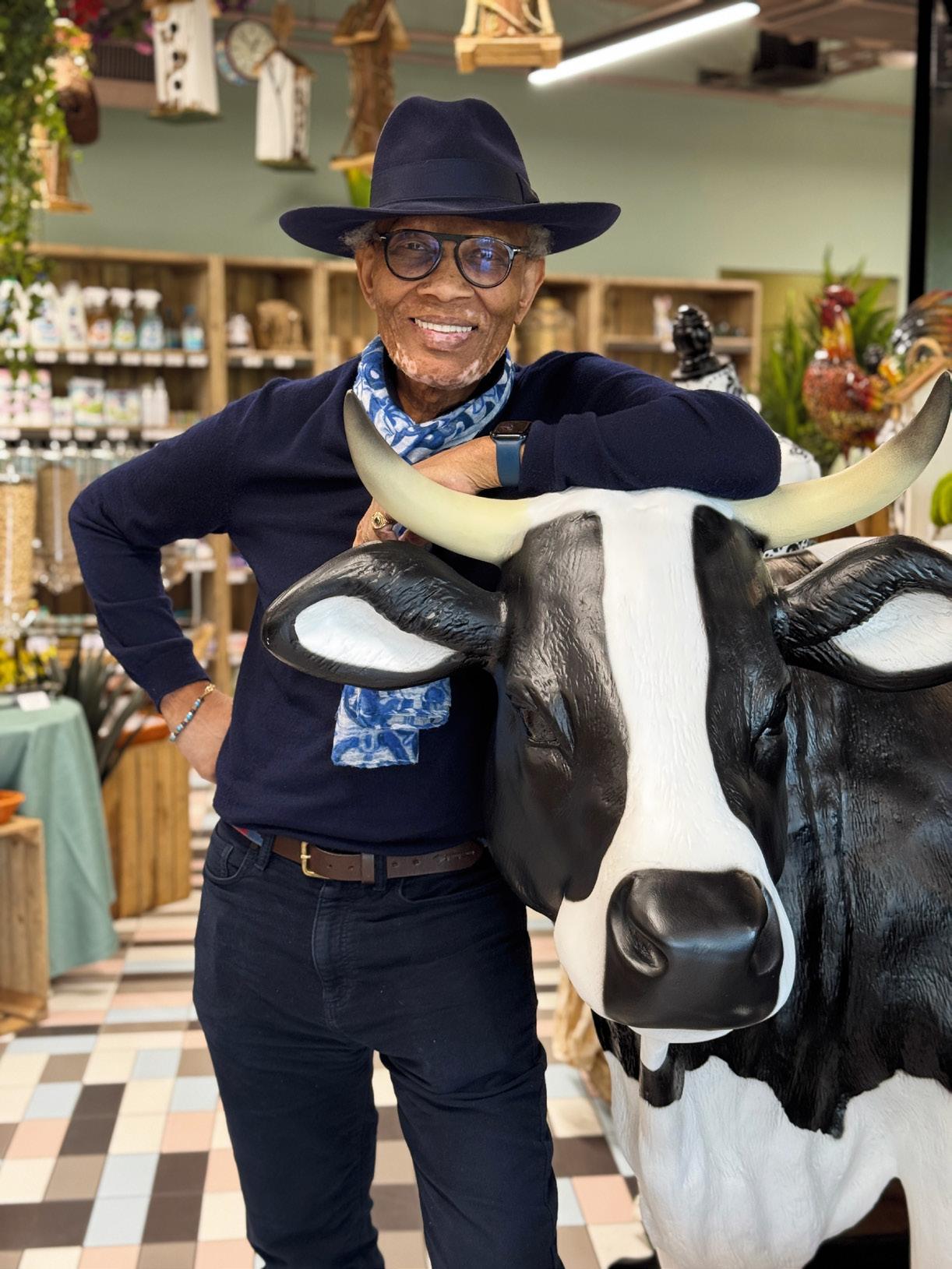
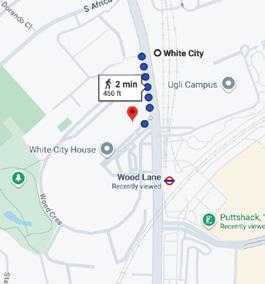
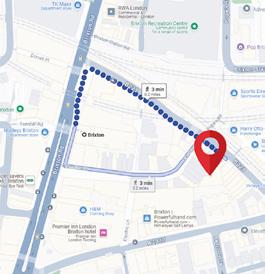




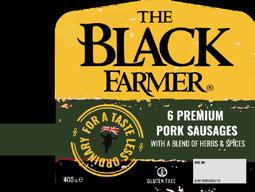




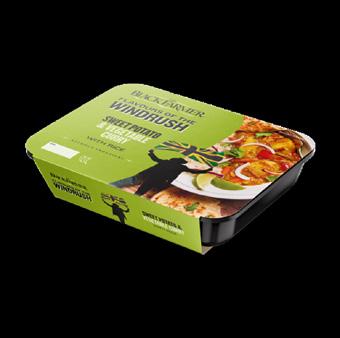


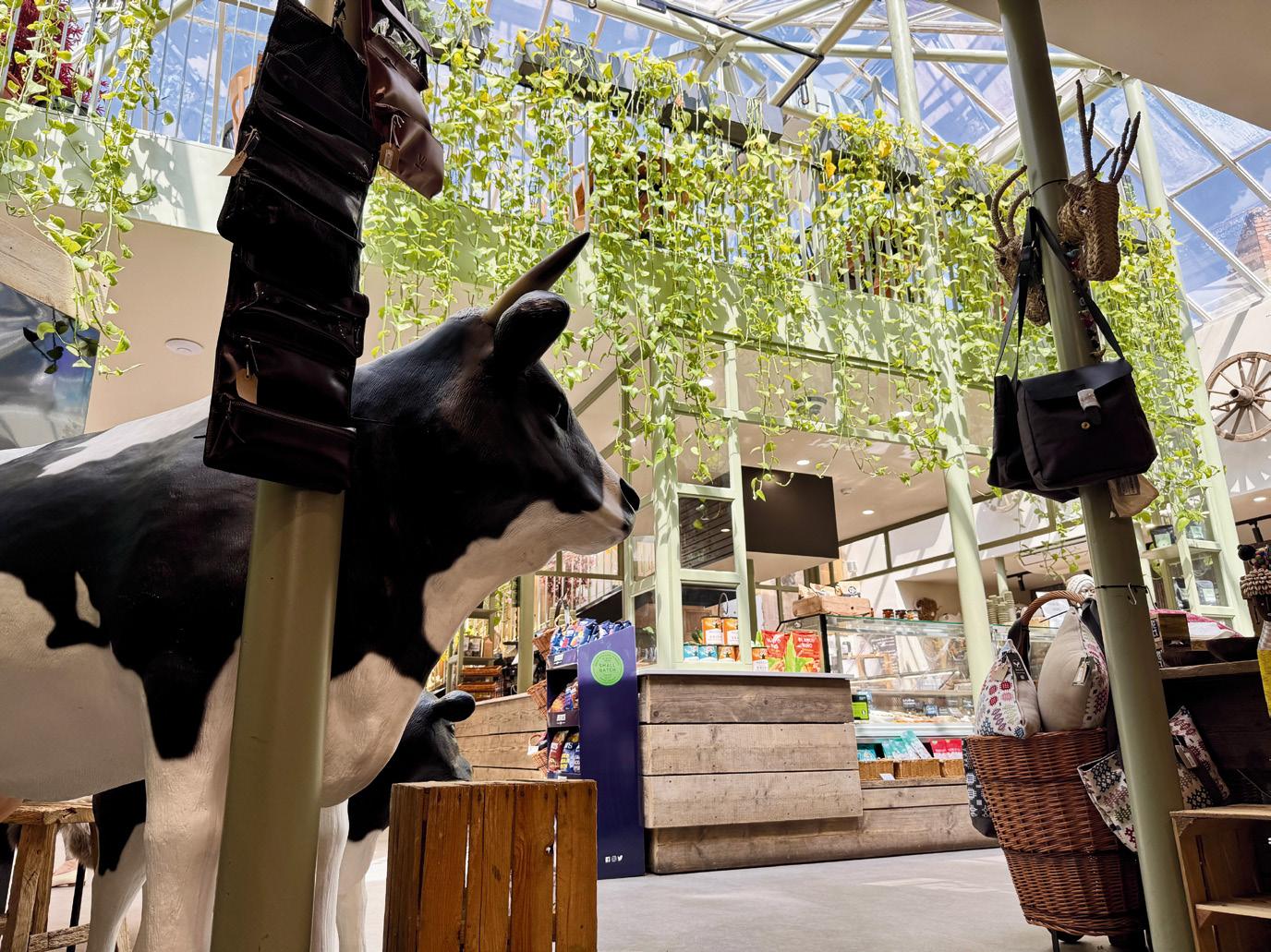
As one of the UK’s leading Black-owned food brands, The Black Farmer is changing the narrative in food and farming. Our farmshops create jobs, inspire young talent, and serve as beacons of visibility in urban communities.
When you support us, you support a legacy.

“Leaving law was the best decision that I ever made and I have never looked back," says lawyer-turned-property professional Sanchia Miller, founder and Managing Director of Miller and Vincent Properties.
Having practised as a lawyer, Sanchia transitioned into the property sector, building her business from the ground up. Her legal background brings structure, precision, and critical thinking into dayto-day operations. She stands firmly by one principle “good management is fundamental to long-term success.”
Founded in 2018, Miller and Vincent Properties is an independent property management specialist operating across the East Midlands; delivering quality management and guaranteed rent services for Houses in Multiple Occupation (HMOs), apartment blocks, residential properties and commercial units.
Over the years, Sanchia has taken a hands-on approach, overseeing on-site developments and leading build teams

to transform properties into well-presented, income-generating assets for her clients.
On one project, a landlord was losing hundreds of pounds each month on their derelict property. Sanchia and her team carried out a full renovation. Ultimately, securing high-quality, long-term tenants, restoring both the property’s profitability and the landlord’s peace of mind.
One client shared:
“I couldn’t ask for a better agent to look after my property. Miller and Vincent provide a full service for me, tenant find, property management and maintenance. From my first contact, I had a strong sense that they genuinely care about doing a good job, and they do.”
Beyond property, Sanchia is driven to create greater access to opportunity for people from all walks of life. Whether speaking on the TEDx stage in Canada, MCing business networking events, appearing on podcasts or being a speaker at career fairs. She speaks openly
about her experiences and why visibility matters: “When I started in law and property, I saw a lack of representation in elevated roles among young people and women of colour. That’s why I believe it’s important to use your voice and platforms in a positive way because representation matters; you cannot be what you cannot see.”
Collaboration sits at the heart of Sanchia’s approach. With an abundance mindset, she actively builds strategic relationships across the sector. This includes joint venturing with investors and landlords, partnering with care and support providers, and working with other agents looking to sell or diversify their portfolios. Sanchia is skilled at creating opportunities that deliver value to all parties involved.
For Sanchia Miller, the journey from law to lettings is not just about managing buildings. It’s about creating lasting value, building legacy and unlocking generational wealth.


1You began your career as an attorney before moving into hospitality and tourism. What inspired that transition, and what lessons from the legal profession do you still draw on today?
While I have always appreciated the law and how it provides structure to everyday life, I realised early on that my true calling was working directly with people. I wanted to channel my energy into something that celebrated my deepest passion: my island home, Barbados. The transition felt natural because the legal profession teaches you incredible analytical skills, critical thinking, and the ability to look at complex situations from multiple angles. Today, I still draw on that legal foundation. Law taught me how to structure a vision; tourism gives me the canvas to bring it to life.
2
Before joining Barbados Tourism Marketing Inc., you helped lead some of Barbados' most renowned restaurants. How did that experience shape your understanding of what visitors are looking for when they travel?
My years in the restaurant industry gave me something that I consider invaluable - a deep, instinctive understanding of the visitor experience from the inside out. When you are on a restaurant floor, you are not dealing in abstractions. You are face-to-face with guests every single day, listening to what moves them, what surprises them, what they remember and what they tell their friends about when they get home. And what I observed was that the moments that stayed with people were never purely about the food on the plate. They were about feeling welcomed, about discovering something they had not expected, about being invited into a story that felt genuinely Barbadian. That insight has shaped how I think about tourism marketing. Visitors are not simply purchasing a holiday, they are investing in an experience, and the question we must always ask ourselves is whether
every touchpoint of their journey reflects the warmth, quality and authenticity that Barbados is capable of delivering.
3
Looking back on your career so far, what achievement are you most proud of, and why?
I am incredibly proud of my journey through diverse industries - spanning law, high-end hospitality, entrepreneurship, and now destination marketing. Stepping into leadership roles in these distinct spaces and successfully bridging the gap between them has been deeply rewarding.
But if I had to pinpoint what makes me most proud, it’s the ability to create spaces where Bajan excellence shines, whether that was maintaining worldclass standards at top-tier restaurants or now elevating the global profile of Barbados on the world stage.
4
You have described Barbados as the culinary capital of the Caribbean. What makes the island's food culture so special, and how can it be used to attract more visitors?
Food in Barbados is a window into who we are as a people, and Barbados has earned the title of the culinary capital because our food scene is incredibly diverse and deeply rooted in our heritage,
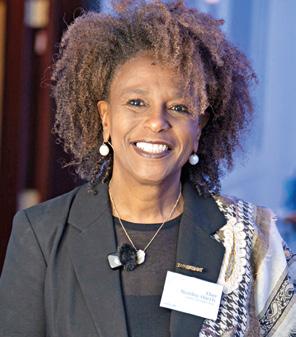
Élan Mottley Harris, BTMI UK Director
and at the heart of it all is flavour - from the bold spices and fresh ingredients. The flying fish has become synonymous with our national identity, to the warmth of Oistins Fish Fry on Friday nights, to the world-class fine dining at places like The Cliff, the farm-to-table experiences that Local & Co offers, and the immersive community-based experiences like our "Dine with a Bajan" initiative, which allows visitors to share an authentic meal with locals in their homes. Barbados offers a culinary journey that is as diverse as it is delicious. We are also the birthplace of rum, and our distilling heritage adds another extraordinary dimension to the food and drink story.
For the UK market specifically, food travel is a major motivator, and we believe Barbados is perfectly positioned to capture that appetite. We also have our annual Food & Rum Festival in November which celebrates everything from street food to fine dining.
Food tells the story of our history and our warmth. By positioning Barbados as a premier culinary destination, we appeal to the modern "foodie" traveler who seeks authentic cultural immersion through taste.
5
The UK has long been one of Barbados' most important tourism markets. What are your priorities for strengthening Barbados' presence and appeal among British travellers?
The UK is not just an important market for Barbados, it is a deeply cherished one. The historic ties between our two nations run long and deep, and that relationship gives us a wonderful foundation to build from.
My priorities are threefold. First, to en-
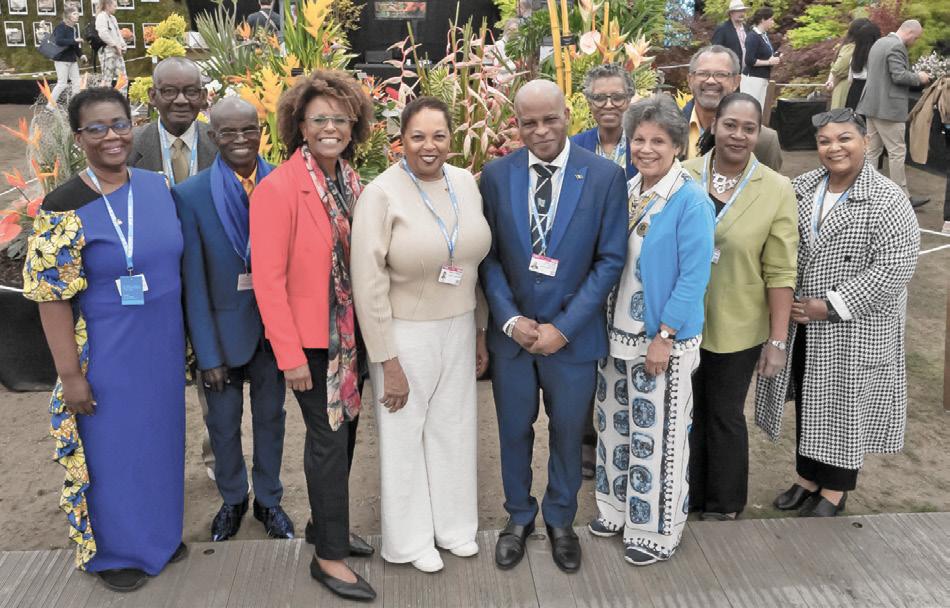
Jacqueline Ferdinand, Left back row Orson Daisley, Front Row, Rev. Wayne Ramsay, Élan Mottley Harris, BTMI UK Director, Beverley Smith- Hinkson, His Excellency Mr. Edmund Hinkson S.C., High Commissioner for Barbados in the United Kingdom, Jennifer Weetch, President of the Barbados Horticultural Society, Stacey Hutchinson, E. Betty Lewis JP, Attache Diaspora Affairs, Back Row Michael Marshall, Etwyn Humphrey
sure that British travellers understand the breadth of what Barbados offers, this is a destination of extraordinary culture, heritage and experiences, not only beautiful beaches.
Second, to work closely with our travel trade partners through programmes like the Barbados Elite Club, our webinar series and the annual Bajan Safari roadshow, ensuring agents across the UK and Ireland are equipped and inspired to sell Barbados with genuine confidence. And third, to reach new audiences, who are increasingly seeking meaningful, experience-led holidays rather than purely sun and sand.
Barbados speaks directly to that desire. Our major calendar highlights - Crop Over, the Barbados Food and Rum Festival, Run Barbados and Wellness Weekend, each offer a compelling reason to visit at any point in the year, and we are actively amplifying these events within the UK market to drive awareness and bookings beyond the traditional peak season.
The goal is simple: to ensure that both first-time and returning British visitors always have a reason to choose Barbados, and always find something new when they arrive.
6
Today's travellers are increasingly looking for authentic cultural experiences. How is Barbados showcasing its heritage, creativity and community life beyond the traditional sun, sea and sand image?
We are shifting the narrative from passive relaxation to active participation. Beyond the sun, sea, and sand, Barbados is alive with sports, culture, and history. For instance, we are gearing up for major milestones like the CPL Cricket matches, which bring an unmatched energy to the island. We are also highlighting our festivals and creative arts, heritage trails, and community tourism initiatives. We want visitors to interact with our artisans, learn our history, and truly feel the heart-
beat of our communities.
We also have our Dine with a Bajan, a community driven culinary initiative in Barbados where welcoming local Barbadians open their homes to visitors, serving up authentic, home-cooked island meals alongside cultural stories and Bajan hospitality. As we journey towards our 60th anniversary of independence, our calendar is rich with opportunities for visitors to experience the island at its most culturally alive and celebratory.
7
The Barbadian diaspora in the UK has deep ties to the island. How important is that community to your tourism strategy, and how do you engage them as ambassadors for Barbados?
The Barbadian diaspora in the UK is central to our strategy, they are our most authentic and passionate ambassadors. When a Barbadian living in Reading,
CONTINUED ON PAGE 24 >>
Birmingham or Bristol shares their love of the island with friends, colleagues and family, that recommendation carries a weight and credibility that no marketing campaign can replicate. Last year we had our We Gatherin' initiative which was a powerful vehicle for diaspora engagement, deliberately creating a sense of homecoming and belonging that resonates deeply with second and third-generation Barbadians who may feel a strong emotional connection to the island but have never visited, or have not returned in many years.
As we approach massive milestones, specifically the 60th anniversary of our Independence and 5 years as a Republic, we are intentionally engaging the UK diaspora.
We want them to come home and celebrate these historic moments with us, but we also want to equip them with the tools to share the modern story of Barbados with their networks in the UK. They hold the living link between our two cultures.
8Tourism is becoming increasingly competitive across the Caribbean. What do you believe sets Barbados apart from other destinations in the region?
The Caribbean is a region of extraordinary destinations, but I genuinely believe Barbados occupies a unique position, and it comes down to a combination of things that cannot easily be replicated. We have political stability, world-class infrastructure and airlift, and a safety record that gives travellers and their families genuine peace of mind. We have a culinary and cultural identity of remarkable depth and confidence.
And we have something that is perhaps our greatest asset of all, our people. Barbadians are the warmest, most hospitable people - there is a genuine warmth, pride and generosity of spirit that visitors feel from the moment they arrive.
A Barbadian will remember your name and make you feel less like a tourist and more like a friend.
It is that personal connection - the bartender who recalls how you take your drink, the neighbour who waves hello as you pass, that transforms a holiday into something far more meaningful.
For so many of our visitors, Barbados does not feel like a destination. It feels like a home away from home. And that, more than anything, is why they keep coming back.
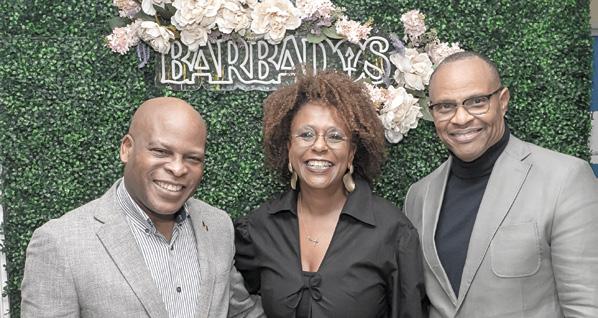
9
As a woman in a senior leadership position, what challenges have you faced during your career, and what advice would you give to young women aspiring to leadership roles in business, hospitality or tourism?
Navigating any male-dominated industry, whether in law or corporate hospitality, certainly comes with its hurdles. Often, women are taught to blend in or adopt a leadership style that may not feel natural.
My advice to young women is to embrace your innate strengths. Never underestimate the power of empathy, intuition, and emotional intelligence in leadership. Empathy isn't a weakness; it is a profound superpower that allows you to connect with your team, understand your consumers, and build collaborative, loyal environments. Step into the room with confidence, know your value, and lead with grace.
10
When you look ahead five or ten years, what is your vision for Barbados tourism, and what would success look like under your leadership?
My vision is of a sustainable, thriving and innovative tourism ecosystem, one where Barbados is recognised on the world stage not simply as a luxury destination, but as a cultural and culinary powerhouse in its own right. That means building a year-round visitor economy
that generates tangible, lasting benefits for local businesses and communities, and that genuinely empowers everyday Barbadians to participate in and prosper from the island's success.
Underpinning everything is a commitment to integrity. For me, success is not measured by arrival numbers alone, it is measured by the quality of what we are building. A tourism model that we, as Barbadians, can be truly proud of. One that respects and protects our natu- ral environment, preserves and celebrates our culture, and places our community at its heart - without ever compromising on the standard of excellence that visitors expect and that Barbados has always delivered.
11
You've worked across law, hospitality, entrepreneurship and now destination marketing. If there is one principle that has guided you throughout your career, what would it be?
It is a simple but powerful adage: If you're going to do it, do it well, and do it with passion. People can instinctively feel your passion and your energy. Whether I was practicing law, running a restaurant, or marketing our beautiful island, I have always poured my whole heart into everything I have done, and led with strict integrity. When you operate with genuine passion and high standards, excellence naturally follows. •
btmiuk@mirabelle.co.uk
‘I know what I’m going to bring to the table’
has worked with some of the biggest names in the industry.
NADU PLACCA-Rodri-
guez is the founder of The Zoo XYZ, a global ‘purpose-driven’ event agency.
A highly experienced event planner with over 15 years in the game, she’s known and respected having worked with big players like Afro Nation, Spotify and Afropunk, to name a few.
But it’s one of her latest endeavours that captured Lifestyle’s attention.
Her organisation did a report in 2021 looking at the racial disparity across UK event trade bodies and associations.
There wasn’t a single Black person on any board. “I think now there’s one, which three years on, is not a really good look,” she says.
Determined to reclaim the narrative surrounding Black events, highlighting their significance; economically, socially and culturally, The Zoo XYZ have started a series of ‘Black Events Matter’ forums, with the aim of facilitating conversation centring Black event professionals and their experiences.
Motivated by their research which found that the Black community contributed heavily towards the £34.3 billion UK events industry, she explained: “It’s more about getting the right sort of people around the table, having in-depth conversations.
“I’m privy to a lot of conversations quite high up around associations, thought tanks and I really want to be able to open this up to the community that it affects the most, that are always the last to hear.
“Knowing how those things affect us all, I want more people to be around the table to contribute to the conversation. Everyone needs to have a part of this pie.”
Placca-Rodriguez’s ability to navigate different audiences, bringing complex

DRIVEN: Nadu Placca-Rodriguez’s USP is delivering events with purpose
ideas to life and delivering unforgettable events with purpose and precision has been her USP from the jump.
Those that know, know. She’s a quiet storm personified. Diligent and caring, focused and gets the job done.
Delving into what she has brought t life and her modus operandi, she explained: “This is the only thing I’ve known.
“I started off volunteering in 2008 or 2008 when I first got into it, and from there I just kept on building and building, making sure I was present in spaces until I was noticed.”
She added: “With The Zoo XYZ I think education is kind of the foundation of everything we do. So wherever we are, wherever we’re doing it, we’re trying to educate and just pass on knowledge of experience in the industry.
Nadu Placca-Rodriguez
“Then we’ve got our event management, which we can do at any scale. You’ve got a budget, we can do it.
“And we’ve worked with the likes of Def Jam, Stormz, Universal Music, Spotify and Giants of Africa. All around the world.
“The UK is where we’re based. We’ve got a branch of the business in Ghana,
and in 2025, we’re opening in New York as well.
“So we’re here to support all events, all shapes and sizes, anywhere.”
Ambitious, tenacious, it hasn’t all been plain sailing for the south London-born entrepreneur.
She said: “I’ve had four different businesses. I’ve had friends that have tried to steal it from me.
Things that have gone tits up. You work for people from university and you think you’re going to make millions, but you’ve got 200 pounds in the bank.
“You have to start somewhere. It’s a journey and journeys are highs and lows and that’s literally been the process over the last couple of years.
“One thing I can say is that all work so far, to this day, has been through word of mouth. Now that is for me, a massive testament in terms of the work that we do, I have people that say if they know that Nadu is on site, they don’t have to think about anything. And that’s what’s important to me, that people have the confidence of knowing that when they’re working with us, they trust that we can deliver.”
Asked if, as a young woman growing up, she ever saw herself where she is today and how her humble beginnings shaped her vision, she credits being a Blue Borough native for her steely resolve.
“I’m from south-east London and yeah, you know what, it’s so important because it shaped every part of me.
“Back in the day, a lot of events that I put on, like in Ocean Music venue, for example, old school, I was working with the Bashy’s, people who are around now, that have lasted the test of time.
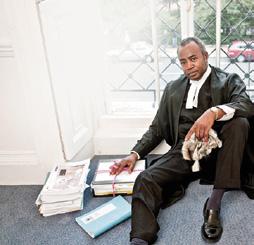
The law has always been about more than statutes, procedure and precedent. At its best, it is about people, identity, opportunity and building bridges between communities. My legal career has been shaped by those principles, allowing me to practice across multiple jurisdictions while serving clients whose lives, businesses and families extend beyond national borders.
I am a practising barrister and a qualified solicitor of England and Wales. I am also admitted to practise law in Jamaica, Barbados, Antigua and Barbuda, Grenada, Saint Kitts and Nevis, Saint Lucia, and the Republic of Guyana.
This unique cross-jurisdictional practice enables me to advise individuals, businesses, public bodies and legal professionals on matters that span both the United Kingdom and the English-speaking Caribbean.
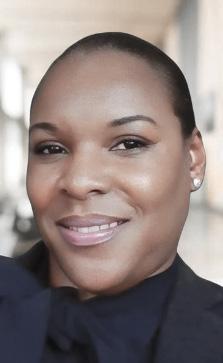
Simone Bowman, CEO of Bow Law
My journey began long before I entered the legal profession. Born in the United Kingdom to parents from Guyana and Jamaica, I grew up in South London with a profound appreciation for both my British and Caribbean heritage. Rather than seeing these identities as separate, I came to recognise them as complementary.
They have shaped not only my worldview but also the direction of my professional life. At fifteen, a Commonwealth youth exchange to Barbados first revealed how this identity could shape a truly international legal career at the age fifteen. It inspired a vision of a legal career that would one day connect jurisdictions, cultures and communities. Years later, that vision became reality.
In 2016, I undertook cross-qualification through the Norman Manley Law School in Jamaica. The experience was intellectually demanding and professionally rewarding. It required adapting my existing knowledge of English law to the legislative frameworks, constitutional principles and procedural rules of Jamaica while appreciating the wider legal traditions shared throughout the Commonwealth Caribbean.
Being called to the Jamaican Bar and subsequently obtaining admission across several Caribbean jurisdictions represented
far more than another professional qualification. It demonstrated the increasing opportunities for lawyers to develop truly international practices that respond to the realities of a globalised world.
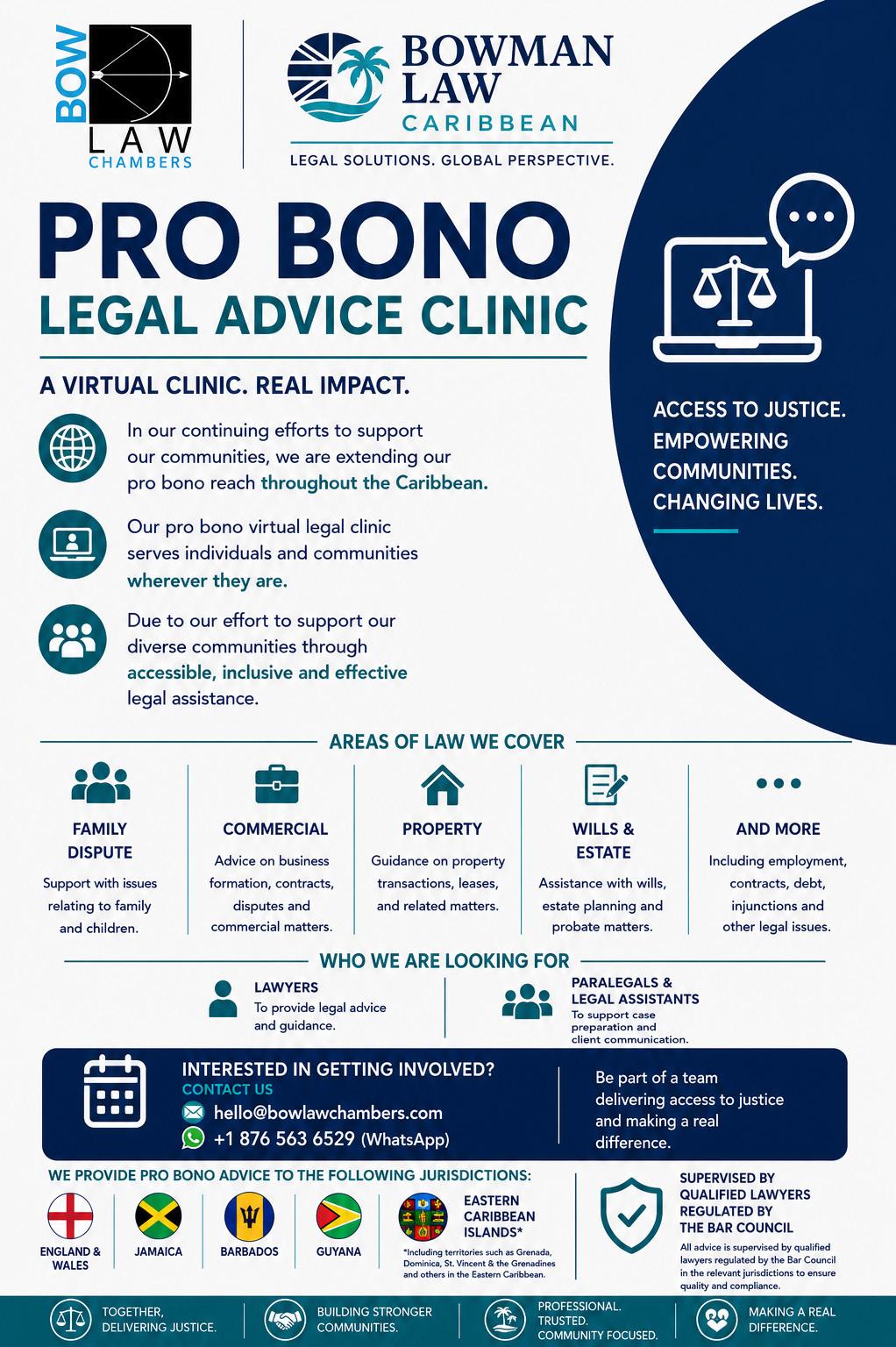
Today, I lead Bow Law Chambers, incorporating Bowman Law Caribbean, where we provide specialist cross-border legal services to clients navigating legal issues across the United Kingdom and the Caribbean. We support Caribbean diaspora entrepreneurs investing in property and businesses on both sides of the Atlantic.
We assist individuals, corporations, public authorities and professionals requiring comparative legal advice or strategic guidance on cross-border private client, local standards reports, probate and family matters.
In 2025, I was honoured to receive a Caribbean Global Award for Excellence in Legal Services, recognising my contribution to crossborder legal practice and professional excellence across the United Kingdom and the Caribbean. This acknowledgement reflects a career dedicated to bridging jurisdictions and supporting clients whose legal needs extend beyond national boundaries.
In September 2026, Bow Law Chambers celebrates its 10-year anniversary, marking a decade of growth, innovation, and service across the global legal landscapes.
Founded to bridge legal systems and communities, the Chambers has developed a reputation for delivering commercially aware, culturally informed, and technically precise legal advice. This milestone reflects not only longevity, but purpose: building enduring legal connections between jurisdictions and contributing to the evolving landscape of global legal practice.
I am proud to contribute to that evolving landscape by helping clients navigate complex legal challenges with confidence, insight and a genuinely international perspective. Get in touch: hello@bowlawchambers.com

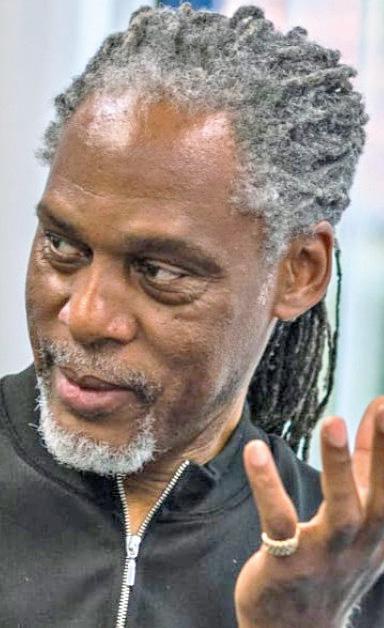
By Dr. Dave S.P Thomas (PhD) and Prof William 'Lez' Henry (PhD)
In February 1961 the government of Prime Minister Harold Macmillan commissioned a committee chaired by Lord Lionel Robbins to review the pattern of higher education in Great Britain and make recommendations for its future development.
This resulted in the production of what could be considered one of the most influential reports in the history of British education – The Higher Education: Report of the Committee appointed by the Prime Minister under the Chairmanship of Lord Robbins 1961-63.
Fundamental to the report was the "Robbins Principle", that recommended an expansion of universities and higher education (HE) institutions to make them available to all those who qualified by ability or attainment. Hence, the pursuit of a HE
degree is often considered a viable option to a visible improvement in one's life chances, particularly due to its ability to promote upward social mobility.
Arguably, until the early 1990s, the recommendations from the Robbins Report had still not fully translated into practice. Nevertheless, the promise of mobility via educational attainment provided an explanation as to why an undergraduate or postgraduate degree was regarded as middle-class pursuits in line with a separate but visibly unequal, post-industrial Britain.
However, the big shift occurred with the 'Further and Higher Education Act 1992', which enabled generally vocation-based Polytechnic institutions to achieve university status – another of the recommendations outlined in the Robbin's report. That may have accounted for the disproportionate number of lecturers and tutors who held Bachelors and Masters degree qualifications in the 1990s as opposed to those with PhDs – this was still the case in many HE institutions until quite recently.
This is important because a key purpose of the Robbins report –to teach the skills needed for employment – may have promoted a shift in the educational model in the UK. Education had become a booming business in every sense of the word, realising the 'bums on seats' reality that many students are experiencing today.
However, other recommendations outlined by Lord Robbins to increase government funding for HE, and create greater opportunities for students from all backgrounds had still not been realised, nor is it positively reflected in today's HE context in the UK.
Currently, students in the UK are able to access a student loan to fund their HE studies. These loans attract interest which is linked to the rate of inflation (Retail Price Index (RPI)), with an extra percentage added depending on income.
This proves significant to sustaining a business model, where profit over academic excellence seems to be the rule, contrary to the tenets of the Robbins Report. This also presents a dichotomy for students with financial need and those from marginalised or working-class backgrounds (or their intersections).
While access to student loans may serve to widen participation, the commercialisation of education promotes and sustains systemic and structural inequalities, whereby normalising social stratification and access to intellectual capital.
A typical example of these systemic and structural inequities and inequalities is the longstanding degree awarding gap in UK HE – the statistical difference in the proportion of 1st and Upper Second-Class degrees awarded to White students compared to their peers.
The gap between White and racially minoritised students currently stands at roughly 11 percentage points; and alarmingly, a gap of 21 percentage points for students of Black heritage.
Systemic and structural inequalities in UK HE extend to teaching and research staff, where only 14% of the 23,000 professors are from minority ethnic backgrounds, and 1% from Black backgrounds. This has a profound impact on the physical and mental wellbeing of both staff and students.
Meanwhile, the UK HE sector is shrinking due to an unprecedented financial crisis that has caused the collapse of its funding model. Almost half of UK universities are currently operating into a deficit, shifting to more financially viable business models, primarily owing to domestic undergraduate tuition fee caps, restrictive immigration changes and global competition, increasing institutional costs and government funding reductions.
Despite this shift to more financially viable business models, a wealth of educational research in the UK articulate that racisms and other forms of discriminatory practices across the sector have turned these models on their head.
Importantly, McKinsey's 2023 report Diversity Matters Even More: The Case for Holistic Impact report points out a strong correlation between strong equity and inclusion practices, satisfied and engaged workforce, and organisational economic performance. Yet, within many HE institutions in the UK, this is not the case.
In the presence of policy headwinds, liquidity crises, systemic strains HE institutions continue to be at risk, while a key purpose
of HE as stated by Lord Robbins is currently not being met –happier and more contented workforce, where equity is key.
This has seen operational reduction becoming common place. But, to what extent is operational reduction a threat to transmitting an inclusive culture and responsible citizenship, as stated in the Robbins report?
Between 2021-2025 Professor Henry and his team at University of West London, designed and delivered a unique one-year Masters of Art degree program entitled "Global Black Studies, Decolonisation and Social Justice."
This path breaking program focused on scholarship beyond a Eurocentric paradigm. This program emphasised global majority scholarship, which explored scholarship from the main continents, thus liberating it from what is generally, myopically, delivered as Black Studies.
The first cohort contained 13 students, 11 of which successfully graduated. From a fiscal point of view, this may not seem sufficient to shape impending liquidity headwinds, but in context, delivered more than twice as many graduands than the more established Masters of Art in Criminology did year on year, despite being under resourced.
This demonstrated the financial viability of the degree, when directly compared to foundational programs that had been running for decades. Moreover, in excess of 20 students graduated over the four-year period, 10 of whom are actively pursuing Doctoral degrees (PhDs) in the UK and overseas – some at Russell Group universities. Unfortunately, the Global Black Studies, Decolonisation and Social Justice Masters degree program was cancelled, with no valid, sensible or viable explanation.
In an age of austerity that promote the turbulent headwinds of financial instability in the UK HE sector, is it reasonable to suggest that the business of education in this current state promotes and sustains inequalities? To what extent can we revisit the key purposes of HE as outlined by Lord Robbins and Colleagues in the Robbins report? Time will tell.
• Dr David S.P. Thomas (PhD)
Dr Thomas is a distinguished academic and author with expertise in areas such as diversity, inclusion, and decolonisation in education. His work often focuses on practical tools for improving teaching, research, and scholarship within these fields. For more information on Dr. Thomas's work, please visit his LinkedIn profile:
Dr. Dave S.P. Thomas (SFHEA)
• Professor William 'Lez' Henry (PhD)
Professor Henry is a highly respected writer, poet, community activist, and academic, known for his insightful contributions to criminology, sociology, anthropology, black history, race, education, ethnicity, youth crime, and cultural studies.
For further details on Professor Henry's publications and work, please visit his LinkedIn profile Professor Henry his official website: proflez.co.uk
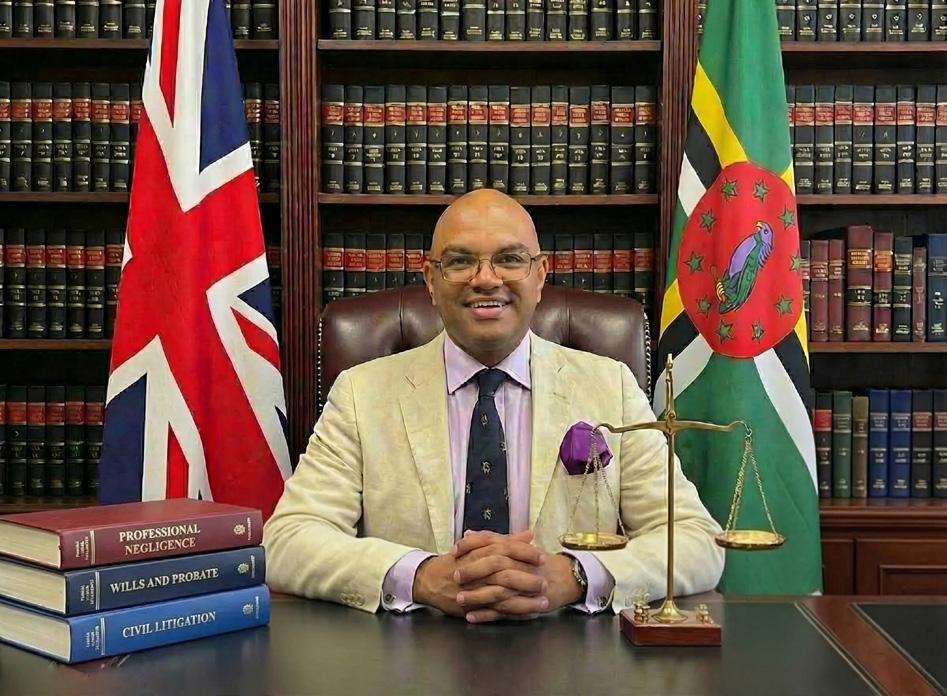
Introduction:
Filling in Lasting Power of Attorney (LPA) forms sounds like one of those “sensible adult admin” jobs you’ll do one day when you’ve got a quiet afternoon, a cup of tea, and a fully charged printer.
In real life, it’s often done in a rush. Someone’s health has taken a turn. A bank has started asking awkward questions. A family member is moving abroad. Or you’ve simply realised you’d rather sort things out now than leave your loved ones to struggle later.
LPAs are brilliant when they’re done properly. They let you choose who can make decisions for you if you can’t (or don’t want to) make them yourself in the future. But the forms are formal legal
documents, and the Office of the Public Guardian (OPG) is strict about errors — because these documents give someone else serious authority.
The good news: most mistakes are totally avoidable once you know what they look like. This guide walks you through 10 common pitfalls and how to steer around them, in plain English, without the panic, so that you can submit your LPAs with confidence. In England & Wales there are two types of LPA, namely:
• A Property and Financial Affairs LPA – this allows your attorney to manage your financial affairs, such as paying bills or dealing with your property if you
do not have mental capacity to do so.
• A Health and Welfare LPA – this allows your attorney to make decisions on your behalf about your health and welfare, such as medical care, life-sustaining treatment, care needs (washing, dressing, and meals). An Attorney can only act once the Donor has lost capacity. A Lasting Power of Attorney can only be made while an individual (called the Donor) has mental capacity to make their own decisions. For it to be effective, it must be registered with the Office of the Public Guardian. This guide is suitable for individuals completing LPA forms themselves, for those in the caring profession, or families who want more information about the LPA Process.
- Let’s get started -
MISTAKE NO.1
Using outdated LPA forms or the wrong type of LPA
The OPG will not accept LPAs on outdated forms, so ensure you are using the correct forms. Similarly, the OPG will reject the incorrect forms being used. An LPA for Property and Financial Affairs should not be used as an LPA for Health and Welfare, or visa-versa. This happens rather frequently. The OPG do charge submission fees. To prevent having to incur extra submission fees, ensure you are completing the correct forms. The correct forms are here: Lasting Power of Attorney for Property and Financial Affairs – LP1F Lasting power of attorney - Financial decisions Lasting Power of Attorney for Health and Welfare - LP1H Lasting power of attorney - Health and care decisions Lasting Power of Attorney forms can be created online by creating an account - Make a lasting power of attorney - GOV.UK
MISTAKE NO.2
Using incorrect/inconsistent names, addresses or dates on the forms
Using incorrect/inconsistent names, addresses, or dates on LPA forms will cause them to be rejected by the OPG. Using middle names for the Donor and Attorneys throughout is important, and ensuring correct dates or birth and addresses will make the LPA registrable and useable.
MISTAKE NO.3
Choosing Attorneys
While trusted family, friends or professionals often acts as Attorneys, careful thought should be given to their willingness to act and their geographical proximity. While partners/spouses or children (over 18) are often appointed as Attorneys, consideration should be given as to whether they are good with administration, finances, and could successfully manage the process or take hard decisions. Appointing only one Attorney can be appropriate, but if that Attorney dies, or subsequently becomes unwilling to act, then the Lasting Power of Attorney is unworkable. If you appoint your Attorneys to act “jointly” then all of them must agree on all decisions. If you appoint your Attorneys to act “jointly and severally” they can act independently or together. Care should be given to the choosing of Attorneys.
Conflicting Instructions
Conflicting instructions in LPA documents are very common and lead to rejection by the OPG. Common mistakes take the form of Attorneys can make decisions by a “majority vote” when they are appointed to act jointly (which requires unanimity). Another example is stating that “Attorney A can withdraw up to £200.00 from the bank” while later stating that “Attorney A cannot directly take cash from their bank account”. Further confusion can be caused when binding instructions (must do) are set out with non-binding preferences (would like them to do). It is important to be clear on any instructions to make sure that they can be workable and not contradictory.
Unlawful instructions
Instructions that contravene the Mental Capacity Act 2005 would be unlawful and, in all cases, will have to be referred to the Court of Protection, which will ultimately slow dowwn the registration of the LPA. Examples of unlawful instructions would be instructions to assist with suicide or criminal activity, or instructions authorising Attorneys to make gifts to themselves or others to avoid care home fees (classed as a deliberate deprivation of assets). Do not include unlawful instructions within your LPA forms.
Signing in the wrong order
This is a very common reason for rejection by the OPG. A Freedom of Information Request showed that a total of 133,760 LPA registrations were rejected in England and Wales in 2024, as the number of applications soared to nearly 1.5 million. If the signing sequence is not followed, it invalidates the LPA. New forms have to be submitted and a further fee paid. The correct signing order is:
• The Donor signs first (Section 9)
• The Certificate Provider signs (Section 10)
• The Attorneys signs (Section 11)
• The Person Registering the Lasting Power of Attorney signs (Section 15) Dates must follow the order of signing. If the dates do not follow or the signing of the LPA is not completed in the correct order, the OPG will reject the forms.
MISTAKE NO.7
Wrong Witness/Witness details missing
Witnesses must be over 18, independent and present when each person signs. Attorneys, their spouses or family members cannot act as witnesses. Witnesses must write their full name and address. Section 5 of the LPA for Health and Welfare – Life Sustaining Treatment
– is a common section that is missed for witnessing. Do not overlook getting this part of the LPA witnessed.
MISTAKE NO.8
Certificate Provider
The Certificate Provider must be independent and must not be one of the Attorneys. It can be a friend or neighbour who has known the Donor for 2 years or longer,or can be a professional such as a solicitor or GP. The Certificate Provider confirms that the Donor understands what a LPA is, the contents of their LPA, the powers they are giving their Attorneys, and that the Donor was not pressured or unduly influenced to make the LPA. The Certificate Provider must include their name, address, sign and date Section 10 of the LPA form.
MISTAKE NO.9
Forgetting Registration/Assuming LPA can be used immediately
An unregistered Lasting Power of Attorney has no legal authority and cannot be used. It must be registered with the Office of the Public Guardian at PO Box 16185, Birmingham B2 2WH and the fee of £92.00 paid, unless you are entitled to pay a reduced fee due to being on a low income – see LPA120 - Get help with paying LPA fees
Once registered, the Lasting Power of Attorney can be sent to organisations such as banks by using the digital LPA service – see https://www.gov.uk/view-lasting-power-of-attorney
MISTAKE NO.10
Final Review
With each LPA document being 20 pages long, it is wise to ensure all pages are completed and that there are not any missing pages before submission. If, in reviewing the document, mistakes are found, do not use Tippex or pencil as the OPG will reject the application. Instead, cross out the error in black pen, write the correction and initial it. Alternatively, print a new page. It is advised to keep a copy of all completed documents.
>> CONTINUED FROM PAGE 31
Doing an LPA is one of those quietly powerful things you can do for yourself and your family. It’s not about expecting the worst — it’s about making sure that if life gets messy, the decision-making doesn’t have to.
If you avoid the common traps above, you’re already miles ahead.
Applicant: The person who applies to the Office of the Public Guardian (OPG) to register the LPA. This can be the donor, an attorney, or someone else allowed by the form.
Attorney: The person you appoint to make decisions on your behalf under an LPA. An attorney must be 18 or over and capable of making the relevant decisions. (This isn’t a lawyer in this context).
Capacity (Mental Capacity): The ability to make your own decisions. Under the Mental Capacity Act 2005, a person lacks capacity for a particular decision if they cannot understand, retain, use/weight information, or communicate their decision at the time it needs to be made.
Certificate Provider: An independent person who confirms that the donor understands the LPA, is making it willingly, and is not under pressure or being tricked. They sign a specific section of the form and must meet eligibility rules.
Donor: The person making the LPA — the person giving legal authority to someone else (the attorneys) to act for them.
Enduring Power of Attorney (EPA):
An older type of power of attorney that covered property and financial affairs only. EPAs can still be valid if made before LPAs replaced them, but you can’t create a new EPA now.
Health and Welfare LPA: The type of LPA that allows attorneys to make decisions about health and care, such as medical treatment, care arrangements, and where the donor lives. It can only be used when the donor lacks capacity.
Independent Witness
Someone who watches a signature being made and then signs to confirm it. The witness must be 18 or over. The rules about who can witness depend on whether they are witnessing the donor or an attorney.
Instructions Rules in the LPA that attorneys must follow. Instructions are legally binding. If they are unclear, conflicting, or unlawful, they can cause the LPA to be rejected or create problems later.
Jointly (Attorneys Acting Jointly):
If attorneys are appointed “jointly,” they must make decisions together and all must sign. This can be protective, but can cause delays if one attorney is unavailable.
Jointly and Severally (Attorneys Acting Jointly and Severally): If attorneys are appointed “jointly and severally,” they can act together or separately. This is often more practical day-to-day.
Lasting Power of Attorney (LPA): A legal document that allows you (the donor) to choose one or more people (attorneys) to make decisions for you if you can’t, or if you prefer help, depending on the type of LPA and the situation.
Life-Sustaining Treatment: Medical treatment needed to keep someone alive (or prevent their condition seriously worsening). In a Health and Welfare LPA, the donor must choose whether attorneys can make decisions about life-sustaining treatment.
“Notify People” / People to Be Told: An optional part of the LPA where the donor can name people who must be notified when the LPA is being registered. It’s intended as a safeguard.
Office of the Public Guardian (OPG): The government body that registers LPAs and supervises attorneys and deputies. If an LPA isn’t registered with
the OPG, it can’t be used.
Preferences: Statements in the LPA about what you would like your attorneys to consider. Preferences guide your attorneys but aren’t legally binding.
Property and Financial Affairs
LPA: The type of LPA that allows attorneys to manage money and property: bank accounts, bills, benefits, pensions, investments, and potentially selling property. It can be used with the donor’s permission while they still have capacity (if the donor chooses), and also if they lose capacity.
Registration: The process of sending the completed LPA to the OPG so it becomes officially registered. An LPA usually can’t be used until it’s registered.
Replacement Attorney: A backup attorney who can step in if an original attorney can’t act (for example due to death, illness, loss of capacity, or choosing to stop acting).
Revocation: Cancelling an LPA. A donor with capacity can revoke an LPA by completing a deed of revocation and notifying relevant parties (and the OPG if it’s registered).
Signature Order / Signing
Sequence: The required order in which the LPA must be signed (donor, witness, certificate provider, attorneys and their witnesses, then applicant). Dates must reflect this sequence to avoid rejection/ delay.
Witnessing (In Person): Witnessing must happen with the witness physically present when the person signs. It isn’t enough to sign later, and it shouldn’t be done over video call for LPA formalities.
“Notify People” / People to Be
Told: An optional part of the LPA where the donor can name people who must be notified when the LPA is being registered. It’s intended as a safeguard. ©Darren J. Sylvester, Solicitor, DJS Law, March 2026. All rights reserved. No part of this publication may be reproduced or distributed in any form or by any means, or stored in a database or retrieval system, without the prior written permission of DJS Law Limited (CRN: 09424553) n
>> CONTINUED FROM PAGE 25
“So being able to have relationships with people from back in the day just proves so worthy in this day, being able to have that reputation, and be able to move with a bit more with ease.
“I think I’ll always be from south London. It doesn’t matter where I am in the world.”
Many who are not from that neck of the woods might find this hard to believe but being from south London was not the reason she called the company The Zoo XYZ.
She explained: “So at the Zoo we (the team) all have animals and my animal is a chameleon, and I say a chameleon, because I feel like I can go into different spaces and blend in with different cultures, and be able to move accordingly.
She added: “In this industry we deal with so many different people, so many different personalities for me, It’s always like a menagerie. That was a word that stuck to me.
“We (the team) were having a good night, having a drink and we said ‘you know what? It’s like a zoo. It’s literally
like dealing with a zoo’. I don’t know if you know but events are one of the most stressful jobs in the world. Statistics have shown.
“We’re dealing with crazy pressure, crazy people, crazy things. That’s where it came from. It was like, ‘that’s what it’ll be’.”
Unsurprisingly, it’s not until after an event has been delivered that Placca-Rodriguez allows herself the space to feel any sense of accomplishment.
She admits to breaking down in tears at seeing a random video from the first ever event she executed at The Royal Albert Hall, a whole year after she’d done it.
“People didn’t know that I didn’t sleep for three months, but no one cares about the stuff that goes on behind the scenes. But to know that that’s what I achieved. That for me is the most fulfilling thing.”
If you’re thinking about putting on an event and want to hire The ZOO XYZ, do make sure you come correct.
She was on the Lifestyle Ones To Watch in 2025 at the start of this year for a reason. There are plenty of people watching her, and have been for a while.
Where once Placca-Rodriguez would have worked with everyone, things are different now.
“People come to me for the same reason people go to other people. We’ve had clients that maybe thought we’re priced a bit too high, and then they try to go somewhere else, it messes up and then you’ve got to come back.
“That’s OK. We can still help you, but we have a different kind of nurturing service.
“I think, when it comes to events, I know what I’m passionate about and I know what I’m going to bring to the table and when we choose the clients that we work with, and I think we’re in a great position now where we can choose, we also have to see that passion.
“It has to be matched to know that, actually what we’re going to create is something amazing. And I think you can see that from the work that we’ve done.” n

She couldn't believe it at first, but it's starting to sink in. This north London girl is the winner of this year’s Advertising Week Europe: Future Is Female Award
EVERY YEAR, Advertising Europe brings together Advertising, Marketing and Creative professionals under one roof for a four day conference event, writes Brenda Juliet.
It is a chance for those entering the industries to have firsthand insight and advice about breaking into said spaces, while those who are a little more established in their field have the opportunity to expand their connections, and touch up their knowledge on industry trends and ever-changing insights.
Whilst this is a powerhouse for growth, connection and elevation for all, these rooms can be hard to reach, with the costs of tickets being out of reach for small businesses and freelancers.
The Advertising Europe team invited me to join them across the week at the conference, which allowed me to fully immerse myself in the experience of the annual event.
How did I manage to do this? Through the power of community.
I had an industry friend of mine, Shannie Mears, reach out and encourage me to apply for the annual Advertising Week Europe: Future Is Female Award. Reluctantly, I said I’d think about it, and quickly I reminded myself of the promise I made at the beginning of the year – I wasn’t going to hold myself back from giving myself the opportunities I deserve.
I can naturally be quite a shy and reserved person which has created room for ambiguity with me, but I am actively trying to break these patterns as close mouths do not get fed, and you of course miss a hundred per cent of the shots you don’t take.
I only had 24 hours to get this award entry completed, along with a reference which needed to be included in the submission.
As I filled out the entry, it took me on a mental journey of the career progression I’ve had so far and accomplishments I’ve secured along the way, reminding me why I shouldn’t take any of this for granted. I’ve been co-running my Music and Culture agency MYBLAQBOOK for just under five years now, representing some fantastic clients including Shallipopi, Dankie Sounds, JVCK JAMES, Moliy, NSG and plenty more.
I’ve had the pleasure of working with some amazing teams and talented journalists, those who have made my role as a Publicist and Businesswoman an enjoyable yet demanding experience. Business always comes with as many challenges as the grand highs, but honing tenacity and resilience is what has always kept me going to keep the balance.

They say 60 per cent of UK businesses fail within the first five years, so I’m so proud to still be here, especially as a Black woman in business who is also a single mother to my daughter, with a string of accolades to my name.
Not long after submitting my application, I received the news that I was shortlisted for the Award as one of the 25 finalists. I felt such a rush of emotions running through me; excitement, shock, disbelief, gratitude, the list goes on but the best feeling of all was realising in that moment – I am doing enough.
Being selected out of all the possible applicants within Europe felt like such a surreal experience.
There is still an underlying fear of unconscious bias, no matter how much we try to ignore it, it is still a thing, so it’s easy to fall into the space of imposter syndrome.
There are so many inspirational women I look up to in business who are notable forces not only in the UK, but across Europe (and beyond) so it’s so important to have spearheading figures such as Kamiqua Lake, Founder of Coldr, Charlotte Mair, Founder of The Fitting Room and Emma Grede, Entrepreneur & CEO to name a few, to remind you that Black women are powerful and incredible examples of success.
My ten year old daughter joined me as my plus one guest to the awards, and her excitement for the night was so beautiful to see. It was a reminder that we are examples for our children and the next generation, and we should keep showing up and being these examples for them in the world.
This story was first published on the Voice website: www.voice-online.co.uk