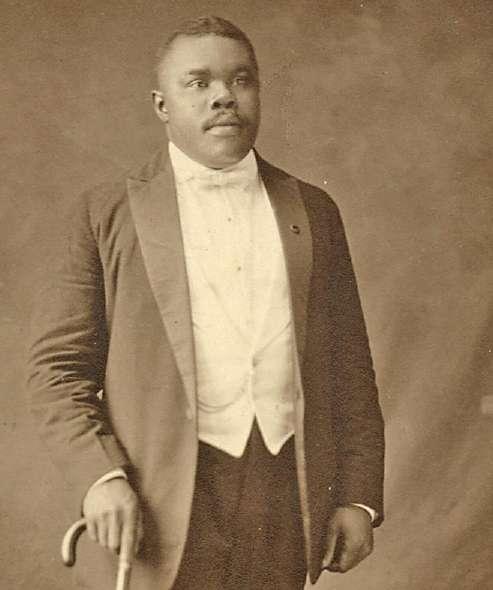
PAN AFRICAN Marcus Mosiah Garvey must have his conviction for mail fraud overturned, his son has demanded.
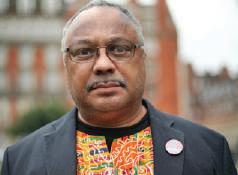
Dr Julius Garvey told The Voice he remains determined to clear his fathers’ name after the iconic leader was ‘framed’ by the American state in a bid to scupper the message of black unity.
Marcus Garvey was imprisoned for two years before being deported to Jamaica, with his dream of black people returning to Africa unfulfilled.
Dr Garvey said his dad’s dream for self-reliance still remains relevant today.
REGGAE
EGGAE’S BIGGEST stars are heading to court claiming they are owed royalties.
Etana, who shot to fame with her album The Strong One, says she was “tricked” over her contract. She claims household names were living “in poverty” while music big-wigs raked in the cash.
VP Records, who are defending the case brought by Etana, deny any wrongdoing.
investigation
page 4 & 5
Inside THIS MONTH
Labour of love? Sir Keir Starmer failed to tackle anti-black racism say critics p20-21
We’re so gifted Terence Channer on the endless talent in our community p26
ROUNDUP
The Voice says
Glam and glitz The Best of Africa awards p8-9 Ital you something Picking a plant-based diet p24
Trouble in party as Maurice Mcleod blocked for selection as MP
2. Tony Sewell becomes a Lord
Controversial report author elevated
3. Superficially black?
Leah Mahon op-ed on Kwasi Kwarteng insult
Jamaica launches major crackdown on bad influences
5. Black MPs protest over
Pressure builds inside Labour Party
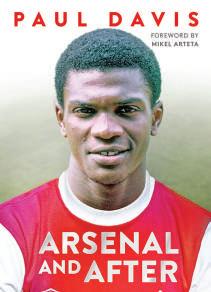
Midfield maestro Arsenal’s Paul Davis still a general p46
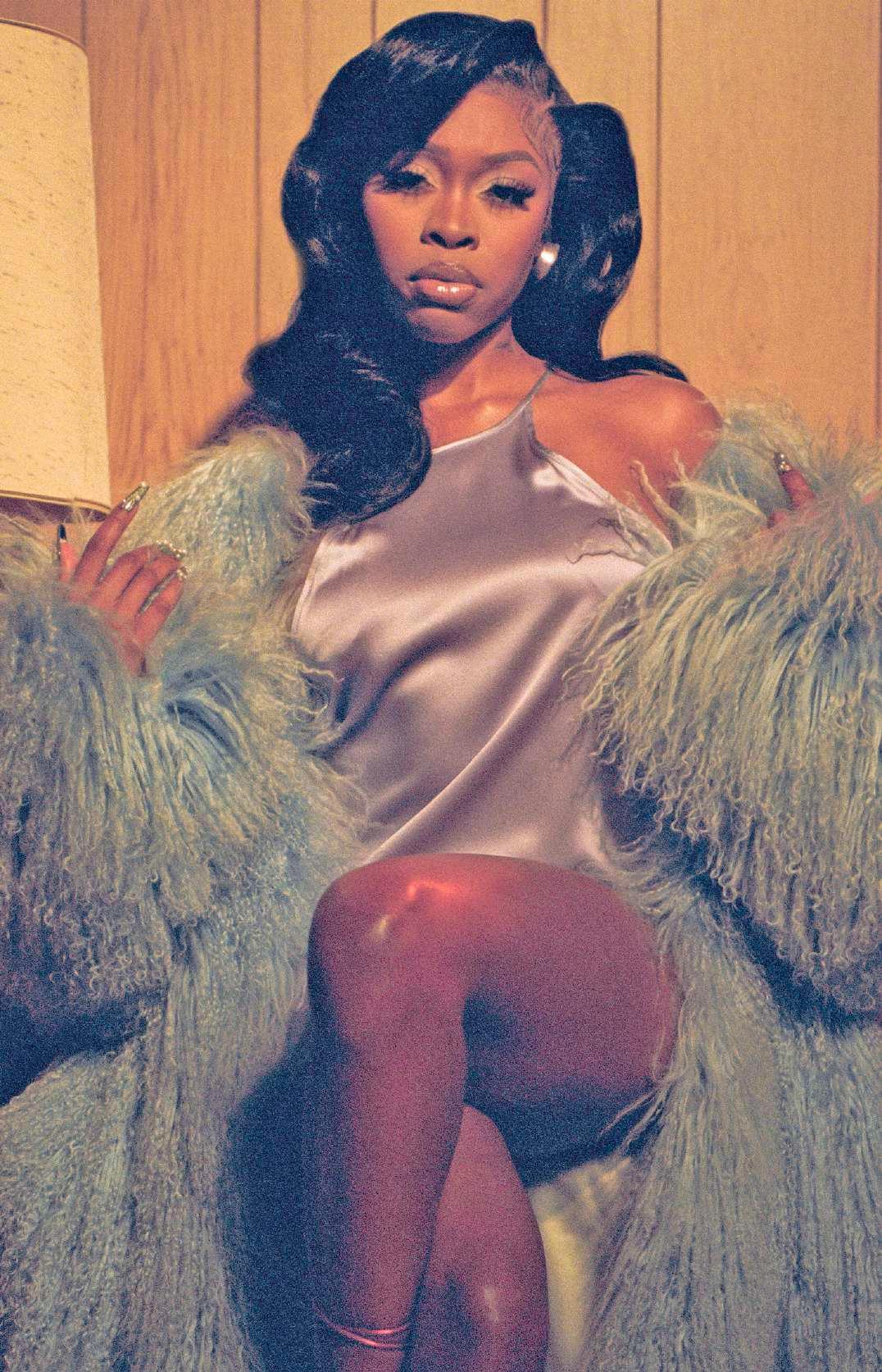
out loud Sultry Chicago singer tells all p38
We interview Akyaaba Addai-Sebo
Start of selection to replace Harriet Harman
Only game in town?
BLACK VOTERS are arguably the most loyal part of the electorate for Labour. But, as we have seen in previously rock-solid red Scotland and the so-called Red Wall, nothing is guaranteed.
Activists have been saying for years that Labour has taken the black vote for granted.
Party chiefs assume we are all concentrated in safe-ashouses inner city seats where a donkey with a red rosette could win — and sometimes does.
Yet figures from Operation Black Vote show that black voters are increasingly moving to more marginal seats, where they could make the difference.
Even if lifelong Labour voters don’t switch allegiance, simply not voting could advantage rival parties in tight contests.
As much as habitual Labour voters may desire a Starmer government over the current Conservative one, we want to be wanted.
Labour must court the black vote, and tell us how they are going to tackle systemic racism.
The community deserve a reason to be excited, not simply voting against a different party.
A study by the Runnymede Trust showed that between the 2017 and 2019 elections, black support for the Jeremy Corbyn-led party surged to over 90 per cent.
One reason was that he, and Diane Abbott, inspired confidence that they understood the lived experience of black Britons and had a plan to make our lives better.
All the indications are that confidence has dropped significantly under Sir Keir Starmer.
Boxer one of many stars at prestigious Best of Africa ceremony
Labour may be soaring in the opinion polls and apparently coasting to victory, but excitement is decidedly lacking in diverse, working class neighbourhoods.
Starmer’s failure to adequately respond to the Forde Report, which found anti-black racism in the party, came across as arrogant.
The party’s blocking of Maurice Mcleod from standing in Camberwell and Peckham has left a bitter taste in the mouths of activists.
There is a crisis of confidence brewing in the community which Starmer must urgently address. Our investigation (pages 20-21) is a reminder to the Labour leadership to get their act together while there is still time.
Starmer, listen to your black MPs on Forde. Listen to your members on black representation and the need to prioritise tackling anti-black racism.
Deliver on your overdue promise to create an organisation within the party to represent black and Asian members. And involve them in developing radical policies to improve our material condition.
In other words, earn our vote.
Horrific find in Hanwell, west London
Crystal Palace boss Patrick knows his roots
1. Uproar over Labour stitch-up
4. JA bans drug and gun music
Forde Report
6. Man who started Black History Month
7. Race to represent Peckham
8. Anthony Joshua at awards
9. Murder investigation as woman found dead
10. Vieira: Proud to be African
Marcus Garvey lives on
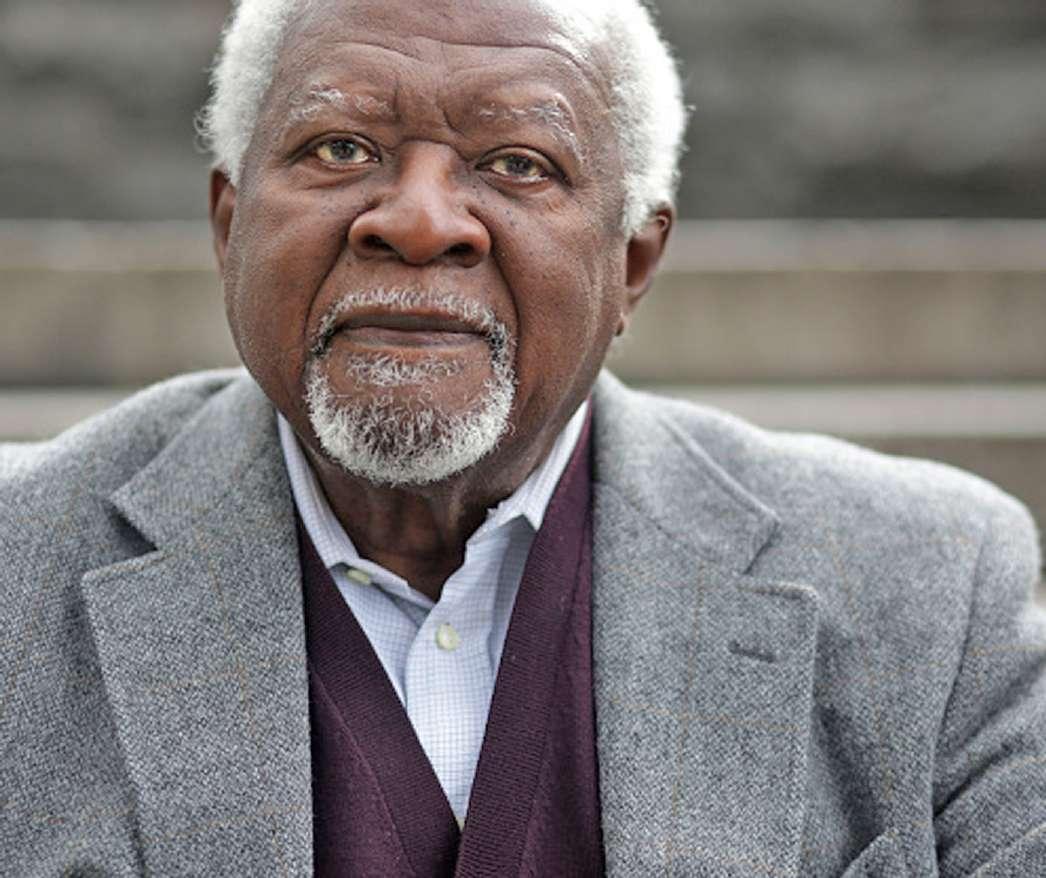
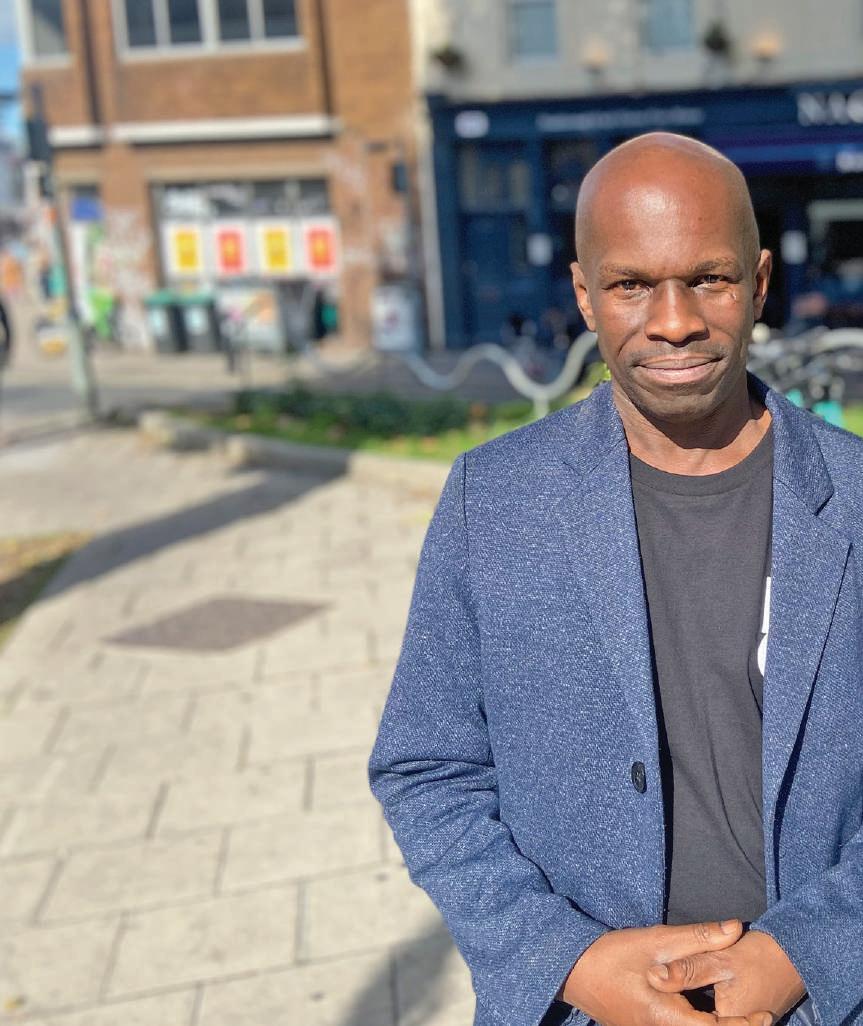
Son of a preacher of black pride, Dr Julius Garvey believes that his father’s activism will live on if we learn our history. By
Leah Mahon
IN HISTORY books and ageing archives, the names of great black leaders and pioneers that have come and gone before are teaching a new generation of children about black history.
The Honourable Marcus Mosiah Garvey, father of Pan-Africanism and prophet of the Rastafari movement, is foremost among them.
A proud Jamaican, born in the parish of Saint Ann’s Bay, Garvey was a formidable believer in black nationalism, and a voice that spoke tirelessly of the black diaspora as one people who should finally begin their return to Africa.
His son, Dr Julius Garvey, says that the teaching of black history across the year is necessary to water our roots, and should not be reduced to one month in the year.
“Black history for black people is something that is needed every day. As my father said, the people without the knowledge of their history and culture are like a tree without roots. So, if you don’t know your history, you don’t know your identity,” he tells The Voice. “That’s what has been taken away from us, especially when we live in an
environment where we are a minority. So, we have to understand our own history so that we have our own identity and we’re not influenced by the environment negatively.
“Because very often the Eurocentric environment has adopted, shall we say, a negative perspective on people of African ancestry, which is a distortion of history. We need to know our own history as opposed to history that’s interpreted by somebody else.
“It is our responsibility to teach our children and we can’t say the institutions have to take that responsibility,” he says.
“It’s always our responsibility to carry forward our history and our culture for the next generation.”
Julius, a former surgeon, was born in Jamaica before going on to work at the Albert Einstein College of Medicine and continues to serve as a fellow for Royal College of Surgeons and the American Board of Surgery.
An activist to the core like his father, Julius is on a mission to carry on his father’s message to the community today.
The Black Star Liner ship established by Marcus Garvey
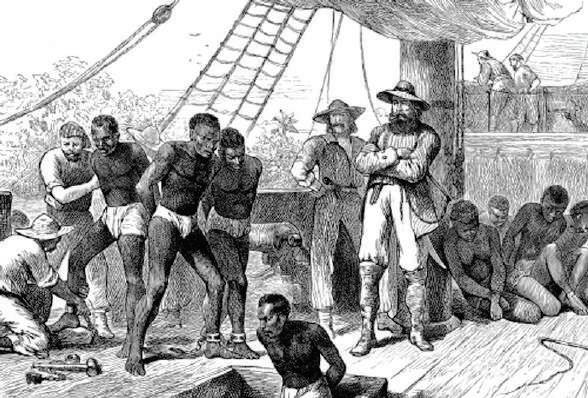
sailed from 1919-1922 to transport goods to Africa and Garvey had planned to also bring people of African descent back to the sacred motherland. However, the plan was scuppered after he was framed for mail fraud in 1923. He joined the ancestors in 1940.
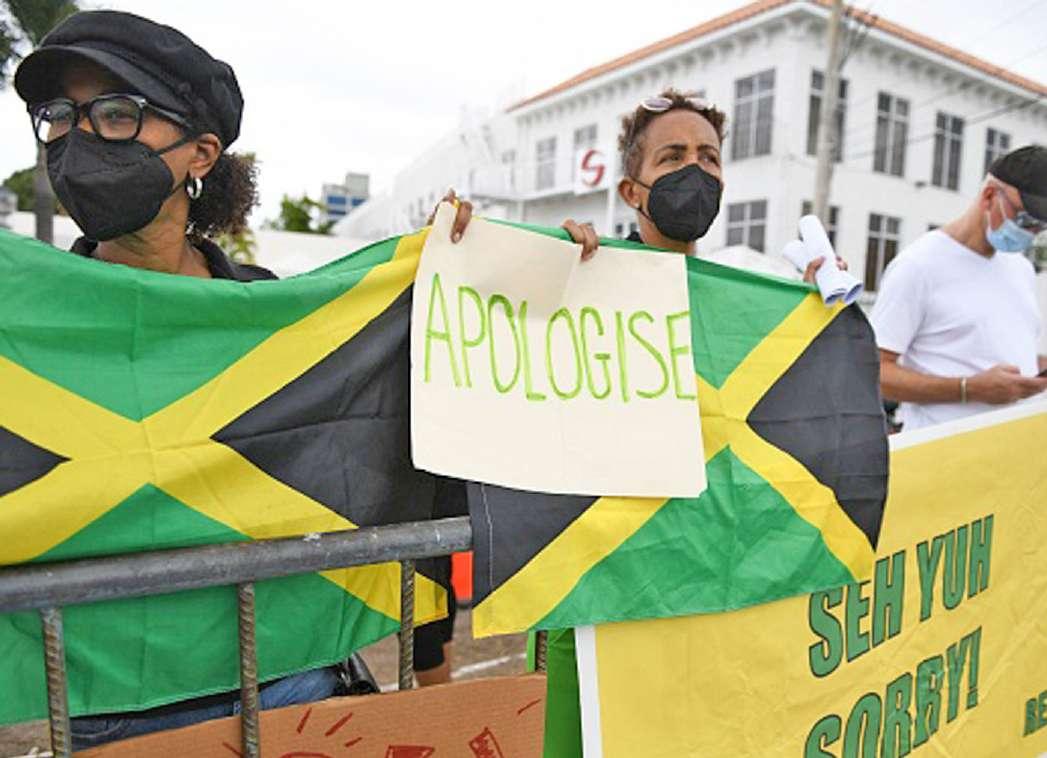
Julius continues to drive the Justice4Garvey movement to have his father posthumously exonerated for crimes which many believe were fabricated to halt his strides in the fight for black civil rights. Garvey was later imprisoned in the US for nearly two years before being deported to Jamaica.
Yet the dream of people of African descent returning home to Africa — and even the Caribbean — has not died. In the wake of Brexit, and in the aftermath of the Black Lives Matter resurgence, the UK and US is experiencing a resurgence of people packing their bags and moving.
It shows Garvey’s timeless message for black people to continually find themselves — wherever they are around the world — lives on, says Julius.
“Garveyism [the unification
of people of African descent and reparations for Africa] surfaces about every 30 years in a new generation, in the 1960s and the 1990s and up again. I think it’s very evident again at the present time with incidents such as George Floyd and the Black Lives Matter movement,” Julius explains.
“Again, the problem is that very often the young people
ticated” systems that oppress black people before being able to deconstruct them otherwise the diaspora runs the risk of becoming victims, he says.
In an era of social media, light years away from the days of his own father’s powerful activism, Julius believes it’s helping to continue to spread his message. He credits the Rastafari movement as being part of
It is our responsibility to teach our children and we can’t say the institutions have to take that responsibility
don’t know what has gone before. They don’t know whose shoulders they stand on, so that it’s a struggle that continues.
“But, if they understand the previous generations’ struggle, they have something to build on and not just starting from scratch. That’s what’s important; about knowing our history and knowing what has gone before.”
Activists and educators need to first understand the “sophis-
this eternal message to people of African heritage.
It originated in 1930s Jamaica and is an ideology rooted in Afro-centricity which teaches about the crowning of a king in Africa. It denounced black inferiority as a myth of white supremacy and fought back against the indoctrination of colonial rule.
Marcus Garvey’s legacy in the liberation of black people
the world over revibrates in more ways than one. His teachings, once deemed radical proclamations of black superiority, have gone on to inspire other great leaders like Jomo Kenyatta, Nelson Mandela, Dr Martin Luther King and Malcolm X in the fight for racial justice.
While these great leaders stood on the shoulders of others that came before them, Julius still says that his father’s message of black people being “self-reliant and independent” in the discovery of their history and identity is where we should begin.
“You’re given talents, but you have to develop them. That’s your responsibility. That’s what my mother taught me and my father,” he explains. “He taught all of us that African people should be self-reliant and to develop based on our own abilities, and our own resources, and create our own system.
“And that’s true 100 years later. And it will always be true, because it’s the fundamental law of the universe that all of us have developed the tools, but we have to use them.”
He added: “I chose my parents well.”
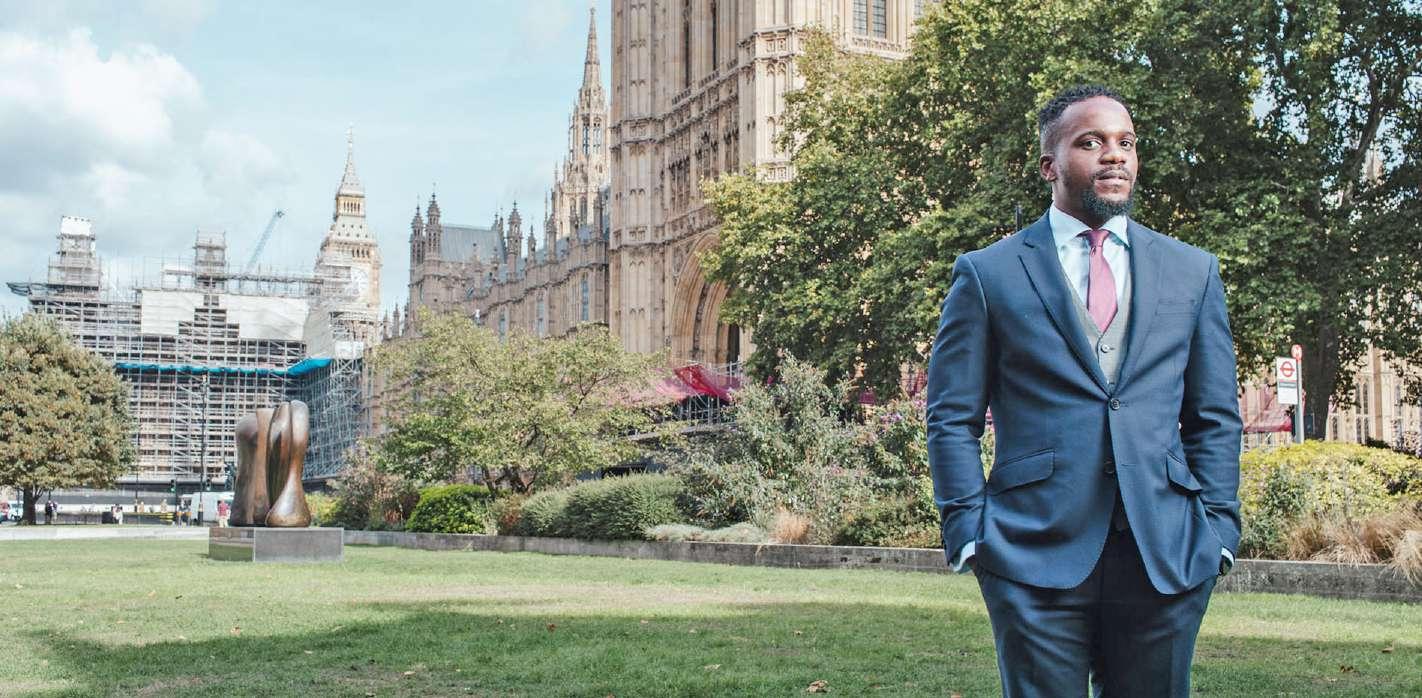
KNOW YOUR HISTORY: Dr Julius Garvey says the teaching of black history should not be reduced to one month in the year
MESSAGE: Marcus Garvey in 1920 (photo: Getty Images)
THE GREAT REGGAE ROYALTY CLASH
Award-winning singer Etana is taking on a record label — and says the whole industry is giving stars a bad deal. VP Records insist they have done nothing wrong. By Sinai Fleary
EXCLUSIVE
REGGAE’S BIGGEST stars — including Bounty Killer and Etana — are being ‘ripped off’ by record labels, they claim.
Etana told The Voice that big name reggae artists were “dying in poverty”, trying to sell their rights to get a decent burial while big wigs in the industry bought yachts and jets.
Singers are now ‘fighting back’ with several leading Jamaican singers filing lawsuits to reclaim royalties they say they are owed by publishers and record labels.
Our investigation has found that big names, like Capleton and Sizzla, are unhappy with their contracts.
Shauna McKenzie-Morris, who is better known as twotime Grammy-nominated singer Etana, is currently suing VP Records — the biggest Reggae record label in the world — alleging she was ‘tricked’ and ‘robbed’ out of royalties.
Dancehall icon Bounty Killer started legal proceedings in June this year, in the High Court of Justice in London, as he seeks to recover hundreds of thousands of pounds in unpaid royalties from a UK publisher.
Etana, who has attracted worldwide acclaim, said her case was just the tip of the iceberg.
“It still bothers me to this day that I was tricked. It will
take some courage and extra resilience to get through it all.
I’m going through the motions, there’s a lot in the case. I’m looking for justice. I’m hoping the judge will take everything into fair consideration.”
The star says at the beginning of her career, as she was already signed as a recording artist to the record label, she wanted to maintain some control over her publishing.
But says she was “tricked” into signing a publishing agreement with VP — who she claims then went on to license her music to major companies — without her knowledge.
“We want to know under what terms they licensed that album to the company and how much you were paid, because I want mine!”
COURT
VP deny the claims, saying: “We take all of our contractual commitments seriously and treat all parties fairly. As with any business, if a disagreement should occur, we try to resolve.”
Court documents seen by The Voice confirm the star filed a lawsuit with her record label Freemind Music against VP and several of its subsidiary companies, including VP Music Group Inc, VP Retail Outlet Inc, VP Record Distributors, Greensleeves Publishing Ltd and others. The case is currently being heard in the Supreme Court in New York.
The singer states she was signed in 2008 to do four albums with VP, but says the relationship took a turn for the
worst when she started asking questions.
She said she only really made money from performing live.
“After the second album, me and them weren’t really getting along.
“I couldn’t get them to promote properly, to spend the budget to do the right thing and the relationship got even more sour when we asked for the promo budget.”
She said she continued to record her albums because she wanted to simply “get through the agreement, do the albums and be done”.
In a complex case, Etana says there are many discrepancies surrounding how her music was registered.
She said what hurt her the most was that artists who come out of poverty, or a “garrison”, get taken advantage of by record companies in general.
She said: “They’d rather pay lawyers than pay the artists dem who create the music. It’s like they have a ting against the artist dem, you know.
“These people are buying boats, jets and their kids drive matching cars. They have wonderful Christmases, and you have artists dying and begging to sell their publishing so they can be buried.”
The problem has remained hidden for years because artists are fearful of speaking out, insiders say.
The Voice approached several Jamaican singers and songwriters for comment, with many declining to discuss the subject
of royalties. One legendary artist said: “I don’t want to do that type of interview. I mean no disrespect, I would just rather not. I just don’t want to say anything further about it.”
“Everybody’s quiet”, Etana said. “In this life and in this time, when you are going through certain things you are basically on your own and people don’t really care until it affects them.”
According to online music site Dancehall Mag, Bounty Killer started legal proceedings in London, in an attempt to re-
cover £325,000 (J$60 million) in unpaid royalties from a UK publisher.
The Voice contacted VP Records who were able to confirm that they are currently involved in a lawsuit with Etana.
VP Records’ Vice President of Sales and Marketing, Aaron Talbert, said he could not disclose any further details about Etana’s case, but said the label has several deals it offers artists.
He said: “We have a range of deals that are done and primarily, the VP albums are with artists that are signed exclusively
to VP. There are other albums that we license from record labels. In most cases we’re doing it directly with the artists.
“So in those cases, the royalties will be paid directly to the artists. In the case where we are licensing from the labels, we pay the labels. In terms of the timing on those, the standard in industry is semi-annual, so that’s ours also.”
Talbert said that VP will continue to push reggae music forward. “The company has been around for over 60 years, and we are to my estimation, at the
centre of promoting reggae music globally.
“We’ll continue not just with audio recordings, but video, merchandise and direct-toconsumer and we’re looking to grow in all possible areas within the music.”
He added that the label has an expression “staying true to the roots” and will be “committed and planned to be involved in reggae and Caribbean music and pursuing all avenues”.
Etana, whose debut studio album, The Strong One, featured hit songs like Roots, and I Am
FIGHTING BACK:
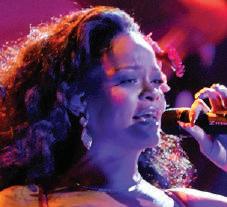
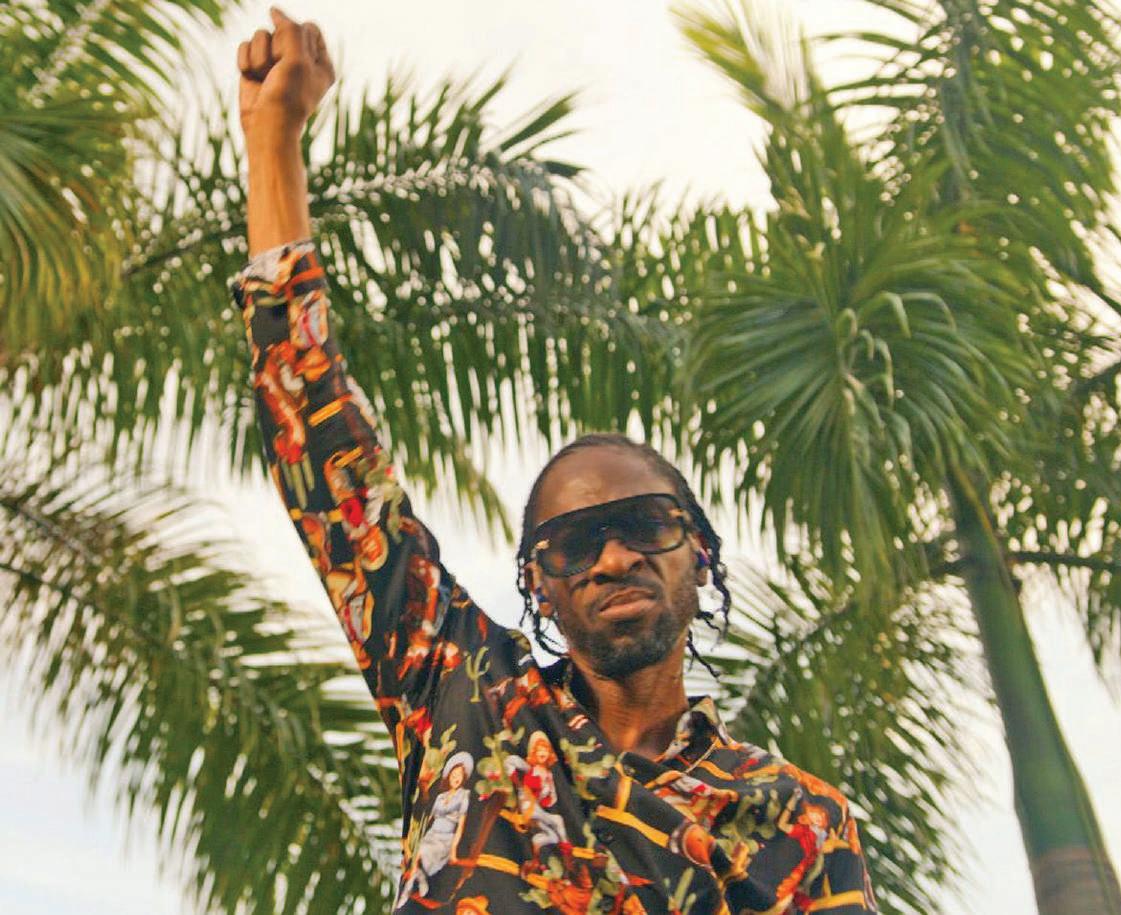
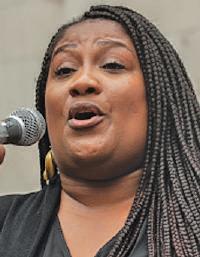
Etana, left, and Bounty Killer are both currently involved in legal proceedings
Not Afraid, said music industry insiders had tried to “block” her career because she is outspoken, but added: “I’ve never been scared and mi nuh fraid of people and as mi say I believe in the creator of life and the power of the universe and mi nuh just afraid of man like that.”
After parting ways with VP, she decided to set up her own label, Freemind Music. Her fifth album, Reggae Forever, was released in March 2018, and earned her a second number one Billboard Reggae album. This makes Etana the first reggae female artist in over 20 years to gain that coveted position back-to-back.
As an independent artist, she made history by becoming the first female artist to receive two Grammy nominations in the Reggae Album category.
She believes all the success she’s had as an independent artist would have come earlier if she been surrounded by the right people.
“From where I coming from and from where I see my relatives dem come from inna my life, I just don’t think I should be run over, bamboozled and tricked and just tek it.”
The star is seeking backdated compensation for public performance royalties, mechanical royalties and other money.
Donovan ‘JR’ Watkis is a TV host and founder of World Music Views, which is the first music business publication in Ja-
maica. Speaking to The Voice, he said Etana’s case will not be the last lawsuit of its kind. “The domino effect has already started, there are several cases pending,” he said.
The music media entrepreneur said he would like to see more investment pumped within the Jamaican music industry so artists can benefit from “brand Jamaica” which is used by international superstars to take them “to the top of the charts”.
agement Organisations (CMOs) in order to be paid royalties or have their own publisher who will collect them on their behalf.
In 2017, UK-based performance rights organisation Phonographic Performance Limited (PPL) became the first CMO to sign a partnership with the Jamaican Music Society (JAMMS) — which is one of the main CMOs in Jamaica.
The partnership aims to ensure Jamaican performers will
These people are buying boats. They have wonderful Christmases, and you have artists begging to sell their publishing so they can be buried
Watkis was inspired to launch his platform as there wasn’t a lot of “structure” in the music business in Jamaica. He said: “We didn’t have any award shows, we didn’t have any chart shows or charts to show the accurate numbers of music that is being consumed in Jamaica and the Caribbean.”
In recent years, more initiatives have been implemented to ensure Jamaican artists’ rights are protected and they can profit from their music in multiple ways just like artists in other musical genres.
Recording artists need to be registered with Collective Man-
be paid when their music is used in the United Kingdom and internationally.
Evon Mullings, General Manager at the Jamaica Music Society (JAMMS), is urgently calling for artists to register with CMOs to ensure they do not lose out on being paid for their creative work.
He told The Voice: “The collective management of rights between collaborating CMOs, the process of ensuring rightsholders receive their royalties, generally works effectively.”
He also warned producers and performers who are not registered risk not earning their
share of royalties. Speaking generally about the Jamaican music industry, Mullings cited “lack of awareness or action” from performers and producers as one of the key reasons why artists are not financially benefiting from their music the way that they should.
He also stressed the timing of registration is crucial and failure to “undertake the required registration with rights management bodies at the critical stage of the artist’s career, when repertoire is most active” would severely impact the amount of money being paid out.
Shauni Caballero, founder of The Go 2 Agency, a renowned music publishing and royalties consultancy company, told The Voice she has helped Jamaican and UK artists to recover backdated royalties — with some of her biggest payouts ranging from £15,000 to £19,000.
Caballero, who is of Jamaican heritage, is passionate about Jamaican artists and producers being compensated “if they have been wronged” and is calling for better education at “grassroots level”.
She said: “I was talking with a lot of producers and a lot of writers in Jamaica and it’s the same thing — they will say, ‘well, I haven’t received that cheque.’ It’s at a grassroots level that no one is being taught this, no one speaks about it.”
The music executive urged
Jamaican artists to register with local collection societies like JAMMS and JACAP, as there are multiple ways to earn royalties from music recordings.
Jamaican music continues to generate hundreds of thousands of pounds every year in the UK, according to figures exclusively released to The Voice by PPL.
REVENUES
In a statement, PPL said: “UK usage of Jamaican recorded music between 2015 and 2021 generated, on average, around £500,000 a year for Jamaican performers.
“International usage (i.e. outside of Jamaica and the UK) of Jamaican recorded music across the same period generated, on average, £600,000 a year for Jamaican performers.”
PPL said they are working closely with JAMMS to ensure performers and recording rightsholders are efficiently paid.
PPL said: “Both JAMMS and PPL collect revenues for the use of recorded music on radio, television and in public places, such as restaurants, clubs, bars, retail stores, hotels, and other venues.
“While the overall industry has also grown over that period, this increase in international collections outstrips the underlying industry growth rate, pointing to the sums that previously may have gone uncollected.”
Guide
Getting black business going in uncertain times
The Voice’s latest Black Business Guide looks at a lack of equal access to funding. By
Vic Motune
THE WAYS in which banks and other institutions can provide better support for ambitious black business owners will be a key theme of the latest edition of The Voice’s Black Business Guide
for support
Recent research from the Federation of Small Businesses (FSB) and Aston University’s Centre for Research in Ethnic Minority Entrepreneurship (CREME) revealed that black-run businesses contribute as much as £25 billion to the UK economy.
research from the Black Business Network and Lloyds published in September via the In Business & Proud 2022 report highlighted a trust gap between entrepreneurs seeking to grow their businesses and institutions, such as banks and business support services. The report found that black entrepreneurs are far more likely to rely on their friends and family for support.
However, the research found that these entrepreneurs are still being held back by barriers that hinder their growth. One of the most significant barriers is a lack of equal access to finance. Other
The seventh edition of the Black Business Guide highlights the efforts banks are making to bridge this trust gap and how entrepreneurs are sourcing funding. Here we highlight two business owners featured in the guide who are finding ways around the difficulties in financing to make a major impact in their markets.
Dragons’ Den winner has no regrets
A SUCCESSFUL pitch on the BBC show Dragons’ Den can catapult a business into major success. And rejection can feel like the end of the road for ambitious entrepreneurs.
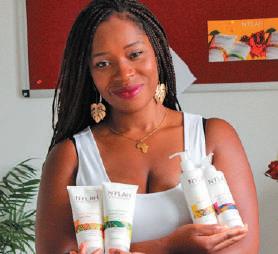
So it took a lot of courage for West Midlands entrepreneur Kameese Davis, right, to go ahead with her decision to appear on the popular show in April last year.
In 2013, Davis founded Nylah’s Naturals, an innovative vegan haircare products brand, after experiencing frustration at not being able to find suitable hair products for her daughter who suffers with eczema and sensitive skin.
Davis’ Dragon’s Den appearance was hailed as one of the success stories of the show after she walked away with a £50,000 investment from dragon Sara Davies in return for 40 per cent of her business.
But what the Sandwell entrepreneur did next took as much courage as appearing on the show.
Although the dragon’s team were happy with the Nylah’s Naturals figures at the due diligence stage of the deal, they could not agree on the terms of the contract and Davis decided to walk away. It was a tough decision given the systemic barriers black-led businesses, especially those run by black women, face when trying to attract funding and convince investors to back their growth. However, Nylah’s Naturals has continued to prosper and the company has just launched in Boots. The deal came about after
a number of efforts to expand the business following her Dragons’ Den appearance.
She said: “Upon contacting Boots, they expressed a keen interest in our brand. It was a lengthy process with numerous discussions. When working with major brands, a lot of due diligence must be undertaken to ensure that your company is reputable and there is mutual alignment.”
Davis says there are no regrets about her experience on Dragon’s Den or walking away from her deal.
“Dragons Den definitely boosted the company’s exposure in a positive way which helped to propel us forwards,” she says.
Producing trainers that change the world
SAM CAREW and his wife were expecting their fourth child when he learned that a baby born into the developed world leaves a 58.6 metric tonne carbon footprint every year.
These facts inspired Carew, below, to leave his 22-year IT career to launch the first vegan, carbon-negative footwear firm in an effort to help slow down climate change and protect his children’s future.
After working as an IT specialist in the engineering, consulting, publishing and education sectors, he felt ready for a fresh challenge.
“Nylah’s Naturals has not yet had significant investment in the brand, which means our product expansion has to be slow and methodical. That said, we are intending to expand into a range of styling products in the near future.”
after. But when you’re passionate about something that’s bigger than yourself, it’s an easier decision to make.”
He launched his company Elliot Footwear back in 2018 and quickly received support. A crowdfunding campaign on Indiegogo saw the company raise £30,000 in two months.
Carew says: “Starting something of my own had been bubbling in my head for a good ten years, but I didn’t know what it was going to look like. No one gives you the opportunity to do something completely different, you have to make that for yourself.
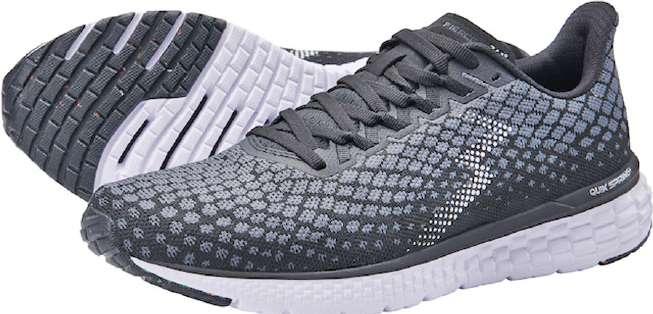
“We classify the trainers as vegan because historically, the majority of footwear is made from animal skins,” explains Carew. “Our vegan leather shoes are made from a polymer and the canvas ones are made from organic cotton.”
He says that Elliot Footwear trainers remove one tonne of carbon from the atmosphere every time a pair is bought and have already offset 620 tonnes of CO2 since September 2018.
He added: “I have a large family. How do I wake up every day and not care about what their future looks like? I’ve created an opportunity to make it look at least a little better.” To get your FREE copy of the Black Business Guide email: subscriptions@thevoicemediagroup.co.uk
“Financially, leaving IT was a risk because I’ve got four children to look
BARRIERS: Black entrepreneurs are far more like to rely on friends and family
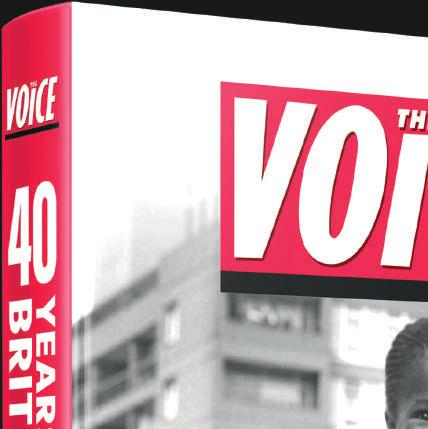
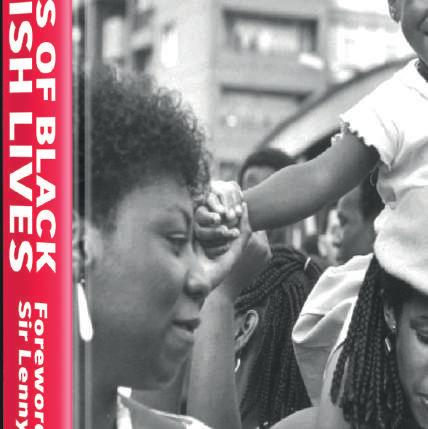
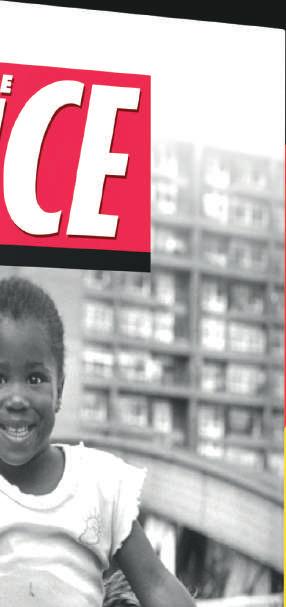
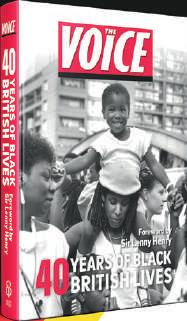
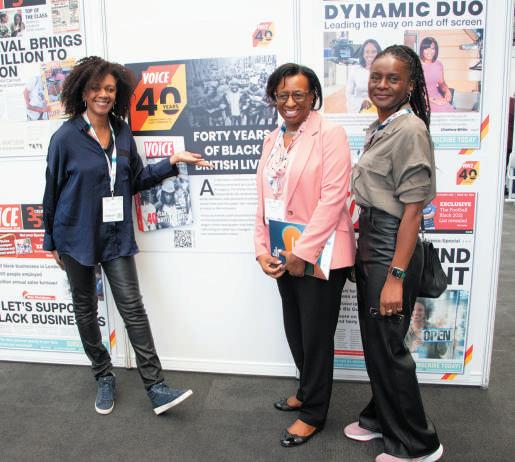
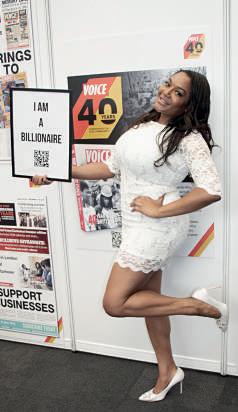
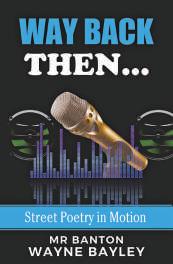
With a foreword by Sir Lenny Henry, and written by former and current Voice journalists, this powerful book documents the social history of Black Britain over the last four decades. To purchase
As the Voice celebrates its 40th Anniversary and as part of its legacy; it has published this book which shares the Black British experience through the pages of the newspaper - reflecting on what has changed and what has remained the same.
www.voice-online.co.uk
Best of Africa Awards
Celebrating the best
Stars from worlds of sport and entertainment were out in force for dazzling tenth edition of the Best of Africa awards. By
Matthew Chadder
THE PRESTIGIOUS Best of Africa (BoA) awards celebrated its tenth edition during Black History Month by doing what it does best — recognising and celebrating African excellence.
In 2011, founder Francis Nkwain had a vision; to celebrate and draw attention to African contributions in the United Kingdom and the Motherland.
Over a decade on, BoA has welcomed some of the biggest names with African roots to its latest celebration. They included Patrick Vieira, Anthony Joshua and Kano among others.
BoA does not describe itself as an event; it is a call to action, a better understanding, greater exchanges and a commitment to deeper engagement with the continent.
Aisha Hughton attended the very first event in 2011 as a guest, and a decade later is organising Best of Africa as CEO.
She told The Voice: “What started off as an evening to celebrate some of the charitable work that people of African heritage were doing is now a call of action, and people are leaving wanting to do more.
“Seeing how we’ve grown over the years from a smaller dinner in Mayfair, to over 300 people at the beautiful Londoner Hotel in Leicester Square was such an honour.”
Aisha said it wasn’t until joining BoA that she found her dream job, emphasising how special the organisation is.
“To be able to work for an organisation that allows me to bring sport, the continent and charitable work together is a
RECOGNITION:
The Voice’s sports editor
Rodney Hinds was honoured at the event
dream. I want to do justice to it all because I know what we have is so powerful and I know the reach that we have.
“I just want to grow it from being an awards evening to an organisation that has a real impact in the future.”
The daughter of former Newcastle and Brighton manager, Chris Hughton, the BoA CEO went on to explain how beyond celebrating African excellence, a big part of the organisation’s aims are to change the perspective around the continent.
“There is such a negative narrative around Africans. You hear stories about players be-
notations. To have an evening celebrated in the best hotel, with the best food, people dressed up, that’s where we deserve to be, and I don’t think we should settle for less.”
Despite being surrounded by high profile stars on the evening, Aisha emphasised how celebrating those behind the scenes was a highlight for her, including The Voice’s very own Rodney Hinds
“Being able to celebrate someone like Rodney, that’s what Best Of Africa is about, finding the stories, things people are doing in the background, whether it be charitable work, businesses
I just want to grow it from being an awards evening to an organisation that has real impact in the future
ing lazy or happy to sit on the subs bench and spend money on cars, not knowing what that player is doing for his village back home.
“This event allows us to paint a better picture of Africa, share better stories of Africa, and change the narrative.
“We use sport, entertainment and business, because we know the platform these people have, and they’re able to help change the narrative around Africa.”
She explained just how important the evening itself can be in creating positive images and redefining stereotypes.
“When it comes to black events, there are negative con-
or what he’s done, helping a community for so many years. Being able to shine a light and highlight it is what we’re about.”
Best of Africa won’t be slowing down anytime soon and wants to continue to reach as many people as possible.
“We want to try and find ways that we can make best of Africa more accessible. We want to create communities outside of the awards,” Aisha said.
“I’d like us to have our own foundation where we work with a group of people on a project every single year and our awards evening becomes a place to showcase what we’ve been working on that year.”
of African heritage
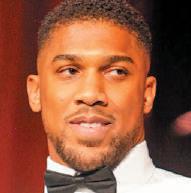
CELEBRATION TIME: Clockwise from left, Crystal Palace manager Patrick Vieira with host Eddie Kadi, boxer Anthony Joshua, Best of Africa CEO Aisha Hughton, Brighton footballer Danielle Carter, Chris Hughton with broadcaster Charlene White, BoA founder Francis Nkwain (all photos by Urszula Soltys)
London is the place for me
THE FIRST Conservative candidate to kick off their campaign to be London mayor has said the capital needs to “find its voice” so that pockets of deprivation are tackled.
Samuel Kasumu, 34, a former Downing Street advisor, aims to follow in the footsteps of Boris Johnson who twice won the race to City Hall with a reputation at the time as an independent-minded Tory.
As a campaigner and entrepreneur, Kasumu has a genuine claim to speak his own mind having resigned in protest at the discredited Sewell Report which sought to deny institutional racism.
Kasumu told The Voice: “I think I can speak truth to power, but also be independent minded enough to find solutions.”
He is careful not to criticise the Government’s levelling-up agenda, but it is clear that deprived areas of London face a competition for attention with the so-called Red Wall in the North.
Kasumu said he was passionate about tackling racial disparities, and revealed plans for a £100 million investment fund to boost new businesses for disadvantaged people who struggle to get a bank loan or access venture capital finance. The initiative could divert young people away from crime and new businesses may eventually create up to 100,000 new jobs.
Last year the Black Business
Samuel Kasumu quit No 10 over the Sewell Report and is now running to be the capital’s mayor. By Lester Holloway
Network found that black entrepreneurs were far less likely to have secured a bank loan.
The British Bankers Association admitted there were racial disparities and blamed lower credit ratings while failing to recognise this is itself a result of systemic racism.
Kasumu said: “I’m passionate about job creation that entails the empowerment of people from underrepresented backgrounds. This is an issue that I had to contend with in setting up businesses.”
RESPECTED
The Tories have won ‘metromayor’ contests in areas with more Labour MPs, not just in London, but also Andy Street in the West Midlands and Ben Houchen in Tees Valley in the North East.
A respected figure on the social enterprise and charity scene, Kasumu can point to an impressive record of helping black youth and working with organisations like Pastor Nims Obunge’s Peace Alliance.
He spoke of growing up in poverty in Barnet, and said sometimes his family “did not know where the next meal would come from”.
Kasumu credits the church with helping him grow as a
person when he was young. He attends Jesus House and has always been part of black-majority evangelical churches.
He said: “I grew up in a single parent household with five siblings. Sometimes we never had any parental supervision so we had to find our own way, and the church played a big role.
“In church you’d see role models and the value of strong family structures and we were taught that all things are possible. I think my mission in life definitely is to open doors. Sometimes that means going where other people wouldn’t dare tread or saying things that aren’t fashionable.”
Housing, or lack of social and affordable housing, is a perennial issue in London which every candidate for City Hall claims is a priority but so far elected mayors have not delivered.
Kasumu plans to drive through more house-building to succeed where others have failed by being tougher on borough town halls who stand in the way of development.
The last Conservative candidate for London, Shaun Bailey, got into hot water on several occasions for things he had said and written, but in many ways Kasumu has already been tested in the black charity scene and
carries far more credibility, as well as extensive knowledge of policy and the ability to articulate it convincingly.
Bailey is likeable on a personal level but was often antagonistic towards activists and campaigners, so found it difficult to ‘reach out’ beyond Tory neighbourhoods. Kasumu does not have that problem and recognises institutional racism and the need for policies
IBM. He also founded Inclusive Boards to diversity executive appointments in the City.
He said: “When you go into the inner city, people don’t know that the skills that you’re using to create your YouTube etcetera could bring a sixfigure salary if you want it to be on that trajectory, but they would argue that nobody is giving them that chance. So what you have to do is you have to
I grew up in a single parent household with five siblings. We had to find our own way, and the church played a big role
to tackle the problem. He wants to change policing culture to repair the relationship between police and the community, but said this could not be achieved “overnight”.
Kasumu got his first taste of ‘public life’ in the student politics movement while at Brunel, where he was recognised nationally as a future leader, and went on to establish the Elevation Networks to help students into work by partnering with companies like Barclays, Deloitte and
be able to convene those large employers and say, ‘hey, look, you have to be part of the solution here.’”
Currently a councillor in Welwyn Hatfield in Hertfordshire, Kasumu has lived or worked in the capital his whole life. He says there is a “London paradox” that the city features some of the richest and poorest neighbourhoods in the country, often side-by-side.
Kasumu was recently endorsed by Richard Taylor, a
prominent anti-knife campaigner and the father of murdered teen Damilila Taylor.
Kasumu is not afraid to challenge his own party, and recently launched the ‘2022 Group’, alongside Bedfordshire’s Police & Crime Commissioner Festus Akinbusoye and entrepreneur Wilfred Emmanuel-Jones, to get the Tories to focus on winning back black and Asian voters. The contest to be the Tory candidate begins in earnest next spring. Being first out of the traps may work to Kasumu’s advantage, and it remains to be seen whether any ‘big beasts’ enter the race.
Labour will be searching for a new candidate, as mayor Sadiq Khan will have served the maximum two terms. Tottenham MP David Lammy was rumoured to be interested, having lost out to Khan before the 2016 London elections.
However, he is currently shadow foreign secretary and, with Labour well ahead in the polls, it is more doubtful Lammy would give up the prospect of occupying one of the top jobs in government for City Hall.
One figure who might complicate the 2024 mayoral election is Jeremy Corbyn, with allies of the former Labour leader urging him to run for mayor — as left-wing maverick Ken Livingstone successfully did before — if Corbyn is blocked from standing as Labour MP in his Islington North seat.
RESPECTED: Samuel Kasumu can point to an impressive record of helping black youth (photo: Lewis Patrick)
Tummy discomfort or diarrhoea for three weeks or more?
Contact your GP practice
If you’ve had tummy trouble such as discomfort or diarrhoea for three weeks or more, or seen blood in your urine –even just once, it could be a sign of cancer. It’s probably nothing serious, but finding cancer early makes it more treatable. Your NHS wants to see you. nhs.uk/cancersymptoms
Adebola Adisa, GP
FGM: the cruellest cut
Husband and wife’s campaign tackles Female Genital Mutilation in Kenya. By Leah Mahon
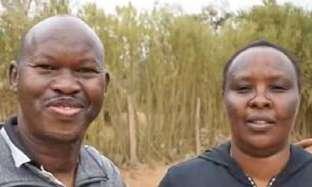
AHUSBAND AND wife team are set to embark on a week-long trek across Kenya in an effort to raise awareness and stop the practice of FGM (Female Genital Mutilation) on young girls in neighbouring villages.
Patrick Ngigi and Josephine Paissany have been running a safehouse project for girls to turn to while fleeing FGM in their communities for more than 20 years.
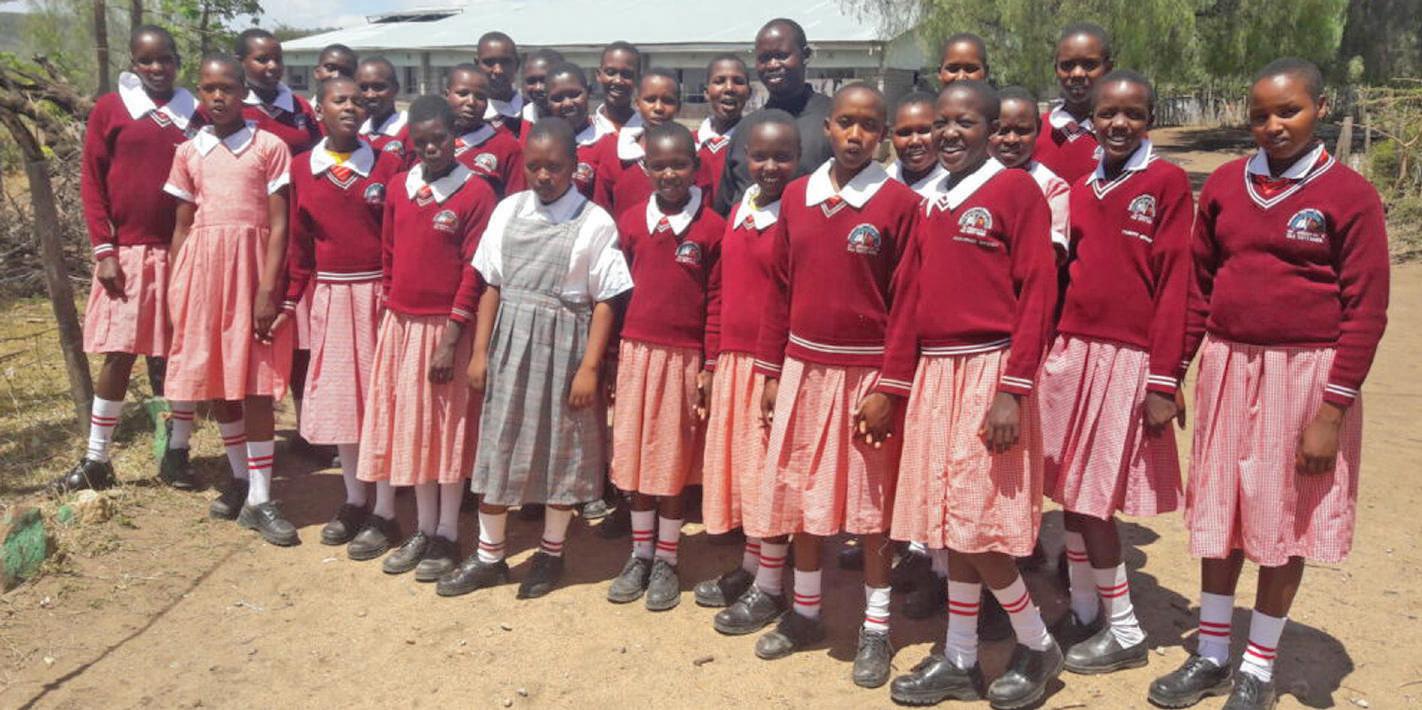
Through their charity, Mission with a Vision, and their tireless teamwork, the couple has been helping house and educate almost 1,200 vulnerable girls escape FGM or have rehabilitated numerous others that have undergone the traumatic practice.
Patrick, 50, who is the founder of the charity, told The Voice that after previously rescuing girls to his mother’s house for refuge, the 100-mile trek across the east-African country will be “significant”.
“We should be able to raise money for the girls escaping FGM and for the programme that we run. We shall put the emphasis on the need to end FGM when we talk to people on the walk,” says the former headteacher.
“Not only that, we expect to
be in the media because we are hoping the walk will be like a campaign. So, we’ll have media coverage which should allow us to expand more on the need to discuss FGM throughout the country.”
The seven-day sponsored trek will begin in Narok on October 31 before the duo head to Ntuele and then to the village of Olasiti by November 2. The couple will pass through Suswa, Mai Mahiu and Limuru before arriving at Ngong and then their final stop November 6.
ILLEGAL
Patrick, who is now an ordained bishop, says that although FGM was made illegal by the Kenyan government some years ago, the traditional practice has now been taken “underground” by some communities around the country.
“It’s not becoming more prevalent [FGM], it’s going down but at a very slow pace. Usually FGM was done in a big ceremony with a lot of celebration and pomp, but now it’s done at night away from government eyes,” he says.
“During the pandemic, it changed negatively, it went up [FGM cases]. Most of the girls were at home and there was no schooling and there was nobody to monitor that they
were absent. A lot of the time what happens is that when girls are in school, if they undergo FGM, then the teacher will know because they don’t report to school. But now, it is very easy for them to undergo FGM without anybody really telling them.”
Communities throughout Kenya like the Samburu, Meru and Maasai tribes still make young girls go through FGM as a “right of passage” or to “become a woman.”
Josephine, 40, says that after undergoing FGM herself at just
12 years old, she feared being “cast out” from the community, but later tried to hide that she was from the Maasai community.
“It’s something that is normal when you are finishing primary school, the next step is that you undergo FGM and then when you go to high school you are now okay,” she says.
“It’s a preparation for the whole family, the mother, the father, the whole village — so it’s like a wedding. Everybody knows in the village and they start preparing. They buy food,
they prepare some alcohol for the men and women to enjoy that day.
“It’s a number of emotions; you’re happy because you are going to the next stage, and then you are also scared because this is something that is very scary. You cannot run away.
“When you run your father will tell you never to come back. Most of the time they tell you, if you don’t obey your parents, you will be cast out and you will never be somebody in life.”
In the years after Josephine was cut, she said that once she had started high school with other girls her own age, she then she began to realise the seriousness of what she was made to endure by her community.
“When I joined high school, that’s when I knew that FGM is wrong. Before that, because we are from the village there is no radio, there is no television, there’s nothing. You just have a chief, so you don’t know what is going on on the other side of the country,” she says.
“When you go and meet girls from other communities you realise they don’t undergo FGM. Even in school they tell you that FGM is wrong.”
She adds: “When I was at
university, I didn’t want to say that I’m a Maasai because I didn’t want to be asked how we undergo FGM. So, you don’t want to be proud of your community or your tribe.”
Josephine, who now works closely with girls recovering from the trauma of FGM, says that many of them are bedridden after being cut like a “sheep or a cow”. They are then told to clean themselves with their own urine and are at risk of bleeding to death.
She says: “You don’t even want to imagine the long-term effects of FGM.”
VULNERABLE
Some girls are forced to undergo the partial or total removal of their clitoris to the complete sealing of the vaginal orifice by cutting and repositioning the labia minora and/or the labia majora.
According to the United Nations Population Fund, an estimated 4.1 million girls and women were at risk of FGM in 2019. During the two years of the Covid-19 pandemic, more girls and women became even more vulnerable to the prospect of being cut.
The number of women and girls who will undergo FGM is projected to rise to 4.6 millions by the year 2030.
BETTER LIFE: The girls at the safehouse in Kenya after fleeing or recovering from FGM (photo: Mission with a Vision); inset, Patrick Ngigi and his wife Josephine Paissany will trek 100 miles through Kenya to raise awareness of FGM
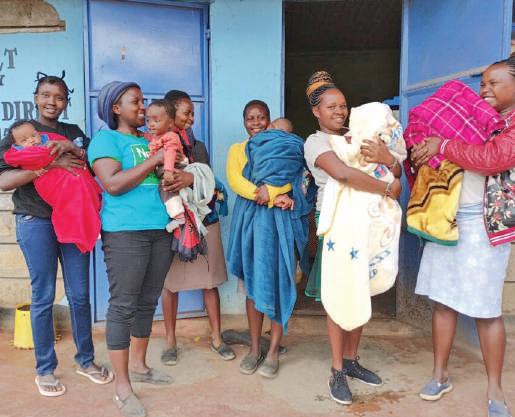
REHABILITATION: Women at the safehouse are taught sewing, catering and hairdressing (photo: Mission with a Vision)
Long live The Voice!
WHEN THE Voice approached me to write the foreword for a book commemorating its 40th anniversary, I literally jumped at the chance.
After more than ten years campaigning for media diversity and having co-edited the 2021 book Black British Lives Matter, I am in no doubt of the importance of The Voice in British society and Black history globally.
The truth is that in the UK, less than one per cent of journalists are black — a meagre 0.2 per cent to be precise.
There is not a single black editor of a national daily British newspaper and just six of the 174 front page bylines were attributed to a journalist of colour.
It is against this reality that The Voice is so important. Let me explain with a small personal story.
I first broke into TV by winning the talent show New Faces in 1975. Back then I was almost always the only black person on set. Just under 40 years later in 2013, I infamously found myself
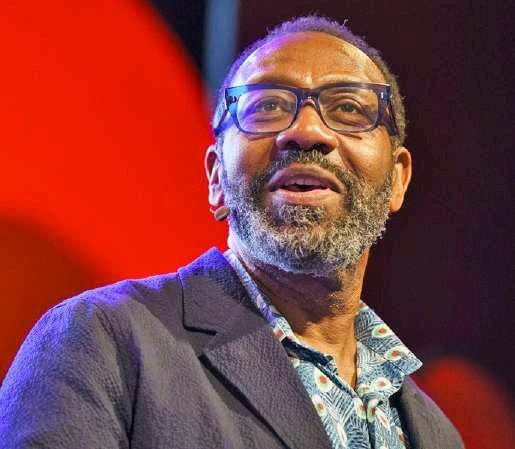
In his foreword to the new book celebrating 40 years campaigning for the community, Sir Lenny Henry pays tribute to our newspaper
sitting at a BAFTA ceremony feeling like nothing had really changed — the only other black people there seemed to be either offering me food or checking my coat. And so after drinking a little more than I should, I went to leave the ceremony, thoroughly pissed off. At that point, I was approached by a journalist who asked me the most innocent of
questions: “What did you think of the BAFTAs?”
And I answered: “I guess it was… All White on the Night!”
Hardly my greatest comic moment — but I was pissed.
The next day the story appeared in all the papers. The Telegraph went with the headline, “BAFTAs were a disgrace for not celebrating black talent, says Lenny Henry,” while the Daily Mail said: “’What were the judges doing?’ Lenny Henry blasts BAFTA for not recognising black talent at this year’s television awards.”
From that night onwards “Lenny Henry had become political”, at least that is how many of the mainstream newspapers seemed to present it.
The truth is I had always been political and wanted to talk about the racism I have faced, but that was rarely reflected in the mainstream press. But it was reflected in The Voice
The Voice has consistently been the place that has covered all of me, not conveniently editing out the inconvenient parts that might make certain parts of British society uncomfortable. The Voice has allowed me to talk about the racism I’ve faced and the lack of diversity in the industry even before “diversity” was a common word.
The Voice feels like family, where a black person can just be themselves.
Born a year after the Brixton uprisings of 1981, The Voice has been “home” to the black British community for the last 40 years. It has reported on issues and events that other newspapers simply ignored and invariably given a unique black Brit-
ish perspective on major events, providing invaluable insights into our understanding of British society. On a personal level, this has translated into me having a unique relationship with The Voice.
The Voice not only consistently showcases great journalism, but it has also acted as a crucial platform for nurturing and incubating some of the best journalists in the country, from Gary Younge to Afua Hirsch, and Henry Bonsu to Nadine White.
The Voice is an ongoing testi-
mony to the strength of the black British community, surviving against the odds and being an invaluable part of British society.
If Black British Lives Matter — which we believe they do — then Black British newspapers and journalism have to matter.
Enjoy some of the best journalism, produced by some of the best journalists.
Long live The Voice!
Please turn to page 7 for details of how to get your copy of the book
TRIBUTE: Sir Lenny Henry (photo: Getty Images)
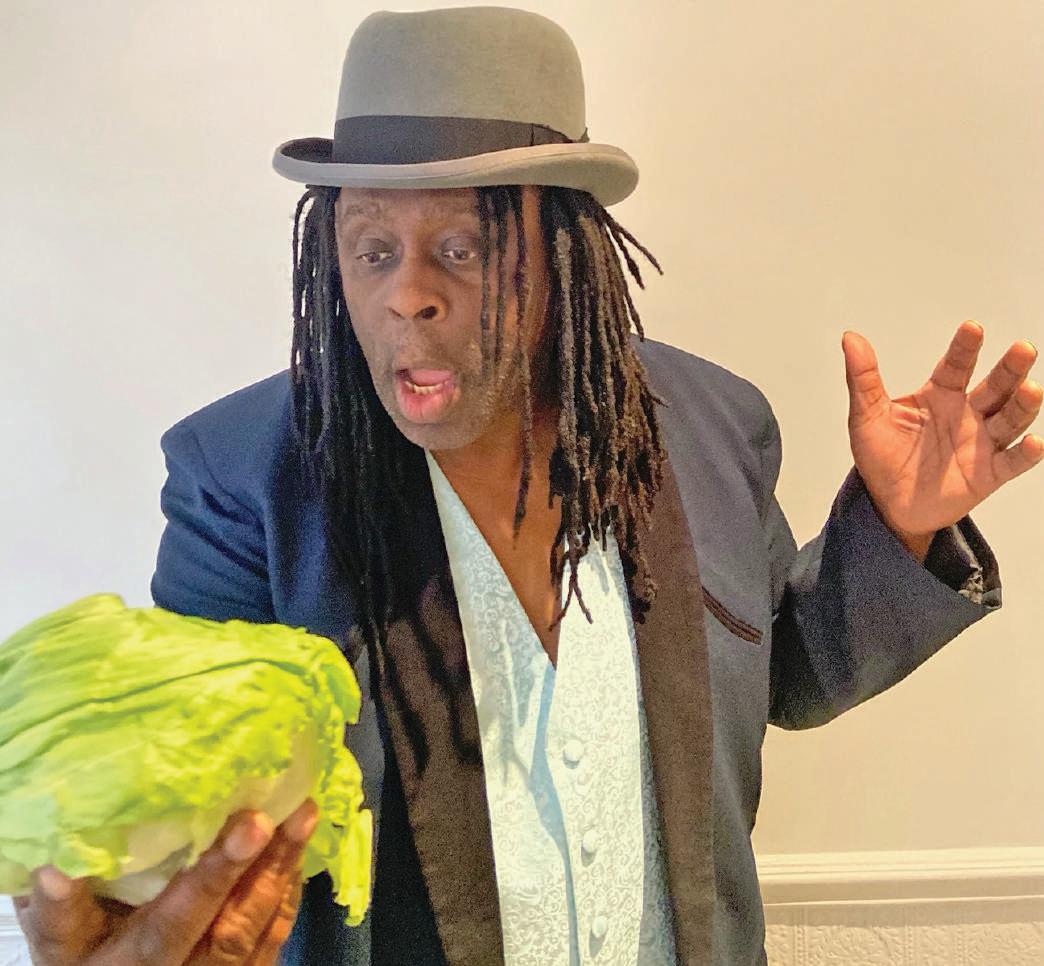
Is this a lettuce I see before me?
Boss Woman Ate My Cash and Cred. She was put out of her misery — but not before causing nuff pain to my pocket
THE QUEEN is dead. Long live the King. Liz Truss is dead. Long live the lettuce.
“So she’s finally gone”. “Hung on a little bit too long in my humble opinion.” “Why didn’t she simply call an election? That way she could have hung on just that little bit longer.”
These are just some of the conversations that I was hearing at a funeral the other day.
And, to be fair, from what I remember of Boss Woman, the dearly departed, this was largely the case. Especially in her last weeks. I don’t know about the election bit, but otherwise it was pretty spot on. Because by the end of it she had been ravaged by so many afflictions coming at her from all directions, she was barely clinging on to life. When it gets to that point you think, what’s the point? D’you know what I mean? I mean, especially the last month or so.
rather suffer to death? Because with Boss Woman I was crying out for someone, anyone, to bring the suffering to an end.
But even if Boss Woman in her painful last days had been crying out for me to assist her to end it all I think I would have declined. That’s despite the amount of pain that she has caused me, especially in the last few weeks. Imagine, if anybody else had nicked a grand out of my wallet I would have gone straight to the old bill and told them to line up the usual suspects for an identity parade.
The last month or so? Dear oh dear oh dear. It was painful to watch.
The lettuce that we bought from Tesco’s was doing better than her. I was literally begging for someone to end it all. Bring the morphine or send her to one of dem end of life homes in Switzerland where they’re doing a roaring trade in euthanasia.
I mean, just be careful if you’re getting to the age where a trip to Geneva might not be a good idea, especially if it has been recommended by a relative who stands to inherit your million pound home sooner rather than later.
You think they wouldn’t do that? Well, I wasn’t the one taking side bets on whether Big Boss Woman or the lettuce would live the longest. Having said that would you
If anyone else was hanging around my yard wondering what they could nick next I would have got my catapult out. But for some reason with Big Boss Woman I always allowed it. Blamed it on the drugs. Pumped so full of morphine her eyes were popping out. But that’s the only thing that got her through the end and the very end.
Liz Truss on the other hand, who has never taken drugs, must be thinking, I am not dead but I wish I could have gone with the dignity of Boss Woman with my feet up in an end of life clinic in Zurich rather than Geneva.
And she must also be thinking, after all I did in promoting black men to two of the top four ministries of state — Kwasi Kwarteng to Chancellor and James Cleverly to Foreign Secretary — not a peep in my support from the black community.
And she would have a point, wouldn’t she? Under her 44-day tenure as prime minister two of the most powerful men in the country were black men. One of them so powerful that he cost every single man woman and child in the country a grand... and counting.
And the one or two black folk might be forgiving for retorting “but there’s a grand missing from our wallet too because of
you”. Or, in other words, if you stab us up, do we not bleed just like anybody else?
And then Liz Truss might
LETTUCE START ALL OVER AGAIN:
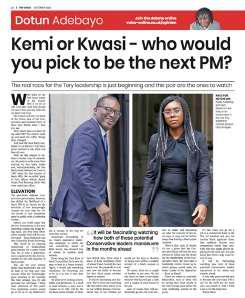
Dotun is hoping the next lettuce he buys does not outlast the new PM following the downfall of former leader Liz Truss and Kwazi Kwarteng; inset left, in the October edition
Dotun tipped the former Chancellor as a potential leader of the country
counterargue: “But I still made Black History Month by appointing black men to two of the top four jobs in the country.
She’s got a point, though, hasn’t she. Does that give her a pass? You decide.
As for those two black men; Cleverly rose from the lower ranks as a councillor in Lewisham to become foreign secretary. Kwarteng... dear oh dear oh dear. Not only has he cost me financially, he has cost me reputationally.
The Downfall of Kwasi Kwarteng and how I jinxed it.
A few weeks ago I bet my house (in these very pages) that Kwarteng was the person most likely to be the first prime minister of colour in Great Britain. Today I am homeless because of him. My wife’s going to kill me when she finds out.
I’m homeless because the exChancellor put my money where his mouth was.
Northern Ireland
The Troubles we’ve seen
Northern Ireland saw an upsurge in racism as more black families settled, but things are now starting to improve.
By Vic Motune
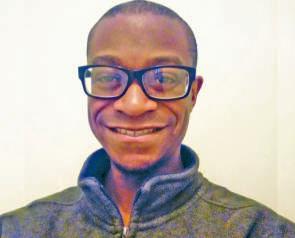
WHEN TOLU Ogunware was growing up in Belfast, there were few people who looked like him in the neighbourhood.
He moved to Northern Ireland with his family as an 11-yearold after having lived in London and Nigeria.
“I remember when I went to school, I was the only black person in my class,” he recalls. “That changed a bit at secondary school. I’d say maybe there were about three to six of us in the entire school.
“Growing up there were some negative experiences. I’d often find myself the only black person in a club or places like that.”
Nevertheless, despite having experienced life in more diverse cities, Northern Ireland is definitely the place he calls home.
“It’s quite a friendly place when you compare it to other parts of the UK,” he says. “It’s a minority of people who might share racist beliefs but that minority is often the loudest.”
CHALLENGE
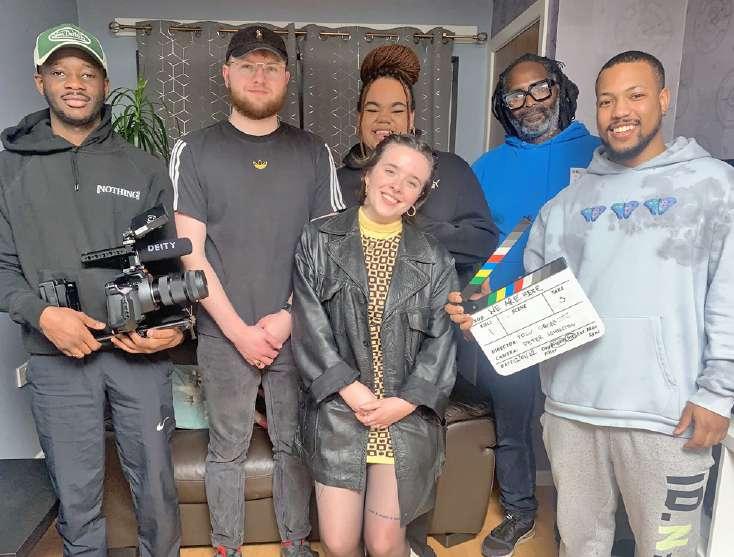
Now an emerging film director Ogunware, 27, decided he wanted to explore the experiences of other black people who, like him, had grown up in Northern Ireland.
When the opportunity came up to work with local film producer Lindsay Dube on a documentary exploring what it means to be black and Northern Irish he was more than ready for the challenge.
Ogunware and Dube spoke to several members of the province’s black community to produce a BBC documentary Black, Northern Irish and Proud which weaves together their personal stories to highlight what life is like in an increasingly diverse Northern Ireland.
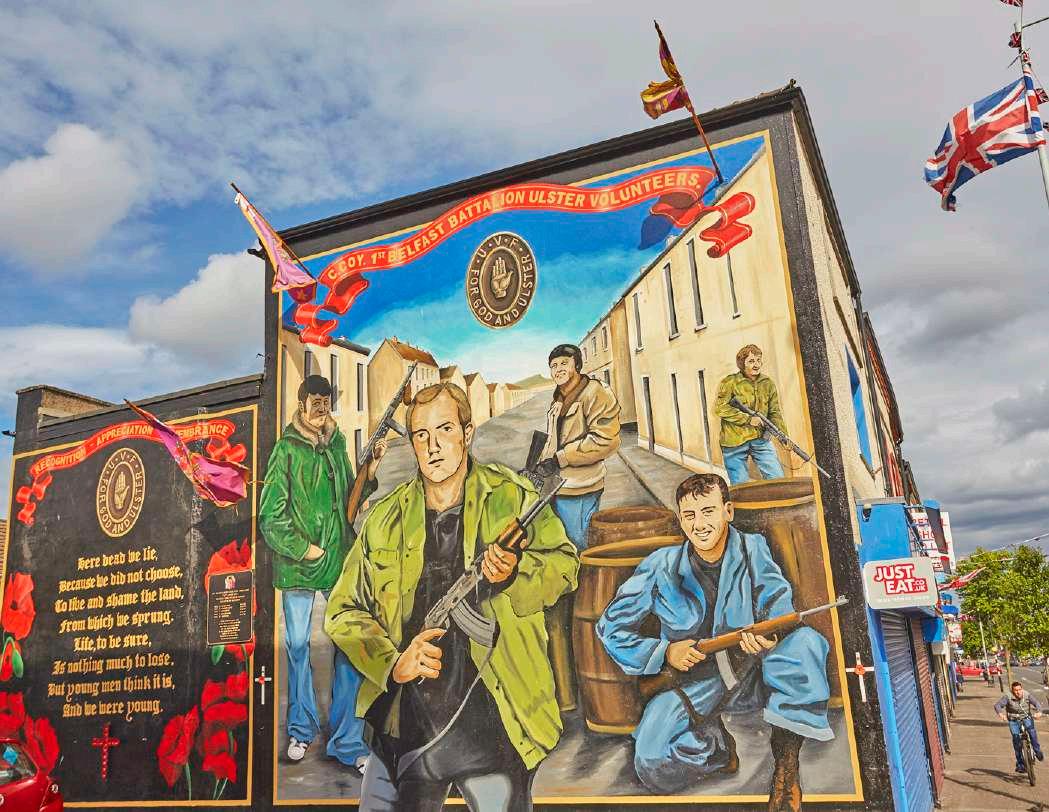
Often the country is viewed from a perspective shaped by sectarian conflict between Catholics and Protestants. However it’s one that prevents the wider world from understanding how a small but growing black population is making its mark.
According to the latest census figures 3.4 per cent of Northern Ireland’s 1.9 million population are ethnic minorities, four times the proportion in 2001. Recent years have seen an
‘SAFE PLACE’: There was a huge arrival of immigrants into Northern Ireland following the Troubles
influx of refugees from parts of Africa as well as the growth of a mixed race population.
“While we’re still very much a small minority in Northern Ireland, we’re becoming more visible not just in creative spaces, but as a population overall,” he says.
Many of those who featured in the film shared his experience of growing up as the only black person in their area.
Among them was Sibongile Mude, whose family came to Northern Ireland from Zimbabwe in the early 2000s.
She said: “I remember in my first year, one girl, who is now a good friend, asked me ‘Do you think if I licked you you’d taste like chocolate?’
“I’ve reminded her about this many times since. You would get the people calling you names but I’m the type of person that it didn’t affect me. Growing up in Zimbabwe I went to a military boarding school. One of the things we were taught was to be thick skinned so you know to don’t allow things like that to affect you.”
Growing up as a black person in Northern Ireland in the 1970s and 1980s was also a solitary experience for community worker Sean Paul Conlon.
Born in a town just outside Belfast to a white mother and African American father, he witnessed how the country is changing, but progress has come with new problems.
He says: “I think, after
ended. During the Troubles the country was isolated, people didn’t really mix much with others who were from outside their own areas.
“When people started com-
ing in from different countries, it was new to the people here. There was a curiosity about the experiences of people who had come from overseas. It was a nice thing, it was okay.
“But then as more black people came into the country, the more racism came behind it. I don’t know whether this was due to fear of numbers, but I think people have become less tolerant as time has gone on.”
However, Conlon believes that since the ceasefire, Northern Ire-
EXPLORING EXPERIENCES:
Tolu Ogunware, far left, with members of his production team; above and below left, Sean Paul Conlon and Sibongile Mude both feature in Black, Northern Irish and Proud
land’s young people are shaping more progressive views of diversity and inclusion.
While Black, Northern Irish and Proud doesn’t shy away from discussing difficult issues like racism, all of those who feature in it say they are proud to call the country home.
“One of the things that gives me hope is that we are now living in a time where Northern Ireland is more accepting of difference,” says Mude.
“You’re seeing young people on social media talking about different cultures, talking about diversity, and that bodes well for the future.”
“The country has been divided by two religions, Protestant and Catholic. But there is a generation that is more open to outsiders coming in. Even though the country is predominantly white, you don’t feel like an outsider. When the George Floyd protests happened, look at how many young people from here came out and protested.
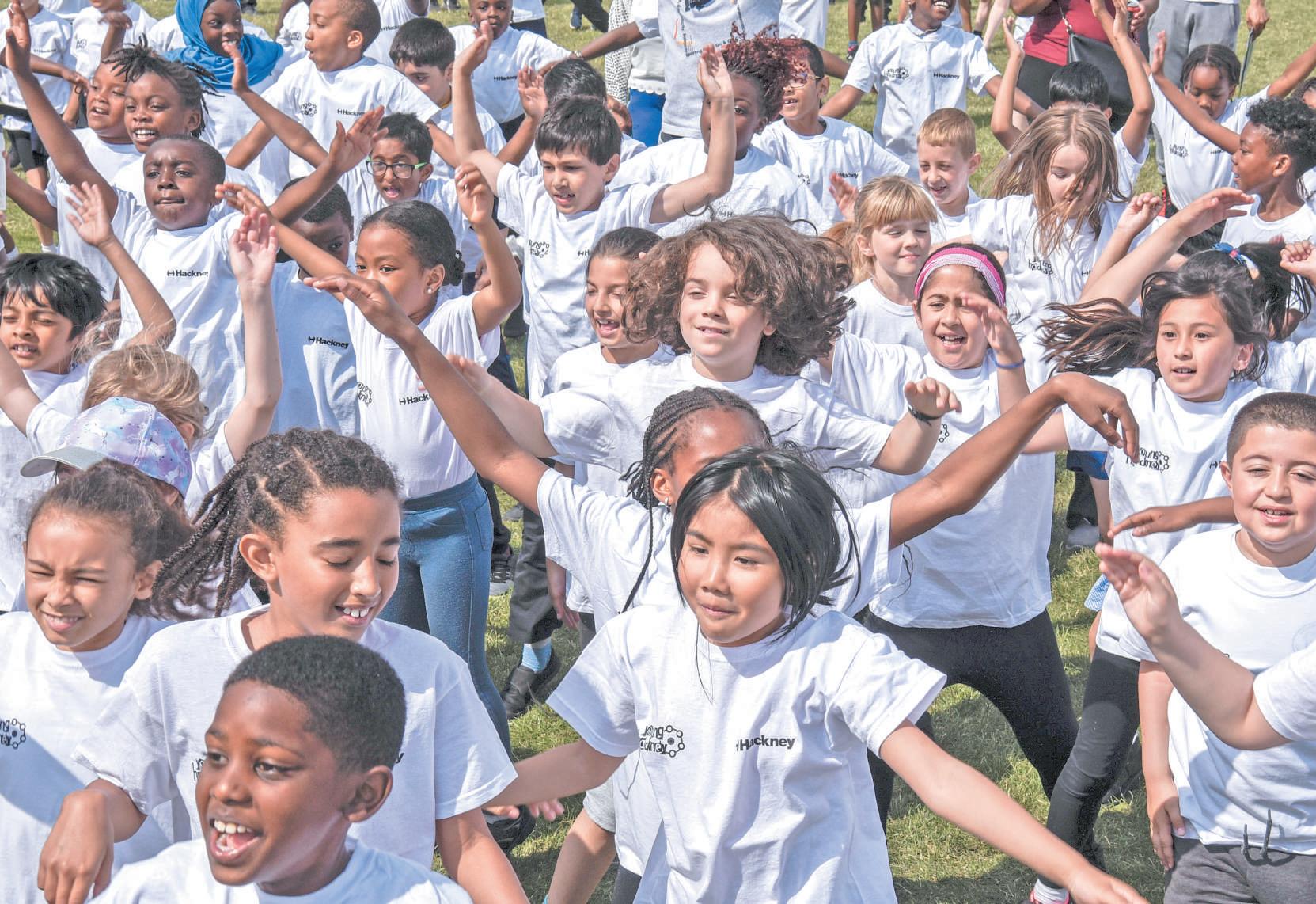
HACKNEY Advertorial feature
The way in which Hackney Council works with children and families in social care, education and health settings is set to radically change - and we want you to be a part of it.
AT HACKNEY Council, we’re incredibly proud of our people. From our social workers and street cleaners to our accountants and software developers, our services have a real impact on the day to day lives of everyone who lives, works and visits our borough.
This is as true of our Children’s and Education services as any other. Hackney’s schools are amongst the best in London, and the Hackney model of social care has influenced the rest of the sector nationwide.
But times are changing, and the challenges we face are multiplying.
The experiences of Child Q have left us and our communities reeling, raising painful and important questions about how we can embed active anti-racism in everything we do.
The housing crisis has hit Hackney harder than anywhere else in the country. Over the last twenty years, Hackney has witnessed the fastest growing house prices in the UK, and it’s left
48% of our children in poverty.
The criminal cyberattack to which Hackney Council was subjected in October 2020 has further complicated matters, forcing teams to refocus their work, as well as rebuild better, more robust digital systems.
At the same time, like all local authorities,
...times are changing, and the challenges we face are multiplying
we’re facing hefty
financial savings targets.
What’s more, the after-effects of the national Covid-19 lockdowns are still with us, including an increase in domestic violence, and difficul-
ties in adjusting to school for our most vulnerable children.
It’s in this context that we now ask ourselves: through challenging times, how can we ensure that every child in Hackney is supported to learn, achieve and be safe?
Although we remain incredibly proud of the work of our social carers, teachers and health partners, we know that today’s problems won’t be solved by yesterday’s solutions: if we want to see a real change for Hackney’s children and families, we need to take a bold new approach.
A ‘new approach’ means recognising that the needs of our children depend not on one department or service, but are multi-faceted and complex. In the future, children’s care will need to rely on greater collaboration between professionals who work across schools, social care,
health and special education needs.
It also means building a model of social care which learns from the lessons of the past: one which is systemic, trauma-informed and actively anti-racist.
If we’re to turn this bold ambition into a reality, we know we need to do things differently, not just in how we work, but in who we work with.
Luckily, we’ve already got great relationships with our schools, as well as our thriving youth service, and our voluntary and community sectors. But we need to do more, to foster collaboration amongst these groups, and to ensure that everyone who interacts with children across Hackney is driven by a systemic, trauma-informed and anti-racist approach.
And that’s where you come in.
As we look to reinvent the way in which we deliver social care across Hackney, we’re
HACKNEY Advertorial feature
a lived experience of having used our services (whether as a service user or provider), and are passionate about making them the very best they can be.
opening up a host of new recruitment opportunities across our Children and Education services - for change managers, project managers and service designers. We’re looking to recruit the founding members of a brand new team focussed on building a brand new future for Hackney’s children.
If you’re passionate about building better outcomes for Hackney’s children…
If you’d like to help shape the future of how children’s services are delivered across Hackney…
And if you’re excited at the prospect of collaborating with service users and professionals from across the community…
…then you just might be who we’re looking for.
It doesn’t matter if you’ve never worked in the public sector before. In fact, we’d love to hear from career changers who are excited about working with purpose and making a real change in their local community. We’d also love to hear from those who have
The first event will be run virtually on 8th November at 18:30 - 19:30, and the second event will run in-person on the 16th November at 18:30 - 20:00. Please visit: recruitment.hackney.gov.uk/education-jobs for more details. If this sounds like you, or you’d simply like to know more, then please
At Hackney Council, we believe excellent services rely on highly skilled, motivated people. As one of our employees, we will support you with a range of benefits and opportunities - including a generous holiday allowance (27 days a year, rising to 32 after five years), an unrivalled pension scheme and a commitment to flexible working options - to help you to give your best at work, and achieve a balance with home life.
This is undoubtedly a watershed moment for Hackney’s Children and Education services, and we can’t afford to wait: posts close in late November, so if you’re interested, apply today.
As we look to build our founding team, we’ll be running two information events throughout November where you can learn more about our vision for the future of Hackney’s Children and Education services, and speak first-hand to colleagues from across Hackney Council about their experiences.
There will also be opportunities to meet the recruiting team, and to ask them any questions you may have.
LEVI ROOTS: BEING MYSELF WAS KEY TO BUSINESS SUCCESS
Charismatic entrepreneur credits mum with making him keep it real
LEVI ROOTS revealed it was his mother’s advice that set him on the path to Reggae Reggae Sauce success.
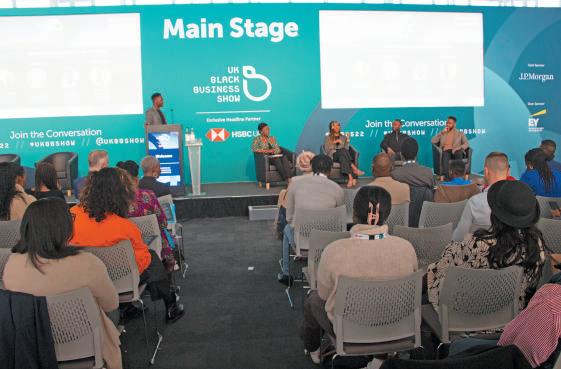
Speaking to an audience at the UK Black Business Show, 64-year-old Roots told of his nervousness before pitching to Dragons Den in 2007. He had told friends of his intention to go to the TV studio with a guitar and present himself and his personality as the brand, but most people told him ‘no, do a professional-style
presentation’ instead. That’s when he sought his mothers’ advice, on the night before the show. She prayed with him, and then said: “be yourself”, so that’s what he did. He took his guitar, and the rest is history.
SAUCE
He said: “You have to believe in yourself; it’s not just about the product. I said to myself ‘no, I don’t want to sell the sauce, I want to sell Levi Roots.
“And then when success came, I realised it wasn’t the money I needed, it was how to use the money; how to invest.” Roots also revealed how he made a decision to turn his life around, and get serious about Rastafarianism, while serving a prison sentence.
On his release, he had no money but had a clear head, and had a clear sense of who he was as a black man of African heritage.
He was also determined to break through barriers, travelling around the country to farmers’ markets in the Shires as well as marketing his Reggae Reggae Sauce to the black community. It was in the Shires that he was spotted by a TV producer and invited to pitch on Dragons Den.
I realised it wasn’t the money I needed, it was how to use the money; how to invest
Roots said he was delighted that a film about his life story had now started production, and was looking forward to it coming out.
ATTENDED
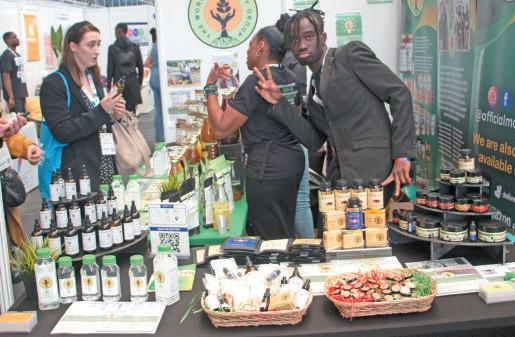
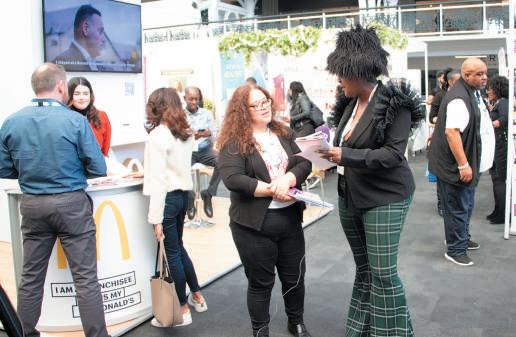
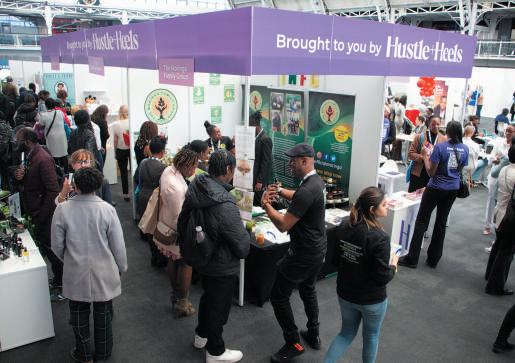
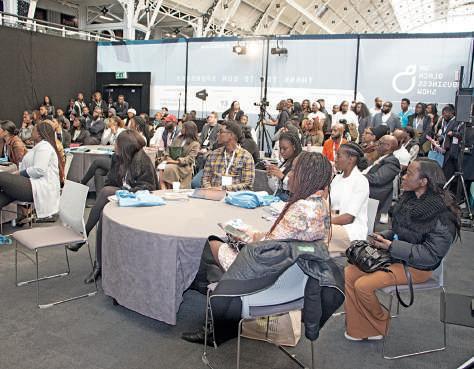
He was speaking at the Business Design Centre in Islington at the climax of a highly successful Black Business Week, which included a number of well-attended events.
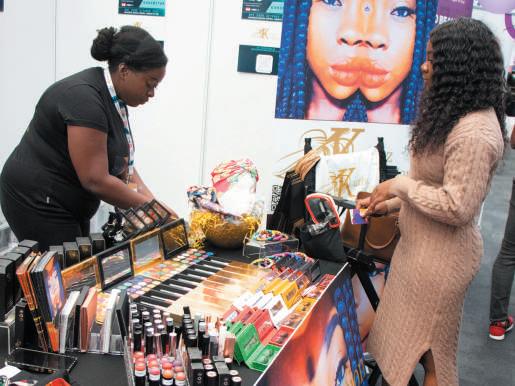
Around 5,000 people attended the expo last Saturday. Michael Adeniya, CEO of the event UK Black Business Show, told The Voice: “There’s lots of energy here. We’ve seen some incred-
PHOTOS CREDIT: Thierry Lagrin
Black Business Show
ible conversions happen so far.
“We’re seeing such a growth in entrepreneurship in the country right now, it’s amazing.
RESOURCES
“We’re providing a platform for access to finance; access to mentorship; access to all the tools and resources that you’ll need to grow and scale your business.”
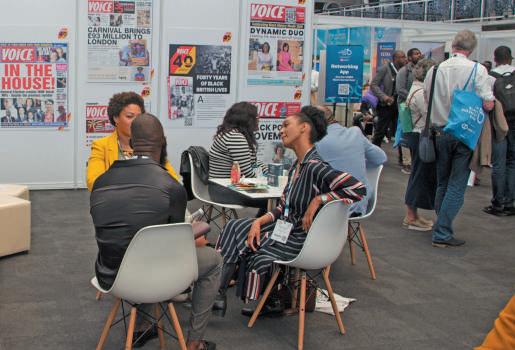
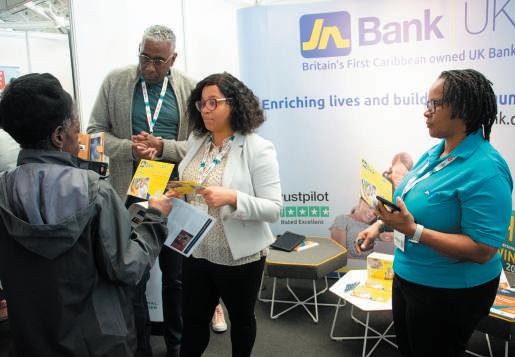
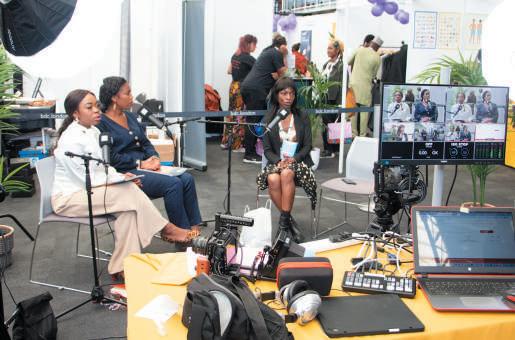
The Voice and JN Bank UK both had stalls at the event, and met many inspiring entrepreneurs.
Our newspaper distributed the latest edition of our new Black Business Guide (link), and had a ‘wall’ of frontpages promoting black business.
Financial advisor Emmanuel Asuquo, owner of The Eman Effect, added: “Look at these amazing black businesses. We are building generational wealth, we are doing well. And this is a show where we are coming together to celebrate ourselves.
For more info visit: www.ukblackbusinessshow.co.uk
‘LABOUR IS TAKING THE BLACK VOTE FOR GRANTED’
Sir Keir Starmer’s party watered-down efforts to tackle anti-black racism, according to a whistleblower.
By Richard Sudan
zeera which exposed a culture of anti-black racism.
LABOUR IS riddled with anti-black racism, according to a whistleblower who used to work at the party’s HQ.
An investigation by The Voice has found that a document on identifying anti-black racism was watered down and black staff were not consulted until after it was written.
The allegations come amid growing anger at the decision to block popular anti-racism campaigner Maurice Mcleod from becoming MP in the safe south London seat of Camberwell and Peckham.
We spoke to the former head of Labour’s BAME staff network, who told us that senior officials had slashed funding for anti-black racism training.
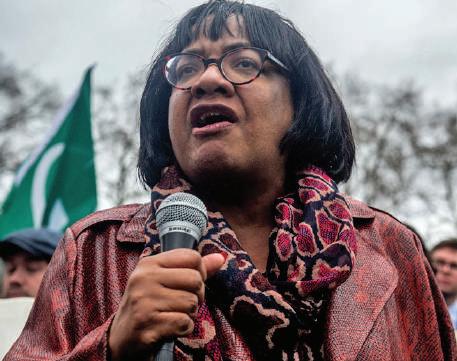
Former shadow home secretary Diane Abbott, right, told us that the party strategy was now focused on white voters, with the assumption that the black community have nowhere else to go. And she worried that more black voters would stay at home on polling day.
Another black MP, who did not want to be named, said that people around the leader Sir Keir Starmer were determined to “purge” black critics from the party. Labour have been silent over the Labour Files documentary series broadcast by Al Ja-
We put these claims to the party multiple times, but their press office failed to answer most of our points despite our extensive efforts.
There is widespread anger among black MPs that Starmer has failed to adequately respond to the Forde Report, which he commissioned, that concluded the party suffered from a hierarchy of racism with Africans and Caribbeans at the bottom.
Despite Labour riding high in the polls with the Conservative government in chaos and the economy in turmoil, black activists are now questioning whether Labour has done enough to earn black votes.
The party’s frontbench post of race equality spokesperson is currently vacant almost two months after MP Taiwo Owatemi stepped down. And there is growing frustration that Labour once again failed to deliver on its’ promise of a party organi sation to represent black and Asian members.
Meanwhile, experts note a failure to develop race equality policy and the only ideas being discussed are described as ‘lowhanging fruit’ that will not ad dress systemic racism.
Whistleblower Halima Khan, who worked in Labour’s gov ernance and legal unit at their Southside HQ from 2019 until earlier this year, said that the code
of conduct for anti-black racism was given the least priority and that black stakeholders were only consulted after a watereddown version of it had already been agreed by apparatchiks.
She told The Voice: “There was such a big hesitancy in even getting the codes of conducts out. Right at the beginning, when I was working on the codes of conduct for Islamophobia and anti-black racism, the organisation wanted the Islamophobia code to come out first. I fought back as much as possible and said no, it’s both or nothing. They were then due to then come out at the same time. But after my suspension they then separated the two out.”
Khan says she was suspended and then fired because she questioned the hierarchy of racism within the party.
“The for-
others had written and then the party’s adoption — there was a lot that was cut out. The party also actively tried to minimise as many external number of people of colour and black women working on the document.
“So many processes were subverted. The party went against the EHRC [Equality and Human Rights Commission] recommendations. The black stakeholders only saw the version that was already watered down by Keir’s people.”
As Chair of the BAME staff network, Khan said she approached the party’s Secretary David Evans to introduce antiblack training but this request was frustrated, even though it would have only cost £650.
Evans directed Khan to Helene Reardon Bond OBE, part of Starmer’s circle. A meeting was then set including Khan, and the director of Diversity Trust, Russell Thomas, and Ellie Robinson, then director of stakeholder relations.
“We had already built a good relationship with Diversity Trust. We thought
at the meeting it would be about getting the money for the training. In that meeting instead of talking about the training, she (Robinson) asks him (Thomas) to work with us to draft the codes of conduct on anti-black racism and mentions nothing about money. At all.
“She asks him to do free work for us for the party, and we’ll talk about training another time.”
Khan said that a senior staff member would “always make errors with [the] names” of black and Asian staff and on one occasion that official posted a wholly inappropriate ‘racist’ story on WhatsApp depicting a naked black woman.
“She always spelt my name wrong and other BAME members’ names wrong. Even when they were not obvious ethnic names. She would message me and other non-white people the same message as if we were the same person. When Kamala Harris was elected in the US she sent a few of us the same article as if we should be grateful.”
The senior official failed to respond to The Voice. The Forde Report exposed evidence that Diane Abbott, and other black MPs, were subjected to antiblack racism in WhatsApp messages exchanged between senior
HQ staff. Abbott told The Voice: “This goes back further, to the 80s, and even the Scarman report. But with the Forde Report, Keir Starmer sat on it for nearly two years. It isn’t so much that he wanted to ignore the findings, he didn’t want anybody to know what the findings are.
“He’s tried to say well everything’s alright now because I’m leader. It’s almost like he hasn’t read it.
“Keir Starmer is not someone with a history of campaigning on racial justice. He’s surrounded by people from the Blair years and their focus is on bringing back the Red Wall voters. They call them ‘hero voters’. Well my goodness me, what are we then? Everything is focused on white voters. The assumption is that black voters have nowhere else to go.
“I think what they are going to find in marginal seats with BAME voters can make a difference, is not that people are going to vote Tory, people will just stay at home. I hope it doesn’t come to this, but as my mother used to say people that can’t hear must feel. It’s like they have to see what the electoral consequences are of ignoring black voters and their concerns.”
Another black MP gave a
damning critique of anti-black racism within Labour, and said they were convinced that nothing will change under Starmer. They added that the party is continuing to purge itself of internal voices which remain critical of Labour’s failure to tackle anti-black racism. With speculation that Britain could see an election as early as next spring, time is running out for
Labour to prove it is not taking black votes for granted.
Former director of the charity Race on the Agenda Maurice McLeod, who was one of several Left activists to be blocked from seeking the party’s nomination to contest Labour-held seats, said that while Labour remained the “political home for black, Global Majority and working class people”, he added: “Like
GROWING ANGER:
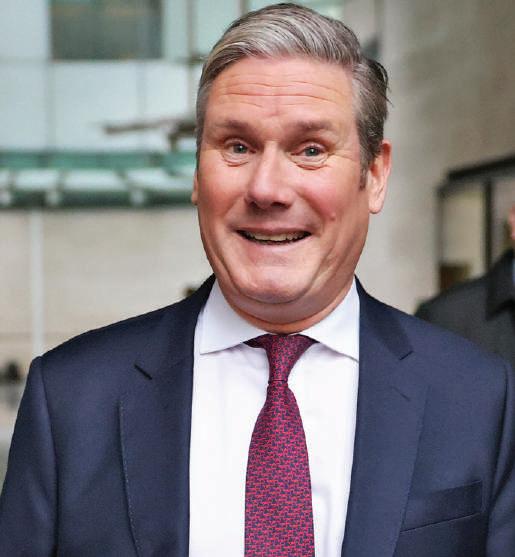
Left, Maurice Mcleod has been blocked from becoming MP in the safe Labour seat of Camberwell and Peckham; right, whistleblower Halima Khan worked in Labour’s governance and legal unit until earlier this year; below, Labour leader Keir Starmer ‘sat’ on the Forde Report for nearly two years according to former shadow home secretary Diane Abbott
Labour is conservative on black representation
any home, Labour is need of constant renovation to make sure it is still fit for habitation. The roof’s leaky, there’s damp on the walls and the foundations are extremely fragile.
“The Labour leadership, especially while riding so high in the polls, seems to have decided that it has no need to court the votes of Britain’s inner city, BAME communities because they have nowhere else to go. They may simply stay at home on polling day.”
In recent months, Labour has failed to respond to enquiries from The Voice, including the Mcleod story. While writing this feature, we made over ten attempts to get responses to various questions, including allegations of racist bullying.
Eventually, a spokesperson said: “The Party undertook an extensive consultation process in developing the codes with input from black members of the PLP [Parliamentary Labour Party] and NEC [National Executive Committee], local government stakeholders, socialist societies and community organisations.”
In response to allegations of an allegations of an ongoing culture of anti-racism, the party said: “Please find the response of the Labour Party here: https://labour.org.uk/fordereport/”
NEWS THAT Black South Labour councillor Maurice Mcleod has been blocked by Keir Starmer’s national party machine from being a contender to become MP for the largely African Caribbean and Asian Camberwell and Peckham constituency brought back bad memories for me.
In 1989, two years after four members of the Labour Party Black Section movement, of which I was Chair at the time, made history by being elected to the House of Commons, I was similarly stopped from being the Labour candidate for a parliamentary seat that covered Brixton.
The then Labour leader Neil Kinnock, like Starmer, once left-wing himself, was in the midst of his infamous purge of lefties like me from the party. That included shamefully preventing black Haringey council deputy leader Martha Osamor, right, who had been democratically selected by the local Vauxhall party and was my Vice-Chair, from being their candidate. Instead, he imposed Kate Hoey, a white candidate, who went on to become the MP after a
By Marc Wadsworth
by-election. When it comes to African Caribbean male MPs, the Conservatives have five to Labour’s paltry three.
Grassroots Black Left, successor to the Black Sections and a four-year-old Labour pressure group I co-founded, has, along with other similar groups, called out the appalling shortage of African Caribbean men on parliament’s Labour benches.
Leading black Labour member, the recently knighted Sir Trevor Phillips, a Sky News political show
host, once told me Barack Obama, who, after being chosen as a candidate by the Democrats, went on to become American President, would never have made it through Labour’s selection process.
Why? Because, despite having David Lammy as its shadow foreign secretary, Labour is much more conservative, some would say institutionally racist, than the Democrats, and even the Tories, when it comes to council and parliamentary candidate selections.
There is just one African Caribbean man on Labour’s 39-strong ruling national executive. Before this year’s elections there was none There needs to be a huge fuss made about this glaring Labour racial inequality. Labour’s delayed Forde Report, which uncovered shocking anti-black racism in the party, and Al Jazeera’s bombshell The Labour Files documentary series have provided powerful ammunition.
Wadsworth
Marc
is author of Comrade Sak, Shapurji Saklatvala, a political biography (Peepal Tree Press)
The NHS, the pandemic stories – Black History
Our parents, siblings and other relatives often influence the direction of our work, and the Edwards family are no exception. Brianna, Calvin, Gerrie, Samara and Rhishana are committed to providing better health and experiences for patients – as members of the NHS workforce. An organisation of more than 1.3 million employees, who come from diverse backgrounds, beliefs and cultures.
WHY I CHOOSE THE NHS
Paediatric Critical Care Nurse, Brianna explains; “Working for the NHS is an honour - people don’t have to worry about not being able to afford or receive healthcare.
“I absolutely love my job, I love the team I work with, the children I help, and every day is different. I never stop learning new things and my knowledge is tested every day. Nursing can be incredibly hard, but so rewarding and special. Being part of an amazing team and helping to save children’s lives and support their families through tough times is a privilege.”
to come back to work and carry on giving care to other children made me realise I have what it takes to be a nurse.
As a proud NHS employee for over 36 years Gerrie explains, “Patients remain at the heart of my work… I am still here, with so much to be thankful for. I became a Ward Sister at the age of 25, having qualified just 4 years earlier. I am now a Matron and one of my biggest highlights was completing an valuable course aimed at creating leaders for the future.
“I introduce actions to change the ways we work and hear the voices of staff from diverse backgrounds. I thought I was ready to finish my career, but I feel inspired to stay and dedicate more time to address change, help to create opportunities and support others to grow and flourish.”
MANAGING PERSONAL RISKS TO SAFETY DURING THE PANDEMIC
Data shows that during the first wave of the COVID-19 pandemic, before the life-saving vaccine was available, deaths from COVID-19 were disproportionately higher among people of Black and Asian heritage. The Edwards family, like many of their colleagues continued working during the pandemic whilst knowing the risks.
Senior nurse, Calvin, credits his Christian beliefs and life values helped him during the pandemic. “I continued as a front-line healthcare worker, even though being a black male aged over 50 put me at high risk. I was able to recognise the risks and how to protect myself, as well as educate colleagues on wearing the right protective equipment and maintaining best practice.”
Brianna, qualified as a nurse in 2020, says “I quickly learned being a nurse is an ever-evolving role. I went from being a third-year student nurse on the cusp of qualifying, to suddenly joining the nursing workforce to support the NHS through the pandemic. Leaving the security and familiarity of being a student nurse abruptly and early indications that BAME individuals were more vulnerable to COVID, made the experience challenging. Support from my family and friends was crucial.”
Rhishana joined the NHS during the pandemic as a Senior HR Assistant in Recruitment. “It was a scary time for many people, particularly given the increasing awareness of health disparities. I overcame them with safeguards in place at work, including risk assessments, ensuring there was appropriate equipment and social distancing. Colleagues showed respect and kindness, recognising the importance of keeping each other safe and checking in on me. I met most of them virtually and thought wearing masks would make building relationships more difficult, but everyone made an effort and welcomed me.”
THINKING OF STARTING A CAREER IN THE NHS?
Brianna has honest advice for anyone worried about how fragile life is. “It never gets easier to lose a patient; especially a child, but finding the strength
“Also, the pride and happiness I feel every time one of our children goes home or leaves our unit. It truly makes all of the difficult moments worth it when we see the result of everyone’s hard work and dedication pay off.”
With more than 350 different roles available, second year student nurse Samara, also has advice for anyone looking to join the NHS. “Find the right job position that you will be passionate
Gerrie agrees and advises you to get the support you need too. “This is close to my heart as we are a family of NHS workers in different roles. My youngest daughter is about to start her second year as a student nurse and my advice to her and anyone joining the NHS is to find networks that can support you and get actively involved. People will stand with you and support you during difficult conversations and situations, so don’t be afraid to speak up.”
Samara has heeded that advice, acting as a BAME representative for the Nursing and Midwifery Society at University, where she helped and supported other healthcare students from ethnic minority groups.
WHAT BLACK HISTORY MONTH MEANS TO ME
For Calvin, “It highlights the struggles our forefathers/mothers put aside themselves, to selflessly make a difference in other people’s lives. Samara agrees, “It’s a time to celebrate and take pride in black people’s achievements. It is a time to reflect on what is possible and it makes me very hopeful for my own career.”
If the Edwards have inspired you to join them and thousands of others who work for the NHS, you can find out more at: healthcareers.nhs.uk realise about.”
pandemic and our History Month special
ADDRESSING HEALTHCARE INEQUALITIES TO IMPROVE HEALTH
Dr Bola Owolabi is a Midlands GP and the Director of the National Healthcare Inequalities Improvement Programme. She gives an update on the work of NHS England to improve health outcomes:
The COVID-19 pandemic has shone a light on existing healthcare inequalities, especially around the disproportionate impact on people from Black and minority ethnic groups. We’ve also seen the impact of lower incomes on health outcomes too. We need to tackle vaccine inequalities and make sure that everyone has access to advice and vaccine choice, but we also need to use this opportunity to tackle other areas of inequality, to improve health overall.
We have learned from our experience of working with communities during the pandemic and have built this into the way the NHS works to reduce healthcare inequalities. We need to work together with communities to improve health outcomes, ensure equitable access to our services and that people have an excellent experience.
The NHS is currently focusing on 5 focus clinical areas to deliver accelerated improvement.
• Maternity: ensuring continuity of care for women from Black, Asian and minority ethnic communities and from the most deprived groups.
• Severe mental illness (SMI): ensuring annual health checks for 60% of those living with SMI (bringing SMI in line with the success seen in learning disabilities).
• Chronic respiratory disease: a clear focus on Chronic Obstructive Pulmonary Disease (COPD) driving up uptake of COVID, flu and pneumonia vaccines to reduce infective exacerbations and emergency hospital admissions due to those exacerbations.
• Early cancer diagnosis: 75% of cases diagnosed at stage 1 or 2 by 2028.
• Hypertension case-finding and optimal management and lipid optimal management: to allow for interventions to optimise blood pressure and minimise the risk of myocardial infarction and stroke.
For advice and information about the COVID-19 vaccination, please visit nhs.uk, scan the QR code or contact a healthcare professional working with the Caribbean and African Health Network COVID helpline on 0771 002 2382.
Dr Bola Owolabi
Plant diet key to long life
Black veganism is on the rise. Sinai Fleary investigates why more people are rejecting ‘slave foods’ for an Ital lifestyle
BLACK BRITISH vegan experts are encouraging the black community to consider cutting back on meat to help improve their health.
According to Diabetes UK, the number of people living with diabetes has hit an all-time high of 4.9 million. The charity says including more fruit and vegetables in your diet is linked with a reduced risk of type 2 diabetes.
Britons of black African and Caribbean descent are up to four times more likely to develop type 2 diabetes than those from a white background.
Those in the food industry want the health benefits of going vegan to be explored more to help dispel the idea that the diet leaves you hungry and undernourished.
Basil Palmer from Brixton, south-west London, is the cofounder of Eat of Eden, a Caribbean-inspired vegan food restaurant which has three branches across London.
Speaking to The Voice, he said: “We wanted to move away from the stereotypical vegan food image that some people have and incorporate dishes that our community is familiar with but cooked using all vegan ingredients.
“As a Jamaican we use this term Ital. Rasta people used to say their food is Ital and that means animal-free.
“It’s always been here but it just didn’t have that brand of veganism, so that is where we got
our inspiration from in terms of creating the menu.”
Since its launch, Eat of Eden has become one of the most recognisable and talked about vegan food spots in London.
During the 1990s, at the height of the mad cow disease outbreak, Mr Palmer decided to stop eating red meat.
According to him, the decision allowed him to develop a deeper appreciation for food and nutrition and says nothing beats “being at one with the universe and nature”.
Like many businesses in the hospitality sector, soaring energy and food costs are impacting the popular vegan Caribbeaninspired food chain.
But despite the current economic climate, he believes choosing not to eat animals is a lifestyle choice that will be here for a long time.
POPULARITY
According to a survey from The Vegan Society, one in four Britons reduced their consumption of animal products (either meat, dairy or both) during the coronavirus pandemic.
Celebrity chef and entrepreneur Levi Roots, whose real name is Keith Valentine Graham, also believes the current popularity of veganism within the black community and wider society owes a lot of credit to the Rastafari community.
The Rastafari Movement is a religious, spiritual and cultural way of life that started in Jamai-
ca during the 1930s. Members of the movement do not eat meat or animal products and only use natural ingredients in their distinct way of cooking – which is known as Ital.
Earlier this year, Mr Roots launched the UK’s first plantbased pop-up restaurant.
Speaking to The Voice, he said: “It just vindicates the Rasta man for all those years saying ‘hey guys this is the way to live.’
“The Rasta man also used to teach you that you can’t just eat the food from anywhere, you have to know where it is coming from, in order for it to be Ital.”
He added: “The Rasta man has always been one way and that is no blood, no heartbeat and no pulse. Ital is a lifestyle and it is not just the food.”
The vegan movement also has deep links with the American Civil Rights Movement.
Dick Gregory was a famous civil rights activist and comedian who gave up meat in 1965. For the younger generation, many are being introduced to a diet free from meat by social media.
Ramoan Gunter from Lewisham, south-east London, has accumulated a following of 212,000 followers on his Instagram food page RG Vegan.
He told The Voice his journey into veganism “happened by ac-
cident” in 2016 when he saw a seven-day vegan challenge online.
Mr Gunter was curious to see if he could survive only on plant-based food for a week and he said by day two “he was sold”.
He said: “I felt great straight away and everything just switched on and I was juicing fruit and vegetables also. It didn’t make any sense for me to go back to how I was eating before.”
His mouth-watering dishes fuse his favour ite British foods, while also paying homage to his Jamaican heritage.
being healthy but nothing beats cooking from scratch using whole foods.”
While there are no official statistics of how many black vegans exist in the UK, several black communities embrace veganism and vegetarianism including Seventh Day Adventists, the Nation of Islam and Ethiopian Orthodox Christians.
As well as sharing recipes online, he has written four e-books and has recently self-published his first hardback book Ackee and Plantain which is full of contemporary Caribbean vegan recipes.
Despite his success, he wouldn’t advise people to go completely vegan: “The majority of products on the shelf now are still processed foods and a lot of people attach the word vegan to
Several public figures like Lewis Hamilton, rapper JME and Beyonce are all known for consuming vegan diets, which could also be encouraging others to go down a similar path.
With almost all UK fast-food chains offering vegan options nationwide, critics are sceptical about how healthy the vegan meat alternatives actually are and are urging Britain’s black communities to consider veganism only through a black lens.
PETA’s Director of Corporate Projects Dawn Carr told The Voice the past five years has been “monumental for the vegan movement”.
Nathan Harrison, from central
London, is a nutritionist, chef, personal trainer and Bio-Mineralist, who describes some of the most popular foods in the black community as “trauma foods”.
“We need to address why so many of us are sick,” he declared.
“The food that we are consuming is slave food that was given to us during slavery, and tradition is killing us!
“We should focus on eating nature’s foods like our ancestors; plant-based foods that grow wild in our natural habitats and environments in the Caribbean or Africa.”
SHOCK
Mr Harrison recommends people reduce their meat consumption, so the body doesn’t “go into shock”, and says it is key to eat foods that are “in season”.
His partner Kyrae Patterson, also from central London, told The Voice she recently transitioned to a strict African-focused vegan way of eating.
She is adamant that a lot of the food in the Caribbean has been “Americanised and Westernised” and these habits are also being adopted in Britain’s black communities, which is having a detrimental impact on black lives.
“When you speak to any black family, we are all eating similar foods and we all have similar health issues,” she added.
FOOD FOR THOUGHT: A diet including more fruit and vegetables is linked with a reduced risk of type 2 diabetes (photo: Getty Images)
SHARING RECIPES: Ramoan Gunter’s book is full of contemporary Caribbean vegan dishes
the 1970s
News When Carnival hit Moss Side Manchester
By Leah Mahon
TECHNI-COLOUR
TOOK over the streets for miles, the echoing pangs of the steel pan played in sync with hundreds of dancers on parade, vibrant costumes adorned with masks and the travelling smells of Caribbean food stood out among the day.
It was 1976 and Linford Sweeney had just attended his first Carnival in Manchester. The then 18-year-old grew up in Moss Side, one of Manchester’s most diverse inner-cities, and went with friends to one of the biggest events in its cultural calendar.
Just this summer, thousands of carnival-goers welcomed the long-awaited return of Notting Hill Carnival, but Linford — a genealogist and African-Caribbean historian — believes that Manchester’s Carnival has been a forgotten story in the history of the Caribbean tradition’s arrival in Britain.
1950s, is known by many locals as the “Queen of Carnival”.
She worked with the Leeward Island People Association (LIPA) before joining forces as the chair of Manchester’s carnival committee, the Manchester Alexandra Park Association (MAPCA), which brought the vibrant street parade to life officially in 1972.
Linford says that the story of Carnival’s history across the UK has been one about freedom and emancipation as former slaves mimicked their capturers through song and dance, reminicent of the masquarade balls of the 18th and 19th centuries.
Over a 100 years later, he says that Caribbean communities are still dealing with a “focus on the criminal element” on the annual celebrations by the police since racial tensions first spiked in the 1950s.
TRADITION: Linford at his first Carnival in 1976
“A lot of the narrative nowadays is based around London. It’s the one that’s covered on the national news,” he tells The Voice. “I think we need to start looking for more positive things about togetherness, about bringing people together. It’s about recognising the history and some of the folklore, the traditions that go with it and the music.”
During the 1950s, Moss Side had morphed into one of the biggest strongholds for West African and Caribbean migrants in the city. The coming together of people from St Kitts & Nevis and from Trinidad first brought Carnival to Mancunian streets.
Locita Brandy, who moved to the area with her family in the
Linford recalls his time growing up as a teenager when scores of West Indian children were being sent to schools for the educationally subnormal and sus laws were being used by the police to target young black men. It meant it was more important than ever to have something that made them proud to be black, he says.
“In the seventies, I was stopped many times by the police, but also young people like myself were trying to work out who we were. Were we British or are we Jamaican?”
“We were also around the time of the Black Power Movement and the time of the Black Panthers. The whole concept of pride in being black. So there was a lot of that going on, and the police and people within the education system, within employment, just didn’t fully understand us.”
PIONEER: Right, Locita Brandy leading the carnival parade in 1974
(photo: Locita Brandy Ahmed Iqbal Ullah Race Relations Archives, 1974); left, carnivalgoers gather in Moss Side in
Terence Channer
Just no stopping us!
Being gifted and black does not mean we control our destiny in white society
ONE OF the most enigmatic stories in the Bible is the story in Genesis 11:1-9 of the Tower of Babel. I have vivid memories of reading a thick illustrated children’s Bible as a young child and marvelling at this extraordinary account pictorially set in wonderful colour.
But the Lord came down to see the city and the tower the people were building. The Lord said, “If as one people speaking the same language they have begun to do this, then nothing they plan to do will be impossible for them. Come, let us go down and confuse their language so they will not understand each other
The biggest take-away for me from this story is the truth of the limitless potential of all humankind; when barriers or restrictions are lifted, there can be no stopping us. Crucially, this applies to every group of human beings on the entire planet without exception.
Black excellence in certain sports, music and entertainment is no fluke, nor is it intuitive like a spider’s innate sense of how to spin an intricate web. It is a
result of hard graft, vision, skill, discipline and determination.
It is also a consequence of the inability to stifle black excellence in these areas. How do you stop a Charlie ‘Bird’ Parker or a John Coltrane? How do you stop a Muhammad Ali, Usain Bolt, Michael Jordan or an Allyson Felix?
Even if we were to debate the notion of what it means to be innately gifted, there would be little or no debate about the need to align God-given gifts with a work ethic — the diligent, disciplined application and nurturing of such gifts.
There are certain human pursuits that are simply too difficult to restrict, that are almost immune to racism. How do you stop a Whitney Houston, an Aretha Franklin or a BB King?
We are not to lose sight of the fact every black artist or sports person in the West has to work within an industry that is largely white controlled and therefore restrictive vis-a-vis black excellence at executive level.
Then there is the power of the state to control or deny individual freedoms, such as the way the US government sought to disrupt the sporting and musical careers of both Muhammad Ali (Cassius Clay) and Billie Holi-
day, with limited success. However, the point to be stressed is that individual black sporting or artistic success, inventiveness or prowess, is indicative of the limitless possibilities across a whole range of pursuits ‘outside’ the sporting, musical or artistic fields, that black folk have been stereotypically linked with.
It’s no wonder that the likes of Rihanna, Jay Z, Ye (formerly Kanye West) and Dr Dre, to name but a few, have seized the opportunity and successfully transitioned into commerce and industry, seeking to escape the fate of other artists who had fallen into financial ruin.
Black sporting and artistic excellence provides a glimpse of the endless possibilities available to black people in other areas, if restrictions and shackles in those other areas were removed.
This may seem like an oversimplification, but I believe that
There are certain human pursuits that are simply too difficult to restrict, that are almost immune to racism
if the difficulty to effectively restrict black people in sports and music has resulted in black excellence, we would see black excellence in other areas, if it were similarly difficult to restrict black people in those areas.
More importantly, we would see black ‘mediocrity’ in nonsporting/artistic areas such as industry and commerce, as human excellence cannot exist in the absence of human ordinariness. There are more mediocre black sports persons and artists than excellent.
Mediocrity was the mainstay for the growth of America into
a military and economic superpower with a workforce of millions of ordinary Joes and plain Janes fuelling the economy — the same applies to China. Therefore, if excellence is the spark, mediocrity is the fuel.
Take jazz music, for instance, created by African Americans in New Orleans in the late 19th and early 20th centuries, it has aptly been referred to as black peoples’ classical music. Bebop jazz arguably became the most exciting jazz sub-genre. With its fast paced, highly demanding, complex lines and melodies, it intellectually stretched and
AMONG THE GREATEST: Saxophonist Charlie Parker is regarded as one of the most talented of all time; inset, Rihanna is now making a name for herself in the world of industry and commerce after becoming a global superstar (photos: Getty Images)
challenged the musical imagination and possibilities of humans. Legendary exponents, such as saxophonist Charlie Parker, trumpeter Dizzy Gillespie and scores of others, had the freedom of musical expression, demonstrating the heights that could be achieved if black people were able to generally stroll through life unhampered. Parisians marvelled at the sound and welcomed black jazz artists, having been exposed to jazz from black soldiers and black war entertainers during the First and Second World Wars. Black jazz artists thrived in Paris; there was no Jim Crow and no segregation at the heart of this former colonial power. Therefore, the genesis of this envisioned tall, imposing black tower is in the removal of those remaining restrictions that act to confound and stifle black excellence and black mediocrity.
Terence Channer is a consultant
Montel Gordon
Let the music play
MUSIC REMAINS
an essential factor towards the Jamaican economy and it is the only country in the 20th century to produce six genres: mento, ska, reggae, rocksteady, dub and dancehall.
Across the black Atlantic, genres such as dancehall are internationally regarded — thanks to the contemporary artists such as Shenseea and Skillibeng, to name a few.
In recent years, dancehall has been seen as a genre which glamorises criminality and violence, which has led to the country banning radio stations and TV from playing music that promotes guns, scamming the and use of the drug Molly.
Jamaica has become infamous with its relationship with crime which can be understood through popular culture. Films such as Shottas have contro-
versially glamorised the association of criminality with Jamaica, perpetuating negative stereotypes and tropes of Jamaican people.
Interestingly, Jamaica remains quite a conservative country with the most churches per square mile on the planet.
INFLUENTIAL
Through the emergence of dancehall in the 1970s, ‘the poor people’s newspaper’, it remains one of the most critical factors for the Jamaican political economy.
As University of West Indies scholar, Dr. Sonjah Stanley Niaah’s influential work Dance-
hall: From Slave Ship to Ghetto reminds us, the neoliberal shift in the 1980s increased the facilitation of drugs and trade. Moreover, the proliferation of wealth boosted this esteem of “ghetto fabulous”, and the lyrics moved away from the socio-political consciousness to this new era which we associate it now of male chauvinism, normalising violence, and misogyny from artists such as Ninja Man, Shabba Ranks and Yellow Man.
By August this year, the Jamaican Observer reported 1,003 homicides and a total recording of 3,302 serious and violent crimes — a slight increase from last year.
With the societal problems of social inequalities and poverty, music has taken the brunt with this draconian outlawing of this glamorisation of violence.
State attempts to prohibit music which is blamed for crime (like gangsta rap in America during the 1980s) hides fundamental issues of social exclusion of marginalised black youth.
Banning music and entertainment is not a solution — to tackle the violent crime and forms of delinquency in Jamaica, we must go to the root.
These lyrics are the unfortunate lived experiences of many Jamaicans socially excluded; banning music and entertainment on broadcasting stations won’t make all these issues magically disappear.
How can one be demonised and scrutinised for rapping about their reality or what they
HIGH PROFILE: Dancehall star Shenseea
see day to day? Also, what does this do for those thousands of Jamaicans employed in the political economy of genres such as dancehall? These are the
questions I feel need answering to the reactionary method of just outlawing music pertaining to these themes rather than going to the root
Eye on the Diaspora
Lyndon Mukasa Weapons, whiteness and nukes
The global south has been used for tests, but fear and politics means continent is subject to ‘nuclear apartheid’
AS RUSSIAN Presi-
dent Vladimir Putin threatens to use nuclear weapons on any country that gets directly involved in his war in Ukraine, the possibility of nuclear war has entered public consciousness for the first time since the Cold War.
While the possibility of a nuclear war between the West and Russia would undoubtedly be catastrophic, it raises an interesting question about why some countries have nuclear weapons and others do not.
More specifically, why doesn’t any African country have a nuclear programme, despite many countries having the natural resources available to theoretically produce nuclear weapons?
When the United States launched the first nuclear attacks on the cities of Hiroshima and Nagasaki in Japan in 1945, the uranium obtained for the nuclear bombs came from the Democratic Republic of the Congo (DRC). Neither the DRC or its neighbours have nuclear capabilities.
The systemic racism that is
rooted in colonialism has played a significant role in the lack of power and influence African countries have on international security issues.
Author and activist Arundhati Roy has argued nuclear weapons were at “the very heart of whiteness”. She argues that racism defines who is allowed to develop nuclear weapons, who is listened to and which countries and peoples have been threatened, tested on and considered for nuclear attack.
Many black and indigenous communities have been victims of nuclear weapons testing by Western countries that held territories as colonies.
RESPONSIBLE
With the Nuclear Non-proliferation Treaty (NPT) that is often hailed as a success in the West, it has for others been described as a codified “nuclear apartheid”.
Dividing the world into “responsible nuclear powers” (China, France, UK, Russia and the US) of nuclear states, with “irresponsible/illegitimate nuclear powers” being predominantly
non-White majority countries.
Most African countries have been victims of foreign invasions and there is no reason why resource-rich countries such as Nigeria, Angola or the DRC won’t be considered for future invasion by a foreign power under the right circumstances — but they have no deterrent as Western powers do.
One of the problems with having a nuclear weapons programme is the cost. The US
spent over $37.4 billion on nuclear weapons in 2020. Even for the richest African countries it would be hard to justify these costs when there is such an acute need for public spending.
Even though South Africa is the only country to disarm its nuclear programme, it still retains the ability to restart it.
Another concern is security in Africa and how nuclear weapons may be more of a liability than an advantage for many Af-
rican countries. Some analysts have warned that the risk of terrorists obtaining nuclear weapons would increase in a nuclearheavy African continent.
In 2007, there was an attack and breach at a South African nuclear facility which was holding hundreds of kilogrammes of weapons grade uranium that could be used to make a nuclear bomb.
Some have argued that African nuclear programmes would
Just why are African nations so close to North
ONE OF the least known aspects about North Korea is its African nations’ relationship.
Despite the West’s insistence on sanctions, many African governments have ignored calls to isolate the “hermit kingdom” leading to the endurance of the government of North Korea (DPRK). Why is this the case and what do African countries and North Korea stand to gain from each other?
Africa’s relationship with North Korea goes back to the 1960s. Countries such as Uganda, Namibia and Zimbabwe have maintained solidarity with North Korea on shared values of anti-colonialism, national self reliance and independence. For the DPRK’s part, African natural resources were a key part of their post-war industrialisation in the 1960s. The DPRK provided weapons advisors and
ammunition to African liberation movements during the Cold War era. This came in the form of support for the Africa National Congress in South Africa as they battled the apartheid regime as well as Namibia’s South West African People’s Organisation.
Many African governments view North Korea as a country that has helped them during their time of need. As such, countries like Uganda or Namibia are willing to risk and defy Western and UN sanctions by continuing to hold on to some degree of economic relations with the DPRK.
North Korea’s engagement with African countries has been facilitated through China, whose significant presence and involvement might be a factor in reducing the risk African countries face in receiving sanctions from
the West for engaging with North Korea. Despite these historical ties, over the decades these institutional weaknesses have reportedly exposed a number of African countries to exploitable practices by both China and North Korea.
North Koreans holding diplomatic passports have been implicated in the smuggling of ivory from Africa to China. Additionally there are a number of illicit businesses that operate across Africa selling cultural artefacts and illegal arms and drugs such as methamphetamine.
In the future, many African governments will have to confront the nature of this relationship and decide how to move forward on the basis of mutual respect and shared interests.
A PICTURE OF DESTRUCTION: Will there ever come a time when African nations will have a nuclear bomb at their disposal?
(photo: Getty Images)
be dangerous for Africa and the world. However, despite these unequal power dynamics, nuclear proliferation is not necessarily desirable in a world that largely wants to move away from it. Many Africans are proud of the fact their continent is a nuclear-free zone and has led the way on de-nuclearisation. With that said, as long as major powers continue to hold on to nuclear weapons, Africa could never be entirely safe.
Korea?
Lyndon Mukasa is a writer and researcher. He studied International Development at the London School of Economics.
CLOSE TIES: North Korean official, Ri Song Chol, second left, during a visit to Kampala in 2013 (photo: Getty Images)
In business for yourself, not by yourself.
An introduction to McDonald’s franchising
Starting your own business may seem like an overwhelming challenge, especially in the current climate. Franchising can help bridge many of the perceived barriers by offering a triedand-tested model in partnership with an established brand and giving you access to the brand’s systems, support and resources.
McDonald’s is an iconic, global brand which has been franchising in the UK for more than 35 years. Our core values – Serve, Inclusion, Integrity, Community and Family – define who we are and how we engage with our stakeholders, including our Franchisees.
Our Franchisees have a real sense of purpose and pride in what they do. It is not just about burgers and fries; they are on a longterm journey dedicating their full-time best efforts to bringing our brand to life in their communities.
Anisha Sharma
“My parents came to the UK with very little. Watching them dedicate themselves to running their business and using it to give back has always motivated me to work hard, be successful and appreciate the value of community. I felt that being a McDonald’s Franchisee would allow me an opportunity to do just that, so after 14 years in finance, I made the decision to apply.
The process was rigorous, but it set me up for success, and each stage only further fuelled my desire to become a McDonald’s Franchisee. The firm lived up to its promise; it demonstrated true partnership and continually supported me through the process.
I took over my first restaurant, in West London, in June. I absolutely love being able to have a direct and positive impact in my local community and on my people. No two days are the same and there is no looking back. I have never felt as excited about my journey as I do now.”
You do not need prior retail or hospitality experience. Our Franchisees have an array of backgrounds including IT, dentistry, armed forces and even aviation. What they all have in common is an entrepreneurial spirit and the transferable skills to develop their teams and delight their customers within the McDonald’s framework.
Our Franchisees have access to top-quality support, including a business consultant who will give them advice and support throughout to help them succeed. Put simply – they are in the business for themselves, but not by themselves.
Read on to hear first-hand from our Franchisees about their journey with McDonald’s.
Ian Stephenson
“I have been part of the McDonald’s system for more than 25 years. My formative years were spent working in my local restaurant in South London, then I enjoyed a fantastic opportunity working in Jamaica for a Franchisee who is still an inspiration for me. I returned and enjoyed a successful corporate career before becoming a McDonald’s Franchisee in 2018.
Partnering with a global brand has afforded me a real sense of personal satisfaction, whilst allowing me to dream big. Over the last four years, my organisation has grown to 11 restaurants in South London, employing more than 1100 people locally.
Every day I am able to make a difference, no matter how big or small, by empowering my incredibly diverse team, and creating and providing them with opportunities whilst giving back to my local South London communities. I am a supporter of many grassroots community projects and have also had the pleasure of being a founding patron for one of South London’s youth clubs, Legacy.”
Tony Sealey OBE
“Being able to treat people fairly, with honesty, integrity, respect and transparency, and expecting the same in return, is important to me. Nothing gives me greater pleasure than being able to afford an equitable opportunity to a diverse workforce and help them grow beyond their expectations. My partnership of more than 27 years with McDonald’s has just been exceptional and more.
McDonald’s encourages its Franchisees to contribute to the communities we operate in. In 2007 I was awarded an OBE to recognise my contributions to communities across Birmingham and the wider West Midlands. This is emblematic of the great work that Franchisees, with the support of McDonald’s, can achieve.
Partnering with a globally recognised brand made it easier to break down barriers and scale up my aspirations even more, and our aligned values helped me to achieve my professional and personal goals.
McDonald’s is constantly innovating. It is an exceptional business opportunity for the right individual who has the willingness to understand, embrace and support the McDonald’s core values, and can fully commit their full-time and best efforts to a long-term relationship.”
We are actively seeking aspiring entrepreneurs who are passionate about operating a multi-site business. To hear more about the investment and the franchise model and how it could complement your aspirations, please scan the QR code (left) to visit our website, where you can find out more about the selection process and our recruitment events.
Midlands News
By Veron Graham
Celebrating black businesses in Brum
Social media group formed during lockdown now has a membership just short of 20,000
ONE COULD be forgiven for assuming the Black Owned Birmingham (BOB) Awards that shook Villa Park in Birmingham recently was another celebration of city achievers in a crowded market. In truth, it’s the evolution of an unashamedly black-focused social media group formed during lockdown.
“(The Awards) went really well,” said business consultant Sophie Marie Bennett, 32. The CEO/founder of BOB recounted a myriad of issues that threatened to scupper the black-tie event despite several months of meticulous planning.
“Everyone seemed to be happy on the night which solidified it for me. These awards grew out of a Facebook group and although I always referred to it as a family, many of us had never been in the same room together!
“I have never put on an event like this before, but I wanted everyone to enjoy themselves, including the nominees who didn’t win, and to also feel they had something to celebrate and enjoy. Almost all of them have reached out to me since with positive reflections. There were grassroots companies there that couldn’t believe they would ever be put up for an award.”
It later emerged that another cause of Bennett’s pre-event jitters was the late rush of interest. “We’d been promoting it since May, on social media and offline, and it was quite quiet but suddenly about two weeks before the event, we got 17,000 interactions on Instagram, the most we had before was 400! Tickets sold out, meaning we had 110 people on a wait ing list. Why did they wait so long?!”
The relief beforehand, excite ment during and post-event satisfaction could make it hard to imagine that the awards began life as a Facebook group, which itself was a reaction to apparently racist business practices Bennett experienced. She noticed a disturbing pattern when pitching her consultancy services: “If I used my own photo as ID, I didn’t get as many referrals so I used
Categories & Winners:
Rising Star: Lorna Philip, Black Mamas Birth Village
Start Up: Noir Footwear
Ally: Birmingham Says No
Educator: Rebbeca Hemmings
Family Business: Goodridge-Milford Funeral Directors
Young Entrepreneur: Lo Williams, Lo Designz
Business: Dane’s Caribbean Catering
Community Hero: Kimberley Brown
Business Person: Roweena Barclay, TH Consultants
Social Enterprise: First Class Foundation
Entrepreneur: Nicole Foster, Brow Ability
Inspirational Person: Fidel Thomson
Excellence In Media: Chop Shop
Facebook Advocate: Keisha Natalie Omojowo-Howe
Judges’ Choice: Dane Catering
Birmingham Icon: Cipher Shayaam-Smith
Birmingham Heritage: Wassifa Showcase
photos of Asian or white women but after a while it got to me, especially after my Dad died in March 2020. He was my last surviving parent. I was working from home and it struck me that I was not being myself. When I used my actual photo, the referrals went down from 15 to one.
“Then after the George Floyd (killing) I saw many companies say they support black communities, but I know that they really didn’t. I got really frustrated.
I saw a particular black-owned platform on social media, thinking it would be a good way to generate the Black Pound, but saw lots of negativity.
“I told a solicitor friend, and she challenged me, asking what I was going to do about it. I set up Black Owned Birmingham on Facebook, specifically to promote black businesses. By
6pm that day, there were 3,000 people in the group!”
BOB’s membership, now just shy of 20,000, makes it the UK’s second biggest black-centric group on the platform, also among those with the highest levels of engagement, with 17,000 of its members being active in the previous week.
The group has become a hive of activity, becoming a first port of call for customers looking for products and services from black businesses, where businesses gain new custom, reviews and constructive criticism to help their development.
Development is the watchword: Bennett is tailoring her consultancy towards helping black businesses from the basics up, supplementing her three business/management degrees with a PhD, also facilitating progression for BOB members through workshops, podcasts, and discussion groups hosted in black venues, plus the Awards’ return in 2023.
Bennett was keen to assert the reasoning behind the name: “Black owned doesn’t mean black-only, it means we can look to a black business first. We don’t have the privileges that white people do. I can say from experience — we get devalued, overlooked and questioned. It’s time we stopped getting pushed to the back, put our money where our mouths are, remove the crabs in a bucket mentality and help each other up.”
INSPIRATION:
Sophie Marie Bennett, above, CEO/founder of Black Owned Birmingham; left, Lorna Philip of Black Mamas Birth Village, who won the Rising Star award; right, Birmingham Heritage winner Wassifa Showcase
GAME OF CHOICES
THERE IS a new entrant in the battle against youth crime in the shape of a pioneering urban video game. It’s On You is among the first story narrative products to enter the gaming market from a Briton of colour.
The game, in the form of a mobile app, is the latest offering by REAL Direction, an organisation set up by Birminghambased teacher/mentor-turned filmmaker and social entrepreneur, Luke Cato.
It’s On You is a full motion video game in which players operate as the lead character ‘Curtis,’ guiding him through a series of life choices concerning grooming, gang culture, social media usage and knife crime.
Now available on Apple, Google Play and STEAM, It’s On You is gaining Cato acclaim to complement the global downloads. After being named by BBC 1Xtra among 20 “pivotal individuals, groups and organisations from across the UK making black history now,” he told The Voice: “The increasing use of mobile phones and applications in everyday life, coupled with the glamourisation of gang culture in games, has motivated us to ‘change the game’ in not just how we reach young persons in new and relevant
Fashion
Pioneering gaming app aims to tackle crime and gang culture
platforms, but how we can use those platforms to tell a more realistic and informative narrative around exploitation. It’s given me a humungous confidence boost: I’m one of the first to have done something like this.”
With a storied personal history which includes a school exclusion, being transported to away from trouble in his native area of Handsworth, Birmingham to live with a grandmother in a salubrious part of Sheffield
AFTER ENTERING the international market and launching two labels, a Birmingham fashion designer is to launch a networking event to develop a hub for the creative fashion community in the Midlands.
Taking place on November 27 at Atlantis Studios, Fazeley Street, Birmingham, The Birmingham Fashion Council (TBFC) was created by Natalie Sakinah, with a mission to fulfil her “burning desire to put back into the community and start laying the foundation for those coming up”.
She said: “We’re targeting those in creative industries — fashion students, stylists, jewellery makers, etc. Networking events couldn’t have come at a better time. There’s a huge gap in Birmingham’s fashion community compared to Manchester
and witnessing a killing in his early teens, it was the imprisoning of his 16-year-old nephew in Wales that lit his touchpaper.
“I couldn’t believe it when my sister called to tell me the news. My nephew got caught up in ‘county lines’ and did 16 months in jail. Nothing impacted me like that. It was time to take a leap of faith. I felt I could get better reach elsewhere — my work was getting so noticeable.”
That work saw Cato, 36, a Sports Studies graduate, progress from teaching in Sandwell to incorporate outreach and filmmaking, once realising the potential of film to better engage young people than traditional talk-based methods. Several short films screened at regional cinemas followed, which garnered local, regional and national attention from educators, police/youth offending services and elected officials.
His “leap of faith” was to take redundancy after eight years to develop multimedia resource packs, under the REAL Direction banner. One of those
and London. Scattered across the Midlands you’ll find an array of rising designers, published photographers, prominent stylists, unique artists and the list goes on.
“We are forming that hub to house all of these creatives and the first official fashion community in Birmingham. This is something I would have liked when I was coming through.”
Despite the absence of an entity like TBFC, Natalie, 36, launched lingerie/festival wear brand Tru Demurr in 2017, which is now being stocked by American retailer Dolls Kill. She followed up with Murr De Murr, a luxury Dubai-style label, three years ago.
A combination of illness and lifestyle choices prompted Natalie to abandon her previous ambitions to pursue dance and modelling. With
packs, OT County Lines, is based on his nephew’s experiences.
“I was having great success in school but I was being run ragged and undervalued, depended on to create content and engage youth without being recompensed.
“I always felt there was more I could do and achieve. From living in a nice part of Sheffield
guidance from her mother, capitalising on her artistic talent and bolstered by university education, she charted a new path in fashion design.
“Growing up, I was often told I had a weird sense of fashion! I was into Lauryn Hill and Mary J Blige. I loved their look, the baggy trousers. I didn’t know where it came from, I just put it together and people liked it!”
With TBFC backed by a board with a combined 30 years’ experience in fashion and clothing, Natalie is projecting ahead to the launch with confidence: “The response has been really good so far. I’ve had the idea for a while but it feels like now is the right time to do it. This event is just the beginning of many things we will be doing to enhance the fashion creative sector in the Midlands.”
with my nan, I saw there was a better side to life to aim for, something many of my peers didn’t know about. That other life isn’t for me and doesn’t have to be for many. They just need an opportunity to see things differently.”
With partners that include West Midlands Police, Coventry City Council, the University
of Wolverhampton and Walsall College, Cato and the REAL Direction team are working on new titles for release next spring.
“I was once written off and seemed destined for prison. I feel this is a calling and it feels great to do something different, in gaming that is impacting the streets.”
LEAP OF FAITH: Luke Cato left his teaching role to set up REAL Direction
MAKING
HER MARK: Designs from Natalie Sakinah’s lingerie/festival wear brand Tru Demurr
Muyiwa Olarewaju
Nothing But Truth and Light
The righteous and the sinner
Why it is better to pray for your enemy before pulling the pin on a social media grenade
IN A world that’s often changing there is one thing that still remains true — you and I have been blessed with the power to change our world with our words.
“You have been taught to love your neighbour and hate your enemy, but I tell you this; love your enemies. Pray for those who torment you and persecute you, in so doing you become children of your father in heaven. He after all loves each of us, good and evil, kind and cruel. He causes the Sun to rise and shine on evil and good like he causes the rain to water the fields of the righteous and the fields of the sinner” Matthew 5:43-45
What has this got to do with the price of bread and the crisis we face in the cost of living globally? Here’s my answer: there is so much that affects all of us. There is too much that offends all of us, whether it’s one of our modern day “heroes” wearing a T-shirt that not only causes a storm but seems to unravel all the great work done by millions before him, or people we have voted into office-making decisions which to many makes it clear how little they care for the people who champion them.
Whatever the case, there are enough words, enough people, enough situations to give us all a reason to despair and curse out loud. However, I wonder if today you would consider that person in the media, politics, your family or your workplace whose words and actions have become so offensive, divisive, hurtful and downright dangerous to our well-being. Before you make a comment on your next phone call berating them and telling others to do the same, will you consider taking a breath and saying a prayer for that person? Would you consider putting a pause on the action you were going to take and ask yourself the question: is there something that I can’t see that may have affected this situ-
ation? I’m not suggesting that you agree with bad or unacceptable behaviour, but could it be that there is an explanation. I watched a commentator in a discussion with the great media mogul Roland Smith recently.
He explained that the young man who seemingly had committed the cardinal sin of wearing a T-shirt with a slogan that many, if not all, in the black community found offensive is one who clearly has gone through trauma that is unresolved.
He pointed out that the young man had lost his mother and the whole world watched him unravel as he grappled with the grief.
The same young man had been called a jackass by the first black president of his country when the young man stood up to speak against what he believed to be racism against black people in the entertainment industry, that the same had been cancelled when he had spoken against another former president who he believed his actions showed he did not care for black people.
The contributor went on to say he may not agree but can see how Kanye West got to where he is ... that he’s a walking ball of unresolved trauma.
This brings me back to my first statement — you and I have the power to change our world. Once we become aware of an infraction by someone else, before we pull the trigger on judgement and execution, can we pause to pray for the person.
Consider if you were in their shoes how would you want someone to pray for you? It’s asking a lot but this could be a step that allows us to better judge our reaction before pulling the pin out of the grenade and lobbing it.
Muyiwa Olarewaju OBE is Station Director at Premier Gospel Radio, a TV & Radio Broadcaster, and Principal of gospel group Muyiwa & Riversongz
You don’t have to keep your distance
IREMEMBER A conversa-
tion with a friend a few years ago. In his 20s he had heard the Gospel, believed it, and gotten baptised. However, he felt that some of the decisions he’d made and behaviours he’d engaged in since baptism had excluded him from a relationship with God.
He wanted to go back to God’s presence but said: “When I get my life sorted I’ll come back to Him.”
Despite my attempts to convince him that he could come as he was, he still felt the need to keep his distance until he is good enough.
Luke 17:11-19 tells the story of Jesus cleansing the ten lepers. They were contagious and weren’t allowed to come close to anyone. In that society, lepers could only show themselves to the priests when they were better.
They kept their distance and called out to Jesus to
By Shirley Morgan
have mercy on them. Jesus responds and tells them to go and show themselves to the priests. They believe Jesus so start the journey to the temple and while on their way, realise that their leprosy has been healed.
In our own situations today, are we keeping our distance? When we have these moments of weakness, fear or failure, it is so easy to keep our distance from God out of shame. It is so easy to keep our distance out of pride because we want to fix the mess first and then go to God when we feel slightly
FOCUS: God wants us to share his salvation with everyone
more deserving. We feel we ought to go show ourselves to God only when we feel we are clean enough.
But Jesus doesn’t require us to keep our distance. He is the one who did not keep his distance from creation but entered into our world.
God calls us to focus on sharing his great salvation
with everyone: and especially with those who feel the need to keep their distance. Because, in Christ, all are welcome and all are invited to receive the mercy and healing that only God can give.
Shirley Morgan is a Reader at the Church of England’s Newcastle Diocese
OFFENSIVE: Kanye West and right-wing contrarian
Candace Owens wear the rappers’ T-shirts at his fashion show
(photo: Candace Owens/Twitter)
Simply
Reparations is unstoppable
As pressure for reparatory justice grows, so does establishment resistance. Something’s got to give. Leah Mahon investigates
THE DEATH of Queen
Elizabeth II marked the end of an era for the British monarchy and King Charles’s ascent to the throne has reignited demands for reparations.
Those demands are growing, not only from black Britain, but also the former colonies.
In the Caribbean, scholars and activists have led the calls for reparatory justice for decades. The controversial royal tours of the tropical islands earlier this year by the former Duke and Duchess of Cambridge, and later the Prince Edward and Sophie, the Countess of Wessex have triggered renewed calls for justice.
The Prime Minister of Antigua and Barbuda (A&B), Gaston Brown, urged for the Earl and Countess of Wessex to use their “diplomatic influence” for reparations across the Caribbean, while the A&B Reparations Support Commission blasted the royals’ “phoney sanctimony” over the horrors of the trans-Atlantic slave trade.
gage in discussions about reparations for the Caribbean.
However, many activists and reparations experts are not convinced they will see a radical change in the centuries longfight for reparatory justice.
Jendayi Serwah, co-chair of the Afrikan Emancipation Day Reparations March Committee, told The Voice: “The change of monarch has prompted a lot of people to talk about recent conversations about the legacy of colonialism, and also the remnants in the system of white supremacy that held up in the Empire and in structures such as the Commonwealth, which has its roots in the colonisation, subjugation of people.”
Pressure for reparations has been growing from the black community in Britain in recent years, and last year MPs in Westminster formed an All Party Parliamentary Group (APPG) on African Reparations, led by Streatham Labour MP Bell Ribeiro-Addy (above).
moral arguments for making reparations to countries that were historically exploited for British gain, they need to at least recognise the practical ones.
its former colonies and so many of the issues we face today have roots in slavery in colonialism. We need a reset that recognises this.”
Jamaica, Belize and the Bahamas also joined a coalition to amplify their demands for reparations.
The Chair of the Bahamas National Reparations Committee, Niambi Hall-Campbell, has called for the monarchy to en-
HORRIFIC:
Captives being brought on board a slave ship on the West Coast of Africa (Slave Coast), c1880. Although Britain outlawed slavery in 1833, the transatlantic trade in African slaves continued (photo: Getty Images)
She told The Voice that the diaspora in the UK and in Commonwealth countries are grappling with their colonial past amid a growing republican movement that goes hand in hand with renewed calls for reparations.
“The Queen’s death comes at a time of major global realignment. If people can’t see the
“Commonwealth countries include some of the biggest and fastest-growing global economies. Having burnt our bridges with our closing trading neighbours [Europe], building better relationships with these countries is an economic necessity and has to start with basic respect. Otherwise, it won’t be long before we find ourselves on the wrong side of the equation. Our country was built on the blood, sweat and treasure of
The CARICOM Reparations Committee was set up in 2013
2013. How can we take a regional strategy and make that somehow representative of the whole [of the reparations movement], because Caribbean identity and nationality is only part of who we are.
Our country was built on the treasure of its former colonies.
So many of the issues we face today have roots in slavery
to fight the moral and legal case for the payment of reparations by all the former colonial powers to the people of the Caribbean for the crimes against humanity, genocide, and chattel slavery.
The ten-point action plan includes the calls for debt cancellation and investment into sectors such as literacy and technology transfer.
Despite the national interest on the British monarchy’s colonial ties to the region by the mass media, experts believe the focus on the reparations movement needs to shift in order to galvanise change.
Esther Stanford-Xosei, an activist and PhD researcher on reparations, said: “Most people want to ignore what has happened in the movement before
“It’s only part of our claim in terms of the oppression that we faced in the Caribbean countries. You cannot divorce the experience of the Caribbean to the wider Americas, and you cannot divorce that from Europe and you cannot divorce that from Africa.”
She doubted the community would see “full repair” and said monarchy had vested interests not to apologise for slavery.
“[King] Charles has refused to apologise, even though he’s made several statements on slavery. He’s very much aware of the legal ramifications of an apology and he is the head of state.
“The head of state is the world’s largest landowner, having legal title to one sixth of planet Earth. Charles is a rep-
resentative of the Empire and powerful people do not give up their power to people that they have subjugated.”
The CARICOM plan was established nearly a decade ago, but some activists believe that lack of progress is down to the involvement of governments who cut out the people from the debate.
Serwah said: “The people in the Caribbean are not necessarily connected or consulted about this. And what we find is the CARICOM representatives, in particular Sir Hilary Beckles, travelling around the world, effectively representing the government and not necessarily representing the people.”
In the new era of King Charles’ reign, many are now calling for a global focus to be applied to the reparations movement that could finally see the years of colonisation addressed for those of African heritage.
Stanford-Xosei added: “The movement needs to unify and harmonise, and that’s already happening in terms of the movements from below.
“There needs to be a recognition of the differences in regions and countries and nation groups that have been affected by slavery and colonialism and those demands need to be recognised.”
JUSTICE: People calling for slavery reparations protest outside the entrance of the British High Commission during the visit of the former Duke and Duchess of Cambridge in Kingston, Jamaica, earlier this year (photo: Ricardo Makyn/AFP)
Lifestyle
Lifestyle
The black pioneers who
Punk is stereotypically portrayed as the preserve of white musicians, but the genre has always played a part in black culture. By Leah Mahon
IT’S THE kind of attitudes that are critical of what is offered here in the mainstream, and I think for me definitely politically, I’d say I’m an anti-capitalist, I’m a socialist, and that has come through education, through punk.”
Chardine Taylor-Stone is just one third of the all-female black punk band, Big Joanie, first formed in London’s underground music scene in 2013.
Alongside guitarist and singer, Stephanie Phillips and Estella Adeyeri, the 37-year-old mainly plays drums in a group that first came together in response to the call for “a black feminist” band to finally join the punk scene.
Big Joanie have gone on to play sell-out crowds across the UK, US and Europe. For Chardine, it was only a continuum of her love for alternative music that began when she was thirteen.
“I got into Nirvana and then I went to indie, hardcore punk and rockabilly — that’s just the sort of music that I’ve liked since I was young really,” she tells The Voice
“The last five years, I’d say it’s actually been a thing [spaces for black people who identify as punk] and really before then I was just on the punk and different alternative scenes for a while. People on those scenes started to find each other through social media and it’s maybe developed from there.
“Punk is about music, isn’t it? That’s its core thing, it’s a subculture, so it is really cool to be part of something where you don’t have to code-switch between different things.”
Chardine recalls how she’d often “be one of the few black people at gigs,” but has seen a once predominately white space evolve into something that is reminiscent of the early days of punk’s emergence in Britain. Something that she calls “a really important moment in British culture”.
PUNK HISTORY
Sound systems aligning the streets in places like Brixton and Notting Hill throughout the 1960s and 1970s once boomed reggae beats, drawing in crowds of white youths keen to embrace Jamaican music’s arrival in Britain. They were mainly from a slowly rising, underground punk
movement with ska, another genre from the Caribbean island, being at the helm of their enthusiasm.
The culmination of two underground subcultures finding a home, “white working class kids and black kids” coming together in an era that fought for the mainstream, led to the earliest music collaborations of ska and punk music. Dennis Bovell, a music producer and reggae artist from Barbados, was asked to produce an album for an all-female punk band called The Slits.
The collaboration sparked a new genre dubbed ska-punk, and was deemed a defining moment in black Britain’s musical history, and of its race relations as white skinheads, mods and punks turned to the Jamaican anthems of reggae to rocksteady.
Across oceans, in a small town in Detroit, Michigan, a band made up of three brothers is credited for being the first punk band to emerge in the movement before it found its way to the UK.
Death was formed in 1971 as one of the first proto-punk bands during an era when Motown and disco dominated the norm for black musicians. The trio — David, Bobby and Dannis Hackney — started out playing funk, but quickly turned to the emblems of rock music after being inspired by artists like Alice Cooper and The Who. They disbanded just six years later, but their unique sound is still noted as the bedrock of the punk movement’s rise.
BLACK PUNKS
James Spooner, a tattooist and graphic novelist, tells The Voice that Death’s music was just one of the first punk bands he listened to when he newly entered the scene, but despite the music’s origins he encountered firsthand what it meant to be black in a space that had distanced from its roots.
“I got into the punk scene living in this small desert town in Southern California, and the first punk that I met was also a black kid. So, it made me feel possibly that I belonged or that this was an open environment,” he recalls. “But, I quickly learned that most of the other kids in the scene were not like casual rac-
ists, but like actual Nazis. So, that was my intro to the scene, but what I learnt through the course of that first year was it wasn’t just about nihilism and breaking bottles and hatred or whatever, but there was a positive side to it.”
Jame’s father was from St Lucia, and his mother from what he calls “Middle America”. Eventually, he grew to embrace the “doit-yourself” attitude and sense of “empowerment” that the movement brought him, but dealt with complicated feelings after a decade of existing in spaces where he was always deemed “ethnically ambiguous”.
“I’ve never been in denial of my blackness. I’ve never hid it, but when you hang out with white people, they don’t talk about race. So, if you’re not talking about race, they’re certainly not going to bring it up. And if they do, it’s going to go as far as f**k Nazis and that’s about it, you know?,” he says.
“So, it wasn’t until I started having my own set of questions and posing them to my white friends and seeing my white friends start to drop away that I realised that I had to start asking those questions like, were the black kids,
right? Was I trying to be white? Was I enjoying my proximity to whiteness and privilege?”
After spending his teenage years and most of his twenties in predominantly white spaces, James says it led him down a path of “reaction and anger” as he grappled with his racial identity, but also to “self-exploration”.
“I wanted to find people to talk about what it meant to be a black person in the punk scene, you know? And I guess I came up with the bright idea of do-
THEN AND NOW:
James Spooner got into the punk scene living in a small desert town in Southern California. He went on to be the co-founder of the AfroPunk festival which grew out of a 2003 documentary which studied black punks across America (photos: Lisa Nola and Janet Ashbaugh)
ed from their white peers as well as the black community.
The seminal movie led to what many would call a movement in itself. Almost two decades later, James still pushes back against the idea of Afro-Punk being anything more than just a corporate brand with music festivals now held around the world, but saw for himself how it did in fact change the punk landscape forever.
“I never had an intention of creating a community or a scene
“I’ve never been in denial of my blackness... when you hang out with white people, they don’t talk about race”
ing a documentary about it. I approached it with punk energy and audacity. I didn’t go to film school or anything. I just thought, well, I’ve seen a movie, I think I can make a movie.”
Afro-Punk premiered in 2003, directed by Spooner himself, that explored how “different black punks of various hues and backgrounds” co-existed in a movement that left them alienat-
While living in Crown Heights, a Caribbean neighbourhood in Brooklyn, New York, James says he quickly realised that they weren’t his people either despite his heritage.
The city’s underground scene in clubs and house parties, where it was all about “sweating and dancing,” far away from the black and white mainstreams, was where he felt most accepted among his new-found black friends.
MAKING MUSIC
Reflecting on her years in the punk scene, Chardine says it was always meant to be “an antiracist space,” but admits that a place that was meant for “black alternative kids” was almost deemed as not “black enough” when R’n’B and alt-R’n’B artists began playing at festivals like Afro-Punk.
“I remember things where people would be like, ‘Oh, you’re into white music and I would literally be listening to Bad Brains at that very moment — an all black band,” she recalls. “Why is it that as a community that we have been taught
or a brand out of it. I just wanted to have the conversation. So, it wasn’t until after I started screening it that I realised that I had something bigger than I intended and that people really identified with the film to the degree that they were like using Afro-Punk as an adjective to describe themselves. I’ve always maintained that there is basically no such a thing. If there was, I wouldn’t need to make the film in the first place.”
defy cultural stereotypes
in a way we actually believe that some music is black and some music is white?
“How we’ve actually bought into these ideas of what the white press has told us is our own music.
“What kind of ends up happening is that there’s a kind of an embarrassment about liking different types of music.”
Chardine believes that the spaces that black people have come to frequent has contributed to the disconnect, adding: “I think for us [black people] when we are living in a place which is majority white our identities are formed in a way that is ‘we do that and you do that,’ because obviously these [white] people are oppressing us. So then what happens is we end up becoming quite conservative about what we define as black.”
She continues: “I think anything outside of that people feel is, not an attack on our identity, but it’s almost like ‘you can’t do that because, you’re sort of
stepping out of this identity that we’ve created.’”
Nearly a decade on after touring and playing music, Chardine says that white music journalists know all too well that “punk comes from rock and roll, rock and roll comes from the blues, people know the black roots of that music,” but that “ignorance of the history of music,” of black people existing in an alternative, punk space continues to come from within the community itself.
James, who has been in the scene for over 20 years, echoes the same sentiment and says that justifying black people’s pioneering work in punk doesn’t need justifying.
“All of this is black music. There’s not even a question, and anyone who questions it hasn’t spent one second doing any history,” he says before adding: “People who worship the Rolling Stones or Led Zeppelin, well who the f**k were they worshipping?”
For Chardine, confronting the
misconceptions begins in what makes up popular black music in the UK. She says she wants to see more punk music by black musicians played not just on the main radio stations, but black radio stations. And for music awards to introduce categories that cater to other underground artists that are making alternative sounds.
BELONGING
Black punks across international scenes still continue to be an anomaly with annual festivals like Afro-Punk and Decolonise Fest still for some offering a glimmer of community for a scene that remains underground.
At 46, James says he’s no longer “tripping” like he was when he was a teenager when he first joined the punk scene and more than a decade after Afro-Punk’s inception.
He has a new memoir out and spends his time crafting tattoos especially for darker skin. He was in Ohio at a comics festival just a few weeks ago, and he says it only reminded him of where he belongs.
“It wasn’t an accident that I ended up partying afterwards with all the black comics creators, regardless of where I’m at, that’s who I’m going to be with,” he says. “If I have the option to be around underground black folks, I’m going to do that.
The black community is important to me, and still everything I do is in service to them: to black weirdos.”
ALTERNATIVE SCENE:
Chardine TaylorStone, right, is part of the all-female black punk band, Big Joanie (photo: Ajamu X); right, Death was formed in 1971 as one of the first proto-punk bands in an era when Motown dominated the norm for black musicians
SECOND COMING IN AFRICAN KINGDOM
Jesus Christ of Nazareth prevailed over all His enemies and was crowned King of Kings Lord of Lords, the Lion of the Tribe of Judah, Emperor of Ethiopia on the 2nd November 1930, on the great continent of Africa. By the supreme power of Our Creator who is Our God, Jesus Christ, the Son of God was born into the Imperial African nation for the second time on earth, as He is an Ancient African King of Israel.
Biblical Prophecy reveals Jesus Christ of Nazareth as He reigns as Jah Ras Tafari the Lion of the Tribe of Judah bringing salvation to all nations, especially the oppressed Black race. All nations must renew relationship with the Divine Son of God who returned to restore the Biblical ruins in Africa.
Three Books written by Sheba Amlak to glorify the Second Coming of Jesus Christ, the Son of God as King of Kings to an Imperial African nation:
1. Revelation The Last Prophecy. (RRP £1.99)
2. Biblical Monarchy of Ancient African Ancestors. (RRP £1.99)
3. Promised African Messiah of Israel. (RRP £1.99)
Free copy of any selected Book available to celebrate the second coming of Our Ancient African King. Maximum 3 books; 1 copy of each book. (£1.99 Postage for one book, £2.85 for all 3 books).
Sheba Amlak, The New Zion
MOVEMENT: Afro-Punk festival features music, film, fashion
black artists
Lifestyle
Tink makes time for ‘Pillow Talk’
Chicago artist says she wasn’t holding anything back on the new album. By Joel Campbell
THERE’S A refreshing sincerity about Tink that has always shone through whether you’re talking about her character or her art.
The Chicago artist dropped her latest album, Pillow Talk, earlier this year and yet again the captivating honesty she harnesses and exudes pours through every syllable and note sung.
Truth be told you don’t need a thousand interviews and articles to understand that the 27-yearold is in a new place in her life — the sentiments come through in bucket loads when you listen to Pillow Talk
While everyone (of age) will be able to connect with her latest project, if you’re not a diehard fan or particularly au fait with the American, go back into her catalogue to get up to speed. Start with Treat Me Like Somebody
That was dropped eight years ago, and she’s grown a lot since then.
“It’s been a journey, that’s the best way to put it,” Tink tells Lifestyle
“I started making music in 2012 with my first mixtape, Winters Diary, and at that point I was just a teenager writing and creating in the basement.
“I was able to build a buzz in my city, Chicago, and I had a lot of great records that came from that mixtape, a lot of people know my record Treat Me Like Somebody, so yeah it was really great in those early days.
OWNERSHIP
“Along the way I signed to Timbaland in 2015, we did a deal and then we had the Million record that came out, so I have had a lot of moments.
“I got out of my deal in 2018 and I was able to be independent again so during this period I have been making my albums and really taking ownership, taking full control of everything that I’m putting out.
“The response has been different, I have released at least four albums since I have been independent and that really brings us up to speed to today where I have met Hitmaka.
“I have my own company and we started working last year on music and it’s just evolved into this great partnership, so that’s where I’m at now and I’m able to create freely, I’ve got a great group of producers behind me and the response has been incredible.
“Recently we debuted top 50, my single Cater with 2 Chainz
is top 20 on radio, a lot of great things are happening and I have been really blessed to be able to drop music and keep pushing forward.”
Exposing a softer, more sensitive side coupled with raw, unapologetic honesty, Tink says Pillow Talk demonstrates ways in which she has grown.
Speaking on her motivation for the album and how she felt the music has been received since she dropped the entire project in August, she said: “I had just got off of a tour with Queen Naija and I really just had a lot on my chest. It was like I was on a roll for so long and I was thinking of ideas and vibes and my notes were full of thoughts and I guess song titles and things I wanted to say. As soon as I got off the road I went back into the lab and I just expressed everything that I had been feeling in the past three months.”
She added: “So, the vibe is different, I feel like this album has a sultry vibe, a sexy aesthetic behind it and that’s the mood I was in. This album isn’t one of the more sadder albums for me, I’m in a great space and I wanted to reflect that in the music.
“So, when we went in the lab, a lot of the days I would be in there by myself. Hitmaka would leave me with a pack of beats and I kinda spoke on whatever I felt, and it was very free and organic and I like that because there wasn’t any thing holding me back, I could say anything I needed to.
“Each song has a different vibe in nature and that’s why I think this album is so different in nature to others. It’s just so sultry, it’s a grown Tink, I’m really coming into myself as a women and that’s what makes it different to me, it stands out. Yeah, I am really happy with the way they have received it. This album was really like a fresh direction for me, so to see the fans eat it up and accept it, it’s all love.”
On the subject of being ‘grown’, maturing as a business women over the last few years has been just as important as getting the music right.
While many saw her split from Timbaland as a potential bump in the road, Tink says she wouldn’t change a thing.
“I learned everything in that period. When I was signed with Tim, I was like 18, 19, very young, a little naïve, coming out of Chicago I was really searching, trying to find a way out. So, during that period I really had tighten up on the business end.”
She added: “I think as an artist sometimes we just focus on the music so much that sometimes we forget that this is a real business.
“So, when I was in the pro-
deals, the numbers, the attorneys, that all matters. It’s not just drop music and keep on going. It’s a real business.
“I feel like that’s what I learned the most, tightening up
“The deals, the numbers, the attorneys, that all matters. It’s not just drop music and keep on going. It’s real business”
cess of getting out of my deal I really had to learn and change my whole structure around and that’s important for artists to know. Behind the scenes, the
on the back end. I also learned to use my voice a lot more. I feel like during that time I was taking a lot of opinions. Just as an artist I’ve learned to keep my
creative process very tight. So, I wouldn’t change anything, I feel like I needed to go through that, and everything is for a reason, I’m not ashamed about anything, it’s all a part of the story.”
Tracks on the Pillow Talk album such as Switch, Goofy, Throwback, Cater featuring 2 Chainz and Drunk Text’n featuring Layton Greene, will quickly find their way into personal play lists hosted by the many DSPs out there but Tink says one her favourites is Mine featuring Muni Long.
“It’s one of those songs that was effortless to make, it took me a couple hours to write the verse,” she explains.
SULTRY VIBE:
Tink says she’s grown a lot since her first track dropped nearly a decade ago
“It’s such a crucial record. I think a lot of women have been there before where you have a guy that is entertaining another person, so I think it just hits a different nerve and of course sampling Brandy and Monica, that’s always a big honour.” Overall, she enthused:
“When you hear the title Pillow Talk of course you think of late nights, laying up talking to your partner and that’s what I wanted it to feel like, a conversation.
“I also wanted people to know that I was expressing some very deep thoughts and I was spilling tea throughout the whole album, it’s a real Pillow Talk.”
GOING
Otis
‘This
show has got meaning, it’s got depth’
Musical based on the lives of The Temptations leaves no stone left unturned. By Joel Campbell
AIN’T TOO Proud is the musical following the remarkable journey of The Temptations from the streets of Detroit to the Rock and Roll Hall of Fame and it’s heading to the UK next year.
the Temptations alive today, said the musical left no stone of their journey unturned.
there was one British act Williams had a lot of respect for.
“I loved the Beatles and I’m not just saying that because I’m in England.
The production follows the lives of the “Classic Five” Temptations: Otis Williams, Melvin Franklin, Paul Williams, Eddie Kendricks and David Ruffin.
“Life comes with a tale of woe and we don’t want people to think ‘oh the Temptations were good, they didn’t do anything bad’, that’s bullcrap on a reindeers back, we were no angels.
“But for all of what we went through god blessed us to still be successful.”
Having made its debut in 2017 at the Berkeley Rep, Williams was clear on what he felt UK audiences would appreciate most from Ain’t Too Proud
A hit Motown sensation, life wasn’t easy for the group. Individually, their own vices inhibited their careers: drug addiction, violence, and alcoholism plagued their lives.
“What I really loved about them was their great music. When I heard the song Yesterday, I said to myself, that’s great stuff. I love them because out of all of the rock bands that have existed I’ll always say Beatles first because they made great music and they were talented.
“There was a time that we were so popular that they called us the black Beatles.
Tony Award-winning choreography and Grammy Award-winning music tells the thrilling story of brotherhood, loyalty and betrayal set to the beat of the group’s most treasured hits, including My Girl, Just My Imagination Get Ready Papa Was a Rolling Stone and many more.
Sitting with Lifestyle ahead of the show kicking off at the Prince Edward Theatre in London’s West End next March, Williams, the sole founding member of
He enthused: “I can tell you that without any hesitation, it’s the depth of the play.
“So, I don’t want you to come around and think it’s relegated the singing and the dancing and the flash moves that we got.
“No, there has been times when we cried together. We been shot at, we’ve been called the n-word, we’ve had to find another place to go and eat … No, this has got meaning, it’s got depth.”
As groups go few could even compare to the Temptations but
“We were having hit after hit after hit, we were going to places that we never thought we would play in.
“In Copacabana, we broke all existing records. Police were on the outside on horses trying to keep people contained. It don’t get any better than that, and to be black guys doing this.”
MOTOWN
SENSATION: The Temptations back in 1972. The group had a string of big hits including My Girl and Just My Imagination (photo: Evening Standard/ Hulton Archive/Getty Images)
This is Brukout!
by Seani B
Musicians under attack
Has Jamaica gone a step too far by banning songs that glorify violent crime?
MY SON has become my measuring stick (aka social media expert) to what the world is talking about, so when he came to me last month and asked if I had seen a particular thing on TikTok, I had to pay some attention. He went on to explain that “Jamaica has banned some of the songs that you play on your show”.
I knew that this was a big story.
I informed him that I’m not that old and had seen the statement from the Jamaica Broadcasting Commission on social media making the rounds.
“Guided by and exercising the powers granted under the Television and Sound Broadcasting Regulations, the Commission now requires an immediate halt to the transmission of:
1. The broadcast of a sampling of any song which promotes or glorifies scamming, illegal drugs (e.g. ‘Molly’), illegal or harmful use of guns or other offensive weapons, “jungle justice” or any other form of illegal or criminal behaviour is strictly prohibited.
That small excerpt from the statement released on Tuesday October 11 was straight to the point, of immediate effect and rocked the industry, but where did it come from?
At the time of writing this column the murder rate for 2022 was sitting at 1,171, which is an eight per cent increase to the previous year during the same period.
In a recent poll, 82 per cent of Jamaicans believed that the music was a contributing factor, so of course a change would be forthcoming in some way.
I’ve visited the island three times in 2022. If I’m being honest, it’s the first time in a while that I paid attention to my surroundings and thought about where I am going and when. However, despite this, Jamaica is always nice to me!
Not only is the ever-increasing murder rate quite alarming, but also open nature of partaking in recreational drugs in a manner that I have never known Jamaica for.
Everything that I write about is factual and cannot be pushed aside as it affects the lives of
so many people, but can this current situation be placed at the feet of the music?
This is a subject that I have written about many times in this column and I do believe that it has to take some form of responsibility, but a blanket ban seems to be a little harsh and somewhat misguided.
Radio DJs like myself had more control and influence over what the masses would hear 20 years ago, but in an era when streaming is the most popular way to consume music, I find it difficult to see how this approach will stem the problems Jamaica face if indeed the music is the core problem.
I had a conversation with Jamaica Labour politician Damion Crawford, who ended our chat with this statement: “Somehow a 21 year-old artist is
being blamed for a 50 year-old problem.”
This seems to be a commonsense approach from Damion. He is someone that I’ve noticed defends the culture with a grass roots understanding of the people and the players involved “If a million Jamaicans
rule of statistics,” he explained to me.
Easy to understand, but is it the few that spoil it for the majority who appreciate the new Chappin style from the likes of Skillibeng, Skeng and the next wave of emerging artists.
I spoke to a few younger
“If a hot song is in the streets and it doesn’t play on the radio, it is still hot on the streets”
consume dancehall criminal content, yet only a thousand participate in criminal activity, then you cannot conclude that the music was a causal outcome because the majority did not get affected. That’s a
artists that this ban would directly affect and they were very honest with me. They reiterated the fact that radio spins are not as important to the growth of their careers as once before. “YouTube the ting deh
Seani!” Anonymously off record of course…..
Dutty Wine producer and Sun City Radio jock Supa Hype agrees with the artists’ viewpoint.
“The dance is the dance and radio is radio,” he told me. “Basically, if a hot song is in the streets and it doesn’t play on radio, it’s still hot in the streets and it’s still gonna be hot in the streaming.”
The Portmore broadcaster, who is on the frontline as street selector too, continued: “What the broadcasting commission needs to understand is that this is just a segment of dancehall and if you take out a segment of dancehall, do you think that dancehall is at a standstill?”
It’s a point I agree to. But not for the ears of the broadcast
SENSIBLE APPROACH:
Jamaican
politician Damion Crawford has an understanding of the people and the players involved
commission, but for the ears of the people that truly love this music. This change can only bring forth a new approach for the airways which may unearth even more gems. This I can testify to with my limitations as a broadcaster.
This is not the first time that the music has felt under attack in this way — rightly or wrongly, but it always finds a way of rising even greater than what it was before.
If this change does bring around a decrease in the violence and peace in the streets, then I will be the first and probably the loudest to say well done.
But will my “Well Done” be in the manner that Kabaka Pyramid delivers it? Let wait and see!
It’s time to be cash savvy
TV
ROLE: Peter Komolafe is a regular on Channel 4’s Steph’s Packed Lunch
Financial expert Peter Komolafe says we all need to plan for our future. By Joel Campbell
NOT SURE if you’ve noticed but financially, things are in a place that hasn’t been seen for a number of years, not just here in the UK but all over the world.
Inflation, interest rates, mortgages, food, everything just seems to be heading in one direction and that’s upwards.
Sitting with Lifestyle recently, money expert Peter Komolafe said as difficult and unpredictable as things currently are, a mindset shift needs to take place among those who want to offset and negate the impact of future financial fluctuations.
Komolafe knows very well how bad things can get if you don’t look after the pennies. The financial expert, financial coach and TV personality, currently part of an executive team of a Fortune 100 company in Canary Wharf, found himself homeless and in debt in the first few years of this century.
A chance job interview at a high street building society changed everything.
He explained: “I look back at my journey now and I am so grateful for it.
“If I had to go back and tell my 18 or 19-year-old self this is what’s in store for you, I don’t think I would believe it myself.
“I was fostered from three months to eight years-old. My parents were Nigerian and they came here in the seventies and, like most parents did back then, they came to work and study, earn some money and send some back to Nigeria. Then they had me in the midst of all of that.
“Back in the seventies it was common to leave your kids in a foster home and that’s what they did with me.”
He added: “They had this idea that when I was eight they would send for me, and I would go to Nigeria. It was supposed to be a two-week holiday and I spent ten years out there.
“I came back in 1998 and they gave me 50 quid and was like, ‘go back to your foster parents house and crack on’, basically.
“Me being me, I was a little naïve, I didn’t understand what the world was like, jumped on a plane and it was only then I began to think, hold on, what if my foster parents don’t live there any more? I hadn’t spoken to them for ten years.
“I rocked up to the doorstep, nobody was home at which point my mind started thinking the worst. Luckily they were there but through that time. I
was trying to get my feet under the table with them, get my first job, I’ve been homeless, I was really poor with money, had a bad credit rating, I was bouncing cheques when I was younger because it was the only way really to survive, it was the only source of capital that I had, to then work in a building society as a cashier. I never thought it was going to happen for me.
“At the time I was actually on Job Seekers Allowance and I had to go to this interview because the guy said the job would be good for me but it was like, I owed these banks money, I didn’t want to rock up and be like, I want a job.
“The situation was simple, if I didn’t go, I’d be taken off benefits. So I went, in jeans and a leather jacket, looked completely disinterested and tried to sabotage it as much as possible, and for some reason the lady that interviewed me was like, ‘my customers are going to love you’. She offered me the job and the rest is history.”
Komolafe’s 15-year career has seen him work across retail banking, corporate banking and
“The situation was simple, if I didn’t go, I’d be taken off benefits”
wealth management. During this time, he has held key roles at some of the biggest financial institutions, including NatWest/ RBS, MetLife, St James Place and Investec Wealth & Investment. He is part of the Steph’s Packed Lunch team on Channel 4 and hosts their Cost of Living phone-in clinic every Tuesday and has become a regular contributor to Lorraine on ITV Life has changed for Komolafe and his mission now is helping ordinary people create financial security through positive financial habits.
In 2020, he founded Conversation of Money (a YouTube Channel and weekly podcast) to have conversations he wished someone had with him when he was in his twenties.
Since launch, they have gained over 26 million impressions and over 1.8 million views and downloads.
Having struggled with debt through his twenties and thirties.
Komolafe is passionate about sharing the knowledge he has gained through his career.
“The YouTube channel and podcast cover quite a lot but I predominantly talk about investing, I talk a lot about pensions, mortgages, getting on the property ladder, that kind of stuff,” he enthused. “It’s really all about disseminating information so that people can take that and implement that into their own lives.
“I’ve been in financial for 15 years and I would say I didn’t belong in financial services if you look back at my early years.
“But when I was in it and started to understand how money moves around and how wealthy people tend to deal with things, what pensions are and how investments work, the main thing that kept ringing in the back of my mind was how come I didn’t know about this when I was 18, 19, 20 years-old?
“And so, the podcast and YouTube is that conduit to share everything that I’ve learned and put it into the world so that people can benefit and take from it.”
So, what’s the biggest lesson he’s learned along the way which would enable people to bring about a more financially prosperous future?
“I can use myself as a prime example for this, and I think this is true for most people, I think a lot of the time when we get paid, we think about what bills we have, we pay those and if there is money left over we can have fun with that money and that’s it, right, it’s gone.
“Wealthy people think very differently and across every single couple or person I worked with, either as a consulting person on a case or as an advisor on my own, they don’t look at it the same way.
“So, yes they have got their bills, that’s one thing. Then they think about, what are the things that I want to enjoy doing like gym, holidays, and they allocate a bit of money to that.
“Then there is this additional piece of money that they then put aside to invest in property, other investments or businesses.
“That’s the biggest theme that I found in wealthy people and the way they allocate cash and the way they view their money.”
Watch the full interview with Peter Komolafe on the Voice website where he talks about what you should be prioritising where your money is concerned
Get ready for winter training
WE’VE BEEN through a lot this year and it isn’t even over yet. With so much uncertainty it is important to do whatever is necessary to keep a modicum of stability, sanity and routine. A regular workout has
SAMSUNG GALAXY WATCH5
been proven to help ease depression and anxiety by releasing endorphins and serotonin, enhancing our wellbeing. YEMI WILLIAMS reviews a few bits and bobs that will assist your training as we face the cold on more than one front.
AS THE name suggests, this is the 5th galaxy generation of Samsung’s entry into the wearable tech market.
Each model improving on its predecessor, the Watch5 focuses on providing insightful sleep tracking and other impressive technology innovation to enhance your wellness journey.
Added to the standard heart rate and sleep score is the ability to monitor blood pressure and ECG anytime from anywhere.
The Watch5 is also packed with a Body Composition measurement tool giving you a snapshot of your overall health and the chance to set your own personal goals as well as track your progress.
All-in-all, the Samsung Watch5 is a great companion to help navigate through your personal training regime resulting in a better understanding of you physical and mental wellbeing.
RRP £269 (Starting) www.samsung.com
CEP INFRARED RECOVERY SOCKS CEP WINTER RUN GLOVES
CEP are well known for their compression products to help with circulation during a number of physical activities.
These infrared Recovery Socks, right, are their first sock release in five years and they are definitely worth the wait. These socks offer effective recovery for your muscles not just when training but daily use and while travelling.
This is possible with the Smart Infrared technology promoting circulation and an anatomical design and high-quality blend of materials for super comfort. The material composition of these socks reflect infrared rays of the body (thermal radia-
361° FIERCE 2
IT IS vitally important to have the right gear when you are training/ exercising or just relaxing.
More and more people are taking up running for the obvious physical benefits it provides as well as having a mental getaway. 361° have launched the Fierce 2 described as a do-it-all trainer.
The Fierce 1 was a massive hit when tested providing super support and comfort while being light.
Impressively, the Fierce 2 has taken the best bits of its predecessor and added its own signature. The shoe is not only flexible for running but offers style and comfort for everyday use.
The Fierce 2 features Qu!k Spring+ Technology for a highly responsive run and scores points for being made from recycled materials making it environmentally-friendly. This shoe is extremely comfortable and functional during and post run.
RRP £104.99 www.361europe.com
tion of the body) back on the skin which supports blood flow and regeneration.
CEP also have winter running gloves, left, to accompany the Recovery socks. It features Therma Clima technology providing heat and moisture management protecting you from the cold.
These winter gloves also offer SMART GRIP technology offering a perfect fit.
If it is your phone you’re holding then the touch functionality on the gloves gives access to navigate the touch screen.
Poetry in Motion is the candid expressions of author Wayne Bayley’s innermost feelings.
The east Londoner sadly passed away earlier this year, 18 years after he kindled his passion for poetry and first put pen to paper.
Bayley, who had a textured life, suffered from mental health along the way and understood the importance of well-being and balance.
Having achieved a lifelong dream of having his work published, he thanked his parents for their staunch support in pursuit of his literary dream. In the book
he also thanks his cousin, Winsome Duncan, for her support in pushing him to do it. Duncan, Creative Director of Peaches Publications UK, told Lifestyle why the book meant so much to her.
“Publishing my cousin’s book on the day he died was a clear wake-up call to me and the authors I work with.
“It spoke to the relevance that whilst you are still alive it is vital to answer the call and write your book.
“Wayne’s death was sudden and still is unexplained since May 2022, but it served as a keen reminder of the importance of helping my community tell their stories and write their books with my publishing company Peaches Publications LTD.”
Bayley was a popular and well-known character in Leyton, where he grew up.
Duncan says as popular as
he was, she recognised men often don’t reveal the true extent to what they are going through.
“Black men’s struggle with mental health has never been an easy one,” Duncan said. “The ‘man dem’ are often told to bury their feelings and keep their emotions all inside or man up. This is why the male suicide rate is so much higher than women.”
She added: “His poetry is very emotive and gritty — from Thugs Cry to Joy, a poem dedicated to his grieving mother.
“This should serve as a reminder for us all to start penning our stories today.”
MISSED: Wayne Bayley passed away earlier this year
Roshane’s writing reward
The highly-talented sports
journalist has shown that anything is possible. By Rodney Hinds
AWARD-WINNING
SPORTS journalist
Roshane Thomas has been awarded an honorary doctorate of journalism by the University of East London (UEL).
The 28-year-old received the honour from University provost Professor Hassan Abdalla at the graduation ceremony of the School of Arts and Creative Industries.
The conferment of an honorary doctorate upon Thomas was in recognition of his contribution to journalism, his inspirational drive, and his encouragement and support of aspiring and up-and-coming journalists.
Over the past few years, many of UEL’s own journalism students have benefited from his career advice, experience and industry connections.
His expertise has also been called upon by the media department to create new courses at post-graduate level: MA Data Journalism and MA Global Football Journalism.
Accepting the honour at the Royal Docks-based event, Thomas said he was proud and honoured, and hoped it would be an inspiration to those about to embark on their own professional journeys.
Thomas was born and raised in Brixton and went to St Jude’s Primary School and then on to Stockwell Park High School.
He says living in the area “made him the person he is today”.
He caught the journalism bug while undertaking work experience for his local paper, the South London Press. Then one morning while he was getting ready for school, he saw the Daily Mirror football writer Darren Lewis on GMTV, and he then knew it was possible to study and do a job you actually love.
There was one slight hitch, though. “I flopped my A-levels,” says Thomas. “When I logged into UCAS I thought the university I had applied to would reject me, but they still gave me an offer. I was so grateful, and that made me work even harder.”
Thomas was the first generation of his family to go to university, studying sports journalism at University for Creative Arts in Farnham. His Jamaican-born parents are his number one supporters, encouraging him to pursue his ambitions.
centre, and Rodney Hinds at the London Stadium
They really are proud of me and so incredibly supportive,” says Thomas. “When I graduated, I lost count of the number of family members my mum phoned! Even when I initially struggled to get a job, they told me to keep the faith.”
For the past three years, Thomas has been the West Ham Football Club correspondent for The
Athletic, one of the UK’s leading subscription-based sports websites. He has become one of the most reliable journalists for all West Ham-related news and a fan-favourite who has been the first to break many club stories. His growing reputation in the field
of sports journalism has seen him recently appear on the Football Black List’s Ones To Watch which highlights talented, young people under the age of 30 from an African or Caribbean background who are making an impact within the football industry in the UK.
In his speech, Thomas spoke about his own journey and described a time early on in his career when he had a crisis of confidence and was on the verge of quitting journalism. Self-belief – and a push from a mentor –pulled him through.
He said: “I was fed up with journalism and was going to join the police force. Then I got a random phone call from one of my mentors who asked me what I was up to.
“I told him that I was looking to change my career. He wasn’t impressed. He reminded me that I’d trained to be a journalist and that I was good … and then he told me about The Athletic where I’m now doing my dream job.
“My advice to you all whether you’re going into a career in dance, fashion, music is –
Inspirational basketball boss Fall shows he’s on the rise
By Milton Boyce
AMADOU GALLO FALL, the president of the Basketball Africa League, has won the ‘Sporting Excellence Award’ at the 13th Grow, Unite Build Africa (GUBA) Awards which took place at the Intare Conference Arena in Kigali, Rwanda.
In his acceptance speech, Fall said: “Nothing in my journey prepared me for where I am today. This was not preordained – it was a quick succession of life events which led to me being here.”
Fall is a recipient of multiple leadership awards for his contributions to
the growth of the game of basketball and youth development on the African continent, including New African’s 100 Most Influential Africans (2019), the South African Sport Industry’s Leadership in Sport (2018) and African Leader 4 Change (2017).
EMPOWER
Fall is also the Founder of SEED (Sports for Education and Economic Development), a global non-profit organisation established in 1998 with the mission of using sport as a vehicle to inspire, empower and support the holistic development of promising African youth, preparing them to become
global citizens. The Senegalese was instrumental in the establishment of the Basketball Africa League for the continent.
The Basketball Africa League is Africa’s premier men’s basketball league. The league consists of 12 club teams across the continent.
As President of the Basketball Africa League (BAL), Fall led the historic league’s launch in May 2021 and defines its vision and strategy for years to come. He oversees the league’s business and basketball operations, leading its efforts to build a comprehensive basketball ecosystem in Africa.
Fall noted that “the second BAL season further demonstrated that sports and entertainment can be an economic growth engine in Africa and help propel African economies into a new age of prosperity.”
Designed to highlight the most inspirational and trailblazing individuals within Africa and its diaspora community, the GUBA Awards continue to gain endorsements from high-profile figures such as Nana Akufo-Addo (President of Ghana), Jean-Claude Kassi Brou (the President of the ECOWAS Commission) and many more.
don’t doubt yourself. Go out of your comfort zone, network, be persistent.
“Sometimes people won’t get back to you and it can be frustrating, but if you remain persistent it will do wonders for your career. Find the best people in your field and try to reach out to them for advice. And always keep learning.
“But, ultimately, always believe and know that you are good enough and that you can find that dream job and then, hopefully, inspire the next generation in whatever field you go into.”
AMONG THE HONOURS: Roshane Thomas received his honorary doctorate of journalism from University of East London Provost Professor Hassan Abdalla, pictured with UEL Vice-Chancellor and President Professor Amanda Broderick; inset, with broadcast journalist Jean-Pierre Muhayimana,
REAPING THE REWARDS: Amadou Gallo Fall proudly displays his award
ARSENAL LEGEND
Paul Davis is currently Senior Coach Developer at the Football Association and has worked with young managers like Steven Gerrard, Mikel Arteta and Frank Lampard.
As a player, he made 447 appearances for the Gunners, winning two league titles, a League Cup and FA Cup double in 1993 and the European Cup Winners’ Cup in 1994. He has just penned his first book, Arsenal and After, with the help of Tom Watt, an experienced football journalist and writer.
Davis spoke to the Voice of Sport’s Rodney Hinds about the book and his life and career in football.
RH: When and why did your thoughts turn to writing a book?
PD: When I finished playing, fans would often come up to me and say, ‘what’s going on, when you writing a book?’ I would just dismiss it, because it’s not what I did, it wasn’t something on my mind.
Over the years, as things develop, people asked questions, like what happened there? And other questions kept on coming up from people. Why did you leave?
As time went on, I started to think, well, yeah, maybe I should be documenting some of these. My family, my two boys, didn’t really see my career and then they were asking questions about it, too. Then it was my partner. She just said, ‘you’ve got a story to tell, people want to hear it’. It was a combination of things over the years and, as time went on, I said, ‘well, let’s try and document my football story’, but also wanting to talk about my parents, and where I came from, family and that side of it as well.
A big part is the racism, because I’ve been involved in the game for such a long time. I’ve seen it. I’ve seen a lot. Just to document my side of what I’ve seen and my opinions on stuff.
I just felt it was right to put things in my words, and the idea was just for it to be in my words. There is no kind of angle in trying to paint a picture of anybody or any situation.
RH: When did the love affair with Arsenal and with football start?
PD: I talk about Clyde Best in the book, that’s when he was the only black player I saw on TV, so he’s a massive inspiration for me. Watching him on Match of the Day around 1971. It was about the same time that Arsenal won the FA Cup in 1971, that’s what made me sup port them. So, that was my first kind of intro.
Then there was the 1970 World Cup with Pele and Brazil. That was the hook really. My schoolwork didn’t really live up to where it should
have been because of football. In the book I talk about how I came back to get educated, getting degrees and stuff.
RH: How did the opportunity with Arsenal come about?
PD: I was pretty slim as a 12-year-old, and back then clubs were just looking for big strong guys, and I wasn’t one of those. I wasn’t getting picked up and I was getting so anxious about it. I thought it wasn’t going to happen for me. Fortunately, Arsenal saw me in
a district game and took a chance on me at 13/14 and I started going into training with them.
They kind of saw something then and they kept me there until just before school-leaving age. They took me on as an apprentice, and that was my first big break because they decided to take me on. I remember them coming around to see me where we lived in Stockwell.
Mum didn’t really know anything about it and how it all worked and she wasn’t sure really. I said to her, ‘you know this is my chance?’ She just went with it.
I became a professional at 17, and then my debut was at 17 as well. So it all happened pretty quickly after that.
RH: What sort of salary would you have been on at that time, Paul, can you remember?
As an apprenticeship, something like £18 per week. That was useful for mum to look after us.
I always felt I needed to get the most from my talents, always fought for my contracts, always fought hard to get what I was deserving of.
Legend Davis still has key role to play
IN FULL FLOW: Paul Davis, main image, in his prime at Arsenal; inset, below: Davis is now Senior Coach Developer at the FA and tells his story in his new book
you were the second, is that right?
PD: Yes. Brendan only played about six or seven games, he wasn’t there that long, he wasn’t there when I was there. So I was quite conscious of that.
RH: How did you handle the racism at the time?
PD: It was definitely tough, and I had to challenge some of the comments. It was hard because you’re there on your own and trying to challenge it, but still trying to make your own path in the game.
I was constantly trying to work out how to navigate these situations that you’d be placed in. Somebody might say something, and you know it’s not right and do you challenge it then or do you leave it? Then Chris Whyte got into the squad and, for me, it helps you because you feel there is someone there that is understanding of where you’re coming from and how you’re feeling.
RH: Explain the special relationship between yourself, David Rocastle and Michael Thomas
PD: Those guys came later. Chris Whyte and Raphael Meade were the original guys, and they didn’t
have such a long time at Arsenal as ‘Rocky’ and Michael did. There was also Kevin Campbell and Andy Cole, who were there for a while. ‘Rocky’, Michael and me were from the same part of south London, Rocky was from Peckham and Michael came from Battersea. The connection we built was strong. You have to be strongminded to get through to that stage anyway. They could look after themselves, and they did, but I think it’s good when you’ve got somebody there that’s come through that’s similar to you. Those guys had great careers and we got on well.
RH: What does the football future hold for you, Paul, where do you see yourself going?
PD: Well, for the future, I’m 60 now. Who knows? I’m in the game. I want to support football. I want to support the players, I want to support the game. I’ve got a lot to offer from my experience. I want to stay in the game.
RH: Is the management door shut for you now?
PD: Never say never in football, but you know when you’re 60…
RH: Your beloved Arsenal are improving under Mikel Arteta, who wrote the foreword for your book. Share a little about your relationship with him.
PD: My relationship with Mikel came through coaching. He wanted to do his coaching badges and he did it through the PFA and I was his tutor. He understands the game.
I always wanted him to do well and felt that he could do well, so I’m kind of biased.
I think they’re going in the right direction, he’s doing a decent job and I like him.
The squad now seems stronger, looks like we can score more goals. So, yeah, I’m optimistic and looking forward to getting down to the Emirates Stadium and watching some games. I’ve still got two season tickets!
RH: Brendan Batson was the first black player at Arsenal, and
AIMING HIGH:
Deon Barrett is on track to climb Mount Everest after recently scaling 12 peaks in just four days
Climb every mountain...
Deon Barrett has his sights set on becoming the first black Englishman to tackle the world’s highest peak. By Rodney Hinds
AUK ATHLETE has climbed 12 mountains in just four days as he starts his bid to become the first black Englishman to summit Everest.
Deon Barrett, from Surbiton, South West London, scaled Snowdon, Moel Hebog, Ekkidir Fawr, Foel Grach, Yr Elen, Carnedd Llewelyn, Carnedd Dafydd, Pen yr Ole Wen, Y Garn, Glyder Fach, Glyder Fawr and Tryfan between October 6-10.
Despite gruelling weather conditions and often treacherous terrain, the 31-year-old covered 53.86 miles and climbed combined heights of 21,087ft to complete the challenge –meaning he is now on track to tackle 29,030ft Everest
“Being able to step out of your own everyday life and press the reset button is crucial”
And not only does he hope to become the first black Englishman to do so, but he also hopes to encourage other black people to embrace the outdoors – for their physical and mental wellbeing.
“For me, as a black person, not seeing many people of colour on the mountains, it never really sunk in until
a white friend of mine said ‘you’re the only black person here’ – that was the first time I really paid attention to it,” he said.
“However, when you’re out in the countryside, walking or climbing, these so-called boundaries rarely exist. Everyone is out and about for their own reasons, but all with the common purpose of being outdoors.
“You give a nod or a ‘hello’ when you’re outdoors. There’s a camaraderie there and colour is irrelevant.”
Deon also hopes to equal the achievement of one of his greatest heroes, South Africa’s Sibusiso Vilane, who made history on 26 May 2003 when he became the first black Affrican to reach the top of the world’s
highest mountain. I’m sure we’ll see more and more black climbers,” said Deon. “But for now, though, I think the focus should be on mental health, and how mental health among black people needs to switch towards using the outdoors for well-being.
“Being able to step out of your own everyday life and being able to press the reset button is crucial. You need that time, that safe haven – a place where you can have a tranquil state of mind.
“The outdoors is definitely the key.”
To support Deon or for more information visit www.truenorthproject.co.uk
BCA Chair’s Future Leaders
Awards & Campaign
40 years of Excellence in Black Arts, Culture and Heritage
Over 40 years ago, Black Cultural Archives was founded in the wake of the Brixton uprisings of the 1980s, to tackle racial injustice. Using the power of education, its founder Len Garrison, together with local community activists, worked to collect, protect, and promote the breadth of contributions Black people had made to British life.
Over the years Black Cultural Archives has created a treasure trove of information, to inspire generations to build a future where history can tell a more inclusive story, where everyone’s place in society is recognised, valued and respected.
Now located in the heart of Brixton, South London, at 1 Windrush Square, Black Cultural Archives is proud to be one of the oldest black-led organisations of its kind in the UK, working towards a more tolerant, and equitable society.
Although much has changed since the 1980s, we believe our work today is just as urgent. We believe that the time is now, to connect Black History to the realisation of empowered Black Futures.
That’s why for Black History Month, BCA focuses on Black Futures, and has launched the ‘40x40 Future Leaders campaign’ conceived and developed by our Chair, Dr Yvonne Thompson CBE|DL. Together with Black Britain and Beyond, our Chair identified an exciting group of African and Caribbean heritage Future Leaders from across the UK.
The initiative commissioned local photographer Lewis Patrick to take their portraits in their communities. The resulting 40 + plus portraits, curated by Sherece Rainford from Gallery OCA which are now featured in the Black Cultural Archives as part of their Black Futures Season throughout Black History Month. These portraits are also featured in a national billboard campaign with the support of Clear Channel.
BCA hopes that Future Leaders identified will become prominent ambassadors for BCA, to further assist our aims to inspire all cultures to learn more, do more, and be more, in building a more inclusive and tolerant society.
Dr Yvonne Thompson CBE|DL Chair, Black Cultural Archives
Please support the future of our work by scanning this QR code to donate.