The Villanovan | Volume 120, Issue 3: February 11, 2026
Does Villanova Value Legacy Students Too Much?
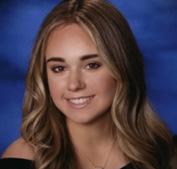
Kaitlin Lawrenson Staff Writer
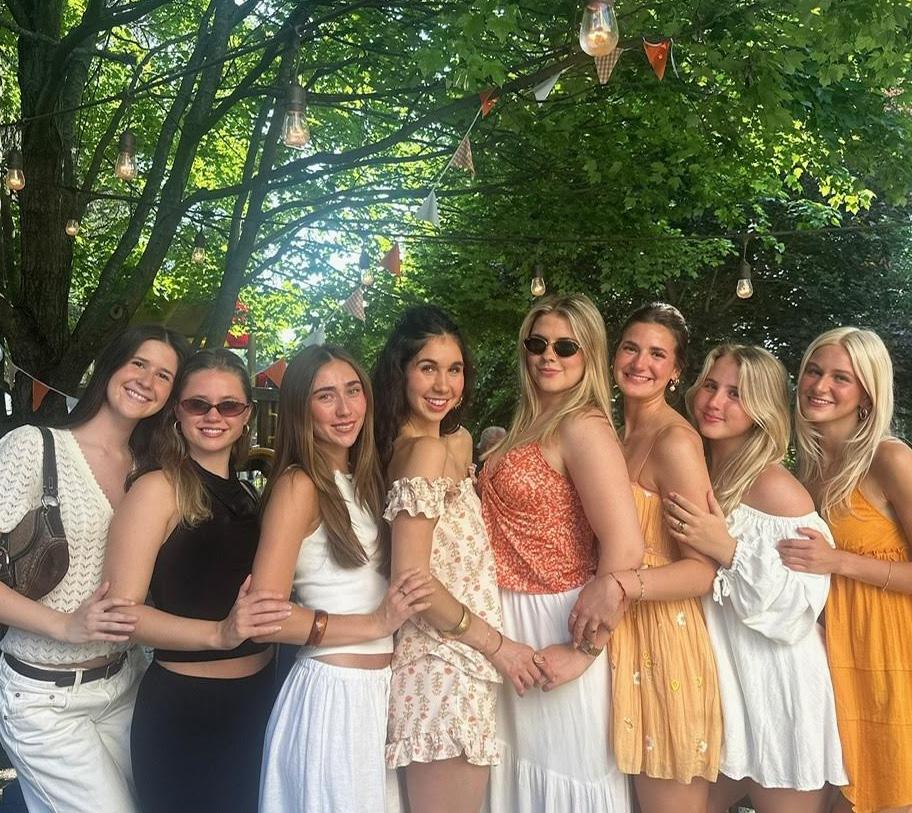
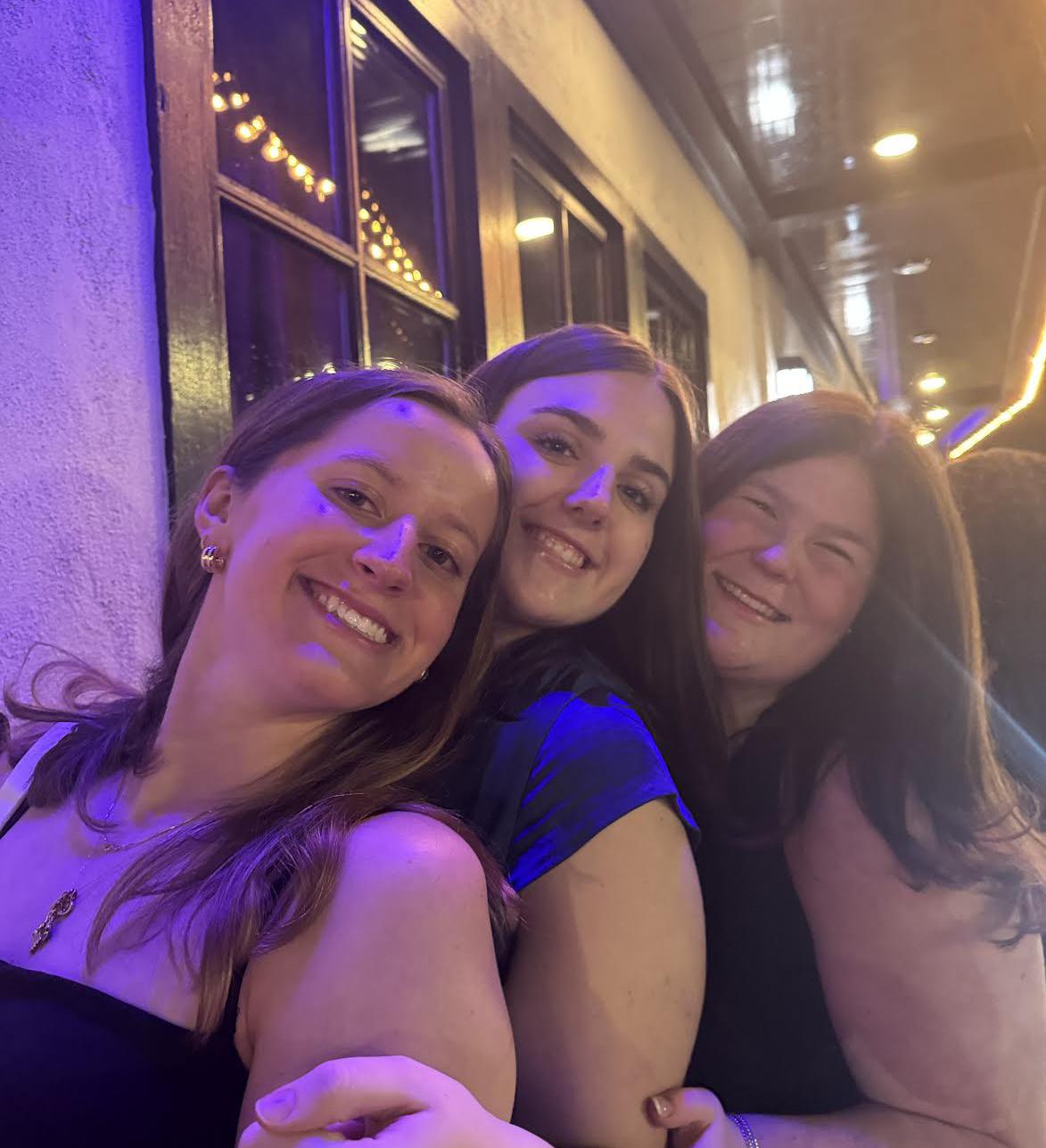
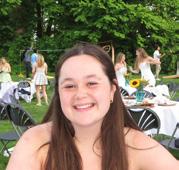
The legacy label has stuck with many Villanovans, including me. I feel as if I am being pulled in both emotional directions when it comes to my connections to this institution. My father graduated from Villanova University’s School of Business in 1994. Thirty years later, I started my journey here. I feel a sense of pride, and I continue to choose this culture for myself. However, there is also a negative connotation surrounding a preference towards legacy students on campus, suggesting that our experience is somehow easier or more enjoyable due to this status.
As a sophomore who has had my fair share of ups and downs during my time here, I do not feel as if my experience has been any different than every other student sitting next to me. Just because my dad walked these halls or had some of the professors doesn’t mean I am immune to the difficulties that come with being a college student. From living in the same dormitories to trudging through the same feelings of homesickness or pressures of belonging, I do not feel my experience has been any easier. Honestly, if anything, it has made my experience more daunting.
There is an additional pressure to be a legacy student, knowing that you have a lineage to uphold and people to make proud. Transferring or deciding Villanova wasn’t the right fit once I committed was never an option for me. Not only was this my dream, but it was also my legacy, something that
Continued on p. 10
Admitted Students Day Preview p. 2
Women’s Basketball Coaching Legend Honored by University Athletics
Sammie McKee Co-Sports Editor
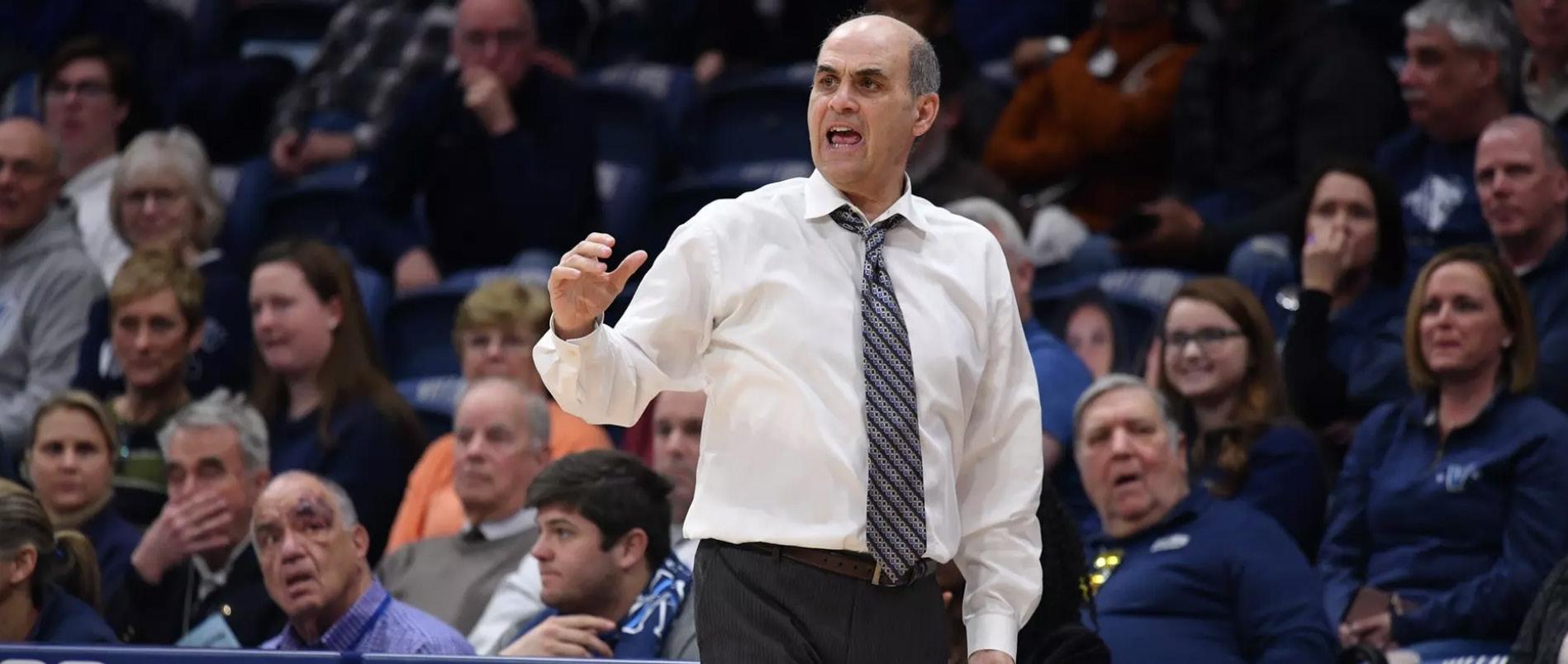
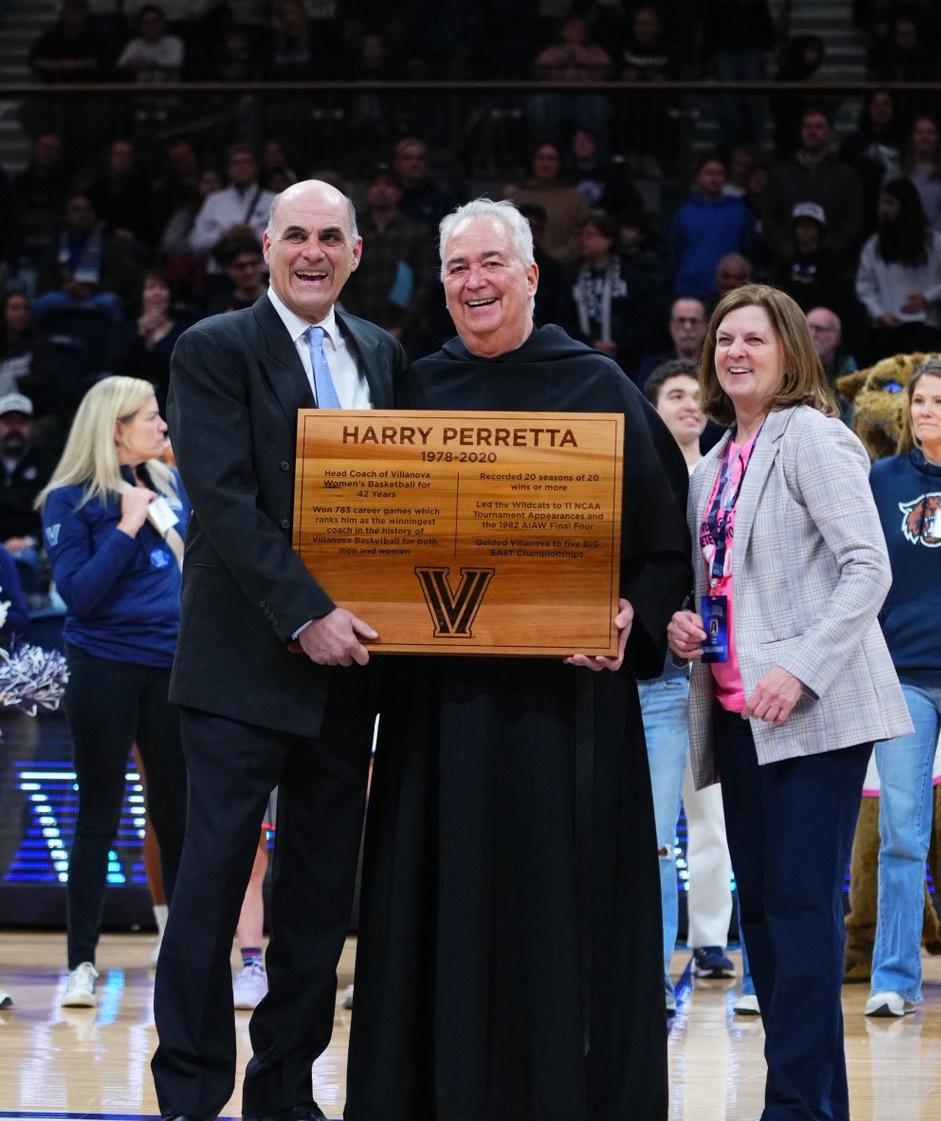
On Saturday, Feb. 7, Villanova University honored former women’s basketball head coach Harry Perretta with a permanent plaque at the Finneran Pavilion during halftime of the women’s basketball 67-55 win against Georgetown. Perretta retired in 2020 after serving for 42 years as head coach. During his time at Villanova, Perretta collected a career record of 783-489, making him the winningest coach in the history of men’s and women’s
Mia
basketball at Villanova. From 1978-2020, he led the Wildcats to 11 NCAA tournament appearances, 11 WNIT berths, multiple national rankings in the AP Poll, Big East regular season and tournament championships in 1985-86 and 1986-87, the 2003 Big East Tournament title, 12 outright and five shared Big 5 titles, 20 seasons with at least 20 wins and a trip to the 1982 AIAW Final Four.
Though Perretta has received many accolades, he shared that these are not his greatest accomplishments on the Main Line.
“I would hope it’s
graduating my players,” Perretta said. “That was always my goal. Winning was important, but it was never more important than doing the right thing or graduating my players.”
Perretta possessed a genuine interest and care for his players, both on and off the court. It came as no surprise that more than 70 women’s basketball alumni gathered at the Finneran Pavilion to celebrate Perretta.
Cathy Razler (‘85), Michelle Eberz (‘95), Laura Kurz (‘09) and Maria Shallow (‘10) were some of those in attendance on Saturday.
Though the four
women come from a vast range of women’s basketball eras, they all shared a sense of community that was created under Perretta’s leadership.
“I graduated 40 years ago, but I continue to come back,” Razler said. “I have friends [former collegiate athletes] who went to Big 5 schools, and they don’t have what we have. Everyone here recognizes that. What we have here is something special. Those teams don’t get 70 people to come back for an alumni game, and they don’t keep in touch as much as we do. Nothing against those guys, but it’s just a connection we [Villanova
Continued on p.18
Preview: BSU Hosts Film Night
Galego
Co-News Editor
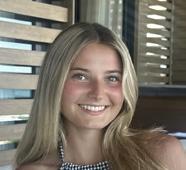
Margaret Miller
Co-News Editor
On Wednesday, Feb. 11, at 6 p.m., the Black Student Union (BSU), in collaboration with the School of Business’ Undergraduate Student Advisory Council (DUSAC), will be hosting a screening of the movie Concrete Cowboy in commemora-
tion of Black History Month. The movie Concrete Cowboy is a 2020 western drama starring Caleb McLaughlin, Idris Elba, Lorraine Toussaint
and Jharrel Jerome. The film is based on the novel “Ghetto Cowboy” by Greg Neri. It tells the story of a rebellious teenage boy,
Villanova’s Snow Day Protocols p. 5
Depicts
American History p. 12
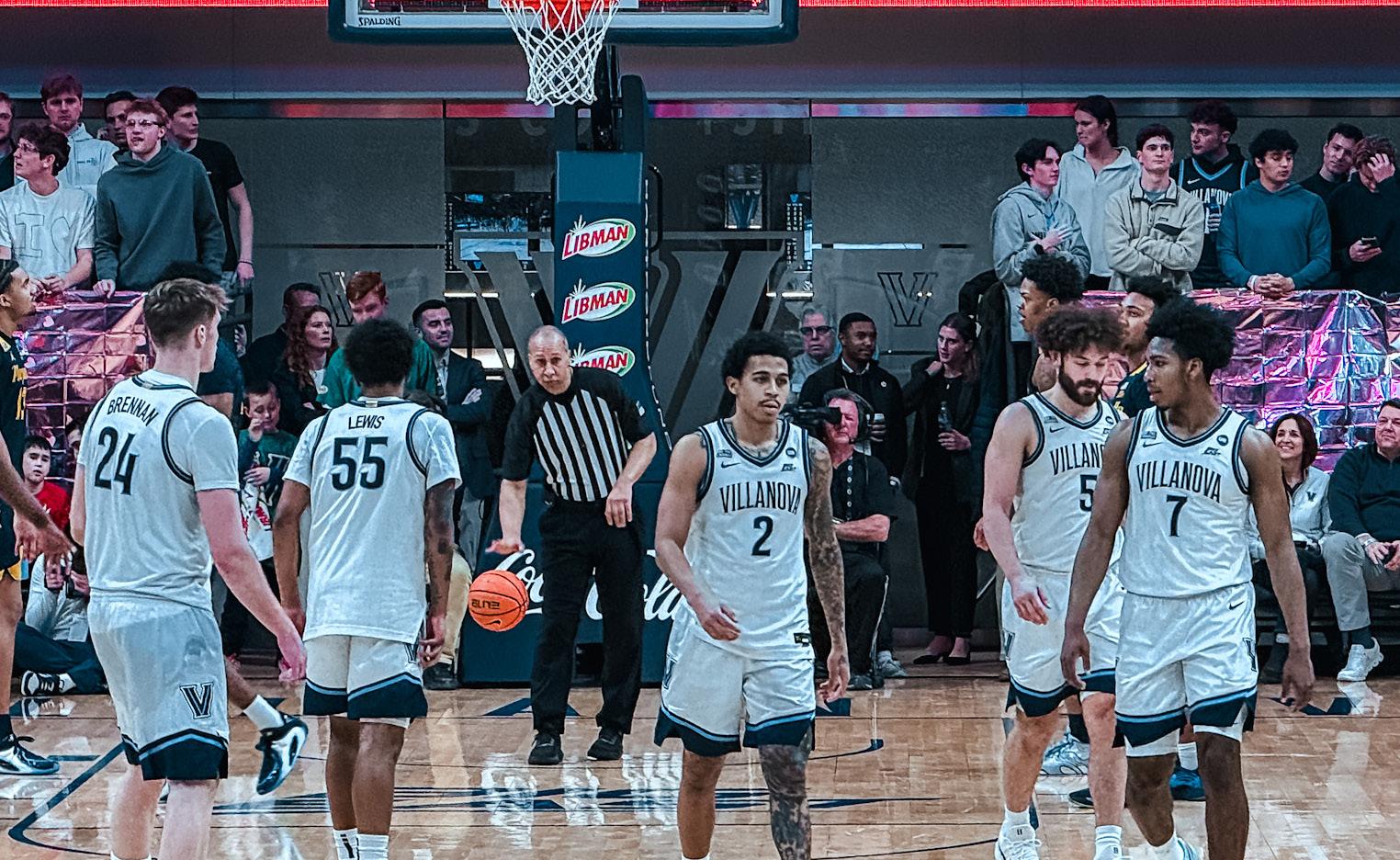
Men’s Basketball Defeats Marquette At The Wire, 77-74 p. 17
Cole, who is sent to live with his estranged father for the summer. During this time, he finds himself within a tight-knit community of Black cowboys in Philadelphia.
This event marks another in the series of events ongoing throughout February to honor Black History Month, showcasing and celebrating Black voices and excellence both here on Villanova’s campus and around the world.
“This month, Villanova will celebrate the contribu-
Continued on p. 13
Arts And Sciences Students Need More Career Resources p. 6
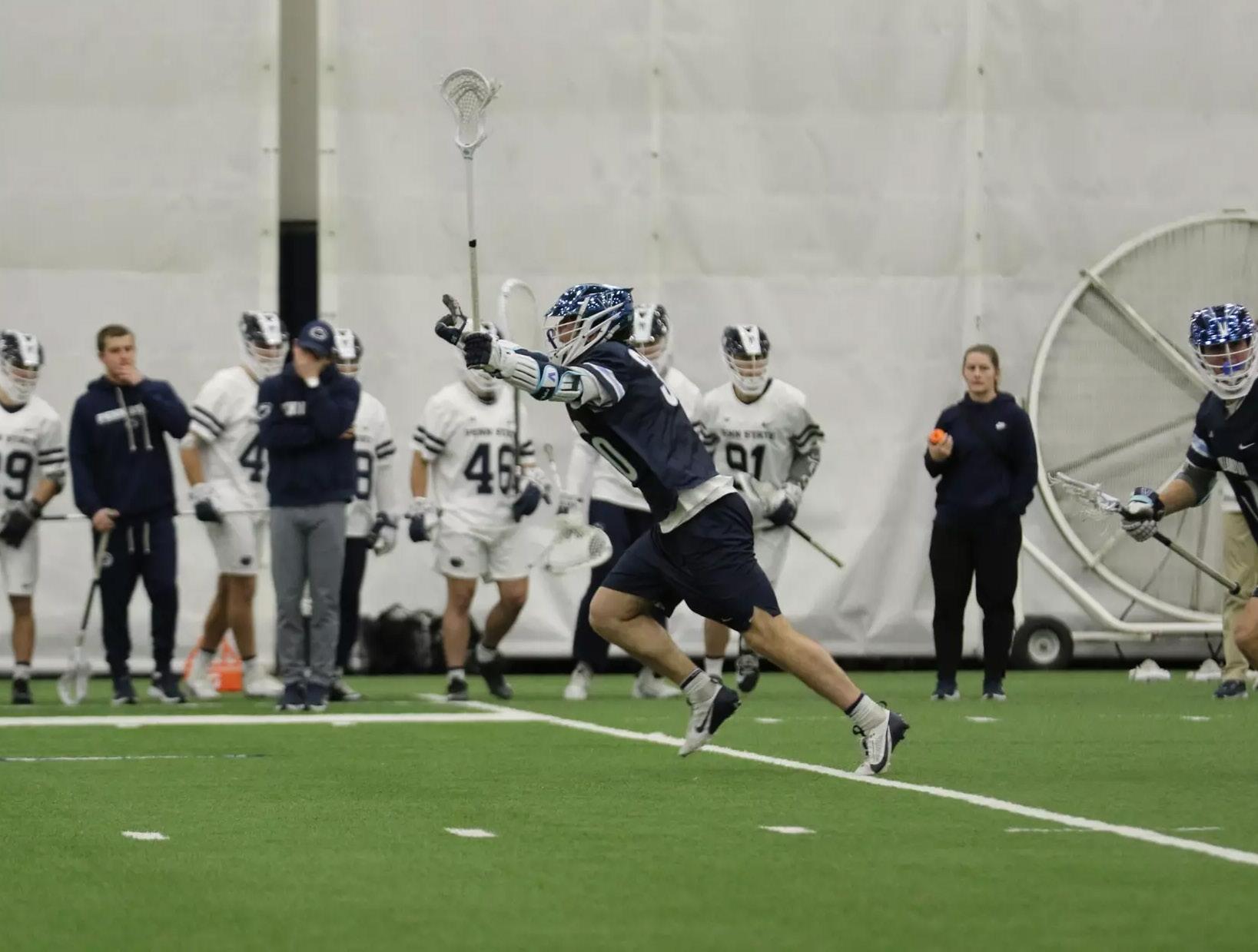
Men’s Lacrosse Upsets No. 7 Penn State, 14-13, In Overtime p. 17
Harry Parretta was honored by the University on Feb. 7. Courtesy of Villanova University Athletics
The BSU Movie screening is set to take place Feb. 11. Courtesy of Graydon Paul
VOL. 120 | ISS. 3
PUBLIC SAFETY BLOTTER
Liquor Underage
February 3, SHEEHAN HALL.
A female resident student, under the age of 21, was evaluated for alcohol intoxication.
Harassment
February 4, CANON HALL.
A female resident student reported she was being harassed by her non-affiliated ex-boyfriend.
Harassment
February 5, PAVILION.
A female staff member reported repeated unwanted contact from a male contract employee.
Theft by Unlawful Taking or Disposition
February 5, ANDREW TALLEY ATHLETIC CENTER.
A staff member reported a theft of an iPad from the O-Dea Lounge. The amount of the loss is $350.00.
CORRECTIONS
Factual errors are corrected as soon as they are brought to The Villanovan’s attention. Please send an e-mail to villanovan.eic@gmail.com to report errors.
BSU To Host Film Night
Continued from p.1
tions of African American and Black people within our community and throughout history,” the University said earlier this month across its various social media platforms.
This event is part of the “The Real Reels Series,” which is sponsored by VSB Unitas: Office of Community Engagement. The event is the first of the series, and films will continue every month till the end of the year. In March, for Women’s History Month, the selected film is The Six Triple Eight. For Arab American Heritage Month in April, the selected film is
Amreeka, and in May, Finding ‘Ohana will be shown during Asian American and Pacific Islander Month.
The series serves as both an entertaining and educational opportunity for students. According to an Instagram Post from BSU, a facilitated dialogue will follow the movie “to explore identity, equity and real-world issues.”
Sophomore and BSU member Maya Mathews is looking forward to attending the event.
“I think it is super important to havefun and educational events like this every month,” Mathews said. “BSU and DUSAC put a lot of work into these events, so I am looking forward to it.”
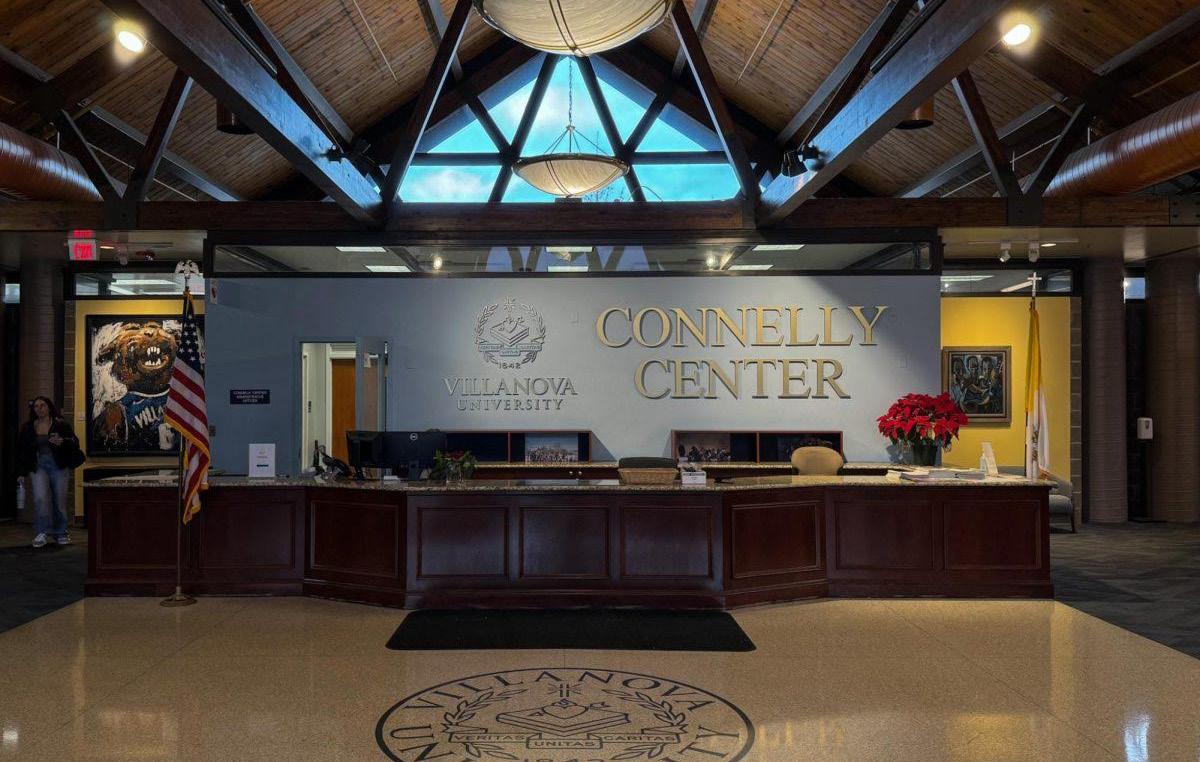
This event will be hosted in the Connelly Center Cinema, and refreshments and food will be served. There is a QR code on BSU’s Instagram page to register.
Admitted Students Day Preview
Lottie MacGregor Staff Writer
On Feb. 14, Villanova will host its Early Admitted Students Day (ASD) to welcome families and new students to campus.
Early ASD welcomes new students who have been accepted early action and early decision, giving them the opportunity to visit early and see what Villanova has to offer.
Last year, Villanova offered an ASD specifically for early admitted students for the first time and the success of it would not have been possible without the student members of Blue Key.
These students help plan the program and spend the day celebrating and welcoming families to Villanova.
From giving tours, to answering new student questions, they are the backbone of the program.
Blue Key members work hard to make sure all students and families feel welcome on campus.
Admitted Students Day starts at 5:30 a.m. as Blue Key members meet in the Finneran Pavilion.
They decorate, put up balloon arches and set up tables for students to stop and learn more about all the resources, clubs and classes that Villanova has to offer.
Blue Key members will then line up outside the Finn to welcome all families and incoming students who arrive. Members greet students with applause and cheer, getting accepted students excited about their opportunity to take part in the Villanova community for the day.
Once everyone is in the Finn, there is a presentation during which families can learn more about Villanova’s mission, “Veritas, Unitas and Caritas,” which translates to “truth, unity and love.”
These values are emphasized as they are critical to the Villanova experience. This presentation allows potential incoming students to have an insight into what life at Villanova is
like from a mission-based focus. After this presentation, tours begin.
For some members of Blue Key, this day brings back memories of their own decision process to commit to Villanova.
“What I love most about ASD is the high spirits and morale that Blue Key brings to prospective students and families,” junior Corey McCall, Blue Key’s Inclusion Coordinator, said. “I always think back to my own ASD Experience, as I was the first person to arrive and was welcomed with open arms and smiling faces. Being on the other side as a Blue Key member, I am excited to create bonds with prospective students and families and see what excites them most about ASD.”
For some first-year students, like James Sciandra, this is their first ASD, and it is bringing feelings of excitement.
“I’m excited to see all the admitted students because I love being a student at Villanova so much,” Sciandra said. “I became a member of Blue Key to show how much I love it here, and I want them to have the same experience.”
Students will get the opportunity to explore numerous aspects of life at Villanova, and might even get a peek at freshman living arrangements.
Sciandra has the opportunity to show her group of admitted students her dorm room. This is one of the critical aspects of the Villanova experience that Early Admitted students will get to see on Feb. 14.
“My dorm is honestly one of my favorite parts of being a student here because, whether I had a good day or not, being able to come back to my dorm and hang out with my friends who all live in my hall is just a good way to lift my spirit and spend time with my best friends,” Sciandra said.
Sciandra, just like all Blue Key members, hopes that families and admitted students are looking forward to this day just as much as they are.
2026 Spring Career Fair Recap
Lottie MacGregor Staff Writer
On Wednesday, Feb. 4, the Career Center hosted the annual Spring Career Fair in the Villanova Room of the Connelly Center.
Every year, Villanova students and alumni attend the career fair and leave with a variety of new industry connections, potential interviews to come and job opportunities.
Taking place once every fall and spring semester, the Career Fair allows for students and alumni to network and learn about potential employment opportunities.
This past week’s Career Fair was split into Liberal Arts and Business Fair, from 10 a.m. to 1 p.m., and the STEM Fair from 3 to 6 p.m., giving students the flexibility to work around their class schedules to attend.
According to the Career Center’s Director of Industry Advising, Christie Vuoto, 37 organizations from across 16 industries attended to recruit students, including engineering, renewable energy and manufacturing.
Constellation Energy was the sponsor of this spring’s Career Fair. Sixty-two of the employers in attendance were Villanova alum -
ni who were especially excited to recruit Villanova students.
An employer originally scheduled to be in attendance was the U.S. Customs and Border Protection (CBP). Due to ongoing controversies and student safety concerns surrounding recent events involving the United States Immigration and Customs Enforcement (ICE) and CBP, they informed the Career Center this past week that they’d no longer attend the event.
The Villanovan reached out to the University and was provided with a written statement.
“Organizations participating in this event were contacted through standard outreach to employers that have previously taken part in Career Center programs,” the University’s statement read. “US CBP-Office of Trade was included in that general communication based on its participation in past career-related events.
Following the announcement of their participation, the employer informed the Career Center that they do not plan to attend this event.”
As Wednesday came around, students arrived in their best professional attire, resumes and CVs in hand. Students were provided with a name tag indicating their class year and major. Employers also had name tags
showing their company name, industry and the types of positions they offered.
Students were also offered a packet detailed with information on all of the different employers present in-person at the Career Fair.
This packet was organized by industry and had a map of the tables so that students could easily navigate the event.
Members of the Career Center’s Professional Development Team were ready to assist students in any last minute preparation including practicing a firm handshake or perfecting their elevator-pitch.
On their way out, students were asked to fill out a digital check-out form, and were given a complimentary T-shirt.
More than 250 students attended the Career Fair this year, across all colleges and included 45 majors, eager to explore the organizations and land their next professional opportunity.
The Career Center offered many helpful opportunities for students to prepare for the event, including Employer Resume Review Days, virtual workshops, information tables and appointments with the Wildcat Wardrobe which provides free professional attire to students.
The Career Center also
encouraged students to prepare for the fair by researching the attending organizations on Handshake to familiarize themselves with the roles available and the types of students companies were seeking.
“We hope that students leave the Career Fairs getting out of it whatever they wanted to get out of it,” Laura Walker, the Career Center’s events and operations specialist said.
Walker also hopes that every student in attendance walked away with meaningful moments and conversations with employers in attendance.
“We want students to make the most of every interaction,” Walker said, “and feel like they’ve gained something valuable, whether it’s insight, a contact or an interview.”
Aside from the Career Fair, Villanova’s Career Center works hard year-round to offer students across a variety of majors and minors a ton of different networking events, digital resources and specific advising for industries students want to pursue after graduating from Villanova.
The Career Center also provides free headshots, professional attire and interview rooms throughout the year to support all students in their professional development as they pursue their degrees.
Villanova Celebrates Valentine’s Day
Mia Galego Co-News Editor
Love is in the air, and Villanova will soon be celebrating Valentine’s Day. Throughout the years, students have continued to find creative ways to celebrate the holiday.
The Campus Activities Team (CAT) will continue to host Valentine’s-themed events.
CAT hosted a Stuff Your Own Valentine’s “Candy Gram Pillow” event on Feb. 3. Students were able to create their own Valentine’s pillows to keep for themselves or give to a friend.
It also hosted “Rom-Com Quizzo” on Feb. 5, featuring classic romantic comedy-themed questions. Students could test their movie knowledge and had a chance to win prizes.
On Feb. 11 CAT will be hosting a “Hearts, Arts and Strings”
event at 8 p.m. in Cafe Nova. Students can enjoy live music, a photo booth and even build their own bouquet.
CAT will also be running back their Valentine’s Day Bingo on Feb. 12 in Cafe Nova. Keep an eye out for more upcoming Valentine’s Day activities from CAT.
Greek Life organizations also are hosting a variety of events throughout the week. Alpha Chi Omega hosted “Choose the Right One” on Feb. 10 in the Connelly Center Cinema.
The event was an “interactive game show” during which participants answered questions about healthy relationships and competed in challenges. Proceeds went to the Laurel House to support survivors of domestic violence.
Villanova Dining is having a Valentine’s Day Coffee Pop-up at the Recovery Room in Driscoll Hall on Feb. 12 from noon to 2 p.m. They
will be offering two coffee options, a strawberry mocha latte and a cold brew with strawberry cold foam.
Students can celebrate Valentine’s Day with another classic Villanova tradition, the Villanova Singers Singing Valentines.
This year, the acappella group is offering four types of Singing Valentines.
Phone and video valentines will be delivered on Feb. 14, while in-class and wake-up valentines will happen on Feb. 13. The tune this year will be You Are My Valentine (based on “You Are My Sunshine”).
Sophomore Marina DiCristifaro has taken advantage of the Singing Valentines tradition.
“Last year I surprised my friend with a singing Valentine,” DiCristifaro said. “We all pitched in, and it was the funniest thing ever. The Singers came into the classroom and serenaded him, definitely a Villanova tradition to remember.”
The dance group The Super-
lative is offering a similar option for students with their “Dancegrams.”
These function similarly to Singing Valentines, and students can send a group of dancers to their friends or significant others.
Dancegrams will be delivered Feb. 12 and Feb. 13 and will either be on the song “Adore You” by Harry Styles or “Treasure” by Bruno Mars. Students can learn more through the @vusuperlative Instagram.
The Superlative dancer and treasurer, Athenais James, is excited for the fundraiser.
“We do Dancegrams to raise money so we can buy props or costumes for showcases,” James said. “Dancing is our specialty, and it is a fun way to send a Valentine during the class day.”
Whether students participate in a CAT event or send a friend a singing or dancing Valentine, there are numerous ways to celebrate Valentine’s Day.
Connelly Center Cinema played host to “Choose the Right One” on Tuesday. Brian Luppy/Villanovan Photography
With Valentine’s Day coming up, campus is playing host to a bunch of Valentine’s Day themed events. Lauren Armstrong/Villanovan Photography
This Week In Politics: Update On The Epstein Files
Zoe Garrett Political Columnist
Throughout Donald Trump’s second presidential term, the Jeffrey Epstein case has remained a salient political issue and has continued to develop in important ways. With staggered releases of Epstein-related files, careful review of the materials by lawmakers and increasing questioning of relevant figures, the investigation continues to evolve rapidly.
Almost two weeks ago, the Department of Justice (DOJ) publicly released the most recent wave of Epstein-related materials, according to PBS. The files included three million documents, 2,000 videos and 180,000 images.
However, as many critics of the DOJ’s handling of the situation have pointed out, many lines and sections within these documents have been redacted. These sections have fueled some observers’ concern regarding the extent of what the government has chosen to conceal from the public.
Some elected officials have gained the ability to view millions of files without redactions. Starting this past Monday, the DOJ began allowing members of Congress to read unfiltered versions of the documents, reported ABC.
This ability is not without stip-
George Darraj Staff Writer
On Feb. 5, the Center for Multifaith Ministry hosted a book talk in the Driscoll Auditorium on “The Islamic Mary: Maryam Through the Centuries” by Younus Y. Mirza.
The event featured a presentation by Mirza followed by a Q&A with the audience.
ulations. Lawmakers are required to alert the Department at least 24 hours before reviewing the unredacted materials. Additionally, the members are only allowed to view the files alone, and they are allowed to take notes, but not to make any electronic copies of the materials.
The arrangement satisfies the requirements outlined in the Epstein Files Transparency Act of 2025, a bill signed into law by President Donald Trump in November 2025, which directs the DOJ to release all unclassified files in relation to the case.
Representative Ro Khanna (D-CA), lead sponsor of the Act, reacted triumphantly to the DOJ’s most recent release of documents.
“@RepThomasMassie & I have always believed that Congress must not be a doormat,” Khanna wrote in a post to X. “Not when it comes to the Epstein files.”
Although several lawmakers view the barrage of files as a victory, some express weariness regarding members’ ability to examine the multitude of files efficiently. Representative Jamie Raskin (D-MD), who sits as the Ranking Member on the House Judiciary Committee, voiced his concern after spending hours reviewing materials on Monday morning.
“[Even if all members supporting the Act] spent every waking hour over at the [DOJ], it would still take us months to get through all of those documents,” Raskin said.
Further developments relating to the Epstein case unfolded on Monday when Ghislaine Maxwell, the convicted co-conspirator to Jeffrey Epstein, attended a deposition before the House Oversight Committee. Maxwell appeared virtually before committee members from the minimum-security women’s prison in which she’s being held in Texas.
According to Representative James Comer (R-KY), who serves as the chairman of the committee, lawmakers intended to utilize the session to uncover further information regarding the ongoing Epstein-related investigations. However, Maxwell was uncooperative with this goal and invoked her Fifth Amendment after each question she was asked, according to The New York Times
“It was very disappointing,” Comer stated when asked about the deposition. “We had many questions to ask about the crimes she and Epstein committed, as well as questions about potential co-conspirators.”
In his opening statement during the deposition, Maxwell’s lawyer, David Oscar Markus, stated a condition that, if met, may result in Maxwell providing more straightforward answers.
Markus stated that his client “would answer questions if she were granted clemency” by President Trump. The appeal seemed to land flat for many congressional committee
members, including Comer, who stated that he did not “think she should be granted any type of immunity or clemency.”
Representative Anna Paulina Luna (R-FL), another member of the House Oversight Committee, also expressed lack of amusement by Maxwell’s request for immunity.
“NO CLEMENCY,” Luna uploaded in a post to social media. “You comply or face punishment. You deserve JUSTICE for what you did, you monster.”
President Trump has not indicated any intention to pardon Maxwell, though he has not said he was against it, either.
“I haven’t thought about it for months,” Trump told reporters in November. “I don’t talk about that. I don’t rule it in or out.”
Lawmakers are expected to continue combing through the large volume of materials related to the Epstein case.
In an effort headed by Raskin, Democratic members on the House Judiciary Committee will lead a hearing, which is anticipated to question Attorney General Pam Bondi specifically about the Epstein files’ publication timeline.
While the outcome of the ongoing investigation remains uncertain, some representatives, including Rep. Khanna, expressed confidence in members’ ability to uncover further information.
Book Talk: The Islamic Mary
can era.
An important point in Mirza’s talk was the topic of fasting. Mirza discussed both Maryam’s fast and how fasting is described in the Qur’an. Maryam’s fast is stated, “And say to anyone you may see: ‘I have vowed to the Lord of Mercy to fast from conversation, and I will not talk to anyone today’” (Qur’an 19:26).
Mirza proposed questions for the audience to keep in mind throughout the talk. Some included: How are the Biblical and Qur’anic Mary/Maryam similar and different? Can Mary be an interfaith figure? How can Mary be a model for modern people and an inspiration for social justice?
Mirza then discussed a few key pieces of context. Mirza grew up with three sisters. Comically, he noted that he was made an “honorary member” of their Girl Scout troop.
Regarding his introduction to theology, Mirza took courses on Islam and the question of God at Georgetown, where he earned a bachelor’s, master’s, and PhD.
After his introduction, Mirza listed out some fascinating facts regarding Mary (or Maryam) in both Islam and Christianity.
First, he noted that Mary is the only female name explicitly mentioned in the Qur’an.
Specifically, she is mentioned 34 times, often in reference to being Jesus’s mother.
Additionally, there’s an entire Sura (a chapter of the Qur’an) named after her (Surat Maryam), which emerged from the late Mec -
This represents the famous strength in Mary’s stillness and silence. Regarding fasting in general: “You who believe, fasting is prescribed for you, as it was prescribed for those before you, so that you may be mindful of God” (Qu’ran 2:183).
Next, Mirza mentioned how Mary serves as a common figure in both Islam and Christianity. First of all, both Christians and Muslims make a pilgrimage to the House of the Virgin Mary in Ephesus, representing the multifaith admiration and respect for her figure.
Furthermore, Mirza noted that Maryam is an “inspiration in the way that she was tender and loving and devoted to God so much so that she could raise a child that could change the entire world.”
He specifically mentioned that Mary allows Christians to look at Islam through a different lens: as a similarity.
Sometimes, it is common to look at Islam as the “other religion,” but Maryam serves as a symbolic bridge between the two religions.
“[Christians and Muslims] need to speak more about love; love can be the bond between
Muslims and Christians,” Mirza said.
He noted how love, exemplified by Mary, is a common theme between Islam and Christianity and how it can serve as a bridge to interfaith respect and connection.
The best way to empower women in an interfaith context was explored.
“Part of my effort is to encourage women as teachers and scholars and to view them as people of spirituality, faith, and knowledge, as opposed to viewing them in a narrow light,” Mirza said.
Whether Mary is a prophet was also explored.
“In Islamic tradition, the prophets are the most righteous individuals,” Mirza said. “Sometimes we overemphasize that Mary is a woman or a mother rather than a model worthy of emulation. One argument is that [Mary] is a prophet because the angel Gabriel came to her, and all prophets have direct communication with God. We have to think of definitions that go beyond gender. What is a prophet? What is a model of emulation?”
Overall, the book talk was a very informative and fascinating interfaith dialogue that showed how Mary (or Maryam) can serve as a model for both Christians and Muslims.
Center for Multifaith Ministry hosted a talk on “The Islamic Mary: Maryam Through the Centuries.” Dylan Johnson/Villanovan Photography
Panel Discussion: How To Really Change The World
Addy McDougall Staff Writer
On Feb. 4, the Augustine and Culture Seminar Program hosted a discussion panel addressing the question “What actually works in international development and aid?” Panelists included Christopher Stephens, Senior Vice President and General Counsel at the World Bank, Sarah Baran, former USAID official and famine relief expert and Sister Regine Zoot, nurse educator and international missionary.
The event took place in Driscoll Hall 132 Auditorium, with nearly 80 students in attendance. The event was sponsored by offices across the university, including the David F. and Constance B. Girard diCarlo Center, the Peace and Justice Education Center, the International Student Office and the St. Thomas of Villanova Center for the Common Good.
The event began with a four-question survey for attendees, addressing global trends in poverty and other humanitarian issues. The answers highlighted the improvements in poverty and global health over the years, yet clarified that these positive trends are now at risk due to recent reductions in U.S. humanitarian aid.
Sister Regine Zoot led the discussion, describing her experience growing up in Northern Ghana,
Emily Hauck Staff Writer
where Western missionaries grew the education system. She described the work of USAID in supporting schools, healthcare and food security in Northern Ghana.
However, in the past year, USAID funding cuts have slowed this progress, and Sister Zoot now dedicates herself to giving back to Ghana through the Holy Child Sisters’ services, which teach children in Northern Ghana useful skills, like sewing and mechanics.
She concluded her speech by emphasizing that Ghana and many other African countries have never been in greater need of assistance from the Western world than they are today.
Sarah Baran followed and described some of the most impactful work she contributed to while working in the UN Office of Humanitarian Affairs. She detailed a case study about a famine in Somalia that was averted, saving 26,000 lives, and how the conditions surrounding this case differed from the devastating famine 15 years ago.
She described the humanitarian efforts that made the difference, including rapid funding responses, investment in local markets and targeted aid to those most in need. She ended her speech by underscoring the importance of assisting other countries facing famine.
Christopher Stephens concluded, explaining the World Bank’s
efforts to eliminate poverty and describing how its tactics differed from those of the USAID and the UN. He reminded the audience that the World Bank “doesn’t give money, but loans it,” and expressed that the World Bank combats poverty through infrastructure, policy and the private sector.
He exemplified this through the World Bank’s program, Girls’ Education and Women’s Empowerment and Livelihoods (GEWEL), and its effectiveness in reducing poverty and breaking economic barriers for women in Zambia. He reminded the audience that education has a measurable effect on every aspect of our lives, as “knowledge drives everything.”
The three speakers were then invited to answer the question “How did the decisions you made during
undergraduate or your early career shape your work in international development?”
Sister Zoot spoke about her experience as a nurse and a missionary. She said that she is constantly “thinking how can I make a difference back at home where I know so many are struggling.”
Baran highlighted that studying abroad in Chile shaped her worldview, and encouraged everyone to “experience other cultures.”
Stephens recounted moving to Hong Kong for his law firm and eventually taking a job with the International Finance Corporation.
“[It is] serendipitous to keep your options open,” Stephens said.
The panel concluded with a call to action for today’s youth to vote and stay informed.
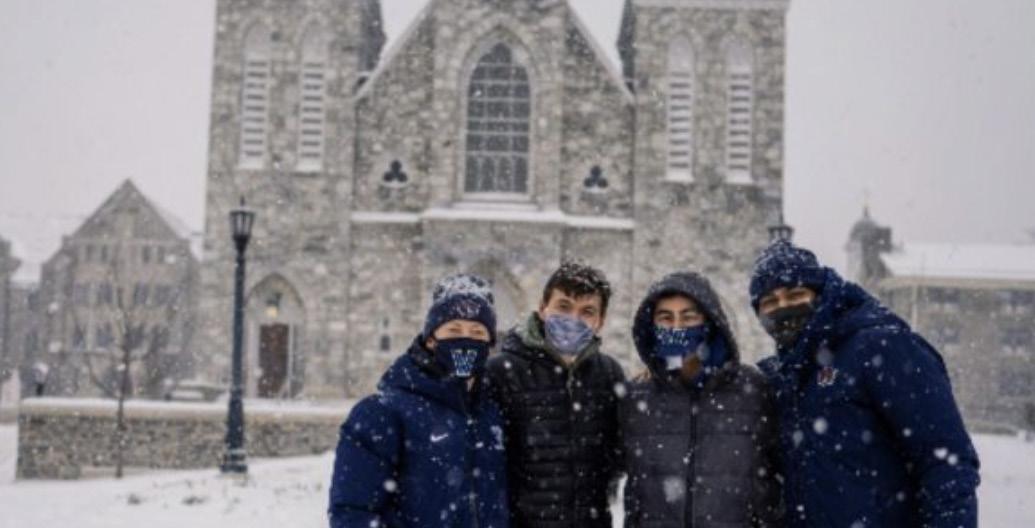
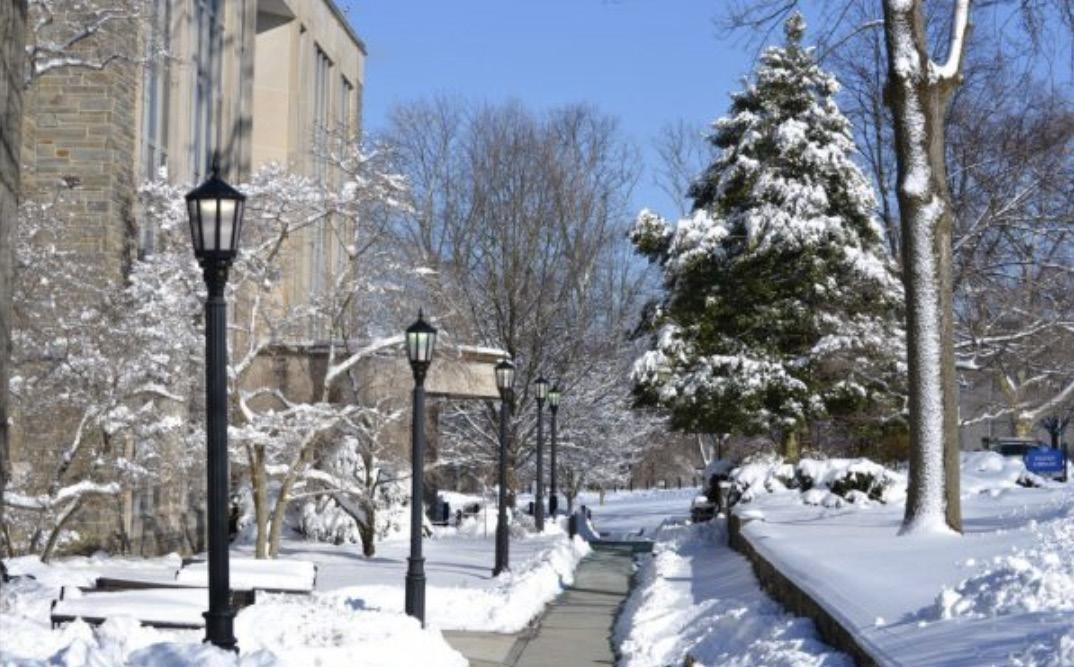
Villanova’s Snow Day Protocols
erations before reaching a consensus,” Krissy Woods, Villanova’s director of Public Relations said.
Students slept in a little later than usual on Jan. 26, after Villanova University called its first snow day of the year due to inclement weather conditions.
Pennsylvania was only one of a dozen states slammed by the historic winter storm that swept the nation. The accumulation of over 12 inches of snow and temperatures as low as 3°F factored into the University’s decision to cancel classes completely.
The Villanova community can expect winter weather to continue to impact their semester and should maybe even expect to get another day or two off of class.
“Snow day decisions are made through a collaborative process, with the Provost, the Vice President for Facilities Management, Director of Grounds and other University leaders weighing conditions and operational consid -
The University considers many factors when deciding whether to close or remain open following periods of inclement weather. The storm’s onset time, intensity and duration, as well as the condition of travel routes and campus walkways, are all heavily weighed.
“A delayed opening is preferable to closing for an entire day,” Villanova’s official policy states.
While the University is committed to “avoiding school closings due to inclement weather whenever possible,” it acknowledges “first and foremost that the safety of its faculty, staff and students is always top priority.”
While most staff members get the day off, some are required to come to campus to ensure campus operations carry on.
“Certain essential personnel continue working during
weather closures to maintain critical campus operations,” Woods said. “This may include staff from the Student Health Center, Public Safety, Grounds Maintenance, Facilities Maintenance Services, Custodial Services, Dining Services and other areas as required to support campus operations and safety.”
On days where inclement weather threatens traditional scheduling, Villanova works hard to alert students and faculty of its decision as early as possible, usually around or before 6 a.m.
The decision is typically issued through the University’s NOVA Alert system, the snow and emergency number (610-5197744) and posted to the University website by 6 a.m.
In certain cases, the University may initially announce a delayed opening and later make a decision to cancel classes in the
event of worsening conditions. In such situations, a “closing announcement” normally would be made by 8:30 a.m.
“The University advises its faculty, staff, and students to recheck announcements again before leaving for school,” per the University’s website.
Regardless of whether the University closes due to inclement weather, Villanova’s snow day protocol remains unchanged.
“The Office of Facilities Management leads snow response efforts and operates around the clock during inclement weather,” Woods said. “Their teams handle plowing, shoveling, salting, and treating walkways, roadways, and key campus areas to help ensure conditions are as safe as possible.”
Learning more about Villanova’s snow day procedure can help students better anticipate snow days in the future.
Snow day decisions are a collaborative process involving a variety of University leaders. Villanovan Photography
ACS panel discussing international aid and development in Driscoll Hall. Mia Galego/Villanovan Photography
Villanova University called its first snow day of the year on Jan. 26. Granter Carter/Villanovan Photography
OPINION Three Perspectives On Starting College Later
Juliana Burke Staff Writer
“Family, whimsical and eye-opening.”
These are the three words David Choi, Steven Ko and Stefano Triant used to describe their transition from serving our nation to attending Villanova, beyond what many consider to be the traditional college timeline. At a university where most undergraduates arrive straight from high school, their stories stand out not as anomalies, but as reminders that there is no single “right” way to begin adulthood. Through conversations with these three men, I found that delayed beginnings often bring clarity, precision and confidence.
David Choi, a senior nursing major, began his post–high school journey at the United States Air Force Academy, where he spent two years before realizing that the Air Force was not the branch for him. While grateful for the experience, he described a persistent feeling of not being “at home,” a realization that ultimately guided his decision to step away.
What followed was not uncertainty, but intention. After returning home to New Jersey, Choi enrolled in community college and devoted much of his free time to volunteering at a local food shelter. The work was deeply fulfilling, yet it also revealed that he missed the service-oriented structure of military life. That pull led him to speak with a Marine Corps recruiter, and soon after, he committed to a Marine Officer Candidate School program. With the goal of becoming an officer, a path that requires a bachelor’s degree, Choi applied to Villanova.
When reflecting on entering college later than many of his peers, Choi emphasized maturity as his greatest advantage. The additional years of experience, he explained, shaped both his academic discipline and his social confidence. Perhaps most importantly, Villanova taught him the value of reflection. Choi cites the ability to take a bit of time each day to ground himself has aided him in an appreciation of his own timeline.
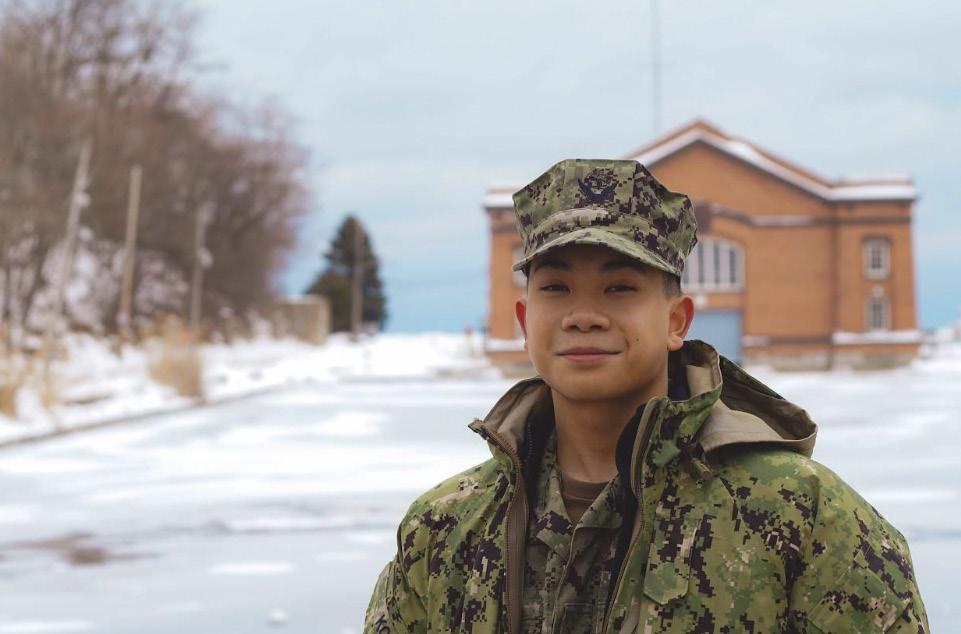
Steven Ko, a sophomore nursing student, has a similar sense of purpose discovered through experience. Ko enlisted in the U.S. Navy at just 17 and served as a Boatswain. His service took him across the globe and placed him in high-stakes environments, particularly through his involvement in search and rescue operations. It was there that Ko discovered his passion for medicine.
At Villanova, Ko brings with
him extensive medical training and a level of composure that cannot be simply relayed in a lecture hall. Looking back, he credits his delayed start for allowing him to enter college with confidence and direction.
“Take the leap of faith, no matter what age you are,” Ko said.
“Even if you are a few years behind what others believe you ‘should’ do. Often, experiences such as service or other meaningful work help you in the long run, as they allow you to make better choices when you’re more secure in yourself as a person.”
Stefano Triant, a junior finance major, offers yet another perspective on taking a nontraditional route. After high school, Triant enrolled at Valley Forge Military Academy College, a two-year ROTC military junior college designed to commission students into the National Guard in two years rather than the traditional four. His time there includ-
ed rigorous summer training, Basic Camp at Fort Knox, Advanced Camp the following year and a leadership course that marked the final step before commissioning.
Because Valley Forge is a twoyear institution, Triant transferred to Villanova to complete his bachelor’s degree. While the transition was rewarding, it was not without challenges.
Triant noted academic difficulty with the jump from a two-year program to a four-year, particularly in terms of workload and expectations. Socially, Triant noted that finding a sense of belonging took time.
“It’s not easy to find your people right away,” Triant said. “You need some patience.”
Still, Triant views the delay as overwhelmingly beneficial. Commissioned into the Army at just 19, he credits his military background with shaping his discipline, time-management skills and resilience. That character development, he believes, has served him well at Villanova.
At the same time, he is candid about the drawbacks, particularly in finance, where recruiting timelines often target freshmen and sophomores. For students who start later, internships can be harder to secure without early awareness of the process. His advice is practical: understand recruiting timelines early and stay proactive. Taken together, these stories challenge the assumption that starting college later is a setback. For Choi, Ko and Triant, delay was not a detour, but preparation. In a culture that prizes speed and efficiency, their journeys offer a quieter, more reassuring message: you are not behind. Sometimes, the long way around teaches you exactly where you’re meant to go.
Arts And Sciences Students Need More Career Resources
Zoe Shack Staff Writer
Backpack-to-Briefcase (B2B), Career Compass, internships, externships, co-ops. If you have friends across the different academic colleges here at Villanova, you’ve likely heard these terms thrown around. Especially as the recruiting cycles pick up for positions in a range of fields, there is an emphasis on building a strong resume, practicing interview skills and optimizing one’s network to secure opportunities down the line.
However, the College of Arts and Sciences (CLAS) falls short when it comes to equipping students with professional support. As such, CLAS should focus on promoting and providing the resources it has to offer students so that all who need them can fully benefit.
After all, every other college has some form of required career and professional development training woven into the curriculum. Business students take the B2B professional development course, engineering students attend required Career Compass events each semester and nursing students participate in professional nursing coursework and off-campus clinicals throughout.
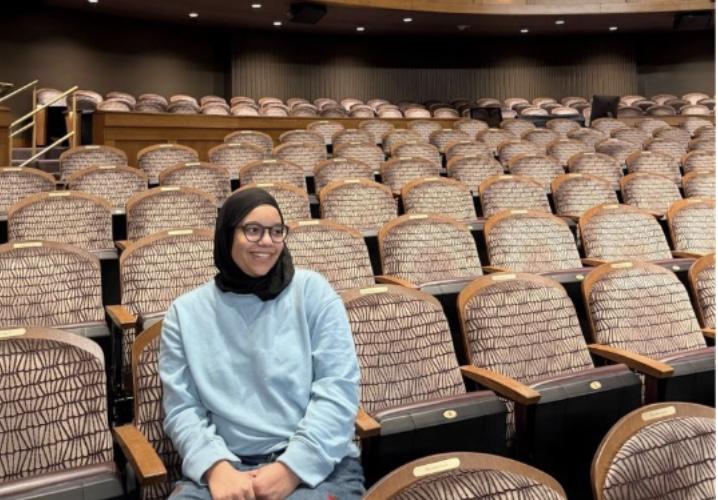
James McShera, a sophomore
in the M. Louise Fitzpatrick College of Nursing, expressed gratitude for the tools his college provides him as he looks ahead to a career in nursing.
“The faculty are incredibly supportive and go out of their way to help us forge paths in different fields of nursing,” McShera said. “In addition, the college partners with over 70 different institutions, providing experience you can’t get in a classroom setting.”
The same goes for VSB.
“Resources like the Backpack-to-Briefcase course, which is spread out over our four years of college, have been very helpful,” sophomore accounting major Maylee Thibault said. “Being required to work on benchmarks like creating a resume and setting up Handshake help me stay on track. Having advisors check in with me about career discernment, applications and interviews makes a difficult process feel less overwhelming.”
For arts and sciences majors, the feeling of not knowing where to look for job opportunities is compounded by the lack of college-specific resources. Although the Career Center’s services, like resume reviews and interview prep, are available to everyone, students are sometimes less aware of them. Booking appointments at the general Career Center
can be a challenge as hundreds of students are competing for limited timeslots.
Junior mathematics and economics major Lauren Markarian echoed these challenges.
“To secure a summer internship, CLAS recommended I connect with other professionals on Handshake and tap into the NovaNetwork to network with Villanova alumni,” Markarian said. “I did have to go out of my way to make an effort and find these resources. They definitely aren’t made known to CLAS students if we don’t seek them out.”
Considering that other colleges more directly translate to specific post-grad fields, CLAS students need to focus on career discernment and
work towards developing a post-grad path to which they can apply an arts or sciences degree. Since these disciplines are not as clear-cut as tracks like finance or nursing, students should start thinking about what they want their careers to look like in the long run.
This is not to say that there are no opportunities for CLAS students. Some classes, like the one-credit Arts and Sciences Professional Development course or the Applying to Law School class, are effective ways. However, these opportunities often go unnoticed. Therefore, it’s up to CLAS to continue developing meaningful programming to help students reach their goals, and, then, advertising them to Villanovans.
While CLAS students recieve guidance from the Career Center, it is not as comprehensive as VSB. Avery Chalk/Villanovan Photography
Steven Ko, a sophomore nursing student, in a US Navy Boatswain uniform. Courtesy of Steven Ko
EDITORIAL BOARD LETTERS TO THE EDITORS
KAILEY FAHY
DYLAN JOHNSON
SOPHIE LATESSA
AVERY CHALK
EMMA TAYLOR
Editor-in-Chief
Editor-in-Chief
Managing Editor
Opinion Editor
Opinion Editor
Michael Barravecchio
Staff Writer
The Villanovan encourages all members of the Villanova community to voice their opinions. Letters to the editors may be submitted via e-mail to villanovan.eic@gmail.com. Letters must not exceed 500 words and must be signed. No anonymous letters will be published. All submissions become property of The Villanovan and are subject to editing for clarity and space.
The unsigned editorial that appears is the opinion of The Villanovan as determined by the majority of the Editorial Board. Other columns, letters and artwork represent the opinions of their authors and do not necessarily reflect the position of The Villanovan.
All Students Must Be AI Literate
Artificial intelligence (AI) is so widespread that every college has adopted it, each with its own guidelines, opinions, and values. At Villanova, the University supports AI in contexts that enrich the learner, but opposes its use when it replaces critical thinking. Regardless of its adoption level, AI is already here, and pretending it is optional leaves students behind. For college students, AI literacy serves as a key differentiator in the job market, as it demonstrates mature use of modern technology and the ability to prompt an engineer, which often yields strong results. During the Milken Institute Global Conference 2025, NVIDIA CEO Jensen Huang said that “you’re not going to lose your job to an AI, but you’re going to lose your job to someone who uses AI.”
Utilizing AI as a Supplement for Academic Help
Students can thrive by using AI properly in the right settings. I find that AI is helpful as an alternative to a tutor for academic subjects. Rather than paying for one or sacri-
Andy Smith Staff Writer
ficing your schedule to meet with an academic specialist, AI is well-suited to teaching students the skills they are trying to develop. AI’s ability to fulfill this role comes from machine learning, where it learns patterns related to topics that a student inputs, allowing it to provide an appropriate response.
The specific reason AI is useful in this context is that it can explain personalized questions that a search engine cannot. For example, if I am learning macroeconomics and want to understand why an increase in the price of ketchup decreases the demand for hamburgers but increases the demand for mustard, AI will be of greater help to me. Asking a question like this to a search engine will result in an explanation of the umbrella concept: if the price of an item goes up, its substitute’s demand will increase, but if the items are complements, their demand will decrease. This explanation does not directly apply to the specific example.
With AI, the exact situation is explained, assuring the student that because people typically buy ketchup with hamburgers, when the price of one rises, the demand for the other will fall. In short, the customization ability of AI can deliver students specific, in-depth explanations that
advance knowledge. Though I acknowledge that AI should not be used to replace office hour visits, it can be a strong supplement.
AI as a Preparation Tool
AI can also be beneficial to students who are making study plans or are attempting to learn new topics they are unfamiliar with, especially for independent projects like presentations or research papers. For example, Villanova Finance Group hosted its fifth annual stock pitch competition this weekend. Each group was tasked with evaluating a stock and creating a 10-minute pitch deck and an executive summary.
After being assigned a stock I was unfamiliar with, I decided to consult AI on how to start my research. Since pitching a stock was completely new to me, AI taught me how to think like a portfolio manager and pointed me in the right direction to begin my research. Once I knew what my first action should be, I could use the knowledge I received and apply it. When writing the slides or reading through the company’s corporate presentation, I knew I was doing the right thing.
The important concept to note is that, in this case, a simple Google search may also help me
understand where to start, but AI’s customization and advice come from online sources. Knowing that my research was supported by professional standards allowed me to grow confident in my work, which helped my team earn first place in the competition. Students who use AI should always verify the information it provides, as AI-generated knowledge can be incorrect.
The Balance
For students, AI must serve as a starting point, not a finish line. In settings where professors encourage its use, AI can help students understand expectations, clarify confusion, and gain context about a topic. However, when used as a means to an end, AI can limit critical thinking and become an unethical tool that allows students to bypass the effort required to complete an assignment. Despite its value, the real learning happens when the student takes over and does the thinking themselves.
Each student should learn to use AI in ways that can enrich their Villanova education while preserving critical thinking skills. Responsible and ethical AI use is a core skill that will help students be more prepared and confident members of the workforce.
Work Or Leisure? Both Are Hard Work
There is no doubt that we live in the world of work. Everything around us, from a young age, is always focused towards modernity’s telos: how much will you produce? We ask young kids what they want to be when they grow up, we ask high schoolers where they want to go to college and we ask college students what they study and what career they will pursue. Even the first question we ask people in adulthood is “What do you do for a living?” Weird question if you think about it. “What do you do for a living?” This question presumes that living is based on your work. Perhaps, it is. We do need money to have food, shelter and other necessities. But to live by something is a much greater claim than simply your value to the United States’ GDP per capita. In the totalizing world of work, we have lost ourselves and what it means to be human. We have forgotten that there is more to life than simply our salaries, job titles and the next move. Even in college, we are constantly surrounded by work. We cannot escape the LinkedIn notifications or the Career Center emails.
Most people would agree that there is more to life than simply work,
but what is it then? What will relieve me of the hard work of laboring for green pieces of paper? What is it that I seek if not work? The answer is simple: you yearn for leisure. Not leisure as sitting on the couch, watching Netflix, looking at TikTok and eating candy. This is not leisure. This is what Josef Pieper in “Leisure: The Basis of Culture” calls acedia or sloth. Acedia is a refusal to affirm one’s own existence and the world as good. It is a denial of the self, a denial of the soul and a denial of one’s own happiness and virtue.
When we are doomscrolling or aimlessly working away, we might feel productive or relaxed, but we are not. We are still overcome with inner restlessness and an inability to find meaning and goodness. Leisure, as Pieper argues, is a state of the soul, similar to Aristotle’s argument that Virtue is the state of the soul created by the habituation of choosing the mean that lies between two vices. Pieper argues that we have to open ourselves up to the world, affirming not only the world’s goodness, but also our own.
This is achieved through contemplation. Contemplation is not mindless, aimless, busy work. It is a state of full actuality or full action. We are most active and fulfilled when we undertake contemplation. Leisure is
to sit still and find peace, in a celebration of life and its gifts, and find gratitude in life, seeing that not everything has to be earned or “worked” for. By doing this, we affirm our personhood as something more than a producer or worker. It affirms that we are human persons first and foremost before all else.
When we affirm this, our souls are brought to life in a profound and great way. We can find contentment in the world around us, even if things are not perfect or going to plan. We recognize that there is a beauty and goodness to the world that is beyond being a wage slave, and that we are beautiful, worthy and dignified people, even if modernity fails to see us.
Pieper calls us to reject the narrative of modernity that one’s worth, value and purpose as a hu-
man person are defined by how hard you work, the titles you achieve and the amount of money you can earn. Pieper says that this way is a rejection of your personhood and your soul. He instead calls us to leisure to affirm our goodness and affirm our human dignity as something beyond productivity. Our goodness is connected to our ability to think deeply and resonate with the world and the people around us. Pieper calls us to a higher purpose and a deeper state of reflection, which requires us to resist the temptations of modernity that seek to reduce us to a machine, a half-human, a dimly lit soul. Pieper inspires us to ignite our souls, bringing them to a raging furnace filled with light that guides and inspires others like a lighthouse guiding a ship. It is when we do this that we become most human and most fulfilled.
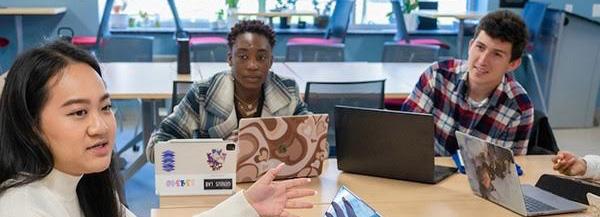
Students should learn how to appropriately manage work and leisure time. Courtesy of Villanova University
Does Villanova Value Legacy Students Too Much?
Kaitlin Lawrenson Staff Writer
Continued from p.1
something that my father worked hard to build. From performing well in classes to attempting to become involved on campus, I feel a duty to make my family proud because of the connections I have. People know I am my father’s daughter, and this sense of responsibility hangs over my head as I remember that I am not just representing myself but my entire family.
Senior Nora Tiffen has had both of her parents walk through the streets of Villanova, and she has her own story to share.
“I think because my parents went to Villanova I feel a deep connection to the school,” Tiffen said. “I’ve heard so many stories about their time here, and it really positively affected my view entering into school because I could see how positive it was for them, so I knew it would be for me.”
I share a similar sentiment to Tiffen. The legacy status many have does not mean an automatic five-star treatment. It is an internal meaning that we carry within us. Growing up, we saw how much this place meant to our parents in their formative years, and seeing them carry their experiences for decades opened our eyes to how lucky we are to have the same opportunity.
The stigma around legacy students on this campus has become infamous over the years, and I understand why. However as someone living this experience every day, there is so much more to being a legacy. I am incredibly blessed to have such strong emotional connections to this University and the people here. But I also know what it is like to feel an additional sense of pressure or even judgment from people who question if I got here on my own.
At the end of the day, being a legacy is not about entitlement or advantage. It is about inheritance in its truest form. It is
Liam Foley Staff Writer
the inheritance of stories, values, expectations and love for a place that has shaped generations before me and continues to shape who I am becoming. I did not arrive at Villanova carried by my last name. I arrived with it, carrying both its pride and its weight.
Like every student here, I work, struggle, question and grow in these classrooms and hallways. However, the difference is that I understand, perhaps more deeply, what this place and campus can give back if you let it. Legacy is not a shortcut. It is a commitment. And for those of us who live it, Villanova is where our family’s story continues.
Reflections On AI And Global Power
increasingly reducing their reliance on overt coercive force.
Artificial intelligence is a relatively new human invention, and its development will continue to rapidly change the world. It remains unclear, however, whether AI will ultimately benefit or risk humanity. It has the potential to slash health care costs, fundamentally reshape transportation, and radically expand access to education and knowledge. However, AI will continue to make political repression cheaper, subtler and more scalable than any technology before.
The development of AI risks two potential geopolitical disasters: the entrenching of existing authoritarian regimes and the empowering of authoritarian actors within democracies, a dynamic that places the United States at risk.
Modern authoritarian regimes possess a strategic advantage unparalleled in history: artificial intelligence. With the implementation of various AI technologies, authoritarian leaders are better able to avoid physical repression of their citizens. This is crucial, as authoritarian regimes relentlessly balance the suppression of dissent with the maintenance of favorable public perceptions. The 16th-century philosopher Niccolo Machiavelli warns in “The Prince” that a ruler must perfect the delicate balance. This still applies. Physical repression may be necessary for autocrats, but it carries steep political costs. AI now enables authoritarian leaders to simultaneously increase compliance while
This has, and will continue to be, primarily executed through psychological manipulation by AI. We live in an era defined by smartphones and social media. These technologies possess the capacity not only to shape what individuals see, but also how they think, eroding personal agency as users internalize the values and narratives repeatedly reinforced to them. If implemented well, a sophisticated algorithm can restructure someone’s political reality. Dissent is filtered out before it can even take form. Authoritarian regimes such as China, Russia and Iran have begun to operationalize this approach, and it will only succeed more as AI develops.
Beyond shaping perception, AI also equips contemporary authoritarian regimes with indirect and less detectable mechanisms of repression. Over the last decade, the CCP, for example, has installed a “City Brain” AI system that automates surveillance and aggregates large amounts of intelligence to track the behavior of citizens. Even if it reduces crime, its more significant function lies in enabling the social credit system, which uses AI-driven tools like City Brain to evaluate citizens based on legal and political behavior. Reduced credit scores limit educational and employment opportunities, making dissent costly through automated social and economic penalties. Even when physical repression becomes necessary, aggregate AI systems allow authoritarian regimes to deploy it selectively and strategically.
In addition to enhancing already present autocracies, AI risks accelerating democratic backsliding. The primary mechanism for how this happens is the displacement of human intelligence networks. These traditionally function as internal checks and balances within democratic systems. In democratic systems, overt authoritarian actions typically provoke resistance not only from the public but also from the human agents and institutions responsible for enforcing them. If forms of AI increasingly use these law enforcement networks, authoritarian measures can be executed more covertly, efficiently and with fewer internal constraints. AI will affect power structures similarly to how it affects labor markets, increasingly consolidating the value at the top. AI concentrates extraordinary power among geopolitical and economic elites, enabling authoritarian intelligence operations controlled by a small ruling circle and automated systems.
The question, then, is whether the United States is a democracy in which its political and economic elites can be trusted to wield this emerging power responsibly. If so, the risk may be manageable. If not, these conversations are urgent and unavoidable. Would technocrats assist or deliberately overlook warning signs of an authoritarian actor in exchange for greater wealth and influence?
I fear the answer is yes. While I cannot know this with certainty, I am making a reasoned judgment based on my assessment of the moral behavior of many technocrats. It has been proven that Mark Zuckerberg
was aware early on that social media algorithms amplified sexual and violent content. Yet he allowed this to continue because it boosted user engagement. Additionally, Elon Musk’s advocacy for a “Universal High Income” reflects a similar willingness among technocratic elites to prioritize efficiency and profit over human dignity, framing mass labor displacement as inevitable while insulating wealth at the top. These cases suggest that concentrated economic power is distorting the moral and thus the political judgment of technocratic elites.
This concern extends to our political elites. Do any possess authoritarian tendencies? The entire Epstein situation provides tangible evidence of elite coordination, concealment, and self-preservation at the expense of public accountability. Political elites on both sides are implicated, and deception used to preserve power is a form of authoritarianism. Elites on the left have leveraged persistent identity-based division to sustain political power, while elites on the right have denied electoral outcomes and mobilized political violence.
For these reasons, I lack confidence that the current economic and political elites of the USA will resist the temptation to assist in the consolidation of power. While AI could drive genuine human and economic progress if governed justly, its misuse poses serious risks. The United States will always be a pillar of democracy, though the path forward may become increasingly turbulent as AI enters the political environment.
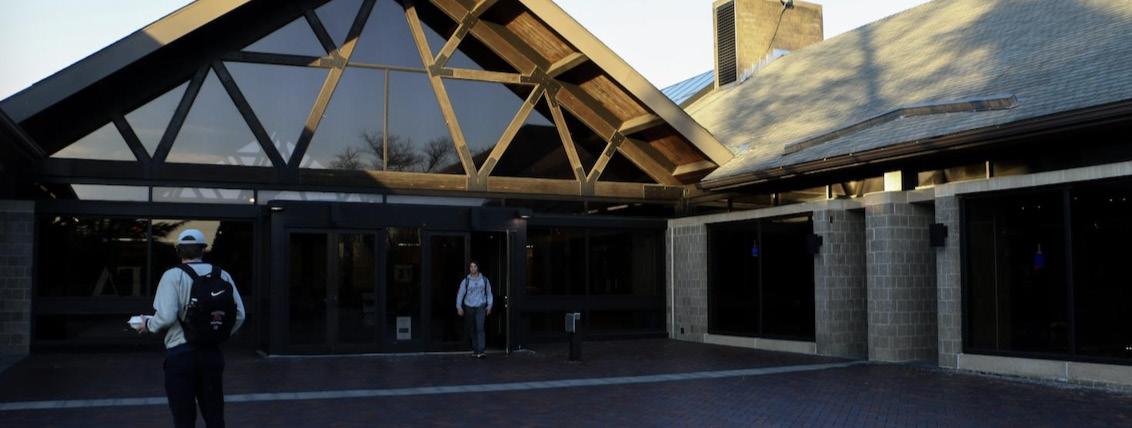
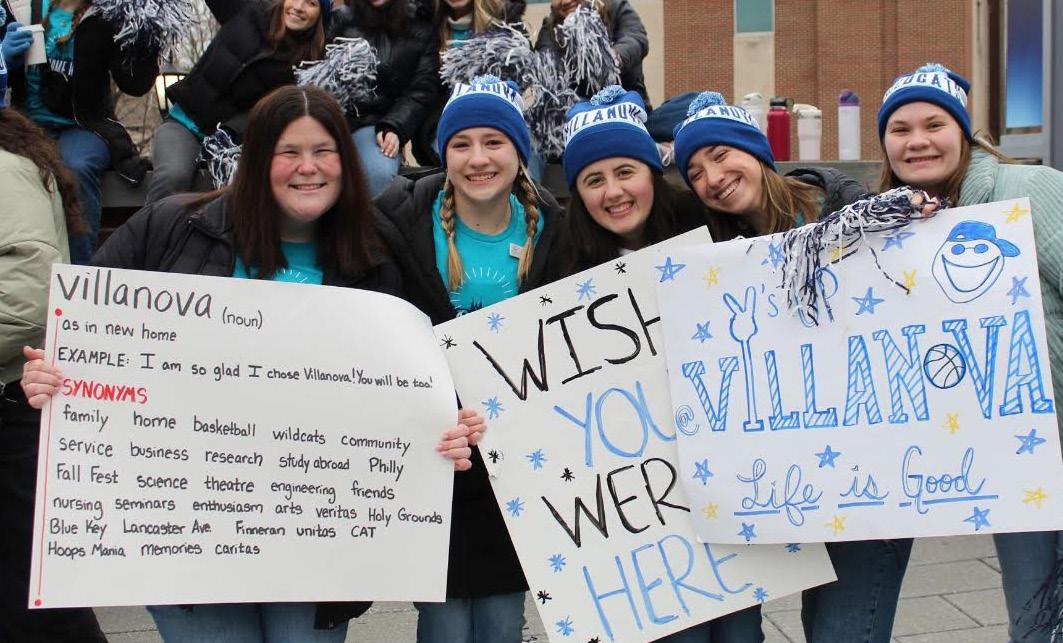
Legacy admissions is not meant to be a shortcut. Lauren Armstrong/Villanovan Photography
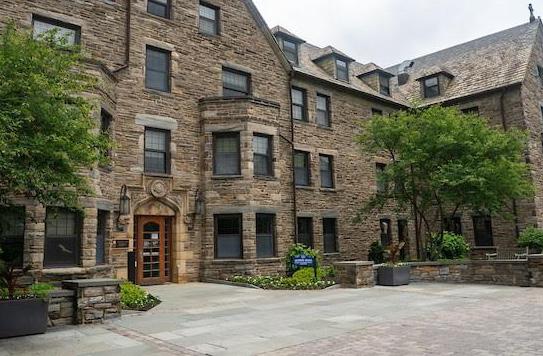
There’s an additional sense of pressure and judgement on legacy students. Courtesy of Villanova University
What's Cooking? What's Cooking?
R E F LECTION, REPENTAN C ,E LAWENER
Meat is deeply integrated into our daily lives, but it is not our only source of sustenance. As an Augustinian Catholic institution, we observe the tradition of meat abstinence on Ash Wednesday and Lenten Fridays as an act of love and solidarity. We invite you to join us in this simple sacrifice to reflect on the season.
Upcoming Events
Feb 17: Mardi Gras
Feb 19: Lunar New Year Celebration
Feb 20: Jules Pizza in COVA
Feb 26: Dirty Matcha!
Meatless features will be highlighted in all dining locations on Ash Wednesday and every Friday during Lent.
Carss Co-Culture Editor
On Friday, Feb. 6, Villanova University hosted its annual Winter Gala. The Connelly Center transformed into a glittering display, fitting for the theme of the year: “Sapphires and Silver.” From 8 p.m. to midnight, students danced, ate, mingled and celebrated with their friends.
The walls of the Connelly Center were draped in navy to create an entirely new atmosphere. The décor was subtle throughout the main body of the building but conveyed the elegance of the night very well. The dance floor, on the other hand, was all sparkles with a mirrored DJ booth and twinkling light fixtures.
While the gala was initially slow to fill up, particularly on the dance floor, after an hour or so, it was packed. The dance floor was also the best place to people watch. Everyone looked great in their best cocktail attire.
“I really enjoyed seeing my friends from all around campus come together to dance and have fun,” sophomore Anna Rupp shared. “It was my first time attending [the Winter Gala], but it definitely will not be my last.”
This sentiment can be found throughout the Connelly Center on the night of the Gala. Students who have overlooked the Gala in the past, or just completely forgotten about it, realize how impressive and exciting
Korin Kohen Co-Digital Editor
When you think of Valentine’s Day, your mind tends to go to candlelit dinners, overpriced menus and elaborate grand gestures. It’s a holiday that’s nearly impossible to ignore, marked by pink and red decorations, stuffed teddy bears and heart-shaped everything. But on campus, love looks a little different. In honor of Cupid’s Day, CatAppetite is celebrating the places that know us best: Villanova dining centers. These are places where familiar meals, unique playlists and guaranteed seats at your usual table are always waiting. It is a kind of love that goes unnoticed, but if we’re being honest, these are the relationships that truly sustain us.
Dougherty Hall: The Reliable Valentine
It would only make sense to start with our tried-and-true Dougherty Hall, better known as “Pit.” If Dougherty Hall were your Valentine, it would be the dependable one. Not flashy or one to show you off to all their friends, but there when you need them most. Pit doesn’t promise over-the-top expressions of love, but it does ensure consistency, which is a precious gift on overwhelming days. You know the layout, you know the routine and you know there will always be an option waiting. From the comforting array of soups served daily to the newly added Red Lantern
CULTURE 2026 Winter Gala Recap
this event can be.
“This year’s Winter Gala was my first time going, which is wild to admit as a senior,” senior Claire Gaza said. “I always assumed not many people attended, but I was genuinely surprised by how full Conn was.”
Another incentive to attend the Winter Gala year after year for many students is the food. The University makes the Gala feel like
a classic cocktail party with stations peppered around the Connelly Center where students can grab small bites. This year, a sushi and the return of the boba station also added to the excitement. If dancing wasn’t quite your thing, then these little pick-me-ups were the perfect fuel for exploring all of the Connelly Center as if it were a completely new place.
“The Gala has always been one of my favorite Villanova events,”
CatAppetite: Love at First Bite
station and the Home Kitchen, where you can construct your own breakfast, Pit offers reliability and safety. In fact, Pit is the kind of Valentine who never has you double-texting or questioning where you stand, which is a love language in itself.
Donahue Market: The Love You Outgrew
Naturally, it is only fair to address Pit’s number one competitor, Donahue Market. Also referred to as “Spit,” Donahue is the relationship many students fall into early on. It was exciting at first: the ice cream machine plus the extensive toppings bar, the familiar aroma of Choolah drifting across South Campus and of course, Spitfire Cantina, the makeyour-own-bowl station that feels like Villanova’s very own Chipotle. It was all you knew. It was your entire world. However, as you grew older and the distance between Main and South campus started to cause a rift, you realized that “Spit” might not be the one to settle down with. You still
junior Abby Contessa said. “The food was amazing and I had a great time dancing with my friends.”
The usual gambling tables were set up upstairs in the Art Gallery and the Commuter Lounge, where many students passed their time either playing the games or just chatting with friends in a marginally quieter area compared to the volume of the lower level.
“I had a lot of fun, which makes me wish I had gone in past years,” Gaza shared. “It’s bittersweet knowing this was both my first and last Gala.”
The night wrapped up with a slow clearing of the dance floor, last-minute pictures and fast food to-go boxes. As students exited the Connelly Center to dig through the seemingly endless racks of coats, hoping theirs hadn’t ended up on the ground, there was a deep sense of a night well-spent echoing through the emptying building.
“I’ve been to the Winter Gala multiple times, and it’s one of those events I always look forward to since it’s fun and a nice break from school,” junior Caitlyn Baker said.
The Gala happens once a year and is a unique event tailored to Villanova students, which transforms one of the most beloved parts of our campus into something even more special for just this night. It is an important event whether you’re a first-year with three more ahead of you, or a senior looking back on your final year.
relationship built on intention, some things are worth the wait.
Second Storey Deli: The High Commitment Valentine
appreciate them for what your relationship was, and sometimes you stop by out of habit or nostalgia, but they are no longer your go-to. Donahue Market may not be your Valentine this February, but they will always be your freshman year’s first love.
Café Nova: The Romantic Valentine
Finally, something I can get behind. Affectionately nicknamed as “Cova,” Café Nova is the Valentine that plans the date before you even think to ask. There is something for practically everyone, making them the kind of Valentine that can do it all. From salads, wraps and acai bowls to pizzas and even Pope Leo’s Chicago Style Hot Dog, Cova delivers variety without sacrificing charm. Whether you are in the mood for something light or something indulgent, Cova adapts, making it an easy choice no matter the day or schedule. Now, Cova is not without its faults. We have all ordered meals that have taken longer than expected. But like any
St Mary’s very own SecondStorey Deli is the one you genuinely like but cannot commit to without mentally preparing yourself first. The extensive options are endless, and unlike Cova, it can be a tad overwhelming. Every visit turns into an internal debate as you scan the menu, reconsider your instincts and wonder if you are about to make the wrong choice. You would think the very first step of simply choosing what kind of bread you want for your sandwich would be easy, until you realize there are nine options before you even get to the toppings. Second Storey is not a casual Valentine. It requires deliberation and patience. However, in return, you are guaranteed a meal and a love worth your while.
A Love Letter to Villanova Dining Centers
At the end of the day, love on campus doesn’t always look like roses and fancy reservations. It’s seen in the way our dining halls feed us on our best days and on our most exhausting ones. They are all reminders that sometimes the simplest forms of care are the ones that matter most. Some Valentines just get you, and some require a mental warm-up, but Villanova’s dining halls somehow manage to cover every relationship dynamic. Happy dining.
Cali
Students enjoyed the dance floor and delicious food at this year’s Winter Gala. Cali Carss/Villanovan Photography
Pit staples are nevery flashy, but always reliable. Courtesy of Alice Park
Ways To Celebrate Black History Month
Emma Taylor Co-Opinion Editor
This February marks the 50th anniversary of Black History Month being federally recognized. With each passing year, it’s essential to reexamine and refresh our approach to celebrating and honoring the history of African Americans.
Our political landscape is at an extremely perilous point, and it’s the responsibility of every student at Villanova to be politically active and aware of current events. On Dec. 31 in Los Angeles, an off-duty Immigration and Customs Enforcement agent fatally shot Keith Porter Jr., an African American father of two. On Jan. 22, the National Park Service removed a slavery memorial exhibit from Philadelphia’s Independence Park that honored the people enslaved by President George Washington.
There are instances across our country every day of violence and disrespect towards African Americans that serve as examples for why Black History Month shouldn’t simply be a mantra to repeat once February comes along. It should be an action phrase. It should be a continuous and conscious attempt to become more educated, more cultured and more aware.
The efforts of clubs like Villanova’s Black Student Union,
Kate Koslow Staff Writer
“I’ll have what she’s having.” It’s grand! It’s New York! It’s When Harry Met Sally! With Valentine’s Day just around the corner, it’s time to indulge in all that screams “lovey-dovey,” whether that includes chocolates, flowers or a great romantic comedy. If you’re sick of The Notebook, it’s time to try the rom-com of all rom-coms: When Harry Met Sally. Written by Nora Ephron and directed by Rob Reiner, this film is a recipe for greatness and redefines an entire genre by charming all those who watch it.
The story follows Harry, played by Billy Crystal, and Sally, played by Meg Ryan. Upon their first meeting, the two feel eager to part ways. Harry is an opinionated cynic, while Sally is a fussy optimist. In this interaction, a question is raised, setting the tone for the movie: Can men and women ever really be “just friends?” Ten years later, when they run into each other in New York, the two put this to the test, befriending each other in the most quintessential of ways. However, when feelings begin to sneak through their undeniable chemistry, viewers are left wondering: is this inevitable fate, or a perfectly imperfect match?
Billy Crystal and Meg Ryan are the most flawless cast duo ever. Crystal is hilarious and is always armed with a witty quip. He brings his classic neurotic persona and style to Harry’s character, and of course,
Consider participating in this year’s Black History Month celebrations here on campus.
BSU, hould not be ignored. They’re meant to grab your attention and encourage your participation. Villanovans should take the time to attend an event or exhibit highlighting Black History Month. Here are a couple of ideas to get you started:
In Philadelphia
Make a visit to the Philadelphia Art Museum for a survey
Photography
of African American artist Noah Davis’ work, which is centered on political and familial themes of the lived Black experience. This showcase goes through April 26, serving as a reminder that celebrating Black history is not limited to only the month of February. At the African American Museum in Philadelphia, two-time Oscar-winning costume designer Ruth E. Carter’s collection of
Reel Talk: When Harry Met Sally
we adore it. Ryan, similarly, brings her energetic charisma to the scene in this breakout role, marking the start of her lovely contribution to Nora Ephron films, such as You’ve Got Mail and Sleepless in Seattle. Both Crystal and Ryan formed a chemistry so compelling and genuine, so vulnerable and natural, that I often found myself clutching my heart and looking at the screen with a look of delighted envy.
This movie, iconic for all the right reasons, features witty dialogue that makes perfect sense. They’re the type of conversations you overhear in a cafe, the ones that make you chuckle. Some are profoundly funny, and others are surprisingly touching. The writing is something that warms the soul. This, coupled with the music by Harry Connick Jr., creates a snug and lovely ambiance that’ll have you humming, swaying and tapping.
What ties the whole thing together is the setting of New York City in the late 80s. Each scene looks like The New Yorker cover, convincing everyone that New York is the most marvelous city in the world. There’s something so romantic about it all: the buildings, the foliage, the elegance, the character! This is the real New York, almost impossible to capture in film, yet capable through Reiner’s eyes.
Now, I have the imperative duty to attempt to portray the brilliance of the late Rob Reiner, who can only be described as some kind of wonderful. He brought light and joy to his films and sets, which are displayed on screen. The man was a
Afrofuturism in Costume Design is on display. Carter is the first Black woman ever to win two Academy Awards, and the exhibit includes costumes from her time working on the Black Panther films.
Attend a show at Philly’s SOUTH Restaurant and Jazz Club, where you can grab a bite to eat of the southern-inspired food and support Black Jazz artists. Although they don’t have any events specifically geared toward Black History Month, it’s a little more upscale than normal college dining and a fun opportunity to hear live music.
At Villanova
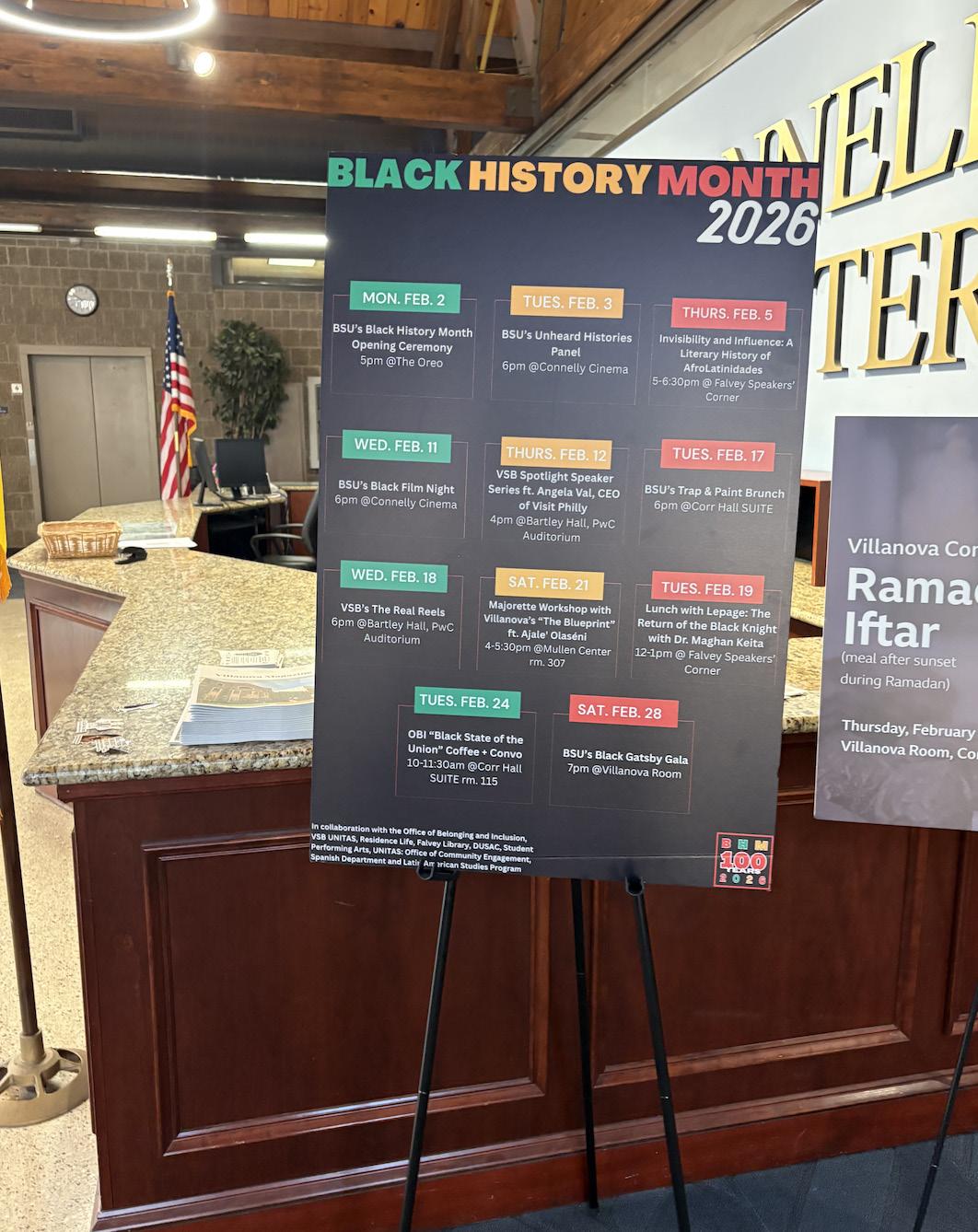
For more interactive and community-based events, stay on campus on Feb. 17 and go to BSU’s Trap and Paint brunch in Corr Hall or the Black Gatsby Gala on Feb. 22 in the Villanova Room. If you’d like a more formal, educationally focused idea, VSB Unitas’ Spotlight Speaker Series is inviting Angela Val, the CEO of Visit Philly, to speak on Feb. 12.
Honoring Black History Month looks different for everyone. Find an event that aligns with your interests. Taking the time to listen to and learn from Black voices is more important than ever. We can repost stories and preach about the events we have around campus all we want, but it won’t make a difference unless students actually attend and care.
legend, beloved by all who had the pleasure of meeting him. When Harry Met Sally, especially, proved special, as the movie wasn’t originally bound to be a love story until Reiner met his wife during production, and then believed in the unquestionable power of love. His romantic epiphany turned this story into the classic we know.
All I can say is, to all the sin-
gles gals and fellas out there, watch with both caution and hope. When Harry Met Sally is one of those movies that reminds us that true love isn’t always grandiose, nor is it always instantaneous. Often, it builds over the years, woven through imperfections, friendship and laughter. Like pieces in a puzzle, you’ll catch yourself looking at a loved one and think: It had to be you.
Erick Quezada/Villanovan
Nothing says When Harry Met Sally like the New York City skyline in the fall. Korin Kohen/Villanovan Photography
Love On Lancaster: The Greatest Love(s) Of My Life
Maggie Fitzgerald Co-Culture Editor
Ah, Valentine’s Day. The holiday of true love is upon us. If the sun still rises in the morning and sets at night, you can expect this month to be as red as usual. Stores will be filled with heart-themed treats, seasonal lattes will somehow be chocolate-covered strawberry flavored, restaurant reservations will be impossible to acquire and your favorite couples will be as insufferably in love as ever. Whether you love it or hate it, Feb. 14 is nothing if not predictable. So, for the sake of sanity, I figured we would take a break from all the romance and talk about an even greater love: friendship. I have never been in love. Not even close. Not even a little bit. And yet, if I had to describe my 20 years on earth, I would tell you they are filled with love. Ever since I can remember, I have been surrounded by the feeling of overwhelming love. Beginning with my good old days of playgroup, it’s always been my girls and me. What more do you really need? In every season of my life, they have been as constant as cringy Valentine’s Day posts. So, if you’re tuning in this week without a coveted Valentine to buy you flowers or chocolates, that is perfectly fine. Love is all around us, and it comes in many forms, none of which should be overlooked or discounted. So, let’s hear it for the loveliest of them all: friends.
My Home Team
While some people leave high school desperate to escape their hometown, I arrived at college terrified to face the world without my best friends by my side. In our dreaded
final summer together, each time one of the eight of us departed, it felt like losing a limb. We would ceremonially congregate on each other’s driveway the night before, giving one last group hug, desperate to hold onto the years of memories together. In a college context, it often feels derogatory to refer to “home friends,” but there is no underlying meaning here: they are my home. Every break, returning to my cluster of girls is like coming up for air. Without fail, we assemble at our table in Peet’s Coffee on Ogden Avenue, everyone trickling in and grabbing a chair as months’ worth of stories are unraveled. Somehow, nothing ever changes. We are always
the same. So, this Valentine’s Day, be sure to send your home team some love. They deserve it.
The Main Liners
There is a uniqueness to college friendships that simply cannot be replicated elsewhere. You go from total strangers, blissfully unaware of each other’s existence, to spending every waking moment together. Whether they were a friend of a friend of a friend or the girls from down the hall, meeting your friends in college is a strange mix of fate and circumstance. Somehow it works out beautifully. While my time at Villanova has certainly had its ups and downs, I have
clung to my friends through it all. Whether we met speed dating in our Orientation group, found each other in sorority big-little, were neighbors in the dreaded Delurey Hall, studied abroad in Paris or became friends in the office of The Villanovan, I have acquired my own little roster of Main Liners. They have made my experience at this school. At some point, my weekly Pit dinner companions became my roommates, my best friends, my potential wedding party and most certainly my family. Happy Valentine’s Day, Wildcats.
Wombmates
Sorry for the visual, but this was the most on-theme way I could think of describing my final subsect of friends: my sisters. Ah, if I alluded to the fact that my friends know me well, you thought wrong. Nobody, absolutely no one, knows me like my sisters. Frankly, none of you knows me at all. It is so wonderful that we can reserve our most authentic, raw versions of ourselves for our family. This, of course, translates to my largest adult temper tantrums, non-verbal crashouts, intense screaming matches over borrowed clothes and any other remotely unflattering behavior I have ever exhibited in my life. No matter the fights or momentary feuds, there is nothing stronger than the bond of siblings. So, shoutout to my lovely sisters. I look forward to nothing more than sharing the rest of our best and worst moments alongside each other. Whether you are single, happily in love or in an awkwardly complicated situationship (good luck), I hope this week’s edition allows you to reflect on all the love in your life. To my girls: Happy Valentine’s Day. I love ya.
History Society Depicts Latin American History
Chris Brown Staff Writer
What sides of history have been lost to time? What are some facts you would not hear about in your middle school textbook? How could people apply the lessons of the past to the reality of the present?
On Feb. 5, students gathered in Bartley Hall for an event organized by the Villanova History Society: From Intervention to Immigration: U.S. Empire and Latin America in Historical Perspective. Students were treated to an eye-opening presentation by Dr. Oscar Aponte, an Assistant Professor of History in CLAS who specializes in Latin American and Caribbean history.
“I came to this because a lot is happening in our country right now,” freshman Karolina Matejczyk said. “I’m interested to hear about the perspective of someone here at Villanova. I’m looking to broaden my perspective and see another point of view.”
Aponte’s presentation highlighted how the history of intervention and immigration in the U.S. extends back to when Christopher Columbus made the existence of the Americas known to European powers. A much
lesser-known fact about the U.S. is the number of Latin American and Spanish settlements that have often been excluded from common textbooks.
One of the examples that Aponte discussed was St. Augustine, the oldest continuously inhabited European-established settlement in the U.S. St. Augustine was founded by the Spanish in 1565 in what is now Florida.
Spanish Florida, especially around St. Augustine, was one of the places where enslaved people from British colonies commonly sought freedom. This made them vulnerable to British colonies invading for the purpose of getting their slaves back and inevitably taking the land for themselves.
Another topic discussed by Aponte was the concept of “Manifest Destiny,” introduced by John O’Sullivan in 1845, that Americans had a God-given right to expand their territories across North America. This idea fueled the U.S. annexation of Mexican territories, resulting in the Mexican-American War, which lasted from 1846 to 1848.
The result of this war was a treaty in which Mexico would relinquish many of its territories to the U.S., including California, Nevada, Utah, Texas and New
Mexico. This led to the California Gold Rush of 1849, when news broke that large reserves of gold could be found all over the newly acquired territory.
As the presentation noted, territorial conquests like these led to the U.S. becoming the global superpower it is today, with the outcome of the Spanish-American War of 1898 being another strong example. After this war, Spain ceded multiple territories to the U.S. Cuba, though gaining formal independence from Spain, was now under strong U.S. influence, and Puerto Rico remains a U.S. territory to this day. Another source of conflict concerned the Panama Canal, which officially opened to traffic in 1914. When Panama achieved formal independence from Colombia in the early 1900s with U.S. support, the U.S. built the Panama Canal Zone and established itself as a global superpower. Relations between the U.S. and Panama were marked by conflict for decades over how much influence the U.S. should have over the region, eventually culminating in the capture of dictator Manuel Antonio Noriega in 1989.
The presentation compared it to the capture of Nicholas Maduro of Venezuela, another dicta -
tor, and how the U.S. can sometimes intervene in foreign affairs for reasons that are not entirely altruistic. How many knew that oil companies were informed of the plan to attack before any military forces? This raises the question of what grounds the U.S. has to kidnap a foreign person, and how much do means, motivations and outcomes all affect each other?
“I think one of the main things I’d say is more discussion and awareness, especially about the voices that have been silenced and unfortunately only continuing to be silenced,” Villanova History Society Vice President Natalie Murphy said.
“It’s to always be reading with a critical lens,” History Society President Madeline Nesbit emphasized. “A lot of silence exists within the archival process. Try to see all of the context, what’s missing, and what’s there. Take account of all the perspectives of all people being affected by events and who may have been affected.”
Students interested in the History Society can find more information on VUGroups or on Instagram, @villanovahistorysociety. Dr. Aponte also plans to have artwork correlated to his research posted outside the VU Art Gallery in mid-March.
Nothing says home like returning to your lifelong friends. Maggie Fitzgerald/Villanovan Photography
Unpacked: 48 Hours In Switzerland
Emma Cote Abroad Correspondent
Before you go abroad, many people in your life will tell you that you’re going to learn a lot about yourself. I always figured these lessons may be derived from extravagant experiences that I have come across on my social media for years.
Whether it is camelback rides in Morocco, skydiving in the Alps or boat cruises in Budapest, it had always seemed as though there was a correlation between the grandeur of an activity and the extent to which it is transformative.
While it’s only week two, I’ve already come to discover how much you actually learn about yourself when the glamorous aspects of abroad lull.
This week, I found the most value in spending nearly seven hours in an English pub in Switzerland. I knew that the first trip out of my home base would serve primarily as a trial run and likely serve to help me understand what not to do going forward. Our group journeyed to Zurich with lofty ambitions of seeing as much of the small country as possible in a mere two days.
We concluded that there would be no better way to achieve this aspiration than a 12-hour bus tour, allowing us to trek through Grindelwald, Lauterbrunnen and Interlaken.
As we crossed our Schengen area neighbors’ borders, it became increasingly evident that we would
Natalie Hyde Staff Writer
have to sacrifice sleep for exploration. So that next morning, we boarded our crowded double-decker bus as the sun rose beyond the city.
Coursing through valleys and trudging up steep mountain passes, we reached the unbelievably beautiful Grindelwald. The 25-minute cable car ride to its peak allowed us to have the best view of paragliders passing overhead, skiers hitting the slopes and the sledgers racing down the mountain. The uniform yet charming architecture, vast snowy landscapes and diversity of visitors in Switzerland made each minute on the tour interesting.
We chose to spend said time walking the cliffside and ziplining down the Alps. Admittedly, casually writing about this experience is an incredibly strange process, because both activities were some of the coolest
things I’ve ever been able to do while travelling.
We stayed tremendously busy at each stop, and even upon returning to our hostel back in Zurich, we spent that same night exploring the city. Coming off of such an incredible day, my confidence about planning trips was high. Sunday, however, was radically different.
Nearly all stores are closed on Sundays in Switzerland, and so we aimlessly strolled the streets, and our “cultural” cuisine consisted of strictly Starbucks and McDonald’s.
Absolutely exhausted, we then made our way to a pub that was showing the Super Bowl that night. The earliest reservation available was 9:30 p.m., and so, by the time we left for the airport, it was 4 a.m. in Switzerland. I felt so immensely defeated, and not just because I was watching
my quarterback get sacked six times during the game.
Eventually, during our lengthy pub visit, a woman from Manchester, England, asked to sit in our booth. The conversation helped us stay awake, and we discussed our travels, interests and homes.
“You know,” she said, “it’s so cool that you guys are here for this game. This is such a cool experience.” I honestly hadn’t even given the fact that we were watching the Super Bowl in Switzerland much thought. Mostly because I had been consumed by the extreme sports and sights I had assumed would be the most formative.
However, I know the stories I end up reflecting on the most will certainly be those seven hours fighting sleep in the pub, or us deliriously laughing in the train station at 5 a.m. as we raced to make our flights.
While planning is always a good idea, this first trip to Switzerland taught me to take a step back from what I’m doing. It’s incredibly easy to feel as though you’re not making the “most” of being abroad because you’re not jumping out of a plane or making stops at each wonder of the world.
Often, my slower moments at Villanova are the ones I find myself thinking about while abroad. It is the basic elements of life on campus that I have easily taken for granted and now miss.
The extravagant activities certainly make for valuable experiences, but making memories out of the slow moments is equally important.
Heart Of The Matter: Love Admissions
In order to maintain the essence of Heart of the Matter, the students who share their hearts with us will remain anonymous.
Whether or not you have a reservation at Veekoo for two this Saturday is irrelevant. Unfortunately for you, Valentine’s Day is once again around the corner, and there is no escaping it. Delete Instagram to avoid the inevitable realization that everyone but you seems to be in a relationship. Make a Galentine’s Day charcuterie board and pretend it’s better than La Scala’s. Fake an illness to justify your staying in or amp up the talking stage to get a free box of chocolates. Pick your poison. This is a judgment-free zone.
Although we can put forth a cynical act this holiday, or maybe you are one of the lucky ones, none of us is exempt from wanting love. What I have learned is that we are all participants in some form of modern love.
Let’s test my theory. Do you aggressively reread texts before responding, putting in more editing work than you do with your class papers? Do you suddenly become a behavioral analyst when someone uses a period instead of an exclamation point? Have you ever told your friends you “don’t care” when you care too much? Do you wait to respond around the seven-minute mark so it looks like you were busy and not waiting around?
I thought so. Don’t panic. There is no shame in this game. To-
day’s love has evolved. It’s certainly not writing sonnets by the Oreo or playing from boomboxes outside of Sheehan. It’s far subtler. Love today takes on a different form than Shakespeare could have envisioned in his infinite wisdom. It comes through texts, memes, playlists and LinkedIn stalking. It’s confusing, self-aware, perhaps unserious and very human.
I, for one, talk about love constantly. In group chats, long car rides and half-serious hypotheticals, yet there’s still a category of thoughts I rarely volunteer out loud. The slightly embarrassing ones. The contradictory ones. The ones that reveal I care more than I’d like to confess.
Curious about how this experience plays out on Villanova’s campus, I asked students one anonymous question: What is one thing about love you wouldn’t normally admit?
Once again, I was impressed by my peers. For a typically awkward subject, people had lots of thoughts. Let me break it down for you.
The Analysis of it All
You are not in love. You are investigating. The fun part of dating is the research, where there is a constant deciphering of the unknown, with baseless advice from your friends who know just as little as you do.
“I reread texts far more than I like to admit.”
“I draft responses in my notes app and then send them to my friends to make me sound funnier.”
“I find their Spotify playlist and judge from there.”
“I look at their Instagram to see what they like and then casually bring it up in conversation.”
Romance may be timeless, but its metrics have evolved. Thanks to the digital age, we now have receipts and those receipts are put to use.
The Balancing Act
Another theme emerged during my conversations: the push and pull between independence and connection. The fine line between acting like you don’t care and caring enough so they don’t start talking to other people.
We want attention, but in a cool, effortless way that implies we do not need it. Here’s what Villanovans had to say:
“I want to seem low mainte-
nance, but I think I may be incredibly high maintenance.”
“I get attached really easily but lie to my friends and tell them I don’t like them.”
Bottom line: vulnerability is scary.
We can all pretend we care less than we do, but are we fooling anyone? The art of detachment is a performance. We are all pretending a little.
I don’t have any dramatic conclusions from this exercise. I cannot explain what love means for our generation. But take this collection of small truths as proof that we are all navigating connections.
Beneath the irony and the analysis, one thing is clear: people still care. How they show it, now that is an entirely different ballgame.
The peaks of Switzerland were Emma’s writing desk this week. Emma Cote/Villanovan Photography
In lieu of a date, spend the night making treat boards with your friends. Maggie Fitzgerald/Villanovan Photography
Lawtino: VU’s First Hispanic Pre-Law Society
Cali Carss Co-Culture Editor
On a campus full of ambitious, forward-thinking students, it is no surprise that many pre-law clubs and societies have formed for students from all walks of life. However, Villanova did not have an organization dedicated solely to Hispanic students interested in pre-law resources until now. Lawtino Villanova, founded by sophomores Alondra Calva-Giron and Emily Melo, just held its first general body meeting after being established on campus this semester.
“We work to bridge the gap in Hispanic representation within the legal field,” Calva-Giron said. “We do that through professional development, internship resources, LSAT prep. We do that while navigating real-world challenges and also our cultural challenges as Hispanics in the legal field.”
The legal field can seem foggy and intimidating to students who have never been exposed to resources, experience and information. The point of joining a pre-law society is to clear much of that uncertainty up. With a particular focus on their own community, the co-founders of Lawtino are cultivating a uniquely tailored environment to Hispanic students on Villanova’s campus.
“I’m very passionate about Hispanic initiatives, especially on a campus like Villanova being a PWI,” Calva-Giron said. “I felt that I didn’t really have a space to go to when it
Lauren Armstrong Senior Columnist
Dear Seniors,
You know the old saying, “Time flies when you are having fun.” That is how I feel about my time at Villanova over the past three and a half years.
As I write this letter, we are officially under 100 days until graduation, and there has been an unspoken agreement amongst the senior class to savor it.
came to really navigating what career I wanted to do.”
Identity is incredibly important to the inception and mission of this club. Even beyond the educational and professional value of joining a pre-law society, the simple solidarity of creating this new community is important in its own right.
“[I wanted to] create a space on campus where we all share a cultural identity while working through the challenges of what it means for us to go to law school,” Calva-Giron explained.
Calva-Giron and Melo saw their vision realized when they held their inaugural meeting on Tuesday, Feb. 3. They had tempered their expectations at first, as new clubs
might often take a few weeks to truly gain a consistent base. However, those expectations were far exceeded. From supportive friends and potential new e-board members to interested freshmen who braved the meeting on their own, the co-founders were left with an impressive turnout.
“I was surprised by the turnout and super thankful for everyone that came,” Calva-Giron said. “I was really nervous [at first], but honestly everyone there just had such a positive energy that it just took the awkwardness away from me.”
Emboldened by the success of their first meeting, Calva-Giron and Melo already have countless ideas for how Lawtino can expand and offer more to its growing community. Once
its e-board is finalized, this club will be ready to take off.
“We’re looking to do an off-campus event with a business law firm,” Calva-Giron shared. “Then also, [we’re planning] a ‘Noche Networking’ event, or ‘night of networking,’ on campus, where we’re going to invite faculty and other people in the professional legal field. We’re also hoping to host a Jeopardy LSAT night.”
With so much to look forward to, it is no wonder that Lawtino has already seen such encouraging numbers at their meetings. The co-founders worked for months last semester to bring this idea into reality, and becoming established is only the beginning.
It can be easy to become bogged down by Villanova’s over-involvement culture, but clubs like this can ground students in their career goals. Exposure to the legal field and other students interested in pursuing similar career paths is critical to the process of deciding one’s plan beyond Villanova.
“If I were to tell [students] one thing, it would be to not be afraid to join the club and seek help and talk to people,” Calva-Giron said. “I feel like we never really get that exposure … and it will bring you to that and help you to see if you’re really interested in the legal field.”
Lawtino’s next event will be a Jeopardy night on Tuesday, Feb. 24. Updates on its events and the resources they have available can be found on its Instagram @lawtinovillanova.
Letters From Lauren: Time Flies
There were moments when you would see the girl who lived down the hall freshman year, standing next to the girl you became friends with just earlier this year.
Spending the night with the people who have made Villanova feel like home, 100 Days Til Graduation was a night of nostalgia mixed with excitement for the future. It was a preview of what is scheduled to come during senior week in May.
Yet, we cannot help but think ahead. In a few months, we will be moving across the country, back home, to different nations, or staying here at Villanova for additional degrees. I have gone back and forth throughout senior year on whether I am ready for the change that comes with graduation.
College has been an experience so unique within itself that it is incomparable to any other. The highs, the lows, the opportunities and the growth throughout four years have shaped us into the people we are, and who we will be when we enter post-graduate life.
On Feb. 5, 2026, Villanova seniors were invited to attend the 100 Days Til Graduation Event at the Ardmore Music Hall. The event, essentially the senior class prom, included photo opportunities, food and drink, music and the chance to be surrounded by the rest of the senior class, for one of the last times.
“It is a weird feeling since all these events are centered around celebration, and they are supposed to be fun,” senior Claire Gaza said. “But it is also all a constant reminder that everything is coming to an end, which can feel really sad. I am ready to be done with school and classes, but I am not ready to leave my friends.”
It hit me for the first time in December, when I was celebrating some friends who were graduating a semester early, that this truly is it.
Seeing them move out of their apartments and begin their full-time jobs made me realize that in 97 days, that will be the rest of us.
Villanova has taught all of us seniors a lot. It has allowed us to learn life lessons we would not have otherwise, and we have learned plenty in the classroom as well.
“[Next year] I am going to grad school, and I am thrilled by how well prepared my Villanova education has made me for this
Time is flying for the Class of 2026, who just celebrated its 100-day mark. Lauren Armstrong/Villanovan Photography
next step,” senior Gabi Frank said. My classes have taught me a lot. But I have learned more through the people I have met and the experiences I have lived. The biggest lesson? Change is fundamental to our identity. Change, while inherently scary, has formed who we are. Change
will also form who we become throughout the rest of our lives after school ends.
So, with just 97 more days until May 19, seniors, are we ready for this change?
With love always, Lauren
Lawtino’s first GBM was a success, with friends and interested students coming to support. Courtesy of Alondra Calva-Giron
A Villanova Guide To Life Everywhere: Vienna Waits
Sophie Latessa Managing Editor
Dear reader,
This weekend, I traveled to Vienna, which had me pondering the wisdom imparted by the great Billy Joel in his song of the same name. This song is one of my alltime favorites and was introduced to me by my parents, who would play it for me as an infant in a futile effort to get me to fall asleep. The meaning behind the song, though, has become increasingly clear to me as I have grown up.
Plus, perhaps I am feeling slightly introspective after visiting Billy’s city of inspiration. It seems I may even feel as though Billy and I are now on a first-name basis. Let’s unpack some of his classic lyrics together, shall we?
“Where’s the fire, what’s the hurry about?”
One of the first things I noticed in Vienna was the slower pace of life. The streets were generally quiet, and people walked slowly, taking in the sights. When I visited St. Stephen’s Cathedral, almost every single person took the time to light a candle in the church. In comparison to college life, this European lifestyle can feel like it’s moving at a snail’s pace, but maybe that’s not such a bad thing.
At Villanova, we tend to
overbook ourselves to the very last minute. We calculate exactly how many club meetings, social activities and hours in the library we can squeeze into one day. People zoom by, walking with their heads down as if they are late to coffee with the Pope. But seriously, what is the hurry about? An admitted critic of slow walkers on campus, I’m starting to think it might be nice if we all strolled a little more often.
“You’re so ahead of yourself, that you forgot what you need.”
Like many Villanovans, I write everything in my planner and evaluate the success of my
day based on how many things I check off. As college has progressed, I realized that this approach, while sometimes efficient, is far from a life-changing secret to success.
In fact, it can be quite the opposite. If you’re always one step ahead, you’re going to miss all the worthwhile parts of the day. You will miss everything that isn’t on your list.
Even for my trip to Vienna, we curated a list of things we wanted to see (based on TikTok recommendations, obviously). All the sights were wonderful, but sometimes the unexpected detours are part of what makes a trip memorable, too.
At some point, you need to take a break from checking things off and make sure you enjoy yourself.
You need to wander long enough to find a whimsical pizza restaurant in Vienna housed inside a tent, and you need to share the mic with strangers during karaoke at an Austrian study abroad bar. You need a lemon muffin from Holy Grounds, a walk around the South Campus neighborhoods and a debrief with your roommate at the end of a long day. Little things make a difference.
“Take the phone off the hook and disappear for a while.”
This one is way easier said than done. As delightful as it sounds to just go completely off the grid, it is nearly impossible in this day and age. I must admit I was in a constant state of photo taking.
I think perhaps a more achievable way to interpret Billy’s advice here is to say that each of us is capable of striking out and discovering the world on our own, away from the familiar. This is a feeling many of us relate to, having ventured to Villanova in the first place.
“Take the phone off the hook” is a strong choice of words considering the quantity of calls my mom received from me during freshman year (and still receives now). But the lesson stands: we need to go out and experience the unknown for ourselves to learn.
The Room Where It Happens: Partial Shutdown
Hudson Zivic Staff Writer
The phrase “history repeats itself” is widely known and often used for various reasons.
It highlights recurring patterns in human behavior, societal trends and historical or political events.
That’s where Hamilton: An American Musical comes in. The comparison for this analysis: Is history really repeating itself?
By examining a quote from the musical alongside a contemporary political story, we can explore whether the ideals, conflicts and ambitions that shaped the early republic are echoing in current events, or if what appears familiar is simply history’s rhyming, not its repetition.
The U.S. recently went through a partial federal government shutdown, and the lyric: “our cabinet’s fractured into factions” stands out. In the musical, the line captures the growing ideological divide during the George Washington administration.
Disagreements between Alexander Hamilton, Thomas Jefferson and James Madison threatened the stability of the young nation, as the cabinet’s factions were rooted in opposing visions for America’s future. This represents how internal division can undermine governance even in moments of national urgency.
The same tension is surfacing in the modern day as Congress
failed to pass a comprehensive spending agreement, which triggered a partial shutdown that disrupted federal operations nationwide. Agencies scaled back or halted work entirely, public services were delayed and thousands of federal employees were furloughed or required to continue working without pay.
While shutdowns have become a familiar part of contemporary politics, each time reflects deeper structural and ideological divisions that remain unresolved. Much like the cabinet dispute in Hamilton , the conflict was not just about budgets, but about competing priorities, political leverage and control over the direction of the government.
The shutdown exposed fractures not only between political parties but also within them. Lawmakers disagreed on funding allocations, immigration-related provisions and the role of federal authority, creating an environment where compromise proved difficult.
These divisions mirror the factional struggles of the early nation, where personal ambition and ideological rigidity often outweighed collective responsibility. In both eras, leadership became fragmented, and governance slowed as a result.
Eventually, Congress passed a spending deal to end the partial shutdown, restoring funding to most federal agencies and guaranteeing back pay for furloughed federal workers. But the
narrow gaps and debate surrounding the vote underscored how fragile the consensus has become.
Rather than signaling unity, the resolution highlighted how governance now often functions through temporary agreements instead of lasting solutions. Like in Hamilton , the factions may pull back from conflict, but the divisions driving them still continue to shape governance.
While the structure of government has evolved, the struggle between cooperation and division continues to shape political outcomes.
Once again, history is echoing its past, as struggles are different based on how leaders respond moving forward.
“Our cabinet’s fractured into factions” serves not just as a historical observation, but also as a warning: democracy’s greatest challenge is not external threat, but internal division.
This recent shutdown raises another question: can a government fractured by factions still function effectively? The founders understood factionalism as both inevitable and dangerous, a force that could energize debate while also threatening stability, and that tension remains.
Vienna, Austria reminded Sophie of the life lessons her favorite song holds. Sophie Latessa/Villanovan Photography
The partial shutdown that took hold reveals deeper tensions simmering in D.C. Dylan Johnson/Villanovan Photography
VillaVogue: The Good And The Bad…At The Grammys
Ciara Dursee Co-Digital Editor
The 2026 Grammy Awards: the Academy’s annual awarding of top music artists, and the world’s worst outfits. No, I’m kidding. But there definitely was a fair share of peculiar styles artists gravitated towards on the red carpet.
There’s a trending video describing when a group of friends get together and don’t discuss the dress code. The punchline is the variety of styles brought to the dinner date: athletic clothes, loungewear or a full-beat going-out outfit. The 2026 Grammy Awards encapsulated this social media phenomenon. There was a chaotic split between sleek, timeless, classy elegance and completely absurd fashion choices.
Celebrities tend to embrace that shock value which makes it all the more entertaining. There are simply no rules. Stars like Tate McRae, Noah Kahan and Benson Boone can wear elegant gowns and tuxedos by prestigious designers. You can even show up in a black swan inspired Matières Fécales feathered couture gown. Or maybe that’s just Lady Gaga.
With this year’s collection of the good, the bad and the ugly, it was clear who fit under each category.
Sabrina Carpenter: Angelic on the carpet. Captivating on the stage. Multi-Grammy nominee Sabrina Carpenter took a demure route in a Valentino gown on the carpet before changing for her show-stopping per-
Massimo DiLeo Staff Writer
formance. The sheer glimmer with a ruffle tiered skirt was her pre-show attire. She looked fabulous.
Sombr: Record of the Year nominee came with confidence.
The glitter suit with red accents and sequins was slightly obnoxious. The pointed shoes he chose to pair the ensemble with were questionable. However, he was saved by his lacetrimmed shirt by Valentino.
Olivia Dean: The Best New Artist winner wore a Chanel gown. The sparkling black bodice came down to feathered embellishments around the waist. The ballroom skirt made her even more princess-like. For me, this was one of the top looks of the night. Simply stunning.
Chappell Roan: I think we all
expect her to throw us for a loop. Roan is known for her red carpet debuts to be full of wildly chaotic dresses and exotic makeup. She paired her red chiffon cape with the rest of her minimalistic custom Mulgar gown that hung from her nipple rings. There was an audible gasp that shook the room when my friends and I witnessed this one. I couldn’t help but wince.
Justin Bieber: From a perfect pair on the carpet with his wife, Hailey, to half-naked on stage for his performance. Justin wore a classy Balenciaga tuxedo standing with Hailey in Alaia. Both minimalistic and fully black from head to toe. That was until his live performance. My friend Lilly said it best: “Justin Bieber can literally
do anything he wants.” Like go up on stage, play a fantastic acoustic version of his top song…in boxer shorts. A metaphor for raw talent? Let’s go with that.
Bad Bunny: Swept the awards with three huge recognitions, including Album of the Year. Bad Bunny accepted each award in style. His sleek tuxedo from Schiaparelli was nothing short of perfection.
Addison Rae: This may be a controversial one. I felt like her dress was designed backwards. Her Alaia gown draped long in the front and short in the back. The deep v-neck line and asymmetrical structure was not appealing.
Lady Gaga: She has really lived up to her recently released album “Mayhem. Her black swan-inspired look was d”efinitely a unique choice to start with. She then moved to wearing a headpiece that resembled a straw basket. Her performance was impeccable. Her style was one of a kind.
Shaboozey: His split between a casual Saturday afternoon and half black tie was amusing. He paired an average tuxedo with a black train conductor hat and bow-tie. Blue jeans on the bottom. His look might’ve been a tad strange, but I adored execution to tease indecisiveness.
Honorable mentions: Kesha in her ratty blanket-like dress that smothered her. Fka Twigs with a dress that looked fitting for Halloween. Heidi Klum essentially shuffling around in solid plastic fitted to her body, making it impossible to walk normally. Miley Cyrus covered in random items.
Sit-Down With Arcadia’s Dramaturg
So, for example, a mug can be on the table during an 18th century scene, and it wouldn’t be a big deal.”
On Thursday, Feb. 12, the Villanova University Graduate Theatre is set to premiere its production of the renowned play Arcadia at the Court Theatre in the Mullen Center. The show will run until Feb. 22, with performances on each of the weekends. Nyred Jackson is the production’s dramaturg. She supports the production of the show by acting as a literary advisor, researcher and creative collaborator to enhance both the actors’ performance and the audience’s viewing experience. Along with the cast, Jackson spent countless hours perfecting this upcoming performance.
The first important thing that Jackson highlighted was the importance of considering the entire team when discussing how Villanova’s Arcadia would be put together. One challenge they faced was making the play appear historically accurate to the 19th century.
“As there is myself, the director, costume designer, scenic director and prop designers all together as a collective, it was understood that one of our main goals was to design the show as visibly accurate as possible,” Jackson said. “I think that comes through pretty well. [However], one thing about the show that is really nice is that it gives room for the modern perspective and the past to exist in the same room.
With Arcadia set to be performed on Villanova’s campus, it is essential to establish connections with the student body. Jackson explored during her time with the cast different takeaways college students could glean from the play about navigating academics, social lives and future professional careers.
“The show follows both what directors often refer to as ‘ancients’ [characters a part of the 18th century storyline] and then the moderns, which in the play refers to the present, but was chosen to be based in the year 1993 when Arcadia first came out,” Jackson explained. “Both the ancients and the moderns deal with being blinded by their own passions, being unable to communicate with other people and constantly showing off in order to put themselves on their own pedestal to hang on to their respective social standings. I think that is the thing to take away: don’t let your passions get in the way of how you communicate with others.”
Although this production of Arcadia is unique to Villanova, the graduate theatre is not the first to produce this show.
“There is a really great audio recording of the play by LA Theater Works that helped with figuring out some of the pronunciation of lines,” Jackson said. “I’d also say Arcadia is a rather under-
produced show and is oftentimes considered a very cerebral show, meaning it’s used a lot more in academic settings and less so on stage.”
The role of a dramaturg is especially unique and essential for plays that are underperformed. Jackson plays an integral role in Arcadia and has a wealth of wisdom to share with people in her field.
“I’d say give yourself grace if it’s your first time, but also make sure to have fun,” Jackson said. “Dramaturgy should be about learning, teaching others and less about constant perfection. However, it is a research-based role, and context is a big part of dramaturgy, and it all ends up centering
around what the audience should take away from the show. As long as you can figure that out, then you’ve done your job.”
As the cast prepares for their opening night, Jackson shared a unique perspective about their process and into the product that audiences will ultimately see on the stage. As she reflected on her time assisting the production and what it taught her, Jackson picked out a favorite line: “It’s all trivial – your grouse, my hermit, Bernard’s Byron. Comparing what we’re looking for misses the point. It’s what we’re looking for that makes us matter. Otherwise, we’re going out the way we came in.”
Tickets for Arcadia can be purchased at villanovatheatre.org.
Sabrina Carpenter brought her on-stage beauty and flair to the Grammy Awards. Lauren Armstrong/Villanovan Photography
Nyred Jackson reflects on her work with the cast of Arcadia while looking to opening night. Massimo DiLeo/Villanovan Photography
Men’s Lacrosse Upsets No. 7 Penn State, 14-13, In Overtime
Sammie McKee Co-Sports Editor
On Saturday, Feb.7, Villanova’s men’s lacrosse team (1-0) registered a 14-13 victory over No. 7 Penn State (1-1) by scoring the winning goal in overtime.
Graduate attackman and midfielder Dan Martin buried the game-winner just one minute into overtime to pull off the victory in State College.
The last time the Wildcats defeated a top-10 team was on Feb. 25, 2025, when they defeated Yale, 13-11.
Villanova now tallies 10 wins against Penn State, and head coach Mike Corrado has a 9-9 record against the Nittany Lions.
“The resilience of the kids to stay consistent throughout the game, not getting too high or too low,” Corrado said. “It’s kind of cliche, but it’s, it’s really important in such a long game.”
Junior midfielder Nick Lucchesi scored three goals and had an assist to lead the team.
Three Wildcats scored their first goals. Freshman attackman and midfielder Kessy Cox scored his first goal of the season, along with sophomore defenseman and midfielder Ryan Welgos.
“It’s always exciting to see how your young guys handle their opportunities, and it’s always exciting when a defensive guy gets a goal,” Corrado said. “It’s great for
Men’s
momentum. The bench goes wild, and there’s a little bit of extra celebration. Ryan’s such a hard-working young man that it was good to see him get to enjoy that.”
Due to inclement weather, the game was moved indoors to Houlba Hall.
After the game’s first faceoff, Penn State took the lead.
The two teams went back and forth between a Nittany Lion
lead and a Wildcat equalizer effort until the first half ended, 6-6.
Villanova struggled during face-offs in the first half, winning only three in comparison to Penn State’s 11.
The back-and-forth battle continued in the second half until Penn State was able to push its lead to 12-9 in the fourth quarter.
With just over six minutes remaining in the game, Villanova
Basketball Defeats
Genna Cottingham Sports Columnist
Junior guard Tyler Perkins’ block with just one second left prevented a tie from Marquette and solidified a 77-74 win for Villanova men’s basketball on Tuesday night at the Finneran Pavilion.
Graduate guard Devin Askew put up two free throws with 11 seconds left to solidify the win. Villanova (19-5 overall, 10-3 Big East) is now 12-1 at home. Perkins totaled a game-high 22 points along with eight rebounds. Perkins has averaged 18.3 points per game over the course of Villanova’s four-game win streak. Marquette’s highest lead of the night was nine points with six minutes left. Villanova shot for 38% from beyond the arc and went 18-for-31 from the free throw line. The Golden Eagles (9-16, 4-10 Big East) had 18 turnovers. However, Villanova gave away easy points to Marquette due to committing 17 personal fouls. The Golden Eagles scored 18 points off free throws, shooting 90% from the charity stripe. Marquette entered the game averaging 70% from the free throw line.
A three-pointer by Perkins at 4:52 cut the Villanova scoring deficit to only three points. Hodge made a three-pointer to tie the score at 66-66 with 4:20 to go.
called a timeout.
“We just wanted to calm everyone down and talk about stringing a few plays together to get the momentum back,” Corrado said. “I think we found that momentum again in our veteran leadership.”
Junior captain Luchessi scored two of his three goals in the game’s final minutes to cut the Wildcats’ deficit.
Regulation play ended with the score tied at 13 to force overtime.
Junior long stick midfielder Jake Melchionni won the first and only face-off in overtime.
Less than a minute after the face-off, the ball found its way to Luke Raymond, who delivered an assist to Martin, who scored the winning goal.
“It’s a long season, and we don’t want Feb. 7 to be the highlight of it,” Corrado said. “We as a coaching staff and team can learn what we’re doing well right now, what we’re not doing well and try to keep the momentum going.”
The Wildcats are currently ranked No.16 according to the Insider Lacrosse Poll. Villanova will continue its season on Saturday, Feb. 14, against St. Joseph’s (0-1) in the 2026 home opener. In its last meeting on March 15, 2025, the Wildcats lost, 12-8. The game is set for noon and will be broadcasted on ESPN+.
Marquette At The Wire, 77-74
“I just tried my best to lead the team and help the players,” Perkins said. “I make mistakes and stuff like that, but I have the best defensive team, so I’m glad I was able to capitalize on the best play and not screw it up.”
Marquette answered with a three-pointer from Ben Gold. Perkins returned with a three-pointer, followed by two foul shots to put them down just one. With 25 seconds remaining, Villanova was up by three points, and Askew went to the line.
“I’ll take any win in February,” head coach Kevin Willard said. “You’re seeing everybody twice. That’s for a new team trying
to get them to understand that it’s a little bit different.”
Just over three minutes into the game, Villanova was 3-for-3 from beyond the arc. An 8-0 run by Villanova in 1:30, led to a two-anda-half minute scoring drought for Marquette. Big East Freshman of the Week, Acaden Lewis, had 15 points. Lewis has now reached this accolade five times this season.
Senior forward Duke Brennan led the ‘Cats in rebounds, grabbing eight and scoring 10 points. The ‘Cats were up, 36-32, at halftime and had two 6-0 runs in the first nine minutes of the half.
“I talked to a team earlier
before the game about staying in the moment and talking to each other, not worrying about the past or not worrying about the future,” Willard said. “Again this time of year I’m harboring on a lot of things that we can get better at and trying to keep everything going.”
After Brennan’s second personal foul four minutes into the half, Marquette tied the game at 41 with two free throws by Royce Parham. Redshirt freshman forward Matt Hodge scored 13 points for the ‘Cats and grabbed four rebounds. Sophomore guard Bryce Lindsay had four points along with four assists. Askew had three steals. Villanova fell into foul trouble early with Askew and Brennan both hitting four within the first six minutes of the half. One of Brennan’s was a flagrant foul after elbowing Marquette’s Nigel James Jr. at the end of the first.
“One of the keys to this team is that we are deep,” Willard said. “I have a lot of faith in my bench, so if the guys do get in foul trouble, I think one of the ways we kept them is.. the guys come off the bench and do a really good job.”
Villanova is now scheduled to play Creighton (13-11, 7-6 Big East) on Saturday, Feb. 14. Tipoff is set for 2:30 p.m. in Omaha, NE (FOX). Villanova and Creighton last faced each other on Jan. 7, where the Wildcats lost, 76-72.
Villanova celebrates a goal against No.7 Penn State in its14-13 win. Courtesy of Villanova Athleticss
Villanova men’s basketball defeated Marquette for the second time this season. Erick Quezada/Villanovan Photography
Men’s Tennis Earns Victories Over Howard And Wagner
Mason Canton Staff Writer
The Villanova men’s tennis team earned back-to-back victories this weekend, defeating Howard, 5–2, on Friday Feb. 6 in Bryn Mawr before securing a 4–2 win over Wagner on Saturday, Feb. 7.
The Wildcats improve to 2–2 overall on the season following the pair of matches.
Villanova opened the weekend with its first win of the season against Howard. The Wildcats secured the doubles point by winning two of three matches. Junior Kush Anand and junior Will Monahan earned a 6–2 victory on court No. 2, while Quincy Jones and Sherner followed with a 6–3 win on court No. 3.
“Since Drexel and Delaware, the main changes we’ve made were in singles,” head coach Brad Adams said. “Trying to use more of the court to spread the opponents out and capitalize on that. Making sure that we’re
not giving free points away.”
In singles play, senior Cooper Gordon rallied after dropping the first set to win a three-set battle on court No. 1, 4–6, 6–4, 7–5. Ethan Carr added another point with a comeback victory on court No. 4, winning 5–7, 6–3, 6–2. Anand and Cameron Kruep each recorded straight-set wins, with Anand winning 6–3, 6–2 and Kruep earning a 6–4, 6–3 victory. Sophomore Quincy Jones and Monahan were defeated in close matches on courts No. 2 and No. 3.
Villanova carried that momentum into Saturday’s match against Wagner, earning its second consecutive victory, 4–2.
Villanova claimed one doubles victory from the duo of Anand and junior Thomas Wakefield, who cruised to a 6–1 win on court No. 2.
“Doubles had been pretty good,” Adams said. “We lost a couple of close points. We’ve been competitive, and the goal is to keep up the aggressiveness going forward.”
The Wildcats responded well in singles play, winning four match-
es to secure the comeback victory. Wakefield went the distance in three sets on court No. 3 to earn a 6–0, 3–6, 6–4 win. Carr followed with a dominant 6–1, 6–1 victory on court No. 4, while Anand added another point with a 6–2, 6–4 win on court No. 5. Kruep sealed the match for the Wildcats with a commanding 6–1, 6–0 victory on court No. 6.
Gordon and Monahan each competed in tightly contested threeset matches but fell short on courts No. 1 and No. 2. Despite dropping the doubles point, Villanova’s strong singles performance secured its second straight win.
“I wouldn’t say our success was an individual thing,” Adams said. “It goes to show how much depth we have. With Thomas out on Friday and Quincy out on Saturday, it shows that we have a lot of guys who can play. Kush and Cameron did a great job.”
The Wildcats will travel to Annapolis to face Navy on Saturday, Feb. 14. First serve is scheduled for noon.
Feb. 4 - Feb. 10
Wednesday, February 4
Men’s Basketball vs Seton Hall 72-60 W
Women’s Basketball @ Butler 67-57 W
Thursday, February 5
Softball vs. Alabama 0-17 L
Softball @ Georgia Tech 0-8 L
Friday, February 6
Softball vs. East Carolina 0-1 L
Softball @ Georgia Tech 0-8 L
Water Polo vs. California Baptist 15-18 L
Men’s Tennis vs. Howard 5-2 W
Women’s Track @ Penn Classic No team scoring
Men’s Track @ Penn Classic No team scoring
Saturday, February 7
Softball vs. Alabama 3-9 L
Men’s Basketball @ Georgetown 80-73 W
Women’s Basketball vs. Georgetown 67-55 W
Men’s Lacrosse @ No. 7 Penn State 14-13 W (OT)
Water Polo vs. Iona 17-10 W
WBB Coaching Legend Honored By University WEEKLY
Sammie McKee Co-Sports Editor
Women’s Basketball] all have.”
Kurz shared the same sentiment as Razler.
“If you go to any other alumni game at any other university, you’re not going to get this turnout,” Kurz said. “So much of that has to do with Harry and his legacy and the sisterhood that he created here.”
Perretta fostered this bond by recruiting a unique type of athlete: the textbook Villanova basketball player, who played smart and played hard. Shallow shared her opinion on the identity of women’s basketball players.
“They’re just smart, and that’s playing smart,” Shallow said. “Villanova players are always very smart, and I think that’s still very much present on this team.”
Perretta is glad to know that his recruiting mentality lives on under the leadership of one of his former players and current head coach, Denise Dillion.
“You always want the people that you mentored to accomplish more than you did,” Perretta said. “Denise has been able to recruit high school seniors in a world that doesn’t do that as much anymore. She’s getting a few portal kids, but she’s still winning traditionally by recruiting high school kids, which is very difficult
to do in this day and age. I don’t know if I would’ve been able to do that. I don’t know if I would’ve had the patience.”
The team, including cur-
rent and former players, is a family to Perretta. This even brings biological families closer together. Eberz shared what makes this team so special.
Women’s Tennis @ Seton Hall 4-3 W
Men’s Tennis vs. Wager 4-3 W
Women’s Track @ Penn Classic No team scoring
Men’s Track @ Penn Classic No team scoring Sunday, February 8
Women’s Tennis @ Lehigh 5-2 W
Water Polo vs. Harvard 8-18 L
Monday, February 9
Women’s Lacrosse vs. Towson 15-6 W
Tuesday, February 10
Men’s Basketball vs. Marquette 77-74 W
“The unity and friendships that have come from all these years,” Eberz said. “My daughter [Alexis Eberz] is coming here next year, and she’s going to be part of the Villanova basketball squad. It’s a family network at Villanova, which is so awesome.”
Just as Perretta’s influence continues, so does his involvement with the team and the Big East Conference. Perretta currently works as a broadcaster and analyst for FOX Sports, and he covered the game. during which he received his honor on Saturday. Now, even when Perretta isn’t on the sidelines, his legacy will remain enshrined in the Finneran Pavilion. He now joins the likes of former Villanova Men’s Basketball Hall of Fame Coach Jay Wright and Hall of Fame Coach Rollie Massimino honored with physical enshirements in and around the Finneran Pavilion.
Perretta Served As Head Coach From 1978 to 2020. Courtesy of Villanova Athletics
Villanova Men’s Tennis Hosted Howard and Wagner This Weekend Courtesy of Villanova Athletics
Continued from p.1
Genna Cottingham Sports Columnist
One may describe a sports family as huge fans of professional teams, or that it plays lots of competitive games at home. However, a sports family could also have four current or former college athletes across three sports.
Senior Henry Gingrich is the captain of the Villanova men’s swim and diving team. He competes in butterfly and freestyle sprinting events. His personal best in the 50 Free is 20.82 seconds.
Gingrich’s persistence did not come from anywhere. It’s genetic. His father, Steve, played tennis at Lynchburg University, and his mother, Mary, competed on the William Smith College field hockey team. Gingrich speaks very highly of his brother Charlie, a Duke swimming alum who graduated in 2023.
“My first year of high school, I had this great leader who was already a huge role model in my life, you know, being my older brother,” Gingrich said. “He really taught me what it’s like to work hard, but also be a team leader and cultivate a culture of togetherness.”
Gingrich grew up in Lancaster County, PA, swimming as well as playing flag football and tackle football up until middle school. Both he and his brother attended Manheim Township High School and competed on the swim team together for one year.
Wildcat Watch: Henry Gingrich
The sibling duo would roll into school a few minutes late almost every day. Charlie, in a main character-esque way, was friends with the front desk workers, who would let the brothers into school late, with no repercussions.
Despite having a brother three years older, Gingrich managed to find his own spotlight. He began to swim when he was six, and joined a competitive team at the mere age of nine. Five Star Swim Club in his hometown aided in his development and love for the sport. Charlie also trained at the same facility.
“We were fortunate enough that we were far enough apart that I didn’t have to worry about him kicking my butt too early on when he was young enough,” Charlie said. “I loved helping him out and giving him pointers on things that kind of I had seen and run into, and I loved watching him improve and progress.”
Gingrich practiced with Five Star Swim Club every day, but never competed with the team. He competed with Manheim Varsity but never practiced with it.
Looking to continue his athletic career, Gingrich craved a team with a sense of community.
“I remember very specifically his visit to campus with his parents,” Villanova Swimming head coach Rick Simpson said. “He made an impact and drew a lot of attention to himself as a high school senior. He came across as much more mature than average high school athletes. I can see him rolling into a leadership role as time goes on.”
Due to his immense training and calm demeanor, Gingrich was able to decide among some of the top schools on the East Coast: Georgetown, Bucknell and Villanova. The culture of Villanova automatically enthralled Gingrich. Meeting the players and coaches on his first visit solidified his decision.
Being on Villanova was a different team environment than Gingrich was accustomed to, but he preferred being surrounded by his teammates to be comforting. The personalized coaching that Gingrich and his teammates get here is incomparable. He spoke of the strong,
familial bond that the swim team has with one another.
“[Coaches] talking to us out of the water, in the water,” Gingrich said. “That kind of care, you don’t get all of that in a club or high school.”
During his four years at Villanova, Gingrich made the Big East All-Academic Team for the 2023-2024 season and achieved the Athletic Director’s Honor Roll for the past seven semesters. Although he competes in the 50 Free, 50 Fly, and 100 Fly solo, his favorite event is the 200 Medley Relay, usually as the 50fly leg.
Last weekend, Gingrich and the rest of the seniors on swim and dive celebrated their Sprintfest, which was also their senior meet, on campus with families in attendance.
On Wednesday, Feb. 18, Gingrich and the team will travel to the Big East Championship in Ocala, FL.
“I think being a leader of a team, a lot of it is leading by example,” Gingrich said. “I have 22 other teammates on my team that are also all my brothers as well. Our job is to trust this process and make sure everyone is trusting themselves because it’s a sport that you can get in your head really easily.”
After graduation in May, Gingrich will have well-deserved time off from school and swimming. Come July, the Villanova School of Business student will start full-time as a Financial Analyst at Goldman Sachs in New York City.
Women’s Tennis Tallies Two Victories On The Road
Sophia Cratty Staff Writer
This past weekend, Villanova women’s tennis grabbed two victories on the road, winning, 4-3, over Big East rival Seton Hall University (2-4, 0-1 Big East) on Saturday, Feb. 7, and 5-2 against Lehigh University (2-3) on Sunday, Feb. 8.
To open the match on Saturday, Seton Hall took the doubles match, winning two of the three courts. Villanova (3-4, 1-0 Big East) won on the first court, where seniors Emi Callahan and Maggie Gehrig earned a 6-2 win, though the other two pairings fell to the Pirates.
“It really should’ve been 6-1. We should’ve been able to win the doubles,” head coach Steve Reiniger said. “We’re going to be focused on that next week at practice. One doubles team was playing great, but with the other two doubles teams, we need to work out some kinks.”
In singles play, Villanova dominated, winning four matches to secure the win. Gehrig, at court No. 2, earned a straight-sets win: 6-1, 6-4. On court No. 4, junior Jenna Stevens took home a 6-4, 6-2 win, then junior Lauren Monti kept it going with a 6-2, 6-2 victory. Sophomore Alina Kornyeva won at court No. 6, with a 6-1, 6-0 triumph.
The Wildcats’ only loss was on the third court, where junior Miriam Gondorova’s match was
pulled. Although Gondorova was up 6-4, she was contending with back issues, and the team needed her healthy.
“Miriam was up 6-4… the match had been clinched, so we pulled it because her back had been giving her problems. We wanted her healthy today,” Reiniger said. The team didn’t need her, but it would’ve been nice against a Big East opponent to beat them 5-2 instead of 4-3. And then Miriam played great at number three today. So she played some great singles both days.”
After taking home the win against Seton Hall, the team traveled to Lehigh for a Sunday morning matchup. Again, the team lost the doubles point, but secured the match with a strong showing in the singles portion. Callahan and Gehrig secured a 6-2 win on the first court, but the pairs on the second and third courts fell to the Mountain Hawks.
Women’s tennis answered to the early disadvantage by earning wins on courts 2, 3, 4, 5 and 6. Gehrig played a 7-5, 6-4 battle, Gondorova earned a 6-2, 6-1 win, Monti, on court No. 4 won 6-2, 6-0, Stevens clinched the win with a 6-1, 6-2 victory, and on the sixth court, Kornyeva earned a 6-4, 6-2 victory.
“Bucknell and Navy have always been tough opponents. I don’t know if we’ve ever beaten Navy, but we’ve had our chances,” Reiniger said about the team’s upcoming opponents. “And with Bucknell, we beat them last year,
but the year before we lost. So we have to come out and play our best. And that’s really what I want to see. I don’t really focus on the score…I want to see us play good tennis, particularly on the doubles court.”
Gingrich captains the swim and dive team, competing in the butterfly and freestyle events. Courtesy of Villanova Athletics
This weekend, Villanova will travel to Lewisburg, PA, playing Bucknell University on Saturday Feb. 14. On Sunday, Feb. 15, the team will head to Annapolis, MD to face the United States Naval Academy.
The Wildcats dominated singles play at Seton Hall, winning four matches to secure the win. Courtesy of Villanova Athletics
Softball Falls 0-6 At Buzz Classic
Eliza O’Neil Staff Writer
Villanova softball competed in the Buzz Classic from Feb. 5-7, on the road in Atlanta, GA. The Wildcats faced Alabama, Georgia Tech and East Carolina. Villanova ultimately was 0-6 in the tournament.
The ‘Cats kicked off competition early on Thursday, Feb. 5, facing No. 16 Alabama. Losing, 170, Villanova only got on base twice. Senior utility Kendall Spivey and freshman Katie Reed both walked.
Two freshmen, Maggie King and Carly Zych, made their debuts on the mound after senior Kat Gallant walked two, struck out two and gave up 10 runs to the Crimson Tide.
Later that afternoon, the Wildcats fell, 8-0, to Georgia Tech. Sophomore pitcher Lexi Kobryn pitched five innings, striking out two, walking three and giving up five runs off seven hits. Senior second baseman Lilly St. Jean secured the only hit of the game. The Yellow Jackets won on a sacrifice fly ball and loaded bases.
Despite both losses, Villanova head coach Bridget Orchard purposefully scheduled difficult games at the beginning of the year to prepare the team for the season. Rather than discouraging the team, battling strong teams early on allows the Wildcats to refine their skills before conference play.
“There’s always a risk, but that’s kind of why as a coach I put them in [that] situation,” Orchard said.
On Friday, Feb. 6, the ‘Cats lost,1-0, to ECU and 8-0 to Georgia Tech. Against ECU, Gallant struck out three, walked one and gave up one run. Kobryn pitched to start the sixth inning, walking one and striking out one with no hits.
At the bottom of the sixth, Villanova managed to put two runners on base with freshman second baseman Aubrey Police’s walk and freshman outfielder Jacquelyn Cox, who got her first collegiate hit.
Against Georgia Tech, junior pitcher Maranda Runco
started by walking four and giving up six runs off three hits. The Yellow Jackets took a dominant lead quickly, scoring six runs in the bottom of the second inning. Zych relieved Runco and ended the inning without giving up any hits.
King later subbed in for the bottom of the fourth, pitching a scoreless inning ahead of Georgia Tech, securing the win.
The ‘Cats improved throughout the tournament, focusing on defense to decrease the number of runs given up.
“Game by game, we got better,” Orchard said. “The first game actually helped us. I thought we were getting better each day.”
On Saturday morning, Vil-
lanova faced ECU again and lost, 11-4.
Kobryn started with four walks, one strikeout and gave up four runs on three hits. She was followed in the circle by Gallant, King and Mount.
Behind the plate, the Wildcats scored their first run of the season from sophomore infielder Jaclyn Morra’s homerun, the second of her collegiate career.
In the fourth inning, Villanova scored three more times. Senior outfielder Maddison Ostrowski hit a double, following sophomore catcher Ava Mahnken scoring on a passed ball. The final run was scored by St. Jean off a fielder’s choice.
That afternoon, the ‘Cats again faced Alabama and showed improvement from the first game. Villanova lost, 9-3, closing the gap by 11 runs from Thursday.
Despite the Wildcats not winning in their opening tournament, it was a stepping stone towards learning how to practice and play for future games.
“Softball’s a tough game, because they can have a great atbat and get out [or] they can have a bad at-bat and get on base,” Orchard said. “Go out, play your best, learn from it.”
Villanova will travel to North Carolina next weekend to take on Virginia Tech, Charlotte and Michigan State. The tournament is scheduled to begin at 10 a.m. on Friday, Feb. 13.
Water Polo Hosts The Wildcat Invitational, Goes 2-2
Noah Okenquist Staff Writer
Villanova water polo hosted the Wildcat Invitational from Feb. 6 to Feb. 8, hoping to improve its 2-2 record.
On Friday, the ‘Cats split the four matches during the weekend. It lost to their first opponent, California Baptist University, on Friday.
Villanova found itself with an early 6-3 deficit. Sophomore attacker Layla Canales scored a goal. However, the Wildcats further fell to 10-6 by halftime.
The third quarter saw a comeback from the ‘Cats, who came within two, 14-12. They did not get closer.
Freshman utility Tessa Pettit added two goals in the fourth quarter.
On the second day of the tournament, Villanova defeated Gannon, 20-3.
Senior center Ella Mattocks and junior attacker Tippy Maguire scored two goals in the first quarter to give Villanova a 6-2 lead.
Junior attacker Emmie Mallory scored two more goals, making the score 13-3 by halftime. Sophomore goalie Rachel Stephens got her first start of the season in front of the net, saving two goals in the first half. Freshman Reia Kimi, who collected her first set of collegiate saves in the second half.
“It’s great to get experience at that level,” head coach Michael
Gordon said. “They made all the saves we needed too. All [of Kimi’s] freshman nerves disappeared since her last game.”
After having trouble scoring earlier, Villanova exploded in the win.
“With our earlier offensive struggles, it felt good and gave us confidence,” Gordon said. “It’s
great for the team culture when we’re supporting everyone in the water, offense and defense.”
On Saturday, Villanova defeated Iona, 17-10. The ‘Cats started with nine goals in the first half, two of them coming from senior center Ella Mattocks. Although Villanova was outscored 4-3 in the third quarter,
it added five goals in the fourth quarter.
Canales added two goals in the fourth to seal the victory.
“We beat them last year in the MAAC championship series, so they were ready to win,” Gordon said. “It was a statement win.”
The win marked the Villanova’s 20th all-time win over the Gaels.
On Sunday morning, Villanova faced off against Harvard, which began its season with a perfect 8-0 record.
The ‘Cats got started with a goal from sophomore attacker Riley Hull. They were unable to hold off the Crimson, which took a 10-2 halftime lead.
Villanova started the second half by attempting multiple shots. Senior utility Sara Withers scored two goals. However, Harvard matched Villanova, making it 14-6 by the end of the third.
“[Harvard’s] goalie played well, which enabled them to build on that lead,” Gordon said.
The Wildcats eventually fell 18-8 to the Crimson. Coach Gordon remained optimistic.
“We gotta sharpen up our passing in tight windows,” Gordon said. “We want the ball in teammates’ hands.”
Villanova will travel to Lewisburg, PA, for the Bucknell Invitational on Feb. 14 and 15. The Wildcats will take on Occidental College and Saint Francis University on Saturday, before facing Siena College on Sunday to close out the weekend.
The Wildcats finished the tournament going 0-6 in Atlanta, GA. Courtesy of Villanova Athletics
The Wildcats now have a 4-4 overall record for the 2026 season. Erick Quezada/Villanovan Photography
Martell Runs 6th Best 800-Meter Time In School History
Genna
Cottingham
Sports Columnist
Villanova track and field competed in the Penn Classic at the Ott Center in Philadelphia, PA. The two-day meet started with field events on Friday, Feb. 6, and Saturday, Feb. 7, and featured running events.
Fifth-year Sean Donoghue and junior Ben Thomas finished first and second in the men’s 1,000-meter race, crossing the finish line at 2:22.90 and 2:23.42, respectively. The long-distance duo achieved personal bests in the event as well.
“That was probably one of Sean’s best races in a while,” men’s head coach Marcus O’Sullivan said. “He was very happy with it, very aggressive and finished well. We thought it’d be important for them to race, because that would have been their first race, really, before going to Boston next week.”
In the 800-meter women’s invitational, fifth-year Lizzie Martell led the way for the ‘Cats at 2:03.58, earning third place. Martell was the first collegiate finisher, as the race contained both collegiate and professional runners. She also achieved a personal best and the No. 6 time in program history. The time landed Martell at No. 15 in the NCAA and No. 2 in the Big East for the indoor season.
“It’s great for [Martell] to just step up and perform and get it
done [and] to have Bella [Walsh], the sophomore, and Sophia [McInnes], the freshman, in there with her,” women’s head coach Gina Procaccio said. “I think it’s great, you know, for them to be able to see, you know, how fast they can get as the years go by.”
Junior Bella Walsh also competed in the 800 meters, running a personal best of 2:06.78. Freshman Sophia McInnes crossed the finish line at 2:08.76, marking a season best.
Junior Dan Watcke finished third in the 800-meter men’s race at 1:47.48, only a second away from breaking his school record of 1:46.32. Watcke came in right behind Villanova track and field alum Sean Dolan (’24), who finished first in1:47.20.
“I thought he’d be comfortable with Sean Dolan in the race because he used to race with him,” O’Sullivan said. “I thought it’d be a good, comfortable area for him to do it.”
Three Wildcats competed in the women’s mile invitational. Fifthyear Nikki Vanasse finished second with a season best of 4:41.69. In sixth place overall at 2:13.61, freshman Zoe Mosher competed in her first collegiate race. Freshman Cecilia Montagnese came off a month’s rest due to injury and competed in the mile, running a personal best of 5:01.14.
“It’s always fun coming to the Penn meets because we all take the train together, and it’s so many
Villanova people here,” Montagnese said. “It was fun to run a season best, but I definitely want to run faster in the next couple weeks.”
Freshman thrower Theo Hedgemon achieved a season best of 16.43 meters in weight throw. The distance puts Hedgemon at No. 10 in school history and in the top eight of Big East performances this season.
Fifth-year Tristan Bolinsky achieved a fourth-place finish with 17.54 meters in the same event. Bollinsky currently sits fourth all-time at Villanova with a record of 17.91 meters, previously set last month at the Penn 10 Elite.
Junior Brian Theobald shaved two seconds off his personal best, clocking in at 4:08.66 for the men’s invitational mile.
Junior Olivia Allen is in the top-10 performances at Villanova for the 400-meter, 500-meter and 400-meter hurdles. Allen ran her first collegiate 200-meter race on Saturday, finishing in 24.56. Allen’s time landed her at No. 5 in the indoor school record book.
A sister duo of jumpers reached personal bests for the ‘Cats this weekend. Junior Gina Smith jumped 11.94 meters, marking a seventh-best overall jump in program history, the sixth-best indoor triple and a personal best. Sophomore Jenny Smith reached 5.36 meters in the long jump.
Junior Malaika Cunningham was in third place in the high jump at 1.73 meters. The duo of
freshman Gabby Pistner and junior Therese Trainer put up season bests in the regular heats of the 800-meter race. Pister finished in fourth place at 2:12.59, and Trainer came in at 2:13.61.
On Saturday, Feb. 14, Villanova track and field has several meets across the country.
Villanova men’s distance runners will compete at the David Hemery Valentine Invitational at Boston University.
A group of sprinters and field athletes on both the men’s and women’s teams will travel to Virginia Beach for the Indoor Pre-Nationals.
The women’s team will be competing at the Tiger Paw Invitational in Clemson, SC, while distance runners will travel to Seattle, WA, for the Husky Classic on Saturday, Feb. 14.
Catching Up With The ‘Cats: Chuck Everson (‘86)
Dylan Johnson Co-Editor-In-Chief
At halftime of the 1985 Elite Eight game, Villanova headed to the locker room trailing North Carolina, 22-17. Villanova head coach Rollie Massimino walked into the locker room, grabbed a chair, flipped it around backward and sat down.
He proceeded to tell Chuck Everson (‘86) and the rest of the 1985 Villanova team he would rather be doing anything else based on how they were playing.
“If I knew you guys were going to play like this, I’d rather be home eating a bowl of linguine and clam sauce with a lot of cheese on it,” Everson said when recalling Massimino’s locker room speech. “We’re all looking at him like, ‘What the hell are you talking about? You’re talking about food. We’re getting our asses kicked.’”
Massimino told the team to “just go play and have fun,” and Villanova scored 39 points in the second half to defeat North Carolina, 56-44, on its way to winning the 1985 national championship.
Everson is now 41 years removed from Villanova’s first basketball national championship. Currently, he has been working for 7-Eleven Fuels for the last seven years. He has been working with companies in the oil industry for the last 37 years after leaving his career in professional basketball.
Everson was drafted by the Utah Jazz in the sixth round of the 1986 NBA Draft, but did not make
the team after the summer workouts. He took his playing career overseas instead.
“I wound up going overseas to England,” Everson said. I played there. I played in the Continental Basketball Association (CBA) in Casper, Wyoming, and the United States Basketball League (USBL) and then finally got a real job like everybody else.”
Everson landed his first job in the gas and oil industry in a way only Chuck Everson could. He left his job at Frito-Lay in 1989 and crashed at Villanova teammate Connally Brown’s apartment in Philadelphia. Everson was close to getting married to his then-girlfriend.
He went to a local headhunter in search of a new job and ran into Roy Lane. The six-foot-five Lance worked for Mobil Oil.
“I get back to Scranton on a Sunday,” Everson said. “I got a call from Mobil offering me the job, which I was very excited about because I wasn’t working and we were going to get married in less than a year.”
The next call Everson received was from Lance, who asked if Everson could be on Long Island by Wednesday. It was Sunday. Everson told Lance he would be there. However, Everson’s first task was not related to anything oil at all.
“[Lance] goes, ‘Well, now that you’re part of our marketing team, we have a basketball game against the engineers for a keg of beer and a six-foot hero.”
Everson showed up to Mobil that Wednesday, and the opposing
team was wearing black dress socks and watches on. He joined the layup line before the game, and he was dunking with ease.
“Roy brings me out to halfcourt because the head engineer was like, ‘Who the hell is this guy?’ He goes, ‘Oh, we just hired Chuck 15 minutes ago.’”
Everson recalls going on to score 70 points, and it kicked off his career in the oil company business. His work in the oil industry has remained close to the same over his almost 40-year career. At 7-Eleven, he manages over 40 stores, specifically working on the marketing side of each store.
“The coolest part about it is, for me, that you basically are working in the United Nations,” Everson said. “ I’ve got Indian, Pakistani, Turkish, Greek, Italian guys, and every kind of every kind of culture you can think of. And everybody is excited to share their culture with you.
So over the years, I’ve been to funerals, weddings, birthday parties, Sweet 16s, anything you can think of. The biggest part about it is the rela-
tionship, developing all the relationships, which I’ve gotten pretty good at.”
Outside of his work at 7-Eleven, Everson started The Big East Rewind podcast with Dr. Sonny Spera, who played at Villanova’s Big East rival Syracuse from 1981-85. The two started the podcast to “explore the legacy of the Big East Men’s Basketball Conference.”
“We’ve had the idea to get a 360-degree view of the conference from the people’s perspective who were there,” Everson said. “That means coaches, players, managers, trainers, referees who ref the games, mascots, cheerleaders, media people, and writers. We’ve had on probably, close to 90 Hall of Famers, too. So it’s been a really cool experience for us.”
They recently hosted current Villanova forward Duke Brennan on the most recent episode of the podcast.
Everson is still heavily involved in the Villanova men’s basketball program. He keeps alumni connected and still attends a large number of games every season.
Martell finished the 800 meters in 2:03.58 Courtesy of Villanova Athletics
Everson pictured on the right after winning the 1995 championship. Courtesy of Chuck Everson