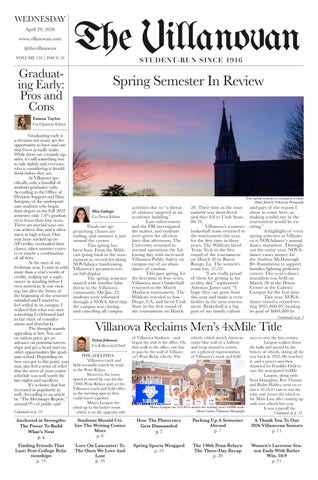
The Villanovan | Volume 120, Issue 10: April 29, 2026
Graduating Early: Pros and Cons
Emma Taylor Co-Opinion Editor
Graduating early is a decision not many get the opportunity to have and one that fewer actually make. While there are certainly upsides, it’s still something not to take lightly and everyone who is considering it should think before they act.
At Villanova specifically, only a handful of students graduates early. According to the Office of Decision Support and Data Integrity, of the undergraduate students who began their degree in the Fall 2022 semester, only 7.4% graduated in fewer than four years. There are myriad ways one can achieve this, and it often starts in high school. One may have stacked up on AP credits, overloaded their classes, taken summer courses or maybe a combination of all three.
At the start of my freshman year, I came in with more than a year’s worth of credits, making me a sophomore in standing before I even moved in. It was exciting, but after the frenzy of the beginning of the semester subsided and I started to feel settled in on campus, I realized that what was once something I celebrated had its fair share of considerations and drawbacks.
The thought sounds appealing at first. You save on tuition price, get an advance on potential internships and get a head start on other opportunities like graduate school. Depending on how you got to this point, you may also feel a sense of relief that the stress of your course schedule was well worth the late nights and sacrifices.
It’s a choice that has increased in popularity as well. According to an article by “The Hechinger Report,” around 9% of public and
Continued on p. 10
Anchored in Strengths: The Power To Build What’s Next p. 4
Finding Friends That Last: Post-College Relationships p. 14
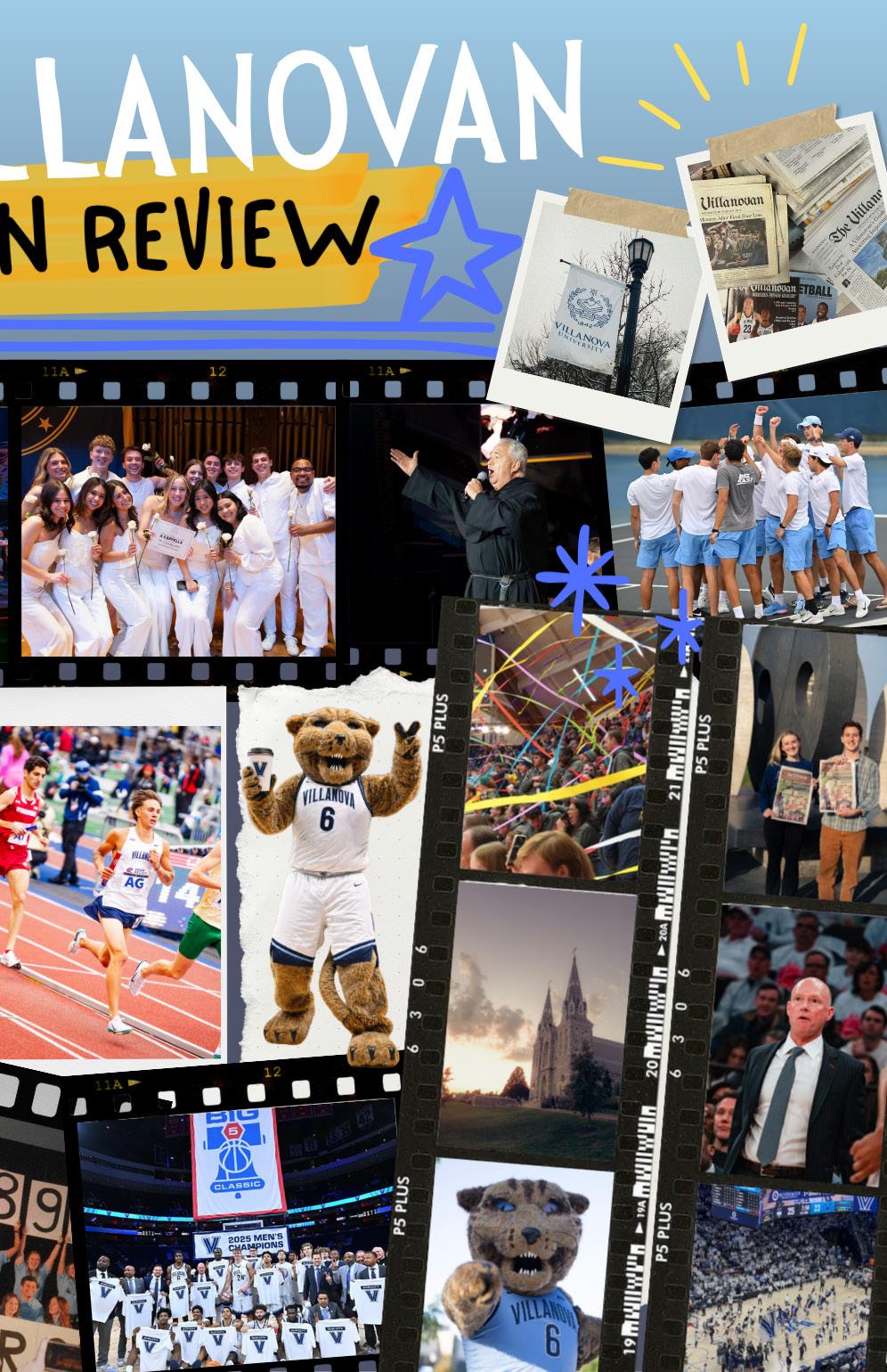
Spring Semester In Review
Galego Co-News Editor
Finals are approaching, classes are ending, and summer is just around the corner. This spring has been busy. From the Wildcats going back to the tournament to record-breaking NOVAdance fundraising, Villanova’s greatness was on full display.
The spring semester started with another false threat to the Villanova community. On Jan. 22, students were informed through a NOVA Alert that the campus was closing and canceling all campus
activities due to “a threat of violence targeted at an academic building.”
Law enforcement and the FBI investigated the matter, and students were given the all-clear later that afternoon. The University returned to normal operations the following day, with increased Villanova Public Safety on campus out of an abundance of caution.
This past spring, for the first time in four years, Villanova men’s basketball returned to the March Madness tournament. The Wildcats traveled to San Diego, CA, and faced Utah State in the first round of the tournament on March
20. Their time in the tournament was short-lived, and they fell to Utah State, 86-76.
Villanova’s women’s basketball team returned to the tournament this year, for the first time in three years. The Wildcats faced Texas Tech in the first round of the tournament on March 20 in Baton Rouge, La. The women’s team lost, 57-52.
“I am really proud of them for getting as far as they did,” sophomore Athenais James said. “I hope they can grow from this year and make it even farther in the next tournament. Basketball is a big part of my family culture
and part of the reason I chose to come here, so making a solid run in the tournament would be exciting.”
A highlight of every spring semester at Villanova is NOVAdance’s annual dance marathon. Throughout the entire year, NOVAdance raises money for the Andrew McDonough B+ Foundation to support families fighting pediatric cancer. This year’s dance marathon was held on March 28 at the Dixon Center at the Cabrini Campus for the first time. This year, NOVAdance raised a record-setting $931,080.89, beating its goal of $800,000 by
Continued on p. 3
Villanova Reclaims Men’s 4xMile Title
Dylan Johnson Co-Editor-in-Chief
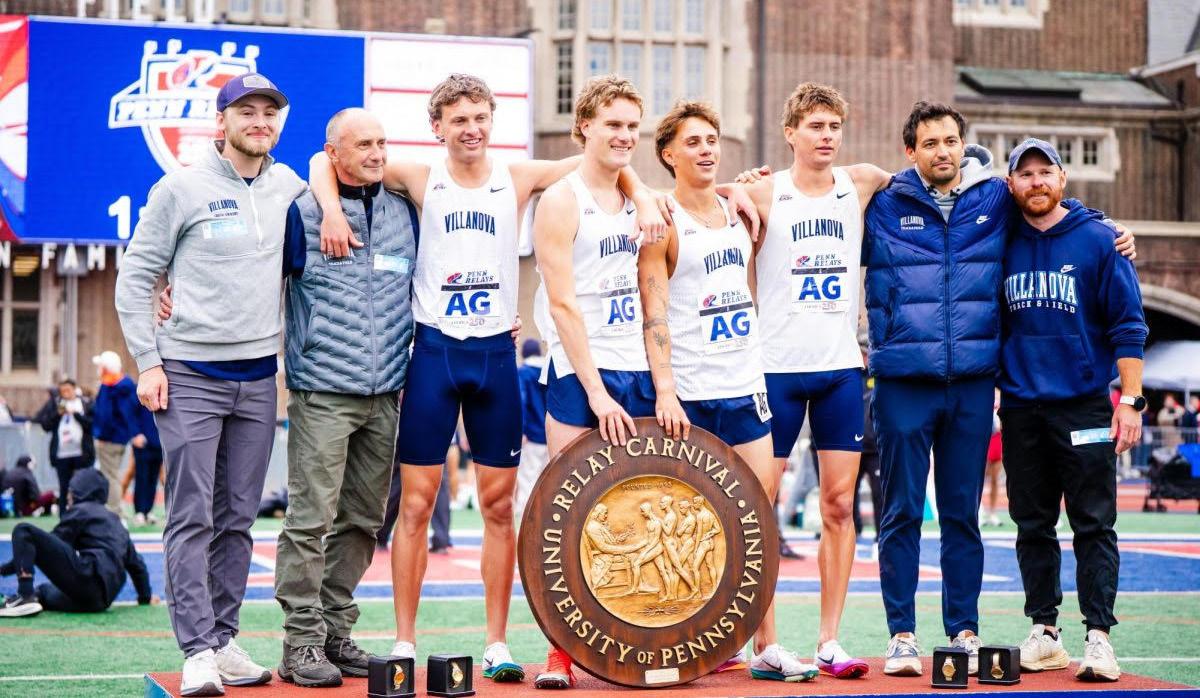
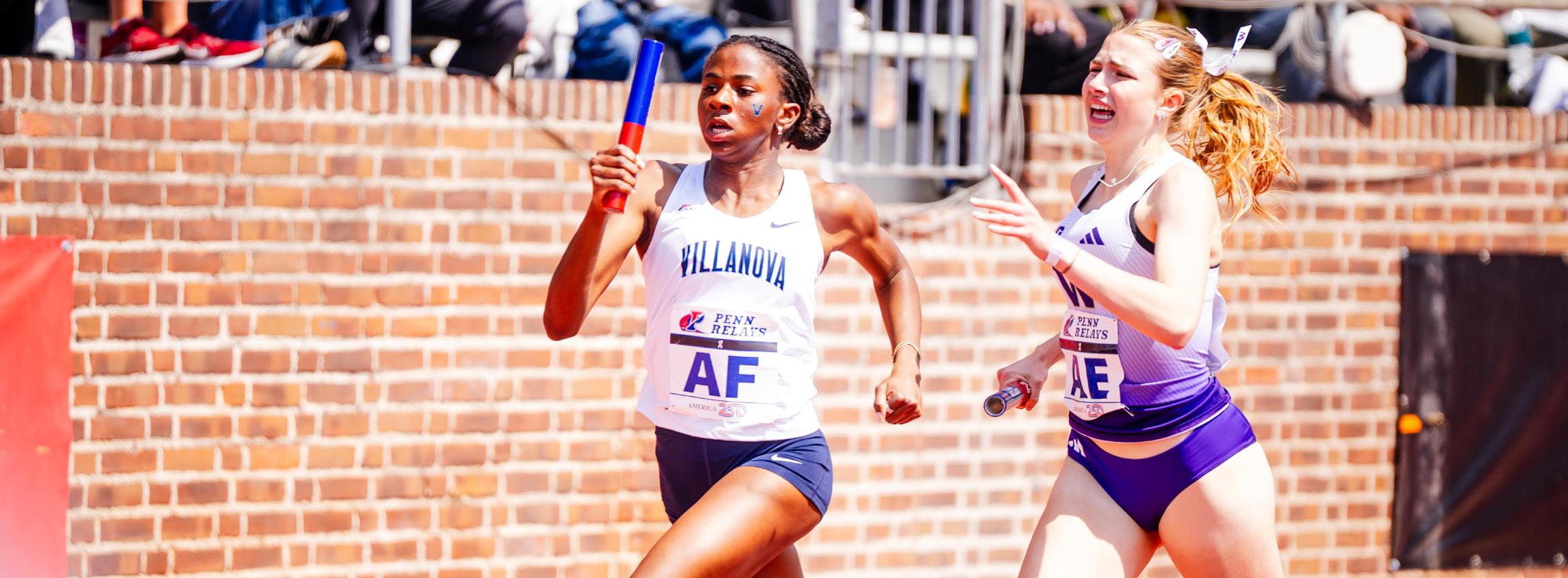
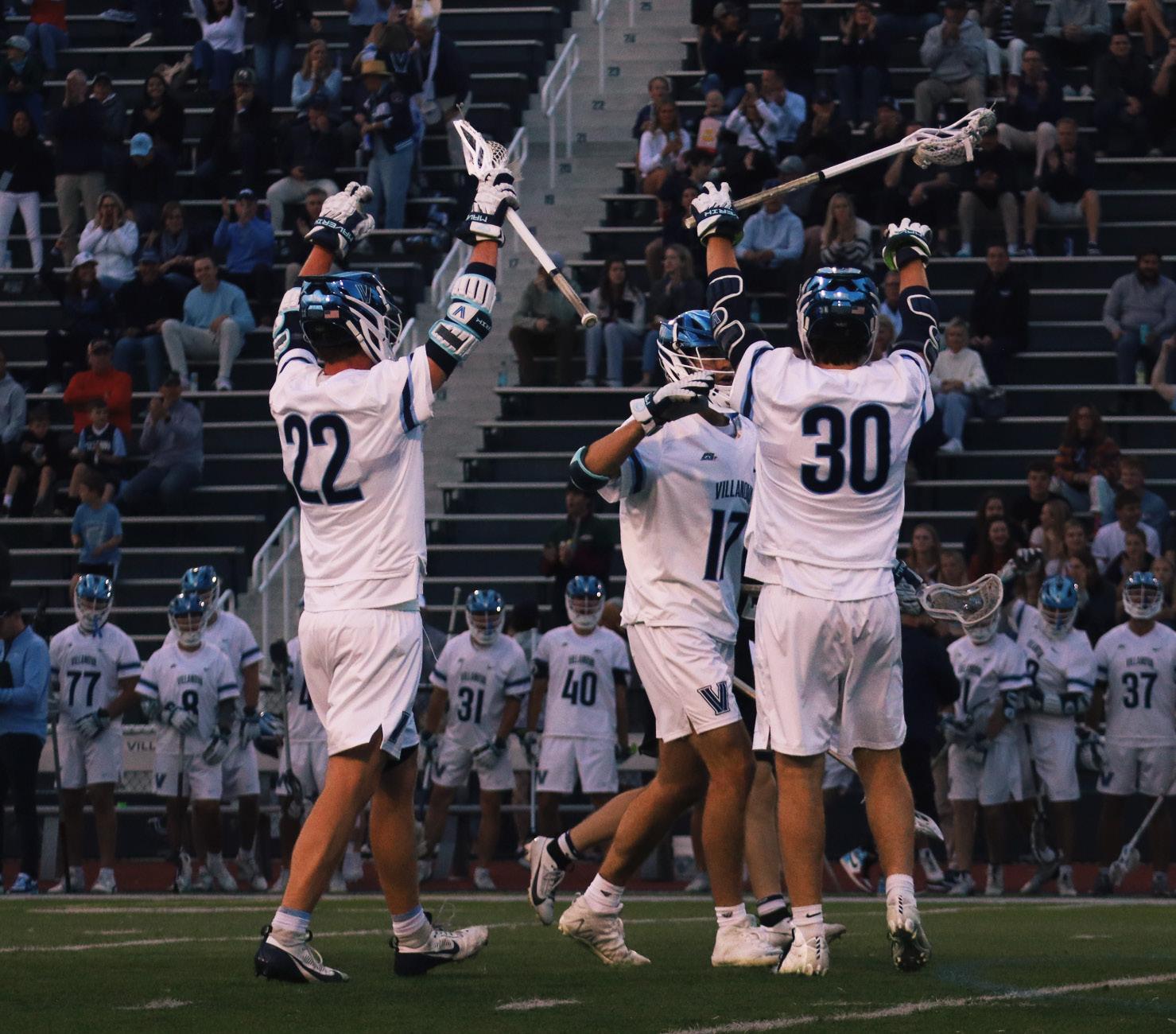
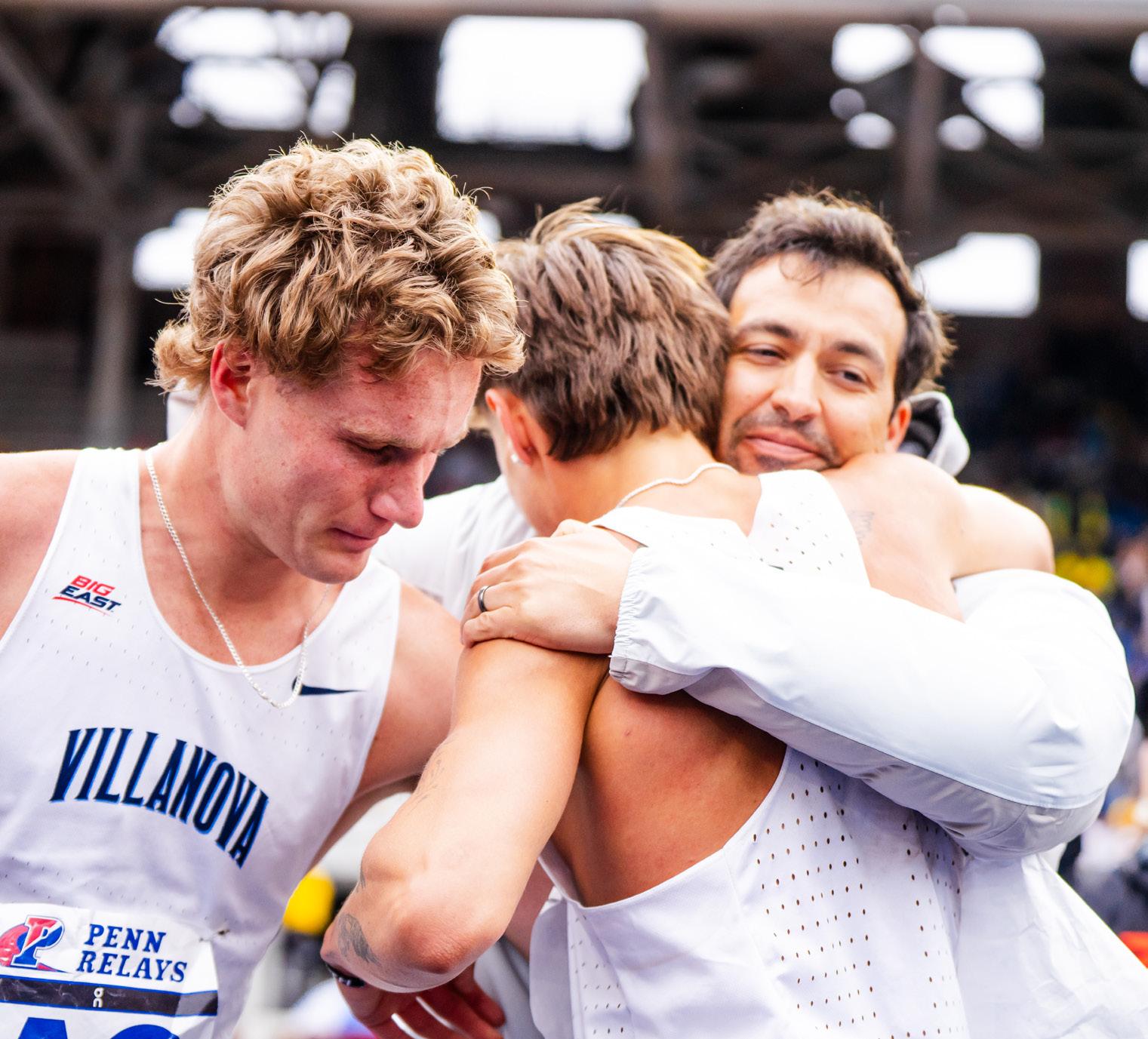
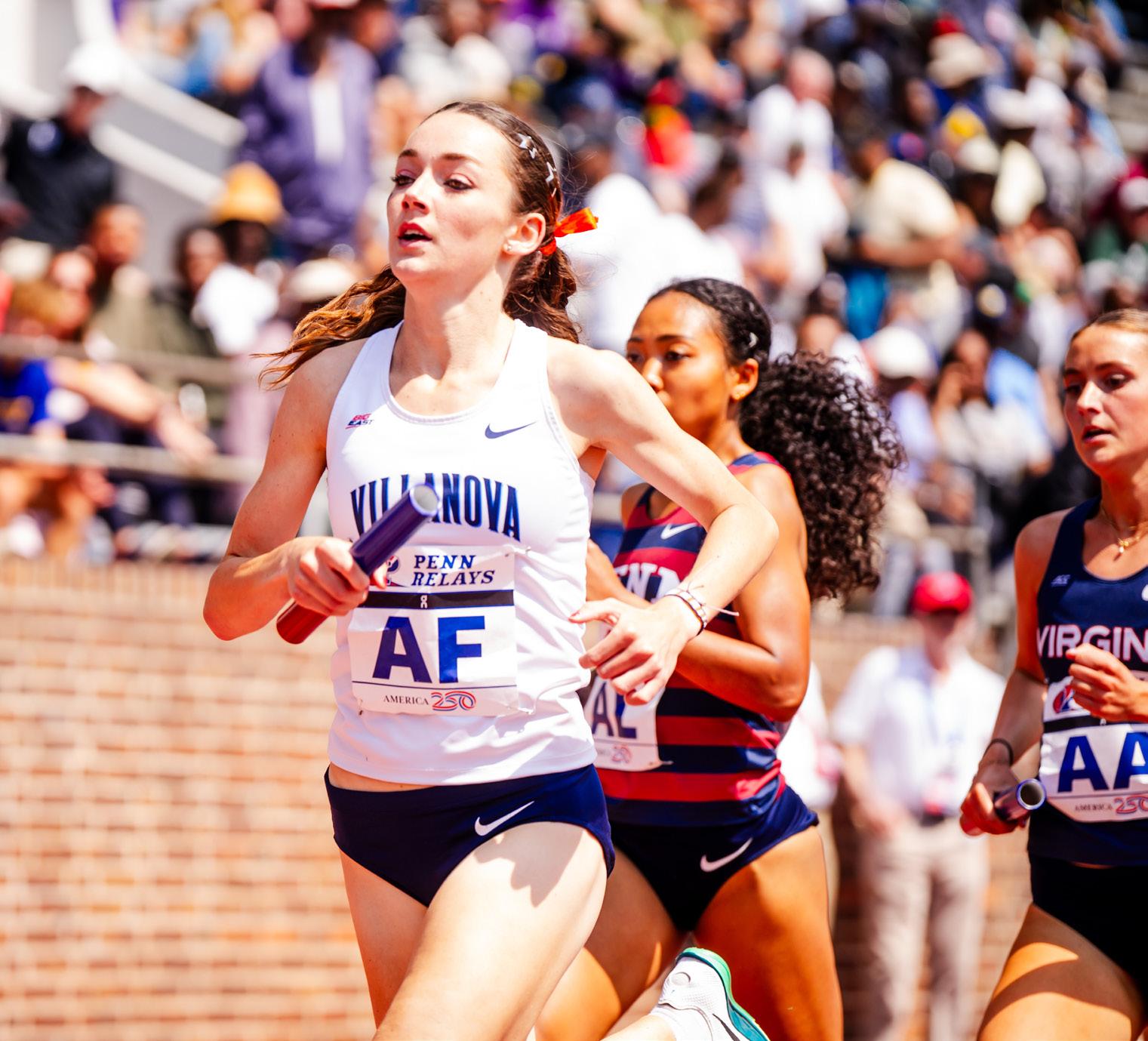
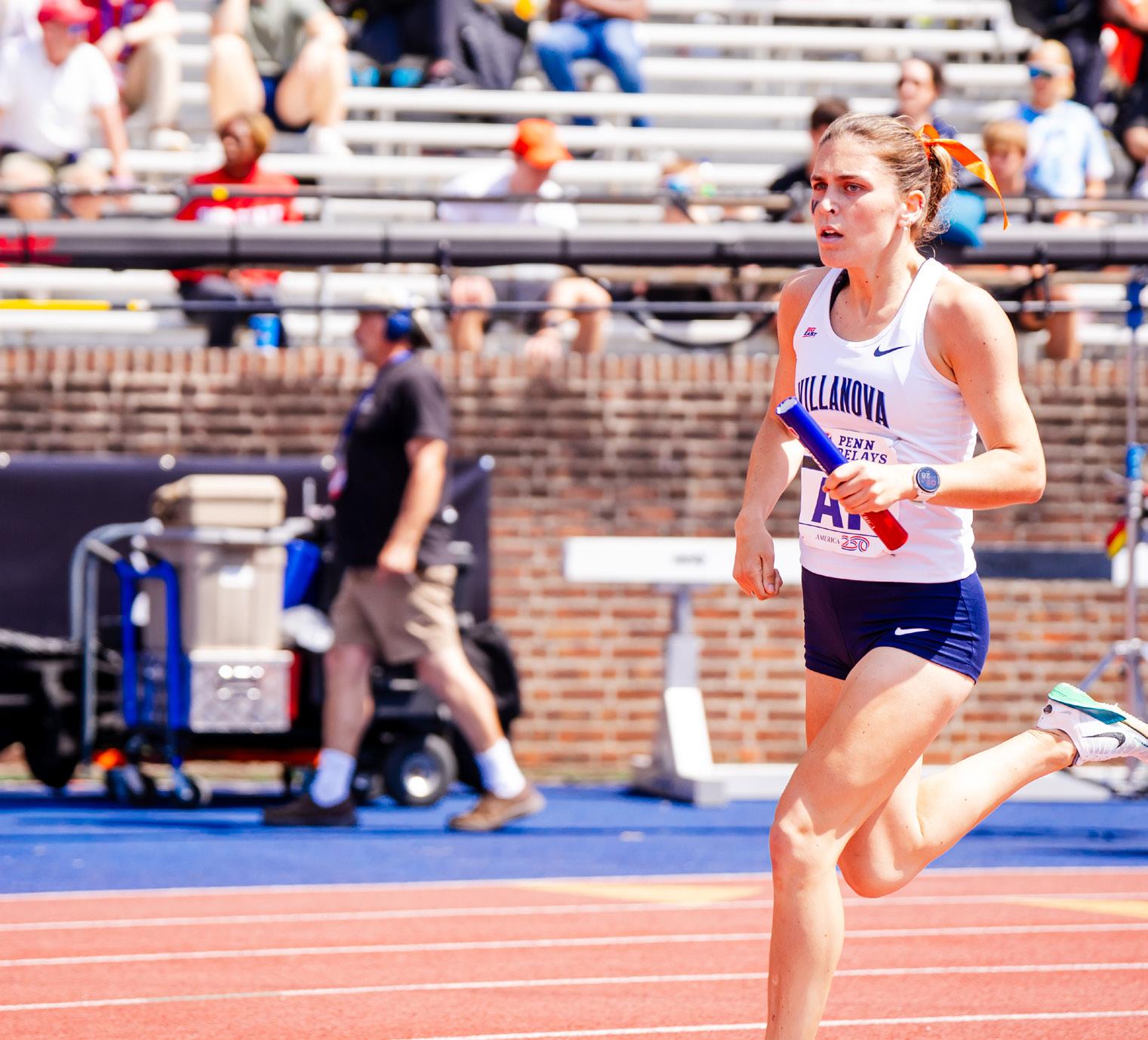
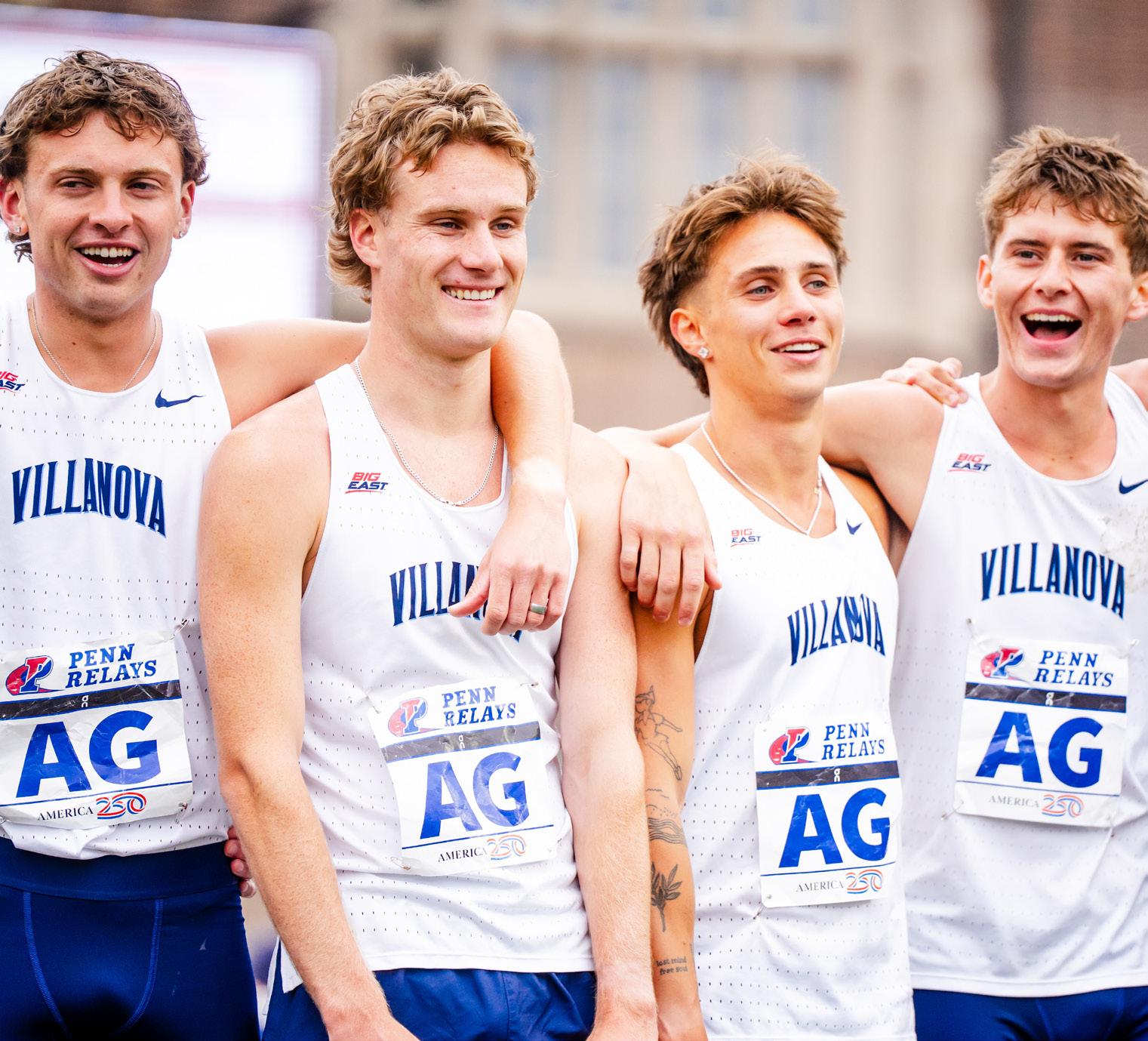
PHILADELPHIAVillanova track and field normally travels by train to the Penn Relays. However, the team opted to travel by van for the 130th Penn Relays and set the Villanova track and field office as the meeting spot so they could travel together.
Marco Langon finished up in the locker room – which is on the opposite side
Students Should Utilize The Writing Center More p. 6
Love On Lancaster: To The Ones We Love And Lost p. 16
of Villanova Stadium – and began the trek to the office. On that walk to the office, one has to pass by the wall of Villanova’s Penn Relay wheels. The
wheels, which stretch down an entire blue wall of a hallway and wrap around a corner, are a physical representation of Villanova’s track and field
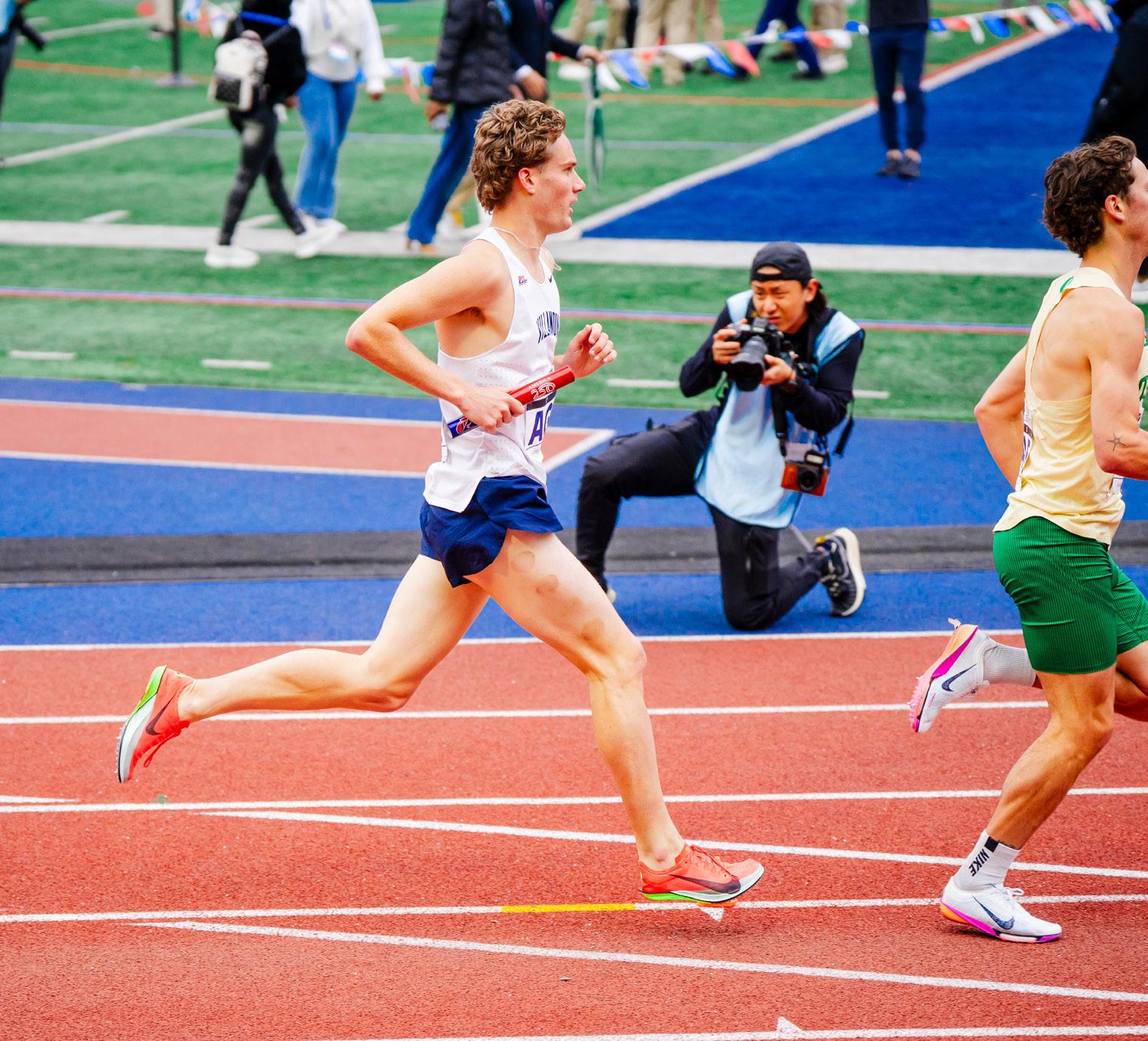
success over the last century. Langon walked down the halls and passed by the history of wheels, dating all the way back to 1932. He touched it, said a prayer and then departed for Franklin Field to race the anticipated 4xMile. Langon, along with Sean Donoghue, Ben Thomas and Bailey Habler, went on to run a 16:18.47 run to win the relay and return the wheel to the Main Line after coming up with zero wheels last year. It was a payoff the
Continued on p. 13
How The Plutocracy Gets Dismantled p. 7 Spring Sports Wrapped p. 19 Packing Up A Semester Abroad p. 7 The 130th Penn Relays: The Three-Day Recap p. 20 A Thank You To Our 2026 Villanovan Seniors p. 11 Women’s Lacrosse Season Ends With Butler Win, 18-9 p. 21
Mia
This spring semester is coming to a close. Dylan Johnson/Villanovan Photography
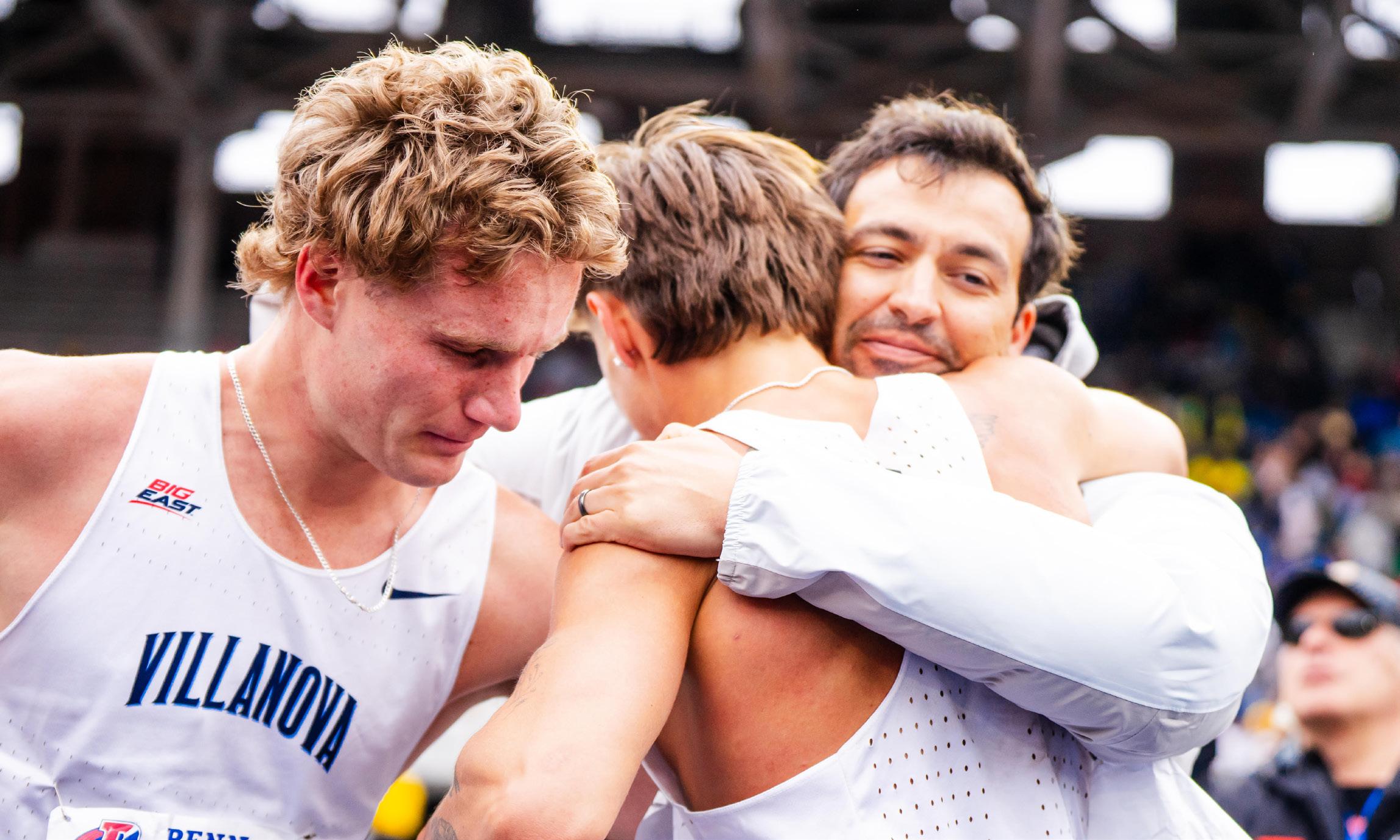
Marco Langon ran 3:55.94 to anchor the winning men’s 4xMile team. Mason Canton/Villanovan Photography
PUBLIC SAFETY BLOTTER
Theft by Unlawful Taking or Disposition
April 22, DROSDICK HALL.
A university faculty member reported a theft of a 3D printer. The amount of the loss is $591.98.
Liquor Underage / Public Drunkenness
hol intoxication and released.
Criminal Mischief
April 24, FEDIGAN HALL.
Intentional damage to a university sign was reported. The value of the damaged property is unknown.
toxicated in
Student was evaluated and released. KAILEY
April 23, STANFORD HALL.
A female resident student, under the age of 21, was evaluated for alcohol intoxication and released.
Liquor Underage / Public Drunkenness
April 23, SOUTH CAMPUS GROUNDS.
A female resident student, under the age of 21, was evaluated for alcohol intoxication and released.
Liquor Underage / Public Drunkenness
April 23, GOOD COUNSEL HALL. A male resident student, under the age of 21, was evaluated for alco -
CORRECTIONS
Liquor Underage / Public Drunkenness
April 24, WEST CAMPUS GROUNDS.
A non-affiliated female, under the age of 21, was evaluated for alcohol intoxication and transported to Bryn Mawr Hospital by VEMS.
Criminal Mischief
April 25, SHEEHAN HALL. Intentional damage to a university sign was reported at Sheehan Hall.
Liquor Underage / Public Drunkenness
April 26, STANFORD HALL. One male resident student, under the age of 21, was observed in -
Factual errors are corrected as soon as they are brought to The Villanovan’s attention. Please send an e-mail to villanovan.eic@gmail.com to report errors.
Talk On The War In Iran
Addy McDougall Staff Writer
To understand how the United States came to be at war with Iran, members of the Villanova community gathered for a roundtable discussion on Tuesday, April 21. The discussion was moderated by Villanova professor of Humanities Dr. Parisa Zahiremami and featured panelists Dr. Niki Akhavan, Professor of Global Studies at the Catholic University of America, and Dr. Mana Kia, Professor of Persianate History at Columbia University.
The speakers provided valuable insight and perspectives, as native Iranians themselves, into how the January 2026 protests evolved into a massive military campaign known as “Operation Epic Fury” carried out by the United States and Israel against Iran.
Kia was in Iran during the protests. She was visiting family while also conducting academic research. Kia kept up with Western media, while also watching Iranian international television at her father’s house in Tehran. She observed the differences between their portrayal of events that she witnessed herself.
Kia characterized the protests as fairly small, localized and nonviolent before Jan. 8 and 9, when they grew in size and level of violence. As protests grew violent, they were met with aggressive government repression, as Iranian state forces massacred thousands. Kia relayed that on Jan. 10, the streets were eerily quiet as people seemed “shell-shocked by the level of violence on Jan. 8 and 9,” and protests consequently died down.
Akhavan discussed social media posts made by former United States Secretary of State Mike Pompeo that alluded to pending American interference in Iran. Akhavan also mentioned the son of a former Iranian monarch expressing his support for the Iranian people to continue fighting against the regime. Compounded by perceived American support, this gave the Iranian people
“the sense that someone had their back and they could overthrow the regime if they protested.”
Kia highlighted that increased sanctions on Iran under the Trump administration imposed greater economic pain on the Iranian population. Widespread protests responded to both crippling sanctions and government corruption, as it is “impossible to treat the issue of government corruption without taking sanctions into account as well.”
Zahiremami asked panelists about the relationship between the war, the protests and the media’s role in both issues.
“The Iranian protests gave legitimacy to the recent war,” Akhavan said.
Iranian state media broadcast graphic war images and foreign-funded media outlets cited varying death tolls, upwards of 50,000. Akhavan explained that such rhetoric was used to justify the war. She also referenced Trump’s social media posts of Iranians celebrating in the streets following the US strikes, “using this to create legitimacy for his plans.”
Kia also explained how the media twisted the protests to give the impression that the Iranian people would remove the government by any means necessary, no matter the consequences. Zahiremami also discussed the difficulty, as a fellow Iranian, of Iranians calling for the bombing of their own country.
“It’s one thing to want regime change for a better country, but it is another thing to say we want this at any cost,” Zahiremami said.
Zahiremami concluded by grappling with the difficulty of defining a “win” in this war, as the destruction of Iranian historical sites, detrimental economic damages, massive amounts of civilian displacement and disastrous environmental impacts from bombings have amounted to inconceivable damages to every part of Iranian society.
This discussion illuminated the dire implications of the war in Iran for the Iranian people and the uncertainty of what the future holds.
This Week In Politics
Finn Courtney Co-News Editor
The annual White House Correspondents’ Dinner, held last Saturday at the Washington Hilton Hotel, ended in chaos as attendees, including President Trump, were rushed out by the Secret Service or ducked for cover under tables just past 8:30 p.m. after a gunman charged past a security checkpoint and began firing, wounding a Secret Service agent.
This was the third attempt on Trump’s life in the past two years, and the President held a hastily organized presser with reporters at the White House late Saturday after the dinner’s attendees had been evacuated or left of their own accord. According to PBS News, Trump was ‘unusually conciliatory,’ striking a tone different from what many are used to hearing, one urging bipartisanship and unity.
“We have to, we have to resolve our differences,” Trump said. “I will say, you had Republicans, Democrats, independents, conservatives, liberals and progressives. Those words are interchangeable, perhaps, but maybe they’re not. But yet everybody in that room, big crowd, record-setting crowd, there was a record-setting group of people, and there was a tremendous amount of love and coming together. I watched, I watched, and I was very, very impressed by that.”
Cole Tomas Allen, a 31-yearold California native, was arrested shortly thereafter and charged with three criminal counts: use of a firearm during a crime of violence, transportation of a firearm in interstate commerce with intent to commit a felony and an attempt to assassinate a United States President.
Allen was arraigned on Monday, with U.S. Attorney Jeanine Pirro suggesting that he could face more charges.
“It is clear, based upon what we know so far, that this individual was intent on doing as much harm and as much damage as he could, and thankfully, because of the checkpoint
right outside the ballroom where thousands of people were situated to hear the President of the United States, that checkpoint worked,” Pirro said. “There was no one who was injured, but it was clear where this defendant was going.”
Despite a heavy Secret Service presence, CBS News reported on Monday that identification was not required anywhere within the hotel, and only a physical ticket or screenshot of a ticket was required to gain entry to the ballroom. The Secret Service maintained in the aftermath that the ballroom was secure, which is why there was a delay in evacuating.
Federal authorities raided Allen’s home Sunday, while also investigating a note alleged to be written by the gunman. According to The New York Times, the note suggests the President, among other administration officials, was his target, writing, “I’m no longer willing to permit a pedophile, rapist, and traitor to coat my hands with his crimes.”
Less than 24 hours later, the President sat down with CBS News correspondent Norah O’Donnell, who quoted directly from Allen’s alleged manifesto, angering Trump.
“I was waiting for you to read that because I knew you would,” Trump said. “Because you’re horrible people. Horrible people. Yeah, he did write that. I’m not a rapist. I didn’t rape anybody.”
O’Donnell asked if Trump believed the manifesto was referring to him, to which the President responded that he was “not a pedophile,” before going on to further attack O’Donnell during the interview.
Since then, Trump has had to refocus as King Charles III and Queen Camilla visited the White House on Tuesday. The King addressed Congress, the second British monarch to do so since his mother, Queen Elizabeth II, did in 1991, in a time of uncertainty regarding American-British relations. The President said on Monday that the King would be very safe, as both governments increased security in light of Saturday’s events.
Mia Galego Co-News Editor
Continued from p.1
more than $130,000.
Former Co-Executive Director Annie O’Brien reflected on this year’s NOVAdance fundraiser and all the work that led up to it.
“My time as Co-Executive Director was the most rewarding part of my Villanova experience,” O’Brien said. “I was able to work with the most passionate and driven people for a cause so many hold near and dear to their hearts. While the fundraising number we hold up is such a special moment, the year was built with countless other amazing things. NOVAdance has taught me what it means to be surrounded by community, and I plan to Live Like Andrew well beyond my time on campus.”
The end of the semester marks the beginning of new student leadership on campus. The Student Government Association (SGA) elections were held for the 2026-27 academic year and election results were announced on April 17.
Spring Semester Recap
Sophomores Brady Keane and Elizabeth Howard ran unopposed and will serve as the next SGA President and Vice President respectively.
This also marks the end of former President Aleko Zeppos’ and former Vice President Sydney Mbah’s term.
When asked about his proudest accomplishment from the spring semester, Zeppos commented on SGA’s growing relationship with those in university administration.
Throughout the semester, SGA has represented the student body in conversations across countless administration offices.
Zeppos also touched on the next chapter of leadership at Villanova.
“Serving as Villanova’s Student Body President this past year has truly been the greatest honor of my entire life, and I can enjoy my next chapter knowing that the school is in great hands under President Brady Keane and Vice President Elizabeth Howard,” Zeppos said. “A seat at the table changes everything, and for every student who comes after us, that seat is now permanent, opening the door to endless possibilities.”
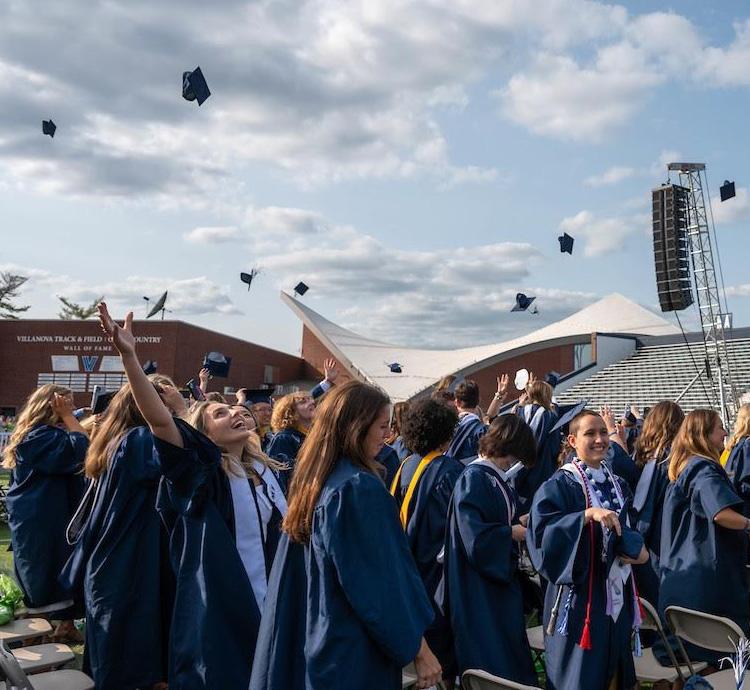
For most seniors, the end of the spring semester also marks the end of their four years at Villanova.
On May 19, seniors will walk the stage at graduation, receive their diplomas and officially go from Villanova students to Villanova alumni.
“Villanova has truly become my home over the past four years, and it will certainly be hard to say goodbye to,” senior Kate Hamel said. “As I get closer to
graduating, I’m working to become more intentional about my interactions to make sure that I can reflect on and appreciate every last moment of my time here.”
Whether students will be back on campus in the fall or are headed off on their own, Villanovans have earned a relaxing, well-deserved months-long break, be it one of a summer internship, rest and relaxation or spending time with friends and family back home.
The Balancing Act Of Off-Campus Housing For Villanovans
Natalie Manzo Staff Writer
It’s a Friday night in the neighborhoods surrounding Villanova University. Music drifts from student backyards as groups head toward bars along Lancaster Avenue, while nearby residents wind down after the workweek. In these shared spaces, the lines between campus and community blur.
Villanova guarantees three years of on-campus housing for students. Some juniors choose to live off campus despite that guarantee, and many seniors do so without that option. As a result, a significant number of students live alongside residents in nearby communities.
A common issue for neighbors is the noise generated by their student neighbors.
“There’s walking, there are people talking, that noise, and then there’s a lot of parties in close proximity with loud music,” Emily Carter, whose name has been changed at her request, said. “Even with a sound ordinance, you can have loud music until a certain time. My kids go to bed many hours before, so that can be intrusive to going to sleep.”
Carter, a resident of Bryn Mawr, has lived there with her husband and two young children for over two years. Growing up in the area, Carter knew colleges were nearby but was unaware of college student rentals on her street.
Perspectives on noise vary. Lauren Mitchell, whose name has been changed at her request, recently moved to the area with her fiancé..
“[College students] go to the bars, and I can tell when they’re heading out that way,” Mitchell said. “I don’t mind that, but I also lived in New York City, so I never slept with my windows open because there were people screaming and ambulanc-
es. On my first night living here, I couldn’t fall asleep because it was so quiet.”
In addition to noise, parking is another source of tension between students and neighbors. Despite permits being available, spaces are limited, and parking can be difficult.
Giovanna Mayo, a senior living on Thomas Avenue, said that during one of the first weeks of school, a neighbor left an anonymous note on her car because she had not pulled up far enough to leave space for another vehicle. The note said, “Welcome to the neighborhood. The fastest way to piss us off is to take two spots. Tell your friends.”
“It’s literally changed how I park,” Mayo said. “Every time I park, I will leave my car, open my door, go look in front or behind my car, and adjust it to be right on the thing.”
While noise and parking may cause tensions between students and neighbors, many students are aware of the issues and try to be good community members. Lily Pflaum, a senior, currently lives on one side of a duplex with her roommates on Thomas Avenue. Pflaum has enjoyed living in a residential area and does what she can to be a good neighbor.
“I think the neighbors are all kind of used to seniors coming every year and living, especially on Thomas Avenue,” Pflaum said. “At the beginning of the year, people were friendly to us, and honestly, we see them less than I would think.”
Students also try to respect their neighbors by sharing their phone numbers in case their gatherings become too loud.
“Some people will stop by and introduce themselves, give me their phone numbers, so that if there is an issue with their house, I can reach out, but you can’t always tell which house is having the party,” Carter said.
In addition to student efforts,
local law enforcement plays a role in maintaining peace. At the beginning of each semester, the Lower Merion Police Department sends officers into neighborhoods as a part of the Community Harmony Program.
“We’re in the neighborhoods just because some of the neighbors are tired of when the college students are walking to [The Villas at Bryn Mawr],” Detective John Mick said. “It’s a two-block walk, but it echoes. We try to keep the peace and make sure people keep moving.”
Villanova also plays a role in maintaining positive community relations. Hally Ammons, assistant director of government and community relations at Villanova, manages the relationship between the university and its community partners.
“A lot of what I do is about proactive communication and engaging with our neighbors in a positive way, before those issues crop up,” Ammons said.
John Delaney, conduct resolution specialist, works on student-facing efforts to strengthen relations. Delaney participates in conversations with students and the townships and often reaches out to students directly when an issue needs to be addressed. Villanova also receives reports from police, which allows Delaney to follow up when students receive citations.
One key initiative in supporting community relations is the university’s “walk-and-talk” program. These walk-and-talks are conducted by Ammons, Delaney and members of the Student Government Association. They typically occur once in the fall and once in the spring, aiming to reinforce that students have rights as residents, but also responsibilities.
“If I get a complaint, it is almost always about noise or trash,” Ammons said. “So, that’s one of the messages that we try to get to our off-campus student residences.”
The relationship between students and neighbors seems to have improved. This could be credited to more students living on campus, since The Commons opened.
Despite certain tensions between neighbors and students, there are also positive aspects Ammons shared that she generally hears from community members that neighbors enjoy living near students.
“[The stories] are not all negative,” Carter said. “I have a five-year-old, and he gets to watch parties happen, which in some cases is funny. He asks questions, and he wants to know why the ice cream shows up, and he’s excited that the ice cream truck is basically in front of his house.”
Delaney recently got a call from a neighbor who reached out to the Dean of Students Office to compliment her student neighbors. The neighbor said that the students shoveled her driveway and the sidewalk during the winter, which she greatly appreciated. Delaney later shared the praise with the students.
“I’d say we’re in a place now where [the relationship between students and the community] is generally positive,” Ammons said. “When we have these sort of outlier issues, they really are outliers for the most part.”
Delaney emphasized that to be positive neighbors, students living off campus need to recognize that issues that arise between students and neighbors often are due to a buildup.
Students can also foster positive relationships by getting to know their neighbors and interacting during their time in the neighborhood.
“I believe if you have more of a connection to your neighbors, then your actions might shift,” Carter said. “You might not throw that beer bottle on the ground so that there’s broken glass everywhere because you know your neighbor.”
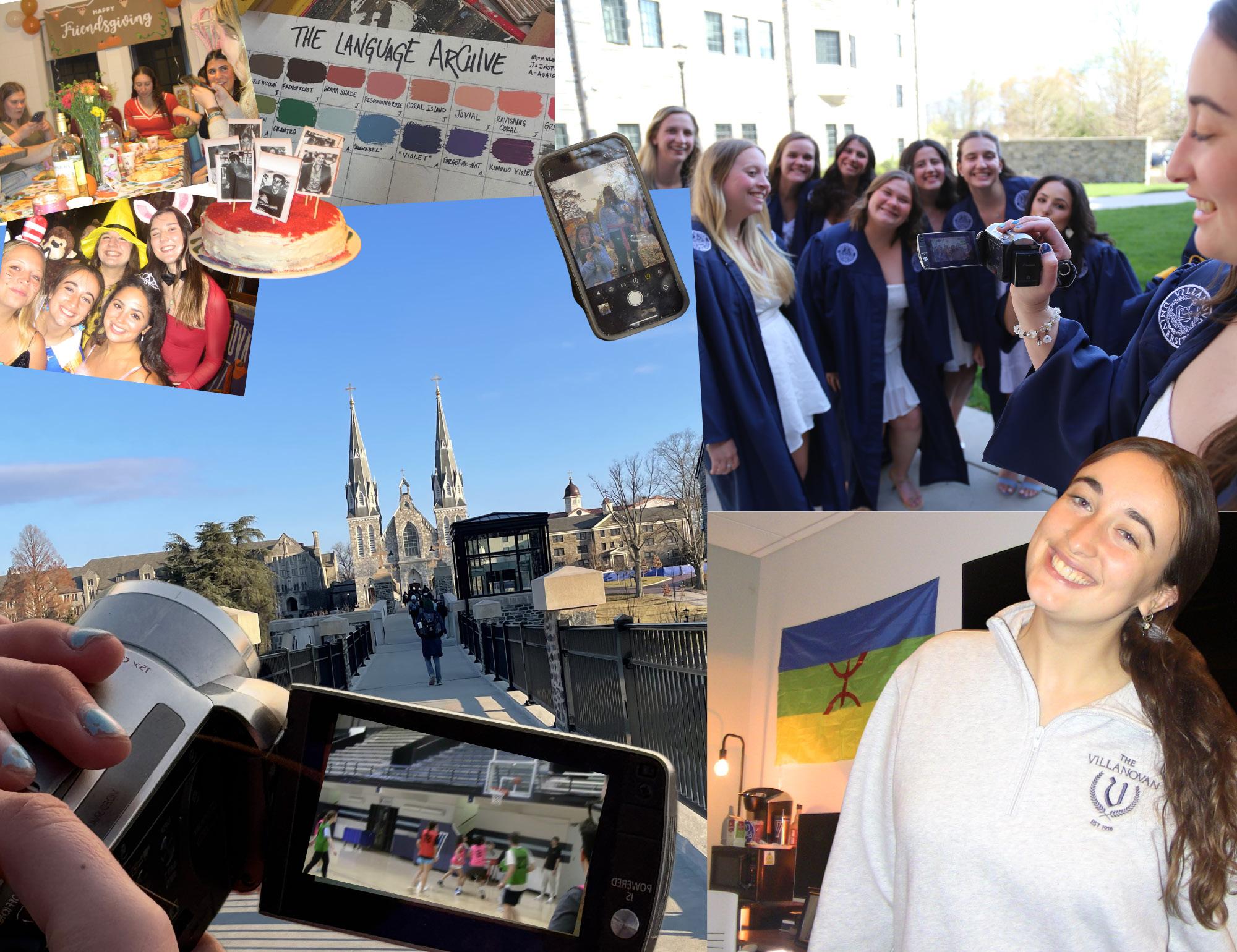
The Spring 2026 semester provided a lot of good times for students. Dylan Johnson/Villanovan Photography
Anchored in Strengths: The Power To Build What’s Next
Lauren Armstrong Senior Columnist
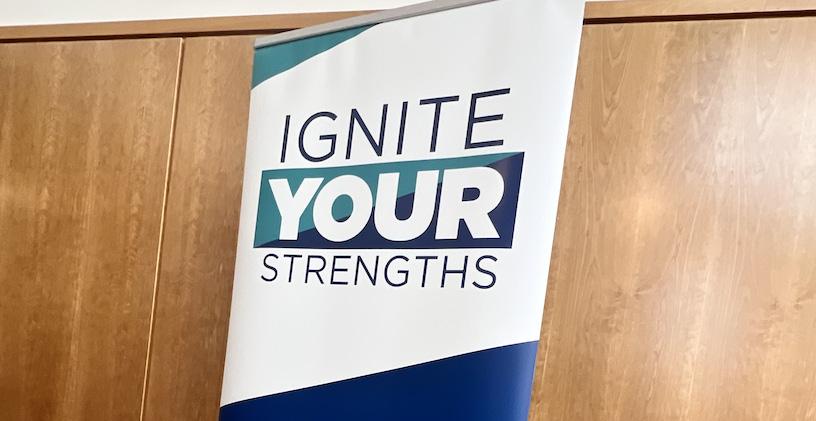
On Wednesday, April 15, Villanova University hosted the Ignite Your Strengths Speaker Series: Anchored in Strengths: The Power to Build What’s Next in Driscoll Hall. This event featured Keith Jones, a 2007 graduate of the College of Liberal Arts and Sciences, who shared how his CliftonStrengths have influenced him throughout his life.
Before the event began, the lobby of Driscoll Hall was transformed into a networking zone, where students could connect with professionals and Villanova staff members in attendance.
“It was great getting to connect with members of the IYS Engagement Team at Villanova,” junior Riley Kalejta said. “It was interesting to meet individuals who I shared similar strengths with, as well as those with different ones, and hear how each person interprets and applies their strengths in both their personal and professional lives.”
Jones currently serves as a professor in the Communication Department, and is an NBC10 weekday anchor from 5 a.m. to 7 a.m. on News Today. He has won 16 Emmy Awards and five Edward R. Murrow Awards, and he also anchors the weekly newscast at 11 a.m.
“When I went to Villanova,
I took a vow,” Jones said. “I wanted to be the person that I wished that I’d had when I was there. I’m always grateful for opportunities to give back to the campus that gave me so much. So, when Tyra Ford reached out to me asking about my interest in participating, I jumped at the idea. It was a really special night.”
On stage with Jones was Crystal J. Lucky, Ph.D., the Associate Dean for Undergraduate Programs and professor in the English Department. Between Jones and Lucky, the conversation focused on the uses of CliftonStrengths in college and the workforce.
During their conversation, students had the opportunity to ask Jones questions about his strengths. Senior Madison Hodges and junior Nick Osbourne asked specific questions about Jones’ strengths.
“I wanted to get the chance to speak with Mr. Jones and ask him questions about his career,” Osbourne said. “Since he and I share the developer strength, I asked how we can help develop ourselves instead of others. His response made me realize that the same energy I put into others, I also have to put into myself.”
During the event, Jones shared how he became involved in Villanova’s men’s basketball team. It started with a pick-up basketball game and ended with him serving as a student manager for the team. It was the strength of the Villanova community that drove Jones to return
as a faculty member.
“Early on, my freshman year, I worried that I didn’t quite fit in,” Jones said. “I was waitlisted. I joined the Villanova basketball family as a student manager, and it taught me time management, and it taught me to live your life for a greater good, to play for the people that came before you and then grow something that’s bigger than yourself. That really, like, did something to me, and I’ve always felt, especially when I graduated, I wanted to go back and teach. I wanted to mentor. That stuff always kind of just fulfilled me. I think that was my thrust to continue to live close to campus [and] to work somewhat close to campus. I know I work on campus. It’s just endlessly fulfilling.”
As Jones’ and Lucky’s conversation concluded, University
President Father Peter M. Donohue, OSA, PhD, took the stage to present the Office of Health Promotion with an award for their CliftonStrengths programming.
“This event reinforced for me that CliftonStrengths extends beyond professional development,” Kalejta said. “A common misconception is that these strengths are only relevant in professional settings, but in reality, they play a significant role in our daily lives. Understanding your top five strengths can shape how you communicate, build relationships and navigate challenges, making them valuable for both personal growth and professional success.”
This event helped all those in attendance understand their CliftonStrengths and apply them in both their professional and everyday lives.
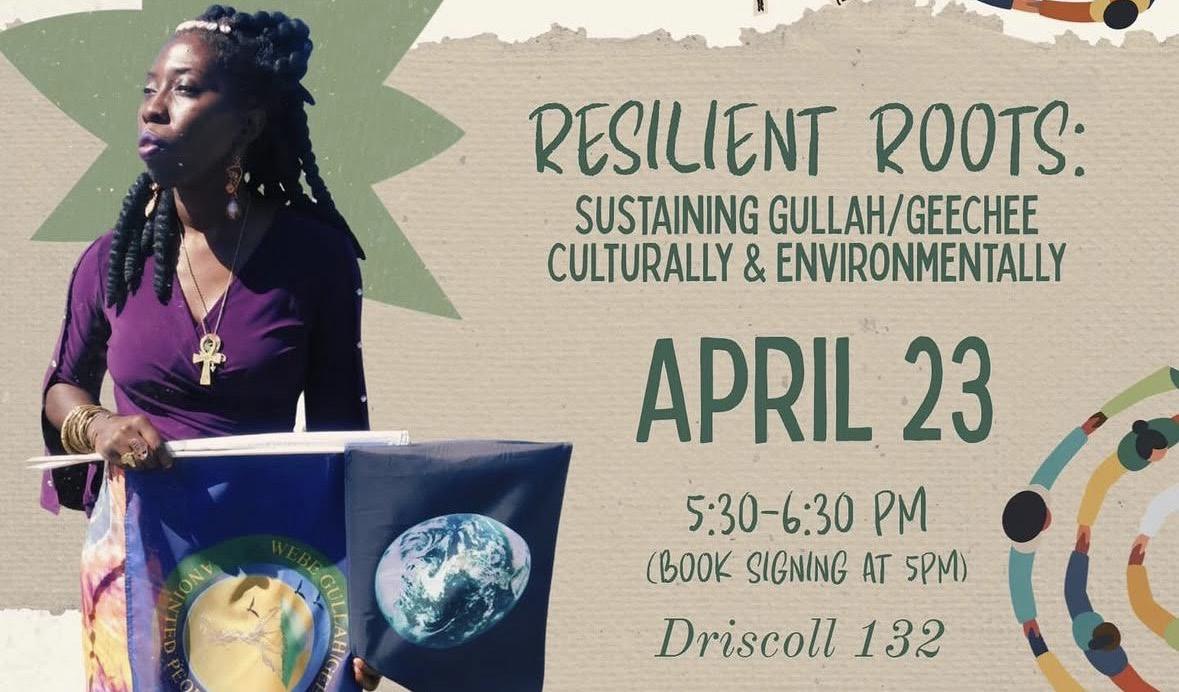
On Thursday, April 23, Villanova Sustainability welcomed Queen Quet to deliver the Earth Week Keynote Address. The event was titled, “Resilient Roots: Sustaining Gullah/ Geechee Culturally & Environmentally.” The lecture took place in Driscoll Hall 132 and was attended by students and faculty.
The Gullah/Geechee are the descendants of enslaved Western Africans, who were able to preserve their indigenous African traditions and create the unique Gullah language. The Gullah/Geechee people reside across the east coast, from Jacksonville, N.C. to Jacksonville, Fla. They officially became an internationally recognized Nation in 2000.
Quet serves as the first Chieftess and Head of State of the Gullah/ Geechee Nation, and is the founder of the Gullah/Geechee Sea Island Coalition. Quet is also an environmental justice advocate who travels the world educating people about how climate change has impacted the Gullah/Geechee Nation. She is also a computer scientist, mathematician, historian and published author. While Quet had visited Philadelphia many times, she noted that this would be her first keynote address in the area.
Throughout the lecture, Quet discussed frustrations regarding the destruction of land and the continuous push for development across the coastal land and the Sea Islands.
“Somehow this beautiful paradise is not a beautiful paradise until you build a building there,” Quet said. “Until you make a golf course there.”
Quet also discussed the lack
of consideration for the Gullah/ Geechee people and their input. She told stories of land developers ignoring her warnings not to build on certain land. She told the audience that the Gullah/Geechee were once called “emotional natives.”
The rising sea levels and growing effects of climate change are putting the land on which the Gullah/Geechee Nation resides at risk. Quet told stories of houses falling into the sea and flooding. The Gullah/ Geechee have lived in balance with the environment for generations and are directly connected to their land.
“The sea levels are rising and rising and overtaking us, our community and our culture, our farmland and our traditions and all the stories and sacred areas,” Quet said.
After lecturing for around 30 minutes, Quet then showed the audience a short documentary about the Gullah/Geechee Nation and their land.
“I want to make sure y’all can see the sea islands and my island in particular,” Quet said. “The title is one of the reasons I love it so much. Can y’all read that out loud for me?”
“Keepers of the Land,” the audience said in unison.
The video showed the sacred land of the Gullah/Geechee Nation and how the climate crisis is threatening their culture and history. Food security is being affected by flooding and rising temperatures.
“Gullah/Geechee culture is inextricably tied to the land,” Quet said in the video. “If you poison the water, you poison the culture, you poison the culture, there is no cultural heritage called Gullah/Geechee.”
In the video, the narrator asked Gullah/Geechee and Marine
Scientist Albert George what the biggest threat to their community is: Gentrification, development or climate change?
“All of the above,” George said. “You don’t have one without the other.”
The video also featured clips of Quet’s ancestral farmland, which was originally purchased by her great-great-grandfather in 1862. She has faced continuous pressure from developers to sell her land.
“There is no consideration,” Quet said in the video. “There is no price tag. There is nothing you could give me to sell you my land. That’s insanity.”
After the video concluded, the audience was able to ask Quet questions.
One student in attendance asked about what could be done to reverse some of the damage to the land.
In response, Quet discussed the Open and Rural and Critical
Lands Fund, which was created in South Carolina to use taxpayer money to restore developed land to natural spaces. She also mentioned working to incentivize people not to build on critical land areas and engaging in preemptive strikes.
Another audience member asked Quet about the effects of rising sea levels.
Quet discussed how the Gullah/Geechee people haven’t experienced much ocean land loss because they don’t build right on the shoreline. They have, however, witnessed people lose property to rising sea levels and flooding, which is an environmental hazard to the entire community.
After the lecture, students could purchase books and get them signed by Quet, all sales supporting the Gullah/Geechee Land and Legacy Fund. The lecture gave students and faculty a glimpse into the Gullah/ Geechee way of life and how to maintain a balanced relationship with the environment.
Keith Jones served as the Ignite Your Strengths speaker at the Ignite Your Strengths Speaker Series. Finn Courtney/Villanovan Photography
Queen Quet, Chieftess of the Gullah/Geechee Nation, delivered the Earth Week Keynote Address. Courtesy of @villanovasustainability
OPINION
The Pros And Cons Of Graduating Early
Emma Taylor Co-Opinion Editor
Continued
on p.1
more than 7% of private non-profit university and college students are trying to graduate within three years. Here at Villanova, the percentage of students who opt to graduate early jumped from 5.9% for those who started in Fall 2018 to the 7.4% stated earlier for those who started in Fall 2022.
However, many people cannot shake the competitiveness their high school culture instilled in them or the eagerness to get it over with, and they often carry that mindset into college without stopping to enjoy the time they have. There is a pressure to proceed to the next stage of life as quickly as possible, which bleeds into other aspects of life and creates unnecessary stress. There are hidden opportunities you miss out on that eventually, and regrettably, reveal themselves.
“I feel like graduating early sounds cool at first,” freshman Ian Solano said. “But when I actually think about it, I would just feel like I’d be missing out because all your friends are still here experiencing their senior year, and you’re already done with it all.”
The fear of missing out is a very important factor, especially when it has been spent the last couple of springs on campus watching seniors take graduation photos with friends, attending
Delaney Cromen Staff Writer
their “lasts” together and being celebrated for this accomplishment with the graduating class they’ve been with since day one. Letting go of a version of the life you previously had will always be bittersweet.
One may also miss out on academic opportunities that are a very important part of the cumulative college experience. Suddenly, studying abroad for a whole semester doesn’t make sense, nor does adding that extra major or
minor. Doing so would put one well over the minimum credits needed to graduate, which is difficult to justify given how expensive it is. To add, time in your clubs and extracurriculars is cut short, and therefore, the potential impact. One may lose out on social skill development, making career connections and further exploring their interests in an academic setting.
Linda Boettcher, the Director of Academic Advising for
the College of Liberal Arts and Sciences (CLAS), shared what she typically sees with students at Villanova and their decision-making.
“Whether or not to graduate early often depends on the student’s situation,” Boettcher said. “Most often, it is a financial decision. Sometimes graduating early is in response to a medical situation or a job opportunity. When students complete their degree a semester early, the University invites them back to campus to participate in senior week and graduation ceremonies with their friends, which makes the decision a bit easier for some.”
That option should comfort most students. Another alternative is to apply for Villanova’s combined Bachelor’s/Master’s degree program. It’s marketed as an extra year alongside some undergraduate courses you take in your senior year that count toward both degrees. But if you’re graduating early, you’re essentially getting two degrees in the timeframe of one. Ultimately, I believe that what weighs on many students who have this opportunity is the overpowering urge to get out and save the money. Many people reminisce on their college years as the best ones of their lives, but if it’s not what makes the most sense financially, with a daunting job market that’s hard to argue against. It’s an impressive feat to accelerate your degree, but those who do so need to ensure they are well aware of the nuances that come with it before fully committing.
America’s Bulletproof Backpack
heard screams, but they all ran.
Freshman Emma Darrow, who was at the Opening Day Mass, expressed her fear of the event.
On any given school day, one can feel the fear that consumes children in a classroom. It can be almost peaceful, a silence made by fear, until it’s interrupted. It is always interrupted. Whether it’s by five shots or three, two screams or four, the silence becomes imbalanced. Children are forever trapped in the place that was supposed to help them grow up, but instead forced them to stay silent.
America’s children are taught from a very early age how to run, hide and stay alive. It is believed important to stay aware of these techniques to survive, just “in case” of a threat. Villanova University placed a memorial for lives lost to gun violence in the center of campus on the Rowan Green during the week of March 23rd. Every T-shirt placed on a stilt was “One Soul Lost to Gun Violence.”
The memorial was put in the very place where countless kids and families were rushed away by the threatening notification of an armed individual on campus on Aug. 21, 2025. They ran, like they were taught. Some people at the mass that day heard shots, some
“Everyone just started running,” Darrow said. “It wasn’t calm at all. I think it was the scariest day of my life, and it wasn’t even real.”
The instinct to run is conditioned in each American child the second they set foot into an education setting. Go, run, duck in there, stay quiet, turn off the light, hide, make yourself small, be quiet.
Is that what the educational system was meant to teach American children all along? Not the ABCs, not their times tables, not who they want to be when they grow up, but a survival guide on how to be a grown-up, and especially how to run, because if they don’t, they’re dead.
Most of the drills in primary school and high school are fake, just like the hoax that occurred at the beginning of the school year. However, the people there didn’t experience a hoax. They experienced a shooting. They ran for their lives, ducked from shots. They had tears in their eyes, no voice in their throat and their hearts beat rapidly.
Is it impractical for children
to wish for a world without violence? Is it impractical for children to wish for a world without fear? In American society, maybe it is. Why does the world focus on bad people? It’s because they have to grow up and live their lives, while the kids who are being educated against all evils are shot.
Darrow further highlights the fear and urgency felt by many Americans, especially students.
“Something has to change,” Darrow said. “Kids shouldn’t be afraid to go to school, or pushed and shoved into storming the altar at mass to hide like I was. It’s just wrong.”
The memorial shown on the University’s campus is inspiring in light of what is currently happening in America: the overwhelming threat of active shooters on college campuses and primary and high school grounds.
In the past week alone, from April 13 to April 17, an alarming number of schools have been threatened or impacted by gun violence. These include Troup High School, The Brooklyn High School for Law and Technology, McCluer South-Berkeley High School, Hill Country College Preparatory High School, Bedford High School, Bradley Central High School, Sumter Christian
School, Opal Smith Elementary School, Lane College, Hayward High School, Glencliff High School, Nathan Hale High School, Tulane University School of Medicine, Saint Joseph School, Suitland High School, Thomasville Senior High School, Kentucky State University, Florida A&M University, Pine Grove Elementary School and so many more. Did you skip over the number of schools on that list to get to this sentence? Go back and read them again, say their name. Do you hear the beating now, this time of your own heart? The danger American people face comes from the very people they surround themselves with. Maybe parents aren’t thinking about the threat their children face before they go to school, but maybe they should.
The world needs to be more aware of what is happening to learn how to stop it. It’s time that the people of America stop covering their ears and emerge from their hiding spots. The privilege to be alive is great, not threatened yet by the constant chaos that a firearm in an educational setting brings. There has to come a time when that violence should be stopped. That time is now. In the meantime, though, make sure your backpacks are bulletproof.
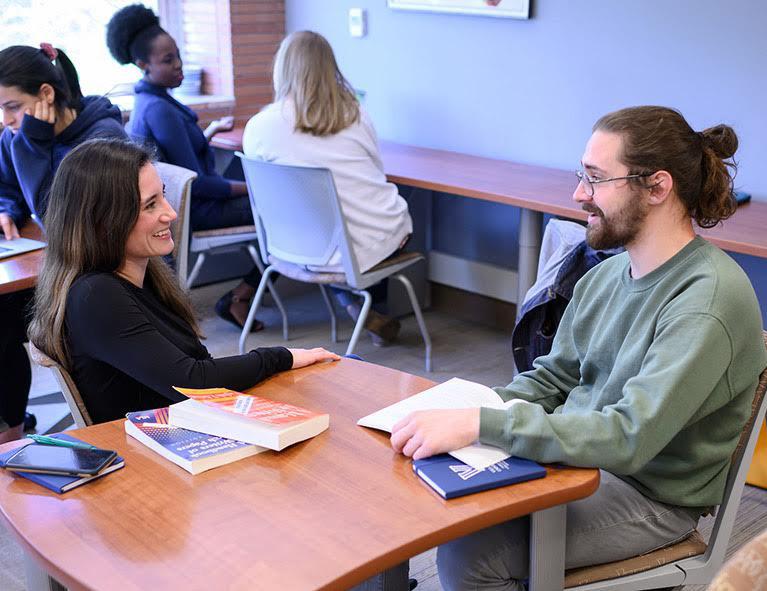
Graduating early can come with its fair share of benefits and drawbacks. Courtesy of Villanova University
EDITORIAL BOARD LETTERS TO THE EDITORS
KAILEY FAHY
Editor-in-Chief
DYLAN JOHNSON
Editor-in-Chief
SOPHIE LATESSA
Managing Editor
AVERY CHALK
Opinion Editor
EMMA TAYLOR
Opinion Editor
The Villanovan encourages all members of the Villanova community to voice their opinions. Letters to the editors may be submitted via e-mail to villanovan.eic@gmail.com. Letters must not exceed 500 words and must be signed. No anonymous letters will be published. All submissions become property of The Villanovan and are subject to editing for clarity and space.
POLICY
The unsigned editorial that appears is the opinion of The Villanovan as determined by the majority of the Editorial Board. Other columns, letters and artwork represent the opinions of their authors and do not necessarily reflect the position of The Villanovan.
Students Should Utilize The Writing Center More
Kaitlin Lawrenson Staff Writer
As a Villanova student, I’ve come to realize that some of the most valuable resources on campus are also the most underutilized. The Writing Center and tutoring services fall squarely into that category. Despite being free, accessible and incredibly helpful, they’re often overlooked or only used when required. From my own experience, I’ve found that these resources are not just safety nets for struggling students. They are tools that can elevate anyone’s academic work. In fact, I’ve come to believe that the tutoring requirements built into certain classes are not a burden, but a necessary push that helps students recognize their true value.
I’ll admit, I didn’t always think this way. Like many students, I initially saw required Writing Center visits as just another box to check off. It felt like an extra step in an already busy schedule. But once I actually sat down with a tutor, my perspective completely shifted. Instead of simply correcting grammar or pointing out obvious mistakes, tutors asked thoughtful questions that made me think more critically about my own writing. They helped me clarify my arguments, strengthen my structure and feel more confident in my work.
What stood out to me most was how collaborative the process felt. The Writing Center isn’t about someone “fixing” your paper. It’s about working together to improve it. That
distinction makes all the difference. It transforms the experience into something engaging and empowering. I walked out of my sessions not only with a better paper, but with skills I could carry into future assignments.
The same can be said for subject-specific tutoring. Whether it’s for math, science or business courses, having someone break down complex concepts in a one-on-one setting can be incredibly beneficial. Large lecture halls and fast-paced classes don’t always leave room for individual questions, and that’s where tutoring fills the gap. It creates a space where it’s okay to not understand something right away, and more importantly,
where you can take the time to learn it.
I’ve also noticed that the students who benefit the most from these services aren’t necessarily the ones who are struggling. In many cases, they’re students who simply want to improve. That’s why I think the tutoring requirements in certain Villanova courses are so important. They push students, especially those who might not seek help on their own, to step outside their comfort zones and try something new. And more often than not, those students walk away realizing how helpful it actually is. Junior tutor Michael Donnelly shared a similar perspective.
“A lot of students come in thinking they don’t need help, especially if they’re already doing well,” Donnelly said. “But once they’re here, they realize it’s not about being behind. It’s about getting better. Some of the strongest students I work with are the ones who keep coming back.”
Donnelly’s insight highlights an important shift in how we should view these resources. There’s a stigma around asking for help, as if it’s a sign of weakness when, in reality, it’s the opposite. Taking advantage of the Writing Center or tutoring services shows initiative, that you care about your work and that you’re willing to put in the extra effort to improve it.
At a university like Villanova, where academic excellence is a core value, it only makes sense to embrace the resources designed to support that goal. The Writing Center and tutoring services are integral to the learning experience. They reflect the university’s commitment to helping students succeed and grow.
I’m grateful for the classes that required me to attend tutoring sessions or visit the Writing Center. Without that initial push, I might never have realized how beneficial they truly are. Now, I find myself recommending them to friends and even considering going back on my own, even when it’s not required. If there’s one takeaway I hope other students have, it’s this: don’t wait until you’re struggling to use these resources. Go when you’re doing well. Go when you want feedback. Go when you’re unsure. The Writing Center and tutoring services are there to help you.
Students React: Final Exam Date Selection
one of your exams was unfair
3. Would you prefer if the date were determined by a majority vote amongst your classmates?
Each semester, Villanova allots one full week for final examinations. Although some classes may offer the option of a takehome exam, professors who don’t must adhere to the university’s scheduled date and time allotted for giving the exam. With this reality comes a multitude of frustrated students twice a year who beg to take their exams on an earlier date if possible. As a result, is it fair that Villanova decides these dates without the input of students?
To get a better sense of the student body’s consensus on this debate, I decided to informally survey 25 undergraduate students from varying class years with five yes or no questions:
1. Did you know that Villanova chooses the date of each of your class’s final exams?
2. Have you ever felt the date of
4. Would you prefer if your professor picked the date? and
5. Do you think Villanova should consider a class’s difficulty level when determining what date the class’s exam is on?
After all the responses were collected, I was able to sort the responses and determine the exact percentages of the number of times “no” was selected vs “yes.”
For the first question, only 19% responded that they did not know Villanova chose the dates of their final exams, while the other 81% of respondents were already aware of this. It is easy to see how this question will translate into the other responses because those who know the exam dates are chosen by Villanova could also attest that they have felt frustrated with the dates chosen.
The second question showed an almost even split be-
tween people who have felt the date of one of their exams was unfair and those who had never felt that way. Overall, I observed 52.4% responses to be “no” and 47.6% responses to be “yes.” However, one thing to consider here is that since the dates are randomly chosen, there may be students who responded who have gotten lucky many times with all their finals earlier in the week.
About half (52.4%) believed that it would be better if the dates were determined by a vote amongst their classmates. However, the next question showed a more drastic split between answer choices, which can suggest that a majority vote may not be the most preferred method. Fifty-eight percent voted that they would prefer to have their professors choose the date of their final exams, which makes sense. Professors have taught their courses for many years. As a result, they may have a good idea of how much time is needed to study for the exam and can make the most
effective choice for determining its date.
The final question asked students to consider whether or not a class’s difficulty level should be considered here. About sixty-three percent responded “yes.” As a result, many students taking more challenging courses would prefer that the course load be considered. However, it is still unclear whether those students would prefer their challenging course exams to be scheduled later in the week so they have more time to study, or earlier to finish the semester quickly. As a result, this debate isn’t fully settled yet.
Although this survey did not include responses from a majority of the undergraduate student body, it still can play a vital role in emphasizing students’ overall consensus on this topic. Although it may not be feasible to entirely change the current system in place for date selection, getting students’ opinions on topics such as this one is always important.
Don’t wait until you’re struggling to use the resources provided to you. Courtesy of Villanova University
Massimo DiLeo Staff Writer
How The Plutocracy Gets Dismantled
Liam Foley Staff Writer
The masses must become aware of what is actually happening. They must become capable of asking the questions the ruling elite’s entire architecture is designed to suppress, such as why working-class Americans are perpetually pitted against each other, why the 24-hour news cycle runs on outrage rather than analysis, and who, in every case, benefits from the conflict it produces. Questions like these will reorient political attention from the horizontal, tribe against tribe, to the vertical, where the actual power relations reside. A working-class Republican and a working-class Democrat who have recognized that the principal fault line in American political life runs not between them but above them are dangerous for the plutocracy. Once awareness begins to aggregate into shared understanding, the construction of a mass social movement is possible. This mass social movement can demand the following reforms.
The most important institutional reform must be the dismantling of the campaign finance architecture that gives the ruling elite effective ownership of both political parties. The current system allows the selection and financing of political candidates to flow primarily through private capital. This means that the
Sophie Latessa Managing Editor
individuals who arrive in Congress have already been vetted by the very class whose interests they will be asked to contest. No meaningful reform of any other institution is achievable while this architecture remains intact because the legislators required to pass that reform have been financed by the interests that would be threatened by it. The replacement model must be public. Full public financing of federal elections, in which candidates qualify for funding through small-dollar grassroots thresholds and are thereafter prohibited from accepting private capital, is the only structural solution that severs the financial relationship between the ruling elite and the political class. Where private contribution is permitted at all, it must be subject to strict individual maximums.
The second most institutional reform is the immediate creation of a federal regulatory body for artificial intelligence modeled on the institutional architecture of the Food and Drug Administration. The FDA does not permit pharmaceutical companies to release drugs into the public without rigorous, independent evaluation of their safety and efficacy. The principle is not controversial when applied to medicine. It must be applied to AI. No algorithm with the capacity to reach tens of millions of Americans should be deployable without an independent audit of its psychological and political effects. Artificial intelligence is becoming the weapon of
the ruling elite to consolidate political and economic power and to manufacture polarization. The ruling elite’s most powerful argument against such an institution will be that it stifles innovation. That argument must be recognized for what it is: the same argument the pharmaceutical industry made against the FDA, the same argument the financial industry made against the SEC, the same argument every concentrated private interest has made against every institution designed to constrain it. Democratic oversight of powerful technology is not the enemy of progress. It is the condition under which progress serves the public rather than the class that owns it.
Other institutional reforms should target the financial industrial complex and the military industrial complex, both important, though neither as urgently consequential as the regulation of the technological industry. For the financial industrial complex, the priority is a new antitrust framework adequate to a form of concentrated ownership that the existing law was never designed to address: the same small group of asset managers holding significant stakes in virtually every major competitor across every industry simultaneously. The Sherman and Clayton Acts were built around a single-market monopoly. They have no answer for this. For the military industrial complex, the most necessary reform is a hard prohi-
bition on the revolving door, senior military and intelligence officials moving directly into leadership positions at the defense contractors whose budgets they were just responsible for shaping. It is the structural mechanism by which the permanent war economy sustains itself across administrations, parties and decades, even though it costs Americans their lives.
There are more reforms that a fully developed program of democratic restoration should demand. This is just a start. However, reforms like these cannot prevent its reconstruction. That requires something deeper. Ultimately, the most important reform of all is a fundamental reimagination of American civic education along the lines John Dewey spent his career demanding. The structural conditions that allowed the ruling elite to capture American governance did not emerge overnight, and they were not imposed on a fully informed and resistant public. They were built incrementally. A civics education must cultivate the habit of analyzing elite power structures. Human nature is not inherently corrupt, but it reliably produces a class of individuals for whom the accumulation of power justifies whatever is required to obtain it. Students must be taught the history of plutocratic capture honestly, so they understand concentrated power not as an abstraction but as a recurring historical force with identifiable actors, mechanisms and consequences.
Packing Up A Semester Abroad
At the end of a journey, there is lots to reflect on. Unpack, if you will. This word choice is mildly ironic as I am currently in Spain, in the process of repacking a semester of memories into my absurdly large bags.
While I wish I had a magic wand to get my suitcase to zip, study abroad has been magic enough for me. I know I will think of this chapter of my life often. It is by no means a perfect chapter, though; it’s still life. And everyone finds their own magic in different places and experiences.
Truthfully, I have had my share of difficult moments at Villanova, often feeling I didn’t quite belong. I have always dreamed of traveling the world, so I decided that studying abroad was the answer to all my problems, and once I’d made up my mind, there was no convincing me otherwise. I was going to do it all: become effortlessly fashionable, turn myself into an adventurous eater, overcome my fear of flying, travel every weekend.
Prospective study abroad student, here’s my biggest advice to you: Don’t travel every weekend. See a lot of places, yes. This was a big goal of mine and has been eye-opening in so many ways. But also create a home in your city- you’re going to need it. There will be homesickness and restless nights, but there will also be immense learning, joy and self-discovery. Before you know it, it’s time to pack your bags again
(they will still be overweight, by the way). And without you even realizing, you will have grown and changed in ways you never expected.
You will find independence, self-assurance, a newfound adventurous nature, all of which will make you feel like you became an adult in the blink of an eye. These things can be cultivated anywhere, though. Something important to remember is that there are many ways to find yourself; study abroad is just one option. My best friend, who had originally planned to go abroad, realized later on that it was not the right path for her. She made an equally brave choice to the one I made to leave: she chose to stay as both her roommates flew thousands of miles away. This semester, I have watched her grow into a confident, poised leader, and she seems happier than ever. As long as we both feel so fulfilled when we reunite at long last, perhaps slightly more grown up than when we parted, then we both made the right choice. I am positive we did.
Though I have been far away from all I know that is familiar, the kindness I’ve experienced here has made me think we really do live in a small world. I see it every week in the classroom of 4-year-olds I work with. They help me learn Spanish as I help them learn English, often running up to greet me, proud to share the new English word they’ve mastered that week. I am constantly in awe of the love they so freely share with those around them: with me, with each other. Everywhere, wonderful kids like them are learning
an unfamiliar second language with wide-eyed curiosity, then holding each other’s hands as they skip down the stairs for recess. Everywhere, strangers smile at each other in the street and stop to pet one other’s dogs.
Europe is special, but so is Bryn Mawr, PA, New Jersey and every other place a person calls home. Sure, majestic centuries-old architecture and a growing postcard collection don’t hurt in a girl’s self-discovery journey. But the magic in the experience is, in the end, what the traveling and the adventures teach you. It has taught
me that I am brave and capable and way more adventurous than I thought. It has also confirmed some things I already knew: the most important thing we can do is learn from one another, and kindness is the best thing that is universally human. Now, the time has come to pack everything up again, with dreams of a Mary Poppins-style suitcase dancing in my head. In 10 short days, I will board a plane, slightly less fearful of impending doom, and ready to bring all these lessons back home with me. And isn’t that really the coolest part of all?
Europe is special, but so is Bryn Mawr, PA. Sophie Latessa/Villanovan Photography
What I Found In The Basement Of Corr Hall
Nicole Liddicoat Former Editor-in-Chief
The first time I tried to find The Villanovan office, I failed. I was a wide-eyed freshman who circled Corr Hall long enough to feel like an idiot before retreating to my dorm, defeated by a staircase I somehow could not locate. It is probably the most honest introduction to the next four years I could offer you, because so much of my time at Villanova has been a story of not quite knowing where I was going and showing up anyway.
I have always been a writer, which for most of my life meant something private, words as a way of locating myself when I felt lost. I walked by and picked up stacks of newspapers for eight weeks before I worked up the nerve to apply for the paper. Eventually I went back, found the dingy staircase hidden behind leaves and a faded paper sign, and sat down in a news staff meeting.
I was assigned an article about the weather.
Not exactly the investigative debut I had imagined, but I wrote as if that was the most important story happening on campus (despite the fact that it was probably only the editorial staff and my mom reading it).
During my sophomore year, I sent in an application for Co-News Editor on a whim. It was with this position that I fell headfirst into the madness of learning InDesign and deeper into journalism than I expected. I finally felt like I belonged somewhere on campus. Then came the Editor-in-Chief application. I was comfortable where I was, which is a dangerous thing to be when there is
Madeline Okenquist Former Copy Desk Editor
Capitalize proper nouns. Refer to people by their last names after the first mention. Avoid using “you.” And, most importantly, never use the Oxford comma.
As the former Copy Desk Chief of The Villanovan, these guidelines ruled my life for three years.
In high school, I was the editor for the “Happenings” and “Odds & Ends” sections for the Trojan Times during my junior and senior years. When I came to Villanova, joining the paper was not necessarily at the forefront of my mind, but (thankfully) something compelled me to scribble my name on a sign-up sheet for The Villanovan at the Activities Fair on Mendel Field in August of 2022.
A member of the Copy Desk section, I quickly fell in love with editing. Deleting commas, adding quotation marks and splitting paragraphs was a happy hobby. After a semester of this, an opening for the Copy Desk Chief arose. I decided to apply, though I did not think I would be chosen as a freshman. While at a men’s basketball game at the Finneran Pavilion in December of 2022, my phone buzzed with an email reading “Congratulations.”
Sundays and Mondays became my busiest days, and Tuesday nights were dedicated to production
more in front of you. What changed my mind about applying was watching Emma Cahill and Hannah Sweeney, who led before me. Working under them made me a better editor and a more careful thinker and I am genuinely grateful they took a chance on me.
I did not fully understand what I was saying yes to. Being CoEditor-in-Chief was the hardest thing I have done at Villanova. There were nights I questioned every decision and mornings I had to lead anyway. But it was also, without question, the most rewarding opportunity I have had here.
It was during this time that I fell in love with that basement. The cluttered desks, the pale blue paneling, the bad lighting, the random printouts plastered all over the walls and those Tuesday nights that went longer than they should have. I grew more in that space than I have words for, which is inconvenient, considering words are usually my thing.
I remember the morning I got the “Congratulations!” email, reading it twice before I let myself believe it. The first person I wanted to tell was someone I barely knew yet, her name included in the EIC line next to mine.
That person was Brooke Ackerman. Two years ago, we had that thin Villanova familiarity, where you recognize someone’s face but not much else about them. Then we got the same job, which is a strange way to start a friendship and, it turns out, a very effective one. We spent two semesters building something together and an almost unreasonable number of hours doing it, and through this, she became an extremely important person in my life. Brooke is one of the most genuine and remarkable people
I’ve met at this university, and I owe her more than I could fit in a column.
I also want to name our Associate EIC, Lauren Armstrong, who I spent a lot of time with as News editors and on our EIC team. She brought a full-hearted energy to this paper that made everything around her better. I came to know her so much more deeply in this role than I ever expected, and I am forever grateful for that.
And where would I be without The Villanovan’s faculty advisors, Michael Bradley and Cat Coyle. What I’ll remember most is how much they trusted us, never letting us forget that this paper was ours to run, even when we were probably too stubborn to make their lives easy. Over time, they became more than just advisors, but also our friends.
I love The Villanovan. I love
Reflections Of An Editor
in our office in Corr’s basement. Each week, I spent hours editing each article for each issue. I sat at my desk in my little Stanford dorm room, which was decorated with lights hanging from the ceiling and a Villanova pennant on the wall. I would also sit on the fourth floor in Tolentine, in the seating area on the left side of the building.
Sophomore year, I spent time editing in Conn, when it still had a koi pond. I also worked from my Sheehan dorm room, which was decorated with Taylor Swift posters and had a perfect view of the side of the Quad.
During my junior year, I edited articles for The Villanovan on the first floor of Falvey Library on random weekday afternoons surrounded by my closest friends, simultaneously engaging in random chitchat. Living in Dobbin that year, I also worked from my very first apartment, sitting cross-legged on our orange couch while Grey’s Anatomy played quietly on the TV.
This past fall, during my last semester as Copy Desk Chief, I edited from my second Commons apartment in Canon, which has a beautiful view overlooking campus and the church. And, of course, I always loved to work in The Villanovan’s cozy office in the basement of Corr.
In addition to the many issues throughout the school year, I edited and wrote multiple articles for each summer’s Orientation Magazine. I’ve
spent nights each year editing at my home in Blue Bell after summer jobs and internships. Last summer, while studying abroad, I edited for The Villanovan while in a cafe in Amsterdam and in hotels in Salzburg and Munich. Each year, I also came back to campus for a weekend at the end of July, reuniting with my friends on The Villanovan staff and working together to assemble the magazine. From dinners at Veekoo and Las Fridas to bowling and Topgolf outings, those weekends were so much fun and something I always looked forward to.
The Villanovan quickly became one of my favorite activities on campus, and our little office in the basement of Corr became a home
what it means to this campus, that there are students here who want to write about this community every week. I love that I know the editorial staff will still be rereading the same paragraph and trying to get it right, even seven hours into a production night. I love that people care enough to do that for a place they’re only in for four years.
Being part of it changed what writing is for me. What I found at the bottom of Corr Hall was, sure, a newspaper. But it was also the people who made me a better writer, a better editor and a better version of myself—and I would circle that building a hundred more times to find them. I hope whoever finds that staircase next does not spend as long looking for it as I did. And I hope, when they do, they find something at the bottom worth staying for.
base. There, I studied for big tests, wrote long papers and even painted a birthday poster. Now that I am a second-semester senior and no longer an editor, my Sundays and Mondays are a little too free, and my Tuesday nights a little too quiet.
The Villanovan has been a constant in my time at Villanova, and so have the new sweatshirts we get every spring. I have made so many friendships and memories, and am so grateful for all of the fantastic people I have been on staff with over the past three years.
Former Copy Desk Chief signing off. And, if anyone sees any Oxford commas in here, please don’t tell me.
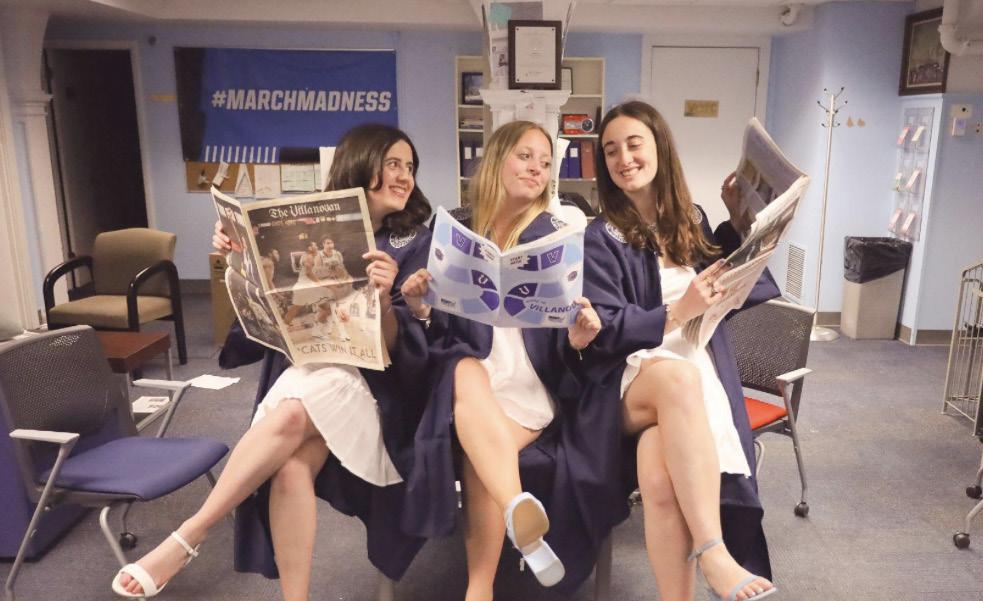
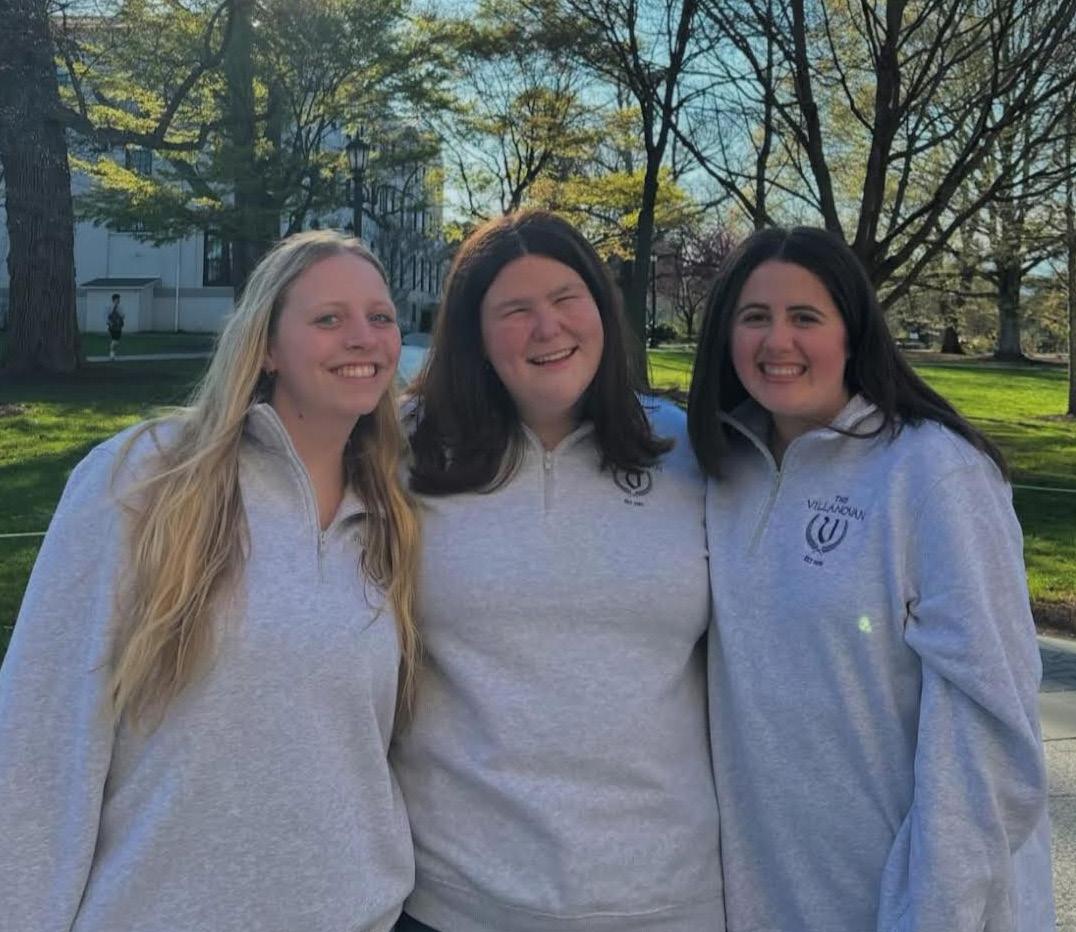
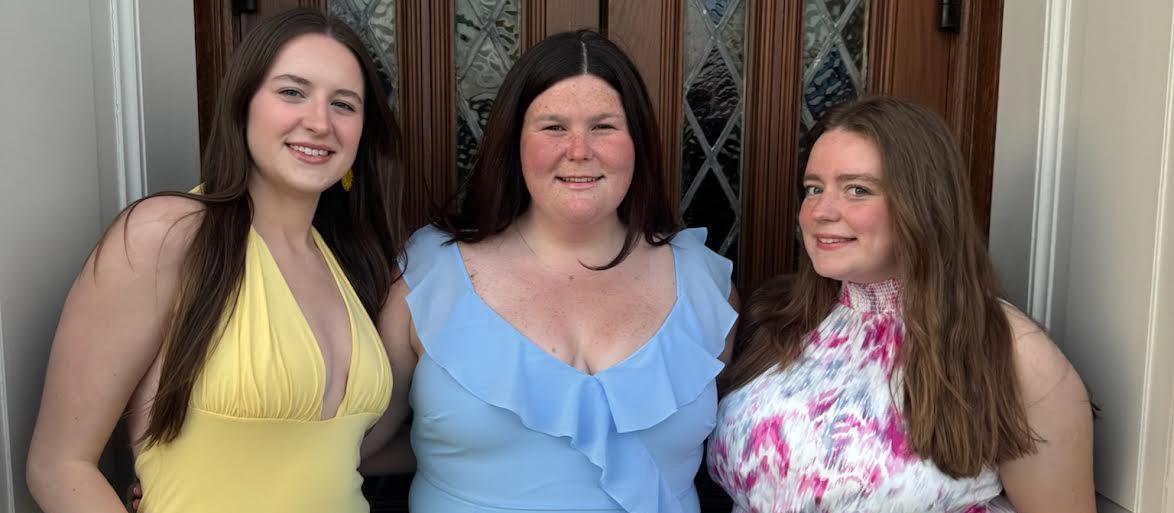
Former Co-News Editor Isabella Carlin, former Copy Desk Chief Madeline Okenquist and former Co-Digital Editor Natalie Zickel. Courtesy of Madeleine Okenquist
Pictured, Nicole with her former Co-EIC, Brooke. Courtesy of Nicole Liddicoat
Letters From Lauren: Good Things Come In Threes
Lauren Armstrong Former Associate EIC
Dear The Villanovan, My dad’s favorite number has always been three, much to my dismay. I like when things are even, precise and perfect. However, over my time at Villanova and within The Villanovan, I have begun to understand what makes the number three so special.
On May 3, 2023, the final edition of the 2022-2023 school year was published, and I had a conversation with former Editor-in-Chief Colin Beazley. He said, “I promise, your hard work does not go unnoticed,” and for the first time, I felt like I belonged somewhere on campus.
That conversation was one of the motivating factors that encouraged me to apply for the position of Co-News Editor at the end of my third semester on campus. On Dec. 3, 2023, I received an email stating that I was selected to be one of the three news editors for the 2024 year.
That team of three was the best introduction to the editorial staff I could have asked for. Nicole Liddicoat, Finn Courtney and I came in ready and passionate. Sitting with those two under the Villanovan calendar at production on Tuesday nights quickly became my favorite part of the week.
But I cannot say that it is just Nicole and Finn who made that first year of Tuesday nights so memorable.
It was the laughter, the smiles and the music. It was the late nights that turned into early mornings, and it was all my co-editors who pushed
Isabella Carlin Former News Editor
So, pack up your car, put a hand on your heart - Noah Kahan
There are so many memories you can pin so clearly in your mind. Let me paint one for you. It’s October 2022. The leaves outside my Stanford room are beginning to change colors as piles of readings for Ancients crowd my desk. My hometown Astros are playing the Phillies in the World Series. The melodies of Noah Kahan’s Stick Season filled my AirPods for the first time.
This album would go on to become one of my most treasured college soundtracks. It is easy to reflect now and realize that the album’s emphasis on growing up and uncovering “beauty along the journey” hit close to home for both the wide-eyed freshman and nostalgic senior.
Looking back, I can wholeheartedly recognize that coming to Villanova was a huge gamble for me. After touring the university during my junior year, I felt instantly drawn to its promise of community. Yet, it was also incredibly unfamiliar and exactly 1,552 miles from Houston.
But hey, sometimes you truly just need to trust your gut and take a leap of faith. You never
me to be the best version of myself. It takes a village, as well as a lot of Diet Coke and CampCo, and as time went on, that village changed and grew. Brooke Ackerman and Nicole assumed the roles of Editors-in-Chief, and I stepped into the position of Associate EIC in 2025. This EIC dream team, with three extremely different people, is connected by our passion for the paper.
Brooke and Nicole quickly became two of my favorite people ever. I will always cherish the almost all-nighters that we spent in the office, during which we grew closer and closer, especially in our “delusional hours.” As time has gone on, I cannot imagine my college experience without the friendship I have gained from the two of them.
Then, in the blink of an eye, Jan. 2026 hit, and I went back to the semicircle with the other staff writers, where it all began three years prior. The name attached to my articles changed from Lauren Armstrong, Staff Writer, to Co-News Editor, to Associate EIC, to Senior Columnist, a little too fast for my liking. I was also lucky enough to witness Kailey Fahy, Dylan Johnson and Sophie Latessa begin their EIC team journey that changed Brooke’s, Nicole’s and my lives.
Throughout my sophomore, junior and senior years, my college experience transformed in ways I did not know would be possible. From our publication breaking national and local news (multiple times) to producing multiple magazines and more stories than I can count, this paper has impacted my life and the lives of others throughout the Villanova community.
The Villanovan has helped
shape me into the person I am today. Yet, it was not only the weekly physical papers that had that impact. It was the people within the walls of the Corr Basement, where I think I have spent more time than my own dorms over the past three years.
It was also building connections with our advisors, Cat Coyle and Mr. Bradley. Cat, who continues to help answer every question I may have, and Mr. Bradley, whose passion inspired me to declare a journalism concentration, have shaped my college journey more than they may know.
All in all, it was that sense of community that I had yet to
“You’re Gonna Go Far”
know the amazing people and experiences that could be waiting for you.
I would be lying if I said my start at Villanova was always easy. Many of the early days were filled with doubts and homesickness. But in the midst of the challenges, my Stanford shoebox became a home, Communitas introduced me to some of my best friends and walking around campus each day filled me with a sense of pride I had never experienced before.
You and all of your new perspective now
Throughout sophomore year, I immersed myself in campus life and sought every opportunity I could to continue forming meaningful connections and pursuing my passions.
This was the year I joined the Orientation and Special Olympics Committee. New friends appeared in random ways I never could have envisioned. Along the way, I spent hours bouncing between my Rudolph apartment, Falvey’s 1st Floor and the back table of El Limon.
It was a time of discovery and fulfillment.
It’s been a long year and all of our book’s pages dog-eared / We write out the ends on our palms, dear/ Then forget to read
I spent my junior year realizing that sometimes the best things appear when you least expect them.
If you had told me that I would have had the chance to study abroad in Dublin, Ireland, for the summer, I never would have believed you. Who knew reading to the end of the Villanova Newswire would bring me the chance to intern for an international senator, travel to the places that filled my books as a child and grow in ways I never thought possible.
In December 2024, I received an email congratulating me on becoming one of the Co-News Editors of The Villanovan.
As a lifelong writer, the experience to report on the headlines that shaped the community I loved while working alongside such incredible individuals was one of the greatest gifts Villanova could have given me. Thank you, The Villanovan , for making my Rory Gilmore dreams come true. And we’ll all be here forever Senior year has been the best.
Bittersweet from the start, I will never forget the words from my internship co-worker this past summer: “Make sure each day is the best day ever. I miss it all the time.”
find at Villanova until I joined The Villanovan staff.
So, maybe my dad was right. Which is unfortunate, because I hate being wrong. The number three truly is special, and I cannot imagine spending the last three years anywhere other than Corr Hall. As the saying goes, good things come in threes.
To the editors, staff writers, advisors and everyone impacted by the paper, thank you for being my forever Villanovan family.
Rush The Villanovan, it may just become the best decision you will ever make.
With love always, Lauren Armstrong
I quickly understood what he was talking about when I arrived back on campus in August. It seemed like each day was filled with both a celebration and a “last” in some way.
Living in Bryn Mawr and experiencing every university tradition, basketball game and Mug Night with my best friends for the last time made for a year of moments I somehow already find myself missing. I simply have no idea how it all went by so fast.
And I love Vermont, but it’s the season of the sticks
I am forever grateful that 18-year-old me decided to give Villanova a chance. As an almost graduate (literally how), I can confidently say that God knew what He was doing all along by leading me here.
In fact, a part of me wishes that I could just stay on Lancaster Avenue forever. Yet another knows deep down that it is almost time for my next adventure, even if that means venturing into the unknown and carrying all that I have learned and those I have loved.
So, thank you, Villanova, for allowing me to learn more about myself than I could have ever imagined. Thank you for not allowing every moment to align perfectly. Thank you for giving me my people and surrounding me with an abundance of joy.
You got all my love.
Lauren, pictured with co-editors Madeleine Okenquist and Isabella Carlin. Courtesy of Lauren Armstrong
Brooke Ackerman Former Editor-in-Chief
The Villanovan is permanent.
The titles we have held will permanently remain on our resumes. The editors’ group chats that we’ve spent hours texting in will remain in the depths of our iMessage chains. And the memories we have formed in the basement of Corr Hall will forever be a permanent reminder of the culture and community we have had the privilege to be a part of.
But more than that, the words we write, and the stories we tell, are permanent.
Everyone says actions speak louder than words, but words have a permanency that actions will never have the ability to compete with. It’s the reason I fell in love with writing from a young age. You can tell a story and not only have your words last forever in a printed newspaper, but you can have the words you say leave a permanent mark on those who take the time to read them.
I’ve had the privilege to tell a lot of stories during my time as an editor on The Villanovan, but my favorite story of all is the one of how I was afforded the honor of serving as a Co-Editor in Chief in the first place.
My journey began as a staff writer under Meghann Morhardt and Matt Ryan who told me I was going to cover Villanova field hockey. I hate field hockey. But I loved the thrill of seeing my byline in the newspaper every week…so I wrote.
What was a simple field hockey beat morphed into an opportunity to cover the 2023 women’s basketball Sweet Sixteen run in Greenville, South Carolina. Still in my freshman
The Privilege Of A Lifetime
year, I was now one of the Sports Editors and found myself on the charter flight with Will D. Cat to my left and Graydon Paul, the former photography editor to my right. Graydon would go on to become one of my best friends at Villanova, and will be a future bridesmaid.
And then I climbed the ranks. Colin Beazley and Vivi Melkonian, who, to this day, are still two of the greatest leaders I have had the privilege to work with, offered me the position of Associate Editor-in-Chief. In all honesty, I hated them for it at the time. It would end up being the greatest thing to happen to me.
For the two semesters I was Associate Editor-in-Chief, I served one of those semesters abroad. Here’s a pro tip for any future editor who tries to maintain their position with a six hour time difference: making modifications to an InDesign file when you’re drunk off half a bottle of Italian wine at 3 a.m. is not easy.
And then came the time for Editor-in-Chief applications. I’m not quite sure what I did to deserve the predecessors that were Emma Cahill and Hannah Sweeney, but their taking a chance on me from halfway across the world became a decision that changed the trajectory of my college experience.
So I returned to campus in the Spring of 2025 as Co Editor-in-Chief of The Villanovan, alongside Nicole Liddicoat. I only had one question: who the hell is Nicole?
I don’t quite know when Nicole shifted from my Co Editor-in-Chief to a lifelong friend. But, what I do know, is that it has been the privilege of a lifetime working with her, learning from her and growing because of her.
Natalie Zickel Former Digital Editor
Everyone wants their college experience to be a movie.
For the past 244 days, I have been filming my senior year on a 2010 Canon Vixia HFM300 camcorder. And for the past three hours, I have been hopelessly trying to condense hours of basketball games, intramural championships, craft nights, wine walks and bucket-list activities into a 90-minute story of my last year of college.
It’s impossible.
It’s only seven months. I open my phone and scroll back to freshman year. I’ve never had trouble capturing a moment to save for my future self. A picture after every Finn game. A group selfie after a weekly Quizzo loss. Ever want to know what the church looked like at 8:24 a.m. on Jan. 27, 2023? The sky was bright and blue as I walked across the bridge to my 8:30 a.m. Theology class in Tolentine.
There have been very few times in the past four years that I’ve been able to look back at what I’ve captured here. Fixing a roof in Mullins, SC. A Badminton tournament in Maryland. Filming documentaries in the Philippines, the Shinnecock Nation, and Mo -
Alongside myself and Nicole was the third member of our Editor-in-Chief team, former Associate EIC, Lauren Armstrong. And oh what a light Lauren is. As I’ve grown, I’ve found that some people in your life will feel like the human form of sunshine. That is a gift. Recognize when they do, recognize who they are and hold on for dear life. Nicole and Lauren are my sunshine.
And, of course, I would be remiss to not share how much of a role our faculty advisors, Cat Coyle and Michael Bradley played in this story—in my story.
Cat’s innate ability to make any overwhelming task seem effortlessly simple is a quality I not only admire, but hope to master. She is the backbone of The Villanovan and someone I have come to cherish during my time here.
And then there’s Mr. Bradley. It’s not often that a professor turns into an advisor, and an advisor turns into a mentor, but to stop there would hardly encompass all Mr. Bradley has done for me.
He has become my friend. I am eternally grateful for his compassion, guidance and ability to touch the lives of every student who walks through his classroom or contributes to this paper. Mr. Bradley not only changed my Villanovan experience, but my college experience, for the better.
While my Villanovan journey mayhave come to an end, my story hardly stops here. If anything, it’s just beginning.
So thank Villanova, and thank you to The Villanovan, for giving me a platform to tell my stories and for the privilege to leave my permanent mark.
Find Your Film
rocco. But there’s so much more that exists outside my camera roll. Villanova gave me incredible opportunities to travel, explore my interests and try new hobbies. But it’s the people I found here that breathe life into the photos and the film. It’s the memories of laughter and the conversations of care that follow. You don’t have to go far to make a movie. You can find one right where you are.
There’s one on Tuesday
nights at the Villanovan Office. There’s one in Garey 29D, the Social Justice Documentary Lab. There’s one in every van ride to service trips, in the Mullen Theater scene shop, on the intramural basketball court. You don’t even need a camera to capture it. You just need to open yourself to the story that it will tell. To the underclassmen: Try something new. Say yes to staying up late with your friends. Get up early to pursue your passions.
Take a crazy class. The best movies come unexpectedly.
To my fellow seniors: Your movie doesn’t end here. Your spin-off season just got greenlit. It’s time to pack up what we have learned at Villanova, the adventures we have had, the high points and the lows, and bring it out of the bubble. Keep the characters you have found here close, and reflect on the story arc that made who you are. There are plenty more stories to come.
Natalie shares how she has shared her creativity with the Villanova community. Courtesy of Natalie Zickel
For Brooke, The Villanovan was a defining component of her college experience. Courtesy of Brooke Ackerman
Katie Lewis Former Sports Editor
One of my first views of Villanova was the front page of The Villanovan’s website.
As a senior in high school in Miami, I had no idea what life would be like at a college in Pennsylvania. When considering whether to attend, I looked at the student newspaper to get an idea of what was happening at Villanova: campus events, dining hall reviews, and a lot of basketball. This website ended up being a major part of my own college experience. I joined The Villanovan as a freshman and was co-sports editor for four semesters.
Over the past four years, I’ve been able to see the campus from a variety of perspectives. Members of the class of 2026 have experienced Villanova during a period of immense change: new buildings, new campuses, men’s basketball coaching transitions and the election of fellow Villanovan Pope Leo, to name just a few. While we do not know what walking to class is like without navigating any construction zones, we have seen the school evolve in some ways and stay the same in others.
So, what is life like at Villa -
My View Of Villanova
nova? My answer revolves around a basic truth: the main reason my college experience has been so meaningful is because of the people I’ve been fortunate to spend it with. In case any curious prospective students are reading this, as I did, here is another explanation: being a student at Villanova is being a member of a community and getting to contribute to it in your own way.
My favorite view of Villanova has to be the one from the press seating in the Finneran Pavilion. There, I’ve intently watched dozens of basketball games while crammed next to fellow student reporters and local journalists, speedily writing down stats, sending off Tweets and brainstorming postgame questions.
When I wasn’t focused on my laptop, I would look out at the action on the court and take in the energy from the stands — the roaring cheers at a three-pointer and the reverberating groans when something went wrong. These are not details that I would typically include in an article, but getting to be a part of this collective, tumultuous journey of a basketball season reminds me of what makes college sports so important. The community is why fans pack the stands every game, and why The Villanovan continues to report the news on every sport, every week.
ven as a sportswriter, things always worked best when our staff had the attitude of “we’re in this together” — whether we were making the Basketball Preview Magazine until 3 a.m., trekking to Beaver Stadium at Penn State, or discussing ideas in the newsroom.
Retired from the sports section for the spring semester, I spent most of the men’s basketball games this season in the stands among my friends and fellow Villanova fans. As much as I’ll miss reporting, it was exciting to be a part of the crowd that I’d watched so many times from the press box.
This gave me the opportunity to look back on how I got to experience the unforgettable thrills and crushing defeats of college sports through the unique viewpoint of a student-journalist. During my four years of writing about Villanova athletics — basketball, football, soccer, softball, baseball, track and field, swim, and more — I was able to see the school from many angles. I talked to athletes and coaches who are incredibly passionate about their sport and representing Villanova. I laughed watching everyone trying to “swag surf” in the student section before tip-off at Big East basketball games. I had the opportunity to tell athletes’ inspiring stories, report breaking news, ask questions that I knew Villanova
fans cared about, and engage with the school community in a more exciting way than I ever could’ve expected.
Most of all, I am so grateful to everyone who has supported my journalism over the past four years. My former editors taught me how to report on games, handle important interviews, and manage the sports section. The sports staff and the two co-editors I worked with, Owen Hewitt and Dylan Johnson, always made the section feel like a team and Wednesday night meetings one of my favorite parts of the week. I would especially like to thank Michael Bradley, The Villanovan’s faculty advisor, for his support and guidance, and for always holding our work to the highest standard.
As a senior in my last weeks before graduation, I am looking at my time at Villanova from yet another viewpoint, one that I used to dread: retrospect.
But as I look toward the next step, I do not exactly feel like I am leaving Villanova behind. I know that I will take everything that I learned, and the relationships that I built here, with me into the future.
I’m looking forward to coming back to campus and unlocking a new perspective: that of an alumna as a proud member of Nova Nation.
A Thank You To Our 2026 Villanovan Seniors
Kailey Fahy Co-Editor-in-Chief
Dylan Johnson Co-Editor-in-Chief
Throughout the semester, our team of editors spends a large portion of its time planning and producing The Villanovan . While much of that time is devoted to deleting misplaced Oxford commas and working within InDesign templates, somewhere in the long hours and late nights spent in the office, these fellow editors become some of our closest friends.
So, every year when graduation comes around, it feels a little bittersweet saying goodbye to The Villanovan seniors. While it is difficult to watch these people we have grown so close to leave campus and move on, it is also incredibly rewarding to see them take the skills and lessons gained from working on the paper into the next chapter of their lives.
This year, The Villanovan is graduating nine seniors, each who have left a unique and indelible mark on the paper.
Brooke Ackerman, one of our former Editor-in-Chiefs, has excelled in just about every different editorial position this paper has to offer. Starting as a staff writer, Brooke quickly distinguished herself, rising to Sports Editor in her freshman year, Associate Editor in her sophomore year (managing half of that tenure from abroad) and ultimately Editor-in-Chief. In each of these po -
sitions, she has served as a mentor and role model to all those around her. She is a natural leader, with a clear vision and tireless work ethic that left the paper better than she found it. Her love for The Villanovan is contagious and will continue to echo within the pale blue walls of Corr Hall as she moves on to her next chapter.
Nicole Liddicoat, our other former Editor-in-Chief, may just be the hardest worker and smartest person we know. Nicole took on this role while also being a member of the cheer team, working and balancing two majors and 22 credits. Despite this, she always arrived at productions on Tuesday night with a positive attitude and an eagerness that she shares with everyone in her orbit. Even amid the chaos that often erupts on Tuesday nights, Nicole always remained a patient and calming presence who grounded our team in the basement of Corr Hall. The Villanovan was incredibly lucky to have Nicole for her vision and insights relating to the paper. However, we are even luckier to have her as our friend.
Lauren Armstrong, our former Associate Editor-in-Chief, radiates a palpable sense of warmth and joy across Villanova’s campus. Her passion for everything she is involved in inspires all of those around her. Her fierce devotion and heart come through in every article she has written and her impact on the paper will not soon be forgotten. In addition to being an ever present part of our Villanovan team during her time in college, she is also everyone’s
biggest supporter and someone who we can always count on to lift people up. We will miss her weekly articles and columns, but more so, we will just miss her.
Madeline Okenquist, our former Copy Desk Editor, was truly the backbone of the paper during the three years she spent on The Villanovan editorial team. While her work never resulted in a byline on the front page, it did always allow us to share stories effectively, clearly, and without Oxford commas (most of the time, we already miss you Madeline). She had a sneaky sense of humor that would lighten the mood during even the most stressful production nights. We already miss her meticulous editing and quick wit.
Katie Lewis, our former Sports Editor, helped lead The Villanovan sports section during one of its most successful periods in its entire existence. From breaking stories to covering the niche lives of Villanova athletes, Katie always had an eye for a great story. She found ways to expand the sports social pages and refresh the paper’s website in multiple ways. Whether it was New York City or Penn State, Katie always made sure to be there to cover anything and everything. She was a part of one of the best Basketball Preview Magazines the paper distributed. Natalie Zickel, our former Digital Editor, leaves us all constantly in awe of her creativity and storytelling. Her ability to create an impact on the Villanova community through a variety of mediums has been incredible to watch. Equally incredible, is the way she
leads with an infectious kindness that leaves a lasting impression to all those who know her.
Isabella Carlin, our former News Editor, is one of the most joyful and radiant human beings we know. She led News with a sense of quiet confidence, which was reflected in her section and all the stories she authored. Even while living on a campus so far away from her home in Texas, she shared her innate ability to make everyone around her feel at home.
Arden West was our former Senior Editor and one of our former Editor-in-Chiefs. During her time as EIC, she immediately created a welcoming space for her staff that was made up of nearly entirely new editors. She fostered a culture that continues to shape how The Villanovan currently operates. We know she will take these qualities into her next chapter and will naturally become a leader, just like she was here.
Peter Reilly, there are not many people who can say they started something new at The Villanovan , but you did. The crossword section of the weekly print edition changed the course of the entire paper’s future. Please carry your creativity and work ethic into your professional career.
Every week when we open up the paper, we will miss seeing their bylines. However, we are instead excited to see all they do and accomplish. We will be cheering you on from the basement of Corr Hall.
With love, Kailey and Dylan
Emma Cote Abroad Correspondent
Eight days from now, I will be on my flight home from studying abroad.
Before leaving, I asked almost everyone I knew who had embarked on the same experience millions of questions. I listened for any advice, lessons or tips, figuring that I could provide the same wisdom.
If I’m being honest, studying abroad has not made me a beacon of knowledge.
Contrary to my preconceived notions, going abroad did not solve all of my problems. It did not make me a perfect person. It didn’t even teach me how to enjoy red wine.
Because of the grandeur of studying abroad, I found it helpful to pay attention to the seemingly small stuff. So, while I’m certainly unfit to declare myself an expert by any means, here are some lessons I’ve learned along the way.
No, you do not need to spend all of your money.
I am fortunate to say that studying abroad has been the first time in my entire life when finances have been at the forefront of my mind. I understand how lucky I am to be able to admit this.
I was well aware of expenses, specifically from weekend trips, that would be spent during my time away. However, learning to balance groceries, basic amenities and transportation has obviously been incredibly stressful.
“You’ll never go abroad again, so just buy it,” is a phrase tossed
CULTURE Unpacked: Final Farewell
around with comforting intentions, but one that has never offered me much solace.
No, you do not need to come back with your pockets empty as tangible proof of having had a good time. Learning to say “no” to certain things in an effort to save money is a lesson from freshman year that has certainly resurfaced, but one that has become effectively learned this time around.
Build your community and lean on it.
When my laptop broke down without warning, during the midterm week of study abroad, I thought my life was over. I knew that on top of my already expensive existence in Rome, I was surely going to have to make a massive purchase just to get through school.
When I shared my circumstances with my professor, I was merely trying to explain why I couldn’t complete the homework. Before I could finish my sob story, I was being led to a technology service store nestled into a corner of the city. Immediately, my professor negotiated a fair price for my repair and got me my computer back within two days.
I came to Rome entirely unaware of just how important my professors, my friends, local shop owners and many more people would become in helping me find my footing here. Independence will come with time, but learning to lean on others is a skill that has to be practiced and embraced.
Find your own familiarity. Ever since my high school
Latin class, I had known I wanted to study abroad in Rome. My teacher at the time spoke of his time in Italy with such nostalgic adoration, and I was immediately dreaming of the opportunities I hoped to experience one day.
Something that has helped me carve out corners of familiarity here is remembering these stories and retracing the steps of so many people in my life who have loved the city I have grown to love so much.
While I was eager to embrace the uniqueness of my home base, I found similar excitement in seeing a Villanova flag in the papal crowd, a Boston Red Sox hat being worn by a passerby or even an iced coffee spot tucked into Trastevere.
New experiences are important, but bridging these experiences to home only enhances new places.
Embrace being challenged.
All my life, I’ve had a knack for finding bubbles. Places where I feel confident in my capabilities and sheltered from various inconveniences have been my experience both within my hometown and in college. I knew that when I went abroad, I wanted something different.
Rome has tested me in almost every way imaginable. No one is holding my hand here, and navigating such a massive bustling city has provided its fair share of challenges.
Learning to hold my own in a new place has undoubtedly fostered a sense of capability I have never felt before. Seeking out challenges helps in the long run, and you’ll be shocked at your own abilities to hurdle obstacles that are thrown your way.
Always be kinder than you feel.
Some days, you’re going to be ziplining in the Swiss Alps, wondering how life could get better. Other days, the clock will hit 5 a.m., you’ll be on hour 48 of being awake at the Malta airport, and the spark of saving 30 euros by booking an early-morning flight wanes.
The allure and charm of abroad ebbs and flows. At the end of the day, life goes on, and the novelty of a place may not always compensate for normal human feelings.
When everything seems as if it is going wrong, it is crucial to be kinder than you feel.
It’s so easy to get wrapped up in your own struggles that you forget just how far being kind can get everyone else around you. If you’re on a delayed flight, so are nearly 100 other people.
More often than not, your struggles are not unique. Learning to push your inconveniences aside and express kindness will get you much further in life every time.
Unpacking it all.
You never really know just how much you’ve grown until you stop and look back. It’s so easy to get caught up in looking forward to new places, bucket list items and the novelty abroad has to offer.
If you can, find some time to keep looking back. Look back at the places you have been to, what you’ve seen, who you’ve met and the many lessons you’ve learned along the way.
Traveling offers an unparalleled education, and you’d be surprised by how capable you are of leaping.
Finding Friends That Last: Post-College Relationships
Christopher Brown Staff Writer
As the school year ends, and seniors look forward to graduation, some seniors may be thinking, “Will my friends and I still be friends after college?” It can be anxiety-inducing to think about whether someone can maintain their friendships once their paths are separated and new ones are forged. However, Al Martinez-Fonts, a long-time Villanova alumnus, has answered that question for upcoming graduates.
Martinez-Fonts was a Villanova student who graduated in 1971 and still maintains dozens of close friendships, many of whom were his Villanova classmates. He cites having a common background, a common bond and a common interest as being the key to remaining friends with someone for many years.
“I think the key to any kind of friendship is just keeping up the conversation, especially today, since it’s easy with texts and emails,” Martinez-Fonts advised. “Back in the day, we used to have to write a letter.”
One of the benefits of social media platforms like Twitter, Instagram and Discord is how easily they let people connect and communicate, including people from across the globe. A graduate who lives in New
Jersey can easily joke over memes and keep up with a friend over in Louisiana, for example. People who were in the Villanova University Discord together can potentially find times during which their schedules align and hang out.
Martinez-Fonts also recommends keeping up the conversation to grow one’s career opportunities, specifically one’s network. It certainly does not mean you should befriend people just to get ahead, but it does mean putting in constant effort to get to know someone is key. It can be difficult if you are shy or introverted, but it is always doable, and you never have to make yourself the biggest voice in the room for it.
Simply going up to someone you have regularly interacted with or noticed you have something in
common with, like “Hey, my name is Al,” and continuing from there can go a long way. Then you can ask if they would like to hang out with you later over some coffee.
They do not even have to be long-term commitments, but just chances to get your foot in the door and potentially begin a new friendship. Maybe you two are in a softball league together, go to the same church, both have children and can relate to the stresses of parenthood and even more.
Martinez-Fonts stresses that life is full of risk and that this applies to friendships, too.
“Every so often, you meet people, and they turn out to be no good,” Martinez-Fonts said. “Bad people, crooked people, people who you don’t want to be friends with, and
then at some point you end up miserable.”
His words remind us to be careful about who we bring close to us in our lives. As he states, relationships must be give-and-take. Both individuals must be able to support each other without sacrificing respect and basic needs.
Not everyone you meet is going to fit your type. Maybe your personalities clash too much, and that is fine. You do not need to befriend everyone, nor do you need to commit after every shot taken.
At the end of the day, your truest friends are not just the people you grab a drink or play sports with. It is the people who, when you tell them about the birth of your first child, a big raise at work or being sick, drop everything they are doing to be there for you. They are the ones who cheer you on during your successes, pull you up when life is pushing you down and check up on you.
As Villanova students prepare for graduation, many students wonder what they want to do next. They might be wondering what their careers or moving out will be like and whether they will be close to their friends?
However, as Martinez-Fonts said, “If you’re willing to go out there and meet people, you’ll get a lot back.”
True friends will stay in touch with you long after college. Cali Carss/Villanovan Photography
Korin Kohen Co-Digital Editor
One would think that after spending a long time at Villanova, choosing where to eat would get easier. If anything, it gets worse. The options expand, the opinions grow stronger, and suddenly a simple dinner plan turns into a full-blown debate. Somewhere between the third time asking where everyone wants to go and someone inevitably suggesting the same overdone option, the night starts to lose momentum. Opinions clash, and group chats stall.
This is exactly where Beli comes in, not by eliminating the chaos, but by making it a lot more entertaining.
For those unfamiliar, Beli is essentially a running log of a person’s food decisions. Think part rating system, part personal food diary and part humble brag. It lets people track the restaurants they have been to, rate dishes, bookmark places they want to try, and, most importantly, see where their friends are eating. It’s less about playing Zagat critic and more about building an edible identity.
Beli feels like it was made for the indecisive but deeply opinionated student. It is less like an app and more like a quiet intervention for that all-too-familiar “I’m fine with anything” type. Instead of recycling the same half-hearted suggestions, people
CatAppetite: The Art Of Beli
show up with options that they are genuinely excited about. One person knows exactly which place had the best late-night order. Another is pulling ideas straight from the saved list they have been curating for weeks.
What makes Beli interesting, though, is that it does not stop at solving the immediate problem. The appeal isn’t in simply picking a place. It’s in what starts to build over time. The more people use it, the more it turns into a personal archive.
There is a category for everything. People can add pho -
CoachellaNova:
Sophia Thomas Staff Writer
As thousands of music lovers flocked to the California desert for the Coachella Valley Music and Arts Festival, they faced intense heat, packed crowds and high ticket prices. Yet, through it all, the concertgoers were willing and determined to endure anything to see their favorite artists live.
One question for our community prevails as we reflect on the Coachella experience: how far would Villanovans go to see their favorite artist live?
Attending live concerts is becoming increasingly expensive due to added fees, travel costs and other accommodations. This is especially true for larger-scale festival venues.
In this day and age, concert tickets can even exceed thousands of dollars. Despite this, festivals like Coachella remain an integral part of Gen Z culture and offer a shared in-person experience defined by popular artists, current trends and online chatter.
As it turns out, many of the most enthusiastic concert-goers are right here at Villanova. Some may go further than others, but it seems that, across the board, students are willing to take big leaps for their favorite artist.
Villanova students expressed an extreme level of dedication to see their favorite artist live.
First-year Samantha Giamelli did not hesitate for one
How
tos, the friends they were with, the type of occasion and so many other details that turn a basic meal into a story. A rushed lunch between classes looks different than an outdoor summer dinner they don’t want to end. Beli leaves room for that difference. They are not just rating the place. They are capturing the energy around it. It also becomes very clear that one is a creature of habit. The same orders (and cuisines) show up more than you’d like to admit. They start to recognize your patterns in a way that is funny and slightly alarming. But
instead of boxing one in, Beli does the opposite. Once you see how predictable you are, it’s easier to break out of it.
All the saved spots people swear they’ll get food from actually start to feel within reach. It might feel like a risk to stray from your go-to Chinese spot or the one order you know will never disappoint, but Beli gives people that little nudge to make a leap of faith.
Part of the appeal is how subtly competitive it becomes. People want to find that hole-inthe-wall before anyone else does, the one you can casually recommend later like it’s been your thing all along. They aren’t just trying a new spot. You are adding to your digital food-print.
The social side is the best part. Seeing one’s friends’ posts feels less like scrolling and more like getting a steady stream of ideas people can trust. It also makes everything feel a little more connected. A place is not just somewhere you went once, but somewhere hundreds of people have gathered at different times to share their love.
Everyone’s page is slightly different, with their own unique taste profile. Some people stick to what they know, others are always chasing something new.
In a world of constantly evolving palettes, it turns into carving out something that feels like their own.
Far Would You Go For A Concert?
moment as she described the lengths she would go to for country star Morgan Wallen.
“I would literally marry him,” Giamelli said, “I’d do absolutely anything to see him.”
For Giamelli, the appeal goes beyond Wallen’s songs. She expresses a deep emotional and personal connection to the artist as a super fan.
She added that the stakes would surely rise for her if she had the chance to meet him personally.
“I would walk through the Sahara Desert without water for him,” Giamelli said.
While Giamelli’s response represents a more extreme side to superfans, other students shared a similar eagerness to go to great lengths, but in more realistic terms.
Sophomore Jack McEvoy said that he would “drive across the country in a heartbeat” to see his current favorite artist, Riley Green.
His response reflects a level of commitment that many students might share-a willingness to go far for their artist of choice.
Unlike Giamelli, McEvoy noted that his favorite artist changes over time, suggesting that, for some students, the desire to make sacrifices for live music may depend on the music shaping that specific time in their lives.
Student responses reflect a common trend amongst college students: experiences often take priority over practicality.
For so many in Gen Z, live music is much more than simply entertainment. It is a way of life.
It is part of their identity. It is a means through which young people can connect on a deeper level, leaving behind the distraction of the all-consuming technologies that can at times define so much of the generation.
Influenced by larger-scale venues such as Coachella, Villanovans seem ready to embrace the fact that live music experiences are worth the cost, even if the constraints of reality get in the way. Whether it’s crossing the country or simply contemplating it,
Villanovans’ responses show how live music continues to maintain an influential place in college life. While the Coachella experience may feel so far away, the desire to center life around these live music moments remains powerful. When the music dies down, and the crowds go home, it’s not truly about how far music lovers might go, but why: the memorable connections, the unbeatable energy and the opportunity to be engaged in something much larger than themselves.
Another plus of using Beli is seeing your favorite spots compiled in a “Beli Wrapped.” Maggie Fitzgerald/Villanovan Photography
Seeing one’s favorite artist live is often a priceless experience. Sophia Thomas/Villanovan Photography
Love On Lancaster: To The Ones We Love And Lost
Maggie Fitzgerald Co-Culture Editor
The cold months have vanished, and along with the warm weather and spring allergies, a new season of holidays are upon us. Of the 365 days of the year, most parents go woefully unrecognized for their servitude and dedication to their children. Besides their birthday, or maybe Parents’ Weekend, they each have one measly day to be showered with appreciation: Mother’s Day and Father’s Day. These Sundays are often full of joy, love and frequently an obnoxiously long brunch. This week, in anticipation of the celebration for those whom we truly owe everything to, I want to be sure to make room for the ones we have lost.
The death of a parent is so tragic it is almost impossible to convey the depth and enormity of the grief that ensues, and largely endures for a lifetime. While Christmas, birthdays or even random Mondays are unbearable in their wake, Mother’s Day and Father’s Day are particularly painful. Their absence is glaring, the lack of celebration deafening. This is, unfortunately, a feeling I know all too well. In 2009, after an eight-month battle with Stage IV Stomach Cancer, my father passed away, leaving his wife and three young girls behind. As I have had 16 years of Father’s Days since then, I am well acquainted with the grief that rolls in every third Sunday of June. Some years it’s
louder than others, but it is my trusty companion nonetheless.
In my three years at Villanova, I have met a shockingly large number of students well versed in the language of grief, particularly related to the death of a parent. It often feels ridiculous. How can this many young people be forced to carry such a burden? There isn’t a book for how to be a good griever. No set of instructions can tell us how to survive Mother’s Day without the soft smile of your mom, or Father’s Day without the booming laugh of your dad. Well, I don’t know everything about celebrating and remembering a parent, but I do know a whole lot. For those who may need them, here are my notes.
Honoring the parent you have
While losing a parent is devastating for all involved, I am conscious that this loss is colossal for the parent who remains. They didn’t just lose their parenting partner, they lost the love of their life. Now, they must do their best to raise their children
in the absence of their spouse. It is a near impossible task. Personally speaking, I have a hero of a mother, and I hope that many can share in this sentiment. I think it is incredibly important to acknowledge this, not just on Mother’s Day, but Father’s Day too. These days can serve as recognition of not just what you have both tragically lost, but what they have succeeded in doing despite this loss: raise you. Take care to remember that this feat of their perseverance, their strength and their love is worth celebrating. They have given the most they can possibly give, and then even more just to compensate for the love that has been lost. For those that have lost two parents, or aren’t blessed with a remaining figure of support, I am sure the absence is even more excruciating. Maybe these days look more like honoring the family you do have, or possibly the found family that have taken you in as their own. And for those blissfully unaware of the realities I am referencing, become aware. Be the friend, cousin, colleague or
stranger that remembers the loss others could be experiencing. Be the person who reaches out, offers a hand or just simply sits with you in your grief.
Remembering the parent you lost
The real doozy. My only advice is that you are better for remembering them; don’t hide from the grief. In a way, I feel honored that I loved, and was loved by someone so beautiful that their absence is so devastating. Use this day to truly honor their legacy; eat their favorite treat, listen to their favorite music, look at the photos you have left. My Father’s Day smells a lot like strange Irish candy, sounds like old rock music and frequently involves a White Sox-related activity (my dad was a Southside Irish Catholic). You can smile, you can cry; it is okay to do both. Just think of them. Nothing I can say, or anyone who nobly tries to provide comfort in times like these, will suffice. Unfortunately, unbearable things are often not easy to bear. But yet, we do. Whomever you have lost, grieving them is a crushingly beautiful thing. In moments when their absence is so glaringly obvious, let me be the one to remind you that there will be no fix. Let it be. Love them, remember them and remind yourself of the honor that this brings to them and all those who have bore their loss. So, happy early Mother’s Day and Father’s Day to those who we love, and to those we have lost.
Love you Dad.
The Room Where It Happens: House Instability
Hudson Zivic Staff Writer
The phrase “history repeats itself” is widely known and often used for various reasons.
It highlights recurring patterns in human behavior, social trends and historical or political events.
That’s where “Hamilton: An American Musical” comes in. The comparison for this analysis: Is history really repeating itself?
By examining a quote from the musical alongside a contemporary political story, we can explore whether the ideals, conflicts and ambitions that influenced the early republic are echoing in current events, or if what appears familiar is simply history’s rhyming, not its repetition.
To wrap up the column for the year, it is important to reflect on the institutions that govern us. So this week’s parallel comes from Congress facing growing instability due to a combination of resignations, scandals and institutional exhaustion, raising larger questions about whether the House of Representatives can still function as intended.
Over the past several weeks, lawmakers have been leaving Congress for very different reasons, yet together they point toward the same institutional problem. Representative Sheila Cherfilus-McCormick (FL-20) abruptly resigned just before a House Ethics Committee hearing tied to allegations that she misused millions in federal funds. Representative Cory
Mills (FL-07) has said he will not step down, despite facing ethics investigations tied to misconduct allegations. Meanwhile, a broader wave of retirements continues as lawmakers increasingly share frustration with dysfunction, gridlock and the inability to govern effectively. Brookings recently described the trend as a sign of “deep institutional frustration,” as more members openly question whether Congress remains a place where meaningful work can happen.
That growing dysfunction reflects one of the most politically relevant lines in “Hamilton”: “Every action has an equal and opposite reaction.”
In the musical, the lyric appears during “Cabinet Battle #1,” where Hamilton and Jefferson weaponize policy disagreements in a fight over the country’s future. The line captures the reality that political decisions rarely exist in isolation. Every move creates consequences, sometimes immediate, sometimes delayed. That dynamic feels increasingly visible in Congress today.
For years, lawmakers have operated in an environment that rewards outrage over policymaking. Viral moments often carry more political value than bipartisan compromise. Fundraising incentives encourage confrontation, while party loyalty frequently outweighs institutional responsibility. Ethics investigations drag on for months or years, often becoming political spectacles. The reaction to those choices is now unfolding in real time.
Scandals have fueled resignations. Frustration has fueled
retirements. Public trust in Congress remains deeply fragile. Experienced lawmakers are leaving, while institutional instability continues to grow. The very behaviors that helped some politicians survive politically may now be weakening the institution itself.
Congress spent years normalizing dysfunction, and now it is dealing with the consequences. That is where another “Hamilton” line quietly looms over this moment: “History has its eyes on you.”
The lyric serves as a warning in the musical that leadership decisions outlive political careers. The choices made in moments of instability shape how institutions are remembered long after the individuals involved are gone.
That warning feels particularly relevant now. Lawmakers are not simply navigating short-term political scandals. They are shaping the long-term credibility of one of America’s most important democratic institutions. When members resign before accountability fully plays out,
public trust lowers. When lawmakers leave because they believe governing is no longer possible, the institution loses experience and stability.
The early republic faced the challenge of building institutions strong enough to survive political conflict. Modern Congress faces the opposite challenge, proving that those institutions are still strong enough to survive the people currently operating within them.
And that may be the lasting takeaway from both “Hamilton” and this column as a whole. History is not valuable because it predicts the future with perfect accuracy; it matters because it reveals patterns of human behavior, ambition and failure that remain deeply familiar.
The names change. The headlines change. The battles change.
However, the responsibility to learn from them remains the same.
History may not repeat itself exactly. But if we ignore its lessons long enough, it can become far easier to mistake warning signs for surprises.
While inevitably painful, these days can serve as beautiful reminders of a life well lived. Maggie Fitzgerald/Villanovan Photography
Turmoil continues on Capitol Hill, but this isn’t new. Maggie Fitzgerald/Villanovan Photography
VillaVogue: The Art Of Thrifting Your Wardrobe
Ciara Dursee Co-Digital Editor
We are in the midst of a vintage clothing era. This isn’t just another trend, it’s a cultural shift.
I would make the argument that for the last 15 years, thrifting has grown from a niche hobby to a crucial skill used to define personal style. These days, people are turning towards thrifting, rather than purchasing a top from Zara’s spring collection that half of campus is wearing. That’s not to say there isn’t value to closet essentials, but thrifting offers a new vision to individual expression.
Thrifting is more than a hobby, it is an art. It’s a skill that requires intense digging through unique clothing racks for hidden treasures. Secondhand shopping is both sustainable for the planet and more economical.
In honor of the semi-annual Wildcat thrift in the center of Villanova’s campus, here’s my take on the art of thrifting.
The Social Media Effect
As someone who has never lived without easy access to the internet, I have been able to see the progression of the endless scrolls, addictive apps, brain rot videos and recycling trends. What used to be advertised through printed magazines on monthly occasions now comes at just a click of a thumb.
The worst part about this never ending cycle of rapid trends and constant sharing – there is no individ-
Kate Koslow Staff Writer
“For justice, we must go to Don Corleone.”
It’s gruesome, it’s moving and it has probably been quoted to you at one point or another. Francis Ford Coppola’s “The Godfather,” based on the novel by Mario Puzo, will go down in history as one of the greatest movies of all time, and for good reason, as it’s not just a story about mobsters but a complicated saga about principle.
The story follows Michael Corleone after he returns home as a war hero. Virtuous and idealistic, he is trying to stay out of the family business of organized crime. However, when his father, Vito Corleone or the “Godfather,” is threatened, Michael is forced to protect the Corleone legacy. In this epic story of sacrifice and action, the audience witnesses a battle of power and control, in which only those worthy enough will live to tell the tale.
The cast’s performance convinces the audience that they were destined to play these roles. Michael Corleone is Al Pacino’s breakout role, and his portrayal goes from being quiet, subtle and reluctant to a transformed leader. Michael’s brother, Sonny, is played by James Caan, who is a short-tempered, impassioned and aggressive character. Of course, Diane Keaton’s smaller role as Kay Adams, an outsider, was vital to the film as her character was a grounded, trapped observer, a contradiction to the violent mafia.
uality. I do this too, don’t worry. When faced with the question of what to wear to a Jersey Shore wedding in 50degree weather, I didn’t rely on my instincts. How did I figure out how to wear a sage green patterned dress, nude heels and a sweater shawl with pearl details along the edges? Pinterest and Instagram gave me this exact inspiration in under five minutes. It worked out, but it wasn’t entirely mine. That’s the trade-off. Effortless access, but personal identity compromised in the process.
The Oldies are the Goodies
Recent trends have influenced people to scroll through pinterest for a 90s black dress or 80s denim pants. Many designers have caught on to what consumers really want, the past reimagined. Whether that is lace resurging or the classic floral spring, fashion exists in a constant rotation of the new, the old and the bold.
During the 2010-2020s, there were major revivals of past decade trends. Y2K fashion dominated, with low-rise jeans, baby tees and tiny sunglasses making their comeback. I’m not sure if anyone else watched Emma Chamberlain Youtube videos circa 2018, but her style was exactly the Urban Outfitters vibe I am referencing. 90s minimalism: slip dresses, baggy jeans and adidas sneakers
were the stars. Personally, this was my favorite to return. 80s trends of oversized blazers and bold colors are here to stay and I am cheering them on.
My point is, fashion cycles historically repeat every 20 or 30 years, but with digital culture expanding, this process happens faster than ever. Thrift stores become the easiest way to access them authentically and participate in these trend cycles.
Thrifting: A Sustainable Skill
When you walk into a mainstream retail store, you know what to expect. Half the time, we know what the selection is, what sizes they’ll have and exactly the piece we want. A thrift store, however, requires skill. You arrive not knowing what to expect, and that my friends, is the best part. Somedays, you may walk out with nothing but a waste of 45 minutes. Or, when the thrifting Gods are in your favor, you will skip out with a pair 1987 Levi 501’s. You just never know.
Beyond style and individuality, thrifting is also one of the most accessible ways to engage in sustainable fashion. Reuse, rewear, recycle isn’t just a common slogan, but it is rooted into every purchase made secondhand.
Thrifting: My Story
My mom is the kindest person
Reel Talk: “The Godfather”
Marlon Brando as Vito Corleone is phenomenal. Brando redefined acting through this role, emotionally and physically transforming into the Godfather. In his audition, he used cotton balls in his mouth to create larger, “bulldog” jowls, adding a sense of dominance and uniqueness to his character. His raspy voice, his slow, calm demeanor, and his unmatched authority throughout the film will forever be remembered on the silver screen. However, this didn’t mean Brando was easy to film. He didn’t memorize all of his lines and had to use cue cards on set, often making the process difficult for Coppola. Nonetheless, this performance was essential to the movie.
“The Godfather” is about principle, and in its own twisted way, morals. Although the film is filled with violence, death and murder, there’s a code of honor. This is what Vito’s empire is built around. He follows a set of principles that he built from the ground up. It is that exact concept that drives the movie, which is how Michael gets involved in the family business in the first place. However, this raises the question: Does “The Godfather” glorify or romanticize crime, or is it really criticizing it? Within the movie, there is an everlasting tension between fascination and critique. While being part of the Corleone family seems exhilarating, there’s an unmissable feeling of decaying ethics. Living within a world of power outside the law can easily draw the audience in. However, the film ends on a dark and eerie note, as viewers witness characters losing all sense of normalcy and hu-
I have ever met. My role model. She’s right in almost every capacity, except for one thing – she hates thrifting. She always has hated the idea of putting money into a piece of clothing that someone else once wore. This, I learned, was not ignorant, but how most people think too. WHY spend $50 on a denim jacket that is a size XXXL? Because the retail price was $350 (and yes I still own and wear it).
In high school I began to find oversized sweatshirts as I was sick of wearing the same old track merch. It became a fun Saturday activity with my friends. I would come home and hide my findings, throw them in the wash immediately, and bring them into my room without my mom finding out.
I went abroad last semester to Florence, Italy. Most of the thrift stores I went into were organized by color, size and product. It was clean, inspiring and, as someone on a strict budget last semester, financially sustainable. I came to love the art all over again.
As I’m writing this article, I’m wearing the navy sweater I bought for $14 in a thrift store I passed on the way home from class. It sounds simple, but it feels like mine in a way new clothes rarely do. It adds value to reused clothing. Again, you never know what treasures you will find.
But that’s the thing with thrifting, you’re not just purchasing clothes, you’re finding pieces with a story behind it, their own unique history now a part of your own.
manity while protecting their family’s legacy. However, the audience forms an attachment to these characters, as their sinister behavior reveals a devout love for family and justice. To heighten this theme, cinematographer Gordon Willis uses deep shadows and low lighting, often putting scenes with high intensity and aggression in dark settings, or obscuring characters’ faces to reflect secrecy. This, coupled with Nino Rota’s musical score, can make even
intimate scenes feel threatening. The music is slow, sometimes romantic, yet gloomy, once again showing this fight between beauty and violence. It is this contradiction, between destruction and devotion, that makes “The Godfather” such a timeless film. Ultimately, this movie endures because it doesn’t clearly define good and evil. Inviting the audience into a world based on a principle different from ours, it creates an unsettling and unforgettable story.
Thrift stores are full of endless opportunities to express your unique style, if you only look. Ciara Dursee/Villanovan Photography
Based on one of the world’s most well known books, this movie is a must see. Maggie Fitzgerald/Villanovan Photography
Villanova Reclaims Men’s 4xMile Title At Penn Relays
Dylan Johnson Co-Editor-in-Chief
Continued from p.1 program was yearning for after setting a 4xMile collegiate record in 2024, just to be fully shut out a year later.
“When I went to the front, I wasn’t going to look back, and I just got faster and faster,” Langon said. “And I knew I wanted to win this wheel so badly for my teammates, for my family, my mom, my sister, Marcus [O’Sullivan], my girlfriend, everybody. I wanted to win this wheel for everybody.”
The Penn Relays have a deeper meaning for Villanova, which has established itself as the best program in Penn Relays history, winning 15 men’s 4xMiles and 26 men’s DMRs. Running in a relay for Villanova is more than just about individual accomplishments.
“It’s for my teammates,” Langon said. “It was for them more than it was for me. I wasn’t gonna leave this program without anchoring a wheel of my own, and being a part of it with these guys I train with every day, argue with every day. You have so many emotions with these guys, with some of my brothers, and as much sh*t as we talk to each other, we want the best for each other.
“I was gonna make sure today that we were gonna get it done together, and as much as I got this wheel done, they all stuck in there, and they did the same exact thing. We all got it done. This was a team effort.”
Langon, in what should be his final Penn Relay as a Wildcat, ran a 3:55.94 anchor leg, taking a gutsy lead of a strong field with 600 meters left to go, and he hung on all the way to the line. He was being chased down by Oregon’s anchor, Simeon Birnbaum, who beat Langon the day before in the men’s Distance Medley Relay
(DMR) by just a tenth of a second.
“We’ll get it done,” Langon said after the DMR loss. “It doesn’t matter. We’ll get it done.”
That is exactly what happened in the 4xMile. Oregon finished second with a time of 16:18.52, separating the two again by just thousands of a second.
Donoghue ran a 4:13.98 to open the race, Thomas clocked a 4:11.61 in the second leg and Habler ran a personal best 3:56.94 in the third leg before handing the baton off to Langon to finish the job.
“I think that the history, and that legacy, there’s a culture,” O’Sullivan said. “It’s like, they need it so much that you want to give it to them, to the alumni, to the presence of the arena, to the school, to the history of the program. It’s bigger than yourself.”
As somewhat of a Villanova track “historian”, Langon
frequently shares a photo of his coach, Marcus O’Sullivan, winning the 1984 Penn Relay’s 4xMile by celebrating with his arms raised about his head. Langon made it a point to do the same thing as he crossed the finish line on Saturday, as the Franklin Field crowd rose to its feet and roared.
“That’s relief,” O’Sullivan said when talking about the celebration. “That’s not victory. That is just a weight coming off my shoulders of a year of preparation, because we had lost everything the year before [in 1983]. We were totally shut out here before. I cried behind the stadium, I really had screwed up. And I went and dedicated myself to coming back a year later, and then we still lost on Friday. So [Saturday’s 4xMile] was my last race at the Penn Relays. That’s relief. That is not jubilation.
“For me, it was just that I needed to get it off my back and
just get the whole thing. So it’s just this amazing weight that comes off, and I don’t know, maybe he felt it today, because that is his last race.”
There is an emphasis from coaches to the current runners on the history and the people who ran before them at Villanova. The walls of the track and field facilities are lined with photos of sub-4 milers, Olympians and NCAA national title holders, all who have once worn the Villanova singlet. A Penn Relay wheel is embedded in the floor of the Villanova track office and is encased in a thick piece of plexiglass for everyone who visits to see.
That care for former Villanova runners was on display on Saturday. Former Villanova runner Charlie O’Donovan was running in the Olympic Development Men’s Mile right after the conclusion of the 4xMile.
As O’Donovan came around the first turn of his third lap, Donohuge was standing there yelling words of encouragement. Donoghue could have been celebrating his own win, posing for photos or talking to his coaches, but he put everything on pause to see his close friend win a photo-finish mile in 3:59.61.
“ It was absolutely unbelievable,” Donoghue said about watching O’Donovan win his race.
“Charlie’s one of my best friends for life. He took me under his wing when I was a freshman and showed me the ropes. I won two wheels with him. And just to see him kind of develop and grow as an athlete, he’s had a couple setbacks over the last 12 months, so just to see him come out here and win today, I think it’s a huge stepping stone for him, and I couldn’t be more happier and more proud for him.”
Villanova track and field is more than just a collective of collegiate runners and throwers.
As O’Sullivan says, “it is a family.”
Marco Langon split a 3:55.94 mile to help Villanova to its 23rd 4xMile title. Mason Canton/Villanovan Photography
The win marks Villanova’s 98th Championships of America wheel in history. Mason Canton/Villanovan Photography
Baseball Goes 1-2 In Series Against Seton Hall
Noah Okenquist Staff Writer
This past weekend, Villanova’s baseball team faced Seton Hall and fell to the Pirates, 9-3, in the opening game of the series, before splitting Sunday’s doubleheader with a 3-2 loss and 11-6 victory.
Sunday’s victory was Villanova’s first conference play victory this season and gave the ‘Cats an overall 13-25 record. Villanova is now 1-11 in the Big East.
On Friday, April 24, Seton Hall found early momentum, knocking in a run during the first inning.
Villanova managed to come back after redshirt sophomore catcher Mark Gialluisi knocked in a run, getting one of Villanova’s walks home in the top of the second.
Seton Hall took the lead again in the inning. Villanova responded in the top of the third with senior utility Collin Quintano taking advantage of runners on base to tie the game, 2-2.
“A number of guys did a much better job of controlling the zone and not chasing,” head coach Kevin Mulvey said.
The bottom of the third saw a strong effort from the Pirates, which took a 5-2 lead.
After the sixth, Seton Hall led up 7-2, following an RBI triple. Quintano knocked in another RBI. However, the Pirates answered, ending the game, 9-3.
Saturday’s game was postponed due to bad weather, resulting in a Sunday doubleheader.
During Sunday’s first matchup, sophomore utility player Jojo Montgomery drove the first pitch of the game over the fence for his second home run of the year.
“That really set the tone for our offense and got us going,” Mulvey said.
Soon after, Seton Hall imitated Montgomery and landed a solo shot of its own in the bottom of the inning.
Quintano and redshirt sophomore outfielder Austin Lemon reached base for freshman shortstop Larry Hotaling to record the RBI, pushing the Wildcats ahead once again.
With a pair of bunts and a squeeze play, Seton Hall evened the score in the fifth, 2-2. It again added to their score with more hits in the sixth to take a 3-2 lead.
Villanova’s last opportunity came in the seventh inning due to doubleheader game rules. The ‘Cats failed to score a run, and the game ended, 3-2.
“I’ve been working with the lineup and trying new things to maximize the run production,” Mulvey said. “Our pitchers did a good job of getting ahead in the count and making good pitches”.
The second game on Sunday began with the first three Wildcat batters reaching base. A hard single by Montgomery scored Lemon, and senior infielder Mi-
chael Whooley gave Villanova an early 2-0 lead.
The Pirates answered quickly in the third with a three-run home run followed by a two-out RBI hit in the fourth to take a 4-2 lead.
Sophomore infielder Brayden Leonard and graduate third baseman Carter Ricchey connected for a pair of doubles in the sixth. Gialluisi completed the comeback with a two-run shot, giving Villanova a 5-4 lead.
Montgomery maintained Villanova’s control with a bases-clearing ground-rule double followed by an insurance run from Leonard.
Although Seton Hall closed the deficit to 8-6 in the seventh, Quintano answered with a two-run home run to raise the score to 10-6. Ricchey recorded a final RBI double to finish the game, 11-6.
Sophomore right-handed pitcher Matthew Kahn closed out the game for the Wildcats, collecting six strikeouts.
“I feel good for them,” Mulvey said. “They all work very hard in their preparation and they all play very hard and want to win. It was nice to see it all come into fruition”.
Villanova will now look towards its next Big East matchup against Georgetown on Friday, May 1.
First pitch is scheduled for 6 p.m. at the Capital One Park in Washington, DC.
Spring Sports Wrapped
Sammie McKee Co-Sports Editor
Casey Healey Co-Sports Editor
As classes come to an end, Villanova Athletics wraps up their spring season. Here are some of each team’s highlights from the 2026 spring season.
Basketball
This spring, men’s basketball returned to the NCAA tournament for the first time in four years. The team traveled to San Diego, CA, facing Utah State in the first round of March Madness, where they fell, 86-76. In his first year as head coach, Kevin Willard led the Wildcats to their best record since the 2021-22 season, going 24-9 overall and 15-5 in the Big East.
Villanova women’s basketball returned to the NCAA Tournament for the first time since 2023, where they fell in the first round as a 10 seed to No.7 seeded Texas Tech. Denise Dillon led the Wildcats to a 25-8 overall record and a Big East record of 16-4, as well as an appearance in the Big East title game. Dillon was named as the Philadelphia Big 5 Coach of the Year, while Jasmine Bascoe earned Big 5 Player of the Year and Kennedy Henry was Big 5 Rookie of the Year.
Lacrosse
Men’s lacrosse kicked off its 2026 season strong with an overtime win against then ranked No. 7 Penn
State. Since the victory, the Wildcats have collected a 6-7 overall record, going 3-2 in Big East play. Villanova will now travel to Providence, RI, for the Big East Championship semifinals.
Women’s lacrosse achieved its biggest victory in program history over No.2 ranked Stanford this season. The Wildcats took down Stanford on March 28 at home, 9-8. It was the fourth win in program history over a top 25 team. Following the win, four players earned Big East weekly honors, including Mary Moore as Midfielder of the Week, Allie Bell as Freshman of the Week and Katie Clark and Ashlyn Hickey were named to the Big East Honor Roll.
Water Polo
Villanova Water Polo recently concluded a successful season after finishing with 20 total wins and a second place finish in the MAAC conference. Riley Hull was named MAAC 2026 Offensive Player of the Year, Ella Mattocks was named All-MAAC Second Team and Layla Canales and Gracie Kerry were named All-MAAC Third Team.
Baseball
Baseball is currently coming off a two game win streak after tallying two wins over Seton Hall to take the series over the Pirates. The ‘Cats currently sit at 14-25 on the season and have defeated opponents including La Salle, UNC Asheville and Bucknell.
Softball
Softball currently sits at 11-39
WEEKLY SCOREBOARD
April 22 - April 28
Wednesday, April 22
Softball @ Penn 16-11 W
Thursday, April 23
Track & Field @ Penn Relays no team scoring
Friday, April 24
Baseball @ Seton Hall 3-9 L
Rowing @ Lake Wheeler Invite no team scoring
Track & Field @ Penn Relays no team scoring
Softball @ Providence 0-8 L
Men’s Lax vs. No.8 Georgetown 6-9 L
Saturday, April 25
Rowing @ Lake Wheeler Invite no team scoring
Track & Field @ Penn Relays no team scoring
Women’s Lax @ Butler 18-9 W
Softball @ Providence 2-6 L
Sunday, April 26
Baseball @ Seton Hall 2-3 L
Softball @ Providence 3-6 L
Baseball @ Seton Hall (DH) 11-6 W
Tuesday, April 28
Baseball vs. St.Joseph’s 8-7 W
on the season, with a conference record of 5-16. The ‘Cats tallied a series win over Big East opponent DePaul, as well as wins over St.Joseph’s and Seton Hall. They also took their series over Georgetown with two consecutive wins.
Track and Field
Villanova men’s Track and Field has been making waves in the running world this season, especially with the help of star mid-distance runner, Marco Langon. After backto-back second place finishes in the Indoor National Championships, Langon has vowed to get revenge this June, at the Outdoor Championships. Since then, he has helped Villanova to its 98th Championship of America wheel after a first place finish in the 4xMile relay at Penn Relays this weekend.
Women’s track and field continues its decorated spring season, breaking both program and personal records. Most recently, the women’s distance medley relay team of sophomore Rosie Shay, junior Olivia Allen, sophomore Bella Walsh and junior Tilly O’Conner recorded the second fastest time in school history for the event at the Penn Relays.
Tennis
Men’s tennis concluded its season with an appearance at the Big East Championship. Sophomore Evan Ancu collected a 7-2 singles record in tournament play.
Women’s tennis concluded its season with a run to the quarterfinals of the Big East Championship. The team finished with a winning, 12-10
Softball vs. Lehigh 0-5 L
record, going 3-2 in conference play.
Golf
This season, men’s golf picked up a team win at the Wildcat Fazio Invite at the Galloway National Golf Course. The team also earned a second place finish at the Golden Horseshoe Intercollegiate in Williamsburg, VA.
Swim and Dive
Nate Warson of men’s diving competed at the NCAA Zone A Diving Championship after qualifying for the 1-meter and 3-meter diving events at the Big East Championships. At the Championships, Sophomore Zach Sutter set a school record in the 100 Fly with a time of 47.72. Justin Nowicki set the fastest 400 Individual Medley time in program history, clocking in at 3:47.65 and Max Christensen moved to fourth all time with a time of 3:51.41.
Women’s swim and dive took home its 13th consecutive Big East Championship title in Ocala, FL, with a winning score of 1,754 points, its highest point total in program history. Their 13 year crown gives the Wildcats the second longest active win streak in NCAA Division I Swim and Dive onference championship history.
Rowing
The women’s rowing team continues to improve this spring. At the Lake Wheeler Invite three Wildcat boats posted significant improvements, with each dropping at least four seconds from previous marks.
The 130th Penn Relays: The Three-Day Recap
Genna Cottingham Sports Columnist
The 130th Annual Penn Relays kicked off on Thursday, April 23, at Franklin Field in Philadelphia, PA. Members of Villanova’s men’s and women’s track and field teams competed in individual events on day one.
Most notably, the men’s team took home its 23rd title in the 4xMile as Marco Langon outkicked Oregon in the final lap, helping the team to a winning time of 16:18.47. The men’s Distance Medley Relay team finished just one-tenth of a second behind the Ducks on Day two for a second place finish in 9:32.18. The women’s DMR took home third place with a time of 10:48.84.
In the 4x400-meter relay, the men claimed third place in the college section, finishing in 3:15.06.
Both Sullivans had standout performances in the 10K race on day one. Junior CJ Sullivan finished in second place in 29:20.65, setting a new personal best by 27 seconds.
Junior Nick Sullivan also had a personal best in the 10K, running a 30.25.48 to beat his previous best by over a minute.
Sophomore Jack Fenlon made his Penn Relays debut, and finished fifth overall in the men’s 1,500-meter. Fenlon crossed the finish line at 3:42.52, shaving two seconds off the personal best he set two weeks ago at the Sam Howell Invitational.
“I was in the second heat yesterday, so I got bumped up this morning,” Fenlon said. “I kinda didn’t expect to maybe be fifth or so, but it’s pretty good to be able to mix it at the front.”
Fifth-year Devon Comber ran 3:44.31, finishing in twelfth place.
Just 0.07 from her personal best in the women’s 400-meter hurdles, junior Olivia Allen placed fifth in 58.08. Allen finished second in her heat and shaved over a second off her time from last year’s relays.
“I definitely feel stronger mentally and physically,” Allen said. “I think it’s definitely daunting as a freshman to come here, but being able to be here and kind of represent Villanova from a freshman to now a junior feels really good.”
Fifth-year Margaret Carroll ran a 5K personal best of 15:54.86, nearly seven seconds faster than her prior time. Carroll ran the same event at Franklin Field two years ago and has improved her time by nearly 50 seconds.
“You really have to stay relaxed during the longer events,” Carroll said. “Knowing that kind of confidence in your ability to keep pace and be able to pick up at the end and race well.”
Freshman Zoe Mosher finished at 16:46.58 in the same event.
Fifth-year Matthew Bogdan ran a personal best of 8:49.58, placing tenth overall in the 3K steeplechase. Bogdan took nearly four seconds off his previous personal best from last year’s Penn Relays and now sits at No. 7 in program history.
In the women’s 1,500-meter, fifth-year Nikki Vanasse ran 4:16.72 to claim tenth place. Freshman Sophia McInnes made her Penn Relays debut in the 1,500-meter, running a 4:28.86.
A trio of freshmen competed
in the preliminary heats of the women’s hammer throw. Leading the way for the ‘Cats was Jess Bentum at 48.62 meters. Jane Carey and Kiera Christensen threw 43.78 meters and 40.41 meters, respectively.
Freshman Theo Hedgemon recorded a personal best of 51.75 meters in the men’s hammer throw, while fifth-year Tristan Bolinsky threw 55.11 meters.
Friday marked Day 2 of the 130th Penn Relays, and the Villanova men’s and women’s teams competed in the DMR.
The Villanova men’s DMR team finished second in a shoulder-to-shoulder finish, losing to Oregon. Junior Marco Langon anchored the relay in the 1,600-meter leg. However, his 49-second bell lap was not enough to defeat Simeon Birnbaum. Junior Dan Watcke’s 800-meter split of 1:44.25 was the fastest 800-meter in school history.
The women’s DMR team claimed third place in 10:48.84. The team consisted of sophomore Rosie Shay, junior Olivia Allen, sophomore Bella Walsh and junior Tilly O’Connor. The men’s team, consisting of junior Ben Thomas, senior Ethan Walls, Watcke, and Langon, ran 9:32.18.
“They learn to take the stress, the pressure, come out, and perform,” men’s head coach Marcus O’Sullivan said. “I think a lot of kids are doing it today, but I can tell you our team did it today, and I think they’ll just get stronger as time goes on.”
Thomas was the 1200-meter leadoff leg for the men, running a personal best split of 2:51.77. Next up, Walls ran the 400m split in 47.41. Watcke then grabbed the baton and surpassed four different runners to move Villanova from sixth to fourth place. Langon ran the anchor split and crossed the finish at 4:08.75.
“Legacy is not important to me,” Langon said. “I’m here to represent Villanova. I’m just here to represent the school and do the best that I can. And once I start running professionally, then yeah, then I can start worrying about myself and the brand I’m represented by.”
In the women’s DMR, the Wildcats were a half-second from the school record of 10:48.38, run at the 1988 Penn Relays. At the 1200-meter leg for the women, Shay ran a personal best split of 3:27.66. Allen’s specialty in the 400-meter led to a split of 52.54.
“They understand what it’s like to run for Villanova in the Penn Relays,” women’s head coach Gina Procaccio said. “I’m just really proud of all of them.”
Walsh, in the 800-meter leg, ran a personal best of 2:03.97 to
move Villanova into third place. O’Connor ran the final 1600 meters. O’Connor shaved two seconds off her personal best to cross the finish at 4:33.39.
“I feel like I knew that I’ve done it before, so I can do it again,” O’Connor said. “I competed with the best runners in the country, so I decided to maintain my composure and run relaxed. I knew that I trust my training that it will get me there.”
For the 23rd time in Villanova track and field history, the men’s 4xMile team brought a championship wheel back to campus. Langon ran a blazing 3:55.94 as the anchor leg, outkicking Oregon’s Birnbaum, to help the team to a winning time of 16:18.47 on day three of Penn Relays.
“Today I wasn’t Marco Langon,” Langon said. “I was a Villanova athlete, and I was on a mission to get a wheel for my teammates. I wanted to win this wheel forever.”
Fifth-year Sean Donoghue ran a 4:13.98 in the first leg of the 4xMile, moving Villanova to fourth place. Sophomore Ben Thomas came next, splitting 4:11.61, and junior Bailey Habler ran a personal best of 3:56.94 in the third leg.
“Today was my chance to prove to them that I’m on that level as those guys from Oregon, Virginia, everywhere,” Habler said. “If I had anyone to anchor this team, it’d be Marco’s. One day, I’m best mates with Marco. The next day, I hate him. The next day, I’m his best friend.”
For the final kick, Langon managed to move up three places to claim the wheel. Before leaving campus on Saturday to go to the Relays, Langon walked into Jake Nevin Fieldhouse and through the hallway that displays more than 120 past Penn Relays wheels on the wall.
Langon found the first wheel Villanova ever won in the 1932 mile relay, kissed it, said a prayer and left for Franklin Field.
“I reminded him I lost this race my senior year on Friday, and we came back and we won on this,” head coach Marcus O’Sullivan said. “It was like history repeating itself. I think there’s so many similarities that you can draw from history to encourage them and to give them confidence.”
Langon understood the importance of coming back strongly after the Friday loss.
“I wasn’t gonna leave this program without anchoring a wheel of my own and being a part of it with these guys I train with every day, argue with every day,” Langon said. “We have so many emotions with these guys because they’re my brothers. We want the best for each other.”
The men’s win in the 4xMile
mirrored O’Sullivan’s own redemption in his final Penn Relays. Langon threw his arms above his head at the finish line, imitating O’Sullivan’s pose when he crossed the line back in 1984.
The women’s 4x1500-meter relay team finished in third place with a time of 17:19.34.
Sophomore Rosie Shay was the leadoff leg, running a 4:19. Next up, fifth-year Nikki Vanasse ran 4:24. In the third leg, junior Tilly O’Connor ran the fastest split for the ‘Cats at 4:16.
The anchor leg, sophomore Bella Walsh, ran 4:18. Walsh overtook Virginia’s Stella Kermes in the second lap but could not keep up in the remaining 800 meters.
“I think it was a little bit too soon for me to pass her because I lost her a little bit at the end,” Walsh said. “For the most part, I’m happy that we were able to make up for the lost distance. I think that we put up a good fight.”
After a dive at the third exchange that landed him in the hospital on Friday, sophomore Ty Hoffman led his team to the 4x400-meter finals, running a 47.79 leg, falling at the line. Saturday, the team finished in third place in the college section final of the men’s 4x400-meter relay with a time of 3:15.06. The team consisted of freshman Andy Geiser, sophomore Liam Gluck, senior Jimmy Milgie and junior Ethan Walls.
The Villanova track and field alumni also put on a strong performance. Charlie O’Donovan ’24 won the Men’s Olympic Development Mile in 3:59.61.
“It felt surreal being on the infield getting ready to run and watching the guys who I know so well, been teammates with all of them at one point and won relays before,” O’Donovan said.
McKenna Keegan ’22 and Lizzie Martell ’26 went one and two in the women’s Olympic Development 800-meter with times of 2:01.41 and 2:03.93, respectively. Martell and Keegan are currently training partners. Martell opted to represent the USA instead of Villanova because she is currently appealing to the NCAA to finish her fifth and final year of eligibility with the Wildcats.
“I think the cherry on top was getting to race with McKenna,” Martell said. “I started going to that backstretch. I was like, we could be one-two. Like my training partner could win. I could get second.”
Villanova’s track and field team will return to action in Princeton next weekend. The Larry Ellis Invitational is a two-day meet that will kick off on Friday, May 1, in New Jersey.
Villanova competed at the 130th annual Penn Relays this past weekend. Mason Canton/The Villanovan Photography
Women’s Lacrosse Season Ends With Butler Win, 18-9
Sophia Cratty Staff Writer
On Saturday, April 25, Villanova’s women’s lacrosse team (9-6, 3-3 Big East) concluded its season with a decisive, 18-9, win against Butler (3-13, 0-6 Big East) at Varsity Field in Indianapolis, IN.
Despite the win, the Wildcats will not advance to the Big East Tournament in Denver, CO. The four teams set to compete are University of Conneticut, Georgetown, Denver and Marquette.
“Yesterday, I said to the team, I don’t think that game could’ve gone any better,” head coach Jill Batcheller said. “Our team played beautifully. Fourteen of our goals were assisted. It was our most goals of the season. Such beautiful lacrosse all around, offense to defense.”
In Saturday’s game, sophomore Mary Moore scored a career-best six goals and had two assists, for a season-high eight points for Villanova.
“Mary Moore had a really great game,” Batcheller said. “She was somebody who was showing up all over the field.”
Junior Elena Torres reached 100 career points on Saturday, contributing three assists to the score.
Sophomore Leslie Iorio added four goals, and junior Rose Christie posted five assists. Freshman Alex Maloney and sophomore Quinn McCarren had their first
career goals, while sophomore Lauren Redfern scored her first points of the year, with a goal and an assist.
Heading into the game, the ‘Cats had a winning mindset.
“We knew we had to win that game in order for us to be a part of the three-way tie,” Batcheller said. “The team did a great job preparing and focusing on working on ourselves. When you get to this point in the season, it’s fun lacrosse.”
After the opening quar-
ter, the Wildcats held a 4-0 lead, with junior Bella Piselli opening the scoring at 6:33. Then, junior Sophia Corretjer and Iorio added one each. Finally, Moore scored the final point of the first quarter.
At the start of the second quarter, Moore immediately struck to make the score 5-0. Butler scored the following three goals, but only two minutes after, Iorio, Corretjer and Moore added four to the Wildcats’ score. The Bulldogs scored the last two points of the half, putting the Wildcats in front,
9-5.
In the third quarter, Villanova was on the attack, with contributions from Moore, Piselli and Iorio. Butler called a timeout at the eight-goal edge. Moore scored again, before Maloney and McCarren scored their first career goals to make it a 16-6 game after three quarters.
In the final quarter, Butler earned the first two goals. Then, Redfern scored her first goal of the year and assisted Maloney for the final goal in the 18-9 win.
Batcheller reflected on the season as a whole. While Villanova will not advance to the Big East Tournament, the season was one of major achievements.
“This season was a hard one to swallow,” Batcheller said. “There were so many historic moments and accomplishments as a team: beating the No. 2 team, ranking for the first time, and we have our highest RPI ranking that we’ve ever had. There are a lot of really amazing things that have come out this year. At the same time, it’s hard to finish the season without going to the playoffs.”
The victory keeps Villanova undefeated all-time against Butler, moving the Wildcats to a 10-0 record against the Big East competitor.
Villanova women’s lacrosse will conclude its season with a final record of 9-6 overall and 3-3 in the Big East Conference and a fifthplace finish.
Men’s Lacrosse Falls Against Georgetown, 9-6
Sammie McKee Co-Sports Editor
On Friday, April 24, Villanova’s men’s lacrosse team (6-7, 3-2 Big East) concluded its regular season by falling to Georgetown (8-4, 5-0 Big East), 9-6.
“The ‘Cats will be back in action,” the team shared to its X, looking to bounce back from the loss.
The loss dropped Villanova to 6-7 overall and 3-2 in conference play.
The ‘Cats’ conference record earns them the No. 3 seed at the Big East Championship this upcoming weekend, where they will face No. 2 seed Providence College (7-8, 3-2 Big East) in the championship semifinals on April 30.
Nick Lucchesi and Ryan Martin led Villanova against the Hoyas, scoring two goals apiece.
Georgetown’s graduate attackman Rory Connor led offensively, scoring four goals. Sophomore Kevin Miller followed, scoring three.
Villanova was outshot by Georgetown, 38-30. Of Villanova’s 38 shots, 16 were on goal. In comparison, 24 of Georgetown’s 38 shots were on goal.
The Wildcats won 12 out of 19 faceoffs, with junior faceoff George Clomb winning 11.
In front of the net, senior goalkeeper Anthony Wilson collected 13 saves.
Following the game’s open -
ing faceoff, Georgetown found early momentum, scoring two goals in the first five minutes. Villanova cut the deficit to 2-1 before the Hoyas scored three goals in 3 minutes. With 1 and a half minutes remaining in the first period, freshman midfielder Kessy Cox found the net, making the score 5-2.
At the beginning of the second period, Georgetown scored two more goals to extend its lead to 7-2.
For 8 and a half minutes, both teams went scoreless until Lucchesi and Martin scored two goals in the final five minutes of the half, cutting the Wildcats’ deficit to three goals, 7-4.
Georgetown scored first in
the second half to make the score 8-4.
Shortly after, Villanova responded to bring its deficit to three goals again.
In the final 15 minutes, both teams maintained defensive control, allowing their opponents limited looks on goal.
Georgetown scored first in the final period to make it 9-5.
A minute later, Villanova responded, making the game 9-6 with eight minutes remaining. Neither team could score after that.
The Wildcats are now set for a rematch with Providence.
During the teams’ last meeting on April 11, the Friars scored late to send the game into overtime and won, 16-15.
Face off is set for 7:30 p.m. and will be broadcast on ESPN+.
Should Villanova win, it will advance to the Big East Championship finals and play the winner of the No. 1 seed Georgetown and No. 4 seed Denver (6-7, 2-3 Big East) game.
“We’ve consistently gotten to this point where we can play in the championship game, but we haven’t got over that hump,” senior attackman Colin Michener told The Villanovan earlier this season about the team’s progression in the tournament. “We really have to dig deeper into ourselves and see what we have to do to get over that hump.”
The Championship game will be played on Saturday, May 2, at 2 p.m. and will be broadcast on ESPNU.
After recording a career-high 8 points, Moore was named Big East Midfielder of the Week. Courtesy of Villanova Athletics
The ‘Cats will now travel to Providence, RI, for the Big East Championship semifinal. Magdalena Martini/Villanovan Photography
Rowing Competes At The Lake Wheeler Invitational
Mason Canton Staff Writer
Villanova’s rowing team put together a weekend of steady progress at the Lake Wheeler Invitational, April 24-25, in North Carolina in multiple season-best performances against a competitive, nationally ranked field.
On Friday, three Wildcat boats posted significant improvements, with each dropping at least four seconds from previous marks.
The Varsity Eight led the way, delivering two sub-seven-minute races, including a strong third-place
finish in its second heat. The crew of senior Cate Donnelly, senior Maggie Coyne, sophomore Jalyn Colon, sophomore Sylvia Marks, sophomore Ava DeJong, freshman Ella Cooper, freshman Farrah Bardouille, senior Sarah Robillard, and sophomore Natalia Peng opened with a 6:44.760 before following it up with a 6:51.380, to finish behind only No. 15 Alabama and No. 22 North Carolina.
Villanova saw similar gains across the lineup. The 2V8 turned in a 7:02.690, while the V4 steadily improved throughout the day, and closed with a 7:47.470, a 3-second improvement from
its first round run. The 3V8 also gained valuable race experience by opening its spring slate with a fifth-place finish in its first heat.
The Wildcats carried that momentum into Saturday, where the improvements continued.
Two boats broke the seven-minute mark, highlighted by a weekend-best 6:43.960 from the Varsity Eight in its final race. The time marked Villanova’s fastest performance at Lake Wheeler since last season and capped off another consistent showing from the top boat.
The 2V8 saw one of the biggest jumps of the weekend, and dropped nearly six seconds from Friday to finish in 6:56.020, while the V4 continued its upward
trend with a season-best 7:42.480. The 3V8 once again opened the day, delivering Villanova’s highest placement on Saturday and edging out George Washington for a fifthplace finish.
“I’m proud of everyone who raced for the V this weekend,” head coach Carissa Adams told Villanova Athletics. “It was fun to compete against some of the top programs in the country.”
With a weekend full of measurable progress behind it, Villanova now turns its attention to the postseason.
The Wildcats will have a brief break from competition before competing at the CAA Rowing Championships on May 15–16 in Pennsauken, NJ.
Softball Falls To Providence In Three-Game Series, 0-3
Eliza O’Neil Staff Writer
This past weekend, Villanova’s softball team traveled to Providence, RI, for a three-game series. agaist Providence College.
The Wildcats (11-39, 5-16 Big East) were swept by Providence (26-15, 15-3 Big East), 0-3. On Tuesday, the ‘Cats hosted Lehigh University, falling 5-0.
On Friday, April 24, Villanova fell to Providence, 8-0.
Sophomore pitcher Lexi Kobryn started on the mound for Villanova, striking out one, walking three and giving up five runs off five hits. Freshman pitcher Maggie King came in for relief in the fourth, walking two and giving up three runs off three hits.
“Pitchers struggled with control versus Providence,” head coach Bridget Orchard said. “We plan to focus more on pounding the zone and getting ahead in counts this week and into the weekend.”
The Friars got ahead, scoring three runs in the first. Villanova responded by loading the bases, but was unable to score.
In the second, Providence scored two, extending its lead to 5-0. Kobryn managed to keep the third inning scoreless, but the Friars scored another one in the fourth. Providence won by a run-rule from a walk off in the fifth inning.
On Saturday, April 25, the ‘Cats lost again, 6-2, in a seven-inning game.
Senior Kat Gallant started on the mound, striking out one, walking one and giving up two runs off four hits.
Providence struck first, with three runs in the third, and two more in the fifth to make the score 5-0. In the sixth and seventh, the
‘Cats scored their first and only two runs. The Friars put one on the board. One of Villanova’s runs came from junior infielder Grace Reed, who hit her fifth home run of the season.
“Providence scoring early hurt our chances of a comeback
as we mentally lost confidence and energy,” Orchard said.
On Sunday, Providence won the third game of the series, in a seven-inning game, 6-3.
Junior pitcher Maranda Runco started on the mound, walking one and giving up six runs from the Friars off seven hits.
Kobryn came in for relief in the third inning and prevented Providence from scoring again by striking one batter out and giving up only one hit.
The ‘Cats scored in the fourth inning when senior utility Kendall Spivey scored off a wild pitch. Sophomore infielder Jaclyn Morra then hit one to the shortstop, which allowed sophomore catcher Ava Mahnken to score.
In the sixth, junior catcher Mackenzie Waghorn hit a sacrifice fly to left field, bringing in Kobryn to score the final run of the game.
The seventh inning went scoreless, leading to a Providence sweep, 3-0.
“Reed, Morra, Wahorn and Mahnken all had some key hits to lead to runs and defensive plays. Kobryn threw five impressive shutout innings to end the series,” Orchard said. “We hope they can continue to play well as our season comes to an end this weekend, and we can carry some positive vibes, focusing on next season.”
Villanova will now take on St. John’s University at home, kicking off a three-game series on Friday, May 1. First pitch is scheduled for 3:30 p.m., and the game will be streamed on ESPN+.
The Varsity Eight delivered two sub-seven races over the weekend. Courtesy of Villanova Athletics
Rowing will break before competing at the CAA Rowing Championships on May 15-16. Courtesy of Villanova Athletics With the weekend losses, Softball now drops to an 11-39 record and 5-16 in the Big East. Courtesy of Villanova Athletics
Dan Watke ran the fastest 800-meter leg of the DMR in school history, finishing in 1:44.25. Mason Canton/Villanovan Photography
The men’s 4xMile finished in 16:18.47 to take home their 23rd wheel in program history. Mason Canton/Villanovan Photography
Marco Langon embraced Bailey Habler and assistant coach Matt Valeriani after the 4xMile. Mason Canton/Villanovan Photography
Rosie Shay ran her second collegiate relay to help the ‘Cats earn third place in the DMR. Mason Canton/Villanovan Photography
Bailey Habler ran a personal best of 3:56.94 in the third leg of the 4xMile. Mason Canton/Villanovan Photography
Bella Walsh anchored the 4x1500-meter, earning a 4:18 time for a third place finish. Mason Canton/Villanovan Photography
Dear Villanova Community,
As the semester comes to a close, Dining Services extends our sincere gratitude to the entire Villanova community for another successful year of service, collaboration, and growth.
This year, we continued to enhance the campus dining experience through improvements to facilities such as the Connelly Center, along with the introduction of new concepts and expanded offerings designed to better serve our students, faculty, and staff.
We are proud to share several notable recognitions. Our culinary team earned distinction at the NACUFS Culinary Challenge, reflecting the talent and dedication of our staff. Chef Vince Alberici will be inducted into the American Culinary Federation (ACF) Hall of Fame this summer, a remarkable achievement honoring his lifelong contributions to the profession. In addition, our department earned Silver Check status from FARE under the leadership of Chef Gail Mitchell, recognizing our commitment to food allergy safety and inclusive dining practices. We were also featured in NACA’s Next Gen Dining, highlighting our innovation in collegiate dining.
We also remain committed to sustainability, expanding efforts in local sourcing, waste reduction, composting, and responsible dining practices across campus.
Most importantly, we recognize our people. To our managers, chefs, full-time staff, and student employees—thank you. Your dedication, long hours, early mornings, late nights, and personal sacrifices, including missed family moments and important milestones, make everything we do possible. You are the heart of Dining Services.
To the Class of 2026, congratulations on your achievements. It has been our privilege to serve you, and we wish you continued success.
Thank you to our campus partners and the Villanova community for your continued trust and support.
With gratitude,
Andrew Camuso Executive Director of Dining Services