Amidst the routine consumption of visual clamour, art begs us to pause and meet the moment. For ten years, The Verbose magazine has contemplated such moments through the lens of artists and creatives globally, driving important conversations with space and honesty. The moment now finds itself in Washington, DC, where the atmosphere beckons harmony. By transferring the publication to a physical place, I hope viewers absorb the cultural exchange through art in real-time.
This exhibition is a tribute to artists who call us to reflect and who shape our world through their work and vision — whose work documents history, defines culture, and interrogates the future. It is profoundly humbling to unite these artists from different backgrounds in a new setting. This effort surfaces links between how art chronicles identity, heritage, and power. While their influences are personal, their inquiries trace themes touching a common social nervous system.
Several artistic encounters inspired this curation for their depth of the human spirit, including: the 2022 Venice Biennale Personal Structures which showcased 192 artists globally around visual communication; Lee Mingwei: Rituals of Care (de Young, 2024) which embodied tradition and togetherness through expansive practice; and The Human Situation (Lévy Gorvy Dayan, 2025), which intimately visualized the evolution of womanhood through the socio-political movements of the 1960s and 70s.
A special thank you to Elena Carta, whose thoughtful editorial contribution pushes this catalogue into new creative territory. As you engage with these works, I encourage you to find your entry point — whether through the artists’ narratives, a visual confluence, or geographic language — and imagine the places art can take us when we follow it off the page.
Angela Gleason Curator, Founder, The
Verbose
06 Introduction Off The Page In Visual Dialogue by Angela Gleason
48
Giuseppe Palmisano
Italy C-ouch!
32
Gábor Bányai
20
Hania Raad
Lebanon Heritage on Loop | Chouf
Hungary Postcards From Nowhere
08
Tsoku Maela
South Africa
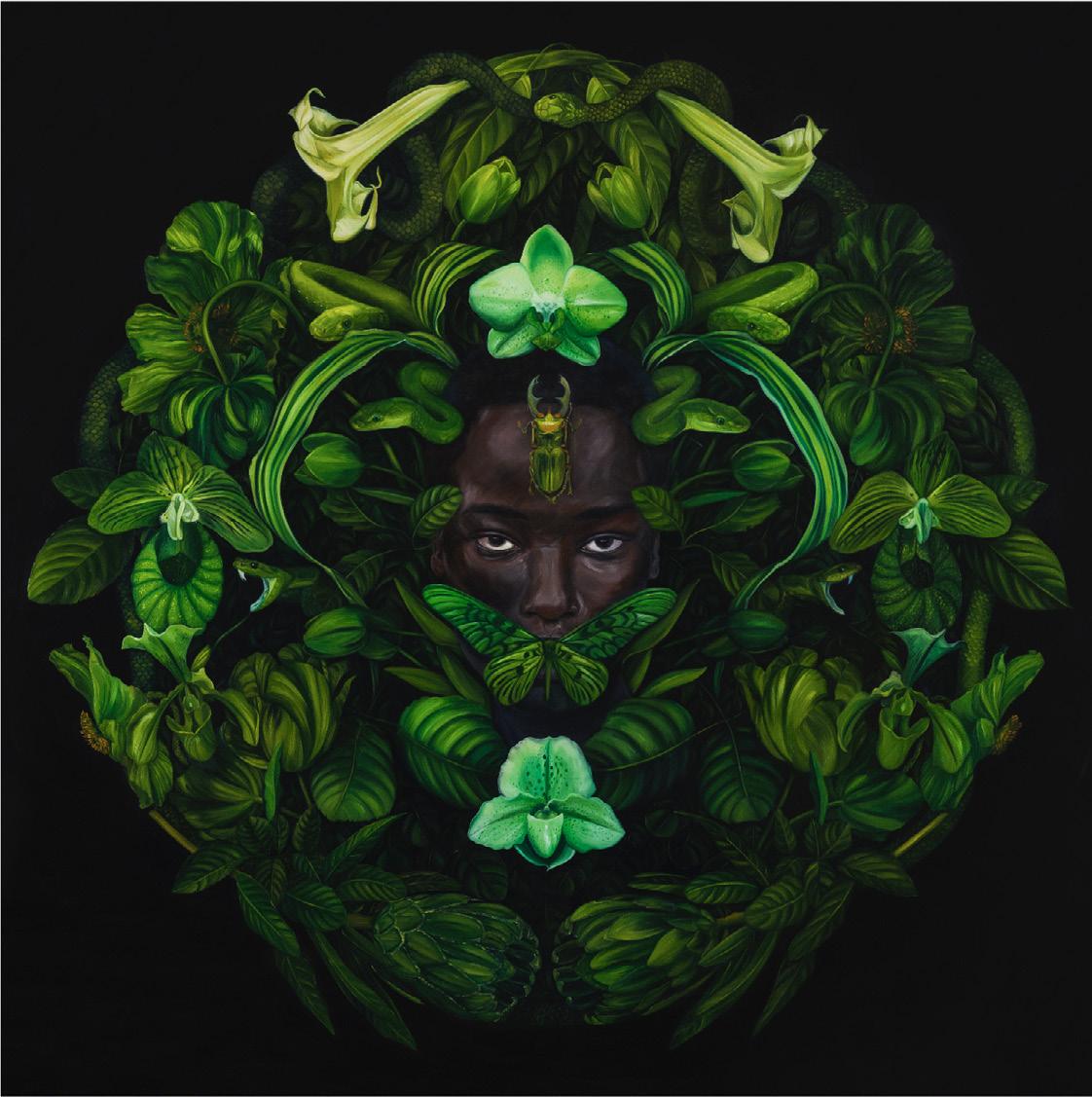
Caguwa Afreeka: Guardians of The Garden
36
Stefania Tejada
Colombia The Silent Garden of Ouroboros
44
Kellem Monteiro
Brazil
Eu quero retratar uma dança e os rostos que conheci
Off the Page in Visual Dialogue features 13 contemporary artists from 12 different countries, previously featured in The Verbose, underscoring the value of international culture in a shared space. Each selected work becomes a phrase in a broader story, touching on three primary tensions: consumerism and socio-economics, identity and history, and the role of power within the environment.
The journey opens with South African artist Tsoku Maela, who exposes the friction between the frivolous pace of Western consumerism and its consequences for nature and the African countries. Where Maela explores a tired planet, Katrina Cuenca finds the antidote in the delicate, resilient folds of Philippine plant life — a testament to nature’s quiet perseverance. Moving from the organic to the urban, Italian painter Luca Padroni transports us through a psychological ride, reflecting on time and history from Rome’s Termini Station. This dialogue with the past deepens through Hania Raad, who moves us from the ruins of Rome to a vision of Lebanese heritage. We oscillate between history and social hierarchies, paving the way for generations to relish in cultural renewal. Marked by a sense of longing, British painter Laurence Jones invites us into a vacant domicile to confront the contradictions of consumerism and the hollow promises they often conceal. This domestic silence is broken as we travel to the streets of Kampala, where photographer Jjumba Martin and economist Marie Visti Hansen illuminate the resourcefulness and creativity of a burgeoning female presence. In this liminal space, we meet at the intersection of global perspectives and the enduring power of the image.
The theme of the environment resurfaces as Hungarian photographer Gábor Bányai challenges the visibility of human presence, where the environment is the stage on which living beings exist and act. This stage becomes a sanctuary as we step into The Silent Garden of Ouroboros, by Colombian artist Stefania Tejada. Viewers are approached by layers of symbolism, mythology, female force, and nature’s reckoning with humanity. The garden submerges as we enter into the urban dance of Alexandria in Hassan Ragab’s artificially generated architecture. The use of LLMs reveals the power of data to bridge history and the future — nurturing a connected, flourishing society. This collective future, however, is inseparable from the individual; Kellem Monteiro’s collage compositions push this conversation into the neighborhoods of Brazil, navigating racial bias. As we move through the human presence, the question of identity returns in the theatrically solitary stagings by Italian photographer Giuseppe Palmisano. The path transforms as we walk into Ana Miminoshvili’s Blooming Eyes. Confronting the threats of identity exposure, Miminoshvili depicts the unease of surveillance, while projecting nature’s presence — hinting at themes of protection.
Ultimately, these works do not just document the world as it is, but challenge us to inhabit the world as it could be.
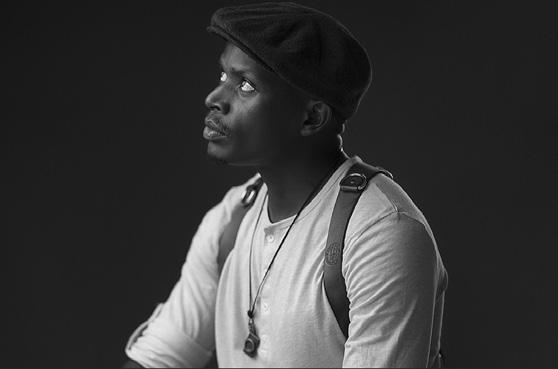
TSOKU MAELA
“Photography made the most sense. It was the only way I knew how to articulate my feelings, my world inside, the world around me, and my experiences on a level that could be visible.”
THE VERBOSE, CAPTIVITY 2022
South Africa
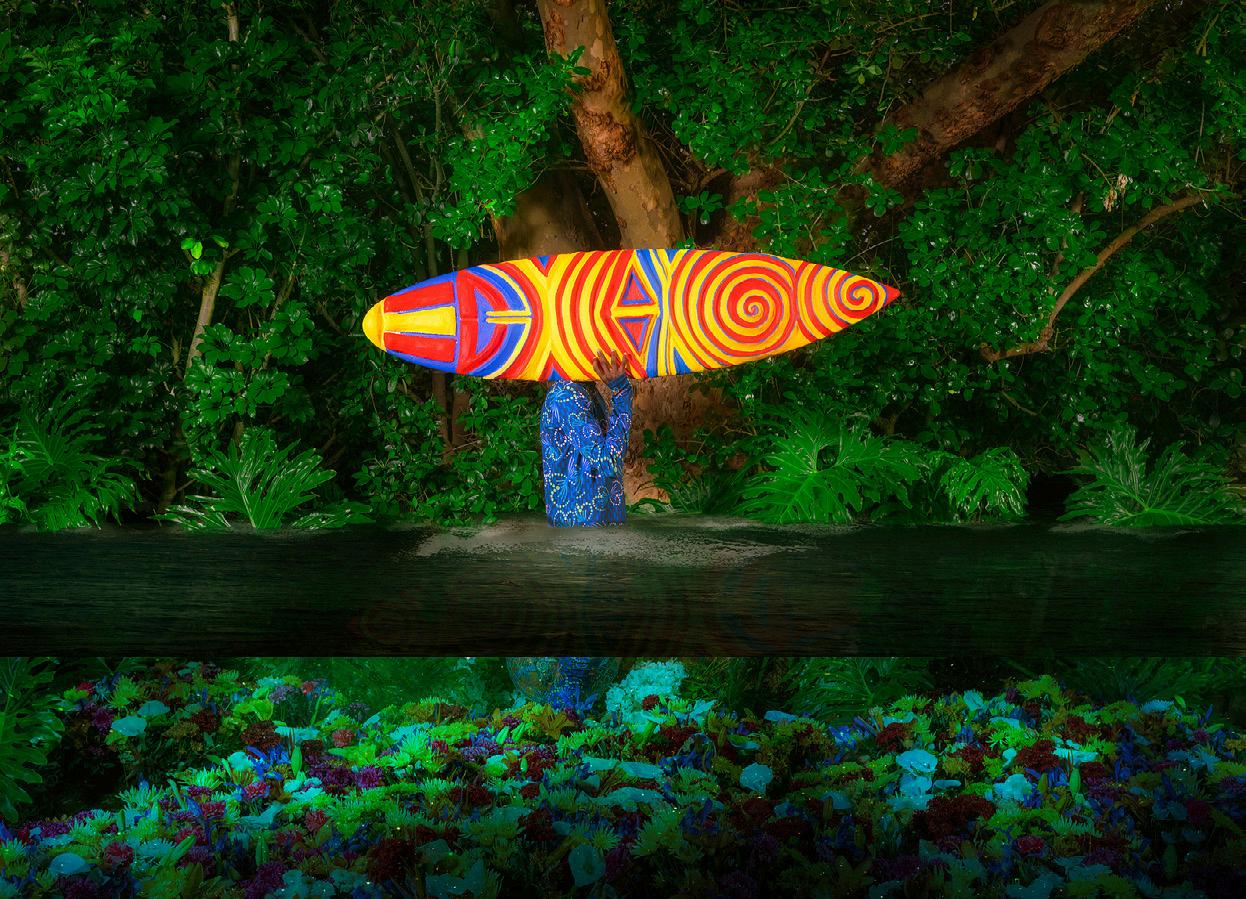
Caguwa Afreeka: Guardians of The Garden, 2020
Photography
20 x 30 in
TSOKU MAELA
Caguwa Afreeka: Guardians of The Garden is part of a photographic series that refers to clothing and shoes donated and imported from Europe that have become a multi-million dollar secondhand industry on the African continent. The word Caguwa (tcha-ku-wa) means choose in Swahili, and is characterized by the insurmountable volume of clothes entering the marketplace where consumers can pick from the litter of unwanted garments from first-world countries at a fraction of the original price.
Inspired in part by a conversation with Rwandan designer Eli Gold, Maela uses the ideology of Caguwa — and its consequences on the growth of Africa — as a metaphor for our relationship with the environment and its implications on our well-being — spiritually, mentally, and otherwise.
“When I think about art, I think about it in the present. One of the biggest misconceptions with art is that people tend to think that art is this thing that leads conversations. But art requires context. It requires people’s lived experiences. It requires culture.”
Tsoku Maela is a South African interdisciplinary autoethnographer working on photography, digital, and motion picture mediums. His conceptual bodies of work navigate the human condition through the body, psyche, and environment and are influenced by other artists such as Samuel Fosso, Misha Gordin, David Lynch and Frida Kahlo. Maela rose to prominence for his widely documented “Abstract Peaces” self-portraiture series, which studied and reflected on a subject at different states with their mental illness — challenging stigmas surrounding issues of the mind.
The interdisciplinary nature of his practice has seen him present talks at health conventions at the University of Witwatersrand and the University of Global Health Equity (Rwanda) — while also showing work with student bodies at Harvard Graduate School of Design and Ljubljana University Medical Centre (Slovenia). He has also contributed to The Lancet Psychiatry Journal.
His work is included in significant private collections including M&C Saatchi contemporary art collection, JP Morgan Abadali, and Amawal collection.
Maela has exhibited at 1-54 Contemporary Art Fair, LagosPhoto Festival, AKAA (Also Known as Africa), PULSE Art Fair, and Africa Foto Fair. He was named City Press Photographer of the Year 2016, shortlisted for the CAP Prize (Contemporary African Photography Prize) in both 2017 and 2019, and awarded the Pitroda Art’s Movement: Art for Social Change Award in 2021.
KATRINA CUENCA
“Art is about having an idea and creating something out of that idea, in the hopes of having its viewers connect to it, or feel something from it, or be moved by it somehow.”
THE VERBOSE, CAPTIVITY 2022
Philippines
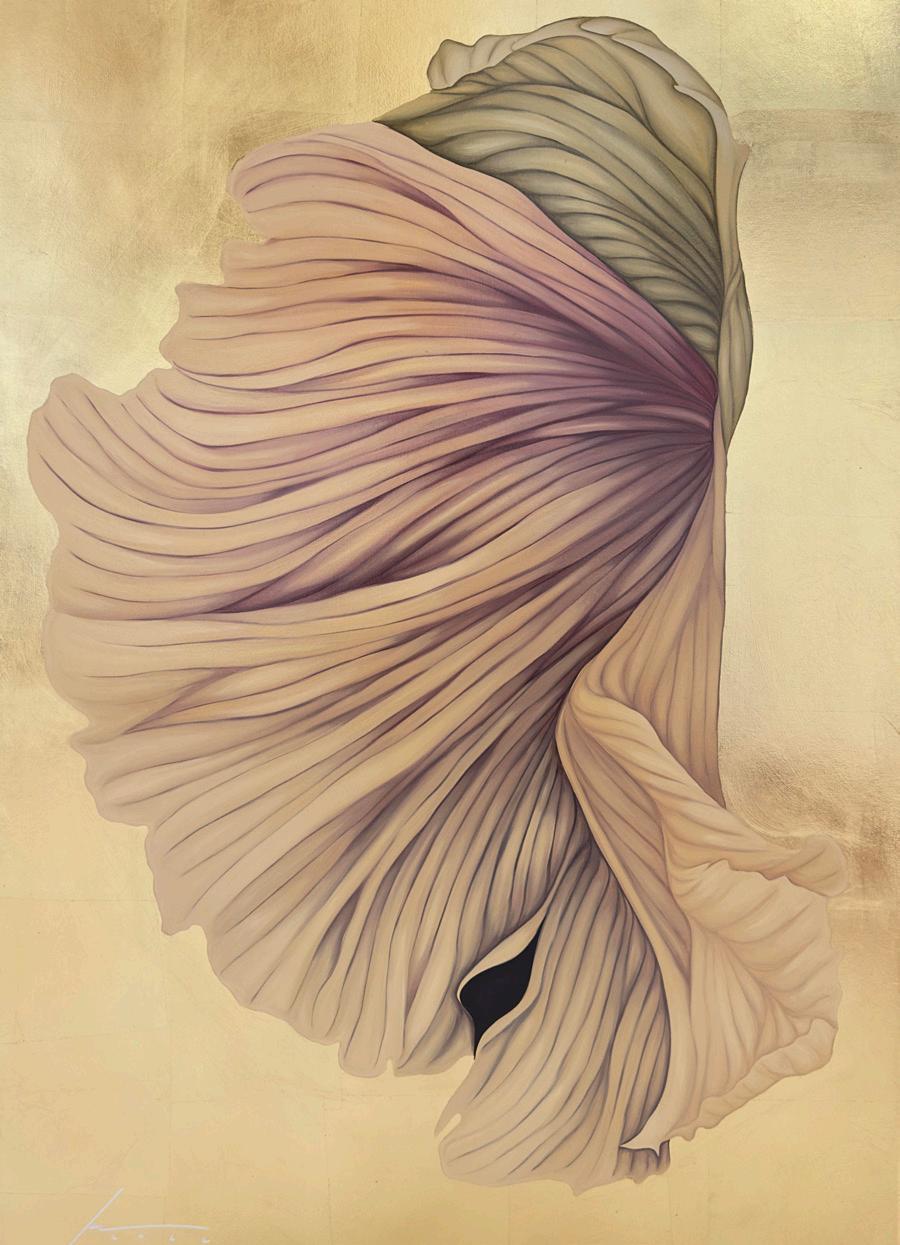
A Study on Vanilla Skies, 2020
Oil and gold leaf on canvas, 36 x 24 in
Print reproduction 20 x 30 in
KATRINA CUENCA
KATRINA CUENCA
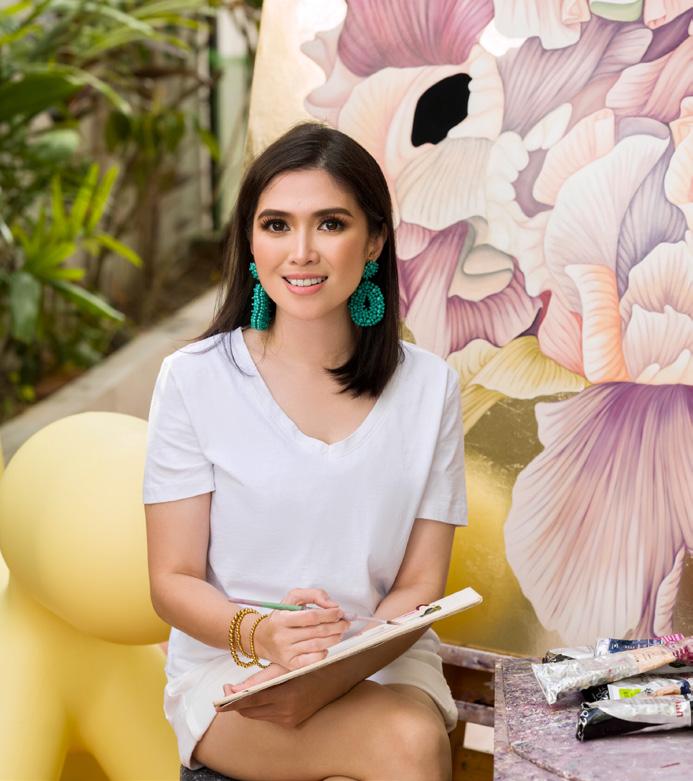
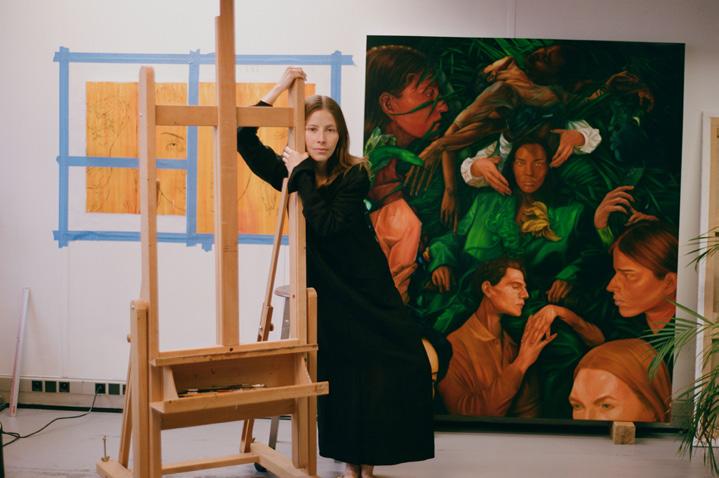
In her paintings, Katrina Cuenca portrays the delicacy of Manila’s biodiversity, accentuated by luminous backgrounds and transformed into natural icons. The organic shapes convey fluidity through dimension, pushing the boundaries of depth and movement. Cuenca also explores glass and metal through sculpture, creating unique pieces that reflect the richness of the Philippines — a layered archipelago of islands and cultures. Through carving, layering, and the use of light-reactive and dichroic elements, Cuenca’s pieces shift with the viewer’s perspective, emphasizing impermanence and perception. While abstract in form, Cuenca’s works are deeply personal. Themes of resilience, transformation, and lived experience surface subtly, allowing viewers space for reflection rather than narrative prescription. Her aesthetic is refined and contemporary, yet emotionally grounded — balancing elegance with quiet intensity.
“I
believe one of the main reasons why art exists is the fact that it captures the essence of people’s culture and history in different times and from different perspectives. When we look back at generations past, we don’t just read the books; we also look at the art they made during that time to really feel what that time was about. How art evolves has a lot to do with how our lives in general evolve. Art will play a huge role in defining us and the time we exist in.”
Katrina Cuenca (born 1984) is a Filipino visual artist whose practice spans sculpture, painting, and material experimentation. She is widely known for her sculptural works in glass, copper, and reflective surfaces, as well as for her oil paintings featuring flowing, abstracted figures and a refined use of gold leaf.
Cuenca creates works that explore movement, light, and memory — often evoking fluidity, fragility, and quiet strength. Her forms appear suspended between states: solid yet weightless, structured yet organic Her sculptural language is shaped by discipline and an intuitive understanding of material behavior. Glass, a central medium in her work, demands patience and restraint — qualities that mirror the emotional undertones of her practice.
Cuenca has exhibited her work in Manila, Cebu, Davao, Madrid, and Busan, reflecting the growing international reach of her practice. Beyond the studio, Cuenca approaches art as a lifelong dialogue between discipline and intuition. Her works are not statements of spectacle, but moments of pause — objects that hold light, memory, and meaning in equal measure.
LUCA PADRONI
“My desire is that art can once again be a way to deepen our understanding and connection with the world, and our communities.”
THE VERBOSE, CAPTIVITY 2022
Italy
Untitled, 2008
Oil on canvas,196 x 294 cm
Print Reproduction 20 x 30 in
LUCA PADRONI
LUCA PADRONI
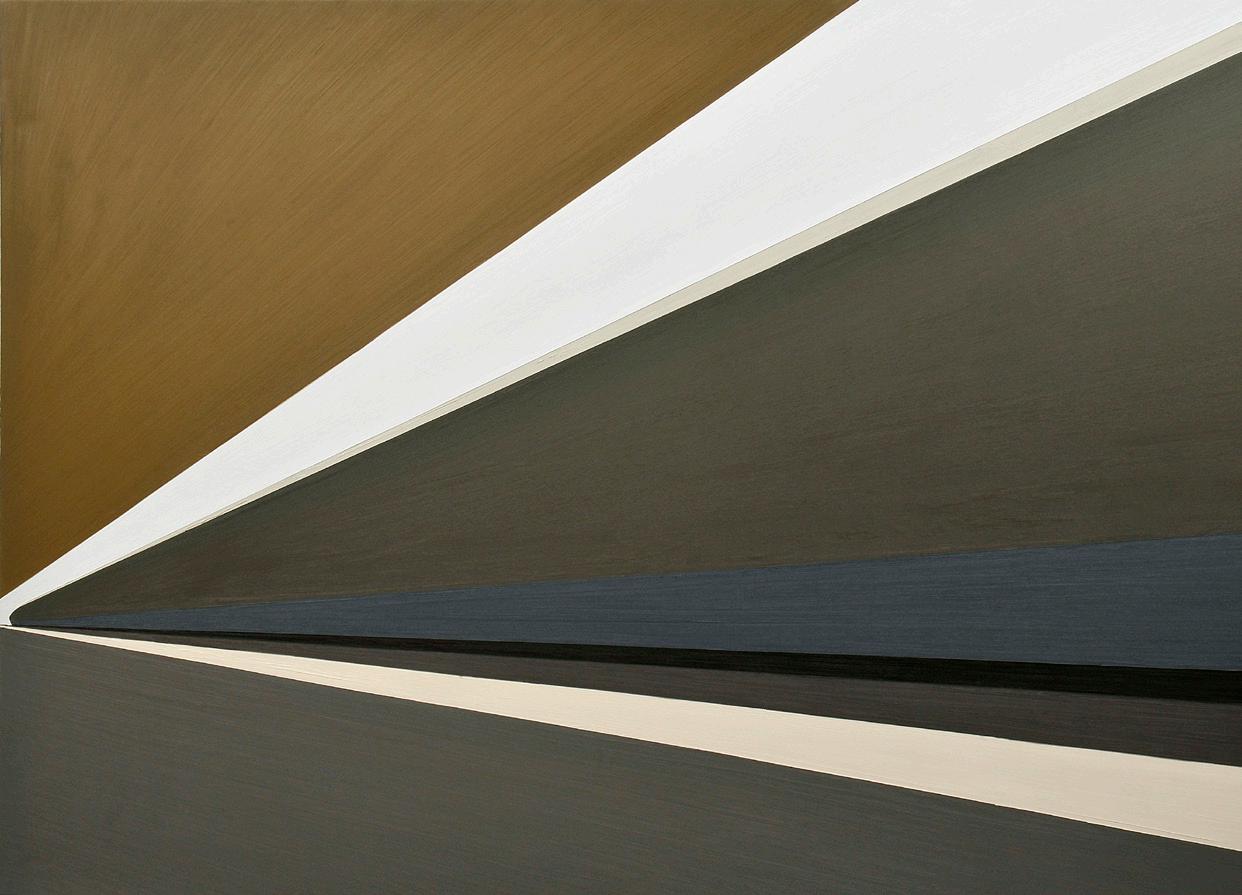
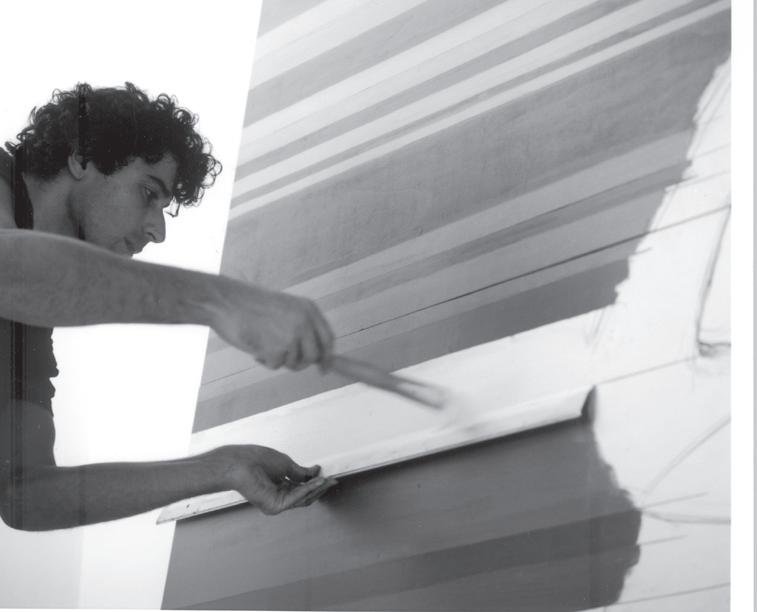
In his series, Treni, Luca Padroni’s large-scale paintings explore the intersection of geometry and velocity. Drawing on years of observation at Rome’s Termini station, the artist distills the complexity of the locomotive into essential forms. By placing the viewer at track level, Padroni creates a hypnotic perspective in which the industrial weight of the train dissolves into a psychological experience of movement and light. This research is grounded in a more rigorous approach and a controlled use of color, pushing the painting toward abstraction.
In an interview with Italian art critic Marco Tonelli, the artist states, “There is definitely an abstraction from the immediate experience of the street, but I think that my personal knowledge of these places is fundamental in order to obtain such reworked images. The observer, however, is always a person who is on the same level as the trains, walking in front of these perspectives, seeing them running off, and feeling hypnotised.”
“In these works, the architectures of Stazione Termini become mental projections in which the observer is captured by the vertigo of the perspective point — ignoring everything that does not participate in this fluid, structured, inexorable movement, producing essential images that reflect more of a state of mind.”
Luca Padroni attended the Kent Institute of Art and Design, followed by the Slade School of Fine Art at the University College London where he received his BFA with honors. The influence of the artists and teachers during his studies at Slade was particularly important. In 2001, Padroni was awarded a Fulbright scholarship and attended the San Francisco Art Institute for a semester. Upon returning permanently to Rome, the artist established his studio in the Monti district.
During this period, Padroni spent a lot of time in areas such as Esquilino, Piazza dei Cinquecento, and the Termini train station, where he began numerous studies live. It is the experience and atmosphere of these crowded areas, multicultural and full of fascinating contrasts, which the artist assimilates and transposes into his works of this period.
Luca has exhibited extensively throughout Italy and internationally, in private and public spaces, including Oddi Baglioni Gallery (Rome), Termini Station (Rome), Galeria La Aurora (Murcia), Galleria L’Attico (Roma), Testori Gallery (London), Montoro12 Contemporary Gallery (Brussels), MAAB Gallery (Milan) Certosa di San Lorenzo (Padula), Galleria di Arte Moderna e Contemporanea (Roma), MACRO (Roma), the Capitoline Museums in Rome, and VIVE, Vittoriano and Palazzo Venezia in Rome.
HANIA RAAD
“When you’re in touch with your authenticity, inner voice, and childlike play, everything aligns, no matter the discipline or skill. All of my projects, from Caravansarie to Rad Collective, have been rooted in experimenting and serving communities through creativity, connection, belonging, curiosity, and play.”
THE VERBOSE, EXPOSED 2025
Lebanon
Heritage on Loop | Chouf, 2017
Illustration 8 x 10 in
Print reproduction 20 x 30 in
HANIA RAAD
HANIA RAAD
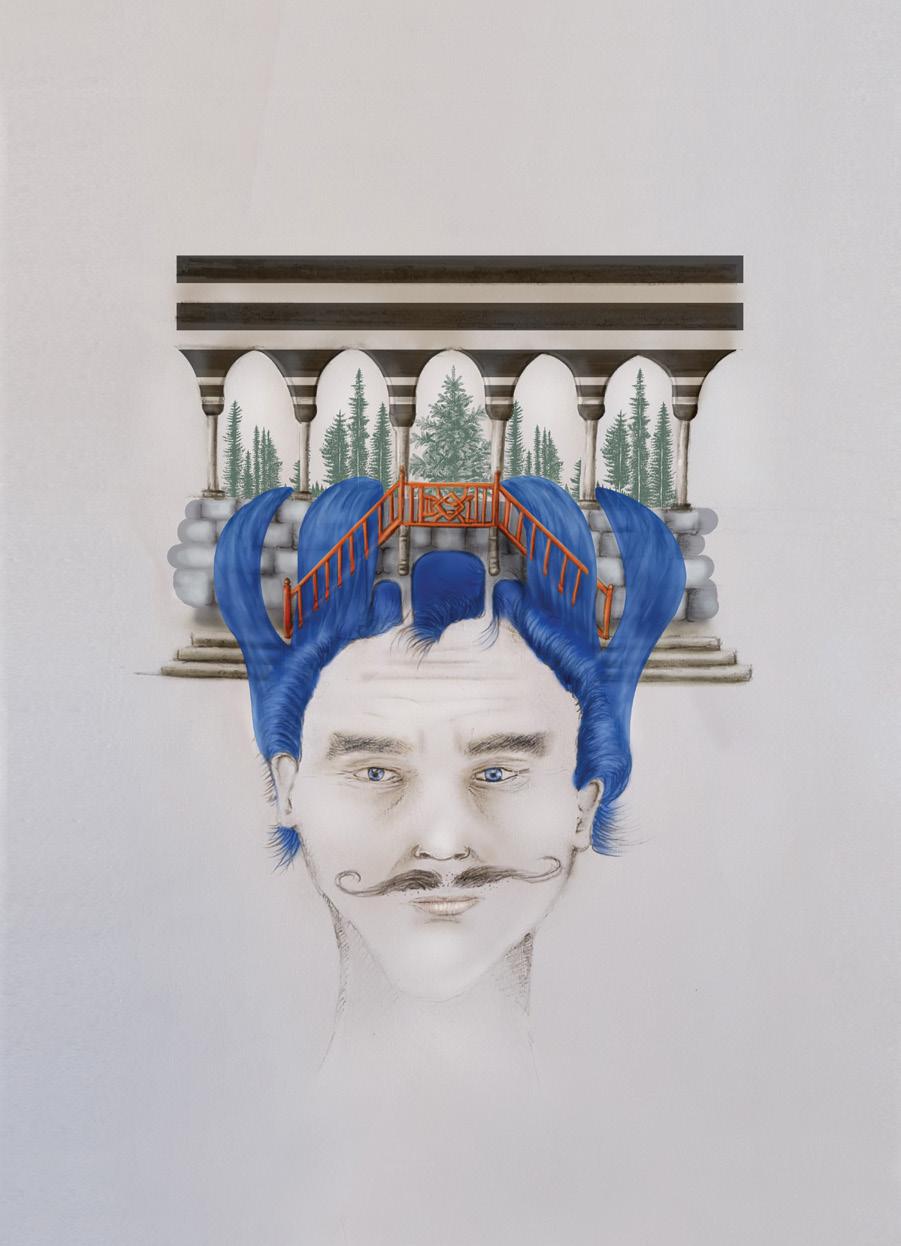
In this illustration, Heritage on Loop | Chouf, Hania Raad depicts Lebanon’s ancient Beit ed-Dine palace emerging from the Chouf mountains, embraced by the face of a local figure whose flowing hair — symbolic of time — travels throughout the mountains and surrounds the palace as a body of water. Drawing on the Druze belief in reincarnation, the work reflects how place, people, and spirit move through cycles rather than endings. The artist suggests that heritage does not live only in stone or landscape, but travels quietly between souls, identifying and influencing generations.
“Immersing myself in diverse industries and cultures sharpened my analytical side, pattern recognition, and adaptability, while research across projects — from the history of Arab coffee in Dubai, to biodiversity in Riyadh, to youth sports and mental health in New York — has expanded my knowledge and keeps me endlessly inspired.”
Hania Raad is a multidisciplinary artist from Abu Dhabi and based in Beirut. Her practice moves fluidly across painting, illustration, writing, music, and immersive experiences. Raad’s work is driven by a curiosity about who we are beneath social and cultural masks, yet how deeply we are connected through shared culture and heritage, and how our potential and creative gifts can be tools for personal and collective growth. She explores our relationship with space, land, and one another, and how we navigate a world shaped by speed, technology, and constant stimulation.
At its core, her work reflects a belief in regenerative ways of living, where nurturing communities go hand in hand with caring for the ecosystems that sustain them. Raad is the founder of Rad Collective, a strategy-led, impact-driven collective that focuses on brand building. She also created Caravansarie, for cultural and travel-inspired experiences in heritage sites, public spaces, nature, and digital platforms. What began in 2011 as a passion project evolved into a business between Lebanon and Dubai — connecting Raad with a community of creative talents, cultural professionals, and heritage keepers worldwide.
With a background as a Creative Director and Brand/ Marketing Strategist, Raad continues to empower entrepreneurs and creatives across the GCC and the US to scale and communicate their vision and purpose.
LAURENCE JONES
“I aim for the work to suggest a sense of place, but through making a painting using different sources of imagery, the painting becomes an amalgam, which can have different outcomes – more like painting the essence of a place.”
THE VERBOSE, BIPOLAR 2020
United Kingdom
Reflections On Concrete Canyons, 2024
Acrylic and mica flakes on Belgian linen
60 x 90 cm
Print reproduction 20 x 30 in
LAURENCE JONES
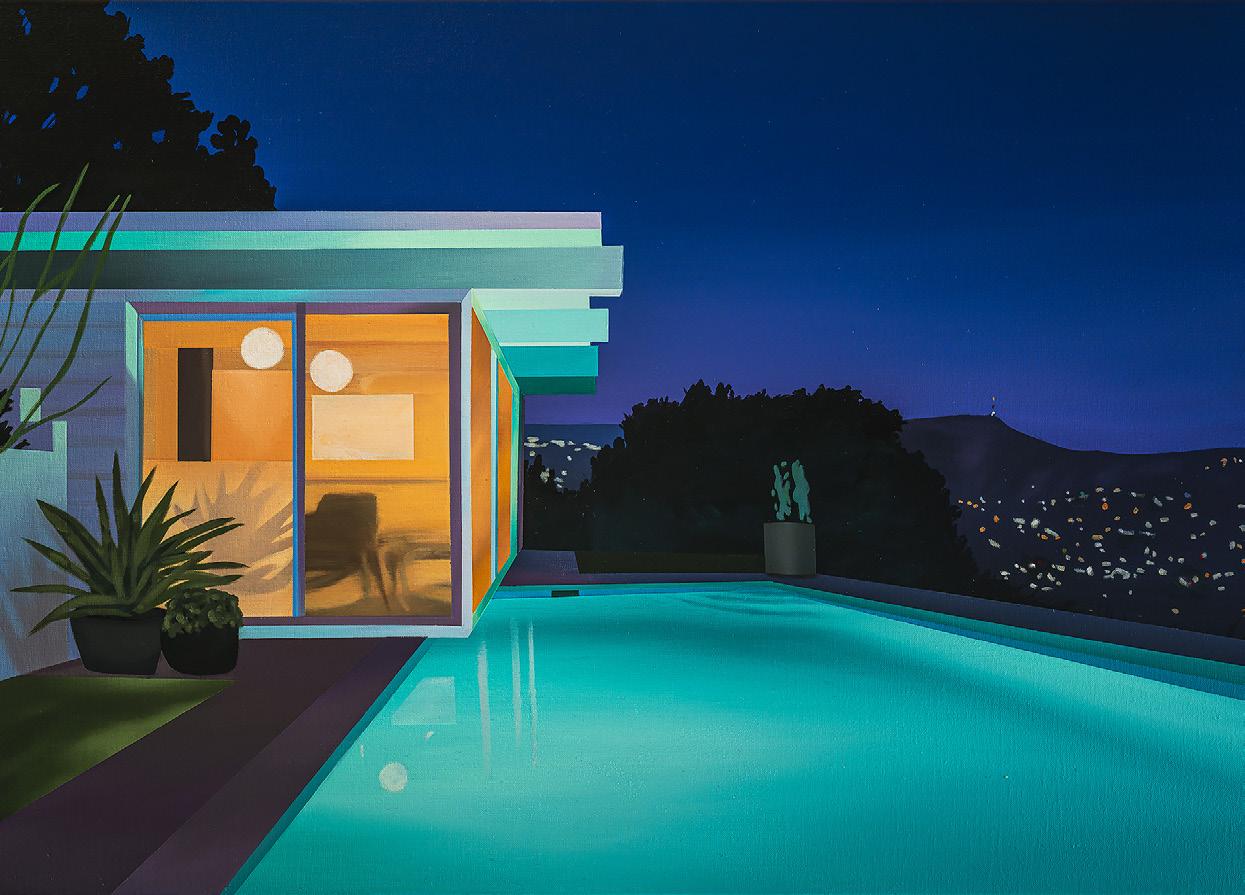
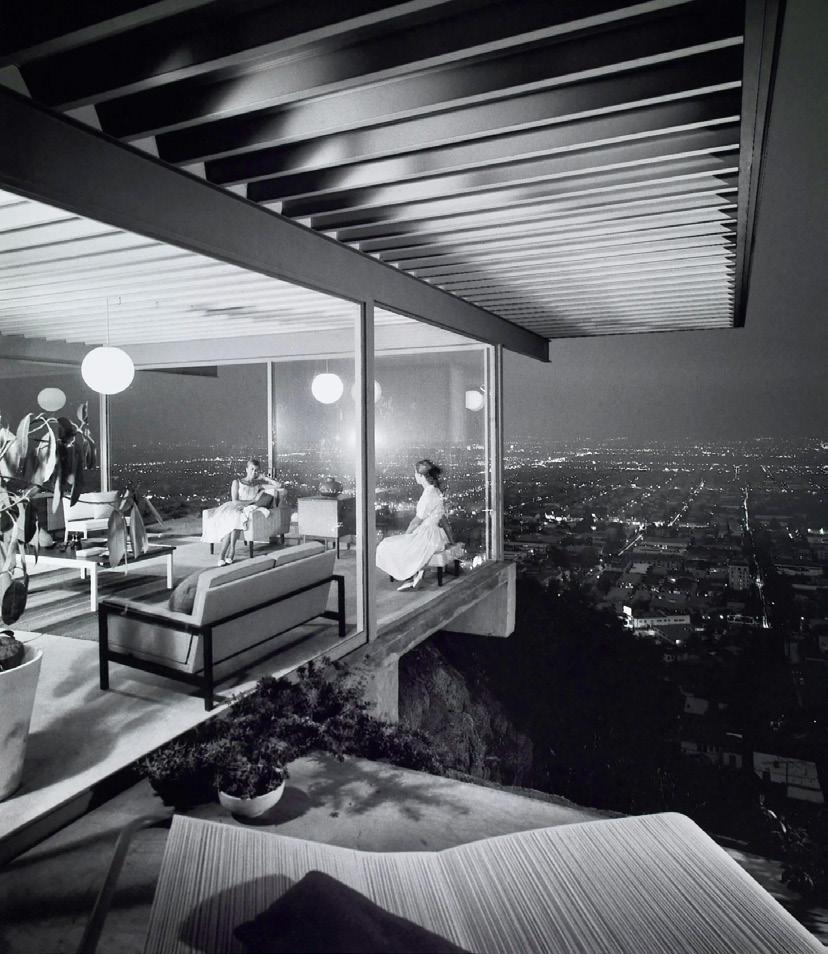
In this work from his Silver Palms series, Jones explores the cinematic allure of Los Angeles modernism, specifically referencing the iconic Stahl House. Known for capturing the “liminal” moment of dusk, he transforms architecture into a psychological landscape. His work examines how we emotionally inhabit spaces, blending the precision of modernist geometry with the hazy, atmospheric quality of memory and desire.
Though composed in his London studio, Laurence Jones’s work circles around a persistent idea of California — one filtered through luxury, narrative, and a distinctly cinematic atmosphere. His paintings draw from found material sourced in magazines, online platforms, and social media: second-hand visions of glass houses, sun-drenched terraces, and suspended luxury. At the core of his research lies architecture, not simply as structure, but as a metaphor — a carefully framed stage for possible narratives of aspiration and desire.
“I see the role of art as fundamentally unchanged: to reflect our condition back to us, and to reveal something about where we are, and where we may be heading. As the way art is consumed continues to shift, its deeper purpose becomes even more important.
Art creates pause, perspective, and continuity across generations. It holds memory, asks questions that don’t have immediate answers, and offers a way of understanding ourselves beyond language or utility. In that sense, art remains a vital marker of who we are in any given moment in time.”
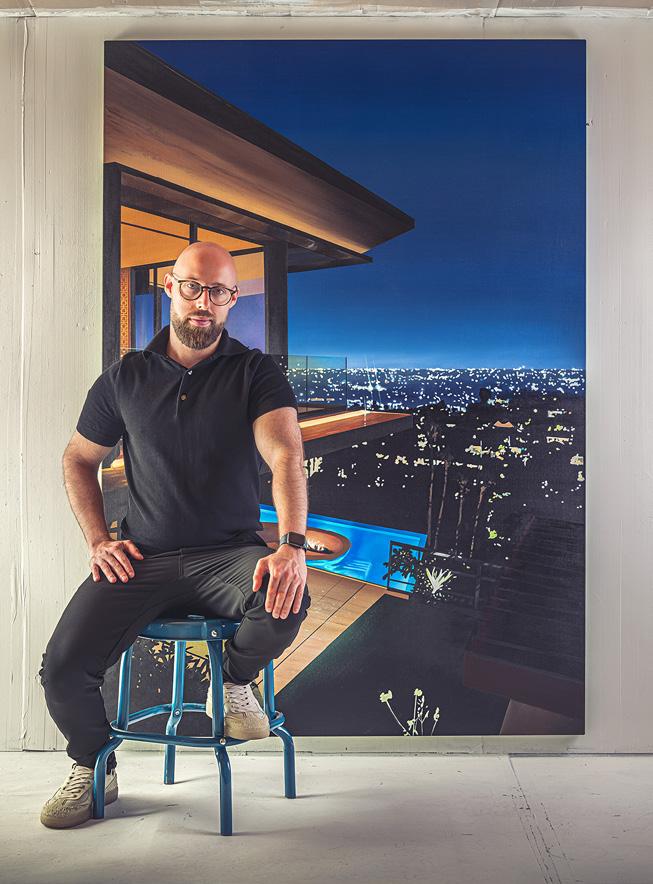
Laurence Jones is a British painter whose work explores contemporary architecture, light, and atmosphere, drawing heavily on the landscapes and modernist homes of Los Angeles and the American West. His paintings often depict liminal moments — dusk, artificial light, interior/ exterior thresholds — where place becomes both cinematic and psychologically charged.
Working primarily in acrylic on linen, Jones combines precision with subtle surface effects to create images that sit between realism and memory. His practice reflects an ongoing interest in how architecture shapes identity, desire, and solitude, and how environments are emotionally inhabited rather than simply observed.
Currently, Jones is working on a body of large-scale, hyper-real paintings that explore architectural space, light, and horizon lines. The work is concerned with how built environments shape us; psychologically, culturally, and over time — and how moments of stillness can carry underlying tension. He is increasingly focused on creating singular works that function as anchors within a space, rather than as part of a serial or decorative narrative. Jones lives and works in the UK.
JJUMBA &MARIEMARTIN VISTI HANSEN
“When your cultural values are challenged by other ways of doing things, it forces you to look carefully at yourself and decide where you would benefit from embracing aspects of other cultures, but also where you feel that your own cultural values are worth standing up for.”
2020
MARIE VISTI HANSEN THE VERBOSE, BIPOLAR
Uganda
MARIE VISTI HANSEN
Kingdom of Denmark
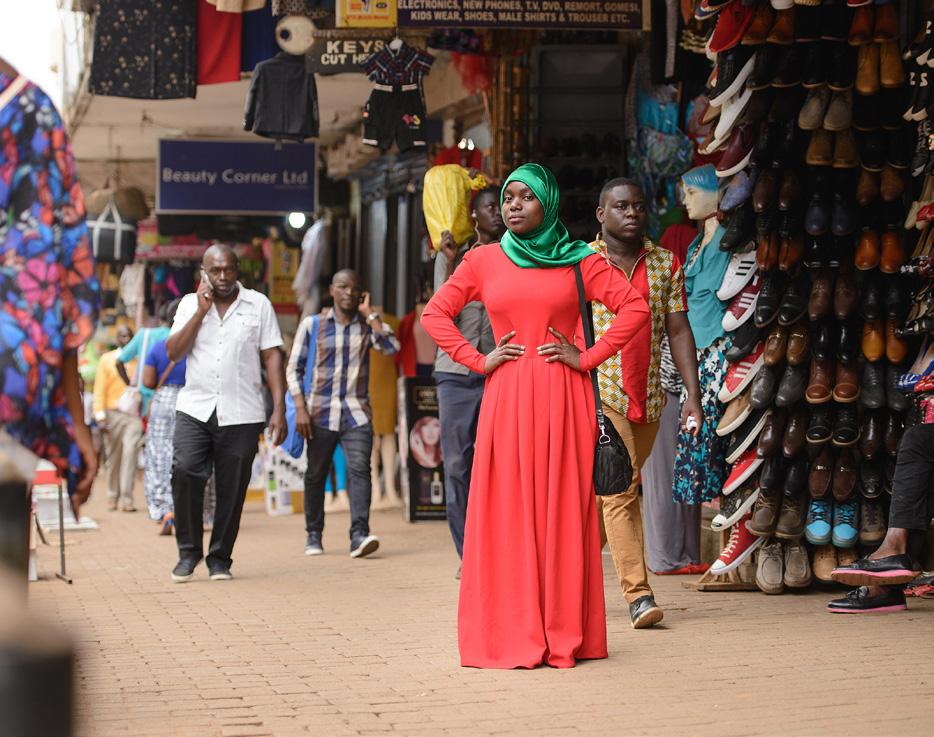
Kampala Street Fashion Project, 2018
Photography, featuring Rukia Abdul
20 x 30 in
JJUMBA MARTIN
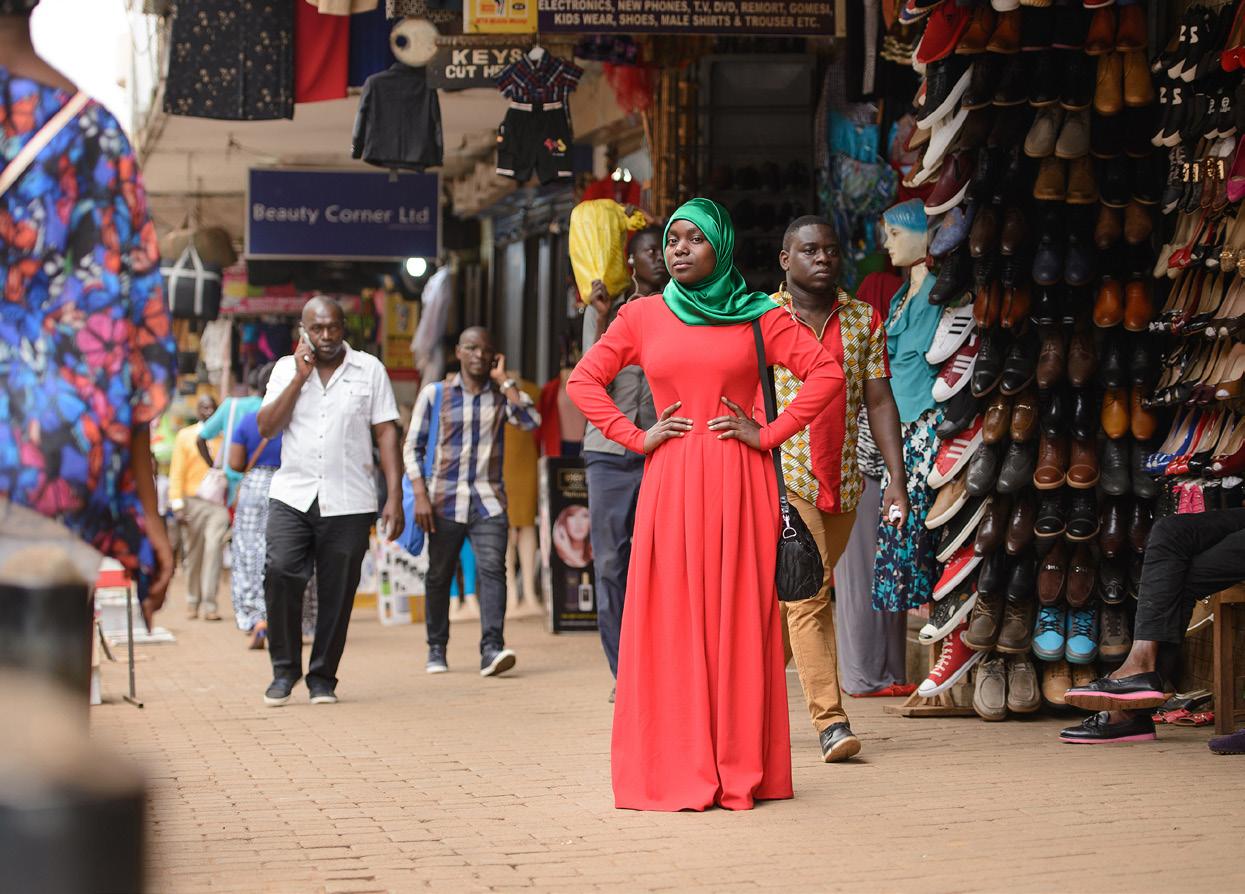
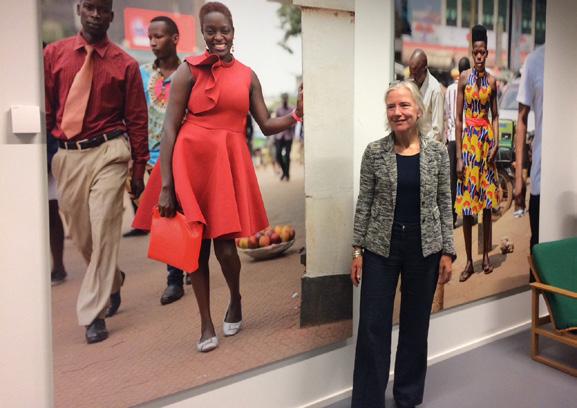
Kampala Street Fashion Project, a collaboration between Danish designer and economist Marie Visti Hansen and photographer Jjumba Martin, celebrates the resilience and creativity of ordinary Ugandan women. Through 50 vivid portraits, the project showcases how these women use vibrant colors and traditional prints to exude self-confidence and body positivity despite economic hardships and gender discrimination. By capturing them in their natural, bustling urban environments, the project challenges Western stereotypes of African poverty, instead highlighting the women’s creative agency and their ability to command space through fashion.
In her interview with The Verbose, Marie explains that the project was born from her fascination with the incredible sartorial talent of Kampala’s female residents. She observed that while many of these women lack wealth, they possess an innate sense of proportion and pride that often surpasses Western fashion norms. Through her conversations with the subjects, Hansen discovered women of maternal strength and survival, ultimately presenting the project as a lesson in empowerment. Her goal was to document an authentic way of life where beauty is defined by confidence and individuality rather than external status.
“I am intrigued by the way art communicates directly to people regardless of national and cultural differences
— The fact that I, as a Scandinavian woman, can experience African art produced by artists with completely different outlooks and experiences from my own, and still find it completely understandable and relevant.”
Marie Visti Hansen
Jjumba Martin is a Ugandan documentary photographer working across Africa with a focus on storytelling for NGOs. Martin’s photography journey began in 2009 when he discovered a profound connection to the lens while pursuing a degree in Procurement. He firmly believes that photography found him when he needed it most, and what began as a passionate hobby eventually became his life’s work. Martin works across Africa and internationally, continually growing his practice, inviting viewers to connect with his subjects, viewing each project as a bridge between his Ugandan roots and the wider world. Martin is self-represented and based in Kampala.
Marie Visti Hansen is a Danish designer and economist educated at the Danish School of Design, Copenhagen Business School, and the University of Copenhagen. Hansen has worked with development cooperation in East Africa, for the EU, the Danish Development Agency, Danida, and other international donors since the beginning of the 2000s. Her primary focus is private sector development and sustainable investment. From 2008 to 2010, she was a member of Danida’s board. In the project Kampala Street Fashion, Hansen stepped out of her habitual role as a development consultant and focused on creativity as a transforming force by showcasing the creativity, strength, and resilience of the Ugandan women, and what we in the West can learn from them.
Marie Visti Hansen continues to explore this dichotomy between Africa and the West in her next project, Art as our Common Language, where she presents and highlights African artists and invites them to share their work in a series of short video presentations.
Photo credit: Emmanuel Yeboah Bobbie, “Bob Pixel”
GÁBOR BÁNYAI
“My goal is to capture the presence of humanity on landscapes, but without humans, to give a timeless, kind of post-human feel.”
THE VERBOSE, CAPTIVITY 2022
GÁBOR BÁNYAI
Hungary
Postcards From Nowhere, 2019
Photography
20 x 30 in
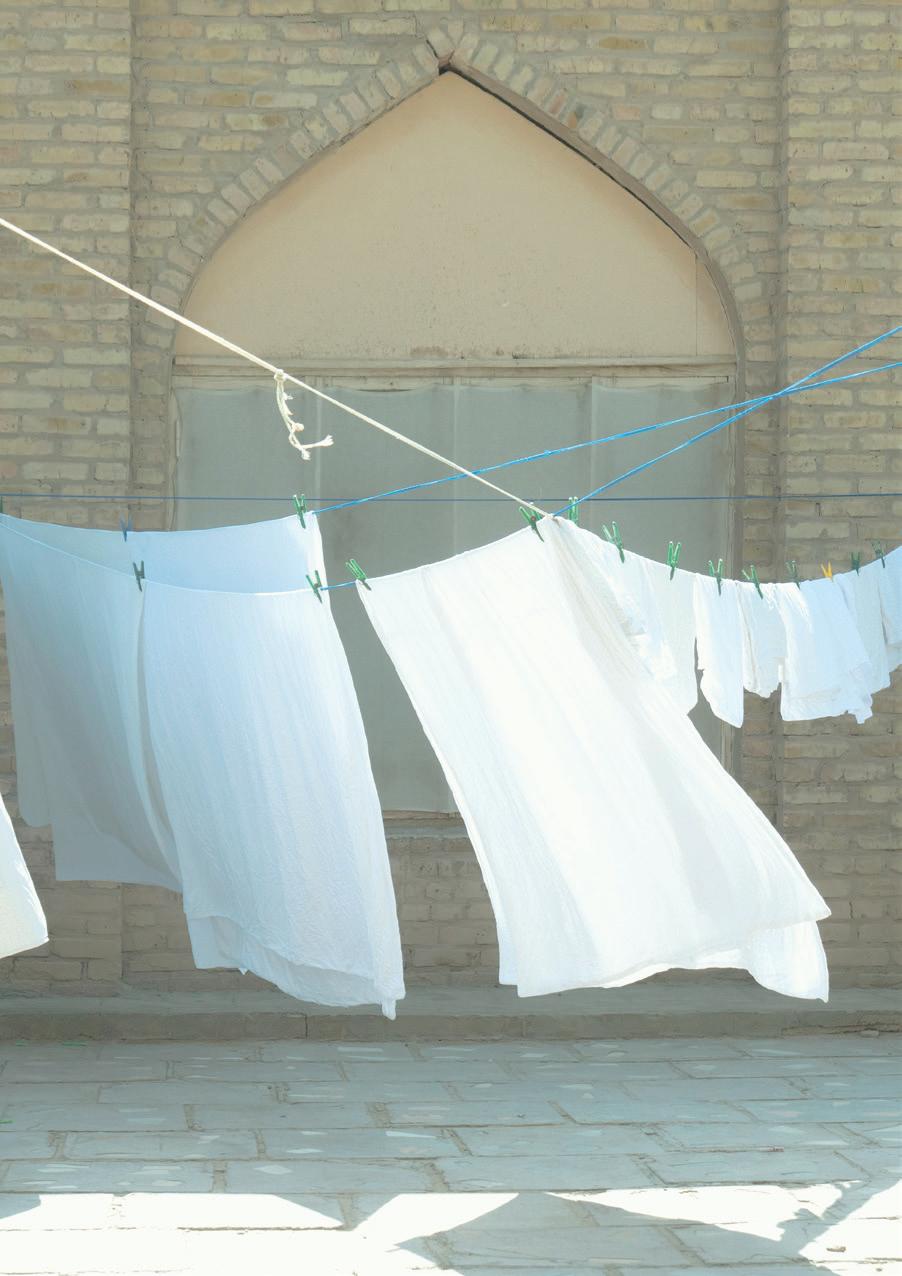
Gábor Bányai is fascinated by spaces, places, and objects shaped by human presence, whether a gas station or a 700-year-old tower. The artist brings his world travels to life through symmetrical, minimalist compositions. This photograph is part of an extensive collection under the theme, Postcards From Nowhere, where the artist captured moments between his work as a filmmaker. Bányai explores the tension between culture and physical surroundings — where patterns appear at times mirrored, at others opposed. Marked by subtle traces of human passage, his landscapes acquire a silent, timeless, almost post-human quality.
“While working as a documentary filmmaker, we were always in a hurry. I travelled a lot, almost every day after shooting. In this hurry, I tried to embrace the surrounding landscape in a different way. After work, I walked alone and discovered the area when I had the time.
In the Middle East and other Eastern countries, there are many well-preserved antique buildings, including entire cities. Through these structures and settings, I aim to capture the different cultures.”
Based in Budapest, filmmaker and photographer Gábor Bányai began shooting in high school on analogue and studied the developing process. Interested in the moving image, the artist began experimenting with video cameras and editing programs. Years later, Bányai worked as a documentary filmmaker, director, and director of photography, taking photos in his free time and developing his unique approach to the lens.
Having studied film theory, Bányai draws creative influences and visual thinking from film, inspired by directors and photographers such as Roy Andersson, Wong Kar-Wai, Jean Rollin, Kim Ki-duk, Raymond Depardon, and Gregory Crewdson.
STEFANIA TEJADA
“There is an enormous amount of women coming together through feminism, and creating a cultural revolution in our country. Our communication is filled with understanding, courage and strength.”
THE VERBOSE, BIPOLAR 2020
Colombia
The Silent Garden of Ouroboros, 2024
Oil on canvas
80 x 31.4 cm
Print reproduction 20 x 30 in
STEFANIA TEJADA
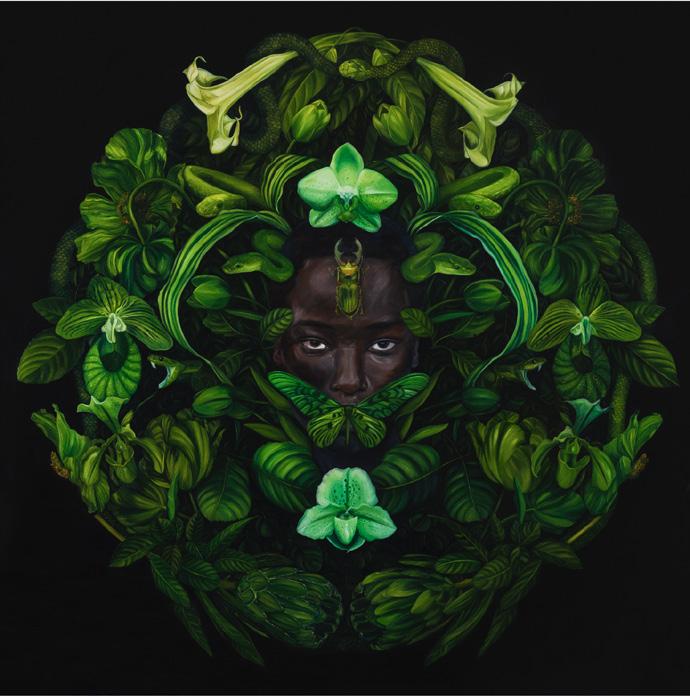
The Silent Garden of Ouroboros stands as a testament to the eternal cycle of existence, the ceaseless dance of creation and destruction, and the profound resilience found within the feminine spirit. At its heart, a woman gazes back at you, her eyes a mirror to the soul of the universe, demanding recognition of her strength, her silence, and her sacred power. Upon her forehead rests the scarab, an ancient symbol of life, death, and rebirth. This scarab acts as a mark of her connection to the earth and her link to the celestial cycles that turn with unyielding persistence. She is the keeper of ancient knowledge, the embodiment of life’s perpetual renewal. A butterfly covers her mouth, a delicate yet powerful symbol of the silence imposed upon her by a world too afraid of the truths she holds. This is a silence of profound transformation — the quiet before the emergence, the stillness where her inner metamorphosis takes root. The butterfly, with its fragile wings, represents the quiet resilience that turns oppression into a path toward liberation. Surrounding her is a garden — a mirrored symphony of exotic and erotic flowers that bloom in perfect symmetry. These flowers are symbols of her inner world, vibrant and alive with the energy of creation.
This garden is silent, yet within its stillness, it pulsates with the power of the feminine — fertile, nurturing, sensual, and untamed. From the crown of her head, three serpents coil outward, embodying the legacy of Medusa — the feared, the misunderstood, the powerful. These serpents are born of her mind, symbols of her rage, her intellect, her untamed power. They are the guardians of her sacred garden, protectors of the silence that nurtures her transformation. She is the source, the origin of this serpentine force, a reminder that within her lies the potential for both creation and destruction. Encircling this vision is the Ouroboros, the serpent that consumes its own tail. It is the symbol of the eternal cycle, the endless loop of life, death, and rebirth. The Ouroboros encircles her garden, a protective ring that speaks of unity, wholeness, and the inexorable march of time. It reminds us that every end is but a new beginning, every silence a precursor to a powerful awakening.
The Silent Garden of Ouroboros is a talisman of transformation, calling upon us to recognize the silent strength within, the resilience that turns oppression into opportunity, and the eternal cycle that connects us all. This is the sacred space where life’s deepest truths are cultivated, where the silent grow strong, where the cycle of the Ouroboros ensures that nothing is ever truly lost, only transformed.
Stefania Tejada (b. 1990) is an artist whose work situates figurative painting as a critical site for examining identity, history, and symbolic power. Her practice interrogates the ways belief systems, cultural memory, and social narratives shape subjectivity and moral frameworks. Religious narratives are integral to this investigation, operating as foundational cultural structures through which archetypes, hierarchies, and roles have been constructed, transmitted, and sustained across time. Within her paintings, these narratives are neither illustrated nor resolved, but held in tension as active forces that continue to inform contemporary experience.
The artist engages the persistence of binary systems such as colonizer and colonized, sacred and profane, masculine and feminine, examining how these distinctions are historically produced and repeatedly enacted. Painting becomes a space of reconfiguration, where inherited structures loosen, and identity emerges as layered, relational, and continuously negotiated rather than fixed or singular.
Born in Colombia and based in Paris, Tejada’s work is shaped by questions of lineage and collective inheritance informed by histories of colonization and displacement. Her paintings are held in significant private and institutional collections, including the FAMM – Female Artists of the Mougins Museum, the Laurence Graff Collection, the Tunji Akintokun African Art Collection, the De Iorio Collection, and the collection of Princess Elisabeth von Thurn und Taxis.
HASSAN RAGAB
“I observe that modern, new societies are more pragmatic than ancient ones, leading to less social intimacy. It’s also part of the meaning of being an individual in society and the endless strive to succeed according to capitalist terms.”
THE VERBOSE, DEVIATION 2024
Egypt
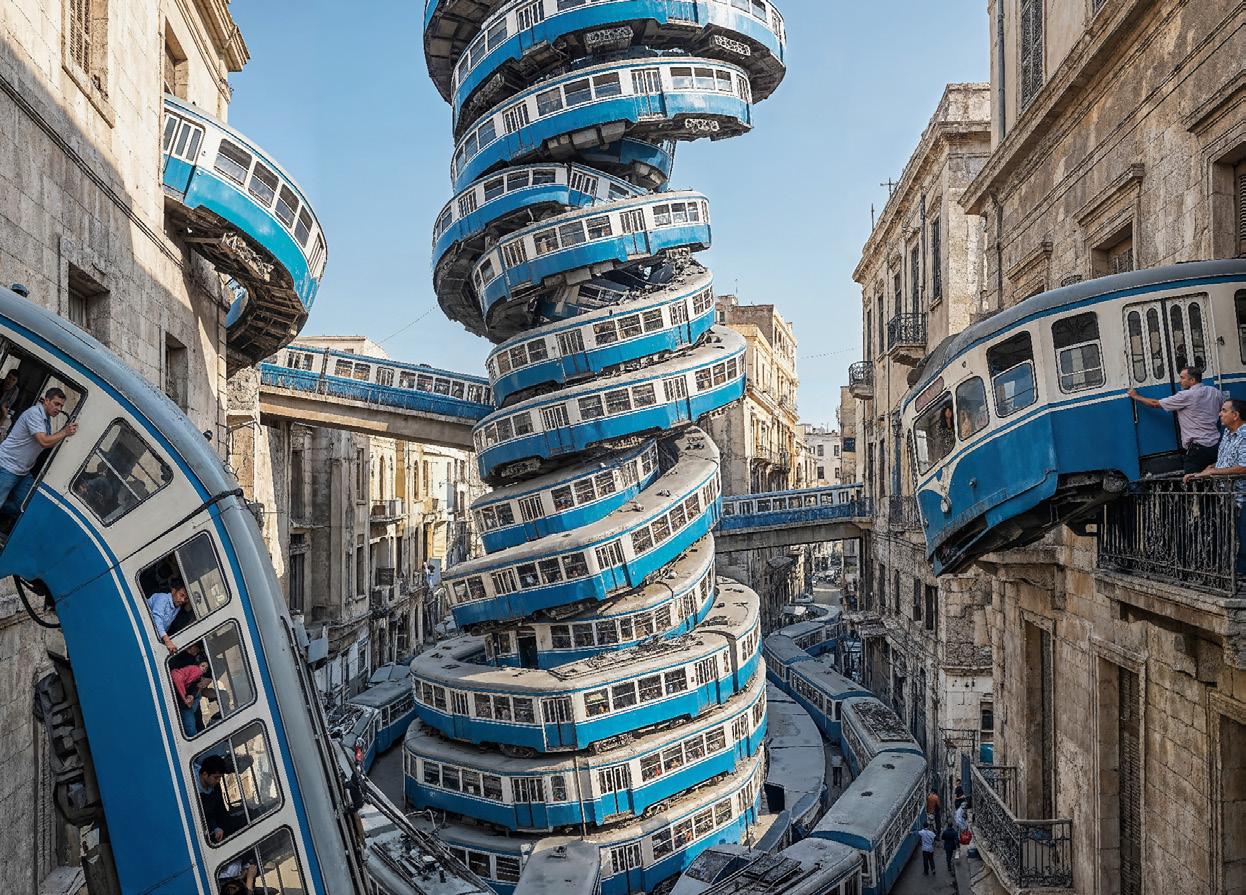
The City is a Tram, 2025
Generative AI
20 x 30 in
HASSAN RAGAB
Hassan Ragab leverages generative AI to bridge the gap between human memory and the built environment. The City is a Tram reimagines the artist’s hometown of Alexandria, where the tram is a metaphor for a city that “moves sideways through history.” Ragab presents the use of AI technology as a positive tool when used to promote inclusivity and well-being in communities.
The City is a Tram is an extension of the artist’s earlier series, which delves into the lives of a specific group of people — some of whom the artist has never met before — living in a distinct place and time. However, from a broader perspective, it speaks to the experiences of many who have lived through the ages, as we have come to define what civilization means throughout human history. These are people who find a piece of home in Alexandria, just as others see reflections of their own homes in different cities. It’s a spiritual connection that transcends space and time, an ambiguous link that unites us all and defines our humanity.
“The way we perceive this world is tied to who we are, and who we are is the product of a collective presence. A city is a place that is meant to be inclusive, but when it fails to do so, it becomes a powerful mirror of who we are as beings, and of what we are capable of doing to our fellow beings. The visual vocabulary of a city — through large language models and their evolutions — is not a mirror of some external bias; it is, more and more, a mirror of our failure to understand our shared present.”
Hassan is an interdisciplinary designer, artist, and storyteller working at the intersection of architecture, artificial intelligence, and visual culture. With over 15 years of experience in architecture and computational design, he is known for integrating generative AI into creative practice to explore themes of identity, heritage, memory, and the human experience.
Based in Southern California, Ragab runs the studio HSNRGB and works as a Lead Digital Artist and Storyteller at Gensler’s Southwest Region. His work has been exhibited internationally and featured on platforms such as CNN Arabic, and he regularly lectures and publishes on the cultural and philosophical implications of AI in design. Hassan Ragab is currently focused on researching the evolution of visual representations of Egyptian culture within large language models. This informal research allows the artist to study the nuances of Egyptian socioeconomic shifts by testing them against the continuous evolution and inherent biases of visual AI models.
KELLEM MONTEIRO
“I photograph the models very freely (most of them are my friends) and then I start my work with digital clippings, which is where it starts to take shape or better deform. I honestly never know what will come out of it — it is a process that I am feeling where I want to go.”
THE VERBOSE, CAPTIVITY 2022
Brazil
Eu quero retratar uma dança e os rostos que conheci, 2023
Digital Illustration / Photography
20 x 30 in
KELLEM MONTEIRO
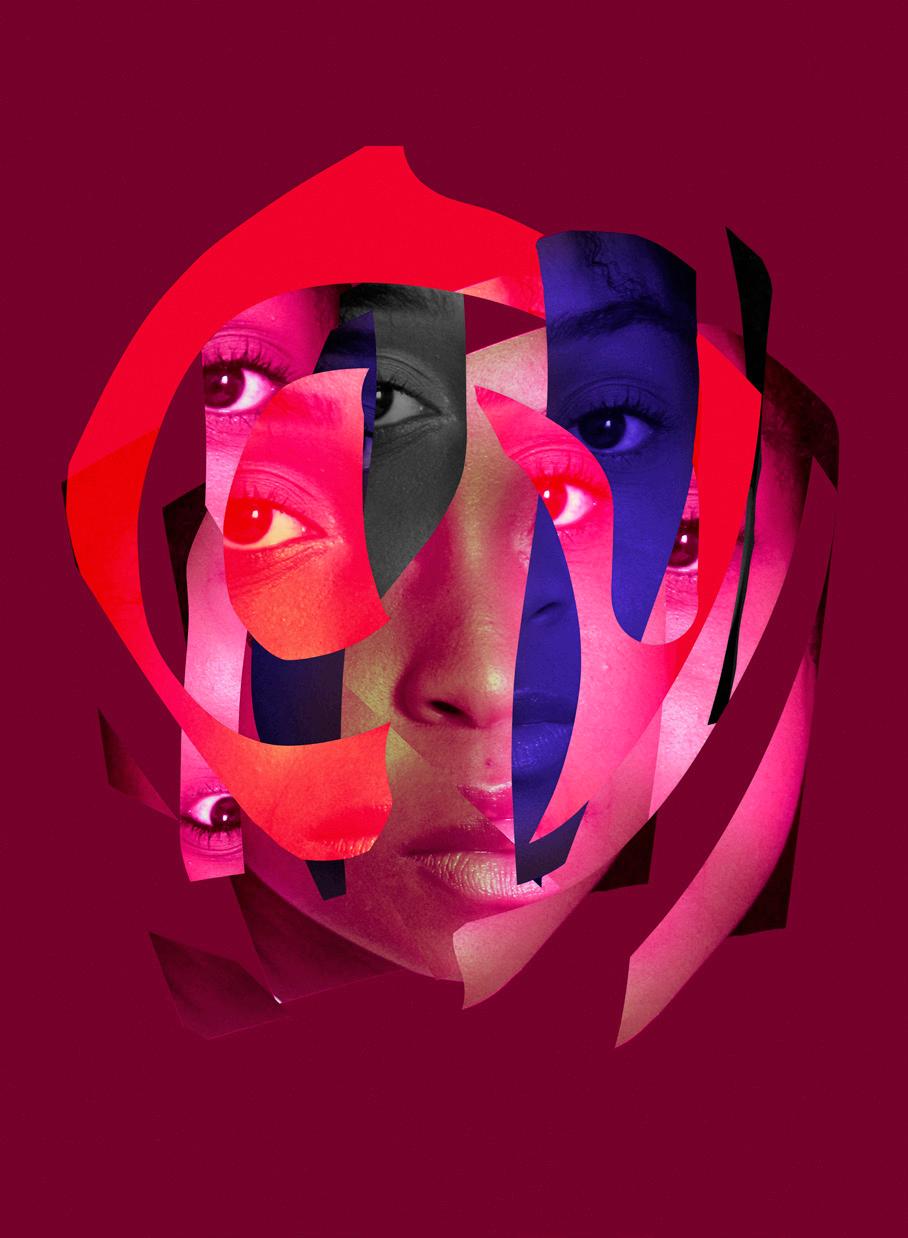
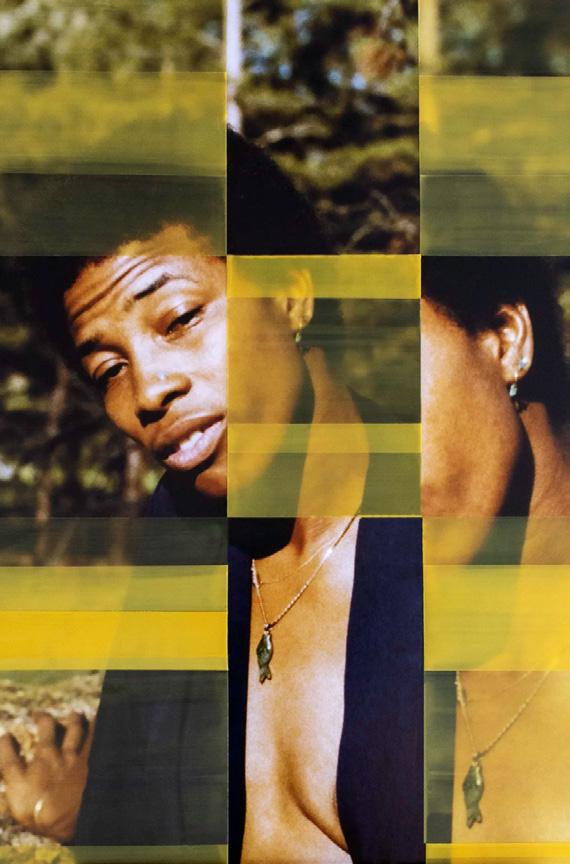
Eu quero retratar uma dança e os rostos que conheci, which translates from Portuguese to I want to portray a dance and the people I have met portrays the core of Kellem Monteiro’s signature visual storytelling. Whether on a monitor or in urban spaces, Monteiro translates the human condition by creating colorful blends of the abstract and the figurative. Through a process of image deconstruction, she raises questions beyond beauty and its complexities, as if putting together a puzzle.
Working primarily with photography, the artist collaborates closely with people from her neighborhood, giving visibility to their presence and transforming their images through thoughtful graphic compositions. Rooted in a world she knows and belongs to — one centered on Black communities — her work highlights difference, individuality, and singularity, creating and telling stories for each subject while also including her own.
“It’s almost a ritual for me to get together with other women to create imagery. The basis of my work is my photography, then I digitally create my graphics and cutouts.”
Kellem Monteiro is a visual artist based in Campos dos Goytacazes, Brazil. She comes from a background in graphic design, having closely studied colors, contrast, and the sensations of different palettes — together with the moods they produce, this has been foundational to her visual style. Monteiro’s process is very organic — she begins with photographs, often involving friends of hers, and a variety of digital clippings, many from magazines and editorials, before visual harmony takes shape.
Monteiro has been featured on the cover of Bitch Magazine, as well as in collaboration with Victoria Beckham for her 2020 #VVB fashion line. She is “obsessed” with the art, fashion, and music of the 1970s and 80s, and often incorporates these references into her work and surroundings.
GIUSEPPE PALMISANO
“My artistic background comes from theatre. I was an actor, and the reaction of an audience is so important to know where you are going, and to suggest the direction ahead. I learned to work with the audience, but not for the audience.”
THE VERBOSE, ANONYMITY 2018
Italy
C-ouch! 2018
Photography
24 x 24 in
GIUSEPPE PALMISANO
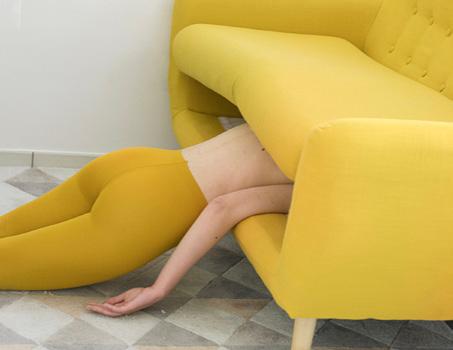
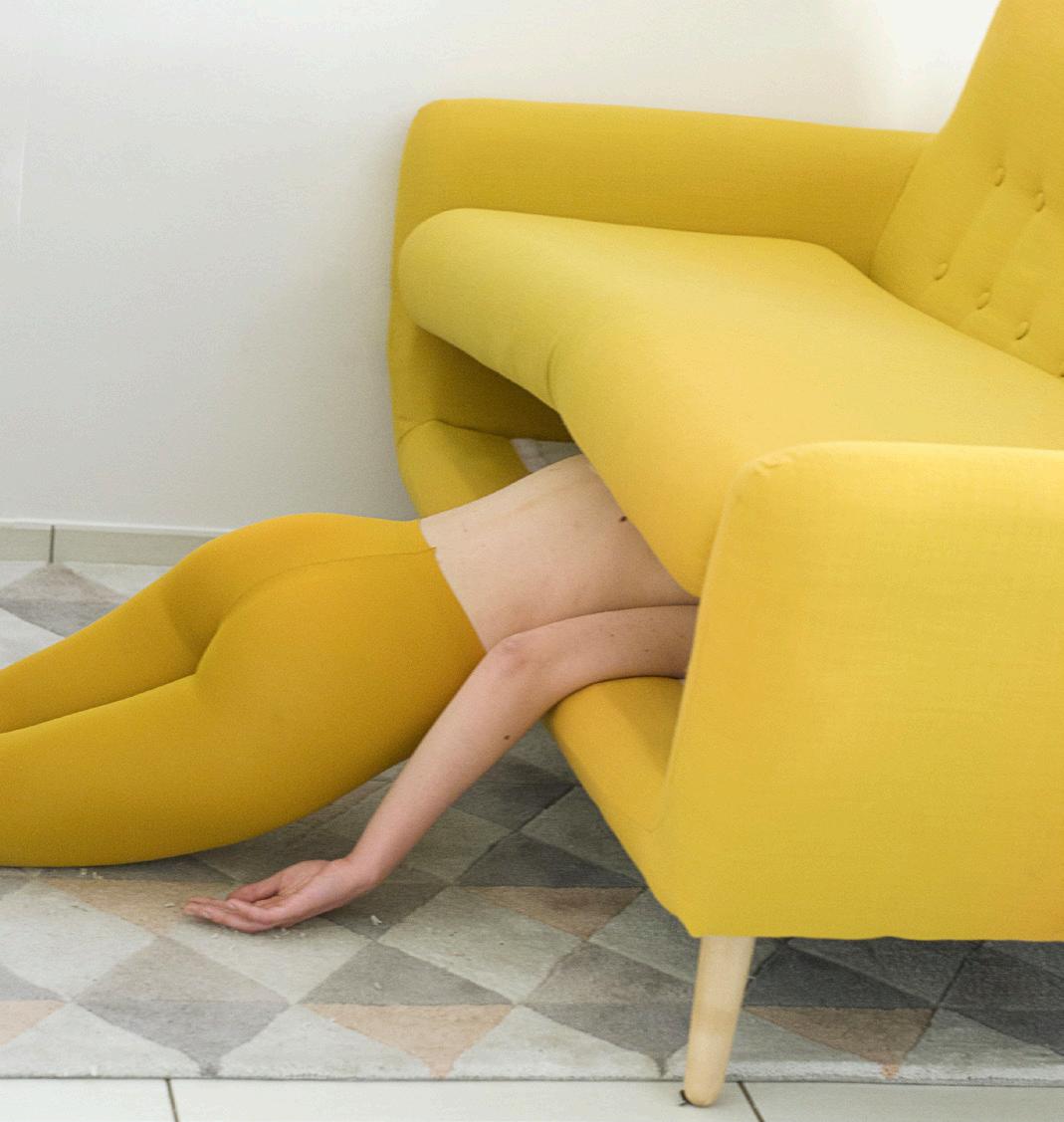
C-ouch! belongs to the series of photographs under the project, iosonopipo, created by Italian artist Giuseppe Palmisano. Since 2012, Palmisano has been exploring the female figure through staged photography set in everyday spaces. Intimacy here is not expressed through personal narrative but suggested through an atmosphere of humor and mystery. The theatrical use of absurdity and vibrant colors draws the viewer into a delicate, dreamlike, yet uncanny universe. Lost in their oneiric inner worlds, these women appear able to escape — or perhaps hide from — the pressures of reality. Is it not within intimate space that identity is constructed?
“Art is always fundamental for humanity. If AI in the future will continue to stimulate our brains, art is important to keep challenging our souls and hearts, and to spread doubt — that’s the only way to continue to feel real emotions.”
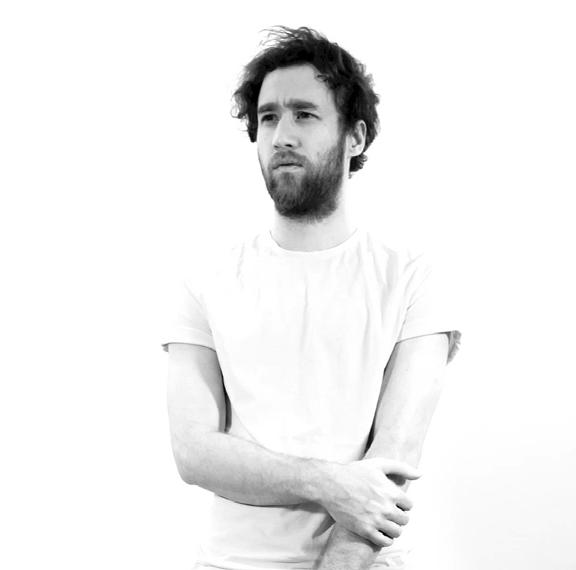
In 2012, following his years in theatre, Giuseppe Palmisano moved into photography with a purely theatrical approach. He began taking pictures around Italy while working as a music manager, using the subjects’ apartments as the scenography. Two years later, he recognized a his vision, and iosonopipo was born. It began as an alias and later became a photographic strand.
“What has always fascinated me is — in the words of Alejandro Jodorowsky: the photographic act. The situation that became apparent when a body let go of the game and available were the few elements of furniture.”
For Palmisano, photography is both photographer and viewer, “the sensory layering of all that our eyes have taken in from the first moment they see the light.” The iosonopipo project has appeared in a number of publications, including Buzzfeed, Hi Fructose, Artribune, GQ, Vice, and Juxtapose.
Giuseppe Palmisano continues to work as an art director, investigating identities through encounters between people, where the act of photography becomes a cathartic and liberating moment. Most recently, however, Palmisano launched a pizzeria in Milan, Pizza Stella. He plans to edit a new book by the end of the year, keeping a focus on his photographic and artistic projects.
ANA MIMINOSHVILI
“I believe the role of art will only grow in the future. Against all the technological growth, I think it will be much more important to have something that is human made and unique. The craft will become more precious and cherished.”
THE VERBOSE, DEVIATION 2024
Georgia
Blooming Eyes, 2020
Digital illustration
24 x 24 in
ANA MIMINOSHVILI
Ana Miminoshvili is known for juxtaposing strict geometric shapes with fluid, organic lines. Blooming Eyes became one of the artist’s most recognized works online, though it remained unexhibited until now. While the artwork belongs to a series depicting themes of surveillance and anxiety that come with social media exposure, it simultaneously nods to nature — a reflection on our environmental footprint.
Miminoshvili continues to explore perspectives on current social and cultural subjects, with her surrealist style as a dramatic element to her storytelling.
Ana Miminoshvili is a freelance illustrator from Tbilisi, Georgia, whose visual style balances fluid forms with geometric precision. The artist has worked with clients such as The New York Times, GQ, Die Zeit, Vogue Korea, The New Yorker, Spotify, and Apple, crafting engaging editorial and commercial work that brings warmth and narrative into every piece. Ana also creates personal projects and manages a small art shop. In 2021, she founded the Illustrators Club, a nonprofit that hosts free events to educate and connect emerging Georgian artists.
“Coming from a tiny country on the border of Europe and Asia, I’ve always had to work harder to break into the global industry. I think that it made me more determined and focused. I was also lucky to have a very supportive family, which gave me the confidence to pursue art from a young age, and fueled my ambitions.”
CURATORIAL EDIT
BY ELENA CARTA
When I was invited to develop this editorial, perhaps the greatest challenge was how to return to the printed page. After intense collaboration aimed at identifying the most effective way to shape The Verbose in an “off the page” format, we now return to its original medium.
By revisiting the interviews with some of the artists in this exhibition, this section is framed as both an extension and an enrichment of their work through in-depth research and critical comparison with the themes of the exhibition.
The following focus sections emerge from thoughtful and subjective associations in response to the artworks and the artists. They highlight shared aspects of contemporary complexity, ranging from cultural and art-historical perspectives to individual figures, references to exhibitions, and significant texts and theories. This editorial approach seeks to move beyond the simple documentation of the selected artworks, integrating new connections and reflections in order to navigate and more deeply investigate the contemporary landscape.
These contributions stem from a personal research practice grounded in art history and visual studies, and explore their echoes and relationships in contemporary society. This approach aims to honor artists working within the flux of our present moment and to reaffirm art itself as a catalyst for open-ended and evolving connections. In this spirit, I invite readers to explore the following pages with curiosity rather than passivity — engaging, questioning, and participating throughout. I hope this editorial offers new points of entry, amplifying the impact of the works themselves.
A special thank you to The Verbose for creating and caring for spaces where freedom of expression is truly possible.
COLLAGE ART: IMAGINING NEW FUTURES
When breaking down the genre of collage from Kellem Monteiro’s work, we inevitably return to the history and evolution of this singular artistic language — this time from a feminist perspective.
The constructed image finds one of its most powerful expressions in collage. As a form of speculative fiction, collage appropriates and reassembles fragments of experience to evoke the fantastical. Its mechanisms are deceptively simple, yet capable of generating complex and contradictory meanings, often intersecting with the visual languages of propaganda and advertising.
Through visual and textual strategies, collage reveals culture as a fragile network of associated ideas — woven from assumptions and expectations and shaped by institutions, laws, languages, and images that can be easily rearranged to shift their meanings. For this reason, collage has been central to feminist practices and ideologies of resistance. Its material flexibility allows it to engage with complexity and to imagine possible futures.
The history of feminist collage is long and rich. Artists associated with Dada and Surrealist circles explored radical forms of freedom and experimentation, driven by trust in the unconscious rather than aesthetic norms. In the 1920s and 1930s, figures such as Claude Cahun, Grete Stern, Dora Maar, Meret Oppenheim, and Sophie Taeuber-Arp produced groundbreaking work that continues to inspire research today. Among them, Hannah Höch stands out: her iconic works boldly and humorously address gender expectations and the figure of the “New Woman.”
The performative collages of the 1970s and 1980s mark another crucial turning point. Artists such as Martha Rosler, Valie Export, Carrie Mae Weems, Mary Beth Edelson, and Barbara Kruger forged connections between feminist concerns and issues of race, sexuality, class, and the culture–nature divide. This intersectional approach has made collage an especially powerful practice in the twenty-first century.
Lorna Simpson, for example, draws on vintage issues of Ebony and Jet, influential U.S. magazines that, from the mid-1950s onward, focused on Black news, culture, and entertainment. Referencing their progressive vision, projected glamour, and the dense cultural history of Black women’s hair, Simpson reflects on imagined futures and a present moment suspended between the limits and possibilities of optimism.
Mickalene Thomas re-centers Black figures after long histories of absence, while Alanna Fields foregrounds this void and its suppression through layered wax works in primary colors. Questions of racial and gender identity are also central to Ellen Gallagher’s practice, particularly in relation to imposed ideals of beauty and the politics of hair and cosmetics.
The instrumental gesture of collage lies in adding and subtracting in order to generate alternatives.
Its contradictions and transhistorical leaps raise persistent questions: What can be saved? Can we rebuild from these foundations, or must we tear them down and begin again?
Collage and feminism together hold in tension the impossibility of utopian ideals and the open-ended construction of identity. They remind us to continually renew and reorient how we live with and value one another — not only as an act of imagination, but as a matter of survival.
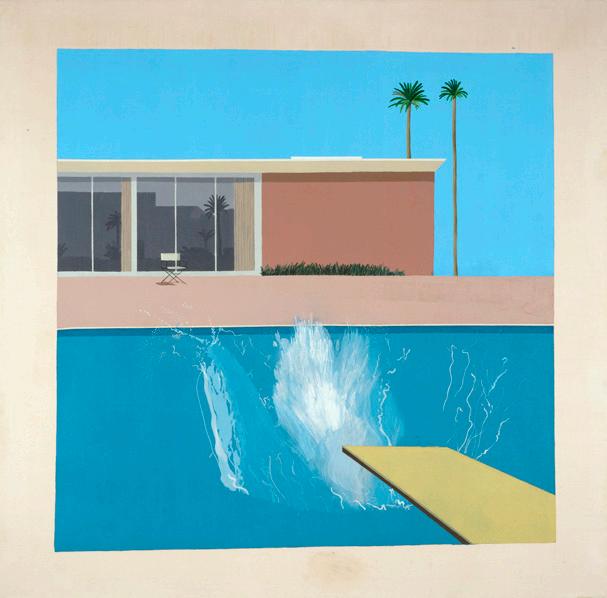
In the works of Laurence Jones, viewers are invited to uncover the definitive artistic portrayals of Californian architecture. This imagined landsape also captivated renowned artist David Hockney (born 1937, Bradford, UK). Before he ever set foot in Los Angeles in the 1960s, he encountered it in glossy magazines –a world of swimming pools, modern villas, and apparent freedom far removed from postwar Britain. In his early Los Angeles paintings, Hockney captured that promise: white loungers, turquoise pools, clean architectural lines. Modernist houses, echoing Le Corbusier and Frank Lloyd Wright, become stages for leisure and desire. The result is both seductive and faintly artificial — a utopia constructed through surface with a glimpse of freedom.
The visual convergence between Jones and Hockney, despite the decades separating them, points to a decisive cultural shift of the mid-twentieth century, when modern domestic architecture stopped being merely an experiment in living and became an image of aspiration.
A paradigmatic example, and a subject that resonates in the work of both artists, is Case Study House No. 22, designed by architect Pierre Koenig in 1959. Perched above Los Angeles, the steel-and-glass transparency of the socalled Stahl House came to symbolize modern life. Yet its fame rests largely on Julius Shulman’s photograph, which framed the house as both an intimate interior and a panoramic spectacle. The image did not simply document the architecture: it performed it.
David Hockney “A Bigger Splash” 1967
Acrylic on canvas 95 1/2 x 96 in. (242.5 x 243.9 cm)
Published and endlessly reproduced, the photograph transformed a specific building into a global icon — shorthand for glamour, sophistication, and effortlessness. Through reproduction and circulation, a specific technical and architectural solution was transformed into a symbol, consumed at a distance by audiences who experienced it primarily through photography. Without diminishing its architectural innovation, it is impossible to ignore how its mediated image amplified its cultural power.
Hockney’s California was initially just such a mediated landscape — a fantasy assembled through mass culture, a Pop dream constructed from printed surfaces. Yet for him, that dream evolved into embodied experience: light, desire, and a form of personal liberation.
How is Jones revisiting the same visual vocabulary today? In an age even more shaped by images, charged by questions of digital reproduction and artificial intelligence, the allure of this universe of luxury remains powerful — but so does the recognition of its artifice. To what extent is this lifestyle still appealing? How much of its promise rests on illusion? There is, in his work, a subtle tongue-in-cheek undertone: paradise still seduces, yet it is always already staged.
(IM)POSSIBLE CITIES
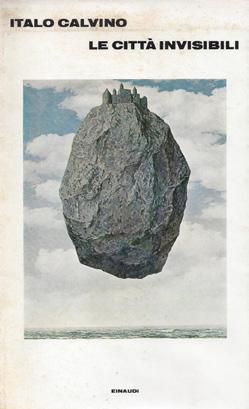
Reflecting on Hassan Ragab’s use of AI to visualize an imaginary city that translates the cultural complexities of the metropolis, we turn to Italo Calvino’s Invisible Cities to explore the meaning behind creating cities that do not exist.
Is it precisely through the act of imagination that we understand more clearly the society that might produce them — and therefore shape our possible futures? The Italian novelist devoted part of his practice to combinatorial literature — a new way of conceiving writing as a mechanism that artificially plays with possible combinations of narrative cores in order to generate ever-new novels. Cavino’s book Invisible Cities stands as the most explicit and extraordinary example of this approach. The book is a series of travel reports made by Venetian Marco Polo to Kublai Khan, the Emperor of the Tartans, updating him on the cities scattered across his empire. Dreamlike architectures and landscapes born of pure invention merge within the traveler’s tales, forming a snapshot of the complexity and disorder of reality itself.
Invisible Cities, 1972. A postmodern novel by the Italian author Italo Calvino, published by Giulio Einaudi Editore
“Cities, like dreams, are made of desires and fears,” Marco Polo explains to the Great Khan, “even if the thread of their discourse is secret, their rules absurd, their perspectives deceptive, and everything conceals something else.”
These accounts are not merely fantastical: the Venetian navigator’s descriptions contain profound truths about the functioning of society. The questions take on new weight when speculative games move beyond artists and writers and into the hands of architects.
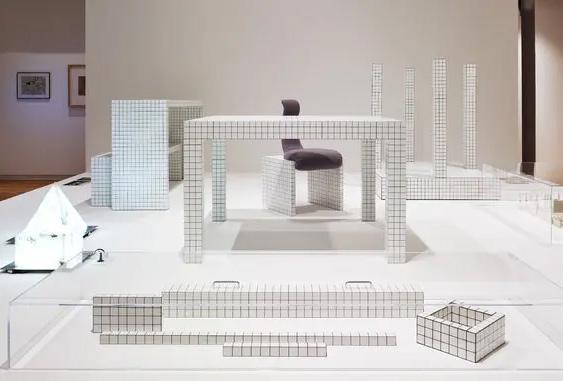
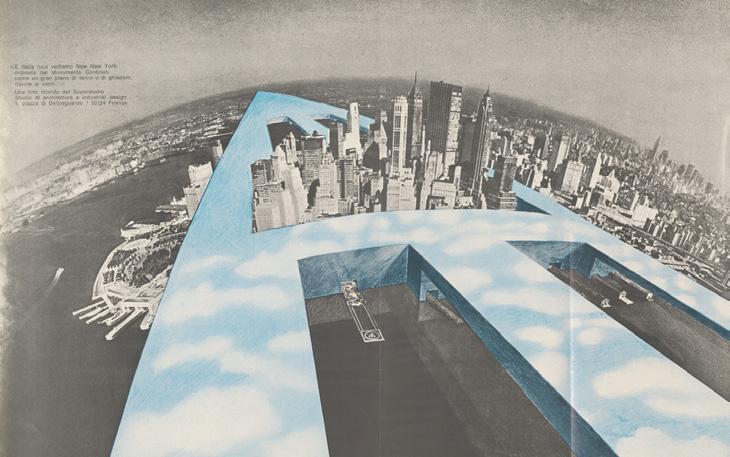
Florence, 1966. In a particularly turbulent context — on the eve of the 1968 uprisings and in the aftermath of the devastating flood of the Arno river — a group of five architects channeled these destructive upheavals into what they would later call “Radical Architecture.”
Working exclusively through theoretical drawings, this strongly anti-modernist collective sought to free architecture from the rigid form — function binary. Their work aimed, for the first time, to explore this no-man’sland at the frontier between “art and design, politics and utopia, philosophy and anthropology”. The Continuous Monument series illustrates their conviction that by extending a single architectural structure across the entire globe, they could “impose cosmic order on earth.”
Notably, unlike many modernist utopian projects, Superstudio envisioned this unifying gesture as nurturing rather than annihilating the natural world. As critic Germano Celant observed: “This is an architecture that has no intention of being subservient to the client or becoming his tool; it offers nothing but its ideological and behavioral attitudes” (Radical Architecture, 1972).
Whether shaped through imaginary narratives, AIgenerated images, or unrealizable architectural projects, the city itself is not the true focus of these experiments. Instead, it becomes a means through which human beings imagine a larger condition: their own place in a world yet to be defined.
Absorbing the work of Tsoku Maela — on mental health, the environment, and collective well-being — provokes us to deepen our research on these conversations in meaningful spaces.
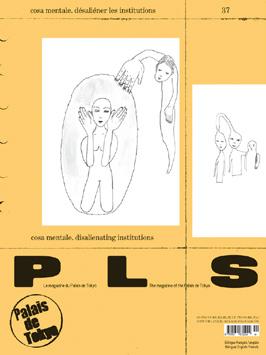
Visitors who pass through the Palais de Tokyo in Paris could come across a light, affordable publication displayed at the entrance of the library, titled Cosa mentale.
Désaliéner les institutions.
The magazine explores the intersections between mental health, contemporary artistic creation, and art and cultural institutions. By going through the centre’s programme from February to June 2024, the publication seeks to deepen the Palais de Tokyo’s interest in institutional psychotherapy, with particular attention to recent shifts in the discourse around care. Among its most striking contributions, are the pages dedicated to the exhibition Toucher l’insensé articulating a clear commitment to rethinking mental health not as a marginal issue, but as a lever for broader societal transformation.
Cosa mentale. Disalienating Institutions. 2024
The Palais de Tokyo
“Institutional psychotherapy is an experimental psychiatric practice that began to be developed in the mid-20th century, and which centres on the conviction that if we are to care for the sick, we must first care for the hospital — that, in other words, we must never isolate mental disorders from their social and institutional contexts. Taking inspiration from these revolutionary psychiatric and human practices that draw upon the collective and upon artistic creation, this exhibition explores different ways of transforming places of isolation into places of protection that can offer refuges from the violence of society.”
Palais de Tokyo
But
who were the figures behind these ideas, and how did their practices intersect with art?
French filmmaker François Pain played a key role in documenting everyday life at the psychiatric clinic, Clinique de La Borde, capturing the activities of François Tosquelles, Jean Oury, and Félix Guattari — among the pioneers of institutional psychotherapy. Beyond this historical documentation, Pain also examined the work of artists, caregivers, and therapists who developed collective artistic practices within various mental healthcare structures. In these contexts, art emerged as a tool for empowerment, for dismantling stereotypes, and for fostering community.
For a contemporary art centre to engage seriously with these dynamics signals a strong commitment to expanding our understanding of what artistic practice can be — and what it can do. Crucially, it foregrounds the social, political, and ethical implications of artmaking, moving beyond purely aesthetic considerations. Both the publication and the exhibition pose a significant challenge: they demonstrate how institutional psychotherapy, though rooted in psychiatric practice, can function as a framework for thinking and acting far beyond that field. As Cosa Mentale suggests, it offers tools to name, analyse, and resist forms of systemic violence that traverse institutions and shape many areas of social life today.
STAGED PHOTOGRAPHY
Giuseppe Palmisano shares his vision of female intimacy — rare, fragile, and precious. He does so without telling a story, instead constructing aesthetic or unusual scenarios that evoke feelings of abandonment and solitude. Fifty years ago, in a New York marked by striking creativity and experimentation, a young artist was exploring similar themes. Rather than being simply behind the camera, the focus was on embracing both roles around it, photographer and subject alike. And she was a woman.
Born in New Jersey in 1954, Cindy Sherman is considered one of the most influential figures of the Picture Generation, a group that emerged in the 70s and 80s, united by a shared interest in using the tools of mass media to critique mass media itself.
Her work aims to push the viewer beyond cliché, questioning notions of narrative, originality, and identity as a fixed entity. As paralleled in the work of Palmisano, Sherman’s disguised women never look directly at the lens; their gaze is always directed elsewhere.
This displacement is central to her renowned series Untitled Film Stills Sherman’s poses are influenced by 1950s and 1960s Hollywood B-movies, film noir, and European arthouse cinema. Although Untitled Film Stills draws on clichés and feminine types, each woman appears to carry a singular, unspoken story. We hover between one woman and all women: you could be everyone while remaining utterly no one.
The most striking aspect of Sherman’s practice lies beyond the uncertainty of her characters. They may appear naïve or foolish, yet their gaze suggests resistance. They seem to be struggling against something they cannot fully name. What remains unresolved is the question of presence. As she herself stated, “When I look at my pictures, I can’t see myself. I disappear sometimes.” This is where performance overtakes photography.
ON HYRDOFEMINISM: THE WATER EMBODIMENT
Fluidity in abstract forms and the expression of bodies of nature characterize the works of Katrina Cuenca, and they also point to the basis of hydrofeminism.
Among the different visions of feminism, hydrofeminism brings together ecological and material knowledge. The origins of hydrofeminism are attributed to the theorist Astrida Neimanis, in her writing Bodies of Water, founded on the vision of water as a powerful medium that connects us, sustains us, and gestates us, bringing us into contact with all our companion species.
Water has always been among the naturalistic subjects that have most fascinated human curiosity, from its primordial connotation as a life-giver and natural sublime, through its vast beauty and unpredictable chaos, to the unknown horizon of the sea, which has historically become a great source of artistic inspiration.
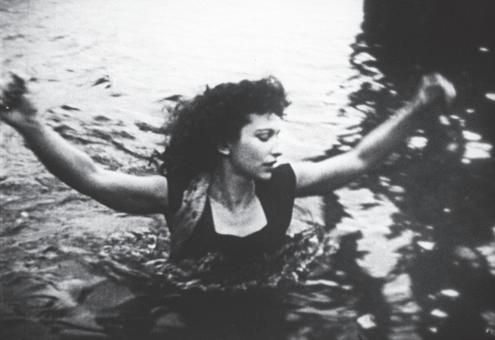
Culturally, aquatic environments have largely been about us, narrated as places of adventure that have enabled humanity to archive, overcome, and surpass limits. This relationship can be seen in the works of several artists: from the material effects of Claude Monet to the abstract brushes of William Turner, the symbolic and mystical relationship with water in Haus am Wasser (House on the Water) of Paul Klee, and finally the oneiric sexual symbols of Maya Deren’s Ritual in Transfigured Time.
Through hydrofeminism, contemporary practices deconstruct the vision of the human as subject and water, as part of the category of Nature, as object. This alterity is reconfigured as hydrocommons: bodies, insofar as they are all constituted by water that composes, circulates, flows in and out, are always already shared and interdependent, thereby disrupting individual human sovereignty and the very idea of borders.
Human and non-human bodies are observed by hydrofeminism as intrinsically composed of and surrounded by water; for this reason, they are defined as watery nodes. Water functions as a relational network that interconnects subjects and, at the same time, deconstructs the integrity of the individual within preconstituted systems of knowledge.
Neimanis emphasizes the non-linear temporality embodied in water, where history, the present, and the possible are settled like on a seabed, often allowing traces of colonial slave routes, imperial infrastructures, extractivism, and pollution to emerge.
In this sense, water is understood as a material archive within processes of knowledge: no longer as an object, but as a coproducer of knowledge.
“We find ourselves tangled in intricate choreographies of bodies and flows of all kinds — not only human bodies, but also other animal, vegetable, geophysical, meteorological, and technological ones.”
In the spirit of global perspectives finding harmony through art, this sidenote aims to push the pages beyond the exhibition. While it could take a lifetime to capture the artistic voices from every country around the world, this catalogue found the space and opportunity to extend the visual dialogue to another part of the world, largely absent in this curation, and of profound importance.
Disheka Jakhar, founder of New Delhi-based Past Forward Consultancy, curates a thoughtful collection of artists under the focal themes of Off The Page in Visual Dialogue. Working with emerging and evolving institutions across art, heritage, tourism, and living culture, Jakhar brings her expertise from her home country to our pages, deepening the discussion on history and identity.
TEXT BY DISHEKA JAKHAR
This collection brings together four practices that consider identity not as a fixed essence, but as something shaped over time — formed through systems of belief, language, memory, and lived experience. History appears here less as a distant record and more as an active presence, carried across bodies, objects, and environments.
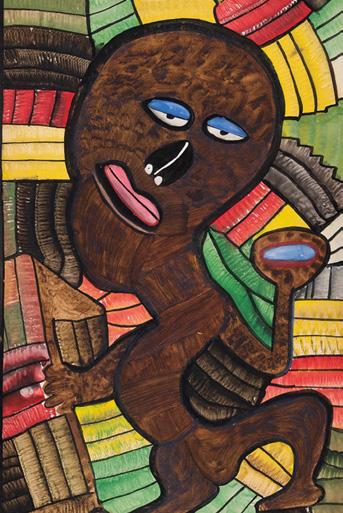
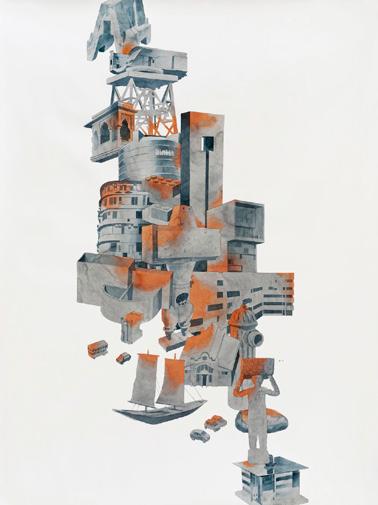
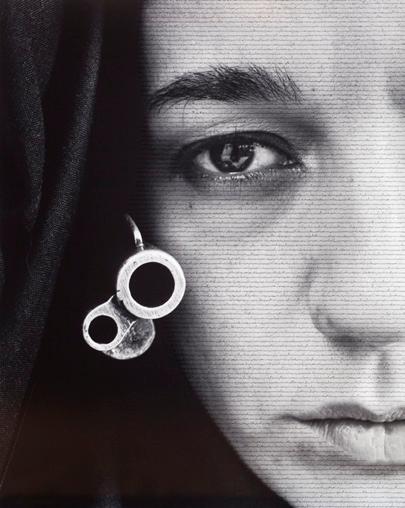
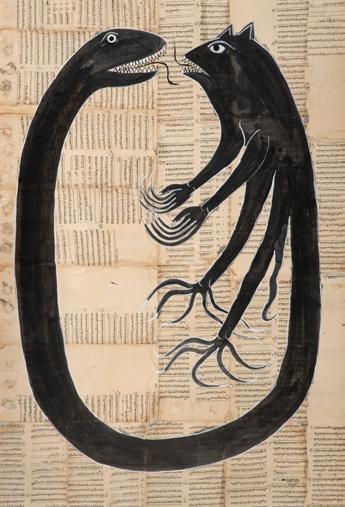
Nannu Singh’s Demon IV. begins the journey. Emerging from religious imagery, the figure of the demon reveals how inherited frameworks shape perception — identity is shown as something initially framed by structures that precede the individual. From this foundation, the journey shifts to Sameer Kulavoor’s urban assemblage, where stacked forms reflect identities shaped by architecture, infrastructure, and rapid transformation. The city becomes a site where fragments of the past persist within compressed contemporary life. The focus then narrows to the individual in Shirin Neshat’s Speechless, where ideological structures are inscribed directly onto the body. Language overlays the face, making visible the tension between personal subjectivity and inherited authority. The collection concludes with Nagdas’s Duologue. Figures hover over archival text that remains legible beneath the image, foregrounding the self as a site of internal negotiation. Memory is neither erased nor resolved; it is confronted.
Together, these works suggest that identity is not inherited intact nor freely invented. It is formed through encounter with belief, with systems, with the body, and with the past that remains present. If history is the ink, what form of self is still being drawn?
In Demon IV, the figure is neither purely mythic nor merely decorative. Emerging from vernacular religious imagery, the demon becomes a site of tension — what is taught, named, and feared within institutional belief systems versus what other truths might exist beneath that framing. Singh’s flattened planes and charged colour resist moral clarity. What is rendered as “other” appears less fixed than assumed, revealing the instability within inherited narratives.
SAMEER KULAVOOR
Name Place Animal Thing, 2025
Acrylic on Fabriano Artistico acid-free cold-pressed paper
Kulavoor explores the shifting urban identity of India. By stacking disparate cultural icons and mundane city elements into a singular totem, he reflects the “compressed history” of the modern metropolis. The work reflects how history survives within contemporary environments, embedded in structures that simultaneously obscure, transform, and carry ancestral narratives forward
Neshat’s image presents the body as a historical surface. The female face becomes a site of inscription where language, ideology, and visibility converge. Farsi text overlays the image, collapsing voice and silence, resistance and control. Subjectivity emerges within inherited narratives of gender and faith, while the unwavering gaze asserts presence within constraint.
Two confronting forms hover over visibly aged text, staging identity as relational and unresolved. The refusal to obscure underlying documents insists on memory’s persistence. Dialogue becomes both subject and structure, suggesting that identity is formed through exchange — with the other and with histories that cannot be erased, only negotiated.
THE VERBOSE Magazine
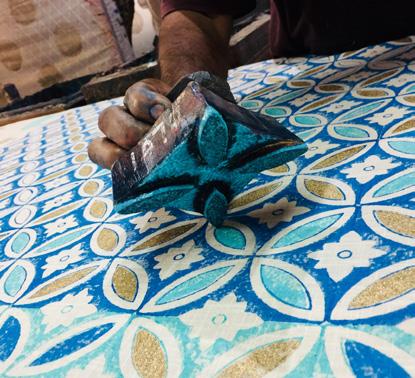
The Verbose unfolded in 2015 as a way to transfer art and culture to conversation at a time when print began to fade, and scrolling began to command. The stories are a curated collection of memories, synchronicities, and impressions captured over time, often through travel. Combined with interviews, each edition unravels under one theme, documenting a range of creativity. The hope is that these pages foster meaningful dialogue, shed light on diverse beauty, and fill a room with words. The Verbose is selfpublished. All passion, no profit.
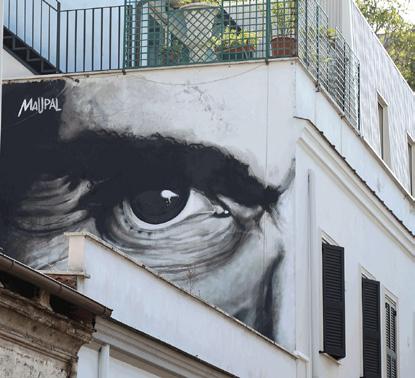
Italian street artist, Maupal, featured in The Verbose
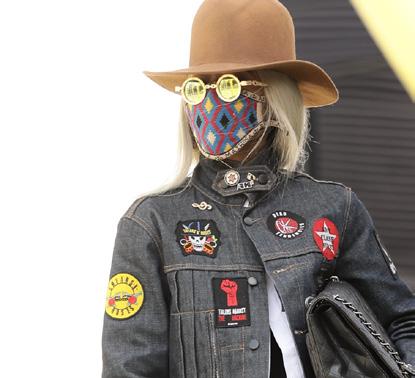
Wendy Ntinezo, music and fashion icon in South Africa featured in The Verbose Issue
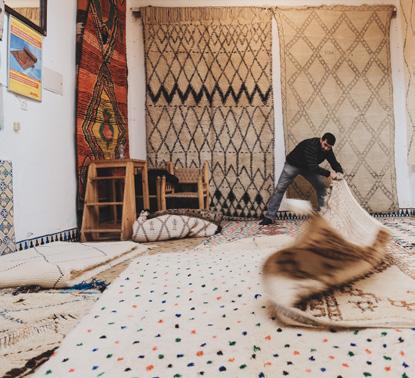
Bleu de Fes in Tangiers, featured in The Verbose Issue
Palestinian artist, Sliman Mansour, featured in The Verbose Issue
Brazillian artist, Cristine Balerine, featured in The Verbose Issue
ANONYMITY
Copenhagen, 2018
This debut issue of The Verbose champions anonymity as a tool for creative freedom, allowing both the publication and its artists to confront tensions between personal branding and public persona.
BIPOLAR
San Francisco, 2020
The second edition, B, explores the friction of the modern “Bipolar” existence, navigating duality between our tangible, visceral lives and the curated, fragmented identities we inhabit in the digital realm.
CAPTIVITY
Milan, 2022
This issue explores “Captivity” as a direct response to the global pandemic — examining how the physical walls of lockdown proved that creative constraints can sharpen, rather than stifle, the artist’s vision.
DEVIATION
San Francisco, 2024
“Deviation” is in reference to departures from culture, questioning how far we must distance ourselves from the past to redefine culture and history through the lens of our contemporary identity.
EXPOSED
Georgetown, 2025
Issue E, Exposed, underpins the personal exposure behind being artists and thinkers, choosing what we censor, exploit, and how to define what it means to be truly exposed.
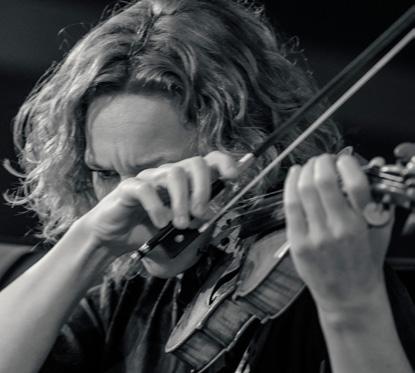
Vienna-based concert voilinist, Sophie Heinrich, featured in The Verbose Issue
Russian long board dancer, Valeriya Gogunskaya, featured in The Verbose Issue
Jaipur based fashion studio, RASA, featured in The Verbose Issue
Danish musicians, Farveblnid, featured in The Verbose Issue
Cyprus artist, Anna Kövecses, featured in The Verbose Issue
ELENA CARTA
Editorial Curation
Elena Carta is an artist, art historian, and independent curator based in Paris. Guided by care and critical inquiry, her practice engages feminist and intersectional perspectives within contemporary art discourse. Rooted in the artist’s studio as a space of process and experimentation, her work explores questions of displacement, repair, and the shaping of new inner and collective geographies.
Elena holds a BA in Fine Arts (Painting) from the Fine Arts Academy of Verona and a Master’s degree in Visual Arts and Curatorial Studies from the University of Bologna, including a period at Paris 8 University. She has collaborated with major institutions including Fondazione Biennale di Venezia, Musée d’Art Moderne de Paris, and Fondation Cartier pour l’art contemporain.
CAMILLA CHIARI, Contributing writer
DISHEKA JAKHAR, Contributing writer
This exhibition and catalogue would not have been possible without the support and close collaboration with each individual artist. Many of the artists present their works as prints for the first time. The international coordination is something to applaud. Thank you to the artists for their gifts and trust.
An extended thank you to the artists and studio managers involved in bringing together our editorial, granting permission to expand the voices and visual dialogue. Thank you to Elena Carta, Camilla Chiari, and Disheka Jakhar for their expertise and insightful critique.
A special thank you to The Poppy Georgetown for the perfect pilot space and creative freedom to breathe life into this body of work.
ANGELA GLEASON Curator, Founder, The Verbose
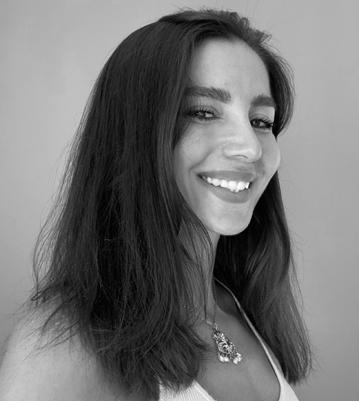
Angela Gleason is a creative director and arts professional with 15 years of experience leading international branding, editorial, and communications projects across the public and private sectors. With a foundation in design and creative writing, Angela specializes in creative strategy for high-level global initiatives. She has worked closely with the United Nations, World Economic Forum, TIME Magazine, Fine Arts Museums of San Francisco, and leading futurists in the Bay Area.
Her international experience informs a unique approach to cultivating artists and storytelling — blending expertise in scenario planning, sustainability, and cultural policy. This debut exhibition marks Angela’s transition into physical curation, where she positions art as a vehicle for education, a means of travel, and a catalyst for dialogue on identity, cultural heritage, and social connection.
Angela holds a MA in Arts Management from Bocconi University, Milan, a BA from the Academy of Art University, San Francisco, and journalism studies from NYU.
For inquiries and collaborations, theverbosemagazine@gmail.com
E. Ambasz (ed.), Italy: The New Domestic Landscape: Achievements and Problems of Italian Design, Museum of Modern Art, New York, 1972.
Magazine PLS no. 37, Cosa mentale. Disalienating Institutions, Palais de Tokyo, 15 February 2024
Aloi, Giovanni (ed.), Antennae. The Journal of Nature in Visual Culture. Issue 29: Wet Twice. Autumn 2014.
Braidotti, Rosi, The Posthuman. Cambridge: Polity Press, 2013.
De Vita, Antonella, Corpi d’acqua. La svolta idrofemminista di Astrida Neimanis. Napoli: UniorPress, 2021.