


T Fema Sc am Why do women in horror often meet overly theatrical and sexualized ends?


news@thevarsity.ca2 THE VARSITY NEWS 21 Sussex Avenue, Suite 306 Toronto, ON M5S 1J6 (416) 946-7600 Vol. CXLIII, No. 7 THE VARSITY THE VARSITY Lead Copy Editors Ozair Chaudhry, Linda Chen, Kyla Cassandra Cortez, Bella Reny, Momena Sheikh, Nandini Shrotriya, Kiri Stockwood, Lina TupakKarim, Valerie Yao Copy Editors Naomi Altwasser, Medha Barath, Kamilla Bekbossynova, Gene Case, Jasmine Chow, Ikjot Grewal, Grace Xu, Sally Yang, Junella Zhang Designer Yi Wang The Varsity is the University of Toronto’s largest student newspaper, publishing since 1880. It is printed by Master Web Inc. on recycled newsprint stock. Content © 2021 by The Varsity All rights reserved. Any editorial inquiries and/or letters should be directed to the sections associated with them; emails listed above. The Varsity reserves the right to edit all submissions. Inquiries regarding ad sales can be made to ads@thevarsity. ca. ISSN: 0042-2789 thevarsity.ca thevarsitynewspaper @TheVarsity the.varsity the.varsity The Varsity BUSINESS OFFICE Parnormal Murder business@thevarsity.ca Business Manager Ish-fear WadhwAHH ishirw@thevarsity.ca Business Associate Brainnns-ia Sadik raniasadik@thevarsity.ca Advertising Executive Abdulmunem ABOOd Tartir atartir@thevarsity.ca Advertising Executive MASTHEAD Ja-died again editor@thevarsity.ca Editor-in-Chief Medusa Mwitch-a creative@thevarsity.ca Creative Director NoUTMBureauChief Ahhh Fear managingexternal@thevarsity.ca Managing Editor, External Ar-toothless Crone managinginternal@thevarsity.ca Managing Editor, Internal Anghoul Decomposing online@thevarsity.ca Managing Online Editor Talha Anwar Candy-corn copy@thevarsity.ca Senior Copy Editor KaDIEja Alarm news@thevarsity.ca News Editor Skull-nise Mummy-Ali comment@thevarsity.ca Comment Editor Zombie Agarwail biz@thevarsity.ca Business & Labour Editor Lex Luthor DrFrankenstein features@thevarsity.ca Features Editor Maniac AniHELLska arts@thevarsity.ca Arts & Culture Editor Slasher Haunted Doll-a science@thevarsity.ca Science Editor Mekill Quarshie sports@thevarsity.ca Sports Editor Carolibel Bailamy design@thevarsity.ca Design Editor Andread Zhaodiac Killer design@thevarsity.ca Design Editor Heebie-vurjeebies Madan photos@thevarsity.ca Photo Editor Jesskeleton Lam-to-the-slaughter illustration@thevarsity.ca Illustration Editor Maya Morriswaleadpoisoning video@thevarsity.ca Video Editor AHHHH RUN!! Hong aaronh@thevarsity.ca Front End Web Developer An-drew-blood Hong andrewh@thevarsity.ca Back End Web Developer Sa-fear Cartel deputysce@thevarsity.ca Deputy Senior Copy Editor Hummus Jumpscare Burns deputynews@thevarsity.ca Deputy News Editor Jack-o-lantern Schwailing assistantnews@thevarsity.ca Assistant News Editor DraLexeyBurnscula utm@thevarsity.ca UTM Bureau Chief Alyour Demise Chua utsc@thevarsity.ca UTSC Bureau Chief Emma Gravestone grad@thevarsity.ca Graduate Bureau Chief Werewolf publiceditor@thevarsity.ca Public Editor A-jinxed-ya Vithiyananthan Associate Senior Copy Editor Alien-a Bwa-ha-ha-vert, Who’s there?, Spooky Scary Skeliaton, Tomb-y Shock Associate News Editors I-spook-ya Lantern, Hell-eanor Phantom Associate Comment Editors A-kill-list B, Grave Hellis Associate Features Editors Madeline Sza-boo Associate A&C Editor Vacant Associate Science Editor Hell Yeah Fangsy Social Media Manager Killing Deadlani, Apparition Merali, Hargoon Rekill Associate Sports Editor Ge(bo)orgia Kelly, Andrew Kill Associate B&L Editors Arthur HamDOOMi, JoAhHHHhHna ZhAHHhhHhhng, Spencer Boo Associate Design Editors Scare-yl Fear-nongering, Biew Biew SakulMWAHHAHAnadee Associate Illo Editor Zeyn-web Boo-yanli, Nearly Headless Nick, Augustine Wooooooooooong Associate Photo Editor Vacant Associate Video Editor CORRECTIONS: In last week’s issue, the back crossword was missing some of the Downward hints. The Varsity apologizes for the error. All missing clues were uploaded to Twitter and Facebook on Tuesday, and can be found below: 34 Swedish furniture giant 35 Enclosures 38 Law firm 39 Office-holder 40 Ancient 43 Quaker ___ 44 Shade of red 45 Like a solarium CREDIT: Special photo and costuming thanks, respectively, to Caroline Bellamy and Sarah Artemia Kronenfeld 47 Kitchen mishap 48 Beehive product 49 Lunar vehicle 51 Sows a field 53 Con game 55 Spur or helical 56 Boarding place 58 Car protector FROM THE VARCHIVES… This week’s page two features doodles from our 1980 Special Hallowe’en Issue! Throwback to the time when we still published issues full of Arts & Culture-style reviews. THE VARSITY THE VARSITY THE VARSITY THE VARSITY
BREAKING: At 2022 AGM, UTSU reduces board
Lexey Burns Deputy News Editor
After it was initially postponed from Septem ber 29, the University of Toronto Students’ Union (UTSU) held the first portion of its Annual General Meeting (AGM) on Wednesday, October 26. For six hours, members of the student body debated by law amendments to eliminate proxied votes and al tering the structure of the UTSU board of directors (BOD), cutting it down to under half of its previous size. They also discussed a proposal to create an additional body of student representatives called the Senate. At 12:07 am on October 27, the meet ing adjourned with a motion to reconvene at 4:00 pm on October 30.
On October 30, members reviewed the union’s financial statements and voted to adopt all pro posed amendments to the UTSU bylaws. The amendments came into effect immediately.
Board of directors structure
In August, the UTSU’s BOD approved a full revi sion to the UTSU bylaws, which outline the union’s structure and guidelines. The proposed changes included the introduction of a student senate and a smaller BOD, which would jointly govern the union. However, the student body must approve any by law changes at the AGM for those changes to take effect.
On October 27, meeting speaker Justin Pap pano called the AGM to order at 6:01 pm. Pres ent were 78 student members who held 50 proxies between them, for a total of 128 votes.
During the meeting, students approved Article 1, a group of bylaws which pertains to the UTSU members, and Article 2, a group of bylaws focusing on the elected and appointed officers involved with the UTSU. Following these approvals of the pro posed bylaws, they launched into heavy discussion of the proposed Article 3, which governs the BOD.
In Article 3, the UTSU proposed that the BOD be composed of the president, the vice-president, fi nance and operations, and 10 directors-at-large.
Prior to the AGM, the UTSU’s board was com posed of 44 seats, including the union’s executive
members and other representatives from multiple undergraduate divisions and constituencies. How ever, the UTSU has had difficulty obtaining enough board members to hold meetings. For instance, the UTSU initially adjourned its August BOD meet ing and rescheduled it to the next day after failing to reach quorum.
The UTSU has also faced issues filling the BOD’s 44 seats. Just over 20 per cent of seats on the BOD were vacant at the start of the meeting, including seats slated for University College, St Michael’s College, Woodsworth College, and New College, as well as seats for representatives in the Transi tional Year Programme, Mathematical and Physical Sciences, and Computer Science programs.
Students raised concerns about the proposed structure. According to one of the student mem bers in attendance, Rayan Awad Alim, “12 direc tors is way too small for 40,000 people.” Another AGM attendee, Harrison Chan, pointed out that the decisions made by the UTSU can be “legally bind ing,” and that the proposal would rob other facul ties of their representation.
Dermot O’Halloran, the UTSU’s vice-president, finance and operations, explained that the BOD’s proposed new structure was based on the recom mendations of a consultant and lawyer. He said that having a smaller BOD will help future elections run more smoothly, and will allow BOD members to be more thoroughly trained prior to taking office.
Although members finished discussing the proposed Article 3 at the end of the October 26 session of the AGM, the change had not yet been formally approved. It was tabled until October 30, when the meeting reconvened.
Proxies
Some AGM attendees also objected to the pro posed Article 3 Section 8, which would eliminate proxy and absentee voting. Before this AGM, students were allowed to hold a maximum of 10 proxies for voting and quorum purposes at UTSU meetings, including at AGMs.
“Proxy voting should always be a function of the student union because it empowers more students to be able to have a say,” said Alim. Alim also noted
U of T students celebrate Diwali
Events at the federated colleges help students commemorate the festival
Jessie Schwalb Assistant News Editor
This year, Diwali events held by the federated colleges, student associations, and the uni versity provided students with opportunities to commemorate the holiday.
Diwali — the five-day “festival of lights” ob served by Hindus, Sikhs, Jains, and some Bud dhists as well as across multiple South Asian and Southeast Asian countries — is an impor tant event for many in the U of T community.

Cultural connections
India is the largest country that considers Di wali a statutory holiday. In 2021, 2.3 per cent of U of T’s undergraduate student body was made up of international students from India. Addi tionally, Canada has one of the largest popula tions of Indian origin outside of South Asia; ac cording to the 2021 census, roughly 1.3 million Canadians in private households are of Indian ethnicity. As such, many domestic students also celebrate the festival.
Balaprasanth Govindarajulu, a fourth-year economics major and president of the UTSG’s Hindu Students Council (HSC), told The Varsity, “The thing that’s important to me about Diwali is that it’s the victory of righteousness.” Despite the holiday being celebrated across different re ligions, and each with its own origin story, Diwali ultimately represents the victory of good over evil.
Other students view Diwali as an opportunity
to connect to their culture and spend time with others. “Diwali is something I’ve grown up cel ebrating each year,” said Shiva Ivaturi, head of Trinity College’s Non-Resident Affairs Commit tee, which represents commuter students at the college. “It’s a very inclusive and universally rec ognized celebration that we can all indulge in.”
Celebrations at U of T
Events to celebrate Diwali were held across the university, hosted by St Michael’s College, University College, and the HSC, among oth ers.
The UTSC International Student Centre held a Diwali Celebration in the UTSC meeting place; students decorated diyas, created ran golis, and gathered to eat pakora and samosa.
On the evening of October 24, Trinity Col lege also hosted a Diwali event. Decks of cards and flowers adorned the tables, and people spoke to each other over an array of Indian food. The event, which was organized by Iva turi and Trinity College Head of Arts Devyani Chandra, drew around 30 people in a mixture of formal and casual clothing.
Many attendees had celebrated Diwali be fore and came to commemorate the day with friends. “We celebrate Diwali every year with my family back in India,” said Niska Srivastava, a student attendee. “This year, I wanted to do something with other Indian people.”
Other students received their first taste of Diwali at U of T’s celebrations. “I’ve never cel ebrated Diwali before,” said Daniel Stedman,
that students have other obligations and may not be able to attend these meetings.
According to O’Halloran, the Canada Not-forprofit Corporations Act permits proxy and absen tee voting, but it is not encouraged in the “pre-pro cedure” sphere.
Omar Gharbiyeh, the president of the UTSU, proposed a motion that would retain proxies, but require each person requesting a proxy to write 400 words to explain why they were not able to attend the meeting. The UTSU could use this infor mation to determine why the UTSU meetings “are proving so inaccessible to students that so many need to proxy their vote.”
Some individuals attending the meeting held up to 11 proxies. Gharbiyeh himself held seven prox ies, while O’Halloran held four. Gharbiyeh argued that individuals can just ask others for their prox ies, allowing them to execute a disproportionate amount of power. “Frankly, it’s just undemocratic,” he said.
One student in attendance, whose name The Varsity was not able to obtain, noted that proxies may be inequitable because they disadvantage commuter students. They explained that other stu dents who are able to live downtown or near cam pus have more time to join clubs and attend social events — time that commuter students spend go ing back and forth from home to campus. “I un fortunately didn’t have that [in] my first three years being [at] U of T,” they said.
At the time of the meeting, the commuter stu dent still did not hold any proxies. “I do think this gets abused. I think that [attendees] do use proxies to favour whatever side they want.”
At the end of the October 26 meeting, over six hours after the AGM was called to order, members voted to temporarily adjourn and reconvene on Oc tober 30. The vote on whether or not to retain proxy voting was also tabled until the AGM reconvened.
Bylaw approvals
At the start of the second session of the AGM on October 30, 73 student members were present, who held 161 proxies, for a total of 234 votes.
The October 30 session began with the ap
proval of the union’s financial statements from the past year. O’Halloran highlighted that the total rev enue for the year ending on April 30, 2022 was $16,751,135, which left the UTSU with a surplus of $931,336 after expenses.
After the financial statements, discussions turned to the bylaw amendments regarding proxy and absentee voting. Students adopted O’Halloran’s amendment proposal to strike the ability to hold proxies after another highly active discussion.
In addition, students adopted an amend ment that reduced the total amount of attendees needed for quorum. The new quorum for the UTSU’s AGM will be 50 members; for the Special Membership Meeting, 100 members; and for the Spring General Meeting, however many students end up attending.
The UTSU also adopted the amendments to cut the number of seats on the BOD from 44 to 12, and to initiate a Senate. The Senate will be composed of somewhere between 51 and 75 students representing a variety of specific student populations, including students from each of the colleges; professional faculties students; first-year students; commuter students; students living in residence; mature students and student parents; international students; first-generation students; and students from small and specialized pro grams.
The bylaws specify the number of Senate seats allocated for each student population, but allow the Senate to vote on adjustments, as long as the total number of senators doesn’t surpass 75. The bylaws do, additionally, include a provision for exofficio members, which would not count toward that total.
The updated bylaws were adopted at the end of the meeting, when the membership moved to vote on the bylaws as they were presented. The bylaw motion was passed with 100 votes in its favour and 46 against.
Following the adoption of the bylaws, the meet ing was forced to adjourn due to the new proxy and absentee voting bylaw. Once the new bylaws were adopted, the proxies had to be struck and did not count towards the quorum. This then left a total of only 49 votes among students present at the meeting, where the minimum quorum was 50.
All bylaws have now come into effect, and will remain in effect for the Spring General Meeting.
another attendee. “But I have a lot of friends who do, so I decided to come by.”
Ivaturi emphasized that everyone can appre ciate the meaning of Diwali. “Diwali really cel ebrates happiness and prosperity. I think those are values and elements that every student and every person can really aspire toward wanting or achieving or having achieved at some point in their lives,” said Ivaturi. “The nature of Diwali is so inclusive, and that’s why I wanted to bring it [to the university] as a student event.”
Room for growth
In 2020, U of T collaborated with the HSC to establish a Hindu shrine at the Multi-faith Cen tre. According to Govindarajulu, the shrine has been a boon to the community, allowing them to hold celebrations and giving students a place to pray.
However, Govindarajulu believes that the university could do more to support students by hosting Diwali celebrations on all campuses and helping students plan events. For instance, he proposed that the university help students find permits for firecrackers, which are a tradi tional part of Diwali celebrations in India. “We
let go of a lot of festivities and important cel ebrations when we come here,” he said.
According to a U of T spokesperson, “the University does not typically organize events in celebration of religious observances; however, support is provided to student organizations, staff or faculty who wish to organize events.”
Such support includes hosting student-run events at the Multi-Faith Centre, where the HSC’s Diwali event took place. To ensure safe ty, fireworks are not permitted on the UTSG campus, and groups at UTM and UTSC must reach out to campus offices and obtain mu nicipal permits before setting off fireworks on campus.
Ivaturi hopes that, in the future, clubs and student governance groups can collaborate to celebrate events from a variety of cultures.
“I think the onus is on student governance groups as well as cultural associations to build more of a connection,” said Ivaturi. “It’s really important for cultural associations to reach out to student governance groups and vice versa to learn more about how we can create this [type of] event and make it a positive experi ence.”
thevarsity.ca/section/news OCTOBER 31, 2022 3
Proxies no longer permitted at UTSU meetings, including future AGMs
U of T organizations celebrate Diwali. VURJEET MADAN/THEVARSITY
UTFA agreement wins additional benefits for all members
Selia Sanchez Associate News Editor
As of November 1, members of the University of Toronto Faculty Association (UTFA), both active and retired, will see significant improvement in benefits concerning mental health, vision care, dental care, and paramedical services. These improvements come as a result of an agreement finalized on September 29 between the UTFA Negotiating Team for Salary, Benefits, Pensions, and Workload and the university administration. These benefits are for the third year of an ongo ing deal between U of T and the UTFA.
Coverage increase
The coverage for mental health will increase to $7,000 from the original coverage of $5,000, which UTFA members have had for the last two years. Vision care benefits will increase from $700 to $725 per 24 months. Paramedical ben efits — which include chiropractor, massage therapist, and occupational therapist services — will see a 200 per cent increase to $5,000. Last ly, under the Dependent Scholarship Program, dependents of UTFA members will be awarded scholarships worth 65 per cent of their academ ic fees, instead of the original 50 per cent.
U of T’s response
According to a U of T spokesperson, the agree ment reached with the UTFA will address the outstanding salary, benefits, and workload is sues from July 1, 2022 to June 30, 2023. Some of these issues include “reining in” excessive teaching workloads, creating a clear and rea sonable distribution of workload and assign ments, and establishing a minimum level of teaching assistant support. These issues have not been mutually resolved and will be decided by Arbitrator Eli Gedalof in line with the dispute
resolution process. The Arbitrator has already issued an interim award for a one per cent sal ary increase effective July 1, 2022.
The spokesperson explains that the agree ment between the administration and the UTFA aligns with Bill 124 — an Act passed by the Ford government in 2019, which limited salary increases, including benefit enhancements, to one per cent per year.
During the negotiation process, the UTFA also made efforts to secure fair and equitable work loads for faculty and librarians, as well as ensure timely payment of annual merit-based awards.
Negotiations and Bill 124 Vice-President Salary, Benefits, Pensions, and Work load Jun Nogami wrote to Varsity members’ health benefits were insuf ficient to meet their needs in several key areas.”


Referring to the need for better mental health benefits, he wrote, “faculty and librarians have been ex periencing high er levels of stress, anxiety, depression, and other height ened mental health concerns over the past several years.”
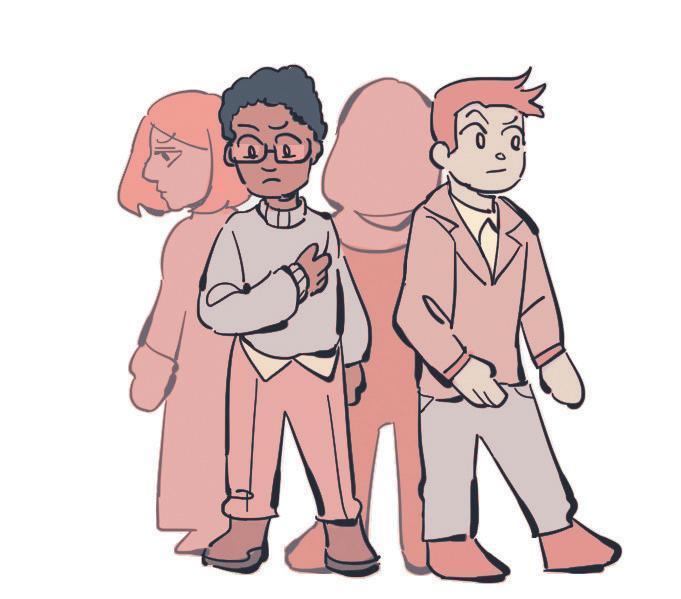
Bill 124 limits across-the-board salary increases to one per cent a year, and the UTFA must bar gain under these conditions.
Doug Ford and his government introduced and passed Bill 124, the Protecting a Sustain able Public Sector for Future Generations Act in 2019. Under the bill, salaries for public sector employees can increase at most one per cent for every year within a three-year period after a collective agreement expires. This limitation has negatively impacted nurses and other healthcare professionals as well as public-sector workers, including teachers.
portant to make as many gains as possible… salaries would rise much slower
Nogami noted that the UTFA was successful in istration’s attempts to deny benefit improvements for retired members
Currently, the UTFA remains in arbitration for several unsettled
cessive workload for both faculty and librarians. Nogami explained that student enrolment has significantly increased over the past few years, accompanied by growing class sizes, but the hiring of faculty members and librarians “has not kept pace.” He further said, “UTFA members are overworked which means that the student ex perience has suffered.”
According to Nogami, the negotiation process with the university administration was “long and drawn out and lasted for more than two years to reach a three-year deal.” This situation, he added, stemmed from a bargaining framework that “favours the administration.”
When a disagreement occurs between the UTFA and the university, Nogami explained, the UTFA is not guaranteed access to a “neutral dis pute resolution process,” which presents a bar rier in reaching a fair and timely solution. Nogami described the process as “unsustainable” and incapable of serving UTFA members well.
Nogami highlighted two principles that the ad ministration implements in their bargaining pro cess. He wrote that first, “they want to maintain the status quo in terms of the power that they have in determining virtually all terms and con ditions of employment.” Second, he adds that “everything comes down to the money.” Nogami explained that each year, the university runs a budgetary surplus, yet the UTFA finds that the revenue is not allocated towards improvements in the student experience or working conditions for members of the association.
Ultimately, the UTFA came to the conclu sion that, as an association, it must expand the scope of items to negotiate over and eliminate long and expensive delays in both bargain ing and dispute resolution processes. They also hope to protect the terms and conditions of UTFA member employment between future agreements.
The Breakdown: U of T’s progress on addressing mental health
Selia Sanchez Associate News Editor
In 2019, the Presidential and Provostial Task Force’s final report on student mental health made recom mendations to improve access to mental health ser vices on and off campus. It also addressed growing concerns about student mental health across the university.
Now, nearly three years later, The Varsity is here to break down the changes the university has made to its mental health care policy in response.
The Task Force
The Presidential Task Force aimed to implement a “student-centric approach to timelier and harmo nized mental health services” and make resources more accessible for students. The team, which was composed of 13 faculty members, staff, and students, focused on four areas for improvement: mental health service delivery, tri-campus coordi nation of student supports, expanding community partnerships, and improving mental health spaces.
Currently, the vice-president and provost’s web site tracks the status of each of the Task Force’s recommended action items. Since the release of the final report, the administration has achieved most of the task force’s recommendations, but some remain in progress or are considered ongoing projects.
Mental health service delivery
All 21 of the Task Force’s recommendations em phasize the need to change the delivery of mental health services. As a result, the administration up graded the My Student Support Program (My SSP), a program that offers 24-hour access to multilingual counselling via phone or text; implemented sameday mental health counselling services at the UTSG;
and launched a central website for all mental health resources available to students.
Currently, the university is working on adopting a single online booking system and providing ad ditional support to expand student unions’ health insurance plans and better communicate available benefits with their members.
Last year, the University of Toronto Students’ Union (UTSU) changed its insurance provider from Dejardins to Green Shield. The current UTSU insur ance plan covers up to $100 a visit for 15 visits with a mental health care practitioner per policy year.
University of Toronto Mississauga Students’ Union (UTMSU) students’ plan covers up to $125 per visit with a psychologist or counselor. The Scarborough Campus Students’ Union offers a maximum of $2,000 per benefit year to meet with a psychologist, social worker, counselor, or psychotherapist. They also offer up to $300 a year for students to partici pate in MindBeacon, a virtual therapy program.
Coordination of student mental health sup ports
The Task Force listed ways in which the university could improve the coordination of student supports across the three campuses. So far, U of T has stan dardized its application process for accessibility services so that students can use one letter across every campus and division. The university has also appointed a clinical director to oversee its tri-cam pus student mental health system.
Expanding community partnerships
To increase partnerships with community-based or ganizations, the university has appointed a Mental Health Services Redesign Team to partner with the Centre for Addiction and Mental Health (CAMH). The Redesign Team has worked with CAMH to estab
lish a research-centered initiative to provide solu tions for university mental health.
Ongoing items include collaborating with CAMH to create professional de velopment opportunities for U of T staff and fac ulty members, as well as working with partners in the Toronto Academic Health Sciences Network to achieve the Task Force’s goals.
Improving mental health spaces
The final Task Force mandate included an evaluation of the physical spaces where U of T provides mental health services. The university is still in the process of implementing renovations to the Koffler building’s Health & Wellness Centre and reviewing facilities available at UTSC, UTM, and UTSG.
Concerns from the U of T community
In an email to The Varsity, second-year student Claire Gordon shared her experiences with trying to access U of T’s mental health services: “It’s really dif ficult to find the information needed to access care, and it’s really difficult to get on it with enough time to be able to get an opening.”
Gordon explained that she has attempted to ac cess a number of university-affiliated resources over two years, without much success. She observed that many services were difficult to access or filled up quickly; for instance, there were no available bookings for mental health appointments when she was seeking them.
She went on to write that when U of T adver tises its mental health services, it primarily focuses on “helplines, peer supports, and online resources.” Although these services may help some students, others seek more professional, long-term resources, like a therapist.
Gordon highlighted the importance of creating confidential areas for students to attend appoint ments. “It would be awesome to have soundproof, private rooms where we can attend online therapy sessions or call trained professionals,” she wrote.
Gordon emphasized the importance of a person’s
relationship with their therapist. She explained, for example, that some of her men friends would prefer therapists who are also men. When there is a gen eral lack of men therapists, research suggests that men may be less satisfied with therapy. To increase accessibility, Gordon wrote, “The StudentCare net work needs to include more male therapists, more queer therapists, and more therapists of color.”
According to Gordon, “Offering other academic support would help students navigate academic life better.” She imagines this change would make it easier for students to access therapy and improve the mental health culture at U of T in general.
Resources and next steps
According to a spokesperson for the University of Toronto, 80 per cent of the task force’s recommen dations have been implemented, including same or next-day in-person and virtual counselling appoint ments at campus health and wellness centres. The university also has embedded counsellors across faculties and outreach locations.
The spokesperson highlighted the wide range of resources and supports available to students, “including education, group-based sessions, skillbuilding and peer support.” Access to 24/7 coun selling, in over 35 languages, is also provided on the My SSP website.
For further information on available mental health supports, the Student Mental Health Resource pro vides students with a one-stop webpage, outlining all resources.
In line with recommendations provided by the Re view Committee on the Role of Campus Safety, the University is working to improve Campus Safety’s approach to students in mental health crises. Ac cording to the spokesperson, “This includes more deeply integrating equity, diversity, inclusion and antiracism competencies and mental health knowledge throughout education programs for Campus Safety staff.”
Students seeking accommodations can contact Accessibility Services via phone or email. To learn more about U of T’s Accessibility Services, students can participate in daily in-person and virtual sessions with peer advisors.
news@thevarsity.ca4 THE VARSITY NEWS
$2,000
increase in mental health coverage, 200 per cent increase in paramedical benefits
Explaining U of T’s response to Task Force report, nearly three years later
CHERYL NONG/THEVARSITY
Registrars commit to align sessional dates for all three U of T campuses by 2024–2025
UTSC Academic Affairs Committee discusses reinstating mask mandates
Alyanna Denise Chua UTSC Bureau Chief
On October 20, the UTSC Academic Affairs Committee held its second meeting of the academic year. At the meeting, UTSC Regis trar and Assistant Dean Strategic Enrolment Management Shelby Verboven announced that registrars across U of T’s three campuses are working to align sessional dates for first-entry undergraduate divisions by the 2024–2025 academic year. Members of the committee also discussed UTSC’s policies in light of the ongo ing COVID-19 pandemic and approved two new course offerings.
Aligning tri-campus start dates, reading weeks, and exams
Verboven reported that a group of registrars across U of T is working to provide one set of sessional dates for all first-entry undergraduate divisions. If successful, the project will align se mester start dates, reading weeks, and exams across UTM, UTSC, and the Faculties of Arts and Science, Applied Science and Engineering, Landscape and Design, Architecture, Music, and Kinesiology and Physical Education.
Verboven said that the differences in sessional dates across the three campuses “cause a lot of confusion and stress” among students. How ever, she noted the difficulty of undertaking such a large-scale project: “[Registrars] are working very hard to come up with aligned dates,” she said. “All the campuses have had to make some concessions.” Verboven said that the main chal lenge in aligning tri-campus sessional dates lies in divisions’ strong attachments to their current practices.
At the meeting, Jessica Wilson, a professor at UTSC’s Department of Philosophy, expressed her concern over the prospect of shifting UTSC to UTSG’s fall reading week schedule. She ar gued that UTSC’s fall reading week schedule is better: “It’s more centrally located in the middle of the semester, and it’s associated with Cana dian Thanksgiving.”
In reply, Verboven said that UTSG scheduled their fall reading week to make space for Fall Convocation ceremonies in November. None theless, Verboven assured Wilson that “[UTSC’s] reading week looks like it will move, but it’s not
moving to the St. George reading week.”
“I am very confident that we will achieve aligned sessional dates for 2024–2025 across [said] divisions,” Verboven concluded.
While second-entry divisions — such as education, nursing, dentistry, pharmacy, law, and medicine — are not included in the current process, Verboven said that phase two of the alignment project could potentially include these divisions. She noted that the School of Gradu ate Studies and the professional faculties are particularly “interested” in joining the alignment process.
UTSC recognizes the eighth wave of the COVID-19 pandemic
On behalf of UTSC Dean and Vice-Principal, Academic William Gough, who was absent from the meeting, UTSC Vice-Dean Teaching, Learning and Undergraduate Programs Kather ine Larson gave updates on UTSC’s COVID-19 policies.
Larson said that the UTSC administration is “conscious” of the eighth wave of the pan demic and the increasing pressures on Ontario’s health-care system. “To some extent, this was anticipated, given the onset of colder weather as well as spending more time in enclosed spac es,” she said.
Currently, the UTSC Dean’s Office is working with the Division of the Vice-President and Pro vost office, as well as divisions across U of T, to determine policies moving forward. “[This] may include reconsidering mask mandates,” Larson said.
Ninety seven per cent of UTSC courses are in person this fall. To enable students who are unwell to access classes remotely, UTSC con tinues to provide asynchronous delivery of large enrolment courses through WebOption, a pro gram where UTSC hires videographers to record in person lectures and posts the recorded lec tures on an online portal. Larson clarified that UTSC is prioritizing class sizes of 200 students and above for WebOption delivery. It is ultimate ly up to instructors of large course sizes to use WebOption.
“The expectation for all our courses — re gardless of size — is that faculty are preparing to ensure that students are able to maintain their success in the course if they would have to be
absent for a week or two,” Larson said. “De pending on the pedagogical approach that the faculty member wanted to take, they may have opted to take another route than recording.”
She said that UTSC’s approach to WebOp tion will continue into the winter 2023 term.
UTSC will also continue using a self-decla ration absence form, but with slight modifica tions in the winter 2023 term, “in particular, on the length of time that students may declare,” said Larson. She added that the administration is planning to make major revisions to the policy by fall 2023.

“The goal is to ensure that there is supports in place for students who are unwell or need to be away in a way that minimizes the need for documentation that places pressures on our Health and Wellness Centre, while also clarifying the parameters around how the self-declaration form may be used in relation to term work and exams,” Larson said.
UTSC offers two new courses in winter 2023
Larson also reported that UTSC will offer two new courses in the winter 2023 term.
First, the Department of Historical and Cul tural Studies is introducing HIS/WSTB22 — His tories of Black Feminism Canada: From ‘Run
Larson said that the course was created in response to the UTSC Campus Curriculum Re view report, which was published earlier this year. The administration launched the review in fall 2020 to ensure that the programs at UTSC reflect the campus’ commitment to inclusion, recognizing Indigeneity and antiracism. The re view focused on “Indigenous knowledges and knowledge systems, Black knowledges, racial ized perspectives, and international and inter cultural perspectives.”
In addition, the Department of Language Studies is introducing LINB35 — Introduction to Computational Linguistics. The course aims to provide students with a foundational under standing of cognitive modelling and natural language processing, while honing students’ skills in conducting linguistic research. “This is a course that is specifically designed for students who are coming into computational linguistics but with less background in computer science,” said Larson.
Committee members will meet again on Jan uary 10, 2023.
The UTSC Academic Affairs Committee meeting was held on October 20, 2022.
MICHAEL PHOON/THEVARSITY
SCSU executives report on their municipal elections outreach and advocacy plans
Alyanna Denise Chua UTSC Bureau Chief
The Scarborough Campus Students’ Union (SCSU) held its monthly board meeting on Oc tober 24. The meeting took place on Zoom, where executives reported to the board about their municipal elections outreach and the steps they have taken to address sexual vio lence on campus and to revise academic poli cies.
The SCSU recaps its October municipal elections outreach
At the meeting, SCSU executives reported that they had participated in many events in October to encourage UTSC students to vote in Toronto’s municipal election, which was held on October 24.
Executives reported that on October 13, they and executives from the University of To ronto Students’ Union had jointly held a Toron to mayoral debate at the Student Commons on the UTSG campus. At the event, nine may oral candidates spoke about their campaigns and addressed student issues. The SCSU also livestreamed the mayoral debate at Highland
Hall for UTSC students who were unable to commute downtown.
SCSU Vice-President External Thai Dillon Hi gashihara coordinated the event, and wrote in the October board meeting package that the event was the “magnum opus” of the SCSU’s efforts to engage students to vote. He also at tended a tri-campus roundtable about civic en gagement on October 12.
Ultimately, incumbent Jennifer McKelvie won the city councillor seat for Toronto’s Ward 25 Scarborough—Rouge Park municipality, the electoral district where the UTSC campus is located, as voter turnout in Toronto’s municipal election hit a record low of around 30 per cent of eligible voters.
Advocacy activities
At the meeting, SCSU executives reported that on October 7, some of them — along with some SCSU full-time staff — had supported and attended a protest downtown titled “Too Little, Too Late.” Organized by The Prevention, Empowerment, Advocacy, Response, for Sur vivors Project — a U of T student-led, traumainformed initiative supporting survivors of sex ual violence — the protest sought to challenge
U of T’s recent acceptance of sexual violence policy review recommendations.
To enable UTSC students to join the pro test, the SCSU offered its members PRESTO passes. At the event, SCSU President Michael Sobowale offered remarks of support and soli darity.
In an email to The Varsity , Sobowale wrote that the SCSU attended the protest because students “have the right and ability to voice their displeasure in the most appropriate av enue.”
Sobowale also reported that, on October 3 and 21, some SCSU executives and full-time staff discussed the creation of a sexual vio lence survivor grant with representatives from UTSC’s Office of Student Experience & Wellbe ing, Registrar’s Office, and the Sexual Violence Prevention and Support Centre.
Vice-President Academic & University Af fairs Amrith David reported that the SCSU has sent its draft course retake policy to vari ous departments on campus. From there, the SCSU will present the policy before the UTSC’s Academic Affairs Committee (AAC). During the September AAC meeting, Vice-Principal, Aca demic and Dean William Gough had said that
the UTSC administration would be revising its course retake policy in light of recent changes to the policy at the Faculty of Arts and Science (FAS) and UTM.
David also reported that the SCSU has been working on a revised credit/no credit policy.
Since September, the draft of the policy has been under review at the UTSC Dean’s Office.
“We have made significant improvements with both policies and we hope to have the policies passed through this year,” wrote David in the October board meeting package.
David also met with Assistant Dean Student Success and Career Support Varsha Patel to discuss a potential collaboration between the SCSU and UTSC’s Academic Advising & Ca reer Centre to establish work study positions within the SCSU.
Annual General Meeting on November 23
The SCSU will hold its Annual General Meet ing on November 23 at 4:00 pm. The AGM is held every fall semester and serves as an op portunity for general members — that is, stu dents paying fees to the SCSU — to vote on and change the SCSU’s bylaws and policies, among others.
thevarsity.ca/section/news OCTOBER 31, 2022 5
The union will hold its Annual General Meeting on November 23
U of T meets Fossil Fuel Divestment Commitment
Climate Justice UofT’s banner drop calls on federated colleges to divest
Selia Sanchez Varsity Contributor
On October 27, 2021, President Meric Gertler committed to divesting the university’s $4 billion endowment from investments in fossil fuels by 2030.
The university has since confirmed that Uni versity of Toronto Asset Management Corpora tion (UTAM) has completely divested from direct fossil fuel companies as of October 27, 2022.
UTAM is also currently on track to completely di vest from indirect investments by 2030. Despite this achievement, students involved with Climate Justice UofT are still demanding that U of T’s fed erated colleges, the University of St Michael’s Col lege, the University of Trinity College, and Victoria University, divest from fossil fuels.
A spokesperson for the University of Toronto explained that, “As Canada’s largest research uni versity, we have a critical role to play in meeting the urgent challenge of climate change.”

The spokesperson explained that U of T’s com mitments to decarbonizing its investments in fossil fuel companies contribute to their ultimate goal of implementing clean energy solutions.
The spokesperson’s statement did not mention anything new in terms of next steps to achieving their indirect divestment goal.
Climate Positive Energy Initiative
To achieve the university’s climate objectives, the Climate Positive Energy (CPE) Initiative conducts energy research by connecting members with backgrounds in science, social science, engineer ing, economics, and policy. The CPE offers pro grams focusing on collaborative research, train ing, and knowledge translation and promotion. The CPE’s overall goal is to ensure that energy ac cess and production is equitable, as well as aiding Canada to become a global clean-energy model.
The CPE has multiple partnerships with Torontobased organizations, including the Toronto Board of Trade.
In April 2022, the CPE and Climate Positive Campus (CPC) announced four collaborative projects focused on renewable energy, energy efficiency, health, well-being and behaviour, as well as emissions accounting. These four proj ects’ grants total $400,000 and include actions like increasing the installments of solar panels and specific windows to help maintain heat inside buildings, as well as organizing a commuter sur vey to understand the U of T community’s travel patterns.
The CPC website states that to achieve the campus’s climate positive goal by 2050, there needs to be a major transformation of current campus architecture and a new model of sustain able growth. It adds that, “These projects repre sent an opportunity to innovate and advance sci
ence, technology, policy, and frameworks that can be proven and piloted at U of T as a living lab.”
The spokesperson commented that the CPE also provides grant funding to students and fac ulty for “interdisciplinary, early stage, and highimpact research in sustainable energy.”
In support of the CPC commitment to achieve a carbon-negative UTSG by 2050, the CPE plans to integrate U of T’s clean energy research into the university’s sustainable projects. To be carbon negative is to emit less carbon than net zero.
The university’s challenges
The U of T spokesperson highlighted that be cause the university’s campus is one of the oldest in Ontario, the university is starting to deal with the aging of buildings and infrastructure.
The university’s “biggest challenge is integrating energy efficient solutions into these heritage build ings,” and so the university has focused on the
Climate Positive Campus Plan. The CPC plan is to achieve 80 per cent absolute carbon reductions on campus by 2050. This is the centrepiece for the university’s climate plan to help the university become a carbon sink — something that absorbs more carbon than it releases. Some of the key ini tiatives in this plan include building more low-car bon buildings and fixing the infrastructure of older buildings to help reduce their carbon footprint.
Federated colleges and divestment
On October 27, Climate Justice UofT dropped a banner at each of U of T’s federated colleges, call ing upon them to divest.
Although U of T’s central governing body has jurisdiction over Woodsworth, Innis, University, and New College, the federated colleges have more control over their programming, faculty, stu dent intake, and finances. As a result, the feder ated colleges are not part of the university’s di vestment plans.
In a February email to The Varsity, Victoria Col lege spokesperson Liz Taylor Surani explained that Vic’s Board of Regents is responsible for managing the college’s investments. She wrote that the investment committee would conduct its annual review of the Environmental, Social, and Governance (ESG) guidelines in the coming months, and any updated investment decisions would reflect the reviewed guidelines.
Vic has since published its 2021–2022 Sus tainability Annual Report. Following this report, Vic also published its future initiatives for 2022–23, which include completing the second phase of the geothermal study at Margaret Addison Hall field, developing a Victoria College specific climate action plan in collaboration with U of T and Vic stakeholders, and consulting services for replace ment or refurbishment of the windows at Lower Burwash Hall.
UTGSU holds first meeting of the academic year
General Assembly and BOD discuss bylaws and by-election
Emma Livingstone Graduate Bureau Chief
On October 25, the University of Toronto Graduate Students’ Union (UTGSU) met for the first time this academic year. The meeting took place virtually, and included the presentation of executive reports, plans for an upcoming by-election to fill vacant seats, and a discussion of advocacy issues.
Updates To begin the meeting, each member of the ex ecutive committee presented their reports, which documented updates on their activities since the last meeting on April 26.
The meeting included both the General Assem bly and the Board of Directors (BOD) because the vacancies on the BOD prevented it from maintain ing the quorum necessary to hold a separate meet ing. Jesse Velay-Vitow, a doctoral candidate in the Department of Physics, questioned whether the joint session was in violation of the union’s bylaws, which require each executive committee member to “provide a weekly work report to the Executive Committee and a written monthly report to the BOD.” Since the joint session was not a specific BOD meeting, Velay-Vitow also raised concerns that the members did not have the authority to act on BOD items.
Danielle Karakas, vice-president academics and funding: divisions 3/4, said that the executives would present their reports to the BOD at a later date. She also mentioned that the bylaws do not explicitly state the reports have to be “approved” by the BOD, so the UTGSU was not in violation of the union regulations.
Karakas’ report included advocacy work in re gards to for students in Division One and Two. Divi
sion One includes the Humanities course unions, while Division Two includes the Social Sciences unions. Some of the issues focused on greed ap peals, supervisorial issues, and issues around grad funding.
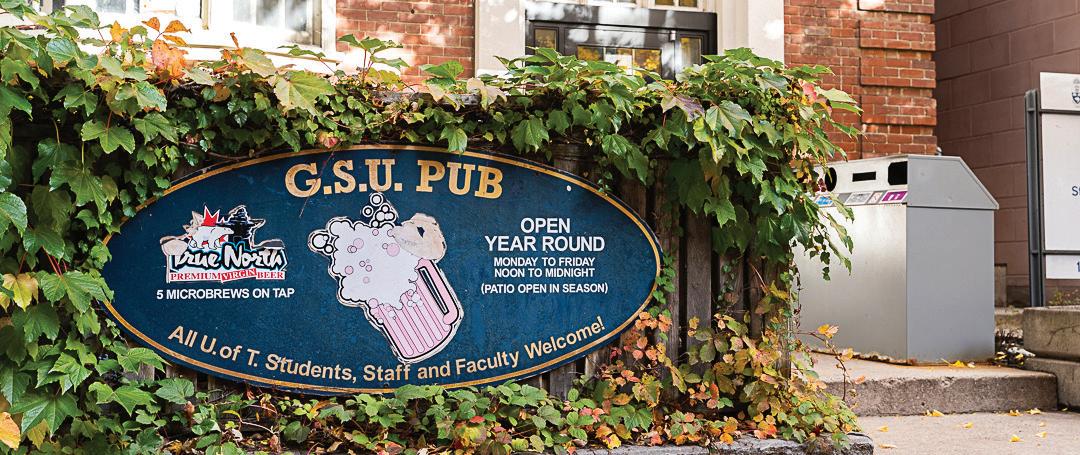
VP-Finance Neelofar Ahmed’s report touched on her involvement with committees for different fundings, the UTGSU orientation, and her repre sentation of the UTGSU in different situations, in cluding meeting with one of the university’s deans. She also mentioned that the UTGSU is trying to “roll out” some of the approved bursaries and awards.
After the presentation of reports, the discus sion moved to questions about the status of the basic funding initiative, which helps fund graduate students, and was set up in conjunction with the Graduate Research Council. Ahmed said the cur rent UTGSU will carry on the work from the previ ous executive council, which included circulating surveys about the basic funding initiative to be pre sented to the School of Graduate Studies.
The members also heard updates from the Ca nadian Union of Public Employees (CUPE), Local 3902 and United Steelworkers, Local 1998, which are labour unions that advocate for contract aca demic workers and administrative/technical work ers, respectively.
Kyle Shaw-Müller, a representative from the unions, discussed U of T’s proposal to cut health care coverage for members of CUPE 3902 Unit 1 — which represents student and postdoctoralfellow teaching assistants, course instructors, in vigilators and chief presiding officers — and Unit 7, which represents OISE graduate student assis tants. Shaw-Müller encouraged UTGSU members to organize in opposition to the proposed cuts across their departments.
“Please get involved as much as possible be cause this is a big thing,” said Shaw-Müller. “If we
let the university go through with these cuts now, who knows what other cuts they’ll be pushing for in the future.”
In an email to The Varsity, a U of T spokesper son stated that the university and CUPE 3902 are engaged in ongoing discussions about the union’s benefit levels. These discussions are in accordance with the CUPE 3902 Unit Agreement, which re quires the union and the university to review benefit levels “with the shared intent of adjusting benefit levels… when there is projected under or over spending in the [benefit] plans,” the spokesperson noted.
By-elections
The discussion then moved on to a motion to ap point Michael Oluwatobiloba as the Chief Returning Officer (CRO) to administer the 2022 by-election and the spring 2023 general election. VP Internal Sarah Alam explained that the executive commit tee delegated the task of hiring a CRO to staff in stead of the BOD directors in an effort to prevent conflicts of interest.
Adam Hill, a doctoral candidate at the Ontario Institute for Studies in Education, questioned if this hiring process violated bylaws that prohibit “[tak ing] independent action concerning matters that fall within the terms of reference of properly constituted standing or ad hoc committees of the Board of Di rectors.”
In February, the UTGSU barred Hill from attend ing BOD meetings for the remainder of the semes
ter, after the executive team alleged that he had been harassing other staff and executives for over a year. Hill told The Varsity that his actions only con stituted reasonable political discourse.
Alam defended the decision by explaining that delegating the hiring to staff expedited the process of holding a by-election — a priority that several members have voiced. “This is a unique situation and we have to adapt accordingly,” Alam said. “If we do not approve, or if we do not proceed with the CRO… we are, in October, the violations will be further delayed for the next few months. And by the time this board of directors will be in a po sition to serve, it will be almost December and/or January, and the term will be limited.” Alam further remarked that they were open to hearing alterna tive solutions.
Some members suggested bringing the motion to a Special General Meeting to ensure the union could complete the by-election process without violating bylaws.
The meeting ended at 7:30 pm after a member pointed out that they had reached their scheduled time limit. Since the meeting had already exceeded the scheduled time, the UTGSU could not extend time to complete the appointment of the CRO or address other agenda items such as committee appointments.
The next UTGSU meeting will be held online on November 22, 2022 from 5:45–7:00 pm.
With files from Selia Sanchez.
news@thevarsity.ca6 THE VARSITY NEWS
JESSICA LAM & EHSAN ETESAMI/THEVARSITY
The UTGSU’s first 2022-23 BOD meeting was held on October 25.
NICHOLAS TAM/THEVARSITY
After almost 50 days following the death of Mahsa Amini, people around the world con tinue to speak out against the unjust nature of her death. When Amini died while in the cus tody of police for wearing her hijab in a man ner that defied the regime’s rules, it ignited national outrage in Iran. However, the protests have also moved beyond the borders of Iran and sparked global condemnation of not only the Islamic Republic’s misogynistic regula tions, but also of the regime as a whole.
Not only women, but Iranians and their al lies from all age groups, backgrounds, and ethnicities are on the frontlines demanding freedom from the shackles of the Islamic Republic. For the first time since the Islamic revolution of 1979, Iranians and others from all around the world have united to demand liberation from four decades of cruelty, malice, and a reign of terror. This is no longer a chant of protest — this is the anthem of revolution.
Now more than ever, the voices of the cou rageous young lives lost to the brutality of the Islamic morality police are being heard inter nationally. Before they lost their lives while in the pursuit of justice, these youth were armed with nothing but the harmonious strength of their determination and bravery. Mahsa Amini, Nika Shahkarami, Sarina Esmailzadeh, and Asra Panahi are just a few of the youth de
tained, tortured, and murdered at the blood stained hands of the Islamic Republic. None theless, they have paved the battle path for Iran’s freedom.
As of mid October, human rights groups re ported a death toll of up to 215 protestors, 27 being children, and at least 1500 arrested. As the days of protest go by and the fire of the movement grows larger, the Islamic Repub lic’s tireless attempts to oppress the people of Iran only further exposes the unjust nature of the regime, both past and present.
The Islamic Republic and oppression
The Islamic Republic’s objective is clear — to silence and eliminate those with power and influence and to discourage individuals that oppose their injustice by threatening them with a similar fate of detainment, torture, and punishment.
However, the Islamic Republic’s attempt to silence those that oppose them is proof of their panic and weakness. They are afraid because their opposition, too, has made their objective clear — the destruction and downfall of the regime and the return to a democratic system of rights and freedoms for all Iranians.
With the existence of the 2009 Green Movement and the 2019 protests of “Bloody November,” opposition movements are noth ing new to the Islamic Republic. Yet this time it is different. This movement has gone past being a simple mass protest — this is now the
2022 Iranian revolution.
With the attention of the international com munity and the immense protests present in over 170 cities worldwide, the potential of this movement may go beyond previous attempts at an Iranian revolution.
In 2015, Iran and several other nations de veloped an Iran nuclear agreement, formally known as the Joint Comprehensive Plan of Action. According to the terms of the agree ment, Iran has to dismantle much of its nucle ar program and open its facilities to interna tional inspection.
From the creation of the nuclear agreement, to the sanctions placed on the Islamic Repub lic by Western countries such as Canada, to the international outcry over the deaths of the passengers on Flight 752 in January 2020, it is obvious that the rest of the world is in agree ment with the claims of the Iranian people.
Many around the world believe the Islamic Republic to be a dictatorship capable of im mense cruelty and malice against humanity. It is a regime of terror and brutality that must be denounced and internationally interrogated. What must be done? However, the hesitation of Western countries to fully act against the Islamic Republic is what keeps the regime in power.
Iranian people are in need of international organizations and governments to partake in immediate action. Canada and the free world
are in agreeance of the regime’s sponsor of terrorism. It is well known that the Islamic Re public funds terror organizations. After all, it is known that Iran has breached its nuclear deal by providing Russia with armed drones to use against Ukraine. This is an act of aggression against international human rights.
Negotiations and ignorance toward this reign of brutality and terror must come to a halt — the free world of the west must awaken from its slumber and unite with the people of Iran for the protection of global human rights and security.

This revolution begins with us. We, the citi zens of the world, are the most powerful unit of all, capable of unifying to give power to re gimes, and we too are capable of unifying and regaining power.
Under the false promises of liberty, we give rise to dictators, yet the promises are left unfulfilled and the dictators enslave na tions to their authority. The next catastrophe caused at the hands of the Islamic Republic could happen to me or you — terror knows no bounds and the extremists know no bound ary. Let us be the ones who unite in this revo lution of liberation. Urge your representatives on this movement to unite in the name of free dom and liberty.
Asal Arefi is a fourth-year student at U of T pur suing a political science specialist.
Comment October 31, 2022 thevarsity.ca/section/comment comment@thevarsity.ca
The Islamic Republic of Iran has oppressed the people of Iran for too long Iranians everywhere are calling for the Republic’s downfall
Asal Arefi Varsity Contributor
JESSICA
LAM & JADINE NGAN/THEVARSITY
Are all protests valid?
peaceful protests has proven time and time again that there is power in numbers, strength in quantity, and significance in opinion.
and recognized, protests are the embodiment of the people's values and allow us to exercise our right to determine our futures.
Isabella Liu is a second-year student at Victoria College studying international relations, public pol icy and environmental studies. She is an associate comment editor at The Varsity
out, “It’s not an illegal protest. It’s within our Charter of Rights and Freedoms.”
Section 2(c ) of the Canadian Charter of Rights and Freedoms guarantees the right to peaceful assem bly, though it does not protect riots or gatherings that disturb the peace nor does it include the right to physically impede or blockade lawful activities.
The Varsity asked two writers to reflect on the nuanced significance of protests of the constitu tional right.
Protests allow for meaningful action
As one of the founding principles of civil liberties, the right to assembly is extremely important when it comes to discussing freedom. Protests are much more than just confrontational gatherings: they are for voices, for expression, and most importantly, for action.
Not even counting the centuries worth of revo lutions, power shifts, and mass demonstrations behind us, the last few years alone have seen no shortage of impactful assembly, both small and large.


In the wake of the 2020 pandemic, the institu tional murder of George Floyd sparked nationwide, and even international, marches that demanded justice and action toward the overbearing power of the current law enforcement system. More recently, Mahsa Amini’s cruel death at the hands of the Ira nian morality police spurred widespread outrage and protests against Iran’s current regime. And at U of T, the six years since 2016 to now have been continuously characterized by student protests to divest from fossil fuel industries to combat rising global climate issues.
From large-scale transcendental movements such as Stop Asian Hate and protecting the right to abortions to individual company affairs such as unionized striking and lobbying, the assembly of
Although different in nature, motive, and execu tion, these protests stand for one crucial principle: representation. They reflect the voices and outcries of a country’s citizens, proving to institutions and those in power what the people truly want. Assem bly of the people is the most direct form of freedom
There need to be reasonable limits to protests Although protests allow for meaningful soci etal progress, there need to be reasonable limits against disruptive protests.
Upon her arrest in Ottawa in February, Tamara Lich, a Freedom Convoy protest organizer, cried
Days later, CBC News uploaded an article with an image of a person holding a copy of the Canadi an Charter of Rights and Freedoms in front of Par liament Hill amidst the chaos. Both Lich’s defense and the photo encapsulate the widespread mis conception surrounding the validity of protests and constitutional freedoms: that anyone has the unre stricted liberty to entertain their rights to a peaceful assembly under section 2(c) of the Charter.
As with any other kind of freedom, however, the right to a peaceful assembly is subject to limita tions. In accordance with Canadian case law, as semblies are not “peaceful” when they significantly disturb the peace by physically blockading lawful activities through riots.
While it is true that too many restrictions on pro tests could disempower the platform of repressed voices of the people, I see the need for reasonable limits to protests.

The right to protest should not have extended to the unlawful Freedom Convoy protests that de layed chemotherapy appointments of thirteen chil dren battling cancer in Ottawa. The right to protest should not protect QAnon protestors who set out to seize the Peterborough Police Service by plac ing members under “citizen’s arrest” and virtually encourage others to “kill health professionals.” The right to protest under the US Constitution’s First Amendment should not have been used to justify the Capitol riots in early 2021, which resulted in the lawless raid and destruction of the state’s Capitol Building.
Above all, the very debate over what constitutes a valid assembly allows for dialogue on what “free dom” means. Limiting harmful protests does not mean limiting the freedom of people or stifling de mocracy. Instead, it means protecting the integrity of protests and freedom of speech.

in any society — which is why it is so important.
Whether it is raising awareness, call ing out to governments and legislators for action, or simply hoping to be heard
Photos of the week
Eleanor Park is a second-year student at Trinity College studying English and religion. She is an as sociate comment editor at The Varsity
comment@thevarsity.ca8 THE VARSITY COMMENT
Two writers reflect on the validity of protests
Eleanor Park and Isabella
Liu Associate Comment Editors
Summer Mcintosh was beaming with delight after recordbreaking 400m freestyle event win against Katie Ledecky.
Looks of shock were widespread the second that Summer Mcintosh passed Katie Ledecky to take the lead in the 400m freestlye event.
Swimmers dive into the water as the whistle sounds for the men's 400m freestyle race.
Mekhi Quarshie Sports Editor
We need to understand the dangers of ideology
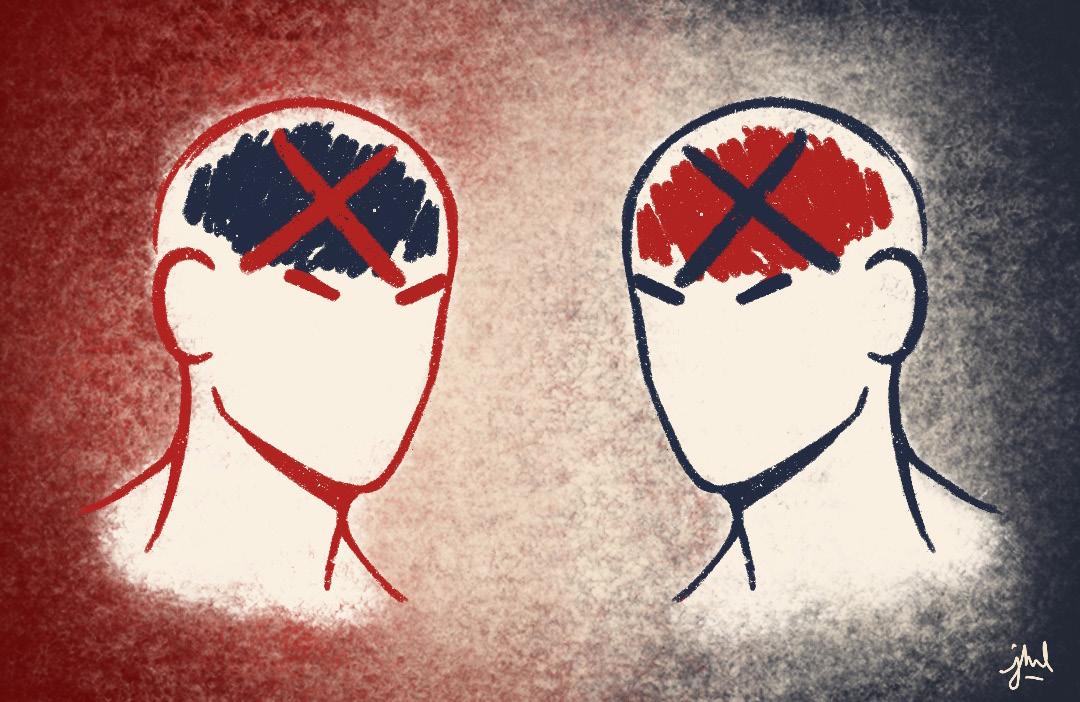
What the Russia-Ukraine war teaches us
Eleanor Park Associate Comment Editor
Content warning: This article contains descrip tions of violence and death.
An ideology is commonly defined as a set of be liefs and ideas that people and countries base their actions on. However, even a concept as simple as an ideology can be harmful. When political administrations promote ideologies that contradict all factual evidence, that can be lethal, especially when those manufactured ideologies are used to justify war.
In the case of the war between Russia and Ukraine, ideologies manufactured by Vladimir Putin, the Russian president, associate Ukraine’s independence with neo-Nazi activity, which the Russian administration is using to justify its inva sion of Ukraine and the crimes it commits against the Ukrainian people.
However, on a smaller scale, blind adherence to an ideology can also cause disruptive dis course within a country. In Canada, large parts of the country were split ideologically when mem bers of the Freedom Convoy insisted on defend ing anti-vaccine ideologies that were not founded on science, allowing no room for disagreement. In firm belief of their ideology, they marched across the country and disrupted the lives of many Ca nadians.
In both of these cases we can see what hap pens when people blindly follow manufactured ideologies and the dangers that can come with it.
False ideologies and the Russia-Ukraine war
On September 28, The New York Times re leased a month-long investigation into the Ukrainian government’s interception of the re cordings of more than 4,000 phone calls from Russian soldiers in Bucha. Reporters at The
New York Times translated the soldiers’ con versations in the calls made to their families back home, in which they divulged the atroci ties committed during Russia’s attempt to an nex Kyiv in March.
These atrocities fully contradict Vladimir Pu tin’s public statement back in April that referred to the documents regarding the Russian at tacks as “provocation and fake.” As the attack progressed, the soldiers started describing the death of fellow soldiers within their troops, as well as body parts of civilians scattered across the ground. One soldier even confessed to executing three innocent men passing by their storehouse, and another referred to their orders as being akin to: “Kill any civilian that walks by and drag them into the forest.”
By the end of the report, a soldier is record ed saying, “Mom, we haven’t seen a single fascist here… This war is based on a false pretense. No one needed it. We got here and people were living normal lives… We all think the same thing: This war wasn’t needed.”
The elaborate details that the soldiers pro vided paint a picture of Russia’s atrocities in the war in Ukraine, revealing the harrowing reality of war ideology. Putin’s declaration that the two countries are “a single whole” and that Ukraine is “indulging neo-Nazis” served as the foundation for his ideology and reasoning for starting the Russia-Ukraine war.
Putin’s actions demonstrate how an ideol ogy can manufacture an alienized enemy that must be defeated, which can then be used to justify the atrocities the soldiers described in Ukraine.
The way I see it, the history between Ukraine and Russia is an intricately extensive one, and the logic applied to interpret this war is unique in comparison to other global conflicts. Nev ertheless, this war demonstrates the dangers of blind allegiance to a manufactured ideology.
Ideologies and the Freedom Convoy Although incomparable to the clash of ideolo gies that resulted in the Russia-Ukraine war, the Freedom Convoy protests demonstrate the clash of ideologies amongst Canadians.
Earlier this year, hundreds of trucks parked across downtown Ottawa were adorned with the Canadian flag and signs demanding that the mask mandate be removed and that vac cinations not be mandatory. These protestors disrupted the lives of residents, businesses, and US-Canada border traffic. The protests even led Prime Minister Justin Trudeau to en force the use of the historic Emergencies Act.
Despite the significant number of Freedom Convoy protestors that gathered in downtown Toronto, I recall how my friends and I dis missed that these protestors could represent the beliefs of most Canadians. Memes mock ing the convoy were spreading so rapidly that they dissipated my concern of the intensity of the protests.
However, when walking past a protester who vigorously waved the Canadian flag while di rectly staring into my eyes at the intersection of Bloor Street West and Queens Park, a realiza tion struck me. According to polling research firm Ekos Research Associates, approximately
30 per cent of Canadians were amongst the thousands of protestors convening across the country with such forceful willpower under an ideology that promoted an anonymous enemy and disregarded rational and science-based logic.
I was unwillingly taking part in the role of the antagonist in the ideological play written by the Freedom Convoy. This was especially dan gerous considering that the support for their ideology and movement far overpowered any beliefs I had as an individual.
Ultimately, both the ideology that led to the Russia-Ukraine war and the ideology that led to the Freedom Convoy teach us a lesson that cannot be ignored. As young people of this generation, it is our duty to be equipped with our own independent lenses and to perceive the world while remaining unswayed by base less ideological facades. While this is easier said than done, I believe in our generation’s pursuit of it.
thevarsity.ca/section/comment OCTOBER 31, 2022 9
Eleanor Park is a second-year student at Trinity College studying English and religion. She is an associate comment editor at The Varsity
JESSICA LAM/THEVARSITY
Baran Seyedi Varsity Contributor
Content warning: This article contains de scriptions of misogyny, racism, violence, sex ual violence, and verbal abuse.
When I was in the third grade, my family and I took a vacation to a tropical destination. While on the beach, my hair was braided — primarily for the convenience of managing my long and curly hair, but also because all the other girls at the beach were getting braids too.
Even when our vacation was over, I wanted to keep the braids in for as long as possible, mainly because I thought they would make my hair easier to contain in school underneath our mandatory hijab.
Within the first hour of class, I heard my teacher scream my name. I knew either my hijab had loosened or that I was wearing it im properly. I tried to fix it to avoid trouble — but, before I knew it, my teacher dragged me to the front of the room and forced me to reveal my braids to the class. She called me immor al and took scissors out of her desk drawer, threatening to cut off my braids. That’s my first memory of being harassed for “immodesty” in Iran. I was seven.
Reader, this story is one of many that I know about Iran. My country first showed me that, ever since girls are young, it would instill modesty into their minds to support patriarchal values. Women are told to cover up and to obey authority figures who often times won’t hesitate to use unsolicited power and violence. This first image of Iran depicts people living in an environment of oppression.
The second scene paints a picture of the Islamic Republic, which came into power in Iran in 1978. Women are taking a stand against the Republic’s rule, cutting their hair and burning their hijabs; not because of Is lam, but a forced version of the religion. In this tale, Iranians are fighting for the very ba sic rights many of us often take for granted.
The third scene depicts a country that I hope the world will one day see, a country in which Iranians will be free. It is an Iran that centres people. It is for this Iran that citizens stand in the frontlines against a ruthless oppressor.

Of an interaction with a janitor
After living in Canada for a few years, my family and I moved back to Iran. In the time that followed, I experienced my second incident of being harassed for being “immodest,” and this time, my aggressor was a man.
When I was 14, my high school janitor demanded that I step out of his way. I didn’t. I don’t remember whether I acted out of spite or simply because there wasn’t enough physical space for me to move to at that mo ment, but I planted my feet firmly on the ground and waited.
This janitor’s reaction? He slapped me. For the remainder of the day, I argued with myself over whether or not I should report the incident to someone. I want to say that my reasoning for not reporting was because I didn’t want to get the janitor in trouble — but the more truthful reason is that I thought I could have been the one who was in the wrong.
Despite my internal conflict, I confessed the incident to my parents later that night, expecting them to be mad at me for not mov ing out of the janitor’s way. They obviously weren’t — there will never be an excusable reason for an adult to hit a teenage girl — and the following day, they accompanied me
to the principal’s office to discuss what had happened.
The principal didn’t believe me — at least, not until my parents filed a formal complaint. My parents, the principal, and I offered the janitor an ultimatum: he would apologize, or he would lose his job. He doubled down: “Apologizing to an immodest little girl is the last thing I will ever do.”
In the following months, the janitor seemed to always be lurking outside my school. He would stare me down and yell sexist, deroga tory terms at me. I felt unsafe.
A while afterward, my principal called me
regime is just a pinch of the treatment that women living in Iran are subjected to daily.
The saddest part, in my opinion, is that these misogynistic, harmful actions have be come normalized. Iran wasn’t always like this.
However, when the first leader after the revo lution, Ayatollah Khomeini, came into power, he ensured that all the citizens of Iran had to practice Islamic dress and modesty. After Khomeini’s death, Mahmoud Ahmadinejad, the Iranian president, established the coun try’s Guidance Patrol, which is widely nick named the ‘morality police.’ In Islam, there’s always been an informal morality police; in
74 violent lashes. In reality, police have killed, raped, and tortured Iranian women — all with the supposed intention of teaching them ‘mo rality.’ Read that again.
When I lived in Tehran, I didn’t think twice about wearing a hijab or seeing the morality police. Here are some general rules I learned when living in Iran: married women cannot leave the country without their husbands’ permission, women are not allowed to watch men’s sports in stadiums, a man can marry up to four women at one time but a woman can only marry one husband, women are pro hibited from singing and dancing publicly, and
10 THE VARSITY FEATURES
“For Freedom”: Three images of Iran My complicated relationship with my home country and my hope for a better future
breaking the country’s mandatory dress code, which requires women to cover their hair with a scarf and wear loose-fitting clothing in pub lic. During her arrest and detention, the woman collapsed before eventually being taken to hos pital. Upon arrival, doctors discovered that she was brain dead. Two days later, on September 16, she died in the hospital. She was 22. This woman’s name was Jîna, which means ‘life’ in Kurdish. The first part of the name — Jîn — is etymologically related to the word Jin, the Kurdish word for woman. But the world knows her by her Iranian name, Mahsa Amini. This is because Amini could not legally reg ister her true name. In Iran, Kurdish names are banned by clerical authorities. Kurds are an ethnic minority of Iran — one that has long faced persecution and discrimination.
The ease with which violence struck Amini is inseparable from who she was: a young woman, an ethnic and religious minority, and a person with no ties to the ruling classes. Maybe these are the factors which sparked public at tention; maybe the protests began because young women from Iran saw what happened to Amini and realized, “This could have been me.”
After Amini’s funeral on September 17, pro tests began in her home region, the province of Kurdistan. Soon afterward, these protests spread to 80 Iranian cities and swelled into the country’s capital. Iranian women burned hijabs and cut their hair in public and on social media to stand in solidarity with Amini. Crowds chant
ed “death to the dictator” in public squares. These protests have gone international — on October 6, the movement gained widespread attention at U of T when hundreds marched in solidarity with Iranian protests.
But what protestors outside Iran don’t see is the Iranian government cracking down. On October 2, Iran’s Revolutionary Guard Corps held students hostage in the country’s Sharif University of Technology. The incident began after a group of students were reprimanded by campus security and its reinforcements for staging a walkout and engaging in anti-regime chants. Security forces tear-gassed and shot students with paintballs.
To put this incident into perspective, Sharif University is one of the most prestigious uni versities in Iran, with the brightest minds in the country — if it were Harvard, Cambridge, or even U of T, every academic, student, and professor would be outraged. An attack on a university is an attack on all students; an at tack on university is an attack on the bright minds that will create our better future.
It’s not just future leaders who are suffering — it’s present ones, too. On October 15, the regime set fire to Tehran’s Evin prison, whose cells held political activists, journalists, artists, athletes, and innocent civilians. According to witnesses of the fire, the Iranian government used the fire to pretend that prisoners were trying to escape. During the mayhem, wit nesses say, police could kill whomever they
chose; during the media attention the fire later received, attention of the protests would be diminished.
To cover their horrendous actions, the Ira nian government has forced the relatives of murdered protestors to publicly lie about their loved ones’ cause of death. Many injured pro testors are reluctant to seek medical attention, for fear of being detained by the morality po lice.
A week after Amini’s death, Iran’s already tightly-regulated internet access— the country censors social media such as Facebook, Twit ter, and YouTube — was cut off, resulting in a near-total blackout of internet use across the country. Censorship is increasingly being wo ven into the structure of Iran; while the Iranian internet comprises 750 networks; only three can connect to the internet beyond the coun try’s borders. This blockade of information is a calculated effort to keep Iran’s citizens in the dark. A lack of connection to the outside world means less knowledge and less support from people outside the country.
Unfortunately, we’ve reached the point in which the government’s actions are no longer only a concern for the future. Envision a coun try in which prisoners are the brightest of the country, while criminals are its leaders. This is Iran under the Islamic Republic.

Of a better Iran
My family immigrated to Canada for the first time when I was eight. We left almost every thing behind: our friends, our family, and my childhood home. This move is extremely com mon among Iranians who are living abroad. Many of us were raised without grandmoth ers and grandfathers, aunts and uncles, and
cousins around. For the past 43 years, Iranian families have split and our parents have had to leave the country that they have known their entire lives in hopes of giving their children a better life, a life that wasn’t ruled under a strict Islamic regime.
Regardless of having to be stripped away from home, I consider myself extremely fortu nate — and I always have been — for being born into a family that had the capability to immigrate. Moving to Canada has brought me many blessings; the freedom of speech and expression being ingrained into our Charter of Rights and Freedoms are two of the most notable. I wouldn’t have been given the op portunity to write this article if I was still living in Iran. Realistically, I would instead probably have been detained for it.
If, like me, you’re Iranian and are living abroad, all that is happening back home has transformed the last month of your life. You’ve already heard about everything I’ve referenced in my writing, and you’re already aware of the responsibilities of an Iranian living at home, such as raising awareness and attending pro tests in your city.
If you’re not Iranian, but have any Iranian friends, neighbours, or acquaintances — check up on them. It is indescribably stressful to hear of your country burning and to watch footage of your people be shot at with minimal warning. To offer the people of Iran solace at this time, I kindly urge you to educate yourself through credible sources about all that’s hap pening in the country.
This movement depends entirely on global attention; there’s no specific need for west ern intervention or money. If you care about the rights of women, now is not the time to turn away. On social media, engage with the hashtags #MahsaAmini, #Iran and ززز, which translates to “women, life, freedom.” Use your voice and stand with the women of Iran. Stand with every Iranian posting or protesting and risk ing the real possibility of never being allowed back into the country. Stand with every Iranian who is risking the chance of never seeing their loved ones again. Stand with every woman and man taking the streets every day, fighting for the future of human rights. Stand with Irani ans, not to be an activist but to be empathetic toward your fellow human beings.
Iranian people are not synonymous with the Islamic regime; Iran, as a country, is not its government. Iran is vast, and if one day you choose to visit, you’d feel its hospitality all around. Iranians love when people visit their country, and they will never hesitate to invite you over for a cup of tea and a plate of almond cookies or saffron and rose water ice cream. I cannot wait for the day that the world will experi ence this Iran, the Iran that I love — an Iran free of the Islamic Re gime. The Iran that Iranians want to live in, compared to the current, lifeless version that all citizens feel forced to flee.
If you’ve read all I have to say and are still struggling to un derstand the importance of this movement, I challenge you to con sider this question: Why are Iranian people putting their life on the line?
Shervin Hajipour is an Iranian singer who was arrested by the country’s authorities for his single, Baraye. Hajipour composed the song from tweets posted by Iranians follow ing Amini’s death; many of them blame Iran’s social, economic, and political ills on its regime. The song, which has been sung by thousands of protesters during demon strations, was able to answer my question through its lyrics:
"For dancing in the streets / For my sister, your sister, our sisters / For students and their future / For the imprisoned geniuses / For a peaceful life / For Freedom."
features@thevarsity.ca
JISHNA-SUNKARA/THEVARSITY
Celebrating one year of the Black Founders’ Network
Evan Hrivnak Varsity Contributor
The Black Founders’ Network (BFN) is an inclu sive community at U of T that was created to provide budding Black entrepreneurs with the network and resources they need to bring their startups to life. The network serves to connect an underrepresented community and help bridge the divide between resources, wealth, status, and more. Sponsors range from KPMG to our very own University Of Toronto Entrepreneurship (UTE) program.
This October, the BFN is celebrating their first anniversary, which they commemorated at Con vocation Hall on October 18. During the event, entrepreneurs had the opportunity to share their success stories about their startups and recap their experience at BFN over the past year.
BFN startup founders came from various backgrounds and brought diverse ideas and passions to the table. There were semi profes sional athletes, neuroscientists, chemists, and more in attendance. Despite the diversity of their professional fields, the attendees were all united with the same purpose — to unite Black found ers as they set out on their entrepreneurial jour ney.
Serving an underserved community While founders pitched their startup ideas, it became evident that the event was not about startups or an anniversary celebration but more about providing for an underserved market. The Black community is challenged by dispropor
tionate access to everyday services that other communities take for granted. This access issue could be due to financial or supply-side issues.
Often, services specialized for Black people are unaffordable or simply not adequately avail able. This can be seen in the health-care field, or even in cosmetic care. BFN’s startups strive to solve a number of these accessibility issues.
Aworie is a startup that offers low-cost mental health services to people who are solely depen dent on their income, thus ensuring that every one has equal access to these services. Fyyne is another BFN-born startup that connects people with specialized beauty needs, such as connect ing someone who needs an afro to a cosmetolo gist who can do that.
Nobel is a startup and service provider. Dur ing their presentation, it was made clear that the Black business ecosystem needs to be strength ened through collaboration. Money circulates from consumers to corporations, as one man’s spending is the next man’s income. According to Nobel, money stays within the Black community for six hours while circulating in other communi ties for over 20 days.
BFN works to break inequities and barriers blocking the community from success and rec ognizes that systemic changes should be made to build a more equitable future for all. The in come disparity alone is enough to hold commu nities and people back for decades.
Ideation and beyond
The network has three primary services: BFN Core, BFN Accelerate, and BFN Scale. These
services are tailored to the stage of the entre preneurial journey that each startup is on.
BFN Core offers one-on-one training, up to $5,000 in grants, and assistance finding found ers and teammates. These businesses are often in the ideation stage, where money and human capital are scarce.
BFN Accelerate is a proper accelerator, pro viding up to $25,000 in grants and expertise that work in tandem with UTE. Participation in this program is competitive, and the founders are exceptional visionaries.
The final stage is BFN Scale, which provides between $50,000 to $200,000 in funding and a suite of programs ranging from fundraising to hiring. The program’s priority is empower ing Black businesses and creating a conducive community to foster growth and development.
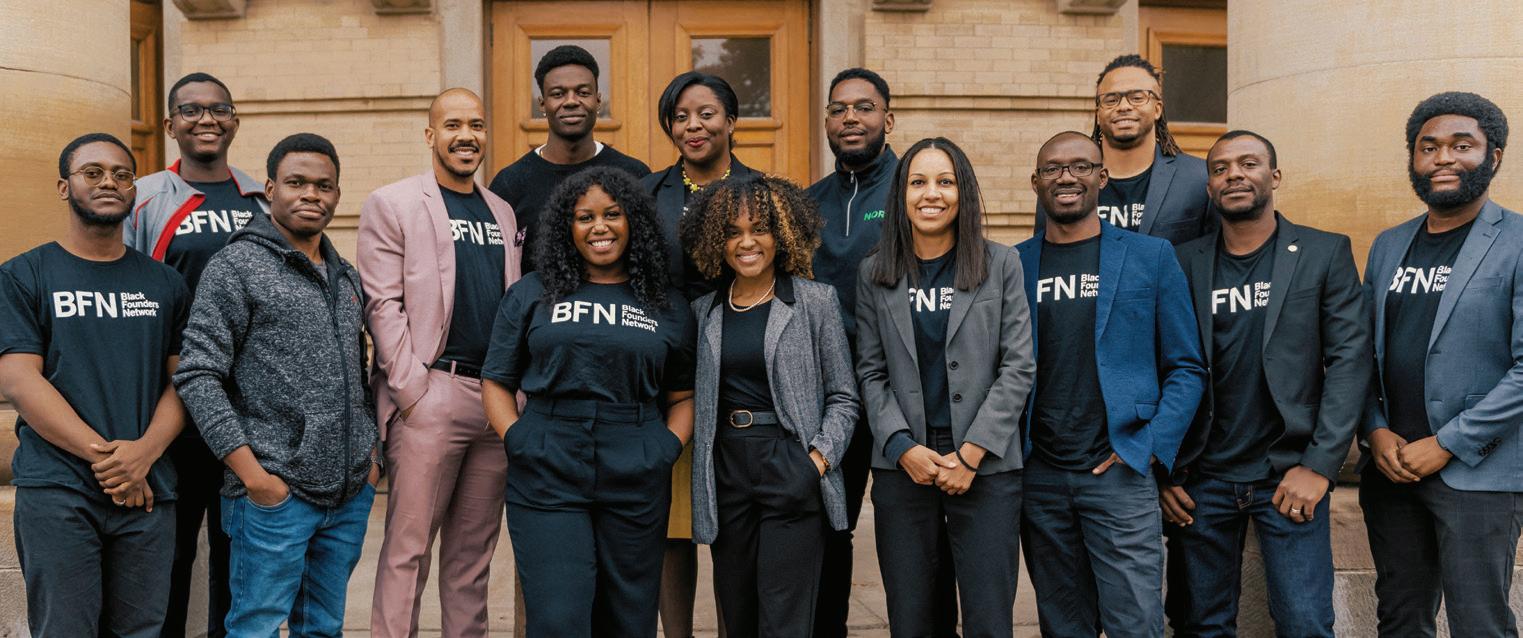
The programs’ official mission is to help Black founders at all stages of their journey, from ide ation to scaleup, and to support them as they launch, fund, and scale impactful businesses.
Celebrating one year of Black excellence in entrepreneurship
After one year, the program’s creator, Efosa Obanom, has received the Minister of Colleges and Universities’ Award of Excellence for his
Rotman professors write a book on the economic disruptions that AI causes
support of Black entrepreneurs and business es. The program has empowered businesses through funding and expertise.
After the pitches, cash prizes ranged from $5,000 to $15,000. The cohort choice award of $5,000 went to La Vance Dotson, the founder of Woo Your Boo, a platform to forge strong relationships using better date recommenda tions. The People’s Choice award went to Kevin Mpunga, the founder of Elev, a student housing rental platform that simplifies living with an inte grated credit-building feature.
UTE awarded other prizes, including $5,000 to HDAX, a promising peripheral neuropa thy treatment. They also awarded $5,000 to Fyyne, the previously mentioned specialized beauty services platform, and $15,000 to Red di, a Nigerian-based portable energy storage solution.
The Black Founders’ Network is celebrating Black excellence, but what stood out at this event was the energy and passion this com munity has and how easy it is to imagine a fu ture where every Black individual and business is at the forefront of society.
After one year, BFN shook the ground, and in five years, it will be sending shockwaves throughout the community and far beyond.
Nameera Azim Varsity Contributor
The tremendous volume of research papers and news articles that have been published about artificial intelligence (AI) over the past century makes it feel like we should be currently living in a silver screen-worthy, sci-fi universe just shy of Marvel and Star Trek.
With a quick glance over the world around us, we can conclude that that isn’t the case. Why haven’t we seen a more widespread change across society that reflects the progress made in AI, and what can we do to change it?
Three professors at the University of Toronto’s Rotman School of Management — Ajay Agraw al, Avi Goldfarb, and Joshua Gans — had this very question in their minds when they wrote their book, Power and Prediction: The Disruptive Economics of Artificial Intelligence. The book has been published by the Harvard Business Review Press, and will be launched on November 23, 2022 at a launch event at the Rotman School of Management.
The Varsity spoke with Agrawal about the main takeaway of the book, and the socioeco nomic and ethical implications of businesses adopting AI.

The lack of widespread transformation by AI
“There’s a reason that [widespread transforma tion] hasn’t happened yet, but there’s still a sig nificant basis for hope,” said Agrawal in an inter
view with The Varsity. He suggested that ‘point solutions’ — the applications of AI to automate specific tasks or processes — are the culprits for this lack of transformation. He and the other authors of Power and Prediction believe that the only way to bring about this transformation is by creating a whole new system in which humans can exist with AI.
This concept, while revolutionary for AI, can be seen throughout the history of humanity in the form of societal disruptions due to technological advancements. Agrawal reflected on some of the lessons we can learn from our previous expe riences, citing the example of electricity and the impact that it has had on society. While Thomas Edison introduced electricity in Manhattan, New York in 1882, most residential areas continued to use gas light and candles for another 50 years.
Agrawal also points out that “the value proposi tion of what this technology actually delivers may turn out to be significantly different than what we think it is today.”
To automate or not to automate
Agrawal said that both big and small companies enjoy upper hands when it comes to implement ing AI. Big companies have a significant edge due to their sheer amount of data and the com plete control that they have over their systems. This makes it easier for them to change the sys tem, rather than simply implementing AI. On the other hand, smaller companies can implement necessary changes to their structure more swiftly without the concern of these changes clashing
with their current processes, as is the case with large companies.
According to Agrawal, when choosing be tween preexisting methods versus automating a process with AI, the North Star for decision makers is the return on investment of each of the choices.
Though it may feel safer to settle for preex isting methods, Agrawal cautioned that leaders and decision-makers should remember that we are not in a static world. He continued, “The rest of the world keeps going as it is today. But you have to imagine, if we don’t change, one of our competitors might change and, all of a sudden, that may give them a significant cost or speed advantage.”
Ethics, policies, and biases
Many companies have not been able to see their technological advancements come to light due to regulatory and international barriers. However, this is changing as there has been a growing fo cus on building policies surrounding AI in several countries.
Agrawal sees these policies moving in a direc tion that shifts the focus from the technology to the systems as a whole, thus easing the process of implementation.
As with all technology, the virtues of AI are coupled with its vices, one of the most promi nent of which is the ethical concern surrounding the technology. Agrawal, however, notes a very important point. He mentions how there are two stages to solving biases: detecting them and
then solving them. It is difficult to do either when dealing with humans. We are required to use covert means of locating bias, and the evidence surrounding bias training has a negative side as well. On the other hand, we can ask an AI count less questions to locate their biases and make the required corrections by simply improving the algorithm or the dataset on which it is trained.
Needless to say, we are currently living on the cusp of a technological revolution. While the thought can bring up feelings of wonder and excitement, it also results in us pondering over how to create a foundation that is sustain able and ethical. On this note, Agrawal leaves us with a parting thought: if we want to create something that improves society, he outlined, we have to be prepared to disrupt the system as we know it.
Business & Labour October 31, 2022 thevarsity.ca/section/business biz@thevarsity.ca
The team behind the success of the Black Founders’ Network.
COURTESY OF ALYSSA K. FAORO
BFN provide Black entrepreneurs with the resources they need to grow their startups
AI has the potential
to bring around a revolution, if businesses choose to adopt it
Rotman professors write Power and Prediction about the AI revolution.
COURTESY OF HARVARD BUSINESS REVIEW PRESS
Arts
Vicky Huang Varsity Contributor
Continued from
The female scream

Why do women in horror often meet overly theatrical and sexualized ends?
All this suggests that sinister logic under scores the slasher film. From killers with specifi cally gendered motives to the sensationalized fo cus on her death, there exists a gauche fetish for the slain female figure. She is the film’s corpus; her teased-out and dramatic slaying are essen tial. This is what anchors the slasher.
But why? Why does an entire genre revolve around the terrorized woman, and what does that say about us? What is it about the abject feminine ‘scream’ that keeps us wanting more, so much so that an entire industry has been built on our sick fascination?
Sex and slashers
In her seminal text Men, Women and Chainsaw: Gender in the Modern, Carol Clover suggests that horror and pornography are distinct from the remaining genre basket. Unlike other genres, their end goal isn’t to appeal to the cerebral sen sibilities but to evoke our most primitive human senses. Watching either, we flush with anticipa tion, breathe in hitched dashes, and shake with each pounding heartbeat. We are invited to feel, to metabolize, and to react. Horror cinema and pornography, therefore, share the same phe nomenological approach toward the sensate.
Slashers combine both fear and sex to maxi mize the spectator’s corporeal experience. In its tamest manifestations, narratives will include un necessary shots of undressed women or fixate on their fleshy parts. Hot and heavy scenes are frequently interpolated with a looming dark pres ence. The most salacious synthesis, however, occurs when sex is entwined with the process of murder.

Consider the all too common scenario: a gor geous Pamela Anderson type runs through the woods, her DD breasts flailing in full glory, before being viciously borne down by her masked killer. He thrusts his phallic weapon into her, going hard er and faster each time. She hysterically screams, moans, twists and turns before gurgling orgasmi cally to death. To state the obvious, the killings are often thinly veiled allegories for sex, designed to stimulate complete viewing arousal.
We can think of this entwinement in terms of Laura Mulvey’s all-too-familiar essay Visual Plea sure and Narrative Cinema. In it, Mulvey argues that women are seen as threats to the patriarchal order due to their de facto sexual difference. Men cope by looking at women through a voyeuristic and fetishistic manner, thereby suppressing her perceived power to disrupt women’s equilibrium. Cinema, Mulvey argues, is a tangible materializa tion of this male anxiety; so when the camera frames women, it acts in accordance with the male gaze. Men, and sometimes even women, then identify with this subconscious logic.
The slasher’s emphasis on fear and eros are perfect examples of Mulvey and Clover’s theories. Its crude, carnal depictions of women are de signed to excite the primordial desires, to evoke a complete bodily thrill. Yet, simultaneously, her sadistic death satisfies the neurotic needs of the male ego; because her suppression reaffirms his control over the sexual world.
This discussion sketches a contour for under standing why slashers disproportionately target women and retain, if not fuel, box office demand. Simply put: it’s pleasurable. The slasher movie is designed to gratify every hedonistic sense. View ers are at once being teased by a highly aestheti cized, feminized fear and, for the mostly male au dience, empowered in their gendered superiority. No wonder we’ve been seduced by the genre.
Being reflexive
As a huge slasher fan and a feminist, I real ize that I may have dug myself a bottomless
hole and voluntarily jumped into it. Recognizing these problematic tendencies has left a bitter after taste that I just cannot rinse out. My old comfort movies, Halloween and Slumber Party Massacre, just don’t thrill me the same way when I can finally see how objectified the ‘second sex’ is.
On the bright side, there’s been a strong tide among modern filmmakers to destroy the cur rent paradigm. Films such as Inside and Bod ies, Bodies, Bodies have appropriated the genre with a unique feminist spin, in turn increasing the percentage of women spectators. As audi
ences affect filmmaking, this oceanic change has significant implications for how women are to be depicted on screen; and, subsequently, the future rules for surviving horror.
& Culture October 31,,, 2022 thevarsity.ca/section/arts-and-culture arts@thevarsity.ca
cover.
Instagram-worthy aesthetics leave us empty
When we choose an aesthetic, we consider whether our wardrobes, friends, and ambitions match our new identities. We chip away at our selves to simultaneously fit in and be unique. The reality, though, is that the superficiality of these identities is integral to the identities themselves, and that emptiness lies in the very pursuit of an aesthetic identity. We have to consider: without the aesthetic of our identities and without online plat forms to fuel them, who are we?
In high school, I was extremely drawn to the dark academia aesthetic. I was excited to put a name to an ambience by which I had always been inspired, and a visual reflection of an ambition that is so innate in me: the ambition to learn. This fas cination with dark academia manifested in me, a superficiality. Instead of reading and writing, I would just look at “aesthetic” photos of books and Euro pean architecture. I devoured this content because it easily supplemented a desire I wasn’t actively
I eventually realized that I was confusing the aes thetics of my passion with the passion for learning itself. This is the issue with online aestheticism: it offers a quick, easy alternative to actually spending


I hope that by thinking critically about these trends, people will acknowledge that ‘doing it for the aesthetic’ is a meaningless pacifier for self ac tualization; it is a motto convincing us that when conformity comes in variety, it provides us with more than just surrogate identities. This is a lie. Social media demands we prove our individuality to anyone who might be watching, which in turn subjects our individuality to appearances only, while our inner selves are left unattended. To deny this demand is to reclaim our right to authentic self
Leaving campus when the sun is setting, after hours spent at a library, brings peace to my heart. The old brick, the pointed arches, and the stained glass of buildings at UTSG bestow the campus with a gothic spirit — and cast a spell upon me. I am drawn to whole worlds of inspiration. The mere sight of the shelves in Emmanuel Library galvanizes my will to learn and create. I feel my mind and eyes glowing.
The emotional experience and ambience creat ed by these environments portray the importance and significance of aestheticism. The Greek word aisthētikos, meaning “relating to perception of the senses,” marks the origin of the modern word aes thetic. In the mid-eighteenth century, German phi losopher Alexander Baumgarten coined the term ästhetisch in German — a term that has come to mean “concerned with beauty,” and which trans lates directly to aesthetic.
Our visual perception — of beauty or of any oth er quality — is important because it influences how we respond to our environment. The aesthetics of nature may inspire introspection and peace. Cities like Paris, Athens, and Prague inspire a search for beauty through art and architecture.
Today, aesthetics have come to represent more than just the appreciation of beauty. Aestheticism plays an important role on social media. Social me dia is all about what we are looking at. Visuals are used in very specific ways to attract varying audi ences. Some people may notice their friends’ Ins tagram feeds following certain visual themes, from artsy to minimalist, dark to light, and everything in between.
Most viewers understand that a person’s social media presence provides a superficial or dishonest
representation of reality. Regardless, social media is increasingly relevant to society — to socialization, education, the workforce, and more.
Visual perception is not only important in ar chitecture and media, but also in how we pres ent ourselves. Aestheticism is an online trend — dark academia, grunge, and cottagecore are all names of popular online aesthetics, and they each come with thematic visuals. For example, the cot tagecore aesthetic comes with earthy colours like faded shades of green, brown, and yellow.
However, online aesthetics have come to in volve more than just visuals. Personality traits and hobbies now play important roles in accu rately portraying aesthetics. The dark academic mustn’t only wear tweed. Ideally, they will also be studying the humanities and often adore the works of Oscar Wilde and Emily Dickens. They carry themselves with sophistication and have Romantic values, which favour art, beauty, and imagination. Their gazes are intelligent and intense, with their eyes adorned with dark circles from staying up all night read ing, writing, or studying Latin.
Dark academia is no longer only an aesthetic, but also an identity. This is the case with most aesthetics. When you see a girl wearing heavy-winged eye liner, fishnets, and big headphones, you may assume that she also plays video games and watches anime, and conclude that she is an “e-girl.”
Of course, it is human instinct to make conclusions based on the in formation our senses gather — but consider what motivates our per ception of others and display of ourselves.
thevarsity.ca/section/arts-and-culture OCTOBER咁 31, 2022 13
Why you should
develop yourself,
not
an online
personality
Sophie Ramsey Varsity Contributor
JEREMY
MYTKOWSKI/THEVARSITY
I put a spell on you
James Lautens Varsity Contributor
Magic.
That one word probably invokes several im ages based on who you ask: the fantastical ad ventures of Harry Potter, old crones hunched over a bubbling caldron chanting foul spells, and maybe even the psychic nestled in the apartment above your favourite convenience store. The same ideas come to mind when you ask people if they believe in magic. Most of the time, I get a shrug or a look that says, “Exactly how high are you right now?”
But I’ll tell you what I tell everyone who asks me if I believe in magic: hell yes, I do.
I can’t quite explain why I believe in magic. Maybe it’s because I’ve had experiences that the standard causal model of science can’t explain, or maybe it’s because I believe in a higher power and I’m trying to find some sort of proof to comfort me.
But it does beg the question: why is there such a resurgence in mysterious practices, things that are sometimes termed ‘occult?’
Why are more people starting to pick up tarot or getting interested in crystals?
In an article published last year in sity , two interviewees expressed opposing views on the practice of tarot: one considered it more of a cool trick to bring people together, while the other believed in it wholeheartedly af ter a reading came true.
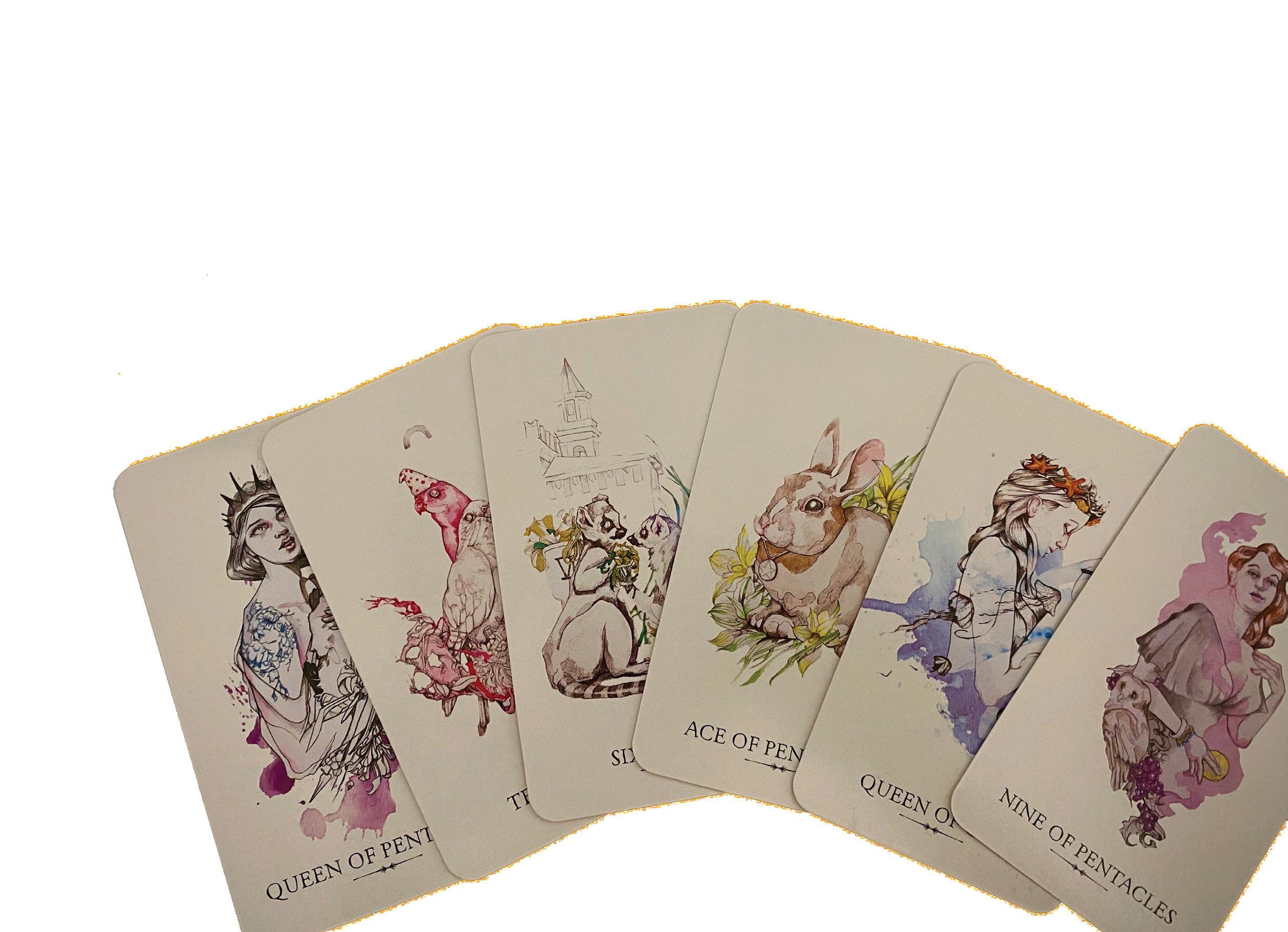
Here, we have two views on the resurgence of an occult practice. The first interprets it as an interesting hobby and the other believes in it as a true phenomenon.
Apart from people who subscribe to one of those beliefs, there is another group who uses the occult, except it believes that the occult can be commoditized and sold for a profit. In an article written for Vox , Nadra Nittle explains that brands like Urban Outfitters have started selling smudge sticks, tarot decks, and healing crystals. Occult practitioners reacted poorly to corporate capitalization on their practices. Nittle highlights how “both practitioners and scholars who study the occult argue that cor porate takes on these beliefs are shoddy ver sions of the real thing.”
Moreover, certain practices that are some times categorized as ‘occult,’ like the Indig enous practice of smudging, are not only ap propriated by brands, but also by people who are interested in the occult and don’t have a connection to the cultures they actually come from. Companies will then often lump multiple discrete belief systems together and call them occult, ignoring the fact that those beliefs may
various planets and the positions they could take. She mused that even “seven years later, [she was] still learning and still finding new things and deepening [her] knowledge.”
When asked if tarot impacted her day-today life, Grigor responded much like one of the interview subjects in the previous article on the topic in The Varsity : “No, astrology and tarot do not impact my day-to-day. I do read daily horoscopes, but more often than not I forget what it says as soon as I finish reading.” Grigor believes that people shouldn’t base important life decisions on what cards or stars tell you.
My next subject was Tessa Clare DelaneyGirotti, a third-year student studying classical civilizations and celtic studies at U of T. She began her adventure into the occult during high school by researching as much as she
deemed ‘evil’ or ‘satanism,’ so people aren’t scared of it anymore.”
My final interview subject, Anya Shen, a third-year literature and critical theory and economics student at U of T who has been learning about tarot since April 2022, has a very relaxed but respectful approach to the occult.
“I think of tarot cards like friends that you… have long late night conversations with. Do they give sound advice? Not usually… [but they] are important and comforting in ways that are hard to explain.”
While Shen has a “deep respect for the art of tarot,” she also appreciates that it doesn’t take itself too seriously.
So why is there this resurgence in interest in the occult?
Well, I think it goes beyond just having a hobby. Sure, that is certainly one reason for doing it, but there’s more. Occult practices in various cultures around the world provide a strong connection to a part of ourselves that
pressed. Don’t construe that as denunciation of science, but think of it more as a way of further complementing the human experience.
encing and making sense of our world, and if immersing yourself in the occult, either for fun or as a legitimate practice, is your way of doing
Now if you’ll excuse me, my familiar is

Toronto’s concrete galleries
How the city supports the arts in our public spaces
Yet, ensuring that all artists from diverse back grounds get the chance to showcase their art istry is still a work in progress. Hidden behind our favourite murals is a political powder keg. Who deserves to have their work represent our city? Should priority be given to minority artists who have been traditionally discriminated against in the art world?
In art galleries like the Art Gallery of Ontario, art historians and curators are carefully hired to choose which art to display. The ‘gallery’ of Toronto’s streets doesn’t have that luxury and instead outsources the curatorial work to a pro gram called StART. The program emerged in 2012 as a way to showcase and compensate local artists while reducing the amount of illegal graffiti art. Artists submit their designs when the city announces a project site, and a committee from the City of Toronto StART department de cides which artist’s design best suits the project site.
The StART website states that the program’s goal is to “transform underpasses with street and graffiti art.” Graffiti style art has traditionally been excluded from formal government art projects for its association with marginalized communi ties. Also, traditional graffiti art has been mainly a male-dominated style. Women have had trouble breaking into the world of street and graffiti art.
fair for the StART program to hire minority artists who have not had many artistic opportunities, many of whom have been “rejected over and over because of their colour, race, and gender.”
Lumaj also pointed out that the City still has a long way to go in terms of including minority art ists. For those who have been excluded from ar tistic opportunities for so long, it is essential that they are given boosts and encouragement. This is to ensure that the art we show is as diverse as our city.
Lumaj added that for her, and all of us within this city, these public pieces “hold a powerful presence in the public streets.” Therefore, it’s essential that they offer representation for every one. Not just for the sake of artists but for those enjoying the art too. For example, Lumaj did a Bell Box mural at Richmond Park Blvd and Lans bury Dr with the focus of showing the experienc es of “resilience and strength… [in] the Chinese Canadian community.”
Madeline Szabo Associate Arts & Culture Editor
eryone. It dresses up once-drab buildings and gives them new life as a canvas. In Toronto, we have the luxury of a diverse public art scene, complete with painted traffic signal boxes and graffitied underpasses.
It seems the StART program is trying to change that. The Varsity interviewed Lula Lumaj, a Toronto artist who has worked on many public art projects from traffic signal boxes to concrete barriers. She said, “In the graffiti arts… women are given fewer opportunities than men in gener al.” With that in mind, Lumaj emphasized that it is
Ultimately, public art makes our sidewalks, roads, and generally boring urban architecture into galleries in their own right — they become what Lumaj describes as “beacons of light.” When the city funds art everywhere, it is no longer restricted to the eyes of those with the money or time to see galleries, it truly becomes for everyone. Toronto has to shoulder the re sponsibility not just for reducing illegal graf fiti or showcasing local artists, but for making sure that the art shown is as diverse as its city. The art that StART promotes must mirror the program's values and commitments, namely its commitments to diversity in all areas, especially our public galleries.
arts@thevarsity.ca14 THE VARSITY ARTS & CULTURE There's no admission fee to see the mural on your street corner because public art is for ev
Occult practices are putting a spell on an increasing number of young people.
MARTA ANIELSKA/THEVARSITY
Why occult practices are reemerging in our ‘rational’ society
The City of Toronto created the StART program to support local artists. MAKENA MWENDA/THEVARSITY
Beyond Dr. Frankenstein: the future of transplants

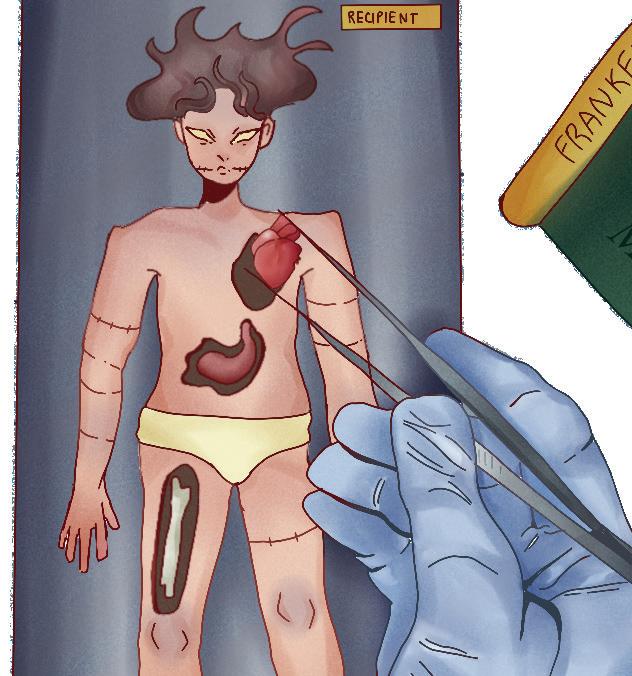
How human head transplants, limb transplants, and organoids can prolong life
Salma Ragheb Varsity Contributor
In 1970, neurosurgeon Dr. Robert White and his colleagues transplanted a monkey’s head onto another monkey’s body. A few years after this experimental breakthrough, he wrote: “What has been accomplished in the animal model… is fully accomplishable in the human sphere. Whether such dramatic procedures will ever be justified in the human area must wait not only upon the continued advance of medical science but more appropriately, the moral and social justification of such procedural undertakings.”
And indeed, in 2017, Dr. Sergio Canavero and Dr. Xiaoping Ren completed the first successful human head transplant between cadavers.
From hysteria to HEAVEN Human cephalosomatic anastomosis — the sur gical transfer of a head onto a beheaded body under induced hypothermic conditions — hasn’t yet been realized for many reasons, primarily the surgical complication of the procedure of fusing the spinal cords of the head and body of two dif ferent individuals to restore motor function.
Canavero’s ambition with the human head transplant project takes an interesting lineage. In
both 2013 and 2015, Canavero published papers outlining the experimental conditions of a human surgical head transplant — a project he called HEAVEN, short for head anastomosis venture. In the papers, he addressed the principal mecha nistic concern about head transplants by design ing a spinal cord fusion protocol called project GEMINI, in which polyethylene glycol is used as a fusogen, encouraging cells to fuse. Canavero’s HEAVEN transplant protocol proposes that the patient who has no chance of recovery from in jury or disease has their head detached from their body and joined to a brain-dead donor whose body is young and healthy.
In 2015, scientists Anto Čartolovni and Antonio G. Spagnolo raised ethical questions regarding human head transplantation, posing questions about the necessity of a treatment that serves no real therapeutic purpose and only exists to prolong life. Although Canavero proposed in his 2015 paper that the donor and recipient should match in build and immunotype and be screened for systemic disorders, immune rejection still re mains a concern.
Čartolovni and Spagnolo believe that the HEAVEN patient would still need regular im munosuppression treatments — drugs that suppress their immune system — so that their body doesn’t reject the transplant. But not only might immunosuppressive therapy be ineffective in eliminating the rejection issue, these drugs also simultaneously compro mise the recipient’s tolerance to pathogens that healthy, unsuppressed immune systems would normally withstand.
From a psychological standpoint, Čartolovni and Spagnolo proposed that transplanting a head will also be something of a personality transplant. Modern cognitive science regards the body as a significant part of an individual’s sense of self. The patient with a new body can then have ideas of their former body’s capacities, learned skills, and physiological bounds, which will be obsolete in their new body.
As a result, the patient’s identity may become frag mented, and they will not be able to trust their muscle memory because some of it is irrelevant in its application to their new body. So the
chimeric patient may encounter a huge difficulty reconciling their new physical identity.
There’s also the argument that a head trans plant might steer people away from donating their organs. In a trolley-problem-like ethical ar gument, physicians may ask whether the donor’s body should be used to save or prolong one life via the HEAVEN protocol or if it would be more useful by saving multiple patients in line for organ transplants? This is particularly significant to con sider in light of Canavero’s true goal of life exten sion via brain transplants, such that our brains continue in more youthful bodies.
Another ethical standpoint that Canavero tan gentially addresses is that the HEAVEN chimera patient would carry the body donor’s gonads — the primary reproductive organs — the transplan tation of which several countries prohibit. In this case, after the donor dies, their gonads would live elsewhere and their genetic material would continue to be transmitted by the HEAVEN chi mera, inherited by the donor’s biological children and grandchildren who will be born long after the parent dies.
The HEAVEN chimera is not the biological par ent of these children; they might not even share the same race. If you have ever wondered about the possibility of someone continuing their genetic line after they have died, consider this prospect.
In 1999, Robert White prophetically and am bitiously wrote, “What has always been the stuff of science fiction — the Frankenstein legend, in which an entire human being is constructed by sewing various body parts together — will be come a clinical reality early in the 21st century… brain transplantation, at least initially, will really be head transplantation… With the significant im provements in surgical techniques and postop erative management since then, it is now possible to consider adapting the head-transplant tech nique to humans.”
A brief history of limb & face transplants
In Ecuador in 1964, doctors performed the first hand transplant, which the recipient’s body im munologically rejected two weeks post-surgery. In 1998, Dr. Jean-Michel Dubernard, surgeon Earl Owen, and the rest of their team carried out the first successful hand transplant in France. How ever, the patient stopped his immunosuppres sive treatments, resulting in tissue rejection and eventual amputation of the hand in 2001. A hand transplant done in 1999 has lasted for at least 20 years. In 2016, 18 surgeons worked for 14 hours,
values to
Ashiana Suunderji Varsity Contributor
To fight the climate crisis, the world requires imme diate changes, from the habits of ordinary citizens to large corporations and the way they operate. The question becomes: what are the exact chang es that we need to implement, and how can we implement them to generate the most significant impact?
To make any major impact on the climate crisis, we need to make a cultural shift. Since many Indig enous communities effectively prioritize land stew ardship in a way that leads to increased biodiversity and lack of pollution, we should collaborate with Indigenous communities to work on these shifts.
Indigenous practices around protecting and nur turing the natural world are often particularly and visibly effective — although territories maintained by Indigenous peoples make up only close to 20 per cent of Earth’s land, these regions contain 80 per cent of our planet’s biodiversity. If we want to understand Indigenous approaches to the climate crisis, we have to learn about how their values influ ence their relationships with the land.
Studies done in conversations with Indigenous communities in Northern Ontario showed that many Indigenous populations in Canada view the land as the provider of the essentials for all forms of life. This mindset can affect how members of those communities make decisions that affect their envi ronments — for example, one 2014 study noted an example of a Pic River Elder, who recognized the economic opportunities on their land but had more of a desire to treat the land with respect and give back than simply use it for economic gain, which is a more personal view than that of large corpora tions who seem to simply view land as a resource to exploit for financial benefits.
Similarly, many Indigenous cultures and nations share a belief in symbiosis between the land and its inhabitants. One example would be the Māori people in New Zealand, who treat rivers as individ ual life forces and make an effort to avoid polluting these waters in any way, improving the quality of life of both human and non-human inhabitants that depend on the river.
Achieving this symbiotic relationship occurs through the acknowledgement that the Earth is a provider and that it is up to us, as the individuals
surviving off of what the land supplies, to maintain its ability to provide. We can understand this as “land stewardship,” as opposed to land ownership.
Land stewardship as a responsibility is a prod uct of the connection between the spirit and mortal worlds and everything within those worlds. This holistic perspective of the land is essential for the construction and application of innovative and ef fective climate solutions.
Unfortunately, Indigenous populations around the world are highly susceptible to the effects of the climate crisis because of their close relationship with the environment and its resources — despite contributing very little to the problem. There is a strong consensus among both climate scientists and Indigenous leaders in Canada that the climate crisis is a product of colonialism. Many Western values that colonialism enforces are rooted in capi talism and competition instead of interconnected ness and genuine collaboration.

Instead of using the resources the Earth pro vides when we need them for survival, corporations and governments use resources as much as they can, creating an exploitative dynamic between the individual and the land. Because corporations have
and completed a successful fore arm transplant on a live 49-year-old female patient in Toronto that remains suc cessful today!
In 2005, Isabelle Dinoire was the recipient of the first face transplant, which Dubernard’s team carried out. Since then, 47 face transplants have been carried out by 2020, although donation is rare.
Fabricating organs with embryonic stem cells
Grown in the lab, organoids are mini organs with similar architectures and functions as real organs in live humans, but they lack connectivity or bio logical context, which limits their maturation. The initiating cells of these organoids are derived from human embryonic stem cells. Found in the lining of an early-stage embryo, embryonic stem cells have the potential to become any cell type in the body — a key feature that permits their use in re generating tissues or even full organs.
It is easy to see, then, the ethical baggage that comes with creating organoids in the lab. Be cause human embryonic stem cell research often involves the destruction of live human embryos, the discourse regarding stem cell research is closely linked in political content to debates over abortion.
We have yet to see organoid transplants in hu mans. Such transplants have only been done in animal models, which is a testament to the cau tion with which this field is approached.
The purpose of these advances should al ways be to first help victims who have been in capacitated by traumatic injuries or diseases and to improve the efficiency of these procedures. Although donation limits the progression of transplantation, there is greater efficiency in the prospect of organoid transplants. Since there is significant pushback in organoid transplantation due to the political weight of stem cell research, it has not progressed to the point of application to humans. But scientists are ambitious — take Dr. Victor Frankenstein, for example.
such large-scale impacts on the environment, we should seek awareness regarding the values and beliefs of the corporations to which we give money, and make changes accordingly, even as we focus on lifestyle choices.
In that vein, when we reflect on cultural values surrounding preservation and stewardship we see in Indigenous cultures, we can come to a place of appreciation for the land that we are privileged to work, learn, and play on, and often take for grant ed. We can learn to share this knowledge and have important conversations regarding our responsibil ity to the land, and we can seek out more informa tion on how we can give back.
Science October 31, 2022 thevarsity.ca/section/science science@thevarsity.ca
Applying Indigenous cultural
fight the How studying Indigenous perspectives gives us better paths to be more sustainable
BIEW BIEW SAKULWANNADEE/THEVARSITY BIEW BIEW SAKULWANNADEE/THEVARSITY
Looking to the future of scientific contributions by Muslims in Canada

Exploring Islamic History Month by learning from contributions to science and culture
Daniyah Asad Varsity Contributor
The Muslim community has seen steady growth since the first recorded arrival of Muslims in what eventually became Canada in 1851. Though the early records are not exhaustive, Muslim com munities have played an active role in scientific fields over the years. Today, members of the faith continue to follow the legacy of early Muslims, who made significant contributions to the Cana dian scientific community.
Figures in history
Famous scientists and researchers have been a notable aspect of Canadian history for centu ries. From Frederick Banting, the co-discoverer of insulin, to Donna Strickland, a pioneer in the field of pulsed lasers who won the Nobel Prize in Physics in 2018, Canadian scientists have con tributed significantly to various areas of science.
Among the early cohort of Muslim students at the University of Toronto was engineering stu dent Mirza Shams ul Huda, who graduated in 1949. Working in collaboration with the Hydro Electric Commission of Ontario, his research in soil mechanics took him all across Canada. As co-founder of the Canada Pakistan Associa tion, he was advocating for a stage to elevate like-minded students to pursue opportunities in STEM in Canada.
The records of Muslim history in Canada also contain notable figures such as activist and edu cational psychologist Lila Fahlman, the first Mus lim woman to receive the Order of Canada for her multitude of interfaith contributions and works. In 1982, she founded the Canadian Council for Muslim Women as a means to pursue research and public policy, and also became an avenue for interfaith dialogue in her community. She went on to establish the World Council for Mus lim Women Foundation and worked to preserve religious and cultural heritage across Canada.
The grounds of U of T also house an impor tant legacy. In 1946, students at the University of Toronto created the first association for Muslims in Canada, the American Muslim Students As sociation, with the aim to create a platform for Muslim voices in Canada.
Current efforts
The history of Muslims in STEM is not found in ar chives alone. It lives on in the experiences of those Muslims and Muslim communities who have spent decades trying to overcome barriers of prejudice and limited representation and pave the path for others to follow. The fruits of past Muslim visionar ies in STEM can be felt today, as their message is carried on by various organizations. Initiatives like the Muslims in Canada Archives aim to shine a spotlight on the past Muslim researchers lest their work be forgotten.
Among the available resources is the MAX scholarship fund, which works to make more opportunities accessible for Muslim students by providing financial support for their future endeav ours. Past scholarship winners Rehona Zamani and Aliaa Gouda offered The Varsity insight into their experiences as Muslim women in STEM and the future of Muslim representation in scientific pursuits in Canada.
As a PhD candidate in biomedical engineering, Gouda conducts research on the application of wearable technology to enhance the rehabilitation experience for lower-limb amputees. Her initial gravitation toward science occurred at a young age, and this childhood fascination evolved into a mature pursuit of mathematical and scientific studies. Within engineering, she was able to ex plore different fields through the resources avail able at U of T, and now integrates her engineering experience in clinical applications.
Through her exposure to MAX, Gouda was also able to find other volunteer opportunities and resources, including BridgeTO, a volunteer organization that uplifts students throughout
Dissecting the science of fear
Umama Siddiqi Varsity Contributor
With the Halloween season in full swing, horror movies, haunted houses, and jumpscares are ter rifying us all. But have you wondered how we even feel fear? How is it that your brain knows what to be scared of, and what goes on in your brain when you have a flight-or-fight response?
The way different brain systems interact in the moment in response to a threatening context has been a topic of research for many neuroscientists and psychologists. Fear is described as a motiva tional state caused by certain stimuli that make us act defensively or escape the threat, that is, fight or flight.
When you walk around the corner at a haunted house and a ‘ghost’ jumps out at you, your brain considers those rapid movements and loud noises enough stimuli to trigger your fear response, mak ing you scream or freeze up.
At their core, fearful experiences have a physical or spatial context; all threatening experiences have occurred at a certain place and moment in time. Our brains use these contexts and memories to inform future expressions of fear.
To study the significance of context in experienc ing fear, some labs use a technique known as fear conditioning. Fear conditioning pairs neutral and aversive stimuli repeatedly over time, which can result in fearful responses to the neutral stimulus — a stimulus that previously would have elicited no
response in the subject. Accordingly, certain con texts can elicit fear if previously paired with some thing aversive.
The technique of fear conditioning is a valuable behavioural paradigm for understanding the neural basis of human psychiatric disorders related to fear and anxiety.
Studies using this technique and others identi fied the hippocampus as central to context representation and memory formation. The two-process theory suggests that both the hippocam pus and the amygdala are involved in con textual fears, with the former involved in stor ing the context of the traumatic event and the lat ter in storing the experience. When en countering a threatening event, the co-activation of these two brain areas drives physiologi cal and psychological responses to fear, such as increased respira tion, elevated heart rate, release of the stress hormone, and feelings of
their learning. Given how her introduction to MAX scholarship was through a colleague who men tioned it in passing, her experience shows how difficult it was to find these minority-targeted re sources.
“Promoting these resources through these [clubs and associations]… can also be carried over to other students that may find it useful,” she explained in an interview with The Varsity Zamani, on the other hand, is currently pursu ing both an MD at the University of Toronto and an MSc at the Dalla Lana School of Public Health. Her numerous degrees and scholarships testify to her unyielding spirit in the face of adversity to pursue a career as a physician.
Throughout her schooling in Toronto, Zamani’s passion for science was the main driving force that propelled her to this path, along with mentors and peers who inspired her along the way. “It was hard for me to find people who looked like me — with my similar experiences — who wanted to go into STEM,” she recalled in an interview with The Var sity
In hindsight, Zamani highlights how, throughout her undergraduate career and continuing into her graduate studies, there has been a steady pro gression in the number of roles being taken up by Muslim physicians and researchers, which has not always been the case.
Looking even one generation back, the Muslims who worked tirelessly for careers in STEM seldom found others from their community within these fields. “When I speak to more established staff in
dread and anxiety.
When faced with a situation similar to a threaten ing context experienced previously, the hippocam pus decides between processes called pattern completion and pattern separation to determine an outcome.
“If a context is sufficiently similar to the memory of the threatening context, the hippocampus will ‘autocomplete’ and retrieve the memory of the threatening context,” explained Robert Rozeske, an assistant professor at the University of Toronto studying neuronal mechanisms of fear and anxiety, in an email to The Varsity. “If a context only has minor similarities to the memory [of] the threaten ing context, the hippocampus classifies that context as different and thus separates the cur rent context from the threatening context [in] memory.”
He fur ther ex plained that in instances where the context is ambiguous, the prefrontal cortex is hypoth esized to be essen tial in removing ambiguity regarding the context. This process highlights the importance of differ ent brain regions working together to support the same goal: mak
medicine, they always tell me how lucky I am for my current community in medicine,” Zamani said. These professionals had described to her how the pursuit of STEM was a lonely undertaking, and they often faced difficulties in voicing their needs in a space that was not tailored to fit the needs of diverse groups. The community and support that exist now marks a huge progression to address and improve upon these concerns.
“We’re all capable of [excelling in] all those fields and all those roles, but [only] once we are given those opportunities,” Zamani noted, emphasizing the importance of a holistic approach to inclusivity to ensure that minority groups in Canada receive necessary accommodations to continue to suc ceed in these fields.
Looking forward
Both Gouda and Zamani continue to move the ma chine of scientific learning forward through their re search, as well as by mentoring the next generation of aspiring scientists in their communities.
As we learn from past and present Muslim con tributions in Canada, it is imperative that, along with honouring those who struggled to achieve success in the past, Canada as a whole should continue working toward ensuring that the barriers they had to overcome are removed for future generations of innovative scientists. Given the diverse nature of the population in Toronto, and Canada as a whole, reflecting this diversity in the workforce will acceler ate growth and innovation in scientific fields and allow them to flourish.
One issue these systems and fear responses face is overgeneralization. While the brain is largely efficient in predicting outcomes of current situa tions based on past experiences on a daily basis, this efficiency can give rise to overgeneralization. “When a sufficiently intense trauma occurs, an indi vidual in an otherwise non-threatening environment may generalize their current situation to closely resemble a traumatic memory,” wrote Rozeske. Post-traumatic stress disorder is one such conse quence, theorized to occur due to an impairment in a circuit consisting of the hippocampus and the prefrontal cortex for context processing.
Using rodents as model organisms, Rozeske is interested in the dynamic expression of emotional behaviours by leveraging the power of techniques like optogenetics — the use of light to activate or deactivate neurons — to decipher whether the activity of certain neurons is required for the ex pression of fear behaviour. His recent work found that the prefrontal cortex in mice represents con texts differently after the mice undergo context fear conditioning that transforms these contexts from neutral to threatening and vice versa. His team has also identified a circuit that is activated when mice transition from a threatening to neutral context. The circuit contains the prefrontal cortex and a midbrain structure called the periaqueductal gray.
Future studies on fear should explore how we experience fear indirectly and how the brain per ceives and reacts to fear expressed by others. Un derstanding these mechanisms will provide us with a better understanding of fear and social expres sions in general.
So the next time you’re in a haunted house, wandering through the unknown when someone runs at you with a saw, you’ll know exactly why you feel like sprinting away at full speed!
science@thevarsity.ca16 THE VARSITY SCIENCE
How does the brain develop fears and know when to make you scared?
Looking to the future of Muslim contributions to science.
ZEYNEP POYANLI/THEVARSITY
ELVIA
IP/THEVARSITY
Mekhi Quarshie Sports Editor
Two Olympic silver medals, two bronze ones, four U SPORTS female swimmer of the year trophies, four U of T female athlete of the year trophies, and a world record.
That’s what Kylie Masse’s trophy cabinet looked like as a university student.
After graduating from U of T and the Varsity Blues program in 2021, Masse continued to make a name for herself as one of Canada’s best female swimmers and a deadly backstroke specialist. Recently, she returned to U of T soil for the second leg of the 2022 FINA Swimming World Cup, which took place in Scarborough, Ontario from October 28–30.
Masse made a splash at the Pan Am Centre over the weekend. She earned silver medals in the Women’s 50m Backstroke, the Women’s 100m Backstroke, and the Women’s 200m Backstroke, helping push Canada to second overall on the table.

“It’s really special to be able to have a meet here in Toronto; [I] have a lot of family and friends in the stands,” Masse told The Varsity right after she clocked in a speedy 26.05 seconds in her 50m backstroke qualifying race. Masse stated that she was there to “have fun and see how fast [she] can swim” at the beginning of the
U of T student athletes, Masse explained that inspiring the next generation of swimmers was important to her, “I know how much I admired so many swimmers and had many swimming role models growing up, so I hope I can do the same for the young ones coming into the sport.”
Summer McIntosh’s statement performance
Speaking of young, up-and-coming swimmers, a 16-year-old by the name of Summer McIn tosh made history over the weekend.
McIntosh came first in the 400m freestyle race, beating Ameri can treasure Katie Ledecky by 00.08 seconds, and making it clear to us that McIntosh
is not up-and-coming anymore — she’s here. The buildup to the race was just as intense as the race itself. While Ledecky stayed in front for most of it, McIntosh, a great endurance swim mer, put on the afterburners for the last 25 me tres of the short course race to touch the wall right before the American. Fans roared from the stands when it happened. McIntosh now holds the world’s junior record for the event, as well as the title of be ing the second fastest in the world at the event.
Through out the rest of the week end, McIntosh got a gold in the 400m med ley event, a bronze in the 200m back stroke event, and a bronze in the Women’s could not get an interview with McIntosh, as she was ushered past the media lane after the first few questions.
McIntosh had this presidential presence about her; wherever she walked, hordes of sports journalists fol lowed. To get a sense
of her fame, a massive billboard of her showing off her sponsorship with the Australian swimwear brand Funkita donned a wall next to the Speedo store in the Pan Am centre. It’s hard to believe that she’s only 16 years old.
It was a team effort Getting Canada to the second position overall on the medal table in the FINA Swimming World Cup 2022 is a collective effort, and a slew of Canadian talent was at the Pan Am centre this past weekend.
Scarborough native Joshua Liendo, who made history during the 2021 FINA World Cham pionships as the first Black Canadian swimmer to win a gold medal in an individual event, was all smiles after his 50 free qualifier race. He told The Varsity that he was getting ready for the FINA World Championships in Japan.
“I’m not rested… not trying to do anything special but the best in the world are here, guys that I’m going to be racing next year at Worlds… so I’m definitely going to race them,” said Liendo.
The Albertan Finlay Knox stated that he’s try ing to get in shape this year and starting his prep aration for the 2024 Paris Summer Olympics.
“This year, no stress, just whatever happens happens we just build from it… [we’re] using this year just to learn from all the makes that we had last year and then be dialed in and ready for Paris,” said Knox.
If there’s one thing that's for sure, it’s that the state of Canadian swimming is in good hands. Whether you know Masse from a kinesiology class you took at U of T or you’re McIntosh’s big gest fan, there are many reasons for sports fans to ride the wave of Canadian swimming success.
Opinion: The chess’ anal bead conundrum

gardless, the idea that an established figure can exert their fame and influence to potentially blacklist a 19-yearold rival is troubling. Recently, Neimann filed a $100 million defamation lawsuit against Carlsen and Chess.com. He stated in the lawsuit that he was finding difficulty securing “employment as a chess teacher at a reputable school.”
the personal lives of musicians, academics, and athletes.
The chess world lays bare the kind of pres sure and scrutiny exerted by celebrity culture. It isn’t always healthy for children — and Nei mann was a child when he was known to have cheated. A culture of suspicion, distrust, and surveillance isn’t good for any sport.
Tony Xun Associate News Editor
On September 4, World Chess Champion Mag nus Carlsen kicked off a firestorm of controver sy when he withdrew from the Sinquefield Cup — an elite chess tournament with a $500,000 prize — after losing to 19-year-old Grandmas ter Hans Neimann. The saga further unfolded as Carlsen proceeded to forfeit his next game against Neimann on September 19 after making just one move.
Carlsen’s move set the chess world ablaze, since chess masters don’t resign after one move — except, maybe, to send a message.
Carlsen made his intentions clear immedi ately afterward on Twitter. In a carefully-worded statement, Carlsen accused Neimann of cheat ing, alluding to Neimann’s confessions of cheat ing online at the ages of 12 and 16 years old.
“I don’t want to play against people who have repeatedly cheated in the past,” Carlsen wrote, “I don’t know what they are capable of doing in the future.”
Speculation concerning Neimann’s cheating proliferated on Reddit but quickly spread to the rest of the internet. The most notable conspir acy theory, shared in a now-deleted tweet by Elon Musk, alleges that Neimann had cheated with vibrating anal beads that communicated moves to him. Since then, grandmasters from across the chess world have weighed in on the scandal, and Chess.com has scrutinized Nei mann’s past in a report reexamining his every move. While most professional commentators have refrained from speculating on the contents of Neimann’s anal canal, Gizmodo demonstrat ed how such a device might be plausible.
Chess.com has released a report describing evidence that seems to support the notion that “Hans likely cheated online much more than his public statements suggest.” However, no con
crete evidence has been found that proves Nei mann has cheated at an in-person tournament.
The increasingly bizarre allegations against Neimann are comical and give me an oppor tunity to reflect on my own experience playing competitive chess.
When I was a preteen, I was a tournament chess player, though I was never close to the tal ent and success of either Carlsen or Neimann. Like any space characterized by competitive tournaments, the chess world is cut-throat, and at the highest levels of competition, players are often haunted by their own inaccuracies.
I have never cheated, neither during a tour nament nor in casual online games and I don’t know anyone who has. But in every tournament game I’ve played, I would have immensely ben efited with even minimal outside assistance. All of my games, despite my years of studying, preparation, and practice, are so full of over sights and poor moves that they are inescap ably ‘human.’
At the heart of the controversy is more than Neimann’s personal fate, but the culture of competition in the chess world at large.
Carlsen’s resignation means more than just the fact that he thinks Neimann is a cheater — it implies an outright refusal to play against Neimann in the future, and, as a consequence, event orga nizers cannot invite both players to the same tournament. Given that Neimann intends to make a career out of his prodigy at the top of the chess world, the implications are unavoidable for him.
From Neimann’s perspective, Carlsen has leveraged his stardom and accomplishment to bear down on a defiant rising challenger.
Was Neimann cheating in this par ticular instance? I don’t know. But re

The lesson the chess world needs to take away is not just about the importance of com petitive integrity, but also celebrity culture and how we treat public figures. Though a world champion, Carlsen should not have this level of influence, and Neimann should not lose his career over childhood mistakes that were ac knowledged and apologized for.
I fell in love with chess as a child without fear that my opponents were cheating, but also without distrustfully wondering how they might have cheated in the past. I saw my competi tors as potential friends to learn from, not as enemies to be conquered.
The anal bead memes highlight the absurdity of all this. The chess world doesn’t need
Sports October 31, 2022 thevarsity.ca/section/sports sports@thevarsity.ca
short course tournament.
Masse on the move Kylie Masse and Summer McIntosh’s performances captivated fans at the Pan Am Centre
Masse gets in her zone seconds before the whistle sounds.
COURTESY OF SWIMMING CANADA/MICHAEL P. HALL
My
viewpoint on the latest scandal from competitive chess
JEREMY MYTKOWSKI/THEVARSITY
Blues playoff berth cut short in 41–13 loss to Queen’s Gaels
The Varsity Blues men’s football team held on for a quarter before things went south
Victoria Paulus & Mekhi Quarshie Varsity Contributor & Sports Editor
On Saturday, October 29, the Varsity Blues men’s football team headed to Richardson Stadium, where they faced the Queen’s Gaels in the first round of playoffs this season.
There was pressure to win on both teams as the whistle blew for kick off, as the season would have come to an abrupt halt for the losing side.
Although the Blues’ offensive line came out ag gressive and created many opportunities in the first quarter, an early illegal block forced them to punt the ball back to the Gaels, who quickly made it downfield.
With nearly nine minutes left in the first quarter, Gaels secured their first touchdown, putting the score at 7–0 and giving them an early lead.
On the return, the Blues’ running back, Luka Stoikos, cut through the middle and made a full re turn. Unfortunately, the Gaels played stellar defense and held the Blues to a mere 20-yard drive. When the Gaels got the ball back, they made it to To ronto’s 10-yard line and Tyler Mullan scored a field goal bringing the score to 10–0.
The Blues came out ready to fight in the second quarter; defensive back, Owen Cassie, intercepted a pass and Quinn Mulligan scored the first touch down of the game, bringing the Blues back into the game with a score of 7–10 in favour of Gaels.
With just over a minute left in the second quarter, the Gaels scored another field goal, leading them into halftime with a six-point lead.
The Blues started off the second half on the re ceiving end, which they used to their advantage. The Blues were eventually able to make their way
up to the 16-yard line, scoring another field goal on their third down.
The Gaels quickly responded and scored an other touchdown with about six minutes left in the third quarter, bringing the score to 20–10 in favour of Gaels. Within a minute, the Gaels’ running back scored a 75-yard touchdown.
Although the Blues fought hard and scored one more field goal in the third quarter, the Gaels secured the win in the fourth quarter with a final score of 13–41.

A somber mood rested on the team after the fi
nal whistle blew. “It was a frustrating day for us,” Blues’ Head Coach Greg Marshall said after the game. “I don’t think we played our best game — way too many penalties and missed opportunities.”
There was a positive angle to the game, though: although the team did take the loss, they acknowl edged that they could move forward from the loss.
“I told them to keep their heads up, walk out of here proud. They accomplished some good things this year, they played hard,” said Marshall when asked what his last message for the team for the season would be.
Cole Hayes Varsity Contributor
Toronto sports teams are cursed. The Leafs haven’t won a Stanley Cup since 1967 and a playoff series since 2004. The Blue Jays just blew an 8–1 lead on route to being swept by the Se attle Mariners, and it took a deal with the devil — trading DeMar DeRozan — for the Raptors to finally win a championship.
The curse that this city has with sports has rubbed off on its biggest celebrity, Drake. The ‘Drake curse’ is the idea that when Drake poses with a team or athlete, it puts a curse on them. The curse started in 2015, when Drake was spot ted with tennis superstar Serena Williams. Drake attended the US Open match that ended her 26-match winning streak.

The curse returned in 2018, when Conor McGregor posted a photo of him and Drake ahead of the former’s highly anticipated fight with Khabib Nurmagomedov at the UFC. Later that night, Nurmagomedov made McGregor tap out.
The team that Drake is mostly associated with is the Toronto Raptors, and they have fallen victim
to the curse for years.
The Raptors had a core that couldn’t get over the hump, and while LeBron James was always on the winning side, he wasn’t the only one hold ing the Raptors back. Drake brought his bad luck courtside to those games.
Like every horror movie though, Drake and the Raptors overcame their demon in 2019, when a new friend in Kawhi Leonard led the Raptors to winning their first NBA Championship.
It was all smiles for Drake; his favourite team won a championship and most importantly, the curse was broken! Or so we thought.
As sports betting became more popular, Drake started posting his bets online, and because of all the money that he was putting down, they went viral. He had success in the 2022 Super Bowl when Odell Beckham Jr. caught a touchdown pass but, despite this success, he still managed to curse Beckham Jr.; the 29 year old tore his an terior cruciate ligament during a noncontact play later in the game.
Drake won big when the Golden State War riors won the Western Conference Finals in the 2022 NBA playoffs which netted him an
$800,000 payout.
Regardless of these wins, Formula One driver Charles LeClerc would argue that the curse is still alive, as Drake lost $250,000 on a bet that LeCelerc would win the 2022 Spanish Grand Prix.
Based on the evidence, Drake’s betting his tory suggests that he’s defeated the curse that haunted him for years. That being said, if there’s one thing sports betters won’t tell you, it’s their losses.
On October 4, Victor Wembanyama introduced himself to the broader world of professional bas ketball. NBA scouts and nerds alike have been drooling over Wembanyam for years now, but two games in Las Vegas against the NBA G League Ig nite team were his opportunity to introduce himself to the wider NBA fanbase.
From the start, he made it quite clear that he was not taking the opportunity lightly. He dropped 37 points on seven out of 11 three pointers made, and followed that up with 36 points, 11 rebounds, and four blocks in the second game. If that isn’t a good introduction, I don’t know what is. His per formances garnered praise from around the NBA world, with LeBron James calling Wembanyama an “alien,” and saying that “he’s for sure a genera tional talent.” All this hype for Wembanyama has people touting him as the greatest NBA prospect since LeBron, or even of all time. While these are mere speculations at this point, a better idea is to consider whether he’s the most interesting pros pect of all time.
The answer to that is a resounding yes. The NBA has never seen a player like Wembanyama before.
Yes, there have been players just as tall — and tall er — than him. And yes, the league is filled with big, shooting, dribbling men nowadays, but Wemban yama combines these factors and multiplies them to a ridiculous degree.
The modern NBA is full of unicorns — a term used to define players that are uncannily versatile. From Kevin Durant to Giannis Antetokounmpo, it feels like ‘big men’ must possess guard skills to dominate in an elite manner. I don’t think Wemban yama will struggle in that regard. He’s a unicorn, even in a world of unicorns.
No one else can shoot Lillard-esque fadeaway threes while standing at seven feet four inches with an eight-foot wingspan. These physical attributes have never been mixed with Wembanyama’s level of skill. He can dribble and shoot at the age of 19 better than most seven-footers ever have or will. There’s truly no precedent for this type of player in the basketball world.
One comparison that has been made is to that of a 2K MyPLAYER, a character whose physical attributes and skills are created by the user. How ever, anybody who’s tried to create an unstoppable MyPLAYER knows that you wouldn’t be allowed to give the character this assortment of skills and attributes. A player this tall would never have the

athleticism that Wembanyama possesses, and a player with Wembanyama’s ball handling ability could never be made seven feet four inches. Wem banyama’s makeup seems to bend the very rules of basketball reality.
Unfortunately, this same makeup also sug gests a potential downfall. Though not a one-toone comparison, fellow unicorn Kri staps Porziņģis may provide the closest thing to an NBA comparison for Wembanyama.
Porziņģis showed heaps of potential early in his career while he was healthy — but he couldn’t stay healthy long.
He’s had an exten sive injury history throughout his ca reer, primarily deal ing with knee and foot injuries. Time and time again, this
is the case for highly skilled big men. There is no doubt that this will be a huge factor in Wemban yama’s draft process, and career in the NBA.
Take a generational talent, the likes of which the NBA has never seen before, and drop him in the social media era, and you are guaranteed to garner conversation. Now give him a body type that has denoted extreme injuries in all other cases and the intrigue will only increase. On top of that, keep him in a European league up until the draft so average fans won’t get to watch him play on a regular basis, and you’ve created a situation that will likely breed the most interesting draft lead up we’ve ever seen. Only time will tell if he’ll also be the best.
thevarsity.ca/section/sports OCTOBER 31, 2022 19
Could the Drake curse come back from the dead this Halloween? A look into Drake’s haunted history as a sports fan
Defensive lineman Parker Williams grabs at Gaels Quarterback Alex Vreeken.
ROBIN KASEM/VARSITY BLUES MEDIA
Opinion: Is Victor Wembanyama the most interesting NBA draft prospect ever? It’s only a matter of time before the phenom makes his mark on the NBA Mac Bell Varsity Contributor COURTESY OF THE COME UP SHOW/CC WIKIMEDIA COMMONS, JESSICA LAM/THEVARSITY
JESSICA
LAM & VICTOR WEMBANYAMA/ THEVARSITY & WIKIMEDIA COMMONS





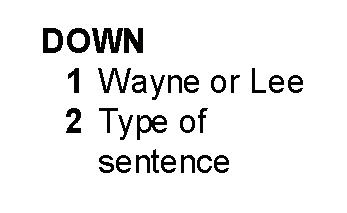
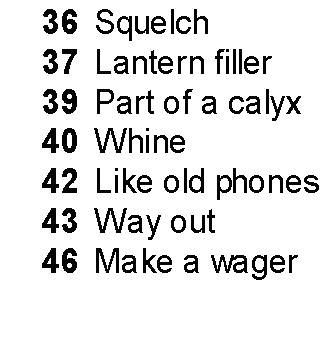
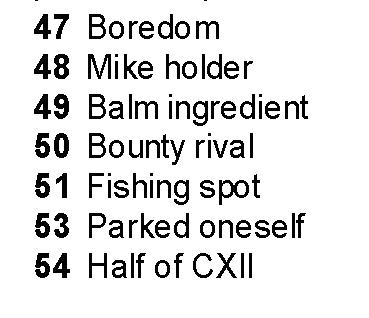
OCTOBER 31, 202220 THE VARSITY ADVERTISEMENTS Programming Lessons $15/hr Python C Java JavaScript Machine Learning 416-785-5115 students@cstutoring.com
