THE THE VARSITY

THE THE VARSITY
Vol. CXLVI, No. 19
21 Sussex Avenue, Suite 306
Toronto, ON M5S 1J6 (416) 946-7600

thevarsity.ca thevarsitynewspaper @TheVarsity thevarsitypublications the.varsity The Varsity

Medha Surajpal editor@thevarsity.ca
Editor-in-Chief
Chloe Weston creative@thevarsity.ca
Creative Director
Sophie Esther Ramsey managingexternal@thevarsity.ca
Managing Editor, External
Ozair Chaudhry managinginternal@thevarsity.ca
Managing Editor, Internal
Jake Takeuchi online@thevarsity.ca
Managing Online Editor
Callie Zhang copy@thevarsity.ca
Senior Copy Editor
Raina Proulx-Sanyal deputysce@thevarsity.ca
Deputy Senior Copy Editor
Ella MacCormack news@thevarsity.ca
News Editor
Junia Alsinawi deputynews@thevarsity.ca
Deputy News Editor
Emma Dobrovnik assistantnews@thevarsity.ca
Assistant News Editor
Ahmed Hawamdeh opinion@thevarsity.ca
Opinion Editor
Medha Barath biz@thevarsity.ca
Business & Labour Editor
Shontia Sanders features@thevarsity.ca
Features Editor
Sofia Moniz arts@thevarsity.ca
Arts & Culture Editor
Ridhi Balani science@thevarsity.ca
Science Editor
Caroline Ho sports@thevarsity.ca
Sports Editor
Aksaamai Ormonbekova design@thevarsity.ca
Design Editor
Brennan Karunaratne design@thevarsity.ca
Design Editor
Erika Ozols photos@thevarsity.ca
Photo Editor
Simona Agostino illustration@thevarsity.ca
Illustration Editor
Jennifer Song video@thevarsity.ca
Short-Form Video Editor
Emily Shen emilyshen@thevarsity.ca
Front End Web Developer
Sataphon Obra sataphon.ob@gmail.com
Back End Web Developer
Arunveer Sidhu utm@thevarsity.ca
UTM Bureau Chief
Ashley Thorpe utsc@thevarsity.ca
UTSC Bureau Chief
Matthew Molinaro grad@thevarsity.ca
Graduate Bureau Chief
Vacant publiceditor@thevarsity.ca
Public Editor
Ben Chapman & Juliet Pieters
Associate Copy Editors
Celesta Maniatogianni
Associate News Editor
Mia Torres & Sloane Overdorf
Taimoore Yousaf, Jean Patrick Vidad
Associate Sports Editor
Rebecca Liu & Audrey Kim
Associate B&L Editors
Loise Yaneza
Associate Design Editor
Emma Cervinka & Dowon Kim
Associate Illo Editors
Abby Russchen, Justin Chan-Degroot & Kazim Abro
Associate Photo Editors
Snigdha Singh
Associate Video Editor
The Varsity acknowledges that our office is built on the traditional territory of several First Nations, including the Huron-Wendat, the Petun First Nations, the Seneca, and most recently, the Mississaugas of the Credit. Journalists have historically harmed Indigenous communities by overlooking their stories, contributing to stereotypes, and telling their stories without their input. Therefore, we make this acknowledgement as a starting point for our responsibility to tell those stories more accurately, critically, and in accordance with the wishes of Indigenous Peoples.
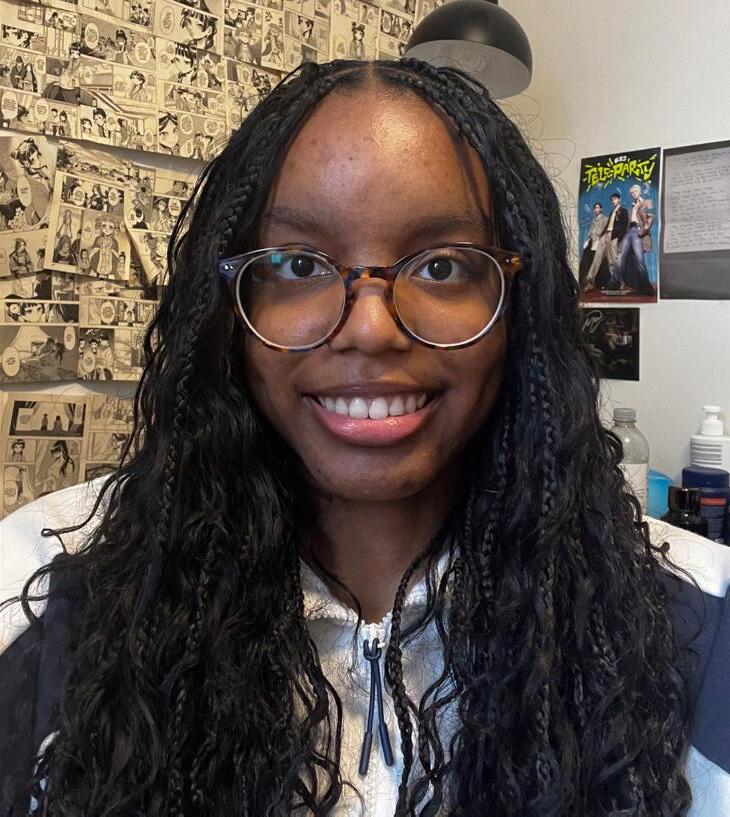
Hannah Burnett Varsity Contributor
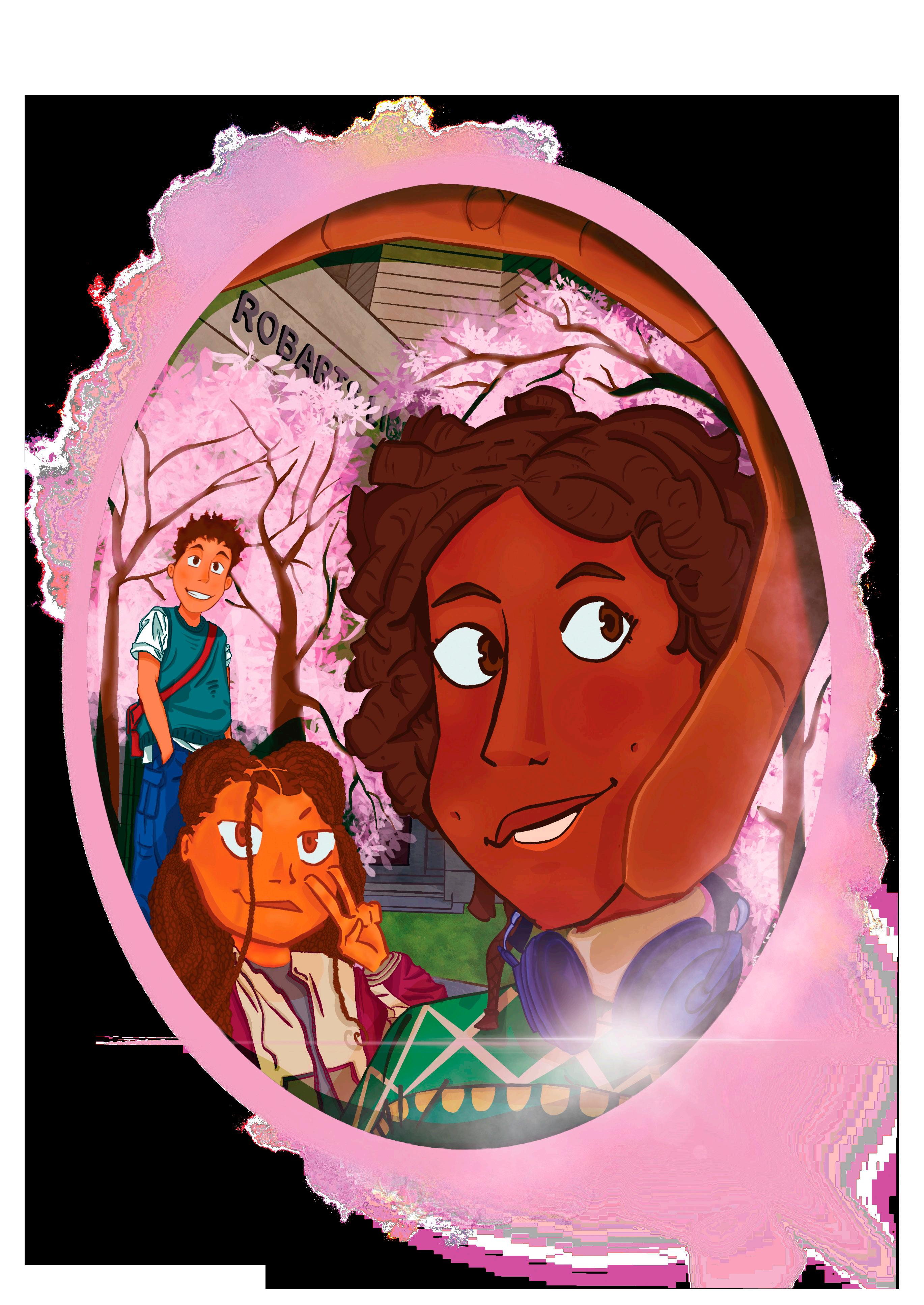
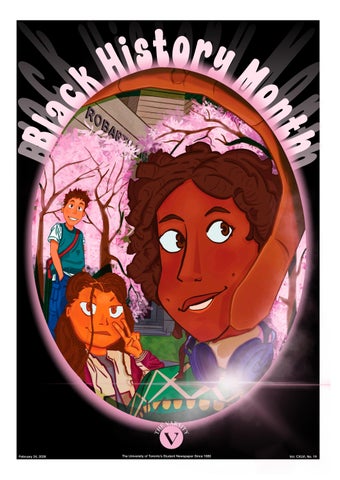
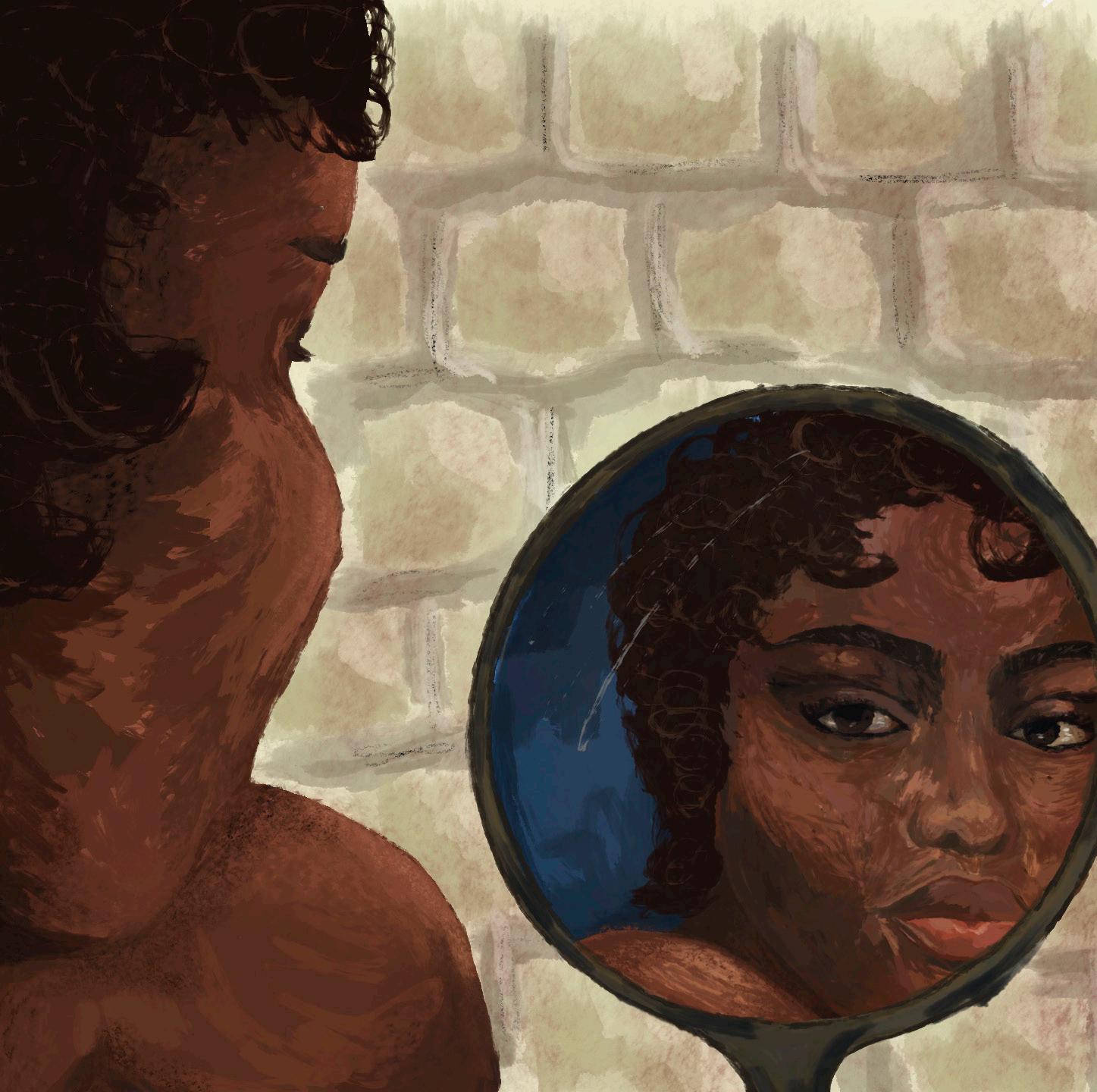
I tend to create art that omits people, focusing instead on the items around us that shape both us and the world. So, when I started thinking of ideas for this piece, naturally, the initial main subject matter was not going to be people. However, I realized that would not work because I wanted the subject matter to be identifiably Black, but the objects you use or interact with do not always dictate race.
So, I sought to create a piece that shows the diversity of the Black community through different hairstyles, skin colours, and outfits. When people talk about diversity, I feel we forget that within a set community, diversity
UTMSU President Andrew Park joins APUS Board of Directors
Ella MacCormack News Editor
The Association of Part-time Undergraduate Students (APUS) has reduced its staff to two employees, executives confirmed at its Fall General Meeting on February 9.
Vice-President Internal Dianne Acuna said, “At our last general meeting, the organization did have to make a difficult decision to conduct layoffs based off decisions made by the finance committee to maintain programming.”
In the previous academic year, the association’s preliminary budget projected a $120,650 deficit, and it ended the year with a final deficit of $94,570. After major decreases in spending — particularly salaries — APUS is now projected to end this year with a budget surplus of $120,500.
Third Fall General Meeting
This was APUS’s third attempt at scheduling the Fall General Meeting.
The first meeting was scheduled on December 5, with a registration link sent out six days prior. The meeting failed to reach quorum, which requires 25 members, and was rescheduled for January 14.
On the day of the January meeting, the association postponed it again to February 9.
Vesa Lunji & Zaneb Asad
Associate Opinion Editors
Vacant Associate Web Developer
Lead Copy Editors: Hilary Cheung, Omayma Lateef
Copy Editors: Audrey
Designer: Simona Berardocco
OFFICE
Eva Tsai business@thevarsity.ca Business Manager
Vacant
Muzna Arif muznamars@thevarsity.ca Advertising Executive
Per APUS bylaws, the scheduled meeting had no requirement for quorum.
Vice-President Internal Dianne Acuna, VicePresident External Shanti Dhoré, and Directors Dani McOuat and Humberto were in attendance.
Chair Alice Wu facilitated the meeting, alongside chair support Kayla Weiler, who also serves as the government relations and policy coordinator for the Canadian Federation of Students (CFS). President Jaime Kearns was absent.
There were five other members on the call, including Andrew Park, UTMSU president, and Susan Froom, APUS executive alum and part-time student representative on the Governing Council.
Park ran for one of the five open director positions and was the only candidate. In his speech, he highlighted UTMSU’s ongoing difficulty filling its part-time student representative role, which remains vacant.
Park said, “I think there is a need for part-time students to be represented. Since APUS is that body, and I am pretty familiar with UTMSU, I’m
is still an important concept, and ignoring this point can inadvertently ostracize individuals. In recent years, ‘the hair police’ have shown up on various social media platforms to try to tell people what black hair should look like. This is, of course, perplexing because not everyone’s hair is exactly alike.
I think it is especially important for the Black community not to be divided by societal pressures that work to dictate how we should look or act, as we are already a small minority. This is why it was really important to me to have the setting of my art be U of T.
Walking around campus, I do not see many black students, faculty or staff, so I just wanted to make it obvious that while there may not be a lot of us, we are still here, thriving and enjoying our university school life.
hoping to serve as sort of a bridge between the two organizations through my role on the board here at APUS.”
He was unanimously ratified to the board.
Since the last academic year, APUS’s salary budget has decreased from $280,031 to $85,000. Salaries now only make up 29.8 per cent of the budget outside of restricted funds, down from 50.7 per cent the previous year.
APUS’s staff reductions span multiple departments: administration funding fell from $77,181 to $13,000; campaigns from $52,256 to $12,000; programming from $32,356 to $1,000; and student services from $118,238 to $59,000.
The layoffs confirm an Excel spreadsheet titled “2025.09.20-Layoff Pa…” that was visible, but inaccessible, in APUS’ Winter 2025 general meeting folder. The spreadsheet has since been removed from the folder.
When asked about the spreadsheet and if layoffs occurred, APUS wrote to The Varsity in December that the spreadsheet was not in the Summer 2025 Special General Meeting folder and that “HR matters are private and confidential matters that are protected — and unauthorized individuals cannot and should not be trying to gain access to confidential materials.”
Beyond staffing, the association’s programming budgets have largely remained steady. The only exception is the printing centre budget, which decreased from $34,000 to $5,000.
The general programming budget decreased from $6,000 to $4,000 after only $1,843 in spending last year. The campaign programming and materials budget was reduced from $5,000 to $3,000; just $1,561 of last year’s allocation was used. The laptop loan program, which saw no spending last year, was halved to $1,000.
The CFS National Meetings budget also decreased from $4,000 to $1,000.
After reading the budget, which detailed office expenses, one part-time student asked why APUS had two offices.
“Due to the staff reduction, we haven’t been able to get into that [Sidney Smith office] right now;
however, that is something we are looking to utilize. It is supposed to be a space where it’s not just staff, it’s more for students and outreach,” Acuna said. “It’s perhaps something that we can look into how to restructure if we do some restructuring. At this time, we are planning to try to open that up for this semester to give students that space again.”
Froom added that full-time students are represented by both the UTSU and the Arts & Science Student Union, neither of which represents part-time students. So “APUS wears two hats. It wears a hat where it represents students within the Arts and Science Faculty, and it wears a hat where it represents students in any part-time division or faculty at all three campuses.”
Froom continued, “Because of those two hats, the university has agreed to give us two offices to mirror the services offered to full-time students. We’re not renting this space, but we are operating this space.”
In her executive report, Acuna said bursaries are “one of our biggest services to members. They are unique in that they are more than merit-based, like the many that you see. We’re trying to not only celebrate but acknowledge the many different student members that we have by offering identitybased services.” The association’s bursaries range from $300 to $600, and include bursaries for Black students, Indigenous students, and Two-Spirit, queer, trans students.
Acuna also highlighted the International Student Identity Card (ISIC), an internationally recognized proof of student status that offers discounts around the world. Acuna said the card “was only available to full-time students at one point. So this card, it’s provided by the CFS, but through advocating, it’s finally now available to part-time students.”
“It was only for full-time students, and they made a deliberate decision to offer it to parttime as well, recognizing the high cost of tuition and other expenses. The ISIC program has now expanded, and last year, CFS came on campus to hand out ISIC cards. We’ll be doing that again this semester, so stay tuned for those dates to come,” Dhoré added.
Junia Alsinawi Deputy News Editor
Twenty-six years ago, only 8.7 per cent of the university’s faculty identified as visible minorities, according to a study done by now-retired professor Chandrakant Shah. Shah estimated that “it could take anywhere between 25 and 119 years for U of T’s faculty composition to reach the desired target of 15 per cent visible minority representation,” The Varsity reported in a January 2000 news article titled “U of T decades away from diversity.”
It’s now two and a half decades on from Shah’s study, and The Varsity analyzed U of T’s employment equity data from 2017–2024 to see how things have changed and if the university’s faculty composition is still decades away from diversity.
What the data says
The faculty composition has changed significantly in the last decade, with the number of Blackidentifying faculty members increasing from a mere 30 in 2017 to 118 in 2024. However, the number of white faculty members dwarfs this increase, as they remain the decisive majority at 61.7 per cent of all faculty members, while Black faculty members
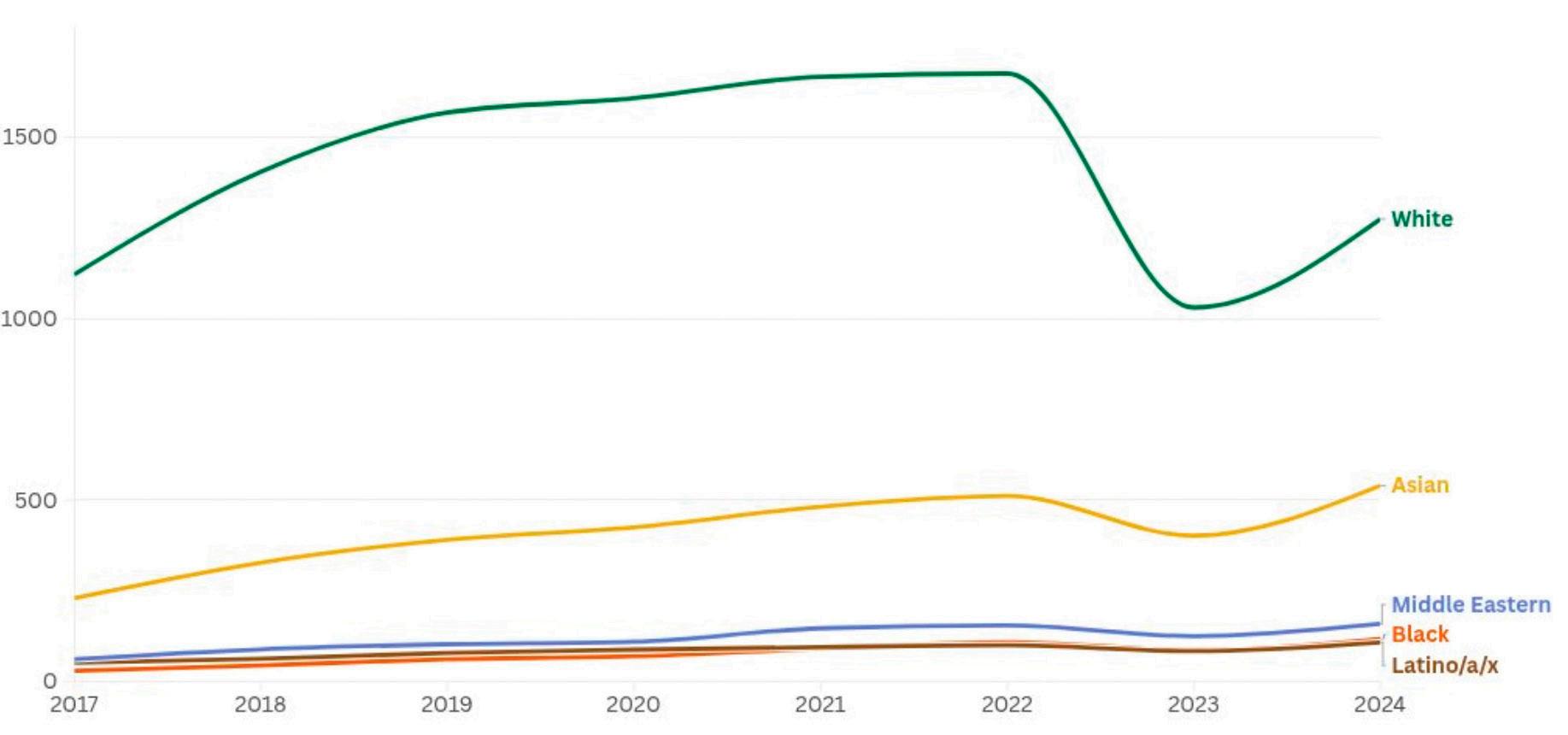
The number of faculty members who identify as persons of colour has been slow to increase over the last decade. JUNIA
each year than Black faculty members. In 2023, when the gap was the smallest, the university hired 29 more white faculty members. In 2017 and 2018, the number of hired Black faculty members was “not reportable due to small sample size,” the university noted in the database.
A similar disparity extends to faculty members’ career advancement, with white faculty members promoted at significantly higher rates than Black faculty members every year. From 2017–2022 — excluding 2019, during which the database reports that all faculty members were promoted — the number of Black faculty members to receive a promotion was “not reportable due to small sample size,” the university noted in the database.
make up around 5.7 per cent, as of 2024. Asian faculty members are the best represented minority, at 26.2 per cent. This drops to the single digits for the next best represented minority, Middle Eastern faculty members, who comprise 7.7 per cent. Latino/a/x faculty members are the least represented racial minority, and account for only 5.2 per cent of the university’s faculty.
How have Campus Safety and U of T non-police alternatives evolved since the rebrand?
Emma Dobrovnik Assistant News Editor
In response to student protests starting in 2019 and the Black Lives Matter protests in 2020, U of T has rebranded Campus Safety from Campus Police and implemented non-police alternatives, such as community crisis response coordinators.
The rebrand involved the pivot to a more “approachable, accessible and distinguishable” visual identity across campus safety’s vehicles, uniforms, and online presence. The rebrand didn’t change the role or authorities of campus safety. Although they’re no longer called campus police, special constables are still managed by the Toronto Police Services Board, and are authorized to arrest and release, act on criminal and provincial offences, and transport prisoners within the city of Toronto.
Movement to defund and abolish Campus Safety
In 2019, UTM student Natalia Espinosa was handcuffed by campus safety after visiting the Health & Counselling Centre (HCC) for suicidal ideation. Although she did not present an active risk of harm, Espinosa was handcuffed while being transported to the hospital.
The incident prompted the release of two open letters, the first of which received over 130 signatures from students, faculty, and staff. Drafted by Beverly Bain, a Women & Gender Studies Institute professor at UTM, and Vannina Sztainbok, a former assistant professor in the Department of Social Justice Education, the letters suggested that the university exclude campus safety from mental health situations and invest in additional health and wellness services.
The second open letter, “Open letter: President Gertler, defund and abolish Campus Police,” was drafted in response to the university’s 2019 Report of the Presidential & Provostial Task Force on Student Mental Health. The letter demanded that the university immediately defund and abolish campus police, especially following Toronto Metropolitan University’s (TMU) decision to cancel its proposed special constable program.
The letter was published in the months after George Floyd was murdered by a white police officer in May 2020, prompting a global movement to remove special constables from campuses.
In 2021, U of T released its Final Report on the Role of Campus Safety (Special Constable Services) in Responding to Students in Mental
Health Crises, which outlined the university’s commitment to enhanced mental health training for special constables. In addition, it described the development of non-policing supports for students experiencing mental health crises.
The report also confirmed that the university would introduce cross-unit training between campus safety and Health & Wellness services. Although the report emphasizes “recognizing when policing presence may not be the most appropriate solution,” there has since been a 97 per cent increase in campus safety’s response to students experiencing mental health crises.
The report recommended that restraints should only be used in circumstances where violence is present, and the university’s Update on Institutional Commitments notes that there are ongoing discussions about implementing a “least restraint” approach to student transfers to hospital emergency care.
The Community Crisis Response Program — created from the recommendations outlined in the 2021 report — was implemented in the year following campus police’s rebranding as campus safety. The rebrand ensured that the university was aligned with the Comprehensive Ontario Police Services Act, 2019, which held that special constables can’t have the word “police” in their title.
In 2022, UTSC hired its first community crisis response coordinator, a role intended to “deescalate and reduce police presence when students experience a mental health crisis.”
While community crisis response is presented as an alternative to police, the coordinators work collaboratively with special constables to respond to mental health-related calls. UTSG’s community crisis response coordinator, Lauren Weidmark, was a campus special constable from 2015–2023.
As part of its Administrative Response to the report, the university also highlighted a need for tricampus consistency in institutional responses to student mental health crises.
When asked whether the university’s spending on campus safety training and mental health supports had increased, decreased, or remained stable since 2021, a spokesperson for the university said that these budgets are not available collectively for comparison.
The university’s 2025–2026 budget lists additional campus safety staffing as a funding
Since 2017, the number of university faculty members has increased across the board. The number of white and Asian faculty members increased faster than the number of Black and Latino/a/x faculty members, which has remained comparatively stagnant.
Over the past few years, the university has consistently hired more white faculty members
In his 2000 study, Shah defines the diversity target as a faculty composed of 15 per cent visible minorities. 26 years later, this target is easily met, with 24 per cent of faculty members identifying as a person of colour.
This is a big improvement from the 8.7 per cent in 2000, but the university still has a long way to go. As of 2024, all of the Black, Middle Eastern, and Latino/a/x faculty members combined still only account for 10 per cent of the faculty, and hiring and promotions for all minority groups lag behind their white coworkers.

priority for the upcoming year. Campus safety staff’s wage rates have also steadily increased in the past decade, with corporals’ pay scales increasing by 31 per cent since 2017.
Despite a decrease in the total number of campus safety events since 2021, campus safety has also seen an 89 per cent increase in the number of arrests made, charges laid, and cases turned over to the Toronto Police Service (TPS).
Campus safety during and after the People’s Circle for Palestine
In an interview with The Varsity, Beverly Bain, who is also a member of the No Pride in Policing Coalition, expressed distrust towards campus security’s authority to exercise restraint.
“The only time students have become violent is when campus police appear on the scene and try to take them, detain them. [Students] panic, they get upset, and that is when things escalate. The explanation given for handcuffs is that students may become violent and they can hurt themselves or hurt the officers, [...] but that was never the case. In cases where [students] were told they were going to be handcuffed and they were handcuffed, that’s when they became agitated.”
Bain also notes that Black, Indigenous, and queer students are more at risk of being perceived as aggressive by campus safety, particularly in the aftermath of October 7.
“Those who are racialized [...] are treated much more aggressively in situations where they oppose the institution at different levels. [...] Why would these students want to interface with campus police, or why would they want them on campus? That is what we’re faced with at this very moment, and what we’ve asked for is for more community responses.”
During the People’s Circle for Palestine encampment, the university released A User Guide to U of T Policies on Protest and Use of Campus Spaces, which prohibited student protesters from “occupying or entering U of T premises without authorization.”
In cases where protests violated these policies, the university held that campus safety was authorized to manage protests and that “any resistance (physical or verbal) may result in Campus Safety action or requesting the assistance of municipal police.”
Bain feels that campus security’s response to the encampment has further shifted racialized students’ perceptions of security officers.
“These are the same officers that abused and harassed students and faculty throughout the year that this encampment took place. [...] The majority of black, brown and Indigenous students don’t see campus police as that which you want to entrust with your safety because they didn’t feel campus police protected them during these moments. In fact, they felt abused by campus police.”
Recent calls for increased Campus Safety
Some students have expressed concern about safety on campus, particularly in light of the fatal shooting of Shivank Avasthi at UTSC.
The “Improve campus security at University of Toronto Scarborough” petition amassed 7,695 signatures, calling on the university to increase the number of security personnel on campus and install modern surveillance systems.
Although the shooting occurred in broad daylight, the petition also notes that areas at UTSC lack sufficient lighting, “leaving significant blind spots where incidents can occur unnoticed.”
Earlier this month, Yuriy Khraplyvyy was arrested in connection with a series of small fires set at Victoria and St. Michael’s colleges.
Referencing the UTSC shooting and the UTSG fires, one Reddit post reads: “the fact that such incidents can occur (multiple times as well) is frankly ridiculous. I mean, if concrete measures aren’t taken to strengthen campus safety, what’s to stop similar tragedies from happening again?”
Some feel that adding T-card entrances to buildings will reduce the likelihood of safety incidents.
A Reddit post about the shooting states: “Where is the investment in our safety? We have the mandatory police presence provided by the government, but where are the school-funded measures? Where is the basic security? We still don’t have T-card restricted access to buildings to ensure only students and faculty are inside.”
Another post reads: “UofT allows unrestricted access to libraries and campus buildings. Anyone can walk in. Students are expected to just accept that, even after repeated thefts, assaults, and now a shooting. We pay tens of thousands of dollars in tuition. Basic safety is not a ‘nice to have.’
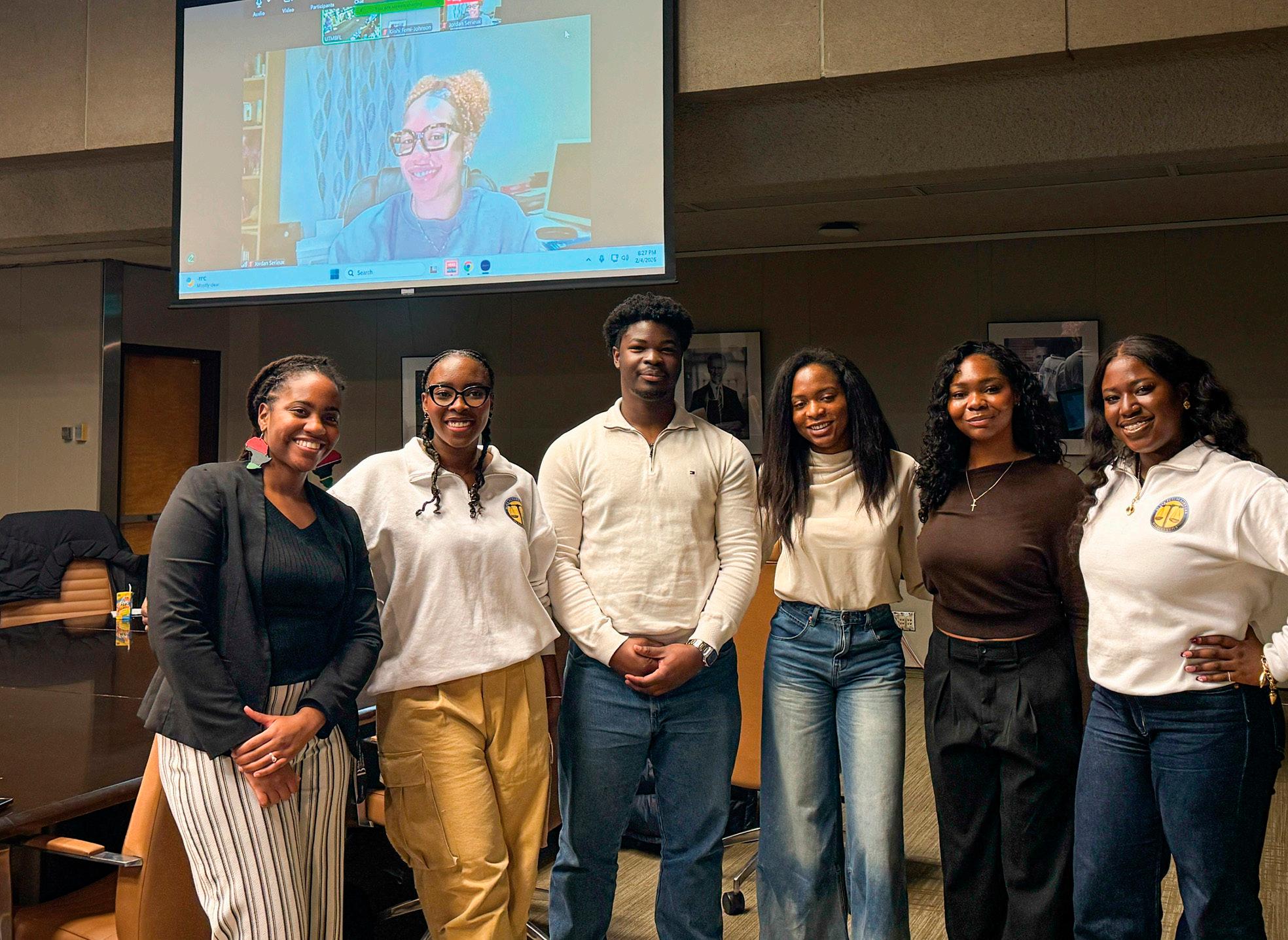
On February 4, Black Future Lawyers UTM (BFL UTM) hosted Breaking Barriers: A Student Success Panel to support Black students as they navigate pathways to law school and the legal profession.
The panel, organized for Black History Month with the University of Toronto Mississauga Students’ Union (UTMSU), brought together undergraduate and law students, U of T alumni, and UTM community leaders to discuss mentorship, LSAT preparation, and the challenges Black students face entering competitive and costly legal fields.
Addressing representation gaps Black professionals remain underrepresented in Ontario’s legal fields. According to a 2016 report from the Law Society of Ontario cited by The Globe and Mail, only about 3.2 per cent of lawyers in the province identified as Black, despite comprising 4.7 per cent of Ontario’s population at the time.
Kishi Femi Johnson, president of BFL UTM, said the lack of representation continues to motivate the organization’s work in supporting Black students interested in pursuing legal careers.
“We have such little legal representation, but such mass incarceration of black people, which is why we’re really pushing to ensure that people are able to have all the resources that they need to apply to law school.”
Johnson said the organization aims to provide students with financial and informational resources to pursue law school, including networking opportunities, LSAT preparation support, and guidance on applications.
“Law school is extremely expensive. It’s extremely competitive … and it’s a ‘you-knowsomeone’ industry,” she said. “A lot of the people that were competing against [us] have fathers or mothers that are partners, have grandfathers who started law firms, or have pictures of their great, great grandfathers on the walls of the U of T law school. But we can’t relate to that.”
The panel featured Black students and speakers who discussed applying to law school, recovering from academic setbacks, and building professional networks.
“Even if you failed in [the] first year, we want you to believe that you can still be a lawyer,” Johnson added.
Expanding representation in law
Panellist Oluchi Isiuwe, a double major in psychology and criminology, law, and society, said her interest in law stems from seeing gaps in representation within areas such as real estate and land law.
“There’s not a lot of black lawyers in real estate and in that kind of space, and land is everything to me,” Isiuwe said. “Land protects dignity, land protects generations. Where you live is so important, and it affects so much of how your life progresses. People can be blocked out of different opportunities depending on where they live, and there are not that many black people in the space to talk about the barriers that their people face.”
She added that limited representation can make it difficult for Black students to feel they belong in legal or professional spaces.
“As a black student, I felt like I didn’t belong in certain spaces, like legal spaces or professional spaces… I did not see people like
me as much as I saw others,” she said. “It was a little bit of a barrier, in that sense, because my access to mentors who could connect to my specific experience was less than [for] other people.”
Isiuwe said attending Black student events and networking through organizations like BFL UTM helped her connect with mentors and law students.
“Seek out the resources that you have, join black clubs, be in the spaces that you want to be with black students,” she emphasized.
Community and mentorship
For many attendees, the event offered both practical guidance and a sense of community.
Wendy Adebo, a second-year criminology major and Vice-President Internal of UTM BFL, said attending the panel strengthened her motivation to pursue law.
“Coming to this event was really beneficial, because if I can get a mentor, I can be able to know exactly what to do, and it’s making me more motivated to want to study law,” Adebo said, adding that participating in BFL UTM has encouraged her to step outside her comfort zone, connect with others interested in law, and continue developing her public speaking skills.
Giovanni Williams, a third-year criminology and political science student, said returning to the event this year reinforced his commitment to pursuing law, despite academic challenges.
“Knowing that there are people like me who have struggled and are still pursuing law and still are triumphing against the struggles that they have in breaking those barriers — that’s really what motivates me, even though I hear
about all these struggles and even though I experience some of them,” Williams said.
Organizing challenges
Johnson said organizing the panel came with logistical and financial challenges, including securing speakers and funding.
“The biggest challenge, I would say, is finding panellists,” Johnson said. “Racialized people have part-time jobs. They have a lot of things that are going on at home. Some people in the room are caretakers for their family. So it’s hard for us to get students that are… successful, that also have the time to do things like [a panel].”
Support from the UTMSU helped make the event possible by providing funding, marketing, and logistical assistance.
Despite challenges, Johnson described the event as a success, citing strong turnout and engagement.
“To see new first years, to see people who weren’t even looking into law in their first year, but are now attending this event and considering law [was a success]. I’m so proud of how many people that we were able to fit into the room today, and I couldn’t be more grateful,” she reflected.
Students said events like the panel are valuable but should extend beyond Black History Month.
“I feel like every month should be Black History Month. Like every month, you should be able to… showcase your blackness [and] be out there,” Adebo said.
Williams added that hosting similar events earlier in the academic year could help students prepare for LSAT exams and law school applications.
Celesta Maniatogianni Associate News Editor
“A
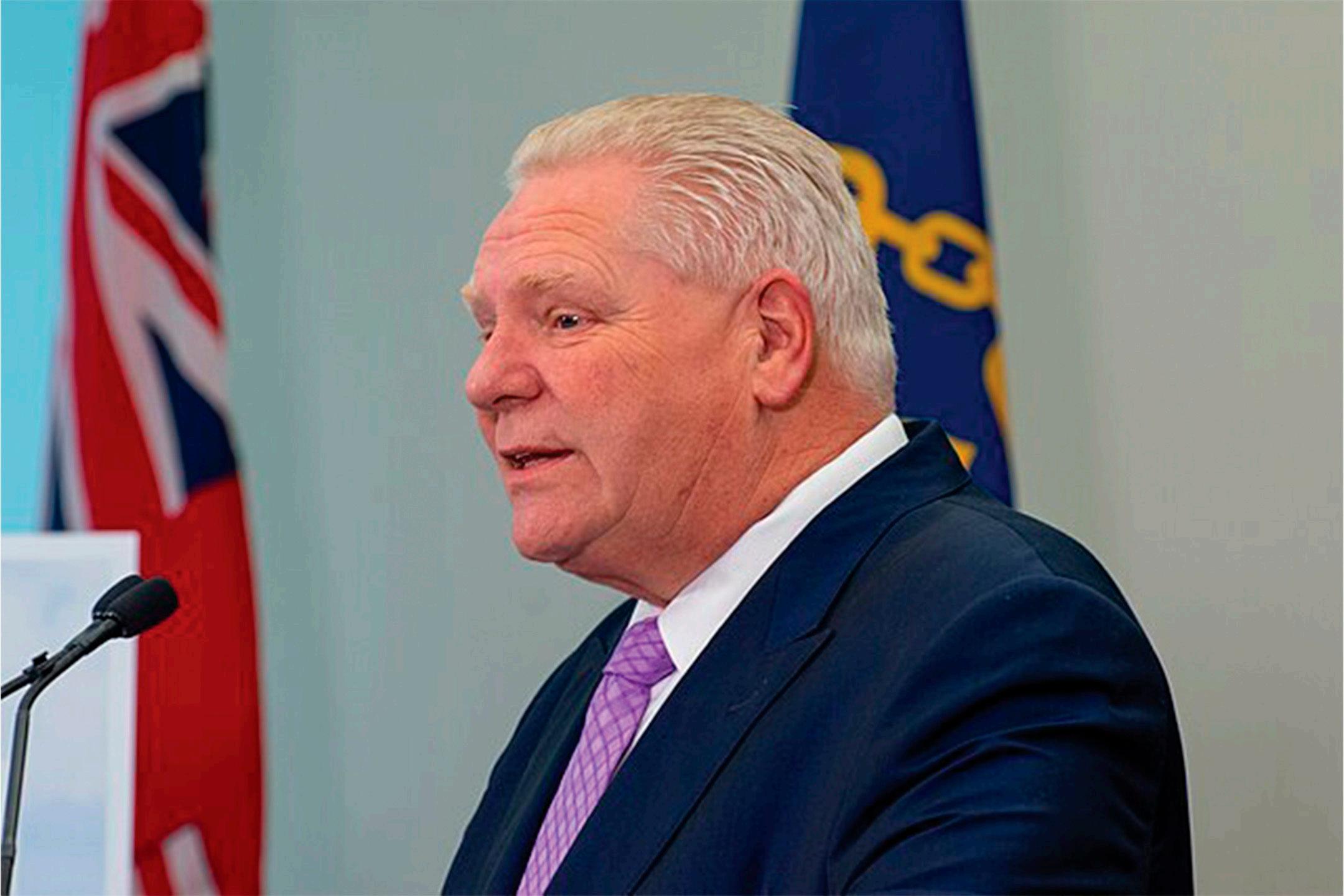
On February 12, Doug Ford’s government announced billions in new funding for Ontario colleges and universities in addition to a restructured Ontario Student Assistance Program (OSAP) and the end of a seven-year tuition freeze.
In the announcement, the government says the changes are aimed at protecting “access to the education [students] need to launch successful careers, build long-term sustainability in the postsecondary sector and support the world-class research being conducted at Ontario universities and colleges, while ensuring education remains accessible for future generations.”
The government says it is restructuring OSAP to “strengthen [its] long-term sustainability” and to “ensure financial assistance remains available for future generations.” The restructuring applies to the permitted grantloan ratio available to students.
Starting fall 2026, OSAP applicants will receive a maximum of 25 per cent of their OSAP funding as grants and a minimum of 75 per cent as loans, compared to the current model, which allows for a maximum of 85 per cent as grants and a minimum of 15 per cent as loans.
The changes to OSAP have concerned both students and student unions. The Canadian Federation of Students Ontario (CFSON) called the restructuring a “devastating blow for students” in an Instagram post, writing that these changes “will have significant ramifications for students” in Ontario.
CFSON have since organized a short-term action plan, including a rally at Queen’s Park on March 4 and a “Campus Week of Actions,” promoting student organizations on Ontario postsecondary campuses.
In a video statement over Instagram, the University of Toronto Mississauga Students’ Union (UTMSU) said that the changes to OSAP do not “reflect the needs of students” and that it will ultimately lead to higher student debt and decreased accessibility to higher education.
As of writing, the University of Toronto Students’ Union (UTSU) and the Scarborough Campus Students’ Union (SCSU) have not reacted to the Ontario government’s announcement.
The Ford government also announced “an updated tuition framework,” which will allow publicly assisted colleges and universities to raise tuition costs by two per cent per year. This marks the end of the freeze on tuition for Ontario domestic students, which has been in place since 2019. Out-of-province domestic students have been excluded from the freeze since the 2023–2024 year.
Black History Month Luncheon set for February 26 — Hart House
Byline: Junia Alsinawi,
Deputy News Editor
This Thursday, from 11:00 am to 2:30 pm, U of T’s 24th annual Black History Month (BHM) luncheon will take place in the Great Hall at Hart House. The luncheon, organized and funded by the Division of University Advancement with support from Hart House, is the culminating event of a month of BHM activities across campus.
The event has become an important venue for recognizing Black leaders across many fields, and each year, the organizing committee selects one deserving individual to receive the University of Toronto Advancement Achievement Award.
This year’s recipient is U of T Chancellor Wes Hall, a businessman and entrepreneur well known for his role on Dragons’ Den. Hall is also the founder of the BlackNorth initiative, which works to combat anti-Black racism and focuses largely on improving representation for Black Canadians in leadership and executive positions.
Skule frosh fly flag over Western — London, Ontario
Byline: Devin Botar, Varsity Staff
On February 7, under the cover of darkness, a group of U of T engineering 2T9s raised a banner outside Western
Tuition will begin to rise for the first time beginning in fall 2026. In the first three years, tuition will increase by up to two per cent. After that, tuition will either increase up to the threeyear average rate of inflation, or up to two per cent, whichever costs less. The university remains firm in its commitment to “ensuring that financial circumstances are never a barrier to talent, ambition and achievement,” U of T President Melanie Woodin wrote in a February 12 statement.
New funding for Ontario colleges and universities
The new $6.4 billion investment will be received over the next four years and includes $4.4 billion
in increased operating funding and $1.7 billion to fund 70,000 new spots in colleges and universities for Ontario residents.
Woodin has praised the new funding as “a bold and important step” and the “biggest boost to higher education in this province in a generation.”
The Ontario government said in its announcement that this long-term funding model “will see universities, colleges, and Indigenous Institutes focused on delivering programs that align with student and labourmarket demand,” with “increased, predictable funding.” This marks the highest increase in operating funding in Ontario’s history.
University’s Spencer Engineering Building, showing the words “OLD SCHOOL NEW SKULE” written in blue and gold paint.
“They will pay,” promised one Western engineer back in October, after the Brute Force Committee — a secret society of U of T engineers — placed a wooden train atop the Spencer roof.
Four months on, and Skule has struck again, yet no retaliation from London has materialized, calling into question the credibility of Western’s threats.
Andrew Mountbatten-Windsor arrested on misconduct suspicions — Thames Valley
Byline: Junia Alsinawi, Deputy News Editor
The former Prince Andrew was arrested on February 19 by Thames Valley Police on suspicion of misconduct in public office. Police have not specified what the misconduct refers to, but the arrest follows their review of claims that the former prince shared sensitive government information with convicted sex offender Jeffrey Epstein while serving as UK trade envoy.
The former prince has not publicly commented on his arrest and the allegations of misconduct, but has previously denied all Epstein-related allegations against him. Though he has
since been released from police custody, the former prince remains under investigation, and police searched his former home the day after his arrest.
King Charles III, Mountbatten-Windsor’s older brother, released a statement on February 19, writing, “[the authorities] have our full and wholehearted support and cooperation. Let me state clearly: the law must take its course.”
Seven TPS officers charged in major corruption investigation — York, Ontario
Byline: Nguyen Bao Han Tran, Varsity Contributor
On February 5, York Regional Police announced that seven Toronto Police Service (TPS) officers and one retired officer were arrested and charged in connection with a major corruption and organized crime investigation.
York Regional Police say the months-long probe uncovered allegations including conspiracy to commit murder, extortion, drug trafficking, firearms offences, and breach of trust. Investigators allege some officers shared confidential police information and accepted bribes linked to criminal networks connected to the tow-truck industry. TPS and its board have requested an independent review by Ontario’s inspector general to examine systemic issues and restore public trust.
February 24, 2026
thevarsity.ca/category/opinion
opinion@thevarsity.ca
it’s
Nardos Wakjira Campus Affairs Columnist
U of T was not always a Black-inclusive institution. While its doors were initially open to Black students, segregationist laws introduced in the late seventeenth century and early twentieth century declared that Black students were no longer welcome to attend. It took years of struggle and resistance from courageous, determined Black students to pave a way for future marginalized students to pursue their education comfortably.
Yet, many of us still feel isolated and alienated in a school with only 5.97 per cent of students identifying as Black. The sense of community students feel at U of T is the anchor tying students to this institution. This is especially true for Black students, who remain marginalized in Western post-secondary institutions.
I believe that student clubs are a primary space where we can find community, a sense of belonging, and a space to celebrate our culture, combating the isolation that can come with being marginalized. U of T should support and invest in such spaces by providing increased funding to Black student clubs.
Entering my first year in 2024, I searched U of T for a Black student club to participate in, which is something I’d never done before. I found clubs like the Black Students Association (BSA), Black in Stem (BIS), and the African Students Association (ASA), but never truly felt like I belonged in any one club. This year, I felt a little more at home when I applied to be
U of T
an executive member of a fairly new club, the Eritrean and Ethiopian Students Association (EESA).
Black History Month marks the middle of the winter semester here at U of T, and after almost two semesters as an EESA executive, I’ve learned that having a student space specific to one’s cultural background is one of the most valuable aspects of a large, multicultural institution like U of T. It doesn’t create segregation or exclusion; it promotes equity and diversity. In fact, to deny people’s unique heritage and conflate the different components of the Black community would be doing them an injustice.
There is so much to gain as a Black student participating in a club that represents a specific community. These clubs foster friendships, connections within your program and future career, and make practical use of skills like event management, public speaking, marketing, and much more. Most importantly, they are an opportunity for students to learn and become further integrated into their own culture. As a minority, I feel that it’s easy to feel like you’re losing your identity by trying to fit in, or have no sense of one. Having a space that recognizes and strengthens your identity is invaluable.
I believe that U of T still has a long way to go in recognizing and appreciating its population of Black students. One way to do so is to offer more support to Black student clubs. As a club executive, I see the realities of operating behind the scenes. Unfortunately, smaller clubs — as cultural clubs often tend to be — receive
I don’t care if you think it’s easy, you learn either way
You may think it’s a ‘bird course’ but you’re still learning
Emmanuella Nwabuoku Domestic Affairs Columnist
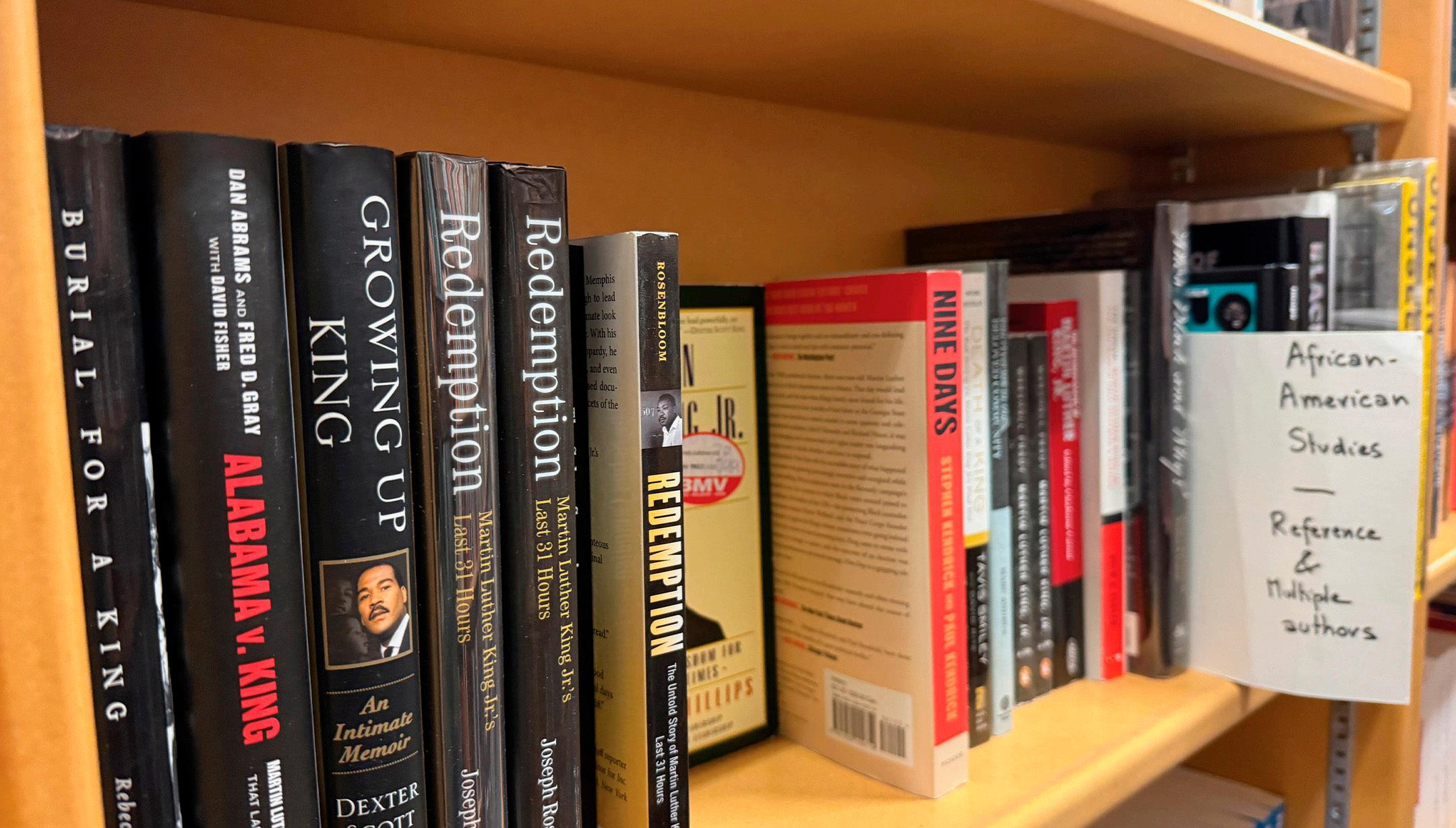
I was scrolling on Reddit looking for courses to fill a gap in my semester, looking for something easy that would provide time for other, more pertinent classes. That was when I first noticed the phenomenon of students suggesting African or Black studies classes as ‘bird’ courses.
To my understanding, bird courses are easy-A courses: low-stress courses, GPA boosters. Their syllabi are less academically rigorous compared to non-social science or non-humanities majors/minors.
There are barely any exams; often, the most you write is essays. With the advent of AI and the age-old tactic of rambling when confused, I can see why students might think these courses are simple, or categorize them as “bird” courses.
In some ways, I agree with them. I also fall into the mentality of thinking my women and gender studies or African studies courses can boost my GPA when my political science or STEM courses appear too difficult.
I will not chastise you if you think that courses in Black studies are bird courses. Instead, I argue that it does not truly matter. In the end, you are still taking the class. That’s all that should matter.
We in academia should, in some way, understand how inaccessible it could be. My domestic U of T tuition was around $10,000 a year. I am a commuter, so I spend around $6 a day, every day, for eight months travelling to UTSG.

less funding in comparison to course unions. For instance, course unions receive funding annually from their respective departments or colleges, even before applying for other funding opportunities. This is a form of support that many cultural clubs like EESA do not receive.
EESA aims to forge a space for Eritreans and Ethiopians like myself to come and enjoy their time at U of T with each other and to bolster academic success. We don’t believe students should have to pay to participate in such events and opportunities. The University of Toronto Students’ Union’s policies often make it difficult for us to create the space that we want to see, especially since funding is prioritized for clubs that “have developed or are developing a consistent source of revenue that reduces or will reduce the expenses to which the UTSU is being asked to pay for.”
Alternative funding options exist, but from my experience on the EESA, these options consist of long, difficult processes to secure the money
we need to support our club, several of which involve reimbursement policies. Many student club executives end up spending out of pocket with no guarantee of being reimbursed in full. U of T should be doing more to support cultural clubs, and through them, support its own students.
Cultural clubs are more powerful than they are given credit for. They are significant politically, historically, and globally. When countries are divided, wars are waged, and conflicts surge, students remaining united in cultural clubs is a sign of hope. Participating in such communities is not only important to me, but will be to every student after me, as well.
Black History is actively created every day on campus through student cultural clubs.
Nardos Wakjira is a second-year psychology major. She is also the Opinion Section’s Campus Affairs Columnist and an executive member of the Eritrean and Ethiopian Students Association.
The cost of university education has already proven to be financially grating for me. If I were an international student, I assume the cost would skyrocket. If I lived on campus as well, I fear I may file for bankruptcy.
While there are bursaries I have applied to to alleviate the pressures, the stress still persists for some. In a world where debt is normalized and academics are viewed as pretentious jerks, it is no surprise to me that anti-intellectualism is rising.
If we assume academics are stuffed shirts with brown tweed jackets who talk in circles about unimportant topics, then the courses they learn or teach are viewed as frivolous. Often, the courses we view as lesser are those we think serve no tangible benefits to society (although many people with social science degrees end up in careers where they provide tangible benefits to society). STEM can create buildings, weapons, and bridges. Social sciences and humanities often analyze social institutions and structures, so the results are generally ideological, not always physical.
If the people are annoying and you cannot visualize their topic — philosophy, or humanities in general — it could be difficult to enter that space, so you may distrust them. These barriers encourage minimizing language about those ‘useless’ courses, leading to less engagement and the suspension of what I think are necessary majors, such as the lost undergraduate gender studies program at York University.
At times, it draws ire for those who study those majors, as seen with Alina Louks, PhD, from Cambridge University. Her English
literature thesis on olfactory ethics was viewed as a “waste of money” or as noncontributory to society, according to an analysis of social media comments by the CBC. In 2024, she received rape threats from digital mobs who saw no value in the humanities.
In that case, demeaning the humanities encouraged flagrant verbal assaults against academics. I am well aware of the impact of lessening social science and the humanities. The personal and institutional effects of that degradation are saddening. While I see the consequences, I also see possible benefits.
I compare this to those videos of men intentionally interrupting other women’s workouts and then realizing that the women’s ‘easy’ exercises were difficult. They begin dedicating more effort to proving their initial assumption, and while attempting to strengthen their ego, they are gaining muscle.
I think something similar could happen with Black studies. Students take the course expecting it to be simple and an easy A. Sidestepping the racist undertones of these assumptions, after enrolling, students realize that to do well, they would need to engage with the class content.
In both instances, their ego may open them up to strengthen themselves or learn something new. Even if students think it’s ‘effortless,’ they are still learning, particularly if attendance is mandatory.
I firmly believe it is important to wield undermining beliefs when necessary. 63 per cent of all humanities master’s degrees are held by women; in the Louks example, the severe threats she faced were gendered; in my comparison, the majority of the athletes underestimated were women. There is a gendered aspect to the demeaning of feminine studies or exercises. While we address the misogyny in the degradation, we can still use it to encourage engagement.
Black studies’ apparent simplicity creates a false sense of security, which could encourage students to enter the field. Whether to learn or increase participation and convince the university to continue funding the relevant departments, it’s a win/win for everyone involved.
Emmanuella Nwabuoku is an Opinion Domestic Affairs Columnist studying political science and gender studies.
We must make space for every kind of
The problem of never feeling Black enough
Coming to university often means learning new academic, social, and cultural languages. For many Black students, it also means confronting an unspoken question: what kind of Blackness is acceptable here?
I believe that campus culture quietly pressures Black students to perform a narrow version of Black identity. These expectations appear in subtle ways, such as how you are expected to speak, what cultural references you should know, how you dress, and what beliefs you embody.
While rarely stated outright, these norms shape belonging.
These pressures are especially disorienting for Black students who are immigrants, children of immigrants, religious minorities, or who come from different cultural or geographic backgrounds. Arriving at university, already
navigating disorientation, many students find themselves decoding identity expectations alongside academic ones. The challenge becomes not only succeeding in the classroom, but also learning how to exist in social spaces that often prioritize legibility over complexity.
For a long time, I felt like I had to fit into a specific box to be ‘Black enough.’ Not because anyone explicitly told me to, but because certain forms of Blackness seemed more acceptable than others. Over time, I started to realize how quietly these expectations shape behaviour by encouraging conformity and discouraging difference.
Often framed as jokes, labels such as ‘whitewashed’ or ‘Oreo’ function as policing mechanisms. They suggest that Blackness exists on a hierarchy and that not performing a specific version of Blackness signals inauthenticity. This policing often comes from within our own communities. Rather than making room for difference, these labels flatten
identity into something rigid, reinforcing the very constraints Black people have historically resisted.
It is important for everyone to recognize that Blackness has never been singular. It is diasporic and multifaceted, shaped by migration, language, faith, class, and history. It looks different everywhere — in Toronto, Houston, Lagos, the Caribbean, Muslim households, Christian households, and many others.
There has never been one way to be Black. Yet it can feel that, oftentimes, a narrow version of Black identity is rewarded, one that aligns most closely with dominant narratives and expectations.
Being Black is not something you perform or earn through cultural fluency. It is a lived reality shaped by history, struggle, joy, resistance, and self-identification. What matters more than fitting a predefined mould is understanding the nuances of Black experience and standing in solidarity with Black struggles.
In university spaces that often prioritize conformity and legibility, Black students are implicitly asked to compress themselves into digestible versions of who they are. But students do not owe anyone a performance of identity.
Black History Month offers an opportunity to ask how institutions and peer cultures shape belonging, and whether they truly make room for the full spectrum of Black experience.
For those outside Black communities, this means resisting the urge to ask people to explain themselves. It means allowing Black students to exist without interrogation or comparisons. And for those within our communities, it means recognizing the full spectrum of Black identity. There are countless ways to be Black, and none are more legitimate than the others.
Aishat Abdulrazaq is a fourth-year student at UTM studying digital enterprise management and double-minoring in sociology and creative writing.
We all bleed the same, but our blood is not treated the same Invocations of shared humanity mean little without structural accountability
Natasha Nwajiaku Varsity Contributor
Content warning: This article contains mentions of racism.
We all bleed the same, but our blood is not treated the same.
U of T claims that cultivating “a diverse campus and a culture of inclusive excellence are essential parts” of its institutional foundation. This language of shared belonging is pervasive and largely well-intentioned. It signals an aspiration toward fairness and collective responsibility.
Yet for many Black students, this rhetoric often rings hollow amid a daily reality where our humanity is invoked and undermined. Equality is frequently affirmed in principle, but unevenly experienced in practice.
Black students often must be exceptional simply to be taken seriously, resilient in the face of racialized scrutiny, and expected to be grateful for inclusion even when it feels conditional. These demands are rarely acknowledged as unequal because they are obscured by claims of sameness. Shared humanity becomes a rhetorical flattening that leaves structural burdens untouched.
Universities invoke this notion of shared humanity to signal equality, yet impose disproportionate academic, emotional, and behavioural demands on Black students, producing conditional belonging rather than genuine inclusion. This contradiction appears in two interconnected ways: equality rhetoric that masks heightened expectations, and a form of belonging that remains contingent and easily withdrawn.
Unequal expectations
The language of shared humanity often functions as the backdrop against which Black students are
held to heightened standards of exceptionalism, resilience, and self-regulation. While equality is presumed in principle, Black students are frequently required to demonstrate competence above what is expected of their peers, performing excellence simply to be recognized as legitimate.
This dynamic is intensified by what psychologists describe as stereotype threat: the risk of confirming a negative stereotype about one’s social group during evaluative situations. When academic performance is framed as a diagnostic of ability, Black students carry an additional cognitive and emotional burden.
Errors may be interpreted not as individual missteps but as confirmation of racial biases.
The familiar expectation to be ‘twice as good’ reflects conditions in which evaluation is unevenly weighted rather than neutral.
Such pressures extend beyond formal assessments into everyday academic interactions.
Racial microaggressions, defined as brief and commonplace slights that communicate doubt or dismissal toward people of colour, shape classroom interactions and informal evaluation.
Black students may find their contributions scrutinized or their presence treated as exceptional rather than ordinary. Competence is required and persistently re-examined, forcing Black students to constantly self-monitor.
Alongside excellence and scrutiny operates an expectation of gratitude. Scholars and commentators of higher education have noted how students can be pressured to perform appreciation for inclusion, suppressing critique and exhaustion to affirm institutional benevolence. Resilience, in this context, becomes a condition of belonging rather than a personal strength.
Conditional belonging
This unequal demand is the first mechanism that produces conditional belonging. You
are included if, and only if, you perform this exhausting labour of exceptionalism without complaint. The claim “we all bleed the same” obscures the reality that not all students are asked to carry the same weight.
The performance demanded of Black students reveals that belonging on campus is not a right rooted in shared humanity, but a status that must be continuously earned and carefully managed. Inclusion is extended selectively, and it remains vulnerable to withdrawal the moment it challenges institutional comfort.
Diversity is often welcomed as an image or aspiration, while those who name its limits are treated as problems rather than participants.
In this framework, Black students may be celebrated symbolically within institutional narratives of diversity, but met with silence and deflection when they articulate racialized harm or critique. Compliance thus becomes a requirement for visibility.
The cost of sustaining this performance is not abstract. Researchers describe its cumulative toll as racial battle fatigue: a pattern of emotional, psychological, and physiological exhaustion produced by persistent racial microaggressions and hostile environments. Managing heightened expectations, constant scrutiny, and the risk of being misread requires sustained vigilance. Over time, this labour depletes energy that might otherwise be directed toward learning and creativity.
In response, many Black students cultivate community in spaces where performance can be suspended. Black student organizations, cultural centers, and informal networks function as counter-sites of belonging where care and mutual recognition are possible. The margin, where these communal sites often exist, can become a site of resistance rather than
mere exclusion, offering the perspective and solidarity necessary to survive and reimagine oppressive conditions. These communities are not retreats from campus life, but responses to institutional insufficiency.
Call to action
We may all bleed the same, but our blood is not treated the same. Universities cannot close this gap through affirmation alone. Invocations of shared humanity and inclusion mean little without structural accountability for how inequity is produced and sustained on campus. If institutions are serious about belonging, they must confront the unequal labour placed on Black students to represent diversity, endure scrutiny, and educate others while navigating harm themselves.
This demands more than symbolic commitments. It requires concrete mechanisms to address bias in evaluation and advising, meaningful responses to racial harm, and institutional responsibility when belonging is undermined rather than protected. It also requires the recognition of Black joy and community not as extracurricular add-ons, but as essential to campus health and student wellbeing.
True inclusion is not declared. It is felt as the freedom to be ordinary, to stumble, to speak honestly, and still belong. Conditional belonging reveals the consequence of unequal demands: Black students are valued as symbols yet remain vulnerable as people, with institutions determining when belonging applies and when it disappears.
Natasha Nwajiaku is a fourth-year undergraduate student at the University of Toronto Mississauga, double-majoring in psychology and criminology, law and society, with a minor in sociology.

February 24, 2026
thevarsity.ca/category/science science@thevarsity.ca
who enters research spaces. Together, these factors create an early sorting process.
At research-intensive universities like U of T, undergraduate research is often framed as an opportunity. In practice, it operates more like a prerequisite for scholarship applications, honours requirements, graduate school admissions, and jobs. Undergraduate research experience often determines successful applicants long before any formal evaluation takes place.
Research shows that undergraduate research strengthens scientific training and academic persistence. Across STEM disciplines, students who participate in research are more likely to remain in their programs, graduate on time, and pursue further levels of study.
A 2024 multi-institution American study by Heather Haeger, Elia Hilda Bueno, and Quentin Sedlacek, published in Cell Biology Education (CBE)––Life Sciences Education, found that students who engaged in undergraduate research were twice as likely to graduate within four years and more than 10 times as likely to graduate within six years compared to statistically matched peers. When researchers controlled for background characteristics and prior academic performance, graduation gaps for low-income, first-generation, and racialized students were cut in half at four years and fully closed at six.
But this body of research leaves one question unexamined: who is actually able to access undergraduate research in the first place?
Who gets access to undergraduate research?
Research on undergraduate research access identifies a consistent pattern. Students from lowerincome backgrounds, first-generation students, and students from historically underrepresented racial and ethnic groups participate in undergraduate research at lower rates, even though they stand to benefit the most. Financial constraints, uneven access to information, and reliance on informal mentorship networks shape
At UTM, this sorting often begins in first year. In an interview with The Varsity, Yassmina Mostafa, a second-year psychology student, described undergraduate research as “a quiet expectation rather than an explicit requirement.” In introductory psychology lectures, she says that professors frequently emphasized the importance of research experience when discussing honours programs and graduate school, but offered little concrete guidance about when students were expected to begin, how much time research actually requires, or what kinds of positions are realistic at different stages of a degree.
By second year, the pathway into research becomes clearer, but also more restrictive. Most psychology research opportunities at UTM are not embedded in the curriculum.
Students are expected to seek them out independently by cold emailing faculty, monitoring individual lab websites, or applying to Research Opportunity Programs (ROPs) — credit-bearing placements that pair undergraduates with faculty supervisors for a limited academic term. Mostafa says that, in her experience, ROPs are “very limited in number” and “prioritize students with a research background.”
Even when students are aware of these research programs, the application process can feel inaccessible. “If you do not already know how the system works, it is easy to feel underqualified or unsure whether it is even worth applying,” Mostafa said. Expectations around research terminology, lab culture, and academic norms are rarely taught explicitly, yet they function as silent filters.
Outside of formal programs, many psychology labs at UTM rely heavily on volunteer undergraduate research assistants, particularly during the fall and winter terms. These roles often require fixed weekly commitments, attendance at lab meetings, completion of ethics training, and ongoing responsibilities such as data coding or participant coordination. “The work is real and
ongoing,” Mostafa said, “but it is framed as an opportunity rather than labour.” When this labour goes uncompensated, the costs are shifted onto students themselves.
When opportunity depends on financial flexibility
Financial constraints remain one of the most consistently documented barriers to undergraduate research participation. Many undergraduate research positions are unpaid or offer modest stipends, which can create financial barriers for students who rely on paid employment.
For students who need to maintain paid work during the academic year, volunteering in a lab can be impractical or impossible. “They expect a level of availability similar to paid work,” Mostafa explained, “without compensation.”
Studies show that students who work substantial hours during the academic year are significantly less able to participate in unpaid research roles, which are gateways to academic advancement. While funded research programs exist, they are often limited in number and frequently concentrated during summer terms, which can create uneven access depending on financial circumstances, employment needs, or eligibility requirements.
Students who can afford to volunteer early accumulate experience, mentorship, and institutional familiarity that make them competitive for funded roles down the line. Students who cannot volunteer are excluded at the outset, regardless of academic ability or interest. Over time, this experience gap compounds, and what appears to be merit increasingly reflects access to time, financial flexibility, and institutional knowledge rather than ability alone.
Black students and the unequal research pipeline
National data shows that Black students remain underrepresented at advanced stages of scientific training. According to a 2022 study published in
the Biomedical Engineering Education Journal
Black students earned approximately nine per cent of science and four per cent of engineering bachelor’s degrees in 2016. In comparison, white students made up 56 per cent of the total science and engineering degrees.
Furthermore, Black students make up about five per cent of doctoral degrees throughout all fields, with many fields lacking any Black researchers altogether, despite making up about 13 per cent of the US population at the time this article was published. Representation narrows further in certain disciplines, including the life sciences, indicating progressive exclusion within the research pipeline.
Within Canadian research universities, Black scholars remain significantly underrepresented in tenure-track faculty positions, particularly in research-intensive departments. To illustrate, Black Canadians make up around four per cent of the population, yet only around two per cent of Canadian university senior leadership positions are held by Black scholars.
The future of scientific research
When research experience becomes an informal prerequisite for honours programs, theses, or graduate applications, its role shifts from a learning experience to a gatekeeping mechanism. Students without early access may find themselves excluded later, not because of a lack of ability, but because of a lack of opportunity.
At the University of Toronto, initiatives such as the Undergraduate Research Explorer and centralized funding programs aim to improve transparency and reduce financial barriers. These efforts mark meaningful progress, but they do not fully address the reliance on unpaid undergraduate labour that underpins much research production. When participation in research depends on financial flexibility and race, rather than curiosity or potential, the scientific community risks narrowing the range of perspectives that shape knowledge production.
Julian Mercier Varsity Contributor
After countless emails and late nights of looking through professors’ research, I finally landed an interview for a 2024 summer research position. I would be taking part in the Laboratory Medicine and Pathobiology Summer Undergraduate Research Experience Program (LMP SURE), which was both an exciting and terrifying opportunity for mentorship in undergraduate research.
The LMP SURE program attracts many talented undergraduates, with the 2024 cohort hosting 67 students from universities across Canada. The culture of STEM-associated fields often frames undergraduate research as a major milestone, with students actively competing for these kinds of positions.
For perspective, the Natural Sciences and Engineering Research Council of Canada (NSERC) is one major source of STEM research funding and only supplies around 3,000 research awards annually for undergraduate students in STEM fields across Canada. Meanwhile, there are 450,000 students enrolled in STEM programs at the university level nationwide, meaning funded research roles remain very limited. While taking part in this internship, I was able to observe how lab culture, representation, and mentorship shape success in research.
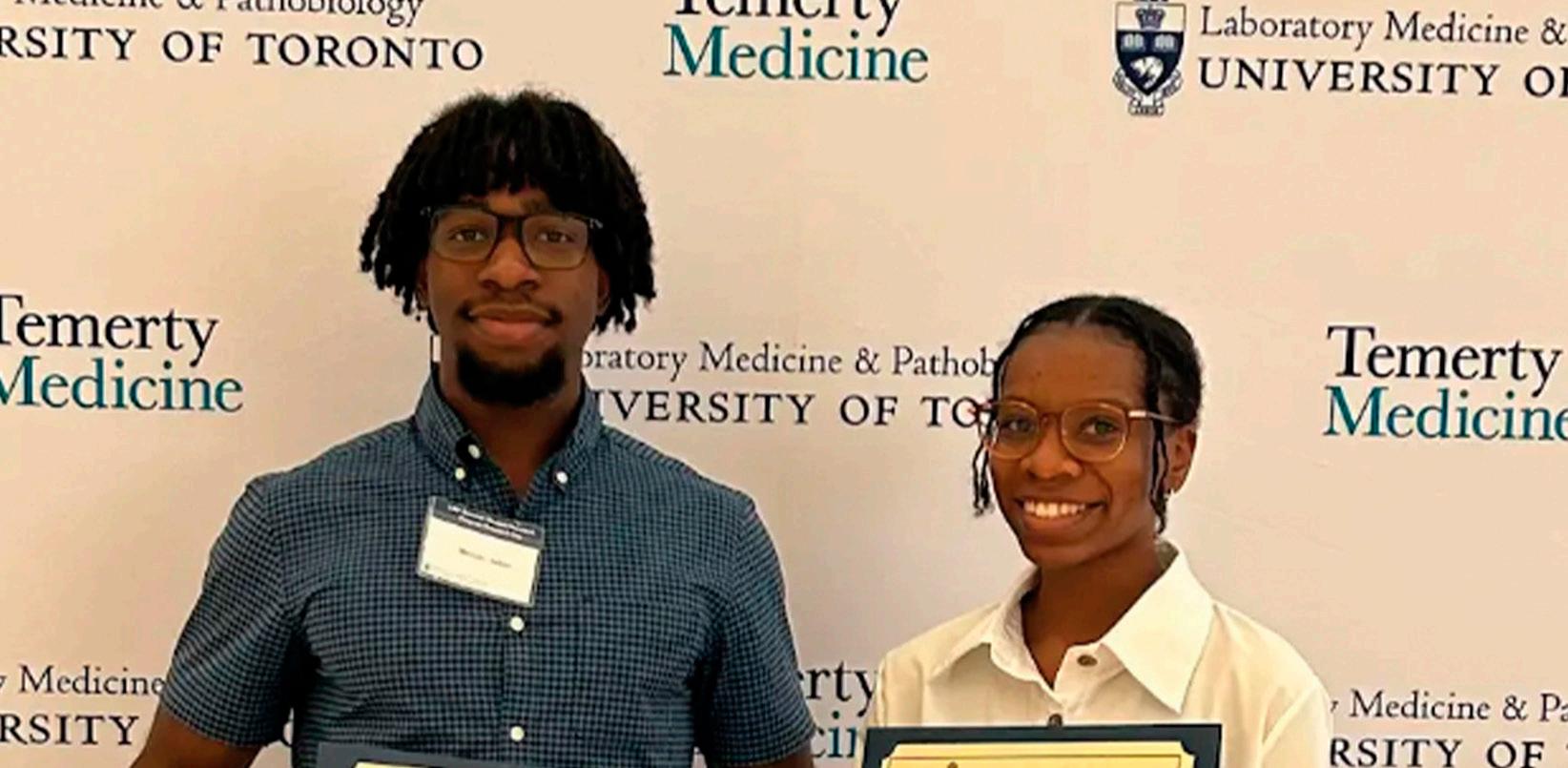
As I settled into the lab, the composition of the undergraduate student body immediately stood out. Among the 67 students, including me, only four of us were Black, and we all worked in Professor Paul Hamel’s lab.
Hamel was my principal investigator, leading the research project, and helped spearhead the LMP SURE initiative by expanding the overarching SURE program to include a stream geared towards attracting Black talent. The LMP department then followed suit after recognizing that there were serious gaps in mentorship and access for Black students in STEM.
The program aimed to provide the guidance, support, and opportunity that Black students are routinely excluded from. However, our small numbers made our presence feel very visible within the cohort of SURE students.
The mentorship we received was a result of broader efforts made by the university to help lessen the visible gaps in diversity and representation. LMP facilitated this mentorship by fostering a supportive environment, structured supports, and dedicated funding for Black students.
Structural gaps in STEM
According to the fall 2025 iteration of the U of T Student Equity Census, only 5.97 per cent of U of T students are Black. Barriers, biases, and unequal access to opportunity in lab environments stem from deeper systemic problems with Canadian education.
According to a 2024 Statistics Canada study, STEM-qualified Black students are more likely to not graduate or switch programs than the rest of the student population. Black students consistently ranked lower than their peers in bachelor’s degree enrolment rates, graduation rates, STEM enrolment rates, and STEM graduation rates.
Funding, access, and who gets in To better understand how these gaps are produced and experienced, I spoke with my former principal investigator, Hamel, and my fellow post-graduate researcher, Sarah Logie. Hamel offered insights into how structural determinants limit access for marginalized students, while Logie reflected on her personal experiences working in the lab. Together, their perspectives highlight the importance of representation and how underrepresentation is a multifaceted issue within the university.
Hamel emphasized that access to undergraduate research is more of a structural issue rather than a question of interest, racial bias, or merit. He found that many of these disparities, such as racial bias, are perpetuated by institutional funding, stating
that “there is no institutional support for it. So this represents an impediment to this, because the business we’re in, particularly [...] in the biological sciences, costs money.”
This also highlights the issue of unpaid or underpaid research positions. Many students are often left competing for unpaid research positions, like volunteering in labs, creating an even more competitive environment and further financial inequities.
Hamel also explains that “there’s certainly enough people that would take students that are from all kinds of marginalized communities,” but competition against peers with previous lab experience makes it difficult for newer students to get lab opportunities.
These institutional constraints help put into perspective who really gets research positions. Underfunding increases competition for marginalized students, such that these students are less likely to get research positions, meaning a lack of existing representation remains. This reinforces a cycle of limited resources and keeps opportunity sequestered for those who already have them.
Logie reflected on navigating the lab environment as one of the few Black students. She said that while being a part of a visible minority “didn’t affect her research outcome in any way,” she felt there was an internal pressure to represent “yourself, your culture, and your race.”
Initially, underrepresentation for Logie felt daunting. She said, “I felt self-conscious in the
Ariana Petrazzini
Varsity Contributor
of Black health and on Black medical students’ learning experiences, there is insufficient research evaluating their impact.
warning: This article contains mentions of racism, discrimination, and inequity.
In 2018, a 100-year-old ban denying Black students admission to Queen’s University medical school was repealed. Although Black students were admitted to the school again after 1965, the policy still proved harmful to the careers of promising Black medical students. One initiative brought forth to address this injustice was a new medical program curriculum that emphasizes inclusivity and diversity.
Nearly all Canadian medical schools have pledged to address anti-Black racism through various mechanisms, such as the implementation of equitable admission pathways and reforming curricula to be more inclusive. But have these changes proven effective?
While implicit barriers once stood between Black students studying medicine, today, visible representation is still missing. Black students represent only 1.7 per cent of Canadian medical students despite the fact that Black Canadians make up 6.4 per cent of the population.
The discrepancy between the proportion of Black medical students and the overall Black population of Canada leads to significant health disparities. Black patients experience higher rates of diabetes and hypertension, and are almost twice as likely to report being treated with less courtesy or respect than others in healthcare settings.
When it comes to equity, diversity, and inclusion (EDI) solutions, with respect to students’ knowledge
EDI solutions are crucial for future students and for their patients; a diverse medical workforce has been shown to improve patient care and outcomes. Training physicians to understand the needs of diverse populations better equips them to serve the diverse communities that exist across Canada.
To address this information gap, the Black Medical Students’ Association of Canada (BMSAC), in collaboration with the Black Physicians of Canada (BPC), has designed a survey to record Black medical students’ experiences with admissions, curriculum, learner mistreatment, and wellness.
Never the student; ever the teacher
The BMSAC survey assesses where and how content about Black health appears in medical students’ training, and whether it meaningfully prepares them to care for Black patients.
Historically, medical education has taught content that harms Black patients. For instance, the false belief that Black people are more tolerant of pain led to 1.48 times more white patients being given analgesics than Black patients, in one emergency department of an Atlanta area hospital.
More recently, many schools, including U of T, have pledged to improve Black health education, adopt anti-racist frameworks that acknowledge the social determinants of health, and prioritize traumainformed care. Without Black health education, healthcare trainees graduate less prepared to care for an increasingly diverse population due to limitations in clinical knowledge, cultural competence, and the ability to recognize and address health disparities.
Unfortunately, student accounts suggest that these efforts are often fragmented or positioned as optional components of training. This can reinforce feelings of marginalization among Black students by signalling that Black health is not essential to medical education.
By extension, it may contribute to learning environments where Black students must navigate harmful conversations and correct misinformation about race in medicine. This places an unfair burden on Black students, who must repeatedly educate their peers and faculty on issues of race rather than focusing on their own education.
In a 2022 study published in the Canadian Medical Association Journal (CMAJ), researchers framed this unique challenge that Black health professionals face as “never the student; ever the teacher.” This ‘minority tax,’ a term that describes the extra responsibilities placed on minority faculty to achieve diversity, diverts precious time away from career-advancing activities and personal growth, with social, psychological, and monetary ramifications.
In 2021, U of T’s Temerty Faculty of Medicine Voices survey results revealed that 56 per cent of Black medical students have reported experiencing discrimination at least once in the past academic year. A 2024 CMAJ study discusses the experiences of Black medical students facing racism from their superiors, among them an instance of a practitioner repeatedly defending her use of the N-word. Mistreatment of students often goes unreported, for fear that it will result in
rooms and the spaces that I was in, and I felt that pressure [...] just trying not to say something, to look stupid in any way.” Over time, she reframed this experience as a source of growth, finding that “I’m proud of myself to be here, and I would be that person who would be the representation for others.”
Logie’s experiences show that Black students can achieve success in these research roles, but often feel burdened by a lack of representation and social pressures. Black students often find that their sense of belonging in an academic setting comes from within, and more importantly, from mentors and spaces that recognize, support, and aid marginalized students.
These experiences show how mentorship, opportunity, and addressing structural barriers are significant contributors to Black students achieving success in spaces where they are underrepresented. The LMP SURE program shows how targeted initiatives can make a meaningful difference by providing guidance, support, and a sense of belonging that is often missing in STEM.
Other initiatives, such as PromoScience by NSERC, are aimed at sponsoring marginalized elementary, high school, and undergraduate students to promote their interest in STEM fields. Overall, more funding, institutional trust, and programs need to continue being delivered to Black students to further build confidence, trust, and impact in a system that has consistently failed us.
retaliation, negative evaluations, or damage to their professional reputation.
Even so, experiences of racism can worsen progress and academic achievements. The learner mistreatment section of the BMSAC survey seeks to understand the sources of mistreatment and settings in which they occur.
By documenting how mistreatment manifests and how reporting systems function, the BMSAC research team hopes to put forth suggestions to improve reporting systems, support safer learning environments, and keep institutions accountable for their learners’ safety. For example, they may use the data to support a call for better protection of individuals who report instances of bias and discrimination.
Black student wellness
For Black medical students, the pressures associated with medical school are intensified by experiences of racism and isolation, which can lead to depression-like symptoms. Medical students who experienced racial microaggressions on a weekly basis were significantly more likely to screen positive for depression.
But how can students feel supported by their schools while facing racism? The wellness section of the BMSAC survey examines perceived institutional support, access to culturally responsive resources, and overall wellbeing, helping identify which supports are most effective and where gaps remain.
Progress is underway
By collecting data across provinces and medical schools, the BMSAC research team aims to move toward evidence-based advocacy. The BMSAC survey will be offered online.
With this information, BMSAC hopes to make informed recommendations for the improvement of EDI initiatives in medical schools across Canada. The findings from this survey have the potential to make change in harmful institutional cultures and policies.
Abigael Lonkeng Varsity Contributor
Born in Montréal, to parents from Cameroon.
I was titled a Canadian national, with roots in Africa too. Cameroonian-Canadian, that was me.
The colours green, red, yellow and white stand out in glee.
For Cameroon, also known as “Africa in Miniature,” Its three flag colours hold a meaning, so pure.
Meanings that connect deeply to the country, for sure.
Here is the significance of green, red, and yellow I can assure:
Green is for the southern rainforests that continue to be dwelled in,
While yellow is for the sun that shines so bright as it seeps into our melanin,
And red is for the people, our unity, the community that can be found in…
The country I can determine as the start of my origin.
As my parents transcended borders, crossing from Cameroon to Canada,
They found a new country to reside in, one where they could build anew.
In all honesty, the significance of red and white serves as a symbol,
Not only for Canada, but for the opportunity my parents took — young and nimble.
Red is for sacrifice, while white is for peace.
In leaving their country my parents made a choice,
To sacrifice the comfort of their home
For the peace of mind to be able to gain something more.
Now that encapsulates their journey, in crossing borders from Cameroon to Canada.
As for me, after taking a trip to Cameroon in 2025 I made a discovery, or in better words, I was confronted with a reality.
This visit was meant to spark more beyond a swift hi and goodbye.
Instead, it served as a sign off, not to my parents, but to me.
As the first to be fully educated from birth to adulthood in North America
I now served as a symbol, but more so as a testament
A testament to my parents’ perseverance despite the challenges they faced in a new space, And to my grandparents who instilled the confidence for them to venture out in the first place.
I embodied a fusion between the colours of green, red, yellow and white,
As I was the final product, one of the many results of their journey from Cameroon to Canada.

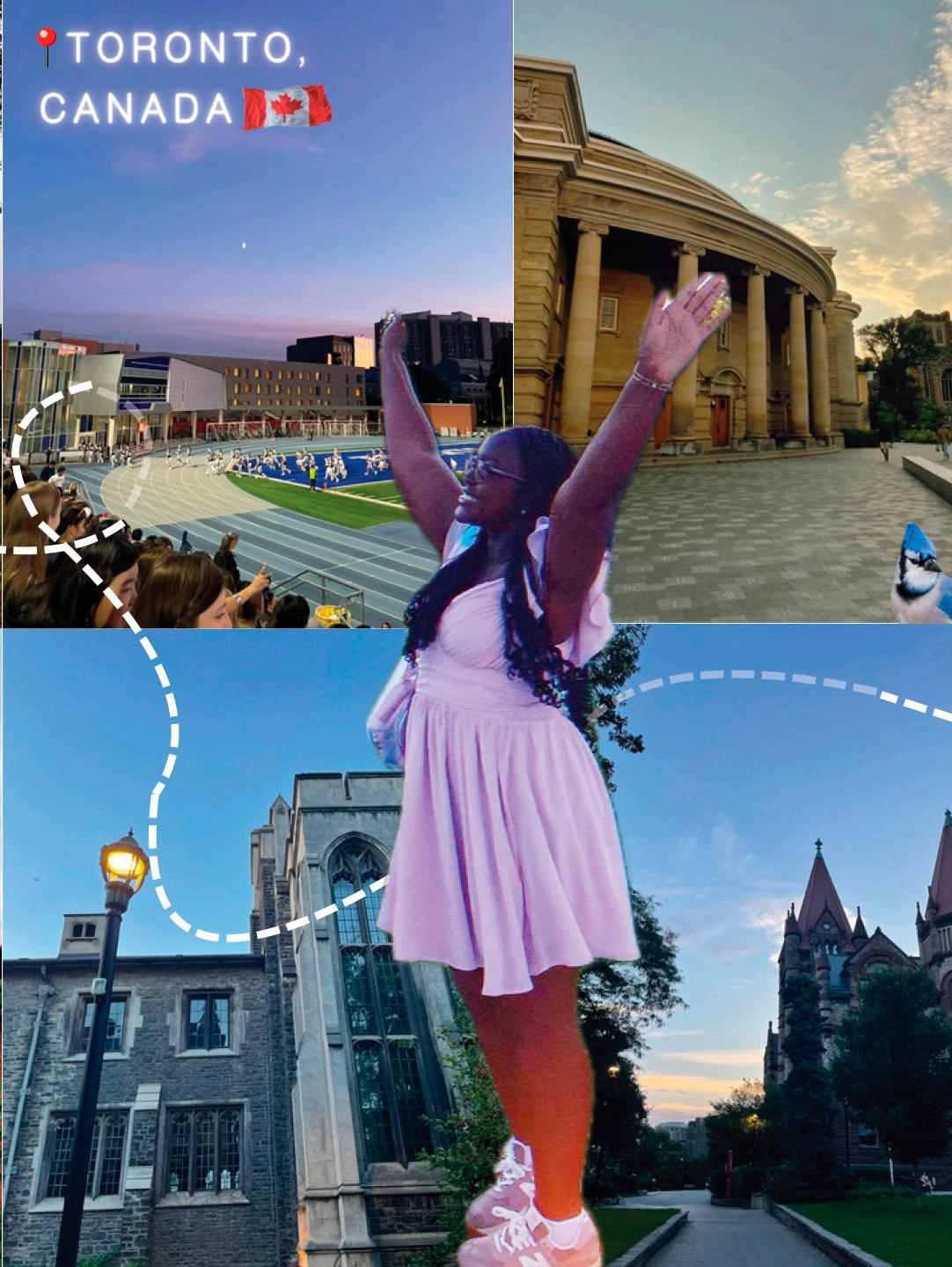
Charlize Marshall Varsity Contributor
Content warning: This article contains mentions of racism and stereotypes.
“I still struggle with the right terminology for how to refer to myself, whether it’s African American or simply just African.”
Here, first-year social sciences student Ruben Benicio described the complexities of his racial identity. Born in the United States, he teeters between his American nationality and the undeniable connection to his BissauGuinean heritage, having also lived in GuineaBissau for a little over a decade.
“There’s always going to be the little ignorant prejudices that remind me of the negativity of the world,” he wrote in an interview with The Varsity. “However, I have been much more relaxed in Toronto compared to some places in the U.S. The very diverse community of Toronto does help limit the bad experiences.”
One bad experience to which Benicio pointed is that of ‘Black Fatigue.’ Author MaryFrances Winters coined this term in her 2020 book, Black Fatigue: How Racism Erodes the Mind, Body, and Spirit. The term Black Fatigue speaks to the historical and present-day experiences of Black people and refers to the lasting effects of the Transatlantic slave trade.
But while Black Fatigue originally signalled the crushing physical and emotional effects of systemic racism on Black communities, the term seems to have adopted a new, insidious meaning today.
The dynamism of the term Benicio has witnessed Black Fatigue predominantly through social media, having been introduced to the concept by a video that portrayed it as the “second-hand embarrassment” that Black people feel about the actions of other Black people, which they deem “ghetto.” “One of the videos I remember seeing was of a Black man strongly condemning Black women for using [hair] bonnets in public, calling it classless and embarrassing for the community.”
It seems that in recent years, the term has strayed from its original meaning and has turned into a dogwhistle for racist groups to express their resentment towards Black people.
For example, a June 2025 TikTok depicts a white woman defining Black Fatigue as “when I can hear you 10 aisles away in Walmart with your fucking five kids,” and when “you have no idea how to act in public.” Similarly, an October 2025 TikTok by Black user @ elijahofferth asserts that there are two types of Black people: one of which is ‘normal,’ and one which is “loud in public” and around whom everyone else should clutch their belongings tightly to them.
In my interview with U of T English professor George Elliott Clarke, he said Black Fatigue is now “simply another way of saying white backlash.” In other words, it’s a way of telling Black people, “We don’t want to hear your complaints anymore about how we have been abusing you.”
Benicio similarly criticized this typification of Black people. He speculated that the term has been circulated by Black people who are likely from higher socioeconomic backgrounds.
“They would use it negatively and would get
support from white users in the comments, usually agreeing and expressing their own fatigue with Black people.”
The subversion of Winters’ term allows racist people on the internet to construct Black people as monolithically ‘ghetto’ or ‘disruptive.’ Meanwhile, the praise given to those who do not exhibit these vilified behaviours is leveraged as a form of power via acceptance by white people, who retain the most social power today.
This racist subversion of Black Fatigue is not just propagated by white people. @ elijahofferth’s post about the different subtypes of socially acceptable versus unacceptable Black people reveals how some Black users seek this white validation, ultimately at the expense of their Black peers.
The new meaning of Black Fatigue has seemingly created an opening for some Black people to establish themselves as allies of white people in the fight against the ‘wrong kind’ of Black people: those who make others feel Black Fatigue.
Black Fatigue on campus and in the media
Coming from a predominantly white high school made second-year political science and African studies student Esther Akindote “more aware of race and belonging.” In our interview, she described how her Canadian nationality and Nigerian (Yoruba tribe) cultural background continue to shape the way she relates to the university environment and her peers.
Starting at U of T, where students come from all over the world, was refreshing for Akindote at first. “However,” she wrote, “by the end of my first semester, I began to notice how few Black students I was seeing in many of my classes and spaces. That realization made the transition feel more isolating than I had expected.”
As a result, she finds herself codeswitching in social and academic spaces, adjusting how she speaks or presents herself.
Winters’ definition of Black Fatigue speaks to the pressures of code-switching
as a minority — you might feel pressured to perform in order to ‘fit in’ and avoid being othered, as ‘different’ from the majority.
“While Toronto is a diverse city,” Akindote explained, “there are still moments where being Black affects how I experience belonging in a community, particularly in academic environments.”
Being othered contributes to the complex struggle that many Black people feel, torn between being accepted into spaces while also asserting a distinct identity.
Clarke spoke to this issue when he discussed the impacts of language labelling blackness on Black communities. In the 1960s, for example, journalists followed official style guides that required a lowercase “b” attached to Blackness and Black people. It follows that “Black people… never even had the dignity of a majestical [capital] letter to certify the fact that we were a people and not just ‘things’ that [had] a colour attached to them.”
However, language can also pose resistance against oppression. Clarke

illustrates this when he talks about the historically African Nova Scotians, saying that in order to reclaim their own history and culture, they must identify themselves “as being a distinct people.” In this way, inclusion may come not from assimilating to the majority out of fear of being othered, but in reclaiming the power to identify and distinguish oneself in a space where one is a minority.
Sometimes distinction can be a tool of power, and other times it can be persecutive. Both the original and the hijacked definitions of Black Fatigue relay the concept of racial othering, which involves constructing and categorizing different racial groups into a social hierarchy of being, where whiteness is often assigned the dominant role.
What distinguishes the new version of Black Fatigue from the original definition is that it seeks not to draw awareness to the negative effects othering has on Black people, but to perpetuate histories of othering through modern concepts and tropes.
For example, news of a threat to Supplemental Nutrition Assistance Program (SNAP) benefits in the US recently circulated in the media. Based on longstanding tropes of Black women as “welfare queens,” reimagined othering tropes re-emerged in some social media depictions of Black Fatigue. AI was used in one such case to depict Black women stealing from grocery stores in response to the loss of SNAP benefits, and notoriously Republican news outlet Fox News “fell for” it.
When distinction becomes discernment
For Grace Johnson, a third-year political science major studying Caribbean studies, visual studies, and business, being a Black Bahamian in Canada has produced a different kind of othering: heightened emphasis on her Blackness, and an overreliance on racial labels. In an email to The Varsity , she wrote that “the Black part” of her identity “became increasingly more implied” since moving to Canada from the Bahamas.
“Black Fatigue to me, especially as a Black woman, means that I do a lot of extra work… that maybe others, who don’t look like me… wouldn’t have to do.” The term makes Johnson question the North American ‘obsession’ with labels. “Being Black has not really changed the way I navigate my time at U of T,” she continued, “but it makes me constantly practice discernment.”
Johnson discussed how, being from a predominantly Black country, she is used to seeing Black people pursue any career path. “I have never… had to prove myself to anyone in terms of my work ethic based on the colour of my skin.”
Akindote offered a similar observation.
“From what I understand, the idea behind Black Fatigue can differ in Nigeria compared to Canada. In Nigeria, where most people are ethnically Nigerian, experiences tied to race often carry less weight than they do in Western contexts.”
Both accounts ultimately illustrate the fluidity that the identity marker of race plays

in different geographical and situational contexts. In societies where Black people are a minority, Blackness seems to be more of a delineator — you become distinct in your Blackness, which is a truth that U of T students like Johnson nod to.
The problem with the modern hijacking of Black Fatigue is that it either binarizes Blackness to categorize what kinds of Black people are acceptable and which aren’t, or to depict all Black people as universally socially ‘backward.’ Blackness is diasporic, transnational, and non-universal, as the accounts of Johnson and Akindote prove.
So by minimizing this diversity of identity and experience into a racist internet dogwhistle against all Black people, proponents of the modern definition of Black Fatigue — including those who are Black themselves — are propagating racist views that stem not from ‘experience’ but plain prejudice.
As Johnson wrote, “Living here and living back home in the Bahamas, reminds me that things carry different meanings and value in different places. I am perceived Black in Toronto, but I am perceived as a Bahamian female in the Bahamas. I am all in most contexts.”
More than face value
Someone, somewhere, will see an X post like @CamgroupCarson’s, which argues that “Black fatigue is every race being sick of hearing black people whine constantly about them being victims.” The person who sees such a post might then type “Black Fatigue” into a search engine and come across a website like Know Your Meme. This entirely user-informed site states that first and foremost, Black Fatigue is a “controversial slang term used to describe the feeling of being tired of living around what some perceive as ‘uncivilized’ Black people and being encouraged to care about issues in the Black community.”
To this person, regardless of their lived experiences, the misrepresentation and memeification of an entire racial and cultural group might inform an entirely racist perspective on Black people. That is the whole problem.
There is no explicit answer indicating what can, should, or will be done to rectify the misalignment between Black Fatigue’s delineations. Instead, the goal of rectification is education and the prevention of increasing racist attitudes.
“Finding out that my view on the term Black Fatigue was wrong and fully formed from social media is very concerning,” explained Benicio. “It goes to show how social media can misinform and become hurtful if no further research is done.”
The racist roots behind Black Fatigue evidently trace far before the advent of the internet. But the subversion of Black Fatigue is thriving on social media, because it allows viewers to easily recognize and categorize algorithmic buzzwords and dogwhistles. A slew of quick 30-second clips of users explaining how Black people exhibit socially unacceptable behaviour can reinforce and perpetuate offensive stereotypes of Black people.
As Benicio wrote, “It is going to require a strong movement to deliver the correct meaning of Black Fatigue to overcome the misinformation that has already made its rounds through social media.”
Rebecca Liu Associate Business & Labour Editor
Despite steady increases in the number of Black-owned businesses, significant challenges for Black entrepreneurs remain. According to Statistics Canada, Black-owned businesses are less profitable than white-owned businesses and more likely to have fewer than five employees. When surveyed, more than 75 per cent of Black entrepreneurs reported that they believe their race affects their ability to succeed in business.
To combat these structural barriers, U of T Entrepreneurship launched the Black Founder’s Network (BFN) in 2021. The BFN aims to create an inclusive community built by and for Black founders, supporting them at every stage of their entrepreneurial journey.
Current BFN programs
The BFN offers five programs, each tailored to different community members and stages of an entrepreneur’s journey.
BFN’s Core program supports Black founders who are beginning their entrepreneurial journey. In the Core program, more experienced founders and mentors introduce critical skills and resources to help aspiring entrepreneurs. Additionally, beginner entrepreneurs can apply for the Smart Start Awards. In conjunction with the Core program, successful applicants of the Smart Start Awards will receive $4,000 to develop their business.
For early-stage startups beyond the ideation stage, the BFN Accelerate program provides structured support to help founders build and grow their company. Examples include a $4,000 hiring grant as well as templates for operations and HR
functions. Through mentorships, business support, and access to Black professional networks, the Accelerate program encourages growth and investment in fledgling startups.
For larger startups preparing to expand into established ventures, BFN Scale focuses on strengthening, increasing, and refining current operations, revenue streams, and business strategy. The program also prepares businesses for larger-scale opportunities, like increased focus on research and development, expansion, and intellectual property rights.
The BFN also offers the Black Career Advancement Program (BCAP) for youth. By participating in this program, Black youth aged between 18–35 will be provided the necessary skills and knowledge for career success. Specifically, BCAP pairs talented, ambitious Black youth with Black-owned companies in need of skilled labour.
Finally, BFN empowers Black women founders and investors in their Be Her program. It promotes entrepreneurship as a pathway to community building and generational wealth. They specifically want to spotlight women founders and provide them with support to receive direct funding and resources.
Successes of the 2025 cohort
Since the program’s launch in 2021, BFN has supported over 15,000 Black community members. Black founders have also attracted more than $50 million in funding from investors through the program’s resources. Leveraging the raised funding and skills through BFN mentors, participating companies have raised over $45 million in revenue.
In the 2025 cohort, 24 inspiring Black entrepreneurs completed the program. Out
February 24, 2026
thevarsity.ca/category/business
biz@thevarsity.ca
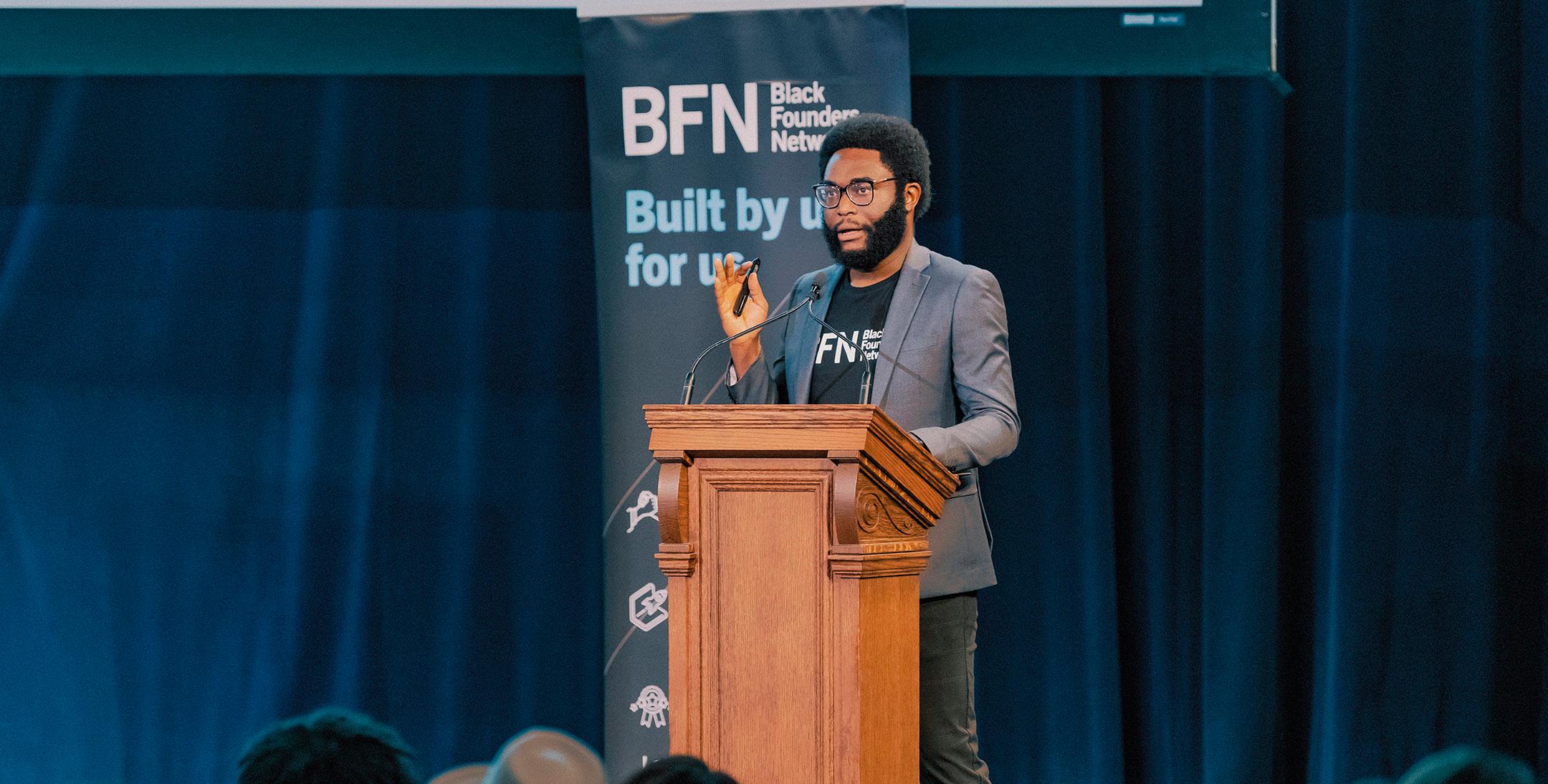
of the 24 founders, 42 per cent (10 out of 24) were male, while 58 per cent (14 out of 24) were female. Given that Statistics Canada reports that approximately three-quarters of all Black-owned businesses are owned by men, BFN’s genderbalanced cohorts and its Be Her program reflect a deliberate commitment to advancing Black women entrepreneurs.
The 2025 cohort spanned five industries and was organized into groups according to the type of innovation each founder championed. “Builders” focused on providing AI and digital solutions to prospective businesses, non-profits, and startups. “Healers” promoted solutions to improve wellness, with unique approaches to cervical disease diagnoses. The “Changemakers” centred advocacy, ranging from environmental sustainability to teacher empowerment. Finally, “Craftsmen” proudly advanced innovative nonalcoholic drinks, skincare, and menstrual products.
The BFN has been recognized for the change and efforts it is making to break structural barriers and empower Black founders. In 2022, they received the Minister’s Award of Excellence, and in 2024, they received the Inclusive Excellence Award. In 2025, the BFN received The Globe and
Who gets a seat at the table and who doesn’t
Audrey Kim Associate Business & Labour Editor
A company’s Board of Directors is a group that leads the business and maintains corporate governance — the system of rules, practices, and processes guiding executives in executing strategy and ensuring accountability. A seat on this board holds a lot of influence and responsibility, as they are collectively accountable for a firm’s performance and strategic direction.
Canadian boards have historically been predominantly composed of white men. However, as the racial demographics of major cities such as Toronto and Vancouver have evolved — with racialized individuals making up 55.7 per cent of Toronto’s population and 54 per cent of Vancouver as of 2021 — there has been increasing attention to board diversity.
While some progress has been made, it has been slow, and a noticeable gap remains. This disparity is especially visible for Black communities — according to a 2020 study conducted by Toronto Metropolitan University’s (TMU) Diversity Institute, there were only 13 Black board members out of 1639 corporate board members surveyed.
The current state of representation
The TMU study examined board representation across eight major Canadian cities in Ontario, Alberta, and Nova Scotia and across multiple sectors, including corporate, public, and educational institutions. They found that Black individuals remain significantly underrepresented in governance roles.
Although Black people comprised 5.6 per cent of the total population across these cities, they held two per cent of all board positions. This disparity was even more pronounced in the private sector, where 0.8 per cent of corporate directors were Black.

In Toronto — Canada’s primary corporate hub — the gap is especially large. While 7.5 per cent of the city’s population is Black, 0.3 per cent of corporate board members in Toronto-based companies are.
Why does representation matter?
Board members are often required to navigate complex situations and decisions. A wellbalanced and effective board considers the interests of a wide range of stakeholders and draws from a variety of perspectives, skill sets, and lived experiences. This is to determine the best long-term outcomes for the firm and those it affects, including employees, shareholders, and the broader community.
For this reason, boardroom diversity is not simply a symbolic measure. Rather, the practice has greater implications for the quality of governance.
It is important to emphasize the role of businesses within the broader economic and social ecosystem. Board decisions extend beyond shareholder returns, materially impacting local employment, environmental conditions, economic growth, and social well-being. A
board composed of individuals with different backgrounds, experiences, and perspectives is better positioned to anticipate these broader implications and ensure that the organizations’ goals align with the interests of wider communities. Economic theory suggests that when individual perspectives are more diverse, collective judgements become more reliable and robust. While characteristics like gender, race, et cetera are not, in themselves, determinants of board effectiveness, they often serve as markers of differing lived experiences and professional paths. Because individuals with varied identities experience distinct social and institutional contexts, members can challenge traditional norms, spot any gaps, and spur innovation.
Why is there little representation?
The Harvard Business Review (HBR) found in 2020 that in board rooms that had no racial or ethnic minorities, racialized candidates were rarely considered for executive roles, at about 0.2 minority candidates per vacancy on average. In practical terms, this means that if five executive positions
Despite Black founders continuing to face difficulty accessing funding and mentors to help in their entrepreneurship, initiatives like U of T Entrepreneurship’s BFN seek to bridge the gap between Black innovation, entrepreneurial resources, and success in the Canadian market. Unlike other funding initiatives, the BFN focuses on the lived experiences and realities of Black entrepreneurs to ensure their success. In a 2021 article published by U of T, Efosa Obano, the program manager of the BFN, stated that Black founders “felt uncomfortable when they were trying to build something, but the people who were supposed to help them couldn’t relate to their lived experiences, and wanted them to build something different.”
With the community, mentor-driven support, and targeted programs, the BFN is anything but unaware of the reality of being a Black entrepreneur. Rather, since its founding, the BFN has become a space where founders can develop, grow, scale, and succeed on their own terms with the support of other Black entrepreneurs.
were open, only one minority candidate would be considered across all five roles, and many individual vacancies would likely have none at all.
This might arise from the nature of professional networks. In corporate spaces, having a strong professional network is a huge determinant of an individual’s success at all levels from start to finish. This sentiment is the same at the very top, where director recruitment is heavily determined by informal relationships and existing social circles. Board members relying exclusively on their social networks to hire new individuals may have reinforced existing patterns of representation — when board members choose their successors primarily from circles of individuals like themselves, racial disparities tend to be reproduced.
Beyond the barriers to entry, significant structural challenges within the boardroom itself exist. For one, Black directors are typically less likely to hold more of the influential leadership positions, like board chair, despite having the same, if not stronger, qualifications than their white counterparts. According to the HBR, while 37 per cent of white survey respondents held board chairman positions, only 25 per cent of Black survey respondents reported the same. Moreover, the same HBR study suggests that Black professionals, particularly those who are the sole racial or ethnic minority on a board, are more likely to feel that their contributions are overlooked or undervalued. This calls into question the extent to which formal representation can make meaningful contributions to shape deliberations. Regulatory frameworks such as Bill C-25 — an amendment to the Canada Business Corporations Act requiring that federally incorporated companies disclose board diversity — have increased transparency and have seen minor improvements in increasing gender and racial diversity. However, disclosure alone will not bring about structural reform.
In a climate where corporations are scaling back Equity, Diversity, and Inclusion (EDI) initiatives, institutions must make commitments to ensure more diversity. This should move corporations to make meaningful progress.
February 24, 2026
thevarsity.ca/section/arts-and-culture arts@thevarsity.ca
Ineza Mitako Kayihura Rugari is a RwandanCanadian visual artist and an upper-year student in U of T’s Women and Gender Studies and African Studies programs. On February 14, I had the pleasure of speaking with Rugari about her artistic practice, storytelling, and the people who inspire her.
Rugari is an abstract artist who mainly works with acrylics. Through her art, she explores themes of identity, community, decolonization, and cultural memory. A deep influence for Rugari is her family, “Our family history is really interesting, and my people’s history is fascinating as well.”
Before coming to U of T, Rugari’s formal education was Western-centric; at her American international school in Rwanda, she learned more American history than Rwandan history.
To make up for this, Rugari’s parents made an active effort to speak to her and her siblings in Kinyarwanda, to teach them about contemporary and precolonial history, and to share their family’s histories. Rugari said, “I could always see that difference between going to school and learning something in a book, versus coming home and sitting around the TV or the coffee table, chatting with my family. Seeing the difference in the histories and the way they were conveyed always left me curious.”
“Uburemere: Heaviness”
Rugari is drawn to abstract art because she is more interested in process-working than the final product itself. Rather than worrying about how the product will look, she focuses on the emotions she wants to convey, and “how it feels to let go of everything on the canvas.”
Rugari centred process, particularly in a piece called Uburemere — which means weight, or heaviness in Kinyarwanda. It is a collaborative
piece with her dad, her sister, and two of her friends. This piece spoke to “the very gendered violence that Black and African women face, both on the continent and within the Black diaspora. In collaboration with my family members and my friends, I wanted to demonstrate how integral community can be in the healing process.”
Rugari painted the base of the piece, then had her friends and family members contribute. The artmaking process was intimate and collective — she described her friends and family members holding out their hands so she could paint the colours they mixed onto their hands, and giving them free rein to drag their hands across the canvas.
“Imitako yerekeye kwirwanaho: Adornments of resistance”
Rugari also shared with me a self-portrait she created called “Imitako yerekeye kwirwanaho,” or “Adornments of resistance.” In this piece, she aimed to “reflect on my identity as a Rwandan woman, and as a Black woman and my family histories, and think about how colonialism and imperialism affected me directly, as a Rwandan and as a settler in Canada.”
In the place of her face, Rugari painted a shield that precolonially was carried by warriors, and is now carried by traditional dancers. In putting the shield in front of her face, she was thinking with Aimé Césaire’s concept of “thingification,” where colonial subjects are dehumanized.
She explained that “oftentimes, the way colonialism is spoken about, is that the people who have experienced [it] passively accepted and assimilated the colonialism and imperialism, when in reality, people were fighting, people were resisting.”
She wanted to emphasize resistance to colonialism, to remind her audience that the shields and spears once served a very real purpose.
The patterns surrounding the subject of the painting are drawn from Imitako Gakondo, or traditional decorative patterns, which are three-
Nashville-born singer Jackie Shane dominated Toronto’s R&B scene throughout the 1960s. She regularly performed at Yonge Street’s swinging go-go club Saphire Tavern, and the burlesque club The Brass Rail. If you’ve ever passed by the north-facing music mural on Yonge Street, you’ve likely seen her face before.
As a Black woman, Shane was displeased with the Jim Crow laws, which enforced racial segregation in the Southern United States, and found her temporary home in Toronto in the early ’60s with fellow American musician Frank Motley and his band.
Shane experienced immense success in her career, touring with American singer Etta James, breaking through on the charts, and selling out Toronto nightclubs. Shane’s biggest hit was her cover of William Bell’s song “Any Other Way.” In 1963, the single reached second in Toronto’s top 50 songs ranked by CHUM charts, and in the US, it was 124th on Billboard’s bubbling under the Hot 100 chart, which features popular tracks outside of the top 100.
In addition to a velvety tone, Shane’s rendition of “Any Other Way” gives the song new humour and meaning. When Shane sings the lyrics, “Be sure to tell her this, tell her that I’m gay,” she connotes both her happiness and her queerness. In doing so, Shane resists standard society through the re-invention of a song that emphasizes her joy and identity.
In a live recording of the song, Shane monologues to the crowd near the end of the track: “I live the life I love, and I love the life I live. I hope you’ll do the same. You know you’re s’posed to live. As long as you don’t force your will and your way on others, forget ‘em baby.”
Shane used monologues in many of her songs and performances to connect with the crowd by sharing her wisdom from living in a white hetero society. On “Money,” she reiterates her selfconfidence and urges the audience, once again, to adopt her golden rule: “Don’t force your will and your way on anybody else, live your life.”
dimensional art pieces made using a mixture of cow dung and ash to sculpt the motifs on wooden boards by hand. They are traditionally black, white, red, and gray, and have geometric patterns like spirals.
Rugari is drawn to acrylics as a medium because when acrylic paint dries, it has ridges and textures. Like Imitako Gakondo, her art is three-dimensional.
Rugari also shares a name with the art that inspired this piece — her middle name is Mitako, which means adornment in Kinyarwanda. Rugari comes from a family of artists and storytellers — she shared that when she and her siblings were born, her dad wrote poetry explaining their names, and the intentions they had for their children in naming them this way. For example, her first name, Ineza, means generosity and goodness.
She also fondly recalls her grandparents’ storytelling, “They would tell us about moving around different countries within East Africa, or travelling to Belgium for the first time, or when they moved to Canada… and what we were like growing up. In Kinyarwanda, people were very indirect; sometimes it feels like you’re speaking to someone in riddles, and they’re always beating around the bush before getting to the point. So in that way, they were storytellers, because you’d ask a question, and they’d say so much before answering the question.”
Rugari takes a similar approach in her art. She explained that abstract art is an outlet for her creativity and emotions, “I love spirals. I love spirals because I feel like I spiral a lot. If I were a shape, I’d be a spiral, both positively and negatively.”
Like a spiral, “Once something is on my mind, I will just continue coming back to it, continue coming back to it, and continue coming back to it. Even in the way I talk, in the way that my people talk, in the way that my friends and I will gossip, it’s always rehashing, always coming back to the thing, like a continuous spiral. This constant state of revisiting and revisiting also leads to my curiosity in finding out more, which inspires my work.”
You can find more of Rugari’s art on Instagram at @spirallingwithmitako.
Living by her own will and way, Shane performed in sequins and silk, wore cat eye makeup, and always returned to stage with a different hairdo — all while telling folks to mind their own business.
The spotlight proved to be a mixed blessing. Opportunities to receive greater exposure as an artist came at the expense of Shane’s full identity.
Shane declined an appearance on the American Ed Sullivan Show due to the condition that she must not wear makeup; she also refused to perform on American Bandstand because they did not allow Black children on their program.
Although Shane received substantial admiration during the peak of her career, she was unsatisfied with an industry that persistently demanded that she live outside of her truth.
Shane retired in 1971, moved back to Nashville, tended to her mother, and lived a private life until her death in 2019. Shane abandoned stardom
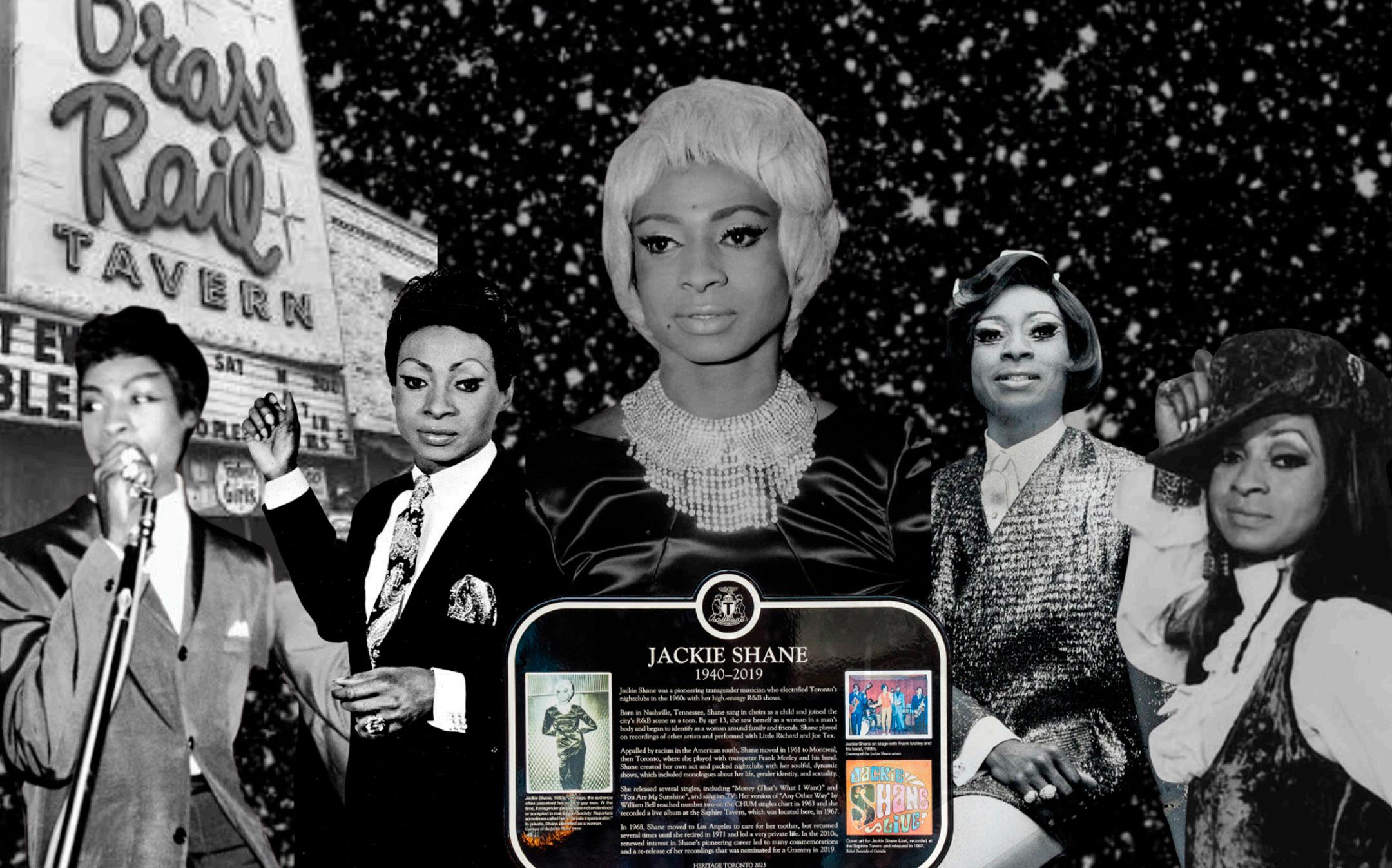
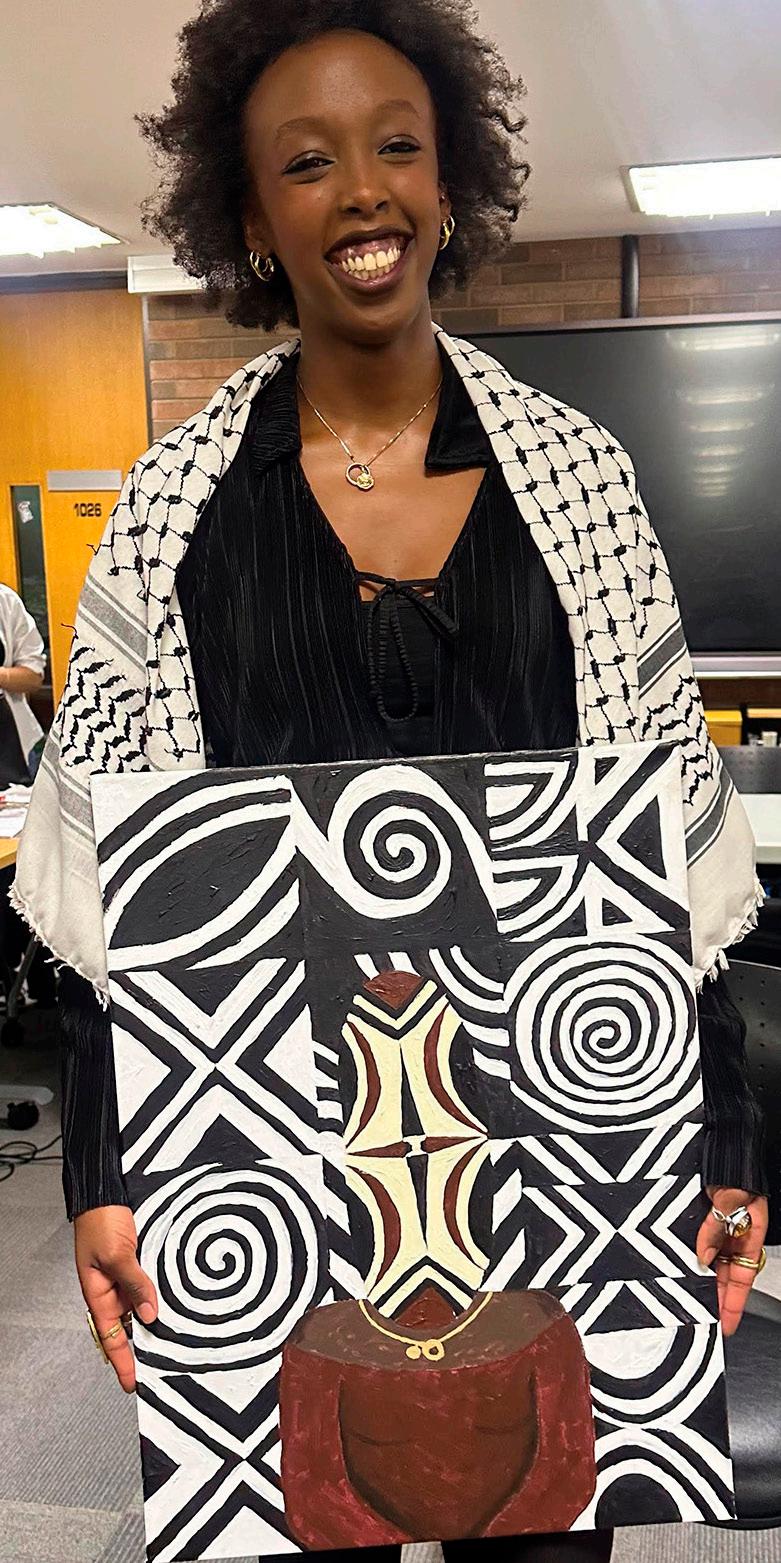

at her peak, but her influence would define Toronto’s R&B sound forever.
The mainstream was not prepared to meet Shane’s conditions of gender and race inclusivity. In recent times, however, Shane’s memory is preserved throughout spaces in Toronto, as well as in the city’s art scene, reaching a scale of visibility much larger than she did during her career.
Only one video exists of Shane performing from 1965 on a Nashville R&B broadcast called Night Train, where Shane exudes a classy nonchalance accompanied by her snapping finger. However, we can still see glimpses of her on Yonge Street in a Music Mural, on her heritage plaque at the corner of Victoria Street and Richmond Street, and in record shops carrying her Grammy-nominated reissued record, Any Other Way
Maybe you’ll catch Shane in Canadian filmmakers Michael Mabbott and Lucah Rosenberg-Lee’s 2024 documentary, Any Other Way: The Jackie Shane Story. If you wander through the Museum of Toronto’s current exhibition, “Stories of women who transformed Toronto,” you’ll find Shane celebrated among 51 other women, her record lying across a lightbulb-studded vanity. Travel to Nashville and find Shane on the first historical marker to celebrate a trans person in the Southern US.
But Shane didn’t live to see half of this. The world played a game of catch-up with Shane, only righting their wrongs in her old age or after her passing.
Shane wrote in her unpublished autobiography, “I was born, but I have never lived.” We remember Shane for her songs, for the texture she gives Toronto, and for her position as a historical anomaly. But to truly honour Black trans lives, we must also acknowledge the life never lived.
From segregated theatres to record-breaking sweeps, Black excellence reshapes the institutions that have historically failed us
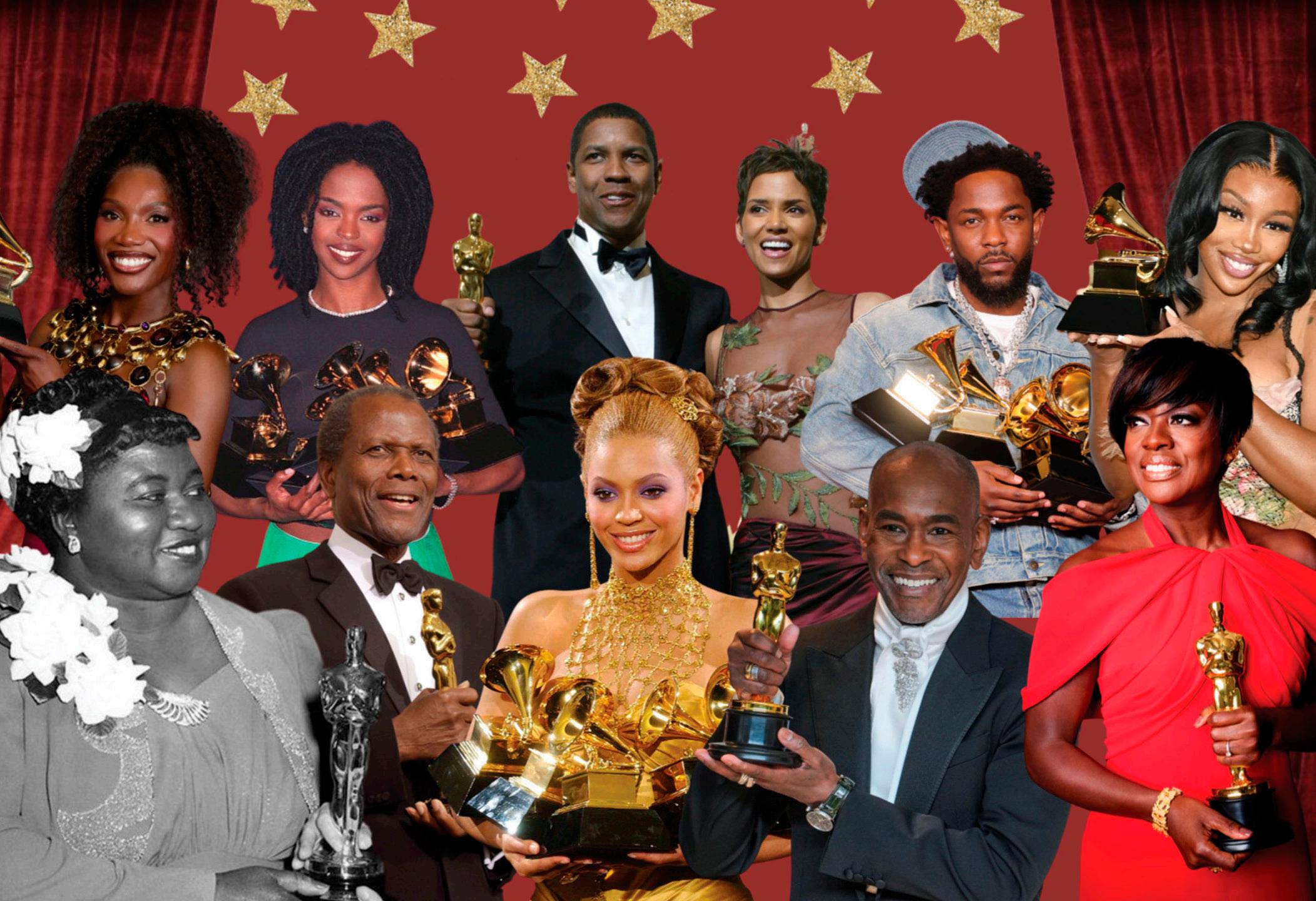
Erika Ozols Photo Editor
The year is 1940, the night of the 12th annual Academy Awards. The room is electric, buzzing with excitement for who is about to walk the stage next and receive the most prestigious award in cinema. American actress Hattie McDaniel is called to accept her Academy Award for Best Supporting Actress for her role in Gone With The Wind, but she doesn’t have the same invitation to the stage as her academy peers.
She gracefully accepts the award with a beautiful speech from the segregated area at the back of the hotel theatre. Her win, which made her the first-ever African American to win an Oscar, brought hope to Black stars and viewers. McDaniel’s win revealed a truth that would define generations of Black artistic excellence for years to come; we will always shine in spaces that were never designed for us.
It’s now 2026, and Ryan Coogler’s box office hit Sinners has broken the record for the most nominated film in Oscars history, with 16 nominations. This is huge, not only for Black fans of Coogler, but for the way cinematic excellence is being recognized after decades of invalidation. It was Sinners’ historic break that had me reflect on our award show excellence and our invaluable presence in artistic spaces.
In 1964, Sidney Poitier became the first Black man to win an Oscar for Best Actor for his role in Lilies of the Field . Just a year before, Poitier joined the March on Washington, publicly supporting both the Southern Christian Leadership Conference (SCLC) and the Student Nonviolent Coordinating Committee (SNCC). He also notably used his platform as an actor to fund education for African American students through the African American Students Foundation.
The 2002 awards marked another milestone when Halle Berry became the first — and only — Black woman to win Best Actress at the Oscars. In her historic speech, Berry dedicated her award to “every nameless, faceless woman
The music industry shares the same spotted histories when it comes to Black representation, even though it’s built on genres born from Black creativity, such as Pop, R&B, Hip-Hop and Rock.
of colour,” acknowledging the countless Black women whose stories haven’t seen the limelight.
On that same night, Denzel Washington took home the award for Best Actor. This was a pairing that feels crucial now more than ever, given that even through increased diversity initiatives, we’ve yet to see another Black duo take home both lead titles.
For decades, Black off-screen representation has been rarely recognized, regardless of the successes within Black executive boards, production, makeup, and costume design teams. Just last year, Paul Tazewell became the first Black man to win the Best Costume Design Oscar for his work in Wicked
In 2015, American activist April Reign launched the #OscarsSoWhite campaign. This campaign was created in response to the two previous years of strictly white nominations in all four of the main actor categories. This brought light to the way the academy’s largely white membership and structural biases have affected storytelling and recognition of Black stories in the film industry. As a result of the movement, the academy has since tripled
its voters of colour, and implemented new diversity standards for Best Picture.
The music industry shares the same spotted histories when it comes to Black representation, even though it’s built on genres born from Black creativity, such as Pop, R&B, Hip-Hop and Rock. After his critically acclaimed album After Hours received zero Grammy nominations in 2021, The Weeknd openly boycotted the awards, stating his decision was based on the “need for inclusion and the lack of transparency of the nomination process and the space that creates and allows favouritism, racism, and networking politics to influence the voting process.” The Grammys have also been known to snub Black artists in major categories, one of the most notable being Beyoncé’s Lemonade losing to Adele’s 25 Black creativity has flowed through the Recording Academy since its inception. Ella Fitzgerald became the first Black person to win a Grammy in 1959, and since then, Black artists have continued to be present in the categories we see awarded today.
In 2025, Beyoncé took home her first Album of the Year win with Cowboy Carter. The album
Investing our attention in Blackled projects, historically Black theatres, and Black community arts programs ensures that our excellence is sustained between the headlinemaking wins.
also took home Country Album of the Year, making Beyoncé the first Black woman to ever win in the category. This year, Kendrick Lamar made history as the most decorated rapper in Grammy history with 27 career Grammy wins, including Best Record, which he was the first to win back-to-back at the 2024 and 2025 Grammys.
At the same time, Black communities have long built our own spaces of celebration that centre Black artists and inclusion, such as the Black Entertainment Television (BET) Awards, the National Association for the Advancement of Colored People (NAACP) Image Awards, and the Soul Train Music Awards. These institutions honour artistry without the burdens of exceptionalism, and are pivotal for archiving and affirming Black cultural production, on our own terms.
However, the message has still remained clear through the repeated snubs and gaps in diversity: nominating creatives for awards does not compensate for systemic imbalance. Adequate representation is only possible when Black creative power is behind the curtain, too. This means Black producers greenlighting films, Black executives funding projects, and award shows becoming a platform for Black creatives to bridge activism with artistry. After all, award shows are some of the biggest stages in the world.
Supporting art made by Black artists is culturally imperative because art is a mode of cultural preservation and resilience. Viewership, sponsorship, and funding help these projects grow. Investing our attention in Black-led projects, historically Black theatres, and Black community arts programs ensures that our excellence is sustained between the headline-making wins.
In reckoning with award show history and Black representation, it’s important to recognize the significance of these wins and celebrate them loudly. In celebrating, we have a responsibility to remember that our wins are not defined by any singular institution. They stem from thousands of years of Black creativity and ingenuity, which continues to flourish.
Erinayo Adediwura Oyeladun Varsity Contributor
The Black Student Lounge (BSPACE) was opened in 2024 thanks to the efforts of the Student Engagement Office and Black Student Engagement Student Life Coordinator, Modele Kuforiji. Their hard work ensures that Black students across UTSG have access to as many resources and opportunities available to be successful both in school and in post-grad life.
Open from 9:00 am to 5:00 pm, BSPACE gives Black students the opportunity to meet and connect on such a big and busy campus that can sometimes feel isolating. BSPACE offers an assortment of activities, including board games, video games, and books by Black authors like I Know Why the Caged Bird Sings by Maya Angelou and All About Love by bell hooks. BSPACE also has a team of Black students who volunteer and organize events for students, such as video game tournaments and movie nights.
When BSPACE opened, I was beginning my third year. It has since been a community space that has afforded me grace, kindness, and intellectual stimulation. I have been lucky to engage with people on different topics and struggles, including music, the persistent diaspora wars on TikTok, and what it means to be Black in Canada and at U of T. As we dove into these heated debates, our differences were not only accepted but celebrated.
In BSPACE, I learned so much about the world I wanted to create as well as the importance of our education for the various communities we came from, including Africa, the Caribbean, and the Americas. I found that this space gave me a chance to connect with the stories of others, becoming inspired by them and their resilience.
Many of the students that I meet are the first in their families to attend university, and they show up with gratitude, perseverance, and an attitude of always wanting to give back and pave the way for others. After being around these people, I realized I was not alone. They taught me that I could do the hard and impossible things in life.
This space has given me a chance to understand and relate to the sacrifices others made to be here. It provides support for battling an institution that has limited resources to spend on supporting students from various backgrounds.
Before BSPACE, I knew there were other Black students on campus, but we were always scattered among the hundreds of classes within this institution, the various organizations that exist, and the many class schedules that rarely overlapped. Often, we were passing faces through a hallway, never stopping because there was so much to be committed to, and so many responsibilities awaiting us.
However, BSPACE has allowed me to meet with other Black students across different fields.
I have shared stories with people, reminding me of the power of community, especially of knowing that there are other people who are struggling just like me. Together, we are able to empower one another to solve pressing issues that exist within our communities.
So I implore you, in the name of free snacks, a rarely-used TV, couches to take a refreshing nap on, and people to talk and relate with, to give BSPACE a chance. Help grow our community and enrich it with unique insights that only you can bring to the table. University is hard, and the journey ahead is rarely smooth, but I know that BSPACE and the people you find there will keep on cheering you on!
How a teenage sensation’s passion altered the potential for Black girls’ sound and attitudes

Paying tribute to Canada’s historic contributions to music, Rolling Stone released its list of the “50 Greatest Canadian Artists of all Time” in 2023. The article, however, had an uncomfortable detail that was hard to ignore: overwhelming whiteness.
While recognizing Black artists Daniel Ceasar, PARTYNEXTDOOR, the Weeknd, and Drake, the list failed to adequately represent Canada’s artistic multiculturalism. Detrimentally, it entirely disregarded the impact of an artist who, in her own right, broke barriers and reshaped Black Canadian music: Ontario singer-songwriter Fefe Dobson, who found global success as a Black woman in the 2000s Canadian Punk-Rock scene.
A brief history of Blackness in Rock and Punk music
The history of rock music cannot be adequately told without celebrating the Black artists whose
contributions were indispensable to the genre’s development. For example, Bo Diddley’s alteration of traditional Blues melodies and instrumentals in the 1950s shaped what would now be recognized as Rock music. Alternatively, white artists like Elvis Presley and Janis Joplin gained notoriety through covering songs initially written for and performed by Big Mama Thornton.
The simultaneous exploitation and erasure of Black Rock music was done under the guise that Black musicians were not marketable. The following revisionist notion that Black artists selfsegregated themselves away from the Rock scene absolves the responsibility of music industry giants who intentionally forced the genre to be whiteexclusive.
As a subcategory of Rock music, Punk underwent a similar trajectory. The genre initially emphasized anti-establishment ideals related to anti-imperialism, anti-capitalism, and anti-racism in the 1970s.
However, by the late ’70s, artists began to seek appeal from wider and whiter audiences. Because
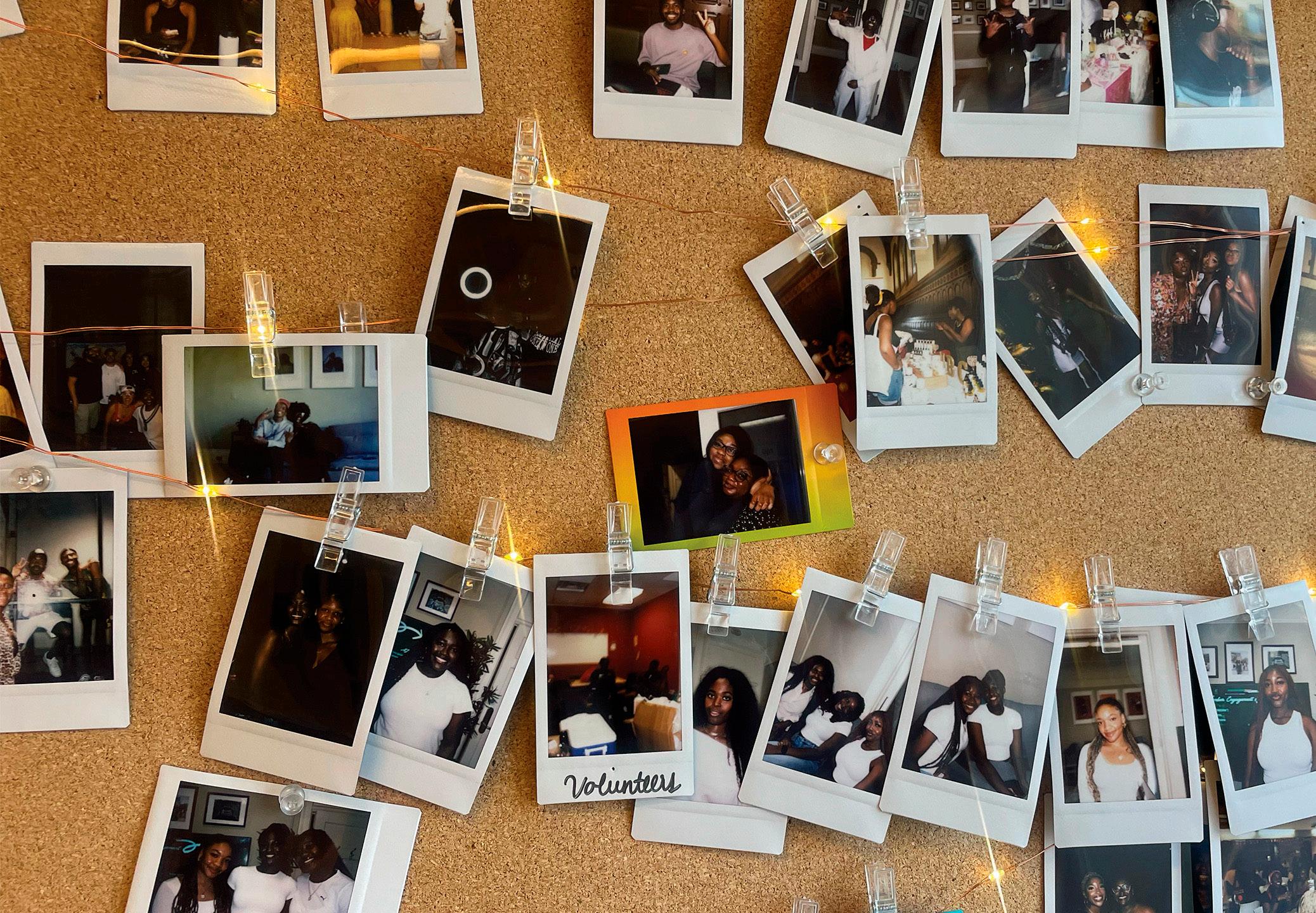

of this, new punk movements turned away from their anti-racist beginnings and began aligning themselves more closely with white nationalist groups.
This shift in Punk and Rock music popularized the stereotype that Blackness and Rock were incompatible, and subsequently, Black Rock artists would face unfounded accusations of ‘racial betrayal.’ Jimi Hendrix and Tina Turner were among the Black Rock artists who were subjected to this, as these claims framed both their racial identity and musical expression as fraudulent.
From Scarborough to Island Records
Febe Dobson’s career delineation illustrates the preservation of white supremacist ideologies in the contemporary music industry. Skepticism regarding potential success in commercializing multidimensional Black artistry limited the support and opportunities she was offered.
Born in 1985 to a white Canadian mother and a Jamaican father, Dobson grew up in Scarborough. Her mother introduced her to musical legends like Phil Collins and Bob Marley, and her older sister’s love for Guns N’ Roses and Nirvana helped establish Dobson’s loyalty to the Rock sound.
Despite a clear opportunity in the market to capitalize on the popularity of teen idols in the 2000s like Avril Lavigne, labels struggled to conceptualize Dobson’s Blackness and punk-rock leaning, pop-esque voice. Dobson finally found an agreement which prioritized her creative freedom in a contract with the American label Island Records.
At only 17, Dobson released her debut self-titled album in 2003. The self-title stands as a metaphor in itself, as the album clearly and authentically illustrates her being. Her teenage desires, woes, and frustrations are communicated through a sound she insisted on maintaining, despite — similarly to those before her — having faced constant discouragement.
Understanding that Black women are rarely permitted expressions of anger and chaos adds an additional layer to this metaphor, rooted in defiance and resistance. Black women have used art as a medium to represent and thus legitimize their longdenied right to feel rage. As the album reached Platinum certification — one million copies sold —
and had multiple singles charting in Canada, the United States, and the United Kingdom, Dobson deservedly became a global sensation.
Despite the success of her first album, the failure of her follow-up singles caused her record label to terminate her contract and shelve her second studio album. Other songs she had written for the album were instead given to other non-Black rising stars like Miley Cyrus and Selena Gomez. The historical parallel with Black musical innovation being stolen for white artists’ benefit is glaring.
Dobson’s other songs would be transformed into R&B ballads and given to Jordin Sparks, whose soft and traditional sound arguably better fit norms associated with Black woman artistry and was thus more palatable to wide audiences.
Almost seven years after her contract termination and having to relocate back to Toronto, Dobson was re-signed with Island Records and released her certified Gold — 500,000 sold — album Joy in 2010. In a 2021 interview with CBC Music, she spoke in appreciation of the various successes and setbacks in her career. The latter, having fueled her motivation, cultivated both her patience and determination.
Paving the way for Black alternative artists
Dobson’s persistence subdued caricatured expectations of Black women’s art but also highlights the resilience of character. Even as a teen, she maintained loyalty to her personalized sound and expression. Not only did this permit her to preserve her dignity, but also her agency as she refused to conform to racist ideas of Black woman artistry, attitudes, and presentation.
Her openness and pride resist popular respectability politics, which have forced many Black women to remain stoic and likable to appear palatable to the white masses. Seeing the recent rise of Black alternative artists like FKA Twigs and Willow Smith, I frame Dobson’s role as that of a guiding older sister whose unapologetic dedication to her craft has created new avenues for Black girls. For musicians and non-musicians alike, Dobson shows them how to sever themselves from imposed expectations of behaviour, feeling, and expression.
Illustrations
February 24, 2026
thevarsity.ca/section/illustrations
illustration@thevarsity.ca
Isio Emakpor Varsity Contributor
I consider Angela Davis to be one of my greatest inspirations. Learning about her felt like a breath of fresh air. In grade 12, I wore my afro just like hers. In my first year of university, I taped multiple pictures of her to my walls; the most prominent was her wanted poster. When I learned that she is a Lesbian during my own coming out journey, it meant the world to me. She made me feel seen, heard and understood. She showed me that other Black Lesbians exist — that we have a place in this world and a role in its history.
At the time of her passing in 2025, Assata Shakur had been living in Cuba as a political refugee for over 40 years after escaping from imprisonment in the US. As I mourned her, I reminded myself of how she escaped a system that sought to crush her. Though the news of her passing hurt, something she once said gave me comfort: “We have nothing to lose but our chains.” She gave up so much in the name of liberation. She reminded me that we honour the legacies of
those we’ve lost by continuing to stand up for what we know is right.
I first heard the name Kimberlé Crenshaw in my first semester at university — it was in an assigned reading where I learned she had coined the term “intersectionality.” Her work helped me to understand that my queerness and my Blackness did not exist independently of one another. I began to recognize that all these different aspects of identity — my race, my gender, my sexuality — are not mutually exclusive; rather, they mesh together in a way that makes me uniquely who I am.
In a third-year literature-focused women and gender studies course centred on themes of embodiment, I read a piece by Audre Lorde. I was captivated by her language and resonated deeply with her content. I was going through a difficult time, experiencing burnout and struggling with my mental health. Lorde’s words brought me so much comfort in a time when I needed it the most. She taught me to be patient with myself, and reminded me that I am worthy of love. She taught me that in a world that seeks to make me feel hopeless and exhausted, rest is a radical act in and of itself.

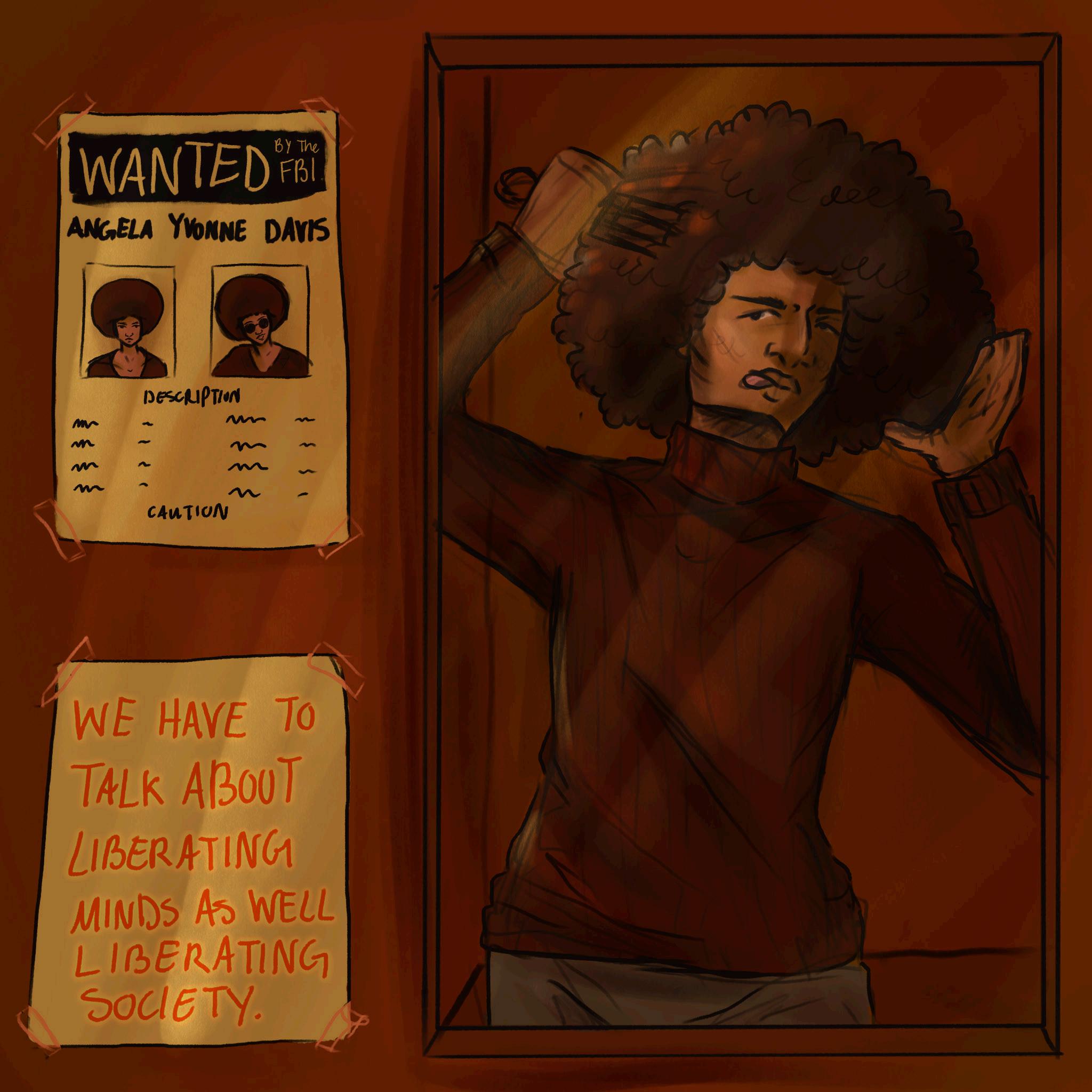
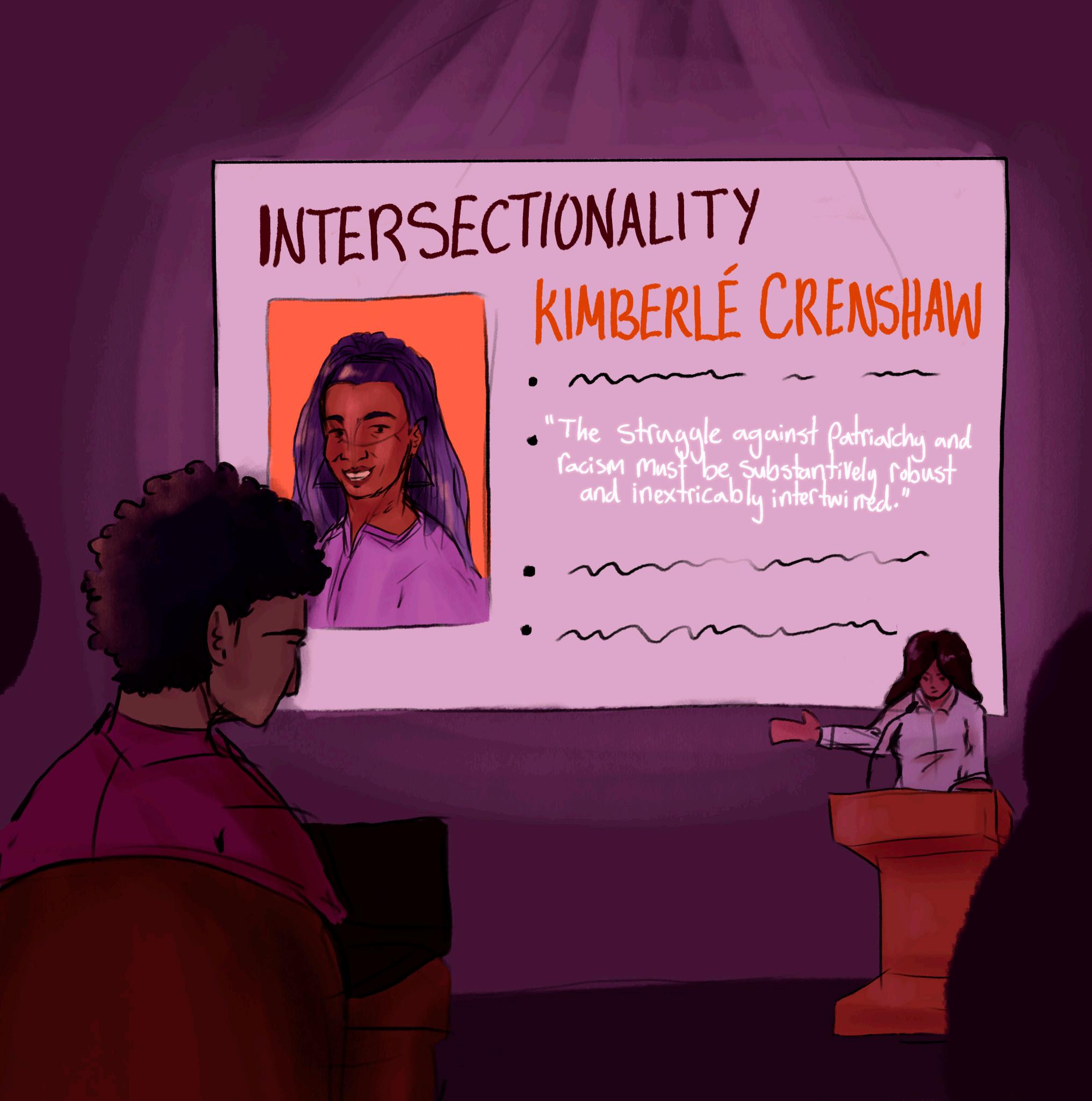
Photo February 24, 2026
thevarsity.ca/section/photo photos@thevarsity.ca
Rose-Ann Bailey Varsity Contributor
I’m sure by now most people have seen the 2023 Netflix documentary about the creation of Black Barbie: A documentary, directed by Lagueria Davis. After 10 years in development, it debuted at film festivals, winning at SXSW in 2023 before being picked up by producer Shonda Rhimes for Netflix.
This photo essay is not about the film but about the creative connection Davis and I forged through personal exploration. My name is RoseAnn Bailey, and I’m a PhD candidate at the Ontario Institute for Studies in Education. In 2012, my fellow artist Frantz Brent-Harris and I started The Blk Barbie Project. Frantz is passionate about doll collecting and owns over 500 Black dolls.
The photo essay I am presenting for Black History Month highlights the importance of representation while acknowledging our own struggles with double consciousness.
I wanted to document this variety, as it was my first encounter with dolls that depicted different textured hairstyles and shades of brown. Growing up in Jamaica as a Black girl in poverty and later immigrating to Canada, I felt my identity was somewhat fixed and not influenced by inanimate objects like dolls.
The Blk Ken & Barbie project began as an autoethnography reflecting my experiences growing up in rural Jamaica and my identity as a Canadian. It visually reconstructs everyday Black lives, placing dolls within my reality. The series layers images of Black dolls into everyday environments, juxtaposing them with full-colour high-fashion elegance.
From 2016–2020, I used a digital format while maintaining the foundations of historical photography. By layering images in Photoshop, I created striking visuals on BFK watercolour paper. Initially, I treated the dolls as mere objects. However, reflecting on them as symbols of representation led me to explore W. E. B. Du Bois’ concept of double consciousness. I positioned the dolls as representations of Black men and women amidst black-and-white environments, exploring their vibrant identities. Eventually, I introduced the dolls interacting with human figures, and our exhibits captured the audience’s fascination with self-representation.
The photo essay I am presenting for Black History Month highlights the importance of representation while acknowledging our own struggles with double consciousness. The dolls transitioned into singular images, illustrating their presence in everyday Black life, contrasting with vibrant, polished settings. This juxtaposition reveals the ongoing negotiation between one’s true self and perceived identity, mirroring internal conflicts within cultural experiences.
Note: Not all dolls displayed are Mattel Barbie Dolls; the term “Barbie” serves as a label representing this iconic figure.



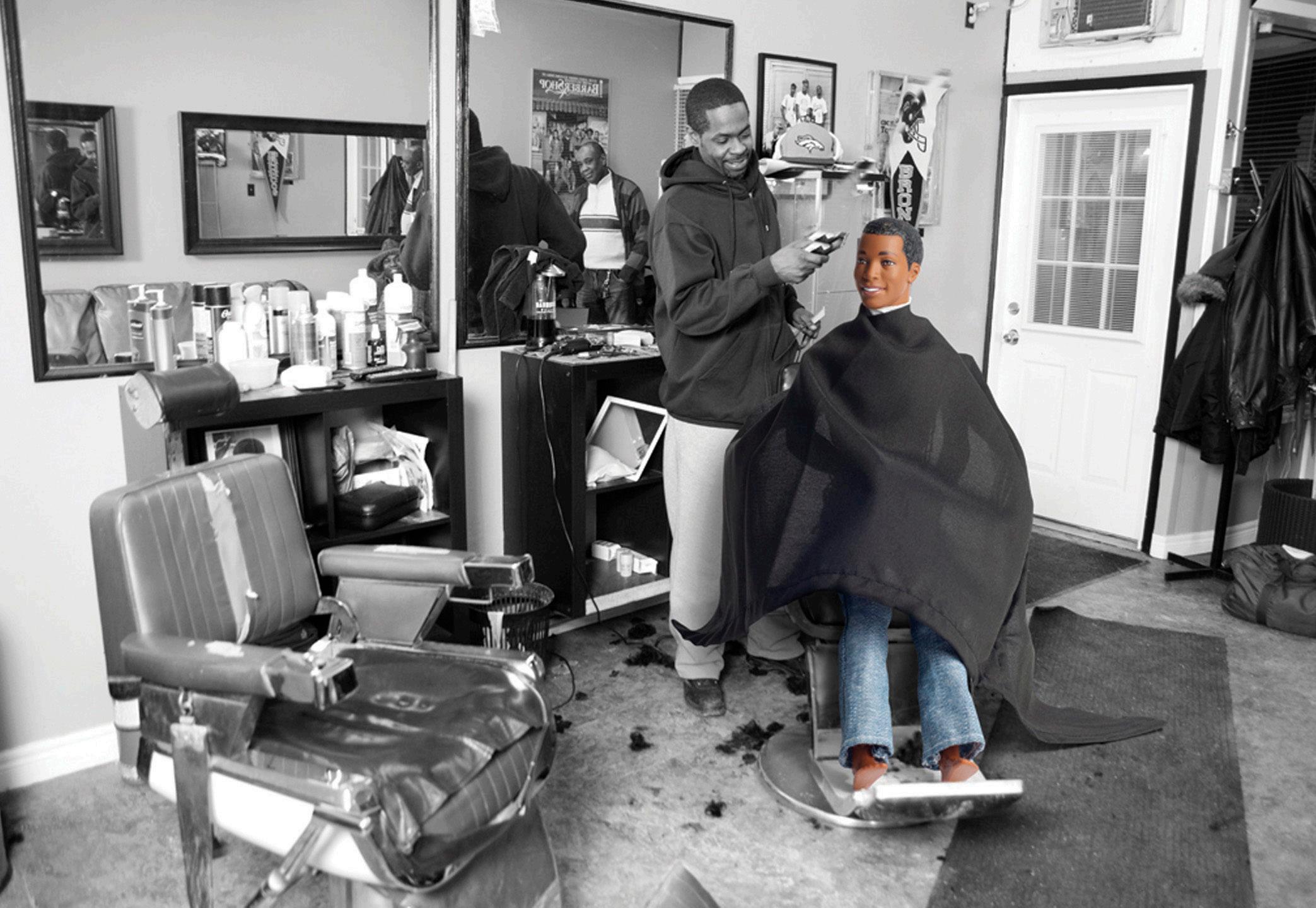
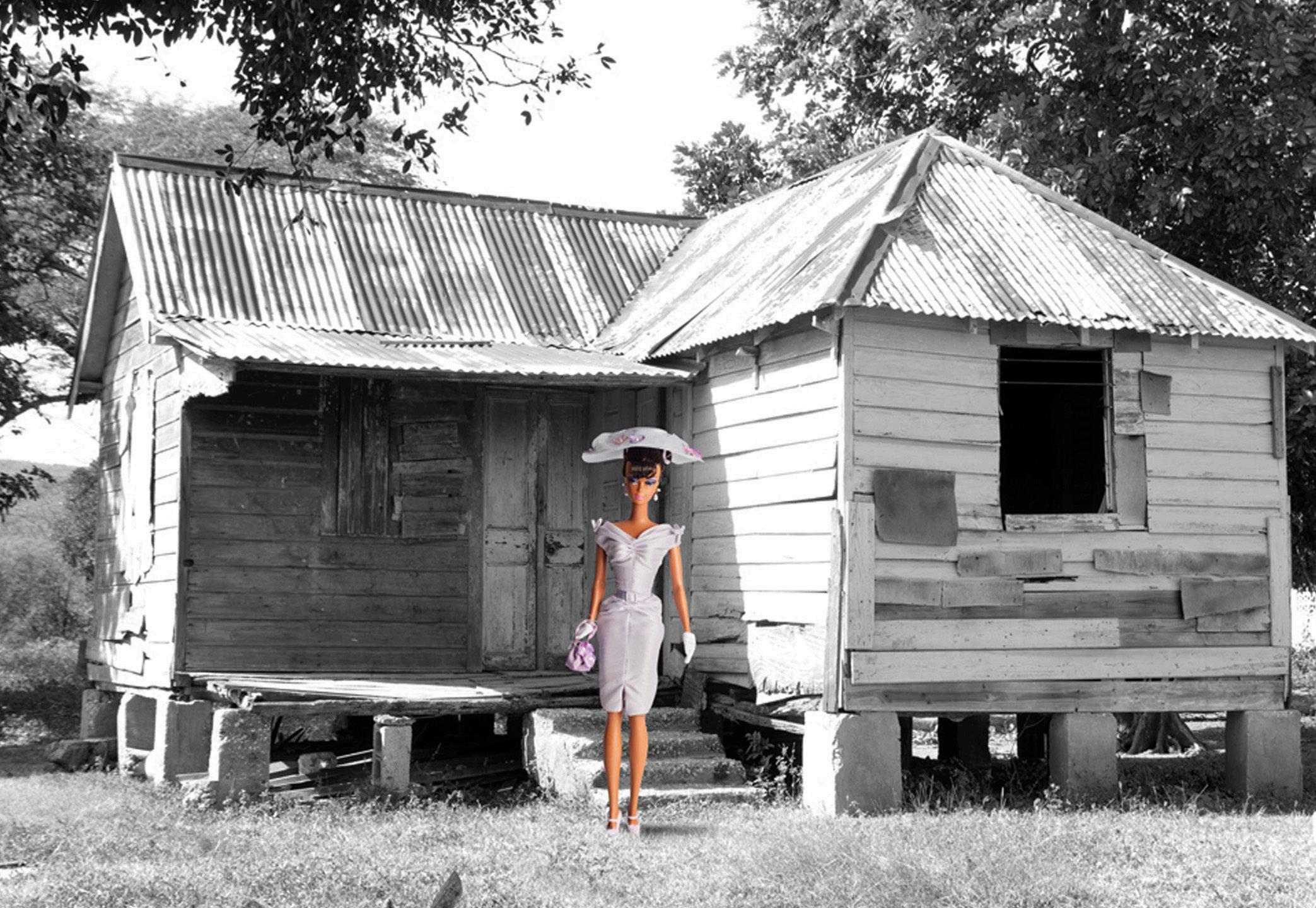
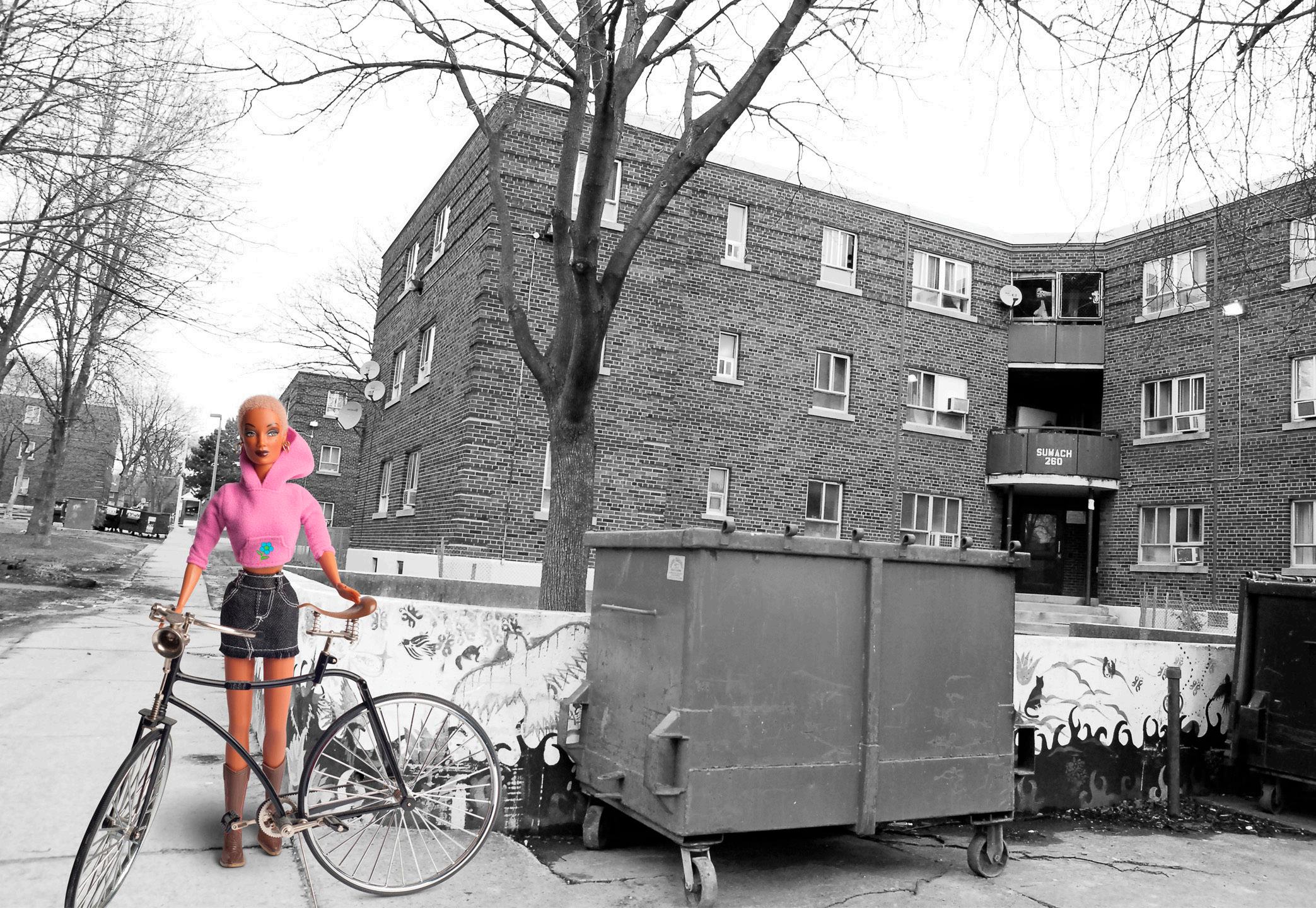
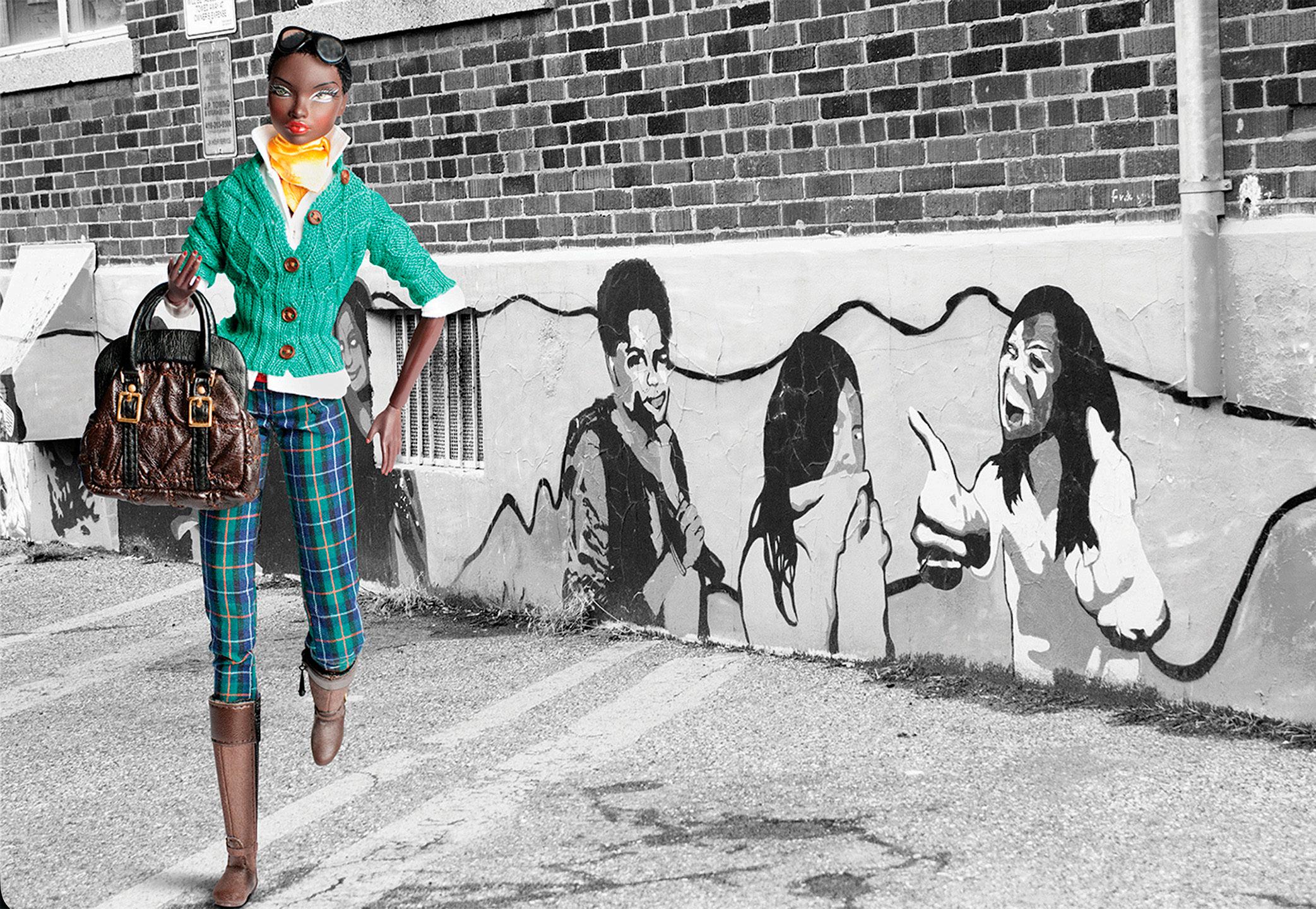

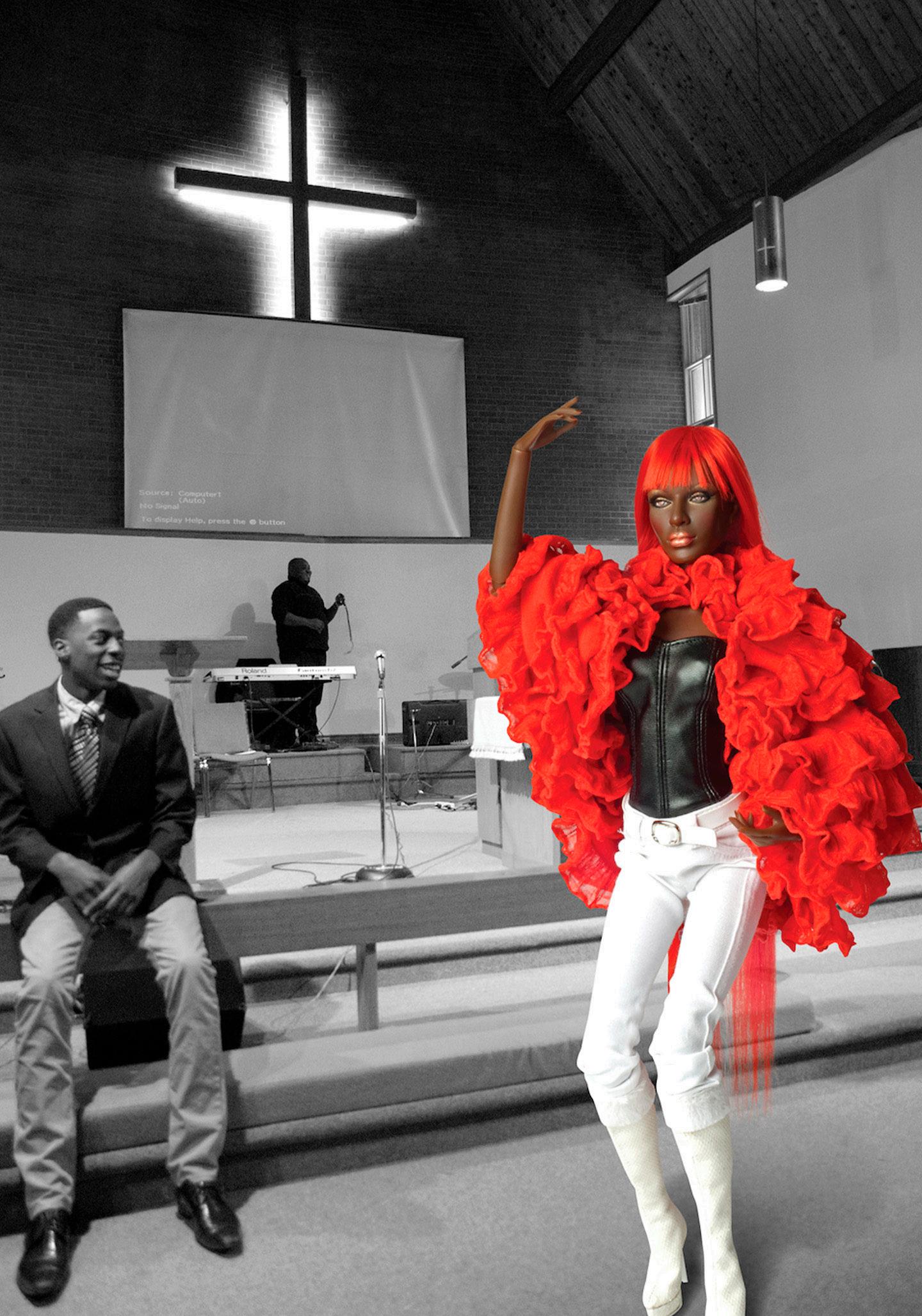
February 24, 2026
thevarsity.ca/section/sports sports@thevarsity.ca
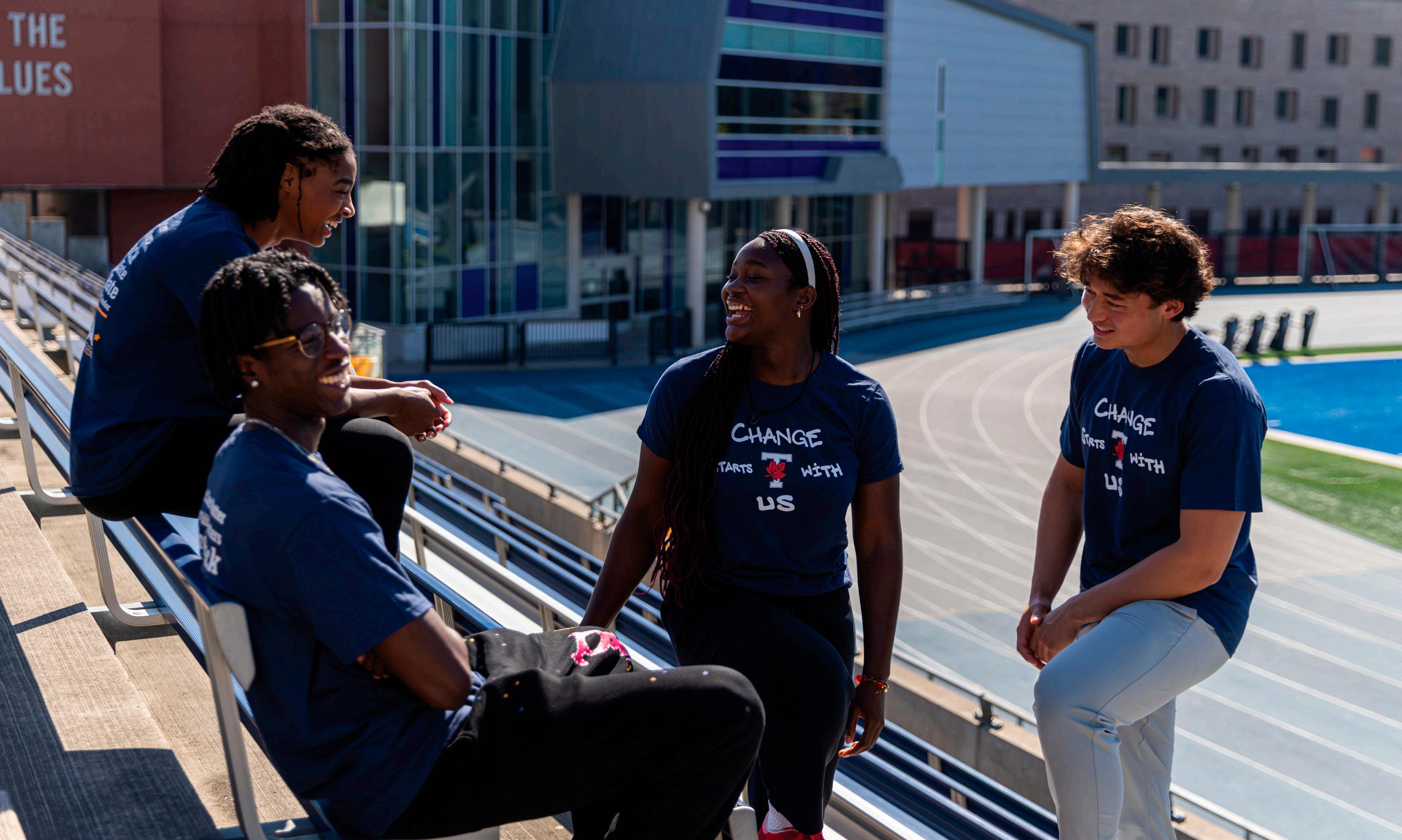
The University of Toronto’s BIPOC Varsity Association (BVA) was created in 2020 by past and present Varsity athletes at U of T, including Devon Bowyer, Sarah Kwajafa, and Alexander Bimm. According to their website, the organization aims to “hold the Varsity Blues program (players, coaches, staff, and faculty) accountable for the experiences its BIPOC members face” through “creating mentorship and reiterating consequences for racism.”
In 2022, The Varsity published a piece on the association’s projects, including their thennew “change starts with us” t-shirt campaign. However, with the founding members cycling out of the organization, making way for a new executive team and members, The Varsity has checked in with BVA to learn about its current initiatives, developments, and changes to the organization.
This year, BVA’s executive team consists of Alex Lin, a member of the Blues’ men’s soccer team; Tobi Oyedele, PK Moyo, and Maakor Okai, members of the Blues’ track and field team; and Faith Joseph, a member of the women’s basketball team.
What is the BVA?
The association is centred around the core pillars of accountability, community, education, representation, and opportunity. Yet, Lin, the current Chair of BVA and fourth-year student, highlights how the organization goes beyond these pillars to support members of the Varsity Blues BIPOC community. In an interview with The Varsity, he discussed how the BVA has developed over time, in addition to the organization’s current goals and initiatives.
Lin describes the BVA as a community for all BIPOC identifying student athletes. “[Our main priority] is making sure that all racialized student-athletes at U of T have
a community with which they can identify with, a place to go where others have similar experiences as student-athletes who are often underrepresented in their sport, or underrepresented as students within the university as a whole.” The group fosters this through holding community-building events, including pub nights and socials, potlucks, game nights, and information sessions to get more people involved in the association.
Moreover, BVA aims to create opportunities for peer mentorship so that younger BIPOCidentifying student-athletes have opportunities to hear and learn from those with more experience. “As a racialized person in my sport, as there aren’t many people who look like me playing soccer… [what was most important in my decision to join BVA was] having a community with which I could identify with and share my experiences of being underrepresented for other athletes in their sports.”
The group also aims to cultivate a sense of belonging and advocate for the needs of BIPOC-identifying student-athletes. “Feeling like your voice is heard, whether it be through [community initiatives] or increased representation within the ‘higher ups’ of Varsity Blues programs [is valuable], as [some athletes have] felt in the past that there was not enough representation of racialized people within the [administration]… some [issues can] get overlooked if they are not addressed. If there is nobody speaking up, [problems can] get swept under the rug, which doesn’t allow us to grow as a community.”
While all of the organization’s founding members have cycled out of the association, having completed their tenure as Varsity athletes at U of T, current members continue to work closely with past chairs and founding members to ensure that its original purpose and goals are maintained. “[It is important that the] original vision for the BVA is still being conserved, and the things [we are doing] still
[consider] and [reflect] the initial intentions of the [founding] group,” Lin explained.
In addition, the BVA works closely with the faculty of Kinesiology and Physical Education (KPE) to fund and organize their events. In particular, they work with KPE’s director of Equity, Diversity, and Inclusion (EDI), Terry Gardiner, and Natalie Elisha, KPE’s Assistant Manager of EDI.
Past and current initiatives
In the past, BVA has held various events, campaigns, and programs to work towards its goal of building community among BIPOC-identifying student-athletes. One of their most notable initiatives was their t-shirt campaign during the 2021–2022 academic year, which was instrumental in increasing the association’s visibility among the Varsity Blues and U of T communities. “We still hand out t-shirts as a way to advertise our group… people wear them in the gym, for warmups, for games, or even around campus, and that generates interest in what we do… [they also function as a way to] show off our pride in our community.”
Furthermore, Lin also highlights BVA’s other initiatives. “Activities like Black History Month, Indigenous education week, and Asian heritage month, all remain staples in our calendar and are things we look to organize events for throughout the year.” Another notable event is peer mentorship night, which provides “a chance for younger [BIPOC-identifying] student-athletes to meet older ones and share their experiences.”
Some changes have also occurred within the BVA, reflecting adjustments to how community members consume media and garner information.
The BVA newsletter, which once provided information about events and opportunities in addition to updates on the BVA’s work, has now transitioned into a larger social media presence, with most communication occurring through the association’s Instagram account.
This new social media presence “allows [BVA] to [more easily] partner with the Varsity Blues and Varsity Board [pages] in terms of reaching more people and gaining more exposure,” Lin explained. This provides more opportunities to grow student involvement. “Every week we have more people following the BVA Instagram… more and more people are interested in what we are doing and want to get involved.”
BVA’s goals for its future
While the association has garnered success with high event turnout and participation, Lin highlights various goals that the executive team has for the group. One of their main goals has been to increase Indigenous representation within the BVA. “We’re looking to add one more member to the executive team that can represent Indigenous culture and values, especially when it comes to organizing events like Indigenous Education Week in the Winter semester.”
Additionally, Lin hopes to ensure that the voices of the entire population of BIPOCidentifying student-athletes at U of T are also heard within the BVA. “The [association] has done a good job of representing BIPOC student-athletes [as a whole], but the opinions of every racialized athlete at U of T [should] be considered, not just those of a small group who want to be involved [with BVA’s day-to-day activities].”
Despite its changes and new leadership, it is evident that the BVA has remained true to its original purpose. “Our main core values and mission have remained the same: to provide racialized student athletes with an environment where they can feel welcomed, connect with others [who have similar experiences].”
Students who are interested in learning more about BVA’s initiatives or joining the BVA community can follow them on Instagram (@bvautoronto).
Liam Weaver Varsity Contributor
“Why swimming?”
While often a genuine question, it’s one that I quickly became accustomed to growing up as a tall, biracial kid. And when I was younger, I didn’t really have a good answer. For as long as I can remember, my parents stressed the importance of being a strong swimmer, especially my mom.
Many locals in Barbados may grow up surrounded by water and still never learn how to swim at a sufficient level, my mom included. After losing a close friend in a water-related incident, she knew becoming strong swimmers was a non-negotiable for my brother and I.
Swimming lessons quickly turned into competitive swimming, and by the time I was 12 years old, I knew it was something I wanted to take seriously. But as I started competing in meets, I began to notice a pattern in the comments other parents would make — there was one other Black swimmer in our club besides my brother and me, and we would frequently be asked if we were triplets.
While the question was innocent in nature, the underlying theme was clear: we stood out. Not just within my home club in Calgary,
but also in terms of representation across the country.
I vividly remember watching Day Three of the 2021 Canadian Olympic Trials. My coach had paused practice so we could all watch the live broadcast. Through social media, I had briefly seen photos of Canada’s rising sprint freestyler, but this was the first time I watched Josh Liendo race. I watched excitedly as they took to the blocks for the 50-metre freestyle, eager to see what the best in the country were doing; what it took to become an Olympian.
And as Josh touched the wall under the Olympic qualifying time standard, I heard my coach say, “That will be you one day.”
Of course, he was referring to my dream of representing Canada in the 50-metre free, but what was particularly inspiring to me was watching another Black swimmer excel at the highest level. I knew then that not only did I have what it takes, but that I wanted to inspire the next generation of swimmers, the same way Josh inspired me.
Later that year, I would begin my journey at U of T as a member of the Varsity Blues Swim Team. Training alongside some of the best in the country, I began to improve steadily. I won silver in the 50-metre free at U SPORTS that season, and by 2023, I was sharing the

podium with Josh, taking bronze at the 2023 Canadian Swimming Trials.
Amidst everything, though, I’ll never forget an interaction I had on deck at one of the local high school meets that the team hosts. I was working as a timer when a parent of one of the swimmers approached me. She introduced herself, and we talked briefly about the meet, what I was studying, and how my training was going.
She then pointed to her son, who, like me, was biracial. She said she wanted to let me know how much it meant to her son to watch me race; how much it meant to see someone who looked like him competing at the top level.
These moments showcase the power of sports, and the importance of representation. Having someone to look up to is so important, especially as a young kid. It sets the bar for what’s possible, and I am certain it played an instrumental role for me in making my first Canadian Senior National Team at the 2025 Fédération Internationale du Sport Universitaire (FISU) Games.
As I reflect on my career as an athlete and think about the impact I want to leave behind, I hope that I can continue to inspire swimmers of all races to believe in themselves. So now, when I’m asked “Why swimming?” my answer is easy: because I love it. And maybe my passion for the sport will someday spark someone else's.
Co-CEO Theo Sokol details planning and process behind Toronto’s first sanctioned student boxing event
Victoria Pool Society (VPS), an organization that started as a small pool club within U of T’s Victoria College, is set to host Student Fight Night on March 20 at Queen Elizabeth Theatre. The event is the first of its kind in Canada, and will be sanctioned by Boxing Ontario — the province’s governing body for amateur boxing.
In an interview with The Varsity, VPS co-CEO Theo Sokol detailed the format, structure, and planning process behind VPS’s new venture, VPS Boxing.
What is VPS?
VPS was formed in 2022 by Sokol and Magdalena Berton, two U of T students in Victoria College. The
pair began organizing pool events at the Annex Billiards Club, eventually forming a social club that gave people “a space away from campus just to hang out with just other students.” Eventually, the group began branching out to promote nightlife events across Toronto.
In 2023, VPS relaunched as an incorporated company, and has since continued to grow. They have held over 50 events with more than 20,000 total attendees, operating in four different cities, and staying cashflow positive. Yet, the team still remains true to its U of T roots, with the majority of its team members being current students at the university.
Student Fight Night
Like the idea for the Pool Society, Student Fight Night was also inspired by events in the UK,
where Sokol is originally from. “It happens at every university [in the UK]… when I came to Canada, it shocked me that it did not exist here, and I really wanted to bring it over.”
At VPS’s function, attendees can watch 17 fights between 34 fighters, all being students from a range of Ontario universities. The event will also have eight ring girls, student DJs and MCs, an on-site party, and access to food and drinks.
Sokol explains that he has spent several years trying to find the right people to host a boxing event, eventually getting in contact with Ilias, the head coach at 161 Boxing Club. “I was really impressed by him… [I thought he was] someone who genuinely cared about the health and safety of the boxers he coached and trained, [and also] had the license to promote the fight legally.”

Sokol also brings a background of working in professional and celebrity boxing, having spent two years working for Wasserman Boxing — a company which has worked with several big names in the British boxing scene. He also had a short stint at Misfits Boxing, which is run by internet personality KSI.
Preparation and format
In terms of choosing the fighters, Sokol explains that VPS selected participants from a pool of roughly 200 applicants. The group aimed to have an equal number of men and women, and the brackets were formed based on weight categories to ensure even matchups.
However, Sokol notes that entertainment was another major consideration in the pool selection process. “[The] boxing, by nature, is going to be of a really low quality. All the boxers are students who have never boxed before… they’re training [four times a week] for three months from scratch, and then they’ll fight each other in the ring.” Yet, he notes that the event will be “a fantastic spectacle,” taking place at a proper venue, with officials coming from the boxing body recognized by the Government of Ontario.
“The training is going very well. We have fantastic coaches [who are] very charismatic, very capable. I’ve been really impressed by their focus on the fundamentals, especially teaching the boxers how to defend themselves, which is the most important thing.”
Sokol says that his ultimate goal with VPS is to foster a culture of better work-life balance within the U of T student body. “I want these events to become embedded into the culture of this university… I think it can give U of T a really special thing that no other university in Canada has.”
Moreover, he hopes that Student Fight Night can grow the sport of boxing in Toronto. “There’s only three boxing gyms in the city as far as I know, and there’s only one boxing shop for a city of 10 million people… I think it’s pretty crazy how one of the biggest sports in the world is [so small here].” Tickets are available through the link in VPS’s Instagram (@vicpoolsociety).
Jean Patrick Vidad Associate Sports Editor
Victoria Mboko achieves tournament milestone in Melbourne; Felix Auger-Aliassime and two others bow out in first round
After a strong 2025, expectations were through the roof for the Canadian tennis roster coming into the new year. Last summer, Montréal saw Victoria Mboko go on a Cinderella run, knocking down four former Grand Slam champions on her way to securing her maiden Women’s Tennis Association (WTA) 1000 title. The win happened on her home soil, making her the third Canadian to do so. On the men’s side, Felix Auger-Aliassime reached uncharted territories in his career after breaking through the top five of the ATP rankings, highlighted by a semi-final appearance in the US Open and a finals slot at the Paris Masters.
Besides capturing the National Bank Open title, Mboko also capped off her breakout season as the 18th-ranked WTA player. Mboko leapt 33 spots while setting a record-breaking 22-match win streak and bagging four consecutive International Tennis Federation (ITF) titles to etch her name in history books. She also clinched a WTA 250 title in Hong Kong to round out the year.
Auger-Aliassime, on the other hand, became the second Canadian, besides Milos Raonic, to crack a top-five spot in the ATP rankings. His title wins in Adelaide, Brussels, and Montpellier, on
top of a 50–24 record, signified his formidable form in the ATP 250 tournaments. He also earned the chance to play at the Nitto ATP Finals, bowing out in the semi-final.
If last year indicated anything for two of the best players in contemporary Canadian tennis, it is that they should be on course for a blazing start to 2026. Not to mention, the Canadian team collectively produced historic results, as both the men’s and women’s rosters placed third for most tour trophies collected on the tour last year (six for men’s, four for women’s). While the women’s roster stood its ground in this year’s first Grand Slam tournament, their men’s counterpart faltered in the early rounds.
Auger-Aliassime retires early Seemingly on the start of another promising Major campaign, Auger-Aliassime then dropped two straight sets, with an injury forcing him to concede his tournament progress at the 2026 Australian Open and allowing Nuno Borges a walkover in the first round.
Auger-Aliassime, who was fresh from the Nitto ATP Finals, took the first set before Portugal’s Borges seized the next two to lead, 2–1 (6–3, 4–6, 4–6), as the latter looked at a possible upset win against the Canadian. The 25-yearold, who was then struggling with upper left leg
pain, called a medical timeout at the end of the third set and at the start of the fourth to seek treatment. After playing the next two points, he retired from the match.
“I want to be on the court winning. I want to be on the court competing with my opponent,” Auger-Aliassime remarked in a post-game interview during media availability. “I don’t want to be just standing there like a punching bag. So there’s no point, and you know to move on,” he added.
Denis Shapovalov was the only Canadian on the men’s singles bracket to advance onto the second round after sweeping China’s Bu Yanchaokete, 3–0 (6–3, 7–6 (7–3), 6–1), but fell to Marin Cilic in straight sets, 3–0 (6–4, 6–3, 6–2) in the second round. Meanwhile, Gabriel Diallo of Montréal and Newmarket’s Liam Draxl also went out in the first round.
A tournament of firsts
“I’ve never played a current No.1 in the world… I’ve never played on a Grand Slam centre court either, a lot of firsts,” Mboko said during media availability ahead of her game against Aryna Sabalenka.
Her spirited manner is not to be mistaken for nerves in what was the biggest match of her career thus far. In her first fourth-round match
in a Grand Slam setting, the ice-cool Canadian almost forced the World No.1 Sabalenka to a third set, rallying back in the second set to push it to a tiebreaker game, before succumbing to her higher-ranked foe, 2–0 (6–1, 7–6 (7–1)).
Meanwhile, the other Canadian in the main draw of the women’s singles fixtures, Leylah Fernandez, bounced out of the tournament in the first round as Indonesia’s Janice Tjen dispatched her in straight sets, 2–0 (6–2, 7–6 (7–1)).
What’s next?
Auger-Aliassime just successfully defended his Open Occitanie crown, downing French Adrian Mannarino in straight sets. On February 10-14, Shapovalov also vied for a back-to-back Dallas Open title bid, but fell to Ben Shelton in the semifinal round. After a nonideal start to the new year, these two will look to bounce back and string together some wins to bolster the Canadians’ momentum as they go on their slate.
On the other hand, Mboko withdrew her eligibility for the WTA Abu Dhabi Open, instead focusing her sights on the Doha and Dubai WTA 1000 tournaments. Fernandez, meanwhile, incurred another early exit from the Abu Dhabi Open, losing in straight sets to the unseeded and therefore less-favoured American, McCartney Kessler.