
THE USD VISTA
USD Dining ranked No. 10
Toreros rate campus food after nationwide ranking
received the
CADEN
HAYNOR
NEWS EDITOR
USD Dining ranked No. 3 in California and No. 10 nationwide in Niche’s 2026 college rankings. Niche is a private U.S. data and rankings website based on student reviews and meal plan costs.
One part of these reviews and rankings comes from a focus on sustainability,
which is rated by students in the surveys on Niche.
USD Dining Services
Director Charles Ramos described USD Dining’s focus on the environment and local sourcing.
“Sustainability is an important part of our operations,” Ramos stated. “We utilize compostable packaging and the Ozzi reusable container program across our units.
We also work closely with our vendors to source local products whenever possible and continue to perform well on [the] sustainability scorecard.”
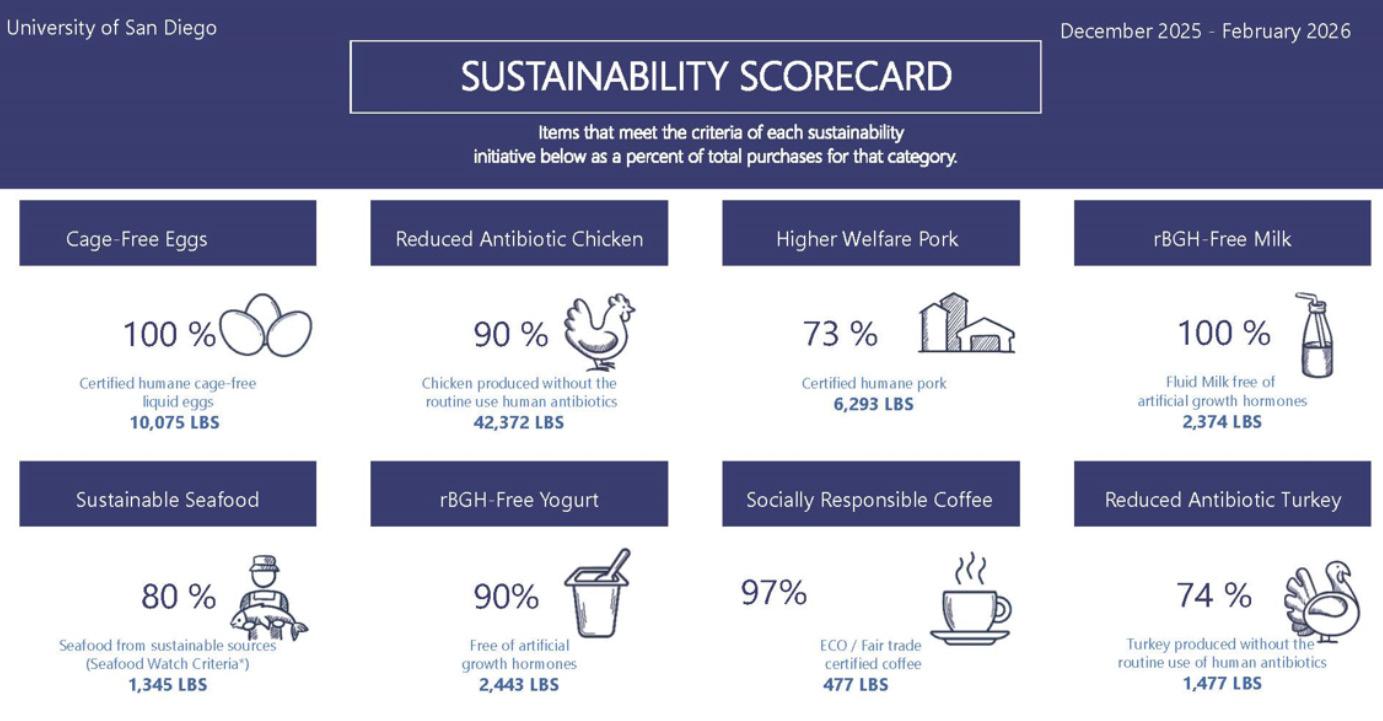
This scorecard was provided by Sysco, the food vendor for USD which measured from December 2025 to February 2026. The scorecard calculated the total purchases for each sustainability initiative. For that period, USD purchased all of
their liquid free egg stock from cage free liquid eggs, 90% of their stock of reduced antibiotic chicken, 73% of their stock of higher welfare pork and 80% of their stock of sustainable seafood, among other items for on-campus dining.
The reusable containers mentioned by Ramos are available in the Pavilion cafeteria during dinner every day and brunch on weekends. Once used, these containers can be returned to a labeled machine to be washed and reused.
USD senior Megan Simpson described her thoughts on USD Dining’s sustainability initiatives on campus.
“I think there are definitely parts of USD Dining that are sustainable, like the Ozzi boxes and giving discounts for tea or coffee if you bring your own cup,” Simpson said. “But I also think there could be some more widespread composting initiatives. The SLP could easily get rid of offering plastic cutlery, and reusable cups could be offered everywhere. I feel like there are always these conversations, but rarely any actual change, and I see other campuses and even local coffee shops implementing these practices, so it would be nice to see USD follow stricter
See Dining, Page 2
Bieber headlines Coachella
Coachella Valley Music and Arts Festival is one of the world’s most influential music festivals. Held in Indio, California, spanning two weekends each April, the festival features a diverse lineup of artists — including rock, pop, hip-hop, indie and electronic genres. This year, the festival featured many popular artists including Sabrina Carpenter, The Strokes, Laufey and the much anticipated headliner, Justin Bieber. Coachella marked a significant moment in Bieber’s career, signaling a return to the stage after several years away from major live shows. Prior to his Coachella debut, Bieber had only performed at a private show in Los Angeles on March 29, 2026, making this his first major concert since canceling the Justice World Tour in 2022. Bieber delivered a unique set during weekend one. Rather than the extravagant, theatrical performances he is typically known for, Bieber’s set was notably more laid back. While it lacked flashy production, Bieber guided
See Coachella, Page 4
Torero thrift takes over campus
Campus thrift store draws students to sustainability
AMELIE SEDLACK FEATURE
EDITOR
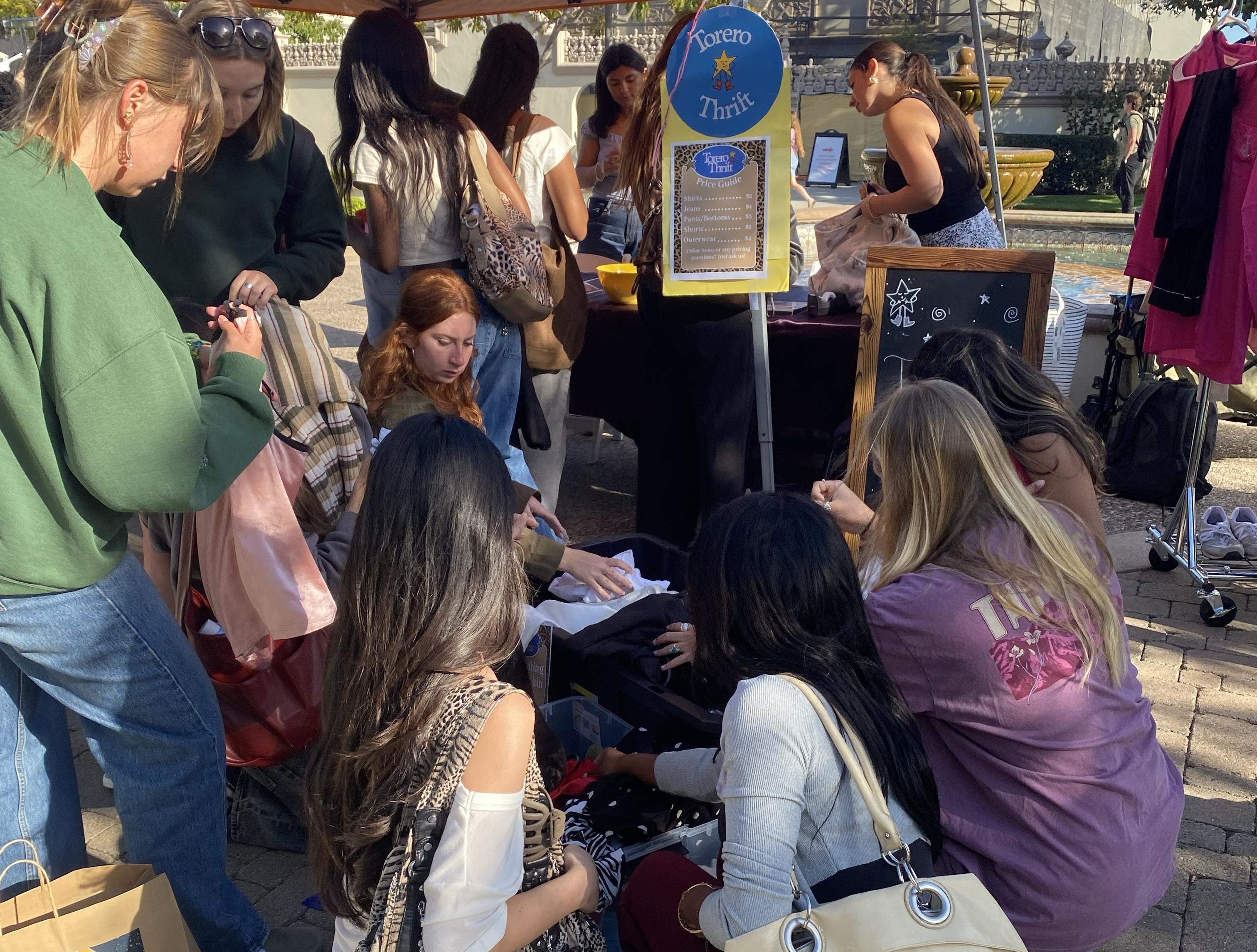
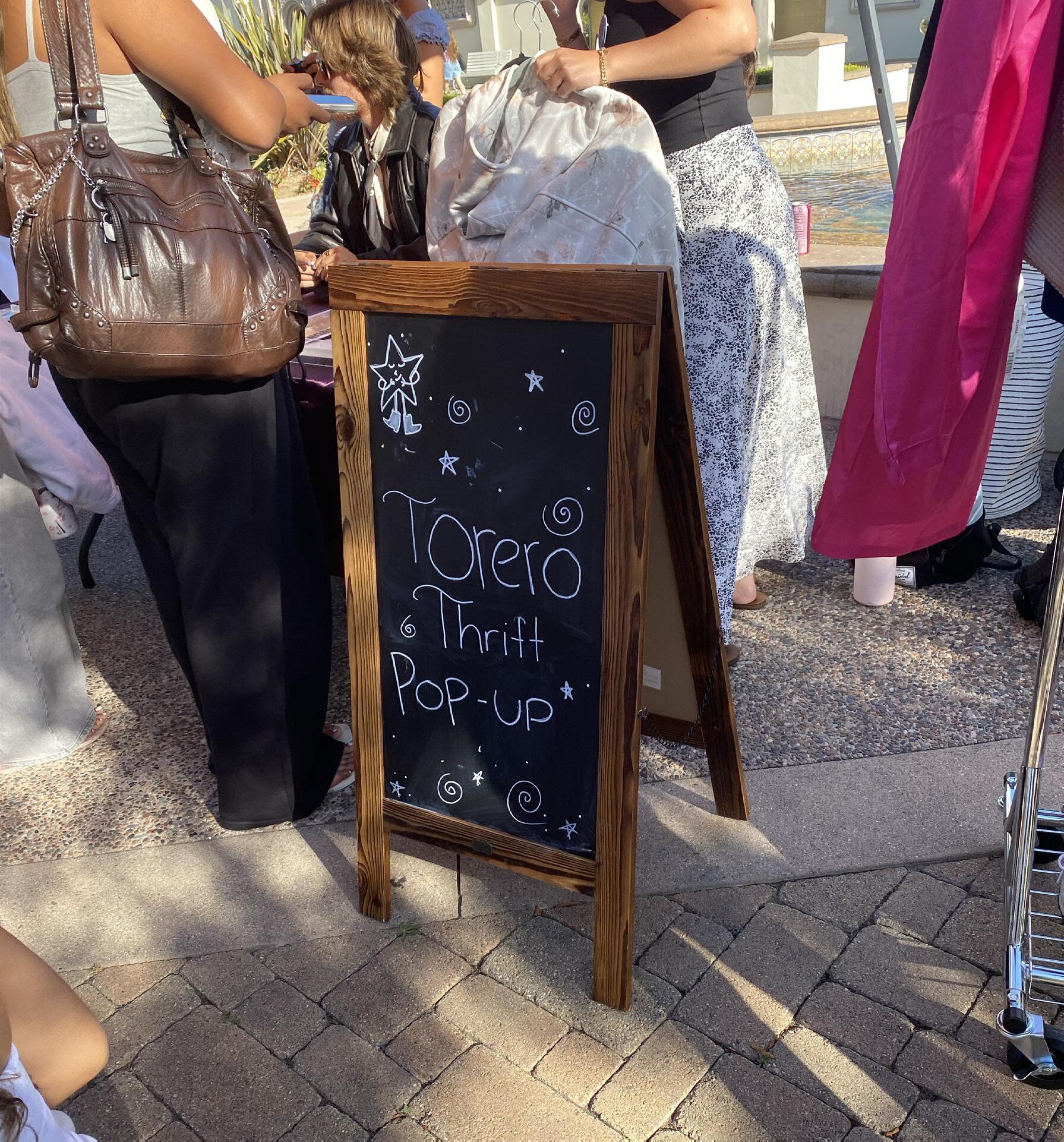
As the weather warms, Toreros are on the lookout for nice spring clothes, and a sustainable option recently popped up on campus. On Wednesday, April 15, set up in front of Maher, a group of students opened the first Torero Thrift.
USD senior Jane Scroggs started this social change project in one of her classes last semester. She, along with Nick Crozat, Bri Gonzalez Labastida and Madi Graham had a vision of sustainability that would include and benefit the USD community.
“This project started at the beginning of last semester in a sustainability sociological perspectives class,” Scroggs explained. “When I first came to USD, I noticed a big issue with consumerism and especially during move-out when the dumpsters would just be filled with things in great condition, very reusable and that really bothered me. Our original idea was to establish a permanent on-campus thrift store, at the beginning of last semester, and so we spent that semester in that class doing assignments and talking to stakeholders at the University.”
This name might sound familiar from a previous sustainable option on campus, now called Eco Exit. Because they were both created with the help of the Changemaker HUB, the founding students collaborated and change the names to distinguish the events.
Scroggs also explained the background of the logistics of this on-campus pop-up. Toreros noticed the project’s donation boxes across campus. Scroggs revealed that is how they were able to build up their stock.
“We put up collection bins in four different housing areas

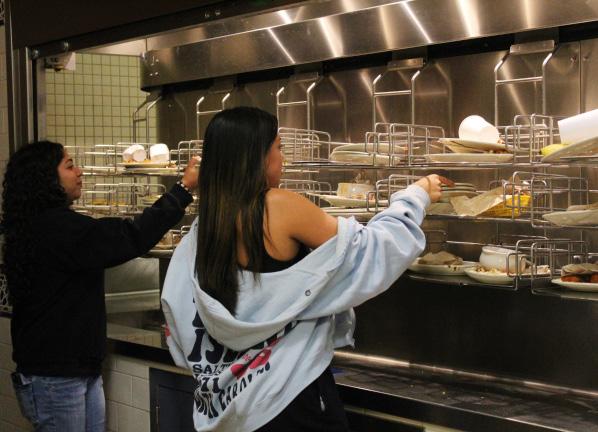
USD Dining
ranking from Niche, which takes student surveys and meal plan prices into account. Hailey Howell/The USD Vista
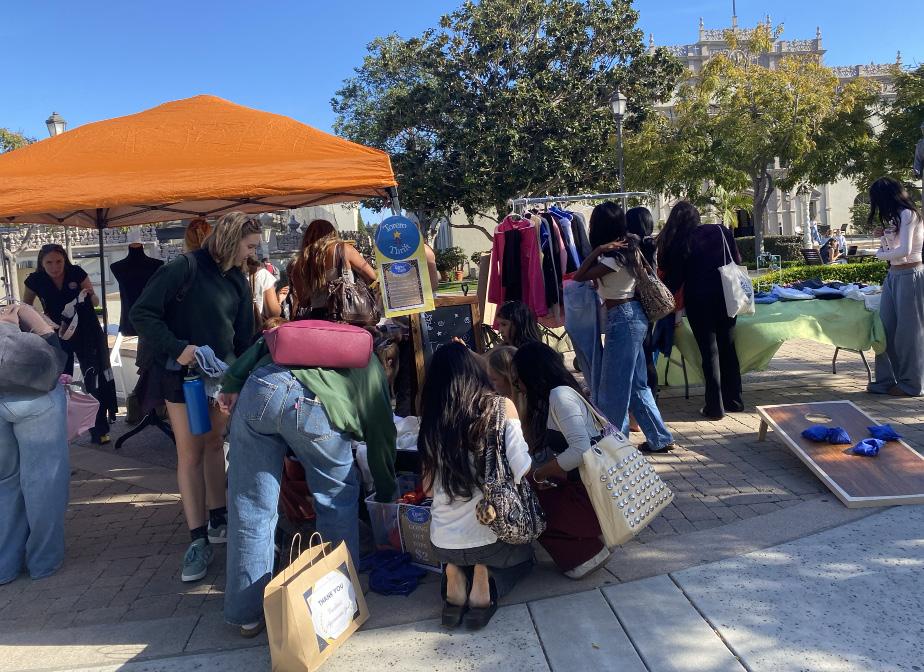
Two USD seniors started Torero Thrift and set it up on April 15 for customers. Amelie Sedlack/The USD Vista
MACKENZIE SMITH CONTRIBUTOR
Dining No. 3 in CA and No. 10 nationwide
USD students react to quality and sustainability of
From Dining, Page 1
sustainability practices.”
USD first-year Kylie Walton works at the Impact Lab, a collaborative, actionoriented initiative on campus which is working to add vegan options to campus. Walton explained her findings on the on-campus vegan options.
“In Impact Lab, we have identified that vegan and vegetarians complain about not enough meatless options on campus, as well as students complaints about cost of food on campus,” Walton said. “We have talked to some of the managers at the restaurants on campus, as well as the head of the Center for Food Systems and Transformation here. We surveyed some students and 42% said that cheaper meals would incentivize them to eat less meat, and 60% are interested in meatless meals. La Paloma has already incorporated more meatless options and it has had a lot of demand on campus.
USD senior Shea Salamack also shared some ways USD Dining could focus on helping the environment more.
“For sustainability, I see
an effort with the mulch, and the biodegradable straws,” Salamack said. “I think that certain initiatives, like default oat milk for Earth month, run by Changemaker HUB, should be more frequent. I’m not completely aware of other efforts USD Dining makes to maintain food waste, but I think a lot of lunches on campus are extremely overpackaged. The plastic lids on those cardboard bowls at Oliva, for example, are overkill. It would be great to see lunch ‘for here’ options with silverware and a bigger push for ‘bring your own mug.’ I learned in my Leadership class freshman year that many students seek more Halal options on campus, and many find it difficult to accommodate severe allergies, which are a couple of other things to consider.”
USD Dining’s nutrition came into play with the Niche rating as well. Ramos described how the department strives to serve healthy food.
“Health and wellness are also key priorities,” Ramos stated. “We’ve made intentional decisions around our ingredients, such as
offering many clean, low processed foods, including fresh salmon and Halal proteins. Additionally, we recently brought on a nutritionist who is helping us evaluate our menus and ingredients as we work with our vendors to ensure we are making the best possible choices for our students.”
USD first-year Devorah Wynn commented on the lack of Kosher options on campus.
“As far as I know, USD
food on campus
does not have any Kosher options yet,” Wynn said. “I’d love to see more Jewish foods in the dining hall especially on holidays and event nights.”
Salamack shared her opinion on the health of the food on campus.
“I’ve consistently eaten USD dining for four years, and I think they overall do a really good job,” Salamack said “The SLP provides good variety at dinner, especially if you get
creative with the salad station. The lunch options across campus, I believe, are really impressive and accommodate a wide variety of palates… Though, I will say, a lot of people say SLP food gives them stomach aches.”
The USD Dining feedback form, linked on the dining website, is a way for students to rate meals, comment on the quality of the food and suggest new meal ideas directly to Auxiliary Services.
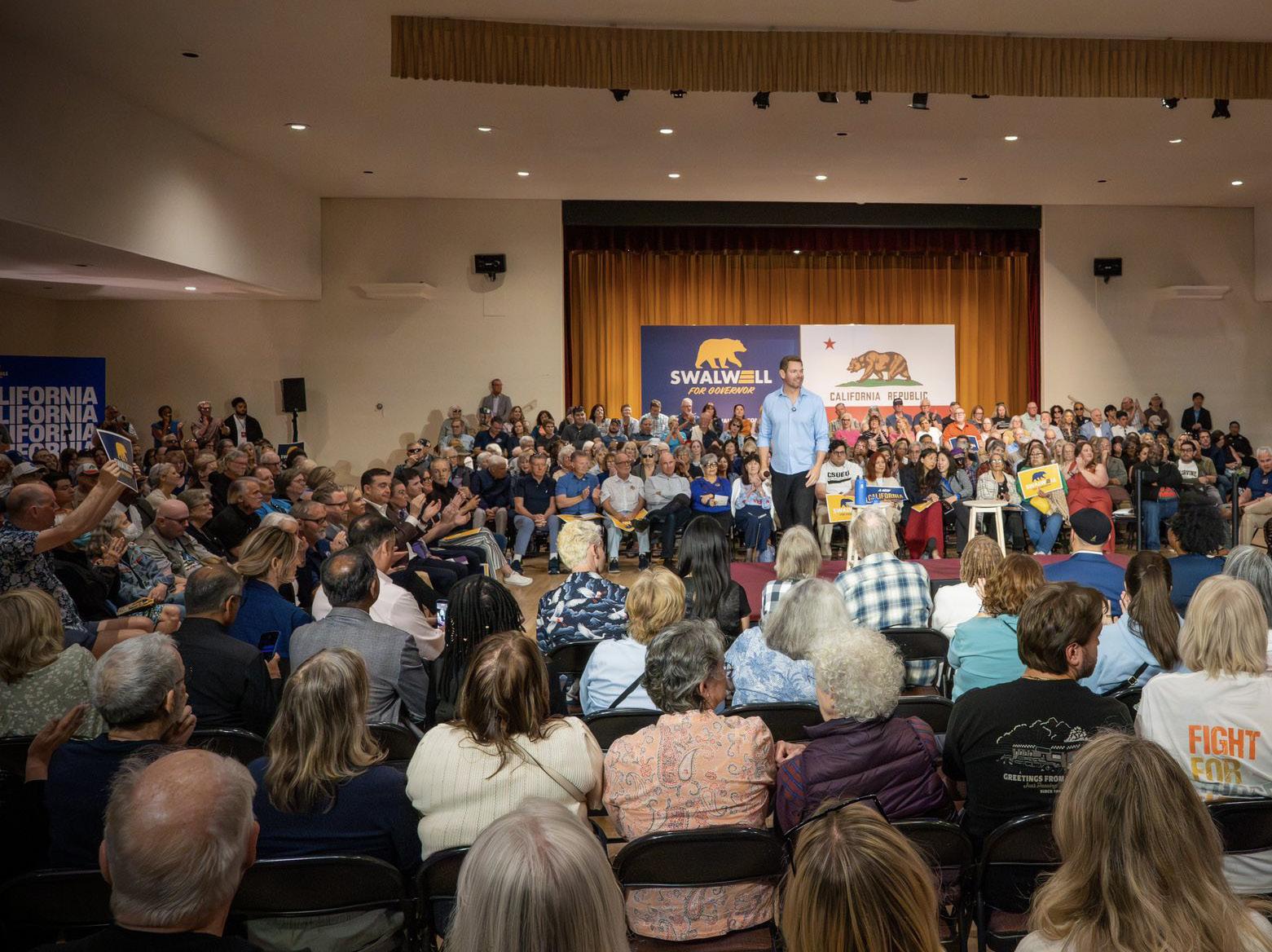
Swalwell drops from CA gubernatorial race Eric Swalwell resigns amid sexual assault allegations
MAE O’MALLEY CONTRIBUTOR
Former Representative Eric Swalwell suspended his campaign for the Democratic bid for governor in the California gubernatorial election, announcing the decision on April 12. Swalwell’s exit from the race came amid allegations of sexual harassment from five women, first reported by the San Francisco Chronicle and CNN. The announcement also served as his resignation from the U.S. House of Representatives, where he served as the representative for California’s 14th and 15th Congressional Districts, respectively, since 2013.
The primary election will be held on June 2, and Democrats have yet to find a front-runner for the ticket. Current Governor Gavin Newsom wraps up his second term in January, and is unable to run again due to a two-four-year term limit. Many state and local politicians have stepped up to the plate, including the mayors of Los Angeles and San Jose. Swalwell had been leading the polls — an Emerson College survey conducted in March favored the candidate with 17% of California voters — but his campaign collapsed following these allegations. Emerson polls conducted after Swalwell’s exit showed 23% of voters remained undecided.
Swalwell’s campaign platform largely surrounded affordability in California, with the main goal to lower prices and increase wages. Swalwell focused on reaching out to young voters to hear their concerns and needs.
California’s primary election system runs on a top two primary system, meaning that every candidate will be on the same ballot. The top two candidates will advance to the general, regardless of party affiliation. It is possible the general election could be a bid between two Republican candidates, knocking Democrats out of the race completely. Actor Arnold Schwarzenegger was the last Republican governor in California, serving from 2003 to 2011.
Without any notable candidates running for the Democratic spot, many USD students were unaware that a gubernatorial election was to take place this Nov. USD junior Maria Cornelius commented on her knowledge of the race.
“I honestly didn’t know anything about the election until [my friend] brought it up and we were talking about it,” Cornelius said. “I’m from Nebraska so I honestly have no stake in it. I’m not that interested.”
The first allegations came from 28-year-old Democratic strategist, Annika Albrecht, who claimed that Swalwell sexually harassed
her six years ago. Albrecht saw that Swalwell was on track to potentially win the election, and felt that she needed her story to be heard. Albrecht’s close friend and content creator posted Albrecht’s story and created a space for other women to share their stories.
The San Francisco Chronicle and CNN published some of the accusations, including those from Lonna Drewes who announced at a press conference on April 7 that Swalwell drugged and raped her in a hotel room in West Hollywood. Swalwell announced his exit from the race on Sunday night, followed by a resignation from Congress on Monday. Swalwell, who is married with three young children, denies the allegations from these women, but apologizes for any mistakes that he may have made.
“Expelling anyone in Congress without due process, within days of an allegation being made, is wrong,” Swalwell commented. “But it’s also wrong for my constituents to have me distracted from my duties.”
Following these allegations, other women came forward to share their own stories, including a former staffer. Two women described nonconsensual sexual interactions while being heavily intoxicated, and one described receiving unsolicited lewd photos. Following these accusations, two of the victims received letters
from Swalwell’s legal team, calling the accounts false and warning of legal action if they were to not take back their comments.
Some students are concerned with the fact that Swalwell is not the first politician to receive accusations of this kind against them. USD junior Ian Newberg weighed in on his feelings about the allegations.
“More than anything, it’s tiring that time and again these politicians can just resign and not have to face any backlash from the Committee of Ethics or anything,” Newberg stated. “It’s the same thing as Matt Gaetz. I feel like they all just get away with it.”
The Department of Justice launched an investigation into the conduct of the former representative, but has not made any public comments. The U.S. House of Representatives Committee on Ethics released a press release on April 13, regarding the allegations. The committee launched an investigation into Swalwell’s conduct and will determine if their findings violate any laws, rules or regulations in regards to any misconduct occurring with a subordinate.
With just under two months until the primaries, California Democrats scramble to find a front-runner gubernatorial nominee for the general election.
The sustainability scorecard is allocated by USD’s food supplier, Sysco.
Photo courtesy of Charles Ramos
External chairs lead departments
Multiple departments at USD are led by a chair not in their discipline
their academic journeys.
Department chairs who do not specialize in the disciplines they oversee are leading students and faculty. This is a little-known practice that is shaping leadership across multiple University programs.
At least three departments across USD’s College of Arts and Sciences and the Knauss School of Business are currently chaired by professors from outside their fields: neuroscience, cognition and behavior (NCB), psychological sciences, art, architecture and art history and economics.
USD College of Arts and Sciences Associate Dean of Faculty Jillian Tullis, PhD, explained why a chair may be a professor that teaches in a different department.
“The reason that they would be chairing that department varies,” Tullis said. “Sometimes it may be a reason that the department or dean might see that they need an outside voice to help lead the department. Sometimes it is because there isn’t anybody who may be eligible or qualified or interested to chair the department… There may be a department that has a leadership direction that they’re trying to go to and they need somebody from outside the discipline. And then sometimes the department’s so small they don’t have enough people that are tenured.”
USD professor Joseph Provost, PhD, instructs chemistry and biochemistry and is chair of the art, architecture and art history department.
Provost has served as chair of three different departments at two different universities, totaling 16 years of experience in this type of position.
Provost described his interactions with students and the areas that he hopes to help them with in
“Since I’m not an instructor [in the department], [students] only come to the chair if there’s a problem with getting into class,” Provost explained. “Maybe a problem or concern they have with financial aid or registration, timing of classes, maybe an issue with another student or faculty and that’s the same in all departments.”
USD junior Skylar Bruner, an architecture and visual arts double major, explained her perspective on having a department chair outside of her major.
“I think it’s interesting having the chemistry professor being our chair,” Bruner said. “I think cross-disciplinary approaches are really important, but also having someone within the department might have more understanding because [Provost] is not around a lot. He’s in the chemistry department more than he’s here, which is a little frustrating.”
Provost responded to this comment.
“I am in the [department] everyday and have met with any student who reaches out,” Provost said. “I’ve never heard from students looking for me, but would enjoy visiting with them... It’s unfortunate they aren’t aware when I’m there, but the chairs job is mostly focused on staff and faculty. Students of course are the reasons chairs do our job. I would also add that, as an external chair, I still teach in chemistry and biochemistry and maintain my research lab with 13 students. It is impossible to be in the [department] as much as I wished.”
Tammy Dwyer, PhD, is a USD professor in chemistry and biochemistry and has served as the chair of the NCB and the psychological sciences departments since July 2024.
The NCB and psychological sciences departments were previously one department. In the summer of 2024, they split into two departments, leaving Dwyer as the chair of both departments until she retires. Earlier in her USD
career, Dwyer chaired the chemistry and biochemistry department for 13 years.
Dwyer explained how she interacts with the students in NCB and psychological sciences departments, the departments that she chairs and teaches for at USD.
“I have like 50 advisees, half of them in NCB and half in psychology, and I still have three in chemistry and biochemistry,” Dwyer described.
“So I got to learn about the curriculum and come up to speed quickly about what classes were, like PSYC 359, because you got to know this stuff. So I was up for the challenge… At the end of the day, it’s always about the students, but serving 500 majors is just a lot, so [the department split] had to happen.”
USD senior and NCB major Ari Bradford described her thoughts on having a department chair out of the NCB discipline.
“That could be an issue in understanding what the [neuroscience] department needs versus the [biochemistry] department over in Shiley,” Bradford said. “That could affect us and our needs and what our labs need. Just trying to divide resources.”
Even though serving students is a large part of being a department chair, there are other responsibilities which the professor in charge must perform. As the academic and administrative leader, the department chair is responsible for faculty, curriculum, budgeting needs, assisting students and multiple other jobs to maintain the well-being of the department.
USD Associate Professor in Chemistry and Biochemistry Eleanor Gillette, PhD, gave a look into the job of a department chair.
“It’s not just ‘you get to put a fancy little plate on your door’ and be like, ‘I’m the department chair,’” Gillette said. “It’s behind-the-scenes stuff. You guys are getting ready to register for classes right now. They are the ones
who make sure that the numbers in the computer system for the classes match, and that the times are right and everybody’s in the classroom. That’s one of the things that department chairs are coordinating. You know, it’s not the most fun and exciting job, but it’s super important.”
Tullis explained some of the advantages and disadvantages of a department chair being outside their discipline.
“I think that there are ways in which having expertise obviously has some advantages, because you already know, are intimately familiar with, the curriculum,” Tullis said. “That can be advantageous for not just the students, but for the faculty. An outside person may not have the same level of knowledge, but ideally that person would recognize that they are lacking in that area and they would refer to the faculty in that department to help inform them. On the flip side, I think there is a potential for someone with an outside perspective to come in and ask certain key questions.”
Provost explained how he has used his experience in the science department to aid his work in an art department.
“I think what helped having a science chair in that department is the resources and safety,” Provost said. “So there’s a lot of clear
safety issues in chemistry, in biochemistry and physics that are identical to what happens in architecture and the visual arts... There are a lot of similarities and me bringing my experience on how to put things together, how to organize, how to manage, how to apply resources and make things open and transparent was something I was able to bring.”
Dwyer’s work as chair has involved working with the professors in both the NCB and psychological sciences disciplines, attempting to create two autonomous departments. Dwyer explained the importance of transparency for her during this process.
“There was still some building, and some rebuilding on the psychological sciences side, that had to be done,” Dwyer said. “So I think I’ve just had a lot of experience and I worked hard to be transparent and earn the trust of the people who didn’t know me. I don’t always have to be right, I just like to steer.” Following Dwyer’s retirement in less than a year, the departments she leads plan on hiring separate chairs to lead each discipline.
Many of these departments led by external chairs are undergoing internal changes, which does sometimes require the assistance of an experienced chair.
ARTS & CULTURE
Bieberchella hits the stage
Toreros head to Indio to watch their favorite artists perform
the audience through different eras of his career. He opened with a long stretch of music from his latest album before bringing out The Kid LAROI to perform their hit “STAY.”
The entire set shifted when he sat down and pulled up YouTube. He played his old music videos and sang along with his younger self — karaoke style. This portion of the show featured many of his most popular hits including “Baby,” “Never Say Never” and “Beauty and a Beat.” He went on to pull up his old YouTube covers of “With You” by Chris Brown and “So Sick” by NeYo. The videos reflected their age, equipped with poor lighting and grainy quality.
After a pre-programmed WiFi dropout, the focus switched to pop-culture references: old videos including Bieber walking into a glass door, falling through a stage floor and a more recent rant about paparazzi. Finally, he returned to his newer music, bringing out Dijon for “DEVOTION” and Tems and Wizkid for “Essence.” He ended his set with “Daisies” bringing out Mk.gee to play guitar.
USD junior Devin Washington attended Coachella and shared her opinions on his performance.
“As a fan of Justin Bieber since I was young, it was great seeing him smile and actually perform for himself, not just the audience,” Washington commented. “I feel like he radiated genuine authenticity and emotion.”
During weekend two, Bieber continued with his more casual performance while also adding new elements. He brought out a variety of guests including Billie Eilish for “One Less Lonely Girl,” SZA for “Snooze,” Sexyy Red for “Sweet Spot” and Big Sean for “As Long As You Love Me.”
USD senior Hasan Iqbal commented on Bieber’s performance and his special guests.
“I tuned in to the livestream and saw one of my favorite artists, [Mk.gee], close the show with him,” Iqbal said.
“I was sad I couldn’t be there, but I was happy to see it.”
Following the performance, clips quickly circled online, prompting widespread discussion between fans and critics. Many of the attendees and those online had mixed reactions, with some saying the performance felt unconventional for a headlining set, while others appreciated
the creativity and personal tone.
Bieber’s performance has frequently been compared to Sabrina Carpenter’s show who included more theatrical elements, including elaborate stage designs and shifting set pieces, even bringing out Will Ferrell and Madonna. However, despite her elaborate performances, it seems as though some Toreros were still more excited to see Bieber.
USD student Kaia Farres watched both Carpenter’s and Bieber’s performances during weekend one.
“I was underwhelmed by Sabrina’s performance, but I’m a little biased being a Justin fan,” Farres said. “I felt that [Carpenter’s performance] was very overproduced with not much reason for that and I liked Justin’s rawness in his set and the references to starting from YouTube.”
USD first-year Emily Dohrman disagreed with this statement.
“I thought the lineup this year has such a wide variety of music, and there was something there for everyone,” Dohrman said. “Even though I know a lot of people were excited for Justin, I think there were also so many
other artists’ sets that deserve the same amount of attention.”
In two weekends full of standout performances, it seems as though Bieber’s performance
stood out among the Toreros for its simplicity and nostalgia, contrasting the large over the top performances that Coachella is typically known for.

Justin Bieber performing at 2026 Coachella.
Photo courtesy @lilbieber/Instagram

On their da
Off-Campus Cafes:
Bird Rock Coffee Roasters
Parakeet Cafe
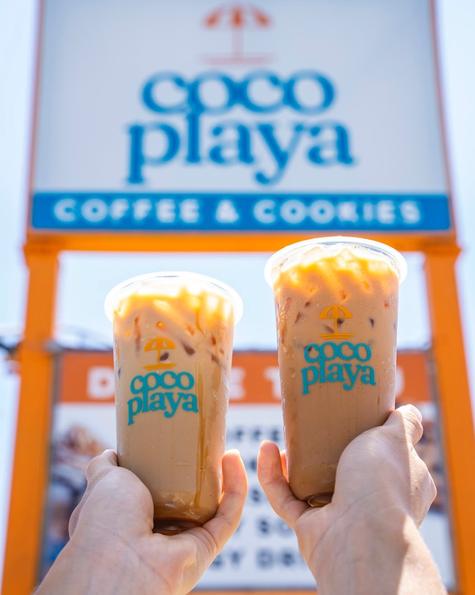
Coco Playa
Holsen Coffee
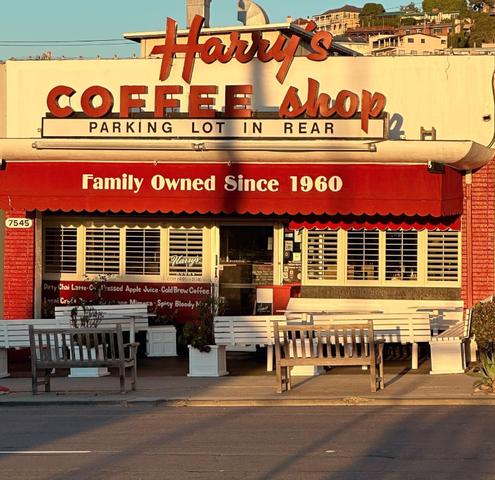
Harry’s Coffee Shop
Better Buzz Selva Coffee House
“Selva Coffee House is a great spot to hit if you have a break in between classes or have friends visiting from out of town! They’re constantly rotating specials with the seasons and it’s always nice to walk around and see all of the plants while waiting for your drink They also have a DJ on the weekends which is super fun!”
Kaitlin Divinsky, USD senior

Coffee! Coffee! Coffee! USD Toreros enjoy their bright and colorful Ala nothing like a good coffee to start the Comforting, rich and with various cu coffee is delicious Whether Toreros on their desks or carrying around Toreros have no shortage of cute


Photo courtesy of @selva c
Photo courtesy of @harryscoffeeshop/Instagram
by Kyra Lefebvre/The
aily g rind
love their coffee. While Toreros also nis, Blooms and Celsiuses, there’s e day or a late-night study session ustomizations, Toreros can agree that are placing their Aromas iced coffee a drink from another coffee shop, e coffee shops in their rotation.
“I think Parakeet Cafe in Little Italy is a really fun coffee spot. Their flavors are really unique and I really like their wellness drink concept I always get their Iced Mint Latte and Hibiscus Iced Tea Hana Collison-Zeldes, USD junior
“I love coffee My favorite spots are Harry’s Coffee Shop because they have good chai lattes I also like Blue Bottle Their coffee is really good quality ” Ethan Kaplan, USD senior
“When I go to La Paloma for breakfast or lunch, I sometimes get a hot mocha along with my chicken bowl I think it’s great that we have cafes on campus ” Kevin Torres, USD first-year
Art
USD Vista: Content by Katarina Maric
offee house/Instagram
Photo courtesy of @trycocoplaya/Instagram
FEATURE
Toreros recycle clothes
Campus thrift encourages students to buy used clothes on campus
on campus,” Scroggs said. “We put them up the Thursday before spring break and checked them the Tuesday after and they were all full, which was pretty remarkable seeing as a lot of people were gone during that time. That was an initial concern — was collecting enough stock but that has been so easy. Which really goes to show that students have a lot of clothing that they don’t wear anymore or don’t want and they just might not know what to do with it.”
The Torero Thrift advertised everything to be under $5 — drawing students in with the low prices.
USD first-year Gizelle Maldonado expressed her love for shopping and that, if Torero Thrift found a permanent spot on campus, she would visit.
“I really like shopping,” Maldonado said. “I heard about it, but I forgot it was happening today and then I passed by and saw it was happening … I like the joy that [shopping] brings me, finding new clothes.”
USD first-year Mia Colmenares heard about the event through Instagram and decided to attend, hoping to find something new at this thrift.
“I go to thrift stores but I never really find anything,” Colmenares admitted. “It’s always like, ‘maybe this time I’ll find something.’”
USD sophomore
Charlotte Keady works with the Changemaker HUB and heard about the event through friends. Thrifting is something she enjoys.
“I love thrifting, it’s one of my hobbies,” Keady shared. “I used to do it a lot when I was younger, with my grandma. It’s always been something that
I do and I like that it’s cheap and I can get cool clothes that other people might not have and it’s sustainable. It’s better than buying from a big company … I think it would be good to have it as a cycle and keep doing that because I definitely have stuff that I need to get rid of and it’s so easy to put it in a box somewhere. I know people might throw [clothes] out instead, so I feel like actually putting it to use is pretty smart.”
Because the stock at the Torero Thrift was all donations from USD students, some students were not able to find what they were looking for.
USD sophomore Sean Quevedo shared his disappointment at not finding any men’s clothes.
“I heard thrifting and I was kind of excited, but when I got here, there just wasn’t any clothes for men, which is kind of sad to see,” Quevedo explained. “I think men are less willing to donate clothes … I wish there was more options on campus for thrifting and I think USD can make that possible.”
Scroggs shared her plans for the future of Torero Thrift at USD.
“We are aiming to do at least two total this semester,” Scroggs said. “Our initial idea was to have a permanent space on campus and obviously space on campus has been an issue. We thought about doing pods outside, like a portable situation, and then ultimately landed this idea as the
first stage of the pilot program.”
Since then, Scroggs confirmed that another Torero Thrift is set for May 5 during Torero hours. Scroggs continued, expressing concern as she and other group members will be graduating, however, she wished the project would continue.
“A challenge is that three of our group members are graduating this semester,” Scroggs said. “I know Dr. Cantzler’s class is set up in a way that students can continue previous projects and so we’re hoping someone can take that on. It has really been so easy once we do the work to execute this.”
Scroggs spoke about the hope this project has given her.
“This project has really gone to show how possible social change is on this campus,” Scroggs explained. “Especially if you seek out faculty and staff that are ready and willing to support you. That’s been really inspiring to see this project all the way through.”
As with all efforts of social change, Scroggs was met with problems. When brainstorming how to present Torero Thrift to students, her group thought of temporary, portable pods.
The Torero Thrift drew many students into the bins filled with clothes with many expressing a want for a permanent thrift on campus. For now, the group has not decided where the money will go.
Toreros rummage through the bins of donated clothes to find their new summer outfits.
Amelie Sedlack/The USD Vista
Torero Thrift allows students to recycle their old clothes.
Amelie Sedlack/The USD Vista
From Thrift, Page 1
OPINION
Screens under fire down under Australia’s social media age restrictions are a rational response
DAVID COOK OPINION EDITOR
I was in fourth grade when I downloaded Instagram. My parents didn’t want me to have it, and looking back, they were probably right. But like a lot of kids, I eventually convinced them. At the time, it felt harmless — just another app everyone was getting. What I didn’t know then was that it would be the first domino to fall. It opened Pandora’s box: years of scrolling, constant distraction and a relationship with my phone that has been hard to undo.
This personal experience is what made me understand why Australia banned social media for users under 16. Australia’s law took effect on Dec. 10, 2025, requiring age-restricted social media platforms to take “reasonable steps” to stop users under 16 years old from creating or keeping accounts. Recent reports show enforcement has been weak. One study found more than 60% of underage Australian kids were still using restricted social media. Separate data found about one-fifth of teens ages 13 to 15 were still using TikTok and Snapchat.
Some people will look at those numbers and say the ban failed, but I don’t see it that way. I think it proved something else: social media restrictions without serious enforcement are not enough.
That does not mean the concern behind the ban is overblown. If anything, it shows how deeply social media has sunk into young people’s lives. These platforms are designed very intentionally. They are built to keep users engaged for as long as possible. Infinite scrolling, algorithmic recommendations, notifications, streaks and endless shortform videos are blatantly addictive design choices.
That matters because young people are still being used as the test group. Gen Z grew up in the middle of this experiment, essentially working as the guinea pigs of the social media epidemic. We were told social media would help us connect, but often, it does the exact opposite. It has shortened attention spans, rewarded mindless consumption and ironically hurts people’s ability to genuinely connect with others. People sit together while staring at separate screens, checking their phones during
every pause of conversation. They scroll for hours and call it relaxing, even when it leaves them feeling worse.
Some critics say banning social media for minors is too extreme, especially in America, a country that historically leaves its citizens with the right to make similar decisions on their own. Parents should be able to decide for themselves what their children can and cannot use. I understand that argument. In a free country, people are naturally suspicious of new restrictions, especially those involving speech and technology.
But we already accept age limits all the time. You have to be 21 to drink alcohol. You have to be 16 to get a driver’s license. Why are these rules not viewed as attacks on freedom? They are viewed as guardrails against harmful things. Social media may look less dangerous because it lives in a phone, but that does not mean it is harmless.
There is growing evidence
that the harm is serious enough to justify action. In March, a Los Angeles jury found Meta and Google negligent in a case involving a young woman who said she became addicted to Instagram and YouTube as a child. The jury found the companies were negligent in the design of their platforms and failed to warn users about the risks. Soon after, Massachusetts’ top court ruled Meta must face a state lawsuit, alleging it deliberately designed features to addict young users. This moment ultimately showed Americans that courts are beginning to treat this as a real issue. It is not only one side of the political aisle paying attention. California lawmakers are currently considering a bipartisan bill that would bar users under 16 years old from creating or maintaining social media accounts. That matters because it shows this is not some fringe panic. Concern about youth social media addiction is becoming one of the
few issues people across the political spectrum can agree on.
If there is one lesson from Australia, it is that a ban cannot just exist on paper. It needs real age verification. I bypassed age restrictions when I joined, as the minimum age requirement was 13. If 10-year-old me could figure out how to circumvent Instagram’s age restrictions, then they definitely aren’t strong enough.
Age verification would make age restrictions easier to enforce, but it could also help solve another major problem online: fake accounts. Social media is full of impersonation, anonymous harassment and people pretending to be someone they are not, so verification is just another way to protect minors from the dangers of social networks.
Verification would not fix everything, and it would raise privacy concerns that deserve serious attention. But if lawmakers are serious about protecting minors, they cannot keep pretending platforms
will police themselves.
For too long, the burden has fallen on kids and parents to navigate apps that were designed by some of the richest companies in the world to be as sticky as possible. The companies that built these systems should bear more responsibility for the damage they cause.
I don’t think every teenager using social media needs to be treated like a criminal, and I don’t think a ban alone magically solves the problem. But I do think the basic principle is right: children should not have unlimited access to platforms engineered to hook them.
Australia’s rollout may have exposed the flaws in enforcement, but it also exposed something bigger. The status quo is not working. If anything, it has shown just how hard it is to pull young people away from something that was designed to keep them trapped, which is exactly why stronger action is justified.
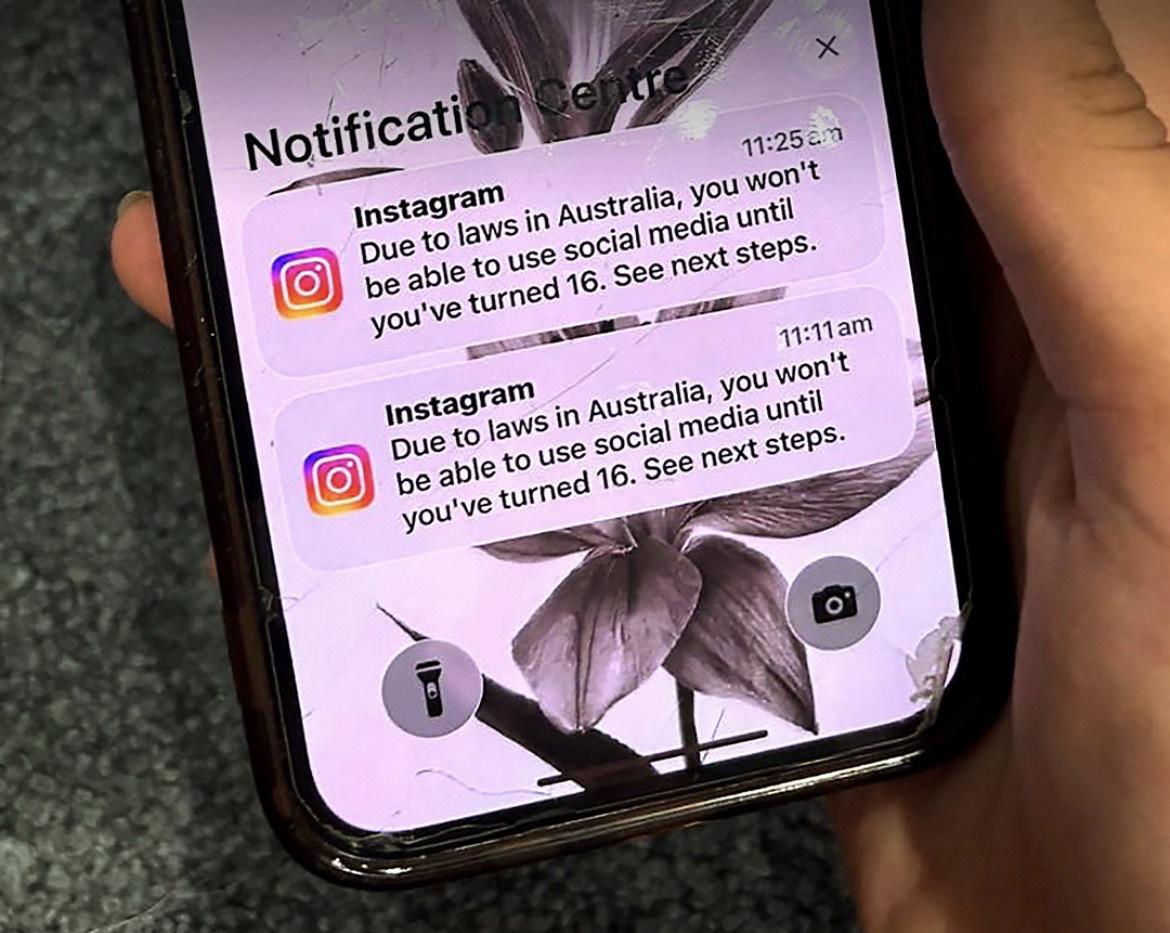
Citizens of Australia under the age of 16 receive notifications after the Australian government implemented the ban.
OPINION
A taxing time to start adulting Students need more financial lessons before adulthood
CADEN HAYNOR NEWS EDITOR
Nothing is certain in life except death and taxes, and sometimes it feels like they happen simultaneously on April 15 every year. The portending “Tax Day” is a consistent reminder to many of us college students that we are adults and our parents are not in the other room waiting to help us with our inevitable needs.
Many of us sat in front of our computers waiting for all the financial jargon to sort itself out into English. When it never did, I asked myself why I was never taught how to do this, since taxes apply to every working person.
Sitting in a geometry or calculus class has consistently begged the question “will this ever be useful?” from all of us at some point. As soon as April 15 rolled around, I wished my high school or university taught me how to navigate the ins and outs of withholding, expenses, W-2s, 1099s and everything else that popped up on my screen and made me furrow my brow.
Many of my friends, who did not decide to go through the struggle of doing their own taxes, were frustrated at paying upward of $200 for someone else to file their taxes for them. Following this irksome taxation process, I decided to conduct some research on how students might gain access to helpful information on filing their taxes so that they don’t have to pay a large sum of money or spend hours staring aimlessly at their computer screen.
USD Clinical Professor of Finance Dan Roccato teaches financial management and personal finance. Roccato explained how the United States is progressing in financial literacy and one of the negative effects of not teaching students about it.
“There’s something like 36 states or so that now require high schoolers to graduate with some sort of financial literacy course,” Roccato said. “So that’s clearly a step in the right direction. Ideally, we’d have all 50 states do it, but there is this movement afoot… But, we can see what happens, right? We have 43 million student loan borrowers, about a third of which are behind on their payments. And we can probably connect the dots and say because a lot of those people should have known about student loans.”
Financial literacy deserves more attention in schools,
especially in the form of applied economics. There are multiple Wall Street Journal articles that say that schools need to teach their students the deep eccentricities of American capitalism in a formal economic theory course. I disagree on that front. I think that those courses would bore students and they would end up copying down terms mindlessly.
If there was a course that taught students how to file their taxes, build credit, manage a 401k, invest in a Roth IRA, mail a check, balance a checkbook and learn what a mortgage is, college students would be much better off. I, for one, felt like some of my high school classes were utterly useless when I could rattle off the quadratic formula, but I struggled to do my taxes.
Some may argue that students’ tax situations vary too much for a one-sizefits-all class. Realistically, when it comes to filing taxes, most students will only need to know the basics of a W-2 versus a 1099 income, and possibly what dependents are and how scholarships and donations apply.
All of those eccentricities can easily be fit into a regular high school curriculum, especially considering that many people have free periods as upperclassmen. Furthermore, one class can definitely walk students through the tax forms and describe what each page means without going
through how they might apply to every individual case.
There are resources that explain these topics to people who are unaware as well. Roccato gave a good resource for students who need information to increase their financial literacy and explain economic concepts.
“There’s a fantastic government website called FDIC.gov, it’s the Federal Deposit Insurance Corporation, and they’ve got just a whole abundance of really good information out there without selling you,” Roccato explained.
“It’s very easy to read, it’s very understandable and it’s reliable. It’s good, basic, unbiased information that I would recommend over a lot of others.”
Another good government
website that students can use when looking to file their taxes is using IRS Free File, which can be visited with the QR code below. This website helps you find a trusted partner to help you file your taxes, many of which do so completely free of charge. This is how you can file your taxes for free and hopefully access the correct information to do so correctly.
Thankfully, states are steadily increasing their financial literacy class requirements. As of 2025, 29 states passed bipartisan financial literacy graduation requirements, which means they require a stand-alone personal finance course for high school students to graduate.
If all states required high schools to teach students about
these resources and how to navigate them, then the struggle to do taxes every year would lessen by a significant figure. At the very least, I would spend two less hours doing my taxes and might even spend my extra time learning the pythagorean theorem — that is, if my high school algebra class didn’t spend a semester on it.

https://apps.irs.gov/app/freeFile/
The views expressed in the editorial and op-ed sections are not necessarily those of The USD Vista staff, the University of San Diego or its student body.
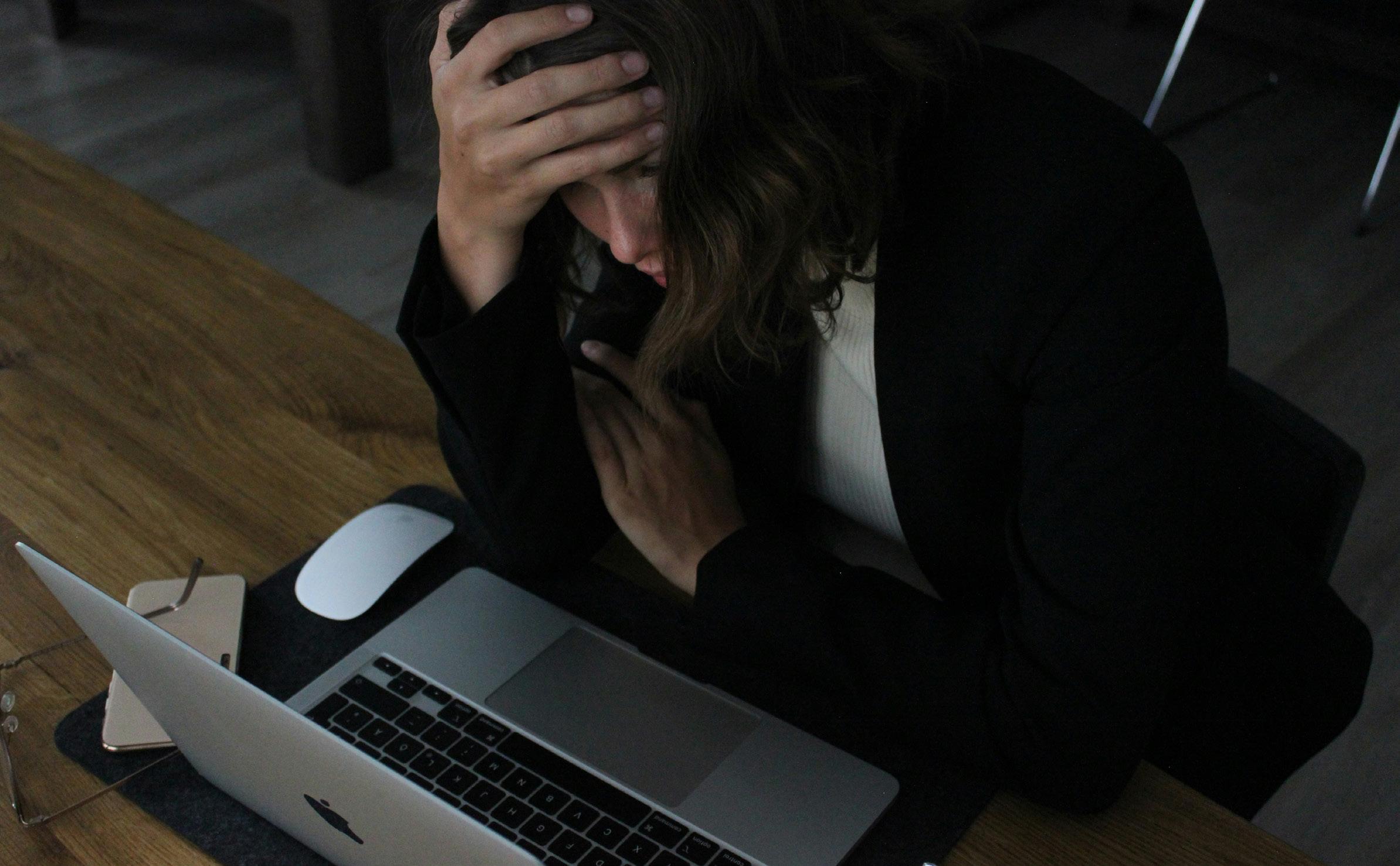
As tax season returns, many young adults are left stressed while trying to navigate their taxes with little formal education in personal finance.
Photo courtesy of Elisa Ventur/Unsplash
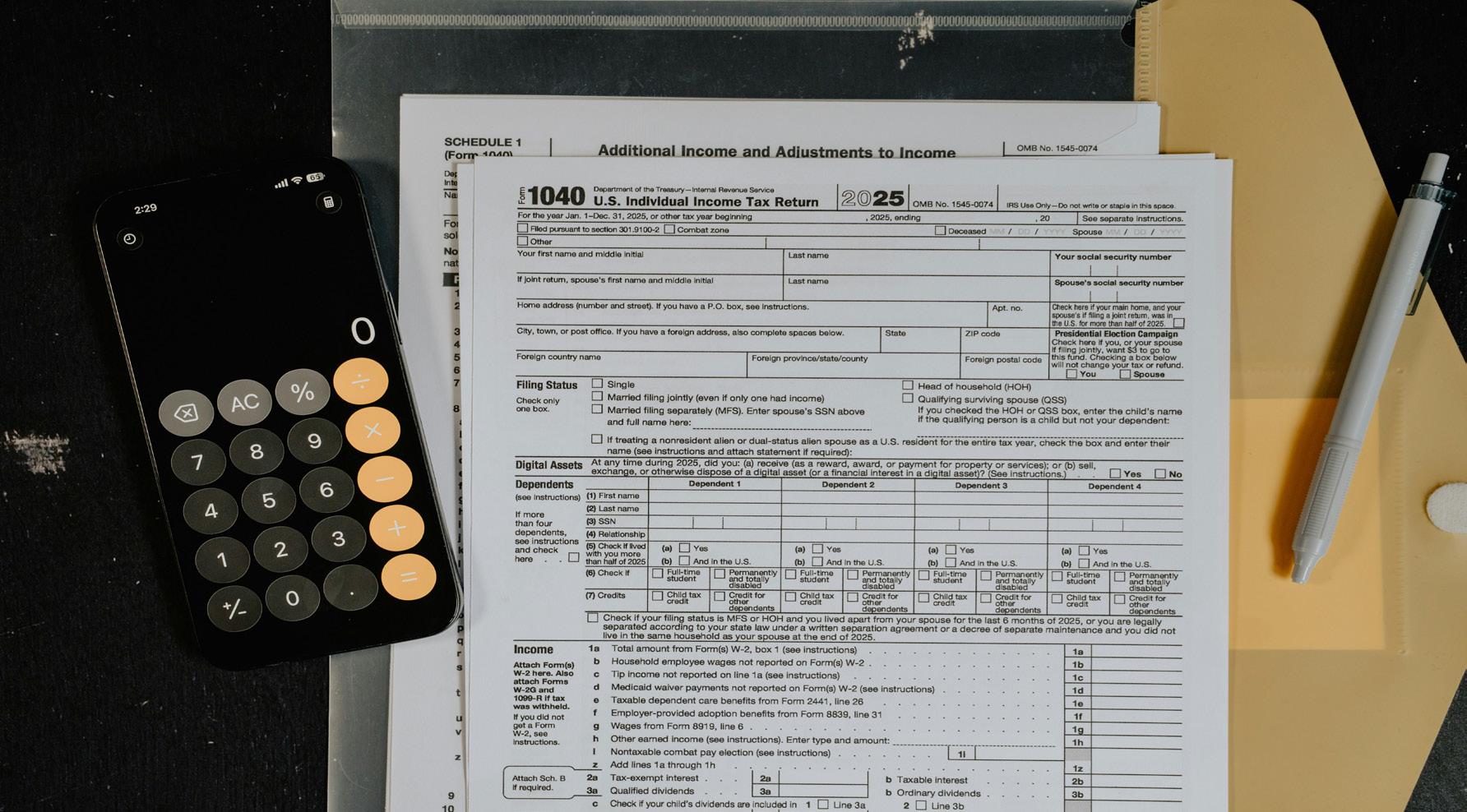
Tax forms and a calculator sit on a desk in preparation to file taxes.
Photo courtesy of Kelly Sikkema/Unsplash
Formula 1 gains traction at USD
Racing culture grows across the country and among Gen Z
PRIYA COOPER SPORTS EDITOR
Recently, there has been a rise in popularity around the sport of Formula 1, often referred to as “F1.” Formula 1 has been associated with higher risk, but the sport has grown to many more audiences as of late. The sport has gained a lot of traction among younger fans globally and in the United States.
According to a USA Today survey, 70% of Gen Z F1 fans said they engage with Formula 1 content daily, while 40% of American respondents reported following individual drivers rather than specific teams.
Toreros have shared their experiences and engagement with the sport, from fashion to merchandise — and attending the events altogether.
As someone who tries to keep up with most of the races, USD senior Madi Wuest discussed how she got into F1.
“I kind of started paying attention to races because of my younger sister and then once I really learned how it worked, I got a lot more into it and it made watching way more entertaining,” Wuest said. “It
takes a second to understand because there are so many rules and regulations, but I found it really fun after getting to know the technicalities.”
Formula 1 is a global motor sport series made up of 22 races held across multiple countries. This season, however, the Bahrain and Saudi Arabian Grands Prix have been canceled due to political tensions in the Middle East, slightly reshaping the official race calendar.
Each race contributes to the overall standings through a points system. Drivers must finish in the top 11 positions to earn points, and the number of points decreases the further a driver finishes from first place. These points matter because Formula 1 operates with two separate championships: the Drivers’ Championship, which rewards the individual racer with the most points, and the Constructors’ Championship, which rewards the team whose two drivers collectively earn the most points. Because of this structure, a driver can win the Drivers’ Championship even if their team does not win the Constructors’ title.
Formula 1 is different from NASCAR. While the two
organizations do have some similarities, their differences are far more pronounced. Both companies represent different types of motor sport and are different styles of racing. The most obvious distinction lies in the cars themselves used for each race. NASCAR features heavier, stock-style vehicles while F1 uses much lighter, highly aerodynamic openwheel cars that prioritize speed.
USD first-year student
Parker Brown watches NASCAR and shared why he believes it to be more engaging than F1.
“NASCAR has more close races. When cautions happen they bring the field closer together so the races are tighter,” Brown explained. “It’s always a good race. F1 has a lot more technical things going and it’s interesting logistically, but I’ll always choose NASCAR.”
Overall, the growing popularity of Formula 1 shows how quickly the sport is expanding beyond its traditional image. Whether students are drawn in by the technical strategy, the personalities of drivers or the fashion and lifestyle surrounding the sport, F1 has found a new audience.

GAMES
Formula 1 cars are built for speed.
Photo Courtesy
Toreros race with top teams in the country
Women’s rowing take on Big Ten invitational meet
This past weekend the USD women’s rowing team headed north to Sacramento for the Big Ten Invitational. The races were hosted at Lake Natoma and took place on April 18-19.
The Big Ten Conference is a collegiate athletic organization. It is the oldest NCAA Division 1 conference and was originally composed of ten universities where it derived its namesake. Later on in 2024, the conference expanded to include 18 institutions and two affiliate colleges. Majority of Big Ten member institutions are public, major research universities with strong academic reputations. Big Ten Invitational meets are collegiate competitions where other prominent universities with impressive athletics are invited to compete with these highly ranked schools.
USD sophomore Aurora MacDonald discussed what it meant to be exposed to this type of competition.
“I would say that his invitational was a great opportunity for our team to race some of the fastest teams in the country,” MacDonald said. “The Big Ten conference consistently puts out the fastest teams in the U.S., so to have the opportunity to go up against these teams was truly remarkable for our program. To be able to line up with these teams and keep up with them, chipping away at any
margins made me so proud of our team and excited for not only this year, but also excited to see where we can continue to gain speed over these next couple years.”
On the first day of racing, San Diego placed fifth in most of their races, including the 2V4, 1V4, 2V8, 3V4 and 2V8 events, with times ranging from about 7:02 minutes to 8:14 minutes. Their strongest finish was 4th place in the 1V8 race with a time of 6:39.187 minutes.
USD senior Everett Melstrand shared her views on the weekend.
“It was really awesome racing against such large programs this weekend and being in the mix with fast teams,” Melstrand said. “The Big Ten invite was a great opportunity for us as a team to show what we’ve been working on this whole season and it was really exciting to show how USD has gained some speed over the past few weeks.”
In rowing, those races refer to the type of boat and which crew level is racing. V8 or V4 means a Varsity boat, and the number means how many rowers are in it. 2V or 3V means the second varsity or third varsity boat, which are still competitive crews, but not the top lineup. So for example, “2V8” is the secondbest eight-person boat, and 1V4 is the top four-person boat.
USD sophomore Hava Appleyard shared her thoughts and we were able to compete with other Big Ten schools.
“This was by far the biggest regatta we’ve raced at, with 19 total teams,” Appleyard said. “It

was a really fun experience to sit at the start line and race next to the top programs in the NCAA. It also was the first time this season we’ve seen some of our closest conference competitors, so now we have a clear vision of what we need to build on for the next three weeks when we see them again for a title.”
This past month USD also competed in the San Diego City Championships. San Diego women’s rowing dominated, taking first in all five races and securing the overall team championship.
MacDonald also shared how her and her team prepared for the Big Ten invite as well as other championships upcoming this season.
“I think in any sport training or racing against a team that is faster than you, pushes you to be a better athlete,” MacDonald said. “This race gave us a lot of information about where we stand in relation to our in conference competition, and where we still have speed to gain in these last couple of weeks before WCC. In addition with the Big Ten invitational being hosted at the same course as our WCC championship it
was an awesome opportunity to truly get into that WCC mindset with this final training block we are heading into.”
MacDonald also discussed methods the team has used throughout the season to get ready for competitions against other notable universities.
“To prepare for Big 10s we just finished a pretty intense training block during spring camp, over spring break,” MacDonald said. “The team stayed in San Diego and was able to row twice a day on a beautiful mission bay and really dial in our technique and get in a lot of meters out on the water.”
USD sophomore Ruby Church shared what this means for the future.
“It was super exciting to get a preview of what our conference championships will bring, as we’ll be back on the same course in a few weeks, and re-racing some of this weekend’s competition for WCC medals,” Church said.
Looking ahead the Toreros have two more regular season competitions before moving on to the West Coast Conference Champions and NCAA National Championships which are both scheduled for late May.
WROW at Triton Invite Saturday, April 25 Chula Vista, CA
MROW at WIRA Championship
SB vs Saint Mary’s
BSB vs Saint Mary’s
WTRACK at Steve Scott Invite Friday, May 1 Irvine,
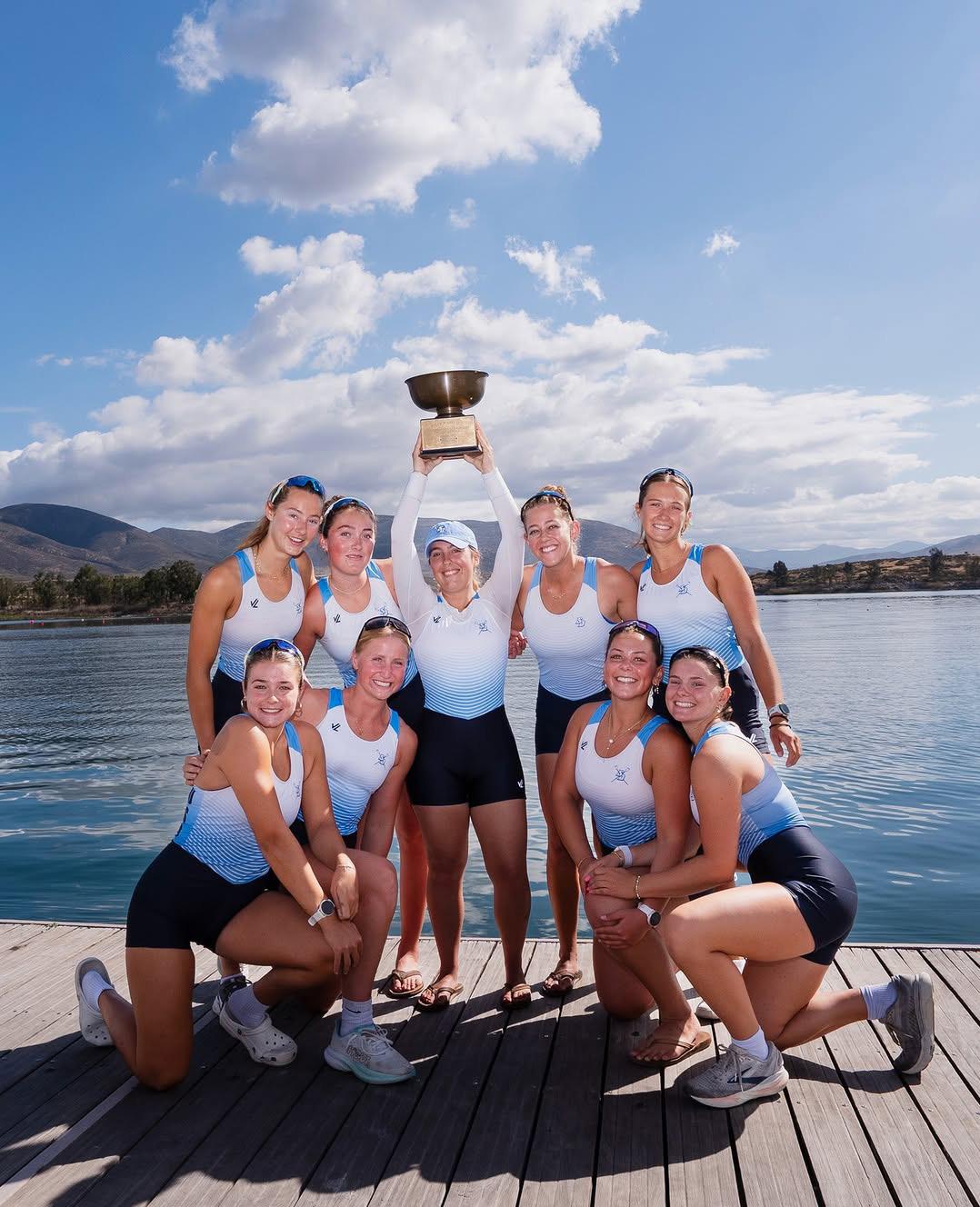
Women’s rowing after winning at San Diego City Championship.
Photo courtesy of @usdwrowing/Instagram
Toreros at San Diego Crew Classic on Mission Bay.
Photo courtesy of @usdwrowing/Instagram
PRIYA COOPER SPORTS EDITOR