THE USD VISTA
A great gig in the sky
Artemis II crew are first to see dark side of the moon

RILEY RAINS
ARTS & CULTURE EDITOR
On the afternoon of April 10, USD students flocked to the beach, but not for the usual sun and surf. Artemis II landed right outside San Diego’s coast, and many wanted a chance to see — or hear — the “Integrity” crew’s splash back to Earth. The landing was not visible by the naked eye, however, the improbability didn’t
discourage some Toreros from trying to see this once-in-a-lifetime landing. Many students tuned in through NASA’s live stream instead.
USD sophomore Ava Pres went to Garbage Beach to watch the Artemis II splash.
“It was hard to tell where to look as no one really knew where it was going to land,” Pres explained.
“But we heard a loud boom just at the time of the landing, a lot like a firework exploding in the distance.
Everyone was watching the live stream on their phones at the same time. It was pretty fun to see all these people invested in this.”
Artemis II is the first crewed mission of the Artemis program — a series of five planned endeavors. The Orion spacecraft, the Artemis II ship, left Earth on April 1 and returned on April 11, marking the first humans to orbit the moon since 1968.
The first cosmic expedition
of the Artemis project was a test launch of the capsule with no humans inside it. This first preliminary launch had some issues in 2022, Artemis I was delayed due to hydrogen leaks and valve problems. There were also multiple power interruptions in the communication module and an unexpected protective outside layer loss during atmospheric reentry. These technical problems caused some anxiety leading up to Artemis II. The mission ran smoothly, omitting a small toilet malfunction that Mission Specialist Christina Koch quickly fixed, coining the nickname “space plumber.”
Artemis III will be an orbital test of the docking system between the space capsule and what NASA will use to land on the moon, set to occur in 2028. The finale’s precursor, Artemis IV, is sending humans back to the moon, boots-on-the-ground and all. The last step of the Artemis mission is a tentative base on the moon. The end goal is to use the moon as a stepping stone to Mars.
The ongoing mission could cost up to $105 billion dollars by 2028 in its entirety. While these figures were presented by various news sources such as The Washington Post and The New York Times, the total cost is not solidified as engineering projects tend to be fluid in their magnitude and direction. Some
See Artemis, Page 3
Fire sparks in canyon
ANJALI DALAL-WHELAN ASSOCIATE EDITOR
The San Diego Fire Department (SDFD) and USD’s Department of Public Safety (DPS) extinguished a small fire that broke out in Tecolote Canyon down the hill from Mata’yuum Crossroads and the Valley residence halls on April 9. No evacuation orders were issued.
The reason for the fire is unknown.
“The cause of the fire remains undetermined,” Chief James Miyashiro wrote in a statement to The USD Vista. “Due to the rapid extinguishment, fire personnel on scene were unable to identify a definitive origin.”
After the fire, Residential Life sent an email to Valley residents with concerns DPS and SDFD shared when responding to the fire. The departments said that cigarette butts, golf balls and pieces of broken glass were found in the canyon. They also said that a vehicle was parked in a fire lane without the driver present. The email emphasized that USD is a smoke-free campus, and trash should not be thrown in the canyon.
Toreros travel the world with class
Chapman Family Foundation funds abroad opportunities
AMELIE SEDLACK
FEATURE EDITOR
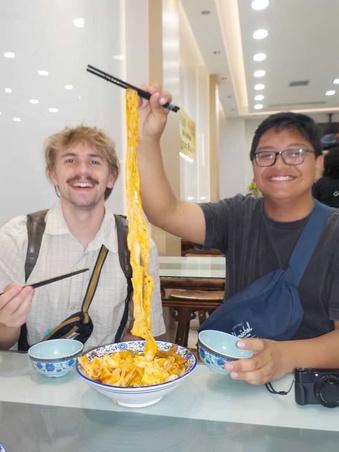
While many students traveled home to their families or went on a spring break trip with their friends, one group of students continued their studies in China over the break.
USD history professor Yi Sun, PhD, and USD professor of political science and international relations Kacie Miura, PhD, have been teaching the course, “China from Confucian Empire to World Power” to selected students. These students had to first go through a multiple step application and interview process in the fall in
order to be accepted into the course for the spring semester. All students who were admitted into the course would automatically go to China over the break.
Miura described what they were looking for in the students who applied for the course.
“The students were carefully chosen and it wasn’t based on merit per se because we didn’t ask for a GPA or anything,” Miura explained. “Really we were looking for students who would really appreciate this opportunity, those who had never studied abroad before, those who already had an interest in China.”
Although the opportunity
is for everyone, the course selected to travel to China was an upper-division international relations and history course. Because of this, most applicants were within the majors and met the credit requirements for an upper-division course.
“Initially we were thinking it should be for upper division students because it is an upper division class, but we took a good number of sophomores and I think it’s because they met the credit requirements,” Miura said.
“They also had to convince us that they would be mature and responsible, that they would come


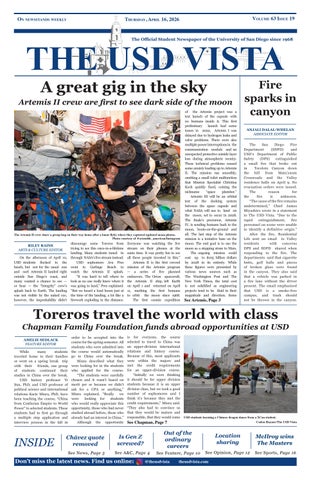
The Artemis II crew share a group hug on their way home after a lunar flyby where they captured updated moon photos. Photo courtesy of @scientific_american/Instagram
USD students learning a Chinese dragon dance from a Xi’an student. Caden Haynor/The USD Vista
War in Iran continues despite peace talks US-Israel conflict with Iran persists as oil prices surge
CONNOR DUFFEY ASST. NEWS EDITOR
Reopen the Strait of Hormuz, or face permanent destruction of Iran’s critical infrastructure. That was the ultimatum President Trump issued to Iranian officials via a Truth Social post on April 7, with an 8 p.m. EST deadline.
“A whole civilization will die tonight, never to be brought back,” President Trump stated. “I don’t want that to happen, but it probably will. Who knows?”
USD graduate student Tony Moreno expressed disappointment with the post.
“It was purely absurd,” Moreno said. “The tweet just gives the world something to be anxious about.”
The war, now in its seventh week, has rattled global energy markets, driven a large U.S. inflation spike and killed thousands across more than a dozen countries. Just before Trump’s deadline, a ceasefire was reached on April 8. For many Americans, the consequences of the war have already arrived.
The national gas price average reached $4 per gallon, driven in large part by Iran’s closure of the Strait of Hormuz, through which approximately one-fifth of the world’s daily oil supply passes. Iran has not been spared from
domestic economic pains either. The country issued its largest banknote to date, a 10-million rial note — approximately $7 U.S. — reflecting inflation and economic strain.
USD political science professor David Shirk weighed in on the effects of the war.
“Ordinary Americans are really in a difficult position,” Shirk said in an interview. “What’s happening right now will surely have long-term consequences.
To me, it’s a sign that the liberal international order is dead.”
The conflict extends well beyond Iran’s borders. In Lebanon, Israeli airstrikes have killed approximately 1,750 people and displaced roughly 1.2 million citizens — about one-sixth of the country’s national population — since the Israeli bombing campaign began on March 2.
As Trump’s April 7 deadline neared, Iran agreed to a two-week ceasefire brokered by Pakistani Prime Minister Shehbaz Sharif, who had urged Washington to extend its deadline and called on Iran to reopen the strait.
The agreement was finalized approximately one hour before the deadline expired. Under its terms, Iran agreed to ensure safe passage through the Strait of Hormuz for the duration of the truce; however, transit fees will be charged
to passing vessels, a departure from the strait’s pre-war status as a free international waterway.
The ceasefire’s durability remains in question. Despite the agreement, Israeli strikes in Lebanon have continued. On April 8, hours after the truce was announced, Israeli airstrikes killed at least 254 people in Lebanon in a single day, the deadliest day of the conflict’s Lebanon front. Israeli Prime Minister Benjamin Netanyahu stated that Lebanon is not included in the ceasefire agreement, directly contradicting Pakistani Prime Minister Sharif’s claim that the deal covered Lebanon.
Peace talks began in Islamabad on April 10, with Vice President JD Vance leading the U.S. delegation alongside envoys Steve Witkoff and Jared Kushner. Iran’s chief negotiator was Foreign Minister Abbas Araghchi, with Pakistan serving as mediator.
Iran presented a 10-point peace proposal that included: the lifting of all U.S. sanctions, the creation of a war-loss fund to compensate for destruction caused by U.S.-Israeli strikes, a U.S. troop withdrawal from the Gulf region and recognition of Iran’s right to enrich uranium in exchange for a pledge not to develop nuclear weapons.
Peace talks proved
unsuccessful, with the Pakistani foreign office stating that progress had been made on several points but differences on sequencing and guarantees remained. Those differences were large enough for the United States to institute a naval blockade on Iranian ports, the Persian Gulf and the Strait of Hormuz. The stated goal of the blockade is to prevent weapons from flowing into and out of Iran while ensuring civilian ships can travel as normal.
Pakistan’s efforts to coordinate peace opened a narrow window. Vance arrived in Islamabad with the leverage of U.S. military force and the domestic pressure of rising prices, while Iran arrived with an economy in freefall, a new and untested Supreme Leader, and a public that is still processing the scale of destruction inflicted over seven weeks of war.
The information in this article is current as of The USD Vista’s send to print deadline of April 14.

People sift through remnants in Tehran, Iran after a strike hit nearby buildings.
Photo courtesy of @nytimes/Instagram
Artemis II crew lands off SD coast
San Diego residents gathered at beaches to watch landing
From Artemis, Page 1
USD students are less than enthusiastic about this expenditure.
USD first-year Maxwell Gibbons shared his mixed feelings.
“I like spending money on cool stuff, like maybe going to Mars,” Gibbons explained. “But I also think that the money could be better spent. Not everything has to be cool.”
The Artemis II mission cost around $4.1 billion dollars to launch four astronauts, Commander Reid Wiseman, Pilot Victor Glover and two mission specialists: Christina Koch and Jeremy Hanson out of Earth’s orbit. They slingshotted around the moon before returning safely to Earth within 10 days.
The Orion spacecraft utilizes a free-return trajectory, using both Earth’s and the moon’s gravitational pull to their advantage.
The crew was tasked with taking photos and documenting observations of the moon’s surface during their revolution. NASA is collecting high-resolution images so scientists on Earth can investigate fundamental scientific questions about mankind’s understanding
of the moon’s evolution.
While these photos offer an objective view of the moon, human eyes can detect details that cameras cannot. For example, the crew spotted rays of different colors that the cameras missed — a discovery that alludes to various materials and elements on the moon’s surface.
USD professor and quantum physicist Sean Mossman, PhD, has been keeping up with every step of the Artemis journey. He explained the significance of keeping human eyes on the moon at all times.
“During the entire pass around the backside of the moon, the astronauts had very rigorous shifts of who was going to be at the window looking at the moon,” Mossman explained. “They had two people at the windows at all times. And they were explicitly told to make observations of the moon with your eyes and describe it qualitatively. NASA even asked them to record how they felt about it. They also live streamed it. Both the science team and the media outreach team were working together to
bring us all along on the ride.”
The Orion spacecraft had to cut communication with Houston for 40 minutes on April 6 as they traveled toward the dark side of the moon. The radio transmission was not able to pierce through the moon’s body. Before communication paused, Glover sent Houston a heartfelt message.
“As we get close to the nearest point to the moon and farthest point from earth, as we continue to unlock the mysteries of the cosmos, I would like to remind you of one of the most important mysteries there on earth, and that is love,” Glover beamed. “We will see you on the other side.”
Scientists who have had the privilege to spacewalk often experience the overview effect. Coined by space philosopher Frank White, the term explains the cognitive shift characterized by an intense sense of awe and awareness of Earth’s unity and fragility.
Integrity had the opportunity to name two craters while they floated among the stars. One crater they coined after their team —
Integrity. The second crater, one of the brightest on the moon, was named after Mission Commander Wiseman’s late wife, Carroll.
“It was a really heartfelt moment,” Mossman choked. “I was losing it a little bit. I think it was really impactful for a lot of people.”
Wiseman wept as he put in the request to Houston. After Artemis II was grounded, the crater name proposals were submitted to the International Astronomical Union — the body that governs naming celestial bodies and their respective features.
While the media outreach team has been touching some Torero’s hearts, others are less convinced.
USD first-year Lauren Suttie enrolled in a physics class that includes science news as a precursor to their lesson.
“I watched the highlight video in class,” Suttie said. “If you’ve ever been at a science fair in elementary school, that’s the vibes that it kind of gave me. It’s meant to make you think that it’s cool. It’s meant to be like an outreach thing so people who
aren’t that invested in space can see it and be like ‘oh, this is so cool.’ I thought it was a tad corny.”
As the science community looks forward to seeing how the future Artemis missions turn out, Toreros are looking toward their own alumni. Matt Dominick and Jonny Kim were both selected for NASA’s Artemis mission, which makes them eligible for a possible moonwalk during Artemis IV.
USD sophomore Kiera Sheehan is a USD tour guide and she explained how these Torero alumni will soon be included in their script.
“It’s not fully in our guidebook quite yet, but our boss encouraged us to tell the prospective students,” Sheehan said. “The whole reason that it came about is that we had two alumni go on the 2017 mission. It is just USD continuing being a part of space, it’s actually really fascinating.”
As the Integrity crew returns to their families and the science talk on campus dies down, all eyes will be on NASA to see if Toreros will venture to Mars.
USD removes César Chávez quote in LCs
Citywide streets, buildings and campus spaces under review
SOPHIE HUMMEL CONTRIBUTOR
A César Chávez quote on the wall of the Learning Commons was removed. The quote previously read: “Students must have initiative; they should not be mere imitators. They must learn to think and act for themselves.”
USD Professor Emily ReimerBarry, PhD, who teaches courses in theological ethics utilizing feminist and anti-racist teachings, requested its removal after reflecting on Dolores Huerta’s story as she walked past it.
Dolores Huerta is one of three women named in a New York Times investigation that accused Chávez of alleged sexual abuse, molestation and rape. The Times research includes over 60 interviews, including Chávez’s relatives, top aides and former members of the United Farm Workers (UFW).
Chávez co-founded the UFW in 1962 with Dolores Huerta and led boycotts to push for equitable conditions for farm workers. The UFW announced they will not be participating in any events named after Chávez, and current
president Teresa Romero expressed her condemnation of the sexual abuse and rape allegations.
Reimer-Barry said removing Chávez’s name from public spaces is part of a broader responsibility to support survivors.
“We really have a responsibility to lift up the stories of survivors and try to approach our outreach in a trauma-informed way,”
Reimer-Barry said. “That means not forcing survivors to walk past a quote by someone who has these allegations.”
In a written statement, the University of San Diego explained why the quote was removed.
“The decision to remove the Cesar Chavez quote from the Learning Commons was made based on feedback from our community and in following the example of our local community partners and civil rights leaders,” a public affairs representative for the University wrote in a statement.
“Violence against women has no place in our society. We echo the sentiments that have been shared in the wake of this painful revelation: unwavering support and solidarity for survivors, and the conviction that
one man’s actions aren’t reflective of a movement’s legacy or its future.”
Reimer-Barry argued that removing the quote from the wall demonstrates what the quote advocates for and that institutions should explicitly acknowledge survivors in any decisions to remove or rename dedications honoring Chávez.
“Sexual violence is pervasive in general and in farmworker life,” Reimer-Barry said. “Whether we’re talking about campus culture that tolerates or normalizes sexual violence, or farmworker culture, the multiple systemic threats they are subject to are reflected in these testimonies. These are really hard testimonies that we need to listen to.”
USD junior Grace McColl expressed similar agreement with the University’s decision to remove the quote.
“I respect USD’s decision to take down his quote,” McColl said. “I think colleges hold the utmost responsibility to portray ethical standards of who role models should be.”
The San Diego Community College District announced on April
6 that they will temporarily rename César E. Chávez Community College. While the district begins the process of finalizing a permanent name change, the school will be called the “College of Continuing Education Harbor View.” The campus, which serves thousands of students, is located in Barrio Logan and offers a variety of tuition-free programs.
The San Diego Community College District acknowledged its consideration of survivors of sexual violence in its decision to rename the school.
“Several who commented during the April 6 meeting expressed support for survivors of sexual violence and emphasized that Chávez’s actions do not tarnish the work of thousands who helped shape the farmworker movement,” the district wrote in a statement on their website.
USD senior Dan Noel said naming places after Chávez shifts attention away from the movement.
“A lot of parks, and roads are named after [Chavez] …Now that you’ve named it after him, instead of the movement, it puts him on a pedestal more than
the movement itself,” Noel said.
Several additional landmarks, streets and public spaces in San Diego are being considered for renaming.
USD sophomore Maddie Whalen explained she had been expecting the announcement of the renaming.
“I’ve seen a lot of news about name changes, so I wasn’t really surprised to hear that they were changing the name of the community college,” Whalen said.
Various landmarks, signs and names across San Diego continue to be reviewed as institutions weigh how to respond to the allegations.
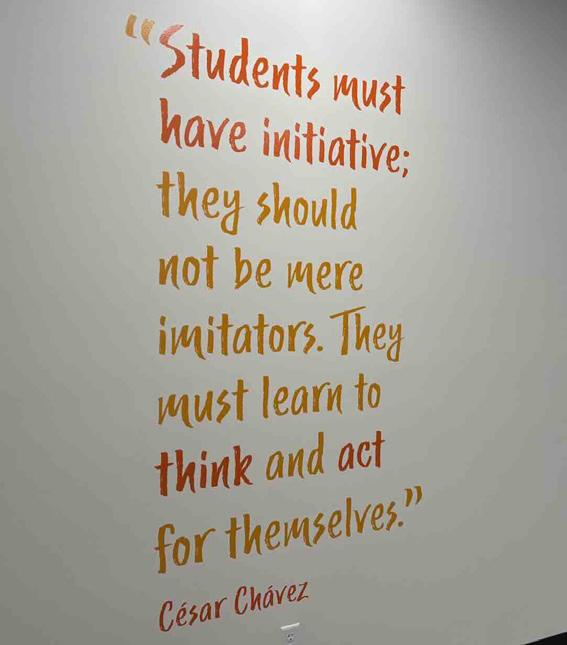
The quote was removed from the LCs. Photo courtesy of Emily Reimer-Barry
Is Gen Z screwed? ARTS & CULTURE
Research reports falling numbers in Gen Z sexual activity
EMMA PIRHALA MANAGING EDITOR
Hanky panky, nailing, jumping bones, knocking boots — whatever euphemism one prefers, one thing remains the same: this generation is not doing “it” nearly as often as their predecessors.
A recent study conducted by Indiana University’s Kinsey Institute, with the dating platform Match, came to the conclusion that Gen Z is choosing to have less sex than generations before.
Match and the Kinsey Institute drew 5,001 adults who use Match’s dating platform. However, the study only surveyed singles, so the couple making out in the corner of a dorm party is not included in the research’s analysis. The days of the one night stand seem to be sunsetting as celibacy eclipses the sexual horizon with 30% of Gen Z reporting to be intentionally abstinent.
Some USD students were surprised by the results of the study. A USD sophomore, who wished to remain anonymous, explained that she presumed the statistic to be lower.
“I was expecting a little bit lower,” the sophomore said. “But I do know a large amount of people my age who don’t have sex, although I feel like the majority does. I feel like people my age also talk about sex pretty frequently and openly, so I am a bit surprised at how high the number is.”

Compared to her own sexual habits, the anonymous sophomore felt that she has a positive relationship with sex.
“I’ve always seen sex as something enjoyable and something humans are meant to do,” she said. “So I don’t think that we should feel shame or shame others over it.”
Adjunct Assistant Professor of Sociology at USD Melissa James shared insight into why sexual activity may be dropping. Among the list, James shared, is the growing influence of technology and a more open understanding of gender and sexuality. However, the
changing political climate is also impacting Gen Z’s sexual habits.
“One of the other big things is the uncertainty around reproductive health,” James explained. “For women and those who can get pregnant, the overturn of Roe v. Wade has been huge. And so we see more people reporting that they’re afraid to have sex. [In my sexuality and gender classes] we’ll talk about attitudes and views of sex within college. And it’s weighed into the factor of not having sex because we don’t know that we’re going to have access to care, should we get pregnant… So that’s a really big piece of it too — the
moment in time we’re in, there’s just so much pressure on Gen Z.”
Students echo these concerns of the shifting political environmen USD junior, who wished for her identity to remain anonymous, shared her perspective.
“The gender gap widening, I think that could be definitely something that’s happened just like from a political viewpoint,” the anonymous junior said. “Like, I can see it. There’s a want to go back to more traditional norms and things.”
As the cost of living rises and employment rates fall, more and more Gen Zers are
looking for stability — one way is through marriage. The study reported that Gen Z is the most interested in marriage compared to other generations, with 68% expressing a desire. Yet, 49% of Gen Z express wanting children in the future, which is lower than past generations at the same age. James explained how instability intersects with marriage and a want for children.
“We do see trends across sociology of when things are really unstable, there’s a turn back to the traditional structures and things that people think will bring back that stability,” James offered. “The changing definition of marriage means that Gen Zers are showing that they are more interested in having deep connections and personal affection while being able to be independent but connected to others. And marriage is about that type of relationship, whereas in some previous generations, it was part of the plan. Get married, have children, buy a house, right? There’s this plan and it was much more about reproduction of children and the workforce and those sorts of things. And so now those two are disconnected in a lot of ways.”
Whether it’s fewer onenight stand or more intentional situationships, Gen Z’s sex life is evolving beyond what previous generations lived out. Between dating apps, economic stress and concerns about reproductive rights, hooking up is settling down and Toreros navigate sex as society shifts.
Gen Zers are having less sex than ever, and USD students shared their thoughts.
Kyra Lefebvre/The USD Vista
Senior recitals begin at USD
EMMA O’CONNELL ASST. A&C EDITOR
Cierra Johnson and Sofia Aguayo commenced USD senior recitals with their piano performances on April 10 in the Founders Hall French Parlor. The 90-minute program reflected four years of dedicated musical study, highlighting the performers’ technical skills, varied repertoires and artistic voices. Johnson presented six classical pieces, and Aguayo performed seven. They concluded their recital together with a duet by Claude Debussy, “La fille aux cheveux de lin.”
The program included compositions by Franz Liszt, Frédéric Chopin and Claude Debussy — names that carry distinct weight, even to listeners without a formal background in music. Johnson performed “Grandes etudes de Paganini, no. 6 in a minor,” an infamously complex Liszt work that reimagines one of Nicolo Paganini’s most celebrated violin compositions for the piano.
The audience melted into Johnson and Aguayo’s music as the two students put on a skillful and seemingly effortless show. However, each pianist’s journey toward and through an education in music was far from effortless. Mastery of a single composition can demand years of discipline, focus and persistence. Johnson spoke to this musician’s reality.
“Going through that process of finally getting such a long, difficult piece — sometimes ten or more pages with hundreds of measures — is really rewarding,” Johnson said. “And being able to play something that very few people on the Earth are able to play makes you feel like a part of a special and small community.
It’s deeply personal to me.”
Those who have followed and supported Johnson and Aguayo’s work far beyond this 90-minute performance tell their own story about the capstone recital. The recital was characterized not only by Johnson and Aguayo’s skill, but also by an audience that bore witness to years of artistic and personal growth.
Aguayo began studying piano with her teacher Mrs. Janet Jamison in kindergarten. Last Friday evening, Jamison sat in the front row, watching the culmination of her student’s journey in music. In a touching surprise, Aguayo performed two pieces from Jamison’s own senior recital. Afterward, Jamison heartfeltly spoke about Aguayo’s presence on stage.
“She doesn’t think about the music, she just hears it,” Jamison said. “It just flows from her. I’m very at ease listening to her because it [the music] is her.”
Johnson’s performance — like Aguayo’s — also resonated deeply with those closest to her. USD senior Mackensey Speirs, Johnson’s roommate and long-time friend, shared that Johnson’s playing carried meaning beyond its musical beauty.
“I feel like her music and her performance is a testament to her personality,” Speirs said. “I can feel everything she’s feeling and portraying as she plays the piano.”
Other graduating music students will host their own recitals throughout April and into the month of May.
Johnson and Aguayo’s piano recital set the stage for a series of performances that each tell a personal story while also showcasing the USD music program as a whole.




Sofia Aguayo plays the piano, setting the stage for capstone performances. Emma O’Connell/The USD Vista
Boys’ are back in town ARTS & CULTURE
‘The
Amazon Prime releases first episodes of the show’s fifth and final season
DAVID COOK
OPINION EDITOR
Prime Video’s “The Boys” returned on April 8 with the first two episodes of its fifth and final season, bringing back one of television’s most violent, cynical and politically charged superhero stories.
Created by Eric Kripke, the series takes place in a world where “Supes,” or superheroes, are not noble public servants. Instead, the characters are branded celebrities managed by the powerful corporation: Vought International. At the center of the chaos is Homelander, Vought’s terrifying mascot, whose smile, patriotic image and god complex have made him one of the most disturbing villains on television. Across from him stands Billy Butcher, the foulmouthed antihero whose war against Superheroes, commonly referred to as “supes,” began as something deeply personal: avenging Becca, the woman he loved, after her life was destroyed by Homelander. Meanwhile one of the two main protagonists, Hughie Campbell, was pulled into the fight in the show’s first
episode after A-Train, Vought’s super-speed superhero, killed his girlfriend Robin by running straight through her.
Then there is Starlight, once one of Vought’s golden girls, now one of Homelander’s fiercest opponents. Together with Hughie, Mother’s Milk, Frenchie and Kimiko, Butcher helped form The Boys, a group that once worked with the CIA to keep supes in check. Now, the group acts more as a vigilante group, trying to stop a man who has come dangerously close to total power.
That setup has always made “The Boys” feel different from other superhero shows, but the season five premiere makes it clear that the series is not just interested in mocking capes and costumes, but it is now fully committed to showing what happens when celebrity worship, political propaganda and authoritarian power collapse into one person.
USD junior Cael Burnett has been a fan of the show since its release.
“It is not a Hallmark-style show that just makes you feel good,” Burnett said. “It changes the way we see the real world,
which I would say is the true purpose of powerful media.”
Kripke has openly described Homelander as a Trump analog, and over the years, he has framed the series as a warped reflection of the culture around it, even admitting in interviews that some of the plot is even inspired by real events. For example, when Homelander shot lasers from his eyes and essentially disintegrated an anti-Homelander protester, he was met with cheers from a sea of cheers. Kripke says this scene was inspired by Donald Trump’s claim during his 2016 Presidential campaign: “I could stand in the middle of Fifth Avenue and shoot somebody, and I wouldn’t lose any voters.”
This is exactly what makes this final season feel just a little bit more eerie. What once felt exaggerated now feels a few touches closer to reality.
“The writers are showing modern America’s worst flaws on a silver platter,” Burnett claimed. “It would be unrealistic to call its simplicity a call to action, but it is most definitely a call to awareness.”
“The Boys” has always been outrageous, but now its

satire feels like a cracked mirror held up to modern America. Burnett noticed these parallels.
“The hero’s in The Boys universe, or the elite running the United States, operate above the law,” Burnett continued, “All the slimy corrupt moves from modern leaders are not masked under the superhero metaphor. It is so obvious that it’s almost a slap in the face; like the writers are mocking the audience themselves.”
Now, Homelander has now effectively seized control of the government, and the question is no longer whether he wants power, but what happens now that he has it.
Season five kicks off with Homelander essentially controlling the government while key members of The Boys are locked away in “Freedom Camps,” which are essentially concentration camps for those who support The Boys and oppose Homelander and Vought.
To understand why season five opens with so much dread, it is important to remember where season four left off. The finale shattered the group. Butcher killed supe and Vice President Victoria Neuman, embracing the supe powers growing inside him. Starlight escaped as the team fell apart. Hughie, Mother’s Milk and Frenchie were captured, and Homelander moved even closer to open domination. By the start of season five, that nightmare escalated. Homelander now looms over the White House and the country looks increasingly shaped by fear and propaganda. Ashley Barrett, Vought’s former CEO, is even elevated into the vice presidency in the new season, after she took Compound V at the end of season four — the drug that turns humans into superheroes.
At the center of season five is a race against time. “The Boys” now have a virus that can kill supes, but it is far from a perfect solution. Because the virus is highly contagious, it could potentially wipe out every supe on Earth, not just Homelander. Meanwhile, Homelander is chasing something even more dangerous than political power. As he tightens his grip on America and pushes toward even greater control, he is also searching for V1, Vought’s first version of Compound V, which he believes could make him truly immortal and immune to the virus.
Unlike some franchise shows that are reluctant to kill off major characters or fully commit to the consequences of their own world, “The Boys” enters its endgame with the sense that nobody is safe. Early coverage of the season has emphasized that “all bets are off,” and the premiere backs that
up. That choice matters because it tells viewers the show is not trying to protect fan favorites for the sake of a softer ending.
Just as importantly, the premiere shows how much “Gen V” now matters to “The Boys.” “Gen V” is the series spinoff, highlighting young superheroes attending Godolkin University — a college for supes. The season four finale of “The Boys” already pointed in that direction by bringing characters like Marie Moreau and Cate Dunlap. The season’s satire leaned heavily into college culture, internet language and pop-culture overload. That influence can now be felt more directly in “The Boys.” Some of that crossover helps move the plot forward, and some of it works as comedy. “The Boys” has always referenced the real world, but “Gen V” pushed the franchise even further into internet-native humor and rapid-fire cultural references. The final season is filled with jokes, slogans and references that sound pulled from real social media feeds. There are mentions of billionaire influence like Peter Thiel, public figures like the Obamas and online masculinity culture, showing that the writers want this season to feel more real than ever. That is part of why the show still lands. The satire is not subtle, but it understands the culture it is mocking. With two episodes now out and six left to go, “The Boys” is setting up a finale that feels bigger than a superhero showdown. It is a story about propaganda, loyalty, grief and revenge. The difference now is that, in its final season, that idea feels less exaggerated than ever.
If the first two episodes are any indication, “The Boys” is not going to end as a victory lap, but a bloodbath. Jack Quaid, the actor who plays Hughie Campbell, gave the fans an idea of how the season might end up while interviewed on “The Tonight Show Starring Jimmy Fallon.”
“It’s not going to be a fairytale ending in any regard,” Quaid said. This unpredictability is what excites many USD students to tune in to the show’s final season.
“I am definitely excited to see how the season will end,” Burnett said. “There has not been a season so far that is predictable.”
If the first two episodes prove anything, it is that “The Boys” is not interested in going out quietly. The final season sharpens the show’s mix of violence, political satire and cultural commentary, while making it clear that nobody is safe and nothing will be wrapped up neatly.
Homelander holding
FEATURE
Toreros study Chinese culture onsite USD class
in open-minded and have a gowith-the-flow kind of attitude.”
This study abroad program is made possible by donations from the Chapman family. Together with his wife Kristin Chapman, USD alum Greg Chapman, decided to create an opportunity for USD students to travel free of charge to countries that are not typically offered by other programs.
USD professor of political science and international relations and director of the Chapman Family Foundation Emily Edmunds-Poli, PhD, explained why this grant had been given to USD by the Chapman family.
“[Mr. Chapman] was an [international relations] major in the early 1990’s and he spent a semester at sea,” EdmundsPoli said. “He talks about that experience as being really transformative for him and really opening his eyes to the importance of travel and not just the exposure it gives you, but also what you learn about yourself.”
Edmunds-Poli also recounted the history of the grant at USD.
“We got the gift from the Chapman Family Foundation in 2020, but we couldn’t really use a lot of it because USD wasn’t sending any programs abroad because of COVID. There was a little bit of a lag period. It didn’t really get up and running until the spring of 2022. In the spring of ‘24 we found out they were going to renew the gift so we have funding until 2030.”
Through the money from the Chapman Family Foundation, USD is able to send students abroad without financial barriers.
Taylor Ulrich works at the International Center and helped to create the itinerary for this



recent trip to China and three of the previous trips to different countries, including twice in Columbia and Barbados.
“Every single student would be able to go if they were selected to be in the class and that’s not always the case,” Ulrich explained.
“Finances and other things [can get in the way at] times, and it’s really nice that it’s over spring break. I’ve never had a student not able to go because they’re in athletics or something like that.”

Miura explained that USD


travels to China over spring break
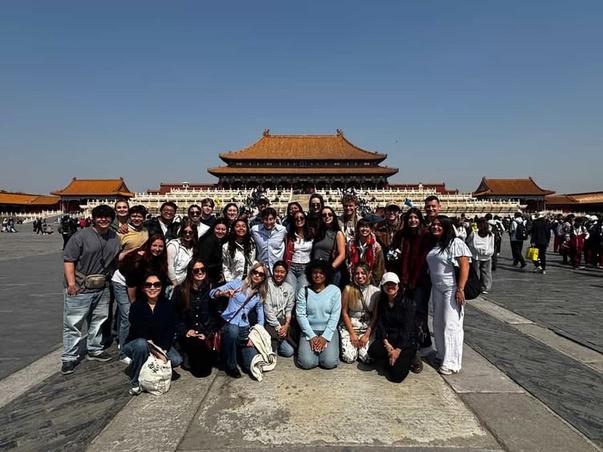
was able to work with Xi’an Jiaotong University in China who helped with receiving visas. Xi’an Jiaotong University is a C9 university, which is similar to an Ivy League in the United States. Because of the relationship with a university in China, USD students were able to tour their campus, have dinner there and hang out with local students.
“Our students, some of them, ended up playing basketball with Chinese students,” Miura recalled. “These spontaneous



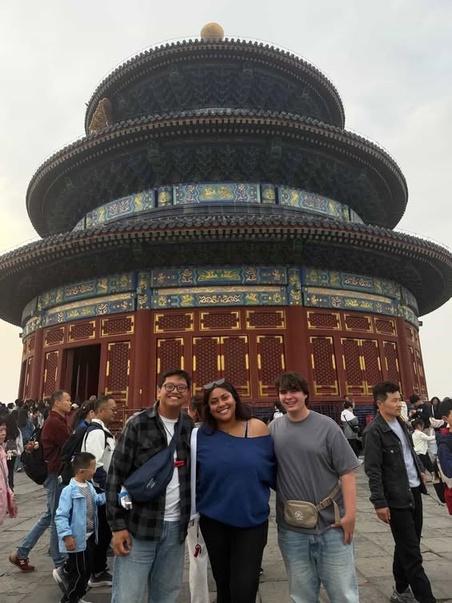
sorts of interactions that we couldn’t have planned and wouldn’t have happened had they been on just your normal tour group. When would they ever get to hang out with Chinese students on a Chinese campus? These experiences are just so special and impossible to recreate in a different type of setting.”
USD junior Gerald Deleon Guerrero was a part of the class. He explained how helpful it was to have learned about China through a college course before visiting in order to understand the context for all that he saw and the places he visited.
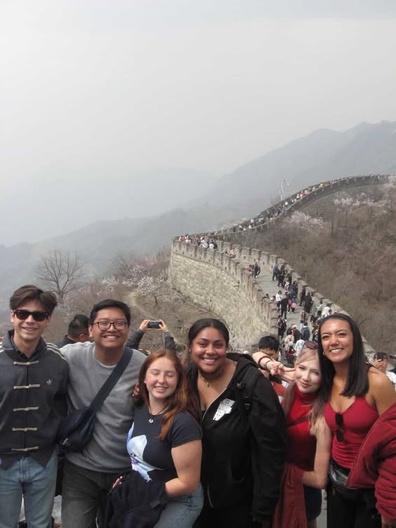
“Going to Beijing and visiting Tiananmen Square where so much history has happened, it was such a surreal feeling,” Deleon Guerrero shared. “I was in the same space as Xi Jinping for once or Boaz Huang. Those are very prominent world leaders so to share that space with them, to be in that space was such a surreal feeling. But also making that connection. I would have never felt that way if I didn’t know the history of Tiananmen Square or standing on the Great Wall and knowing that history.”
Deleon Guerrero also admitted a hesitancy about visiting a country that is not always spoken about in the best light.
“There was a lot of hesitancy and reservation surrounding my participation in the trip,” Deleon Guerrero shared.
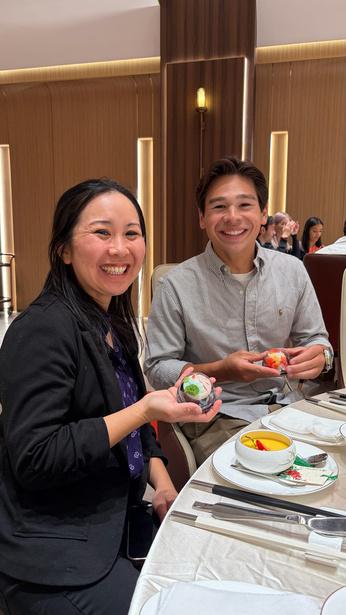
“There was a little bit of fear, but ultimately when you get this kind of opportunity you need to welcome it with open arms and an open mind. That’s exactly what I did.”
Last year, the Chapman Family Foundation funded a trip to Barbados. The course taught about the history and politics of Barbados including the history of colonization, the island’s relationship to the U.S. now and their culture including food and music.
USD senior Jacque Perez talked about her experience last year. She shared that while Barbados is a beautiful island with a rich culture, they have also suffered the effects of colonization. This course showed her the reality of that as she remembered a time they toured a rum factory plantation.
“What struck us all was how it was still being framed and run under a slavery kind of way, still lingering on the plantation,” Perez said. “Which is very surprising because we thought there has been a lot of progression that has happened and so we were kind of shocked as a class … I think that when I was there, people are still being dismissed and treated even though they were from the island.”
The Chapman family has been able to fund a program that has touched many students at USD, providing unique opportunities. Next year, a selected course will be going to Morocco.
USD students traveled to China with their class to learn about the culture and politics of the country.
Photo courtesy of Gerald Deleon Guerrero
Photo courtesy of Gerald Deleon Guerrero
Photo courtesy of Gerald Deleon Guerrero Photo courtesy of Gerald Deleon Guerrero
Photo courtesy of Gerald Deleon Guerrero
Caden Haynor/The USD Vista
Caden Haynor/The USD Vista
Last year, a class traveled to Barbados through the Chapman Family Foundation.
Photos courtesy of Jacque Perez
From China, Page 1
Torero s spin tracks

“My favorite part of DJing is being able to play the music that I produce in front of people and seeing them dance to it and enjoy it.”
John Vach, USD senior
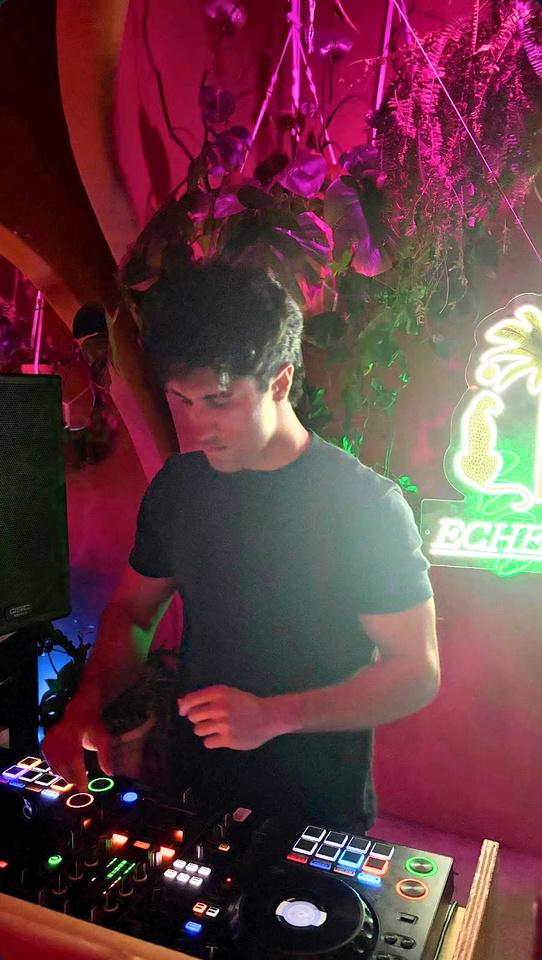
“Here I use a Pioneer DDJ 400 and at home I have an XDJ RX3 I use a DDJ here because it's a bit cheaper in case I were to break it for any reason. ”
Bilal Adam, USD senior

“Right now I use the Pioneer DDJ FLX4 because it is super easy to learn and practice on but I am hoping to upgrade soon!”
Abby Dohoney, USD senior

“DJing is rewarding to me because I get to watch a space slowly transform into a socially judgment free environment. Through the music and energ y, people become more comfortable expressing themselves, letting loose, and enjoying the moment without worrying about what anyone thinks.”
Nico Valenzuela, USD senior
A musical hobby has taken over the USD student body now more than ever: DJing. From bedroom remixes to house party tracks, these students have taken their talents from just iPad mixing to an actual board. Here are some insights from Torero DJs on how they got into the craft, including what boards they use and some of their career highlights

“I'm a radio DJ for U that last semester, bu freshman spring se because music's alw part of my life, and I looking for new outle of music, and I just h that DJing is Ava Williams, U

Scan here to lis inspire U


Photo courtesy of
Photo courtesy of Abby Dohoney
Photocourtesyof @southcountycollective/Instagram
Photo courtesy of Nico Valenzuela
Photo courtesy of BilalAdam
USD radio I started ut I started DJing my mester And I did it ays been a really big I feel like I'm always ets to express my love have always thought really cool.”
USD sophomore
ten to songs that USD’s DJs!
Art by Kyra Lefebvre/The USD Vista: Content by Julianna Flores
Ava Williams
FEATURE Working outside the ‘9 to 5’ How nonlinear career paths can bring fulfillment
CALLA JORDAN CONTRIBUTOR
An inevitable consequence of going to college is that, at some point, the journey must come to an end. And with that, students must jump-start their careers and lives outside of USD’s campus. While some students choose to go to graduate school, or immediately dive into the working world, some Toreros have chosen to step outside the lines of convention, navigating their postgraduate experience with the thrill of the unexpected.
USD alumna Carmen Grey initially imagined herself applying to graduate or law school programs throughout her senior year. However, the early graduate’s busy school schedule and thrilling college adventures prompted a different path. Grey decided not to rush into pursuing another degree right away
what’s deemed predictable.
“I was looking for a way to travel after graduation,” Grey said. “When I talked to my professors from the political science department [at USD] they encouraged me to look into fellowships … service work usually focused on giving you a chance to build skills in the humanitarian world.”
Grey was accepted to a fellowship from Volunteers in Asia, partnered with the nonprofit Suwandi Foundation, located in Bali, Indonesia. Grey oversees volunteer programs within the organization, and works with passionate college volunteers.
USD professors helped Grey navigate her fellowship research, and taught her that spending time abroad surrounded by new people and culture would further expand her education.
“We spent a lot of time talking about the ethics of volunteering in another
wanted to make sure that I was engaging in work that was not exploitative, didn’t promote white saviorism and that was genuinely beneficial to the community I was joining.”
Many students feel encouraged throughout their experience at USD to seek out what works for them, rather than following a standard path.
According to Senior Director of the USD Career Development Center Matt Yepez, career readiness resources are not only built around finding jobs and internships, but also discovery.
“We’re here to share that it’s really okay to not have all the answers and to really lean into exploration,” Yepez shared. “Our team of career counselors are leading with such a culture of care, helping students not just with how to tactically handle a job search, but also trying to explore options.”
The Career Development Center offers a number of assessments centered around
to take, and sessions with counselors aiming to unpack students’ interests, values and goals. Yepez highlighted the importance of individualized help for USD students, as everyone’s paths and career goals are different.
“Students are wanting to see that the work that they’re doing is making a difference,” Yepez shared. “Having that compass of what’s important to them and starting that conversation earlier can really help because these aspects may vary based on everyone.”
History Department Chair Ryan Abrecht, PhD, encourages students to take time before jumping into their professional careers. He highlighted the impact that unique experiences are to a person’s growth.
“I think everyone should take a gap year, or teach English abroad or do something like AmeriCorps,” Abrecht shared. “I think it’s hugely valuable for people to
school then job, or this kind of linear path that you must walk.”
Prior to becoming a professor, Abrecht considered a variety of other career paths. His love for gardening led him to consider a career in landscape architecture. After getting his undergraduate degree, Abrecht moved to Colorado and worked at a ski resort with a college friend. His path to becoming a USD professor was built on a variety of twists and turns, ultimately leading him back to his love of history and intellectual freedom. Many students nearing graduation share the same ambition to look beyond convention and find a career path uniquely fitting to their individual passions. Some alumni from the USD community embrace the unconventional opportunities that present themselves and emphasizesd that there is no prescribed

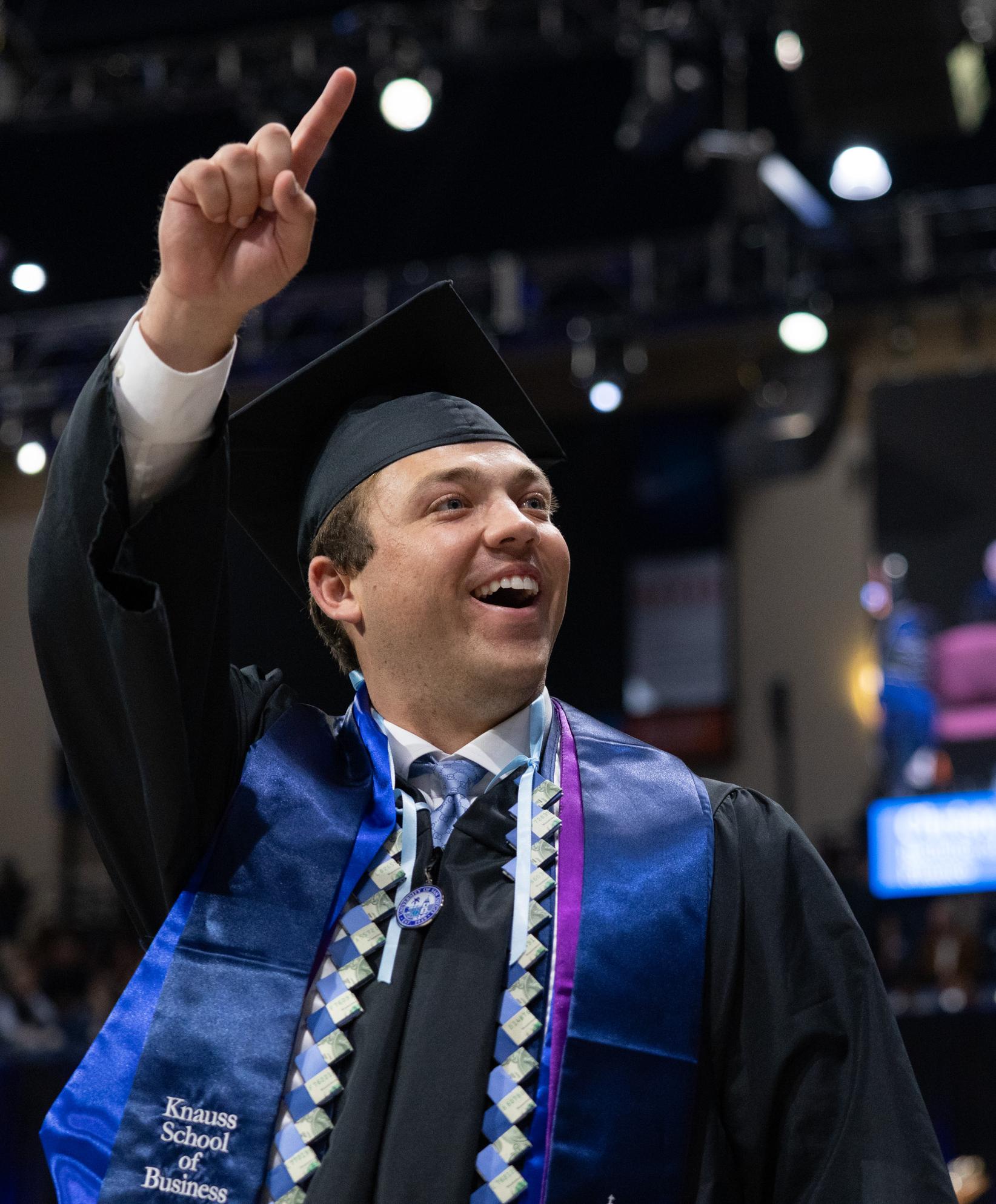

Did you know? Every April, USD employees give hundreds of thousands of dollars to support student scholarships, wellness programs, academic resources and more.
From professors to custodial staff, administators to coaches — we all care about your success.
Learn more about the Students First! Employee Giving Campaign at Campaign at sandiego.edu/StudentsFirst
OPINION
Turn off the big light Fluorescent bulbs spark more issues than just annoyance
RILEY RAINS ARTS & CULTURE EDITOR
When I stroll into my San Buen apartment after a long day, I take one nonnegotiable action: I turn off the big light. Fairy lights, orange-toned lamps and even a YouTube fireplace illuminate my homework pages rather than that overbearing, overwhelming and overconfident fluorescent light architects are so adamant about including in every room.
While this decision may not be my roommate’s favorite, the overhead light sparks a certain sense of impending doom that is reminiscent of a corporate prison. The reason these fluorescent lights are so irritating is because they are composed of highconcentrations of blue light.
Blue light is naturally emitted by the sun. Have you ever wondered why the sky is blue? This specific ray suppresses melatonin, evolutionarily keeping mammals alert throughout the day. However, this natural helper has been exploited by technology companies and schools to keep us attentive despite our body’s plea to slow down.
The blue light emitted through phones, laptops and overhead lights is an extremely calculated tactic to keep consumers consuming. Even the “night-mode” on Apple doesn’t block all disturbing rays. The human brain evolved to consume sunlight, firelight and cave darkness — any and all amounts of blue light at the wrong time of day confuses your internal clock, scientifically referred to as the circadian rhythm.
When the body is out of sync, it starts a loop that perpetuates poor sleep, poor brain function and then a need for more stimulation. It is a vicious cycle that poses more consequences than one might expect.
A recent study suggests even more harm from these pesky lights. Dr. Pratima Khandayataray works out of the Department of Biotechnology in Utkal University. Her study verified that circadian misalignment is linked to impaired function in the brain’s waste removal system, increased brain inflammation and even higher risks of neurodegenerative conditions like Alzheimer’s disease. Khandayataray outlines how at night, the brain performs essential tasks like repairing microcellular damage and

organizing memory. Over time, if sleep is disrupted, so is the brain’s resilience to damage.
However alarming this might sound, there is hope. Keeping good and consistent “light hygiene” can improve your brain health significantly. Actions like getting natural light early in the day, using orange lighting after sunset and wearing blue light glasses maintains the homeostasis the human brain needs to thrive.
While the physical health effects of blue light are important to note, the aesthetic value of
lighting has recently overtaken the interior design world.
As a child, my elementary school teachers would drape sheer cloths of fluffy clouds or fluttering butterflies over the overhead fluorescent boxes. While this creative touch is characteristic of a sweet teacher who loves her students, the adjustment served more functions than just entertaining rambunctious 8-year-olds.
Third spaces like coffee shops and bookstores resort to ambient lighting over fluorescent lights to simulate
the same calm, relaxing atmosphere that my elementary school teachers created.
The placement of lamps and electrical outlets plays a large role in how a room is illuminated. Because of the increased discussion around lighting recently, interior designers have been tasked to be innovative with how they light an area.
The classic option is an overhead fluorescent light. While many, myself included, are bothered by this staple, it is the most financially conservative choice. Fluorescent
bulbs are 70% more cost effective than their incandescent counterparts. Their longer lifespan makes them cheaper over time. However, I will prioritize my brain health over a dime saved any day of the week. So yes, I will continue turning off that big light every time I walk in, not just for the ambiance, but for my sanity. Worst comes to worst, I can always scour for glow worms or crack the refrigerator door for safer, more aesthetic illumination while I tackle that history assignment.
The views expressed in the editorial and op-ed sections are not necessarily those of The USD Vista staff, the University of San Diego or its student body.
Warmer ambient light offers a softer alternative to harsh overhead fluorescent lights.
Art by Kyra Lefebvre
Start protecting your privacy
Sharing your location should not be the expectation
DAVID COOK OPINION EDITOR
With seemingly endless internet access and constant social media use, Gen Z has had to navigate entirely new kinds of social dilemmas. Technology has changed not just how people communicate, but also what they are expected to share with one another. One of the clearest examples is location sharing, which has quickly gone from an occasional safety tool to a routine part of social life. What sounds convenient on the surface has created a much more complicated question underneath: who deserves to know where you are?
Location sharing should be reserved for close friends and family, not treated as a default feature of modern social life. Real-time access to someone’s whereabouts is an intimate form of information, and it should be shared carefully. But social media has blurred the boundaries between trust and convenience, making location sharing feel normal even when it involves people who have no real reason to know where you are. That shift has made privacy feel optional when it should still be the standard.
“Snap Map,” Snapchat’s location-sharing feature, allows users to see where their friends are on a map whenever they open the app. Users can choose who can view their location, whether that means no one, a select group or all of their Snapchat friends. On paper, it sounds simple and even useful. It can help people meet up, check whether a friend has arrived safely or see who is nearby. But in practice, it has also normalized the idea that large numbers of people should be able to see where you are at almost any moment.
That’s where the problem starts. Location sharing can absolutely make sense when it is limited to very close friends, family or a significant other. In those situations, it can be practical and rooted in real trust. Parents may want to know their child got home safely, friends may want to find each other after a night out and family members may use it for safety while traveling. Access to someone’s location should reflect closeness, not casual familiarity.
Instead, apps like Snapchat have made location sharing feel far too casual. Other apps, such as Instagram and Facebook, have location sharing features,
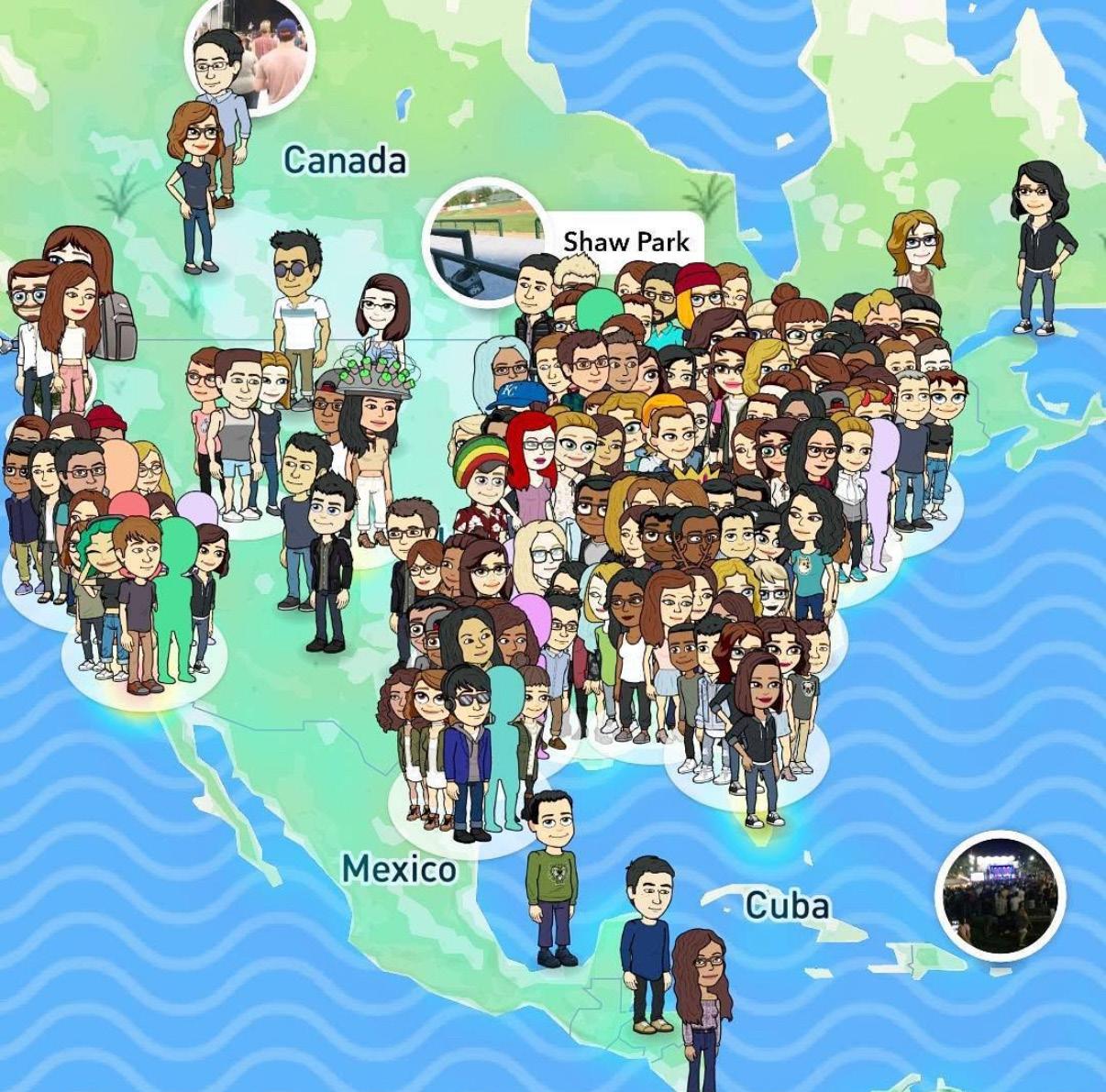
but most of Gen Z would agree that Snapchat’s location features have been used the most. Many people now share their location with dozens, sometimes hundreds, of people on their friends list. And on social media, “friends” often include people who are not really friends at all. Classmates, mutual followers, people you met once at a party or someone added years ago and forgotten about, all may share their location with you. I know that if I ever open up the Snap Map, I constantly see pins of near strangers going about their day. Every time it happens, I always wonder how anyone would think this is safe.
Your location is not random information. It reveals where you live, where you spend your weekends, what places you visit often and the routines that shape your daily life. Someone who can see your location regularly can learn a lot about you without ever asking. That makes it very different from sharing a photo, posting a story or liking a post. Locations are deeply personal, and it should not be available to casual acquaintances just because an app made it convenient. What makes this issue even more interesting is the social pressure that comes with it. Location sharing is not just a setting buried in an app.
It has become its own social dynamic. If someone shares their location with you, there can almost be an unspoken pressure to share yours back. Not doing so can feel awkward, almost like you are sending a message. It can come across as unfriendly, distrustful or secretive, even when all you are really doing is protecting your privacy. That shift says a lot about the way social media changes behavior. Features that begin as optional tools can transform into social expectations. The more common location sharing becomes, the more people start to treat it as normal,
courtesy of @the_clari_boys/Instagram
and the more abnormal privacy starts to seem. That’s backwards, and privacy should not be the suspicious choice. Location sharing has its place, but that place should be limited. It should be reserved for the people closest to you and used for a clear reason. It should not be handed out to everyone on your friends list, and it definitely should not become something people feel pressured into doing just to avoid seeming rude.
In a time when social media encourages people to share more and think less, keeping your location private should not be seen as strange, but rather as common sense.
The views expressed in the editorial and op-ed sections are not necessarily those of The USD Vista staff, the University of San Diego or its student body.
Many people don’t think twice when considering sharing their location with others.
Photo
MAXIMILIANO ACOSTA ASST. SPORTS EDITOR
Designed as an alternative to the mile run, the Fitness Gram PACER Test is a “multistage aerobic capacity test that progressively gets more difficult as it continues. The running speed starts slowly but gets faster each minute after you hear this signal: beep,” the test audio states.
This infamous physical exercise test was used all over the K-12 education system in the U.S. and was even implemented into the military. Participants would start with a flat surface on a marked point and run 20 meters in distance and back before the next beep commenced. Every minute or so, the level changes, and the required speed at the new speed level would be around 0.5km/h faster. Although it might be slightly different, depending on the state which the test is taking place in.
However, this simple measure of physical fitness turned into something much more competitive for elementary and middle schoolers across the nation.
USD sophomore Alessandra Ramirez highlighted her experience with the PACER test. According to her score, it had to have been around the 80th lap.
“Pretty much with the PACER
Beyond the beep
USD reminisces on the PACER test
test, half of the people didn’t really try, but I was part of the half that were try hards,” Ramirez said. “There was this one kid I had a rivalry with in sports, not because we wanted to, but because we always wanted to outbeat each other. We pushed each other. At the end of the day, it was really just a group of five of us who made it a whole competition, and it was really fun. My middle school wasn’t very big, but it brought our class closer together.”
Like Ramirez, some would take it far and try their hardest in order to earn bragging rights. It wasn’t just a physical endurance test, it was a medal of honor that you could remind people about. It’s strange to think that something as ordinary as a fitness test can still feel like a vivid memory a decade later.
According to OpenSports, if you made it to level 21 on the 20 meters test, you’d run 247 cumulative laps, your running time would be upwards to around 11.5 mph. This is nearly impossible and a more realistic approach is no more than achieving upward of 25-60 laps. In a gym, or outside on the blacktop, the numbers felt less like health data and more like a scoreboard.
According to The Science of Learning, a research-based article on stress and memory
formation, researchers have found that stress around the time of learning can enhance memory formation.This may explain why so many students on campus recount their memories with the PACER test.
Some say it is a healthy test, even for those who didn’t get to participate in it.
USD sophomore Cooper De Vries mentioned how he never participated in the PACER test growing up because his private school
did not administer the test.
“I wish I did the PACER test because I felt like it would bring healthy competition and push me more than a mile,” De Vries said. “I also think it would’ve better prepared me for my sports because we would participate in shuttle runs. I feel like sprinting back and forth would build more speed and agility.”
While some excelled in this test, others on campus saw this as not representative of their athletic ability.
USD junior Efrain Ruiz, played baseball growing up and put it this way, “I played sports my whole life, and I was pretty athletic growing up, but since I had asthma growing up, it was still hard for me to keep up with the other kids,” Ruiz detailed. For some Toreros, the PACER was a way to show athleticism — and for others a day to be sick. Nonetheless, all those who took the PACER have a shared experience — fond or not.

GAMES

Fitness tests like the PACER test are standardized across most of the country.
Photo courtesy of @sbjesq92/Instagram
Ticket prices soar to new extremes
FIFA World Cup and Summer 2028 Olympics tickets cause frenzy
PRIYA COOPER SPORTS EDITOR
MAXIMILIANO ACOSTA ASST. SPORTS EDITOR
Recently, ticket prices for the FIFA World Cup and 2028 Summer Olympics have been surging rapidly, pushing out many buyers from accessing the lower-priced tickets. Buying an online ticket comes with the stress of website spikes and price fluctuations in real time.
The FIFA World Cup is being played throughout North America starting in June 2026. Tickets were first available via the presale draw and general application window on Sept. 10, 2025.
FIFA’s pricing has been controversial since September, when the global soccer governing body revealed that it would use a strategy called dynamic pricing for World Cup tickets. Dynamic pricing means that prices are not fixed, but rather they fluctuate based on real-time factors. Prices can go up or down depending on how many people want something and when they want it.
FIFA has repeatedly justified its ticket pricing, arguing that it aligns with North American standards and reflects “extraordinary” demand. However, fans have strongly pushed back against the organization.
USD senior and photographer for The USD Vista, Hailey Howell shared her experience trying to buy tickets.
“I didn’t have any issues getting into the queue, but when I looked online during my time slot the prices were much higher than expected,” Howell
said. “Also some events that I wanted to see, like gymnastics, weren’t available at all which was disappointing. So I actually didn’t end up purchasing any tickets.”
A few weeks ago FIFA entered the final “Last Minute Sales Phase,” where fans were given one last chance to be able to purchase tickets on a first-come, first-served basis, without entering a lottery or receiving special access.
On April 1, thousands of fans tried to access FIFA’s ticket portal, but many were left waiting for hours before gaining access, while some were mistakenly directed to a separate, codeprotected sale and had to rejoin the queue. FIFA did not clarify how many tickets are available in this sales phase. They also failed to explain why the link sent to fans initially led to the wrong ticketing page showing “No products available,” causing some fans to miss their chance to enter the correct queue before it was fixed.
Some are running into similar issues when purchasing tickets for the upcoming 2028 Summer Olympics, which are to be based in Los Angeles. Presale for summer Olympic tickets launched this past Thursday. By the next day, ticket buyers reported that all gymnastics events were marked “unavailable,” and even the opening ceremony had been filled. They observed that the few available tickets to swimming and athletic events such as track and field started at $1,116.27 per seat, which did not reflect how tickets were advertised.
Ticket sales are being met with backlash after policymakers such as LA Mayor Karen Bass made comments about affordable pricing and making these games

different by being inclusive for all.
USD sophomore Luke Magturo explained whether or not the rising ticket prices affected his purchasing decision.
“The rising ticket price of course makes me want to buy the tickets or less, but I love these events so I feel very drawn to buying them anyways,” Magturo said. “I try not to break a certain limit to spend no matter what.”
Magturo shared his most recent ticket purchase online.
“My dad and I just got Olympic tickets for 2028 in LA and we had to get in the queue two years early and buy the tickets within two days,” Magturo mentioned. “The prices were not
terrible, ranging from 150 to 300 and we got tickets for volleyball and boxing without a struggle. That was through the Olympics system. If you buy tickets on reselling websites, they’ll usually be more expensive. For example, I’m looking for World Cup tickets right now and SeatGeek are reselling the cheapest game for around $300 and the highest for thousands. I’m probably gonna go to the cheapest game even though it’s gonna be a team that I don’t care about.”
Both organizations discussed having sales as low as $28 for the Olympics and $60 for group-stage matches in the World Cup. SD sophomore
Ravi Bedi said he considered attending a World Cup match earlier this year with his family but ultimately decided against it due to the overall cost of the trip.
“The ticket wasn’t too expensive, but finding a place to stay made the trip cost more than I expected,” Bedi said. “Since I live in Idaho, trying to get to a game in Kansas City was rough. I didn’t see it as worth it. The ticket pricing was good, I guess, but not for the game I was going to. I’m pretty sure it was a France game, but in the end it just didn’t feel worth it.”
Many fans have seen record high-prices and struggles throughout the entire ticket buying process.
UCLA and Michigan win NCAA titles Bruins and Wolverines win their respective brackets
PRIYA COOPER SPORTS EDITOR
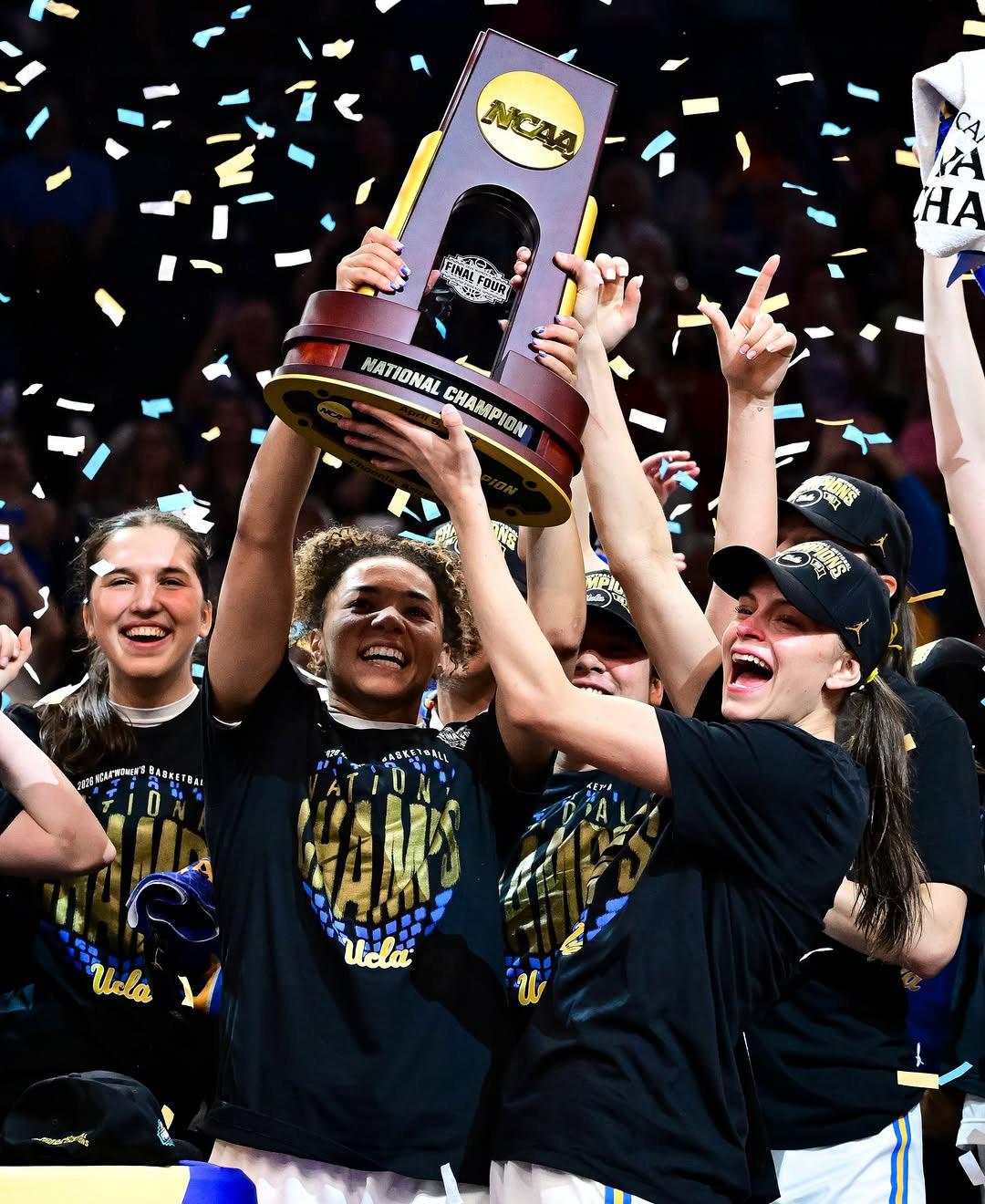
On April 6, 2026, the March Madness men’s college basketball tournament came to a close after a heated month of games. The championship game took place at the Lucas Oil Stadium in Indianapolis, where the University of Michigan played the University of Connecticut. Michigan was a No. 1 seed while UConn was ranked second, which made for a competitive matchup. The game remained close down to the final seconds, but Michigan was able to secure a lead in the final minutes and win 69-63. Just a day earlier, the March Madness women’s college basketball tournament played their championship game in Phoenix, Ariz. at the Mortgage
Matchup Center. UCLA faced off with the University of South Carolina and came out victorious with a final score of 79-51.
Michigan’s win marked the second title for the school in history. Michigan’s last win was in 1989. UCLA’s victory was their first ever NCAA National Championship.
Wolverines guard Elliot Cadeau was named Most Outstanding Player (MOP) — the MVP equivalent — after finishing the game with 19 points total. Yaxel Lendeborg was another key player who helped lead the Wolverines to victory and clocked a significant amount of minutes in the final game, despite acquiring an injury in the previous game against Arizona. Lendeborg had 13 points and played for a total of 36 minutes, even though he was battling a
sprained MCL and bone bruise.
UCLA center Lauren Betts was named MOP of the women’s basketball tournament after leading the Bruins to their win. Betts dominated the championship game with 16 points and 11 rebounds in total.
There were no perfect brackets in the men’s challenges this year. However, an eighth grader from Pittsburgh formulated an almost perfect bracket in the women’s category.
14-year-old Otto Schellhammer produced a bracket that had 48 correct games and was busted in the Sweet Sixteen, despite having limited basketball knowledge.
Schellhammer shared with the Associated Press that his bracket was based on 100 percent luck. There were more than 40 million entries across all the major contests.
USD students look to purchase FIFA World Cup and Summer 2028 Olympics tickets.
Photo courtesy of Kyra Lefebvre
UCLA women’s basketball won their first ever NCAA title. Photo courtesy of @gqsports/Instagram

EMMA PIRHALA MANAGING EDITOR
As he approached the green of the last hole, a grin came across McIlroy’s face — a toothy smile of a backto-back Masters champion.
Held at Augusta National Golf Club in Georgia, the Masters Tournament attracts golf fans to the greens and their screens every April.
Toreros stuck to their TVs from April 8—12. Since 1934, the major championship has been a tradition unlike any other,
Roars heard once again
Rory McIlroy defends Masters title at Augusta
hosting the biggest names in golf while they go neck and neck for a signature green jacket — the most prized award in the game.
Among the top players were Scottie Scheffler, Brooks Koepka, Justin Rose and defending champion Rory McIlroy. The Irishman won last year’s Masters after an 11-year fight to complete his masterpiece — a career grand slam.
In golf, a grand slam is achieved by winning each of the four major championships: the PGA Championship, the U.S. Open, The Open Championship
and the Masters. McIlroy came out of the gates blazing, finishing Friday’s play at 12 under par — six strokes lower than any other golfer on the leaderboard. The feat marks the largest gap after 36 holes in Masters’ history.
Despite losing the lead on Saturday, McIlroy recovered and secured the win.
USD senior Connor Duris watched the major tournament and saw McIlroy close the gap.
“I’m happy for Rory going back to back at Augusta,” Duris said. “He mentioned it being

WTRACK at Bryan Clay Invitational
April 16
vs Washington State

easier to win again now that he already has and I can’t agree more. The pressure he felt for 11 years at Augusta was off of his back. This year he was able to play free and it showed… A part of me wanted him to make double bogey on 18 and see a playoff with Scottie Scheffer. However, at the end of the day to watch Rory go back to back for the first time since ’01-’02 Tiger was special.”
McIlroy is now the fourth individual to win successive Masters tournaments. He is the first to do so in 24 years, since Tiger Woods accomplished the feat in 2002.
However, Woods was missing from this year’s tournament. The golfer withdrew following an SUV rollover crash on March 27. The accident resulted in another DUI charge for Woods. This follows his 2017 arrest and the infamous 2009 crash leading to major public backlash. Woods released a statement announcing his withdrawal from the tournament on March 31.
“I am stepping away for a period of time to seek treatment and focus on my health,” Woods said on his social media channels. “This is necessary in order for me to
BSB vs Seattle U
CA BSB vs UC San Diego
WTEN vs Gonzaga
April 18
prioritize my well-being and work toward lasting recovery.”
Another prominent golfer was missing from this year’s Masters. San Diego native Phil Mickelson backed out just days before, citing a family health matter. Mickelson designed USD’s Purcell Family Championship Golf Practice Facilities.
The tournament kicked off on April 7 with the Champions Dinner which honored McIlroy. As tradition is, the previous year’s winner curates a menu based upon their own tastes. McIlroy’s menu included peach and ricotta flatbread, a choice of wagyu filet mignon and a sticky toffee pudding.
Some were surprised by the menu and its lack of Irish influence. However, McIlroy quipped back at hecklers.
“People keep asking me, ‘Why didn’t you go more Irish,” McIlroy shared in a press conference. “And I said, ‘Because I want to enjoy the dinner as well.’”
Although the most watched event in golf is over, the three remaining major championships will take place later in the year. McIlroy will continue to bask in the glory of the win and look toward a third win next year.
April 18
WROW vs Big Ten Invite
MTEN at Santa Clara
WTEN
WTEN vs West Coast Conference Tournament
MTEN vs West Coast Conference Tournament
McIlroy walks the green in pursuit of victory. Photo courtesy of @themasters/Instagram
Art by Kyra Lefebvre