
THE USD VISTA
Right-wing speaker debates on campus

EMMA PIRHALA MANAGING EDITOR
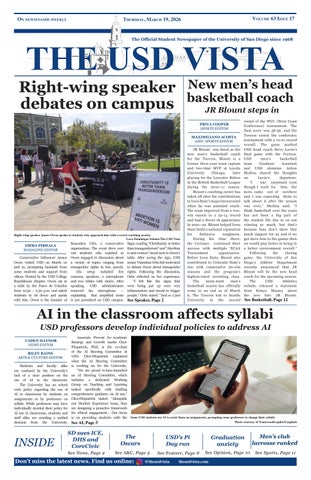
Conservative influencer James Owen visited USD on March 10 and 12, prompting backlash from some students and support from others. Hosted by the USD College Republicans chapter, Owen sat at a table by the Paseo de Colachis from 12:30 – 2:30 p.m. and asked students to sit down and speak with him. Owen is the founder of
Reawaken USA, a conservative organization. The event drew over 100 students who watched as Owen engaged in discussion about a variety of topics ranging from transgender rights to free speech.
His setup included five cameras, speakers, a microphone and two tables with chairs. After speaking, USD administrators removed his microphone — explaining that amplified noise is not permitted on USD campus.
Signs reading “Christianity is better than transgenderism” and “Abortion is anti women” stood next to Owen’s table. After seeing the sign, USD senior Valentina Ortiz felt motivated to debate Owen about transgender rights. Following the discussion, Ortiz reflected on her experience.
“I felt like the signs that were being put up were very inflammatory and meant to trigger people,” Ortiz stated. “And so I just
See Speaker, Page 2
New men’s head basketball coach
JR Blount steps in
JR Blount was hired as the new men’s basketball coach for the Toreros. Blount is a former three-year team captain and two-time MVP at Loyola University Chicago, later playing for the Leicester Riders in the British Basketball League during the 2010–11 season.
Blount’s coaching career has taken off after his contributions to Iowa State’s major turnaround when he was assistant coach.
The team improved from a twowin season to a 22-13 record and had a Sweet 16 appearance in 2021–22. Blount helped Iowa State build a national reputation for defensive toughness.
During his time there, the Cyclones continued their success with multiple NCAA Tournament appearances. Before Iowa State, Blount also contributed to Colorado State’s rise with consecutive 20-win seasons and the program’s highest-rated recruiting class.
The 2025-2026 men’s basketball season has officially come to an end as of March 6. The Toreros lost to Seattle University in the second
round of the WCC (West Coast Conference) tournament. The final score was 58-56, and the Toreros exited the conference tournament with a 12-21 record overall. The game marked USD head coach Steve Lavin’s final game with the Toreros. USD men’s basketball team Graduate Assistant and USD alumnus Airion Medina shared his thoughts on Lavin’s departure.
“I was surprised even though I work for him, the news came out of nowhere and I was expecting them to talk about it after the season was over,” Medina said. “I think basketball over the years has not been a big part of the student life due to us not winning as much, but that’s because fans don’t show that much support for us and if we got more fans to the games then we would play better in being in a better environment overall.”
Following the closing game, the University of San Diego’s Athletic Department recently announced that JR Blount will be the new head coach for the upcoming season.
The USD Athletics website released a statement from Kimya Massey about the new hire JR Blount.
AI in the classroom affects syllabi
USD professors develop individual policies to address
CADEN HAYNOR
NEWS EDITOR
RILEY RAINS
ARTS & CULTURE EDITOR
Students and faculty alike are confused by the University’s lack of a clear position on the use of AI in the classroom.
The University has no school wide policy regarding the use of AI in classrooms by students on assignments or by professors on syllabi. While professors may have individually decided their policy for AI use in classrooms, students and staff alike are awaiting a unified decision from the University.
Associate Provost for Academic Strategy and Growth Austin ChoiFitzpatrick, PhD, is the co-chair of the AI Steering Committee at USD. Choi-Fitzpatrick explained what the AI Steering Committee is working on for the University.
“We are proud to have launched an AI Steering Committee, which includes a dedicated Working Group on Teaching and Learning tasked specifically with drafting comprehensive guidance on AI use,” Choi-Fitzpatrick stated. “Alongside our Student Experience team, they are designing a proactive framework for ethical engagement… Our focus is on providing students with the


Right-wing speaker James Owen speaks to students who approach him with a crowd watching nearby. Lara Dominique Solante/The USD Vista
MAXIMILIANO ACOSTA ASST. SPORTS EDITOR
PRIYA COOPER SPORTS EDITOR
Right-wing influencer speaks to students
College Republicans club guest speaker prompts controversy
From Influencer, Page 1
wanted to have a conversation and break it down on a more granular level… But, I feel like we had a conversation that we actually kind of broke down what he was saying and I thought it was productive.”
The event is part of a broader partnership between the national College Republicans of America organization and Reawaken USA. Owen and other conservative speakers are traveling to campuses across the country to debate students. Martin Bertao, a UC Berkeley student and the national president of College Republicans, attended the event on March 10. Bertao elaborated on how the events have played out at other campuses.
“San Diego has been a lot less violent than other schools, so I like to commend the student body for that,” Bertao said. “They were at [California Polytechnic State University, San Luis Obispo] yesterday, and we had people tearing stuff down at Berkeley.”
Students demonstrated resistance during the event. A samesex couple shared a kiss in front of Owen while he was debating. USD senior Chris Na interrupted the event by encouraging bystanders to sing “Firework” by Katy Perry.
“If you like gay people or you’re woke,
sing along,” Na shouted.
After a brief singalong, Na stepped away from the table and attempted to take the “Christianity is better than transgenderism” and “Abortion is anti women” sign. However, Bertao interjected and tried to physically remove the sign from Na. Following the interaction, Na was approached by a Department of Public Safety (DPS) officer, who asked for his student ID number and asked him not to disrupt the event. The officer did not approach Bertao.
“The concept of not trying to engage with me, but choosing to allow people to engage with [Owen], it just feels very backwards and very hypocritical,” Na said.
DPS officers were in attendance throughout the event to monitor the crowds. The event followed all proper guidelines and received approval from Student Affairs.
A public affairs representative on behalf of the University commented about the event.
“The event was sponsored by a registered student organization, not the University administration,” the representative explained.
“Under our Guest Speaker Policy 2.6.3., student groups may invite speakers of their choosing, provided they follow university protocols to ensure the safety of all involved.
The views expressed by speakers are their own and do not reflect the mission, vision or values of the University of San Diego.”
USD College Republicans has attempted to bring a speaker to campus before. In Spring 2023, College Republicans requested $21,000 in Associated Student Government (ASG) funding to host right-wing commentator Matt Walsh. ASG members rejected the request because they stated Walsh didn’t align with the University’s values. Current ASG President Lily Giovanelli confirmed in an interview with The USD Vista that ASG had no involvement with Owen’s appearance, since the College Republicans did not request funding for his visit.
USD College Republicans President and USDTv contributor Gabriella Macias explained why the organization decided to host Owen.
“I just want people to be able to have discourse and debate,” Macias said. “You don’t have to agree with what I believe in, but as long as there’s a way we can talk about it and debate. There’s not any discourse or any type of peaceful discussion anymore.”
Macias referenced the recent “March for Human Dignity” that occurred on USD’s campus on
Feb. 11, in her reasoning for the conservative speaker’s appearance. The protest, led by the USD National Lawyers Guild and USD’s Immigration Law Society, spoke out against the recent actions taken by Immigration and Customs Enforcement (ICE).
“There was a protest on [ICE] that happened on campus,” Macias explained. “There’s more pushback against speakers that are controversial and leaning right on campus, and I don’t think that’s fair. I think we should be able to have both sides as long as it’s peaceful.”
Students echoed similar sentiments as Macias, sharing
that they believe civil discourse and discussion is important. USD first-year Kylie Walton explained her view of the situation.
“I do not support what are inherently his views,” Walton disclosed. “I think it could be good … for these students to be able to voice their opinion and be able to debate these topics, but I do think this type of setup and this whole environment is not good.”
The USD Vista contacted James Owen to schedule an interview four times. However, Owen did not respond to requests to schedule an interview. Following the event, students are continuing to discuss the impacts of the debate.
San Diego sues DHS, ICE and CoreCivic
Lawsuit filed after alleged mistreatment in ICE Detention Center
SOPHIE HUMMEL
CONTRIBUTOR
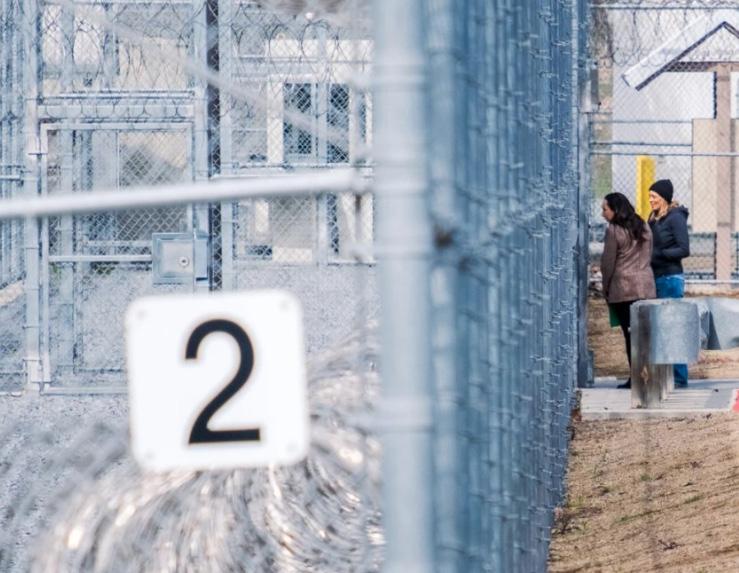
The San Diego County Board of Supervisors filed a lawsuit against the Trump Administration on March 11. Officials at the Otay Mesa Detention Center turned away U.S. Board Chair Terra LawsonRemer and U.S. Supervisor Paloma Aguirre when they tried to inspect the facility last month.
The two officials then informed the Department of Homeland Security (DHS) that they would face legal action if they were not allowed into the facility by March 4 at 5 p.m.
The move to inspect Otay Mesa stems from a variety of concerns inside the detention center. These alleged complaints ranged in severity from contaminated food to physical assault. Additionally, attorneys representing detainees sent waivers to county officials seeking discussions about the facility’s inaccessible medical care. These included reports that staff failed to regulate a diabetic patient’s blood sugar and did not provide treatment to a detainee with a full-body rash. Others complained of lost teeth due to poor nutrition.
Board Chair Terra Lawson-Remer explained her connection to the issue as a Jewish person in a KPBS news interview on March 10.
“We have family stories about people who barely escaped a Holocaust in a country that was apparently ruled by law at the time,” Lawson-Remer said. “And then individuals were just arbitrarily detained and nobody inspected and nobody cared and nobody watched, and everyone shut their eyes. And then that’s what happens.”
The following day, LawsonRemer sat down with Jade Hindmon, KPBS Midday Edition Host, to discuss where the lawsuit stands and the need to inspect the detention center.
“They are certainly significant enough to cause for alarm and make it really imperative that we are able to inspect the facility,” LawsonRemer explained on KPBS.
USD Sociology Chair and Professor Thomas Reifer described the situation as urgent.
“When you go back to the free speech debates, one of the things they say is that it’s illegal to yell fire in a crowded theater…” Reifer said. “It’s time to yell ‘fire’, in the sense that what is happening is not normal. It is not okay.”
USD sophomore Gillian Borseth explained her thoughts on the detention center’s refusal to conduct an inspection.
“The fact that they didn’t allow an inspection shows that
they are doing things that are inhumane,” Borseth said. “I think students should be aware of that because a lot of the time students want to support one person or represent one party, but they don’t actually know what’s going on.”
USD sophomore Madden Craig said he doesn’t hear immigration detention issues discussed frequently among students on campus.
“I feel like people would rather not talk about it just to avoid conflict,” Craig said. “Students should care about it and … I think it’s something that should be talked about more.”
Following the initial block from the detention center, California Senator Alex Padilla also attempted to conduct a visit but was also denied entry, despite California law allowing counties to inspect detention centers for public health purposes.
The lawsuit targets ICE, including ICE Director Todd Lyons, DHS and CoreCivic — the private company that runs the detention center, with preliminary documents including former homeland security secretary Kristi Noem.
A press release from Padilla on Feb. 20 mentioned that the facility has exceeded its contractual capacity of 1,358, with an average of 1,456 people in custody between
Oct. 1 and Nov. 10. ICE data reveals the number of detainees climbed to over 1,600 for several days in September, according to CalMatters. These numbers are consistent with a broader increase in the number of people held in ICE custody, which rose from 40,000 in Jan. 2025 to approximately 73,000 by mid Jan. 2026.
These numbers and reports from the detention center alarm USD junior Hannah Topol.
“It just reminds you, these aren’t stories,” Topol said.
“This is reality, and it’s easy for us to read a news article and close our computers.
But this is people’s lives.” Professor Reifer also expressed similar compassion.
“Some of them are citizens, some of them are undocumented, but they all have the right to be treated humanely,” Reifer said.
“That is an issue about us. It’s not an issue about them. It’s a question about who we want to be and what we think is important.”
While the case proceeds in court, the lawsuit seeks a preliminary and permanent injunction that requires the DHS, ICE and CoreCivic to allow a full inspection of the detention center in the interim.
Students gathered around Owen in a semi-circle as he spoke. Emma Pirhala/The USD Vista
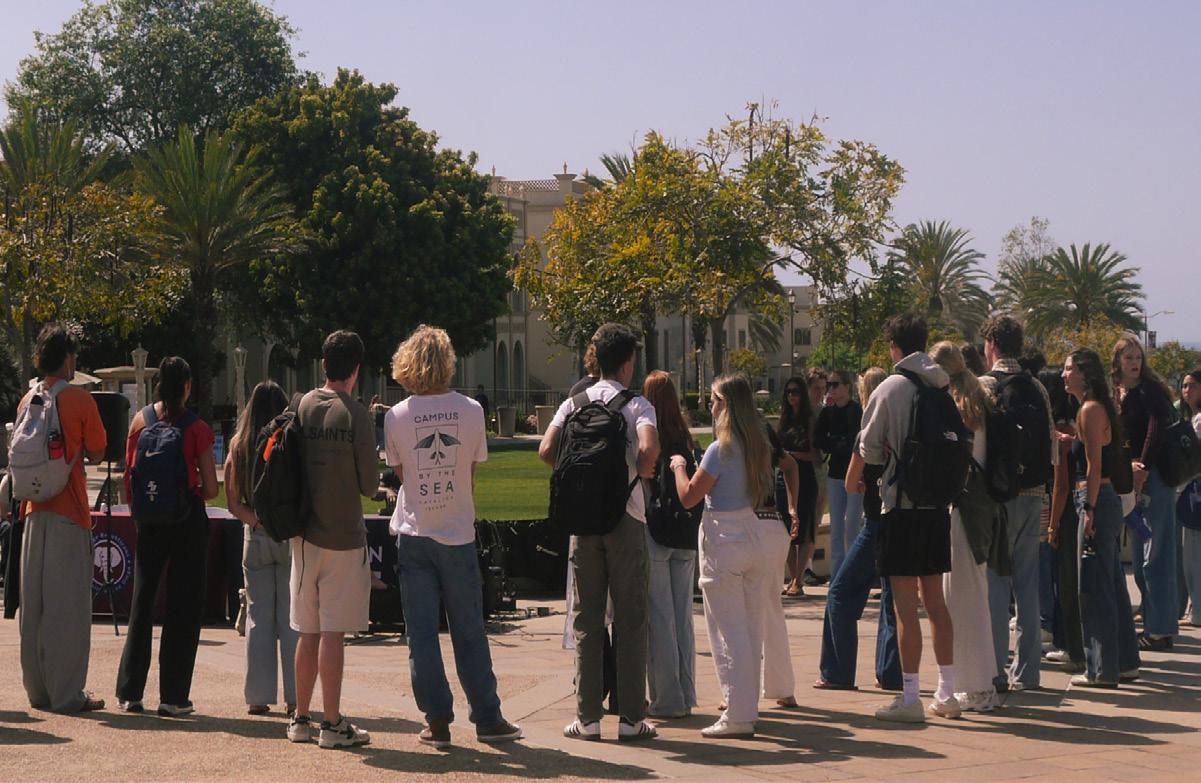
The Otra Mesa Detention Center currently holds over 1,000 people. Photo courtesy of @kpbs/Instagram
Students confused about AI policies
Professors employ various methods to combat AI usage
From AI, Page 1
clear guidance they need to use these tools responsibly and creatively… Currently, the AI Steering Committee is developing comprehensive, campus-wide guidance for faculty, students, and staff to ensure a consistent and supportive environment.”
Since its implementation in the classroom in recent years, USD students have used generative AI to assist them in their assignments. In response, many USD professors altered their classroom policies in their syllabi to include methods that combat the usage of AI on graded assignments. Other professors welcomed AI into the classroom, teaching students how to use it as a tool for classwork.
Megan Little, PhD, is a professor in the English department and oversees the First-Year Writing program and faculty who teach advanced writing in other departments. Little explained what some professors are doing to combat AI usage in the classroom.
“We’re trying everything we can,” Little said. “One of [the strategies] is to focus way more on the writing process. So, in other words, instead of having an essay be something that’s tacked onto the class, you actually bring it into class every day… On the other hand, some people are saying ‘It’s in-class essays from here on out’ and we jokingly call that the ‘nuclear option.’ Other faculty are trying really hard to design prompts that feel more meaningful for students.”
There are other methods students use to receive writing assistance other than AI. The USD Writing Center is a studentfocused writing support center that helps students through their writing assignments. The students that run the center see student essays regularly.
USD junior Anthony Walz, the current student coordinator in training is learning the ins and outs of the center that he will soon organize. Walz explained how the center deals
with papers that have AI elements.
“We don’t accept any work with AI because our purpose here is that students learn the tools to writing,” Walz said. “AI takes away those tools, so we can’t work with it. When students come in with a paper, it is very noticeable when they have put it in Chat[GPT]. Writing is about learning and AI takes that away.”
AI is not only used by students as a writing tool. Students that work in disciplines which utilize math and computer science also may use AI to assist them.
USD senior and computer science major Lucca Sebastiani noticed professors and students using AI in his classes.
“I think it is perfectly fine for professors to use AI to create assignments as long as they fact check it,” Sebastiani said. “In terms of students using it to complete AI created assignments … my official position is that I am against it. ChatGPT sucks at math though, so it isn’t ever that helpful for me.”
While undergraduate policy is in the works, USD Law has a three page PDF and a full website that outlines their policy students use of AI in academia.
USD’s master’s programs also has a detailed policy, they even offer a remote masters degree in applied artificial intelligence.
USD Associate English Professor Joseph McGowan, PhD, noticed disagreements among professors surrounding AI policy in classrooms.
“Professors are all over the board,” McGowan said.
“There’s a real fear that we don’t know what we’re seeing is real writing or not. I’m assuming it’s honest, but you can’t trust that.
I’m used to trusting students.”
When it comes to professors changing their writing assignments to prevent the usage of AI, the students in the classes have presented mixed results. Some have performed better with timed writing, and others have performed worse under the pressure.
Little described the difference
GAMES
RILEY RAINS ARTS AND CULTURE EDITOR
LARA DOMINIQUE SOLANTE COPY EDITOR
1. What film was nominated for 16 awards at the Oscars?
3. This food is called “candy floss” in Australia
4. This slow-moving mammal is native to South America
5. Author who wrote the epics, the “Odyssey” and the “Iliad”
8. The main ingredient in nail polish remover
10. Someone might wear these sunglasses while fishing to eliminate the glare
11. A type of apple that might share a name with your grandmother
13. This element is used to inflate balloons
2. As of March 19, what astrological season is it?
6. The telephone was invented during this era, which was named after the queen
2. As of March 19, what astrological season is it?
7. The School of Leadership and Education is named after this Catholic nun
6. The telephone was invented during this era, which was named after a queen
7. The School of Leadership and Education is named after this Catholic nun
9. The study of knowledge is called ____.
12. By elevation, what is the lowest national park in North America?
13. What is a funeral car called?
9. The study of knowledge is called ___.
between in-person, timed writing and writing outside the classroom.
“Let’s say you’re in a Word document and you can fiddle with your words, move stuff around and then you have some downtime,” Little stated. “And sometimes downtime is where the real inspiration happens. All of that goes away with in class writing… Most professors I talked to are aware that there’s something lost with in-class writing, but they’re also reporting that some students are relieved… it’s just one session of writing, no procrastination — and it feels less stressful.”
The abilities of AI to assist students and professors in completing and creating assignments have altered the educational sector, especially in terms of plagiarism, which has prompted some of the syllabi changes. The ways in which USD as an institution deals with the balancing act of combating plagiarism and using AI as a tool will develop alongside the technology.
12. By elevation, what is the lowest national park in North America?
13. What is a funeral car called?
1. What film was nominated for 16 awards at the Oscars?
3. This food is called “candy floss” in Australia
4. This slow-moving mammal is native to South America
5. Author who wrote the epics, the “Odyssey” and the “Iliad”
8. The main ingredient in nail polish remover
10. Your dad might wear these sunglasses while fishing to eliminate glare
11. A type of apple that might share a name with your grandmother
13. This periodic element is used to inflate balloons
Artists sing their critiques against Chalamet ARTS & CULTURE
‘Marty Supreme’ star faces backlash after controversial comment
RILEY RAINS ARTS & CULTURE EDITOR
Through an explosion of color and sound, the Metropolitan Opera filmed wig stylists, set designers, opera directors and more, all doing what they love. After working to curate an edit compiled of the Met’s 3,000 studio artists, the video was uploaded on Instagram and soon received over 470,000 likes. The post’s caption: “This one’s for you @tchalamet.”
Timothée Chalamet is facing backlash after a comment defacing the fine arts.
“I don’t want to be working in ballet or opera, or things where it’s like, ‘hey, keep this thing alive,’” Chalamet stated. “Even though it’s like, no one cares about this anymore.”
The 30-year-old actor quickly realized how these comments might land among his live audience.
“I just lost about 14 cents in viewership,” Chalamet joked.
He proceeded to laugh out an apology to the ballet and opera community, imitating an operatic voice, covering his face with his hands. Matthew McConaughey quickly changed the subject, but the effect was felt. Fine art professionals across the country are outraged.
The comments happened when McConaughey invited Chalamet to University of Austin Texas Moody College of Communication to speak at a Variety & CNN Town Hall. The two actors spoke live about their careers and took questions from students at

McConaughey’s alma mater.
USD senior Kayleen Hewitt danced ballet for over a decade.
“I think the comment itself was super ignorant, super arrogant and super offensive,” Hewitt argued. “Growing up, it was never cool to do ballet. I would have to beg my best friends to attend my shows. This hurts.”
USD sophomore Josephine Gallo is a practiced ballet dancer. Gallo is currently pursuing music as a career path and has a background in opera.
“I get that everyone might not be interested in that stuff, but [ballet and opera] are still such a fundamental part of the arts that they have to be respected,” Gallo said. “There are some things you don’t disrespect, and I feel like these are two things you don’t.”
Many critics are confused by Chalamet’s disregard for the
fine arts. His 2017 breakout role in “Call Me By Your Name” heavily celebrates classical music, impressionists paintings and French cinematography.
Chalamet grew up in a federally subsidized artists’ building in Manhattan Plaza. He attended Fiorello H. LaGuardia High School of Music and Art and Performing Arts. His sister, Pauline Chalamet danced in the New York City Ballet and is a professional actress. Chalamet’s mother studied at the School of American Ballet and later attended Yale on a ballet scholarship before switching to musical theatre.
USD ballet instructor Marilyn Green has been dancing since she was 6 years old. She danced ballet professionally for 10 years and has taught the art form for over 50. Along with her expertise, Green has
choreographed and performed many opera shows. Green was confused about Chalamet’s comment in light of his family’s involvement with ballet.
“There’s an obvious lack of appreciation for the work that it takes to do that, a lack of appreciation for his mother and sister,” Green commented.
“I am guessing that Timothée Chalamet was maybe taken to a few too many ballet classes when he was little.”
With all of Green’s expertise, she can see some validity in Chalamet’s comment.
“No, everybody doesn’t have to love everything,” Green reflected. “I hate opera. There’s something about the medium that doesn’t resonate with me.
But you have to give it a try and become informed before you come out with a statement saying ‘I hate Opera,’ or ‘I hate Ballet.’”
Regardless of the reasoning, professional art organizations around the U.S. have responded in lighthearted ways, highlighting their commitment to art. The Seattle Opera wrote on an Instagram post that they are offering a 14% discount for select seats to their performance “Carmen” if attendees use the promo code “TIMOTHEE.”
The Birmingham Royal Ballet (BRB) defended its artform by looking at Chalamet through an optimistic lens. Chief Executive Officer at BRB Paul James explained how Chalamet’s comment has provided an opportunity for artists to talk about why they value ballet.
“We have a whole community of opera, ballet lovers, participants, saying ‘No, no, I care,’” James said in an exclusive interview with BBC. “[Chalamet’s comment] has allowed us to have that conversation of just how important [fine art] is.”
Green explained how important the art forms are to USD students.
“There’s over 30 people in my beginning ballet class and even more in advanced,” Green shared. “I think ballet is great for something to do. It is fun and students meet new people.”
The origins of ballet can be traced back to the 15th century Italian Renaissance, an art form that patrons have enjoyed long before film. Chalamet’s comment might have offended some, but other artists are dancing and singing more defiantly in the wake of criticism.
Timothée Chalamet posing after winning ‘Best Actor in a Comedy or Musical’ in January at the Golden Globes. Photo courtesy of @tchalamet/Instagram
The Academy hosts the 98th Oscars Toreros discuss their favorite films of the year
MACKENZIE SMITH CONTRIBUTOR
Approximately 10,000 film industry professionals who make up the Academy of Motion Picture Arts and Sciences voted to determine which actors and films would win an Oscar at the 98th Academy Awards on March 15.
With discussions leading up to the Oscars, it was clear that a few topics stood out. “Sinners,” a horror-thriller film entered the ceremony with a recordbreaking 16 nominations. The typical debate surrounded the intense competition for the nominees for Best Actor in a Leading Role, Best Actress in a Leading Role and Best Picture.
“Sinners” in particular caught the attention of USD first-year Isabella Foncesca. The film contained social commentary on racial violence, systematic oppression and veteran’s post-traumatic stress disorder (PTSD) — all through the medium of a 1932 horror film. Ryan Coogler won an Oscar for “Sinners” for Best Original Screenplay.
Foncesca discussed her thoughts on “Sinners.”
“I’ve seen other Ryan Coogler films like ‘Black Panther,’ ‘Fruitville,’ ‘Station’ [and] ‘Creed,’ so I was really stoked to watch it when it came out,” Fonseca said. “After I watched it, I’m definitely not surprised that it’s so heavily Oscar nominated. Not only is it just super entertaining and enjoyable to watch, but also when you do deeper research and see the history behind [the film], it’s just incredible.”
“Sinners” ended the night

with four Oscars, and continued its historic run when Autumn Durald Arkapaw won the Oscar for Best Cinematography for her work on the film. With the win, she made history as the first woman, and woman of color, to receive the award.
USD sophomore Elyssa Arquero spoke on the historic win.
“I loved ‘Sinners,’ I think it’s a great movie,” Arquero said.
“I’m really glad that Autumn won because the cinematography was great and it was so creative.”
The ceremony itself continued to make history by introducing a new award category for the first time in 25 years. The Best Casting award was given to Cassandra Kulukundis for her work on “One Battle After Another.”
USD first-year Max Andreski discussed his thoughts on the casting.

nine nominations, left the ceremony without a single win.
USD junior Badr Abanumay shared his opinions on “Marty Supreme.”
“I’m not as well versed in film as I’d like, although I did catch a few movies this year that I found to be particularly interesting, one of them being ‘Marty Supreme,’” Abanumay said. “I was very excited about the movie at first because the rollout for the movie and marketing campaign was unbelievable. The movie itself I was a little disappointed by.”
Chalamet was nominated for Best Actor in a Leading Role going against many household names like Leonardo Dicaprio, Ethan Hawke and Michael B. Jordan.
Andreski shared his opinions on this category.
“Actually, it’s a really tough year for best actor,” Andreski said. “Between Michael Jordan for ‘Sinners,’ Timothée Chalamet for ‘Marty Supreme’ and Leonardo Dicaprio for ‘One Battle After Another.’”
The category for Best Actress in a Leading Role also held many well-known actresses, including Emma Stone, Kate Hudson and Rose Byrne.
“I really liked ‘One Battle After Another,’” Andreski said. “Leonardo and Benico Del Toro have great chemistry, and Benico himself did a really good job with the limited role he was given.”
At the end of the night, “One Battle After Another” won the Oscar for Best Picture and earned five other awards, making it the most awarded film of the night. In contrast, “Marty Supreme,” despite receiving
At the end of the night the winners were officially declared with Best Actor going to Michael B. Jordan for his role in “Sinners” and Best Actress going to Jessie Buckley for her role in “Hamnet,” a historical drama about William Shakespeare.
After the ceremony Jordan took his celebration to a local In-N-Out where many fans crowded around to celebrate his newest accomplishment.

Conan O’Brien celebrates at the 98th annual Oscars award ceremony.
Photo courtesy of @theacademy/Instagram
Michael B. Jordan receiving an Oscar for Best Actor from last year’s winner, Adrien Brody. Photo courtesy of @theacademy/Instagram Leonardo DiCaprio and Teyana Taylor chatting at the Oscars. Photo
FEATURE
Reaching a runner’s pie
New ‘Pie Run’ aims to get students involved in wellness at USD
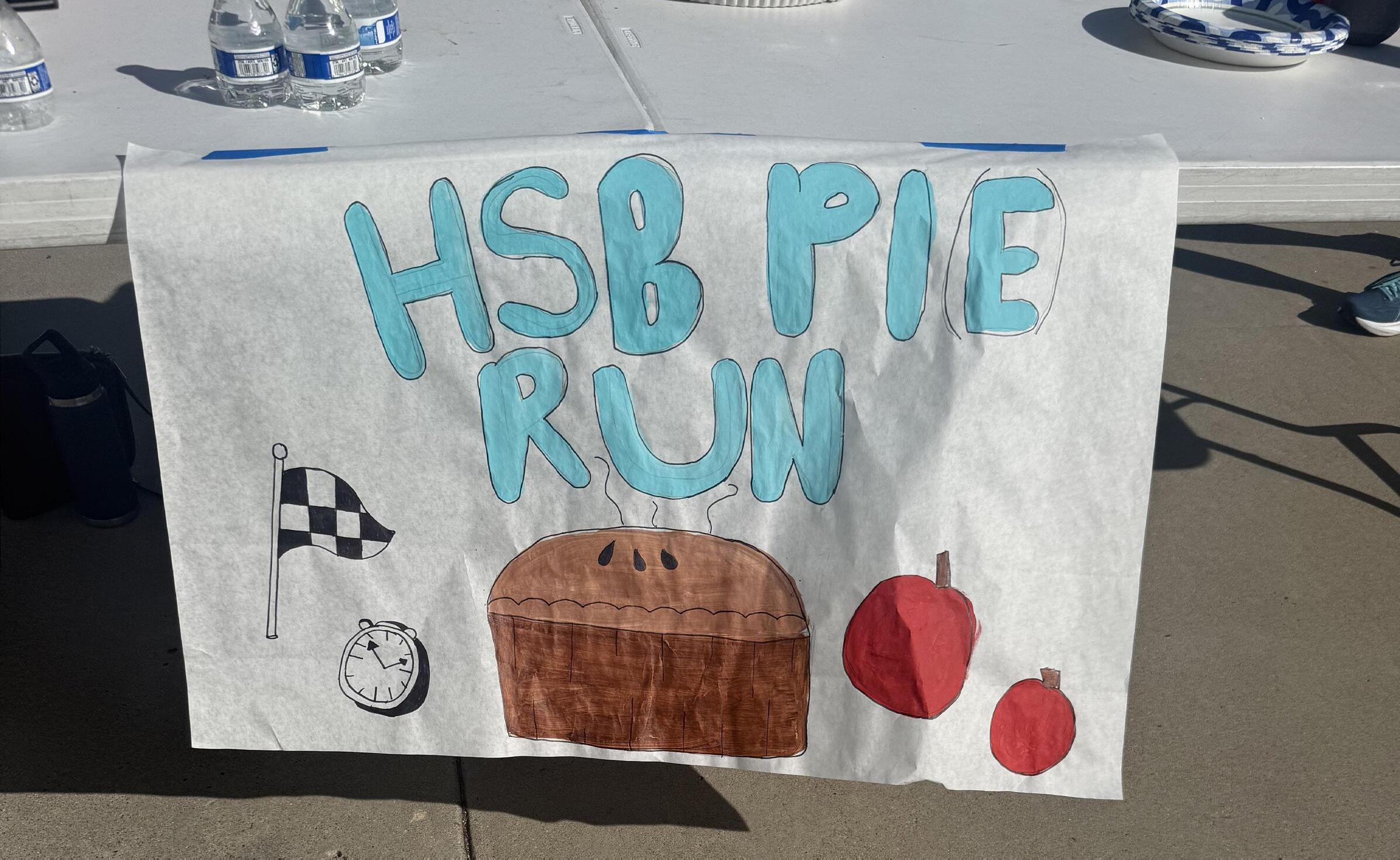
USD celebrated Pi Day on March 14. This day marked the first annual “Pie Run” at the University of San Diego, hosted and sponsored by Honors Student Board (HSB) and the Associated Student Government (ASG).
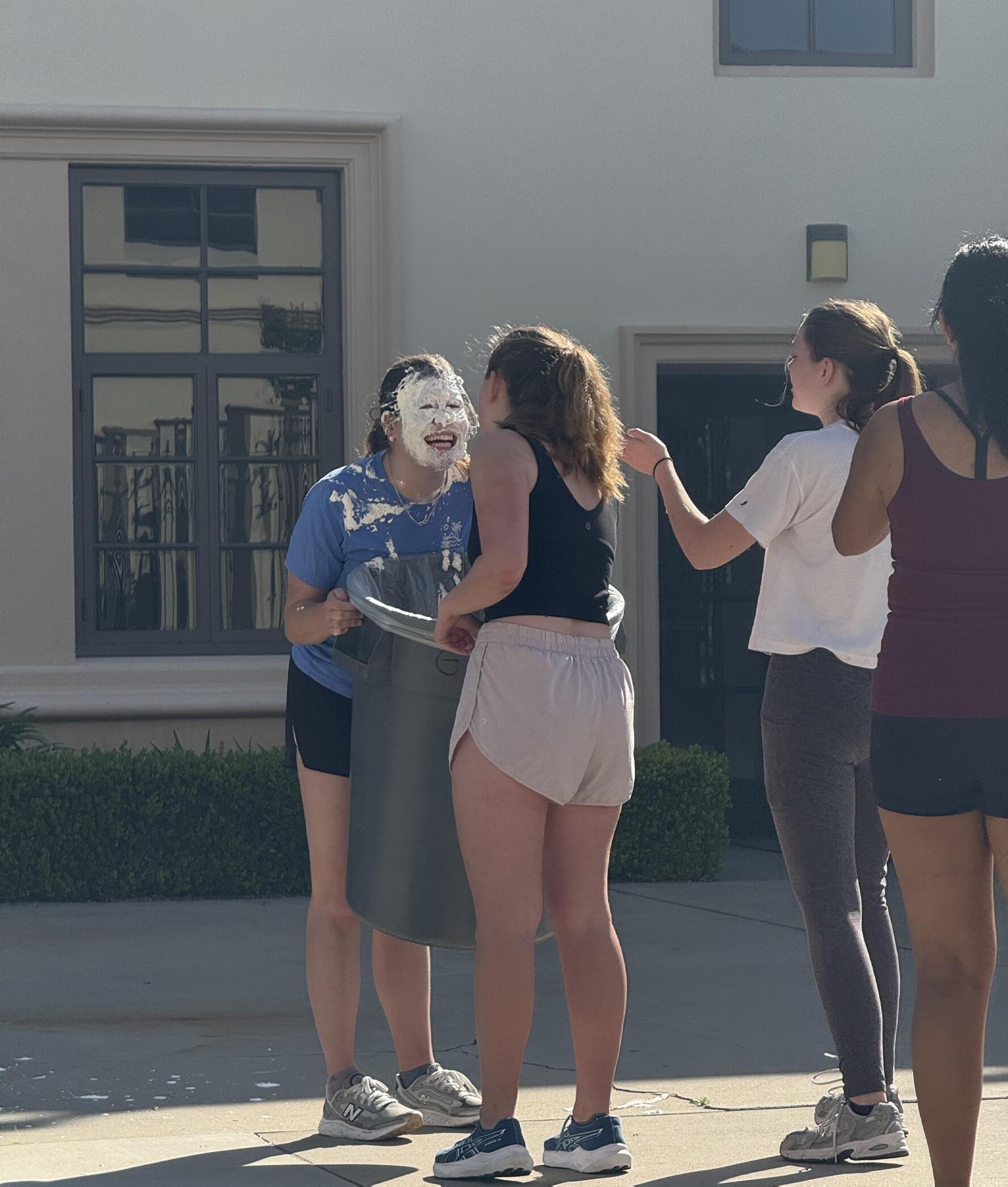
Torero runners completed a 3.14 kilometer run in under 31 minutes and were met with a whipped cream pie to the face at the finish line.
Toreros arrived in running gear and completed the race for free pie. The course spanned over the back roads of USD, from the Camino Founder’s Courtyard, to the Law Circle and back.
HSB and ASG sponsored the event. Members of the HSB executive board brought whipped cream and apple pies for runners to enjoy after their run.
USD junior and HSB President Hannah Hentz spoke about why the board decided to host the event.
“We were just wanting to do something for a month of wellness, physically and mentally,” Hentz said. “We were thinking of different things we could do to get people
energized during midterms. So one of the things we came up with was a run, and Pi Day is in March, so let’s do a pi run.”
Kyleigh Mcaloon is a USD junior and serves as the HSB physical wellness chair. Mcaloon
commented on students getting more involved with wellness programs on campus.
“USD has amazing wellness resources that I wish students would utilize,” Mcaloon said.
Mcaloon spoke on the benefit
of having a student-led event to get other students involved.
“It’s students, like us, are the ones who are putting it on, who are doing it, which is even more encouraging.” Mcaloon said. “And so we believe that students would engage better if they witnessed other students also engaging in wellness resources.”
The race began and only 13 minutes and 20 seconds later, USD first-year Tommy Miller finished in first. After his run, Miller spoke about his performance.
“It felt pretty good,” Miller shared. “I was pretty happy with how I ran. It was 13:20 so it was a 6:30 split.”
Once all of the runners finished the event, they all declined a pie to the face but enjoyed a slice. Instead, the HSB members present pied one another.
For Miller, running in general is easier at USD with the San Diego weather.
“I try to run a decent amount to stay healthy,” Miller said. “It’s nice out all the time, so I can run ... Where I come from, Maryland, you had 80 degree weather two days ago, and then yesterday it was snowing. But here, every day you can do something outside.”
One runner in particular, USD sophomore Janine Katefell, explained why she chose to participate.
“I usually don’t do Pi Day things but so I saw it on my email and I love to run,” Katefell said. “So I was like, maybe I should try it. I just like meeting more people. It’s always nice to socialize.”
Katefell hit a new PR
and finished the race in 20 minutes. Katefell continued on about her running experience.
“Running challenges me in ways that I feel like are a bit harder than other things,” Katefell said. “I always love the endorphins that I get from it after.”
However, not all honors students attended the event. Busy schedules make it difficult for all students to be able to participate.
USD junior Miya Wagner shared her appreciation for the event.
“Sometimes with students’ busy schedules it is hard to find time to participate,” Wagner explained. “The event looked so fun though and I would have totally participated if I was available that day.”
Mcaloon said the Pi Day Run is an example of how wellness events can be both beneficial and fun.
“The Pie Run is a really fun example of a wellness resource, because you’re running, which is obviously great for the body, great for a brain functioning,” Mcaloon explained. “But then also, you get to eat pie after. So there’s kind of, like, intentional, like, playfulness so that students engage a lot better.”
USD junior HSB member Hailey Power said the organization hopes to continue the event in the future.
“If people have a good time, we want to hopefully bring it back next year,” Power said.
With runners finishing the race and enjoying pie at the finish line, organizers hope the “Pie Run” becomes a new campus tradition with more runners.
HSB and ASG hosted the ‘Pie Run’ on March 14, giving a new spin on Pi Day.
Julianna Flores/The USD Vista
Toward the end of the event, students pied their friends with whipped cream. Julianna Flores/The USD Vista
JULIANNA FLORES CONTRIBUTOR
OPINION
Out with the new, in with the old USD students should take class notes on paper instead of on laptops
ALEX KUETER
ASST. OPINION EDITOR
Lately in education, a common topic of discussion is tech: to use or not to use. Slides are posted online, lectures are recorded and classrooms continue to involve tech to further and more integral degrees.
Over the past few years, there has been a surge in using iPads and computers to take notes during class. Online note-taking can offer some advantages, such as being able to write directly on slides, and being able to quickly transcribe ideas.
However, I find that students are rarely only using technology to actually help them. When I am in class, I typically see students focused on 50% class material, and 50% on anything else; coloring, scrolling Instagram or doing work for other classes. While I understand technology can sometimes be helpful with note-taking, I think that overall, it is a net negative to student attention, and returning to paper notes benefits everyone.
The support I always hear for paper notes over computers is a 2014 paper by authors Pam Mueller and Daniel Oppenheimer, which has been cited over 1,000 times. They found students taking notes on laptops demonstrated a shallower understanding of material, and were less able to answer conceptual questions on the material. This study however did not analyze the potential for distractions, which I think is the modern and most pressing issue.
It’s widely accepted that students perform better when writing handwritten notes, but the majority of those studies don’t even consider the impact distraction plays when using computers. Every time I look up in class, I see people on all sorts of websites; often shopping, playing games or occasionally watching shows or movies.
When students are swiping screens between notes and entertainment, there is no possible way they are able to pay attention and actually learn. Beyond that, their distractions distract me. Maybe they can transcribe sentences, but they lose the context that creates their meaning and actually leads to learning. I find that students “taking notes” on computers tend to be paying

the least attention, and ask repetitive questions that were already covered in the lecture.
While this is not only distracting to them, it is also incredibly disrespectful to other students. It can be very distracting to watch a classmate watch a movie, or online shop during lecture.
Asking previously covered questions wastes time and slows everyone down.
As someone who started by taking notes on computers, but now exclusively takes handwritten notes, I can attest to how much more I pay attention and learn.
My engagement with the material, grades, attendance and understanding has all dramatically improved. While it can be a daunting leap to take, it ultimately ends up being so much better for you.
I can theoretically understand the positive impact iPads specifically can have
on note-taking. The biggest advantage of iPads that I hear is you can draw directly on images, and label things such as diagrams or graphs.
However, I am still able to do this with handwritten notes. Not only can I print figures beforehand, but most helpfully, I can draw them out. While it does take a little longer, I find that actually sketching out a graph helps me understand why and exactly where values are changing. You can always go back after lecture and make it look prettier, or replace it with a printed version. But being able to use your brain to redraw something helps you to understand its real meaning and context. As such, I don’t think they are actually necessary, and still find that people on iPads are typically not focussed on class.
This improvement in attention is so notable that
many faculty members require device-free note-taking in their classes. USD Assistant Professor of Psychology Rebekah Wanic, PhD, started a no-laptop policy in the Fall of 2025, citing studies and observations of students.
“I started the policy this Fall … in response to both reviewing a large number of studies showing they interfere with learning and the learning experience of other students in the course,” Wanic said.
“Because last ... Spring I noticed when I was sitting in the student position observing presentations, that students with their laptops out were working on all kinds of other things, watching content, shopping or texting. From what I have observed, very few students on laptops are paying attention to lecture. When iPads are being used, I have seen some students who are on task
but others who are not.” I tend to agree with this observation, as most people on devices seem more to be looking for ways to pass the time, rather than be present in class. This is not only distracting, but also disrespectful to professors, and a complete waste of money. College classes cost a few thousand dollars each, so wasting away time is just burning money. As technology becomes more and more ingrained in our lives, more studies increasingly come out that show how bad increased screen time is for our brains. Class is a time we should touch paper and get back to our roots. Electronic notes are not as good for your learning, but also when you are distracted, so is everyone else in the class. This year, do your brain and grades a favor and consider going back to paper.
The views expressed in the editorial and op-ed sections are not necessarily those of The USD Vista staff, the University of San Diego or its student body.
Some students at USD choose to take notes on their computers, while others elect to use a pen and paper.
Photo courtesy of Luke Southern/Unsplash
OPINION
The complex roots of graduation anxieties
Lack of employment opportunities only tells part of the story
DAVID COOK OPINION EDITOR
“Welcome to the University of San Diego! Enjoy the next four years, because before you know it, you’ll be graduating!”
Everyone has heard this proclamation at some point during their first year at USD. It’s easy to hear that as a young first-year student and ignore it.
Four years feels like a lifetime when you’re just figuring out where your classes are, meeting people for the first time or coming to terms with having to pay for your laundry at Mata’yuum Crossroads.
Then suddenly, you’re a senior. You’re sitting in your room, two months away from graduation, realizing that the thing everyone warned you about is actually happening.
The years passed in what feels like a blink. And with that realization comes something else: a quiet, persistent anxiety about what comes next.
At first glance, it’s easy to blame that anxiety on the job market. Entry-level positions are competitive, internships can be difficult to secure and the path into many industries feels increasingly narrow. Students spend years building resumes, stacking internships and networking in hopes of standing out in competitive fields. From this perspective, the anxiety
surrounding graduation appears purely economic. If the job market were easier, the thinking goes, seniors would feel far less pressure about leaving college.
But that explanation doesn’t fully capture exactly what’s going on. Even students who already have jobs lined up admit that what comes after graduation is nerve-racking.
USD senior Zack Kleinfeld has his post-graduation plans lined up with a job as Customer Success Manager at Adobe in San Francisco, noted that his biggest source of anxiety is uncertainty, showing that postgraduation anxieties aren’t just for those still on the job hunt.
“It’s a specific kind of uncertainty that feels like every major pillar of your life is about to change at once,” Kleinfeld explained. “Where are you living? What are you doing? Are you going to grad school? What happens to your relationship? What happens to your friendships? You go from a life that had structure baked into one where you have to build the structure yourself, and the gap between those two things is where most of the anxiety lives.”
The anxiety doesn’t disappear simply because employment is secured, suggesting the problem runs deeper than the labor market alone. The biggest challenges of graduation for seniors run deeper than financial
and professional challenges. They are personal and structural. It’s the sudden disappearance of a clear path and the loss of an identity that has defined us for years and the pressure of navigating an uncertain future without a roadmap.
For many seniors, the emotions surrounding graduation are complicated.
Audrey Hill, a senior art major at USD, described the feeling as a mixture of optimism and uncertainty as she searches for graphic design and marketing work.
“I’m hopeful, I’m excited to work, and I love the field that I’m going into,” Hill said. “But it’s been a lot of hunting and not a lot of closure with that.”
Part of what makes the transition so unsettling is the loss of structure. For the four years of college, life follows a clear rhythm. You always know what the next step is supposed to be. Graduation itself sits at the end of that timeline as a clear, defined milestone.
After graduation, that structure largely disappears. There is no syllabus for early adulthood. For many graduates, the shift is less about finding a job and more about losing the identity that organized their lives for years. Being a student is a defined role with expectations and milestones. Being a recent graduate figuring things
out is far less clear. Hill noted the biggest adjustment may simply be the disappearance of a clear path forward.
“Everybody’s doing everything differently,” Hill said. “I know some of my roommates are going to grad school for five years, and other roommates are deciding to switch their whole career right now. There’s just no clear straight path after college.”
There is no debate that the structure of college life is vanishing, but what fuels the flame of anxiety is how this is truly the first time where the next step is not clear. Our education system is structured so you always know what comes next — elementary to middle school, then high school and then four years of college. There are clear stepping stones, and you always know where your next foot will land.
That is, until you finish college. Now, there is no stepping stone, no guard rails, and yet you still must take a leap and hope you are able to grab on before you fall too far.
This uncertainty might be manageable on its own, but it is intensified by something unique to our generation: constant comparison through social media. Every day, we see people our age who appear to be thriving. LinkedIn posts highlighting other students’ successes and latest internship
offers fly across your feed while you have clicked the same blue “Apply” button 20 different times in the last week. Some people are launching companies, others are traveling the world and many influencers seem to have turned their personalities into full-time careers before turning 25 Their lives look exciting, financially stable and fully figured out.
Of course, these examples represent a small minority. Social media platforms amplify the most visible success stories rather than the far more common experience of slowly building a career. The early years of most professions are quiet and gradual, and that process rarely goes viral. Still, it is difficult not to compare. When success stories are constantly placed in front of us, the normal beginning of a career can feel like falling behind. We end up measuring our progress not just against our peers, but against highly visible outliers whose experiences are anything but typical.
Arguably, the most daunting part of graduation is no longer being able to spend your years with some of the strongest friendships you have made. We have spent four years with the same familiar faces, especially at a relatively small campus like USD. Seemingly lifelong relationships are formed through taking similar courses, joining clubs or spending late nights at their favorite bar in Pacific Beach. After four years of the same old routine, there is a hard deadline. And when this deadline passes, what is now just life magically becomes a memory.
Graduation forces students to confront questions that college allowed them to postpone. What direction should I take? What does success actually look like? How long is it supposed to take to build a career? Can I even build a career?
Once the structure of university life disappears, those questions become unavoidable. The anxiety many seniors feel as they approach graduation is often framed as a purely economic problem, but the reality is that it is much more complicated. The labor market matters, but so does the sudden loss of structure, identity and clear milestones. In many ways, graduating is less about entering the workforce and more about learning how to navigate uncertainty for the first time. Maybe that is the real adjustment after college, maybe that is what college has been preparing us for all along.
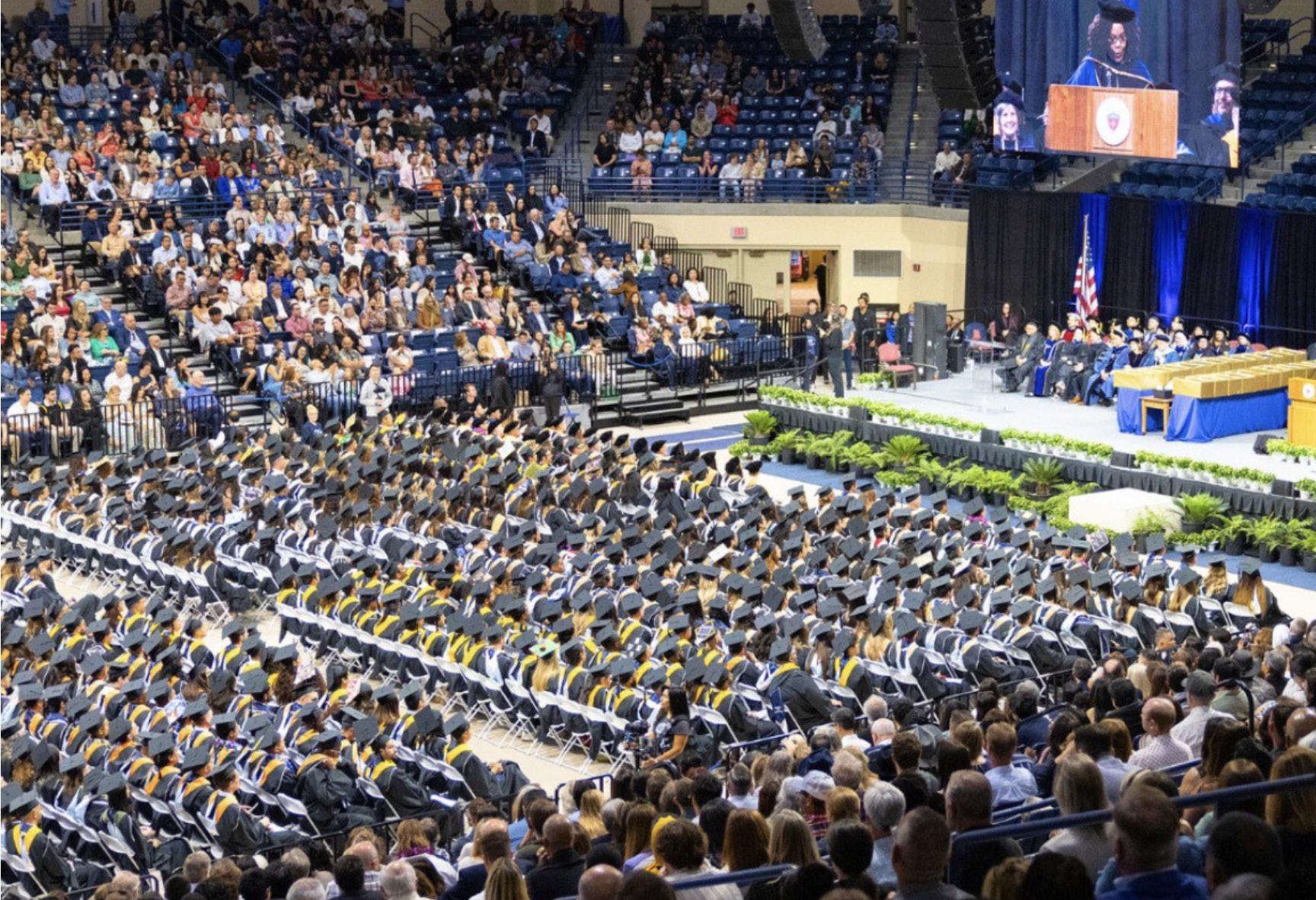
In Spring 2025, students gathered in the Jenny Craig Pavilion for their graduation ceremony.
Photo courtesy of @uofsandiego/Instagram
USD men’s club lacrosse ranks 17th in country
GABRIEL ROMERO CONTRIBUTOR
The USD men’s club lacrosse team has been making waves of progress this semester’s spring season.
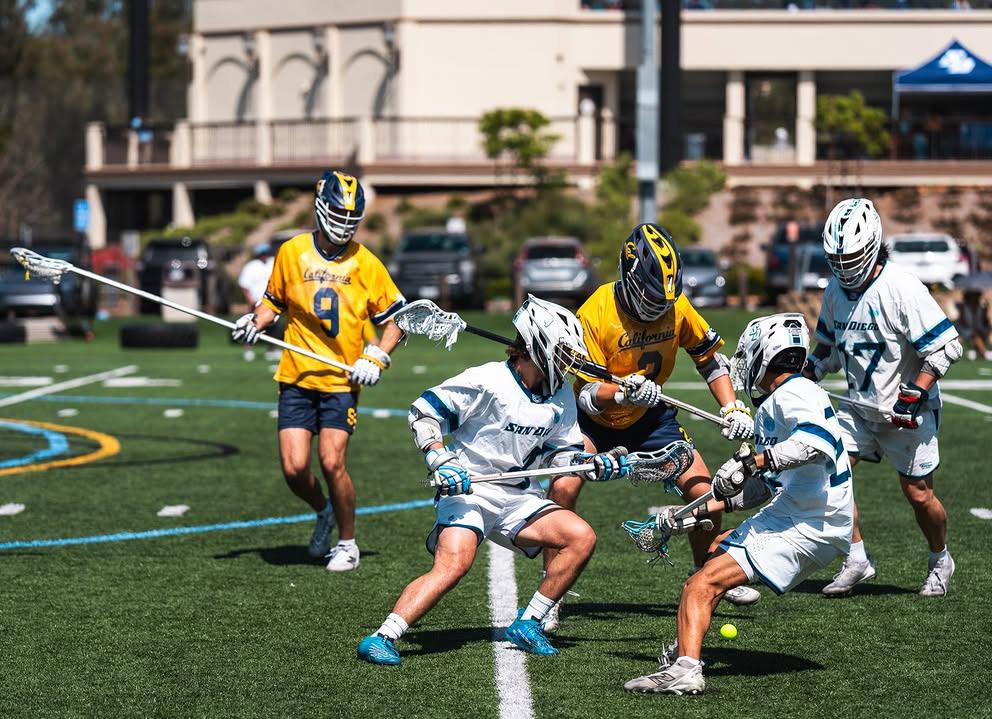
Competing in the Southern Lacrosse Conference (SLC) in Division II, the Torero record has improved this season compared to last season’s record of 0-10, as USD men’s club lacrosse is currently 4-3. During the Men’s Collegiate Lacrosse Association Spring 2026 season, USD currently finds itself in a tough conference that includes three ranked teams, with the Toreros checking in at No. 17. Other teams ranked in the conference include UC San Diego at No. 11 and Cal State San Marcos at No. 2.
USD men’s club lacrosse opened the season with a four-game win streak, already surpassing last year’s spring season in which the Toreros had no wins. In recent play, the Toreros suffered narrow losses against tougher opposition, falling 12-13 to Division I Michigan State and 6-7 to cross-town rivals No. 11 UC San Diego, before losing against another ranked team in California.
Despite the recent stretch of losses, members of the USD men’s club lacrosse team remain upbeat about
Toreros hold a 4-3 record so far in Division II
their play so far this season.
USD senior and co-captain Ethan Petrie spoke on the team’s newfound ambitions and goals during the more
promising 2026 campaign.
“Our goal is to make the SLC playoffs and then, through that, hopefully make the national playoffs,”
Petrie said. “And to have a healthy season for everyone, we’re working on making the national tournament, just be collective as a group.”
Reflecting on the losses and how the team can improve, Petrie remained eager for the weeks ahead.
“We usually come out kind of slow and it affects the whole game,” Petrie said. “You know, we’ve had games where we’ve won, but we still haven’t put together that full 60 minutes… We’re usually climbing back in the games and we’re able to come back. If we’re able to play that first three minutes really, really well and we won’t need to come back, we’ll already be up.”
With the vast variety of sports across all of Southern California, particularly in San Diego, lacrosse is not necessarily one of the more well-known sports. USD senior and co-captain Patrick Oberton embraces the role of captain while playing the game he has loved since childhood.
“I think I bring leadership and experience to the field,” Oberton said. “I’ve been doing this my whole life. I’ve been playing since I was six and not everyone on the team can say the same. Last season we had a really bad season, so every week we’re still in contention to end our season on the national stage. I just know that whatever last game we play is, like, I’m just gonna be so sad because I won’t be able to see those guys. I’ve been playing in this environment
ever since first grade and this will be my last time playing.”
One of the ways the team has improved significantly is through the incoming class that has arrived at USD. USD first-year and defender Samson Callas feels that coming from out of state to California to play lacrosse has been a unique experience.
“I feel there’s a bigger skill ceiling, like there are some guys that are really incredible,” Callas said. “But at the same time, everyone is coming from different high schools. And I feel it’s a unique way to create our offense as a team. But the skill and athleticism of each athlete is definitely elevated from what it was in high school.”
While competing in a tough conference, Callas and others from the men’s club lacrosse team believe that the Toreros can be an enjoyable watch for students around campus.
“Love the team, the team chemistry has been great, morale has been really good and we didn’t win a game last year, so to come out with a 4-0 start was huge,” Callas said. “Our games are very fast paced, you wouldn’t get bored, and there is always lots of action and high scoring games. We’re a very high energy team and I know we’re fun to watch since we’re really physical.”
With playoff aspirations on the line, a roster fueled by fresh faces and driven by seniors enjoying their final season, the USD men’s club lacrosse team is excited to see what comes next.
Toreros lost by one in a game this past weekend.
Photo courtesy of @usdmlax/Instagram
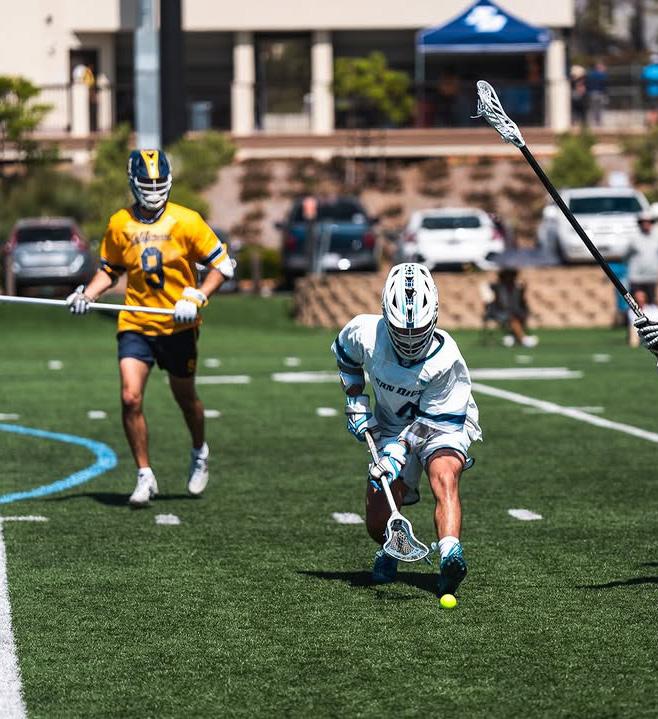
On Saturday March 14, the Toreros played California State University San Marcos at Manchester Field.
Photo courtesy of @usdmlax/Instagram
JR Blount joins USD men’s basketball
Toreros turn to Iowa State assistant coach after Lavin’s departure
From Basketball, Page 1
“After a thorough and highly competitive national search, we are proud to welcome JR Blount as the next head coach of USD men’s basketball,” Massey said. “JR is an outstanding leader, a relentless competitor and one of the brightest rising coaches in college basketball. Even more importantly, throughout this process I came to know him as a humble leader with strong integrity and deep family values. JR has been a part of winning at every level of his career and understands what it takes to build a program that competes with toughness, discipline and consistency. Just as importantly, he believes in developing young men holistically and leading in a way that reflects the values of this University.”
Blount expressed excitement about joining the program and emphasized his commitment to building a strong culture both on and off the court in a statement also published to USD Athletics.
“I’m incredibly honored and grateful for the opportunity to lead USD men’s basketball,” Blount said. “We are so thankful to Athletic Director Kimya Massey and President Harris for this opportunity. This is more than just a coaching position for me — it’s a chance to become part of a community and build something meaningful. My wife and our three daughters are excited to make this move together and we can’t wait to invest in this University and the relationships
that make it special.”
Blount also shared his mentality going into the new position and how he intends to be successful.
“I come to USD with a deep desire to win — to compete relentlessly, to develop our young men to their fullest potential and to build a program our fans can be proud of,” Blount said. Winning championships is important, but so is building a culture of toughness, accountability and love. We’re going to work
every day to represent USD the right way, on and off the court. I’m ready to get started.”
USD sophomore Mariah Pulido shared her thoughts on the coaching change and how it could provide a fresh start for the program and potentially help the team improve moving forward.
“I don’t know much about the team, but I think a coaching change could be good for them,” Pulido said. “I’m assuming that the change happened for a good reason so this might give the team the opportunity to make improvements.
While Pulido is not directly involved with the basketball program, she still sees the impact team performance can have on the broader athletics community.
“I’m on the marketing team for the entire athletics department so I’m not as involved with the basketball team specifically,” Pulido said. “However, I have worked at a few of their games, in which my main job as Marketing intern was to improve fan experience. Games are obviously much more enjoyable for fans as well as coaches, players and employees if we get to see our team win. Therefore, I believe that this is a great opportunity for the team and their new coach.”
With the 2025–2026 season now in the books, the Toreros enter an offseason that will soon welcome Blount.
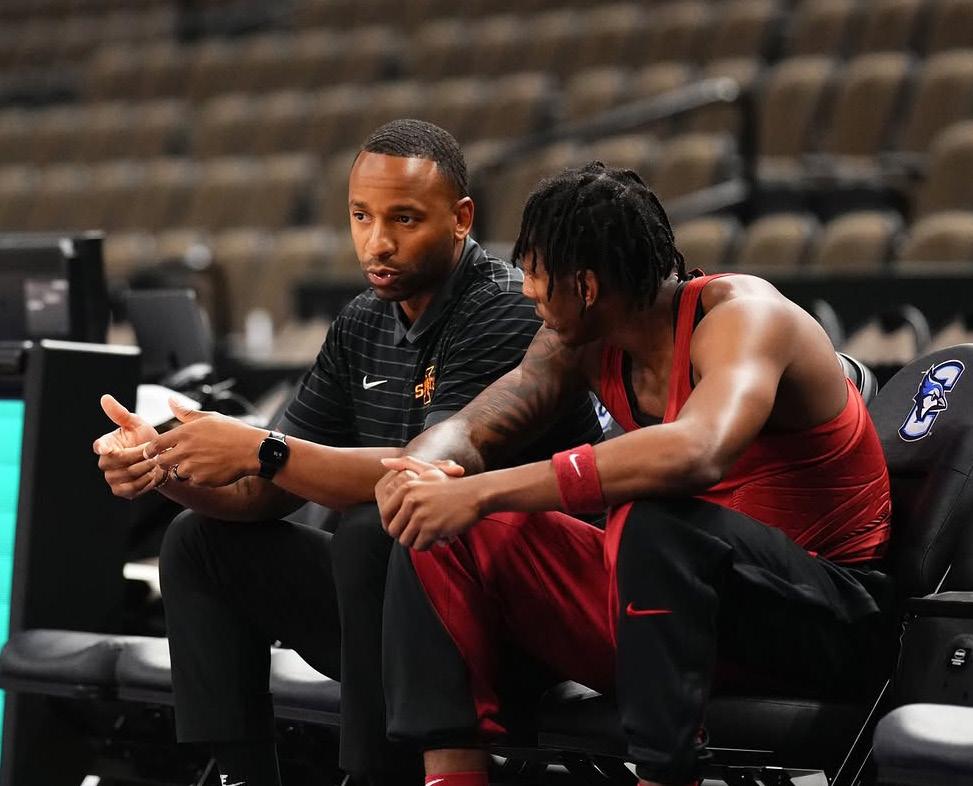
Blount pictured coaching the Iowa State Cyclones before joining the USD Toreros.
Photo courtesy of @usdmbb/Instagram
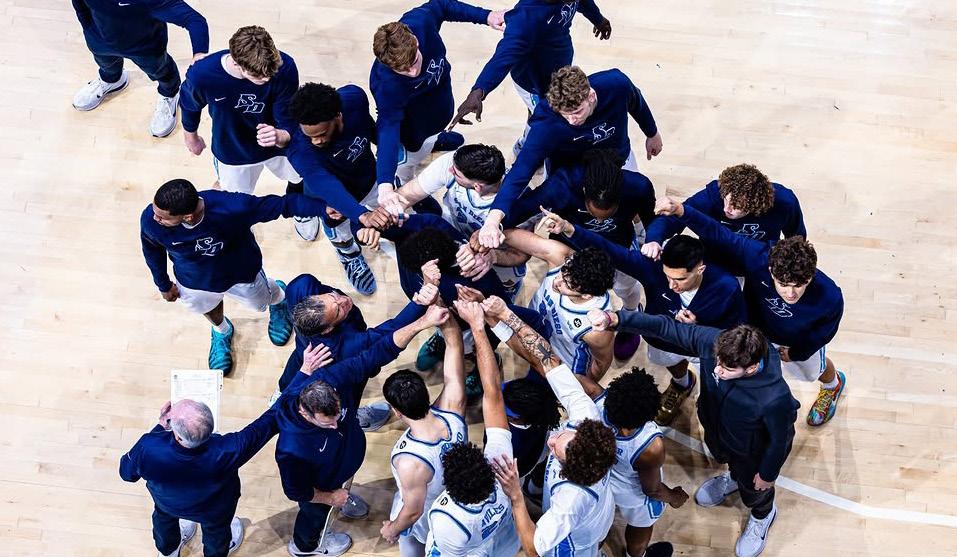
Toreros signed off with Coach Lavin for the 2025-2026 season.
Photo courtesy of