THE USD VISTA
USD coach Steve Lavin leaves
Toreros’ basketball head coach of past four years departs
PRIYA COOPER SPORTS EDITOR
The University of San Diego recently announced that the men’s head basketball coach, Steve Lavin, will not be returning for the 2026-2027 season. The University has not elaborated on the cause of Lavin’s departure.
Kimya Massey, USD’s associate vice president and executive director of athletics stated that Lavin will finish the current 2025-2026 season, completing his fourth season with the Toreros before moving on.
USD released a statement from Massey on Feb. 18.
“I want to thank Coach Lavin for his time at USD and for his efforts leading our men’s basketball program,” Massey said. “As the Division I college basketball landscape continues to shift, Lavin always demonstrated an authentic concern for the well-being of our student-athletes and supported their growth both academically and in the San Diego community. Over his tenure, his teams consistently produced strong academic results. We appreciate his contributions
and wish him the very best in his future endeavors.”
Lavin released an official statement about his expected
leave and thanked the University.
“As my coaching tenure at USD begins to wind down, I would like to pause and
express my heartfelt appreciation to President Jim Harris for presenting this life-changing opportunity in 2022,” the statement from Lavin read. “Teaching and coaching at the University of San Diego See Lavin, Page 12
Study observes student habits Select computer science classes recorded for study
CADEN HAYNOR NEWS EDITOR
USD computer science professors, Jennifer Olsen, PhD, Saturnino Garcia, PhD and Sophia Krause-Levy, PhD, are in the data collection process of a study that records students’ voices and screens in computer science classes during lab periods.
The study is being conducted to understand the ways in which students best communicate in the classroom to improve teaching practices in the future. The study also attempts to understand how artificial intelligence (AI) can be used in the classroom as a resource for students to use in coding labs.
Olsen is conducting research for this study as a part of her overall research in the learning sciences. Olsen explained why this study is being conducted.
“We’ve seen that [computer science] is really hard to learn,” Olsen stated. “One of the things that we know is that being able to work together in a group can be good. It can help people build community, it can help with their

sense of belonging, but it can also help people to learn. It doesn’t happen spontaneously, right, it’s a skill we have to learn, to collaborate. It’s something we’re interested in, especially with AI becoming more prevalent.”
Olsen continued by outlining the goal of the study, from the perspective of the professors conducting the data collection.
“Our goal is, eventually in the classrooms, to be able to have good support for our students,

to be able to understand where they might be struggling so we can put better things in,” Olsen said. “But to be able to do that, we need to understand where they’re struggling.”
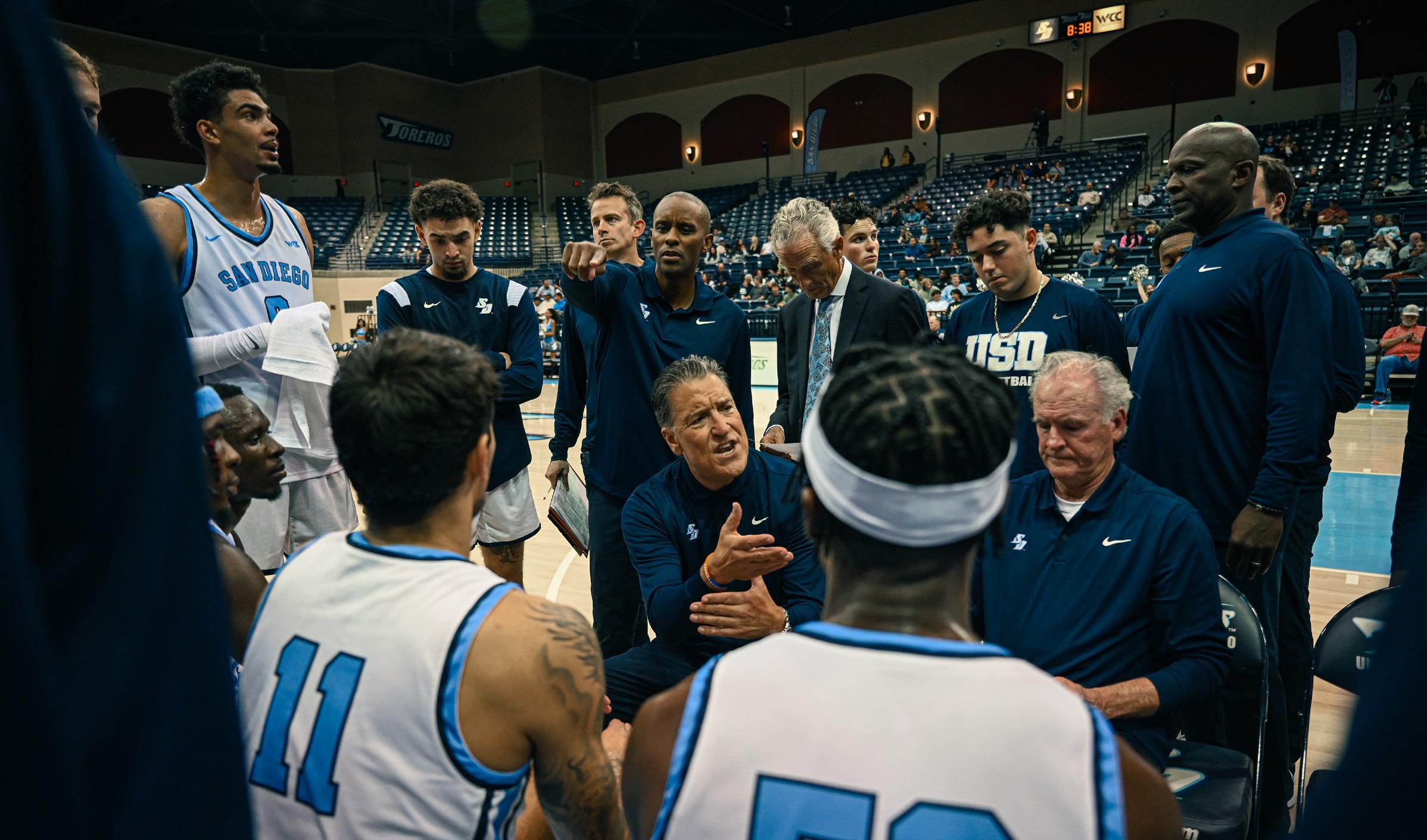
USD men’s basketball Head Coach Steve Lavin led the team for four years.
Photo courtesy of Emma-Kate Squires
‘Putting your money where your values are’ Vatican Bank launches values-based equity indexes
EMMA PIRHALA MANAGING EDITOR
The Vatican Bank, or the Institute for Works of Religion (IOR), recently launched two equity indexes monitoring the European and American markets.
An index is a tool that measures the growth of a selected “basket” of stocks. Announced on Feb. 10, the institution partnered with Morningstar, a financial research firm.
The bank explained that the indexes are guided by five core pillars, emphasizing Catholic faith-consistent investing. The principles include the sanctity and dignity of human life, environment stewardship and efforts to address addiction and recognition of the values listed in the United Nations Global Compact.
USD Clinical Professor of Finance Daniel Roccato helped define the Vatican Bank’s new equity indexes.
“What the Vatican essentially
did was they created an index,” Roccato explained. “Not a fund yet. But they’ve created two [indexes]: one to track stocks in the United States and one to track stocks in Europe.”
The European index includes prominent Europeanbased companies. For the U.S. index, securities by Amazon, Meta and Tesla are among the largest names.
The inclusion of companies with significant ties to the Trump administration has prompted backlash. Some have questioned the proximity of companies’ leaders — Jeff Bezos, Mark Zuckerberg and Elon Musk — to the Trump administration saying it presents an ethical dilemma.
USD Vice President of Mission Integration Michael Lovette-Colyer shared insight on the intersection between values and finance.
“It is important to keep in mind that the process is based on the organizations, and not the personalities,” LovetteColyer explained. “Tesla in the
United States is inseparable from its founder and CEO. And so that brings to mind all kinds of questions and concerns, and even dissatisfaction with the person of Elon Musk… So the challenge there is that with Tesla, it is an electric car company, which is a great thing — to move toward electric vehicles. But it does have all this baggage now, for sure.”
Some speculate that the launch of these indexes could lead to the start of Vatican Bank-sponsored funds, which people could invest in. Professor Roccato held a similar idea for the future of the indices.
“One of the logical next steps would be to create indices that you and I can invest in that would track those securities that reflect Catholic values,” Roccato shared.
The Vatican Bank wouldn’t be the first to launch a fund that reflects Catholic teachings.
An exchange-traded fund (ETF), called the Global X S&P 500 Catholic Values ETF, follows investment
guidelines established by the United States Conference of Catholic Bishops (USCCB).
This year, the ETF has grown at a similar rate as the S&P 500 — an index tracking the stock performance of the 500 leading companies in the United States. This demonstrates potential success for funds built on Catholic values. However, as a whole, environmental, social and governance (ESG) funds tend to be outpaced by the market index since companies holding more ethical values may have lower profit margins. Roccato noted that, despite the potential for lower returns, young investors are gravitating toward values-based investments.
“Gen Z wants to invest,” Roccato said. “They want to put their money where their values are… The research tells us that younger investors are comfortable, they don’t want to lose money, but they’re certainly comfortable with giving up a little bit of profit if it means the investment
GAMES
Crossword of the week
DAVID COOK OPINION EDITOR
LARA DOMINIQUE SOLANTE COPY EDITOR
CADEN HAYNOR NEWS EDITOR
1. What team did USD men’s baseball play on their opening night?
5. From which department are professors doing a student discourse study?
7. Future fraternity members line up, preparing to run out and join their new group of brothers on this day
8. The NASA astronaut that came to USD liked to take these on a camera.
10. Where does the Pope live?
12. Who is the director of the Netflix show “Monsters”?
13. Where was Bid Day relocated to due to inclement weather?
2. Where all crossword answers can be found
1. What team did USD Men’s Baseball play on their opening night?
5. Professors from which department are doing a student discourse study?
3. “Heated Rivalry” hockey star Shane ______ 4. The last name of the family that owns the Padres 6. This Netflix series highlighted Ameican serial killer Ed Gein 8. What professional baseball team is based in San Diego?
comports with their values.”
USD senior and finance major Ella Fahrendorf is involved in University Ministry. She shared that the possibility to invest in a fund supported by Catholic values is exciting.
“I think it is great to have the opportunity to easily invest in companies that align with Catholic morals,” Fahrendorf said. However, some students disagree and are more keen to invest based on returns. USD junior and finance major Preet Sethi explained his stance.
“I invest based strictly on statistics,” Sethi said. “Finance is considered a science in my eyes and should be treated as such.”
Currently, the U.S. index is priced at $4,956.34 and the European tracker at €2,209.13 ($2,602.10).
Although no indication of a fund launch that people can invest in has been hinted by the Vatican Bank, some investors await the opportunity to potentially invest in an Vatican Bank-sponsored fund.
9. Who is “Mr. Padre?” 11. Which gastropod comes out of hiding after the rain? Crossword 2-26
7. Future fraternity members line up, preparing to run out and join their new group of brothers on this day
8. The NASA astronaut that came to USD shared that this was his favorite thing to do in space.
10. Where does the Pope live? 12. Who is the director of the Netflix show “Monsters?” 13. Where was Bid Day relocated to
2. Where all crossword answers can be found 3. “Heated Rivalry” hockey star Shane ______ 4. The last name of the family that owns the Padres
6. This Netflix series is known for highlighting the lives of various American serial killers
8. What professional baseball team is based in San Diego?
9. Who is “Mr. Padre?”
11. Which gastropod comes out of hiding after the rain?
Student discussions studied in Comp Sci
Professors clip microphones to Comp Sci students during labs
From Study, Page 1
This data collection involves placing microphones on students to record their conversations during group discussions and recording students’ screens.
Students in the classes studied are automatically placed in the research and must submit an opt-out form to have their data revoked from the research study.
USD sophomore Bianca Avila is a student in Computational Problem Solving (COMP 110) a class being recorded for the study. Avila explained how the data collection process is conducted in her classroom.
“Everyone has a microphone on them and then they said, if you don’t do it, there’s a consent form that you can fill out which would opt you out,” Avila explained. “But you’re still going to be recorded all through the semester. But they will redact your data at the end when they actually listen to it.”
Some USD students felt confused about the data collection process. USD first-year Chris Mccoy, who is in COMP 110, explained his uncertainty when he heard about the study.
“I was a little confused at first and was very surprised at the fact that we were going to be recorded,” Mccoy said. “It felt as [if] I had to kind of watch what I said.”
USD first-year Sonya Patel is also in COMP 110 and agreed to be recorded for the study.
She consented to wearing a microphone during labs.
“Honestly, we weren’t really told a whole lot about it,” Patel stated. “I think it’s an interesting approach to get access to less formal conversations to see how peers interact and work together with one another to debug and work through computational issues.”
Students are placed to work with a partner. Then, they are hooked up to a microphone connected to a voice box that records their conversations. As the students code on their computers during class, their screens are also being recorded — monitoring their progress.
USD first-year Sara Teferi is a paid research assistant for this study. Teferi described her initial reaction when she was briefed on the study.
“Initially, when [Dr. Olsen] told us that we’re gonna be recording the conversations, I didn’t really know how that was gonna help us understand how they use AI,” Teferi explained. “But then the teachers also have their shared Google Drive. So whatever students are working on, you can see the history of it. Like if you were to log in, you would be able to see the history, almost like a Google Doc. So, once I was told that, it was kind of interesting.”
Any research conducted at USD must be reviewed by the Institutional Review Board (IRB). The IRB is a board, required by federal law, that reviews any research involving human subjects.
The USD Vista requested an in-person interview with a member of the IRB. After multiple email exchanges, a University public affairs representative responded with a statement. Associate Provost for Academic Strategy and Growth Professor Austin ChoiFitzpatrick explained who is responsible for maintaining the ethical integrity throughout the data collection process in a written statement.
“Once the IRB Administrator approves of a study, it is the researcher’s responsibility to ensure they are adhering to the research plan that was originally approved,” Choi-Fitzpatrick wrote. “Every year the researcher must renew their study, and report on their progress.”
Saturnino Garcia, PhD, an assistant professor of computer science, specializes in computer science education. Garcia explained how the professors work to ensure the rights, safety and wellbeing of students during the data collection process.
“[The students] may be concerned about being recorded, but we want to make sure that we give them the option to opt out if, for whatever reason they don’t want to,” Garcia explained. “Also, just making them aware of the fact that they’re under control. And we’re always happy to hear feedback from students. If they’re concerned or want another avenue without microphones
or something like that, we can discuss that… Obviously, students understand that they can opt out easily and without their instructor knowing it so they wouldn’t be targeted for not participating in the study.”
Students were told that, at any point in the study, they can ask for their data to be deleted and that it will be conducted upon request and without the knowledge of their professor.
Avila stated how she wants her data to be used to help computer science students.
“Whether it’s labs or, in a normal classroom setting, it might help teachers going forward to use methods that will better help us students to be more successful,” Avila said. “I think that this could definitely be beneficial in the future and it may not impact us directly, but it will definitely be beneficial for future students that take the class.”
The implementation of AI in the classroom has reshaped student learning and professor teaching practices. AI follows students everywhere, whether it be a writing coach, a study guide, a translator or a coding partner.
Teferi, the research assistant, is going to stay at USD over the summer to analyze the data with the professors involved, looking at how they work with and without AI assistance to see if their scores are higher and if they are able to remember things.
Teferi explained how students use AI in the
computer science classes that are being studied.
“The students are using a program called Copilot GitHub, which is a program where they code, but if they need help, there’s AI built into it,” Teferi said. “So they can ask a question to help them debug whatever they’re working on. Then we record the conversations that they’re doing and later on, in the summer, we’re going to get the transcription of it. Then we’re gonna see how they talk to each other, how they problem solve or if they’re just using it to get answers.”
Garcia, whose interest in educational tools and active learning drew him to this study, explained why he thinks it is important for students to learn how to effectively use AI.
“Just like many tools that professionals are now using, even before AI, there’s a lot of tools that were available that, for a professional, have one meaning because they know how things work and they use those as an expert to help them be productive,” Garcia stated. “But when they become adopted in education, when you have novices who maybe don’t understand how they work, those tools can actually derail the educational process. That’s kind of the approach we were thinking of here.”
While the study has only recently begun, students and professors alike anticipate the results and usage of the data collected.
Last issue’s crossword answers
The USD Vista
Hailey
Lucas
Anahi
Emma
Gina
Dr. Byron Howlett - Operations Advisor
The running of the frat bros ARTS & CULTURE
Time-honored Bid Day tradition brings campus together
EMMA PIRHALA MANAGING EDITOR
Imagine being a 19-year-old boy. After rounds of interviews, small talk and answering questions, the day has finally come. Standing in a repurposed gym clutching a slip of paper with two options and confidently choosing one while shakily grasping a pencil. The excitement is immediately replaced by one singular thought: “do not trip.”
Future fraternity members await the handing over the card and hearing a name shouted across the turf like a draft pick to the NFL, followed by a slightly uncoordinated sprint toward a roaring huddle of men now called brothers.
Students who wandered past the Wellness Center on Tuesday, Feb. 17 were likely greeted by a scene reminiscent of “Harry Potter.” The drawing of names, chanting and finally, the big announcement. No, Toreros did not just witness someone being cast into Gryffindor, but rather, someone receiving a bid to one of USD’s seven recognized fraternities.
At USD, Fraternity and Sorority Life (FSL) members make up just 25% of the student
body. However, their influence spans the campus — and so do their voices. Particularly the voice of USD junior and Vice President of Recruitment for the Interfraternity Council (IFC) Zach Fallon. Fallon’s yells were heard around the Wellness Center. As part of his duties, Fallon draws and calls the names of over 100 new members.
The tradition’s exact origins are unclear. Bid Day is normally held on the Paseo de Colachis, however, inclement weather caused IFC to pivot at the last minute to the Wellness Center field — which the organization has been partnering with over the course of recruitment.
“Originally, we had it on the [Paseo de Colachis] where it normally is, and it got canceled because it was raining,” Fallon explained.
“So we emailed the Wellness Center. They were really nice about it and said, ‘Yeah, here we reserved the gym for you.’”
In a world defined by “touse” and “bouse” — Tiktok popular terms for top house and bottom house, respectively — Fallon emphasized the importance of togetherness in the impactful tradition.
“One of the things we
really want to do is try and get all the fraternities kind of in the same place together, like interacting,” Fallon said. “Bid Day builds up this community with all the fraternities [coming] together. Some schools just call them and tell them to show up. So they wouldn’t have that kind of community that they have at USD.”
Just a few years ago, Fallon was in the same shoes as the new members.
“I remember the emotion of waiting in line to get my name called to run out too,” Fallon reminisced.
USD first-year Luca Limarzi rushed Phi Gamma Delta, or Fiji as most students know it. He described that Bid Day helped welcome him in to the IFC community.
“Bid Day was super laid back and the guys did a great job of making everyone feel welcome and confident,” Limarzi said. “Definitely a good introduction to Greek Life at USD.”
USD first-year Aidan Nicholas joinedDeltaTauDelta,knownas“Delt,” and shared his experience rushing.
“At the beginning of the school year, I wasn’t sure if I would ever join a fraternity,” Nicholas said. “But beyond that,
since coming to USD, I’ve really tried to take advantage of every opportunity available to me as a first-generation college student. Joining a fraternity felt like more than just a social decision, it felt like an opportunity to build brotherhood, network and create meaningful memories. My parents didn’t have the chance to experience college in this way, so being part of something like this feels like I’m truly making the most of the opportunities in front of me.”
However, Nicholas noted the nerves surrounding Bid Day — especially the possibility of tripping.
“I was a little nervous on Bid Day,” Nicholas said. “But honestly, most of that nervousness came from not wanting to trip while running. At the same time, I was overwhelmingly excited. Running and becoming a part of Delta Tau Delta was something I looked forward to that whole day.”
A big source of the mounting pressure is the sheer amount of people who show up for the occasion. The event draws eyes from around the University, not just those involved in fraternities. Despite the
unknown emergence of the tradition, some USD students treat fraternity Bid Day like an unofficial campus holiday. Students gather to cheer on friends, celebrate new beginnings and, perhaps most importantly, make sure no one trips on the way to their future brothers.
USD senior Madison Gambon frequents the Bid Day tradition, and expressed her admiration of it.
“I love frat rush because I think it’s hilarious watching grown men run at each other,” Gambon said. “They scream and jump and holler and shoulder check each other … And some of them will fake each other out. It’s the funniest thing ever. And they all get so excited.”
By the time the last name is called, the chants have gone hoarse and the field is scattered with sneaker tracks and lingering nerves. For a campus that draws just a quarter of students to Greek Life, Bid Day manages to draw a crowd and create tradition. And for the new member clutching a bid and silently praying he doesn’t trip, it is the first sprint into a community he can hold even after the cheering fades.

Diego Torero receiving a bid and running home to his forever fraternity.
Art by Kyra Lefebvre/The USD Vista
‘Heated Rivalry’ melts heteronormative hearts
New HBO series encourages queer representation in athletics
RILEY RAINS ARTS & CULTURE EDITOR
Sitting on a couch in the middle of December, USD Associate University Minister Caroline Cacabelos and her mother settled in to watch HBO’s newest episode of “Heated Rivalry.” After some motherly scolding about the scandalous sex scenes, the women slowed down and reminisced on the daughter’s own experience coming out as queer. Episode after episode, the LGBTQ+ relationship reminded Cacabelos of her own story.
“Whenever I watch any gay couple on TV, I think ‘Thank God you exist, so I feel like I should exist too.’ I just feel so seen,” Cacabelos said.
This experience is one held by many viewers of the infamous “Heated Rivalry.” TikTok is swarming with edits. Reddit communities are exploding. Fanfiction websites are stocked with a surplus of content. With Connor Storrie hosting SNL on Feb. 28, pucks, punches and pretty boys are all the talk around campus. The six-episode-first-season adaptation of Rachel Reid’s novel has taken social media by storm, not just for its raunchy romance, but for the interruption in the all-too-common heteronormative narrative.
Along with bringing representation for the queer community, “Heated Rivalry” has drawn eyes into the hockey world: a sport born-andbred Southern Californians might be unfamiliar with.
USD sophomore and club hockey member Micah Hemenway
shared his observations.
“People I know who have never been hockey fans are now consistently keeping up with the NHL because of the show,” Hemenway noticed.
“From what I’ve heard, the show adds a fun, fictional aspect to the sport. It sparks fan fictions and social media gossip which keeps people thinking and talking about hockey.”
In 2018, Reid released her novel “Heated Rivalry” — book two of six — which surrounds star athletes Shane Hollander and Ilya Rozanov. The two hockey players meet in their rookie season and compete against each other throughout the duration of their athletic career.
Hollander is an autistic, reserved Canadian who plays for the Montreal Voyageurs. Rozanov is a depressed, Russian playboy who competes for the Boston Raiders. Both are closeted. As their athletic rivalry intensifies, so does their sexual tension, and fans are soon enamored in their secretive relationship. In the show adaptation, Director Jacob Tierney reimagined the decade-long romance, casting Connor Storrie as Rozanov and Hudson Williams as Hollander.
The hockey world has a stereotype for being a heteronormative and masculinized sport, a generalization Tierney took into account when recreating Reid’s novel. Just two years before “Heated Rivalry” was released on HBO, the NHL banned the use of rainbow stick-tape for athlete’s hockey sticks. A month prior, the league ended all themed jerseys after numerous athletes refused to wear Pride overshirts that clothing commissioners
called a distraction.
In more recent years, the NHL has implemented more inclusivity than in the past. In 2025, all 32 teams hosted Pride nights to combat the assumption that hockey is an exclusive space — a drastic jump from 2022. Shows like “Heated Rivalry” have only furthered acceptance. After watching the show, athletes such as Jesse Kortuem were inspired to come out.
In an interview with the BBC, Kortuem explained how the show inspired him.
“To finally have that relief... to bring 110% of myself into the locker room, something was speaking to me through the show,” Kortuem said. “It was time to put a real face to what this story has done for athletics.”
Kortuem currently plays for Cutting Edges Hockey Club, a team based in Vancouver, Canada. There are currently no openly queer athletes in the NHL.
“Heated Rivalry” inspires inclusivity through the backdrop of a heated romance. After 10 years of sexual and emotional build up, the two hockey stars were caught by Hollander’s father. In the season finale, Hollander was forced to come out. With tears streaming down fans’ and Hollander’s faces, he chokes out that “he really did try” to fight against sexuality, to fight against his love. Hollander’s parents accept both him and Rozanov as sons, and the hockey rivals end the season driving off into the sunset.
USD senior Sasha Milshtein shared her reaction to Hollander’s coming out scene.
“Watching Shane’s mother respond with love and under-
standing instead of rejection, felt powerful,” Milshtein said. “It felt like the kind of reaction so many kids always hope for, but don’t always receive. I think a lot of people saw and see themselves in Shane, especially those who grew up trying to balance their identity with cultural expectations.”
“Heated Rivalry” accumulated record-breaking popularity since the season one finale was released in December. According to Warner Bros. Discovery, the series reached 10.6 million viewers, just in the U.S., in less than two months. Producers bragged that the audiences’ engagement launched “Heated Rivalry” into the award of the most-watched scripted title in HBO history. The viewership has shocked and encouraged many viewers, but others are concerned about possible unintended consequences of the queer romance. Openly out, USD student-athlete Carly Ruiz shared her thoughts.
“Although [Heated Rivalry] has been great in terms of representation, I do think that there has been some fetishization, especially with straight women obsessing over their male relationship,” Ruiz commented. “However I don’t think fetishization can be avoided all together … You have to take the good with the bad.”
A survey in the New York Times shared that around two-thirds of “Heated Rivalry” fans are straight women. The author of the novel is also a straight woman. Milshtein commented on her view of the audience demographics.
“I think any show with heavy sex scenes is going to
fall victim to fetishization, especially when it portrays same-gender relationships,” Milshtein said. “People tend to fetishize what they don’t fully understand … It’s meaningful to watch because it’s about connection and vulnerability, not just physicality. The show was created for a particular audience, and if others choose to misinterpret it — as people often do with art, especially queer art — that’s on them. The impact isn’t going to be washed away by people who focus on the wrong things.”
Good intentions or bad, fans from all different backgrounds sat down to enjoy the cutting romance — something that has had unintended consequences in the hockey world.
USD first-year and longtime hockey fan Kaili Murphy shared her observations.
“It has introduced a brand new group to hockey: women and the LGBTQ+ community,” Murphy said. “The show shows that there is a place for everyone in the hockey community.”
“Heated Rivalry” did a lot more than melt fans’ hearts. The same month that HBO premiered the series, the Supreme Court considered overturning Obergefell v. Hodges — a decision that would have reversed the 2015 legalization of gay marriage. In a world where 65 nations criminalize homosexuality and in a country where 9.3% of adults identify as queer, shows such as “Heated Rivalry” have been impactful, showing representation of queer athletes and bringing visibility to the LGBTQ+ community.
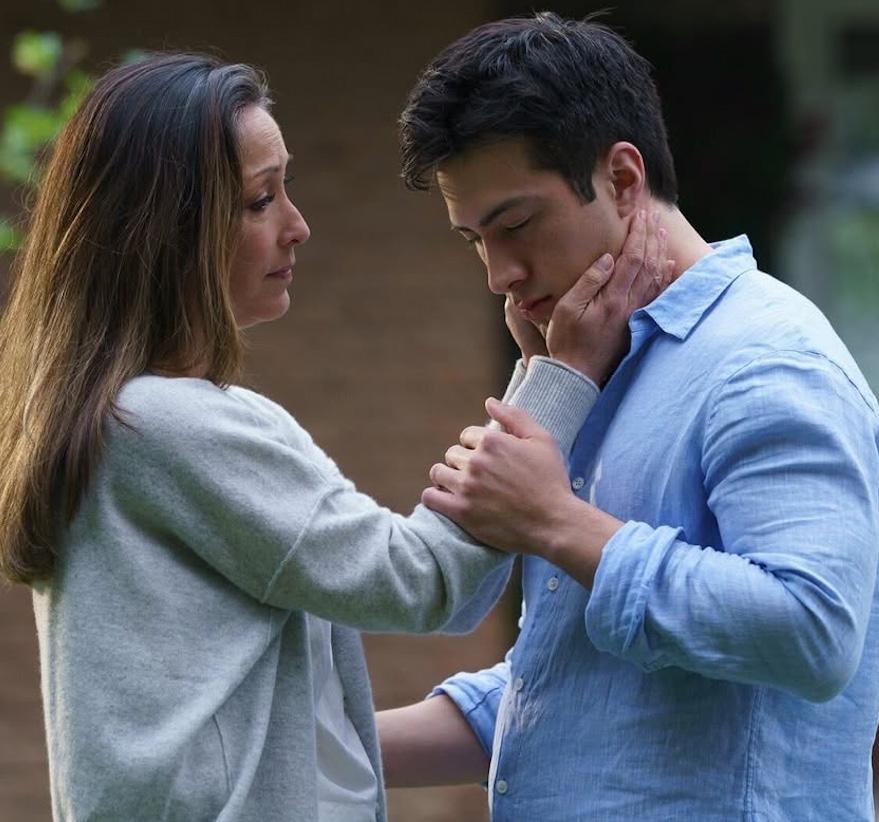
Shane Hollander coming out to his mother at their house.
Photo courtesy of @heatedrivalrycrave/Instagram
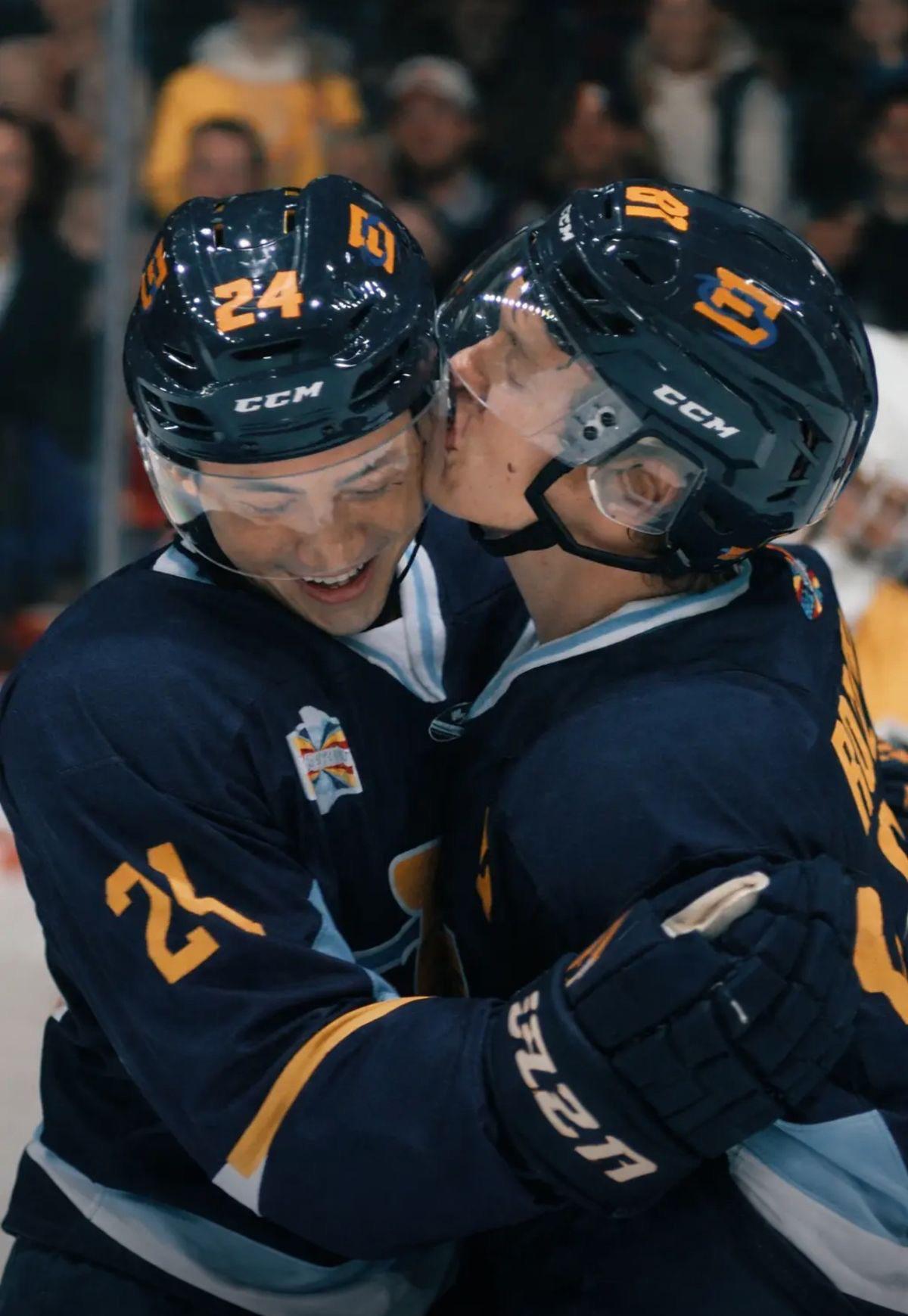
Ilya Rosanov kissing Shane Hollander during the 2017 All-Star-Game. Photo courtesy of @jewel/Pinterest
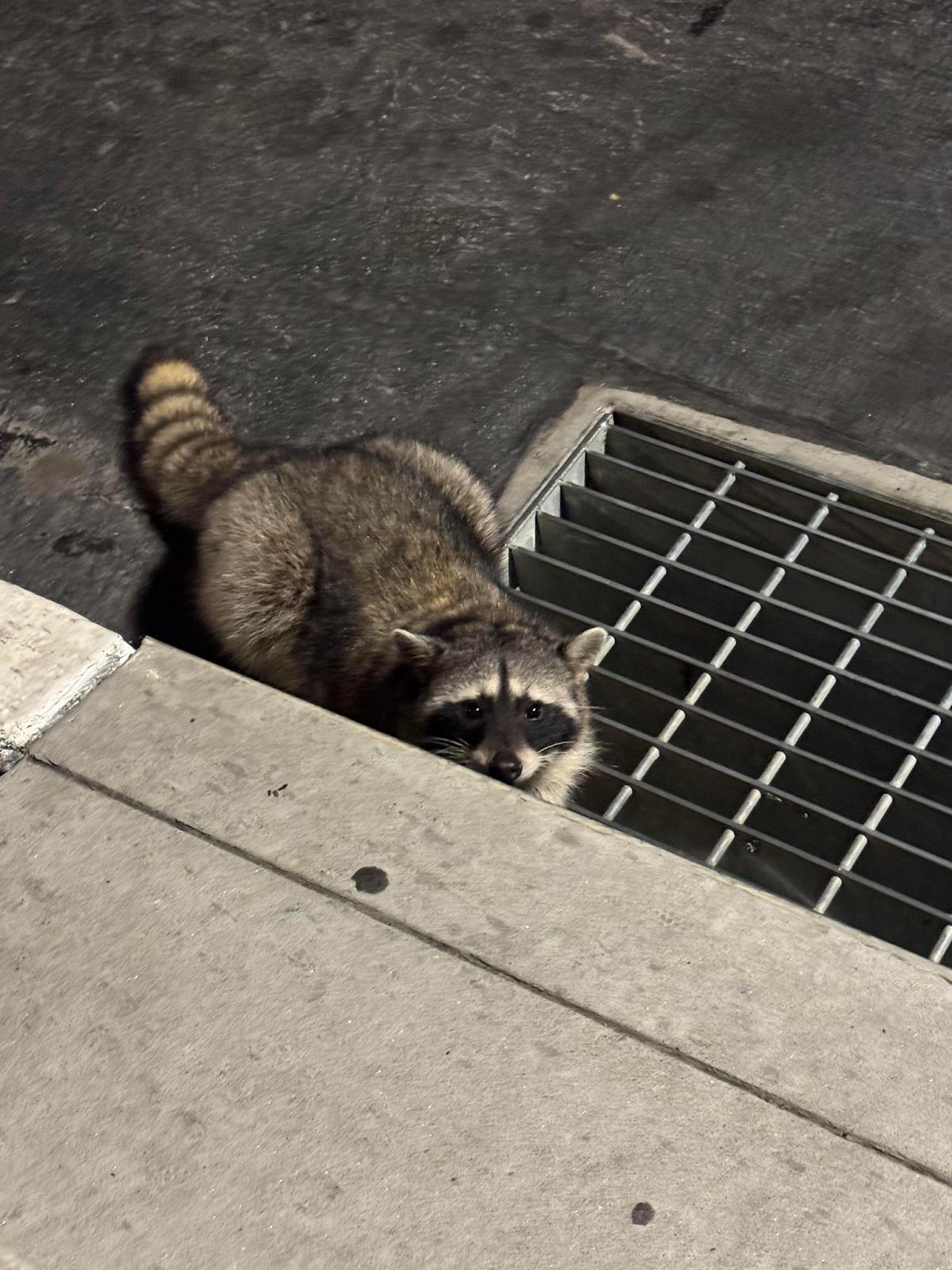
“My suitemate and I were walking back from the SLP and there was a raccoon in the middle of the sidewalk I just remember one girl kept saying ‘Oh my gosh it ’s so fat ’ It was really fat ”
Alexandra Worsley, USD first-year

Finding Fau
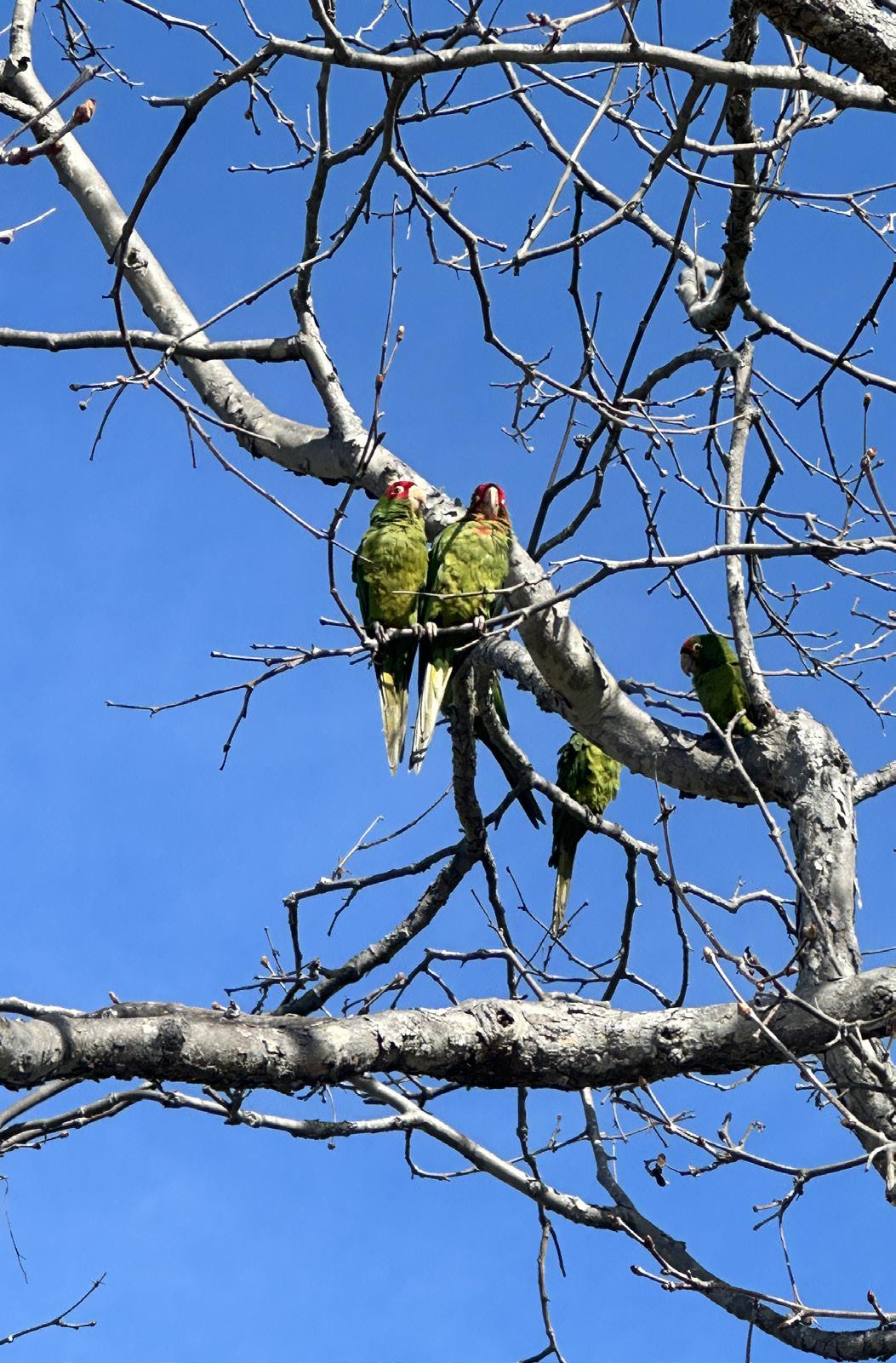
As the rain unveils snails time to acknowledge th roaming the grounds of o flutter in front of Saints trees of Founders and creeping around the Valle the spiral shells of snail sidewalk . Although they have many opinions
“ The snails are so cute! When I’m walking to class, my friend makes sure we pick up all the snails and get them to safety before they get stepped on! It ’s very unif ying, I feel like everyone on campus has a concern for the snails’ safety The community comes together to protect the snails after the rain ”
Mia Vorkoper, USD sophomore
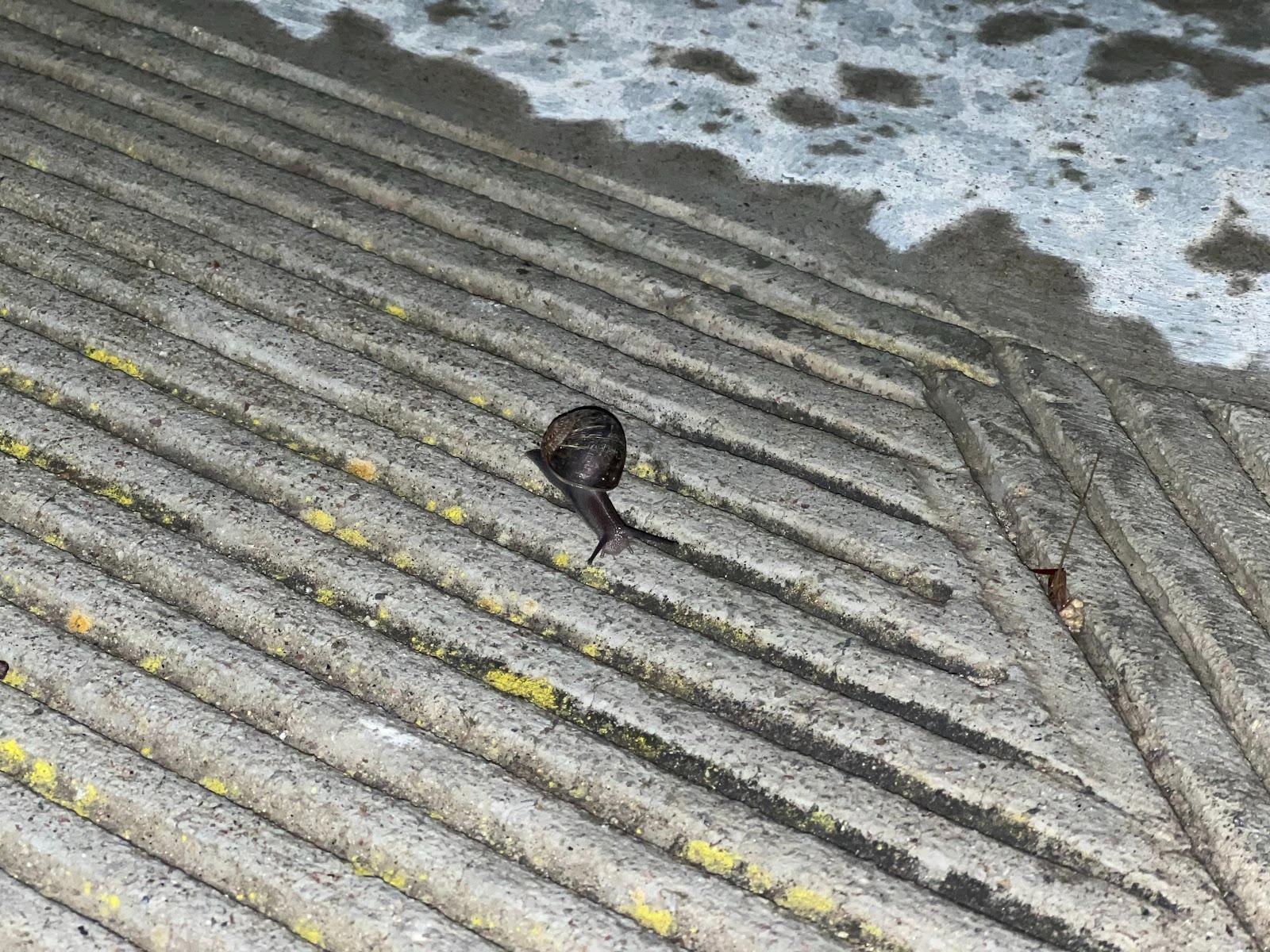
Photo courtesy of Lara Dominique Solante
Photo courtesy of Katarina Maric
una at USD
s on USD’s pathways, it is he creatures and critters our University. Butterflies s Hall , squirrels climb the Camino, raccoons love y and it ’s hard not to crush ls as they slug across the are easy to miss, Toreros s on the fauna of USD.
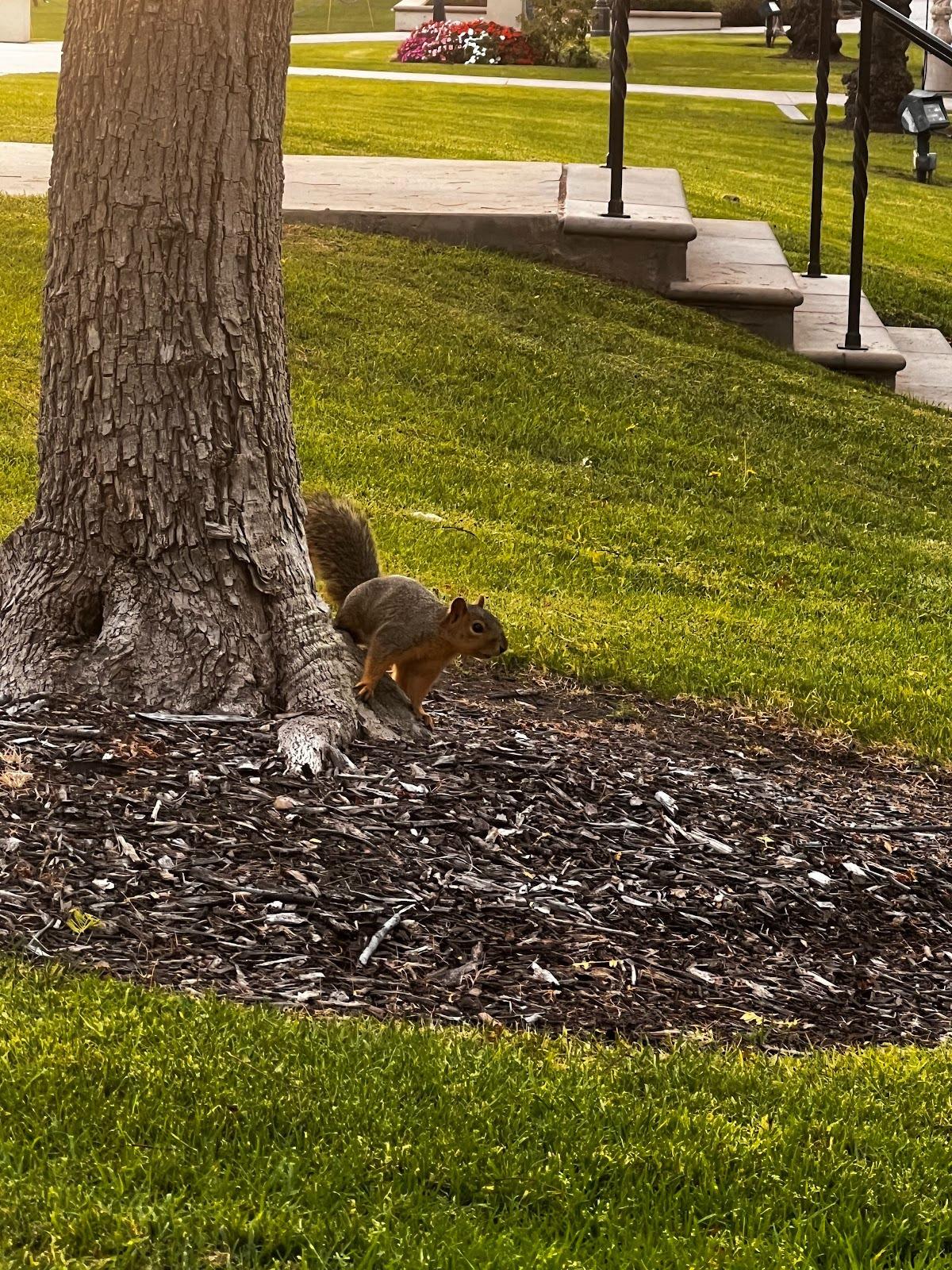
“ Squirrels are adorable furry creatures that are misunderstood and just need some love They deserve the best trees to live in and the best acorns to munch on The USD squirrels are nicer than the men here ” Pia Kellems, USD first-year
Art by Kyra Lefebvre/ The USD Vista: Content by Katarina Maric/ The USD Vista
Photo courtesy of Kyra Lefebvre
Photo courtesy of Kyra Lefebvre
FEATURE
Torero goes out of this world
Matthew Dominick gives Toreros a look at life as an astronaut
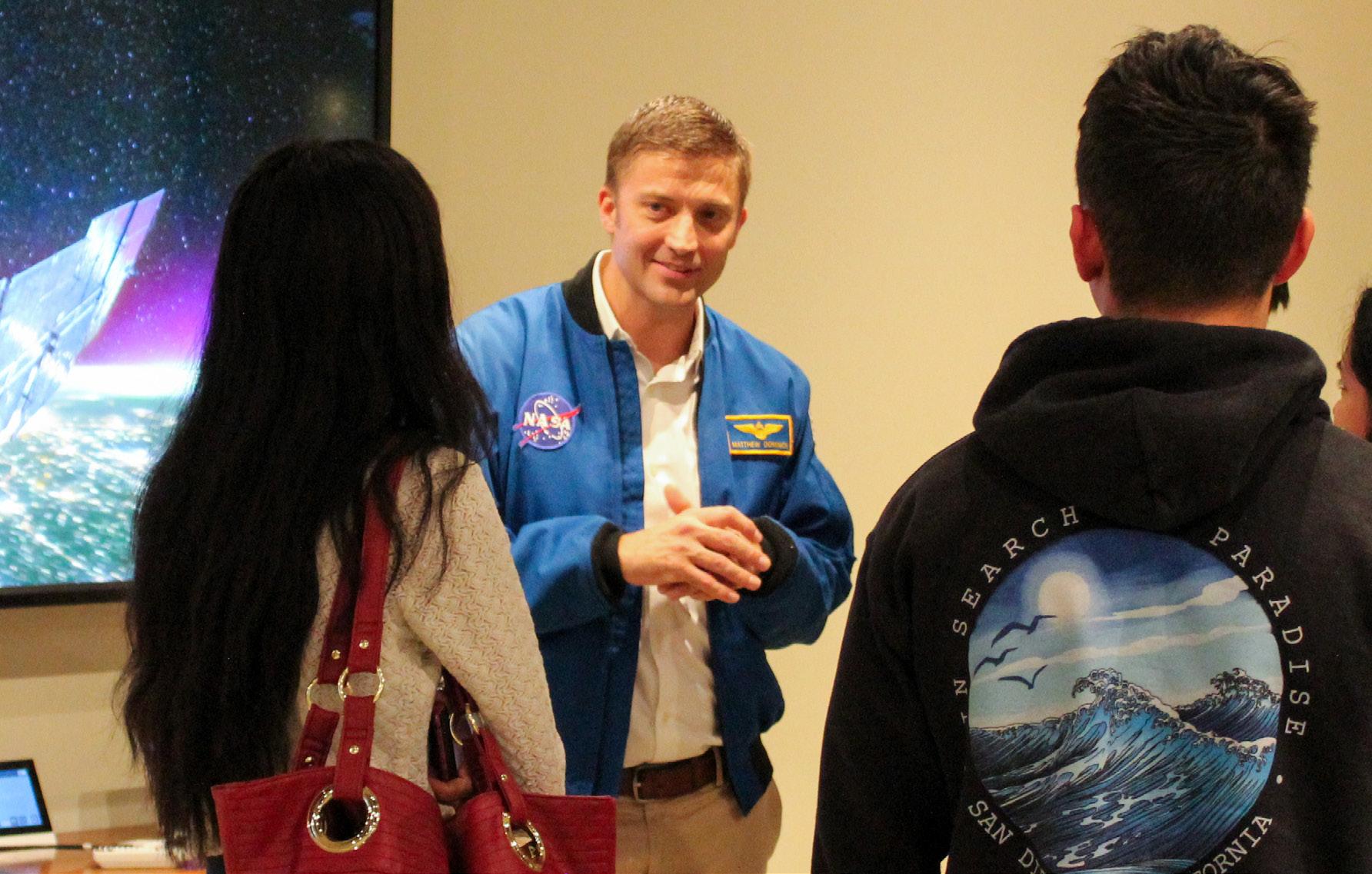
Matthew Dominick ’05 is a NASA astronaut, commander of SpaceX-Crew 8, Navy lieutenant, electrical engineer, photographer, father, husband and one of USD’s very own graduates. Dominick has explored the vast depths of space and recently returned to his alma mater to speak to students.
Last week, Dominick spoke at a lunch and learn event at the ideation space in the Belanich Engineering Center. Dominick received his degree in electrical engineering with a double minor in mathematics and physics at USD. Dominick discussed his time as a commander of the SpaceX-Crew 8 from March to October 2024. Dominick shared a video of his time on the aircraft doing anything from building satellites, taking professional photographs of space and flipping upside down 40 times.
Dominick discussed what it was like to return to USD.
“It’s great to be back here with the students,” Dominick shared in an interview with The USD Vista. “I would trade places with them in a heartbeat. I’ve had an incredible life experience, but I would love to start over and try again. To go sit in these halls and be a student again at USD would be amazing.”
In his talk to students, Dominick explained his journey before NASA.
“I was a door-to-door meat packaging salesman convincing people to buy meat out of the back of my van,” Dominick told Toreros, creating a sense of relief for the audience.
The whole room filled with laughter. Dominick kept his presentation lighthearted and funny, beyond surfacelevel engineering facts.
Dr. Kathleen Kramer, an engineering professor
at USD who taught Dominick, introduced him at the event. Kramer reflected on his years at school.
“Matt has always had a deep curiosity, natural leadership and a genuine love for understanding how things work,” Kramer stated to the students waiting to hear Dominick.
Kramer advised engineering students to take difficult courses in order to succeed. She spoke on the importance of challenges.
“You learn to embrace the challenge and learn to apply your knowledge for useful things,” Kramer emphasized to The USD Vista. “If there’s a course where you think this is not fascinating enough, it’s like, this is just the doorway.”
Kramer stated that doorways are an important part of finding your true passions.
Dominick emphasized that USD offers so many diverse courses that students may not find interesting to begin with, but will end up teaching students to change their perspective of the world around them.
“If you’re an engineer here and you’re like ‘Why am I in world religions right now,’ it teaches you perspective,” Dominick shared with Toreros.
Dominick spoke on the idea of perspectives with the importance of understanding how to connect with people.
“You can be the best engineer, but if you can’t explain why or how you’re doing something, you will never get it done,” Dominick shared with the students.
Dominick lit up the room when he was talking about his passions. Dominick shared
his prized possessions, the thousands of photographs he took while aboard.
“It felt like a responsibility to the people at home,” Dominick explained to the audience. “Since so few people can experience the incredible beauty of space, I wanted to show people what it is like up there.”
The photo was an aurora borealis photographed in space through the window of the spacecraft.
“I wanted to show what a human would see through this window,” Dominick stated.
Isabelle King, a USD sophomore mechanical engineering major shared her connection to NASA.
“I’m from Texas,” King explained. “So in Houston, the NASA station there is huge.”
King was moved to tears after Dominick showed the photos of earth that he shot. King shared her feelings about meeting a person that went to USD and has achieved all that Dominick has.
“It was so amazing to see that somebody from this University was experiencing something so cool with the degree that I know it took so much work,” King explained. “And the fact that he came back and wanted to share that with all of us.”
King explained how she felt inspired by this event and how it reminded her of her younger days.
“I feel like growing up, I thought I would love to be an astronaut,” King shared. “That’s such a dream to have, but to see him do it, it makes it seem like something that’s possible.”
Dominick’s lecture inspired students to put love at the
forefront of their passions.
“They are passionate about what they do, and thus they are good at it,” Dominick declared toward the end of his event.
Dominick wanted students to look at the bigger picture of career ambitions rather than just the fine details of his trip to space.
He reiterated that the most important aspect to life, career and space, is human connection.
Dominick also shared his thoughts on AI during the discussion.
“I use [AI] for coding or simple equations, but if you can’t integrate with humans, what does it matter?” Dominick questioned to the crowd.
Throughout his discussion, Dominick raved about his experiences.
“When I said I am lucky, I cannot quantify that, there is no unit for that,” Dominick stated.
Dominick shared his excitement at going up into space.
“When we were preparing for take off, I was giggling the whole way up,” Dominick described.
Seeing Dominick speak at his alma mater showed students that they are capable of anything they set their minds to as long as they are doing something they truly love.
“You will be good at it because you love it,” Dominick stated to the room.
Dominick returned to USD to share his unique experiences as a NASA astronaut with current students. Even though his time in space was the main topic of discussion, Dominick made sure to emphasize the importance of human relationships to Toreros.
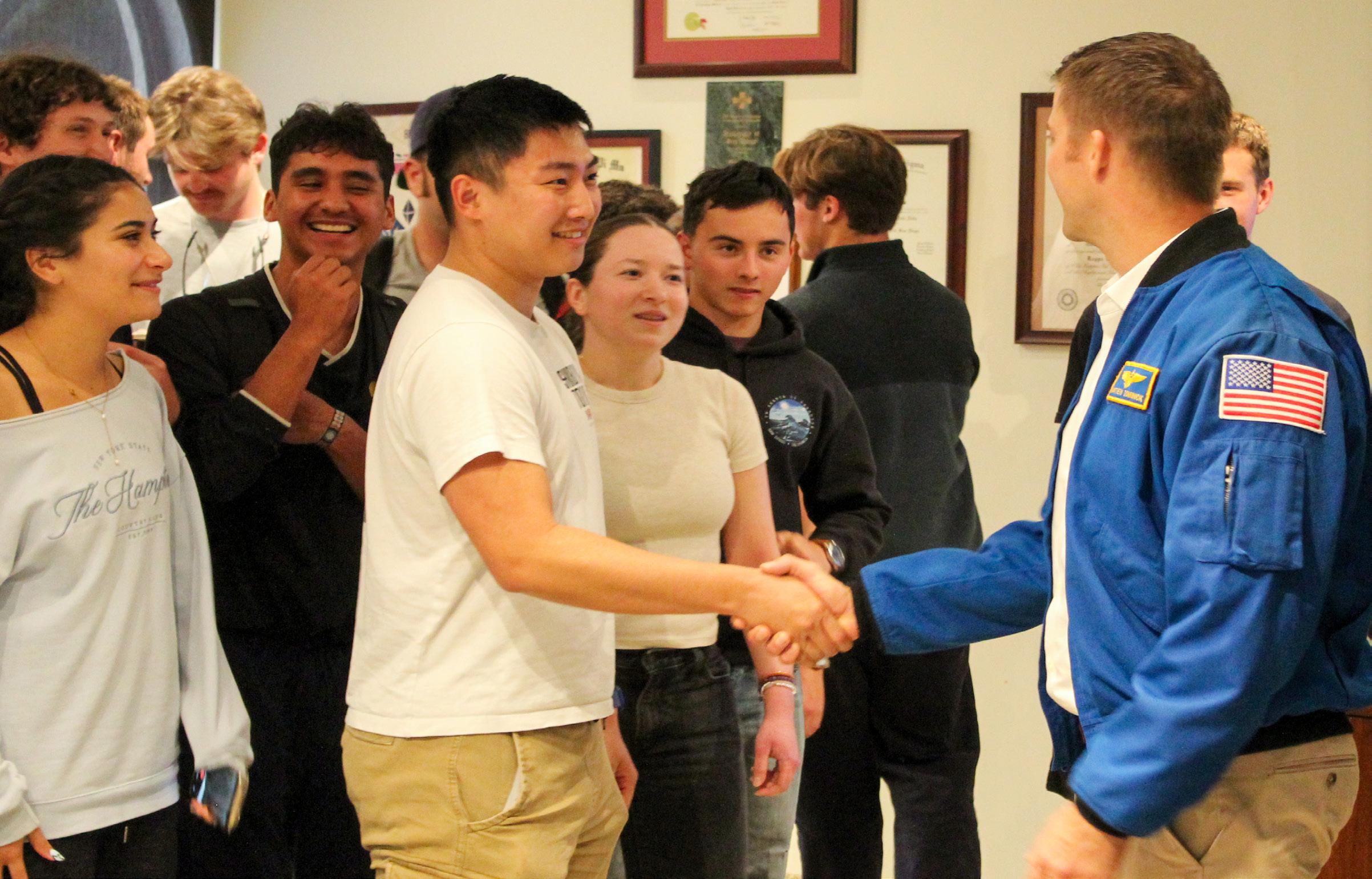
Students rushed to speak with Dominick after the event for a one-on-one conversation with him. Lauren Ceballos/The USD Vista
JULIANNA FLORES CONTRIBUTOR
Matthew Dominick shakes hands with students in attendance after the event.
Lauren Ceballos/The USD Vista
OPINION
The harm behind the “R-slur”
The cost of ignoring ableist language in everday conversation
JACOB WALTER CONTRIBUTOR
I do not like it when innocent people are disrespected. It is blatantly, morally wrong to deliberately act in ways that put down or degrade others. Despite this, humanity has a long, painful history of racism, sexism, homophobia, transphobia and many other forms of discrimination.
Many marginalized groups have had to fight for their rights because of this, yet these days are unfortunately far from over. In today’s climate, we still regularly need to speak up and protest for the sake of ensuring equity and recognition for all.
The unfortunate truth is that some forms of oppression are still largely overlooked. I have come to learn that this is indeed the case with ableism: discrimination against disabled people.
As I have found, disrespect toward individuals with neurological or physical disabilities remains so tragically normalized that a slur which is used to put them down is casually thrown around by students at the University of San Diego quite regularly.
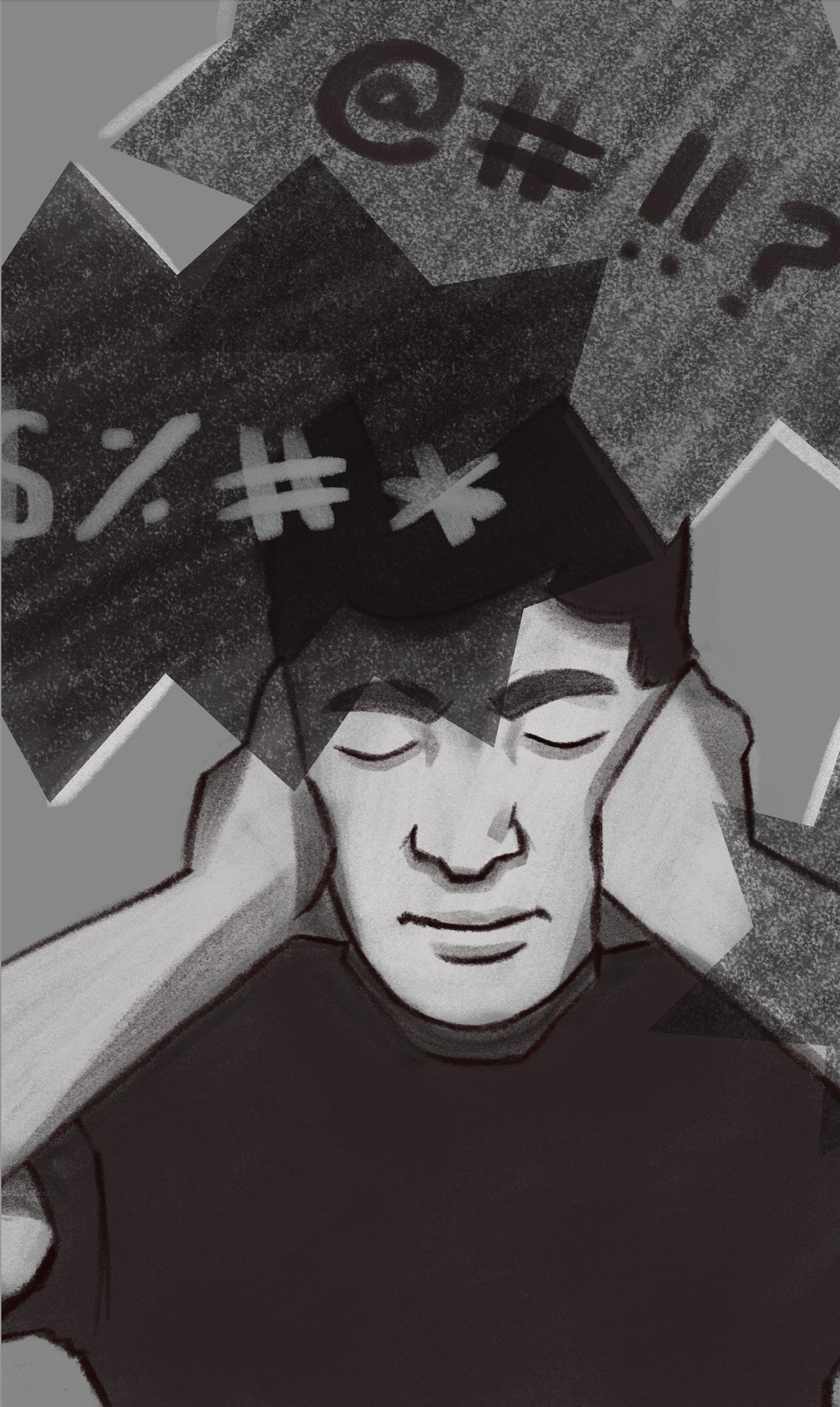
Throughout my years at USD, I have overheard a surprising number of people using the r-slur. I have witnessed students referring to teachers, other students and even themselves with this slur, shamelessly saying it as if there is absolutely no issue with doing so. Regardless, this behavior is extremely problematic.
It is the active usage of a word that puts down and harms those with physical or neurological disabilities. It displays a worrying level of ignorance, entirely disregarding the mistreatment of those affected. This should not be tolerated and needs to be discouraged.
Why is this word so harmful? The r-slur is, in fact, a word that has its origins in discrimination toward disabled
individuals. It is a way to call someone slow, stupid, lesser than and incapable of being a functioning member of society. As an individual on the autism spectrum, I have actually been called this slur multiple times in the past by people who saw me as unintelligent or incapable. This ableist view is, of course, completely incorrect.
Individuals with neurological or physical disabilities may have some challenges and require some accommodations, but we are still capable of achieving great things. We are not incompetent or defective, contrary to what that term would suggest. It is for this reason that the r-slur is so harmful.
I have heard various attempts at justifying the usage of the r-slur. Some defenders point out the fact that it was once a legitimate medical term. Others mention that it was considered acceptable, even in casual conversation, in the nottoo-distant past. I understand that these points can make the word seem considerably less harmful than it actually is. Because of this, many people use the word casually, or jokingly or are simply unaware of the damage it can do. However, this does not make the word any less problematic.
The truth is, as time progresses, society and the language that people use continuously grows and evolves as the general public gains a better understanding of those who are different from themselves. A great number of words that people once deemed harmless and used commonly have come to be viewed as unacceptable, and the r-slur is one such example.
Additionally, it appears that many people use the word simply because they are entirely unaware of the harm that it causes. Their usage of the term comes not out of deliberate insensitivity or ableism, but purely out of a lack of understanding. This is not a true excuse either, it reveals that further
Disrespect toward individuals with neurological or physical disabilities remains so tragically normalized that a slur which is used to put them down is casually thrown around by students at the University of San Diego quite regularly.
steps must be taken to discourage this behavior.
A major reason behind the perpetuation of the r-slur and the normalization of ableist mindsets in modern society is the significant lack of awareness. One of the most important actions to take in order to combat discrimination in any form is simply to speak out. Even in a world where we are more capable of sharing ideas than ever before, not enough people are talking about the harmful effects of the r-slur. Those who do talk
about it often get looked down upon or ignored. This needs to change. As a society, we need to understand and educate each
Many
other about the harmful effects of ableism in order to end it, and at USD, we can start by refraining from using the r-slur.
people use the word casually,
or jokingly or are simply unaware of the damage it can do. However, this does not make the word any less problematic.
The views expressed in the editorial and op-ed sections are not necessarily those of The USD Vista staff, the University of San Diego, or its student body.
Art by Kyra Lefebvre/The USD Vista
OPINION
Stop romanticizing serial killers
How pop culture has turned killers into heartthrobs
CHERISHANN DIAMZON CONTRIBUTOR
Trigger warning: This article contains mentions of shootings, murder and abuse.
Valentine’s Day ended about two weeks ago, but my feed still looks the same. I scroll to see edits of men who hurt people, set to love songs. I think it all comes down to the fact that we like to believe that we could be the person who finally fixes them.
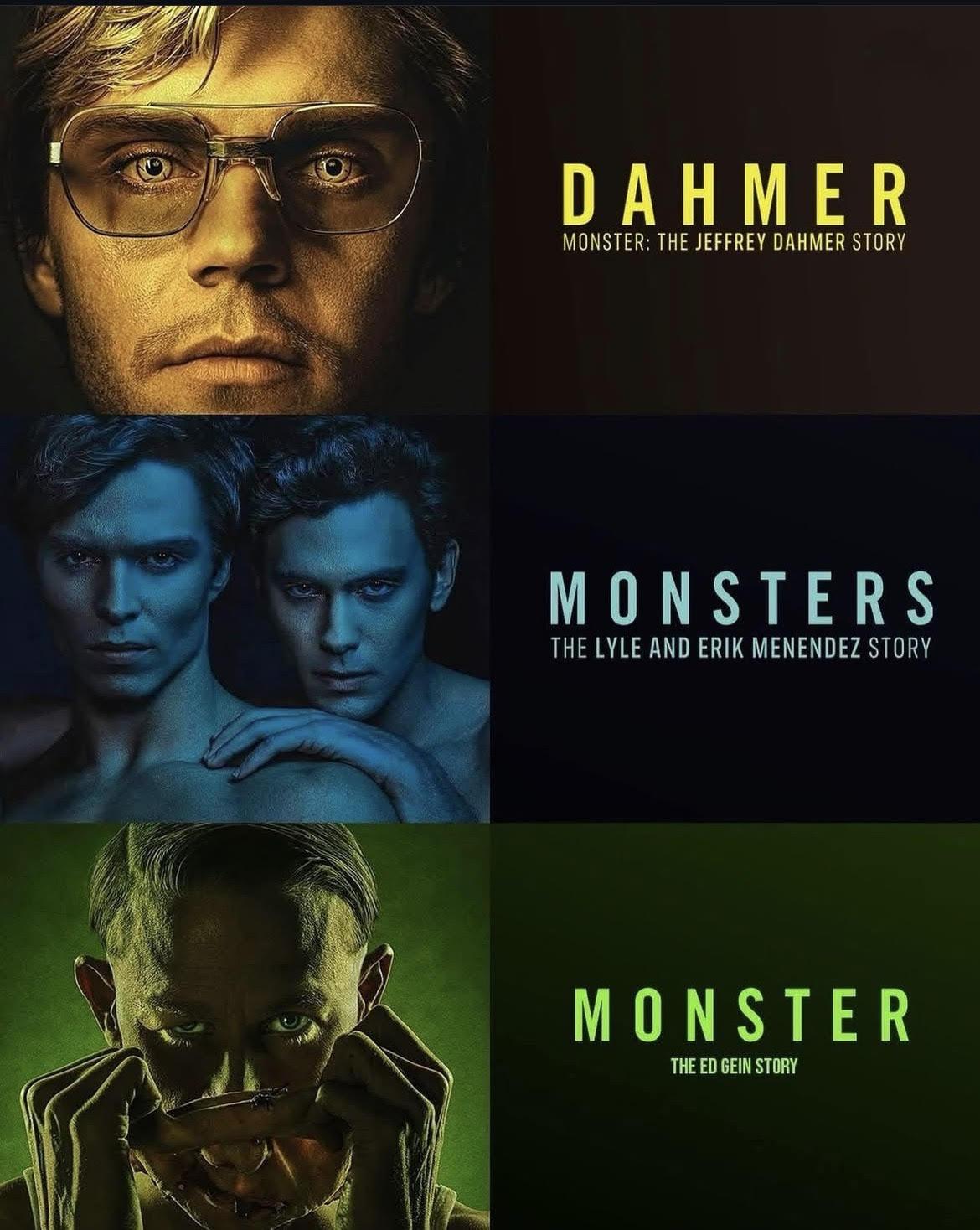
Director Ryan Murphy knows that instinct very well. Murphy has built entire shows around it, including “American Horror Story,” “Monster: The Jeffrey Dahmer Story,” “Monster: The Menendez Brothers” and “Monster: The Ed Gein Story.” He keeps choosing killers as people we are asked to feel for.
This did not start with Netflix. It started much earlier with “American Horror Story.” In the first season of the show, Evan Peters played Tate Langdon, a teenager who commits a school shooting at Westfield High. The parallels to the Columbine shooting are unmistakable. Langdon wears the same dark trench coat and slicked-back hair similarly to one of the Columbine shooters. In one scene, Langdon asks a student if she believes in God before shooting her, echoing the real events of Columbine.
In the show, the library massacre is recreated. The details are deliberate. Then people watched and fell in love with Tate. They called him misunderstood and made him a heartthrob. A character built on one of America’s most devastating mass shootings became the man they wanted to date. The foundation is set and the normalizing started there. Here is what I cannot stop noticing: whoever you center in a narrative gets to be human. Everyone else becomes supporting characters. For decades, Hollywood has been centering the wrong people. And Murphy, director of the “Monster” series has built seasons around Dahmer, the Menendez brothers and Ed Gein, has been leading that charge.
When Zac Efron played Ted Bundy, nobody talked about the victims. They discussed whether they would date Bundy. When Peters became Dahmer in Murphy’s “Monsters” series on Netflix, the narrative shifted entirely. Forget the 17 people Dahmer killed. Forget the Black men and boys targeted and murdered. The show asks
us to understand why Dahmer became this way. This is what gets me: the show does not spend an episode helping viewers understand Dahmer’s victims. It spends hours building sympathy for the murderer.
There is one moment with Tony Hughes, one of Dahmer’s victims, where the show lets us see Hughes’ dreams of being a model and his relationship with his mother. For about 45 minutes, we get to care about a victim. Then the script yanks us back to Dahmer’s emotional arc. Hughes gets one episode of dignity. Dahmer gets a whole season of character development.
It gets worse. Murphy does not just rearrange the truth, he fabricates it. In “Monster: The Ed Gein Story,” Gein murders people he never confessed to killing in real life. One victim, Evelyn Hartley, had no credible evidence linking her to Gein. Murphy added her anyway for drama. The series scored 21% on Rotten Tomatoes. Critics said the same thing: most of the story was made up.
The cruelest part of all of this is simple. These victims cannot defend themselves. They are dead. Their deaths became props in a streaming series, and some writer in Hollywood decided how they will be remembered. Murphy lied about how they were murdered, and nobody got a say.
Murphy uses mental illness as a narrative tool, like Gein’s schizophrenia, Dahmer’s abandonment issues and the Menendez brothers’ abuse. The implication is always the same: if you experience trauma or mental illness, you will become violent. That is just not true. Millions of people experience abuse, mental illness and abandonment. They do not become killers.
By connecting these conditions to violence, Murphy suggests that people with mental health challenges are inherently dangerous. That is harmful. That is wrong. Understanding why someone did something does not excuse what they did. It just explains it. Those are two different things. The show keeps implying that if we just understand the killer’s pain, we should forgive their actions.
Then there is the social media consequence. Fan pages for serial killers have tens of thousands of followers. Young people are making thirst traps. We are connecting with fictional versions of murderers played by attractive actors. This is a culture normalizing violence. And it starts with a choice.
A casting choice, a narrative choice, a choice by creators to make monsters sympathetic. Murphy has been making those choices since Langdon walked across a screen. The parallels are too specific to be accidental. I think about what real accountability would look like. Murphy could have cast someone less conventionally attractive as Dahmer, but he didn’t. He could have stuck to the facts about Gein instead of inventing victim names, but he didn’t. He could have centered the humanity of the people murdered instead of spending entire seasons exploring the killer’s emotional journey. He could have listened when Erik
Menendez said the show was sexually inappropriate. He could have reached out to families and actually waited for their response instead of claiming nobody answered. He didn’t do any of these things. He made different choices. He chose casting for sympathy. He chose fabrication for drama. He chose killer psychology over victim humanity. That is what accountability looks like. It is a series of choices that nobody is making.
Here is what happens to victims’ families: they find out when we do. There’s no warning and no input, just a notification that their loved one’s death is now a Netflix series. Victims do not get to defend themselves. What
they get is another Netflix series turning their worst moments into content. They get to watch their loved ones become a backstory for why someone became a monster. They get to watch another generation fall for the same narrative Murphy has been selling Langon’s story premiered. This is not storytelling, it is exploitation with a bigger budget. This is the problem we have constructed together. The creators build the story. They decide which suffering matters. They decide who gets screen time and who gets one episode, and they hand us the structure and watch us fill in the blanks with compassion.
The views expressed in the editorial and op-ed sections are not necessarily those of The USD Vista staff, the University of San Diego, or its student body.
Ryan Murphy’s “Monster” series, pictured from top to bottom in order of release date. Photo courtesy of @ryanmurphyproductions//Instagram
SPORTS
Padres take measured approach during offseason
San Diego makes changes in preparation for 2026 run
GABRIEL ROMERO CONTRIBUTOR
As pitchers and position players arrive for the start of the annual Major League Baseball spring training, the San Diego Padres have been preparing for the season with a busy, under the radar offseason. With many big name players leaving during the offseason, the executive staff in the front office went with a unique offseason approach compared to what fans are used to in recent years for the San Diego franchise. To counter some of its National League West rivals, the Padres have been involved in aggressive spending to attract players. In order to compete, the Friars have signed big free agent deals with players such as Manny Machado, Eric Hosmer and Xander Bogaerts — all excessively overlapping what the boys in brown and gold were used to seeing toward the beginning of the franchise.
General manager AJ Preller has also resorted to spending big with prospects to bolster the roster. In recent years, the Padres have traded away No. 3 overall prospect Leo De Vries in the 2025 season for now closer Mason Miller, and two All-stars in No. 9 overall prospect CJ Abrams and No. 88 overall prospect James Wood in the trade that brought Juan Soto to San Diego in 2022.
The Padres recently signed Preller to a contract extension, the executive leading the charge in those blockbuster trades, bringing up questions from fans.
USD sophomore Thomas Fuller shared his anticipation for how the new guys will be able to fill gaps and see what happens when the season gets going.
“The Preller extension was
definitely a big step for the team, after he arrived the organization has definitely gotten way more aggressive in spending money for players and I haven’t been complaining,” Fuller said. “It’s been so much fun seeing him work during the trade deadline like okay what big move does AJ have for us this year, but at the same time, he still hasn’t gotten the team to the World Series and in signing guys to very long-term deals and not seeing a ton of production, some questions have been asked about his deal making.”
This offseason saw the front office change their methods from the last seven years since signing the highest paid
contract in baseball history at the time with $300 million over 10 years to persuade Machado to man the hot corner in Petco Park. Many big name players who helped the Padres reach the playoffs regularly such as Dylan Cease, Robert Suarez and Luis Arraez all left America’s finest city for paydays elsewhere in the major leagues.
However, the Padres weren’t completely quiet, as they resigned team ace Michael King to headline the starting rotation. What made this offseason different was the moneyball methods that Preller used to sign players, using minor league deals and spring invites to sign former All-Star players like

Walker Buehler and Ty France to fill holes for the players who departed through free agency.
Instant roster slots were filled by signings of Miguel Andujar, Griffin Canning and German Marquez who signed smaller major league deals. One notable arrival was the signing of former Philadelphia Phillies outfielder Nick Castellanos who was recently released despite being due $20 million for the 2026 season due to his behavior in the clubhouse. He signed for the league minimum contract of $780,000 to play first base, a position he has never played before.
While many fans are skeptical about the departure of impactful players, according to USD senior Andrew Levikow who was born and raised in San Diego, it’s just business.
“Their positions aside from Cease are getting filled up pretty good, and the first base position has a better bat with Sheets and Castellanos,” Levikow said.
“They have a lot of veteran presence and getting guys like Buehler and Marquez who were once aces in the NL West and Canning as well with the Mets allows them to fight it out for the fifth spot in the rotation.”
The lineup for the Padres isn’t the only part of the organization that has been making moves, as with the departure of Mike Shildt, the Padres appointed Craig Stammen. Stammen, a former relief pitcher who pitched with the Padres from 2017 to the end of his career in 2022, signed a three-year deal to manage the team. After rumors spread about future hall of famer Albert Pujols at one point was considered for the role, many fans were skeptical of the appointment, but Fuller is intrigued to
see how it will all play out.
“I’m really interested to see how Stammen performs in the managerial role seeing as this is his first time managing any team whatsoever, and how players are going to respect him,”Fuller said. “He’s been in the front office since his retirement, but I think with the help of Ruben Niebla and the rest of his coaching staff he has a lot of help surrounding him.”
Going from a former manager of the year to a manager with no experience has raised eyebrows, but Levikow isn’t too worried about the former special assistant to Preller and the front office now getting his turn to lead the Friars.
“I personally believe that coaching isn’t the most important,” Levikow said. “Maybe their lineup is set up by metrics, and they’re not even the ones making the ones making those decisions.”
Questions surrounding the Padres extend beyond the dugout. Following the recent passing of owner Peter Seidler, the Seidler family announced it is exploring a potential sale of the franchise. In a statement, the family said it has received interest from multiple serious buyers and emphasized that any transition in ownership would prioritize the long-term stability of the organization and its fans.
With a first-time manager in Stammen, a restructured roster built on short-term value and the possibility of new ownership on the horizon, the Padres enter the season facing change at nearly every level. Whether this offseason approach translates into sustained success in the talented National League West remains to be seen, San Diego’s next chapter is already underway.
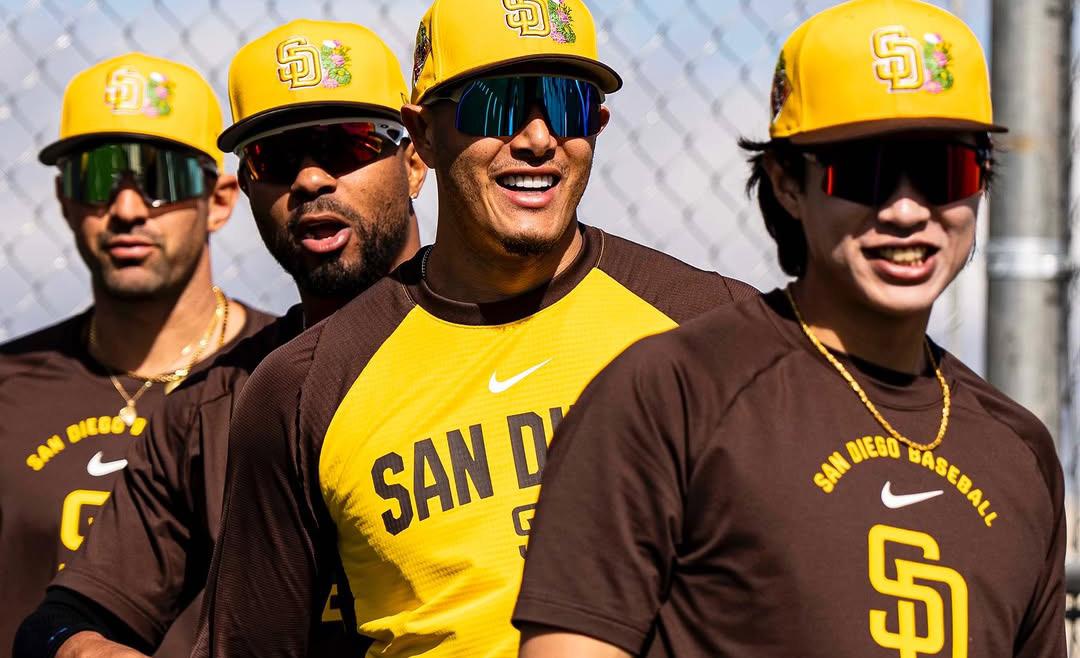
Padres practice batting in the offseason.
Photo courtesy of @padres/Instagram
Padres players have fun preparing for next season which starts on Thursday, March 26.
Photo courtesy of @padres/Instagram
Steve Lavin to leave USD Head coach of past four years not to return next season
From Lavin, Page 1 has been an experience of unparalleled pride and joy. Specifically, I will carry forward the gift of having participated in our players’ journeys and the treasured relationships forged along the way.”
The San Diego Union-Tribune, ESPN and CBS Sports reported on Feb. 18 that Lavin was fired.
The USD Vista reached out to USD Athletics to confirm the claims that Lavin was terminated. However, Anderson Haigler, director of strategic communications for USD Athletics declined to elaborate on the terms of his upcoming departure.
Lavin was loyal to the Toreros in his remarks.
“I’m grateful for our studentathletes’ efforts in representing this University in an exemplary manner,” Lavin said. “Additionally, it was a blessing to learn from my fellow coaching colleagues and
their respective teams. I’ll always be indebted to my talented, hardworking staff. Last but not least, a tip of the cap to our ‘True Blue’ loyal Torero fans.”
Lavin highlighted the University and all of the staff who help make athletics possible. Lavin explained he will remain with USD men’s basketball untill the end of their season.
“The future of USD is full of promise as the essential elements of funding, facilities, and continuity are now in place to build a sustainable, winning program,” Lavin said. “In closing, with three regular-season games remaining, our players and staff remain committed to the task of preparing for the postseason WCC Tournament.”
The news comes as a shock to many as men’s basketball has three games left in the season before the West Coast Conference Championships. Lavin has a record: 46-79 overall in four
seasons through Feb 18, 2026, with his best season in 2023’24 where he led the team to a record of 18-15. While the ’23-24 season was hopeful, the Toreros finished in last place the subsequent season and have been struggling since.
USD senior Deja Blount shared her thoughts on the recent changes announced.
“Steve Lavin leaving USD was shocking but not surprising to me,” Blount said. “I think that it was bound to happen at some point. But I’m surprised it happened so late into the season and I also think it’s interesting that they’re keeping him until the season is over. I’m really interested to see what’s next for the basketball team. I’m curious to see what their next moves are.”
Lavin is also one of the highest paid coaches and employees at USD. The compensation from Lavin’s first season was $890,076
and has only increased over the years. The starting salary was already $300,000 above what previous head coach Sam Scholl was making. Lavin was a former coach for UCLA and St. John’s.
Lavin has worked alongside assistant coaches John Moore, Patrick Sandle, Ryan Devlin, Billy McKnight and Alan Major. The head coach recently made headlines as the current season has been marked with instability with the recent loss of the team’s lead point scorer.
The Toreros’ current record stands at 11 wins and 18 losses.
Last week, USD junior and point guard who had the lead in points scored, Ty-Laur Johnson abruptly left the team. Lavin gave a statement to USD Athletics media about the star players leaving.
“I met with Ty-Laur Johnson earlier this week,” Lavin said. “We had a productive conversation, an
extensive meeting related to his future at USD. And we’ve come to an understanding that it’s best for Ty, at this juncture, to focus on his health and academics. … Naturally, we wish him well with all future endeavors.”
Despite the statement, neither Lavin, the University nor Johnson provided specific details surrounding the decision. The circumstances behind his abrupt and indefinite departure remain unclear. Johnson started 21 of 23 games for the Toreros this season. The point guard dropped a team-high of 14.6 points with 2.7 rebounds and 4.3 assists. It is expected that Johnson will re-enter the transfer portal in search of his fourth school in his four years of playing collegiate basketball.
As of Feb. 24, The USD Vista’s publication date, the University did not release any new information regarding Lavin.
Baseball prevails on opening night Toreros win all three games in Tony Gwynn Legacy tournament
PRIYA COOPER SPORTS EDITOR
USD baseball started its season this past weekend with the Tony Gwynn Legacy tournament on Friday, Feb. 20, where they hosted the University of Utah before taking on Creighton on Saturday, Feb. 21.
Tony Gwynn is considered a San Diego baseball legend. His full name was Anthony Keith Gwynn Sr. and he was nicknamed “Mr. Padre.” Gwynn was an American professional baseball right fielder who played 20 seasons in Major League Baseball for the San Diego Padres and while he passed away in 2014 at 54 years old, is still considered the face of the Padres. A tournament is held in San Diego every spring in Gwynn’s honor, featuring multiple collegiate baseball teams.
The Toreros concluded the weekend of games on Sunday, Feb. 22, with a crosstown showdown at San Diego State. The first two games were played at home at Fowler Park on Cunningham Field, while the final game against SDSU was played at Tony Gwynn Stadium.
The Toreros dominated the game against the University of Utah, winning 8-4. USD senior and infielder Connor Meidroth shared his goals going into the weekend.
“I’d say it’s more teamoriented with us,” Meidroth said. “Everything’s about the team, kind of, just go 3 and 0. And to just try and win every game and be the best you can for each other and all the guys out there.”
Meidroth, who hit in the leadoff spot Friday night, had a two-hit night for the Toreros, which marked his second straight two-hit game.
“I think we easily can make it very far this season, but right
now we’re just focused on one game at a time,” Meidroth said.
“I think the key to success is not looking at the future, just kind of focusing on the present and seeing where it takes you.”
USD senior and righthanded pitcher Drake Frize also discussed the Toreros hopes for the opening campaign.
“Our main goals are to stay present and play clean, San Diego baseball,” Frize said. “For us, that means attacking each pitch with intent, trusting our prior work and preparation, and playing for each other. We talk a lot about focusing on one pitch at a time, and when you do that well, it turns into winning innings and eventually, winning games. So the focus is really on executing the little things consistently. This would be throwing strikes, playing solid defense, stringing together quality at-bats, and staying locked in together from the first pitch to the last.”
USD sophomore right-handed
pitcher Fernando Palencia emphasized the team’s focus on growth and consistency as the season continues.
“No matter the result of this weekend, we’ll build off what we did well and tune up what we could do better to prepare for the rest of spring,” Palencia said.
On Feb. 21, the Toreros played Creighton University and got ahead early, with a 7–0 advantage through the first two innings. The momentum only continued to increase, and the Toreros powered past the Creighton Bluejays 15–5 in the Tony Gwynn Legacy to secure their fourth consecutive win. After Creighton plated five runs in the fifth to trim San Diego’s lead to 8–5, the Toreros went on to score three in the bottom of the inning and added four more in the sixth to put the game out of reach.
Frize explained how the games this past weekend will set the tone for the rest of the season, and getting these wins early on in the season is imperative.
“I personally feel like all games are really important for us,” Frize said. “But these first few are important because they’re our first opportunity to show who we are and what we’re about as a team.”
Frize also described how the team will move forward after the opening weekend and use it as a chance to start making improvements early.
“Early in the season, the biggest thing is establishing our identity in how we prepare, how we compete, and how we respond to adversity together,” Frize said. “If we can come out focused on the things we can control that naturally sets the tone for the rest of the year.”
Sunday, the Toreros played SDSU and were victorious once again, winning 15-4 over SDSU in the 11 Tony Gwynn Legacy Tournament ever held.
The Toreros had 10 walks and eight stolen bases throughout the game and dominated every inning. The game marked their fifth consecutive win out of
the seven games played so far.
Following the conclusion of the Tony Gwynn legacy games, the Toreros looked at how they can use the momentum to keep the team motivated and on track to keep winning.
Palencia explained what he is most excited for this season following the recent victories.
“I’m most excited about competing with this group of guys and seeing how much we can grow,” Palencia said. “The energy and chemistry this group has is special. We all share the same goal of winning the WCC and more and having that in common pushes us to hold each other accountable all the time” Frize stressed that the team’s mindset and preparation are the foundation for getting results and claimed their energy and ability to work as a team are key factors moving forward for the rest of the season as they look past the most recent tournament.
“Success for us starts with how we prepare and how we compete together,” Frize said. “If we play with energy, stay connected in the dugout, and keep our focus on what we can control, that’s when we’re at our best. Obviously winning is what we want, but more than anything we want to come out of the weekend knowing we played our style of baseball, one pitch at a time, one game at a time, and staying fully committed to each other. When we do that, the results usually take care of themselves.”
The Toreros are set to play the University of Michigan starting this Friday, Feb. 27 back at home at Fowler Park. There will be a three game series over the course of the weekend with one event each day until Sunday, March 1.
MROW
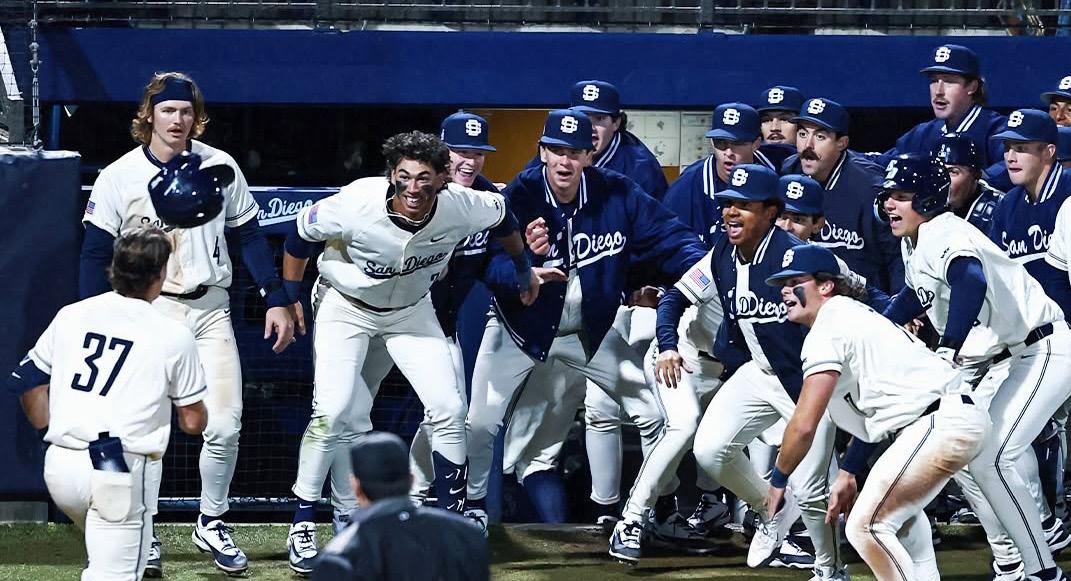
USD baseball celebrates after a win over University of Utah.
Photo courtesy of @usdbaseball/Instagram