
THE USD VISTA
Storm showers over Alcalá Park
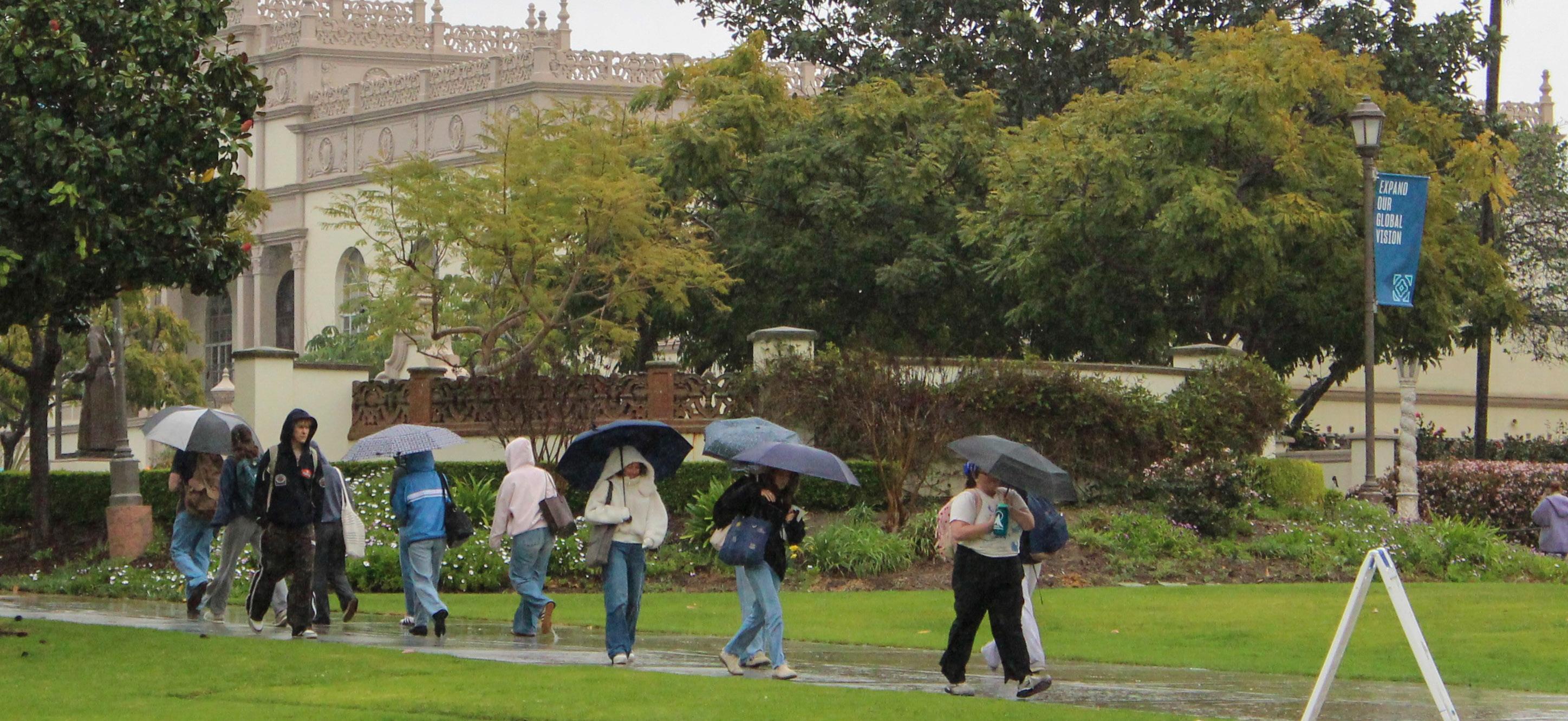
A Pacific storm showering down the West Coast hit USD on Feb. 16, pouring on students
CADEN HAYNOR NEWS EDITOR
Students looking outside of windows and to the sky noticed rain pouring over campus on Monday, Feb. 16. The storm came from a pair of Pacific storms coming down the West Coast.
The National Weather Service (NWS) predicted
approximately 1-2 inches of rain and wind gusts as high as 60 mph in San Diego.
NWS also issued an alert for high surf advisories along the coast from the border up to San Clemente.
Accustomed to the dry, sunny days that San Diego is famous for, USD students adjusted to the change in weather.
USD junior Sophia Skvarca,
who regularly spends time outdoors, has mixed feelings about the rainy weather.
“This rain means that a hike this weekend will be greener and more beautiful,” Skvarca stated. “But one downside of the rain is that it can discourage students from spending time outdoors between classes, limiting opportunities to enjoy our beautiful campus.”
Severe weather warnings are rare in San Diego and affect various areas of daily life for students and residents.
On Feb. 16, USD Residential Life sent an email to students living on-campus, reminding them to close all windows and to report any leaks in on-campus dorms. Residential Life also urged students to stay safe and look out for other Toreros.
Although San Diego has infrastructure in place that can handle some rain, the city’s landscape and groundwork gets stressed with a Pacific storm with consistent rain and strong winds.
On Feb. 13, the City of San Diego released a notice for San Diegans, telling them to take simple steps to protect
Toreros react to ‘Wuthering Heights’
Film adaptation receives backlash
RILEY RAINS ARTS & CULTURE EDITOR
EMMA PIRHALA MANAGING EDITOR
In 1847, under the pseudonym Ellis Bell, Emily Brontë published her first and only novel “Wuthering Heights.” The dramatic love story quickly gained popularity for its revolutionary depiction of obsessive love. In 2026, director Emerald Fennell released a film reimagination of the original story, sparking waves of controversy amongst Toreros.
At the heart of the film adaptation’s controversy is the
casting of the main protagonists: Jacob Elordi as Mr. Heathcliff, and Margot Robbie as Catherine Earnshaw — two white actors. The book alludes to Heathcliff’s race in roundabout ways. Anthough Brontë was ambiguous with Heathcliff’s race, Earnshaw is said to be white but with hair much darker than Robbie’s Barbie blonde.
USD junior Bella Stone shared their opinion on the whitewashed recast.
“Instead of focusing on classism, racism and the social norms of Brontë’s time period, the new film dumbs down the story to a white romance,” Stone
wrote. “Generally speaking, I think both leads are great actors, but neither encapsulates their characters. Not only does it simplify and misrepresent one of the most beloved classics ever written, but it also whitewashes an important and incredibly complex story and character [Heathcliff]. To make such a film in today’s climate is dangerous - it erases history.”
“Wuthering Heights” — the novel — surrounds an intense and destructive love between a presumably biracial couple, Heathcliff and Catherine Earnshaw. Heathcliff is an
See Movie, Page 5


Margot Robbie and Jacob Elordi play two characters in
Pacific storm hits the West Coast
Toreros bundle up for strong winds and heavy rain
From Storm, Page 1
from the ensuing storm, specifically citing lowlying areas of the city as places vulnerable to floods.
Since the city averages 1012 inches of rain per year, the storm drains are not sized for heavy downpours and many neighborhoods rely on open channels, which are manmade concrete creeks, instead of deep underground drainage. Roads also accumulate oil and other pollutants between storms, making them slick when rain comes through.
The Federal Emergency Management Agency designates the Mission Valley neighborhood as a Special Flood Hazard Area and city officials urged extra caution when driving and walking through the area.
As a result of the high winds and downpour, more than 222 flights were delayed at San Diego International Airport at the time The USD Vista sent to print on Feb. 17.
With USD students coming from different climates and locations across the world, students’ preparedness for storms vary.
USD senior Max
Vukovich, a Chicago native, is accustomed to rain in the Windy City. Vukovich explained his take on the rain coming down on campus.
“The rain doesn’t really bother me, as long as it’s not pouring,” Vukovich said. “I don’t like the smell but the feeling and sound of it is pretty peaceful. Regardless, I still [have to] go to class though.”
USD sophomore Sophia Crisalli, from drier Scottsdale, Arizona, described how she finds comfort during stormy weather.
“I really like the rain, but I do not like being cold,” Crisalli said. “I love the sound of rain, and I love chilling in my room with some comfy clothes on, reading a book.”
On rainy days, trams are even busier with students attempting to avoid the downpour. Crisalli expressed her recognition for the tram drivers.
“I am extra appreciative of the tram drivers today,” Crisalli shared.
The storm is forecasted to run through the rest of the week, ending on Feb. 20, pushing USD students to adjust their schedules to the turbulent weather.
Trump puts out Truth Social video
President posts ‘King of the Jungle’ video during Black History Month
CONNOR DUFFEY ASST. NEWS EDITOR
Deleted tweets, political backlash and a canceled dinner all followed a recent video posted by Donald Trump to his official X account. The video depicted Trump as the “king of the jungle” while portraying Barack and Michelle Obama as apes.
This controversy coincided with the first week of Black History Month. This year marks the 50th anniversary of the month’s official recognition, while the week has been recognized for 100 years.
Black History Month was officially established as a national observance by President Gerald Ford in 1976. The designation of this time was intended to recognize the struggle and progress of African Americans throughout the history of the United States. The video received immediate backlash from prominent political figures and USD students alike. USD sophomore Pema Roseman shared her thoughts on the post, noting its jarring nature.
“It seems pointless,” Roseman stated. “And it’s really gross and off-putting. It’s interesting that they used
photos of their faces where they seem really happy.”
Beyond the campus community, leaders across the political spectrum, including Bernie Sanders, Tim Scott and Wes Moore, condemned the video.
“It goes beyond a dog whistle,” stated Moore, the Governor of Maryland. “The video is blatant racism. The words our leaders choose matter. The images they invoke matter.”
Moore’s condemnation led to his exclusion from Trump’s “Governors’ Dinner,” a move that sparked controversy with the National Governors Association (NGA). Moore, the nation’s only AfricanAmerican governor, was one of two leaders barred from the event. The second was Jared Polis of Colorado, who is among the nation’s few openly LGBTQ+ governors.
In a show of bipartisan solidarity against executive exclusion, the NGA, under the leadership of Chairman Kevin Stitt, an Oklahoma Republican, withdrew from the event entirely.
Dr. Donnetrice Allison, a professor of Africana Studies at Stockton University and creator of the series Teaching
While Black, shared her reaction while visiting USD for a guest lecture.
“I wasn’t surprised,” Allison stated. “The Obamas take up a lot of headspace for him. A lot of that is jealousy, because [the Obamas] have a level of reverence and respect among people that he doesn’t seem to have.”
The Trump administration has not apologized. Allison suggested this lack of remorse is a calculated political move.
“He can’t actually apologize,” Allison explained. “In doing so, it would be an admission of wrongdoing, which could cause [Trump] to lose a large base of his supporters.”
White House Press Secretary Karoline Leavitt dismissed the criticism during a Feb. 6 press conference.
“Stop the fake outrage,” Leavitt told journalists. “This is an internet meme. Report on something that actually matters to the American public.”
Derrick Johnson, President of the NAACP, fired back at Leavitt.
“It’s utterly despicable,” Johnson said. “The video is a stark reminder of how Trump and his followers truly view people.”
Historically, multiple U.S.

presidents have used their position to support a forum for healthy political debate.
President Franklin D. Roosevelt began broadcasting his “Fireside Chats” starting in 1933, the first of a long line of broadcast media usage by U.S. presidents. The “Fireside Chats” aimed to create a “national living room,” with FDR giving transparent policy updates, as well as advice for life after the Great Depression.
Since the “Fireside Chats,” the means and frequency of presidential communication have varied significantly, ranging from John F. Kennedy’s use of television broadcasts to Bill Clinton’s implementation of a campaign website.
USD students will look ahead to future social media correspondence by President Trump, continually assessing its propensity for political unity or division.
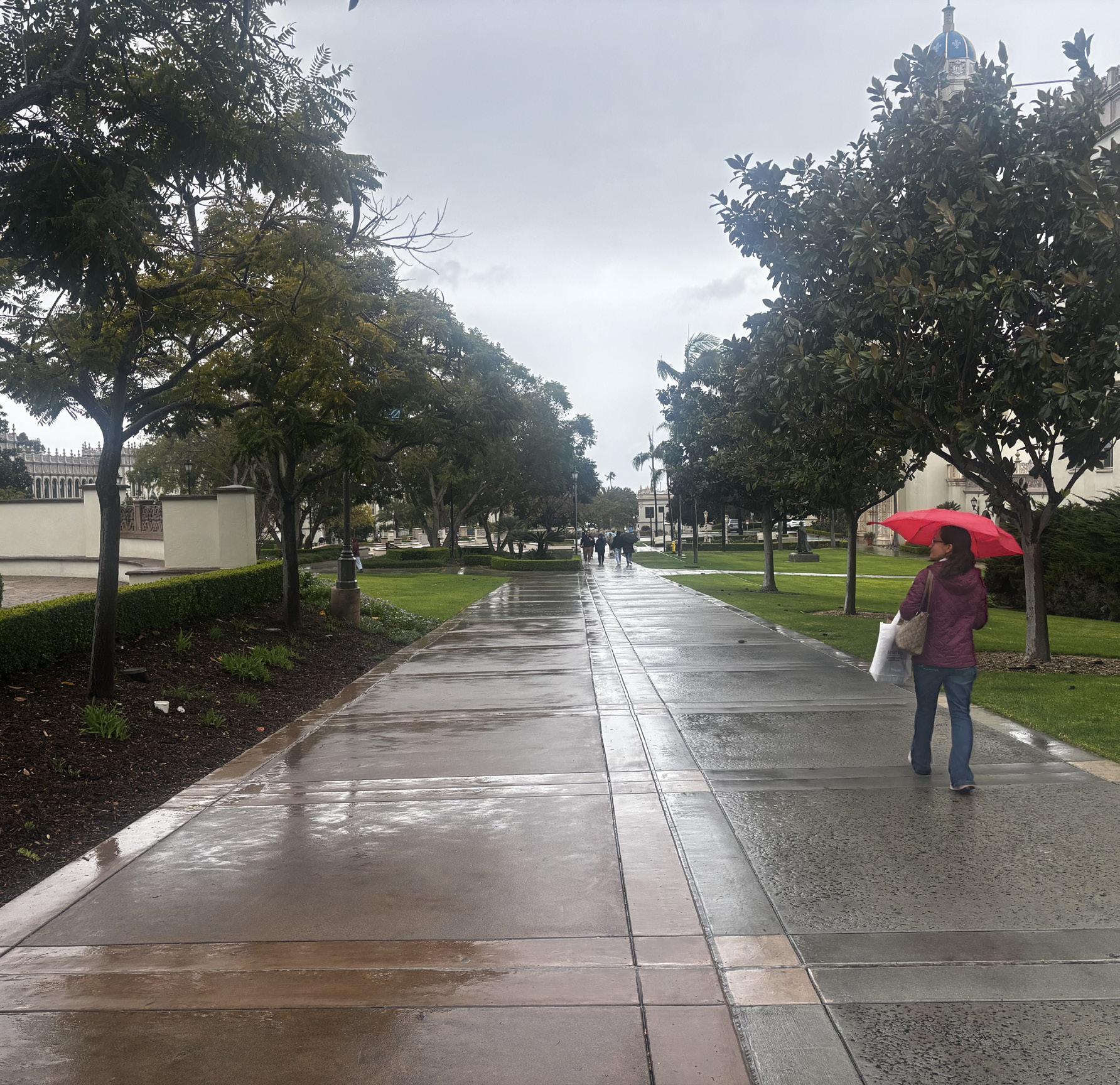
Pouring rain makes USD’s outdoor walkways slippery as students walk to class. Caden Haynor/The USD Vista
President Trump posted the video to Truth Social. Photo courtesy of @WSJ/X.com
Toreros walk out against ICE Administrators join ‘March for Human Dignity’
ANJALI DALAL-WHELAN ASSOCIATE EDITOR
Last Wednesday, on their way to class, Toreros ran into a stream of students, professors and administrators marching through USD’s main campus to protest ICE and show support for immigrants.
The protest, which took place on Feb. 11, instructed participants to walk out of their buildings at 2 p.m. and disperse at the ring of the Immaculata bells at 2:30 p.m.
The rain did not deter members of the USD community from participating. Some protesters held signs, with messages such as “Immigrants Make America Great” and “Abolish ICE.”
Others joined in on their way to class, backpacks in hand.
The march was quiet, with the flyer for the event stating there would be no amplified sound or organized chants.
Still, some marchers started up the occasional chants such as “Sí se Puede” and “ICE Out.”
USD senior Maribel Acevedo participated, and shared why it was important for her to be there.
“I’m out here because I’m a proud product of immigrants,” Acevedo stated.
“I have always been standing behind immigrants and what they have built for this country and what they have built for me in my life… Borders are construct that we, as people, have created and given meaning to, and I don’t see the need for such a derogatory view on people who decide to cross for a better life.”
Grace Caponetto, a thirdyear law student at USD, was the lead organizer for the event. She was supported by two USD Law clubs, the USD National Lawyers Guild and USD’s Immigration Law
Society. Caponetto shared one of the goals of the march.
“Holding something like the ‘ICE out! March for Human Dignity’ on USD’s campus gives everyone in our community who has been feeling helpless in the face of constant and escalating constitutional and human rights violations in our country something to do to direct their rage, sadness and fear,” Caponetto said.
USD President James T. Harris III and other USD administrators were at the front of the crowd as the protest marched around campus.
Caponetto said that she met with USD administrators to get the march approved, leading them to choose to participate in the event.
After requesting an interview with President Harris, The USD Vista was sent a written statement on his behalf by the USD media relations office.
“We have a unique and important opportunity at USD to channel our collective talents, explore what it means to be human and advocate for the dignity of all, in alignment with the recent message published by the U.S. Conference of Catholic Bishops,” Harris wrote in the statement. “This includes opportunities for engagement and peaceful assembly. I also want to give credit to the event organizers for following the rules stated in USD’s Campus Assembly policy in planning the event.”
Harris’ statement reaffirmed USD’s policy regarding immigration enforcement.
LARA DOMINIQUE SOLANTE
COPY EDITOR
ANJALI DALAL-WHELAN ASSOCIATE EDITOR
Across
3. This show about a high school show choir gained popularity in the early 2010s
4. Which poet begins his poem “Harlem” with: “What happens to a dream deferred?”
6. What is the name of the influencer that went viral in comparison to a member of an ASU fraternity?
9. In the introduction of this show, main character John B. says this place is “paradise on earth.”
10. This country in Southeast Asia has more than 7,000 islands
12. The leader of a high-pitched chipmunk boy band
GAMES
2. The scientific word for rain
3. What is the name of the phase of the moon when it is more than halfway visible?
Across
5. What Shakespearean play has the famous phrase: “To be or not to be, that is the question?”
3. This show about a high school show choir gained popularity in the early 2010s
4. Which poet begins his poem “Harlem” with the question: “What happens to a dream deferred?”
6. This past weekend, this influencer got “framemogged” by an ASU frat leader
9. In the introduction of this show, main character John B. says this place is “paradise on earth”
10. This country in Southeast Asia has more than 7,000 islands
“USD does not actively participate in immigration enforcement,” the statement read. “Public Safety staff members do not engage in federal immigration enforcement activities, nor do they act on behalf of immigration authorities.”
Crossword 2.19
One day after the walkout, White House Border Czar Tom Homan announced the end of the ICE crackdown in the Minneapolis-St. Paul area. The Department of Homeland Security (DHS) called the operation the largest immigration enforcement operation ever. The operation faced widespread opposition in Minn. and across the country, from large protests to small demonstrations such as the march at USD. While a significant number of ICE agents have left Minn. since the operation ended, thousands remain, and many residents of the state are still concerned about the future. Meanwhile in Washington D.C., the government is in a partial shutdown over funding for DHS, with Democrats and Republicans in Congress unable to find a compromise on the controversial issue.
7. Flavorful cut of beef from the cow’s lower chest served in a Tu Mercado sandwich.
8. Character in “Wuthering Heights” played by Jacob Elordi
12. The leader of a high-pitched chipmunk boy band Down
1. The actor from “Dawson’s Creek” and “The Godfather”
11. “Remember the ______.”
2. The scientific word for rain
3. What is the name of the phase of the moon when it is visible more than halfway?
5. What Shakespearean play has the famous phrase: “To be or not to be, that is the question?”
7. Flavorful cut of beef from the cow's lower chest
8. Character in “Wuthering Heights” played by Jacob Elordi
11. “Remember the ______”
1. The actor that played Dawson in “Dawson’s Creek”
Students log their media critiques ARTS & CULTURE
Toreros debate authenticity of Goodreads and Letterboxd
CALLA JORDAN CONTRIBUTOR
As technology further merges with everyday life, leisure activities, such as reading and film watching, have tapped into the digital world through social media platforms. Apps such as Goodreads and Letterboxd influence the way in which entertainment and literature are shared, analyzed and enjoyed by consumers.
While the apps draw attention to both classic films and literature, as well as newly released pieces, concerns have risen about whether these apps are truly helpful or if they are just another consequence of the digital renaissance. USD students discussed whether they feel this digital exposure creates a greater appreciation for these stories, or if they prefer their hobbies offline.
USD junior and avid reader Riti Dey first began using Goodreads in high school for the challenge feature on the app that allows a user to set annual reading goals. The app allows users to track their progress
with each book. Once a reader turns the last page, they can leave public, written reviews.
“If I saw reviews that I agreed with on a book that I had read, it would be really affirming,” Dey stated. “But sometimes I would really enjoy a book and then there would be all these bad reviews that weren’t that detailed.”
While Dey shared that the app helped revive her hobby of reading, she noticed her motivation to read was primarily to reach a goal, rather than to have fun or learn.
“I realized that I was just pumping out books for the sole purpose of reaching my goal instead of actually reading the books to enjoy them,” Dey shared.
Dey expressed that she has stopped using Goodreads as a way to track her reading. While she shared that she has been less consistent with her reading goals, Dey noticed that she is able to dive deeper into her books without the pressure of having to keep up with a goal. However, Dey concluded that the app is still a beneficial tool for people wanting to read more and
hold themselves accountable.
“I will always advocate for apps like this, even if I’m not personally using them, just because people aren’t reading enough,” Dey shared. “I think people need to read, and if the way they’re going to do that is by setting a challenge for themselves or competing against their friends, then I’m all for it.”
USD senior Courtney Mall also shared her thoughts on whether Goodreads leads to users prioritizing app challenges rather than the substance of the material.
“I think that if people are going through the effort to read that many books, then they actually care about what they’re reading,” Mall expressed.
A concern surrounding the rise of these platforms is whether they are creating a competitive environment for users. Letterboxd is a similar app that allows people to rate and share movies they’ve viewed and has become increasingly popular in the film world.
USD junior Hutch Harrington has been using Letterboxd to track his recent screenings.
Harrington is majoring in visual arts with a concentration in film and thinks the app helps expose him to new films.
“It’s nice to expand my knowledge, especially as someone interested in film,” Harrington shared.
However, he acknowledged that the rise in popularity has led to some users highlighting films that are more niche and pretentious rather than featuring their true favorites.
“I think now that it’s kind of become a trend on TikTok to post your top four [movies] it can be performative and just for show, which is kind of sad,” Harrington stated.
Some Toreros believe that Goodreads and Letterboxd can lead to performative use, while others are inspired to keep up with their goals and experience new and diverse art.
USD senior Kat Harris has been actively using Goodreads for about two years, after being influenced by her roommate to download the app. Harris enjoys the tracking features of the app and how users can view their friends
current reads and progress.
“I like the accountability aspect of it,” Harris shared. “My friends can see if I am slacking behind my goal.”
Harris highlighted that, in an age where people and their phones are inseparable, apps that may encourage their users to build healthier habits and expose themselves to stimulating media are important.
“It’s a cool aspect to integrate technology with the act of reading,” Harris said.
“Even if you’re just reading to log it into Goodreads, you’re still reading, and I think any break from technology is good.”
The mesh of media and technology has been inevitable, but USD students are utilizing these platforms to enable creativity and self-improvement. These apps may allow students to create fun goals relative to their hobbies, but they can also spark performative usage, possibly pushing users away from activities once enjoyed in leisure.
Enjoyment is the key aspect of a hobby, and both Goodreads and Letterboxd are topic of discussion among Toreros.

Students use Goodreads and Letterboxd to show their peers what media they are consuming.

Emerald Fennell faces backlash
2026 adaptation of ‘Wuthering Heights’ premiered on Feb. 13
From Movie, Page 1
orphan taken in by the Earnshaw family. Catherine, the strongwilled daughter, welcomes Heathcliff into the Wuthering Heights estate. Their love story is trailed by conflicts of class, race and personality to paint a wildly dramatic romance.
A film rendition of the classic novel is hardly a first. The “Wuthering Heights” that was released to theatres on Feb. 13 is one of seventeen film adaptations since the first in 1920. Other renditions include television shows, plays, musicals, graphic novels and operas that all reimagine the infamous lives of Mr. Heathcliff and Catherine Earnshaw.
Despite the book’s cultlike following, the motion picture has garnered negative feedback for the casting.
USD Associate Professor Carlton Floyd, PhD, who specializes in African American literature, agrees with Stone’s assertion that the casting tarnishes the film’s merit.
“For someone to take a story whose central character
is Black by design then remove that character, they’ve removed the story,” Floyd said. “It’s a different story now. It doesn’t include any of the social ramifications. You’re not even doing ‘Wuthering Heights.’”
For a character who was born in a slave town and described as “dark-skinned” and a “Spanish castaway,” some viewers are questioning how director Emerald Fennell rationalized her casting choice.
“I’m curious as to how they justify it,” Floyd asked. “There is historic linkage to removing actors of color and placing white characters in their role.”
Fennell admitted to straying from the original piece, with a few caveats.
“It is my favorite book in the world,” Fennell told The Hollywood Reporter during a “Wuthering Heights” premiere.
“It felt right to say it is ‘ Wuthering Heights,’ and it isn’t… I am mainly making a version of it. I was focusing on the sadomasochistic elements of [the book].”
Some fans were taken
aback by the sexual scenes that Fennell is referring to. In the novel, the narrative is driven by volatile, obsessive and often violent dynamics between Heathcliff and Catherine. Fennell’s adaptation allocated a large portion of screen time for this relationship.
USD senior Isabella Reynolds saw the film the night it came out; she shared her thoughts.
“It was particularly disturbing and also very antiquated,” Reynolds stated. “I didn’t like how misogynistic it was. It was a very male savior arch.”
Aside from concerns of jarring scenes and character whitewashing, some are concerned about the overuse of above-title billing — the practice of casting A-list actors to produce greater returns in the box office. The overuse of actors like Jacob Elordi, Margot Robbie and others causes some fans to think that films are purposefully being catered for certain gazes.
Stone offered an alternative for directors who reuse familiar faces.
“I 100% believe that whoever was casting the film should’ve thought about casting new actors,” Stone argued. “Someone we haven’t seen before, it could be an incredible breakout role for them both and provide a space for upcoming actors of color to be seen by Hollywood.”
In spite of the backlash, USD students filled busy theaters to view “Wuthering Heights.”
USD sophomore Tatum Mackenzie flocked to AMC as soon as “Wuthering Heights” was released.
“I actually really enjoyed it,” Mackenzie exclaimed. “I went in very excited because I love Jacob Elordi. I do have a life-size cut out of him in my apartment. I was sobbing, crying at the end. I would see it 24 more times.”
With some students raving about the tear-jerking, tragic romance and others criticizing whitewashed casting and sadomasochistic scenes, there is no doubt that the newest “Wuthering Heights” adaptation has sparked controversy on all corners of campus.

Catherine Earnshaw looking up at Heathcliff in ‘Wuthering Heights.’ Photo courtesy of
Tor er os tur n jun
“I think it is important to craft because it gives me a break from stress and schoolwork while also being able to create something meaningful to me.”
Nina Lisimaque, USD first-year
“One thing that inspired me to start this journal was my grandma because she always documented my dad's life, and then her and my grandfather's life, as well as me and my sister, and so I wanted to be able to do that.”
Annie Faulkner, USD junior
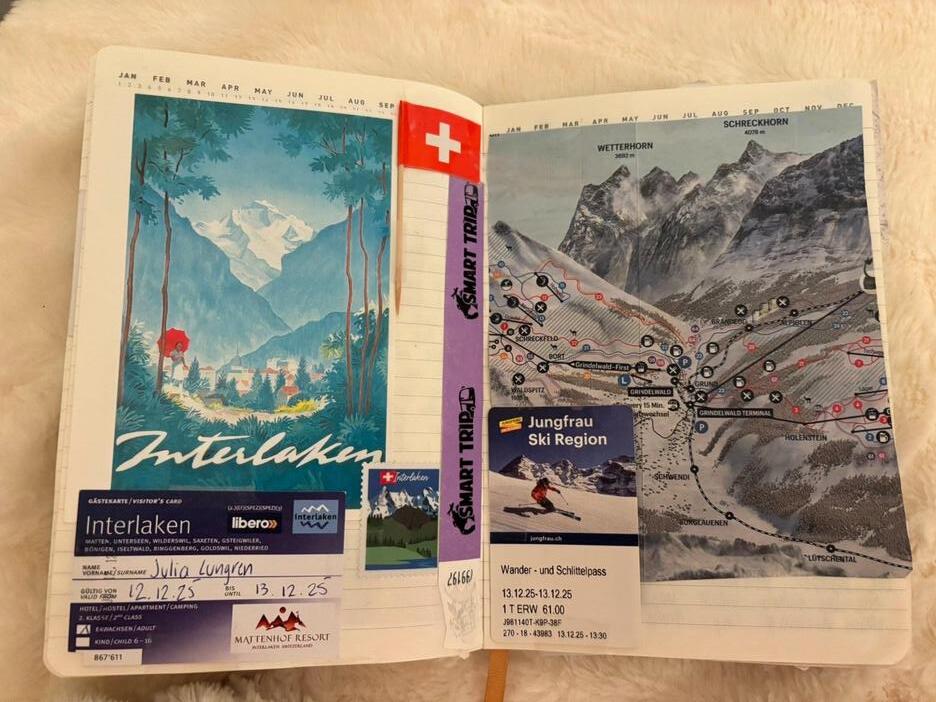
“My biggest piece of advice is to not strive for perfection! I always had a hard time journaling because I didn’t think I was doing it ‘right’ but I learned that there is no right way and it is unique to you.”
Julia Lungren, USD junior


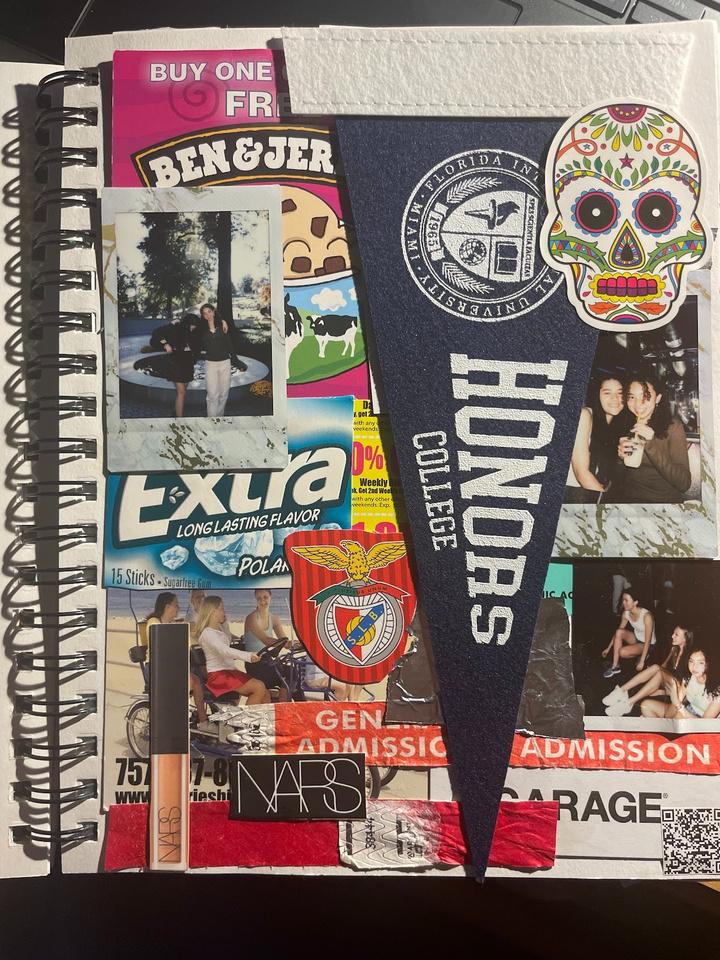
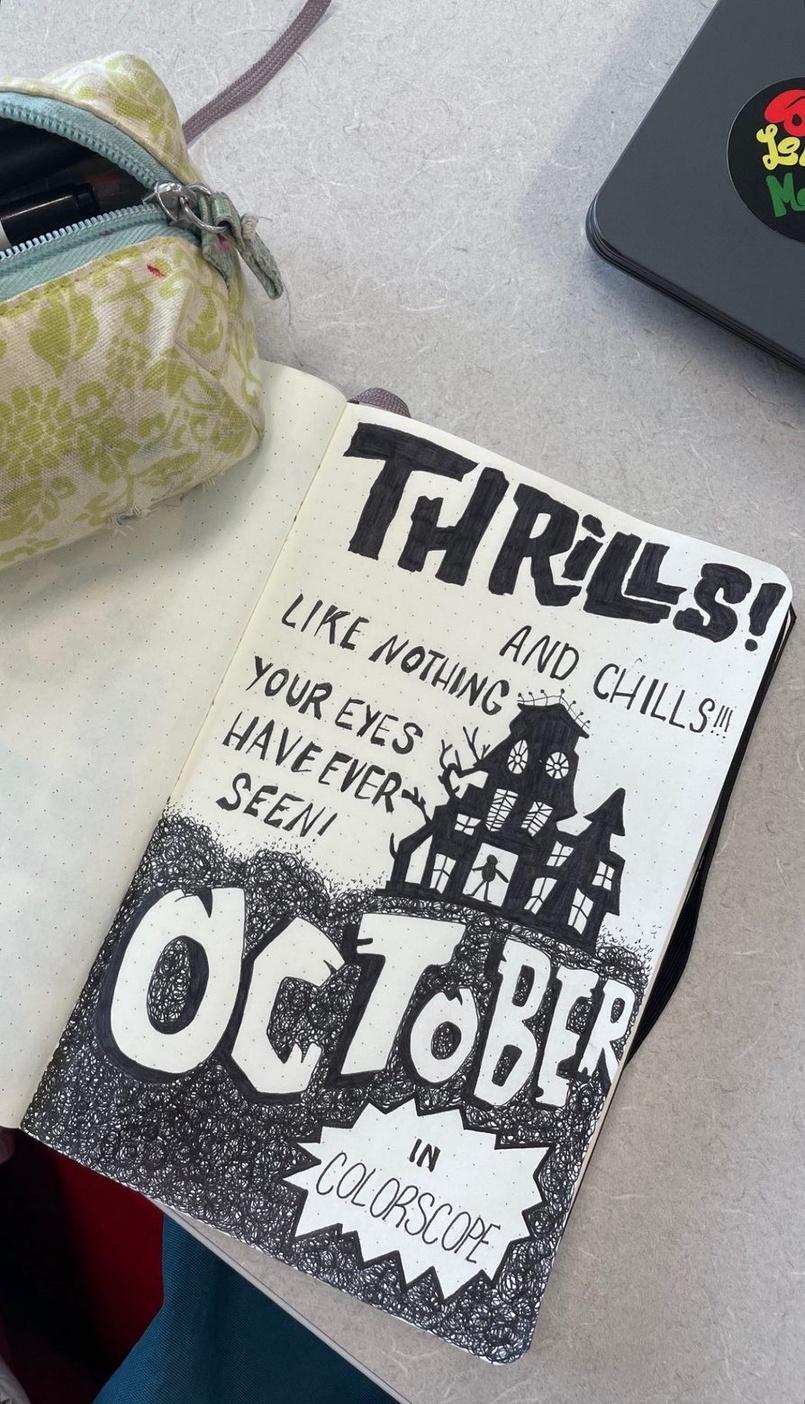
A “junk” journal is a creative w pictures, stamps and sticker memorabilia. Similar to a scrapb sentimental value that allows pe an aesthetically pleasing wa importance and value to craf students can start

Photo courtesy of Nina Lisimaque
Photo courtesy of Julia Lungren
nk into tr easur e
ay for people to take receipts, rs to make collages of their book, these journals can have a eople to reflect on their lives in ay. These Toreros share the fting such journals, and how one of their own.
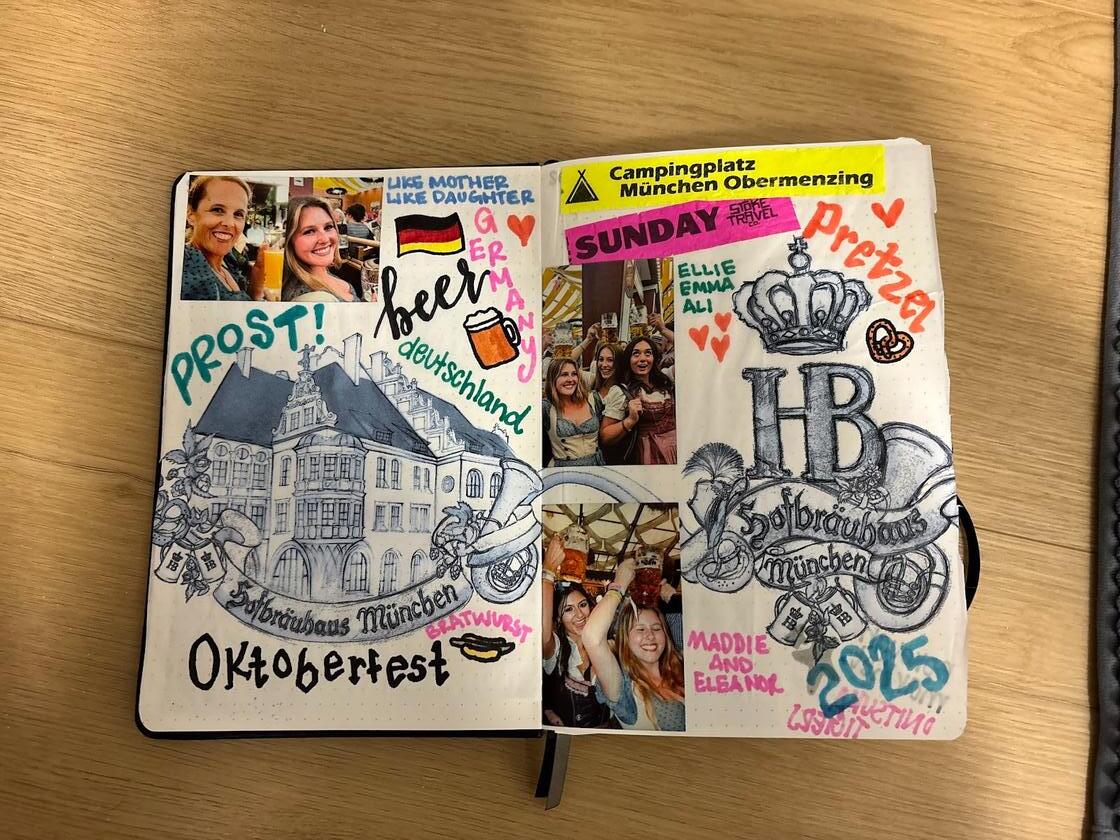
I think [ journaling] is important to remember who you are and who you were. Just having pictures on your phone is not nearly as fun or memorable as collecting physical memories ”
Ellie Selby, USD junior
to see how far I've come getting over different challenges in my life.”
Annie
Dorelien, USD sophomore
Art by Kyra Lefebvre/ The USD Vista: Content by Julianna Flores
FEATURE
‘Reserved for Rosa’ Signs on USD tram marks the beginning of Black History Month
February marks Black History Month, a time to remember Black history within the United States and to highlight the accomplishments of Black people both from the past and in the present.
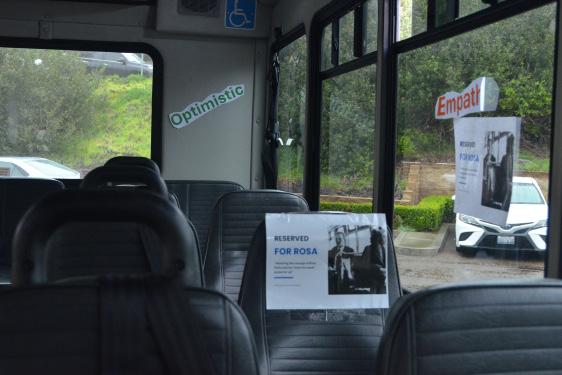
At the start of this month, a “Reserved for Rosa” poster was placed on a seat in one of the East Campus Loop trams by Tram Services. The tram driver, Armis Hutton was born in Alabama and grew up during the ’50s and ’60s. When Rosa Parks protested bus seating, she was only about 100 miles away from him. Hutton responded to finding the posters up in his tram when he started work.
“It’s okay whenever they put posters up,” Hutton admitted.
“When you see those posters put up it’s okay for history and it reminds people that they lived through that time period. If you didn’t live during that time you just want to forget.”
Hutton continued to share his experience with education about Black history in the United States.
“When it comes to the South, they want it out of the schools,” Hutton stated. “To me that is mean. I think everyone should learn about what happened in the world. Even though time has changed I see a lot of things repeating itself.”
USD Professor T.J. Tallie, PhD, whose specialties include Southern African history and settler colonialism in the nineteenth century provided the history of Black History Month in the United States.
“What I find amazing is this is 100 years of Black History Month so it’s our centennial,” Tallie explained. “When Carter G. Woodsen first came out with Black history month in 1926 it was N---- History Week … It’s founded specifically because it’s about the birthdays of Frederick
Douglas and Abraham Lincoln so there was a reason. The week of February 12 and 14 was meant to center, in the 1920s, a reminder of emancipation, which is Black people being free, which is a relatively new concept in this country.”
It started as a week to mark the freedom of Black people from slavery and expanded to take part throughout the month.
USD senior Abigail Daniel shared why she thinks it is so important to have a month to honor Black history.
“I think it’s definitely an opportunity to take a second to recognize individuals that especially have allowed us to move into these places and have progressed us to where we are now,” Daniel said. “It also takes some time to recognize how much work needs to be done. Obviously it’s something that needs to be reflected on all of the time, but having a time specifically like this, it’s nice.”
Daniel also added that she usually only hears about events for Black History Month through the Black Student Union (BSU) organization and her own circle of faculty and friends.
“I don’t know if in the past I’ve seen as much around USD or promoted by USD ever,” Daniel said. “I think it’s usually the people I surround myself with that are doing the work to advocate for those things that are really pulling the weight on that. So I’m really appreciative of those classes, professors, friends and the resources specifically for Black students that have done the job. For USD itself, there’s always room for improvement with those types of things, I feel like.”
Many students recognized the need for Black History Month and admitted where they view society falls short in fully honoring all that the month stands for.
USD junior John Sanseverino discussed why he thinks the month is important,
but also why it may feel as if some do not take advantage of the opportunity to learn their country’s history and act on working toward equality.
“I think it’s important that we take the time to recognize and look back on the history of our country and people who have been through a lot in our country,” Sanseverino shared. “I’m in a class right now that’s ‘Jesus and Justice,’ and it speaks a lot about how we often sanitize our history and pacify it. So I think it’s important that we spend the time to look back and recognize it.”
USD senior Victoria Garcia explained a new way in which she views Black History Month this year.
“I love highlighting everything that happens during Black History Month,” Garcia shared. “I just saw a recent reel from the USD School of Engineering and one of the professors there. She highlighted how Black History Month isn’t
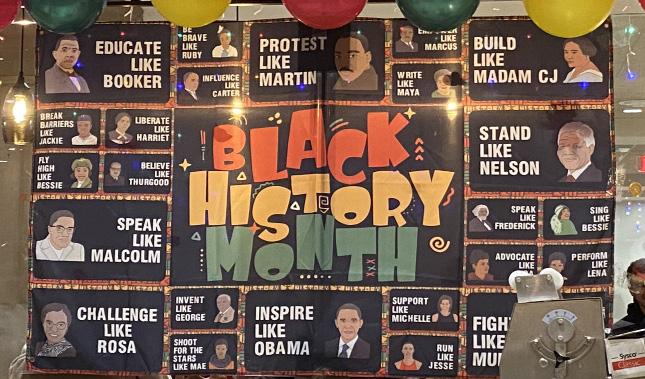
just a remembrance month, but it’s also a continuation of the new innovations that are constantly occurring within society. I just think that kind of beautifully explains how we are meant to not only look into the past, but also look at the new innovations that are happening now within Black culture, within society and Black leaders.”
Daniel concluded, adding ways in which students could educate themselves and truly take advantage of the purpose of the month.
“I think the best thing to do this month, and year round, is to continue to put yourself in spaces where Black leaders, Black students, are taking the time to share their experiences and talking about the ways they can encourage and uplift the Black community as a whole,” Daniel stated. “Especially on our campus where the Black student body isn’t exactly the majority, so I think it’s great to sit in these spaces and to allow yourself to humbly learn or educate yourself. And obviously, it’s not something that Black students in general should be leading all these conversations and doing the heavy lifting, and so obviously, that’s the big thing as well.”
Tallie explained that a powerful way to honor Black History is to allow for Black community members to rest.
“Historically, Black people have felt constantly like we have to work so hard to save all of this,” Tallie shared.
“So what might a universitywide moment of actually rest, reflection and honor look like? It could be a day of meditation
… There’s a movement called the Nap Ministry, and it’s run by a Black woman, which really
thinks about what would it mean to honor the work that has been done and give ourselves the permission to rest. And that might be a good legacy of Black History.”
Tallie continued to question how this month is celebrated.
“Black people have built so much and their legacy in this country has been constantly working, everything from enslavement to Civil Rights,” Tallie described. “What would it reframe, if this time, it was about rest?”
USD sophomore Mariana Navarro shared her positive feelings toward the month as an opportunity for education, growth and acceptance.
“I think it’s really cool how, as a community here, we have multiple events, even like food events that we have happening this month that just kind of bring that community together to uplift and support them,” Navarro explained. “I think it’s awesome … I think the best way to honor Black History Month is maybe doing a little less speaking and a little more listening to fellow Black peers or professors, faculty … I think that could fill in the gap of what even is the month, how do we celebrate it.”
Even though Black History Month is namely a time to remember Black history within this country, students recognize that it could also be a time to uplift Black community members and continue to learn about shared history. Buying from Black-owned businesses, learning to be more accepting, working to be more educated and even allowing time for rest, are all steps Toreros are making year-round and promoting this month.
A Black History Month banner in the SLP honors all those who participated in the fight for rights. Amelie Sedlack/The USD Vista
AMELIE SEDLACK FEATURE EDITOR
‘Reserved for Rosa’ signs urge students to remember Civil Rights. Caden Haynor/The USD Vista
The cost of constant connection
Wellness became necessary, then costly
DAVID COOK OPINION EDITOR
I’m not against wellness. I think it’s important. Mental health awareness is a real step forward in a society that often glorifies burnout. Therapy helps people. Taking a wellness day instead of pushing through burnout is healthier than pretending exhaustion is a badge of honor. In many ways, we are better off acknowledging that stress accumulates and that recovery matters.
But I can’t help wondering whether part of the reason we need so much structured wellness now is that we’ve eliminated the simple, builtin forms of rest that used to be part of everyday life.
There was a time when waiting was just waiting. A long bus ride meant watching the rain slide down the window. A commute meant staring out into nothing in particular. Standing in line meant simply standing there. Your thoughts wandered. You weren’t absorbing headlines, replying to messages or comparing your life to edited reels. You were just there. It wasn’t labeled mindfulness. It was simply boredom, and boredom quietly did even more restorative work than we realized.
Now, those small gaps have disappeared. The second there is a break — a red light, an elevator ride or a pause in conversation — we reach for our phones. What used to be blank mental space is now filled with sports clips, news alerts, texts, emails, short-form videos and algorithmic noise. Every moment there is a break in reality, we grant ourselves permission to escape reality by reaching into our pockets.
When every idle moment is broken by a glance at a phone, the brain never fully powers down. That leads to overstimulation, which then accumulates into exhaustion. So, of course, we need wellness days. Of course, we need intentional resets. Of course, companies and universities formalize recovery. We removed passive rest from daily life, so recovery now has to be deliberate.
At the same time, the cost of wellness has risen dramatically. What used to be free — silence, waiting, mental spaciousness — is increasingly replaced with purchasable solutions: LED face masks promising rejuvenation, red
light therapy panels for your bedroom, cold plunges, infrared saunas, wearable sleep trackers or monthly meditation subscriptions. None of these things are inherently bad. If they genuinely help people feel better, that matters. But, none of these methods of selfcare are cheap, and it’s difficult to ignore how easily rest has become a product category.
There is something extremely ironic about that shift. The same devices that keep us constantly stimulated
also market the tools to calm us down. The same feed that exhausts us promotes the solution to exhaustion. Wellness becomes not only necessary but commodified. And that commodification isn’t neutral. Taking a wellness day assumes flexibility. Therapy assumes disposable income. High-end recovery tools assume financial margin. The people most overextended often have the least access to the most visible solutions. In that sense, wellness can quietly become
another marker of privilege.
None of this is an argument for abandoning mental mental health programs or romanticizing the past. Previous generations had stress, too. They simply had more natural pauses built into their days. They weren’t connected at all hours. They weren’t consuming global news cycles before breakfast. They weren’t reachable every minute. Life was demanding, but it was not as constantly loud.
Wellness is important. I’m not arguing otherwise. But if
we didn’t eliminate every quiet moment in our day, maybe we wouldn’t need to constantly repackage recovery as something to purchase. The cycle is hard to ignore: overstimulation, exhaustion, commodified relief, repeat. If we could really disconnect a little more often we might find that some of the rest we’re chasing was always available to us. We just stopped letting ourselves have it. So, the next time you are sitting alone, maybe take a moment to watch the raindrops fall.

Art by Kyra Lefebvre/The USD Vista
OPINION
What happens when we stop funding arts
USD students should give more attention to the arts
OWEN FUGIT ASST. OPINION EDITOR
The University Galleries at USD house over 5,000 works of art, but many Toreros may complete college without seeing most of them. Shiley Theatre, while iconic, literally drains noise into art department faculty offices during performances. As a liberal arts university, USD — and its students especially — have an obligation to enjoy the art that surrounds them, and to support it whenever possible.
The lack of support for the arts mirrors what is happening in the country’s political landscape.
Since President Trump took office and began his takeover of the beloved John F. Kennedy Center for Performing Arts, the endangerment of culture has been a focus of national news.
Beyond his goals with the Center, Trump has forced the National Endowment for the Arts (NEA) to re-evaluate how it doles out its $150 million in grants, leaving many arts organizations without the funds they need to support themselves.
While the future of the arts is fairly uncertain on a national level, students can and should amplify their support for the arts.
Dr. Jeffrey Malecki, the music department chair and associate professor and director of bands, explained the state of USD’s performing arts programs.
“So this is my 11th year [as music department chair], and I was hired to actually start the band,” Malecki said. “We didn’t have a band. And one of the things — when I came here and looked around — I was like, well, where’s the band room? And they’re like, we don’t have one, there’s literally no space on campus where a band can really rehearse, which is why our classroom is Shiley Theater, and even that is, it’s not ideal in many ways. So we weren’t really designed with any of the performing arts in mind with music and theater.”
College of Arts and Sciences Dean Noelle Norton addressed some of the common misconceptions around supporting and growing arts programs.
“It’s complicated,” she said. “I’d say that, actually, the budget is not necessarily what I would consider the issue. I would consider [that] if you build a facility, [students] will come. And if they came, we have the money to support [them]. So I think what we’re working on in the College
is to improve our facilities.”
Due to lower student engagement, performance spaces and practice rooms in Camino feature several unique design flaws that the music department is forced to reckon with on a limited budget, as Malecki illustrated.
“In our percussion room of all things, there are drains that go down into art faculty members’ offices,” Malecki said. “So the sound goes right there. If you wanted to pour water on them, you could ... The one in Shiley Theatre is stuffed with old rags right now to help. It’s a bit silly.”
One of the most effective ways students can actively force USD to improve music spaces is by simply participating in music department classes and activities.
Students are widely encouraged to try a minor in music, which helps increase direct department funding, a factor partially based on enrollment. An uptick in funding via student enrollment growth would help the music department absorb some of its naturally higher costs, something Dr. Malecki explained.
“[The music department] just costs a lot more because
now you need instruments, you need different kinds of spaces,” he said. “You need music that rotates every single semester you’re not just playing the same thing over and over again.”
Similarly to the music department, the Department of Art, Architecture and Art History faces similar issues, with similarly achievable solutions. Dr. Derrick Cartwright, an art historian, museum curator and associate professor at USD, revealed the state of USD’s fine arts programs.
“One of the things that USD already has that no other local university can claim is an established teaching collection,” Cartwright explained. “Today, USD’s art holdings come close to 5,000 works. Identifying a safe place to display, study, store and continue to grow those collections makes sense to me as an area for thoughtful improvement.”
On USD’s part, our art programs are exceptional. However, students by and large ignore these programs despite being enrolled at a liberal arts institution emphasizing the exploration of different fields. With dozens of expert professors, award-
winning exhibitions, several performing ensembles and a widely-respected theatre MFA program, the arts at USD need student support.
In a statement given by a media relations representative on behalf of the University, it is clear that alumni and current faculty care for the arts programs, citing several upcoming projects already beginning to take shape.
“The university is currently fundraising for a standalone museum to house our growing print collection,” the representative stated. “We have several benefactors who have committed to this effort - spearheaded by a lead gift from former Board Chair, Robert Hoehn - and are actively pursuing additional gifts to help realize this effort. Our remaining collection remains under the care of University Design as well as University Galleries.”
The way we treat our arts programs — the organizations on this campus that give it life and legitimacy — is embarrassing, but it is something that Toreros at every level can work to change. Students can visit one of the music department’s many free, peerled shows, or stop by one of the
exhibition spaces on campus to enjoy some of the beautiful paintings, photographs and sculptures USD possesses. Some of the most notable upcoming events include an exhibition of Francisco de Goya’s “Disasters of War,” on display at the Hoehn Family Galleries in March, a series of senior music student recitals from April onward and various art exhibitions taking place across campus.
Cartwright restated the urgency for student support of the arts.
“It’s a fragile ecology and those who take it for granted, or are willing to cede its potential to those who know very little, will regret losing it,” Cartwright said.
When the arts come under fire nationally, as happened with the Kennedy Center and the NEA, the responsibility to support them falls on local institutions just like USD. While the changes that must take place certainly will not happen overnight, Toreros are obligated to begin these processes as soon as possible to fight the attacks on the arts we see today across the nation, and to foster a deeper culture of performance and creativity on campus.
The views expressed in the editorial and op-ed sections are not necessarily those of The USD Vista staff, the University of San Diego, or its student body.
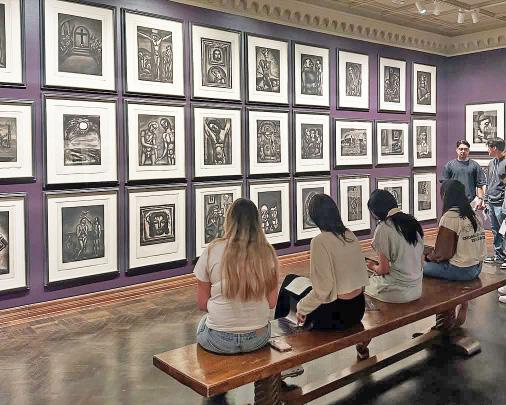
Students view prints by Georges Rouault at the Hoehn Family Galleries in Founders Hall.
Photo courtesy of @usdgalleries/Instagram
USD cohosts softball tournament with UCSD
PRIYA COOPER SPORTS EDITOR
Over the weekend, USD hosted a tournament in conjunction with UCSD at the Reggie Smith Softball Complex, across from Manchester Field. There were a total of 15 games played in the tournament with USD competing in four. The games marked the second tournament of the USD’s spring softball seasons. The competing teams were Weber State, Omaha, Utah Tech, Southern Utah, Colorado State, Boise State, Fairleigh Dickinson University (FDU) and UC San Diego. USD only played games against Weber State (0-5, 0-0 Big Sky), Southern Utah (2-5, 0-0 WAC) and Colorado State (3-2, 0-0 MW).
On Thursday, Feb. 12, USD won the first game over Weber State 4-3, then proceeded to lose the second 5-9.
USD senior and pitcher Charlie Johnson needed just one run of support to seal the victory, closing out the game with a onetwo-three seventh inning, which occurs when a pitcher retires the first three batters they face without any of them reaching base. Charlie Johnson wrapped up a strong outing surrendering only four hits and recording two strikeouts. As a San Diego native and Del Norte High School graduate, Charlie Johnson joined the Toreros after three standout seasons at Division II Sonoma State in the Bay Area. While at Sonoma State, she collected five CCAA Pitcher of the Week honors and earned both First Team All-Region and All-Conference recognition during the 2025 season.
Women’s softball wins two and loses two
Charlie Johnson commented on the team’s performance this past weekend and what she hopes to accomplish with her final season of collegiate softball.
“I think that it definitely set the tone of what kind of team we want to be this year,” Charlie Johnson said. “We want to be the team that wins and get the 30 wins that we’ve been looking for. And that, we’re just ready to, you know, kind of represent what our team is now and how it’s different from what we were in the past.”
Charlie Johnson highlighted her goal for the season.
“I just want to have fun,” Charlie Johnson said. “I love softball very much and being able to be here at home is really awesome. So I think just having fun and being able to see my family as much as possible and have them watch me for my last season would be cool.”
In the second game, San Diego fell to Weber State, who pulled away with runs in the fourth, sixth and seventh innings to secure the victory over the Toreros. The Toreros then lost the third game to Southern Utah State.
Despite the losses, San Diego managed to come back and win their last game of the tournament. San Diego struck first with a bunt to take an early lead, but Southern Utah responded by capitalizing on walks, singles and a wild pitch to move in front. The Southern Utah State Thunderbirds continued to apply pressure offensively, building an 8–4 advantage despite a mid-game home run and defensive plays that helped the Toreros limit further damage. San Diego mounted a late rally at the top of the
seventh inning with timely hits and aggressive baserunning, but the comeback effort ultimately fell short in an 8–5 defeat.
San Diego Toreros softball earned a 4–3 victory over Colorado State Rams softball in their final match of the tournament, leaning on aggressive base running and timely small ball to generate offense.
USD junior and outfielder Kaylee Oh legged out an infield single with the bases loaded to open the scoring, and USD first-year Abrielle Diaz added her first collegiate RBI (runs batted in) later in the game to help build a 3–1 lead.
USD junior infielder Michelle Delgado also provided a key insurance run with an insidethe-park home run in the fifth. Charlie Johnson tossed a complete game, holding off a late Rams rally to secure the win.
USD senior and utility
Taylor Johnson shared her thoughts on the home campaign and how it will set the team up for the rest of the season.
“Overall, it was a good weekend,” Taylor Johnson said. “We had a few tough battles, but I was proud of our response and how we were able to finish the weekend on a high note. It’s still early in the season, so we’re continuing to learn, work through things, and figure out what’s going to work best for us.”
Despite not winning all the games, Taylor Johnson remained optimistic for the season.
“I wouldn’t change anything from the weekend because it’s all part of our process and growth as a team,” Taylor Johnson said. “This is the best start we’ve had in my four years here, which is exciting because it shows what we’re capable of as we continue to build. Going into the GCU tournament next
week, we’re prepared to compete and put our best foot forward.” Taylor Johnson appeared in 47 games and started in 45 as the team’s primary first baseman in 2025 and was the 2024 WCC Batting Champion and a 2024 WCC First Team selection as a sophomore in 2024. Starting Thursday, Feb. 19, USD will be competing in a second tournament of the season hosted by Grand Canyon University in Phoenix Arizona. Throughout the semester, the team will play a 51-game schedule, including 28 home contests and 22 games on the road. The slate features 18 WCC matchups and 33 non-conference games. San Diego was also picked sixth in the WCC Coaches Preseason Poll the West Coast Conference for the 2026 Softball Preseason Honors and looks to rise in the ranks as the season unfolds.
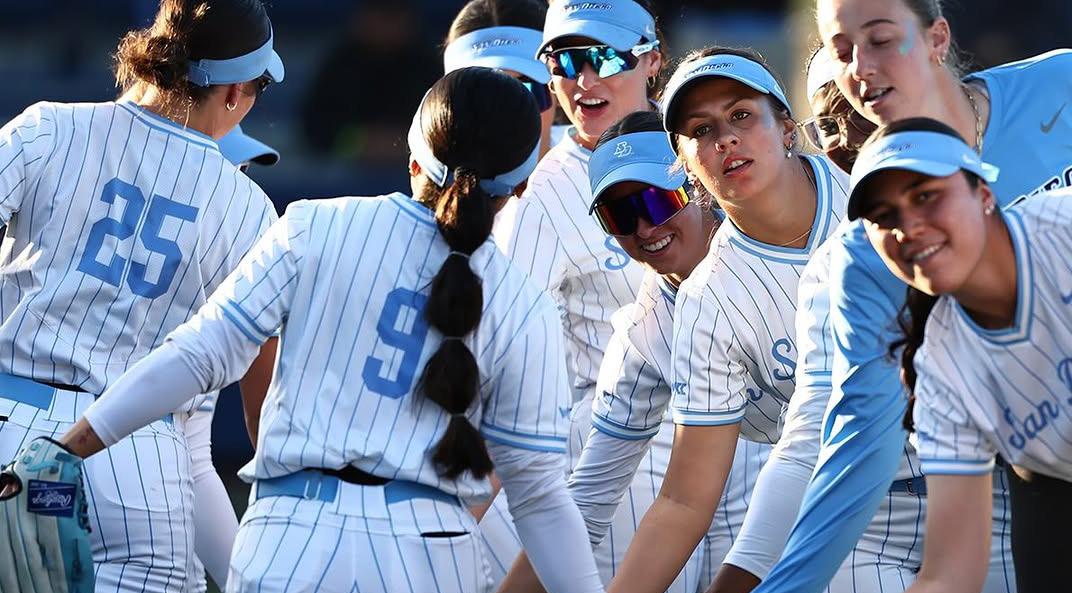

USD women’s softball gets ready to play the Southern Utah Thunderbirds. Photo courtesy of @usdsoftball/Instagram
James Rodriguez joins the MLS Soccer star’s signing impacts fans and communities alike
GABRIEL ROMERO CONTRIBUTOR
One of the biggest transfers in Major League Soccer history occurred when global soccer superstar James Rodriguez joined Minnesota United on a free transfer. After not having to pay another team a transfer fee in order to acquire Rodriguez, the contract itself is technically a non-designated player deal through the 2026 World Cup, with a club option to extend it for another MLS season.
In recent years, many star players have arrived in the States from big European leagues, yet the cultural impact that comes with the 34 year-old Colombian to arrive in Minnesota amidst recent events, makes the transfer more than just a star player arriving to help out Minnesota United, knocked out in last season’s conference semifinals.
For the state of Minnesota, it’s more than just an international star. In the midst of a tense political and social moment — marked by months of protests in response to federal immigration enforcement — Minnesota has become a focal point for debate about immigration, community safety and civil rights over the last few weeks. With the recent announcement that the large-scale immigration enforcement operation in Minnesota is coming to an end, many residents are looking for ways to shift their focus toward healing and unity. With the MLS and MLB seasons on the horizon, supporters of both Minnesota United and the Minnesota Twins have reasons to reconnect through local pride and community gatherings. Rodriguez’s signing isn’t just a roster upgrade. It
has become a representation of community — especially for all of the South Americans that immigrate to the East Coast of the United States. Students from USD expressed what the move means to them.
During Rodriguez’s introductory press conference, Rodriguez responded to a Colombian supporter who told him his arrival represented hope and the dreams of many immigrants. Smiling, he said Colombians are “born with many dreams, always wanting to battle.”
Rodriguez’s comments about opportunity and ambition resonated with USD alumna and current immigration paralegal Gabby Gonzalez, who is also Colombian. For Gonzalez, the presence of Latino and international stars in American leagues carries meaning beyond the field.
“It is so true, because Colombia is great but unfortunately there aren’t many opportunities for people back at home,” Gonzalez said. “Especially with what is going on right now, with issues with Colombians and the pause of visas, holding immigration benefits from Colombia particularly, is what makes it exciting to see latinos and international players like Chucky Lozano playing for SDFC or Son Heung-min for LAFC.”
Gonzalez explained that in moments when immigration policies and visa restrictions dominate headlines, seeing players from Latin America and abroad thrive in American leagues carries symbolic weight.
“I think SDFC will be hosting Minnesota at some point in the season, and I am going with my dad and inviting uncles


and cousins to watch him.”
Among those energized by the announcement was fellow Colombian and USD sophomore Joaquin Montoya, who grew up idolizing Rodriguez.
“He’s probably my only true idol that I’ve had growing up despite being in the Messi and Ronaldo era, I just loved how he played and he’s the one who made me fall in love with soccer,” Montoya said.
“He’s the last true 10 I would say in the soccer world, he’s not fast or super technical or good at dribbling, but he can put the ball wherever and he loves the national team, that’s why he traveled to Qatar before the last World Cup, that’s why I think he’s here in the USA now.”
Montoya, who is from Atlanta, said Rodriguez’s arrival carries meaning beyond the field. While the Colombian star is often acknowledged for his talent, Montoya believes his presence in the United States represents something deeper.
“Definitely helps show solidarity with what a lot of people are going through in this country,” Montoya said.
Montoya recalled growing up attending Colombia national team games and how passionate fans became to see their national team play.
“Games were packed with Colombians with lines outside the doors where you cannot
move an inch around inside and how Colombian people bring that energy for how they just love life and come to this country for hopes and dreams the same way my family came here in search of that.”
Rodriguez is no stranger to playing in foreign countries and making the adjustment to living abroad. Born in Cúcuta, Colombia, Rodriguez started his career playing with South American teams before his first move.
After winning several trophies and individual awards, his true rise to stardom came from his stellar performance in the 2014 World Cup in Brazil. Here, Rodriguez won the golden boot which is awarded to who scores the most goals in the tournament, where he scored six goals in five games.
Rodriguez also earned goal of the year with one of soccer’s most iconic goals, a volley — striking the ball cleanly out of the air before hitting the ground — against Uruguay to send Colombia to its first ever quarterfinal.
From then on, Rodriguez made a name for himself in the soccer world with his performance on the field. Rodriguez arrived at Real Madrid at 23 years of age, wearing the No. 10 shirt, the jersey number typically given to the best playmakers of a team.
Although his tenure with one of the most famous soccer clubs
in the world withered after new coaching phased him out, Rodriguez went on to play for German giants Bayern Munich.
After two seasons in Germany, what followed were stints in England for Everton and Qatar for Al-Rayyan. Rodriguez continued to bounce around teams the following years, with shorter seasons with Olympiacos, São Paulo and back to Spain with Rayo Vallecano before landing in Mexico with Club León.
Despite bouncing around teams in his club career, Rodriguez has been the star for Colombia in international play, representing “Los Cafeteros” in two World Cups and four Copa Américas, where he helped carry his country to the final in the 2024 competition and was honored as the tournament’s best player. Rodriguez has played across the world, starring for many countries biggest clubs, and now finds himself in the MLS with a franchise that is barely entering its 10th year of existence.
From a business standpoint, signing a player of Rodriguez’s stature on a free transfer is a rare opportunity for Minnesota United, one that immediately strengthens the team’s attacking play. Yet Rodriguez’s impact may extend beyond the field, particularly among supporters who see his presence as a point of pride and representation.
James Rodriguez signs fans’ merch after practice.
Photo courtesy of @mnufc/Instagram
James Rodriguez joins Minnesota United FC. Photo courtesy of @mnufc/Instagram