THE USD VISTA
Students join protests against ICE San Diegans respond to nationwide immigration enforcement
CADEN HAYNOR NEWS EDITOR
Mexican and American flags rippled through the warm air, joining Sharpied signs flashing “ICE OUT” and “Immigrants Make America Great” on Jan. 30. Hundreds of San Diegans of all ages rushed out of class and work, marching through the streets in response to the recent national actions of the Immigration and Customs Enforcement (ICE) agency.
USD junior Sophia Raia arrived early to the protest with friends. Raia described the atmosphere at the protest.
“[The organizers] said we were going to walk up the side of the street, but we instantly took up the whole road,” Raia said. “It was really cool, everyone had their posters and my friend had printed out little pictures for us… I turned around 15 minutes in and the entire park behind us had been filled in. It was fifty percent young people, like ages 16 to 25, which was great to see.”
Raia explained why
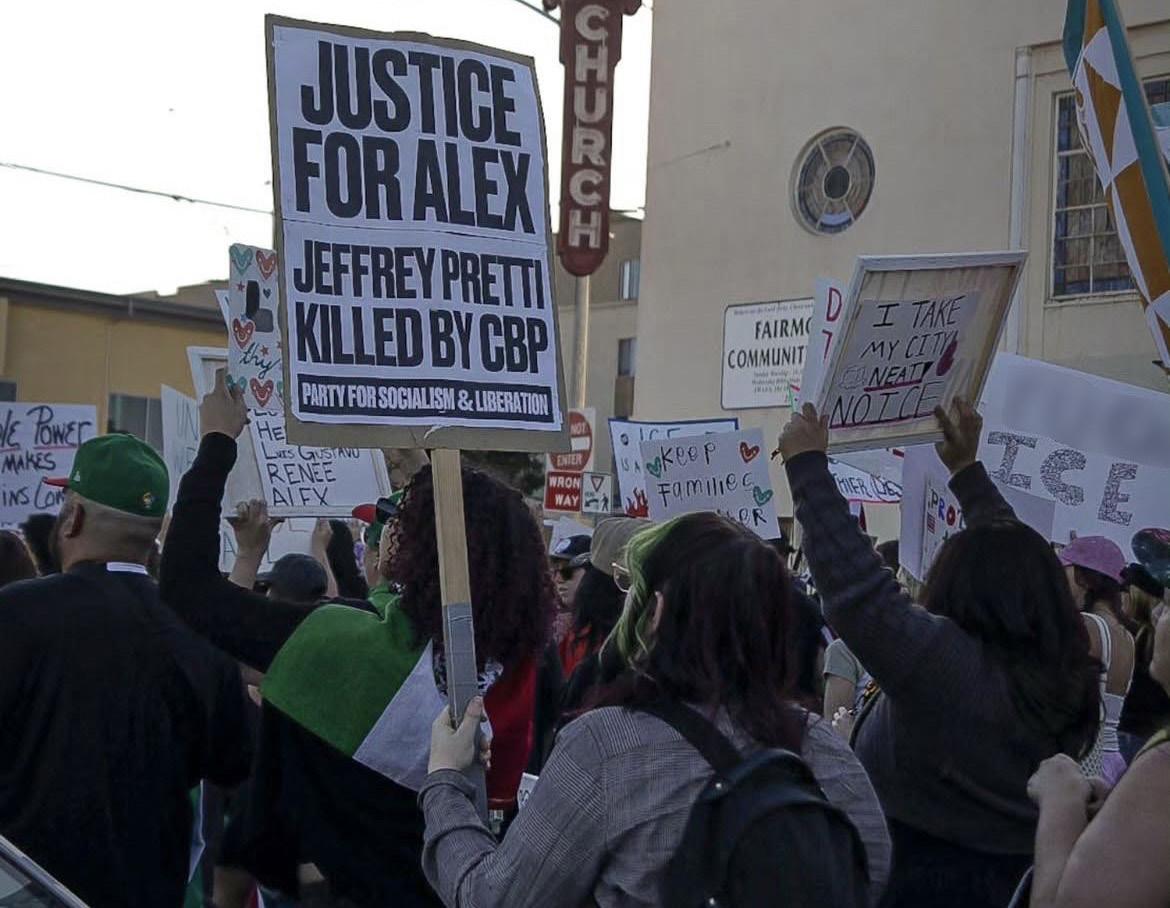
San Diegans took to the streets in City Heights to protest recent national ICE actions.
this protest is important to people in San Diego.
“As San Diego is a border city, it is definitely up there on future targets,” Raia stated.
RILEY RAINS
ARTS & CULTURE EDITOR
After watching the Seahawks kick field goal after field goal on Super Bowl Sunday, the second quarter came to a close and fans geared up for the event crowds were raving about: Bad Bunny’s Super Bowl performance. Fresh off his historic Grammy win, the unapologetically authentic Puerto Rican artist used the halftime stage to honor a vision of America that stretches beyond U.S. borders.
Benito Antonio Martínez Ocasio, more commonly known as “Bad Bunny,” took on Levi’s Stadium just one week after “Debí Tirar Más Fotos” won Album of the Year at the 2026 Grammys. This is the first time in Grammys history that an all Spanish-language album has taken home the top prize.
“So I think it’s so important to start resisting now and for other people to be aware of what’s going on because it sounds dystopian, but a lot
Photo courtesy of @pslsandiego/Instagram
of us know we’re next here.” CalMatters, a non-profit news organization, released an article outlining an almost 1500% increase in San Diego
‘Juntos, somos América’
Bad Bunny performs at Super Bowl LX
During a privately hosted press conference on Feb. 5, Bad Bunny explained how his creative
Alumni gym restrictions
See News, page 3
Bunny perform at the Super Bowl Halftime show. Photo courtesy of @washingtonpost/Instagram
inspiration originated from his homeland, not a chase for fame.
“I wasn’t looking for album of
‘On Silence’ exhibit
See A&C, page 4

the year,” Bad Bunny explained.
“I wasn’t looking to perform at the Super Bowl halftime show.
From newsroom to newlyweds
and Imperial counties arrests by ICE from May to October 2025 compared to the same months in 2024. They also analyzed government data which outlined that federal immigration officers arrested over twice as many people in the San Diego region from September through October 2025 than they did in all of 2024.
In a letter to the USD community on Jan. 28, President James T. Harris III addressed concerns about ICE activity in the United States. This statement was released at the beginning of the semester when ICE activity was heating up nationwide.
“[T]oday, many are arguing that individual rights, protected by the Constitution, are under assault,” Harris wrote. “As an academic community, we must continue to search for the truth and that requires an unwavering defense of academic freedom and the freedom of inquiry in all that we do… Just as a civil and just society has to find balance, as a contemporary Catholic university located See ICE, Page 2
I was just trying to connect with my roots, connect with my people, connect with myself.”
“Debí Tirar Más Fotos” exemplifies Bad Bunny’s mission to represent Puerto Rican culture. Songs like “NUEVAYoL” are a tribute to the Puerto Rican diaspora and a recognition of the Latin American immigrant experience. While his beats are lively, many of his lyrics attack the gentrification being faced in Puerto Rico.
“LO QUE LE PASÓ A HAWAii” in particular addresses the negative impacts of Puerto Rico’s admission to the Union in relation to Hawaii. Puerto Rico is an unincorporated territory of the United States, meaning it belongs to the U.S. but citizens do not receive representation in Congress or a vote for president. The main difference between the
Bad Bunny, Page 5
War on journalism Seahawks beat Patriots
See Feature, page 8 See Opinion, page 9
See Sports, page 12
Millions watched popular Puerto Rican music artist Bad
Hundreds flock across San Diego against ICE San Diegans join protests in solidarity with Minneapolis
on an international border, we need to lean into our own values to understand what role we can each play at this moment as Changemakers committed to confronting humanity’s challenges.”
Border Patrol has nationwide authority to pursue immigration-related offenses, and they have increased jurisdiction within a 100 mile zone of the border. Within this zone, Border Patrol can board buses and trains to look for unauthorized immigrants and question individuals, but they cannot search personal belongings without a warrant.
A city over 300 miles from the border, Minneapolis, has experienced intense violence and ICE activity over the past two months. This activity includes the death of Renee Nicole Good, who was shot three times by an ICE agent, killing her as she drove away.
Alex Jeffrey Pretti, an intensive care nurse, was another Minneapolis resident and U.S. citizen killed in January by ICE agents. He was shot multiple times by an ICE agent after placing himself in between the agent and a woman on the ground.
Following the shootings and increased arrests, residents of Minneapolis increased their efforts patrolling and monitoring ICE, along with large scale protests and strikes.
The protesting residents wear whistles to alert others of ICE’s presence, occupy many street corners to witness and record any activity and light controlled fires for warmth in the below freezing temperatures. Some play loud music all night outside of hotels with agents inside.
USD senior Danny Honsa lives 15 minutes outside the city of Minneapolis. Honsa commented on the Trump administration’s response to protesters of ICE within the city, including the response to the killing of Pretti.
“It’s just crazy that Trump is referring to peaceful protesters as domestic terrorists,” Honsa said. “I mean, when someone puts hands on you, you’re not going to let that happen if you didn’t

do anything illegal. These ICE officers are attacking people and I don’t think they are allowed to have the same power as actual police. It’s ridiculous that people shove ICE off of them, then they get shot, and then Trump is calling them a domestic terrorist. It’s like, watch the entire video.”
Members of the Minneapolis community have banded together in solidarity during this turbulent time.
Basic functions of the city have been disrupted, including school and small business operations.
USD sophomore
William Edwards, who calls Minneapolis home, described how his community has been affected by the recent ICE occupation.
“I think the biggest impact has been in schools,” Edwards stated. “My dad’s a teacher and forty percent of his kids won’t come to class right now because they’re scared to come because a lot of kids have been arrested on their way to school, even if they are citizens, or noncitizens, it doesn’t matter.”
Edwards continued with an example of a student
affected by ICE activity.
“One of his students he would have lunch with every day stopped coming to class,” Edwards said. “This girl’s like fifteen and she’s having to worry about being safe going to school. She got dragged out of her car driving her 7-yearold sister to school. They were detained for, I think her mom said, five hours before getting to speak to an attorney. So there’s a cloud of fear.”
Honsa went on to describe the current disposition of Minneapolis residents.
“I think people are more
concerned with the fact that people are being ripped away from their families and mistreated horribly,” Honsa said. “That’s the scary part because it’s so intentional and so legal. There’s nowhere in the constitution that says you can’t do that and I think that’s the biggest thing that needs to be addressed. So many countries don’t use such an old document and it’s so misinterpreted.”
In response to the high ICE detention rate throughout the country, Raia spoke to the broader San Diego community.
“Sometimes I can get stuck in the cycle of educating myself and educating others, but I just don’t think that is enough,” Raia stated. “I think that actions truly do speak louder than words. If you are able, with the time and ability to get somewhere, we have to stand up and advocate.”
Even though ICE agents continue to occupy many cities around the country, there has been some recent change. On Feb. 5, 700 immigration enforcement agents were removed from Minneapolis effective immediately, leaving around 2,000 agents on the city streets.
Following this update, Edwards looked ahead to a future without ICE agents in his home city.
“[The violence] is still happening and it’s going to continue to happen for months until they decide to leave,” Edwards said. “And when they decide to leave, there’s gonna be aftershocks. Businesses are going to be shut down, families are going to be broken apart like a puzzle, but to the agents that are there, their life will continue just how it was.”
In a news conference on Jan. 28, White House Border Czar Tom Homan described the removal of troops from Minneapolis as a one time reduction, due to “unprecedented cooperation” between federal, state and local authorities. Some USD students protest, and others watch the progress of ICE agents throughout the country.
Hundreds of San Diegans marched through the streets, holding signs with anti-ICE sentiments.
Torero alumni shut out of Wellness Center
Former students find themselves locked out of USD gym
CONNOR DUFFEY CONTRIBUTOR
Many Toreros can recall waiting for the construction of the Palomar Health Student Wellness Center to be completed. Toreros watched with anticipation as the scaffolding surrounding the three-story facility was slowly torn down over several months, eventually revealing the building that has quickly become the newest installation on campus. Now, students and faculty alike have become accustomed to using the center’s facilities, from strength training to esports and more.
Kate Lising ’26 was unable to share in this experience during her latest visit to the Wellness Center. Lising was a senior who completed her coursework at the end of the fall semester and is scheduled to walk with her peers at graduation this spring, placing her in the latest batch of USD alumni.
“They told me I would have to wait at least a year to gain access to the facilities,” Lising explained. “I absolutely think that alumni should be able to access the Wellness Center. The fact that that isn’t even an option is disheartening.”
The USD Vista reached out to the University’s media relations team and asked for a comment from a representative with questions. The media relations department responded with the following statement.
“Ensuring current students’ access to the Palomar Health Student Wellness Center is the top priority, enabling them to fully utilize the new facility,” the media relations representative wrote in a statement to The USD Vista. “Staff and faculty are also open to using the space, thanks to the decision by student leaders to include them.”
Being a Torero alum comes with various on-campus benefits, including access to both Copley Library and the Pardee Legal Research Center, bookstore discounts and Outdoor Adventures rentals.
Off-campus benefits are also numerous, with multiple local and regional events held yearly to assist with maintaining the community of alumni networks.
Not included in these privileges, however, is access to the Wellness Center, a fact that caught Lising by surprise when she was denied entry this January.
“It’s not a matter of price at this point,” Lising continued. “I would gladly pay a membership for the gym.”
This lack of access has not always been the case. Alumni were previously able to purchase memberships to the Jenny Craig Pavilion (JCP) gym, which has since closed to non athletes. The JCP gym offered amenities similar to those of the Wellness Center, with access to the strength training area, outdoor training facilities, Vistas Pool and the adjacent Sports Center basketball court.
With the Wellness Center off-limits for alumni, former Toreros can revert to the Sports Center. There, recent graduates are granted free access and other alumni can purchase memberships, ranging from daily to yearly passes. However, the Sports Center lacks a strength training facility comparable to the Wellness Center or JCP, missing the wide array of machines and free weight equipment offered in those facilities. This leaves alumni with few options for strength training, a far cry from the various options offered by the JCP in the past.
Lising, an avid gym-goer who utilized the cardio and strength areas several times a week, was informed she was unable to purchase a membership at the Wellness Center with no further justification provided. Another alum, Josh Nelson ’26, echoed Lising’s sentiments, emphasizing the importance of group fitness classes to community building. Both seniors were subject to USD’s $150 semester fee at least once during their time as students for access to the Wellness Center — a facility they can no longer use.
“I have previously paid to be there,” Lising stated. “I’m sad and annoyed that a portion of my tuition was dedicated to the Wellness Center and now I can’t use it.”
USD alumni who were present during the construction and who contributed to the funding of the Wellness Center now face a future without access.
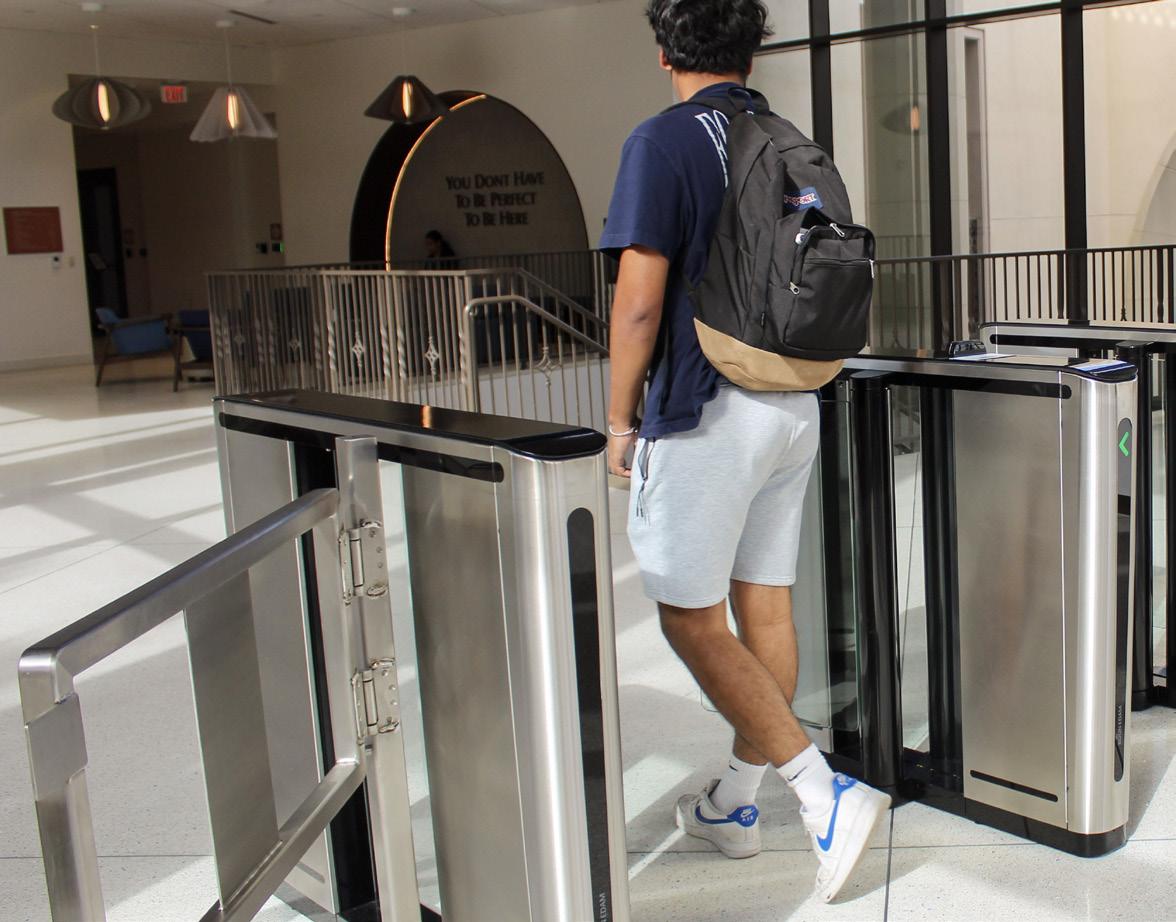

Students incur a $150 fee every semester which supports the Wellness Center. Hailey Howell/The USD Vista
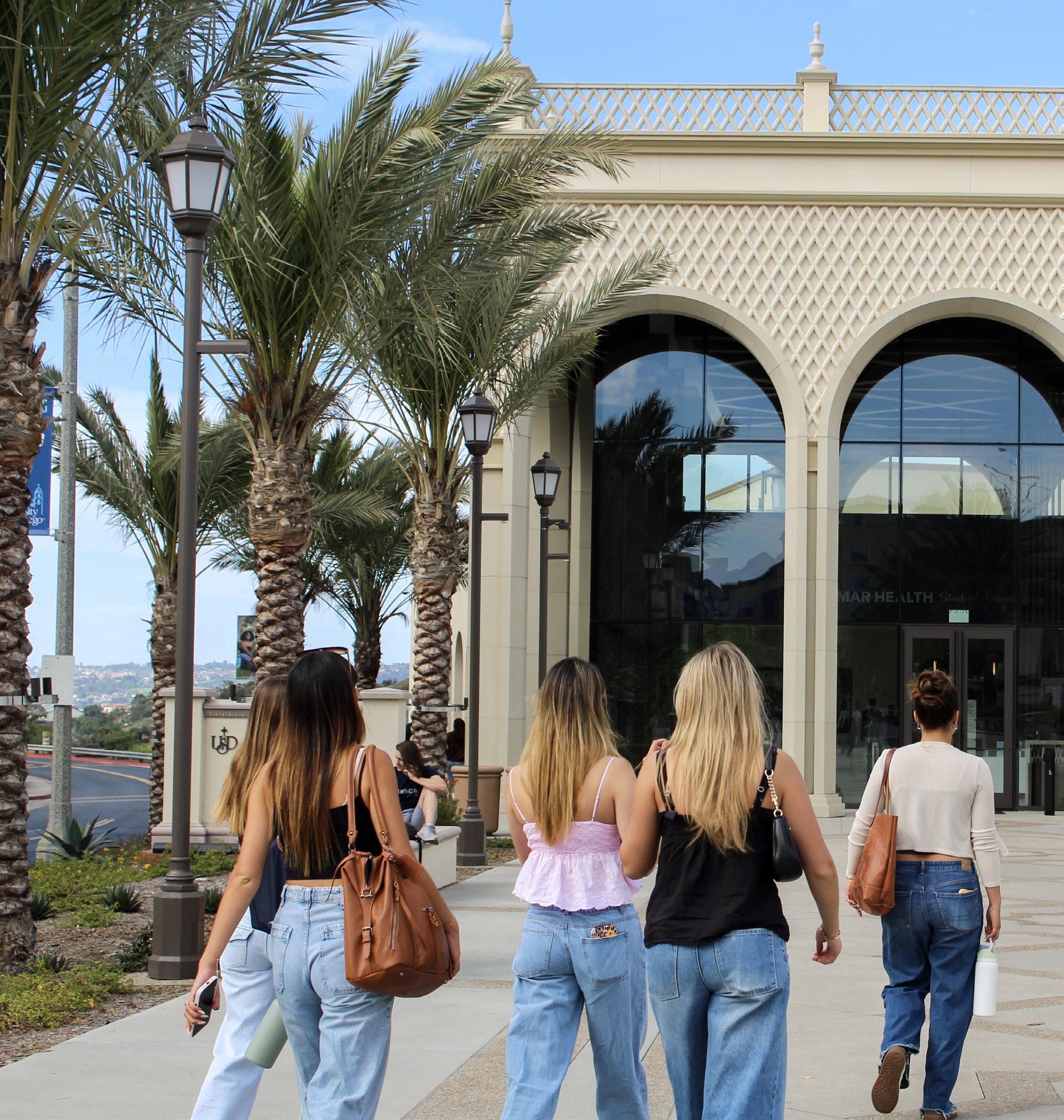
Alumni do not currently have access to the Palomar Health Student Wellness Center. Hailey Howell/The USD Vista
Silence speaks volumes ARTS & CULTURE
The Humanities Center introduces the ‘On Silence’ series
EMMA O’CONNELL ASST. A&C EDITOR
The Humanities Center unveiled a semester-long series titled “On Silence” on Feb. 10.
USD Associate Professor of Art History Derrick Cartwright, PhD and Humanities Center Director Brian Clack, PhD, introduced the collection of panel discussions and exhibitions at the unveiling. The series will revolve around the themes of silence. The Center’s official webpage outlines questions the series will address.
“What is silence and why might it be of value,” the Center asked. “What space is there for silence in an increasingly loud and noisy world?”
The nuanced questions solicits a nuanced answer. “On Silence” will provide nine academic panels and two exhibitions addressing this inquiry. The series aims to be as expansive as possible. “On Silence” is heavily cross-disciplinary, and the panelists will approach the theme from philosophical, mathematical, musical, theatrical, theological and artistic angles. It is an exercise in the fundamentals of a liberal arts tradition: examining
a topic in an inclusionary and sometimes unconventional way.
The topic of “silence” is wideranging. To get to the heart of it, Dr. Clack shared his inspiration: a quote from Samuel Beckett, the 1969 Nobel Prize Laureate in literature.
“Every word is like an unnecessary stain on silence and nothingness,” Beckett wrote.
Clack responded to his inspiration and explained the thought behind the theme.
“Our common discourse has a lot of vapidity and meaninglessness,” Clack said. “In contrast with noisy, loud or full of words, what is there to be said about the value of silence? We should maximize silence.”
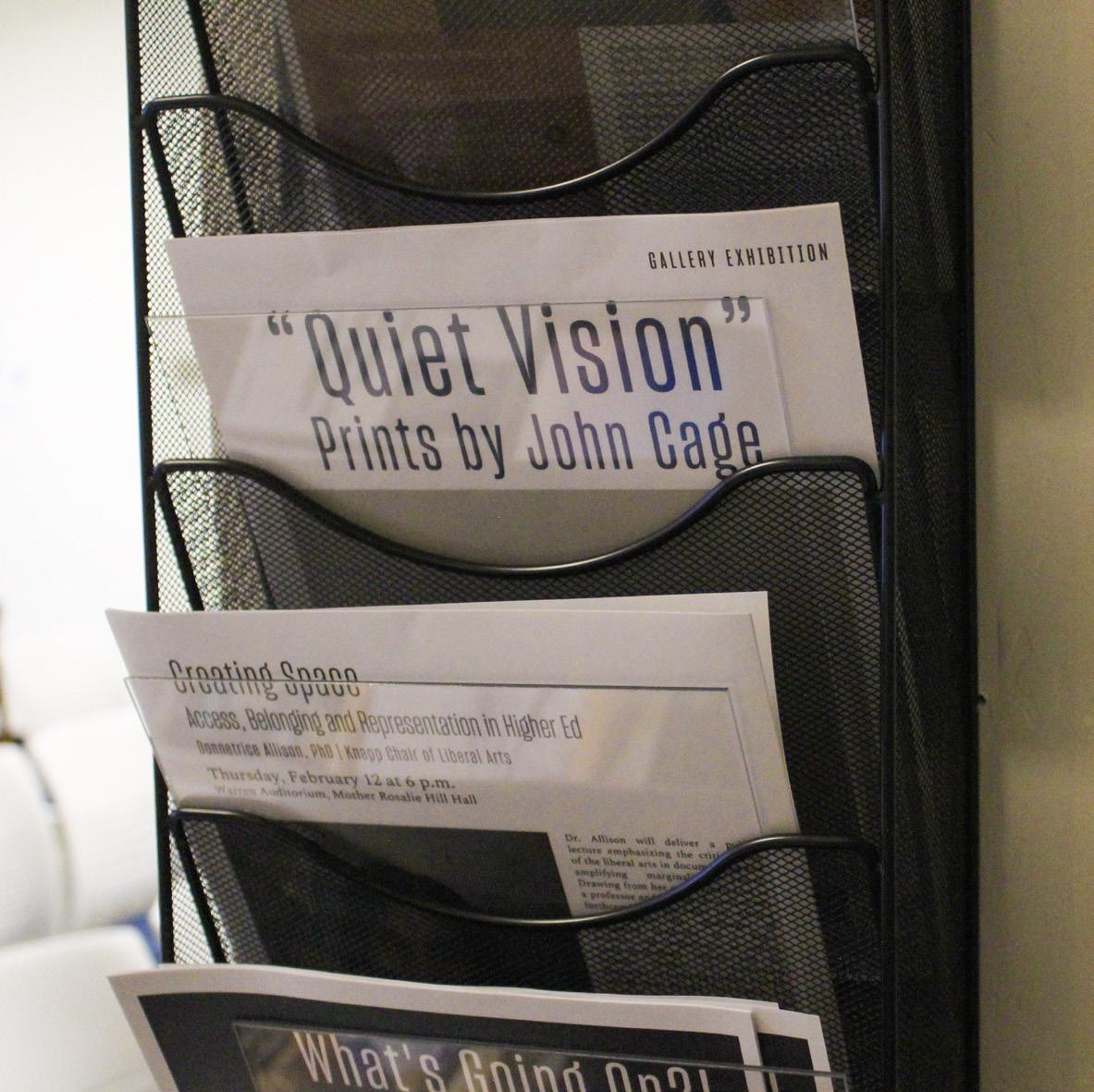
Now more than ever, people are extremely accustomed to constant talk. “On Silence” refines the idea that silence can be powerful and refreshing. The speaker panels will provide a space for “no strings attached” curiosity. The first exhibit, “Quiet Vision: Prints by John Cage,” is now on display until April 5 in the Humanities Center Gallery. This is the largest collection of prints by John Cage in San Diego. Cartwright, who organized the
exhibition, provided context to Cage’s work and integrated it with Clack’s vision for the spoken series.
Cage’s career in composition, writing and art was controversial. He is best known for “4’33,” a piece of music that redefines our typical notion of sound. There’s a discrepancy between what people expected Cage to do and what he actually did. The artwork depicts a pianist seated before the piano, never once touching the keys throughout the performance. The debut made concert-goers furious, and the noise of the crowd became the composition. Here, John Cage pushed the envelope of what music actually is.
Cage’s prints challenge the conventional concept of visual art in a similar way. They’re left largely up to chance due to the unorthodox nature of Cage’s technique.
By including Cage’s work, Cartwright introduces another angle to “On Silence.”
“Thinking about silence is dialectic,” Cartwright said. “There’s a tension. We’re addressing this tension.”
In fraught and noisy times — socially, politically or even individually — a decision to be
outspoken versus quiet must be made. The decision to be quiet can carry a negative connotation.
A familiar example is the protest one-liner: “Silence is Violence.”
Against this socio-political backdrop, “On Silence” is timely.
“Quiet Vision: Prints by
GAMES
Love is a puzzle: Crossword
John Cage” invites students and other attendees to examine what simplification, chance and presence tension based in silence feels like. Clack and Cartwright mapped “On Silence,” and both professors agree on a desired outcome: a conclusion in which nothing is concluded.
DAVID COOK OPINION EDITOR
The Humanities Center is hosting a semester-long series surrounding silence. Hailey Howell/The USD Vista
Toreros tune into ‘Benito Bowl’ USD
students react to Bad Bunny’s infectious songs from Halftime
From Bad Bunny, Page 1
islands is Hawaii is a part of the 50 states; Puerto Rico is not — yet. Assimilation could cause a loss of political autonomy and cultural identity — issues that Bad Bunny addresses throughout his discography. The complex lyricism might be lost on English speakers, but the infectious sound is not.
The track list from his most recent album sparked popularity all over the United States. Bad Bunny accumulated 19.8 billion streams on Spotify, making him the most-streamed artist on the platform for the fourth time since 2020. Just 10 years ago, Bad Bunny was working at a supermarket in Bayamón, Puerto Rico, making his rise to fame all the more incredible.
USD Spanish Professor Aldara Fernandez Sierra teaches students about Puerto Rican traditions as a part of the Spanish curriculum. Fernandez Sierra commented on how she internalizes Bad Bunny’s growing popularity.
“His popularity has helped normalize Spanish and Latin American culture expression in the U.S., especially at a time when conversations around immigration identity and belonging are very present,” Fernandez Sierra stated.
USD sophomore Rylie Getty was excited to watch a performer represent Latin American culture at such a famously American event.
“It is really important that we show a singer from another culture to represent how vastly popular not only Latin American music is, but that culture within the United States,” Getty said. “It is a really powerful movement. Also, his songs are amazing. I’d love to be friends with him. I’m excited to have a wholesome person perform.”
Another one of Bad Bunny’s fans is Assistant Professor Wilnelia Recart González, PhD. Growing up in Puerto Rico, González connects to Bad Bunny’s music in a unique way. González shared what she was looking forward to for this year’s halftime performance.
“I’m excited for people to have fun and see a glimpse of how Puerto Ricans have fun,” González exclaimed. “I got tickets to see him in Colombia. He managed to make a football stadium look like it was an old school discoteca [disco nightclub] where you have the most intense perreo [Puerto Rican dance traditionally to reggaeton music] of your life.”
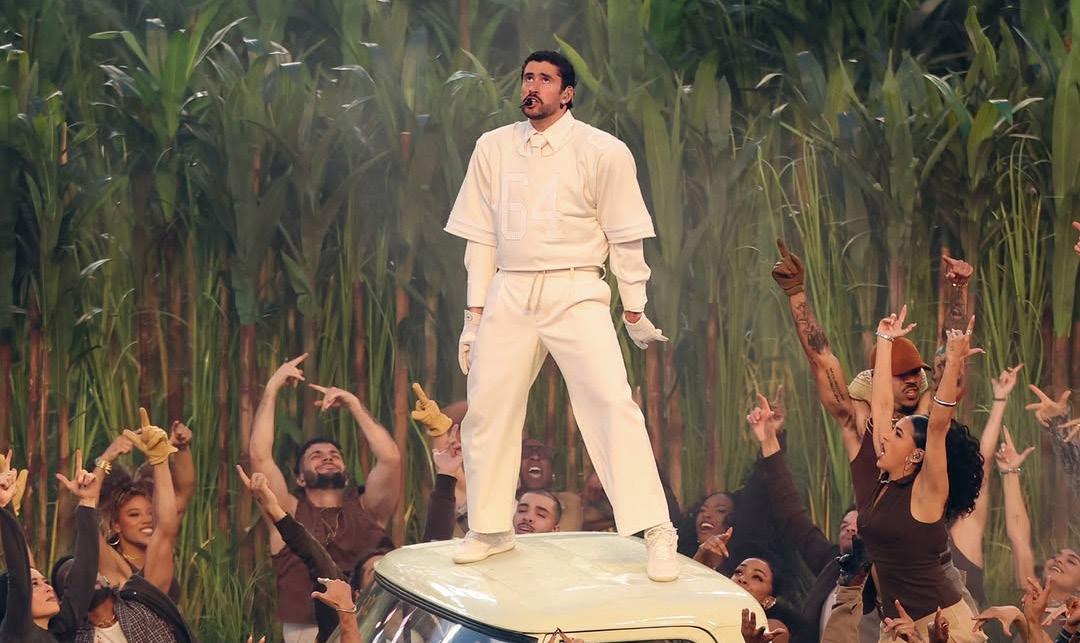
The golden sun began to set as “Tití Me Preguntó” kicked off the 13 minute halftime show. Bad Bunny emerged amidst a sugar cane field, dancing with workers
wearing authentic jíbaros in pavas, straw hats traditionally worn by Puerto Rican field workers. The undeniable symbols of Puerto Rican culture continued through the iconic plastic chairs that special guest Ricky Martin basked in; a scene that mirrors the “Debí Tirar Más Fotos” album cover.
Ricky Martin, one of Puerto Rico’s most iconic crossover artists, wasn’t the only celebrity appearance during the show. Fans spotted cameos of Lady Gaga, Pedro Pascal, Cardi B and Alix Earle.
USD junior Sophia Salentine was skeptical of some of the special guests, and their place in the cultural driven performance.
“The special guests were very unexpected,” Salentine commented. “Like Alix Earle and Lady Gaga? Odd.”
Another event that caught fans’ eyes was the wedding that took place during the halftime show. The two individuals — Eleisa Aparicio and Thomas Wolter — were legally married while drowning in a sea of dance and song; Bad Bunny acted as the witness. The Wolters’ wedding symbolized Puerto Rican love and a call for unity.
The jubilant artist moved through songs such as “BAILE INoLVIDABLE,” “VOY A LLeVARTE PA PR,” and “NUEVAYoL” with a majority Latino dance group. Authentic love bled through the screen and sparked emotional reactions from viewers. USD junior Kendall Adams explained her experience.
“There were tears in my eyes,” Adams choked. “When he handed the kid the Grammy I lost it. I loved it so much.”
Around the ninth minute of his performance, the camera panned to a family watching Bad Bunny’s acceptance speech. The artist danced up to the little boy and handed him a Grammy, prompting a big enough smile to light up the entire stadium.
The fiesta came to a close as Bad Bunny spiked a football labeled “Together, We Are American” into a sea of red, green and blue. He thanked the crowd listing every nation in North, South, Central and Latin America, suggesting that “God Bless America,” could apply to an entire hemisphere.
Exiting the stadium below a billboard that read “The only thing more powerful than hate is love,” Bad Bunny reminded the crowd that “America” doesn’t just mean the United States. With political motives at every edge of his performance, Bad Bunny left the stadium giving fans a message of hope.

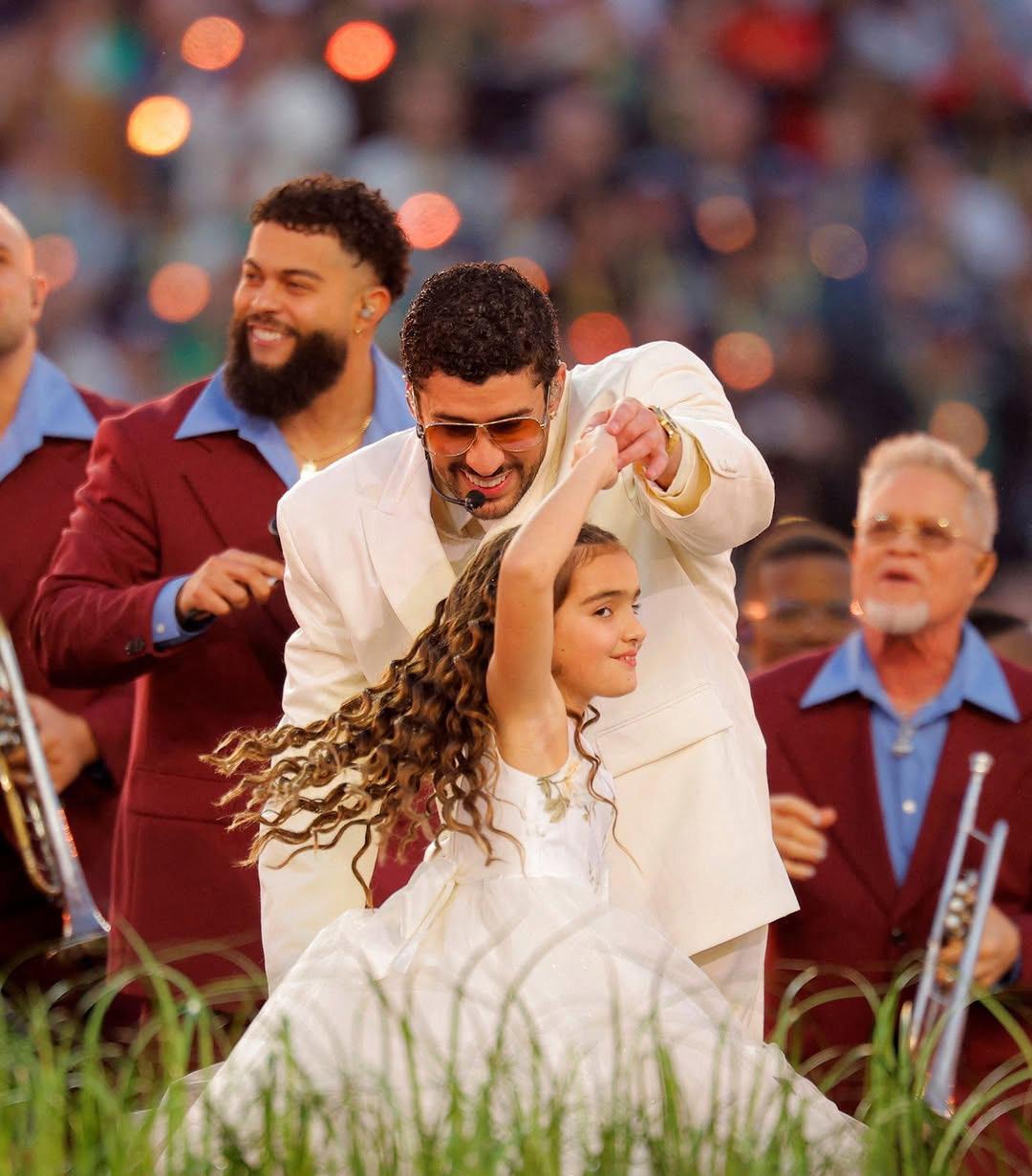
Bad Bunny carrying the Puerto Rican flag of Independence, flown to represent political autonomy.
Photo courtesy of @washingtonpost/Instagram
Bad Bunny spinning the flower girl during Eleisa Aparicio and Thomas Wolter’s wedding. Photo courtesy of @washingtonpost/Instagram
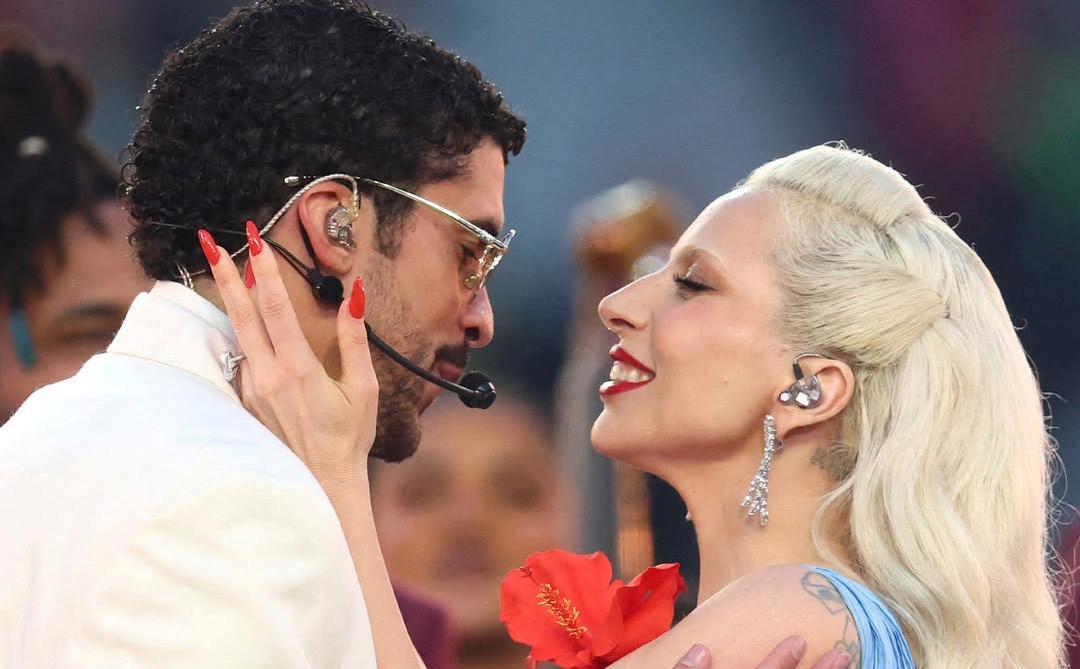
Bad Bunny looking at Lady Gaga during Super Bowl LX. Photo courtesy of @washingtonpost/Instagram
“I feel like we could use a little bit more [third spaces] It just gives you the ability to unwind and detach when you need to instead of being cooped up all the time ”
Nathaniel Barranco, USD sophomore

“For those looking to socialize and get to know new people yes [a third space is beneficial], but for many, they would rather use that time to hang out with people they already know or do other things that third space allows a break from busy, structured environments and allow us to enjoy ourselves in a place other than where we are required to be at a certain time doing a certain thing.”
Amelia Echeverry, USD first-year
Toreros speak o
A third space is typically a public space most of their time: their house and schoo from a cafe, a library, a skatepark , to the third space is a place for people to meet public. However, many third spaces now to stay and en
“It gets people out of their shells [an express creativity, especially when w think that there is a need for third spa opportunity for everyone to get out a of their ho
Bella Masewicz , US


on third spaces
e outside the two places people spend ol or work . Third spaces can be any thing e beach or even a particular bench. This t with their friends or just spend time in w require some sort of payment in order joy the space.
nd] out of their dorm to go and e are studying all the time… I do ces because it ’s a chance and an and meet people and just be out ome.”
SD sophomore
“I don’ t really have a lot of time for myself like that I do clubs, but they ’re not like a third space I wouldn’ t really consider them like that It would be kind of relaxing [to have a third space], to get away from it . ”
Natalie Garcia , USD first-year
“I think third spaces are becoming less common as technology use increases People would much rather prefer calling their friends or watching a show and enjoying time together at home While this is also a fun and valid way to spend time, it ’s become so normalized, I think it has closed people’s minds to being open to hang out and just chill at random places, especially around their college campus.”
Kaitlyn
Desa , USD first-year
Art by Kyra Lefebvre/ The USD Vista: Content by Amelie Sedlack and Julianna Flores
FEATURE
From newsroom to newlyweds USD
ANJALI DALAL-WHELAN ASSOCIATE EDITOR
EMMA PIRHALA MANAGING EDITOR
Most newlyweds wouldn’t spend their first week married arm wrestling down the halls of the U.S. Capitol, fighting to get a quote from a senator. But for USD alumni Kaia Hubbard ’20 and Luke Garrett ’20, no honeymoon could be more fitting. The couple, both working journalists in Washington, D.C. — Garrett for NPR, and Hubbard for CBS, met at USD. They have been reporting together — both as competitors and collaborators — for over seven years.
Garrett and Hubbard’s work frequently overlaps, although not usually as it did one day last summer, just a few weeks after their wedding. Both reporters were at the Capitol, covering the One Big Beautiful Bill, which was being voted on by the Senate.
“We were chasing this lawmaker, trying to get the quote,” Garrett recalled. “That was what we were all trying to do. And Kaia was a couple of steps ahead of me. And Kaia, again, is more focused on Congress in her work. So I was kind of the newbie. And so Kaia was like, ‘Come on, go get this lawmaker.’ And then there’s this one moment where the hallway narrowed. And I remember Kaia looked back at me, and she kind of gave me this look like, ‘I’m not going to let you in’ … And then I slammed into a column and got boxed out from my new wife.”
Prior to scurrying for quotes on Capitol Hill, Hubbard and Garrett worked on the same team in The USD Vista newsroom. The two served as subsequent editors-in-chief during the 2018-2019 and 2019-2020 academic years respectively.
However, the couples’ relationship goes back further than The USD Vista — all the way to Maher Hall during Hubbard’s first year. The pair first met
alumni share their USD Vista love story
in Maher, where Garrett, then a Residential Assistant (RA), briefly bonded with first year Hubbard over The Avett Brothers, a folk rock band. While this interaction didn’t lead the two together, they reconnected a year later when Hubbard also became a Maher RA. The two quickly became friends and a romance blossomed.
“We came from really different backgrounds, but it felt like we had a lot in common,” Hubbard said. “We just clicked. And he was … so energetic and outgoing and was always just wanting to help everyone … So once I got to know Luke, I was like, ‘I’m a goner. This is it for me.’”
One thing that instantly connected the couple was writing.
“I remember when I first met Kaia I was working on a speech that I was going to give to student leaders,” Garrett said. “It was about my life and my experience. And I remember giving a copy to Kaia and Kaia read it and was able to write my voice better than I could even. I was like, ‘Wow, you really know me, even though I’ve only known you for like two weeks.’ Yes, the connection was kind of immediate and undeniable.”
Neither Hubbard nor Garrett predicted that they would end up in journalism when they started at USD. Hubbard was studying English and psychology, while Garrett was majoring in physics and philosophy.
Hubbard joined The USD Vista first, working as the copy editor her sophomore year. She encouraged Garrett to join, and he ended up being hired as the editorin-chief for the next year, with Hubbard as the associate editor.
The next year, Garrett took another semester of college, graduating in December — a ninth semester the couple dubbed his “victory lap.” During this semester, Garrett stayed at The USD Vista working as
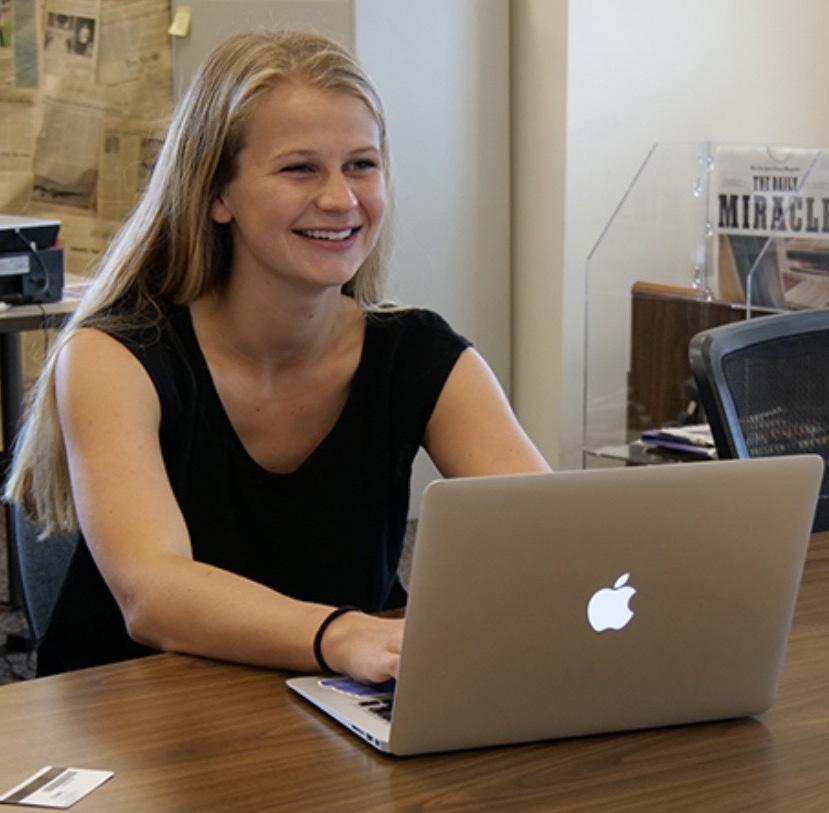
the news editor, while Hubbard stepped up to the editor-inchief role. This put the couple in two of the four executive editing positions on the paper.
Working together on The USD Vista, Hubbard and Garrett spent countless hours together, along with other student journalists, some of whom they are still close with today.
“The Vista is kind of like a family, so much time spent [together],” Garrett said. “It’s a lot of work to put a paper out and report while you’re being a student. It’s a lot of time, your free time, you have to give up. So you make it really fun. And so we had just a blast.”
While working at The USD Vista together, Hubbard and Garrett faced a tumultuous news cycle. They reported on significant stories, including the Varsity Blues college admissions cheating scandal. Their reporting even brought them into disputes with USD’s Associate Student Government, leading to torn up copies of The USD Vista and threatened student reporters.
Their reporting on ASG earned Hubbard and Garrett a second place award at the California College Media Association. On a deeper level, Garrett explained that these experiences in student media served as a foundation for the couple’s current careers as reporters in Washington, D.C.
“It was an intense time,” Garrett shared. “But those experiences are ones you hold in your heart and ones you keep with you as you continue to face, as a journalist: adversity, criticism, attacks, which, unfortunately, continue. And it’s great to have had a team and a paper that stuck together, through it all. Yeah, those nights, those days, those stories, yeah, I don’t forget them. They stick with me.”
As Hubbard’s final semester as editor-in-chief at USD came to an end, COVID19 disrupted life. Hubbard recalled when she realized the severity of the pandemic.
“I remember… being in the newsroom, just me and kind of realizing, oh, ‘Things are going to change a lot and we don’t know how we’re going to do this,’” Hubbard reflected. “But we’re going to do it and we’re going to have to keep producing news for people.”
Normal production of The USD Vista halted, but Hubbard and her team continued to keep the campus informed by posting about the ongoing pandemic on Instagram.
Garrett and Hubbard rode out quarantine in their respective college beach houses, and turned their attention to finding post-graduate jobs. After
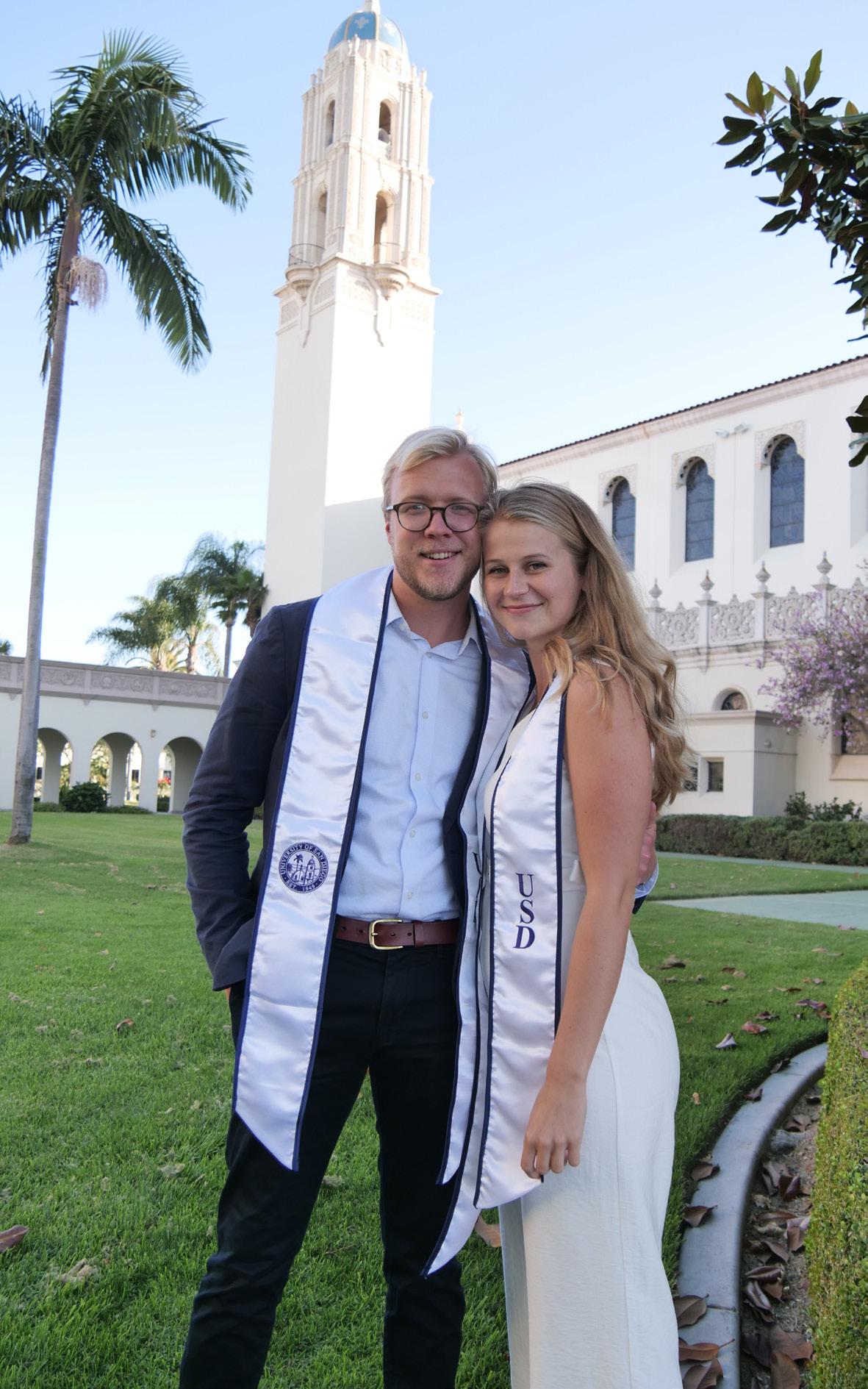
applying for jobs across the country, Garrett and Hubbard both landed journalism jobs in Washington, at separate outlets.
The two returned to San Diego in 2023 to visit friends and enjoy the California sun. After a sunrise surf at Mission Beach, Garrett popped the question and asked Hubbard to marry him in the city where it all began.
Garrett and Hubbard married in June 2025 in a ceremony in Hubbard’s home state of Oregon. Despite being five years removed from their last articles at The USD Vista, the pair found their time in SLP 403B valuable to wedding planning — even drafting ceremony programs on Adobe InDesign. Multiple friends they made at The USD Vista attended the celebration.
As newlyweds, Garrett and Hubbard went back to Washington and continued breaking news for NPR and CBS, including their run in at the Capitol. Two weeks later, they did take a real honeymoon, to Spain and France.
Though journalism can be a high-stress job, the couple said that working in the same industry supports their relationship.
“We just talk about the news, of course, because that’s what we’ve been doing all day,” Hubbard said. “We both get it, we’re up to speed, and we’re
interested in the same thing. So it’s really nice in that way… I think we can both be more understanding when our jobs get crazy because we’re in the same field. So that works out.” Garrett reminisced on their early days in The USD Vista.
“It really is a continuation of the newsroom at The USD Vista,” Garrett said.
“Good quote, Luke,” Hubbard quipped back.
However, Garrett and Hubbard agree that their time at The USD Vista helped form them as journalists.
“You learn the lessons you’ll face in the real world,” Garrett said. “Those battles are still fought day in and day out in D.C. I think back to that time as editor-in-chief when we faced a lot. One of our reporters faced violent threats. They tore our papers up. We had to have security. It was an intense time, but those experiences are ones you hold in your heart and ones you keep with you as you continue to face as a journalist, adversity, criticism, attacks, which unfortunately, continue.”
Today, Garrett and Hubbard take the lessons learned from The USD Vista — and the relationships gained — into their lives post-graduation. Working as professional journalists, the couple continues to bounce ideas off of each other and bond over the news — just like they did weekly in the newsroom.
Hubbard and Garrett graduated from USD in the class of 2020.
Photo courtesy of Luke Garrett
Kaia Hubbard in The USD Vista newsroom. Photo courtesy of USD Student Media
Trump’s war against journalism
The
administration’s attacks on the press warrant concern
DAVID COOK OPINION EDITOR
A few months ago, I wrote an opinion piece about the Pentagon’s attempt to impose a new journalism pledge that would have restricted how journalists report on the Department of Defense. While the policy ultimately collapsed after widespread backlash, it now reads less like an isolated controversy and more like an early warning sign of a broader campaign to control information and intimidate the press. That campaign may have intensified under Trump’s second administration, however its foundation was laid years earlier, beginning in 2016, when attacks on the “fake news” media first became a political strategy.
Since then, those attacks have shifted from language to action. The Pentagon pledge was not about protecting classified information, as existing laws already do that. It was about testing how much control the government could take over journalism itself. When that effort failed, the pressure simply changed form. Restricting access, threatening credentials and sending a message that aggressive reporting comes with consequences have become part of the new normal, signaling that the goal is no longer to challenge the press, but to control it.
The current administration now appears to have crossed its most dangerous line. The arrests of journalists Don Lemon and Georgia Fort represent one of the clearest and most extreme confrontations between the federal government and journalists in recent American history. Both Lemon and Fort were working as independent journalists when they were arrested by federal authorities after covering an anti-ICE protest that disrupted a service at Cities Church in St. Paul, Minn. After widespread demonstrations following the fatal shootings of Renee Good and Alex Pretti by federal immigration agents, a grand jury in Minnesota indicted them and several protestors on conspiracy and civil rights charges related to the protest. Prosecutors say the protest amounted to a coordinated disruption of worship.
Lemon, Fort and press freedom advocates, on the other hand, have emphasized they were there to document the

event, not to lead or organize it, and that arresting journalists for covering a protest raises serious First Amendment concerns.
In a White House press briefing on Jan. 15, eight days after the killing of Renee Good, Press Secretary Karoline Leavitt responded sharply when The Hill reporter Niall Stanage questioned the administration’s defense of the ICE agent involved in the killing of Renee Good.
“Why was Renee Good unfortunately and tragically killed?” Leavitt asked Stanage.
“Are you asking my opinion?
An ICE agent acted recklessly and killed her unjustifiably,” Stanage responded.
“Okay, so you’re a biased reporter with a left-wing opinion,” Leavitt snapped.
“You’re a left-wing hack. You’re not a reporter, you’re posing in this room as a journalist, and it’s so clear by the premise of your question. And, you and the people in the media who have such bias, but fake like you’re a journalist, you shouldn’t even be sitting in that seat.”
The monologue went on and the message was clear: report on an event that contradicts the Trump administration’s narrative, and prepare to be made an example of.
Video evidence shows an ambiguous story at best for
Good’s shooter, ICE agent Jonathon Ross. While some Americans believe that this was an unjustifiable murder by a federal officer, others have seen the video evidence of the killing and decided that this was an act of self defense by the ICE agent. While people are of course allowed to come to this conclusion, the situation is unclear at best, making questioning from a journalist valid. The haste from Leavitt, which has been seen by Trump and other members of the cabinet, is a sign of a larger war against journalism.
These moments reveal something deeper and more dangerous than isolated controversies. They show a pattern in which questions aren’t answered transparently and journalists aren’t treated with respect. They’re met with resistance, hostility and legal jeopardy. When critics ask tough questions about federal agents’ conduct, the response has the purpose to deflect, deny and demean. That pattern doesn’t happen in a healthy democracy, but it happens in systems where power fears exposure more than it fears criticism. One example of where this theory of censorship is tested is in Iran, where journalists are under constant surveillance, deal with arbitrary arrests and
receive long prison sentences for “spreading propaganda.”
In a government where traditional checks and balances have been weakened by partisanship and seemingly unwavering loyalty to the executive branch, journalism has emerged as the fourth branch of government to restore said checks and balances. The responsibility for maintaining democracy has fallen on journalists to act as the eyes and ears of the public when the government fails to do so.
That role can only be fulfilled if journalists are free to operate. This means having the ability to ask hard questions, to pursue inconvenient truths and to speak truth to power without fear of arrest or retaliation. When reporting itself becomes criminalized or delegitimized, the entire idea of accountability collapses. The public loses information, and as a result, trust, causing the gap between power and the people to widen.
The Trump administration’s rhetoric and actions have made it clear. It is more about control than it is having favorable coverage. They want the narrative. They want the public to see only what they allow and to control reality itself.
That means you, me, our friends, our families and anyone
who relies on journalism are affected when the public’s right to know information is under attack. It is not just journalists who are under attack, but also the very people that they serve: the American public. Information is our way of holding those in power accountable, and propaganda is how those in power hide from scrutiny. We live in an era where the line between information and propaganda is extremely blurry, and when that line is blurred, democracy slowly and quietly begins to erode away, leaving the public less informed, and thus, less free. Regardless of whether Americans agree or disagree with the Trump administration’s policies, attacks on journalism should alarm everyone. Governments that act in good faith do not need to intimidate reporters, restrict access or punish those who ask difficult questions. An administration that treats the press as an enemy signals what they may believe is strength and unity, but in reality is fear of scrutiny. When those in power fear scrutiny, it suggests they have something to hide. A government with something to hide cannot be trusted, and in a democracy, that loss of trust is far more dangerous than any headline.
The views expressed in the editorial and op-ed sections are not necessarily those of The USD Vista staff, the University of San Diego, or its student body.
Journalist Don Lemon waves to the press after being released from jail, following his arrest for covering a protest over the killings of Renee Good and Alex Pretti.
Photo courtesy of @justjared/Instagram
Tennis grand slam comes to an end
Carlos Alcaraz and Elena Rybakina
GABRIEL ROMERO
CONTRIBUTOR
The prominent Australian Open tennis tournament recently concluded with the winners Carlos Alcaraz from the men’s side and Elena Rybakina from the women’s side. The Australian Open is considered one of the sport’s most prestigious tournaments and is held annually in Melbourne in January. Along with the French Open, Wimbledon and the U.S. Open it is one of the four major Grand Slam tournaments played year-round in the tennis world.
This particular competition is played on hard courts, as players are drawn into a knockout bracket and have to win seven consecutive matches to be crowned champion. Players who entered the main draw through a separate qualifying tournament must win an additional three matches beforehand.
Alcaraz completed his first career grand slam, which is the accomplishment of winning each of the four major tournaments in one’s career. He won his first
of many grand slam titles in the 2022 U.S. Open as a teenager, before following that up the next summer winning the 2023 Wimbledon tournament. The following year was even more dominating, as he won the 2024 French Open and defended his Wimbledon trophy. That recent success led to coming in as the tournament’s No. 1 ranked player beating Novak Djokovic in four sets, which was highlighted by losing the first then winning the next three 6-2, 6-3 and 7-5. Throughout his tournament play, Alcaraz had won in straight sets during each match leading up to the semifinal, where he found himself in a match, lasting five hours and twenty-six minutes. Alcaraz is the ninth and youngest male tennis player to ever achieve the career grand slam.
USD first-year Chase Parker acknowledged just how impressive it is to see how long these tennis matches can go on for.
“It is impressive how short the points seem for how long the matches last,” Parker
Italy hosts
win the 2026 Australian Open
said. “It looks like they are playing defense and offense in the same swing, which must be how it’s so hard for these athletes to break down.”
As for Rybakina, in her junior career she showed her potential breaking out in 2020 when she played in five finals, which was the most of any player that year. She eventually won her first major title in 2022
at Wimbledon in the summer, reaching the final in the 2023 Australian Open. She rose to the world No. 3 for the first time later that year, after joining the professionals just nine years prior in 2014. She cruised through to the later part of the bracket in this year’s Australian Open, winning in straight sets in each match leading up to the final. Having her work cut
out for her in the final, she traded off 6-4 set finishes with the tournament’s No. 1 ranked female player. Rybakina won the first set 6-4 before dropping the second set 4-6 and found herself behind three games in the final deciding set. Rybakina proceeded to respond with five straight games and eventually won the final set 6-4 to crown her second Grand Slam title.

the 2026 Winter Olympics
The 25th edition of the Winter Olympics features new sports
GABRIEL ROMERO CONTRIBUTOR
The Winter Olympics, a 19-day extravaganza of winter games and snow sports, where the air has a bite to it and the snow flies, began in Italy on Feb. 6. Officially named the Milano Cortina Games, from the opening ceremony in the historic San Siro Stadium to the Dolomite Alps in Cortina d’Ampezzo, the event occurs across various parts of the host nation.
Much like the Summer Olympics, contestants from all over the world compete in 16 winter sports, including fan favorites such as figure skating and hockey. There will also be plenty of new sports, including ski mountaineering or “skimo,” a demanding event in which athletes climb uphill with skis, hike and then ski back down.
Many of the world’s top winter athletes will be on display in Italy, with powerhouse nations such as the United States, Norway, Canada and Germany. These teams will set the stage for fierce competition for the special medals that around 2,900 athletes from over 90 National Olympic Committees will clash for in 116 events on ice and snow.
Throughout the history of the Winter Olympics, Team USA has won a total of 330 Winter Olympic medals, second only to Norway with 405 total medals. The athletes, representing the largest ever group America has sent to the Winter Games, come from all over the country, with 322 contenders in total.
USD senior and Boulder, Colorado native Kate Flaherty explained how immersive winter sports are in areas with plenty of snow.
“Not only were snow ball fights and building snow forts the go-to activity during snow days, but so was a lot of skiing and even using parking lots to skate,” Flaherty said. “Parents would put their kids on skis the moment they were able to walk.”
32 athletes will be representing Colorado, the highest number amongst all states, followed by Minnesota with 24 and California with 19. Colleges have remained a consistent channel to Olympic competition, with 84 members of Team USA being current or former NCAA athletes.
One athlete from Team USA, Lindsey Vonn, is gaining a lot of publicity, almost six years after her initial retirement from alpine ski racing. She has won three Olympic medals, one gold and two bronze medals. A week before her return to the events took place, the 41-year-old ski star ruptured
her ACL in a crash while training, then proceeded to post a video to her social media of numerous workouts while wearing a knee brace on her left leg. During the women’s alpine downhill event, Vonn was set to race shortly after her teammate Breezy Johnson posted a time that would eventually earn her the gold medal.
However, Vonn’s resilient run came to an abrupt end moments after it began, as she clipped a gate and crashed, resulting in a “did not finish.” The crash caused a fracture to her tibia in her other leg, forcing her to be airlifted off the course for medical treatment.
Moments like Lindsey Vonn’s return to competition despite already being injured show what the Olympic spirit truly represents.
While medals often define winners and losers, with only three per competition distributed, the games continue to highlight risk
and willingness to compete at the highest level regardless of outcome. That sense of awe extends beyond traditional winter-sport audiences, as it encapsulated USD first-year Connor Hughes who grew up in Hawaii, who said that winter sports always felt kind of exotic.
“Watching all of the Winter Olympics looks cool, but also a little crazy since I’ve never really been around snow,” Hughes said. “That said, I still enjoy watching winter sports, as I tend to appreciate them more for the skill and scenery since it’s more of a ‘that’s awesome to watch’ than a ‘I could do that’ feeling.”
Beyond famous events in figure skating, snowboarding and hockey, eight new medal events helped make the 2026 Winter Games the most gender-balanced in Olympic history. One new sport in Skeleton racing features
athletes sliding down ice tracks headfirst on steerable sleds in penguin-esque positions in what is considered the world’s first sliding sport. Freestyle skiing involves two skiers taking on parallel courses at the same time, as both competitors navigate the trickery of the course using technique along with swagger while judges decide who advances. Some changes were made to current events as well, with the alpine combined event now having two skiers split the duties with one tackling the downhill, and the other navigating obstacles. Beyond the medals and matchups, the Milan Cortina Games are notably shaped by their dramatic settings. From the bustling streets, famous fashions and historic arenas of Milan to the snow-blanketed slopes of Cortina d’Ampezzo, the Olympics unfold across a landscape blending urban culture with old traditions. It is the Olympic games to be hosted by two different cities simultaneously. Europe is widely considered the birthplace of alpine skiing, and the inclusion of the Dolomite Alps mountains marked a return to the roots of winter sports. Milan served as the central hub of the Games, hosting the opening ceremony — which featured Mariah Carey as one of the headliners — along with several major indoor events. San Siro stadium, typically home stadium to two of the bigger soccer clubs in the world, AC Milan and Inter Milan, was transformed for one of the most iconic ceremonies in sports. As athletes chase Olympic glory across Italy’s iconic venues, fans around the world will witness the stories that make the Winter Olympics one of the most anticipated global events.
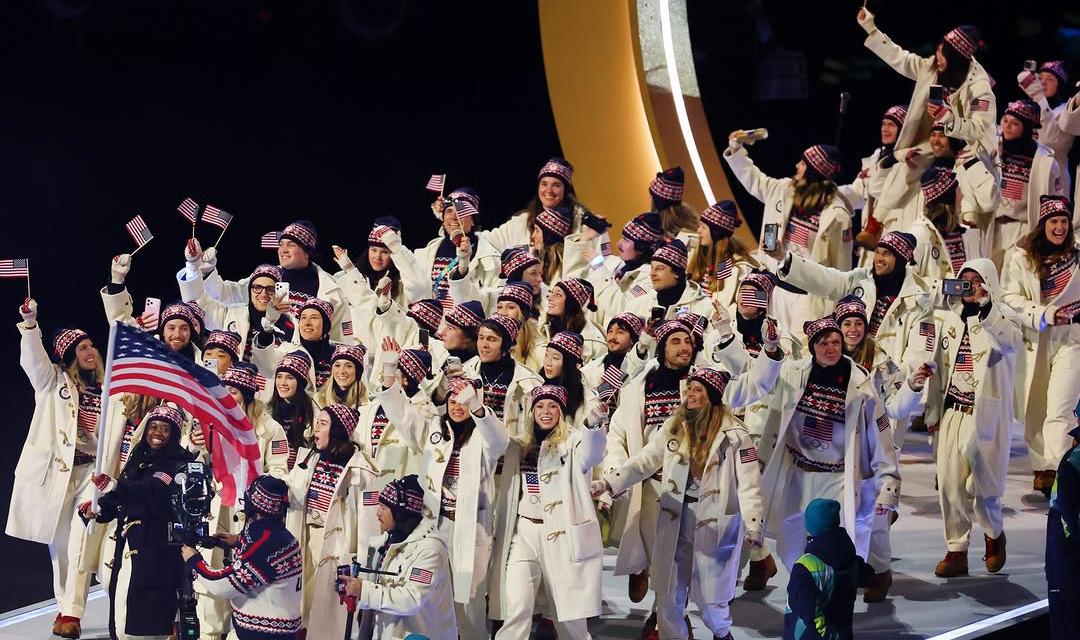
Team USA’s figure skating team walks out at the opening ceremony.
Photo courtesy of @usfigureskating/Instagram
Elena Rybakina kissing the Australian Open trophy after victory.
Photo courtesy of @lenarybakina/Instagram
USD women’s basketball supports Play4Kay
Play4Kay initiative raises awareness for women with cancer
PRIYA COOPER SPORTS EDITOR
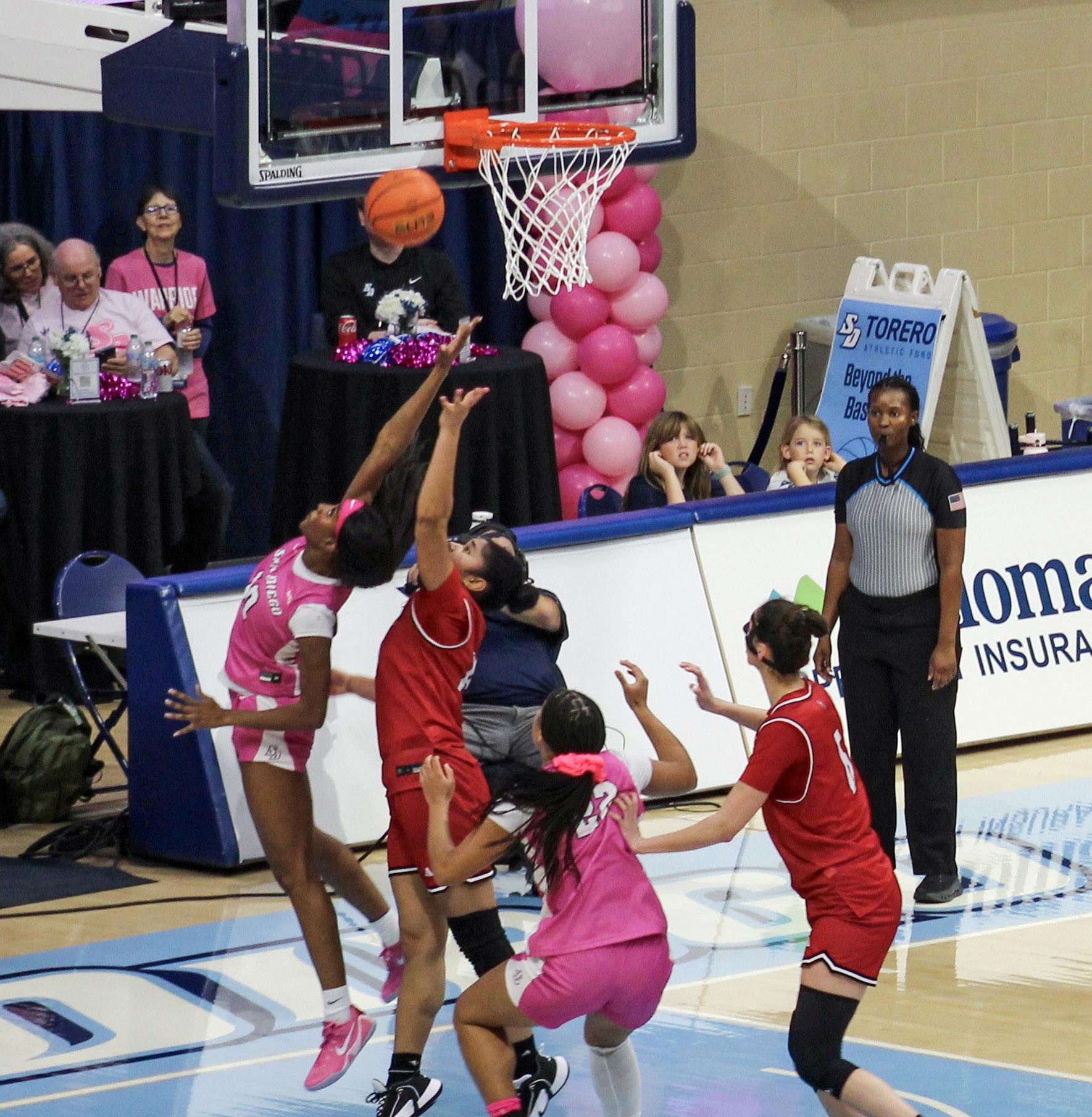
San Diego Women’s Basketball hosted its annual Play4Kay game on Saturday, Feb. 7, taking on Seattle University.
Play4Kay was established to raise funds and awareness for the Kay Yow Cancer Fund, a nonprofit organization dedicated to supporting ways of fighting any and all cancers affecting women. The initiative unites players, coaches, officials and fans to do something larger than themselves that exceeds wins and losses in competition.
The Play4Kay initiative is Kay Yow’s most impactful fundraiser with over a thousand participating schools.
The final score of the game was 71-54, with San Diego emerging victorious. On top of the win, the Toreros set multiple records during the game. USD held Seattle to a field goal percentage of 29%, the best mark against a Division I opponent this season. The team prevented the Redhawks from scoring a field goal over the final five minutes, which led to USD securing a single-game program record of 63 rebounds.
USD senior Michaela Garcia was in attendance at the game and commented on the atmosphere in the Jenny Craig Pavilion.
“It’s lively here, and you can see that the team is working very hard together, communicating well to beat Washington State,”
Garcia said. “Their uniforms also look very cute. I love the team and hope they can pull off the win for themselves and the cancer research.”
Another feat for the Toreros was a total of 16 assists on offense, matching their highest assist count this season against a Division I opponent. The 16 assists indicate the number of made baskets that were directly set up by a teammate, matching the team’s season-high output against Division I competition.
USD first-year Ruby Cottrill also addressed the atmosphere surrounding the event, emphasizing the impact of the crowd and the broader significance of the cause.
“The energy in the environment here has been really positive, and it’s been great to see the community come together in support of this cause,” Cottrill said. “It’s important to support games like this because they bring awareness and show something bigger than the game.”
USD junior Justin Cann reflected on the turnout and visual impact of the event, noting both the show of support and areas where greater attendance could have strengthened the atmosphere.
“Seeing so many people wearing pink was meaningful and pretty cool to see,” Cann said. “And it was encouraging to see those who came together on Saturday to represent something larger
than themselves. At the same time, I do wish more people had attended, as I felt the crowd could have been larger to show support.”
The Toreros wrap up their three-game homestand
Thursday, Feb. 12, hosting Gonzaga. February marks the final month of the Toreros’ basketball season unless they advance to the playoff season. Tipoff between the Toreros and the Gonzaga Bulldogs is at 6 p.m. inside the Jenny Craig Pavilion. The game will also be played on National Girls and Women in Sports Day and is one of five remaining on the Toreros’ regular-season schedule.
December 8 Crossword
USD women’s basketball represents Play4Kay with pink uniforms against Seattle University. Hailey Howell/The USD Vista
Seahawks win Super Bowl LX
Drake Maye and New England Patriots fall to Seattle
PRIYA COOPER SPORTS EDITOR
The NFL season concluded this past Sunday with the annual Super Bowl, held in Santa Clara, California at Levi’s Stadium, the home of the San Francisco 49ers. The final score of Super Bowl LX (60) was 29-13, with the Seattle Seahawks defeating the New England Patriots. The Seahawks dominated and remained ahead for the entirety of the game, scoring their first field goal early on in the first quarter.
Seattle’s defense limited New England’s offense throughout the game. Seahawks running back Kenneth Walker III earned Super Bowl MVP honors after rushing for 135 yards, and kicker Jason Myers from Chula Vista set a Super Bowl record with five field goals. Myers was Super Bowl LX’s featured scorer through the first three quarters, nailing field goals from 33, 39, 41 and 41 yards out to secure a 12-0 lead during that span.
Patriots’ quarterback Drake Maye struggled, and had over three turnovers and was sacked six times throughout the course of the game. The Patriots remained scoreless until Maye connected with wide receiver Mack Hollins on a 35-yard touchdown pass, trimming the deficit to 19-7 with 12:27 minutes remaining. New England failed to close the gap further after throwing interceptions on its next two possessions.
USD senior Gabriella Pardo commented on the Patriots performance and noted the lack of offense from New England.

“The game was legit Christian Gonzales against the Seahawks and that’s all I have to say,” Pardo said.
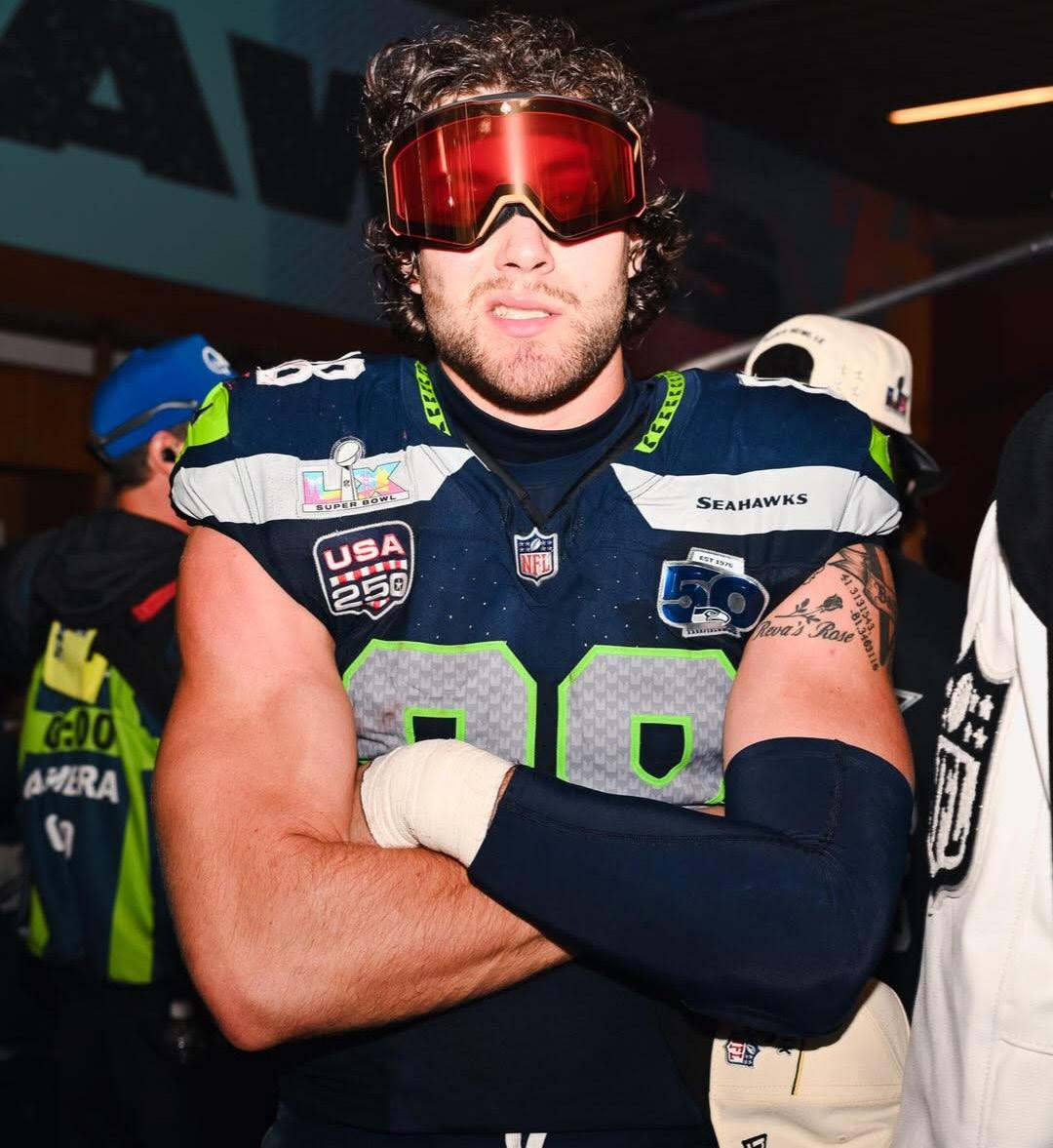
Seahawks’ quarterback Sam Darnold delivered a controlled, turnover-free performance in Super Bowl LX. He completed 19 of 38 passes for 202 yards and a touchdown, connecting with tight end A.J. Barner for a 16-yard scoring strike that helped extend Seattle’s lead in the fourth quarter. Darnold avoided costly mistakes against a tough Patriots defense and took only one sack, managing the game efficiently.
USD first-year Matthew Elliot discussed his allegiances while watching the game over the weekend.
“I wanted the Patriots to win, because I’m a Niners fan,” Elliot said. “I hate the Seahawks, so I was rooting against them. So I really wasn’t too happy with the outcome, but also not that affected by it.”
Seattle’s victory avenged their 28-24 defeat to the Patriots in Super Bowl XLIX in 2015, when New England sealed the win with a late goal-line interception by Malcom Butler.
Following the final
whistle, USD senior Kate Myers shared her thoughts.
“I honestly didn’t care much for either team, but I was kind of hoping the Patriots could pull it off,” Myers said. “I feel like the game itself was not as exciting as years past, and kind of disappointing overall.
Halfway through the first half when there still had not been a touchdown I checked out and was just waiting for ‘BAILE INoLVIDABLE’ to play at the halftime show.”
USD junior Justin Panther has similar views on the intensity of the game.
“My thoughts were that it was just very boring,” Panther said. “I mean low-scoring games can still be exciting, but the game just wasn’t close or that interesting at all.” While Seattle’s defensive control played a key role in the outcome, the lack of offensive momentum left some spectators disengaged as the game progressed.
USD junior Anthony Cheng talked about the team’s efforts and how it impacted his views of the game.
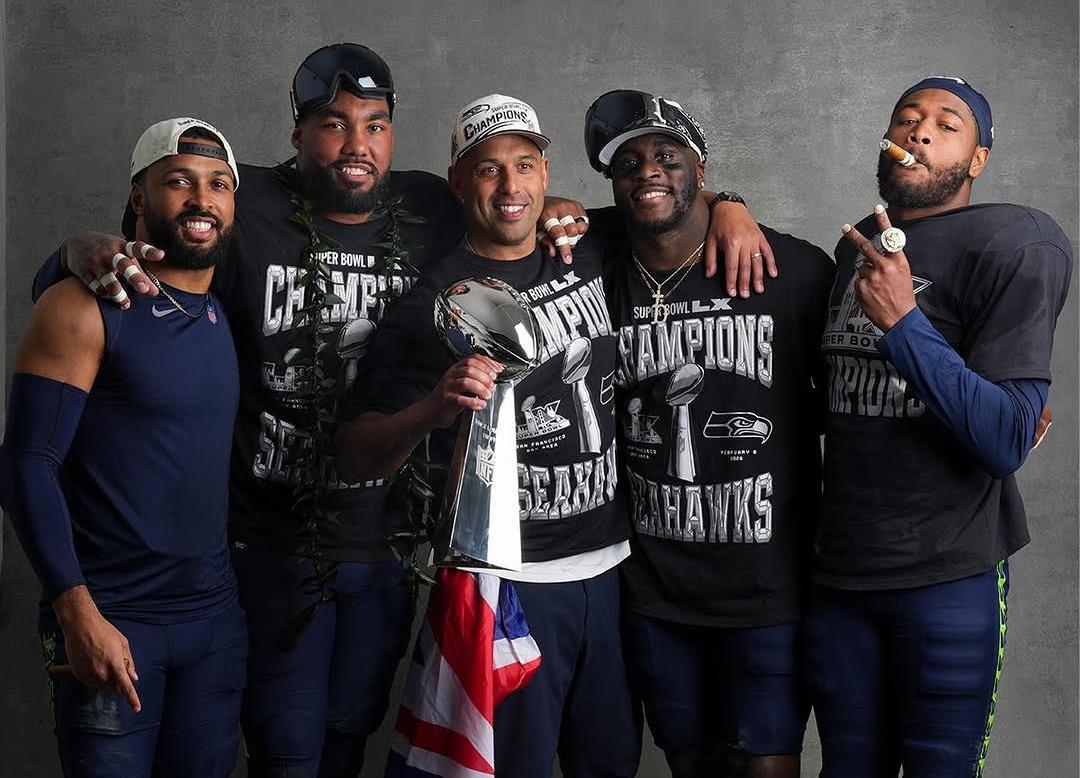
“I fell asleep like mid third quarter because it was just such a lopsided defensive battle that it got extremely boring,” Cheng said. “And then the only part of the game that I thought was really good or entertaining was during the garbage time when everybody just started chucking missiles down field.” The victory marked the second Super Bowl title in Seattle Seahawks franchise history and earned the organization its second Vince Lombardi Trophy.
Two Torero alumni were a part of the Seahawks Super Bowl victory this year. Gianna Kelly from the graduating class of ’25 is a part of the Seahawks dance team and Ivan Lewis from the class of ’03 works as the Director of Player Performance and Development. Lewis also coached at the University of San Diego, for two years from 2002-03 where he worked with the football team and other sports.
The 2026-2027 NFL football season does not start up again until September, giving teams a chance to reset while the Seahawks can enjoy their achievements.
SB vs Colorado State
MROW
MBB vs San Francisco
MGOLF vs The Prestige PGA West - Norman Course Palm Springs, CA
Sam Darnold and Kenneth Walker III hold the Vince Lombardi Trophy.
Photo courtesy of @seahawks/Instagram
Seahawks tight end AJ Barner celebrates the win.
Photo courtesy of @seahawks/Instagram
Super Bowl champions show off after victory over Patriots.
Photo courtesy of @seahawks/Instagram