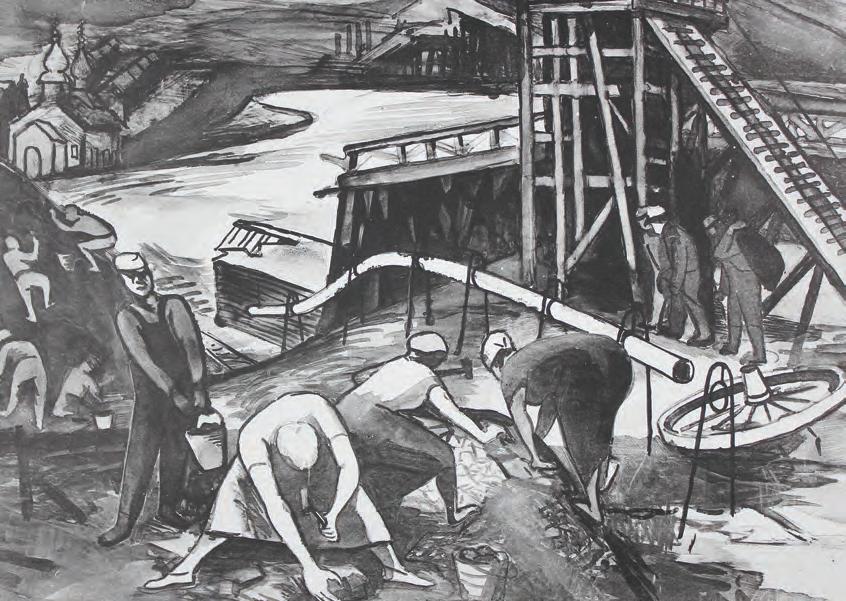
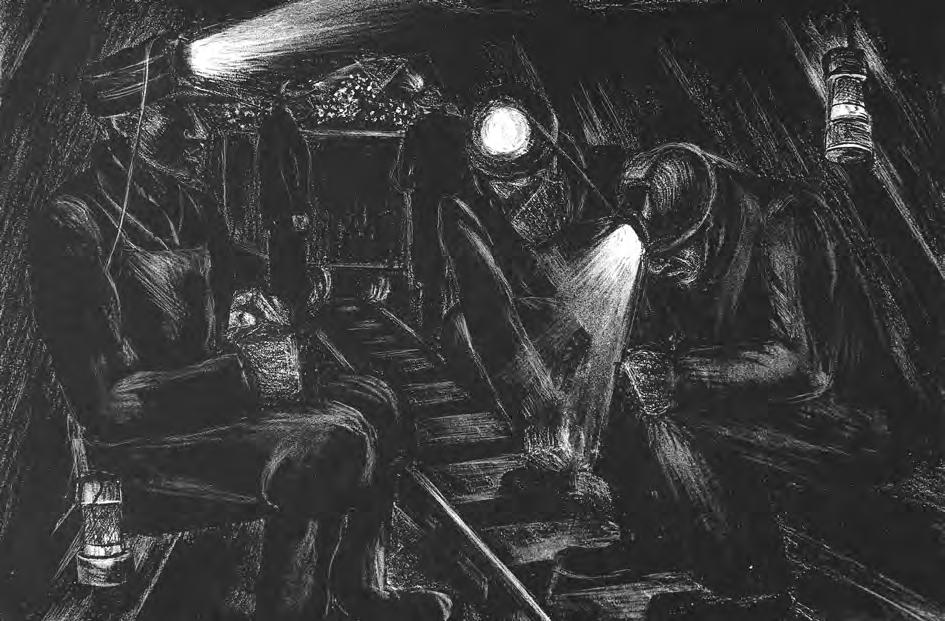
Hard Coal Experiences Hard Times: The Anthracite Region in the 1920s
and 1930s
Chester Kulesa
Prior to the 1920s, the economy of the hard coal region of Northeastern Pennsylvania was based on the mining, preparation, and transportation of anthracite—America’s preferred highest rank of coal that burned hot and produced little smoke with few impurities. World War I brought prosperity through increased production. In 1914, for example, 180,899 men and boys were employed in the industry—the greatest number ever.1 In 1917, mine workers produced 100,445,299 tons of hard coal—the peak of the entire history of the anthracite industry!2
By 1920, Scranton, Pennsylvania, known as the “Anthracite Coal Mining Capital of the World,” had a population of 138,000 people; five long-distance railroads; and “40 freight trains through the city each day.”3 The Pennsylvania anthracite industry “was for many decades one of the richest and most lucrative monopolies” in the United States.4 From the Northeast to the Midwest, domestic anthracite was used in home furnaces for heat and in stoves for cooking and baking. Finelybroken anthracite, known as buckwheat hard coal, was used in boilers to heat buildings, generate steam in electric power plants, and fuel industrial and manufacturing applications. Although mine work was arduous and dangerous and its impact on the air, land, and water left damage, scars, and residue, wages for anthracite miners were good.
In 1924, members of the United Mine Workers of America (UMWA) gathered in Scranton to dedicate the John Mitchell Monument, a sculpture which they had funded to commemorate their fifth president.5 Highly regarded by anthracite mine workers, John Mitchell (1870-1919) represented the UMWA from 1899 to 1908, leading its members through the great anthracite coal strikes of 1900 and 1902. After his death on September 9, 1919, the renowned labor leader was buried, per his own request, at Cathedral Cemetery in Scranton. Five years later, crowds gathered on the city’s Courthouse Square in tribute to the “Champion of Labor and Defender of Human Rights.” “Proceeding the unveiling of the monument a mammoth parade, in which forty thousand mine workers [were] expected to participate” took place.6 America’s energy needs, however, along with aspects of the anthracite industry and organized labor, were changing. Management and union problems resurfaced with the failure “to renegotiate the 1918 contract when it expired at the end of March 1920.”7 In that year, John L. Lewis (1880-1969) assumed the presidency of the UMWA. During his tenure, anthracite mine workers joined strikes in 1920, 1922, 1923, and 1925-1926. Consumers had difficulty with coal deliveries, and many traditional customers of anthracite turned to alternative fuels. Domestic hard coal began to lose market share to inexpensive convenience fuels such as oil and natural gas for home heating. Additionally, the steam anthracite market was threatened by less expensive bituminous coal, the coal-based fuel coke, and waterpower in the generation of electricity. Across America “more than 30 states [were] producers of other fuels—bituminous coal, [heating] oil, [natural] gas and coke—all of which [were] active or potential competitors of anthracite.”8
Although significant anthracite reserves remained in Northeastern Pennsylvania’s 484-square-mile hard coal region, many of the most accessible underground anthracite deposits had been mined. This caused the hard coal industry to make changes to mining and preparation activities. Some mines and coal breakers, or anthracite preparation plants, were closed to save costs or increase efficiency by mechanizing or modernizing those that remained. Surface or strip-mining machines and operations of fewer employees put many underground mine workers out of their jobs. Anthracite-carrying railroads dominated the hard coal industry. Owners were reluctant to meet the needs of unemployed or underemployed mine workers. Any rising costs were passed on to consumers. The “real control of the anthracite lands of the railroad interests and their bankers…channeled most of the anthracite profits into their own coffers.”9
The Great Depression of 1929 to 1941, which “began in New York City on a series of days in October 1929, and decisively ended on December 7, 1941,” brought more difficulties to the anthracite region of Northeastern Pennsylvania.10 “The trough of the economic depression which enveloped the U.S. late in 1932 and early in 1933 was particularly acute in the coal region.”11 To revive anthracite markets, coal operators renewed efforts to regain those lost in the 1920s, as well as attract new ones. This included reducing the work force and operating costs, closing some mines and preparation plants, and modernizing others. Approximately 50,000 mine workers were unemployed throughout the anthracite region.12
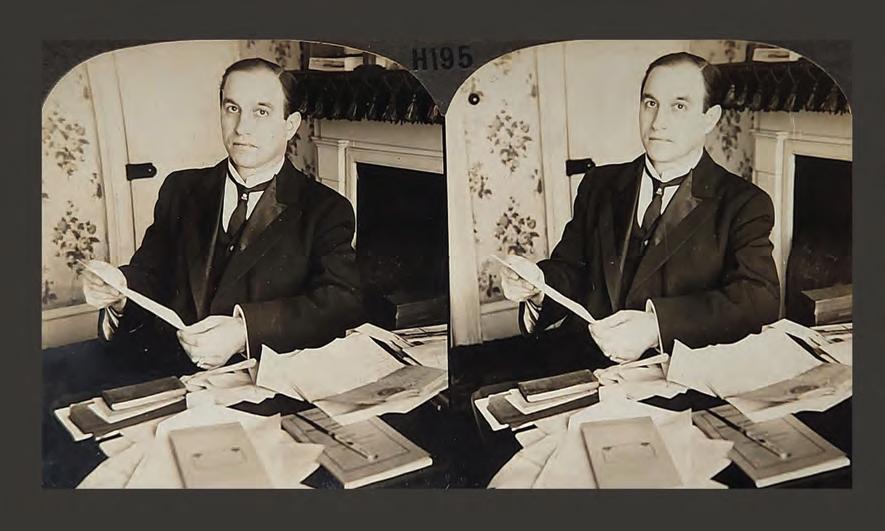
Keystone View Company (active 20th
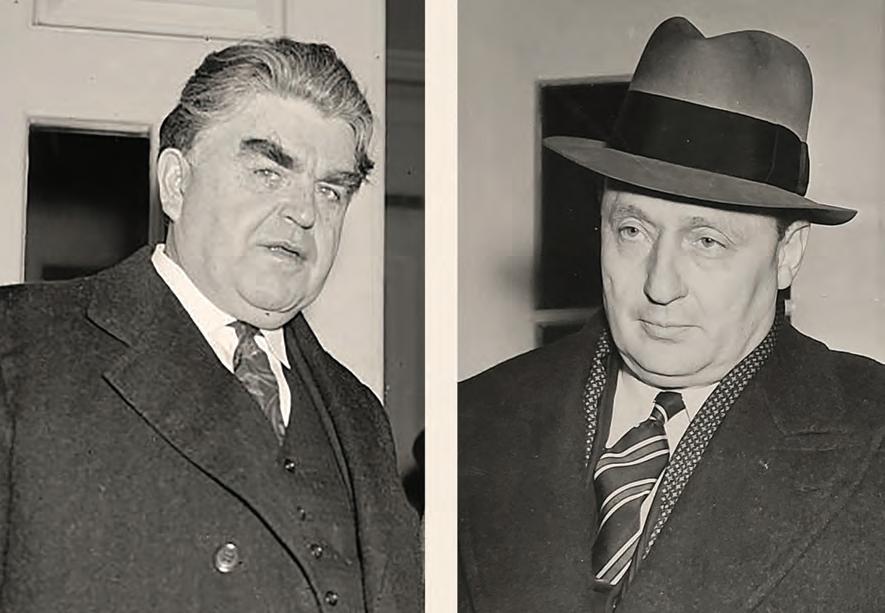
Harris and Ewing (active 20th century). John L. Lewis (1880-1969). President of the United Mine Workers (1920-1960). Detail of At White House. Washington, D.C., April 14. John L. Lewis, President of the United Mine Workers, and Senator Joseph Guffey, both ardent supporters of the Guffey-Vinson Coal Control Bill of which Guffey is the author, leaving the White House today after a conference with President Roosevelt. The measure is now on the president’s desk for approval, 4/14/1937.
Photographic negative on glass. April 14, 1937. The Library of Congress Prints and Photographs Division. Washington, D.C.
Associated Press (active 20th century). George H. Earle (1890-1974). Governor of Pennsylvania (1935-1939). Detail of Governor George H. Earle of Pennsylvania and Senator Joseph F. Guffey are shown after they talked with President Roosevelt on January 17. Earle told the President that “monopolistic practices” existed in the anthracite industry. 1/17/38. Photograph on paper. January 17, 1938. The Stanislaus Collection. Scranton, Pennsylvania.
century). John Mitchell (1870-1919). President of the United Mine Workers of America (1898-1908). Stereoview card on paper board. c. 1902. The Stanislaus Collection. Scranton, Pennsylvania.
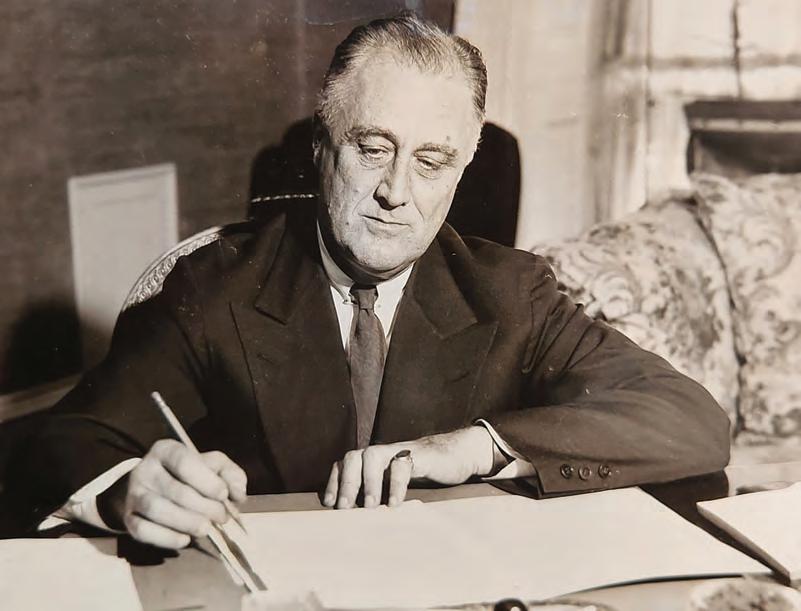
Unknown (dates unknown). Franklin Delano Roosevelt (1882-1945). President of the United States (1936). Photograph on paper. c. 1933-1945. The Stanislaus Collection.
Scranton, Pennsylvania.
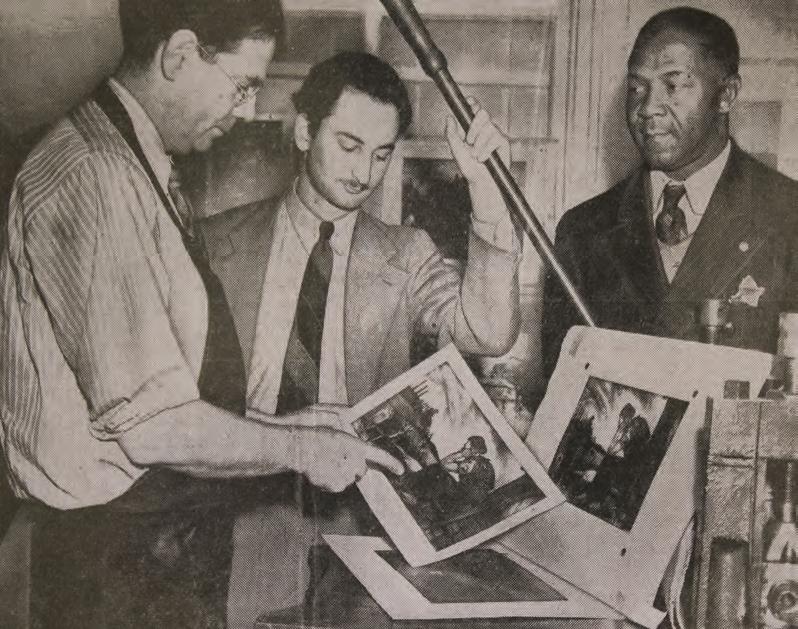
Unknown (dates unknown). Michael Joseph Gallagher (1898-1965), Hugh Mesibov (1916-2016), and Dox Thrash (1893-1965) Working on Carborundum Prints at WPA Graphic Art Workshop in Philadelphia, Pennsylvania. Newspaper photograph on paper. c. 1940. Published in Joseph Shallit. “Gallagher, Mesibov, and Thrash – Artists,” Philadelphia Record, Philadelphia, Pennsylvania, October 1, 1940, page 13, and “Invent New Process,” Sunday Worker, New York City, New York, October 13, 1940, page 4.
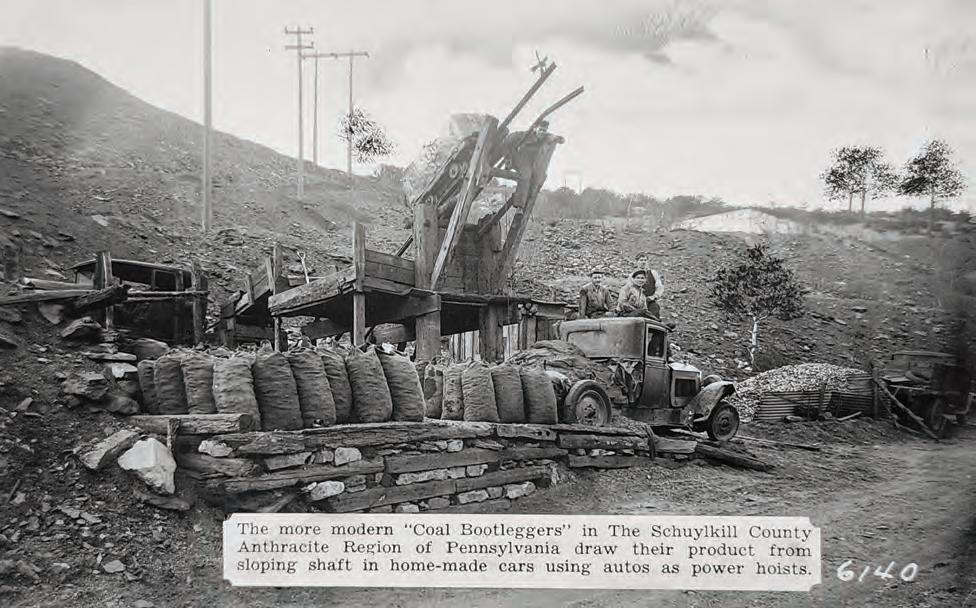
Silvercraft Dexter Press (active 20th century). Coal Bootleggers: Power Hoist. Photographic postcard on paper. c. 1935.
The Stanislaus Collection. Scranton, Pennsylvania.
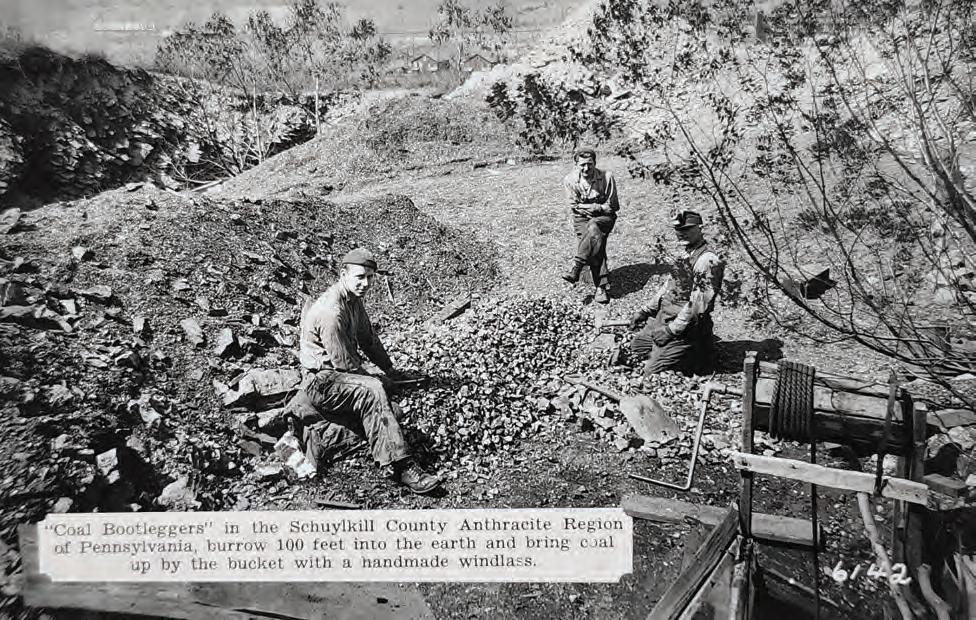
Silvercraft Dexter Press (active 20th century). Coal Bootleggers: Handmade Windlass. Photographic postcard on paper. c. 1935. The Stanislaus Collection. Scranton, Pennsylvania.
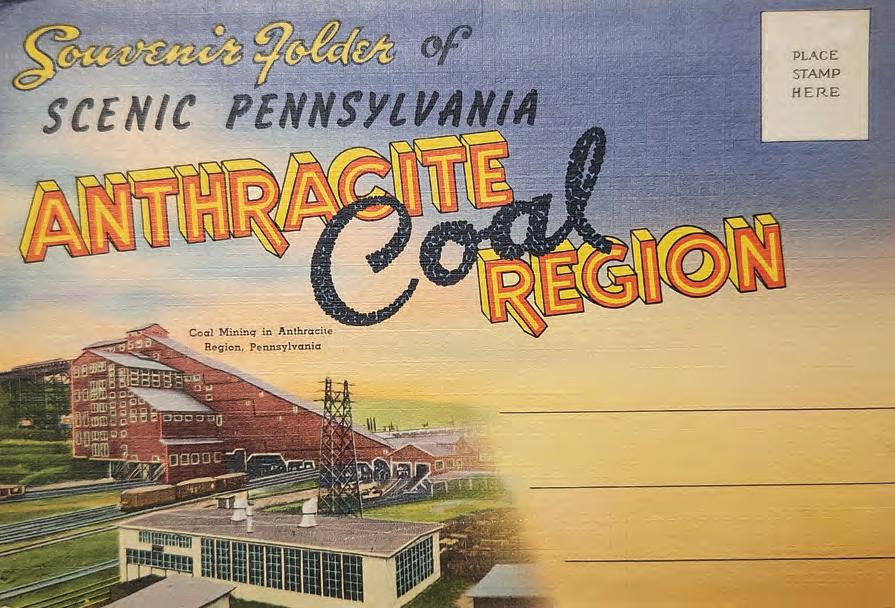
Mebane Greeting Card Company (active 20th century). Souvenir Folder of Scenic Pennsylvania Anthracite Coal Region. Postcard booklet of folded paper. c. 1935-1939. The Stanislaus Collection. Scranton, Pennsylvania.
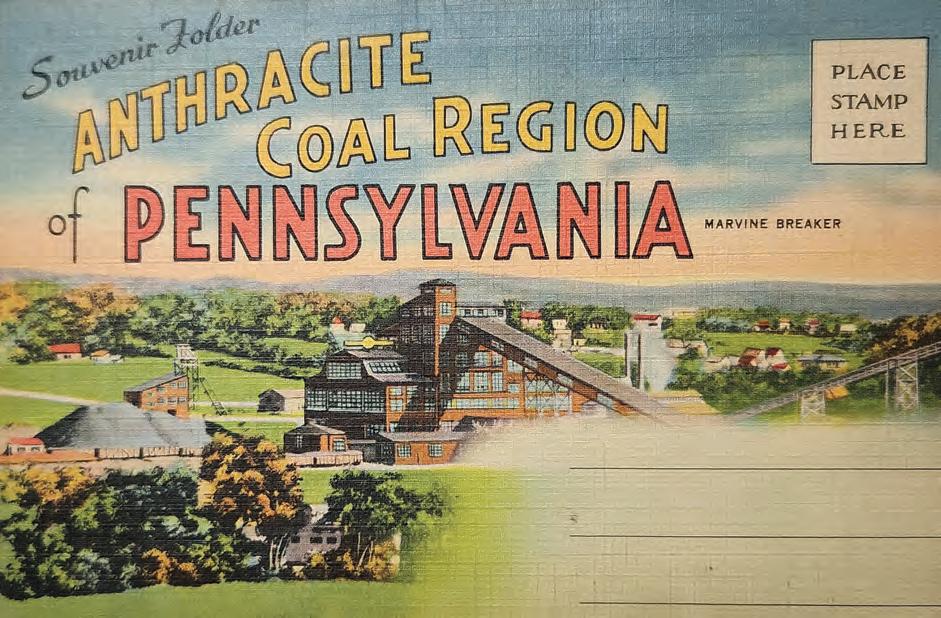
Mebane Greeting Card Company (active 20th century). Souvenir Folder Anthracite Coal Region of Pennsylvania. Postcard booklet of folded paper. c. 1935-1939. The Stanislaus Collection. Scranton, Pennsylvania.
Advertising, research, and marketing were considered essential to the survival of the industry. “Consumer convenience” became the focus. Automatic stokers were seen as the future with customers buying their anthracite heating equipment on affordable installment plans. Operators were encouraged to “cut drastically railway freight rates, wholesale and retail costs, and margins and other costs of distribution.”13
Overall, unemployed mine workers did not accept anthracite industry changes during the 1930s. Some left the region. In the southern fields, workers and their families opened primitive bootleg or “independent” mine “holes” and breakers on land owned, but abandoned by the Philadelphia and Reading Coal and Iron Company. In “Northumberland and Schuylkill counties [Works Progress Administration] projects, [1935-1939], [government] relief and coal bootlegging were the major sources of income.”14 “The bootlegging of coal takes place when an unauthorized person or group enters upon coal lands belonging to a second party, digs, picks or otherwise obtains coal, and sells the coal to a third party.”15
The peak of bootleg mining occurred in 1935. During that year alone, approximately 2,900,000 tons of hard coal were produced by some 13,000 workers. It has been estimated that 7,000 mined the coal; 2,000 picked over culm and refuse banks; 1,300 worked in bootleg coal breakers; and 2,700 trucked the anthracite to cities including Baltimore, Maryland, and Philadelphia, Pennsylvania, as well as the states of New York and Connecticut.16 In December 1936, Pennsylvania Governor George H. Earle III (1890-1974) made a three-day tour of the anthracite region. He realized that for mining families the choice was bootlegging or starvation. Because of the conflict between legal and moral rights, Governor Earle “stated more sympathy and moral responsibility toward the unemployed miners ought to be shown by the operators.” Through his encouragement, the “state legislature of 1937 created the Anthracite Coal Industry Commission.”17
Job equalization was an important issue in Depression Era America. For anthracite mine workers this meant “the even distribution of the mining and processing of hard coal among the various collieries owned by a company, rather than their restriction to the one or two in which the coal may be closer to the surface and, therefore, cheaper to obtain.”18 In a twelvemile area of the Panther Valley encompassing Nesquehoning, Lansford, Summit Hill, Coaldale, and Tamaqua, equalization was established. The main employer in these communities was the Lehigh Navigation Coal Company (LNCC). Through worker demands and community support, LNCC came to “realize that if the company was to produce coal it would have to give up a measure of managerial authority and meet the demand for equalization of work.”19
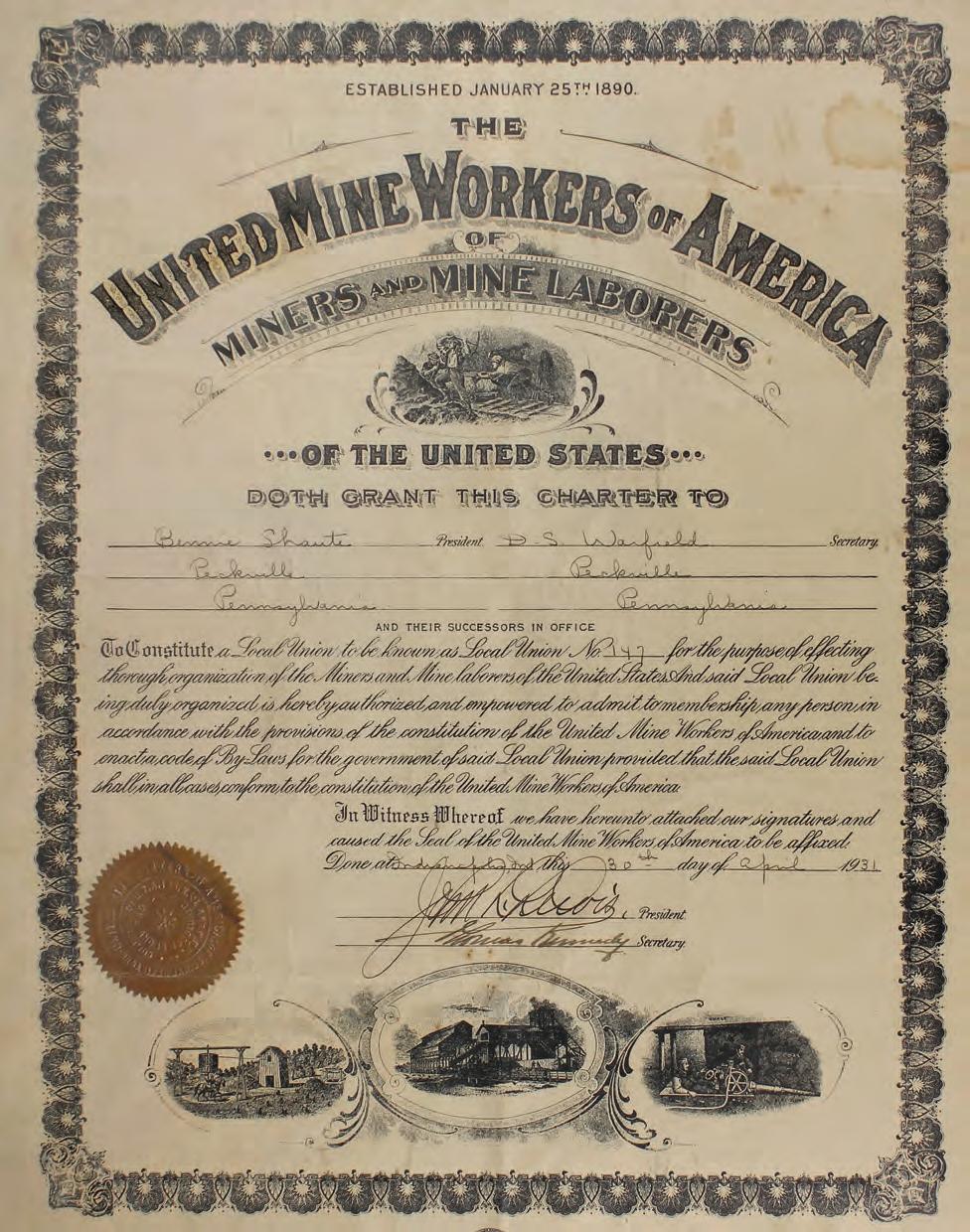
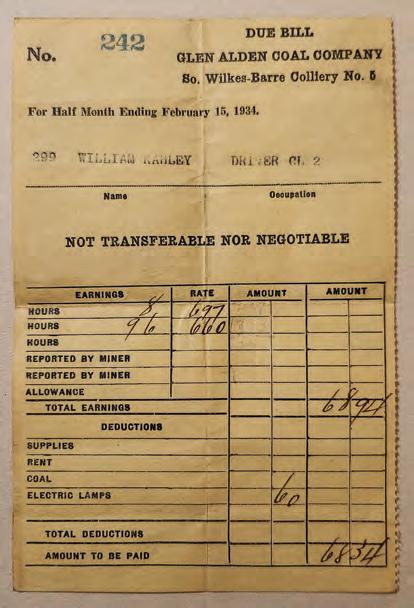
As president of the United Mine Workers of America since 1920, John L. Lewis “had demonstrated his ability to lead and to fight, but he had also shown little tolerance for rank-and-file discontents and had taken a conservative stance on most economic issues.”20 “Lewis ruled...as an absolute monarch. Once he had chosen a course of action, he would let nothing deter him.”21 “In its 1930 contract the UMWA had secured a ‘check off’ system whereby the men’s dues were paid from wages by the company directly to the union and before the workers received their checks,” or were paid in cash from due bills.22 The “union structure depended on this regular infusion of money.”23 In the northern fields, many anthracite mine workers felt that “the UMWA had begun to drift away from the ranks soon after 1930, when it no longer had to deal directly with the men to obtain dues payment.”24 Reorganizing in 1932 as the United Anthracite Miners of Pennsylvania (UAMP), they demanded work equalization and union reform. Protests, strikes, beatings, and bombings ensued. The UAMP ended in 1936 with the bomb death of its president, Thomas Maloney (1892-1936) in April. “In the 1936 anthracite contract, the UMWA finally included—though never implemented—a statement in support of equalization.”25
Due to the unstable employment of mining men, women often became family breadwinners by working in the garment industry or silk mills. Some daughters of miners traveled to New York City to work as housekeepers. Many sons found work with the federal government in the Civilian Conservation Corps (CCC) from 1933 to 1942. However, the efforts of government, industry, and organized labor did not meet the harsh realities of the Great Depression for anthracite people. America’s entry into World War II brought new and different challenges. With the need for anthracite coal, war production workers, soldiers, sailors, and air corps, the anthracite region and its people were important, included, and readily participated. The military buildup of 1940-1941 “did more to revive American industry and reduce unemployment than had any New Deal program” of President Franklin D. Roosevelt’s administration.26
The exhibition The Anthracite Coal Industry of Northeastern Pennsylvania. Selected Prints, Drawings and Watercolors from the Stanislaus Collection: 1933-1946 offers an important view of the hard coal region during the Depression Era. Many pieces, although not all, are by artists supported through the Federal Arts Project. We are fortunate that these works were created, as they vividly present life and work that otherwise may not have been documented during those difficult years.
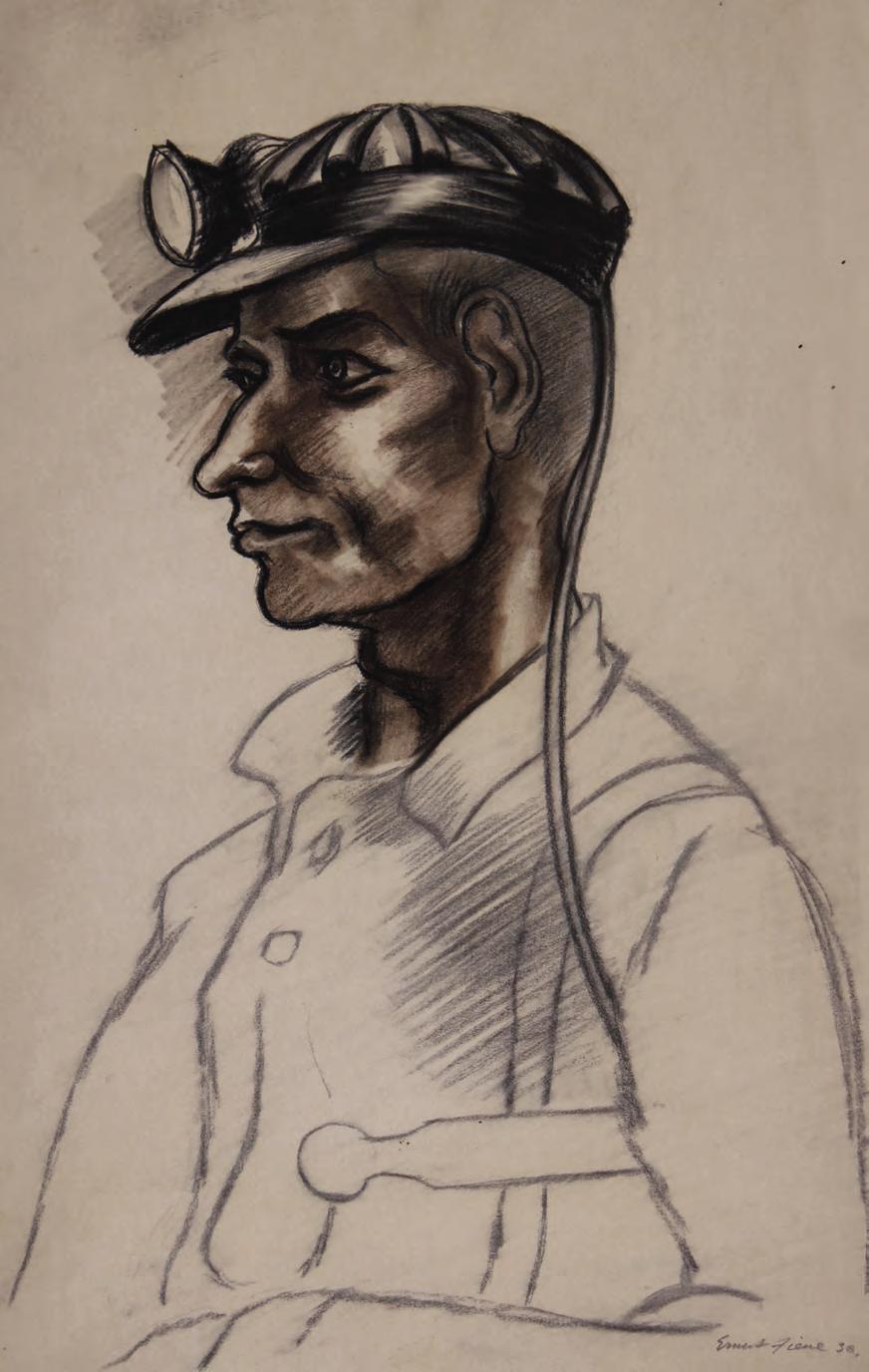
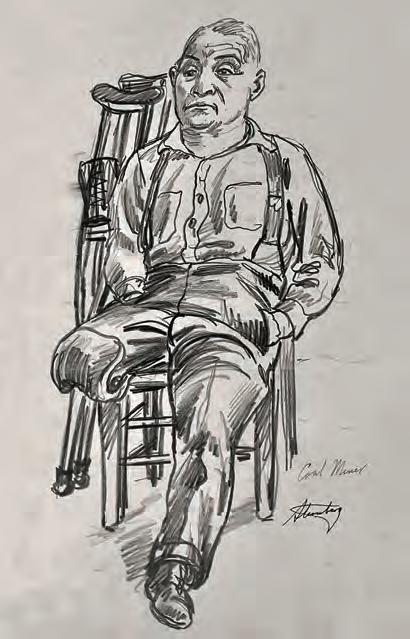
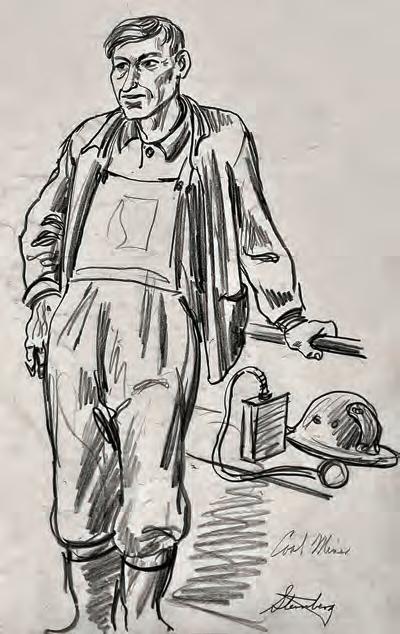
Ernest Fiene (1894-1965). Coal Miner. Charcoal and conte crayon on paper. 1936.
The Stanislaus Collection. Scranton, Pennsylvania.
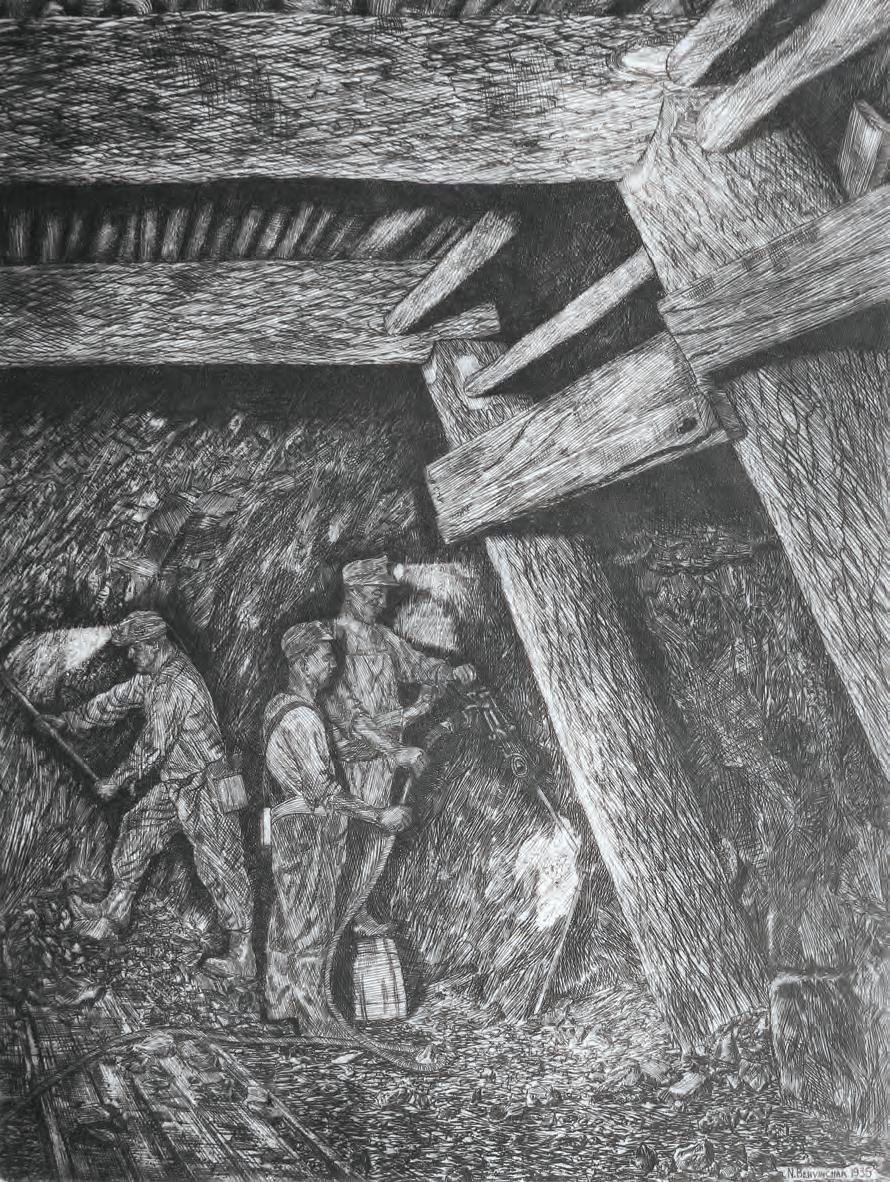
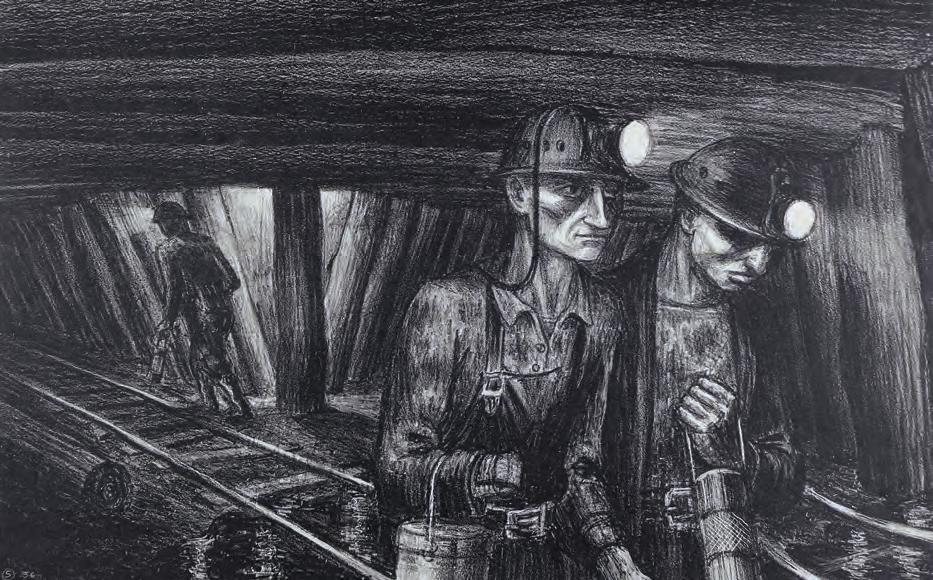
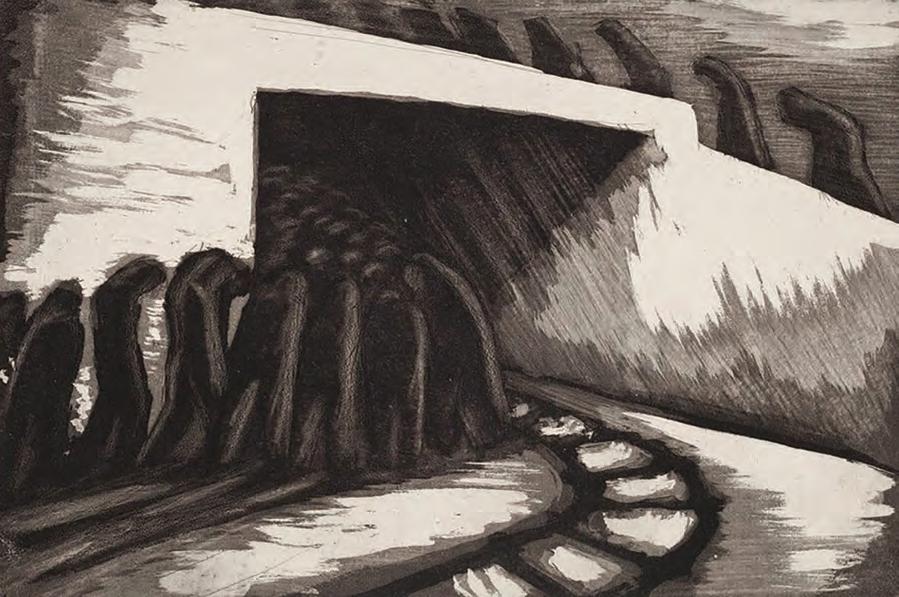
Nicholas Bervinchak (1903-1978). Miners Driving a Gangway. Etching on paper. 1935. The Stanislaus Collection. Scranton, Pennsylvania.
Reflections of a Collector: Anthracite Coal Industry Art of the 1930s
Richard Stanislaus
The great mystery is not that we should have been thrown down here at random between the profusion of matter and that of the stars; it is that, from our very prison, we should draw from our own selves images powerful enough to deny our nothingness.
André Malraux (1901-1976).
Man’s Fate. 1933.
French Minister of Cultural Affairs. 1959-1969.
Introduction
Throughout my life, I have been interested in the anthracite coal industry of Northeastern Pennsylvania and works of art representing it. During the nineteenth and twentieth centuries, anthracite was mined in Carbon, Columbia, Dauphin, Lackawanna, Luzerne, Northumberland, Schuylkill, Wayne, and Susquehanna counties. Anthracite is referred to as “hardcoal” due to its purity of carbon, and mining it was an important enterprise in the nine-county “coal region” for nearly 150 years. As a natural material, anthracite is found in a limited geographical area. As a fuel source, its impact on the economy and culture of the United States was widespread. Companies were organized, immigrants were hired, technology was developed, and earth was moved in order to extract, process, transport, and market anthracite. These activities were fraught with peril and conflict. The anthracite coal industry generated vast financial profits, yet paid a tremendous price for them in terms of damage to human lives and natural ecosystems.
As a powerful and dramatic entity, the anthracite coal industry attracted the attention of painters, sculptors, printmakers, illustrators, photographers, writers, poets, and journalists. Artists depicted various subjects of aesthetic and topical interest including coal collieries, mine mules, culm dumps, steam locomotives, gondola cars, child laborers such as slate-pickers or mule drivers, and anthracite workers in underground tunnels or during strike conflicts. The anthracite coal industry inspired a rich legacy of artistic creativity grounded in keen observation and technical expertise. Works ranging from landscape paintings and newspaper illustrations to public sculptures and photo postcards chronicled the progress and adversity associated with the industry during its nineteenth-century rise and twentieth-century decline.
Following the stock market crash of 1929, the United States entered into the Great Depression, and President Herbert Hoover (1874-1964) lost the election of 1932 to Franklin Delano Roosevelt (1882-1945). Once in office, President Roosevelt quickly established the New Deal program to alleviate economic hardships across the nation. Known by many acronyms, its component “alphabet soup” initiatives included the Works Progress Administration (WPA) of 1935 to 1939, later known as the Work Projects Administration (WPA) of 1939-1943, administered by Harry Hopkins (1890-1946); its subdivision for the visual arts, the Federal Arts Project (FAP) of 1935-1943, directed by Holger Cahill (1887-1960); and the FAP New York Region of 1935-1943, supervised by Audrey McMahon (1898-1981).
Intended to provide jobs and wages for unemployed artists, rather than directly commission art, the WPA/FAP supported the work of painters, sculptors, printmakers, and designers through initiatives like community art centers and traveling exhibitions. It also established several WPA Graphic Art Workshops, including facilities in New York City and Philadelphia. Responding to the social and economic crises of their time, artists associated with the WPA/FAP often gravitated towards subjects of labor and industry, including the anthracite coal industry of Northeastern Pennsylvania. Over the years, my efforts to study and collect art have focused especially on prints of this subject dating from the 1930s. I am amazed that the heartfelt work of artists who documented the anthracite coal industry can survive over nine decades in the humble and fragile medium of ink transferred to paper. I also deeply appreciate the fact that from human experiences of danger, darkness, and struggle, profound images of strength, dignity, and resilience emerged.
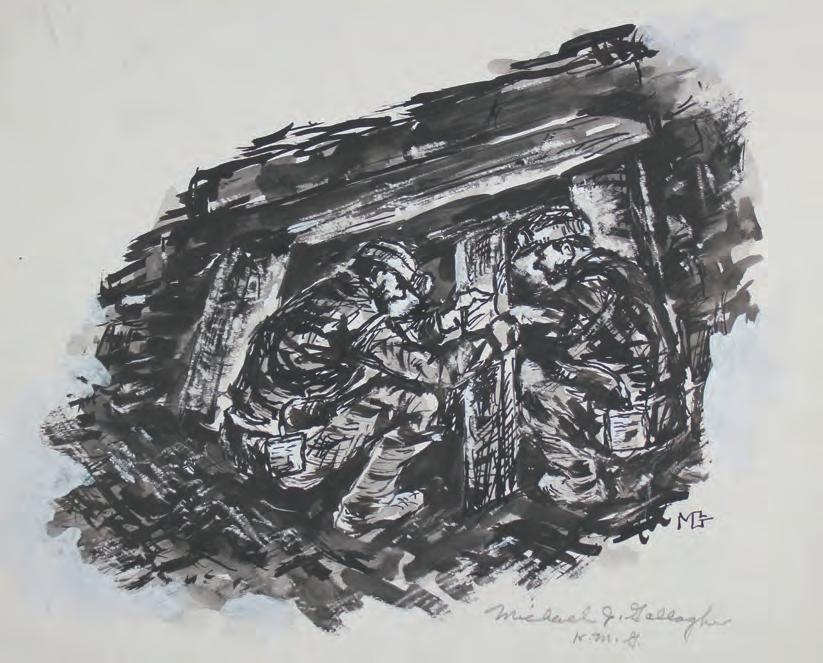
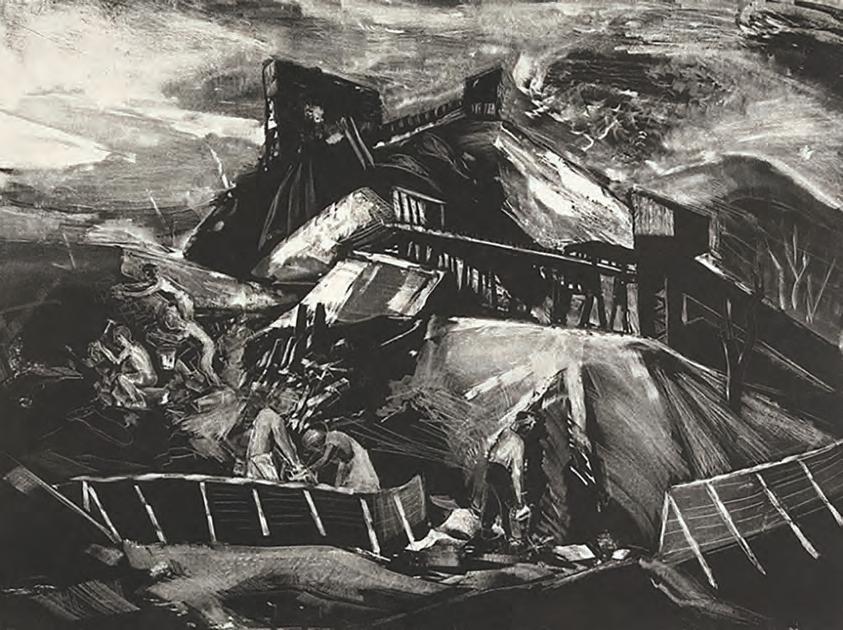
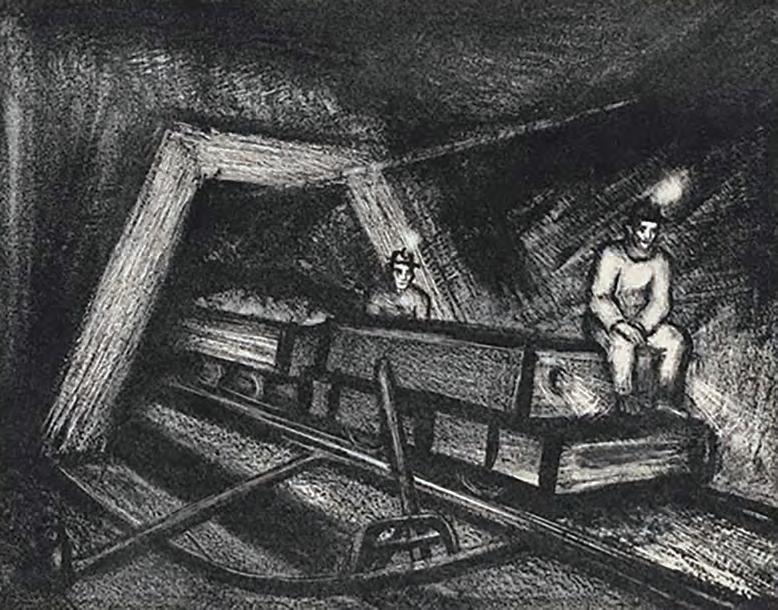
Michael Joseph Gallagher (1898-1965). Mine Cave-In (Coal Miners). India ink and china white on paper 1936. The Stanislaus Collection. Scranton, Pennsylvania.
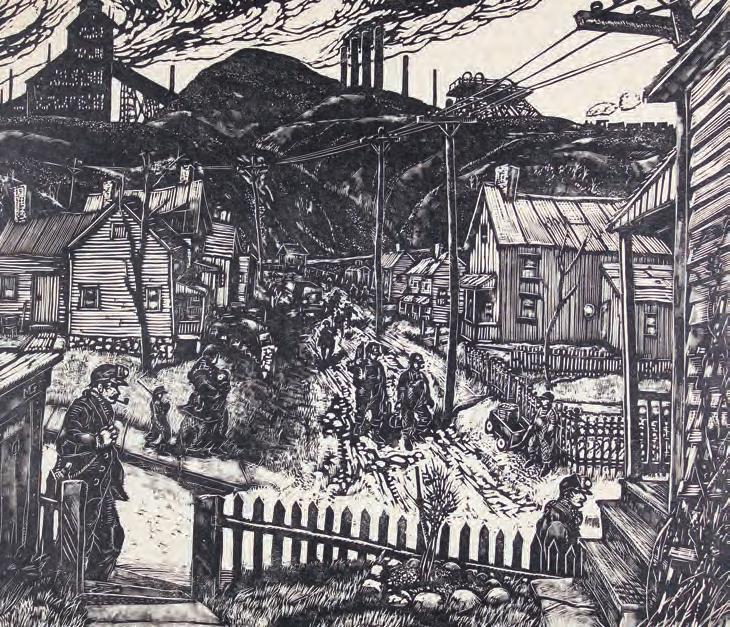
Michael Joseph Gallagher (1898-1965). Black Country. Wood engraving on paper. 1937-1938. The Stanislaus Collection. Scranton, Pennsylvania.
Michael Joseph Gallagher (1898-1965). Coalpicker II. Carborundum tint on paper. c. 1938. The Stanislaus Collection. Scranton, Pennsylvania.
Michael Joseph Gallagher (1898-1965). Anthracite Coal Mine. Lithograph with hand-inked additions on paper. c. 1940. Susan Teller Gallery. New York City, New York.
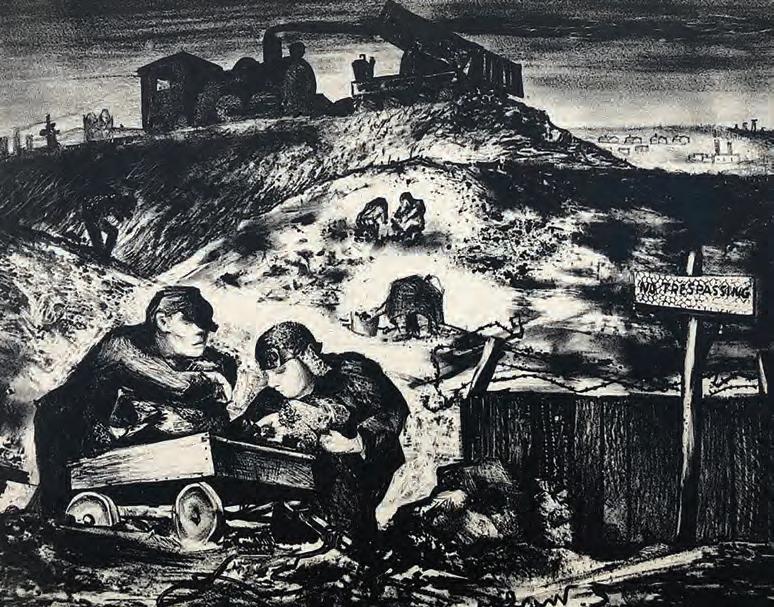
Harry Gottlieb (1895-1992). The Coal Pickers. Lithograph on paper. 1936. The Stanislaus Collection. Scranton, Pennsylvania.
Harry Gottlieb (1895-1992). Abandoned (Anthracite) Coal Mine. Lithograph on paper. 1936. Keith Sheridan Inc. Fine American Prints. Myrtle Beach, South Carolina.
Eugene Morley (1909-1953). Gleaners Lithograph on paper. 1936. Marc Chabot Fine Arts. Southbury, Connecticut.
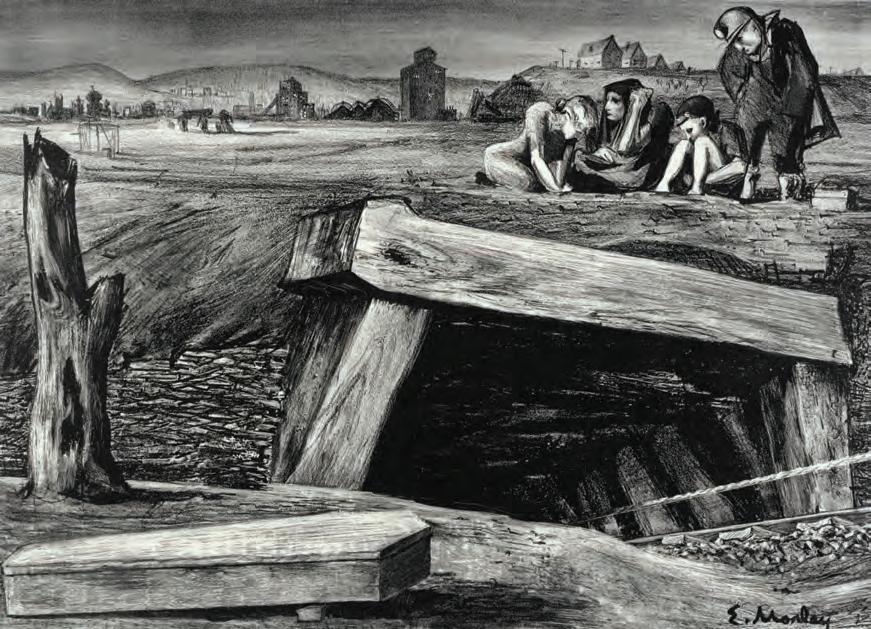
Eugene Morley (1909-1953) Mine Rescue. Lithograph on paper. c. 1936-1942. Paramour Fine Arts. Franklin, Michigan.
Anthracite Coal Industry History and Art
I was born and raised in North Scranton, the only son of Stanley and Regina (Grenevicki) Waszczak and brother to two sisters, Arlene Waszczak and Barbara Waszczak (Glass). My parents worked in manufacturing, but evidence of coal mining was embedded in my family and neighborhood history. Both my paternal and maternal grandfathers were miners from the 1920s through the 1950s. As a child, I was told by my father that his father Teofil Waszczak was an anthracite coal miner who worked at the Pine Brook Mine and Colliery in Scranton, located near the Sandy Banks section along the Lackawanna River. He suffered a serious work accident, which left him partially handicapped, and afterwards retired. Years later, my Aunt Bertha (Grenevicki) Korjack, my mother’s sister, stated that their father Michel Grenevicki was also an anthracite coal miner, last employed at the Prospect Colliery near Wilkes-Barre. These family connections to an industry of long ago aroused a sense of curiosity.
During the mid-1950s, when I was about six years old, I had my first experience with an anthracite coal colliery site. The Leggett’s Creek Mine and Colliery was located not far from my home in North Scranton. Brick Avenue ran into it near Holy Rosary Parish. One day on the way to school, I and a few other classmates decided to visit the spooky coal lands that loomed large and foreboding in the distance. Huge and rusted metal buildings sprawled across the isolated property, set among mountains of black and sparkling coal waste. Without realizing the danger, we ran and played among the deserted ruins. Being so young, I did not fully grasp the meaning or reality of the place. How could I? Its history was not discussed at home. So it was a day of adventure and discovery for a young boy. However, my father did not see it that way, and I received a strong disciplinary action for my delinquent behavior.
What was I to know about an abandoned anthracite coal colliery site from the past? Very little, as it was a strange and enormous place in which to explore, and a fascination to a young mind. The people that constructed the technical and mechanical wonders of the processing plant, the men who labored deep beneath the earth’s surface, and the railroad crews that moved the gondola cars laden with freshly mined anthracite coal, were no longer present. With the passage of time, they had become ghosts of the anthracite. That was the earliest encounter I can recall with the anthracite coal industry.
After graduating from Holy Rosary High School in North Scranton, I served in the United States Army with the 532nd Military Police Company at Fort Dix, New Jersey. Years later, when I returned from military service to my parents’ house, I borrowed the family car and drove to the old Marvine Colliery that was owned and operated by the Hudson Coal Company. It was a very large industrial complex with processing buildings, railroad tracks, gondola cars, coal chutes, and waste piles. However, this site was eerily deserted and silent, in a state of desolation. How striking to see a once active coal site that had formerly offered public tours of a working anthracite mine! What had happened? Evidently much, but at the time, I wasn’t aware of the conditions that resulted in the colliery being closed. And so it is with all things that have a period of birth, growth, conservatism, and finally, eventual decay. The Marvine Coal colliery no longer exists.
The untold story that I had yet to learn was that Scranton, situated as it was in the Lackawanna Valley of Northeast Pennsylvania, had grown to prominence during the nineteenth century as an anthracite mining center in the region’s northern coal field. People of my grandfathers’ generation had come to the area looking for work and opportunity. In the early twentieth century, most Scranton residents were economically connected in some way to mining and its related industries. In later decades, however, anthracite production steadily declined, as did the financial stability of local communities. I was born after this process had occurred, and so did not experience it firsthand. I could only see the ruins.
My understanding of the anthracite coal industry later developed over a long period of time with gradient steps of researching primary source documents, reading historical texts, touring abandoned colliery sites, viewing anthracite coal industry art, visiting the John Mitchell Monument at Court House Square, speaking with retired coal miners, and attending the Lackawanna Coal Mine Tour at Scranton.
My awareness of anthracite coal industry art also evolved slowly. My working-class parents managed a simple home where art played a modest role in our domestic lives. Art was also an insignificant part of the education I received through the public and parochial schools of Scranton. Yet, as an adolescent, I was attracted to work by various artists who produced images of the anthracite coal industry of Northeastern Pennsylvania. At first, I did not know that historical images of the industry existed in many forms, such as paintings, sculptures, prints, photographs, and postcards. This knowledge was acquired over a period of years and through a range of venues.
As a young man in the 1960s, I often stopped by the Windsor Art Studio, an art supply and frame shop located at 120 Adams Avenue in Scranton. The proprietors were Frank Curcio and Frank Regni, Scranton natives and World War II
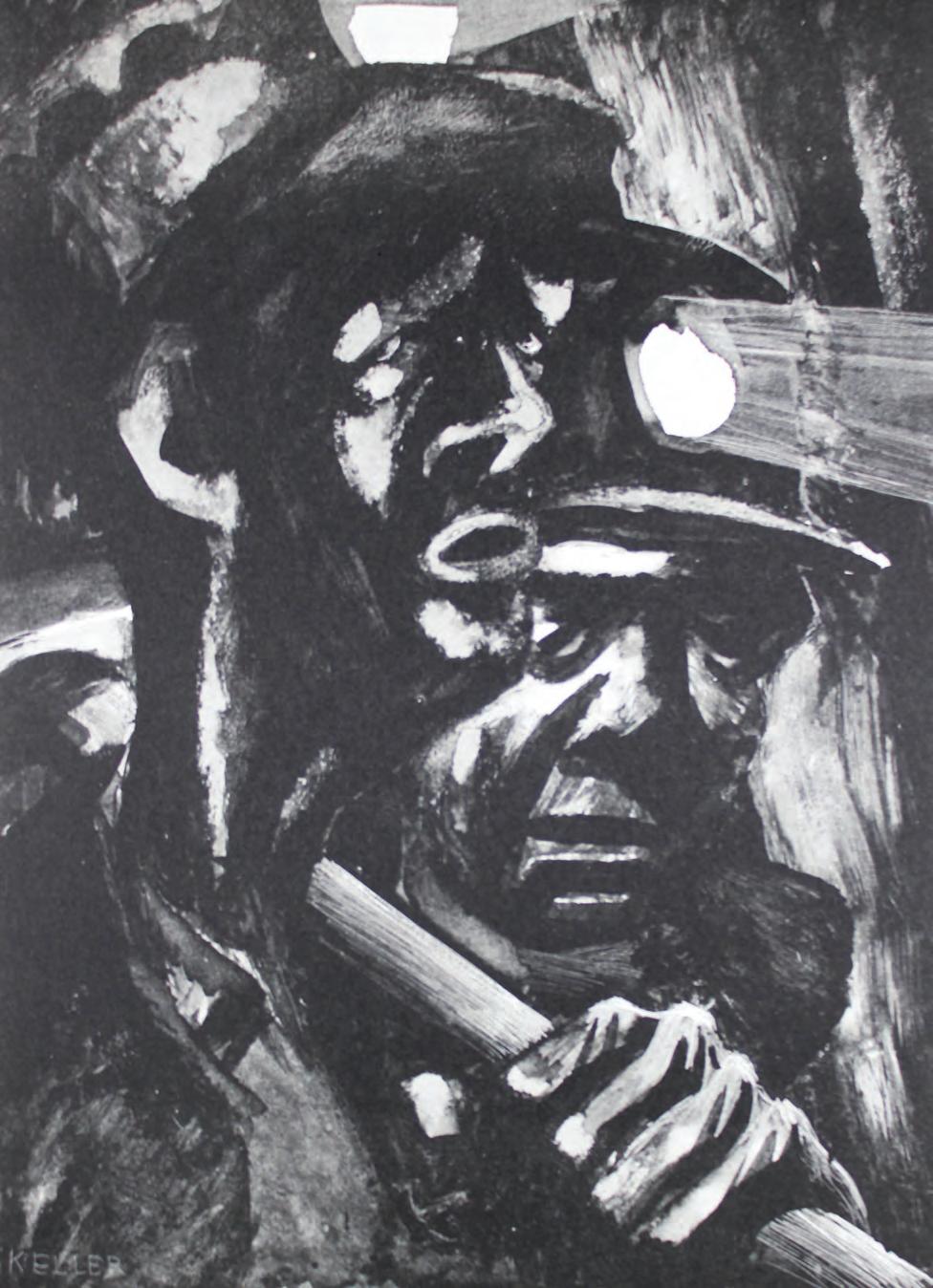
Charles Keller (1914-2006). Miners. Lithograph on paper. 1939. The Stanislaus Collection. Scranton, Pennsylvania.
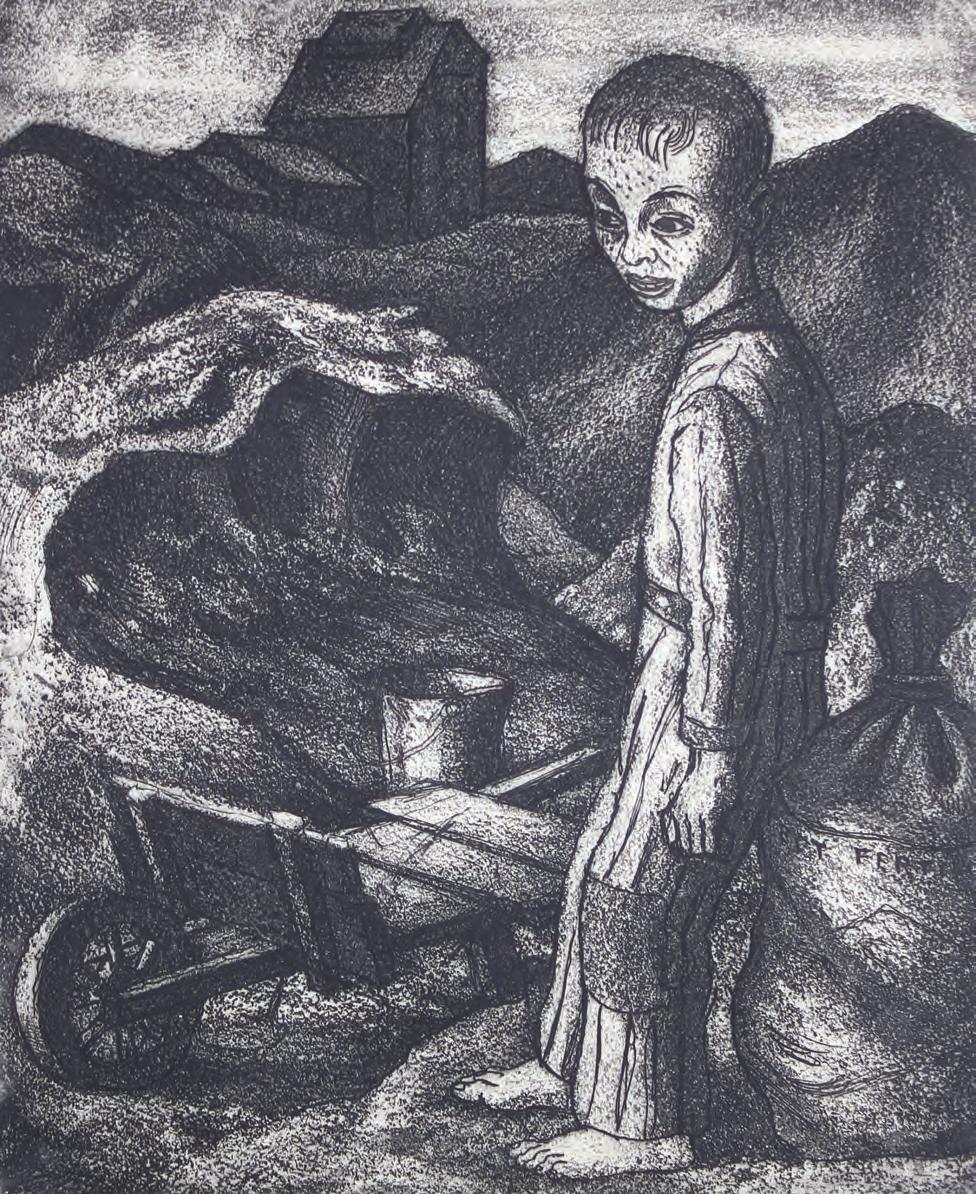
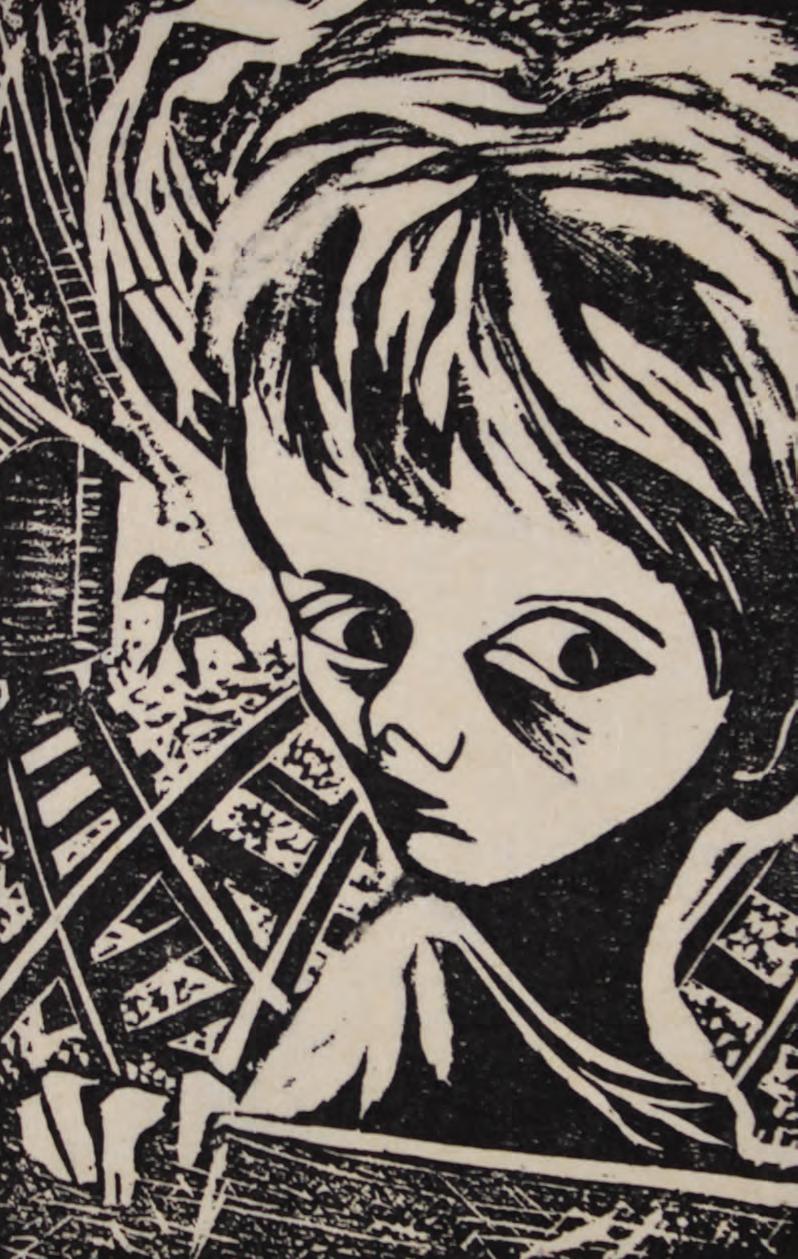
Harry Sternberg (1904-2001). Coal Miner’s Kid. Aquatint on paper. c. 1936. The Stanislaus Collection. Scranton, Pennsylvania.
veterans. During one visit, I inquired if they had any works available by the Dunmore-born Pennsylvania landscape painter
John Willard Raught (1857-1931), whose works were well-represented in the Everhart Museum at Nay Aug Park in Scranton. At first, they quietly discussed my query. Finally, Mr. Curcio said, “Shall we show it to him?” The decision was yes. He then went to a storage bin and pulled out a small oil on canvas, signed and dated John Willard Raught, 1916.
Framed in an original hardwood molding with a gold liner, the painting Scene Over Keyser Valley depicted an autumn landscape. Shown beneath an overcast sky with rolling clouds above trees were the small houses of coal miners. The distinct silhouette of an anthracite coal colliery rose in the far distance. The work was haunting in its depiction of a way of life that once existed in the anthracite coal fields. It was produced by the hand of a sensitive and accomplished artist. I asked if it was for sale, and after consultation with Mr. Regni, Mr. Curcio stated “We’ll sell it as priced, and require timely payments.” Of course, I placed a deposit on the piece and promised to honor their terms. I was fortunate to purchase such an historical, important, and rare painting. This was my first experience with acquiring anthracite coal industry art.
Over the years, my interest in art continued, and I pursued it beyond Scranton. Outside the anthracite region, I completed two art apprenticeships. The first was with painting conservators Chester Convoy and Victor Grace of Grace Gallery and Fine Art Restoration in Englewood, New Jersey. The second was with master printer Richard Royce of Atelier Royce near Portland, Oregon. I studied drawing with Charles White and painting with Sam Clayberger at the Otis Art Institute in Los Angeles, California. At Desert Décor in Las Vegas, Nevada, I acquired the skills of custom picture framing through rigorous training and hands-on application. This experience was an asset, as I was able to obtain a position as a full-time picture framer for Steve Suskauer of David-Gary Fine Art in Millburn, New Jersey. When I returned to the East Coast, I attended Kean College in Union, New Jersey, and received a Bachelor of Arts Degree in Art History in 1989. I also attended Montclair State University and Rutgers University, and continued to collect whenever I could.
At one time I lived in Irvington, New Jersey, and took an Aesthetics course at Montclair State University. While travelling through the town of Montclair, I found William Sablon Antiques. I purchased a few artworks from the gallery, but nothing depicting the anthracite coal industry. Several years later I relocated to Scranton. One day I telephoned Mr. Sablon and we talked shop. Finally, I asked if he had anything new that might interest me. “Yes,” he replied. He had recently attended an auction and acquired a charcoal drawing of an underground coal mine scene. He described it as “having several mules and a boy who had an open-flame lamp in his cap,” with an atmosphere that was “intensely black with the dust of coal.” I asked Mr. Sablon if there was a monogram C.K.L.’94 in the upper left corner. He replied, “Yes, how did you know that?” I knew that because of my art historical research. I asked if the drawing was for sale, and he stated that it was.
Bargaining ensued, and a price was agreed upon, although I had to see the work in person before making a final decision. This I subsequently did and acquired an original charcoal produced by New York City artist Corwin Knapp Linson (1864-1959) as an illustration for In The Depths of a Coal Mine, an article written by Stephen Crane (1871-1900) and published by McClure’s Magazine in August 1894. The drawing, titled Mule Stables, Putting in a Team is a rare and masterfully accomplished scene of a nineteenth-century underground coal mine activity. It was completed in Scranton while Linson and Crane were researching their article in the area, with the help of their friend John Willard Raught.
Another artwork by Linson that I am lucky to own is a small on-site sketch in oil pigment of the Mount Pleasant Colliery at Scranton. Linson visited Raught in the summer of 1925, and the two went on sketching excursions around the city. The work was speedily accomplished with dynamic strokes while coal processing activity was taking place. Depicted is a small locomotive pushing coal cars on tracks beneath the breaker’s structure. The artist titled it Battle as it reflected the upcoming labor strike by the United Mine Workers of America Union and the coal operators that was soon to commence.
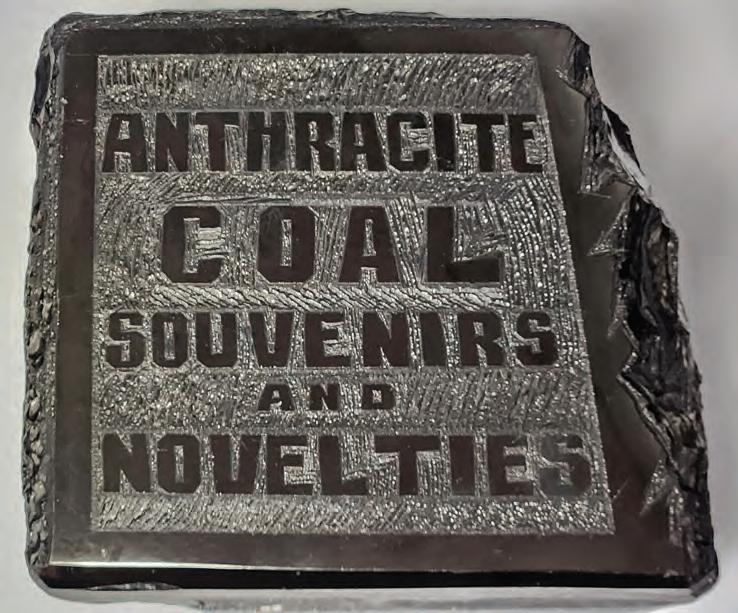
In addition to paintings and drawings, I also acquired some unconventional pieces. In the 1990s, I visited Mostly Books, a used book store on Adams Avenue in Scranton owned by Donald and Mary Scioscia. The couple had started their business years before at a location near the Spruce Street Novelty Shop, and had purchased some inventory from that older store. The novelty shop had carried coal souvenirs produced by Harry Brazier Patience (1877-1926) and his son Charles Edgar Patience (1906-1972), two African-American folk artists from West Pittston known for their small anthracite sculptures and jewelry. One item that made its way to Mostly Books, and then to me, was the sign for their display case. It is a block of shaped anthracite inscribed with the words Anthracite Coal Souvenirs and Novelties
Following my work at Kean College, I continued my study of fine art, earning a Certificate in Appraisal Studies in Decorative and Fine Art at New York University in 1995. I eventually returned to Scranton, where my longstanding interest in history led me to pursue graduate studies at The University of Scranton. There I authored research papers on the anthracite coal industry and earned a Master of Arts Degree in American History in 1998. Several years later, I also
Riva Helfond (1910-2002). Anthracite Valley. Lithograph on paper. 1938. Paramour Fine Arts. Franklin, Michigan.
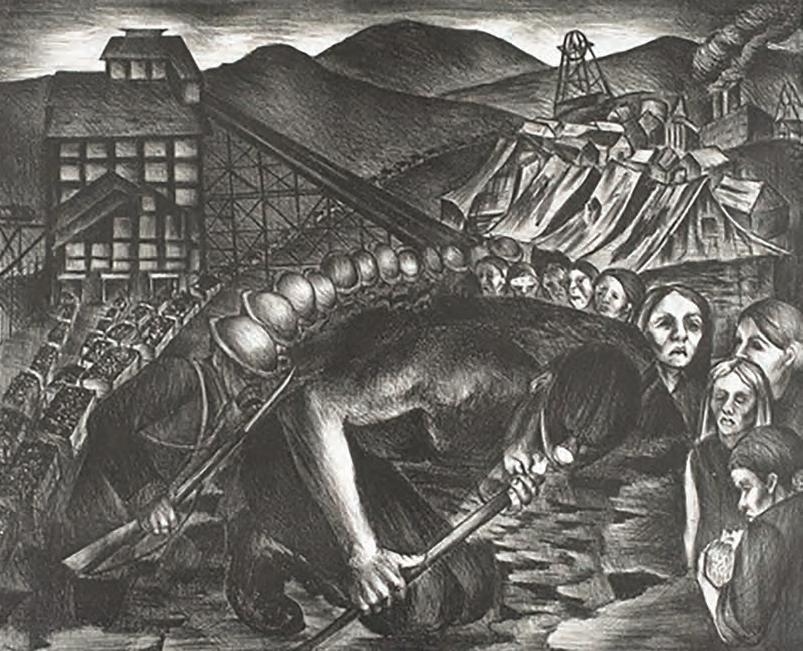
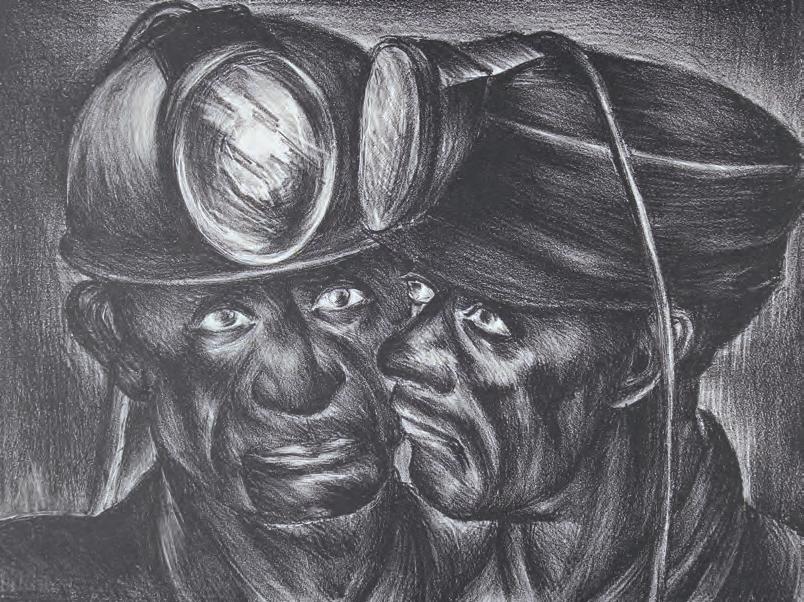
Riva Helfond (1910-2002). Miners. Lithograph on paper. 1940. The Stanislaus Collection. Scranton, Pennsylvania.
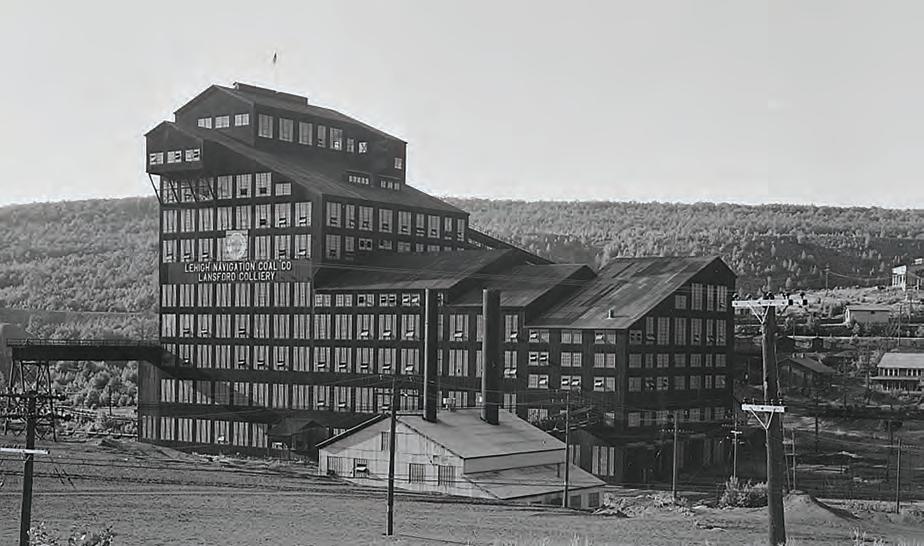
Jack Delano (1914-1997). Houses and Colliery from a Street in Lansford, Pennsylvania. Photographic negative on film. August 1940. U.S. Farm Security Administration/Office of War Information. The Library of Congress Prints and Photographs Division. Washington, D.C.
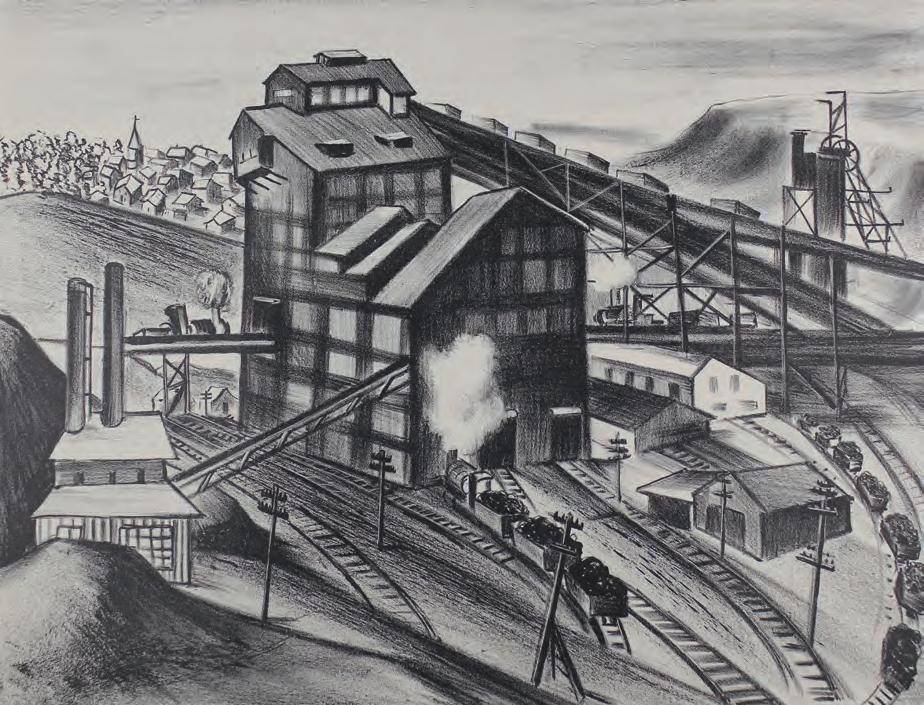
Riva Helfond (1910-2002). No. 6 Colliery. Lansford, Pennsylvania. Lithograph on paper. 1937. The Stanislaus Collection. Scranton, Pennsylvania.
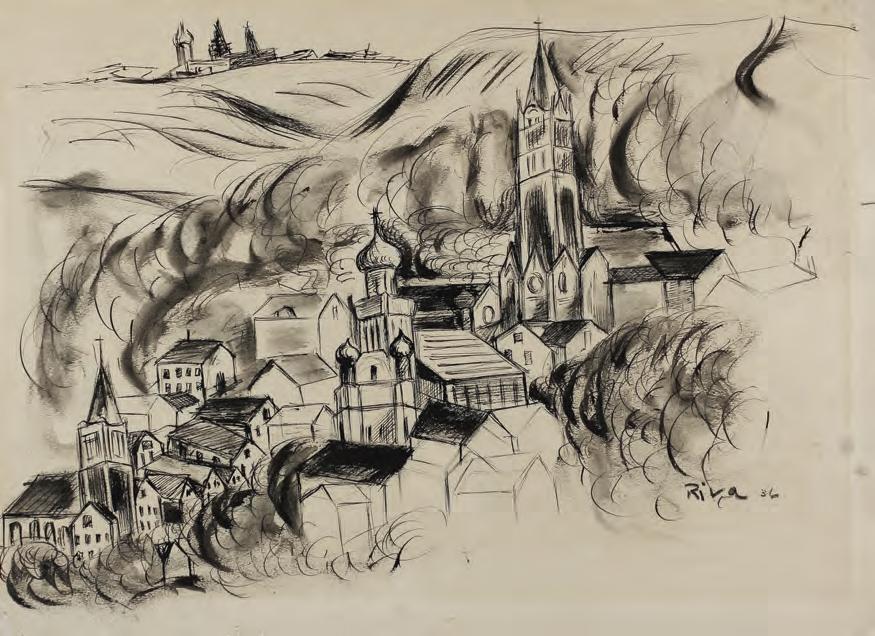
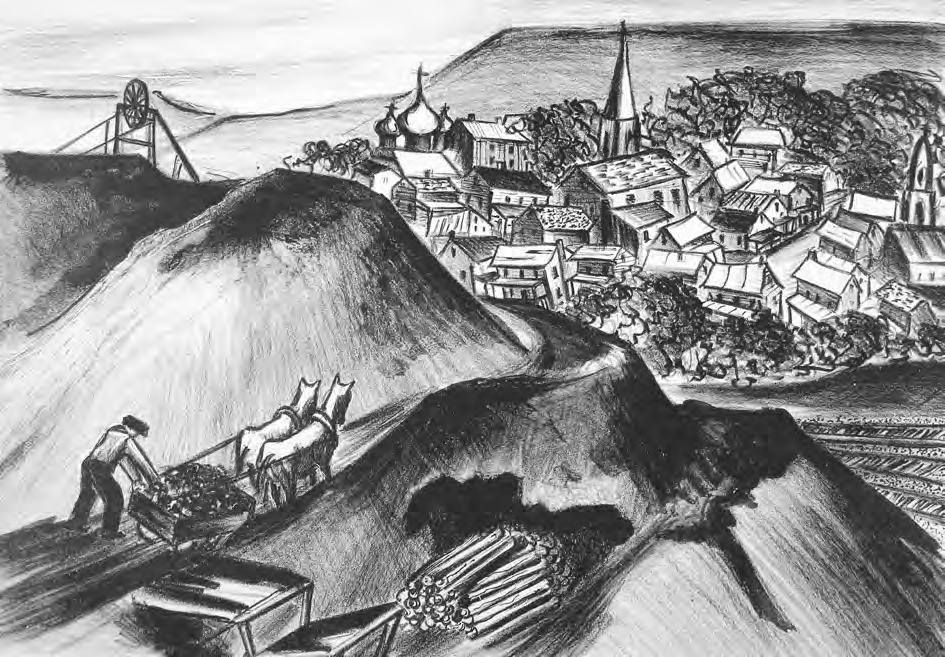
Riva Helfond (1910-2002). Lansford, Pennsylvania. Ink on paper. 1936. The Stanislaus Collection. Scranton, Pennsylvania.
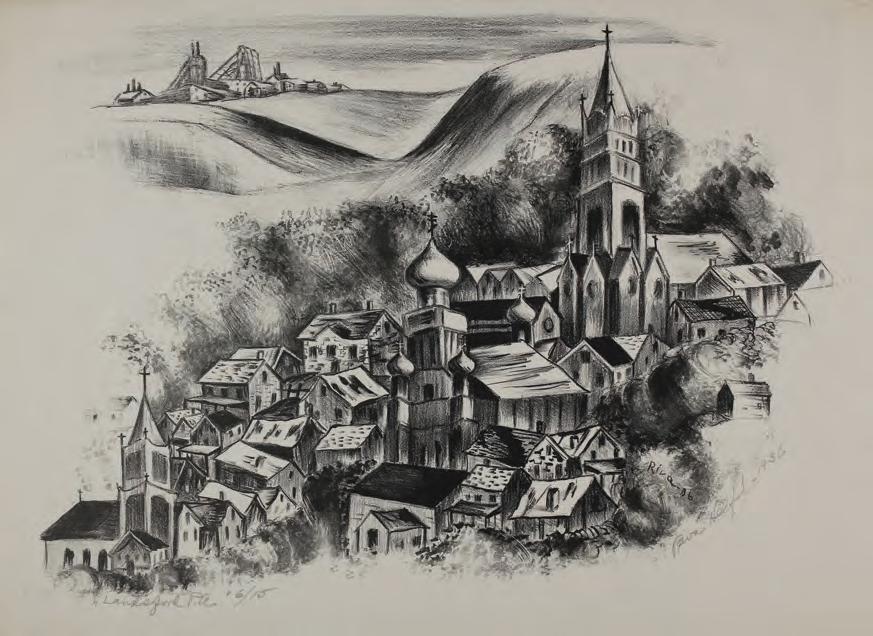
Riva Helfond (1910-2002). Lansford, Pennsylvania. Lithograph on paper. 1936. The Stanislaus Collection. Scranton, Pennsylvania.
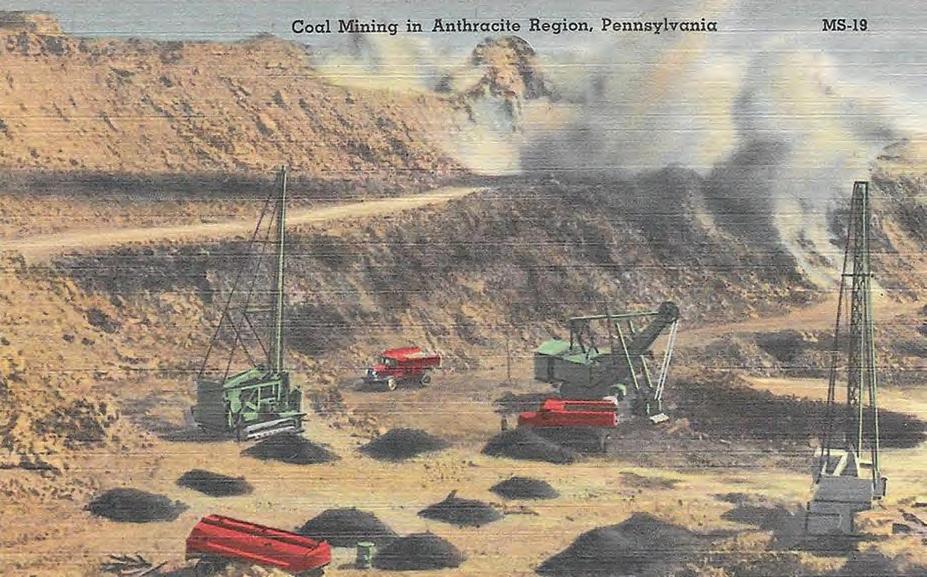
Mebane Greeting Card Company (active 20th century). Coal Mining in Anthracite Region of Pennsylvania. Postcard on paper. c. 1935-1940.
The Stanislaus Collection. Scranton, Pennsylvania.
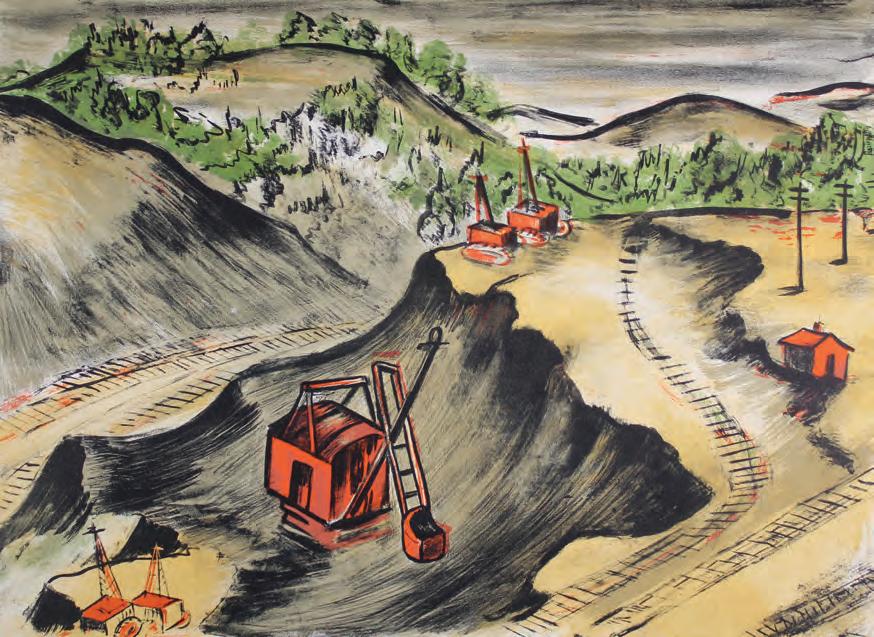
Riva Helfond (1910-2002). Stripping. Color lithograph on paper. 1941.
The Stanislaus Collection. Scranton, Pennsylvania.
attended Marywood University, where I completed a Master of Arts program in Studio Arts with a concentration in printmaking under Professor Peter Hoffer in 2009. All of these experiences increased my knowledge and understanding of anthracite coal industry history and art.
During this time, I gained a growing awareness of artists and their works through archival documents and gallery visits that provided new perspectives on past scholarship. I refined my research. As more art and information emerged, I better understood the material I was uncovering and was compelled to learn more. I worked briefly as Museum Curator at the Luzerne County Historical Society in Wilkes-Barre, where I mounted the exhibition Images of the Mines: Anthracite Coal Era Art 1869-1939 in 1996, and served as Registrar of Collections at the Everhart Museum at Nay Aug Park in Scranton, which has a remarkable collection of coal industry art.
In 1998, I was awarded a Scholar-in-Residence grant from the Pennsylvania Historical and Museum Commission (PHMC) in Harrisburg. My topic was The Fine Art of the Anthracite Coal Industry: 1869-1939, and my primary research site was the Anthracite Heritage Museum at McDade Park in Scranton. With funding, I was able to conduct in-house scholarship at the New York Public Library, which has an extensive collection of coal-related graphics, as well as the State Museum of Pennsylvania, Fine Arts Section, Harrisburg. I also visited the Print and Drawing Department of the Metropolitan Museum of Art, New York City, where I studied the Joseph Pennell etching titled Things That Tower-Coal Collieries. This helped with a better understanding of his delicate etching and dry-point technique.
Through the PHMC, I received an appointment as a Museum Curator at the Anthracite Heritage Museum and Iron Furnaces in Scranton, a position which included additional assignments at Eckley Miners’ Village in Weatherly and the Museum of Anthracite Mining in Ashland. During my time with the PHMC, I worked with the Pennsylvania Humanities Council (PHC) in Philadelphia as a Commonwealth Speaker from 2000 through 2001, and completed the training program Save Pennsylvania’s Past at the Conservation Center for Art and Historic Antiques in Philadelphia from 2011 through 2013. After over a decade of service with the PHMC, I retired in 2016. All these educational and employment experiences contributed to my knowledge of art history, museum procedures, the anthracite coal industry, and American artists and industrial graphics of the 1930s.
Anthracite Coal Industry Art of the 1930s
While I attended Kean College, I lived with my Aunt Bertha (Grenevicki) Korjack. During one of our after-dinner conversations about her experiences during the Great Depression of the 1930s, she bluntly stated, “You just don’t understand, we had nothing!” Her plaintive statement referred to the family circumstances in Northeastern Pennsylvania while she was a young woman. And who today can state a similar comment? For how could a person of today understand?
During the 1930s, economic difficulties swept through the United States, creating hard times for millions of Americans. In Northeastern Pennsylvania, where the anthracite mining industry was already entering a period of decline, the Great Depression hit particularly hard. While roughly twenty-five percent of the national workforce was unemployed in the early 1930s, some thirty percent or more of workers in the anthracite coal regions found themselves without jobs.1 In an era when artists were likewise experiencing financial challenges, the plight of the miners and their communities attracted the attention of numerous printmakers who had found employment through the WPA/FAP.
Graphic artists associated with printmaking centers in New York City and Philadelphia created a remarkable body of works that often depicted industrial subjects, including the anthracite coal industry of Northeastern Pennsylvania, between 1935 and 1941. Printmakers specifically benefitted from the WPA Graphic Art Workshops, which provided studio space, specialized equipment, and art supplies that were difficult to acquire on an individual basis. In addition to financial and technical support, artists received creative encouragement as the shared experience of working and learning together sparked innovation among them. WPA/FAP printmakers embraced new printing techniques and socially-relevant themes. With the potential to reach wide audiences, printmaking came to be understood as a practical art, useful for both commercial and ideological purposes.
At WPA Graphic Art Workshops, artists’ preliminary drawings were approved by supervisors for production as small print editions, limited to about thirty impressions.2 Printmakers used relief, intaglio, planographic, and stencil processes to create woodcuts, engravings, etchings, carborundum tints, silkscreen prints, and lithographs. Workshops were known for specializations: New York City pioneered silkscreen prints, while Philadelphia developed the carborundum tint. In the United States, printmakers of the 1930s often worked in a representational style described as Social Realism. Acknowledged
Harry Sternberg (1904-2001). Seventh Level. Lithograph on paper. 1936. The Stanislaus Collection. Scranton, Pennsylvania.
Harry Sternberg (1904-2001). John Olsen. Coal Miner. Graphite on paper. 1937.
Susan Teller Gallery. New York City, New York.
Harry Sternberg (1904-2001). Bennet Cooper. Coal Miner. Graphite on paper. 1937.
Susan Teller Gallery. New York City, New York.
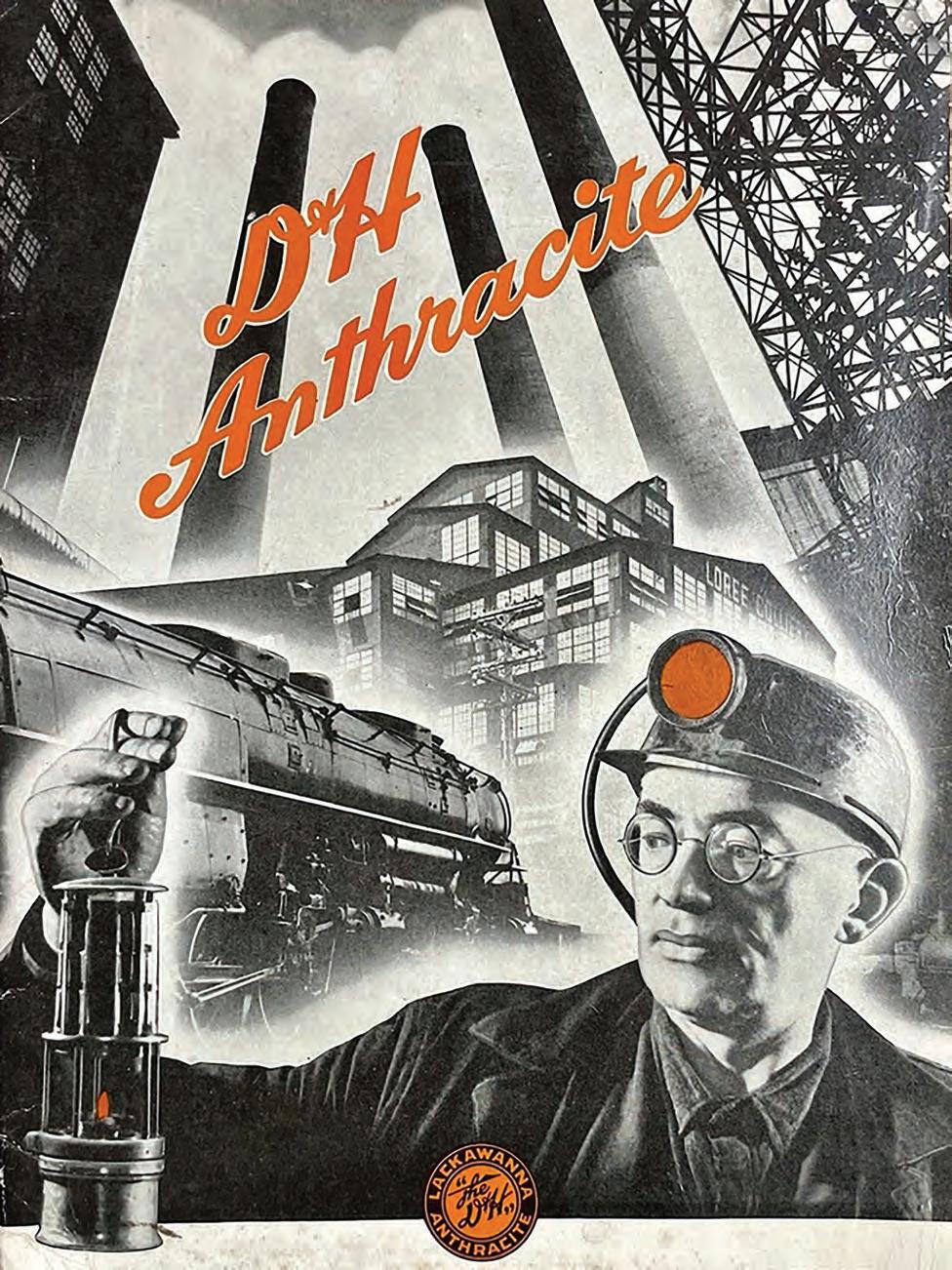
Hudson Coal Company (active 20th century). D&H Anthracite. Promotional booklet on paper. c. 1935-1940. The Scranton Public Library. Scranton, Pennsylvania.
by critics as an American approach, Social Realism was also linked to international art trends, including the energetic lines and simplified forms used by the German Expressionists and Mexican muralists to address emotional and political subjects.
New Deal printmakers with family ties to Northeastern Pennsylvania included Esther Brock Bird (1888-1950); Michael Joseph Gallagher (1898-1965); Nicholas Bervinchak (1903-1978); and Eugene Morley (1909-1953). Others more closely associated with printmaking activities in New York City were Ernest Fiene (1894-1965), Harry Gottlieb (1895-1992), Philip Evergood (1901-1973), Emil Weddige (1907-2001), Harry Sternberg (1904-2001), Chet LaMore (1908-1980), Riva Helfond (1910-2002), Charles Keller (1914-2006), Winifred Milius (Lubell) (1915-2012), and Blanche Grambs (1916-2010). I am fortunate to have at least one work by each of these artists in my collection.
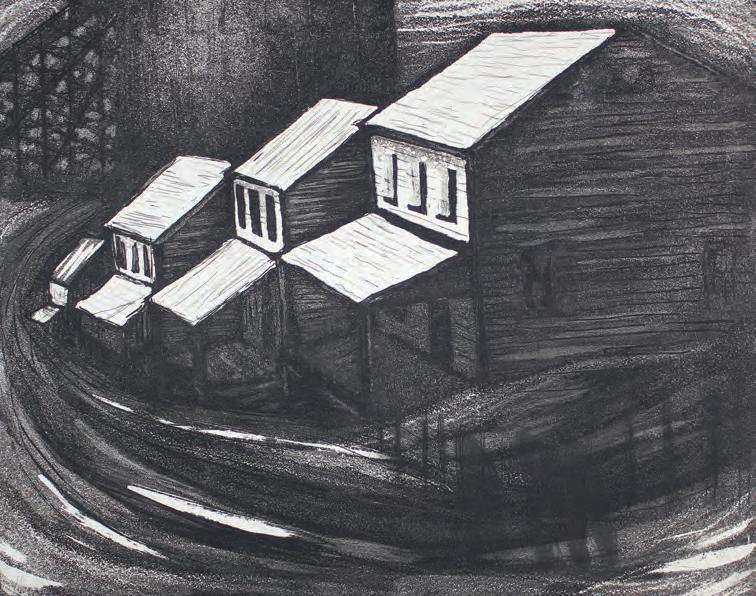
Born in Scranton to a family of Irish miners, Gallagher contracted tuberculosis as a young man and recovered at a sanatorium. A doctor noticed his drawing ability, and encouraged him to attend the Philadelphia Museum and School of Industrial Art. Gallagher became an illustrator known for his woodcuts. He worked at the WPA Graphic Art Workshop in Philadelphia, where he helped develop the carborundum tint with Dox Thrash (1893-1965) and Hugh Mesibov (19162016). Gallagher lived in my old neighborhood on Oak Street, near the Leggett’s Creek Coal Mine and Colliery. Scenes shown in his prints Black Country (1937-1938) and Coalpicker II (c. 1938), as well Coal Breaker (c. 1940), a lithograph with hand-inked additions, resemble streets and streams along Yard Avenue. The drawing Mine Cave-In (Coal Miners) (1936) refers to a common local tragedy. I did not know of Gallagher’s legacy when I was young, but his prints are in the collection of the Everhart Museum, and he exhibited there during his lifetime. After studying and collecting Gallagher’s drawings and graphics myself, I believe his images are based on both direct observation and lifelong memories of the coal region.
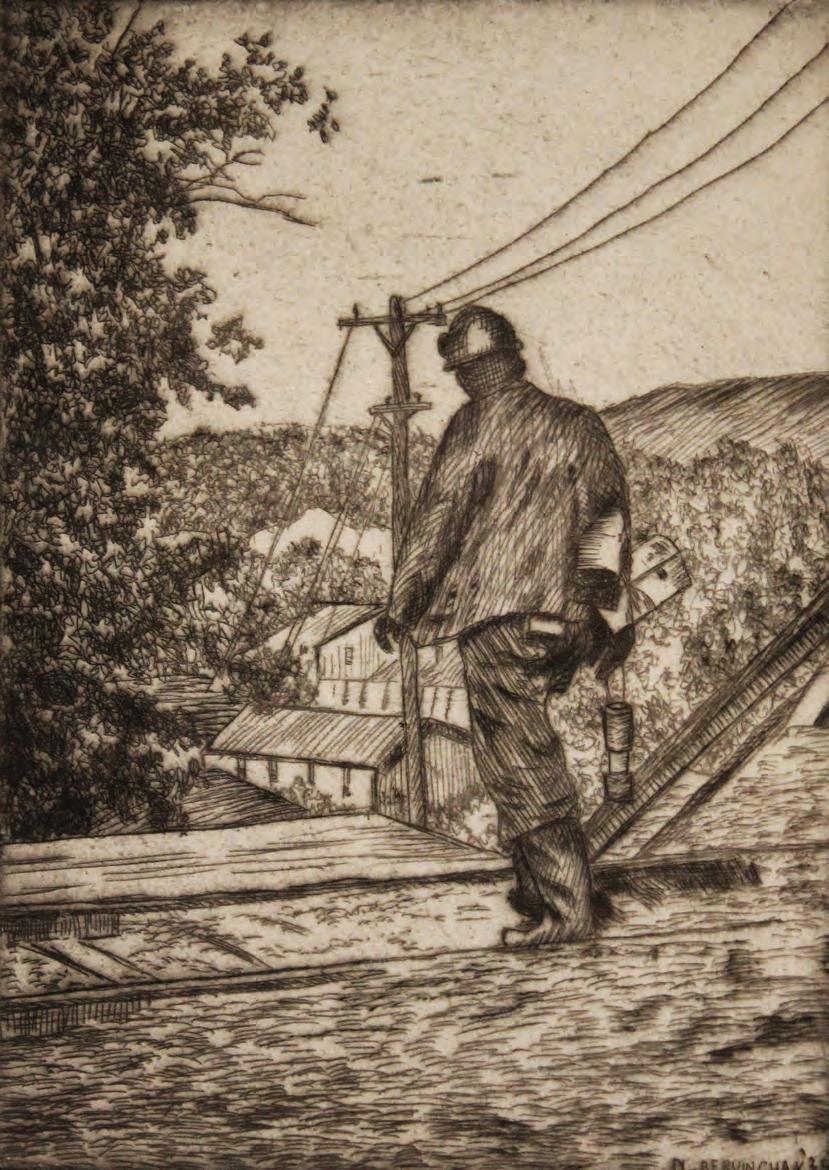
Bervinchak, in contrast, worked as a breaker boy and mine laborer during his early years in the Mahanoy City area. The son of Ukrainian immigrants, he apprenticed with an ecclesiastical artist and met the Ashcan painter George Luks (18671933), who had also been born in the region. Luks returned to Schuylkill County on art-related business, including research and production of the mural Necho Allen Discovering Coal (1927), commissioned by the Necho Allen Hotel in Pottsville, and an exhibition in 1925 at the Pottsville Free Public Library. As a printmaker, Bervinchak was largely selftaught and initially made his own tools. Realistic etchings depicting the anthracite industry, such as Miners Driving a Gangway (1935) and Heading Home (1935), demonstrate his technical skill in print production, manifested in his use of intaglio plates and printing presses, and his clear understanding of mining technology, shown in representations of mining equipment and processes.
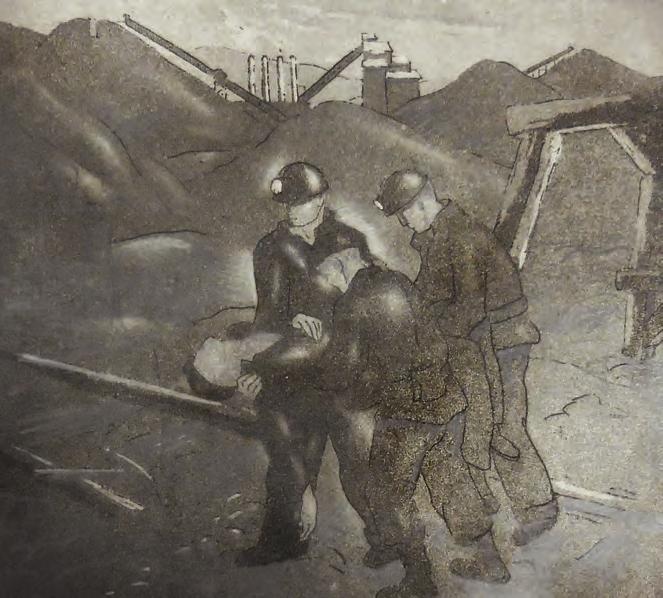
Morley was a second artist born in Scranton. Like Gallagher, he also had ties to my old neighborhood. Morley’s family lived on North Keyser Avenue, and the artist was a graduate of Central Scranton High School. He later attended the University of Michigan before moving to New York City, where he studied art at the National Academy of Design and Art Students League. Morley was associated with the WPA Graphic Art Workshop in New York City, where he was involved in promoting the silkscreen process. He worked for most of his career in the metropolitan center, but periodically returned to Scranton and exhibited at the Everhart Museum. Morley never forgot the bitter circumstances that accompanied anthracite mining in Northeastern Pennsylvania. His lithograph Mine Rescue (c. 1936-1942), with its depiction of a tomblike mine opening and attendant coffin, documents the fear and sorrow experienced by mining families waiting for news of loved ones after an accident. Morley’s own life was short, and he died following an illness at age forty-four.
Other artists based in New York City were also interested in the anthracite coal industry. Since its advent in the nineteenth century, coal mining had attracted broad media attention. Information about it, ranging from descriptions of physical sites to evaluations of labor activities, appeared regularly in periodicals. During the twentieth century, this popular coverage expanded to include newsreels, postcards, and souvenirs. By the 1930s, as coal companies promoted continued interest in their product through advertising campaigns, newspapers examined emerging concerns within an industry facing dire challenges. Alternative fuels attracted consumers, unionized workers organized strikes, and faltering companies announced layoffs. As paychecks shrank and unemployment worsened, miners skilled in the extraction of coal took matters into their own hands, conducting independent bootleg operations on abandoned coal company lands. The drama of the situation was clearly apparent to printmakers addressing themes of work and solidarity.
Inspired by the struggles of anthracite workers in Northeastern Pennsylvania, Gottlieb visited the region to witness firsthand the conflicts waged between labor unions and coal companies, and the poverty experienced by mine workers and immigrant families. Along with colleagues Anthony Velonis (1911-1997) and Elizabeth Olds (1896-1991), the Romanianborn artist was recognized for silkscreens developed at the WPA Graphic Art Workshop in New York City. He also taught at the Harlem Community Art Center, where a printmaking program was established by Helfond. Committed to social
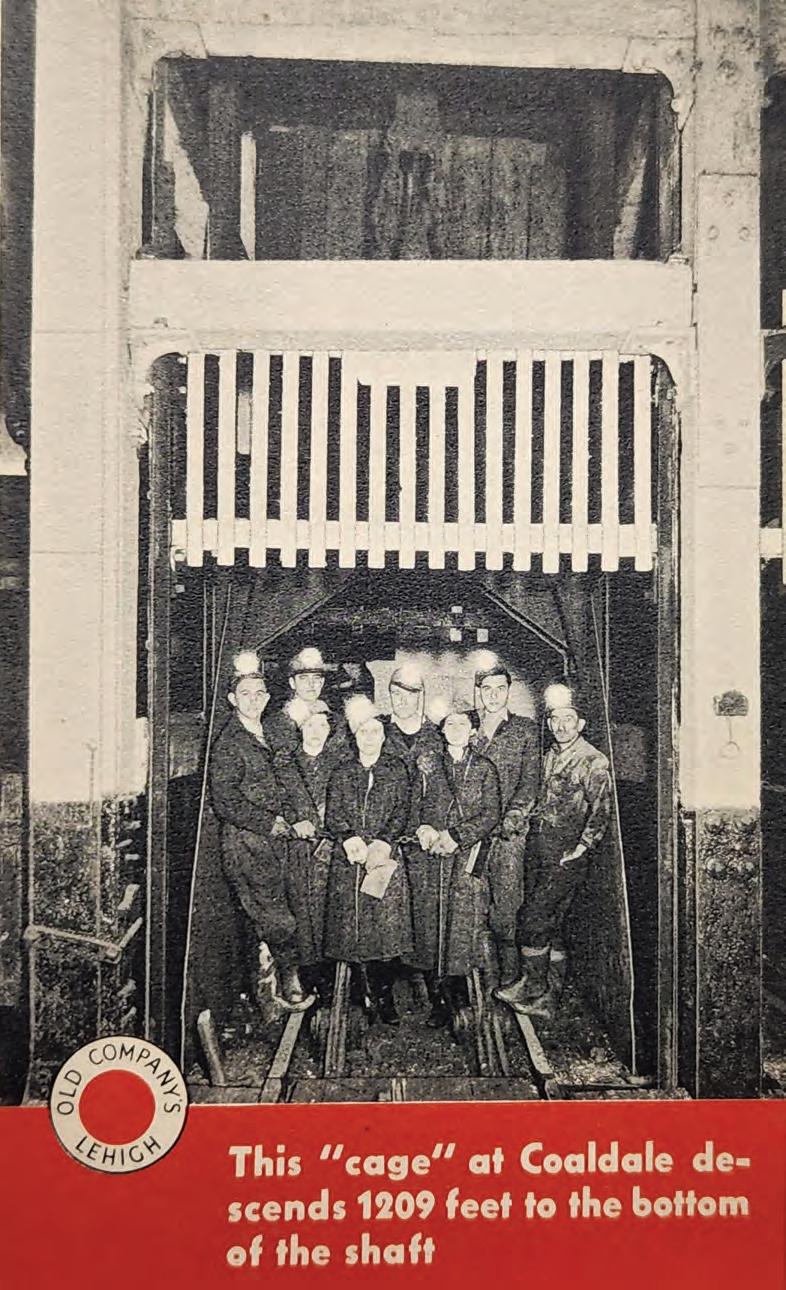
Lehigh Navigation Coal Company (active 20th century). Cage at Coaldale. Postcard on paper. c. 1935-1940. The Stanislaus Collection. Scranton, Pennsylvania.
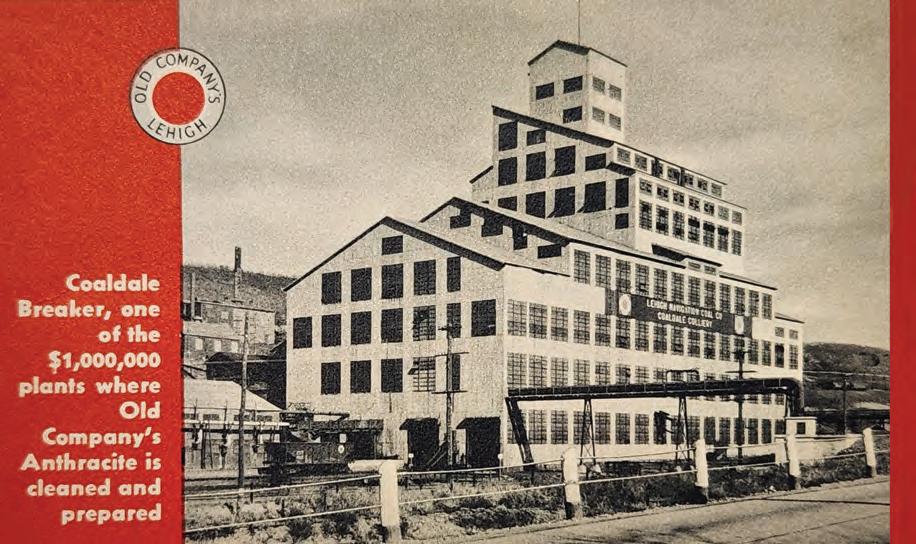
Lehigh Navigation Coal Company (active 20th century). Coaldale Breaker. Postcard on paper. c. 1935-1940.
The Stanislaus Collection. Scranton, Pennsylvania.
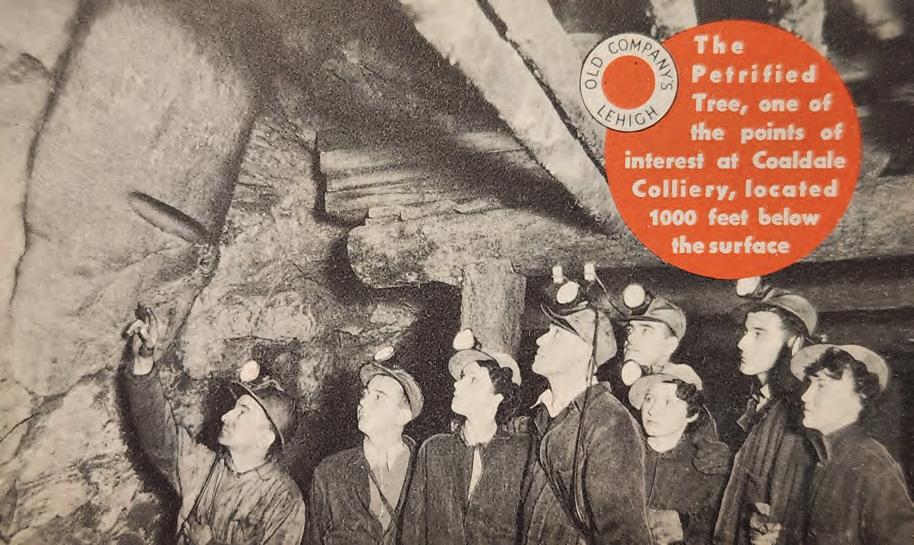
Lehigh Navigation Coal Company (active 20th century). Petrified Tree at Coaldale Colliery. Postcard on paper. c. 1935-1940. The Stanislaus Collection. Scranton, Pennsylvania.
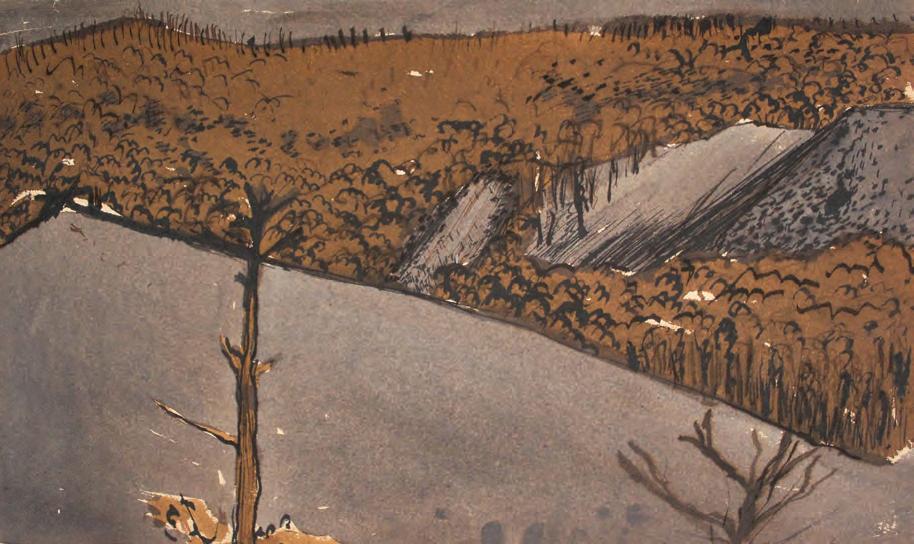
Blanche Grambs (1916-2010). Landscape with Coal Heaps I. Ink on paper. c. 1936.
The Stanislaus Collection. Scranton, Pennsylvania.
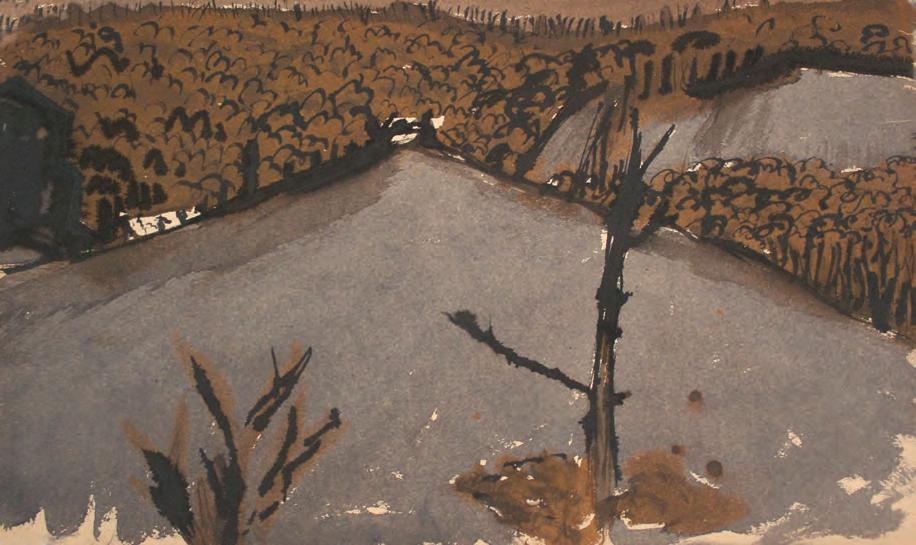
Blanche Grambs (1916-2010). Landscape with Coal Heaps II. Ink on paper. c. 1936.
The Stanislaus Collection. Scranton, Pennsylvania.
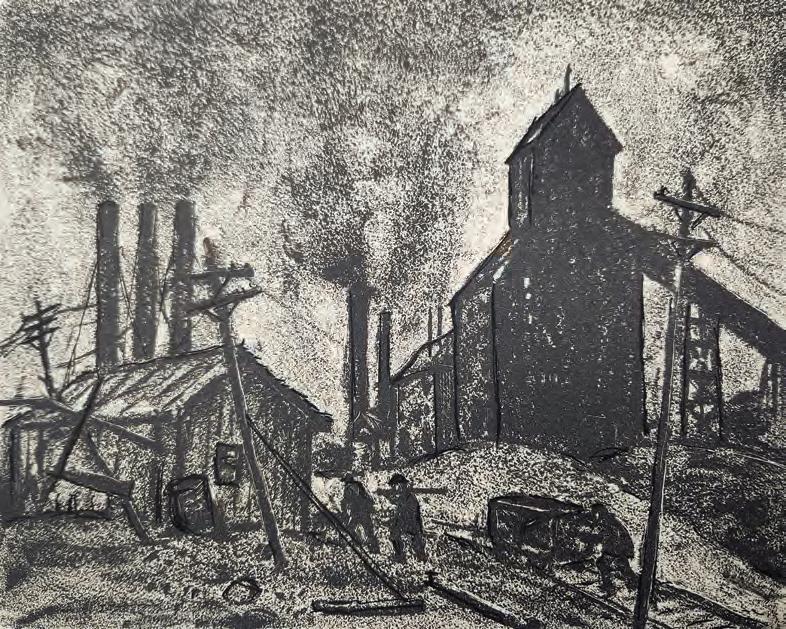
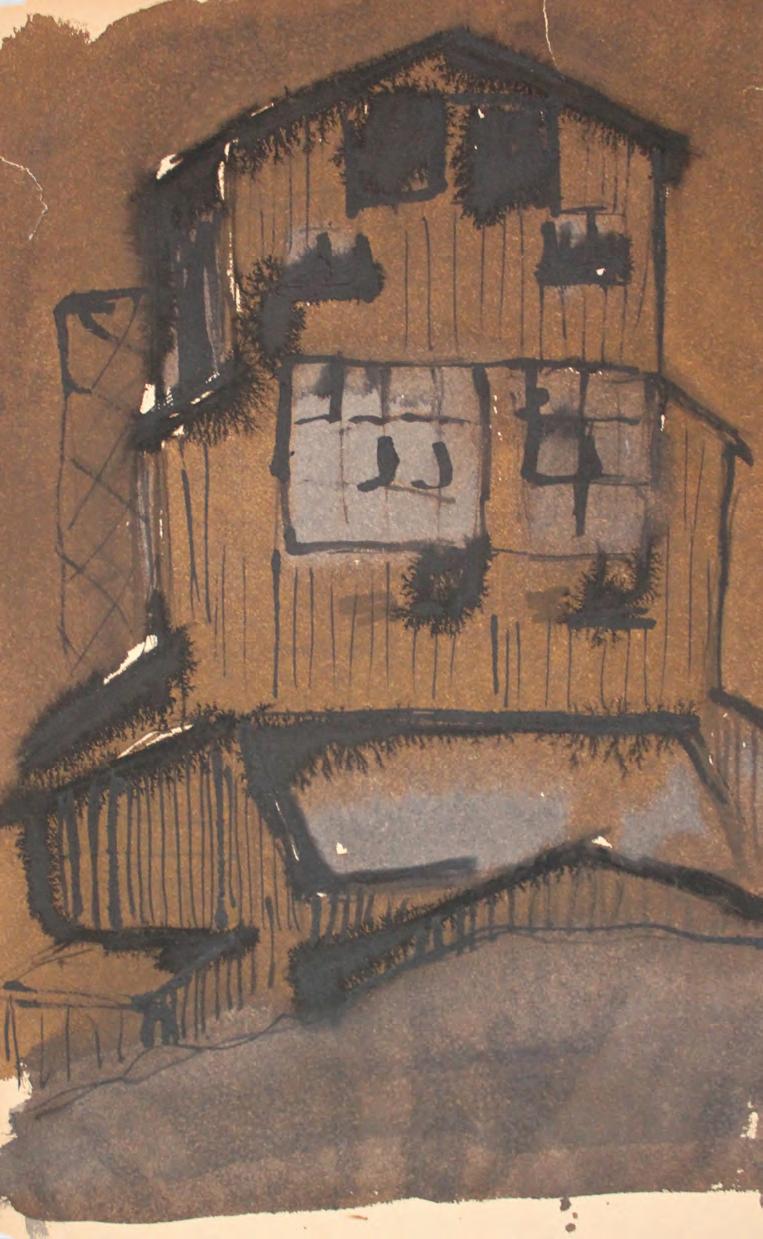
Blanche Grambs (1916-2010). Landscape with Coal Washery. Ink on paper. c. 1936. The Stanislaus Collection. Scranton, Pennsylvania.
justice, Gottlieb was a member of the Artists Union and American Artists’ Congress. The expressive quality of his work is evident in the lithographs The Coal Pickers (1936) and Abandoned Coal Mine (1936), both of which depict miners and their families gathering anthracite discarded or abandoned by mining companies.
The son of Eastern European immigrants, Sternberg was born on the Lower East Side. He studied at the Art Students League, and eventually became an influential instructor there. In 1936, Sternberg received a Guggenheim Fellowship funding a series of artworks depicting American industrial sites. To prepare for this project, he visited coal mines and steel mills in Pennsylvania. Notably, Sternberg visited the anthracite mining town of Lansford with a group of students, including Helfond, Grambs, and Milius (Lubell). Helfond was married to sculptor William Barrett, who had family connections in the area, and helped arrange accommodations. While the artists attempted to engage directly with everyday life and labor in Lansford, they also attended public mine tours offered by coal companies for promotional reasons.3 One such tour was conducted by the Lehigh Navigation Coal Company at its Coaldale Colliery near Lansford.
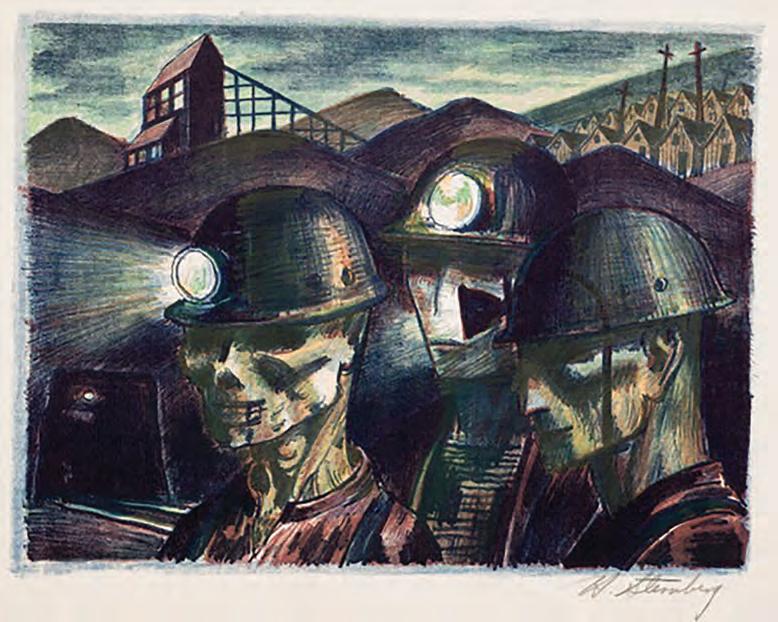
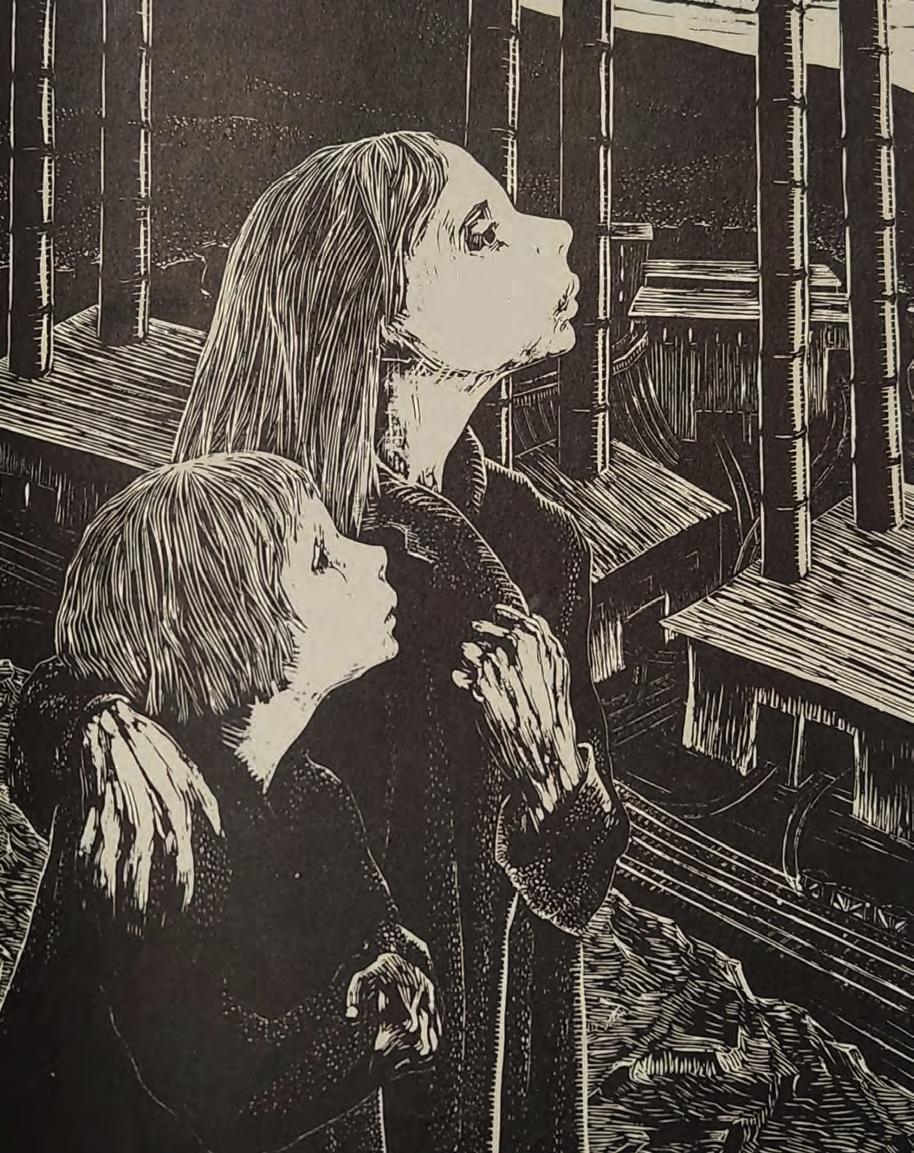
The anthracite industry proved to be a significant subject for the Sternberg group, and artists were prolific in their production of images related to it. In a subsequent review of a print exhibition at the Keppel Galleries in 1937, Sternberg himself noted how his perceptions of life in the coal regions shifted from romantic to realistic after observing “men...with stumps of arms and legs, women with tired, gaunt faces, [and]...thin barefooted children in overalls.”4 Sternberg’s pencil sketches of John Olsen. Coal Miner (1937) and Bennet Cooper. Coal Miner (1937) indicate his close observation of individuals, which later informed more highly-developed prints like the lithograph Seventh Level (1936), representing an injured miner, and the aquatint Coal Miner’s Kid (c. 1936), depicting a boy in striped coveralls. In a color lithograph of Coal Miners (1936), the emotional toll taken on mine workers is more symbolically suggested by a group of skeletal figures.
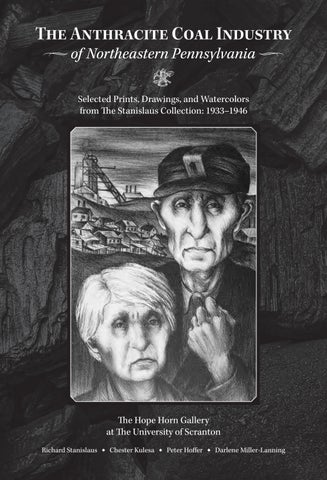
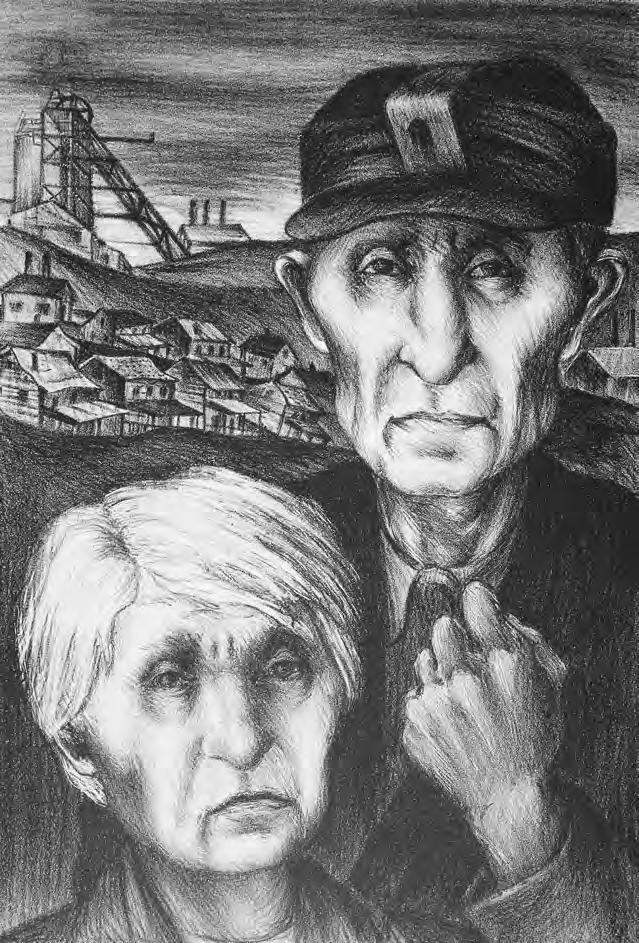
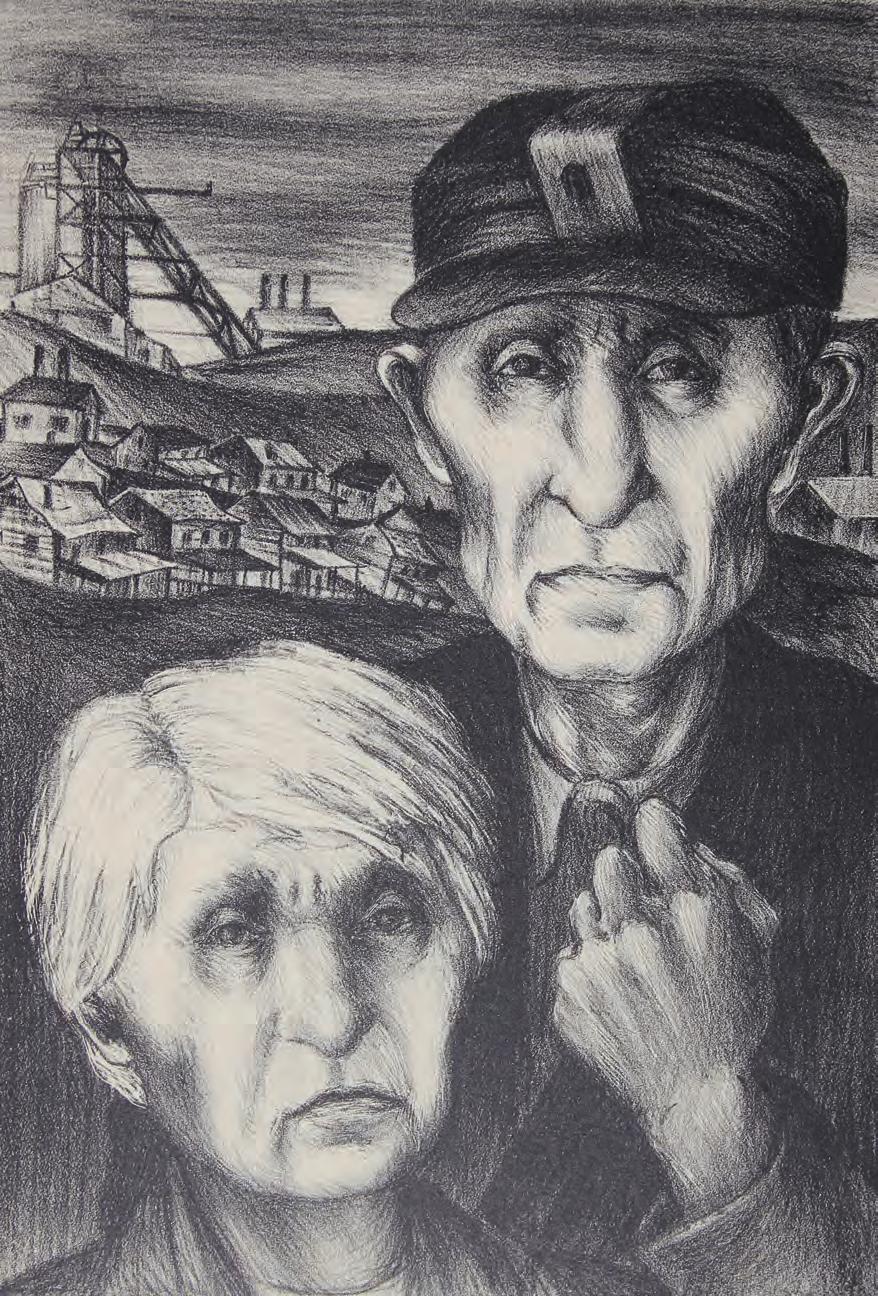
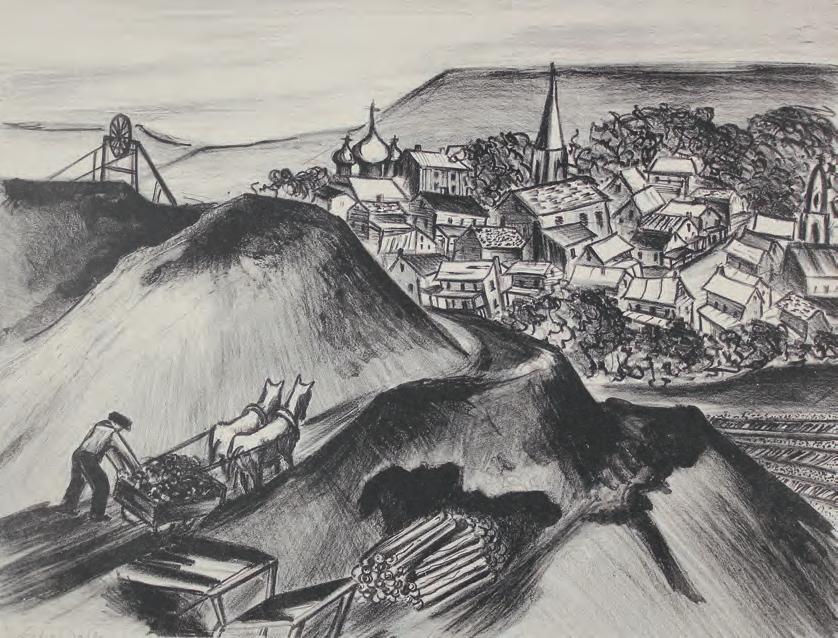
Helfond also paid homage to the inhabitants and environs of Lansford. Standing shoulder to shoulder before a colliery complex and mining town, the elderly man and woman shown in the lithograph Miner and Wife (1937) confront the viewer without compromise. Their positions echo Grant Wood’s agricultural painting American Gothic (1930), yet the industrial circumstances of their existence are clear. The miner raises not a pitchfork but a thin and powerful fist. Equally defiant, his wife wears her hair cut short. The couple has endured hardship, and they are neither afraid nor surprised that they will endure more. Helfond’s drawing and lithographs Lansford, Pennsylvania (1936) and Lehigh Valley (1937) depict views of a village and mine. Prominently shown are diverse churches with distinct crosses, spires, and domes. Such direct observations might have been supplemented by published materials. Details in the lithographs No. 6 Colliery. Lansford, Pennsylvania (1937) and Stripping (1941) resemble those of period photographs and postcards.
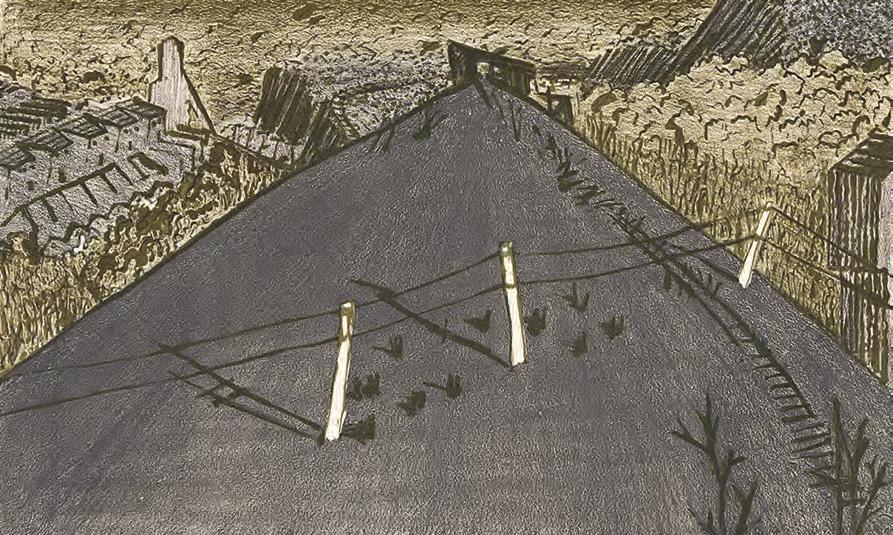
Another Sternberg student inspired by her visit to Lansdale was Grambs. Born to American missionary parents in China, she settled in New York City to pursue studies at the Art Students League. A member of the WPA Graphic Art Workshop in the 1930s, Grambs became known for her stark images of the destitute and unemployed. With their angular compositions and repetitive forms, her aquatints Going in the (Coal) Mine (1937) and Mining Town (1937) convey a sense of the exhausting struggle and monotonous drudgery of life in the anthracite regions. Grambs also produced ink sketches of ravaged anthracite landscapes in preparation for prints. The origins of the color aquatint Coal Heap (1939), which depicts a triangular mound traversed by poles and wires, can be found in a set of drawings recording broken trees and culm piles.
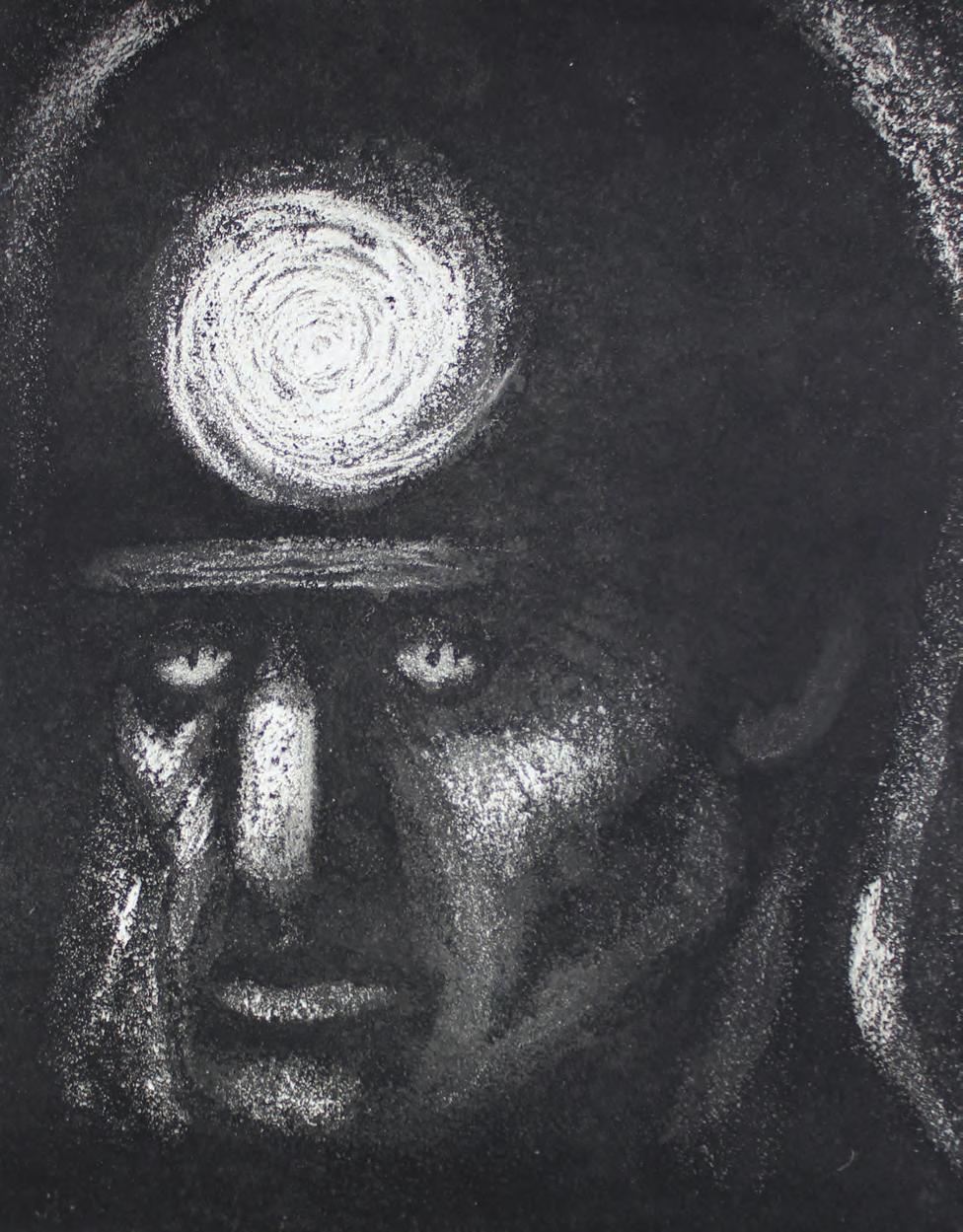
The artists who visited the anthracite coal regions of Northeastern Pennsylvania created remarkable industrial images for future generations to collect, document, enjoy, preserve, and exhibit. Among them, one print that stands out for me due to its striking appearance and haunting atmosphere is the aquatint Miner’s Head (1939) by Grambs. The print is based upon a preliminary drawing that the artist accomplished in Lansford. Once she returned to New York City, Grambs had the opportunity to work on her monumental printing plate under the direction of a master printer at the WPA Graphic Art Workshop. The miner’s strange facial features seem to have been bitten out of an ancient block of coal, while the beam of his head lamp swirls with the intense light of a distant solar orb. The form is surrounded by intense black, as if the head was slowly emerging from a bottomless pit in the depths of the earth.
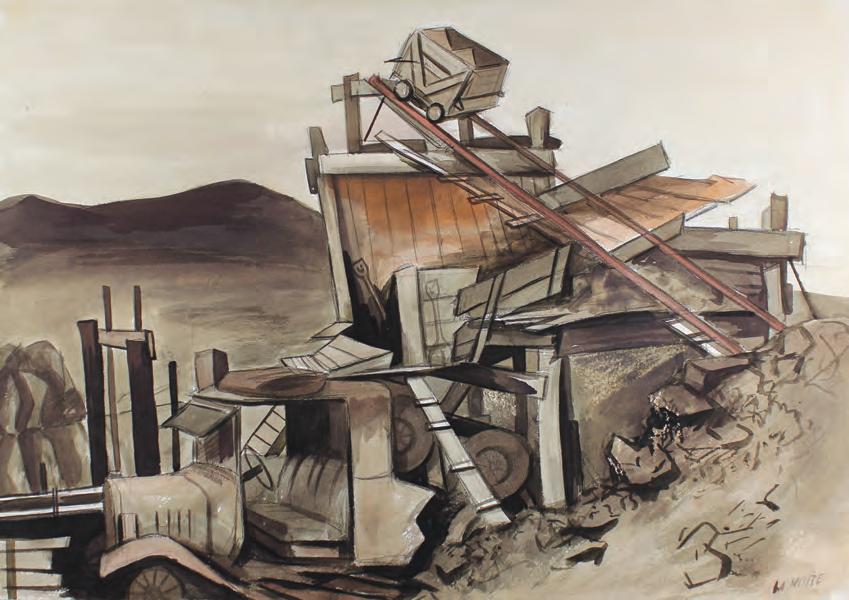
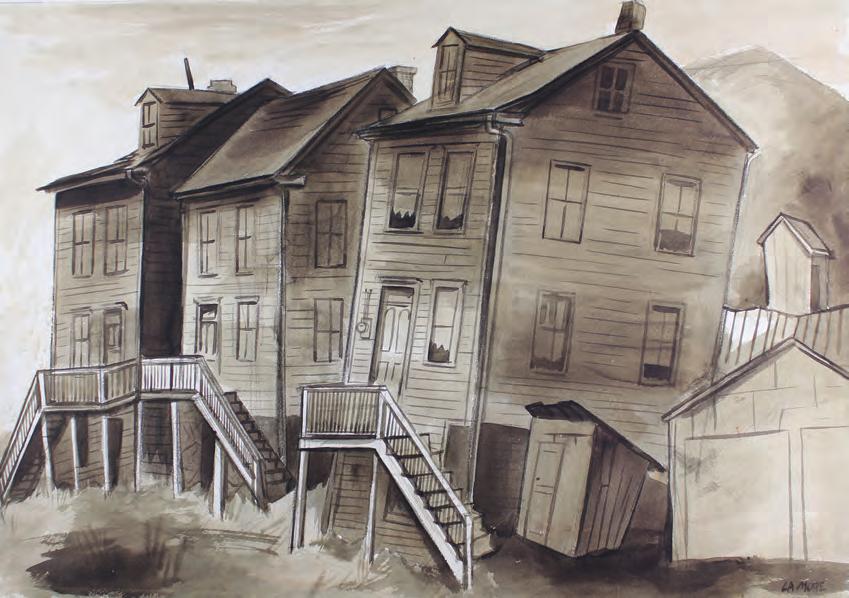
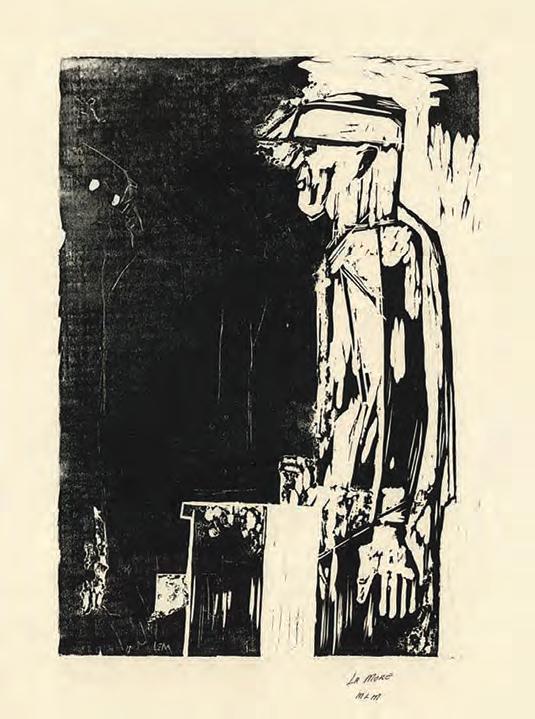
Many printmakers represented desperate aspects of the anthracite coal industry. Others emphasized the tenacity and resourcefulness of miners themselves. Born in Wisconsin, LaMore attended the Layton School of Art in Milwaukee and the University of Wisconsin. He relocated to Baltimore and then to New York City, where he joined the WPA Graphic Art Workshop. Like Gottlieb, he belonged to the Artists Union, an organization that advocated for employment opportunities and social equality. LaMore’s wash drawings of a Company Patch (1937) and Bootleg Mine (1937) depict structures and machinery associated with sanctioned shelter and illicit income. The ramshackle sites allude to tensions between coal companies, which formally controlled and provided housing for employees’ families, and bootleg miners, who clandestinely
Patience Workshop (active 20th century). Heart Pendant. Anthracite coal and pyrite druzy. c. 1930-1940. Private collection. Wilkes-Barre, Pennsylvania.
Patience Workshop (active 20th century). Anthracite Coal Souvenirs and Novelties. Anthracite coal. c. 1930-1940. The Stanislaus Collection. Scranton, Pennsylvania.
Blanche Grambs (1916-2010). Miner’s Head. Aquatint and etching on paper. 1939. The Stanislaus Collection. Scranton, Pennsylvania.
gathered and sold coal from company lands. Coal companies complained about this practice, but could rarely prevent it. In 1935, a reporter noted the bootleggers’ courage and resilience, stating that “anyone who knows them knows it will be dangerous to use force against them. These men are accustomed to bitter, hard work in which the threats of injury and death are constantly over them. Familiarity with danger has bred fear out of them.”5
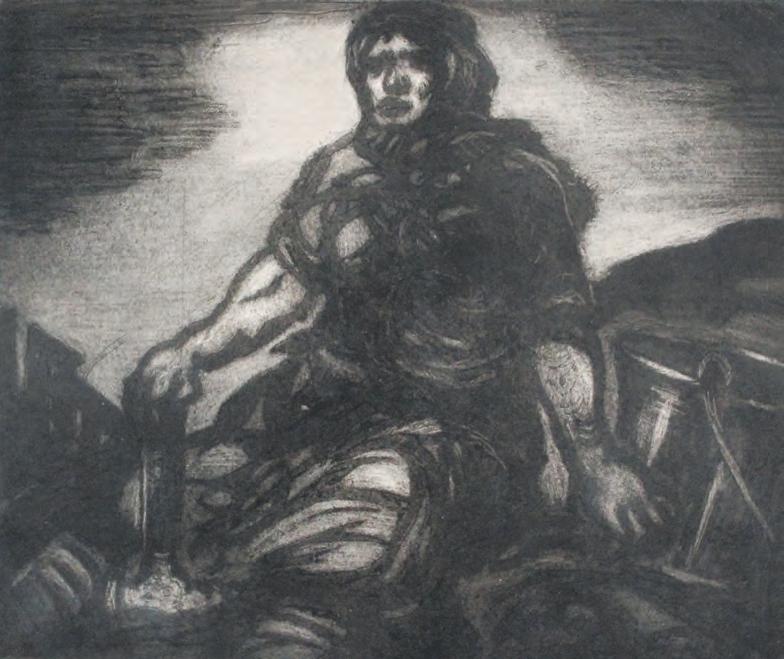
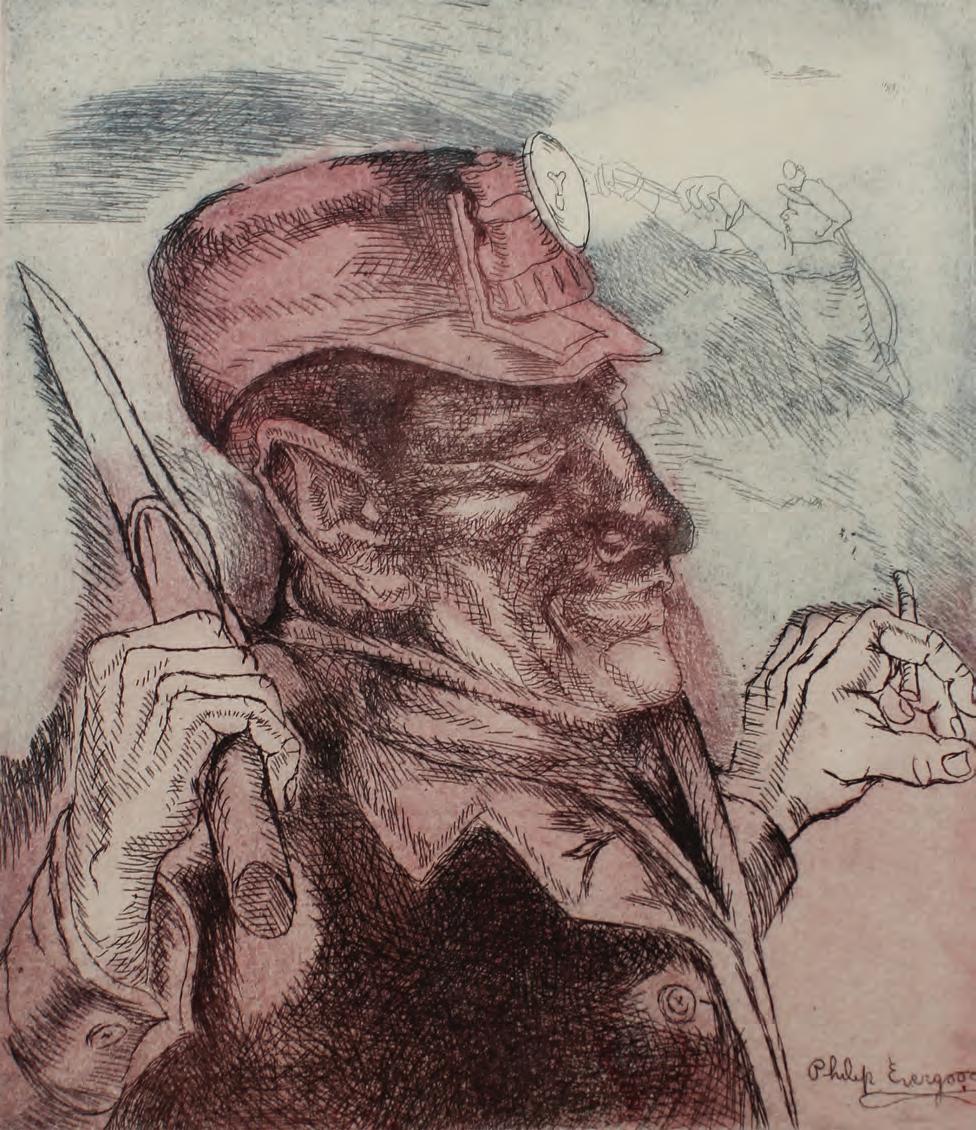
The battered but knowing man shown in Philip Evergood’s etching Portrait of a Miner (1936/1946) fits this description. Evergood studied with Henry Tonks (1862-1937) at the Slade School in London, George Luks (1867-1933) at the Art Students League in New York City, and Stanley William Hayter (1901-1988) at Atelier 17 in Paris. He worked as a WPA/ FAP artist during the 1930s, and was an active member of the Artists Union and American Artists’ Congress. His print of a cigarette-smoking miner casually hoisting a pickaxe was reproduced in the American Artists’ Congress book America Today. A Book of 100 Prints (1936), and inset as an edition print in the ACA Gallery catalog Evergood. 20 Years (1946).
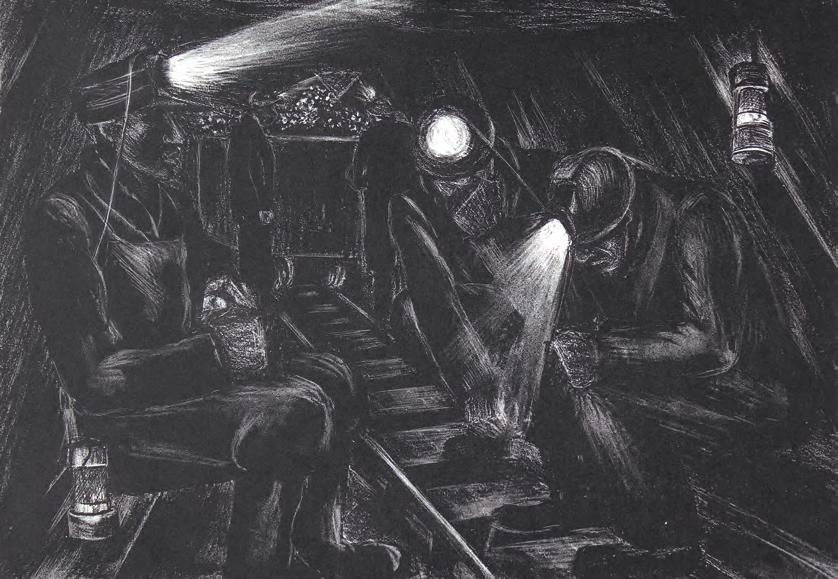
My knowledge of anthracite coal industry graphics of the 1930s started quite by chance when I attended a Print Fair in New York City at the Madison Avenue Armory. It was there among many art dealers that I first met Susan Teller, who operated the Susan Teller Gallery in Manhattan. I remember talking to her about graphics and explaining that I was interested in works representing the anthracite coal industry of Northeastern Pennsylvania. To my surprise, she looked through her stock and brought out a small black and white lithograph that depicted an underground coal mining scene. Beneath the image was inscribed Coffee Break, Riva Helfond and 1940. Genuinely surprised, I inquired if the piece was for sale. To my satisfaction, Teller said yes. Naturally, I bought the print on lay-away payments. I arranged its financing, received an invoice, and left the Print Show in triumph. That modest purchase took place over twenty-five years ago and was the beginning of my efforts to collect graphics depicting the various aspects of the anthracite coal industry.
On a later visit to the city, I was able to purchase a Helfond lithograph of two anthracite coal miners, titled Miners (1940), from art dealer Sylvan Cole. While at the gallery, I inquired if the artist was still active. Mr. Cole replied that she was, and asked, “Do you want to talk to her?” Although surprised, I said that I did. Within a few minutes, Mr. Cole handed over his phone and a plaintive voice inquired, “Yes, what is it young man?” I then listened to Ms. Helfond discuss the lithograph that she had created some sixty years ago at the WPA Graphic Art Workshop in New York City. It was based on a drawing that she accomplished on-site at an anthracite coal mine in Lansford. It was an honor to have talked with Ms. Helfond!
Another favorite destination was The Argosy Book Store at 59th Street and Lexington Avenue. On an upper floor of the five-story building were bins where nineteenth-century graphics could be purchased at reasonable prices. Once, while searching through a bin labelled Industry, I found to my delight and surprise an original lithograph signed Esther Brock Bird, dated ’35, and titled Carbondale. It was an industrial scene of the Hudson Coal Company Yards in Carbondale, Pennsylvania. I have often wondered how that lithograph of an anthracite coal mine subject ended up in a book dealer’s bin.
Frankly, if it had not been for the help of professional print and drawing dealers, it would not have been possible to build my collection of representative works of the anthracite coal industry of Northeastern Pennsylvania. In conversations I have listened to fascinating stories about distinguished artists of the 1930s. I have also learned the ins-and-outs of the business of finding graphics, conducting negotiations, and arranging for lay-away payments towards selected artworks. If it wasn’t for lay-away payments, some remarkable artworks would not have been purchased.
As I gradually acquired individual anthracite coal industry pieces, they began to accumulate. I soon realized that I was building a collection. The works simply began to add up! Also, my knowledge of the subject increased with each purchase as I looked through the stock of various dealers, auction house publications, artists’ biographies, and institutional holdings. Study of American art history and the anthracite coal industry added to my general knowledge. All this was gradually accomplished over a long period of time. I realized that I was becoming responsible for the curatorial care, documentation, research, archival storage, and sharing of a sizeable collection of industrial graphics
Conclusion
When I look at the collection of graphics that has been acquired over many years and with hard work, I never cease to be amazed at the high quality of the pieces. They have been accomplished with the artists’ trained hand, native ability, and regard for a once vibrant industry of Northeastern Pennsylvania. In a sense, individual printmakers brought their own artistic viewpoints to an extractive undertaking that was unfolding before their eyes. It was an enterprise of action and movement, passing so swiftly that only a frozen image could restrain it. The resulting graphics are not only designs of ink on various types of paper, often completed through much labor. They are mute testaments to an industry that certainly
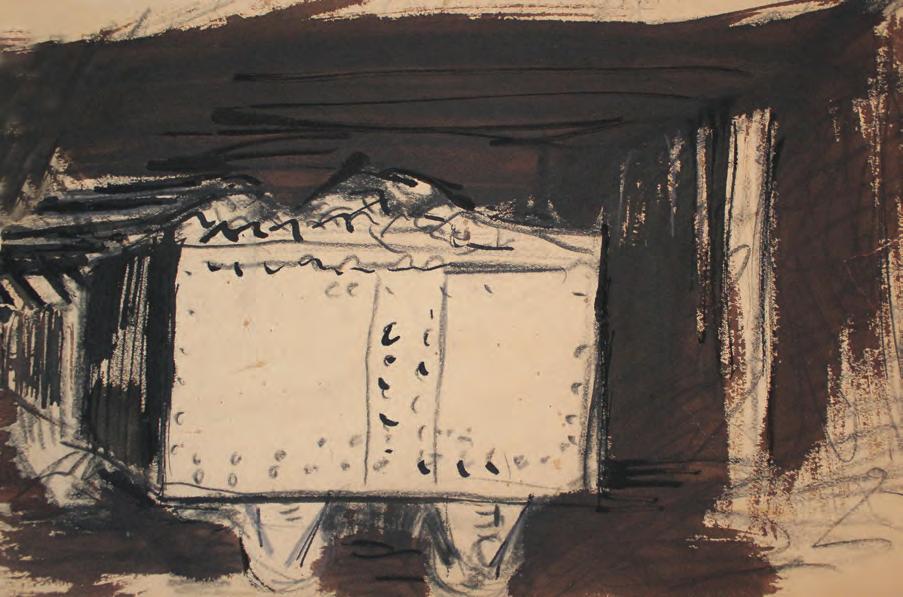
Blanche Grambs (1916-2010). Coal Cars. Ink on paper. c. 1936.
The Stanislaus Collection. Scranton, Pennsylvania.
Blanche Grambs (1916-2010). Going into the (Coal) Mine. Aquatint on paper. 1937. Paramour Fine Arts. Franklin, Michigan.
Blanche Grambs (1916-2010). Mining Town. Aquatint on paper. 1937. The Stanislaus Collection. Scranton, Pennsylvania.
Blanche Grambs (1916-2010). Coal Heap. Color aquatint on paper. 1939. Paramour Fine Arts. Franklin, Michigan.
Chet LaMore (1908-1980). Bootleg Mine. Watercolor wash on paper. 1937.
The Stanislaus Collection. Scranton, Pennsylvania.
Chet LaMore (1908-1980). Company Patch. Watercolor wash on paper. 1937. The Stanislaus Collection. Scranton, Pennsylvania.
Chet LaMore (1908-1980). Miner. Woodcut on paper. c. 1935.
The Stanislaus Collection. Scranton, Pennsylvania.
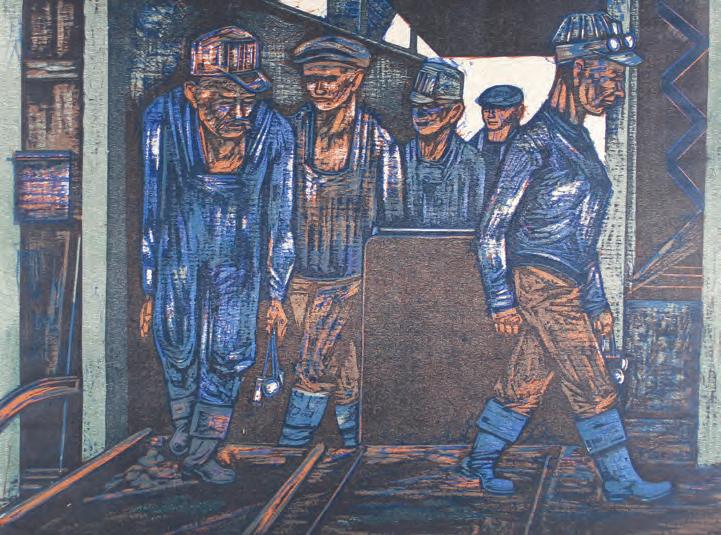
Chet LaMore (1908-1980). Miners. Color woodcut on paper. 1937.
The Stanislaus Collection. Scranton, Pennsylvania.
impressed their creators with its monumental scale, mechanical activities, and human drama, and that was once important to several East Coast states and millions of people across the nation. One wonders how such fragile artworks from the 1930s might still be intact and available for purchase ninety years hence. I have been fortunate in my quest to locate and acquire such artistic treasures.
When WPA/FAP printmakers were producing their industrial graphics during the 1930s, they were derisively characterized as boondoggles, amateurs, dole recipients, and artists on relief. Often their modest exhibitions of prints did not receive much validation. In 1936, a reviewer for an exhibition of prints sponsored by the American Artists Congress noted that coal seemed “to have captured the artists’ attention more than any other one subject.” Titles of works demonstrating this point included Coal Pickers, Coal Gatherers, Coal Town, Women Picking Coal, Bootleg Mine, and Mine Superintendent 6
In contrast, Jacob Kainen (1909-2001), an artist and curator who had worked on WPA/FAP projects in New York City and Washington D.C. later wrote about the value of the program, stating, “As one who joined the graphic arts division in its first month, I can testify to the enthusiasm and good will felt by participating artists. Aside from the relief at being able to survive economically, we were grateful to the government for recognizing that art was a public concern. It was good to know that we could function full-time as artists and work in a spirit of camaraderie with other artists and with master craftsmen. We had been given a strong professional motivation at a crucial time, and we appreciated it.”7
To have and to hold, and yet to have and understand what you are holding, is a constant challenge with images of the anthracite coal industry. When I attended Professor Matthew Baigell’s early morning art history lectures at Rutgers University, I still recall him stating, “How do you read it?” Of course, he was referring to a slide image of work by an American artist that was put up for viewing by his class. I thought about his statement and I wanted to understand what it was that I was looking at. For the most part, visual works of art are not animated and guardedly retain their secrets. How does one read an anthracite coal industry subject? How can one contribute meaning to it?
It is not an easy task, especially if one did not experience first-hand the long by-gone activities of stalwart mules and grimy miners; the presence of towering breakers and burning dumps; the passage of coal trains and shrieking engines; and the tension of labor strikes and low wages. Such were the varied factors that lent character to the anthracite coal industry of Northeastern Pennsylvania, which, in my opinion, one must study in order to really understand the artworks depicting it.
The WPA/FAP initiatives of the 1930s have ended. The artists and administrators who participated in them, as well as the anthracite coal industry to which they responded, are now long gone. It is strange that delicate graphics created through that political movement have survived the passage and deterioration of time. However, here are a few thoughts on an elusive subject.
In 1935, a perceptive and prophetic newspaper editorial questioned the Roosevelt Administration’s plan to spend over twenty-three million dollars in six months to raise the cultural level of Americans through the WPA/FAP programs, and to support the activities of an estimated three thousand artists. “All sympathize with the workless artist,” it noted, “but this naïve WPA venture seems not the best way to serve him. Culture is not a faucet of water to be turned off or on at will. It is acquired in long and slow process, as the gradual growth of experience.”8
The editorial concluded with a haunting prophecy. “The answer to this experimental question of the New Deal will perhaps be made decades hence when future generations will have a chance to evaluate the ultimate output of the men and women whose works are preserved for posterity.”9
This prophecy, written many years ago, and in a vastly different America, has strangely come to be.
Nicholas Bervinchak (1903-1978). Heading Home. Etching on paper. 1935. The Stanislaus Collection. Scranton, Pennsylvania.
Winifred Milius (Lubell). (1915-2012). Coal Gatherers. Woodcut on paper. 1937. The Stanislaus Collection. Scranton, Pennsylvania.
Remarks on Printmaking
Peter Hoffer
During the 1930s, WPA graphic artists used printmaking techniques that were decades, if not centuries old. Once standard in limited-edition hand printing but unsuitable for modern high-volume applications, these historical processes remained popular among printmakers and illustrators attracted to their expressive qualities. There are four major printmaking processes: relief, intaglio, lithography, and screen. Each has distinct underlying principles and characteristics setting it apart from the others. With the exception of screen printing, based on the principle of a stencil, all areas, including examples of various techniques and applications, are represented in the exhibition The Anthracite Coal Industry of Northeastern Pennsylvania. Selected Prints, Drawings and Watercolors from the Stanislaus Collection: 1933-1946
Printmaking processes were developed across time to fulfill the common goal of creating multiple images. Numerous prints, unlike individual paintings, can be viewed and owned by more people at a lower cost. Using wood, metal, stone, or related material as an image-bearing plate that can carry and transfer ink to another surface through pressure, artists are able to produce duplicate “impressions” of an image. In contrast to drawing one image directly on paper, a printmaker can indirectly “pull” multiple impressions from a plate using a press or printing by hand. Each impression, or proof, is considered unique and original.
Types of proofs include artist’s, trial, and presentation proofs. A series of nearly-identical proofs is called an edition. Any proof is considered not a copy but original and is customarily documented in pencil below the print image. Most signed editions have a title, edition number, signature and date. Professional publishing goes further by comprising documentation sheets that cover extensive production data such as color sequencing, paper used, and number of various proofs made. Although the practice of signing, numbering, and dating prints was established before the era of WPA prints, artists represented in this exhibition were often less descriptive. Also it is not uncommon today for an edition to number in the hundreds, whereas WPA editions were generally limited to smaller impressions, perhaps in part due to economic factors.
Relief printing is likely the most commonly known and understood of the processes, with a rubber stamp or potato print being simple examples. After cutting away the negative areas of an image, the uncut raised area is what inks and prints. Historically the use of wood has dominated this process, but now other materials such as masonite, linoleum, and composition board are also available. In making a preparatory drawing, one must be mindful that the printed image reverses. A reverse drawing can be transferred to the printing block before cutting to avoid printing a mirror or opposite reading impression. This consideration also applies to intaglio and lithographic printing with the exception of screen printing, which enables working a positive stencil image.
A woodcut is made using a soft plank grain wood such as pine, poplar, or fruitwood that reveals grain texture in printing. A variant of the woodcut is wood engraving, which utilizes a harder and denser end grain wood that permits the cutting of very sharp, precise lines in any direction. Because of its relative hardness, polished surface, and availability, boxwood has been a preferred material for wood engraving. Prior to the reliable reproduction of photographs in nineteenthcentury publications, wood engraving served as the best way to print illustrations in periodicals like Harper’s Weekly and Frank Leslie’s Illustrated Newspaper. When technology was developed to print photographs in mass publications, many printmakers continued wood engraving for their illustrations and gallery-destined editions.
When working in relief, printmakers seeking to incorporate grain texture and a sense of immediacy in their work choose woodcut over wood engraving. Those wanting fine, meticulous detail with areas of solid blacks and whites prefer wood engraving. Carving plank wood with gouges for a woodcut calls for a simpler and less exacting approach compared to cutting end grain wood for engraving. End grain allows engraving of detailed cuts using burins, sharp pointed tools of various shapes and sizes. This contrast can be seen in the woodcut Coal Gatherers (1937) by Winifred Milius (Lubell) and the wood engraving Black Country (1937-1938) by Michael Joseph Gallagher. In multi–color relief prints, more than one block is often needed to achieve color range. At times one block can be inked with multiple colors printed simultaneously to achieve desired effects. Other times, several blocks are necessary to attain color and texture. The woodcut Miners (1937) by Chet LaMore was produced using multiple colors and blocks.
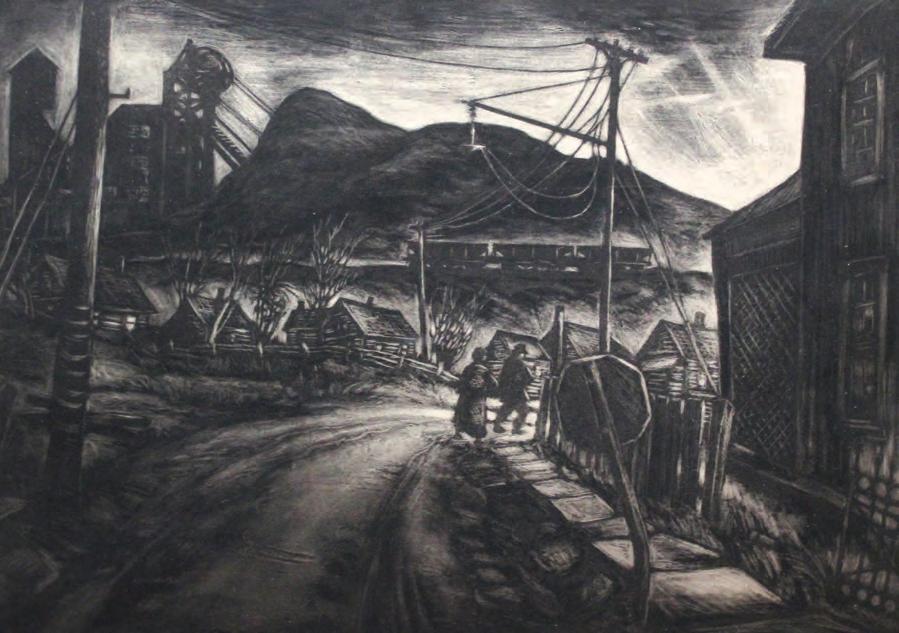
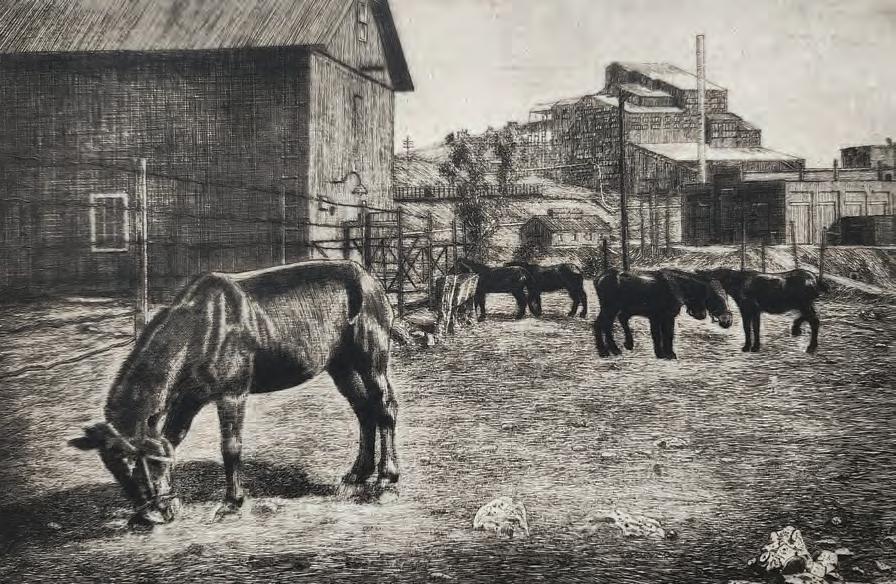
Nicholas Bervinchak (1903-1978). Mine Mules. Etching on paper. 1933. The Stanislaus Collection. Scranton, Pennsylvania.
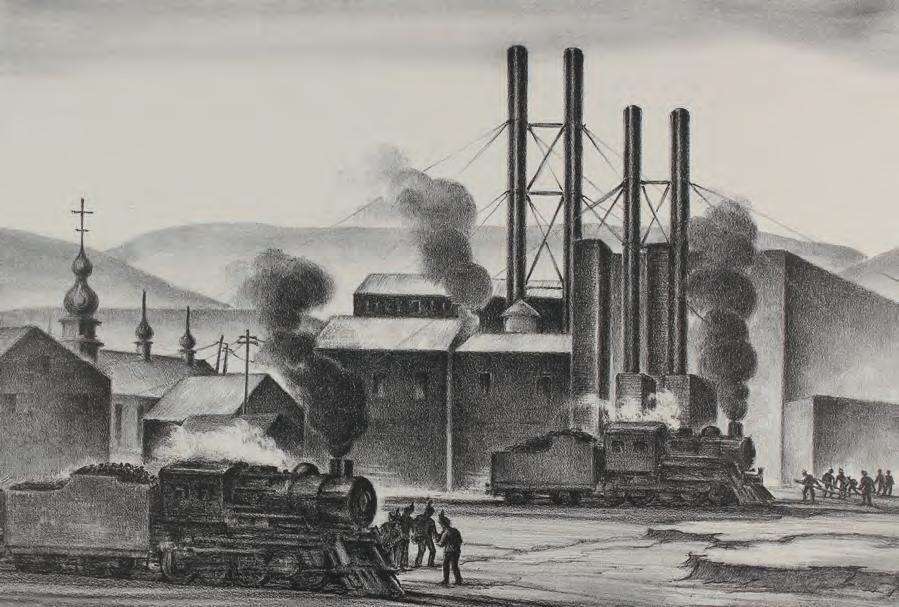
Michael Joseph Gallagher (1898-1965). North Scranton. Carborundum tint on paper. c. 1940. The Everhart Museum. Scranton, Pennsylvania.
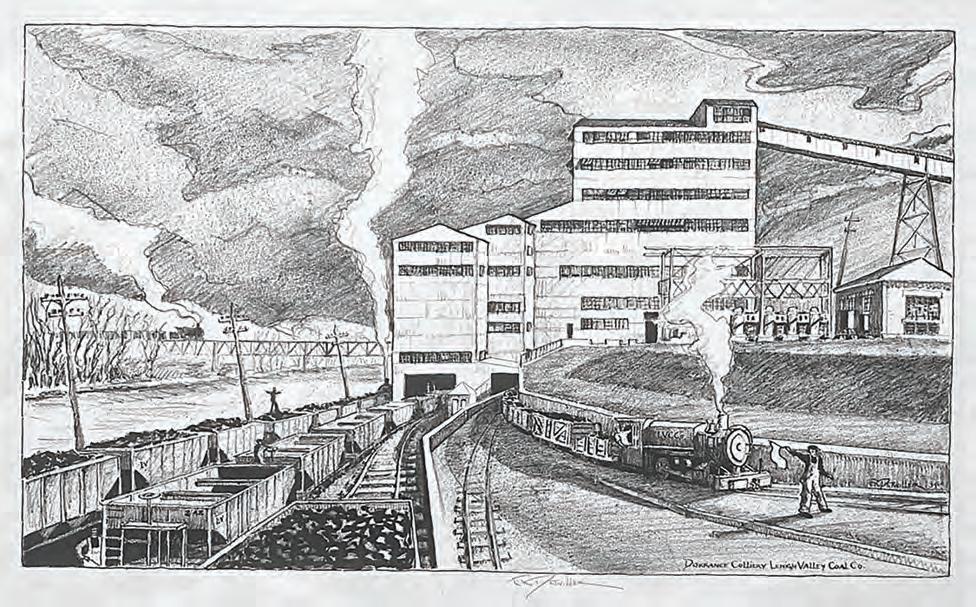
Frederick Knecht Detwiller (1882-1953). Dorrance Colliery. Lehigh Valley Coal Company. Lithograph on paper. 1935. The Stanislaus Collection. Scranton, Pennsylvania.
Esther Brock Bird (1888-1950). Pennsylvania Coal. Carbondale, Pennsylvania. Lithograph on paper. 1935. The Stanislaus Collection. Scranton, Pennsylvania.
David Burke (1905-1985). Coal Hole. Lithograph on paper. c. 1935. The Stanislaus Collection. Scranton, Pennsylvania.
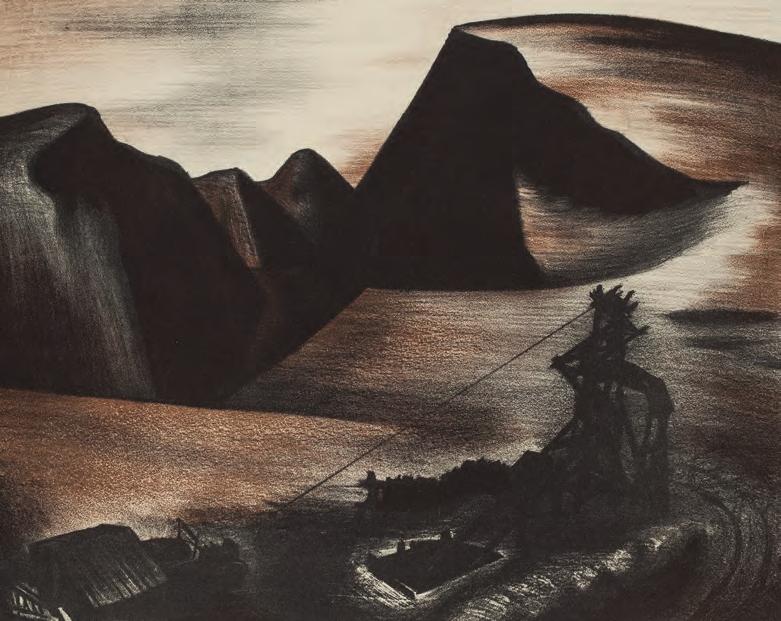
Paul Weller (1912-2000). Coal Country. Color lithograph on paper. c. 1939. Paramour Fine Arts. Franklin, Michigan.
Emil Weddige (1907-2001). Mine Disaster. Etching on paper. c. 1940. Paramour Fine Arts. Franklin, Michigan.
Harry Sternberg (1904-2001). Coal Miners. Color lithograph on paper. 1936. Egon and Joan Teichert Fine American Prints. Hauppage, New York.
The attraction of relief printing is its immediate tactile quality and relative simplicity. In addition, the ability to print by hand without a press is a convenient and cost saving option. Because of this some WPA woodcuts were likely hand printed by artists themselves and possibly independent of federally designated workshops. However, because of bureaucratic restrictions or the technical demands of expertise and special presses, most prints–particularly intaglio and lithograph–were made in workshops having official oversight and providing the supervision and assistance of skilled practitioners.
The underlining principle of intaglio, derived from the Italian word intagliare, meaning “to incise,” is the opposite of relief printing–what inks and transfers to paper is below the surface of the plate and not in relief. Intaglio prints are easily identified. Plates are usually made of copper or zinc, and their edges and corners are beveled and smoothed, creating a recognizable embossed plate mark as the result of heavy press pressure. A press is required for printing intaglio and as a rule paper is dampened for best results. Wetting and blotting paper assures better ink transfer and inadvertently increases plate edge embossment. This edge is evident in Mine Mules (1935) by Nicholas Bervinchak.
There are a variety of intaglio techniques that considered alone are dry or wet approaches, but not both. However, wet and dry techniques can be combined on the same plate for a range of effect. Line engraving and drypoint are regarded as types of dry approaches because work is done directly on or into the plate. In line engraving the burin allows the artist to methodically cut very precise lines into the metal that print cleanly. Drypoint on the other hand enables the direct scratching of lines with a sharp stylus, making a burr that yields less precise but darker lines and masses. In drypoint, the jagged burr is what captures the ink, allowing a build-up of single and hatched lines which are velvety, feathered, and quite distinct from an engraved line.
Line etching and aquatint are intaglio techniques made more indirectly with the use of a wet corrosive acid bath, or etchant. First an acid-resistant ground is applied to the entire plate surface through which the artist lightly draws lines, exposing the metal. The plate is then immersed in acid to etch exposed areas for various times and results. Aquatint involves distributing rosin particles on the plate surface, then heating and melting them into place. Once in the bath, the rosin prevents etching or “biting” in those acid-resistant areas and prints tonal effects, subject to times of bath exposure and repeated stopping out methods. It is possible to build up tones ranging from light and delicate to very dark masses that can be further altered through scraping and burnishing. As in the case of etched lines, aquatint tonalities will be affected by mordant strength, time in mordant bath, and multiple workings. A good example of the range of values possible with aquatint can be seen in Miner’s Head (1937) by Blanche Grambs.
Lithography is referred to as a planographic process and works due to the natural antipathy of grease and water. Printing an image that is neither raised (woodcut) nor incised (etching), the lithograph is drawn and chemically fixed on the surface or “plane” of limestone block, interestingly the ideal stone of Bavaria where the process originated. Grinding the stone to a clean surface prepares it for direct drawing using greasy litho pencils, crayons, or tusche, a thick liquid that can be thinned and brushed on for wash effects. Once made, the drawing is fixed with a mild gum Arabic and nitric acid etch to prevent its spread or filling in. Printing the stone requires sponging it with a thin film of water, which repels the oil-base roller ink in non-image areas and allows ink transfer to the image areas.
Despite its technical demands and difficulties, lithography appeals to printmakers desiring a more immediate and painterly approach. A lithograph image is easily drawn and developed directly on stone or a less desirable metal plate. If stone is used there are many ways to alter the image grease drawing by scratching, rubbing, and employing other techniques to create additional tones, textures, and highlights. With its crayon-like quality and distinguishing features the look and finish of a lithograph is easily recognized. It is interesting to compare Riva Helfond’s preparatory pen and brush ink drawing Lansford, Pennsylvania (1936) to her lithograph of the same title produced in the same year. The drawing, spontaneous and free, is nicely translated into a lithograph instilled with the same attributes.
To summarize, once commercial printing technologies were superseded by newer ones, artists such as those represented here were drawn to the use of traditional printmaking media in ways that offered hands-on experimentation and invention. The opportunity to inexpensively produce and publish multiple original prints in well-equipped and professionally supervised workshops was a boon to those in need of financial and creative relief. WPA/FAP artists and other affiliated practitioners during this time were generally free to choose themes and subjects important to them without the restraints of commercial expectations. In these prints, especially those depicting coal-related subjects, lies an important cultural and visual legacy to be valued and honored.
Barbara Burrage (1900-1989). Coal Town. Woodcut on paper. 1936.
Published in American Artists’ Congress. America Today: A Book of 100 Prints. New York: Equinox Cooperative Press. 1936. The Stanislaus Collection. Scranton, Pennsylvania.
Philip Evergood (1901-1973). Portrait of a Miner. Color etching on paper. 1946.
Published in ACA Gallery. Evergood. 20 Years. New York: Simon and Schuster. 1946. The Stanislaus Collection. Scranton, Pennsylvania.
Bibliography
Adamic, Louis. “The Great ‘Bootleg’ Coal Industry.” The Nation, Vol. 111, No. 3627, January 9, 1935, pp. 46–49.
Allen, Frederick Lewis. Since Yesterday: The Nineteen-Thirties in America, September 3, 1929–September 3, 1939. Harper & Brothers, 1940. America Today: A Book of 100 Prints, Chosen and Exhibited by the American Artist’s Congress. Equinox Cooperative Press, New York,1936.
“America Today in 100 Prints.” New York Sun, December 4, 1936.
“America Today.” The New York Times, December 1, 1936.
Buryk, Michael, with Alexis Buryk. “Nicholas Bervinchak: From Slate-picker to Celebrated Pennsylvania Coal Country Artist.” The Ukrainian Weekly, Vol. 79, No. 40, 2011, pp. 12–13, 16.
Burns, George R. “53,000 Pin Hopes on WPA and Coal Bootlegging with 5 Collieries Closing.” Philadelphia Record, November 6, 1938, p. 12. Carlson, Oliver. “Bootlegging Coal: A New Industry Appears on the Horizon.” Harper’s Magazine, April 1935, pp. 613–22.
Coleman, McAlister. Men and Coal. Farrar & Rinehart, 1943.
Commonwealth of Pennsylvania. Report of the Anthracite Coal Industry Commission. Harrisburg: Murrelle, 1938.
Dawson Hall, R. “Dragline Excavators, Widen Casting Opportunities in Anthracite Strippings.” Coal Age, Vol. 40, No. 1, January 1935, pp. 25–29. Dublin, Thomas, and Walter Licht. The Face of Decline: The Pennsylvania Anthracite Region in the Twentieth Century. Cornell University Press, 2005. “Farthest South.” Editorial, Buffalo Evening News, September 12, 1935.
Helfond, Riva. Riva Helfond: A Checklist of Prints. Susan Teller Gallery, 2000.
Hurd, Charles W. “Roosevelt Signs Work Relief Bill; Begins Allocating.” The New York Times, April 19, 1935, p. 1, 8. Kainen, Jacob. “Prints of the Thirties: Reflections on the Federal Art Project.” Artist’s Proof, Vol. 11, 1971, pp. 34–41.
Langa, Helen. Radical Art: Printmaking and the Left in 1930s New York. University of California Press, 2004.
Leech, Gwyneth M. Michael J. Gallagher: Prints, Biography and Catalogue. Edinburgh College of Art, 1984.
Link, Arthur S. American Epoch: A History of the United States Since the 1890s. Alfred A. Knopf, 1955.
MacQuown, W. C., ed. Mac’s Directory and Hand Book of Anthracite. Coal Information Bureau, 1938.
Medley-Buckner, Cindy. “Carborundum Mezzotint and Carborundum Etching.” Print Quarterly, Vol. 16, No. 1, March 1999, pp. 34–49.
McElvaine, Robert S. The Great Depression: America, 1929–1941. Times Books, 1984.
Miller, Donald L., and Richard E. Sharpless. The Kingdom of Coal: Work, Enterprise, and Ethnic Communities in the Mine Fields. University of Pennsylvania Press, 1985. Moore, James C. Harry Sternberg: A Catalog Raisonné of His Graphic Work. Wichita State University, 1975.
Nunes, Jadviga M. da Costa. “Pennsylvania’s Anthracite Mines and Miners: A Portrait of the Industry in American Art, ca. 1860–1940.” Journal of the Society for Industrial Archeology, Vol. 28, No. 1, 2002, pp. 11–32.
O’Connor, Francis V., ed. The New Deal Art Projects: An Anthology of Memoirs. Smithsonian Institution Press, 1972. “Producers Urge State to End Bootleg Mining.” Coal Age, December 1935, Vol. 40, No. 12, p. 554.
Rourke, Constance. “Artists on Relief.” The New Republic, July 15, 1936, pp. 286–88.
Saward, Frederick W. Saward’s Annual: A Standard Statistical Review of the Coal Trade. Saward’s Journal, 1936.
Stanislaus, Richard. Anthracite Coal Era Art of Northeastern Pennsylvania, 1869–1943. Luzerne County Community College, 2000, pp. 62–117.
Stanislaus, Richard. “A New Deal Era Etching by Nicholas Bervinchak (1903–1978): ‘Bootlegger’s Wife and Son,’ 1939.” The Miner’s Lamp, Vol. 32, No. 2, Summer 2015, pp. 1, 6–7.
Sternberg, Harry. “Sternberg Goes to the Mines and the Mills.” The Art Digest, Vol. XII, No. 1, October 1937, p. 24.
“The Bootleg Mining Problem.” Editorial, The Philadelphia Inquirer, December 23, 1936, p. 12.
“The Great Depression and the Prints of Blanche Grambs.” By James Wechsler. Print Quarterly, Vol. 13, No. 4, December 1996, pp. 376–96.
“The Story of Anthracite.” Hudson Coal Company, New York, 1932.
“Tour Takes Earl Through World’s Largest Breaker.” Mount Carmel Item, December 22, 1936, pp. 1, 9.
Warriner, J. B. My Years in Anthracite. Privately Printed, 1951.
Wecter, Dixon. The Age of the Great Depression, 1929–1941. Macmillan, 1948.
Wechsler, James. “The Great Depression and the Prints of Blanche Grambs.” Print Quarterly, 1996.
White, Francis Robert. “Art News of the Little Gallery.” The Gazette [Cedar Rapids], December 20, 1936, p. 39.
Zimmer, William. “A Printmaker’s Journey Through the Century [Riva Helfond].” The New York Times, February 14, 1999, p. NJ16.
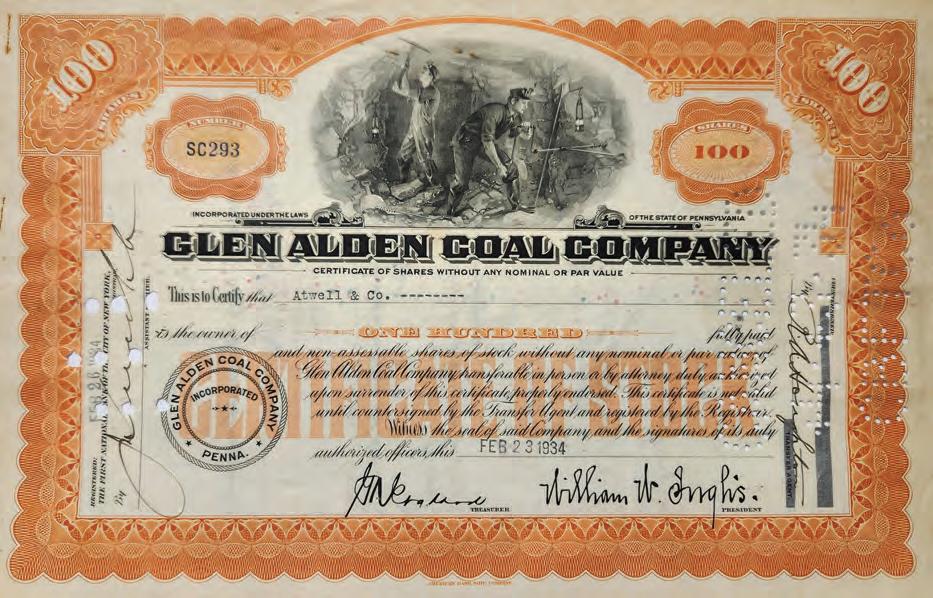
Glen Alden Coal Company. Glen Alden Coal Company Stock Certificate. Printed certificate on paper. 1934. The Stanislaus Collection. Scranton, Pennsylvania.
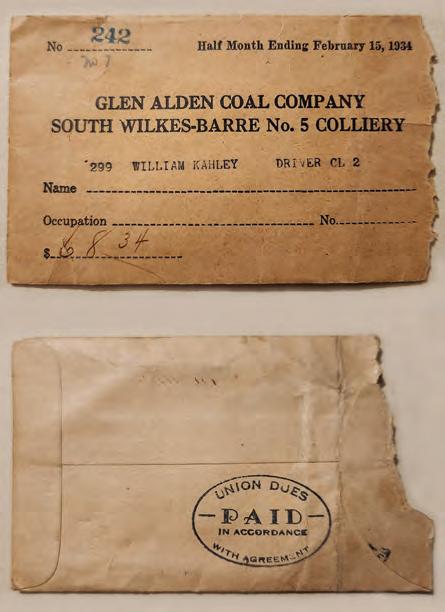
Glen Alden Coal Company. Glen Alden Coal Company Due Bills for William Kahley. Documents on paper. 1934. Private Collection. Wilkes-Barre, Pennsylvania.
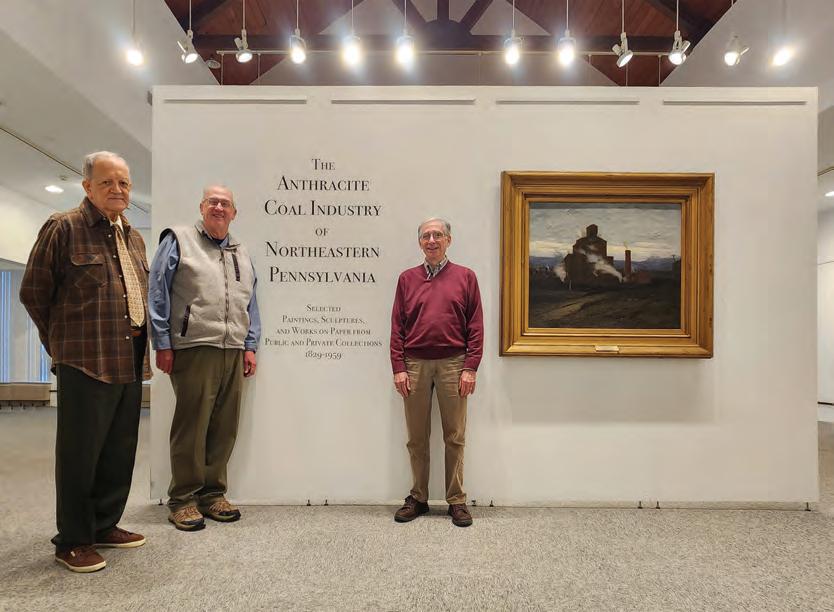
Richard Stanislaus, Chester Kulesa, and Peter Hoffer visiting the exhibition The Anthracite Coal Industry of Northeastern Pennsylvania. Selected Paintings, Sculptures, and Works on Paper from Public and Private Collections: 1829-1959 at the Hope Horn Gallery at The University of Scranton. November 2025.
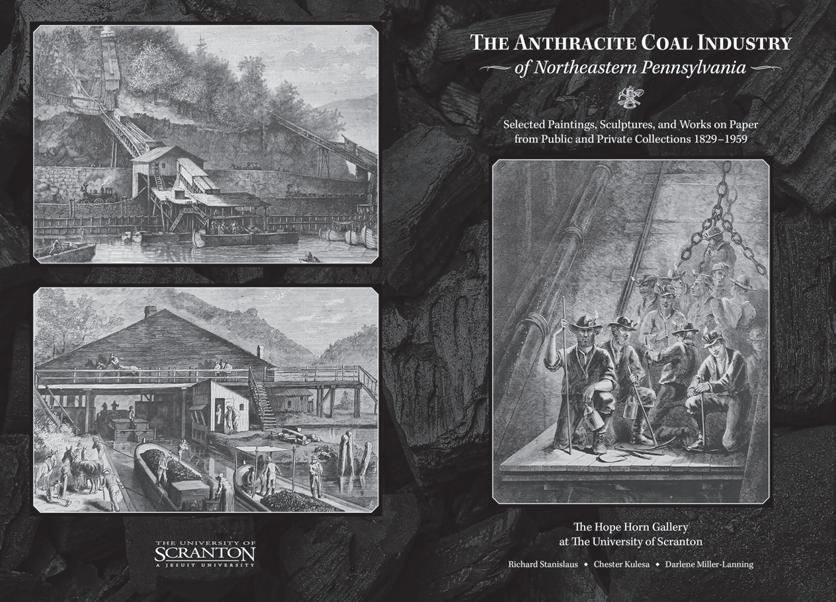
Exhibition catalog covers for The Anthracite Coal Industry of Northeastern Pennsylvania. Selected Paintings, Sculptures, and Works on Paper from Public and Private Collections: 1829-1959. November 2025.