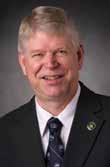
Welcome to the HamSCI newsletter! It amazing to see how this initiative has grown since starting it in 2015; I am thrilled we now have such a vibrant community with enthusiastic volunteer participants launching this regular publication. At its core, HamSCI is focused on the “continuation and extension of the amateur’s proven ability to contribute to the advancement of the radio art,” a primary purpose of amateur radio as defined by Part 97 of the United States FCC rules. Building on more than a century of scientific and engineering contributions by hams, the spark of experimentation and pursuit of new knowledge continues to be alive and well in the amateur radio community today. While I am now proud to lead the HamSCI initiative as an associate professor of Physics and Engineering at the University of Scranton, it is the skill and passion of the amateur radio community that really drives the progress and direction of HamSCI today. I would like to extend a huge thank you to all the current and past HamSCI participants and warmly welcome all who join us now and in the future!
— VY 73 de Nathaniel W2NAF


TEACHING, RESEARCH, AND COMMUNITY AT THE NEW W3USR HAM RADIO STATION By
Stan Zygmunt
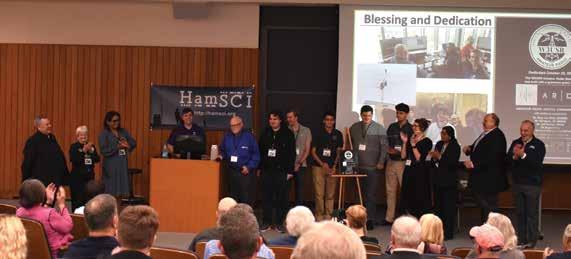
Vibrant views of Jesuit education already occurring at The University of Scranton’s state-of-the-art amateur radio station were celebrated at the formal dedication of the facility located on the fifth floor of the Loyola Science Center.
University of Scranton President, Rev. Joseph Marina, S.J., referenced the teaching, research and engagement with students and the greater community already taking place at the station in his remarks at the ceremony.
“Dr. Frissell and his colleagues in the Physics and Engineering Department have sparked the curiosity of students – starting a student amateur radio club (W3USR), leveraging the station’s capacities in courses, and involving students in research projects,” said Father Marina, who also blessed the station at the ceremony. “True to a Jesuit education, the station’s resources have turned outward in service to others – whether inviting Cub Scouts in to encourage interest in science or leveraging the station’s capabilities for the emergency
communication needs of area agencies.”
Father Marina also mentioned the numerous research projects led by Nathaniel Frissell, Ph.D., associate professor of physics and engineering at the University, and his colleagues in the Physics and Engineering Department.
“The research has supported projects with NASA with students sharing their discoveries in presentations at national conferences. Research has involved partnerships with other colleges, such as Case Western, the New Jersey Institute of Technology and the University of Alabama,” said Father Marina.
At the dedication, Dr. Frissell (W2NAF) provided an overview of the station’s state-of-the-art antennas and communication equipment, as well as some of the research projects that have leveraged the station’s capacities, including the Ham Radio Science Citizen Investigation (HamSCI) network he developed through projects supported by National Science Foundation
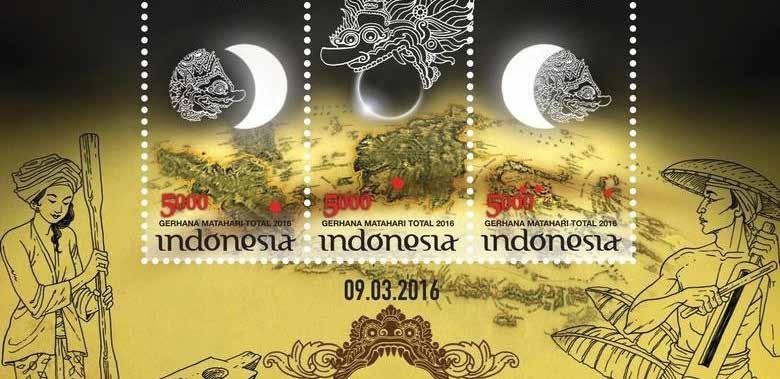
grants, including the University’s participation in NASA’s Citizen Science Investigations that studied the effects of the recent total solar eclipse on the earth’s ionosphere. Dr. Frissell also acknowledged the generous grant the station received from the Amateur Radio Digital Communications (ARDC) foundation, with additional support from Mary Lou West, Ph.D., (KC2NMC), Edward Hayes (N6XEM), Jeffrey DePolo (WN3A), DXEngineering, and the NSF.
Speaking at the dedication were University of Scranton student Alexandros Papadopoulos, (KC3WUD) Scotrun, a computer engineering major at Scranton, and Steve Cerwin, (WA5FRF) a community volunteer and retired scientist at Southwest Research Institute, who discussed research projects they have conducted using data gathered from these projects.

The dedication included a presentation by Bob Inderbitzen, (NQ1R) director of marketing and innovation for the National Association for Amateur Radio (ARRL), who granted W3USR Student Amateur Club ARRL Affiliated Club status. Since its inception in 1918, the Affiliated Club Program has united amateur radio clubs to enhance the Amateur Radio Service, recognizing their crucial role in developing active radio operators and serving local communities. The formal presentation of a certificate of membership was made to University
student and W3USR Student Amateur Radio Club president Gerard Piccini, (KD2ZHK) Monroe Township, New Jersey, who is majoring in electrical engineering at Scranton.

“You are now part of a thriving network of college ham radio stations across the country, each contributing to a larger tapestry of knowledge, innovation, and fun,” said Inderbitzen, who also serves as staff advisor the ARRL Collegiate Amateur Radio Program.
Also speaking at the ceremony were Rosy Schechter, KJ7RYV, executive director of ARDC and Shikha Raizada, Ph.D., (WP4PYE) NSF aeronomy program director; and Tracy Stewart, Ph.D., interim provost and senior vice president for academic affairs at The University of Scranton.

Immediately following the ceremony, students presented posters of their research projects and tours of the radio station were conducted.

continued
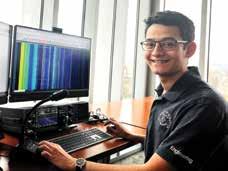
Located on the fifth floor (penthouse suite) of the Loyola Science Center, the main station has floor to ceiling glass walls with sweeping views of the city of Scranton. Last academic year, a 40-foot tower with a Skyhawk High Frequency antenna for 14, 21, and 28 MHz, as well as VHF/UHF satellite and microwave antennas, some with rotating mounts were installed, in addition to heavy-duty controllers, all-mode transceivers, speakers, desktop microphones and other components.
A dinner reception concluded the dedication events.
WVIA news reporter Sarah Hofius Hall spoke to Dr. Frissell about the amateur radio station at a recent community session. The station is open to members of the general public Thursday evenings from 7 p.m. to 9 p.m. during the spring and fall semesters.


HAMSCI AT THE BIG AGU24 CONFERENCE IN WASHINGTON, DC
The HamSCI group has been very active during 2024, both doing projects and writing about them. One important type of communication is presenting our results to the professional scientific community, especially the American Geophysical Union. Their annual meeting in December each year attracts upwards of 30, 000 participants. This year it will be held in Washington, DC from December 9 to 13. HamSCI will have 18 presentations, including two large group reports, seven more focused reports by our professional scientists, and nine smaller reports by our college students from the University of Scranton and NJIT. It is exciting to read the titles, and heartening to read the author lists. There are 91 individual people listed! We should all be very proud to be included in such a vibrant community.
By Dr. Mary Lou West, KC2NMC
BY PROFESSIONALS:
1. Results from the 2023/2024 HamSCI Festivals of Eclipse Ionospheric Science and What Comes Next, Nathaniel A Frissell, Devin M Diehl, Rachel Frissell, Robert McGwier, Majid Mokhtari, Cuong D. Nguyen, Alexandros Papadopoulos, Gerard Piccini, Jonathan Rizzo, Simal Sami, Robert Spalletta, Rachel K Boedicker, John Gibbons, Adam Goodman, David Kazdan, Laura Schwartz, Shashank Sastry, Maris Usis,Christian Zorman, Travis Atkison, William Engelke, Hyomin Kim, Gareth William Perry, Kuldeep Pandey, Dr. Kristina Collins, Philip Erickson, David McGaw, Joseph D Huba, Mary Lou West, Philip Gladstone, John R Ackermann, William Blackwell, Steve Cerwin, Cameron Cushing, McKenzie Denton, Edward Efchak, Paul Elliott, Gwyn Griffiths, Nick Hall-Patch, Phil Karn, George Kavanagh, David Larsen, William Liles, Jesse McMahan, Thomas McDermott, Gary Mikitin, Peter Nordberg, Adarsh Pashikanti, Gregory Popelas, Stanley Pozerski, Robert Reif, Rob S. Robinett, Jay Schwartz, H. Ward Silver, Franco Venturi, Ronald Wilcox, David M Witten, Gamal Zayed https://agu.confex.com/agu/agu24/meetingapp.cgi/Paper/1686823
2. HamSCI Festivals of Eclipse Ionospheric Science: Creating an International Community of Volunteers to Study the Ionospheric Impacts of the 2023/2024 North American Solar Eclipses and Beyond, Nathaniel A Frissell, Devin M Diehl, Rachel Frissell, Robert McGwier, Majid Mokhtari, Cuong D. Nguyen, Gerard Piccini, Alexandros Papadopoulos, Jonathan Rizzo, Simal Sami, Robert Spalletta, Rachel K Boedicker, John Gibbons, Adam Goodman, David Kazdan, Laura Schwartz, Shashank Sastry, Maris Usis, Christian Zorman, Travis Atkison, William Engelke, Hyomin Kim, Gareth William Perry, Kristina Collins, Kuldeep Pandey, Philip Erickson, David McGaw, Joseph D Huba, Mary Lou West, Philip Gladstone, John R Ackermann, Steve Cerwin, William Blackwell, Cameron Cushing, McKenzie Denton, Edward Efchak, Paul Elliott, Gwyn Griffiths, Nick Hall-Patch, Phil Karn, George Kavanagh, David Larsen, William Liles, Jesse McMahan, Thomas McDermott, Gary Mikitin, Peter Nordberg, Adarsh Pashikanti, Gregory Popelas, Stanley Pozerski, Robert Reif, Rob S. Robinett, H. Ward Silver, Jay Schwartz, Franco Venturi, David M Witten, Ronald Wilcox, Gamal Zayed https://agu.confex.com/agu/agu24/meetingapp.cgi/Paper/163429
3. Solar Eclipse QSO Party (SEQP) Ionospheric Results, Kuldeep Pandey, Gareth William Perry, Nathaniel A Frissell, Travis Atkison, William D Engelke, Joseph D Huba, Mary Lou West, Philip J S Gladstone, Cameron M Cushing, McKenzie Denton, Edward Efchak, Gary Mikitin, H. Ward Silver, and the HamSCI Community https://agu.confex.com/agu/agu24/meetingapp.cgi/Paper/1706039
4. First Observations Linking Large-Scale Traveling Ionospheric Disturbances to Polar Vortex Strength, Nathaniel A Frissell, V Lynn Harvey, Erich Becker, Sophie Phillips, Katrina Bossert, Sevag Derghazarian, Larisa P Goncharenko, Philip Erickson, Mary Lou West, Gareth William Perry, Diego Sanchez, William Engelke, Nicholas Callahan, Travis Atkison, Robert Gerzoff, Devin M Diehl, Richard L Collins, Sharon Vadas, J. Michael Ruohoniemi and Joseph B. H. Baker https://agu.confex.com/agu/agu24/meetingapp.cgi/Paper/1637229
5. Amateur Radio Communications Showed the Tonga Blast, a Driver from Below, Mary Lou West, Diego Sanchez, Nathaniel A Frissell, William D Engelke, Rob S Robinett, and Sevag Derghazarian https://agu.confex.com/agu/agu24/meetingapp.cgi/Paper/1739625
6. HamSCI HF Multipath Propagation Mode Analysis Using Amateur Radios and Audio Waveforms Sensitive to Time Difference of Arrival (TDOA), Steve Cerwin WA5FRF, Jesse T. McMahan K1FR, Alexandros Papadopoulos KC3WUD, Gerard Piccini KD2ZHK, Paul Bilberry N5DUP, Sam Blackshear AB5YO, Kristina V. Collins KD8OXT, Nathaniel A. Frissell W2NAF https://agu.confex.com/agu/agu24/meetingapp.cgi/Paper/1596220
7. Making Amateur Radio Data Available for Ionospheric Research, William D Engelke, Nathaniel A Frissell, Travis Atkison, Philip John Erickson, William E Rideout, and Katherine Cariglia https://agu.confex.com/agu/agu24/meetingapp.cgi/Paper/1643048
8. HamSCI as a Novel Dataset to Validate Ionospheric Models, Kornyanat Hozumi, Nathaniel A Frissell, Gwyn Griffiths, and Min-Yang Chou https://agu.confex.com/agu/agu24/meetingapp.cgi/Paper/1635272
9. Observations of the Solar Eclipse Impact on Ionospheric Density, Kuldeep Pandey, Gareth William Perry, Daniel Emmons, Bharat Kunduri, Joseph D Huba, Alex Chartier and David Themens https://agu.confex.com/agu/agu24/meetingapp.cgi/Paper/1755187

State-of-the-art ham radio equipment and antennas were installed on the fifth floor and roof of the Loyola Science Center for the W3USR Amateur Radio Station funded by an Amateur Radio Digital Communications (ARDC) grant awarded to Nathaniel Frissell, Ph.D., W2NAF
Students stand outside the W3USR Amateur Radio Station at the University of Scranton Loyola Science Center with Dr. Frissell.

10. A Multi-Year Climatology of 14 MHz Amateur Radio Large-Scale Traveling Ionosphere Disturbances Made Using a Novel Automated Detection Technique, Diego Sanchez, Nathaniel A. Frissell, Mary Lou West, V. Lynn Harvey, Sharon Vadas, Erich Becker, Gareth W. Perry, William D. Engelke, Nicholas Callahan, Travis Atkinson, Philip J. Erickson, and Robert Gerzoff https://agu.confex.com/agu/agu24/meetingapp.cgi/Paper/1721141
11. Characterizing Ionospheric Variability Through HF Doppler Measurements: A Combined Statistical and Ray-Tracing Analysis, Sabastian Fernandes, Gareth W. Perry, Tiago Trigo, Nathaniel A. Frissell, John Gibbons, and Ham Radio Science Citizen Investigation https://agu.confex.com/agu/agu24/meetingapp.cgi/Paper/1718101
12. A Solar Cycle of Medium Scale Traveling Ionospheric Disturbances Observed Using SuperDARN Radars in the Northern and Southern Hemispheres, James P. Fox, Nicholas Guerra, Thomas J. Pisano, Michael Molzen, Nathaniel A. Frissell, V. Lynn Harvey, Joseph Klobusicky, Mark Fenner, Joseph B. H. Baker, J. Michael Ruohoniemi
https://agu.confex.com/agu/agu24/meetingapp.cgi/Paper/1637186
13. Integration & Validation of a Standardized Library & File Format for PyDARNMUSIC & DARNtids: Migrating From Legacy Pickle Files to HDF5 & Implementing a Comprehensive Testing Suite, Nicholas J. Guerra, James P. Fox, Thomas J. Pisano, Michael Molzen, Nathaniel A. Frissell, Paul M. Jackowitz, Joseph B. H. Baker, and J. Michael Ruohoniemi
https://agu.confex.com/agu/agu24/meetingapp.cgi/Paper/1713616
14. Investigating North American SuperDARN Observations of Medium-Scale Traveling Ionospheric Disturbances During January 2016, Michael J. Molzen, Thomas J. Pisano, Nicholas Guerra, James P. Fox, Nathaniel A. Frissell, Sharon Vadas, V. Lynn Harvey, Joseph B. H. Baker, and J. Michael Ruohoniemi
https://agu.confex.com/agu/agu24/meetingapp.cgi/Paper/1716280
15. High Frequency Radio Receivers for Ionospheric Observations in the HamSCI Personal Space Weather Station Network, Cuong Nguyen, Nathaniel A. Frissell, John Gibbons, Rachel Boedicker, Christian Zorman, Kristina V. Collins, William D. Engelke, Travis Atkison, William Blackwell, Robert Robinett, Gwyn Griffiths, Paul Elliott, Phil Karn and the HamSCI Community
https://agu.confex.com/agu/agu24/meetingapp.cgi/Paper/1722293
16. Analysis of the HamSCI Solar Eclipse High Frequency Time Difference of Arrival Experiment Observations Using Automated Techniques, Alexandros Papadopoulos, Gerard Piccini, Steve Cerwin, Paul Bilberry, Samuel Blackshear, Jesse McMahan, Nathaniel A. Frissell, Robert A. Spalletta, Aidan Montare, and Kristina V. Collins
https://agu.confex.com/agu/agu24/meetingapp.cgi/Paper/1735739
17. A Low-Cost Low-Power Chirp Ionosonde for Studying Eclipse Ionospheric Impacts, Gerard N. Piccini, Robert W. McGwier, Robert A. Spalletta, Nathaniel A. Frissell, Majid Mokhtari, Philip J. Erickson
https://agu.confex.com/agu/agu24/meetingapp.cgi/Paper/1641156
18. Forward Modeling of SuperDARN Medium Scale Traveling Ionospheric Disturbance Measurements Using High Frequency Raytracing and the PyDARN-MUSIC Toolkit, Thomas J. Pisano, Michael J. Molzen, Nicholas J. Guerra, James P. Fox, Nathaniel A. Frissell, V. Lynn Harvey, Joseph B. H. Baker, and J. Michael Ruohoniemi
https://agu.confex.com/agu/agu24/meetingapp.cgi/Paper/1630538

Gwyn Griffiths has always loved the sea. He grew up on a small island off an island off an island (Holy Island, Isle of Anglesey, North Wales, and Britain). Welsh is his mother tongue. In high school he was fascinated by ‘conduction current signaling, (electromagnetics in seawater) to communicate from the surface to a diver. That group almost won the BBC contest for Young Scientists of the Year.
He grew up to be an engineer who designed, built, and used many types of equipment to investigate the ocean from Antarctica to Greenland. Most of his career was with the Institute of Oceanographic Sciences and Southampton University, UK, and
HAMSCI PROFILE: GWYN GRIFFITHS, G3ZIL
WSPR enthusiast and inquisitive propagation data analyst
By Dr. Mary Lou West, KC2NMC
quite often on research ships. Gwyn has been a ham for fifty years, but like many people he set it aside for years. He learned about HamSCI from his friend Rob Robinett. The skills Gwyn brings to our collaboration include computer programming as well as creativity, physical insight, visualization skills, technical writing, nurturing teams of people, and communicating fluently and persuasively with a wide range of audiences. On the technical page of the WSPRDaemon website (http://wsprdaemon.org/technical. html) there are many short articles he has written to explain focused topics.
He is proud of his involvement with the autonomous submarine robots used in the open ocean as well as under Antarctic ice shelves. In this risky business he learned how to be open with failures as well as successes, to apply risk analysis ideas, and to nurture good people. After retirement he continues as a consultant on underwater systems. He was awarded the IEEE Oceanic
HAMSCI PROFILE: ROB ROBINETT, AI6VN
Engineering Society Distinguished Technical Achievement Award and the Oceanology International Lifetime Achievement Award.
He is an active member of the RSGB Propagation Studies Committee. He appreciates the precision Doppler capabilities developed by HamSCI and continues to extract pertinent information about the ionosphere from WSPR and FST4W observations. Comparing SNR and frequency spread on eclipse days can shed light on propagation modes such as one-hop, two-hop, and two-hop sidescatter. The goal is to learn more about the physics of the upper atmosphere. He hopes that the HamSCI collaboration will soon help him even more by providing the physics-based SAMI3 model of the ionosphere during the recent eclipses to be used with the PyLap raytracing program.
For all of us, Gwyn encourages life-long learning and often says his favorite cautionary thought, “Are you sure about that?”
A latent amateur contributes much to the understanding of the ionosphere.
By Ed Efchak, WX2R

Q: How did you learn about HamSCI and how did you get involved? How have you been involved in the past? What is your current involvement?
A: In 2018 I volunteered to install a KiwiSDR system at the historic radio station KPH receive site (http:// www.kphsdr.com:8073/ ) located in the Point Reyes National Seashore (https://www.nps.gov/pore/index. htm ) and operated for the National
Park Service by the Maritime Radio Historical Society (https://www. radiomarine.org/). The KPH site was established the Gugliamo Marconi and Dr. Harold Beverage in the 1910s and is the premier shortwave listening site on the West Coast. In 2018 Dr. Frissell contacted MRHS to see if KPH could contribute to the HamSCI efforts, and his request was forwarded to me.
Continued on next page