






During this year’s biannual fundraising event, KUAR UA Little Rock Public Radio received a donation of 1.5 million dollars from an anonymous donor. The donation came during the last day of the event, on Oct. 8. This is the largest cash gift in UA Little Rock Public Radio history.
Both KUAR FM 89.1 and KLRE Classical 90.5 are housed at the station near Big Lots in the University Plaza, working to provide quality content. Not only does public radio educate the community, UA Little Rock Public Radio hires students as interns and part-time employees to allow them to get real-world experience and training under professionals.
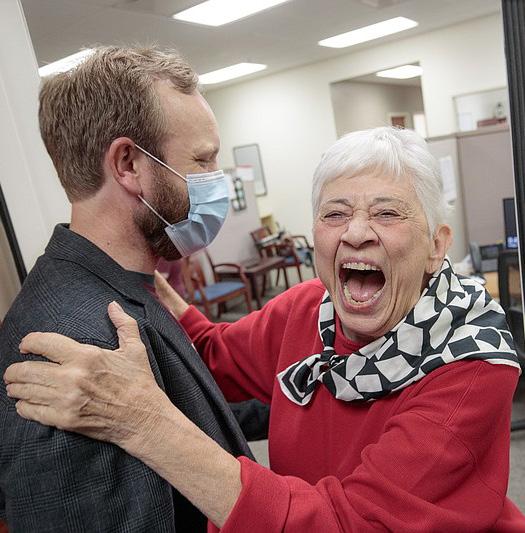
Morning Edition host and reporter, Daniel Breen, said he was grateful for the gift. “I couldn’t believe it at first! Our general manager, Nathan Vandiver, very sneakily told me we were “taking a group picture” when he was actually gathering us all together to break the news to us. It was such a feeling of relief and gratitude, especially since we’re always concerned with not making our goal for Fund Drive.”
A news release from UA Little Rock quoted Vandiver, saying, “On behalf of the staff and listeners of KLRE and KUAR, I want to say a heartfelt thanks to the donor. The stations will use this gift to strengthen and expand their services as the region’s NPR news and information provider, classical music radio station, and as a local and regional news organization.”
This gift was 10 times more than the drive’s total fundraising goal of $150,000. The total amount collected during the fall fund drive was 1.6 million dollars. The donation will be used to set up an endowment fund. It will provide an ongoing stream of operating funds to support the public radio stations. The endowment is expected to provide around $60,000 per year. Breen said the money could be used for things like new radio equipment, audio software, and things to improve day-to-day operations at the station.
For KUAR, Breen said this donation was a relief. “Most of our operating budget actually comes from donations, which we mostly get from our sustaining members and from the two fund drives every year. This gift will ensure that KUAR is always able to support itself while staying true to the public media funding model, which doesn’t allow for advertising so as to limit corporate influence on our news and programming decisions.”
The impact of the gift could be felt all around KUAR. He said “It’s definitely the most happy I’ve ever seen my boss! But we’re all really so grateful for it. Listener contributions are still very important to our mission, but this gives us a bit of a cushion to ensure we’re always able to further our mission of providing highquality news and cultural programming.
By Remington Miller
A willingness to serve, strong work ethic and two days were all it took for a group of 50 people to complete over 800 hours worth of work. More specifically, 800 hours of disaster relief work. On Sept. 10-12, college students from UA Little Rock, UA Pine Bluff and UA Fort Smith embarked on a trip that would change the way they viewed a life of comfort at home, but first, their van would break down in the middle of the interstate which would become something they could later look back on and laugh about. Many of the students from UA Little Rock that went on the disaster relief trip are a part of the Metro Baptist Collegiate Ministry. Eager to tell about their experiences, Junior Kinsey King and Sophomore Lauren Mejia share some details about their trip.
The tasks and labor conducted on a disaster relief trip depend greatly on the kind of disaster at hand. On this trip volunteers traveled to Hammond, Louisiana, to help clean up the destruction left behind by Hurricane Ida.
“[Everything] was flooded,” Mejia explained. “So what we do is primarily let out [furniture]...where we take furniture out of homes… If the water floods around the wall, mold is gonna spread, so [groups] marked on the wall...and then cut that wall out, took the insulation out, took the floor out.” Another large part of the cleanup concerns the accumulation of bacteria: “A couple of guys power-washed the sidewalks and cleaned that off because [of] the bacteria that was still gonna be on the sidewalk.”
The group as a whole visited
three houses and one church, all of which required letting out furniture, keepsakes and other items and then moving them back in once the houses had been cleaned. For every house destroyed by flooding, King said, “Insurance only covers $20,000. And so, on top of that, not only lost possessions and having to repair the home, [but] people typically, like the elderly couple we helped, couldn’t [let out furniture] themselves so they would have to pay someone to do that and that’s a few thousand.”
Adding to this, Mejia said, “We saved every house that we did that for $10,000-$15,000.”
There are many more factors that lie behind disaster relief work. Not only are you looking for ways in which to clean and move things efficiently, but you must also remember that you are potentially handling the only home some people have ever had or ever known. The first house they visited belonged to an elderly couple.
“That one was particularly hard,” Mejia expressed, “because they had [the wife] on the phone... and she was still trying to process [everything] and figure it out herself.”
King shared that “something that was particularly sad was that she had a piano that either her husband or father or somebody important in her life had given to her and it was highly likely they were gonna have to get rid of it because of the water and mold that would have been in it… Pretty much, everything in that house had to be thrown away.” Both of them felt like what they were doing was
able to experience it. In June of 2022, UALR’s choral ensembles are preparing to head to the Big Apple. Since the beginning of 2021, the choir ensembles have diligently been practicing in anticipation to perform at the famous Carnegie Hall.
Carnegie Hall, founded in 1891, is known as the most prestigious concert hall in the United States. It has housed singers and bands from Frank Sinatra and Duke Ellington to Pink Floyd and Led Zeppelin. An experience like Carnegie Hall is a once-in-a-lifetime opportunity. To see and feel the music is one thing. To perform the music? To be the voice that reverberates throughout the entire auditorium? That is surreal – almost inexplicable.
“wrong” in a way; essentially, they were throwing away a stranger’s most cherished memories.
A shock to the system is inevitable when on a disaster relief trip. The things that surprise you seem like they could never be a part of your reality.
“Something that was interesting for me to see was just like driving through the town, just the way the community felt,” said King. “We saw the bucket trucks, like the lineman trucks, we saw those everywhere... and just like everywhere you went there was piles in neighborhoods, piles in the street of debris and trees down and stuff like that. Lots of trees that fell into homes.” Mejia was most surprised by the mold: “I didn’t expect to see how quickly the mold grew because we were there just a couple days, a week at most, after everything and it had spread so quickly.”
At the end of the two-day trip, Mejia and King were thankful to have a place they could call home and return to it. King explained that when they entered houses they were “filthy…masks and everything. We came in there prepared and [the owner is] still living in that house. We got to come home.” She had an overall feeling of gratitude as she reflected on that last house. Having once lived in Louisiana and encountered a disaster this
“The opportunity to sing somewhere like Carnegie Hall has been a dream of mine since I was a child,” Sophomore Music student, Kaitlyn Kendrick said. “It’s a huge deal to get this opportunity so soon in our music careers and it would be one of the best experiences to not only experience New York City but also sing where so many talented and influential singers have before me.”
These students are absolutely ecstatic to do what they do best - to do what they are truly passionate about - in a place as significant as Carnegie Hall. Not only does this trip give the students the amazing opportunity to perform at Carnegie Hall, but they have the opportunity to learn and grow as a musician
destructive, Mejia shared that “it was kind of refreshing because I used to live there and I knew that could have been me...knowing that I could have been on the other side of things is kind of like, wow.” Their view of home had certainly changed.
Applying their experience to their view of the community, they both agree that teamwork is a major component to the amount of progress and success that can be achieved. “I’m a social work major so community is important to me. I think our world is so divisive, and from my perspective being with other Christians, it was nice to see the divisions go away and be like ‘alright this is our task right here. This is what we’re doing.’ I think long-term goals—that’s how we need to view people’s souls.”
King admitted that while she is often caught in a “taskoriented mentality,” she had to let go of that for just a moment: “Something that Adam, [the BCM pastor], emphasized that first day with the elderly couple is that.. this is someone’s home. This is someone’s life. It’s not just that we’re carrying out these boxes just to get them out of the way, throw them somewhere… Just being more mindful and just caring and compassionate towards who you’re working for.”
first-hand. This experience will allow these students’ careers in music to thrive. Music student Josh Gregory tells of his plans to become a composer and how this trip to New York will “give me a chance to see how professional groups practice, prepare, and perform. It’ll be a great opportunity for all of us in choir.”
Of course, however, a trip like this requires funding. In order to attend their performance at Carnegie Hall, each student in the choir is required to pitch in upwards of $2000 dollars. Now, this is not so easy for college students. As a result, the choir has been holding several fundraisers to aid in their trip. So far, they’ve hosted a rummage sale as well as
Mejia and King encourage everyone to go on at least one disaster relief trip. Sacrifice the homework, the cleaning, the party, the extra sleep and recognize that “souls are eternal, grades are not.”
“Don’t feel unqualified,” King also adds. “There’s always something to do in a case like that.”
“When you’re in a crisis, everything has value,” Mejia stated. What we can do as members of not only our local community but our country as a whole is to be there for those that are hurting, suffering and struggling. The next disaster relief trip will be to New Orleans, LA, on Dec. 16-19. Volunteers don’t have to be a part of the BCM group, but should have the heart to do the work.
By Vasti Hernandez
“ Just be more mindful and caring about who you’re working for.”
the “Octoberfest and We Sing! 5K Race.” They aren’t stopping there, though. On Nov. 20th, the choir plans to host a live auction, a silent auction and a pie auction. On Dec. 4 th and 7-21 st , they plan to put together a Vocal Arts Festival along with a Christmas Caroling for Hire. These are just a few of the fundraisers the choir has composed (pun intended); there are many more fundraisers well into April. There is even an option to directly donate to the choir fund. We strongly advise you to participate, and give if you can, to this once-in-a-lifetime opportunity. email ualrchoirs@ gmail.com to make your donation.
By Vivian Angeles
Gym Harassment
On the morning of Oct. 6, Officer James Kaur responded to a call at the gym. Allegedly, a man entered the gym, without his mask, and began harassing a patron. A witness called the University Department of Public Safety (DPS).
The suspect left the scene but was later confronted by Officer Kaur and Assisting Officer William El Amin. The suspect was concerned for his safety; according to the incident report, he asked if
the officers were going to shoot him. The suspect was warned about returning to the gym and continuing his alleged harassment. He was let go but warned he could lose his gym privileges due to his behavior.
On Oct. 6, around 2:42 p.m. a UA Little Rock nonresident reported that her car had been broken into. Officer Kaur arrived at Lot 15 to evaluate the scene.
The victim parked her car on the southwest side of Lot 15 around 11 p.m. When she went to leave around 2 p.m., the victim noticed her trunk was open and items had been stolen from her car and, according to the incident report, body spray was sprayed all around
the vehicle. The items missing include a set of keys, an iPod, and an old volunteer identification card.
There were no signs of pry marks or forced entry, according to El Amin’s report. The victim later reported her trunk locking mechanism had malfunctioned and was being repaired.
The UA Little Rock’s Center for Arkansas History and Culture (CAHC) recently received a grant to explore Dr. William Townsend’s cultural and political discipline as an Arkansas civil rights leader. He was the first African American licensed optometrist in the state. Today, he is honored as a groundbreaking leader whose impact on this state is celebrated.
“The grant is from the Arkansas Humanities Council. We applied to it. It was for anything that was associated with African American history or culture here in Arkansas. For us, with this grant, it is digitizing the papers, which are mostly scrapbooks from Dr. William Townsend,” said Cody Besett, the student success archivist.
The grant is valued at $3,799 and will fund the center’s digitization efforts to create a profile and character collection on Townsend for more exposure and awareness on his positive impact on Arkansas.
“With digitization, it has to be useful for researchers, so we are also doing what is called metadata, which is the description [of the photos] so it is actually useful for researchers,” said Bessett. “Processing it and promoting it [is also important.]”
Archivists Adrienne Jones and Cody Besett, Laura McClellan, CAHC assistant director, and Dr. Nathan Marvin, assistant professor of history, will partake in the project — each role critical.
In February of 2022, on the second Friday Art Night, UA Little Rock Downtown will host an exhibit on Townsend in celebration
of Black History Month.
“We are going to have what we call character collections,” Beset said. “It is a profile of Dr. Townsend and a little bit of their work using some of these primary sources. We are going to have a small exhibit in the Downtown space to try and bring the public to see some of these artifacts.”
The goal for CAHC with this grant is to have more exposure to Arkansas’ history and the civil rights movement that shaped the future and progress of this country.
“It is about reaching out to a wider audience,” Besett said. “Digitization helps out so much because when someone comes into a library, they are going to want something digitized because it is more accessible. While we can do that, it does take a lot of resources to get material digitized and especially to make it useful so it is not just some images thrown out there. By getting this grant, it allows us to do that and to have this character collection.”
Townsend was born July 30, 1914, in West Point, MS, but grew up in Earle, AR. He joined the army right out of high school and during World War II. During this time in the army, he studies at Nottingham University in England.
However, it was not until after the war that Townsend earned a bachelor’s degree in agriculture, and in 1950, he earned his optometry degree from the Northern Illinois College of Optometry. It was then that he went back to Arkansas and opened an optometrist clinic in Little Rock.
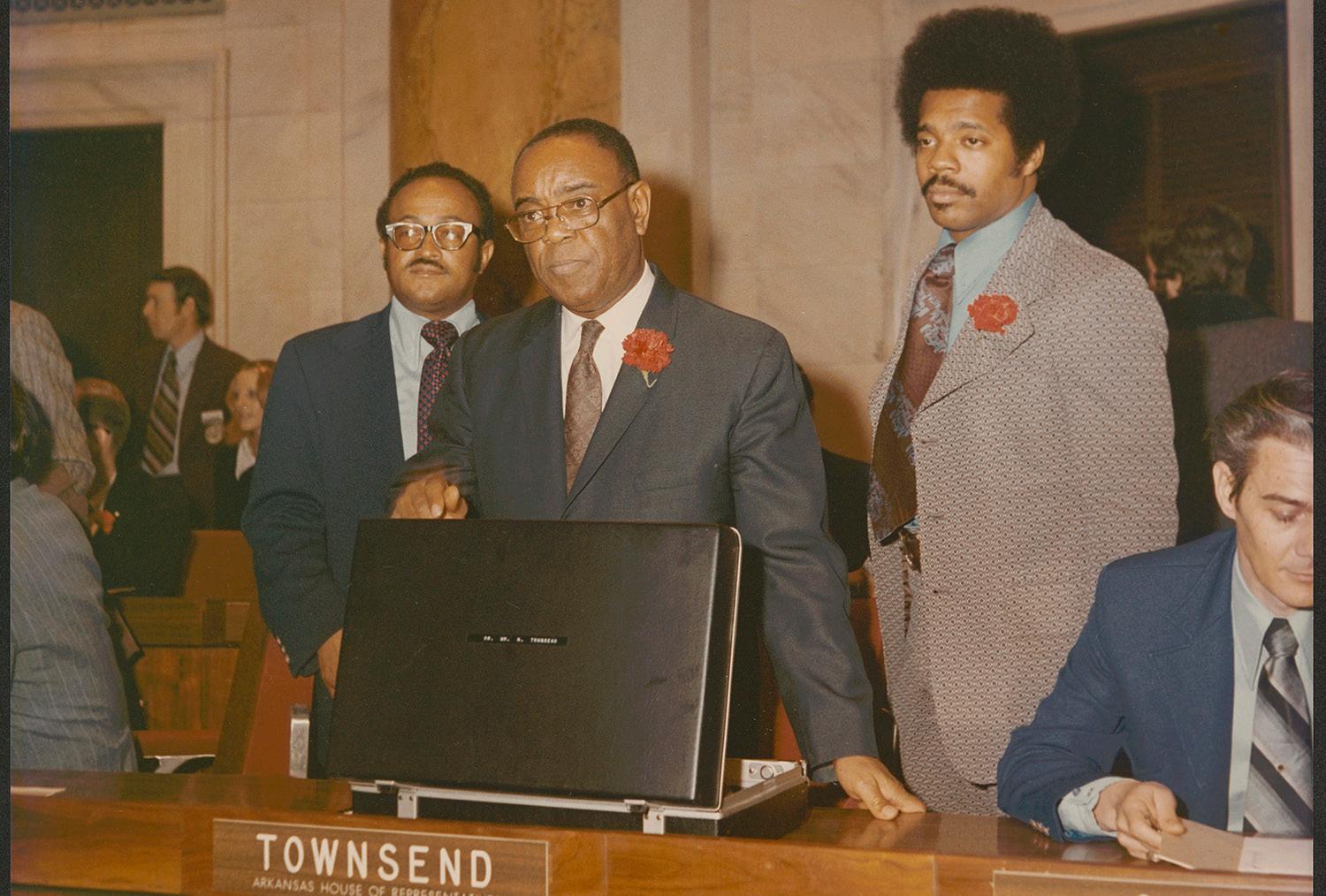
Townsend, who is honored on the Arkansas Civil Rights Heritage Trail, was a trailblazer for his time. Not only was he the first African American licensed to practice optometry, but he was also one of the first African Americans to serve in the Arkansas House of Representatives since the 1890s. Townsend was also the first African American to be chair of the Aging and Legislative Affairs Committee.
At his foundation, Townsend was a fighter. He was active in AR politics because he wanted to fight for the rights of Black people. Around 1950, he became a founding member and served as president of the Council of Human Relations. This council aided in the desegregation of public schools and businesses in the state.
In 1961, the Council of Community Affairs was started by a group of Black medical professionals which Townsend became a member of. Two years after its founding, this group peacefully paved the way for the desegregation of downtown Little Rock.
The fight continued and in 1972, Townsend began what would be the first of his 12 terms to the Arkansas House of Representatives.
Dr. William Townsend gave the people of Arkansas a glimpse of hope that one day — with true dedication — there would no longer be segregation. This grant will continue telling the story and legacy of Dr. William Townsend, a fighter for civil rights and a pioneer for Black people.
By Azalea Andrade
Egging in the Village
Around 8:30 a.m. on Oct. 7
Officer Joshua Webb responded to a call from a resident in the University Village. The victim allegedly had their deck egged between 11 p.m. Oct. 6 and 7:30 a.m. Oct. 7. Officer Webb reported several eggs against the deck and the side of the building.
The victim did not have proof but did have suspicions about who did it. She suspected it might have been other residents who have

allegedly harassed her roommate. According to Webb’s narrative, the victim said the bullying was caused by “political beliefs that are discussed in class.”
That afternoon, the victim called DPS and informed them she spoke to the perpetrator and did not want to go further with the report.

As October rolls around here in Little Rock, it brings along crisp temperatures, stunning fall foliage and an annual celebration of LGBTQ pride.
Central Arkansas Pride, a local LGBTQ non-profit organization, has been in charge of the annual Pride events across the Central part of the state since its inception in 2013. With COVID-19 dictating and disrupting our daily lives over the past two years, the organization adapted to safety restrictions in order to avoid cancelling Pride celebrations again.
The non-profit’s 2021 Pride Festival is the first virtual event the organization produced, making it quite the adjustment for one of the founding members and Executive Director of Central Arkansas Pride, Zack Baker.
“Planning a virtual event versus planning an in-person event, you’d think the virtual event is less stressful,” Baker said. “But in many ways, it’s not. There’s a big learning curve, and you have do things you’ve never done before.”
Board members of Central Ark. Pride collected videos submitted by partners, sponsors and community members alike championing messages of inclusivity, acceptance, support and pride. However, this process proved to be fairly difficult, with the
non-profit having to conduct outreach work and explain the many moving and necessary logistical pieces of the virtual event.
Arkansas’ Pride is held during the month of October, which happens to coincide with National LGBTQ History month. Holding Central Ark. Pride five months after National Pride month is celebrated in June allowed the non-profit to observe, learn and apply certain parts from other city’s virtual Pride events to create the 2021 virtual Pride Fest.
Another piece of Pride that COVID-19 negatively affected is the funds.
Funding and sponsors for most non-profits, here and across the U.S., have experienced a sharp decline amidst the rapid spread of COVD-19. “We’re used to having festivals that have 10,000 people, over 50 volunteers and money to do all of that,” said Baker. “Suddenly, we had none of those things.”
Luckily Central Arkansas Pride is partnered with some local and loyal sponsors like the Human Rights Campaign of Arkansas, American Civil Liberties Union of Arkansas, Lucie’s Place and InTRANSitive to name a few. The non-profit’s projects over the past couple of years have been supported and produced thanks in part to some very loyal and generous
sponsors, their donations and involvement.
It’s because of this outstanding community support that Central Ark. Pride is able to accomplish the goals established by the organization.
Two crucial goals for Central Ark. Pride are creating a stronger LGBTQ community and offering the public events, things to do and community organizations that historically have not, and are not, typically offered in southern states and cities.
“Our biggest goal is just making sure we’re there for the community, that people are connected to different resources,” Baker said. “And they know what organizations are serving them, what businesses are friendly and the vast number of social and healthcare resources that exist.”
One part of Pride that’s just as important as connecting LGBTQ members to local resources is the visibility it bestows upon the community.
Pride is the time of year when the LGBTQ community has the opportunity to come together and be their authentic selves unapologetically. Outside of bars and drinking establishments, the LGBTQ community doesn’t get many opportunities like Pride to be surrounded by and celebrate each other. This piece of Pride is instrumental in fighting against
hateful and ignorant legislation targeting transgender individuals as well as lesbian and gay people.
Visibility at Pride events like Central Ark. Pride helps remind the state legislature of the abundant amount of Arkansan’s that many of these anti-LGBTQ centered bills disparage. Pride parades and festivals are so much more than giant floats, flags and dancing, they are also integral tools for community activism.
“We have a really large and strong LGBTQ community
A fun queer spinoff of the traditional scavenger hunt, the Rainbow Race Scavenger Hunt allowed small groups of people to participate without the need for masked crowds and social distancing requirements. Various locations along the Rainbow Race’s route correlate to some historic LGBTQ places, LGBTQ owned establishments and other related spots around Central Arkansas.
The Rainbow Race allowed participants to learn about local LGBTQ history in a fun and interactive way while also
“Pride is the time of year when the LGBTQ community has the opportunity to come together and be their authentic selves unapologetically.”
here in Central Arkansas, and it’s one that can’t be ignored,” said Baker. “We have to remind them [Arkansas legislature] that these are real people they are legislating against, tens of thousands of them, here in Arkansas.”
Boosting the visibility of Pride events this year was extra important because of the restrictions and barriers COVID-19 brought along with its infection rate. Central Ark. Pride strived to engage with the community despite these safety restrictions by coordinating the Rainbow Race Scavenger Hunt.
identifying LGBTQ friendly businesses and establishments. Central Ark. Pride is able to honor both National LGBTQ History Month and Pride statewide with this delightful experience and learning activity.
Learning about the history of one’s community is fundamental to the growth, evolvement and sustainability of that community, whether it’s civil rights, equality or acceptance.
“Those who cannot remember the past are condemned to repeat it.”
By Bennett Wood
This year, November 4th will look a little different from a “normal” day on campus.
The Office of Admissions is hosting its annual Discover, a college preview day where high school students come to campus to learn about degree programs and financial aid. They even get the opportunity to win scholarships to UA Little Rock.
Visitors will start their day at the Jack Stephens Center, where they will be welcomed with a “drum jam” courtesy of current music students. They will take part in a t-shirt throw, hear from Chancellor Christina Drale, and some students will play a game on the basketball court, which will end with two winners receiving
into classrooms and hear from professors they would have if they attended UA Little Rock.
The afternoon is less structured in order for visitors to choose what they want to do. After they are provided with free lunch, they may take tours of the campus or residence buildings, meet Greek students by the WOW Cafe, play lawn games with Campus Living staff, or stop by Activity Tents set up across campus to learn more about different academic programs and play games.
“We’re also excited to offer some Pop-up Activities, like touring Nursing’s simulation hospital and listening to student performances at the Music Student Showcase,” Magallanes said.
Currently, there are over 200 high school students registered for the event. The Office of Admissions
“Students always tell us that they loved meeting current students, faculty and staff during Discover. We’re always proud to hear how much they connect with everyone.”
$500 scholarships.
There will also be a social media scholarship contest where six students will win $250 each. They can post about their time at Discover on Facebook, Instagram or TikTok and they must follow pages on those platforms run by Admissions. Winners will be selected based on the themes of Best Overall, Most Creative, Most Trojan Spirit, Campus Explorer and Most Popular.
Also at the Jack will be an academic expo, where students can meet professionals, staff and students from academic colleges and programs, as well as student organizations and business offices.
“At the end of the session, students will be guided to Academic Sessions across campus to hear more about the academic programs, internships, and research opportunities available,” said Brooke Magallanes, Admissions’ Recruitment Communications and Events Manager.
Visitors will be able to go
is offering two $250 scholarships per bus that a high school brings to the event, with at least seven buses registered already.
With so many scholarship opportunities available, even current students are encouraged to invite any friends, siblings or students that they know to attend.
“Word of mouth is a great way for current students to help boost interest,” said Magallanes. “Invite your family or friends who are looking for a college to attend and send them to ualr.edu/discover for all the details.”
Being able to host Discover in person this year is a relief for Admissions. Last year, Discover was hosted virtually.
“We noticed in the attendance that this was not a format prospective students enjoyed, so we are excited to be back on campus,” she said. “Of course, the mask requirements will be in effect to keep our community and guests as safe as possible.”
As another layer of fun,
Admissions is bringing a Le Pop’s food truck to campus to provide popsicles to visitors during lunch.
Current students can get involved by volunteering at Discover. Admissions need around 100 volunteers, and so far, less than half of those positions are filled. The time commitment is usually short, at only one to two hours and the work can count as volunteer hours for anyone who needs them.
“Students always tell us that they loved meeting current students, faculty and staff during Discover,” Magallanes said. “We’re always proud to hear how much they connect with everyone!”
If interested, sign-ups for volunteer positions can be found at the bottom of this page: ualr.edu/ admissions/discover-campussign-up.
So, on Nov. 4, make sure that if you see any lost high school students, you reach out to them, make a connection and help them Discover what they’re looking for here at UA Little Rock. Also be sure to look out for our very own UA Little Rock Forum table and come say hi!
Desolate parking spaces accentuated the absence of shoppers in grocery store parking lots during the early days of the pandemic. Palpable trepidation seeped into every Arkansan that stepped foot out of their front door.
The staggering vacancy of once bustling and crowded highways and streets looked like something straight out of a horror movie.
At the peak of a governmentsanctioned lockdown, and amidst catastrophic waves of hospitalizations and deaths due to COVID-19, both students and adults alike sought a way to cope with the isolation.
“I started smoking weed when I was 17,” Kyler Morris explained. “My cousins introduced me to it and I have been pretty consistent with smoking ever since.”
Former UA Little Rock student and 26-year-old Kyler Morris of Little Rock found his cannabis intake increased around the start of the pandemic and has stayed consistent to this day.
Accompanying this increase in cannabis consumption was a decrease in the number of alcoholic beverages he downed.
According to the results from the 2020 Monitoring the Future (MTF) study completed by the University of Michigan Institute for Social Research’s panel of investigators, collegiate cannabis use has continued to rise over the past five years. Significant increases in cannabis consumption are underscored by a remarkable and sizeable decline in alcohol usage among college students, according to the study.
“I’m for [the] legalization of cannabis,” said Morris. “There is no doubt that it is safer to use than alcohol.”
reality of overdosing or dying.
“It [alcohol] makes coordination an issue, especially while driving,” Morris said. “My reaction time is delayed just as much, if not more, while I’m drunk than when I’m high.”
Growing understanding and acceptance of the health benefits and medicinal uses that cannabis offers is evident through the evolving industry, even today. With 39 states having legalized cannabis in one form or another, the federal government’s investment and response to this expanding sector are slowly catching up to public opinion.
One health benefit that many cannabis users attribute to the plant is its calming effect on the mind and body, helping alleviate symptoms stemming from anxiety, depression, loneliness, anger, mental exhaustion and other behavioral and mental disorders.
“I have had caffeine pills infused with cannabis before, and they made me so productive,” said Morris. “I would compare them to my ADHD medication, but without the side effects of feeling bad the whole day.”
Utilized as a pain management device, cannabis can replace dangerous and highly addictive pain medications like opioids. To name just a few physical health advantages, cannabis also has the capability to treat chronic pain, regulate seizures and tremors, treat various bowel diseases and increase one’s appetite.
By Magnolia Risley
This sentiment is widely shared among proponents for cannabis along with those who have extensively studied the plant and its effects. Alcohol, statistically speaking, negatively impacts the drinker in vital areas of life such as traffic accidents, healthcare and legal costs and the
As cannabis consumption and sale become less taboo and more widely accepted within today’s society, it is strikingly easy to understand why more students consume more cannabis than alcohol. Profusely crowded dispensary parking lots and overflowing waiting rooms inundated with a flood of customers can only mean one thing—COVID-19 cases and restrictions are subsiding while cannabis use continues to rise.
By Bennett Wood
The U.S. Department of Education has awarded UA Little Rock a Child Care Access Means Parents in School (CCAMPIS) grant, which goes into effect in Spring 2022. With $581,128 of aid over four years, the grant will help students with children access childcare, success coaching, peer mentoring and other services while they pursue their education. The campus has prepared for this aid for several years, but it was the effort of four UA Little Rock students that helped it come to fruition.
In early 2020, Dr. Daryl Rice, an Associate Vice Chancellor for Academic Affairs, assembled a working group to complete research required for the grant, including a campus-wide survey regarding the need for childcare.
"Over a three-year average (2017-2020), roughly 27% of undergraduates have children or other dependents, and roughly 41% of graduates have children or other dependents," Dr. Rice said. "Forty-six percent of respondents to the 2020 survey reported having primary responsibility for a child under 18 in their home. Over half of these respondents reported an annual household income of $20,000 or less. Fifteen percent of respondents anticipated a need for childcare while being enrolled at UA Little Rock."
During this time of assessment, Child Care Aware of America released a report titled "U.S. and the High Price of Child Care," which revealed that the average annual price for infant childcare is $6,443 in the state of Arkansas. With a median household income of $47,597 (U.S. Census Bureau, 2015-2019), Arkansan families pay over 13.5% of their income for the care of a single infant, which does not include all the other associated costs (such as food, clothes, education and doctor visits) that come with raising a child.
"As the national conversation has made clear, childcare is not readily available or affordable for many persons," Dr. Rice continued. "If students who are parents do not have access to childcare, it is likely to affect their academic performance. One-third of respondents to the 2020 survey reported that they had to drop or withdraw from a class due to
childcare issues. In responses to the earlier, 2015 campus survey to assess the need for childcare... the most crucial factors affecting student success (from most to least important) were missed work, missed homework/assignments; missed study groups; missed class; missed off-site learning experience; missed project meetings; dropped or withdrawn courses, missed internship and missed clinicals."
It was clear that access to childcare was a large barrier to student success. In Spring 2021, four UA Little Rock students— Cassie Jo Gehring, Andrea Neloms, Heather Reed and Jenifer Tindle—came together in their Social Entrepreneurship course to address this need. Dr. Kirk Leach, an Assistant Professor in the School of Public Affairs, led the Social Entrepreneurship course.
"This course is really about folks applying what we've learned in the classroom to address a social problem that they identify as problematic," he said. "It's a lot of collaborative learning, a lot of active learning—a significant amount of teamwork is involved in the class." After identifying the problem, students try to understand why it is a problem, then develop a solution to address it. The class goes beyond simply stating the issue; students work to make a real difference in their communities. And, as seen with the awarded CCAMPIS grant, the class of Spring 2021 did just that.
After determining that a grant would be the best way to address the childcare issue, Gehring and her team connected with Dr. Rice in early 2021. The team completed further background work and research to prepare for the proposal. Then, in May, Gehring and Dr. Rice wrote the final grant proposal.
The program will begin during the Spring 2022 semester. Pelleligible students will receive aid based on a sliding scale; it depends on the number of children, the ages of the children and the prices of the childcare provider. Once UA Little Rock comes to an agreement with a childcare provider, the university will send the funds directly to the provider.
"One of the side-benefits of the program is that it should allow us to get a better fix on need," Dr.
Rice said. "However, we may not be able to serve all students who need childcare. In the grant application, we predict that we will be able to serve between 20 and 40 students a year from grant funds alone."
In response to this, the Office of Advancement has also agreed to a matching campaign.
"We had to commit to the institution putting some skin in the game," Dr. Rice said. "So the Office of Advancement committed to a campaign to try to match the amount we have from the grant (after administrative costs, which includes the salary of a full-time program director, and indirect cost). If that campaign is successful, we predict we would be able to serve between 40 and 80 students."
Along with childcare support, the Office of Student Retention Initiatives will be offering success coaching, peer mentoring and access to a licensed social worker on campus. Other childcare assistance programs exist throughout Arkansas and the U.S. For instance, the Arkansas Department of Health voucher program assists lowincome families with childcarerelated expenses. There are several requirements, one of which is being a full-time student. The UA Little Rock program director will help eligible students apply for the voucher program. Additionally, The Early Head Start (EHS) programs, provided by the U.S. Department of Health and Human Services, also serve low-income families through child development and family support services.
The federal CCAMPIS grant and other supportive resources at UA Little Rock mean that more students will be able to focus on their education. The project shows the Trojan spirit, as Dr. Rice noted: "I’m thrilled with the role that students and their cooperating faculty member played in helping us finally take at least one step toward addressing the problem of childcare for our students. In my view, it’s UA Little Rock at its best."
If you are interested in the CCAMPIS program and other services, fill out this form https:// forms.gle/wrsgyHVbw1AncUBS9 or reach out to the Office of Student Retention Initiatives for more information.
By Danielle Spence
For the 2020-2021 school year there were 8,899 students enrolled at UA Little Rock, including 7,006 undergraduate students and 1,893 graduate students. Of those 8,899 students, 3,276 were men and 5,623 were women.
The decrease in male enrollment has raised questions for universities across the country.
Kindle Holderby, Assistant Vice Chancellor for Enrollment Management at UA Little Rock, said there is a national decrease in the number of male students attending college to the point people are writing books on the issue.
“No one can really pinpoint the exact reason why this is happening,” Holderby said. “UA Little Rock is feeling like any other institution across the state and across the country.”
Holderby also said the national female birth rate is higher than the male birth rate, but not at a rate that would explain the discrepancies in enrollment. Trade jobs could also play a role in the decrease of enrollment if the decrease wasn’t a trend for at least the last six years.
“We haven’t had a big national push for trade jobs and jobs that don’t require college degrees in the last six years, it’s really been kind of the last couple [years],” he
said. “That’s playing into that some but it still doesn’t explain why this started six years ago."
Holderby said UA Little Rock’s enrollment recruitment plans are all-encompassing. “We want to deliver messaging that is applicable to males and females, and the way we’re going about that is listening and following the national research,” he said.
He said there are two ways the university can open doors for males to come to college. The first is to address college-bound students’ concern of affordability.
“We looked at that and us offering that 50 percent off your tuition fees your freshman and sophomore years to students we know is going to make a difference,” he said. “We know that [it] is going to naturally attract more males.”
Holderby said reinstating co-curricular and extracurricular activities that are more maledominated, like the Reserve Officers’ Training Corps (ROTC), could help increase the male population at UA Little Rock.
“It’s not a problem at UA Little Rock only. It’s a challenge that’s everywhere at universities across the United States and it’s a challenge we’re all trying to address and get better at,” he said.
By Maddie Becker
ByPaytonDhooge
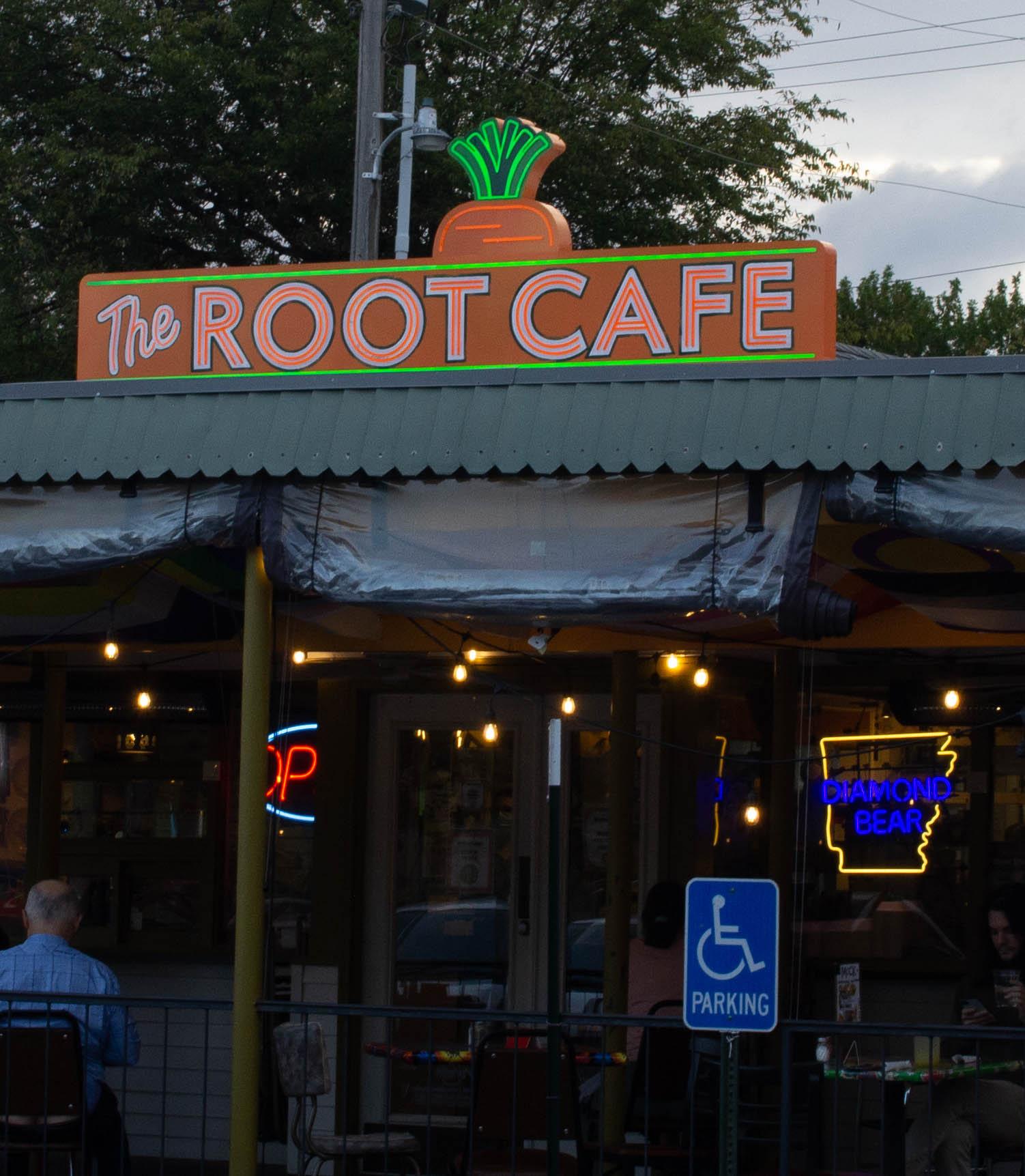
Located perfectly next to a botanical garden and ice cream shop in downtown Little Rock is The Root Café. Their mission is “Building Community Through Local Food” and they achieve this by trying to source as much as possible from small farms and producers in Arkansas. Any of the meat, eggs, vegetables, fruits, nuts, and cheeses served are almost 100% from Arkansas.
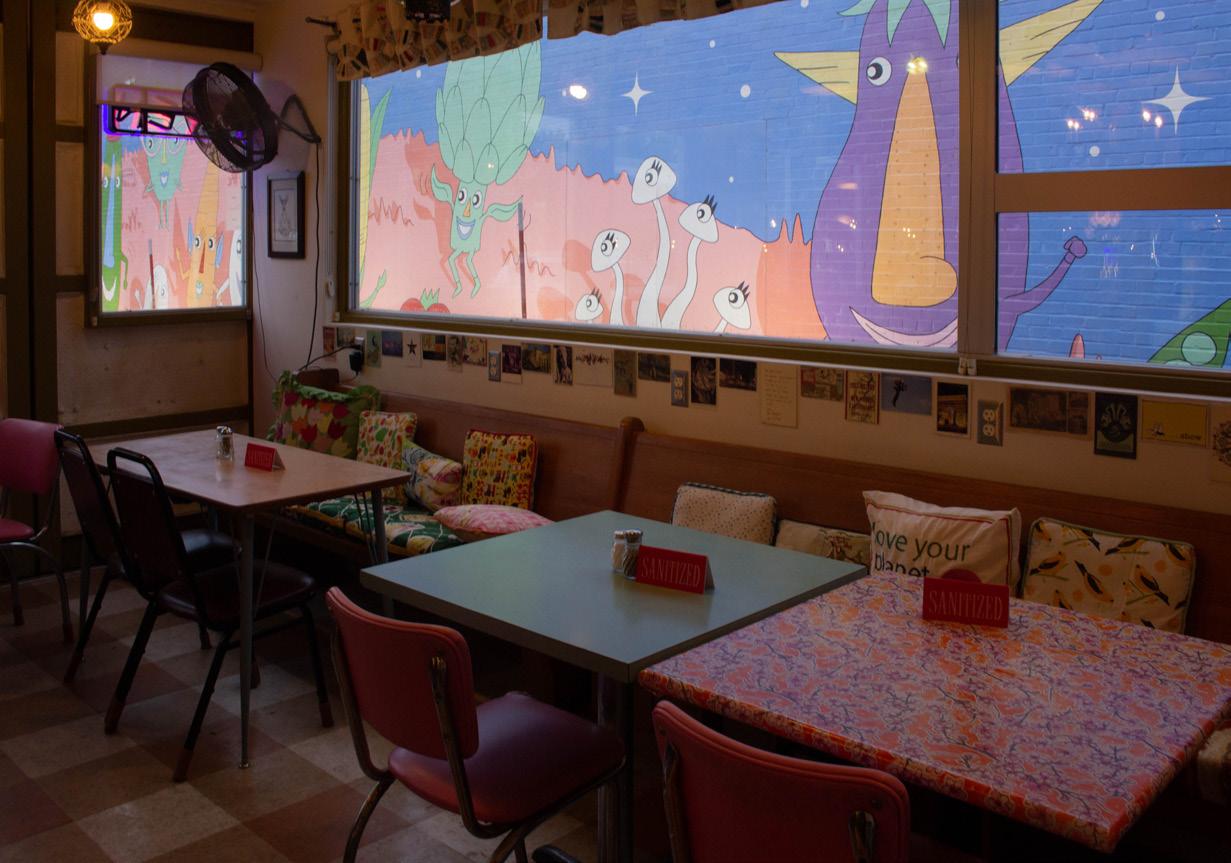
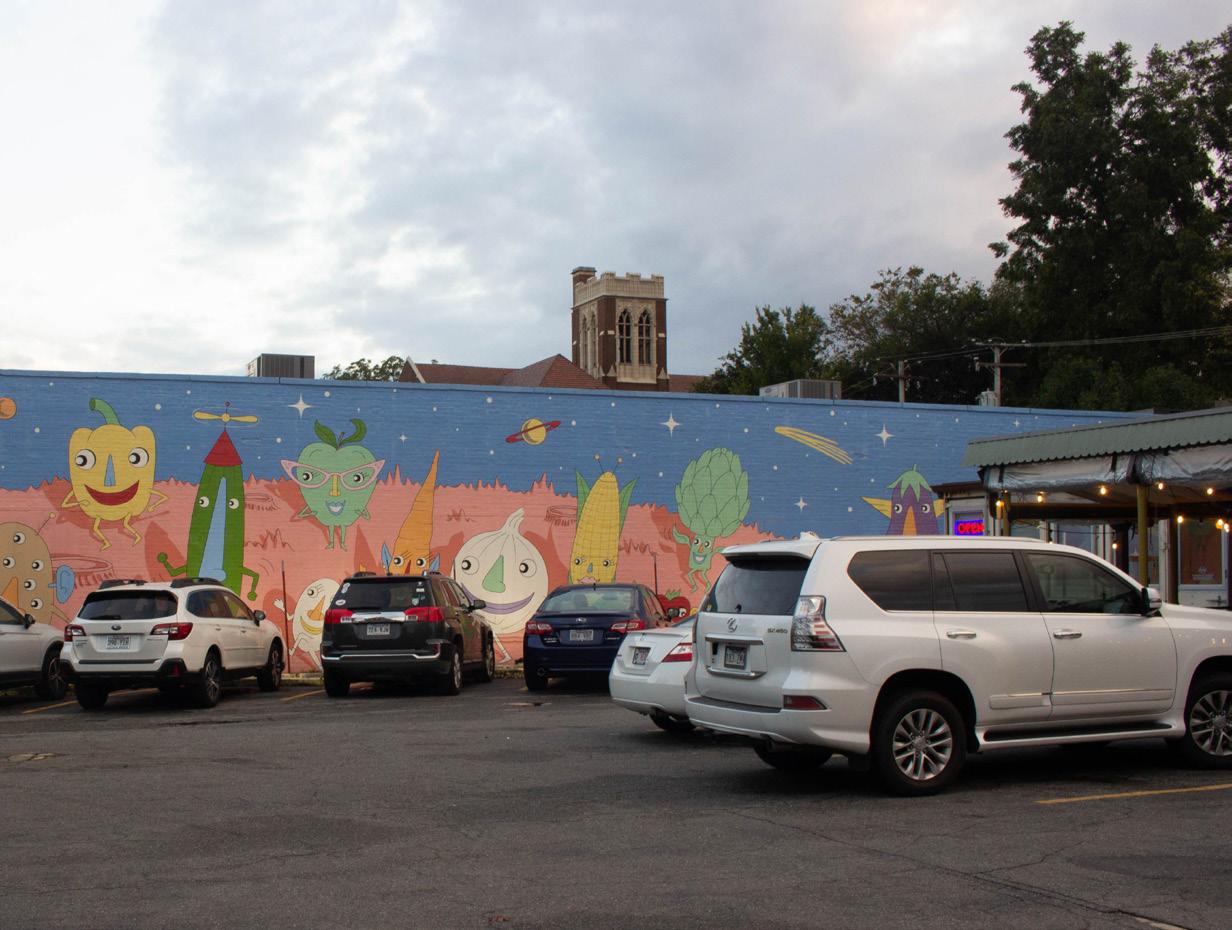
Along the building of The Root is a large mural of different living vegetables to greet customers in the parking lot. After ordering inside there are a variety of atmospheric spots to choose from; inside surrounded by eclectic art and cushions, on the front porch underneath a variety of equality flags, or outside in the garden full of trees.
I ordered the crispy fried tofu that came with a vegan ranch dressing along with a side of grilled seasonal veggies, cornbread, and honey ginger lemonade. The way they fried the long slabs of tofu was similar to fried chicken and absolutely delicious with the ranch that I had no idea was vegan. The side of grilled veg looked like different kinds of roots that I had never had before. The veggies were soft and had a crisp crunch to them. I had originally wanted the sparkling lavender lemonade but they were out and I was not disappointed in the honey ginger lemonade.
The second dish ordered was the crispy PBT, which stands for pickle brined tofu, sandwich. The Root Café has its tofu recipe perfected. Of course, the menu also has meat such as beef, pork, and chicken that is all locally sourced. This restaurant is perfect for those who have any kind of diet restrictions.
They build community through not only food but also activities hosted at the café. Different workshops, classes, guest speakers, and music events happen along with annual events such as a hot pepper-eating contest, beard-growing contest, pie bake-off, recipe swaps, and showing movies in the parking lot with the Arkansas Cinema Society. Information for these events can be found on their website or Facebook, Twitter, or Instagram.
The Root Café is located at 1500 S. Main S., and their website is http://www. therootcafe.com/. Their hours of operation are Tuesday to Sunday from 8 a.m. to 8 p.m. with breakfast ending at 11 a.m. and dinner beginning at 5 p.m. They also have a grocery market and deli open during restaurant hours.

“Greetings young fellows. It has been a minute and all I have to say is life sucks but burritos are great. Specifically this one. This burrito was great with its carnitas, black beans, salsa verde, lettuce, sour cream, and tomatoes. If life is shitty, go scarf down a burrito. Go Trojans.”
UALRFoodReviews, an anonymous Instagram page that came to life in late February, has managed to sum up campus dining in 16 posts. From the WOW Cafe’s “dry” chicken sandwich (or was it fish? “It looked like a fish filet…”) to the dining hall’s “banging” sausage and “questionable” eggs, this account entertains its 124 followers with humor, but also an appreciation for Sodexo employees.
“I deeply respect those who work in the dining hall to bring us meals every day, and I’m no meany, so thank you. Go Trojans.”
Sodexo employees do not know the identity of this comedic reviewer. Nobody else can figure out who it is, either. The reviewer wants to keep it that way because “the sense of mystery makes it exciting.” And no, they are not majoring in writing despite some speculation; they are pursuing a bachelor’s of science, so that really narrows it down.
The pandemic inspired this reviewer to start their account. They needed some entertainment in their life and took advantage of frequently visiting campus dining locations. Those factors, combined with the reviewer being strongly opinionated, were the recipe for something that has become “really cool and fun.”
At Starbucks, they love the iced Strawberry Acai with green tea (they said you can thank them later). At the WOW Cafe, they make a special note of the bacon
A blurry streak running around the backyard at the speed of sound. Defeating the bad guys with fiery red laser beams shooting out of your eyes. Pretending to fly as high as the clouds, delivering the innocent victims out of harm’s way.
the rural Kentucky hometown of Thorlton.
cheese fries and sweet potato fries. According to them, “you MUST get either a Cherry Pepsi or the fruit punch/lemonade combo” while you’re there.
They never thought they would gain a following.
“I want people to react to my posts with a sense of humor and lightheartedness,” they said. “I realize my posts can be pretty crass at times, or perhaps harsh when it comes to the reviews, but at the end of the day the food is pretty great and I’m grateful to the people that serve it.”
Through Instagram DMs, the reviewer enjoys receiving recommendations and feedback from fellow students. They said it makes them feel heard. It makes sharing on social media more real for them.
In terms of reality, the reviewer is debating revealing their identity upon graduation. Supposedly, a lot of us know who they are; they describe themselves as having “a hand in many pots” around campus.
“If the campus found out my identity, I think a lot of people would be surprised because the way I present myself on the Instagram page is pretty polar from how I act in person. Think of UALRFoodReviews as my persona almost.”
So, until they graduate, we can speculate about their identity and watch a little closer in the cafe to see if there is anyone around taking photos of their meal. Go Trojans.
Almost everyone pretends to be a superhero at some point in their childhood.
Kiel Thorlton, assistant professor at UALR’s School of Mass Communications, was no exception to this adolescent pastime.
That childlike imagination and love for story telling coupled with his fascination for computers and technology are what lead Thorlton to join the Student Technology Leadership Program at his local Kentucky high school, setting him on his path toward writing and directing his own film “A Place Called Home”.
“A Place Called Home” being his directorial film debut, Thorlton set out to write a story that was both achievable and relatable. “First time filmmakers overshoot themselves a lot,” Thorlton said. “At the end of the day, I wanted to write something that I knew I could do.”
Following his cinematic dogma, Thorlton did exactly that; he wrote a story about being a dad and growing up impoverished in the south, two very intimate topics.
The initial story idea for the film popped into Thorlton’s head around winter of 2016, shortly after the birth of his second daughter. His goal was to challenge the main character by having him play the role of both father and mother, something film audiences are not used to seeing portrayed.
“I have an idea of what it’s like to be a mom, but I really know what it’s like to be a dad, so I was able to add my own element to the story,” Thorlton said. “I don’t think we see single fathers as much as we see single mothers on the screen.”
Following the trend of pulling inspiration from his past and personal life, a majority of “A Place Called Home” are set in Auburn,
Growing up in a rural city like Auburn inspired him to create a film set in that small town environment. Thorlton’s knowledge of certain locations to film at, as well as local residents to audition, helped immensely with the logistics of shooting the film.
Beyond the logistics of filming in Auburn, it was also emotionally important for Thorlton to model the set of his story after his hometown.
His community is not one that has the opportunity to talk about the arts, really, at all. Thorlton’s birthplace is very heavily driven by factories that keep the community alive, characterized by traditional southern industries like farming and manufacturing. This pushed the filmmaker to do something very out of the norm for his hometown, produce a movie there.
Despite the favorable logistics of filming “A Place Called Home”, multiple challenges threatened to disrupt the cinematic project.
The pandemic created an odd obstacle for Thorlton and his team to overcome. They spent three months searching constantly for a home to possibly film in, observing around 30 homes. The challenge came directly from the homeowner’s fears of contracting and spreading COVID-19.
Another challenge facing Thorlton was the position he held as the writer and director. There were moments throughout production when he would think, “oh my gosh, all of the weight is on me.” At the end of the day if some part of the film and its process does not work, it’s ultimately the director’s responsibility.
“It’s a lot of little hiccups,” said Thorlton. “Something like this is not a sprint, it’s a marathon. A marathon where people are throwing things at you while you’re running.”
Overcoming these challenges proved to be just that, challenging.
However, Thorlton’s credentials as an educator are what carried
him through all of the obstacles and challenges that come with filming.
Being a professor forces him to stay sharp and conscious as a filmmaker. Teaching courses about film, studio and other production methods forces Thorlton to constantly redefine his craft as well as staying up to date with new industry techniques and practices.
Helping students understand and learn the craft of producing a film also helps Thorlton improve his own filmmaking abilities by observing and talking through those teachable elements and moments with students.
By being a better filmmaker, Thorlton’s level of teaching continues to improve while constantly elevating both his teaching and filmmaking capabilities. His teaching informs his filmmaking while his filmmaking directly influences how he teaches.
“At the end of the day I’m living, eating, breathing film and television every single day,” Thorlton said. “I better be a better filmmaker for it.”
Operating as both an educator and filmmaker while producing “A Place Called Home” offered a whole spectrum of challenges that Thorlton adapted to and overcame. One aspect of the film that stayed constant throughout the five years of production is its story.
Thorlton wanted to tell a human story, placing the characters with real life motives at the center. “A Place Called Home” can be told throughout various cultures and demographics with its universal core message holding up consistently.
At the end of the day, “A Place Called Home” is a story about human relations, relationships and the connections we cultivate with each other, while dealing with the uncertainty and emotional rollercoaster rides that life hands you.
It’s not the home you build, but the family you build in it.
By Magnolia Risley
By Bennett Wood
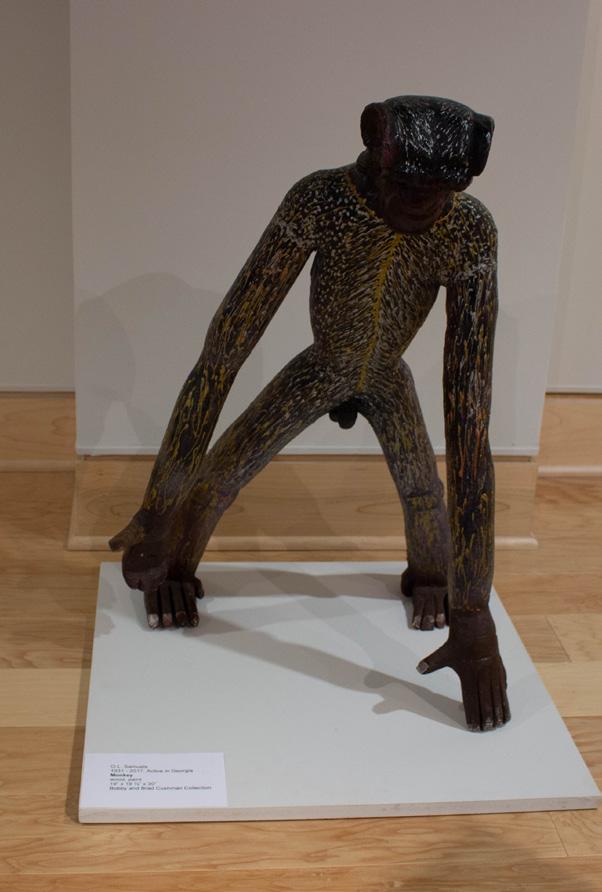
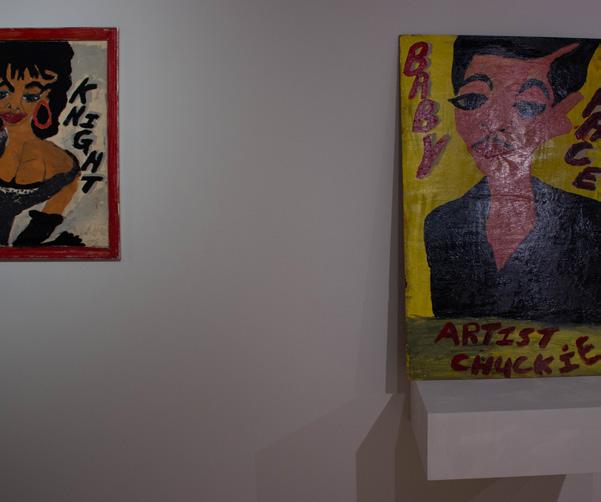
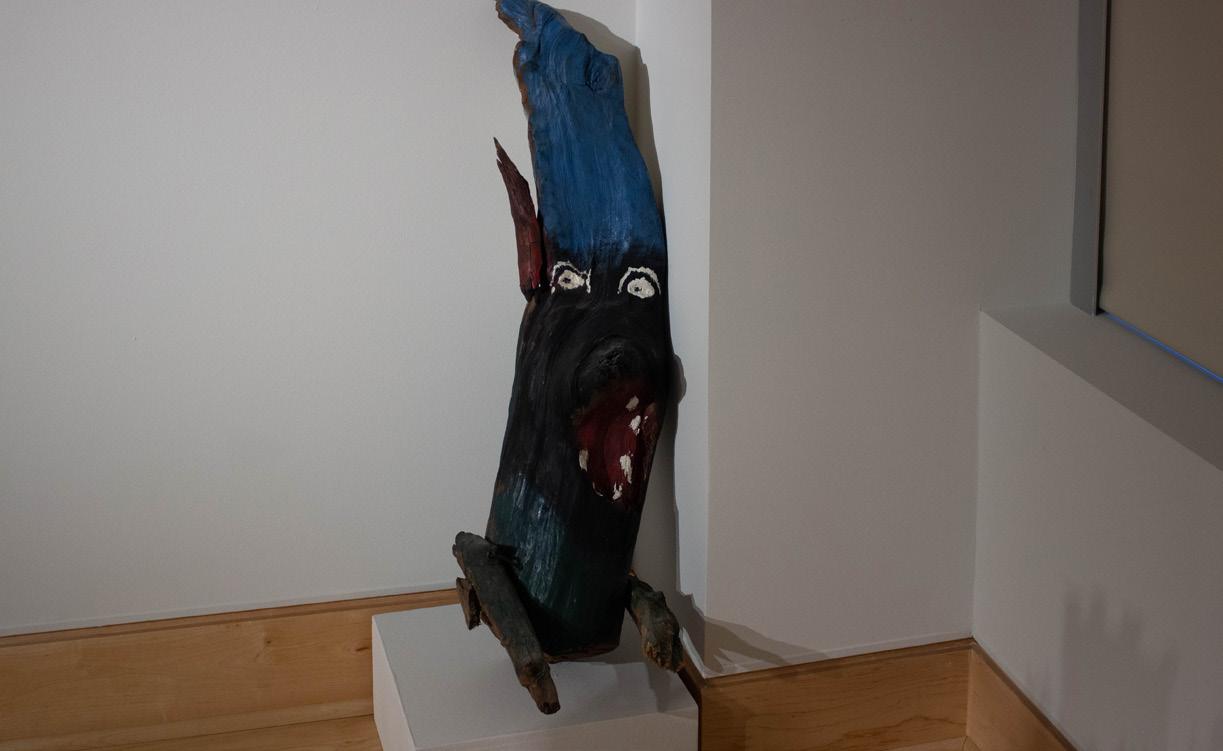
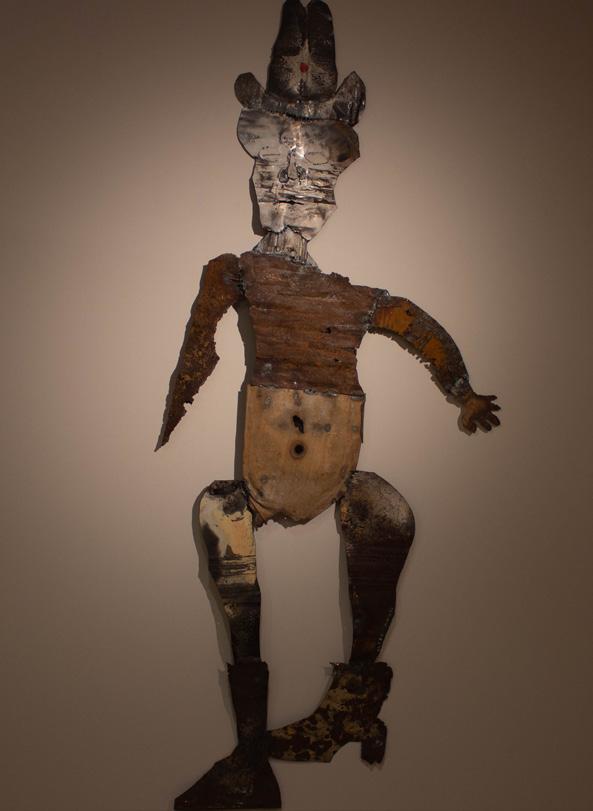
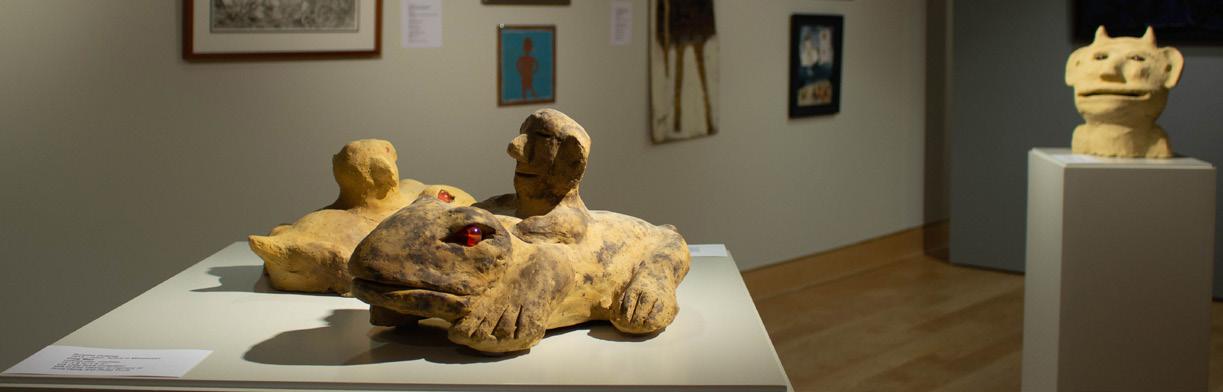
Starting Oct. 1 and available through Dec. 1, the second installation of “A Visionary Vernacular Road Trip” will be on display in the Ann Maners and Alex Pappas gallery. The gallery is located in the Windgate Center of Art and Design on level 1.
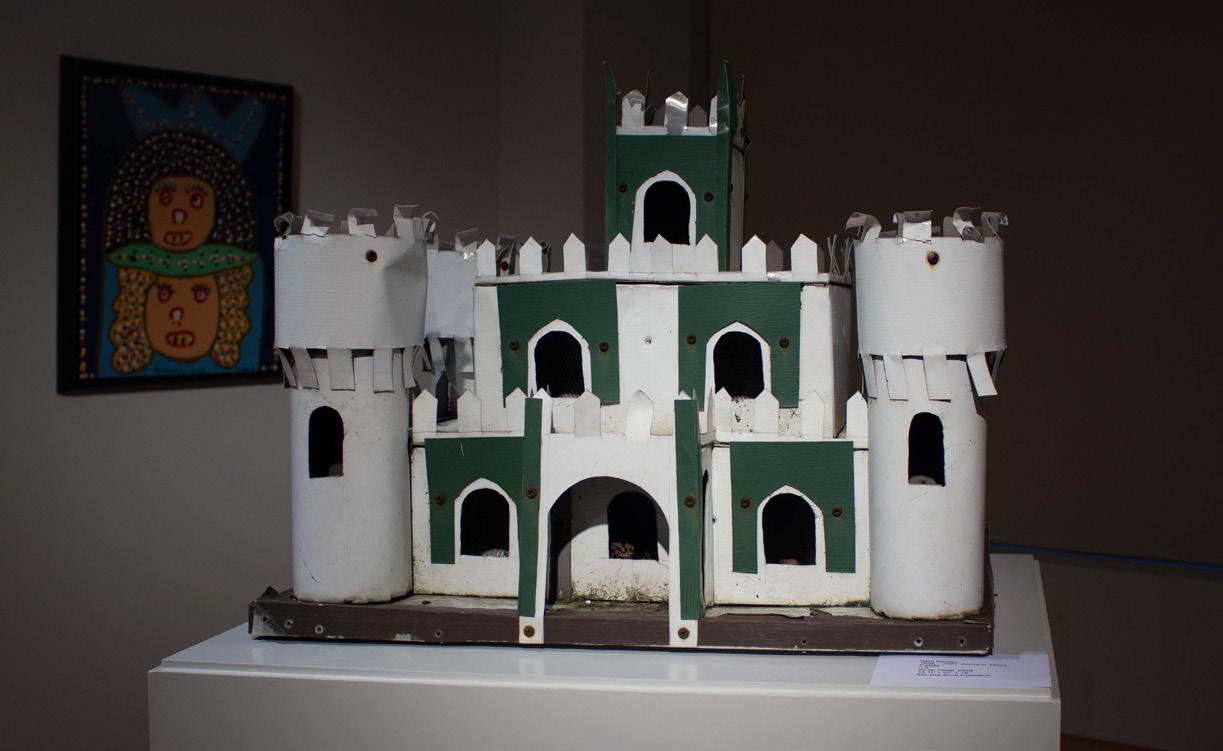
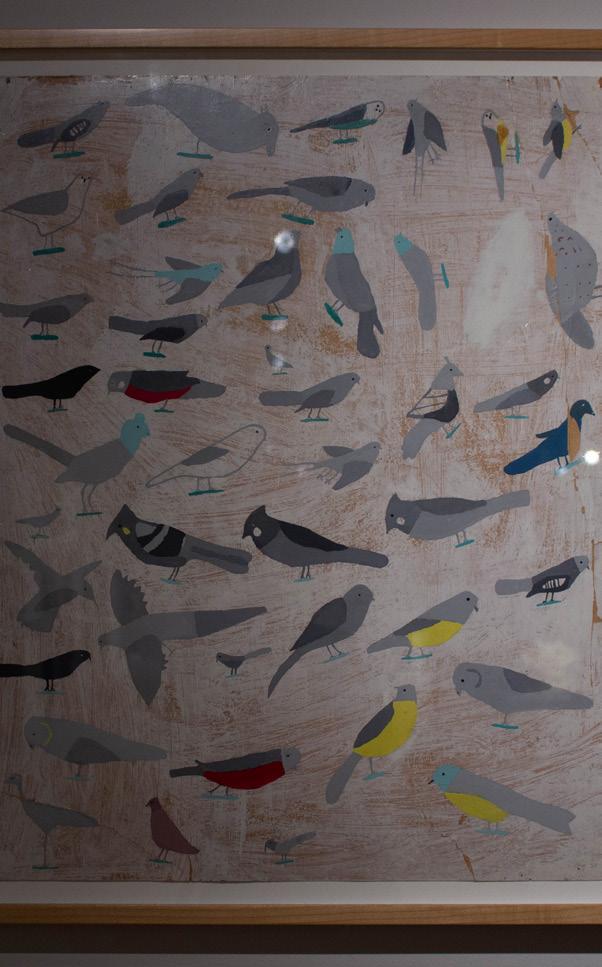
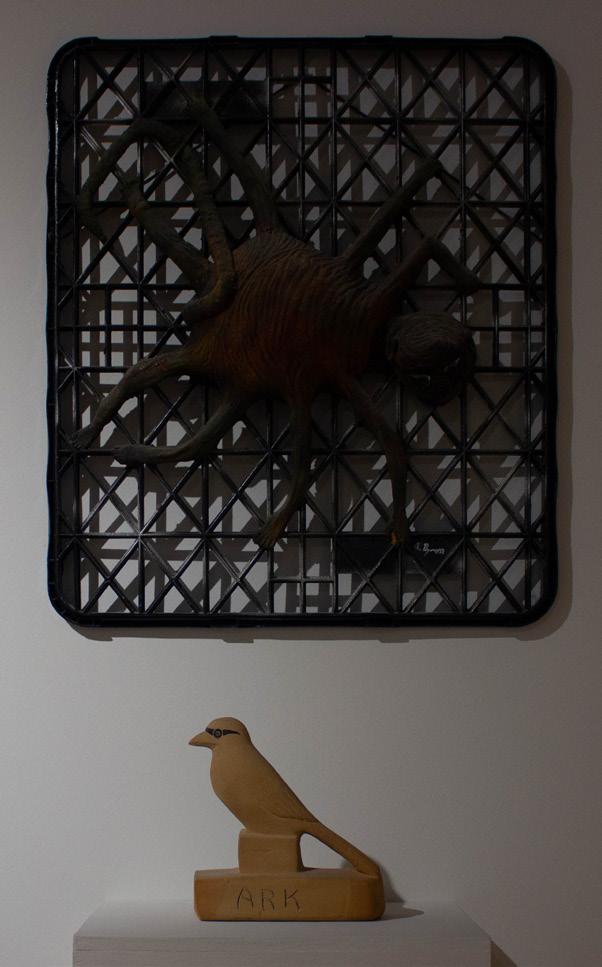
The Road Trip Continues is curated by Brad Cushman and continues the exploration of folk, self-taught, and outsider art. Folk art generally includes objects that are useful in some way and not limited to only being decorative. Self-taught art is as simple as it sounds: learning art without formal training. Outsider art can be attributed to self-taught artists who are not part of any artistic establishment. These ideas are explored in depth at the exhibit.
The pictures and sculptural pieces are unique in style, as most of the artists did not go through formal training. The statues on display are especially striking surrounded by the variety of art styles and mediums, many of the artists being inspired by a divine spirit to create their art.
The University of Arkansas at Little Rock Art Galleries are open from 10 a.m. to 4 p.m. Monday to Friday.
By Payton Dhooge




motivation helped move me up quicker, and after a couple years, they were sending me out of the state and out of the country.”
three hours to get clearance to land that night.
now, a university photographer for UA Little Rock.
How do you get in a helicopter in the Marshall Islands when you don’t speak the language? You hop in a rowboat and point to a distant fishing boat affixed with a helicopter (to see where the fish are, of course), you climb up the fishing boat’s ladder after the rowboat took you out to it, you wander around the fishing boat trying to find someone who understands your English, you bang on the door to wake the man who flies the helicopter, you take the doors off the helicopter, and you go into the air with a stranger from a different country than you, whom you just met moments ago.
Then, when you land back on the boat, there are police looking for suspects because the body of a crew ship member was just found on the coast. You sneak back down the ship’s ladder, you wave for the rowboat to come back and you get back to the island without being spotted.
All for the perfect photograph.
Ben Krain has seen the aftermath of Hurricane Katrina, he’s seen Afghanistan in the early 2000s, he’s seen Haiti following an earthquake, he’s seen Cuba and Spain and he’s seen the Marshall Islands.
Krain gravitates towards chaos, disaster, and the most difficult times of people’s lives. He’s been stopped at a roadblock in Afghanistan and told he would be shot if he didn’t give the person $200. Plot twist, he made it past the roadblock alive and not a dollar poorer.
In Afghanistan, he walked through fields where landmines were planted- twice. He went down into a cave where Russian bombs and ammunition were secretly stored to photograph Afghans removing the bombs from the cave to be sold.
He had to work with fixers, who are Afghan people who were paid to escort American journalists around and get them access to
certain people and places. People there drove crazy, so Krain always asked for a driver who wasn’t reckless.
After the Democrat-Gazette saw Krain’s photos, they ran a 16 page, color section of how he saw Afghanistan. It cost the paper a lot of money to run and it was one of the first times they published anything like that.
Krain even went to Iraq in the back of a Jacksonville Air Force plane transporting supplies. He swung in a hammock hung from the ceiling of the plane and documented what the journey was like for airmen.
The plane was stranded for four days in Newfoundland, Canada in a tiny town.
“It was wintertime and cold as balls,” Krain said. “The only thing to do was go to a bar. So most of that trip was a vacation really; I was in Canada in a bar.”
He kept journals to record his adventures on assignment for the Arkansas Democrat-Gazette. He started out as an intern for the paper, freshly graduated from UA Little Rock with a journalism degree.
His editors saw his potential. He had a background in fine art photography instead of photojournalism. He took careful steps to ensure the composition, colors, lighting, and other aesthetic elements of his photographs were taken care of, which was unique for a photojournalist. He was hired onto a team of eight photographers for the Democrat-Gazette in 1996.
Being a younger photographer working for the paper, Krain took the odd assignments. He worked odd hours, but neat things happen during odd hours. His photos began to stand out; they were of unusual subjects. They were lively. They were aesthetically pleasing.
“I was young and hungry, working nights and weekends,”
he said. “My boss [once] said, ‘This guy, he’ll work at midnight if I call him.’ My desire, drive, and
Documenting the Middle East was difficult, but the aftermath of Hurricane Katrina had the largest impact on Krain. He flew down to Louisiana out of a pilot school in North Little Rock two days following the hurricane to get aerial shots but didn’t make it into the city until five days following the hurricane.
Being in Louisiana and hearing the stories from people who had just lost everything was hard. He was riding with police officers and first responders in boats through the streets, coming across people in need.
“The difference between Afghanistan and Katrina was, [they both showed] people at the worst time in their life, but the communication barrier connects you closer,” Krain said. “If I don’t understand your culture or language and I can't communicate with you [like in Afghanistan], then you’re more of an outsider and it’s a lot easier to walk around and have no feeling about it emotionally.”
With Katrina, Krain did have to make that human connection.
“I had to talk to everybody and listen to their stories and really be sad with them before I could work,” he said. “You can’t ambush someone who’s having the worst time of their life.”
Making those connections took up to 20 minutes just for one shot, but it allowed Krain to better understand the victims’ situations. However, it was taking an emotional toll on him. He learned that being in an airplane following a natural disaster was easier than being on the ground.
“It got to be so hard for me to walk around in someone’s neighborhood and hear the same story over and over again,” Krain said. “‘[They] got killed. I lost my mom. I’ve got no insurance. I don’t know where I’m going to live tonight. Why me? I don’t have the money to rebuild.’ You sort of get numb to it after a while, so I just fly in an airplane; you can still get the damage but you don’t get the people.”
The second day following the hurricane, Krain wasn’t able to fly over the 9th ward and the levy where the damage was the worst in New Orleans. His pilot circled Baton Rouge and took him down the Mississippi coast. They waited
Krain spent the night sleeping in a chair in the Baton Rouge airport, which was simple with only one terminal. He begged and pleaded with the national guard to go on a plane with them in the no-fly zone, but he didn’t know the right people.
“If I had just gotten five minutes, man…” he said.
Krain is drawn to disasters and chaos because emotions are so raw.
“I love the outrageous,” Krain said. “Chuckwagon races, demolition derbies, the gauntlet, obstacle courses where people get hurt and catch themselves on fire.” He has attended the Burning Man
“It’s always something different. It’s not working out of a studio or going to a wedding every weekend, so I decided to leave journalism and go to higher education,” he said. “So when I tell people I work at UALR, they think I'm teaching. They don’t realize [that with me] being the only photographer here, there’s a lot of things people don’t think about except our office.”
Krain enjoys not being restricted creatively. He can incorporate his own style and energy into the images that he wants to make, and that’s important to him. It’s obvious by the photos he keeps hung up in his office.
“Krain spent the night sleeping in a chair in the Baton Rouge airport, which was simple with only one terminal. He begged and pleaded with the national guard to go on a plane with them in the no-fly zone, but he didn’t know the right people.”
festival multiple times.
He’s even covered the “original Mardi Gras” in Mamou, Louisiana. Chickens are released and it’s a competition to see how many chickens each person can catch by the end of the day (the winner is “king”). Men drink alcohol the entire time and ride around the town on horses in chicken costumes and camouflage.
Krain’s adventures ended when the internet began to sweep the success of newspapers. The Democrat-Gazette was losing staff and advertising dollars, so he had to make a choice.
He attended a workshop with photographers from National Geographic. He could have worked for a national publication, but he saw that the photographers who traveled for a living did not have a strong family to come home to; they were divorced. Krain had a young daughter and wanted to be a good father, so he stayed in Arkansas and came into the position he is
No, they aren’t his photos, they’re visual inspiration for him to keep his mind intrigued. There’s an athletic training facility in China, fighting squirrels, and a baby sitting by a cobra in the dirt in India.
“I put the crazy wild photos up first. [They’re] things that I want to incorporate in my pictures. Places I want to go, things I want to see. I don’t want to look at my own photos.”
There’s still a lot of things Krain wants to see. China. “Everything on this wall, man…” as he gestures to the “crazy wild photos” in his office. No matter what, Krain just wants to be out amongst the people, not behind a desk.
And the next time you find yourself in front of Krain’s lens at a school event, stop for a moment and think about the other things that lens has shown him. It’s truly unbelievable.
By Magnolia Risley
On Sept. 8, The Venture Center, Venture Noire, Wright Lindsey Jennings, Arkansas Economic Development Commission, and Arkansas Capital Corp announced the launch of Woman Rise, a new statewide mentorship program bringing Arkansas’s women entrepreneurs the opportunity to develop life-changing relationships and drive professional growth.
Becky Pittman, Director of Communications and Brand Management, said the new mentorship program will help women entrepreneurs navigate barriers, build confidence, and learn the leadership skills needed to own and operate a business successfully.
Pittman said women are experiencing significant career shifts, and many are starting businesses as a result.
She said the Woman Rise’s mentorship program will support these women and women who have long been entrepreneurs but not had access to mentors.
Applications to be a mentor or a mentee for the Woman Rise class of 2022 closed on Oct. 8, and the Woman Rise committee will review applications and choose up to 20 mentors and 20 mentees. A “match” day will follow in December to connect mentors and mentees.
For more information on Women Rise visit https://www. venturecenter.co/entrepreneurs/ mentorships/vcwomanachieve/
By Maddie Becker
It’s fall, y’all! Halloween is fast approaching, and there are some great activities to attend across campus and the city of Little Rock.
Little Rock is hosting several events to commemorate the occasion.
There is a Halloween Melt and Pour virtual soap-making workshop on Oct. 28. For $55, you are supplied what you need to make soap, and then at 7 p.m. on the 28th, you are taught how to make scary soaps. The class, taught by Maureen Harris-Coyle from Heaven Scent Beauty, will be live on Zoom.
At Lost Forty Brewing, Festival of Darkness 2021: Nighty Night Release Party from 5 to 9 p.m. on Oct. 23 features a “limited barrelaged beer,” as well as a Zombie Lumberjack costume contest, live music, and food trucks for attendees over 21 years of age.
Whimsy Cookie Co. is host-
ing its second annual Whimsy Halloween Weekend Bash on Oct. 28 from 10 a.m. to 5 p.m. Children in costume receive a free candy bag and a free Buttercream Bite Cookie. Attendees who take a “scary selfie” and post with the hashtags #whimsycookiecolittlerock and #whimsyhalloweenbash are entered into a drawing for a $30 gift card to the establishment. Also, the first five customers of the day on Oct. 28 receive 18 free pastries each.
On Oct. 28, Nexus Coffee & Creative is hosting a Harry Potter trivia night at 7 p.m. Harry Potter inspired drinks and snacks will be provided, and wizard costumes are encouraged. On Oct. 30 at 2 p.m. Nexus is partnering with Rolling Hills Pottery to put on a Pottery Wand Workshop. Get into the wizarding world spirit!
If workshops and trivia nights aren’t your thing, there are also several pumpkin patches and haunted houses to visit in the area.
Schaefer’s and Collins Pumpkin Patch in Mayflower is open Monday through Saturday from 9 a.m. to 7 p.m., and Sunday from 1 to 7 p.m. They have a haunted hayride for $2 a person, and you can take home a pumpkin from the hayride for $7 a person. They also have a barnyard with farm animals, equipment for children to play on, and a sunflower field. They remain open until Oct. 31.
Motley’s Pumpkin Patch is also open until Oct. 31, on Thursdays and Fridays from 10 a.m. to 5 p.m. and on weekends from 9 a.m. to 6 p.m. They have tractor rides and even pig races. Basic admission is $9.95 plus tax, which includes the pig races, hayrides, fun maze, farm zoo, magic show, and a 3 level pirate ship with slides for kids. They have several photo booths set up, as well as festive flowers.
BoBrook Farms in Roland is $7 per person (pumpkins sold separately). They are open until. Oct. 31,
Monday through Thursday from 9 a.m. to 2 p.m. and Friday through Sunday from 9 a.m. to 6 p.m. They have a hay maze, pig races, a snack bar, and hayrides.
The Village of Screams off Shackleford Rd. is three haunted houses combined. For $15, you can go through one, $30 for two, or $40 for all three haunted houses. Their VIP package includes all three haunts and a t-shirt for $65. See their website villiageofscreams. com for their schedule.
The Reaper Haunted House and Haunted Hollow in North Little Rock have been operating since 2011. For $17 plus tax (or $20 plus tax on Halloween) you can be scared by true professionals. They are open from 7 to 10 p.m. Monday through Thursday and 7 to 11 p.m. Friday through Sunday.
Pick your poison! Stay safe this Halloween, but have fun.
By Magnolia Risley
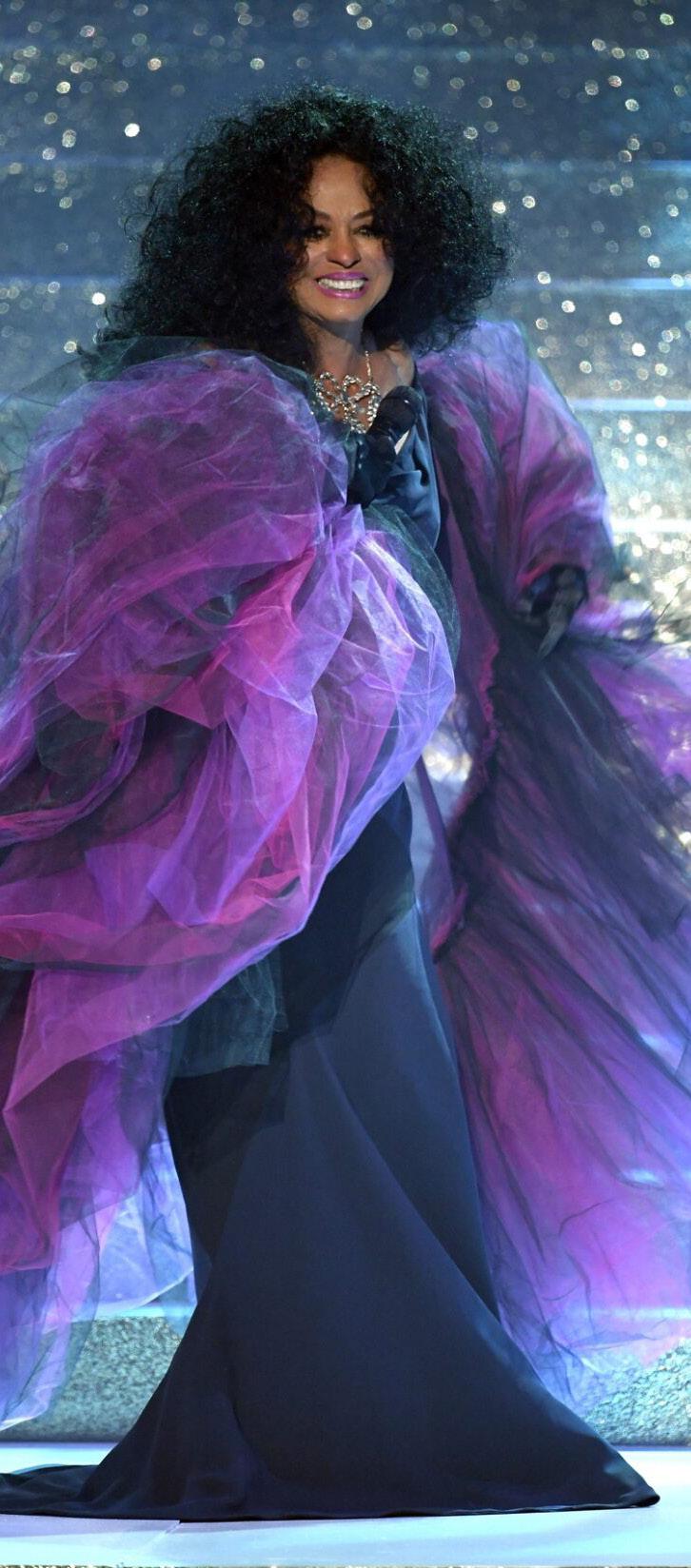
Diana Ross became worldfamous as a performer during the mid-1960s. Originally Ross began her musical journey singing with friends as a teenager. Ross and several of her neighborhood friends formed a pop-soul vocal group, later known as The Supremes. The groundbreaking 1960s trio created hits like "Come See About Me" and "You Can't Hurry Love." Ross left the group for a solo career in 1969, later reaching No. 1 with hits like "Ain't No Mountain High Enough" and "Love Hangover." She even starred in the films Mahogany and Lady Sings the Blues as well, earning an Oscar nomination. Regardless of her personal and professional ups and downs, Ross has withstood the test of time with a career that spans more than four decades. Fast forward nearly over twenty years Ross announces new music to drop this fall 2021. "Thank You" is the upcoming twenty-fifth studio album by the late 70s diva, Diana Ross. This is the pop singer’s first album to be released since 2006’s “I Love You.”
That album largely featured covers (the Beatles’ “I Will,” Bill Withers’ “Lovely Day,” Burt Bacharach, and Hal David’s “The Look of Love”).
However, the 13-track album, “Thank You” consists of original material and collaborations with Jack Antonoff, Spike Stent, and other producers. Ross’ new album was written during the lockdown and is set to release on Nov. 15, 2021. Ross dedicates this collection of songs as a gift of appreciation and love for her fans. She co-wrote all 13 tracks on the album. This will be her first album of original materials in 22 years after 1999’s “Every Day Is a New Day.” “This collection of songs is my gift to you with appreciation and love,” Ross said in a statement.
Recently Ross released “All is Well,” the third single to be lifted from the album. The slow jam carries an optimistic melodic feel. It is a reminder of what's still wonderful in life amidst all the chaos.
“There’s beauty all around you / Right on display / Try your best to say thank you / Each and every day,” Ross sings.
“All Is Well” follows Ross previously shared tracks “If The World Just Danced” and “Thank You.” The single “If The World Just Danced” is a follow-up to the equally upbeat “Thank You,” which was released in June and received a hugely positive response. “Singing is my beautiful, delicious obsession,” the legendary Diana Ross sings in her new song “Thank You.” Fans can look forward to getting up on their feet with her song “If The World Just Danced.” “There’s no wrong way to dance, just do it,” Ross said in a statement. “Let everyone know to have FUN. Joy, Joy, Joy is the answer. Playfulness! Happiness! When you dance there is only love in life. When you dance the world dances,” she said, according to Stereogum.com.
Over 20 years and the international queen of pop has announced her comeback. Stream “Thank You” Nov 5, 2021.
By Shadayja Sneed
On Oct. 7 the Cooper Lecture Series presented “Homer’s Women: Secret Stories of Women in ‘The Illiad’ and ‘The Odyssey,’ a talk by Madeline Miller.
Miller is a popular author through her two novels “The Song of Achilles,” published in 2011, and “Circe,” published in 2018. Both are retellings of Homer’s epics. Miller won the Orange Prize for Fiction in 2012 and has a Bachelor’s and Master’s degree in Classics. Her talk focused on “Circe” as well as other mythological women.
The talk was held via a Zoom webinar with Dr. Angela Hunter and Dr. Kris McAbee as hosts, along with American Sign Language interpreter Gwenyth Sutphin.
Miller began by reading an excerpt from “Circe” that included a recognizable line from her novel: “Men make terrible pigs.” She then detailed her interest in Greek mythology during her childhood, recalling feelings of disappointment that women were sometimes just names, or someone’s wife, or someone’s daughter.
“If their story was really exciting, they might get to die in it to motivate the male hero,” Miller said. “Now there were some exceptions to this.”
Some Greek women were featured, like Medea or Clytemnestra. But these women were known for their villainy, still making them out to be flat characters. Miller expressed with waving hands and a shaking head that she did not like that these women were punished for being part of the story, punished for their power.
Miller told the audience about retellings not having to be close to their source material. One of the reasons she decided to flesh out Circe’s story was because she felt like Odysseus failed.
“Circe is in two-plus books of “The Odyssey” and we find out very little about her,” Miller said, “Odysseus, theoretically the most curious man in ancient literature does not ask her ‘why are you turning men into pigs?’”
“The Odyssey” is centered on
nostos, meaning homecoming. However, it is only centered on Odysseus’ homecoming. Miller made a point to note that slaves like Eurycleia and Eumaeus, along with the twelve hanged maids, were never going to get their homecoming. These silences are not discussed much throughout the epic and forces audiences to wonder about who gets to come home and why.
This lecture directly aligns with the William G. Cooper, Jr. Honors Program seminar, which is only available in the Fall. The class is open to any interested student regardless of major, but taking at least one seminar is a requirement to complete the honors English program.
The program consists of 6 hours, a tutorial and project as well as a seminar course. According to the UA Little Rock website, “Exit requirements for the Cooper Honors Program include an overall grade point of 3.25, a grade point of 3.5 in English courses, satisfactory completion of the block of Cooper Honors courses, and a letter of certification from the Director of the Program.”
Hunter is teaching the seminar this academic year, Doubletakes on the Classics. Students are reading “The Odyssey” and retellings like Miller’s “Circe” and Margaret Atwood’s “The Penelopiad” and discussing the differences between the texts and what mattered to original and contemporary readers.
Hunter debated bringing Emily Wilson, a translator of “The Odyssey,” Marcus Gardley, who wrote the play “Black Odyssey,” or Miller. But, decided that Miller could also benefit Dr. Kris McAbee’s Approaches to Literature class and that the Little Rock community would be more interested in Miller due to the popularity of her novels.
“If we can tie things into multiple classes, all the better,” Hunter said, “that’s how Miller won out. [She] had a bigger appeal and a wider audience.”
The lecture was held virtually to aid accessibility as much as possible during the pandemic.
Hunter said is aware coming to campus outside of class can be
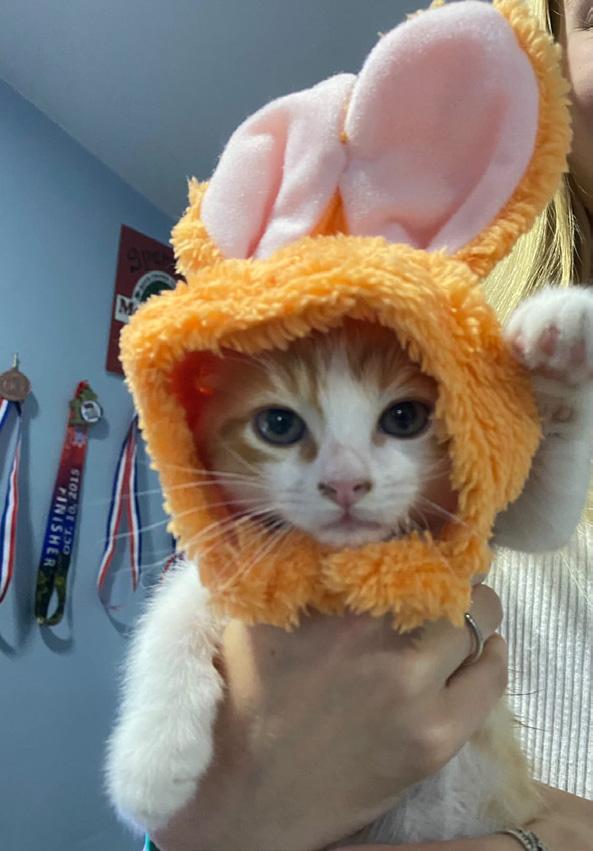
Nugget is a six-month-old orange tabby cat who belongs to Gabby Lucas, who is a member of the UA Little Rock XC/Track and field team. Gabby adopted Nugget from the Montgomery County Animal Shelter on May 17, 2021 and has been her furry companion ever since. Nugget gets his name from Gabby’s boyfriend’s cats back home which all have food-based names.
Nugget loves to snuggle and hang out with Gabby on a relaxing day while playing video games. He loves playing with his favorite toy which is a feather attached to a string that can entertain him for hours on end. Nugget enjoys his special treats he gets when he isn’t being too mischievous.
He is always playful, full of energy, and ready to put a smile on everyone’s face that meets him. This young kitten is high-spirited, cuddly, but also has a mischievous side to him. This year Nugget rocked his Halloween costume as a bunny rabbit. Nugget may look small but he never backs down from a fight even if the other cat is double his size. A fun fact about Nugget is that he had very bright blue eyes when Gabby first adopted him.
Remember to adopt and not shop as there are furry companions waiting for their forever homes. There are many local shelters in
challenging, but those interested could tune in while they are at home and making dinner.
“I think [the lecture] went really well,” Hunter said, “the audience had people who had just studied [her book] hardcore and some who may not have even read ‘The Odyssey,’ that’s a really hard audience to have.”
Hunter praised Miller’s ability to cover so much and her storytelling ability to keep the audience interested.
Hunter added, “I think as a public university...we need to serve our community. It’s a big part of UALR’s mission. Public lectures are just one drop in the bucket of the ways in which we need to be engaging with the community.
By Remington Miller
Little Rock where everyone can find and adopt their next best friend.
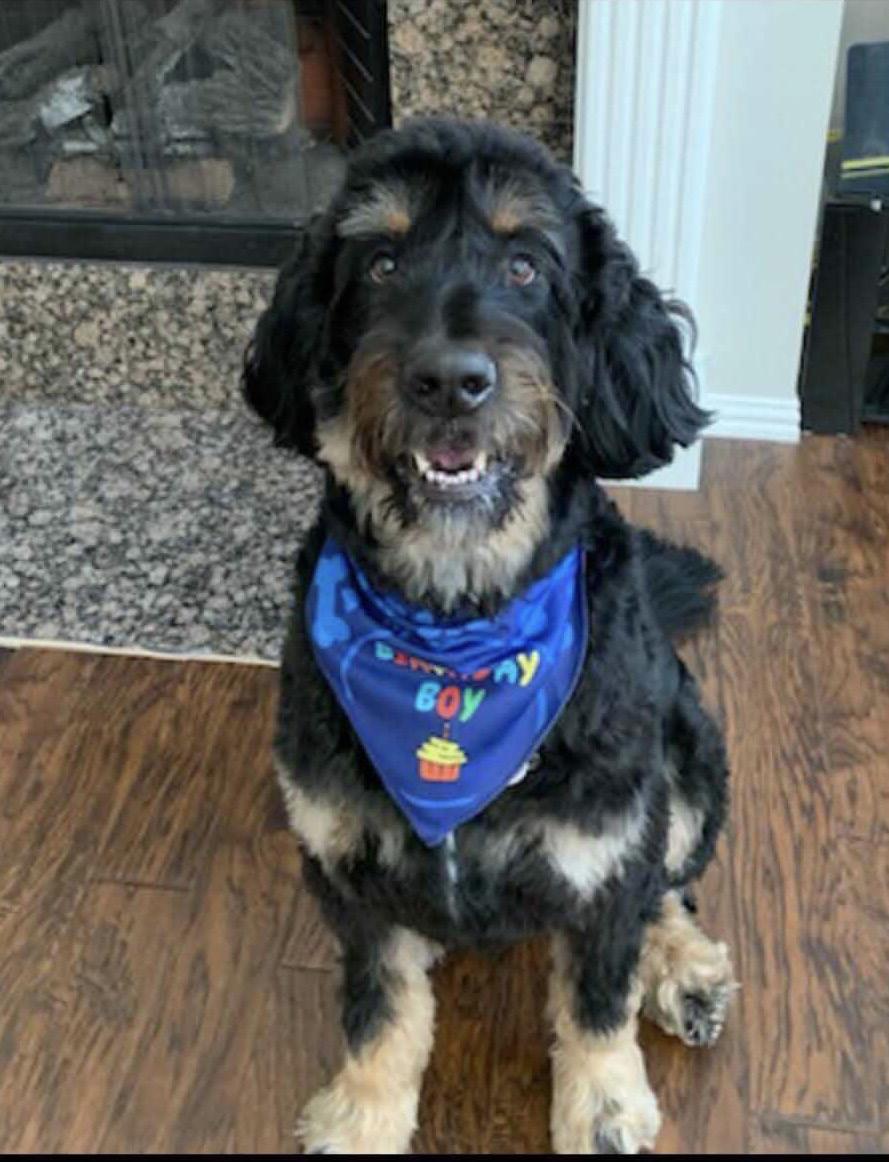
Stanzi Davis is a three-year-old Berna doodle that belongs to Zane Davis, who is a member of the UA Little Rock Wrestling team. Zane originally bought Stanzi back in December of 2018 from a breeder located in Waco, Texas and he has been a member of the family ever since then.
Stanzi is named after a professional football quarterback who plays for the Iowa Hawkeye team. Most days you can catch Stanzi in action playing keep away where he chases everyone until he catches the person trying to run. Do not be deceived by Stanzi's large size as he weighs 130 pounds, and is always full of energy.
He loves playing with his favorite toy which is a plush dragon that has three squeakers. But don't be fooled by his cuteness as he is allergic to most snacks which often results in him getting tummy aches.
Stanzi often lays in the living room on his favorite fur rug which often backs up traffic in that area due to his large size. A fun fact about Stanzi is that he is a hypoallergenic dog and great for those who may have asthma or allergies.
By Natalie Arnold

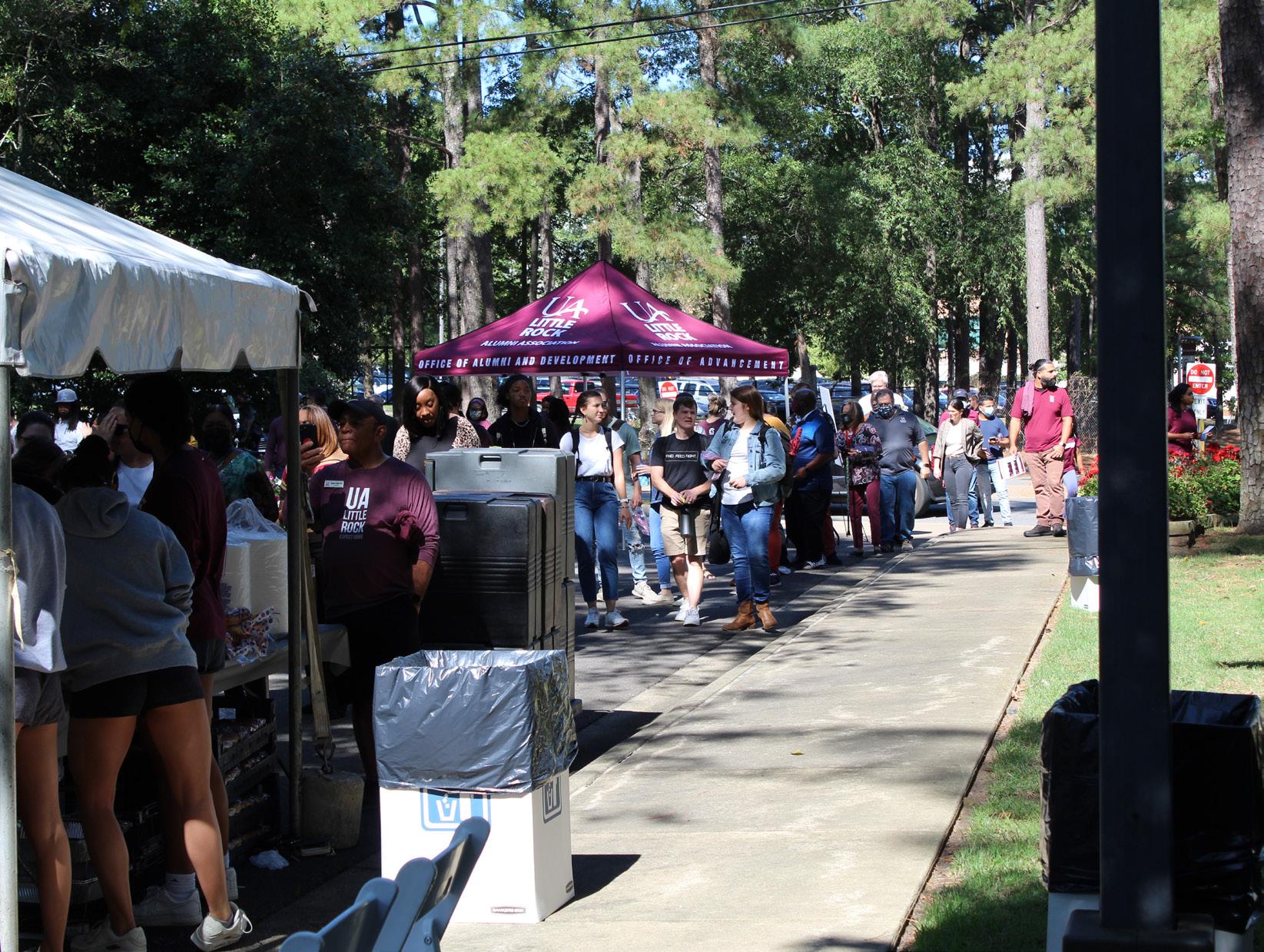
UA Little Rock hosted its annual BBQ at the Bailey on Oct. 12.
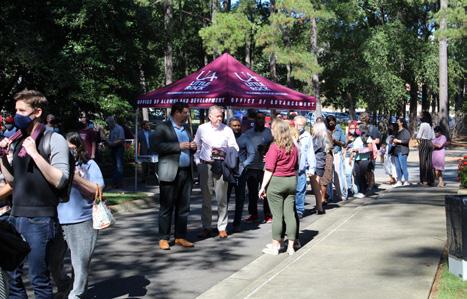
The event lasted from 11:30 a.m. to 1:30 p.m. with an estimated turnout of 1200 people. Students, faculty, and alumni waited in a continuous line that wrapped around the Bailey Center lawn on Campus Drive.
Attendees checked in with the Office of Alumni and Development after receiving a free long sleeve t-shirt from Marketing and Communications. At check-in, each person was given a ticket to enter drawings for free UA Little Rock merch, including additional t-shirts, tumblers, and other goodies. Ticket numbers were called out during the entire event.
Derrick Newby, the Associate Director of Alumni Membership and Development, was one of the event organizers. He is newer in the position, and his goal is to show students there is more to the Alumni Association than keeping a UA Little Rock email address.
“It’s about building the relationship while they are students and helping them get connected to a wide network of professionals to all but guarantee post-graduate success,” Newby said.
The DJ, from Klassik Entertainment, had a “magic touch” that kept the BBQ line moving. Chancellor Cristina Drale and head basketball coach Darrel Walker were seen dancing to the “Wobble.” After the Wobble, the DJ played music for NPHC fraternities and sororities to stroll to as it was also NPHC week. At the end of the event, Kappa Alpha Psi even passed out red frosted cupcakes to attendees.
“To see the faces of non-Greek students kind of light up seeing the display was amazing. A few students even reached out to ask about being members,” said Newby. “Vibrant student life, especially Greek Life, is always a plus on a college campus.”
Students were able to watch the strolling as they waited in line and received their food, which was plated for them by current student
athletes.
Whole Hog Cafe catered the event, providing pulled pork and barbecue chicken sandwiches with potato salad, coleslaw, and a variety of desserts and drinks.
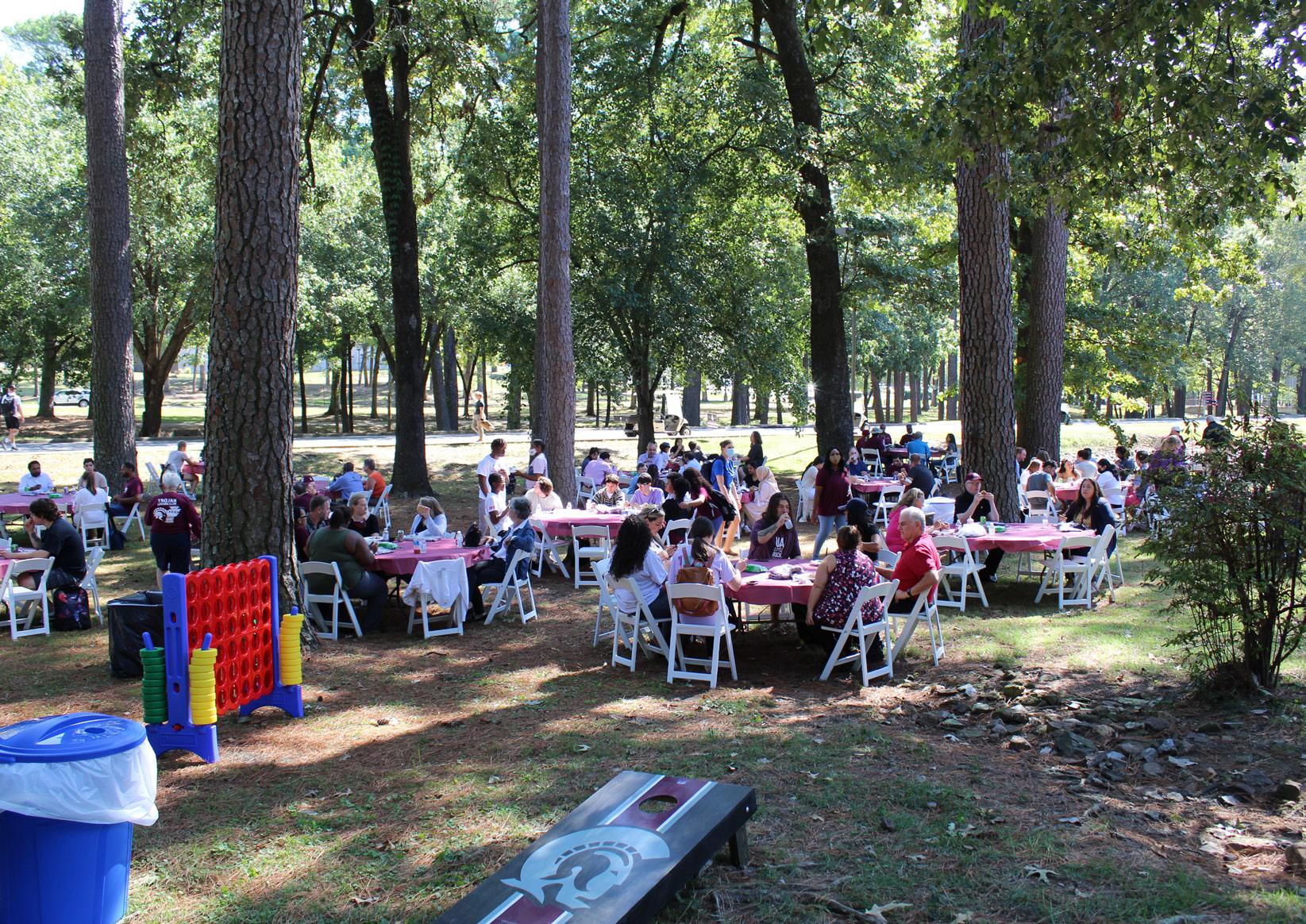
After receiving food, attendees were able to sit on the Bailey Center lawn and mingle. There were games, including lawn size Connect-4 and corn hole to be enjoyed by all.
Some academic offices, such as the Student Experience Center, the Office of Orientation and Transitions, and Student Retention Initiatives had tables set up where students could learn more about future events on campus and how to be involved.
Orientation and Transitions asked attendees to complete a Google Form where they could offer advice to future Trojans. They were able to take advantage of responses from both current students and alumni to educate incoming students at future orientation programming.
Several responses reflected the event perfectly, such as one from a current student, “Have fun, but not too much fun.”
Also at the event, the Office of Marketing and Communications unveiled a new brand promise, Expect More. The t-shirts attendees received showed the promise, as well as new banners across campus and commercials that were released the same day.
Communications will incorporate new secondary colors in addition to the traditional maroon and silver with this brand promise, so be on the lookout for graphics and other visual elements with greens, blues, and oranges.
Overall, the BBQ at the Bailey was highly successful and much needed since it had not been put on since fall 2019 due to COVID-19 gathering restrictions. As campus takes steps to return to “normal,” be prepared to expect more from UA Little Rock.
By Magnolia Risley
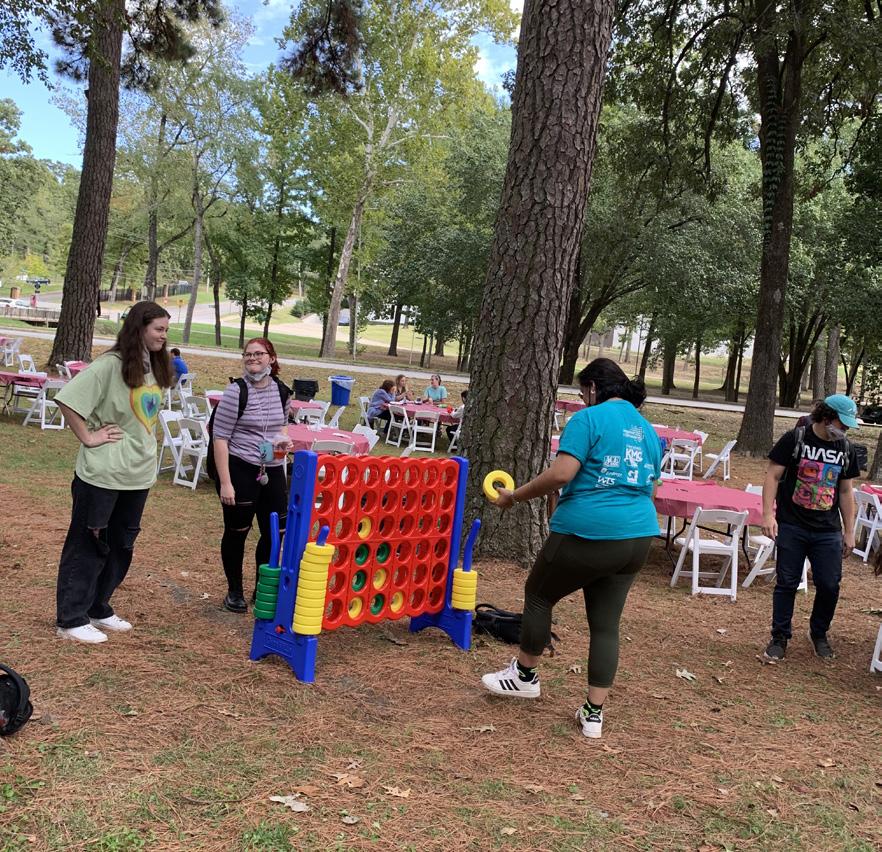
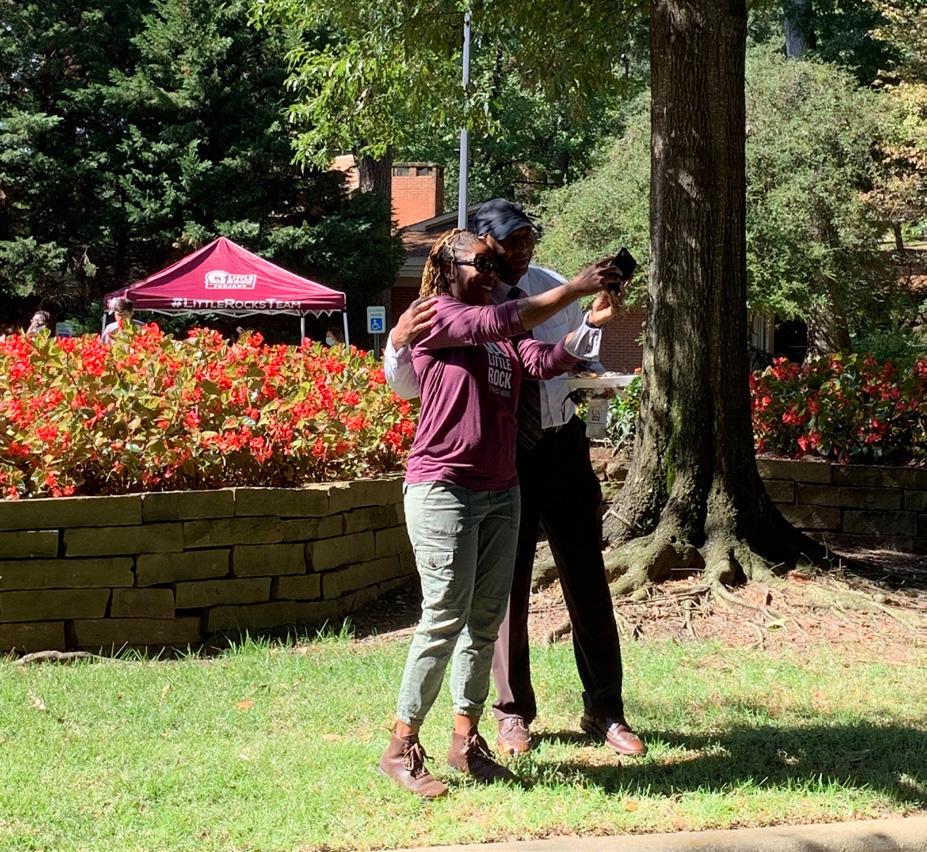
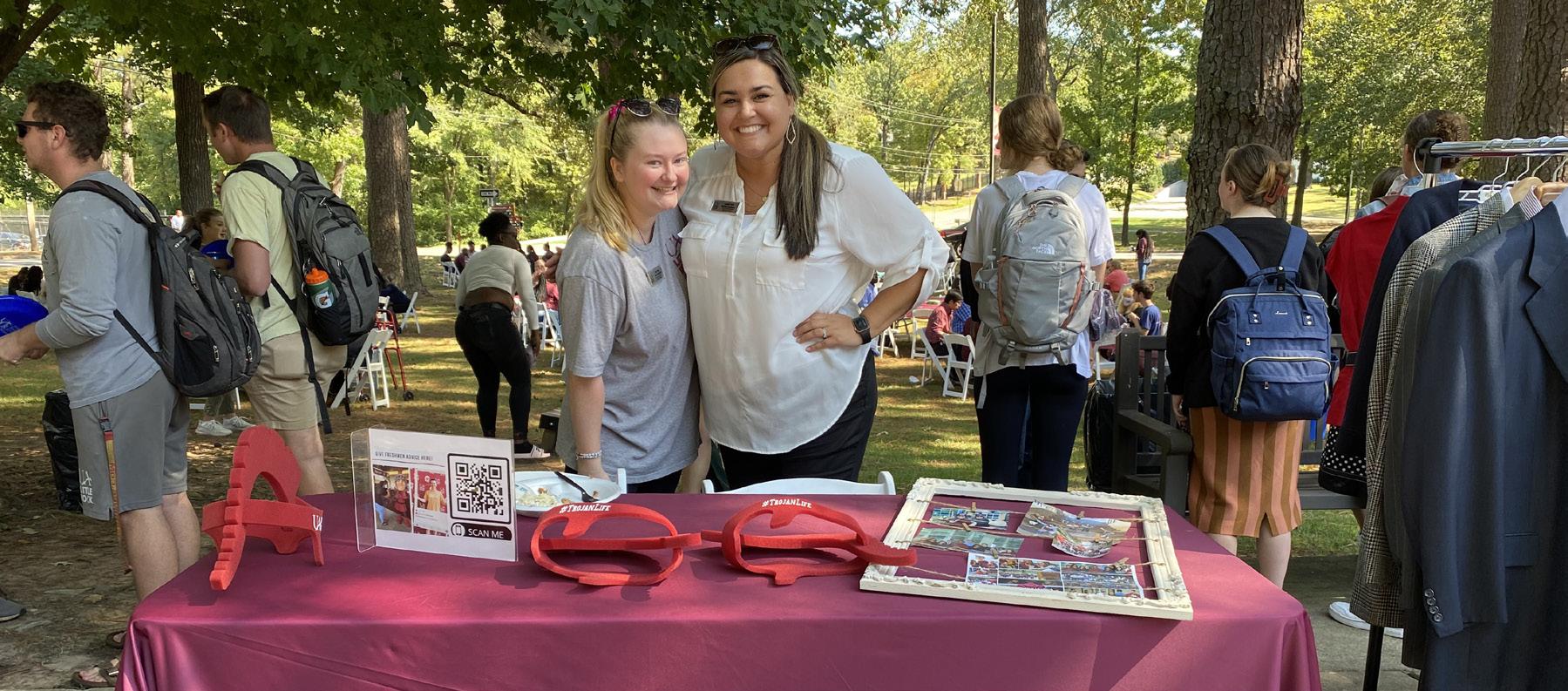
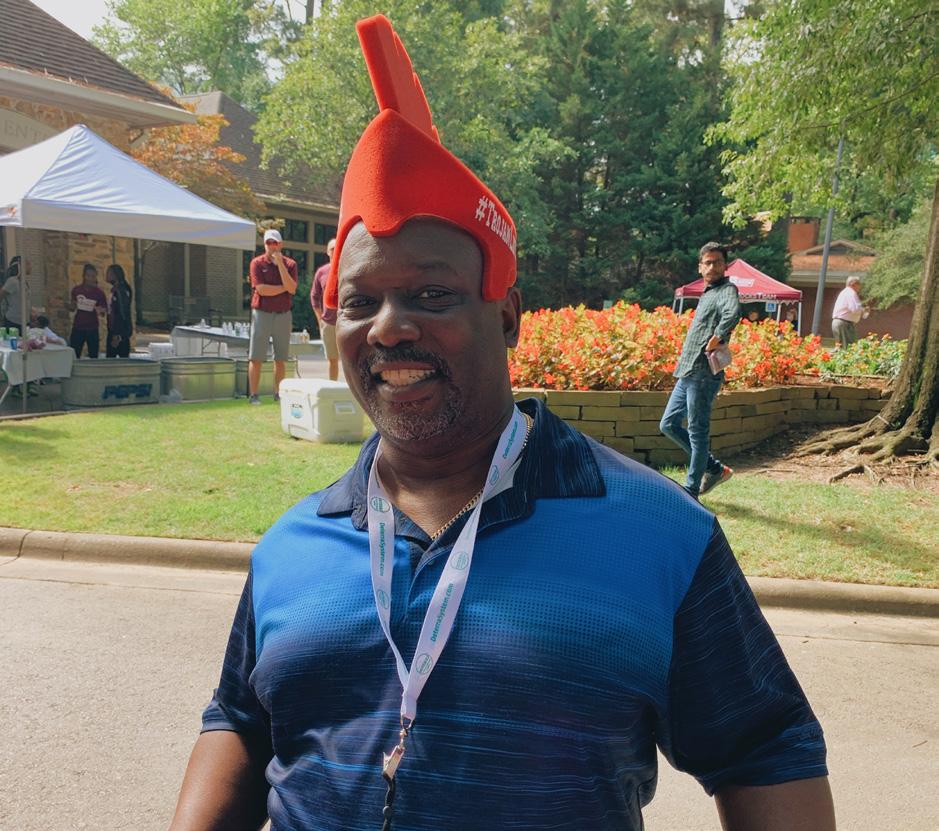

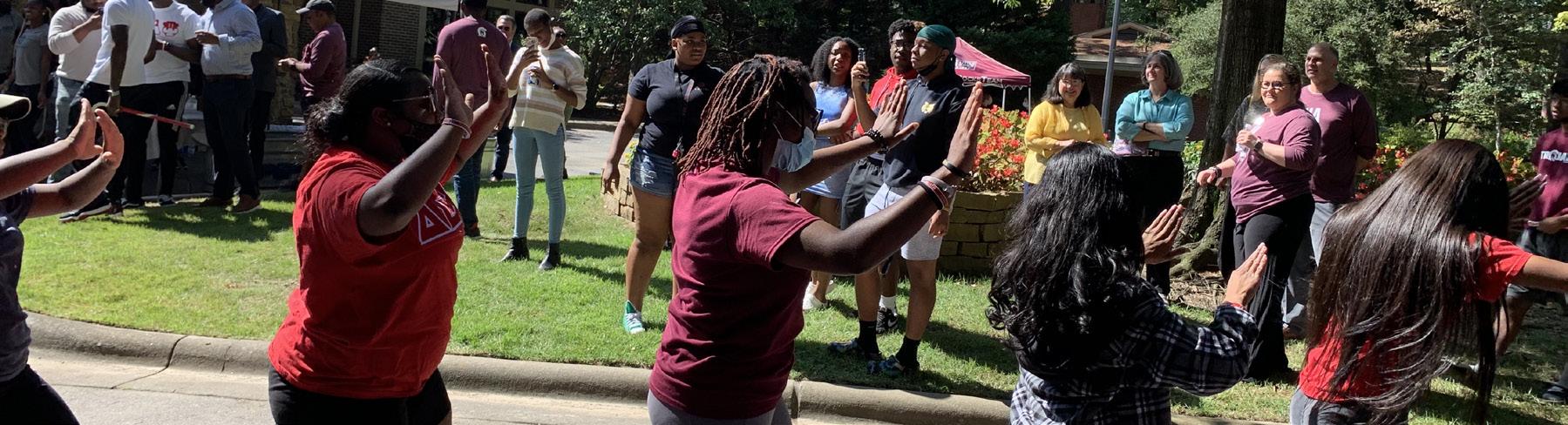
sees the return of the horror icon Micheal Myers.
“Halloween Kills” is the latest installment of the “Halloween” franchise, which is directed by David Gordon Green. “Halloween Kills” is a sequel to 2018 “Halloween” which was also directed by Green. In “Halloween Kills” Jamie Lee Curtis reprises her role as Laurie Strode, the sister of Micheal Myers. Laurie and Micheal’s conflict has been going on for almost 40 years. Along with Curtis, the cast includes MadTV star Micheal McDonald as Little John, Judy Greer as Karen, Andi Matichak as Allyson, and James Jude Courtney as The Shape.
“Halloween Kills” is one of the latest productions from Blumhouse and it delivers with nonstop action and plenty of bloody thrills along the
way.
“Halloween Kills” starts off with Laurie, Karen, and Allyson trapping Myers in a burning cage in Laurie’s basement. The three women leave Myers thinking they have finally killed the monster by leaving him in a burning house but, Michael finds a way to escape. Laurie(Curtis) is rushed to the hospital with severe injuries, her guts were literally in her hands. Karen and Allyson plan to go after him once they get word that he is still alive.
One of my favorite scenes from the movie is when Myers kills the entire firefighting squad when they were trying to extinguish Laurie’s burning house. Myers emerges out of the flames and the killing spree begins starting with the firefighters outside of the house. Laurie, along
with the other Strode women inspires the citizens of Haddonfield to join together and take back their town by killing Myers.
“Halloween Kills” is to be taken as a serious horror film but, like most horror films you have the most wacky moments. For example, in the car scene when Micheal begins to terrorize citizens he makes one character shoot herself in the head, or in another scene when Allyson and her friend Cameron go into Myers’ old house and stuffs Cameron’s father in the attic and kills Cameron by making his head do a complete 360-degree turn. This is where my favorite character in the movie, James Jude Courtney as The Shape, takes on the role of the leader of the mob.
His character comes as confident
but arrogant in his abilities and he is also anxious to find Micheal Myers. The Shape had a baseball bat named “Old Huckleberry”, but after showing all this bravado and leading the people of Haddonfield, when it was crutch time The Shape folded. This happens in the climax of the movie where Micheal is tricked into coming outside and into the street where he is met by the citizens of Haddenfield.
Will Micheal Myers make it out or will the people of Haddonfield finally be able to get revenge and live in peace? You can find out for yourself, “Halloween Kills” is currently in theaters and you can also stream it on Peacock.
By George Shavers

Representation of one’s self is vital in media, from news to entertainment. It can impact an individual’s self-identity and how they view others in their community. The success of movies like “Black Panther” and “Crazy Rich Asians” is not a phenomenon, it is proof that diverse stories are in demand and it is time to start telling them. True diversity means including not just people of color, but people who are of different home origins, religions, body sizes, those with disabilities, those in different social classes, and those who are queer.
The Gay and Lesbian Alliance Against Defamation (GLAAD) released its annual “Where We Are on TV” report in January of 2021 to evaluate the 20202021 year of media. During the pandemic, media was consumed in the comfort and safety of homes through streaming services like Netflix, Hulu, Amazon Prime, and more.
According to the report, “On the streaming services Amazon, Hulu and Netflix, there are 95 regular LGBTQ characters on original scripted series, a decrease from last year, as well as 46 LGBTQ recurring characters.”
It is also important to note that “Across all three platforms, there are 29 regular and recurring transgender characters. These characters include 15 trans women, 12 trans men and two trans
characters who are non-binary.”
The report made headlines, showing that for the first time since the 2013-2014 season, the percentage of LGBTQ+ representation dropped.
Another aspect of media, beyond television and movies, that is changing to include LGBTQ+ individuals, is literature. Beyond the book behind “Love, Simon,” it was hard to specifically seek out books with queer characters, especially for those who were not interested in Becky Albertalli’s writing. In time for the end of LGBTQ+ history month, this is a list of some books full of representation.
The first book on the list is “The Song of Achilles,” originally published in 2011, by Madeline Miller. She gave a lecture about women in classic Greek literature at UA Little Rock on Oct. 7. “The Song of Achilles” is a retelling of Homer’s epic “The Illiad,” focusing on Achilles and his lover, Patroclus.
In 2012, it was awarded the 17th annual Orange Prize for Fiction.
The book contains excellent prose and a recentering on the romance between the two men. It is told from Patroclus’ perspective and is a new look on an old classic. Fans of Greek mythology and romance should certainly give this book a try.
Changing to more of a fantasy novel, “These Witches Don’t Burn” by Isabel Sterling is a young adult (YA) novel focusing on a lesbian,
Hannah Walsh, who is a witch living in modern Salem. I would recommend this novel to those interested in a quick summer read, fans of magic, and those who like romance. The book brings up topics about how LGBTQ+ individuals’ lives can change once they come out, but it does offer one thing that can be missed in representative literature. Positive support from parents.
According to the Centers for Disease Control and Prevention (CDC), gay, lesbian, and bisexual youth with supportive parents are less likely to experience depression, attempt suicide, consume alcohol and drugs, and become infected with a sexually transmitted infection.
True Colors United, a group that offers free training and resources on how to meet homeless LGBTQ+ needs, says a study from Chaplin Hall at the University of Chicago which found that “LGBT youth had a 120% higher risk for homelessness.”
It is not an unusual story to hear about queer individuals being removed or kicked out of their homes for their sexual orientation or gender identity, but Sterling’s “These Witches Don’t Burn” does offer a different story.
For those interested in graphic novels, “Check Please!” by Ngozi Ukazu, which follows hockey player Eric Bittle and his college romance. The cast of characters is full of
fun and colorful personalities. The read is quick but enjoyable, and it started as an online comic series. But, there are bound collections of the book in a graphic novel format for those interested.
The story really helps highlight an aspect of not only a queer athlete’s experience but a southern experience of being queer. It is not a deep analysis of these issues but does provide a southern, queer athlete center stage.
“We Are Okay” by Nina LaCour is a novel that was published in 2017 and focuses on mental health and the transition to college life. College students, but especially queer college students, can find themselves in a strange place between who they were and who they are now. Sometimes college is a more welcoming place than a hometown. The focus was not on Marin’s romance, but her history and what she was running from. There are plenty of contemplative novels that focus on straight characters, this short read was certainly refreshing for a view of an LGBTQ+ character without love as the focus. For readers less interested in romance, this is a book for you.
Adam Silvera is another popular YA author who writes books about queer men. His book “They Both Die at the End,” published in 2017, was a sad read where readers know what will happen, but keep reading anyway. Sometimes it is
the how, not the what, that keeps us interested. The book is good for those interested in contemporary stories and a bisexual man as the main character. The title warns you, but it does not prepare you for the sense of loss after.
Popular LGBTQ+ book for adults, “Red, White & Royal Blue,” published in 2019, written by Casey McQuiston is a delight for those interested in royalty romance and a better analysis on southern commentary surrounding queerness. The book is fictional, but the topics are not. The main character is a biracial, bisexual first son of the United States. Intersectionality is important and makes the story richer. It won a 2020 Alex Award and the 2019 Goodreads Choice Awards for Best Romance and Best Debut. Fans of the book were enthused to hear that Matthew López will direct the queer rom-com film adaptation for Amazon Studios.
Like all media, it is the job of the audience to place a critical eye on the texts we read. These novels open up opportunities for discussions that deserve to be had during LGBTQ+ history month. There are so many more great queer characters, stories, and authors to support beyond this list. But, your to-be-read pile will be larger and more inclusive when you make active choices about the kinds of stories you include.
By Remington Miller
Dia de Los Muertos — Day of the Dead is not as spooky as it sounds. Although it can be an oddly intimate and ghostly celebration, it is just that — a celebration. Maybe you first heard of it when the movie Coco premiered or maybe you have been partaking in it your whole life, Dia de Los Muertos dates back roughly 3,000 years to the rituals honoring the dead in pre-Columbian America.
According to History.com, the Aztecs’ incredulous beliefs included seeing death as a part vital, inextinguishable part of life and after death, it was believed that a person would travel to Chicunamictlán, the Land of the Dead. It is said that in order to reach a final resting place, the spirit had to travel through nine difficult obstacles and a journey of several years, hence the offerings that are put on a person’s grave on this day.
Family members will bring the person’s favorite food and drink and leave it at their grave. Sometimes the person will bring extra offerings and share a meal with their loved ones.
The most prevalent symbols of this celebration are the calacas (skeletons) and calaveras (skulls). There is a special bread called pan de Muerto (bread of the dead) that is made and sold for this day. It is another of celebrating those who have left the living too soon.
UA Little Rock student, Andrea Vargas is a senior in the civil & construction engineering major and her parents are from Mexico. Due to growing up in Little Rock, her family and she did not always have the chance to celebrate this day.
“I actually asked my mother why,” Vargas said. “She responded
because she would celebrate it by visiting the graves, and we are nowhere close to my parent's hometowns to do so.”
Regardless of not partaking in Day of the Dead celebrations as a child, Vargas said she is trying to embrace more of it now that she is an adult.
“I want to create a small altar for those I have lost,” she said. “This holiday reconnects me to my family, and my culture. It is a reminder that although I may not have family here, I have some waiting to meet me on the other side. I think it's also a reminder that people may be gone, but not forgotten and helps keep people alive in memory. It's a beautiful holiday because death is inevitable but does not have to be the end of someone's story.”
Vargas is excited to continue a tradition within herself and honor those she has lost in her life. She wants to connect and celebrate her culture.
“I believe this holiday should be shared with other people, as it's a beautiful way to honor those we have lost,” she said. “I'd like to add that traditions like this can be started with you, and you can choose how to honor passed loved ones.”
****
As a Mexican American growing up between the two cultures, I have celebrated the Day of the Dead. To me, this day means so much due to the cultural significance it has and the people I have lost. It is such a beautiful and vibrant way to honor someone’s death. Not only do you get to know them in life but the ability to help them go through their spiritual journey is so healing. It can even allow you to facilitate the process of accepting your loved one’s death.
1
In my personal experience, I had the privilege to partake in Day of the Dead celebrations as a kid. Then, I did not fully understand what the gravity of the situation was but now, I feel so happy to have been able to experience such an amazing part of my culture. The history behind this day is extensive, to say the least, but it gives a look at — if a person believes in it — life after death. It allows the living to have a window and connection to their loved ones whose love cannot be replaced.
My most vivid memory of Day of the Dead was when my maternal grandfather died. We laid him to rest the last week of August of 2008. Therefore, Day of the Dead was coming up a few months later. My grandmother, in tears and devastated by her husband’s death, let my siblings and I pick what we wanted to take to his grave. I took a photo of Spot, his dog whose love and connection were unmatched as well as animal crackers because he used to buy them for me.
As a 12-year-old, I am not sure that I processed what was happening all too well but I knew that my grandfather was no longer suffering and that his soul would always look after me. The anguish well all was feeling was somewhat alleviated by the little-known fact that we were enjoying something he always loved. In an odd way, we all felt his presence that day.
If we allow ourselves to dig deeper and try to comprehend what the process afterlife is, we might have a better foundation for empathy. All of this and more make Day of the Dead such a special and irreplaceable celebration for our culture.
By Azalea Andrade
2
Did you know that only 9 percent of plastic waste is recycled? Twelve percent is incinerated, and 79 percent ends up in landfills or the natural environment. Last month’s Tip suggested replacing liquid fabric softener with dryer sheets. Since dryer sheets contain throwaway plastic, an even better solution is to use reusable wool dryer balls.
Use bar shampoo instead of liquid shampoo. That’s right – you can buy shampoo in a bar, and even shampoo and conditioner in one bar. “Love Beauty and Planet,” available at WalMart and Target, comes in a small, recyclable cardboard box and outlasts a bottle of shampoo.
3
4
5
Refuse straws at restaurants. Nearly 500 million straws and stirrers are used every day in the U.S.
Take reusable bags with you to the grocery store. Worldwide, singleuse plastic bags are used at the rate of two million every minute!
Avoid purchasing meat, chicken, or fish packaged with Styrofoam trays. Look for minimal packaging, or ask the butcher to wrap your food in butcher paper.
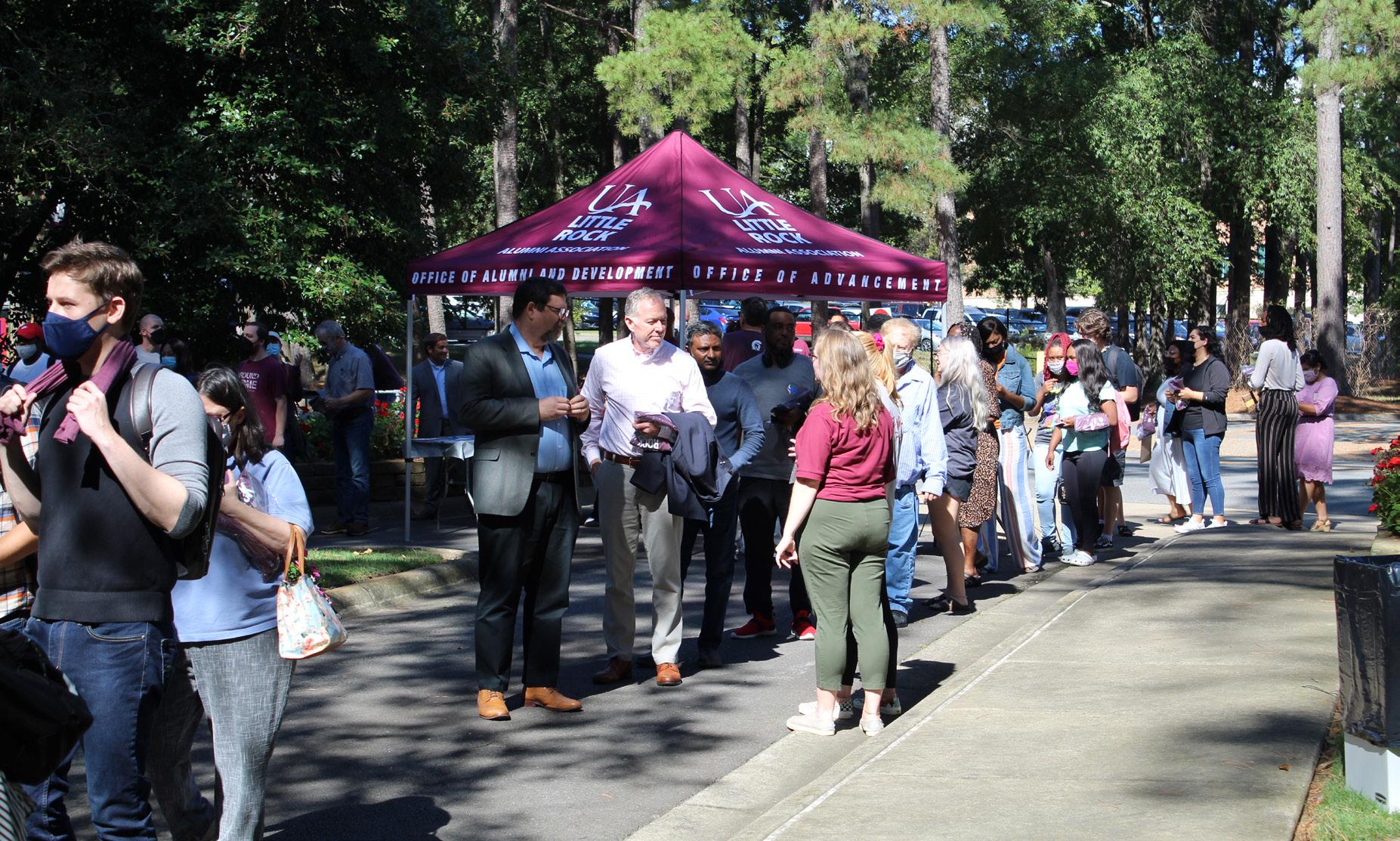
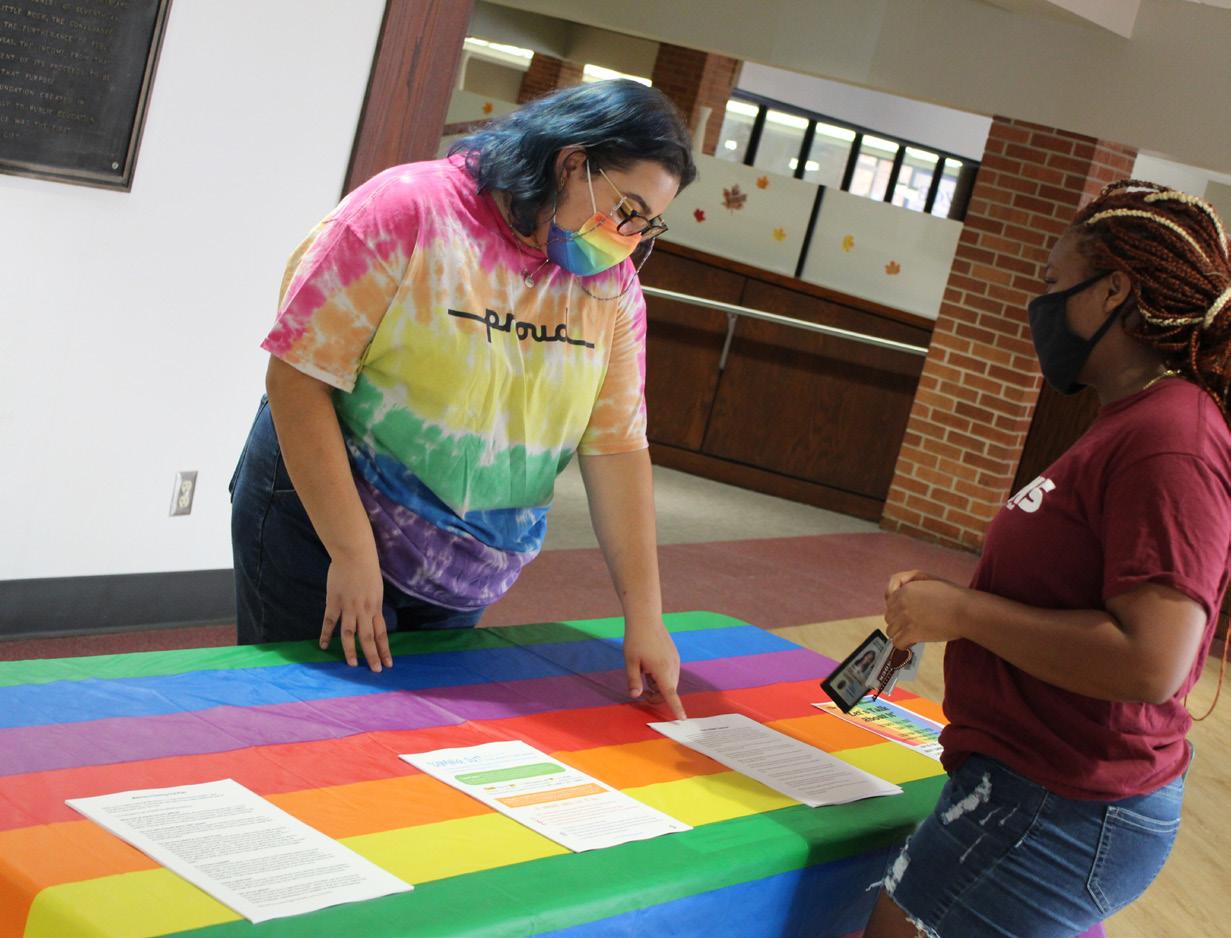
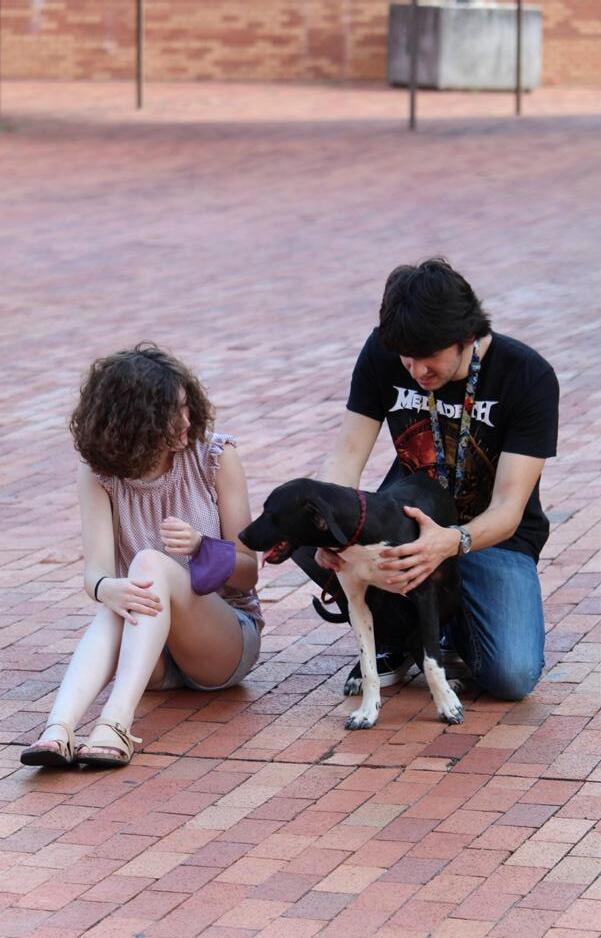
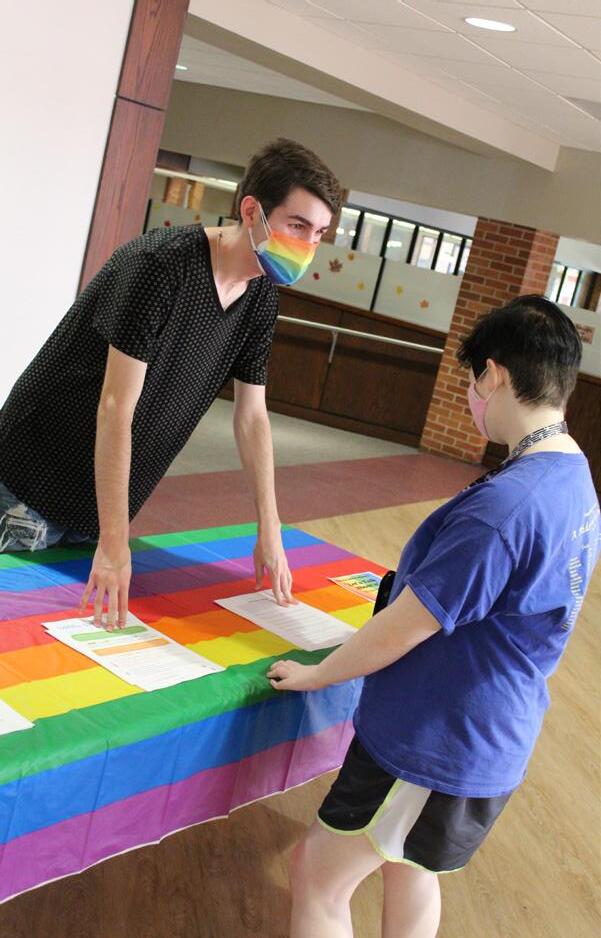

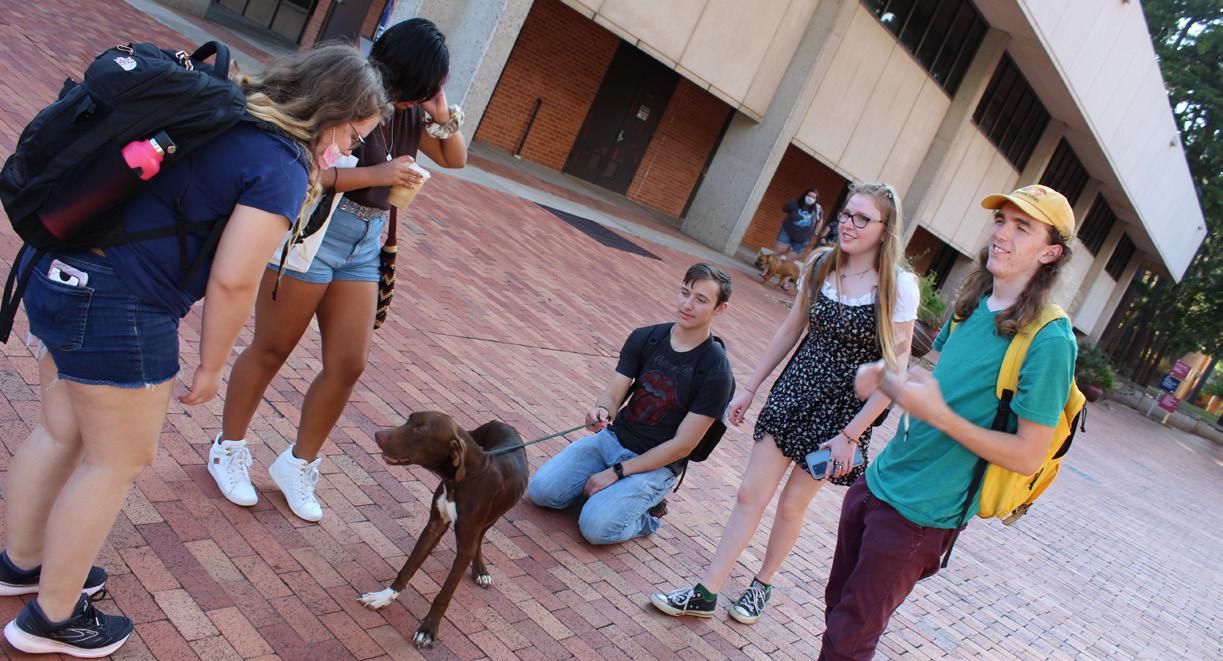
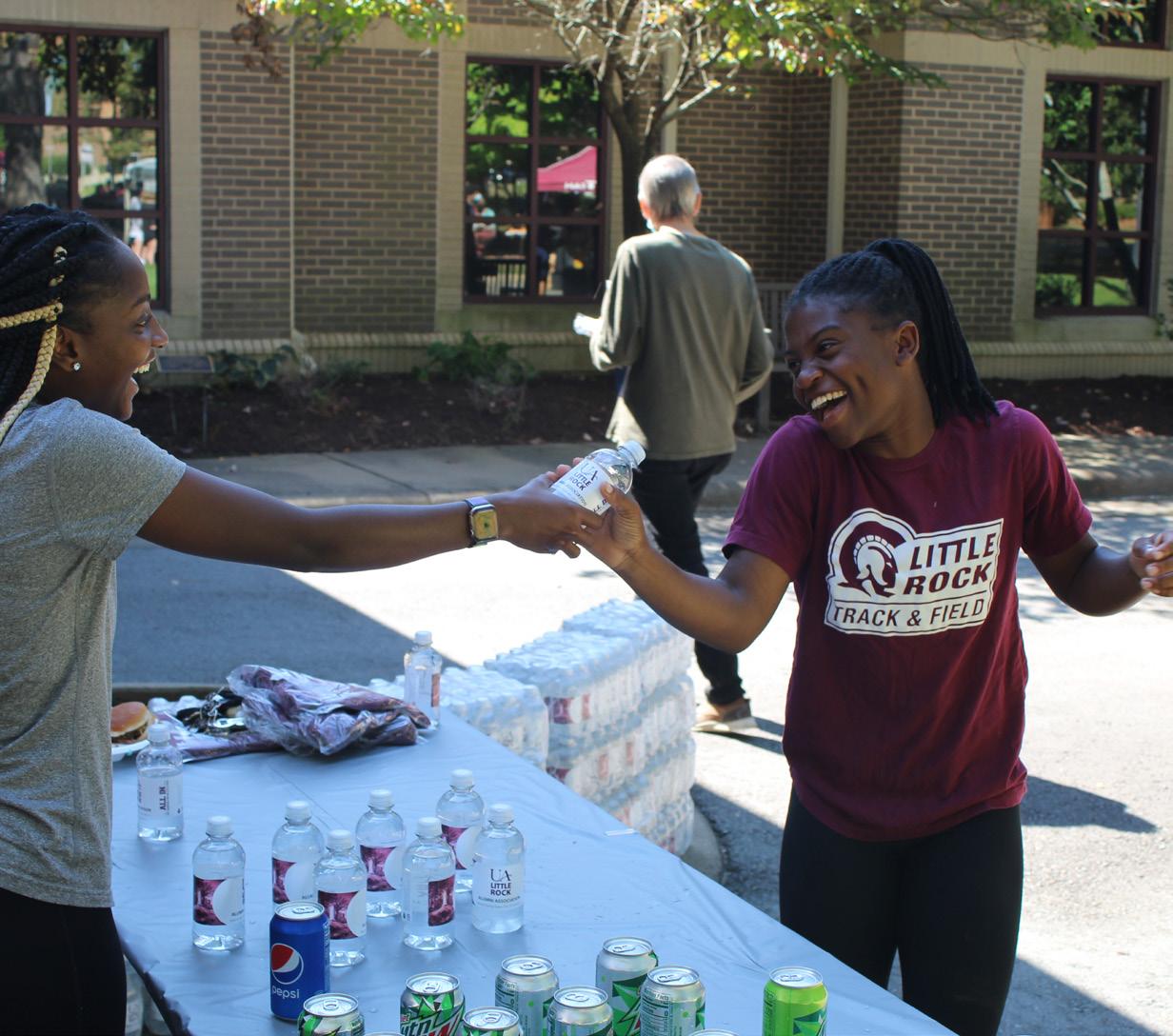
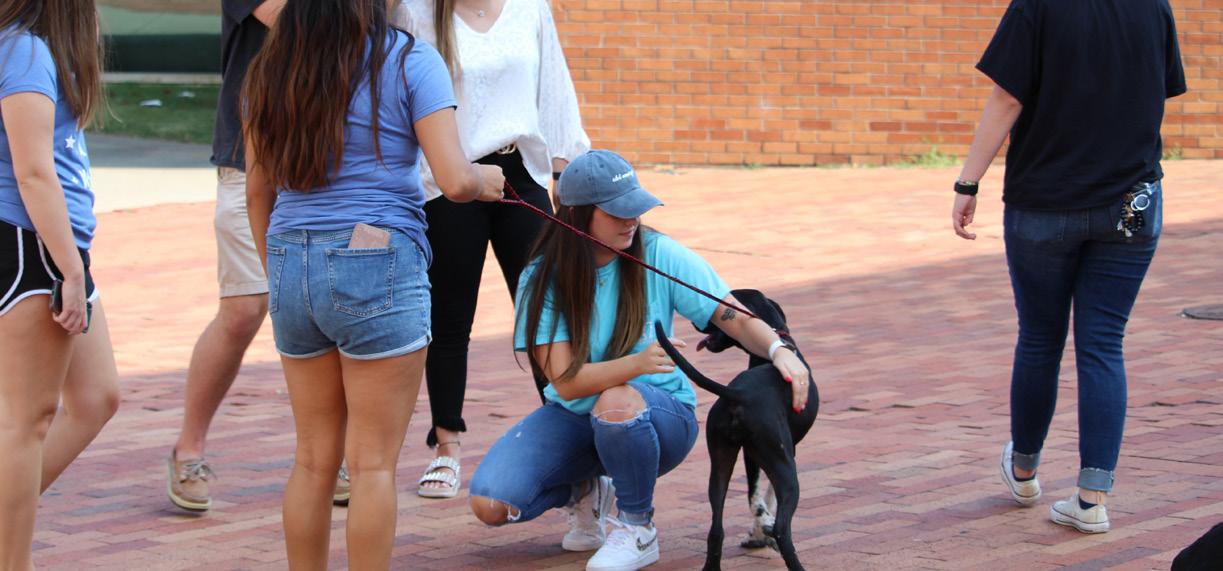
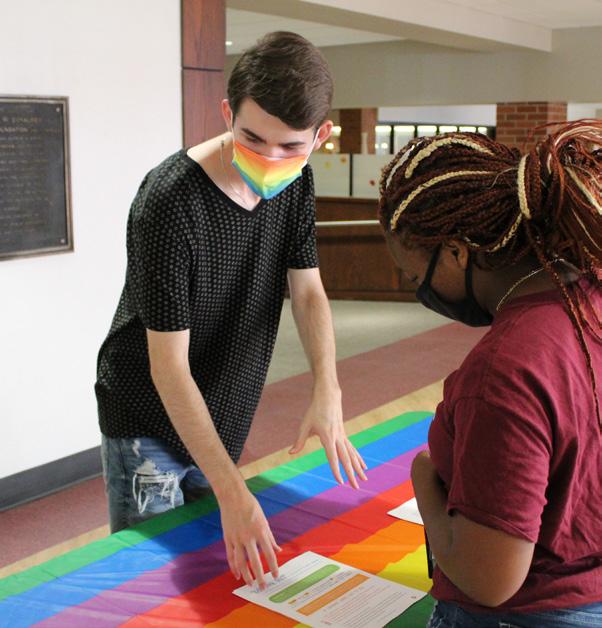



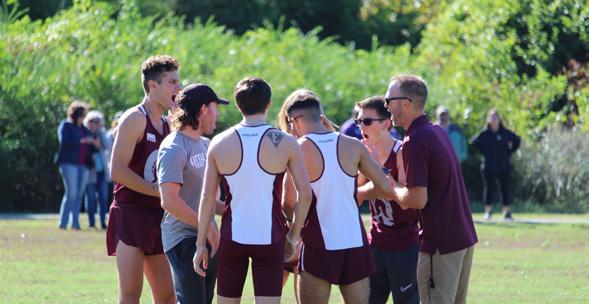
Being lucky enough for a hobby to become a profession ensures love for that job. What was once a hobby became a career for UA Little Rock Intramural Sports Coordinator Grant Watts who hopes to make a positive impact within the program and in students’ lives.
“It really all began when I was a student at Arkansas Tech University and began working as a student official my last year and half of college,” Watts said. “After I graduated I had an opportunity, about 2 years later, to become the Coordinator of Intramural Sports at Arkansas Tech.”
In 2012, after his time at Arkansas Tech, Watts accepted a job at UA Little Rock where he would coordinate intramural sports. During that time, he was able to bring flag football back to campus, among other milestones.
“During that time, we were able to rebuild the intramural sports programs to offer a variety of recreational opportunities for students, faculty and staff,” Watts said.
However, in 2017, Watts concluded his time at UA Little Rock and worked for the City of Benton’s Park and Recreation. UA Little Rock welcomed him back this past September after realizing he missed the closeness and connections that a higher institution provides.
“After spending the last four years away from higher education, I realized I really missed being part
of the campus community and connecting with students,” Watts said. “Higher education is where I am supposed to be.”
For Watts, sports have always been a lifeline as his parents were coaches as well as teachers. He always enjoyed basketball, so it was that love for sports that was the driving force that turned what was just a college job into a fullfledged profession.
“I was always seeking an opportunity to work basketball games to earn money throughout my college life,” Watts said. “After being involved, I was amazed at all the connections and relationships I made over the years with other students not just on campus but throughout the nation as well.”
Now, Watts really enjoys being part of students’ development and can witness how much intramural sports can positively impact someone.
“My favorite part about the job is seeing students grow, especially when freshmen first come on campus and get involved,” he said.
“You feel like you have a hand in their education and life as you try to provide them with skills for adulthood and prepare them for the real world.”
Intramural sports are a fun part of college and it facilitates connection within students. Watts strives to have students join a team not only for friendships but to stay active.
“Campus Recreation is a great opportunity in general,” he said. “We encourage students to be active. If you love sports, this is

a great opportunity to play with your friends and make new ones. You just never know what opportunities arise when you participate in things. … If I didn't take the initiative to be involved in my last year and a half of college, I don't think I would have been where I am today.”
Watts understands that the pandemic has changed various aspects of our lives — college taking a big hit, so he has plans for the program that have been shaped around those impacts. His plan: give students a lot more autonomy.
“My goal, this time around, coming out of the pandemic, is that it is more important than ever to get students involved in social and/or recreational settings,” Watts said. “Any type of recreation provides a great outlet for networking, friendships and a person's overall wellbeing. Intramural Sports is just one piece of the puzzle and an outlet for students. I really want this to be a student lead program from the planning stages to the conclusion of each sport that is offered.”
Through various stages of life, sports, especially intramural sports have always been there for Watts. Today, as a professional, he hopes that he is a leader that is continuously learning and teaching others.
“I just want to continue to have an impact on students’ lives,” Watts said. “Whether that is directly or just by providing an opportunity for them to participate.”
By Azalea Andrade

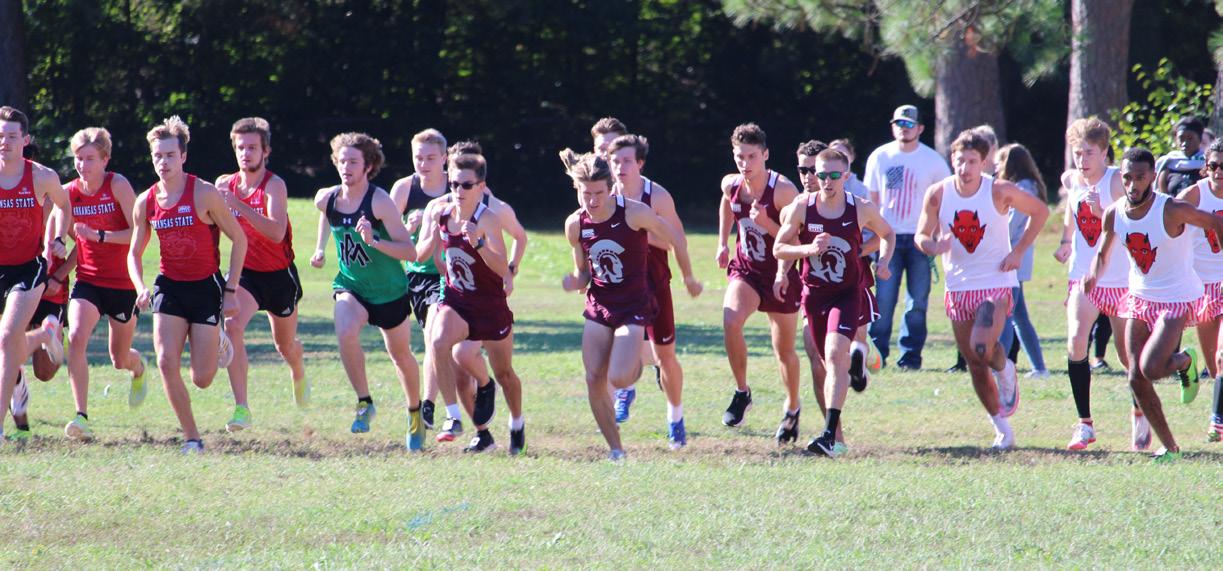
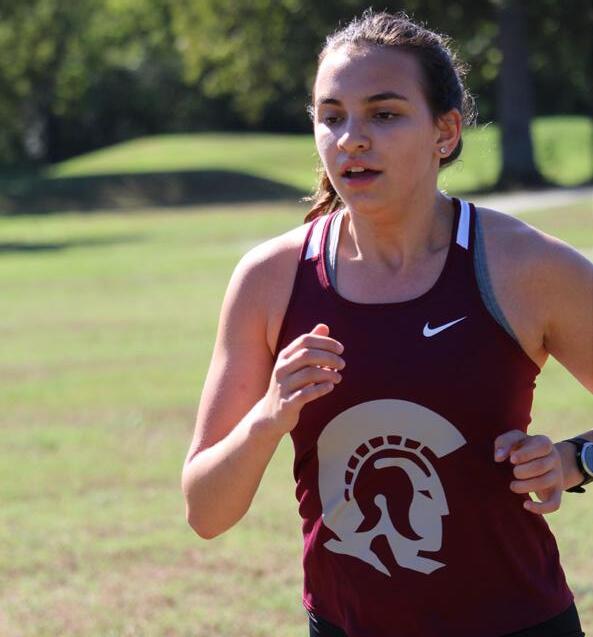

“I tell them what I like, what I want and what I don’t,
But every time I do, I stand corrected.
I can’t believe what I heard about the world,
I realize I’m overprotected.”
These lyrics from her hitsong “Overprotected” might very well have been Britney Spears foreshadowing the (at best) tumultuous 13-year conservatorship she soon would find herself entrapped in.
Here in the U.S. all adults are considered capable of handling their own affairs, unless a Judge determines otherwise. This legal arrangement is called a conservatorship.
This type of arrangement is established for adults who are impaired, most often older people. The average demographic for a conservatorship can range
anywhere from adults who are developmentally disabled, the victims of a catastrophic illness or accident or adults mentally or physically affected by aging.
Since the initial approval by L.A. Superior Court Commissioner Reva Goetz of Spears permanent probate conservatorship back in 2008, there has been a number of questionable instances arise surrounding Spears’ treatment and the behaviors of her conservator’s.
Many of these erroneous behaviors center around Jamie Spears, Britney’s father, and his role as conservator of her estate. Behaviors that Spears’ mother wasn’t actually aware of until her involvement with the logistics of the conservatorship in 2018.
One major force behind uncovering and dismantling this nefarious legal scheme is the #FreeBritney movement.
#FreeBritney is a fan-led movement made up of her supporters and fans from all over the world and has been somewhat active since the early days of the conservatorship. However, the movement reemerged in 2019 in response to a podcast called "Britney's Gram," hosted by Tess Barker and Barbara Gray, in which they dissect Spears’ Instagram posts with humor.
More damning evidence of wrongdoings and abuse within the conservatorship’s walls came in the form of a 24-minute-long leaked audio file of Spear’s testimony from her June 23, 2021 hearing. Hearing how she felt exploited, used, scared and alone directly from her mouth, in that iconic vocal tone, really renewed the purpose and drive behind the #FreeBritney movement and what they are trying to accomplish.
Circling back to what a conservatorship is practically used for, it’s very confusing to try and understand Spears’ placement in this type of arrangement, when official documents and statements on the matter point toward the dismantling of her personal rights and liberties.
It was only as of this year, in 2021, that Spears has been permitted to hire her own legal representation, a former federal prosecutor Mathew Rosengart, one U.S. Supreme Court recognized right of a defendant to choose their own counsel.
While underneath the control of this conservatorship, Spears’ is legally not a person. She cannot leave her house or even spend any of her hard-earned money without permission from her conservators. Under the arrangement, Spears’ conservators control all of her finances and person.
Even further down the road of insanity, Spears’ leaked audio from her June 23 hearing claimed her conservators would not agree to let her get married to her current
boyfriend Sam Asghari. The board of conservators also denied her request for the removal of her IUD, in her attempt to have another child.
These actions, or denial of certain human rights, is absolutely abhorrent.
An adult who can operate at the level that Britney Spears does should not be forced to continue working under a conservatorship. Repeatedly touring around the world, releasing multiple commercially successful albums and appearing on a variety of television shows over the past decade paint Spears out to be a “high-functioning conservatee” … which seems like an oxymoron. If someone can make millions of dollars a year performing and producing art, then their life choices, body and money should be theirs to control.
It’s time we finally #FreeBritney!!!
By Bennett Wood
October has been a tough month for the global tech giant, Facebook. Earlier this month, a former Facebook employee, Frances Haugen, testified against Facebook, claiming that the company prioritizes profits over protecting users. Haugen has provided thousands of confidential documents, now dubbed the Facebook Papers, as evidence that Facebook is aware of how its platforms negatively affect the youth but has hidden this from the public.
The Facebook Papers are likely the greatest scandal to ever hit Facebook, revealing the results of several internal investigations conducted by the company. The results of these investigations are extremely discomforting and beg the question: why did Facebook not make this public?
One Facebook investigation found that 13.5% of surveyed
teenage girls from the United Kingdom had increased suicidal thoughts after downloading Instagram. Another investigation found that 32% of teenage girls said that Instagram made them feel worse about their bodies, and 17% of girls reported worsening eating disorders after using Instagram.
Haugen also criticized Facebook's algorithm for promoting content like hate speech and misinformation and also for forcing users into polarizing echo chambers. Another anonymous whistleblower has recently come forward with similar allegations against Facebook, claiming the company intentionally does not effectively combat hate speech and misinformation in order to maintain profits.
The Facebook Papers have ignited conversation over the harmful effects of social media platforms like Facebook and
Instagram on the mental health of youths. While the results of Facebook's internal investigations are deeply troubling, they are not surprising as several studies have revealed the negative effects of social media on mental health. A 2013 study found that the more people used Facebook, the more their mental well-being declined. A review published in 2014 found that the reason people feel depressed after using Facebook is likely due to comparing themselves with others.
Gen Z children and teenagers have spent much of their lives with social media. In fact, a 2018 Pew Research survey of around 750 teenagers found that 97% use a platform like Facebook or Instagram. It’s seemingly impossible to avoid social media, as it has become such an integral part of our society. Yet, this is not necessarily a bad thing. Social media does allow us to connect
to others around the world in a way that was never possible before. Additionally, social media has helped many entrepreneurs from all over the globe grow their businesses. Yet, with all their benefits, these platforms have contributed to numerous problems in society, from the spread of dangerous misinformation and hate speech to serious impacts on mental health.
I believe one of the biggest problems with these platforms, for young users, is the constant exposure and inevitable comparison to the lives and bodies of others. It can be easy to forget that social media is just a snapshot of one’s life and when we are regularly comparing ourselves to others, feelings of FOMO and inferiority can easily occur.
So, should you delete your social media platforms?
The answer is not a simple yes
or no. After all, these platforms are just tools that can be incredibly harmful or incredibly productive depending on how you use them and how they affect you. If you find yourself feeling more anxious and upset after using these apps, consider deactivating your personal social media for a few days or even a week.
It may be uncomfortable at first, especially not knowing what others are doing. But, it also may help you live more in the present and increase your mindfulness. It’s important to remember life is happening in front of you, not on your phone screen and not in your Instagram feed. Whether or not you decide to keep your socials, it’s always a good idea to periodically unplug in order to take mental health breaks.
Remember that ‘ignorance is bliss.’
By Ahad Nadeem
If you were at the state capitol on Oct. 2, 2021, you would have seen colorful signs covering the capitol steps. You would have seen hundreds of women and allies gathered around listening to impassioned speakers, sweating in the heat. You would have heard them chanting “my body, my choice,” and “not the church, not the state, women must decide their fate.” You would have noticed the looks on these womens’ faces as they listened to stories and viewpoints regarding reproductive justice. You would have felt the energy, the fear, the anger. You might have seen women crying, contemplating. What you would not have seen, felt or heard is one woman who felt safe in her body that day.
On Oct. 2, hundreds of women and allies marched on the Arkansas State Capitol to demand reproductive justice and equal rights for women. This march was in response to Texas’ new abortion ban and the fear it sparked in women around the country, but especially here in Texas’ neighboring state, Arkansas. Speakers ranged from doctors who provide abortions, clinic workers, AR Senator Joyce Elliott, and even a poet. They each brought their own opinion and unique perspective on the issue of reproductive justice to the forefront. Barely an eye was dry after we heard account after account of women who had abortions.
Ultimately, it does not matter why these women we heard about had an abortion; they do not have to justify why they made that decision to anyone. However, so often the argument is made that women use abortion as a form of birth control, insinuating that women are irresponsible or simply don’t care for their potential child. After hearing from clinic workers and doctors and women who have had an abortion, this is so clearly not the case. Many want their pregnancy or are extremely careful about practicing safe sex, and still, something happens where they have to make a choice for their body and their future. Often, anecdotal evidence is not seen as good evidence, but the stories of women whose children had womb defects, or would die
giving birth, despite wanting nothing more than a child, are the most heartbreaking. Who is anyone to force them to go through with that pregnancy? This is the scariest part of Texas’ new abortion ban, one that lawmakers in AR are already trying to pass, that these men can force a woman to follow through with a dangerous pregnancy, a pregnancy that is a result of rape or incest, an unwanted pregnancy period.
And even more frightening, these abortion bans do not stop abortions, they only stop safe, legal abortions. Women will be forced to find another way, especially poor women. Rich people will always be able to find a safe abortion, or afford to wait a week in between appointments and miss days of work, or not miss work at all. All these laws do is make it harder for poor women to get an abortion, because they cannot miss multiple days of work to meet the time requirements between appointments. They might not even know they’re pregnant at all until the six-week mark has already passed. This only furthers suffering.
More work goes into making these marches happen than meets the eye. As with any march, there was tons of preparation. This particular march had tents set up around the capitol, where they were handing out signs and masks. Local organizations were there to support and Capitol Ave. had to be shut down for the march itself. All of this combined with getting relevant and impassioned speakers. If the amount of work put into this does not show you how important this issue is to women in Arkansas, I don’t know what will.
Katie Rhodes, a main organizer of the march and Little Rock native, was one of the women who understood how important this march would be to other women all over the state and country.
“The national organization Women’s March put out a call for organizers for marches in all 50 states. Toward the end of August, several women across the state started posting in a few Facebook groups that we needed to get something going in Arkansas,” Rhodes said. “We organized a Zoom call
one evening and mapped out which cities we thought we could get something going. From there we launched a Facebook group and event page calling for organizers. The group quickly grew and we established that we could put five marches together (Little Rock, Fayetteville, Ft. Smith, Jonesboro, and Mtn Home). It all happened very organically. We knew that we needed to make a statement in Arkansas that we 1) stand with Texas women opposing the ban there and 2) didn’t want a similar ban to happen in Arkansas.”
The amount of work that these women put into the march is truly outstanding, and almost seems impossible with the timeframe they accomplished it in.
“We had zoom calls two to three times a week for a month planning out the details,” Rhodes said. “We worked our butts off. We were an all-volunteer group of about 7 people (for Little Rock, 30 for around the state). We delegated tasks based on people’s strengths, organizing speakers, getting rally and parade permits, writing press releases, creating collateral etc. We were able to secure incredible speakers including Legislators, doctors, Clergy, and activists. We also partnered with 15 or so other local activist groups that tabled at the event. I think it was a huge success.
Our goal was to turn outrage into activism. There are too few people on the ground working to fight for women’s rights in Arkansas. We hoped (and it has) that the rally would motivate people to volunteer, donate and overall get more active in the fight.”
As a woman, it can be scary to put ourselves out there and fight for this issue. There are dangers associated with having an opinion on this topic, and it was so encouraging to hear not only doctors or clinic workers, but actual Clergy and Legislators who support women and are here to protect people who need abortions.
“The other side is loud. But they are not the majority, even in Arkansas,” Rhodes said. “A recent poll showed that 50% of Arkansans are against a Texas SB8 style law in Arkansas. It’s important that
we send a message to lawmakers (nationally and in Arkansas) that we oppose any law that restricts abortion access. Also, abortion is such a sensitive subject. We wanted to make sure that people in Arkansas knew that it was ok to speak out on this topic.”
Many UA Little Rock students and faculty members attended the march, including myself, and it was encouraging to see so many of my fellow students and even some of my professors support, even ones who may never be affected by the issue of abortion.
“The experience was exhilarating,” said sophomore Lamar Townsend. “[I went] to protest the government trying to control women’s bodies. Even though I’m a gay male I still feel it is important to protect the rights of your peers and fight for what they believe in along with them.”
Furthermore, everyone who attended the march knew they would not convince the Arkansas Legislature just by attending the march, but that there is still work to be done. Senator Joyce Elliott spoke on the importance of messaging your representatives and using the momentum of the march in our favor.
“[The march] brings awareness that there is an issue going on right now,” Townsend said. “The march is not going to change the legislation that day but it will spark a conversation and that’s the important part.”
Another ally that attended the march was our own Forum reporter, senior Bennett Wood.
“[My experience] was incredibly humbling. As a man, I don’t have to face the types of discrimination that women do in parts of the United States. Being a part of the Women’s March allowed me to better understand why and how women feel the way they do about harmful legislation that attacks their bodily autonomy,” Wood said.
“I decided to go to the Women’s March because I have so many influential females in my life that I hold SO much reverence for. It would be a disservice to them as well as disrespectful and a downright slap in the face [if I did not go].
“If you fight for human rights, you fight for female rights.”
Wood agreed with Townsend that these marches are incredibly important to bring visibility to the issue of women’s rights.
“If the Arkansas Legislature is
passing harmful and archaic laws that target women and their civil liberties and rights, then that legislature needs to physically see the extent and breadth of said laws,” Wood said. “Being out in the field and bumping shoulders with the public is how change is made.”
As young students, it is our responsibility to be better as the next generation. This march was just the beginning.
“The diversity in the crowd was amazing to see from women, to men, to trans women and men to everything in between,” said Yvonne Rodriguez, a sophomore. “WE came together in the belief that reproductive freedoms are in jeopardy for women all over, and THEY ARE. And we will not accept the systems that are put in place by old white men to restrict our ability to have quality reproductive healthcare, birth control, and abortions.
It [is] imperative that as young people, we show out to these events and showcase that Gen Z will not be another silent young generation, but be the most active. Our generation has faced its trials and tribulations. I think that is what has made us such a resilient and ‘radical’ generation. It’s important to be active in marches because it is our prerogative as citizens of this country to let our opinion and above all our VOICE be heard to those at the top and let them know that we will not sit idly by and allow our natural rights to be stripped away.”
Rodriguez makes an excellent point that we can no longer be silent, even when that is the easy choice. Junior Alison Stephens had never been to a march before, but felt called to attend this one to defend her and others’ rights to abortion healthcare.
“Seeing that many people in a southern state in support of women’s reproductive rights gave me some hope for the women who live here,” Stephens said. “I am very passionate about the topic of reproductive rights, especially in terms of the separation of church and state. Marches are important because it gives a visual to leaders of how many people are on one side of a topic. It physically shows the passion and anger of the group. It shows people are willing to take time out of their day to get together for a cause that’s important.”
Often, students will be dismissed because we are perceived as too young or too inexperienced. If there is anything the march
showed me, we students are tired of being dismissed and are ready for our opinions to be heard.
“There is so much to be said. I think people who are anti-choice need to really listen to the people actually involved in abortions, whether it’s a healthcare professional, a person receiving one, or family/friends of people who have had terminated pregnancies,” Stephens said. “I think people who are anti-choice are so uncomfortable with the idea of abortion that they refuse to listen. It gives them a sense of moral superiority when it’s really just close-minded, one-sided thinking. There is so much misinformation surrounding the topic of abortion. All of this to say, be empathetic and understand that no matter how an individual feels about abortion, it NEEDS to be a right that people have access to.”
Wood and I got a chance to speak to Senator Joyce Elliott after the march and ask her a few questions, one of which included this issue of students feeling they have no voice.
“No one is asking you to do this just because we got up one day and we were angry, no,” Elliott said. “This is fundamental to your life and personhood and none of us should ever be okay with having our personhood compromised. Students just need to have a firestorm of letters and phone calls and have Legislators explain why they think it is okay to do this to you. And they should explain it. Let them know how you feel. Invite them to come and make it make sense to you, why they are doing this to women.”
We also asked Elliott what we
could be doing better as a student publication. As students, we could have focus groups, we could do research and write articles and message our representatives. Not every article has to be as opinionated as what I write now, but everything we write has to be informative and powerful. This is a goal we have for ourselves and we encourage other students to do the same.
“We are allowing our world to exist in a way that is unequal because we have not sat down and asked ourselves, ‘why is it this way?’ but there are such systemic things that are the reason we are unequal,” Elliott said. “Days like this can remind us of the inequities and then it is up to us to decide if we care enough to do something about it, or if we perpetuate what has been happening for centuries, and I hope the answer is that we will do something about it.”

Why is this issue so important?
“I want to stress a few things,” Rhodes said. “These laws create daily barriers for people wanting abortions, which is timely medical care. Two, it’s our constitutional right to bodily autonomy, and that includes personal healthcare decisions. Not male lawmakers or strangers looking to make a profit from a lawsuit. I see this as just one of many assaults on our constitutional rights by extremists in office.”
The cold hard truth is that old, white misogynists are controlling the bodies of women, and we cannot stand for that. Not the church, not the state, women must decide their fate. I cannot say it any better than Joyce Elliott herself.
“If you are not doing anything to change it, that means you are okay with it.”
By Chloe McGehee
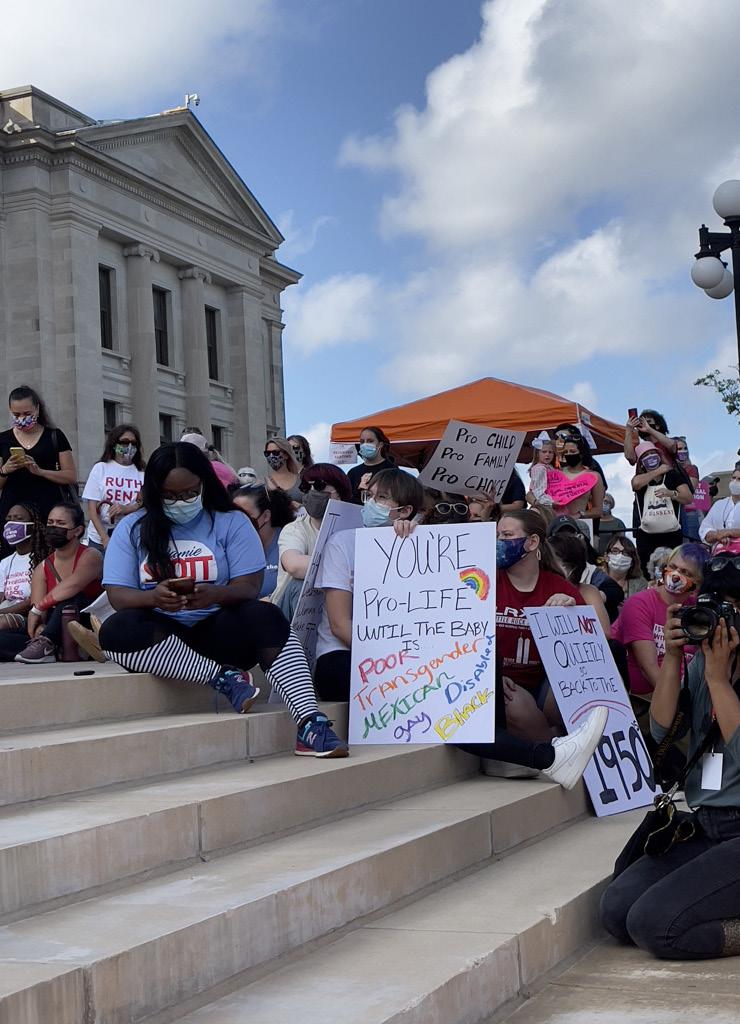


UALR offers retention services for students to help better themselves in and out of the classroom. There are student success coaches that help guide students by teaching them many skills. These skills include time management, study skills and test preparation, the building of productive faculty relationships, personal health, and many more. I feel it is a privilege to have retention resources. As students, we face so much in the real world and in the classroom. It is important to be knowledgeable in such skills and
real-world issues. These services also give us the chance to talk to someone one-on-one about anything that we have trouble with, or when we just need more insight on a subject. I like that these meetings are confidential. It gives the student privacy. I also like how they give you the choice to meet in person, virtually, and even over the phone. You’re not subjected to just one way of communicating, which is a good thing. The variety of having multiple ways to meet allows the
student to stay in their comfort zone. Some students may like meeting face-to-face, however others may be on the timid side and would much rather communicate over the phone. The Student Retention Initiatives is a gateway to success for students. The success coaches are there to help you and steer you in the right direction. I feel that each and every student should have a one-on-one meeting at least once. I believe it will be beneficial to them as they complete their studies, and throughout their
life. Whether they need help with setting their goals, organization skills, or resiliency skills, the UA Little Rock retention team is there to help. The success coaches love what they do for students. They help students find meaning in their college experiences and teaching skills that will contribute to success. They also help students develop incredible critical thinking skills and an expertise in problem solving.
Are you convinced to set up your meeting with the Student
Retention Services? If you are embarrassed to reach out for help and guidance, you shouldn’t be. There is nothing embarrassing about wanting to better yourself and achieving a successful future. Remember, they are here to help you and guide you on the right path. You should take advantage of this opportunity, because it is truly a privilege.
By Camry Gardner
The Forum is the official student newspaper at the University of Arkansas at Little Rock. The Forum is funded in part by the student activity fee. The opinions expressed in The Forum are those of the staff and contributing writers and do not represent the official views of UALR. The Forum is published 7 times in each of the fall and spring semesters. The Forum editor can be reached at editor@ ualr.edu.
The Forum welcomes letters to the editor on any subject. Letters must include the author’s name, classification, major or position and a contact telephone number for confirmation. Letters are subject to editing to meet space limitations. Please limit letter to 500 words or less. The staff will not alter
the meaning of the letter, but will correct spelling and punctuation and edit to conform to Associated Press and news style. All letters are subject to publication.
The editor has the right to reject any letter especially those letters that are libelous, obscene or incoherent, as well as comments on our news coverage and editorial position.
Letters should be emailed to editor@ualr.edu or sent to: The Forum, University of Arkansas at Little Rock, Donaghey Student Center, Suite 116, 2801 S. University Ave., Little Rock, AR 72204
All material published in this newspaper is copyrighted.





WRITER
Payton Dhooge, @paytondhooge
WRITER
Magnolia Risley, @mags.ris
ILLUSTRATOR
Marissa Davis, @helloimriss

WRITER
Laura Jansen, @laura.jansennn

WRITER
Shadayja Sneed, @Shaylildayja

WRITER
James Johnson, @treynotdre
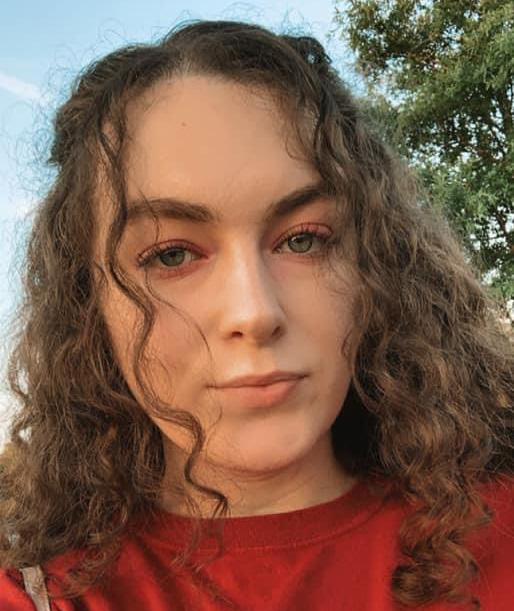
WRITER
Maddie Becker, @maddiee_erin
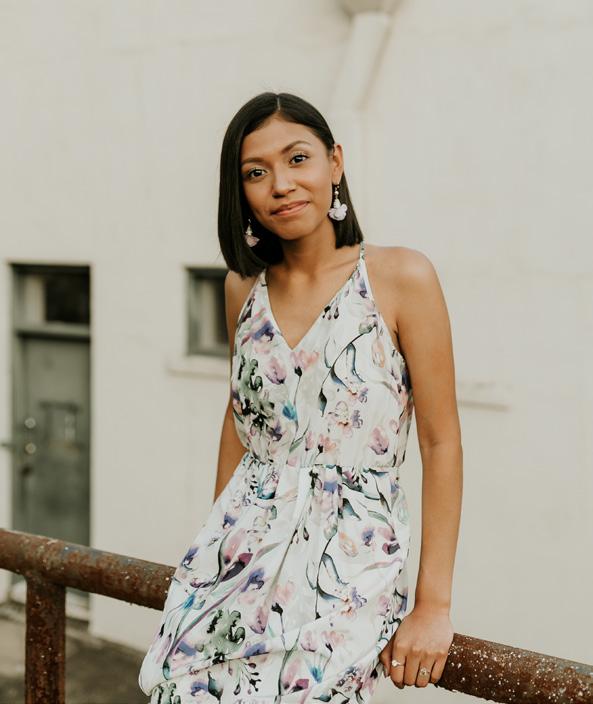
WRITER
Vasti Hernandez, @iamvastihernandez
ADVISOR
Carlton ‘Sonny’ Rhodes, @sonny_rhodes

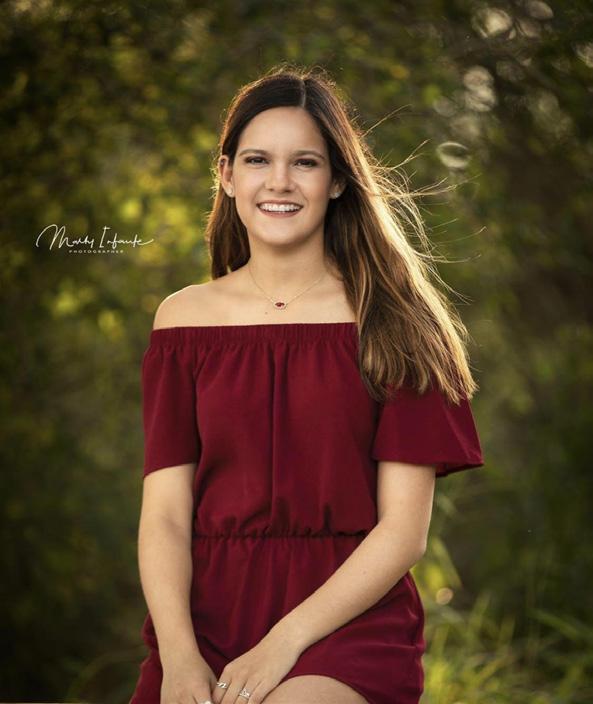
WRITER
Natalie Arnold, @nattt_alyy WRITER
Vivian Angeles, @vivian.angeles