



















Pauline Mothu Staff Writer pxmothu@ualr.edu
Two UALR students reported having been robbed last Monday around 11
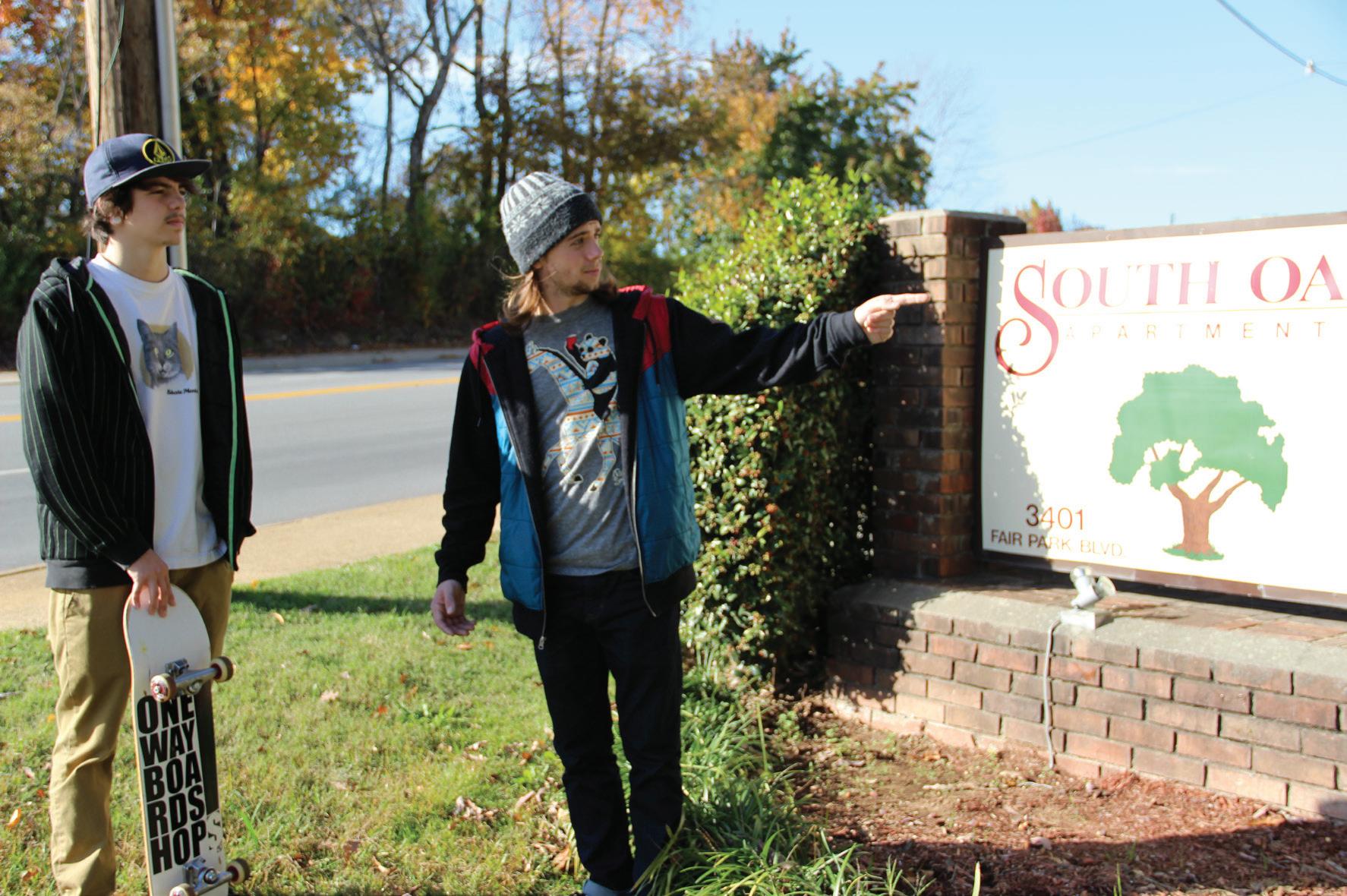
p.m. in the South Oaks Apartment parking lot, located across from campus on Fair Park Blvd. Tanner Harris and Philip Clamon were getting into Clamon’s car when an unidentified black male came toward them. “We were near the gate,” Harris said, “so we thought he was leaving but he rushed to-
ward us, pulled out a gun and told us to drop everything we had.”
The robber asked for cash multiple times before forcing Clamon to drive downtown to the victim’s bank.
“He somehow focused on Philip and left me behind, Harris explained. “So when they were about 15 feet away, I started running towards campus. When I saw a police car, I explained me and my friend had been robbed and my friend had been kidnapped. They turned the lights on, told
me to stay here, and left.”
Clamon said the gunman kept the rifle aimed at him, warning him to drive faster. He said he reached a speed of nearly 100 miles per hour and evaded the pursuing officer.
Meanwhile, Harris went to a friend’s apartment and called the police again. After explaining the facts for 45 minutes, they saw Clamon’s car coming back to South Oaks without the assailant.
Clamon told the police the assailant made him drive downtown to an ATM and
threatened to kill him several times while they were together.
“Philip told us the guy had his gun on Philip’s legs while they were driving. Philip also said they saw a police car but the assailant refused to stop and said he will kill Philip if he stopped,” Harris said.
Moreover, the assailant was counting down from ten while the victim was retrieving money from the ATM, threatening once again to kill him at 1 if he did not get the cash. “Fortunately, the money came out of the ATM right before 1,” Harris said.
Clamon was then forced to drop the assailant off and was told “not to come back or he will be killed.” The assailant left with a new IPhone 5S and around $180.
At the time of the incident, Harris, uncertain of his friends fate, was imagining the worst. He was worried his friend was dead, he said. Although he has already talked to people who have been in the same situation, Harris said he will go to the counseling services on campus.
“I am doing okay during the day, but I am still scared to go out at night,” he said.
Harris also said the victims could have been anyone. Unfortunately, he and Clamon were the victims that night. If the two students had not crossed paths with the assailant, he may have easily headed toward campus in search of someone else to rob.
Jacob Ellerbee
Executive Editor Editor@ualr.edu
n analysis conducted by
AThe Forum has identified University Village, Lot 15 and Lot 2 as three areas on campus experiencing the most crime over the course of a 10-week period this semester, according to reports filed in the UALR crime database.
The three areas identified were also the locations of some of the most violent and severe types of crimes committed on campus.
Between Sept. 7 and Nov. 14, there were 10 incidents originating from University Village. Among the 10 incidents, half of them involved theft and vehicles.
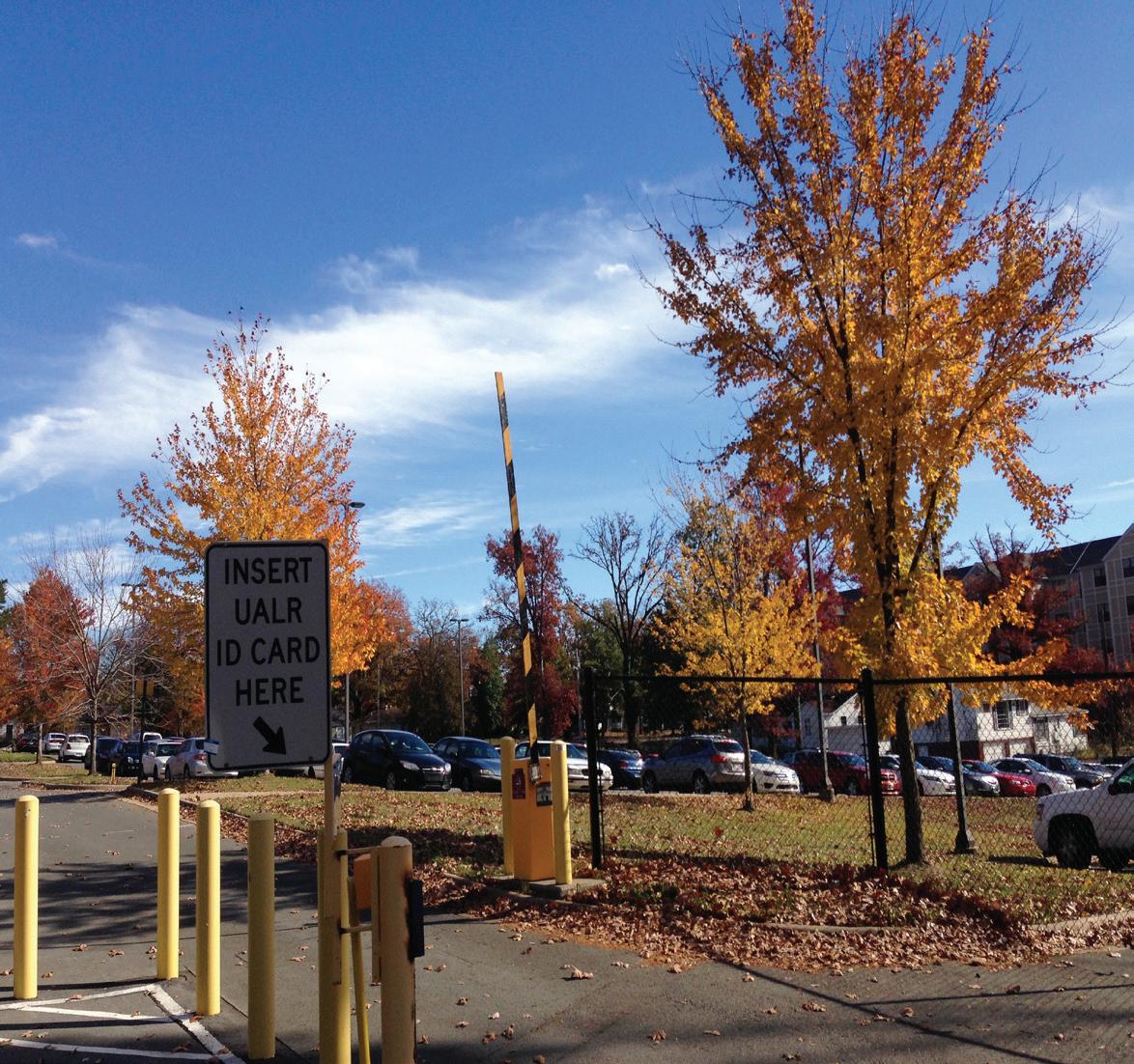
Of the six incidents reported in Lot 15, at least two violent crimes were committed. This includes an instance of kidnapping and domestic battering in the 3rd degree. Another includes an act classified as criminal mischief in the 2nd degree. Jennifer Sibley, the crime prevention officer at UALR, said during the first month of school, the exit gate was broken at University Village. She said now some of the problems arise from cars “piggybacking” into the lot, or having a car drive near the bumper of the car in front and drive through successively with only one card swipe.
“We do have an officer that sits over there seven nights a week from 8-11 p.m. and that discourages that. [Piggybacking] happens a lot when we’re not sitting there and we know that,” Sibley said. As of 1:30 p.m. on Nov. 18, two arms of gates were broken off in Lot 15 and another arm has been permanently lifted, allowing free entry and exit to

the parking lot near residence halls.
The arms of these entry and exit gates are made in-house at UALR by facilities maintenance.
Dave Millay, associate vice chancellor of facilities maintenance, said the arms are made of standar
“We buy the lumber and then usually paint them ourselves. To buy one, paint it and install it, it’s less than $50. It’s not expensive,” Millay said.
Millay said that previously, instead of spruce wood, standard PVC pipe was used.
“We used to have PVC pipe that served the purpose of the arm, and the question I get quite often is ‘Well, people keep breaking these things off, why don’t you make them out of steel or aluminum or something that won’t break?’ Well, the answer to that is, I want them to break so that the damage doesn’t happen to the gate itself.”
Millay added that the mechanisms used to make the arms rise and lower can get damaged.
“I’d much rather have someone who is going to do vandalism just have them break the arm off and replace it, rather than have to replace the whole gate,” Millay said.
“The only time I can think of when there’s an extended period of a gate being out of service...is when there’s a part required and it could be a mechanical component that facilities management needs to buy and install,” Millay said.
Millay also said the current gate system in place was here when he began working on campus and that they are typical of many universities.
When asked if there are any alternatives to securing these lots besides using a pieces of spruce lumber, Millay said other systems are expensive and possibly more problematic.
“The gate system that we have here, the mechanisms were here when I came here. They are typical of all the universities that I’ve ever visited,” he said.
“There are some systems where you have bollards that disappear into the ground and then come back up and so forth,” Millay said. Adding that “it’s very very expensive to do.”
“These [gates] are basically economical and basically reliable,” Millay said. “Like with any piece of mechanical equipment, you’re going to have failures. And outside, areas like that [Lot 15], you’re going to have some vandalism.”
Sibley said the high crime rate cannot be attributed to a gate system or non-functioning gate, but for where the lot is lo












Staff Editorial
As a culture pumped full of knowledge from every possible resource, we have some extent of awareness about sexual assault. Not only do most of us know how sexual assault is defined, but several have a great deal of intuition when it comes to handling matters of rape - including the investigation surrounding the crime - as delicately and privately as possible.
However, it’s obvious several places of higher education - notably the University of Connecticut, Occidental College and the University of Southern California - didn’t get the memo.
According to national statistics provided by the organization OneinFour, a study of 5,000 women conducted by the U.S. Centers for Disease Control revealed that 20 percent admitted to having engaged in sexual acts against their will. 3 percent of men in a similar study also disclosed such details, and with sexual assault being among the most serious (and popular) offenses on college campuses, investigations of such misconduct must be taken seriously.
But many institutions have become accustomed to giving offenders a slap on the wrist once examinations are underway. The most recent and notorious for misguided methods is the University of Connecticut, home to an area known as the “rape trail” as well as a number of sexual assaults. Four students in particular, who were assaulted at different times over the last few years, have gone public with their mistreatment, claiming the university lacked helpful resources, failed to inform them when their respective attackers were back on campus and that police
did not believe them when reports were being taken.
A similar lack of action has been reported by students at USC, who failed to report more than 13 assaults to the Department of Education between 2010 and 2011. 24 assault reports were also missing from documents from Occidental College, which has a smaller student body but boasts more sexual assaults than its larger university rival. This lax behavior, which has mostly led to administrators turning their backs on the victims in favor of patting staff on the back, is all too common on college campuses and makes for one startling public relations move.
At UALR, the rates are much lower. According to statistics provided by the Department of Public Safety, three sexual assaults were reported between 2010 and 2012 (as opposed to the 28 robberies committed during those years). But despite low statistics, the campus has managed to provide a number of accessible resources that serve to console victims as well as report sex-related crimes. The fact that these are made readily available by higher-ed administrators indicates that UALR may handle a rape case far better than schools in other areas - a feat for survivors as well as the institution itself.
But for other schools where “date rape” and “party rape” are more common, it’s time to adopt proactive behavior. Instead of brushing investigations under the rug and reacting coldly in a disturbingly diplomatic fashion, pursue due process and emotional compensation for those affected, and most importantly, do not treat the victim like a victim; treat them as survivors who deserve justice.
Reaction: Several national retailers have announced they will open at 8 p.m.some even as early as 6 p.m. - on Thanksgiving day for “Black Friday” sales.
People should be enjoying their families at that time, not shopping. That’s why it started at midnight.
- Lindsey Luekenga
workers who were happy to work on the holiday AND they get holiday
for doing so. But I seriously doubt that is what’s happening.
I support shop small business Saturday instead!
- Wendy Lyons
The earlier start times are making it harder to enjoy time with family. I’ll probably take advantage of online deals instead.
- Rachel Frey
I think it’s awful. Don’t they get enough business when opening a little later so we can enjoy the holiday? I’m really angry because we have made Black Friday shopping a fun family tradition and now it’s going to be so different. Family first though and we are going to enjoy dinner and be together before we go out.
- Phoenix Gatlin
It’s all about competition. If the retail giants are opening Thanksgiving night, then the smaller chains nearby have to take advantage of the crowds.
I’ll be working 8pm-12am on Thanksgiving and coming back for Black Friday.
- Andrea Saavedra
did one year and was absolutely amazed at how people act. Greedy people pushing others out of the way to get theirs is not much better than the greedy companies not caring about their employees spending time with their families.
- Jennifer Walker Morehead
Honestly no. Who will take them seriously?
Where will the money come from for the Segways? They keep talking about budgets... what happened to the bike patrol? How about good old fashioned foot patrol? And if they are worried about criminals out running their officers why not implement health incentives? I’m sure that would cost less than $6,500.
- Jessica Johnson
- Marissa Bailey Spencer
Aren’t they have money problems? Stop purchasing things they can do without.
- Cammie Johnson



That’s a complete waste of money! I would elaborate, but it appears as if we are all in agreement about this type of buffoonery.
- Avery Moore

KenDrell Collins Editor kdcollins@ualr.edu
Imagine there has been a radioactive leak in a nuclear facility and the level of radioactivity needs to be determined. It’s far too dangerous to send humans in to inspect the damage, so what do you send? A robot.
This was precisely the scenario used for the 2013 Design Competition. Students were charged students to create a remotely–controlled device. A group of Engineering and Information Technology students at UALR decided to take that challenge. The group consisted of juniors and seniors: Clint Maddox, Josh Faulkner, Henry Meyers, Stephen Fitch, Jason Braudford, and Josh Pittman.
None of the guys had any robot-building experience before the competition. In fact, they did not know each other before the competition, with the exception of two members who had taken a class together. Their one commonality was that they all were members of the American Society of Mechanical Engineers.
“I was new to ASME at the time,” Maddox said “People who were interested showed up, we all started asking about ideas and started designs and things like that. I think we started with about 15 people and then it got down to about eight and then six of us together.”
Soon the six-man crew would begin preparing for the regional competition. It took place in April at Oral Roberts University in Tulsa, Okla.
The course was a rectangular 5-meter by 7.5-meter surface filled with obstacles that the machine had to maneuver while attempting to complete five tasks:
1. Navigate barriers
2. Survey the area and read a digital pressure gage
3. Push a button on a control panel
4. Pick up a radiation sensor
5. Take a radiation sensor to a certain location
The group said that 18 out of the 20 registered schools showed up at the events. Among those present, only 15 robots actually functioned. “Their robots either broke or had some other issues,” Maddox said. Some of the competition included: University of Arkansas- Fayetteville, Baylor, Texas Tech and Louisiana State.
“We knew we had a pretty good robot but once we started seeing the competition we knew we had a really good robot. And then we just dominated really,” Maddox said.
Indeed, the team did dominate, winning the competition thanks to their

practical design and unmatched speed.
“I didn’t expect to win in Tulsa,” Pittman said. “I just wanted to be competitive. To go up there and win was an awesome surprise.”
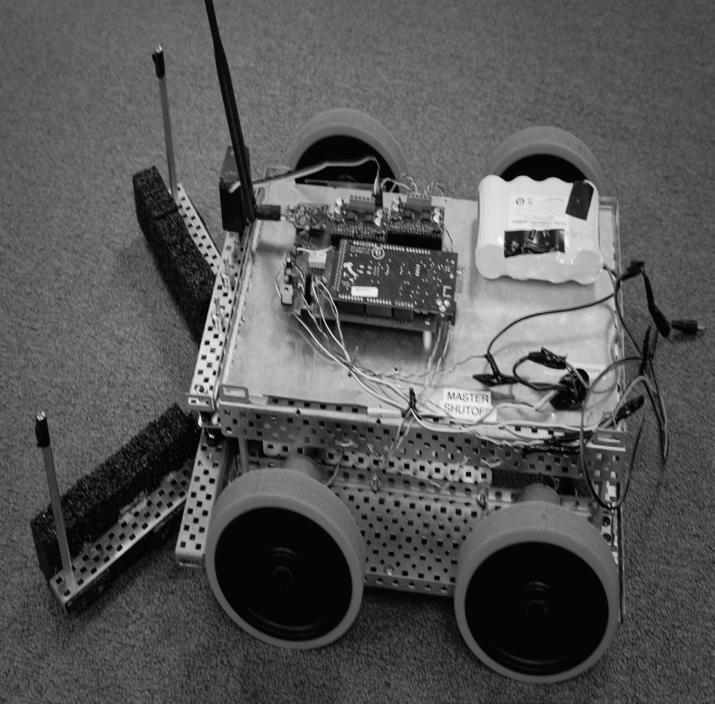
With a name as fierce as the “Viper” written on the side of the team’s robot, it was sure to catch attention as it zipped through the course. The crew had only 5 minutes to complete a course simulated to resemble a nuclear power plant. They finished in 47 seconds. Second place was about 52 seconds and the next closest was close to 90 seconds. Controllers Meyers and Pittman, had to operate the device from behind a curtain. They had to watch the device’s camera feed which was connected to laptop.
The Viper also boasts a large claw on its front side. The massive claw prevented them from having to make small adjustments. It was the most difficult feature to create, Maddox said.
“Other competitors would use their claws to grasp the dial, which took a lot of time,” Braudford said.
In addition to the claw, there is a scoop at the bottom of the Viper that catches nearly any object that it runs over. Since it has such as small ground clearance, the object 2-inch tall block of wood does not sip underneath.
“We just hit top speed and we don’t even have to stop and pick up the second dial, we just run over it,” Faulkner said.
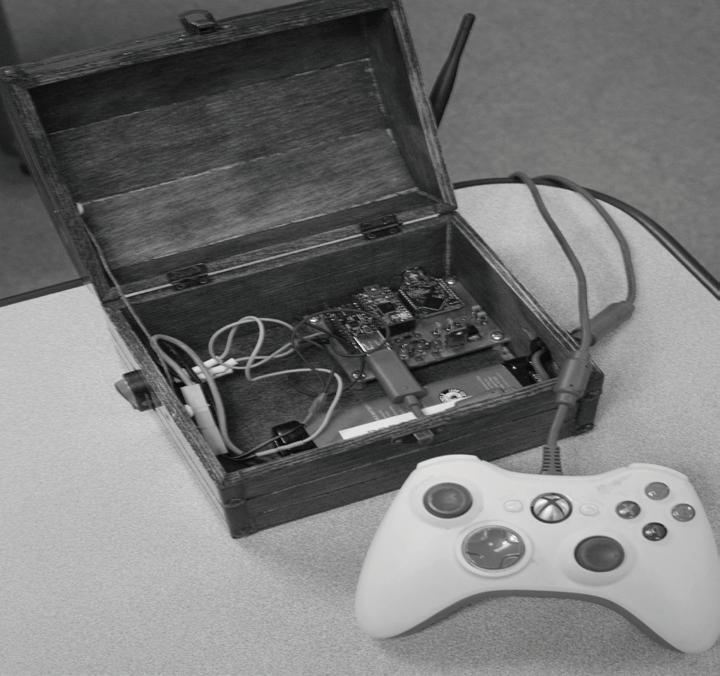
Another interesting feature is the robot controller - an Xbox joystick hooked
Alexis Williams Staff Writer aawilliams@ualr.edu
The UALR Accounting Society will host its third annual “Accounting Continuing Professional Education” seminar on Wednesday, Dec. 18 from 8 a.m. to 4:30 p.m. at the UA Cooperative Extension Service building.
The seminar, the club’s biggest event of the year, will feature several keynote speakers to cover a variety of topics: Mike Watts on Federal Tax Update, Kylene Prewett on COSO Control Framework, Stephanie Shine on For the CFO, Paula Kinnard on Yellow Book Audits, Emily Reeves on Online Marketing of Accounting Services, Richard McLain and Katherine Black on FBI Case Studies and David Dearman on Ethical Issues in Accounting, said Chief Financial Officer Tiffany Smith.
Founded in 2011, the Accounting Society’s mission is to “promote the study and practice of the various professional specialty fields in accounting, provide opportunities for leadership development and professional growth, and encourage a sense of ethical and social responsibilities,” according to its UALR webpage.
The current club officers are Chief Executive Officer Jacob Downs (junior accounting major), Chief Operating Officer Ben Alexander (senior accounting major), Chief Financial Officer Tiffany Smith (sophomore
Hotspots, continued from page 1
cated.
“It is probably the least desirable location on campus, in my opinion, for vehicles,” Sibley said.
“Just because of where it’s locatedit’s on the corner of 28th and Fairparkand that’s not a good area,” Sibley said. There are several things that can be done to help combat the higher rate of crime in these areas, with Sibley and Millay each offering ideas of ways to help deter crime.
Sibley said the arrival of Edward L. Smith, chief of police, DPS has been proactive in terms of patrolling. “Now, when the officers do patrol in their vehicles at night, their blue lights are flashing [as they go] through parking lots. So that’s kind of like a huge sign: guess what? We’re here.”
accounting major) and Chief Information Officer Lisa Collver (senior accounting major). Their faculty advisors are accounting professors David Dearman and Cindy Johnson, according to the club’s UALR page.
“We currently have four officers and four members, but we are looking to grow in numbers by reaching out to those with account majors or those who may be looking to become an accountant,” Smith said. Empathetic of the hectic schedules of today’s students, Smith explained that the society also schedules multiple meeting times for members unable to attend the normal evening meetings.
Smith said that the seminar will give students eight hours of Continuing Professional Education credit with two hours of ethics credit. In addition, continental breakfast, lunch and snacks will be provided. For those looking to take advantage of discounted rates, the early registration deadline is Dec. 8. Students may also benefit from a discounted rate if they are UALR alumni, Accounting & Financial Women’s Alliance members, or in groups of three or more. All proceeds go to the UALR Accounting Society.
For more information about the Accounting Club or CPE event, students should contact David Dearman at (501) 569-8888 or dtdearman@ualr.edu.
“If you see something that doesn’t fit, something that doesn’t look right, call us,” Sibley said. Sibley said people shouldn’t hesitate to contact DPS if they feel uncomfortable or see something troubling because they can ask anyone to produce their student identification card, per university policy. “As university police, we can walk up to any person on this campus and ask for id and they have to show it to us,” Sibley said. “It doesn’t matter who you are.”
“I don’t think there’s a silver bullet,” Millay said of the crime hot spots on campus. “If there was one answer that was going to solve our problems, I’m sure people smarter than me would of thought of it and put it in place by now.
But, I think it’s a lot of little things that make the difference.”
to what appears to be a small treasure chest. A small circuit board is nested inside.
One can see a flashing green light. Programmer Thomas Epperson, a former UALR student, helped with programming the machine.
As for the Xbox joystick, the team said it was simply chosen for ergonomic purposes.
“You can get any kind of controller but, you know, most people our age and this whole generation, everybody’s comfortable, everybody knows how to hold an Xbox controller or any kind of video game.
Moving the machine is as simple as moving ones thumbs. With a forward thrust of the left thumb stick, the machine moves speedily ahead. The right thumb stick causes the controls its turning direction. Buttons A and X move the claw, Y switches the camera feed, and B shuts off the device.
When the outer shell is lifted, the inner workings of the machine are exposed. It’s frame work is made of material from a vex motor kit, donated by a professor in the Systems Engineering department. The gift considerably reduced cost for the team. They had add about $400 to $500 worth of additional material. “I think its right around the $1,000 mark,” Maddox said.
“You can tell that when we went to Tulsa there were people who spent a lot more money than that,” Braudford said. The team also recalled that one team put
nearly $4,000 into a machine that did not even work.
Since winning the regional competition, the team has upgraded its motors to increase the speed. The flame s painted on the outer shell of the Viper also help boost speed, Faulkner said jokingly.
The new motors will allow it to go 4.2 feet per second. When the crew won the competition, the Viper was traveling 2.2 feet per second. Those extra two seconds could be just what the team needs to win the international competition that is set to take place on Nov. 17 in San Diego, California. The team will be staying at the Manchester Grand Hyatt, a four-star hotel overlooking the water. First prize is $3,000. In addition the chapter gets $1000. They claimed a $500 prize and $1200 in travel reimbursement, for winning in Tulsa.
When asked about their chances against competitors from all over the world, they were confident and resolute.
“We expect to win.”



kdcollins@ualr.edu
Ahost of community leaders, political activists and professors gathered together at the William H. Bowen School of Law to offer insights on how to spark social change on Friday, Nov. 8.
The Second Annual Symposium, called Catalyst for Change, was hosted by the Arkansas Journal of Social Change and Public Policy. It was an all-day affair that began at 9 a.m. with a general overview of the social change that is needed in our state by Rev. Steve Copley. During the following hour, Stephanie Harris led a discussion on non-profit work. She emphasized the emerging female role in various professional sectors.
Later, around 11 a.m., a panel of grassroots organizers gathered together to talk about how their particular organizations work to promote social change. Panel member, Tony Orr, the state director of Arkansas Community Organization and United Local Unions Local 100 explained how his team’s efforts extend to various regions throughout the state.
Jerry Cox, president and founder of Arkansas Family Council said that one purpose of his organization is to influence public policy by lobbying for legislation. He cited Amendment 68 to the Arkansas Constitution, which prevents publically funded abortions, as one of
Jacob Ellerbee Executive Editor editor@ualr.edu
The Department of Public Safety unveiled a brand new substation to the campus Nov. 13, located on the ground level of Stabler Hall. However, Chief Edward L. Smith said this substation is but the first of several more substations to come.
“We’re looking at another space,” Smith said. “In fact, it was one of the first spaces we looked at and it’s still, hopefully, a possibility.”
Smith said the area between the campus bookstore and the aquatics center inside the Donaghey Student Center was also among the places DPS considered when searching for suitable location to install a substation.
“Dave Millay of Facilities Maintenance,” Smith said, “actually got some architects to take a look at what it might take
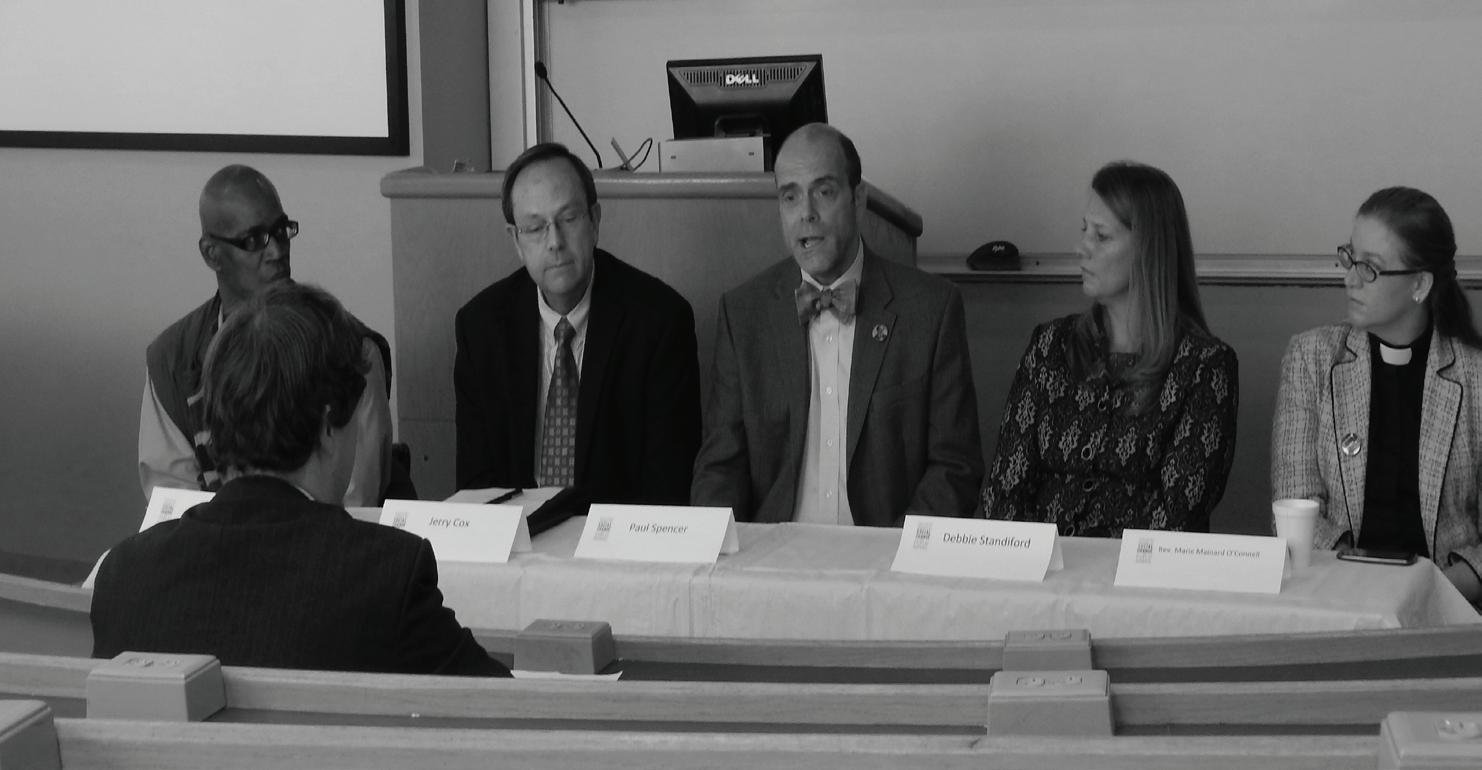

the major accomplishments of Arkansas Family Council.
Paul Spencer, founder and co-chair of Regnat Populus, said there is a need for well-directed social organizing. Spencer cited the Occupy Movement, saying though it had tremendous energy and momentum, it did not seem to have clear goals. A grassroots organization must be organized and it must pursue an issue that people truly care about, he said.
Representing Occupy Little Rock, Rev. Marie Maniford said, “Even though Occupy, as a national movement, ended up folding a little bit, I would say it’s evolving.” Now, smaller groups of occupiers are focusing on particular inter-
ests, Maniford said.
Photo by KenDrell Collins

Lastly, Debbie Standiford, who spoke for the Libertarian Party, talked about the party’s plea for “more freedom and smaller government.”
After a lunch break, the symposium reconvened with a panel that discussed the development of South Main and surrounding neighborhoods.
At 2 p.m., another group of panelists discussed cause lawyering. Students who attended the one-hour panel received a free CLE credit. A second credit was available to those who attended the final lecture about using interpreters in the courtroom. The Hispanic Law Student Association at Bowen co-sponsored the event.
to [utilize] that space and it was going to take some capital expenditure to do that. That is still out there on the table, but it’s probably going to have to be done in the next fiscal year.”
Smith said he hopes to add another substation (in addition to the recently opened Stabler location and the possible DSC substation) near the area in which the residence halls are located.
But, until DPS has the capital and location, all eyes will be on the Stabler substation to see how efficiently it operates.
Smith said the location will be used as the office of Jennifer Sibley, the crime prevention officer. The bicycle patrol will be housed in the new facility and, while they are being tested, the new Segway vehicles.
The substation will also provide a means for officers to get to a response location in a more expeditious manner, Smith said.
Smith said the new substation can be
used as an area where officers can take a break while on patrol, but he encourages his team to be in the DSC when they’d like to take a break for a few minutes.
Being in the DSC instead of the substation will, over time, Smith said, create a more friendly atmosphere between students and officers. He said he hopes it will generate feelings of easiness instead of feelings of nervousness upon seeing a patrolling officer.
The grand opening of the new Stabler substation included tours of the new facility, snacks, information pamphlets, free whistle/light keychains and optional rides on a Segway. Smith, Sibley and several officers were on hand to answer any questions students, faculty and staff had about the new facility or about DPS.
The new substation, located in room 105 of Stabler Hall, will be manned 24 hours per day, 7 days per week.
Jacob Ellerbee Executive Editor editor@ualr.edu
The annual campus lighting walk, which includes students, faculty members and staff who volunteer their time to walk around campus and identify exterior lighting deficiencies, was conducted Nov. 12, with volunteers reporting 4 percent of the exterior lights on campus needing attention.
There are 1,681 exterior lights on campus and this year 68 lights have been reported as requiring attention.
In the inspection reports, several areas were noted as having low visibility due to tree limbs and shrubbery covering the light(s). In other areas, the lighting fixtures simply need a bulb replacement. Volunteers also identified locations in which additional lighting fixtures should be placed.
The Facilities Management Department, which hosts the event each year, is responsible for ensuring the lights are illuminated properly and free of obstructions.
According to the press release provided by the Facilities Management Department, the goal of the annual lighting walk is to “identify exterior lighting deficiencies such as burned out light bulbs, lighted areas where trees and shrubs need to be pruned and areas where additional light fixtures should be installed.”
This year, the walkers included Dr. Logan Hampton, dean of students, two campus police officers, staff members from Residence Life and 25 students.
The annual lighting walk helps the Facilities Management Department and the Department of Public Safety maintain high levels of campus safety and comfort, according to the press release.







Hillary Perkins Staff Writer hdperkins@ualr.edu
The most disgraceful academic crime to commit during college is plagiarism.
Plagiarism is the act of copying someone else’s work without giving them credit.
There are various forms of plagiarism. Usually, students will copy and paste an entire article as if it was their own. Students may even copy and paste certain parts of an article directly. Sometimes students may even paraphrase certain parts of an article without referencing the source. Another way a student can commit plagiarism is by not using the proper citation.
The plagiarism policy is something that must be taken very seriously and is set up for a purpose. Richard Harper, the Assistant Dean of Students, said that the purpose of setting up the plagiarism polices is “to uphold academic integrity, keying higher education.”
If a student commits plagiarism, there are consequences. There is an

academic grade penalty where the student will fail the assignment or th course. The Dean of Students can also take disciplinary action such as an educational sanction, academic probation, expulsion or suspension. An educational sanction occurs when the Dean of Students mandate students to take plagiarism course through the Raise and Integrity Software Company in which they will have to take a quiz at the end. Such sanctions prevent first offenders from committing plagiarism again.
Here is how to avoid plagiarism. When using an author’s exact words, always use quotation marks from the copied source and cite the author’s name and title of the article. The way a student uses citations depends on the genre of the writing. If students have any questions on citation format, he or she can always ask their professors for help.
The University Writing Center is another aid for students to learn how to use different citations and specific writing conventions. When doing research, students can also use good notes, carefully tracking where information was
found. “We want to be sure that students do their own work,” said Trey Philpotts, the chair of the English department.
One way to avoid plagiarism is for professors to remind students what plagiarism is, as well as the consequences behind it. In every syllabus, all professors have their own disciplinary actions for plaigiarism. Also, in every syllabus, there is the definition of plagiarism, the consequences behind it, and ways of preventing plagiarism.
Professors use the Safe Assign website to detect plagiarism when reviewing papers. The program displays, in percentage form, how much of the paper matches other documents on the Web and those submitted at UALR.
Professors can detect plagiarism in various ways. For example, a difference in a student’s writing from one paper to the next can raise a red flag. Of course, students may unintentionally plagiarize, but that too can be prevented with careful attention. “If we don’t draw the line, no one else will,” said R. Paul Yoder, a Professor in the English department.
According to the UALR website, these are the steps that professors must follow when confronting students about plagiarism.
Professors must confront their students before the Dean of students as well as completing an Academic Offense Allegation Report.
The student should schedule a meeting with his or her professor.
He or she should understand why they are accused of plagiarism and have the opportunity to explain their side of the story.
Students will have to meet with the Dean of Students within six days after being notified of the allegation. A student can deny the allegation or claim that it was an honest mistake. From there, a student can make an appeal to the Academic Integrity and Grievance Committee within 10 days of filing an academic offense report. Then, the Chair of the Academic Integrity and Grievance committee will schedule a hearing.



Mehr-Zahra Shah Staff
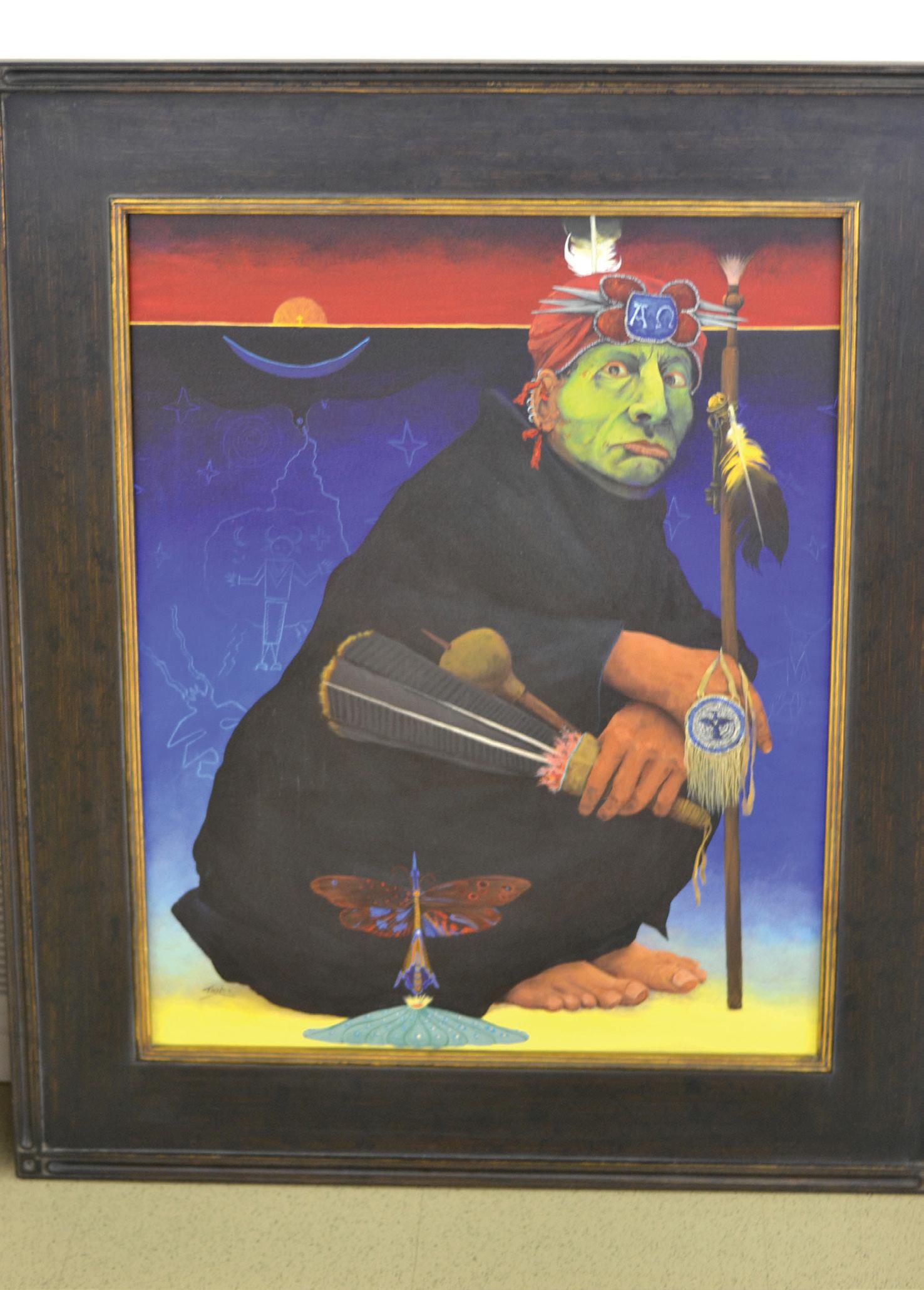
Art admirers walked around the Sequoyah National Research Center’s Native American art exhibit at the Governor’s Mansion, captivated by the pieces. “I am enthralled by this piece, just by the wisdom in it, and how the artist shows that as she is swirling her apron, she is becoming a quality of the animal she is envisioning. It shows us how we can transform ourselves through dance,” said Virginia Crow. The gallery was full of similar remarks by other visitors. The center celebrated its 30th anniversary with a fundraising dinner and art exhibition Nov. 12.
The SNRC is home to an enormous va-
riety of archives of Native American artwork and writings. In fact, its collection is one of the largest in the world. It was founded in 1983 by Daniel Littlefield and James Parins, both faculty members the English department. While working on a research project about the publishing histories of newspapers and periodicals by Native Americans, they collected an extensive amount of publications from various institutions and decided to create an archive from them. Native American artwork became part of the archival collection in 2008, and now it has expanded to house collections such as the Dr. J. W. Wiggins Collection of Native American Art.
“The mission changed from collecting just newspapers and periodicals to also collecting personal papers and special collections of Native writers, artists,
•
•
•
librarians, journalists and other professionals,” Littlefield said. Nowadays, the center attracts researchers from the local community, state, nation and across the globe.
The SNRC hosts three to four art exhibitions of rotated Native American Art collections each year. The center also serves the UALR community by sponsoring student interns who can gain a rich experience working on various research projects for credit.
The intern experience has in fact inspired some to become part of the institution itself. One such example is Erin Fehr. Fehr interned with the SNRC’s Native American Student Summer Internship Program in 2010. In 2011, she applied for a job as an archivist and was hired.
“I was impressed by the breadth of materials - newspapers, books, manuscripts, art. I was expecting a small archive but was surprised by the volume of information contained within the collection,” Fehr said. Working with the SNRC opened her eyes to the great importance and reputation of the center, she said.
“I have been surprised by how many people outside of Arkansas know about our collections and travel long distances to conduct research in our archives. We receive calls on a weekly basis from researchers across the U.S., Canada and the world that are interested in our collections,” Fehr said.
“I was staggered by the depth and complexity of the material available. It was as though every folder contained
a major research paper just waiting to be written and every box would have enough data for a Ph.D. dissertation,” said Tony Rose, assistant director of the SNRC. Even with such an expansive collection on hand, the center does not have any plans to slow down.
“The center will continue to grow through the expansion of the archival and art holdings, and the university has promised to build an archival building for the center in order to better preserve the collections and to serve the public,” Littlefield said. The center also plans to increase its experiential and service learning education and expand its internship programs. The SNRC hopes to provide access to its expansive archive collection in a more accessible format by making all its collection accessible online, allowing long-distance research to increase. Although the SNRC is home to a rich, vast collection of archives, not many people are aware of the great resource just within their back yard.
“I wish that UALR faculty knew what wonderful resources were available for their students here and I wish that the central Arkansas population knew that UALR had such a unique facility,” Rose said.
Addition: Jim Parins, an English professor associated with the SNRC, died Nov. 17, Trey Philpotts, English department chair, said in an email. In the message, Philpotts said Parins was “instrumental in establishing and maintaining the Sequoyah Research Center.”
Sarah DeClerk Editor sedeclerk@ualr.edu
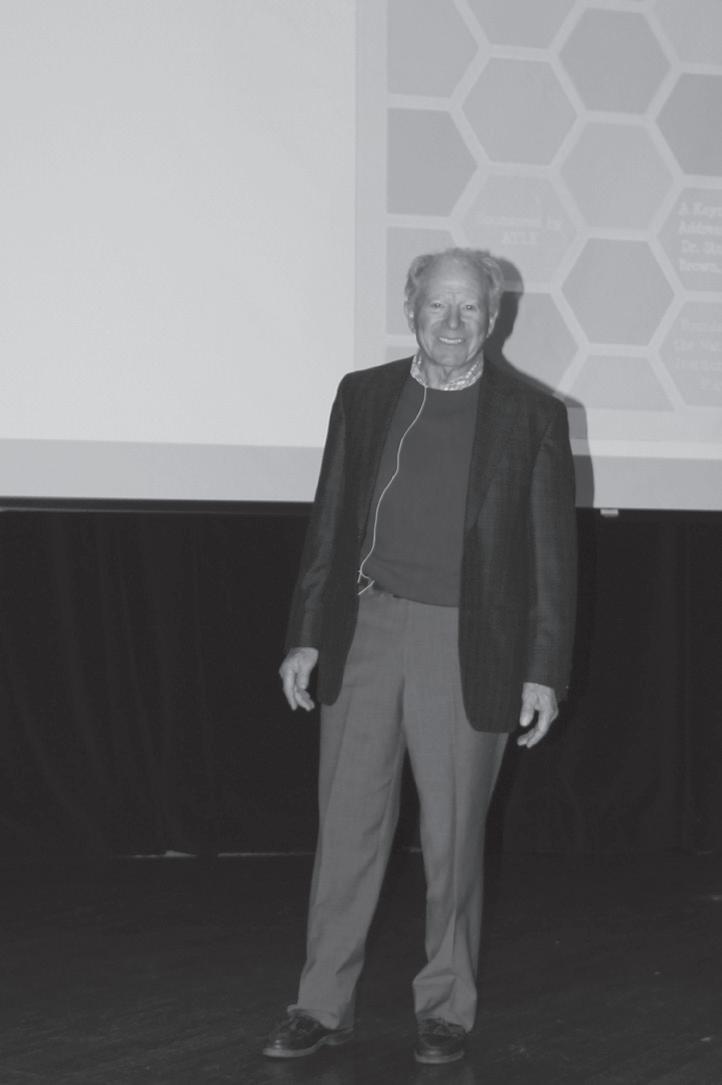
Playtime may seem like a childhood recess memory, but to Stuart Brown, founder of the National Institute for Play, play is serious business – for both children and adults.
Brown gave a keynote address entitled “Play: The Key to Engagement and Making Learning Fun” hosted by the Academy for Teaching and Learning Excellence Nov. 12 in the Stella Boyle Theater.
Brown himself is a dynamic man who practically sprinted from one side of the stage to the other during his lecture. Though his hair is white and thinning, his eyes are lively and his smile lends an element of youth to his face.
Brown earned his medical degree from the Baylor College of Medicine in Houston. He served as a medical officer in the Navy and also has experience with psychiatry and research.
In addition to founding the National Institute for Play, a nonprofit organiza-
tion that seeks to understand and promote the benefits of play, Brown wrote a book entitled “Play: How it Shapes the Brain, Opens the Imagination and Invigorates the Soul.”
“I don’t think you can be fully human if you don’t include play as a regular part of your existence,” he told the crowd.
About 100 people attended Brown’s lecture, which utilized a slideshow of photos and videos. The lecture began with a video of a cat and owl playing together; the cat batted at the owl, which swooped low to cuff it with its wings. This and other animal videos were a big hit with the crowd, which was overcome with giggles and cuteness-induced sighs.
The animal footage illustrated the universality of play among mammals – something that Brown discovered while working with the National Geographic. One series of photos showed a hungry polar bear stalking a tethered husky dog. In a move Brown described as “genius or very myopic,” the dog fell into the “play bow” known to most doglovers, and, miraculously, the would-be

prey became the bear’s playmate.
The National Institute for Play has distinguished several types of play, one of which is attunement play. This happens between a baby and his or her mother when they lock eyes and share a smile.
“This is a moment of joy but also kind of a moment of nonsense,” Brown said. “For infants, this is where the most rapid development of emotional stability and resilience begins and, if it doesn’t happen, the results can be quite dramatic.”
Other kinds of play include body play and movement, object play, social play, imaginative and pretend play, storytelling-narrative play, and transformativeintegrative and creative play.
By playing, children learn how to manipulate their bodies and objects – skills that gain importance as they grow older, especially in occupations like dancing and engineering.
Brown’s interest in play began in an unlikely way: he was investigating the motivation behind the 1966 University of Texas Tower shooting, in which Charles Whitman killed 17 people. Brown found that Whitman was raised in an abusive household in which his overbearing father severely suppressed Whitman’s childhood play – a suppression that left him unable to cope with the stress that preceded the shooting.
“Play began to take on a little different character to me then,” Brown said.
After that case, Brown interviewed living people convicted of murder and found similar cases of play deprivation.
This phenomenon is also evident in the animal kingdom, he said. Young rats that were isolated during their most playful period and then reintroduced to the rat community had a more difficult time coping with stress and relating to other rats, he said.
Play deprivation can lead to things like rigidity, joylessness, diminished curiosity and addiction, Brown said. “You don’t need escapism nearly as much when you’re play-saturated,” he said. He added that play also improves interpersonal relationships.
“Play behavior presents an antidote to our otherwise inevitable hostilities toward each other,” he said.
By learning the “language of play,” Brown said, people learn nonverbal cues and cooperation. “So much human trust and confidence comes from these types of signaling,” he said, pointing at a picture of playing lions.
Social play includes what Brown calls
“rough-and-tumble play” and what gym teachers typically call “roughhousing.” Though it can seem aggressive, Brown said that it is not and, in fact, teaches children empathy and compassion.
“Empathy is learned best in the halls of play early,” he told the crowd.
Brown was quick to point out that bullying is not play, however. “Bullying is domination. It’s cruel, and it’s an entirely different subject,” he said.
Play can also make teaching more fruitful and innovative. By understanding their playing types, educators can bring more of their essence into their work, Brown said. Player types fall into archetypal categories like explorative, creative, communicative and narrative and often manifest during childhood. A person with a tactile play type, for example, could be an engineer who loved building blocks as a child. Teachers who are in touch with their play personalities will have greater teaching outcomes, Brown said.
So for those who may rush despondently from one task to another, Brown presents a happy hippo doing a back flip in the water for both bliss and brain growth and asks, “When was the last time you were in that state of being?”
Paige Buffington Staff Writer spbuffington@ualr.edu
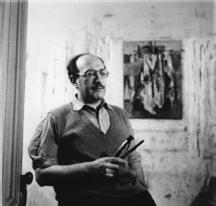
The most famous works of artist Mark Rothko are not easy for the casual viewer to understand. With their abstract forms, they challenge the intellect of even those who are familiar with the New York School, which sums up artistic approaches of Abstract Expressionism, Gesturalism and Color Field. But a recent collaboration between the Arkansas Arts Center and the Arkansas Repertory Theater has helped paint a fuller picture of both the artist and his work for the Little Rock community.
The partnership has created a onetwo punch that Rothko himself might appreciate: while the Arts Center has mounted an exhibit of Rothko’s work called “1940s: The Decisive Decade,” which focuses on pieces produced in the 1940’s, (the “decisive decade” for Rothko, according to the curator), a few miles away the Arkansas Rep has just concluded a run of “Red,” the Tony award-winning Broadway show which depicts a time in the artist’s life when he was commissioned to produce a series of murals for Manhattan’s then brandnew Four Seasons Restaurant.
While serving as the chief curator and curator of European art at the Columbia Museum of Art in Columbia, S.C., Todd Herman, Arkansas Arts Center executive director, developed the Rothko exhibition. Herman approached the National Gallery of Art in Washington about presenting the paintings “to bring to the forefront a thought-provoking look into Rothko’s paintings of the 1940s, a period often overlooked.”
The exhibit at the Arts Center is aptly named. The “decisive” and methodical
presentation of the exhibit is clearly reflected both in the selection of works chosen to support this theme and the chronological order in which the pieces are displayed in the gallery. One sees the evolution of Rothko’s visual journey that begins in the 1940s with a cacophony of objects: a Greek column, a human figure, architectural or organic elements.
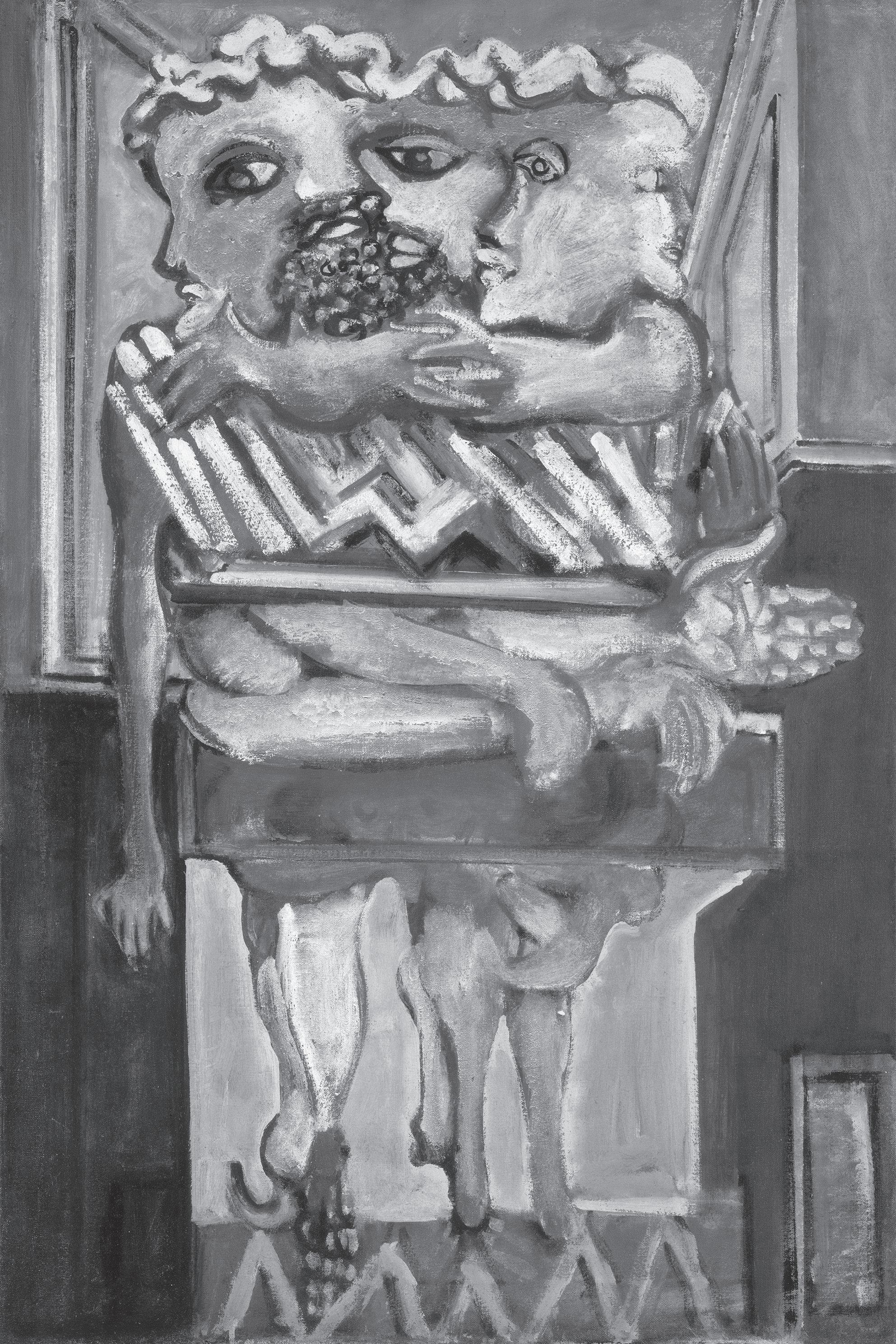
Beginning the walk through the show, one sees pieces of Rothko’s work that is representational and unlike his later non-representational work that emerges at the end of the decade. The objects in the paintings can still be recognized by the viewer. In “Cat 4,” an oil on canvas painting dated 1941-42, two opaque gray-white mythical forms with human heads and animal legs and feet, lay vertically on the picture plane. Their arms are entwined. Diagonal lines of red, white and bits of black and muted blues project the image into the foreground. The background colors of dark reds, black, darker greens and burnt sienna give the image depth and dimension and create an uncomplicated composition. In the exhibition catalogue, Christopher Rothko, the artist’s son, states, “Rothko enters the decade (the 1940s) a figurative painter and leaves it one of the most strikingly abstract.”
“Automatic” drawings, driven by the unconscious mind and informed by the psychological treatises of Sigmund Freud and Carl Jung appear as expressions of Surrealism. Other examples of artistic approaches used by the New York School are seen here in the works collected in this exhibit.
Another display text in the gallery says, “By 1947, Rothko eliminated all elements of Surrealism and the mystic. In new works, he achieved multiple effects by a variety of painting techniques that included... [thinning] his paint so that is soaked into the canvas and at times dripped.”
By 1947 and through 1950, as represented in the “The Decisive Decade,” his canvases are reduced to a whisper of color and a single or dual form. By now, the subject matter is completely abstract; the color is applied in a thin layer, as though it was not even applied to the canvas at all.
Like its collaborative twin, “Red” is a tightly-focused revelation of Rothko’s character and mind. A two-man drama written by John Logan and directed by Robert Hupp, focuses on Rothko’s two year struggle to produce the wall murals for the Four Seasons Restaurant, located at 99 E. 52nd St., in the Seagram Building in midtown Manhattan.
The strength of this production re-
sides in its minimalist two-person cast which features interaction with Rothko (played by Joseph Graves) and his young, fresh out of art school studio assistant, Ken (played by Chris Wendelken).
These techniques function as a vehicle to successfully convey Rothko’s artistic process and his passion and principles about his color theory and expressions.
Both the play and the exhibit, par-
ticularly the period of the artist’s life from 1947 to 1950, are articulated best by the text displayed on the wall of the gallery that hangs near these last pieces; “Rothko largely abandoned conventional titles in 1947. The artist also resisted explaining the meaning of his work.”
By 1970, Rothko himself had the last word, saying, “Silence is so accurate.” On Feb. 25, 1970 he committed suicide.

Rachel Wright Staff Writer rswright@ualr.edu
You do not have to go to a fashion capital to fi nd cool, custom clothing.
Shara Buford, a graduate student working on her Masters of Science in Management Information Systems, will introduce her new hip-hop fashion line Feb. 7 at the fi rst Full Out Free Style Culture Fashion Show.
Buford is from Aurora, Colo., and has lived in Arkansas for seven years. Buford’s fashion company, SplicedEgo has been in operation for about a year. SplicedEgo specializes in custom clothing designs and photography.
Buford discovered her love for design while working at Sonic. She designed a jacket with the fast food chain’s drink menu written on the back using bubble paint and ironon letters. Co-workers began asking her if she could make one for each of them, which sparked an idea for design and fashion.
“I started making my own shirts with the little bubble paint and ironon letters, and everyone just really seemed to like it, so it kind of just went from there.” Buford said, “because I like having stuff no one else has.”
Buford began teaching herself how to sew year ago by watching videos on YouTube, and took a sewing class. “Its better for me to see, just see it, than someone telling me.” she said.
“Sewing is not easy” she said, and added that she is looking into fash-
ion and design classes.
“There was one point, last year, when I had fi rst started, where I had messed up like $70 worth of fabric, and I gave up for about six months ... but I started trying again... and its working out now,” she said. Buford orders most of her fabrics from New York, and works with bright colors and bold prints that she says represents hip-hop.
She has developed T-shirt logos for friends and others who request designs. She says if she can make it, she will. She is also working on videography and photography to promote the company. SplicedEgo encourages people to post pictures of their fashion ideas to its Facebook page, at Facebook.com/SPLICEDEGO, for photo contests.
The idea behind SplicedEgo is to “live life through your own perception,” Buford said. She said the term spliced means to bring together by the joining of strands, and SplicedEgo joins together strands of individuality, self-empowerment and strength.
“If you like something, just wear it,” Buford said about the unique designs and ideas behind SplicedEgo.
SlicedEgo is geared toward hiphop dancers with lo0se, big and sporty clothing along with bright colors to represent individualism.
The show marks the one-year anniversary of the SplicedEgo Facebook page.
“I got in contact with one of my friends a couple of months ago,” Buford said, “and she said, ‘Shara, what are you waiting on? You need to launch your clothing line.’ You
know, I have had it on Facebook, but haven’t really let the public see everything... She said, ‘Why not have a fashion show?’ So we worked through a date.”
The Full Out Free Style Culture Fashion Show, in association with Royal Impressions Event Planners, will be hosted by R&B artist DawunJaamal in Ledbetter rooms A, B and C.
Light refreshments will be provided. The show will have dance-themed entertainment.
Choreographer Rico Sergent of Shuffl es & Ballet II will open the show with a hip-hop dance routine. Buford said she wants to get as many people on campus involved as possible, and will use some of the dance majors on campus in the dances and as models. There will also be a ballet performance and pop artist TJones will perform one of his hit songs. Tickets for the show cost $10 in advance and $15 at the door. Tickets will be sold on eventbrite.com begining Jan. 7, a month before the show. A portion of the proceeds will be donated to Sungate Kids and the American Foundation for Suicide Prevention.
Buford said she wants to eventually open her own shop in Little Rock, but it is cheaper, for now, to sell online. The new SplicedEgo website will soon be operational. She also said she plans to talk to local dance retailers and schools about carrying her line. SplicedEgo designs are on display at Facebook.com/SPLICEDEGO and on Twitter and Instagram @SplicedEgo.
Sarah DeClerk Editor sedeclerk@ualr.edu
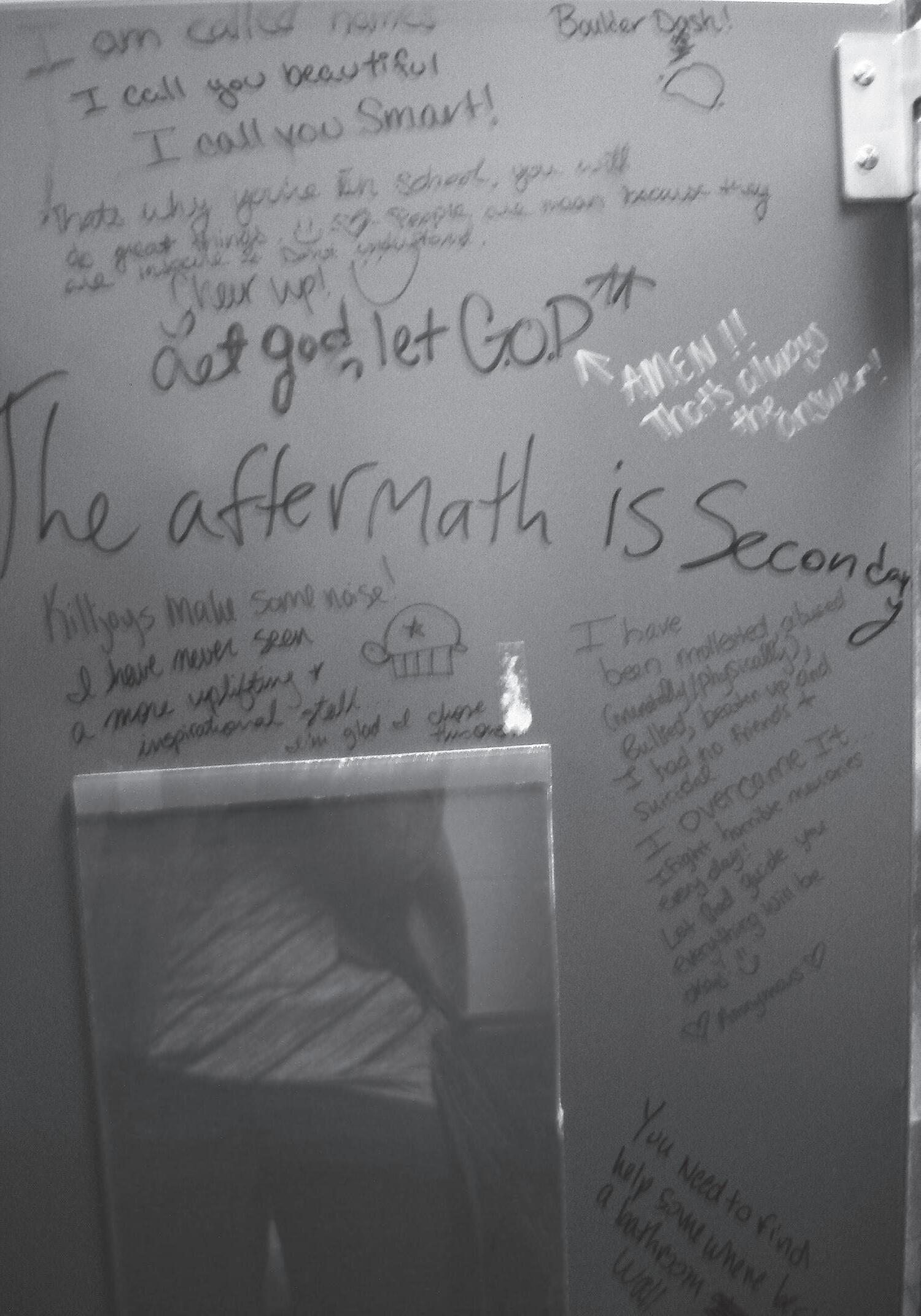
Graffiti is usually considered vulgar, but the thread that’s appeared in a second floor Stabler Hall women’s restroom is downright inspirational. The anonymous messages are written in a variety of handwriting. At the top of the wall is written, “I am called names.” Responses say “I call you beautiful,” “I call you smart,” and “That’s why you’re in school. You will do great things.”
Other encouraging comments include “People are mean because they are insecure and don’t understand,” “Cheer up” and “Let go and let God.”
Some wrote advice, like “Be kind to others” and “Don’t take your blessings for granted.”
One person wrote their own confession, which reads “I have been molested, abused (mentally/physically), bullied, beaten up and I had no friends and suicidal (sic). I overcame it and I fight horrible memories every day. Let God guide you and everything will be okay (sic).”
One writer seemed to disapprove of the thread, and wrote “You need to find help somewhere besides a bathroom wall.” To that, some replied “Never discourage help of any kind.”
Some graffiti was simply thatgraffiti. Someone wrote “Killjoys make some noise,” while another wrote “The aftermath is secondary.” Still another person wrote “Boulder Dash,” complete with an illistration.
Overall, however, the sentiment on the wall is best expressed in one person’s writing: “I have never seen a more uplifting and inspirational stall. I’m glad I chose this one.
Smoking and the use of drugs may be a sensitive topic to talk about in many countries, but smoking and using drugs are not rare among students - whether they are American or French. From a foreign point of view, smoking does not seem to be very common among Americans, or at least in Little Rock. Whenever I go downtown or other places in Little Rock, I barely see people smoking. Needless to say, I do not see anyone smoking at the university because UALR is a smoke-free campus.
Smoking is very popular in France, especially among the young generation. Almost everyone in France has tried smoking, and it is not uncommon to see smokers in the streets since smoking is only banned in public places such as restaurants and bars.
I believe smoking has taken an important place in French culture, and I think it would be diffi cult for it to be banned, especially in universities. As you may have fi gured it out, smoking is allowed at most French universities. It is only banned in high schools and middle schools - yes kids as young as 13-years-old are smoking.
At the university of Orléans, students and faculty are allowed to smoke outside the campus buildings. I think that university is not a smoke-free campus mainly because it would be diffi cult for the administration to ban smoking since the university is located in a natural environment; it is not surrounded by fences like UALR. However, there are some restrictions students have to follow. For instance, they are not allowed to smoke inside in order to respect non-smokers. If they want to smoke, they can go outside the buildings; it does not matter if they are two feet away from the entrance or or 100 feet away as long as they are outside. At my home university, students usually go next to the entrances to smoke, and they go in groups. It is not very common for students to go smoke by themselves as smoking is seen as a way of socialization by many. Indeed, it is not rare to see students talking after having only exchanged a cigarette.
When I was in college in France, my friends and I used to go smoking during the breaks and we meet new students almost every time. It was even more common at my high school. I think it is fair to say that almost half of the high school students were smoking, so whenever there was a break, a huge crowd of student was formed in front of the gates. It may seem surprising for an outsider, but it is part of the French culture among the young generation.
However, I was not studying in a very good neighborhood - in high school or college - and cigarettes were not the only thing students smoked. I have never been asked if I wanted drugs but one of my friends was when he was in college. He was walking in the street near campus during the day, and a young boy asked him if he wanted drugs. My friend said no and left. Everyone in the neighborhood is aware that there are drugs but it has gotten better during the past years.
Indeed, the university has a counseling offi ce as well as health services where students can go get information on the dangers of smoking and drugs, and on how to stop smoking. I do not know if it is very effective though because smoking has gradually become an inherent part of French culture and society. People are aware of the danger of smoking but this does not seem to make them stop, and neither does the high price of a pack of cigarettes. I think it is a good thing that UALR is a smoke-free campus and I think French universities should try to adopt the policy. If you have never smoked, the best thing to do is to avoid starting; if you do smoke, there is help to stop.
A bientôt pour de nouvelles aventures! (See you later for other adventures!)
Caleb Mitchell Staff Writer cfmitchell@ualr.edu
When Disney unveiled phase two of its film lineup set in the Marvel universe, “Thor: The Dark World” was one of the first films to be revealed. As the sequel to Kenneth Branagh’s 2011 box office smash, the release of “The Dark World” has been eagerly anticipated by Marvel fans. Now it’s finally upon us, and with a worldwide box office gross of over $359 million and counting, it’s safe to say “The Dark World” has arrived with a hammer-like impact.
In addition to returners Chris Hemsworth, Natalie Portman and others, “The Dark World” also welcomes a number of newcomers, most notably Christopher Eccleston in the role of the main villain, Malekith. Though Hemsworth is the top-billed actor , it’s Tom Hiddleston who steals the show as the God of Mischief, delivering deadpan line after line to hilarious effect.
Though he’s responsible for much of the film’s comedy, Hiddleston is far from the sole source of laughs. Despite what the film’s name might suggest, “The Dark World” is rife with hilarity, creating a wonderful contrast of intense action and light-hearted humor that gives the “Iron Man” series a run for its money. There’s hardly a character in the film that doesn’t have a humorous moment or two, though side characters occasionally teeter on the verge of funny but obnoxious.
From both a plot-oriented and visual standpoint, “The Dark World” is a much grander affair than its predecessor, making the film feel more like the sweeping epic deserving of a Norse tale. While the rare plot-hole or wonky-looking bit of CGI occasionally distracts from the action, such occurrences are infrequent enough to be overlooked and don’t detract from the movie experience.
The sole issue with “The Dark World” is the rather lackluster and anticlimactic ending. The film is two hours long, but for such a lengthy, intense, and action-packed setup for the final confrontation, it felt like more of a letdown than a showdown. Imagine you’ve just spent an hour and 45 minutes setting up an epic chain of fireworks that you’ve rigged just perfectly so that they all go off together in one massive explosion when you detonate them. Now imagine you flip the switch and they all turn out to be duds, except for one bottle rocket and a pack of sparklers – that very well summarizes the end of the movie.
But even with this gripe, it’s hard to stay angry at “The Dark World.” It’s not perfect, by any means, but films like this don’t need to be since it’s a popcorn flick through and through. There’s not a deep, compelling story to be found here, no baffling twists that will leave your mind reeling for weeks on end, or anything else to this film besides pure, unadulterated entertainment – and really, who doesn’t love that?


Liz Fox managing editor elfox@ualr.edu
A collected, soft-spoken Michael Gira sits before the camera in the 2004 rockdoc “Kill Your Idols.” Framed in black and white, his porkpie hat is painfully straight and the dampness of his surroundings makes him look like an impoverished nobody. But in fact, he’s an underground icon.
“Mainly I just wanted an excuse to rage,” he says of forming Swans in New York in the early 1980s. “I didn’t want to teach anybody anything. If people liked it, fine; if they didn’t, they could go away… which they often did.”
This statement adequately sums up the ringleader’s views on his own career, which has had its own trials over the course of its conflicted existence. But since resurrecting the Swans moniker in 2010, the songwriter has found new critical acclaim and, with the live double-album “Not Here/Not Now,” has given his fans a positive idea of where Swans may be traveling.
Trying to dissect the Swans timeline is a task reserved solely for an obit writer, but it’s worth noting how much Gira’s live appearances have evolved in three decades’ time. Scenes staged by members of Swans once involved offensive behavior with chains, contortions and a Pandora’s box of terror used to complement its art-house instrumentals. But with last year’s “The Seer” and the emergence of “Not Here/Not Now,” Swans has morphed from something conceivably frightening to a collective on the cusp of a here-to-stay comeback.
“Not Here/Not Now” comprises 10 tracks performed during the band’s 2012 European tour. But rather than rehash the bulk of tracks from “The Seer,” Swans selected another route and performed mostly unreleased tracks to surprised audiences. It’s this factor that
satisfies a new demographic outside of megafans (though the hopelessly devoted get a personalized Gira track about their fantasies if they shell out $500 for a limited-edition relic), which is an obstacle the group has worked hard to overcome because of its mainstay status in the avant-garde. But this doesn’t mean the band has traded in its writhing for a warmth that will make the average person feel comfortable. Gira is solemn as ever and, as evidenced by the closer “Screen Shot,” he willingly immerses himself in a fog where even his bandmates have trouble reaching him. Ironically, it is in noisier tracks - particularly “Oxygen” and the 44-minute version of “The Seer” - when the wall of sound creates a strange breed of harmony. The discord leads to middle ground between alternative and drone, harboring some bliss that hasn’t been felt since Gira and former bandmate Jarboe parted ways in 1997. Unlike the rawness radiating from early recordings, “Not Here/Not Now” mimics constructed experiments from the past. Sounds from Miles Davis, Jim Morrison and other creative titans populate the record, but this homage only drives home the album’s main idea: Swans is an unstoppable force. The album’s endnotes, which include the 8-minute rhythmic rite “Nathalie Neal” and two other demo tracks, easily lay the groundwork for something innovative to complement - but not copy - the success set by “The Seer.”
Even as “Not Here/Not Now” ends, Gira comes off as confused and recalls his older, petulant self. The music stops and as he addresses the audience, he does so with doubt: “I don’t know where it’s going to go from here.” But judging from his latest offerings, it’s likely Swans will fly into fertile and flourishing territory.
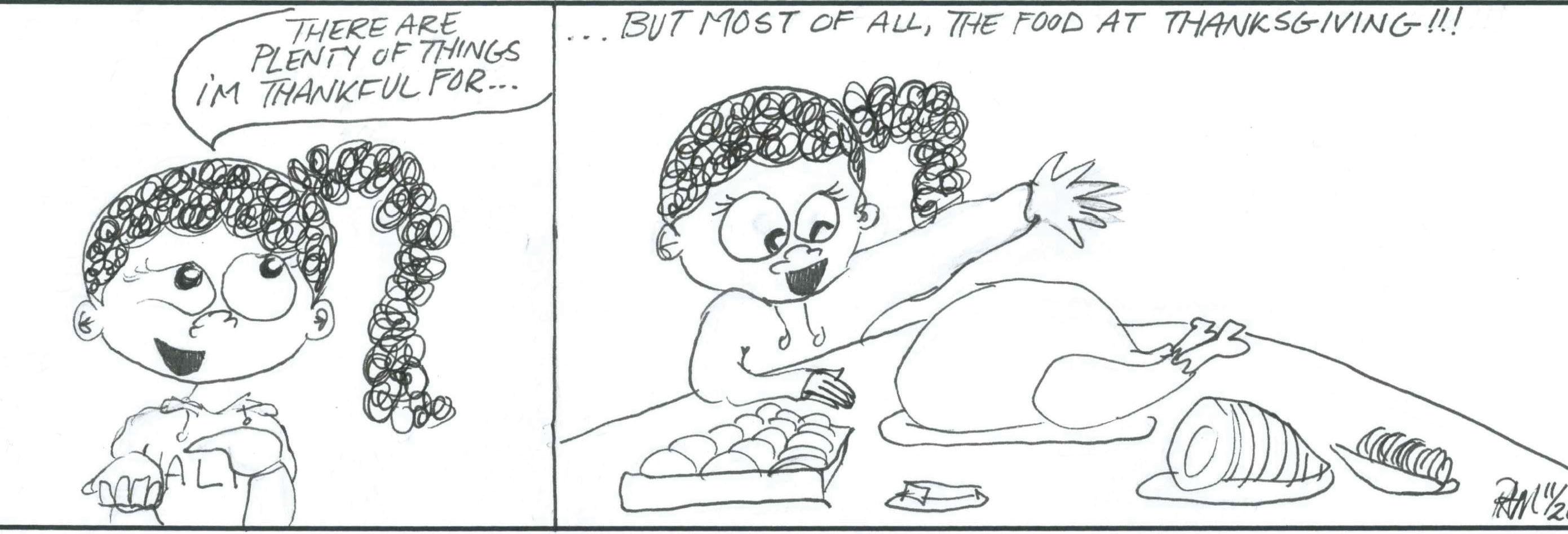


Photo courtesy of Def Jam Recordings
Caleb Mitchell Staff Writer cfmitchell@ualr.edu
Since her debut in 2008 with “The Fame,” Lady Gaga has been known as an artistic chameleon, constantly changing her over-the-top outfits, wild hair and, most notably, her musical style with every album. While “The Fame” had a very 80s, European-style electronic and synthpop vibe, “The Fame Monster” and 2011’s “Born This Way” experimented with a much darker side of disco and Gothic-inspired pop music Now with “ARTPOP,” her third full-length studio album , it is safe to say Gaga has continued to keep her streak of ever-changing music alive and well. While still a pop album at heart, “ARTPOP” features a variety of unique sounds and genre-bending musical styles that sound completely unlike anything Gaga has done before.
“ARTPOP” starts off strong with “Aura,” a catchy, personal dance track that poses the question,“Do you want to see the girl who lives behind the aura?” It’s a good start for the album and, like any great opener, sets the tone for what’s to follow. It is followed by “Venus,” an occasionally humorous song featuring sex, space and innuendo. Following tracks continue the theme of sexuality, which runs rampant on “ARTPOP,” with “Sexxx Dreams.” The song’s lyrics are unfit to print, but it’s wildly catchy and I imagine the edited version will soon be playing across radio stations everywhere.
But it’s “Jewels N’ Drugs” that is far and away the most different from anything Gaga has done before. Featuring rappers T.I., Too $hort and Twista, the song sounds like it was ripped straight from a hip-hop album and throws listeners for a loop. In fact, I imagine that most of Gaga’s diehard fans will probably hate this song with a passion; but if you can tolerate rap in any capacity, give this song a chance since it grows on
you pretty quickly.
The middle of “ARTPOP” is filled with some of the best tracks, which is both a surprise and a relief considering this tends to be the portion where things start going downhill. “MANiCURE” hearkens back to “The Fame”, while the single “Do What U Want,” proves to be another chance for Gaga to show off a different side of her music.
This section is also where Gaga tucked away what is arguably her zaniest – and most obscenely catchy – song yet: “Donatella.” While it’s tempting to attribute most of the song’s appeal to the fact that it was produced by electronic DJ and producer Zedd (of “Clarity” fame), Gaga’s voice and crazily narcissistic lyrics carry the pulsing tempos straight into the listener’s brain. Funny, wacky, absurd? Yes, but it seriously cannot be overstated how catchy this song is.
The last few songs on “ARTPOP,” including the fantastic ballad “Dope,” slow things down and give the listener breathing room after so many clubready tracks. It’s an appreciated break and one that is especially needed as the album comes to a close, with the lead single “Applause” serving as a fitting finale.
Overall, “ARTPOP” continues the trend of what is the definitive Gaga style: it’s exactly what you’d expect from the record-smashing pop queen, yet not what’d you’d expect from her at all. While there are moments of fleeting similarities between “ARTPOP” and Gaga’s other work, the number of new sounds and styles lend a unique touch to the album that makes it stand far apart from anything else the singer has done. While the old cliché “third time’s a charm” might seem trite, it’s a fitting expression; with “ARTPOP,” Gaga proves she can take a wild turn in musical style and still keep listeners dancing to the beat.
Jacob Ellerbee executive editor jjellerbee@ualr.edu
With basketball season already upon us and the holidays quickly approaching, the latest piece of basketball equipment may be the perfect gift for the sports fan and data enthusiast in your life.
94Fifty is a specially patented basketball that transmits performance data to a downloadable app on your smartphone using a built-in bluetooth sensor inside the basketball. According to a press release from Infomotion Sports Technologies, the product will help basketball players “improve their muscle memory for core skills like dribbling, passing and shooting. For shooting, we measure things like shot spin, shot arc and shot release speed to the millisecond. For dribbling, we measure things like number of bounces, dribble force, dribble speed, control, strong/weak hand analysis, etc.”
But what makes this product stand out is its ability to provide players a chance to correct and/or improve basic basketball skills without the need of continuous and pricey private lessons from a teacher or coach. The downloadable app acts as the private instructor and the built-in sensor makes it all possible by calculating seemingly infinite amounts of data.
With endorsements from NBA point guard Mike Conley of the Memphis Grizzlies and having the product sold in Apple retail stores, this item is beginning to intrigue consumers on various levels.
One of the more appealing aspects of both the product and the app is the leaderboard system it uses. A user can log in and see how others are doing with one of the many drills you are trying to master, creating a competition-style community. For example, you can open up your the app on your smartphone and see that Conley has registered 70 shots out of 100 attempts, which could give you motivation and a gold standard to strive toward.
The only setback is the price tag. The basketball,which can be ordered in various regulation-sizes - totals at a whopping $259 when combined with the charging station, which keeps the sensor in the basketball primed for about 8 hours.
Infomotion Sports Technologies holds a utility patent for an “electronic component enclosure for an inflated object,” which means football, volleyball and soccer players could see a similar product hit store shelves in the near future. The 94Fifty sensor basketball is now available for purchase through shop.94Fifty.com.



Liz Fox managing editor elfox@ualr.edu
In November 2001, Microsoft released the Xbox. As a powerful, innovative system, the console competed well with the Nintendo GameCube and Sony’s Playstation 2. The Xbox 360 only furthered this standard, with hi-res graphics and seamless accessibility being touted alongside decent, exclusive game titles. But while the Xbox One - set to be released later this month - aims to continue the tradition, the advances may prove off-putting to long-time fans and consumers.
Xbox One’s advantages are very much par for the course, especially for 2013. The system runs on 8 GB of memory (as opposed to 512 MB on the original 360) and the split-screen capability is improved for multiplayer gaming. Microsoft has also included the Kinect motion-sensor device by default, voiding an additional purchase previously required for the “Just Dance” series and similar titles. The environment is allegedly cleaner than its predecessors, and cloud storage and a built-in Skype client give some leeway for consumers wanting to purchase the console for more than gaming.
But with Sony’s Playstation 4 having been released around the same time, the Xbox One has drawbacks and disadvantages that should be considered before a purchase is made. Like the PS4, the console has no backwards compatibility, which is a complete turn-off for nostalgic types unwilling to give up cop-
ies of “Halo” or “Dead Space” in favor of brand-new and pricey titles. At $499, it’s also $100 more than its competitor, which prompts a wait for a drop in price - an unwritten rule for most gamers. But an expanded Xbox Live service and the idea of better storage may make up for its expensive rate.
The most off-putting “feature” of the Xbox One is the built-in Kinect device. While it was optional for the previous console, the mechanism is not only included by default, but it must be turned on at all times. Since the Kinect is a sensor-like device that registers properties like movement and heart rate, the idea of it being constantly active gives the system a Big Brother vibe. Though Microsoft may have the best of intentions, it’s possible that later developments could lead to hacking Kinects, which would be akin to the webcam-hacking that currently takes place through personal computers. Given the characteristics boasted by ads and unveiled at cons, the Xbox One seems like it’s designed for hardcore gamers. As a casual consumer who engages in downloaded games and takes advantage of the Xbox Live service for Netflix and Hulu, it’s difficult to justify spending an entire paycheck on the Xbox One. But for those willing to shell out the cash - or play “Assassin’s Creed IV” until their eyes plummet into their sockets - it might be a wise choice. But, as with any new console, buyer beware: do research, wait for bug fixes and weigh the options.

Indie-folk act plays marathon set in support of its latest release, ‘Magpie and the Dandelion”
Jacob Ellerbee executive editor jjellerbee@ualr.edu
It is precisely 8:15 p.m. and the crowd at Verizon Arena, as if on queue, begins to cheer, scream and yell as The Avett Brothers take to the dimly lit stage amid white flashes emanating from cell phone cameras near and far.
Scott Avett - armed with a banjo, a harmonica affixed to the collar of his shirt - and Bob Crawford, carrying a simple fiddle, began playing as they walked to the end of the catwalk that jutted out from the middle of the stage.
The yellow spotlight draped the two as they opened up the show by playing “The Arkansas Traveler,” to the delight of a few thousand fans who were in attendance Nov. 8 during the band’s first stop of a three-week tour around the U.S. Seth Avett (guitar) and Joe Kwon (cello) chipped in on the tail end of the song and the band smoothly transitioned into a well-polished version of “Colorshow,” from 2006’s “Four Thieves Gone: The Robbinsville Sessions” album.
It didn’t take long to play a cut from their new album, “Magpie and the Dandelion,” as the opening track from that
album appeared as the third song in the band’s setlist.
The band chugged through more than 25 songs when it was all said and done, giving attention to songs from just about every studio album.
The band’s minimalist approach in their songs mirrored their stage set-up: a blank white canvas sheet (which later turned into a florescent pink and black canvas depicting a couple of magpies), instruments, amps, lights and a rug to stand on.
The four main members of The Avett Brothers - Seth and Scott, Carpenter and Joe Kwon - were able to play a variety of instruments, some playing more than one instrument at a time. Scott was able to manage banjo, harmonica, bass drum and vocal duties, while Seth was responsible for guitars, vocals and highhat. Crawford dabbled between upright bass, bass guitar and fiddle, occasionally providing back-up vocals and harmonies. Kwon stuck to the cello and also provided vocal texture on occasion.
Two touring musicians helped out by occasionally playing drums and a variety of key-based instruments.
The Avett Brothers seem to be at their best when Seth has an electric guitar in his hand, which gives the songs a hard-
Liz Fox managing editor elfox@ualr.edu
Since Sonic Youth’s unfortunate, indefinite hiatus in November 2011, guitarist Lee Ranaldo has proven himself a workhorse. He’s spent the last two years collaborating, producing and coming into his own as a songwriter, which all eventually paid off with the 2012 release of “Between the Times and the Tides.” But while the aging songwriter is trying to find his indie-rock footing, he stumbles a bit with “Last Night on Earth,” his latest release with new backing band The Dust.
My first brush with Ranaldo’s solo work came with picking “Dirty Windows” from a thrift store bin. The 1998 album features the guitarist fiddling with spoken word and dissonant guitar work à la Glenn Branca, who recruited a young Ranaldo into his no-wave orchestra in the early ’80s. Experimental and fraught with inaccessibility, “Dirty Windows” was not a new direction for the guitarist, who’d already spent much of his career noodling with sometimesexcruciating feedback. But as times changed, it’s apparent Ranaldo wanted to aim for a more relevant sound. While this seems like a venture that would bring complete success for a fuzz-rock mainstay, his tendency to lean in one direction dampens his recent effort.
“Last Night on Earth” begins with “Lecce, Leaving,” a track with wistful lyrics, country pangs, and prog-oriented wahs. But the optimistic opener only sets the tone for musical monotony, with almost every track following in the same space-rock descent as its predecessor. Ranaldo seems to flirt with post-rock for much of the album, limiting himself to extended indie songs
that clock in between 6 and 9 minutes in length. This is especially noticeable in “The Rising Tide,” a song with semiapocalyptic overtones whose title and content pay tribute to the songwriter’s reoccurring fascination with water motifs. Listeners could definitely do without the hokey harpischord of “Late Descent #2,” and as a whole, the album spirals into a meld of rock and psychedelia that renders “Earth” unrevolutionary in the Pitchfork age.
But while the material may get tiring for the average joe, Ranaldo’s work isn’t without its high points. “Earth” pairs experimentation with real technique, a talent crafted from years of work with structured noise. Though it could be improved upon, his songwriting has also matured, leaping from his previously melodramatic poetry to something meaningful and accessible. More importantly, the album demonstrates a deep-seeded desire to remain musically relevant. Ranaldo, a 57-year-old who’d spent his golden years with a noiserock mainstay, has obviously kept with trends on his own time despite Sonic Youth’s stagnancy, allowing him to try on new concepts. It’s just unfortunate “Earth,” despite being backed up with the talents of Alan Licht and former SY drummer Steve Shelley, mildly disappoints in its groping for form.
Does this mean Ranaldo should return to the feedback underworld from whence he came? Absolutely not. Though “Last Night on Earth” is not the most successful execution in the guitarist’s 32-year career, it represents a want for a new direction which, judging from equally revered artists, may mean the bleak noise of his former self will be shed in favor of a colorful stint in the world of feverish post-rock.
er edge. Up-tempo songs seem to let the band have the most fun, as shown by Kwon’s behavior during such songs.
On more than one occasion, Kwon would play his cello so quickly and emphatically that his black cowboy hat would fly off his head and he would begin to headbang, swinging his hair in a helicopter-propeller motion, much like many death metal guitarists do. Kwon was fun to watch and brought an exciting dynamic to the band. Seth also brought an exuberant amount of energy to the stage, frequently shimming and gliding around on the stage while playing his guitar. His long and skinny stature made for some fun and silly impromptu dancing-in-place.
The band’s performance clocked in at just over two hours, which is even more impressive knowing that the band members did not talk very much between songs, if at all. The band’s powerful and diverse songs kept the attention of this audience of new and diehard fans.
As the band rounded out “Head Full of Doubt, Road Full of Promise,” they exited the stage with even more fanfare and applause than when they began. The fans stood tall, clapping and cheering as they requested an encore perfor-
mance.
After a minute or two of applause and cheer, Scott came up to the microphone and said “thank you” and Seth was right behind him assuring the crowd, “we would love to!”
The band finished the night by playing a handful of songs before exiting the stage, giving scores of fans a night they’ll remember for a long time.
John Anderson, a senior mass communication major and the recipient of two tickets given away by The Forum, said he left as a new fan.
“Before going to the show, I wasn’t sure what to expect because I had only heard their music a few times from my sister,” he said.
“I really enjoyed the concert and I was very impressed with how diverse their music was. They would transition from a slower indie type of song into a fast-paced country song.”
“They definitely put on a great show and I decided to download their latest cd, ‘Magpie and the Dandelion,’ and it is awesome!”
The Avett Brothers latest album, “Magpie and the Dandelion” hit No. 5 on the Billboard Top 200 chart after it was released Oct. 15.
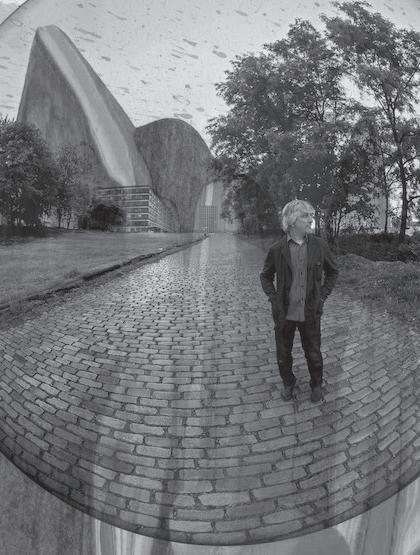
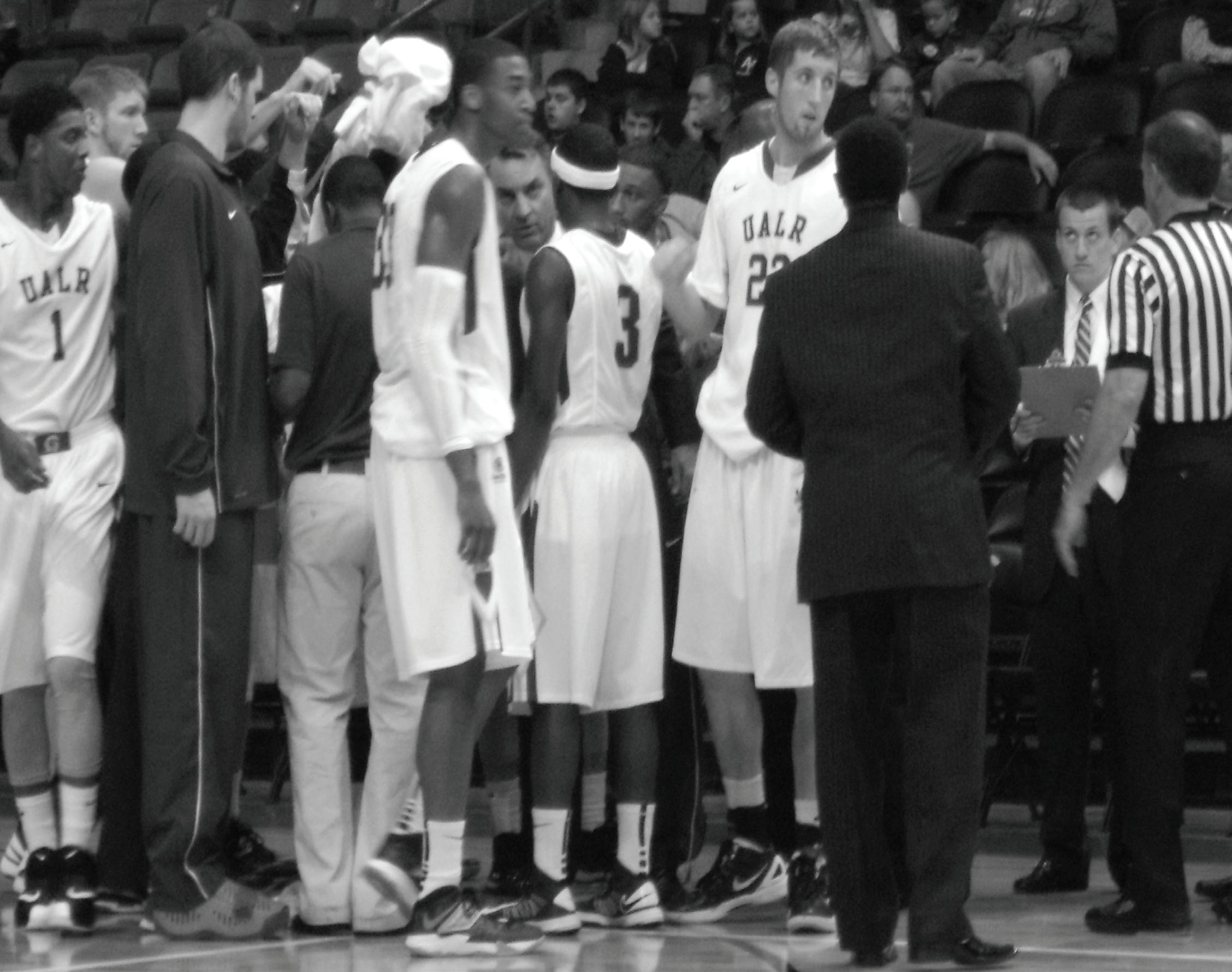
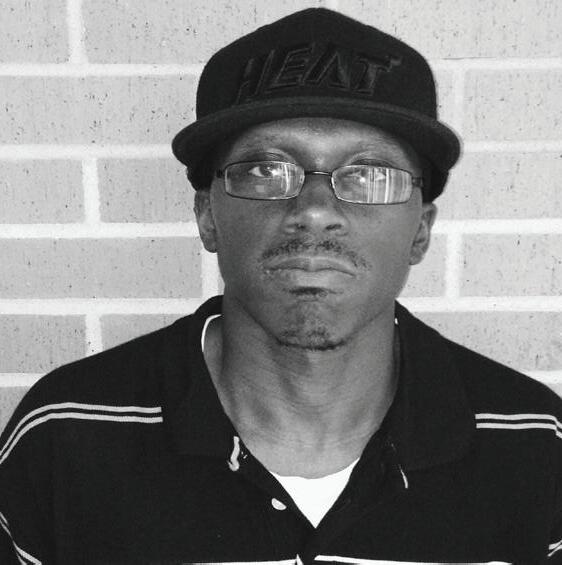
I find myself in the middle of a battle with my own sensibilities of right and wrong. I haven’t written about it here before, because I’m sure I’ll raise more questions than answers. But let’s take a look at the issue and you can sort it out for yourself.
I have to preface this by saying that I hate the way that college sports is setup. Where millions of dollars are being made off the backs of teenagers and young adults. While the sport keeps paying more and more to those all around them from A.D.s to coaches, the players are prohibited from getting anything. That’s a story for another time, but it serves as an interesting backdrop to my thoughts today.
Last week there were a pair of big-time college basketball games on television that featured several highly touted freshmen. These 1styear players will be the faces of their respective colleges for the next few months.
For over a decade now, the UALR Trojans men’s basketball team has been led by head coach Steve Shields. But heading into Coach Shields’ 11th season, it doesn’t seem like it has been that long for him.
“Time flies that’s for sure,” he said.
Shields has been head coach since the 2003-2004 season and has become the winningest coach in UALR history compiling 263 victories coming into this season.
Under his guidance the Trojans have won five SBC division championships. The team also won the SBC Tournament in 2011 for the first time in school history, this led to an appearance in the NCAA Tournament – UALR’s first since 1990.
Shields began his UALR coaching tenure as an assistant and recruiting coordinator from 2000 to 2003 under then head coach Porter Moser. When Moser left for Illinois State after three successive and successful 18-win seasons at UALR, Shields took over as head coach.
In his first season at the helm, Shields won SBC Coach of the Year honors for leading a young team to a 17-12 record and winning the division championship.
According to the Steve Shields website, he was born on March 9, 1965. He has a bachelor’s and a master’s degree in education from Baylor University, where his father the late Gene Shields was the golf coach from 1978 until 1996.
Shields collegiate career included red-shirting at Oklahoma City University and a season of basketball at McLennan Community College before finally transferring to Baylor where he played golf under his father even earning AllSouthwest Conference honors in 1987.
One of Shields’ first jobs as a head coach was at his high school alma mater, Reicher Catholic High School in Waco, Texas, where he was not only the head basketball coach, but also the athletic director and head coach of the football team.
In that season, shields led his basketball team to 23 wins and also led his football team to a district title.
“It was a great experience for me to be able go back to Reicher High School (where he played football, basketball, and baseball as a student) and be able to coach and teach around people that knew me as a student. They knew the good and the bad,” Shields said.
“Same thing here, I was an assistant here for three years. You feel like they knew the good and the bad of what they were getting… from being around and seeing you from day to day.”
As for his stint as a high school football coach in the state of Texas where football is king, Shields said the only way he agreed to it was if he got to hire some great part-time help AND he got to be head basketball coach.
The next coaching position for Shields was as an assistant basketball coach at McLennan, a brief stop at Kilgore Junior College, and then a return to McLennan as the head coach for four seasons before finally coming to UALR.
Winning the SBC conference tournament in 2011 is the proudest moment for Shields so far, with good reason. The team won on a dramatic 3-point shot from 2011 SBC Player of the Year Solomon Bozeman with 1.5 left against North Texas sending them to the NCAA Tournament.
The coach remembers Bozeman putting in endless hours on his own putting shots on his own. “I think that’s something that’s very enjoyable for a coach when you see guys put in all that work and then make it pay off,” Shields said.
“That one moment (Bozeman’s shot) is probably the most enjoyable, but seeing guys that have graduated and gone on and been productive citizens, doing well with their lives. That is equally important.”
That fact that Shields father was a longtime coach influenced his decision to become one himself, a decision that he said he made early on. Growing up in a family of four boys, his favorite sports was whatever was in season, but he knew he wanted to coach a team sport.
“You get into it, because you love sports and you want help young people achieve their goals,” Shields said. Achieving these goals includes graduating every player who has exhausted their eligibility at UALR, which shows Shields’ commitment to more than just the athletic side of college athletics.
“It’s more than just basketball, more than bouncing a ball.”
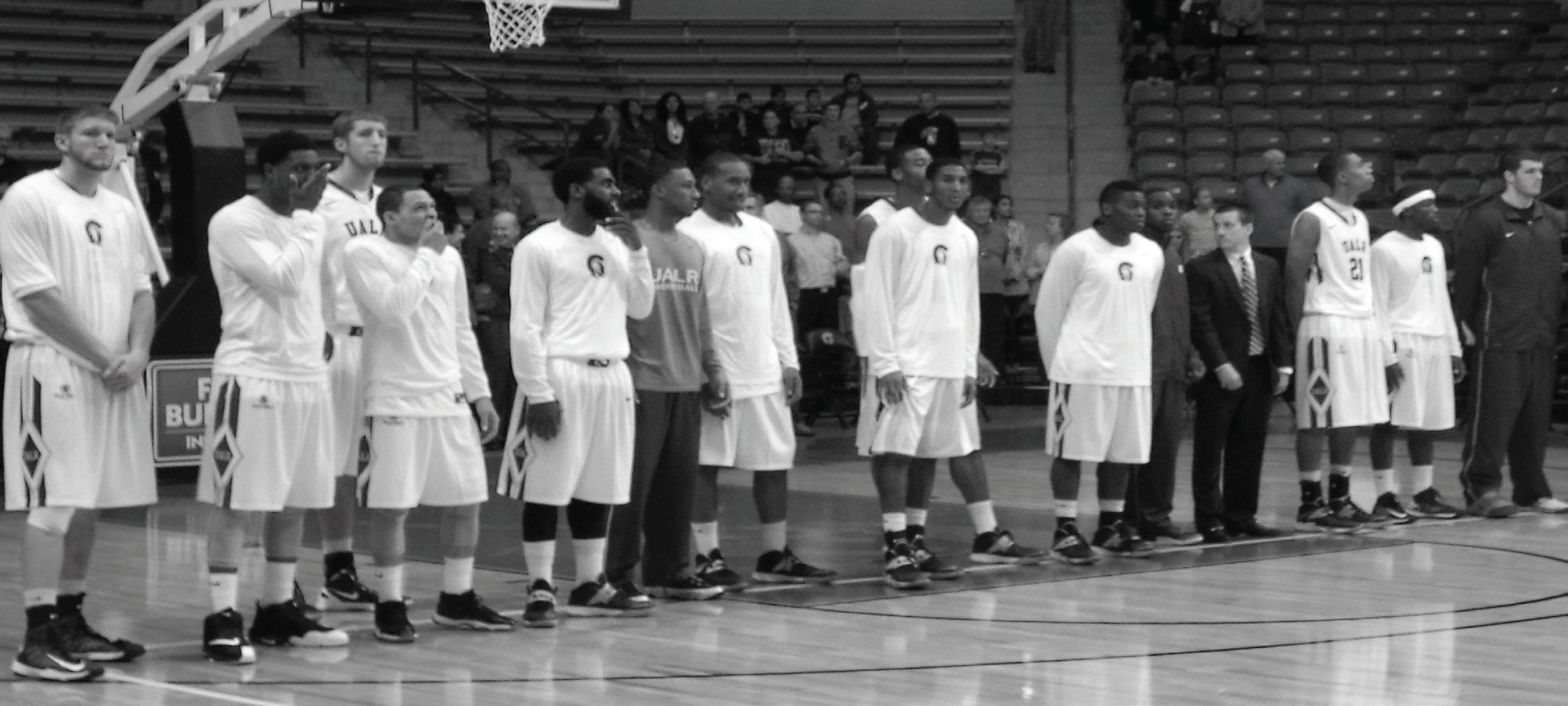
Alton Young Sports Editor Axyoung1@ualr.edu
The UALR men’s basketball team got their season underway on Nov. 11 with a 72-70 loss to North Florida at the Jack Stephens Center. The Trojans are coming off a season that featured one of the youngest rosters in the nation to have a winning record. The Trojans began the 2013-2014 campaign with a challenging non-conference schedule that head coach Steve Shields hopes will pay off later this season.
Shields is excited about putting the experience of the players from last year’s team together with the players
that were added in the off-season. Two of those returning players, seniors Leroy Isler and Will Neighbour, were recently named team co-captains.
“We’ve got a number of kids returning from a team that won 17 games,” Shields said.
Two of the new players to the team, Devonte Smith and J.T. Thomas, will be leaned on heavily in their first seasons as they both play the point-guard position for the Trojans.
The team began the season playing in front of an enthusiastic crowd at home in that season-opening loss to North Florida. The team lost momentum and possibly the game when Isler fouled out with less than four minutes
left to play. Isler was perfect from the field hitting 5 of 5 shots, before being disqualified. The team was led by Josh Haggins 14 points, though he was only 1 for 7 from 3-point range.
In their next game, a road contest in Gainesville, Fla., the Trojans played the 11th ranked Florida Gators tough in the first half - the game was tied 27-27 at halftime - before Florida ran away in the 2nd half. The 86-56 final score betraying the team’s effort. Will Neighbour scored a team best 21 points with 8 rebounds, while coming off the bench.
The Trojans continued their road trip Nov. 18 with a loss to undefeated Middle Tennessee 76-59.
That three out of the four teams featured a potential NBA number one pick was the thing that all the sports outlets were focused on. Whether the number one pick overall or not, all three will undoubtedly be taking their talents to the NBA with LeBron in next summer’s 2014 NBA Draft.
This is where my internal battle kicks, try to stay with me because my logic may seem convoluted: There is just something unseemly about NBA GMs salivating over these guys before they even finish one month in college, let alone one season.
The so called “one and done rule” forces high school basketball phenoms to go somewhere other than the NBA, until they are at least a year removed from high school.
Everything that you may have read in this column may make you believe that I would hate this rule and you would be correct, but I hate it for reasons other than what you may think. I think the rule should be at least two years removed from high school. Sure, I don’t like the current system of free labor in the NCAA. But I actually believe that a couple of years of learning how to play a team game and working on fundamentals would actually do these guys some good and maybe give them a little time to mature as people.
And who knows? There could be the few exceptions who decide they actually like school and want to come back for a junior, maybe even a senior year.
The NFL has a three year rule that everyone adheres to and few people complain about, unless a Johnny Manziel type player comes along. The argument is that those guys need the time in school for their bodies to mature enough to battle the men of the NFL. Maybe guys need a little more time for basketball as well.
I do have a selfish ulterior motive in this as well. I don’t like the NBA being a farm league for players who should be learning how to play under a great college coach.
I’ve had a chance to sit with Coach Shields a few times and I know that any player who spends a few seasons with him would not only become a better player, but a better person as well.
With the current setup, the guys who are supposed to be high picks dare not stay in college past their first season. The stigma is the longer you stay in school, the worse player you must be. That’s not always true, but as the saying goes: perception is reality. So for now, college remains a pit stop for the best college basketball players.
I only wish these guys could have an opportunity to become men before they became millionaires.



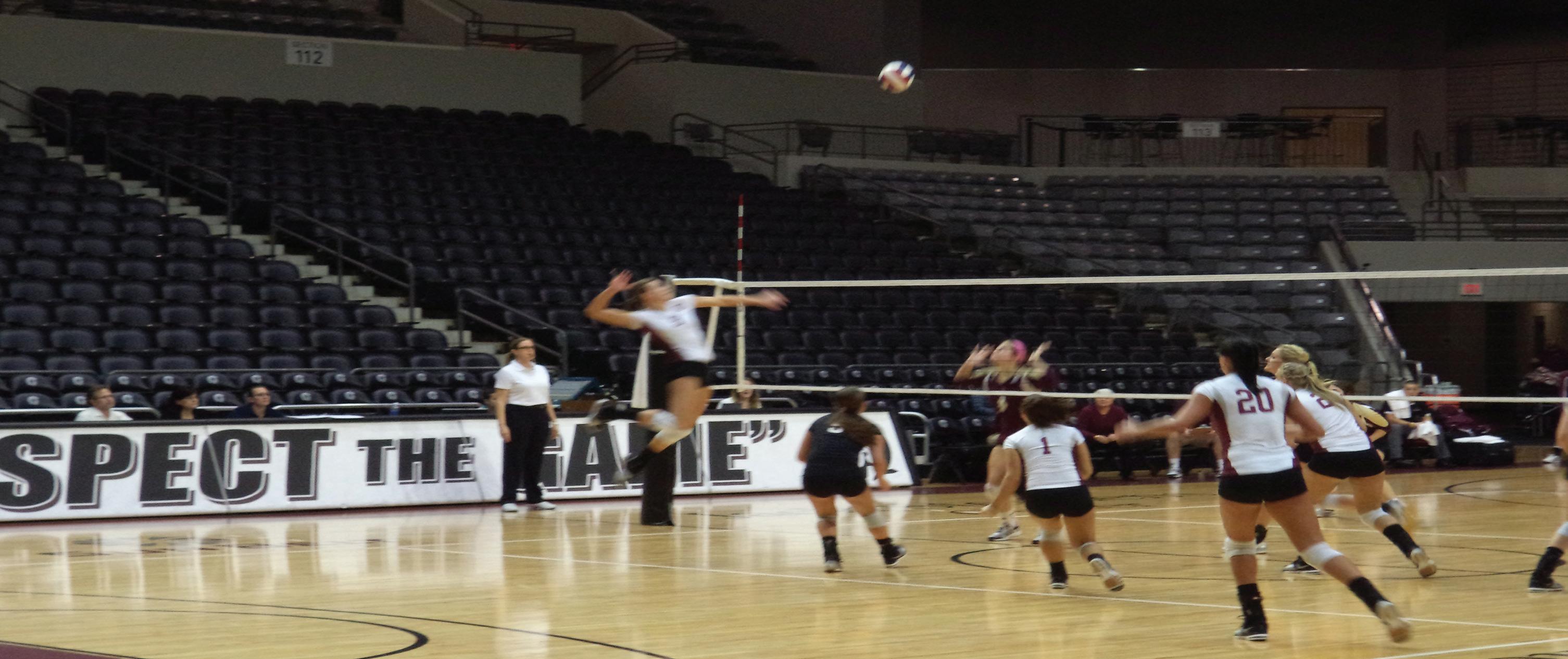
Alton Young Sports Editor Axyoung1@ualr.edu
With the regular season coming to an end over the weekend for the UALR volleyball team, the women are preparing for the 2013 Sun Belt Conference tournament that starts Nov. 21. The team last won the tournament in 2000.
The team believes it has the talent and the confidence to win the championship this season and head coach Van Compton knows that there is a real opportunity for this team to do just that.
“We have aspirations of trying to win this thing,” Compton said about the upcoming tournament.
The team had a very good regular season campaign with both the players and coaches alike enjoying the ride.
“It’s been the best by far, since I’ve been here,” defensive specialist Alison
Wyatt said. “It’s the most fun that I’ve had.”
“I agree, because obviously you have fun when you win,” setter Marleen de Zoete added.
The two upperclassmen have played their last game at home, but hope to continue playing with their teammates for a few more games in the SBC tournament in Troy, Ala.
In order to accomplish everything the team wants to, Coach Compton knows that it will be important to remain focused and not fall into the doldrums of a long season that featured many away games.
“We’ve had a long season on the road; we’ve been on the road a whole lot,” she said. “We need to stay focused and really don’t lose our way with where we’re trying to get to.”
The challenge of staying focused has been one the team faced throughout the

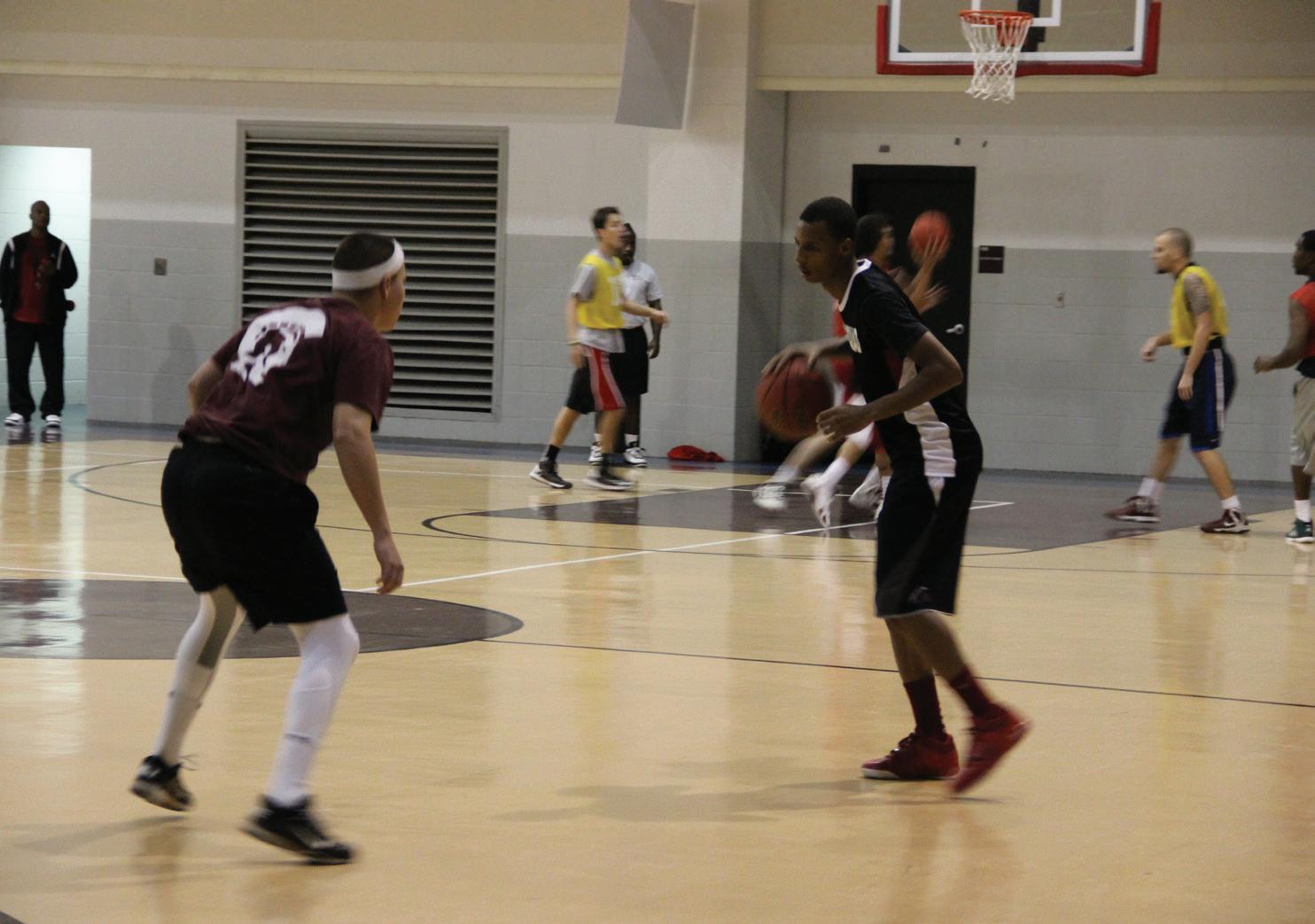
Photo by Antonio Gayden
Antonio gayden Staff Writer axgayden@ualr.edu
Intramural sports provide an opportunity for students who want to play competitive sports or just want to play for fun. The participants vary in age, gender and ability. They allow students to play a sport without committing to the school’s team and in some cases gives students extra practice and live competition to those who seek to try and make the team. Intramural sports are designed for everyone to have fun, but they still have a competitive edge.
The 3-on-3 basketball tournament put on by the Coordinator of Intramural Sports Grant Watts gives students the chance to not only play basketball, but to meet new people and develop relationships with them. Grant has been at UALR for two years. He says they use a website called Imleagues.com, where UALR has its own page. The site allows students to interact online where they can select teams and time frames they would be available to play. The tournament lasts three weeks with the championship round this week.
Students like Ryan Hope, a junior at the university, enjoys the challenge. In this, his first year playing, Hope and his team enjoy the fun break from class and
studying. “It gets me out of the house, gives me a little study break, get out here with friends and enjoy playing some basketball,” Hope said. Competition amongst peers is one of the most valuable parts of intramural sports. “Some of the teams are pretty good and some of them are not as athletic as I would like, but it’s still fun,” he added. For some people, it’s more practice for a chance to make the school team. Sophomore Marvin Reasby, who is looking to try out for the school’s team next year, plays for practice and a love of the game. “I like the game of basketball, I grew up playing basketball and it grew to the point where it keeps me not stressed, it’s my stress reliever. Many students like Reasby are always looking for ways to get involved in school activities. Reasby said he needed something extracurricular and positive on campus to get into and pass time, so that he could stay focused.
If you haven’t been to the Donaghey Student Center gym to see the tournament, Grant Watts encourages you to come watch. Its exciting, and fun. It gives you a chance to watch your fellow Trojans have competitive fun in a great atmosphere. The championship is set for Thursday Nov. 21.
year, and for outside hitter Edina Begic, losing was in itself a reminder of that challenge.
For Begic personally, who had a record-breaking season in kills and was also named SBC player of the week multiple times, the team’s support helped with her own focus.
“You always have hard times, but with them (her teammates) it was easier to go through the season,” Belgic said. She also said that she felt that this team is really good and has a chance to do something that hasn’t been done in a long time at UALR.
For de Zoete, the perfect ending to her own UALR career and to the team’s season is evident.
“Obviously winning the Sun Belt and then getting a chance to prove ourselves in the NCAA Tournament, I think, would just be icing on the cake, the cherry on top of a good season,” she said.
The goal is the same for the entire team, according to Begic.
the goal, that’s motivation,” she said.
“I feel like we’re all on the same page. We all want that ring.”