


The University of Arkansas at Little Rock’s Student Newspaper April 2022



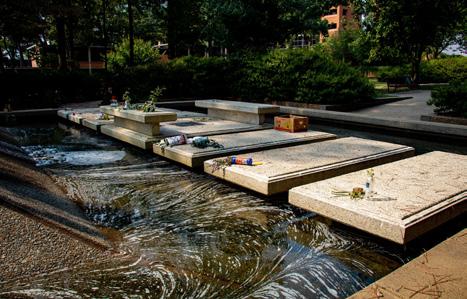

Jane Elliott, a former school teacher, became famous the day she asked a group of school children to try an exercise in which she divided the class and assigned them treatment by eye color in April 1968. The Blue Eyes/Brown Eyes exercise exposed white children to prejudice of which they were the victims and followed the assassination of Dr. Martin Luther King Jr. Her exercise serves as a talking point about discrimination today.
In Elliott’s lecture, The Anatomy of Prejudice, hosted earlier this month by the Secular Student Alliance, an educational nonprofit organization that aims to educate high school and college students about the value of scientific reason and the intellectual basis of secularism, she addressed some issues she sees in the activism of today. Her focus centered on teaching her three R’s: rights, respect and responsibility.
“You don’t have to be white to be right,” said Elliott via Zoom.
The main focus of the lecture was centered on race. Elliott said she believed that issues like sexism and ageism rose from the mistreatment of Black people, and then she turned her eye to Critical Race Theory (CRT).
JD Supra, a web-based content producer focused on professional and personal information, defined CRT in a general sense as “an academic concept that teaches that racism is a social construct embedded in society, rather than bias or prejudice of individuals or groups. As an academic idea, secondary schools largely have not taught CRT. More recently, however, the term has become a catchall label for discussions about concepts like systemic racism, white privilege, and more general equity issues.” It is also thought that the theory traces the elements of racial discrimination into issues within the criminal justice system, the educational system, labor market, housing market along with the healthcare system.
CRT has been criticized heavily in Arkansas recently. In August of 2021, Attorney General Leslie Rutledge released an official opinion claiming CRT is instead “a neo-Marxist ideology that
distorts and rewrites history, classifies people based on race, and teaches children to judge people based on skin color and sex.” Rutledge wrote that CRT violated Title VI of the Civil Rights Act of 1964, the Equal Protection Clause of the Fourteenth Amendment and Article II of the Arkansas Constitution.
Elliott calls CRT “Curriculum Respecting Truth.” She said she believes there is only one race, the human race. Due to this, she advocates for the abandonment of the terms of Black and white. Instead, she advocates for terms she coined: melanemic, melancious and melanotic. These terms are focused on instead labeling groups on the amount of melanin in their skin.
“It is better to use something factual, rather than something that is based on a lie that was started in the late 1400s and the early 1500s,” said Elliott, “You refuse to give up those terms because you are used to them. People, it’s time to get over it.”
Elliott taught that white people would not exist without Black people and how the adaptation of people caused less melanin production, quoting a National Geographic issue from April 2018.
According to her, people, especially students, needed to remember three things: there would be no Christians without Jewish people, no white people without Black people and no men without women.
She critiques the school system for the use of improper maps that do not properly reflect the world. Elliot pointed out flaws with the Mercator Projection map, which is often used in schools, and highlight the need for Peter’s Projection map. While neither is perfect, the Mercator Projection map conveys a distorted perception of the overall geography of the planet.
Elliott asked, “Can we please start to teach children the facts instead of the fables?”
Shanna Parker has been named the director of a new program at the University of Arkansas at Little Rock that is helping parents find the child care resources they need while in school.
The Child Care Connections child care funding is provided by a Child Care Access Means Parents in School (CCAMPIS) four-year grant of $581,128 from the U.S. Department of Education.
As the director of the university’s new Child Care Connections Program, Parker’s responsibilities include enrolling eligible UA Little Rock Students in the Child Care Connections Program, submitting referrals to the Student Retention Initiatives team for needed students, and implementing the CCAMPIS Grant requirement.
Parker knew she wanted to join UA Little Rock after reading what the CCAMPIS grant was. “After receiving the grant and how UA Little Rock wanted to provide the services to their students I wanted to be a part of that,” she said. “I wanted to be part of the difference in students being able to attend school without the working of quality child care for their children.”
Doctor of Business Administration in July 2023.
“I am most excited about Shanna’s expertise and her passion for helping students remain engaged with their educational goals while supporting their childcare needs,” said Heather Reed, director of Student Retention Initiatives at UA Little Rock. “Shanna clearly cares about the success of every student she encounters and is a great resource for students and child care providers to connect.”
Parker said that her previous roles led her to her position today. For 14 years she worked for Jefferson Compressive Care Head Start in Pine Bluff as a lead teacher. From 2015 to 2019 she served as the education, disability and mental health coordinator, and she began serving as the interim director until December of 2021. Currently, she serves at the University of Arkansas at Fayetteville as an early childhood trainer while being the director of UA Little Rock’s new Child Care Program.
A video of the entire lecture can be viewed here: The Anatomy of Prejudice with Jane Elliott (https://www.youtube. com/watch?v=NLI1QIbyRoA BY
REMINGTON MILLER
She achieved her Bachelor of Science in Human Development and Family Sciences at the University of Arkansas at Pine Bluff, Master of Science in Business Focus Human Resources at Purdue University and she’s expected to get her
Her goal as the director of UA Little Rock’s new program is to make sure as many students receive the resources needed to be successful in school. “I am driven by the fact that I want each person to truly have a head start in life,” she said.
BY MADDIE BECKER
Dr. Carrie Phillips has been named University of Arkansas at Little Rock’s new Chief Marketing and Communications Officer. Dr. Phillips received her Bachelor of Arts in Journalism as well as her Master of Arts in Multimedia Journalism at Arkansas Tech University. She received her Doctor of Education from Texas Tech University. Dr. Phillips has a deeply rooted history in higher education communications in Arkansas. She was previously the Director of Marketing and Communications at Arkansas Tech University, where she also served as Interim Director of Marketing and Communications, Director of New Media, and Assistant Director of New Media. Before her almost 14-year-long career at Arkansas Tech University, she was Assistant Producer at WXII 12 News Station in Greensboro, North Carolina.
Chiefly, Dr. Phillips is a storyteller with a rich history in media and communications. Upon completion of her bachelor’s program, she interned with WXII 12 News Station, a top 50 television station where she would later become an associate producer at the age of 21. During her time at WXII 12, she helped transition the news station to provide news through digital channels. Specifically, she participated in a project named Quick Cast, which helped provide quick newscast updates online. WXII 12 was the first television station to provide such a program of this kind on the east side of the Mississippi River.
When she returned to Arkansas to join Arkansas Tech University’s Marketing and Communications Department, she maintained her passion for communications and deep knowledge of film journalism. During her time there, she participated in various important projects. One of those projects landed ATU on The Today Show in 2011.
During the Spring Graduation Ceremony, a graduating student received an unexpected visit from a brother who was in the military. Dr. Phillips captured the reunion as the student received their diploma, along with the standing ovation
that ensued. Dr. Phillips personally packaged the press release and sent it to media channels that eventually were passed on to the Today Show.
Dr. Phillips brings a deep sense of purpose to her career in higher education. Her grandfather faced deep economic limitations in receiving his educational journey. Although he wished to finish his secondary education, he had to work on the family farm to support his family. This caused him to encourage his children to pursue higher learning. Dr. Phillips’s father became a faculty member of Arkansas Tech University, which demonstrated to Dr. Phillips how higher learning could be a positive tool for social mobility.
Her doctoral dissertation was directed towards researching how universities could use marketing efforts to overcome the expected enrollment cliff, which is a drop in national enrollment rates of college students. She aims to use her position to provide actionable information to potential UA Little Rock students so they may make the most well-informed college decision.
When asked why Dr. Phillips chose UA Little Rock as her new home, she claimed she felt a calling to the UA Little Rock mission after learning of the opening for Chief Marketing and Communications Officer.
She researched UA Little Rock and resonated with the mission for wider access to higher learning.
UA Little Rock was ranked #143 nationally in social mobility by the U.S. News and World Report in the Best Colleges 2022 category. She claimed that visiting the UA Little Rock campus during her application process helped cement her desire to join UA Little Rock. She said that “the university has an incredible story to tell about the work it’s doing to change lives, about the unique opportunities because of the unique location, students get to engage with industry, with business leaders, with the capital city and government. No other institution could offer that.”
April 22 marked the 52nd anniversary of Earth Day. Before 1970, there was no federal Environmental Protection Agency (EPA), no Clean Air Act, and no Clean Water Act. Factories were allowed to release toxins into the air and into streams without any regulations. According to the U.S. EPA, "In spring 1970, Senator Gaylord Nelson created Earth Day as a way to force this issue onto the national agenda," which sparked an international movement that is celebrated by millions of people every year.
Earth Day is a day to support environmental protection by raising awareness and making a change in the community. The Little Rock community celebrated Earth Day in a variety of ways:
UA Little Rock: On April 21, from 10 a.m to 2 p.m., the University of Arkansas at Little Rock partnered with the Tesla Owners Club of Arkansas and other vendors to celebrate Earth Day at the Chi Omega Courtyard outside of Ottenheimer Library. The Tesla club brought Tesla’s Model Y and Model S vehicles to the event for attendants to view. There was also a campuswide cleanup event with Keep Little Rock Beautiful, where students were encouraged to collect trash around campus to exchange for a free t-shirt. Lastly, the Sustainability Committee and Entergy gave away free desk lamps, USB ports and smart power strips. They also hosted a recycling drive where students could recycle their

electronics.
Little Rock Zoo: On April 23, the Little Rock Zoo celebrated by throwing a Party for the Planet. Zoo activities included an upcycled bird feeder craft activity, a scavenger hunt, an electric car demonstration, an animal ambassador show, and several exhibitors organized by Keep Little Rock Beautiful and the Little Rock Sustainability Office. Also at the event was a used electronics collection drive, where the Little Rock Zoo worked with the Gorillas on the Line campaign to reduce demand for a cell phone component made from coltan, which is mined in the forests of the Democratic Republic of Congo. The campaign aims to reduce the demand for coltan in an effort to protect gorilla habitats near these mining hotspots.
Central Arkansas Library System (CALS): To celebrate Earth Day, CALS announced a month-long initiative called "Go Green With CALS" that featured various events and activities that encouraged people to reflect on their personal sustainability habits. According to their website, "Virtual programming for adults includes everything from how to incorporate native plants into your garden and myths of energy efficiency, to eating local to reducing food waste. On the youth side, there is upcycled crafting and weekly updates on butterfly transformation leading up to a butterfly release. With the graband-go kits, you can make your
own seed bombs to help provide wildflowers for the bees or make your own beeswax wraps to reduce your use of plastic wrap." Along with this programming, there was also a solar cooking demo, a Boyle Park cleanup event, and more. White Oak Bayou Wetlands Conservancy: On April 22, from 10 a.m. to 2 p.m., the White Oak Bayou Wetlands Conservancy met in Maumelle for a free family event of tree planting, which took place along Maumelle's public walking/bike trail between Devoe Bend and The Reserve. The trees were provided by the Arkansas Forest Service and the planting tools were provided by Devroe Bend Development. Participants brought their own boots, gloves, and camp chair. Tree planting will help preserve the natural wetlands of White Oak Bayou by reducing stormwater pollution, flooding, and erosion.
Throughout the month of April, the Little Rock community came together to work toward sustainability. Earth Day may only be on April 22, but supporting the planet can be all year round. Planting trees, supporting pollinators, using sustainable products, participating in cleanup events, and reaching out to politicians to support policy changes are just a few ways you can protect the environment. Let's work together to restore the planet we call home.
BY DANIELLE SPENCE
BY BRYAN HERNANDEZ
It was a crisp morning. Light clouds flooded the sky. Voices reverberated through the Arkansas Capitol — the voices of a young generation speaking for change and equality. They could be heard from the Capitol’s marble steps to the pockets of Downtown Little Rock.
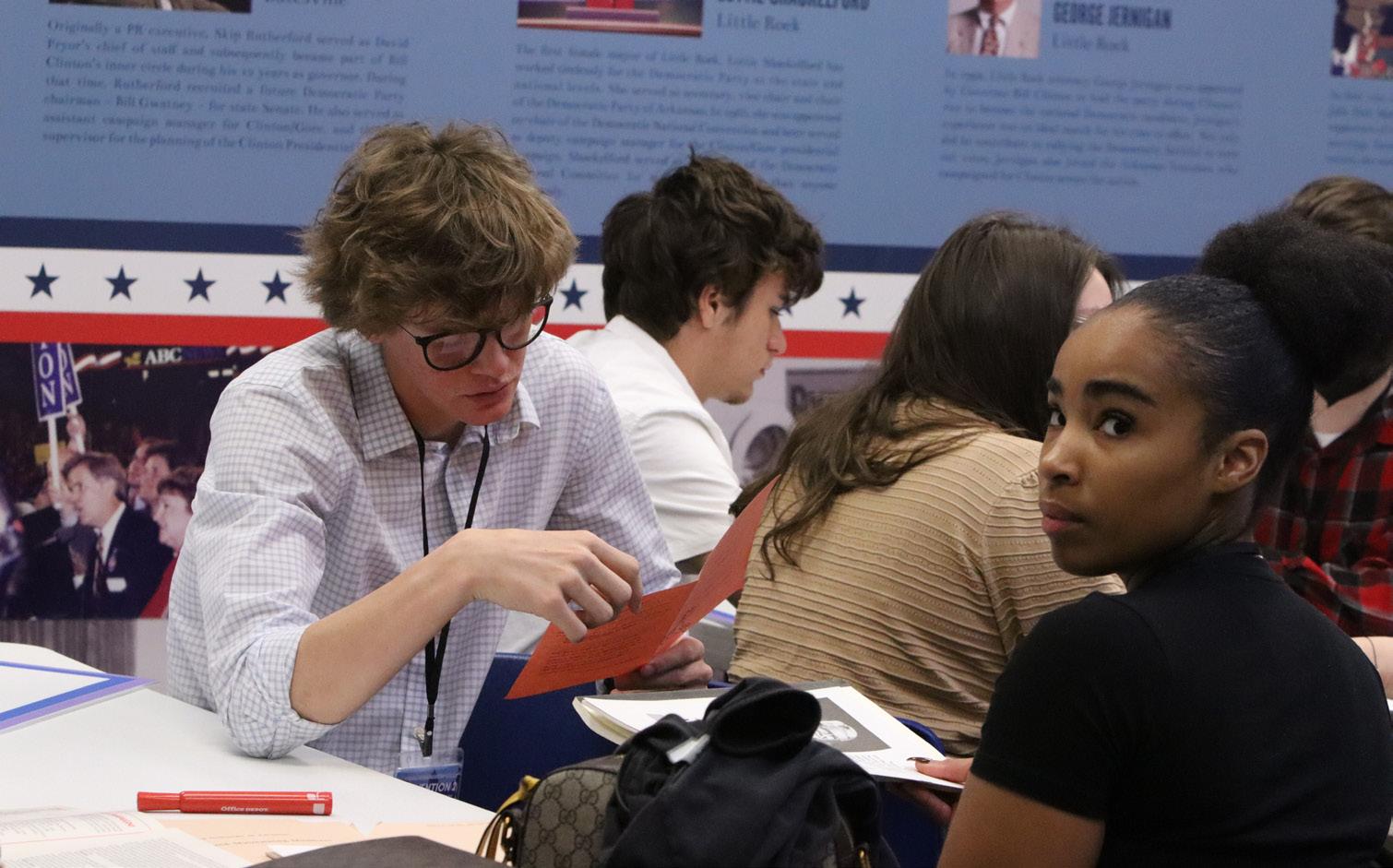
On April 8-10, the Young Democrats held their first in-person convention since the beginning of the pandemic. At the convention, they amended their bylaws and platform, elected their new officers, and awarded the Young Democrats who have diligently been working through the pandemic as the coalition has grown.
Students, candidates, and politicians heard from Carly
We Support
We recognize that those who live under oppressive governments have the right to freedom from those governments.
Economic Justice
We Support
We support unionization efforts among American workers to facilitate a more Democratic economic system.
Education
We Oppose
Any efforts to erase the history of Black, LGBTQ+ and any other marginalized groups from our
students frequently marginalized. By building community in our schools, we will pave the way for a Democratic future for Arkansas.”
“Seeing people — especially young people — in person being politically charged is very inspiring,” said Haynes. “Wanting to participate in politics is important to everyone, no matter if they want to admit it or not. We need young people in politics now more than ever, and we cannot wait for someone else to make the changes we need in Arkansas.”
And UA Little Rock is not far behind. With our very own coalition of Young Democrats, we plan to fight alongside our neighboring chapters to change the Democratic Party of Arkansas for the better. “I look forward to change when it comes to equality. I hope we can
“I look forward to change when it comes to equality. I hope we can listen to one another.”
Squyres, campaign manager for Kelly Krout; Christina Mullinax, Voter File Manager for the Democratic Party of Arkansas; June Borst, Arena Academy trainer and Development Director for YDAR; Austin Ross, organizer for Planned Parenthood Great Plains; and Senator Joyce Elliot.
“There are so many things at [the] convention that I enjoyed so much,” said Owen Haynes, President of the Young Democrats of UA Little Rock and Chief of Staff for the Young Democrats of Arkansas. “Chairing meetings was definitely a highlight, and hearing from people like Senator Elliot or party Chairman Tennille is always a pleasure.”
Here are just some of the changes the YDAR has made: Their bylaws have been updated to say “differing” gender identities instead of “opposing gender identities,” and they have changed the YDAR Constitution so chapters can easily charter quarterly.
In addition to this, their platforms and resolutions have been updated as well. These planks have been added to the YDAR Constitution:
“Foreign Affairs & Veterans
public education curriculum.
Criminal Justice & Law
We Support
Amending the Thirteenth Amendment to strike out the phrasing “except as a punishment of crime whereof the party shall be duly convicted” to fully make slavery illegal in the United States.
We Oppose
Any form of involuntary prison labor regardless of pay.”
The Young Democrats are not stopping there. The Young Democrats know they need to play a fierce offense against their opposing party, and they plan to do just that.
“When it’s time to fight for progress in the state, the Young Democrats are always on the front lines,” YDAR writes. “If you look at any Democratic campaign across the state, it’s powered by young people, but the Young Democrats do more than just power campaigns. The Young Democrats of Arkansas serve as a safe haven for
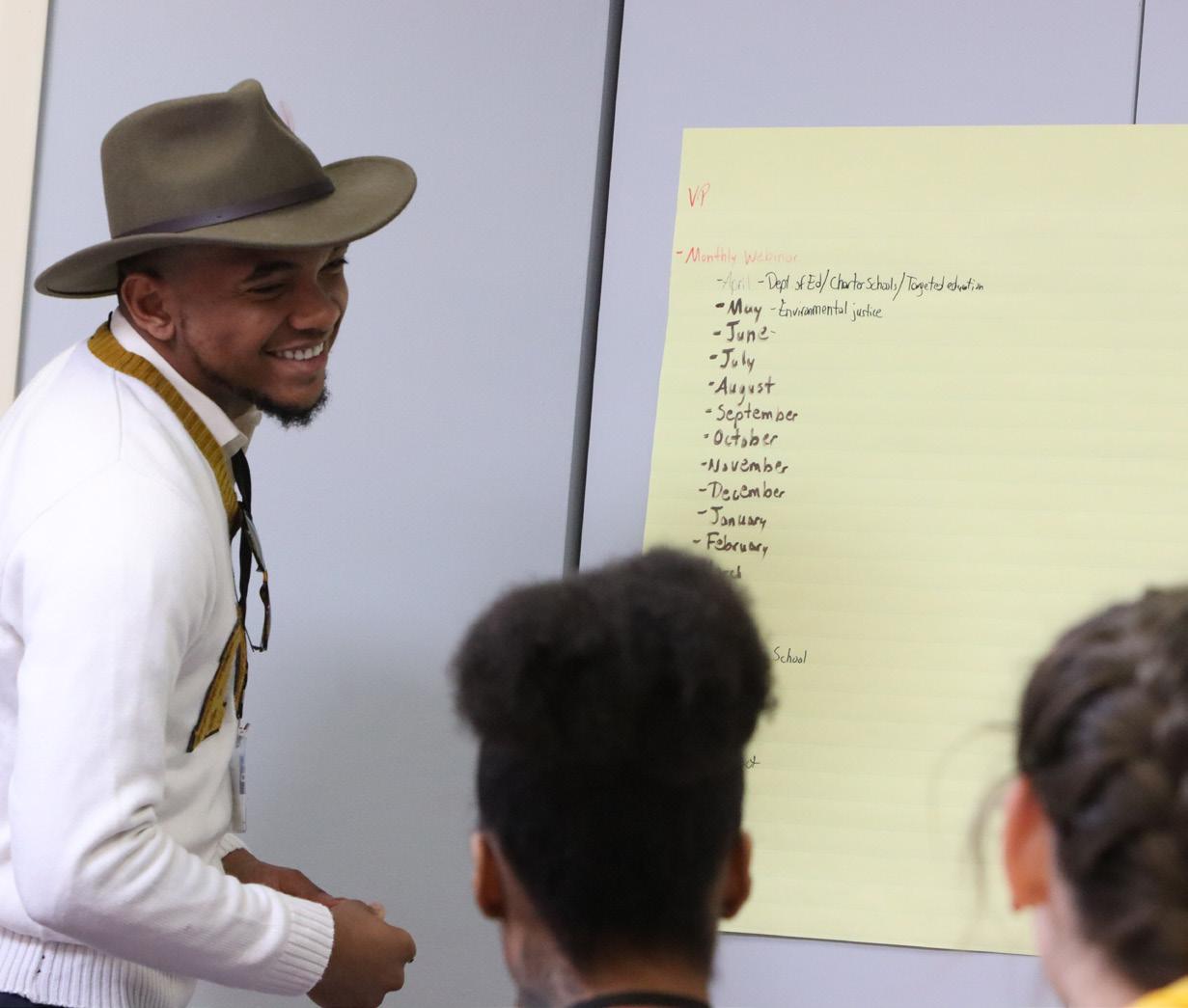
listen to one another and respect one another,” said Adrian Rogers, secretary of the Young Democrats of UA Little Rock. “That’s what I want, and that’s why I’m here. The Young Democrats support equality and the ability to change mindsets.”
They are a small group, but they plan to do big things.
“One of my major goals is to get us in club fairs and other events in the courtyard outside the library,” said Haynes. “Sometimes I see some of our opposing groups at those events, and I want people to know that the Young Dems are here, that we are very progressive, and that we are very happy to accept new members at any time! And of course, election season is around the corner. I look forward to working with local and statewide Democratic candidates to help their campaigns [in] any way we can! You will definitely see us get involved in the mayor’s race.”
If you are interested in joining the Young Democrats of UA Little Rock, contact Owen Haynes at orhaynes@ualr.edu. They would be glad to have you.
BY VIVIAN ANGELES


On March 1, Officer Rodney Barnes arrested a repeat offender in the East Hall lobby. The suspect had already been informed to not be on campus, according to Barnes’ narrative, and was transported and taken into custody at the Pulaski County Detention Center.
On March 1, a fire alarm went off in South Hall. Officer Kenneth R. Woods and the Little Rock Fire Department responded. The resident, according to Woods’ report, said that while flipping burgers in their apartment, the excess smoke caused the fire alarm to go off.
Officer Marilyn Thompson responded to a call made by a Resident Assistant (RA) about a found machete on March 1. According to Thompson’s report, the weapon was found near the Coleman Court building by a group of students. They turned it into the RA who then called the UA Little Rock Department of Public Safety (DPS) and they took custody of it.
A student reported damage to their laptop and a headache after a ceiling tile in the 100 auditorium in Dickinson Hall fell on them during class on March 3. Officer Benjamin Rommel wrote in his report that “The laptop screen has damage to it and the screen now has distortion on it when playing.”
On Feb. 23, an unidentified couple entered the science lab through the first-floor elevator. The couple was then seen leaving and sifting through multiple trash bins and eventually getting on the
Region Metro Bus, according to Rommel’s report.
Professors reported a mineral was missing from the science lab.
On March 16, Rommel responded to a report of a fight in the East Hall building. The victim said they were pulled from behind after exiting the elevator and punched. After the victim was attacked two more suspects exited a blue car and began hitting the victim. Two of the suspects were identified by the victim.
DPS was able to identify the car, then the owner, and then build a profile of possible persons of interest that might be the third suspect. After conducting a photo lineup, the third suspect was identified and the investigation is pending affidavit.
The victim reported a case of harassment and stalking to Chief Detective Roy Mayo on March 18. The suspect was a fellow resident who, according to the report and the victim, seems to think they are in a relationship of some sort with the victim. The suspect has allegedly posted photos of personal information belonging to the victim and the victim’s partner. This includes a photo of a license plate number and a driver’s license.
Emily Bell, with the UA Little Rock Title IX office, was informed, according to the report. The victim was advised to avoid all contact with the suspect.
BY REMINGTON MILLER
UA Little Rock has received a $1.96 million workforce development grant to fund the further development of the Cyber Learning Network (CyberLearN). UA Little Rock is one of the seven schools in the University of Arkansas System to address Arkansas’s talent gap in cybersecurity through a regional cyber-learning partnership.
The CyberLearN partners include UA Little Rock, UA Pine Bluff, UA - Pulaski Technical College, UA Cossatot, UA HopeTexarkana, UACC Batesville, and UACC Morrilton. The Forge Institute, the Arkansas Center for Data Sciences, and SmartResume are also collaborating on the initiative.
Dr. Erin Finzer, associate
vice chancellor for academic affairs, said that this is the first time in Arkansas that fouryear and two-year colleges have worked together to share an aligned curriculum. “This grant is important because it is helping us to start a cuttingedge instructional consortium that will expand and diversify Arkansas' educated workforce in high-demand fields,” she said.
Due to Arkansas’s broadband initiatives having provided more internet access across the state, there are more opportunities for cybersecurity professionals. Finzer says small towns and rural Arkansas can benefit from a cybersecurity workforce because many of the 3,000 unfilled jobs can be performed remotely.
The industry partners with the curriculum in CyberLearn
have been planning flexible learning pathways and stackable certificates to serve working students by providing them with distinct skill sets while they finish their degrees. Students will have opportunities to get awarded prior-learning credits through the Forge Institute's bootcamps, military, on-thejob training and registered apprenticeships.
Finzer explained that project-based and work-based learning will be embedded throughout the curriculum, supplementing UA Little Rock's cloud-based CyberArena. The CyberArena was created by UA Little Rock's Dr. Philip Huff under prior grant funding and is a teaching tool that allows students to complete scenarios and workouts designed by Dr. Huff and industry leaders.
The Office of Skills
Development will disburse the $1.96 million workforce development grant to UA Little Rock over two years. By year three, CyberLearn has planned to have a sustainable business model to support its own administrative, technology, marketing and instructional design and development.
In addition to providing equipment for standard Secure Training Operations Centers on each campus, the grant will provide administrative support, some marketing support and scholarships. Students can expect CyberLearn to start in the upcoming 2022-2023 academic year.
BY MADDIE BECKER

Last month, UA Little Rock's William H. Bowen School of Law’s Center for Racial and Criminal Justice Reform received a contribution of $210,000 toward developing an enhanced community policing project from Walmart Inc. “Walmart is committed to strengthening community cohesion through policecommunity engagement programs,” stated Frank Johnson, Senior Director and Community Law Enforcement Liaison at Walmart. “We recognize that building trust with law enforcement is a key enabler for communities to
thrive.”
This project aims to work with Walmart and its local markets in order to strengthen and redefine the outreach efforts of law enforcement. Their efforts will consist of assessment tools, training materials, practices for engaging local communities, and even a pilot program located in northwest Arkansas. They strive to follow the recommendations of the Arkansas Governor’s Task Force Report on Policing released in November of 2020. The report hopes that law enforcement works harder toward gaining the trust of local communities — such as by creating events in which communities could
participate to build trust between citizens and the police.
“Data-driven solutions will be a crucial part of this project as we pilot and assess best practices in community policing,” said Center co-director Anastasia Boles. “This collaboration has the potential to significantly impact justice outcomes.”
With this project, the Center’s ultimate goal is to build this program enough to reach the national level. Law enforcement agencies and the store managers of Walmart strive to use this new program model to grow and support local community policing initiatives.
“This project is an excellent fit with the Center’s expertise
and its other initiatives,” said Theresa Beiner, Bowen’s dean.
“We are pleased Walmart has chosen to work with the Center and Bowen.”
BY VIVIAN ANGELES

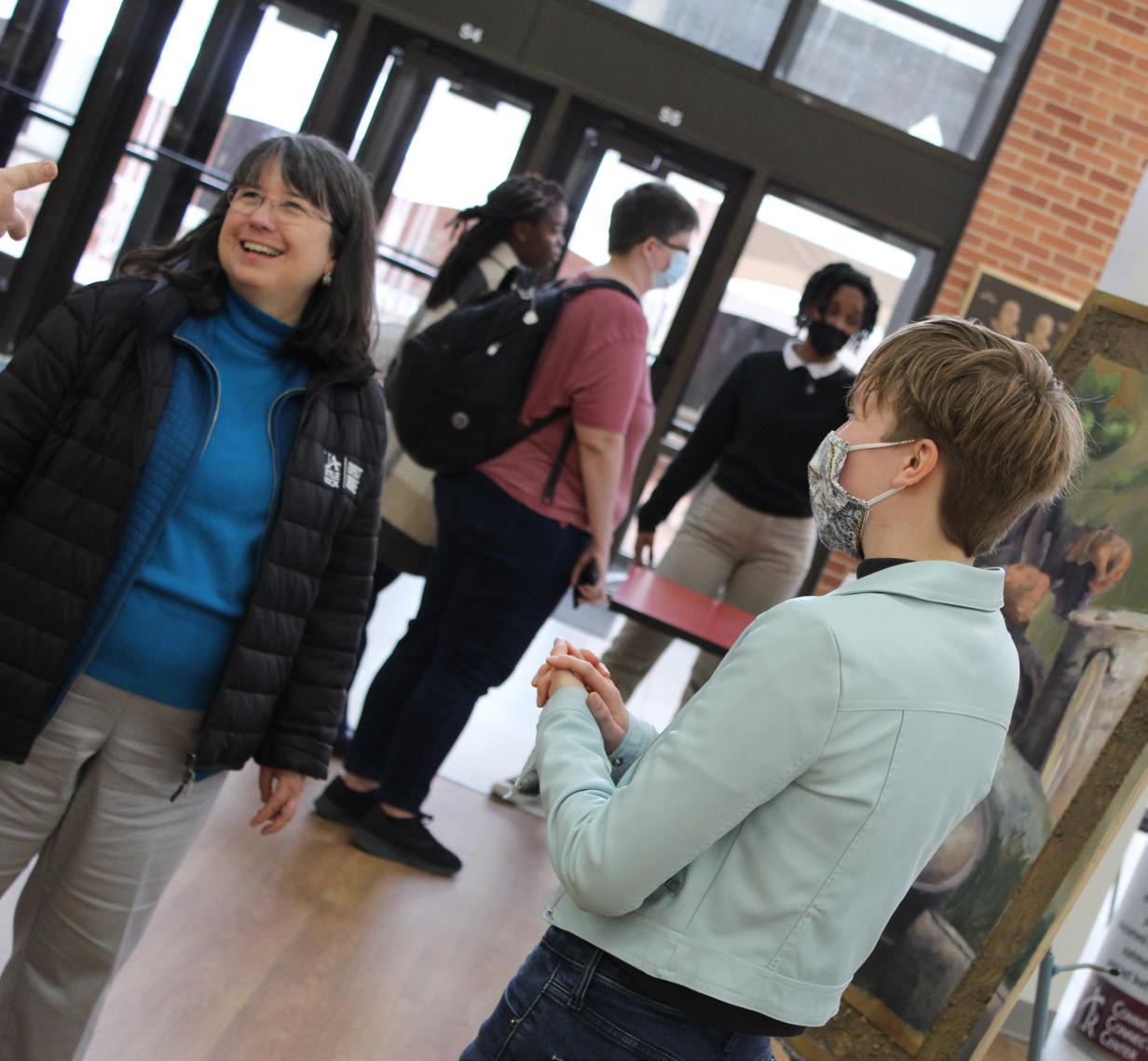
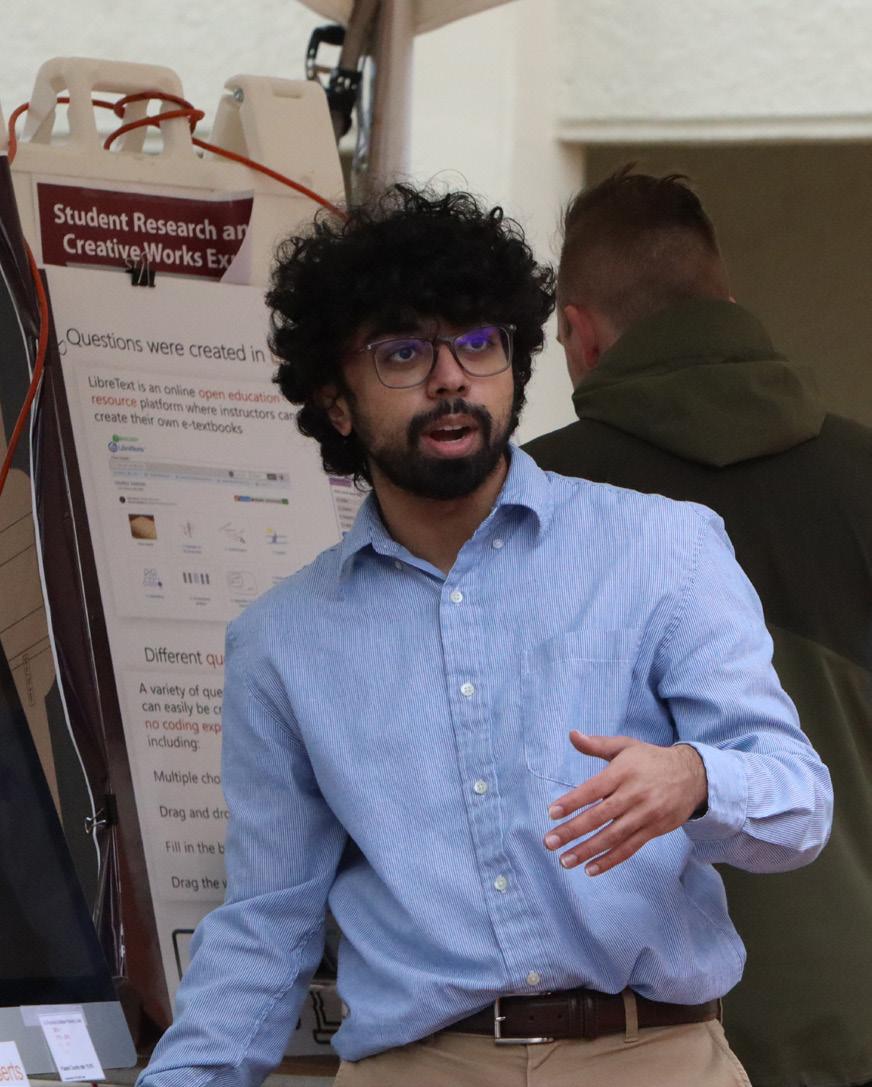
There are a plethora of establishments with tacos and beers but not all take their reminiscent concept as seriously as Camp Taco. This small-batch brewery project, which was started by the team at Lost Forty Brewing, takes you back to the 1950s into the early 1990s. Located in East Village, right by Lost Forty, its proximity to downtown brings a lot of customers in.
If you were a kid that spent summers at camp, this restaurant will elicit memories the moment you walk through the door. From the furniture to the decor to the check presenters, which are paperback summer reading books, the concept is thoroughly implemented. The servers are wearing shirts that have the word “staff” on the back of them and some will even greet you with, “Hello! I will be your camp counselor today.”
It was a nice day out, so we sat outside. They have a great patio, as well as a lower-level turf area with more seating and a stage where they host live music. The menu is
straightforward; it has queso, tacos and salads, as well as popsicles and other frozen treats. I started off with the white poblano cheese dip and chips. The chips are well-made and are just the right amount of salty. The mix of the warm cheese on a salty and crunchy chip is the epitome of an appetizer at a Mexican restaurant. Their campfire bean dip — served with the same chips — is also quite delectable. Pairing well with the appetizers and this incoming heat is a Lava Lamp-A-Lada, which is a mix of a frozen piña colada and a frozen strawberry margarita.
Their most popular item, though, is the Mexican Ramen that contains ramen noodles, spicy chili-lime broth, a variation of veggies including slaw, avocado and pickled carrots, among others. You can choose to top off the ramen with either birria, which is slow-braised beef, or with adobo mushrooms, the veggie style. I opted for the veggie option. You might be wondering why I would be eating a hot soup with this heat, but let me tell you, it is probably

the best thing on their menu. The chili-lime broth compliments the rest of the veggies so well. And they also include the classic hard-boiled egg with the ramen that is topped with some chili, bringing together the whole meal.
If you like Lost Forty beer, you will enjoy Camp Taco’s small-batch brews. They offer IPAs, stouts, sours and more. You are also able to have some of Lost Forty’s most popular brews including Rockhound, Easy Tiger, and Love Honey Bock, among others. Not only do they offer great beers, but you can also take advantage of their full bar, which of course, I did. I enjoyed an old-fashioned drink with my meal. Are there better tacos and salads in Little Rock? Absolutely. When going to a restaurant, always try their specialty because that is what they make best and it is popular for a reason. But their environment at Camp Taco is delightful, so come try their fun drinks and the ramen. With that, you will not be disappointed.
BY AZALEA ANDRADE

Gaining popularity quickly on the social media platform Tik Tok, Crumbl cookie became known for their gourmet and large cookies with a menu that changes every week. With one location being in Benton, Ark. I knew I had to take the chance to test it out.
That was my biggest mistake, as now I begin every Monday with a glance at their website to see their new flavors. I have gone for the past three weeks to sample the box and share it with friends, as I could not see one person eating a halfdozen of their filling cookies.
The first week I went the flavored features, as in not the constant chocolate chip and pink iced sugar cookies, were: waffle, New York Cheesecake, Berries and Cream, and double chocolate. I feared with as many cookie places that the flavors would be repetitive. They did not miss one chance to make each cookie individual.
The waffle cookie came in first that week, joined with a small packet of syrup that made the cookie overall delectable, although a bit messy. Next was the Berries and Cream cookie, it was a cookie with berries baked into the dough and a sauce on top of whipped cream that tied the whole cookie together. After that was a tie between New York Cheesecake and double chocolate. As a chocolate lover, I knew the double chocolate cookie would be a strong contender and it had a bittersweet taste that was delightful. The New York Cheesecake was perfectly well-rounded with crust and filling.
Overall, when it comes to Crumbl’s staples, my advice is to lean chocolate chip. It is not too sweet and overall is a good, just less exciting cookie. The pink sugar cookie was and remains my least favorite in any box. There was too much sugar and I already do not really enjoy sugar cookies. Despite my natural disposition, none of my sugar-fiend friends could stomach the cookie either.
The week after that, Crumbl produced four new flavors. There was a lemon bar cookie, a Cookies and Cream cookie, a turtle cookie and a Muddy Buddy cookie. Full disclosure, due to a tree nut allergy I could not try the turtle cookie, so I count it out of my rankings. The lemon bar cookie shined above the rest, fresh and zesty with just enough tart to make it enjoyable. That cookie was followed by the Muddy Buddy cookie. With a peanut butter cookie base, the cookie ended up a bit dry. It managed to dry up my entire mouth with a bite but adding milk fixed that right away. The Cookies and Cream cookie was a miss for me, both the oreo and the cream lacked and it was not memorable.
The week of writing this, I returned to Crumbl one more time. They created four new cookies, three of which I would almost call addictive. It was enough to make me go back the next day for the same flavors, for the first time ever.
The red velvet cookie with white chocolate chips had such a rich taste that I could not put it down. It was tied for first with the Boston Cream Pie cookie. The Boston Cream Pie cookie was perfect textually and flavorwise. I could not imagine ranking a cookie higher than these two, truly Crumbl outdid itself.
Following those was a delectable caramel cookie. It was sweet, subtle, but very easy on the tastebuds. If you do not like overly sweet cookies, but still want a dessert, this is the cookie for you. After that was the snickerdoodle cookie. Overall, it was a good snickerdoodle. The only problem is that I do not like snickerdoodle cookies.
I highly recommend trying and splitting these cookies with a friend or three and making a night of it! The Crumbl experience one that is best shared and the perfect excuse to get sweets you desperately crave.
BY REMINGTON MILLER



This month Muslims across Little Rock are celebrating the holy month of Ramadan. They celebrate by fasting from sunrise to sunset. They restrain from eating, drinking, sexual relations, and anything considered a bad deed. Of course, those who are not able to fast because of any number of reasons are exempt. Once the sun sets the fast is broken with iftar, a celebratory meal that is eaten in a group.
“First thing that we eat is dates and water,” says Rasha Alsiri the President of The Muslim Student Association (MSA), “then we have a dish called samosas and drink cold Vimto. Other countries have special dishes but for my country, we have only samosas and this drink.” Samosas are a pastry with a savory filling and Vimto is a syrup that is mixed with water and sugar. There are a wide variety of dishes served during Ramadan but these are special to Alsiri and
her home country Yemen.
Alsiri is a freshman at UA Little Rock, The MSA was shut down when classes were held online due to COVID-19 and was still shut down when she began her undergraduate degree in Biology. She restarted the association when she found out, hosting speakers such as Rasha Baldry from the Islamic Center of Little Rock to talk about lifestyle. Baldry might make an appearance this month to talk about Ramadan.
Suhur is between 4:30 a.m. and 5:30 a.m. for Alsiri, she then breaks her fast at 7:30 p.m. Suhur is the morning meal eaten before dawn to support those who are fasting. She is visiting the mosque every day for the month. Community and charity are a big part of Ramadan, as there are large gatherings and acts of giving are encouraged.
The act of fasting for Muslims is a reminder to be thankful for the food and water that is accessible, “When we fast we become more compassionate to those who are needy” Alsiri says, “So people that don’t have food, especially in my country because of war and what’s happening in Yemen, I start feeling how it feels when we don’t have food.” When surrounded by easily accessible food it is easy to forget that there are many people in the world going hungry.
Eid al-Fitr marks the end of Ramadan, a big celebration that can last up to 3 days. During Eid there is feasting, gift-giving, and praying. The day fluctuates due to when the crescent moon shows but this year Ramadan is predicted to end on May 1.
BY PAYTON DHOOGE
Alsiri asks those who do not celebrate Ramadan to be aware of those that do, “Just don’t drink water in front of us. We have a rough day and we can’t even drink water.” She says, “When I see cold water and someone drinks it I want it too!” While it is hard to abstain from food, there is research to suggest that fasting can have health benefits.

UA Little Rock hosted the first speaker in their Inclusive and Inspiring Speaker series virtually this month. Heather McGhee discussed her New York Times bestseller, “The Sum of Us: What Racism Costs Everyone and How We Can Prosper Together.” The event was sponsored by the UA Little Rock Multicultural Center, Diversity Council, and the Office of the Chancellor.
McGhee is an expert on the American economy. She helped build Demos, a think tank that focuses on solutions to create a democracy and economy based on racial equity. She grew up on the south side of Chicago, “ I really saw in a very vivid and visceral way on a day-to-day basis the signs of inequality,” She says, “the ways in which the parks and the schools in our neighborhoods began to crumble into disrepair and neglect.” She has spent her whole career trying to solve the bigger problems in the American economy.
can't have nice things in America?”
McGhee says, “I mean nice things like we can reliably keep workers out of poverty.” She lists off what Americans don’t have wide access to, such as well-funded public schools, universal health care, and good infrastructure.
While researching she came across the concept of a zero-sum game, “it's a game where there are opposing sides, and the scores can only ever equal to 0,” She explains, “if I get a bigger slice you must get a smaller slice and this zero-sum worldview is a racialized one in the United States.” This story that is believed about the world portrays racial and ethnic groups in the U.S. as competing for slices of the pie.
Overwhelmingly, the data shows that white Americans are more likely than those of color to view life as a zero-sum game.
The belief that “in order to have more, the other must have less” is what is harming the economy.
the more that people are stuck and have barriers to advancement and are not living up to their potential, the worse it is for our economy.”
Racial inequality harms everyone. She did find communities going against this harmful worldview, “I also found instances of the exact opposite happening of people coming together across lines of race, recognizing that there are common solutions to our common problems,” She says, “that in fact the most important things in life we actually can't accomplish on our own.” McGhee wrote “The Sum of Us” to give diverse groups of people a text that would help them see themselves in it.
Her book opens with the question: “Why does it seem like we
“The idea that our society's a zerosum game is actually contrary to what economics teaches us,” McGhee says, “the more inequality,
The book is set to be adapted to a podcast by Higher Ground and later this year into a young adult reader's version by Random House. To learn more about Heather McGhee visit her website https:// heathermcghee.com/ or watch her Ted Talk “Racism has a Cost for Everyone” https://www.ted.com/ talks/heather_c_mcghee_racism_ has_a_cost_for_everyone.
BY PAYTON DHOOGE
Hello fellow bathroom enthusiasts of UA at Little Rock. My Toilet Room Trojans. My Powder Room Pals. I have returned for a second bathroom review from my time as an I.T. Services Student Worker. I am pleased to hear such positive feedback from my last review. Here is my next round of bathroom reviews:
On April 23, 2022, a group of UA Little Rock students traveled to Chicago, Illinois for a real estate competition hosted by the Harold E. Eisenberg Foundation. They competed against eight other universities for a chance at a $5,000 scholarship.
The goal of the competition was to propose a viable development plan for the 2022 challenge site in Chicago, Johnny’s IceHouse East. It is currently an ice arena that will
cease operation after it is sold.
Johnny’s IceHouse East is a 51,500-square-foot building on half an acre of land. The UA Little Rock team proposed to redevelop it into a building with a four-floor parking garage, one floor of retail space, four floors of office space, and 12 floors of condos.
The students who participated in the competition were: Adison Cummings, Bernard Gaer, Randall Scott, Ronald Davis, Stephen Malec and William Horn. They were led by Dr. Elizabeth Small, the director
of the UA Little Rock Real Estate Program.
Cummings, a sophomore Architectural and Civil Engineering major, said, “Working with the Eisenberg Foundation and this wonderful group of people has been such a great experience, and it has opened my eyes to a whole new world I knew little about. This endeavor has allowed for me to significantly expand my design skills and given me some great memories to cherish.”
BY EMILY WELLS
I will begin with the bathrooms in the Reynolds Building. These bathrooms are perhaps the most inoffensive and neutral bathroom on campus. Upon first glance, this bathroom is unassuming— plain. However, what makes the bathrooms in this building a pinch different than the rest is the privacy. I have never seen another human being in the Reynolds Building Bathrooms at the same time as me. I must believe people do use those bathrooms, as the business building is one of the most populated buildings on campus (to my belief maybe I am wrong); but alas I have never crossed paths with another person in these bathrooms. The endless stalls on both sides of the bathroom (at least on the first floor) barreling towards a grey void makes the Reynolds building bathrooms a borderline liminal space. I like them. 7.5/10
Something that allows bathrooms to receive points on the IPW Scale (Is it Picture Worthy?) is uniqueness. Something that is effective and improves the bathrooms overall experience and aesthetic. The giant obscuring walls in ETAS that replace a door to the bathrooms are not only unique
but warms my germaphobe heart. I am an advocate for all bathrooms to be doorless and instead replaced with a smell obscuring hallway. Alternatively, every bathroom door should have a foot petal at the bottom of the door to allow hands free liberation from the excrement chambers. I am never one to make absolute statements, but bathroom foot petals should be an option for every door, in addition to the normal handle. ETAS bathrooms are receiving an 8.5/10.
At last, and certainly not least, the North Hall Bathrooms. I cannot confirm or deny the state of any of the bathrooms in South Hall, as I have only quartered in the North Halls chambers. I have to say, and say it with my heart, the North Hall bathrooms have the best toilets I have ever encountered. Sure, they were built to mangle a jet engine into oblivion to avoid constant maintenance, but it made for the perfect toilets. Now, there has been some history of flooding the bathrooms in North Hall, and it releases a torrential down pour of human secretions and parts. This is nothing short of terrible. Like night and day, ying and yang, Tui and La, the perfect toilet and the questionable foundation of the building are opposing forces that check and balance each other. The North Hall bathrooms receive a 5/10 for this dynamic.
I hope everyone has enjoyed my bathroom reviews. I am well equipped to do more, but I am afraid the gag has run its course. I wish you all happy bathroom experiences.
BY CLARA MITCHELL
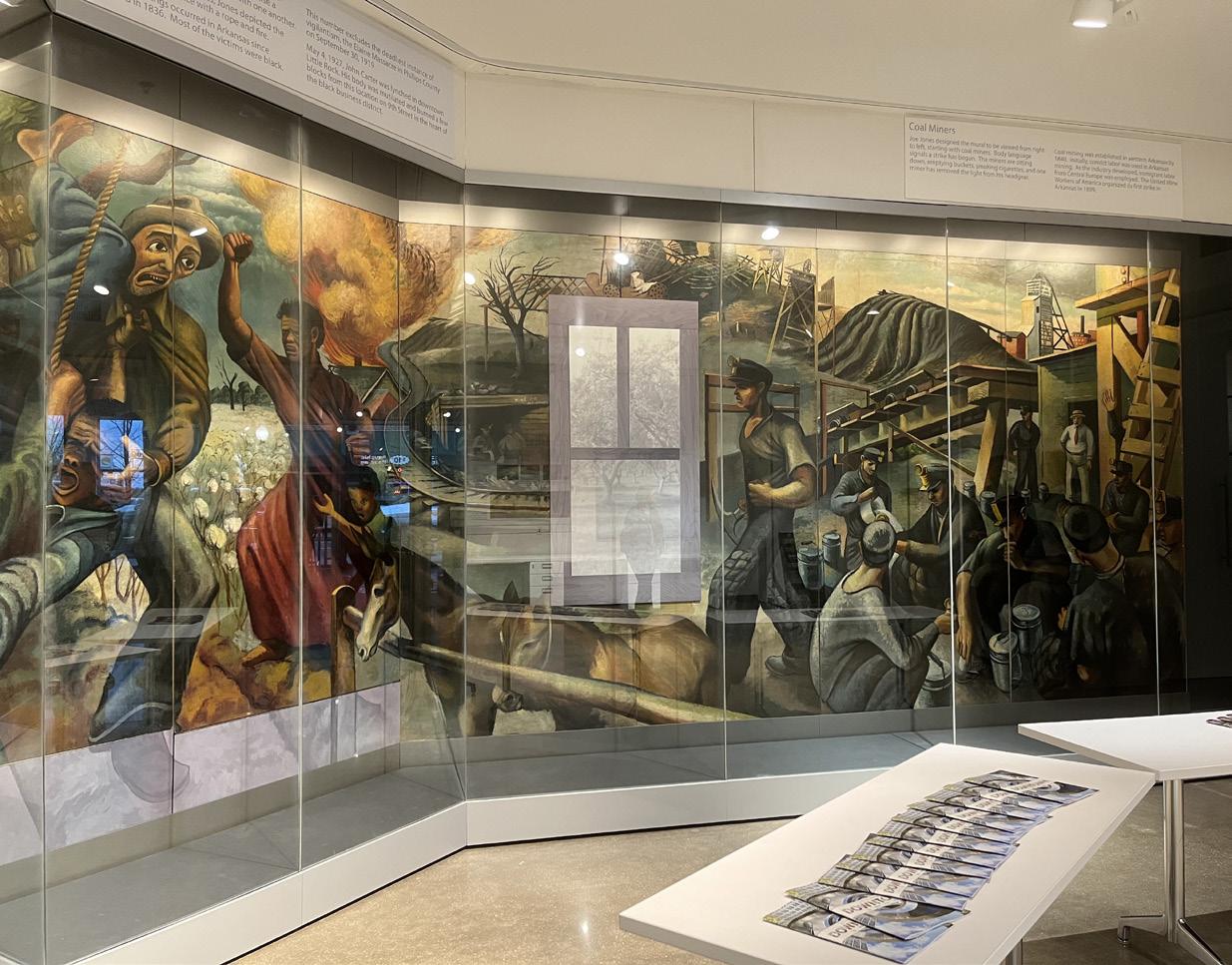
The month of April’s “Second Friday Art Night” featured artistic and historical exhibits at several locations in the River Market area of downtown Little Rock. The University of Arkansas Little Rock’s downtown campus hosted a showing of Civilian Conservation Corps artifacts, photos, yearbooks and more. Guests could even search within a CCC database for their relatives who joined the program in the 1930’s and 1940’s.
UALR downtown also has a permanent installation of “The Struggle in the South,” a mural by St. Louis born artist, Joe Jones. The mural was originally painted for the Commonwealth College near Mena, Arkansas, but the college closed in 1940, only five years after Jones completed his mural. In 1984, archivists from UALR heard about Jones’s mural and began preservation efforts. The mural itself is thought-provoking and action-filled, showing the graphic realities of rural and urban African American lives.
AN ENCOUNTER WITH BENJAMIN KRAIN
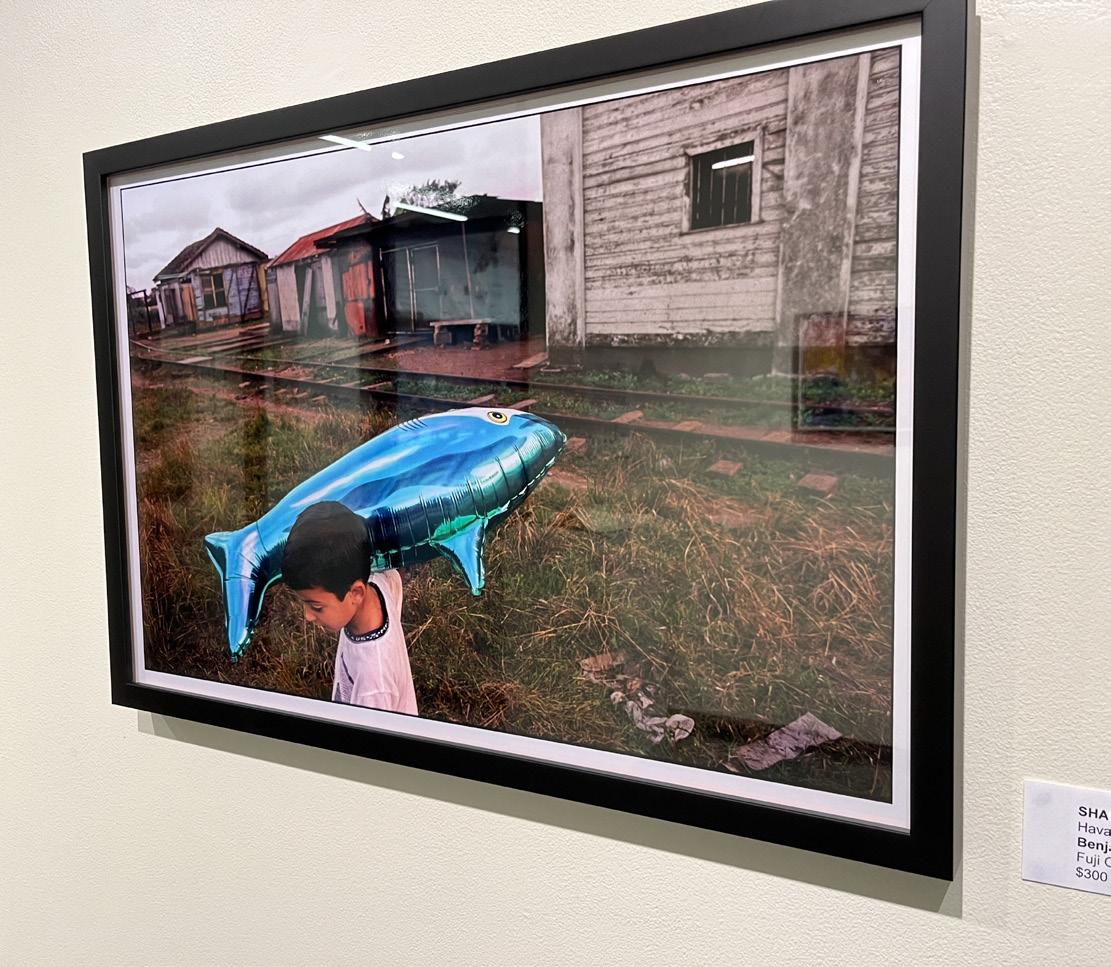
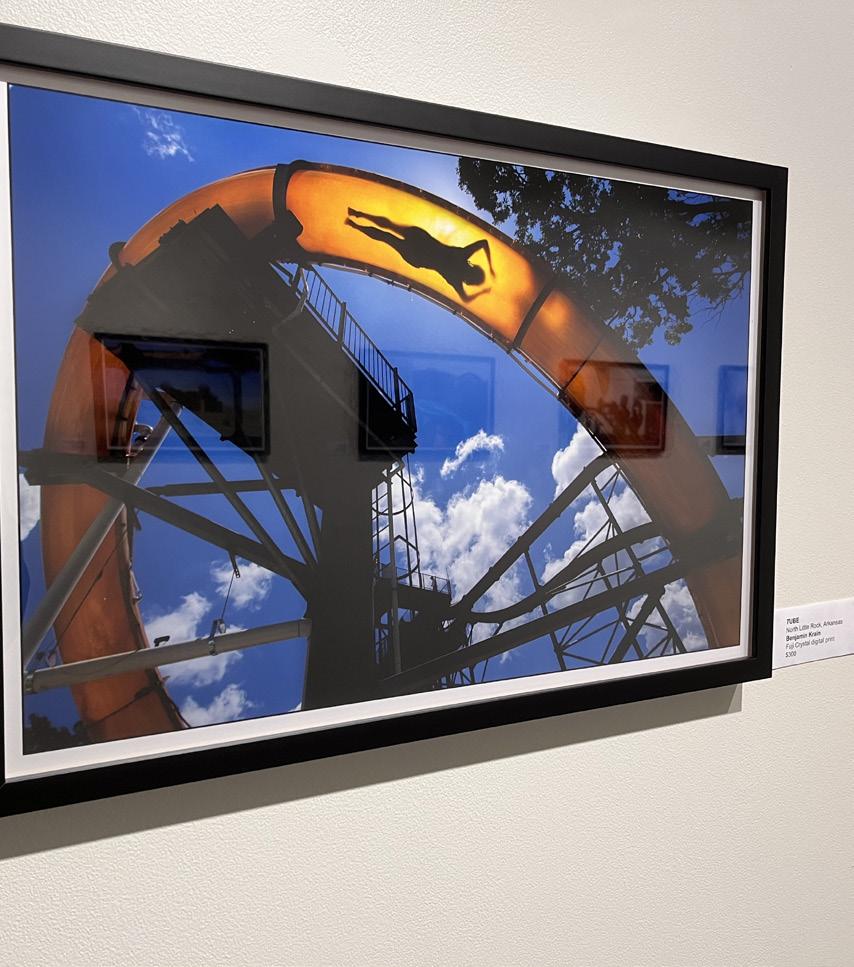
Photojournalist and artist Benjamin Krain started out as a business major in college. In an interview, he shared that he started out at the University of Kansas, eventually realizing that business did not fit his personality, before starting a new journey towards photography. Krain was first
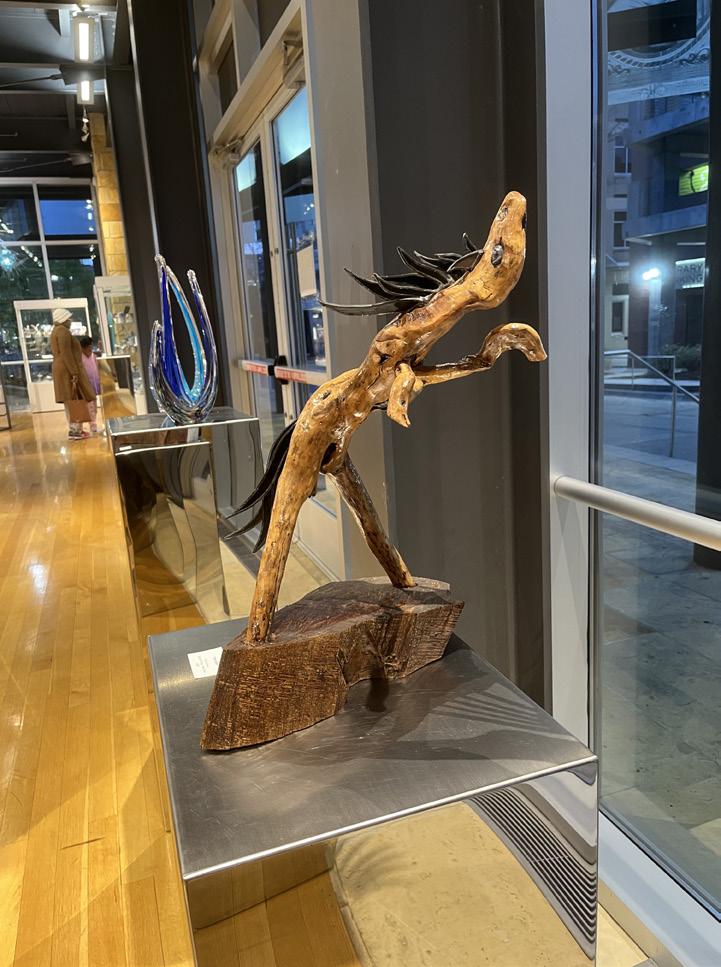
introduced to film at the University of Kansas, then transferred to U of A Little Rock to join the journalism program with his newfound love for the visual medium in tow. Here, he got his start with an internship at the Arkansas Democrat Gazette as a staff photographer, and after a long and exciting career as a photojournalist, Krain is now UALR’s university photographer. His exhibit in the Focus Gallery at the Windgate Art + Design building on campus will be on display from Apr. 8th through May 13th.
The exhibit features a series of photographs he’s taken both around Arkansas and abroad. At first glance, Krain’s photo exhibit is extremely engaging, and upon further inspection, a distinct and understated cohesion becomes apparent. Describing this collection of photos, Krain said, “They’re about not having any content to the pictures. For this it’s the pictures that I have no reason to take that brings the collection together as a body of work. It became a project of having no content. It’s just regular life.” It’s about an artist’s eye capturing a moment without a story. The collection seems initially bound together by bright colors which catch your eye, but if you take the time to enjoy the little details of Krain’s work, you won’t be disappointed. Pointing out an unintentional hidden gem in his photo, Krain says, “This star is right on her eyeball!”
BY CATE LESIEUR



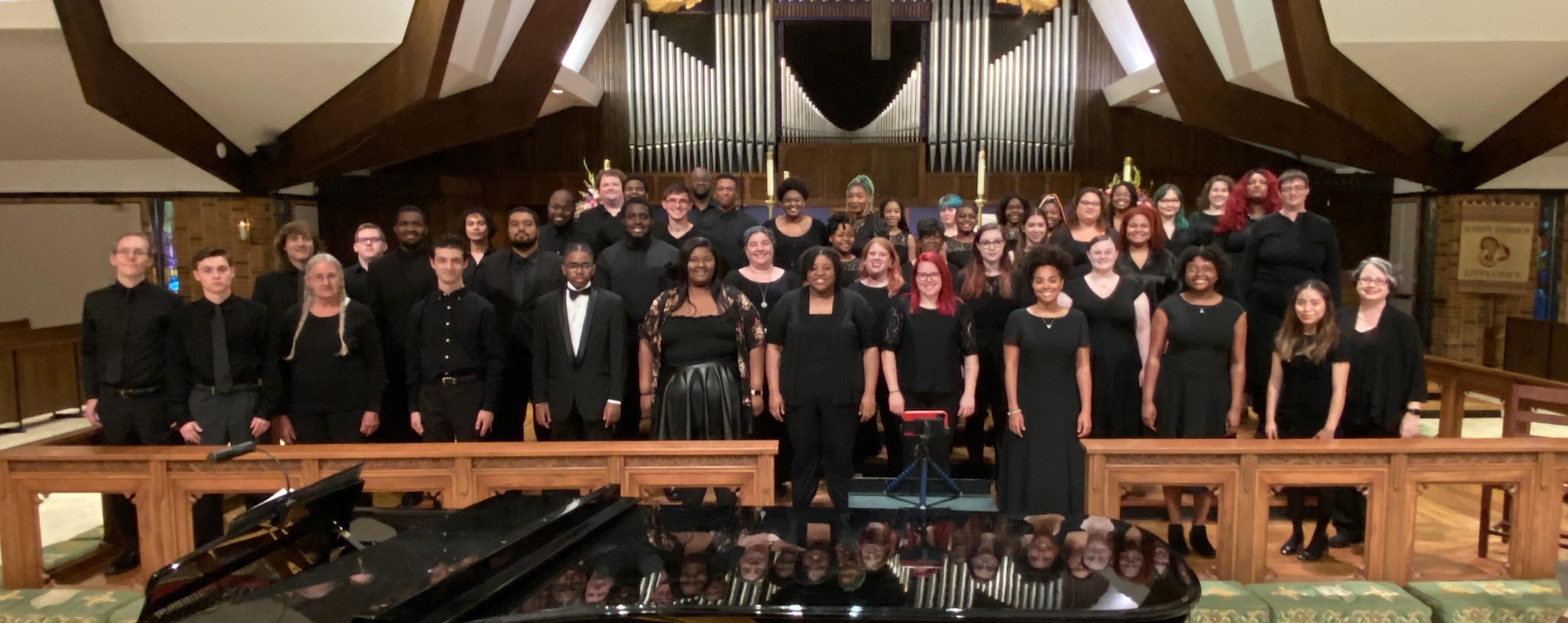
Saturday, April 23, 2022, the UA Little Rock choirs held a concert to honor all the hard work they have put in this school year. It featured a snapshot of all the music pieces they performed. This is the debut concert of the choir’s performance of Francis Poulenc’s "Gloria" which they will be performing in New York City at Carnegie Hall in June.
The concert was held in the church. With the open and tall ceilings, the backdrop of a giant organ, and the stained glass on the windows, you entered a world of music, somewhere you could escape. All that was present was a grand piano and a chorus of voices, breathing together, not just singing at the same time, but together as Director Lorissa Mason often reminds her students to do. That night, in a warm church on a Spring night, there was trust in the air. A trust that says it is okay to be vulnerable, okay to not be okay. In fact, it was encouraged.
The concert starts with Night Shift, an ensemble that made its debut in the fall of 2020. This is a small but intimate ensemble “made up of vocal majors with a passion for independent singing in an ensemble setting,” as said in the program passed out at this event. The group sang a jazzy, swoonworthy number called "Stormy Weather" about a love that was lost.
The song featured Reanna Jiles, a graduating senior, as a soloist. Her soft and delicate voice filled the room.
UA Little Rock Women’s Choir took the stage next. They sang three songs. First was "Koowu," which in Arabic means strength. The song was light and bounced and moved on walls as a butterfly would. This piece was led by student conductor Carmen Ramirez. The next song sounded like sunlight streaming through a window. "Music Down
In My Soul" will have you ready to get on your feet and dance. It's a song full of joy, and you could see the excitement in everyone’s faces as they sang.
Up next was Chamber Singers which was described as “an evolving small ensemble of mixed voices.”
In other words, they sing a little bit of everything and are known for their unique sound. They sang two pieces, both stunning as usual.
"The Road Home" is a song that resonates with everyone. It’s about wandering and lost people who just want to find their way home.
Life leads you down many different roads and paths, but this song expresses the hope that someday you will find a home somewhere.
"Elijah Rock," their next number, is an explosion of sound that hits you in the face in a torrent of crescendos and decrescendos,
diminuendos and high notes that will knock your socks off. It is safe to say that Chamber Singers is a group bursting with talent and every performance they bring to the table will be different from the last.
Last, but certainly not least, the UA Little Rock Concert Choir performance started off with "Psalm 15," a student-composed piece by Gerald Mayo, a UA Little Rock Music Alum. The piece had an almost haunting undertone to it.
Another student-composed piece by Brent Foster II called "Psalm 23" was next. The music was warm and frankly made me emotional. It was about God protecting his children and leading them away from all hurt, harm or danger. The choir led the audience into a piece called "City Called Heaven," a gospelstyle arrangement that was made to speak hope in troubling times. It’s a comfort for those who face persecution and injustice and a desire for a better tomorrow. Again, Ramirez conducted the piece and soloist Damion Snowdon blew everyone away with his soul-filled voice. The end of the song was met with a standing ovation.
After hearing from the Concert Choir, two high schools joined for the finale: Francis Poulenc’s "Gloria." Poulenc was a French religious composer. His "Gloria"
was a piece dear to him as it showcased all the ups and downs he went through as a devout Catholic. His friends described him as so: “There is in him something of the monk and the street urchin.”
The arrangement shows a very captivating and awe-inspiring personality and shows what makes Francis, Francis. The piece is composed of six movements. The first, "Gloria," is the foundation of the piece. It’s bright and exciting, filled with motion. The second movement, "Laudamus Te," is light and playful, showing the more spirited side of Poulenc. After that is the heavy thunderstorm that is the third movement: "Domine Deus." This can be thought of as the heart of the piece where we see a wide range of emotions expressed through this song. This was the first time we heard the soprano soloist of this entire piece: Nicole Keeling. After the rain, there was sunshine as we were pulled into the short, but sunshine-filled fourth movement: "Domine Fili Unigenite." "Domine Deus, Agnus Dei" was the fifth movement. It was a somber tune where the soloist filled the church with her gorgeous voice. The sixth movement, "Qui Sedes ad Dexteram Patris," can be thought of as a parallel to the first movement as it has the same majestic, grandeur sound that tied
the piece together and brought it to a close.
Many talented people put in hard work for this to be a successful performance, including choir Director Lorissa Mason, who will be making her conducting debut at Carnegie Hall in June. Leann Jones, the pianist, has performed in a multitude of musical performances. Not only has she played piano for many years, but she also has a vocal background. She is a seasoned artist and a valuable part of the UA Little Rock Music Department. The featured soprano soloist, Nicole Keeling, is a powerhouse from the South Plains of Texas and is making her mark on the musical world in operatic and concert work. Some of her work includes Tatiana in "Eugene Onegin" with Opera in the Heights and she will be joining the choirs in New York at their Carnegie Hall concert. Two choirs joined the UA Little Rock choir to sing Poulenc’s "Gloria." They included Una Voce at Wildwood and Joe T. Robinson at Singing Senators.
This concert captured the essence of collaboration and yet again showcased the talent within the choral program here at UA Little Rock.
BY RIAN NEWMAN
Morbius.” directed by Daniel Espinosa is the newest film in Sony's Spider-Man Universe, the second Spider-Man villain to get their origin story.
Dr. Michael Morbius (Jared Leto) has a rare blood disorder and is searching for a cure for himself and his friend Milo (Matt Smith). Since vampire bats can digest blood he concludes that their DNA may fix him. With the help of Dr. Martine Bancroft (Adria Arjona), he is turned into a living vampire.
The first half of the movie is interesting, Morbius’ backstory with Milo and his introduction as a very sick person. The concept of a vampire villain is fun. The effects do a very good job of making both men look frail and close to death. The flying special effects are unique and have a pretty neat effect. The CGI monster faces could have been done better but as the movie progresses they fit well.
The second half of the film, after
Morbius becomes half-bat, doesn’t have any lows but also doesn’t have any highs. Morbius makes a point that he is against drinking blood but misses every chance he gets to show us that. The movie tells the audience that he is grappling with his humanity but doesn’t show it.
Michael Morbius is a bland character who makes few jokes and when he does they don’t land. The unfortunate thing is not only is humor lacking but so is horror. The scene after he is turned is thrilling as he is let loose on a ship to hunt humans, but it is not replicated.
The climax is underwhelming, and there is a sense that everything has been done better before. It’s hard to believe this movie is part of Tom Holland’s Spider-verse because of the drastic differences in quality. Smith’s acting as Milo
is excellent, but he is made the villain because of a lack of any real conflict. An internal conflict would have been great to explore, or even Vulture, played by Michael Keaton. could have been the antagonist. Vulture was used heavily in the trailer only to be reserved for the post-credit scene. Instead, poor Milo was stuck as the bad guy to make the story easy.
Morbius had the potential to be something different, a horror super-villain origin story. They could have given him a cool monster transformation scene or even some personality. No one is missing out by skipping this Spider-Man villain. Hopefully, Sony’s next villains, Kraven the Hunter and Madame Web, won’t be as mediocre as Morbius.
BY PAYTON DHOOGE

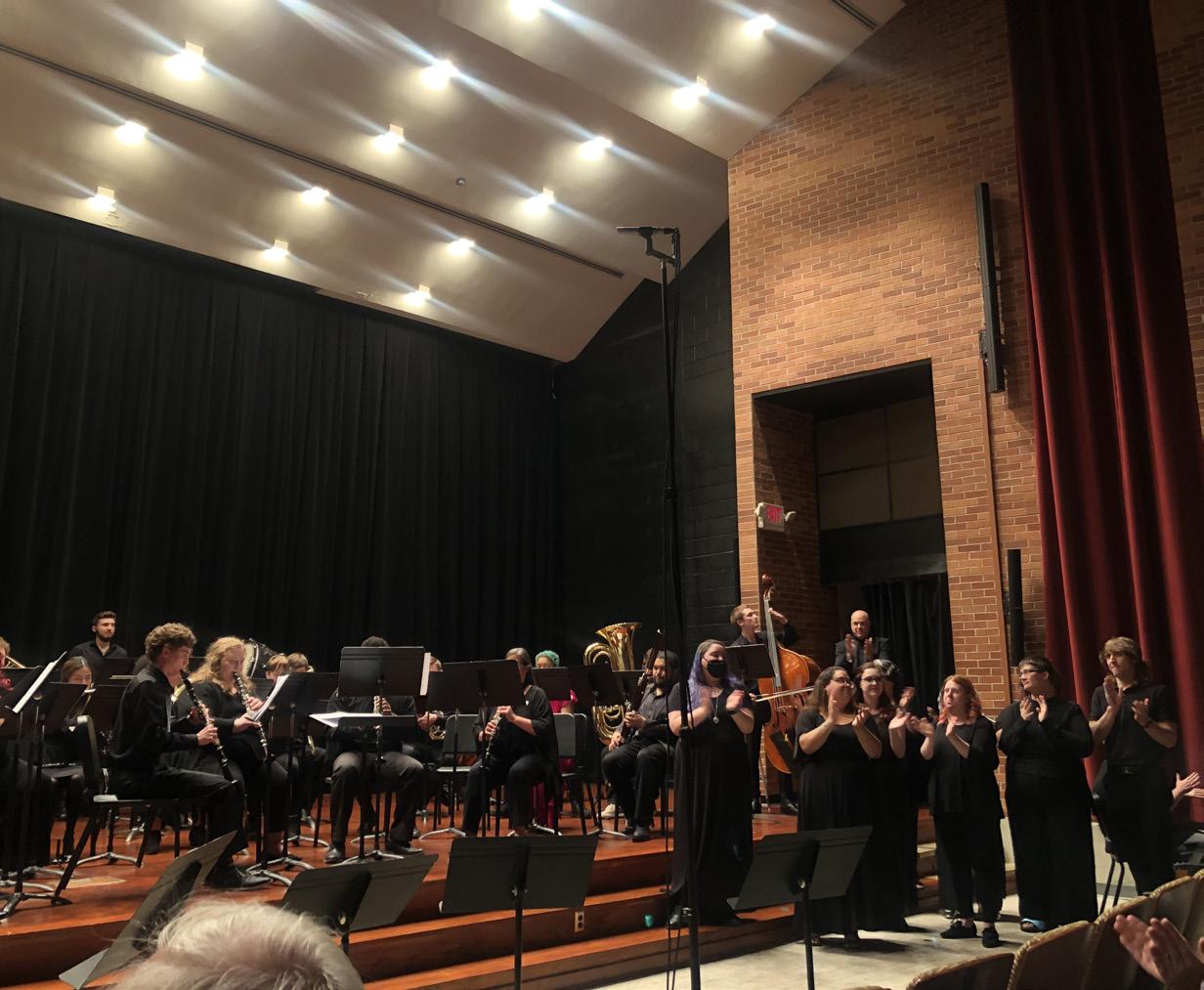
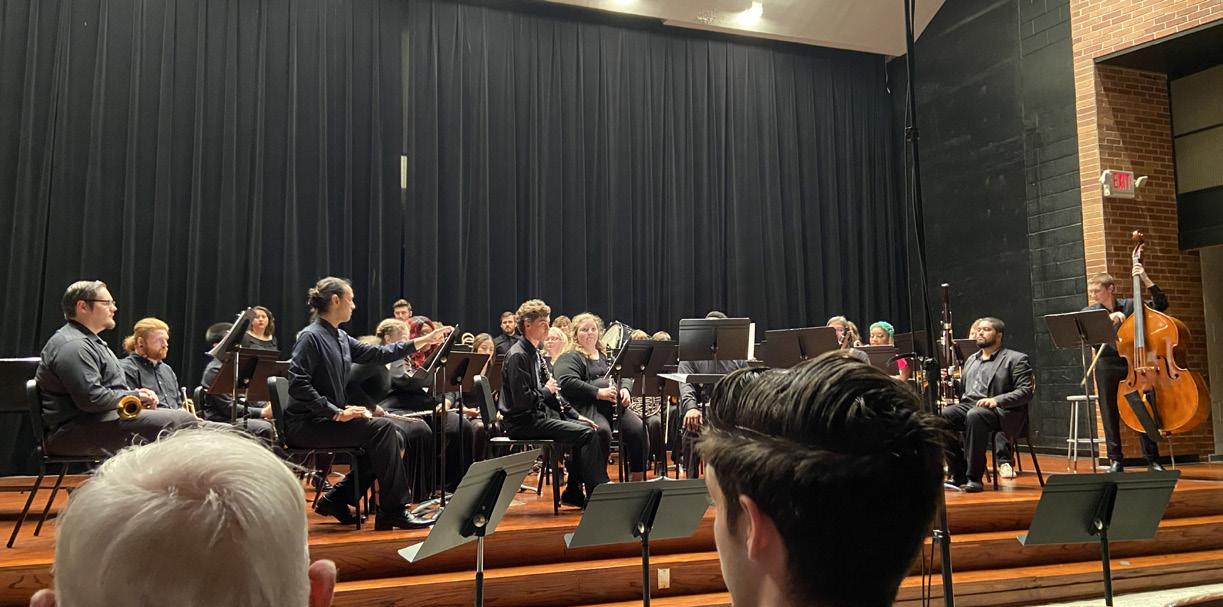
The Chancellor's Concert held on April 14, 2022, was a collaborative mix of performances from the UA Little Rock music department. The concert was supposed to be held two years ago on April 14, 2020, but was unfortunately canceled due to COVID-19. Now, two years later, the music department was ready to put on performances you would never forget.
The concert started strong with a piano ensemble. Carmen Ramirez, a student conductor in the music program at UA Little Rock, and Dr. Rolf Groesbeck played on one piano while Leann Jones, a collaborative pianist, and Stephen Graham, a music student, played on the second piano. Together, the four played "Egmont Overture," Op. 84 by Beethoven. It was breathtaking, and the piece went through several ups and downs. Full of energy and light, but still a heavy hitter. The next piece "The Crucifixion" was a solo sung by Valerisse Bell, a soprano competition winner, accompanied by Jones at the piano.
The Chamber singers astonished the crowd next with their song "Elijah Rock," a piece that filled the entire auditorium with their booming sound. Concert Choir sang "City Called Heaven" with an amazing tenor soloist Damien Snowden.
The Chancellor’s Concert did not only showcase the singers within the music department but those that play instruments as well. Harris Hogue, a solo competition winner and clarinet player, divulged to us the "Syrinx." It was a piece filled with mystery and left you wondering what would happen next. The percussion ensemble was next with their piece "Go" from Amid the Noise.
In the next section of the concert, we got a little taste of Broadway.
Soprano soloist Hannah Blacklaw, yet another competition winner, brought to us “Astonishing” from Little Women with Jones at the piano.
After Broadway exited the building, we slowed things down a little bit with the appearance of the jazz ensemble accompanied by Mya Little on vocals for the song "Things Are Looking Up." It was a tune that had swing and for a few minutes took you back in time to the 1930s at a jazz club. After Little and the jazz band graced us with their presence, Brent M. Foster II, yet another solo competition winner, took the stage to sing "Ev’ry Valley Shall Be Exalted."
Women’s Choir was next. They gave us two wonderful performances of "Koowu" and "Music Down in My Soul."
Vibraphonist Luke Allred played
"Blue for Gilbert." Allred is yet another solo competition winner. Next, a Trombone Quartet played a jolly rendition of the Super Mario "Main Theme." Little took the stage again to sing "Près des Remparts de Séville" with Jones at the piano. As she sang, she walked about the auditorium. You couldn't help but follow her with your eyes, wondering where she would go. To commence the performance, the wind ensemble played the "British Eighth" as all the performers joined the stage. As the musical artists said the Trojan Chant, the audience gave final applause.
This concert was held to not only honor Chancellor Christina Drale but also to give insight into the world of music at UA Little Rock. Every sector of the department had its moment to shine and to prove why you should keep supporting the UA Little Rock music department. As John Denver once said, “Music does bring people together. It allows us to experience the same emotions. People everywhere are the same in heart and spirit. No matter what language we speak, what color we are, the form of our politics or the expression of our love and our faith, music proves: We are the same.”
BY RIAN NEWMAN
It is no surprise that after the COVID-19 pandemic, students and professors everywhere faced a shift in their learning and teaching practices. Dr. Rebecca Glazier was on the forefront of braving the shift from in-person to online learning.
Dr. Glazier was in a unique position when quarantine hit, as she had already been researching online learning and teacherstudent connections in the online classroom for ten years. She was also just starting the process of writing her recently published book, “Connecting in the Online Classroom: Building Rapport Between Teachers and Students.”
When Glazier first started teaching online classes, she was new to UA Little Rock in 2009. As a Political Science professor, she was teaching Introduction to Political Science in-person and online at the same time.
“No one had ever taught me how to teach online. I'd never taken an online class before. I had no idea what I was doing, but I love teaching and I love my students. So I was like, this will be fine,” Glazier said. “I just kind of did the same thing that I was doing in my in-person class online. I used the same books. I used the same assignments. I used my same lecture notes. But then, because I'm a social scientist and I love data, I started looking at the data and I was like, what is happening in my online classes?”
What Glazier discovered was a discrepancy between her online students versus her students attending class physically. She noticed online students are much more likely to fail, drop the class or drop out altogether. After talking with her students and colleagues, Glazier started researching the literature and discovering what was happening.
“I wasn't very present for my [online] students. I love teaching my in-person classes. I love talking with the students, the give and take, students asking questions and hearing what students have to say,” Glazier said. “In my online classes, I was posting questions on the discussion board and remembered to check in three days later. I just wasn't very engaged, and I realized if I'm not engaged the students
aren't going to be engaged. If I'm not asking you questions, if I'm not present, if I'm not showing them that I'm a real person, then I'm not connecting with them.”
Glazier’s book is a conglomeration of 12 years of data, surveys, interviews and experiments, as well as literature that she read to figure out how to connect with students better in online classes to help them be successful.
Ultimately, the most important thing to Glazier was making sure her students were successful, but her research also had other impacts.
“It's better for faculty because once I started being more present and connecting with the students in my class, I liked teaching it a lot more,” Glazier said. It's better for universities as well, because a lot of universities are facing enrollment and retention problems right now. And so we can keep students, we can get them graduated.”
The timing of her book could not have been more perfect.
Glazier officially started writing the book in November of 2019, sending her proposal to the editor who ended up picking up the book at John Hopkins University Press the week that everything shut down for COVID-19. After writing over the entire summer of 2020, while also homeschooling her son and moving all her in-person classes online, Glazier got the final manuscript to the press in December of 2020 for a publishing date in December, 2021.
“The pandemic gave me some new statistics that I could draw on from other people who were suddenly researching this issue,” said Glazier. “There's a lot of great people who are working in the field of emerging work on what's called the pedagogy of care. Caring about students as more than just university consumers or customers and trying to care about students more as human beings in our classes. There was more research on maybe having flexible deadlines or not using software that treats our students like they are inherently cheaters or spies on them, like maybe we should start by trusting our students and treating them like real human beings.”
experience that they're having and our students just deserve so much better.”
UA Little Rock also serves a lot of nontraditional students and first generation college students.
“There were lots of moments where I was like, no, this is too much work,” continued Glazier. “But I'm really proud of the book. The research is a long time coming and the writing process was super challenging, but I'm really proud of it. And I really hope that it is helpful to faculty, to administrators, to universities that are trying to do better by their online students.”
One distinction Glazier found important was the distinction of how online classes used to be viewed versus how they are viewed now. Especially after the pandemic, it is likely that most students on a campus are taking at least one online class.
“So the old school way of thinking about things is like there are students who only take online classes and there are students who only are in-person, and that's just not how the world works,” Glazier explained. “Especially because a lot of students had to take online classes during the pandemic, and so they maybe are more familiar with them or are more willing to add one or two online classes to their schedule. So we need to do better by our online students and not treat them like second class citizens and think that it's okay to give them crappy classes. If they're in online classes they deserve better.”
Working as a professor at UA Little Rock definitely played into Glazier’s process of writing her book. UA Little Rock has a predominant online student presence, and Glazier has taught many online classes for the university.
“I think that really motivated me even more to want to draw attention to the issue of how our online students are being underserved because I have seen and listened to lots of interviews and surveys of students who take both online and in person classes. Some of the things that I hear from online students just breaks my heart. They say things like ‘I haven't received an email back from my professor for six weeks and it's week ten and nothing has been graded so far’ or ‘I have no idea where I stand in the class. I've gotten no feedback at all.’ It's just awful to hear that this is the
“I'm a first generation college student. I know what a difference it makes for their lives to be able to successfully graduate. For many of them, online classes can be an impediment to that if you're stuck in an awful online class. That's awful for our students, but if we can be more supportive, give them better classes and help them get through, having a college degree can make such a difference in their lives. And I've really seen that.”
Glazier’s book addresses a need for data on this topic. Before her book, there was not a place that brought data and the psychology of connecting with students online together. It also includes studies that show when you show students that you care about their success, there is a 13% increase in retention, and students see a meaningful difference. Anyone who is either teaching online or is trying to facilitate workshops online, Glazier thinks they can find some helpful things in the book about the importance of relationships.
“The term that I use is building rapport. It's really about relationships and building rapport is having good communication, letting students know that you care about their success and being available,” Glazier explained. “Even though so much of what we're having to do is mediated by technology these days, what really matters is the human connections at the heart of that, and that doesn't have to end because of technology. In fact, when we can still make those connections across technology, that's when the real magic happens, the real learning happens.”
Nearly any professor who has had to teach in the last two years has had to go online. While there have been negatives from this switch, Glazier encourages her peers to use online teaching to their advantage. Online platforms have features that in-person classes may not, and allow professors to be creative, as well as opening up classes to students who may not have been able to come in person.
“You have to try to use the things that are good about online,” Glazier said. “The way that I try to connect with students and my own personality, like I put sarcastic comments into my lectures and
stuff like that. Start a discussion thread and have everyone share a foreign policy meme, that's something that is easier to do online than it is to do in an in-person class. Or to start a discussion thread that doesn't have anything to do with the substance of the class that helps people connect as real people. In Zoom, I always tell people to use the chat as much as possible, talk to each other, talk to me, do whatever you want in the chat. And that I think is a real benefit that you don't have in the classroom, because if people are just making comments, it totally interrupts what's happening. That's a benefit that you can get from online, so it has its upsides, focus on those.”
Glazier also explained that universities that have put resources behind helping online teaching and improving their online learning platform is a good thing, but not always what students need to succeed.
“What professors need is pedagogical training,” Glazier said. “Talking about the best way to connect with students, how to the class meaningful to their lives, and how to help the students know that their success is important to you. That is more important than having a video that's edited. In fact, having a video where your cat wanders through the screen or you mispronounce a difficult word, actually humanizes you and makes your students feel like my professor is just a normal person. They're approachable, I could email them. That kind of a video is actually better than one in which you've edited all of your mistakes.”
For anyone who wants to read Dr. Glazier’s book, “Connecting in the Online Classroom: Building Rapport Between Teachers and Students,” you can find it and her other works at rebeccaglazier.net. You can also find a hidden message in the cover of her book.
“It has all this math on the front, and I was like this looks great, then I said to my editor ‘can I change some of the numbers, can I hide secret messages in the cover of my book?’ My editor was like this is the weirdest request I've ever gotten, but yeah,” Glazier said. “My son's favorite number is hidden in here, and a message to my parents and to my best friend, like our different numbers are hidden on the cover of my book. The most fun that I had was hiding numerical, secret messages in my book cover.”
BY CHLOE MCGEHEE
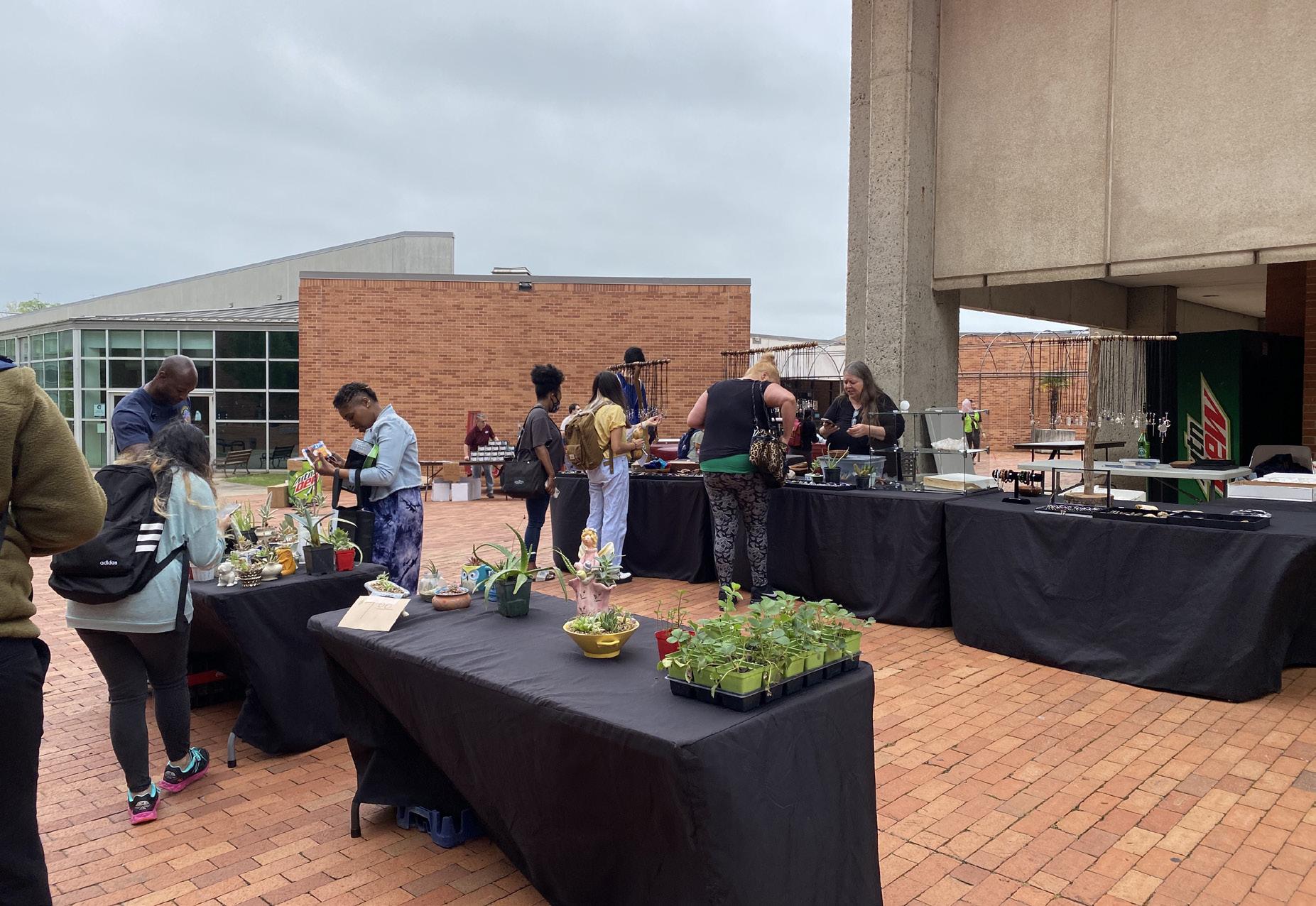
Growing up, Earth Day was always something I would look forward to. A cool morning where there was dew on the grass and we were running around outside making kites and other crafts from recycled items is a core memory of mine. Thankfully, UA Little Rock has allowed us to relive these moments.
As we get older, we start to recognize just how important the earth is not just on one day, but every day. The different tents and tables at the Earth Day event this year had a lot to offer as representatives from the Friends of Fourche Creek, the Ozark Society, Keep Arkansas Beautiful, Arkansas Master Naturalists and many others shared with us information about ongoing projects in our community. The Ozark Society representative shared how the society’s founders worked to make the Buffalo River a national river, making it the first national river in the United States. They were dedicated to preserving Arkansas’ rivers and wilderness, and still work to do that today.
Members of Keep Arkansas Beautiful and Friends of Fourche Creek hosted a campus cleanup and awarded volunteers with a free t-shirt after they handed in a bag full of collected trash. They explained the various cleanups they host monthly, specifically on Fourche Creek where the trash booms are located, and a major cleanup happening soon where they hope to get some reports to further share their work with the public.
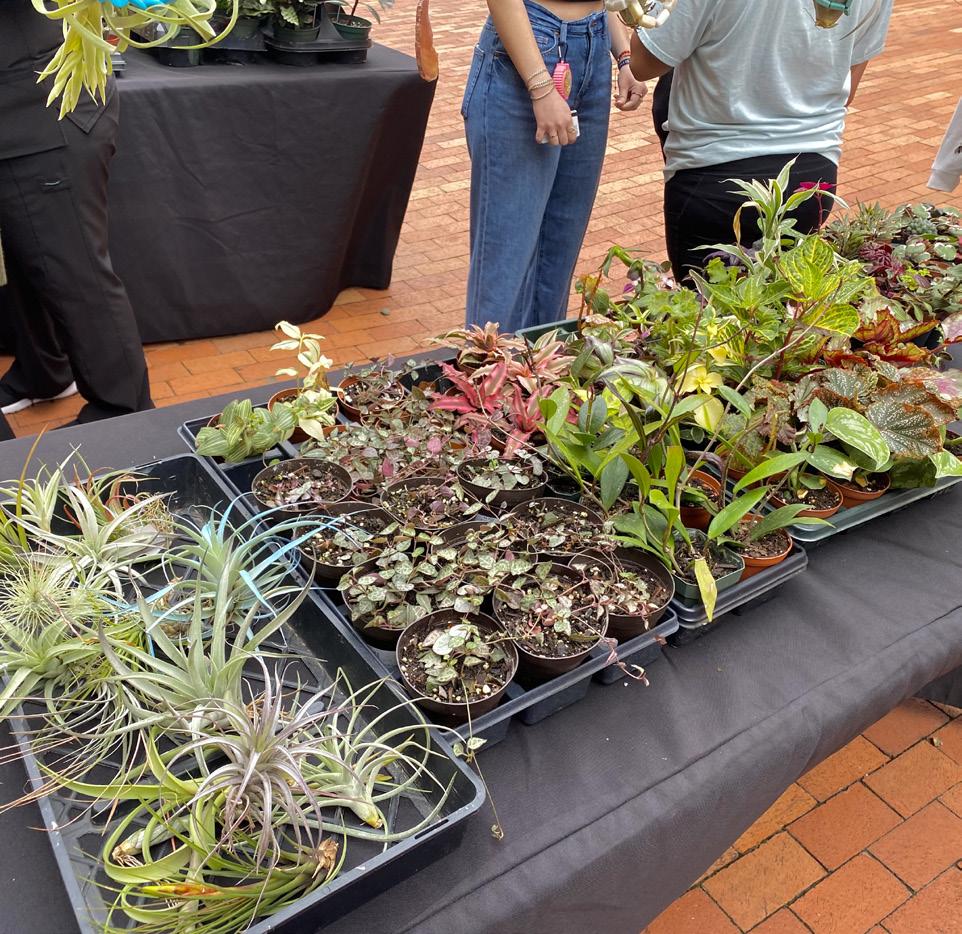
The vendors at the event had various succulents, cacti and aloe vera plants in fun “pots” like mugs or unique home decor pieces. Others displayed fresh produce, honey and crystals.
Personally, the booth that stuck
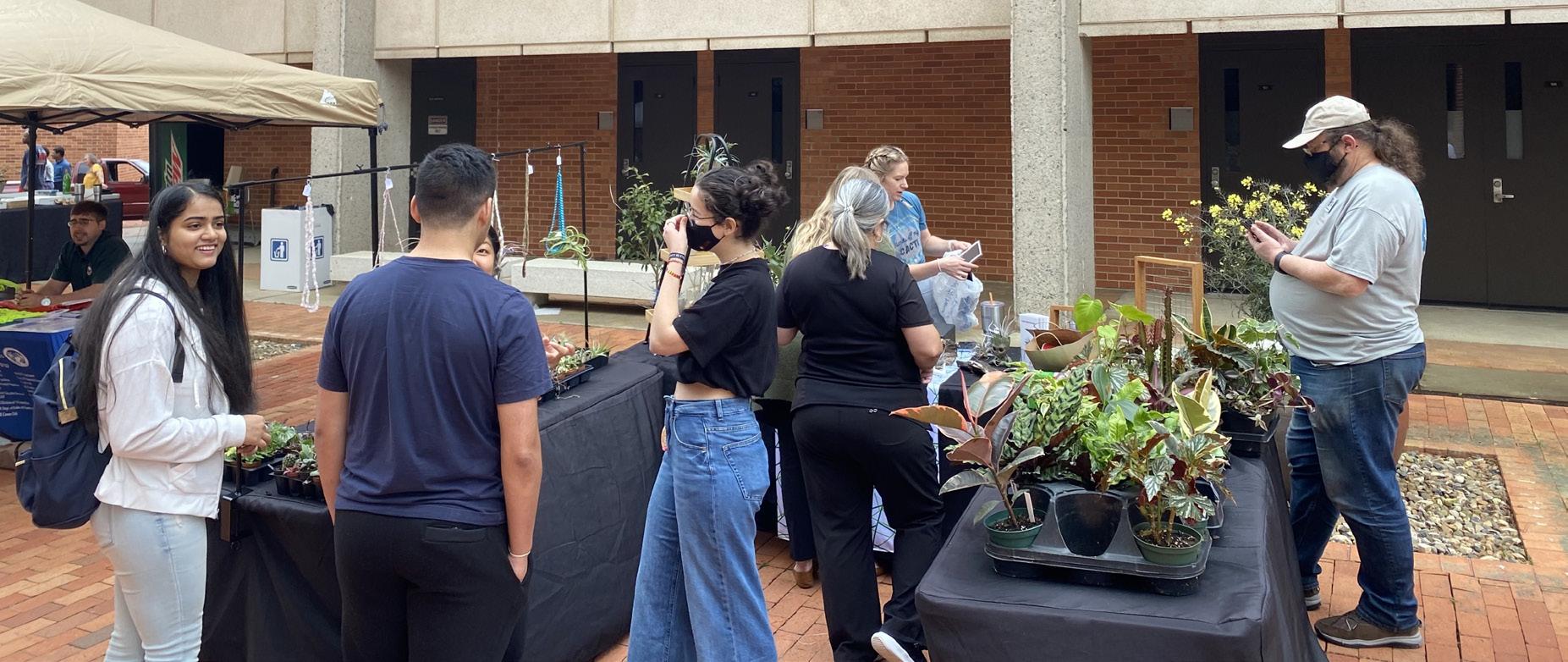
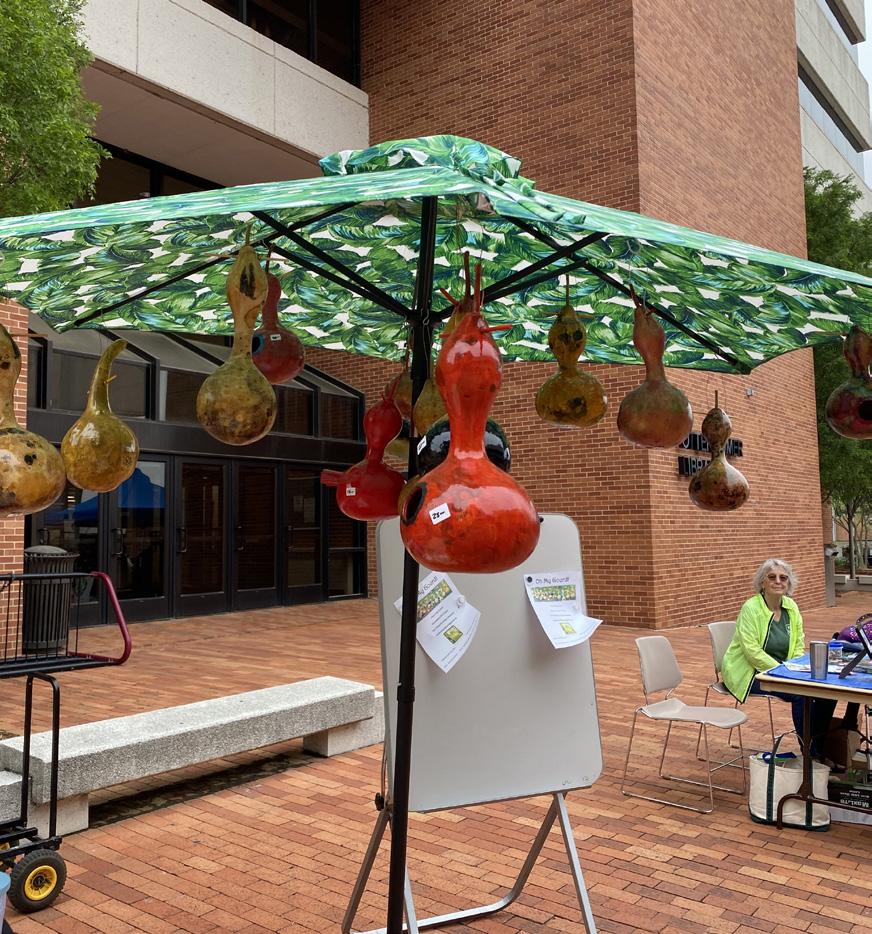
out to me the most was the “Oh My Gourd!” booth by Melissa Hardeman. A project she has been working on this past year is the making of birdhouses from gourds she grew in her own garden. When asked what inspired this idea, she said she just had the idea and made it come to life. The process was interesting to learn about, as Hardeman explains that all you need to do is let the gourd dry out in the sun, or even indoors, clean it and then simply varnish it to finish it off. Of course, it must also be cleaned out on the inside and a hole must be made to allow the birds to come and go as they please. I thought this was a really unique and fun way to make use of gourdes, something most people would not think to do. Hardeman can be contacted via email at rosethornsandglue01@gmail.com if you would like to know more about this project or would like to purchase a birdhouse.
The Earth Day event took place during the middle of the day, allowing students to stop by and take a break from their 9 a.m. classes and long study hours before finals week approaches.
Overall, I enjoyed the celebration of the earth and being more informed about the big projects and plans many organizations have for our state. It would be interesting to see projects that other students have initiated being displayed at the event as well. Students could have a table where they share ways in which we can be sustainable, sell items they have made sustainably or even a small craft where we use recycled items to create something. However, I appreciate the representatives there that provided information on how we can lend a hand through volunteer opportunities.
BY VASTI HERNANDEZ
Dr. John Kirk Delves into UA Little Rock Archives for Exclusive Look into Winthrop Rockefeller’s Early Life
An unexpected impact from the pandemic was that creatives had more time to work on their projects during lockdowns. One UA Little Rock professor, Dr. John A. Kirk was able to use the downtime that came with COVID-19 as a period to write the book he had been researching for years.
The book covers the early life of Winthrop Rockefeller before he moved to Arkansas and changed the state as people knew it. The first two-thirds of Rockefeller’s life are included in the book, from his birth in 1912 up until when he first became established in Arkansas in 1956.
Kirk explained that no one really thought Rockefeller would stay in Arkansas, as he was from New York and a known city-dweller, but in 1956, he built a farm on top of Petit Jean Mountain, established the Winthrop Rockefeller Fund (now Foundation) and put multiple initiatives into place, cementing
his plans to stay in the state.
For this book, Kirk wanted to cover parts of Rockefeller’s life that had not received much attention yet. There were already three books that had been dedicated to him. Two were written by John Ward, who was Rockefeller’s public relations manager in the 1960s (and who ran his 1968 campaign).
However, all the books focused exclusively on Arkansas, and passed over Winthrop's life in New York. On top of that, many of the Rockefeller family history books also pass over Winthrop because he moved to Arkansas.
“There was a hole that I realized needed to be filled, so the book is an attempt to address that untold story of the first two-thirds of his life,” Kirk said. “I think a lot of what he did in the first twothirds of his life tells us a huge amount about what he did in Arkansas afterwards, and laid the foundations and groundwork for that. A lot of the literature presents Rockefeller's life as a massive break between the first two-thirds spent in New York and the final third
spent in Arkansas; what my book does is challenge that notion of this kind of life of two separate acts that were completely different from one another and tries to tie together what Winthrop did in the first part of his life and how that later informed deeply and profoundly what he did when he came to our state.”
Kirk sees a lot of that New York influence in Rockefeller’s actions while he was Governor of Arkansas in the 1960s. Rockefeller was the only southern governor who publicly participated in a Memorial service for Martin Luther King Jr. after his assassination in 1968, and days later, Rockefeller joined a Memorial service on the steps of the Arkansas state capital an African American audience.
In particular, Rockefeller had a long association with the National Urban League, which is based in New York. He donated what today would be the equivalent of around a million dollars so that the NUL could buy a new national headquarters. Kirk believes Rockefeller played a huge role in
pulling Arkansas out of the solid south who opposed integration.
“One of Rockefeller's major influences in the state was put an end to the institutionalization of segregation politics in Arkansas in 1966,” Kirk said. “Rockefeller was the first Republican governor elected in 94 years in the state and a very conservative, segregationist Arkansas Democratic party had been in power from reconstruction. In 1966, Rockefeller stood against a man called Jim Johnson, who was the leading segregationist in the state at the time. During his time in office, he appointed more African Americans to state positions than ever before. He also integrated draft boards during the Vietnam war in Arkansas, he did a lot of important things to transform the perception of Arkansas and its relationship with race relations.”
Kirk first started researching Rockefeller in 2009, but had been interested before that when he was working at the University of London in the early 2000s. He applied for a Scholar Residence Program at the Rockefeller Archive
Center in New York and got in to write about Winthrop Rockefeller.
Kirk then became Chair of the History department at UA Little Rock, then served four years as the director of the Institute on Race and Ethnicity. This furthered his research because UALR hosts the main Winthrop Rockefeller collection.
“The downside was that I had a heavy administrative load, so that didn’t free up a huge amount of time, even though I was close to the papers,” Kirk said. “I had to do it in bits and bites, and an afternoon here, and a morning there. A few years ago, COVID freed up time for me to go back and give greater attention to the project and draw all the strands together and finally get the book written and out. It's been a long burn project for over 12 years and most of the time I've been here at UA Little Rock. I'm glad it’s out finally out and seeing the light of day.”
The Center for Arkansas History and Culture in the University Archives had a massive collection on Rockefeller, but Kirk explained it
Some of the best books I’ve read are the ones that I spontaneously buy at stores not known for selling books. This book, “Golden Girl” by Elin Hilderbrand, was one of those. When I saw it at a local Kroger and read the synopsis I knew I would love it. The book provides a perfect mix of mystery, love, drama and humor. It’s also the perfect spring/ summer read, reminding us that there are warmer days ahead of us.
The plot is centered around Vivian “Vivi” Howe, her three children and the Beyond (afterlife). While out on a jog, Vivi is hit and killed by a car. The driver speeds off, leaving a dead Vivi on the side of the road and a mystery for readers to solve. After she is hit, Vivi is welcomed to the Beyond where she watches the events of her hometown play out for the rest of the summer. As she enters, Martha, her assigned person, greets her and grants her three nudges that Vivi can use to make changes down on earth.
Her two daughters Willa and Carson, and her son Leo are then left to grieve the death of their mother
somewhat alone, as their father –Vivi’s ex-husband – offers whatever comfort he can give to them while also trying to keep his relationship with his girlfriend alive. It’s really painful to see how each of Vivi’s children cope: drugs, drinking and isolation. Thankfully, Vivi uses her nudges wisely, allowing each of her children to eventually find peace in unexpected ways.
In the book, we learn that Vivi is not only a mother, but she is a writer – a really good one. She brought tourists to the town of Nantucket, Massachusetts, because of her books and was in the midst of publishing her last book “Golden Girl” before she passed. She is also a very good secret keeper, hiding many things from her children which later come to light in her new book and creating a plot twist that readers will love. Growing up, she had a very rough childhood, so being the best mother she could be for her children was a job she was committed to, and it shows through her love for her children.
Before reading a book, I do my best to not read reviews for
fear that I will develop a negative preconception about it. About halfway through the book, though, I wanted to see what other people had to say about it. A lot of people said they enjoyed it, but not to the point of rating it above three stars. They often pointed out how the characters were very flawed, but I personally feel that it added to the overall story Hilderbrand was curating.
I laughed a lot throughout this book but was also left heartbroken many times. I would say this book is a quick and easy read, even though the topic is a bit heavy. As you watch events unfold, you find yourself thinking, “I didn’t even see that coming!” or holding your breath as a character makes another wrong move. The book has an overall rating of 4.20 stars, which honestly really doesn’t mean much until you read the book yourself. I love Hilderbrand’s books and would recommend checking her books out for the upcoming sunny seasons!
BY VASTI HERNANDEZ

was also very underused. He got to work with the papers and to open a lot of the boxes for the first time. Not all of Kirk’s book was archival, though. He interviewed Winthrop’s brother, David Rockefeller back in 2005 when he was 101 years old.
“It was a fantastic insight to get to someone who has played such a prominent role in American society and culture, and to speak to him about his brother,” said Kirk.
“I'm glad that I got to interview him. He was one of the few people with a direct memory of the events that are covered in the book.
There weren't that many people to interview, but I'm delighted that I got to interview him as a crucial figure. When I interviewed him, he was the world's oldest billionaire.”
Adding COVID-19 to the publishing and researching process definitely did not help speed anything up for Kirk, however the pandemic did give him more time to write.
“It probably takes about 18 months from the time you submit the book to it finally coming out,” Kirk said. “It’s coming up to two years since I submitted the manuscript and it finally is out as a book. So it's a long, drawn out process, and the whole COVID delays of the past couple years didn't help with that. It's a pretty long and a hefty commitment working on a book like this.
“Lockdown freed up a lot of time to do the writing and kind of get the book into order and go through this whole process,” continued Kirk. “In some ways it was perfect timing to finish a project. It was a great time to be writing, terrible time to be doing research because all the archives are closed.”
Thankfully Kirk got to the writing stage before quarantine hit, so plenty of time was freed up. He did miss being face-to-face with students and his peers. Kirk’s first talk on his book was also his first time being in-person for an event in two years.
Despite this being Kirk’s tenth book, it was still meaningful to him because of the long commitment he made to it, and it represents a new direction in his work.
“It's been 12 years in the making, and it's the combination of a lot of time and energy,” Kirk said. “It's significant to me because a lot of the stuff I've written before is on the history of the civil rights movement. And this is kind of branching out a little in the different kind of book and a book that's oriented more towards a popular
audience as well. It's designed to reach out beyond academia to a more popular audience. And that's one of the things that I've had the pleasure to do since moving to Little Rock as an Arkansas historian, I can have more direct engagement with the public than I could ever do when I was at the University of London. To make my work accessible to a larger public, I think that's gratifying. It’s kind of exciting to branch out and engage new and different audiences.”
Kirk also thinks people have a lot to learn from Rockefeller’s life and legacy. He also hopes more people will know about Rockefeller and the reasons he impacted Arkansas so much. Winthrop Rockefeller’s name is still imprinted in Arkansas, and will continue to be; Kirk thinks understanding the public profile is important for Arkansans.
As for one of Kirk’s favorite parts of the book, the story of how Rockefeller came to Arkansas in the first place stands out.
“There's kind of two main reasons,” Kirk explained. “One is that he got married in 1948, but the marriage only lasted for 18 months before the couple separated, and they embarked upon quite a high profile divorce. He eventually decided that he'd had enough and wanted to leave New York all together and start a new life somewhere else.”
But what pulled him to Arkansas in particular? It was actually an old war buddy, and eventual best friend, of Rockefeller’s who was from Arkansas, Frank Newell.
“When Winthrop wanted a place to go, he said, ‘why don't you come down here?’ At first people back home in New York weren't convinced that he was here to stay. They just thought he'd come here to lie low from the headlines like he'd done before,” said Kirk. “By the time I got to the end of the book, 1956, it was clear that he'd set up here in Arkansas and that he was gonna stay and that he was putting roots down in the state. I think things changed after 1956/57 across the next year where the book ends, as that was the year of the Little Rock school crisis, and that played a a large part in the way that Rockfeller thought about the state and thought about his own relationship to the state and how its future should unfold, but that's the kind of next chapter of the story. Maybe at some point I'll get around to writing that book.”
BY CHLOE MCGEHEE
1
If you don’t compost at home, consider helping out the UA Little Rock Campus Garden by participating in the Compost Bucket Program.
Take a bucket home to collect food scraps then drop off the full bucket at one convenient location accessible 24 hours per day, 7 days per week. The compost bucket shelf is located in front of the University Police station at 3340 Fair Park Boulevard, directly across from U.S. Pizza.
2
Food scraps from fruits, vegetables, cheese, grains (excluding avocado seeds)
Coffee grounds and filters
Tea bags (no staples)
3
The organic matter decomposes naturally and provides the Campus Garden with a nutrient-dense mixture, replenishing the soil of lost minerals and nutrients used by the year-round vegetable production.

Bria Allen is senior long jumper, she was born September 8 and is the daughter of Chet and Candis Allen. Her sister, Brandi Allen is also on the UA Little Rock Track and Field Team. and she is a sophomore and she is also on the Little Rock Trojans track team. Bria is from North Little Rick, Arkansas and attended Maumelle High School. Bria plans to major in Biology.
Bria was a three year letter winner at Maumelle High School. She also competed in the long and triple jump and was named all state and all conference. Allen earned Maumelle’s Most Improved Award in 2017. She also competed for Cristian Competition Track Club and also competed in both regional and Junior Olympics.
Allen in the 2021 Indoor season participated in the long jump in three meets, her best mark of the year came in 17-6(5.33m). Allen opened the indoor with the seventh best long jump mark in school history; she placed sixth at the A-State Kickoff Classic.
In the 2021 Outdoor season, Bria competed in two events across five meets. Allen placed fifth in the long jump at the Little Rock Open as her wind-aided jump of 18-7.75(5.68m) was a new personal best and ranks fourth in school history when including all marks. With her athletic ability, Allen has displayed her talent as one of the premier athletes for the Little Rock Trojans as a senior. She has all of the tools to spring forward in conference, let’s see if Allen can add to her already impressive resume.
BY GEORGE SHAVERS


Trojans’ moves not good enough as Red Wolves dance to a 2-0 week. (4/14-4/15/2022)
Game 1
Little Rock gave the Red Wolves an 5-1 lead in the eighth and railed back within one run on two different occasions but, fell short, losing to the Red Wolves 6-5 at Gary Hogan Field.
Runs were hard to come by through the first half of the game as good pitching kept both teams scoreless going into the fourth inning. Late innings continued to hurt the Trojans, giving up one in the six, three in the seventh and another in the eighth. Noah Dickerson had a good game, going 4 of 5 with a pair of runs scored and a double. With Canyon McWilliams stranded at second base, the Red Wolves were able squeak out the victory and earn their first Sun Belt win of the season.
Game 2
In redundant fashion, the Trojans allowed a five run lead in the second. Little Rock would rally back in the bottom of the eighth to tie the game. Little Rock got one run at the top of the ninth, but the Red Wolves would go on to win for the second straight night.
Arkansas State with a big second inning, used a two run home run, a walk, single, RBI ground out, a double and another single to earn a 5-0 lead.
A one out single by Jack Stroth, set the table for Jake Wright’s fifth home run of the season, closing the margin to 5-2 in the fourth. The Red Wolves would lead off the sixth with a solo run, making the lead 6-3. The Trojans battled back with runs from Miguel Soto, Canyon McWilliams, and Jordan Hussein to tie the game at 6-6. Arkansas State would go up in the ninth with a 7-6 lead. A strikeout in the ninth would allow the Red Wolves to secure the win and the series against the Trojans.
Game 3 of the series was canceled due to heavy rain on Friday night. The Trojans then got
ready for a tough four game road trip next week, beginning against Louisiana Tech.
Trojans tame Maverick’s, Rides Wright to victory U-T Arlington vs Little Rock: April 10, 2022
The Trojans railed from a three run deficit, tying the game at 5-5 after regulation. For the second straight game, the Trojans ended the game on a walk off win. Jake Wright sealed the win with a solo home run in the bottom of the 10th inning against U-T Arlington.
With the win against the Mavericks, the Trojans extend their winning streak to five games. Little Rock is now 14-6 at Gary Hogan Field this season, which is the most home victories since going 16-12 in 2019. The Trojans this season are 16-12 and 6-6 in SEC play.
Wright went 3 for 5 with a double and a home run, he scored three of Little Rock’s six runs on the day. He came in clutch in the bottom of the 10th, hitting his fourth home run of the year over the left wall to help the Trojans earn a series sweep of the Mavericks winning 5-6.
Bears trample Trojans
Big inning in the third, fourth, and eighth were too much for the Trojans to overcome in a 11-5 loss to the Central Arkansas Bears. With a loss to the Bears, is snaps a five game winning streak as the Trojans fall to 16-13.
The Trojans struck first in the bottom of the second, but Central Arkansas responded with three runs in the third and a pair in the fourth pushing their lead to 5-1.
Little Rock cut into the lead in the the seventh inning to close the gap to 5-4. The Bears fought back by ripping off six runs in the top of the eight, making the game a route, 11-4. The Trojans would gain a late run in garage time by Eldridge Figueroa as the Trojan fall 11-5.
The Little Rock Trojans continue their seven game home stand with another in state rival, the Arkansas State Red Wolves at the Gary Hogan Field for the final time as Sun Belt foes.
BY GEORGE SHAVERS
The Little Rock Twilight proved to be an electrifying performance for several Trojans at the Coleman Sports and Recreation Complex at the University of Arkansas at Little Rock campus on April 14 and 15. UA Little Rock athletes claimed 39 medals and broke six facility records at the Twilight, 4 of which were . Little Rock women’s athletes claimed first place at the meet with a collective 274 points, far surpassing University of Central Arkansas, who placed second with 118 points. The Little Rock men’s team also came in first with 195 points, while UCA also finished second with 123 points.
The women’s jump team in particular won big at the meet. Little Rock earned all three top marks in both the women’s long jump and triple jump. Bria Allen recorded a 5.85m jump in the women’s long jump, winning her a gold medal, as well as setting a new school and facility record. Rondaishia McNeal won silver with a jump of 5.51m, and Jaelyn Tucker snatched a bronze medal with a jump measuring 5.46m. In the triple jump, Rondaishia McNeal won gold with a jump of 11.9m, Crystal Trowers won silver with a jump of 11.24m and Sydney Miller earned bronze with a jump of 11.11m. Gabby Ayiteyfio placed third in the high jump, earning her
a bronze medal, clearing a 1.62m.
The women’s sprint team contributed a massive amount of points towards the women’s total.
Aaliyah Lacy, Maliyah Holland, Gabby Ayiteyfio, and Landri Schreier placed second in the 4x100m relay with a time of 45.78.
UA Little Rock women athletes placed 2nd, 3rd, 4th, and 6th in the 200m, with Schreier earning silver with a time of 25.19. Following her was Maliyah Holland, who took bronze with a time of 25.23. The 4x400 women’s relay team also won gold with a new facility record of 3:51:00. The team consisted of Teresa Thomas, Zoa Adams, KaNeisha Jackson, and Helensia Green. Jackson posted a separate facility record time of 1:01:92 in the 400m hurdles. Teresa also was responsible for another facility record time in the 400m with a time of 55.54.
In the long distance category for women, Keila Finnestad placed second in the women’s 800m with a time of 1:13:17, while also placing third in the 1500m with a time of 4:40:45.
Aaliyah Mathis earned gold at the women’s shot put with a throw of 12.79m, while Alison Stephens won bronze in the discus event with a distance of 44.8m.
On the men’s team Cameron Jackson crushed the previous

facility record of the 100m dash of 10.17, as set by Michael McGruder in 2017, as well as the previous school record set by Chris Johnson of 10.14. Jackson flew past both records by finishing the 100m in 10.10, setting the third fastest time in the country this year, as well as the tenth fastest in the world. Jackson, Cogan DeRousselle, Troy McKnight, and Andre Dibbles broke a facility record for the 100m relay with a time of 39.78.
In 110m hurdles, DeRousselle earned gold with a time of 14.65 with Barry Richards trailing directly behind with a time of 15.08.
Jonathan Jones earned gold in the high jump event, clearing an impressive mark of 2.14m. In the pole vault, Ethan Sorrels placed 2nd, clearing a jump of 4.48m, while Matthew Fox earned bronze with a jump of 3.58m. In the triple jump, Jordan Wallace set a new facility record of 14.98m, coming in first place.
Spencer Cardinal grabbed gold at the 5000m with a quick time of 15:17.
Desmond Frazier came out with the lead and a gold medal in the shot put category with a throw of 15.35m, while Isaiah Parker won bronze in the men’s hammer with a throw of 48.71m.
BY BRYAN HERNANDEZ






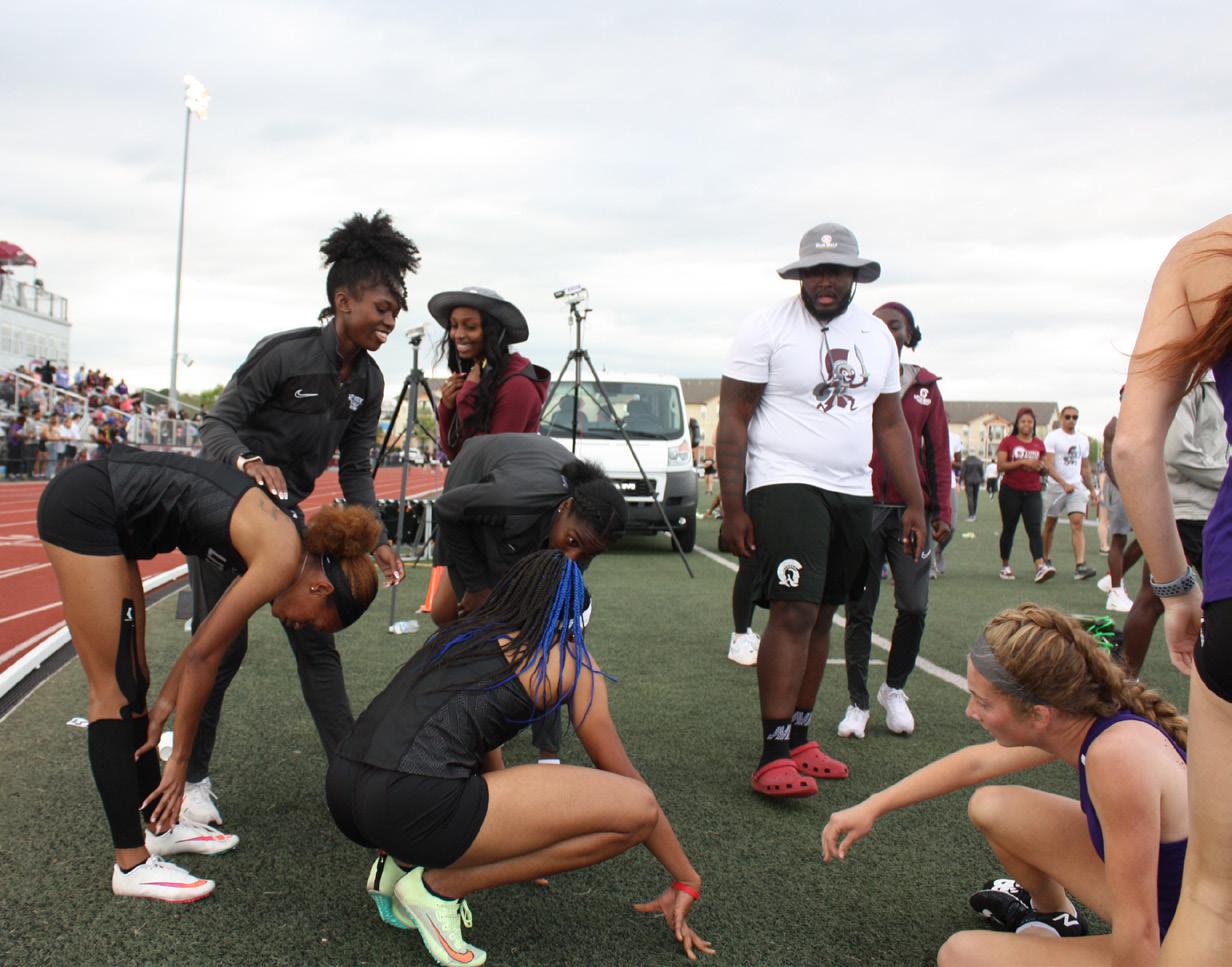









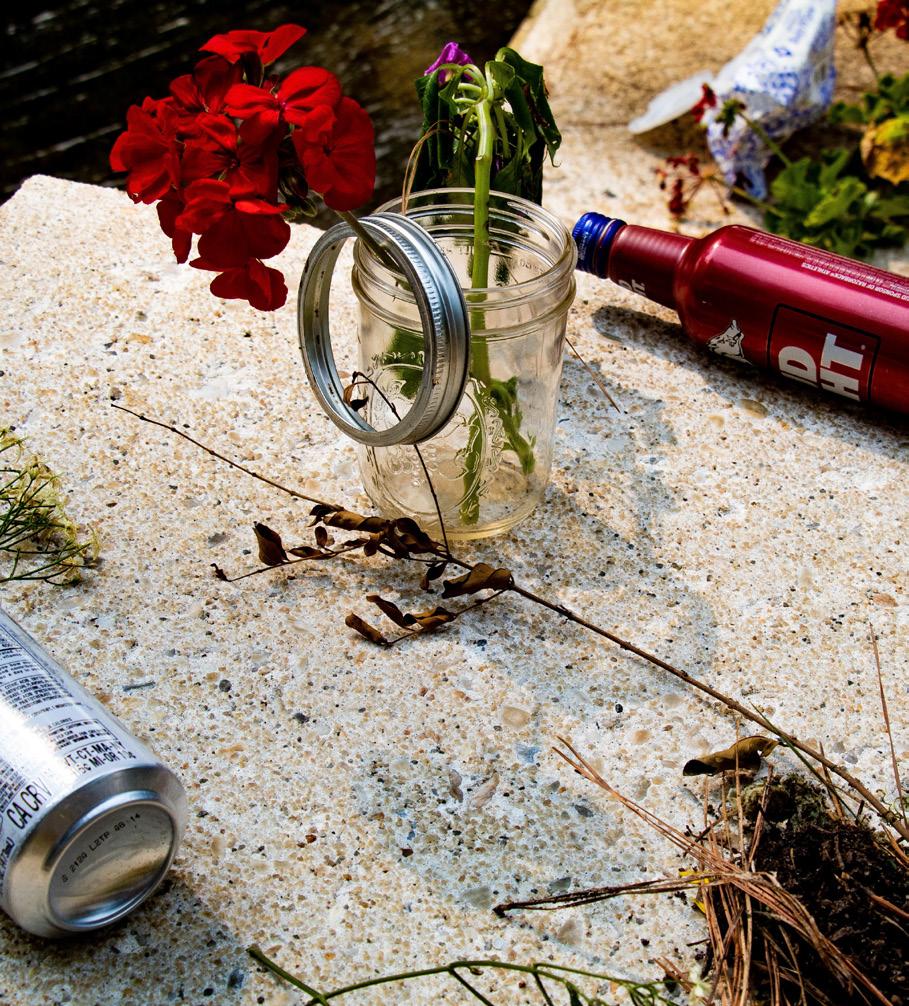


The Forum is the official student newspaper at the University of Arkansas at Little Rock. The Forum is funded in part by the student activity fee. The opinions expressed in The Forum are those of the staff and contributing writers and do not represent the official views of UALR. The Forum is published 7 times in each of the fall and spring semesters. The Forum editor can be reached at editor@ ualr.edu.
The Forum welcomes letters to the editor on any subject. Letters must include the author’s name, classification, major or position and a contact telephone number for confirmation. Letters are subject to editing to meet space limitations. Please limit letter to 500 words or less. The staff will not alter
the meaning of the letter, but will correct spelling and punctuation and edit to conform to Associated Press and news style. All letters are subject to publication.
The editor has the right to reject any letter especially those letters that are libelous, obscene or incoherent, as well as comments on our news coverage and editorial position.
Letters should be emailed to editor@ualr.edu or sent to: The Forum, University of Arkansas at Little Rock, Donaghey Student Center, Suite 116, 2801 S. University Ave., Little Rock, AR 72204
All material published in this newspaper is copyrighted.










WRITER Payton Dhooge, @paytondhooge








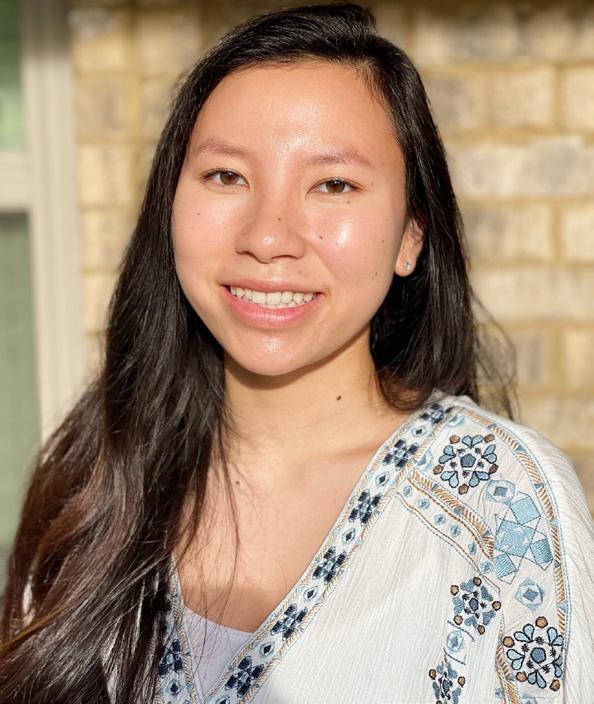



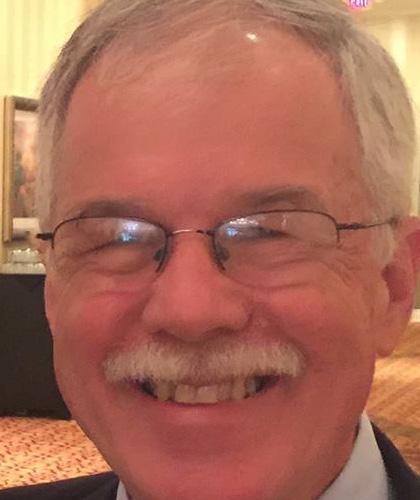


@remy.case
Gage Taylor, @gage.taylor05