Super Value chief: Food inflation ‘more like’ 30%


BAHAMAS Power & Light (BPL) yesterday revealed it had regained 56 percent of its “under-recovered” fuel costs by end-August 2023 while reassuring that surging global oil prices will not derail this strategy.
The state-owned utility monopoly, in response to Tribune Business questions, asserted it will not have to adjust previously forecast fuel charge rates and timelines despite the pressures from rising global oil prices that market observers believe could hit $100 per barrel before month’s end.
Higher oil prices mean BPL has to pay extra for the fuel that it acquires

at spot (present) market costs, which could potentially inflict further pain on already-suffering households and businesses who, for the past year, have had to grapple with fuel charge increases of up to 163 percent as the utility recovers costs that it previously failed to bill consumers for.
However, BPL pledged that current oil market volatility will have no impact on the projected upcoming fuel charges that it unveiled in its so-called “glide path” strategy on October 4, 2022. And it also “does
not anticipate” that it will have to extend this strategy beyond the forecast end-2024 first quarter finish. BPL thus told this newspaper that it will “resume real time billing” in the 2024 second quarter, which starts in April, meaning that the fuel charge seen on household and business bills will solely reflect the price/costs BPL is paying on the open market. Presently, and for the next six months, all electricity bills will reflect oil market
STANDARD & Poor’s (S&P) last night argued that the Government will likely struggle to meet its debt reduction targets “without material new revenues, significant cost-cutting or well above average economic growth”.
The rating agency, in its country report on The Bahamas that made no change to this nation’s creditworthiness, said the debt blow-out produced by Hurricane Dorian and the COVID pandemic means the Government’s “previous fiscal consolidation plans” are insufficient
to achieve its fiscal goals unless economic growth is strong enough to avoid the imposition of further austerity measures.
Joining the Moody’s and the Inter-American Development Bank (IDB) in warning that The Bahamas faces “elevated” external financing risks, with the Government requiring $2.1bn during the present 2023-2024 fiscal year to refinance maturing debt, S&P nevertheless hinted it was optimistic that it will source the necessary funding to cover the $300m foreign currency bond coming due for repayment in January 2024.

STANDARD & Poor’s (S&P) yesterday forecast Bahamian economic growth for 2024 will fall back to historical trends at 1.8 percent as it warned that such levels, together with “structural vulnerabilities”, weigh on improved credit ratings. The credit rating agency, in an analysis that did not impact this nation’s creditworthiness, acknowledged that The Bahamas has enjoyed a “robust” tourismdriven recovery from the COVID-19 pandemic with total visitor arrivals for the
2023 first half some 67 percent ahead of the prior year at five million.
But, while gross domestic product (GDP) per capita is expected to return to preCOVID levels by year-end 2023, S&P voiced concern that despite expectations of strong economic growth for “the next two to three years” this country’s efforts to improve its creditworthiness and escape ‘junk’ territory are impaired by its “below average” long-term performance in comparison to similarly-rated countries.
“The Bahamian economy has shown strong growth through 2023, supported
By NEIL HARTNELL Tribune Business Editor nhartnell@tribunemedia.netSUPER Value’s principal yesterday said a review of 15 commonly-bought items revealed The Bahamas sustained food inflation of around 30 percent over the past two years, adding:
“The customers are retraining us.”
Rupert Roberts told Tribune Business that the simple assessment, involving products shoppers purchase on a weekly basis such as bread, rice and poultry, exposed that the extent of food price increases between 2021 and 2023 was triple or three times’ what some of his buyers had projected
And, predicting that surging global oil prices will send Bahamian gasoline prices to $6.25 per gallon within weeks, he predicted that the ever-increasing cost of living - and the crisis it poses for many middle and lower income households - will take a growing cut of Super Value’s sales
and those of all grocery retailers.
“Somebody asked the buyers what they thought inflation was since 2021,” Mr Roberts told this newspaper. “They said probably 10 percent. I had the Abaco store take 15 items that customers buy each week, and it came to 30 percent.... The figure was more like 30 percent. We tried to pick the items everybody shops for every week - the bread, the rice, the poultry and milk. That’s what we came up with.”

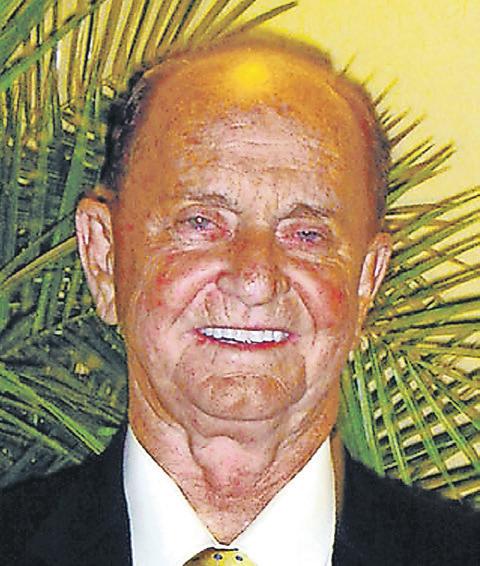
Adigital wallet (or electronic wallet) is a financial application that runs on any connected device. Digital wallets allow businesses and consumers throughout the world to accept payments, receive funds or send and receive remittances from friends and family in other nations. They do not require a bank account. Instead, you can place funds in an online-only bank, which gives unbanked and underbanked communities access to financial services, enabling broader financial inclusion.
Digital wallets securely store your payment information and passwords in the cloud. Moreover, they may be accessible from a computer and are primarily used on mobile devices.
Digital wallets allow you to pay via your mobile phone or other electronic device when you are shopping, thus alleviating the need to carry your cards around. You enter and store your credit card, debit card,or bank account information, thus facilitating purchases.
Other uses for Digital Wallets
* Digital wallets allow you to store funds, conduct transactions and track payment histories on devices such as phones and tablets.
* Store financial information, identification cards and driver’s licences.
* Digital wallets may be included in a bank’s mobile app or payment apps such as PayPal and other apps.
* Digital wallets allow people in financially underserved parts of the world to access financial services they may otherwise not have been able to use
How a Digital Wallet works
Generally, digital wallets are applications designed
to take advantage of the improved ability of mobile devices to enhance access to financial products and services.


Digital wallets use a mobile device’s wireless capabilities such as Bluetooth, WiFi and magnetic signals to securely transmit payment data securely to a point of sale location. The latter is designed to read the data and connect via these signals. The card information you have stored is transmitted from your device to the point-of-sale terminal, which is connected to payment processors. When a phone is held over a pointof-sale terminal to make a purchase, you are using your digital wallet to conduct the transaction.
Types of Digital Wallets
Here are some of the most well-known: Cash App, Apple Pay, Google Wallet, Samsung Pay and PayPal

The Advantages
* Having a digital wallet adds security for your credit cards and identification.
SEE PAGE B8

THE British Colonial yesterday said it has teamed with the Department of Labour to host a job fair as it seeks to fill more than 300 positions at the newlyrenovated resort ahead of December’s full re-opening.
Pia Glover-Rolle, minister of labour and the public service, said the downtown Nassau hotel’s winter reopening following a more than $100m renovation will provide increased room capacity on New Providence that is much-needed given the strong growth in stopover tourism numbers this year. She added
that The Bahamas is experiencing a 15-year low in unemployment rates coupled with record tourism arrivals, profits and “healthy government revenue”.
“As unemployment trends downward, another employer is preparing to reopen its doors and they’re very happy about that,” Mrs Glover-Rolle said. “Official statistics indicate that the unemployment rate is at a 15-year low, and is expected to continue on the downward trajectory as we experience sustained economic growth. Nowhere is this growth more evident than in our tourism sector.
“We’re seeing record air and sea arrivals, fully booked hotels, record
profits and healthy government revenue. A few months ago, the historic British Colonial hotel announced that it will be opening its doors as a much-needed expansion of room capacity here on Nassau, where local hotels are often fully booked. This is seen as yet another sign that the economy and tourism market are headed in the right direction.” Mrs Glover-Rolle explained that the job fair will be held over two days next week as the resort seeks to fill more than 300 line staff, supervisory and managerial positions. “I’m very happy to announce the Department of Labour’s partnership with the British
STANDARD & Poor’s (S&P) yesterday asserted the fall-out from FTX’s implosion has been “limited” for The Bahamas as it projected the Government’s net debt will fall to 73.4 percent of GDP at end-2024.
The credit rating agency, in a country analysis that did not affect The Bahamas’ creditworthiness, said: “To foster the local Fintech (financial technology) sector and open the country to opportunities in digital assets, the Government announced the Digital Assets and Registered Exchanges (DARE) Act.
“The local economy benefited from the activities of a digital exchange. However, the sector faced setbacks when FTX, a digital asset exchange headquartered in The Bahamas, filed for bankruptcy last year. In our view, the impacts have been limited given minimal links to the domestic financial sector.”

Turning to the structure of the Government’s debt, S&P added: “Domestic commercial banks’ exposure to the public sector accounts for a material amount of their assets, which lessens their ability and appetite to absorb additional exposure. The country’s external debt has risen in
recent years - foreign currency-denominated debt is now 47 percent of total debt - underscoring the importance of generating sufficient foreign exchange to meet debt service needs.
“We expect the Government’s net debt will fall to about 73.4 percent of GDP by the end of 2024 from 82.6 percent in 2020, while interest payments will remain above 15 percent of government revenues for the next three or more years. The government’s interest payments, at 18 percent of revenues, reduce its flexibility to meet economic and social spending goals.
SEE PAGE B9
Colonial hotel to host a job fair to fill over 300 openings on September 26-27 through the Public Employment Services Unit,” she added, referring to an October opening. “The Department of Labour will host this job fair in conjunction with the British Colonial hotel to recruit employees for the expected re-opening. The job fair will be held at the Andrew Rodgers baseball stadium between the hours of 9.30am and 4pm. The hotel is taking personnel in the areas of hotel management, supervisory roles, lifestyle, front and back of house hotel operations, and many others related to the tourism and hospitality departments.”
Dan McDermott, the British Colonial’s general manager, said more than $100m has been invested in the “complete renovation” of the resort. He promised that Bahamians will “be surprised” when the hotel officially opens in December 2023.
“This is a whole new re-envisioning of the British Colonial hotel. The corporate parent [China Construction America] has put in over $100m into this project to not just paint the project but to do a complete renovation. So I think
BAHAMIAN electrical contractors are opposed to replacing the Canadian electric code with a new national code that will govern the quality and standard of their work, a senior government official revealed yesterday. Craig Delancey, deputy director at the Ministry of Works, who was tasked in 2020 with leading efforts to revamp the Bahamas Building Code, told Tribune Business that electrical contractors are opposed to the switch because they are used to the present system and do not want to change.
Confirming that the issue arose in recent talks with electrical contractors, he said: “We had the Town Hall meeting and it was the electrical contractors who were opposing. They were opposing changing form the Canadian electrical code to the national electrical code. They are just so used
people are going to be surprised when this opens up in the beginning of December this year. They’re going to see a brand new hotel inside. The new lobby is outstanding and stunning,” Mr McDermott said. “They just finished everything inside. It’s just not a quick fix-up to this hotel this time. It’s a complete renovation - brand new lobby, five new restaurants in the hotel, brand new meeting space and completely renovated guest rooms and hallways. So basically, it’s going to be a new package.”
to one thing and don’t want to switch over to something new and have to learn a new code.”
Currently, Bahamian electrical contractors are governed by the Canadian electric code in the standards their work must meet. Discussions over the proposed switch to a Bahamian national code are part of a revamp of the entire Bahamas Building Code - something that has been talked about ever since
SEE PAGE B9

THE deputy prime minister has led a Ministry of Tourism, Investments and Aviation mission to Atlanta in a bid to drive increased visitor numbers and investment from the city as well as establish links with its film industry. The ministry, in a statement on its final US global sales and marketing missions, said it hoped to identify opportunities to develop the Bahamian ‘orange’ or creative/cultural economy by developing ties with Atlanta area movie and TV producers.
Chester Cooper, also minister of tourism, investments and aviation, led a delegation of senior officials including tourism director-general, Latia Duncombe, to Atlanta to participate in meetings and events with executives from across the tourism, investments and film industries. The group also took part in two culturally-inspired evening galas held at Flourish Atlanta on September 13 and the Intercontinental Buckhead on September 14. The first evening event featured an awards ceremony that brought together film and tourism industry leaders, on-island tourism partners and media. Special awards were presented to ‘friends of The Bahamas’ in the film and production industry, including producer Will Packer, actor and musician Tyrese Gibson, and former Atlanta mayor Kasim Reed.

“We are seeking to advance the entertainment industry in The Bahamas, and we are consistently building on the relationships that have been formed because of The Bahamas’ quality tourism product, ease of doing business and reputable global brand,” said Mr Cooper.



“This is the beginning of something exciting for the local film and production industry, and this gesture of appreciation is an
important jump-start. We are on this mission to solidify our place in the world, and this is what we call the grand finale of the show.”
For the second night of industry engagement, Mr Cooper and Mrs Duncombe were joined by tourism officials, destination representatives and hotel partners in hosting almost 200 guests including sales and travel trade representatives, industry stakeholders and media.
A live ‘question and answer’ panel highlighted The Bahamas’ steadily-growing tourism numbers; plans for future growth and innovation; the beauty of its 16 islands; and the many reasons why The Bahamas remains one

of the most sought-after destinations.
The delegation, in collaboration with the Bahamas Consulate General in Atlanta, held meetings with emerging business entities and agencies such as Delta Airlines, the City of Atlanta Department of Aviation, Atlanta Convention & Visitors Bureau, the Metro Atlanta Chamber of Commerce, the Mayor’s Office of International and Immigrant Affairs and the Office of the Mayor Film and Entertainment Department.
Mr Cooper made a live in-studio appearance on Atlanta & Company, Alive 11 News (NBC), with host Cara Kneer to promote The Bahamas’ wide range
of tourism offerings and the non-stop air connections available from Atlanta to islands including Nassau, Abaco, North Eleuthera and Exuma.
“When we reflect upon the recently concluded 15-city tour, it was important to highlight the significance of key source markets and the inherent value they bring to The Bahamas,” said Mrs Duncombe.
“Our approach was strategic and holistic, being sure to hone in on the diverse offerings of our islands through direct engagements with airlines, trade partners, visitors’ bureaus, educational institutions and sports agencies. Moving forward, we are committed
to further enhancing these foundational connections through vigorous follow-up initiatives.

“With 16 islands that are open for business, it is imperative that the Ministry maintains robust engagement with our key partners to ensure that industry performance remains strong. Our collaboration with the industry has been a cornerstone of this initiative, and the full participation of our on-island partners at each of the missions has been essential. We hope to sustain this high level of engagement, and we are excited to reap the fruits of the seeds we have sown.”
The ‘Bringing The Bahamas to You’ missions were launched in Florida in
CHESTER COOPER, deputy prime minister and minister of tourism, investments and aviation, alongside Ministry of Tourism director-general, Latia Duncombe, during a live question and answer panel highlighting The Bahamas’ steadily growing tourism numbers and plans for future growth and innovation.
September 2022, starting in Fort Lauderdale and Orlando, and continuing throughout New York, New Jersey, Charlotte, Raleigh, Dallas, Austin, Houston, Costa Mesa and Los Angeles.
They also arrived in Canadian cities including Calgary, Montreal and Toronto before ending in Atlanta, Georgia. Having completed the missions to major travel hubs throughout the US and Canada, the Ministry of Tourism will now be heading to Latin America, Europe and the United Arab Emirates as it targets key international markets to inspire travel to the destination.
A MEXICANTHEMED restaurant has opened dockside in downtown Nassau’s Elizabeth on Bay plaza in a bid to fill what its principals believe is a void in the capital’s culinary offerings.
Ryan Delva, partner in Salsa Mexican Bar & Grill, said: “We’ve been listening to the feedback of Bahamian foodies for a while regarding the absence of a restaurant dedicated to solely authentic Mexican cuisine. We’re happy that we were able to answer that call by providing a space with a beautiful view and great ambiance to enjoy just that.”
Besides the Mexican culture and design, and wall art by Bahamian artists, the restaurant also features 100 different types of tequila available for sampling, sipping or shooting. The tequila price ranges from $9 per shot to $300 or $7,500 per bottle.
“Our opening night attendance exceeded our expectations. It was fun and we got some great feedback from the attendees. We’re also proud to get a unique Bahamian artist in on some of the design features, and we’re looking forward to sharing our tequila holdings with locals and international visitors alike. We hope to become the place to enjoy delicious and authentic Mexican food and the best tequila in The Bahamas,” Mr Delva said.
Salsa Mexican Bar & Grill is open from Wednesdays to Sundays, 12pm to midnight.
A BAHAMIAN electric vehicle dealer yesterday said its expansion into commercial autos has generated strong interest with staff numbers having tripled in just three years.
Pia Farmer, partner at Easy Car Sales, told Tribune Business that the company is now “very
busy” after launching the Jac Motors commercial brand to the Bahamian market.
“There’s a lot of interest for the big box trucks and the flatbeds. Soon we have two of them arriving, so they’re waiting to see them because that is something we don’t keep in stock, the big trucks,” she said.
Ms Farmer added that these are “not glamour trucks, but real working trucks” as Easy Car Sales expands its product line to
include commercial vehicles. “We’re busy and we’re expanding, and we’re trying to offer as many models at different price points as possible,” she added.

Easy Car Sales has more than tripled staff numbers from six in 2021 to 20 at their present Gladstone Road location. The growth has the dealership “exploding out of our space” ahead of the move to its new site on the East-West Highway, the location of the former
Bahamas Liquidation Centre that was destroyed by fire, which is expected to be completed by year-end 2024.
“We are designing the space now and we won’t be moving in until the end of next year,” Ms Farmer said. “Everything is ready to go, but we have to design it because it’s our new headquarters. We want to have a showroom and all of that. We are growing fast. We are training six new people right now.”

“We’re also doing a promotion with Aliv where Aliv is offering all of these prizes for signing up to their business in a box. You can win one of our Jac SUVs.” This initiative launched on September 1 and will run until November 30. Sales at Easy Car Sales were described as “pretty good” compared to last year, with the company “on target to achieve our objectives”.

THE Tourism Development Corporation (TDC) yesterday said it has teamed with Royal Caribbean International to launch a multi-island pitch competition and training programme.
Dubbed the ‘50x50 Programme and Venture Pitch Competition’, in recognition of The Bahamas’ 50th anniversary celebrations, the initiative seeks to give 50 entrepreneurs access to training, technical support and a share of up to $50,000 in grant funding.
The TDC said participants will receive a six-week entrepreneurship training that includes pitch coaching to improve business economic viability and brand positioning. The training will also cover various topics such as an introduction to business, branding, marketing, technology, finances, quality controls and legal procedures.
“This is a programme we believe will build capacity, help us diversify our tourism
product and ultimately enrich the experiences of visitors to our shores,” said TDC executive director, Ian Ferguson. “We want to enhance our tourism offerings, and this can be done through this initiative as we celebrate the country’s 50th independence.”
“The Tourism Development Corporation’s ‘50x50 Programme and Pitch Competition’ captures the essence of our SEA the Future commitment to energise communities by remaining dedicated to the overall growth and economic development of the residents who make the places we visit so memorable to our guests,” said Philip Simon, president of Royal Caribbean’s Royal Beach Club and general manager of Royal Caribbean International Bahamas.
“The programme will allow local entrepreneurs access to the resources needed to develop their businesses and offer the authentic cultural experiences millions of
tourists seek when visiting The Bahamas.”
Each island will have a preliminary round, followed by a final round featuring the top five pitches from each island. Judges will select the top three ventures from the finalists, who will receive grant funding for their ideas. The first prize winner of the pitch competition on New Providence stands to win $10,000 in award funding; second place, $6,000; and third place, $4,000.
On Grand Bahama, the first prize winner will receive $6,000; second place, $4,000; and third place, $2,000. On the islands of Exuma and Abaco, top winners will receive $4,000, while the second and third-place winners will receive $3,000 and $2,000, respectively.
The programme offers a total of 50 slots: New
Providence, 20 slots; Grand Bahama, 10 slots; Exuma,10 slots; and Abaco, 10 slots. For more information or to register for the
programme, please visit www.tdcbahamas.com. The deadline for registration is October 20, 2023.

prices plus an extra charge to recoup costs that BPL previously failed to pass on to its 100,000-plus customer base.

“BPL has no plan to adjust its current rates outside of what was already published,” the utility responded, when asked by Tribune Business whether these might have to be adjusted upwards to reflect rising costs imposed by higher global oil prices. It gave the same answer when asked if such pressures could force an extension of the socalled “glide path” beyond the projected 2024 first quarter end.
“We do not anticipate an extension to the glide path recovery scheme,” BPL said. “As communicated, the glide path recovery is expected to conclude at the end of the first quarter of 2024. We will resume realtime billing in the second quarter of 2024. Again, it is important to know that we continue to take advantage of our current hedging schemes and there are other cost-saving measures.... that will help lower fuel costs.”
While acknowledging the threat rising global oil prices pose to the cost of BPL’s ‘spot’ market purchases, the utility added: “We are still substantially hedged, so the exposure is only for the unhedged volume. It is
also noted that, as we head into the cooler months, the frequency of shipments to the Family Islands reduces, there is greater flexibility to use our more efficient generating units as load demands decrease, and our overall fuel consumption decreases.”
However, one source with knowledge of BPL’s fuel hedging strategy when it was first implemented in 2020 under the Minnis administration, yesterday questioned BPL’s assertion that it remains “substantially hedged”. Given that BPL is now in the final year of that initial three-year hedge, and smaller volumes were hedged the further this strategy went out, the source estimated that just 30 percent of its fuel has been acquired at low below-market rates.
BPL, too, has never broken down the “glide path” fuel charges into what proportion reflects current fuel purchase costs and the remainder of the hedge, and that which represents the “under-recovery” and extra billing. Asked for a breakdown by Tribune Business BPL did not provide one, explaining that this was a “moving target each month based on actual costs, fuel usage”. The latter refers to changes in the fuel mix

between heavy fuel oil (HFO) versus automated diesel (ADO).
However, BPL confirmed it has now regained the majority of its previous “under-recovery”. It told this newspaper: “What we can share as at the end of August 2023, [is] BPL is on target to recover more than 56 percent of the under-recovered fuel charge consumed between July 2021 and October 2022.”
This means that a substantial amount, some 44 percent, remains to be recovered over the seven months between September 2023 and March 2024.
It also indicates, as per the “glide path” rates, which peaked when summer consumption peaked, that BPL back-loaded its reclamation of prior fuel cost “underrecovery” to coincide with when businesses and households using more than 800 kilowatt hours (KWh) per billing period were at maximum electricity usage.
The Government has never precisely stated how much this fuel “underrecovery” is costing the Bahamian people and businesses. However, it is likely to be somewhere between $90m and $150m. Alfred Sears, ex-minister for public works and utilities, who then had responsibility for BPL,
last October informed the House of Assembly that the utility’s debt to Shell was around $90m as he unveiled the plans to pay it off in a series of $10m monthly installments through to June 2023.
And the last Fiscal Strategy Report revealed the extent of BPL’s financial woes and the need for government support. “The recent disclosure of approximately $150m of payment arrears of Bahamas Power & Light (BPL) represents a significant unbudgeted liability of the Government,” it said. “To ensure continued provision of essential electrical services to the public, the Government has committed to ensuring payment of this liability by the corporation.”
Government loans to state-owned enterprises (SOEs) and agencies also near-tripled during the first nine months of the 20222023 fiscal year to $110m, which Simon Wilson, the Ministry of Finance’s financial secretary, previously confirmed was to help BPL pay off its fuel arrears to Shell.
For the three month period from September to end-November 2023, BPL customers above the 800 KWh consumption threshold will be paying a fuel charge of 25 cents per kilowatt hour,
down just slightly from the June to August 2023 peak of 27.6 cents. Then, for the final three months from December to end-February 2024, they will be paying 18 cents.
That is based on BPL’s assertion of no change in rates or timelines holding true. The utility’s statement that the “glide path” strategy will cease at the end of the 2024 first quarter also suggests a possible March finish, rather than the February date stated in BPL’s October 4, 2022, release, although the difference could be a reflection of when bills are issued and received/paid.
One source, speaking on condition of anonymity, yesterday voiced surprise that BPL’s fuel charge “glide path” will extend into next year on the basis that the initial announcement in October last year only reflected the period up to November 2023.
No mention was made, they said, of the latter three months to end-February. “I thought it would be over and we would be back on market pricing come November. Clearly I’m wrong,” they added. “That announcement gave me, and probably everyone in this country, the impression we would be back on market pricing by November/December this year.”

Meanwhile, a BPL insider estimated that based on market-rate fuel charges some eight to nine cents - or around one-third - of the summer’s peak 27.6 cents per kilowatt hour (KWh) rate represented the fuel “under-recovery”, thus providing some insight into just how elevated consumer billings are.
The $90m debt to Shell was accrued because BPL held its fuel charge at the hedged 10.5 cents per KWh price even after the trades to secure extra cutprice volumes were not executed by the Davis administration. This resulted in BPL having to buy increasing fuel volumes at higher global market spot prices, but the full cost was not passed on to consumers as the 10.5 cents rate insufficient to cover this BPL’s fuel costs are supposed to be passed on 100 percent to consumers by law, and government officials last October conceded that it had cost taxpayers “tens of millions of dollars” to hold the utility’s fuel charge at 10.5 cents. With the Government prevented from providing direct subsidies, the higher BPL fuel charges are required to reimburse the Government for paying-off Shell’s debts and effectively keeping the lights on.
Suggesting that the annual fiscal deficit will fall more slowly than the Government’s projections, finishing the current fiscal year at 3.2 percent of gross domestic product (GDP) as opposed to the forecast 0.9 percent, the rating agency noted that the Davis administration is aiming to generate an extra $120m per year in revenue through an improved real property tax roll and better enforcement/collections.

However, it then warned that “material spending cuts will be more difficult to implement if they become necessary”, pointing to the “drain” imposed by subsidies to loss-making state-owned enterprises (SOEs) which consume 15 percent of the Government’s total annual expenditure.
“We believe the country’s record of slow progress in reforming public finances and key economic sectors has weakened its financial profile over the long-term and hurt its economic performance,” S&P said of The Bahamas. “The Bahamas has faced two large negative shocks (Hurricane Dorian in 2019 and the pandemic in 2020), resulting in a significant rise in government debt and testing the Government’s resolve to put the nation’s finances on a sustainable path.
“The rapid increase in debt in recent years means the Government’s previous fiscal consolidation plans will likely be insufficient to meet its debt targets without material new revenues, significant cost cutting or economic growth well above historical averages. Furthermore, the country remains vulnerable to environmental risks.”
The Bahamas’ national debt increased by $457.5m over the prior 12 months to close the 2023-2023 fiscal year at $11.645bn at end-June. The Government’s 2023-2024 Budget
projections have its debt peaking at $11.74bn in the current fiscal, before the attainment of consecutive annual fiscal surpluses starts to set this on a downward path back to the target 50 percent debt-to-GDP ratio by 2030-2031.
However, S&P indicated it is forecasting that any improvement in the Government’s fiscal health will be more gradual. Its comments also suggest that austerity measures may be required, via spending cuts, new and/or increased taxes or a combination of both, if higher economic growth fails to materialise and revenue and deficit targets are not hit.
“We expect that fiscal deficits will continue to decline and the pace of nominal debt growth will slow, translating into a gradual reduction of our net debtto-GDP ratio, although the interest burden will remain high. The expanding economy is supporting government revenues, which increased almost 12 percent in the most recent fiscal year,” the credit rating agency added.
“While some of the pandemic-related programmes are ending, the interest burden, combined with other spending rigidities, including state-owned enterprise (SOE) outlays, continues to weigh on expenditures. We expect the deficit to reach to 4.6 percent of GDP in fiscal year
2022-2023, and to further fall to 3.2 percent in fiscal year 2023-2024.
“Although The Bahamas’ debt burden rose following Hurricane Dorian in 2019 and the onset of the COVID-19 pandemic in 2020, a growing economy and smaller deficits have resulted in slower nominal debt growth. Interest expenses are higher than pre-pandemic levels and we expect the country’s interest burden will remain above 15 percent of revenues in the next one to two years.”
S&P’s projected 20232024 deficit is more than three times’ higher, as a percentage of GDP, than the Government’s 0.9 percent or $131m. The rating agency, though, sounded a note of cautious optimism over The Bahamas’ prospects of meeting the Government’s $2bn-plus financing needs for 2023-2024, with this sum required to rollover and refinance maturing debt issues.
“We think that external financing risks remain elevated for The Bahamas, but a large domestic financial sector and multilateral external funding should mitigate this risk. The Government’s gross financing needs are close to $2.1bn for fiscal 2023-2024, although most of the new debt will go to the rollover of existing debt,” S&P added.
“We expect the Government will raise more than half of its financing
domestically, which we consider viable at current levels given limited lending alternatives for domestic banks. The Government has a $300m bond coming due in January 2024.
“We anticipate that it will source the remaining financing needs externally through the international bank market, underpinned by multilateral credit enhancements as well as direct multilateral lending, and will not access external bond markets, which could further weigh on the interest burden.” That will rely heavily on guarantees and other instruments provided by the likes of the InterAmerican Development Bank (IDB) to make financing accessible at relatively low interest rates.

“We expect declining deficits and a growing economy will lead to a slow decline in The Bahamas’ net debt burden and financing needs. However, the
country remains vulnerable to refinancing risks based on its significant short-term debt, with almost 28 percent of debt maturing in the next year, although the Government expects this will be largely rolled over in the domestic market,” S&P reiterated.
On the deficit front, the rating agency forecast that the change in general net government debt will average 2.1 percent of GDP between 2023 and 2025.
“The growing economy continues to support the reduction of the Government’s fiscal deficits to levels more consistent with those seen pre-pandemic,” S&P added.
“In the next 12 months, we don’t anticipate material new revenue-generating tax measures, and expect the Government to rely on growth to provide enough buoyancy to revenues to support the budgetary outturn. Improvements to tax
collections (via a dedicated Revenue Enhancement Unit, among other initiatives) and its property tax roll (through which it expects to generate an additional $120m a year) should support fiscal performance over the next few years.
“On the other hand, we believe that material spending cuts will be more difficult to implement. Efforts going back many years have failed to reform the country’s SOEs, which remain a drain on government finances. The Government typically spends about 15 percent of its total expenditures on ongoing subventions, while it has also been called on to support guaranteed debt of SOEs.
“At the same time, the increasing interest payments on debt, exacerbated by the pandemic and high interest rates, have weighed on expenditures.”
He added that Super Value and its buying team were paying especially close attention to their customers’ shopping habits to identify which products are either too expensive or not popular. Any items that are not selling are “soldoff” at half-price to ensure all inventory is exhausted before their expiry date and then never purchased again.
“Things the customers are avoiding, pricey merchandise, I suppose cooking oil and mayonnaise, the items that always take the increase, we sell them off at half-price to meet the expiry date and probably never order them again in history,” Mr Roberts explained.
“Customers are retraining us. Anything that’s too expensive we will not buy
or re-order. Any new brand at a lower price, if they don’t like the flavour then we don’t buy it. We try it and eliminate it. I’ve said to the buyers that the customers are teaching us when the prices are too high, they are teaching us when they don’t like the flavour or when they don’t like a new item.
“We just sell it off at a low cost and get rid of it, and don’t go there no more. We’re certainly trying to keep the cost of living down; that’s why we’re working so hard. Those items that went too high, and the customers stopped buying, we are able to take them, sell them off a half-price to beat the expiry date, and put two-thirds of the money back in the bank.”
The Super Value principal, though, warned that food price inflation is
FROM PAGE B2
* It eliminates the need to carry a physical wallet and cards, avoiding the chance of losing those items. * It improves
services access and offers persons in underserved areas more options for
ment and commerce.
theft or fraud if your phone is lost or stolen, and they are
having a negative impact on health because it is pushing many consumers to lower price foods that are not positive for their wellness. “It’s driving the consumer to the more economical, unhealthy foods, which is the wrong way to go because it impacts the health of the nation,” Mr Roberts told Tribune Business
While prices for around two-thirds of Super Value’s inventory have “levelled off” for the moment, including rice, canned meats, canned fish and the likes of mayonnaise and cooking oil, others have continued to rise. Sugar prices are rising every quarter, while Procter & Gamble-branded products are likely to increase in cost by 3-5 percent when the next shipment comes in.
not protected by a password or biometric data. Or if your digital wallet is hacked. The bottom line is that a digital wallet is a financial transaction app that runs on any connected device. It securely stores your payment information and passwords. Mobile wallets are a form of digital wallet most often used on mobile devices. One of the biggest advantages of digital wallets is that they allow you to make payments without credit or debit cards. Until we meet again, fill your life
Kraft-branded items, too, are set to increase.
“There are a couple of commodities that keep going up. I don’t know what’s driving it,” Mr Roberts said. “Pork is going up already. Pork has gone up at least about three weeks ago, and bacon is following it. Hams will be at least 20 percent higher than last year, and turkeys.
“We’re doing the best we can. We did some advance buying, paying and putting into storage for shipment. We’ve fought hard to make deals and get the best price.
A lot of buying habits have changed. I predict that in five years we will be buying more out of Brazil than we will be buying from the US, pork and chicken coming from Brazil. We have mayonnaise in the warehouse now from Egypt at half the price of the US.
with memories rather than regrets. Enjoy life and stay on top of your game.
“The buying habits of countries have changed. A lot of sources of supply have changed. I think the wholesalers and retailers are to be commended on the job they’ve done for the public and the country. They’ve really worked hard to source the best price, and the lower the price the more sales we can get in,” he continued.
“When the price peaks the customers stop buying.... We hate to put high prices or price increases out there because we know what it means. It means two-thirds of the
customers are not meeting their budgets now, so when we give them another price increase it really hurts.”
Mr Roberts also voiced fears that rising energy and transportation costs, via Bahamas Power & Light (BPL) and higher global oil prices respectively, are continually squeezing consumer purchasing power.
“I expect gas to go to $6.25 per gallon this week or next,” he told Tribune Business. “The gas stations and BPL are taking our sales. It’s cutting into the grocery budget.”
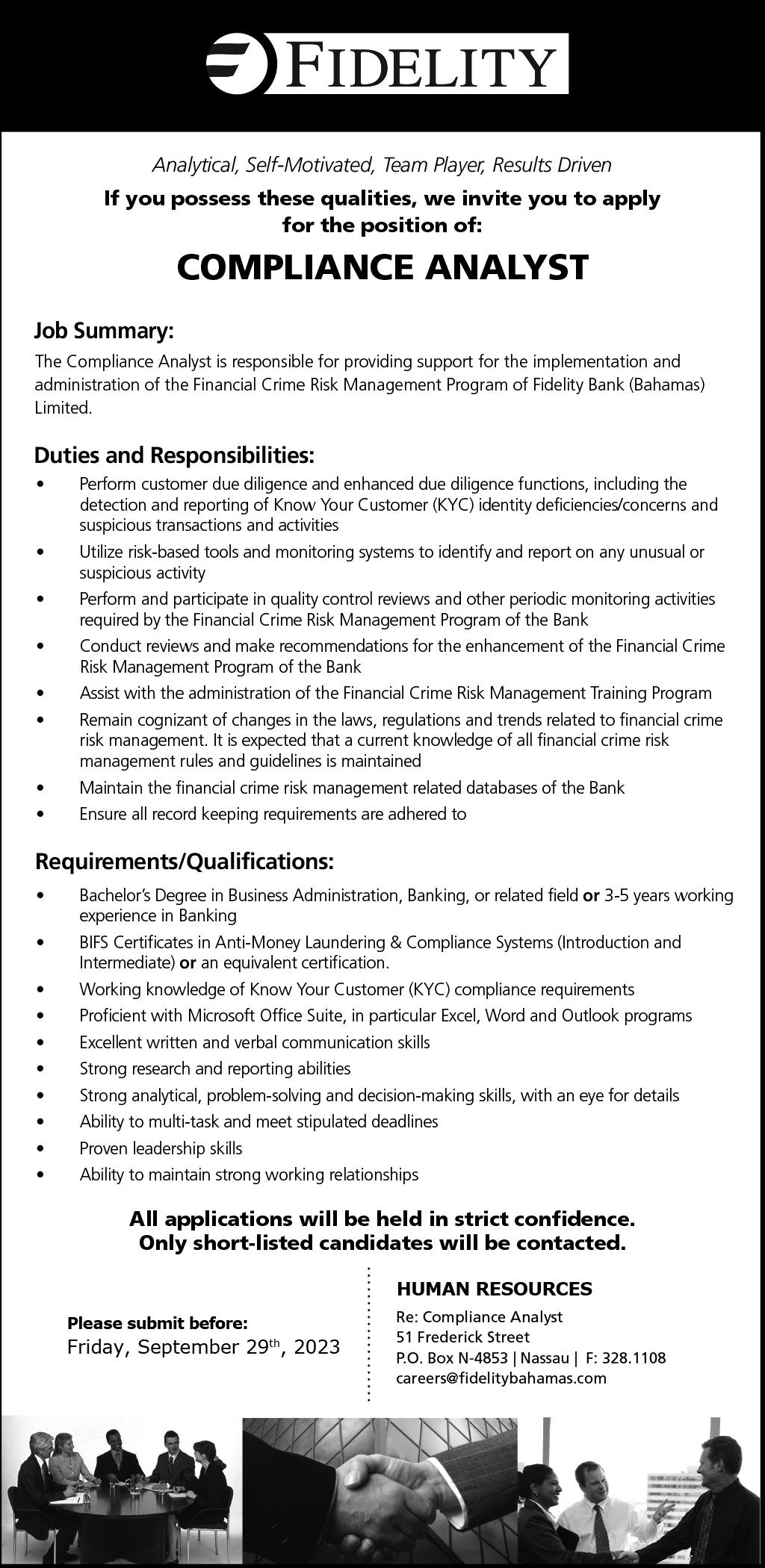
A Retail Company Is seeking to retain a Full-Time Diamond Expert
Requirments are as follows:-
• Minimum 3 years experience In Diamonds
& Jewelry Products
• Degree/Diploma/Certifcation in Jewelry
Products
• Expertise in Precious/Semi-Precious
Stones/Metal & Gemstones
• Ability to examine Diamonds to detect
Defects
• Ability to Appraise Diamonds for
customers
• Demonstrate advanced profciency using
Gemmar Systems & International (GSI)
systems;
• Performs other ad hoc duties as required
by the Supervisor and Department Head
Send your resume to:Bahamasjobs8@Gmail.com
A Retail Company Is seeking to retain a Full-Time Brand Sales Represetative
Requirments are as follows:-
• Minimum 3 years experience In Diamonds

• Minimum 3 years experience In etail
Environment
• Identify sales opportunities by attending
promotional events & demonstrating
product features
• Maintain familiarity with the products
responding to customers inquiries and
requests strategi ing showroom displays
and monitor sales reports
• rand representative must have excellent
nowledge of mar eting disciplines and
processes and exceptional communication
s ills to attract clients on purchasing
products that would generate revenues
• Performs other ad hoc duties as required by
the Supervisor and Department Head
FROM PAGE B1
by continued recovery in tourism, although we expect medium-term growth prospects will return to historical levels,”
S&P said. “The Bahamas’ economy has significantly improved since the contraction in 2020, spurred by the important tourism sector, and we expect that GDP per capita will recover to close to 2019 levels by year-end 2023.
“The strong recovery has been supported by its key US source market, where recessionary headwinds did not weigh on growth over the past year. We continue to see a steady flow of tourism-related investments, combined with prospects to
expand airline capacity and flights into the country.”
Turning to a more detailed analysis, S&P added: “The Bahamas’ economic recovery during 2022 was robust, with GDP growth estimated at 14.4 percent. The country benefited from its proximity to the US, its largest tourism market. Total arrivals into the country in 2022 were seven million compared to 2.1m the year before, which is about 96 percent of 2019 levels....
“We expect the growth momentum to continue through 2023, backed by continued recovery from the pandemic. The number of inbound arrivals reached five million in the first half of the year, compared to three million
during the same period in 2022. Furthermore, there are new flights that will be launched from the US to The Bahamas, as well as a continued pipeline of tourism-related projects planned and underway over the next few years.”
The Bahamas’ credit rating from S&P thus remains at ‘B+’ with a ‘stable’ outlook, meaning that another credit rating downgrade is not expected within the next 12 months unless there is a material change in circumstances. However, the rating agency voiced concern about The Bahamas’ lack of diversification and over-reliance on tourism. “Although these projects will continue to support growth, they also
account receipts in 2023. These figures include the Government’s $2.86bn in external bonds.”
FROM PAGE B3
“We net some of the assets held by the country’s social security system from our measure of net debt. These assets have declined over the past five years, and will continue to do so, absent social security reform. We forecast the external debt of the public and financial sectors, net of usable reserves and financial sector external assets, will be about 52 percent of current
As for the banking sector, S&P added: “Based on the large external liabilities of the country’s banking sector, the gross external financing needs of the public and financial sectors will average 277 percent of current account receipts in 2023-2026, down from about 519 percent in 2020. This reflects an improving current account deficit as tourism receipts increase, and the financial sector’s high rollover needs.
“However, we consider the financial sector’s external assets as highly liquid, which somewhat diminishes liquidity risk. Errors and omissions have historically been high and tend to fluctuate, contributing to a weak external profile. The Bahamas’ limited monetary and exchange rate
reinforce dependence on the volatile tourism sector. The economy remains concentrated in tourism, which typically contributes at least 40 percent of GDP,” S&P said.
“We expect real GDP growth next year to return to historical levels of 1.8 percent. GDP per capita will be $36,456 in 2024. The pandemic, low historical growth and repeated natural disasters have weighed on the country’s economy in the past. Despite good growth expected for the next two to three years, our assessment of the sovereign’s creditworthiness reflects its below-average long-term growth performance and structural vulnerabilities
flexibility constrains its ability to respond to external shocks.
“Lower demand for foreign exchange and the Government’s external borrowing bolstered foreign exchange reserves, which remain above $2.5bn. We expect that the Central Bank will continue to rely primarily on a combination of interest rates, moral suasion and macroprudential tools to influence domestic credit growth.
“We consider the banking sector’s contingent liabilities to be limited. The financial sector is dominated by foreign subsidiaries of Canadian banks, which comprise a substantial portion of domestic assets. On the whole, the commercial banking sector has strong capital and liquidity ratios. We estimate total bank assets to be about 160 percent of GDP.”
compared with countries at similar development levels.”
The Government, in a statement responding to the S&P report, said: “S&P’s analysis is broadly in line with the Government’s assessment of macroeconomic conditions, which continue to be underpinned by strong tourism gains alongside steady foreign investment inflows.”
The credit rating agency, further explaining its current stance on The Bahamas, added: “The ‘stable’ outlook reflects our view that economic growth will support government revenues and help contain government expenditures, leading to smaller fiscal deficits over the next 12 months. We expect the domestic market

FROM PAGE B3
Hurricane Dorian devastated Grand Bahama and Abaco in September 2019.
Quentin Knowles, the Bahamas Society of Engineers (BSE) president, confirmed to Tribune Business that the proposed new electrical code and other reforms were discussed at a recent Town Hall meeting hosted by the Ministry of Works.
“We had the Town Hall on the changes to the Canadian electric code,” he added. “They [the ministry] had their consultants there and it seems to me like they were
and multilateral lenders will meet the country’s relatively large financing needs.
“We could lower the ratings in the next 12 months should economic performance lag, pointing to GDP per capita remaining below our expectations. We could also lower the ratings if the sovereign’s access to external liquidity were to deteriorate unexpectedly.
“We could raise the ratings in the next 12 months if the Government advances faster than we expect to enact meaningful public finance reform, demonstrating an ability to raise revenues and leading to sustained nearbalanced financial results and improved economic prospects.”
really serious about doing something. They wanted feedback from electrical contractors as to the type of changes they were considering.”
Mr Delancey, speaking to progress in upgrading the entire Bahamas Building Code, said: “We are still working on it, and the draft is being completed so it can be reviewed by the various stakeholders for their input. That hasn’t started yet, but that’s the next step.”
Mr Knowles, meanwhile, added: “From that meeting, it seemed as if they were very serious about getting things done. But I am going to be honest with you; I have been in many meetings. They have seemed very serious and sometimes you’re left wondering why things are not happening months later.”
S&P: FTX implosion fall-out was ‘limited’
THE Bill & Melinda Gates Foundation pledged $200 million to help save the lives of mothers and children during childbirth, as the largest American philanthropic donor throws its weight behind the issue during the nonprofit's annual Goalkeepers conference on the sidelines of the U.N. General Assembly.
Melinda French Gates, who says the issue is personal to her, smiled broadly
as she introduced herself not just as the co-founder and co-chair of the foundation but as "Nona," or grandmother, gesturing to her oldest daughter, Jennifer, who was seated in the audience in New York on Wednesday. The foundation pledged $100 million each to health products manufacturer Unitaid, and UNFPA, the U.N. agency for reproductive health, to fund access to health care and contraceptive supplies and information in low- and
middle-income countries.
The Gates Foundation has been a major supporter of Unitaid, donating $50 million in each 2012 and 2017, according to the foundation's grant database.

Founded in 2017, the Goalkeepers initiative is how the foundation tracks progress toward the Sustainable Development Goals, which U.N. member countries agreed in 2015 to meet by 2030. The goals set lofty targets to reduce poverty, improve health and education and protect
the environment, though progress toward achieving them has fallen significantly off track, especially following the pandemic and the war in Ukraine. In an effort to reach an audience outside of government officials, experts and policy circles, the foundation hosted an award ceremony in New York Tuesday evening and recruited social media influencers to cover it, said Blessing Omakwu, who leads the Goalkeepers initiative.
"My goal is they go back and take these things that we said in a very policy way and make it accessible to their followings and say, 'Look, this matters. You
should care about maternal health,'" she said.
French Gates recognized former President Jimmy Carter and former first lady Rosalynn Carter with a lifetime achievement award, pointing in part Carter's long commitment to the elimination of guinea worm disease. Singer Bono also received a special award for his work advocating over many years for access to health care in developing countries and for the role he played in launching the U.S. President's Emergency Plan for AIDS Relief, or PEPFAR.
The program to combat HIV/AIDS was created by President George W. Bush and the U.S. Congress two
decades ago and is credited with saving 25 million lives. The fate of the program, set to expire at the end of September, is uncertain because of a demand from Republican lawmakers to bar nongovernmental organizations that used any funding from providing or promoting abortion services. Bill Gates was absent from the award ceremony Tuesday because he had been invited to attend an event with President Joe Biden, French Gates said on stage. The two announced their divorce in 2021 but committed to continuing to work together at the foundation.
THE Federal Reserve left its benchmark interest rate unchanged Wednesday for the second time in its past three meetings, a sign that it's moderating its fight against inflation as price pressures have eased.
The Fed's policymakers also signaled that they expect to raise rates once more this year and envision their key rate staying higher in 2024 than most analysts had expected.
But as their latest policy meeting ended, the 19 members of the Fed's ratesetting committee conveyed growing optimism that they will manage to slow inflation to their 2% target without causing the deep recession that many economists had feared. It's a hopeful scenario that economists call a "soft landing."
In a set of new quarterly projections, the policymakers showed that they expect faster economic growth and
lower unemployment this year and next year than they had foreseen just three months ago. Even with solid growth in sight, they also think inflation will continue to cool.
Those expectations suggest that Fed officials feel "they're going to be able to do what it takes to achieve gradual disinflation without disruption to the labor market, or without triggering a meaningful recession," said Subadra Rajappa, head of rates strategy at Societe Generale.
Since peaking at a yearover-year high of 9.1% in June 2022, consumer inflation in the United States has dropped to 3.7%.
Speaking at a news conference Wednesday, Chair Jerome Powell cautioned that the Fed still wants further assurance from forthcoming economic data that inflation is on a sustainable path back to its target level. But he suggested that the Fed is getting closer to the end of its rate-hiking
cycle and that a soft landing seems "plausible."
"We're fairly close, we think, to where we need to get," Powell said. "A soft landing is a primary objective. ... That's what we've been trying to achieve all this time."
The Fed's latest decision kept its benchmark rate at about 5.4%, the result of the 11 rate increases it unleashed beginning in March 2022. Those rapid hikes, Powell said, now allow the central bank to take a more measured approach to its rate policy.
"We're taking advantage of the fact that we moved quickly in the past," he said, to manage rates "a little more carefully now as we sort of find our way to the right level of restriction that we need to get inflation back down to 2%."

Fed officials expect to cut interest rates just twice next year, fewer than the four rate cuts they had forecast in June. They predict that their key short-term rate will still be 5.1% at the
end of 2024 — higher than it was from the 2008-2009 Great Recession until May of this year.
Yet one reason they likely have reduced the number of expected rate cuts for 2024 is a positive one: They think a recession, which would require multiple rate cuts to aid the economy, is less likely to occur.
"What we have right now is what's still a very strong labor market that's coming back into balance," Powell said. "We're making

progress on inflation. Growth is strong." Though Fed officials have projected one more rate hike this year, Powell appeared to hedge more than he typically does on whether that will prove necessary.
"At this stage, they don't have as much certainty about that hike," said Derek Tang, an economist at LHMeyer, a forecasting firm. "He did sound more equivocal." Treasury yields moved sharply higher Wednesday
after the Fed issued a statement after its latest policy meeting and updated its economic projections. In their new quarterly projections, the policymakers estimate that the economy will grow faster this year and next year than they had previously envisioned. They now foresee growth reaching 2.1% this year, up from a 1% forecast in June, and 1.5% next year, up from their previous 1.1% forecast.
THE AIRBNB app icon is displayed on an iPad screen in Washington, D.C., on May 8, 2021. Airbnb says it's cracking down on fake listings, which are emerging as a major problem for customers of the short-term rental site. Airbnb said Wednesday Sept. 20 2023 it has removed 59,000 fake listings and blocked another 157,000 from joining the site this year. Fake listings and high cleaning fees are among several issues that customers are raising with Airbnb.


FAKE listings have
emerged as a major problem for Airbnb, threatening to scare off consumers and prompting the short-term rental service to use AI in an effort to crack down on fraudsters.
Airbnb says it has removed 59,000 fake listings and prevented another 157,000 from joining the platform this year.
Fake listings and high cleaning fees are among several issues that Airbnb said Wednesday that its users highlighted in a company survey. Others included high cleaning fees and a desire for lower prices.
The San Francisco company said more than 260,000 listings have lowered or removed cleaning fees this year, since it gave consumers the means to sort listings in order of all-in pricing.
Airbnb says the change in how prices are displayed discourages hosts from touting low prices but piling on extra fees. However, only about one-third of Airbnb renters are using it.
"We got a lot of feedback that Airbnb is not as affordable as it used to be," CEO Brian Chesky said in an interview. The pricing changes are starting work, he said, and more measures are in the works.
One of those is "seasonal dynamic pricing"
NOTICE is hereby given that WILNER ONESSE of Bacardi Road, New Providence, The Bahamas applying to the Minister responsible for Nationality and Citizenship, for Registration Naturalization as a citizen of The Bahamas, and that any person who knows any reason why registration/naturalization should not be granted, should send a written and signed statement of the facts within twenty-eight days from the 21st day of September 2023 to the Minister responsible for nationality and Citizenship, P.O. Box N-7147, Nassau, New Providence, The Bahamas.


— technology that would help hosts adjust prices more often, like airlines and hotels do. Chesky said that will prod hosts into cutting prices during the off-season, but it could also help them raise peak prices.
Airbnb also said that later this year it will begin verifying all listings in its top five markets including the United States and the United Kingdom to combat an outbreak of fakes. Fraudulent listings create refunds and rebooking costs for Airbnb, "but the biggest risk is to our reputation," Chesky said. "If you can't trust when you book an Airbnb that it's real and you're going to like it, then you're going to stay in a hotel."
The company plans to use AI to help it verify listings in those top five countries. It will have hosts go inside the property and open the Airbnb app. GPS will verify they are at the correct address, and AI will be used to compare live photos with pictures that the host uses on the listing. Properties in the U.S., U.K., Canada, France and Australia that pass the test will get a "verified" icon on their listings starting in February. The company said it will verify listings in 30 more countries starting late next year.
GENERAL Motors and Stellantis announced fresh layoffs Wednesday that they blamed on damage from the United Auto Workers strike, and the labor standoff grew more tense just two days before the union was expected to call for new walkouts.
Stellantis provided a glimmer of hope for a breakthrough by giving the union a new contract proposal. However, a company spokeswoman said the offer primarily covered non-economic issues.
It was not clear whether the Stellantis offer would satisfy union President Shawn Fain, who vows to announce new strike targets on Friday unless there is "serious progress" toward agreements with GM, Stellantis and Ford.
So far UAW workers are striking at just three factories, one for each company.
It's a novel approach for the union, which in the past has focused negotiations on one company and limited a 2019 strike to GM. Fain says his approach will keep the companies guessing about UAW's next move.
"He is trying to distinguish himself from the old leadership of the UAW," said Harry Katz, a professor of collective bargaining at Cornell University. "He's different, he's tough, and he's trying to put pressure on the companies."
The three-plant strike has so far had limited impact on the automakers — probably by design, longtime industry observers say.
"The strategy is to incrementally apply pressure on the companies to encourage them to come to the table," said Marick Masters, a management professor at Wayne State University in Detroit. "He is negotiating with the three companies simultaneously with the expectation that the one that is most vulnerable and will give them the best deal will surface from that strategy."
However, if there is little sign of progress in the talks by Friday, Fain could take a more aggressive tack, "and they are going to strike where it hurts," said Daniel Ives, an analyst at Wedbush Securities. "For Ford, on the pickups — disrupting (production of) F-150s, and strategically striking GM and Stellantis in a way that could substantially impair 30% to 40% of the industry's production."
Strikes that target production of popular models like the F-150 or the Dodge Ram would inflict a lot of pain on the carmakers, but the UAW could pack the same punch if it walks out of key engine and transmission plants.
Another clue of possible strike targets might be found in locations where UAW locals have announced they will hold rallies and practice picketing in the coming days.
Those include a Ford plant in Louisville, Kentucky, a GM plant in Bedford, Illinois, and a GM truck plant in Arlington, Texas.
"If Friday comes and there is no major progress" at the bargaining table, "this will get a lot nastier," Ives said.
The Tribune wants to hear from people who are making news in their neighbourhoods. Perhaps you are raising funds for a good cause, campaigning for improvements in the area or have won an award. If so, call us on 322-1986 and share your story.
The layoffs that GM and Stellantis announced Wednesday will be in Kansas, Ohio and Indiana. GM said that the UAW strike at its assembly plant near St. Louis caused it to idle a plant in Kansas with about 2,000 workers because "there is no work available" — the plant depends on parts stamped in the St. Louis-area facility. GM said it does not expect to restart the Kansas plant until the strike ends, and it won't provide supplemental pay to the workers. The company said the layoffs demonstrated "that nobody wins in a strike."
Stellantis, which makes Jeep, Chrysler and Dodge vehicles, said it expects to lay off more than 300 workers in Ohio and Indiana because "storage constraints" caused by the UAW strike at its assembly plant in Toledo, Ohio.
Asked for comment, a UAW spokesman referred to a statement last weekend in which UAW President Shawn Fain said layoffs were unnecessary and an effort to pressure workers to settle for less in contract negotiations.
Also Wednesday, about 190 UAW members walked off the job at ZF, a Mercedes supplier in Alabama, over wages, a lower scale for new workers, and health care benefits. The workers are covered under a different contract than those that UAW is negotiating with the three big automakers. A ZF spokesman said the plant was continuing to run, and the company hopes to reach an agreement with the workers soon.
The layoffs and the Alabama walkout ratcheted up tension two days before Friday's UAW deadline for the carmakers to show progress in meeting the UAW's demands. The union and the car makers continue to talk, but an industry official said Wednesday that the two sides remain far apart.
The UAW is seeking pay raises of more than 30% over four years, a restoration of defined-benefit pensions for all workers, and a 32-hour work week for 40 hours of pay. The companies are offering around 20% on pay and are staunchly resisting some of the union's other demands.
Yolanda Downs, who works at a Stellantis assembly plant, wants an end to lower wage scales for new workers, another UAW priority.
"I want everyone to make a good living and a fair living," said Downs, who wore a red union shirt as she marched with about 200 other UAW members in front of Stellantis' U.S. headquarters outside
Detroit. "If I'm working on one side of the line and I'm making $30, and the person across from me is making $15 an hour, how is that fair?"
There has been recent progress between one automaker and a labor union, but it happened in Canada. Ford and Unifor, which represents Canadian auto workers, announced late Tuesday that they reached a tentative agreement on a new three-year contract just hours before a strike deadline. Terms of the deal were not disclosed. If ratified, it would cover more than 5,000 workers and provide a model for similar deals at GM and Stellantis operations in Canada.
IN the chaos after a Norfolk Southern train careened off the tracks and caught fire in eastern Ohio in February, it took roughly 45 minutes for firefighters to learn exactly which chemicals were involved. Now the railroad industry is trying to ensure that never happens again.
Ever since that Feb. 3 derailment prompted concerns about rail safety nationwide, the major railroads have redoubled their efforts to make sure that more and more first responders can immediately look up the contents of any freight train.

This week, the two counties that handled the initial response to the East Palestine, Ohio, derailment on the Ohio-Pennsylvania border were set up with the AskRail program that will allow dispatchers to look up everything a train is
carrying as soon as they get one car number. That is part of an effort the Association of American Railroads trade group launched this spring to sign up emergency dispatch centers in the program.
"It's going to allow us to make better, more informed decisions quicker -- not only for the responders but for the community," said Eric Brewer, director of emergency services in Beaver County, Pennsylvania.
Previously, first responders would have to either track down the train crew to get a copy of the train's contents or reach out to the railroad directly — both of which can take precious time.
Knowing which hazardous materials are on a train is key to helping firefighters decide how to respond and whether evacuations are needed. For some chemicals, specialized firefighting foam may be needed instead of water and in some cases,
as in East Palestine, the chemicals can make it too dangerous for firefighters to attack a blaze directly. That night, firefighters had to pull back and contain the blaze while the chemicals continued to burn.
The railroads worked with emergency responders to develop the AskRail app in 2014 that firefighters could download to their phones or the computers mounted within their fire trucks. By the end of last
year, only about 40,000 users had signed up, though some of those were individual firefighters and some were department computers available to multiple responders.
Then this year, the industry began working to get the program set up in dispatch centers. So far, 42 of them nationwide have joined and another 37 are in the process of joining. Railroads expect that number to grow quickly as word spreads.
THIS photo taken with a drone shows portions of a Norfolk Southern freight train that derailed the night before in East Palestine, Ohio, still on fire at mid-day on Feb. 4, 2023. The railroad industry is trying to make sure that emergency responders can quickly look up what is on a train when they respond to a derailment. In the chaos after a Norfolk Southern train derailed and caught fire in eastern Ohio in February, firefighters couldn’t find that information for roughly 45 minutes.
But the railroads also had the idea to make their train consist information, which provides details about all the cargo on a train, available through the chemical industry's hotlines that firefighters can call to get advice on how to deal with specific chemicals. So now any time a firefighter with hazardous materials training calls either the Chemtrec hotline in the United States or the similar Canutec hotline in Canada they can find out what is on a train as long as they have a car number.
That move made the AskRail information available to about 2.3 million firefighters with hazardous materials training.
Railroads are trying to ensure the information is available in multiple places to reduce the chances that firefighters will struggle to
find out what is on a train after a derailment. Even though the app itself has been available for years, not every firefighter knew about it, and volunteer fire departments account for nearly 82% of all firefighters nationwide.
"We're trying to create redundancies in the system to make sure the information is available," said Jessica Kahanek, a spokeswoman for the main rail trade group.
Norfolk Southern announced Wednesday that in addition to the industrywide efforts to expand AskRail access, it is working with the makers of the RapidSOS software that more than 15,000 emergency response agencies already use to make its train consist information available within that program.
The Public is hereby advised that I, ANILIA ST FLEUR of Fox Hill, New Providence, Bahamas intend to change my name to ANILIA GABRIEL If there are any objections to this change of name by Deed Poll, you may write such objections to the Chief Passport Offcer, P.O.Box N-742, Nassau, Bahamas no later than thirty (30) days after the date of publication of this notice.
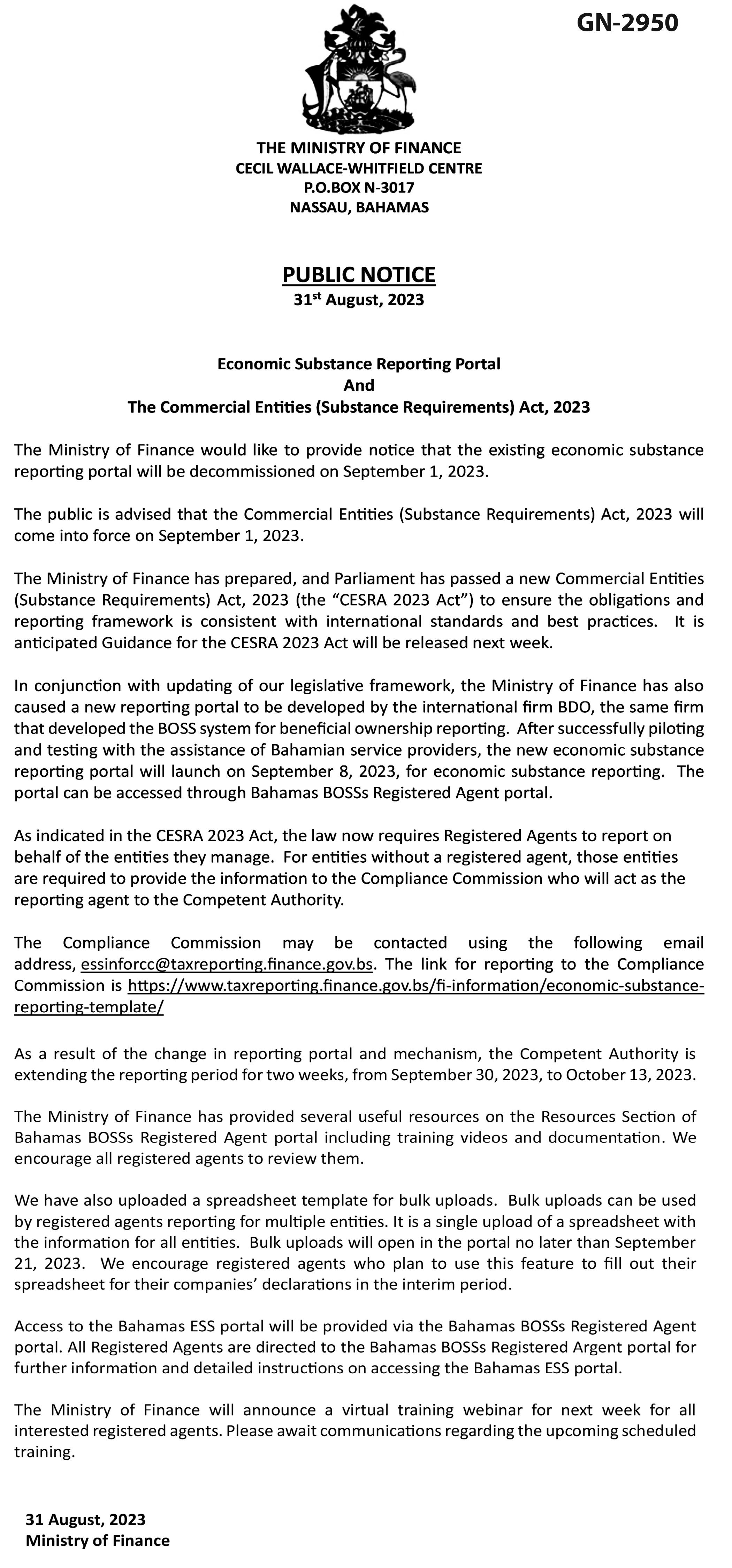
Two years’ experience working in an accounting offce. Familiar with QuickBooks, Sage or similar accounting program. Experience with Microsoft Word and Excel. Must be able to multitask. Candidates must be able to work a Saturday rotation schedule.
Job responsibilities to include:
1) Accounts Payable - Purchase order System - print, reconcile to invoices and vendor statements, print cheques
2) Accounts Receivables - Print monthly Sales invoices and statements, post account payments
3) Bank reconciliations
4) Calculate timecards and post to spreadsheet
5) Assist in other offce tasks as required - fling, answering phones, greeting customers, dealing with cash.
Please send resume and cover letter to admin@themallatmarathon.bs by Friday September 22nd, 2023.

U.S. stocks slumped Wednesday after the Federal Reserve said it may not cut interest rates next year by as much as it earlier thought, regardless of how much Wall Street wants it.
The S&P 500 fell 41.75, or 0.9%, to 4,402.20. The Dow Jones Industrial Average lost 76.85, or 0.2%, to 34,440.88, and the Nasdaq composite dropped 209.06, or 1.5%, to 13,469.13.
The Fed held its main interest rate steady at its highest level in more than two decades, as was widely expected from its latest meeting. Officials also indicated they may raise the federal funds rate one more time this year, as the Fed tries to get inflation back down to its target of 2%.
Fed Chair Jerome Powell said it’s close to hitting the peak on rates, if not there already.
Perhaps most importantly for the market, Fed officials suggested they may cut rates in 2024 by only half a percentage point from where they’re
expected to end this year. That’s less than the full percentage point of cuts they were penciling in as of June. That could be a negative for Wall Street, where investors crave rate cuts because of the boost they typically give to all kinds of investments.
Stocks initially held relatively steady following the release of the Fed’s forecasts, before sliding later in the afternoon.
“As you move further and further away from the meeting, the message may sink in,” said Sameer Samana, senior global market strategist at Wells Fargo Investment Institute.
“We very much expect the markets to be knocked a little bit off their axis by this.”
With oil prices rising and possibly helping to keep inflation high, Samana said he’s not surprised the Fed indicated it may need to keep rates higher for longer. He sees few avenues to get inflation down to the Fed’s goal without a recession, which would hurt the country but also remove upward pressures on inflation.
NOTICE is hereby given that FLORE JULNA LORISTON VIL of Garden Hills, New Providence, The Bahamas is applying to the Minister responsible for Nationality and Citizenship, for registration/naturalization as a citizen of The Bahamas, and that any person who knows any reason why registration/ naturalization should not be granted, should send a written and signed statement of the facts within twenty-eight days from the 14th day of September, 2023 to the Minister responsible for nationality and Citizenship, P.O. Box N-7147, Nassau, Bahamas.
NOTICE is hereby given that SHAMYLOVE NOEL , of Plantol Street off East Street, New Providence, The Bahamas applying to the Minister responsible for Nationality and Citizenship, for Registration Naturalization as a citizen of The Bahamas, and that any person who knows any reason why registration/ naturalization should not be granted, should send a written and signed statement of the facts within twenty-eight days from the 14th day of September 2023 to the Minister responsible for nationality and Citizenship, P.O. Box N-7147, Nassau, New Providence, The Bahamas.
NOTICE is hereby given that GRACE SYBRON, of Blue Hill Road South, New Providence, The Bahamas applying to the Minister responsible for Nationality and Citizenship, for Registration Naturalization as a citizen of The Bahamas, and that any person who knows any reason why registration/naturalization should not be granted, should send a written and signed statement of the facts within twenty-eight days from the 14th day of September 2023 to the Minister responsible for nationality and Citizenship, P.O. Box N-7147, Nassau, New Providence, The Bahamas.



A MONITOR displays information about the Federal Reserve interest rate on the floor at the New York Stock Exchange in New York, Wednesday, Sept. 20, 2023. The Federal Reserve left its key interest rate unchanged for the second time in its past three meetings, a sign that it’s moderating its fight against inflation as price pressures have eased. Photo:Seth Wenig/AP

Powell, though, stressed that forecasts about where rates and other indicators are heading could change as more data come in. He said because the Fed has already moved rates up very high very quickly, it now has the ability to take more time before making upcoming moves.
“Forecasters are a humble lot, with much to
be humble about,” Powell said.
Treasury yields rose in the bond market after the Fed released its projections. They had already been climbing for months after strong reports on the U.S. economy suggested the Fed may need to keep interest rates higher for longer in order to fully drive down pressures on inflation.
NOTICE is hereby given that ROBERSON FENE , of Plantol Street off East Street, New Providence, The Bahamas applying to the Minister responsible for Nationality and Citizenship, for Registration Naturalization as a citizen of The Bahamas, and that any person who knows any reason why registration/ naturalization should not be granted, should send a written and signed statement of the facts within twenty-eight days from the 14th day of September 2023 to the Minister responsible for nationality and Citizenship, P.O. Box N-7147, Nassau, New Providence, The Bahamas.
The yield on the 10-year Treasury rose to 4.39% from less than 4.32% shortly before the Fed’s announcement and from 4.37% late Tuesday. It’s back to where it was in 2007.
The two-year Treasury yield, which more closely tracks expectations for Fed action, jumped to 5.18% from 5.04% shortly before the Fed’s announcement.
“Future meetings will be a tug-of-war between markets who want cuts and a Fed that is scared its job isn’t done,” said Brian Jacobsen, chief economist at Annex Wealth Management.
“The Fed is projecting it will hit its unemployment rate and inflation targets in 2026,” he said. “Markets are more impatient than that. One year is an eternity to traders, let alone two years.”
High rates hurt prices for all kinds of investments, and high-growth companies are typically among the hardest hit. Big Tech stocks were the heaviest weights on the S&P 500,
and Microsoft, Apple and Nvidia all fell at least 2%.
Stocks of several companies who just recently sold their stock on public markets for the first time also fell. Instacart dropped 10.7% as it gave back some of its gains from its first day of trading as a public stock.
Arm Holdings, another company recently off a highly anticipated initial public offering of stock, also fell. It lost 4.1%.
Shares of Klaviyo, which helps advertisers market over email and text messaging, rose 9.2% in their first day of trading.
On the winning side of Wall Street, shares of Textron climbed 4.9% for the biggest gain in the S&P 500 after it announced a deal where NetJets has the option to purchase up to 1,000 of its Citation business jets over the next 15 years. Beauty products company Coty climbed 4.4% after it raised its forecasts for the year due to strong demand for its new Burberry Goddess fragrance and other products.
NOTICE is hereby given that YVENEL BROWN, of P.O. Box N556, Carmichael Road, Allen Road, New Providence, The Bahamas applying to the Minister responsible for Nationality and Citizenship, for Registration Naturalization as a citizen of The Bahamas, and that any person who knows any reason why registration/naturalization should not be granted, should send a written and signed statement of the facts within twenty-eight days from the 21st day of September 2023 to the Minister responsible for nationality and Citizenship, P.O. Box N-7147, Nassau, New Providence, The Bahamas.