How climate change provides power-ups for hurricanes
By JERVON SANDS
THE projections for this year’s hurricane season offer the greatest evidence thus far that climate change significantly influences the frequency, intensity and density of storms.
Some researchers are reporting the possibility of 33 named storms and The National Oceanic and Atmospheric Administration (NOAA) projects 8 to 13 hurricanes, with 4 to 7 of those being category 3 or stronger.
The Bahamas contends with a continuous struggle to manage serious storms that cause immense loss and damage. Therefore, it is important to understand the correlation between hurricanes and climate change.
Hurricanes have humble beginnings. They start off as a thunderstorm cloud that joins up with its peers to play ring games around an area of low atmospheric pressure called a tropical depression. A combination of warm tropical ocean waters and warm moist air energises these rotating clouds until they become a single tropical storm with winds over 39mph. The more humid air that flows upward at low pressure zones over warm waters the stronger these storms become. Eventually they earn the title of hurricane, typhoon or cyclone depending on which part of the globe they occur in.
The greenhouse effect is the trapping of solar heat inside of earth’s atmosphere which causes global warming. This results in a continuously warming world, a reality
we now know as climate change. Near the start of last year’s hurricane season marked the beginning of a new trend where record-breaking high temperatures have become a monthly occurrence. This all translates to hot ocean waters and hot, humid air currents that provide a greater capacity for energising thunderstorms into tropical storms into hurricanes into catastrophic events akin to hurricane Dorian. It is obvious then the role climate change plays in catalyzing the unprecedented hurricane seasons we’ve experienced in recent years. But that’s not all. In addition to the destructive winds that can tear buildings apart,
hurricanes also cause serious flooding in low-lying areas.
Rising global temperatures cause ocean waters to expand due to melting icecaps. This triggers another climate change impact known as sea level rise which is an enemy of low-lying chains of islands like the Bahamas.
In short, climate change will ensure that future hurricanes are inherently stronger. They will have more dangerous floods in their arsenals and come equipped with extended battery packs as a result of high air and ocean temperatures energizing them.
Immediate and sustained climate action is crucial for surviving the coming storms.
JERVON SANDS
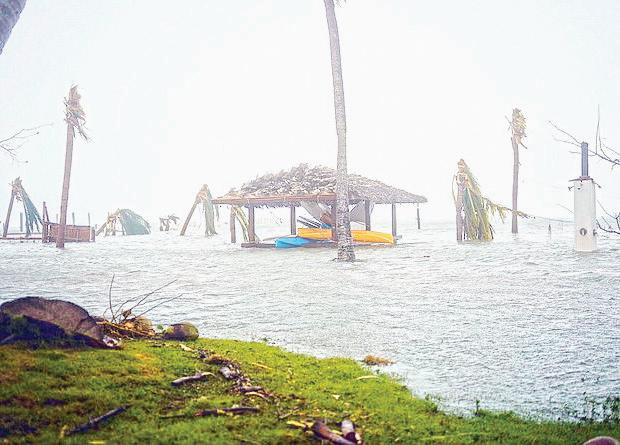
MAJOR category 5 Hurricane Dorian left catastrophic damage in its wake as it passed over Abaco and Grand Bahama in 2019.
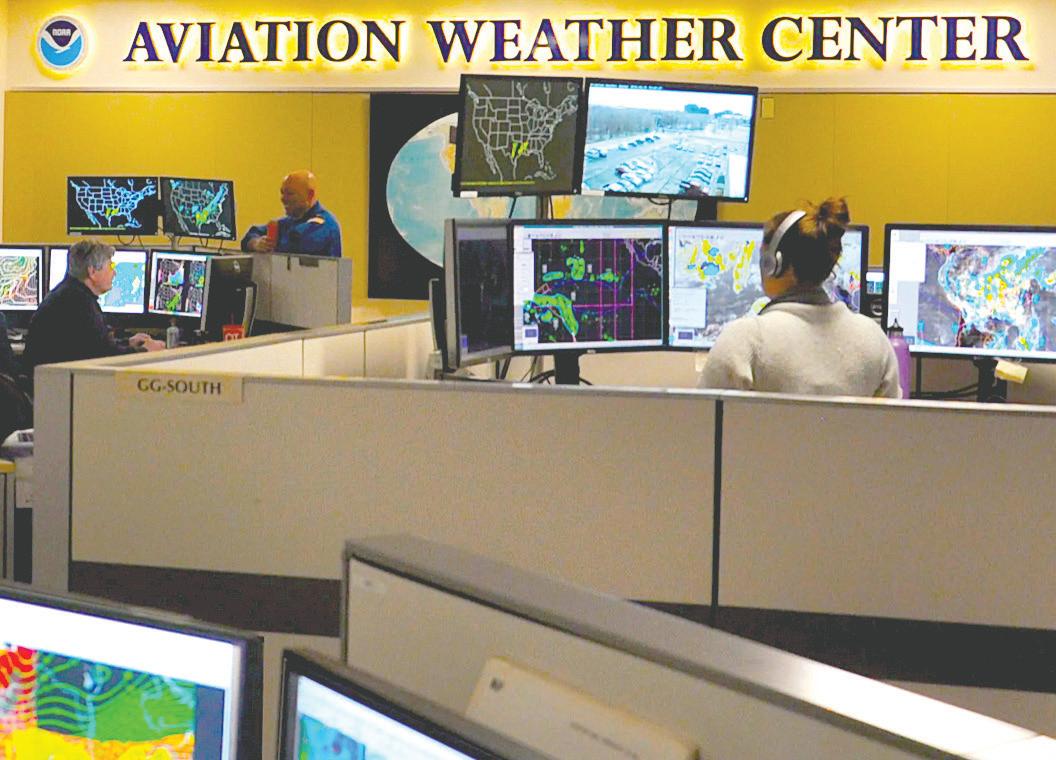
U.S. National Centre for Atmospheric Research, NOAA, FAA’S Aviation Weather Centre Collaboratin g with Bahamas Aviation, Climate & Severe Weather Network to bring the PM’s Real-Time U.S. Certified Aviation Carbon Credits & Climate Change Agenda to reality..
U.S. National Centre for Atmospheric Research
Bahamas
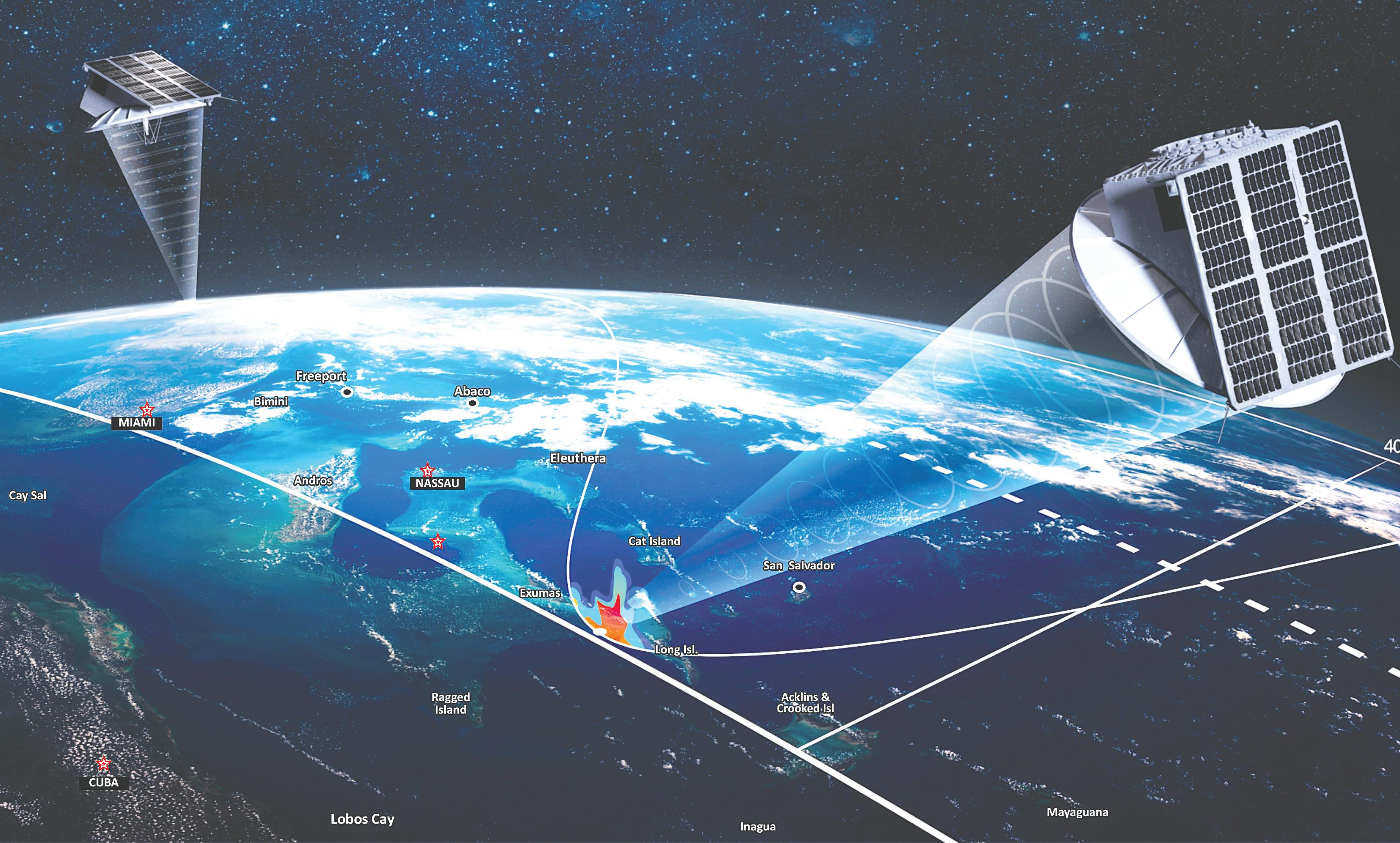
Tomorrow.io’s revolutionary private lowearth orbit satellites perform simulated radar scans over The Bahamas as part of its exclusive partnership with BACSWN, NCAR, NOAA & FAA’s Aviation Weather Centre - helping to transform the accuracy and timeliness of aviation forecasts and how weather is vizualized across the nation.
Abaco Freeport Bimini
Andros
Eleuthera
Exumas Long Island
San Salvador
Ragged Island
Mayaguana
Inagua
Cay Lobos
Cay Sal
Acklins & Crooked Island
NASSAU
Island
MIAMI
Members of BACSWN’s team visiting the U.S. Department of Commerce, National Oceanic & Atmospheric Administration (NOAA) headquarters in Boulder, Colorado in April 2024. Our photo shows: Front Row: (Left to Right) Mr. Quincy Rolle, President of TribuneDigitaLabs, Mr. James Powell (Advanced Radar Company) Mr. Lyrone Burrows, President & CEO of Bahamas Aviation Climate & Severe Weather Network Ltd.; Mr. Dan Netfeld (NOAA); Mr. Leslie Pindling, Consultant (Governmental Affairs); Second Row: (Left to Right) Arnaud Dumont (NCAR); Mr. Darrel Kingfield (NOAA), Mr. Adam Darville, VP Infrastructure & Development, Mr. Trevor Basden, BASCWN’s Sr. Vice-President & Director of Meteorology; Third Row: Professor Roelof Bruintjes (NCAA); Mr. Patrick Rollins, Electrical Consultant, BACSWN; Mr. Michael Strachan, Group Financial Advisor; Mr. Jason Graig (ROMIO); Back Row: Mr. David Tomalak, NOAA’s Automatic Weather Information Processing System (AWIPS)
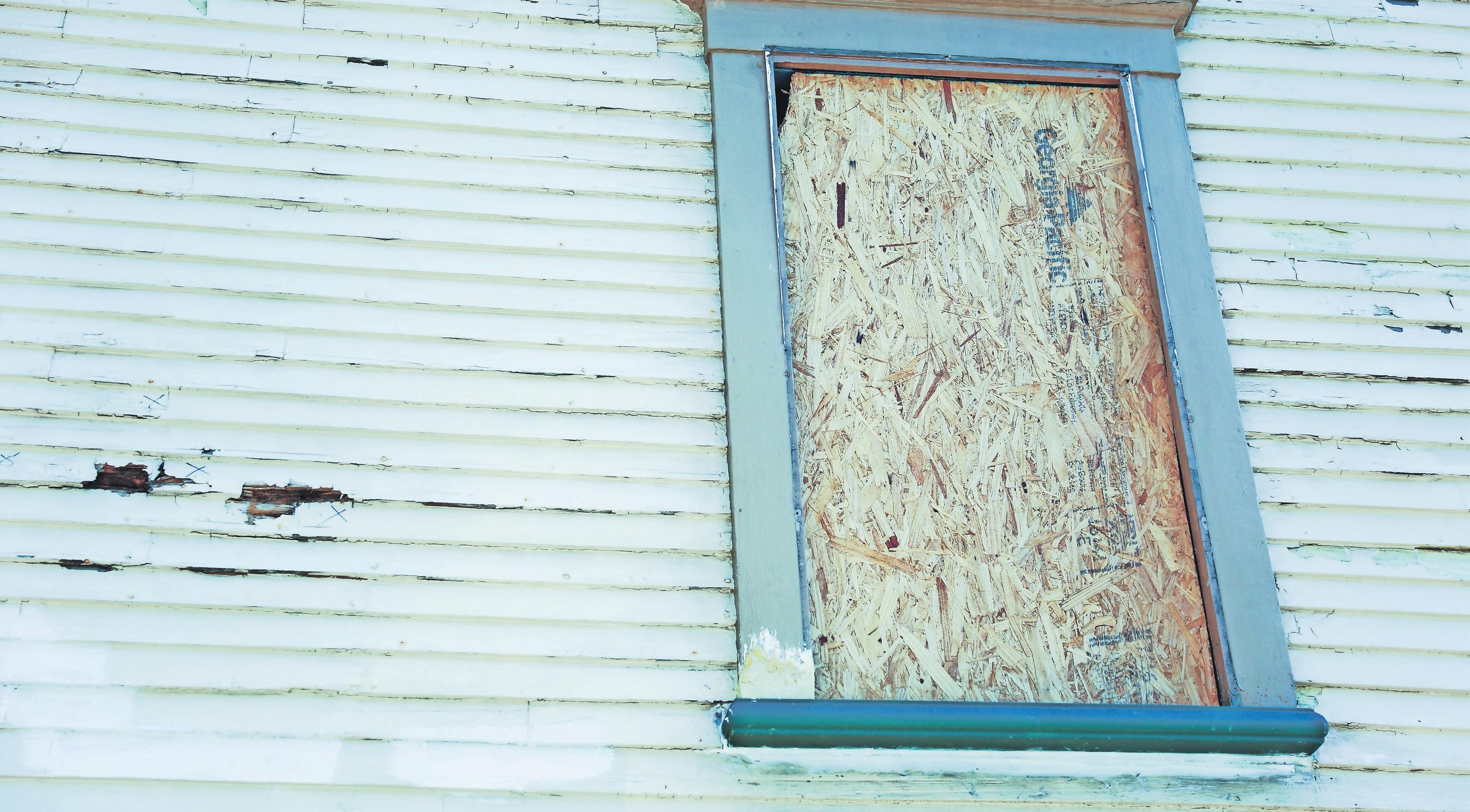
Get storm-ready: How to board up your home
CERTIFIED, impact-
resistant devices make for the best protection - but sometimes if a storm is coming quickly, boarding up can be the only option. Here is a step-by-step guide to how to do it.
STEP ONE: PLAN THE PROJECT
Count and measure each window and door that has glass including French doors, sliding glass doors as well as skylights. You might also want to include roof and gable end vents or any opening that if damaged would allow wind to enter your home.
Measure each opening horizontally inside the exterior trim and vertically from the sill to the bottom of the top trim. Add eight inches to both the height and width to provide a fourinch overlap on all sides. When measuring a window with an extended sill measure from the top of the sill to the top of the window and add four inches instead of eight. Sheets of plywood are generally 4 feet by 8 feet. This will help determine how many sheets to buy. Be sure to purchase plywood that is 5/8 inch or greater, exterior grade (CDX).
STEP TWO:
ASSEMBLE YOUR TOOLS AND HARDWARE
You will need a circular saw, drill and drill bits, hammer and wrench, work gloves and safety goggles for this project. You will also need an assortment of hardware including bolts, wood or masonry anchors, nuts and large washers. A range of bolts may be used because different bolts will be needed for wood frame versus masonry homes. Wood Homes use lag screws and plastic coated permanent anchors. Masonry Homes use
expansion bolts and galvanized permanent expansion anchors.
STEP THREE: GET STARTED
Having someone help you with this project will make things a lot easier. First drill holes in the same diameter as the bolts or screws, 2-inches in from the edges of the plywood at each corner and at 12-inch intervals around the panel. Next hold the plywood firmly in place over the opening to mark where to drill mounting holes.
If the window sill is flush to the wall, secure the plywood on all four sides.
If the window sill extends out at the bottom, secure the plywood on the top and sides.
For windows 3 feet by 4 feet or smaller installed on a wood frame house, use 1/4-inch lag screws and plastic coated permanent anchors. The lag screws should penetrate the wall and frame surrounding the window at least 1 3/4 inches.
For larger windows, use 3/8-inch lag screws that penetrate the wall and frame surrounding the window at least 2 1/2 inches.
For windows 3 feet by 4 feet or smaller installed on a masonry house, use 1/4 inch expansion bolts
and galvanized permanent expansion anchors.
The expansion bolts should penetrate the wall at least 1 1/2 inches. For larger windows, use 3/8inch expansion bolts that penetrate the wall at least 1 1/2 inches.
If a window or door is larger than a sheet of plywood, you will need to join the panels with 2x4 bracing along the entire seam.
Attach the 2x4s to the outside of the plywood panel with 10 gauge, 2 inch long galvanized screws (exterior deck screws) spaced every 4 inches.
Use the widest side of the 2x4 to run the length of the entire seam.
When you’re done, mark each panel with the name of the opening so you will quickly know where to install it when a storm is approaching.
Store the panels, washers and nuts together in a location away from the elements. Consider waterproofing the panels with paint or a sealant.