
$5.70 $5.76 $5.72 $5.92
Chief Justice exposes ‘fronting’ on Bay Street
• ‘Illegality
major part’ of deal involving Skandaliaris family
• Cosmetics store tried to ‘circumvent’
Bahamians owning
• VAT, Business Licence, Immigration, NIB laws breached
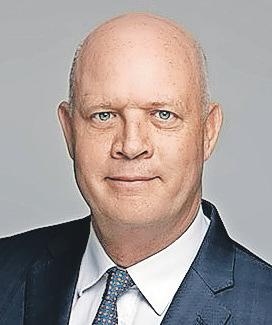
By NEIL HARTNELL Tribune Business Editor nhartnell@tribunemedia.netTHE CHIEF Justice has ruled that “illegality was a major part” of a Bay Street retail ‘fronting’ deal involving one of Nassau’s most prominent Greek-Bahamian families.
Sir Ian Winder, in a March 3, 2023, verdict, found that ZRK Ltd, owned and controlled by the Skandaliaris family, had signed an agreement with two US investors that was designed to “circumvent” the National Investment Policy’s stipulation that retail businesses are reserved for Bahamian ownership only.
The deal, which involved the operation of a Bay Street
beauty and cosmetics store under the Truffoire/Lionesse brand names, is “oft described in the Bahamian vernacular as a ‘fronting operation’”, he noted. And Sir Ian said the venture appeared to have violated
Bahamians to gain 49% stake in Royal Caribbean PI project
By NEIL HARTNELL Tribune Business Editor nhartnell@tribunemedia.netTHE GOVERNMENT last night said it has approved Royal Caribbean’s $110m Paradise Island beach club project after negotiating greater Bahamian ownership and entrepreneurial participation in the development.
Chester Cooper, deputy prime minister who also has responsibility for tourism, investments and aviation, said in a statement that the Davis administration believes it has resolved all “previous objections” to the cruise giant’s plans by ensuring more Bahamian involvement “at all phases” of its construction and operation.

Stating that specific activities at the Royal Beach Club, including water sports, entertainment and food and beverage, will be reserved for local
• Gov’t: ‘Previous objections’ to $110m deal resolved
• To convert leased Crown Land to ownership interest
• Pledges ‘greater Bahamian participation’ in all phases
businesses and entrepreneurs, he pledged that Bahamians will also be able to invest in the project and collectively take a 49 percent equity ownership stake. This would leave Royal Caribbean owning the majority interest.
multiple Bahamian laws including those related to Immigration (work permits); the VAT and Business Licence Acts; payment of National Insurance Board (NIB) contributions; and exchange controls.
The Chief Justice’s verdict thus shines a rare light on the long-known practice of Bahamians ‘fronting’ for foreign investors so that the latter can secretly operate businesses in sectors of this nation’s economy purportedly reserved for local ownership only, while hiding their control and earning most - if not all - the profits that are then sucked out of this jurisdiction.
Tribune Business has over the years received multiple complaints and allegations of such
As for the Crown Land being leased to the cruise giant, Mr Cooper said the Government planned to also convert this asset into an ownership stake in the development that would be held by the country’s sovereign wealth fund, now known as the National Investment Fund.
It is unclear how much Crown Land will be leased to Royal Caribbean as the Government’s statement did not specify the quantity. Both the cruise line and the Government had been embroiled in a long-running battle, including in the Supreme Court, with Bahamian entrepreneur, Toby Smith, who has asserted he has a binding lease for at least two Crown Land acres that Royal Caribbean is seeking to use in its project.
Mr Smith declined to comment when reached by Tribune Business last night, but the go-ahead for the cruise giant - likely formalised at
Condo hotel tax now takes ‘effect’
By NEIL HARTNELL Tribune Business Editor nhartnell@tribunemedia.netTHE BAHAMIAN resort industry was yesterday said to have “got 90 percent of our asks” over the new condo hotel tax which has now come into effect some eight months after it was first unveiled.
Robert Sands, the Bahamas Hotel and Tourism Association’s (BHTA) president, confirmed to
Tribune Business that the new tax - designed to ensure the Public Treasury gains its fair share of income from hotel condos and units included in hotel pools - is “in effect” after being introduced in last May’s 2022-2023 Budget.
“I am aware that the Department of Inland Revenue is doing the rounds of various properties and getting information to come up with assessments,” he said. “They’re doing an
assessment of valuations, which I know that they are working on. I am aware that the regulations and guidelines have gone out, and that it has passed and become law.”

One hotel industry source, speaking on condition of anonymity, told this newspaper that the sector had largely obtained the clarity and tax structure it had been seeking following several months of talks with the Government on
how the condo hotel tax would be applied and function in practice.
“The industry is very satisfied with the guidelines and got 90 percent of our asks,” the source said. “They’re going to calculate it on the residential rate. Previously, if they didn’t meet the threshold they would have to pay the VAT and the real property tax. Now they have got to pay
SEE PAGE B5
FINCO’s repossessed collateral jumps 30%
By NEIL HARTNELL Tribune Business Editor nhartnell@tribunemedia.netROYAL Bank of Canada’s (RBC) BISX-listed mortgage arm narrowly beat prior year comparatives with $40m in profits for the year to end-October 2022 following recovery of more than $16m in credit loss provisions.
Finance Corporation of
The Bahamas (FINCO), unveiling its full-year financial statements, disclosed
a 2.2 percent year-overyear net income increase that was driven by the further “release” of credit losses on loans following the Bahamian economy’s continued recovery from COVID-19 and rebound in employment levels.

Profits rose by less than $1m, increasing to $40.095m as opposed to $39.236m for 2021, but in common with other Bahamian commercial banks it was not driven by top-line interest income growth

or loan book expansion. Interest income fell by almost $1.8m yearover-year, dropping from $42.346m to $40.558m for the 12 months to endOctober 2022.
With interest expense down due to lower deposit rates, FINCO’s net interest income fell by 3.2 percent to $34.788m compared to $35.93m the prior year - a fall of just over $1m. Total revenue was off 3.4 percent year-over-year, standing
at $36.465m as opposed to $37.755m. However, non-interest expenses such as staff and administrative costs fell by more than $700,000 yearover-year to $13.283m. And the “release” of credit losses on loans rose to $16.216m compared to $15.698m the year before. The improvement in these two lines items was largely responsible for driving FINCO’s modest bottom line improvement.
SEE PAGE B5
practices, but those making the claims have either failed to provide supporting evidence or declined to place their assertions ‘on the record’. This has made it extremely difficult to investigate such arrangements, but Bay Street retailing - especially in the luxury goods and cosmetics area - is a sector where ‘fronting’ complaints have frequently surfaced.
The case involving the Skandaliaris family only came to light as a result of the two foreign investors, Tal Nemzer and Zvi Yosifon, initiating Supreme Court legal proceedings against them in 2017 for alleged breach of the two sides’ management agreement and purported
Bahamian liquidators fire FTX warning shot
By NEIL HARTNELL Tribune Business Editor nhartnell@tribunemedia.netFTX’s Bahamian liquidators yesterday warned their US counterparts that the failed crypto exchange’s $446m claim against another digital assets firm will not be resolved unless their interests are satisfied too.
Brian Simms KC, the Lennox Paton senior partner, and PricewaterhouseCoopers (PwC) duo, Kevin Cambridge and Peter Greaves, argued that there will be no “global peace” in FTX’s battle with Voyager Digital unless the Bahamian liquidation estate’s potential claims are also satisfied.
In legal filings with the Delaware Bankruptcy Court, the trio moved to “preserve their rights” to recover assets belonging to Bahamas-based FTX Digital Markets and its clients/creditors that may have been loaned or otherwise transferred to Voyager via Alameda Research, the speculative trading entity owned by
fallen FTX co-founder, Sam Bankman-Fried. They acted after John Ray, the FTX Trading chief responsible for the 134 entities in Chapter 11 bankruptcy protection in the US, sought the Delaware court’s permission to enter into an agreement with Voyager that sets out a road map or pathway for dealing with the two sides’ competing claims against each other. Included in these claims is FTX Trading’s bid to recover some $446m it alleges was “preferentially transferred” to Voyager by Alameda Research, with
business@tribunemedia.net WEDNESDAY, MARCH 8, 2023
SEE PAGE B7
SEE PAGE B4
BRIAN SIMMS KC
SIR IAN WINDER
Embrace Equity
SEE PAGE B7
IMPORTERS: ENFORCE TAX CERTIFICATE FOR ALL FIRMS
By YOURI KEMPTHE TAX authorities must enforce for all the requirement that couriers and commercial importers possess a valid Tax Compliance Certificate (TCC) before goods are cleared, companies said yesterday.
Christopher Lleida, Premier Importers chief executive, told Tribune Business that mandating a valid TCC be presented before imported goods are cleared must apply equally to all operators to ensure a competitive level playing field.

“I think if it’s enforced universally it should be [something that becomes a regular part of business], because even if you were my broker, and I had materials come in and you were clearing them for me, you would need my TCC. It’s a good mechanism for government to use to make sure every everybody pays,” he said.
The Department of Inland Revenue and Customs recently issued a joint notice stipulating that, with effect from March 13, couriers will need to produce a valid TCC before they can clear goods on behalf of clients. The same will apply to commercial importers from April 3, 2023. The initiative
Tourism ‘perfect storm’ to drive arrivals record
By YOURI KEMP Tribune Business Reporter ykemp@tribunemedia.netTHE BAHAMAS Hotel and Tourism Association’s (BHTA) president yesterday voiced optimism that the industry’s “perfect storm” will ensure the country this year breaks the 7.2m annual visitor record set in 2019.
Robert Sands told Tribune Business that high bookings were bring driven by four key factors. “I think there’s continued pent-up demand post-COVID,” he explained. “There is the return of group business, there’s significant equity in The Bahamas brand and, certainly, many hotels with their event-driven businesses are contributing to this renaissance in terms of high occupancies and rates, not only in New Providence but also many of the islands throughout The Bahamas.”
These drivers were all helping to produce the “perfect storm” which resulted in the 33 percent year-overyear increase in January 2023 tourism arrivals that were referenced by Chester Cooper, deputy prime minister and minister of tourism, investments and aviation, during his mid-year Budget contribution.
As to whether The Bahamas will beat the record 7.2m visitor arrivals seen in 2019, Mr Sands said: “I think The Bahamas is on target for that.” Suggesting that early 2023’s arrival numbers are unlikely to be a “blip” on the radar, he added: “Business has been very strong since the end of last year; the last quarter of last year. Coming into the first quarter and the forward bookings for the second quarter, things look equally as strong.”
Mr Cooper on Monday said January 2023’s tourism arrivals were some 210,000 ahead of comparatives from 2019’s “banner year” as The Bahamas bids to “meet or exceed” 20 percent growth targets. He told the House of Assembly during the midyear Budget debate that visitor numbers for the first month of the year were some 33 percent ahead of that preCOVID performance.
“In terms of arrivals, we see that in 2022, the numbers were up 233 percent over 2021 and we achieved the seven million visitor mark but fell just shy of 2019,” Mr Cooper said. “To understand the gravity of the seven million mark, note that it has only happened once before in the history of The Bahamas. We are targeting 20 percent growth in tourism for 2023, and we have every reason to believe we are going to meet and or exceed that target.”
Describing 2019 as a “banner year for tourism” with over 7.2m visitors, Mr Cooper added: “When we look at what is happening in 2023, we are shattering 2022 numbers and 2019 numbers. That’s good news. What is even better news is that we saw nearly one million visitors to The Bahamas in the first month of this year.
“I’ll repeat that; you may hear me repeat a few things today. In January, we saw nearly one million visitors to The Bahamas. For context, in January of 2023 we saw 846,000 visitors. That number was 300,000 in January 2022. That is a 166 percent increase from January 2022 to January 2023.
is designed to ensure these businesses are current with all tax payments, otherwise they will be unable to process imports and their operations effectively will be shut down.
“If this is enforced for everybody then I don’t see a problem,” Mr Lleida stressed, adding that the Government may be able to avoid increasing taxation rates if it is able to collect all that is due under the current system.
Another importer, speaking on condition of anonymity, said in a written reply to Tribune Business questions: “As a customs broker and courier, having a TCC is a normal requirement for us to obtain our
bonds and licences so it is not out of the norm or a major issue for us.
“It will, however, slow down things because these are documents that now will need to be added or uploaded to our Customs declaration, whereas we were told that when the Click2Clear system was designed these would be checked on the back end.
“The Department of Inland Revenue (DIR) is basically making us police the compliance of importers and businesses for them. It is another reason why The Bahamas is at the bottom of the ease of doing business scale globally. The level of ‘red tape’ you must
weed through in this country is second to none.”
Chino Ferguson, general manager of Gemini Imports Services, said the tax compliance drive was just part of the “normal” course of doing business.

“This just means that we have to ensure that our National Insurance contributions are paid and just tighten up on certain things. This shouldn’t be anything to be concerned about but it probably could affect things,” he added.
Another importer, speaking under condition of anonymity, added: “I can’t fault the Government for wanting people to ensure their TCC is up to date, which is a good thing and
will level the playing field for those operating illegally.
“But what I’m afraid of is what will continue to play out by the Government, as they are continually moving the gold stick from one spot to the next. We’re supposed to be having a country that’s supposed to be providing for the ease of doing business, but they’re making it harder and harder and giving us more paperwork.
“Not only that but they are asking us to submit this TCC. This will slow down the clearance process because now a Customs officer will have to check to ensure that my TCC is up to date.”
BTC MOVES TO LAUNCH FASTER INTERNET OFFERING
THE BAHAMAS Tel-
ecommunications Company (BTC) says it will offer one gigabyte (GB) Internet speeds to customers as early as April 2023 after recently completing product testing.
Sameer Bhatti, BTC’s chief executive, said in a statement: “Our customers are always top of mind, and I’m proud of the work that our teams are doing to ensure that we meet their expectations. The BTC ‘InKnowVation’ labs have been working around the clock on some impressive ways to enhance the everyday customer experience.
ROBERT SANDS“When we look at 2019; remember that was the banner year, we saw 636,881 air and sea arrivals. January 2023 is a 33 percent increase over 2019 and this trend is holding throughout the islands.” Mr Cooper’s address focused solely on volumes, or arrivals numbers, and there was no mention of tourist spending and how this indicator was faring.
The deputy prime minister yesterday said there had been a 400 percent rise in sea arrivals for Grand Bahama, with “momentum growing” ahead of the Carnival cruise port being completed next year.
Departure tax collections have increased with the growth in visitor arrivals following their COVID-induced interrup tion, with Mr Cooper saying: “For the first six months of this fiscal year, departure tax collections totaled $71.5m, an improvement of $45m or 85 percent over the prior year.
“In the first half of the year, we collected 73.7 per cent of the Budget target for departure tax. Beyond arriv als in 2022, room revenues, average daily rates, overall occupancies and spending by cruise visitors are all up.”
“We are rolling out two major initiatives, the introduction of one gig (GB) speeds and symmetrical speeds. Our introduction of one gig fibre connectivity and symmetrical speeds will be a game changer in our local telecoms market, and especially for our residential customers. The end goal is to deliver a differentiated and reliable product experience.”
For four consecutive years, BTC said it has doubled customers’ broadband Internet speeds with no added costs. The carrier currently provides up to 650mbps (megabits per second) of speed, and said
it plans to launch one gig as a premium offer for customers with the service now ready to go to market.
“In addition to super-fast download speeds, we are introducing symmetrical speeds, where customers will experience the same upload speeds as download speeds,” Mr Bhatti said. “So, if you’re getting one gig in download speeds, you will also receive one gig in upload speeds - a complete revolution for customers.
“Having the ability to upload files in the same way they are downloaded is next level. By introducing symmetrical speeds, we are stimulating growth within the orange economy. This is a content creator’s dream.”
BTC’s primary goal is to expand its fibre reach throughout The Bahamas. More than 70 percent of New Providence has been fiberised, and the carrier added that it is well on the way to completing its fibre roll-out in Grand Bahama. This will allow it to finally eliminate its legacy copper
NOTICE is hereby given JENNIFER RICHARDS of Franaipani Avenue, New Providence, The Bahamas is applying to the Minister responsible for Nationality and Citizenship, for registration/ naturalization as a citizen of The Bahamas, and that any person who knows any reason why registration/naturalization should not be granted, should send a written and signed statement of the facts within twentyeight days from the 8th day of March, 2023 to the Minister responsible for nationality and Citizenship, P.O. Box N-7147, Nassau, Bahamas.


network and provide a seamless experience for all customers using fiber optic technology. BTC said that in the last two weeks it has completed upgrades in the Stapledon Gardens and Millennium Gardens communities, delivering faster speeds and value for customers.
We are a property management company that services commercial and residential sites. The right candidate for this job opening will possess the following skills:
• 2-3 years job experience
• Be able to trouble-shoot central air conditioning and ductless units
• Have some common knowledge on Air Conditioning installation practices and procedures
• Good organizational skills
• Excellent people and communication skills
• Must be reliable
• Must have your own tools
• Must have own transportation.
If you meet the above criteria, please email your resume to actechjob2023@gmail.com
Please note that only qualified applicants will be contacted.

JOB OPPORTUNITY
ACCURAD IMAGING CONSULTANTS SEEKING RADIOLOGIST
AccuRad Imaging Consultants is a diagnostic imaging reporting/teleradiology company operating in the Bahamas. AccuRad provides diagnostic imaging reporting services to facilities and doctor’s offices throughout the Bahamas. The imaging modalities reported include, but are not limited to, x-ray, mammography, CT, ultrasound and MRI. AccuRad is seeking a fellowship trained radiologist to join the practice. Fellowship training in oncology imaging and neuroradiology is preferred. On-site work is not required. The candidate is expected to be able to provide coverage on weekends and/or stat holidays. Occasionally, there may be overnight coverage requirements. Competency in reporting all above mentioned modalities is a must. Only candidates who have completed a full radiology residency program and attained board certification by examination will be considered. Fellowship/subspecialty training must have been acquired at an accredited institution in the US, Canada or UK. All applicants must be eligible for specialist licensure in the Bahamas.
THE TRIBUNE Wednesday, March 8, 2023, PAGE 3
Tribune Business Reporter ykemp@tribunemedia.net
ADVERTISE TODAY! CALL THE TRIBUNE TODAY @ 502-2394
SAMEER BHATTI
Interested applicants can submit their CV and statement of interest via email to admin@accurad.live
SEMI-SKILLED AC TECHNICIAN HELPER
NOTICE
Chief Justice exposes ‘fronting’ on Bay Street
“negligence” in living up to its terms.
While Sir Ian gave the Skandaliaris family and their ZRK vehicle some credit for bringing the parties’ business relationship to an end, so as “to avoid becoming further embroiled in violations of the law”, he added that their involvement in an “invalid” deal “cannot be denied or ignored”.

The August 2016 management agreement stipulated that Nemzer and Yosifon would operate the cosmetics/beauty business from
a property situated at the junction of Bay Street and Market Street, which they were to lease from ZRK Ltd for a five-year period. The duo were to pay rent to the property owner, an affiliate of ZRK, with the latter acknowledging that it “could not run the business without” them. In return, Nemzer and Yosifon were to receive a management fee equal to “100 percent of the business’ net profit”. They were also made responsible for paying all due taxes and ensuring the operation complied with all applicable Bahamian laws and regulations.
“The plaintiffs pleaded that they paid ZRK a security deposit, along with the first and last month’s rental payments, towards the lease of the Bay Street property,” Justice Winder wrote in his verdict. “In addition to the monthly rental, the plaintiffs aver that they spent additional funds to renovate and outfit the property in order to carry on business from the property.
“However, on March 15, 2017, the plaintiffs aver that despite owing no rent to ZRK, one of the directors of ZRK breached the management agreement by serving an eviction letter with immediate effect on them. ZRK admits to serving the eviction letter on the plaintiffs. They say that the plaintiffs were operating contrary to the laws of The Bahamas, and as such they were compelled to end the business relationship with the plaintiffs.”
The letter, signed by John Skandaliaris, said he was “extremely unhappy” with how ZRK was being managed. He cited multiple grievances, including the failure to collect “any taxes for the Government to-date” including VAT. Besides breaching the VAT Act, he accused Nemzer and Yosifon of operating a second location without a valid Business Licence - also in breach of the law.
“You consistently fly employees into The Bahamas to work without the proper work permit/authorisations,” John Skandaliaris complained. “Your excuse is that they will get permits later. However, this is once again against the law. This is a violation of the Immigration Act.

“Only yesterday I walked by your store and noticed a new foreign employee working. I asked your manager if she had a work permit, and he responded that she did not but that she will have one in the future.... You currently have no or maybe one Bahamian working in your stores. I have instructed both of you that, according to our Immigration regulations, you are supposed to be training and employing Bahamians.”
Asserting that the duo themselves had not been approved to work on The Bahamas, something he described as “highly illegal and unethical”, John Skandaliaris also said he was not receiving monthly financial reports as required. Stating that he “no longer has any interest in continuing this business”, he added that he was “immediately” closing the bank accounts and gave 30 days’ notice to close the business and vacate.
Nemzer and Yosifon sued for loss of income resulting from the premature end of their five-year lease, plus the loss of $60,000 held in bank accounts with CIBC FirstCaribbean International (Bahamas); $36,000 related to their security deposit and half the last month’s rent; and their $100,000 investment in the operations fixtures and furnishings. Additional damages were also sought.
ZRK and the Skandaliaris family filed a defence, and counter-claimed for loss of income and profits from the Truffoire business as well as compensation for “litigation risks” and connected costs from the lease’s early termination. They also sought damages for purported “serial frauds” that were committed. Besides the failure to obtain the necessary Bahamas Investment Authority (BIA) and Central Bank approvals, and work permits for staff, the Skandaliaris family accused their former partners of perpetrating “a plethora of frauds on the [Department of Inland] Revenue, the Business Licence department, Customs and the National Insurance Board”.
“In short, the plaintiffs operated illegally from premises owned by George Skandaliaris and exposed both the defendant and Mr Skandaliaris to severe criminal and civil penalties,” ZRK and the family alleged. At trial, Yosifon testified that the deal had its origins in a meeting between himself and the Skandaliaris brothers - Antonius, John and Emmanuel - when he visited The Bahamas on holiday in 2015.
GN-2860
Both he and Nemzer said the deal was structured so that ZRK owned the cosmetics/beauty retail business while they managed it. Yosifon also claimed that Emmanuel Skandaliaris, as one of ZRK’s directors, had taken responsibility “for obtaining all regulatory approvals necessary” to run the operation.
John Skandaliaris, meanwhile, admitted that he “agreed to put the business in his name knowing that the plaintiffs were not yet approved to open their own business by the Bahamas Investment Authority. He orally agreed to do this for a fee of $5,000 per month but was not paid”.
He asserted that Nemzer and Yosifon were responsible for obtaining the necessary permits and approvals to operate, not himself and his family, but the duo “went ahead and opened the cosmetics store without the proper licences and only a ‘piece of paper’ saying that they had applied for a licence.

“To his knowledge they also did not register for VAT or get a VAT exemption for tourist sales even after a Business Licence was obtained,” Justice Winder noted. “Skandaliaris says that he also believed that only two of the ten foreign employees, who were brought in by the plaintiffs to work in the cosmetics business, possessed work permits.”
In its arguments, ZRK said Nemzer and Yosifon had sought to “camouflage” themselves as a Bahamian company. While it was intended that John and Emmanuel Skandaliaris were to become shareholders in the retail venture with their foreign partners, ZRK alleged this never happened as the latter continued to operate as if the company were owned by Bahamians.
Sir Ian, though, noted that the Business Licence submitted in evidence was in the name of Emmanuel Skandaliaris. He added that the key question for the Supreme Court to determine “is whether the contract is void for illegality”, as the judicial system will provide no aid in such cases.
“The enterprise engaged in is restricted to Bahamian ownership,” the Chief Justice said, noting that there was no dispute to the fact Bahamian public policy reserves cosmetic/beauty retail ventures for local ownership only. “Respectfully, the primary object of the management agreement was to permit the plaintiffs to own and operate a business in The Bahamas which, but for the cloak of ZRK, they would be unable to do,” Sir Ian ruled.
“The Business Licence states that it was granted
STATE RECOGNIZED MEMORIAL SERVICE FOR ICONIC BUSINESSMAN (RETIRED)
INFORMATION:

On Thursday, 9th March, 2023 at 11:00 am a State Recognized Memorial Service will be held for the late Mr. George Myers, MB, Iconic Businessman (Retired) at Christ Church Cathedral, George Street.
ROAD CLOSURE
From 1:00am on Thursday, 9th March, 2023 until after the service at Christ Church Cathedral, the following Streets will be closed to vehicular traffic:
(a) GEORGE STREET BETWEEN BAY AND DUKE STREETS
(b) KING STREET BETWEEN GEORGE AND MARKET STREETS
TRAFFIC DIVERSION
From 1:00am on Thursday, 9th March, 2023 until after the service, no vehicle will be permitted to park on the following streets:
(a) GEORGE STREET BETWEEN BAY AND DUKE STREETS BOTH SIDES
(b) KING STREET BETWEEN GEORGE AND MARKET STREETS BOTH SIDES
to ZRK Ltd as Truffoire on August 12, 2016. The management agreement entered into by the parties is oft described in the Bahamian vernacular as a ‘fronting operation’. Simply put, the plaintiffs were the true owners of the cosmetics business, with a fee to be paid to ZRK to ‘act’ as the Bahamian owners.”
He based this on the management fee that was equal to Truffoire’s net income, meaning the two foreign investors were to receive 100 percent of the profits. And the Chief Justice said he was “not convinced” about their professed naivety of what was required to operate a business in The Bahamas, the need to obtain permits and approvals, and the fact they were in an industry which public policy has reserved for Bahamian ownership only.
“The illegality was a major part of the agreement and not merely peripheral. But for the agreement the business would not materialise,” Sir Ian said. “It appears that the management agreement between the parties was used to facilitate the circumvention of a widely-known public policy in this country; that retail business in cosmetics is reserved for Bahamians.
“I am satisfied that this is not merely a public policy issue by a statutory illegality as the true owners of the business are not reflected on the Business Licence. If that had been properly reflected in the application there would likely have been no licence issued.
“Additionally, the venture appears to have been operated in contravention of various laws relating to Immigration, National Insurance and VAT. Agreements such as the management agreement entered into by the plaintiffs and ZRK are to be avoided.”
Having found the deal to be invalid, Sir Ian said it followed that it was “unenforceable” and rejected the plaintiffs’ claim bar ordering that their security deposit be returned. And, for the same reason, he rejected the counterclaim by ZRK and the Skandaliaris family.
“While the management agreement is invalid, ZRK’s decision to avoid becoming further embroiled in violations of the law by evicting the plaintiffs was nonetheless reasonable in the circumstances,” Sir Ian wrote. “However, ZRK’s involvement in the creation if the invalid management agreement cannot be denied or ignored. It likewise cannot, having regard to its part in the illegality, pursue claims against the plaintiffs.”
PAGE 4, Wednesday, March 8, 2023 THE TRIBUNE
FROM PAGE B1
CONDO HOTEL TAX NOW TAKES ‘EFFECT’
the delta - the difference between the two. Those were the major issues.”

Simon Wilson, the Ministry of Finance’s financial secretary, could not be reached for comment yesterday while other government spokespersons were also unavailable. However, a ten-page Condo Hotel Tax guidance document, issued by the Department of Inland Revenue, confirmed that the new levy had taken effect from January 31, 2023.
“All condo hotels and properties within a hotel rental pool will be required to pay a tax called a Condo Hotel Tax to the chief valuation officer by 31 January each year. During the initial year of 2023 this deadline has been extended to 31 March,” the document said. “Payment of this tax is required in order for the hotel’s licence to be renewed.”
The timelines for when the tax took effect, and payment is due, could not be confirmed before press time last night. However, linking
a hotel’s licence renewal directly to tax compliance, and making sure its unit owners are fully up-to-date on their obligations, effectively places the burden on the resort owner and/or operator.
They may effectively have to pay the tax due in behalf of delinquent unit owners to ensure no delays in licence renewal, which is critical for them to be able to operate, then recover the sum afterwards from their clients. The guidance document makes clear this is the Government’s thinking.
“Since the administrator (hotel owner/operator) and owner are jointly and severally liable for the payment of the condo hotel tax, they have the option of determining between themselves how they intend to ensure that the tax is paid,” the paper said. “However, the tax may also be deducted from rental proceeds. The Government intends to propose legislation in the 2023-2024 fiscal year that will expressly empower administrators to recover the tax from unit owners.
“The condo hotel tax only applies to units within either a condo hotel or other hotel rental pool that do not report net VAT in excess of the condo hotel tax. Therefore, where the net VAT paid in respect of a particular unit exceeds the condo hotel tax applicable for that unit, no condo hotel tax would be payable on that unit.”
Prime Minister Philip Davis KC, in unveiling the new tax in last May’s Budget, said it was designed to set a minimum threshold or “minimum tax fee” equivalent to 75 percent of the subject unit’s assessed value for property tax purposes. This was billed as a means to extract revenues from condos, apartments and other high-end real estate that are normally exempt from that levy under the Hotels Encouragement Act levy because they are placed in hotel rental pools.
Mr Davis explained that this “minimum tax fee” will only kick-in if the unit’s real property tax value is greater than the VAT levied
on the rental income generated. This meant, Mr Davis said, that if a property was assessed for $100, for example, and failed to generate VAT equivalent to or greater than this value, its owner would pay $75 as the “minimum tax fee” to the Government.
“We are trying to close the loopholes we have, and for high-end properties this is one way of doing it,” Mr Davis told the House of Assembly during his Budget presentation.
“We are now imposing a minimum tax fee of 75 percent of the real property tax assessment for highend properties, which are exempt from property tax because they are in a rental pool, if these properties do not generate VAT revenue equivalent to the real property tax assessment.

“If part of a rental pool, and your condo and apartment is being rented, we expect VAT to be paid on the rental.” The “minimum tax fee” will likely capture unit owners in high-end mixed-use resort developments such as Albany and
FINCO’S REPOSSESSED COLLATERAL JUMPS 30%
FROM PAGE B1
FINCO’s financials also show it has repossessed some $140.45m in real estate assets that were pledged as security or collateral for delinquent loans. This represents a 30.4 percent jump on the prior year’s $107.669m, and is broken down into $126.905m worth of property and $13.544m in land.
RBC’s mortgage lender unveiled its results just after CIBC FirstCaribbean International Bank (Bahamas) blamed a combination of inflationary pressures and $22m year-over-year increase in loan loss provisions for a near-15 percent decline in its 2022 full-year profitability.
The fellow Canadian bank, in its annual report for the year to end-October 2022, said inflation helped produce a $5m increase in operating expenses compared to 2021 along with higher expenses related
to “strategic business and infrastructure investments”.


And, while it had enjoyed the “partial release” of COVID-19 related loan loss provisions in its 2021 financial year, the commercial lender said changed modelling and “credit migration” forced it to incur a $22m charge in the 12 months to end-October 2022. This offset a $3m increase in net interest income, driven by higher US interest rates and securities portfolio growth, and an $11m operating rise due to foreign exchange and other fee-based activities.
Breaking down its performance into segments, CIBC FirstCaribbean said revenues in its retail and business banking division increased from $88m to $101m year-over-year in 2022. However, net income dropped by $7m or 21.9 percent, dropping from $32m in 2021 to $25m.
“Total revenues increased year-on-year by $13m or 15
NOTICE
NOTICE is hereby given that JENIKA NOCIUS of #2 Garden Hills, P.O. Box N-902, New Providence, The Bahamas is applying to the Minister responsible for Nationality and Citizenship, for registration/ naturalization as a citizen of The Bahamas, and that any person who knows any reason why registration/naturalization should not be granted, should send a written and signed statement of the facts within twentyeight days from the 8th day of March, 2023 to the Minister responsible for nationality and Citizenship, P.O. Box N-7147, Nassau, Bahamas.
NOTICE
NOTICE is hereby given that JAMESON JACQUES of Collies Avenue, Kennedy Sub, New Providence, The Bahamas is applying to the Minister responsible for Nationality and Citizenship, for registration/ naturalization as a citizen of The Bahamas, and that any person who knows any reason why registration/naturalization should not be granted, should send a written and signed statement of the facts within twentyeight days from the 1st day of March, 2023 to the Minister responsible for nationality and Citizenship, P.O. Box N-7147, Nassau, Bahamas.
NOTICE
NOTICE is hereby given that ATKINS JEAN-LOUIS of Windsor Lane, New Providence, The Bahamas is applying to the Minister responsible for Nationality and Citizenship, for registration/naturalization as a citizen of The Bahamas, and that any person who knows any reason why registration/ naturalization should not be granted, should send a written and signed statement of the facts within twenty-eight days from the 1st day of March, 2023 to the Minister responsible for nationality and Citizenship, P.O. Box N-7147, Nassau, Bahamas.
percent primarily due to lower fund transfer pricing (FTP) cost on loans and higher foreign exchange earnings, deposit services and cards services income, partially offset by lower performing loans income.
Net income decreased yearon-year by $7m driven by higher provision for credit
losses, net of the higher revenues,” the bank said.
Moving to its corporate and investment banking niche, while revenues rose year-over-year from $82m to $88m, profits were relatively flat - rising by only $1m to $54m. “Total revenues increased year-on-year by $6m or 7 percent primarily due to higher deposit,

PUBLIC NOTICE
INTENT TO CHANGE NAME BY DEED POLL
The Public is hereby advised that I, BRANDON LEE MATHEW ELDON BULLARD Nassau Village, New Providence, The Bahamas, intend to change my name to BRANDON LEE MATHEW ELDON HARRIS If there are any objections to this change of name by Deed Poll, you may write such objections to the Chief Passport Officer, P.O.Box N-742, Nassau, Bahamas no later than thirty (30) days after the date of publication of this notice.


Baker’s Bay, where such properties are placed into a rental pool and leased out to other visitors when the proprietor is not there.
Several observers have argued that there has been an increasing trend of mixed-use resorts featuring a small hotel component, but placing residential units in a rental pool, just to enable their owners access to the real property tax exemptions under the Hotels Encouragement Act. While this may stimulate investment and real estate purchases, it also means the Public Treasury collects less revenue.
Tribune Business sources have revealed that government officials privately admit capturing taxes on such arrangements is problematic because it is almost impossible to determine when such units have been placed in the rental pool and/or are being leased.
The Department of Inland Revenue guidance note said the “minimum tax fee” will be capped at $150,000 per unit. And all unit owners will enjoy a 50 percent discount in the first year.
“The condo hotel tax has a rate of 75 percent of the rate of tax applicable to


credit and card services fee income and higher foreign exchange earnings,” CIBC FirstCaribbean International Bank (Bahamas) said.


“Net income increased $1m year-on-year due to the higher revenues partially offset by higher internal expense allocations and a smaller net credit loss expense release.” On the wealth management side, revenues rose from $10m to $13m, and losses fell by


residential property under the Real Property Tax Act on the value assessed by the chief valuation officer of each property that forms a part of the condo hotel or hotel rental pool up to a maximum amount of $150,000 per unit,” the document said.
“However, during the first year unit owners and administrators will only be required to pay half of this charge. The current rate of tax for residential property under the Real Property Tax Act is 0.625 percent of the value of the property.” The first year’s net VAT will be based on the half-year from July 1, 2022, to end-December 2022, but calculated on the full 12 months thereafter for future years.
“The Department of Inland Revenue (DIR) will issue an assessment with the value of each unit that falls within a condo hotel or hotel rental pool by 31 December of each year,” the guidance document said. “The total condo hotel tax will be applied to this value. All administrators and unit owners are required to file a return in the form prescribed by DIR by 31 January of the following year.”
60 percent year-over-yearreducing from $5m to $2m. “Total revenues increased year-on-year by $3m or 33 percent as a result of higher FTP earnings on deposits due to the higher interest rate environment and higher foreign exchange earnings,” CIBC FirstCaribbean International Bank (Bahamas) said. “Net loss declined $3m year-on-year primarily due to as the higher FTP earnings.”
PUBLIC NOTICE
INTENT TO CHANGE NAME BY DEED POLL

The Public is hereby advised that I, CAROL KNOWLES of Penny Savings Bank Lane, Eastern District, P.O Box N-9921, New Providence, The Bahamas, Mother of GARINIQUE CARLA ADRINEA STUBBS A minor intend to change my child’s name to GARINIQUE CARLA ADRINEA KNOWLES If there are any objections to this change of name by Deed Poll, you may write such objections to the Deputy Chief Passport Officer, P.O. Box N-742, Nassau, Bahamas no later than thirty (30) days after the date of publication of this notice.

THE TRIBUNE Wednesday, March 8, 2023, PAGE 5
FROM PAGE B1
MONDAY, 6 MARCH 2023 CLOSECHANGE%CHANGEYTDYTD% BISX ALL SHARE INDEX: 2602.814.060.16-42.25-1.60 BISX LISTED & TRADED SECURITIES 52WK HI52WK LOWSECURITY SYMBOLLAST CLOSECLOSECHANGE VOLUMEEPS$DIV$P/E YIELD 7.005.30 AML Foods Limited AML 6.95 6.950.00 0.2390.17029.12.45% 53.0040.06 APD Limited APD 39.95 39.950.00 1150.9321.26042.93.15% 2.762.04Benchmark BBL 2.76 2.760.00 0.0000.020N/M0.72% 2.652.31Bahamas First Holdings Limited BFH 2.46 2.460.00 0.1400.08017.63.25% 3.652.25Bank of Bahamas BOB 3.10 3.100.00 0.0700.000N/M0.00% 6.306.00Bahamas Property Fund BPF 6.30 6.300.00 1.7600.000N/M0.00% 9.808.78Bahamas Waste BWL 9.65 9.650.00 0.3690.26026.22.69% 4.503.25Cable Bahamas CAB 4.50 4.500.00 -0.4380.000-10.3 0.00% 11.507.50Commonwealth Brewery CBB 11.33 11.330.00 0.1400.00080.90.00% 3.652.54Commonwealth Bank CBL 3.55 3.580.0350,0000.1840.12019.53.35% 9.307.01Colina Holdings CHL 8.50 8.500.00 0.4490.22018.92.59% 17.5013.00CIBC FirstCaribbean Bank CIB 14.40 14.400.00 0.7220.72019.95.00% 3.252.05Consolidated Water BDRs CWCB 3.08 3.080.00 0.1020.43430.214.09% 11.2810.05Doctor's Hospital DHS 10.50 10.500.00 0.4670.06022.50.57% 11.679.16Emera Incorporated EMAB 9.67 9.65 (0.02) 0.6460.32814.93.40% 11.5010.75Famguard FAM 11.20 11.200.00 0.7280.24015.42.14% 18.3014.50Fidelity Bank (Bahamas) Limited FBB 18.10 18.100.00 0.8160.54022.22.98% 4.003.55Focol FCL 3.99 3.990.00 0.2030.12019.73.01% 12.1010.00Finco FIN 12.10 12.100.00 0.9390.20012.91.65% 16.2515.50J. S. Johnson JSJ 15.76 15.760.00 0.6310.61025.03.87% PREFERENCE SHARES 1.001.00Bahamas First Holdings PreferenceBFHP 1.00 1.000.00 0.0000.000 0.0000.00% 1.001.00Colina Holdings Class A CHLA 1.00 1.000.00 0.0000.000 0.0006.25% 10.0010.00Fidelity Bank Bahamas Class A FBBA 10.0010.000.00 0.0000.000 0.0007.00% 1.001.00Focol Class B FCLB 1.00 1.000.00 0.0000.000 0.0006.50% CORPORATE DEBT - (percentage pricing) 52WK HI52WK LOWSECURITY SYMBOLLAST SALECLOSECHANGEVOLUME 100.00100.00Fidelity Bank (Note 22 Series B+)FBB22 100.00100.000.00 100.00100.00Bahamas First Holdings LimitedBFHB 100.00100.000.00 BAHAMAS GOVERNMENT STOCK - (percentage pricing) 115.92104.79Bahamas Note 6.95 (2029) BAH29 107.31107.310.00 100.00100.00BGS: 2014-12-7Y BG0107 100.00100.000.00 100.00100.00BGS: 2015-1-7Y BG0207 100.00100.000.00 100.00100.00BGS: 2014-12-30Y BG0130 100.00100.000.00 100.00100.00BGS: 2015-1-30Y BG0230 100.00100.000.00 100.00100.00BGS: 2015-6-7Y BG0307 100.00100.000.00 100.00100.00BGS: 2015-6-30Y BG0330 100.00100.000.00 100.00100.00BGS: 2015-10-7Y BG0407 100.00100.000.00 97.4897.48BGRS FX BGR112036 10/13/2036BSBGR1120363 97.1597.150.00 101.50101.50BGRS FX BGR121025 02/23/2025BSBGR1210255 101.30101.300.00 91.3791.37BGRS FX BGR134150 01/17/1950BSBGR1341506 91.3791.370.00 100.63100.63BGRS FL BGRS76026 01/18/2026BSBGRS760265 100.63100.630.00 100.14100.14BGRS FL BGRS79027 03/28/2027BSBGRS790270 100.14100.140.00 100.33100.33BGRS FL BGRS80027 05/09/2027BSBGRS800277 100.82100.820.00 100.66100.66BGRS FL BGRS81027 07/26/2027BSBGRS810276 100.52100.520.00 100.79100.79BGRS FL BGRS81036 07/26/2036BSBGRS810367 100.79100.790.00 100.41100.41BGRS FL BGRS83027 11/28/2027BSBGRS830274 100.41100.410.00 100.12100.12BGRS FL BGRS84032 09/22/2032BSBGRS840323 100.12100.120.00 100.12100.12BGRS FL BGRS84033 09/22/2033BSBGRS840331 100.12100.120.00 100.00100.00BGRS FL BGRS86036 08/27/2036BSBGRS860362 100.32100.320.00 99.6999.69BGRS FX BGRS94029 07/16/2029BSBGRS940297 99.6999.690.00 100.77100.77BGRS FL BGRS81035 07/26/2035BSBGRS810359 100.77100.770.00 92.0592.00BGRS FX BGR125238 10/15/2038BSBGR1252380 100.00100.000.00 MUTUAL FUNDS 52WK HI52WK LOW NAV YTD%12 MTH% 2.602.11 2.600.36%3.89% 4.903.30 4.900.11%5.06% 2.271.68 2.270.18%2.94% 203.47164.74 195.65-3.84%-3.84% 212.41116.70 180.14-15.19%-15.19% 1.771.71 1.773.07%3.07% 1.981.81 1.988.44%8.44% 1.881.80 1.884.42%4.42% 1.030.93 0.95-7.23%-7.23% 9.376.41 10.188.63%8.63% 11.837.62 13.6115.01%15.01% 7.545.66 7.732.87%2.87% 16.648.65 13.13-20.87%-20.87% 12.8410.54 12.06-4.33%-4.33% 10.779.57 10.62-0.31%-0.31% 16.279.88 16.27N/AN/A 11.228.45 11.223.00%25.60% 14.8911.20 N/A N/A N/A MARKET TERMS BISX ALL SHARE INDEX - 19 Dec 02 = 1,000.00 YIELD - last 12 month dividends divided by closing price 52wk-Hi - Highest closing price in last 52 weeks Bid $ - Buying price of Colina and Fidelity - Lowest closing price in last 52 weeks Ask $ - Selling price of Colina and fidelity Previous Close - Previous day's weighted price for daily volume Last Price - Last traded over-the-counter price Today's Close Current day's weighted price for daily volume Weekly Vol. - Trading volume of the prior week Change Change in closing price from day to day EPS $ A company's reported earnings per share for the last 12 mths Daily Vol. - Number of total shares traded today NAV - Net Asset Value DIV $ - Dividends per share paid in the last 12 months - Not Meaningful P/E - Closing price divided by the last 12 month earnings TO TRADE CALL: CFAL 242-502-7010 | ROYALFIDELITY 242-356-7764 | CORALISLE 242-502-7525 | LENO 242-396-3225 | BENCHMARK 242-326-7333 Colonial Bahamas Fund Class D Colonial Bahamas Fund Class E Colonial Bahamas Fund Class F CFAL Global Equity Fund Leno Financial Conservative Fund Leno Financial Aggressive Fund Leno Financial Balanced Fund Leno Financial Global Bond Fund RF Bahamas Opportunities Fund - Secured Balanced Fund RF Bahamas Opportunities Fund - Targeted Equity Fund RF Bahamas Opportunities Fund - Prime Income Fund RF Bahamas International Investment Fund Limited - Equities Sub Fund RF Bahamas International Investment Fund Limited - High Yield Income Fund RF Bahamas International Investment Fund Limited - Alternative Strategies Fund INTEREST Prime + 1.75% MARKET REPORT 31-Dec-2021 31-Dec-2021 MATURITY 19-Oct-2022 20-Nov-2029 31-Jan-2023 31-Jan-2023 6.95% 4.50% 31-Dec-2022 31-Dec-2022 4.50% 6.25% 31-Dec-2021 31-Dec-2022 31-Dec-2022 31-Dec-2022 31-Dec-2022 31-Dec-2022 31-Dec-2022 31-Dec-2022 31-Dec-2022 31-Dec-2022 CFAL Global Bond Fund 15-Dec-2021 30-Jul-2022 15-Dec-2044 30-Jul-2045 26-Jun-2022 26-Jun-2045 15-Oct-2022 27-Jan-2023 15-Oct-2038 13-Oct-2036 26-Jul-2035 16-Jul-2029 23-Feb-2025 FUND CFAL Bond Fund CFAL Balanced Fund CFAL Money Market Fund 17-Jan-1950 4.56% 6.25% 30-Sep-2025 31-Dec-2022 6.25% 4.50% 6.25% 4.25% NAV Date 4.81% 5.00% 5.40% 4.30% 5.69% 4.56% 4.50% 4.65% 4.13% 9-May-2027 27-Aug-2036 4.56% 4.56% 18-Jan-2026 28-Mar-2027 26-Jul-2027 26-Jul-2036 22-Sep-2033 4.56% 4.84% 4.68% 28-Nov-2027 22-Sep-2032 (242)323-2330 (242) 323-2320 www.bisxbahamas.com
the funds - or a at least a portion of them - representing FTX client monies taken from the crypto exchange. The proposed deal involves Voyager setting aside some $445m in a “reserve” to cover the claim by Alameda and Mr Ray.
The Bahamian provisional liquidators, though, say that Mr Ray never discussed the Voyager agreement or its terms with them. They have, in effect, fired a warning shot across the FTX Trading chief’s bows by asserting that they are not relinquishing their rights to claim a portion of that $445m if those assets can be traced to FTX Digital Markets or its clients/ creditors, especially since $7.7bn flowed out of the
Bahamian subsidiary prior to the crypto exchange’s implosion.
“By the present motion, the US debtors are seeking to preserve their rights to recover from the Voyager debtors certain funds that Alameda Research transferred during its preference period. The problem here, which can be fixed with a reservation of rights, is that the motion does not address where Alameda obtained the funds to make its transfers in the first instance, or what happened if Alameda itself was required to return funds it improperly obtained,” the trio alleged.
“As we have previously noted to this court, the joint provisional liquidators have identified significant inter-company claims Digital (FTX Digital
Markets) has both against FTX Trading and Alameda (as well as certain of their affiliates) related to the pre-petition migration of customers from FTX Trading to Digital.
“More specifically, to-date, the joint provisional liquidators have identified at least $5.6bn in transfers from Digital custodial accounts to FTX Trading, and $2.1bn in transfers from Digital custodial accounts to Alameda. Most notable for the purposes of the motion, a significant proportion of the Digital transfers to the US debtors were completed within the relevant preference periods, making the Voyager Debtors potential subsequent transferees of Digital’s or its customers’ assets.”
Tribune Business understands that the co-operation agreement between the Bahamian liquidators and Mr Ray requires both sides to inform the other if they are seeking to enter agreements such as that provisionally struck with Voyager Digital. “Prior to filing the motion, the US debtors did not discuss any of the foregoing with the joint provisional liquidators,” the Bahamian trio said, hinting at their disquiet.
“Perhaps as a result, the motion envisions that the US debtors alone will control the global resolution of all claims related to any payments made to the Voyager debtors, even though the capital used by the FTX enterprise during the preference period may
have originated from Digital accounts or cash directly deposited by Digital’s international customers.

“Were the ongoing investigations to establish the preference payments originated from the Digital estate or Digital’s customers, no settlement of Digital’s claims seeking recovery of those payments can be made without the input and consent of the joint provisional liquidators.”
Mr Simms and his PwC colleagues continued: “Any order approving the motion should therefore make clear that no resolution by the US debtors with the Voyager debtors may affect Digital’s rights, including any of Digital’s own claims against the Voyager debtors....
“The order should make clear that the joint provisional liquidators expressly reserve the right to file and prosecute proofs of claim against the Voyager debtors, including claims related to payments made by any of the US debtors to the Voyager debtors during the relevant preference periods with funds originating from the Digital estate.
“Finally, approval of the motion should not impact the rights of the joint provisional liquidators to seek to intervene in any mediation or litigation concerning the preference claims, including any mediation or litigation that may occur with the Voyager debtors. In short, if there is to be global peace with the Voyager debtors, that peace cannot likely be reached solely in the US.”
Bahamians to gain 49% stake in Royal Caribbean PI project
FROM PAGE B1
yesterday’s full Cabinet meeting - comes less than three weeks after the February 16, 2023, ruling by Sir Ian Winder, the Chief Justice, which rejected the entrepreneur’s claim that his lease agreement is valid.
That ruling likely paved the way for the Royal Caribbean deal to proceed, although Mr Smith still has time to appeal and tie-up those acres in litigation once again. There were unconfirmed suggestions last night, though, that Royal Caribbean’s beach club boundaries may have been revised so that it does not include the Crown Land also claimed by the Bahamian entrepreneur who is seeking to renovate the lighthouse on Paradise Island’s western tip.
Mr Cooper, in his statement, said: “The project when completed will offer guests beach and water sport activities, as well as Bahamian entertainment and retail experiences. The Government is satisfied that it has addressed previous objections to the project by ensuring much greater Bahamian participation at all phases of the construction and in the ongoing operations.
“Royal Caribbean will not have equity ownership in any ferry business from Prince George Wharf to the site. Several key activities at the site, including water sports, entertainment, tours, food and beverage, retail, security, environmental monitoring and landscaping, will be reserved principally for Bahamian entrepreneurs and businesses.”
Mr Cooper said the Government will impose a Tourism Development Fund levy equivalent to 1 percent of the annual gross revenue generated by the Royal Beach Club. Based on the cruise line’s previous projections that the development will generate an extra $26m in visitor spending per annum, this could amount to $260,000 annually, which would be paid into a fund created under the Tourism Development Corporation Bill that has been tabled in Parliament.
“Further, the Government intends to convert the Crown Land contribution into an equity stake of the project. That equity stake will be conveyed to the country’s sovereign wealth fund (SWF),” the deputy prime minister added. The size of such an equity stake was not disclosed, and it is unclear how this fits alongside the assertion that Bahamians will have a 49 percent collective ownership interest and Royal Caribbean “the remainder”.
While it is possible that the Government’s interest may be included in that 49 percent, Mr Cooper said: “Bahamians will also be invited to invest in the project and hold equity up to 49 percent, with the remainder being held by Royal Caribbean.
“This project will create hundreds of jobs, both during the construction and operational phases, further contributing meaningfully to the tourism rebound and economic growth that has been set in motion by the focused policy initiatives of this administration. We take great pride in the fact that in this and similar upcoming projects we have significantly expanded opportunities for Bahamians to participate during the development stage and throughout the life of the project.”
Royal Caribbean has amassed around 13.5 acres on Paradise Island’s western end by buying out private landowners in the area or taking options over their properties. And the Minnis administration effectively gave the cruise giant a minimum 150-year lease over seven Crown Land acres, some of which were being claimed by Mr Smith.
The lease gives the cruise giant an initial 25-year extension plus “no less than four additional options”. All these “options” are 25 years in length, meaning that when they are added to the original 25-year lease, Royal Caribbean can exercise its rights to potentially occupy that land for oneand-half centuries.
The agreement, which was executed on May 25, 2021, also commits Royal Caribbean to paying an annual $140,000 rent to the Government for use of land that it holds in trust for the benefit of the Bahamian people. Over a 25-year lease, this amounts to $3.5m in total rental income with VAT at 10 percent contributing a further $350,000 to the Public Treasury.
It is uncertain whether these lease terms and duration have now been revised.
The Royal Beach Club is forecast to generate $26m in extra annual visitor spending, a figure that rises to $650m when extended over the initial 25-year lease term. Royal Caribbean previously said its $110m Paradise Island investment will boost overall visitor spending by $1bn over a ten-year period, although it is uncertain where this impact falls.
However, Bay Street merchants, restaurants, straw vendors, tour and excursion providers and other industries that rely on cruise tourism had previously voiced concern that the Royal Beach Club will suck much-needed customers away from their enterprises with all the benefits being repatriated outside the jurisdiction by Royal Caribbean.
Yet Russell Benford, Royal Caribbean’s vicepresident of government relations for the Americas, told this newspaper that rather than creating an exclusive enclave where the cruise line will take all its passengers and retain 100 percent of their spending, it would instead act as
Share your
The Tribune wants to hear from people who are making news in their neighbourhoods.
Perhaps you are raising funds for a good cause, campaigning for improvements in the area or have won an award. If so, call us on 322-1986 and share your story.
an “engine to get people off the ship”.
With the Royal Beach Club able to accommodate 3,500 persons maximum once it is completed, Mr Benford said then that this number was equivalent to just 20-25 percent of the up to 14,000 passengers that
Royal Caribbean brings to Nassau daily.
He said Royal Caribbean’s research indicated that passengers would spend a maximum four to four-anda-half hours at the Royal Beach Club, giving them five hours to participate in additional activities given
that its cruise ships are typically docked in Nassau for nine to nine-and-a-half hours.
Mr Benford also disclosed that the cruise line envisioned the Royal Beach Club as being at the centre of a water and land transportation loop that will ferry
its passengers to attractions such as the Arawak Cay Fish Fry, Junkanoo Beach, The Pointe, Baha Mar and Graycliff, thereby ensuring their spending impact is distributed widely among Bahamian-owned businesses.
THE TRIBUNE Wednesday, March 8, 2023, PAGE 7
FROM PAGE B1 Bahamian liquidators fire FTX warning shot
news