Bahamas graft improvement must match ‘story on street’
• Nation now equal with US on perceived corruption
• US: Bahamian judges ‘reluctant’ on financial crime
• Makes claim over $1.4bn case involving Venezuela
By NEIL HARTNELL Tribune Business Editor nhartnell@tribunemedia.net
GOVERNANCE reformers yesterday said The Bahamas’ improved ranking and score from Transparency International must match “the story on the street” for this nation to beat long-standing corruption concerns.
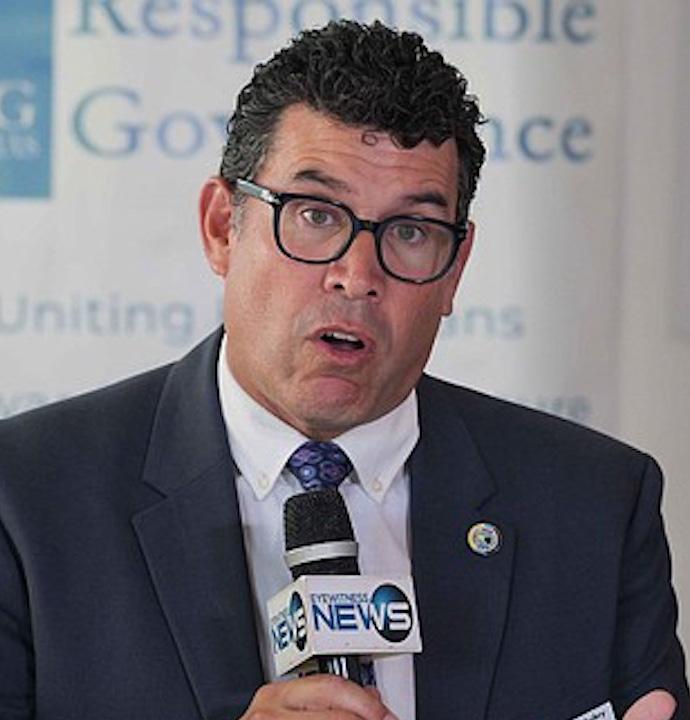
Matt Aubry, the Organisation for Responsible Governance (ORG), told Tribune Business this nation’s improvement from 30th to 28th place in the annual Corruption Perceptions Index - while seemingly representing global recognition of The Bahamas’ efforts to combat graft - must
Investigations Bill ‘doesn’t fully address’ corruption’s causes
By NEIL HARTNELL Tribune Business Editor nhartnell@tribunemedia.net
GOVERNANCE
reformers have asserted that legislation to create an Independent Investigations Commission “does not fully address” the root causes of corruption while whistleblower protections must be strengthened.
The Organisation for Responsible Governance (ORG), unveiling its analysis of the Independent Commission of Investigations Bill 2025, which is designed to combat and punish graft committed by politicians, public officials and members of the security forces, said that while it represents an upgrade on the earlier 2024 version there is still room for further improvement.
In particular, it called for better protection and safeguards for “external”
whistleblowers who are not within the Government’s employment while also suggesting that there be better access to the Commission’s reports and findings than simply tabling these in Parliament.
ORG also called for the Commission’s annual financial budget to be approved by Parliament, rather than the minister of finance, as this would “support a more transparent process” that dispels any perception or notion of political interference with its work and investigations. And it urged greater civil society and public input into the Commission’s work, while also calling for the Bill to be revised so that it mandates all government agencies “monitor actions” based on the findings of investigations and produce a report 12 months later detailing the status of
align with the actual experience of Bahamian businesses and citizens on the ground.
Speaking after Transparency International also increased The Bahamas’ score by one to 65, so that this nation now ranks alongside the US, he added that this nation must “set its own course” in an increasingly turbulent world by pulling together all the Government, private sector and civil society initiatives, including legislative reforms, into a single co-ordinated “framework” to attack corruption in all its forms. “That definitely is a good thing to here,” Mr Aubry told this newspaper of The Bahamas’ upgrade by Transparency
Property
By NEIL HARTNELL Tribune Business Editor nhartnell@tribunemedia.net
A BAHAMIAN financial services provider yesterday branded the demand to disclose all corporate clients’ real estate dealings by week’s end as “outrageous”, adding: “They have just killed ease of doing business.”
Paul Moss, Dominion Management Services’ principal, voiced doubts to Tribune Business that his firm will meet the February 15 deadline for filing the 16-page ‘real property declaration’ on behalf of its 100-plus clients as he blasted MPs for changing laws without seemingly understanding “the pain and suffering” it will cause to the private
International. “We’ve been talking about the concept of putting together a cross-section approach and, when we put all that framework down, we see a lot of things are happening....
“The Transparency International index is a good indicator but is not really telling the story on the street. We want to make sure the story on paper matches the story in the communities. We’re hoping this is an opportunity for Bahamians to understand how it’s being seen internationally but also tells a story about how to get where we want to be.”
Mr Aubry argued that ordinary Bahamians, as well as the private sector, need to feel the impact of
anti-corruption reforms through the provision of opportunities that are awarded on the basis of merit and best person or company for the job rather than through a “pay to play” culture or political affiliations.
The Bahamas’ improvement, albeit modest, in Transparency International’s index means that the level of perceived corruption now matches that of the US given the latter’s significant year-overyear fall. Only Barbados, out of
• Financial provider slams latest burden as ‘outrageous’
• Argues: ‘Feels like you’re in business to work for Gov’t’
• And politicians don’t understand the ‘pain and suffering’
sector and The Bahamas’ competitiveness. Asserting that it increasingly appears as if entrepreneurs “are in business to work for the Government”, given the ever-increasing taxation and compliance burden they face, he echoed the concerns of other registered offices and agents that they simply do not have on-hand access to all the information being
sought by the Department of Inland Revenue.
The Government reformed the VAT Act in the 2024-2025 Budget to require all registered offices and agents to supply, on behalf of all their Companies Act and International Business Companies (IBCs) Act clients, details on all their Bahamas-based real estate holdings, plus every property transaction these entities had entered to and completed over the past year.
Mr Moss, though, told this newspaper this has “placed the onus on registered agents to verify” the accuracy of information they do not necessarily possess as it is instead held by their clients. This, he warned, could reach the point where registered agents “perjure” themselves if a declaration proves inaccurate, while this expansion of their duties is not supported by their governing law, the Companies Act.
Bahamian firm suffers four supplier price hikes in year
By NEIL HARTNELL Tribune Business Editor nhartnell@tribunemedia.net
INFLATION and a “construction surge” have helped to expand The Bahamas’ now-$4.274bn annual trade deficit, it was argued yesterday, with one local firm suffering four prices increase from its supplier within a year.
Dr Leo Rolle, the Bahamas Chamber of Commerce and Employers Confederation’s (BCCEC) chief executive, in an e-mailed reply to Tribune
Business questions on behalf of the private sector advocacy group, said narrowing this record deficit
“will be difficult, but not impossible” even though this nation produces very few physical goods for export.
“We note with concern the country’s ever-increasing trade deficit, reaching a record high of $4.2bn in 2024,” he wrote. “We are keen to continue to work with the Government, local manufacturers, importers and our members/stakeholders to narrow and reduce this.
“We are a heavily import-reliant country with minimal local production,
exacerbated by recent inflationary pressures locally and internationally, so decreasing this deficit will be difficult but not impossible.” Tribune Business reported yesterday that the trade deficit - which measures by how much physical goods imported to the country exceed this nation’s exports - broke through the $4bn mark for the first time last year. This represents a 22.6 percent, or close to $750m
Tax-driven airline prices hit Bahamas’ advantage
By FAY SIMMONS Tribune Business Reporter jsimmons@tribunemedia.net
A SENIOR tourism executive yesterday asserted that high airline ticket prices have prevented The Bahamas from fully capitalising on its proximity to the US as its main tourism source market. Kerry Fountain, the Bahamas Out Island Promotion Board’s executive director, speaking at the Routes Americas conference, said the high taxes imposed on airline tickets can be offset by the funds visitors spend while traversing the country. And the number of stopover visitors can be increased if ticket taxes were reduced.
“Every time we start off with a business plan,
Bahamas, we always start off with proximity. Bimini
52 miles away from South Florida.
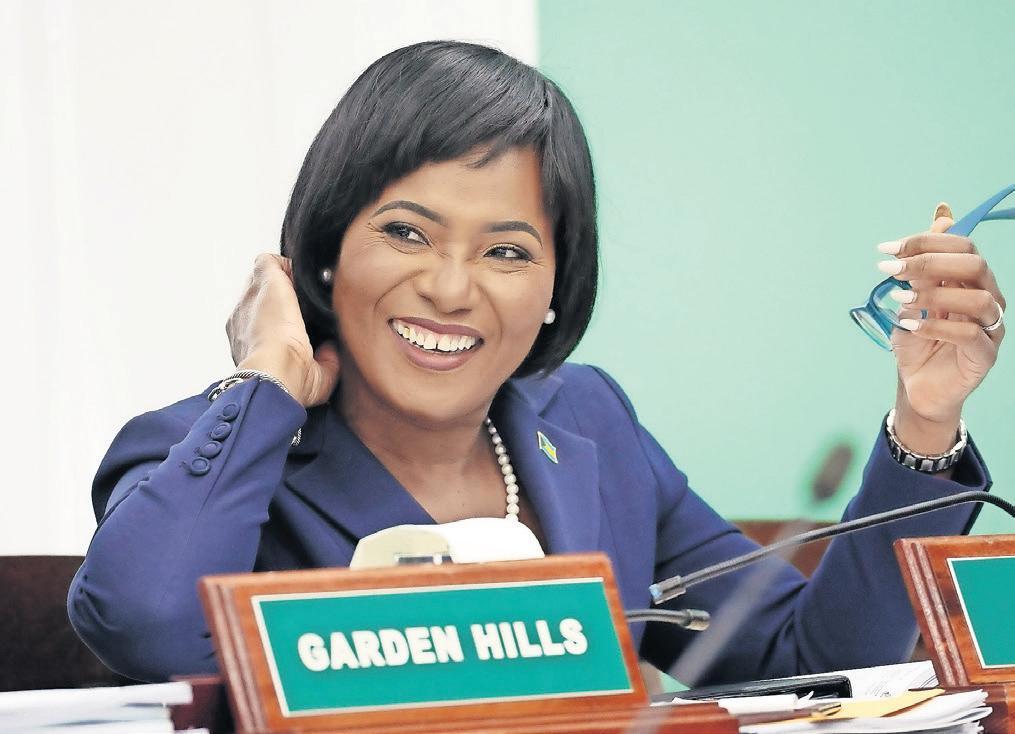
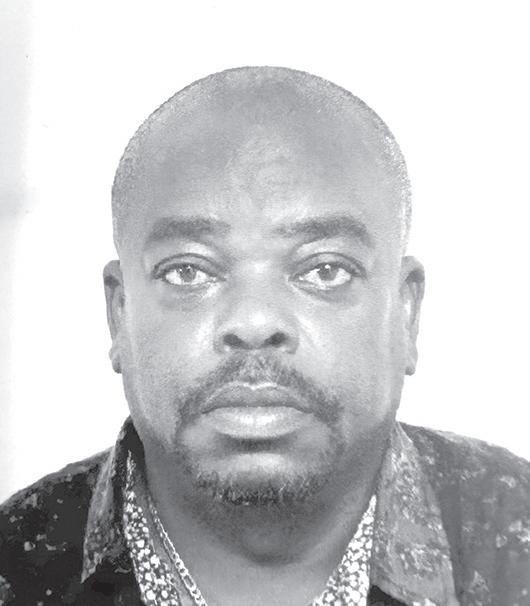
MATT AUBRY
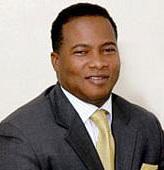
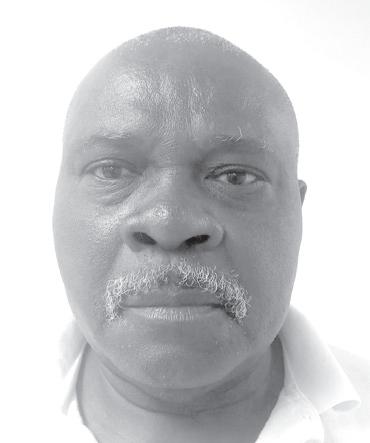
PAUL MOSS
BTC HAILS ITS FOUR AWARD SUCCESSES
THE BAHAMAS Telecommunications Company (BTC) says it has won four more Ookla Speedtest Awards based on its 2024 second half performance.
The carrier, in a statement, said the newlyacquired awards issued by Ookla, a network intelligence and connectivity analyst, include those for Fastest Fixed Network; Best Fixed Network; Best Mobile Video Experience; and Best Fixed Gaming Experience.
The awards were presented by Marc Penesso, Ookla’s sales director for the US and Caribbean. BTC’s Board of Directors, chaired by Inge Smidts, who also serves as chief executive of the communications provider’s immediate parent, Cable & Wireless Communications (CWC), were present along with Balan Nair, chief executive of Liberty Latin America (LLA), its ultimate parent, and several other executives.
“It is an honour to recognise BTC with the Speedtest Award for Fastest Fixed Network, Best Fixed Network, Best Fixed Gaming and Best Mobile Video
Experience in The Bahamas during the third and fourth quarters in 2024,” said Mr Penesso. “This recognition is a testament to BTC’s determination in putting their customers first and delivering an industryleading fixed network and an enhanced experience.”
Sameer Bhatti, BTC’s chief executive, added:
“These awards belong to the entire team at BTC. Over the last several months, I have challenged the team to step up even higher and deliver faster, stronger and more reliable services that our customers want and expect.
“We remain focused on the quality of our network and the quality of our service. While we celebrate this achievement, we acknowledge that we are on a continuous journey of improvement as we strive to deliver more for our customers.”
Ookla’s Speedtest Awards are issued to the top-performing fixed broadband and mobile operators. The awards are based on extensive analysis of Speedtest data from users throughout The Bahamas.
Madeleine Williams. BTC director
operations.
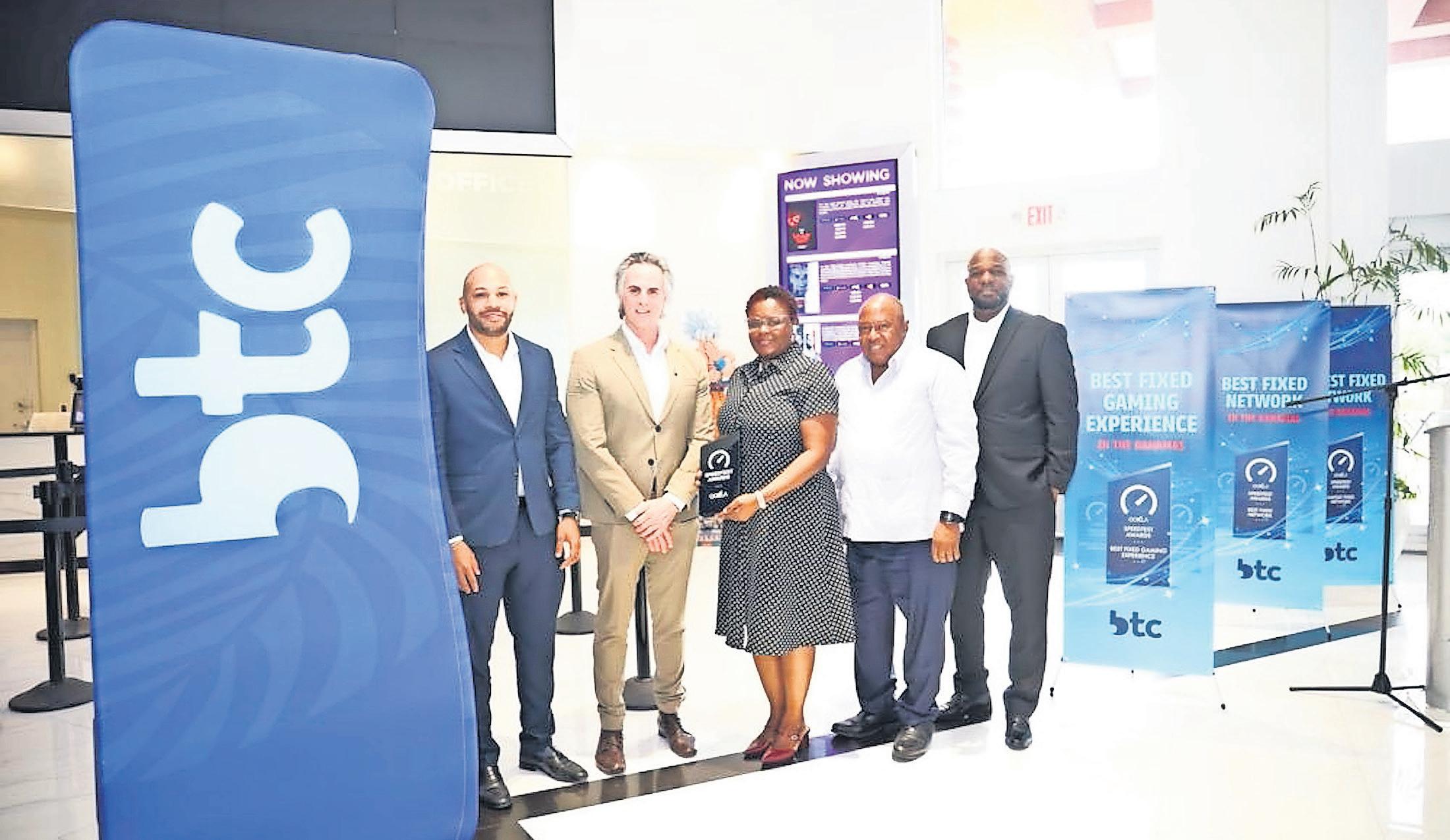
BTC accepts the award for Fastest Fixed Network: L to R: Parkco Deal, BTC Board director; Inge Smidts, CWC chief executive and chair of BTC; Marc Penesso, Ookla; Keisha Edwards, BTC commercial director; Delmaro Duncombe, BTC’s director of business-to-business.
THE minister of Grand Bahama will deliver the main address at tomorrow’s 26th Grand Bahama Business Outlook conference which is being held at the Grand Lucayan resort.
Ginger Moxey will headline an event taking place under the theme ‘Prioritising inclusive, sustainable growth’. “The 2025 Grand Bahama Business Outlook comes at a pivotal moment for our island as we continue to prioritise inclusive, innovative and sustainable growth to build a resilient future for Bahamians,” she said.
“Grand Bahama is poised for a remarkable economic transformation with significant investments underway in key sectors - tourism, education, health and maritime and logistics. These developments and our ongoing recovery efforts reflect the Davis-Cooper administration’s unwavering commitment to creating opportunities to benefit all as we lay the foundation for a prosperous and sustainable Grand Bahama.”
Other speakers include Kimberly Furnish, chargé d’affaires at the US Embassy in The Bahamas; Shakera Johnson, director of information security at Cable Bahamas; Rupert Hayward, principal and director of the Grand Bahama Port Authority; Dennis Deveaux, chief financial officer at Doctors Hospital Health System; Donovan Ingraham, group corporate wellness manager at CG Atlantic Medical & Life Insurance;
Dana Munnings-Gray, superintendent of insurance at the Insurance Commission of the Bahamas; Dwight Gibson, director of operations and product development at the Tourism Development Corporation; and David Wallace, president of Pirates Cove Zip Line and Water Park.
Kiara C. Jones, managing partner and broker at Kevs Bahamas Realty, will give insights into Grand Bahama’s real estate market, while N’Nhyn Fernander O’Cof, chief executive of O’Cof Securities and Prospuh, will discuss wealth creation opportunities.
Mr O’Cof will speak on how Bahamians can become more actively involved in wealth-building processes. He believes that while Bahamians are naturally skilled traders, they often miss key investment opportunities. “Bahamians are excellent traders in general. But, for various
reasons, we miss out on the wealth-building processes,” added Mr O’Cof.
“A lot of foreigners come to our country and take advantage of the opportunities here. They benefit from our environment, but we don’t always get involved in that wealth-generation process. I’ll discuss how we can shift from a trading mentality to a wealth creation mindset, which sets us up for future success - not just locally, but internationally as well.” Rupert Hayward said:
“It’s exciting to bring the Freeport business community together. New investments are on the horizon, and the community must prepare for the opportunities that these investments will create.”
To register for the Grand Bahama Business Outlook, visit tclevents.com or contact Margaret Albury at 322.1000 and malbury@ tclbahamas.com.
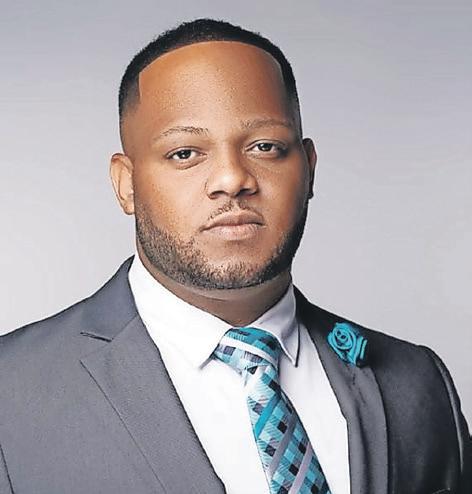
GINGER MOXEY
BTC accepts the award for Best Fixed Gaming Experience. L to R: Peter Cartwright, BTC Board director; Marc Penesso, Ookla;
of sales; Valentine Grimes, deputy chair, BTC; and Drexel Woods, BTC’s director of technology
BTC accepts the award for Best Fixed NetworK. L to R: Indira Collie, BTC executive senior manager, communications; Sameer Bhatti, BTC chief executive; Marc Penesso, Ookla; Teneile Simmons, BTC executive senior manager.
BTC accepts the award for Best Mobile Video Experience. L to R: Marc Penesso, Ookla; Balan Nair, chief executive, of Liberty Latin America; Teneile Simmons, BTC executive senior manager; Stephen Coakley Wells, BTC director of legal and government Affairs.
AVIATION CHIEF DEFENDS FEE HIKES FOR AIRPORTS
By
THE Government’s aviation chief yesterday defended The Bahamas’ imposition of new and increased airport fees as the revenue generated will finance much-needed aviation infrastructure upgrades.
Speaking during a panel discussion at the Routes Americas conference, Dr Kenneth Romer, director of aviation, argued that although travellers can be shocked by high taxes and fees applied to their tickets when traveling the Caribbean region it provides the
funding needed to maintain airports.
“First of all, nobody wants to pay more taxes. But I do think that the discussion around taxes has to be really on cost relatedness, and also to see the benefit of the increase in fees, fares and taxation,” said Dr Romer. “I think if I’m going to give more money, I want to know now that my money is being put to a good source, and I’m seeing things such as improvement in the airport infrastructure.”
Acknowledging recent discussions about the increase in aviation-related fees and taxes, Dr Romer said sovereign counties have the right to impose such charges as they deem appropriate. He added that
their application should be non-discriminatory, and they must consider the costs of operating and maintaining airport infrastructure.
“Most persons would know that The Bahamas has, at times, had a very healthy dialogue as it relates to the imposition of taxes and some fees. In discussions again with our major airlines, we have discovered that a lot of the contentious points really do not speak to the imperative of a sovereign territory to impose taxes, because jurisdictions are sovereign. They have the right to impose taxes,” said Dr Romer.
“A lot of discussions came around this whole appearance of us being nondiscriminatory, not showing more favour as locals or
residents, compared to your foreign air passengers or your foreign airlines versus your domestic carriers. A lot of it spoke about the notion they cannot be discriminatory in air practices, but a lot of it spoke again about cost-relatedness. ‘I’m giving you more. Am I seeing the benefit of this taxation?”
Dr Romer said improvements will be made to airport infrastructure in New Providence, and more than $750m of improvements are slated or ongoing in 14 Family Islands via the Family Island Airport Renaissance initiative aimed at improving connectivity and modernising airports.
He said the debate surrounding increased fees
will subside once passengers see the “significant improvements” in airport infrastructure throughout The Bahamas.
“What we have to do is put a forward a very compelling argument that there will be significant improvements to, first of all, the visitor experience, and then secondly, significant improvement to the airport infrastructure on both the air side and the land side,” said Dr Romer.
“You would’ve heard Nassau announcing a significant improvement to airport infrastructure.
There’s no secret that The Bahamas has gone on what we call the renaissance of our Family Islands, driven primarily by improving the airport infrastructure,
BAHAMAS GOOGLE MAPPING TO GIVE 200M VIEWS BOOST
By ANNELIA NIXON
Business Reporter
THE Bahamas should experience a completed Google Maps Street View project by April, bringing with it exposure to “an estimated 200 million views in five years”, it was asserted yesterday.
The Google Maps Street View project, in partnership with World Travel in 360, Bahamas National Geographic Information Systems Centre and Nassau Motor Company, launched with the goal of providing imagery for more than 16 Bahamian Islands.
According to World Travel in 360’s co-chief executive, Federico Debetto, vehicles with cameras mounted on top have already explored parts of Nassau and some mapping has already been done and is online for viewing.
“...We already started to do some small mapping around the island,” Mr
Debetto said. “So a small part is online. So if you have seen, or you will see, the strange car around with the strange cover on the top, those are not aliens; it’s just us.
“So in the next few months we are going to cover all the 16 islands. So in the coming weeks everyone from every part of the world will be able to go on Google, activate the Google Maps layer, the Street View layer and see the beauty of this island.”
Dimitar Kunev, World Travel in 360’s co-chief executive, added that the foundation for this project was laid years ago. He said its team will be deployed to the Family Islands with the goal of completing the mapping process by March and having it all online by April.
“We already started the mapping in Nassau, and then we are deploying our team members to the other islands across The Bahamas,” Mr Kunev said. “And we are expecting to finalise the mapping phase around
the end of March. So we are moving quite fast.
“And then the imagery, we’re expecting it to be gradually rolled over online. You already have some parts of Nassau already online. As we move, like a week after, you will see another portion going online, and the full coverage will be online by, let’s say, the end of April.”
Chester Cooper, deputy prime minister, said “with the Ministry of Tourism’s collaboration with global tech giant, Google”, the Street View Project will not only be a virtual tour for visitors but bring exposure to businesses. He said popular tourist destinations will be showcased and companies who sponsor the initiative will also benefit.
“We’re, of course, familiar already with Google Maps, the standard in navigational software which provides detailed directions and keeps its users abreast with their surroundings such as places to eat, places for lodging and for gas
DPM wins Caribbean tourism minister of the year honours
CARIBBEAN Journal’s Caribbean Travel Awards 2025 presented the ‘Caribbean Tourism Minister of the Year’ award to Chester Cooper, deputy prime minister and minister of tourism, investments and aviation. In the photo from left: Guy Britton, executive vice-president/managing editor, Caribbean Journal; Alexander Britell, editor-in-chief/founder, Caribbean Journal; Mr Cooper; Lisa Adderley-Anderson, acting permanent secretary, Ministry of Tourism, Investments and Aviation; and Latia Duncombe, director-general of tourism.
stations, etc,” Mr Cooper said. “What we are launching today, Google Street View, is a component of Google Maps.
“This project will see much of our destination captured in over one million geo-located 360 degree
images. That’s a big deal. [It] will allow for greater ease of accessibility to our shores as well as increased visibility for Bahamian businesses and enterprises.
almost a three-quarter-ofa-billion improvement in 14 airports, building new terminals in a massive improvement to airside, your aprons and taxiways, your runways, your new ATC towers, your CFR buildings.
“So, folks are going to say: ‘You know what, I’m seeing where my money is going’, and I think it quiets the whole discussion as it relates to over taxation. Governments again have an imperative. Taxes are an easy way to generate revenue. At the same time, passengers, airlines, want to know what a tax is going to.”
“Through this initiative, hundreds of thousands at home and millions abroad will be able to experience our over 1,200 miles or 2,000 kilometres of our beautiful country as if they were right here. Experiencing our pristine beaches, visiting our famed attractions and enjoying the many facets of our rich culture,” he added.
“...This digital representation of our islands,
Photo:Kemuel Stubbs/BIS
Bahamas graft improvement must match ‘story on street’
all Caribbean nations, has a lower graft perception than The Bahamas, and this nation ranks ahead of both South Korea and Israel, and just below the likes of France, Austria, the UK and Japan.
The Bahamas’ equal ‘corruption perceptions’ ranking with its giant northern neighbour came as Tribune Business uncovered a US government report asserting that “some” members of the Bahamian judiciary - who it did not identify - appear reluctant to tackle money laundering based on an October 2023 ruling that rejected this nation’s bid to seize $1.4bn linked to the Venezuelan state-owned oil firm, PDVSA.
The claim was made in the US State Department’s annual International Narcotics Control Strategy Report (INCSR) which, despite carrying a March 2024 publication date, was released much later. It alleged that the Bahamian Supreme Court rejected the police commissioner’s bid to seize these assets, which could have made a decent dent in The Bahamas’ $11.5bn national debt,
despite allegedly being corruption proceeds.
“The Supreme Court’s ruling against the Commissioner of Police in October 2023 in a $1.4bn civil forfeiture case demonstrated a reticence on the part of some members of the judiciary to address money laundering,” the US report alleged.
“In this case, the commissioner of police froze, and attempted to recover, assets owned by a company affiliated with the sanctioned Venezuelan state-owned oil and natural gas company Petróleos de Venezuela S.A (PDVSA).
The commissioner of police charged these assets had been obtained through, and used in connection with, unlawful conduct, namely corruption and money laundering.
“The Supreme Court was not persuaded by the evidence of the police commissioner’s financial investigators and forensic accounting expert, and found in favour of the defendant, who represented himself and his companies without any documentary evidence to support his allegation that the movement of vast amounts of money in seemingly
suspicious circumstances was not money laundering but necessary to continue operating in the face of USimposed sanctions.”
The validity of the US allegations is presently impossible to judge as the verdict to which the report refers has never been published by the Supreme Court via its website or any of the parties involved. It is possible the file was ‘sealed’ from public view by the Supreme Court, but the claims represent a thinlyveiled attack on Bahamian judges in a case with strong political overtones given the hostilities between the US and Venezuela.
Mr Aubry, meanwhile, said steps taken by The Bahamas to combat graft, are promoted locally, regionally and internationally by ORG as frequently as possible, though there is “a recognition that a lot more can be done” in this fight.
“There’s a lot of things happening in different spaces,” the ORG chief explained, implying that The Bahamas would fare better if these were all linked and pulled together as one. He added that the private sector was working to improve business
ethics and practices, citing in particular efforts by the Bahamian Contractors Association (BCA) despite the continued absence of the Board to self-regulate that industry.
“We also see there are mechanisms in place around government that are being identified. Whether they are being fully leveraged remains to be seen. It also begs the question as to what’s the impact on the person on the street if we work more collaboratively. Will they have the day-today perception that the environment is more suitable, and that it has more integrity and more equity?”
Mr Aubry told Tribune Business
“Ultimately, we’ve made the case that a system which is more accountable and more transparent builds greater trust, and builds more economic confidence both locally and for foreign direct investment (FDI) perceptions.
“We want people to invest in their local economy, build small businesses into mid-sized businesses, and bring informal businesses into formal businesses. A lot of that is based on the belief that opportunities out there lie
on merit and the best offer, not on political affiliation or a ‘pay to play’ culture.”
Mr Aubry said “leveraging” fully implemented anti-corruption legislation with private sector initiatives can generate “some real uplifting benefits”. He pointed to the potentially greater transparency ushered in by the Public Procurement Act’s mandate that all contracts awards by the Government be published within 60 days - a legal requirement that the Government has been getting close to meeting.
Full implementation of the Freedom of Information Act and the Ombudsman’s office, the latter of which will help to address public grievances over maladministration by public bodies, were other parts of the anti-corruption puzzle identified by Mr Aubry along with a reformed Public Disclosures Act and the new Independent Commission of Investigations Bill.
“All of these start to set a very sophisticated framework,” he added, “but they have to work collectively and work in concert so that the overall framework becomes one of the tools and opportunities for us to really monitor and track
Property declarations ‘just killed the ease of business’
“Listen, it’s outrageous,” the Dominion Management chief said of the ‘real property declaration’ and looming February 15 filing deadline. “I doubt we can make the deadline. I’m not even actually sure [how many clients we have], but it’s well over 100. It’s difficult to get this information, too.
“I don’t understand the necessity of it because, quite honestly, they [the Government] have the information already themselves. Any time there’s a conveyance in the name of the company, that name must be registered with the
Department of Inland Revenue. They know it. They have it.”
The ‘real property declaration’ is designed as a tool that will enable the Government to crack down on VAT avoidance/ evasion involving the sale of commercial and highend residential real estate. However, Mr Moss argued: “It’s very foolish. They talk about the ease of doing business. I can tell you they have just killed that.
“There’s no way you can get business done quickly or efficiently because every time you complete a transaction there’s an amendment. It seems the politicians don’t know what’s going on in the
country. They allow these amendments to be made with no thought of the pain and suffering it’s going to cause people to get it done. It’s crazy.
“To be quite honest with you, I don’t know what they’re going to do, but I doubt it’s going to get the response they’re [the Department of Inland Revenue] looking for. It puts the onus on the registered agent to verify, and I don’t know how we can because we simply don’t have the information,” he added. “It’s ridiculous. “I’m not sure the people who came up with this understand private industry. This is not what a registered office is about.” Mr Moss
said registered offices and agents are supposed to be the address were summonses and notices are served on corporate clients, while they also perform the annual filings with the Companies Registry, associated fee payments, and maintain regular records - not details on property holdings or deals.
“How would we know there’s a transaction that the company may have?” he added. “We just don’t know. Listen. To be quite honest with you this is occupying the bulk of our time trying to come up with these things and it’s quite difficult to complete because we don’t have the
how things are going, and what needs to be done.”
While the improvement in external perceptions of corruption in The Bahamas was important, especially because we “haven’t seen movement in a long time”, the ORG chief said it could also “reflect the challenges of the world today” from reduced trust in government generally coupled with the rise of autocratic, authoritarian regimes.
“We have to do what we can to set our own course, track and certainly a plan for how we move through. The world is a complex space,” Mr Aubry said, adding that an “inclusive and equitable economy” and ensuring Bahamian citizens “have a space in governance” will be key. Transparency International’s corruption perceptions index ranked Denmark as the global leader, with a score of 90, followed by Finland and Singapore in second and third spots, respectively, at 88 and 85. The Bahamas retained a spot in the top one-sixth of 180 ranked nations, thus placing it among those who are perceived by outsiders as having less corruption and graft than the majority.
information. We have to rely on the client.
“I wasn’t aware of this until the beginning of this year. Notwithstanding any guidance or notes sent out, from my vantage point there’s no way for a registered office to know for certain, this registered office to know, the full effect of what this requires. One has to be very careful about signing something that could put you in a perjury situation.
“It’s a big distraction. It’s the beginning of the year. We have to do so many compliance things with the Securities Commission. We have to do Business Licence filings. It’s just unbelievable, totally unbelievable; just disturbing. There just seems to be no one who you can go to and say: ‘Check yourself. Please don’t do this’,” Mr Moss said.
“This is what it seems like to me: Your in business to work for the Government. You’re working at their behest. It’s not comfortable to do things this way when they give you timelines like this. It’s just difficult and you have other things as well. It’s crazy; just crazy.
Very depressing.”
Mr Moss said the ‘real property declaration’ mandate will be more palatable if it applies just to corporate entities who have engaged in real estate transactions rather than adopting a blanket, across-the-board approach for all.
“I can understand you doing it for companies that have some property,” he added. “They want you to
do it for all. That’s just garbage. It makes no sense to me. I didn’t see any amendment to the Companies Act for this to be true. That tells me what my requirements as a registered agent are, not the VAT Act. “
All registered offices and agents - typically law offices, accounting firms and corporate services providers - must now submit declarations for all corporate clients incorporated as Companies Act or IBCs Act entities by February 15. They have to detail all their clients’ real estate holdings, and all property transactions they were involved in during the past year.
The 16-page form, which has been seen by this newspaper, requires registered agents to declare that all the information supplied by their corporate clients is “true and correct” even though they will not necessarily be able to verify its total accuracy. Details on all beneficial owners/shareholders; property addresses and their tax assessment numbers; and taxpayer identification numbers are just some of the details sought. Also sought by the Department of Inland Revenue is information on whether a particular property is jointly owned with another company or person; if it is being held in trust for someone; and if a corporate entity or person is holding it in trust for the reporting company. These specifics must be provided for, and repeated, for all properties owned by the reporting company, as well as all sales and purchases it has participated in.
The Tribune wants to hear from people who are making news in their neighbourhoods. Perhaps you are raising funds for a good cause, campaigning for improvements in the area or have won an award. If so, call us on 322-1986 and share your story.
In Voluntary Liquidation
Notice is hereby given that in accordance with Section 138(4) of the International Business Companies Act. 2000, PINK CARNATIONS INVESTMENTS LTD. is in dissolution as of February 4, 2025.
International Liquidator Services Ltd. situated at 3rd Floor Whitfield Tower, 4792 Coney Drive, Belize City, Belize is the Liquidator. L I Q U I D A T O R
Investigations Bill ‘doesn’t fully address’ corruption’s causes
any corrective reforms that have been implemented.
ORG said the BIll, which was recently touted by Ryan Pinder KC, the attorney general, as enabling a “robust”, “transparent” and “authoritative” Bahamian anti-corruption regime, does indeed “provide a more robust framework” compared to the 2024 version and comparisons with similar legislation in other countries.
“As the Independent Commission of Investigations Bill 2025, advances, it is crucial to engage the public, particularly those from communities that have been marginalised by social and economic inequalities,” ORG said in its eight-page analysis. “This Bill presents a vital opportunity to strengthen transparency, accountability and governance in The Bahamas.
“ORG calls for deeper, more proactive and sustained involvement of vulnerable and marginalised communities in the
advancement of the law beyond its passage, particularly in the planning, implementation and monitoring phases. Public trust in policing and oversight mechanisms is essential to achieving the Bill’s goals, and ongoing engagement will ensure its legitimacy and effectiveness.”
As for the 30-page Bill’s contents, ORG added: “While the Bill represents progress in establishing an independent investigative body, it does not fully address the complex conditions that create opportunities for corruption and misconduct. A comprehensive and co-ordinated cross-sector approach is necessary to support integrity, transparency and accountability in governance.
“The Government is urged to prioritise legislation, funding and coordinated mechanisms such as an Independent Integrity Commission, which could be charged with assessing and addressing overall conditions and efforts related
to anti-corruption and integrity in governance, and adopting a cross-sector framework to identify, leverage and track the myriad of efforts currently in place to reduce the instance, opportunity and perception of corruption as per ORG’s proposed cross-sector anticorruption framework, to engage, sustain and monitor a whole-of-society strategy for combating corruption and misconduct.”
While acknowledging that clauses in the Bill are well-aligned with international best practices, giving the Auditor General financial oversight and mandating that a Bahamas Institute of Chartered Accountants (BICA) member be included among the Commission’s members, ORG suggested the Bill can go further.
In particular, it recommended changes to clause 13 as “current provisions do not explicitly protect external whistleblowers from retaliation, as seen in best practices like the US Whistleblower Protection
Bahamian firm suffers four supplier price hikes in year
year-over-year increase, on 2023’s trade deficit of around $3.487bn. However, Dr Rolle added: “We would note several conditions which may have contributed to the increased trade deficit. These may include a consequence of the cost of goods being imported, which has increased over the years, naturally leading to a widening of the deficit.
“We recently assisted a member in an exercise that studied the cost of procurement from their supplier over a one-year period, and were astonished to note that the price increased four times over the course of the year. Now imagine this scenario compounded throughout an importreliant economy, where the vast majority of goods are imported.
“Additionally, we must consider the surge in construction, namely condos on western New Providence, resorts across the Family Islands, The Royal Beach Club, Carnival Cruise Port, Disney Cruise Port and others where materials must be imported, which is again a contributory consideration in the trade deficit.”
Summing the effects of all this, Dr Rolle and the Chamber said: “As an economy that produces very little for export, with a surge in construction activity and challenged inflationary pressures in the main market for imports, it becomes challenging for us to avoid the trade deficit we are seeing.”
However, he added that the Chamber is working with the Bahamas Trade Commission and the Government “to encourage incentivised local production and procurement” in a bid to help reduce the country’s import bill, and targeting overseas markets with trade missions “where we can identify cost effective opportunities for bilateral trade, thereby increasing our international footprint and positively impacting the trade deficit”.
Mr Rolle said the Chamber is also working with
embassies and visiting trade delegations to help identify export opportunities for Bahamian producers, adding: “These measures, while miniscule in relation to our trade dilemma, have been the foundation for incremental deficit relief.”
Senator Barry Griffin, the Bahamas Trade Commission’s chairman, yesterday agreed that large and widening trade deficits can become a concern if left “unchecked”, but said the strategy is to “gradually narrow” the gap without choking off the economy’s momentum.
“The data from the Bahamas National Statistical Institute confirms that our trade deficit reached $4.2bn, driven by significant growth in both imports and exports. While a large trade deficit can be a concern if left unchecked, it is important to view these figures in the broader context of our nation’s economic activity and ongoing trade development strategy,” he said in a written reply to this newspaper’s inquiries.
“The increase in imports, particularly in categories like machinery, transport equipment and manufactured goods, reflects strong domestic demand fuelled by investments in infrastructure, increased tourism, business expansion and consumer needs. It should also be noted that the data is in current prices, so the increase in the actual cost of these goods should also be factored in these figures.
“Our imports have grown in sectors such as specialised heavy machinery where The Bahamas has no local alternative and must import these goods. These imports, in particular, support job creation and economic growth in key sectors such as construction and development.” Indeed, the largest import category for the 2024 fourth quarter was ‘machinery and transport equipment’ valued at a total $287m. Still, the $4.274bn trade deficit for last year sets a new annual record, exceeding the six-year high of around $3.487bn in 2023
which was itself a 7 percent or $233m jump on the figures for 2022. The Bahamas in 2024 imported close to $5bn worth of goods, the actual number standing at $4.944bn, while exports in comparison stood at a relatively meagre $669.949m.
Mr Griffin, though, said: “Exports have also risen, with total exports increasing by 27 percent year-over-year in the fourth quarter, indicating growing opportunities in categories such as miscellaneous manufactured articles and food products.
“To address the trade imbalance, the Bahamas Trade Commission is actively pursuing several strategies aimed at enhancing export competitiveness and reducing import reliance as outlined in the National Trade Policy.”
Mr Griffin added that these measures include export diversification and promotion; local production and import substitution; and trade partnerships and agreements. “We are focused on identifying and supporting industries with high export potential, such as agro-processing, rum and alcoholic beverages, artisan manufacturing, and services, including tourismrelated services,” he said.
“Facilitating better market access for these products and services will boost export revenues. An aim of our National Trade Diversification programme is also to open new markets for Bahamian goods and services.
“Through the Ministry of Agriculture, BAIC and BAMSI, we are collaborating with domestic industries to increase local production capacity, particularly in the agriculture and food sectors, ultimately reducing dependence on foreign goods where it is appropriate,” he added.
“We are strengthening ties with regional and international trade partners. That is vital to improving market access and competitiveness for Bahamian goods. The Trade Commission has worked with the Government of the United
Act”. ORG called on the language to be altered such that “no person” shall face retaliation for submitting a complaint to the Commission in good faith.
And, to boost the Commission’s financial independence, the group said: “Replace the requirement of submission of the Commission’s annual budget in Clause 11(2) to the “Minister of Finance” for approval to a required submission of the annual budget to Parliament for approval.
“This would support a more transparent process which mitigates any instance, or perception, of political influence or control of the operations of the Commission. Add provisions in 11(1) for continuous staff training on human rights, forensic investigation and anti-corruption practices.”
To boost the Bahamian public’s right to know, ORG said the Commission’s reporting lines must be broadened beyond Parliament by publishing
Kingdom with respect to export promotion and has supported the participation of rum producers at a tasting event in Europe.
“The Trade Commission, in collaboration with the Chamber of Commerce and the government of Canada, will be hosting a trade mission at the end of February to explore opportunities in technology and energy between the two countries. We have already hosted trade missions from countries such as Jamaica and Trinidad. And we have also engaged countries like Brazil in high level trade discussions and trade missions.”
Mr Griffin said the Trade Commission will also partner with the Chamber of Commerce “to empower small and medium-sized enterprises (SMEs) to scale their production for both local and export markets”.
He added: “There are have several engagements, including a session on export opportunities for services, which was conducted in collaboration with Caribbean Export. The Trade Commission has established an Export Readiness Committee to further target initiatives in this area.
“Together, our efforts intend to address shortterm considerations while prioritising long-term sustainable trade growth. By promoting a balanced approach to imports and
“redacted” investigation reports on its website with quarterly updates on any major findings. Calling on the Bill to include a clause requiring the Commission to create “an advisory board comprising representatives from civil society, academia and the private sector to provide recommendations on corruption trends and preventive measures”, ORG also suggested that appointments to the body be “transparent” and “merit-based” with input from the likes of the Bar Association and University of The Bahamas.
“The Bill does not set specific deadlines, risking delays. OECD guidelines recommend defined investigation periods to enhance efficiency,” ORG added, arguing that the Bill should be amended to stipulate all investigations are completed within six months unless an extension is granted by the Commission chairman. And, while all Commission reports are” to be sent
to the director of public prosecutions (DPP), no provision ensures independence from political influence”. ORG said the Bill should allow the Commission to recommend the DPP create “an independent unit for corruption-related cases”, with the Auditor General, ombudsman and internal audit also having the power to refer cases to the Commission.
“The Independent Commission of Investigations Bill 2025 represents a significant advancement in oversight and accountability within The Bahamas. While it aligns well with international best practices, further refinements can enhance its effectiveness, particularly in whistleblower protection, public access to findings and enforcement mechanisms,” ORG said.
“Implementing these recommendations will ensure a more transparent, independent and robust investigative framework that meets the highest global standards.”
exports, we aim to gradually narrow the trade deficit while maintaining strong economic momentum. This government is committed to ensuring that The Bahamas continues to thrive in a dynamic and ever-changing global economy.”
PUBLIC NOTICE
INTENT TO CHANGE NAME BY DEED POLL
The Public is hereby advised that I, CHARADE MARIE SARGENT also know as CHARADE MARIE MARSHALL, of P.O. Box SB-51540, Yellow Elder, Off Graham Drive, Nassau, The Bahamas, intend to change my name to
If there are any objections to this change of name by Deed Poll, you may write such objections to the Chief Passport Officer, P.O.Box N-742, Nassau, The Bahamas no later than thirty (30) days after the date of publication
CHARADE MARIE VERONICA SARGENT
Tax-driven airline prices hit Bahamas’ advantage
“One of the things that we really need to take a look at is how do we reduce the cost of getting to The Bahamas by reducing the taxes? We have to know this: That if you reduce the cost of getting to the destination, the gates are going to get a little bit wider, and then you collect whatever it is that you need to collect on what the visitor consumes in the destination.”
Mr Fountain said stopover visitors spend about $2,800 per stay, and increasing their numbers could cover the revenue lost through a tax reduction.
“If it’s more affordable to get to the destination, you’re going to attract more people even if it’s a bit further away. In our case, because we’re close, we have to be more affordable,” he added.
“Whatever it is that you’re giving up with the airline taxes, you’re increasing the number of air stopovers that are spending, on average, $2,800 per stay. So you’re increasing the number of air stopovers and therefore you’re making up the loss that you may have experienced with your airline taxes.”
Mr Fountain said in addition to making the
Bahamas Google mapping to give 200m views boost
though, will be inclusive of key tourist areas such as Paradise Island, Downtown Nassau, Junkanoo Beach, Arawak Cay and several other points of interest. It is truly a win-win for all. This project is being carried out with the support of the agencies of government, the Royal Bahamas Defence Force, local government and the Bahamas National Geographic Information Systems.
“With their support, we will be able to craft 360 degree street coverage and benefit The Bahamas in a number of tangible areas. It will support urban planning by supporting development decisions. It will support damage assessment and coordination in the area of emergency responses,” Mr Cooper continued.
“It will document landscape changes for historical preservation, and enhance general transportation by improving the flow of traffic. And it will greatly assist in preserving and
showcasing the natural beauty of The Bahamas by enabling us to monitor environmental changes such as erosion of our natural habitats.
“This project will also enable us to conduct remote road inspections and increase overall safety, provide AI driven updates for local businesses on Google Maps and boost our global tourism efforts by drawing in an estimated 200 million views in five years, exposing our islands to more and more of those with an eye for detail.
“Local businesses will also benefit from this project. Hotels and resorts, real estate agencies, …and transportation companies as well as other industries will enjoy increased exposure to potential visitors who use Google Street View for planning their trips. Additionally, companies that sponsor the initiatives will benefit from media coverage, brand placement on project videos, expanding their reach to global audiences.”
Share your news
The Tribune wants to hear from people who are making news in their neighbourhoods. Perhaps you are raising funds for a good cause, campaigning for improvements in the area or have won an award. If so, call us on 322-1986 and share your story.
destination more affordable, effort must also be put into making Family Island travel more accessible.
He explained that many visitors wish to travel to Family Islands immediately upon entrance to the Bahamas through Lynden Pindling International Airport (LPIA), but are often forced to overnight in New Providence due to a lack of connecting flights. The Routes Americas conference is an opportunity for aviation and tourism executives to meet with carriers and discuss possible interline agreements.
“One of the things that we’re trying to work on, in
addition to talking to some of the foreign air carriers, we’re also talking to Bahamasair. Case in point, we had a meeting earlier this morning with British Airways and Bahamasair,” Mr Fountain said. “British Airways flies directly to Nassau from Heathrow. What we want to make sure is, once a British Airways flight gets in here, Bahamasair has a flight that would connect to some of the islands. They’re not going to connect to all, but at least the main ones, to Abaco, to Grand Bahama, to Exuma, and make sure that the flights that Bahamasair has going out allows
same day connections and they allow same day connections when I leave and I’m coming back to Nassau. I’m able to jump back on that night flight and go back to London.”
Mr Fountain added that, during the meetings with legacy carriers, they also advised of future developments and airport upgrades in The Bahamas.
“It gives us the opportunity to speak to American Airlines, Delta Airlines, about the opportunities that we see coming down the turnpike in terms of servicing that destination. It’s not going to happen six months from now, it’s not going to
happen a year from now, but we have to start planting the seed now,” said Mr Fountain.
“I always say for us our aim is when they cut the ribbon at Rock Sound Airport, 15 minutes after we want to be cutting the ribbon for an American Airlines flight coming into Rock Sound. That is the purpose of me being here, really identifying what are the opportunities for each island, for each airport, and who is the right airline partner to solicit service coming into that island.”
Trump steel, aluminum tariffs likely to drive up car costs, industry leaders say
By ALEXA ST. JOHN Associated Press
PRESIDENT Donald Trump's tariffs on steel imports this week could wreak havoc on American auto manufacturing, industry leaders say. The moves align with the Trump administration's aggressive global trade agenda and ambitions to strengthen U.S. industry, but they could have an inverse effect.
On March 12, all steel imports will be taxed at a minimum of 25%, the result of two orders the president signed Monday that also include a 25% tariff on aluminum. That could have a serious impact on domestic auto companies including Ford, GM and Stellantis — and make these companies' vehicles more expensive for the nation's car buyers.
Tariffs on crucial products coming from outside of the U.S. places pressure on domestic sourcing of the materials, experts say. The basic rules of supply and demand could drive up costs.
"Steel producers have to find ways to increase capacity, and aluminum and steel might be in short supply in the short term," said Sam Fiorani, analyst at AutoForecast Solutions, which studies the industry. "Producing vehicles has a lot of moving parts, and raising the price of what is among the most important components of the vehicle is only going to raise the price of an already expensive product."
The average transaction price for a new vehicle in
the U.S. in January was $48,641, according to autobuying resource Kelley Blue Book — a hefty investment for an inflationsensitive consumer.
"Tariffs such as these do nothing to enhance the automotive industry directly," Fiorani said.
To Ford CEO Jim Farley, Trump's early actions in office — which also include 25% tariffs on goods coming from Mexico and Canada, although delayed by a month — are already challenging the Dearborn, Michigan, automaker.
The Trump administration has also upended electric vehicle policy put in place under former President Joe Biden, targeted EV charging infrastructure, as well as directed review of vehicle emissions and fuel economy rules — all of which could play a role in automaker plans to decarbonize. Already, auto companies have pulled back some electrification plans amid shifts in the market.
Most of the three automakers' steel and aluminum already comes from North America, Ford included; CFO Sherry House noted Tuesday during a Wolfe Research conference that 90% of the company's steel comes from the U.S., and that
aluminum is also not that competitive.
Still, Farley said Tuesday during the same conference that "So far what we're seeing is a lot of cost, and a lot of chaos," according to a transcript of the event.
Farley said: "The reality is, though, our suppliers have international sources for aluminum steel. So that price will come through and it may be a speculative part in the market where price would come up because the tariffs are even rumored."
A spokesperson for Ford deferred to Farley's comments when reached for additional comment. A spokesperson for Stellantis declined to comment.
A GM spokesperson deferred to CEO Mary Barra's comments from the Wolfe conference. Barra also said much of the steel and aluminum used in GM's U.S. vehicle production is sourced here and that the company did not expect any significant immediate impact.
"We're concerned about the downstream effects on consumer products like automobiles," said Glenn Stevens Jr., executive director of MichAuto, a state auto industry association. "The concern whenever you have a scenario like this, and I'm not an economist, but I follow
this very closely, is that the short-term benefits of higher prices for steel and aluminum for domestic production are outweighed by a decrease in downstream effects."
"The auto industry, it's a very competitive business," he added. "You can't change supply chains very quickly and you certainly can't change manufacturing locations very quickly."
Trump also placed tariffs on steel and aluminum in 2018 during his first stint in the White House. Automakers had to revise their financial plans for the year as their outlooks fell as a result, according to Fiorani.
"Industries like automotive have built their entire financial plan based on sourcing products where they can; locally, if it's possible, globally, if it makes the most sense," he added. Erik Gordon, professor at the University of Michigan Ross School of Business, said if automakers can't raise prices, they'll lose profits.
"The tradeoff is that car buyers might pay more or car manufacturers might make less, in return for more jobs in the U.S. steel industry and less dependence on non-U.S. steel companies."
By MATT O'BRIEN, THALIA BEATY and KELVIN CHAN AP Business Writers
OPENAI
CEO Sam
Altman has dismissed a $97.4 billion takeover bid led by rival Elon Musk, but the unsolicited offer could complicate Altman's push to transform the maker of ChatGPT into a for-profit company. "We are not for sale," Altman said Tuesday at an artificial intelligence summit in Paris. Musk's bid, announced Monday, is the latest in a bitter years-long battle with Altman over control of the AI startup they both helped found a decade ago as a nonprofit and is now a leading force in the global boom surrounding generative AI technology.
"OpenAI has a mission," Altman told France's AI minister in an on-stage discussion Tuesday mobbed by tech industry workers and investors. "We are an
unusual organization and we have this mission of making AGI benefit all humanity. And we are here to do that." Its stated aim since its founding in 2015 is to safely build futuristic, better-thanhuman AI known as artificial general intelligence, or AGI.
Musk, an early investor and board member, quit OpenAI in 2018 after an internal power struggle left Altman in charge.
Their public feud has escalated over the past year as Musk sued OpenAI and is working to grow his own AI company called xAI, part of a business empire that includes Tesla, SpaceX and social media platform X. Musk also now holds power as a top adviser to President Donald Trump in reshaping the U.S. government, and has publicly questioned OpenAI's Trump-backed private investment project for building AI data centers in the United States.
The offer complicates OpenAI's plan to shift its structure away from its nonprofit roots to a company beholden to shareholders.
OpenAI's nonprofit board will need to consider Musk's offer. It's not Altman alone who can accept or reject it, though the chair of the board, Bret Taylor, echoed Altman's approach and declared "OpenAI is not for sale" at a Wall Street Journal event Tuesday in Palo Alto, California.
Taylor said Musk's move was "largely a distraction" from the board's fiduciary duty to its mission. As a nonprofit board, said Taylor, "our job is very simple, which is to basically evaluate every strategic decision of the organization through that one test, which is, 'Does this actually further the mission of ensuring AGI benefits humanity?' And I have a hard time seeing how this would."
AN EMPLOYEE works on the production line at the Martinrea auto parts manufacturing plant that supplies auto parts to Canada and U.S. plants, in Woodbridge, Ontario, Monday, Feb. 3, 2025.
Photo:Chris Young/AP
VANCE OFFERS AN ‘AMERICA FIRST’ ARGUMENT ON AI DEREGULATION IN HIS FIRST FOREIGN POLICY SPEECH
By AAMER MADHANI Associated Press
IN his first big moment on the world stage, Vice President JD Vance delivered an unmistakable message: the United States under the 47th president has room for you on the Trump train — but it also has no problem leaving you behind.
Vance, speaking at the Artificial Intelligence Action Summit in Paris on Tuesday, hewed closely to President Donald Trump's "America First" outlook as he spoke of maintaining U.S. dominance in the surging industry.
He also pressed European nations to step back from "excessive regulation" of the AI sector that he said "could kill a transformative industry just as it's taking off."
"Now, just because we're the leader doesn't mean we want to or need to go it alone," Vance said. "But to create that kind of trust, we need international regulatory regimes that fosters the creation of AI technology rather than strangles it. And we need our European friends in particular to look to this new frontier with optimism rather than trepidation."
The message was centered on AI, but the tone and substance of Vance's remarks fall in line with
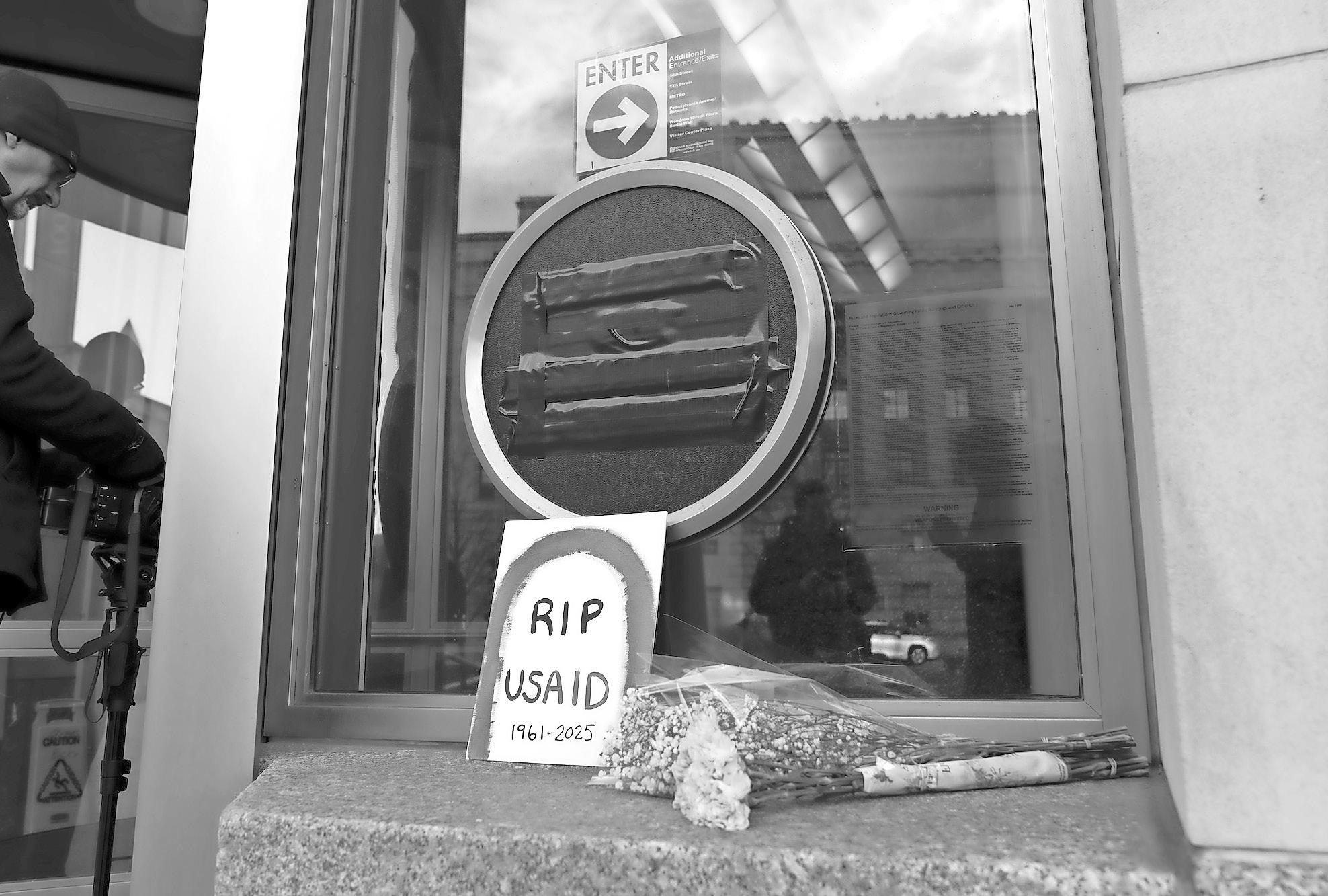
a Trump administration that has been approaching policymaking — and it opponents — with the attitude that it's a juggernaut that will not be stopped. Already, Trump has effectively shut down much of foreign aid through the United States Agency for International Development. He remains insistent that post-war Gaza will be taken over and redeveloped by the U.S. into a "Riviera of the Middle East," despite Palestinians and much of the Arab world flatly rejecting his plans. He has also threatened to take back the Panama Canal and turn Canada into 51st state. Vance's remarks contrasted sharply with the overall tenor and content of the summit, which was largely focused on protecting democracies from disinformation and promoting the use of AI technology for the public interest.
"The United States of America is the leader in AI, and our administration plans to keep that," Vance said. "The AI future is not going to be won by handwringing about safety. It will be won by building."
Early in his address, he knocked former President Joe Biden's administration for being far too risk averse and referred derisively to a speech that then- Vice
N O T I C E
SPIRE HOLDINGS LIMITED
NOTICE IS HEREBY GIVEN as follows:
(a) SPIRE HOLDINGS LIMITED is in voluntary dissolution under the provisions of Section 138 (4) of the International Business Companies Act 2000.
(b) The dissolution of the said company commenced on the 11th February, 2025 when the Articles of Dissolution were submitted to and registered by the Registrar General.
(c) The Liquidator of the said company is Bukit Merah Limited, The Bahamas Financial Centre, Shirley & Charlotte Streets, P.O. Box N-3023, Nassau, Bahamas
Dated this 12th day of February, A. D. 2025
Bukit Merah Limited Liquidator
N O T I C E RCR INC.
NOTICE IS HEREBY GIVEN as follows:
(a) RCR INC. is in voluntary dissolution under the provisions of Section 138 (4) of the International Business Companies Act 2000.
(b) The dissolution of the said company commenced on the 11th February, 2025 when the Articles of Dissolution were submitted to and registered by the Registrar General.
(c) The Liquidator of the said company is Bukit Merah Limited, The Bahamas Financial Centre, Shirley & Charlotte Streets, P.O. Box N-3023, Nassau, Bahamas
Dated this 12th day of February, A. D. 2025
Bukit Merah Limited Liquidator
NOTICE IS HEREBY GIVEN as follows:
(a) ANTHEMIS LIMITED is in voluntary dissolution under the provisions of Section 138 (4) of the International Business Companies Act 2000.
(b) The dissolution of the said company commenced on the 11th February, 2025 when the Articles of Dissolution were submitted to and registered by the Registrar General.
(c) The Liquidator of the said company is Credit Suisse Trust Limited, The Bahamas Financial Centre, Shirley & Charlotte Streets, Nassau, Bahamas.
Dated this 12th day of February, A. D. 2025
Credit Suisse Trust Limited Liquidator
President Kamala Harris gave at a summit two years ago. "I'm not here this morning to talk about AI safety, which was the title of the conference a couple of years ago," Vance said. "I'm here to talk about AI opportunity."
For Vance, the five-day overseas visit to Paris, and later Munich, for a pair of summits gives him an early chance to rub shoulders with world leaders and the titans of the tech industry.
But his boss threw a little shade at Vance ahead of the trip, telling Fox News that the vice president was "very capable" but that he wasn't ready to endorse him as his heir apparent in 2028.
"I think you have a lot of very capable people," Trump said. "So far, I think he's doing a fantastic job. It's too early. We're just starting."
The Paris summit was billed by organizers France and India as an opportunity for leaders to focus on solutions and standards for shaping a more sustainable AI that works for collective progress.
Vance told emerging AI innovators that America is open for business while expressing disbelief that some "foreign governments are considering tightening the screws on U.S. tech companies with international footprints."
"This administration will not be the one to snuff out the startups and the grad students, producing some of the most groundbreaking applications of artificial intelligence," Vance said. "Instead, our laws will keep Big Tech, Little Tech and all other developers on a level playing field."
The vice president arrived in Paris with Trump sparking new tension with
TRUMP TARIFFS RATTLE SMALL BUSINESS OWNERS ALREADY DEALING WITH TIGHT MARGINS
By MAE ANDERSON AP Business Writer
PRESIDENT Donald Trump's continued roll out of a wide array of tariffs is rattling small business owners already dealing with tight profit margins.
Trump on Monday announced a 25% tariff on steel and aluminum and promised more import duties to come. Last week, the administration imposed a ,10% tariff on Chinese goods coming into the U.S. Sandra Payne, owner of Denver Concrete Vibrator, imports steel and other raw materials for her business. Her company makes tools to settle concrete and other industrial tools. Most of the steel the company uses comes from China, and she gets material from Canada and Mexico, too.
"Small businesses run on very small margins. And so a 25% increase in any product is going to hurt," she said.
"And we can't just raise our prices every time the cost goes up to us. So we are losing a lot of money."
In addition to the steel and China tariffs, other tariffs on Mexican and Canadian goods have been temporarily put on hol d, but they could be implemented later. So, small business owners still need a strategy for mitigating the costs of the tariffs if they go into effect.
Across the border, Julie Bednarski-Malik runs a snack company, Healthy Crunch, based in Mississauga, Ontario. She sells her products in both Canadian and U.S. retail stores, and said she might have to raise prices depending on how the tariffs unfold. But she's still
world leaders, including some at the AI summit.
Trump on Sunday announced hours before Vance embarked for his trip that he would levy 25% tariffs on all foreign aluminum and steel.
The new tariffs didn't sit well with some U.S. allies. European Commission President Ursula von der Leyen issued a statement early Tuesday that the U.S. tariffs "will not go unanswered."
Hours later, von der Leyen and Vance sat down for talks at the U.S. embassy. Neither directly
addressed the steel and aluminum tariffs in their brief appearance before reporters.
"We also want to make sure that we're actually engaged in a security partnership that's good for both Europe and the United States," Vance said, as Trump has also been pressing for NATO members to dramatically increase domestic spending.
Von der Leyen, for her part, noted a moment in Vance's speech when he called for allies to be motivated by optimism instead of fear.
in wait-and-see mode as tariffs loom.
"I know that this is going to come into effect, but we're still unclear exactly the timing and the percentage and what sort of commodities are going to be impacted," she said. "We hope that, you know, the U.S. and Canada could work together to find some sort of resolution because we are such close allies and trading partners."
Bar Zakheim, owns Better Place Design & Build, a contracting business in San Diego that specializes in
building accessible dwelling units, or ADUs. He said he is especially worried about lumber.
"This stuff has already been getting more expensive over the past few years due to supply chain shocks and wildfires, and a huge proportion of our lumber comes from Canada," he said. "These tariffs are going to make everything we do considerably more expensive, at a time when the high-priced housing market and high interest rates are already cutting into our bottom line."
FRENCH President Emmanuel Macron, second right, and Brigitte Macron, right, pose for a group photo with United States VicePresident JD Vance and second lady Usha Vance during arrivals for a working lunch at the Elysee Palace during an event on the sidelines of the Artificial Intelligence Action Summit in Paris, Tuesday, Feb. 11, 2025.
Photo:Thomas Padilla/AP
IN this May 9, 2019, file photo, steel rods produced at the Gerdau Ameristeel mill in St. Paul, Minn., await shipment. Photo:Jim Mone/AP
Trump’s halt of US law banning business bribes abroad raises specter of a ‘Wild West’ of dealmaking
By BERNARD CONDON AP Business Writer
TO its fans, it's an undeniable force for good in a corrupt world, a groundbreaking anti-bribery statute that has brought powerful businessmen to heel for secretly paying off foreign government officials to win contracts abroad.
To detractors, the Foreign Corrupt Practices Act unfairly hobbles American companies while foreign rivals not so encumbered swoop in.
On Monday, President Donald Trump took a side.
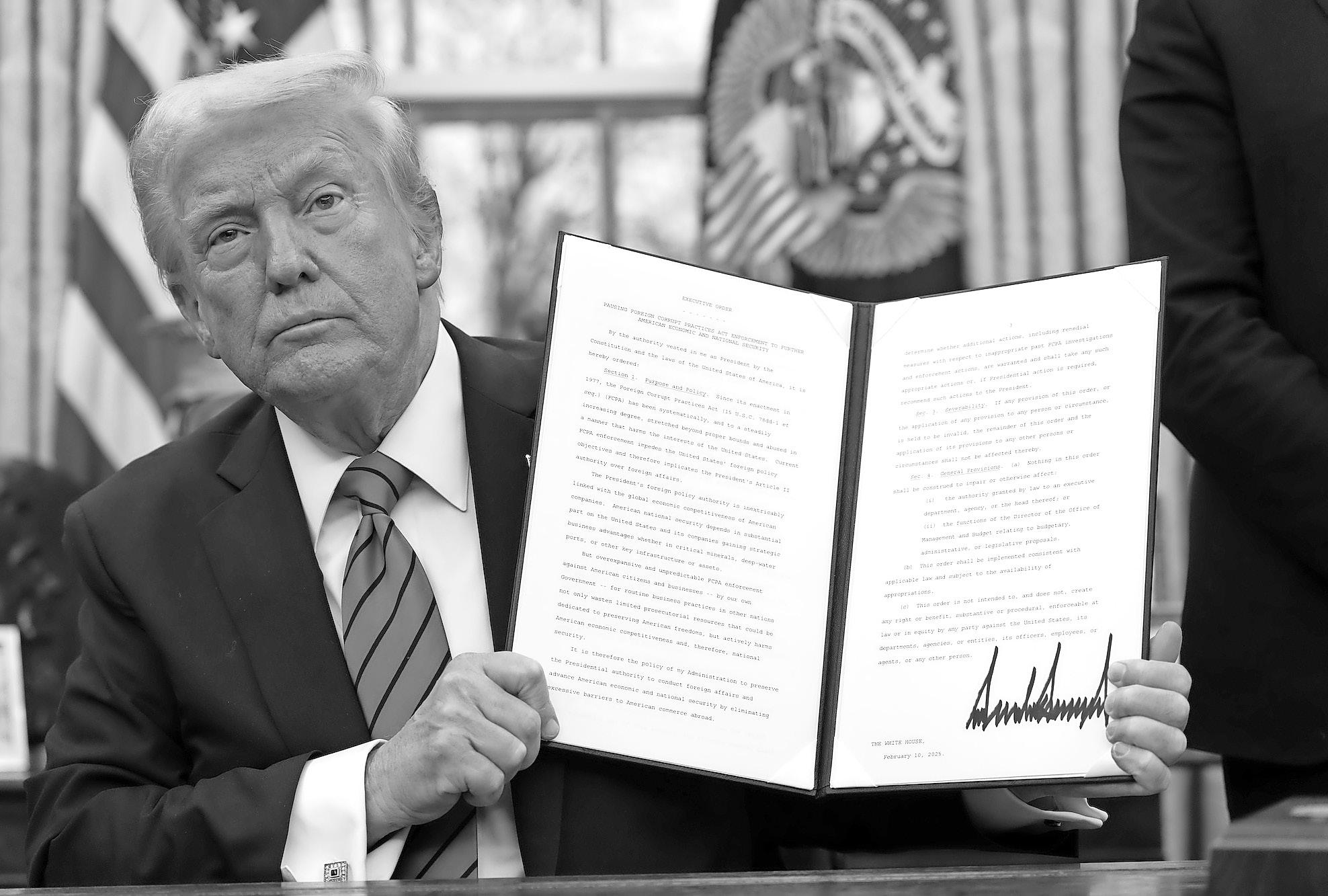
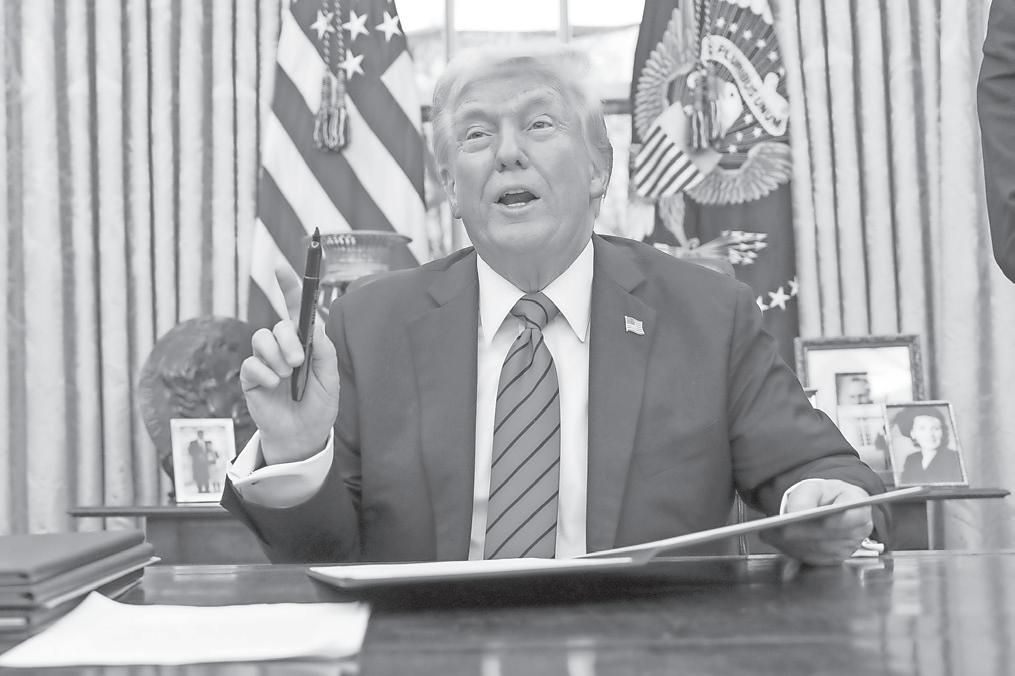
"It sounds good on paper but in practicality, it's a disaster," Trump said while signing an executive order freezing enforcement of the law. "It's going to mean a lot more business for America."
The consequences could be dramatic, depending on Trump's next move.
If he halts many prosecutions, essentially defanging the law, it could help U.S. businesses win deals abroad.
But it also could tarnish America's image, allow corrupt autocrats ruling over impoverished people to get even richer and lead France, Britain, Japan and other wealthy countries to weaken their own anti-bribery laws so their companies can make payments, too.
"We are facing a Wild West situation," said Mark Pieth, a criminal law professor at the University of Basel in Switzerland and anti-bribery law expert. "It will be everyone against everyone."
WHAT EXACTLY DOES THE LAW BAN?
The Foreign Corrupt Practices Act of 1977, or FCPA, prohibits people or companies operating in the U.S. from giving money or gifts to foreign officials to win or retain deals in those countries. The law doesn't require that the bribe is actually paid, but only offered.
Punishment for conviction is imprisonment of up to 20 years, and companies face fines double their profits from the illicit deal. That has often meant hundreds of millions of dollars, sometimes billions, in payments.
HOW OFTEN HAS THE LAW BEEN USED?
The law has been used hundreds of times in the past decade to stop bribes to win deals, leading to massive settlement payments from multinationals like Goldman Sachs, Germany's Siemens and the Swiss commodities trader Glencore.
But it's real impact, experts say, is arguably not in the headlines, but what happens behind the scenes as the fear of punishment deters businesses from even thinking about bribes in the first place.
WHAT SPECIFICALLY DOES TRUMP THINK IS WRONG WITH THE LAW?
In a nutshell, Trump is claiming that so many others are corrupt, we're fools for playing by the rules.
Snowbell Investment Company Ltd.
NOTICE IS HEREBY GIVEN that pursuant to section 138 (8) of the International Business Companies Act 2000 the dissolution of Snowbell Investment Company Ltd. has been completed and the company has been struck from the Register on the 28th day of November 2024.
“We are facing a Wild West situation. It will be everyone against everyone.”
Mark Pieth
Specifically, Trump said the law is being enforced in "excessive, unpredictable" ways that U.S. companies are competing on an uneven "playing field" with foreign rivals. He also said the law was "draining resources" from law enforcement and harming U.S. national interests because companies were being held back from deals that would give the U.S. access to deep water
ports, critical minerals and other assets.
Trump's statements are reviving a criticism of the law that was common decades ago before other developed countries enacted their own bribery laws. More recently both Republican and Democratic administrations have embraced the FCPA not just as a way to stamp out U.S. corruption but to fight the kinds of conditions abroad that allow cartels and terrorist groups that act against U.S. interests to thrive.
WHAT EXACTLY DID TRUMP DO UNDER HIS EXECUTIVE ORDER?
Trump can't overturn the law, but as head of the executive branch he can change the way it is enforced and
Baird One Limited Liquidator Legal Notice
RUDEDIA CORPORATION
NOTICE IS HEREBY GIVEN that pursuant to section 138 (8) of the International Business Companies Act 2000 the dissolution of RUDEDIA CORPORATION has been completed and the company has been struck from the Register on the 12th day of December 2024.
Baird One Limited Liquidator
shift resources to other Justice Department priorities. His order puts in place a 180-day "pause" to all investigations under the FCPA while they are being reviewed. He also ordered no new ones be opened during that period. The order also says it will halt other Justice Department "actions" under the law, which might mean ongoing prosecutions though that is unclear.
Trump said the pause is also necessary to give his administration time to come up with new "reasonable" guidelines on how to enforce the law that don't put U.S. companies at a disadvantage in striking foreign deals.
Duncan Levin, a criminal defense attorney, said he expects Trump will essentially kill the law by neglect. "He can't get rid of the law, but he can refuse to enforce it," said Levin, who has represented high profile defendants Harvey Weinstein and Russian oligarch Oleg Deripaska. "I don't think this is just a pause."
WHAT KIND OF BRIBES WERE UNCOVERED UNDER THE LAW?
The FCPA was enacted after investigators at the U.S. Securities and Exchange Commission in the 1970s found more than 400 American companies making questionable or illegal payments to foreign officials to win business. Since then the list of bribes brought to light by prosecutions is long and varied.
Last year, the military contractor RTX, formerly Raytheon, paid more
than $300 million to settle charges it had allegedly bribed officials in Qatar by using a sham contract and other devices to hide its tracks.
In 2019, Walmart paid $282 million to settle charges from a seven-year investigation into allegations it won approval to open stores in Mexico, India and Brazil by bribing local officials, including one contact called the "sorceress" who had an uncanny ability to make permitting problems disappear.
WHAT DO OTHER COUNTRIES DO TO STOP BRIBERY?
Since the FCPA was enacted nearly 50 years ago, U.S. businesses have complained that it was hurting more than helping and unfair because bribes were commonplace in some countries. Then under U.S. pressure, allies in the Organization for Economic Cooperation and Development started enacting their own laws, especially after the Berlin Wall fell in 1989 and African and Asian countries formerly in the communist orbit opened their borders to business. Eventually, 40 wealthy countries adopted antibribery laws based on the FCPA, according to University of Basel's Pieth, including the ability to prosecute foreign companies operating in their countries for acts committed in a third country. Therein lies another danger of Trump weakening the FCPA.
MAYFLOWER ASSET HOLDING COMPANY LTD.
NOTICE IS HEREBY GIVEN that pursuant to section 138 (8) of the International Business Companies Act 2000 the dissolution of MAYFLOWER ASSET HOLDING COMPANY LTD. has been completed and the company has been struck from the Register on the 20th day of December 2024.
Baird One Limited Liquidator Legal Notice
Baird One Limited Liquidator Legal Notice
NOTICE IS HEREBY GIVEN that pursuant to section 138 (8) of the International Business Companies Act 2000 the dissolution of G.A.A. INC. has been completed and the company has been struck from the Register on the 30th day of December 2024.
Baird One Limited Liquidator
K1718 Corporation
NOTICE IS HEREBY GIVEN that pursuant to section 138 (8) of the International Business Companies Act 2000 the dissolution of K1718 Corporation has been completed and the company has been struck from the Register on the 30th day of December 2024.
"If a U.S. company bribes because Trump is giving them the green light, the French and the British will jump on that company," Pieth said. "It will be a mess."
Baird One Limited Liquidator Legal Notice
NOTICE IS HEREBY GIVEN that pursuant to section 138 (8) of the International Business Companies Act 2000 the dissolution of Sunni Limited has been completed and the company has been struck from the Register on the 30th day of December 2024.
Dahlia Company Limited
NOTICE IS HEREBY GIVEN that pursuant to section 138 (8) of the International Business Companies Act 2000 the dissolution of Dahlia Company Limited has been completed and the company has been struck from the Register on the 15th day of October 2024.
Baird One Limited Liquidator
NOTICE IS HEREBY GIVEN that pursuant to section 138 (8) of the International Business Companies Act 2000 the dissolution of LAFICA Limited has been completed and the company has been struck from the Register on the 15th day of October 2024.
Baird One Limited Liquidator
PRESIDENT Donald Trump holds up an executive order relating to the Foreign Corrupt Practices Act in the Oval Office at the White House, Monday, Feb. 10, 2025, in Washington. Photo:Alex Brandon/AP
WHITE HOUSE FIRES USAID INSPECTOR GENERAL AFTER WARNING ABOUT FUNDING OVERSIGHT, OFFICIALS SAY
By ELLEN KNICKMEYER Associated Press
THE White House fired the inspector general for the U.S. Agency for International Development on Tuesday, several U.S. officials said. The dismissal comes a day after his office warned that the Trump administration's dismantling of USAID had made it all but impossible to monitor $8.2 billion in unspent humanitarian funds.
The White House gave no reason for the firing of Inspector General Paul Martin, one of the officials said. The dismissal was first reported by CNN. The officials were not authorized to comment publicly and spoke on condition of anonymity. Inspectors general are typically independently funded watchdogs attached to U.S. agencies, who are tasked with rooting out waste, fraud and abuse at government agencies. The Trump administration earlier purged more than a dozen inspectors general.
On Monday, Martin's office issued a flash report warning that the Trump administration's funding freeze and staff actions within USAID had left oversight of the
humanitarian aid "largely nonoperational."
That includes the agency's greatly reduced ability to ensure none of the $8.2 billion in unspent unhumanitarian funds falls into the hands of violent extremist groups or goes astray in conflict zones, the watchdog said.
Separately, a lawsuit filed Tuesday alleged that the Trump administration's fast-paced dismantling of USAID is stiffing American businesses on hundreds of millions of dollars in unpaid bills for work that has already been done.
The administration's abrupt freeze on foreign aid also is forcing mass layoffs by U.S. suppliers and contractors for USAID, including 750 furloughs at one company, Washington-based Chemonics International, the lawsuit says. "One cannot overstate the impact of that unlawful course of conduct: on businesses large and small forced to shut down their programs and let employees go; on hungry children across the globe who will go without; on populations around the world facing deadly disease; and on our constitutional order," the
U.S. businesses and organizations said.
An organization representing 170 small U.S. businesses, major suppliers, an American Jewish group aiding displaced people abroad, the American Bar Association and others joined the court challenge. It was filed in U.S. District Court in Washington against President Donald Trump, Secretary of State Marco Rubio, acting USAID Deputy Administrator Peter Marocco, a Trump appointee who has been a central figure in hollowing out the agency, and Russell Vought, Trump's head of the Office of Management and Budget. It is at least the third lawsuit over the administration's rapid unraveling of the U.S. aid and development agency and its programs worldwide. Trump and ally Elon Musk have targeted USAID in particular, saying its work is out of line with Trump's agenda.
Marocco, Musk and Rubio have overseen an across-the-board freeze on foreign assistance and agency shutdown under a Jan. 20 executive order by Trump. A lawsuit brought by federal employees associations has temporarily blocked the administration
from pulling thousands of USAID staffers off the job. The funding freeze and other measures have persisted, including the agency losing the lease on its Washington headquarters.
The new administration terminated contracts without the required 30-day notice and without back payments for work that was already done, according to a U.S. official, a businessperson with a USAID contract and an email seen by The Associated Press. They spoke on condition of anonymity for fear of reprisal by the Trump administration.
For Chemonics, one of the larger of the USAID partners, the funding freeze has meant $103 million in unpaid invoices and almost $500 million in USAIDordered medication, food and other goods stalled in the supply chain or ports, the lawsuit says.
California’s insurer for people without private coverage needs $1 billion more for LA fires claims
By TRÂN NGUYỄN Associated Press
CALIFORNIA'S plan
that provides insurance to homeowners who can't get private coverage needs $1 billion more to pay out claims related to the Los Angeles wildfires, the state Insurance Department said Tuesday.
The FAIR Plan is an insurance pool that all the major private insurers pay into, and the plan then issues policies to people who can't get private insurance because their properties are deemed too risky to insure. The plans provide high premiums and basic coverage. There
were more than 452,000 policies on the Fair Plan in 2024, more than double the number in 2020. The plan says it's expecting a loss of roughly $4 billion from the Eaton and Palisades Fires, which sparked Jan. 7, destroyed nearly 17,000 structures and killed at least 29 people. Roughly 4,700 claims have been filed as of this week, and the plan has already paid out more than $914 million.
All insurers doing business in California will have to bear half the cost and can pass on the rest to all policyholders in the form of a one-time fee as a percentage of premiums. Insurers
NOTICE IS HEREBY GIVEN that pursuant to section 138 (8) of the International Business Companies Act 2000 the dissolution of WEST WIND BAHAMAS LIMITED has been completed and the company has been struck from the Register on the 30th day of December 2024.
Baird One Limited Liquidator
NOTICE IS HEREBY GIVEN that pursuant to section 138 (8) of the International Business Companies Act 2000 the dissolution of Lamontana Inc. has been completed and the company has been struck from the Register on the 28th day of November 2024.
can collect that cost in the next two years. The state Insurance Department must approve those costs.
The plan also expects to receive $1.45 billion in reinsurance to help pay out claims.
Insurers on Tuesday said they're committed to helping the recovery process after the fires and that the ability to recoup some of the cost from ratepayers will prevent companies from ending their business in the state.
"This is essential to prevent even greater strain on California's already unbalanced insurance market and avoiding widespread policy cancellations that would
jeopardize coverage for millions of Californians," said Mark Sektnan of the American Property Casualty Insurance Association, the largest national trade association for home, auto and business insurers.
According to the FAIR Plan, 45% of the claims are reported as total losses, 45% as partial losses and 10% as fair rental value.
It's the first time the Fair Plan has sought approval for additional money in more than 30 years, the department said.
"I took this necessary consumer protection action with one goal in mind: the FAIR Plan must pay claims just like any other insurance
NOTICE IS HEREBY GIVEN that pursuant to section 138 (8) of the International Business Companies Act 2000 the dissolution of PEBBLES INC. has been completed and the company has been struck from the Register on the 15th day of October 2024.
Baird
NOTICE IS HEREBY GIVEN that pursuant to section 138 (8) of the International Business Companies Act 2000 the dissolution of Purdey Corporate Inc. has been completed and the company has been struck from the Register on the 1st day of November 2024.
For the health commodities alone, not delivering them "on time could potentially lead to as many as 566,000 deaths from HIV/ AIDS, malaria, and unmet reproductive health needs, including 215,000 pediatric deaths," the lawsuit says.
The filing asserts that the administration has no authority to block programs and funding mandated by Congress without approval.
Marocco defended the funding cutoff and push to put all but a fraction of USAID staff on leave in an affidavit filed late Monday in the lawsuit brought by the workers' groups.
"Insubordination" and "noncompliance" by USAID staffers made it necessary to stop funding and operations by the agency to allow the administration to carry out a program-by-program review to decide what U.S. aid programs could
resume overseas, Marocco wrote.
Meanwhile, seven Republican lawmakers from farm states introduced legislation to safeguard a long-running $1.8 billion food-aid program run by the embattled aid agency, by moving the Food for Peace program under the Department of Agriculture. Farmers, a politically important bloc for the Trump administration, have been affected by the administration's funding freeze as well. Kansas Republican Sen. Jerry Moran, who announced the legislation, over the weekend thanked Rubio for interceding to allow delivery of $560 million in U.S.-grown commodities intended for hunger programs worldwide but stuck in ports because of the administration's abrupt cutoff of foreign assistance spending.
company," Insurance Commissioner Ricardo Lara said in a statement. "I reject those who are hoping for the failure of our insurance
Legal
NOTICE IS HEREBY GIVEN as follows:
(a) SA International Inc. is in voluntary dissolution under the provisions of Section 138 (4) of the International Business Companies Act 2000.
(b) The dissolution of the said Company commenced on the 10th day of February 2025 when its Articles of Dissolution were submitted to and registered by the Registrar General.
(c) The Liquidator of the said Company is Delco Investments Limited of Deltec Bank & Trust Limited, Deltec House, Lyford Cay, P.O. Box N-3229, Nassau, Bahamas.
Dated this 12th day of February, A. D. 2025 Delco Investments Limited Liquidator
NOTICE IS HEREBY GIVEN as follows:
(a) Youen Company Limited is in voluntary dissolution under the provisions of Section 138 (4) of the International Business Companies Act 2000.
(b) The dissolution of the said company commenced on the 10th day of February, 2025.
(c) The Liquidator of the said Company is Baird One Limited of Deltec House, Lyford Cay, P.O. Box N-3229, Nassau, Bahamas.
Dated this 12th day of February, A. D. 2025
FLOWERS and a sign are placed outside the headquarters of the U.S. Agency for International Development, or USAID, Friday, Feb. 7, 2025, in Washington. Photo:Jose Luis Magana/AP
market by spreading fear and doubt. Wildfire survivors can't cash 'what ifs' to pay for food and rent, but they can cash FAIR Plan checks."
RESIDENCES destroyed by the Eaton Fire line a neighborhood in Altadena, Calif., on Tuesday, Jan. 21, 2025.
Photo:Noah Berger/AP
Trump steps up his 2018 tariffs on steel and aluminum, risking inflation on promise of more jobs
By JOSH BOAK Associated Press
PRESIDENT Donald Trump on Monday removed the exceptions and exemptions from his 2018 tariffs on steel, meaning that all steel imports will be taxed at a minimum of 25%.
Trump also hiked his 2018 aluminum tariffs to 25% from 10%.
"We were being pummeled by both friend and foe alike," Trump said as he signed two proclamations changing his orders during his first term that go into effect on March 12. "It's time for our great industries to come back to America."
The moves are part of an aggressive push by the president to reset global trade, with Trump saying that tax hikes on the people and companies buying foreign-made products will ultimately strengthen domestic manufacturing. But the tariffs would hit allies as the four biggest sources of steel imports are Canada, Brazil, Mexico and South Korea, according to the American Iron and Steel Institute.
Trump also intends this week to reset U.S. taxes on all imports to match the same levels charged by other countries. All of that comes on top of the 10% tariffs he already put on China, China's retaliatory
tariffs that started Monday and the U.S. tariffs planned for Canada and Mexico that have been suspended until March 1.
Monday's tariffs almost immediately drew criticism from Canada, the largest source of steel imports. Candace Laing, president and CEO of the Canadian Chamber of Commerce, said that Trump was a destabilizing force in the global economy.
"Today's news makes it clear that perpetual uncertainty is here to stay," said Laing. The tariffs carry inflation risks at a moment when voters are already weary of high prices and fearful that price increases will eclipse any income gains. Trump maintains that the tariffs will level the playing field in international trade and make U.S. factories more competitive, such that any pain felt by consumers and businesses would eventually be worthwhile.
"'Fairness' is in the eye of the beholder, but the more fundamental question is whether the U.S. actually benefits from such new tariffs," Benn Steil, director of international economics at the Council on Foreign Relations, a New Yorkbased nonpartisan think tank, said in an email. "The costs to the U.S. will include higher prices to
NOTICE
NOTICE is hereby given that HOSTIA RAMOS SHERLYN YULLIANA of #10 Edmond Street, New Providence, The Bahamas, applying to the Minister responsible for Nationality and Citizenship, for Registration Naturalization as a citizen of The Bahamas, and that any person who knows any reason why registration/naturalization should not be granted, should send a written and signed statement of the facts within twenty-eight days from the 12th day of February, 2025 to the Minister responsible for nationality and Citizenship, P.O. Box N-7147, Nassau, New Providence, The Bahamas.
U.S. consumers, retaliatory tariffs abroad, and the loss of U.S. jobs and competitiveness in firms hit by higher input costs."
Steil noted that other countries are already adopting Trump's approach from his first term as the president imposes tariffs on the premise that the imports create national security risks. That's because national securityrelated tariffs are legally unchallengeable at the World Trade Organization, meaning that so far Trump's approach has encouraged other countries to increase trade barriers.
"Not surprisingly, everything from 'door frames' to 'alcoholic beverages' have of late been subject to new import barriers in the developing world on the grounds of national security," Steil said.
Of the roughly 29 million net tons of steel imported into the United States last year, a little under 2% came from China. But the White House maintains that exemptions to the tariffs provided over the previous four years by the Biden administration enabled steel and aluminum from China and Russia to go through other nations to reach the United States.
While the tariffs could help the finances of steel mills and aluminum smelters, they could also increase costs for the manufacturers that use the metals as raw materials to make autos, appliances and other products.
Glenn Stevens Jr., executive director of MichAuto, said that the auto industry would likely need to raise prices in response to the tariffs. In turn, higher
NOTICE
NOTICE is hereby given that MARIA DEL ROSARIO RAMOS GUTIERREZ of #10 Edmond Street, New Providence, The Bahamas, applying to the Minister responsible for Nationality and Citizenship, for Registration Naturalization as a citizen of The Bahamas, and that any person who knows any reason why registration/naturalization should not be granted, should send a written and signed statement of the facts within twenty-eight days from the 12th day of February, 2025 to the Minister responsible for nationality and Citizenship, P.O. Box N-7147, Nassau, New Providence, The Bahamas.
prices would decrease sales and hurt company's bottom lines, leading to fewer factory jobs.
"If you look at sudden tariffs to a system, there isn't a lot of good that comes out of that,"said Stevens, his remarks challenging Trump's own statements that his policies would stimulate massive gains in auto industry jobs.
The White House has yet to fully counter economic analyses showing that tariffs would hurt growth and intensify inflation, only saying that such analyses are incomplete without including the full extent of Trump's planned income tax cuts and regulatory curbs. But Trump has yet to propose a budget plan that would flesh out his policies so that economists can judge them.
Consumers already appear to be anticipating that inflation will become a bigger problem. On Friday, the preliminary February results from the University of Michigan Survey of Consumers found that yearahead inflation expectations jumped to 4.3% from 3.3% a month prior.
The government inflation report scheduled to be released on Wednesday is expected by economists to show consumer prices rising at 2.8%, which would suggest that the public sees
tariffs as a major risk to their financial wellbeing. The stock prices of steel companies climbed sharply on Monday as investors assumed the tariffs would increase their profits. Cleveland-Cliffs, which wants to buy Pittsburgh's U.S. Steel, surged upward by nearly 18%. U.S. Steel rose almost 5%. Nucor increased almost 6%, and Steel Dynamics rose about 5%. But some companies that could pay more for steel and aluminum saw their share prices decrease. For example, shares in automaker General Motors sold off, which could ultimately signal trouble for a manufacturing sector that Trump has promised to revive.
"We have far more steel and aluminum-consuming businesses, think construction, machinery and equipment manufacturing, auto manufacturing, than we do steel and aluminum producers, so the advantage created for the producers comes at a much greater cost to downstream users," said Erica York, vice president of federal tax policy at the right-leaning Tax Foundation.
Trump reiterated as he signed the proclamations that more tariffs would be coming on computer chips, autos and pharmaceutical drugs.
NOTICE
NOTICE is hereby given that GEORGE LAGUERRE of Ethan Road, Yellow Eder, New Providence, Bahamas, is applying to the Minister responsible for Nationality and Citizenship, for Registration Naturalization as a citizen of The Bahamas, and that any person who knows any reason why registration/naturalization should not be granted, should send a written and signed statement of the facts within twenty-eight days from the 12th day of February, 2025 to the Minister responsible for nationality and Citizenship, P.O. Box N-7147, Nassau, New Providence, The Bahamas.
NOTICE
NOTICE is hereby given that LAFRANCE FRANCIQUE INNOCENT of P.O.Box N-1686 Cable Beach, New Providence, The Bahamas, applying to the Minister responsible for Nationality and Citizenship, for Registration Naturalization as a citizen of The Bahamas, and that any person who knows any reason why registration/naturalization should not be granted, should send a written and signed statement of the facts within twenty-eight days from the 12th day of February, 2025 to the Minister responsible for nationality and Citizenship, P.O. Box N-7147, Nassau, New Providence, The Bahamas.
NOTICE
NOTICE is hereby given that JULIE OBAS of P.O.Box SS-19058 off Shirley Street, New Providence, The Bahamas, applying to the Minister responsible for Nationality and Citizenship, for Registration Naturalization as a citizen of The Bahamas, and that any person who knows any reason why registration/ naturalization should not be granted, should send a written and signed statement of the facts within twenty-eight days from the 12th day of February, 2025 to the Minister responsible for nationality and Citizenship, P.O. Box N-7147, Nassau, New Providence, The Bahamas.
knows any reason why registration/ naturalization should not be granted, should send a written and signed statement of the facts within twenty-eight days from the 5th day of February, 2025 to the Minister responsible for nationality and Citizenship, P.O. Box N-7147, Nassau, New Providence, The Bahamas.
PRESIDENT Donald Trump speaks with reporters as he signs executive orders in the Oval Office at the White House, Monday, Feb. 10, 2025, in Washington. Photo:Alex Brandon/AP
Wall Street holds firm following Trump's latest tariffs
By STAN CHOE AP Business Writer
WALL Street held relatively firm on Tuesday following President Donald Trump's latest tariff escalation and after the Federal Reserve hinted interest rates may not change for a while.
The S&P 500 was virtually unchanged and edged up by less than 0.1% in the market's first trading since Trump announced 25% tariffs on all foreign steel and aluminum coming into the country. The Dow Jones Industrial Average added 123 points, or 0.3%, and the Nasdaq composite slipped 0.4%.
The moves were modest not only for U.S. stocks but also in the bond market, where Treasury yields rose by only a bit.
The threat of a possible trade war is very real, of course, with high potential
stakes. Most of Wall Street agrees that substantial and sustained tariffs would push up prices for U.S. households and ultimately lead to big pain for financial markets around the world. The European Union's chief, Ursula von der Leyen, said on Tuesday that "unjustified tariffs on the EU will not go unanswered — they will trigger firm and proportionate countermeasures." But trading remained mostly calm in part because Trump has shown he can be quick to pull back on such threats. That's what he did earlier with 25% tariffs he had announced for all imports from Canada and Mexico, suggesting tariffs may be merely a negotiating chip rather than a true longterm policy. That in turn has much of Wall Street hoping the worst-case scenario may not happen.
"The metal tariffs may serve as negotiating leverage," according to Solita Marcelli, chief investment officer, Americas, at UBS Global Wealth Management.
In the meantime, much of Wall Street's focus on Tuesday swung to a different part of Washington. Federal Reserve Chair Jerome Powell said again in testimony on Capitol Hill that the Fed is in no hurry to ease interest rates any further.
The Fed had cut its main interest rate sharply through the end of last year, hoping to give a boost to the economy. But worries about inflation potentially staying stubbornly high have forced the Fed and traders alike to cut back expectations for cuts in 2025. Some traders are even betting on the possibility of zero, in part because of
worries about the effects of tariffs.
"We're in a pretty good place," Powell said about where the economy and interest rates are currently. He said again he's aware that going too slowly on rate cuts could damage the economy, while moving too quickly could push inflation higher.
Higher rates tend to put downward pressure on prices for stocks and other investments, while pressuring the economy by making borrowing more expensive. That could be risky for a U.S. stock market that critics say already looks too
expensive. The S&P 500 is not far from its all-time high set late last month.
One way companies can offset such downward pressure on their stock prices is to deliver stronger profits. And big U.S. companies have been mostly doing just that recently, as they report how much profit they made during the last three months of 2024. That, though, hasn't always been enough.
Marriott International fell 5.4% even though it reported a better profit for the latest quarter than analysts expected. Investors focused instead on
its forecasted range for an important underlying measure of profit this upcoming year, which fell short of what analysts were expecting.
Humana sank 3.5% despite reporting a milder loss than analysts expected. The insurer and health care company offered a forecast for profit in 2025 that fell short of Wall Street's expectations.
Helping to offset such losses was Coca-Cola, which rallied 4.7% after reporting stronger profit and revenue than analysts expected.
MARINE FORECAST
TRADER Jonathan Mueller works on the floor of the New York Stock Exchange, Tuesday, Feb. 4, 2025. Photo:Richard Drew/AP