Laurie Anderson | All the Things I Lost in the Flood
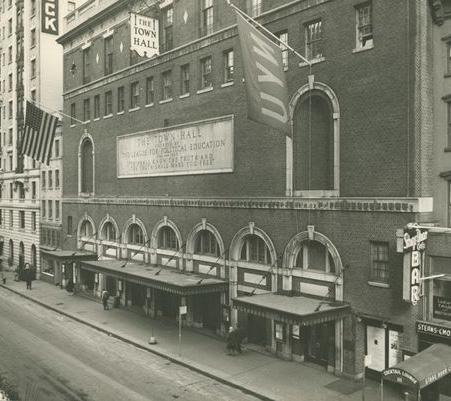
The Town Hall was built in 1921 by the League for Political Education, a suffragist group who believed in the power of education, and that informed citizens were responsible citizens. Originally intended as a speaker’s hall, The Town Hall offered courses and lectures to the public. Notables who spoke at Town Hall included Pearl Buck , Theodore Roosevelt , Langston Hughes , Woodrow Wilson , Henry James , Anne O’Hare McCormick , Thomas Mann , Booker T. Washington , William Butler Yeats , Amy Lowell , Margaret Bourke White , William Jennings Bryan , Ellen Terry , Maude Adams , Jane Addams , Rabindranath Tagore , Winston Churchill , John Galsworthy and Maurice Maeterlinck .
The founding tenets of Town Hall-equality and inclusiveness--helped create dozens of cultural and musical landmarks. There were no racial or gender or religious barriers. People of all persuasions were welcomed to the Town Hall and on its stage from the first day it opened. Ninety-seven years of concerts, rallies, readings, debates and discussions have reflected the true diversity and spirit of New York City, because Town Hall opened its doors to everyone.
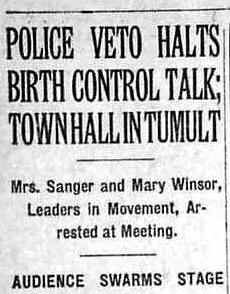
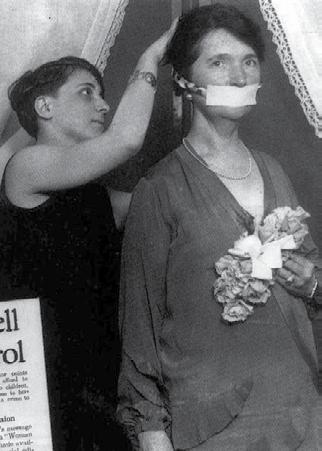
In 1921, Margaret Sanger came to Town Hall to speak to an audience about birth control , a very controversial subject at the time. Town Hall resisted pressure from church and city officials and was one of few venues that welcomed Margaret Sanger. However, her lecture was interrupted by police officers, who hauled Sanger offstage and arrested her. As police led her to the station in handcuffs, the audience followed, singing My Country Tis of Thee. The incident made headlines and brought in big donations for Sanger’s small organization, which years later was renamed Planned Parenthood .
LAURIE ANDERSON
ALL THE THINGS I LOST IN THE FLOOD
sP e C ia L e ve NT i N C ON ju NCT i ON W i T h T he d ebu T OF her Ne W bOO k, All the t hings i lost in the Flood, a s eries OF e ssays ON sTO ries a N d La N guage Thursday, February 15, 2018 IN PARTNERSHIP WITH
THE TOWN HALL
LARRY ZUCKER, Executive Director
M.A. PAPPER, Artistic Director
BILL DEHLING, Technical Director
C ARL A CAMPORA , Production Manager
CINDY BYRAM, Publicity
LEIA-LEE DORAN, Designer
ABOUT THE PROGRAM
“The world is made of stories, and as stories escalate and get shorter and shorter until they’re ten word tweets and as our sense of reality continues to shred, we see that this is not a political situation, it’s an existential one.
- LAURIE ANDERSON
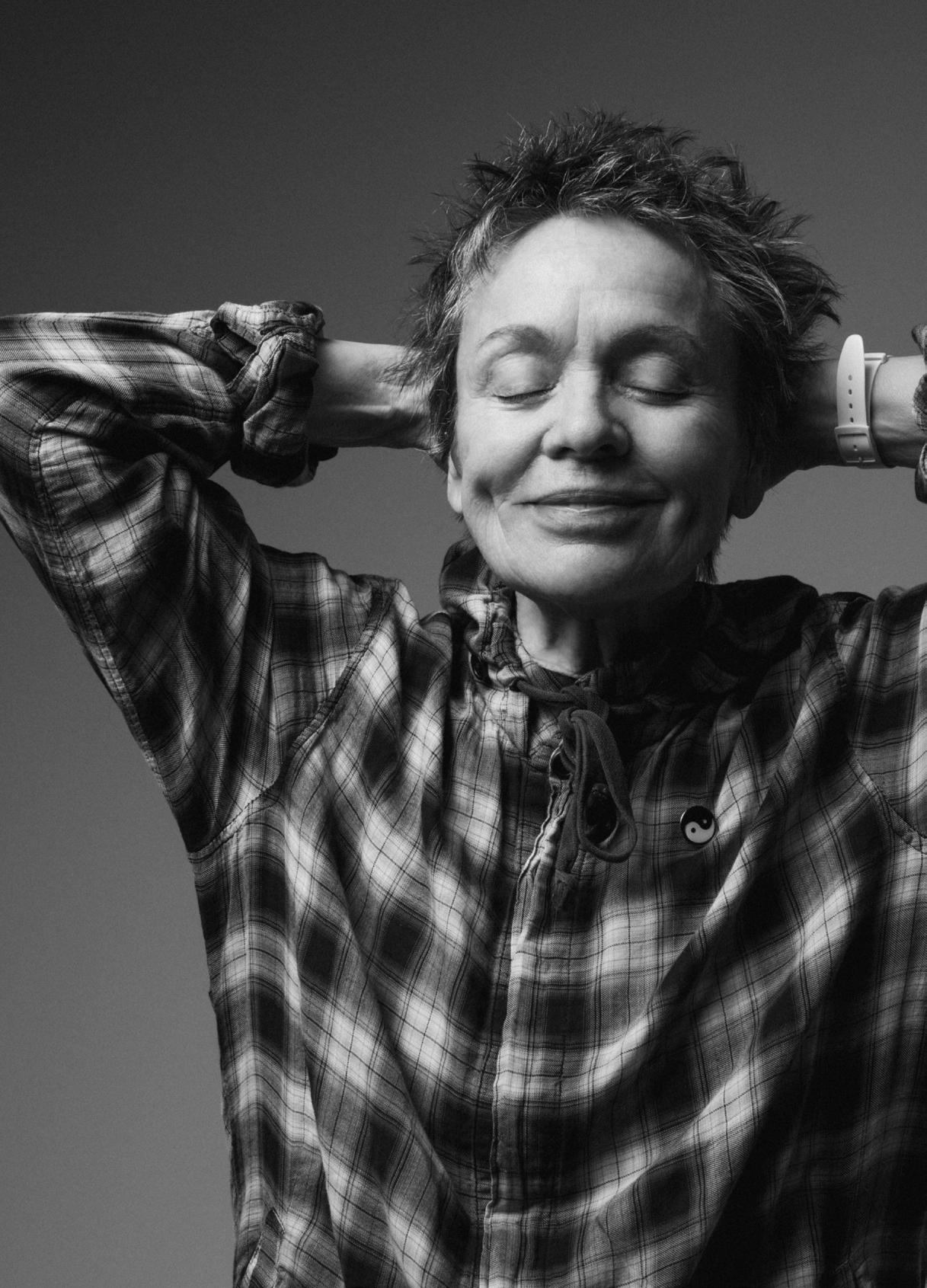
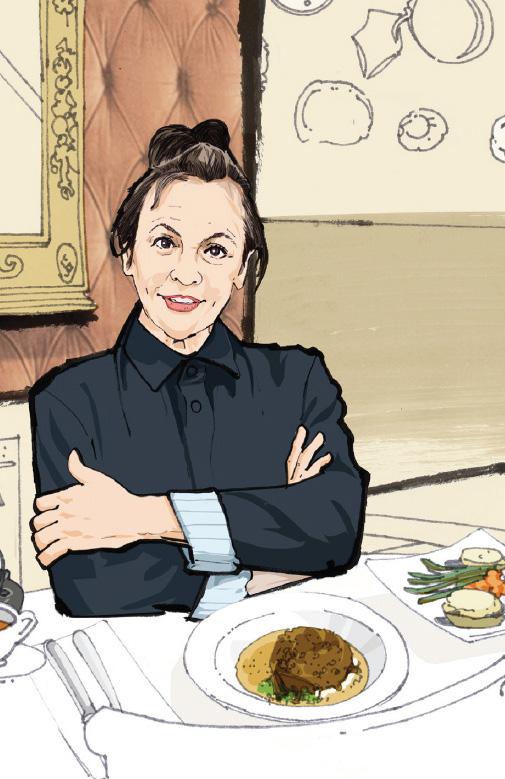
Laurie Anderson’s new book All the Things I Lost in the Flood is a series of essays about stories and language. The show, a celebration of the publication of the book will include visual images - many of them previously unpublished - as well as intimate performances with commentary of some of her iconic work with voice, electronics, codes, narrative styles and digital language. The evening also includes behind-the-scenes accounts of many of Anderson’s projects, operas, installations and inventions as well as an inside look at the artist’s methods, strategies, failures and Plan B’s. A book about performance comes to life again as a performance.
Says Anderson: “This book is about language in live performances, the difference between spoken and written words; the influence of the audience; the use of first-, second-, and third- person voices; metaphor; politicsas-stories; codes; the difference between language in stories, dreams and songs; misunderstandings and new meanings.
This book is also about books. In many of my films, stories, and songs there is a book
in the middle. Sometimes it’s right there in the title like Songs and Stories for Moby Dick and sometimes it hides in the center or shapes the overall style or structure. Crime and Punishment , Moby Dick , The Tibetan Book of the Dead and the Bible are among the books that show up in my work.”
The performance at the Town Hall on February 15th will weave together all the elements of Anderson’s life and work at the intersection of art and technology.
An icon of performance art and the indiemusic world, Anderson has at last written the first book on her full career to date. She is one of the most revered artists working today, as prolific as she is inventive. She is a musician, performance artist, composer, fiction writer, and filmmaker (her most recent foray, Heart of a Dog , was lauded as an “experimental marvel” by The Los Angeles Times). Anderson moves seamlessly between the music world and the fine-art world while maintaining her stronghold in both. A true polymath, her interest in new media made her an early pioneer of harnessing technology for artistic purposes long before the technology boom of the last ten years. Regardless of the medium, however, it is exploration of language (and how it seeps into the image) and storytelling that is her métier.
As John Leland recently noted in The New York Times , “After 40 years, still, no one tells stories like Laurie Anderson.”
Anderson’s prior appearance at The Town Hall in February of last year, an improvisational debut with bassist Christian McBride and cellist Rubin Khodeli, was named one of the Top Ten Jazz Concerts of 2017 by The New York Times .
Copies of All the Things I lost in the Flood are available for purchase in the Town Hall lobby. Presented in partnership with Strand Books.
“This book is about language in live performances, the difference between spoken and written words; the influence of the audience; the use of first-, second-, and third person voices; metaphor; politics-as stories; codes; the difference between language in stories, dreams and songs; misunderstandings and new meanings...” the space telescope in baltimore
One of the most beautiful images I’ve ever seen was on the front page of The New York Times and it was a picture of huge towers of cumulus clouds with bright spikes of light jutting out. And what looked like the sky was pink and pale baby blue. And the caption was “Stars being born in outer space.”
During the residency ( at NASA) I spent some time at Hubble Space Headquarters and I got to talk to the people who were interpreting the data from the telescope and then making images from these numbers.
And I said, “Now, are these the actual colors out there? I mean does it really look this pink and blue?”
And at first they said dodgy things like, “ w ell every picture is a kind of interpretation in some ways of course…”
And I said, “But could you have used a whole different color range? Interpreted that baby blue as gray and maybe that pink as brownish purple? I mean how did you arrive at these colors?”
And they said, “ w ell…we thought people would like them.”
And I said, “You thought people would like them? And I’m the one they call the artist-in-residence here? Don’t you know this could really fool people? I mean they might get the wrong idea about what’s going on out there. I mean that looks so perfect! It looks like a Tiepolo painting! It looks exactly like a painting of … of … heaven.”
I should say that although I was the first artist- in-residence at NASA, I was also the last. The AIR program was scuttled in a flurry of cost cutting that erased many of the more experimental programs that didn’t have direct and specific technological or military applications. In addition Congress and NASA are traditionally somewhat competitive with different and unpredictably driven goals.
Since then I’ve been campaigning to revive the program, not for myself but so that other artists can continue to get the opportunity to be part of NASA. I think artists have very different viewpoints than other people, and I think there should be an artist-in-residence in the w hite House, an artist-in-residence in the Supreme Court, an artist-in-residence in Congress. There’s a Department of Defense, a Department of Health and of Education. w hy not a Department of Art?
You
know the reason I really love the stars? It’s that we cannot hur t them. We can’t burn them. We can’t melt them or make them overflow. We can’t flood them. Or blow them up. Or turn them out. But we are reaching for them.
FROM The L A ngu A ge o F T he Fu T ure , 2015
passing the time
One of my favorite books is How to be Idle by Tom Hodgkinson and it’s about work and why we do it. I think it’s an important thing to think about especially if you live in any of the media cities where the first thing people ask when they meet you is, “ w hat do you do?”
I like How to be Idle because the author suggests that if you have a big deadline tomorrow and it’s crucial to furthering your career, why don’t you just take a long nap instead? Or take a walk down to the river or have a beer with a friend? If you’re as addicted to work as I am you start to sputter, “But … but … I’ve got this deadline and it’s so important!” Then he gives you examples. For instance, when you’re sick and living in the social structure of the twentyfirstcentury media workforce, you’re more or less expected to work right through your illness instead of taking the time to be sick and the time to recover. He quotes a British newspaper headline, “Britain loses two hundred million man hours this year to illness!” and he says, “ w ait a second, since when did you owe Britain your man hours and now they’re coming up short and it’s partially your fault because you got sick and missed work?” And he asks, “ w ho are you working for?”
Bir th of Stars, Carina Nebula in Milky w ay Galaxy as captured by Hubble Space Telescope
dedication
I’ve been lucky to have many teachers. This book is dedicated with all my gratitude to some of them—Mingyur Rinpoche, Master Ren Guang Yi, Robert Thurman, Sol Le w itt, and above all my husband the writer, philosopher, musician, comedian and tai chi master Lou Reed. I want to thank them for their deep generosity and for the ways they showed me how to persist, focus, love and work every day.
a day like today
In 1971, I was invited to be in a sculpture exhibition in Rome. It was my first show in Europe so I was very excited. I arrived with the bags of wooden sticks and cans of spray paint I used to make my work and found the warehouse on the outskirts of the city where the exhibition was scheduled to take place. It was dark and all the doors were locked.
I finally found a huge man in a tiny office. I said, “Um… Dove la mostra?…um…the exhibit?” He said, “Davvero…a small delay…okay…okay nothing to worry about.” “Ok…so when…um quando?” “Due settimane…” he said, “two weeks.” I panicked. I couldn’t afford to go back to New York and return. The next day I learned that my sculpture teacher Sol Le w itt had just arrived. They hadn’t told him about the delay either. w e were stranded. Sol said, “ w ell, this is wonderful! Let’s just teach ourselves Rome. w e can walk to a different part of the city every day and explore.” For almost two weeks we wandered through the city with no maps and no plans, stopping for lunch or finding our way into buildings that looked interesting. It was November—cold and drizzling—and the museums and restaurants were empty. So we also saw a huge number of paintings and sculptures from every era.
One late rainy afternoon we turned into a small piazza. Standing in the middle was an artist. He wore a smock and a beret and stood in front of an easel that held a painting streaked with rain. w ith one hand, he balanced a palette loaded with piles of paint. w ith his other hand, he held a palette knife which he was waving around gently like a baton. He was squinting and moving his thumb back and forth. I was about to make a remark full of the smug self-importance of the New York art world when Sol said, “You know, it really takes dedication to paint on a day like today.”
LANDFALL
“Riveting, gorgeous” WASHINGTON POST
“Contemporary Album of the Month” GUARDIAN
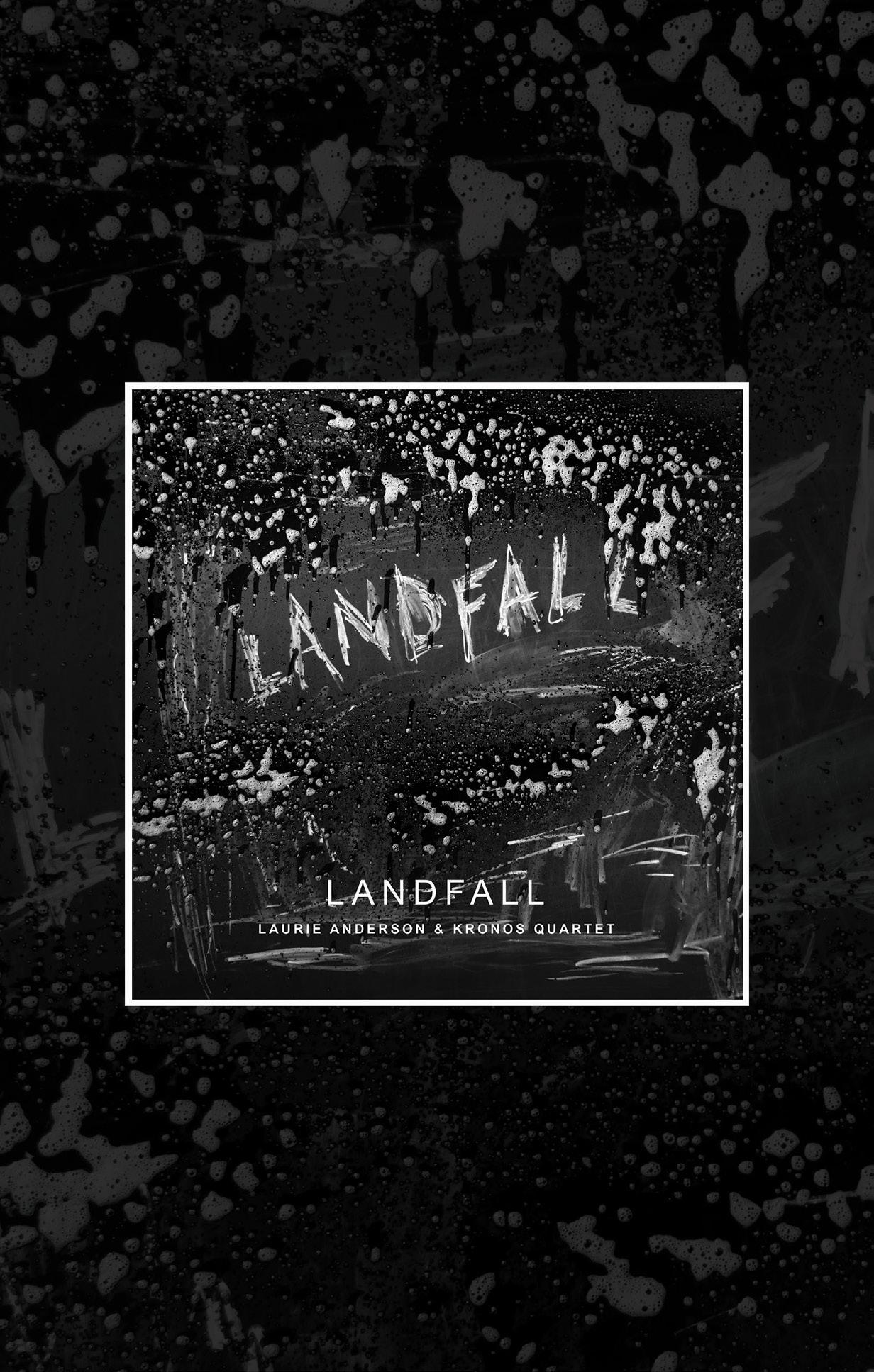
Landfall is inspired by Laurie Anderson’s experience of Hurricane Sandy and is the first collaboration between the iconic storyteller/ musician and the groundbreaking Kronos Quartet, who perform together on the recording. Anderson also releases a new book this month, All the Things I Lost in the Flood, published by Rizzoli.
SUSTAINING MEMBERS
Mr. & Mrs. Louis Aidala*
Sofia Annunziata
Sylvia Atkins**
Phyllis Barasch**
Justine Barrett
Lori Benton
Howard Berman**
Jane Bram*
Patricia Brown & Steve Rifkind*
Collin Burns*
Ralph Buultjens**
Alexander & Karen Callender*
Elinor & Ian Ceresney*
Leona Chanin**
Dr. Stuart Chassen*
Gloria & Irwin Cohen*
Penny & Marvin Cohen*
William Costigan
Trina DasGupta*
Shauna Denkensohn*
Sharon Dunn & Harvey Zirofsky
Robert Dwyer
Betty W. Ellerin*
Robert E. Evanson*
Scott Evenbeck**
Hazel & Russel Fershleiser**
Caryl Field
Carol Foti
Dr. Charlotte Frank & Marvin Leffler**
Matthew Frank**
Michael & Anne Frank-Shapiro*
Adrienne Frosch*
Goldfarb & Fleece**
Dori Fromer & Harley Frank*
Fross Zelnick Lehrman & Zissu, PC**
David Fuchs*
*$500-999 **$1,000 +
Carmen Gaito
Yvette Geary & Robert Astrowsky*
Kathleen Germann
Michele Gerstel
Matthew Ginsburg*
Goldfarb & Fleece**
Barbara Gottlieb*
Patricia Green**
Agnes Gund**
Fran & Richard Habib*
Jill & Martin Handelsman*
Priscilla H. Hoffman*
Sandy & Alfred Horowitz*
Fern Hurst & Peter Rubin**
Anne Marie Iannizzi*
Dr. Elizabeth Iannizzi**
Adam Idleberg*
Stephen C. Jacobs**
Henry Johansson*
Robert Kaufman*
Patti Kenner**
Eric Krasnoff*
Paul Kronish*
John Kuehn
Jacqueline & Bruce Leffler**
Karin & Marc Leffler*
Ivy Beth Lewis, The IV Fund**
Daniel R. Lewis**
Jay L & Robin K. Lewis**
Paul & Florence Rowe Libin**
Erica & Paul Linthorst*
Local One, IATSE*
Arthur Loeb Foundation*
Colleen Lynch
Carol Marks & Tom Wirtshafter**
Karl Marquardt
Pamela Milam*
Paul Miles**
Andrew Miltenberg**
Nobuko Narita*
Dorinda J. Oliver**
Catherine Patterson
Catherine Randolph*
Rita Robbins**
Elaine Roman
Rhoda Rothkopf*
Kathleen Rosenberg**
Zita Rosenthal*
Lynda & Robert Safron**
Reshma Saujani
Roberta Schechter*
Roberta Schleicher*
Howard Schliff
Patricia M. & Brian T. Shea**
Victor & Susan Shedlin**
Sumana Setty
Constance Silver*
Shamina Singh*
Kimberly Smith
Madhu Southworth*
Paige Price & Nevin Steinberg**
Judy & Michael Steinhardt**
Sudeepta Varma
Larry Unger**
Daniel Wacks
George Wein*
Weston Wellington*
Nancy Whitson-Rubin
Christine Williams
Matt Howard & Melissa Wohlgemuth*
Robert F. Wright**
John Zapolski*
David Zaza
Zegar Family Foundation**
Susan Zohn* By
MAJOR GIFTS, CORPORATE, FOUNDATION & GOVERNMENT SUPPORT
This program is supported, in part, by public funds from The New York City Department of Cultural Affairs in partnership with The City Council. We would like to thank the following foundations, corporations, and government institutions for their support:
Acción Cultural Española
The Achelis and Bodman Foundation
The Actors Fund
Affiliated Advisors
Bank of America
Bruce Weber and Nan Bush Foundation
Cohn Foundation
Consolidated Edison Company of New York
Council Member Daniel Garodnick
Daryl and Steven Roth Foundation
Robert Evanson
Ford Foundation
Dr. Charlotte K. Frank
Garber Atlas Fries & Associates
Anne and Gordon Getty Foundation
John Gore/Key Brand Entertainment
William T. Grant Foundation
The Hearst Foundations, Inc.
The Hurst Foundation
Israel Consulate
Jewish Communal Fund
JP Morgan Chase
Jujamcyn Theaters
Edythe Kenner Foundation
Lewis QVC Trust
Local One
S&P Global
Mex-Am Cultural Foundation
Morgan Stanley
Nederlander Organization
Nelson Foundation
Nesenoff & Miltenberg, LLP
New York City Department of Cultural Affairs in Partnership with the City Council
New York State Council on the Arts
Henry Nias Foundation
Office of the President, Borough of Manhattan, Gale A. Brewer
The Pinkerton Foundation
The Reed Foundation
Pamela and Richard Rubinstein Foundation
Pricewaterhouse Cooper
The Rudin Foundation
The Shubert Foundation
The Shubert Organization, Inc.
Theatre Refreshments
Ticketmaster
Laurie M. Tisch Illumination Fund
Joyce and George Wein Foundation, Inc.
Wenner Foundation
Zegar Family Foundation
Town Hall has played an integral part in the electrifying cultural fabric of New York City for more than 90 years. A group of Suffragists’ fight for the 19th Amendment led them to build a meeting space to educate people on the important issues of the day. During its construction, the 19th Amendment was passed, and on January 12, 1921 The Town Hall opened its doors and took on a double meaning: as a symbol of the victory sought by its founders, and as a spark for a new, more optimistic climate. In 1921, German composer Richard Strauss performed a series of concerts that cemented the Hall’s reputation as an ideal venue for musical performances. Since, Town Hall has been home to countless musical milestones: The US debuts of Strauss, and Isaac Stern; Marian Anderson’s first New York recital; in 1945, Dizzy Gillespie and Charlie Parker introduced bebop to the world; Bob Dylan’s first major concert in ‘63; and much much more.
Learn more. Visit thetownhall.org/tours
THE TOWN HALL FOUNDATION
The Town Hall’s mission is to provide affordable world-class entertainment by new and established artists to a diverse audience; to inspire the youth of our community to appreciate and participate in the arts at The Town Hall and in schools through our Educational Outreach Program; and to preserve and enhance The Town Hall as a historic landmark venue for the enjoyment and cultural enrichment of generations to come.
BOARD OF TRUSTEES
President
Tom M. Wirtshafter
President Emeritus
Marvin Leffler
Executive Vice President
Susan Zohn
TRUSTEES
Phyllis Putter Barasch
Robert E. Evanson
Anne Frank-Shapiro
Alfred H. Horowitz
Stephen C. Jacobs
Henry Johansson
Ted Lambert
Bruce S. Leffler
Marvin Leffler
Andrew T. Miltenberg
Rita Robbins
Madhu Southworth
Nevin Steinberg
Tom Wirtshafter
Susan Zohn
LIFE TRUSTEES
Leona Chanin
Eugene J.T. Flanagan
Claire G. Miller
Robert F. Wright
THE TOWN HALL STAFF
Executive Director
Lawrence C. Zucker
Artistic Director
M.A. Papper
Director of Administration,
Subscriptions & Membership
Helen Morris
Director of Development
Jacqueline Maddox
Director of Education and Community Outreach
Emma Klauber
Publicist
Cindy Byram
Publicist, Broadway by the Year®
Sam Morris
Digital Media Manager
Alex Koveos
Vice President
Alfred H. Horowitz
Vice President
Bruce S. Leffler
Treasurer
Andrew T. Miltenberg
Secretary
Phyllis Putter Barasch
ADVISORY COUNCIL
Kathleen Rosenberg, Chair
Nancy Berman
Shauna Denkensohn
Sandy Horowitz
Fern Hurst
Elizabeth Iannizzi
Claire Miller
Zita Rosenthal
Rhoda Rothkopf
ARTS IN EDUCATION
ADVISORY COUNCIL
Dr. Charlotte K. Frank, Chair
Michael Fram
Dr. Sharon Dunn
Gary Hecht
Ernest Logan
Dr. Lisa Mars
Dr. Eloise Messineo
Dr. Pola Rosen
Leona Shapiro
Manuel Urena
George Young
Program Manager
Sara Minisquero
Administrative Assistant
Britni Montalbano
Chief Engineer
Steve Franqui
Box Office Manager
Angel Rodriguez
House Manager
Richard Looney
Technical Director
Bill Dehling
Art & Design
Leia-lee Doran
WARNING
The photographing or sound recording of any performance or the possession of any device for such photographing or sound recording inside the theatre without the written permission of the management is prohibited by law. Violators may be punished by ejection and violations may render the offender liable for monetary damages.
FIRE NOTICE
The exit indicated by a red light and sign nearest to the seat you occupy is the shortest route to the street. In the event of fire or other emergency please do not run, WALK TO THAT EXIT. Thoughtless persons annoy patrons and endanger the safety of others by lighting matches or smoking in prohibited areas during the performances and intermissions. This violates a city ordinance and is punishable by law.
DIRECTORY OF THEATRE
ADMINISTRATIVE OFFICES: 212.997.1003
Mon-Fri 9:30 am to 5 pm, for rental & membership info BOX OFFICE: 212.840.2824
Mon-Sat 12 noon to 6pm. 24/7 Recording
TICKETMASTER: 800.982.2787 to charge tickets by phone.online Ticketmaster.com
LOST AND FOUND: 212.997.0113
CELL PHONE POLICY
Cell phones should be silenced prior to the performance as a courtesy to the performers and audience.
Lobby Refreshment by Theatre Refreshment Company of NY