









The Emergency -
A Walk Through The Tenters A Collection of Essays
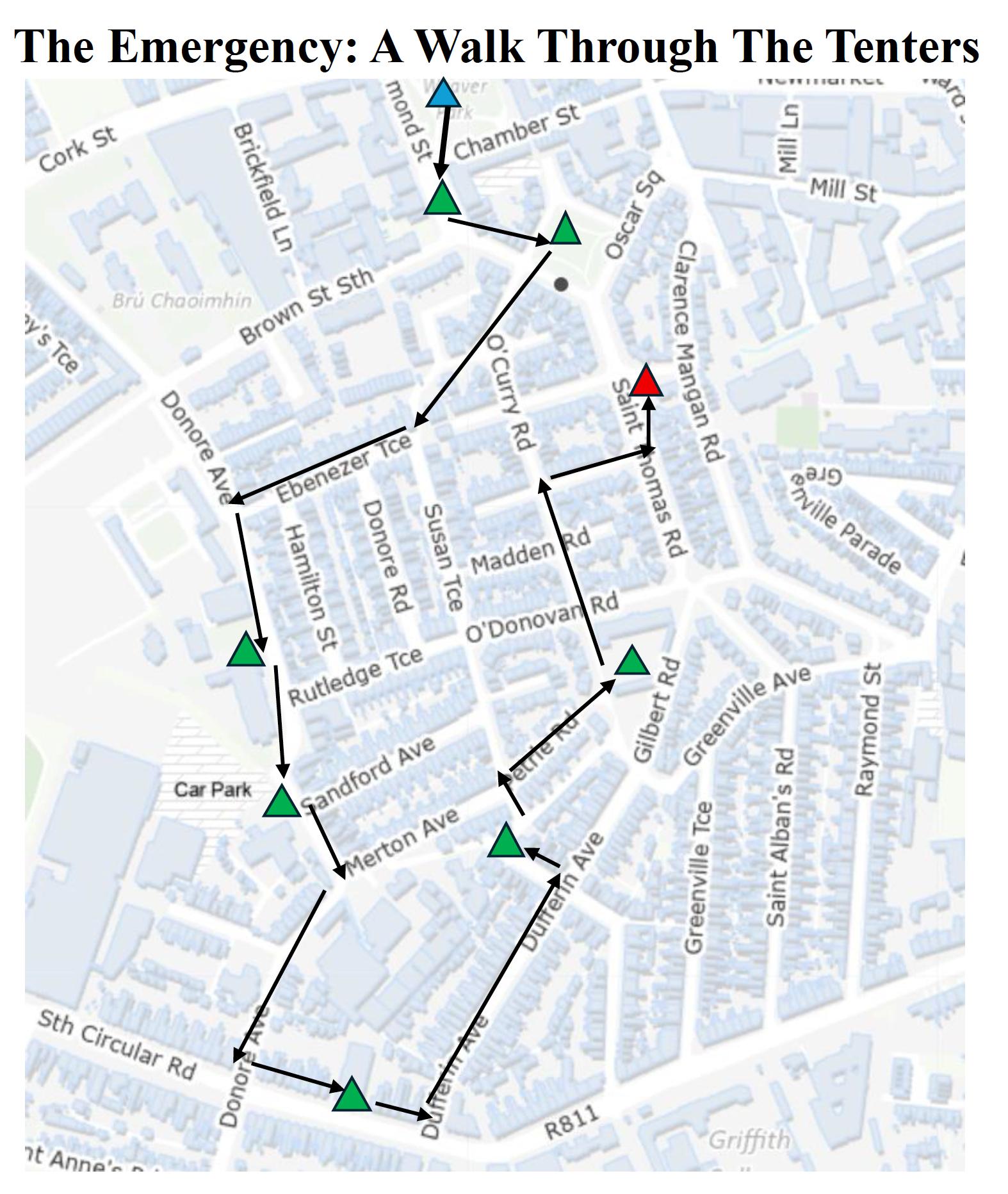
Walking Tour Route
The Emergency -
A Walk Through The Tenters A Collection of Essays
Walking Tour Route
The Tenters Celebrated Heritage Group is composed of people with a connection to The Tenters people who have lived or worked in the Tenters in the past or in the present, or those with an interest in its history and heritage.
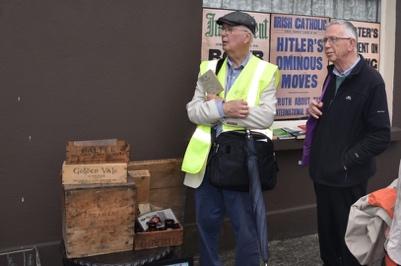
We conduct guided Walking Tours of The Tenters neighbourhood for the public throughout the year including the one that inspired this booklet: ‘The Emergency, A Walk through the Tenters’.
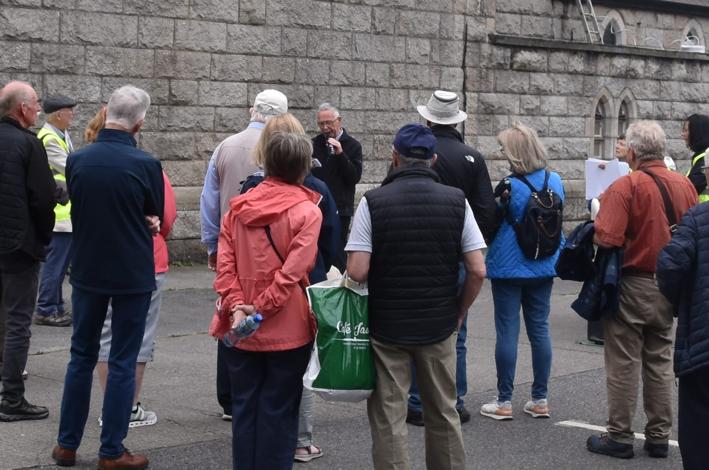
The Group meets weekly each Thursday morning at 11 am.
Among our many projects is our annual Bloomsday event which takes place in June.
If you would like to get more information, please contact us.
If you have any stories about the Tenters you would like to share, please contact us.

© Copyright 2026 by The Tenters Celebrated Heritage Group. All rights reserved.
Who are we?
We are a group whose genesis comes from the Tenters 100 Year celebrations a few years back, when people from the area marked the one hundredth anniversary of the development of the housing estate now known as The Tenters but formerly called Fairbrother`s Fields Estate. It will not come as a surprise that back then there was also a housing crisis. Little changes in this world. We are made up of members who live in The Tenters and surrounding neighbourhoods and who are dedicated to preserving the local history of the area. We want to capture the social experience of people who have lived here over the last century. We have three members who can trace their ancestry back to the first occupants of the houses, which is unusual in that it was a tenant purchase scheme.
DCC Conservation Department specially commissioned a short documentary telling the story of The Tenters. ‘Fairbrother's Fields, The Tenters’ can be viewed on Dublin City Council’s YouTube channel. Fairbrother’s Fields was the first housing estate to be constructed in the new Irish Free State (Saorstát Éireann). During the last century, people lived through some very difficult times. The Civil War was still ongoing at the start of the construction, which left a lasting legacy of bitterness. People then had to deal with the Economic War of the 1930s, the mass emigration of the 1950`s, and sadly the drug crisis of the 1980s. The people of the area also had to endure hardships and suffering during The Emergency years (1939- 1945) aka World War II.
We have already published two booklets dealing with the lived experience of various folk who have called this part of Dublin home at some time or other. To request soft copies of these booklets, please email tenters.tales@gmail.com.
So why did we choose this subject for this booklet?
We chose this topic because we wanted to share stories, facts, and memories relating to a Walking Tour we conducted several times during 2025 –‘The Emergency, A Walk through The Tenters.’
Many of the current Tenters’ residents may be unaware of the effects WWII known as The Emergency Years in Ireland had on this area.
They may also be unaware that some of their neighbours still have memories of life during that time, and these life experiences are a precious reminder of times gone by. Our Tenters neighbourhood is layered in a shared history and we feel our sense of comm enriched when life experiences such as these are shared.
The publication of this 3rd booklet was made possible by a grant from Guinness Dublin 8 Community Fund at Community Foundation Ireland. This generous funding covered the printing of 1000 copies which will now be made available free of charge and delivered to homes in the local area.
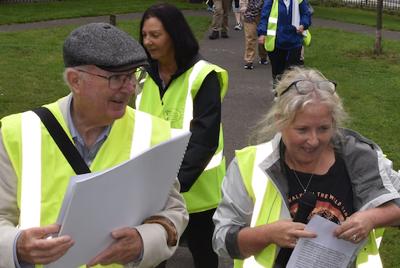
We would always encourage our neighbours and that includes those who have recently moved into The Tenters area, to share their experience and stories of life here. If you have a story to share, we would love for you to make contact.
The Tenters Celebrated Heritage Group meet locally once a week and always welcome new members. Whether you live here presently or have lived or worked here in the past, or have any experience of The Tenters area would be ample reason to join us.
To know more, please email tenters.tales@gmail.com or phone 0876908003 (Tues-Thurs 9:30 am till 11 am).
We hope you enjoy this short essays booklet.

Maria O’Reilly Chairperson
The Tenters Celebrated Heritage Group
By Padraig Turley and Maria O’Reilly
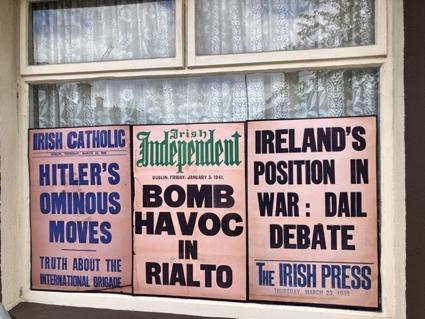
‘The Emergency’. That will sound very quaint to younger folk today. What was it and how did it come about? In political terms the name was a euphemism, a title given to what is known as World War II here in Ireland. ‘The Emergency’ was proclaimed by Dáil Éireann on the 2nd September 1939. The following day the Emergency Powers Act 1939 was passed. In fact the Government banned food hoarding on 31st August 1939, as what was called the ‘phoney war’ had been shuffling along for a while. Neville Chamberlain`s ‘peace for our time’ had proved to be an illusion.
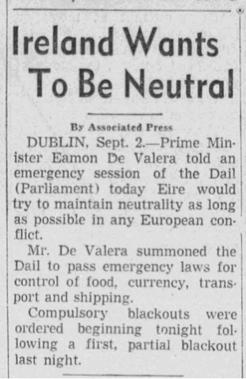
There was a lot of sympathy here for Germany, which resulted from the War of Independence a mere twenty years earlier. As the ancient proverb goes ‘The enemy of my enemy is my friend’. As a result there was a lot of anti-British feeling about, and Éamonn DeValera was concerned there would be an insurgency if Ireland sided with the British.
The IRA mounted a sabotage bombing campaign in England, their Army Council declared war on Britain in 1938 viewing it as an occupying power in Northern Ireland. Designed by Seán Russell, and known as the S-Plan, its target was economic and military infrastructure in Britain. It was to last from January 1939 until March 1940, with a few isolated incidents through 1941. Bombs were detonated in London, Birmingham, Liverpool and Manchester. The most notorious attack was on 25th August 1939, when a bomb in Coventry killed five people and injured fifty provoking outrage. In response six IRA men were executed in Britain while five were executed by Firing squad in Ireland.
The thirties, known colloquially as the hungry thirties, had been a tough time in Ireland. We had the Economic War with Britain over our refusal to pay annuities as required under the Anglo-Irish agreement, which caused a lot of resentment here especially with the farming community.
In the 1939 New York World’s Fair, there had been a bit of a disagreement between Britain and Ireland, as the British wanted Ireland to appear under the banner of the British empire. De Valera said he would not attend under these circumstances: “Our aim will not to be an advertisement of goods we desire to sell, rather our aim will be to give you who have taken a practical interest in our struggle for freedom an idea of how the freedom which has been won has fructified in the developments of our national life, in our political institutions, in our national economy and in our social services.” Frank Aitken, the Minister for Co-ordination of Defensive Measures, said that if Ireland were to join the war, they would have to fight a civil war first to decide which side they were going to join.
At the end of the War during V.E. Day celebrations, a commotion occurred outside Trinity College. Traditionally supportive of Britain, some Trinity students climbed on to the roof of the college and ran up the British, Soviet, Free French, and Irish flags on the flagpole. Censored reports explained that bystanders (including future Taoiseach Charles Haughey) took exception to the positioning of the Éire flag at the bottom. A riot ensued as students appeared to burn the flag, though the burning was suppressed in reports. There were cheers and catcalls from various elements of the crowd as youths attempted to snatch emblems from the coat lapels of some passers-by. After censorship was lifted, the Cork Examiner described the emblems as swastika badges, but that they may have been Aiséirí symbols. Aiséirí was a minor radical nationalist and fascist political party in Ireland at the time.
As can be seen, the political scene in Éire was most unsettled and it would have been difficult for an Irish Government to enter the war. This caused a lot of difficulties for the Government of Éamonn de Valera with Churchill and the U.S. Ambassador David Gray who took particular exception to Irish neutrality.
By Maria O’Reilly
During “The Emergency” years, even though we remained a neutral country, public bomb shelters were either built above ground or underground here in Ireland. While there were many public bomb shelters built across Dublin City, at least four bomb shelters were built within the immediate Tenters area. Overground shelters were located in the Weaver Square area and one outside the premises of McHenry`s Brothers Coal Merchants at the junction of Blackpitts and Clarence Mangan Road. Two underground shelters were located in Oscar Square park.
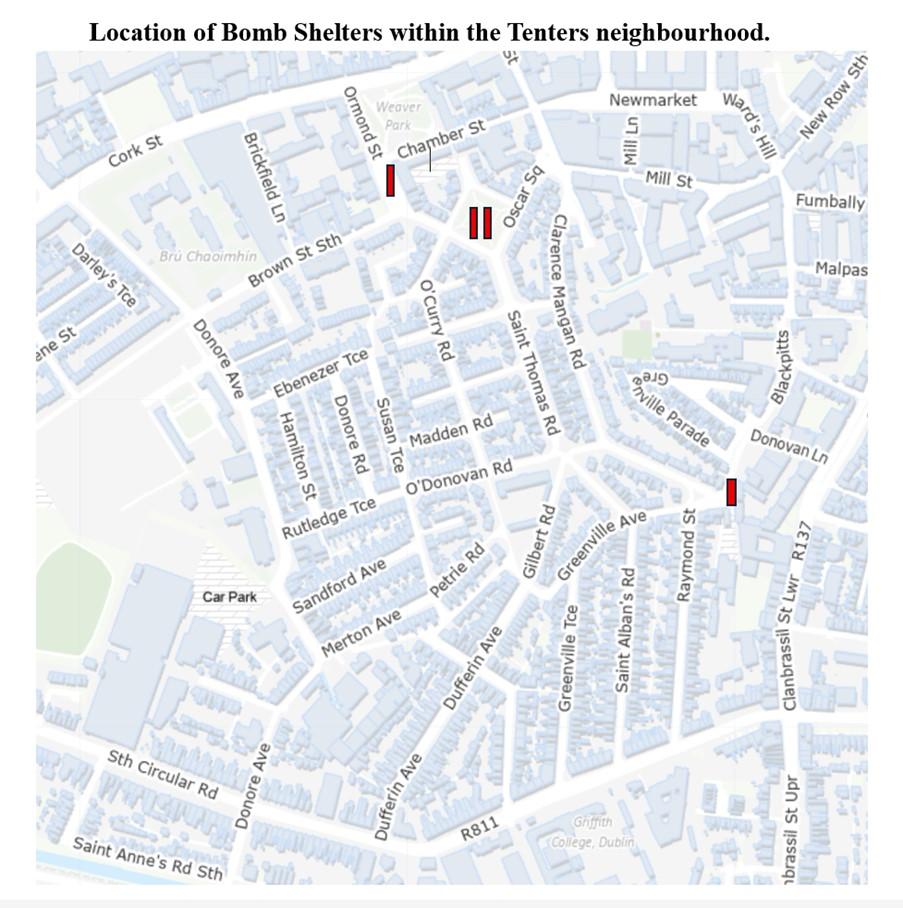
Thankfully, even with the 1941 bombing of nearby Donore Terrace which happened during the night, they never had to be used for their intended purpose.
In 2000, Jack Doyle who lived on Donore Terrace, is quoted as saying that the shelters were quite big, the size of two or three rooms. He recalled they were never actually used, but became a hangout for boys in the area after the war, until they became too unsavoury even for boys to use, so they were eventually abandoned and finally demolished. Ý
Ý“The Bombing of Dolphin's Barn, Dublin, 1941”, Four Courts Press - Eoin C. Bairéad 2010.
Local resident Rita Gill (née Mullen) who still lives in the home she grew up in on O’Curry Road, remembers well the air-raid shelters as places she and her young girl pals never visited.
“They were smelly places as the boys used them for convenience rather than having to run home and stop playing when they needed to use the loo. You’d have to hold your nose when you passed by as the whiff coming from them would knock you sideways”.
In the 1950s public overground bomb shelters were demolished with underground shelters filled in.
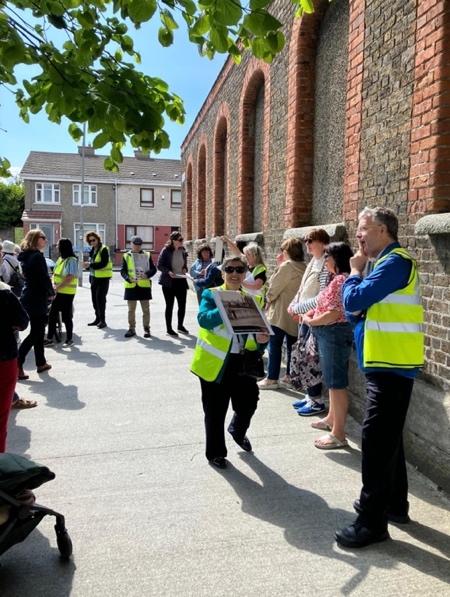
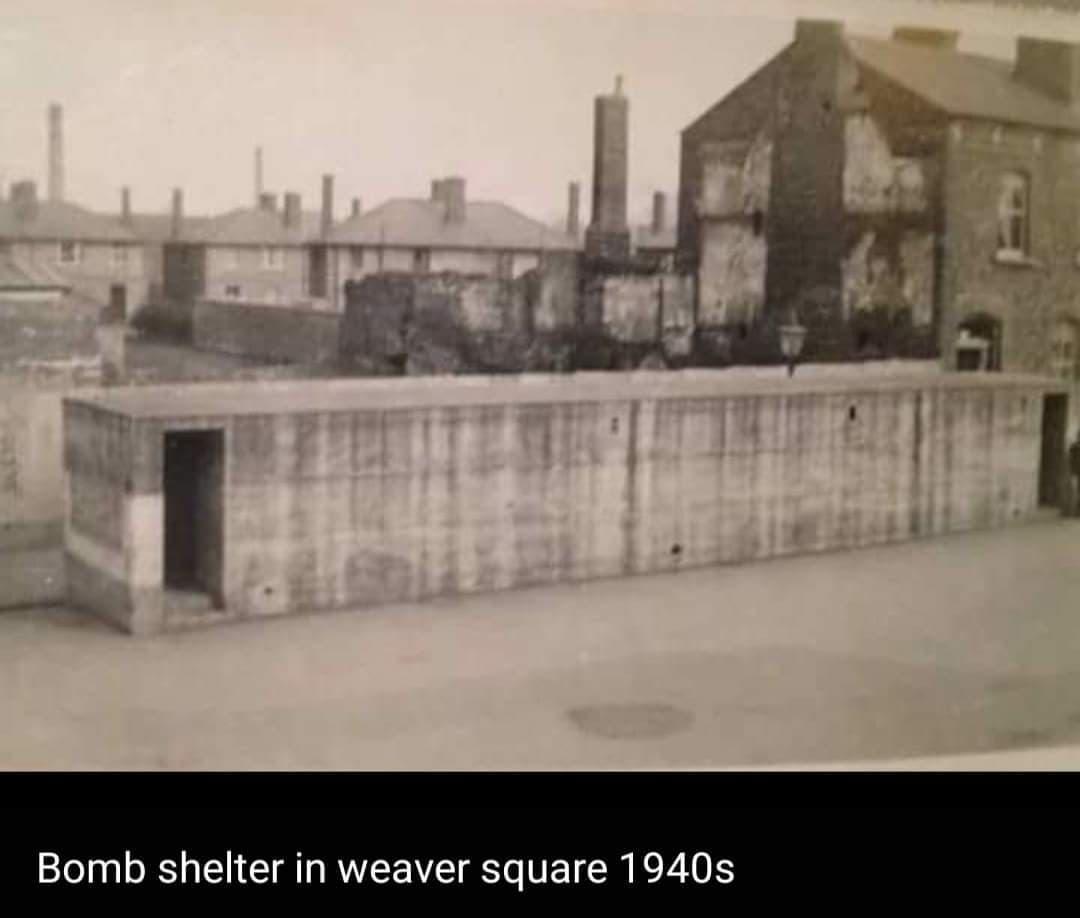
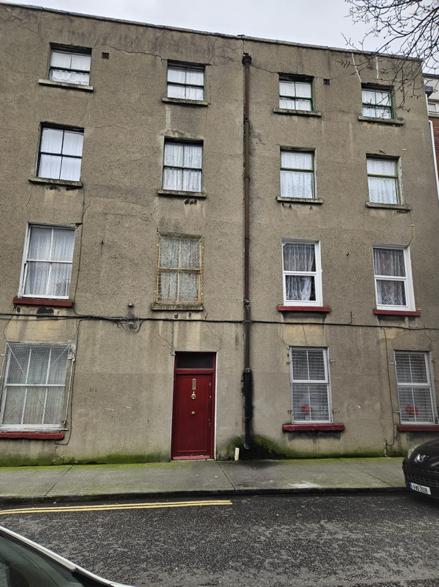
Around the corner from the Weaver Square bomb shelter sits the last surviving tenement house on South Brown Street, number 3, which would have witnessed life here during the The Emergency.
By Pádraig Turley
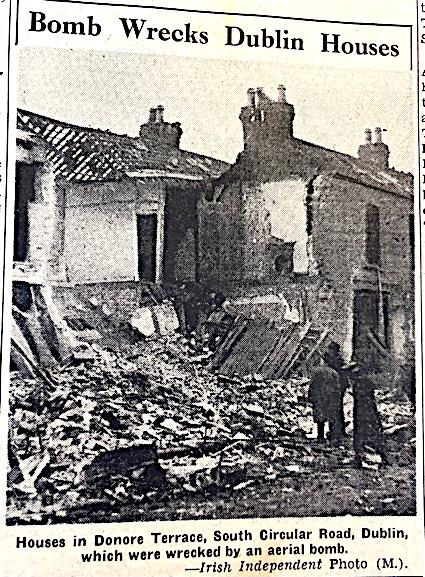
When one mentions the Dublin Bombings during The Emergency, you are invariably met with, `oh the North Strand`. One rarely hears of the Donore Terrace bombings, probably because there was no loss of life.
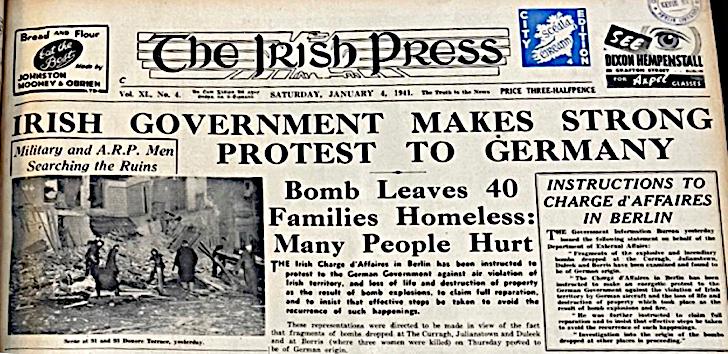
Donore Terrace is that portion of the South Circular Road from what is today the Dublin Mosque to the Donore Avenue junction. The bombs were dropped here by the German Luftwaffe on the 3rd January 1941 at 3.55 a.m.
Two houses were destroyed. Twenty persons were injured. The two houses now numbered 169 and 171 South Circular Road were demolished.
This bombing was not an isolated incident. On the previous day, German bombs were dropped in Terenure, while on December 21, 1940 bombs were dropped at Sandycove near the train station and on Shantonagh, Carrickmacross in Co. Monaghan. The previous August, German bombs were also dropped on Campile, County Wexford. The North Strand bombings happened the following May 31,, 1941.
In the pre social media age, we can report that conspiracy theories were alive and well back then.
The fact that the Synagogue was damaged in the raids, as well as Terenure, an area with a Jewish population, gave rise to talk that Hitler was targeting the Jews.
This seems unlikely as the Jewish population in Ireland never exceeded 8,000.
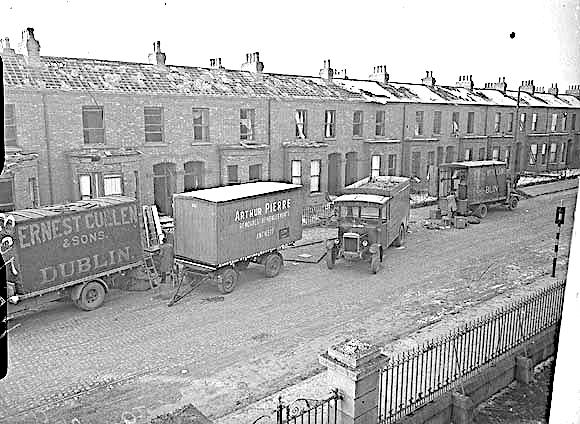
As well as the two houses demolished in the bombing raid, fifty other houses, the Synagogue, and Presbyterian church were also damaged. Twenty persons were injured.
The ARP (Air Raid Precautions)
Post warden was Miss Maureen Whelan, and she had a notebook with details of all those living in the houses. This `census` allowed rescuers to verify that all were accounted for. Her notebook most probably is in The National Archive. GPDR (General Data Protection Regulation) had not yet arrived.
In time, houses were repaired, although it has been said some claims were a tad dubious. For example, there was a claim for an Italian oil painting, but oddly the applicant did not know the title of the work or the name of the artist. Interesting to note these two houses were rebuilt without bay windows
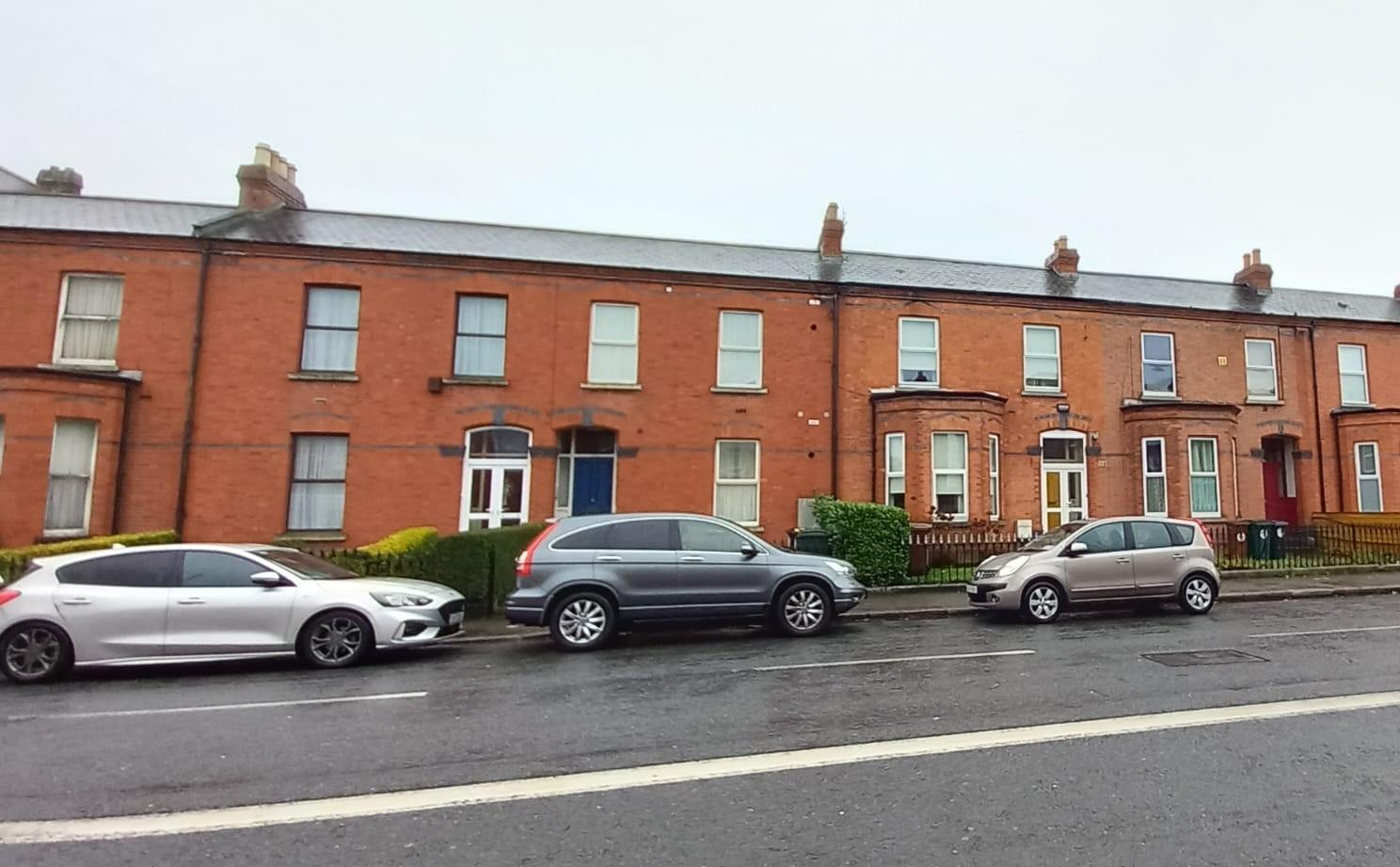
Section of South Circular Road 2026 (known as Donore Terrace in the 1940s) where the bombs were dropped
Hilary Stephens:
While one will find many witness statements in the newspapers of the time, we are including two which we hope will give a little glimpse into the feelings of folks residing in the area.
The following is a statement by a ten year old girl, a Miss Hilary Stephens who lived in 91 Donore Terrace (169 South Circular Road) and had a miraculous escape. Wrapped up in blankets in front of a blazing fire in the home of her grandmother on Donore Avenue, she told the press what happened to her that night:
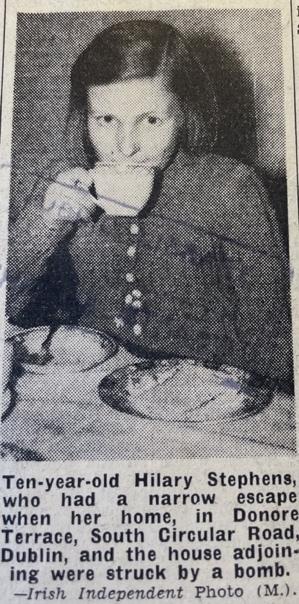
“I was sleeping upstairs with my mammy. A very big bang woke me. I then felt things falling on top of us in the bed. Then my mammy started screaming for help. Then I tried to get up. Big pieces of cement and wood from the ceiling were on top of me. I kicked, and stretching my arms, I found that boards and pieces of wood had fallen around the bed. I felt my way in the darkness and crawled through a hole in the masonry and wood. I felt the bed going down, and we fell through space.
I did not know exactly what it was, but felt a bang on the floor, and the bed with it landed on the first floor. It was then I got through the hole. As I could not get mammy out, I scrambled over stones when I saw a man near me. Just then I saw the girl, Bela Roith, who lived in the house next door, but I could not get to her. The man then lifted me out and I was taken to Dr. T. O`Donnell, St. Margarets, South Circular Road.”
Mr. P.N. Ryan:
This is a statement by a rescuer Mr. P.N. Ryan of 6 Dufferin Avenue. He was a member of the L.S.F. (Local Security Force) and told a newspaper reporter the following:
“I heard a terrific explosion and falling glass. I then heard a `plane` circling around. I got dressed and made my way to the door which had been blown open. On going on to the street I could hear people from windows of different houses call, `I am all right are you?` I then ran up and into the S.C.Rd. Getting to the top of our avenue I saw where there should have been two houses but there was no sight of them. I ran over and saw a woman with a little girl on her knee. They were up where the roof should have been. One end of the floor had subsided and the other end projected into the air. The old lady was sitting on the projected part. The roof and the front of the house were gone. A Guard and another man came along and we climbed over the mass of brickwork and got both down.
On the way down we heard the calls of another young girl who was shouting `Let me out!` I saw she was not in immediate danger and felt that if we touched any of the loosened brickwork she, as well as they might get buried in it. I then heard the sound of a man moaning. Just then two other Guards came along and we climbed over fallen bricks and a wardrobe. We could see the part of a pillow and mattress which was over the man. We got the mattress and some of the debris away, freeing the man`s head and then the man said `thank God for a breath of fresh air`. The man had been in No. 93 Donore Terrace. Meantime the military, the guards, and the fire Brigade arrived.”
Mr. Ryan added that they were sickened by the escaping gas as the main had been burst, and was sticking up out of the ground between the garden and the footpath.
By Maria O’Reilly
A living eye witness, my uncle Michael Mullen recounts his childhood experience of the early morning hours of January 3rd, 1941.
He, along with his three siblings all under the age of ten years of age, were staying with their paternal Grandparents on O’Curry Road. This was because their mother Margaret Mullen had been diagnosed at that time with TB and was in hospital, while their father Jim Mullen was in the Irish Army and stationed in the Curragh Camp in Kildare.
Michael’s younger sister Rita who was only 2 years old then, woke up crying. She was upset and missing their Mother. Wanting to placate her whilst not disturbing anyone else in the house, Michael brought her to the bedroom window as a way of distraction.
While sitting there with his little sister, Michael remembers hearing the low rumbling noise of aircraft flying overhead. Rita became very animated when the aircrafts came into view and pointing upwards excitedly declared “Look, look Michael, there’s buses in the sky!” Michael, even at that young age, knew that these were no flying buses. Newspapers and radio had been carrying reports of the ongoing war. So even though Ireland was a neutral country, every household in the country was on alert because of what was going on in Britain and Europe.
The aeroplanes were flying so low that Michael could easily make out the swastika and iron cross markings on the aircraft. They were German but before he could digest this information and call out to his Grandparents, himself and Rita both heard and then felt the loud explosions as the bombs were being dropped on nearby Donore Terrace.
Needless to say, everyone else in the house experienced the effects of the explosions as did all the neighbours in the Tenters and soon, there was pandemonium. Michael remembers his Grandmother being quite frightened with her running around not quite knowing what to do.
While the bomb shelters in Oscar Square and Weaver Square were easily accessed from O’Curry Road, they didn’t have to go there as before long, the skies cleared of aircraft and word filtered through that Donore Terrace had been the site of the bombing.
Needless to say, that was a night that has stayed in Michael’s memory for all of his life. Rita on the other hand, has no memory of it whatsoever but says she is confident she hasn’t seen a flying bus since…
Below is a photograph of Michael as a young boy taken not long after the bombing. Michael is first left in front row along with his older brother Matt to his right.
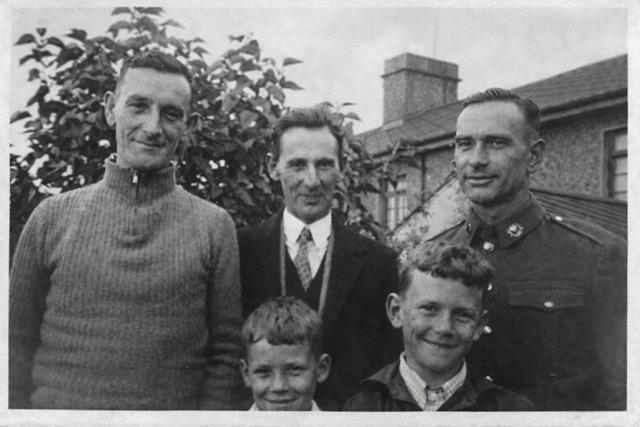
Back row left to right is Michael's uncle Charlie Mullen, next to him is Christy Hines (a cousin), and on the right is Michael's Father, Jim Mullen. He is wearing his Irish Army uniform as he was visiting from the Army Camp in the Curragh.
We only have this photograph because Uncle Charlie was visiting from England and it was he who brought the camera.
Sadly, Michael and Rita’s mother died the following year in 1942. The kids all went to live full time in their grandparent’s house on O'Curry Road as their father was still stationed in the Curragh Camp.
By Pádraig Turley
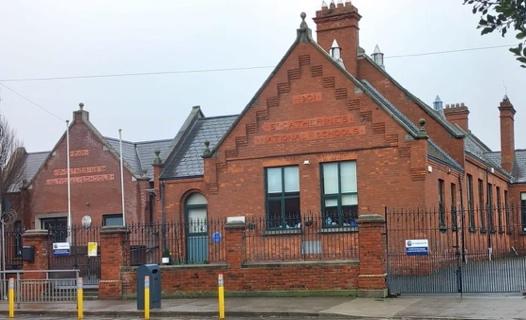
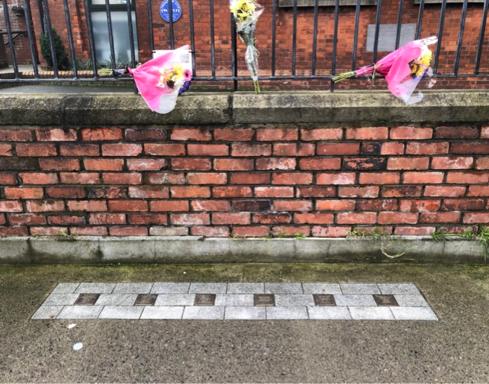
There are over 90,000 such markers in existence around the world, the work of the artist Gunter Deming.
As well as Jews, Stolpersteines mark other Holocaust victims such as homosexuals, Romani, and disabled.
The six people remembered on Donore Avenue are:
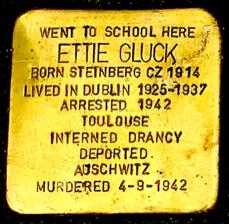
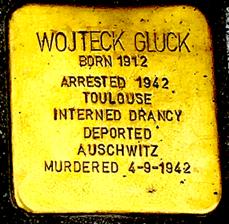
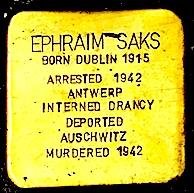
On the Pavement just outside St. Catherine’s National School on Donore Avenue are six embedded brass-topped cobblestones, which are known as Stolpersteine (pronounced stol-per-steen) markers. Stolpersteine is a Hebrew word meaning stumbling block.
Ettie Gluck (née Steinberg) was born in Czechoslovakia in 1914, came to Ireland 1926, and lived in 28 Raymond Terrace. She attended St. Catherine’s school as did her six siblings. She worked as a seamstress and married Wojtech Gluck in 1937.
Wojteck Gluck was originally from Belgium and married Ettie in Greenville Hall Synagogue on the 22nd July 1937. Wojteck was aged 24, a goldsmith, son of Sender Gluck, Grocer. Ettie was 22 years old, daughter of Aaron Hersh Steinberg, merchant. The witnesses were Ella Herman and Sender Weibrib.
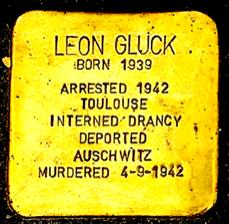
Leon Gluck the son of Ettie and Wojteck was born in 1939. The family moved many times, ending up in Toulouse in 1942 where they were arrested and deported to Auschwitz where they were murdered. Leon was three years old. Tragically, visas had been obtained by the British for them to travel to Northern Ireland, but the visas arrived a mere day late.
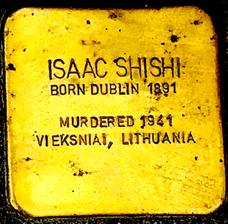
Isaac Shishi was born in Dublin 1891. The family were originally from Lithuania then part of the Russian Empire. They lived on the South Circular Road. In 1941 Isaac Shisi, an Irish citizen, his wife Chan and daughter Sheine were murdered by the Nazis in Vieksenai, Lithuania.
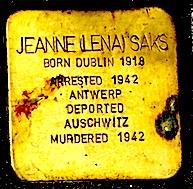
Ephraim Saks and his sister Jeanne (Lena) Saks were both born in Dublin. Ephraim was born in 1915. Jeanne was born in 1918. They lived on St. Alban`s Road during The Emergency. While abroad in Antwerp, Ephraim and Lena Saks were both arrested and deported to Auschwitz where they were murdered.
A very sad story about Ettie Gluck and her family. They were arrested in Toulouse and transported to Drancy transit camp near Paris. On their way to Auschwitz, Ettie managed to write a postcard and throw it from the train. This letter made its way to Dublin and the original is in the Jewish museum. The card reads:
`Uncle Lechen, we did not find, but we found Uncle Tisha B`Av.`
Upon arrival in Auschwitz 4 September 1942, they were murdered in the gas chambers.
Note: Tisha B`Av is the ninth day of the fifth month of the Jewish calendar and is recognised as the saddest day of the Jewish year. It is a day of mourning commemorating the destruction and loss of the first and second Temples in Jerusalem. From the message on the postcard, we can see that Ettie and her family knew their fate.
By Tony Corcoran
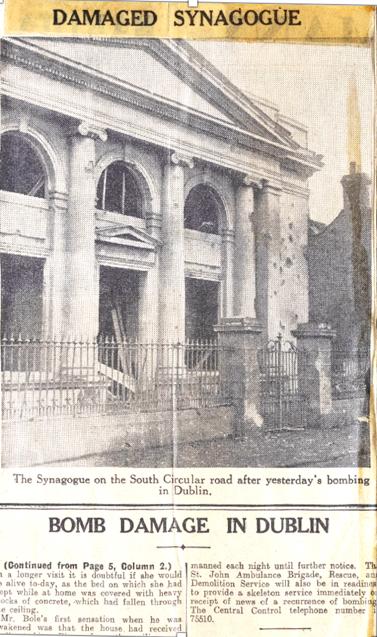
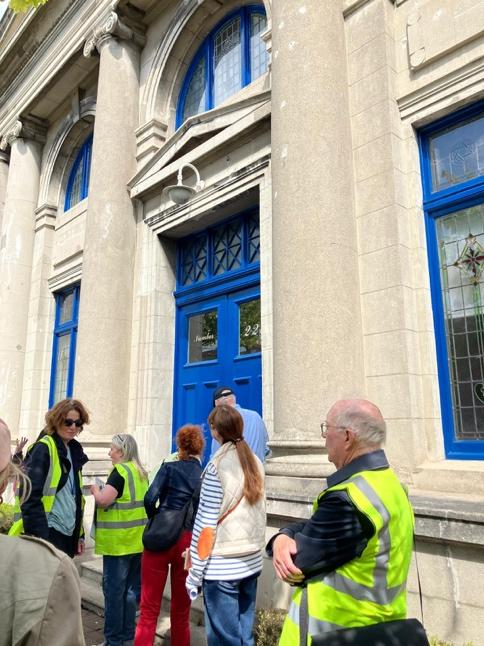
On that fateful night in January 1941 when the houses on Donore Terrace were bombed, there was collateral damage done to the Presbyterian Church (now the Mosque) and, in particular to the Greenville Synagogue (now the Mason Technology building) directly across the road.
To see how it became a synagogue and its location on the borders of what was known as “Little Jerusalem” we must look back to the early 1900s.
Prior to 1900 there was a small Jewish community in Dublin and there were various synagogues within inner-city Dublin, the first one being situated in Crane Lane in the area now known as Temple Bar.
But in the lead-up to 1900, there was an influx of Jewish people into Ireland from Lithuania and the west of Tsarist Russia. Many such Jews settled in the Coombe area with the 1901 census for John Street showing families named Levy, Mirrelson, Ross, Solomon and Venetsky. Occupation-wise they described themselves, some as peddlers, tailors, drapers with a Mr. Sapchenie described as a hat cutter.
However, by 1911, many had migrated to Dufferin Avenue, which is just around the corner from Greenville Hall. Others moved to an area between it and Portobello, with a concentrated Kosher shopping area in Clanbrassil Street. Thus, the area became known as “Little Jerusalem”. These families decided to build their own synagogue, and Greenville House, the precursor of this building was bought in 1913 for 625 pounds. After a community appeal for funds, the community engaged Dublin architect Aubrey Vincent O’Rourke and the new Greenville
Hall Synagogue was built for 5,000 pounds and officially opened in 1925. It became the centre of Jewish life in the area, being within walking distance of most of their homes. While there was also a synagogue on Adelaide Road – it was not supported by this particular cohort of Jews – all of whom had their origins in Russia.
For me, growing up in the Tenters area and my neighbours, we always had cordial relations with the Jewish people of Little Jerusalem. They were good and friendly neighbours – always polite.
Many of the Jewish men who had described themselves as drapers were, in fact, skilled tailors. Many had brought specialist sewing machines all the way from Russia to Dublin. After settling in Little Jerusalem many opened their own clothing companies in Dublin and became employers of many young Dublin people. Companies like Pollikoffs spring to mind.
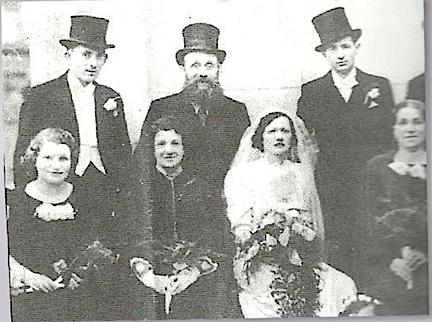
Indeed, it was here, on 22nd July 1937 that the wedding took place of Esther (Ettie) Steinberg and Wojteck Glück, a goldsmith. She was 22 years old and he was an older 24 years. Their address was given as 28 Raymond Terrace, South Circular Road.
Their wedding photograph shows a happy wedding party. Sadly, we know that shortly afterwards they emigrated to Antwerp in Belgium, the centre of Jewish jewellery makers and, later, they moved to Paris. However, little did they know that they would fall into the evil Nazi trap to eliminate Jewish people. The rest is sad history.
By Pádraig Turley
Scoil Treasa opened its doors in 1930.
Following are some extracts from essays written by four notable past pupils that were published in the Scoil Treasa Naofa Golden Jubilee Souvenir Book, 1980. They all attended Scoil Treasa during the late 1930s and early 1940s and shared their memories of The WWII / Emergency years.
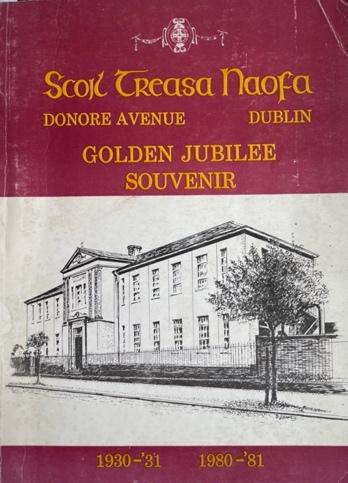
BRENDAN T. NOLAN, former Irish Ambassador to Switzerland attended the school from 1937-1943. He recalls that during the 1930s it was a time of great drill displays, the Brown Shirts, the Black Shirts, and the Hitler Youth being among the most efficient. He recalls the drill instructor in school was a Sergeant O`Neill of the Irish Army.
In September 1939 his school-master Mr. Francis O`Sullivan opened the window of his classroom, the better to hear what was being shouted by the passing newspaper boy. It was the first time and the last time he heard the cry of “Stop Press.” A pupil was dispatched to buy a news sheet. It carried the awful news that war was declared. The teacher read it and then told the class that they were too young to understand, but that war would have ‘serious consequences for us all’. There was a marked preference in those early war days to be ‘for the Germans and against the British, if only to avoid the thumping you would get if you gave the wrong answer when caught. Few pro-British groups emerged. A few years later, bombs from a stray German aircraft fell on Dublin, demolishing two houses on the South Circular Road, a few blocks from the school, games stopped. “We were no longer for one side or the other, but for Ireland.”
He recalls how school life was disrupted by other war-events as well. Rationing was a major issue. School hours were changed and lasted from 9.00 a.m. to 3.00 p.m. with half an hour for lunch. Lunch
consisted of a sandwich and milk. Gas rationing changed everything. He remembers the `ice-cream man` ceased coming at lunch-hour with his tricycle loaded with a speciality –ice-cream without wafer biscuits but wrapped in grease-proof paper. Times were changing. Clothing was rationed. Only school caps survived. Drilling ceased as Sergeant O`Neill had better things to do.
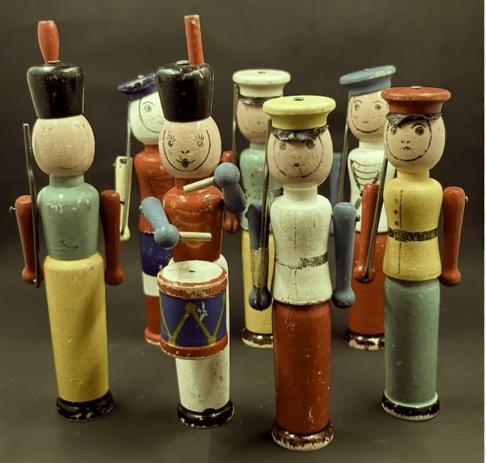
However the boys’ national pride grew, when they saw the contingent of blue boiler-suited local `Security Force` march to St. Theresa`s Church on Corpus Christi, with one of their teachers the portly Mr. Philip Moynihan in their midst. Moynihan was known in the school for his ‘saighdiuri’. These were wooden skittles painted like soldiers, which were passed to boys in his class who were found speaking English instead of Irish in the school yard during breaks. Woe betide whoever had possession when class reassembled.
He recalls coal was unavailable so heating was fed with turf. The school janitor, Larry, had his work cut out to keep the burner stoked. The classrooms were dismal those winter days and the children suffered chilblains and colds continuously. He remembers one extraordinary move into the then unheard-of realm of alternative energy. One Monday to their great surprise, they found a wind-powered electric generator had been erected on a platform at the apex of the school roof. He thinks it was during a storm the generator did itself an injury and was taken down. The rest of his recollections deal with academic matters.
DES HICKEY, journalist and broadcaster attended the school from 1938 to 1943. He mentions that Jews almost outnumbered Gentiles in the area. He has a vivid Emergency memory of the sight of certain boys with black crepe in their lapels on the day of Hitler`s death. Coming from what he calls a West British family, this was a culture shock. It still astonishes him today.
DON COCKBURN, RTE Newsreader attended there in late 1930s and early 1940s. Among other items in his essay he reports “Meanwhile World War Two raged on. A bomb blew a huge crater in the Canal Bank near Griffith Barracks, and there was a spectacular demonstration in the school yard one night, when the ARP showed how to deal with an incendiary bomb.”
J.P. SHEEHAN, former Chief Executive of the V.E.C. (Vocational Education Committee) attended the school during the war years. He describes how by the time of his Confirmation in 1943, they had come to know the effects of WWII.
“The bread on our tables had lost its pure white hue and it took a lot of patience to wait for a bright cup of tea from the kettle on the faint and illegal gas glimmer. The bombs that fell by the banks of the Grand Canal near Sally`s Bridge in 1941 had blasted the front windows of many houses in Greenville Terrace where I lived. The APR issued every house with a gas mask for the occupants and we youngsters delved secretly into the rubbery interior of the brown cardboard boxes that contained them and marvelled at the mysteries of modern warfare. Outside McHenry`s turf depot in Blackpitts, a large concrete air shelter, whose musty and cavernous interior was our playground version of the Black Hole of Calcutta, stood silent witness to the lorries that plied between there and the Featherbed Mountain, on the urgent mission to keep the `home fires` burning. Such was war……………”
By Pádraig Turley
The bombs were dropped on Donore Terrace on the 3rd of January 1941. What might people have been up to the previous day and night?
Being neutral there is an air of unreality when one peruses the newspapers for the 2nd January 1941. There was a full programme of social activities going on in Dublin, and as you read the lists of various events, it is hard to believe that there was a World War afoot.
What might people have been doing on the night of 2nd January before adjourning to what they believed to be the safety of their beds?
Being Thursday, they may very well have stayed in. They could of course have been at the Baldoyle Races, as in the Irish Independent we see a photo of Mrs. S. McEntee, Mrs. Boyd Rochford and Mrs. Bryan Dulanty decked out in their fur coats at the meeting.
If they had an interest in schools rugby they might have gone to see Clongowes College battle it out with Monkstown Boys School.
They might have listened to Radio Éireann which was on the air from 6:30 p.m. until 10:40 p.m. which featured three programmes in Irish.
Should theatre have been their fancy, the Theatre Royal was staging ‘Mother Hubbard goes to Town’, and also a film ‘The Bride Wore Crutches’. The Theatre Royal always had a show and a film right up until its closure in 1962.
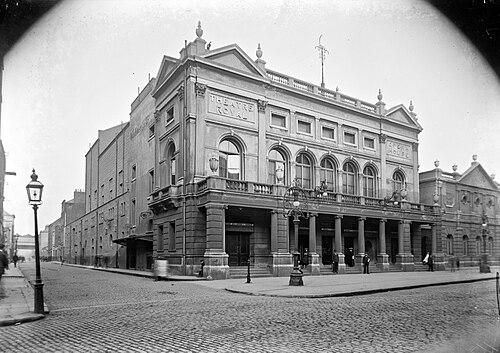
Theatre Royal, Hawkins Street
The Olympia Theatre featured ‘40 Thieves’ with Frank O`Donovan. Over in the Gaiety Theatre, we had Jimmy O`Dea in ‘Babes in the Wood’.
The Queens Theatre on Pearse Street was staging ‘Red Riding Hood’, while the Gate Theatre featured ‘Snapdragon’.
The Abbey Theatre was presenting ‘Stranger Guest’ by Francis Stuart. Stuart was a writer not without a bit of controversary, as he became sympathetic towards the German Reich.
While reading their newspapers under the heading ‘Diplomats Greetings’ they might have noticed visitors to Áras an Uachtaráin included the German Ambassador Eduard Hempel and the Spanish Ambassador Senor Don Juan Ontiverous. Even if they did not notice these you can be sure the British and Americans would have.
They could have been at the January Sales, where a ladies nightdress in Pims would set you back five shillings. All the main stores were open, such as Todd Burns, Cassidys, Switzers, Clerys, McBirneys, Guineys, Winstons, etc. While rationing was introduced in 1939, it only became operational for clothing on 8th June 1942.
Soccer fans among them would have been talking about Celtic beating Rangers in the ‘old firm’ game.
If they were tuned in to the wireless on Radio Éireann they would have had Joe Milton`s Ceilidhe Band or Musical Greetings from Trig and Singers, while over on the BBC the choices included dance band music, swing, and children`s choral singing. Revellers who might have over-indulged could take an Aspro, which seemed to solve all ailments – headaches, colds and flus, plus a hangover. Going to bed, they’d possibly be anticipating a breakfast of porridge or indeed Brown & Polson`s cornflakes.
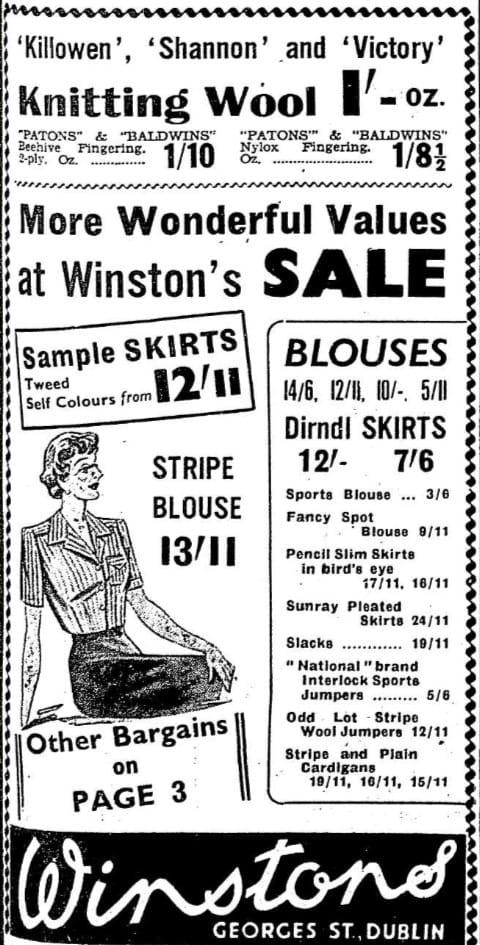
Irrespective of how they were passing their time, we can be certain that they did not expect the horror that was visited upon them at 3:55 a.m. on the 3rd of January.
By Tony Corcoran
Shortly after my parents married and moved into their new home at Merton Avenue, World War Two began. The period that followed was, here in Ireland, declared as “The Emergency”. This had many knock-on effects including a shortage of fuel supplies and, as a result, gas rationing was introduced in Dublin, beginning in 1941. Having been born in 1940 this situation existed throughout my toddler formative years.
In effect, the supply of gas to households was restricted and was only available at certain times. As my parents did all their cooking on the gas cooker, this proved to be a problem, especially as my father worked shift hours in Guinness and his meal times were different to the normal allocated times.
However, versatile Dubliners soon discovered that, while the supply of gas was turned off, there remained a small residue in the mains with almost no pressure, so when ignited at the cooker could produce a faint glimmer of gas. When left on for several hours this was actually sufficient to boil a kettle or boil a pot of potatoes. This became known as “cooking on the glimmer”.
As soon as the gas company discovered this trick, they issued an order forbidding the use of the glimmer. Furthermore, they employed inspectors to call at random to houses to ensure that this was not happening. Even though the householder turned off the glimmer when the knock came to the door, the glimmer man had the right to enter your house and feel the temperature of the gas ring. If it was warm, then that was proof that you had been using the glimmer and as a penalty the supply of gas to your house would be disconnected totally.
And so, throughout Dublin, the Glimmer Man was to be feared with a vengeance. Every knock on the door brought panic to the family.
So it was on one day in 1944 while my mother was using the glimmer, and I was playing at home, there was a fearsome knock on the door. There was immediate panic in the house. If it was the Glimmer Man, we knew he wouldn’t go away. Then my mother had an idea.
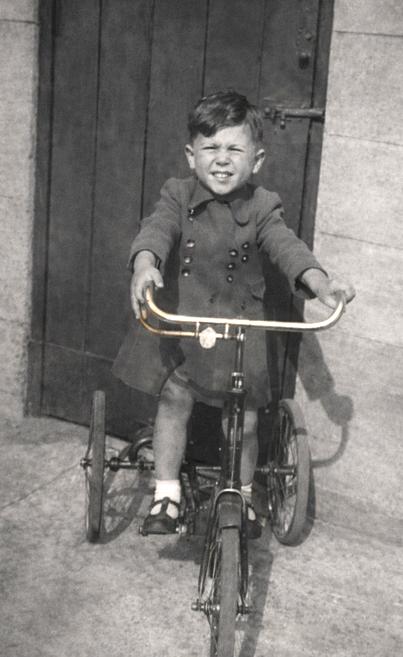
As our back door opened onto Greenville Avenue, I was put onto my tricycle and told to cycle around the block quickly and to return back to the same door and report on who was at the door. So, at four years of age, I became a spy!
As instructed, I casually pedalled around the side of Connaughton’s shop and passed by our front door, noted who was knocking, and returned with the good news. It wasn’t the Glimmer Man. It was a strange nun.
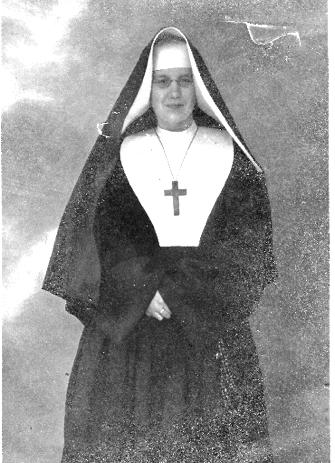
It turned out to be a Sister Elizabeth Farrell, originally from Rialto, a nun who had been in class with my mother in Weaver Square –known then as Dolly Farrell from a Guinness family.
She had entered a convent in Birmingham which was a Mother and Baby home for pregnant girls running away from Ireland.
By the time my mother opened the door, the good nun was about to give up. Thankfully, she didn’t because she had brought along all sorts of goodies, including dried fruit for the Christmas pudding. Then, that’s another tale!
By Maria O’Reilly
In 1941, Fianna Fail Senator, Margaret Kennedy lived on Donore Terrace, close to where the bombs were dropped. She was instrumental in ensuring that residents in the immediate area which included the Tenters area, received compensation for injuries or damage to property, sustained as a result of the 1941 bombing of Donore Terrace.
So, who was Margaret Kennedy?
She was born 1st August 1892 in Dolphins Barn to Patrick Kennedy, labourer, and Mary Kennedy nee Whelan, she was their youngest daughter.
Margaret Kennedy was destined for a life in politics. She preferred her pet name of ‘Loo’ and showed signs of her strong character very early on in life. In 1915, while in her early 20s, she joined Cumann na mBan, was made an officer and eventually moved up the ranks and made captain in 1920 and later Commandant. She served in the Jameson Distillery, Marrowbone Lane, Dublin in 1916. In fact, it was from Weaver Hall on Donore Avenue, that she and her comrades proceeded to Emerald Square to link up with the 4th Battalion.
Following the Easter Rising she was detained in Kilmainham Gaol and Richmond Barracks. During the Irish Civil War, she took the AntiTreaty side.
Looking at the Bureau of History 1916-1921 records, you’ll find the written Statement of Miss Margaret Kennedy, 117 Donore Terrace, South Circular Road, Dolphin's Barn, Dublin which was taken on 29th January, 1949.
In addition to being an Irish Fianna Fáil politician, she was also a member of Dublin Corporation. In 1938, she was nominated by the then Taoiseach Éamonn de Valera to Seanad Éireann. She was re-appointed in 1943 and 1944 and served until 1948.
She never married and died aged 60 on 31st May 1953. Place of death was recorded as 113 South Circular Road.
When we were researching Margaret, we found her to be recorded as still owning number 117 Donore Terrace, just a little further up the road. Now renumbered to 189 South Circular Road, the house currently bears the name Lorell.
NOTE: Lorell/Laurel symbolises victory and honour. Wonder did Margaret Kennedy place the name plate on the house?
You will also note that a road off Donore Avenue bears her name. A very fitting commemoration of a remarkable woman.
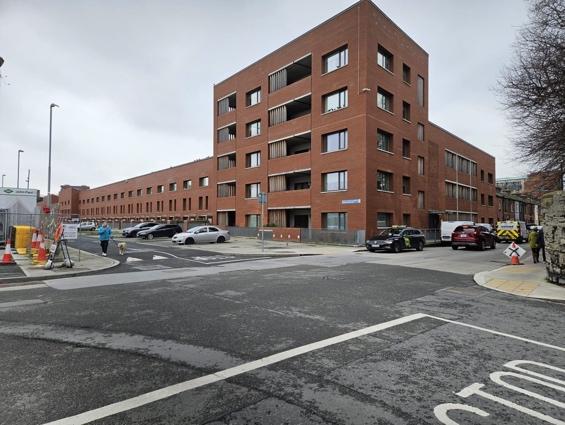
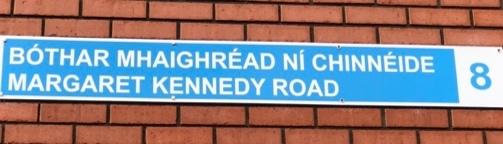
Nice to see a woman commemorated in this way as all of the roads within the Fairbrothers Fields/Tenters housing scheme commemorate men.
On the subject of Weaver Hall, Michael Mallin, trade unionist and revolutionary, was born on 1 December 1874 at Ward's Hill. He is well remembered for his role as the St Stephen’s Green Commander during the 1916 Rising and subsequent execution but many may not know of his life as a silk weaver.
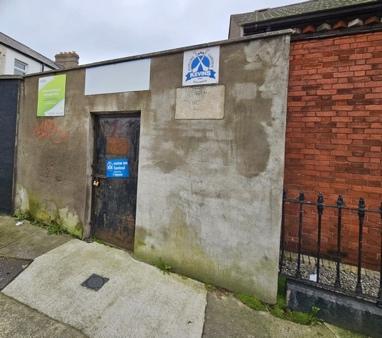
A teetotaller, he built this hall as an alternative place to the Public House for the Weavers, valuing having a nonalcoholic venue for local Weavers to meet and socialize. The hall was used during the 1916 Rising to distribute command instructions, uniforms etc.
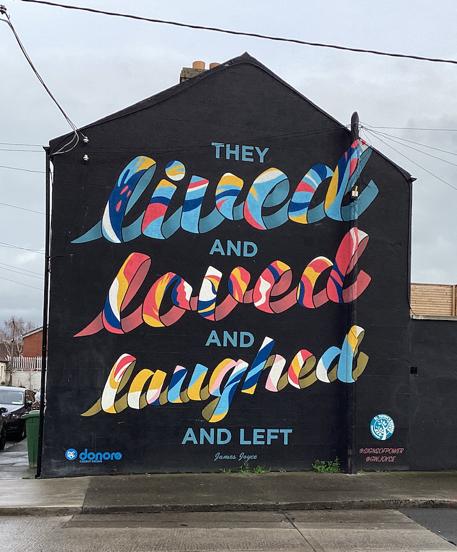
Next door to Weaver Hall on Donore Avenue there is a mural painted by local artists Vanessa Power and Gareth Joyce, displaying a quote form Irish poet and novelist James Joyce. “They lived and laughed and loved and left.” It is a memento to the last residents of St. Teresa’s Gardens, whose flats had been demolished as part of the St Teresa’s Regeneration Project–a project designed to redevelop the area.
James Joyce died suddenly in a Zurich hospital on January 13th, 1941. This was 10 days after the Donore Terrace bombings.
By Peter Walsh
In the heart of the Tenters, a long bungalow lies between St. Thomas’ Road and Clarence Mangan Road. It was once home to Corrigans, a shop that served the close-knit Tenters community from 1928 until Christmas 1968.
During The Emergency, the shop had to deal with new ‘rationing’ laws which were introduced to manage severe shortages of imported goods.
Registration day for applying for ration books in the Free State was November 14th 1941. Retail grocers like my Granny had to familiarise themselves with the regulations of the Department of Supplies and carry them out to the letter.
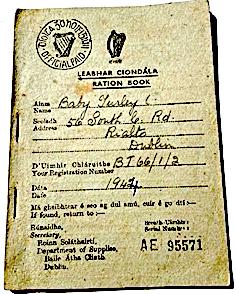
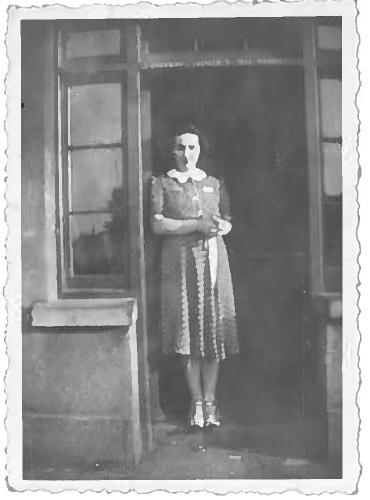
My grandmother and mother together managed all admin work and stock matters, and recorded everyone’s registration details. They took their stand behind the counter, day in and day out. Long, tiring days sometimes. Miss D, a neighbour on St Thomas’ Road, who had worked in a large city drapery and had been laid off (clothing was rationed too) was taken on to assist.
In October 1942, our ration book holders numbered 295. By September 1943 this had risen to 327 and by the time the war ended the total stood at 355 registered domestic consumers.
Obviously, the growth in registrations put strains on the stock levels and appeals had to be made to the ministry. A separate plea was required for each commodity. On rations day there were long queues
stretching up the road, the vast majority were women, with old newspapers for wrapping fruit and veg, peeping out of their shopping bags.
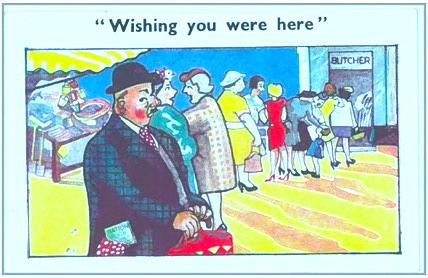
The few men present were way out of their comfort zone, tending to hold back at the end of the queue so as not to conduct their business in front of the ladies. Level heads were paramount. At the counter, coupons were dealt with first and those items paid for. Children were eligible for a measure of cod liver oil, a good source of Vitamin D.
Granny and Mam cut out the relevant coupons from the ration book to keep tally of the rationed groceries separate from everything else and to ensure that a coupon was only presented once. If the trader was found to be dispensing more than was allocated severe penalties applied. At that time, tea retailers like Granny were obliged to hold a licence. It was lumped in with wine and spirits. Remember the tag ‘Tea, Wine & Spirit Merchant’ over pubs? There was also a license to deal in tobacco.
Every week, on two evenings before rations came due, my grandmother, mother and two uncles (sometimes 'helped' by my young cousin) weighed out and packed sugar, tea, and butter at three 'stations' along the shop counters, using different scales.
The most sensitive was for the tea, the allocated weights being so small and light. This was weighed out by my Mam into individual small packets and folded. The tea scales had a shiny brass pan.
Tea was delivered to us in chests, usually of aroma-free plywood, with full-height angle supports made of tin at each joint, and the interior lined usually with foil, to protect the product from damp and odours in transit over land and sea. Our tea suppliers during the Emergency years were J. Lyons & Co., Becker Bros., Adam Millar & Co., Baker Wardell, and Carton Bros. Lyons were well ahead of the pack, but all played a crucial role in trying to meet the growing demand.
On those evenings before the queues gathered, the uncles came straight from work in town, had their tea, changed into white shop coats, and helped weigh the butter and sugar.
Uncle Raymie laid out his stall at the corner of the counter that was covered in a large slab of marble, one-and-three-quarters inches thick
Here he placed the butter scales and the cutter. A stack of cut-to-size greaseproof paper was at hand to wrap the 4oz or 2oz allocated rations. A large block of butter was put onto the sterilised marble base, spread and shaped with butter pats. This kept the butter fats cool, enabling it to ‘set’. It also helped its shelf-life that the butter was well salted in the creamery. Then, using the taut wire cutter, the butter was cut quickly and cleanly lengthwise into strips, then crossways into ingots, each of which was trimmed on the scales to the small, weekly, legal entitlement and doubly wrapped in greaseproof.
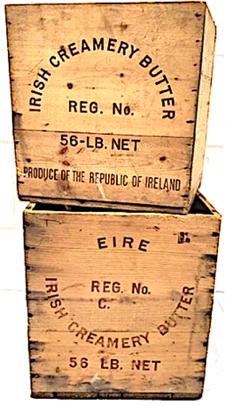
Our butter came from Cleeves of Limerick in 56lb and 28lb wooden boxes, lined with greaseproof paper, with the legend ‘Éire Irish Creamery Butter’ branded on the sides. It was delivered by horse and dray by Messrs. O. & R. Fry of Hawkins Street, whose city depot and stables were located just opposite the Theatre Royal. Empty butter boxes were highly sought after by customers and were very creatively turned to good use.
Uncle John weighed out the sugar which he packaged in stiff, strong dark blue paper bags supplied by Bailey, Son & Gibson, nearby on the South Circular. Along with flour and other milled edibles, sugar was delivered in cotton sacks. All the sugar came from home grown sugar beet. A few years before the war, the Irish Free State built four state-ofthe-art sugar factories in Carlow, Mallow, Thurles, and Tuam, the four pillars of Comhlucht Suicre Eireann, incorporated in 1933.
As fraud and black-marketing were rife, regular inspections were routinely carried out by the authorities. Samples of foodstuffs were taken for checking by the City Analyst's Laboratory on Cornmarket for any signs of contamination, adulteration, short measure and so on. All scales, weights and measures were tested also.
In the beginning, everyone was a bit wound up about ‘Rationing’. In the end, it was generally considered to be fair. Everyone got the same. Everyone did the best they could.
By Tony Corcoran
During the Emergency years only the rich and famous had what was then known as central heating. For the rest of us, we had to make do with open fires, not only in the living room but also in the kitchen and the bedrooms. Then, to add to our problems, any form of fuel for the fires was difficult to obtain.
Coal became formally rationed in January 1941 and to compensate for its scarcity the Government greatly increased the production of turf, even creating “The New Bog Road” in the Phoenix Park for the citizens of Dublin.
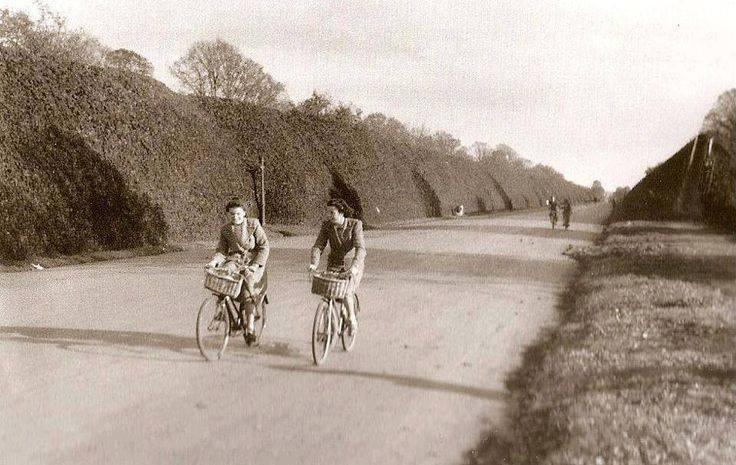
Growing up in the Tenters our house had 5 fireplaces. There was a fireplace in the living/ dining room. There was another in the front, or good room, reserved for visits from important people like the parish priest or the insurance man. Most importantly, there was a cast iron range in the kitchen which was used to heat the room and to cook on. The fire in the range was covered over –there were special lifting tools to remove the lid in order to put on a pot of spuds or to boil a kettle.
Upstairs in two of the three bedrooms, there were fireplaces, though seldom used. Yet, they were invaluable when someone was sick and needed to be kept warm in bed. One hazard though was that I used my bedroom chimney to post my letters to Santa and it was important to ensure that Santa collected the letter before a fire was lit in the grate!
Lighting a fire in the living room each evening in winter was a major logistical exercise. Whilst it was a Mammy job, she sometimes delegated the task to the Da. There were three forms of fuel. There was coal, which was expensive, and there was turf which was usually damp. Wood for the fire came mainly from logs or twigs from the garden – if you had a garden. Otherwise, wooden boxes were broken up to provide kindling. The final element in getting the fire started was newspaper. First, a bed of newspaper, then sticks of kindling wood, then a few
pieces of scarce coal. As firelighters didn’t exist in those days, the box of matches was taken in hand, along with a short prayer. Red-tipped matches were best as they could be struck off the side wall of the fireplace. Then the bed of newspaper was lit in three places. Depending on your credit rating in Heaven, the flames would spread along the newspaper and set fire to the kindling – and off she went. Sometimes it needed a few sharp blows from your lungs. This could have two effects. It either could encourage the fire to spread – or worse, you succeeded in blowing the fire out!
Then it was time to resort to the alternative. After a few good curses you replaced the bed of newspaper and started again. This time, instead of blowing the flames you got a sheet of newspaper and held it over the top of the fireplace, thus encouraging an increased natural draught to gently waft under the fireplace and to encourage the flames to catch on. This generally worked, though sometimes too well. If you didn’t pay attention, the sheet you were holding against the fireplace would itself catch fire. This would have either of two effects. Either your hands got burnt or you let go and the flaming newspaper would waft up the chimney and set fire to the soot in the chimney, causing a chimney fire.
Then you had a disaster on your hands! One decision was to let the soot in the chimney burn itself out, thus polluting the neighborhood with choking brown smoke, and you had to then deal with knocks on the door from passers-by to tell you that your chimney was on fire. “Do you know your chimney‘s on fire?” “Yes! I effin’ know me chimney’s on fire!” The other option was to stuff an old coat – if you had one – up the chimney – and cut off the air to the chimney– extinguishing the fire.
Sometime in the 1950s, the 1 and 2 bar electric fire came into use. Then heating, lighting, and cooking was done by paraffin oil. Paraffin, as a commodity was readily sold in huckster shops in the area. - strongsmelling paraffin for sale alongside milk, eggs, and butter.
Eventually, these oil heaters passed into the realms of history and were replaced with various new heating technologies. We’ve certainly come a long way since the turf fires of The Emergency, yet the humble fire of times past still exists. For relaxation purposes, you can’t beat toasting your toes by a good warm open fire!
There were many victims injured in the Jan 3, 1941 bombing.
The following were taken to hospital and detained:
v Miss Eva Roith (17), 93 Donore Terrace suffering with severe wounds to her back. Meath Hospital.
v Abraham Roith (13), cuts and abrasions, Vincents Hospital.
v Miss Bertha Roith (9), shock. Mercers Hospital.
v Mrs Day, 91 Donore Terrace, broken collar bone and shock. Mercers Hospital.
v Mrs Ellison, 88 Donore Terrace, shock. Mercers Hospital.
v Mr. R. Kenny, 103 Donore Terrace, shock, Mercers Hospital.
v Victor Rafter, 96 Donore Terrace, shock, St.Vincents Hospital.
v Fireman Thomas Smart, Rathmines Station, gassed, St. Vincents Hospital.
v Garda John McGuire, Kevin Street, injuries sustained in rescue work, Adelaide Hospital.
The following were taken to hospital but not detained:
v Rev. Morris Roith & wife Fanny Roith, 93 Donore Terrace
v Majorie Stevens, 91 Donore Terrace
v Maureen Miller, 92 Donore Terrace
v Mrs. E. Heffernan, Mrs Molly Sayers, 90 Donore Terrace
v Mrs Annie Greene, 54 Donore Terrace
v Miss N. O`Callaghan, 11 Norwood Ave.
v Mr. G. Day, 91 Donore Terrace
v Mr. L. Wolfson, 88 Donore Terrace
v Mr. L. Greene, 96 Donore Terrace
v Miss V. Keane and Miss Rachel Roith (15), 93 Donore Terrace
The following Blackout Restrictions were mandated in Ireland during the Emergency.
Reason:
a. Prevent Irish towns being mistaken for British targets.
b. Avoid giving navigational help to enemy aircraft or submarines.
c. Demonstrate neutrality to both Allied and Axis powers.
Main Blackout Restrictions:
1. Total control of lighting.
2. External Lighting: all external lighting was banned after dark, street lamps, shop signs and illuminated advertisements, lights on public buildings. Household lights had to be heavily screened, windows covered with blackout curtains or thick material, no light allowed to escape outdoors. Failure to comply could result in fines or prosecution.
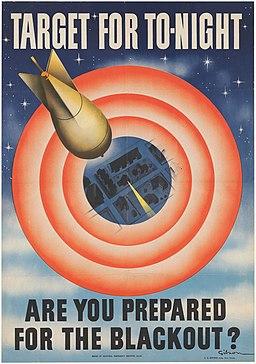
3. Vehicle lighting restrictions: cars, bicycles and carts, headlights were dimmed or hooded, only narrow slits of light permitted, speed limits were reduced because visibility was so poor, accidents increased significantly as a result.
4. Transport and public spaces: trains windows were screened, stations were kept in near darkness, ports and coastal areas were especially tightly controlled, light houses and navigation beacons were turned off, dimmed or operated on restricted schedules.
5. Coastal and aviation controls: coastal lighting that might aid navigation was forbidden, airfields used minimal lighting and strict control, bonfires, flares and fireworks were banned.
6. Enforcement: Local authorities and Gardaí enforced the blackout, Airraid wardens inspected compliance. Repeated violations may lead to fines, confiscation of lighting equipment, Court appearances.
7. Public impact: Deeply affected daily life, entertainment venues closed early, night-time activity declined, road fatalities increased.
The legal basis for the Censorship was the Emergency Powers Act (1939) passed on 3rd September 1939. This gave the government sweeping authority to control information, communications, and expression. The office of the Director of Censorship was set up. The Minister was Frank Aitken T.D. Censorship orders could regulate or prohibit publication of any material deemed prejudicial to Ireland`s neutrality, security or public morale.
Press Censorship: What was censored?
§ War News: No reports that could imply sympathy for either the Allies or the Axis.
§ Weather reports: Banned to prevent intelligence leaks that might aid belligerents` air or naval operations.
§ Shipping and aircraft movements, troop activities, or defence information was strictly forbidden.
§ Foreign correspondence: Edited to remove biased or emotional language, for example, brave British troops or Nazi atrocities .
§ Casualty lists and graphic photos of bombings were often withheld or toned down.
How it worked:
§ Newspapers had to submit material for approval before publication or risk confiscation or closure.
§ Journalists often self-censored to avoid penalties.
§ All newspapers had to maintain a neutral tone (frustrated readers could receive uncensored BBC broadcasts across the border).
All broadcasts were required to be strictly neutral:
§ No playing of national anthems of belligerent nations, or patriotic songs connected to the war.
§ No live foreign news bulletins were aired-only summaries rewritten by Irish censors.
§ References to the war had to use neutral terms, for example, the war in Europe, not our war or the enemy.
The government monitored mail, telegraphs, and telephone calls for espionage or propaganda. Messages that could compromise neutrality or encourage enlistment in foreign forces were intercepted.
The Board of Censors (existing from 1920`s) continued to ban films and books deemed immoral, subversive, or politically sensitive. During the war, this included Allied and Axis propaganda films. Even literature that mentioned ongoing events in a partisan way could be restricted.
The government didn`t just suppress information- it also sought to project neutrality actively. Official statements were carefully worded to show Ireland as friendly to all nations. Reports on Irish neutrality policy were emphasised in the press. The censorship regime became a tool of statecraft as well as control.
Many journalists and intellectuals criticized the censorship as overzealous and stifling. Historian Robert Fisk later called it ‘a suffocating silence’ in Irish public life. Nonetheless, the government argued it was necessary to protect Ireland`s fragile neutrality in the face of pressure from both Britain and Germany.
The Memorandum on the Emergency Powers (No 5) Order 1939 from Michael Rynne to J. P. Walshe lays out detailed guidance to the press.
§ It emphasises that beyond simple ‘prohibiting’ of certain items, the government wants a positive press campaign in favour of neutrality.
§ It lists things to be prohibited in newspapers such as references to heads of states, foreign armies or people in a way that might offend them.
§ It also suggests what to emphasise in newspapers e.g. highlighting how many countries have declared neutrality, pointing to food shortages/famine in belligerent countries rather than at home.
The publication of this booklet was made possible by a grant from:
Guinness Dublin 8 Community Fund at Community Foundation Ireland
Their generous funding covered the cost of printing over 1000 copies which will now be made available free of charge and hand delivered to homes in the local area.
Thanks also to Dublin City Council and Donore Credit Union for their continued support of all our events and activities year upon year.


This booklet focusing on ‘The Emergency’ (WWII), came together thanks to the members of The Tenters Celebrated Heritage Group who contributed all the stories, photos, images, and accounts of what it was like living in the Tenters during that fraught time in our history.
These stories and accounts were inspired by our tireless members who conducted and supported several guided Walking Tours on this subject through The Tenters neighbourhood for the public last year.
Thanks also go out to Norma Bodie for editing and formatting the various contributions, and for overseeing the publication of the finished booklet.
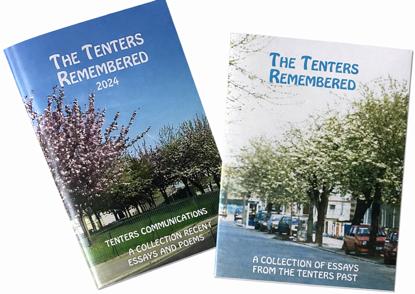
We have already published two booklets dealing with the lived experience of various folk who have called this part of Dublin home at some time or other.
Contact us to request soft copies of “The Tenters Remembered” booklets at the email address given below.
We are always looking for articles, personal stories, photos, poetry, etc. related to The Tenters for future publications. Reach out to us at Tenters.tales@gmail.com
The MISSION of ‘The Tenters Celebrated Heritage Group’ is to preserve and maintain the various historical factors that have shaped the community of the area in South Central Dublin within the Liberties, known as The Tenters.
Our aim is to reflect on the sense of place that our community has experienced since it was first established, so that future generations can appreciate the heritage of this area. We hope to achieve this by promoting an understanding of the past, present, and future of the area, and by collecting and communicating materials that foster historical knowledge.
Below is the Corporation of Dublin’s Layout Plan for 415 houses for what would become known as The Tenters area:
Fairbrothers Fields Housing Scheme
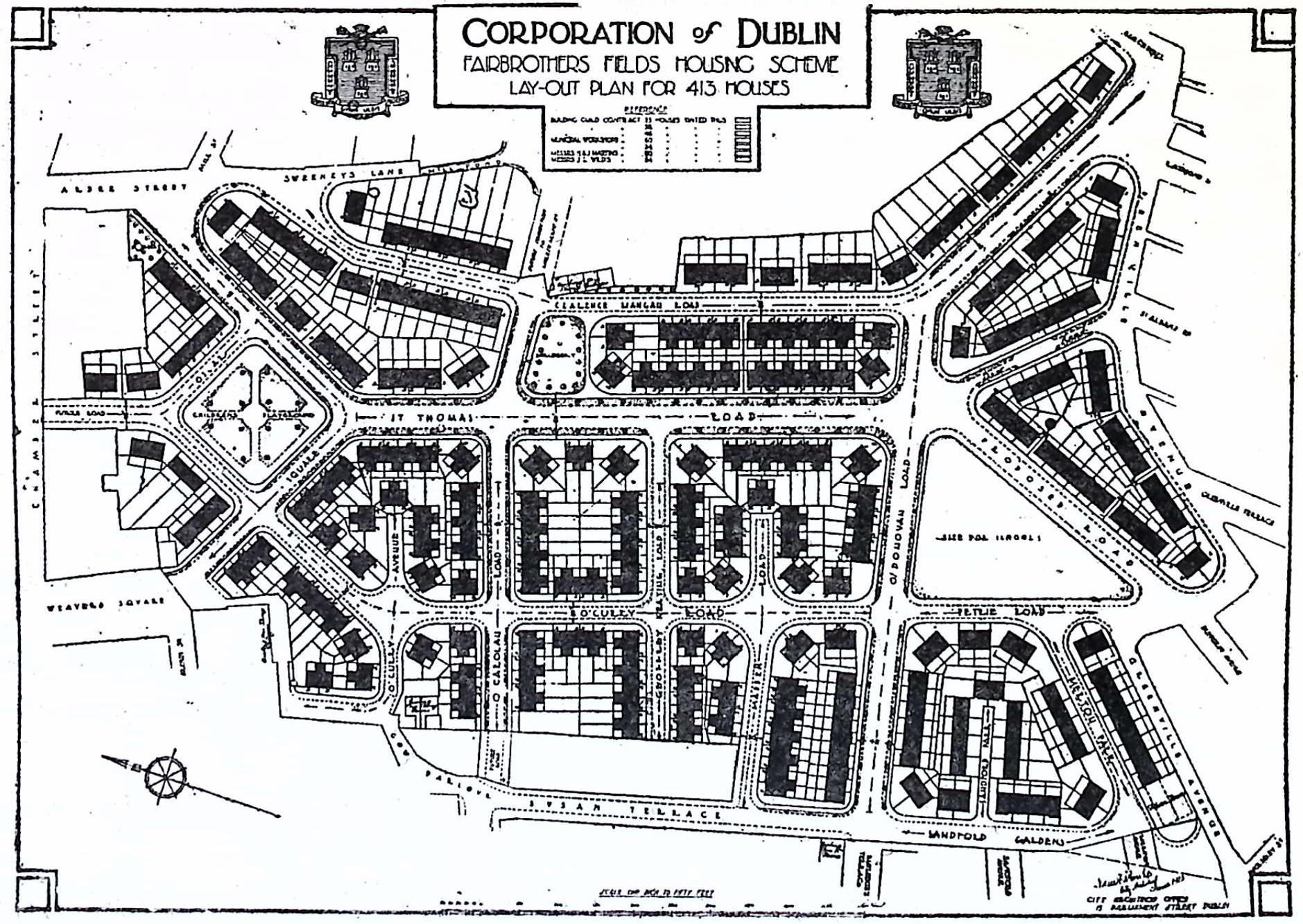
Corporation of Dublin Fairbrother's Fields Housing Scheme Layout Plan, 1925
Courtesy of Dublin City Library & Archive