THE TEMPLE NEWS
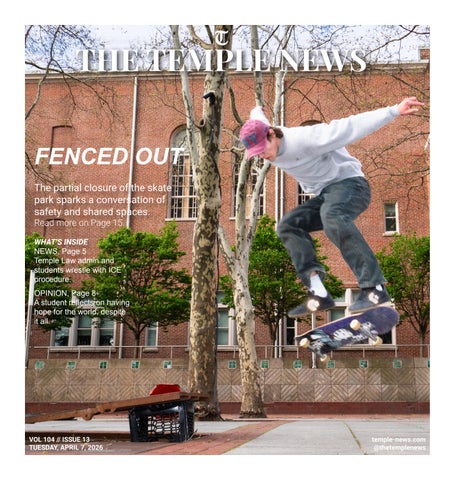
The partial closure of the skate park sparks a conversation of safety and shared spaces. Read more on Page 15.
WHAT’S INSIDE
NEWS, Page 5
Temple Law admin and students wrestle with ICE procedure.
OPINION, Page 8
A student refects on having hope for the world, despite it all.
APRIL 7, 2026
A watchdog for the Temple University community since 1921.
Sidney Rochnik Editor-in-Chief
Valeria Uribe Managing Editor
Anna Augustine Managing Editor
Ryan Mack Chief Copy Editor
Bradley McEntee Chief Copy Editor
Nathan Horwitz Co-News Editor
Connor Pugh Co-News Editor
Clarissa Jett Assistant News Editor
Ashley Nteff Opinion Editor
Logan Thompson Assistant Opinion Editor
Madelynne Ferro Features Editor
Chloe Pabon Assistant Features Editor
Sienna Conaghan Co-Sports Editor
Colin Schofeld Co-Sports Editor
Jacob Moreno Assistant Sports Editor
Leah Duffy Investigative Editor
Tellicia Walker Investigative Reporter
Julia Anderson Director of Audience Engagement
Nathaniel Thrush Co-Community Engagement Coordinator
Kayla McMonagle Co-Community Engagement Coordinator
Isabella Farrow Audience Engagement Editor
Nalani Chiles Audience Engagement Editor
Brian Nelson Photo Editor
Lillian Prieto Assistant Photo Editor
Aidan Gallo Assistant Photo Editor
Dylan Castelluccio Multimedia Editor
Massah Johnson Print Design Editor
Daniya Eggleston Graphic Design Editor
Chili Ramgolam Data Editor
Ariana Droz Podcast Editor
Sage Spohn Newsletter Editor
Nadia Bodnari Web Editor
Maria Lombana Advertising Manager
Aaliyah Abdur-Rashid Advertising Manager
Calista Aguinaldo Business Manager
The Temple News is an editorially independent weekly publication serving the Temple University community.
Unsigned editorial content represents the opinion of The Temple News.
Adjacent commentary is refective of their authors, not The Temple News.
The Editorial Board is made up of The Temple News’ Editor-inChief, Managing Editors, Chief Copy Editor, Deputy Copy Editor, News Editor and Opinion Editors. The views expressed in editorials only refect those of the Board, and not of the entire Temple News staff.
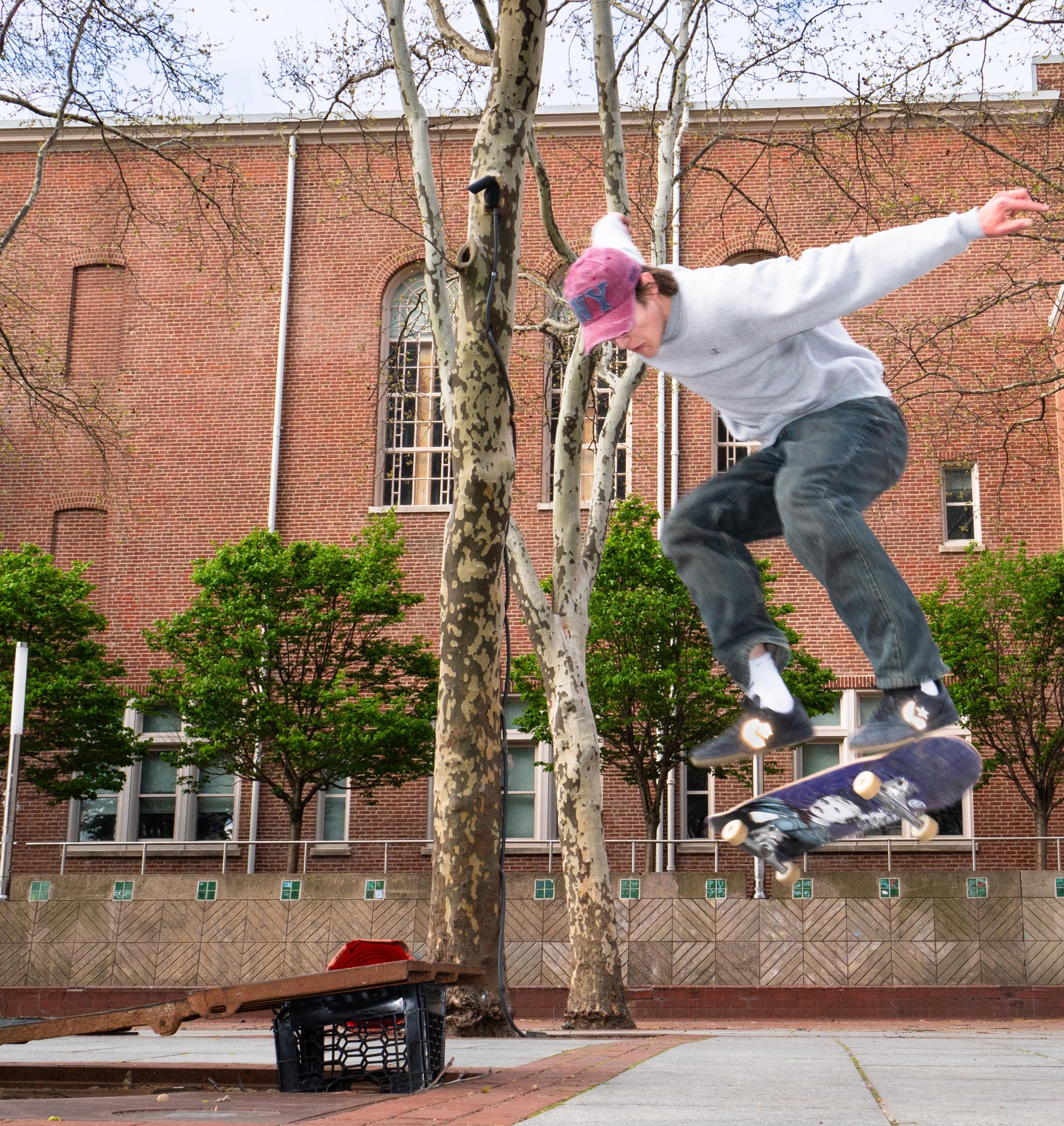
Sebastian Sessa skates over the kicker at the Cecil B. Moore plaza.
AIDAN GALLO / THE TEMPLE NEWS
Visit us online at temple-news.com
Email section staff ttnnews@temple.edu ttnopinion@temple.edu ttnfeatures@temple.edu tnsports@temple.edu
The Temple News is located at: Student Center, Room 243 1755 N. 13th St. Philadelphia, PA 19122
Accuracy is our business, so when a mistake is made, we’ll correct it as soon as possible. Anyone with inquiries about content in this newspaper can contact Editor-in-Chief Sidney Rochnik at editor@temple-news.com.
In the March 24 print issue, an article about coach Elvis Forde incorrectly stated a detail about his eye injury.
The partnership offers more stable student teacher training within city public schools.
BY CLARISSA JETT Assistant News Editor
The Temple Partnership Schools Network, a program that will allow students and faculty to work in two North Philadelphia public schools to improve K-12 student outcomes and teacher training, was approved by the Board of Education March 26.
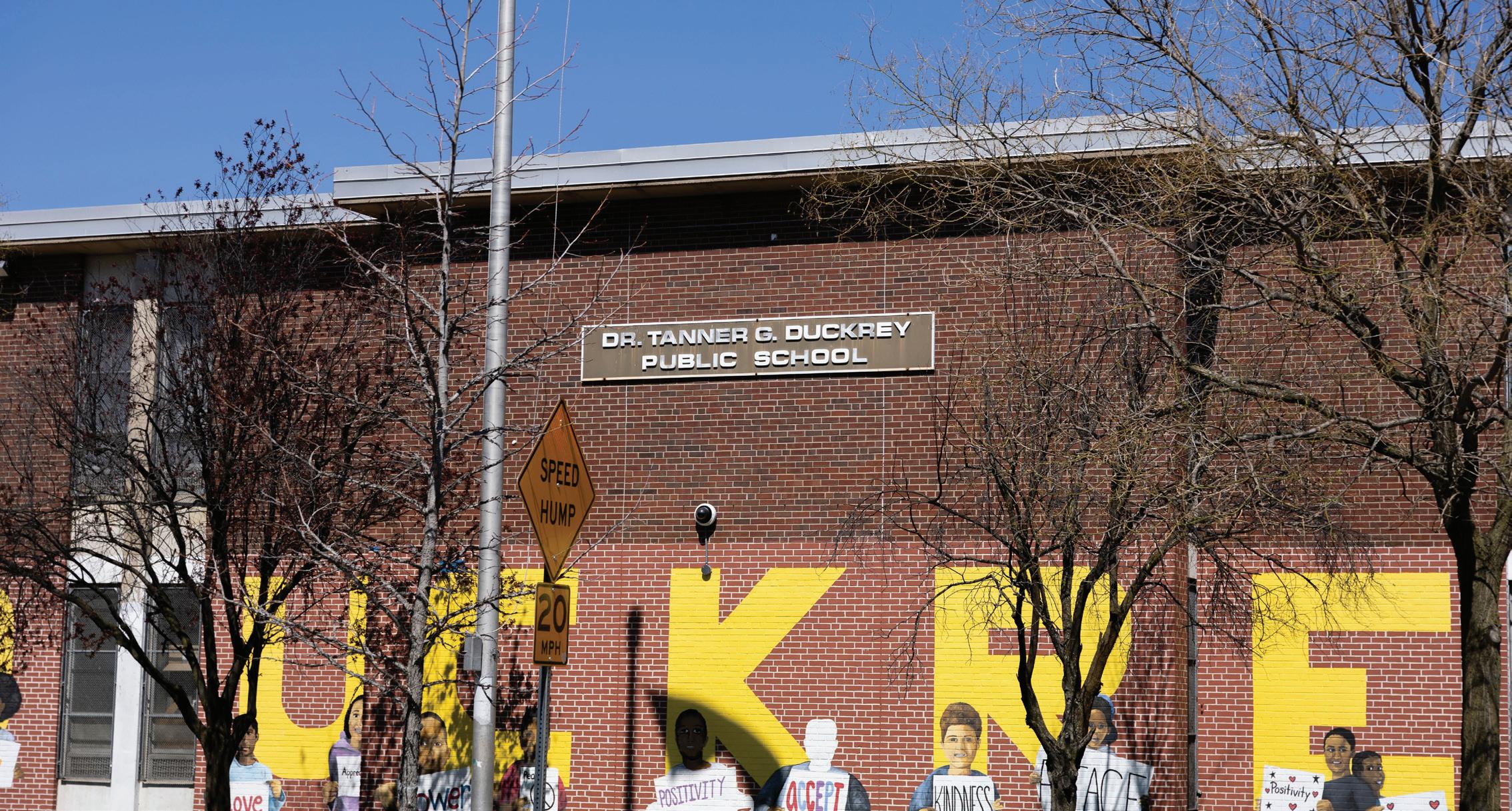
The College of Education and Human Development initiative will work with Dr. Tanner G. Duckrey Public School located near Main Campus on Diamond Street, and the Mary McLeod Bethune School located near Temple Hospital on Old York Road near Ontario Street.
The program is set to begin in Fall 2026, with Temple and district ofcials planning to track outcomes like student achievement and attendance. The agreement will run through the 202728 school year, with the possibility of expanding to additional schools, if successful.
The partnership moves away from dispersing student teachers across the city and instead focuses on a sustained, long-term presence within a small number of neighborhood schools.
“We have always partnered with the district,” said CEHD Dean Monika Shealey. “What’s diferent now is the level of focus and coordination around a smaller number of schools.”
The two K-8 schools will allow Temple students and faculty to work inside on a consistent basis, rather than rotating in for short-term placements.
Temple will embed students from programs like teacher education, counseling and school psychology for early feldwork and student teaching placements. Faculty will also teach courses on-site and provide ongoing professional development for teachers and staf.
The partnership is based on a na-
tionally recognized professional development school model, which places teacher candidates in classrooms early and consistently while pairing them with mentor teachers and integrating coursework with real classroom practice.
By concentrating resources in two locations, Temple aims to support the broader neighborhood, Shealey said.
“We believe when schools thrive, neighborhoods thrive,” Shealey said.
Education majors are required to complete three practicums and one student teaching course. Fiona Kahn, a junior elementary education major, is currently on her last practicum at Bethune and will begin student teaching in the fall.
Education students like Kahn work with small groups, help with reading or writing, and sometimes teach lessons they plan for their classes.
“The staf is really dedicated, but they’re defnitely stretched thin or burnt out,” Kahn said.
At Bethune, about 13% of students are profcient in reading and 5% percent
in math, both below typical district and state averages. Duckrey shows similar trends with 18% in reading profciency and 6% in math, according to state test data.
Those challenges are part of what drew Duckrey into the partnership, said David Cohen, principal of Duckrey.
“This partnership is more than support,” Cohen said. “It is about transformation.”
While Temple students have completed feld placements in Philadelphia schools for decades, the partnership expands that presence by placing students in the same schools year after year.
The partnership will also include support beyond academics like family engagement programming, workshops and access to services like trauma informed care.
“By ofering workshops focused on academic support and college readiness, we can better equip parents to support their children’s success,” Cohen said.
Temple also hopes this partnership will enhance university resources
already fowing into these schools and track whether those eforts are improving student achievement and classroom support.
Initiatives like Temple Future Scholars, which launched in February 2025, provide college readiness support to frst-generation and low-income students, including those who attend TPSN schools.
The B4USoar program, established in 2019, ofers local high school students the opportunity to earn free college credits and access university resources.
“This is about being intentional,” Shealey said. “And making sure what we are doing actually makes a diference.”
clarissa.jett@temple.edu
The university is partnering with corporate and industrial partners for student jobs and research.
BY CONNOR PUGH Co-News Editor
Temple is collaborating with businesses in South Philadelphia’s Navy Yard neighborhood as part of an efort to create an interconnected “research triangle” and provide opportunities for jobs and research to Temple students.
The research triangle will connect Main Campus to Philadelphia’s key research sectors of University City and Navy Yard, said Brian Keech, Vice President of Government and Community Relations.
President John Fry frst mentioned this plan during the National Association for Industrial and Ofce Parks annual luncheon in December.
“When we think about a research triangle, folks think [Temple] should be the third part,” Keech said. “In my view, the research triangle already exists.”
Fry identifed the neighborhood’s Hanwha group, which operates the Hanwha Philly Shipyard and Rhoads Industries, a private industrial, maritime and national defense corporation, as two university partners during his testimony to the House Appropriations Committee in Harrisburg on March 11.
“We’re spending a lot of time down there with Hanwa, with Rhoads Industries, with other businesses talking to them about their talent needs, and we’re now working on a proposal to provide support,” Fry said in his testimony. “They’re talking about in excess of 10,000 jobs over a period of time.”
Temple has been previously involved with development in the Navy Yard, collaborating with Philadelphia Industrial Development Corporation, the University City Collaborative and the West Philadelphia Skills Initiative to launch a pilot skills training program for multiple Navy Yard employers and

provide employment opportunities to applicants.
“We’re supportive of Temple’s work to advance innovation and emerging market sectors, both on Broad Street as well as across Philadelphia,” a spokesperson for PIDC wrote in an email to The Temple News. “We’re always glad to see institutions like Temple engaged in that work.”
Temple has a business partnership with the Naval Surface Warfare Center at the Navy Yard, its spokesperson wrote. NSWCs are research and development facilities for the United States Navy to advance naval warfare capabilities.
The Navy Yard property operated as a US naval base from 1868 until 1996, functioning as an important industrial center and source of blue-collar work for Philadelphia. Most of the Navy Yard was acquired in 2000 by the PIDC, a non-proft formed in 1958 through a partnership between the City of Philadelphia and the Chamber of Commerce for Greater Philadelphia.
Beyond providing the facilities for naval and heavy industrial production, the Navy Yard has expanded into other industries, like being the headquarters for the Urban Outftters clothing brand.
The Navy Yard opened its frst residential buildings March 17, which is intended to encourage the establishment of diverse businesses and house workers.
PIDC oversaw Navy Yard’s development into an ofce park that contains more than 150 companies and employs more than 16,000 people.
Continued partnerships with the variety of companies in the neighborhood will provide new opportunities to a diverse array of professions students are interested in, including business, computer science, engineering and design, Keech said.
Temple provides a signifcant amount of labor to Philadelphia through their partnerships, as 60% of graduates remain in the area after graduation, said Vice President for Research Josh Gladden.
“Outside of just our students, we play an important role in the economic landscape of our communities in the city and the metro region,” Gladden said, “And part of that is students that we train and graduate, and all those companies need talent.”
Temple and Temple Health sustain around 1 in 15 jobs in the City of Philadelphia, supporting more than 50,000 jobs in the Greater Philadelphia region, according to the university.
Temple is looking to grow the number of students working or involved in the Navy Yard. By maintaining strong relationships with business and industry at the Navy Yard and beyond, Temple can provide a strong foundation for the goals of its new Forward With Purpose strategic plan, Gladden said
“As big and complex as Temple is, we can’t do it alone,” Gladden said. “So, those partnerships are really critical to really make the strategic plan work and Temple maximize its impact.”
connor.pugh@temple.edu
CAMPUS The anonymous groups’ demands include admin noncollaboration with ICE and DHS.
BY NATHAN HORWITZ Co-News Editor
Sixty Temple Law students demanded measures to protect Temple Law’s students, staf and faculty from Immigration and Customs Enforcement and to end Department of Homeland Security recruitment events, in a proposal submitted to admin on March 25.
“Following an escalating erosion of due process and other constitutional rights, we believe that it is vital for Temple Law to respond to the aggressive and violent immigration enforcement that is occurring across the country,” the anonymous students, who did not identify as any existing student groups, wrote in the proposal.
The students presented the demands to Interim Dean Kristen Murray during a Cofee and Careers event on March 25.
“The Law School is aware of the student concerns that have been raised anonymously and remains open to constructive dialogue,” a Temple Law spokesperson wrote in a statement to The Temple News. “Administrators have tried to invite students to have a conversation but have not yet received a response from identifable Temple students.”
The students followed up with Temple Law administration through an anonymous email, which was provided to the dean, on March 26 and 31, but did not receive a response as of April 3, the students wrote in an email to The Temple News.
“We need to talk to actual students in person, on the phone or on Temple email accounts to move the meeting forward,” Assistant Dean for Students and Strategic Initiatives Jennifer Bretschneider wrote in an email obtained by The Temple News.
The proposal demands that the Career Strategy and Professional Devel-
opment Ofce refrain from promoting events or alumni achievements in connection with ICE or DHS.
“CSPD should not prioritize chasing prestige and appeasing bad faith actors over connecting students with meaningful, value-aligned legal careers,” the students wrote in the demands document.
Beasley regularly holds recruitment events with DHS lawyers. A previous recruitment event scheduled in November 2025 led to student dissent and was canceled after Beasley administration met with the Student Bar Association president.
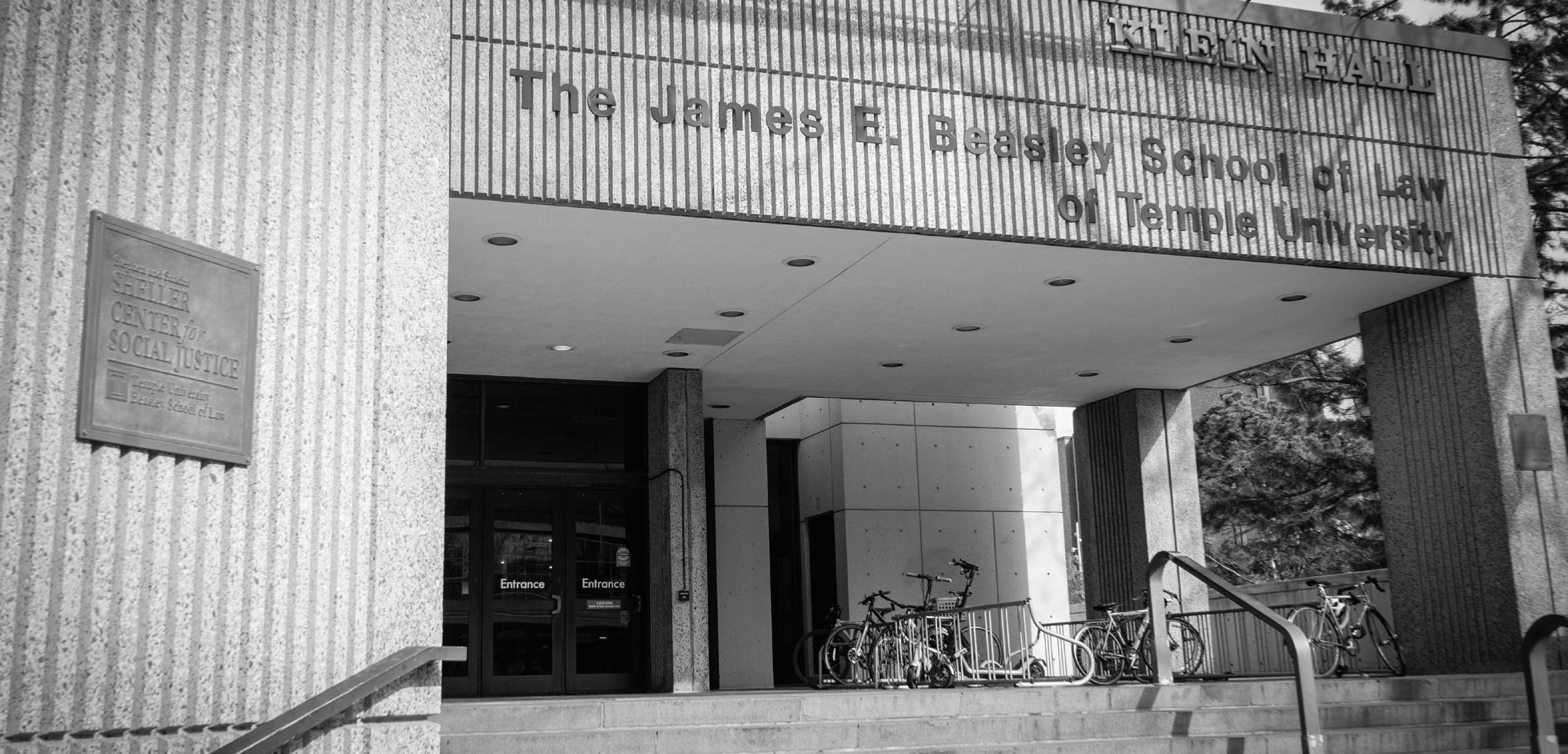
The students also demand that administration craft a workplace guide to preparing for ICE raids and distribute it to students, faculty and staf. The document references the Beasley School of Law Sheller Center for Social Justice’s ICE Workplace Policies & Raid Preparedness Plan and implores administration to create a similar, updated document for academic settings.
“There were questions from U.S. citizen workers who were looking to help
support immigrant coworkers in their workplace,” a Sheller Center spokesperson wrote in an email to The Temple News. “We came up with the plan as an advocacy tool that workers could use to advocate with their employers to protect immigrant workers.”
The Sheller Center’s workplace guide covers ICE’s legal authority to access non-public spaces, non-discrimination policies for employee leave and procedures to prepare for raids.
Last week, The University of Pennsylvania’s Undergraduate Assembly drafted a resolution to create “enforceable” ICE policies to protect students and inform them of their rights, The Daily Pennsylvanian reported.
The students also want Temple to implement a text alert system to notify students about ICE ofcer sightings on campus and mandatory fourth and ffth amendment trainings for faculty and staf before the 2026-27 school year.
Currently, Temple encourages individuals to contact the Department of Public Safety to report law enforcement
sightings on campus.
President John Fry acknowledged the uptick in ICE activity across the country and reminded students and faculty of their rights and Temple’s procedures for handling ICE visits in a March 24 announcement.
There have been no confrmed sightings of ICE on or near Temple’s Main Campus as of March 24, Fry wrote in the announcement.
Temple’s ICE protocols state that ICE agents are not permitted to be in private university spaces without a warrant, individuals are not required to answer questions and university ofcials should not interfere with ICE activities.
“Temple Law students remain committed to coordinating a timely dialogue to discuss these demands with the Temple Law administration and await an explicit response from the Law School administration to do so,” the students wrote in an email to The Temple News.
nathan.horwitz@temple.edu
CAMPUS The math department enrolled 1,174 students in need of developmental math skills.
BY NATHAN HORWITZ Co-News Editor
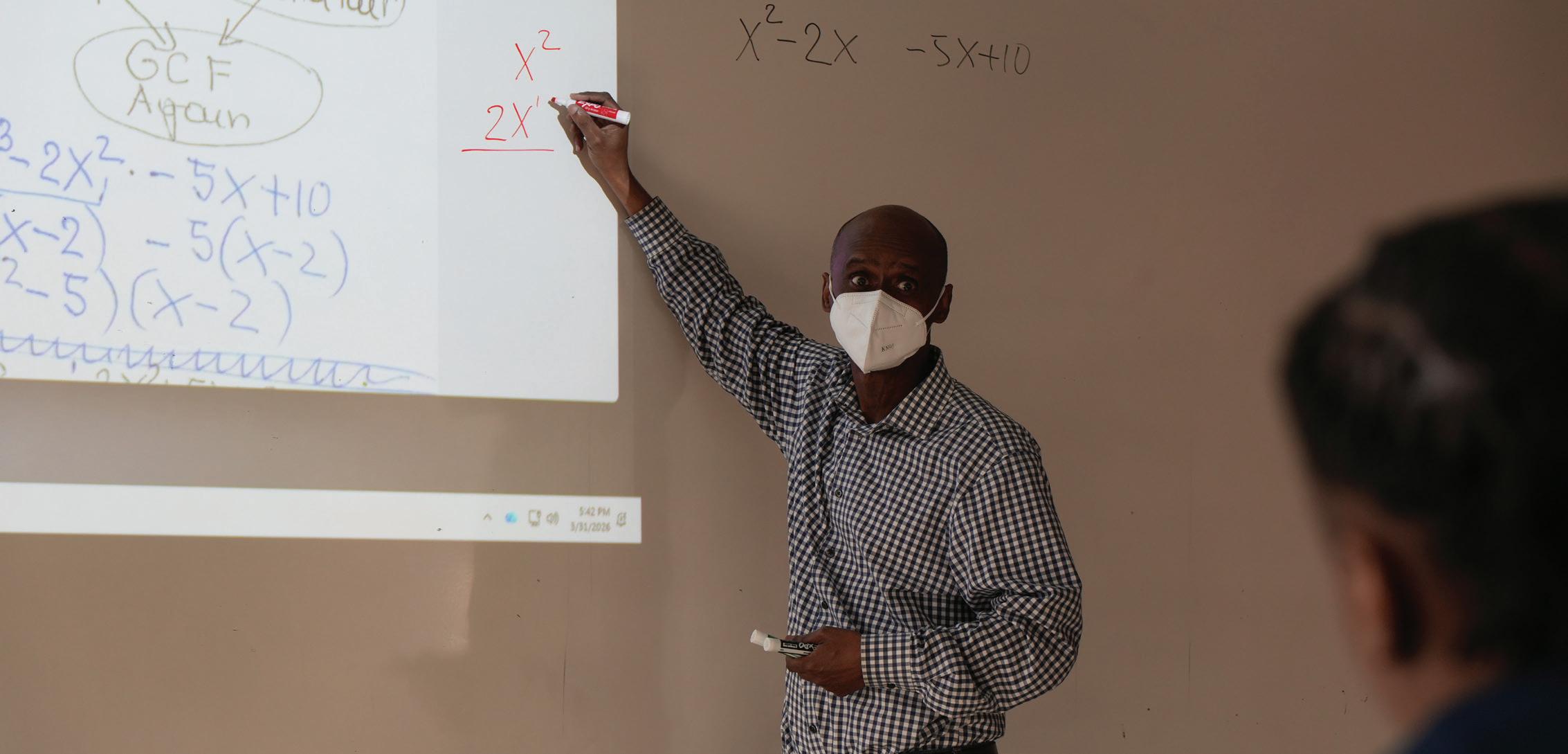
Enrollment in MATH 0702: Intermediate Algebra, which focuses on developing foundational skills for college math, was at an all-time high this year at 1,174 students across 34 sections in the Fall 2025 semester.
Students place into this course when their SAT, ACT or ALEKS math placement exam scores are in the lowest range.
First-year students at Temple are increasingly struggling with basic math skills, professors told The Temple News, mirroring a nationwide post-pandemic trend. A record-high 45% of high school seniors scored below the basic achievement level on the National Assessment of Educational Progress in 2024.
“Students are struggling more with basic things,” said Jessica Babcock, director of developmental mathematics. “And as a result, there are more students taking this course.”
MATH 0702 is a prerequisite for students who need to take College Algebra or Quantitative Methods for Business I for their major. MATH 0702 assumes students have prior knowledge of basic algebra and arithmetic, Babcock said.
Boris Datskovsky, director of undergraduate studies in the math department, believes increased enrollment in Intermediate Algebra is the result of less students applying for college and Temple’s reliance on enrollment to resolve its budget issues.
“Declines are due to the fact that Temple is in a survival mode,” Datskovsky said. “They admit almost everyone who applies.”
Temple enrolled the largest frstyear class in its history this fall with 5,378 students, The Temple News reported. The math department added six more sections of MATH 0702 to accommodate approximately 200 more students,
Datskovsky said.
Temple’s acceptance rate for incoming frst-year students was 88% in Fall 2025, an 8% increase from 2024 and 32% increase than 2015.
From 2020 to 2025, the University of California, San Diego found a signifcant decline in college math-readiness among their incoming freshmen. Incoming frst-year students with math skills below high school level increased from 30 to 900 in the same time frame, according to a November 2025 report from UCSD’s Senate-Administration Workgroup on Admissions.
Babcock wasn’t shocked by UCSD’s fndings, as it confrmed what she’d been seeing in Temple’s developmental math program.
“This is clearly a nationwide thing that’s happening,” Babcock said. “And we are seeing the same exact things that people are seeing in California and kind of across the country.”
Datskovsky thinks there was a notable decline in math skills after the COVID-19 pandemic because students spent a year of their education online.
“It’s not very easy to learn math on-
line,” Datskovsky said. “You need to be really disciplined, and there are so many ways to cheat on tests and exams. “
However, he’s not sure whether to attribute the current issues to COVID.
Students lost more ground in math than other subjects immediately after the pandemic and fewer were prepared to learn foundational math skills at the start of the 2021-22 school year, according to a May 2022 report from The National Association of State Boards of Education.
Babcock started noticing a decline in skills around 2017 or 2018. She fnds that students are struggling with operations that are necessary for Intermediate Algebra, like adding and subtracting negatives and fractions.
A record 141 students out of 706 withdrew from Calculus 1 in Fall 2025, Datskovsky said.
Evelyn Jaison, a freshman undeclared major in the Fox School of Business, said many of her classmates are struggling with the curriculum in Quantitative Methods for Business 1, a frst-semester calculus course.
“You miss like one class and then
you’re behind automatically,” Jaison said. In the 2019-20 school year, Babcock led the creation of a developmental math oversight team. The team’s goal is to ensure collaboration and consistency throughout the developmental math program, which includes courses 0701, 0702, 1019 and 1021.
Babcock’s team created structured worksheets for 0702, which begin with practice problems, continue with a middle section to assess the student’s understanding of the material and end with more practice problems.
Instructors are also trained to facilitate engagement with students and between peers.
“I just think that there’s a lot of factors working against students who want to be successful in math,” Babcock said. “And I don’t know what the answer is other than to try to do as much as you can for as many students as you can, and try to fnd ways to meet these students who are missing these critical background pieces of their math education as much as possible.”
nathan.horwitz@temple.edu
Temple Student Government campaigns are often built on ambitious ideas like better dining experiences, optimized safety and improved resources across campus.
However, many of these promises go unfulflled, not inherently due to lack of efort, but because they are built on a fundamental misunderstanding of TSG’s power as a student group.
At its core, TSG is an advocacy body with limitations. They exist to relay student concerns to university administration, allocate funds to clubs through the STARS system and organize events.
The Editorial Board encourages students to engage with student government knowing their limitations. The Editorial Board also urges TSG representatives and candidates to be knowledgeable of their authority and avoid promising things they cannot deliver.
Temple Together, the sole campaign in the upcoming TSG election, refects a recurring pattern of overlooking their limitations in their attempt to expand Temple patrol zones.
Expansions to campus patrol zones require approval and planning from Temple’s Department of Public Safety. This would likely require stafng increases.
DPS already sufers from stafng shortages, with a recent stafng study fnding that the department needs additional staf to improve existing patrol operations, The Temple News reported.
The addition of extra patrol is both a burden on the department and a promise that preys on existing student and parent fears.
Similarly, the now-defunct Owls Unite campaign pushed
for dining changes like refunding unused meal swipes at the end of the semester. Food-related promises often fall through because TSG does not control dining, which is contracted by Aramark, an outside company.
Student government is most efective when they focus on working as a bridge between administration and the student body, like recent campaigns to add QR codes near ADA doors to report broken push buttons.
Recently, the Temple Action Solidarity Coalition has been calling for Temple to divest from companies investing in Israel and advocating for TSG to add a divestment referendum on their election ballots.
However, TSG has claimed limited authority to address concerns by campus advocacy groups.
TSG cited legal statutes as to why a referendum wouldn’t be possible, like the “Stand With Israel” Act and Pennsylvania’s Anti-Boycott Divest and Sanction law. Both bills threaten to withhold government funding from contractors that boycott or divest from Israel.
But legal ramifcations from these laws only go into efect when universities actively follow through with divestment protocols. TSG adding divestment as a point of advocacy is a feasible ask by TASC.
It is reasonable for students to expect improvements from the university; however, those expectations should be directed towards the administration rather than TSG.
Strong leadership in student government is less about bold claims and more about persistence, strategy and honest representation.
A student argues that looksmaxxing is a dangerous trend rooted in misogyny and extremist ideals.
BY VALERIA URIBE Managing Editor
The manosphere, an online community that promotes toxic masculinity, constantly produces trends that terrify the public but attract impressionable men.
Looksmaxxing originated in this polarizing corner of the internet around ten years ago, but it has recently gained more popularity on TikTok thanks to infuences like looksmaxxer Clavicular. It focuses on physical improvement through questionable methods like extreme exercise, restrictive diets and unauthorized use of medications like steroids, The BBC reported.
This trend is popular among young men who hope that maximizing their appearance will lead them to romantic success. They believe their looks are why they remain “involuntarily celibate” and go to unhealthy lengths and self-harming behaviors like breaking their bones to achieve a more masculine physique.
But looksmaxxing is a form of misogyny that reveals an unsettling truth about the skewed priorities of young men. They are willing to use extreme methods to optimize their chances of having sex, but they will not address that the radical and right leaning rhetoric they promote is why most of them remain single.
There is nothing wrong with people wanting to improve their appearance, but looksmaxxing promotes beauty standards that appeal to the male gaze and encourage hegemonic masculinity through traits like defned jaws, white skin and symmetrical features.
Some claim that looksmaxxing is necessary and accuse women of being vain. But, men are not looking to make women happy by going through these practices. They consider women as “targets” and want to prove that they are worthy of afection.
Not all men who participate in looksmaxxing are conservative, but the idea was born in a circle linked to the right-wing and it’s rooted in misogyny.
Followers of this this trend tend to have racial biases, as they consider “whitemaxxing” a form to be attractive and believe that
white-centric beauty is superior, The DW reported.
Advocates of this movement often promote racist views and right leaning men embraced them as role models. Clavicular was seen with Nick Fuentes and Andrew Tate, a white nationalist commentator and a radical infuencer who was charged for rape and human trafcking respectively, The New York Times reported.
The right has welcomed looksmaxxing and the misogyny it promotes, as President Donald Trump dined with Fuentes, who engages in the trend. Additionally, the United States Department of Defense posted a “Lethalitymaxxing” ad, featuring the rhetoric of looksmaxxing weeks before the U.S. and Israel attacked Iran. People may argue that looksmaxxing is not political. However, overlooking the blatantly racist and sexist ideals linked to looksmaxxing, speaks to a person’s priorities and morals.
The rise of conservatism, particularly in young men, is afecting how Gen-Z interacts with each other. Thirty-one percent of Gen-Z men believe that a wife needs to obey her husband, while 33% of them argue that the husband should have fnal say on important decisions and 24% believe that women shouldn’t be too independent, according to a March 2026 study by King’s College London.
On the other hand, Gen-Z women in the U.S. heavily lean towards liberal views, with almost 40% of them identifying as Democrat, according to a September 2025 study by The 19th and SurveyMonkey.
Looksmaxxing is flled with double standards. Men’s obsession with dominance becomes clear when they condemn women for doing what they wish they were able to do.
Looksmaxxing places the burden on women and allows these men to avoid any accountability for their radical views.
There aren’t enough treatments to hide that some men believe they are owed women’s attention. Their feelings of superiority won’t let men accept that their questionable morals weigh more than their looks and that is the ultimate reason why they remain alone.
valeria.uribea@temple.edu
A student refects on how they maintain hope through fraught American politics.
BY BRADLEY MCENTEE Copy Editor
My days are bookended with catastrophe.
I see posts of young people angry at politics while I wake up, eyelids still half shut and begging to be pulled back together like a magnet. I see the same posts each night before bed.
The complaints are always the same: job applications with no interviews and skyrocketing gas prices from a war we don’t belong in.
Being constantly sufocated by reminders of the fraught state of American politics bleeds into my self-perception. It makes me question whether I’ll have a job other than retail in the near future or if in some dystopian universe a draft call will appear with my birthday.
In anxiety dreams I see myself in a hospital bed after I age out of my mom’s insurance, slowly racking up medical debt. I hear my stomach grumble as I open a comically large, but empty pantry with nothing but noodles and expired cereal.
I walk a lot on days when the weight becomes too much. I wander streets around campus or my neighborhood aimlessly, looking into the clouds for something inspiring or a blade of grass growing through cracks in the concrete that I can somehow twist to be a positive omen.
Lately I’ve been in these moods more frequently than not, because I’m getting thrust into the job market after graduation and the news seems more unrelenting than ever.
“Love It If We Made It” by the 1975 has reentered my musical rotation because of this. It’s a song from 2018 that airs out American political grievances with nauseating resonance even eight years later.
The song’s ultimate thesis lies in the hope for perseverance, that despite it all the people can come together to overtake the systems of oppression that hold

them down. Lately I fnd myself yearning for the same goal.
As I continue working in my job at a grocery store, I’ve witnessed families reeling from cuts to their Supplemental Nutrition Assistance Program benefts and the rising prices of pantry essentials. I’ve watched others tape “MAGA recovery” stickers on elevator buttons to discourage right-wing shoppers.
Last week I was manning a register and a specifc interaction stuck to me like glue. A man told the woman in front of him, “God bless.”
This sparked her to mention Jesus, to which he responded that he did not believe in him. Instead, he expressed his belief in anything larger than himself.
I sat there stupefed, ringing out the customers behind them thinking about why I was so struck by their brief interaction. I realized quickly that I too was looking for a higher power in my moments of refection and doomerism.
As I drove home from my shift that night, with the 1975 song rattling the speakers of my 2005 Hyundai, I real-
ized that the hope for a better future lies within these small moments of love with strangers.
Memories fooded me quickly. When I got home I was looking at the small fgurines collecting dust on my shelf space, catching a glimpse of a ceramic ferret I acquired in a small art shop in West Virginia during spring break.
The words of the stoned cashier rang through my brain, “This is why they shouldn’t give us money. Buying stupid stuf like this is how we win.”
Since then, I’ve carried that line of thinking with me. How we make it through the convulsions of the political moment may just be through love and connection. As the 2025 “Superman” movie philosophizes, “Maybe that’s the real punk rock.”
When I frst saw “Superman” before America went to hell in a handbasket, at least to the degree it is now, I remember tears streaming down my face at this expression of the importance of love and trust. It rings even truer now.
I cherish the moments of driving
through Philly neighborhoods and seeing men’s heads bop in tandem with the music from my speakers as they sit in folding chairs outside of corner stores. I remember fondly the moments when I handed a man a dollar bill and he strolled down the street with the parting words of, “have a great one and keep jamming.”
It is my belief that God lives within these conversations.
Love isn’t enough to fx structural problems–it’s merely a sterile dressing to slow the bleeding. But slowed bleeding is what ensures a stable body, and that may be all that we can ask for.
As Leslie Jamison wrote in “The Empathy Exams,” “Keep bleeding, but fnd some love in the blood.”
bradley.mcentee@temple.edu
Students argue closing the skate park is a temporary solution to a long-term problem.
BY LOGAN THOMPSON & ASHLEY NTEFF For
The Cecil B. Moore Plaza and skate park on Main Campus has been a popular spot where students and North Philadelphia residents gather. The park is located at the heart of the neighborhood, making it an iconic location children from the area visit after school.
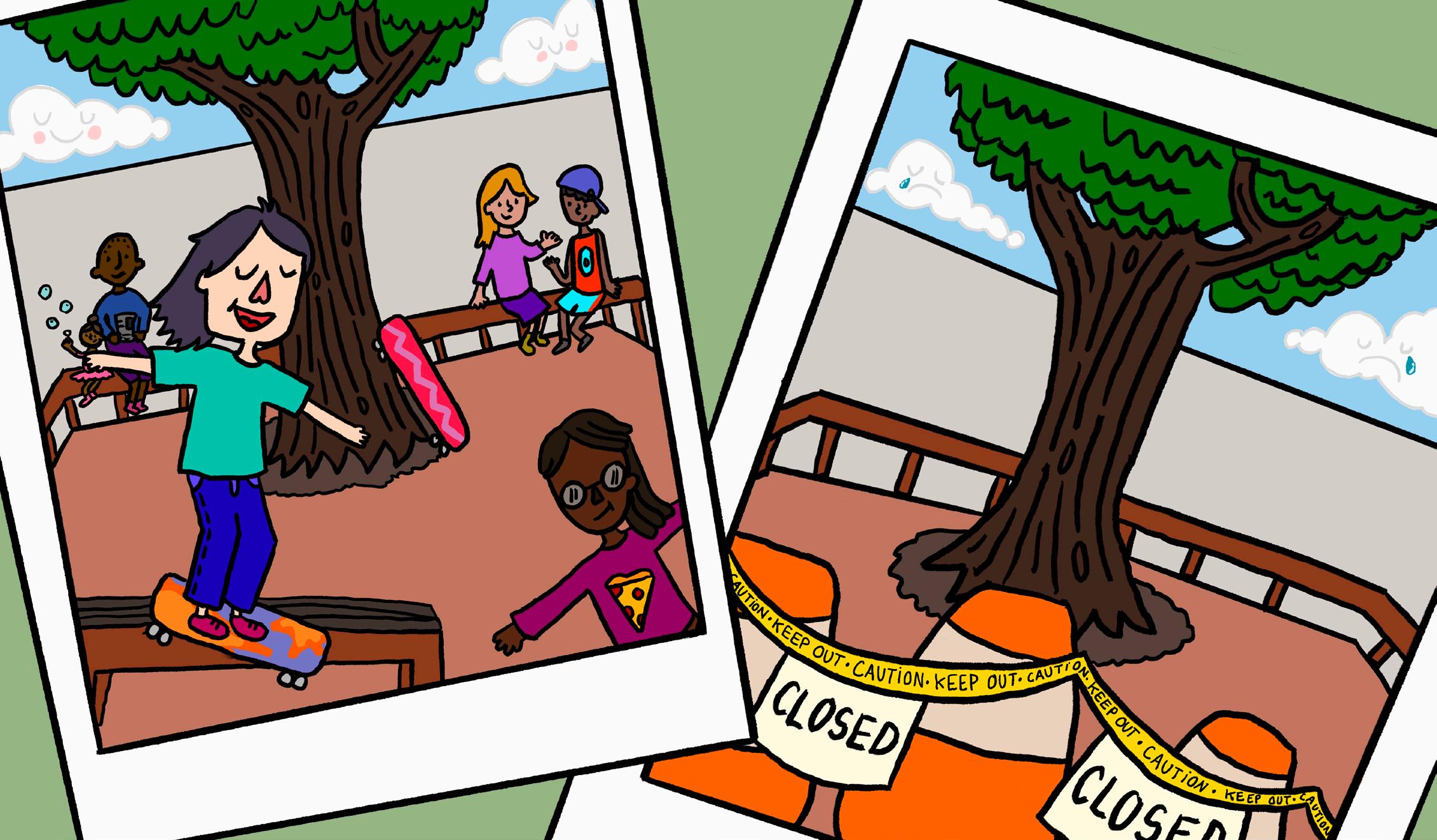
However, Temple University and Philadelphia police departments installed barriers around the park on March 25th and implemented new restrictions, limiting entrance between 7 a.m. and 3 p.m.
The decision is part of a broader effort to maintain public safety and reduce the large gatherings that take place in the area, especially as the weather grows warmer. However, restricting access to one of the most popular spaces shared between Temple students and residents may further divide between the university and the rest of the neighborhood.
The closure of the skate park was infuenced by recent incidents that compromised the safety of the community, Vice President for Public Safety Jennifer Grifn said.
“Because of the disorderly behavior, the fghting and assaults we made the decision to close the park down during certain hours for safety reasons,” Grifn said.
Some large gatherings of unsupervised crowds at and around the skate park have resulted in police intervention. During one gathering, a 15-yearold boy was shot in the arm in March 2025 and four Temple students were assaulted by a group of minors last April.
The kids that use the skate park come to campus because of a lack of and underfunded afterschool programs and community centers around the city, making the public spaces at Temple a safe space where they can meet, The Temple News reported.
Evan Alston believes that Temple students shouldn’t have to face the con-
sequences of other people’s actions and that disciplinary measures should be placed solely on those causing havoc.
“We’re in college, we wanna go outside, have a good time. Temple students shouldn’t have to pay the price for other people’s mischief,” said Alston, a sophomore photography major.
Temple has a history with displacement of the North Central community from their expansion. Shuddering the skate park may create a thicker wall between Temple and the community.
Removing the skate parks’ accessibility to all may not fully eliminate the gatherings. Instead, this may prompt members of the community to migrate to other publicly areas on campus, including the streets around the skate park.
Mikey Hunley believes that closing the skate park won’t make a diference in safety since large groups, of teenagers or Temple students, will only migrate to other open spaces.
“For college students, we want to socialize. So, if this is where we go and you shut it down, we’ll just go crowd
around elsewhere,” said Hunley, a freshman entrepreneurship and innovation management major. “It’s honestly more dangerous.”
Temple should revaluate reliance on restrictive measures as a primary response to safety concerns, because limiting access to shared spaces does little to resolve the underlying issues driving these gatherings, including a lack of structured recreational options and community investment in Philadelphia.
The restriction might make the skate park feel like an unwelcoming environment, as students and residents may feel uncomfortable seeing a space that used to be open closed of by barrier gates.
TUPD balances multiple perspectives when deciding safety measures, including parents and students who have been concerned about disruptive gatherings on campus, Grifn said.
“We have to listen to diferent voices, take that information in and make decisions that are ongoing,” Grifn said. “We’re constantly evaluating, ‘What is the strategy we were using, how is it im-
pacting diferent groups and are there other options for us?’”
Closing spaces like the skate park contributes to isolation and weakens the connections that are important for community life. It makes neighborhoods feel less cohesive and deepens the sense of loneliness already afecting many communities, Public Square reported.
The measures attempt to address safety concerns, but increasing physical barriers can unintentionally signal that areas are controlled rather than shared. This changes how students interpret and interact with those spaces, especially in environments meant for informal recreation and social connection.
If the goal is safety, then the answer cannot be to limit resources. Until investments are made in environments that support young people rather than restrict them, closures like these will continue to treat symptoms while leaving the root issues untouched.
logan.thompson.thompson@temple.edu ashley.nteff@temple.edu
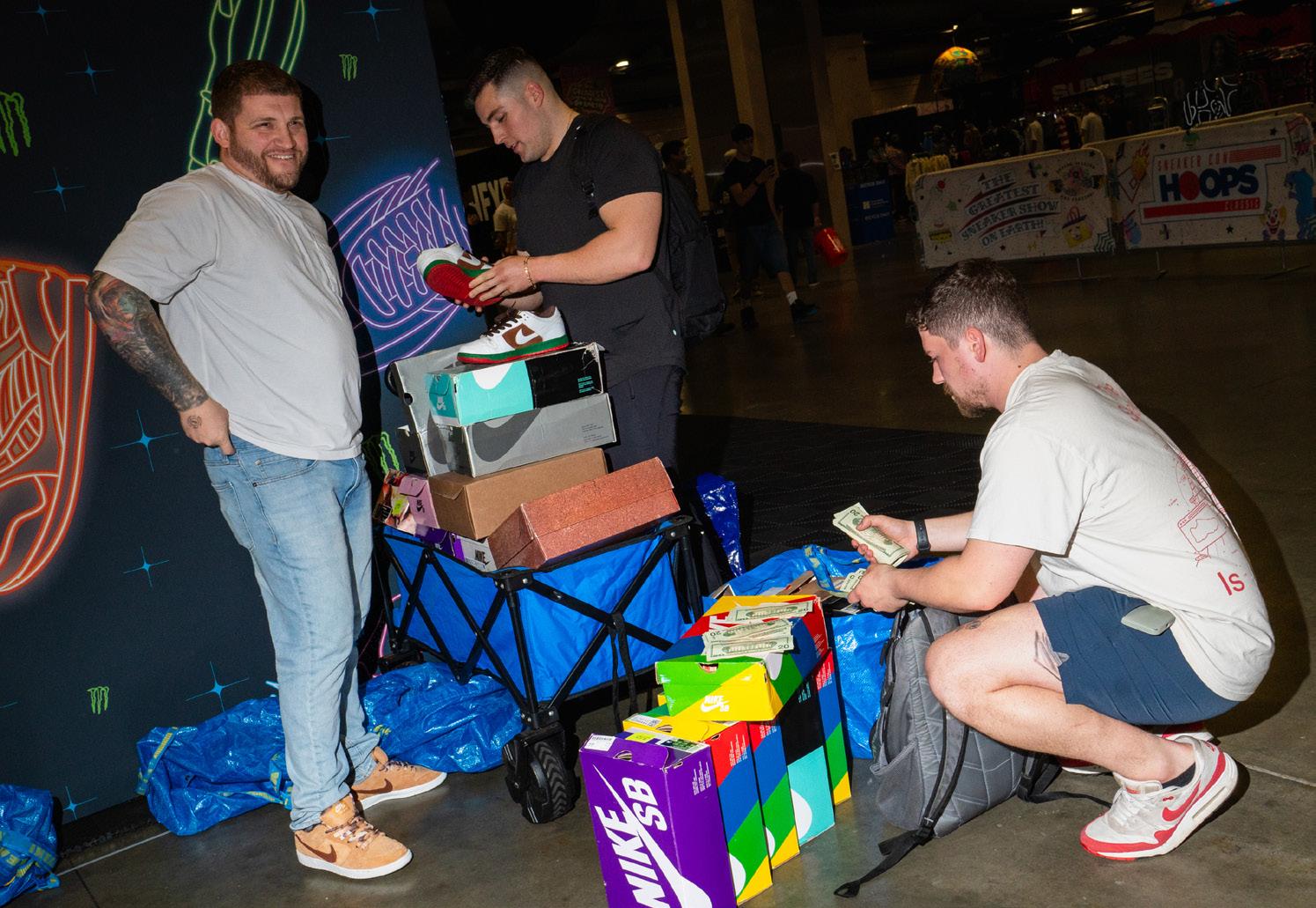
decided it’s time to sell a few, becoming a vendor for the frst time at Sneaker Con.
BY LILLIAN PRIETO Assistant Photo Editor
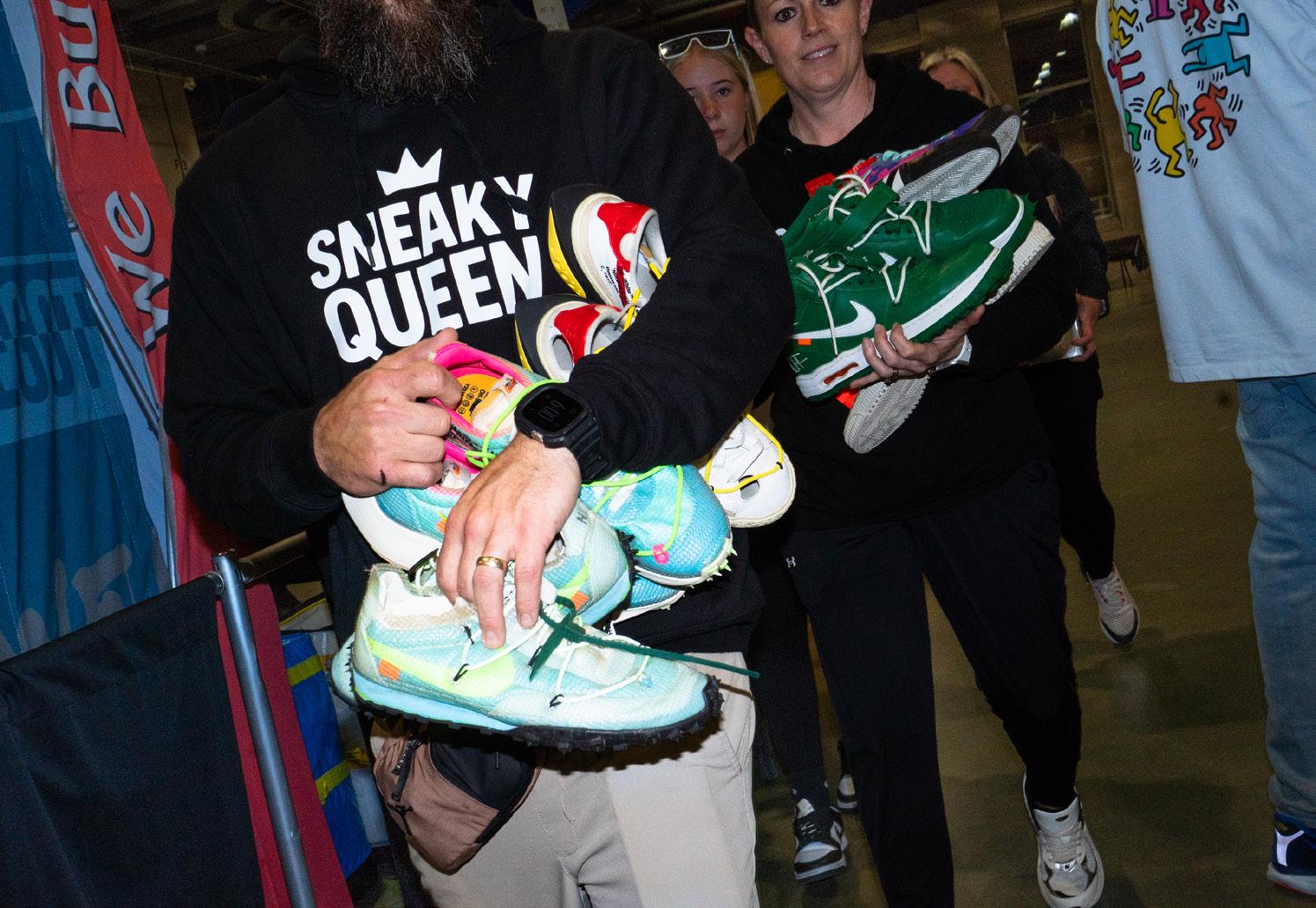
Michael Outen was walking by a Louis Vuitton store at the Ritz Carlton when a pair of alligator print shoes caught his grandson Jameson’s attention. He badgered his grandfather to get them, even going as far as refusing to leave the store until they were purchased. Outen gave in and bought the shoes.
Since then, Outen has collected more than 100 pairs of shoes. Now, he’s
“If it wasn’t for Jameson, I never would have purchased any shoes.” said Outen, the owner of Myk-Beth’s Estate Sales.
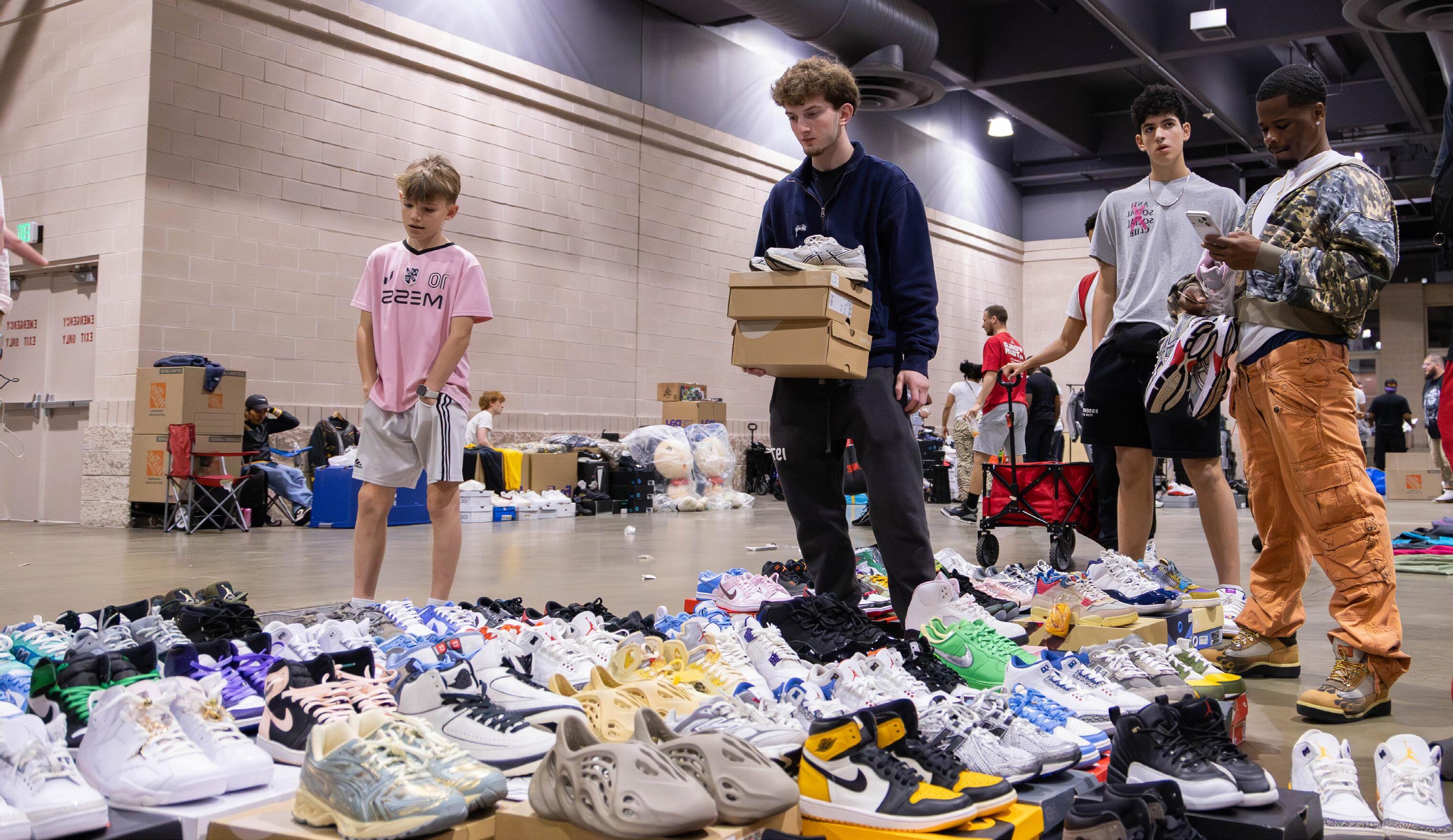
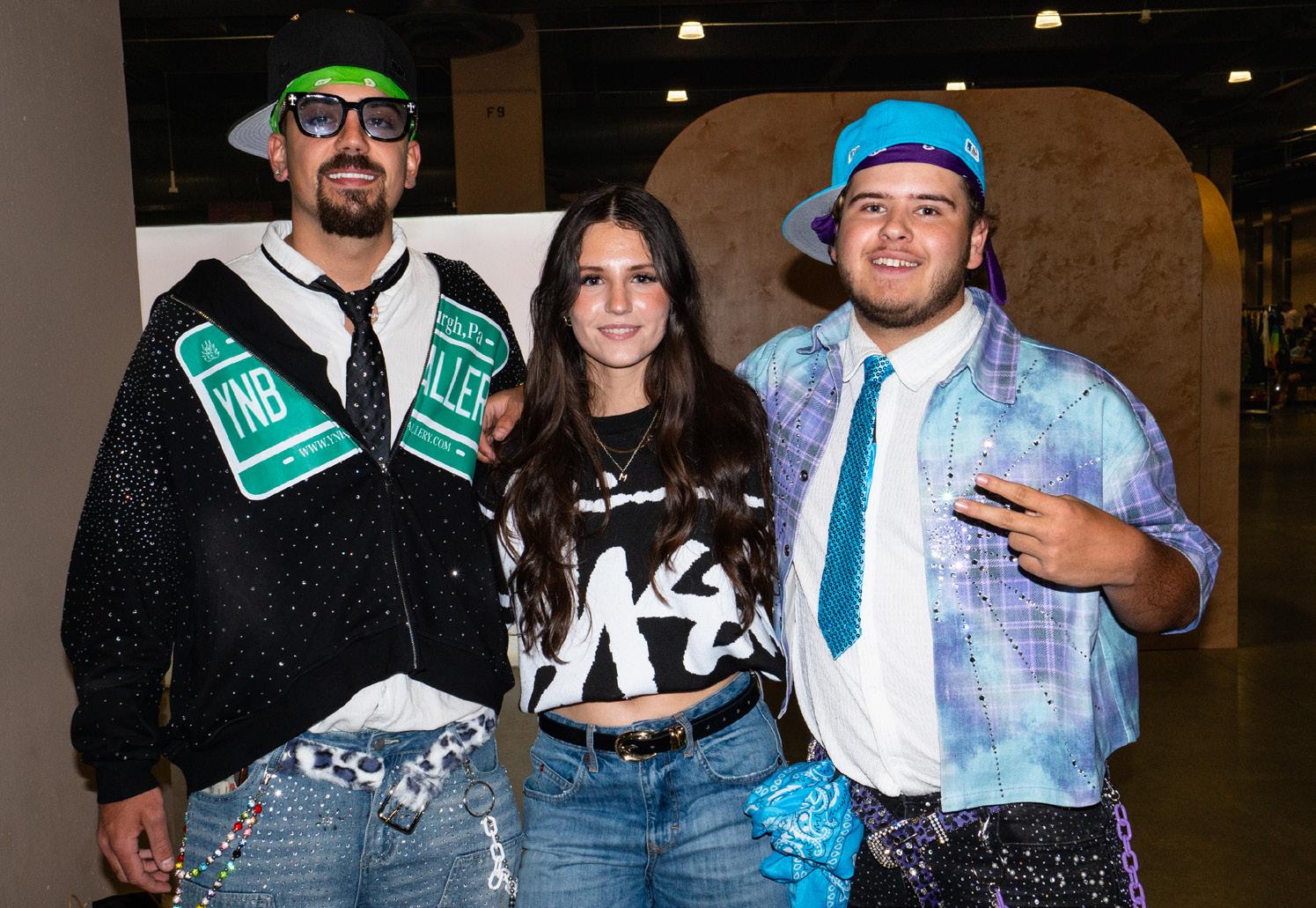
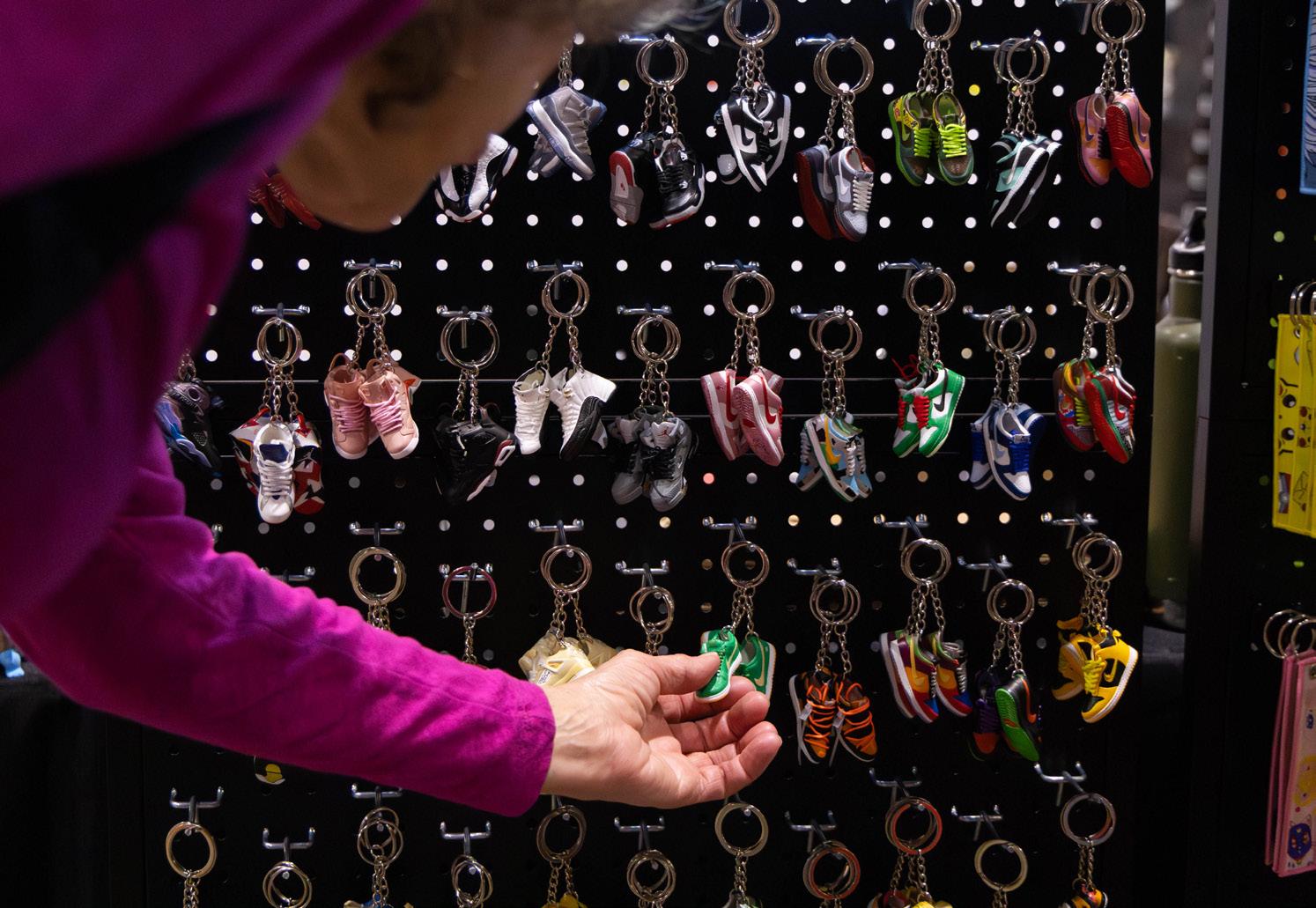
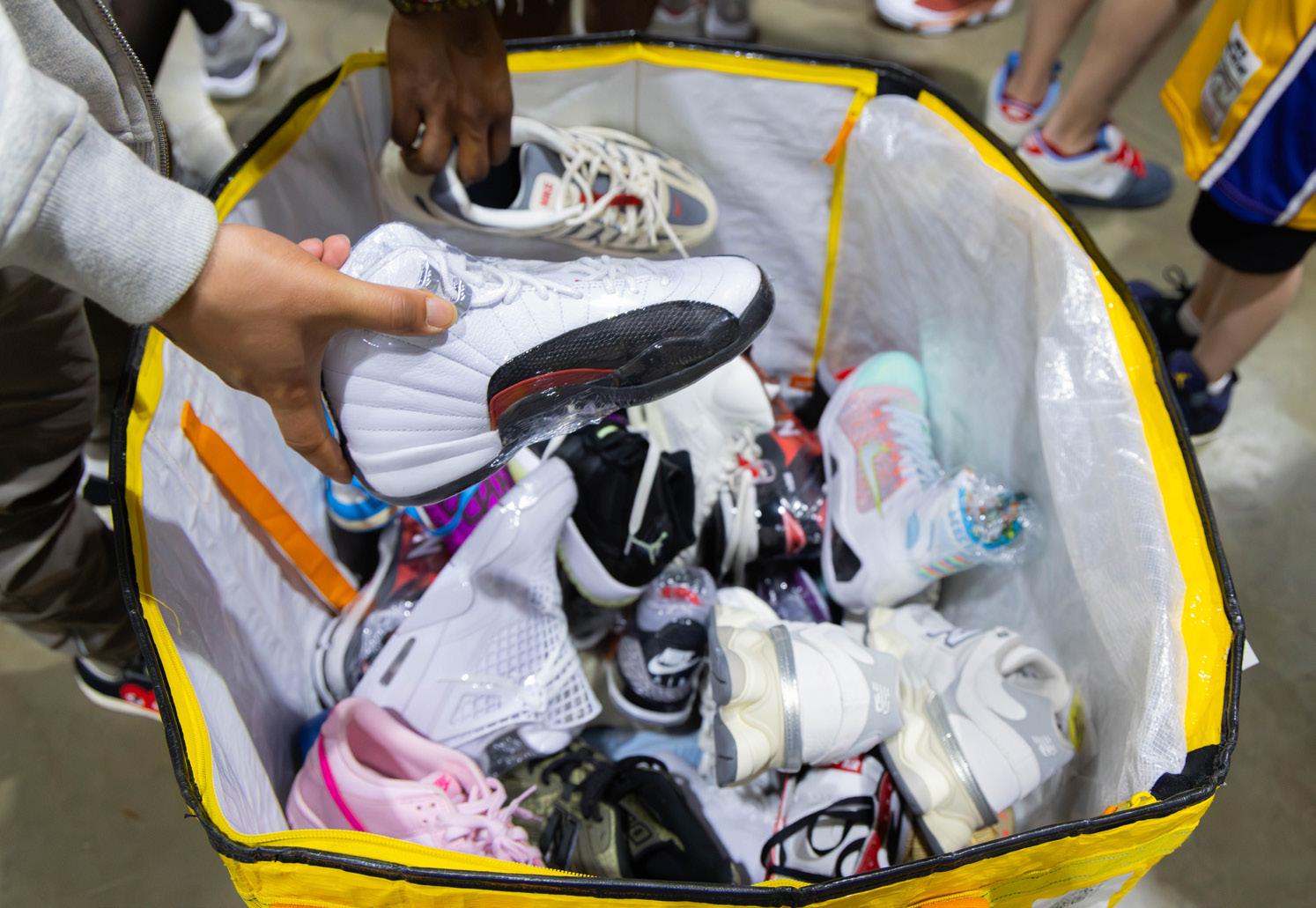
Sneaker Con returned to the Pennsylvania Convention Center on Saturday for its 17th year and with it brought shoes and clothes buyers and sellers, like Outen, from across the nation. Attendees flled Hall F with limited edition kicks, custom-made clothes and hours full of buying, trading and selling.
The event included a live DJ, a $1,000 half-court challenge, and a brandnew Trading Card Alley. The newest addition to Sneaker Con was introduced with limited edition trading cards for
Philadelphia 76ers legend Allen Iverson and Philadelphia Eagles defensive lineman Brandon Graham, who hosted meet and greets at the conference.
Attendees set up their items on the foor for people to walk through and see what’s up for sale or trade in the trading pit at the back of the hall. Many attendees brought wagons and bags full of shoes and clothes to trade and sell.
“I’m a sneakerhead,” said Nick Cheadle, a loyal Sneaker Con attendee who has attended more than 100 events.
“I’ve loved shoes since I was a kid, and now I sell them.”
Many vendors travel with Sneaker Con to each city for their full-time job. Other vendors from Philly use events like this one to sell from their personal
collection as a side hustle.
Many people fnd passion to be the main driver when it comes to buying and selling shoes and clothes. Jabari Lewis, Sneaker Con’s media director, wants all attendees to walk away with more love and passion for shoes and clothes, and faith that they can make a living from this one day.
“I want you to leave the show thinking that it’s one, never too late to do what you want to do,” Lewis said. “And two, it’s possible because these guys here made it possible, so you can also make it possible too.”
lillian.prieto@temple.edu @lillianprieto__

A student refects on navigating two homes and how adapting to them shaped her identity.
BY LOGAN THOMPSON Assistant Opinion Editor
Growing up in two homes was normal for me. I was around four years old when my parents separated; I was too young to understand what it meant but I felt the shift. When I was about 10, I realized I wasn’t just moving between houses, I was moving between versions of myself that were shaped by the environment, each one bringing out a diferent side of who I was.
On my mom’s side, life was structured and there was more consistency and expectations. My mom was who raised me on a daily basis. She taught me to pay attention to details and to care about the way I dress and present myself. It wasn’t about perfection, but about pride and self-respect, and it’s something I keep in mind today.
My maternal great grandmother was also constantly present during those years. She picked me up from school, asked about my day and made sure I was fed before anything else. Her kitchen was always warm and familiar.
Knowing she was there made me feel grounded because having her there gave me a sense of comfort and stability. I learned from her that care isn’t always big or loud. Sometimes it’s just showing up every day and making sure someone is well.
My dad’s side of the family was different, but just as important. When I was with my dad, I was often surrounded by family, sitting together, talking and laughing. I watched my dad and grandparents cook or we sat together in the living room watching TV. We liked game shows like Jeopardy and answered questions while learning new things. It wasn’t formal, but I was constantly learning when I was with my dad’s side of the family. They showed me the value of education beyond school. Learning didn’t feel like a task when I was there,

instead it came naturally when they were present.
My paternal grandmother made a special impact on my life. She read me Bible passages and took the time to explain their meaning. Those moments were slower and more refective. They taught me to formulate questions and to sit with ideas.
Both sides of my family grew as I got older, and so did my role within them. I became an older sibling on both sides, which brought a new kind of responsibility.
My younger sister on my mom’s side is a lot like me in ways that are almost ironic. She’s sharp, observant and a little snarky, but she carries herself with a kind of emotional distance I never had. Watching her taught me patience and forced me to step outside of myself to understand that not everyone processes things the same way I do.
My younger brother, on my dad’s side, is the opposite. He is open, emo-
tional and afectionate in a way that makes it impossible not to respond. Being around him softened me and taught me that vulnerability isn’t something to avoid but something that connects people. Through him, I learned to be more present, expressive and understanding.
Balancing these relationships while still navigating two homes wasn’t always easy. I had to adjust constantly and shift how I spoke, acted and thought depending on where I was.
But as I got older, I noticed my two homes didn’t necessarily contradict each other; they complemented diferent parts of my life.
The constant shift that once felt like adjustment started to feel like adaptability. Being able to move between diferent expectations, routines and communication styles helped me become more aware how I respond.
Instead of seeing it as switching identities, I came to understand it as learning how to carry the same core self
into diferent spaces and drawing from what each side of my family taught me.
Each side of my family gave me something diferent. My mom’s side taught me to present myself with intentionality and take care of who I am. My dad’s side taught me to think, learn and connect with others. My siblings continue to teach me to navigate relationships with patience and empathy.
Looking back, growing up between two homes didn’t divide me the way people might expect. If anything, it expanded me. It gave me more perspectives, more experiences and more ways to understand myself. I didn’t become two diferent people, instead I became one person with a wider sense of what it means to belong.
logan.thompson.thompson@temple.edu

RAINCOAT
UMBRELLA
RAINDROPS
STORM PUDDLE RAINBOW CLOUDS THUNDER
DRIZZLE
SPLASH
OVERCAST
BREEZE







Across
2. A spring bulb flower known for its cup-shaped, colorful blooms.
5. An early-blooming flower that thrives in shady garden spots.
8. A delicate, bell-shaped flower often found in woodlands.
9. A spring bulb with dense clusters of fragrant.
10. A common meadow fower with white petals and a yellow center.
11. A fragrant flower with large, trumpet-shaped petals.

Down
1. A bright orange or yellow flower commonly grown in gardens.
3. A flower with sword-shaped leaves and detailed petals.
4. Early spring flowers, often appearing through snow.
5. A large, often fragrant flower with layers of ruffled petals.
6. A bright yellow flower with a trumpet-like shape that signals the start of spring.
7. A garden flower with petals that sometimes resemble a painted face.

ALUMNI Brittany Bronson has dedicated more than a decade to equity and inclusion.
BY MADELYNNE FERRO Features Editor
In her Fall 2011 semester at Temple, a pregnant Brittany Bronson had difculty ftting into lecture seats attached to the desk, often missed classes for doctor’s appointments and had her frst child, John, during midterms.
But Bronson’s experience made her passion for equity and equality burn stronger for others unconsidered in workplace places and schools.
“I was always just interested in supporting people like me get access to resources and support,” Bronson said. “My advisor at Temple was like, ‘Have you ever heard of sociology?’”
Since graduating with a sociology degree in 2014, Bronson has spent more than a decade using a sociological, data-driven approach to diversity, equity and inclusion. Last month, Bronson received the Philadelphia Business Journal’s Diversity in Business Award after being nominated for her work as Philadelphia Gas Works’ manager of culture and inclusion.
Mary Stricker, a sociology professor who directed Bronson’s independent study about racial and socioeconomic disparities among breastfeeding women in 2013, was instantly drawn to Bronson being a new parent.
“You would expect that she would be just barely getting by,” Stricker said. “But she was incredibly engaged, incredibly interested, insightful. It’s the reason why we did an independent study together.’”
Two years after graduating from Temple, Bronson decided she wanted to advance her education and enrolled in St. Joesph’s University masters in organization development and leadership program.
After obtaining her graduate degree, Bronson focused on diversity, equity and inclusion careers, despite the term having little traction at the time. She began
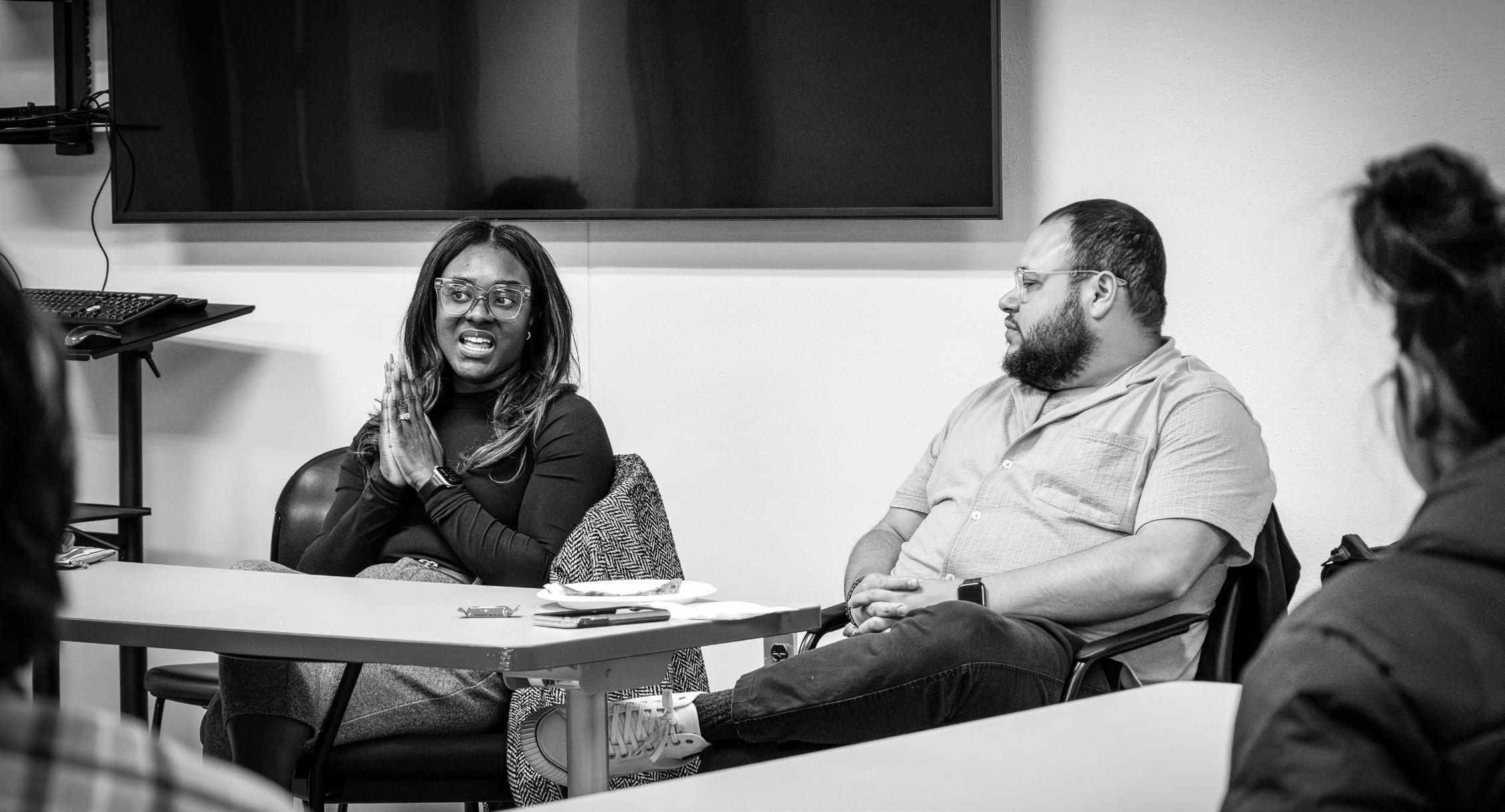
at Philadelphia Works, the city’s work force board, in 2017, where she managed funds for welfare programs and specialized in assisting youth who were connected to the criminal justice system or identifed as having intellectual disabilities.
Anja Best, a 2010 public health alumna, met Bronson at a volunteer event for the school their sons both attended.
Their relationship strengthened when Best’s son was diagnosed with dyscalculia—a learning disability that affects a person’s ability to understand and process mathematical facts—and Bronson guided Best through the accommodations.
“She walked me through the entire process, was on the phone with his teachers, made sure all his needs were documented,” Best said. “She just said, ‘There’s nothing wrong with needing help.’ Now my son is in seventh grade, and he’s transitioned out of his class and taking pre-algebra.”
In 2019, Bronson landed in The
School District of Philadelphia as a senior program manager, evaluating grants for charter schools.
“I ensured charter schools were accessible,” Bronson said. “At some schools, charters were written in a way where it was so strict no one could get in. If they had preferences for children of teachers, sibling preference, board member preference and staf preference, it keeps out Black and brown students from some schools.”
Bronson’s major research was directed at Franklin Towne Charter High School, which the Philadelphia school board voted to explore the closing of due a discriminatory lottery admissions system in August 2023, Chalkbeat Philadelphia reported. She stayed in the position and pushed through the COVID-19 pandemic until 2021, when she became the director of DEI for a Brazilian tech company.
She worked there from 2021 to 2024, when many DEI positions came under fre prior to President Donald Trump’s
second term in ofce in 2025.
“DEI wasn’t cool anymore,” Bronson said. “They did what every private company did, so I was laid of.”
Bronson took her fring as a blessing: she fnished her Ph.D. at St. Joe’s, which Stricker sat on the board of, and decided to enjoy every part of college she missed out on due to parenting. She took tennis lessons, enjoyed happy hours and took her now three children to Disney World.
But she couldn’t stay away from work for long. In August 2024, a PGW recruiter reached out for a consultant and soon the temporary position became permanent. In March of this year, Bronson won the Diversity in Business Award for her performance.
“I’ve cared about DEI for so long, and now I know not only does this work matter to me, it matters to these large agencies as well,” Bronson said.
madelynne.ferro@temple.edu
The skate park is partially closed as of March 25, limiting a staple community hangout spot.
BY CHLOE PABON Assistant Features Editor
Myrrah Shapoo spent her freshman year hanging out by the Cecil B. Moore Plaza-turned-skate-park and sitting on the concrete steps on warm nights. The now-junior anthropology major went out with her friends almost every day to meet new people, smoke weed or watch skaters.
For Shapoo, the skate park became the catalyst for her social circle, where she built lasting friendships.
“It was the spot,” Shapoo said. “I don’t think people understood like the function was Cecil B. Moore, you didn’t need a party.”
Temple University and Philadelphia Police departments closed the skate park as of March 25 to mitigate “unlawful activity and large gatherings” and “disruptive meetups,” The Temple News reported.
Currently, the skate park remains partially open from 7 a.m. to 3 p.m. to students who show their OwlCard, according to a sign on the metal gates. Its closure has upset students who often spend time there.
Vice President for Public Safety and Chief of Police Jennifer Grifn warned students of increased police presence in anticipation of children and teenagers participating in “fghting, trespassing,” and “disorderly conduct” in an email on March 23.
In the past, meetups upwards of 100 teenagers have ended in arrests. A teenage boy was arrested for fring a gun into the air during one gathering in February 2024. Four Temple students were assaulted during another in April 2025. Since then, increased surveillance of the area has led to friction between two communities.
A signifcant lack of accessible public spaces, resources and funding has led kids in North Philadelphia to congregate on campus during their free time, The Temple News reported.
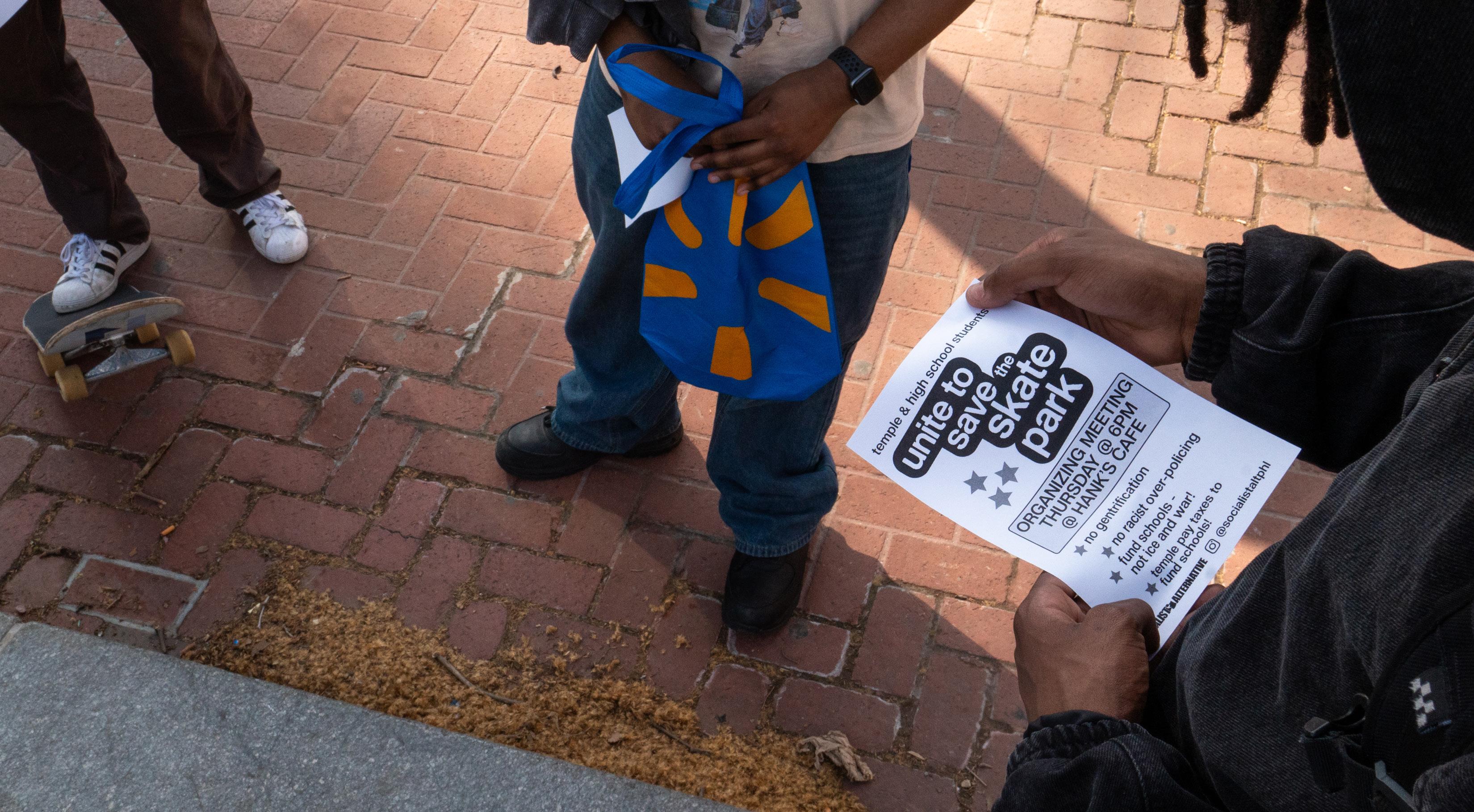
Tyrell Hill frst came to the park at 18-years-old to skate and relieve stress after a bad day. He was heartbroken to see the place where he spent a formative time empty. As a non-student, he felt welcomed by the Temple community, immersed in a setting where local rappers blasted their music through speakers, and he made friends with students.
Hill, now 20, has lived in North Philadelphia for his entire life. He believes that Black teens are being overpoliced at the skate park.
“It is a lot of profling that can be happening,” Hill said. “Don’t get me wrong, some of those kids are loud as hell and they are kids sometimes, but I feel like [the policing] defnitely goes to a far extreme.”
Temple students like Hannah Foote noted they have used the skate park for years as a place to smoke weed, which is decriminalized in small amounts in Philadelphia, without facing signifcant repercussions or closures.
Foote, a sophomore flm and media arts major, met her closest friend and current roommate at the skate park.
“The teenagers really aren’t that big of a problem,” Foote said. “The school defnitely tries to make them out to be a lot worse than they are.”
Roger Estriplet, a senior virtual media management major, is upset by the skate park’s closure and the university’s response to youth on campus.
His peers took to Instagram to voice their thoughts, debated on the social media platform YikYak and worked alongside Socialist Alternative Philadelphia, an organization that has organized other protests on Main Campus, to rally to “Save the Skate park.”
“High schoolers are high schoolers,” Estriplet said. “They get in large groups, they walk around, they talk s–t and then they just go about their day. Mostly everybody who I met or saw that wasn’t a Temple student was pretty cool.”
Estriplet, Shapoo and other students are concerned about the narrative being formed about the youth who hang out at the skate park, specifcally in the email from Grifn, which refers to them as “juveniles.”
Estriplet is concerned that using the
word juvenile to describe a group of majority Black teenagers is problematic and that the connotation holds racial bias, as it implies that all minors who attend the skate park are acting criminally.
The word juvenile used to describe Black teens contributes to an adultifcation bias, in which Black children and teens are more likely to be seen as adultlike and less innocent, according to the USC Center for Health Journalism.
“Maybe we need to remind ourselves that we are a public campus,” Shapoo said. “We as an institution should be aiding the North Philly community, not isolating ourselves from them more.”
Drew Thomas contributed reporting.
chloe.pabon@temple.edu
A new class matrix in the Fall 2026 semester affected student registration.
BY ANTHONY BOFFA-TAYLOR For The Temple News
Since starting at Temple in Fall 2022, Edasha Wills has always prioritized her down time away from class.
As the junior management information systems major registers for her fnal year, a change in the university course schedule ofers Wills a chance to devise a course schedule that fts her specifc needs.
“I try to stay active outside of class,” Wills said. “Going to the gym, cooking, and taking care of my overall well-being. Sometimes, my schedule makes it harder to accomplish this, but having a little more time between classes will help and being able to schedule classes for just Monday and Wednesday means I can take on more responsibilities at my internship.”
Temple modifed its course schedule structure to give students more fexibili-
O C E S

ty, Interim Provost David Boardman announced Feb. 23. The changes included twice a week three-credit courses being shortened from 80 to 75 minutes.
The university also introduced a three-credit, 75-minute course option for Monday and Wednesday, mirroring the existing Tuesday and Thursday course schedule.
Paige Rockaway, a junior biology major, believes the new matrix could be particularly benefcial to freshman.
“Freshman year I was kind of thrown out of a rocket,” Rockaway said. “Getting adjusted to a new schedule and how much your workload is really going to increase. They say that college is hard in high school, but I feel like you never really realize until you’re actually in it.
Rockaway often fnds herself overwhelmed with schoolwork throughout the week and welcomes the opportunity to scale back on in-person class time. Having Fridays of allows her to study for exams and do homework ahead of the weekend.
While the university has framed the changes as a step towards greater fexi-
bility, some feel the time change doesn’t provide a break from their busy schedules. Andre Williams, a junior engineering major, feels the change won’t make a noticeable diference.
“I feel like that short of time isn’t going to help with my free time,” Williams said. “It’ll probably make picking classes more difcult because the schedules will start overlapping. I do prefer the shorter classes; I like to get in and get out.”
The addition of Monday/Wednesday 75-minute courses causes overlap with the standard 50-minute courses. Jay Lis, a junior English and gender, sexuality and women studies double major, may run into issues with class times moving forward.
“My senior seminar courses, one of them got afected. It’s going to be longer now,” Lis said. “It’s either on Tuesday at the normal time, or you can do Monday, Wednesday, and it’ll be longer. I wanted to take, a 12 o’clock class, but it would go 11 to 12:15 so I couldn’t take a class that starts at 12, which is traditional, because no one’s really accounted for that.”
Lis is still grateful for the extra tran-
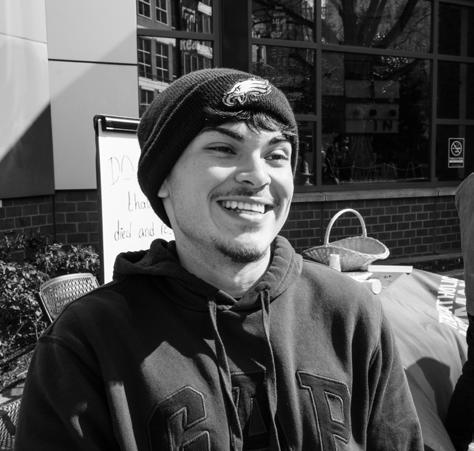
What Temple class do you wish you could take?
Freshman civil engineering major | he/him
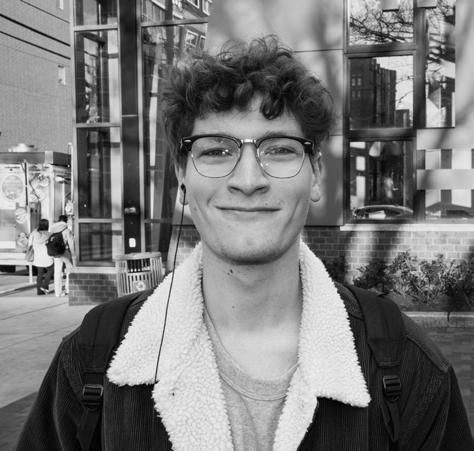
“ I would love to take a class here based on theology, that’s a bit more concentrated on Christianity as a religion.”
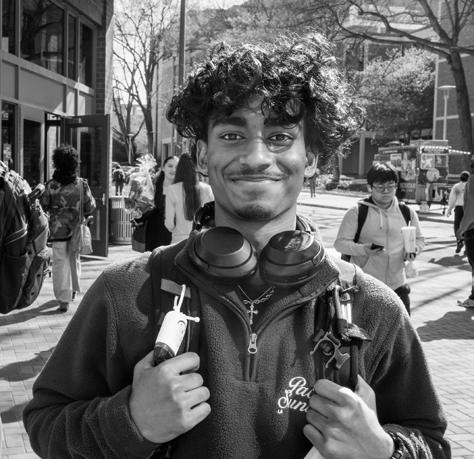
Nabosha Palit
Freshman political science major | she/her
sition time between classes as it allows her the free time needed to ensure her well-being is taken care of. The extra time gives Lis the chance to eat, answer emails and get some fresh air.
“15 minutes is like, ‘Okay, I can actually walk outside,’” Lis said. “It’s nice. I can take a beat and then come back in before my next class. Yeah, I’m happy about that part of it, for sure.”
Madelynne Ferro contributed reporting.
anthony.boffa-taylor@temple.edu
Freshman chemical engineering major | he/him
“ I wish I could take a philosophy class, that would be really cool.”
Aaron Kerschner
Sophomore music major| he/him
“ I really wanted to take a class called Disasters in Hollywood, I just think it’s interesting to hear about how different real-world events are in flm.” “ A class that I was interested in taking is Politics in war. War is a really prevalent topic right now, so I wanted to know how people dealt with war in history.”
As college athletics shifts, Jackson Pruitt has become a voice for student-athletes.
BY COLIN SCHOFIELD Co-Sports Editor
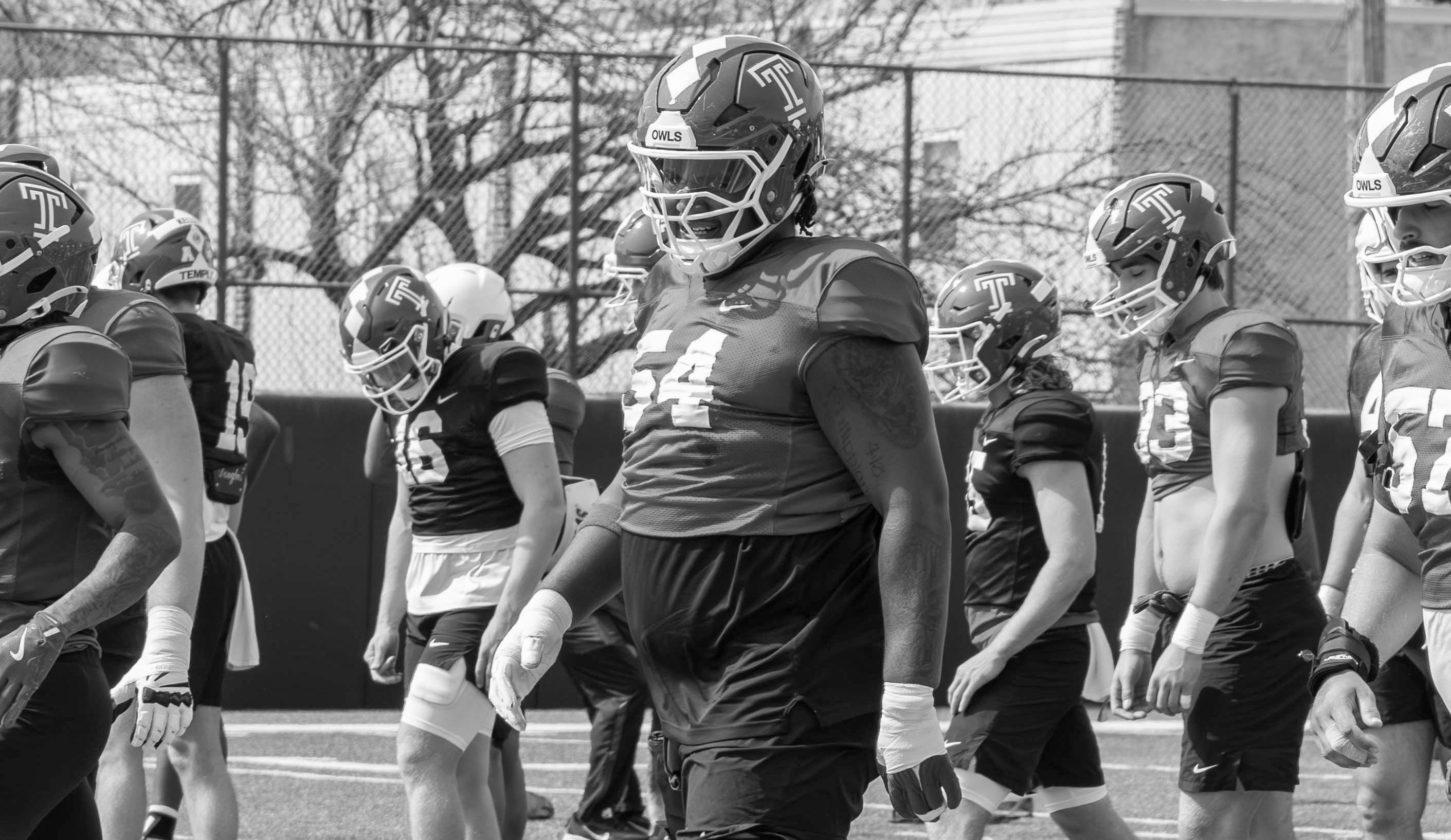
Jackson Pruitt’s student-athlete experience would have been normal twenty years ago—the right guard is entering his ffth season at Temple and has become a vocal leader on the feld. However, in a shifting terrain of college athletics, he has also created a platform of the feld to use his voice in a way that he wasn’t when he started.
Name, Image and Likeness, revenue-sharing and the transfer portal have turned college sports into a business-like structure rather than focusing on retention and development. NIL passed in July 2021, the year before Pruitt joined Temple, allowing student-athletes to earn compensation from their own brand and has made athletes transferring for more money common.
The NCAA allowed athletes to play without missing a year after transferring in April 2024. It changed again when the House Settlement passed on June 2025, allowing schools to pay student-athletes through revenue sharing.
Pruitt hasn’t only focused on the monetization of college athletics, instead, he is an advocate for other student-athletes. He uses social media to share his opinions, ideas or to educate people about the landscape of college sports.
“I’ve had people tell me things that I feel would have been valuable information to other people or people who were in my position who are done playing because they didn’t know something,” Pruitt said. “It’s really just about being a voice. Everywhere you go, you want to leave it better than you found it.”
colin.schofeld@temple.edu @ColinSchofeld9 The Temple News
The changes gave student-athletes the ability to earn money without losing eligibility, but they also added confusion and inconsistency. The transfer portal brought accusations of tampering and agents shopping around their clients for
more money. Players have also applied for waivers or sued the NCAA, including former Temple safety Javier Morton, for extra eligibility, which garners varied results.
This uncertainty drove Pruitt, a senior sport, tourism and hospitality management major, to voice his opinions and ofer explanations to those who may not be fully informed. He posts videos on YouTube about what he would do as the NCAA commissioner and uses X and Instagram to share his refections.
“I talk to other people and Jackson’s name does get mentioned a lot,” said Shahbaz Ahmed, Pruitt’s academic advisor. “Seeing him take on more of a leadership role this year, I’m very excited to see what that brings for him. He’s somebody who is taking a lot of accountability on himself to be the best person he can be in general.”
Pruitt’s advocacy has led to unique opportunities to further share his views. He sat in on a roundtable panel hosted by
the Governor of Massachusetts, Maura Healey, at Capitol Hill in January. He will also be a part of the brand sponsorship team at AthleteCon, an event from June 3-5, where athletes will learn how to use and grow their personal brand.
Pruitt is part of Athletes.org, an organization that serves as a player’s association for more than 5,000 college athletes. It helps protect college athletes and maximizes their voices about issues in college athletics. He has become an advocate of the organization, giving presentations in class or posting thoughts on social media.
“Jackson Pruitt represents the future of college athletics,” said Lead for Athletes Solutions Kyle McMahon. “He’s passionate about it. He cares about it. And most importantly, he gets it. For him to literally present on Athletes.org and what a player’s association is in a class, tells me and everybody who works at Athletes.org how important he is to the mission.”
College athletics keeps changing. The NCAA passed a rule on April 1, penalizing schools that sign transfers who are not in the portal. President Donald Trump signed an executive order on April 3 that would restrict athletes from transferring more than once and limits eligibility to fve years, among other changes set to go in efect Aug. 1, 2026.
While Pruitt hopes to move onto the NFL, he plans to keep gaining experience so he can help athletes even after he stops playing football.
“I think it’s extremely important [for athletes to use their voices] and athletes just have to know how to leverage what is going on,” Pruitt said. “That’s why I feel like the student-athlete should have a voice, and I’m not saying we should make all the decisions but just listen to what we have to say.”
Atakan Gezer’s process-oriented focus helped him overcome cancer and navigate coaching.
BY JACOB MORENO Assistant Sports Editor
Atakan Gezer was just 20-years-old when his life changed. He was a junior at Rollins College and the captain of the Tars tennis team in 2020. Then, he got sick and lost 50 pounds with what he thought was pneumonia.
People around him grew concerned and his parents encouraged him to return to his hometown of Istanbul, Turkey, where he was diagnosed with Hodgkin’s lymphoma, a type of cancer that afects white blood cells. Gezer was in denial for at least a week until he eventually “embraced the storm.”
The diagnosis prematurely ended Gezer’s playing career as he underwent various cancer treatments for the next two-and-a-half years back in Turkey. He hoped to return for his senior season but couldn’t as his treatments continued in the following year. Gezer accepted that his playing career was fnished and decided to focus on pursuing a degree in international business.
Enduring the treatments made him want to live in the moment and take recovery step by step rather than focusing on the bigger picture.
“The whole cancer story made me realize [the importance of being process-oriented] even better because you cannot worry about what’s going to happen tomorrow,” Gezer said. “You never know and it’s an unknown and if you worry about the unknown and unpredictability, you’re going to lose your mind.”
He graduated from Rollins in 2021 but was unsure about his future in business. Gezer realized during the two-anda-half years of treatment that time does not last forever. So, he decided to pursue coaching instead.
He has been cancer-free since 2022 and has focused on living in the moment rather than the long-term results. This mindset has guided him through his budding fve-year coaching career that
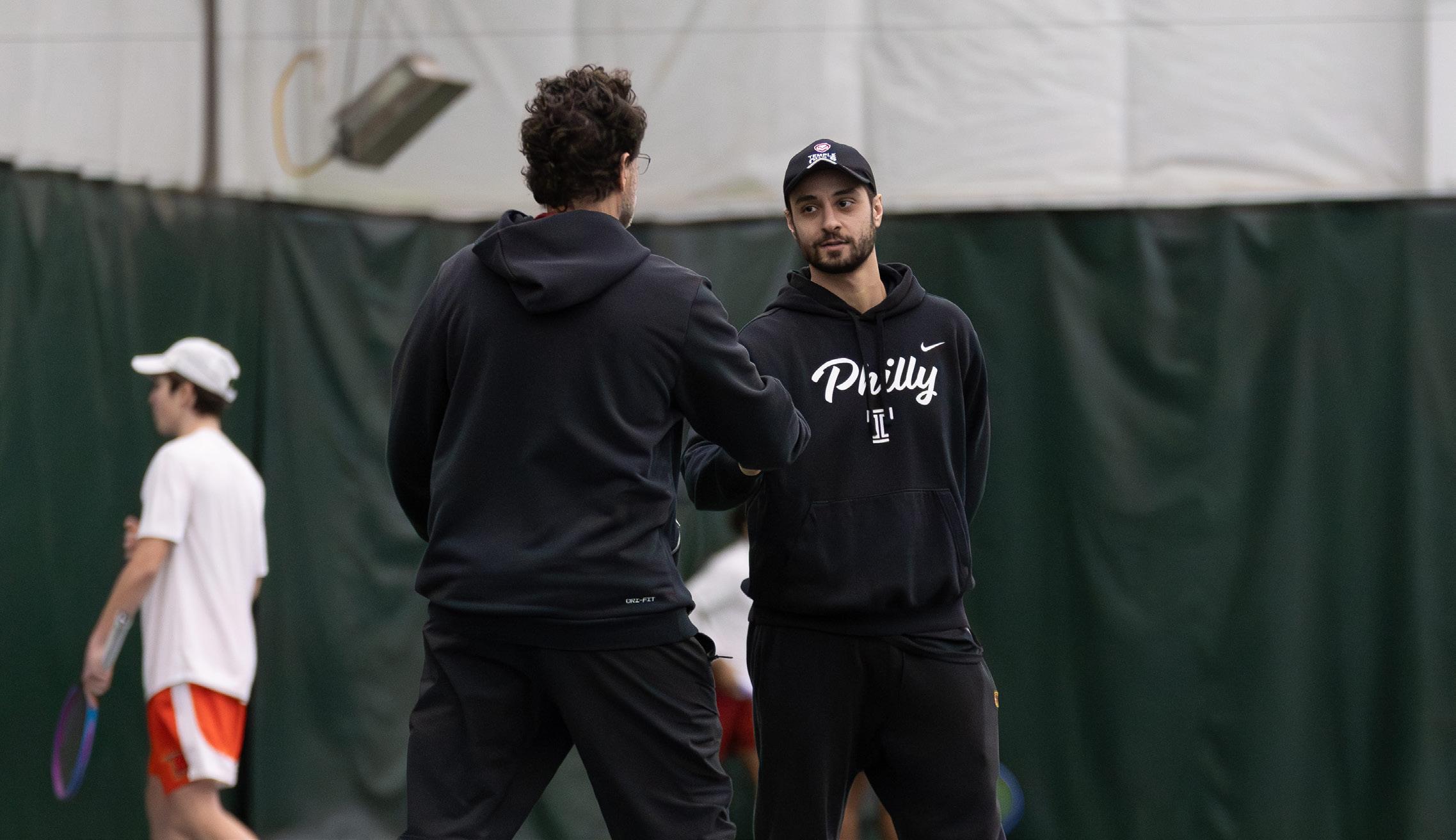
led him to Temple as an assistant coach for the 2025-26 season.
“I didn’t want to join corporate America where I’m gonna have a maybe more boring life than a coaching side,” Gezer said. “I wanted to stay active every day because when you’re sitting on your a** for 30 days going through treatments, the frst thing you want to do is look at the sun, be outside and active.”
He got his frst coaching job at Optimum Tennis Academy in Istanbul in October 2021, working with the U-18 Turkish National Team. Gezer then returned to the United States in August 2022 and was hired as an assistant coach for Washington and Lee’s men’s tennis, where he spent one season.
Gezer left for a graduate assistant coaching job at Tulane in 2023, where he met his mentor, Director of Tennis Mark Booras. He worked under Booras for two years and they bonded, confding in each other as Booras had a heart transplant while Gezer fnished his cancer treatment. They both have pro-
cess-oriented mindsets and Booras called him “Anakin” because of their shared enjoyment of Star Wars.
“[I had] someone to help me, whether it was just by listening or by sharing parts of [Gezer’s] story,” Booras said. “When I get to hear parts of his story, it makes me see things as a little bit more normal. Sometimes people go into this shell and feel sorry for themselves. But I get to see success out of him and so that inspires me.”
Gezer absorbed everything he could from Booras, but he wanted a better opportunity after graduating with his Master of Science in Sports Studies degree in May 2025. He had contacted Temple Director of Tennis Jef Brandes, who he already knew, in October 2024.
Brandes was Fairleigh Dickinson’s head coach from 2015 to 2024 and tried recruiting Gezer out of his high school in 2017. Brandes was hired at Temple in August 2024, but there was not an open coaching position when Gezer reached out.
They kept in touch during the year, as Brandes saw the same passion and dedication Gezer displayed as a player. When a position became available, Brandes hired him on Aug. 8. Gezer quickly introduced his process-oriented beliefs to the team. Players have told him this is the best camaraderie they’ve had; Brandes has seen how Geezer’s energy has benefted the team.
“We’re looking at getting 1% better every day,” Brandes said. “That’s a phrase that Atakan mentioned on one of the frst days and everyone takes it to heart.”
Gezer has seen the team buy into the detail-oriented approach that aided him through challenging times and helped him improve as a coach and mentor.
“I’m a tennis coach but I like to think of myself as a mentor and a teacher for these guys,” Gezer said. “Lead them to make the right decisions and graduate them from this college and then hopefully they’ll be successful.”
jacob.moreno0001@temple.edu @jacob_moreno_
CONTINUED FROM 20 LACROSSE
Horoshko frst played volleyball in her hometown of Macungie, Pennsylvania and wanted to play in college. However, she started lacrosse in fourth grade and decided to prioritize it during her sophomore year at Allentown Central Catholic High School in Allentown, Pennsylvania.
She excelled at goalkeeping, her position since she started playing. Horoshko made 208 saves in her junior year, setting her school’s record for most saves in a season, and won defensive Most Valuable Player in her senior season.
“It helps when you have teammates around you who constantly push themselves too and a great goalie unit that is always pushing each other,” Horoshko said. “That was probably the biggest thing that helped me and we were able to keep pushing me forward.”
Despite joining Temple with her high school success, adjusting to Division I was still a challenge. Grollman was the starter during her frst two seasons and Berardino was the backup last year, so Horoshko had to learn from the sidelines.
Grollman graduated following the 2025 season, leaving the starting role open for either Horoshko or Berardino. The two split reps in practice, making the team familiar with both goalkeepers.
Berardino started in the season-opener, but Horoshko entered the game in the third quarter when the Owls trailed by fve. She only allowed two goals in the Owls’ 12-10 win against Delaware.
“[Horoshko] did what she needed to do, made the saves that she needed to make and then a few extra,” said associate head coach Cat Rainone. “Seeing her come of the bench and steer the ship really gave me the opportunity to see that she was ready to take on that leadership role and lead the defense.”
Horoshko remained the starter and helped Temple to an 8-0 start to the season, their best start since 1988. The Owls’ performance faltered when they sufered a four-game losing streak in March. Horoshko allowed double-digit
goals three times during the skid. She saved four of 16 shots in their 17-7 win against Old Dominion on April 4 to break the drought.
Despite Temple’s rough patch, Horoshko has continued impressing in the cage. She saves 50.2% of shots faced, the eighth-best mark in the country. She is second in the American in both goals against average, allowing 9.4 per game, and saves, at 103.
“She’s always cared a ton and she learned to just dig into the small details and in that process has gotten faster and quicker in tracking balls,” said head coach Bonnie Rosen. “When push comes to shove, she’s just going to play and try to make things happen.”
Horoshko hasn’t let her individual or team success afect her. She is always laughing and keeping it light while also giving full efort in practice. Her positive energy has helped the Owls’ defense build chemistry.
The unit is connected on and of the feld. The team uses that comfortability to learn where everyone will be during games, allowing their defense to put the team in the best position to win.
“We had to fght through a little bit more frustration,” Horoshko said. “Losing by one in [three] diferent games is kind of frustrating because it was just one moment that could’ve made a big diference. But I think honestly, we’re putting ourselves in a good spot, we’re training hard.”
austin.boynes@temple.edu @austin_boynes
Goalkeeper Riley Horoshko did not play at all last season, but is now one of the best goalies in the American Conference.
BY AUSTIN BOYNES III
For The Temple News
Riley Horoshko was not prepared for the rapid speed of college lacrosse when she joined Temple as a freshman in 2023. Every shot was faster and her playing time was limited; she began trying to adjust during practices.
Horoshko was behind Taylor Grollman and Colleen Berardino on the depth chart from 2023-25 and she never played in 2025. She had not made an appearance in a game in 645 days when the 2026 season began.
If she wasn’t on the feld, Horoshko felt she needed to be the best teammate possible. She used this time to learn from the rest of her peers and made sure to support and motivate whoever needed it. Eventually, her patience paid of and she was able to showcase her skills.
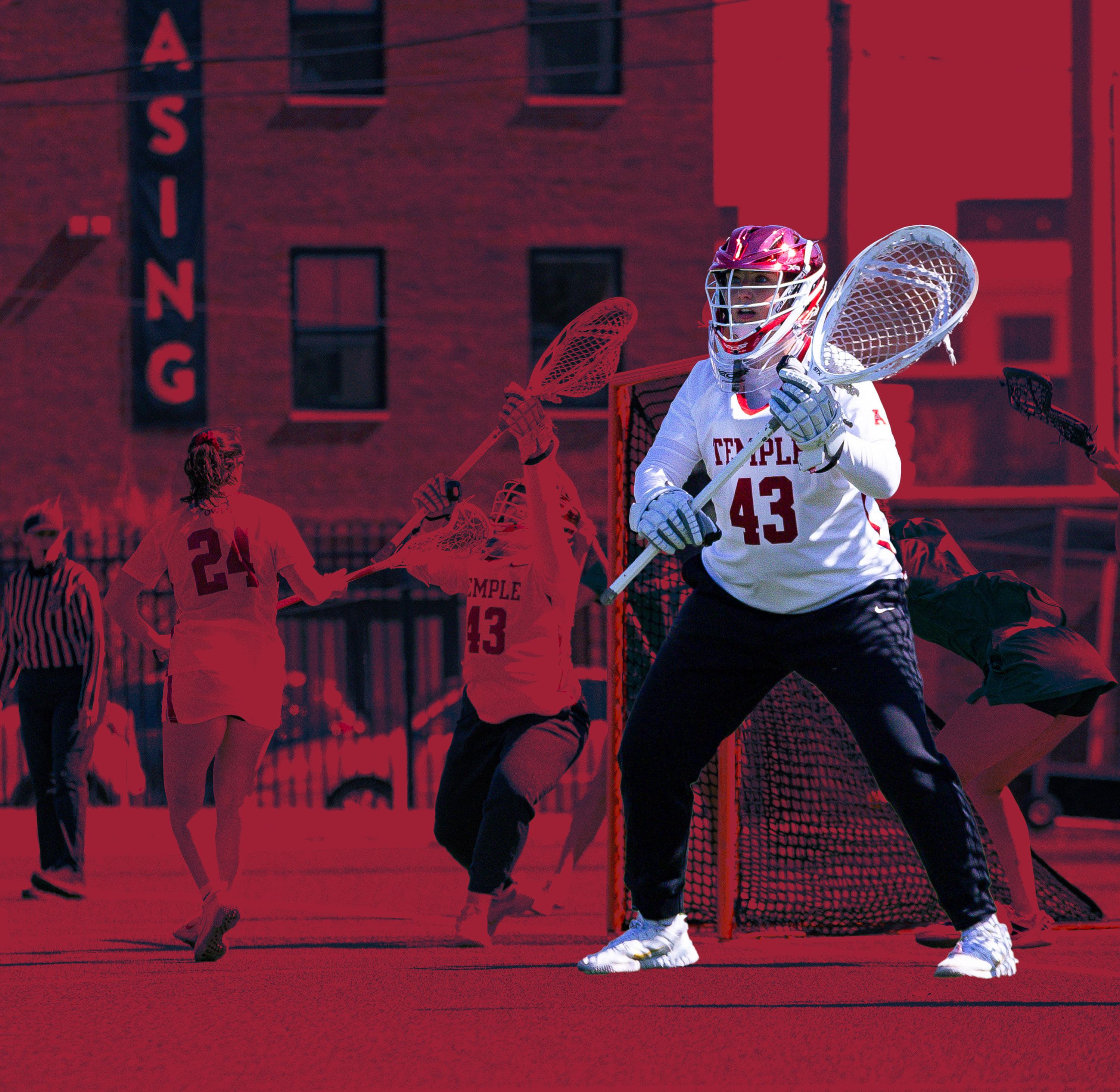
She had an opportunity to play during Temple’s season-opener against Delaware on Feb. 6. She recorded six saves to lead the Owls to a fve-goal comeback win. She’s continued that success since, helping the Owls to a 9-4 record as the American Conference’s most effcient goalkeeper in her senior year.
“[Not playing a lot] taught me that I have to keep my head down and keep working,” Horoshko said. “Even if it’s not me, just keep fghting and trying to get better every day. It just helped me grow, be stronger and be ready for when it is me.”
LACROSSE | 20