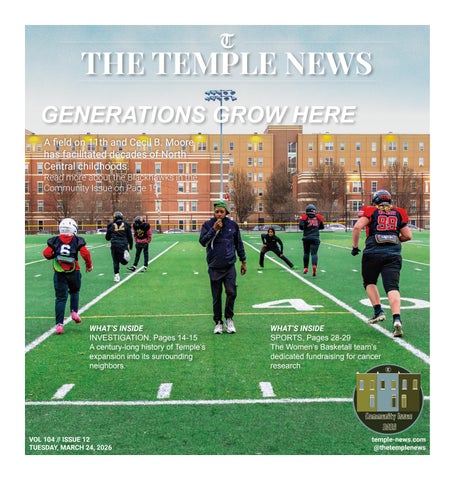
GENERATIONS GROW HERE
A field on 11th and Cecil B. Moore has facilitated decades of North Central childhoods.
Read more about the Blackhawks in the Community Issue on Page 19.
VOL 104 // ISSUE 12
WHAT’S INSIDE INVESTIGATION, Pages 14-15
A century-long history of Temple’s expansion into its surrounding neighbors.
TUESDAY, MARCH 24, 2026
WHAT’S INSIDE SPORTS, Pages 28-29
The Women’s Basketall team’s dedicated fundraising for cancer research.

THE TEMPLE NEWS
Sidney Rochnik Editor-in-Chief
Valeria Uribe Managing Editor
Anna Augustine Managing Editor
Ryan Mack Chief Copy Editor
Bradley McEntee Chief Copy Editor
Nathan Horwitz Co-News Editor
Connor Pugh Co-News Editor
Clarissa Jett Assistant News Editor
Ashley Nteff Opinion Editor
Logan Thompson Assistant Opinion Editor
Madelynne Ferro Features Editor
Chloe Pabon Assistant Features Editor
Sienna Conaghan Co-Sports Editor
Colin Schofield Co-Sports Editor
Jacob Moreno Assistant Sports Editor
Leah Duffy Investigative Editor
Tellicia Walker Investigative Reporter
Julia Anderson Director of Audience Engagement
Nathaniel Thrush Co-Community Engagement Coordinator
Kayla McMonagle Co-Community Engagement Coordinator
Isabella Farrow Audience Engagement Editor
Nalani Chiles Audience Engagement Editor
Brian Nelson Photo Editor
Lillian Prieto Assistant Photo Editor
Aidan Gallo Assistant Photo Editor
Dylan Castelluccio Multimedia Editor
Massah Johnson Print Design Editor
Daniya Eggleston Graphic Design Editor
Chili Ramgolam Data Editor
Ariana Droz Podcast Editor
Sage Spohn Newsletter Editor
Nadia Bodnari Web Editor
Maria Lombana Advertising Manager
Aaliyah Abdur-Rashid Advertising Manager
Calista Aguinaldo Business Manager
The Temple News is an editorially independent weekly publication serving the Temple University community.
Unsigned editorial content represents the opinion of The Temple News.
Adjacent commentary is reflective of their authors, not The Temple News.
The Editorial Board is made up of The Temple News’ Editor-inChief, Managing Editors, Chief Copy Editor, Deputy Copy Editor, News Editor and Opinion Editors. The views expressed in editorials only reflect those of the Board, and not of the entire Temple News staff.
CORRECTIONS
ON THE COVER
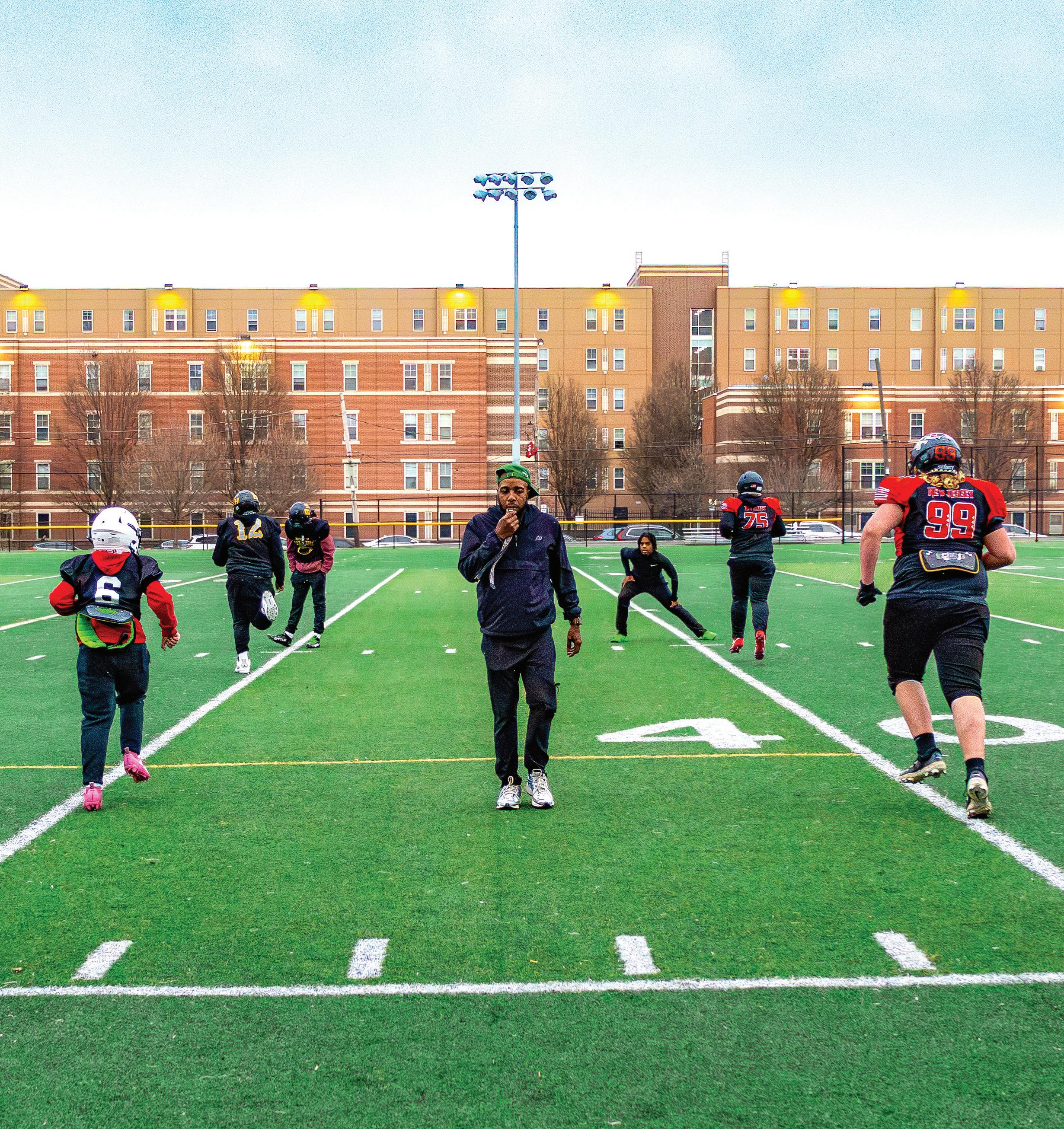
The Blackhawks Athletic Club team warms up during practice on March 20.
Contacts
Visit us online at
Email section staff ttnnews@temple.edu ttnopinion@temple.edu ttnfeatures@temple.edu tnsports@temple.edu
The Temple News is located at: Student Center, Room 243 1755 N. 13th St. Philadelphia, PA 19122
Accuracy is our business, so when a mistake is made, we’ll correct it as soon as possible. Anyone with inquiries about content in this newspaper can contact Editor-in-Chief Sidney Rochnik at editor@temple-news.com.
CITY
SEPTA to launch multi-phase bus line redesign
The program will cut underused routes, and introduce frequency changes and Go Zones.
BY NATHAN HORWITZ Co-News Editor
SEPTA will cut 18 bus routes, increase service for popular lines and establish an on-demand suburban bus service as part of a threephase New Bus Network initiative beginning in August.
The New Bus Network hopes to improve services by cutting underused and duplicative routes, altering service frequency to suit rider demand and reshaping routes to be more efficient and direct.
The initiative changes routes that run through or near Temple’s Main and Health Sciences campuses and Terra Hall, including bus routes 3 and 4.
“We want more efficient and more reliable service for our customers,” said Andrew Busch, SEPTA director of media relations. “And that’s exactly what we expect to deliver with the New Bus Network.”
The initiative increases the number of frequent service routes, lines which run every 15 minutes or less all week, from eight to twenty-nine.
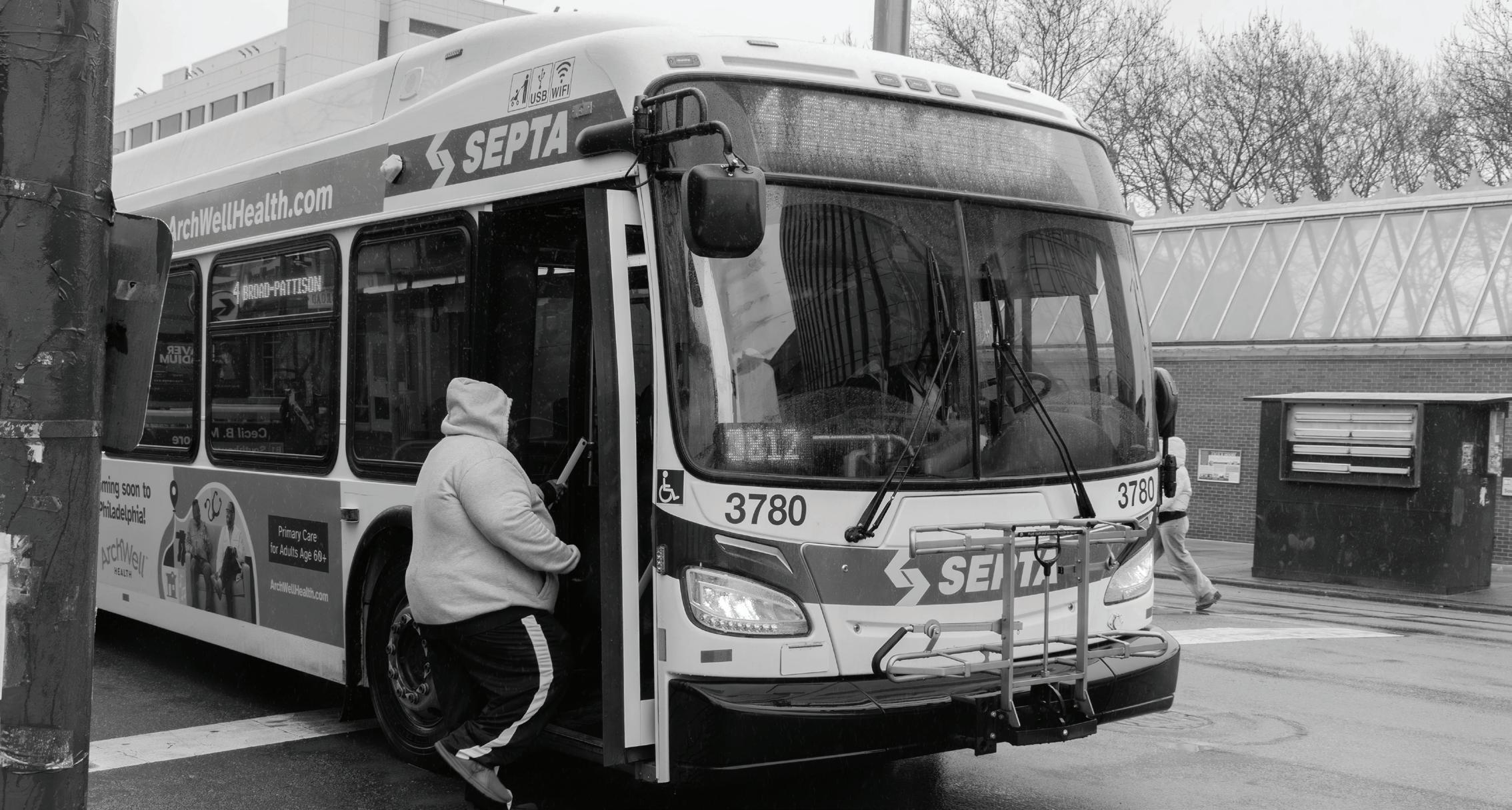
Phase one will reduce the frequency of Route 4, which runs along Broad Street past Temple’s three Philadelphia campuses. The line will run buses every 30 minutes on weekdays, instead of every 16 to 25 minutes.
Route 4 and 16 buses tend to run behind schedule, said a Temple employee who requested to remain anonymous for their job security.
“When people have to get to work, we rely on that bus,” the employee said. “We be late to work, because they not running on a scheduled time.”
Phase two, beginning February 2027, increases Route 3 service along Cecil B. Moore Avenue and reduces service along the Frankford and Kensington sections of the line.
SEPTA is also trying to improve
access between the city and suburbs through the new SEPTA Go Service, an on-demand travel option which will be implemented in Paoli and West Chester in phase two and in Montgomery County in phase three, which starts in June 2027.
The service will have set designated zones with pickup and drop-off locations, but it will run based on demand and when passengers request a ride.
SEPTA wants the Go Service to be an affordable alternative to ride-share services like Uber and Lyft, costing the same $2.90 as a regular bus fare.
“We think we can provide an effective service and at an affordable price,” Busch said. “Maybe something that is going to be a little easier on the wallet for somebody who has to use it five days a week.”
The vehicles used for this service will be smaller than full-size buses. SEPTA could use passenger vans or smaller buses, like those used for power transit, Busch said.
The New Bus Network is set to be
implemented following hearings in April, and a SEPTA Board vote in May. The board approved the plan in 2024, but its implementation was put on hold due to state funding issues.
“We have a window here now where we don’t have a long-term funding solution, but we do have our operating budget situation resolved for this year and next year,” Busch said.
SEPTA is also updating its signage to include real-time electronic schedule updates.
SEPTA began replacing lettered routes with numbers in February 2025 to make traveling less confusing. SEPTA also started using color-coded signs to indicate frequency, with red being used for frequent routes and black for standard routes.
Busch thinks these changes will make riding the bus an easier experience for new and existing riders.
“We don’t want that huge learning curve,” Busch said. “We want the system to be welcoming to everyone. That’s good for us, that gives us more ridership,
but it also helps us better serve the communities throughout our service region.”
SEPTA will hold public town halls throughout the course of the plan to inform the community about the changes and field their concerns.
Max Guigar, a sophomore communications major, takes Route 33 and transfers to Route 3 for his commute to campus.
“It’s always been pretty easy,” Guigar said. “I never noticed a lack of buses. They’ve always been there within like five minutes of each other, and the 33 stop is directly next to the 3 stop.”
Route 33 northbound is moving from 19th Street to 21st Street between Ridge Avenue and Diamond Street, which means Guigar will catch his transfer on Cecil B. Moore Avenue and SEPTA plans to implement the additional services in August 2027, but it would need to be approved for the 2028 fiscal year budget and announced in next year’s Annual Service Plan.
nathan.horwitz@temple.edu
LILLIAN PRIETO / THE TEMPLE NEWS A pedestrian gets on the Route 4 bus on Broad Street.
CAMPUS
TUJ to open new academic facility in Tokyo area
The Hillside Center will offer new spaces, academic resources and improve commute times.
BY NATHAN HORWITZ Co-News Editor
Temple Japan is opening the Hillside Center, an eight-story facility that contains academic and recreational spaces, in Fall 2026.
The Hillside Center is in Mizonokuchi, Kawasaki, a Tokyo suburb.
“This building opens up opportunities for study, research, extracurriculars, clubs, you name it,” said TUJ Dean Matthew Wilson.
The 75,000-square-foot center has 23 classrooms, a 300-seat auditorium, a dance studio, music rooms, a library and several recreation facilities.
Wilson expects 800 to 1,000 students to take courses at Hillside when it opens, but the building can accommodate around 2,000.
TUJ has 3,650 students this Spring between its Tokyo and Kyoto campuses. Wilson predicts TUJ’s total enrollment could reach 4,000 students in 2026-27.
It takes less than thirty minutes for students living in the Yoga, Mushashi Kosugi and Nogawadai residence halls to commute to the Hillside Center by train. Taking the train to Hillside from these campuses is expected to save students money because it is a direct route without any transfers, Wilson said.
Sophie Noller, a junior computer science major, lives in the Mushashi Kosugi dorm, which is about 20 minutes closer to Hillside than the city campus. She thinks a shorter commute would improve her Japan experience.
“Commuting really takes a lot out of you,” Noller said. “So it definitely takes away your energy to kind of stay on campus and go to events.”
Many students live in the Mizonokuchi area outside of the dorms because of its affordability compared to the
city campus, Wilson said.
The new location will also increase the number of courses TUJ offers, said Yasuko Taoka, TUJ associate dean for Academic Affairs.
“First Year Writing, Japanese, Intro to Japanese, those courses are always ones that are full,” Taoka said. “So, this allows us to offer more sections of it.”
Hillside almost doubles the existing classroom capacity in Tokyo, which could allow TUJ to offer more majors.
The classrooms are equipped with microphones, monitors and cameras for students to join class virtually, giving students in Kyoto and Setagaya-ku easier access to Hillside courses.
The learning center will offer a dedicated space for tutoring and programming for academic support.
In addition to general education courses, Hillside will offer first-year focused classes for students in the FirstYear Experience and bridge programs. The First-Year Experience program combines first-year courses with support services for new students and the
bridge program offers classes for academically proficient students in need of English language support.
This focus allows the administration to be more strategic with their student support services, Taoka said.
“Knowing that most of the students who are going to be at that location are going to be new allows us then to target the communications,” Taoka said.
Hillside’s auditorium makes it easier to facilitate events like movie nights, plays and concerts. The fitness center, music practice rooms and rooftop garden also offer new opportunities that aren’t available at the city campus. TUJ is looking into new academic programs to utilize the building’s added space, Wilson said.
The Hillside Center also offers a comparatively suburban experience to the dense Setagaya-ku location. The building was constructed in 1983 and previously functioned as a training facility for the camera company Canon.
The purchase of Hillside in February was the first time Temple purchased an
academic building in its 104-year history of overseas expansion.
Buying the property outright, rather than leasing, allows Temple to retrofit the facility to its needs without outside approval.
Temple is dividing some of Hillside’s rooms to accommodate smaller class sizes, making it similar to the city campus, which averages 24 students per class.
TUJ’s undergraduate enrollment has almost tripled in the last five years. TUJ is opening a 184-bed dormitory in Setagaya-ku in Fall 2026 to accommodate its recent growth.
This spring, 350 students enrolled at TUJ’s Kyoto campus, which opened January 2025.
“Ten years out, I think Temple will be an even more major player in the education market,” Wilson said. “If our popularity and growth continues, I could see us in a much larger, consolidated campus in Tokyo, with even more opportunities for our students.”
nathan.horwitz@temple.edu
COURTESY / TEMPLE UNIVERSITY JAPAN
CAMPUS
How the university responded to campus protests
The large March 11 demonstration has not received a public university response.
BY CONNOR PUGH Co-News Editor
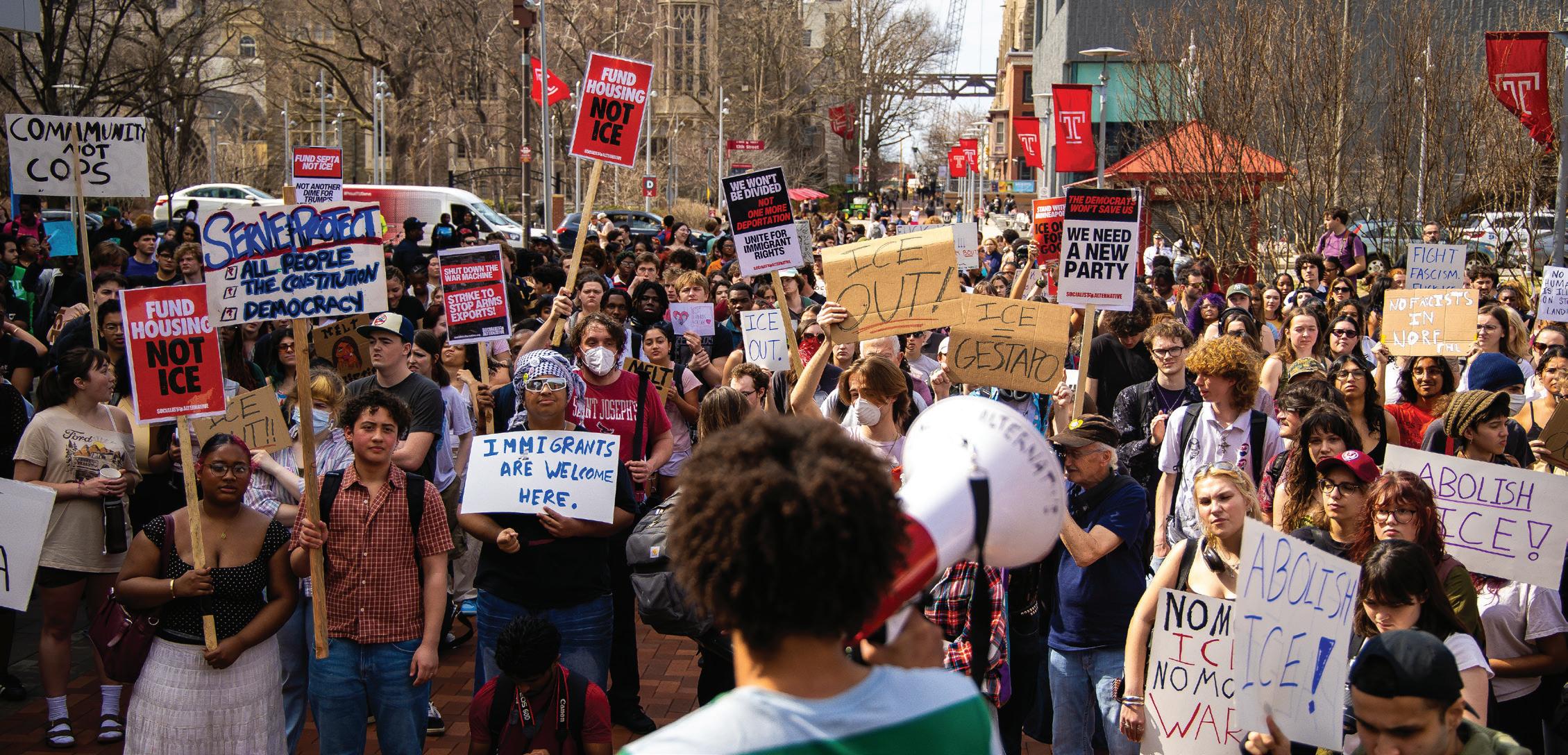
More than 200 people gathered at the Bell Tower and marched through Main Campus onto Broad Street on March 11, in protest of student Jerome Richardson’s arrest in Minnesota during a demonstration against Immigrations and Customs Enforcement, The Temple News reported.
The protest was organized by the Temple chapter of The Revolutionary Communists of America, the Philadelphia chapter of Socialist Alternative and multiple other organizations. Both RCA and Socialist Alternative are not registered as official student organizations in the Owl Connect database.
All on-campus demonstrations are subject to University Guidelines for Demonstrations, monitored by the Office of Ethics and Compliance. Demonstrations must have reserved space ahead of time. They cannot impede civilian and pedestrian traffic, block access to Temple property or use voice amplifiers in a way impedes academic instruction, according to Temple’s protest guidelines.
This could place the March 11 demonstration in violation of Temple’s guidelines.
Evan McLoughlin, an RCA member involved in organizing the demonstration, said that turnout at the protest far surpassed what they initially expected. This required organizers to alter their plans during the demonstration.
“We kind of left it up to how many people actually showed up to decide on the route itself,” said McLoughlin, a junior computer science major. “And because so many people ended up showing out, we decided to take the walk around Cecil and Broad.”
The university did not make a pub-
lic statement about the March 11 demonstration.
The last major on-campus demonstration was a “Dis-Orientation Rally” organized by the Temple Action Solidarity Council on Sept. 5. More than 50 people gathered at the Bell Tower, protesting for the support of Gaza and full university divestment from Israel, The Temple News reported.
Several of the organizations in the coalition were not officially affiliated with the university, like Faculty and Staff for Justice in Palestine and the Immigrant Rights Action Group. One of the coalition organizations, Jewish Voice for Peace, is registered on the Owl Connect database as a student organization.
Temple deemed the rally as a safety hazard and a violation of campus demonstration guidelines, emphasizing the presence of unaffiliated organization participating alongside students, President John Fry said in an announcement to the Temple community the day after the demonstration. In his statement, Fry
called attention to the fact that individuals not associated with the university participated in the protest alongside students.
The Temple chapter of Jewish Voice for Peace was placed on social probation until January 2027 following an investigation from the university, The Temple News reported.
Student organizations must reserve spaces for any indoor or outdoor events through a request to be reviewed by the Office of the Vice President for Student Affairs, according to the Temple University Policies and Procedures Manual.
One of the registered organizations involved in the planning of the March 11 protest had tried to reserve the Bell Tower for the demonstration but whether or not they had succeeded was unclear, making organizers play by ear and rely on turnout to prevent any university action, McLoughlin said.
“As far as I’m aware, there was no communication with the university in either direction,” McLoughlin said. “And
I’m fairly confident that if there had been any, I would be aware of it.”
A member of TASC previously told The Temple News that they had attempted to reserve space with the university before their September demonstration, but were denied permission.
Megaphones were used by protesters at both demonstrations, and both protests moved along Broad Street and through traffic.
“Peaceful protests and the open exchange of ideas are a core part of university life, and we respect the right of our community to express their views,” a spokesperson for the university wrote in an email to The Temple News, regarding the March 11 protest. “It is important that demonstrations remain peaceful and follow university guidelines, so they do not interfere with the educational process or operations of the campus.”
connor.pugh@temple.edu
DYLAN CASTELLUCCIO / THE TEMPLE NEWS Protesters gathered at the Bell Tower during the ICE Out Protest on March 11.
TEMPLE STUDENT GOVERNMENT
Temple Together runs unopposed for TSG office
BY CLARISSA JETT Assistant News Editor
Vanessa Flores, Temple Student Government’s director of diversity, equity and inclusion, and Dia Gordon, TSG’s director of health equity and wellbeing, are running unopposed for student body president and vice president, respectively, under the campaign Temple Together.
“We really want to focus on community and create a more unified student body,” Flores said. “That’s the foundation of everything we’re running on.”
Flores, a junior political science major, and Gordon, a sophomore political science and economics major, are campaigning with the slogan “Together, we thrive.” Their platform emphasizes building a more connected and unified student body while addressing key campus issues like safety and resource accessibility.
“I’ve been in TSG for a while now, and I have seen a lot of things that I would want to change myself,” Flores said. “I just did not have the power to do so before, so I want to be more hands-on and actually hear what students want.”
Flores and Gordon hope to increase public safety by working with the administration to add one or two more blocks to the Temple University Police Department’s patrol zone and improve campus lighting.
Temple Together proposes changes to the university’s Good Neighbor Initiative, which encourages students living off campus to maintain respectful relationships with surrounding North Philadelphia communities.
The Good Neighbor Initiative holds students and student organizations accountable for their behavior off campus, allowing the university to address incidents that occur beyond campus boundaries.
“Right now, it’s mostly report-based, and it takes so long for anything to hap-
pen,” Flores said. “We have seen situations where someone reports an issue, and by the time it is addressed, it doesn’t even matter anymore.”
Reports of the violations are reviewed by the Office of Student Conduct and Community Standards, where students go through the university’s disciplinary process. Consequences can extend to suspension to expulsion.
The pair hopes to work more directly with off-campus housing providers and university administration to improve accountability and report response times.
Accessibility and affordability are also key priorities for the campaign. Temple Together aims to reduce the financial burden of textbooks by advocating for more affordable options.
“We want to push for professors to have PDF versions of their textbooks and make sure students know about the resources that already exist, like library access and textbook support,” Gordon said. “There are ways to make this more affordable, but students need access to them.”
Temple currently offers Open Educational Resources through the library,
including textbooks, lecture notes and videos that are free for students and faculty to use. The library also has a Textbook Affordability Project, which is a grant stipend that awards professors who remove commercial textbooks and move to OERs.
The two also plan to improve commuter support, like advocating for a new commuter lounge and better SEPTA discounts for students.
Temple currently has a SEPTA semester pass program that offers students a 10% discount for SEPTA transits.
Temple Together plans to add a new position, director for commuters, to their administration. This position would advocate for commuters and serve as correspondent between commuter students and administration.
Current TSG President Lourdes Cardamone’s administration introduced the idea of improving the commuter lounge, which is located on Berks Street near Warnock Street.
“I feel like those students need more support,” Gordon said. “Even something like transportation costs can make a big difference in a student’s experience.”
Flores and Gordon hope to increase
TSG’s visibility on campus through a monthly newsletter. A lack of awareness about TSG’s role is one of the organization’s biggest challenges, Flores and Gordon said.
To increase visibility, the two proposed an ambassador program where students from organizations elect a representative to TSG. The ambassador program would place representatives within different student communities, like commuters, student-athletics and Greek life, to better understand and address specific needs.
“Students experience Temple in very different ways,” Flores said. “Having those perspectives would allow us to respond more effectively.”
For Temple Together, success would ultimately be defined by stronger engagement and a more visible presence across the university.
“I want to see more students involved and actually engaged with TSG,” Flores said. “I want people to know what we’re doing and feel like they can be a part of it.”
clarissa.jett@temple.edu
Vanessa Flores and Dia Gordon are campaigning for Temple Student Government.
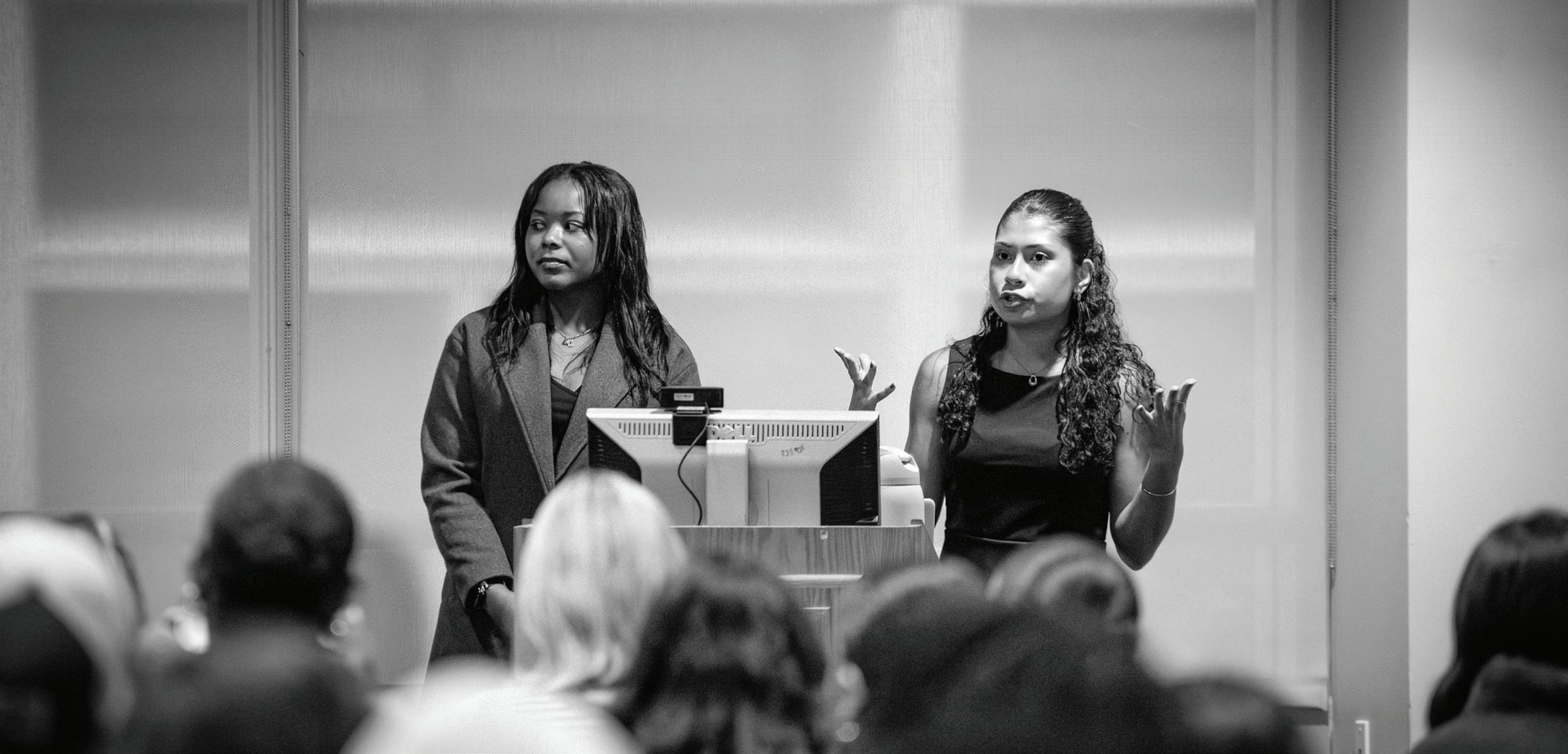
JUSTIN ALEX / THE TEMPLE NEWS Dia Gordon (left) and Vanessa Flores (right) address students at the TSG town hall on March 23.
ADMINISTRATION
Student enrollment set to meet fall projections
The division, led by Rob Reddy, reported to be ahead of schedule with admissions numbers.
BY NATHAN HORWITZ Co-News Editor
Temple expects to reach its Fall 2026 enrollment goals under Rob Reddy, the new interim Vice Provost for Enrollment Management, after falling short of its goals last year.
Reddy joined the division in January after the resignation of his predecessor, Jose Aviles, in December 2025.
Despite having the largest first-year class in its history, Temple failed to reach its total enrollment projections by about 700 students in 2025, with 29,503 total students.
“Whenever a division loses their leader abruptly, as that one did, it causes some amount of disruption and concern and anxiety,” said Interim Provost David Boardman. “Rob is a very stabilizing experienced leader, and he’s come in and he’s achieved that. He stabilized the unit, moved us forward and we’re achieving our goals.”
President John Fry attributed the enrollment outcome to a decline in transfer students, less retention of firstyear students and non-matriculated students and a lower-than-expected number of third- and fourth-year students, in an October announcement.
As of March 21, Temple received about 46,000 first-year undergraduate applications for Fall 2026, surpassing last year’s total of 45,544 applicants, which was the most in Temple’s history. Applications close April 30.
The university is 20% ahead of last year in admittances. Deposit numbers have also increased so far, Reddy said.
Temple is also ahead with transfer student deposits for the Fall. Boardman, who created a task force to grow undergraduate transfer enrollment, credits Temple reestablishing and strengthening its relationships with local community colleges.
“We used to have a much larger transfer population than we do now,” Boardman said. “When I came into this interim provost role, I made that our priority.”
Boardman and President Fry are meeting with community college presidents as part of this renewed effort to enroll more transfer students.
Reddy and the Enrollment Management office is collaborating with other Temple divisions like Student Affairs, Undergraduate Education and Institutional Research and Assessment to reach their goals.
“Whether you’re [an admissions counselor], a financial aid officer, you work on the data or the systems. First and foremost, we’re all enrollment managers,” Reddy said. “To continue to build that sort of mindset with the team has been a big focus of mine.”
Reddy has also focused on refining his office’s use of Slate, a software for recruitment and admissions, which Temple first deployed in Fall 2024.
Slate’s initial rollout was hampered
with implementation issues. Several admissions staff members were unable to access the system or did not know how to use it until late into the admissions cycle, The Temple News reported in September 2025 investigation.
“Slate is having an impact, particularly on not just the management and assessment of enrollment data, but in our capacity to communicate with students in effective ways,” Reddy said.
Temple’s retention rate for first-year students has steadily declined since 2016, when it was 90%. Temple retained 82% of first-year students in 2025, meaning they returned this year as sophomores. Reddy hopes to improve these numbers to increase overall enrollment.
Enrollment Management is coordinating more closely with the Division of Student Affairs and Undergraduate Education to identify and support students who may be at risk of withdrawing, Reddy said.
Student Affairs works with these divisions and Institutional Research and Assessment to connect students show-
ing early signs of academic difficulties, like advising flags, with support services like outreach from the Dean of Students Office, wellness resources and the offerings in the Essential Needs Hub.
“When students begin to struggle, the challenges are often both academic and personal,” wrote Jodi Bailey Accavallo, vice president for student affairs, in an email to The Temple News. “By sharing information and reviewing the data together, we can reach students sooner and connect them to the right resources.”
Temple’s budget deficit grew from $27 million to $37 million, due in part to the enrollment decline in 2025. The revenue from tuition and fees comprises an estimated 79% of Temple Education and General budget in the current fiscal year.
“We’ve got a long way to go until [the] census date,” Reddy said. “But as an enrollment manager, I feel much more positive sitting in the position we are in than I have at other institutions in my career, in other years.”
nathan.horwitz@temple.edu
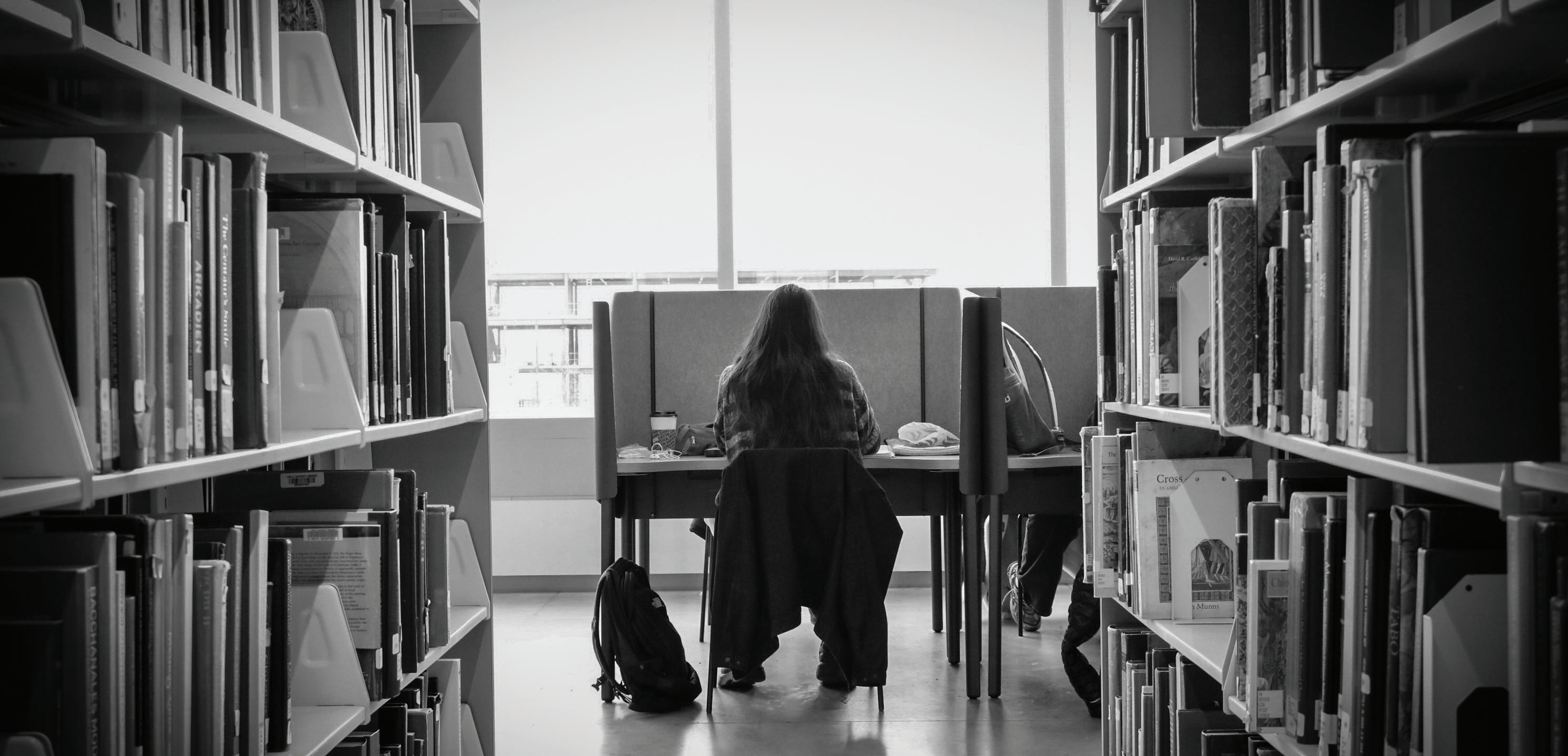
IMANI MAKAS / THE TEMPLE NEWS A student works at the desks on the third floor of the Charles Library.
OPINION
EDITORIAL
Explore off campus
College campuses can feel isolated from the world. At Temple it’s easy to fall into routines that revolve around classes, dorms and familiar faces. But stepping just a few blocks off campus reveals a much bigger reality, one that too many students ignore.
More than 7,500 of Temple’s almost 30,000 students live on or near Main Campus, according to the admission’s office.
Even though many live off campus, there is a disconnect between them and North Central Philadelphia residents. Students avoid locals, exploring the area and getting to know the community.
Temple has wrestled with safety concerns, leading to nearly 90% of 120 students thinking Temple Department of Public Safety needs to improve, according to a January 2025 poll from The Temple News. However, there is also often sensationalized coverage and exaggerated narratives that have perpetuated the idea that Temple and its surrounding areas are dangerous.
The Editorial Board urges students to make an effort to become familiar with the culture and environment of the community surrounding Main Campus.
Acknowledging those who around you, exploring small businesses and being conscious of neighbors can connect students with the community.
The fear of the surrounding community stems from implicit bias and fear. Many of these perceptions are deeply rooted in racial or class-based stereotypes.
Research suggests stereotypes placed on people of color impact the way they’re perceived, which further produce the negative stigma of them being dan-
gerous, according to a 2023 study by the University at Albany.
The idea that the surrounding area is dangerous is harmful and limiting. It prevents students from forming a real understanding of the place they live in for four years. It also contributes to a lack of respect for the residents and perpetuates an unfair and harmful narrative.
People often come to universities in large cities for the commercialized experience of urban life. What many don’t understand is that it’s the people they avoid interacting with who make the culture so vibrant.
Being part of a community starts with small actions. Students should smile at people when passing them and be polite when walking into a store. Learning the names of local businesses and the people running them is also crucial. These are simple choices, but they shift how students show up in shared spaces.
Basic acknowledgments of humanity go a long way. At the end of the day, some students are only temporary residents.
College is not just about academics; it’s also about learning how to exist and contribute to the outside world.
Students should walk around the neighborhood, go out into the city and explore something new. Some hidden gems include Front Street Gym in Kensington where Creed was filmed and Epiphany Fellowship Church on Diamond Street near 17th Street, just five minutes from Main Campus.
Temple does not exist in a vacuum, and neither should its students. The community surrounding campus is not something to fear or ignore; it’s something to learn from, engage with and respect.
OP-ED
Complex characters in TV
A student argues that having complex characters in media is important to deepen empathy towards others.
BY ASHLEY NTEFF Opinion Editor
Throughout my life, I’ve had moments when I had to forgive adults who were close to me, which is always hard. What always made the process easier was realizing and understanding that they weren’t inherently bad people but a human who was responding to their troubles.
Watching shows and films that have complex characters has helped me see others beyond just how they’re perceived on the surface and made it easier for me to forgive them. I learned that there’s a difference between labeling someone as purely evil and understanding them as a product of their circumstances.
In many television shows and movies audiences are conditioned to view characters through a simple moral lens: protagonists are good, antagonists are bad and the distinction between the two is clear.
Characters whose actions cannot be easily categorized challenge this moral binary by presenting conflicting traits. However, when characters exist outside a clear moral bubble, audiences often respond with discomfort or dislike. People take it to social media like Reddit and TikTok to express these opinions, often taking the characters’ actions personally.
In Stephen Sondheim’s “Into the Woods” The Witch is framed as the antagonist, yet her frustration about the disobedience of her daughter Rapunzel, alongside the hypocrisy and selfishness of the villagers reveals a different story. Her anger is circumstantial, but viewers may overlook her motivations because they already deemed her unredeemable.
Rory Gilmore is another flawed character I resonate with. The audience becomes attached to the good girl trope she presents in the first four seasons. But her mistakes through adulthood make viewers uncomfortable. Yet, I still consider her character well-written because it projects the reality of being a human.
On the contrary, flat characters like Zoey Brooks from “Zoey 101” are often portrayed as the nice protagonist, regardless of the choic-
es she makes that contradict this trope. She’s passive aggressive towards her friends, unprovokedly rude and bland. This is overlooked because she has already been categorized as good.
This categorization goes beyond fiction. People often categorize others in simplistic terms, labeling them as either good or bad without considering the complexities behind their actions. This tendency allows individuals to make quick judgements but limits their ability to fully understand others.
The psychological safety of fixed moral categories often turns viewers away from engaging in complex viewpoints, according to October 2025 research study from the University of Duisberg-Essen.
Viewers find discomfort when they can’t fully adore or hate a character because of conditioned binary thinking. It’s important to understand that there are many layers to a person and those layers cannot be categorized into one checkbox.
When we reject complex characters, we’re not just reacting to the media, but we’re projecting how we judge people in real life. Television often influences our morals and behavior, so when there’s more multi-dimensional representation, it prompts us to be understanding of others.
Readers that engage with complex literary material have higher levels of empathy, as narrative fiction is beneficial for social and emotional growth, according to a July 2024 study from Library Progress International.
Understanding complexity doesn’t mean excluding harmful behavior, but it does mean taking time to understand it.
I find that I resonate more with films and television shows that have complex characters because it humanizes real-life experiences in a way that isn’t judgmental.
We should extend empathy to complex characters to better inform how we view real people.
ashley.nteff@temple.edu
STUDENT LIFE
The price of little treats as a coping mechanism
A student encourages her peers to find other ways to cope with stress.
BY LOGAN THOMPSON Assistant Opinion Editor
Tori Chan finds comfort in small purchases, like her weekly Chickfil-A milkshake and some spontaneous snacks. The transactions act as small rewards that break up stressful weeks and give her something to look forward to.
“I do it more for celebrating, but also whenever I bomb a test I’ll go get a sweet treat just because I think I deserve one,” said Chan, a sophomore advertising major.
Chan is not the only one who uses treats as a source of comfort. The phrase “I deserve a little treat” has recently gained popularity among young people. Students use this sentence to justify small purchases, like a coffee before class or a late-night snack after finishing an assignment.
The appeal of little treats is often rooted in a desire for comfort and control. When students feel overwhelmed, small purchases can provide a quick sense of relief or stability, even if that feeling is temporary. Spending money is a common way to cope in times of stress, Psychology Today reported.
Self-rewarding behavior like this can feel harmless, because it makes the stress of college life feel lighter. However, the line between self-care and dependency can turn blurry when consumerism becomes students’ default coping mechanism. It’s crucial for students to develop sustainable ways to manage stress and deal with the source of the problem instead of pushing it aside.
Amalia Hubal, clinical psychologist at Tuttleman Counseling Services, explained that small rewards can feel helpful in the moment, but they don’t always address the roots of stress. When rewards become the primary way students cope, it can shift motivation outward instead of inward.
“Rewarding oneself with small treats

may provide people with a sense of control or agency in a moment of negative emotions,” Hubal wrote in an email to The Temple News. “However, for some, small treats may be used more as a method of escapism or trying to disengage from the emotion rather than finding ways to manage it, which may not lead to long-term change.”
Constantly purchasing small rewards can reinforce stress instead of reducing it, as it creates a pattern where students need a reward just to maintain their motivation or balance their emotions.
Gen Z increasingly justifies small purchases as manageable expenses, even as those costs add up as time goes on.
Approximately 57% of Gen Z purchase little treats at least once a week, and 59% said this leads to overspending, according to a July 2025 survey conducted by Bank of America.
Students should not feel pressured to spend money just to cope with stress
or stay motivated. Instead of relying on constant purchases for temporary relief, they should focus on building habits that provide long-term stability, like prioritizing rest, spending time with friends and pouring into hobbies.
While it is completely fine for students to reward themselves after a long or difficult week, they should also be able to cope with stress without relying on spending. When purchasing becomes the primary way to feel better, it can prevent students from developing healthier and more sustainable coping strategies.
For Kamyle Rikard, small rewards like little treats are tied to both effort and stress often marking the end of a demanding week filled with responsibilities.
“Sometimes I like thrifting, because it feels like a little reward after a long week of school and work, and I’ll go once a week usually at the end of a stressful week,” said Rikard, a senior communication studies major.
Comforting purchases are not always food, as some students purchase skincare products and clothes. These items offer them a quick sense of reward or control even if the satisfaction is temporary.
No matter what students deem their comfort treat, this culture resonates with so many people because it speaks to a deeper need for comfort and control in environments that often feel demanding and unpredictable.
Students are navigating constant stress with limited tools to manage it. The solution is not to eliminate treats altogether, but to recognize when they become a substitute for real coping. Relief should not have to be purchased; it should be built through habits that actually support students’ well-being.
logan.thompson.thompson@temple.edu
MARIA JONES / THE TEMPLE NEWS
Homegrown and homebound: Finding my own path
A student reflects on his college journey and finding the right path after switching majors.
BY ANTHONY BOFFA-TAYLOR For The Temple
NewS
The upcoming commencement season marks the end of one chapter and the beginning of the next. As emails get sent out about graduation applications, I am confronted with the fact that this graduation season is not what I envisioned.
I arrived on campus for the first time with clear, ambitious goals in the fall of 2022, and nothing was going to stop me from achieving my dreams. The main goal was to graduate in exactly four years’ time, no excuses. But things didn’t go according to plan.
My college journey began at the Fox School of Business, declaring marketing as my major. I wanted to use my love of sports and my background in retail to pivot towards market research at a leading sports company.
I already saw myself working with notable sports companies like Nike because of my connections with corporate retail. My career was laid out perfectly.
I was also a Fly-In-4 student, which meant that the next four years of my college career were strategically planned for me. I was determined to complete my four years at Temple as quickly as possible, secure an internship and begin my six-figure career.
That’s what I thought the point of college was at the time: pick a good school, enroll in the business program and make money. Simple.
As a commuter, I told myself that not being on campus as much would exempt me from the typical distractions that arise from the college experience.
However, I found myself feeling disinterested and fearing what the future would hold in this industry. With the guest speakers, lectures on expanding my presence on LinkedIn and clubs emailing looking for new members, it all became overwhelming.
I dreaded going to class and hoped they would be canceled. I was coming to campus every day from the Northeast,

which meant exhausting train rides to campus. The classes were uninteresting and boring. I was conflicted, wondering if I was wasting my time and if I would be better off concentrating on finding opportunities outside of school.
As the long semesters passed, I foundmyself hoping that an internship would magically appear without having to attend networking events or join a club.
Working in sports was my dream since I was a child, but I was concerned about what the pay would look like in the industry as the debt piled up. By my sophomore year, I had enough.
I enrolled in The Influence of Sports Media on Modern Society, taught by the wonderful Lauren Bullock in the spring of 2024. This course introduced me to the world of sports media. I had never taken a course that I found so engaging and immediately knew this was the path for me.
Bullock assigned a paper on a controversial topic where I argued that baseball players should be allowed to take
steroids without consequence. I dove in immediately, conducting research that showed a spike in fan engagement during times of heightened steroid use.
I was introduced to the sports media major debuting in the fall of 2025, and my interest immediately sparked. Intuitively, I knew I was making the right decision. After I made the switch, I found what drives me as a student: writing. Switching majors opened doors for me I previously saw as impenetrable.
I found the motivation to attend seminars and workshops. I also volunteered and got involved with extracurriculars like The Temple News and co-hosting on WHIP Radio. I made new connections and gained valuable experience, all while finding my passion for sports writing.
It reminded me of times as a child getting lost on athletes’ Wikipedia pages, storing tidbits on them as my love of sports evolved. From that moment in Dr. Bullock’s course, I knew I wanted to be a storyteller through sports.
I know now that I was never alone
on my path. Some students take longer to graduate. Everyone’s path is different and unique, and that’s what makes the journey worthwhile.
As I enter what was supposed to be my final semester, I am reminded that change isn’t always linear. Life changes in ways that are unpredictable and unexplainable.
Whether I am considered homegrown or would have been homesick if I moved away, if I had spent four years in school instead of five, I learned the path I am on is uniquely suited for me. In a world that preaches immediacy, my time in college has taught me that there is no need to rush that change doesn’t happen overnight.
Four years ago, I thought I would be making plans for a commencement ceremony. Instead, I find myself still not trying to fall behind on McGraw-Hill assignments and beating 11:59 p.m. deadlines.
And I wouldn’t have it any other way.
anthony.boffa-taylor@temple.edu
KEELY CARTER/ THE TEMPLE NEWS
Let go of the pressure of being low maintenance
A student argues that being low maintenance promotes unrealistic expectations.
BY LOGAN THOMPSON Assitant Opinion Editor
Nowadays everyone wants to seem effortless with their beauty, relationships and emotions. It sounds harmless and even admirable, but the goal is not to have it together but for people to pretend like they do.
Whether it’s relationships or friendships, Gen Z has been gravitating toward a connection style that praises people who require, expect and express less. Many young adults to prioritize emotional distance and ease instead of communication and vulnerability.
The nonchalance epidemic is a growing phenomenon known for promoting emotional detachment to appear confident. Instead of expressing vulnerability or needs, people tend to downplay what they are feeling to remain in control and prevent being hurt. But constantly pretending not to care can create emotional distance in relationships and lead to loneliness, Forbes reported.
Being low maintenance often means downplaying emotions, avoiding conflict and minimizing personal needs. It rewards people for not being upfront with emotions and vague communication. However, people shouldn’t normalize relationships that require silence to feel secure, especially when that silence comes at the cost of emotional honesty.
Maggie Albright Pierce, a psychology professor, explains that the pressure to seem low maintenance often leads people to suppress their needs, even though it’s unrealistic to expect nothing from a partner.
“Generally, conflict avoidance is not healthy for relationships. It can lead to rumination and festering anger within a relationship,” Pierce said. “While many people believe avoiding conflict is good, fostering communication and resolving issues openly is what actually supports healthy relationships.”
The low maintenance ideal can discourage communication. People begin

to question whether their needs are valid because they think they are asking for too much. Small concerns go unspoken, and it becomes harder to set boundaries.
Adequate communication in relationships contribute to higher relationship satisfaction, according to a 2025 study by the American Psychological Association.
Rhyan Keating has noticed that this pressure to expect nothing from others can lead to people internalizing their needs rather than risk burdening others.
“I tend to keep things to myself, not because I feel like I come with a lot of baggage but because I don’t wanna add to what people already having going on,” said Keating, a freshman sports media major.
Independence in relationships should not come at the cost of emotional honesty. Being adaptable does not mean ignoring or enduring discomfort. When people are praised for needing less, it can create a culture where expressing needs feels like a flaw instead of a normal part of connection.
At the same time, reduced social connection has been linked to higher rates of loneliness, anxiety and depression, according to the 2023 U.S. Surgeon General’s Advisory on the Healing Effects of Social Connection and Community.
It’s more important than ever to foster genuine bonds, as the rates of loneliness rise. Creating spaces where people feel comfortable expressing their needs is necessary.
Healthy relationships depend on honesty, not performance. Without that, connection becomes surface level and unattainable.
Malachi Williams believes that while being low maintenance can signal independence, it also requires a careful balance between distance and emotional presence.
“For me, being low maintenance means we don’t have to talk everyday but if you need me, I’ll show up. I just need time to miss you,” said Williams, a sophomore sport and entertainment management major.
The low maintenance mindset shapes how people communicate and how much of themselves they allow others to see. People shouldn’t let social expectations dictate how much of themselves they’re allowed to express. Needing reassurance, communication or emotional support does not make someone difficult, it makes them human.
The cultural celebration of low maintenance ultimately shifts responsibility away from mutual effort. Relationships begin to prioritize ease. While this may prevent conflict in the short term, it can weaken trust and understanding with time.
Everyone has needs. Pretending otherwise does not make relationships stronger; it makes them performative. The goal should not be to be the easiest person to love, but to build connections where honesty, effort and emotional presence are valued.
logan.thompson.thompson@temple.edu
SOFIA LYDECKER/ THE TEMPLE NEWS
ALL IN GOOD FUN
NORTH PHILLY WORD HUNT FIND PHILLY IN POP CULTURE

GERMANTOWN
LOGAN
KENSINGTON

Across
Down
ROCKY
SEPTA
OLNEY GIRARD
FISHTOWN
CHEESESTEAK
FLYERS
SIXERS
MURAL
5. Famous stairs in Philadelphia featured in a 1976 boxing movie
8. 1987 romantic comedy featuring downtown Philly stores
9. Nickname for the city of Philly
11. 2015 spin-off of the Rocky franchise starring Michael B. Jordan
12. Fresh Prince of Bel-Air star who grew up in West Philly
1. 1991 song by DJ Jazzy Jeff & The Fresh Prince referencing Philly life
2. 1983 comedy starring Eddie Murphy and Dan Aykroyd

3. TV crime drama set and filmed in Philadelphia (2003–2010)
4. Rapper from North Philly known for hits like Dreams and Nightmares
6. 1993 courtroom drama starring Tom Hanks
7. 2000 M. Night Shyamalan thriller filmed in Philadelphia
10. Legendary hip-hop band from Philadelphia, known for being Jimmy Fallon’s house band
WANT TO FREELANCE FOR THE TEMPLE NEWS?
freelance ad
The Temple News is currently accepting freelance writers, photographers, videographers and designers for the Spring 2026 semester.

Scan this QR code to complete an interest form and see the full list of sections.
INVESTIGATION
INVESTIGATION
The history of expansion in North Philadelphia
As Temple has grown it has often reshaped the neighborhoods around it to fit.
BY TELLICIA WALKER & CONNOR PUGH
Temple College once made its start with around 200 students in 1888, before it increased to approximately 11,000 by 1925. As the student body grew, so did Main Campus.
The North Central, Yorktown and Girard neighborhoods surrounding Main Campus have been reconstructed to accommodate Temple’s growing population and modern facility demands throughout the 20th century—to the benefit of what became modern day Temple and the loss of its neighbors. Temple displaced more than 2,600 families in North Philadelphia between 1955 and 1970, according to a May 2025 study by Lehigh University.
In recent decades, Temple has expanded and implemented new programs for reaching out to the community and soliciting feedback in its growth. It implemented programs to connect with the residents like The Temple University Community Gateway initiative, an online platform that serves as a resources hub for students and residents and created a new home for the office of community engagement in Mazur Hall.
Modern development plans often cite working with input from community partners, like North Broad Renaissance—of which Temple President John Fry is a board member.
After a century, Temple has made its mark.
The Temple News compiled a history and talked to longtime residents of surrounding communities to examine years of development and expansion by the university into neighboring residencies.
REDLINES IN 1950s
The Great Migration in the early
20th century caused thousands of Black Americans to move into urban centers in the north. As the Black population in Philadelphia more than doubled from more than 84,000 to approximately 219,000 between 1910 and 1930, segregation concentrated them into specific parts of the city.
The Federal Housing Administration and Home Owners Loan Corporation began the process of redlining during the New Deal Era, which denied racial minorities housing loans or insurance by labelling these areas “high-risk” for development. The neighborhoods in and around Temple were categorized as “hazardous” under redlining maps of the city during this time.
The Housing Acts of 1949 and 1954 allowed Temple to use taxpayer dollars to reconstruct existing neighborhoods.
Temple collaborated with the Philadelphia City Planning Commission to create the Temple Redevelopment Area in 1948, which consolidated Temple’s plans for expansion into the Northwest Temple Redevelopment Plan and Temple University Master Plan in 1955.
Under then President Robert Johnson, Temple was constrained mostly between Broad Street to 13th Street and from Susquehanna to, what is now, Cecil B. Moore Avenues.
The Northwest Temple Area had around 5,500 housing units and a total population of more than 18,200 people in 1950. The development project would result in the displacement of more 2,131 housing units, according to the 1955 plan.
The Yorktown neighborhood was in the Southwest Temple: Redevelopment Area Plan drafted by the City Planning Commission in September 1950 and projected to reduce the amount of available housing units by more than 30%.
Temple frequently made proposals for a potential acquisition of the Monument Cemetery, a 28,000-body grave site between Broad and 17th streets and Berks and Norris streets.
After legal battles debating the logistics of relocation, Temple acquired most of the cemetery in 1956. Only around
8,000 bodies were claimed by families Temple contacted, while the rest of the 20,000 unclaimed bodies were reburied in a mass grave at the Lawnview Cemetery.
Temple continued to expand on its Main Campus, publishing the “1970 development plan” in 1963, mapping projects for the next seven years. The plan outlined construction from Broad to 13th streets, including Anderson Hall, Gladfelter Halls and the Paley Library.
John Bowie remembers how his aunt lost her home due to Temple’s expansion. She originally bought the home for $8,000, but it later sold for $300,000, Bowie said.
“My aunt lost her house because we put her in a nursing home, and we didn’t know that we had to take the house out of her name,” Bowie said. “A Temple student can afford to pay $1,500 a month rent. Right. We can’t afford to pay that. Where are we gonna go?”
PROMISES IN 1970s
Most of the remaining land between Broad and 12th street was acquired and replaced by university facilities and dorms as part of the 1970 plan. Around 510 families were displaced from the Northwest Temple area between 1958 and 1970, 99% of which were families of color, according to data from the University of Richmond Mapping Inequality project.
The old Charles Klein Library of Temple University Law School on Broad Street burned in a fire in 1972. The fire forced low-income Black residents to relocate while damages were repaired with the promise of being notified when they could return.
However, residents reported receiving notice in the local papers two days after that their houses would be demolished; they received letters offering to purchase their home for $500.
The nonwhite population of the area in and around Temple decreased by 33% from 1970 to 1980, according to census data.
Isabel Brown, a Temple alumna and native Fairmount resident, recounted
the demolition of historic neighborhoods during the late 1960s and early 70s in the Yorktown area.
Residents were being left in the dark about Temple’s intentions, leading schools and neighborhoods to be torn down for modern facilities, which increased rent and created heavy tensions between developers and residents, Brown said.
“Because [Temple] had the money and they could just clear the properties out as they were not up to standards,” Brown said. “We also thought that Temple should be helping [people]. It’s really not what the school was supposed to be doing. We’re supposed to be keeping our own end up.”
After constant upheaval from the university and the city, residents organized to protect their community. Student newspapers like The Black Torch, a Black student publication, and The Temple Free Press issued a call for action against university expansion.
The Steering Committee for Black Students organized protests and sitins in 1969. The committee demanded that Temple ask permission from Black residents for expansion or promises to maintain Black communities in their newly developed areas, according to the Philadelphia Historical Society.
A team was appointed to mediate agreements between Temple and the community. Members and officials met in February 1970 and drafted a Memorandum of Understanding to negotiate the future of the 22 acres of land the university wanted for its expansion plans.
Residents attended 15-hour-long daily meetings to discuss conditions. The agreement assigned Temple 9.5 acres of the 22 acres of land it originally sought, leaving the community with 12.5.
However, the Federal Department of Housing and Urban Development withheld its signature, causing community groups to decide not to sign. After hours of negotiations, the parties involved walked away without an agreement.
HUD told the community it wouldn’t sign the agreement in March 1970, but sent a letter of good intentions, abid-
INVESTIGATION

ing by the terms the groups had reached during negotiations. Temple stated its plan to collaborate with the community for future expansions and promised to restore the area it had destroyed.
However, despite the Charette agreement, Temple continued expanding during the 1970s, debuting a Student Center on 13th Street and Montgomery Avenue, a four-story building at 17th and Broad Street and a three story building on Columbia Avenue.
MODERN REFLECTIONS
Priscilla Woods, president of the Yorktown Community Development Corporation, described Yorktown as predominantly owned by Black Americans until the 1990s, when conflicts arose around sports center proposals. Woods is currently working to preserve some of Yorktown retirement homes on the 1300 block.
“I would say about 30 years in, we were under siege by speculators and investors and student housing who wanted to make, convert the properties and cre-
ate student housing,” Woods said.
Tensions rose again when Temple moved forward with considerations for constructing a 35,000-seat stadium from Broad and Norris Street to 16th Street, which they filed to the City Planning Commission in 2018, the Temple News reported.
Jaquline Wiggins, a resident of North Central Philadelphia and member of Stadium Stompers, felt the proposed stadium was an encroachment of the community’s space.
Wiggins wrote to Temple on July 26, 2016, explaining that their actions went against their claims of community building. She questioned what she saw as Temple’s method of pushing native North Philadelphia residents out, while leaving neighborhoods poverty stricken.
Kate Goodman worked with the Stadium Stompers in 2014 and 2015, focusing on unfair wages.
She describes how the Stadium Stompers met with 200 to 300 community members and students twice a week
to protest against the stadium until the project was officially shut down in 2020.
“I think community members oppose Temple development all the time, but when Temple knows it’s also coming from their students and faculty, there’s an additional pressure point from people who pay tuition and who are attending and working for the school,” Goodman said.
Temple announced the construction of a new 199,000-square-foot Caroline Kimmel Pavilion for Arts and Communication in November 2024, intended to be the new home for the Center of the Performing Arts and the Klein College of Media and Communications. Temple consulted local community organizations and neighbors for feedback before construction began in the spring of 2025, The Temple News reported.
Fry has continued Temple’s purchases of buildings near its campuses since taking office in November 2024, including the jazz club New Barber’s Hall and a former McDonald’s near Girard Avenue.
The new campus and strategic plan
published in January, Forward with Purpose, plans to expand Temple’s Center City Campus and hopes to increase the university’s presence along Broad Street—growing Temple’s impression on Philadelphia still.
Gregory Bonaparte, a longtime Montgomery Avenue resident, believes Temple’s mark on the community will continue to grow.
“Temple [has] been there since the 1800s or something, and they ain’t going nowhere,” Bonaparte said. “And they’re still building, but mainly they’re building on their property.”
tellicia.walker@temple.edu connor.pugh@temple.edu
COURTESY / SPECIAL COLLECTIONS RESEARCH CENTER, TEMPLE UNIVERSITY LIBRARIES
LIVE in Philly

Penn Museum welcomes spring with Holi Festival
claimed Bharatanatyam dance artist, choreographer, educator and curator from Northeast Philadelphia.
BY BRIAN NELSON
Photo Editor
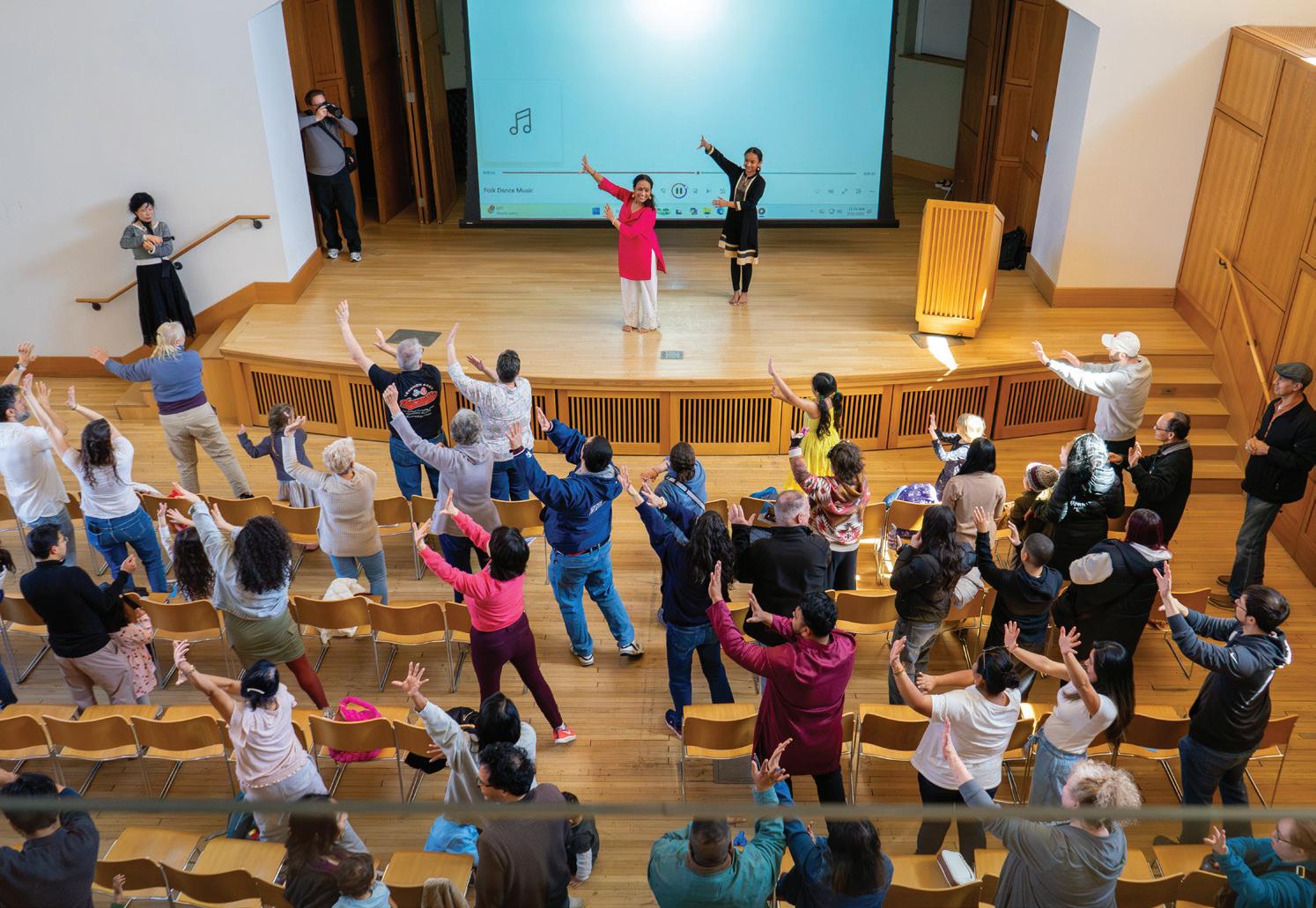
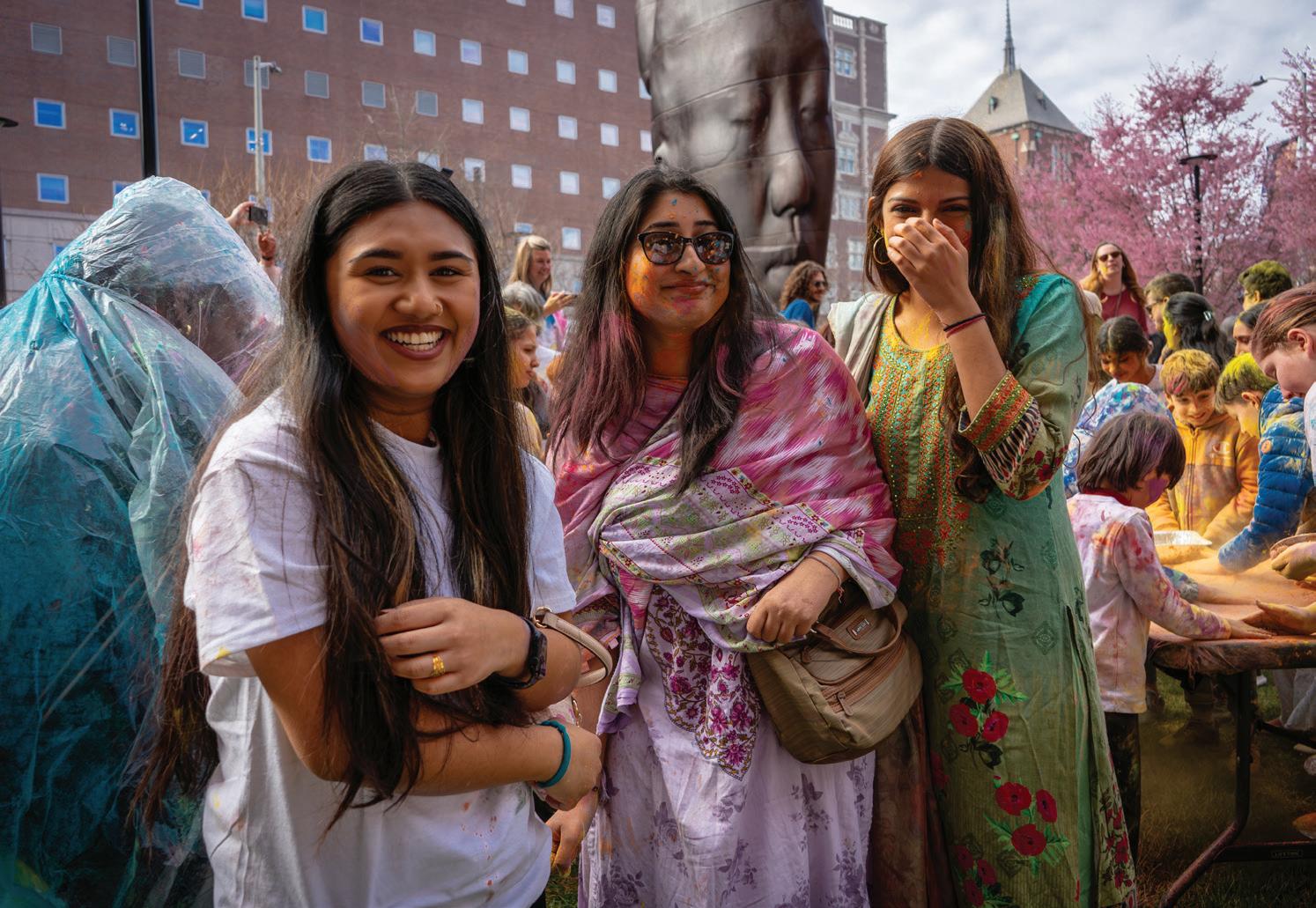
On March 21, Penn Museum held its annual Holi Festival, a Hindu celebration of the arrival of spring, bringing together various communities through vibrant colors, music, fellowship and joy. The event commenced at 11 a.m. with a welcome ceremony and katha storytelling session hosted by Viji Rao.
“Bring the joy, remove all kinds of bad things that are there in life,” said Rao, organizer and internationally ac-
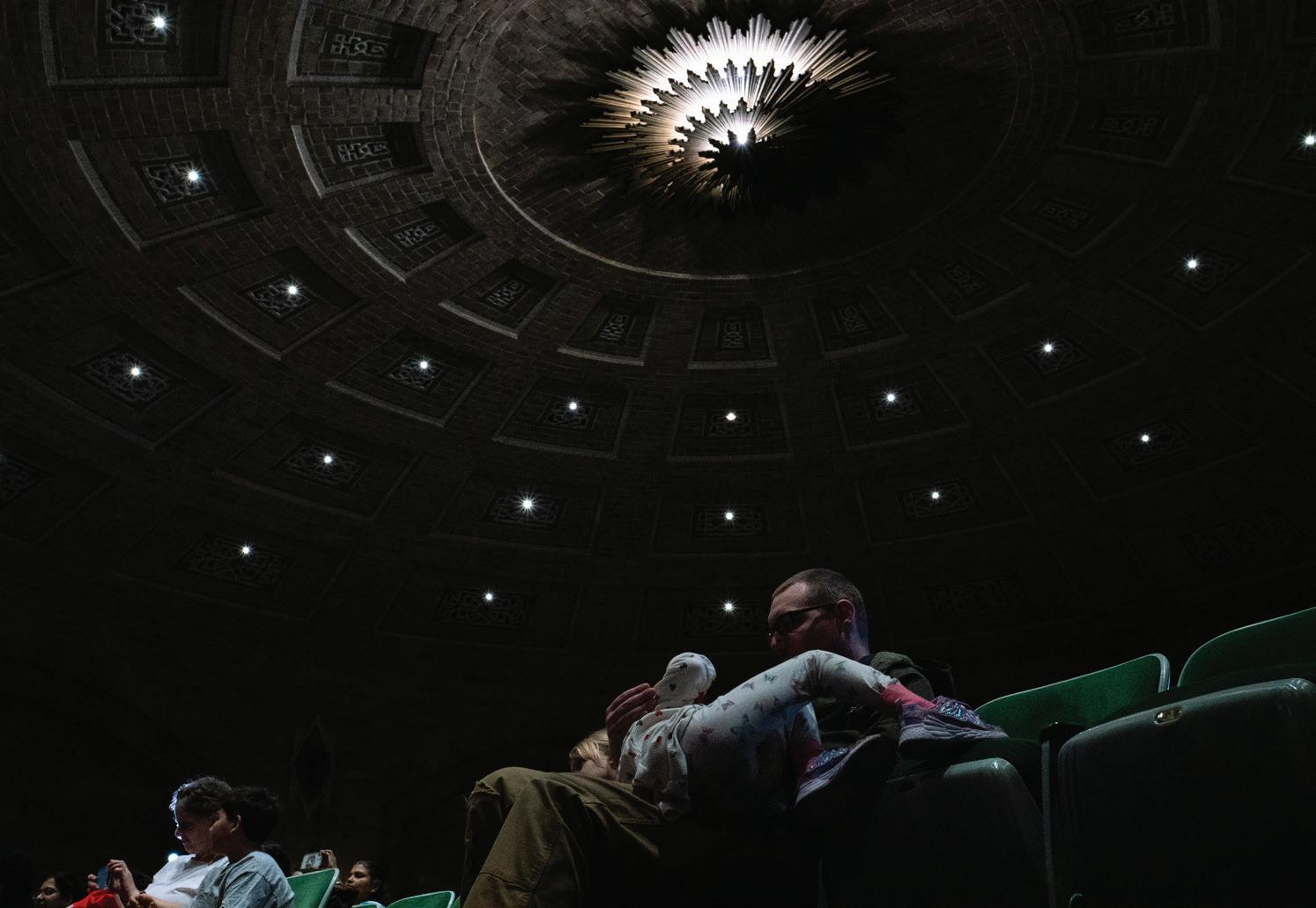
Attendees gathered in the Widener Auditorium for a lesson on the origins of Holi, where they explored how storytelling can be expressed through hand gestures, facial expression and rhythmic motion.
“I had a student years ago, he was Indian so the preschool celebrated, but I only knew a little bit but now that I’m here today, I’ll have more insight,” said Janelle Rosales, occupational therapist in the Philadelphia School District.
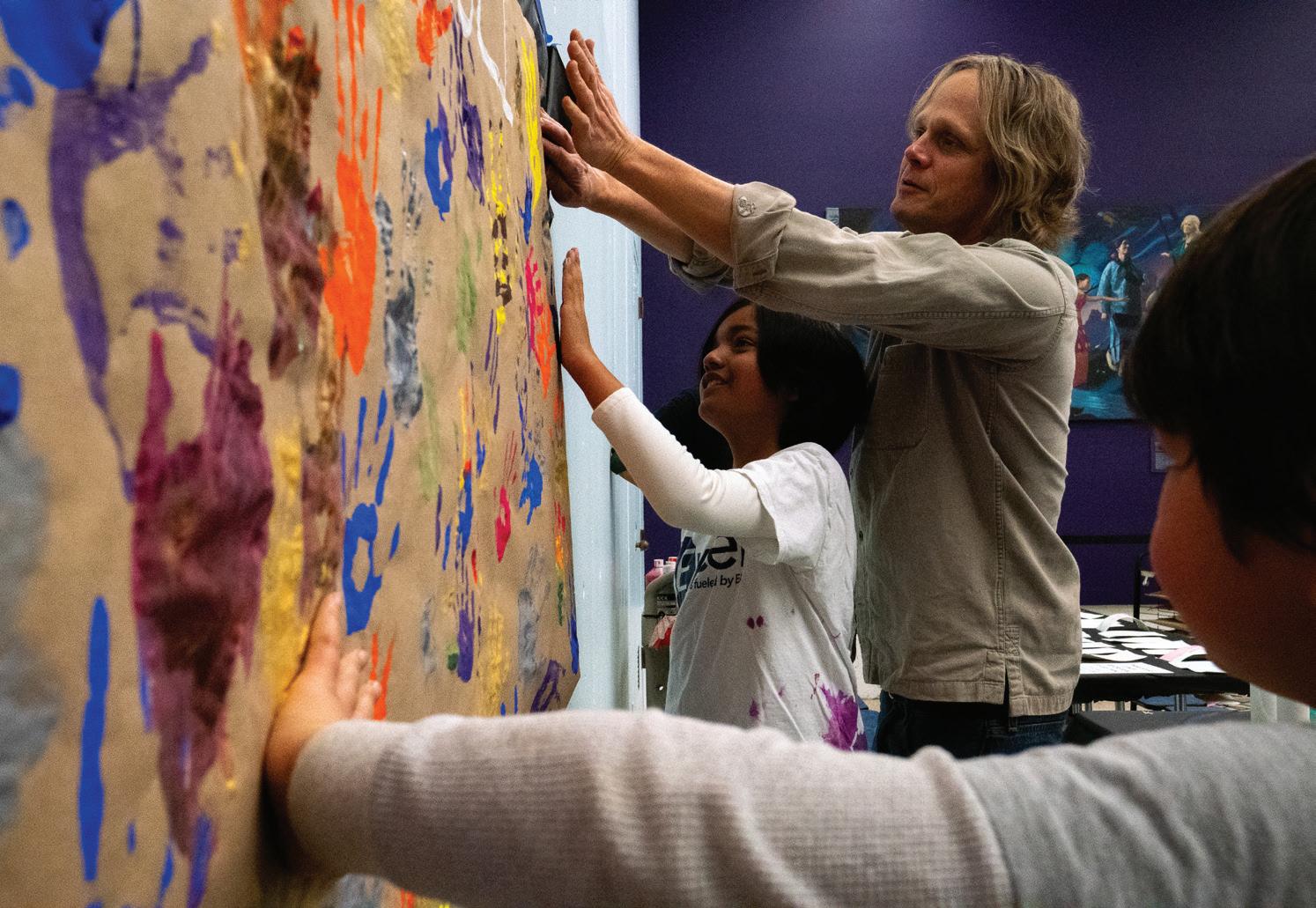
In the group dining hall, families were welcomed to make Holi art using paint, pastels and paper in all shades of the rainbow. The upper-level attendees
were encouraged to browse and shop from a select group of vendors selling attire from traditional Indian sarees, bags and accessories—all either handmade or imported from Southern Asia.
“I wanted to be a part of this initiative immediately because this is something that goes beyond just my number of sales,” said Vigna Jallipalli, a vendor from Exton, Pennsylvania who sold handmade and eco-friendly products at the event.
The Samudra musical performance unfolded in the Harrison Auditorium where youth from the Philadelphia suburbs took the stage to showcase their talents through traditional Indian melodies and sonnets.
These rising harmonies and intricate
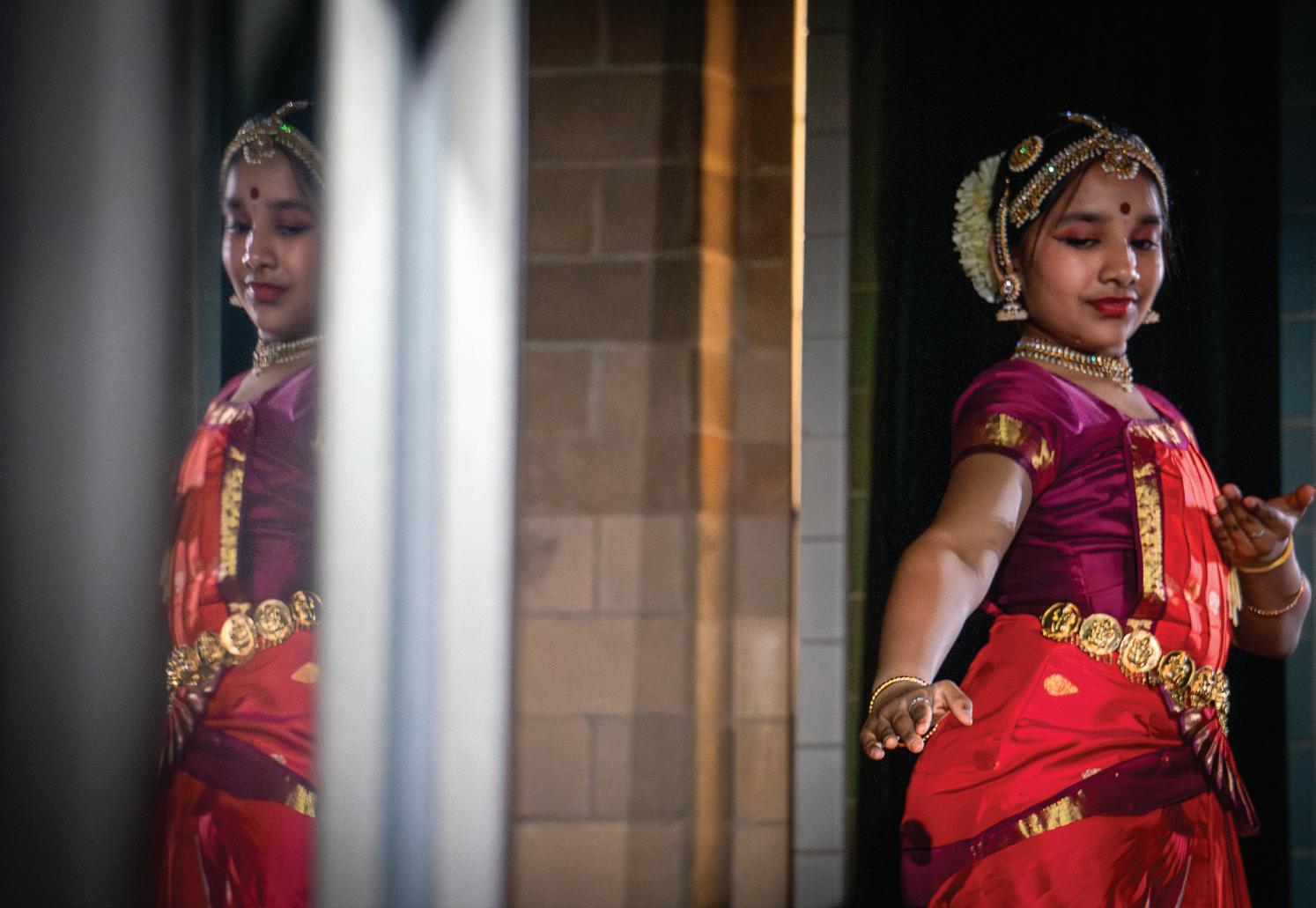
rhythms carried the audience through a vibrant, almost meditative soundscape and ushered them into the next movement of the celebration: a performance by the Three Aksha Dance Ensemble who danced Bharatanatyam, a classical jazz fusion Indian dance.
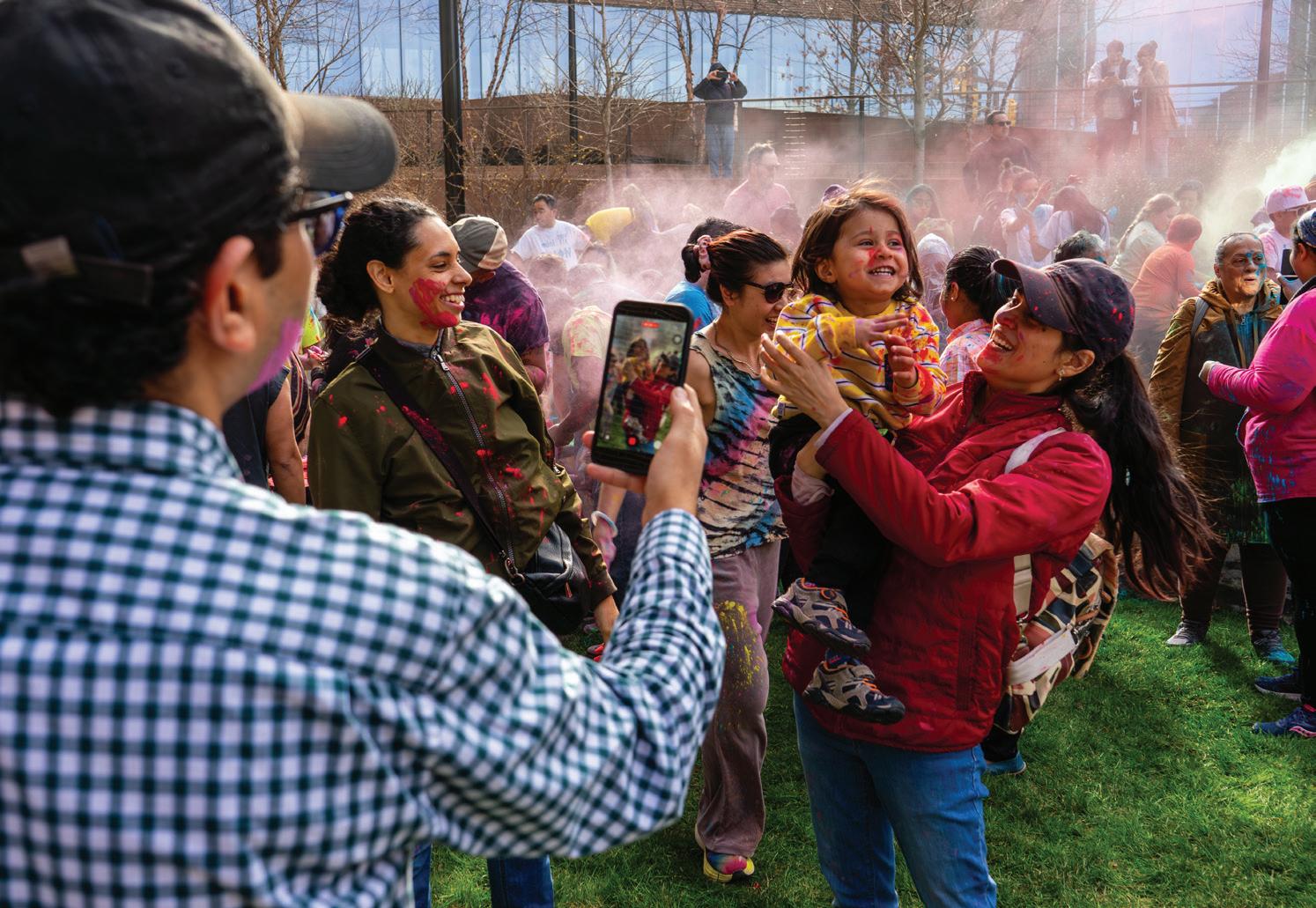
The day concluded with the attendees tossing color powder, culturally known as gulal, into the air.
“I feel like a lot of people don’t have that connection with our culture, so I think it’s very important to spread it,” said Lakshya Jaikumar, a third-year biomedical engineering student at Penn State.
brian.nelson0003@temple.edu
BRIAN NELSON / THE TEMPLE NEWS Children grab the various powders to throw.
Roughly 100 people gathered on Saturday, March 21, the arrival of spring.
BRIAN NELSON / THE TEMPLE NEWS
Viji Rao teaches during the storytelling session of the Holi Festival.
BRIAN NELSON / THE TEMPLE NEWS
A performer from the Three Aksha Dance Ensemble during a dance number.
AIDAN GALLO / THE TEMPLE NEWS Attendees wait for the next dance number in Harrison Auditorium.
AIDAN GALLO / THE TEMPLE NEWS Attendees handprint at the Holi Art Making station.
BRIAN NELSON / THE TEMPLE NEWS Participants in the color throw laugh together after the toss.
BRIAN NELSON / THE TEMPLE NEWS Participants gather and laugh after the color throw.
FEATURES
COMMUNITY
ISSUE
From the editor
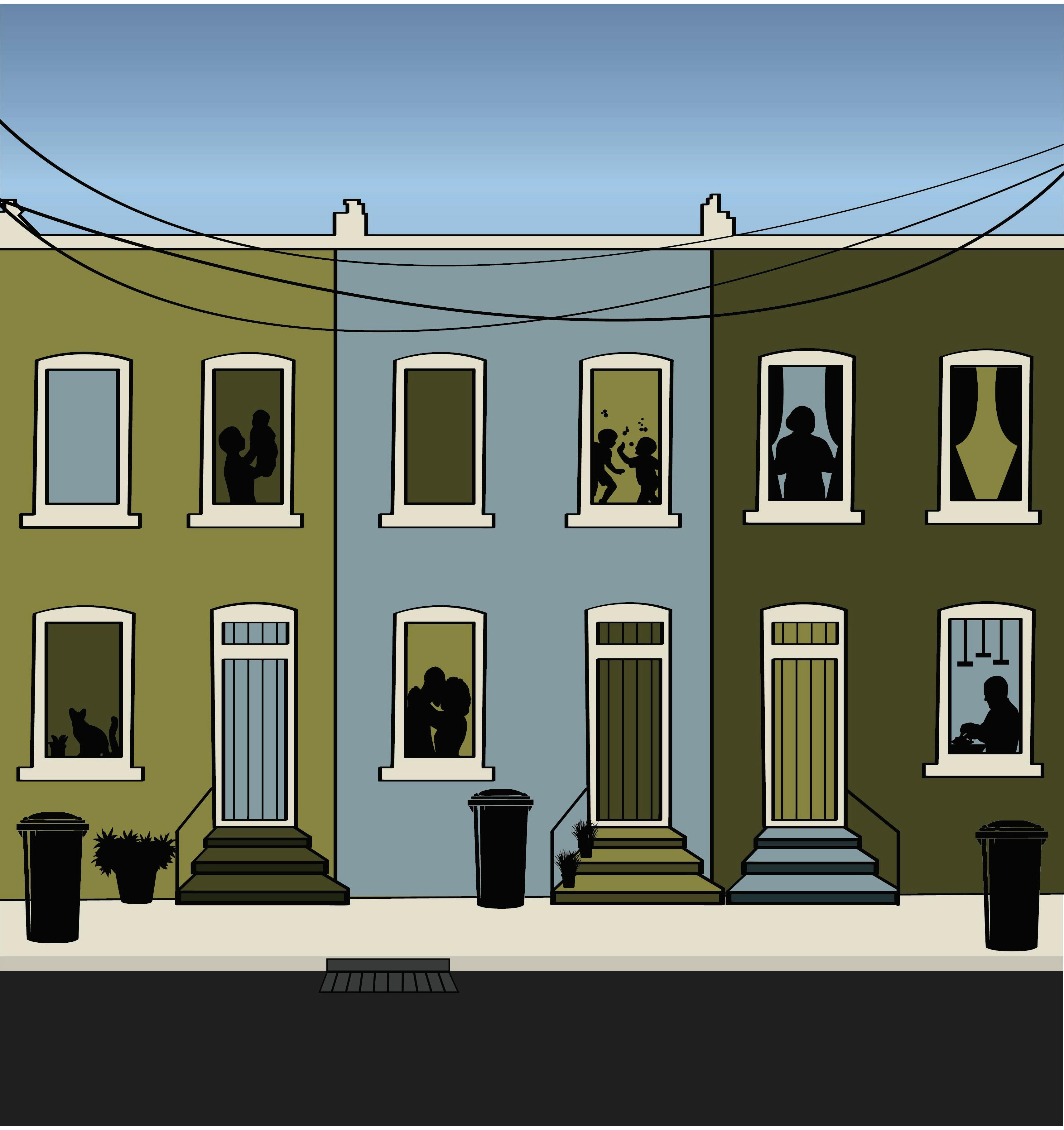
Every year, the North Philly community hosts thousands of Temple’s wayward academics—and it’s not without conflict. The university is often at odds with the residential community it is surrounded by, despite their proximity.
When I open my eyes and observe the residential lives around me, I see neighbors who play together, walk together and talk to each other. I encourage my fellow students to remember that love is an act of resistance—long-standing resentment has no place in a neighborhood.
Businesses like Treehouse Books act as physical testimony. Neighborhood book swaps, free materials and literacy programs nurture the community one child at a time. Blackhawk athletics operates in a similar vein— suiting up Pee Wees in football pads to achieve athletic excellence after long days in the classroom.
In this Community Issue, we focused on highlighting esteemed leaders and uncovering important sentiments about neighborhood crime and the upcoming bicentennial. We attempted to uphold our end of the bargain by keeping the community center, uplifting the good and uncovering the bad.
Whether you’re reading one of our stories, supporting a business on Cecil B. Moore Avenue or Diamond Street or talking to a neighbor, we hope our second annual community issue stories reinvigorate your responsibilities to and curiosities of others—whether that be students or residents.
“Train yourself toward solidarity and not charity,” Brittany Packnett once said. “You are no one’s savior. You are a mutual partner in the pursuit of freedom.”
From, Madelynne Ferro Features Editor
Patriotism in Philadelphia
Amid rising political tensions, some Philadelphia residents are wary of the upcoming celebrations.
BY CHLOE PABON Assistant Features Editor
As the United States approaches its 250th birthday this July, the nation’s birthplace has become the center of celebrations. But the fanfare is set in an era marked by intense political division and rising sentiment against President Donald Trump’s actions in his first year, reflected in protests across Philadelphia.
Rising food costs, concerns about increased Immigration and Customs Enforcement activity and strikes against Venezuela and Iran have loomed over the city.
“There’s no such thing as the middle class anymore,” said J.D. James, a 49-year-old North Philadelphia resident. “The Republicans really don’t care about anybody lower than them. Whoever has money, that’s what they care about.”
James has lived in North Philadelphia for more than 40 years and said that he’s never felt patriotic. When the federal government attempted to remove slavery exhibits at the President’s House in January, his frustrations mounted.
James takes care of his mother full-time, including buying her groceries. This year, he had to stretch thin or shop at lower-quality grocery stores. In addition to rising grocery costs, he has seen gas prices increase.
“I feel like we should not be at war right now,” James said. “I’ve put the cost of three people’s cars in my tank this week.”
Gas prices have risen on average by a dollar following U.S strikes against Iran in February, according to the Energy Information Administration. A Forbes economist predicts that “essentially everything” will become more expensive because of rising gas prices. Diesel is crucial to the shipping, construction and agriculture industries, and may face higher operating costs that trickle down to consumers.
Philadelphia expects to see a historic summer in anticipation of an estimated economic boost of as many as $2.5 billion tourism boom
driven by the FIFA World Cup and the MLB All-Star Game, alongside events scheduled to celebrate the nation’s 250th anniversary.
Patriotic celebrations have begun throughout the city, including Wawa Welcome America’s 16-day Festival leading up to July 4, block parties and the anticipated largest Independence Day parade ever.
Cristian Javier, a 27-year-old who has lived in North Philly for his entire life, doesn’t feel like participating in the celebrations. He feels that immigrants in Philadelphia are not being adequately protected.
The Trump administration’s increased presence of ICE nationwide makes it difficult for him to feel any pride.
“For anyone who is Hispanic, there’s a fear in them,” Javier said. “I fear sometimes that because of how I look, because of my prominent facial features, that I will be racially profiled and stopped, even though I am a U.S citizen,”
Although some are wary of calling themselves a patriot, others are more optimistic about the upcoming celebrations in Philly.
Darnell Riggins, a security guard in North Central, is feeling hopeful in anticipation that the Independence Day celebrations will put Philadelphia “on the map.”
The moment could shed light on Philadelphia’s rich and vibrant history, a city of many firsts, which he said makes him feel more patriotic.
“I feel like our city is actually on the rise. It’s about to be one of those go-to cities,” Riggins said. “[The city has] done a lot that’s bringing more awareness to us. So, I am going to say I am proud to be here for once.”

COMMUNITY ISSUE
Local nonprofit fosters literacy with free books
Tree House Books has distributed more than 100,000 books to children in North Philadelphia.
BY CHLOE PABON Assistant Features Editor
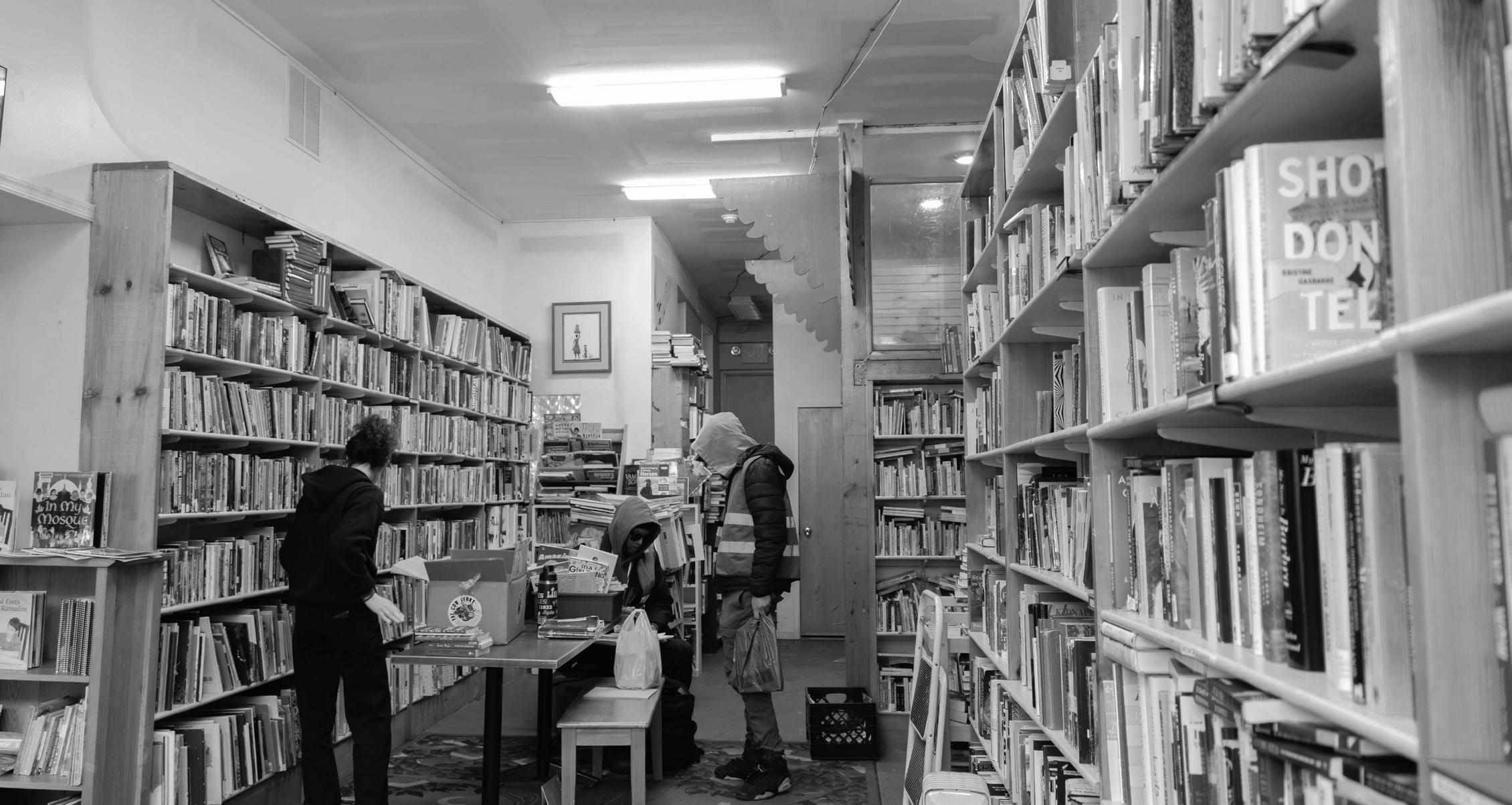
At Tree House Books, the selection ranges from Colleen Hoover to Charlotte Brontë to Dr. Seuss. And everything is free—Tree House Books lets anyone take home and keep forever as many new reads as they’d like. Patrons are simply asked to give their name to the front desk.
”We are a part of a great ecosystem that cares about youth,” said Executive Director Michael Brix.
The unconventional free bookstore model is a part of a nonprofit initiative with the Free Library of Philadelphia to address the systemic literacy crisis in North Philadelphia, where 71% of fourth graders are not reading at grade level, according to data in a January 2024 study from the Pennsylvania Department of Education. Tree House Books’s ethos is simple: adequate and equal access to books at a young age fosters literacy skills and success further in life.
Each year, they distribute more than 100,000 books to local organizations, individuals and schools. For the organization, promoting literacy and success doesn’t just end at a free bookstore. They offer after-school programs for children and teens, summer camps and even step outside of their usual location on Susquehanna Ave to take the vast collection on wheels across the city in a Traveling Tree House van and distribute books.
The cycles of poverty and illiteracy are intertwined; when those who are not given the resources to succeed, fail, the issue continues.
In Philadelphia, the poverty rate is 19.7%, according to 2024 U.S Census data. Adults at the lowest levels of literacy are ten times more likely to live below the poverty line, according to the National Center for Education Statistics.
Fifty-two percent of Philadelphia adults are functionally illiterate, putting them at a significant disadvantage in applying for a job, continuing their
education or reading to their child early on, according to the literacy nonprofit Achieve Now.
“Through historical disinvestment in this neighborhood, the kids who are growing up here do not have the access to resources that kids that grow up in other zip codes have,” Brix said.
Tree House Books was created as a used bookstore by members of the Church of the Advocate in 2005, but the store quickly pivoted to a nonprofit model following the development and popularity of its afterschool programming.
“Books in the homes is an indicator of future success,” Brix said. “We really wanted to make sure the kids got books into their homes. We worked for many years with our partners and other folks around the city to pour into these neighborhoods.”
Tree House Books employees work directly with school districts and families to ensure that students’ needs are met. The program is personalized with a 3:1 student-to-instructor ratio. The after-school programming curriculum is provided by Read by 4th, Tree House
Book’s parent organization.
One student in the literacy program, who began with a below-proficiency reading level in kindergarten, worked one-on-one with an instructor for more than a year to achieve proficiency by first grade.
“We were able to, because we had the time,” Brix said. “The first ‘A’ that she got on her report card in reading, she ran over here from her school, like super excited to show us, that was awesome. You know, she was really proud of herself.”
Aside from Brix, the heart of the organization are the staff and volunteers who work more directly with students. He describes it as a combination of a culture of care and restorative justice.
Giving Library and Book Donations Manager Emma Goldstein’s favorite part of working there is being surrounded by and inspired by all the children.
“They’re amazing, a lot of them use this as a third space to hang out after school,” Goldstein said.
Laasya Narumanchi began volunteering at Tree House Books a year ago after attending Philadelphia Literacy
Day with her roommate, where they both applied. Narumanchi volunteers at the library under Goldstein and runs the Tree House Books’ club at Temple, which fundraises for the larger organization.
The sophomore international business major, on a pre-law track, knows that her major and career path are unconventional for working at Tree House Books. But seeing the organization’s impact on students has influenced her.
“They’re really, really sweet kids. And you can see that every time you’re helping them, you’re actively making a difference with them,” Narumanchi said. “Whether it’s just, helping them with their homework or playing with them outside.”
chloe.pabon@temple.edu
LILLIAN PRIETO / THE TEMPLE NEWS
The interior of Tree House Books, located on Susquehanna Avenue near 15th Street.
COMMUNITY ISSUE
Blackhawk Football brings community to youth
BY RYAN MACK Copy Editor
Derrick Williams was brought up into the culture of the North Philadelphia Blackhawks Athletic Club, a Pop Warner football team. He spent his time from 1995-97 playing with friends and learning foundations of life from his coaches that the now-43-year-old still carries now.
When Williams got old enough, he wanted to be the same mentor he had during his time; he joined the organization again in 2003, this time as a coach of 11- and 12-year-olds.
“I played here at the Blackhawks when I was a kid and just coming back and trying to do some of the same things for the youth that were done for me when I was a youth, trying to make Philly a better place,” Williams said.
He’s done so for the last 23 years, watching the organization grow. The head coach of the 10-U team has seen the Blackhawks’ field go from being littered with dust and rocks, where it was famously called the “dust bowl,” to a turf field on 11th Street near Cecil B. Moore Avenue in 2014.
“[There are] not a lot of outlets for the kids to come somewhere safe, structured, responsible and they’re getting better at a craft,” Williams said. “This game has taken a lot of our kids to places that they never would have been without this game. The game is taking our kids and our community to so many different places that it’s extremely important.”
The Blackhawks first started as a basketball organization in 1968, with the goal of keeping kids off the streets in the North Philly area. That eventually changed to a football and cheer program with teams ranging from ages five to 13. They have a fall season from August to October with playoffs going until December.
They have games and practice every weekend during the season, when people looking out of their windows in the
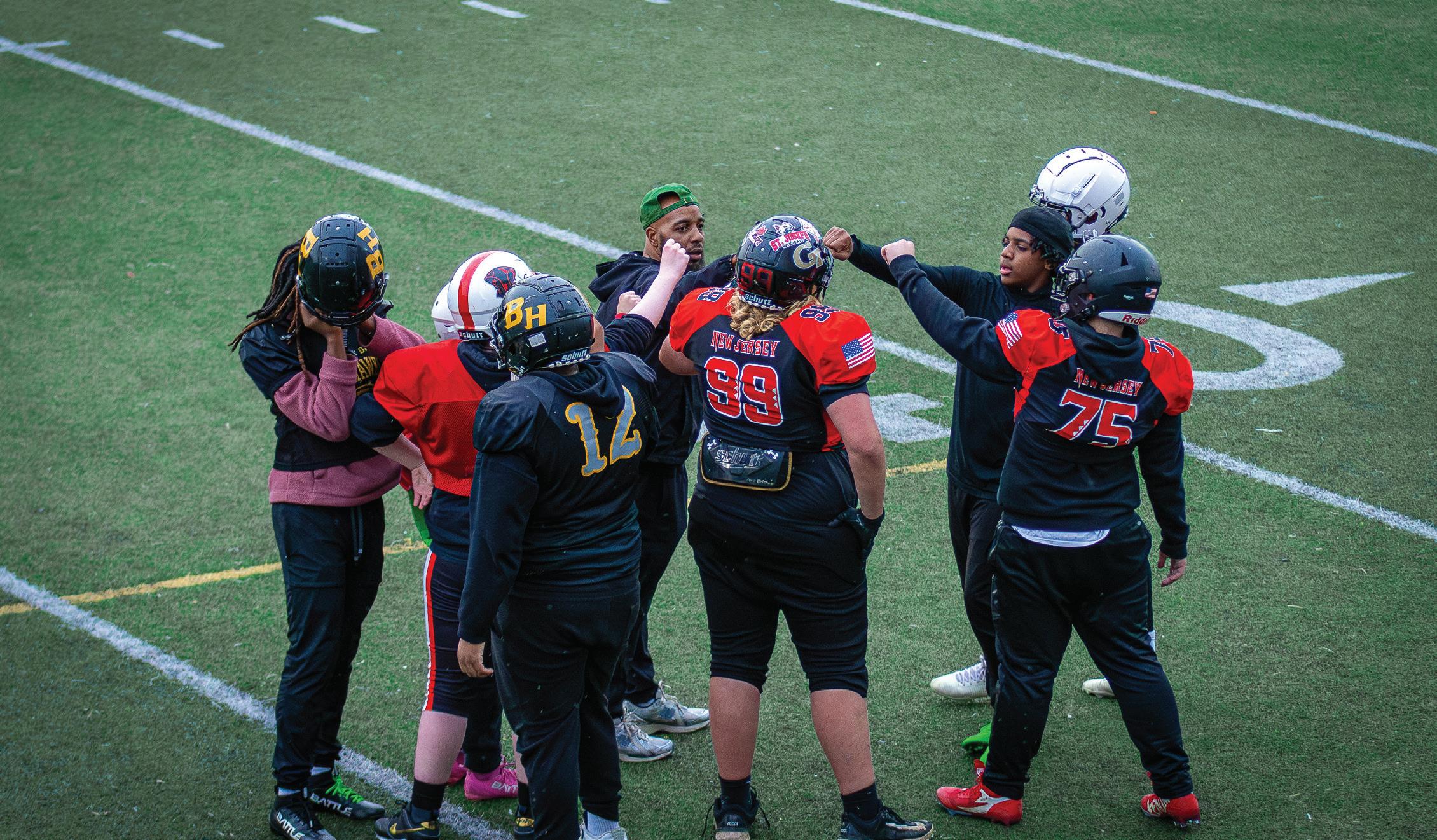
nearby Vantage Apartments, or simply strolling by, can hear whistles, cheering and a barrage of parents and coaches in Blackhawks gear.
“Any kid you see with that gold helmet, you don’t question the team,” said Keno Savoy, the 11-U head coach. “You just know he’s got to be a Blackhawk. You could be in Walmart. You’re gonna have a gold helmet. I see guys from 1975 like, ‘I played here.’ So, this is always home to everybody.”
There’s a sense of community between the parents and coaches, not just because they are from the same area, but because many of the coaches are parents whose kids played for the Blackhawks.
12-U head coach Ronnie Flowers first began helping when his son, Jaron, started playing 15 years ago. Flowers grew up playing and thought he could help the coaches—he’s been there ever since.
“It’s important just to give them a chance,” Flowers said. “There’s a lot of athletes. There’s a lot of non-athletes, but it takes coaches like us to pull it out
of them, to kind of let them know that you have a freedom of speech with your body, to be creative and be talented.”
Assistant head coach Huff got into it for the same reason: his son began playing football. Huff, who used to play quarterback, thought it would be the perfect way to start. He joined the Blackhawks six years ago, becoming Flowers’ right-hand man. The two even picked up a AYF National Championship in December 2025 in Kissimmee, Florida.
They made the trip to Florida for the championships before, but lost. The team finally winning was the culmination of coaching a group they had seen grow up since the kids were eight years old, Flowers said.
“It gave the kids something to look forward to, because they know the standard down here is winning. All we do is win,” Huff said. “So we are accustomed to winning. We are accustomed to traveling the country, playing big games. We are always somewhere. So that means a lot for these kids. Give them confidence to do other things.”
Both coaches, Williams and the rest with the program, have not only seen the players grow both on and off the field, but also their old players return. There will be high school or college kids who come back to teach others, repping their championship jackets or any Blackhawk gear they have. Some even come back to coach, but the connections that they’ve made mean more to them than the wins or losses.
“It’s supposed to happen in my mind,” said 7-U coach Nate. “You’re supposed to come back and give back to the organization that helped you as a kid. So that’s really what it’s about.”
ryan.mack0001@temple.edu @Ryan_mack18
The Blackhawk Athletic Club has given kids a consistent space to play football since 1968.
JUSTIN ALEX / THE TEMPLE NEWS The Blackhawks huddle up during practice.
COMMUNITY ISSUE
Resident, student perspectives on crime trends
North Central residents and students deal with living in one of the city’s higher crime districts.
BY MADELYNNE FERRO & ANTHONY BOFFA-TAYLOR For The Temple News
Across the country, violent crimes have dropped since the COVID-19 pandemic-era peak in 2021. Philadelphia’s 220 homicides in 2025 were the lowest since 1966, WHYY reported. But among North Central and the greater North Philadelphia area, residents and students still feel the effects of living worried about crime.
Viola Norris, a 74-year-old North Philly resident, moved to the Germantown neighborhood of Philadelphia in 1995 from Memphis to be closer to relatives and believes that crime has only slightly improved during the past 30 years. She’s built her schedule around avoiding risky circumstances and never walks alone at night.
“I think it’s the same,” Norris said. “I really believe they say crime is down, but I don’t see it. I see the same, and I think it’s horrible.”
On Dec. 31, 2024, Norris was personally affected when her 32-year-old grandson Dimitri Norris was shot and killed in Upper Kensington. Dimitri’s murder has only exasperated her perspective on crime in the city.
In Temple’s past academic school year, the North Central community has faced a string of sexual assaults, armed robberies and the fatal shooting of 16-year-old Khyon Smith-Tate. The 22nd Police District, which encompasses Main Campus, holds one of the city’s highest murder rates with 78.8 per 100,000 people compared to the citywide 16.9, according to 6abc’s Neighborhood Safety Tracker.
Elijah Stein, a sophomore history and political science double major, first moved to Philadelphia in 2022 with his mother who wanted him to attend Temple. Stein and his mother bounced
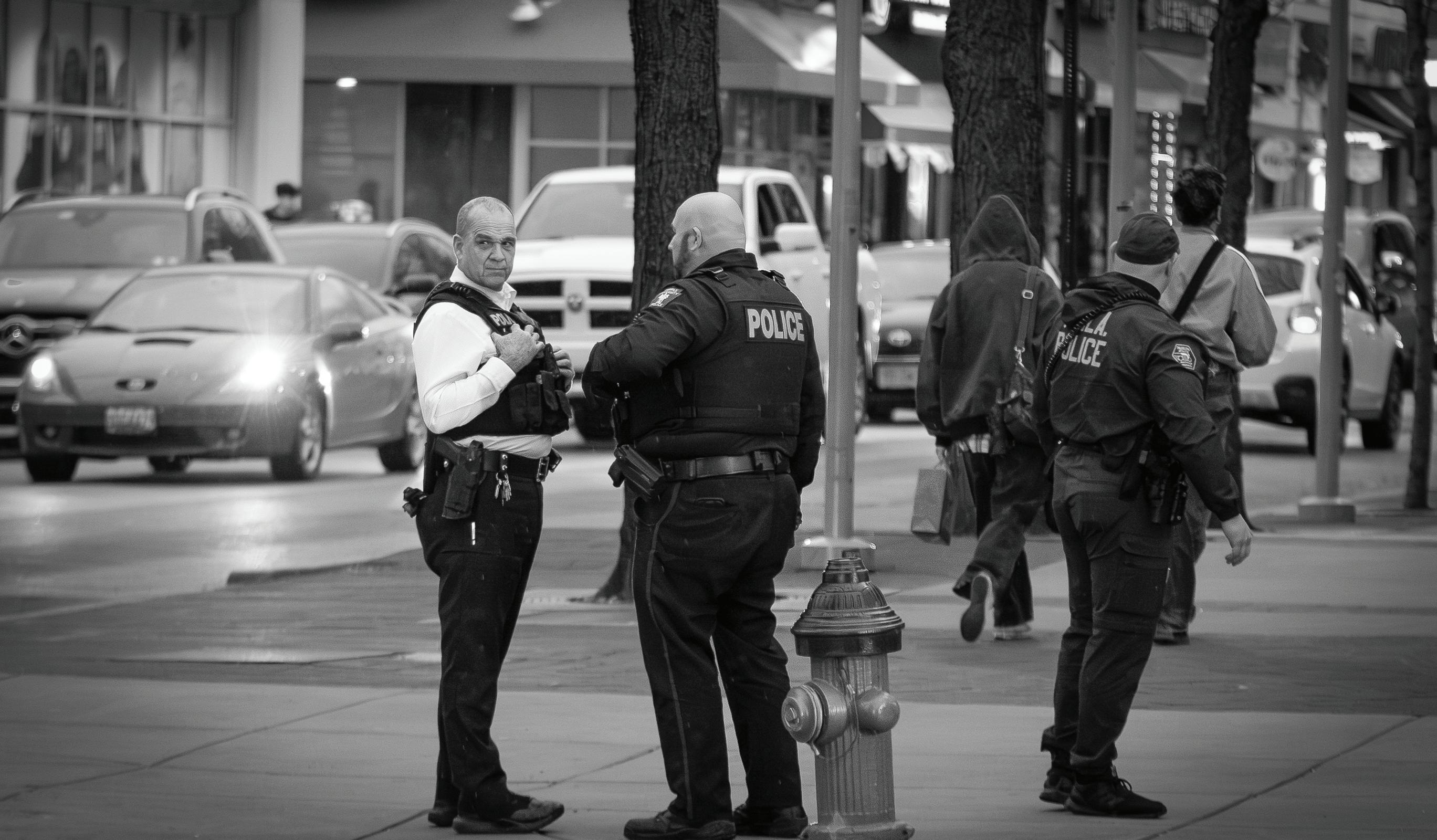
around during his adolescence, starting in California, then moving to New York City before finally settling in Philadelphia, his mother’s hometown.
The excitement of being an incoming freshman dissipated after Stein’s spring 2025 semester.
“I was very excited to go to college,” Stein said. “I didn’t really think I was, I worked in the city for two years, so I didn’t really think I was. I was just nervous that I wasn’t going to get to go to school. My fall semester, I didn’t really have any problems; it was really just the spring semester—that’s when I got assaulted.”
Stein was walking home from class on Broad Street around 1:20 p.m. on a Wednesday when a man stopped in front of him, turned around, hit him in the neck and shoved him, he said. After the altercation, he didn’t walk to campus for months, opting to bike instead because “it’s harder for someone to at-
tack you on a bike.”
Depending on the time of day, Stein keeps his participation in on-campus activities to a minimum because of the local crime. It is one form of precaution he uses to remain safe.
“I try to be as aware as possible,” Stein said. “A lot of my friends don’t live in the same area, so we’ll walk together. Besides biking, my head is on a swivel at all times, very aware about who may be paying attention to you. As far as at night, I don’t really go to Temple. If I had a club that wants me to meet there at night for whatever reason, I guess I’ll do that, but I try not to.”
Stein is increasingly suspicious of people on the street in the year following the attack. His mom, despite her familiarity with the city, is equally concerned about his safety.
Some residents believe students’ perceptions of crime are unwarranted or misconstrued due to lack of connec-
tion to the area and overreporting of crime in the North Central neighborhood. North Philadelphia is one of the largest sections of Philadelphia, with residents like 21-year-old North Central native Robert Miller hailing from families who have been in the area for generations.
“I feel that many of the people criticizing don’t get the chance to really interact with the community,” Miller said. “They come for a few years for school and leave it a mess and go on with life. I’ve been here forever, and some of my best memories growing up happened on these blocks, in these parks. I think if Temple students are aware of their surroundings and take the time to think more consciously of the area, some of the problems would dissipate.”
Miller’s family has owned a house on a small side street just outside of campus for three generations. He affirms his community is tight-knit and
JUSTIN ALEX / THE TEMPLE NEWS PPD police officers stand on Cecil B. Moore Avenue and Broad Street.w
FEATURES
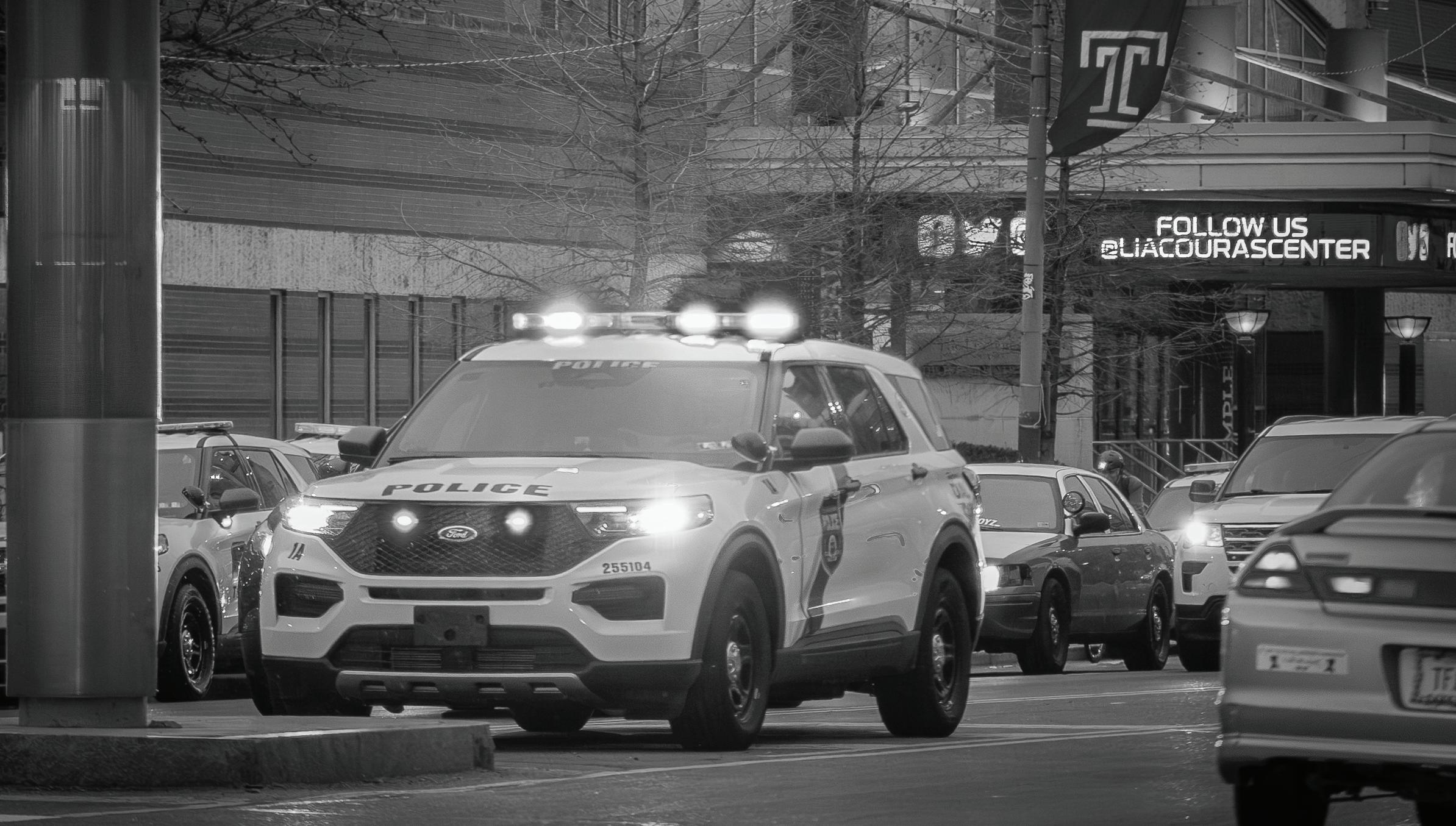
close with neighbors often lending a helping hand and children filling the playgrounds.
“There are plenty of good, loving people in these homes,” Miller said. “I hope that the students and their families can see that, and we can collaborate on helping keep that brotherly love the city is known for.”
Sarai Davis, a sophomore biology major from Olney, Philadelphia, loves her neighborhood while simultaneously being concerned about crime statistics in the last half decade. Davis witnessed the increase in crime during that time, particularly in her neighborhood.
After graduating from Franklin Learning Center in 2024 and coming
to Temple that fall, Davis gained a new perspective.
“Even though I knew the environment outside my house wasn’t safe in any capacity, I didn’t really worry about it,” Davis said. “Now, being on campus and having later classes, I have to worry about keeping my head up and paying attention.”
Sharing location is just one way Davis stays vigilant when moving around the area.
“Pretty much everybody who needs to have my location does,” Davis said. “My sisters, my mom, my brothers, they all have my location. If I am going somewhere late at night, I am on the phone with somebody from my family. I will
say when I started living on campus, they were a lot more worried at first, but I feel like they’ve kind of adjusted.”
Whether resident or student, many in North Philly have found themselves rearranging schedules and adjusting habits to prioritize personal safety. No matter how long people have lived in the area, a mutual feeling of powerlessness to crime can surface.
“I can’t go nowhere,” Norris said. “And there’s nothing I can do about it.”
madelynne.ferro@temple.edu
JUSTIN ALEX / THE TEMPLE NEWS A PPD vehicle parked outside the Liacouras Center on Broad Street.
COMMUNITY ISSUE
Shoppers stock up at local Cousin’s Supermarket
Steps from campus, Cousin’s Supermarket provides a wide selection of affordable goods.
BY NATHANIEL THRUSH Community Engagement Editor
Cousin’s Supermarket was busy on Eid al-Fitir.
Last Friday, shoppers squeezed through metal bars designed to prevent cart theft as attendants scrambled to assist in hauling groceries. Thru-running traffic from Germantown Avenue crisscrossed a crammed parking lot. Inside the store, families perused aisles as customers haggled with butchers.
General Manager Adeeb Ibrahim was sitting in his office behind the customer service desk, door cracked open just in case he was needed or saw an old friend.
“I like to think of our store as a supermarket where you can get great value for your money,” Ibrahim said.
Ibrahim’s uncle, Steve Cousins, a Palestinian American, founded the store in 1976. They’re celebrating 50 years of service this year .
Cousin’s currently operates three locations: two in North Philadelphia and one in Camden, New Jersey. Their offerings range from Halal deli meats to Puerto Rican yellow rice, reflecting the diversity of their customer base.
“We’re a very diverse supermarket, a majority of our clientele is Hispanic and African American,” Ibrahim said. “All of our stores are in higher poverty, food-desert areas.”
Food insecurity prevalence is as high as 30% in some North Philadelphia zip codes, according to a July 2023 study by the National Institute of Health.
Ibrahim grew up on Master Street and has seen the area shift in recent years.
“The neighborhood has changed over the years, but we still welcome our new customers,” Ibrahim said. “We were here before a lot of the gentrification happened.”
North Philly resident and longstanding customer Angela Anderson has seen these changes firsthand. For her, Cous-

in’s has stayed consistent.
“I love coming here, just about every day,” Anderson said. “I’ve been coming here since ‘95. Everything is fresh and they have reasonable prices.”
Other shoppers felt the same, appreciating their selections and prices.
“Everything is good here, prices and everything,” said Jose Soto, who lives nearby.
Philadelphia’s Muslim population is a key constituency served by the grocer. Twenty-five years ago, the store launched a new policy to accommodate the growing community.
“We decided that we didn’t want to sell pork. We wanted to become a Halal store,” Ibrahim said. “In the deli, we have turkey, chicken, beef and no pork. We tried this as a concept and never looked back.”
While it isn’t exclusively Halal, Cousin’s boasts one of the largest porkfree delis in the city of Philadelphia . There is a walled off area that sells pork—technically functioning as a separate store from the rest of Cousin’s.
The main portion of the supermarket includes a large produce section, flanked by the deli towards the back and aisles partitioned into ethnic divisions, which are further categorized into Latin and Middle Eastern fare.
The demand for Middle Eastern goods such as dates rises dramatically during the Islamic holidays, Ibrahim said.
“We ramp up prior to Ramadan, and we source our dates straight from Jericho,” he said. “We bring in all types of Middle Eastern food, pastries, cookies, all just for the holidays.”
The practice of consuming dates to break fast during Ramadan has been popular for centuries, as it is in accordance with guidelines in the Qur’an. Muslims from across the city flock to Cousin’s to stock up for Ramadan and Eid.
Cousin’s especially relies on Philly’s immigrant community for business; Ibrahim himself is the son of Palestinian immigrants to the United States. Recent U.S Immigration and Customs Enforcement operations have indirectly impact-
ed the store in the last year.
“When ICE started their campaign, a lot of people weren’t sending their kids to school. They weren’t going to work, and they weren’t shopping either,” Ibrahim said. “I haven’t seen ICE, but we did see a decrease in sales.”
Cousin’s fills the role of the traditional supermarket in disinvested sections of greater Philadelphia. The Camden location took the place of an abandoned ACME—which itself provides insight into Ibrahim’s ethos.
“I would say to somebody that wants to be an entrepreneur, ‘Why don’t you take over that ACME?’” Ibrahim said. “Take it over, create your own store, and serve the same community. Yes, it may be harder to do business, but people are people, and people need to eat. If you treat people well, they will treat you well.”
nathaniel.thrush@temple.edu
BRIAN NELSON / THE TEMPLE NEWS The Middle Eastern Isle inside Cousins Supermarket.
WHAT ' S IN NO NOR TH PHILLY
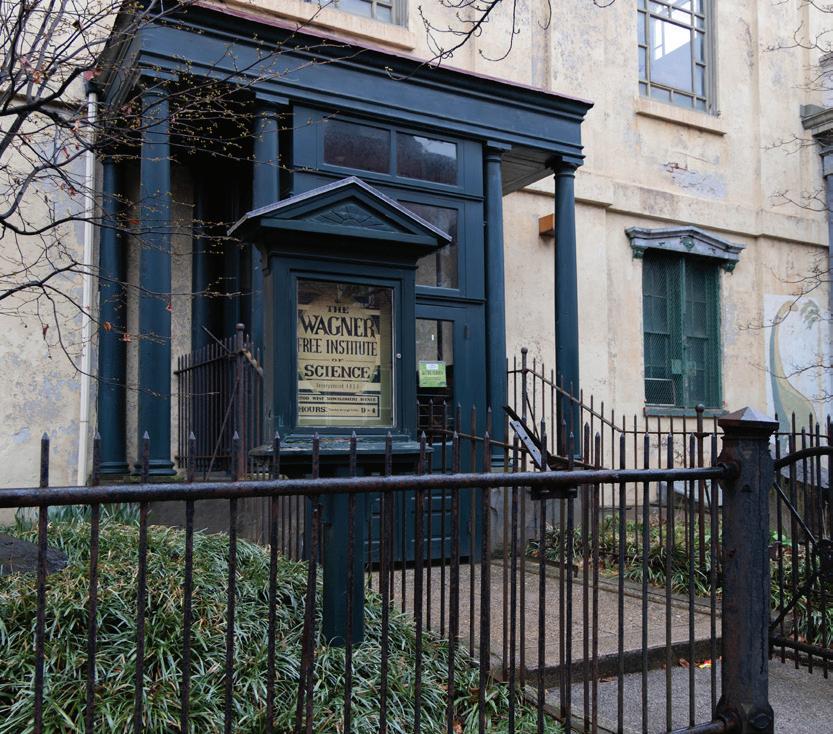
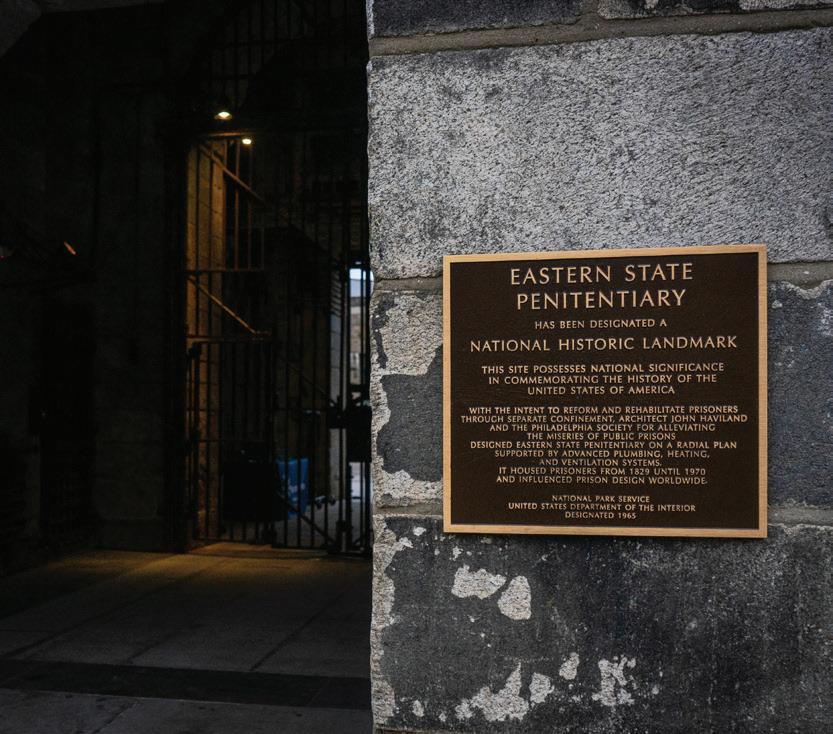
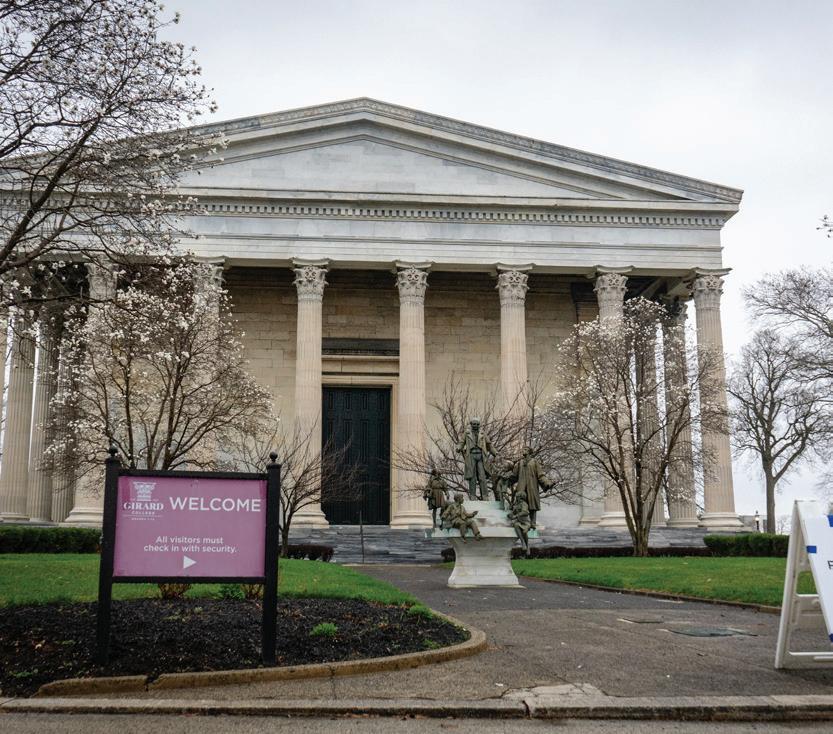
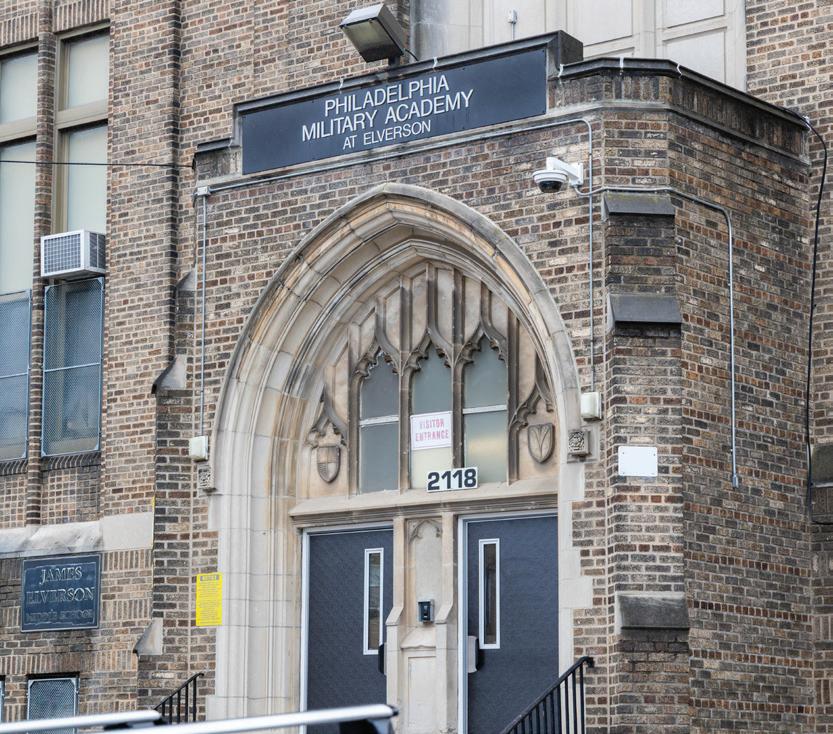
LILLIAN PRIETO / THE TEMPLE NEWS
BRIAN NELSON / THE TEMPLE NEWS
LILLIAN PRIETO/ THE TEMPLE NEWS
BRIAN NELSON / THE TEMPLE NEWS
BRIAN NELSON / THE TEMPLE NEWS
LILLIAN PRIETO / THE TEMPLE NEWS
SPORTS
WOMEN’S TENNIS
Ozturk’s connections drive her growth with Owls
Irmak Ozturk’s strong chemistry with her teammates has helped her thrive on and off the court.
BY BRENNAN SCUTT For The Temple News
When Irmak Ozturk mulled college offers, it was important for her to have international teammates to relate to. The Istanbul, Turkey native’s decision became easy when she saw Temple’s roster had mostly foreign players who would be able to guide her.
However, Ozturk felt overwhelmed when she arrived for her freshman year in 2024, questioning why she, then 17-years-old, was there. Senior Thamara Kawaratani Frasser, a Gold Coast, Australia native, showed Ozturk around and eased her nerves. She offered to cook for Ozturk and her mother, which helped her adjust to the team.
Ozturk grew closer with her teammates and realized she fitted well with the Owls during practice and matches. Ozturk’s confidence in herself and others has helped the group grow closer.
“I checked the team and everyone was international, which for me is like pros,” Ozturk said. “Because what I’m thinking is that everyone is experiencing the same stuff that I’m experiencing right now. So probably it will be easy to do empathy and understand each other.”
Ozturk weighed her options after graduating from Bahçesehir Okyanus High School, deciding whether to try to play professionally or pursue collegiate tennis in the United States. She recognized the risk of not having something to fall back on, so she chose to pursue a psychology degree.
She committed to Temple under head coach Steve Mauro, but the athletic department announced he wasn’t returning for the 2024-25 season. The change didn’t affect Ozturk’s decision, joining to play for newly hired Director of Tennis Jeff Brandes.
Brandes creates a low-pressure environment, something Ozturk appreciates. She feels it’s extremely easy to lose
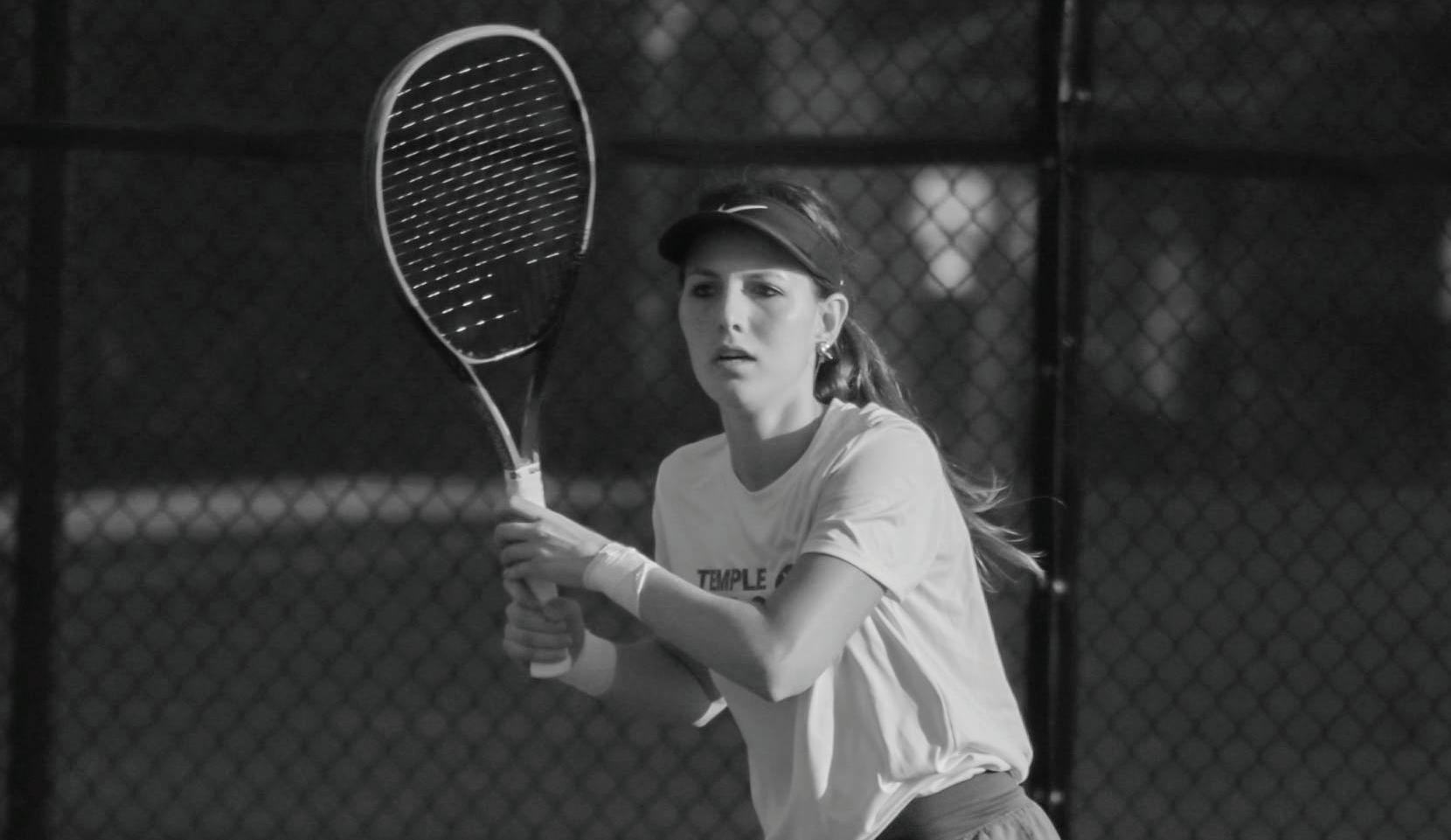
confidence, but Ozturk reaffirms that she plays well instead of letting mistakes affect her.
Her positive reinforcement accompanied a team-high 14-13 singles record and 9-3 in doubles during the 2025 spring season. She continued that success this year, holding a 9-1 singles mark and 10-1 doubles record with her partner, freshman Tianni Zhou.
“What I’m thinking about in matches, I feel like my problem-solving skills are getting better and better because you can read what your opponent is thinking or what she can do,” Ozturk said. “You’re understanding the psychological aspect better.”
Ozturk is Temple’s loudest vocal presence, constantly supporting her teammates. She brings positive energy, which Brandes feels is helpful in a sport with a lot of failure.
“Tennis is an emotional roller coaster a lot of times, Brandes said. “So, when she’s winning a point, I could be on court
six, and I’ll hear [her yelling], ‘Come on,’ which is awesome.”
Ozturk’s leadership helped her and Zhou connect on the court this year, but their relationship began in January 2025 during Zhou’s official visit. Ozturk took the Shanghai, China native to the team’s facilities and out to lunch, making Zhou feel as at home just like Frasser did for her when she first came to Temple.
They built trust during the fall semester by spending time together and communicating during competitions. They keep each other focused on matches by encouraging the other when they make a mistake.
“Everything we did on the court, it’s kind of creative, which made our opponent kind of miserable or confused sometimes,” Zhou said. “So that is really fun, because we play unique doubles and I really enjoy partnering with her.”
Ozturk grew close with Zhou and the rest of her teammates by playing games, watched TV and simply talking
amongst each other during the offseason.
They still do team-bonding activities at least once a week and are constantly at each other’s apartments. They had a Friendsgiving last year, where Ozturk made baklava, a Turkish pastry, for her teammates. The connection has heightened Ozturk’s experience in her second season.
“I’m feeling like we have to compete for the season and we have to enjoy, because with team, we’re always enjoying spending time with each other,” Ozturk said. “So we kind of have to be grateful for these days, enjoy and compete at the same time.”
brennan.scutt@temple.edu @brennan_scutt
SAMAJ SCHELL / THE TEMPLE NEWS Tennis player Irmak Ozturk at practice on March 11.
FENCING
Owls use family culture to win 30th straight title
Temple overcame injuries and a young roster to go 26-11 and win another NIWFA championship.
BY COLIN SCHOFIELD Co-Sports Editor
Jennie Salmon felt the nickname “No Pressure” suited her when she became head coach in 2022; everyone she met during the hiring process told her, “No pressure, but Temple has won 26 straight NIWFA championships.”
She has since continued the winning culture head coach Dr. Nikki Franke built by earning three in her first three seasons at the helm.
The Owls won 33 matches and their 29th consecutive NIWFA championship last year, but seven seniors graduated in the offseason. Salmon thought the youth of her roster would make it difficult to achieve a 30th championship, but the Owls proved themselves again.
Through the year, the Owls overcame various injuries and grew closer, with their veteran leaders helping the seven freshmen learn. Temple finished the regular season with a 26-11 record and captured its 30th consecutive NIWFA championship on Feb. 28.
“We beat ranked schools like Stanford, Ohio State, Penn State, Penn, all schools that in the past, even with more experienced teams, we haven’t been able to beat or we have beaten with those experienced teams up and down,” Salmon said. “But to see this team come through the season and continually improve, that team record is something I’m proud of and impressed by.”
Temple went on a two-day preseason retreat to Mission Fencing Club in Long Island, New York, where Salmon coaches, so the roster could bond. They stayed in dorms near the club to be more connected, went to the beach and cooked breakfast and dinner together.
“A retreat like that just really helps everyone kind of open up,” said foilist Renee Oymann. “You play games at night and you do some fun stuff. You meet each other beyond the fencing room and I feel like that kind of opened the door for everyone to have conversations and
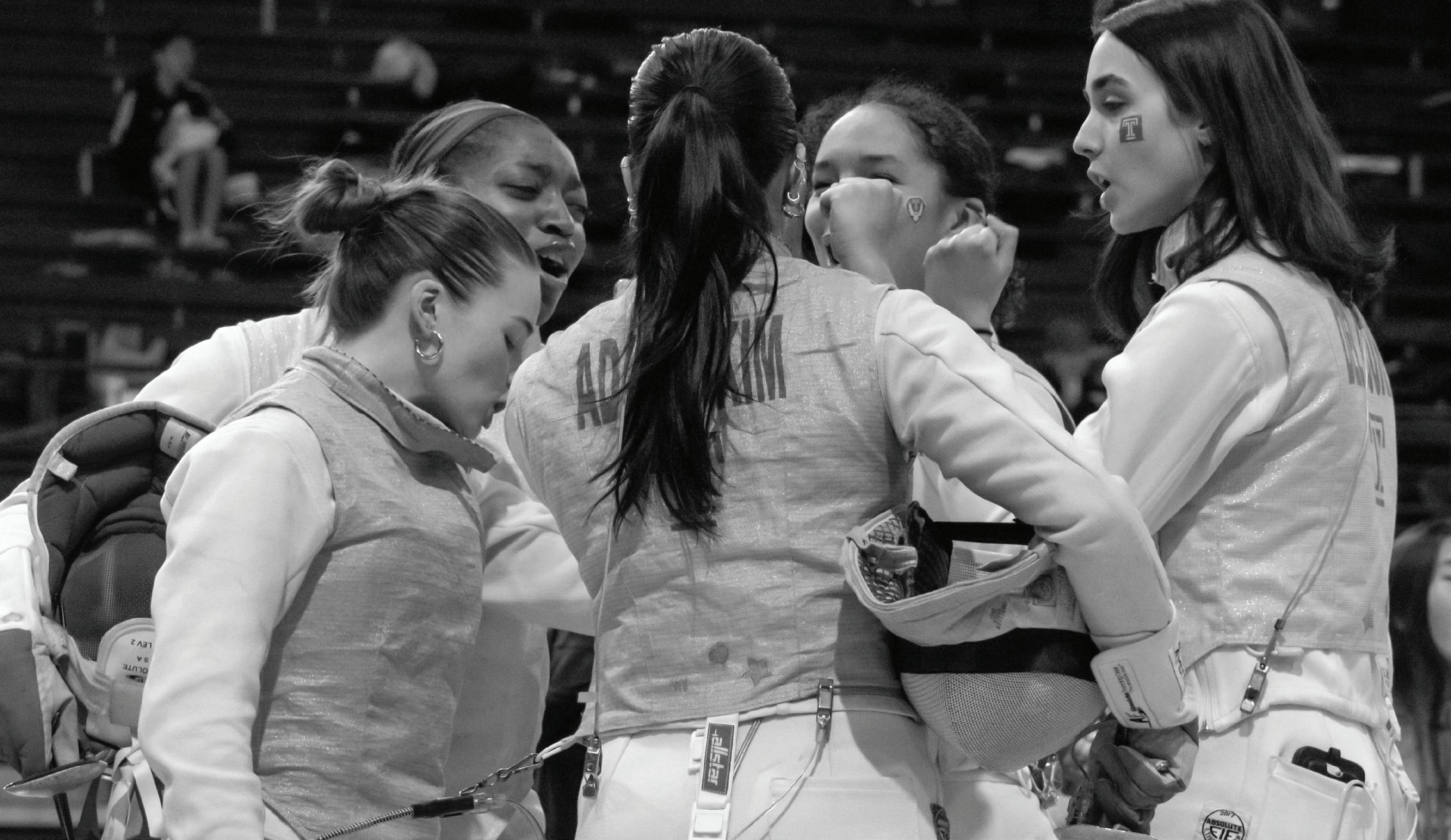
to meet each other.”
Squad leaders Oymann, epeeist Anne Mai-Melles and saberist Lauren Johnson played an important role helping the young players grow every bout. Johnson missed the entire season with an injury, but her leadership and positive attitude was crucial for a saber squad with five underclassmen.
The freshmen proved themselves early in the season. Temple’s match against Yale at the Sacred Heart Tradition Meet on Dec. 6 saw first-year foilists Milena Žunic and Aurelie Sulter win bouts against two Yale fencers who already earned wins against the Owls. Although Temple lost 20-7, their performances helped Salmon realize Temple was heading in the right direction.
“[Watching their teammates lose] didn’t convince them they couldn’t do it,” Salmon said. “It fueled them more to go get it, which was really a very critical moment, knowing this team is okay. We’re gonna be able to surprise a lot of people.”
Temple improved during the season and defeated top opponents in its final three meets. The Owls beat No. 7 Ohio State and No. 11 Stanford 16-11 at the Schiller Duals on Feb. 1. They closed the regular season going 3-1 at the Temple Invitational on Feb. 22, with victories against Penn and Penn State. Temple carried that momentum into the NIWFA championships, where it collected its 30th straight title.
Twelve Owls qualified for the NCAA Mid-Atlantic/South Regionals for the chance to advance to the NCAA Championships. However, no Temple fencers qualified for the first time since 1995, despite saberist Alexandra Papapetropoulou finishing fourth, Oymann finishing sixth and folilist Anais Wandji placing 10th.
“It took longer than I wanted to get to that point that I felt like I was ready,” Papapetropoulou said. “But I was at the perfect place at the day of the regionals which mattered the most to me and that was the highlight of my season.”
Salmon feels her athletes deserved a shot in the NCAA Championships and will use the outcome as motivation for next year. The Owls’ bond helped them overcome an inexperienced roster to maintain a winning culture and achieve another successful campaign.
“Everyone put in so much effort and everyone was just trying to do the best for their teammates no matter who it was,” Oymann said. “Everyone has their little best friend on the team, but that doesn’t matter. We’re still a family. That’s one of our core values. This year, I feel like was the best year of my four that I’ve seen that we really embody the value of family.”
colin.schofield@temple.edu @ColinSchofield9
ERIN BAMFORD / THE TEMPLE NEWS Temple Fencing huddles during the Temple Invitational on Feb. 22.
WOMEN’S BASKETBALL
Owls top conference in Kay Yow fund donations
Temple had $3,280 donated in its name, the most in the American Conference.
BY SIENNA CONAGHAN Co-Sports Editor
Head coach Diane Richardson entered the American Conference’s media day in Birmingham, Alabama on Oct. 12 and 13 wanting to make an impact beyond coaching. She encouraged the coaches to commit to fundraising for the Kay Yow Cancer Fund—an organization she has been familiar with since her days coaching Towson.
The Kay Yow Cancer Fund is a non-profit organization that raises money for both research on all cancers affecting women and healthcare access to underserved communities. Kay Yow, a former North Carolina State women’s college basketball coach, founded the organization in 2007. Yow had breast cancer intermittently for 22 years until she passed away in 2009.
Richardson met with the other coaches to explain how much cancer research means to her and found that almost everyone in the room had been impacted by the illness in some way. Everyone agreed to participate and the American announced a partnership with the fund in November 2025.
The American raised $25,000 during the 2025-26 season, which the Kay Yow Cancer Fund matched for a $50,000 grant to the UAB O’Neal Cancer Center in Birmingham, to provide care for under-resourced women. They presented the check during the conference championship game on March 14.
“I think it’s important, one to carry on her legacy. But I think it’s more important for us to build awareness,” Richardson said. “I come from an underserved community and there’s so many and we’re in Philly, where people don’t have the funds to get mammograms and to find early detection. I think that’s really, really important and the funding helps to do that.”
COACH YOW’S IMPACT
Yow is well-known for her success
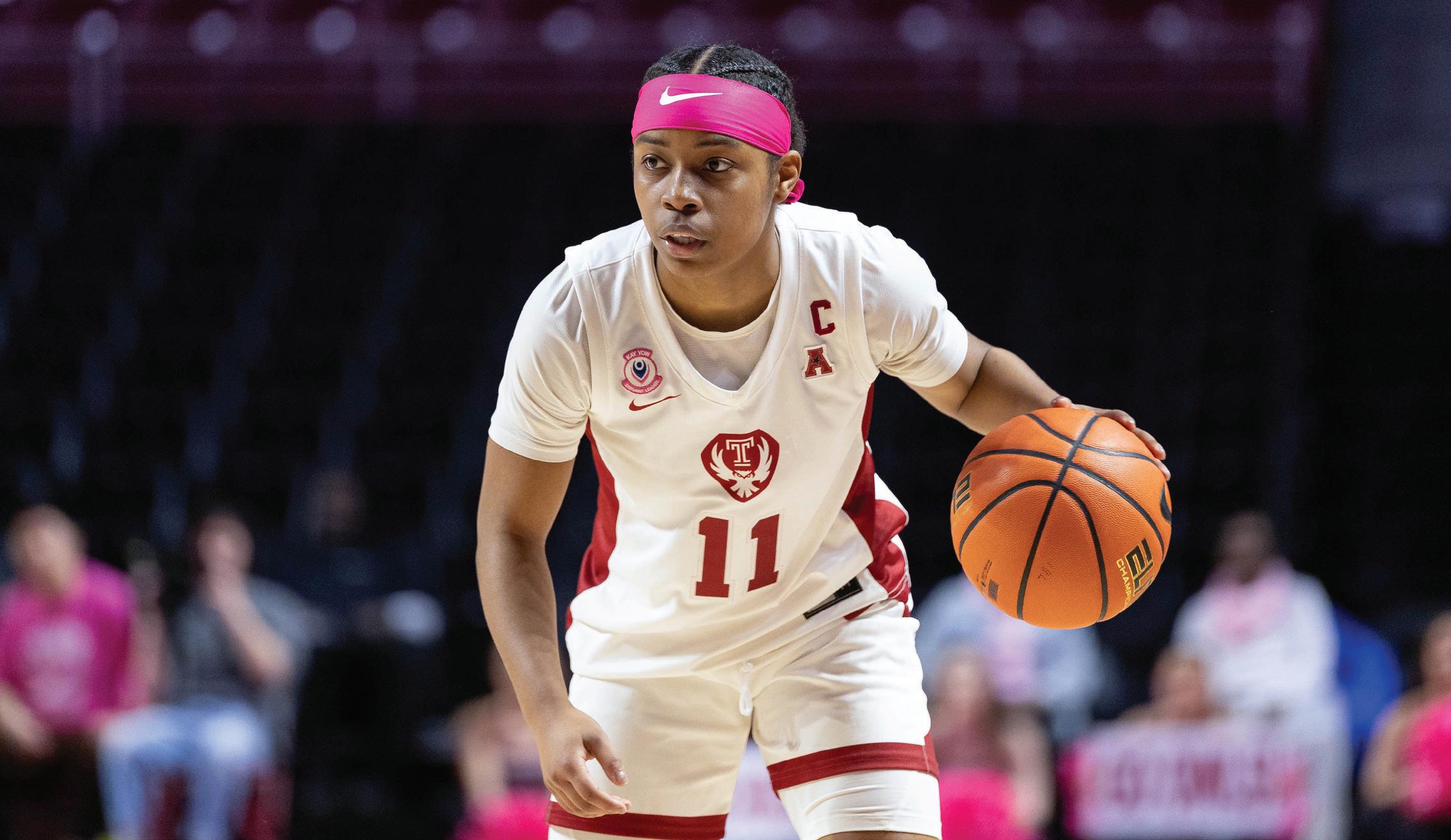
as a coach, amassing 737 wins. She also garnered attention due to her commitment to serve others, even while undergoing treatment. Those values have carried through the fund, which has invested $9.5 million into scientific research grants since its inception.
The Hall-of-Famer was the sixth Division I women’s basketball head coach to notch 700 career wins, with her 600th coming against Temple on Jan. 11, 2001. She went to 20 NCAA Tournaments, making a Final Four appearance in 1998.
Yow was a United States women’s basketball coach during the 1988 Seoul Olympics, where she helped the team win a gold medal.
Yow’s guidance didn’t stop with her players; she helped anyone she could, including other coaches.
Richardson had a highly successful career in corporate America. She founded American Security Corporation and became one of the top female executives in 1995, but it wasn’t her calling. Richardson wanted to help girls get scholar-
ships through basketball, so she became the head coach at Riverdale Baptist High School in Upper Marlboro, Maryland from 2000-06 and returned to the school from 2009-12.
She learned a lot about how to be a supportive coach from Yow. Richardson remembers Yow teaching her how to care for her athletes, be passionate about their goals and use her experience to guide them through basketball and life.
“I feel that all the time with my student athletes, I love them first, basketball secondary,” Richardson said. “[Yow] taught us that and did so much for the game and so much for coaches growing up. I’m an old school coach, but Coach Yow taught me a lot about being a servant leader. Why are we in this business? It is not just about bouncing the ball. It’s about changing lives.”
THE PARTNERSHIP
The fund has many partnerships, including most college basketball conferences. Each conference initiative is
catered for the best fit. The American decided to raise the money in one season while others dedicate two for fundraising.
All 13 American teams planned to raise $2,000 to ensure they reached their pledge. Five programs met its individual goal, with Temple’s $3,280 as the most in the conference.
American commissioner Tim Pernetti used the grant on Birmingham because the conference wants to have a positive impact in every championship host city. They also gave a $10,000 check to Marshall Thurgood Elementary School in New Orleans, Louisiana to go toward improvements for the football championship game that took place in December 2025.
“Everybody sees sports as this big platform, but we’re now using it more effectively for service to bring awareness to things, bring awareness to community, bring awareness to breast cancer,” Pernetti said. “And it’s something that has really resonated in our league with
NATHAN SANDER / THE TEMPLE NEWS Guard Tristan Taylor wears her Kay Yow Servant Leader patch while passing the ball against Memphis on Feb. 22.
all of our coaches.”
Richardson introduced the Coastal Athletic Association to the fund when she was Towson’s head coach from 201722.
Each school hosted a Play4Kay game to advertise the fundraiser in February. Temple has organized a game to promote cancer awareness for years even before the partnership formed.
Play4Kay games began in 2006, when Yow dedicated one of NC State’s home games to raise awareness and money for the fund. More than 1,000 teams, ranging from high school to the WNBA, host games where they honor cancer survivors and donate the proceeds.
The Owls paired their Play4Kay game with a 65-62 win against Memphis on Feb. 22 this season. A video of each player and staff member holding a sign displaying who they played the game for was shown on the jumbotron during halftime. Some wrote about different family members; assistant coach
SPORTS
Shenita Landry put a former teammate and guard Tristen Taylor wrote she was playing for those who can’t.
“I’m all for causes when it is something that helps,” Richardson said. “So, whatever I can do and whatever I can do to bring awareness, I’m all for it.”
KAY YOW SERVANT LEADERS
The fund started the Kay Yow Servant Leader Award last season, given to people who reflect Yow’s passion to put others before herself. There were 66 Servant Leaders for the 2025-26 season, including Taylor.
Servant Leaders are recognized with a jersey patch for the season. The patch symbolizes people standing on the shoulders of others, said Senior Director of Programming Paula Williams.
“It means a lot to me to have that patch,” Taylor said. “I feel like when other people see it, I want them to be like, ‘I want to get one of those patches and just be a great person as well, all around, on and off the court.’”
Coaches nominate players, which the fund compares with the athlete’s public reputation. There were 26 winners in the 2024-25 season; the number of players honored this season varied due to the organization’s growing popularity and some coaches not nominating anyone.
Richardson didn’t hesitate to nominate Taylor, admiring her devotion to help others. While Taylor leads Temple on the court as the point guard, she also puts time into the community. The team committed 1,000 hours of community service during the season; Taylor logged 200 hours herself, Richardson said.
Taylor gave back in many ways, including leading reading programs at local elementary schools and helping coach at Skilladelphia, a nonprofit organization that has clinics and summer camps for girls and nonbinary players ages 6-14.
Richardson notices similar traits in Yow and Taylor, even seeing Taylor give her teammates advice the same way Yow guided her.
“I would say [to Yow], I take pride in this,” Taylor said. “I’m a perfect person for this and I’m so thankful and grateful to have her patch and carry on her legacy.”
sienna.conaghan@temple.edu @Sienna_Paige2
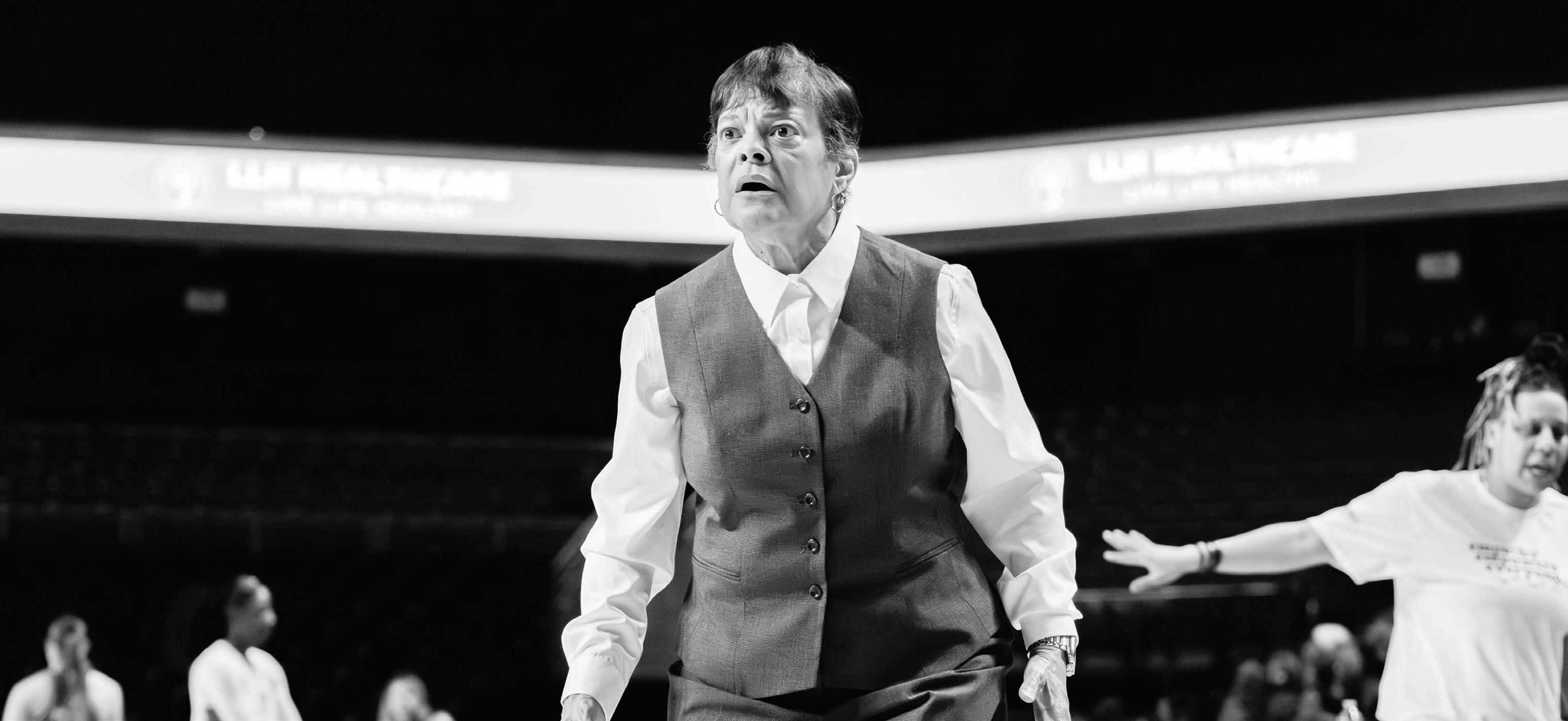
LILLIAN PRIETO / THE TEMPLE NEWS
Head coach Diane Richardson talks to the referee against Florida Atlantic on Marchw 7.
TRACK AND FIELD
Forde’s pursuit of excellence fuels historic career
Elvis Forde has made sacrifices to succeed, as a coach and twotime Olympian.
BY JACOB MORENO Assistant Sports Editor
Elvis Forde was walking between the Aramark STAR Complex and Pearson and McGonigle Halls on an ordinary morning in November 2023, when a rock ricocheted off a nearby lawnmower with enough force to knock him unconscious.
Forde’s nose and eye socket were injured, only barely protected by his sunglasses, and he was rushed to the hospital. The coach underwent facial surgeries, forcing him to miss the rest of the fall semester. But he never allowed his recovery to keep him away from the track.
He stayed in touch with the team and went to practice whenever he could, even though the pain from the accident lingered. Forde’s desire for success and love for his players was stronger than his injury.
“He’s very fatherly,” said track and field athlete Inara Shell. “He always looks out for you as a person before an athlete. He always wants to make sure your mental health is good.”
Forde is in his 12th season as Temple’s head coach and despite setting 26 individual program records during his tenure, he still isn’t satisfied with the success. Forde’s need for victory guided him to a decorated career as a player and coach. He aims to achieve as much success in honor of his native country, Barbados.
“I still enjoy the sport so much, the coaching, the camaraderie, watching the kids grow and develop,” Forde said. “We might not get the kids that go onto the Olympics and the world championships and stuff like that. But to help them lay a foundation for what life can bring and some of the challenges that come along with that.”
Forde was born in Haggatts, a small, “rugged” village in St. Andrew, Barbados. The community of less than 5,000 people was where he developed the
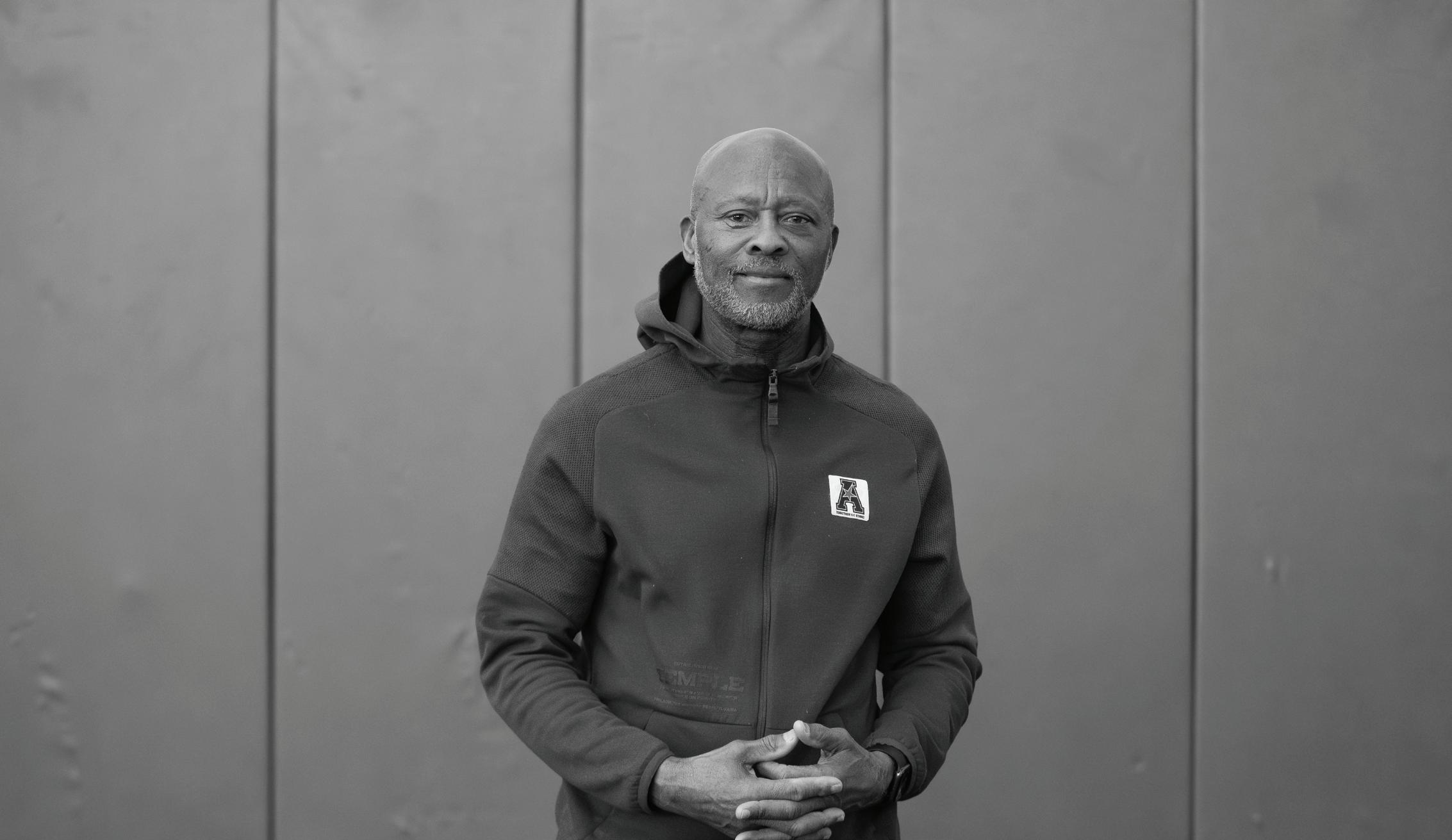
ambition that led him to represent his country in track and field at the 1984 and 1988 Olympics.
Alongside other residents, Forde learned carpentry, fishing and landscaping, and household skills like cooking and ironing. As the fifth oldest of eight siblings, he ensured his younger brothers and sisters were ready for school each morning. The skills he learned growing up became the foundation of the lessons he later taught his son, Kevin.
Forde comes from an athletic family, which inspired him to run track and field during his teenage years. While Forde held down a landscaping job, he met Victor Eiffel, who had a running club “The Freedom Striders.”
Eiffel saw Forde run in a school-related event and encouraged him to join the club; once he gifted him a pair of running shoes, Forde took off.
“I don’t probably give [Eiffel] the recognition he deserves,” Forde said. “But he always knew that I appreciate everything he did for me.”
He enrolled at Murray State in 1981, where he met head coach Bill Cornell. They became close, developing a father-son bond where Cornell was not afraid to be honest with Forde. He held Forde accountable when he didn’t want to be pushed and motivated him to excel academically.
“I was given a couple pieces of information when I left [for college,]” Forde said. “You had to be responsible, take accountability for everything you do and still to this day, I’m afraid of not succeeding.”
Cornell left Murray State for Southern Illinois Carbondale in 1982 and Forde followed him there. Forde exceled on the track under Cornell’s guidance, placing as the runner-up of the 600-yard dash in the 1982 NCAA Indoor Championships. He was named the 1984 SIUC Student-Athlete of the Year and set NCAA indoor and outdoor records during his tenure at for the Salukis.
However, his achievements came at a price. Forde stuck to a strict training
regimen that prioritized sleep and dieting, pouring all his time into becoming the best athlete. He spent three years away from his family, at a time when international calls were expensive and letters were the most efficient way to communicate.
“Some of those letters I kept for a very long time because you read them, you rewrite them, because that was your source of comfort,” Forde said.
Forde’s dedication led him to the Olympics in 1984 and 1988, memories that he cherishes today. He never finished lower than eighth place in his combined five races. Although Forde didn’t win a medal, appearing in the games validated his hard work and representing Barbados was special to him.
“There was not an option for me not to succeed,” Forde said. “I had that whole neighborhood depending on me and everybody had a hand in me growing up as a kid. I wanted to do well so that they can enjoy some of my successes.”
The thought of everyone in Forde’s
JUSTIN ALEX / THE TEMPLE NEWS Head coach Elvis Forde stands for a portrait.
CONTINUED FROM 30 TRACK AND FIELD
hometown watching him compete was the most surreal part of the experience. When Forde returned to Barbados after competing, everybody in the area swarmed to talk to him.
Between local attention and media obligations, he didn’t get to spend as much time with his family as he liked. But he enjoyed the process as he had worked diligently to reach those heights, Forde said.
While the track was his focus at the Olympics, Forde tried to immerse himself in as many sports as possible. He watched the cycling and gymnastics events, but one of his most memorable experiences came when the bright lights were off. He saw NBA Hall-of-Famers Michael Jordan and Patrick Ewing in Olympic village during the 1984 games, which starstruck him.
“For me, it is always one of those
things that I said words cannot describe it the way I would like to, Forde said. “You have to actually be physically present to really tell somebody what the experience was like.”
He didn’t walk away from the track when his competing career concluded. The former Olympian wanted to bring out the best in track athletes in the way that Cornell and Eiffel did for him. Their faith in Forde motivated him to put his full dedication to the sport. He built his coaching philosophy on those memories.
Forde became head coach at Austin Peay State in 1989, where he essentially built the program from scratch. He had limited resources, needing to recruit players from the women’s basketball and volleyball team to fill out the roster.
His dedication turned the Governors into a successful program. He recruited Barbados natives Ayesha Maycock and Sheena Gooding, who both became Austin Peay Hall-of-Famers. They won Ohio Valley Conference Co-Female Athlete of the Year in 2001, leading the Governors
CONTINUED FROM 32 ROWING
Temple was in the American Conference from 2014-24, when the conference fell below the member requirement and cut rowing. The Owls joined the MAC on July 19, 2024, but were independent last year. The 2025-26 year is the conference’s first season sponsoring the sport.
The NCAA rowing championships consist of 22 teams. Conference winners automatically earn a spot and the rest of the participants are at-large bids decided by a committee.
“Everyone is putting everything they have into every year, but especially this year,” said coxswain Cassidy Burns. “The seniors can acknowledge how much this means to not just them but the entire team and obviously they have so much influence in a positive way on our pro-
gram.”
Temple’s desire to reach the NCAAs is also about competing for those who came before them. Last season’s seniors led by example and their dedication inspired the underclassmen. The coaching staff said the class of 2025 will receive championship rings if the Owls win a championship this year.
“No matter what the boat they were in, [the seniors] were helping our team get better and that carried into this year where we’re in a chance that we can do something we’ve never done before,” Burns said. “It is thanks to a lot of their actions or their decisions or their sacrifices. So, I think it’s kind of cool to get to almost honor them in that way.”
Hannah Klein aims to bring out the best in herself and the team during her senior year after a disappointing fall season. None of the Owls’ eight boats finished in the top five in the Head of the Schuylkill Regatta on Oct. 25. They fared
to the OVC Indoor Championships.
“I started finding the kind of young ladies that I needed to be successful,” Forde said. “Many of them came from my hometown that helped me climb the ladder and it was a small school that wasn’t really that special. But it was tremendous to know that we [won the championship.]”
Forde was named the 2001 OVC Indoor Coach of the Year, but his Austin Peay tenure ended in 2002. He became Illinois State’s head coach on July 29, 2002, but it wasn’t as enjoyable as his time with the Governors, Forde said. He coached the Redbirds for 12 years before being let go in 2014.
He wanted to take a break from coaching but was hired at Temple on Aug. 20, 2014, after gravitating towards the school’s urban setting. Forde was also intrigued by Temple because people he knew from Barbados had gone there. He liked that the school was close to Philadelphia International Airport, so it could be easy to travel to see his family.
The head coach’s love for his family inspired Temple assistant coach Kevin Kelly to have a better work-and-family balance. Kelly and Forde’s families once hung out together because a family friend of Kelly lives in the same neighborhood that Forde does.
“We had a pretty good relationship off the bat,” Kelly said. “It’s just become more personal with family and understanding. We get to know the family a little bit better on both sides.”
Forde’s focus on succeeding maintains the same intensity as when he represented his village in the Olympics. Except now, Forde wants to guide his players in all facets of life.
“Sometimes there’s challenges that you want to meet in life and you don’t meet them,” Forde said. “You tend to look back and reflect [on] that. I want to impart as much as I can on the young men and women that we are responsible for.”
jacob.moreno@temple.edu @jacob_moreno_
worse in their next fall meet, the Princeton Chase on Nov. 2, when the best of their three boats finished in 31st place.
Klein used the underwhelming results as motivation to improve during the winter season, which the team spends in the ergometer room. Her desire to improve spread throughout the team heading into spring.
“The fall season really didn’t go the way we wanted,” Klein said. “So, I think it was a good reminder of what we need to do to get the results we want. I think we’ve really been putting in the effort on land this winter.”
The Owls started preparing for their new conference during the 2025 spring season with the MAC Preview at the Ford Lake Cup on April 27. The meet featured fellow conference members in Delaware, UMass, Eastern Michigan and High Point. Temple’s Varsity 8 boat and Second Varsity 8 boat finished third and sixth, respectively.
With a new conference, comes a new team motto: “Will to win, desire to learn.” The Owls have lived by that phrase to prepare for competition. The team is excited to return to a conference and are focused on improving every day to become the first MAC champions.
“Obviously [competing in the MAC is] a massive unknown,” Burns said. “It’s a lot of excitement I think because we know this can be a year where our program makes history and sets the tone for the years to come.”
mateo.verden@temple.edu @MateoVerden
Owls look to establish themselves
Temple strives to qualify for the NCAA Championships in its first season with the Mid-American Conference.
BY MATEO VERDEN
For The Temple News
Temple wanted to hold itself accountable entering the spring season after its fall results were not up to par. The Owls know that any potential success starts in practice, so they grabbed a jar and gems to guide their success.
They drop a gem in the jar after each productive practice where rowers record faster times or fine-tune techniques. The goal is to stack days of improvement to potentially qualify and win the NCAA Championships from May 29-31.
Temple has never qualified for the NCAAs, but this season the Owls will have a path within the Mid-American Conference
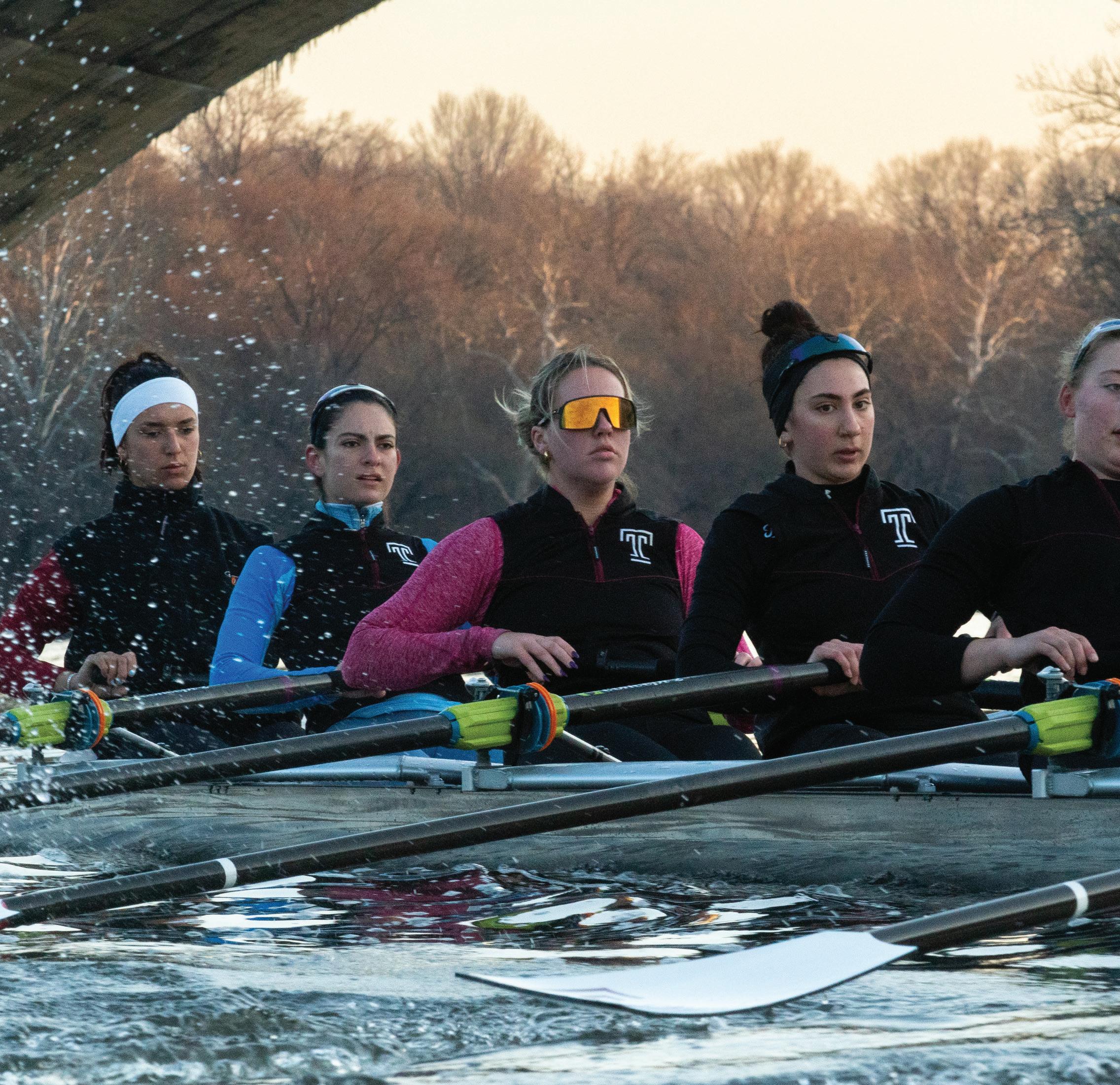
that wasn’t available to them as an independent last year—a winning prize of an automatic bid for NCAAs. Their spring season begins with the Temple Invite on March 28; they are confident their discipline and hard work will pay off.
“Practice execution is race day reality,” said head coach Rebecca Grzybowski. “If everyone takes care of their little corner and keeps making really good championship level decisions everyday then when the actual day comes, we’re in a really strong position to compete.”
ROWING | 31
AIDAN GALLO / THE TEMPLE NEWS Temple Rowing at practice on March 20.