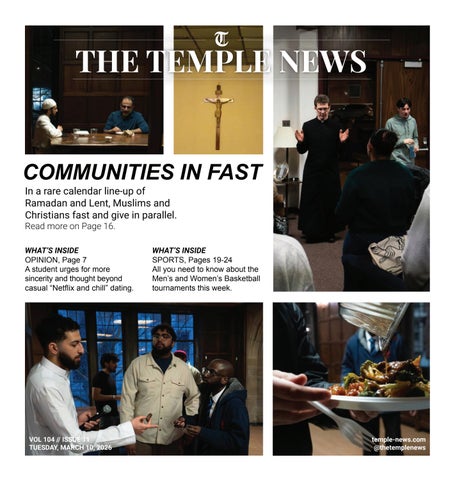
COMMUNITIES IN FAST
In a rare calendar line-up of Ramadan and Lent, Muslims and Christians fast and give in parallel. Read more on Page 16.
WHAT’S INSIDE OPINION, Page 7
A student urges for more sincerity and thought beyond casual “Netflix and chill” dating.
WHAT’S INSIDE SPORTS, Pages 19-24
All you need to know about the Men’s and Women’s Basketball tournaments this week.
THE TEMPLE NEWS
Sidney Rochnik Editor-in-Chief
Valeria Uribe Managing Editor
Anna Augustine Managing Editor
Ryan Mack Chief Copy Editor
Bradley McEntee Chief Copy Editor
Nathan Horwitz Co-News Editor
Connor Pugh Co-News Editor
Clarissa Jett Assistant News Editor
Ashley Nteff Opinion Editor
Logan Thompson Assistant Opinion Editor
Madelynne Ferro Features Editor
Chloe Pabon Assistant Features Editor
Sienna Conaghan Co-Sports Editor
Colin Schofield Co-Sports Editor
Jacob Moreno Assistant Sports Editor
Leah Duffy Investigative Editor
Tellicia Walker Investigative Reporter
Julia Anderson Director of Audience Engagement
Nathaniel Thrush Co-Community Engagement Coordinator
Kayla McMonagle Co-Community Engagement Coordinator
Isabella Farrow Audience Engagement Editor
Nalani Chiles Audience Engagement Editor
Brian Nelson Photo Editor
Lillian Prieto Assistant Photo Editor
Aidan Gallo Assistant Photo Editor
Jeremy Shover Multimedia Editor
Dylan Castelluccio Assistant Multimedia Editor
Massah Johnson Print Design Editor
Daniya Eggleston Graphic Design Editor
Chili Ramgolam Data Editor
Ariana Droz Podcast Editor
Sage Spohn Newsletter Editor
Nadia Bodnari Web Editor
Maria Lombana Advertising Manager
Aaliyah Abdur-Rashid Advertising Manager
Calista Aguinaldo Business Manager
The Temple News is an editorially independent weekly publication serving the Temple University community.
Unsigned editorial content represents the opinion of The Temple News.
Adjacent commentary is reflective of their authors, not The Temple News.
The Editorial Board is made up of The Temple News’ Editor-inChief, Managing Editors, Chief Copy Editor, Deputy Copy Editor, News Editor and Opinion Editors. The views expressed in editorials only reflect those of the Board, and not of the entire Temple News staff.
CORRECTIONS
ON THE COVER IFTAR AND LENT ACROSS MAIN CAMPUS.
BRIAN NELSON & AIDAN GALLO / THE TEMPLE NEWS Visit us online at temple-news.com
Contacts
Email section staff ttnnews@temple.edu ttnopinion@temple.edu ttnfeatures@temple.edu tnsports@temple.edu
The Temple News is located at: Student Center, Room 243 1755 N. 13th St. Philadelphia, PA 19122
Accuracy is our business, so when a mistake is made, we’ll correct it as soon as possible. Anyone with inquiries about content in this newspaper can contact Editor-in-Chief Sidney Rochnik at editor@temple-news.com.
CAMPUS
City debuts air quality dashboard, 76 monitors
A new Public Health initiative will more closely monitor air quality across Philadelphia.
BY CONNOR PUGH Co-News Editor
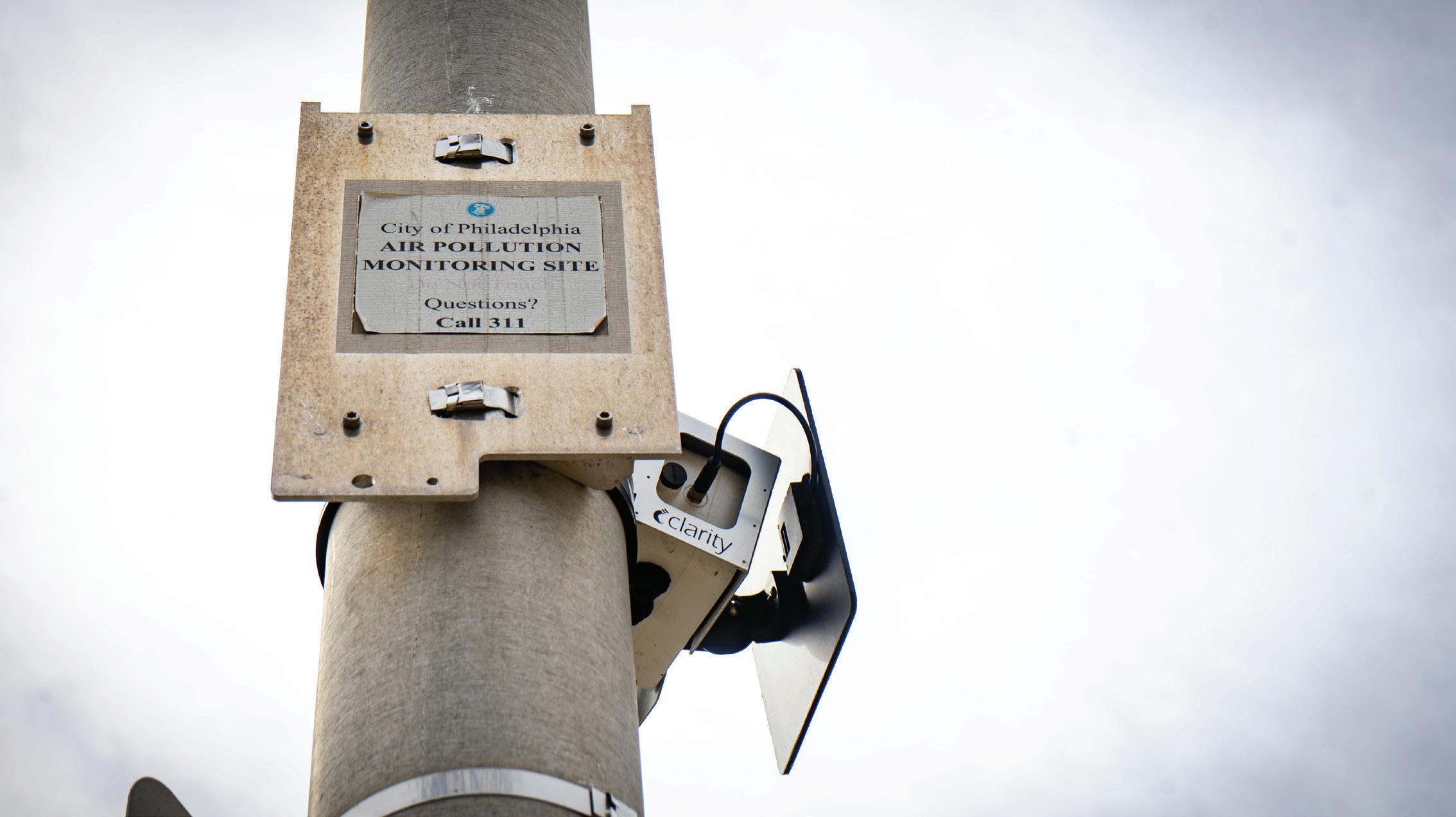
The City of Philadelphia installed 76 air quality monitors across the city February in a new Department of Public Health effort called Breathe Philly. Two of the new air quality monitors were installed near Main Campus on Cecil B. Moore and Susquehanna avenues.
The sensors, purchased from the technology company Clarity, take measurements of harmful substances in the atmosphere like nitrogen dioxide and particulate matter, which are tiny particles of dust or soot. These readings are uploaded to a public dashboard where people can check for air quality alerts and conditions in their area.
With more than one million residents, Philadelphia faces challenges with air pollution and risks of respiratory illness. Philadelphia was ranked one of the most challenging cities in the United States for people with asthma to live in by a September 2025 report from the Asthma and Allergy Foundation.
Russell Zerbo, an advocate for the environmental health advocacy organization Clean Air Council, said that the dashboard is the most crucial benefit of these monitors because it is more consistent than previous surveys.
“These are not going anywhere, and hopefully that website doesn’t go anywhere,” Zerbo said. “This is a little more reliability.”
The new monitors expand the 10 “reference monitors” already in place throughout the city. These monitors were mandated by the Environmental Protection Agency and provide data for the government, said James Garrow, communications director of the Philadelphia Department of Public Health.
Temple previously utilized readings from PurpleAir quality monitors on Main Campus to gather air quality data, said Caroline Burkholder, senior
sustainability manager at the Office of Sustainability.
PurpleAir provides affordable air quality sensors connected to a national air quality monitoring database available on their website. One PurpleAir monitor is located next to the Charles Library.
Christina Rosan, a professor in geography, environment and urban studies, has studied air quality alongside climate issues. Rosan previously promoted PurpleAir monitors, so she is invested in the city implementing more local monitors.
“I’m really excited that they’re taking this idea of local data seriously,” Rosan said. “I could see numerous ways that we can collaborate because the city is sanctioning these sites and they’re interested in the data.”
The Clean Air Council installed 60 PurpleAir monitors and 10 Volatile Organic Compound monitors across the greater Philadelphia area in a three-year initiative backed by the EPA which be-
gan in early 2025.
The Council held an online community meeting about air quality monitors and Breathe Philly on Feb. 26, and runs a pollution tracker map for Philadelphia that monitors key industrial and environmental locations across the region.
Temple published a sustainability action plan in 2025 which affirmed its commitment to achieving carbon neutrality by 2050. The university is working on multiple initiatives to reduce local emissions and improve air quality, including researching ways that Temple can encourage students and staff to use public transportation instead of personal vehicles, Burkholder said.
Burkholder and Rosan have worked on a geospatial study connecting environmental factors in different parts of Philadelphia to deaths from lung cancer and air pollutants. The project facilitated collaborations between Temple, Temple Health’s Fox Chase Cancer Center and multiple community organizations for
air quality studies and preventative action.
Burkholder believes that the Breathe Philly network will be useful for understanding some of the structural issues with air quality in the city that go beyond individual behavioral patterns.
“Thinking about how that relates to policy and doing the literacy on what air quality looks like in the human body and having people with a little bit more control or understanding of the data is a huge part of that,” Burkholder said. “’I think I’m really excited about this tool for that purpose.”
connor.pugh@temple.edu
BRIAN NELSON / THE TEMPLE NEWS
The City of Philadelphia air pollution monitoring site on Cecil B. Moore Avenue near 9th Street.
NEWS
Essential Needs Hub will fully open in Fall 2026
CAMPUS Its next phase brings a new pantry, thrift store and other resources.
BY NATHAN HORWITZ Co-News Editor
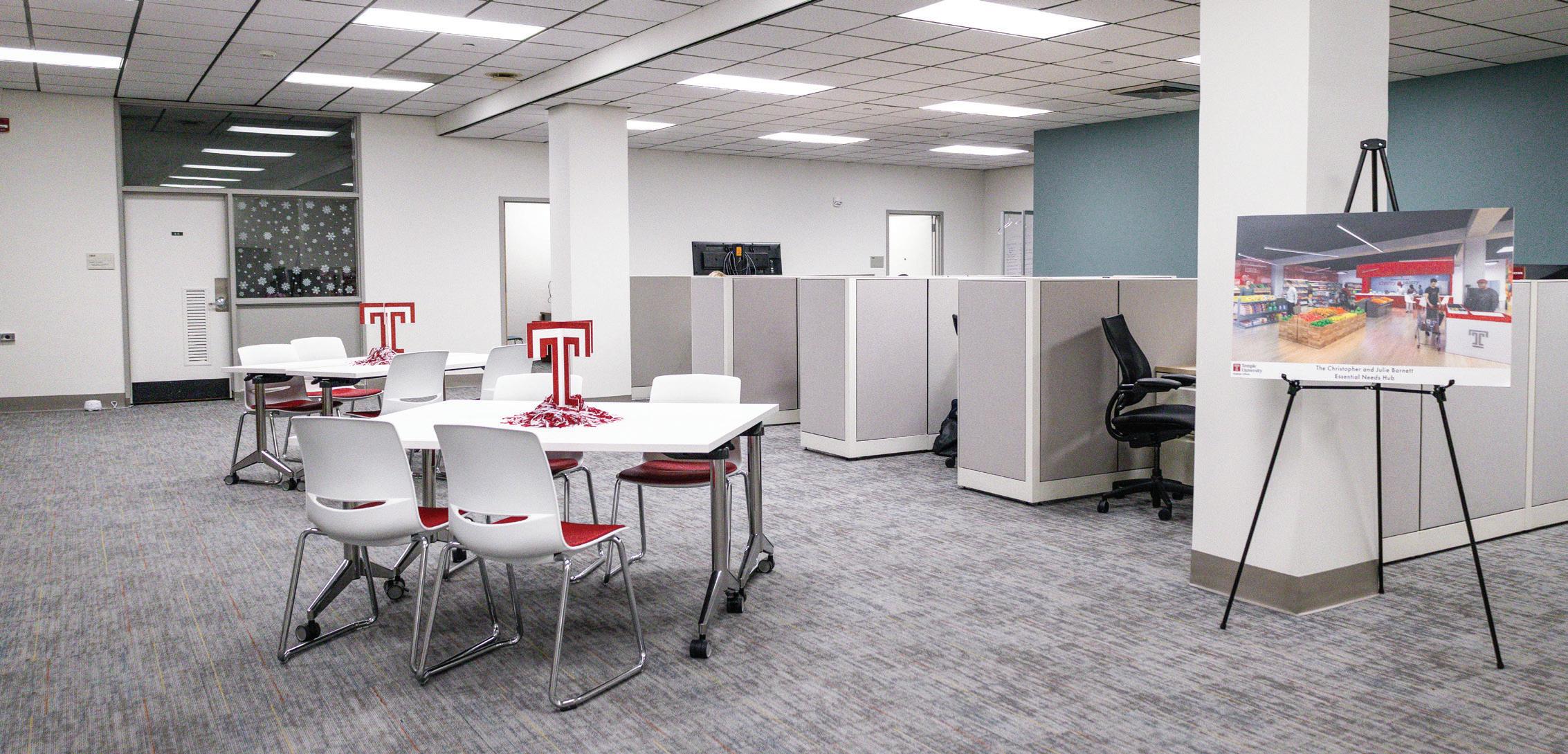
The Christopher and Julie Barnett Essential Needs Hub in the Howard Gittis Student Center will offer new and expanded services in the fall to address needs like food and housing insecurity, mental wellness, clothing and transportation.
The Hub launched in October 2025 after a $5 million gift from Christopher Barnett, opening a classroom, programming space and bringing in staff to address issues like off-campus living and crisis management. The second phase of the project opens in the fall, following the renovation of the 26,000-squarefoot site of the former Temple bookstore in the basement of the Student Center.
The Hub will connect to the new Barnett Irvine Cherry Pantry and contain a thrift store and satellite Tuttleman Counseling offices. It will also contain spaces for events, pop-up services and students to decompress.
“We thought, let’s put all of the things in one space, so that there is an ethos of care and concern for our students, where there’s no run around, we cut out the red tape and they get their needs met as soon as they get into the space,” said Vice President for Student Affairs Jodi Bailey Accavallo.
The expanded Cherry Pantry will be approximately 3,000 square feet, making it the largest food pantry on a college campus in the country.
“It can get really packed in here, and so, we want to make the space a little bit more dignified,” said Zoey Bunbury, Essential Needs program coordinator. “We want it to be more of like a grocery shopping experience.”
The new pantry offers more space for food storage, allowing for more frequent deliveries and a consistent supply of fresh produce.
Up to 48% of students experience
housing insecurity and 41% face food insecurity, according to the Hope Center’s 2024 Student Basic Needs Survey.
Student Affairs conducted hundreds of interviews with faculty, staff and students from more than thirty different offices to determine what services they wanted to offer at the Hub, Accavallo said.
The Hub connects the new pantry to the clinician and social work offices, Temple Thrift, a bike refurbishment program, the Resilience Resource Center, an autism sensory space, a zen den, swing spaces and offices.
“When we said, ‘We want a space where our students matter and they feel like they are seen and they are getting the services that they need,’ every single person, every single person we’ve spoken with, was like, ‘This is a great idea,’” Accavallo said.
The Temple Thrift Storefront will offer a permanent location for students to purchase discounted clothing. The Temple Thrift program currently holds pop-up sales during the fall and spring semesters, where donated clothes from residence halls are sold for less than ten
dollars.
Student Affairs is looking into offering a voucher system for the new store, which would allow students in need to shop for free.
Temple will partner with various places around Philadelphia to increase its supply of clothing beyond what’s available through the residence halls, allowing the thrift store to provide clothing throughout the year.
“It’s going to be year-round and it’ll be themed,” Accavallo said. “So, if it’s career and internship time, or if it’s semi-formal time or if it’s hats and coats and boots time, we can focus on that and we can bring those clothes in.”
The hub’s population-specific resources, some of which will be offered through the Resilience Resource Center and the clinician and social work offices, will support first-generation students, former foster children, student-parents, veterans and commuter students.
“One of the things that we’re very mindful of is that a one size fits all approach doesn’t work for all of our students,” said Deanne DeCrescenzo, assistant vice president of student advo-
cacy and engagement. “So, we could have these kind of big picture resources and support services, but depending on the specific student, they may have different demonstrated needs.”
The decompression space includes the “Maddy’s Room” Autism Sensory Space, which will provide a calming space for students with autism spectrum disorder. It will offer a similar experience to “Maddy’s Room” in the Social Services Annex, which features sound-free spaces with dim lighting and soft seats.
Phase three of the project, which is also expected to open in the fall, will focus on making the resources and services available to members of the North Philadelphia community. The Essential Needs Hub will partner with the College of Public Health and the City of Philadelphia to address community needs.
“We do not want it to be gentrified in any way,” Accavallo said. “We want to make sure that there’s resources for both our Temple community as well as North Philadelphia.”
nathan.horwitz@temple.edu
MARIA MAZA RION / THE TEMPLE NEWS
The office of the Essential Needs Hub at the lower level of the Howard Gritts Student Center.
ADMINISTRATION
Temple investigates AI for university operations
A strategic plan task force investigates how to better integrate AI in the administration.
BY CONNOR PUGH Co-News Editor
Temple is investigating the potential uses of artificial intelligence technology to increase revenue and optimize administrative and educational functions, the university announced in its Forward with Purpose strategic plan.
“We’re just putting together teams of people now to look at, how might we employ artificial intelligence to make our operations more efficient?” said Interim Vice Provost David Boardman. “It doesn’t necessarily mean that fewer people would be employed here, but it should really improve how we deploy the people we have and making sure that, you know, they’re being used in the most impactful way.”
The task force has begun to develop a survey of Temple’s colleges to research possible implementations across the university.
Many higher education institutions have begun using AI programs in its administration and services like chatbots for admissions or education, according to a March 2025 report by Harvard Social Impact Review.
Implementing AI technology on a large scale at Temple would require significant investment in resources like advanced computers, said Rob Kulathinal, associate director of the Institute for Genomic and Evolutionary Medicine at the College of Science and Technology and a co-organizer of the data science and AI network.
“It would need a huge investment in computational architecture, particularly machines with [Graphical Processing Units] or an investment in third-party servers,” Kulathinal said.
Students use consumer-grade AI
tools like ChatGPT or Google Gemini to assist in their studies, organize their thoughts or conduct research, according to an October 2025 poll of 86 students conducted by The Temple News.
Around 65% of students sampled in the October poll reported using AI tools to some extent. Brainstorming ideas accounted for 62% of AI use, with 44% used AI to look up information and 38% did so for coursework assistance.
AI technology is already used by multiple departments across the university for public safety and advising services. The Department of Public Safety installed Zero Eyes gun detector software, a program that uses AI to identify firearms and other dangerous objects in live video, in November 2024.
The School of Sport, Tourism and Hospitality Management also developed an AI powered mentorship app for student athletes named JournAI, which is planned to launch Spring 2027 and uses
existing large language models like OpenAI.
Temple’s Department of Institutional Advancement launched the Isabel Tower Virtual Engagement Officer last October. Isabel is an AI-powered messaging service that sends curated emails to donors to stimulate engagement.
Dana Dawson, associate director for teaching and learning at the Center for the Advancement of Teaching, believes that the university should be doing more to educate students about AI tools and technology to prepare them for their professional lives after Temple, where AI is ubiquitous.
“If we ignore it, if we say ‘We’re just we’re just not going to use AI, I’m just not going to think about it at all,’ students find themselves under prepared to be competitive when they leave the university,” Dawson said. “And we certainly don’t want that.”
CAT has published multiple re-
sources surrounding AI usage, including a faculty guide to artificial intelligence.
Temple currently has a blanket policy that prohibits the usage of generative AI technology by students unless a professor grants permission.
Dawson wants Temple to continue to work on providing resources and educating students about AI technology and university guidelines to clear up confusion and better equip students for their careers.
The university could also consider offering subscriptions to a LLM, like ChatGPT, to enhance their academic success, Kulathinal said.
“Having a pro version of an LLM is much better than not having one,” Kulathinal said. “It also deals with security issues, which should be important to a university. So I think it’s the university’s best interest investing in those platforms.”
connor.pugh@temple.edu
JUSTIN ALEX / THE TEMPLE NEWS Students use their phones as they pass through Liacouras Walk.
ADMINISTRATION
Institutional Advancement utilizes AI gift officer
An AI-powered software helps the Institutional Advancement Office acquire alumni gifts.
BY NATHAN HORWITZ Co-News Editor
Temple’s Office of Institutional Advancement launched Isabel Tower, an autonomous fundraiser, in partnership with artificial intelligence company, Version2.ai, in October 2025. Isabel gathered more than $45,680 in gifts from 182 donors as of March 6, said Pam Rollins, director of advancement analytics.
Isabel sends text messages and emails, responds to prompts and recommends resources to a portfolio of 1,035 alumni who otherwise would not receive personalized messages due to limited staff resources, said Eliza Stasi, associate vice president of advancement engagement. A human gift officer generally oversees a 75-person portfolio.
Isabel’s portfolio is composed of alumni who have given at least $1,000 in the last three to five years.
“The pace that she became effective was much more efficient than a human,” Rollins said. “And we’re still learning what her capabilities and opportunities are as we move forward.”
Version2.ai’s virtual engagement officers, like Isabel, reach out to prospective donors in their portfolios eight to 12 times per year, according to Version2.ai.
Temple joins institutions like the University of Oklahoma and University of Arizona in utilizing Version2.ai’s autonomous fundraiser.
Isabel has contacted every member of its portfolio four to five times since October. Human gift officers contact individuals approximately four times per year.
“It’s all one-to-one communication,” Stasi said. “She’s not sending a mass email to everyone.”
The virtual officer knows basic characteristics and facts about the alumni it interacts with, like their age, sex, major, graduation year and giving history.
Temple’s websites, newsletters and event pages feed Isabel information, allowing it to craft responses based on the alumni’s preferences and needs.
Isabel initiates the interactions, but it does not close the deals. It refers individuals to Temple’s alumni giving page or hands them off to a member of the engagement team when its system detects they’re interested in giving a donation.
“For a thoughtful gift to actually be cultivated and acquired, we still strongly believe that that takes a human,” Rollins said.
The advancement team hopes Isabel’s engagement leads to individuals moving to connecting with human gift officers long-term. The advancement team is just starting to evaluate whether any donors have reached this milestone, Rollins said.
The advancement office is examining whether Isabel can help bridge the gap between potential donors and their ability to engage with them.
Temple’s giving participation rate was three percent in 2025, which falls below the 7.7% national average, according to U.S. News and World Report.
Isabel doesn’t negatively impact the job market, because the industry lacks hiring options and individuals starting their fundraising careers as engagement officers don’t stay long, Rollins said.
Seventy-four percent of alumni engagement staff members reported concerns about understaffing, according to an August 2024 Voluntary Alumni Engagement in Support of Education study conducted by Alumni Access.
“We wanted to make sure that we had individuals connected to Temple,” Stasi said. “They’ve engaged in some way. We’re not cold reaching out to people.”
Rollins is pleased with Isabel’s ability to engage donors who had not given in recent years.
As of February, Isabel also retained a higher-than-average volume of donors than in the previous fiscal year.
“If people feel heard and have that personalized touch and an invitation that’s really speaking directly to them, they stay engaged with us in a stronger way that’s inclusive of giving,” Rollins said.
Amour Carthy, a 1998 master’s in African American Studies alumna, is not
in Isabel’s portfolio but said a message from the autonomous officer would intrigue her.
“I’d probably just play around and then respond back to see how the AI would respond back,” Carthy said.
Isabel had two-way interactions with 14% of her portfolio, or 153 alumni. The advancement office’s gift officers believe they aren’t getting the same level of response from their outreach, Rollins said.
Isabel’s outbound messages include happy birthday wishes, alumni event and Giving Day reminders and discussions of current events at Temple. It often closes its messages with a question to generate engagement.
The advancement office is on pace to break even on their investment into Isabel by mid-April, which is six months ahead of their original timeline.
“I’m excited to see what the future is,” Stasi said. “I’m excited to maybe onboard another engagement officer or even carve out some of the portfolio to support a different direction.”
nathan.horwitz@temple.edu
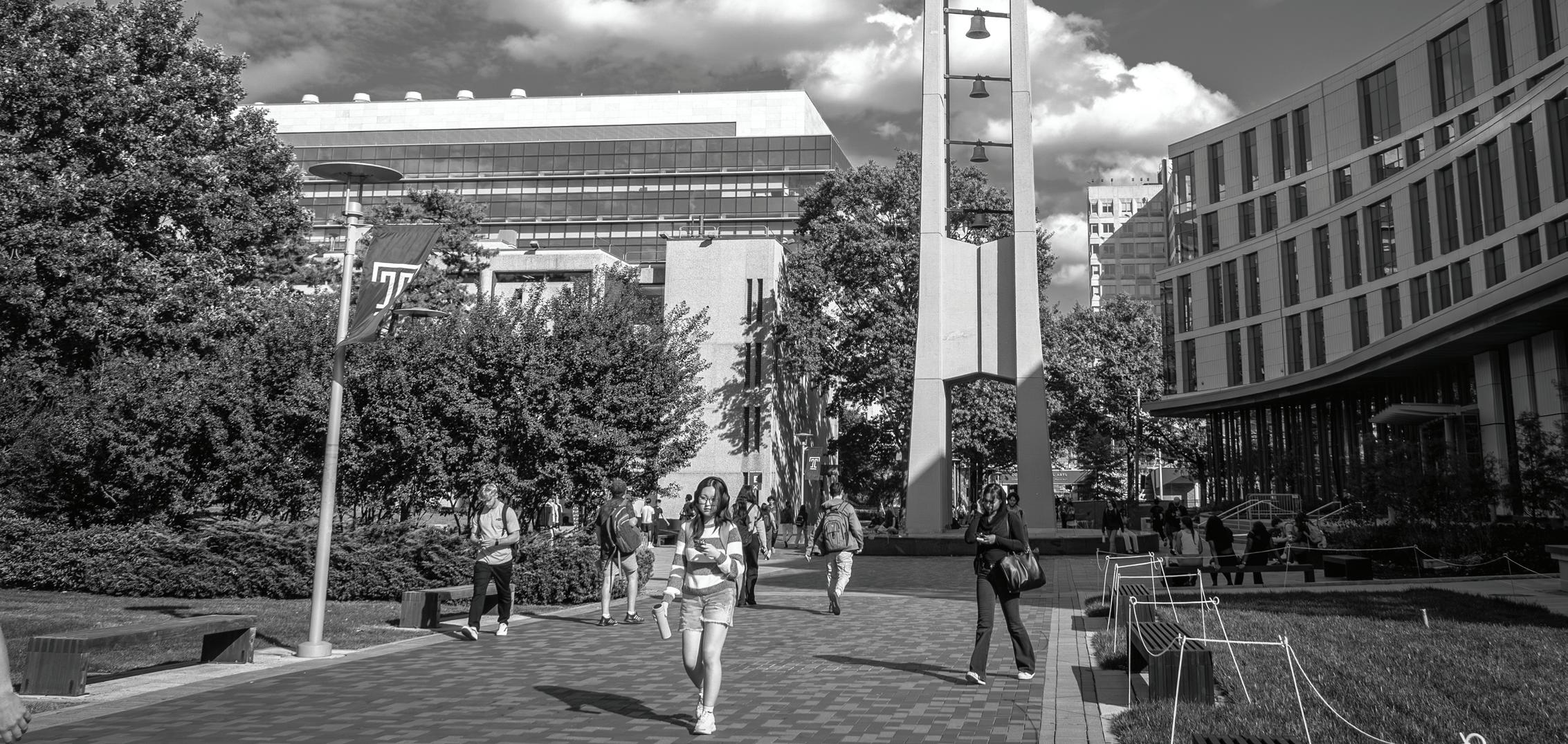
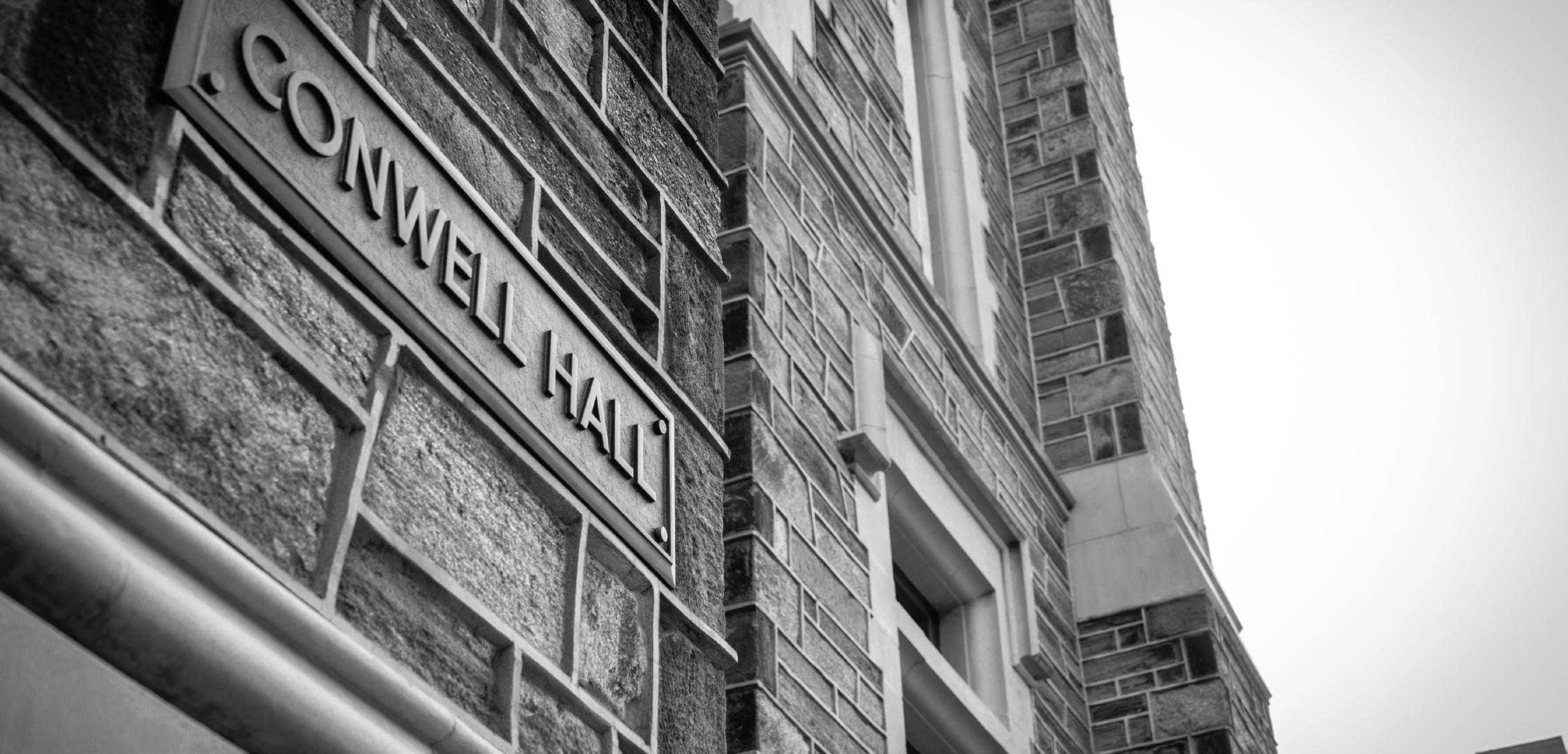
BRIAN NELSON / THE TEMPLE NEWS Conwell Hall on West Montgomery Avenue near Broad Street.
OPINION
EDITORIAL
SNAP cut support
The Supplemental Nutrition Assistance Program has long served as a safety net for millions of Americans who rely on food assistance to meet basic needs. Cuts to the program under President Donald Trump’s administration began on Sept. 1 with specific work eligibility requirements.
Under the restrictions, students must have a total class time of 20 hours per week or work more than 20 hours a week to receive benefits, according to the Commonwealth of Pennsylvania website. Commonwealth of Pennsylvania website.
Delivery ineligibility letters were delayed in the fall due to the government shutdown that ended Nov. 12. Many Pennsylvanians were expected to receive their notices about benefit termination between January and March of this year, WHYY reported.
For college students balancing tuition, housing costs and everyday expenses, even small reductions in support can make a meaningful difference. Roughly 59% of Temple students face basic needs insecurity and 41% face food insecurity, according to The Hope Center For Student Basic Needs.
The Editorial Board encourages students to familiarize themselves with the food resources available on campus and within the city. Increasing awareness of services like the Essential Needs Hub and The Cherry Pantry can ensure that students who need assistance know where to turn.
Resources are present on Main Campus to help students face these challenges. The Christopher and Julie Barnett Essential Needs Hub located in the Howard Gittis Student Center connects students with resources,
like food, clothing, health and financial assistance.
The Barnett Irvine Cherry Pantry, located on the first floor of the Student Center, provides students with unlimited access to perishable and hygiene products. Students receive sixteen points per week for non-perishable food items. No prior registration is needed, just tap or present OwlCard with a reusable bag.
It is important for students to be aware of these resources themselves and also those who may not know how to access them. It’s not only up to the university to support students, but people should also step up to help those who may need it.
Students should also support one another by reducing the stigma around food insecurity. That can be as simple as inviting friends over to share meals, hosting group dinners and being open to using campus resources like food pantries.
Normalizing these conversations can make it easier for students to seek support without embarrassment or hesitation. When people openly acknowledge that food insecurity exists on campus, it challenges the misconception that every college student has stable financial support.
Students who are struggling with food insecurity should know that there’s a community of people and resources available to them in times of need.
OP-ED
“Netflix and chill” isn’t hot
A student reflects on how low-effort college dating made intentional connection feel radical.
BY LOGAN THOMPSON Assistant Opinion Editor
Somewhere along the way “Netflix and chill” stopped being ironic and became the default. Dates no longer feel like excursions: no reservations, outfit planning or nervous excitement of where the day might lead. Instead, plans are made with a simple text asking if someone’s coming over, and suddenly that is the date.
On college campuses, hanging out in someone’s room has quietly replaced intentional dating. Asking someone to go to dinner or a museum feels dramatic and suggesting an activity, like bowling or an even a walk for coffee can seem like doing too much.
Even defining relationship status feels unnecessary. Everything stays casual because it feels safe.
I realized how deep the shift runs during the conversation with my male friends when I said how college students don’t go on actual dates anymore.
They acted confused when I said I prefer to be taken out, not somewhere expensive, just somewhere intentional. It was like asking for winning effort was irrational or if expecting someone to plan something was asking too much.
They looked at me like I had suggested we start courting with handwritten letters.
There is no shame in casual dating, as it can be honest and fun. The issue isn’t informality, it’s effort. When effort disappears, clarity vanishes with it.
The lines stay blurry because it’s easier to keep things undefined than to risk vulnerability. It’s easier to say people are just chilling than to admit feelings to someone.
Low effort intimacy thrives on convenience. Dorm room lighting, take out containers—a laptop propped up on a pillow with Netflix paused in the background. There’s humor in it, pretending to care about the movie like it was ever the point.
Another factor shaping this shift may be the broader loneliness many young people re-
port feelings.
Loneliness has become a major public health concern in the United States, with roughly half of adults reporting feelings of loneliness and young adults among the most affected groups, according to a May 2023 United States Surgeon General’s Advisory on the Healing Effects on Social Connections.
When dating requires no planning, no public acknowledgement, no clear language, it becomes easy to slide into relationships that never quite materialize. Students share physical closeness and intimacy without ever asking what it means.
In an era of college culture that often frames nonchalance as empowerment, wanting more can be labeled as clingy. Asking for clarity can feel like overthinking. And very briefly, for some time, I caught myself wondering if I was analyzing too much, if expecting an actual date instead of a dorm room was somehow outdated.
Fewer young adults are in committed relationships compared with older generations. Roughly 47% of adults under 30 are single, according to a February 2024 research study from the Pew Research Center.
In that context, it is not surprising that low-stakes, low-effort dating models have taken hold.
But I realized maybe what feels extra now is simply intentionality. It should not feel radical to ask someone out on an actual date and mean it.
A five-dollar coffee where someone chose the place, picked the time and showed up with purpose says more than an unplanned night scrolling through options neither will watch.
Maybe the real question isn’t whether “Netflix and chill” is harmless. Maybe it’s whether we have normalized a version of connection that protects us from rejection but also from depth.
Convenience is easy, but intention takes courage. The most radical thing a college student can do right now is send a different text.
“Can I take you out?”
logan.thompson.thompson@temple.edu
Our memories matter more than the materials
A student reflects on learning to cherish the time and memories that matter most.
BY ASHLEY NTEFF Opinion Editor
I was in the car, zoned out listening to the radio. My dad only had me for the weekend like he usually did. I came back to Earth when I noticed my dad making an unfamiliar turn. He didn’t say anything, but I was able to connect the dots. We were going to a neighborhood garage sale.
At our destination, a lady selling old toys and clothes warmly greeted us.
She asked if we liked anything as I looked around in awe, then my eyes found my dad. He teased that I wanted everything, but those toys didn’t bring me nearly as much joy as spending time with him.
My dad only knew one version of being a parent. He asked if I needed money instead of advice, took me to go play alone instead of asking to join in on the fun and spoke using the script we rehearsed in our heads.
I thought it didn’t matter because I still had my mom. But that changed when I saw how other little girls bonded with their dads in ways I couldn’t with mine. It stung because it reminded me that I only had half a parent.
For a long time, I was unable to comprehend how I felt, so talking about it made it even more difficult. I knew I loved my dad and I missed him on the days we wouldn’t talk. But I’d also resent him for not being around the times he could have. I felt ambivalent.
It was raining on my graduation day. I wanted to accept that my dad wouldn’t be there, but it didn’t feel right. I looked around to see if I could find my mom in the stands as I anxiously walked to my assigned seat. She texted me to let me know where she was when I took my seat, but I didn’t hear from my dad.
I crossed the stage and nothing mat-

tered in that moment. My friends and family members who couldn’t make it sent videos of them watching online. I still hadn’t heard from my dad. Someone told me later on he missed my walk—I was livid.
My brain was looking for excuses for him before we ever got the chance to talk about it. This was the one moment I’d expect him to show up. He called me and I initially refused to pick it up, but I answered after his fourth call.
He explained his case and somehow beneath the fury I understood him. We met for food and I swallowed my pride, because I knew I wouldn’t see him the rest of the day. He paid the tab, and we took pictures before departing.
He showed up just enough to not be faulted for not being around. I couldn’t fully hate him because he was still there.
I became numb to this emotional conflict as I got older. I don’t get both-
ered by the things he doesn’t do anymore. He’s my dad and I’m his daughter and that’s all the relationship has to be.
I have more materialistic things he bought me when we were together than quality memories. When the lights shut off, I won’t be able to take these luxuries with me. It’s the memories in my life that I’ll be left with.
I’ve always been grateful to have the newest phone, the biggest bed with money in my pockets. My dad made sure I had everything I wanted. But none of those mean nearly as much as the calls and the visits.
Recently, my uncle passed away, leaving my dad as the last brother. That was enough to wake me up. It made me realize that the days with my dad are not guaranteed. I can’t rewrite my childhood, and I can’t recreate memories that never happened, but I can choose what happens now.
I’ve started keeping our conversations going a little longer. I tell him things I’m learning in school even if he doesn’t ask and I’m present in every single interaction. I don’t know if we’ll ever have the kind of relationship I once wished for, but I’m beginning to accept that this is the one we have.
We should have taken more photos. But the story isn’t over yet. There’s still time to stand side by side in a few more.
ashley.nteff@temple.edu
DANIYA EGGLESTON / THE TEMPLE NEWS
OPINION
STUDENT
Students, don’t try to be amateur psychologists
A student argues misusing therapy-speak can be dangerous as it loses its seriousness.
BY LOGAN THOMPSON Assistant Opinion Editor
Therapy language appears almost everywhere across social media and friend groups. People may call a bad week a period of trauma, label a friend as avoidant for taking too long to text back or call an ex a narcissist.
Social media has played a significant role in spreading this vocabulary. Yet, more than half of mental health related videos on TikTok contained misinformation or misleading explanations, The Guardian reported.
Having words to clearly explain feelings can help people examine relationships and express what they need from others. However, when psychological terms move beyond clinical settings and become everyday slang, they can start to lose the specificity that made them useful in the first place.
Shana Bellow, a licensed clinical psychologist, believes therapy language often loses its meaning when it moves from clinical spaces into everyday conversations.
“Clinical terms are often misused and there’s a lot of misinterpretation about it because it’s sort of pathologizing behaviors or actions without really having clinical evidence,” Bellow said. “It might be a one-time thing that someone does something and then someone says, ‘Oh you’re gaslighting me’ or ‘You’re so OCD’ or ‘You’re so bipolar.’”
Being able to identify boundaries can make it easier to protect personal well-being. Recognizing the signs of anxiety can help someone seek support. Greater awareness of mental health has made emotional conversation more common across college campuses
About 95% of Americans hear therapy-related terms in everyday conversation, and nearly one in three believe these terms are misused. The most misused terms include gaslighting, triggered and toxic, according to an August 2025 survey by Thriveworks, a mental health-
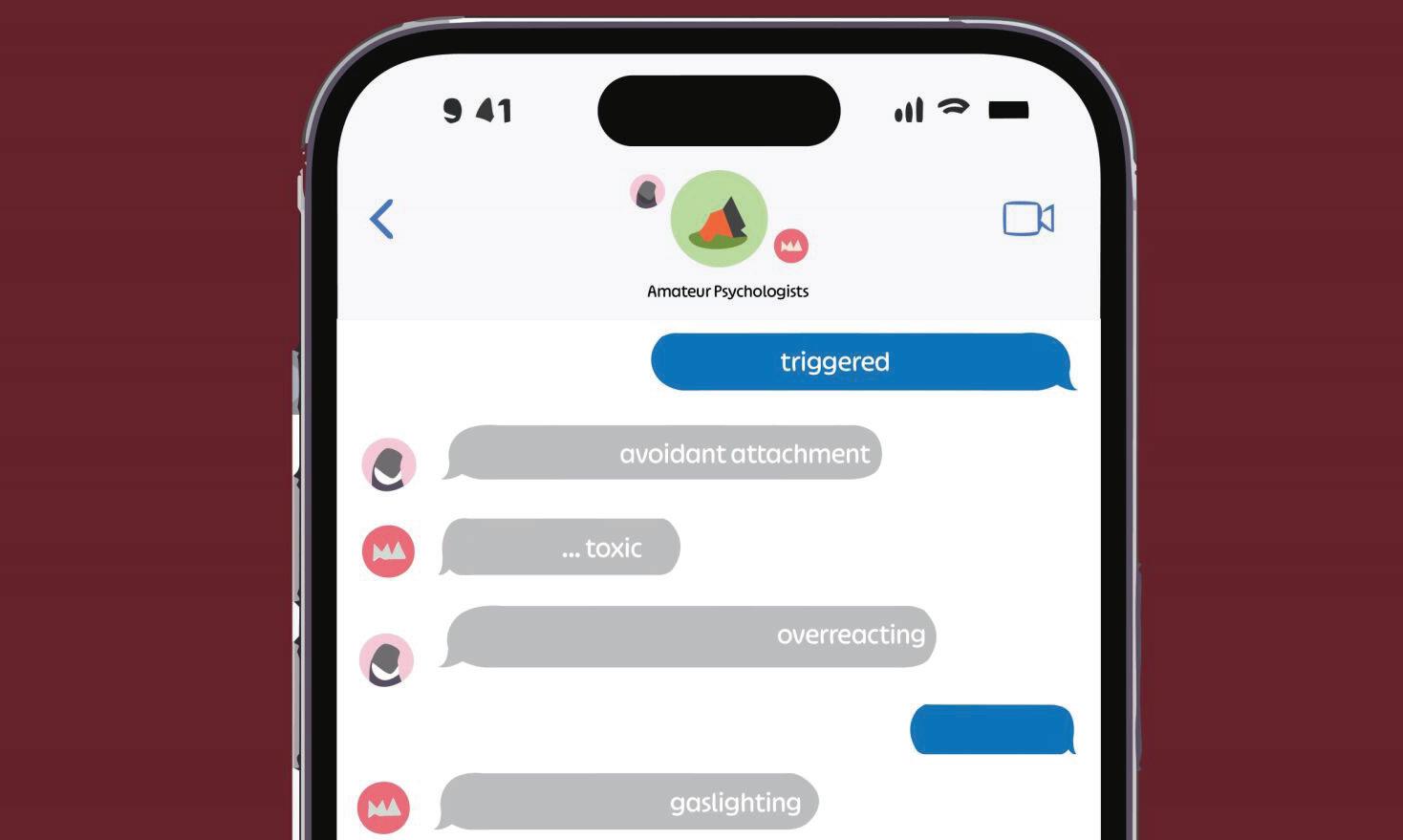
care provider.
When overuse is taken to an extreme, language originally created to explain complex psychological patterns becomes shorthand for judging other people’s behavior.
Darianna Ruth notices these terms appearing frequently in everyday conversations about relationships and social interactions.
“I often hear the terms ‘toxic’ and ‘gaslighting’ in conversations with friends or on social media,” said Ruth, a freshman psychology major. “I’ve noticed that the terms are specifically used when discussing relationships or interactions with others. For the most part, people who use the terms understand what they mean and can pinpoint when they may have come across a toxic relationship or even being gaslighted.”
Gaslighting refers to a manipulation tactic when someone causes another person into doubting their experience or emotions. The term toxic references relationships defined by aggression, jealousy and other forms of emotional damage.
But with flippant use in everyday conversation, accurate definitions get lost. Gaslighting may be used to describe basic dishonesty or disagreement, toxic when people simply may not get along.
At its most helpful, therapy language can encourage reflection and growth.Bu it can become a way to intellectualize emotions instead of addressing them .
Psychological terms can sometimes create distance from the actual feeling behind a situation. Casually assigning psychological labels can minimize the seriousness of those terms. Misusing therapy speech can prevent people from seeking help, according to the American Psychological Association.
While this content increases awareness, it can also flatten complicated ideas into quick labels. The result is a culture where many students recognize psychological terminology but do not always understand its original context.
Arielle Walcott often sees therapy-related vocabulary move from social media into everyday conversations with
friends.
“I definitely see it on TikTok and then it shows up in real conversations,” said Walcott, a freshman public health major. “People will say things like ’that’s your avoidant attachment style showing,’ almost jokingly. Sometimes it feels less like psychology and more like internet vocabulary.”
College is the time when many people are trying to understand themselves for the first time. Relationships, independence and identity often shift quickly during these years.
In an unfamiliar social environment, it makes sense that students search for language that helps explain complicated emotions.
The next step may be learning how to use that language carefully, because sometimes the healthiest response is not a diagnosis, but simply an honest conversation about what went wrong and what could be done differently.
logan.thompson.thompson@temple.edu
DANIYA EGGLESTON/ THE TEMPLE NEWS
“Cranes in the Sky” and maturing alongside music
A student reflects how returning to one song in college revealed truths about grief and growth.
BY LOGAN THOMPSON Assistant Opinion Editor
I first heard “Cranes in the Sky” by Solange at eight years old through my dad’s car radio. I originally thought she was talking about the construction cranes that scraped the clouds as I looked out of the window. The song felt distant from me back then, as it was just something pretty playing in the background I didn’t fully understand.
The song appeared quietly in the background of long car rides and slow afternoons. I liked the softness of it, the way it sounded calm and reflective, but I never stopped to think about what it was saying.
The first time the song truly clicked for me came much later. I suddenly heard the lyrics differently one afternoon replaying it during a stressful week studying for my first college midterm. Instead of sounding distant, the words felt uncomfortably familiar. I realized it was about avoiding the very feelings I had been trying not to face.
I find myself replaying it during stressful weeks, identity shifts and quiet breakdowns. Each time it forces me to notice how often I distract myself instead of actually processing what I’m feeling.
I hear the song with a new perspective after years of lived experiences, like high school heartbreaks, friendships ending and my first bout with grief.
The cranes aren’t just objects anymore. They feel like the problems in my life that grow so large they seem impossible to ignore, towering until they are finally addressed in a healthy way.
At the beginning of the song, Solange sings about trying to escape difficult emotions through distractions, like drinking, changing her appearance and staying busy. I’ve often done similar things by filling my time so I wouldn’t have to sit with my feelings.
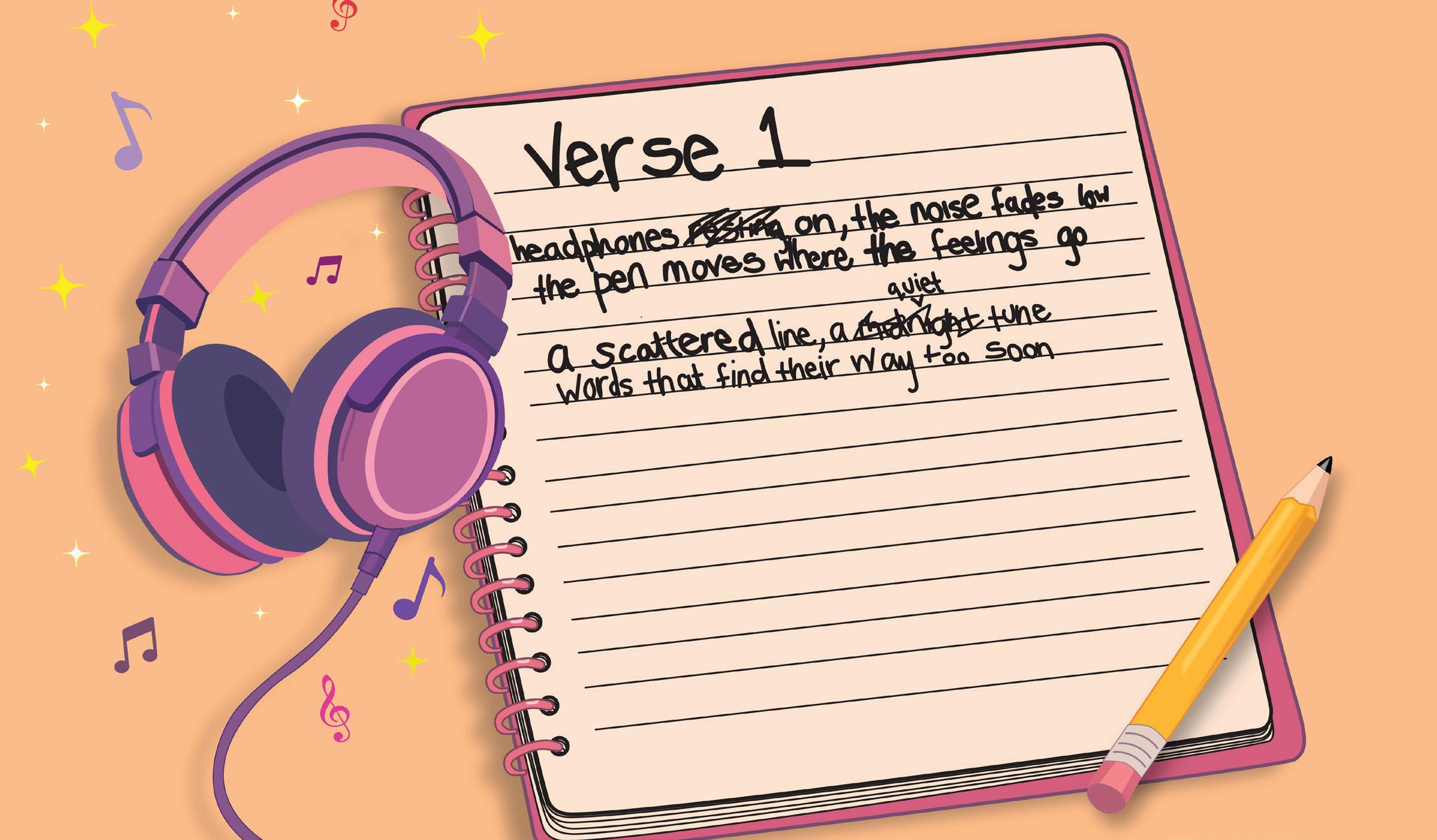
I’ve learned that one of our biggest desires as humans is simply to feel good, even if we know the feeling is temporary. We chase quick comfort partying, changing our appearance and staying busy hoping it will make something inside us quieter. But this is never a replacement for internal healing.
Later in the songs, Solange reflects on trying to solve sadness through work and material things, hoping that success or new purchases might make the feeling disappear. It’s another kind of distraction—one that promises relief but rarely lasts.
Physical things often bring me temporary happiness, but that happiness fades quickly. Impulsive late night TikTok shop splurges feel right in the moment and turn into morning regrets.
Now that I’m 18 and learning to manage my own money for college, I’ve started to notice how short-lived that excitement really is. I now learn to look for happiness in ways that don’t depend
on purchases or temporary excitement.
The song has followed me through different stages of my life. It felt far away from my reality in high school. The song now feels closer than ever as I start college and step into a new version of myself. It reminds me that happiness is something I have to create. It isn’t something a relationship or friendship can give me permanently.
Letting the cranes disappear from my sky takes effort and honesty. There will always be good and bad days, but growth depends on how I choose to show up for myself.
Showing up for myself now looks different than it used to. Sometimes it means putting my phone down and letting myself sit with a feeling instead of distancing myself from it. Other times it means going for a long walk and journaling until my thoughts are less tangled instead of pretending that I’m fine.
College is often described as a time of loud growth and big reinvention. But
I’ve realized that sometimes growth is quiet and looks like sitting alone in my room and letting a song say the things I’ve been avoiding.
Certain pieces of art meet us differently as we grow. Some songs stay the same, but we change. And when we return to them we reveal who we have become.
logan.thompson.thompson@temple.edu
MARIA JONES / THE TEMPLE NEWS
WANT TO FREELANCE FOR THE TEMPLE NEWS?
freelance ad
The Temple News is currently accepting freelance writers, photographers, videographers and designers for the Spring 2026 semester.

Scan this QR code to complete an interest form and see the full list of sections.
LIVE in Philly
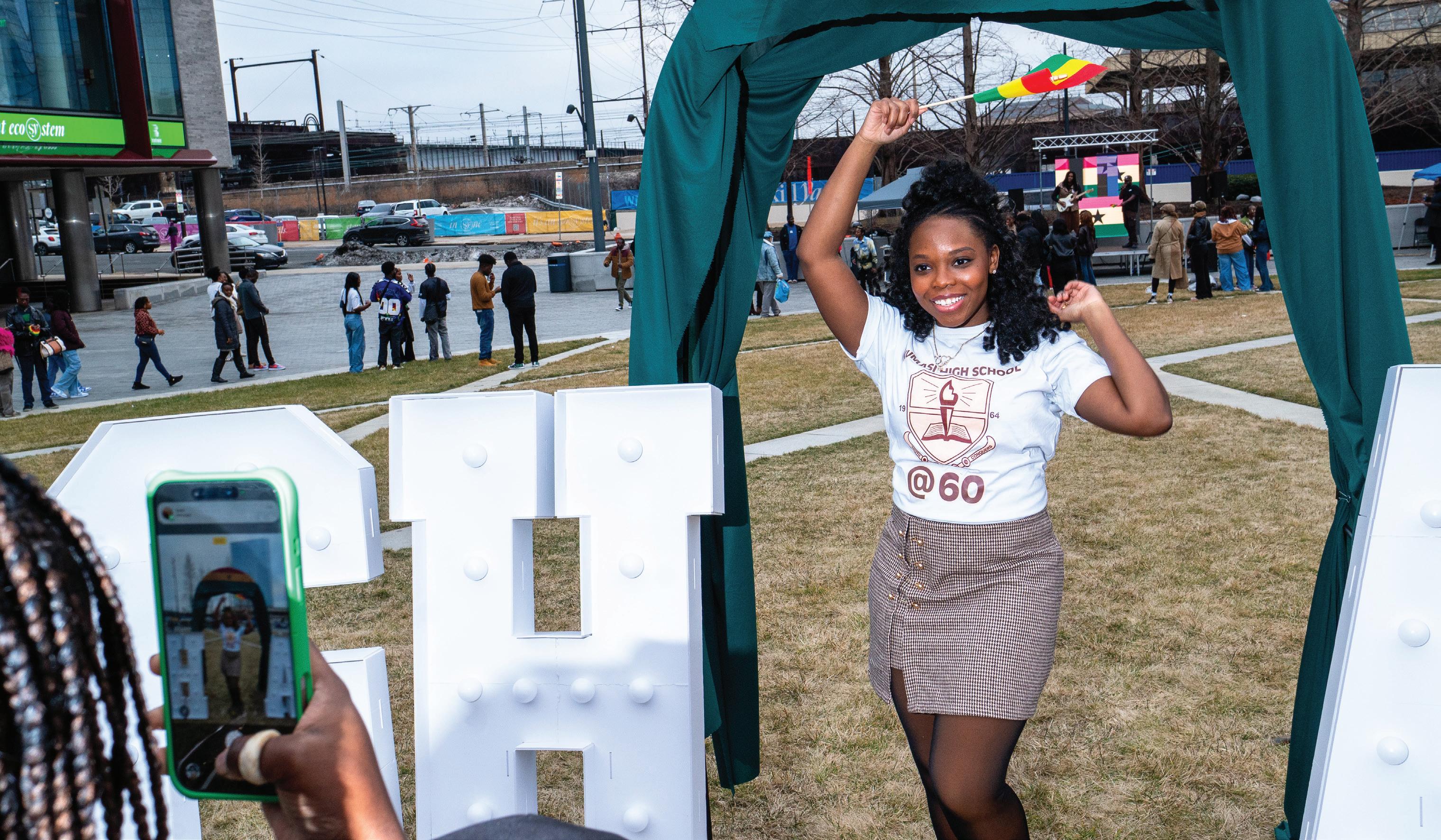
West Philly block party celebrates Ghanaian Freedom
Around 100 Ghanaians and Philadelphians came to celebrate its 69th year of independence.
BY AIDAN GALLO Assistant Photo Editor
Lence Vincent recalls his earliest years growing up in a refugee camp in Accra, Ghana, after his parents fled Liberia during the civil war. He moved back to Liberia at five after the war and left for the United States at 11 years old. Although his time in Ghana was brief, he feels deeply connected to the country’s culture and history.
“I’m Ghanaian and Liberian,” Vincent said. “But at the end of the day, I’m always going to proudly say that I’m Ghanaian.”
Reynolds Okyne hosted Philly’s
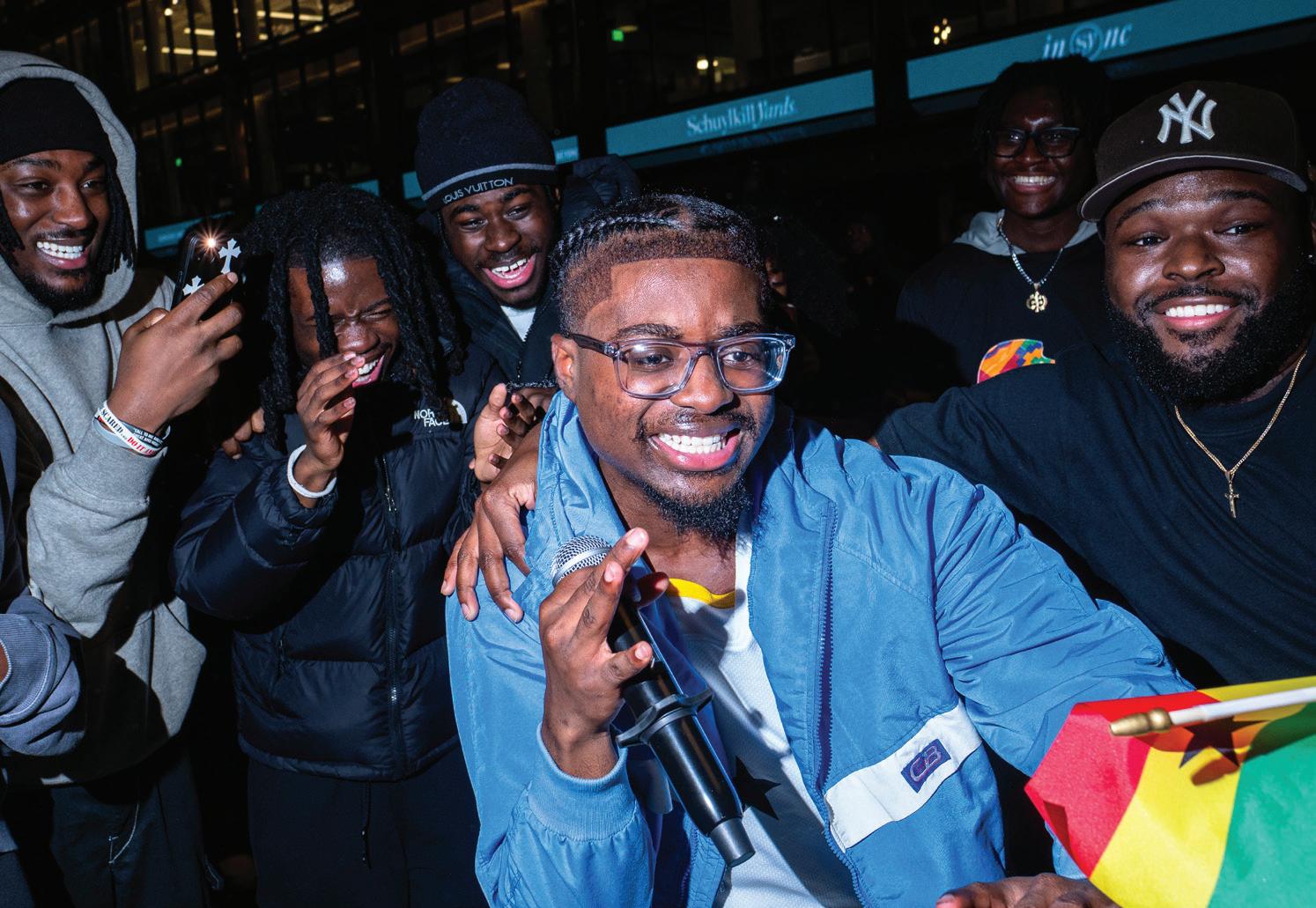
first annual Ghana Independence Day Block Party on March 7, a day after the 69th anniversary of the nation’s independence. The free event featured local African American DJs, transforming the One Drexel Plaza into a large, vibrant dance floor. Vendors sold products like organic skin care lotions and handmade copper jewelry. Cameras flashed as attendees took photos and posed in front of a Ghana-themed booth at the center of the square.
Okyne felt there needed to be a space for Ghanaians not just to acknowledge their culture and history but rejoice alongside the larger Philadelphia diaspora.
“We just really wanted to activate [the African Diaspora] and make sure that they’re being seen, make sure that they can celebrate themselves,” Okyne said, a 2021 advertising alumnus. “Here,
they can stay in their backyard and be celebrated, and celebrate amongst themselves.”
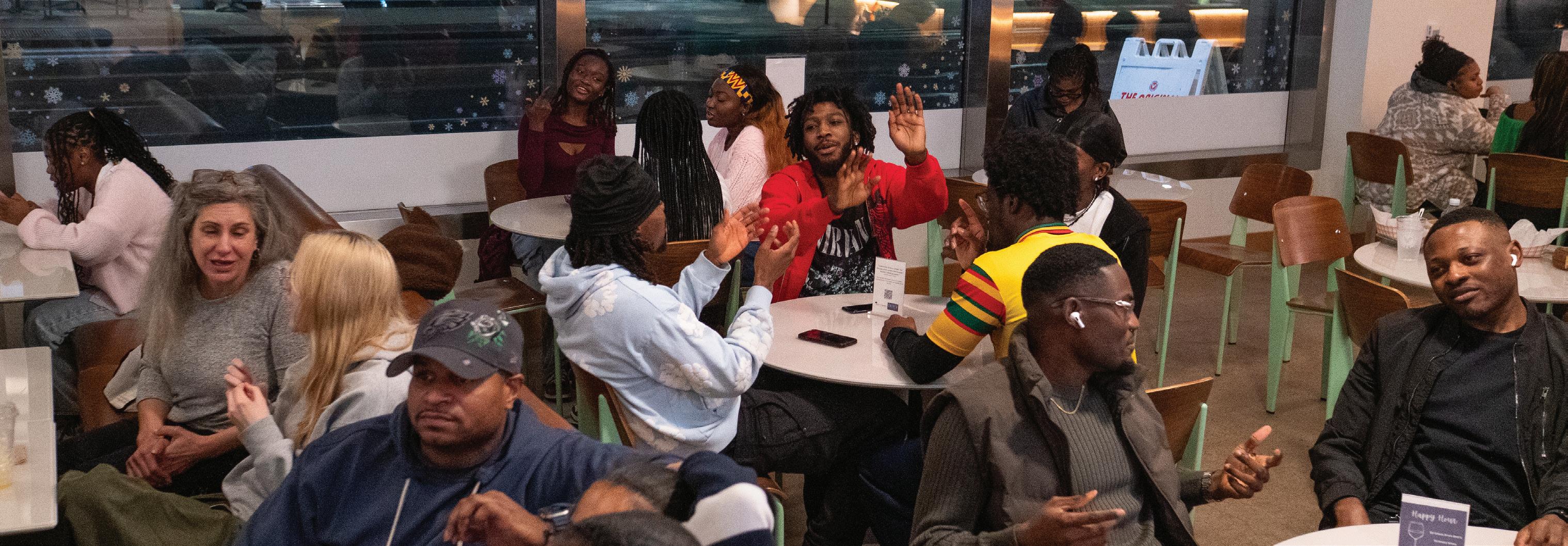
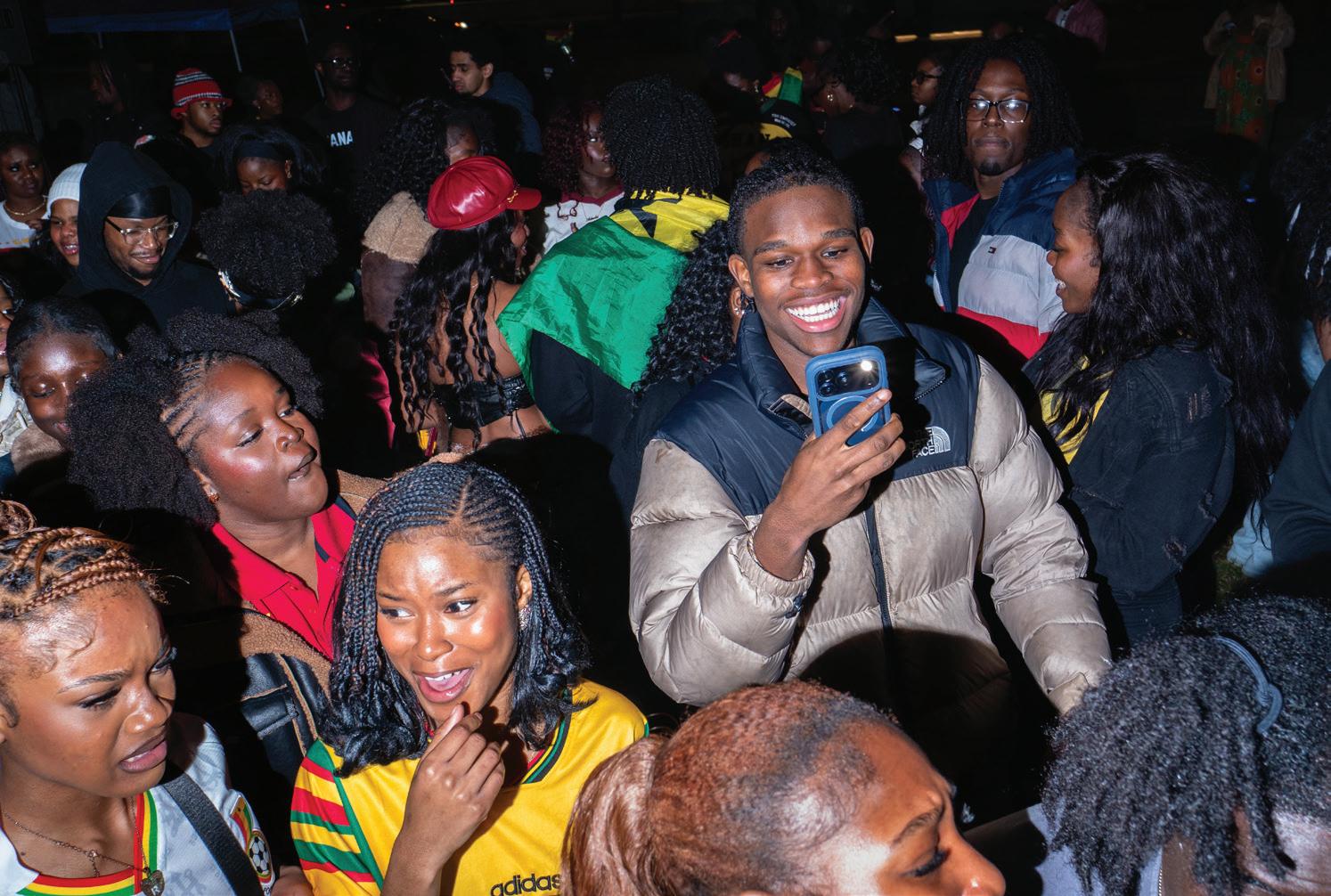
As the evening progressed, prideful energy echoed around the square as neon lights from the Schuylkill Yards illuminated dancing Ghanaians and Philadelphians caught in the Afrobeats’ syncopation. The party continued inside the Gather Food Hall, where attendees could order food and drinks surrounded by friends and family.
Gherusa Adjei, 73, came with her son, David Mingle, to enjoy and celebrate Saturday’s event. Adjei finds comfort in staying connected to her motherland.
“There’s no place like home,” Adjei said. “That home is Ghana.”
With Philadelphia hosting the Ghana versus Croatia World Cup this summer, Okyne stresses the importance of
cultural representation for Ghanaians, by Ghanaians.
“We’re the lead organizers, we’re Ghanaian,” Okyne said. “It’s an amazing full-circle moment for all of us.”
gallo@temple.edu
AIDAN GALLO / THE TEMPLE NEWS
An attendee poses for a photo at the block party.
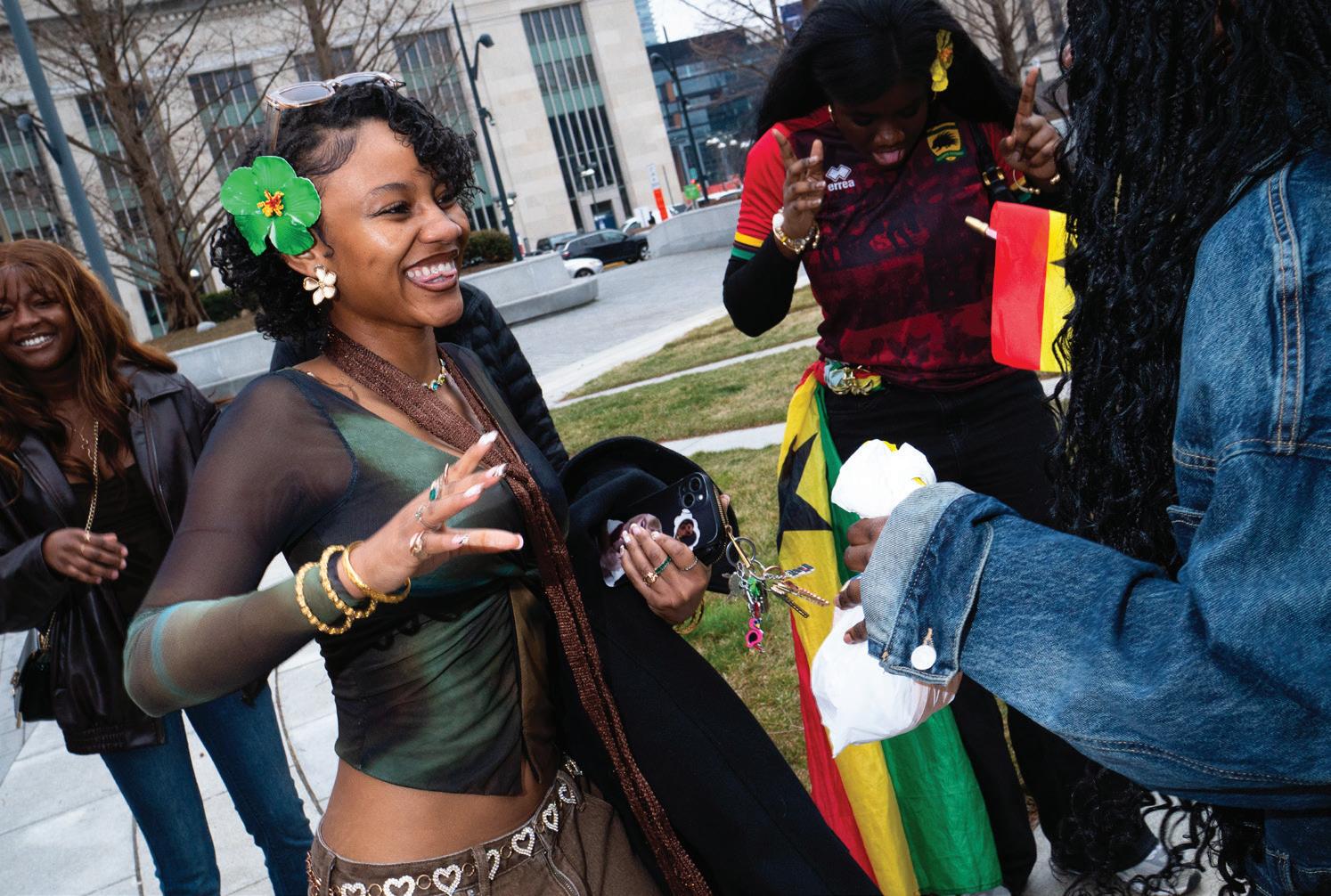
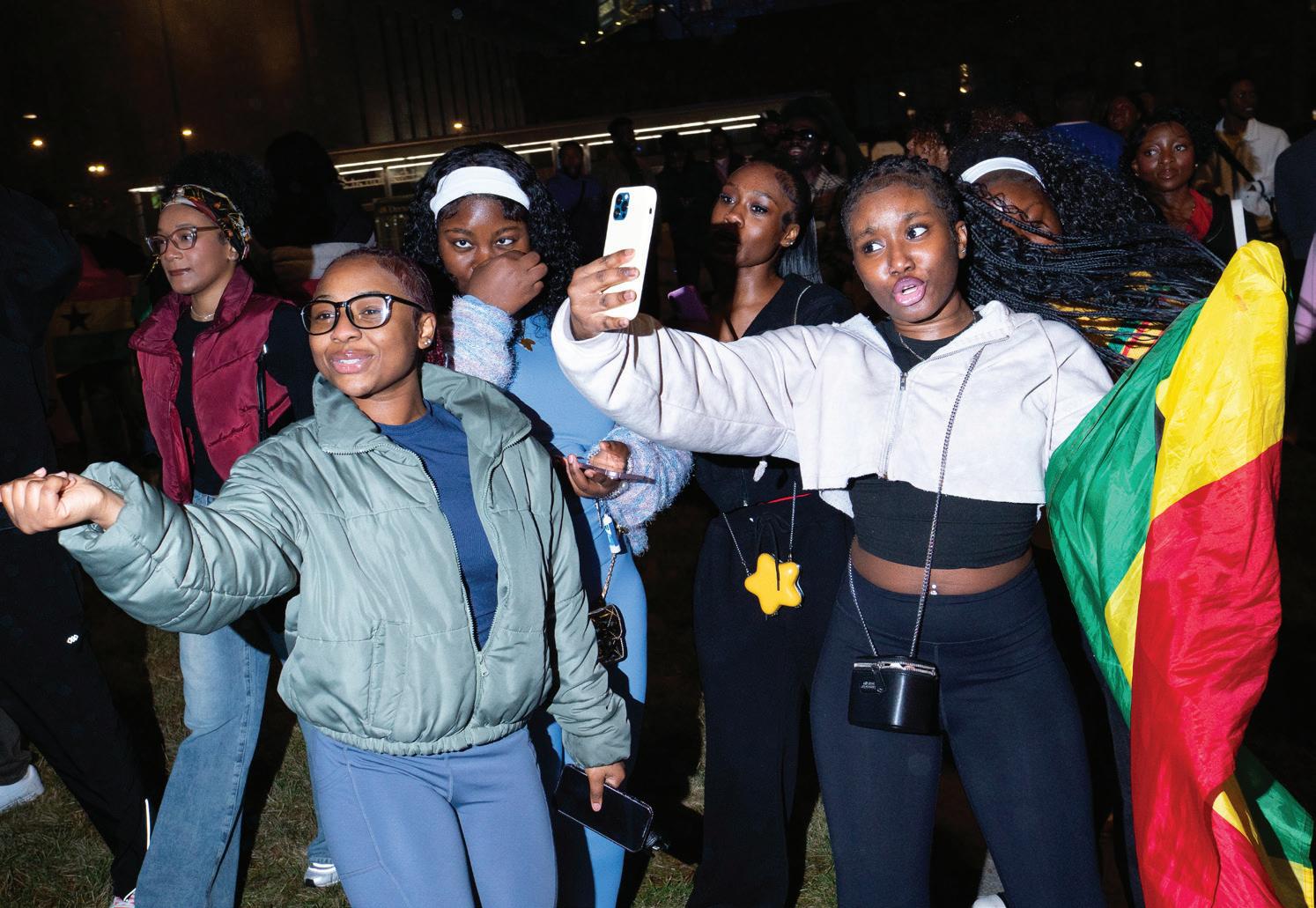
AIDAN GALLO / THE TEMPLE NEWS Attendees dance together at the block party.
AIDAN GALLO / THE TEMPLE NEWS
An attendee sings along to a song.
AIDAN GALLO / THE TEMPLE NEWS People eat inside the Gather Food Hall at Schuylkill Yards.
AIDAN GALLO / THE TEMPLE NEWS Attendees at the block party.
AIDAN GALLO / THE TEMPLE NEWS Attendees take photos during the event.
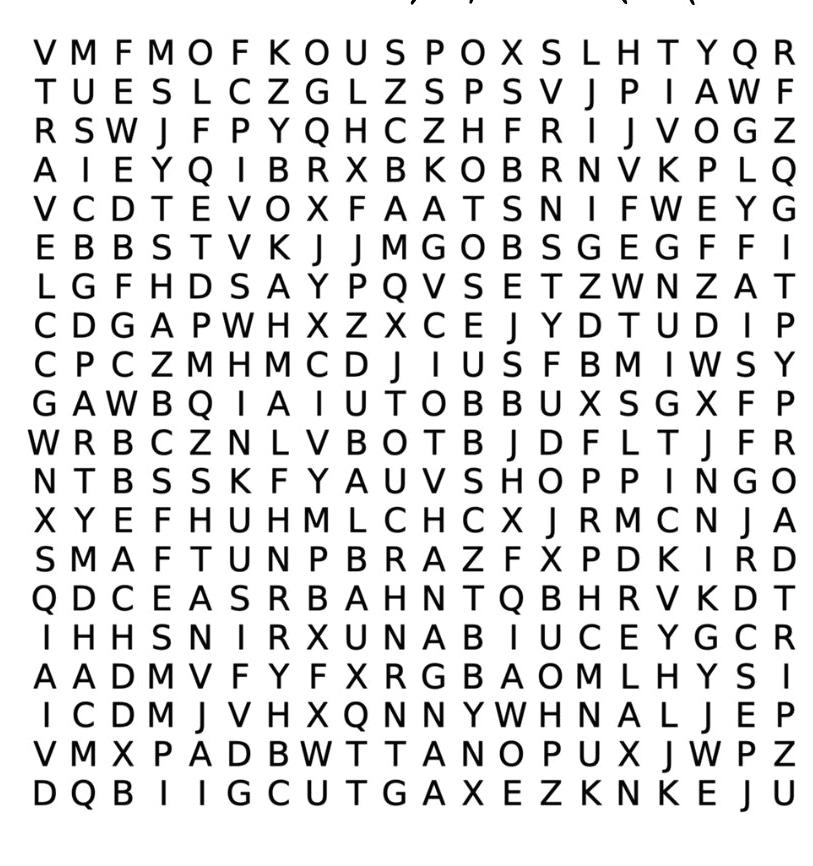
ALL IN GOOD FUN
SPRING BREAK MEMORIES MID-SEMESTER SURVIVAL

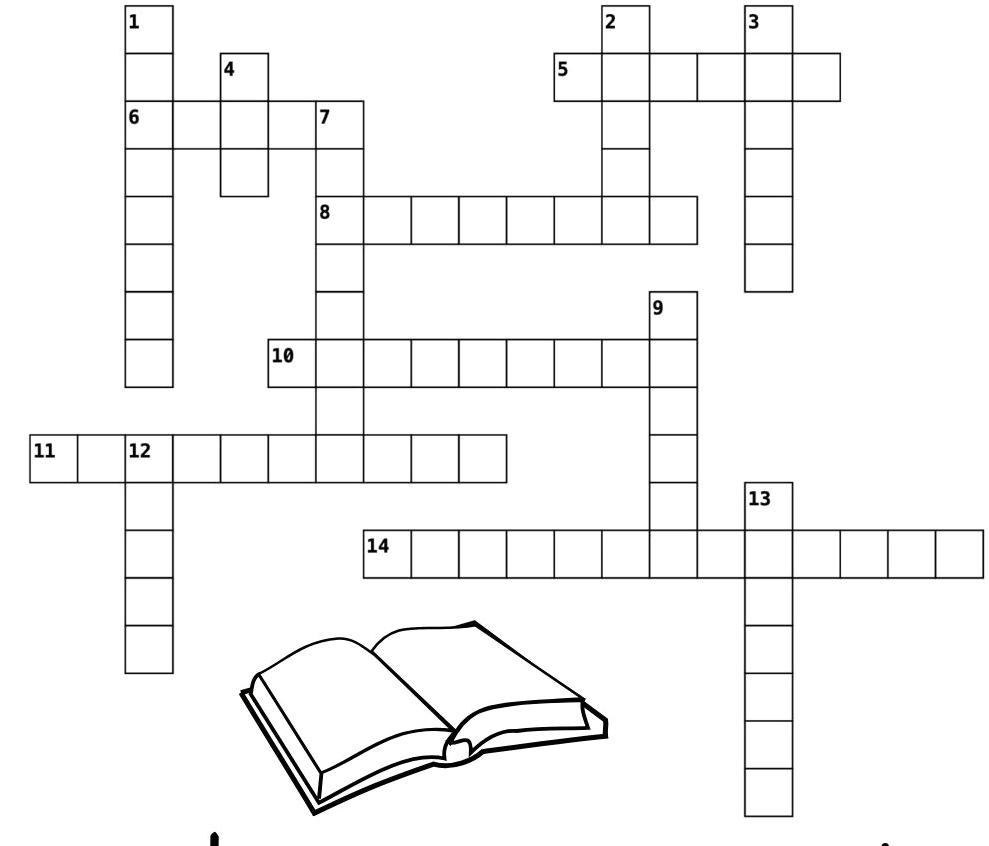
Across
5. A device students often bring to class to take notes.
6. A sound that ruins your morning.
8. The final time an assignment must be turned in by.
10. Where classmates share notes and panic about deadlines.
11. Online posts on Canvas where students respond to classmates.
14. Doing anything except starting the assignment.

Down
1. Studying an entire unit the night before the test.
2. A quick and cheap meal for many college students.
3. The unofficial fuel of college students.
4. A mini-hibernation to recharge
7. Exams that happen halfway through the semester.
9. The mental strain caused by being too busy.
12. Review material to prepare for exams and assignments.
13. A quiet place on campus where students go to study
FEATURES
Dorm room tattooing breaks community norms
ART Thin wallets and accessible machinery birth a new generation willing to bypass licensing.
BY ANTHONY BOFFAT-TAYLOR & MADELYNNE FERRO
For The Temple News
When James Wright got his first tattoo at age 15, he was forced to cover it up due to school rules. It never crossed his mind that by 18 he would be experimenting with kits and needles—and by 20 he’d be his school’s go-to artist.
“Out of like, rebelliousness, I went to Walmart,” said Wright, a junior philosophy major at Eastern University. “I got sewing needles and the ink, and then I would do stick & poke tattoos for people at my private school. But only when I got a cheap kit off Amazon, my freshman year of college was just kind of doing it for fun. Honesty, I don’t know how, or why I decided to take it seriously.”
For students like Wright, dorm rooms and apartments have become pseudo studios, offering a quick and cheap alternative to booking with a licensed professional. But while nonconventional studios and unlicensed student artists are becoming more commonplace, licensed professionals say this practice can come with risks.
By skipping out on an apprenticeship, young at-home artists may miss out on crucial time developing as a tattoo artist and the required certifications needed to be licensed.
While one doesn’t need a license to operate in greater Pennsylvania, in Philadelphia, a $40 application fee for the Philadelphia body art certification, an approved blood-borne pathogens training course and local municipal health departments regulations are required for legal tattooing.
After graduating high school in 2011, Derek Del Torro spent a year in the military to appease his Roman Catholic family. But, after being discharged, he gravitated back to his first love: tattoo artistry.
He became an apprentice the traditional way, sweeping up after working hours at various parlors—and his fulltime landscaping job—including Popcorn’s Tattoo, a now closed shop in the Olney neighborhood. To Del Torro,
sweat, blood and tears required to finish an apprenticeship is necessary to work as a tattoo artist.
“Another thing with the apprenticeship that you learn is, a lot of kids now they’re doing the Amazon pens, tattoo pens,” said Del Torro, who now works at Kadillac Tattoo in Mount Airy.
“These machines are made by hand, and you need to know what each piece does so you can diagnose it. Something goes wrong, you can fix it. A pen, what are you going to do, FaceTime someone in China?”
In today’s economic climate, pennies are pinched even for lifetime commitments like tattoos. Wright frequently works with his clients on pricing, offering discounts to repeat patrons and clients who allow creative freedom.
For Del Torro, there is less haggling and more structure: each tattoo includes a $50 flat deposit with a $100-$150 minimum for all designs.
“When you’re making money as an apprentice,” Del Torro said. “You’re not making money. $40 a day, $50 a day, and
that’s by today’s standards.”
Last year, Wright tattooed more than 200 designs. Most of his clientele view his work from his social media, Inkbyjimothy, where he’s amassed nearly 10,000 Instagram followers and nearly 140 thousand likes on his TikTok.
Jack Fisher, a 2025 graphic design alumnus, wanted to be a tattoo artist since he was a child—the proof lies in childhood photos of Fisher drawing on his kid brothers.
“When I got to Temple, I got my first tattoo done,” Fisher said. “Which sort of segued me into my career. I watched the dude doing my tattoo and I was like, ‘I could totally do that myself.’”
Since graduation, he’s been licensed, receives biannual health code reviews and pays his dues.
But as a young artist specializing in cybersiligism and graphic design-inspired tattoos, he feels the exclusivity of the Philly tattoo community.
“Like any subculture in Philly, it’s a bit toxic,” Fisher said. “There’s a lot of drama and not a lot of exploration. I
like to explore different ways to look at tattooing, because it’s been done pretty much the same way since the early 1900s.”
Fisher’s niche keeps him in the green: the artist is booked out one to two months in advance. And despite concerns surrounding the health and safety of student-run tattoo setups, Wright continues to attract a loyal customer base.
To Wright, it’s starting a conversation and meeting someone new that makes tattooing worth it.
“One thing that brings me a lot of joy is people coming back to me and saying, ‘Wow that really stuck with me’ or ‘That made me think a lot,’” Wright said. “You don’t really ever know the impact you have on people, usually you never will.”
anthony.boffat-taylor@temple.edu madelynne.ferro@temple.edu
AIDAN GALLO / THE TEMPLE NEWS
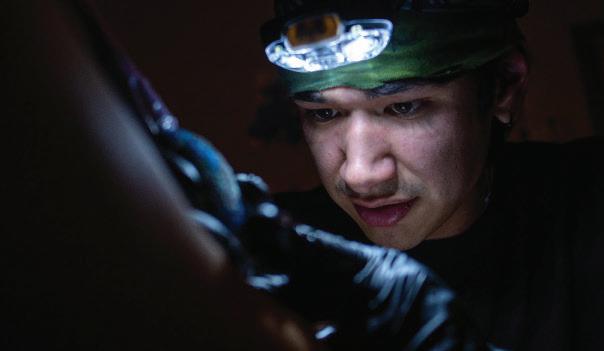
James Wright, a junior philosophy major at Eastern University, tattoos a client inside his dorm room on Feb. 27.
STUDENT
Muslim and Catholic students fast, souls are fed
Students are finding community during Ramadan and Lent, which began at the same time this year.
BY MADELYNNE FERRO Features Editor
When Ali Srour was a kid, Ramadan and isolation came hand in hand. As the only Muslim family in the neighborhood, Srour braced for the solitude of fasting at school as he ate suhur with his sisters in the morning.
“Growing up, it’s been kind of isolated,” said Srour, a senior risk management major. “You don’t feel the same way you would feel when you celebrate it in your home country. I’ve been to Lebanon during month of Ramadan, it’s totally different. I would say that I’ve only felt this kind of community-based Ramadan feeling in America when I joined [Muslim Student Association] my junior year.”
Across Main Campus, Muslims and Catholics fasting with their respective communities during the month of Ramadan and the season of Lent, both of which began on Feb. 18. Muslim students are practicing the month of Ramadan with fasting from sunrise to sunset, prayer and reading from the Qur’an. For Catholic students, the 40-day season of Lent is celebrated with fasting, prayer and almsgiving and ends with Holy Thursday.
Ramadan’s start date varies depending on the lunar calendar, and Ash Wednesday, the first day of Lent, is observed 46 days before Easter. The overlap of Lent and Ramadan’s start date is rare—this year’s overlay marks the first in more than 30 years.
“If people use fasting as a means of showing similarity, then they can at least say to each other, ‘We have fasting the same as you,’” said Khalid Blankinship, department chair of Temple’s religion department and practicing Muslim. “People will look for religious similarities. Naturally, there are a lot of differences, but one can see that there are also similarities.”
Blankinship has studied the common thread between various fasting practices.
“People fast so that they can learn to do without,” Blankinship said. “That’s the first thing and learning to do without makes a person more self-sufficient and self-reliant, and so on. ”
Blankinship also stressed the communal aspect of fasting, like any religious celebration. During Ramadan or Lent, practitioners lean on religious community for strength during difficult times, dialogue about intention and prayer and break fast with family and friends.
For Srour, his first two years of college were detached from the Muslim community outside of family members.
“It was definitely the first time where I felt like it can get even lonelier,” Srour said. “That’s what motivated me to go to MSA.”
The middle of his junior year, Srour and a friend attended a lecture circle hosted by MSA and were welcomed by the attending board members. Srour felt the pull to expand his social circle with Temple’s Muslim community and joined the board his senior year.
This year, he’s serving as president
of MSA. Alongside the club’s Monday through Thursday Iftars during Ramadan, Srour hosted an inter-MSA Iftar dinner on Feb. 25 with students from Philadelphia area colleges.
“We sponsored the whole event,” Srour said. “We offered free food to 300 students that came in. We offered prayer as well. .”
For Marissa Tufaro, a freshman theater education major, attending Catholic school from kindergarten to high school graduation meant most her classmates were practicing Lent alongside her. When she got to Temple, she immediately joined Temple’s Newman Center as a choir member.
The Newman Center has been Tufaro’s Catholic community to talk about Lenten goals and hold herself accountable during her first Lent away from her family.
“It’s definitely been an adjustment,” Tufaro said. “Now, it’s a choice. My parents can’t control what I eat, and the school isn’t catering to my Lenten values. But the women at the Newman Center are very close, I’ve been grateful
to have that.”
Every Thursday, Tufaro attends the Newman Center’s SPAG, Catholic mass followed by a spaghetti dinner night. Tufaro attends to connect with friends, talk about her faith, and during the Lenten season, discuss fasting goals.
Despite the smaller community, Tufaro has enjoyed the new perspectives from a more diverse student body and deeper discussions about practicing her faith.
“In my Catholic education it was always like, ‘Oh, you need to give something up,’” Tufaro said. “But now it’s more about what I can do better and how I can benefit my community.” Tufaro is thriving in her first Lenten away from home and Catholic education, and she attributes it all to her student faith community.
“I am very glad that the Newman Center is here,” Tufaro said. “It reminds me I’m not alone, there is a community that is like me.”
madelynne.ferro@temple.edu
BRIAN NELSON & AIDAN GALLO / THE TEMPLE NEWS
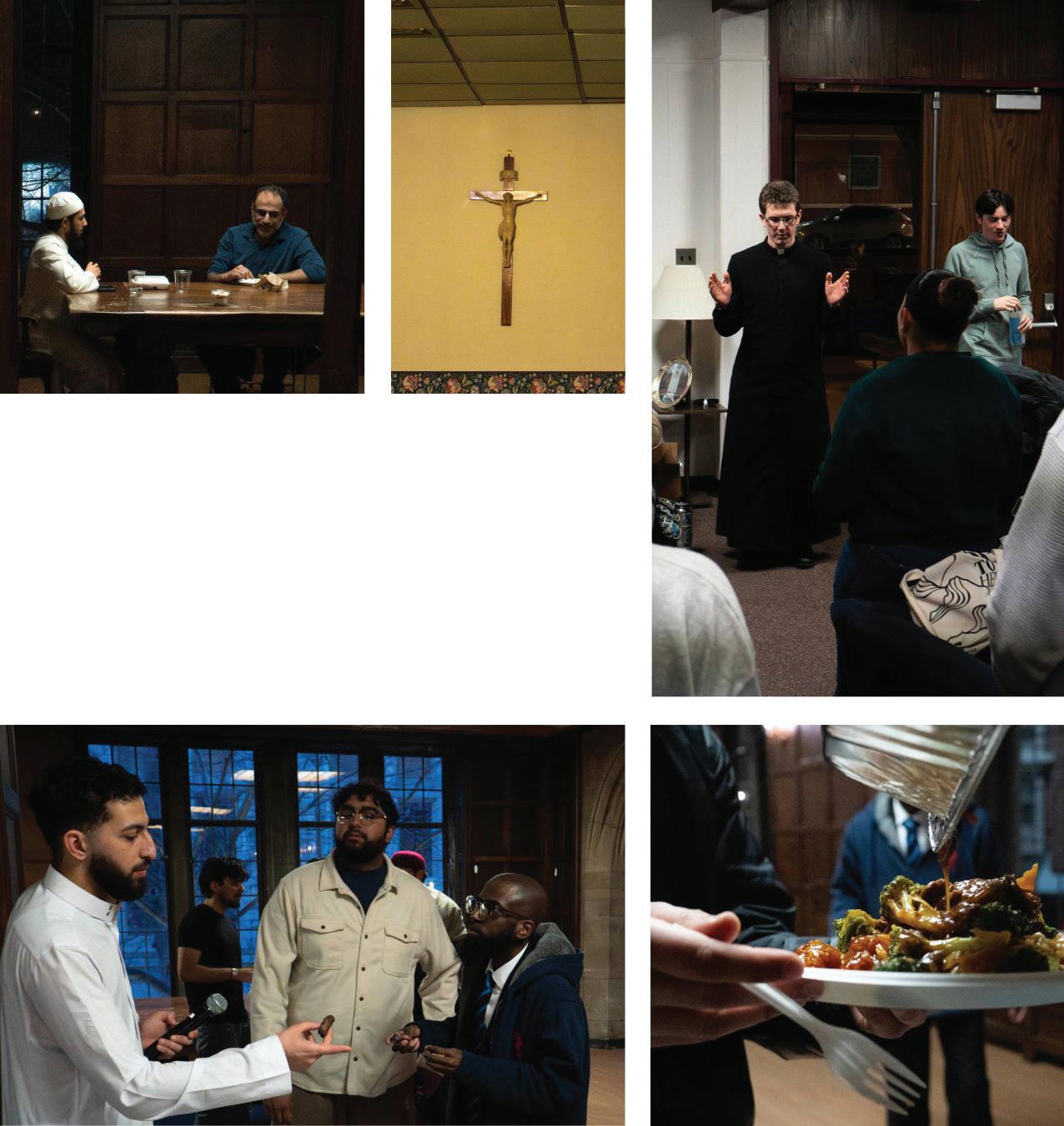
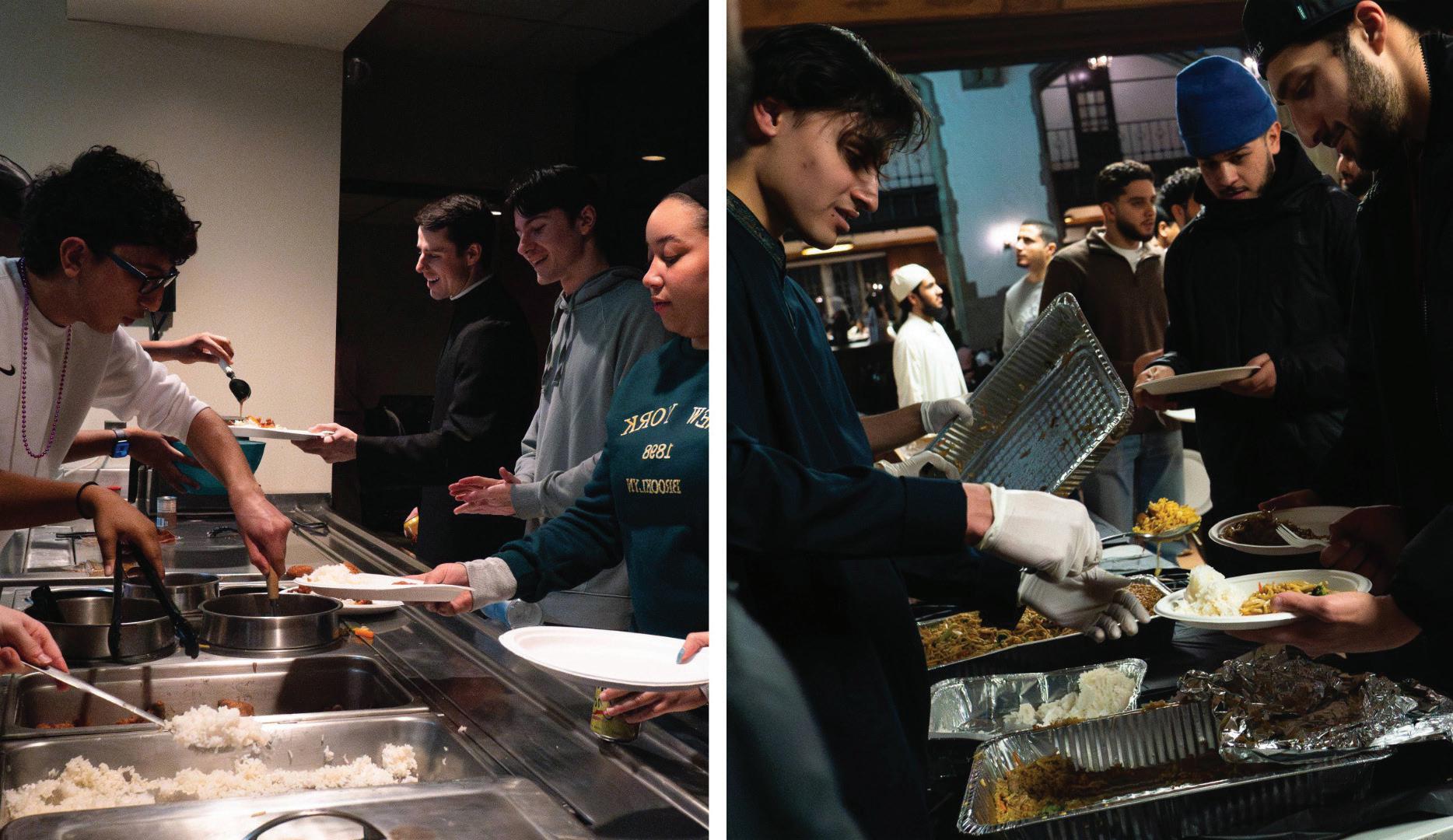
Members of the Newman Center (left) serve chicken and rice. Members of the Temple Muslim Student Association (right) serve meals during Iftar.
FEATURES
AROUND CAMPUS
Professor guest lectures on work with Bad Bunny
Jorell Meléndez-Badillo spoke to a crowd of about 40 about his work with the pop superstar.
BY CHLOE PABON Assistant Features Editor
In a small room at the Center for Anti-Racism on Monday, a group of 40 people gathered to hear University of Wisconsin–Madison history professor Jorell Meléndez-Badillo present a lecture on the history and cultural identity of Puerto Rico.
Meléndez-Badillo has been an educator for years and published several books on Puerto Rican history. But his recent claim to fame, and what drew the crowd to Mazur Hall on Monday, is his work with Bad Bunny, one of the world’s biggest pop stars who played at the Super Bowl last month.
During a family vacation in Portugal, Bad Bunny’s team messaged Meléndez-Badillo on Dec. 4, 2024, asking him to curate a set of historical narratives that would accompany the Grammy-winning record “DeBÍ TiRAR MáS FOToS”.
O C E S
“I like to say he slid in my DMs,” Meléndez-Badillo said.
Meléndez-Badillo went against his partner’s request not to work on vacation and, without a computer, handwrote 74 pages of the historical background of Puerto Rico, iron-clad with an NDA.
At first, he was intimidated by the agreement, but his partner encouraged him to sign it.
The end product was 17 visualizers—graphics paired with the songs in an alternative music video—that garnered more than 650 million views on YouTube, exposing a new audience to Puerto Rican history.
“It’s 650 million opportunities for people to learn about our history,” Meléndez-Badillo.
Bad Bunny was adamant that he included facts about the political repression and uprisings in Puerto Rico, Meléndez-Badillo said. The global artist requested that the historical context be accessible and not sanitized.
The historical context in the visualizers was built on research in his recent book, “Puerto Rico: A National History,” published on May 28, 2024. The book
is an expansive history of Puerto Rico, from precolonial times to the present, and delves into the complexities of Puerto Rico’s origins. Written in narrative style, the book begins with Meléndez-Badillo’s grandparents, people who are “absent from the historical narratives that [he] inherited from the classroom.”
Throughout the lecture, audience members laughed, took notes and photos of the historian, and offered questions in both Spanish and English.
Meléndez-Badillo spoke passionately, preaching to the audience about how the era he grew up in witnessed the privatization of education and healthcare. Later, what he calls the “Crisis Generation” survived the economic collapse of 2006.
That same generation, of which Bad Bunny is a part of, witnessed Hurricane Maria’s devastation of the island in 2017.
The disaster inspired Bad Bunny in songs like LA MuDANZA one song for which Meléndez-Badillo later provided historical context in a visualizer.
Since the release of his book, “Puerto Rico: A National History”, Meléndez-Badillo has had grateful readers
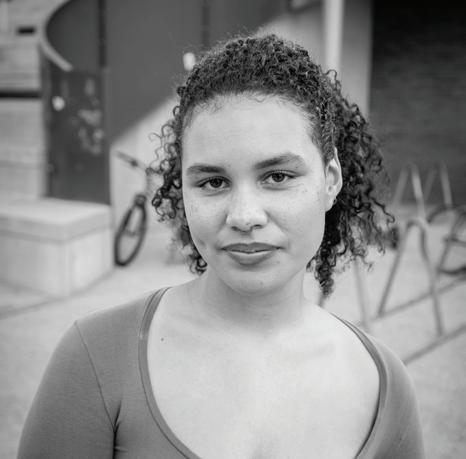
HOW DID YOU SPEND YOUR SPRING BREAK?
Junior art history major | She/her
reach out to share their experience with the book.
“A lot of them were telling me, ‘I didn’t know anything about the history of Puerto Rico,’” Meléndez-Badillo said.
Rafael Perez Rodriguez, who grew up in Puerto Rico and left when he was eight, has always felt disconnected from his identity and history.
“In a way, I feel some sort of grief,” Rodriguez said. “’What would it be like if I were to stay in Puerto Rico?’ It felt like [the presentation] gave me permission. People can be like, ‘Oh, you’re not really Puerto Rican because you can’t speak Spanish.’’’
Vanessa Maria Graber, a cofounder of Philly Boricuas, a grassroots educational organization, also felt disconnected from Puerto Rican history in her youth.
“For many of us, our families came here and didn’t teach us the history,” Graber said. “Part of assimilating is adopting American culture and speaking English, and all of these things are lost.
chloe.pabon@temple.edu
Senior communications major | She/her
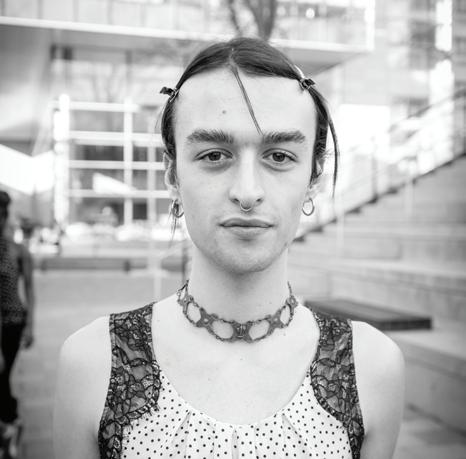
Senior media studies and production | They/them
“ I went to Madrid to visit my best friend, Ella, who’s studying there. ” “ It was a lot of rest and relaxation, connecting with nature. A lot of walks and hikes.”
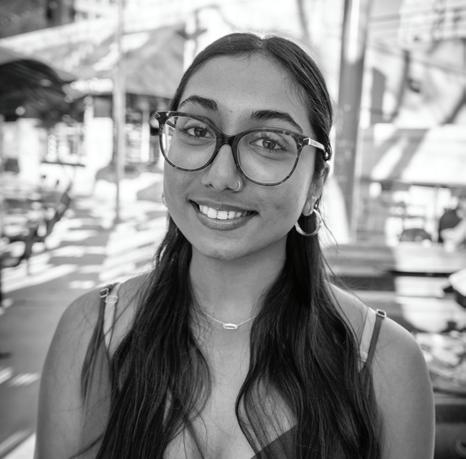
Freshman neuroscience major | She/her
“ I went home to the Bay area in California. I was with family the entire time and spent a few days out with friends visiting their college campuses. ” “ I hung out, chilled at home. We were sort of thawing out, waiting for the warm weeks to come. ”
NORAH DEPALMA
COOPER DAVIS
SANJANA KUMAR
CAMERON MOORE

WOMEN’S BASKETBALL
Owls have clean slate for conference tournament
Temple holds the seventh seed in the American Conference and aims to win tournament.
BY JACOB MORENO Assistant Sports Editor
Playing Temple basketball is more than a cliché to head coach Diane Richardson; it’s a standard she expects everyone to meet. She requires Temple to play for each other and have intensity and resilience.
The Owls struggled to do so and finished below their preseason expectations. Temple hit rock bottom in its 82-36 loss to South Florida on March 3, but put it in the rear-view mirror against Florida Atlantic four days later. The Owls played their brand of basketball, pummeling FAU by 28 to enter the American Conference tournament.
Temple’s path to Birmingham wasn’t perfect, but it persevered. The Owls finished 14-16 with an 8-10 conference record, putting them in seventh place of the American. They will face 10 seed Tulane in the first round on March 10 at 3 p.m. and will have to play five games in five days to make the NCAA Tournament.
“They understand that we can do it and that is 50% of it,” Richardson said after Temple victory against FAU March 7. “Them understanding and knowing and confidence that they can do it, so we will take that confidence into the conference tournament.”
Here is everything you need to know as Temple for its first NCAA tournament berth since the 2016-17 season.
WHAT IS TEMPLE’S CEILING?
jacob.moreno0001@temple.edu @Jacob_Moreno_ The Temple
Temple entered the year as one of the American’s finest after consecutive 20-win seasons but backpedaled, going 6-6 in nonconference play. It had a season-opening win against George Mason on Nov. 3 but suffered blowouts against other elite nonconference teams Temple faced.
The Owls went 1-7 against the American’s top five teams, many of which were competitive but shaky exe-
cution spoiled their chances. They held a two-point lead with two minutes remaining against North Texas on Feb. 7 but never scored again in a 69-66 loss.
The Owls often committed self-imposed turnovers and shifted to isolation ball when defenses intensified. Temple’s defense fluctuated and rebounding suffered, ranking ninth conference-wide with 25.5 defensive rebounds per game.
Temple’s talent still led it to the postseason, where a run is possible. The Owls had two double-digit scorers in Craig and guard Kaylah Turner, the American’s points leader. Guard Tristen Taylor averaged the sixth-most assists conference-wide and Molina posted 9.8 points. With such firepower, the Owls could compete against anyone, but an early exit is possible.
“We know it’s win or go home and we want to win,” Craig said after the FAU game. “So, we have to play our game, we have to play Temple basketball and just do what works.”
“SPICEE” DEFENSE
Richardson coined the phrase “spicee defense” this season, with the last two Es standing for energy and effort. Temple struggled displaying it, allowing the third-most points per game in the American.
The Owls wanted to force turnovers for transition opportunities, but didn’t do it consistently. Temple had miscues when executing coverages and its opponents easily found open shots. The Owls gave up the highest three-point percentage in the conference due to botched rotations.
Temple’s defense went from mild to “spicee” when it used physicality and communication. It forced at least eight steals in 11 of its 14 wins this season. If the Owls maintain their defensive edge, a Cinderella run is in the cards.
BALANCING THE ROTATION
Temple dealt with inconsistentcy partly due to poor bench output. Guard
Drew Alexander is the Owls’ most productive reserve, having tallied 5.5 points. But no other reserve averaged at least three points.
The starters had a bigger burden as each averaged more than 25 minutes, the first time in the Richardson era. She has said the reserves need to compete for minutes and play confidently.
Temple’s bench finally showed up, scoring 41 points against FAU and hopes to build on it.
“We were all sharing the ball, and everyone was contributing, so that helped us get momentum and now we’re ready to go into the conference tournament,” Mead said.
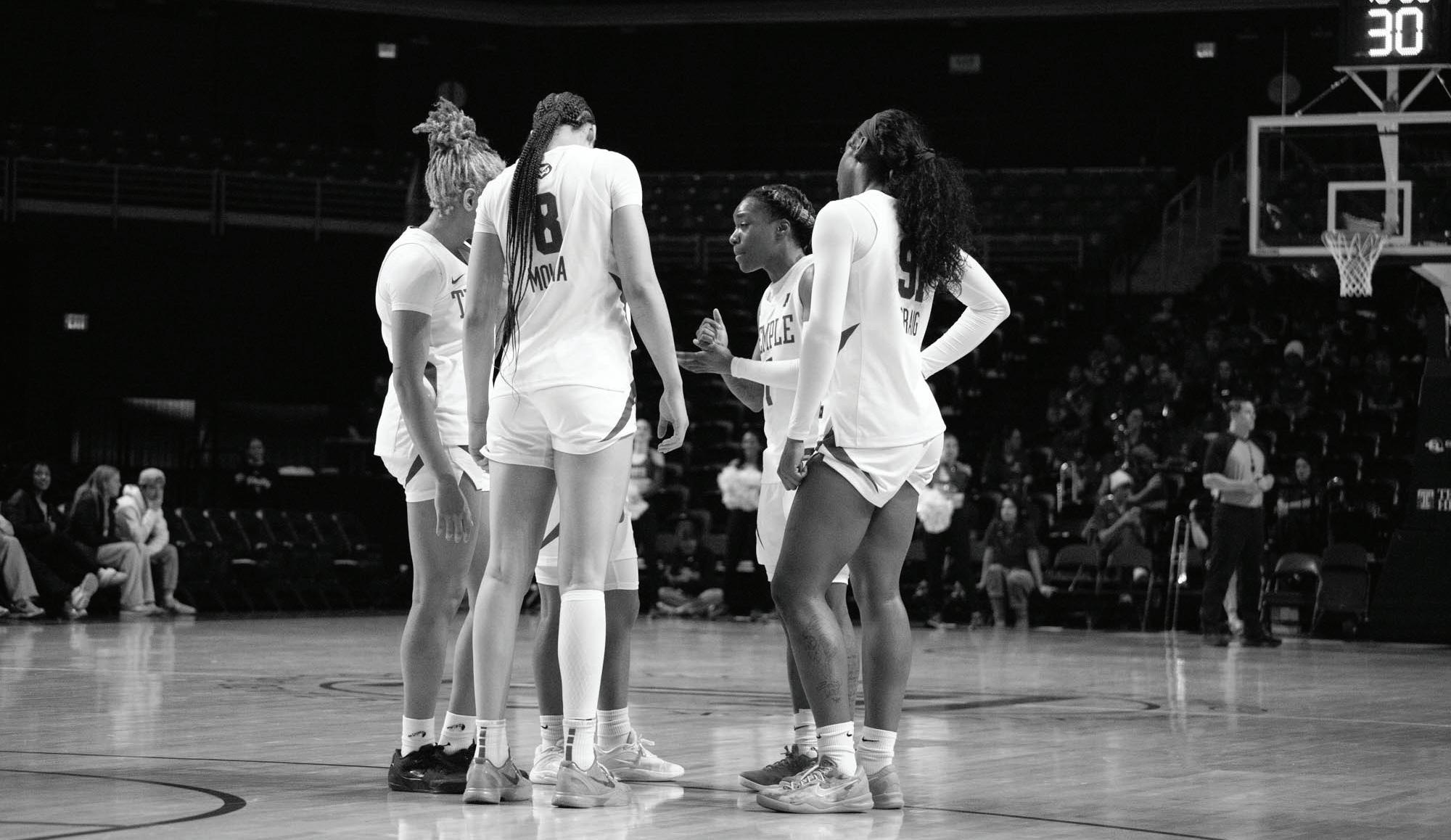
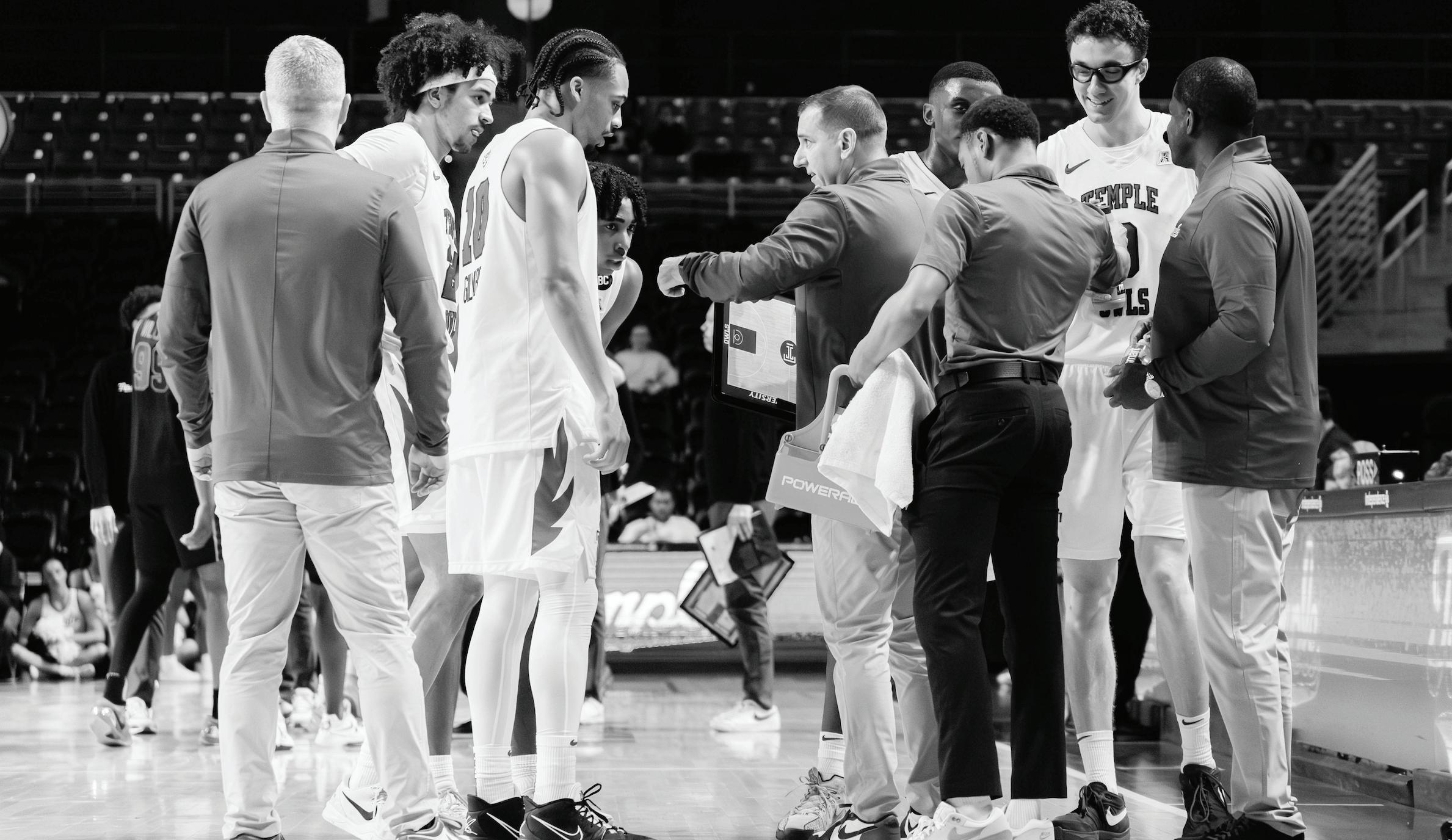
MARIA MAZA RION / THE TEMPLE NEWS Temple Women’s Basketball talks in a huddle against North Texas on Feb. 7.
MEN’S BASKETBALL
Owls ready to bounce back in tournament play
Temple stumbled to the 10th seed in the American Conference tournament.
BY SIENNA CONAGHAN CO-SPORTS EDITOR
Conversations surrounding Temple a month ago were about what games it must win to secure a triple bye into the semifinals American Conference tournament. Suddenly, the Owls were in danger of missing the tournament all together.
They plummeted by dropping six straight games and went from a possible top seed, to limping into the tournament as the last team in. Temple has been in 12 American games decided by two possessions. In those games, its late-game execution struggled and the defense fluctuated. The Owls have one win in the last month but will have to play five games in five days to win the conference.
“We just talked about the stone cutter quote, how you keep hitting the stone. You keep hitting it. It’s not that blow, it’s the 1000s before it,” said head coach Adam Fisher. “But we got to find a way to win. It’s that simple. It’s on me. Got to be better and we got to find a way to win.”
Here’s everything you need to know for Temple’s first-round game against seven-seed Florida Atlantic on March 11 at 9 p.m.
HOW FAR CAN TEMPLE GO?
Temple has looked like the best and the worst team in the conference at different points this season. The Owls beat regular-season champion South Florida 79-78 on Jan 31, but only took down UTSA by six points on Jan. 24, a team that won one American game.
They were 7-3 in conference play at the beginning of February and were in possession of the second seed after beating East Carolina on Feb. 7. It went 1-7 to rest of conference play, nearly dropping below with tenth seed.
Temple has the talent to compete against any team in the American. However, unreliable execution could cause a repeat of last year when the Owls held
a 12-point halftime lead against Tulsa in the second round of the conference tournament before losing 75-71 on March 13, 2025.
“We gotta stick together,” Fisher said. “We know how miserable these last three weeks have been. We’ve tried the yelling, screaming. We’ve tried the different motivation. It’s got to be, ‘Hey, we just got to come together and figure it out.’”
DEFEND AND REBOUND
The words ‘defend and rebound’ have been heard during post-game press conferences from Fisher and his players all season. They have harped on that being the difference maker to their game.
The Owls haven’t reached their rebounding goals as they record the second-least in the American with 33.8 per game. Temple has produced at times, grabbing 18 more boards than Tulane in its 89-60 win on March 5, tying its largest margin this season.
Temple has the third-best scoring defense in the American, allowing 71
points per game. However, there are games when the defensive communication stops and opponents go on a big run to pull away.
SECOND-HALF SLUMPS
The Owls were in the lead or tied at halftime in six of their last eight games, but only managed to defeat the Green Wave, which punched their ticket to Birmingham. Temple’s defense has dipped in the second half during conference play, allowing 7.5 more points in the final 20 minutes.
The problem wasn’t prominent during the start of American play as the Owls’ scoring also increased in the second half. However, that stopped happening. Temple had the slight scoring advantage in the second half of the first 10 American games, but was outscored by 3.1 in the frame in the final eight games.
Temple held a six-point halftime lead against FAU on Feb. 26, its largest blown lead in conference action. The Owls shot 60% from the floor and 63.6%
from three-point range in the first 20 minutes. They made 42.3% of their second-half field goals, but went 0-8 from deep and was outscored by 10 to lose the game.
“I think it’s a mixture of little things throughout the game,” Fisher said. “Whether it’s early in the first half or early in the second half, we need to be better in some of the little things, so that at the end of the game it looks like they’re magnified. But we have to be better throughout the game.”
sienna.conaghan@temple.edu @Sienna_Paige2
LILLIAN PRIETO / THE TEMPLE NEWS Head coach Adam Fisher talks to his team during a timeout against Tulane on Mar. 5.
WOMEN’S BASKETBALL
Three Owls to watch in the American tournament
Big production from three players could help Temple’s chase in the American tournament
BY FAIYAAD KAMAL Women’s Basketball Beat Writer
Temple’s key players faced a similar fate in its last two American Conference tournament appearances. Former guards Aleah Nelson and Tiarra East entered the tournament as the most important players who could influence the Owls’ success, but struggled when it mattered most.
Nelson made four shots in two games in the 2023-24 tournament and committed the game-losing turnover against Rice in the semifinals. East went a combined 4-25 in shooting in two games the next year as Rice ended Temple’s season in the semifinals.
The Owls relied on their top scorers as their depth hasn’t gotten buckets consistently this season. Temple can ill-afford performances like Nelson’s and East’s from its main contributors if it wants to make a run to raise a trophy. They will require other players to step up to win five games in as many days to capture the American title this year.
“We cannot be complacent, especially not in this conference,” said head coach Diane Richardson. “We’ve had some ups and downs and the curve may come back at us, but we’ve got to be prepared for that.”
Here’s who needs to be at the top of their game for the Owls to make a run.
KAYLAH TURNER
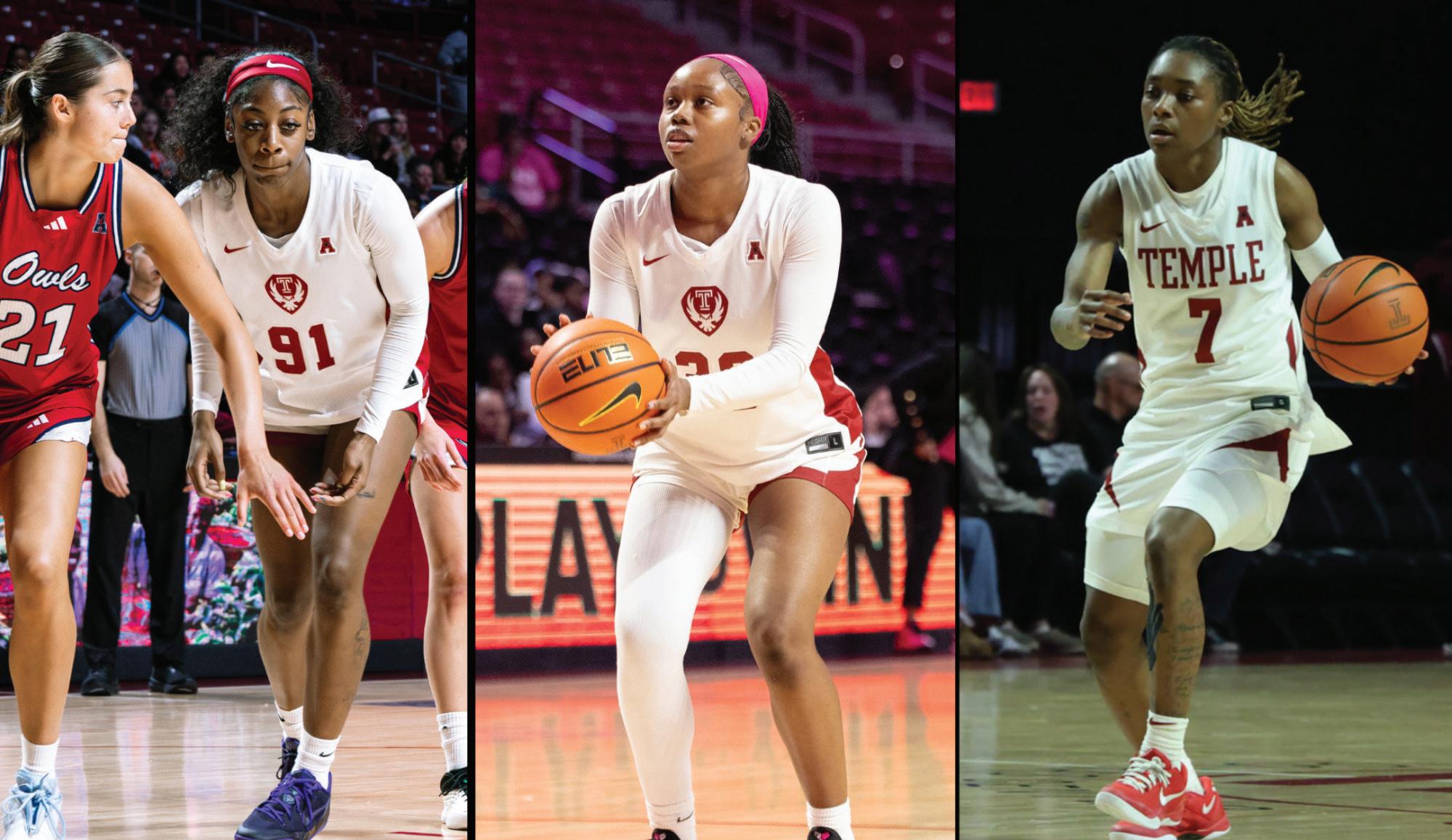
Turner took on Nelson and East’s role as Temple’s offensive catalyst this year. She led the American with 16.1 points per game on 40.5% shooting from the field. The guard is an effective three-point shooter, making 2.4 triples per game at 40.3%. Turner’s perimeter talents were apparent when she made six threes in the Owls’ win 86-57 against UAB on Feb. 28.
Her impact on the court goes beyond offense, however. She had 1.9 steals per conference game and often guarded an opponent’s best ballhandler.
Her constant effort and eye for the ball gives Temple the defensive intensity that Richardson expects.
“She’s a dynamic, defensive player,” Richardson said. “You usually don’t have players that are three-level scorers, plus can play on the other side of the ball.”
Turner is Temple’s offense anchor when her game is flowing. Considering East and Nelson’s struggles were key to the Owls’ season ending, Turner’s performance could be critical.
SANIYAH CRAIG
The first-year Owl does the dirty work for Temple, leading the team with 7.8 rebounds per game and is tied for third in the conference with 99 offensive rebounds. She also does the things that don’t show up on the stat sheet like diving for loose balls or setting screens. Grabbing boards has been an x-factor for Temple all season long. While it is the fourth-best offensive rebounding team in the American, defensive rebounds not been as efficient. It grabs the fourth fewest defensive boards against
conference opponents with 25 per game. Craig has 135 defensive rebounds, the second-most on the team to forward Jaleesa Molina’s 148.
Craig’s importance carries onto the offensive end. Her 10.8 points per game are second on the team. Craig’s 22-point outing against South Florida propelled the Owls to an 86-83 win on Jan. 20. Combining her physicality on the glass with her scoring could make Craig a difficult matchup for opponents.
“I feel like rebounding gives the team a spark,” Craig said. “When you get a rebound, it just makes everything feel better.”
DREW ALEXANDER
Alexander stepped in as Temple’s most prominent bench player, averaging a reserve-high 15.1 minutes per game and 5.5 points. But, she has showcased a larger scoring ability. The guard reached double-figures six times, including a 27-point outburst in Temple’s 94-82 loss to Tulsa on Jan. 9. She started 11 games, filling in when guards Savannah Curry
and Tristen Taylor missed four games each with injury.
Her calling card has been three-point shooting as she takes four threes per game and makes 30.8% of them. Alexander shooting well can be game-changing for Temple, as it is 3-2 in games where she makes at least three triples. “She worked really hard this summer. I mean, she really, really worked hard this summer,” Richardson said. “I knew she was gonna make a difference. I just wanted her to be confident to do that.”
faiyaad.kamal@temple.edu
JUSTIN ALEX, NATHAN SANDER & MARIA MAZA RION / THE TEMPLE NEWS From left to right, forward Saniyah Criag, guard Drew Alexander and guard Kaylah Turner.
MEN’S BASKETBALL
Three Owls to keep tabs on in men’s tournament
Here is who can be the x-factor if Temple makes a run in American Conference tournament.
BY CHARLES ERB Men’s Basketball Beat Writer
Temple has the most success when its players excel in their roles. Guard Jordan Mason conducts the offense, guards Derrian Ford and Aiden Tobiason lead the scoring efforts while guard Gavin Griffiths has a presence on both ends of the court.
But they don’t always show up. Mason had a combined four assists to 10 turnovers in the losses to Memphis on Jan. 14 and Florida Atlantic on Jan. 18. Ford bobbled a pass out of bounds in the final 30 seconds and missed the game-winning shot in the season finale loss to Tulsa on March 8. Tobiason went 1-12 from the field in Temple’s loss to Tulane on Feb. 11. Griffiths went 2-23 from three-point range in a four-game stretch, where the Owls won one contest.
Other players have stepped up sometimes to compensate for the leaders’ absence, but most games the bench has been nonexistent. It will have to play five games in five days as the tenth seed in the American Conference tournament to win the title. The Owls will need players to step up, with the long road ahead.
“We got to stay together like that’s the biggest thing,” said head coach Adam Fisher. “You’re into March, you got to stay together and we got to find a way to break this stone and break through.”
Here are three players to watch for the Owls in the conference tournament.
BABATUNDE DURODOLA
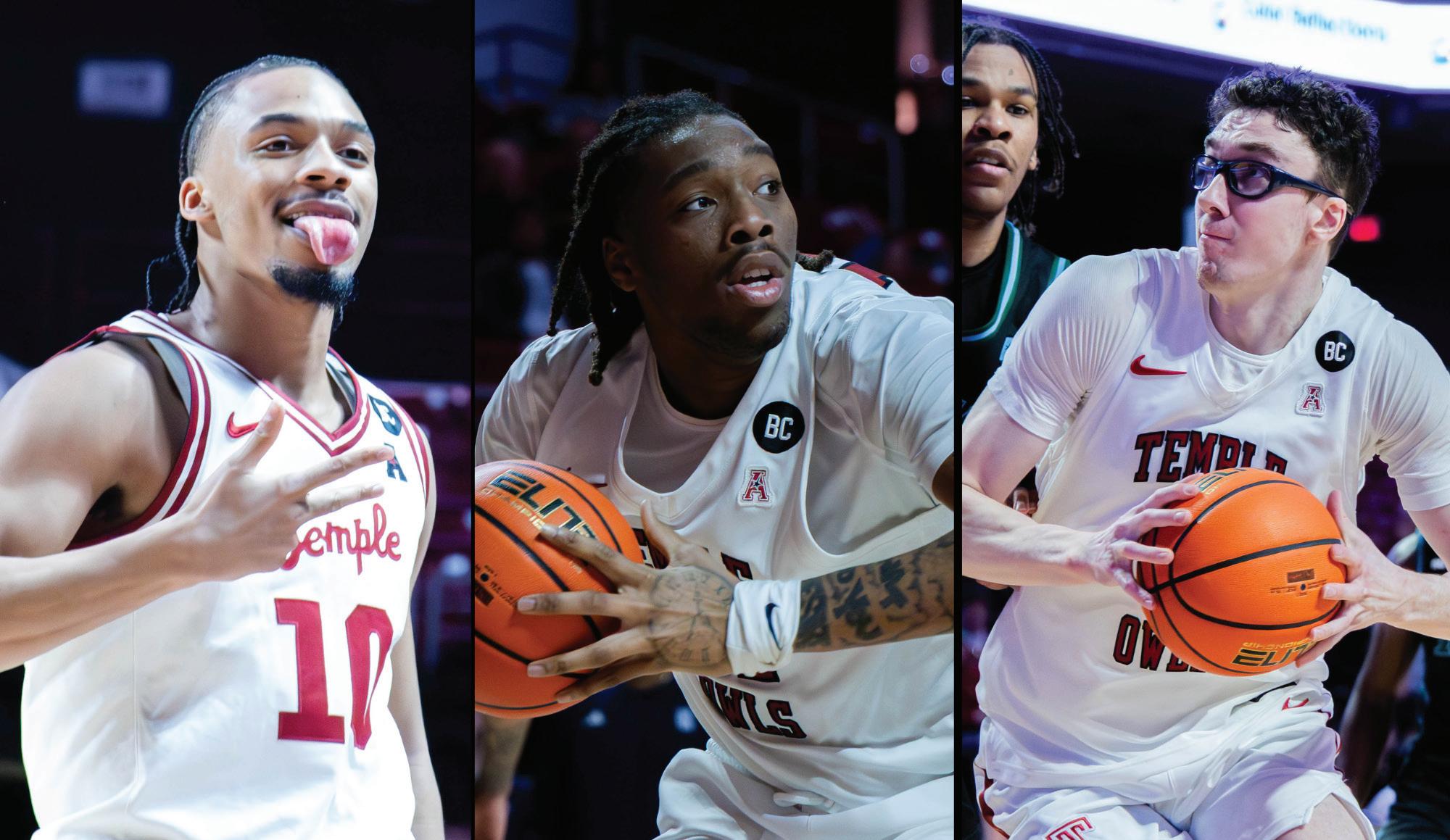
Durodola had high expectations before the season after starting every game as a freshman in 2024-25. Durodola started the first nine games this season, but he struggled and Fisher moved him to the bench. Forward Jamai Felt replaced him before Temple’s game against Georgian Court on Dec. 9 to take pressure off Durodola.
He is still a constant in the rotation, logging more minutes than Felt.
Durodola averages 4.7 points, but
his impact expands beyond that. His 1.6 assists trail only Mason, Tobiason and Ford. When Temple beat South Florida 79-78 on Jan. 31, Durodola chipped in with five assists.
The USF game showed his strengths, but also his main weakness: foul trouble. Durodola fouled out with five-and-ahalf minutes left in the game, forcing center Mohamed Keita to play the rest.
GAVIN GRIFFITHS
The guard shoots 40.9% from the field and 33.7% from deep. His 63 three-pointers lead Temple and he is one of four Owls to average double-digit points with 10.4. Fisher has encouraged Griffiths to keep shooting even when the attempts aren’t falling, a frequent occurrence throughout the past month.
Temple sat at the top of the conference standings before it dropped six straight games. Griffiths lost his shooting touch, making 23.6% from deep across 12 games from Jan. 14 to March 1.
“We need [Griffiths] to shoot,” Ford said. “We always want Gavin to shoot. I
don’t feel like anybody on our team will question the shot that Gav takes, because we know the type of work he puts in and type of shooter he is.”
Griffiths helps the Owls’ defense as his length allows him to guard nearly anybody. His defensive prowess is a reason he remains on the floor during his struggles as he leads the Owls in rebounding with 4.9 per game and has a team-high 54 blocks.
MASIAH GILYARD
The Manhattan transfer led the country in offensive rebounds by a guard last season and has brought that skillset to North Broad Street. He leads the Owls with 53 offensive rebounds and he’s third in total boards with 122.
He wasn’t expected to be a main scorer, but rather the player to dive for loose balls, go for every rebound and defend with full energy. That showed in nonconference play, where Gilyard attempted just 39 shots.
Gilyard stepped into a larger scoring role off the bench since the end of
January, when Temple’s lack of depth was exploited. Gilyard scored 16 points and hit a season-high four threes in the Owls’ 65-62 loss to North Texas on Feb. 15, a game where Mason and Griffiths shot a combined 2-14 from the field. He averages 6.4 points in conference play and scored double digits six times in that span.
“He’s the toughest guy, we kind of compared him a little bit to Josh Hart,” Fisher said. “You need that glue guy that can go do the little things, right?”
charles.erb@temple.edu @Charlescerb
LILLIAN PRIETO / THE TEMPLE NEWS
From left to right, guard Masiah Gilyard, forward Babatunde Durodola and guard Gavin Griffiths.
WOMEN’S BASKETBALL
Curry’s emergence to benefit Owls in tournament
Temple guard Savannah Curry averaged 10.8 points in final nine games of the regular season.
BY COLIN SCHOFIELD Co-Sports Editor
The first three months of Savannah Curry’s 2025-26 season did not go according to plan. The guard earned a starting role to open the season, but struggled to start the year.
Then, she caught an elbow to the face in practice before the Owls American Conference opener against UTSA on Jan. 3, causing Curry to miss four games. However, it turned out to be just what Curry needed as it allowed her to watch and learn from the bench.
It took time for her to get comfortable upon returning on Jan. 17, but she has emerged as another key contributor for Temple. She averaged 10.8 points in the Owls’ final nine regular season games. Her abilities on both ends of the floor could be important for Temple, entering the conference tournament.
“She’s getting to her spots,” said head coach Diane Richardson. “She comes from a winning program, so she un-
CONTINUED FROM 24
Tobiason didn’t have any Division-I offers the summer before his senior year at St. Elizabeth High School in Wilmington, Delaware. So, he spent that offseason constantly playing to elevate his skills. Already knowing the work and dedication it takes to heighten his game, the second time around was easier.
Tobiason spent time this summer just playing basketball. He got reps in at open gyms and worked with assistant coaches Bobby Jordan and the late Bill Courtney and associate head coach Michael Huger. He aimed to improve his ball handling and playmaking, putting the skills to work during pick-up games. He also spent time in the weight room building muscle and adding weight. He still feels he is smaller than his opponents, but is confident in his
derstands sometimes it’s gotta be given more. And she’s been given more, offensively and defensively. She has that will to win and she wants everybody to have that same mentality. Let’s win.”
Curry developed into a crucial bench player near the end of her freshman season last year. She had a starting spot lined up this season, but experienced offensive struggles.
She averaged 6.8 points and only scored in double figures three times before January. Curry recognized her offensive issues while she sat on the sidelines for four games: she played too fast. Curry sped herself up with the ball in her hands, resulting in missed contested shots or a turnover. She knew she needed to slow down.
“Sitting out and watching was so hard,” Curry said. “But lowkey, it was like a blessing in disguise towards the end of it. Because I got to watch and just really learn the game more. I was watching from an outside perspective of what was actually going on and then ways that I could benefit off that.”
Finding her role on the court was not easy when she returned. Curry came off the bench in her first three games after her injury, something she did not
strength. It helped him compete with the physicality of collegiate athletes, many of whom are a few years older than him. His experience allowed him to feel comfortable during conference play, which is more intense, Tobiason said.
“He was never kind of one of those guys that experienced [a lot of rankings or media attention in high school],” Jordan said. “So, I think that’s the biggest thing for him. He hasn’t changed in who he was. As an under recruited guy in high school, he still comes in hungry, still comes in humble, just ready to work every day.”
The effects of his hard work are displayed on the hardwood. Tobiason is second on the team with 15.5 points per game. He is a three-level scorer, shooting 46.4% from the floor and 29.5% from deep. Tobiason is proud of the improvement in his midrange skill set and is taking more of those shots to become consistent.
anticipate. The guard scored a combined 10 points in her first four games back and didn’t even score in two of them.
She gradually found her form again and broke out with career-highs in points and rebounds with 18 and 8 in Temple’s 79-73 loss to East Carolina on Feb. 14. She topped that performance with 21 points in the Owls’ 58-54 win against Charlotte on Feb. 17.
The Owls’ offense has relied on guards Tristen Taylor and Kaylah Turner and forwards Saniyah Craig and Jaleesa Molina all season. The quartet scored 65% of the team’s points this year as Temple’s depth did not develop as expected.
With the Owls set to play five games in five days, some of the scoring burden may have to be relieved from the four. Curry’s offensive emergence and improved shooting gives Temple another possible contributor in Birmingham.
“Her ability to be interchangeable and versatile and do what’s asked depending on the game plan is huge,” said assistant coach Myles Jackson. “Especially with her confidence growing towards the end of the season. We’re gonna have to play three or four games in a row on certain days in the tournament. So, her
His scoring production puts him high on scouting reports, forcing him to deal with increased defensive pressure and occasional double teams. He knew this was going to happen, so he worked through those situations at open runs during the summer.
Tobiason put himself in the starting lineup last year behind strong defensive performances and has continued those efforts. He recorded a team-best 37 steals this season, 16 more than he had in 2024-25. He had to learn how to balance his roles on both ends of the floor, feeling that exerting his energy on both ends of the floor is the hardest adjustment.
“It’s a really tough jump that we asked him to make, from almost red shirting as a freshman to now being truly a big-time impact player in the American Conference at Temple starting,” Fisher said. “It’s a tremendous credit to him and his ability to want it and to get better and want to be coached.”
ability to change her role game to game is huge for us.”
Curry is playing her best basketball at the right time despite a difficult start to the season. While the guard is performing well, she knows she needs to stick to her game to sustain her momentum.
“I just have to stay confident, rather than cocky,” Curry said. “I have been playing well, but at the end of the day, I still need to keep the consistency with that.” ”
colin.schofield@temple.edu
@ColinSchofield9
The sophomore is committed to being a defensive presence for his team, so the other scorers can thrive. However, he is still adjusting to his new role, feeling he slacked on some defensive possessions.
Tobiason is focused on doing everything his team needs from him on both ends of the court when No. 10 Temple plays No. 7 Florida Atlantic in the first round of the American Conference tournament on March 11 at 9 p.m.
“I give all my credit to my teammates and coaches,” Tobiason said. “Sometimes I’ll get on myself and they’ll see that and go uplift me. So, I just got a team to trust them and know they trust me. And just have a positive mindset.”
Ryan Mack contributed reporting. sienna.conaghan@temple.edu @Sienna_Paige2
Tobiason’s leap lifts Owls
Guard Aiden Tobiason averages 10.7 more points per game than last season as he improved as a scorer in second year.
BY SIENNA CONAGHAN Co-Sports Editor
Aiden Tobiason always follows head coach Adam Fisher’s game plan, playing whatever role required. He became Temple’s defensive anchor last year in the American Conference’s worst scoring defense. The Owls lost their top seven scorers from last season, changing Tobiason’s role for 2025-26.
Fisher sat Tobiason down at the end of last year and explained that the team needed him to score more points. Tobiason averaged 4.8 points on 3.1 shots his freshman season but accepted the challenge without hesitation. He developed every aspect of his game during the offseason and got stronger in the weight room.
Tobiason showed his improvement instantly when he scored his then career-high 23 points during Temple’s 83-65 season-opening win against Del-
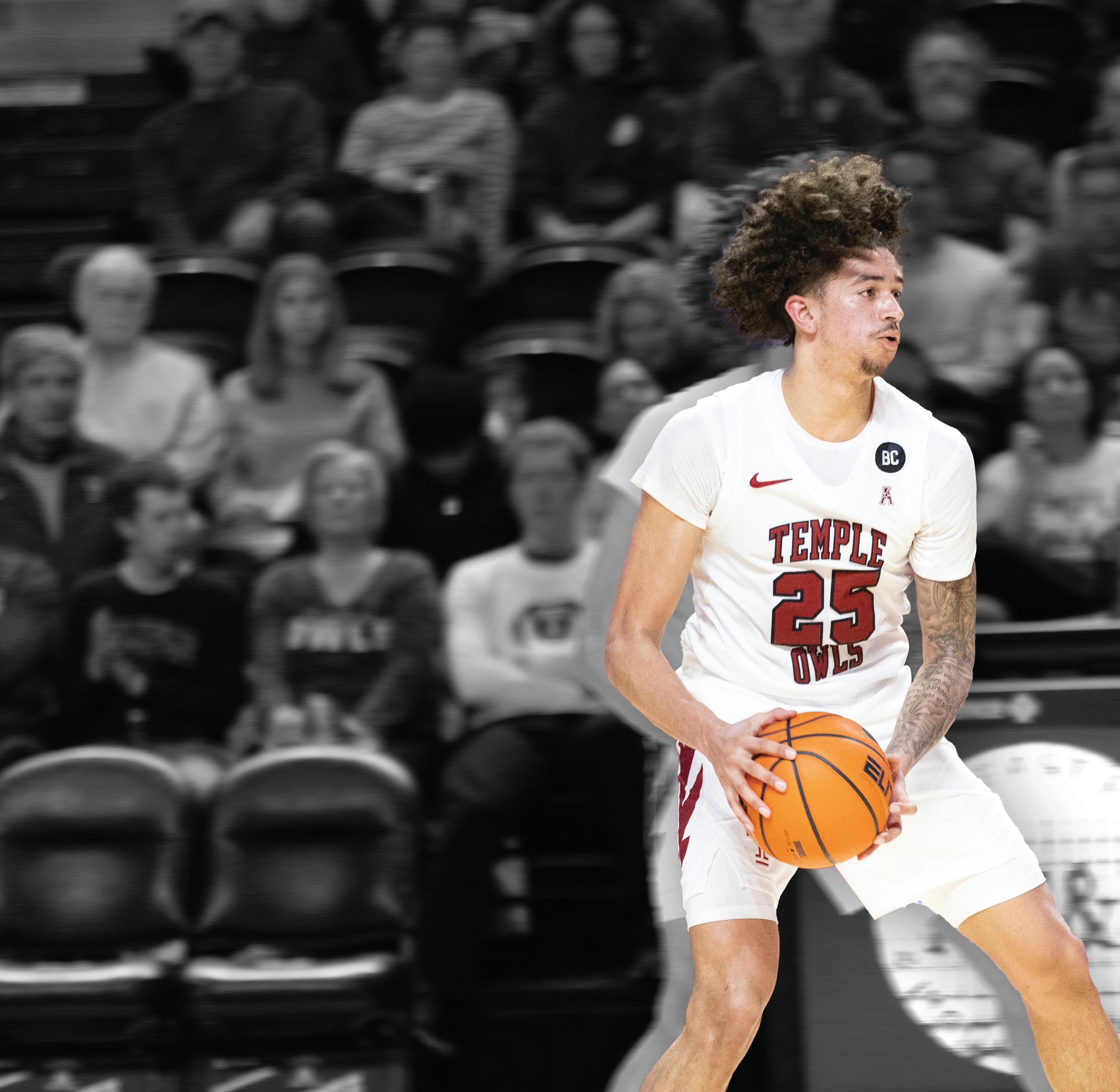
aware State on Nov. 5. Tobiason averages 10.7 more points than last year and is a key player on a team trying to win the conference.
“It was definitely something I wanted because coming from my high school team, I was like the main guy on that team, so I had the ball in my hands almost every possession,” Tobiason said. “So, it definitely felt good for him, like saying that, ‘We want the ball in your hands this season more.’ I knew it was gonna be a challenge, but I was definitely ready to take on that role.”
MEN’S BASKETBALL | 27
DYLAN CASTELLUCCIO / THE TEMPLE NEWS Guard Aiden Tobiason looks to pass the ball against North Texas on Feb. 15.