CITY WANTS “ICE OUT”
City councilmembers favor legislation to strongly limit ICE authority in the city.

WHAT’S INSIDE OPINION, Page 12
A student argues for her peers to consider dating preferences based on skin color invalid.
WHAT’S INSIDE LUNCHIES, Pages 17-24
This special issue explores the campus food truck scene and beloved community spots.
THE TEMPLE NEWS
Sidney Rochnik Editor-in-Chief
Valeria Uribe Managing Editor
Anna Augustine Managing Editor
Ryan Mack Chief Copy Editor
Bradley McEntee Chief Copy Editor
Nathan Horwitz Co-News Editor
Connor Pugh Co-News Editor
Clarissa Jett Assistant News Editor
Ashley Nteff Opinion Editor
Logan Thompson Assistant Opinion Editor
Madelynne Ferro Features Editor
Chloe Pabon Assistant Features Editor
Sienna Conaghan Co-Sports Editor
Colin Schofield Co-Sports Editor
Jacob Moreno Assistant Sports Editor
Leah Duffy Investigative Editor
Tellicia Walker Investigative Reporter
Julia Anderson Director of Audience Engagement
Nathaniel Thrush Co-Community Engagement Coordinator
Kayla McMonagle Co-Community Engagement Coordinator
Isabella Farrow Audience Engagement Editor
Nalani Chiles Audience Engagement Editor
Brian Nelson Photo Editor
Lillian Prieto Assistant Photo Editor
Aidan Gallo Assistant Photo Editor
Jeremy Shover Multimedia Editor
Dylan Castelluccio Assistant Multimedia Editor
Massah Johnson Print Design Editor
Daniya Eggleston Graphic Design Editor
Chili Ramgolam Data Editor
Ariana Droz Podcast Editor
Sage Spohn Newsletter Editor
Nadia Bodnari Web Editor
Maria Lombana Advertising Manager
Aaliyah Abdur-Rashid Advertising Manager
Calista Aguinaldo Business Manager
The Temple News is an editorially independent weekly publication serving the Temple University community.
Unsigned editorial content represents the opinion of The Temple News.
Adjacent commentary is reflective of their authors, not The Temple News.
The Editorial Board is made up of The Temple News’ Editor-inChief, Managing Editors, Chief Copy Editor, Deputy Copy Editor, News Editor and Opinion Editors. The views expressed in editorials only reflect those of the Board, and not of the entire Temple News staff.
CORRECTIONS
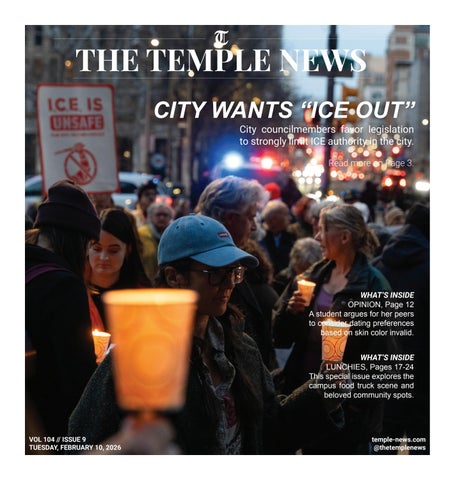
ON THE COVER VIGIL FOR RENEE GOOD AT CITY HALL ON JAN. 8.
COLT GUNN / THE TEMPLE NEWS
Contacts
Visit us online at temple-news.com
Email section staff ttnnews@temple.edu ttnopinion@temple.edu ttnfeatures@temple.edu tnsports@temple.edu
The Temple News is located at: Student Center, Room 243 1755 N. 13th St. Philadelphia, PA 19122
Accuracy is our business, so when a mistake is made, we’ll correct it as soon as possible. Anyone with inquiries about content in this newspaper can contact Editor-in-Chief Sidney Rochnik at sidney.rochnik@temple.edu.
CITY The bills would ban masks, local collaboration with ICE and acting without a judicial warrant.
City Hall supports ICE OUT, limits ICE authority
BY NATHAN HORWITZ Co-News Editor
The Philadelphia City Council introduced ICE OUT, a package of seven bills that limits Immigration Customs Enforcement’s legal authority to operate in the city, on Jan. 29.
Fifteen of seventeen city council members, a veto-proof majority, are in favor of the legislative package sponsored by alumnae Kendra Brooks and Rue Landau.
ICE OUT would ban city agencies from collaborating with ICE and prevent the organization’s officers from concealing their identities or accessing city property without a judicial warrant.
It would also codify a 2024 mayoral executive order that bans city agencies and employees from discriminating based on immigration status and a 2015 order banning 287(g) agreements, which allow federal ICE agents to delegate immigration enforcement roles to local and state police.
“We did this now because we’ve just seen an escalation of ICE’s violent and brutal tactics in cities across America,” Councilmember Landau said. “ICE has been escalating their presence and their violence, and we wanted to just make sure we stood up as Philadelphia and denounced that.”
Putting these protections into law serves as a more permanent measure, as executive orders can be revised or overridden by the mayor’s office.
The legislation also prohibits ICE’s use of masks and unmarked cars, and requires agents to identify themselves with badges.
“We’ve had armed agents. They can abduct people on the street without identifying themselves,” Councilmember Brooks said. “That puts us all at risk. You could be stopped on the street and detained without knowing who is de-

taining you, how are your families going to be able to find you or whether the agents are legitimate law enforcement.”
As of Feb. 8, there have been no reports of ICE agents on Main Campus, President John Fry wrote in an email on that date.
Temple’s ICE policy prohibits agents from entering private spaces like residence halls and educational facilities without a warrant. However, agents are allowed in publicly accessible spaces.
The legislation still must make it through a committee meeting, multiple readings and a final vote before reaching the mayor’s office.
Brooks predicted it could take anywhere from four to eight weeks for ICE OUT to get a committee hearing.
Rocco Spinozzi, a member of Temple Immigration Rights Advocates, doesn’t expect the package to keep ICE completely out of Philadelphia but hopes it can help the city avoid a largescale operation.
“I hope that it increases visibility
and that it increases community action against ICE as opposed to it making people feel as though we’ve done something or solved the issue,” said Spinozzi, a sophomore philosophy major.
ICE OUT is endorsed by more than 50 community organizations, including the ACLU PA, the Philadelphia NAACP branch and multiple labor unions.
Councilmember Mike Driscoll from the 6th district is one of only two councilmembers who has not openly supported ICE OUT. He is concerned about the recent murders connected to ICE and is continuing to review the legislation.
“I believe these incidents reveal problems within ICE that need to be addressed through congressional hearings, federal investigations, and national oversight,” Driscoll wrote in a statement to The Temple News. “Locally, we should aim for immigration policies that are focused, proactive and aimed at practical, long-term solutions that ultimately hold up in court.”
As the Feb. 13 deadline to deter-
mine ICE’s federal funding grows closer, congressional democrats are calling for restrictions on ICE, similar to ICE OUT. In a Feb. 4 letter to Republicans, Sen. Chuck Schumer and Rep. Hakeem Jeffries demanded agents acquire judicial warrants before entering private properties, use body cameras, change its useof-force policy and ban masks.
The legislation was modeled on recent laws and ordinances enacted across the country, like in Reading, Pa. and California, according to City Council Philadelphia.
Landau remains focused on enacting change at the local level.
“[Schumer and Jeffries’] federal law [proposals] are just going to reinforce what we’re already doing here in Philadelphia,” Landau said. “And we know by working with immigrant communities throughout the city, that this is what the people want.”
nathan.horwitz@temple.edu
COLT GUNN / THE TEMPLE NEWS City Hall.
TURA, administrators negotiate contract details
UNIONS TURA’s requests cover fair compensation, a clearer job description and better staffing.
BY NATHAN HORWITZ Co-News Editor
The Temple Union of Resident Assistants is bargaining with the university for changes to compensation, staffing ratios, job descriptions and residence hall placement.
Resident assistants and peer mentors voted unanimously to join the Office and Professional Employees International Union Local 153 in October and became the first undergraduate, public university union in Pennsylvania, The Temple News reported.
Bargaining sessions between TURA and Temple started in late November and take place bi-weekly to weekly. The sessions can last for several hours, depending on how long it takes for Temple representatives to draft their counterproposals.
“It’s all been amicable so far,” said Alec Achen, a resident assistant and senior double-majoring in risk management and insurance and management information systems. “We’re only a few meetings in and things are going well. So, we just hope that the university continues to be a good partner.”
The groups have not yet begun to negotiate staff wages.
TURA is looking to address the number of outside hours they’re allowed to work per week. RAs are currently allowed to work 10 to 15 hours per week on outside commitments.
“We just want to be fair to our students, who are now recognized as employees, as resident assistants and peer mentors,” said Monica Washington, assistant vice president of labor and employee relations at Temple and lead
negotiator for the university. “We want to make sure that they have fair wages, hours and working conditions.”
TURA is using the RA contracts at local universities like Drexel University and the University of Pennsylvania as a template for their stipend expectations.
TURA is proposing that financial aid offers not be impacted by their status as resident assistants. Currently, Temple can decrease financial aid offers for RAs because of the compensation they receive for the position.
“It’s sort of backwards,” Achen said. “The people who need more money, they’re the ones that have less of a net gain once they get this job.”
TURA is looking to address disparities in RA to resident ratios. They propose that pay should be proportionate to the number of residents each worker oversees or for less of a staffing ratio disparity between residence halls.
The union also wants the ability to reduce their meal plans in exchange for a larger stipend. Currently, all RAs receive an unlimited meal plan.
RAs and PMs are asking for a clearly defined job description so workers aren’t overloaded with responsibilities outside of their regular duties.
“We don’t get paid hourly. So that means any additional work they give us, that’s just work that they don’t have to pay somebody else to do, even if it doesn’t fall under the umbrella of University Housing and Residential Life,” Achen said.
Union members also want more say in residence hall placement, with seniority dictating preference in the assignment process. They hope to use a ranked-choice system to select their housing assignments.
RAs also want to be able to leave the hall if it is sufficiently staffed and to
have more guest card privileges than residents.
“We were hired because the university trusts us to manage and take care of these students and discipline them,” said Seamus Lynch, a sophomore resident assistant and social work major. “We think it’s only fair that we receive that same trust and that same responsibility with things like guest cards.”
Washington believes the groups are approaching a tentative agreement on several topics.
“We’re balancing our operational needs and the needs of our resident assistants and peer mentors,” Washington said. “We’re making sure that we are providing the students that are staying in the dorms an optimal experience.”
nathan.horwitz@temple.edu
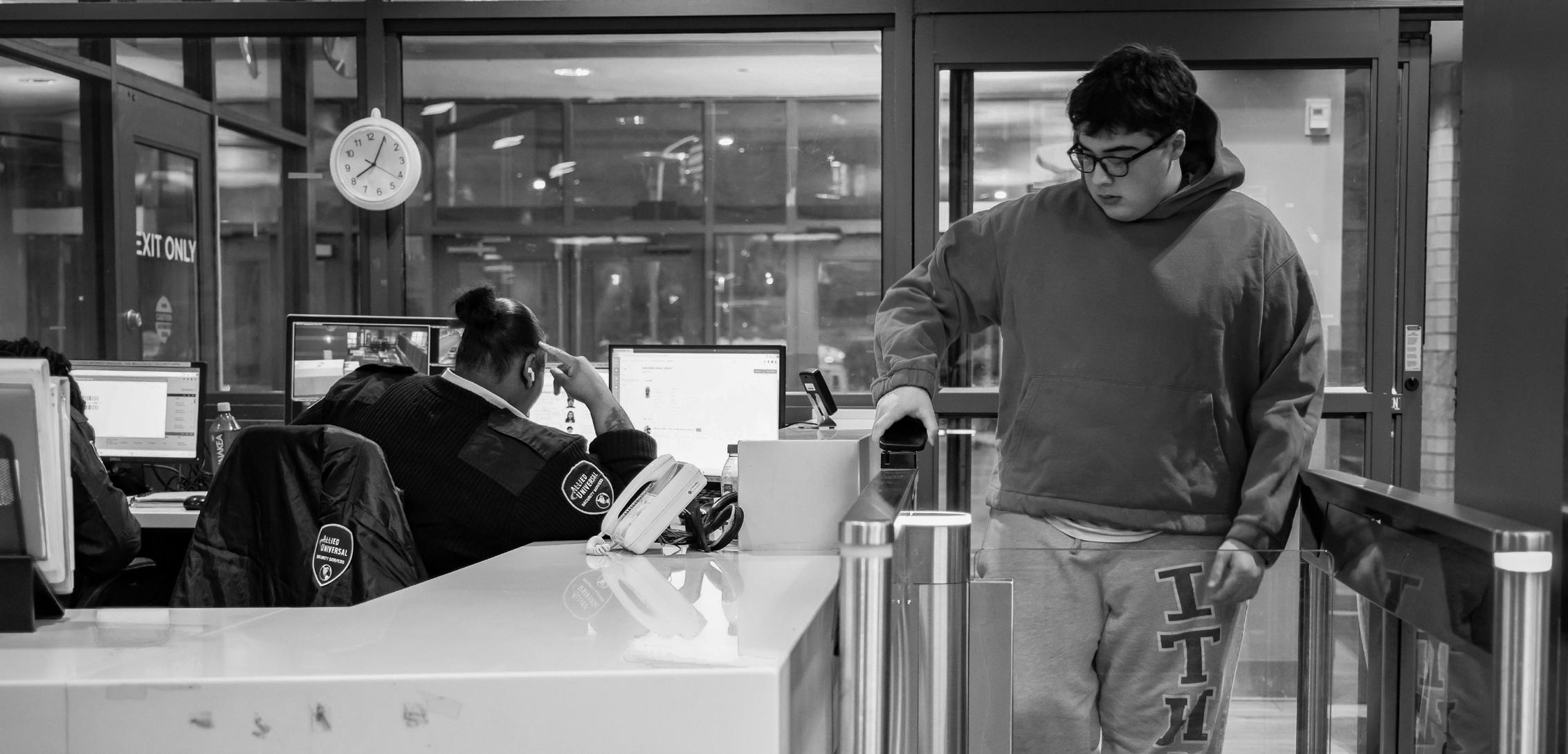
DYLAN CASTELLUCCIO / THE TEMPLE NEWS A student walks into Johnson and Hardwick residential hall.
HEALTH
Temple offers menstrual supplies, contraceptives
The university now provides free menstrual products and emergency contraceptives.
BY CLARISSA JETT Assistant News Editor
Temple students can now obtain free boxes of pads, tampons and liners at the Barnett Irvine Cherry Pantry through a new menstrual product hub launched Jan. 21 to address “period poverty” on campus.
The Cherry Pantry also installed a vending machine in September 2025 that provides single menstrual products. It was expanded to offer emergency contraceptives Feb. 2.
Students are allotted 35 cents per week for the vending machine, functioning similarly to printing allocations. An emergency contraceptive costs 25 cents, and menstrual products cost five.
The hub operates through a partnership between Temples Cherry Pantry and The SPOT Period, which is sponsored by No More Secrets, a Philadelphia-based nonprofit that distributes menstrual products and provides menstrual health education. There are no limits on the amount of period products students can get through the hub.
“This is what actually combats period poverty,” said Gopiga Dass, president of PERIOD at Temple. “One emergency tampon is not going to help someone who is struggling to afford period products.”
About 17–20% of Temple students may experience period poverty, the inability to regularly afford period products, according to a 2024 survey conducted by Dass. Of 304 students surveyed, 17% reported they were always or often worried about obtaining period products, and about one in five said they never or only sometimes had enough.
“There’s a misconception that if you can afford college, you can afford period products,” Dass said. “That’s not always the case.”
The Cherry Pantry began working with The SPOT Period in the fall semester after applying to become a satellite hub in September.
The Cherry Pantry, located on the lower level of the Student Center, also provides free groceries, toiletries and hygiene items to Temple students.
The emergency contraceptive initiative was driven by Temple’s chapter of Planned Parenthood Generation for the past two years but was delayed as the university contended with liability issues and financials constraints, PPGTU President Rika Poscover said.
Emergency contraceptive brands Julie and Plan B One Step donate their product through PPGTU, then ship it to Student Health Services to stock the
vending machine.
The new collaboration allows the pantry to receive more consistent supplies and a wider range of products, like tampons and liners with multiple absorbency levels. Unlike some emergency dispensers that provide single products, the pantry hub allows students to take full, unopened packages and as many as they need.
“Through this partnership, we’re receiving more regular donations and a wider variety of products,” said Annette Ditolvo, the assistant director for the Essential Needs Hub. “Before, it depended on what we had available through donations.”
The initial donation from SPOT included roughly 31,000 pads, which was estimated at around $20,000 based on retail prices.
Temple also has menstrual product dispensers in some campus buildings,
like Mazur and Pearson halls, where four dispensers were installed in May 2025 following a six-month pilot program led by PERIOD at Temple. The dispensers are for short-term or emergency use whereas the hub provides unlimited supplies, Dass said.
“I want students to be aware of this new hub because it’s such an amazing resource,” Dass said. “You can just take as many boxes of products as you want.”
Lizzie McAllister, a sophomore film and media arts major, believes having free menstrual products on campus can make a practical difference.
“People might not be able to always afford menstrual products,” McAllister said. “I think having a place where you can get more than just one tampon or pad at a time is really important to help students.”
clarissa.jett@temple.edu
ALIDA GAUTHIER / THE TEMPLE NEWS
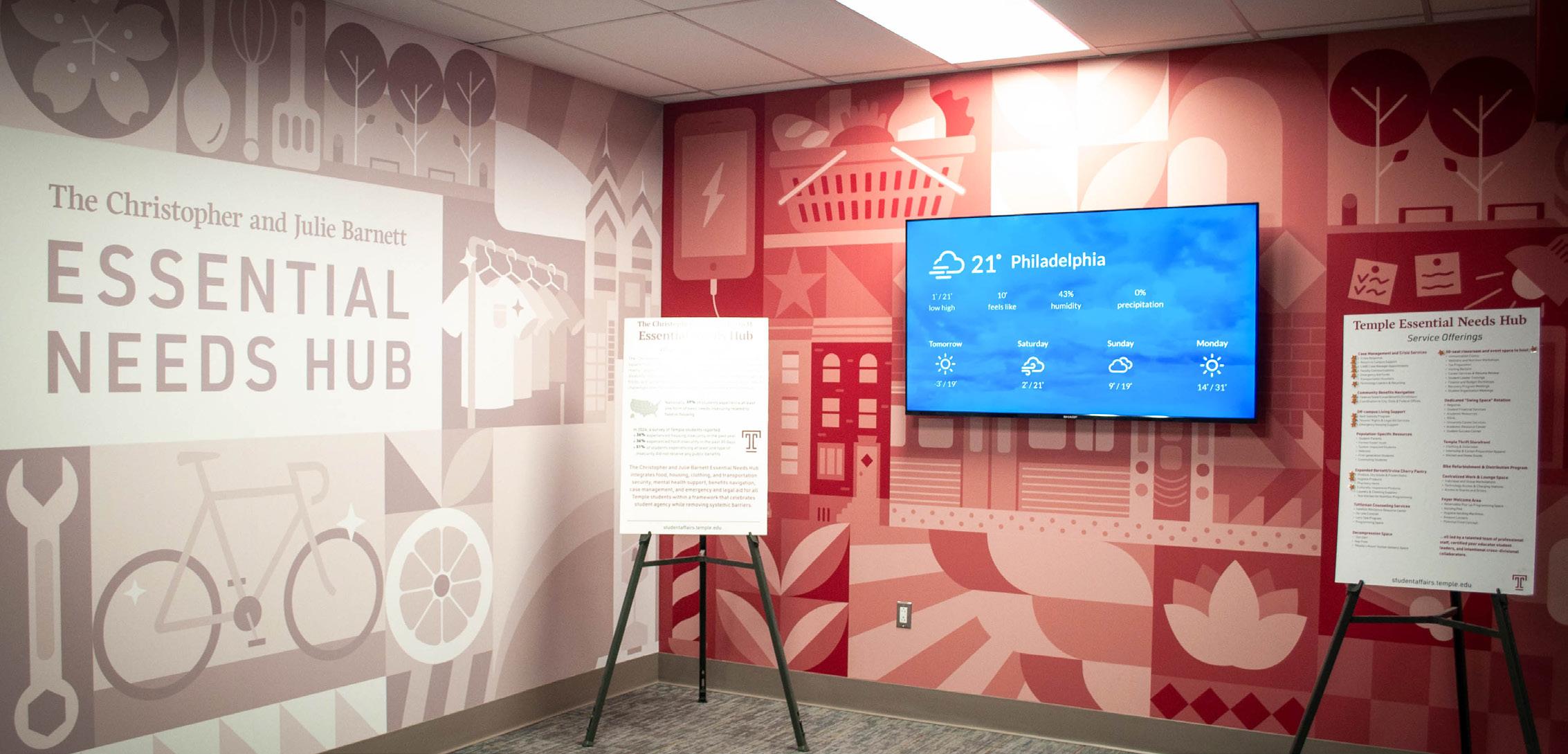
The Essential Needs Hub, located on the lower level of the Howard Gittis Student Center.
TEMPLE STUDENT GOVERNMENT
How TSG impacts the university and its members
TSG’s goal is to represent and serve students, but it also provides lessons to its members.
BY NATHAN HORWITZ Co-News Editor
Temple Student Government’s goal is to represent the student body, but its reach has limitations, said three current and former representatives for the organization in interviews with The Temple News.
Malcolm Kenyatta, Pennsylvania state representative for the 181st district and 2012 public communications alumnus, served for two years on TSG as a senator from the Klein College of Media and Communication.
During his time at TSG, the legislative structure changed from unicameral, with a single branch, to a senate model where representatives from different colleges could introduce and vote on policy ideas. As a TSG senator, Kenyatta introduced legislation to allow LGBTQ+ classes to fulfill Race and Diversity general education requirements, but TSG didn’t have the authority to enact it.
“Ultimately, at its core, Temple Student Government, in some ways, is a misnomer,” Kenyatta said. “Because it’s an advocacy organization. The university has to implement policy.”
Kenyatta ran for student body president two times but lost both elections. He ran on a ticket called Owl Future in 2011.
During his campaign, Kenyatta said TSG members were “apathetic” toward the organization and stated his intent to reconnect with the student body.
“I felt like that was a missed opportunity to use our collective voice to speak about the things that I think many of us were speaking about in silos,” Kenyatta said.
TSG members voted to dissolve the parliament in exchange for an audit committee in 2022, due to the senate-based model being largely ineffective in 202122. The current structure is composed of an executive branch, allocations committee and elections committee.

Ray Epstein, former TSG president and 2025 English and communication and social influence alumna, said she faced some challenges in passing legislation and implementing meaningful programs.
Epstein wanted to mandate a Diversity, Equity and Inclusion accessibility officer position for all student organizations during her time at TSG but was unable to accomplish the goal before graduation. The officers would ensure that club meetings were accessible to all students.
Epstein said the policy was popular, but separate departmental priorities and limited manpower made it difficult to execute.
“I think the biggest issue in getting things done is you suddenly realize how big Temple is and how many people it employs,” said current TSG president Lourdes Cardamone. “So, if you want to fix something over here, you’re actually going to have to go talk to somebody in seven different offices.”
Cardamone wants more students to bring their ideas and concerns to the organization. Her administration started a
feedback form in the spring, which students can access on Instagram. The form allows anyone to communicate their questions, comments and concerns to TSG.
TSG coordinates with staff members from departments like the Office of Sustainability to help implement their ideas. They contact senior administrators, including President John Fry, when facing a significant roadblock to implementing their policy.
In the fall, TSG consulted with the Vice President of Student Affairs Jodi Bailey Accavallo, to determine and address issues at the One Stop Student Services Center, which opened in January 2025.
TSG spoke to students about their experiences with One Stop and brought their concerns to President John Fry. One Stop stopped offering walk-in appointments in an effort to help students meet with financial advisors in a more organized manner. Students may have to schedule their appointments days in advance, but it prevents them from waiting in line for several hours.
Cardamone also said she has bene-
fited personally from her time in TSG, where she served as a director and chief prior to her presidency.
“It’s provided me with the most beautiful opportunities and immense leadership opportunities, and really shaped me into the person that I am, and really sort of guided me and what I want to do with my career,” Cardamone said. Epstein felt she learned how to navigate conflict in professional conversations through her time at TSG. Prior to serving as TSG president, it was difficult for her to be a voice of authority when she felt things weren’t getting done. But overseeing upwards of 30 group members taught her how to address difficult issues head on.
“I’ve always been extremely conflict-averse, and as somebody who wants to be a lawyer, that’s maybe not the best quality,” Epstein said. “So, I think TSG really taught me how to acknowledge my feelings about situations and articulate them out loud, and to have conversations with people when I feel like something isn’t getting across.”
nathan.horwitz@temple.edu
DYLAN CASTELLUCCIO / THE TEMPLE NEWS Malcolm Kenyatta, Pennsylvania State Rep. and DNC Vice Chair, sits for a portrait on Feb. 9.
CAMPUS
Dining hall continues to advance sustainability
The Office of Sustainability has goals in waste diversion and reusable dishware.
BY CONNOR PUGH Co-News Editor
Johnson and Hardwick halls’ Esposito Dining Center, the university’s sole dining hall, is one of Temple’s primary focuses for sustainability initiatives. Despite the university’s concentration on the dining hall’s sustainability, it has encountered operational setbacks in maintaining initiatives in the past.
The dining hall typically provides reusable dishes and utensils. However, Temple switched to using plastic disposable dishware for dining in 2023 after the dishwasher at Esposito broke down, The Temple News reported.
The dishwasher remained out of order for more than a year, with Temple promising to return to reusable dishware in the Spring 2024 after facing complications finding a replacement.
Since then, Esposito has renovated its dining space and changed menus in efforts to improve sustainability at the dining hall.
Aramark Food Services, the vendor for dining services at Temple, collaborates with Temple’s Office of Sustainability to maximize efficiency and ensure dining halls are environmentally friendly, said Bryce Forys, the Office’s Sustainability Coordinator.
“In order to reach the goals and benchmarks we’ve set out for the university, we’ve had to work hand-in-hand with Aramark to develop goals that are achievable, but also meaningful in creating a sustainable campus as a whole,” Forys said.
The Office of Sustainability regularly releases action plans to set goals and track progress for improved sustainability at the university. The plan outlines goals for managing food waste and efficiency, including designs to divert 90% of food waste from Aramark food services from the landfill and reduce the
annual pounds of waste per student by 55% by 2030.
Temple has multiple key initiatives with its dining services to help improve sustainability, Forys said. These include Temple’s Weigh the Waste program, where volunteers help sort food waste from disposable materials at the dining hall by weighing and directly disposing of food waste.
In the most recent Weigh the Waste campaign in October, 687 pounds of food waste was diverted from landfill, according to Forys.
Dining locations, including at Esposito and the Morgan and Student Center food courts, also have anaerobic biodigesters for breaking down food waste from the cooking process, Forys said.
Anaerobic biodigesters, a kind of composter, are sealed vats with microorganisms that digest disposed food waste without directing it to landfills and instead outputted as wastewater.
The dishwasher at the Esposito Dining Hall has been repaired, Director of Sustainability Rebecca Collins wrote in
an email to The Temple News. However, Aramark may have to switch to providing disposable dishware for dining services when there are not enough dishes in circulation to operate effectively.
“There has been an uptick in students leaving the dining hall with reusable dishware,” Collins wrote. “When this happens, Aramark is forced to provide single use items. If students have taken items from the dining hall they should be returned to Esposito Dining Hall dish return.”
Food waste from the dining hall is disposed of in the anaerobic biodigester, Collins wrote. Other dining hall waste is combined with waste from the residence halls.
Despite temporary changes, Alex Farb said he generally estimates seeing reusable dishware in the dining hall on an average of six out of seven days a week.
“I think usually I see reusable plates fairly often,” said Farb, a junior musical theater major. “I think recently there was a period where there was a long stretch
where they were using only disposable plates and silverware.”
Temple also hopes to ensure and report that a certain percentage of food at dining services is locally sourced and low carbon, Forys said.
Beyond dining hall initiatives for sustainability, Forys wants students to actively get involved in researching and participating in programs for sustainability at Temple. These include the Give and Go Green program, where students can donate food, clothing and other important materials when they move out.
Forys encourages students to use the Give and Go Green program to donate any reusable dishware that may have been taken from the dining hall.
“Another thing that we’re targeting in collection is any dishware and tableware that students have taken from the dining halls,” Forys said. “That is one thing we’ve noticed that students take a lot of, so I’d encourage them to, if you have forks and knives and plates, return it to those bins.”
connor.pugh@temple.edu
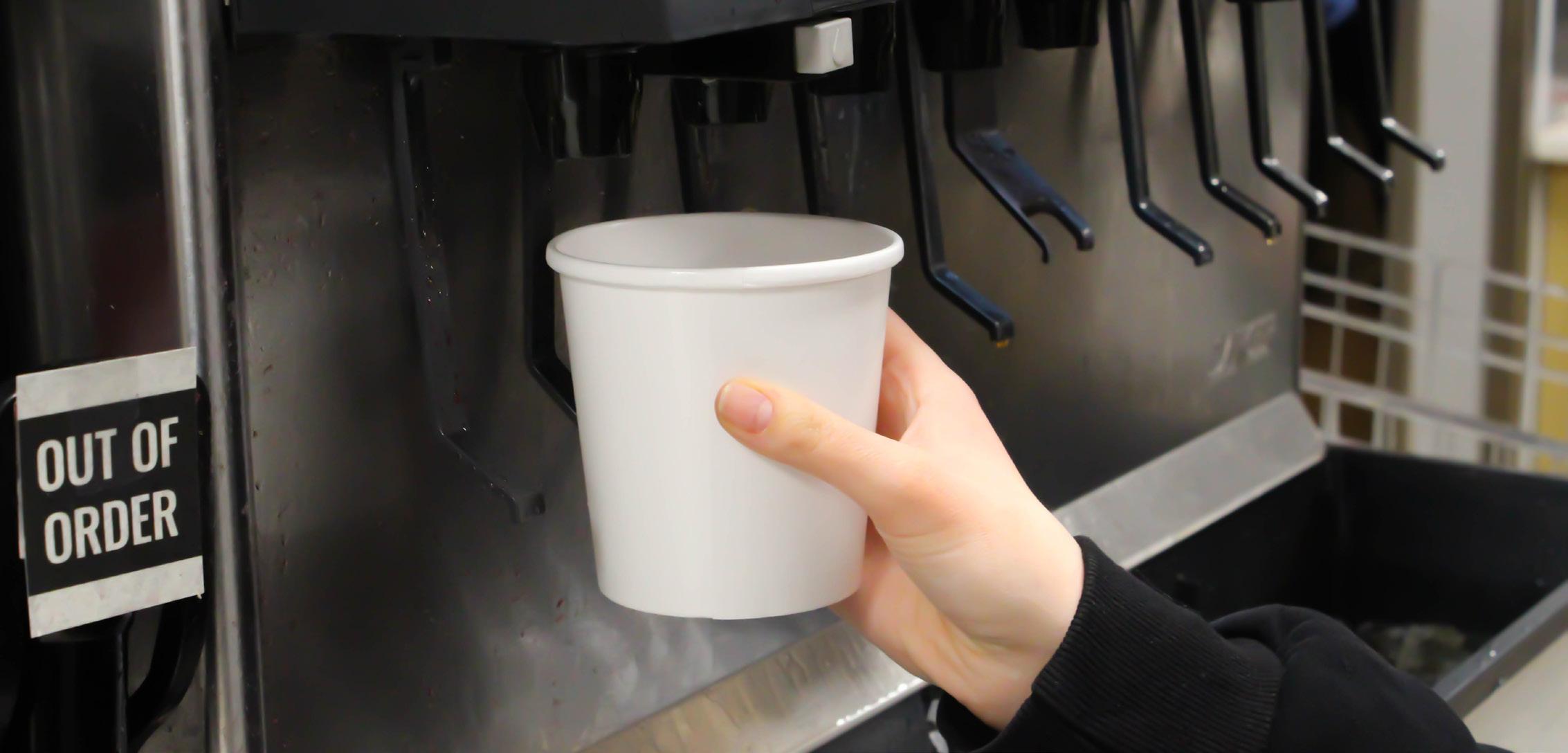
LJ JOHNSON / THE TEMPLE NEWS A student fills up their cup at the Esposito Dining Center.
WANT TO FREELANCE FOR THE TEMPLE NEWS?
freelance ad
The Temple News is currently accepting freelance writers, photographers, videographers and designers for the Spring 2026 semester.

Scan this QR code to complete an interest form and see the full list of sections.
Respect workers
Whether it’s a Chick-fil-A kiosk at closing or a coffee line at 8 a.m., food service workers face long hours and often little acknowledgment for their labor. Ordering food has become faster, digital and often contactless, but the people who prepare and serve that food are often not viewed as human.
It can be easy to forget this when swiping a card or ordering through a screen. But the small moments showing patience when orders are delayed, saying thank you, or following basic instructions make a difference. Being late, rude or dismissive doesn’t just inconvenience the worker. It dehumanizes them.
Campus dining has changed significantly in recent years. Temple has implemented self-service kiosks and partnered with Grubhub, which allows students to order without ever interacting with staff directly. While these options are convenient, they can further distance us from the people making our meals. The Editorial Board encourages the Temple community to actively consider how we interact with those who serve us.
The pandemic showed many students just how essential these workers are. Yet, even as campuses and cities return to normal, some customers act as if the rules of basic decency no longer apply. Standing at a kiosk and glaring at a worker because an order isn’t ready as soon as people wish isn’t efficiency, it’s entitlement.
In the rush of campus life, it’s common to see students approach the front before their order is ready, complain loudly about wait times, or ignore instructions—behavior that may seem minor but adds unnecessary stress for workers. Even seem-
OPINION
ingly small actions, like skipping ahead in line or tapping impatiently at a screen, chip away at the respect these employees deserve.
Showing empathy toward food service workers is a choice that everyone can make, no matter their background or experience. A few seconds of patience, a kind word or a thoughtful tip are small gestures that collectively show respect for those whose work keeps us fed, caffeinated and fueled for the day.
Food service workers aren’t just a convenience or means to fulfill your meal swipe requests, they are humans with their own lives, challenges and dignity. Treating them with basic respect isn’t optional: it is the bare minimum of being a decent community member.
Students and faculty have the power to change the culture around campus dining. Speak up, be courteous and remember the person behind the counter is worth your patience and gratitude.
V-Day isn’t all about cash
A student reflects how consumerism turned Valentine’s Day into a performance.
BY LOGAN THOMPSON Assistant Opinion Editor
Valentine’s Day doesn’t arrive quietly. It shows up weeks in advance in the form of themed menus, seasonal aisles in grocery stores put up after Christmas and TikToks about comparing bare minimum gifts. Conversations focus heavily on reservations and how much people are spending instead of genuine affection.
Somewhere along the way, Valentine’s Day became a performance. Affection is measured through price tags and social media posts. However, love shouldn’t feel like an expressive obligation or a day full of standards that people feel forced to meet.
Social media turned Valentine’s Day into a highlight reel of curated affection showing matching outfits and excessive gifts. Sayings like “If you adore her, Dior her” reinforced the idea that love should be always impressive and that simpler expressions of love aren’t as important.
This consumerist version of Valentine’s Day often becomes a financial stressor for students who are balancing tuition, rent and everyday expenses in a rather harsh economy.
Wanting to celebrate on Valentines Day isn’t inherently a bad thing, but the problem arises when expectations center on money instead of meaning. Americans are expected to spend a record $29.1 billion on the holiday this year, with shoppers budgeting about $200 per person, according to a January 2026 spending survey by the National Retail Federations.
When love is tied to purchasing power, students with fewer financial resources are excluded. Those who can’t or choose not to spend money may feel like their relationships are less legitimate.
True affection gets lost between the overconsumption and theatrics. Real connections aren’t transactional. Love isn’t measured by receipts or Instagram interaction. It lives in small, often invisible moments like showing up consistently and choosing someone even when
there’s no audience watching. Valentine’s Day should center those things.
Love often shows itself in moments so ordinary they’re easy to overlook: folding laundry together while talking about nothing and everything, making dinner from what’s already in the fridge and walks with no planned destination. These are the moments that don’t cost money but require effort, choosing each other without the incentive of public validation.
Valentine’s Day can coexist with authenticity and intentionality. Students may choose smaller, less performative ways to celebrate, like cooking meals together, exchanging handwritten notes or spending time with friends instead of focusing on expensive public displays. When celebrations feel personal rather than competitive, affection becomes more accessible and meaningful.
A more meaningful Valentine’s Day doesn’t require eliminating gifts or dates altogether. It requires loosening the grip of expectation. Valentine’s Day shouldn’t add another layer of pressure. Love shouldn’t feel like an expense people have to budget for, or a standard some are afraid of failing. The most radical thing we could do this Valentine’s Day is to redefine what counts as romance and allow love to exist without a price tag.
logan.thompson.thompson@temple.edu
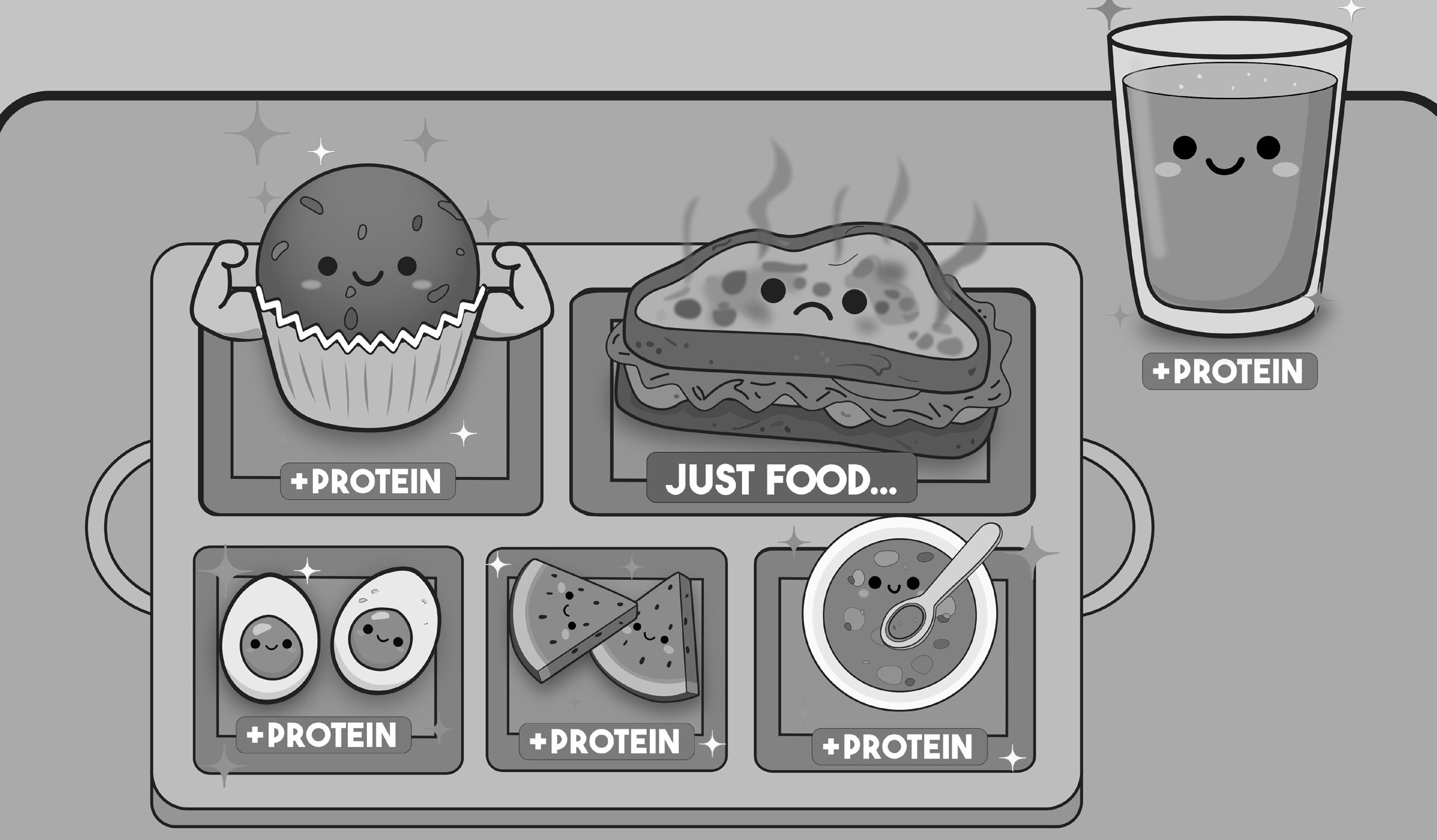
Not everything needs protein: Let lunch be lunch
A student argues food culture is too focused on protein rather than valuing regular meals.
BY LOGAN THOMPSON Assistant Opinon Editor
Protein has been on an unbelievable PR run lately. Companies have rolled out protein-enhanced versions of foods, from Khloe Kardashian’s protein popcorn to bars that taste like Reese’s peanut butter cups.
Somewhere between gym routines, TikTok grocery hauls and marketing that promises muscle gains in every bite, lunch stopped being just lunch. Nutrition marketing reinforces that pressure by turning single nutrients into heroes or villains.
Eating trends come and go, like ketogenic low carb diets and extreme 75 hard challenges. Right now, protein dominates the conversation while fiber, whole grains and vegetables rarely receive the same attention.
It feels like every meal needs to justify its existence with a macro breakdown online. The pressure may feel especially large for students trying to maintain gym routines or improve their health.
Students shouldn’t treat food like a daily test of discipline rather than a source of energy and accessibility. A balanced diet requires more than just hitting a single macro, and health should not come at the costs of satisfaction.
Alissa Smethers, a nutrition professor, believes protein fixation reflects a broader cycle of nutrition trends, as past decades focused on fat or carbohydrates before shifting toward protein.
“When people become overly invested in eating only very specific things to hit certain goals, diets can become restrictive,” Smethers said. “That restriction can lead to disordered eating behaviors.
More than 60% of Americans increased their protein intake in 2024, in comparison to less than half in 2019, according to a 2025 study by Cargill’s.
Students should be careful when engaging in practices like counting macros and getting wellness advice on social
media. Tracking can quickly shift from a choice into a daily expectation within fitness culture.
Misinformation often circulates online; currently some people believe that they need to consume one gram of protein per pound of body weight. However, this is not true as that might vary for each person, Smethers said.
Protein tracking has become a common practice in Xavier Dennis’ life. He’s been dedicated to counting his intake for so long, it’s become routine.
“I think about protein all the time. I use an app that tracks how much I get and make sure I hit a certain goal every day,” said Dennis, a freshman exercise and sports science major. “At first it kept me on track, but after a while I stopped paying attention to it because I do it every day now. It’s just part of my routine.”
More isn’t always better, despite what social media might suggest. High protein diets often consist of saturated fats and red meat, which are associated with increased risk of heart disease and colon cancer, according to Harvard
Health.
The constant pressure to hit a certain goal might create unnecessary stress. When meals become tests of discipline, eating stops feeling intuitive, and students may feel guilty for choosing foods that satisfy them but don’t have enough protein.
However, it is possible to hit a wellness goal without sacrificing satisfaction. Alex Smith plans his meals around a specific protein goal, but he still aims for balance without restricting what he eats.
“I try to meet a certain protein goal every day based on my weight,” said Smith, a freshman finance major. “I weigh 180, so I try to get anywhere from 140 to 160 grams of protein daily, you can still make enjoyable food and hit the numbers at the same time.”
Students should be cautious when taking wellness advice from social media. Fitness influencers often promote extreme protein targets without context, credentials or consideration for individual needs. What is framed as discipline
can quietly encourage guilt and restriction.
Meals don’t need to be optimized to be healthy. Instead, they should be filling, affordable and satisfying enough to support daily life.
Letting lunch be lunch doesn’t mean ignoring nutrition altogether. It means recognizing that food serves multiple purposes: nourishment, comfort and enjoyment. A balanced meal includes more than one nutrient and more than one goal.
logan.thompson.thompson@temple.edu
MARIA JONES / THE TEMPLE NEWS
THE ESSAYIST
Learning to fulfill my own life path as I grow older
A student shares how a change in mindset helped her find her place in college.
BY SAGE SPOHN Newsletter Editor
My family used to say I had FOMO for life. I didn’t necessarily fear missing outings with friends or school events, but I was scared of overlooking new opportunities or different paths in life.
The world was my oyster, and yet I didn’t know what to do with it. I felt overwhelmed by the possibilities of what I could do or where I could end up.
I constantly spent my time thinking about what could be instead of everything that was in front of me. I wondered who I might become if I moved to the West Coast or Colorado. I thought about how there were probably people across the country that could be my closest friends if we somehow crossed paths.
I even doubted myself about who I spent time with. I wondered who else I could meet if I wasn’t always with the same friends. The person next to me in class could’ve been one of my best friends, but we would never even know it.
Those thoughts constantly surfed my mind. While it prompted me to put myself out there and try new things, I came to find that this FOMO mindset also led me to never be satisfied.
Rather than enjoying every outing and moment, I was stuck wondering about what miraculous things or people I might be missing elsewhere. It was hard to be happy when I was repeatedly imagining something better.
However, I noticed a shift in my perspective when I studied abroad at Temple Rome in the Fall 2024 semester. This experience encouraged me to live in the moment rather than daydreaming of anything else. I still made an effort to try new things, but I also learned to find enjoyment in my routines.
I frequented the same parks and walking trails and I loved going to the same bar with my friends every week. I especially enjoyed becoming a regular at the cafe below my building. The baristas

began to recognize me and help me with my Italian. They often saw my friend and I stopping for a cappuccino and a journaling session.
I found a place in the local Italian community by building habits and going to the same establishments every week. Slowly, I understood there is nothing wrong with having routines or being a regular. In fact, it was usually more enjoyable than always doing something different.
I learned how important it is to make things my own rather than attempting to try everything. I realized I wouldn’t remember every fleeting moment, but I would remember my time abroad by the places and people that made the experience uniquely mine.
The same goes for my time at Temple. Part of what makes me, me is the fact that I meet my friends at The Wall every day at noon. My college experience would not be complete without frequenting my favorite spot on campus, O’Connor Plaza, or Saturday morning trips to Richie’s Cafe with my room-
mates.
I will forever remember the spring of junior year by my visits to the fourth floor of the Charles Library every Wednesday with my friends where we chatted instead of studying. It didn’t matter that I was in the same place with the same people every week, what mattered was how my relationships grew. I would have nothing if not for the community and friendships I have built here.
This revelation reminds me of a conversation I had with my dad years ago. I was telling him that my dream scenario was to have a job that would constantly take me to new places. I wanted to travel and go to the next place when I got bored. He told me that travelling like that sounds fun, but it wasn’t sustainable. With a life like that, going from hotel to hotel, I would have no place that is mine, and nowhere to go back to. I realized how true this is. One of the best parts of going to new places and trying things is being able to come back to some sort of familiarity, something that is truly mine.
Life is all about building relation-
ships and habits that belong to me and shape who I am.
I’m glad that I have come to know myself in college. I found myself in my coffee order, and in daily trips to The Wall. I found myself in the squiggly chairs I frequented freshman year and I found myself in my amazing group of friends. As my last semester of college unfolds, I am saddened to leave these things behind. But I am eager to build new routines that make every day mine.
sage.spohn@temple.edu
SOFIA LYDECKER / THE TEMPLE NEWS
Colorist preferences don’t have a place in dating
Student argues that preferences pertaining to skin complexion are rooted in colorism.
BY ASHLEY NTEFF Opinion Editor
Colorism shows up in everyday conversations among students navigating dating on campus. The word preference itself is commonly used in the dating world as an armor of protection after someone gives their long and offensive list of who they would never date.
Ava Singleton-Jones has experienced colorism in her dating life and believes preferences aren’t just a matter of taste, but rather sometimes based on stereotypes and internalized racism.
“Everybody is valid to their own preference. In the case of race and skin color, it’s whatever you think is most desirable, but that’s technically not a valid preference,” said Singleton, a freshman nursing major. “I’ve been overlooked as a potential partner because of my skin tone. I’ve had people tell me I’m not their type and that they prefer lighter-skinned women and labeled me as aggressive just because of a stereotype.”
Features that a person can change, like hairstyles, fashion or personality, are relatively harmless preferences. However, excluding permanent features like skin complexion or race shifts preference into something more harmful, especially when it targets a marginalized group.
Dark-skinned Black women are often excluded from what is considered ideal or attractive. Even though people hide behind preferences, it’s important to question where these exclusions originate from and the deeper connotations behind them.
Donna-Marie Peter, a sociology professor, finds that media perpetuates the idea that light-skinned Black people are more beautiful than darker-skinned Black people, inherently impacting how they are viewed in the dating world pertaining to attraction.
“In general, the European standard of beauty is colorism,” Peters said. “Light-skin Blacks have perpetuated this

idea. You see the continuance of this in the rejection of all colors of Black for their white skinned counterpart in dating and marriage of high earning Black men in sports, journalism, film, TV, and in top professions.”
Beauty standards are disproportionately placed on women, but colorism often cuts deeper for dark-skinned women. These dynamics in dating subtly reinforce the idea that desirability depends on achieving a socially constructed balance between skin complexions.
When femininity for a dark-skinned woman is questioned because of Afrocentric features, some feel pressure to perform hyper femininity simply to be perceived as feminine at all.
Even though people believe these preferences are harmless, they can have real life consequences on the people on the receiving end. College students impacted by colorism exhibit lower self-esteem and relationship satisfaction, according to a January 2023 study in the Journal of Research Initiatives.
Rather than conforming to colorist ideologies, people should take the time
to get to know someone beyond their physical appearance. A person’s attractiveness cannot be measured by the color of their skin.
In many movies and TV shows dark-skinned actresses like Viola Davis and Lupita Nyong’o are often cast for roles that prioritize toughness instead of softness, like their roles in The Woman King and Black Panther, respectively.
Dark-skinned women are often masculinized in ways that conflict with dominant ideals of femininity, while masculinity is already socially expected of Black men. Conversely, light-skin men are sometimes feminized in contrast to dark-skinned men, reflecting how skin tone becomes intertwined with gendered stereotypes.
Dest’N Montague believes that it’s not a matter of which gender has it hardest but rather how both genders are uniquely impacted by colorism in dating.
“Society puts men and women through different things, which is where you’d think one might be more detrimental than the other. However, I feel like both go through the same things,
just in different fonts,” said Montague, a freshman audio and live entertainment major.
The core system of colorism remains constant, but the way it manifests across genders is different. It’s not a matter of who has it worse but understanding how colorism uniquely shapes the dating experiences for both Black men and women.
In all, attraction cannot be reduced to skin tone. A way a person carries themselves; their confidence and character hold far more weight than proximity to a beauty standard rooted in hierarchy.
ashley.nteff@temple.edu
OLIVIA GREENE / THE TEMPLE NEWS
ALL IN GOOD FUN

LUNCHIES

SWEET VALENTINE
DONUT PRETZEL BURRITO CHEESEBURGER HOTDOG FRIES KETCHUP MUSTARD
Across
3.
8.
12.
treat that is baked
13. Red flower for Valentine’s

Down
1. Hugs and kisses letters
2. Something special you give
5. A strong feeling of affection
6. You give this with a message
7. Symbol of love
8. Valentine character with a bow
9. Pretty Valentine blooms
11. A romantic outing
Sweet
4. A brown sweet treat
Frosted mini cake
10. Stuffed animal gift
Sugary treat
PIZZA
SANDWICH
SODA
ICE CREAM
LIVE in Philly
Center City’s Car-nival: The 124th Philly Auto Show
Car lovers came together to enjoy more than 500 cars presented at Saturday’s event.
BY AIDAN GALLO Assistant Photo Editor
Marc Blank has been a car fanatic ever since he saw rows of Corvettes ride through his Montgomeryville neighborhood as a kid. From remodeling a ‘74 Corvette in his youth to working as a liaison between Hyundai and Uber drivers, the auto industry has kept his engine running for decades.
“When I was a little kid, I saw a train of Corvettes go by, and I was like, ‘Oh my god, I have to have one of those,’” Blank said.
The Philly Auto Show hosted their
124th event at the Philadelphia Convention Center from Jan. 31 through Feb. 8. Even in single-digit weather, families, car lovers, and gear heads alike made sure not to miss this historic Philadelphia tradition. The event highlighted cars new and old, from the latest electric vehicles to antique cars presented by the Antique Automobile Club of America.
The Temple Formula Racing Club was among the featured vendors at the auto show. With members’ majors ranging from engineering to graphic design, the 30-person club builds a new car every year to race in Michigan in May.
“We design, we build, we manufacture almost all the parts in the car,” said Quinn Wright, a sophomore health professions major. “So, a lot of the fun in [the club] is making things. Last year at the competition we won an award for the best manufacturing, so it’s really
something we pride ourselves in.”
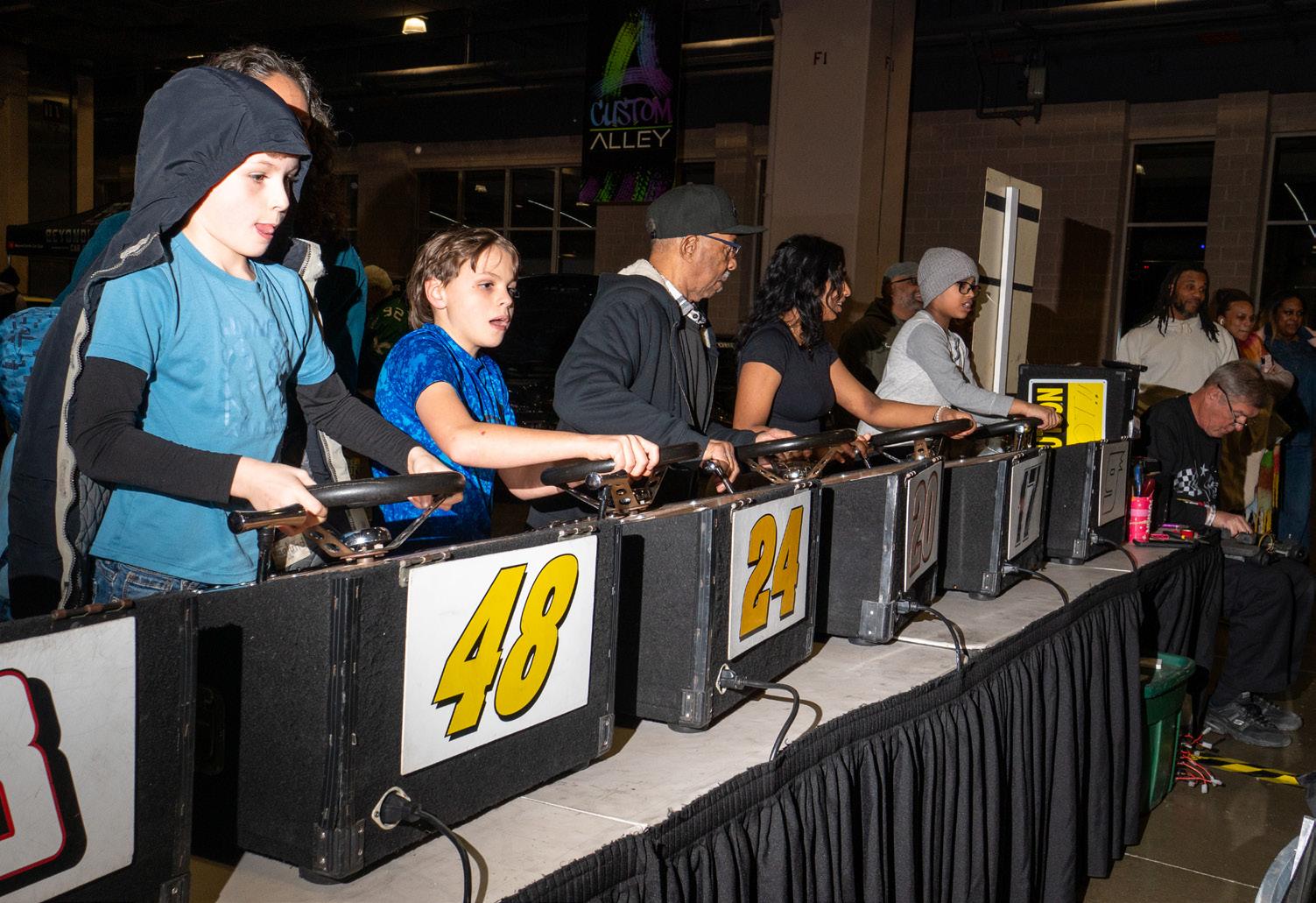
Attendees could steer right into the fun, as the auto show hosted two exclusive indoor e-tracks for test-driving the newest electric models’ acceleration. Some felt more like rollercoasters than others, like at Camp Jeep where professional Jeep drivers drove families across an 18-foot mobile hill and stair climber above attendees waiting in line. Toddlers also drove around a mini track in kid-friendly Jeep cars, transforming the station into a game of bumper cars with semi-frantic parents trailing behind.
Andrea Simpson, public relations and communications director for the Auto Dealers Association of Greater Philadelphia and a 2002 journalism, public relations and advertising alumna, recalls her first time at the auto show during her senior year. She is happy to see families and friends enjoying the
many activities presented at the event, but for Simpson, the event is more than the cars presented and obstacle courses experienced.
“It really wasn’t cars that drew me to the show first. It was the idea of something massive that hit so many people in the area that I lived in,” Simpson said.
After working with the auto show for 24 years, she has found the value of the on-carpet displays for consumers looking for a car that suits their needs.
“They just want to come and see the cars in a relaxed environment and really figure out what’s best for them,” Simpson said. “And that has been our identity as a show for a very long time.”
gallo@temple.edu @galloisarmed
AIDAN GALLO / THE TEMPLE NEWS
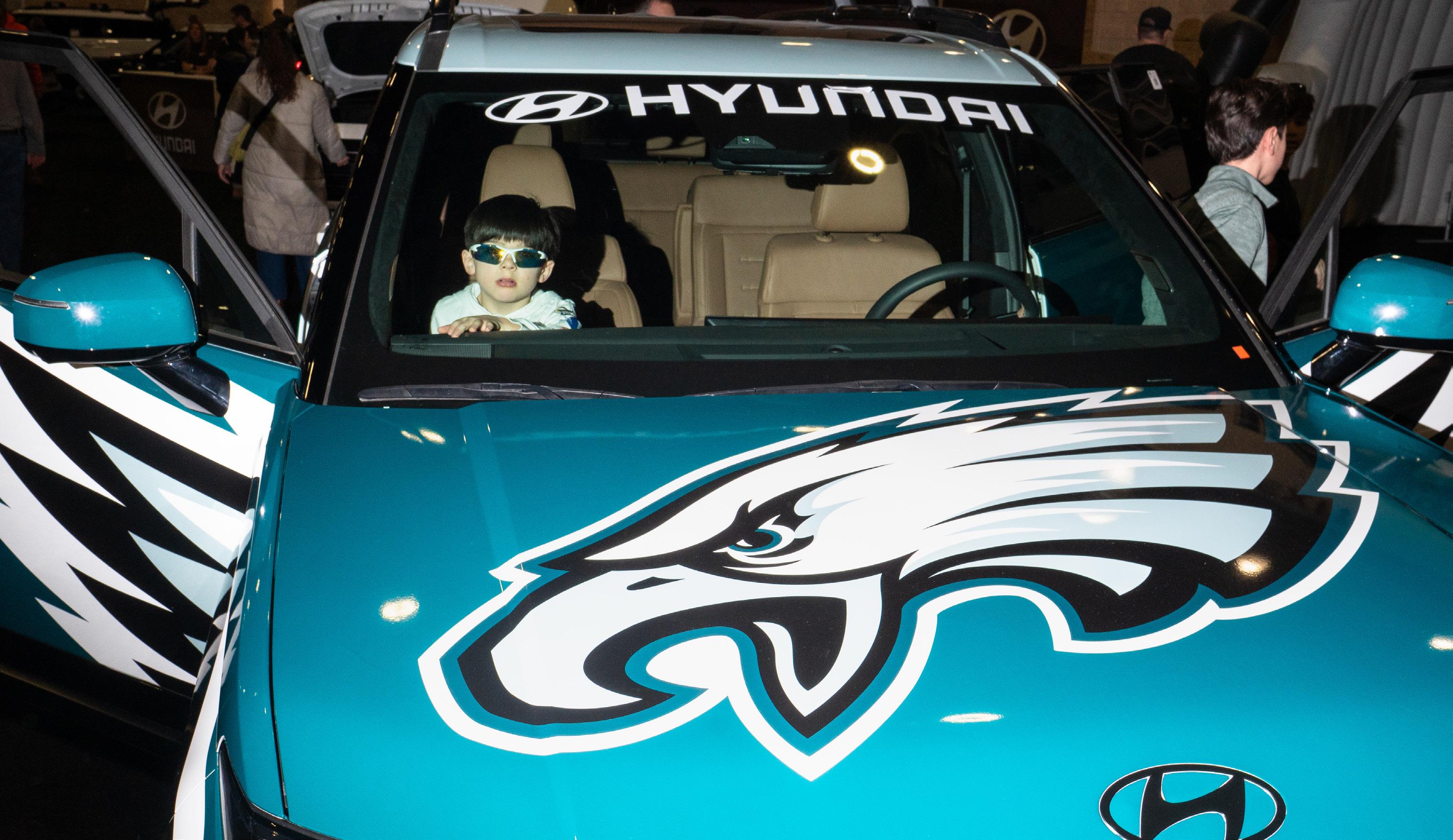
A child sits inside an Eagles themed Hyundai presented at the auto show on Feb. 9.
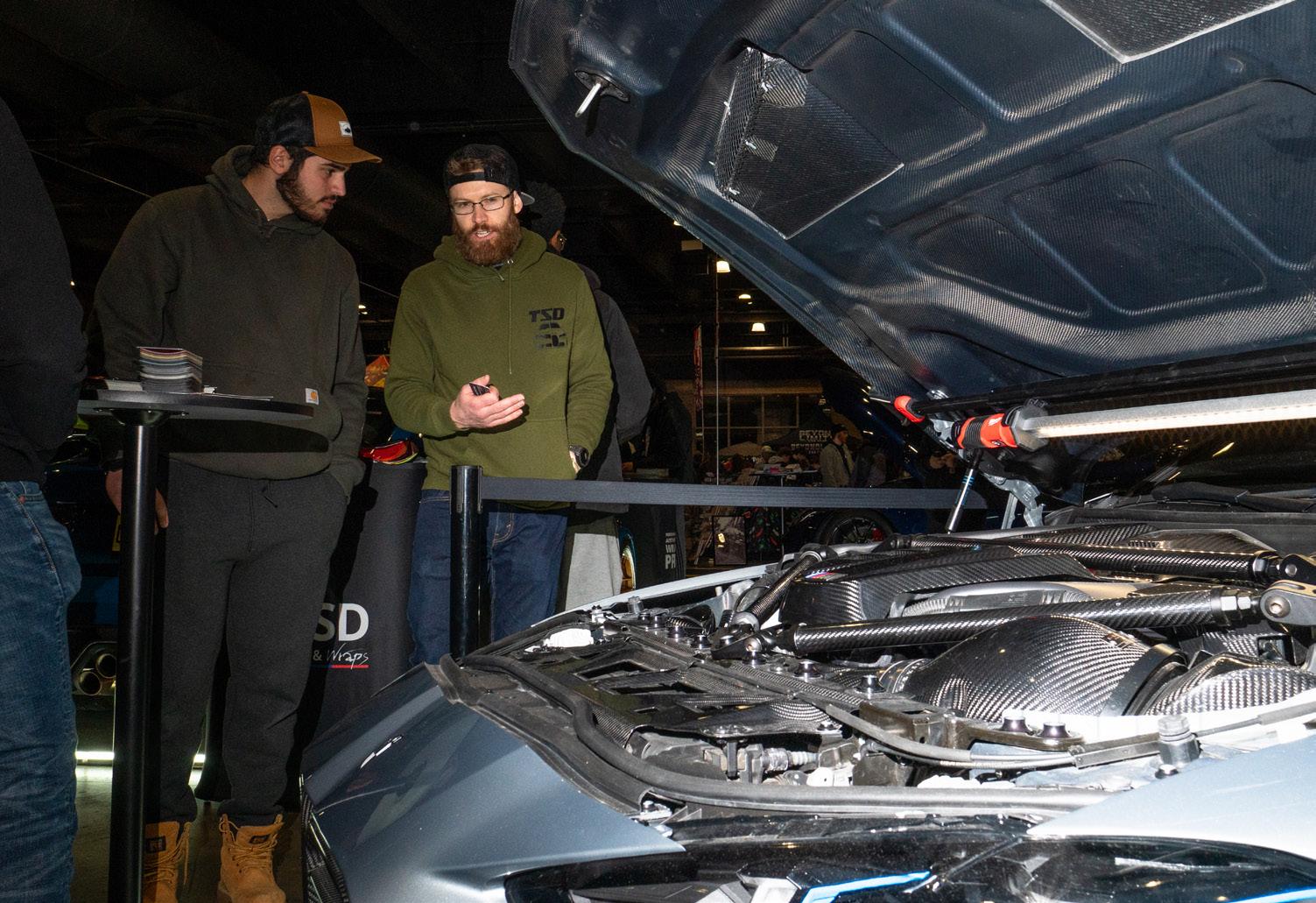



AIDAN GALLO / THE TEMPLE NEWS Cliff, co-founder of TSD Motorsports and Wraps, talks with an attendee.
AIDAN GALLO / THE TEMPLE NEWS
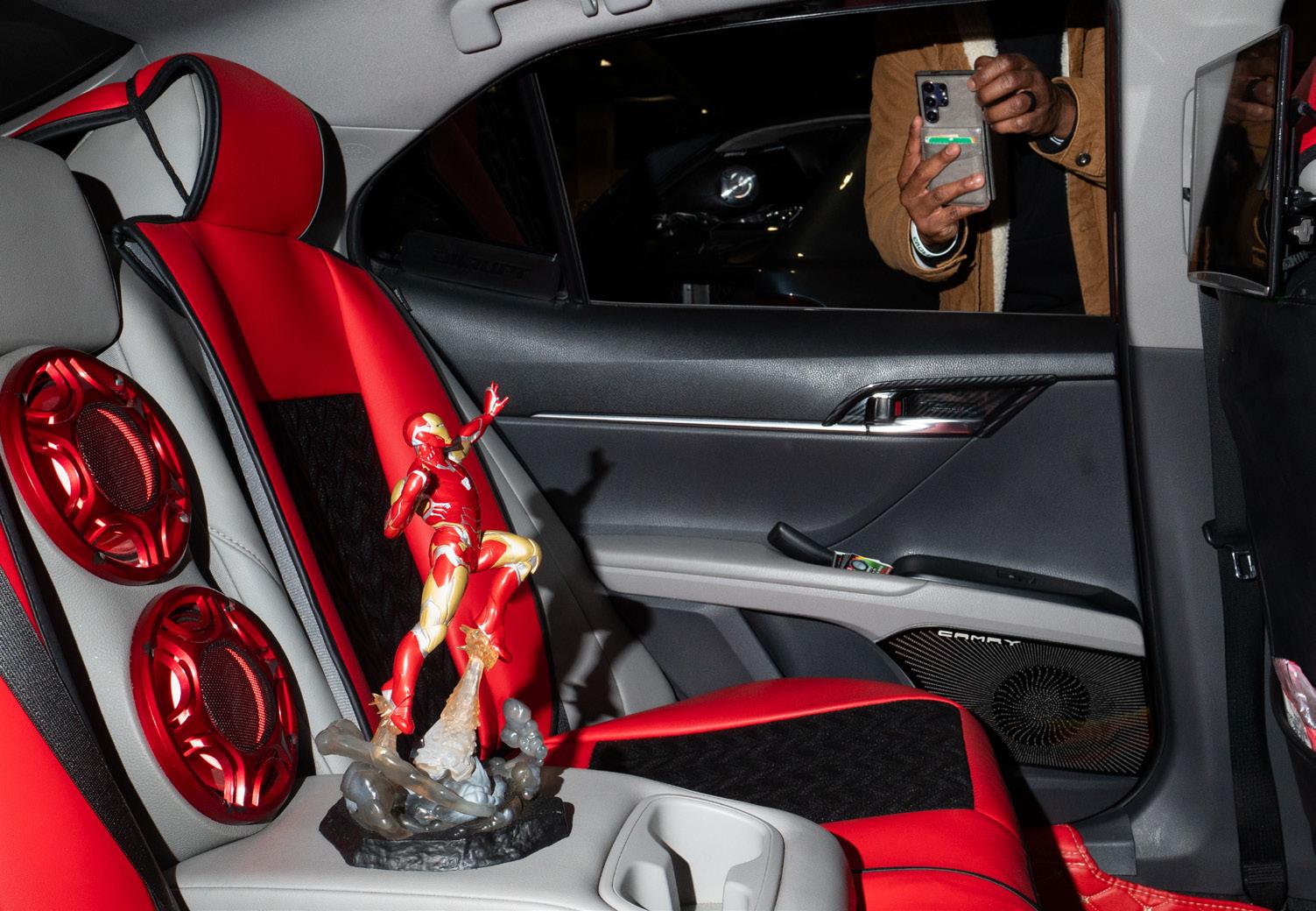
An attendee takes a picture inside an Iron-Man themed car.
LILLIAN PRIETO / THE TEMPLE NEWS Toy cars lined up at the auto show.
AIDAN GALLO / THE TEMPLE NEWS Attendees walk through the Convention Center floor during the auto show.
AIDAN GALLO / THE TEMPLE NEWS Kids bump into each other’s cars inside the mini Camp Jeep station.
AIDAN GALLO / THE TEMPLE NEWS Attendees race each other’s toy cars.

FEATURES
From the editors
The one thing that unites us all is food. We don’t have to speak the same language, like the same bands or know each other’s first names to bond over a great meal.
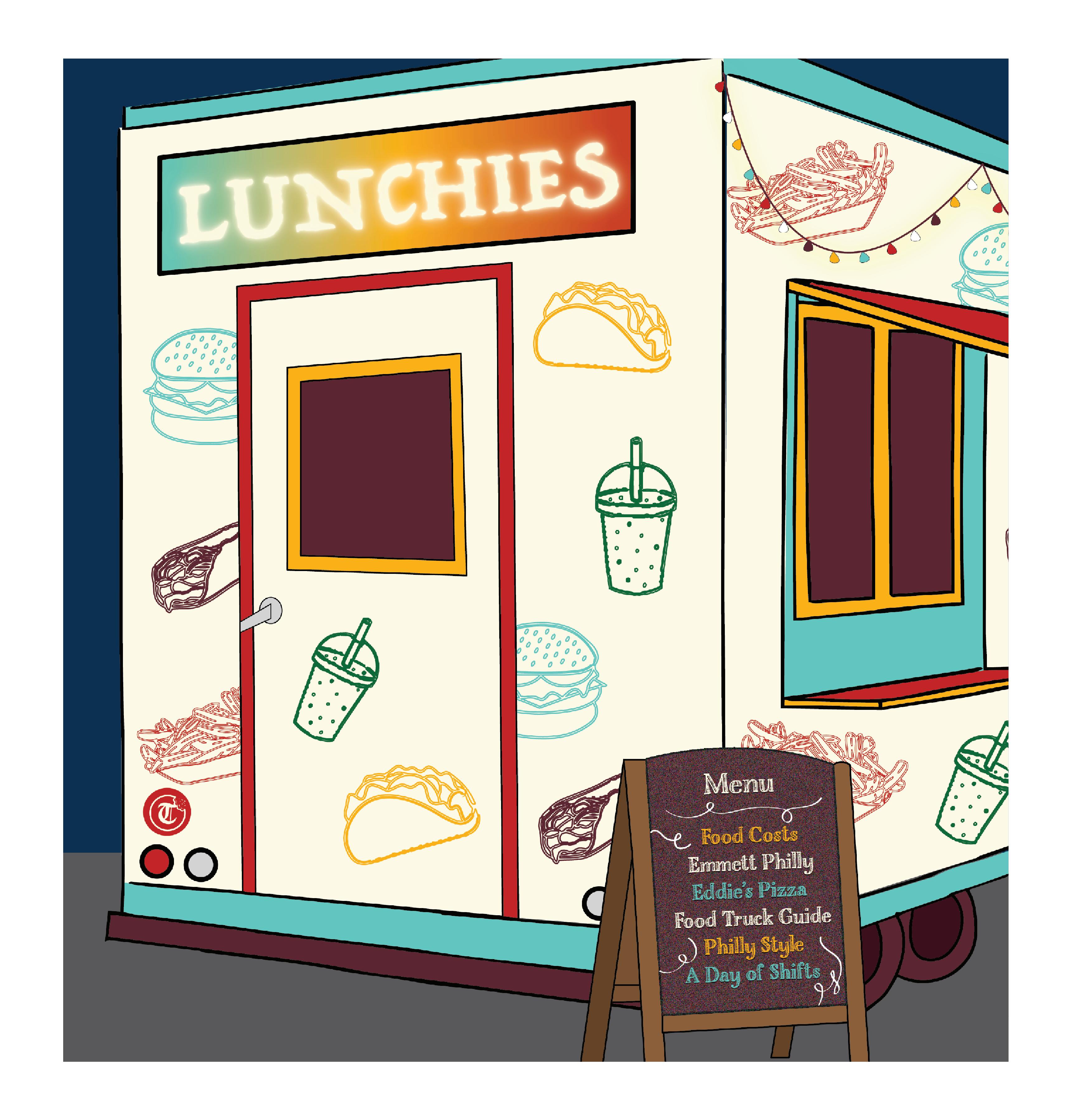
For this year’s edition of Lunchies—The Temple News’ first since 2021—we’ve followed a common thread that united many of our favorite campus meals: the food trucks they’re cooked in.
Our local food spots give a window into life at Temple. Whether you’re up at the crack of dawn, serving coffee with a smile like owners of Ernie’s Lunch Truck or fueling a latenight study session with burritos from Tacos Texas, there’s always a food truck for you.
Our trucks are especially in the trenches with us. They’ve battled with food costs and unnatural disasters while working long hours through a bitter winter. But they’ve done their best to stay open, friendly and do their right by their faithful customers to keep business as usual.
Food is more than fuel. In a fast-moving, often overstimulating world that demands more of us each day, food and the people who make it with love offer a rare opportunity to pause and savor the finer parts of life.
Our 2026 edition encompasses both sides of the counter, from restaurant owners and chefs to general managers and patrons. We’re honored to showcase the efforts that go into making the food we all love so much.
This years’ Lunchies is dedicated to our campus cuisine and our campus cuisine-loving community. It’s a symbiotic relationship, after all.
Chow, Madelynne Ferro and Chloe Pabon
Features Editor, Assistant Features Editor

LUNCHIES
Inflation strains food prices
Students notice price increases at their favorite food trucks and rethink eating out expenses.
BY CHLOE PABON Assistant Features Editor
For many Temple students, buying food on campus has become a calculation, not a convenience. With housing, tuition and grocery prices climbing, even a quick meal in between classes can feel out of reach. As students cut back on spending, the effects are rippling outward, hitting one of the campus’s most visible food sources: food trucks.
Jordan Washington, a sophomore biomedical engineering major, said that she noticed a $2.50 increase at all of her favorite trucks on campus, including the Honey Truck and the Brood Coffee Truck.
“I don’t really have the money anymore to spend at food trucks often,” Washington said.
The change in pricing and high costs of living have deterred Washington from eating out as often. Instead, she chooses to eat at home or use her meal plan.
Qaasim Abdullah, a 2025 bachelor of tourism, hospitality and event management alumna, also noted a rise in prices at food trucks. Specifically, at the halal cart he orders from often, Tony Express: their classic chicken, lamb and shrimp platters went from $8 to $10 in one year.
Limited incomes, rising living costs and stagnant wages have left many students reevaluating where, and whether, they spend money on prepared food.
On Temple’s campus, that shift is noticeable in shorter lines and more price-conscious customers, according to a handful of food truck owners at Temple.
While much of the national conversation around inflation has focused on grocery stores and restaurants, food trucks have quietly absorbed sharp increases in operating costs. Food prices have risen approximately 25% in the last five years, according to federal data from Janurary 2026, but for food truck owners, higher ingredient costs are only part of the equation.
Further, 41% of students experience food insecurity, according to a February 2025 survey
by the Hope Center for Student Basic Needs, a research study by Temple University at the Lewis Katz School of Medicine.
At Temple, this reality is most visible at the food trucks lining Norris Street and nearby corners, where rising food costs, federal trade policies and decreased student spending are clashing. Fifty-seven percent of students nationwide reported having to choose between college expenses and basic needs, according to a June 2024 independent study by Ellucian, a higher education software company.
For food truck owners, students’ shrinking wallets are colliding with their own rising expenses. But ingredient costs are only one piece of the puzzle. Food trucks also face mounting permit and licensing barriers, higher transportation costs and increased equipment expenses, all of which make staying afloat more difficult.
At New York Halal Gyro, manager Said Elkharrak said inflation and the cost of living have directly affected the truck. His food supplier prices have risen 8-12% throughout the last year, forcing the truck to raise its prices in 2024. However, he decided not to continue to raise prices in 2025. His lines went sparse, and patrons were already deterred by the price increase.
“We want to keep our customers, they don’t have a lot right now,” Elkharrak said.
Petra Baylin, a junior bioengineering major, said that she prefers buying from food trucks to bigger chain restaurants, whose prices she finds to have increased significantly compared to food trucks.
“It’s important to support these guys especially since they’re here all day, every day, and they really keep their prices very reasonable, especially for the portions of food you get,” Baylin said.
Baylin believes it’s important for students to support Temple’s food trucks.
“Anytime I bring somebody to visit that’s not from, this area, I’d take them to the food trucks and, say, ‘We have so many cool options here to eat,’” Baylin said. “I think it’s a big part of what makes Temple, Temple.”
chloe.pabon@temple.edu
FEATURES
LUNCHIES
Alumna manages nationally acclaimed restaurant
Marissa Chirico has managed Emmett since its opening in January 2025.
BY MADELYNNE FERRO Features Editor
When Marissa Chirico studied English at Temple in 2015, she pursued a degree based on passion and figured the logistics would come later. Her love of literature was undeniable, but it didn’t pay the bills, so she worked in the food and beverage industry to make ends meet.
But night shifts at Osteria, an Italian restaurant on Broad Street, quickly turned from side hustle into her true calling.
“It was my first restaurant job, I loved it,” Chirico said. “Hospitality is so fun, it’s really just being around people all day. I didn’t know what I wanted to do before then, but I knew when I was working there that was something I could do forever.”
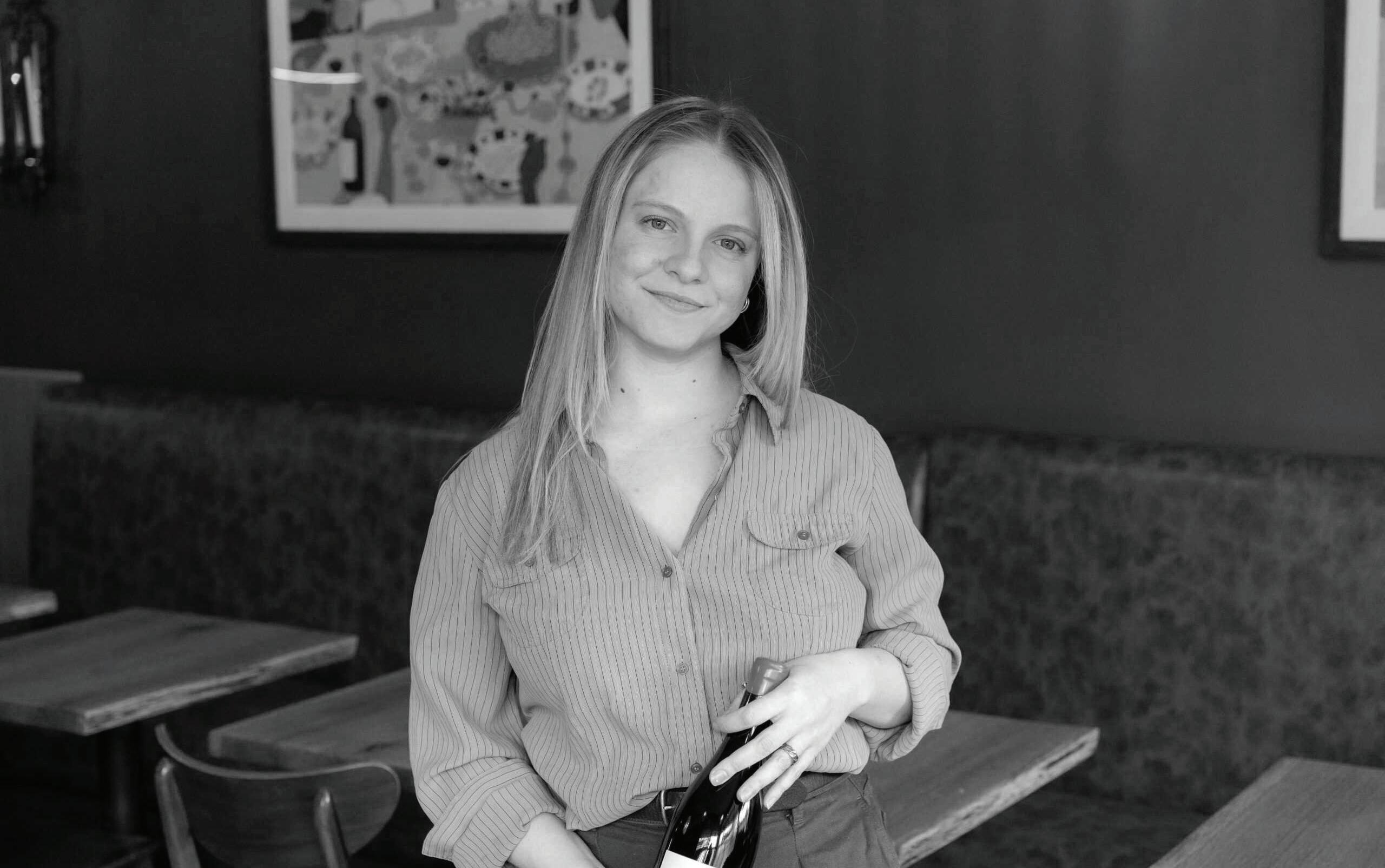
More than a decade after leaving school, Chirico is the general manager of Emmett, a Levantine and Middle Eastern-inspired restaurant led by chef partner Evan Snyder, managing partner Julian van der Tak and Chirico.
Before the restaurant’s first birthday last month, Emmett was a semifinalist for a James Beard Best New Restaurant award, named one of Esquire’s Best New Restaurants in America and landed a spot on the Philadelphia Inquirer’s “The 76.”
Snyder and van der Tak conceptualized Emmett—named after Snyder’s firstborn son—and took the financial plunge in funding their “baby” by quitting their jobs back in 2023.
But Chirico and van der Tak first met at Osteria, where they worked as a server and chef, respectively.
“I enjoyed working with him,” Chirico said. “I knew he cared, which is the important part. I knew he really loved cooking.”
Chirico honed her sommelier skills at Osteria, spending idle hours as a serv-
er learning the restaurant’s Italian wine menu by heart. She was ready for a global menu after three years and moved to River Twice, eventually becoming the front-of-house manager.
While Chirico was at River Twice, van der Tak was a seafood salesman for Samuels Seafood Co. and supplied Redcrest Kitchen, where Snyder was the executive chef. Through friendship with van der Tak’s wife, Victoria, Snyder and van der Tak realized their similar aspirations to own a restaurant.
The duo soon quit their respective jobs and poured their time and money into building a community around Emmett. All they were missing was someone to curate top-notch hospitality and wine list.
“I’ve always known how talented Marissa was at hospitality and service,” van der Tak said. “So, when we were getting close to opening and thinking about
how to best prepare ourselves for success, it made sense.”
Emmett opened their doors Jan. 28th, 2025, with a skeleton crew and were off to the races.
The brand-building clearly paid off: in their first year of being open, the restaurant has seen nonstop praise and success from the local and national culinary community.
“I think having good food is one part of it,” Snyder said. “Having great and friendly service, making sure the water glasses are full and the plates are clean, taking the extra steps to engage can be as memorable as the food.”
Chirico, Snyder and van der Tak each attribute the restaurants’ success to the work of their other teammates, including their supporting staff and the Philadelphia community that patronizes Emmett.
Part of their creed is supporting lo-
cal businesses whenever they can, from the mostly Mid-Atlantic produce Snyder uses in the kitchen to van der Tak’s hand-picked glassware and ceramics made right in Philadelphia at The Bok Building.
The trio is enjoying their year of smashing success and plans to build on their momentum.
No matter how Emmett expands in the future, they’ll have their customers in mind.
“We see a lot of celebrations, a lot of birthdays, anniversaries, new houses, new jobs,” Chirico said. “Every day we remind ourselves and our team what a luxury it is that people like us.”
madelynne.ferro@temple.edu
COURTSEY / EMMETT PHILLY
LUNCHIES
Eddie’s Pizza brings family feel to campus food
Eddie Laro, his wife and his two sons have run Eddie’s Pizza since 2004.
BY RYAN MACK Copy Editor
John Laro was in his sophomore year at Temple when the COVID-19 pandemic hit the United States, throwing a wrench that would affect the rest of his college career.
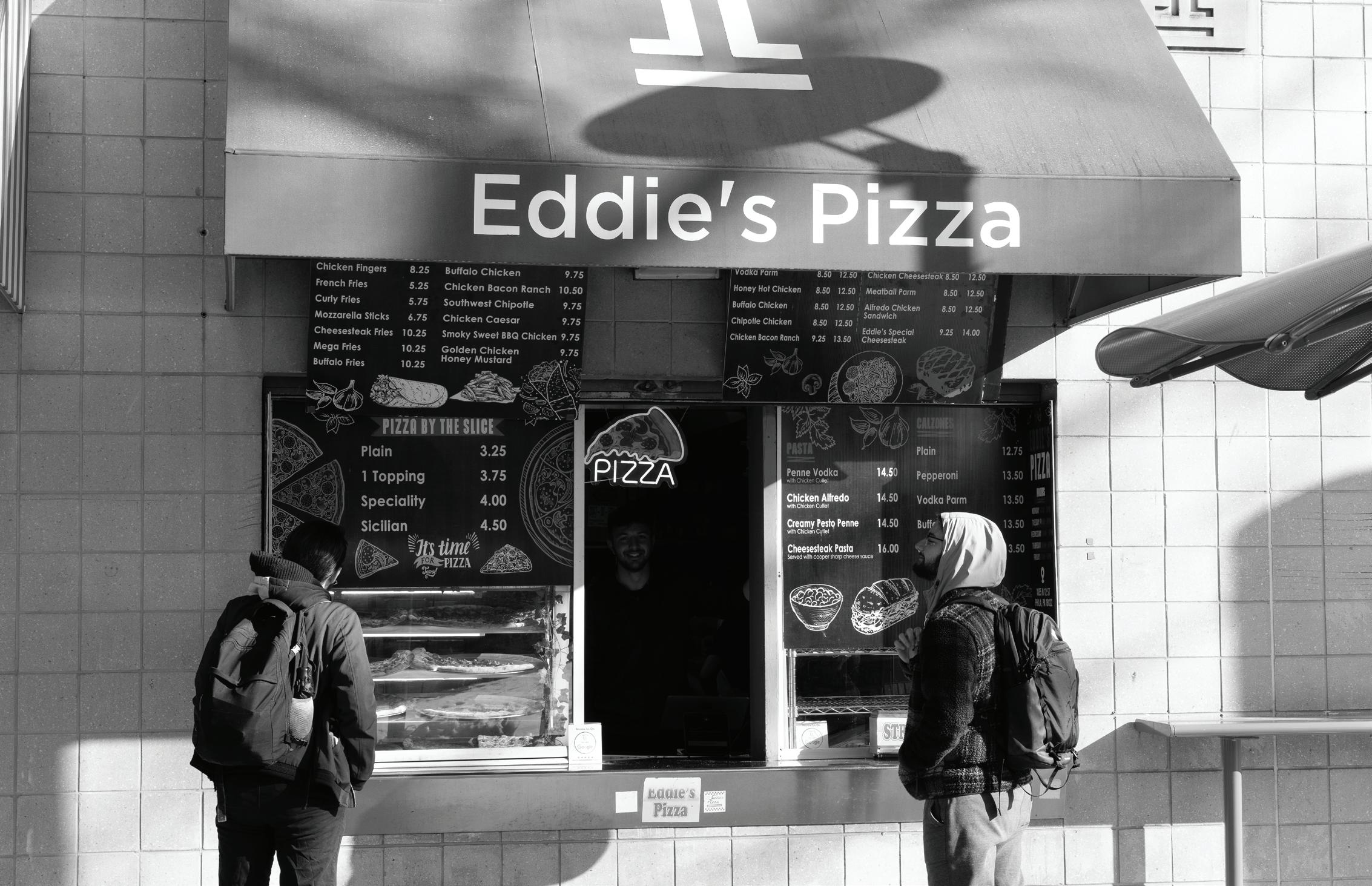
Campus was left empty and deserted as students were sent home. Laro had always been close to Temple. His father, Eddie, was the owner of Eddie’s Pizza at the Wall and he spent his childhood and his first two years of college helping out at the restaurant.
While the campus was preparing to reopen that August, Laro began to have second thoughts about returning for his junior year. His parents were running the restaurant by themselves due to many of their previous workers’ graduation
“As time went on, I started enjoying this more, because [I] work with my parents all day,” John said. “It’s a great job. I’m just talking to people all day, socializing everything, and it pays the bills. I was like, ‘Why go back to business school?’”
So, John took a semester off. Then it snowballed into the full year, and he hasn’t resumed his business and administration education since. Five years later, the entire Laro family continues its work together as John learns the ropes from his father.
Before buying the restaurant in 2004, Eddie immigrated to the US from Albania in 1999. He came to Philly and tried to pursue his passion for music while working in the school district.
He conducted the orchestra at the now-demolished John Wanamaker Middle School at 12th Street and Cecil B. Moore Avenue.
He started to look for new ways to support his two kids in 2004. He eventually settled on running a business and bought Eddie’s, which had been at Temple since 1985, putting him in an entirely different realm than he was used to.
The former owner helped train Ed-
die for the first six months of his tenure before officially handing him the reins.
He had some workers and his wife to help run the shop, and before long his children grew up and started helping their parents around the restaurant.
“It’s a family decision,” Eddie said. “It’s not like I wanted to or he wanted to. I’m trying to bring them forward.”
First, the kids were stocking the fridge with beverages to make sure they were chilled for customers, then helping to prepare and bake pizzas. They also learned about the front of the store, which allows John to interact with almost everyone who comes to get food.
Sometimes he stops for small talk and other times it’s too busy to mingle with people who want pizza or a wrap. He’s also able to spend time with his parents during the day and his brother, Eric, who comes some nights after working
his day job at JP Morgan.
“I know some people don’t have the best relationship [with their families],” said Eric, a 2020 marketing alumnus. “But family at the end of the day is all we have..”
Throughout their time together, everyone has seen the campus change. Buildings have come, gone or been renamed. They’ve seen staff turnover and some who have been at the school will stop by and reminisce with Eddie.
The same goes for the restaurant: they underwent a menu switch after COVID, making fewer items to improve the quality of the food, John said. There’s also a chance of him taking control of the restaurant when his parents retire, but he doesn’t want to think about that now. Having helped out more since leaving school, he has seen firsthand the sacrifice his father made for him and Eric, some-
thing that he remains grateful for.
“I completely understand the sacrifice that he made for the first 20 years of my life,” John said. “When you’re younger and you’re coming in for couple hours, compared to being here all day and then seeing how he used to do it alone, versus now he has me to help him, my brother and we have some staff now. It’s not like he never had staff, but it’s like with the new system and everything is just, God bless him for what he did for that time without us here.”
ryan.mack@temple.edu @ryan_mack18
DYLAN CASTELLUCCIO / THE TEMPLE NEWS Students looking at the menu of Eddie’s Pizza at The Wall.
LUNCHIES
Philly Style owner builds community with music
Michael Chen turned the pizzeria into a weekend hub for Temple and Drexel bands.
BY MADELYNNE FERRO Features Editor
Michael Chen has worked in kitchens since he was a child. The long hours, inconvenient schedule and tiring work were essential to his family’s livelihood—a Chinese restaurant in New York City—and in turn, Chen was encouraged to take the 9-to-5 route. After graduating from NYU, he found success in the Information Technology industry and moved to Shanghai in 2005.
But in 2020, the COVID-19 pandemic drastically changed daily life in China and Chen came home.
“I was living there 15 years already, I was only supposed to be there for five,” Chen said. “I thought, ‘Maybe it’s time to come back, because the world has changed.’”
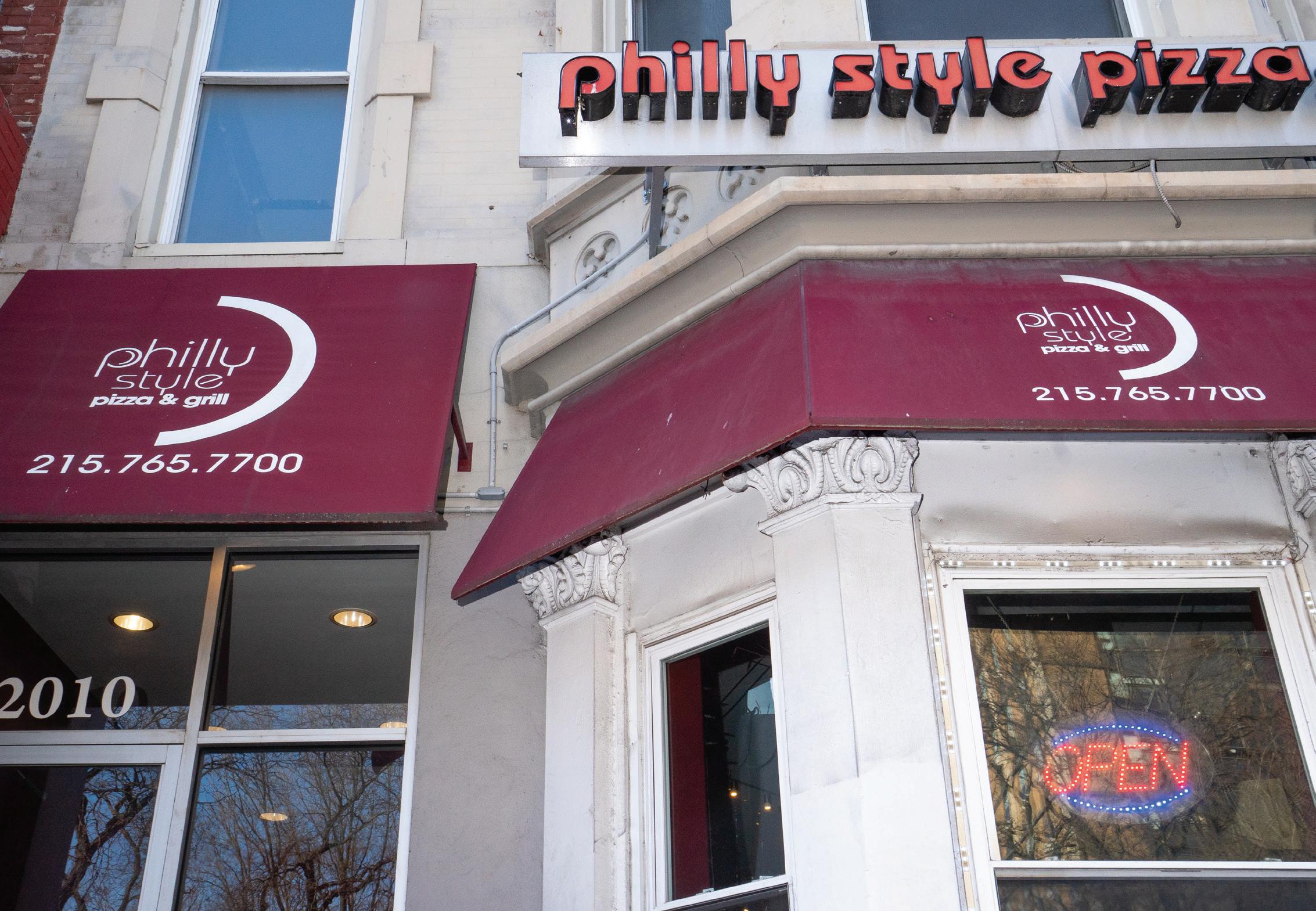
Since landing at Philly Style Pizza and Grill in 2021, Chen has turned the neighborhood pizzeria into a student epicenter for weekend live shows. Philly Style doesn’t discriminate based on genre; Chen could be hosting a Philly hardcore band or a jazz quintet, at any given weekend. There’s only one common thread between performers: they’re all students, and they’re all local.
Chen opened the space for live music after an interaction with students who just hosted their own house show. While waiting for their pizza slices, Chen asked the group why they looked exhausted and they told him they were a band.
“They told me they just threw a show in their basement,” Chen said. “They talked about playing shows around the area and I said, ‘Why don’t you just play here? Come and use my space.’”
The band, Trouble at the Doormat, kicked off the tradition and Chen has seen an overflow of performer interest since then. Most weekends, Philly Style hosts a four-band line up on both Friday and Saturday, often free of charge to au-
dience members.
The storefront where the bands play is tight, typical of Philly infrastructure, and rowdy mosh pits lead to eager attendees using countertops to get a better view of the band.
“They’re not here to have pizza,” Chen said, smiling. “They’re here to watch the bands and listen to the music.”
Chen doesn’t get a major influx of customers at night when he hosts shows and doesn’t charge bands to play at the shop. He used to do the bookings himself but has passed most of the logistics to Fortress, a music booking collective, almost a year ago.
Sam Goren, a lead booker at Fortress, was first introduced to Chen while playing a show at Philly Style with his
band Penny Dog.
“I love it, it’s just such a special place,” Goren said. “We’ve had some big names come through and they’ve said, ‘This is our favorite show we’ve ever played.’”
Laszlo Sasvary, a junior jazz studies performance major, knows Philly style from both sides of the mosh pit. His freshman year he attended shows and in the past two years, he’s played at Philly Style with his band Banshee.
To Sasvary, Philly Style’s appeal is its accessibility, both by location relative to campus and the welcoming community who plays there.
“I love playing there; it’s always a good time,” Sasvary said. “It’s right next to campus and the vibes are always good.”
Chen is happy to provide the space for future rock stars and award-winning musicians as long as students follow their more courteous instinct. He’s proud to be a punk pizza shop.
“It’s a place for people to hang out for a bit, for a couple hours at night,” Chen said. “I think [students] understand that this is kind of a safe space to do their own music. Fun but without going too crazy.”
Samuel Carr contributed reporting madelynne.ferro@temple.edu
AIDAN GALLO / THE TEMPLE NEWS Philly Style Pizza and Grill on Feb. 9.
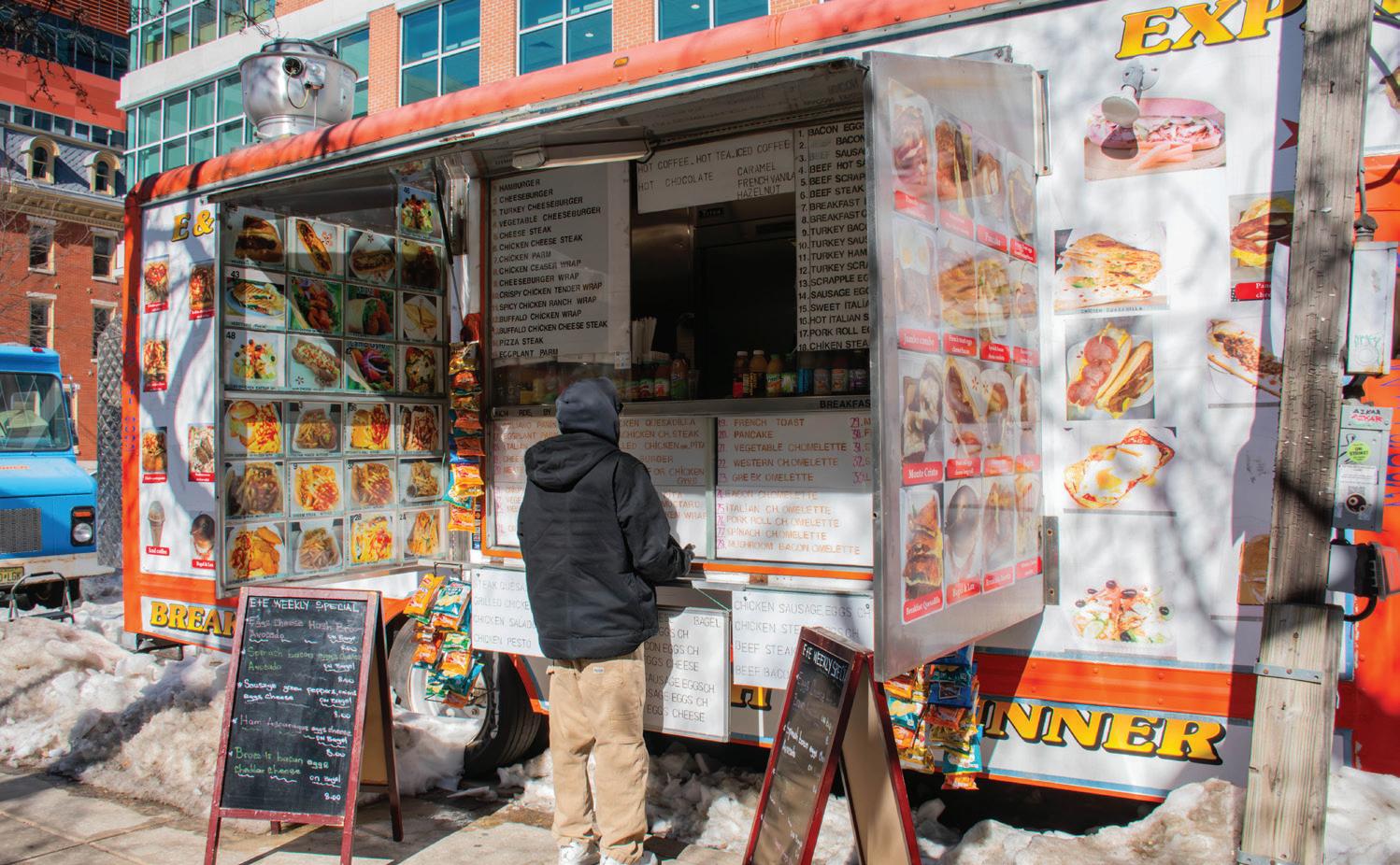
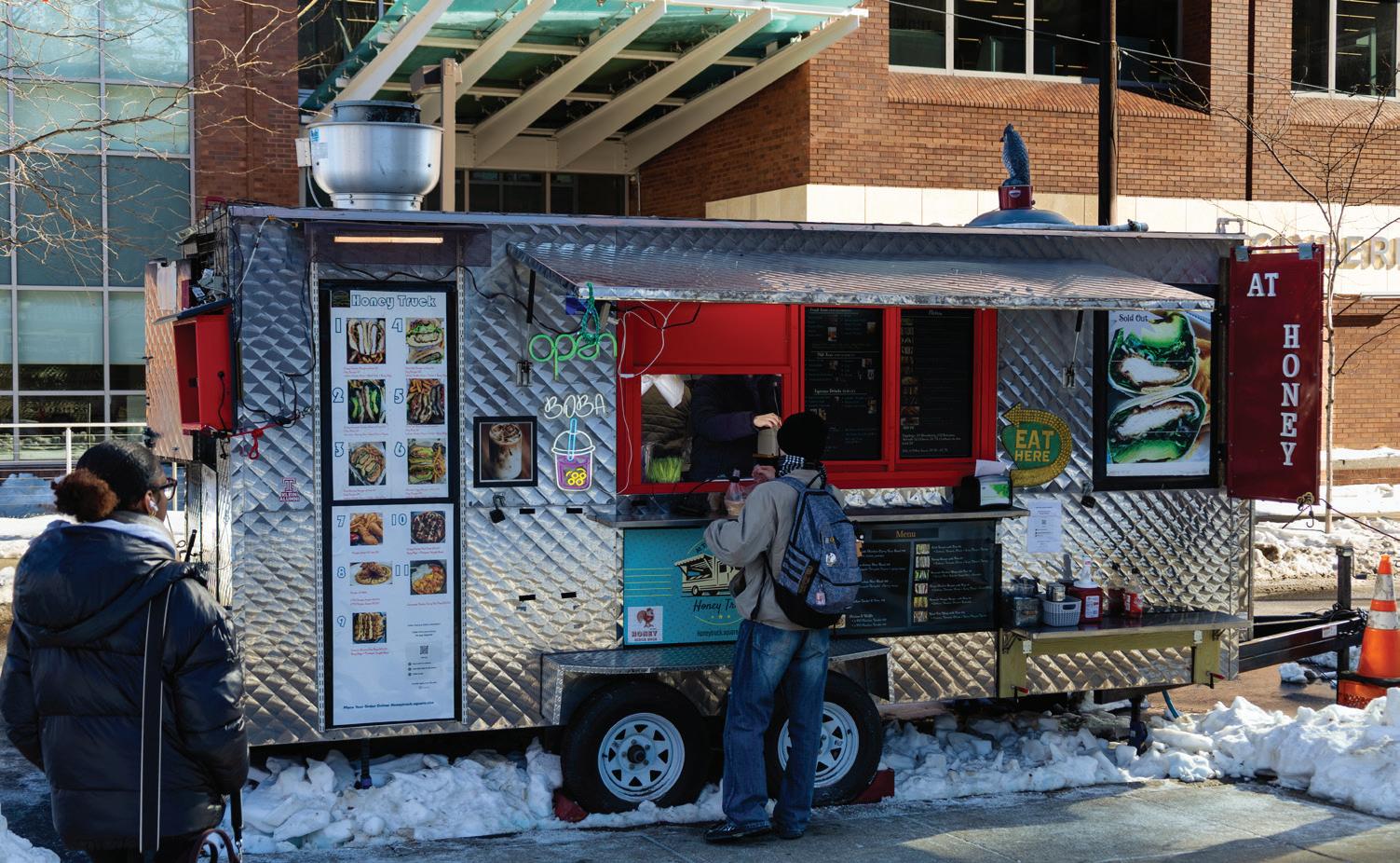
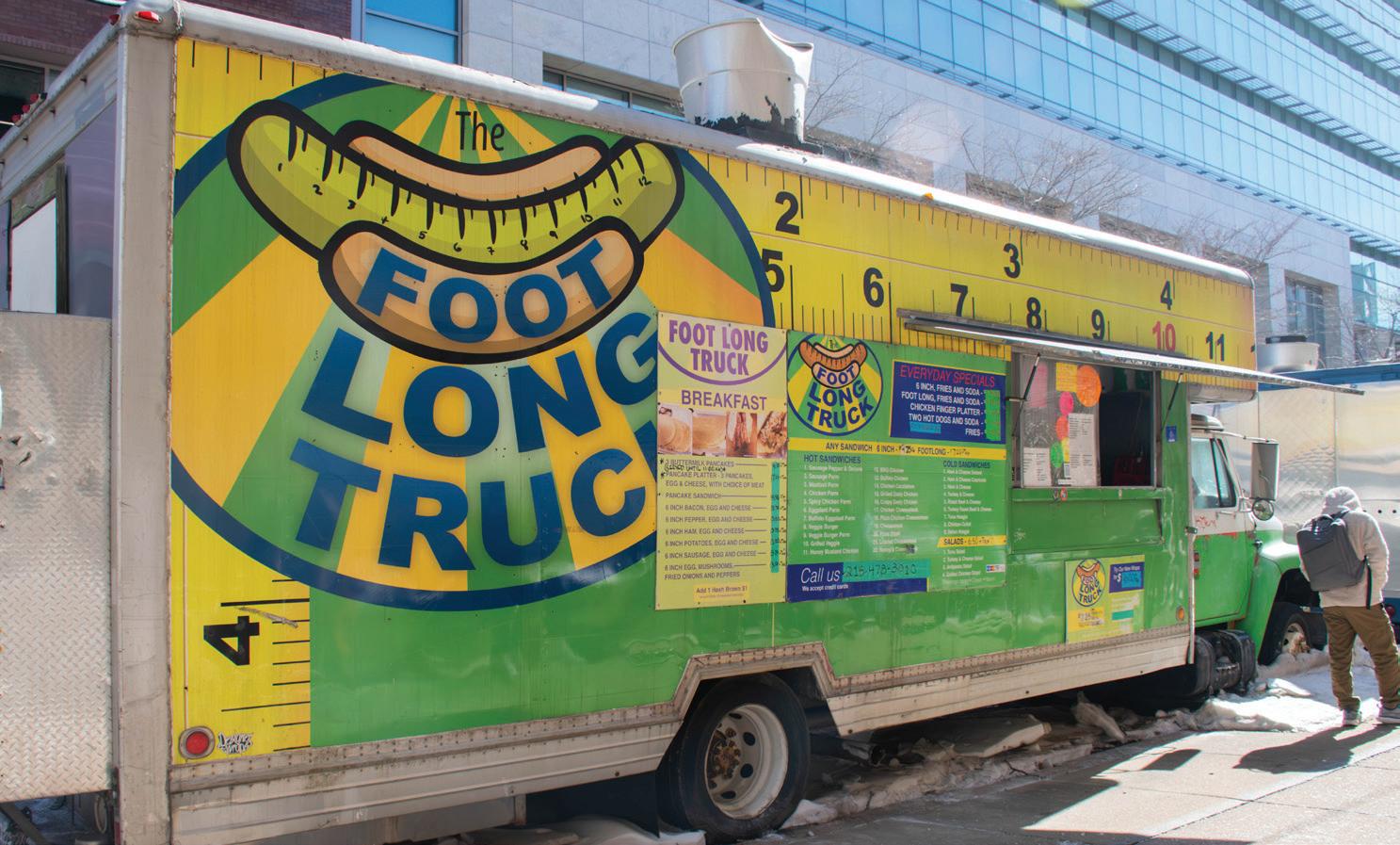
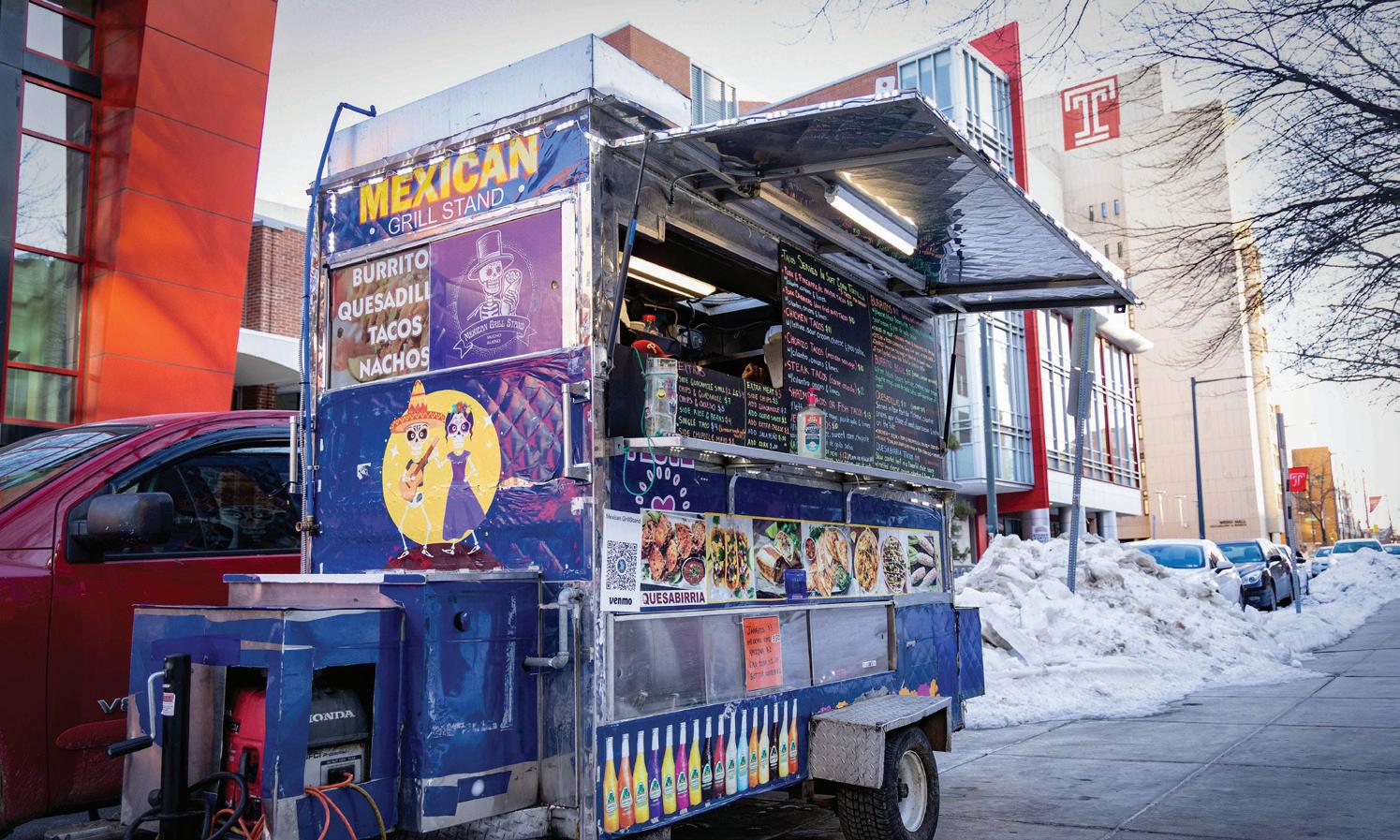
ALIDA GUTHIER / THE TEMPLE NEWS
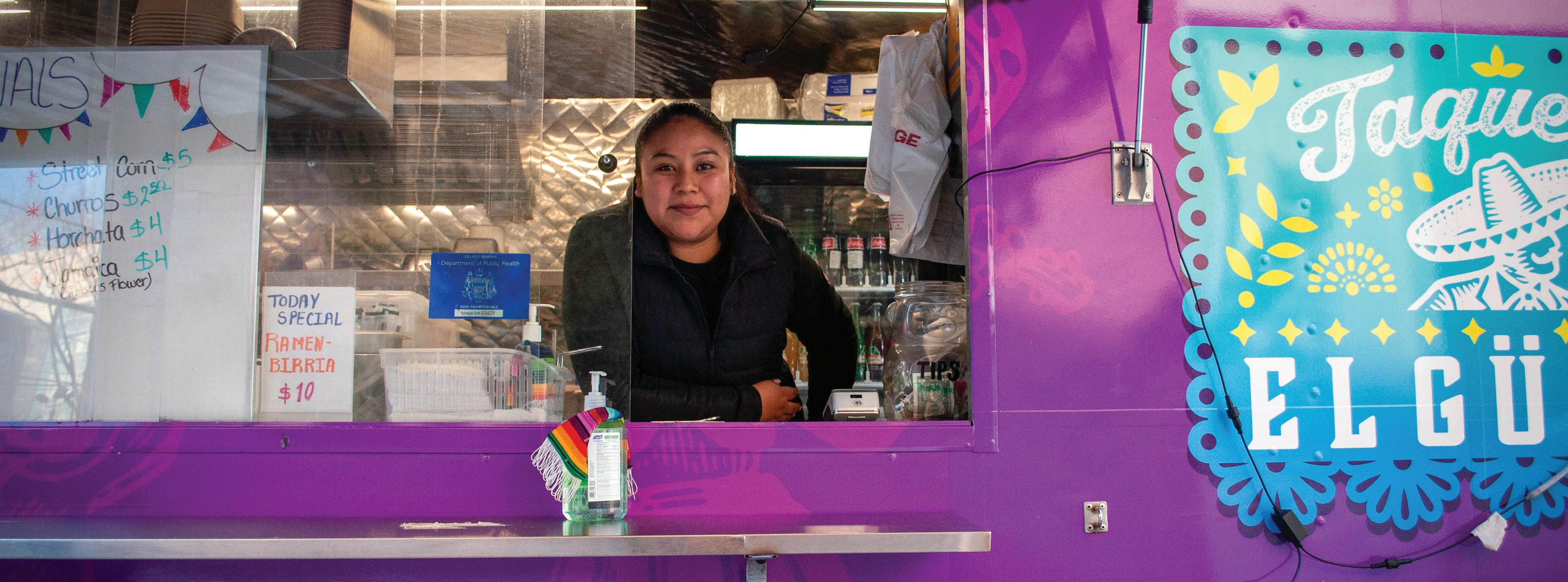
The El Taqueria food truck on 13th Street near Norris Street.
LILLIAN PRIETO / THE TEMPLE NEWS
The E & E Gourmet Express food truck on Montgomery Avenue near 13th Street.
LILLIAN PRIETO / THE TEMPLE NEWS The Honey Truck on 12th Street near Norris Street.
LILLIAN PRIETO/ THE TEMPLE NEWS
The Foot Long Truck on 12th Street near Norris Street.
DYLAN CASTELLUCCIO/ THE TEMPLE NEWS The Mexican Grill Stand on 13th Street near Montgomery Avenue.
LUNCHIES
Brew, birria and beer: A day in shifts on campus
Three food service workers discuss the trials and tribulations of keeping Temple fed.
BY ANNA AUGUSTINE & BRADLEY MCENTEE For The Temple News
Aaron Garcia learned to sling drinks at two other coffee shops before becoming a barista at Richie’s Cafe ahead of the start of the fall semester. The camaraderie that comes from working with his peers behind the bar is what makes the job special compared to his other café forays.
“We all chat, talk, we’re all pretty much friends,” said Garcia, a senior audio and live entertainment major. “While making drinks, we can just have conversations and talk about whatever we want and [it] just feels like hang out, we’re friends.”
Garcia is one of the countless workers that supports Temple’s student body of 30,000. From morning to night, baristas, line cooks and cashiers across
V O C E S
Main Campus keep the school running.
He gets ready for every shift in his designated café clothes to avoid his favorite garments reeking of coffee grounds. Garcia works closing shifts during the weekdays from noon until 6:30 p.m. and waiting on the “hangover crowd” on weekend openings.
The late morning into afternoon weekday shifts get hectic as the noon hour approaches just before the storefront closes. But throughout the day, Garcia being able to make drinks for his friends who stop in keeps it from being overwhelming.
The busiest time of Garcia’s shift ends around 1 p.m., as Owls across campus begin to head to classes or their favorite lunchtime spots––like Mexican Grille Stand, which Laura González has been running alongside her husband for the last 10 years.
Her husband handles the menu, while Laura runs the customer-facing side. They open the stand at 11 a.m. each day, just in time for the lunch rush. The eatery is one of Main Campus’ more popular food trucks, and lines grow long
around 1 p.m.
During the winter, the long days in the food truck can get cold, and handling a rush in the tight space is tricky.
But the lunch rushes don’t bother González; the quick turnaround during the busy hour makes her feel in the zone.
She’s also grown to love the community around campus food, especially when a customer recognizes the amount of love they pour into their menu.
“I like when they tell me they like my food,” González. “[The customers] are really nice.”
As González’s day ends, Ari Printz is just beginning to start his shifts. The sophomore computer science major has worked the 10 p.m. to 2 a.m. closing shifts at Maxi’s Pizza, Bar and Subs. He’s worked the 10 p.m. to 2 a.m. closing shifts a couple times a week since last August, stocking sodas and firing slices for the late-night rush of bar-goers.
The shift can be tough, and Printz often gets home past 3 a.m., but he enjoys the bar’s company, customer and coworker alike. Since starting on the night shift, Printz has crafted his class schedule
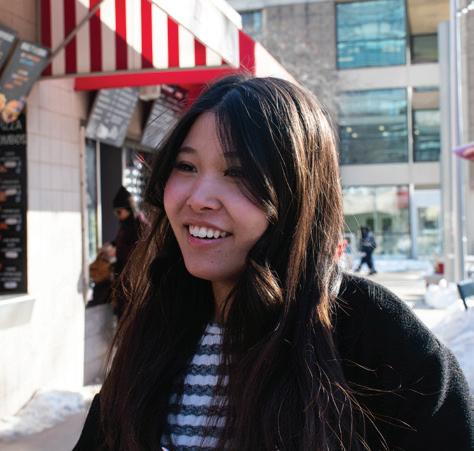
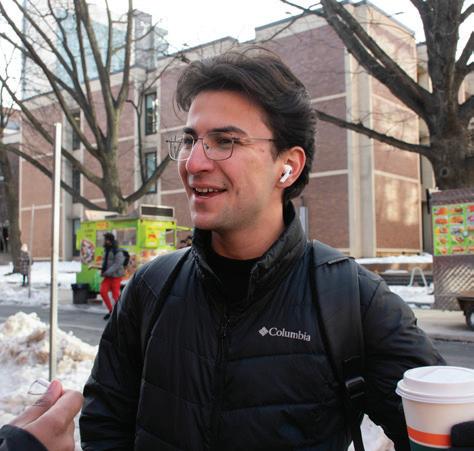
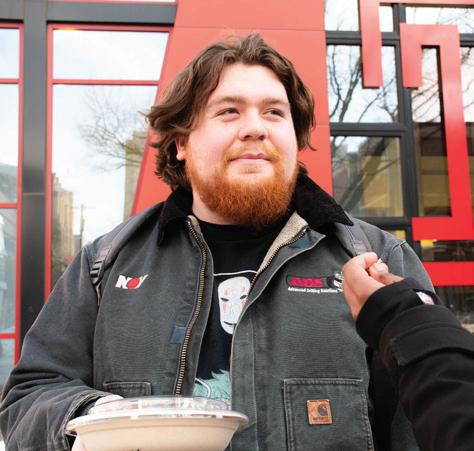
WHAT’S YOUR FAVORITE LATE-NIGHT FOOD SPOT?
SIENNA CRUZ
Sophomore computer science major | She/her
“ I’d definitely say Canes. ”
KIVANC PELTEK
to ease the strain on his sleep: He doesn’t take classes before 11 a.m. and makes sure to catch up on classes during his days off.
Printz’s worst days are when he’s left to close the pizza line on his own amid the occasional scheduling mishap. Still, he’s happy to face the never-ending line when reminded of horror stories from Maxi’s bar.
“The messy stuff goes with working in the restaurant where you have to clean up like, vomit all over the bathroom and Miller High Lifes all over the floor,” Printz said.
He still hopes to make his way to a bartender role in his junior year. In the meantime, he has one reminder for a student looking for pizza after a night’s drinking.
“Remember your slice,” Printz said. Valeria Uribe contributed reporting.
annaaugustine@temple.edu bradley.mcentee@temple.edu
MITCHELL BARTON
Junior sport tourism hospitality management major | He/him Freshman political science major | She/her Senior computer science major |He/Him
“ Sometimes I like going to Maxi’s at night and grabbing a slice of pizza, it’s a lot of fun to go with friends.” “ That’s kind of hard, I think Chick-fil-A. ” “ I like Maxi’s pizza late at night. ”
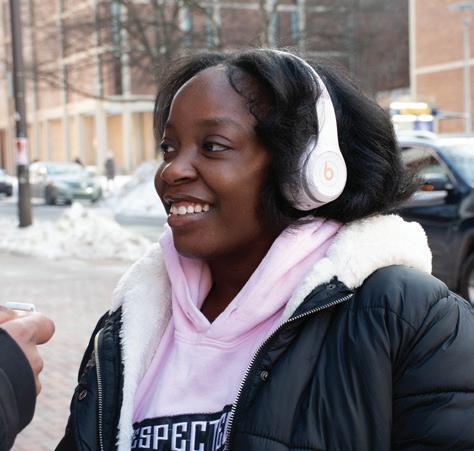
SERENITY STYLES
SPORTS
WOMEN’S BASKETBALL
Unrivaled shows support for women’s basketball
The 3-on-3 women’s basketball league was at Xfinity Mobile Arena last month.
BY SIENNA CONAGHAN Co-Sports Editor
Head coach Diane Richardson has lived by the phrase, “If you can see it, you can be it.” She’s so passionate about the saying that she’s dedicated her life to making it a reality for young girls aspiring to become athletes.
Richardson left American Security Corporation, a company she founded, and entered the coaching world in 1995 to help young women receive scholarships to play basketball in college. She is still on this path more than two decades later, currently mentoring Temple Women’s Basketball.
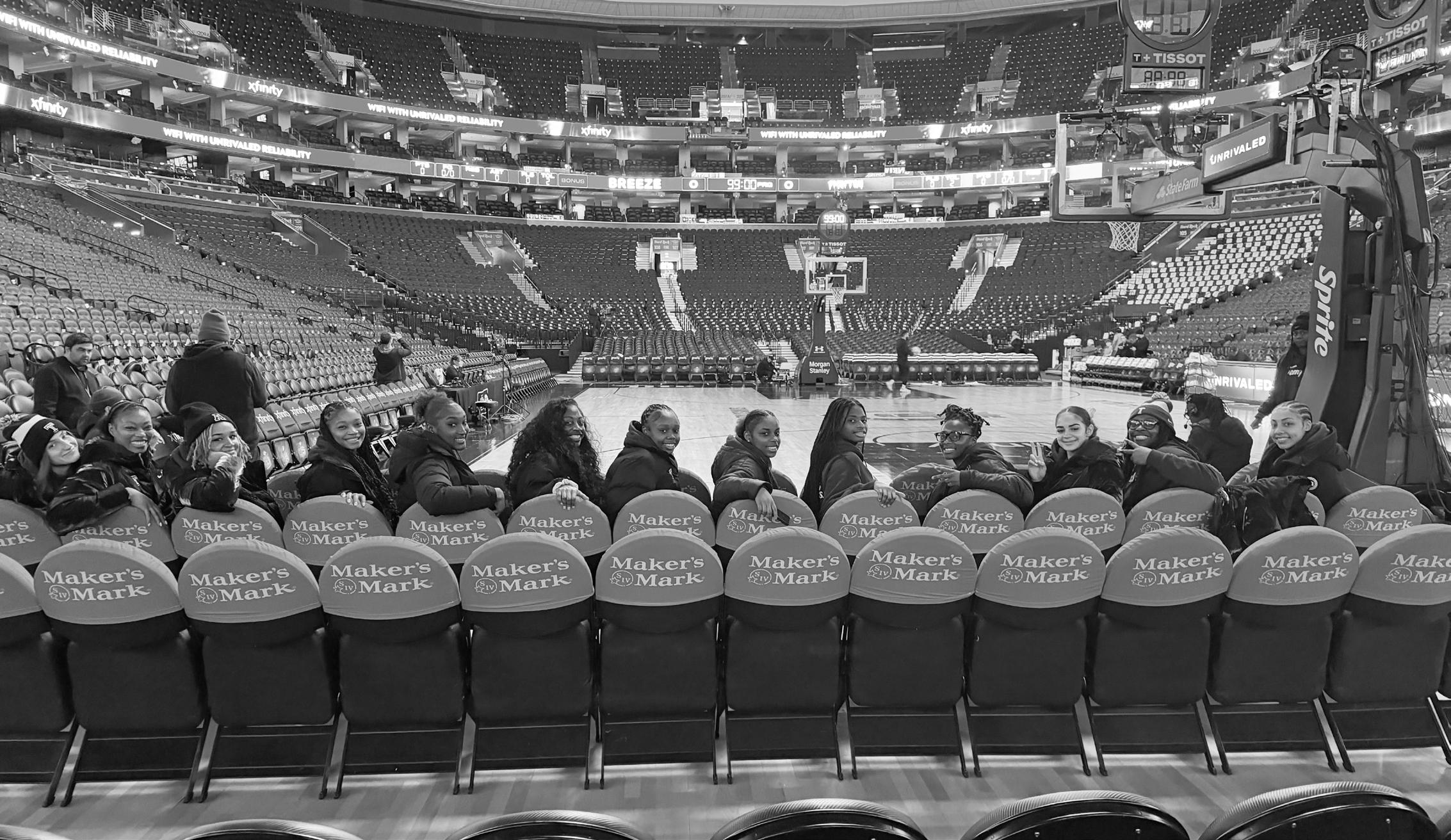
Unrivaled, a 3-on-3 women’s basketball league, came to Xfinity Mobile Arena on Jan. 30. Richardson adjusted the team’s schedule in the middle of a road trip so they could attend Philadelphia’s first women’s professional basketball game since 1998.
The Owls were far from the only ones there. The event broke the attendance record for a regular-season professional women’s basketball game and any event at the arena with 21,490 fans.
“[Women’s basketball] has really exploded,” Richardson said. “Back when I first got into coaching, it was to help young girls get exposure, so that they could get scholarships. And now with Unrivaled and with the WNBA and especially in Philadelphia, the Big 5. So, there is, like an outpouring of support for women’s basketball.”
Unrivaled plays its games in Miami, but announced Philly as its first tour stop on Oct. 2, 2025. The games gave Philadelphia a glimpse into what might happen once the city gets its WNBA expansion team in 2030.
There was a lot of work behind the scenes before the announcement was made. Philadelphia Sisters, a chapter of the organization Sisters Sports Group and a group of local women’s basketball
sienna.conaghan@temple.edu @Sienna_Paige2 The Temple News
fans, contacted Richardson because of her influential presence in the women’s basketball community in the area.
Richardson immediately agreed to help in any way. She informed others about Unrivaled, other women’s basketball events and had the team’s Instagram post about it to show how Philadelphia will embrace the WNBA team once 2030 comes around.
Watch Party PHL, an organization that facilitates events for women’s sports in Philadelphia, hosted the watch parties the Owls attended.
The first watch party the entire team and staff attended was during the WNBA playoffs for a first-round matchup between the New York Liberty and the Phoenix Mercury in September. The teams’ rosters include Philadelphia natives Natasha Cloud and Kahleah Copper, respectively.
“I’ve never really been around in a scenery where it’s all women and they’re all supporting women’s basketball,” said
guard Drew Alexander. “Everyone was wearing a jersey supporting somebody. So, it was really good to see that even it was a small area, just to see how much people support women’s basketball.”
One of Richardson’s connections as a coach is Copper. The WNBA player reached out last year for a space to work out. Richardson jumped at the opportunity to have her at Temple practices, knowing it benefited both Copper and her athletes.
Copper went to most practices during the 2023-24 season, giving players advice on how to compete with a pro. The young athletes practiced against the 2021 WNBA Champion and Finals MVP in Copper, something Alexander appreciated as she dreams of being a professional athlete once she graduates.
“I think it’s really important that you have someone who knows what they’re doing, like an upperclassman, or a vet, that can really help you and just be there for you, because they’ve done what
you’re trying to do,” Alexander said.
Women’s basketball has seen a jump in support in recent years, as the rise of young athletes drew people’s interest.
Temple saw the unwavering support for their sport at the watch parties and at the sold-out Xfinity Mobile Arena. The team understands how important it is to role models who look like them. They want the sport to continue growing, so there is a larger community for the younger generation to join.
“That alone you can compare it to men’s basketball, we work just as hard to do all the things and that stuff,” said guard Kaylah Turner. “Come to a game and come see us. [The narrative of women’s sports is] definitely going in the right direction now, but just come watch us play.”
Colin Schofield contributed reporting.
MEN’S BASKETBALL
COLUMN: Owls need Mason to stay competitive
Guard Jordan Mason is Temple’s backbone and is crucial in the Owls’ success.
BY SIENNA CONAGHAN Co-Sports Editor
Temple hasn’t had a true point guard in recent years, which stalled its offensive production. There are typically one or two Owls playing hero ball during games, shouldering the offensive burden by attempting to score every point. But Temple suffers when those players are off the court or are not playing well.
Head coach Adam Fisher found a solution to address the gaps in the offense: Jordan Mason. The University of Illinois-Chicago transfer provides facilitation to a program that has relied on score-first guards for the last two seasons.
Temple is tied for 243rd in the country with 13.2 assists per game, a 94-place jump from last season, when it averaged 10.8. The team improved at protecting the ball, as their nine turnovers per game are seventh in the nation. Mason is the main reason for both these developments.
When Mason plays well, the Owls are a cohesive unit. They get scoring contributions from everyone, including Mason. However, Temple suffers when the guard struggles. The Owls are in third place in the American Conference and are aiming for a top-two finish, which gives them a bye to the conference tournament semifinals.
Temple’s depth has been an issue and a bye in the conference ensures its best players remain rested. The Owls need Mason’s playmaking to stay competitive in the American and avoid a lull to play important basketball in March.
“I think he’s the heart of our team, because he’s so important, because he’s really the main guy that brings the ball every single time,” said guard Aiden Tobiason, following Temple’s 83-65 win against Delaware State on Nov. 5.
The offense runs smoothly when Mason conducts the team and he routinely creates opportunities for others. He averages 4.4 assists and 1.7 turnovers,
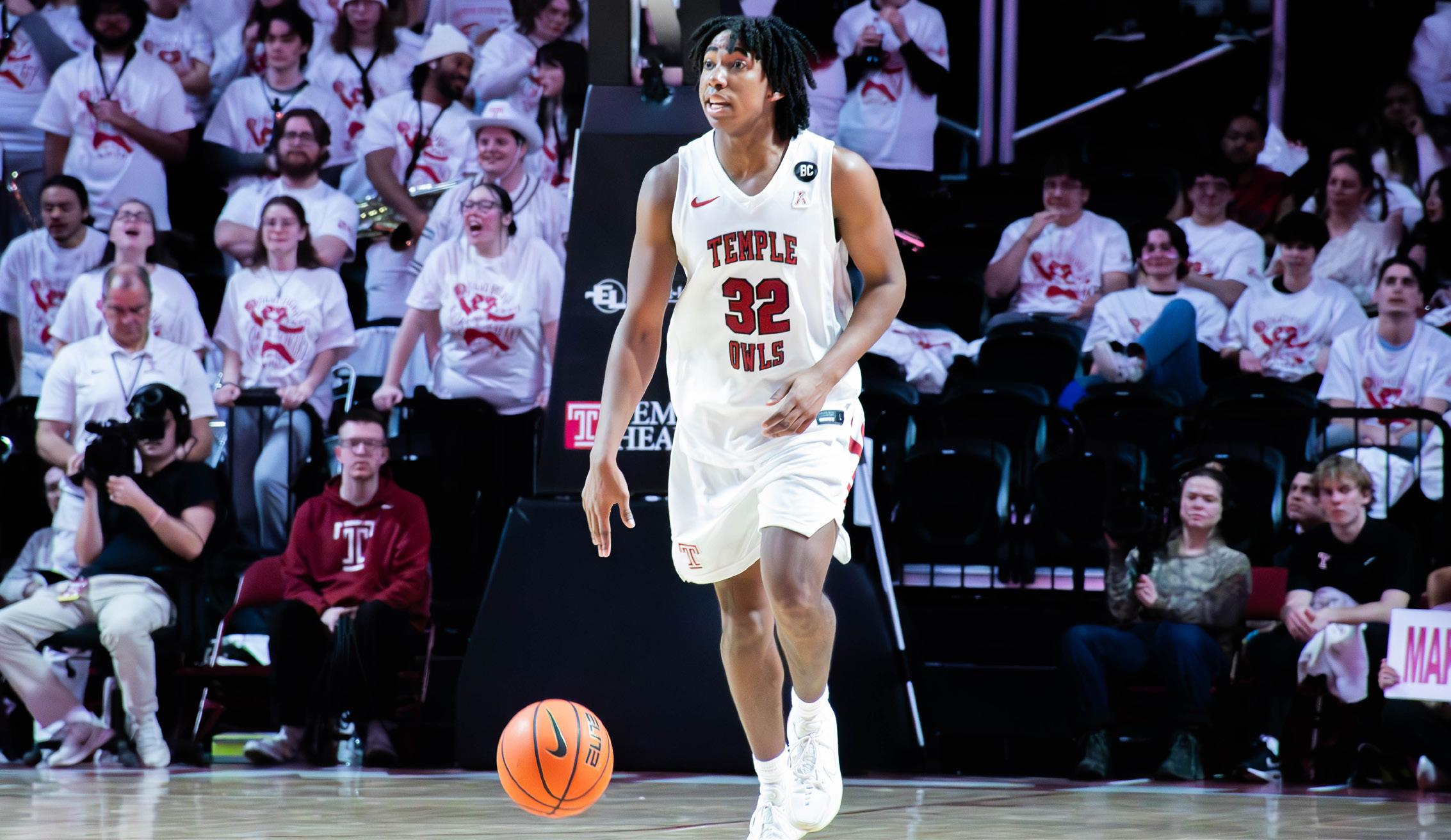
which is second in the American in assist-to-turnover ratio. His play complements guard Derrian Ford and Tobiason, who attack off the dribble, or guard Gavin Griffiths, who is sixth in the conference with 51 three-pointers.
The San Antonio, Texas native doesn’t shy away from scoring himself, averaging 11.9 points, third-most on the team. When teams try to limit his playmaking, Mason uses his scoring abilities.
Mason recorded a then-career-high 11 assists in the Owls’ 103-57 win against Georgian Court on Dec. 9. He had 12 assists in the 76-57 victory against UTSA on Jan. 3. He didn’t have any assists in the game against Charlotte on Dec. 30, but he scored 18 points in the 76-73 win.
The Owls were rolling in the middle of December, going on a seven-game win streak. Their defense improved from the year before and the offense found its rhythm. However, they ran into a wall and Mason struggled the most. Temple dropped back-to-back games against Memphis on Jan. 14 and
Florida Atlantic on Jan. 18, when it recorded season-highs in turnovers with 14 and 15, respectively.
Mason struggled, tying his career-high in turnovers in both games with five. He couldn’t make up for it in other areas, combining for 10 points and four assists. Memphis’ and FAU’s defense stumped the guard with its physicality.
The Owls ran in place without Mason’s direction and even though Ford, Tobiason and Griffiths played well, it wasn’t enough to win.
The Owls got back on track after a road trip to Texas. They beat Rice on Jan. 21 and UTSA on Jan. 24, where Mason posted a combined nine assists and 33 points. He rediscovered his form, knowing when to take his own shots and when to pass.
“The ball’s in his hands a lot, so he’s going to be the guy that has probably the most turnovers,” Fisher said after the 81-76 win against Hofstra. “And we told him that that’s okay.”
It’s crucial that Maison maintains
his balance, especially with the Owls’ depleted depth. Guard CJ Hines never played as his eligibility was under review by the NCAA and he was dismissed from the team on Jan. 15 for allegedly fixing games while at Alabama State in 202425. Guard AJ Smith played eight games before having season-ending shoulder surgery last month.
The guards were expected to be scoring boosts, but without them, Mason needs to remain the Owls’ backbone. Mason’s scoring and playmaking will be critical if Temple wants to make the NCAA Tournament for the first time since the 2018-19 season.
“I mean, it feels great [getting teammates involved,]” Mason said, following the Georgian Court game. “I get to see all the work that they put in all the time and it’s just so easy to trust them and I know that they’re gonna make shots because of the work we put in since summer. So, it’s good to see it happen.”
sienna.conaghan@temple.edu @Sienna_Paige2
LILLIAN PRIETO / THE TEMPLE NEWS Guard Jordan Mason sets up Temple’s offense against South Florida on Jan. 31.
SPORTS
Wright ready to excel on field after hand injury
Attacker Amelia Wright returened for a fifth season following her recovery.
BY AUSTIN BOYNES
For The Temple News
Amelia Wright began the 2025 season on track for the best year of her career. She scored 11 goals in Temple’s first two games, becoming the focal point on offense. The early success showed that the Owls could appear in the American Conference tournament two years in a row.
Everything was derailed when Wright broke her hand during a 14-7 loss to Saint Joseph’s on Feb. 19. Wright missed eight games, but returned for the final five contests even though everyone believed the injury ended her season.
The Owls progressed with Wright back as they won two of their final three games and were one victory away from the conference tournament. Despite being in her senior season, Wright medically redshirted and returned for the
CONTINUED FROM 28 MEN’S BASKETBALL
Griffiths grew up surrounded by basketball. His parents, Larry and Karen, played at the University of Hartford, where Larry is 20th all-time in scoring and part of the Athletics Hall of Fame. All three of his siblings also got their parents’ passion and play as well.
His parents wanted Griffiths to play any sport, even if it wasn’t the one they played. He began playing basketball in kindergarten, but became a multi-sport athlete, playing baseball and soccer.
He was preparing for his first year of baseball before it was cancelled due to COVID-19. Griffiths decided to develop his basketball skills during his free time and fell in love with the process of improving.
“After my freshman year, I realized that I was pretty good,” Griffiths said.
2026 season. She’s the Owls’ veteran leader again, looking to guide them back to the American tournament.
“For me, it was Temple or nothing,” Wright said. “If I was going to take my fifth year, I was going to be here with the program with all the friends and the coaches that I have made great connections with and that kind of injury last year gave me more of a spark to come back and finish strong.”
Wright helped where she could and spent every day aiding her teammates and coaches. Whether it was in the film room or talking to her teammates on the sidelines, she used her involvement to fit back in her role and rediscover her form on the field.
She became an additional coach for a team that was infused with youth. Temple had two seniors outside of Wright in 2025, so she made sure to help her younger teammates whenever possible.
“It was pretty seamless, like she never left,” said attacker Laura Conner. “She was there every day even though she was out. She knew how our offense was
adapting so when she came back, she knew the role that she had to play.”
Head coach Bonnie Rosen credited Wright for helping the team during her rehab process. From her leadership to emotional intelligence, she was a major boost for Rosen’s squad.
Wright was constantly there for her teammates, especially with such a young roster. She made sure to be communicative during practices and used her knowledge to answer any question they had. She also asked her teammates what they saw on a play so she could help them break it down.
“You can’t undervalue how much knowledge and experience Amelia has to understand what happens in a game, the flows of games and how to handle teammates,” Rosen said. “Her impact in playing is helping the team all over.”
Wright made sure to focus on rehab, using her experience dealing with season-ending lower body injuries during her first two years. This helped her keep a good mindset while recovering.
Wright showed little rust after returning to the field at the end of 2025. She scored eight goals in the final three games, giving a stagnant Owls offense a crucial second gear.
She recovered for 2026 and scored two goals in Temple’s 12-10 season-opening win against Delaware on Feb. 6. She saw her teammates grow without her last season, but now she can play alongside a group that wants to improve from the past year.
“I think our offense is a little bit more well-rounded and I think we have multiple girls that can be threats in a multitude of different areas,” Wright said. “We’re going to be an unscoutable team because all of us have different abilities and we’re able to shift based on what the defense is doing.”
austin.boynes@temple.edu @austin_boynes
“And then COVID happened that year and so I just had a lot of time to work on my game. And so, I decided to take it really seriously.”
Growing up in a basketball family, there was always a game on the television, a habit that followed Griffiths to college. He’s constantly watching college basketball, whether it’s other teams in the American Conference, his former teammates or whatever game is on at the time.
Griffiths jokes around with teammates during practices to keep the energy high while they are honing their skills. He is subtle off the court, but will quietly make a joke in a crowd and nudge the person next to him to make sure they heard.
“We always joke with him, a guy that can wear a long sleeve and wear goggles and get 20 and dunk on somebody and has the ability to make fun of himself, right?” Fisher said. “It’s part of
the package.”
Griffiths also knows when to take things seriously. He is dialed once the Owls step on the court. He sets his jokes aside and focuses on the game.
Concentrating on the court allows Griffiths to focus on becoming the best version of himself and giving his team the best chances to win.
“He’s a type of teammate where he can tell you something to do, but it’s never gonna be a time where he’s not one to learn something from somebody else, no matter if it’s the last person to come off the bench or if it’s the guy that’s first coming off the bench,” said guard Derrian Ford. “From the starters to the coaching staff, he’s very coachable and he’s a great teammate.”
Griffiths’ impact is crucial on both sides of the court. His 2.2 blocks per game are second in the American, his 2.4 three-pointers rank sixth and 5.1 rebounds are good for 18th. He can shoot
from anywhere on the court, which keeps the floor spaced.
The third school may have been the charm for Griffiths, as his 11.3 points per game are a 9.6-point increase from last season. His contribution to every aspect of Temple’s game has been instrumental in the team working its way to being conference contenders.
“[In] the summer this was a super competitive group and every day was like a battle,” Griffiths said. “And so, I think that that environment, it took us a week or two to realize, like, ‘We got a chance to be a really good team. Not just because of our talent, but we have a really competitive group of guys.’”
sienna.conaghan@temple.edu @Sienna_Paige2 brennan.scutt@temple.edu @brennan_scutt
SPORTS Griffiths finds his home
Temple guard Gavin Griffiths’ sense of humor has made him a locker room staple while helping the Owls.
BY SIENNA CONAGHAN & BRENNAN SCUTT
For The Temple News
Gavin Griffiths caught the attention of Adam Fisher during his recruitment at Kingswood-Oxford School in West Hartford, Connecticut. Fisher, Penn State’s associate head coach at the time, was in disbelief when Griffiths drilled multiple three-pointers in a row before he slammed a dunk.
Fisher did his best to recruit Griffiths, but he eventually committed to Rutgers for the 202324 season. He spent one year with the Scarlet Knights before transferring to Nebraska. Griffiths entered the transfer portal again after one season with the Cornhuskers and was determined to find a program where he could stay for rest of his collegiate career.
Griffiths studied film in search of a team that fit his playstyle, when he stumbled upon a famil-

iar face in Fisher, now Temple’s head coach. He recruited Griffiths to his roster this time around and it paid off for both. He became a staple in the locker room with his playful personality and sense of humor—at the same time, he is in the best season of his career, contributing to the Owls’ 15-8 record.
“Watching film was a big part of my decision,” Griffiths said. “I really wanted somewhere that I could fit into offensively. And I think that when I was watching film with Coach Fisher, I realized, like, ‘Oh, these are pretty similar things that I saw work in Nebraska.’ So, I was just excited to be in that position.”
MEN’S BASKETBALL | 27
LILLIAN PRIETO/ THE TEMPLE NEWS Guard Gavin Griffiths passes the ball against South Florida on Jan. 31.