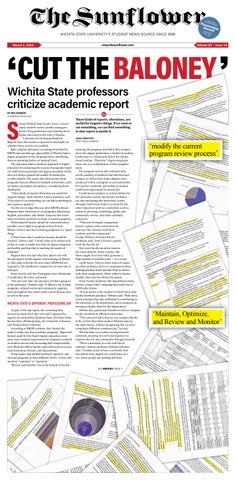
Wichita State professors criticize academic report
BY MIA HENNEN news@thesunflower.comSeveral Wichita State faculty worry a recent study could be used to justify cutting programs, firing professors and watering down higher education in the state of Kansas.
A decision by the Kansas Board of Regents later this month is expected to shed light on whether those worries are justified.
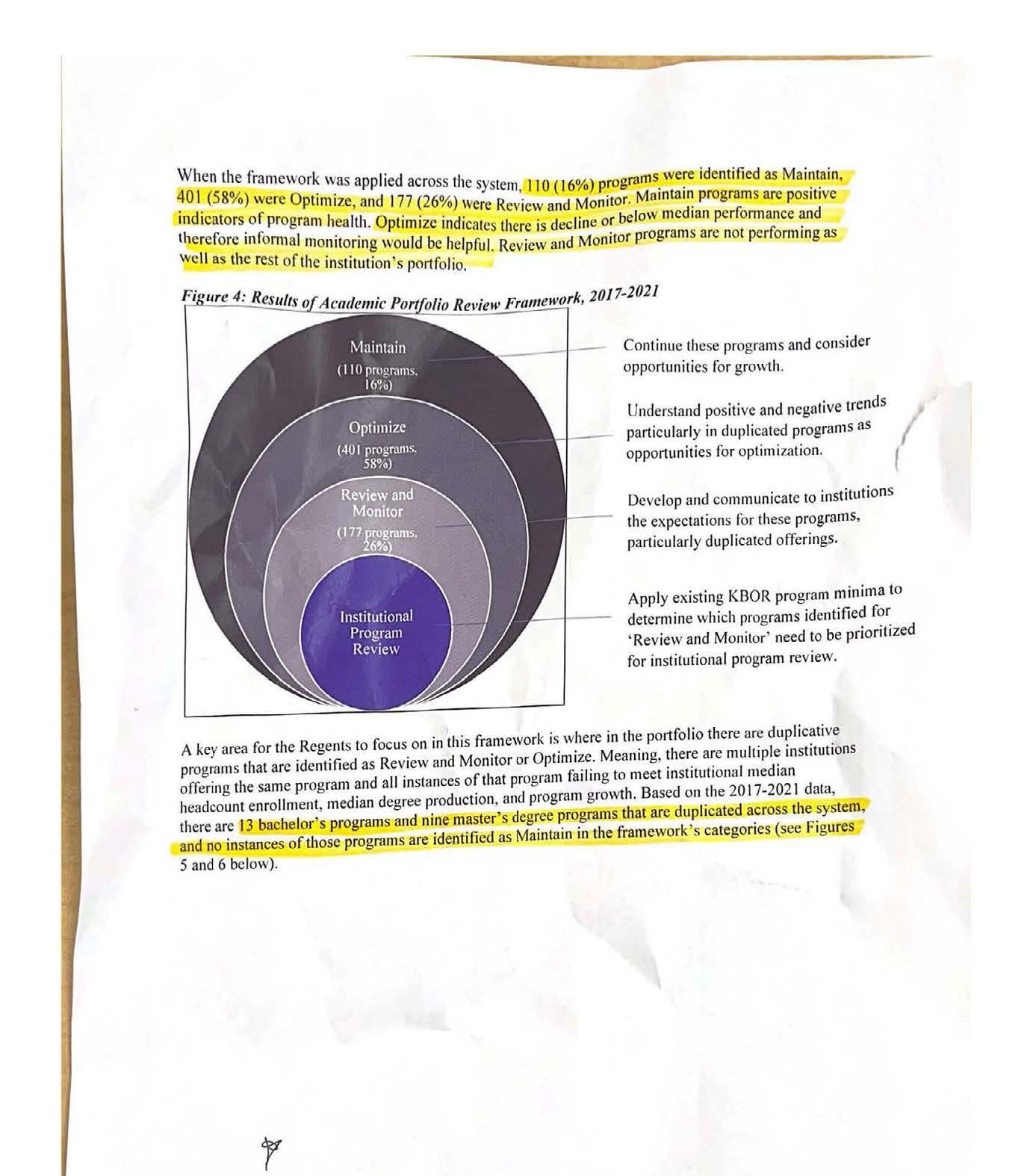
Rpk, a higher education consulting firm hired by KBOR nine months ago, placed 83% of Wichita State’s degree programs on the chopping block, identifying them as operating below an ‘optimal’ level.


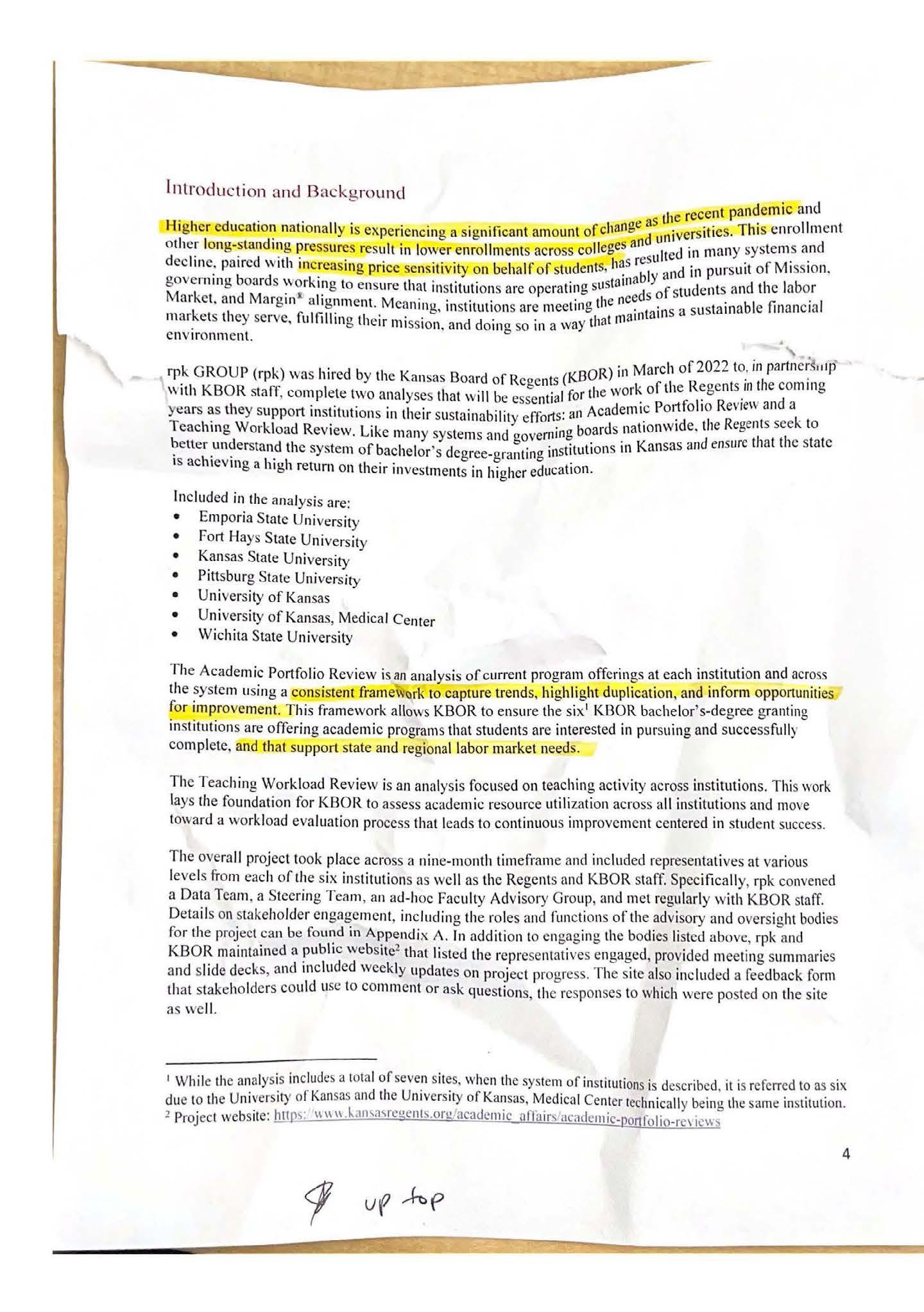
The rpk study takes a business approach to higher education by measuring the success of programs based on credit hours generated and degrees awarded, which does not always capture the quality of instruction or other details. The report also docks points from programs that are offered at multiple universities, such as history, journalism and physics, considering them duplicative.
“These kinds of reports oftentimes are useful for negative things,” John Dreifort, history professor, said. “If we want to cut something, we can find something in that report to justify it.”
Faculty are on edge this year after KBOR allowed Emporia State University to cut programs, like history, English, journalism, and debate. Emporia also terminated 33 faculty members in these or similar programs.
When asked if faculty should be concerned about possible cuts in light of program review, Provost Shirley Lefever said that reviewing programs is a “good thing.”
“I don’t know that I would say faculty should be worried,” Lefever said. “I think what we’ve always said is that we want to make sure that our degree programs are healthy and that they’re meeting the needs (of students).”
Regents have not said what they plan to do with the rpk report. At the regents’ next meeting on March 22, they plan to decide the next steps. KBOR did not respond to The Sunflower’s request for an interview in February.

Some faculty said that if programs were eliminated, it would hurt the entire university.
“You just can’t take out one piece of what’s going on at the university,” Dreifort said. “It affects a lot of other programs, cultural events and community organizations throughout this whole south central Kansas area, as well as the state.”
WICHITA STATE IS DIFFERENT, PROFESSORS SAY
As part of the rpk report, the consulting firm focused its study from 2017-2021 and compared the regent’s six universities: Emporia State, Fort Hays State, Kansas State, Pittsburg State, the University of Kansas and Wichita State University
According to KBOR’s website, they funded the study to make sure that academic programs “align with Kansas’ goals for the State’s higher education enterprise, meet student expectations for programs centered on student success and increasing their employability, and efficiently deliver faculty and staff resources across each institution, division, and department.”
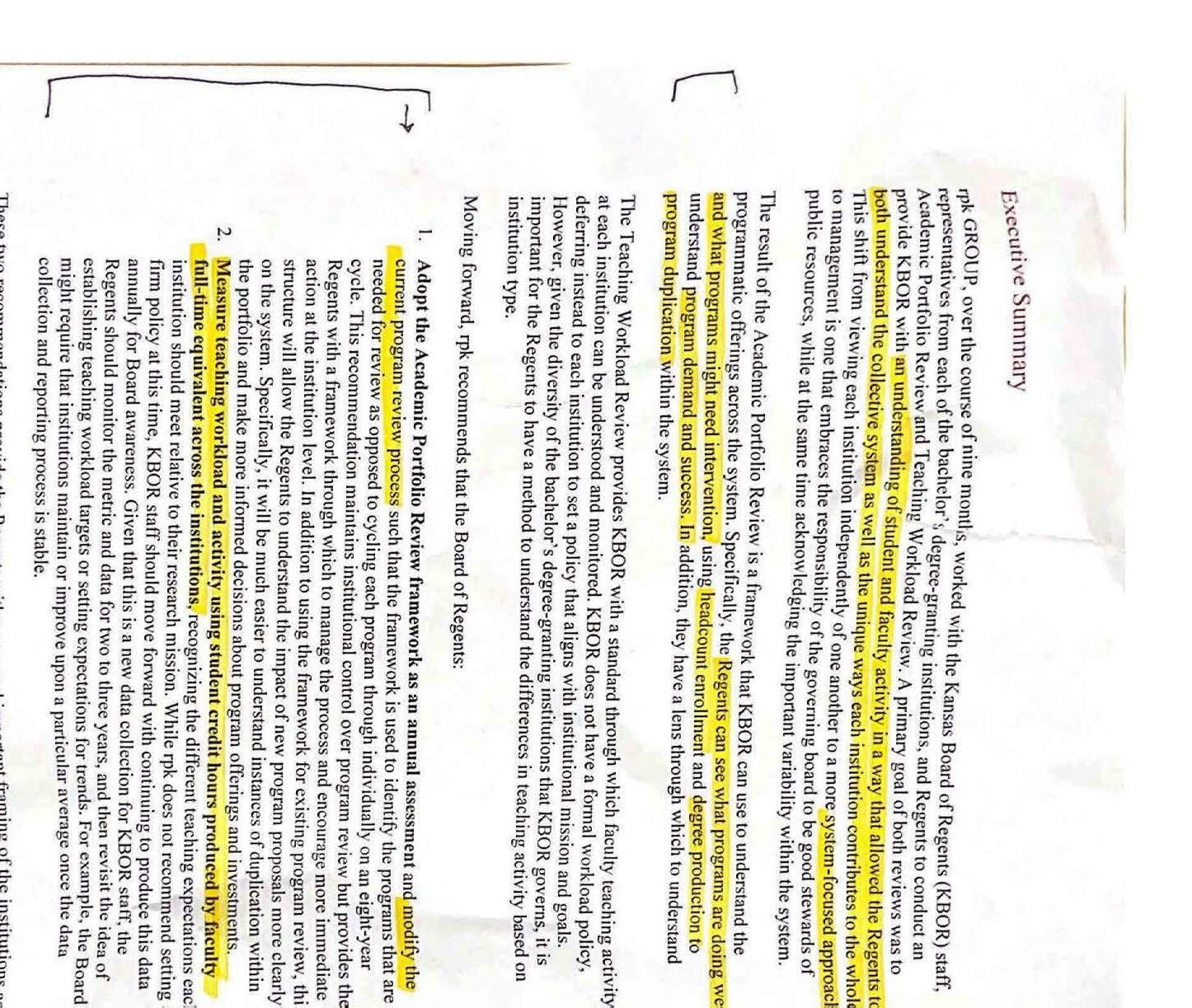
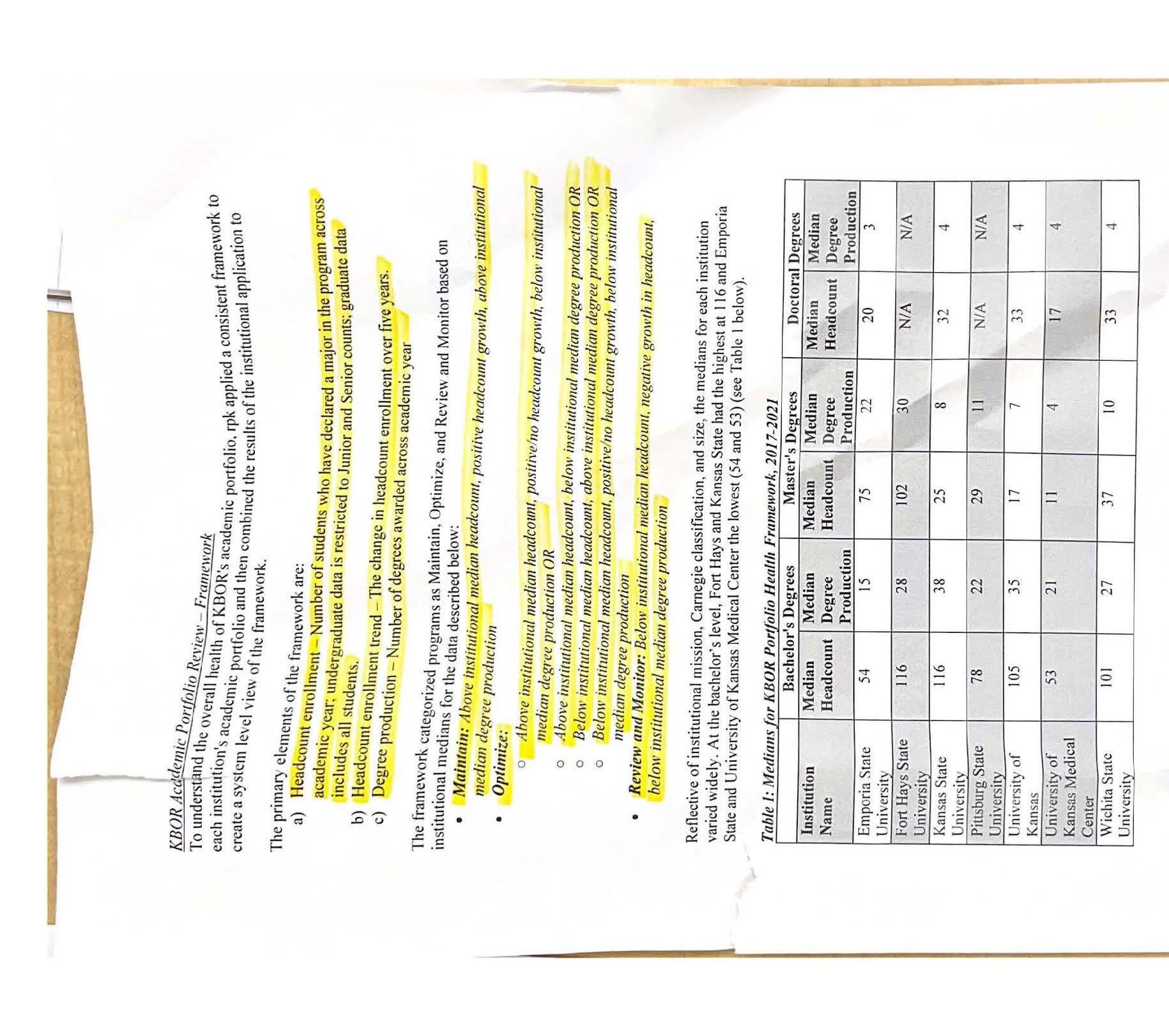
In the report, rpk ranked bachelor’s, master’s, and doctoral programs at three different levels: “review and monitor,” “optimize” or “maintain.”
These kinds of reports, oftentimes, are useful for negative things. If we want to cut something, we can find something in that report to justify it.
JOHN DREIFORT WSUmeaning the programs that fall in this category show low degree production, a decline in student headcount or a headcount below the institu tional median. “Optimize” degree programs show one or a combination of these negative traits.
For program review, rpk evaluated data on the number of students that had declared a major, as well as how many degrees were produced within a program at each university. For teacher workload, rpk looked at student credit hours generated by instructors.

Credit hours translate to tuition dollars for the university system, but faculty members say that measuring the university’s worth through credit hours fails to account for the other important work at a university, such as research, advising, counseling, public and community service, and other scholarly endeavors.
“That sort of simple comparison doesn’t capture what universities do and how they interact with their students and the community,” George Dehner, associate history professor, said. “And it doesn’t capture what the faculty do.”
Not every faculty member teaches the same amount. Some courses, like those taught in lecture halls, generate a high number of students and — as a result — credit hours. Tests in these types of classes are often multiple choice or completed online, making grading much quicker than in classes with essay assignments. Other subjects require smaller class sizes for robust discussion.
Some faculty members, like department chairs, receive “course relief,” meaning they teach less to fulfill other duties.
“If your metric is the number of credit hours that faculty members produce,” Dehner said. “Well, then, you’re missing what that individual is contributing to the university, to the department, and to students, by serving as faculty chair for the department.”
Dehner also questioned whether it’s fair to compare faculty members at different universities.

“The conceit of rpk is that we can compare faculty at KU at Fort Hays State (and) at Wichita State by the same metric, without recognizing that we serve completely different constituencies,” he said.
Wichita State is an urban-serving research university, meaning one of its main goals is to improve the city and community through research.
“We’re a university in a city with lots of industry,” physics professor Nickolas Solomey said. “It makes sense to have a university that has almost every degree you could want, in a city where people are working full time.”
WICHITA STATE UNIVERSITY’S STUDENT NEWS SOURCE SINCE 1896 www.thesunflower.com March 2, 2023
SEE REPORT, PAGE 2
‘modify the current program review process’
‘Maintain, Optimize, and Review and Monitor’
History professor
“ ’ ‘
New general education plan in works
BY MIA HENNEN news@thesunflower.comNearly a month after being presented, Wichita State’s Faculty Senate has approved a new general education plan for students. The vote was 39-1.
The Kansas Board of Regents, the governing board for higher education in Kansas, created the plan in hopes of making transferring from one Kansas school to another easier.
Each university’s Faculty Senate was tasked with reviewing the “Systemwide General Education” program and making recommendations/changes.
The new plan will clip general education credit hour requirements by one or two hours, going from 36 to 34-35.
The program must go to General Assembly — all the faculty — before being adopted by the university. The General Assembly will vote on the plan on March 31.
Incoming freshmen or transfer students will need to fulfill seven “buckets.”
The different classes approved and not approved for each section can be viewed at the Faculty Senate website at wichita.edu.
PROPOSED GENERAL EDUCATION PLAN
ENGLISH
• 6 hours of English classes
COMMUNICATION
• 3 hours of a communication class
MATHEMATICS & STATISTICS
• 3 hours of a mathematics/ statistics class
NATURAL & PHYSICAL SCIENCES
• 4-5 hours of a class, like anthropology, biology, etc. (the class must include a lab portion).
SOCIAL & BEHAVIORAL SCIENCES
• 6 hours of classes, like criminal justice, psychology, etc.
ARTS AND HUMANITIES
• 6 hours of classes, like philosophy, dance, etc.
INSTITUTIONALLY DESIGNATED AREA
• 3 hours of a first-year seminar (FYS)
• 3 hours of a class with diversity designation
MISSION
Four new stores coming to Innovation Campus, from corn dog to bike shop
BY JAYCIE NELSON editor@thesunflower.comBraeburn Square is filling up, with four new tenants moving into the spaces on Innovation Campus.
Sesame Mediterranean Kitchen, Jersey Mike’s, Two Hands Corn Dogs and Pedego Wichita are moving in, joining other tenants already there, like Fuzzy’s Taco Shop and Sungrano Pizza.
Tonya Witherspoon, vice president for industry engagement and applied learning, said Braeburn Square provides a place for the
REPORT FROM PAGE 1
FLAGGED PROGRAMS
At Wichita State, the programs that fall below the optimum level are primarily in the College of Liberal Arts and Sciences. History is one of them, with both its bachelor’s and master’s programs in the “review & monitor” category.
In Fall 2018, a combined 83 students were declared undergraduate or graduate history majors; in Fall 2022, the number dropped to 67.
Despite the decline of 16 students, Dreifort said that program variety is crucial.
“A university should have a variety of programs that will not only suit the short-term needs of the students and the community, but the long-term needs as well,” Dreifort said.
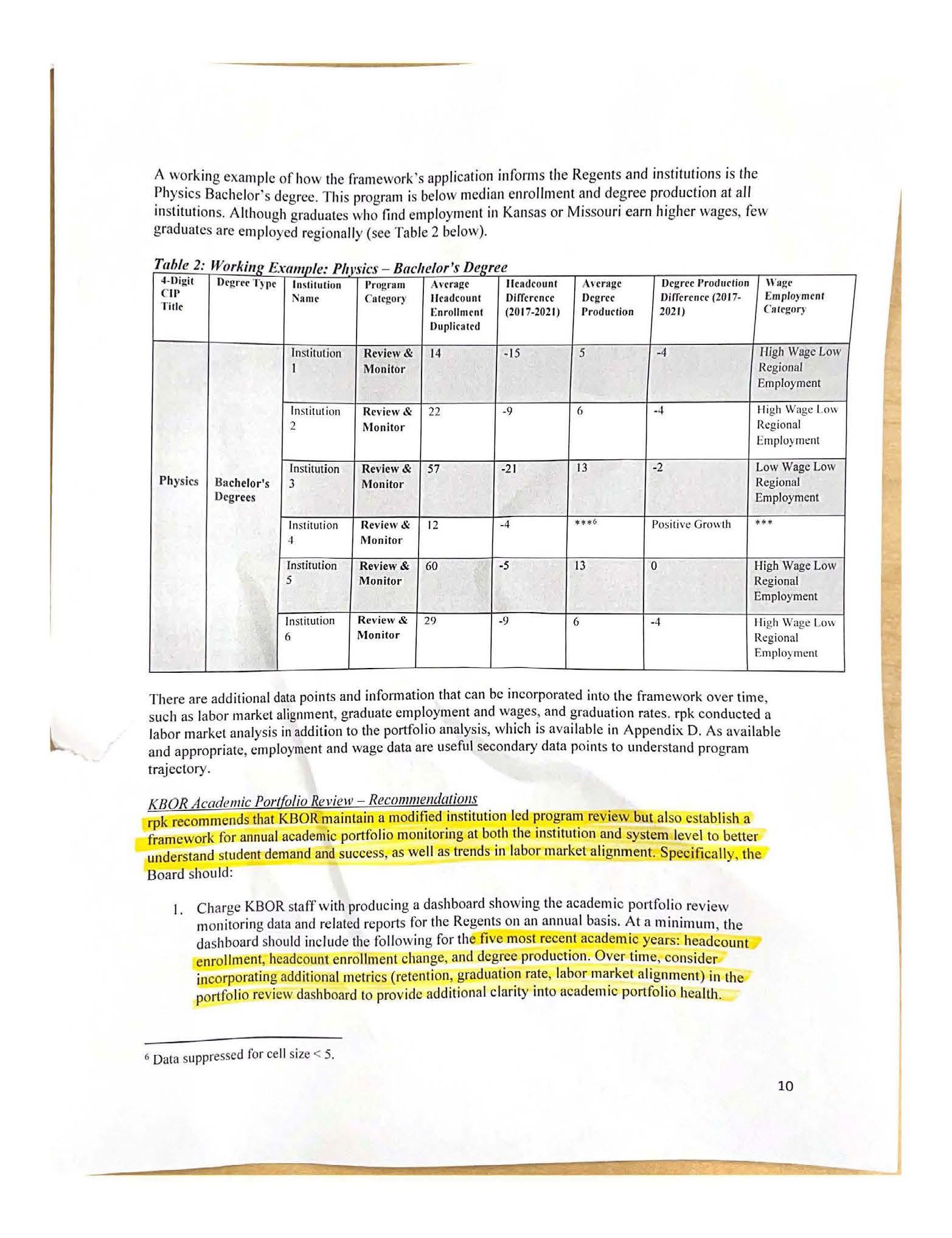
Some question the accuracy of the information in rpk’s report. For example, at five of the six universities, the physics programs were classified as having “low regional enrollment.”
Physics professor Nickolas Solomey said that this is false for Wichita State.
“The report of rpk was really silly because (it) says no one in the state employs (physics graduates),” Solomey said.
At Wichita State, 60% of people with a physics bachelor’s degree go on to be employed in the state.
Pittsburg State employs 80%
The Sunflower — both in print and online — will be a timely resource of information about the Wichita State University community. It will report on news, issues, activities, academics and athletics, in addition to offering a forum for discussion, reviews and commentary. It will also be an effective learning experience for students, who will have the final authority over what is published.
LEGAL

One free copy of The Sunflower is available to members of the WSU community. Additional copies may be obtained from the newsroom, Elliott Hall 019. The Sunflower is private property and unlawful removal or use of papers is prosecutable. The Sunflower is funded by a combination of print and online advertisement sales and student fees allocated by the Student Government Association.
The Sunflower is a member of the Associated Collegiate Press, College Media Association and the Wichita Journalism Collaborative.
Copyright © 2023 The Sunflower. This newspaper, its design and its contents are copyrighted.
community to meet up.
“We are excited to see the WSU Innovation Campus vision of ‘Live, Work, Learn, Play’ becoming a reality,” Witherspoon said via a strategic communications press release.
Sesame Mediterranean Kitchen, owned by a WSU alum Youssef Youssef, opened March 1. The restaurant also has a location on the west side of Wichita.

Jersey Mike’s, will be opening in May and will feature a patio and garage door.
of its physics graduates within the state; Emporia State employs 92%.
Conversely, Fort Hays State, KU, and KSU all have state employment percentages for physics graduates under 31%.
PROGRAM DUPLICATION AND
FACULTY COMPENSATION
KBOR’s six universities provide 688 degree programs. Of those 688, only 333 are classified as “unique,” meaning not duplicated across the different institutions.
This study of program duplication has been a point of contention for some faculty.
“Part of the problem is (KBOR) thinking that there is savings in eliminating (duplicate) programs,” Dehner said. “Faculty are an expense, but, compared to the overall expenditures of the university, getting rid of a few faculty isn’t going to make a big dent.”
On average, tenure and tenure-eligible professors’ salaries range anywhere from $65,000 to $137,000, according to the university’s 2023 fiscal year budget.
At Wichita State, Fairmount College professors, on average, make $79,000; in the business school, the average is $137,000. Engineering professors, on average, make $100,000. In the data, the term “professor” includes assistant and associate professors.
“The humanities are frankly the Walmart of universities,” Dreifort said. “We’re cheap, so it’s not like it’s going to make or
BY ALLISON CAMPBELL campbellnallison@gmail.comRSC to offer multiple discounts for Faculty, Staff Appreciation Day
In gratitude of the hard work performed this year by WSU faculty, staff, affiliates and partners, the Rhatigan Student Center will offer a variety of free goodies and discounts as part of Faculty/Staff Appreciation Day, celebrated on March 3.
The Shocker Store will offer 15-35% discounts on clearance and regularly priced items, respectively.
The Shocker Sports Grill & Lanes will offer a 15% discount on any food or drink, and the RSC Starbucks will upgrade any tall drink to a grande or venti size free of charge.
Additionally, the first 125 people to visit the RSC Marketing office will receive a free coffee mug. A Shocker ID is required to claim any discounts or freebies. Additional information can be found on the RSC Faculty/Staff Appreciation Day website.
EDITOR IN CHIEF Jaycie Nelson editor@thesunflower.com
Two Hands Corn Dogs doesn’t have a specific opening date, but co-owner Tony Phan hopes to be open by late spring. The corndogs will offer spicy flavors, crispy coatings, potato dogs, and others. It will also serve signature beverages and kimchi fries.
Pedego Wichita, an electric bike retailer, will be relocating from Bradley Fair to Braeburn square. The shop offers a variety of electric bikes such as cruisers, city to mountain bikes, and fat tires. The shop doesn’t have a set open date yet.
break the bank, if you have a duplication (for example) of a philosophy program.”
DO PROGRAMS USUALLY GET REVIEWED?
At Wichita State, programs get reviewed on a four-year cycle at the system level; however, several faculty members said that departments conduct internal reviews much more frequently.
“There is an assumption that programs and courses and faculty do not ever get reviewed,” Dreifort said. “It’s totally false. There’s a constant review process, from the departmental, to the college, to the university, to the Board of Regents level — all the time. ”
Dreifort said KBOR should “cut the baloney.”
“Let’s give our administration, our faculty, and our students some credit that we’re doing what we’re supposed to do,” Dreifort said.
NEXT STEPS
Following the release of the rpk report, as well as a Wichita State-specific report, faculty were asked to send feedback to the regents. This channel of feedback ended earlier this month. KBOR will review this feedback before moving forward at their next meeting.
“When decisions are arrived at through transparency, and through methods that are already in place,” Dehner said. “It is better for everyone involved.”
Sit-com set provides Hollywoodquality learning tools to Shocker Studio students
With the newest sit-com set installation at WSU’s Shocker Studios, students now have the ability to hone their lighting, film, editing, writing, sound and scene design skills like never before. With multiple angled cameras, functional props and a professional set that rivals Hollywood quality scenery, student actors and technicians can try their hand at professional skill building on a realistic sit-com set.
The 6,500-square-foot studio includes a living room, kitching and dining room, along with several operable doors and windows to best simulate what a real Hollywood set would look like. The high-quality set is expected to make the transition from student to professional more seamless for aspiring film, technician and acting students. Walk-in headshots offered to WSU faculty, staff
WSU employees looking to update their professional headshots were invited to do so free of charge during the Office of Strategic Communication walk-in event, hosted on March 1. While the event didn’t include additional head-shot features like retouching, airbrushing, or multiple/group photos, headshots were posted on WSU’s photo bank for faculty and staff to download and use for free. Future dates will be made available and will be posted on the Strat Comm Studio Headshots webpage.
Wallace, Koch and Barton scholarship recipients named
With the end of the 2022-2023 semester nearing, Wichita State has awarded several of its most prestigious and largest scholarships to incoming freshman students. More than a dozen high school seniors were announced as the recipients for the Wallace, Koch and Barton scholarships and will begin classes in Fall of 2023 with a financial head start.
CONTACT US
019 Elliott Hall 1845 N. Fairmount Ave. Campus Box 134 Wichita, KS 67260-0134
EDITORIAL Jaycie Nelson: 316-978-6906
editor@thesunflower.com
ADVERTISING Thy Vo: 316-978-6905
admanager@thesunflower.com
FACULTY ADVISOR Amy DeVault: 316-978-6052 amy.devault@wichita.edu
2 | March 2, 2023 www.thesunflower.com NEWS
Sesame Mediterranean Kitchen, owned by a WSU alum Youssef Youssef, opened March 1, in Braeburn Square. |
Photo by Jaycie Nelson / The Sunflower
Thy Vo admanager@thesunflower.com NEWS/MANAGING EDITOR Mia Hennen news@thesunflower.com ARTS & CULTURE EDITOR Sascha Harvey arts@thesunflower.com SPORTS EDITOR Trinity Ramm sports@thesunflower.com ASSISTANT SPORTS EDITOR Emmie Boese assistantsports@thesunflower.com
Sunflower, founded in 1896, is the student-run newspaper covering Wichita State University. The print edition is published Thursday during the fall and spring semesters. The staff publishes daily online at www. thesunflower.com. CORRECTIONS The Sunflower is committed to accuracy in its publications. If you find an error in any of its publications, please email the editor at editor@thesunflower.com immediately.
ADVERTISING/DESIGN MANAGER
The
THIS WEEK’S NEWS IN BRIEF
STATE REPS TACKLE TRANS ISSUES
How the Kansas House of Representatives voted on the Fairness in Women’s Sports Act
WHAT DO THEIR VOTES MEAN?
A vote yes means...
Representatives voted to limit transgender women and girls’ participation in school sports.
A vote no means...
Representatives voted against passing the Fairness in Women’s Sports Act.
Absent & not voting means...
Representatives were not present at the vote and did not send a proxy.
Bill limiting transgender participation in sports passes in Kansas house
BY TRINITY RAMM sports@thesunflower.comAfter Gov. Laura Kelly previously vetoed two bills that would have limited transgender women and girls from playing high school and college sports, the Kansas House of Representatives passed the Fairness in Women’s Sports Act on Feb. 23 in a 82-40 vote.
The bill will now move on to the Kansas Senate and then to Kelly to be signed into law or vetoed for the third year in a row.
The bill joins 40 others across the country that have been introduced since the 2023 state legislative sessions began.
Allison Waldt, a first-year anthropology and history major, said she believes that more research should be done before bills such as this one are passed.
“I think the legitimacy of trans women’s so-called ‘unfair advantage’ needs to be researched further before a bill like this,” Waldt said. “The politicization of sports takes away from the fun and fair competition more than personal identity ever could.”
The bill would require students to participate on sports teams based on their biological sex, not their gender identity. It would also have schools define
ALLISON WALDTtheir sports teams as males, men or boys and females, women or girls, or co-ed or mixed.
The current bill explicitly defines the terms “biological sex,” “postsecondary educational institution,” “private postsecondary education institution,” “public educational entity,” “public school” and “school.”
It defines biological sex as “the biological indication of male and female in the context of reproductive potential or capacity, such as sex chromosomes, naturally occuring sex hormones, gonads and nonambiguous internal and external genitalia present at birth, without regard to an individual’s psychological, chosen or subjective experience of gender.”
District 11 Rep. Barbara Wasinger, a Republican, said that she recognizes that intersex people exist.
“We recognize that there are a very small number of individuals
born with a medically verifiable disorder of sexual development,” Wasinger said in an email to The Sunflower.
The widely accepted number for the global intersex population is anywhere from 1-2%, which equates to 78-156 million people. For context, this is roughly equivalent to the number of people with red hair worldwide.
The term “disorder of sexual development” was coined in 2006 as a way to medically identify those born with variations in sex organs and hormones. Some intersex individuals have found the term emotionally damaging and now, the more widely accepted labeling typically lies with the individual.
Wasinger said that intersex people are already protected under the Americans with Disabilities Act.
“Meaning that schools throughout Kansas already have a legal obligation to provide accommodations to such children,” Wasinger said. “Nothing in HB 2238 (“Fairness in Women’s Sports Act”) would (or could) undermine the school’s obligations to such students under the Americans with Disabilities Act.”
On the collegiate level, the bill states that, if passed, “the
state board of regents and the governing body” for each college and university create rules to implement the terms of the bill.
Aubany Russell, a second-year mechanical engineering major and underserved senator on SGA, has personal experience playing high school basketball with a transgender woman.
“Personally, I don’t believe it would matter,” Russell said. “If anything it would create an environment that encourages the competitive and cohesive nature that playing a sport requires.”
The Kansas Board of Regents would be responsible for enforcing the bill in the 32 public institutions under their jurisdiction.
Additional materials for the bill outlined concern over how the bill’s passing would clash with any NCAA guidance or how it would affect the state’s ability to host any NCAA events, such as March Madness.
Current NCAA guidance stipulates that transgender student athletes are allowed to play on the team that aligns with their gender identity. The NCAA requires two tests throughout an athlete’s season and a testosterone test four weeks before championship selections.
When asked via email to
Track and field bring home fourth and 10th place from the 2023 AAC Championship
BY KYRAN CRIST kyrancrist@gmail.comThe Wichita State men’s and women’s track and field teams are on their way back from Birmingham, Alabama, after competing this weekend in the American Athletic Conference Indoor Track and Field Championships.
The men’s team placed fourth with 102 points and the women’s team placed tenth with 25.75 points.
Cincinnati took home their first men’s team title with 143 points, and UCF took home the women’s title with 132.25 points.
Brady Palen and Weston Lewis took second and third place to South Florida’s Romaine Beckford in a tight men’s high jump competition. Palen cleared 2.20m and Lewis cleared a personal-best 2.14m.
Adrian Diaz-Lopez set the second-fastest time in Shocker history in the 3,000 meters after he set the school record earlier this season, placing second with
a time of 7 minutes and 55.06 seconds.
Adria Navajon scored 5,641 heptathlon points throughout the competition. He won his third straight AAC Indoor title.
He was accompanied on the podium by Nate Vann who scored 4,999 points for a third place finish. Both Shockers earned all-conference honors. They were followed by Hudson Bailey, Kolby Caster, and Wyatt Leutzinger who placed fourth, sixth and seventh.
Farrah Miller was the only individual from the women’s team to qualify for the finals in a running event. She placed third in the 800 with a time of 2:08.80. Her 800 time is the third fastest time in school history. Miller earned all-conference recognition.
The women also scored 5.75 points in the high jump. Marissa Jensen placed fifth, and Destiny Masters and Mattelyn Swartz placed seventh and eighth.
CONTACT YOUR REPRESENTATIVE
State Senator Oletha Faust-Goudeau 785-296-7387
Oletha.Faust-Goudeau@senate.ks.gov
Senators Roger Marshall (202) 224-4774
www.marshall.senate.gov
Jerry Moran (202) 224-6521
www.moran.senate.gov
Federal House Representative: Ron Estes (202) 225-6216
www.estes.house.gov
State House Representative K.C. Ohaebosim 785-296-7684
KC.Ohaebosim@house.ks.gov
comment on the bill’s proposal, Wichita State Athletics declined to discuss, saying they have “been following the proposed legislation and shall adhere to any requirement or restrictions imposed by law.”
Maleah Evans contributed to reporting.
Palen slated for NCAA Indoor Championships
BY TRINITY RAMM sports@thesunflower.comSophomore Brady Palen was selected for the NCAA Indoor Track and Field Championship that will be hosted by the University of New Mexico in Albuquerque, New Mexico, on March 10-11.
This is the seventh-straight year that Wichita State will have a student athlete at the event.

Palen is the seventh seed in the men’s high jump with a 2.22 meter mark. This feat ties the school record that was set by Mark Todd in 1985. Nationally, he is tied with sophomore Kennedy Sauder from Liberty University.
In-conference rival junior Romaine Beckford from the University of South Florida sits at the three seed with a 2.26m mark.
The men’s high jump contest will begin March 11 at 1 p.m. The event will be livestreamed on ESPN+ and will be rerun on ESPNU at 5 p.m. on March 12 and at 6 p.m. on
First-year student
“ SPORTS March 2, 2023 | 3 www.thesunflower.com HAVE A STORY IDEA? Contact the Sports editor, Trinity Ramm sports@thesunflower.com
I think the legitimacy of trans women’s so-called ‘unfair advantage’ needs to be researched furtherRyan Dreiling runs for the Wichita State track meet against Herm Wilson on Jan. 28 at the Heskett Center. Dreiling placed second with a time of 53.72. | Photo by Madeline Bell / The Sunflower
KC* W* TL* *“W”denotesWichita.“TL”denotesTopeka&Lawrence.“KC”denotesKansasCity
AccordingtoKansasCounties.orgasofMarch2023
Infographic by Natalie Nolte / The Sunflower
TEAMIN’ UP AT THE TAILGATE
Softball receives first national ranking of the season
BY EMMIE BOESE assistantsports@thesunflower.com

After a 12-3 start to the season, the softball team is ranked at No. 23 in the NCAA Top 25 Division I softball rankings.
The Shockers made history in 2021 after being ranked in the top 25 of all four major national polls for the first time in school history.

This is the first national ranking the Shockers have received this season. The ranking comes after the program went undefeated at the North Texas Invitational. They beat North Texas 8-6 and 5-3 and
Vanvleet among donors for weight room renovations
BY TRINITY RAMM sports@thesunflower.com
Donations from former Wichita State men’s basketball All-American and NBA All-Star Fred Vanvleet, Steve and Regine Feilmeier and Ricky and Jeanie Brotherton will fund renovations to the weight room in Charles Koch Arena.

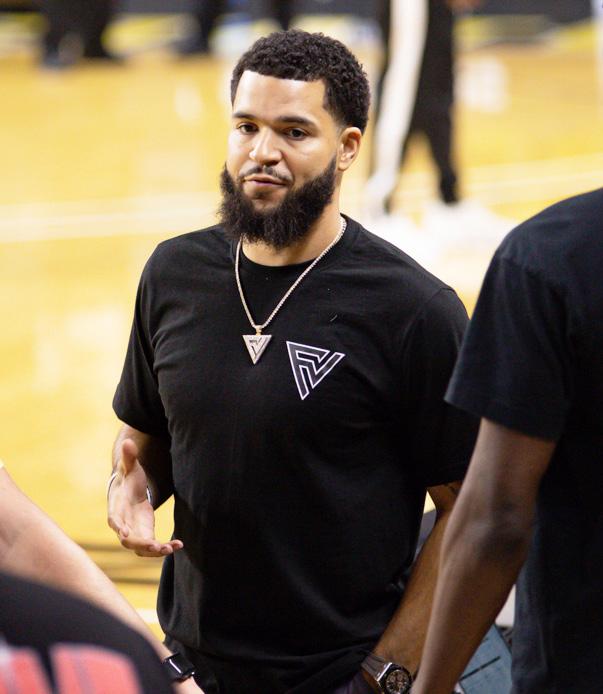
Vanvleet and the Feilmeiers are each giving $250,000 and the Brothertons are contributing $100,000 towards the project.
The renovations are currently estimated to cost $1 million
and will include new Shocker branded Sorinex strength equipment, performance flooring, turf and a nutrition station.
According to an email from the athletic department, Wichita State’s student athletes and performance staff “will have access to the latest innovations in sport science” following the renovations.

This follows the planned $17.3 million overhaul of Wilkins Stadium that began this spring, funded in large part by the Brothertons and the Linda Parke estate.
Northwestern State 7-1 and 5-2.
Since the season started, a couple of players have been named American Athletic Conference Player of the Week, including outfielder Lauren Lucas and shortstop Sydney McKinney. McKinney has also been named to the AAC Honor Roll and has been named NFCA Player of the Week.
Offensively, the Shockers have scored 96 runs, 84 RBI’s and have collected 129 hits and 397 at bats.
Defensively, they’ve recorded only nine fielding errors.
Right-handed pitcher Lauren Howell has received AAC Pitcher
of the Week and left-handed pitcher Alison Cooper has been named to the AAC Honor Roll.
Howell’s ERA so far this season is 1.35 and right handed pitcher Alex Aguilar’s is 1.64. Cooper has a 3.34 ERA. The pitching staff as a whole has totaled 68 strikeouts, 74 hits and 35 runs over 12 games.
The program will play its home opener against Western Illinois at 2:15 p.m. on Feb. 4 in Wilkins Stadium. Season tickets for softball games are sold out, but individual game tickets are still available.
4 | March 2, 2023 www.thesunflower.com SPORTS
Fred Vanvleet is currently a guard for the Toronto Raptors. He averages 19.4 points per game on 39% shooting. | File photo by Khanh Nguyen
Tik Tok influencer James Droz takes a photo with student Mitch Steele on Feb. 23. Prior to the game, he attended the tailgating event to visit with fans, sign autographs, and sell merchandise. | Photos by Kristy Mace / The Sunflower
Dhruveer Singh plays ring toss during the tailgating event on Thursday.
SGA representatives play a competitive game of Jenga. John Kirk, SGA President, tries to find the perfect piece to pull from the tower.
Students take group selfies at the Selfie Booth during the tailgate event. Friends Juliette, Tiffany, and Elyse incorporate fun faces and poses at the booth.
STREET
SPEAK
HOW DO YOU FEEL ABOUT WICHITA STATE’S MASCOT, WU?
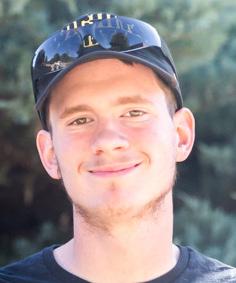
ANDRES SAENZ Senior Music
“Honestly I’m pretty proud of our mascot.
It’s a unique thing and not too many people know about it. I have friends in Texas and Oklahoma and they’re like “What’s a shocker?” and whenever I explained to them, they’re like, “That’s cool.”
Military students lack ATM options on campus
Piper Pinnetti piperpinnetti12@gmail.com
COLUMN
ABBY ARBEITER Junior Creative Writing
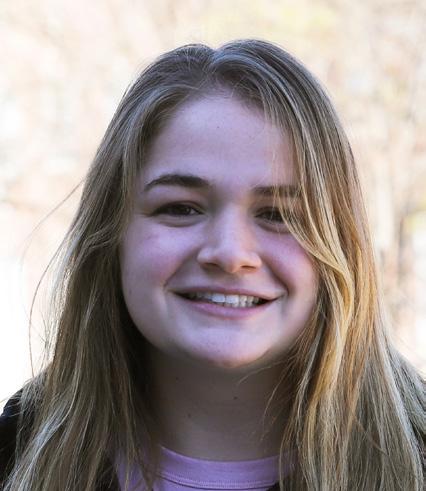
“He’s very friendly, but he looks kind of scary.”
Across campus, financial transactions are governed by various different rules.
In the RSC, you can use both cards and cash, but only on the weekdays. On Saturday, customers are allowed only card payments. Gift cards are not always accepted in the RSC.
Although these rules are tricky to remember, they are not impossible for most students.
ATM machines are located on campus to help supply some students with the cash they may need. Bank options include Fidelity, Bank of America, etc.
DYLAN LUJAN Freshman Electrical Engineering
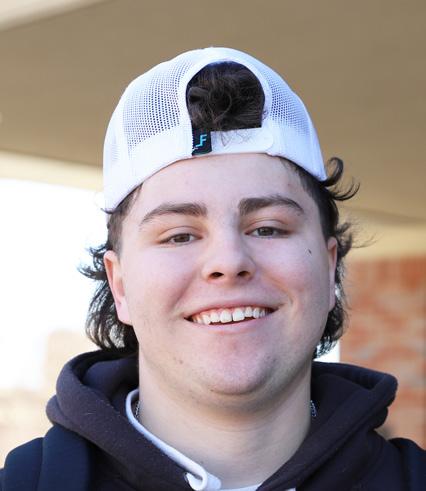

“I think it’s cool, it’s different because you don’t see it everywhere. It’s not a common mascot compared to all these other universities.”
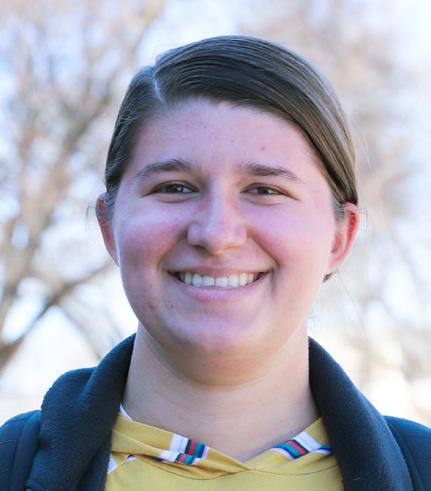
MARION GIBSON Freshman Biology
“It’s fun, it’s very Kansas but could be more unique.”
Without the machine, people in the military or military brats do not have acess to the cash they need.
The only bank that is not offered is the only one I can think of that should be required: USAA. The American financial group offers financing related services to individuals in the military or with close relatives dedicating their service.
The closest USAA to WSU is located in Texas.
“If the closest bank is in Texas, then why have USAA?” Is the most common question I get when it comes to my banking.
USAA allows their customers to access their accounts through
The uplifts and detriments of cell phones
Tyler Guthrie
teguthrie@shockers.wichita. edu COLUMN
“I think it’s actually refreshing to see … I’ve been to the Shocker basketball games, so I see the dances and everything, so I think it’s (Wu is) pretty good.”
Cell phones offer vast amounts of academic information, which is easily the number one advantage of them. Online encyclopedias, various websites and online university libraries have led to swifter research and easier access to all sorts of credible sites. With these advantages comes the problem of coming across all sorts of fake and uncredible sources, which serve as roadblocks to student’s papers, research projects, video essays, etc. College students will most likely use a laptop or computer for research over a cell phone because of convenience. Why am I targeting cell phones to critique if the convenience is on computers?
Calls and notifications with audible or vibrating tones are incredibly distracting, and often leads to additionally scrolling on the internet. Everytime a notification dings or someone looks through their phone, a hint of dopamine (a feel-good hormone) is released in the brain, according to Piedmont.org. Since it is only a hint of dopamine, it leads to a great letdown, leading someone to want more.
Teenagers and young adults are hooked to social media platforms. The desire to see what the next trend or viral short is takes so much time away from more important things that they need to do, like school.

Cell phones’ luxury and addictiveness are things to take with grains of salt. For university students, give yourself phone breaks and use the devices to the best of ability.
mobile apps and the website. Everything is accessible online.
When it comes to a situation resulting in a need for cash, USAA allows their customers to access other ATMs to pull money out. Additionally, they even reimburse money to users who are charged the fees other banks oppose on us for using their services.

In the years I’ve been with USAA, I have never had an issue revolving around access to my account or money.
This changed after moving onto campus. For reasons I’m not sure of, the ATMs all over campus do not accept my card or account despite all other experiences.
For students enrolled in ceramics courses, they are required to purchase their own clay. To purchase their clay, they must go to a
separate building that only accepts cash or checks.
A majority of the student body likely does not carry a checkbook — I don’t.
It was not only confusing, but stressful. I was required to buy my clay for my class but without cash or a check I could not get the supplies I needed. I fell behind in the course while trying to gather cash.
If it wasn’t for my friend and I going to Target and using the “cash back” option, I am not sure how I would have been able to continue in my ceramics class.
Especially for students without cars, a USAA ATM should be installed on campus as soon as possible.
Without the machine, people in the military or military brats do not have access to the cash they need.
Forget hustle culture: Try getting out of your routine
Jaycie Nelson editor@thesunflower.com COLUMN


In the wise words of my Pinterest board, “life is not a list of shit you need to get done.”
In the book that I’m reading, “How to Do the Work” by Nicole LePera, the author talks about how people get so stuck in routines and patterns that they never stop to think about what they’re doing and why they’re doing it. This pattern can lead to emotional slumps.
With hustle culture, we tend to treat our days as a long list of boxes to check off.
It’s important to disrupt those routines and try something new.
Trying something new doesn’t have to be expensive or daunting. It can be something simple like taking a fitness class, painting or even just going on a walk — and these are just a few ideas out of hundreds of options.
The YMCA is free to Wichita State students and offers a variety of classes you can try, such as Zumba, barre, cycling classes, yoga and more.
The classes are free and are a great way to try something new and get some exercise, which can also help with mental health. When we exercise, our body releases endorphins which are basically “feel good” neurotransmitters.
I took my first Zumba class a few nights ago, and it was out of my comfort zone, but I was so happy afterwards because it was such a fun way to exercise and something I’ve never tried.
If class settings aren’t for you, there’s also YouTube videos where you can dance and exercise all in one. My personal favorite channel is, “MadFit,” which has a variety of dance workouts with music from K-Pop to Taylor Swift.
For a more static activity, you can pick up pretty cheap crafts from Dollar Tree. They have a new aisle where items are $3 and $5. There’s also paint classes around Wichita that are a little more expensive, but if you want to paint on a budget there’s always Pinterest and YouTube tutorials to follow.
Another free activity is going on a walk. While it might seem simple or “boring,” it’s one of my favorite ways to relax or destress. Now that the weather’s getting nicer(ish), it’s starting to get into the perfect walking or biking weather.
Walking has both mental and physical benefits. It reduces stress and anxiety, boosts your mood, improves your sleep routine and more. It also lowers your blood pressure, strengthens your hearts, tones your legs and abdominal muscles, and more.
Even just fitting in one new thing a week to switch up your routine or take you out of your comfort zone is worth it.
March 2, 2023 | 5 www.thesunflower.com HAVE A STORY IDEA? Contact the editor-in-chief Jaycie Nelson editor@thesunflower.com
OPINION
Illustration by Wren Johnson / The Sunflower
Illustration by Wren Johnson / The Sunflower
“
JOSEPHINE OHAERI
Graduate Student Electrical and Computer Engineering

6 | March 2, 2023 www.thesunflower.com ADVERTISEMENT
ARTS & CULTURE
Paramore’s ‘This Is Why’ one of the most relatable albums
Jacinda Hall jacinda.hall@live.com REVIEWParamore released their long awaited album, “This Is Why,” on Feb. 10 and I’ve got to say, it’s relatable.
The legacy lives on: Community movie screening
BY ALLISON CAMPBELL campbellnallison@gmail.comBugs Bunny, Daffy Duck and LeBron James graced the Shocker Sports Grill & Lanes, where basketball fans, LeBron stans, and Looney Tunes enthusiasts gathered to watch the “Space Jam” sequel, “Space Jam: A New Legacy.”
While the event was postponed earlier in the year due to bad weather, Tuesday’s showing went without a hitch with more than a dozen students, organization representatives and office directors
FILM SCREENING
A screening of Cameron Harris’ film “In Our Words: Life of African Americans & Africans in the Diaspora” will be held tomorrow at 6p.m. in the RSC. A discussion will follow the film.
“In Our Words” focuses on the experiences of African Americans, asking citizens of all ages, genders and walks of life to weigh in.
features ‘Space Jam’ sequel
in attendance. The showing served as a relaxing conclusion to the Black History Month celebrations on campus.
“We wanted to have a more intimate space to be able to get our students, … our community members and other faculty and staff together,” Quang Nguyen, assistant director of the Office of Diversity and Inclusion, said. “Students can enjoy the Shocker Sports Grill & Lanes —they were very open and supportive of being able to do something like this —and (we were able) to make use of

a different area than what we would normally do.”
The Office of Engagement and the Office of Diversity and Inclusion teamed up to provide the movie, a secluded corner in the Grill & Lanes, a mountain of mozzarella sticks, chicken strips, salads and cookies and, of course, networking opportunities. Several campus organizations sent representatives so that attendees could make invaluable community connections with students. Representatives from the African American Faculty and
Staff Association, Black Student Union and Ambassadors for Diversity and Inclusion mingled with guests and provided additional resources about their organization, on-goings and mental health care.
The movie also served as a promotion for ODI’s upcoming screening of “In Our Words.”
The free documentary showing will feature discussion and commentary led by the film’s director, Cameron Harris on March 2 in the RSC.
WANNA GET INVOLVED?
UPCOMING EVENTS WITH THE OFFICE OF DIVERSITY AND INCLUSION
SUPPORT GROUPS
These groups offer a safe environment for students to connect through Zoom. A trans/ GNC support group is held every Thursday at 1p.m. A general LGBTQ+ support group is held every Monday at 1p.m.
RSVP to Rachel Amerson at rachel. amerson@wichita.edu or call Counseling & Prevention Services at (316) 978-4792.

STUDY SESSION
The final Motivational Monday Study Session will be held on Monday, March 6 from 10a.m. to 12:00p.m. The study session will be held in room 208 of the RSC.
ODI also offers free tutoring services via Promoting Academic Student Success. Students can learn more at wichita.edu/pass or by calling ODI at (316) 978-3034.
BOOK CLUB
ODI is inviting Wichitans with or without autism to join the Move to Include Book Club, sponsored by PBS Kansas and WGCU PBS NPR. Participants will receive a copy of Dusti Bowling’s “Insignificant Events in the Life of a Cactus.” The club is held from 4:30 to 5:30p.m. Email Lynn Woolf at lwoolf@kpts. org for more information.
It’s been six years since Paramore last released a studio album with their previous album being “After Laughter,” which was released after lead singer, Hayley Williams, went through a divorce with ex-husband, and New Found Glory bassist, Chad Gilbert.
Just within those six years, Williams released two solo studio albums, focused on her hair dye company, Good Dye Young, got Paramore back together after a long hiatus and released the title track of their new album, “This Is Why.” This album is more than what I expected it to be.

When the song “This Is Why” first released, I previously stated that the album would have an indie rock feel and it did meet my expectation there, but this album also has a lot more slow songs than their previous albums, which I like because it makes for a chill atmosphere. I like to see that they’re exploring with different sounds and styles.
Now, this album is relatable mainly because of the first three songs off the album; the title track, “ThIs is Why,” “The News” and their latest single, “Running Out of Time.”
“This Is Why” talks about why Williams never left the house with many events happening all at once, “The News” talks about how we hear or see something negative going on in media every day and “Running Out of Time” talks about how we intend to do something, but we end up never getting to it because we ran out of time.
This was a great album overall, I have nothing bad to say about it. I think it’s great to see Paramore branching out to newer sounds instead of sticking with the same sound all the time.
The ‘grizzly’ truth behind ‘Cocaine Bear’
BY SASCHA HARVEY arts@thesunflower.com“Cocaine Bear.” If you’ve heard of it, I’m sure it was followed by “what were they thinking?” And if you haven’t heard of it, well, now you have. The 2023 horror-comedy (hor-com?) film features a ton of stars all known as “that one actor” and, of course, a bear hopped up on cocaine. The bear embarks on a drug-fueled rampage
The truth, though, is stranger, and certainly sadder, than fiction.
In 1985, drug smuggler Andrew Thornton was, as you do, flying with 880 pounds of cocaine, according to Variety. He thought Feds were following him, so he made the smart choice to dump some of the cocaine out, as well as bringing some with him while parachuting out. He was found dead in a Tenneesse driveway, armed with $15 million worth of cocaine and Gucci loafers.
Discovered four months later in Georgia, a 175 pound black bear was found dead, sans Gucci, of a cocaine overdose. The bear had around three grams of cocaine in its bloodstream, accompanied by 35 pounds of cocaine in its stomach. The bear had ingested 40 of Thornton unopened containers

of the drug, though not all. Maybe the remaining cocaine was the key to making the bloodshed of “Cocaine Bear” a reality.
Thirty-eight years after the fact, Elizabeth Banks snagged the film up, expressing that she originally felt a deep sympathy for the bear’s original demise in 1985. “I felt like this movie could be that bear’s revenge story,” she told Variety.
Like the poor bear and that bundle of cocaine, “Cocaine Bear” is ripping up the box office and leaving chaos in its wake. Marvel’s highly-anticipated sequel to “AntMan and the Wasp” has suffered alongside “Cocaine Bear”’s success. Although the original bear is certainly dead, its legacy lives on in this film.

March 2, 2023 | 7 www.thesunflower.com HAVE A STORY IDEA? Contact the Arts editor, Sascha Harvey arts@thesunflower.com
Students feasted on food from Shocker Sports Grill & Lanes while watching the 2021 “Space Jam” film. | Photo by Brianna Cook / The Sunflower
Photo courtesy of United Recording Studio
Top right: Ripley’s Believe It or Not! is currently in negotiations with Kentucky for Kentucky, a Lexington souvenir shop, for the purchase of the real cocaine bear. The bear is often dressed and decorated for holidays.
| Photo courtesy of Ripley’s Believe It or Not!
Bottom right: Although the actions of the real cocaine bear differ from the film, Elizabeth Banks was inspired by the original true story. | Photo courtesy of Universal Pictures
HYPNOSIS JONES
UPCOMING EVENTS
ARAB STUDENT ASSOCIATION
BAKE SALE FUNDRAISER
THURSDAY, MARCH 2
11 a.m. - 1 p.m. | Rhatigan Student Center
WHAT THEY DIDN’T TEACH YOU IN GRADUATE SCHOOL
THURSDAY, MARCH 2 Noon - 1 p.m. | Online
VIRTUAL EDUCATION INTERVIEW DAY’
THURSDAY, MARCH 2
1 - 4 p.m. | Online
PHOENIX WATCH PARTY FOR SHOCKER ALUMNI & FRIENDS
THURSDAY, MARCH 2
5 - 8 p.m. | Half Moon Windy City Sports Grill
IN OUR WORDS: LIFE OF AFRICAN AMERICANS & AFRICANS IN THE DIASPORA MOVIE SCREENING & DISCUSSION
THURSDAY, MARCH 2
6 - 9 p.m. | Rhatigan Student Center
PERIOD PANEL
THURSDAY, MARCH 2
6 p.m. | Rhatigan Student Center
FOOD BANK FRIDAY
FRIDAY, MARCH 3
10 a.m. - Noon. | Kansas Food Bank
TEACHING MATTERS SERIES: GIVING AND RECEIVING EFFECTIVE FEEDBACK
FRIDAY, MARCH 3
11:30 a.m. - 1 p.m. | Rhatigan Student Center
HEALING FROM TRAUMA SUPPORT GROUP
FRIDAY, MARCH 3 2 - 3 p.m. | Steve Clark YMCA & Student Wellness Center
Hypnotist Chris Jones dazzles skeptics and believers alike
BY MALEAH EVANS maleah.evans04@gmail.comWhat started as a side hobby in college turned into a profession for hypnotist Chris Jones, giving him the opportunity to test his skills on shows with Penn and Teller, “America’s Got Talent” and “The Steve Harvey Show.” Wichita State students found themselves mesmerized and hypnotized by Jones on Friday.

Before the show, I considered myself somewhat skeptical. I believed that I could be hypnotized but was skeptical of the validity, especially with the performance factor.


I was soon proven wrong, when Chris Jones showcased his talent through several Wichita State students.
Jones was able to convince a singular student that he was singer Ed Sheeran performing a concert for his biggest fans. The student belted out “Perfect” without an ounce of shame in his body.
Jones then convinced six others, including faux Sheeran, that they were superheros and had them showcase their powers. Powers varied across the team — one had laser eyes, another spread positive vibes, someone was invisible.
Aside from the hypnosis, Jones did a wonderful job with crowd work. He had well-timed jokes and was able to create chemistry with the audience. I wish I had more courage to try to be hypnotized, but if I ever come across another, I would try just to say I did.


SHOCKER MINDSTORMS CHALLENGE DAY
SATURDAY, MARCH 4 9 a.m. - 4 p.m. | Heskett Center
SHOCKER MINDSTORMS CHALLENGE DAY AWARDS CEREMONY FOR INTERMEDIATE TEAMS
SATURDAY, MARCH 4
5 - 6 p.m. | Hubbard Hall
MOTIVATIONAL MONDAY STUDY SESSION
MONDAY, MARCH 6 10 a.m. - Noon | Rhatigan Student Center
MINDFULNESS AND MEDITATION
MONDAY, MARCH 6 2 - 3 p.m. | Heskett Center
BIOLOGY SEMINAR SERIES WITH DR. CHRISTINE BRODSKY
MONDAY, MARCH 6 4 - 5 p.m. | Hubbard Hall
FACULTY ARTIST TALKS: JENNIFER RAY & AMANDA
PFISTER
TUESDAY, MARCH 7 11:15 a.m. - 12:30 p.m. | Ulrich Museum
NEURODIVERSITY PEER SUPPORT GROUPY
TUESDAY, MARCH 7 1 - 2 p.m. | Ablah Library
STUDENT ORGANIZATION TRAINING: HOW TO EFFECTIVELY PLAN AN EVENT TUESDAY, MARCH 7 2 - 3 p.m. | Rhatigan Student Center
HAVE AN EVENT YOU WOULD LIKE LISTED?
CONTACT THE ARTS EDITOR: arts@thesunflower.com
CONTACT THE NEWS EDITOR: news@thesunflower.com

8 | March 2, 2023 www.thesunflower.com ARTS & CULTURE
Chris Jones asks hypnotized graduate student and SAC chairperson Leonidah Chepkoech about her superhero character. Chepkoech yells into the mic the name “Frajah,” a superhero who spreads positivity. | Photo by Kristy Mace / The Sunflower
Staff member Jane Lickteig sits on stage awake while listening to another participant break out into an Ed Sheeran impersonation at Friday night’s show. | Photo by Kristy Mace / The Sunflower
On Feb. 24, SAC hosted a Shocker Night Life event starring hyptnotist Chris Jones. Jones offered a family friendly show for audience members. | Photo by Kristy Mace / The Sunflower
Chris Jones put all hypnotized partipants to sleep before starting the next bit at Friday night’s event. Leonidah Chepkoech leans onto the shoulder of the participant next to her, who also leaned onto the shoulder of Paige Harrington. | Photo by Kristy Mace / The Sunflower
Hypnotized Paige Harrington holds the pose of her character McKenna, a superhero that has laser eyes. | Photo by Kristy Mace / The Sunflower
Chris Jones prompts participants that they must hide the person next to them under a chair. Angel Galaz lifts his in attempt to hide Hugo Alvarez from the audience. | Photo by Kristy Mace / The Sunflower
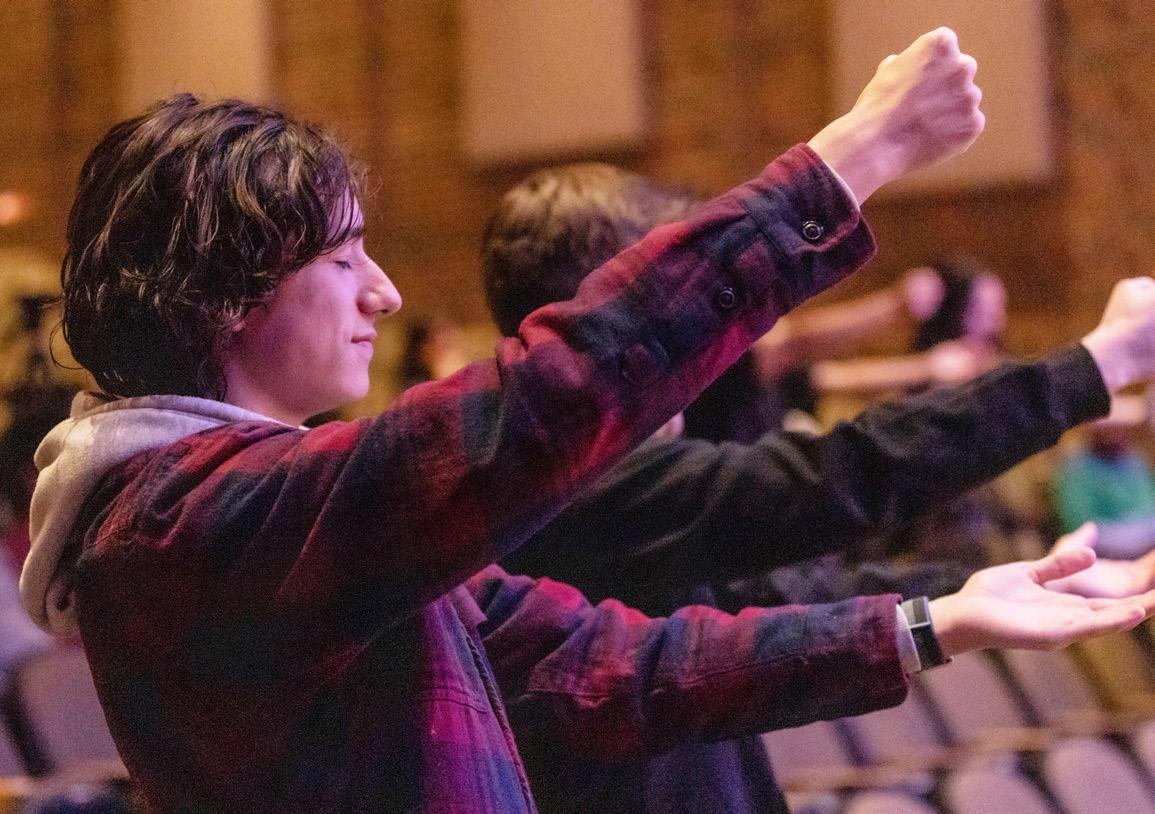
Chris Jones gives prompts to the audience to hold a helium balloon in one hand and something heavy in the other. Jones used this interactive bit to select participants for his show. | Photo by Kristy Mace / The Sunflower
Awake Dimitri Seneviratne stands by the stage while hypnotized Paige Harrington is directed to put her hands on his shoulders. | Photo by Kristy Mace / The Sunflower