
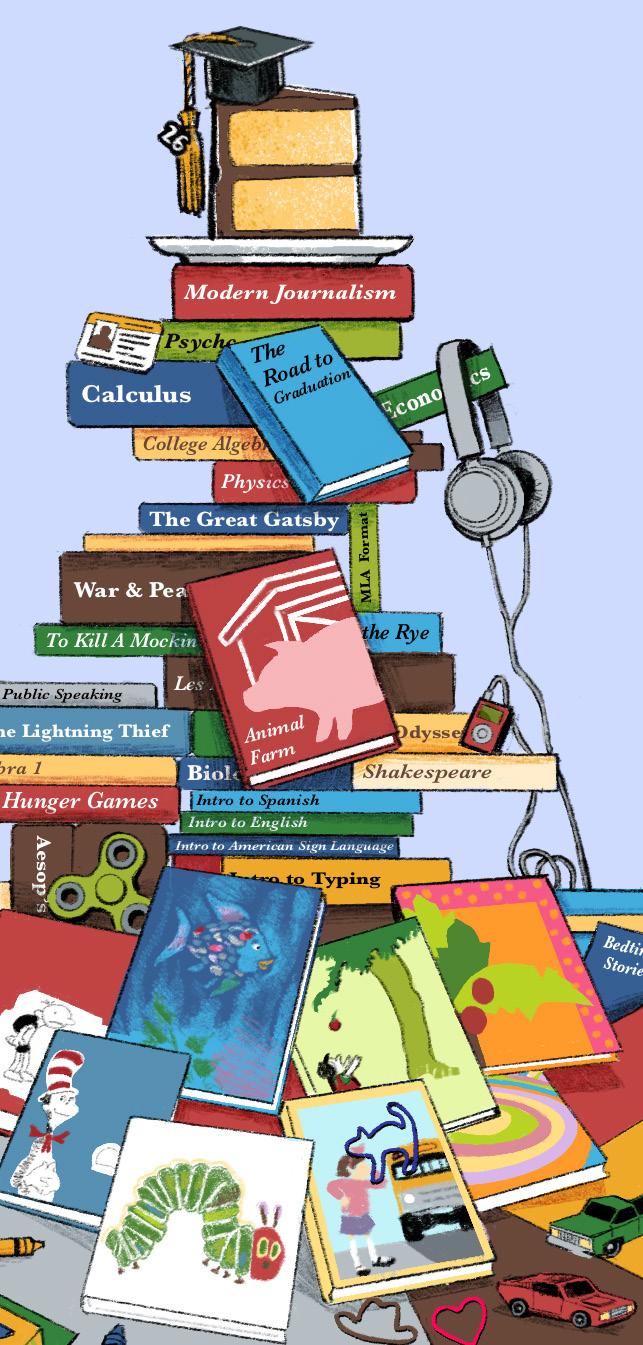
Graduation might seem like the sweetest thing, but you savor the memories most. Read some graduates’ stories as they prepare for their final slice of college life.
ALL GRADUATE DEGREES
Friday, May 15
7 p.m.
Charles Koch Arena
Check-in opens at 6 p.m.
LAS, FINE ARTS AND HONORS COLLEGE (UNDERGRADUATE)
Saturday, May 16
9 a.m. Charles
Check-in opens at 8 a.m.
APPLIED STUDIES & HEALTH PROFESSIONS (UNDERGRADUATE)
Saturday, May 16
1 p.m. Charles Koch Arena
Check-in opens at noon.
BUSINESS AND ENGINEERING (UNDERGRADUATE)
Saturday, May 16
5 p.m.
Charles Koch Arena
Check-in opens at 4 p.m.
When to arrive
Check-in opens an hour before the ceremony starts. Students must check in at least 30 minutes before the ceremony starts in order to walk.
Where to go
Enter Koch Arena through the Ticket Office on the south side of the building.
Security Wichita State will be using metal detectors at commencement.
Clear bag policy
All attendees must adhere to the clear bag policy.
What to bring
n Printed stage pass
n Regalia (cap and gown).
Regalia can be purchased at the Shocker Store. Stock may be limited closer to commencement.
Parking Graduate parking is not reserved.
It is on a first-come, first-served basis. The university recommends carpooling because of a limited number of parking spots.
ADA Accessible parking spots are available for those with disabilities in the southwest lot of Koch Arena.
Information for guests
n Doors open one hour before the ceremony start time.
n There is open seating for guests. Seating is first-come, first-served.
n Guests can park in Lot 2W, on the west side of Koch Arena, or in Lot 1, across the street from the Duerksen Fine Arts Center.
Accessible seating
n Accessible seating (limited companion space): Sections 106, 108, 110, 120, 121 and 122
n Limited Mobility seating is available: Sections 104, 112, 119 and 123, rows 15 & 16.
n ASL/hearing impaired seating: Section 118 Rows 3-4. An interpreter is provided.
BY TALIYAH WINN editor@thesunflower.com
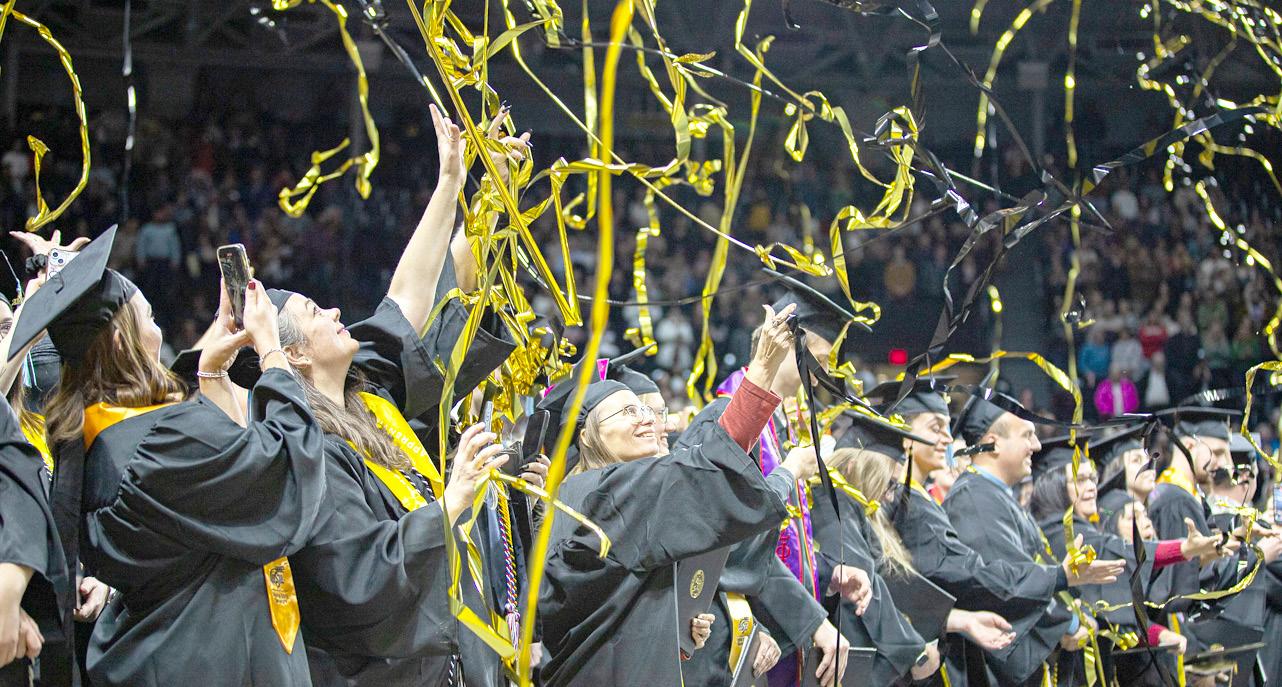
Sarah Mathews, the director of the Shocker Career Accelerator, said the market for spring 2026 graduates is “more competitive than ever.”
“People who have years of experience are transitioning into sometimes entry-level roles,” Mathews said. “So students who are graduating college aren’t just competing with other college graduates; they might be competing with more seasoned professionals.”
Another change that Aaron Evans, a career coach for the Shocker Career Accelerator, has noticed with this graduating class is the time it takes to get a job.
“Whereas when I first started, that first wave of students, maybe it was taking closer from five to six months to get a job, maybe now it’s taking closer to six to eight months to get a job,” Evans said.
“If you’ve got a few internships or if you’ve already got some employer connections, it might take a little bit less time.”
In November, the National Association of Colleges and Employers’ 2026 Job Outlook predicted hiring would be “flat”
for the class of 2026 graduates. An April update found a 5.6% upward trend in hiring, but the growth is uneven.
Employers in the outlook gave the job market a “fair” rating. The last time they gave this rating was for the class of 2021, when overall hiring projections were also flat.
But changes in the job market are largely dependent on the industry.
In engineering, Mathews has noticed a trend of employers wanting “earlier engagement” with prospective hires, like internship programs that often serve as pipelines to future employment. Fields with high demand, like healthcare and education, will often have a less competitive application process and have less need to utilize marketing tools like LinkedIn to secure employment, Mathews said.
Location also matters a lot to access certain industries.
“Students need to have an understanding: ‘Does the industry I want to work in match the location I want to be?’” Mathews said. “Because that will also give them an idea of, ‘OK, if there’s not a lot of opportunity in this location, it’s going to be really competitive. And I might have to do something that’s
adjacent to what I want to do,’ or, ‘Am I open to moving location where there’s a thriving industry?’”
AI in the job market
Another shift in the market has come with artificial intelligence.
“There’s this battle because sometimes in education, AI can be seen as bad…” Mathews said.
“But it’s so important that in the university setting, we’re teaching students the right way to use it because employers are going to start expecting their entry-level workers to be able to use it effectively and ethically.”
And NACE’s report has shown employers are gradually expecting more entry-level workers to understand how to use AI, with 35% of entry-level jobs requiring AI skills and 16.5% of entry-level job descriptions including AI skills. The use of AI skills is also heavily dependent on the industry.
“But AI can only do so much,” Mathews said. “You can have AI write your resume or feed you interview answers, but employers still crave the human, the humanity in people.
“Authenticity, I think, is going to continue to be really important in the next generation because things sometimes can lean more
AI-focused.”
AI is shaping the application process on both the applicant side and in review. But on the applicant side, Evans sees it more as a supplementary tool.
“When you think about the ethics of it, it’s more for preparation processes and being organized,” he said.
How to stand out as an applicant Having applied learning and work-based experience is “a real benefit and helps students be competitive in the market,” Mathews said.
But even if you haven’t participated in applied learning, Evans recommends leveraging your other experiences.
“We talk about applied learning and internships, and those are really more formalized experiences,” Evans said. “But your involvement, the things that you do within the community, the things that you’ve done in the university and your department, those are all still experiences that shape experience in some way.”
On the resume, a lot of that comes from the way applicants describe experience.

allocations by the Student Government Association.
Copyright @ 2026 The Sunflower. This newspaper, its design, photos and all contents are copyrighted.
BY JOSH PFLEGER-BERNAT
Transfer students come from many different backgrounds, and their experiences can differ from those who start and complete their college journey at one institution.
Owen Klos transferred from WSU Tech in the fall of 2024 and is now majoring in international business. He works as a transfer guide to help run events and answer questions prospective transfer students may have.
“We’re reaching out to those potential students and letting them know what WSU is all about,” Klos said. “We have someone here that will answer your questions and walk you through it as a student.”
Transfer guides and scholarships for transfer students help reduce general anxieties about the process of transferring, Klos said.
Emily Phung, WSU’s transfer marketing coordinator, said those efforts go beyond academic factors.
“A lot of times, generally we have a lot of incoming freshmen that would start here all four years without transferring, but we also try and make it more inclusive for transfer students coming from community colleges or other
I kind of feel like I had to make myself more involved. As much as I like this school, it does not cater to nontraditional students.”
MELISSA PORTER WSU transfer student
universities,” Phung said. “We want to also make sure that we have that same environment for them to be like, ‘Okay, this is my home away from home.’”
Klos said they were never treated differently for being a transfer student. Phung added that traditional and transfer students can share similar challenges to feeling welcomed on campus.
“A lot of students come from many different backgrounds, and we have a lot of students coming from out of state, too, and it’s really hard for them to navigate,” Phung said.
Transfer students experience unique barriers
Some transfer students, however, said the university creates barriers for them.
Melissa Porter, a transfer student and adult learner from California, is graduating this spring with a pre-medical degree. She plans to
continue her education through a veterinary medicine program and is the event planner for the WSU PreVeterinary Student Association.
“I kind of feel like I had to make myself more involved,” Porter said. “As much as I like this school, it does not cater to non-traditional students.”
Porter said being an adult learner gave her access to support that transfer students often lack, especially from Pam O’neal, associate director of student engagement in the Office of Online and Adult Learners.
“I kind of had to warm my way into any kind of involvement on the campus, with the exception of Pam in the office, I love her,” Porter said.
Addison Poorman, a peer adviser at the Shocker Career Accelerator, is a transfer student from Butler Community College graduating this spring with a
bachelor’s in social work.
Poorman said that WSU can see transfer students as already knowing what they need and where to go once they’re enrolled.
“I think, in their minds, they think typically you kind of have it figured out at that point,” she said.
Poorman said a lot of the outreach before the semester begins does provide valuable information.
But the amount of information can make it difficult to remember important points, especially when it lacks the necessary feeling of engagement.
“As a transfer student, I was looking for flexibility and something that’s going to work around my life,” Poorman said.
“So then having to go to a specific event for resources is kind of a barrier because it’s like, well, I don’t have time for that because I have to work, so I can afford to go (to school).”
Both Porter and Poorman said they think the resources are there, but are difficult to access because of how they are presented.
Porter views the university as being heavily catered to the experience of traditional students.
“It’s just not geared for people
who live off campus,” Porter said. “People who didn’t start normally with everyone else or who don’t know anybody else.”
Poorman said that her experience as a social work major involved looking into how accessible different resources are for students.
“In my opinion, it’s not that the resources aren’t there. It’s just that students don’t even know they exist in the first place,” Poorman said.
Porter and Poorman’s experience differs quite a bit from Klos’. Klos joined admissions as a transfer guide immediately upon his first semester at WSU. Porter, as an adult learner, and Poorman, taking mostly online classes, said they experienced other barriers. Klos and Phung listed many ways that WSU seeks to help transfer students and improve their experiences. Poorman said the best way to improve transfer students accessing resources would be improved communication efforts.
“Our main way here of trying to get information out is email,” Poorman said. “ And even when you’re seeing a bunch of flyers … the chances of you seeing important information is lost.”
BY MALEAH EVANS arts@thesunflower.com
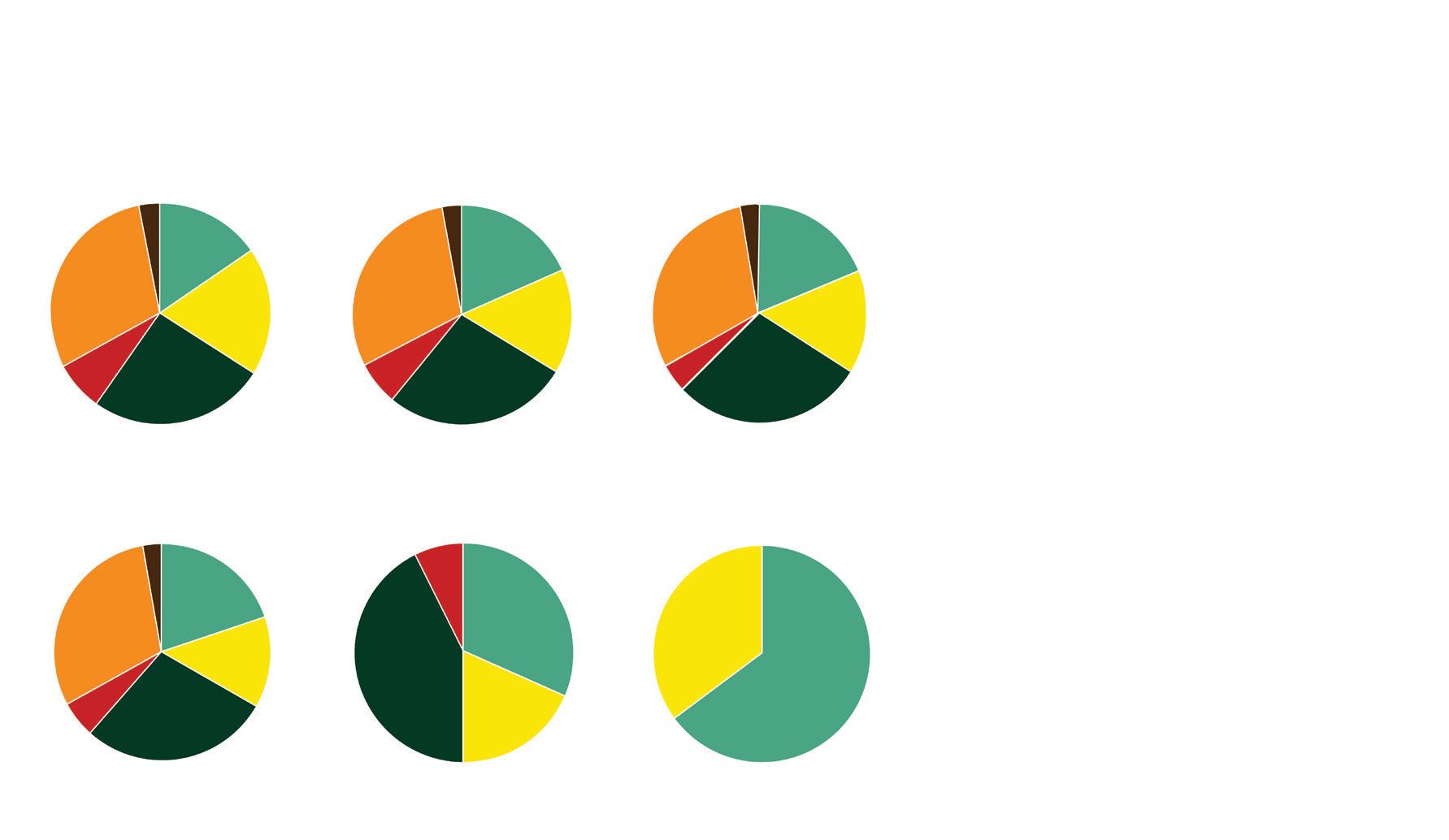
In January of this year, the Kansas Board of Regents — the governing body that oversees the state’s higher education — released its data and statistics on how many students at each public university have, or will graduate in four, five, six or eight years.
KBOR governs Wichita State University, Emporia State University, Fort Hayes State University, Kansas State University, Pittsburgh State University and University of Kansas.
The data pertains to firstgeneration, full-time freshmen that entered their respective university in fall 2015-20. The rates are reported in four years, five years,
six years and eight years based on the 120 credit hour degree requirement.
KBOR used the Integration of Postsecondary Education Data System definitions to calculate the rates of graduation. The total number of freshman full-time degree-seeking students enrolled in the fall semester is divided from the students who graduate from that class to determine the percentages.
Before the 2023 State University Data Book, the data used for this calculation was sourced from surveys submitted by the institutions. In recent years, the data has been sourced from the Kansas Higher Education Data System Academic Year and Fall Census collections.
BY MACK SMITH mackred22@gmail.com
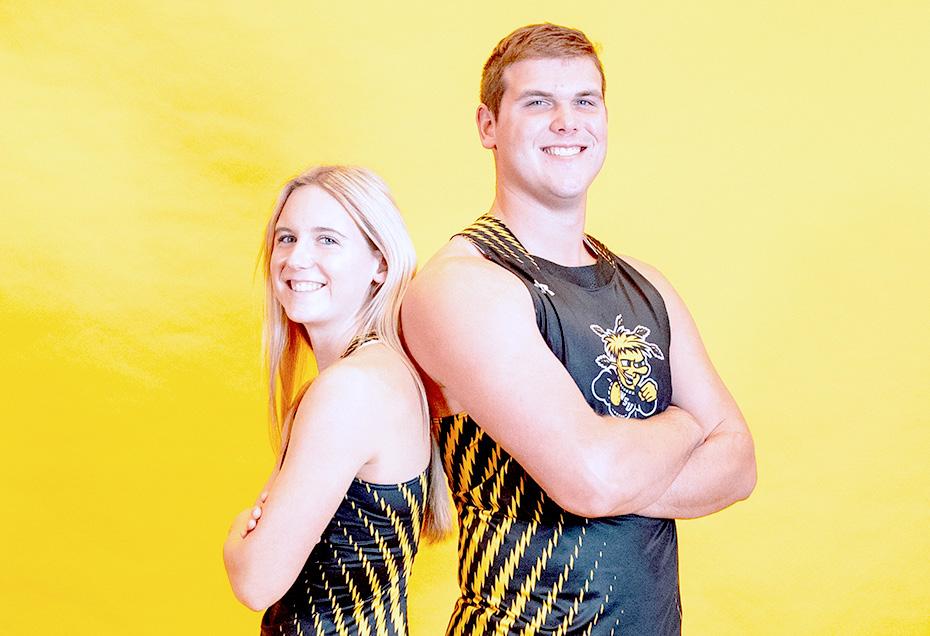
For Beau and Cali Kerschen, competing together on the Wichita State track and field team has never been a solo journey.
It’s been one they’ve shared side by side as twins, teammates and each other’s support system.
“We’ve done a lot of stuff together,” Beau said. “Especially our freshman year, when things were unfamiliar and we didn’t know a lot of people, our schedule worked out to where we could come together, and we do a lot of stuff.
“We always had each other to rely on.”
Cali described the relationship with her brother as tight-knit, even though they don’t get to see each other a lot because of their events. Cali is a hurdler, while Beau competes in throwing events.
“I think it’s really rewarding,” Cali said. “Back at home, people think it’s really awesome, having family ties here. We really enjoy it.”
The twins are so close that, during their freshman year, Beau and Cali’s constant togetherness sparked an unexpected rumor among their teammates that they were dating.
“I guess we hadn’t had the opportunity to introduce ourselves fully to the team, like ‘Hey, we’re siblings, we’re not dating,’” Beau said. “It wasn’t until Cali came home and said, ‘Hey, these people said that we’re dating.’”
Cali, with a laugh, said she remembers it vividly.
“We would go everywhere together,” Cali said. “After a while, I heard like, ‘You guys aren’t
dating? You guys are twins. I never saw that coming.’
“I was like, ‘That’s so embarrassing, I promise I’m single.’”
Cali was the first twin the
Shockers recruited when the sibling duo attended nearby Andale High School. After she went on a visit, she was able to get Beau an interview with WSU’s coaches.
Beau said he originally didn’t expect to compete in college. But the gentle nudge from his sister was all it took.
“I really wanted to go here, and he didn’t know at first where he wanted to go,” Cali said. “After I showed my interest in it, he came on, and they had a spot for him.
“I was like ‘Oh my gosh, this is great.’ We’ve been together like forever (and) we’ve never been away from each other. I was overjoyed to hear that he would be with me for another four years.”
For Beau, the most rewarding
part hasn’t come from the accolades. It’s come from the many connections he’s made alongside his sister.
“I would definitely say just getting to meet new people and make new friends (has been rewarding),” he said. “We had to branch out and meet new people on the team.”
As their college careers come to an end, the twins are gearing up for their lives outside of Shocker track and field.
Cali plans to stay in Wichita and pursue a career as a medical lab scientist, while also hoping to coach hurdles at her high school alma mater.
Beau also plans to stay connected to his roots.
“I’m hoping to be a part-time high school math teacher (at Andale),” Beau said. “I’m going to be working with that on the farm. Both my parents are farmers, so I’m going to be balancing that. I’m also going to be coaching football in the fall and track and field.”
BY EVAN TONG evantong3@gmail.com
The last step of the journey is the one people will remember.
For Amar Tsengeg, his last ride as a student athlete took him to Wichita State.
“It’s so historic,” Tsengeg said of the program. “You know what you’re getting with Wichita State and also the coaching staff.
“I’ve developed here in the past months … more than I ever have in my career.”
His development has shown.
Tsengeg has marked personal bests in his college career with a low 3.42 ERA this season at Wichita State. Tsengeg previously held a 13.50 ERA during his final season at Northwestern.
“Mechanically, he’s done a really good job in the weight room working with coach (Logan) Barrett,” WSU pitching coach Anthony Claggett said. “Just from a pitch standpoint, developing a couple of pitches, working on the slider and developing the splitfinger and changeup.”
Tsengeg’s nomadic steps through the college world took him from UT-Dallas as a freshman to Northwestern the past two seasons and now his final stop as a Shocker.
Tsengeg was raised in College Station, Texas, by Mongolian immigrants Tsengeg Purevjav and Ariun Ishdorj. Tsengeg was named by his grandfather. Amar means “peace” or “peaceful” in Mongolian.
“There was this very famous

general (a) long time ago,” Ishdorj said. “He brought a lot of peace and happiness to people.”
Tsengeg and his family spent much of their time traveling the United States on camping trips. In addition to their excursions within the U.S., they have been back to Mongolia, although Amar’s last visit was in eighth grade before summer baseball took over his life.
“When (our) boys were growing up, we would go camping a lot,” Ishdorj said. “We would just go to different parts of the U.S. and go camping.”
Ishdorj described Amar as an outdoorsman who loves to hike.
The well-traveled Tsengeg was also praised by Claggett for his understanding of the game.
“Amar is really a pleasure to work with,” Claggett said.
“He’s very mature. Came in from Northwestern — educated background. He is what we like here in our program.
“You know, guys that can speak the language of baseball.”


The pair spent years in student government, now they’re moving on
BY EVAN TONG evantong3@gmail.com
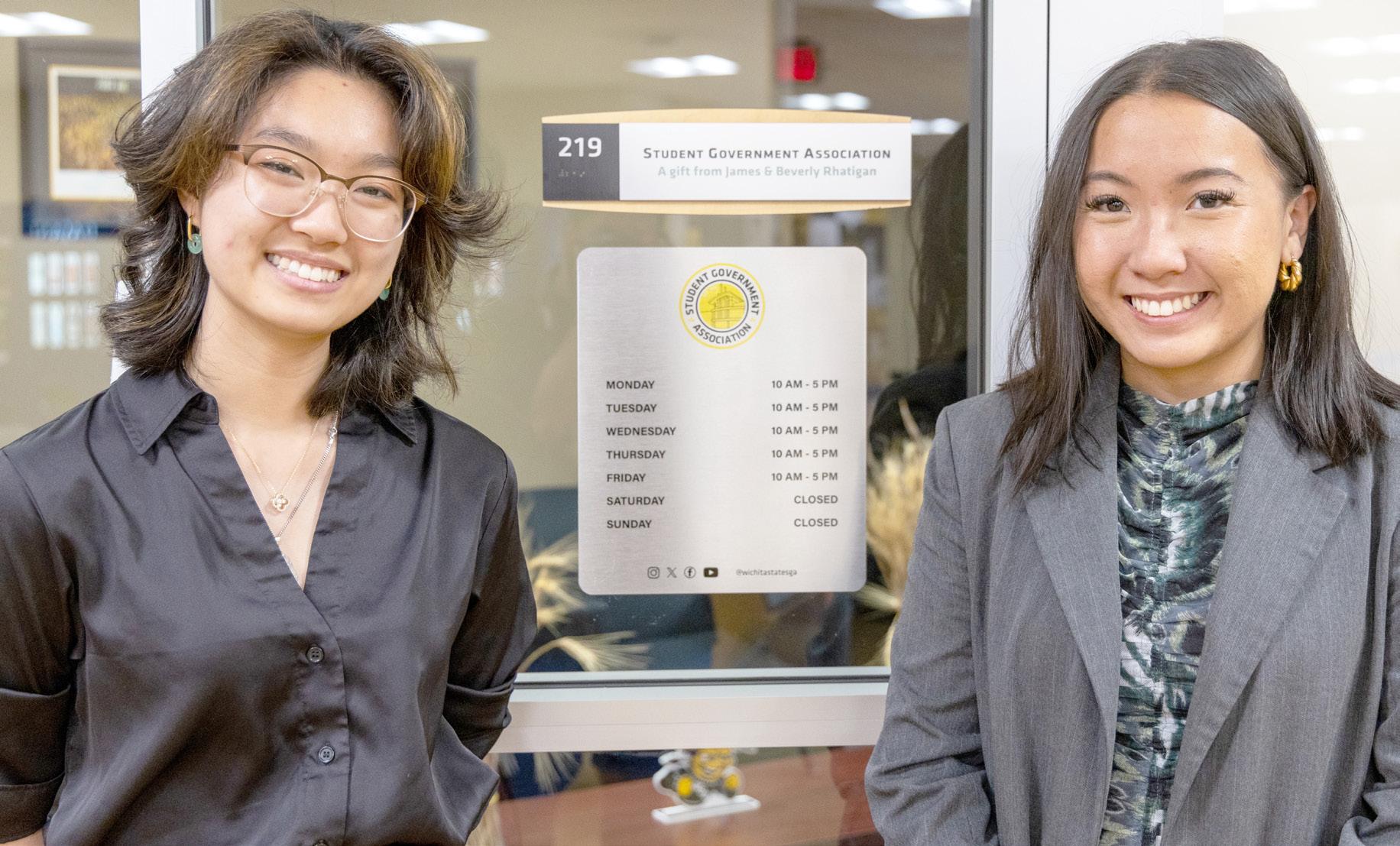
From on-campus jobs, to clubs and teams, many students play a variety of roles at Wichita State. With the 69th session of the Student Government Association inaugurated, it’s time to say goodbye to the highest student representatives, former President Jia Wen Wang and Vice President Amy Nguyen.
“It hasn’t hit me yet that I’m graduating,” Wang said. “I think it’ll hit me once I actually am on the stage. As I’ve been reflecting on my years here, just in and out of SGA, I’ve been so grateful for this institution and the opportunities that they’ve had to offer. I originally was not going to attend this institution. I was going to attend some other school in another state.” Nguyen had the same to say about the looming reality of graduation.
“I think it’ll hit me probably in May,” Nguyen said. “When things start to really, really slow down. I think for me, these past four years have been incredible, and I probably wouldn’t have changed a single thing about it.”
Work-life balance
Maintaining your life as a student while serving the campus can be one of the toughest parts of being the representative of the entire student body.
“I was really intentional about it because I wanted to make sure that I didn’t put myself in a situation where I might burn out,” Wang said. “Because ultimately, we took an oath to serve all 18,000-plus students here on campus. So I didn’t want to put myself in a situation where I would no longer be able to serve them.”
The calendar became Wang’s saving grace in her life, creating schedules with intentionality.
“I was really intentional about
“
We are the first ticket to run both as Asian women. I think it’s such a powerful piece of representation. Students need to know that no matter what kind of background they’re from ... they can still belong in these spaces.”
JIA WEN WANG Former Wichita State student body president
the times that I was reading emails,” Wang said, “and making sure that I was blocking out times to still be a student — to still remain involved in some of these other community pieces that I was involved in, while also ensuring that I also blocked out time to get work done. My calendar was ultimately my lifesaver, because I planned every single minute of every single day on that.”
Balancing life for Nguyen also became about the little moments during the “long and hectic” days.
“Finding that work-life balance is being able to find the small moments filled with joy and gratitude,” Nguyen said. “Even
when we have really long days, like with student fees and things like that. When we have those little breaks and having those interactions with people and grabbing some food or a drink… I think those moments help me go on with the days.”
Outside the war room
While the pair didn’t come into college knowing each other, they have since become friends outside of SGA, when they can just be Amy and Jia Wen.
“We are friends outside of SGA,” Nguyen said. “A lot of our relationship was also built through our sorority (Sigma Psi Zeta) as
well. But outside of it, we love to just eat together. (I) love going to Kansas City together, and I love her family. Shout out (to) Miss Peggy.”
In Wichita, the pair enjoys going to KPot, a Korean barbecue and hot pot restaurant.
“I have a fun fact,” Nguyen said.
“(Wang) gets 10 orders of sliced pork belly, but that’s in one sitting.”
Nguyen steers more toward the seafood side of the menu, usually the mussels and clams. Wang said the two try to get their money’s worth at KPot between “ordering that many plates of pork belly and Amy ordering her seafood.”
“We’re always the last one standing,” Nguyen said.
To be remembered
Engineering senator Matthew Phan served on three sessions of SGA with the duo and spent plenty of time with them in and outside of SGA.
“Occasionally, maybe we’ll grab lunch, or we’ll grab dinner every once in a while,” Phan said. “Just to hang out a little bit as well. Getting to know them both outside of SGA has also been really great, and I’m proud to call both of them friends as well.”
Whether it was the late-night chats or just being in the SGA office together, Phan’s favorite memories revolved around seeing each other every day.
Guided by belonging, intentionality and persistence, Wang remarked that it was important for her to represent the underrepresented — not just as Asian women, everyone.
“I think we are the first ticket to run both as Asian women,” Wang said. “I think it’s such a powerful piece of representation. Students need to know that no matter what kind of background they’re from or what kind of representation is out there, that they can still show up in spaces, that they can still belong in these spaces, because for Amy and I, we didn’t have that representation going in.”
“The representation isn’t just about showing up as two Asian women, but also showing up as first-generation students, as students who are in two majorly different academic backgrounds (Wang majoring in biochemistry and Nguyen in business administration), but can still serve in a place such as student government,” Wang said. “It’s not really about what is expected of a person who may be going into a role, but more so who you are as an individual and what you can achieve.”

BY AINSLEY SMYTH managing@thesunflower.com
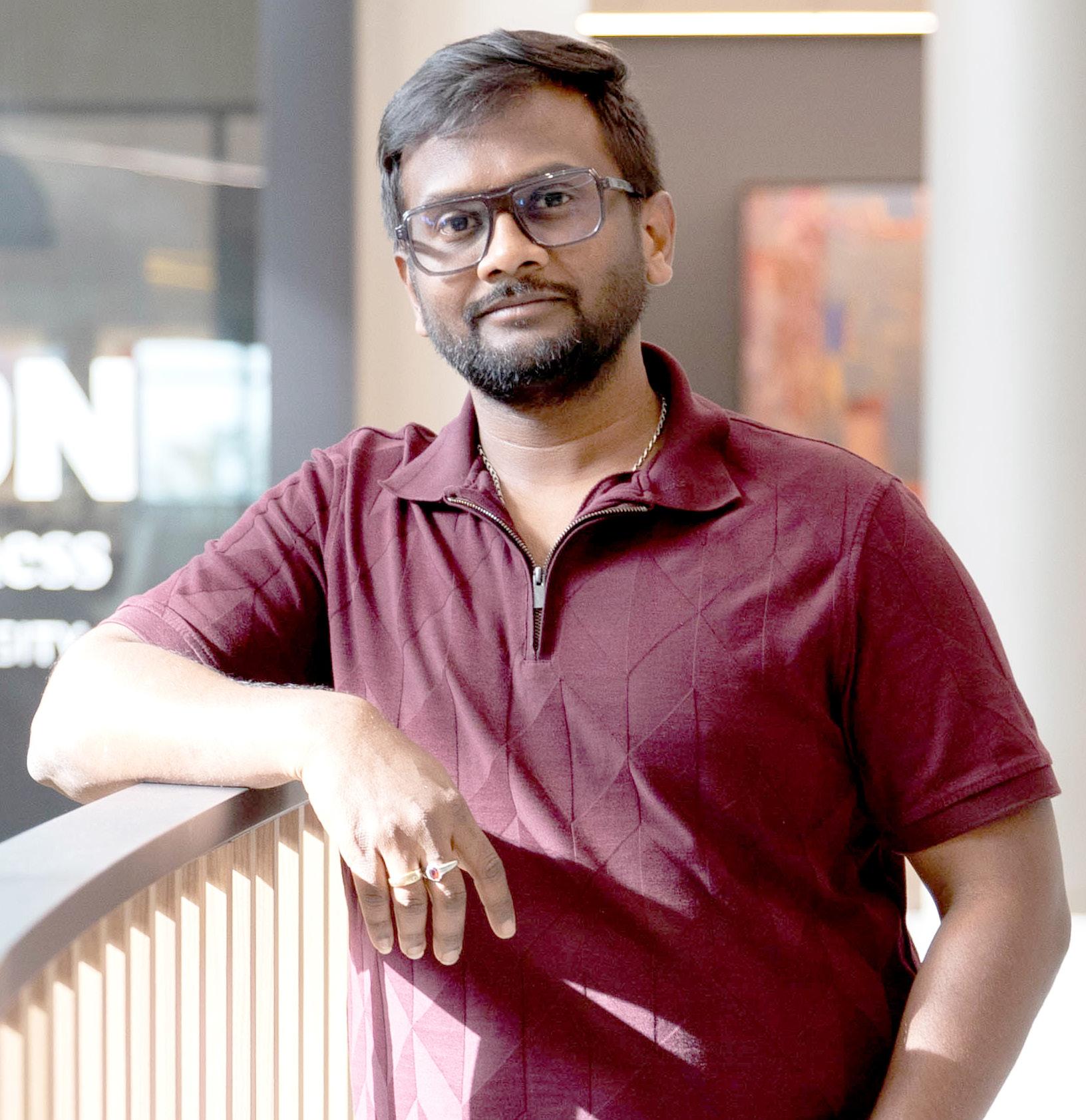
Anil
Badu Adhapaka has been busy. During his time at Wichita State, he’s been a graduate teaching assistant while working on his master’s, and recently he prepared students to compete in a business software competition.
He has his days planned to a T. For much of the last year, he was working at the National Institute for Aviation Research for six hours a day, then spending a few hours planning for the competition and hitting the gym before teaching an evening class. It’s a schedule that would make many people’s heads spin, but not Adhapaka.
“It’s organization,” he said. “Because if I miss somewhere here — if I’m late at 12:30, I’ll be late everywhere. So I have to make my food plan. I have to make my classes. I can’t miss or skip my gym.”
Mehmet Barut, the director of the Supply Chain Management program and chair of Finance, Real Estate and Decision Science at the Barton School of Business, put it best: “he’s dedicated.”
“He’s a great personality to work with, and he is willing to help,” Barut said. “That’s one of the important things, his willingness to help.”
Adhapaka has a background in mechanical design engineering, working for more than 12 years in engineering, manufacturing and supply chain management after completing his bachelor’s degree in India.
Despite his career in India, Adhapaka wanted to go further. And that’s what led him to Wichita State for his graduate degree.
“I’m always a kind of person to think out of the box,” Adhapaka said. “So that’s where I expressed my interest to my family, that I just want a little more expertise in supply chain —I want to get more hands-on experience and knowledge on supply chain.”
Adhapaka left behind a wife and 3-year-old son in India to study in America, and despite his busy daily schedule, he still finds
time to call home.
“It’s very tough, but … in the future, (my son) may take me as an example,” he said. “Luckily, I have good family support, and they’ve encouraged me, ‘Okay, do whatever. We’ll be back behind you.’”
Preparing students for the competition
In February, Wichita State students participated for the first time in the ERPsim competition.
Adhapaka was instrumental in getting the students ready to showcase their business skills.
ERP, or enterprise resource planning software, is used by businesses to manage processes in one integrated system. In the competition, students are challenged to manage a fictional business, analyzing data and making decisions to keep the company sustainable.
Adhapaka and Barut, with the help of Assistant Professor NaRea Cho, spent over a year planning for the contest. Adhapaka went through certification to lead the competition at WSU, then worked to familiarize students with ERP through multiple weekly practice sessions and ensured everything ran smoothly on competition day.
Elizabeth Martinez Bojorquez, a freshman studying international business, was part of WSU’s winning team. She described the work it took to prepare for the competition.
“We were just practicing individually,” she said. “And then eventually came the part to where, like, ‘Oh, you gotta team up.’ And I didn’t really know anyone there, so I just started asking a bunch of girls around me, and we agreed to team up.”
Martinez Bojorquez said the ERPsim competition was “a great experience.”
“I feel like I’m a very hands-on person, and instead of waiting my time to learn about ERP or SAP through a class or through an internship, I was able to just do that in competition. And I was really happy to see the outcome of us winning first place, because I
really didn’t think that was going to happen, and it gave me a sense of gratitude,” she said.
For Adhapaka, the competition was a learning experience, too. For one, he’s used to teaching graduate students, but students of all levels and across multiple disciplines participated in ERPsim.
“I have to explain (to) undergrad students a little more, deeper, complete process,” he said. “Because it’s a very initial stage of their career, their studies. And luckily, the undergrad students also, they catch up very quickly. I really appreciated the undergrad students.”
Adhapaka and Barut said the competition was a success. While the winning team didn’t place in the national competition, they want to make ERPsim a tradition at WSU and continue to improve WSU’s performance.
“Even for the next year, (Adhapaka is) not going to be a student, he said that he can come and help,” Barut said. “So that’s something that shows how he’s connected, how he’s dedicated too, and how he liked it. Because to do this one, he had to go through the certification with the ERPsim, and
he did the first step and the second step. Now he’s motivated to (take) the third step, which is really (a) kind of training the trainers kind of things.
“So I can see that in him, that’s how he evolved from the beginning, the little bit – kind of shyness levels, but now he’s totally gained the confidence through this game.”
With Adhapaka’s time at WSU coming to an end, he said he’s grateful for how supportive the faculty have been. He plans to reenter his industry with more versatile, expanded expertise. And his proudest accomplishment isn’t that he successfully led the first ERPsim competition at Wichita State, or even that he balanced that workload with his own classes and teaching.
“I can say that I earned the trust of students as well as the faculty,” he said. “That’s why they’ve given me this opportunity, and that’s why the students … listen to what I’m saying.”
Now Adhapaka will walk across the graduation stage, with his wife and son in the crowd, and know that he has earned that trust.
BY KAMI STEINLE steinlekami@gmail.com
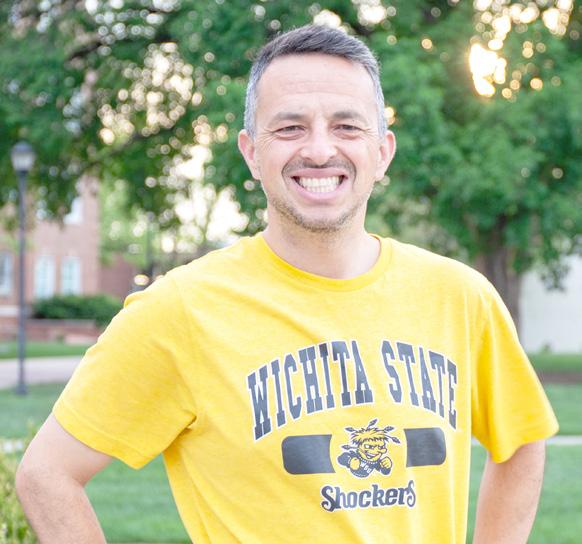
Being involved in many student organizations — and helping start one — while also assisting in various research opportunities has led Anna Brake to get out of her comfort zone and now she is graduating with honors from Wichita State.
Brake is getting an Honors Baccalaureate, which combines majors from different colleges, in biology and public health, and will be attending the University of Kansas School of Medicine in Wichita in the fall.
“I’ve been looking at infectious disease or family medicine,” Brake said. “Probably closer to family medicine right now. I’ve been working at a family medicine clinic and I really enjoy that and I’m hoping to stay in Wichita after I graduate.”
For medical school, Brake was admitted to an early admission program called the Scholars in Urban Health, which offers students acceptance into the KU School of Medicine a year early based on achievements in their undergraduate studies.
“She’s a very accomplished student,” Assistant Director of the Liberal Arts and Sciences advising center Nancy Krehbiel said. “... She’s very poised, very thoughtful, asks really perceptive questions when she is trying to figure things out or weigh pros and cons of a decision.”
During her time at WSU, Brake said she has shadowed and volunteered at multiple local hospitals. Recently, she’s working at two clinics as a medical assistant: at Wichita Direct Primary Care for two years, and at
“
I really enjoyed being at WSU. Looking back at it, I think I’ll treasure these years for sure … I have really tried to be involved with the school and the community that the school has is really cool.”
ANNA
BRAKE Senior, Pre-medical honors student
a residency clinic at Wesley Family Medicine.
“I actually get to work with the doctors who are in training, who finished medical school bar, practicing on their own,” Brake said. “I love getting to work with them and watching what they do and that’s something that I fully want to commit myself to doing in the future.”
Brake also worked on a research project with Department Chair of Public Health Nikki Keene Woods that focused on developing wearable fetal heart monitors.
Woods said Brake always goes above and beyond with the research she does and “has really evolved in her role, from a student mentee to really a team leader for the other students.”
“All of those little pieces of hard work that she’s been able to pull together have really helped her launch and be successful in her own studies,” Woods said.
She is now helping with manuscript writing and working with an engineering team to develop the heart monitors. “I think that Anna has no fear when it comes to jumping into the unknown,” Woods said. “She’s willing and she’s curious and doesn’t let the lack of details or the lack of knowing exactly what it’s going to be get in her, she kind of jumps with both feet and learns as she goes.”
Brake also helped start the WSU Arab Student Association during her freshman year, and she said the organization grew to about 60 students by the end of it. Other organizations she has been involved with include the Student Ambassador Society, which is offered through the Office of Admissions, HEALTH Student Organization and Premedical Student Association.
“She’s been very active on our campus,” Krehbiel said. “She was involved on the executive board of the Premedical Student Association, which is an organization I advise, and she was really great in that role.”
Krehbiel said she’s known Brake since she was a high school student, helping her look at colleges to apply to, and she’s seen Brake accomplish a lot on campus since her freshman year.
“I’m from Wichita, so I had a few friends from my high school who were coming here, but I had never been the most talkative, outgoing person, and I knew that for my career goals, I have to talk to people at least a little bit,” Brake said.
She said she started going to a lot of campus events and signing up for student groups her freshman year — even when she had to go by herself.
“That was a really great way for me to step out of my comfort zone
and meet people and actually get a little bit more outgoing, which I think it definitely worked,” Brake said. “Outside of that, I think the organizations offer really great opportunities to meet people who are interested in similar or completely different things than you and learn a little bit about their perspective.”
Krehbiel said in her role as a pre-med adviser, she sees many students who want to go into medical school and that Brake “is the type of person that I would want providing health care for me or my family.”
“I’m really excited, I think I’m ready to be done,” Brake said about getting ready to graduate.
BY PEYTON ECK eckpeyton3@gmail.com
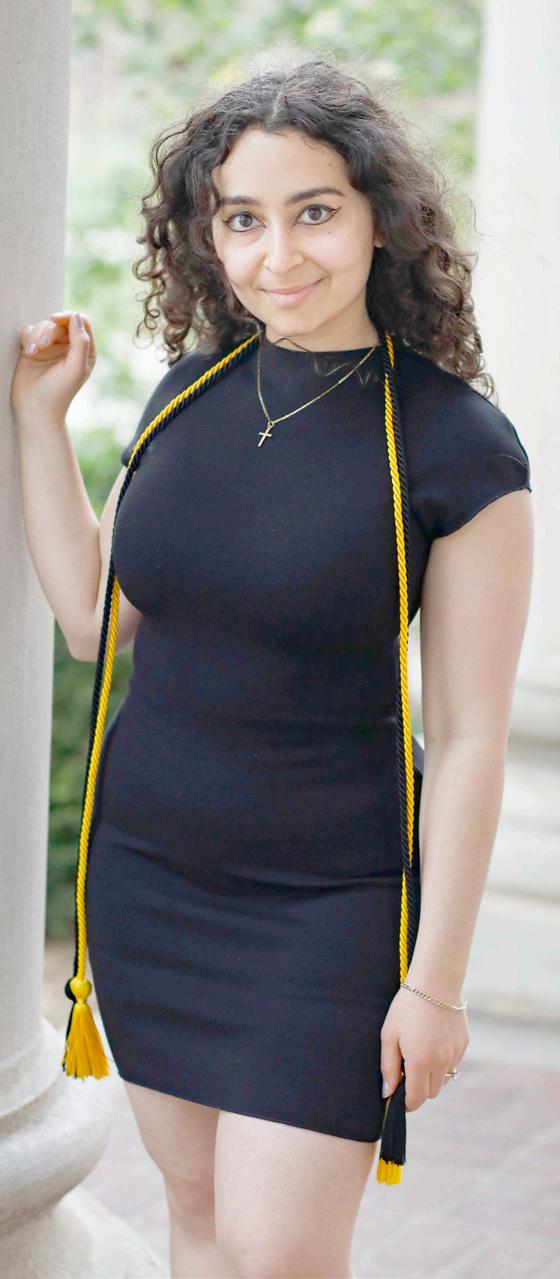
Benjamin Sauceda has been an associate pastor, a city council member and a published author. But these days, he’s president and CEO of the Kansas Aviation Museum and, newly, the foster father of his second son. Oh, and also a soon-to-be graduate of Wichita State.
“It’s been a fun road. Life’s fun, you just keep trying,” Sauceda said. Sauceda is an adult learner who will earn his degree in organizational leadership and learning this spring.
He’s been active in the community since his preteens, when he first got involved in politics. His life is one of service.
“He’s a cheerleader for everybody he’s around,” said Dalton Glasscock, District 4 Wichita city council member and vice mayor. “... He wants to make sure those around him are elevated.”
The two met at a political rally when Glasscock was 15. He recalls that Sauceda, then in his 20s, plucked him out from the crowd as a fellow young person. Since then, their careers have often run parallel or intertwined.
“I would say he’s one of my best friends, and probably one of my closest confidants,” Glasscock said. According to Glasscock, Sauceda’s return to education is very in-character.
“He doesn’t look at something as it is, but what it can be,” Glasscock said.
Glasscock emphasized Sauceda’s adaptability of leadership.
“You have to get people to believe in something that isn’t there yet, and I think that’s what he’s done at the museum,” Glasscock said.
“He was able to cast this vision of ‘hey, this is what the museum could look like’ and actually achieved those goals.”
Sauceda’s been with the museum for 4 1/2 years. It suffered after the COVID-19 shutdown, but Sauceda said it has seen a 70% increase in attendance since then.
This led to growing revenue, allowing the museum to expand or update five exhibits and begin a capital campaign to open a new education center.
Now, Sauceda said that the goal is to create impact. Not only does the museum educate and preserve the legacy of Kansan aviation, but it has also grown into a cultural center for the community.
Sauceda’s family is a big motivation to finish his bachelor’s, 20 years after first enrolling as a student. He and his wife are the foster parents to two young boys.
Sauceda said he wants them “to see that there’s always opportunities to give up or quit,” but then take a second chance.
Sauceda said his mindset follows a quote from Howard Hendrix, a science fiction writer and longtime scholar:
“As long as I live, I learn, and as long as I learn, I live.”
Sauceda put it this way: “Try hard things and do great things.”
He’s excited to be an alum.
“For several reasons. One, I’m ready to be done with classes,” Sauceda said. “But two, Wichita State has provided incredible opportunities of growth and even engagement. I think I’ve been to more basketball games this year than I have in quite some time.”
He recalls his senior year as “such an enriching experience.”
Even as, in his words, “an old guy,” compared to traditional students.
“It’s been so good. And so, yeah, WSU is – it’s home. It’s my school.”
define who he is, where he’s going
BY OWEN PROTHRO sports@thesunflower.com
Rafael Guereque’s schedule rarely repeats itself.
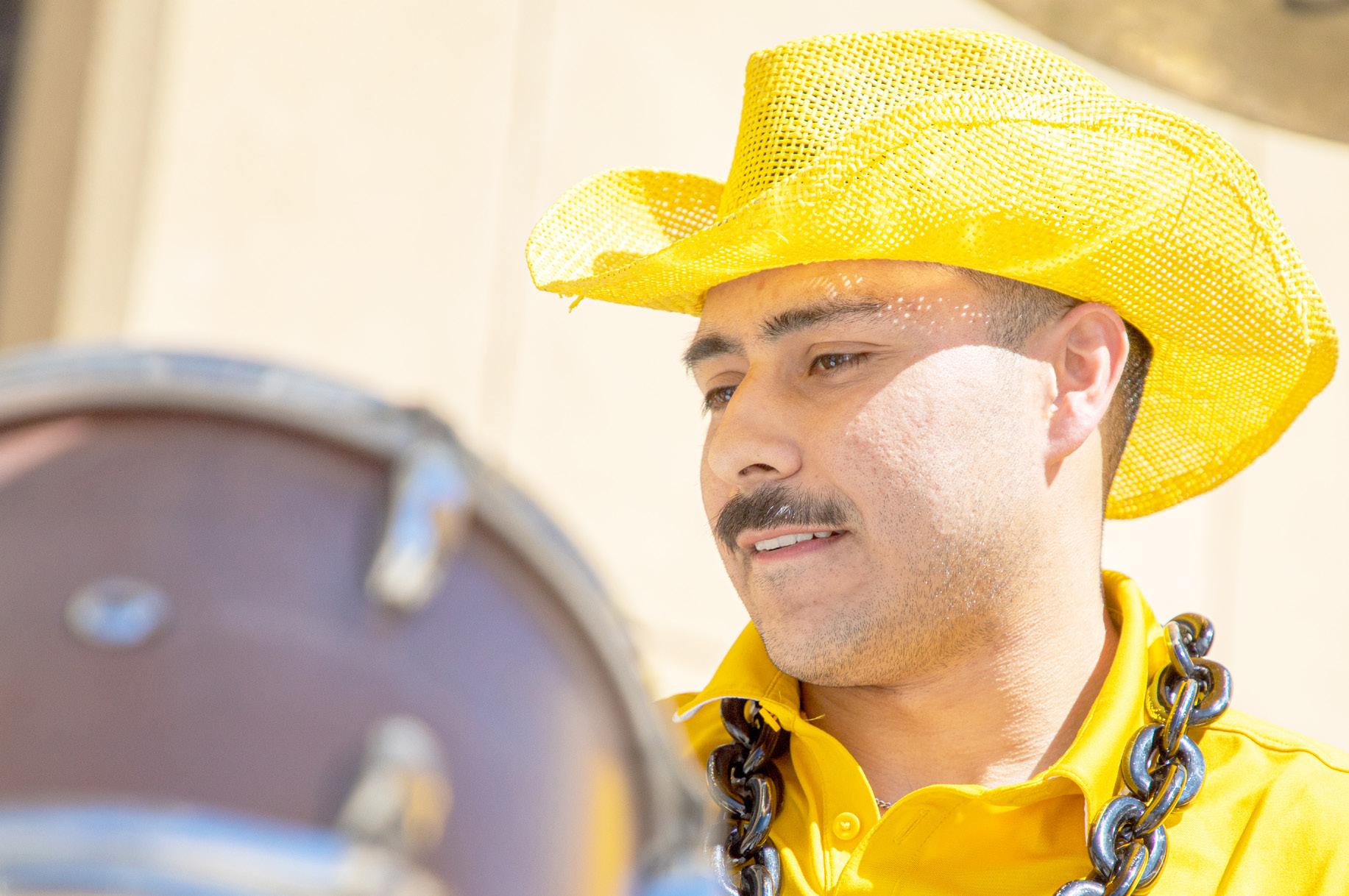
One day, he’s behind a drum kit, setting the rhythm for the Shocker Sound Machine. The next, he’s on the sidelines at Koch Arena in a cheer uniform, rallying the crowd. On other days, he’s in Army green. He’s even appeared on an episode of Amazon Prime’s “The College Tour.”
It’s a pace that would overwhelm most college students. But Guereque manages it well.
“For me, it’s definitely a lot of calendars,” he said with a laugh.
Beneath the packed schedule, there’s a throughline. Even while balancing classes, military service and campus commitments, Guereque shows up to each outing with a certain pull.
“People will gravitate toward him because they want to follow him,” said Bobby Gandu, Wichita State’s associate vice provost for strategic enrollment initiatives. “He’s just a really decent, humble person who is going to be a star at the next level.”
That gravity on campus wasn’t always around, however.
While taking an exam as a freshman, Guereque received a message from the Army saying he would deploy to Kuwait. He remembers scribbling a note at the top of his test, asking to retake it because he knew he hadn’t done well.
“I turned it in, walked away and I was freaking out,” he said.
Within weeks, his routine was gone — or rather changed. Guereque spent nine months stationed in Kuwait, the United Arab Emirates and Syria from 2022 to 2023.
The shift was abrupt. So, too, was his growth.
“It certainly accelerated his maturity,” Gandu said. “He just had a whole different perspective on life.” It taught him adaptability and how plans can change instantly. It taught him how to sit with the quiet and that it was OK to be by himself — to be comfortable with it.
He’s just a really decent, humble person who is going to be a star at the next level.”
BOBBY GANDU WSU’s associate vice provost for strategic enrollment initiatives “
“When I came back, I had a new respect for time with myself,” he said. “I had a new respect for being alone and being happy being alone.”
Gandu joked that the only thing that changed about Guereque when he returned was the size of his muscles.
“What stuck out to me was he was still the very same genuine, caring person. A lot more muscular a year later,” Gandu said. “But he’s still the same person.
“He still had Midwest, Kansas values and was still the same kind person.”
While overseas, Guereque stayed connected to friends, mentors and the life he left behind. His messages reminded people of how much the home he found at WSU meant to him.
“Our relationship changed a little bit in that moment,” said Lucas Hulett, director of athletic bands. “I was like, ‘Oh man, he’s thinking about us. He’s ready to come back.’”
Guereque stepped back into campus life during the 2023-24 school year with a clearer sense of direction. Now, as he prepares to graduate in May with a degree in forensic science, his next steps are calculated.
Guereque plans to attend the University of Central Oklahoma and pursue a graduate degree in firearms and toolmarks analysis. His long-term goal is to return to Wichita and work for the ATF.
As a first-generation college student, he is proof that what may feel distant can be tangible.
Guereque grew up in Hugoton, a town of about 3,700 people in southwest Kansas near the Oklahoma panhandle. He didn’t have much, he said, but he had something that mattered more: a
‘ONE
family that pushed him forward.
Guereque’s parents immigrated to the United States from Mexico, building a life that emphasized stability, work and opportunity.
His mother was his emotional anchor, offering steady care through difficult moments. His father challenged him in a different way.
“My dad has been a very big supporter in the sense that he wants me to be better than him,” Guereque said. “He wants me to live a life where I don’t have to ask for anything.
“He’s told me multiple times, ‘You’re doing great. You’re living life. You’re graduating. I’m not worried about you.’ That’s the biggest thing my parents have shown me — that I’m OK in the world and I’m doing good.”
Together, Guereque’s family gave him the freedom, expectation and opportunity to carve out a path for himself.
That confidence, however, didn’t always come naturally. The version of Guereque who performs in front of thousands of fans didn’t start that way.
As a child, Guereque was shy — the kind of kid who would
disappear when guests came over.
“I would hide with my sister in her room and be like, ‘Let me know when mom’s friend leaves,’” Guereque said. “I just wasn’t extroverted.”
That changed gradually over time. He started trying new activities, each one expanding his world a little more.
First it was sports. Then it was spelling bees. Soon came music.
“Next thing I knew, I was involved in everything,” Guereque said. “Science club, band, choir, scholar’s bowl.”
Now at WSU, he’s built a presence across campus as a Student Ambassador Society member, Rudd Scholar, Cohen Enhancement Scholarship recipient, a former military and veteran student senator for the Student Government Association, and an intern with the Wichita Police Department.
“He wore so many hats for the university,” Gandu said. “His experience in our office was incredibly valuable.”
The hats Guereque has put on may not have been possible anywhere other than Wichita State. He said had he gone to a larger
university, it would have forced him to choose one activity over another. He wouldn’t have been able to advocate for the university while also drumming, cheering and uplifting the student body.
“It let me become the person I want to be,” Guereque said. “Whatever I wanted to achieve here, I have. And that’s because Wichita State’s let me.”
As graduation approaches, his schedule hasn’t slowed. If anything, it’s intensified. But the feeling has shifted.
“I’ve kind of slowly understood that this is like I’m saying goodbye, which is definitely a little more rough than I thought,” Guereque said.
In five years at Wichita State, Guereque has been taken across the world and back, into arenas, onto national stages and into roles he once wouldn’t have imagined.
It’s taken him to just about every corner on campus and built relationships that will carry him forward.
Wherever he ends up next, the setting will change. The approach won’t.
“For that, he’s one-of-one,” Gandu said.
Adding numbers to your resume description and quantifying the scope of your skills can help you stand out, Mathews said.
“An example is, ‘I lead students from my student organization,’” Mathews said. “Great. I can, as a hiring manager, see we’ve got some leadership skills, but leading three people and leading 25 people and leading 50 people is different.”
She said that students often overlook the basic skills — communication, teamwork, problem solving, curiosity and drive. Demonstrating those, Mathews said, can make the difference between two people who might otherwise look the same on paper.
“Students really need to customize their resume for every job they apply to, and that takes a lot more time, a lot more effort, and when you’re spending that much time and effort, it can be frustrating,” Matthews said. “But I do think students will see better results if they take the time to do that.” Mathews recommends a balance between the quantity and quality of job applications.
“The students that don’t have anything figured out yet, we’ve really seen it takes at least six months,” Mathews said. “And it’s not just the applying, it’s the connecting and networking.
“So if you’re just spending all your time applying and you’re not spending any time going out and meeting people … we’ve got to build that in.”
But networking is more than just career fairs and business cards.
“These are connections that you all make in the classroom, you know, in your working experiences and your clubs and organizations,” Evans said.
LinkedIn offers a digital form of networking, which the Shocker Career Accelerator helps students adapt to. They offer a LinkedIn operation appointment, where a coach guides a student on how to build a profile and engage.
On top of making connections, Evans also recommended using the research tools on LinkedIn to get more information if you are trying to shift to a different market. Alongside networking,
effectively communicating your experience and your skills in the job application process is important.
“Where students have the most opportunity is when they get into the interview phase of applying for a job because now it’s about storytelling,” Mathews said.
Before you interview for a position, Evans recommends thinking about what experiences you’re most proud of and why.
“You’re selling your experience,” Evans said. “But you’re also talking about what kind of person you are, even in some cases, some adversity that you’ve overcome. And your experiences are a good way to do that.”
Persistence and grit
As the timeframe to get a job gets longer, determination is one of the most important factors in landing a position.
“Everybody’s journey is different,” Evans said. “And so, even if you’re feeling like you’re seeing opportunities that others are getting that maybe you’re not getting and you’re working equally hard, if not harder, it doesn’t mean you’re doing something wrong.”
Both Evans and Mathews agreed that sometimes the focus needs to be shifted more to the short-term than the long-term.
“I hope students realize that the first job doesn’t have to be the job,” Mathews said.
“With this generation… they’re very entrepreneurial. They want to do it all themselves.”
They also agreed that it’s still fine not to know exactly what your end goal is.
“It’s OK to be uncertain of the end goal fully,” Mathews said. “And also be open enough to realize that it’s OK to change that as we go through life and we evaluate our experiences and make decisions to move forward in the best way that we think will benefit our lives.”
But now, grit and perseverance mean more than anything.
“The tougher the journey may feel, the more rewarding it’ll be at the end,” Evans said.
The Shocker Career Accelerator offers all of its services to alumni, including career exploration, resume help and job search prep. Appointments can be made online through Shocker Central.
BY MYA SCOTT opinion@thesunflower.com
Isolation is a common feeling that hovers over college students, and it has only amplified since the quarantines of the COVID-19 pandemic. But students find different ways to move past the feeling, and what senior Noah Hutchinson doesn’t overcome by spending time with his new cat, Feta, he solves with his art.
“The creative mind, this is something I’ve been thinking about a lot recently, comes from having a lot of time to yourself,” Hutchinson said. “And sometimes it comes out of loneliness and kind of feeling like there’s not enough in the world, and then there’s something you want to bring into the world. Especially after COVID, a lot of people have picked up hobbies.”
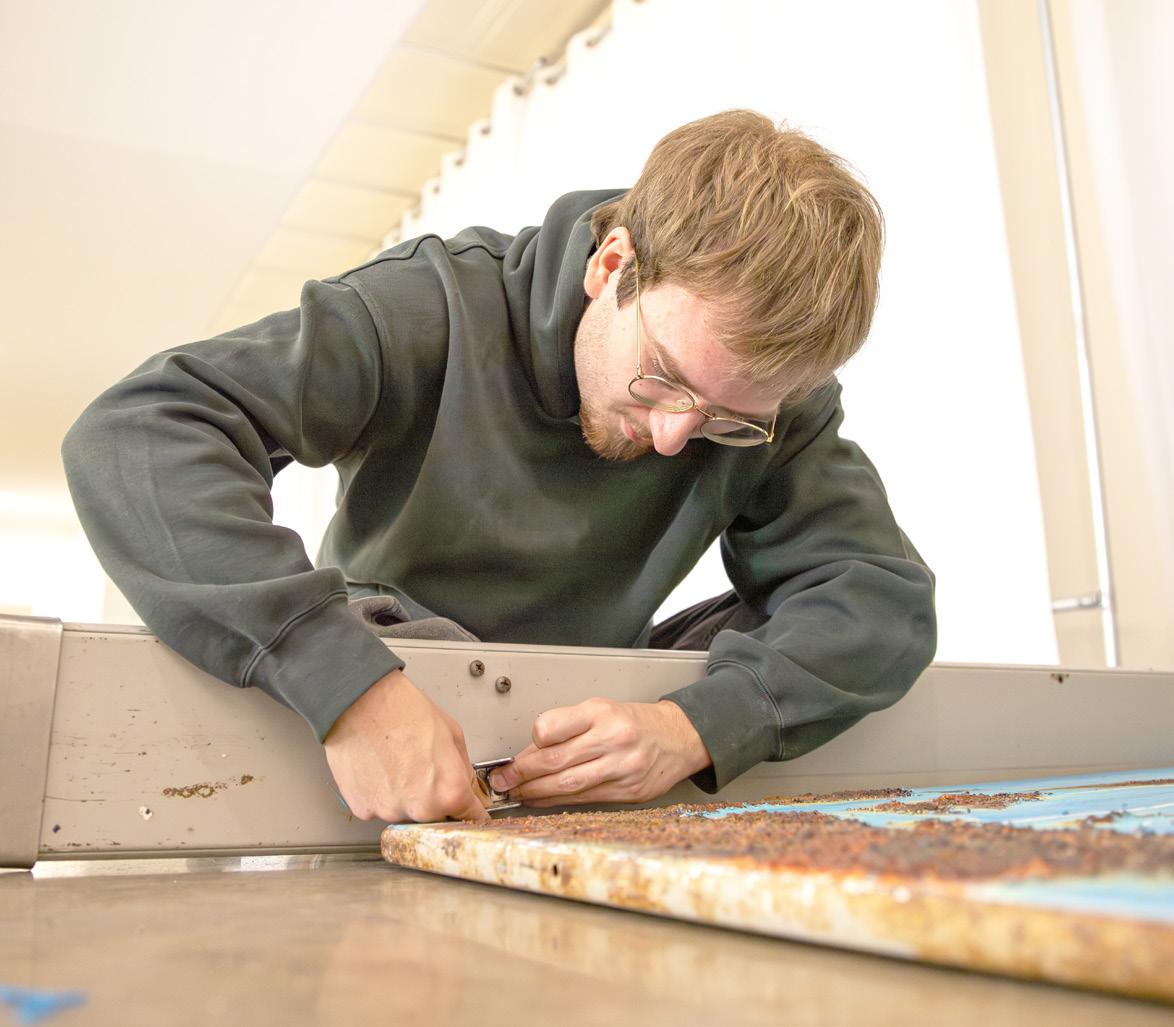
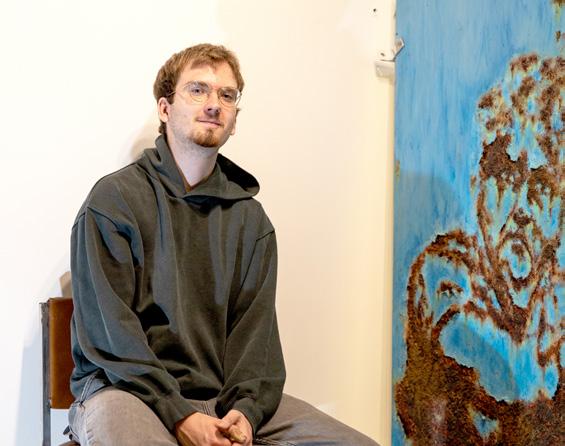
Hutchinson, a studio art major with a focus in applied drawing, is rapidly approaching his final day at Wichita State University and his senior exhibition for “Vox Nostra,” WSU’s School of Art, Design and Creative Industries senior showcase.
Hutchinson said that his piece for the showcase is one of the most conceptual things he’s created yet. The exhibit follows themes of privacy and escapism from social pressure
“I’m using these bathroom stall walls and exterior shell type things because people associate bathroom stalls with the extreme symbol of privacy,” he said. “People escape there to avoid extreme social situations. I’ve done it. You go to the bathroom because you’re overstimulated and stuff like that. So it’s an escape and what happens when you’re being observed in a private space.”
As a Wichita native, Hutchinson has been around Shocker Nation for most of his life, with multiple family members graduating from WSU. He also attended art events at the university before his time as a student, where he met one of his future professors, Robert Bubp.
“He actually came to one of our portfolio reviews, and I remember him quite well,” Bubp said. “He had
some really, really nice work.”
The studio has become a refuge to create art and improve his skills, outside of his home.
“You’re surrounded by things you’ve already made, so you can kind of make more work based on the work you’ve already made,” Hutchinson said. “You’re creating this lineage of where your work comes from, because I feel like everything you make affects the one you make after that.”
Despite Hutchinson being perceived as a quiet individual by peers and others, Bubp said he has seen Hutchinson from a different perspective as his instructor.
“In fact, he isn’t that quiet,” Bubp said. “He has a lot of interesting things to say, and some really interesting perspectives. He’s very thoughtful and very fun … I really enjoy his interpretations on things in his dialogue. But I don’t see it as much actually in class.
“Knowing him … and having him in classes has been one of the most pleasurable experiences for me as an instructor. As far as student relationships go, he’s been one of the best.”
While Hutchinson’s upcoming plans are uncertain, he said he just wants to continue to make art and to travel the world.
“I feel like there’s so much of the world I haven’t seen, so if I get opportunities to travel, that would be great,” Hutchinson said. “What I’m going to do is make a portfolio. I’m going to send it in every corner of the world and every kind of occupation, whether it be a tattoo artist … for me, it doesn’t matter what I’m doing financially.”
As the end of Hutchison’s time at WSU approaches, Bubp said he hopes Hutchinson will never settle in whatever he does next.
“I just want him (Hutchinson) to keep inquiring and making, and move on to whatever the next step is and not settle,” Bubp said. “Not just sort of look around and go, ‘this is enough,’ but actually try to keep moving into whatever the next phase is from him and keep pushing.”
BY JOSH PFLEGER-BERNAT jbernat13@gmail.com
Taylor Vanlandingham’s aspiration to help others and combat social stigma led her to enroll in Wichita State’s communication sciences and disorders undergraduate program.
Vanlandingham developed her interest in speech-language pathology before deciding to attend WSU. Personal experiences in her family revealed the social stigma around people’s struggles with hearing disorders.
“It kind of breaks them off from their social groups, and I have had several family members with different hearing disorders, so that’s always interested me,” Vanlandingham said.
She said she loved how she could pursue her interests in the medical field while staying in her hometown of Wichita. The feeling of a close-knit community is something she really values.
Her parents also work in the medical field, and their experiences helped inspire Vanlandingham to follow a similar path.
“They’ve been very involved in my academics, and just kind of supported me through that,”
Vanlandingham said. “I knew I kind of wanted to stay in the medical field.”
Vanlandingham said she loved the flexibility a career in CSD could offer compared to other careers in the medical field.
“I didn’t think I wanted to do anything fast-paced,” Vanlandingham said. “There’s a ton of flexibility; I could work in a clinic, I could work in a school or a nursing home. There’s different flexibilities with that, and I liked the balance of the medical field, but (it’s) also not always fast-paced.”
Vanlandingham embraced each challenge she faced as an opportunity to learn or find a supportive community to help her.
One of Vanlandingham’s closest friends, Annalie Heliste, is currently pursuing a Master’s of Arts in CSD, while also working as a graduate assistant coach for WSU’s volleyball team.
Heliste and Vanlandingham met through mutual friends before becoming roommates. Their shared experiences in the CSD
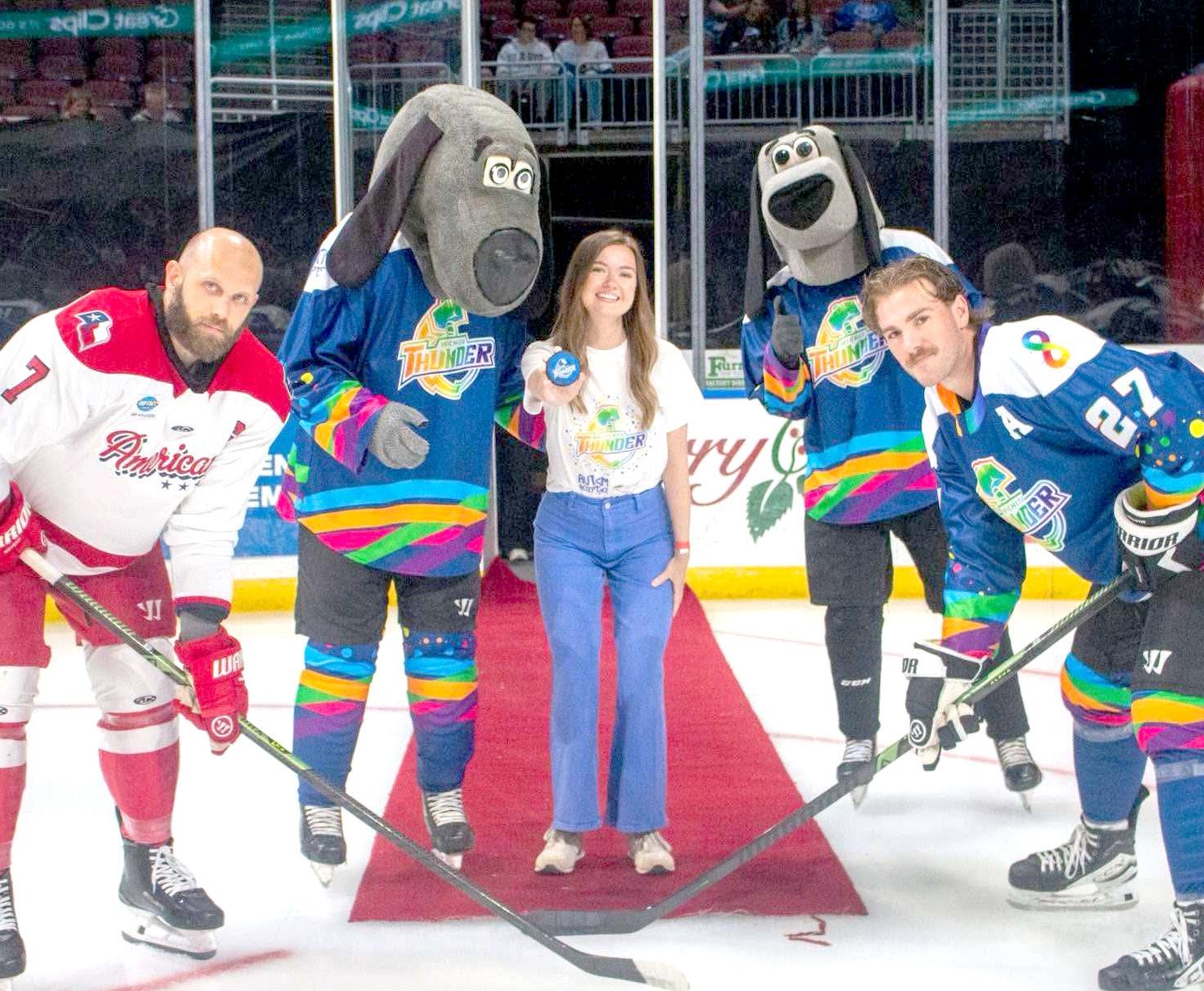
program brought them together, as they supported each other through the difficulties they faced.
“That’s something we definitely connect on,” Heliste said. “It’s funny because I’m giving her the advice that she gives me when I’m hard on myself and vice versa.”
Vanlandingham originally entered the CSD program to study speech-language pathology, until WSU’s audiology program coordinator, Cynthia Richburg, influenced her to switch to audiology.
“Her classes are more challenging, and so it brought me into this, ‘Oh, I knew I needed to work hard,’ (mindset) and then it definitely began to be rewarding once I kind of got some of those concepts from her,” Vandlandingham said.
Richburg took notice of Vanlandingham’s enthusiasm.
“She was willing to ask questions. If she didn’t understand the concept, she needed the clarification and was willing to ask,” Richburg said. “Taylor has a smile on her face all the time. She’s a happy person all the time, and that sticks out in stressful college environments.”
The opportunities to network and build community will always be the most memorable part of her WSU experience, Vanlandingham said. Events like the Kansas Speech-Language-Hearing Association conference allowed her to expand her reach and meet other professionals.
Vandlandingham also
serves as president of the WSU Student Speech-LanguageHearing Association, a student organization encouraging professional interests in the study of normal and disordered human communication.
Her time as president made her motivations for building up those around her all the more clear.
“She is a great leader that always looked out for everyone and went above and beyond,” Heliste said.
Richburg said most students who get more involved in WSUSSLHA generally go on the speech pathology path in CSD, so it was exciting to see Vanlandingham take on so much as an audiology student.
Vanlandingham said she enjoyed getting outside of the classroom and getting hands-on experience at the Evelyn Hendren Cassat Speech-Language-Hearing Clinic because it allowed her to work directly with clients in a variety of scenarios.
She particularly enjoyed working with support groups for people with aphasia and their spouses.
What’s next?
Vanlandingham will continue her education at the University of Kansas starting this summer. She said she really enjoyed her time at WSU, but wants to branch out to other opportunities.
She said she is excited about accessing other resources that she hasn’t used before and growing as
an audiologist. Richburg was very enthusiastic about Vanlandingham’s decision to go to another school for her graduate experience. She said it will help Vanlandingham learn how to interact with people beyond just their medical needs.
“She realizes people shouldn’t be practicing in a bubble or in silos where there is a full person to look at,” Richburg said.
Vanlandingham said she wants to mainly work with adults to help fight the social stigma and challenges that arise from hearing disorders.
The different approach to working with clients versus the time spent in the classroom is also something she said she is excited to experience and feel the change of pace.
WSU’s program has students work with clients early on, whereas KU has a slower approach with students first working with simulations and other methods before clients.
One thing she said she worries about is the high expectation she puts on herself to challenge herself and always do better, but the community and people she has built lifelong relationships with believe she is more than ready for the next step.
“She has such a gift in creating meaningful connections, and all of that will push her to the finish line of her goals,” Heliste said.
Richburg said she thinks Vanlandingham’s expectations for herself are one of her greatest strengths, not something to worry about.
“I don’t think she struggles with it. She might feel like she struggles with it because it feels uncomfortable. I think she does really well,” Richburg said. “The fact that she was willing not to go the safe ‘I know this university, I know these students and this would be the safe location,’ that she’s willing to go into an uncomfortable, unsafe situation so to say, speaks highly, in my opinion, of her.”
Vanlandingham’s infectious optimism and drive to better herself each day are constantly moving her forward. Her time at WSU may be coming to a close, but the memories and relationships she built will stay with her forever.
BY JONAS LORD legobrickslord@gmail.com
Throughout his time at the Wichita State Music Theatre Company, senior Leopold Porcaro has certainly made an impact.
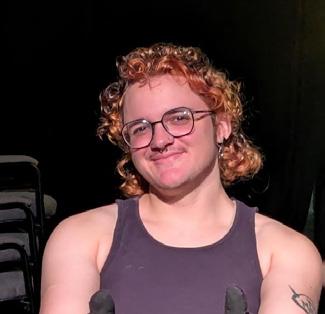
“I think he’s just a very wonderful performer,” Porcaro’s friend and co-worker Pashence Adkins said. “I mean, he writes and performs his own music. He’s a great singer, and I think that he’s been through a lot and does a lot very well and is good at keeping on.”
Performing isn’t Porcaro’s specialty, however. His concentration is in scenic design.
“I really enjoy acting, but it’s very competitive in a way that design and tech theatre isn’t,” Porcaro said. “There’s always going to be someone more talented than you in acting, whereas in design, maybe in one specific area you’re like the best scenic designer.” Porcaro also works as a technical director with the WSU Empty Space Theatre.
“Technical direction is … basically the person who’s in charge of scenic and lighting and sound mostly, and so they are the person that these people report to when there’s issues,” Porcaro said.
Overall, Porcaro has been deeply passionate about theatre for most of his life.
“I guess I’ve been doing theatre since I was a kid,” Porcaro said. “I was in musicals at my church when I was younger, and in high school, I started doing musicals as well. I was predominantly an actor throughout high school, and then I got into carpentry.”
Through this passion and skill, Porcaro was led to a unique internship opportunity after college.
“I currently have an internship coming up this summer with the Croswell Opera House in Adrian, Michigan,” Porcaro said. “I’ll be a technical intern there. I did it last year as well. I’ll be doing a bit of carpentry, painting, a lot of hauling furniture and even designing for (them). So I’m hoping — I’m really looking forward to scenic designs out of everything else. ”
‘It takes priority’: Rudd scholar, pre-med student and plant dad ready for new chapter
BY MALEAH EVANS arts@thesunflower.com
When he was a kid, Gary Tran was convinced he was going to be an astronaut, until he realized the lack of money made in that field, and later a lack of passion, leaving him grounded.
“I figured out that astrophysicists like Neil deGrasse Tyson don’t actually make that much money unless you’re an influencer like him,” Tran said. “So I was like, ‘Okay, aerospace engineering,’ … then I got into internships, and I had two internships by the time it was the end of my freshman year.
“After I had those experiences, they weren’t great, and engineering wasn’t what I expected.” Tran then hit a wall, becoming disinterested in engineering and asked himself if he could commit to the program for four years and continue that job into his life.
“I didn’t want to look forward to the weekends every single week of my life,” he said. “I don’t think that’s a very good way to live your life.”
‘Journey to medicine’
Pretty soon after, Tran was introduced to the world of medicine, where he found joy. In this field, he could still rely on his analytical mind. He later added the degree of health science in addition to engineering.
“I wanted to show that I was committed to medicine … technically I don’t need this piece of paper, but it’s good to have it because … I want to prove somehow in some sort of writing that ‘Hey, I’m also competent in this field,’” he said.
Tran’s favorite experience so far from his “journey to medicine,” was studying under Dr. Elaine Fan, who is a pediatric hematologist oncologist.
“I went into it thinking it’s a pretty sad field, like kid cancer … it’ll probably be my first time experiencing death at (a patient’s) bedside,” he said. “I loved it, I loved it so much that that’s what I want to do now.”
He said he loved it because it gave him the ability to help people, and be there to give them comfort in a difficult time.
Fan said that Tran works very well with the children and families that come through Wesley hospital, and that she and her co-workers were happy to work with him. Prioritization, balance and time management skills
Tran said he is different from his pre-med and engineering peers, who tend to brag about their lack of sleep.
“They all talk about not getting very much sleep, running on three hours or whatever. If I don’t get 10 to 14 hours of sleep, I don’t function well,” he said.
He said that balancing his two degrees, spending time with family and friends, participating in his hobbies, being involved on campus and making sure he gets enough sleep at night was a struggle.
“It takes priority,” he said. “My freshman and sophomore year, I maybe didn’t prioritize the mental health, sleep and friends (aspects) as good. It’s really just your priorities and what my immediate goal is.”
Tran has had a lot of practice balancing extracurriculars. He plays pickleball with friends, takes
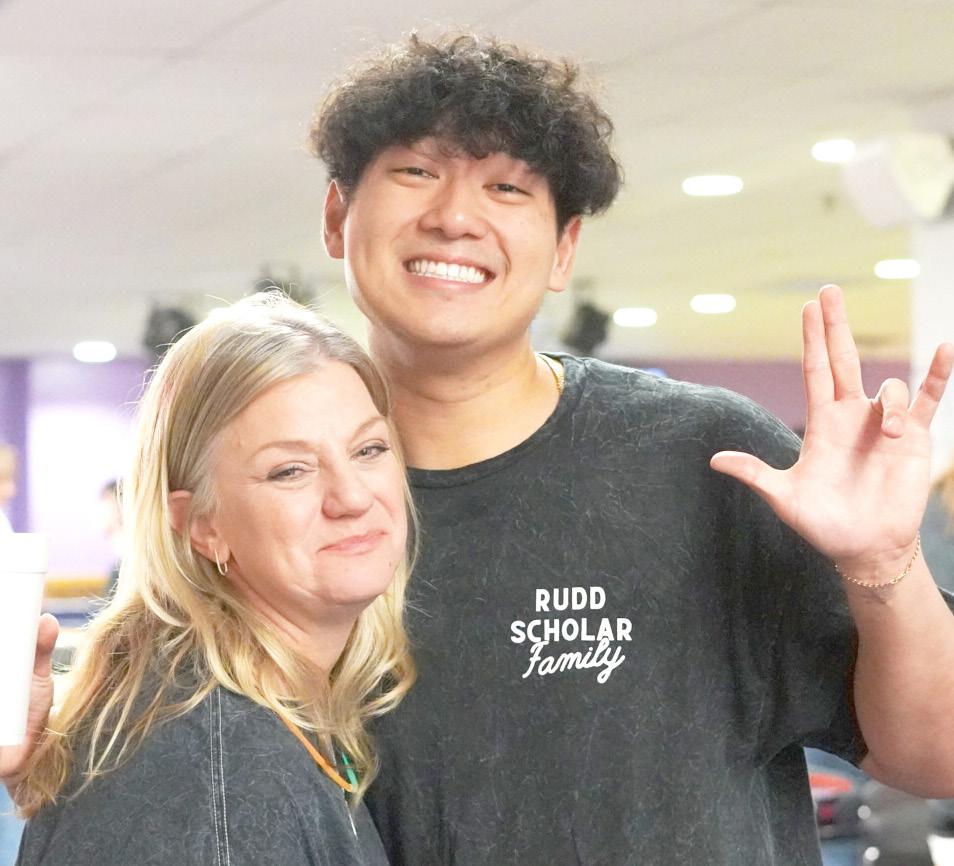
care of his plants as a “plant dad” and has been involved in several student organizations. He’s been the president of the Engineering Honor Society for two years and in 2025 was the vice president of WSU’s Engineers Without Borders.
Go off trajectory, opportunities are waiting
Tran wants people to know that it’s important to be able to adapt quickly when it comes to shifting goals.
“It’s ok if (the goals) take you off of your trajectory a little bit, because you don’t know what opportunities are going to bring you,” he said. “I wasn’t even interested in pediatric oncology, and I was like ‘might as well try it, it’s a sad field. I’d love to see the kiddos’ and then all of the sudden I absolutely fell in love with it.”
He said that the step away from his aerospace engineering focus has helped re-kindle some of that love and passion he used to have for the field. He’s working on finding the balance of holding that passion on the side but not as a main focus.
The field of medicine has become a great passion for him, and Tran said that he’s so grateful for opportunities he got from his Rudd scholarship.
The Rudd scholarship is a four year, full-ride opportunity for pell grant-eligible students.
“Without Rudd, I wouldn’t become a doctor because I’d be in debt,” he said. “A lot of people think I’m pursuing these two fields for money … As long as I can take care of my family and give them a solid foundation, I don’t care how much money I make. If I wanted money, I would keep with
aerospacing engineering, move up the corporate ladder.”
“Its been a blessing and an honor,” Danielle Temel, program manager for Rudd, said. “Just watching him grow and actually push himself to get both majors, not a lot of students can handle the workload and handle the credit hours and make it happen.”
It’s the passion — not the money — pushing him towards medical school and into a career beyond.
“Why would I go to eight years of school and do this if I wanted the money?” Tran said.
Next steps
Tran said he’s applied to nearly 40 medical schools, interviewed with three and was waitlisted for another three.
“The wait list doesn’t really move until the end of April, early May, so right at graduation,” he said. “I have to wait until basically graduation day or a little bit after to figure out what I’m going to do, which kind of sucks … A lot of (others) are also in No Man’s Land, trying to figure out jobs.”
He said he’s excited about the possibility of moving out of the state, since he’s grown up in Wichita. He’s looking forward to new scenery and chances to meet new people.
“I feel like I’m a pretty independent person, and I love to make connections and stuff, so (I’m) really excited and hope I could go out of state,” he said. But most of all, he’s excited to experience something different from what he grew up with.
“Gary’s just so fun and a great person,” Temel said. “I love watching him go towards his dreams.”
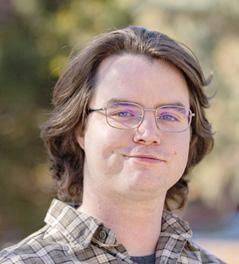
I’m not quite sure what to say in this column.
I’ve stewed on it for at least a month, knowing it’ll have to be done. Yet, I still can’t think of where to start.
I could get on my soapbox and thank everyone who’s made my time at The Sunflower meaningful. I could get on my high horse and gloat about all I’ve done.
I don’t want to do either because, honestly, I’m not ready to call it quits. I’m not ready to say goodbye to my coworkers and friends, or the university I’ve called home for four years. But graduating is inevitable, and I’ve reached my time. Soon, my name won’t appear on the current staff page. Soon, I won’t connect you to the sports, players and coaches you watch through words, photos and videos.
Comparison is the enemy of joy.
Much of the advice people give to young adults is generally, “Don’t compare yourself too much to your peers,” or “Everyone does things at their own pace.”
And all in all, they are true, but as much as you try to listen, it’s nearly impossible not to give in to comparison.
Sometimes it is difficult to scroll through social media and not feel behind compared to others my age. But at the same time, I’m so immensely proud of them and proud of myself too.
I’ve been thinking about going to college my whole life.
When I enrolled at Wichita State University, I was in the LEAD program, an accelerated program with a three-year bachelor’s that would send me straight to the University of Kansas law school, in and out in five years. But, even then, I knew that kind of fasttracked program was not what I
Soon, I won’t participate in class and turn in exams — which I can’t say I’ll miss too much.
What I will miss is taking my morning walks from Yale Street to Elliott Hall, through a door that looks like it leads nowhere, and down steps to an underground heartbeat.
A heartbeat that I’ve grown to the rhythm of, as both a journalist and a person.
When I first joined The Sunflower, I had very little — if any — reporting experience. Now, as I prepare to collect everything that sits on my workspace, I can say I’m a better writer and, more importantly, human than before I arrived.
I’ve learned the compassion that comes from serving a community. I’ve learned that curiosity may not have actually killed the cat, because everyone knows it’ll have eight more lives and triumph will bring it back.
I’ve learned that no detail is unimportant, that no question is wrong — just poorly worded. I’ve learned to take risks, even if the
end result is a failure.
All of that to say, I’ve firmly found a heartbeat at The Sunflower — in my writing and livelihood.
I’ve found my passion.
But my easiest hello has become my hardest goodbye.
Though I don’t want to say it, I must.
Goodbye, Sunflower.
Goodbye, everyone who reads beyond this headline.
Goodbye, Wichita State.
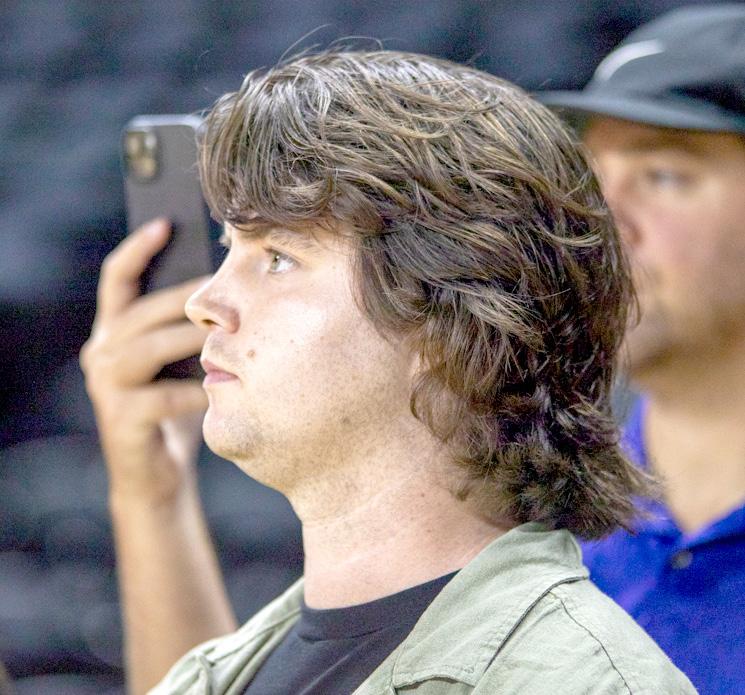
Take care, Owen Prothro Sports Editor, The Sunflower

wanted.
I wanted to stop and smell the roses. I’m glad to squeeze the most out of this chapter of my life, and, amazingly, there is more left in it.
I’ve really enjoyed myself at Wichita State.
I spent three years on the Model United Nations team, visiting Chicago and New York to simulate international diplomacy and news reporting. In my sophomore year, I found The Sunflower, where I’ve learned so much more about this campus community and myself than I thought possible, and made lifelong connections and memories.
So, I’m grateful for another chance at a fall semester. To go shopping for school supplies. To obsess over my schedule. To make
The time has come to say my goodbyes and finally take that deep breath I’ve been waiting for all semester — all eight semesters actually.
I’m so thankful to have come this far. Graduating once seemed like a long shot. Thank you to my teachers, mentors, family and to everyone I worked with at The Sunflower.
Honestly, I’ve never liked school. In theory, the learning is fine, but the homework and the showing up to classes, not so much. The Sunflower motivated me to get up early, come to campus every day and do my best in class (mostly).
And inevitably, I learned some things along the way, including two things that matter when it comes to how you go through life.
Treat people with compassion; have empathy, and love for everyone — and have a little healthy skepticism.
A little skepticism, a little negativity, a little devil’s advocacy are essential for journalism, but also for everything you do.
In college there are plenty of people who will try to convince you of something, including that this is the best place for you, that your tuition and fees are worth it, that
I’ll be walking across the stage at Koch Arena and ending my career as a college student on May 16. Naturally, I’ve been looking for jobs within my field (journalism or media) and applying like crazy.
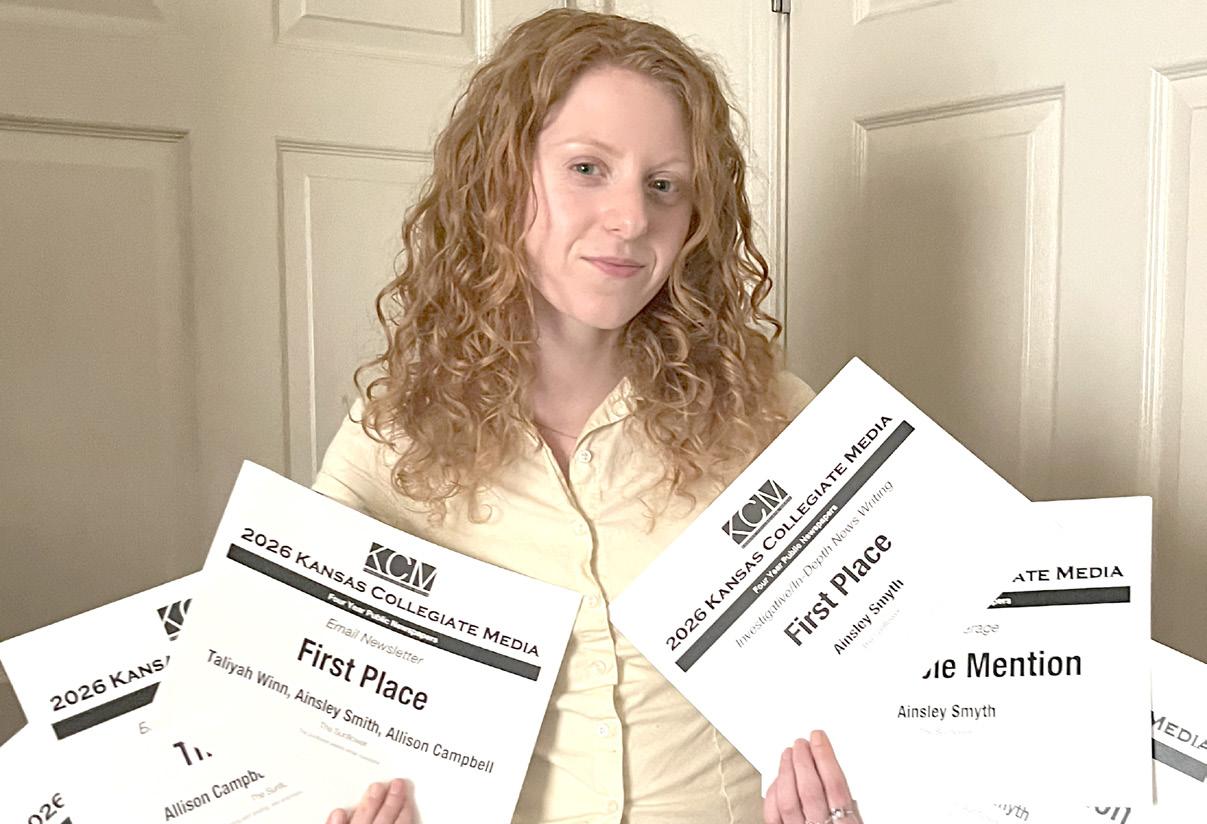
I started the process of applying for jobs in February of this year, as recommended by a couple of my professors, and on April 17, I hit 100 total applications. That number has since continued to rise.
I have gotten 14 rejections, one scheduled interview and still have 95 open applications I have heard nothing from.
an assignment tracker. To have another birthday and get older. And eventually, to graduate and say goodbye to this chapter of my life.
Though I do have some regrets — like not going to the Clash of the Colleges my freshman (or sophomore) year, or not joining the pep band or choir — staying for a semester longer, and getting the opportunity to be more involved will never be one of them.
So if you’re like me, and you are reading through stories of all of these wonderful, talented people graduating, it’s okay. We are all on our own journey to success. And when we say goodbye and graduate, it will be wonderful too.
That one interview turned out to be for a scam company, which is disheartening to think that one of the “companies” that wanted to hear more from me wasn’t even real.
I’ve sent follow-up emails with no answer, and of the 14 rejections, only two gave reasoning as to why I wasn’t selected.
Labor statistics show that the job market has improved since November, when it seemed that 2026 graduates would experience the worst job market in years. But it sure doesn’t feel like it when I’ve applied for over a hundred jobs and have only heard back from 14 of them.
Not to toot my own horn, but I have a solid resume. It’s been edited by career professionals, and
everything from budget cuts to the DEI crackdown is under control.
Don’t blindly believe them, but also don’t hold it against them too much. It’s their job. And I do know that many, many people here believe in Wichita State and also want the best for you.
Everyone has their own motivations, and the truth is, you have to look out for yourself and your peers. Pay attention to the news. It matters to you, even if it’s hard to look at, even if you also don’t blindly believe that either.
But, I don’t want to leave on such an ominous note. People are mostly good. Sometimes, people make mistakes, or act in ways that harm others. That doesn’t make us evil, it makes us human.
That’s the key: balance that skepticism with compassion. To quote that cliché, lead with love. I believe that people deserve understanding. That doesn’t mean you have to agree; disagreement is essential to a health democracy and university. It means you need to remember the humanity of every single person you interact with.
The aim of my whole time writing and editing for The Sunflower is to tell the truth. It’s an imperfect process, to be sure. But to tell the truth, which should be all of our goals, means genuinely seeking to understand others.
With love and skepticism, Ainsley Smyth Managing Editor, The Sunflower
I write a mean cover letter. So it’s pretty disheartening to hear all these great things about the job market when I can’t even get a call back.
Another issue that’s become more popular is companies ghosting applicants even after the position is filled. There were two positions I applied for and heard nothing back from — either with rejection or to schedule an interview — and when I went back to the positions’ web pages, they were filled.
That makes me feel like an unwanted situationship. Give me the decency of a rejection email or something, don’t leave me wondering and hoping that I might have a chance. I hate how commonplace it’s become in recent history, especially in the liberal arts and sciences fields.
I know that in some other spaces, like factory work, it’s also incredibly common.
The constant swiping on job board websites is reminiscent of mindlessly scrolling on Tinder. In any moment of free time, I find myself browsing LinkedIn, hoping for a new opportunity for me to apply to. I swipe right, and the companies keep swiping left.
To employers: If you don’t want me to work for you, send me an email and let me know. I would much rather hear a rejection than nothing.
This isn’t Tinder or another dating app; it’s the start of my future career.
Here’s to graduating into a mediocre job market; I’m rooting for all of us to find something.
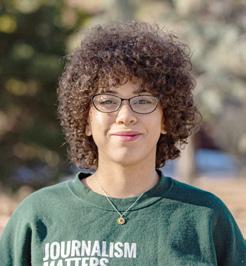
Maleah Evans arts@thesunflower.com COLUMN
My semi-professional experience with journalism started my freshman year of high school, when my journalism teacher told me that he would “hunt me down” if my name wasn’t on his class roster the next semester. Thanks Randy.
But there was no need for him to hunt me down, because my name showed up for that spring semester my freshman year and didn’t leave until I graduated in May 2022.
In college, my spark and passion for journalism was just igniting, and was fueled by the experiences I was gaining at The Sunflower.
In my second year, I took on a brief copy editor position before heading back to the role of reporter. It was last year when I started the process of taking on a whole new leadership role. Allison Campbell, who served as the 2024-25 editor-in-chief, asked me to be the arts and culture editor when the previous one stepped down at the end of the first semester. I stepped in as the interim editor and in that role, I turned the section on its head, giving it an entire revamp and
building relationships on campus.
There’s no revamp without controversy however, and mine came during my first official week as Arts and Culture Editor. The infamous “Spring Awakening” review haunts my legacy to this day, but I think the section grew and prospered under my leadership.
After that review, through conversations with the School of Performing Arts, I changed how we review student productions. We started publishing previews before shows open to benefit both The Sunflower’s readers and the shows.
Our current editor-in-chief, Taliyah Winn, selected me to continue my role as arts and culture editor this year and I’ve had several great opportunities and stories come out of it.
If I thanked everyone individually, it would take up so many words, so I’ll keep that brief.
Thank you to both Allison and Taliyah. I wouldn’t have had such a wonderful last two years if the two of you hadn’t had faith in me to give me the role and to let me continue.
Though I am happy to be graduating, I will miss working for The Sunflower and the great student journalists I’ve had the pleasure of getting to know and working with. The newsroom is such a welcoming place, and I’m
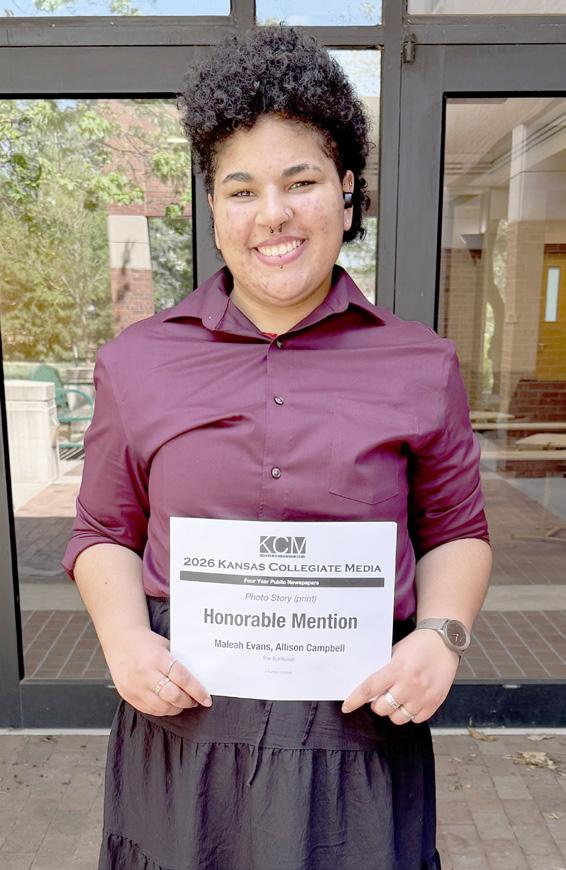
happy to be leaving it in capable hands with our younger editors. Keep doing what you’re doing guys. I’m proud of you all.
I leave you, the readers, with a final thought. Don’t let controversy keep you down or stop you from achieving great things. Also, don’t be afraid to step into a role when you’re not sure if you’re ready. I’ll let you in on a secret: you’ll never be ready.
Jumping into things unprepared led me to some of the best experiences and friendships I could’ve experienced in college. So get out there and do the thing you’re scared of.
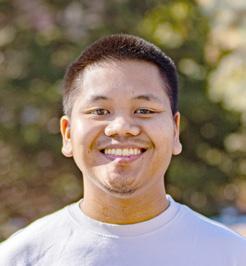
Evan Tong
evantong3@gmail.com
I never thought I would be working for The Sunflower. I won’t lie. I actively avoided it for my first two years of college. I came into college as some broadcast journalism kid from Wichita Southeast who was too good for print.
I wanted to operate bazookasized cameras and run a broadcast show like I did in high school. Then I realized that the broadcast class didn’t exist anymore and hasn’t for a while. I was lost. I had nowhere to go, and I was working at Fatburger. Fatburger was struggling just to cover payroll, and when they closed in May 2024, I lost my job. No job, no internships and not much to show for a journalism career. I thought I would be a lot further down the line, but it never happened.
So I joined The Sunflower in July 2024. I had no print experience and haven’t done video
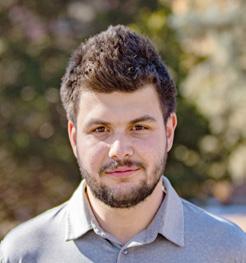
In Warren Zevon’s last appearance on Letterman, he said, “You’re reminded to enjoy every sandwich, and every minute playing with the guys and being with the kids and everything.” Zevon was dying from cancer at the time.
While I am not dying, I am reaching the end of my time with The Sunflower. And, as these final days come, I am left to ponder my time on the paper.
I decided to apply to The Sunflower on a whim, having no idea that I would get the job. After a year and a half, The Sunflower has done more for me than any class at Wichita State University would ever teach me.
I have a lot of people to thank this past year and a half. First of all, I want to thank my lord and savior, Jesus Christ. Also, I want to thank my awesome parents, Trina and Shadd Smith. I want to thank my grandfather, Dr. Joquin Satons,
journalism in two years. I had one documentary that I made for an art class, and no resume to speak of.
I felt like I was walking into a bar full of nothing but broken dreams.
Allison Campbell, the editorin-chief at the time, took a flyer on me that summer, and I am ever grateful for it. At first, I thought I was going to be the video guy for the newspaper. It didn’t work out that way; we just weren’t ready to take that leap forward yet.
I started writing for sports since that was my forte back in high school. It was stressful, but I started having fun writing and being in journalism again after two years. Former Sports Editor Jacob Unruh taught me a lot of things about writing for such a large audience. I didn’t venture outside of the sports section my first year, and I wasn’t yet a photographer. Then I took that next step this year, my final year. I haven’t written nearly as much as I wanted to this year, but I fell in love with the camera again, in a less bazooka-sized capacity.
I thank The Sunflower for
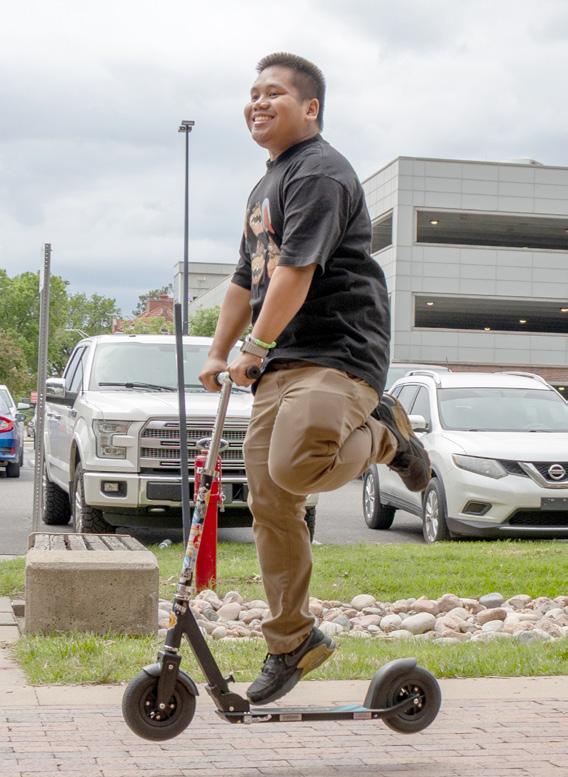
giving me this opportunity, because I don’t think I would still be in school at this point without it. Spending those production nights joking about my casino job and opening Counter-Strike cases. Being the on-call guy and covering crazy stuff was fun. I’d do it again, I just wish I’d done it earlier.
Goodbye, Evan Tong
and my old youth group leader, Dirk Hubbered.
I want to thank Kim White, my broadcast technology teacher at Blue Valley Northwest, who made me fall in love with journalism.
Thank you to the editors who had to edit my stories, thank you to the people who complimented and critiqued my work and thank you to anyone who has spent time with me. It’s so rare when a group of people who have a shared goal excels at it, but that’s what The Sunflower is.
Being on The Sunflower staff has taught me that time management becomes survival, not advice. Doing student journalism has made me feel more satisfied than anything else that I have done here at WSU.
My advice to everyone who will leave The Sunflower one day is to enjoy every sandwich, remember to enjoy the small things and put more value in every minute.
To quote Ferris Bueller, “Life moves pretty fast. If you don’t stop and look around once in a while, you could miss it.”
Godspeed, my friends, Mack Smith
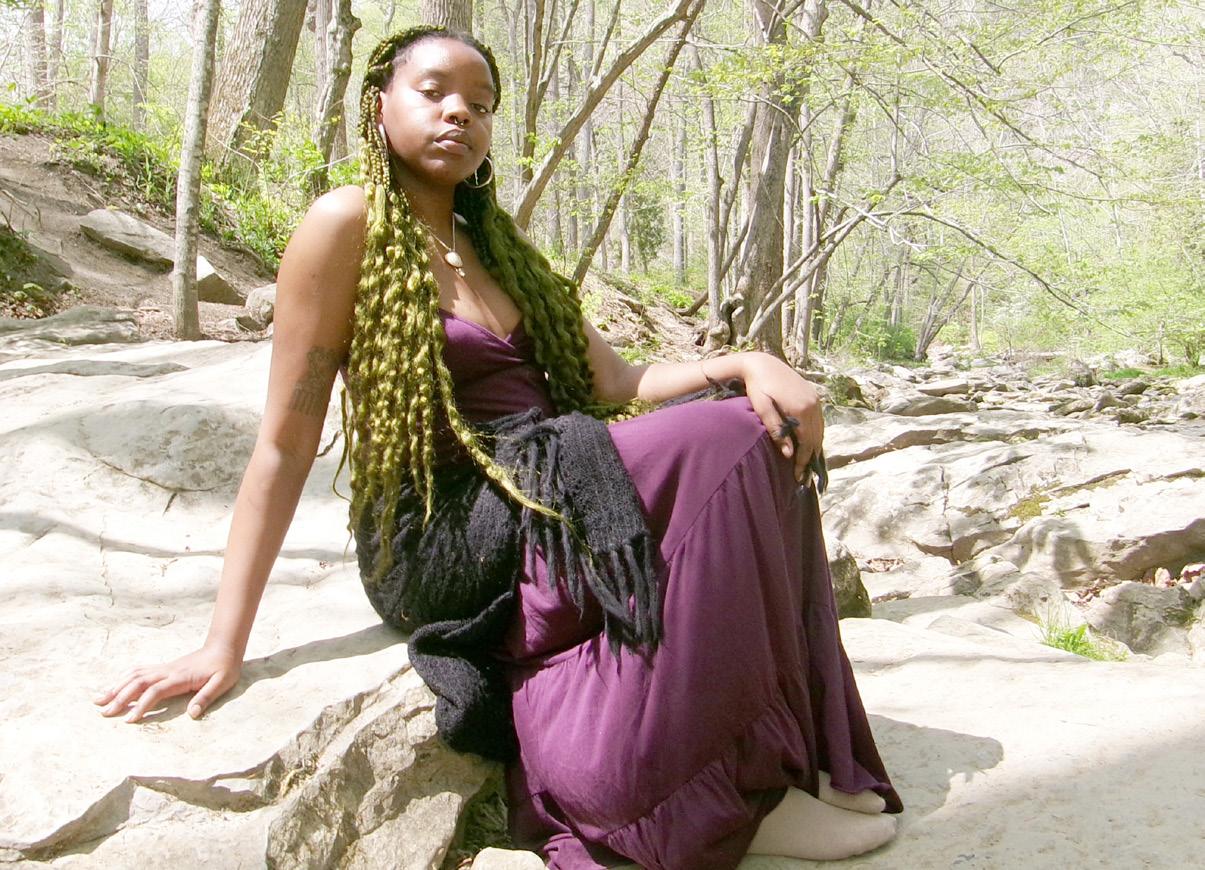
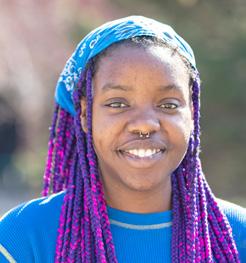
Ivanka Mukadi kabozaivanka@gmail.com COLUMN
Being an international student means I come from a diverse background, which I wear with pride.
I was born in South Africa and raised by a Tanzanian mom and a Congolese dad. After high school, I was sent to my mother’s home country due to political distress. I came to Wichita in 2021 with $700 and a few pieces of clothing, and tried my hardest to secure a campus job and build my grades up.
It feels like it’s gone by in much less time, but after five years of hustling, four certificates, two minors and a biology degree later, I did it!
I can’t help but be emotional and hug myself at all the hard work I have put in to earn this degree here at Wichita State. I could not
have done any of this if not for my mother helping me with tuition, the four internships I participated in and the many dog-sitting gigs I did. Going my usual route to work, I would frequently pass through Elliott Hall on campus. I saw the Sunflower’s logo one morning and decided to head downstairs on a busy January morning.
I met the Editor-in-Chief, Taliyah Winn, and was immediately drawn to join. My time here at The Sunflower was quite enjoyable and has taught professional skills that I will use for the rest of my life. As a multimedia reporter I took photos, wrote some stories and have my own real place somewhere. It’s so cool and I’m so proud I put myself out there during my last semester here at school. I feel blessed to be on the other side of this very hard rainbow. All the work I put in will not be in vain, and I have secured a summer job.
Thank you!
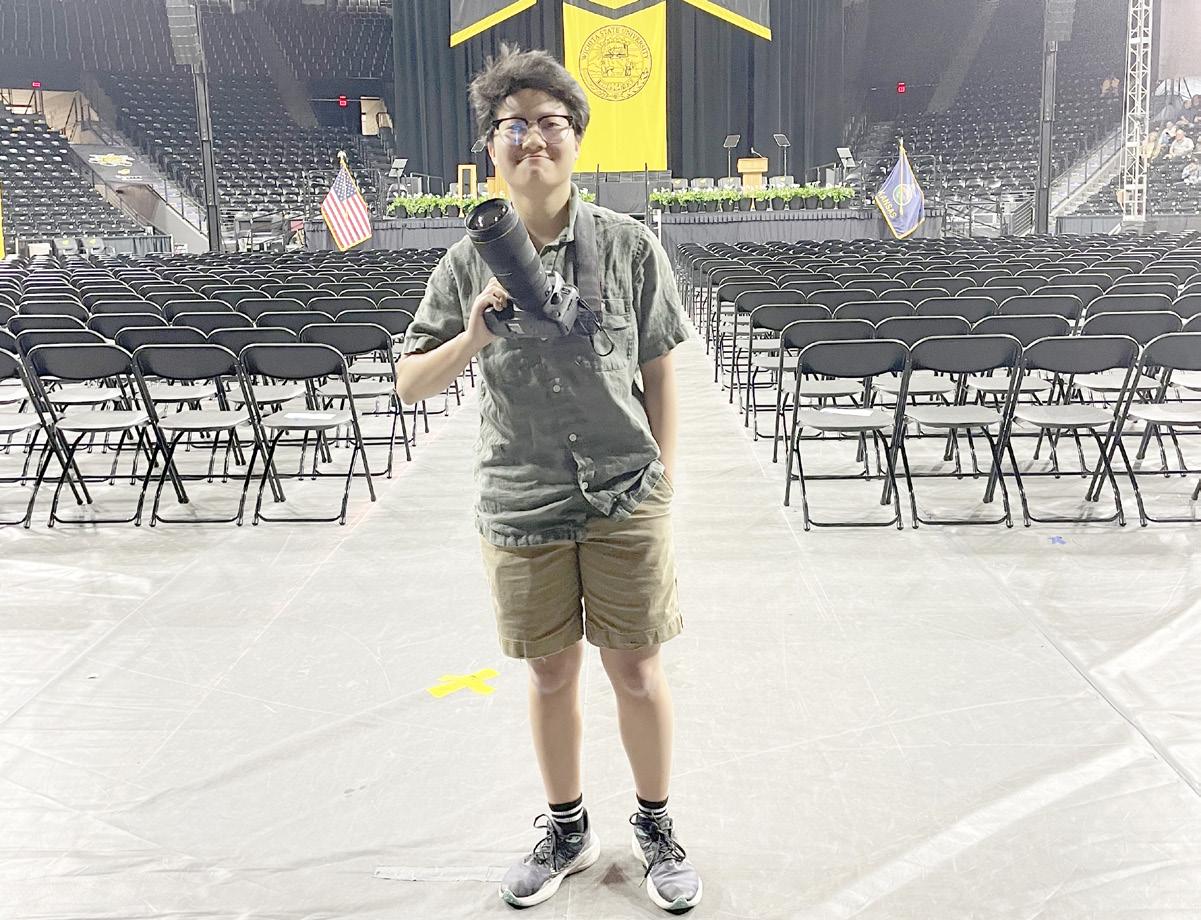
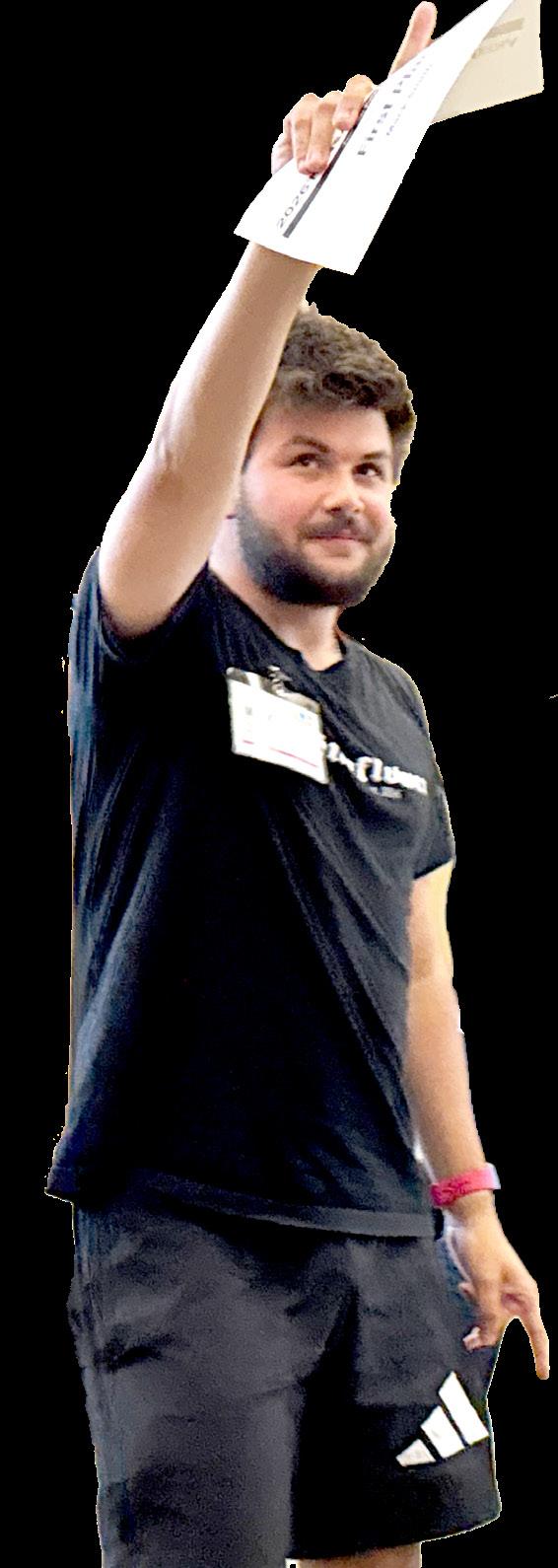
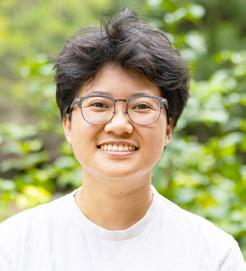
You may have seen me run around the campus with a camera in hand, perhaps trying to get into awkward spots for that one good photo, whether it is an event hosted by Wichita State University, a student government meeting or something completely different. Maybe I have even taken a photo of you. Photography has always been a part of me, and throughout college, it has become a defining aspect of my identity. I remember sneaking away with my aama’s old Nokia phone to take photos of everyday things.
My childhood dog, Snoopy, was the designated model. When I was allowed to have a smartphone as a teenager, having access to Tumblr only deepened my fondness for photography. I was able to enroll in a photography class with my baba’s old DSLR camera in high school, which led me to proper exposure, to intentional practice photography and seeing the world through a lens.
When I arrived at Wichita State as an international student from Nepal, I was surrounded by other international students, mostly in STEM majors. I
hadn’t even considered being a photojournalist and knew nothing of The Sunflower. Finding direction towards my communication degree took some time, but The Sunflower helped me understand how to connect with the community in meaningful ways.
The Sunflower became an opportunity for me to build meaningful relationships and gain lasting, valuable experiences. I am deeply grateful to the editorsin-chief during my time at The Sunflower: Jaycie Nelson, who saw my potential and gave me my start, Mia Hennen, who guided and believed in me through my journey as a photojournalist, Allison Campbell, who trusted me with the role of photo editor, Taliyah Winn who appointed me as a senior photographer and Amy DeVault, the adviser for The Sunflower, for guiding me.
The hours I spent on Lightroom Classic, the running last-minute to an event and meeting deadlines on late Wednesday nights have taught me how deep-rooted discipline is in journalism. Although I may not pursue photography as a full-time career, it will always be an essential part of who I am. I may no longer have access to the amazing equipment provided by Elliott School of Communication for its students, but photography is not defined by the camera. It is defined by the story it conveys.
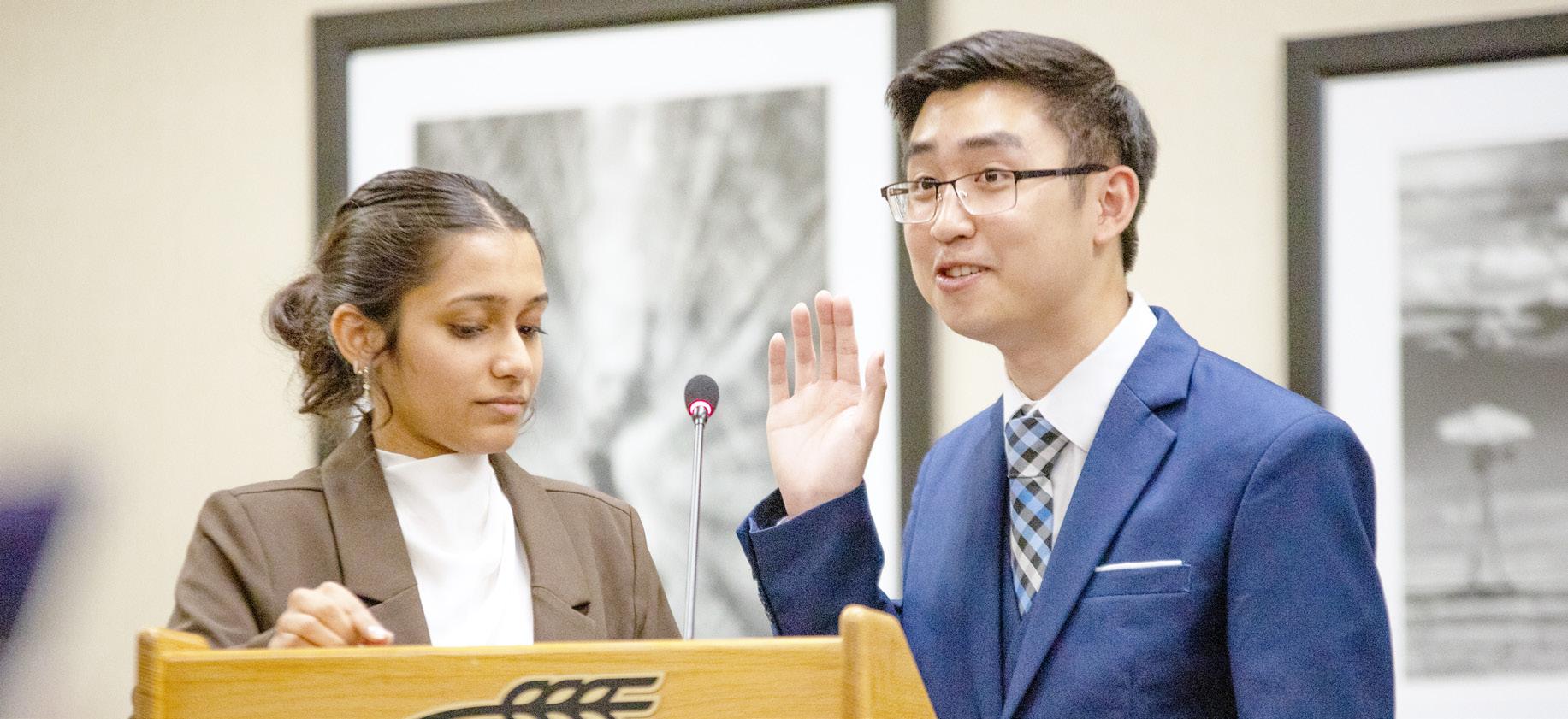
BY KASS LEWIS news@thesunflower.com
One senator was nominated to serve as the next speaker of the Student Senate on April 29, and his name is familiar within the Student Government Association — Matthew Phan.
“I value the wonderful community that we have here at WSU,” Phan said in a speech to the senate. “I’ve been in SGA for all four years at Wichita State. I have extensive experience writing and editing bills and resolutions in addition to providing constructive feedback to senators regarding legislation.”
During the April 29 meeting, Phan was nominated by Sen. Grace Naylor. No other senators were nominated.
Serving as last year’s speaker, Phan is no stranger to the position. He also served as the student body vice president alongside
former Student Body President Kylee Hower during the 2024-25 academic year.
Phan will be a fifth-year student studying mechanical engineering next year.
During his time in SGA, Phan has sponsored 56 and co-sponsored 257 pieces of legislation, according to Phan’s presentation. In his first year as speaker, Phan led a senate committee restructuring and has navigated changes and challenges with diversity, equity and inclusion to remain compliant with state policies.
Phan said senate engagement is a priority for him, something he worked on last session by creating a senator of the month recognition and a legislative tracker, as well as focusing on required attendance.
“I believe that it’s paramount that senate leadership has a personal connection with each and every senator here today,” Phan said.
Every senator voted for Phan except for Sen. Ryan Whalen, who abstained from voting.
Sen. Erin Tims said Phan is “married to the senate.”
“He loves senate so much,” Tims said. “He’s very committed to serving students and doing what’s in the best interest of all students.”
Sen. Andrew Beam, who became the Academic Affairs Committee chairperson in the last few weeks of the 68th session, spoke in affirmation of Phan.
“Speaker Phan was the most welcoming person through that,” Beam said. “He welcomed me to senate leadership and he walked me through exactly what I needed to do, and because of that, I think he will be a great speaker next session.”
Phan will lead his first senate meeting of the 69th session on May 6.
BY KAMI STEINLE steinlekami@gmail.com
The Bachelor of Science in Computer Science program will not renew its accreditation in 2027 with the Accreditation Board for Engineering and Technology.
ABET provides accreditation for computer science, engineering technology and engineering programs at Wichita State including aerospace, applied engineering, biomedical, computer, electrical, industrial, mechanical and product design and manufacturing engineering.
“In the College of Engineering, not just here, but in most colleges in the country, it’s the norm to have the engineering programs accredited by ABET,” Interim Dean of the School of Computing Rajiv Bagai said. “... (when computer science joined the College of Engineering) we were not even aware of what this accreditation was because it’s not the norm in computer science.”
Vice Provost Ashlie Jack wrote in an email to The Sunflower, “programs pursue accreditation when it meaningfully enhances student outcomes, and in this case, the determination was that accreditation was not essential to student success.”
Bagai said that the main reason for not renewing is due to new requirements for computer science programs that have been put in place by the Kansas Board of Regents — the governing board of the state’s higher education. This mandated the programs for the three Kansas research universities to adjust their curriculum to be compatible with KBOR’s systemwide transfer program.
WSU has decided to not renew because ABET has its own
curriculum requirements that do not align with those of KBOR. Bagai said as of now, KU and K-State have chosen to not give up their accreditations and are seeking an exception from KBOR. Bagai said this decision will not affect students because most employers look to see if an institution as a whole is accredited, not the computer science program alone. WSU is accredited through the Higher Learning Commission. The computer science program joined the College of Engineering in 2008 after being in the Liberal Arts and Sciences college since its creation the 1970’s. It got its first ABET accreditation in 2015. While the program was in the College of LAS it wasn’t accredited.
“Out of those 50 years, it has been accredited for just 12 years… so for most of the life of this program, it has never been accredited,” Bagai said.
ABET evaluates programs every six years on factors like curriculum and continuous improvement of curriculum, the amount and qualifications of faculty, facilities, institutional support and student outcomes.
Another reason for not renewing is the time and cost ABET accreditation takes with the large amount of data collection it requires, according to Bagai.
“It does not add any value to our students,” Bagai said. “And only a minority of computer science programs in the U.S.A. are ABET accredited.”
“Employers place greater emphasis on practical skills, internship experience, and applied projects completed during the program rather than programlevel accreditation,” Jack wrote.

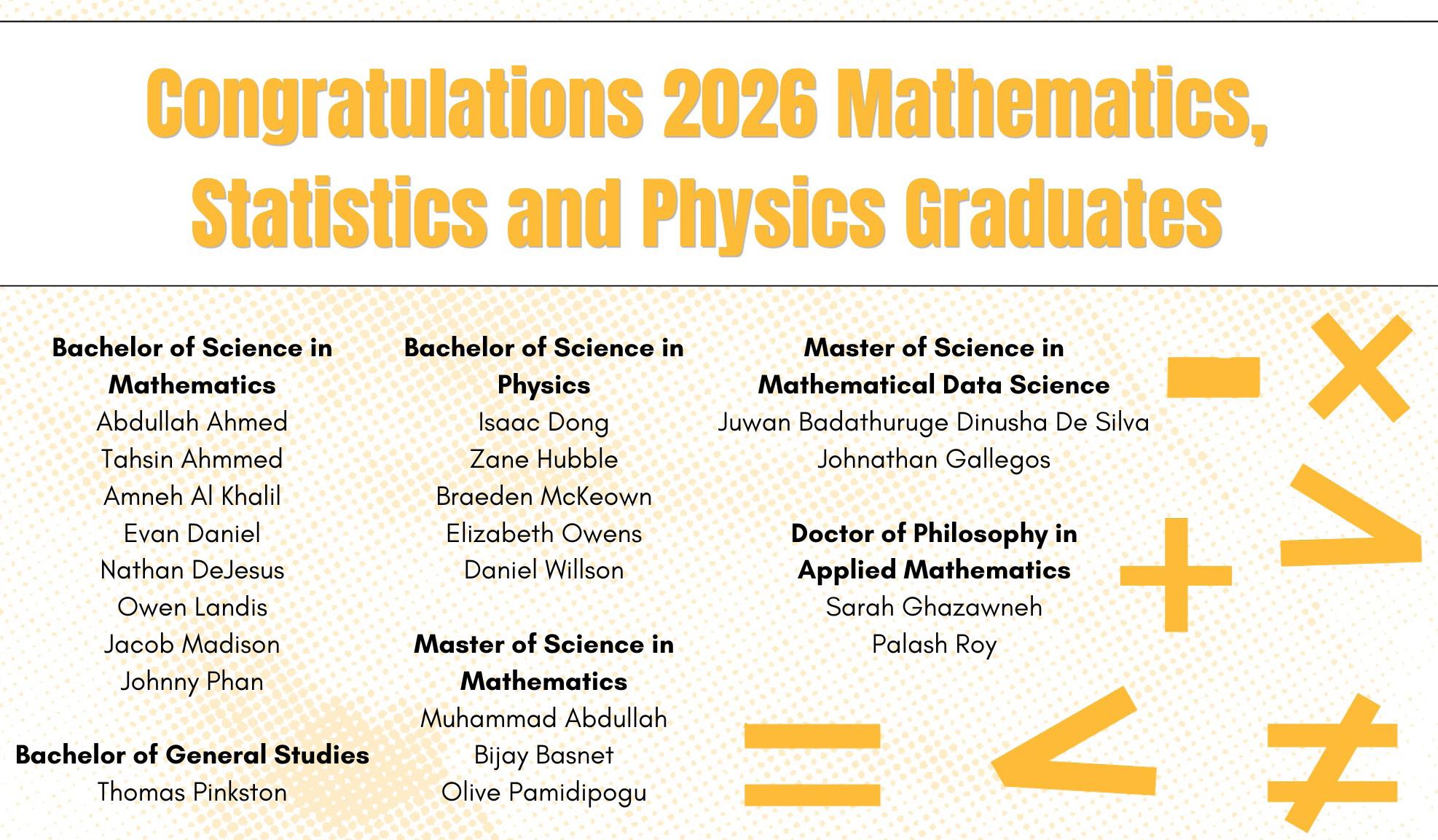
BY JOSH PFLEGER-BERNAT
jbernat13@gmail.com
Verdant Coven Plant Co. and Café on Me are growing out of their respective roots to provide customers with a hub for plant shopping, delicious coffee and critters for sale.
Verdant Coven Plant Co. co-owners Eva Troyer and Kelsey Kuecker met by chance, when Troyer purchased plants from Kuecker on Facebook Marketplace.
They connected over their experience as mothers, and mutual interests in plants, design and more, to build a close friendship and work together.
After getting their start selling plants at pop-up events and from within their homes they are preparing to transition to a brickand-mortar space.
Their shop will be going through multiple phases as it goes through the opening process. Currently, the shop is located at 115 S. Minneapolis and is open while they put the finishing touches on the new space, though at a more limited capacity.
Once the space is complete, there will be a grand opening from May 15-17, with vendors and food trucks for people to enjoy.
In spring of next year, the shop will move to 1811 E. Douglas, which is called “The Spot.” The new location will offer everything the original location does, as well as integrate Kuecker’s Yoga studio.
Once the location on Douglas opens, the original shop on Minneapolis will be converted into a gallery and workshop space, as well as the headquarters for Verdant’s Plant a Prairie project.
Plant a Prairie is a community project focused on providing education on native plant life to Kansas and efforts that can be made to restore many species.
Workshops currently include learning the Japanese art of creating moss balls, called kokedama. Troyer said they’re planning workshops so people at any level can come and learn something new.
The Douglas location is being renovated to allow easy access to the plant store, coffee shop and Kuecker’s Broadleaf Yoga Studio, which is currently upstairs. Troyer said they are currently expecting that location to open in late spring.
Troyer and Kuecker originally planned to handle the coffee shop part of their location themselves, but chance struck again when they met Samantha Gutierrez, the owner of Café on Me.
“We originally wanted to have
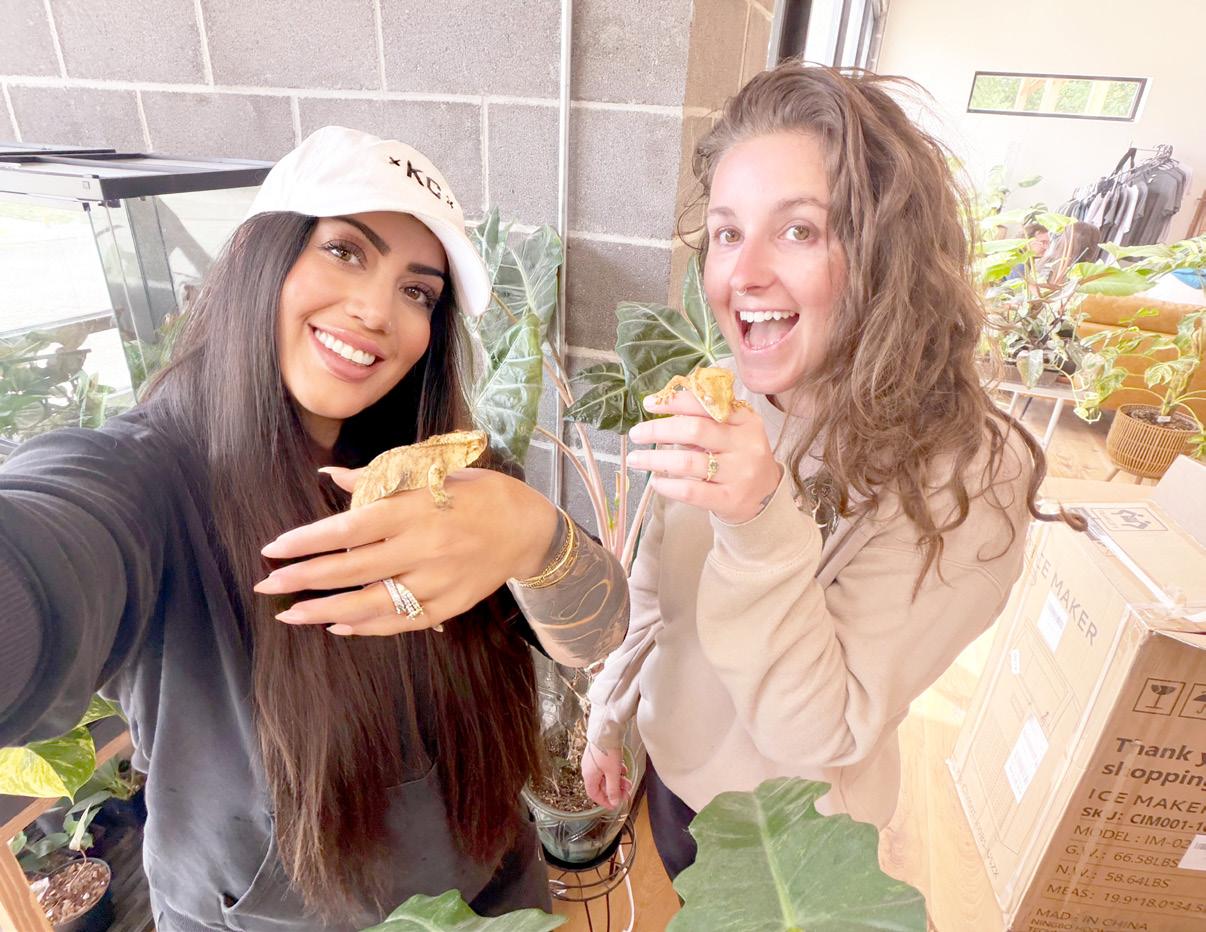
“
We just want to bring people together, whether it’s through the music, the yoga, (or) the reptiles. We just want to kind of be the people that people know that they have a place here.”
EVA TROYER Co-owner, Verdant Coven Plant Co.
this place be just a plant store, and we always wanted a coffee shop,”
Troyer said. “We met Sam at a pop-up event, so I reached out and was like, ‘Would you like to maybe open up a shop here?’ And so them being open before us, like a month or so, has been nuts.”
Troyer said the partnership with Gutierrez aligned with their values of helping other small businesses grow. That mindset translates to how they want to relate to other plant shops in the area.
“There’s enough for everything to go around, and we’re not trying to compete with other plant bars or plant nurseries or anything like that,” Troyer said. “We love all of them, and we support all of them.”
Troyer said she is friends with the general manager of Grow Plant Bar, and Grow’s work inspires her to find new ideas they can bring to the community.
One unique aspect of Verdant compared to other plants shops is they will be selling micro geckos, snakes and jumping spiders. As with the other parts of their business, the idea came from the common interests of Troyer and Kuecker.
“Kelsey also breeds geckos, and she’s done it for a long time, and I had reptiles as a kid, so I feel like we’re both as adults getting to do all our childhood things together, which is kind of what has been so fun about all,” Troyer said.
All the different parts of their business reflects Troyer and
Kuecker’s love of trying new things and bringing people together.
Troyer said her experience performing music, and Kuecker’s work in yoga, has shown them the value of spaces where individuals can express themselves.
Their vision is not to just open another plant store, but to provide experiences for people to be a part of.
“We just want to bring people together, whether it’s through the music, the yoga, (or) the reptiles,” Troyer said. “We just want to kind of be the people that people know that they have a place here.”
Troyer said she is constantly thinking of how they can bring anyone in, regardless of their past experience with plants or otherwise.
“I want everyone to feel welcome and not be intimidated, because plants can be intimidating,” Troyer said. “We want to be able to have a wide variety of ages. We want to be able to have different price points.”
Their business is constantly deciding what comes next and trying to keep people excited. Troyer said they are hoping to franchise the current concept to other cities, but kept other plans to herself.
“We just want to see okay, but we definitely have some sort of plan up our sleeves,” she said. “I can’t say too much, but there are some other things in the works.”
BY MALEAH EVANS arts@thesunflower.com
Presenting 20 images with only 20 seconds to talk about each isn’t easy.
Faculty from the Art, Design and Creative Industries department did so successfully in the second of the “Symbols of Greatness: Restoring Truth and Sanity to American History” series hosted in the Ulrich Museum of Art on April 30.
‘Filtered into my thinking’
Robert Bubp, a professor of painting and drawing, said his talk was an overview of the last few years. His images were a collection of pictures and videos that he took himself and some that he borrowed from social media, during the COVID-19 pandemic and the Black Lives Matter protests of 2020.
“It really made me think about the kind of trauma (of) being forced to be in one place, and also the safety and comfort of Midwestern suburban existence,” he said. “I thought it was interesting to actually see the news from social media as a lens and a way to actually access the news itself.”
How identity shaped artwork
Marco Hernandez, assistant teaching professor of print media, focused his talk on how his identity as a Mexican-American shaped his artwork. After his father died when he was 3, Hernandez and his family immigrated to the United States.
“Through persistence and determination, we learned how to navigate life in the United States, and gradually felt a sense of stability,” he said. “Although I was raised in the United States, my family instilled in me a deep pride in my heritage.” Hernandez said he exists between the two cultures, and his work often incorporates Mexican historical imagery.
Environments to relax
Meghan Miller, a lecturer in the department, spoke about her tie-dye journey and her desire to create environments where people can relax. She began working with tie-dye traditionally in March 2024. In September of the same year, she tried to use the ice dyeing process.
“This involved layering the fabric in a tub of ice and powdered dye. As the ice melts, the dye slowly dissolves and splits into its component color,” she said.
This method has become her primary way of dyeing fabric, and she has since expanded to fullsized installations with lighting.
Measuring words
Jennifer Ray, associate professor of photo media, spoke about self-censorship.
“When a student journalist for The Sunflower asked me about my work at the opening of this exhibition, I found myself hesitating,” she said.
Her installation draws on her long-term project which explores gun culture in America.
“What interests me is not just the act of shooting, but the conditions that make it feel so ordinary. Repetition normalizes behavior, our environment quietly indoctrinates us,” she said.
Environmentally conscious
Lori Santos, associate professor of art education, spoke about her experience planting her own garden and learning to be eco-friendly.
“Each plant, I learned, was a support for another plant, and they were also supported by different pollinators,” she said.
“Within my neighborhood … (people) would want to see my garden … and then my neighbors on the left and right also started their own garden.”
Recently, she took a sabbatical and spent the time teaching middle school students.
“They were so hungry for getting out there and interacting with the Earth,” she said. “The Earth doesn’t ask much from us, just a little respect and reciprocity.”
Clay as a transformation
Ted Adler, professor of ceramic media, spoke about how ceramics hold intention.
“It registers what I act upon it, absorbing and reflecting each division, it amplifies and reorients my intention, returning something I cannot fully anticipate,” he said.
After a vessel is formed, he said it begins to resemble a body, in how it carries weight.
“These vessels cannot be fully resolved into symbols,” he said. “They resist the conclusion, they remain present as things, counter rather than explain.”
Merging analog and digital
Tim Stone, a lecturer with the department, spoke about how space is experienced and how it lives between the physical and digital worlds.
“I want there to be evidence of those two worlds colliding, but also merging and marrying,” he said.
He learned to paint through the screen, and feels as though he is the last of a generation of an analogue childhood and digital teenage and adulthood.
“It’s a combination of all that, the work became formatting and representing these digital blips and representing things in ways of how we see them both in person,” he said.
The curated exhibit with works from each of the faculty will be on display until June 13.
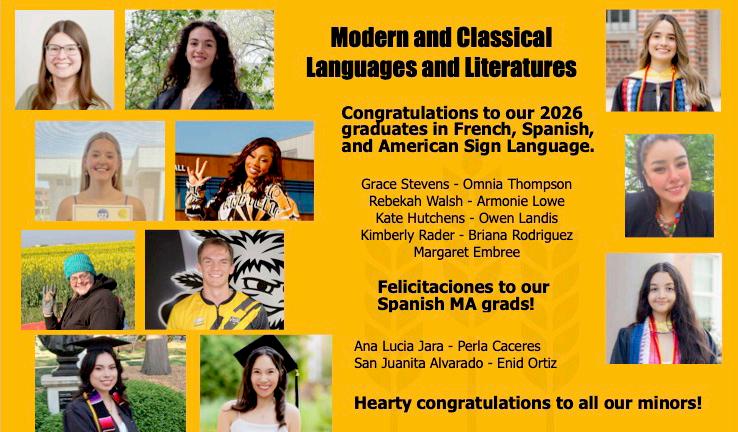
BY MADDOX TOPLIFF maddoxtopliff07@gmail.com
The women’s tennis team fell in its first NCAA tournament appearance since 2018 on Saturday afternoon.
A 4-1 loss against No. 25 Southern Methodist at the Headington Family Tennis Center in the Norman Regional concluded a historic season for the Shockers, highlighted by a 19-match win streak, a runner-up finish in the American Conference Championship, three allconference selections in Theodora Chantava, Xin Tong Wang and Giorgia Roselli, and a conference player of the year-winning season from Wang.
Wichita State was unable to replicate its 4-2 victory over SMU on Jan. 19.
First-year head coach Jacob Eddins said the Shockers, even with the season-ending loss, are right where they want to be going forward.
“This is where we want to be every year, competing for an American Conference championship and making the NCAA Tournament, whether that’s by winning the conference or
They’re a great foundation of players to build the program around moving forward.”
JACOB EDDINS WSU head women’s tennis coach
getting an at-large bid,” he said.
“This is kind of the vision I had for the program and this group,” Eddins added.
The Shockers won their highest number of games since the 201516 season and have spent the last 11 weeks within the top 40 teams ranked by the Intercollegiate Tennis Association.
But on Saturday, the previous results weren’t enough.
Anne Knuettel and Vichitraporn
Vimuktananda secured the win on doubles court No. 3, 6-3, but Wichita State couldn’t build on the momentum. The No. 46-ranked duo of Wang and Roselli fell on court No. 1, 6-3, before Chantava and Kristina Kudryavtseva dropped a 7-5 decision that gave SMU the doubles point and an early 1-0 lead.
Starting singles, Kudryavtseva
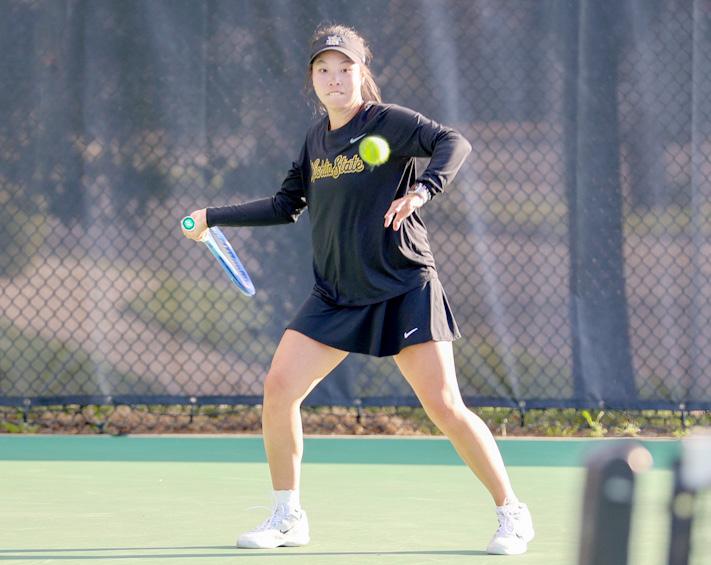
a
BY EVAN LONG evan.long.soccer@gmail.com
The baseball team couldn’t overcome an overall sloppy weekend and dropped all three games of an American Conference series to UTSA by scores of 13-7, 8-1 and 6-3 in San Antonio.
The conference-leading Roadrunners (33-14, 15-6 American) took advantage of seven Wichita State errors to score nine unearned runs in Game 1 of a doubleheader on Saturday. In the second game, the Shockers’ pitchers walked five batters and hit two more.
fell 6-4, 6-2, extending the Mustang lead to 2-0. Shortly after, Vimuktananda secured the Shockers’ first point of the match with a 6-4, 6-0 victory, cutting SMU’s lead in half.
Chantava, who is the 97th-ranked individual player in the country, fell on court No. 3 in three sets after winning the second, 6-2, 6-2, 6-1, putting SMU back up by two, 3-1.
The final WSU player to fall was Wang on court No. 1 in straight sets, 6-3, 6-4.
The Shockers now head home after delivering one of the most successful seasons in recent memory, setting a new standard for the program.
“It’s obviously a special group,” Eddins said. “They’re a great foundation of players to build the program around moving forward.”
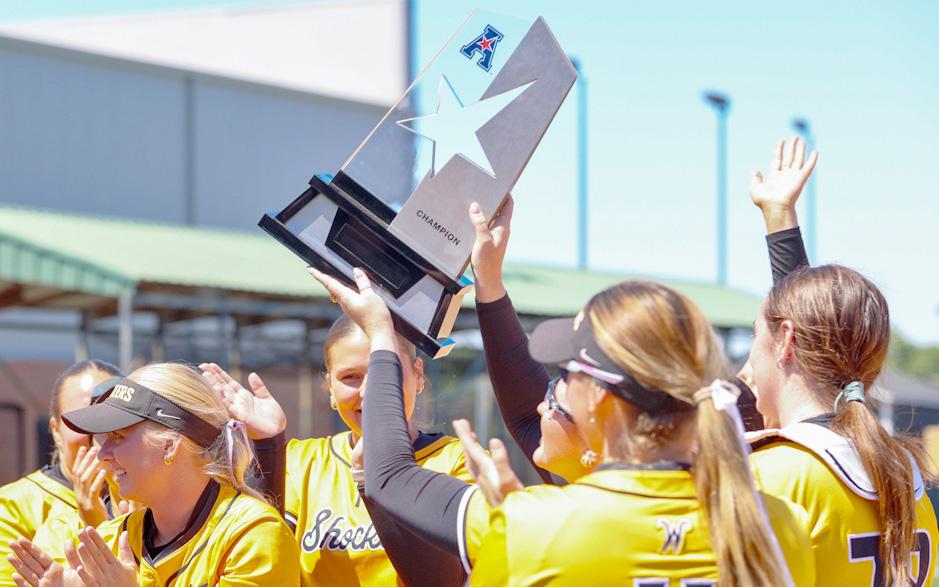
Smith / The Sunflower
BY
risti Bredbenner could avoid it only for so long. After a failed attempt to shower Wichita State’s head softball coach in ice water, they finally got her.
It’s a long-standing custom held for those who win it all — and the Shockers did.
Drenched in it, Bredbenner hit the “scuba” dance to the delight of those who stuck around.
“I’m ecstatic,” she said later. Not 10 minutes earlier, senior pitcher Jade Sanders threw the final strike that prompted the icy shower. Wichita State was then crowned the American Conference’s regular season champion for the first time since 2023 with a 10-5 win to complete a series sweep against Memphis Saturday afternoon at Wilkins Stadium in front of 911 fans.
The Shockers (35-16, 21-6 American) will have to share the honors with South Florida, however, which also finished atop the league standings.
During the final inning, most — if not everyone — in attendance was on their feet anticipating what was to come.
“They were so loud, I could hardly hear my own self talk,” freshman third baseman Kinzey
Woody said while smiling.
But this year hardly started with a smile for the Shockers.
After the first 21 games of the season, they sat at 11-10 and just began conference play with a series loss at East Carolina.
Now, they’ll get a shot at winning the program’s first conference tournament championship in five seasons on the same field in Greenville, N.C., which proved to be where this one turned around.
Many of Wichita State’s players credit that series loss to the Pirates as this year’s rallying point. A 2-1 result showed them just how tough this conference is each weekend and that they couldn’t go into each series already thinking it was theirs to take.
“That wasn’t a good series for us,” Woody said. “Left us not with a good taste in our mouth.
“Knowing that we were better than that is really what helped us turn around. ... We did not show them what we are capable of.”
Since then, the Shockers have done just that. They’ve shown the conference what they can do when a team of 14 newcomers turns to the same page.
Wichita State has now won 24 of its last 30 games, including one against then No. 15 Oklahoma State that went through rain
delays and scheduling conflicts to get there, and a stretch of 12 straight victories from April 3-26.
A lot of that had to do with an internal change.
“They’re here for each other, the culture,” Bredbenner said. “When you talk about teams that have a high level of success, it’s because they want it for each other.
“They’re going to celebrate each other’s success as much as they’re going to celebrate each other’s own. They’re putting in the work — that’s the difference.”
The work put in has done more than just show at this point of the season. If anything, it’s shining.
Wichita State leads the conference in every major statistical hitting category: batting average (.317), slugging percentage (.557), on base percentage (.417), RBIs (306), hits (446) and runs (323).
Its pitching has also given up five runs or fewer in every conference game since April 3, and the team’s fielding percentage (.974) ranks fifth all-time in program history.
“Having all the pieces fall in one big direction is huge,” senior shortstop Chloe Rhine said. “Especially going into the conference tournament. Whoever we play needs to be ready for us.”
The series against Memphis (18-38, 6-21) was a prime example of why teams need to watch out for the Shockers.
That’s because in three games, they gave up just nine runs and scored 33. As a team, they went 33-for-78 at the plate and suffocated the Tigers for just 18 hits.
Sophomore designated player Ausha Moore said it’s safe to say that Wichita State is playing its best softball right now when it matters most.
It matters not just for morale but also heading into this week’s American Conference Championship, which the Shockers won’t play in until the semifinals as 2:30 p.m. Friday.
“We have to put our heads down and go to work,” Woody said.
The preparation began Monday. But a little celebration before then didn’t hurt.
WSU’S
Friday, May 8 at 2:30 p.m.: Semifinals vs. 4 possible teams (ESPN+)
Saturday, May 9 at 11 a.m.: Title game vs. 5 possible teams (ESPN2)
In the finale on Sunday, the Shockers played error-free but surrendered 10 more free passes and allowed three runs on wild pitches.
Wichita State (26-23, 10-11 American) dropped into a tie for fifth place in the conference and was swept by a league opponent for the first time this season.
The Roadrunners, who lead the conference in on-base percentage (.431), applied consistent pressure to the Shockers over the weekend. UTSA got its leadoff hitter on base four of eight times in Game 1, five of eight times in the second game and six of eight times in the finale.
On Sunday afternoon, junior Johnny Nuanez (4-2) was solid in his start on the mound but suffered the loss after struggling to find the strike zone at times against UTSA, the top-hitting team in the conference with a .312 batting average. In five innings, Nuanez gave up four hits, three walks and three runs to go along with six strikeouts and two wild pitches.
The first pitch that got away from him put the Roadrunners up 2-0 in the bottom of the third.
Amar Tsengeg, a senior righthander, and Brady Owens, a senior lefty, each pitched an inning for the Shockers, and both labored on the mound. Tsengeg walked two, hit a batter, and allowed a run on a wild pitch, while Owens walked a hitter, plunked one and gave up a run.
Senior left-hander Heitaro Hayashi and graduate right-handed closer Brady Pacha tossed the last inning for Wichita State. Hayashi threw just one pitch and allowed a sacrifice bunt before being replaced. Pacha, a Wichita native, gave up a run on a wild pitch and another scored after an RBI double courtesy of UTSA senior left fielder Drew Detlefsen.
WSU also didn’t perform well at the plate, striking out 10 times in each of the games on Saturday. Owen Washburn, a senior designated hitter, had the hottest bat for the Shockers against UTSA, finishing the series with five hits, three walks, two runs scored and an RBI.
Junior right fielder Jack Quick also hit a solo shot in the series finale, this one to deep center field. Quick’s mash in the top of the fifth was Wichita State’s first hit of the game and cut UTSA’s lead to 2-1.
In Game 1 of the doubleheader on Saturday, senior third baseman Jayson Jones had two hits before injuring his hamstring and exiting the game. However, in the top of the eighth inning of the series finale, Jones pinch hit and connected on a single to right field.
“It’s (Jones’ injury) a strain; hopefully it’s nothing more than that,” coach Brian Green said on the ESPN+ broadcast on Sunday. “You take a bat like that out of the lineup, and it certainly shortens the lineup.” Jones, a Texas native, has been WSU’s most productive hitter this season. Going into the series finale on Sunday, Jones led the team in batting average (.364), hits (68), home runs (12), RBIs (47) and slugging percentage (.594).
The star third baseman pinchhitting at the end of the game on Sunday is a good sign for the Shockers, who hope to get him back for the final two series of the regular season.
Wichita State returns home to play Florida Atlantic in its final conference series at Eck Stadium this season, starting at 6:05 p.m. Friday.

You’re ready to take on the world. As you navigate your future endeavors, may you continue to bloom and thrive in every opportunity. Wichita State University’s Barton School of Business is proud to have been part of your journey. We can't wait to see the incredible heights you'll reach! We are so proud of you. Congratulations Class of