

BY OWEN PROTHRO sports@thesunflower.com
The bass was bumpin’ from inside the home team’s locker room. Maybe more than usual.
The reverb rattled through the walls nearby it at Koch Arena. Saturday was a good reason to celebrate — loudly.
Wichita State had just pulled off an 81-77 come-from-behind victory in a Roundhouse rematch with Tulsa, earning its 16th win of the season and moving a game-and-a-half back from first place in the American Conference standings.
The Shockers led for 2 minutes, 54 seconds, the entire contest. Turns out, that’s all they needed. A crunch-time surge, 16-7 run over the last seven minutes and a rambunctious crowd sealed the outcome.
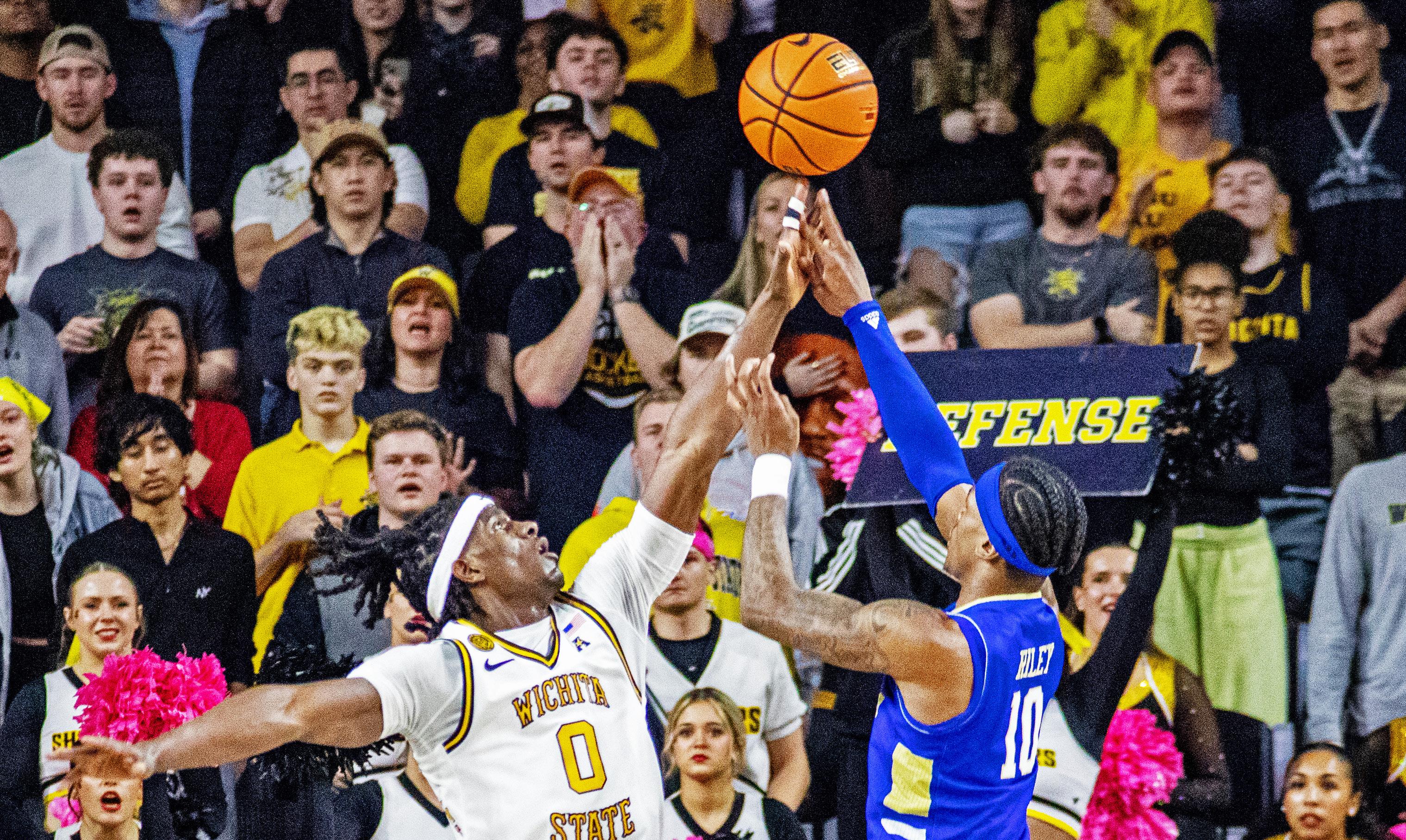
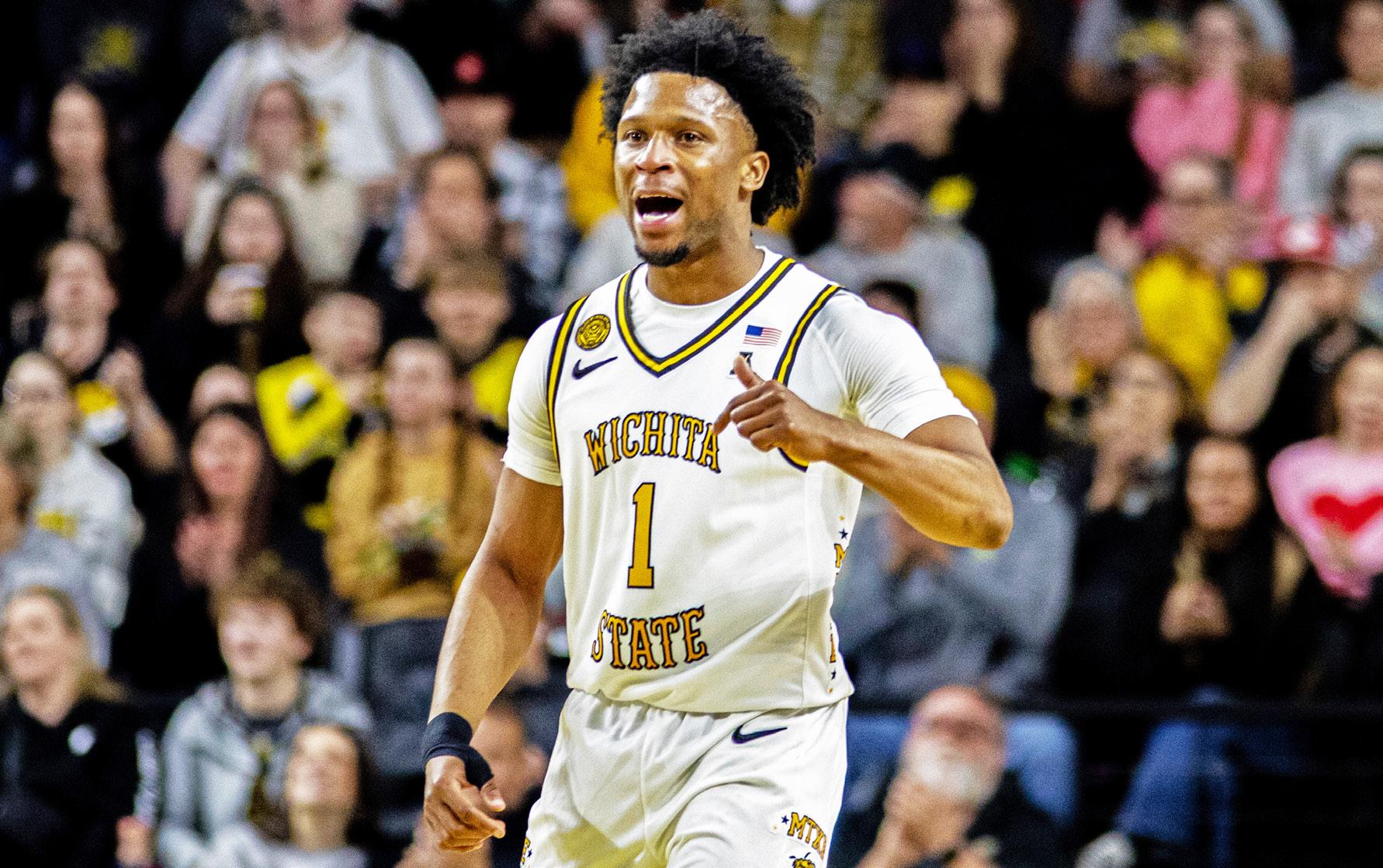
Senior guard Kenyon Giles hit a pair of free throws that gave WSU the lead for good. Senior forward Karon Boyd rose for a gamedefining block on Tulsa guard Tylen Riley. Junior center Will Berg and Boyd secured multiple defensive rebounds with under 30 seconds left on the clock to prevent any extra chances for the Golden Hurricane.
“It was really a team win,” coach Paul Mills said after the game. “Most importantly, I thought it was a community win. The
BY AINSLEY SMYTH & KASS LEWIS managing@thesunflower.com news@thesunflower.com
A bill in the Kansas House of Representatives that would restrict the topics that could be included in many required university courses has been removed from the hearing schedule. It’s unclear if it will reappear this session. But a provision in the legislature’s budget could still crack down on diversity, equity and inclusion in curriculum.
Budget proviso would withhold funding if schools continue to include DEI in required classes
One current proviso — clauses establishing a condition for funding, that expire at the end of the fiscal year, which runs July 1 to June 30, unless renewed in the next legislative session — from the Committee on Higher Education has a similar goal to House Bill 2428, both requiring public universities to remove DEI-related content from required courses.
It was really a team win. Most importantly, I thought it was a community win. The Wichita State community was phenomenal.”
PAUL MILLS Head men’s basketball coach “
Wichita State community was phenomenal. They were present there at the end.
“Tulsa was 1-for-8 there late, and really attribute some of that to who our people are and how much they support basketball.”
For a season-high 7,569 fans at the game, it sometimes felt like Koch Arena was full. Tulsa was met with deafening roars down the stretch that shrank the away team’s half of the court. Communication was rendered obsolete.
When the Shockers made a big play, the crowd made sure the Golden Hurricane knew about it.
“It was lovely, man, the crowd going crazy from the jump,” Giles said. “Then we went on that run. That’s why I was like, ‘It was ours,’ because the crowd got into it.
“I feel like it helped our play. I really appreciate the fans for coming out today.”
Understanding the final five minutes
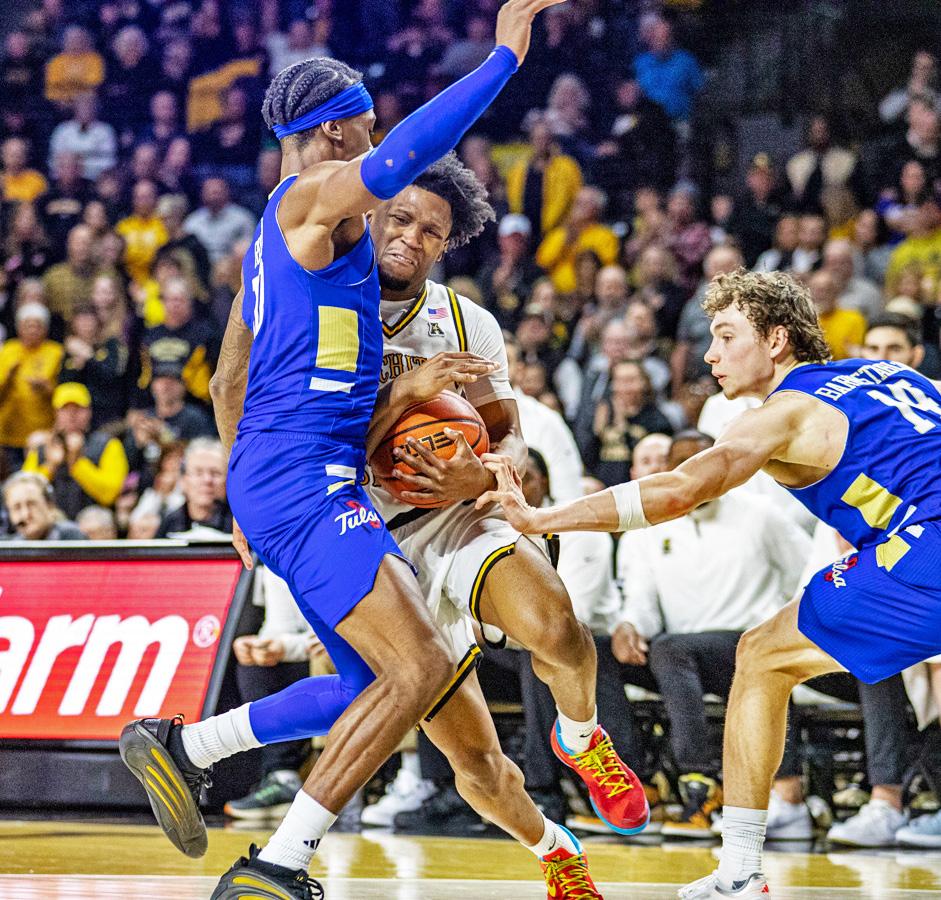
To understand the magnitude of WSU’s win, you have to go back to what happened before there were 5 minutes, 28 seconds remaining in the second half. The first stanza was a track meet. The Shockers played from behind for all but 12 seconds, and Tulsa fired at will by sinking 50% of their field goals. Giles gave WSU its 10-9 lead
at the 16:12 mark before Miles Barnstable erased it with the game’s first three, minus a trio of free throws the Golden Hurricane guard made when he was fouled beyond the arc a little earlier. Tulsa went up by six by halftime after guard Jaylen Lawal scored five unanswered in the last minute, 41-35.
The proviso builds upon a previous one that’s still in effect, which forbade DEI infrastructure within public institutions. Since July, anybody paid by WSU, as a state-owned institution, can’t include pronouns in their email signatures. Along with this, pages were removed from the WSU website, and the names of some university units have been changed — like the Women of Wichita State, now WSU Sparks Society.
“(WSU) interpreted last year’s proviso to mean, ‘Do all these things, but leave curriculum alone because curriculum is protected under the statute (law),’” said Zach Gearhart, Wichita State’s chief of staff. “Now what they’re saying is ‘You need to interpret it to mean no (DEI) mandates in the curriculum.’”
The proviso would hold $2 million from each university — $12 million in total — until each university proves to the state finance council, which Governor Laura Kelly chairs, that it does not mandate “DEI-CRT” related classes within curricula.
CRT refers to Critical Race Theory, an academic theory that analyzes systemic racism in institutions. CRT, which dates back to the 1970s, has come into the political spotlight in recent years with efforts to ban it from curricula across the country.
House Bill 2428
HB 2428, which has been pulled from the hearing schedule, would mandate that the Kansas Board of Regents — which oversees higher education in the state — restrict topics such as race, gender and bias from the curricula of most required courses for bachelor’s degrees.
BY EVAN LONG sports@thesunflower.com
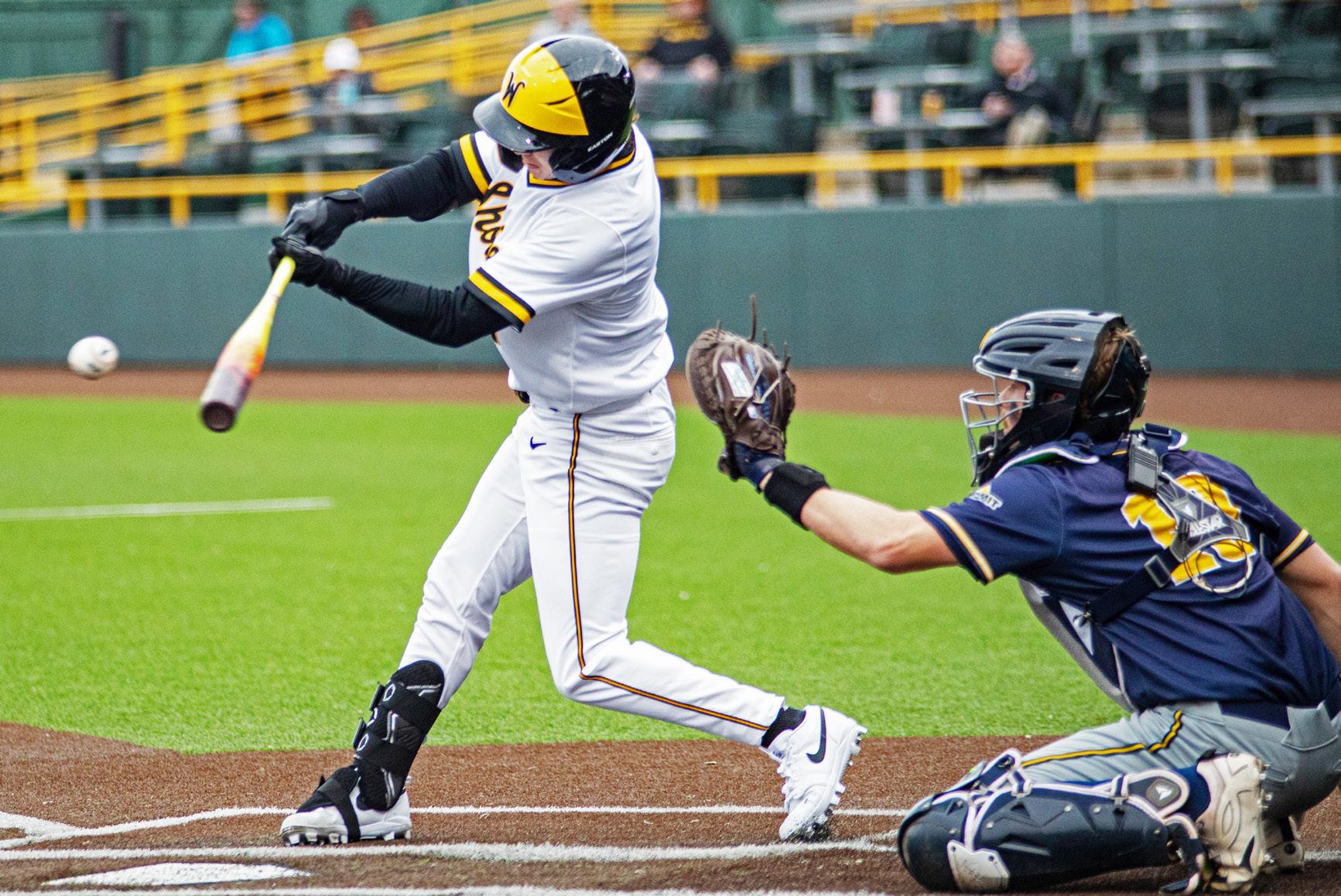
In the bottom of the second inning, senior catcher Max Kaufer’s swing gave Wichita State its first lead of the season. The Shockers didn’t look back for the rest of the game. Kaufer hit a two-run home run to deep left field to put Wichita State up by two runs. Wichita State went on to defeat Northern Colorado handedly in the season opener Friday at Eck Stadium, 11-4. The Shockers brought a lot of power to the plate, hitting four home runs in the win.
“We’ve got a bunch of guys that can hit the ball out,” head coach Brian Green said. “The threat of power is a nice thing to have.”
Two of these homers were hit by Kaufer, who finished 2-4 at
the plate, to deep left field. He is thankful to be playing the sport he loves at the Division I level.
“I’m just present and I’m happy to be playing baseball,” Kaufer said. “I’m just so grateful to be on the baseball field.”
Another big contributor in the bottom of the lineup was junior infielder Zeb Henry. Henry walked three times, stole two bases and scored three runs. He also helped force a double play to end the top of the fifth inning.
“His backhand was not a strength of his a year ago,” Green said. “Zeb’s a self-made player, and the diving play was great. He’s a hard worker.”
Graduate infielder Alex Ulloa and senior infielder Jayson Jones also had successful outings at the plate. Ulloa recorded a two-RBI
double in the bottom of the fourth, and Jones hit a two-run shot of his own to left-center field.
The Shockers also performed well on the mound. Junior Brady Hamilton, Wichita State’s starting pitcher, had a good outing to start the year. He gave up a double and an RBI single in his first two at bats but was able to bounce back, pitching a scoreless second inning.
In four innings, Hamilton gave up five hits, one earned run and one extra base hit. Hamilton recorded five strikeouts and didn’t walk a single batter.
Junior Mitchell Johnson was credited with the win after pitching 1.1 innings and giving up a hit in relief for Hamilton.
Ryan Morrison, a graduate pitcher, came in during the top of the sixth and allowed two runs on
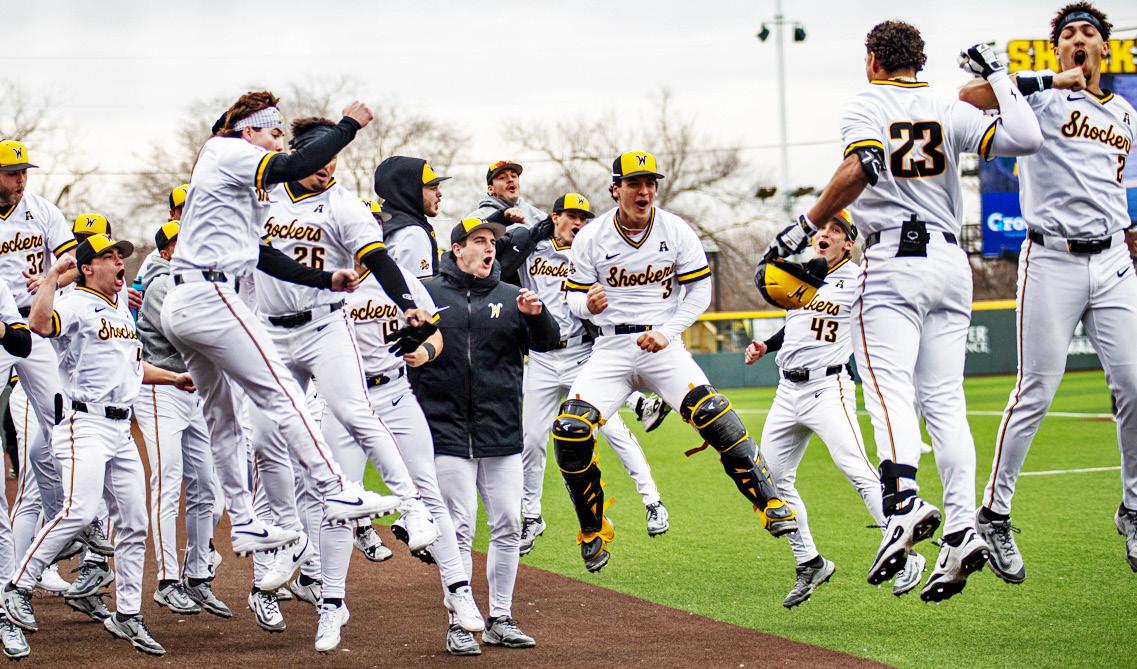
four hits. Finally, graduate Brady Pacha closed out the game with three strikeouts in the ninth inning. Wichita State went on to sweep the Bears in the season-opening series, scoring 43 runs to their eight
across four games.
The Shockers will hit the road for a series at Hawai’i from Thursday to Sunday.
Student senator pushes for recognition of engineering students who pass assessment
BY KASS LEWIS news@thesunflower.com
The Student Government Association may encourage Wichita State to formally recognize engineering students who pass the Fundamentals of Engineering Exam. A resolution was presented to the Student Senate on Wednesday and was referred to the Academic Affairs Committee.
Engineering Senator Abby Otten compared the FE Exam to “an ACT or an SAT, but it’s for engineering skills.” The exam has 110 questions, and students have six hours to complete it.
While WSU engineering students currently can, and often do take the exam, the National Council of Examiners for Engineering and Surveying provides licensing, recognition and graduation cords to commemorate students who take the exam. WSU is not currently a school recognized by the NCEES, but the process to be recognized is fairly simple, according to Otten.
“It’s really just us having one representative from Wichita State University that’s employed through the university to be our connection point,” Otten said. “For other schools, it’s most of the time some sort of engineering professor or somebody who promotes or has classes regarding the FE Exam.”
The point-of-contact would need to provide NCEES with the number of students who qualify for a cord, along with an address to send them to, Otten explained during a presentation to the Student Senate.
WSU being recognized would “give (students who take the exam) a leg up on application and internship opportunities,” according to Otten.
After her presentation to the Senate, Otten said that she is planning to write another resolution recommending that the university add a webpage about the exam.
“Most of the time, the majors that take it are more electricalbased, mechanical-based, industrial-based, so larger engineering types here at WSU — aerospace and biomedical — don’t have to take it, which is why a lot of our students haven’t heard of it before,” Otten said.
BY KASS LEWIS news@thesunflower.com
Association Resolution
A resolution is a formal opinion on behalf of the Student Government Association. Resolutions act as suggestions from SGA to the university.
Senate Bill Bills cover areas of campus that SGA has direct control over like student organizations and student fee entities. Bills can include funding bills, constitutional amendments, association sanctions and appointments. When signed, bills become law.
The Senate meets on Wednesdays at 7:30 p.m. in RSC 233. The meetings are live streamed on its YouTube channel.
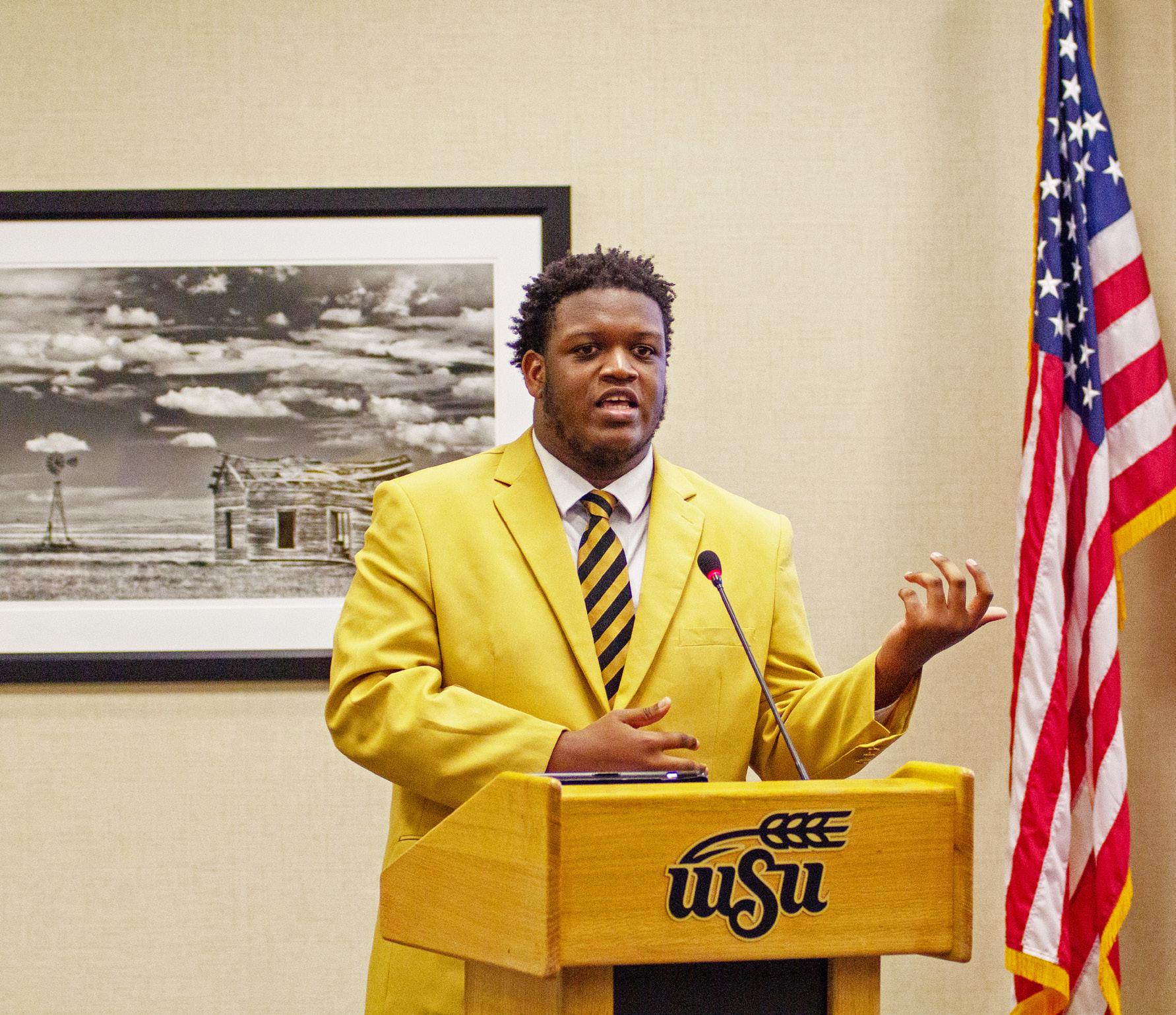
International Senator has aimed for WSU to recognize global holidays for years. Now, he’s leading a resolution.
BY KASS LEWIS news@thesunflower.com
A resolution introduced at the Feb. 11 Student Senate meeting recommends that Wichita State recognize international holidays.
The resolution — meaning a nonbinding “ask” of the university from SGA, representing the opinion of the association — presented Wednesday is a yearslong venture by International Senator AJ Haynes.
“Being an international student myself, it’s very hard to pick up your entire life and move to a completely different country and adjust,” Haynes said. “And one of the biggest cultural shifts is, ‘Dang, I don’t get to celebrate a lot of the celebrations and stuff that I would get at home.”
The resolution does not suggest
the university cancel classes on recognized international holidays, but does recommend an attendance exemption for students who celebrate the holidays.
“This is a way of essentially recognizing that ... these groups of people celebrate these days, and they should not be penalized for doing so,” Haynes said.
When creating the list of recognized holidays, Haynes looked towards bank holidays, meaning the country in which the holiday is recognized, banks, schools and other institutions would most likely be closed.
Haynes used Barbados’ Independence Day as an example.
Liberal Arts & Sciences Senator Josh Mallard suggested adding the rules regarding holidays within class syllabi.
The resolution was referred to the Diversity, Empowerment and Inclusion Committee to make changes and/or additions before presenting it to the Senate again.
SGA AR-68-012’S RECOGNIZED INTERNATIONAL HOLIDAYS
“The University officially recognizes the emancipation days, independence days, republic days, and constitution days of the countries of the students of which are served by the University, and,
“The University recognizes other cultural months such as Caribbean American Heritage month, Italian American Month, etc.”
BY KASS LEWIS news@thesunflower.com
A new Student Senate bill aims to change the Student Government Association’s individual funding process.
SGA currently allows students to apply for funding to attend a conference with a $1,500 cap. The money can be requested to cover lodging, meal costs up to $25 per day, registration and transportation costs more than 50 miles from campus.
Abdullah Tiwana, chairperson of the Government Oversight Committee presented new legislation that would allow funding for travel within 50 miles of campus, not exceeding $100 per fiscal year per student.
This would include any type of transportation such as rideshare or public transportation.
This was the bill’s first reading, meaning the Senate could ask questions about it but no action was taken. Now, it is in the hands of the Government Oversight Committee to make alterations
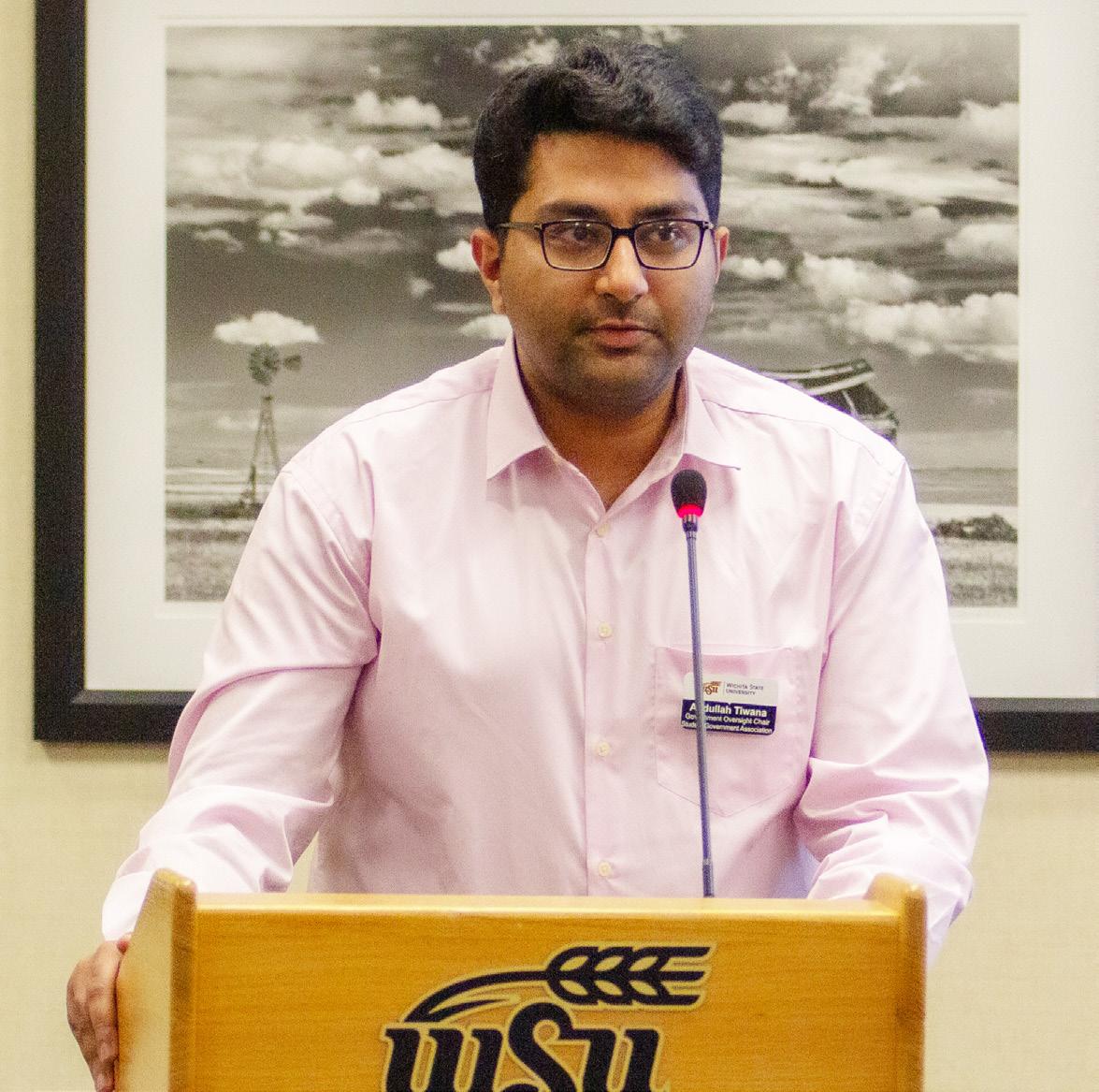
based on discussions in the Senate. After revisions, the bill will return to the Senate floor at a later meeting for debate and a vote.
Student Senate may recommend more visibility of Student Health Services on myWSU
BY KASS LEWIS news@thesunflower.com
A Wichita State student senator wants information about health services to be more visible to students.
Liberal Arts and Sciences Senator Josh Mallard presented a resolution at the Feb. 11 weekly Student Senate meeting that would recommend a “clearly labeled student health header” be added to the Student Tools section of myWSU. Currently, there is no direct link to Student Health Services on the home page of myWSU.
“If a student is looking for health services, they have to look it up,” Mallard said. “It’d just be a lot easier if they just see it, and then they could, ‘Oh yeah, I have a lot of health options.’”
The resolution also suggests that commonly used links be included under the student health header, such as the tuberculosis screening survey, myShockerhealth portal and after-hours and medical emergencies links.
SGA resolutions are suggestions to the university, and act as the official opinion of the association.
“I also did send this to the director (of Student Health Service), so she did go over this and provide her own input into what she would like,” Mallard said.
The resolution has been referred to the Student Services Committee, where it may be revised before coming back to the senate for debate and a vote at a later meeting.
A box
Kansas Attorney General brings statewide naloxone distribution box effort to campus
BY KASS LEWIS news@thesunflower.com
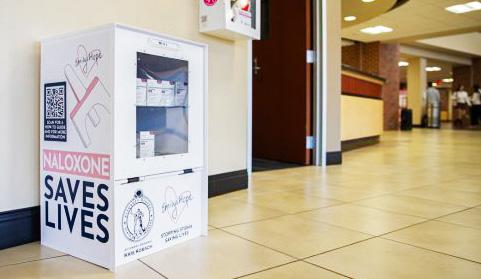
Kansas Attorney General Kris Kobach visited Wichita State’s campus Feb. 11 to help install a naloxone distribution box in the Rhatigan Student Center. The distribution box, which contains free naloxone kits, is located near the information desk on the opposite side of Starbucks.
“Every human is part of our community, and we want all of our humans with us,” said Marci Young, director of Wichita State’s Health Outreach and Prevention Education Services. “The more readily available that Naloxone is, if someone is overdosing and somebody is there to help them, we can save more lives.”
Naloxone is used to treat opioid overdoses caused by drugs like fentanyl. The distribution box placed in the RSC was one of 40 that are planned to be placed throughout Kansas, according to a press release from Kobach’s office.
“I was really excited in (Kobach’s) passion for viewing naloxone as a life-saving tool,” Young said. “… It was really wonderful to see somebody looking at various ways that we can tackle this problem together.”
BY KASS LEWIS news@thesunflower.com
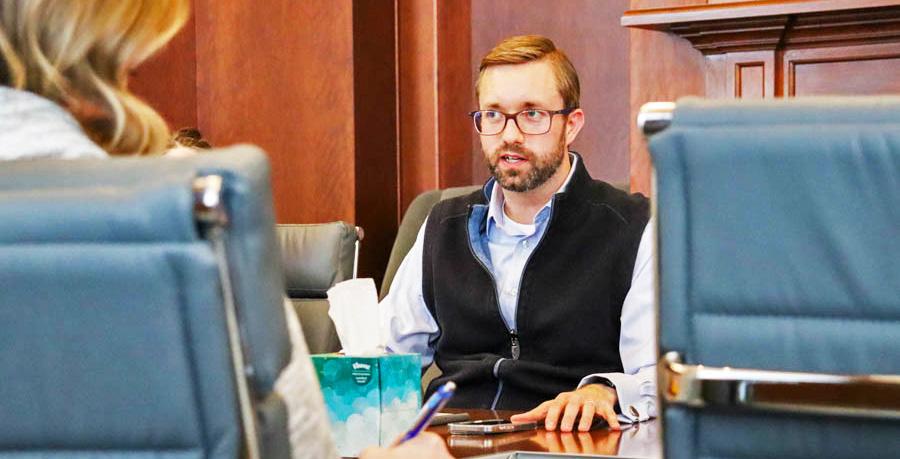
Two clauses being considered in the Kansas budget proposal go hand-in-hand with each other, but Wichita State Chief of Staff Zach Gearhart thinks that only one should survive to the end of the budget process.
Within the state budget, the legislature writes provisos, which contain conditions for allocating funding. They expire at the end of the fiscal year, which runs July 1 to June 30, unless renewed in the next legislative session.
One proviso asks each university to provide a plan to cut 10% of its non-faculty and non-support positions and present it at the next legislative session. Because the proviso is early in its life, Gearhart said that “non-faculty and nonsupport types of positions” are not clearly defined.
“We’re interpreting some of that
Essentially what (Turk) is saying is, ‘I’m going to cut your budget. You’re not going to be able to run to the students and put it on their backs. You’re going to have to actually do true cuts to your budget.’
to mean like academic advising or support services or financial aid; those types of things,” Gearhart said. “A lot of it will be subject to how the universities, (Kansas) Board of Regents and others interpret that.”
KBOR is the body that oversees the state’s public higher education institutions. Its nine members are appointed by the governor.
Adam Turk, chair of the Kansas House Committee on Higher Education Budget, told the universities last session that he expected the plan regarding the 10% cut. On top of those cuts, the
legislature is planning to freeze tuition rates, meaning universities can’t rely on raising tuition in order to mitigate budget cuts.
“Essentially what (Turk) is saying is, ‘I’m going to cut your budget. You’re not going to be able to run to the students and put it on their backs. You’re going to have to actually do true cuts to your budget,’” Gearhart said.
Gearhart said he’d only seen one session that capped universities’ tuition rates, and it was only capped because a deal was made between the legislature and higher education institutions to not cut
funding.
Once the state senate and house pass their respective budgets, it has to go to conference, which is a committee appointed by legislature leadership to resolve the differences between the two budgets.
“When it gets to conference, when the more senior (legislators) weigh in, I don’t think that it’s going to be cut and cap,” Gearhart said. “I think it’s going to be one or the other.”
When the legislature passes its budget, the budget will be sent to the governor’s office, and the governor can suggest changes. Then, the budget goes back to the legislature to alter based on the governor’s suggestions. While there’s not a set limit on how many times this can be done, a final budget must be signed by Kansas Governor Laura Kelly by the end of the legislative session on April 11.
BY KASS LEWIS news@thesunflower.com
Immigrants without legal resident status living in Kansas have had the opportunity to receive in-state tuition at public higher education institutions, but a bill may revoke that benefit.
Kansas Senate Bill 254 would bar these individuals from receiving public benefits including in-state tuition, and it has passed by both the Senate and House after reentering the legislature this session.
The bill has gone to a committee that will resolve the differences between the House and Senate’s versions.
Often bills have multiple differences that need to be reconciled, but Kansas SB 254 just has one.
The bill states that individuals 18 and older applying to receive any state or local public benefits must provide proof that the “individual applicant is: (A) A citizen or a permanent resident of the United States; or (B) an alien who is lawfully present in the United States.”
To prove status, individuals can use the same documents needed to obtain a Kansas driver’s license or “any document issued by the federal government that confirms an alien’s lawful presence in the
United States.”
Currently in Kansas, undocumented immigrants who attended a Kansas high school and have not been convicted of a felony can qualify for in-state tuition as a “public benefit.”
If SB 254 passes, this benefit would be revoked by the Senate.
The House, however, added an amendment to the bill that would exclude the in-state tuition benefit from what it defined as state public benefits.
“The one benefit is for universities — for the students who benefit from that in-state tuition for undocumented persons,” Zach Gearhart, Wichita
State’s chief of staff said in a recent Legislative Update. “...
We have, I think, just north of 50 students in that program.”
Kansas Attorney General Kris Kobach recently said that Kansas’ current allowance of undocumented individuals to receive in-state tuition is in conflict with federal law, which may affect the outcome of SB 254’s revision “(Kobach) didn’t say it was in response to this bill being under consideration, but I think the legislature is feeling some pressure that they need to consider how this law compares to that opinion,” Gearhart said.
Here’s how Wichita State ranks nationally in engineering research and development
BY NERY SANCHEZ
neryjsanchez2007@gmail.com
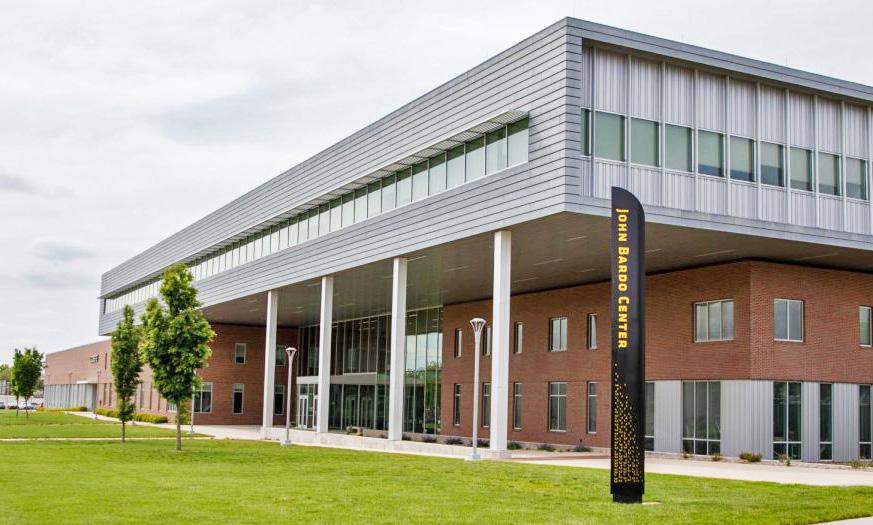
Wichita State’s School of Engineering was recently ranked first for research and development in aerospace engineering and ninth overall in engineering research and development by the National Science Foundation.
“We definitely have a very strong focus on aerospace, and that we are known for aerospace,” applied engineering chair Gary Brooking said. “And a lot of that success is due to the growth and development of (the National Institute for Aviation Research), which is a huge center connected to engineering.”
The NSF ranks every single U.S. college that reports its funding and spending for R&D, as well as the total number of students. WSU ranked number one out of more than 900 schools in the country. WSU has placed well for the past 10 years, but in the past five years has been making substantial changes in the leaderboards. In the past years WSU has placed top five in both general R&D and aerospace R&D. “WSU has a pretty good
engineering program, and we have a lot of different companies that provide all types of opportunities for students to work at,” first-year computer science major Sania Mohib said. “The best features are the professors, as they seem very educated and are lenient. I think that NIAR is providing really great opportunities for students in engineering.”
The popularity of NIAR, which focuses efforts into researching and developing technology for the aerospace world, is a big draw for prospective students, but NIAR doesn’t stand alone helping in student retention.
“I would say the professors and the advisors, as I sometimes go to advising just to ask general questions about my major, learn more about my field,” Junior biomedical major Kimberly Matahwa said about aspects of the college she takes advantage of. “ I fully utilize the other engineering clubs that we have like Biomedical Engineering Society. It helps me meet other biomedical engineers and talk to professors out of class.”
Though WSU and Wichita might be known for their role in
the aerospace industry, there are more engineering programs at WSU with similar applied learning models as the aerospace program.
“We saw that (cybersecurity) was an opportunity and now it is the fastest growing program in the college,” Brooking said.
“We are looking at AI not as a particular program but how we can incorporate AI, because it is something that is important to graduates later down the road, and it is going to be a tool for graduates and how they can use it.”
The potential of WSU’s engineering program is
HB 2428 would allow KBOR to sign an exemption for majors that specifically focus on these topics, like Wichita State’s Women’s, Ethnicity and Intersectional Studies field major.
The legislation would also bar departments from requiring training about diversity, equity and inclusion for faculty, and mandate courses teaching about “American institutions,” as well as information about free speech to be shared at freshman orientations.
Implementing the legislation could cost an estimated combined $7 million for the universities. According to the bill’s fiscal note, “Wichita State University (WSU) states there could be additional costs to implement the bill’s provisions; however, WSU is unable to estimate a fiscal effect at this time.”
Proponents of the bill said it would promote academic freedom by not forcing students to learn about DEI to receive a degree, as well as freeing faculty from any pressure by universities or departments to receive training on DEI (excluding legally required training such as Title IX), research topics such as race or gender, or include such topics in curriculum.
Opponents argued it would limit academic freedom by placing statemandated restrictions.
“If you tell me that there’s certain things I can’t say to my students, certain words I can’t put on my syllabus, then I don’t have academic freedom, and neither does anybody else,” said Aaron Rife, the department chair for Wichita State’s School of Education.
The School of Education requires two courses on diversity for all elementary, middle and secondary education majors, as well as K-12 physical education, Spanish and French majors. Other programs, including social work, also require similar courses.
“The idea that professors are indoctrinating students is really false,” said Rannfrid Lasine Thelle, a professor of history at WSU. “I mean, faculty want students to learn to think for themselves, and present information.
“We don’t promote something other than, you know, being able to look at a bunch of material, assess it, take it in and think critically about it.”
HB 2428 still has the potential to return to the House floor, in this session or next year’s.
‘DEI-CRT-RELATED CONTENT’ DEFINED BY HB 2428
(5) “DEI-CRT-related content”:
(A) Means content that does one or more of the following:
(i) Relates any of the following topics to contemporary American society: Critical theory, whiteness, systemic racism, institutional racism, anti-racism, microaggressions, systemic bias, implicit bias, unconscious bias, intersectionality, gender identity, social justice, cultural competence, allyship, race-based reparations, race-based privilege, race-based or gender-based diversity, racebased or gender-based equity or race-based or gender-based inclusion;
(ii) promotes the idea that racially neutral or colorblind laws, policies or institutions perpetuate oppression, injustice, racebased privilege, including white supremacy or white privilege, or inequity by failing to actively differentiate on the basis of race, sex or gender;
consistently being thought of and talked about by the advisory board, chairs, and other faculty in the department. They’re making efforts to make engineering students more equipped for when they enter the field.
“It does not matter in which program you are in, but the most important thing is getting a start,” Brooking said. “The opportunities allow you to focus and align your ideas of where you want to go. You need to have purpose but you need to persist.”
(iii) promotes the differential treatment of any individual or groups of individuals based on race or ethnicity in contemporary American society; or
(iv) promotes the idea that a student is biased on account of such student’s race or sex; and
(B) does not include identifying and discussing historical movements, ideologies or instances of racial hatred or discrimination, including, but not limited to, slavery, Indian removal, the Holocaust or Japanese American internment.
BY MADDOX TOPLIFF
maddoxtopliff07@gmail.com
A poor paint presence and overall defense proved faulty once again for Wichita State women’s basketball.
The Shockers allowed Rice to shoot near-lights out Friday night at Tudor Fieldhouse and suffered their worst defeat to a conference opponent this season, 80-42. With its fifth straight loss, WSU fell to 5-21 overall and 2-11 in American Conference play. Rice’s dominance over league foes continued, as the Owls have started 12-0 in conference play. After their win, they’ve bested opponents by an average of 13 points per game.
The Shockers will need to course-correct quickly to climb from out of the gutter with five games left in the regular season. They can do so Saturday, Feb. 21, when UTSA visits Koch Arena for a 1 p.m. tipoff.
Graduate guard Abby Cater was the only Shocker in double digits with 11, including nine in the third quarter. It marked the 10th time this season that Cater has led WSU in scoring and upped her average to 12 PPG.
Graduate forward Bre’Yon White accounted for six of the Shockers’ first 11 points, knocking down three of her first four shots to keep them afloat in the first quarter. Rice took no time establishing control, however, connecting on 10 of its first 15 field goals, and were especially dominant in the paint, with 12 points in the first period alone.
As the first quarter came to an end, WSU trailed 23-11, struggling to settle in on defense and compile stops. Just 15 minutes into the contest, WSU found itself down 17 points and had turned the ball over seven times.
The Shockers’ early struggles continued, missing their last seven field goals heading into the break. A nearly six-minute drought stalled any momentum they hoped to build.
By halftime, Rice’s lead had extended to 24, taking a commanding 43-19 lead into the break. The Owl’s offensive efficiency (nearly 55%) paired with WSU’s shooting struggles (just 25%) created an uphill battle for coach Terry Nooner’s squad.
The third quarter proved more of the same, as WSU was outscored 21-9. The Shockers shot just 3-of18, and Rice’s lead ballooned to 36 points, 64-28. Cater scored all 9 of WSU’s points in the stanza.
The fourth period showed some promise for WSU, as both teams brought in their reserves, but the Shockers were still outscored 16-14.

BY OWEN PROTHRO sports@thesunflower.com
“Delta Dawn, what’s that flower you have on? Could it be a faded rose from days gone by?”
That Tanya Tucker twang gave senior catcher Max Kaufer all the necessary juice as it trickled throughout Gene Stephenson Park before his at bats.
“Delta Dawn” caused the Medford, N.J. native on Wichita State’s baseball team to not settle for a single, double or triple Friday against Northern Colorado at Eck Stadium. He instead hit not one, but two big bops en route to an 11-4 season-opening win that began a four-game series at home this weekend.
“When I’m walking up and I hear ‘Delta Dawn,’ it calms me, but it gives me juice at the same time,” Kaufer said. “Tanya Tucker, man, she’s the man.”
A 2-4 night at the plate couldn’t have come at a better time for Kaufer either. His sister and mother’s birthdays fell close to opening day.
“Part of the reason I play so hard is for them,” Max said.
Familial celebrations and the sway of “Delta Dawn” were all he needed in the second and sixth innings.
His first at bat? A two-run home run in the bottom of the second that opened a 3-1 lead.
His third at bat? A solo shot to the same spot in left field during the sixth that put Wichita State (1-0) ahead 9-2.
And they didn’t just barely fly over the fence. Both bombs breached more than 380 feet.
When asked about coming out of the eight-hole in the lineup, though? That didn’t matter.
“Just stay authentic to who you are and whatever the game tells you to do in the moment, that’s what you do,” Kaufer said. “The lineup’s only the lineup for the first inning. Then you’re hitting fourth, you’re hitting
Inclement weather affects softball’s weekend in Texas
BY MACK SMITH mackred22@gmail.com
Wichita State’s time at the State’s Up Invitational was shortened due to heavy rainfall in the San Marcos, Texas area over the weekend.
The Shockers were able to complete a doubleheader Friday and played one game Sunday. But Saturday’s contest against BYU was canceled, and so was their second game against host Texas State, which was scheduled for Sunday afternoon.
WSU went 1-2 over the weekend, with a win over the Bobcats and fell to No. 9/11 Arkansas via run rule and No. 18/18 Clemson. The Shockers are now 3-5 to begin the 2026 campaign, and three of their losses were delivered by top 25 competition.
The Shockers will stay in Texas to play in the Boerner Invitational from next Friday to Sunday in Arlington. WSU will play the host, UT Arlington, as well as Creighton and South Dakota.
Friday
The Shockers’ opening game did not go their way, as they lost via run rule to the Razorbacks, 10-2. Arkansas put up seven runs before WSU collected a hit. Senior Chloe Rhine hit a leadoff home run to put the Shockers on the board and in the hit column in the third inning, but the score was already lopsided at 7-1. Later in the fifth inning, freshman Mackenzie Rooney hit her first collegiate home run, 10-2.
Arkansas out-hit the Shockers 14-2 for the game.
The Shockers responded to the run-rule by beating the host Texas State, 10-3, in the second game of Friday’s doubleheader.
After going runless in the first inning, WSU finally broke through in the second inning with five runs.
didn’t need to.
When you see them have success, there’s nothing better because in today’s day and age, it’s hard to get players to trust you on making changes.”
BRIAN GREEN Head baseball coach “
second. I don’t really believe in ‘oh, you’re the two-hole,’ because you’re probably only there one time.”
For Brian Green, Kaufer’s night was as rewarding for the Shockers’ head coach as it was for the South Carolina transfer.
Since Kaufer arrived in the fall, the coaching staff has worked with him on loading his legs, getting into an earlier back slide and controlling his stride to add dimensions in the batter’s box. The hours committed to the fine-tuning are finally showing against players not in WSU’s black and yellow.
“That’s the best,” Green said, “when you work with kids, and you’re in it with them and they make adjustments. When you see them have success, there’s nothing better because in today’s day and age, it’s hard to get players to trust you on making changes. … Doesn’t mean he’s Superman right now, but I was really happy for him because he’s a hard worker and it matters a lot to him.”
While Kaufer hit homers in the eight-hole, he wasn’t the only player to make noise from the bottom of the lineup. Junior Zeb Henry also brought valuable production in being able to turn it over in the nine spot.
Grabbing a snack or going to the bathroom may be a bad idea when those two are eighth and ninth in the batting order.
Henry, who didn’t record a hit,
He walked thrice and reached home as many times. Henry used his speed at 5-foot-10, 170 pounds to steal two bases and even put the Shockers ahead 4-1 after Kaufer’s two-run shot when a throwing error allowed him to score from second base.
“Every time I get on base, I’m trying to go. I’m trying to steal,” Henry said. “Whether that’s at the plate and I can drop a bunt down or hit something up the middle … and try to beat it out. I’m always looking for an extra base.”
It was a change of pace that complemented Kaufer’s pop at the plate.
“Max is going to be really aggressive. He gets the balls up, he’s going and we love that. That’s his role,” Green said. “Zeb’s role is the exact opposite. Zeb’s role is to turn the lineup over. Get on base for those guys and be a threat over there.”
Henry’s quickness didn’t just show up on the base path. He showcased it in the infield, too.
At second base, he tracked a hard-hit ball to the right side of the infield during the top of the fifth, flipped it to graduate student Alex Ulloa at shortstop for one out, who then rifled it to junior MJ Sweeney at first for a 4-6-3 double play.
In the top of the sixth, Henry had to track a ball even farther into the outfield and fired one to Sweeney, who used his 6-foot-8 frame to stretch for the second out of the inning.
For just the first game of the season, Henry and Kaufer’s play at the bottom of the order was an encouraging sign of the depth this year’s team has.
“A lot of balance in that lineup,” Green said. “And there’s still a couple more guys that didn’t get on the field today that need to be out there.”
An RBI single by freshman Kammie Smith started the secondinning surge. Sophomore Ausha Moore followed suit with an RBI single of her own. A three-run home run by sophomore Gabby Scott allowed the Shockers to build their five-run cushion.
After the Bobcats put up two runs in the bottom of the fourth, WSU doubled it during its half of the fifth frame by plating four runs. Sophomore Brookelyn Livanec, senior Jodie Epperson and Rhine hit back-to-back-to-back homers that gave the Shockers a commanding 9-2 lead.
Scott hit another RBI single that added an insurance run and secured WSU’s first 10-run game of the season.
Sophomore Ryley Nihart made the start from the circle and pitched a complete game to earn her first win of the season. The right-handed pitcher gave up five hits, three runs and struck out six Texas State batters.
Sunday
After weather canceled Saturday’s game, the Shockers showed a lot of promise early against No. 18 Clemson on Sunday. However, a six-run fifth inning for the Tigers downed WSU to a 9-3 defeat to close out its games at the tournament.
All three of the Shockers’ runs came in the top of the first. The first came off a single by Moore. Freshman Kinzey Woody then also collected an RBI single, and a wild pitch allowed Scott to cross home plate for WSU’s last run of the inning and game.
Nihart made the start in the circle. In her first two innings, she gave up three runs to tie the game. In the bottom of the fifth, Clemson batted through the lineup and scored six runs on as many hits. Three different pitchers for the Shockers made an appearance in the inning. In the game, WSU recorded a season-high three errors, resulting in three unearned runs for Texas State.
BY EVAN TONG
evantong3@gmail.com
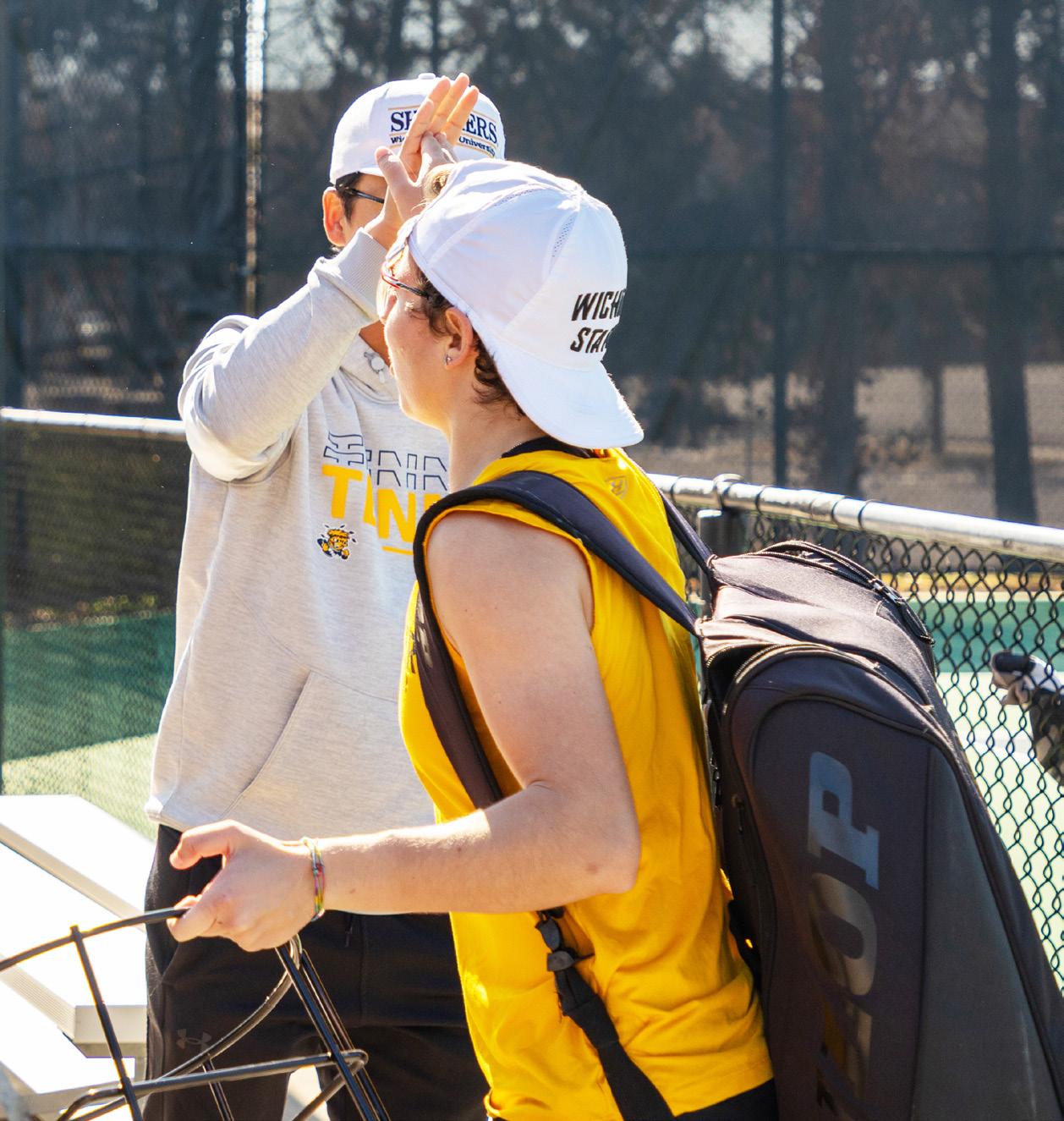
The women’s tennis team took down Tulane in a Sunday morning sweep against its first opponent in the American Conference.
“We’ve played a really tough schedule up to this point,” WSU head coach Jacob Eddins said. “I think a lot of times these matches can really go either way when they get close. And for us to be able to take a 4-0 win today, I think really speaks to our girls, the team and the level they’re playing at right now.”
The 4-0 result notched a sevengame win streak and brought The Shockers’ record to 9-3 and 1-0 in the American. The Green Wave fell to 3-5 on the season and 1-1 against league foes.
“We got off to a pretty good start in doubles,” Eddins said. “Doubles points have been really big for us all year.”
Seniors Theodora Chantava and Kristina Kudryavtseva took their doubles court 6-1 at the
To be able to take a 4-0 win today, I think really speaks to our girls, the team and the level they’re playing at right now.”
JACOB EDDINS Head women’s tennis coach “
Sheldon Coleman Tennis Complex. Juniors Giorgia Roselli and Xin Tong Wang took their court 6-3 to give WSU an early lead.
“We were pretty solid, and we had good energy,” Roselli said. “I think these teammates (are) doing good and we hope we can keep going. Today was just amazing. And people came out to cheer for us, and that’s great.”
With the doubles point taken, the Shockers hit the ground running in singles and took no prisoners, giving up zero courts.
“We love it,” Roselli said. “The faster it is, the better it is. Not that we don’t like fighting and stay grinding on the court, we love that too. But when you’re at your own court and play like this, and you maintain the level, I think we can beat anyone on this court with this team.”
Kudryavtseva finished her court first in a 6-1, 6-2 victory. Roselli didn’t take much time after in a 6-2, 6-1 victory. Senior Palmy Vimuktananda capped off the sweep with a 6-0, 6-3 showing on court five.
“I feel confident today. More than usual,” Vimuktananda said. “But deep down in me, I feel a little nervous, but my coach was there. He kind of told me to just play my game and trust my balls. I really like him, and I really trust him more than I trust myself, actually. I’m glad it turned out really good today.”
Wichita State will play its next match against Oral Roberts at home on Saturday at 2 p.m.
BY OWEN PROTHRO sports@thesunflower.com
The stage was set for another Koch Arena classic.
Wichita State hosted Tulsa Saturday evening two weeks after a 93-83 decision favored the Golden Hurricane Feb. 1, and just days after the teams lost on their home floors.
Paired with how tight the race is for a top two seed headed into the conference tournament, it almost felt fitting that a season-high 7,569 fans filled the Roundhouse to watch a clash between two long-standing rivals.
The Shockers trailed by as many as nine in the second half, and tied it with 5 minutes, 28 seconds left in the game, before taking the lead for good with under three minutes after an 8-2 run to secure an emotional 81-77 home win.
WSU led for just 2 minutes, 54 seconds during the game, but that was all that was required to snap a three-game losing streak to the team in blue and gold. The Shockers are now 16-10 on the year, 8-5 in the American Conference and are just a gameand-a-half back from first place in the league standings with the win.
Tulsa dropped its secondstraight game and now sits at 20-6 overall and 8-5 in the conference.
Giles, who finished with a game-high 31 points, nailed the free throws that gave the Shockers the lead for good. Sophomore forward Dillon Battie and junior center Will Berg finished with 13 and 12 points, respectively. They combined for 10 rebounds.
As a team, WSU doubled Tulsa’s total in the paint, 52-26. And unlike the first meeting this season, the Shockers maintained a 41-35 edge on the glass, which included 14 offensive rebounds and 12 second-chance points. And despite four of the Golden Hurricane’s players finishing in double figures, they were held to 36% from the floor and 28% from 3-point range in the second half.
Up next, WSU hits the road for a matchup against East Carolina Wednesday at 6 p.m. at Minges
Coliseum in Greenville, N.C. WSU beat the Pirates at Koch Arena earlier this season.
For now, here are three takeaways from WSU’s come-frombehind victory against Tulsa:
Shootout favored Tulsa, but defense won it for Wichita State
The teams combined for 176 points in the initial matchup and 93 of them belonged to Tulsa. In the second half alone, the Golden Hurricane made 72% of their shots and ended the game scoring 1.368 points per possession.
The Shockers just couldn’t keep up with them in the Reynolds Center.
Knowing that headed into Saturday’s rematch, it was going to be defense that won it for WSU and pure shotmaking that won it for Tulsa. The Shockers have won every game since the start of conference play when they hold teams to 70 or fewer points, aside from hiccups against Rice and their most recent defeat to South Florida.
WSU only trailed by six before the break, 41-35, but the Golden Hurricane connected on 50% of their shots for 1.194 PPP.
Even when Koch Arena was its loudest throughout the second half, Tulsa didn’t get rattled. The Golden Hurricane repeatedly responded with shots from 3-point range to keep the Shockers at arm’s length. WSU just couldn’t get over the hump even after tying the game twice in the final fiveand-a-half minutes.
But the Shockers began to string some stops together. The Golden Hurricane suddenly wasn’t finding their answers.
WSU dug in from that moment on and held Tulsa to just two for its last nine shot attempts. The Shockers were five for their last nine from the floor. They made five free throws down the stretch to hang on.
Senior Karon Boyd made arguably the play of the game when he blocked Tulsa guard Tylen Riley’s jump shot with 28 seconds left on the clock. Berg secured the defensive rebound.
Senior standouts for Tulsa, Riley (21 points, four rebounds, one turnover) and forward David Green (10 points, three rebounds, four fouls), helped keep an early ninepoint second-half cushion intact six minutes into the period.
But early foul trouble for the Shockers was tamed, and they eventually drew more. The Golden Hurricane committed 22 total fouls to WSU’s 16.
Momentum flipped, and Tulsa’s lead was cut to one multiple times before the Shockers could get over the hump. The crowd could sense it and grew louder with every shot and stop.
The Golden Hurricane stretched their lead to 70-65 before a 5-0 run over two minutes knotted the scoreboard. Five minutes, 28 seconds were on the clock.
After more kicking, scratching and roars around the arena, Giles finally gave WSU the lead with under three minutes to go, 76-75. His free throws gave the Shockers the lead for good.
Early foul troubles in second half
don’t bite Wichita State
It’s no question that the American is a physical league. And it’s no question that in order to win, you have to be the more physical team.
But not even six minutes into the second half, WSU committed six fouls — some of which elicited the loudest groans from the crowd. Tulsa, meanwhile, committed just two during that time.
The Golden Hurricane spent the last 10 minutes, 35 seconds in the bonus, but made just one trip to the line and shot two free throws after that point.
Foul troubles proved the costliest for Tulsa, which committed 12 in the second half that gave WSU 16 untimed shots. The Shockers seized most of their opportunities at the stripe, finishing 5-for-8 down the stretch and 63% (17-of-27) for the game.
The teams combined for 38 fouls throughout, but WSU committed just one after the seven early ones in the final stanza.
No timeout granted at end of first half made Paul Mills irate
With around five seconds left in the first half, TJ Williams inbounded the ball to Berg, who caught it at midcourt and was forced to send an off-balance pass back to Williams.
While that happened, Williams was run into by a Tulsa player and both players hit the hardwood. WSU tried calling a timeout to prevent the collision and Berg’s inadvertent pass.
No timeout was granted. Mills, the most animated he’s been on the sideline this season and perhaps his entire tenure as the Shockers’ head coach, barked at the refs for at least a minute straight and even after the first half buzzer sounded.
Who knows how much momentum that gave the Shockers going into the second half. He wasn’t administered a technical foul, however, and the Shocker Sports Hall of Fame induction carried on during the break.
“We’ve been in this position before,” Giles said. “We just say, ‘Keep fighting. Keep fighting. Keep chipping away at it.’ And when we tied the ball game, we knew this was ours (to win).”
Tulsa made two of its last 12 shots over the course of seven minutes. WSU made five of its 10 during that same amount of time. The Shockers dominated in the paint all game and wore down Tulsa with 52 points down low and 12 on second-chance looks.
“I felt like if this thing goes to the 10th round, the last media, we will find a way,” Mills said. “I’ve told the guys, we’ve always responded all year. This won’t be any different.
“I knew how desperate they (Tulsa) were, having dropped their last two. I just knew it was going to be a good game.
“What put us over the top was Shocker Nation.”
Boyd found WSU’s last two buckets during the surging screams and made a defensive stand that defined the outcome.
Karon Boyd’s two-day turnaround
Boyd had one of his most lackluster performances of the season in the most recent loss to South Florida: 38 minutes, one rebound. That’s it.
“He’s probably heard about it 50 times in the last 48 hours,” Mills joked. “He got a rebound in practice (Friday), and I said, ‘That’s your second rebound in 48 hours.’ You can tell he was amped to prove himself.”
It took Boyd a while to put last Wednesday’s performance behind him. The game was trending for a repeat at the break: 0-for-2 from the floor, two rebounds, turnovers and fouls. But when the Shockers needed him the most down the stretch, Boyd delivered.
“Karon’s an even-keeled guy,” Giles said. “You can notice it in the huddles. Even at halftime, he never felt startled. He never felt worried.
“I already know when the moment comes, Karon’s going to show up. Which he did.
“He lets go of the past, and he worries about the now. You saw it
here tonight.”
The now for Boyd looked like six rebounds throughout the second half, and the last five points the Shockers scored. But those weren’t just the biggest plays he made. His defense stole the show. WSU just went up 80-77, and Tulsa used a timeout with 35 seconds left. Riley received a pass and took Boyd one-on-one. But Boyd knew what he wanted to do. He hugged Riley’s right side, perfectly timed his fadeaway, and swatted the ball to the delight of everyone in the crowd, not in blue and gold. Boyd had four fouls when he rejected it — one more and he’d have fouled out.
“As soon as I saw him rise for the shot, I had to jump and contest,” Boyd said. “It was all about giving him the best contest without fouling.”
In just two days, Boyd went from one of his roughest outings to the hero WSU needed.
Kenyon Giles scores game-high 31
While Boyd sealed the game, Giles poured in a game-high 31 points on 13-of-27 shooting throughout it.
Just one of those shots was made beyond the arc. He finished 1-for-7 from deep, but found other ways to score in the paint and mid-range. Giles went 4-for-4 at the foul line, and all his free throws were in the second half.
Midway through the second half, he scored seven in a row for the Shockers to keep them within two possessions.
A shot over three pairs of outstretched Golden Hurricane arms tied the game again at 72 and sent the 7,569 in the stands into a frenzy. His next two free throws broke WSU through, 76-75.
Giles credited Berg and fellow center Emmanuel Okorafor for being able to clear space down low for the 5-foot-10 scoring dynamo to operate. Some helpful words from them have been said along the way.
“Will and EMan will always talk about, ‘Hey KG, when you drive, don’t try to float it. Go all the way to the rim,’” Giles said. “It really showed tonight. I had to do a better job of getting downhill.”
The 31 points served as a minor form of revenge, too.
At the Reynolds Center on Feb. 1 against Tulsa, Riley dropped a career-high 30 points and did it on 9-of-11 shooting.
“I wasn’t really thinking about that,” Giles said. “I was being aggressive for my team. I understand that to have a good shot, I have to be really aggressive. I don’t get into matchups, really.” Giles went off for 31. Boyd sealed the game with clutch shots and tough defense. The crowd fueled WSU’s gut-punch in an all-around team effort that was a reminder of why the Roundhouse is special when it’s rockin’.
The sound had moved from the stands to the team’s inner sanctum, where the bass from the victory celebration continued to rattle the walls of Koch Arena.
And in a season defined by narrow margins, the come-frombehind victory over Tulsa wasn’t just win No. 16. It was a statement that the fight, and the noise, had returned to Wichita.
Scrolling brings a reminder of the unavoidable politics surrounding schools
Jadin Kaltenbach jekaltenbach13@gmail.com OPINION
At the beginning of every year, I take some time to make a vision board.
I scroll through Pinterest aimlessly, searching for the perfect photos and quotes to replicate the version of me I want to be, the goals I want to accomplish, the dreams I want to chase or create. I am usually so ambitious, so hopeful. This year, though, things are entirely different.
Pinterest has always been my “safe” app. It’s where I go when I want to achieve a dopamine high that isn’t riddled with the terrible reality of the state of our world. I know that may seem out of touch. I know that might not seem resilient, however, it is a personal coping skill that has kept me willing and able to consume the insurmountable amount of violent news that has consumed my other social media feeds for the past several years.
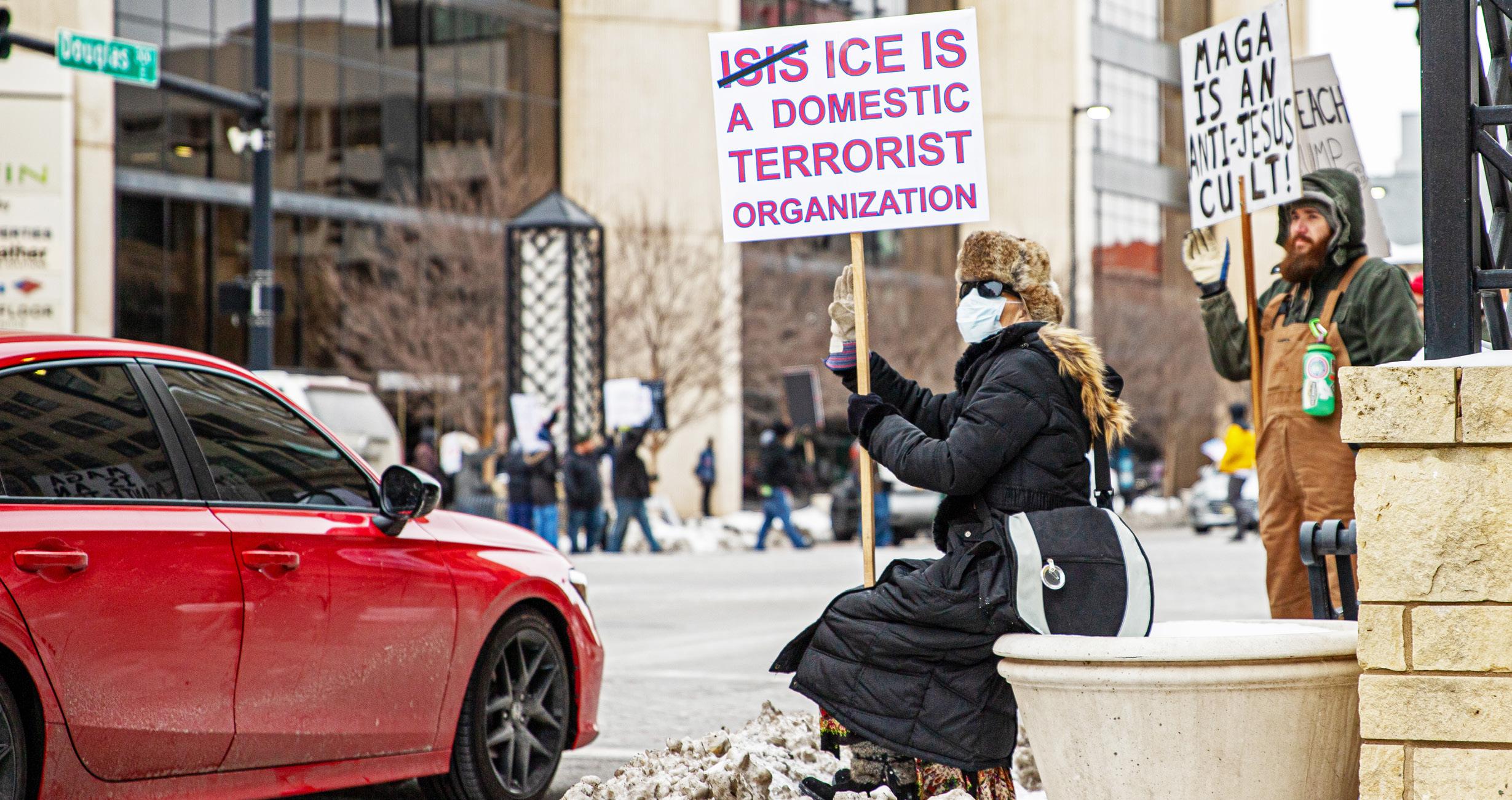
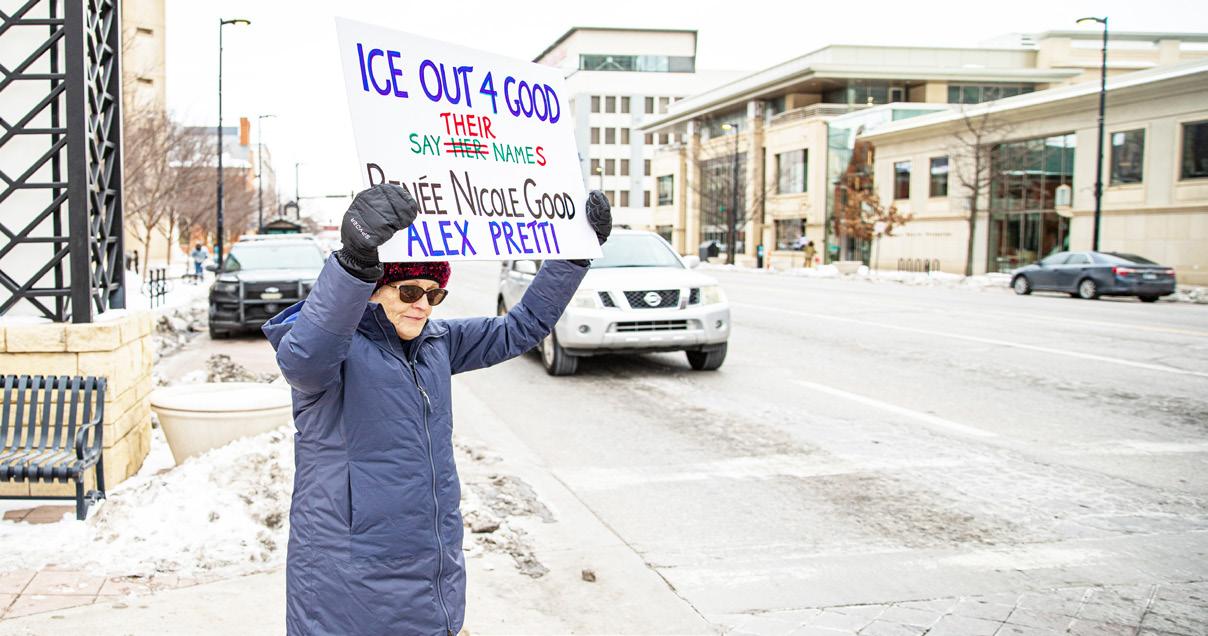
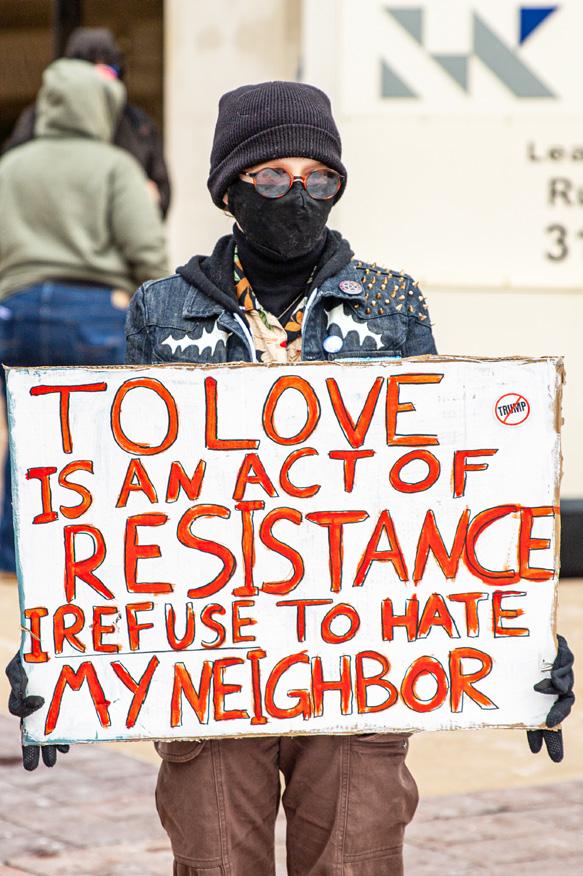
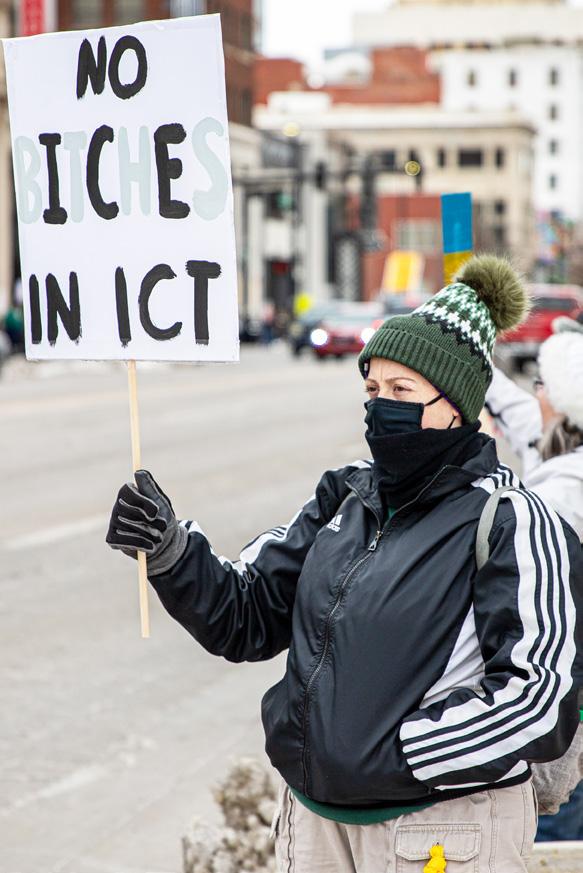
As I was scrolling, I saw a post I did not expect on this platform. It was a protest sign, a timely one at that. It read, “You can’t call someone ‘illegal’ when you voted for a felon.”
At first, I was uncomfortable. Not because I disagreed. Not because I don’t share outrage at this administration and the way they are terrorizing innocent people, but because this was my little bit of peace, this moment of planning my future.
I sat with that uncomfortable feeling. I realized how extremely selfish it was of me. How convenient it is to be able to just “escape” from reality. To have the ability to scroll through an app planning my future when thousands of people wake up every single day in this country, fearing what theirs will look like. How privileged it is to have moments of being just uncomfortable. I think it is important for us to have those moments, especially in light of what is happening in our country at this time in history.
Current President Donald J. Trump’s biggest talking point during the 2024 election was immigration enforcement. At the Conservative Political Action Conference in March 2023, Trump stated, “The sinister forces trying to
Your biggest threat as an individual in this country is not the person who came here illegally, or their children in schools, but the government that revokes the laws to protect safe spaces. It is the government that is allowing officers to drag people out of their homes and kidnap them.”
JADIN KALTENBACH The Sunflower
Reporter
kill America have done everything they can to stop me, to silence you, and to turn this nation into a socialist dumping ground for criminals, junkies, Marxists, thugs, radicals and dangerous refugees that no other country wants.”
According to the Washington post, the New York Times wrote he would, “round up undocumented immigrants in mass migrant camps and employ a speedier way to deport them known as ‘expedited removal.’”
According to an article by Inside Higher Ed, the U.S. Department of Homeland Security revoked protections for hospitals, churches, schools and college campuses within 48 hours of Trump’s second term. These areas had previously been off limits for immigration enforcement action.
Children and adults in the education system have been conditioned to accept this reality.
We were force-fed protective measures: shooter drills, videos and slogans like ‘run, hide, fight.’
We were promised that if something like this ever happened at our school, the police would be on their way to protect us, to neutralize the situation. And while I could argue that stricter gun policy could have changed mine and so many others’ experiences in the education system growing up, there will always be those who don’t agree. There will always be those who say that these tragedies are unavoidable. They will talk about how unfortunate it is that children are subjected to this reality, but there will be justice, law and order. The threat can and will be neutralized.
So I ask, what danger do children and adults in the education system pose to this
country? Why are we being told that an elementary school child who is learning how to do simple addition is who we need to be protected from? What threat does someone pursuing higher education to contribute to our society pose to our government?
The simple answer is they don’t.
Your biggest threat as an individual in this country is not the person who came here illegally, or their children in schools, but the government that revokes the laws to protect safe spaces. It is the government that is allowing officers to drag people out of their homes and kidnap them. The government is who gave us masked individuals who arrest people at immigration courts.
It is what allows entire neighborhoods to be shut down — that celebrates ICE agents who gun down people in the streets and then grant them full immunity. The biggest threat to the American people is those who try to convince us that our neighbors, our classmates, our coworkers are our enemy. This administration is tormenting human beings and calling it immigration enforcement. They have given guns to untrained
individuals and called them federal agents. They are meeting protest and solidarity with violence and force. They are spewing hateful rhetoric and trying to contort it into humanity.
In George Orwell’s book “1984,” he wrote: “But if there was hope, it lay in the proles. You had to cling to that. When you put it in words, it sounded reasonable: it was when you looked at the human beings passing you on the pavement that it became an act of faith.”
A prole is a member of the working class, who may be seen as overlooked or labeled as unimportant in the eyes of those in power. What Orwell is trying to convey to the reader is the necessity for collective consciousness. He is telling us that the people’s power lies in trusting what they know to be true versus what they are told to believe by the government. I think the simplest way to view this now is to ask yourself: if the people who currently hold power are telling you who to hate and why to hate them, with no regard for what you think, should you trust what they say?

Implementing AI replaces aspects of
The last half-decade has seen the integration of generative artificial intelligence into the mainstream of what is effectively the entire world. For better or, for much likely worse, AI is permeating more and more aspects of daily life. And it seems that in a world of increasing isolation, many businesses seem eager to snuff out any human connection in the name of operational efficiency.
This is becoming an all too common change in places like drive-thrus and call centers. In the case of drive-thrus, these began to be implemented in June of 2023 (at least generatively, basic call bots were used as early as 2019), with the introduction of Wendy’s “Fresh AI,” which uses an AI voice to record and collect orders.
Since then, many restaurants have begun adopting AI into their drive-thrus, including Taco Bell, Pizza Hut, KFC, Checkers and Carl’s Jr. These chatbots can be frustrating to deal with and often fail to account for complexity in orders or accommodate allergy requests, with only 34% of people trusting the AI to correctly account for these requests. It becomes clear very quickly that many people feel uncomfortable with AI agents overtaking human-operated drive-thrus, something I myself am inclined to sympathize with.
In the case of call centers, there is even more criticism regarding implementation, with 64% of people being opposed to AI implementation in call centers. AI agents, when used in call centers, are often reported to feel clunky, unhelpful and uncanny, which is something I believe most people agree with.
There are also major concerns that an AI agent will be unable to protect a user’s personal data adequately. This problem becomes intensified with medical centers and hospitals where this is implemented. There is also the concern for job loss. In the United States alone, call centers currently employ 2.86 million people. It is important to note that this number used to be higher, but since AI implementation has begun, this number has dropped by approximately 350 thousand jobs. It is clear to see that while AI is here to stay, we should remain wary as it tries to weasel its way into replacing parts of the human experience.

BY JONAS LORD legobricklords@gmail.com
Over the past year and a half, The SHOUT has been diligently reporting on matters of art and culture in the Wichita area and beyond. Now consisting of 50 writers, this non-profit publication was kickstarted with a $30,000 grant provided by the Wichita Foundation.
“When we launched, we were publishing one or two pieces a week, and now it’s closer to two or three, so the editorial cadence has increased a little bit on the website,” co-founder and managing editor Emily Christensen said. “We originally had a monthly newsletter and now we’re sending two newsletters a week.”
Christensen co-founded The SHOUT with fellow writer and WSU alum Teri Mott in order to address gaps in local arts coverage.
“Wichita’s needed this writing vehicle,” Mott said. “And we’ve talked some about it, too, before that, for the arts — It’s just never been covered (in) the state in general, but Wichita, really specifically, in a thorough way.”
When choosing her coverage, Christensen likes to give readers unique perspectives and peeks into various creative processes.
“Artists are workers and the best of them are extremely hard workers and that’s not always apparent to audiences,” she said. “So I like coverage that illuminates that process and that work ethic.” Mott agrees with this sentiment as well.
“I feel like people don’t have an idea in general what it takes, how much work it is to be an artist and you really almost always are doing that work while you also have a fulltime job,” Mott said. “I mean, you’ve got to live, and then also dedicate your time and your thoughts and your passions to the arts, and it’s hard. It’s just a lot of work.”
Editorial assistant Taylor Waller said she views her work at The SHOUT as a tool for preserving the local art scene.
“Having a publication that specifically focuses on art and culture, I think is really important, because without that, there’s a lot of things that fly under the radar that are important and kind of significant in the scene that would be nice to have on record for either reference in the future for students or creatives, whomever, to learn about these different parts of the art community,” Waller said.
The SHOUT also focuses on making all types of art accessible to the general public.
“I strive as a writer and an editor to give people the tools they need to appreciate something,” Christensen said.
For Christensen and Mott, the ultimate future goal for The SHOUT is to be a reliable and inclusive community resource.
“If you’re a member of a marginalized community, you don’t maybe know what the vibe is. So we try to infuse our coverage with some of that information,” Christensen said. “But our dream is to have an index of venues and organizations that would provide a great deal of information about all kinds of arts and cultural venues so that before people went somewhere, they would know where they can park, if the facility is accessible to them, if they have a physical disability, any sensory things that somebody might be interested in or want to know.” No matter what happens though, The SHOUT intends on keeping with their focus on the Wichita art community.
“Unlike some other organizations that tend to change up a mission statement often, or kind of redirect where their specific goalpost is, I think The SHOUT is pretty consistent in its mission of supporting the culture here and artists, and I think that will stay the same in the future,” Waller said.
The SHOUT publishes regularly on its website and shares stories in its weekly newsletter.
BY JONAS LORD legobricklords@gmail.com
Ever since I arrived in Wichita for school, I’ve taken an avid interest in the local food scene. Many of my experiences have been positive, some of them have not, but it’s been interesting all the same.
For the brand new Blazin Halal, I’m lucky to report that my experience was, in fact, very positive.
But why is the restaurant called Blazin Halal exactly?
If you don’t already know, Halal is primarily used to describe foods that follow certain dietary restrictions in Islam (no pork, alcohol, etc.), the word meaning “lawful or permitted,” in Arabic.
In other words, the food served at Blazin Halal is held to a specific standard of quality. The ingredients are fresh, ethically sourced, and might I add, incredibly delicious.
When I visited for lunch, I ordered the Blazin Chicken Shawarma, which seemed to be one of the restaurant’s flagship
items, and the man behind the counter said that it would be out in five minutes.
When counting my drink order, the total cost of the meal was around $13, or about as much as a meal at the RSC or Braeburn Square.
Exactly five minutes later, I was delivered my shawarma and was struck by its presentation. The dish was perfectly wrapped, almost like a present.
It was cut right down the middle too, so you could see the marinated chicken, pickles and lettuce stuffed inside.
After ogling at the dish for a bit, I went in, took the first bite, and was awestruck.
The flavor of the chicken, when paired with the two sauces on the side and the toasted tortilla, made for an incredible combination.
I don’t even like pickles all that much, but the way in which they complemented the rest of the shawarma felt just right.
For less than 15 dollars, the meal was not only scrumptious but

also more filling than I expected.
Really, the only issue that comes to mind with Blazin Halal is the distance, as the restaurant is around 20 minutes from campus.
For me, it wasn’t a big deal, as I was able to drive over, but I can see how it could be more difficult for students who don’t have a car.
They do deliver, though, and, as mentioned earlier, the food is rather cheap, so I totally see Blazin Halal being a viable option for students, especially those looking for solid Halal or Mediterranean options around town. I, for one, intend to come back real soon.
BY TAMIA CUNNINGHAN
tamiar.cunningham09@gmail.com
Chatter and excitement filled the Sante Fe room in the Rhatigan Student Center on Feb. 10 as students entered, ready to share their original and published poetry.
As the room settled and everyone took their seats, Emanuyel Brown, one of the program directors for Wichita State’s Black Student Union, took the podium.
“In the Black community, poetic justice looks like turning oppression into art,” Brown said.
“It looks like speaking on faith when faith was all we had. It looks like love poems written in a world
that tries to harden us.”
The event, Brown said, was meant “to get Black students to express their poetry through art, through visualization, and through spoken word because that’s very important to the Black community.” Sophomore and Psychology major Otun Olaotan opened the event with an original piece.
“I’m performing this poem about feeling dejected and lost in religion,” she said. “I’m thinking of either calling it ‘Are You Also Afraid’ or ‘A Father.’”
As the night went on, more
poets shared their original work. Each poem evoked an abundance of emotions in the crowd.
Senior Alexia Vince, who performed that night, spoke about what poetry means to her and to the Black community.
“It means connection, a friendly face. It means we can talk and get to know each other, we have things in common and mutual support,” Vince said.
As the night wrapped up, the vibe in the room loosened; people danced and socialized, enjoying each other’s company, drinking coffee, and overall, being a community.
“The highlight of the night was a lot of people showed up,” Brown said. “The room was packed, we had to get more chairs and things like that, people did a really good job.”
After the planned performances, the open mic began. Some students shared poems created on the spot, while others performed pieces written by themselves or a friend. A small rap battle broke out in the middle of it, causing the room to erupt in laughter and “ohs” and “ahs.”
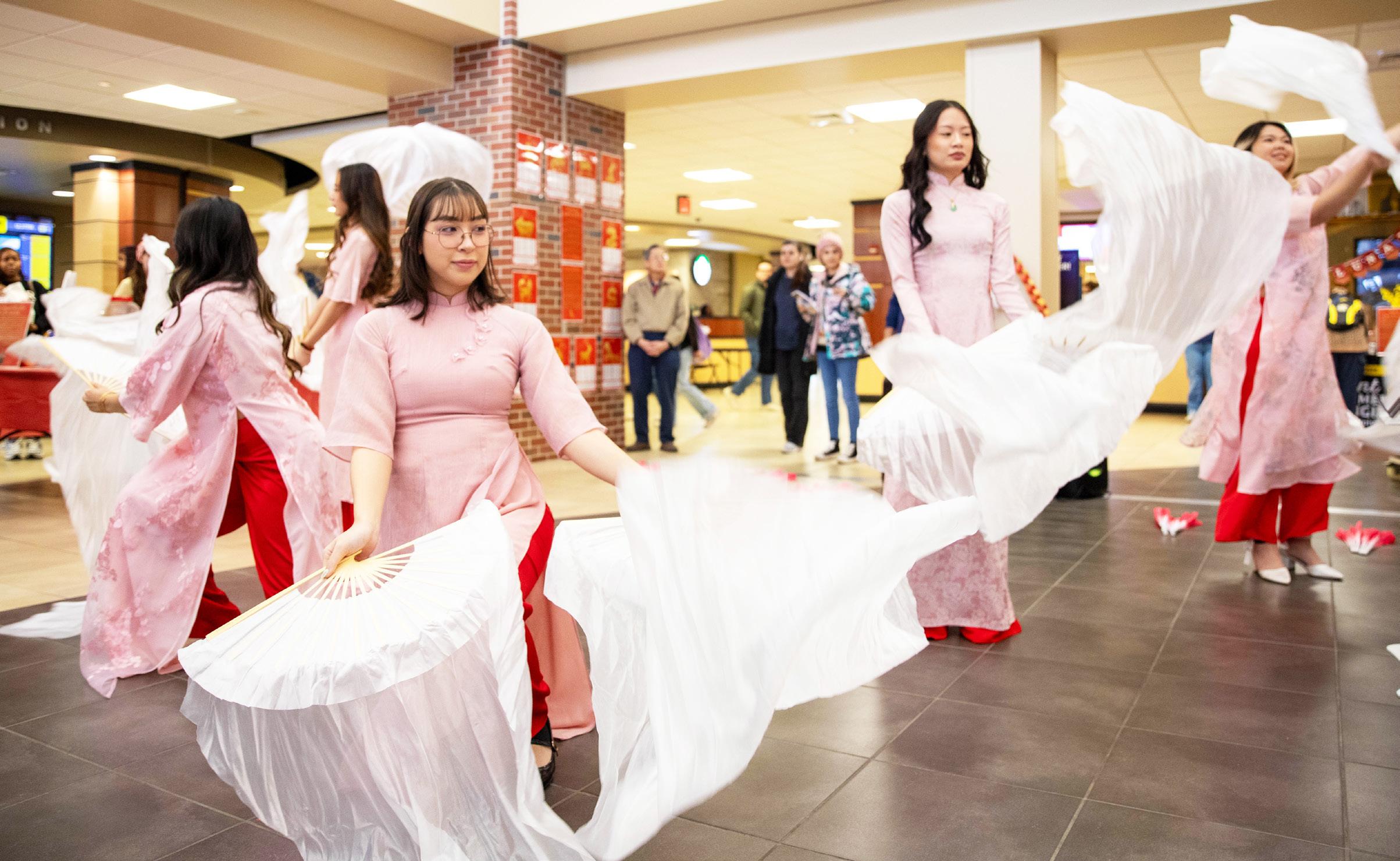
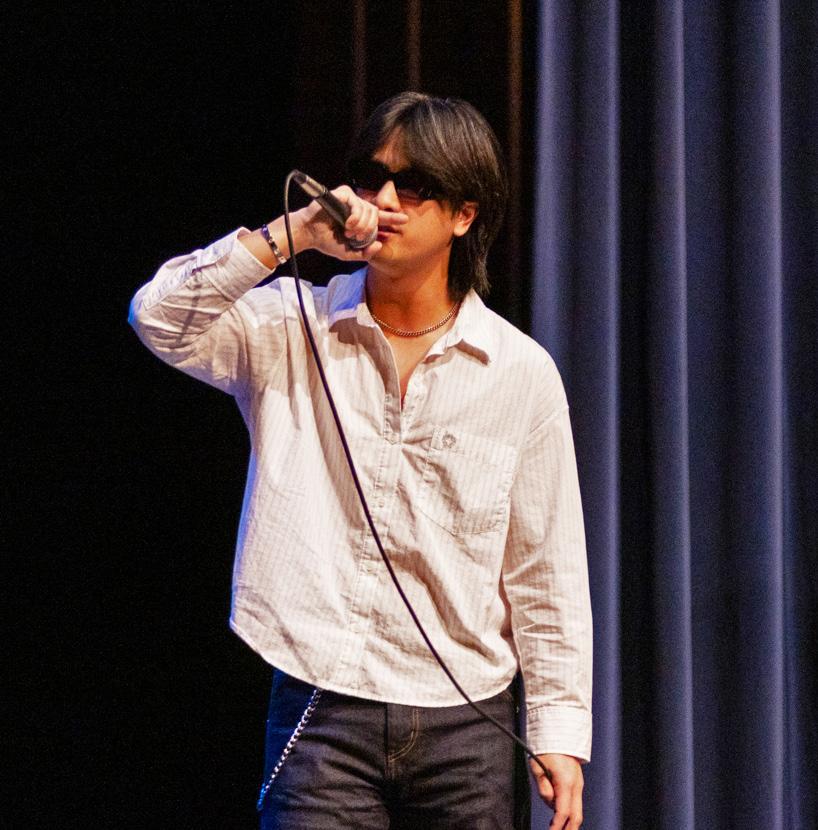
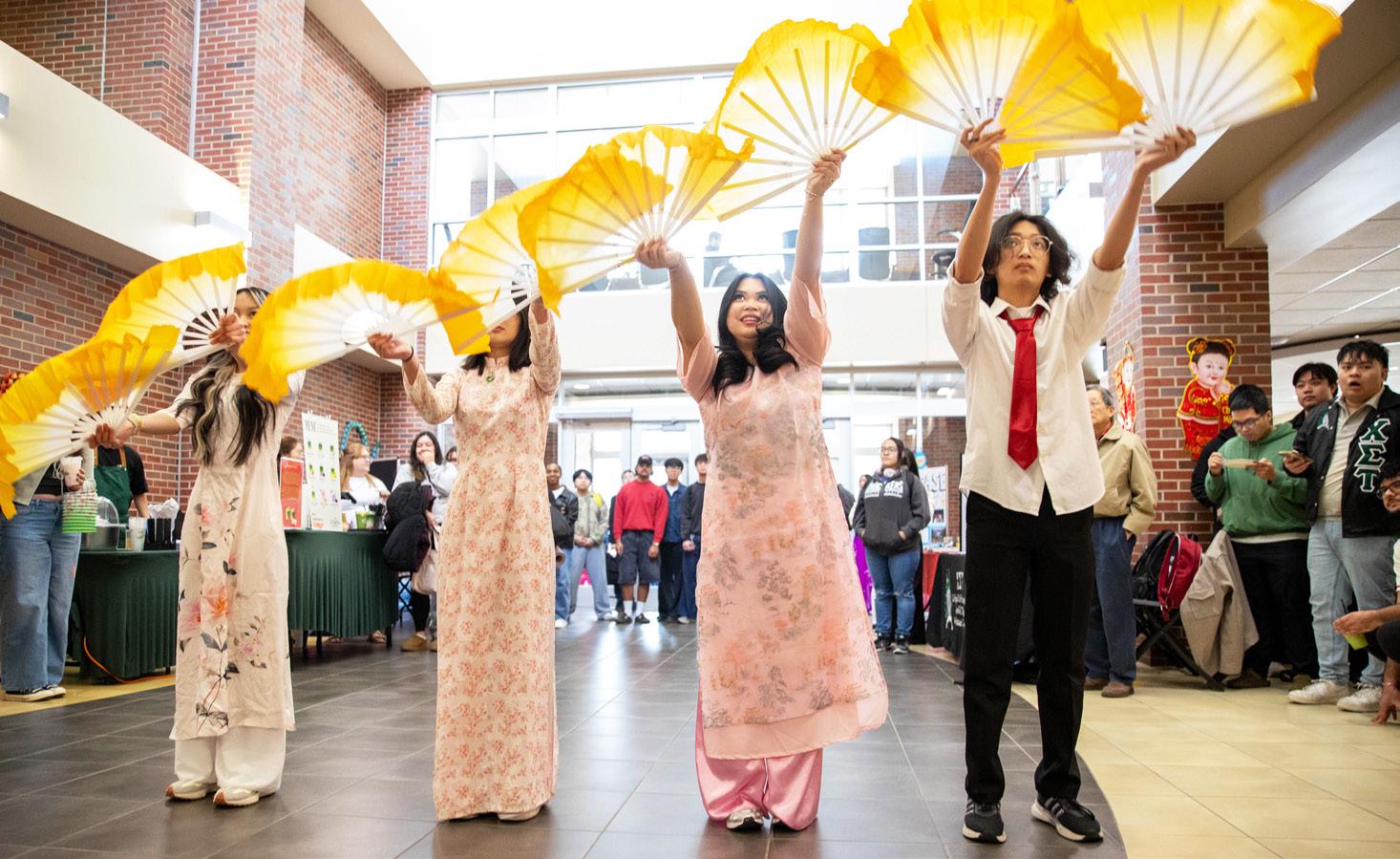
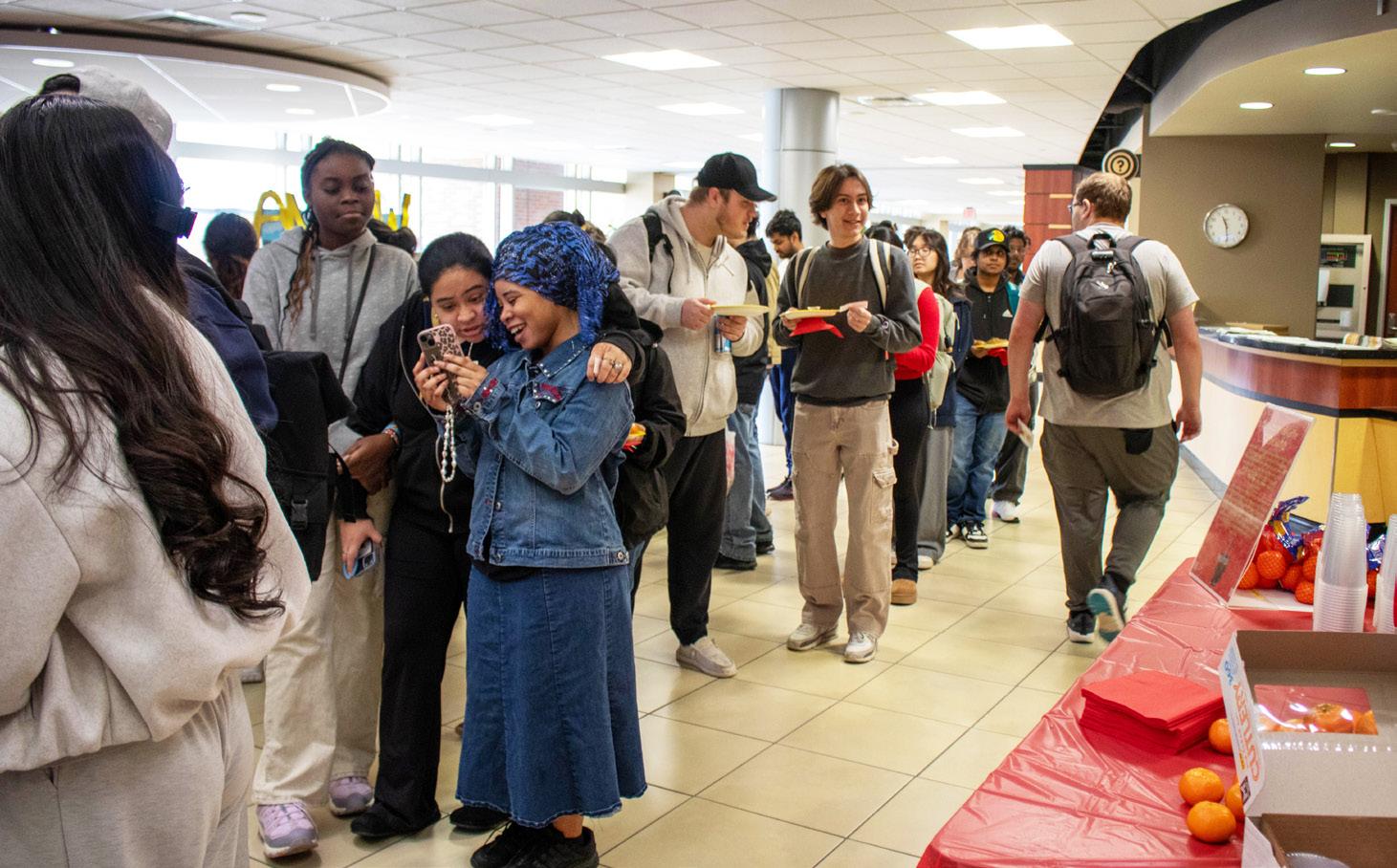
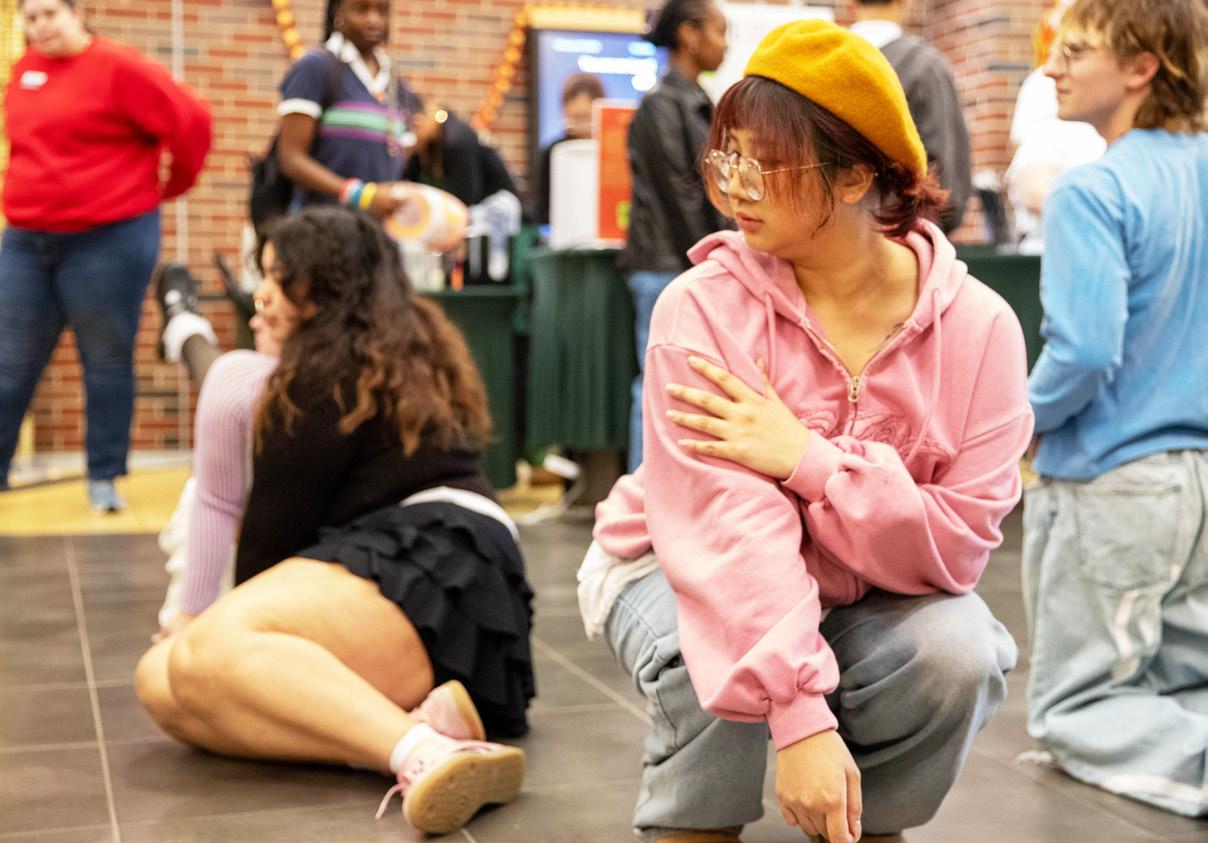
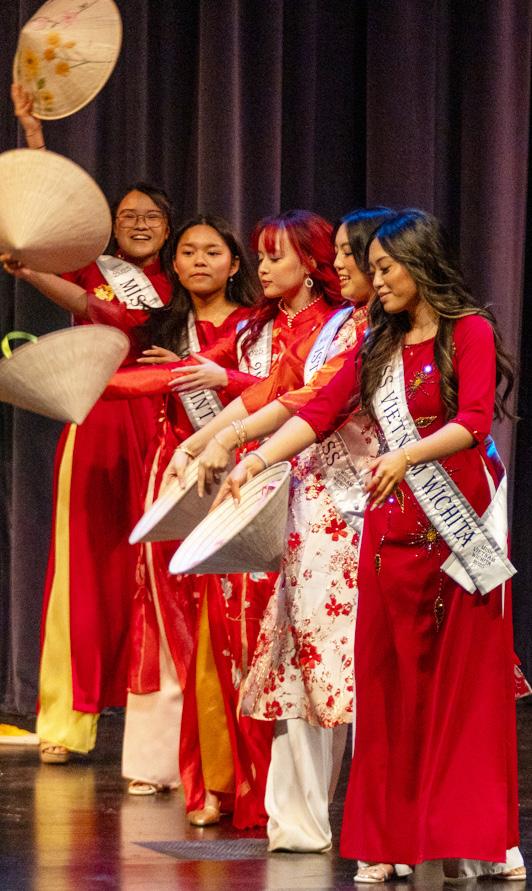
Different celebrations
n
n Vietnam: “Tết” involving cleaning, offerings and gifts to family.
n South Korea: Three-day “Seollal” celebrating family with food, games and gatherings.

LUNCH AND LEARN: STRESS MANAGEMENT, MOTIVATION AND RESILIENCY
Tuesday, Feb. 17
12:30 - 1:30 p.m.
Rhatigan Student Center
Come to the Rhatigan Student Center to learn from Counseling and Psychological Services on how to help manage stress and maintain your mental health.
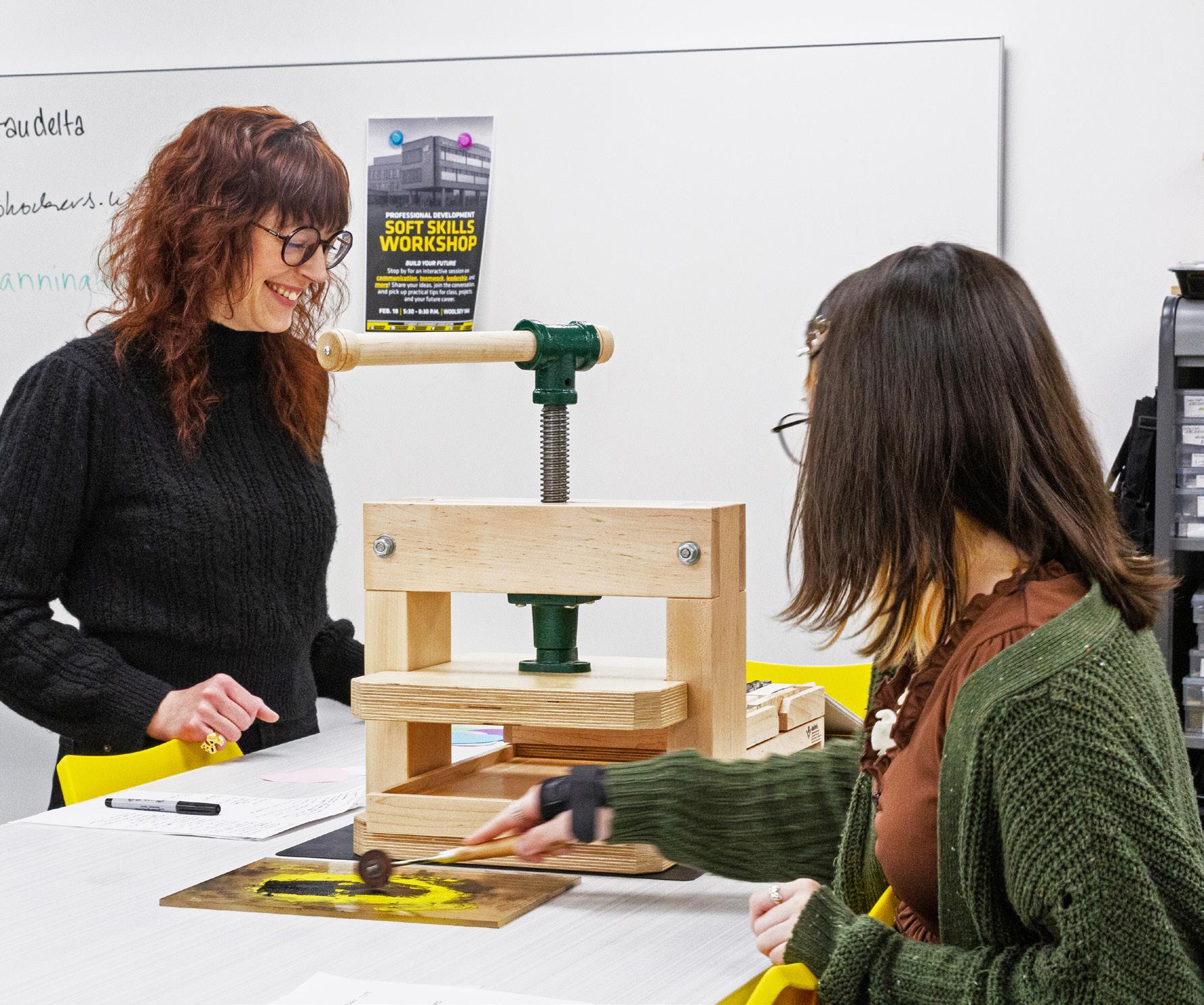
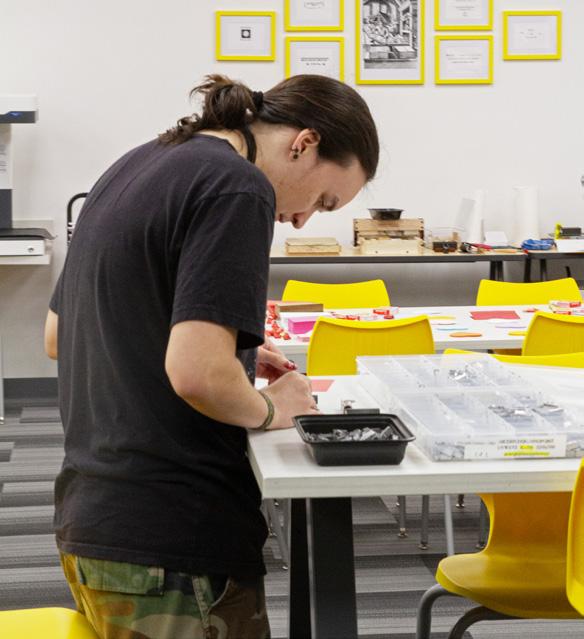
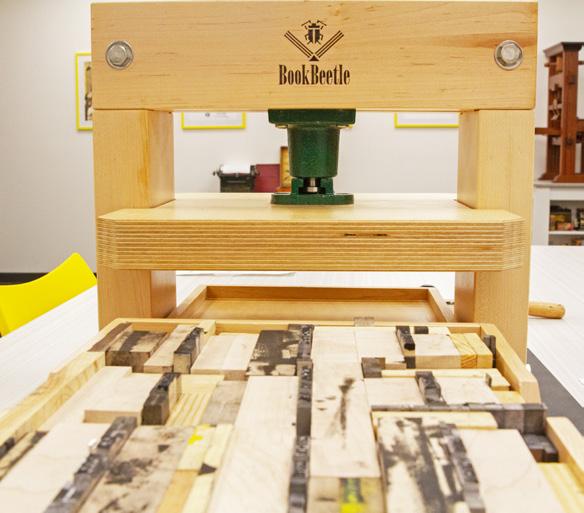
THE ART OF PRINTMAKING WITH MARCO HERNANDEZ
Wednesday, Feb. 18
10:00 - 11:30 a.m.
Ulrich Museum of Art
Get a behind-the-scenes look at Marco Hernandez’s creative approach and learn how to use the equipment in the McKnight Printmaking Studio.
RECOGNIZING AND AVOIDING
JUNK SCIENCE
Wednesday, Feb. 18
3:30 - 5:00 p.m.
Ahlberg Hall
Learn how to spot inaccurate scientific claims and misleading articles. Gain experience and tools to critically evaluate information in everyday life.
INTRO TO INTELLECTUAL PROPERTY
Thursday, Feb. 19
Noon - 1:00 p.m.
Ablah Library
Understand your intellectual property rights, learn to protect your inventions, creative works, designs and trade secrets in person or online at Ablah Library.
BLACK HISTORY MONTH BRUNCH
Friday, Feb. 20
10:30 a.m. - 1:00 p.m.
Rhatigan Student Center
Connect with other students and celebrate Black culture and community. Stay for the presentation of the Dr. Martin Luther King Jr. Drum Major Award.
FAIRMOUNT FORMAL Friday, Feb. 20
7:00 - 10:00 p.m.
Rhatigan Student Center
Come together for the Fairmount Formal, to celebrate with friends, enjoy free food and refreshments and make memories. Students get two free tickets.
SHOCKER SPRINTS
Saturday, Feb. 21 9:00 a.m. - noon
Heskett Center
Join Shocker Rowing for indoor rowing races. Compete in a 2,000-meter individual race or 1,000-meter team race. Must register to secure a spot on race day.
WOMEN’S BASKETBALL VS. UTSA
Saturday, Feb. 21
1:00 p.m.
Charles Koch Arena
Come support the Shocker women’s basketball team against UTSA for the Play4Kay Pink Game. Wear pink in support of breast cancer awareness. Students can get free online tickets.
MEN’S BASKETBALL VS. TEMPLE
Saturday, Feb. 21
5:00 p.m.
Charles Koch Arena
Come support the Shocker men’s basketball team against Temple as the Shockers fight towards the top of the American Conference Standings. Students can get free online tickets.
NEW MEMBER GREEK ACADEMY
Sunday, Feb. 22
1:30 - 4:30 p.m.
Rhatigan Student Center
Connect with other members of Greek Life and learn about what it takes to be a fraternity or sorority leader. Join workshops, keynote sessions and networking activities.
HAVE AN EVENT YOU WOULD LIKE LISTED?
CONTACT THE ARTS EDITOR: arts@thesunflower.com
CONTACT THE NEWS EDITOR: news@thesunflower.com