
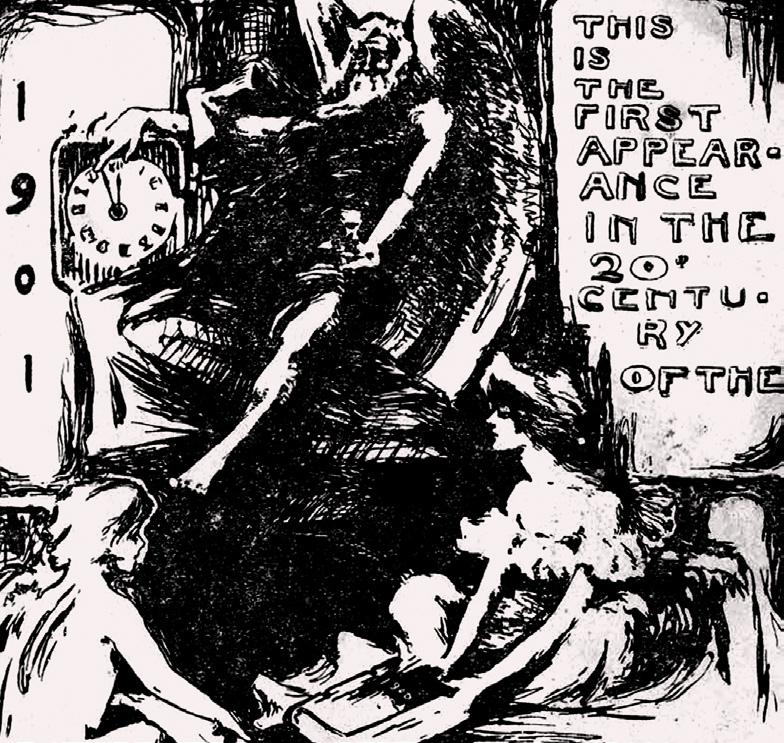
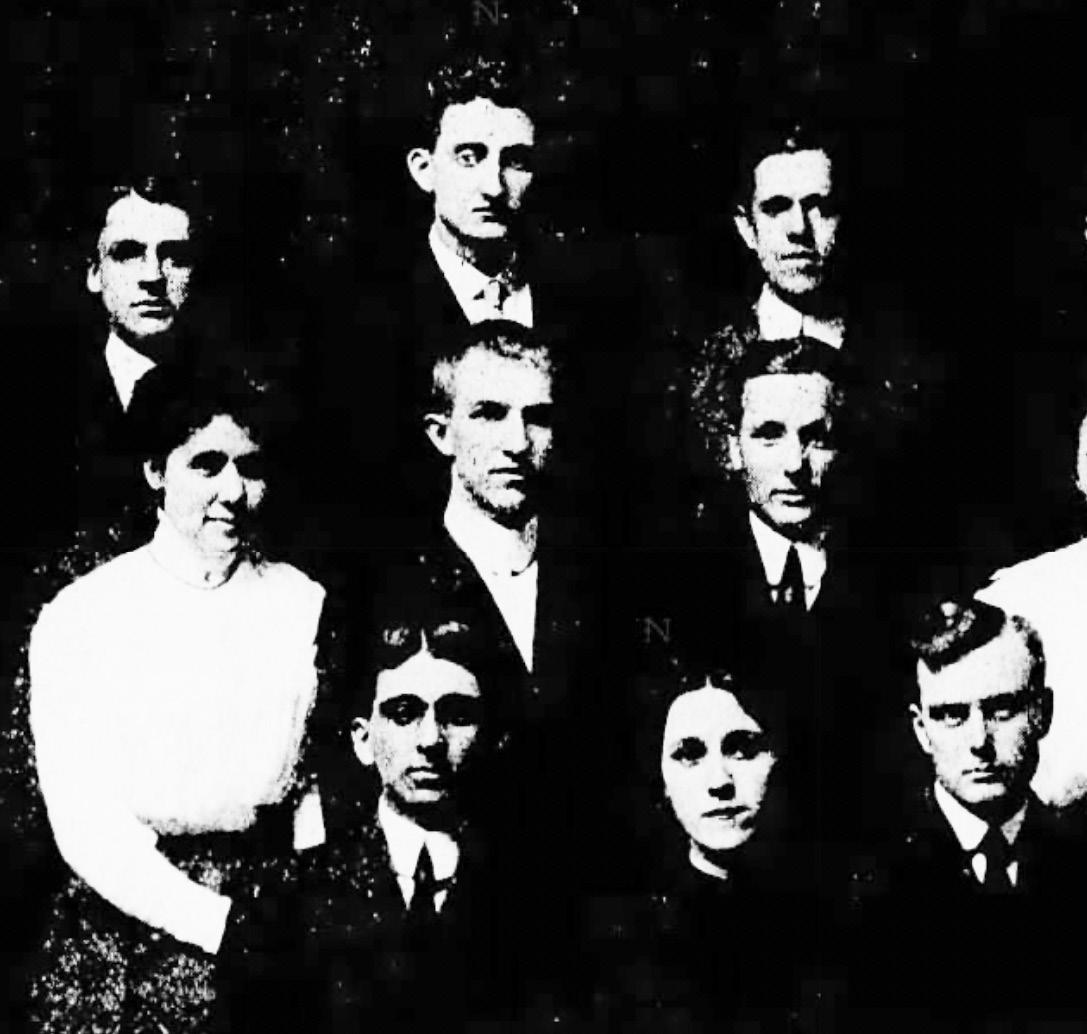
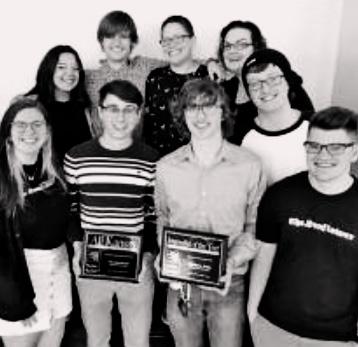
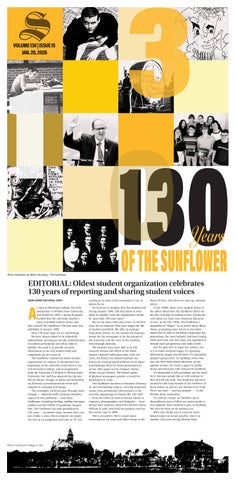
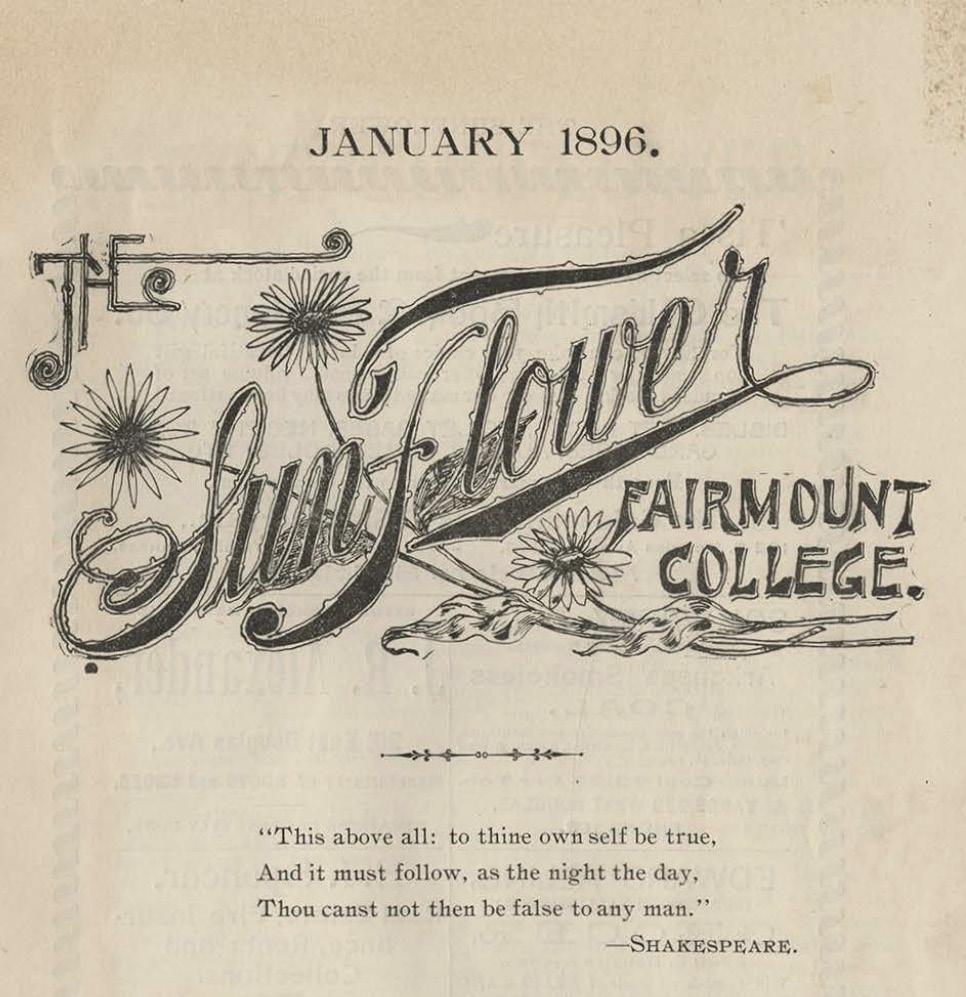
s soon as Fairmount College, the early predecessor to Wichita State University, was formed in 1895, a group of people decided that the university needed a place to publish student voices, and they created The Sunflower. The first issue was published in January 1896.
Now, 130 years later, we are still kicking.
We have always aimed to be editorially independent, meaning no faculty, administration or student government can tell us what to publish. Our goal is to provide accurate information to the very student body and community we are a part of.
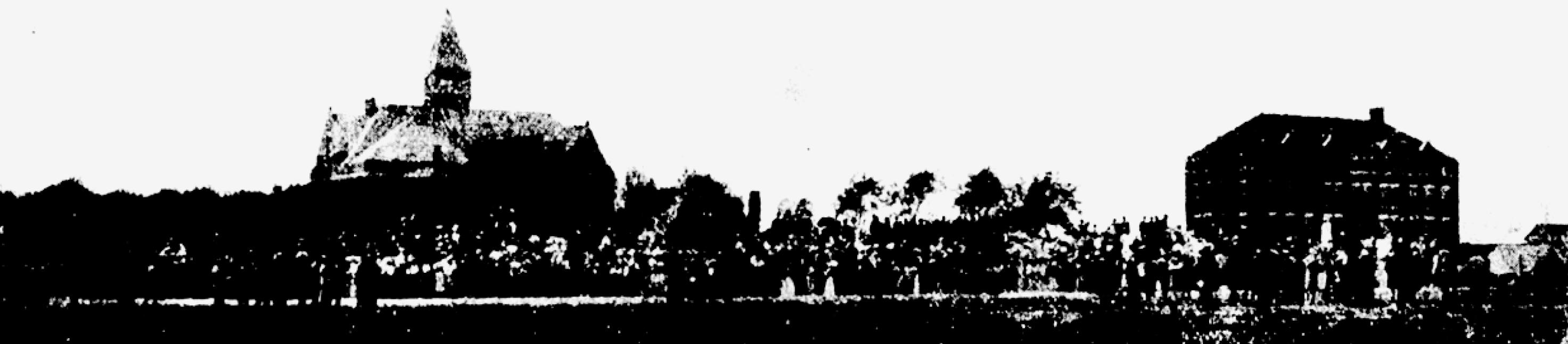
The Sunflower remains the oldest student organization on campus. It documented the beginnings of the university, back when it was still Fairmount College, and its progression from the University of Wichita to Wichita State University. Our staff has observed the rise and fall of nations, changes in policy and leadership on all levels, covered historical events and adapted to emerging technology.
The newspaper itself has gone through many changes — editorial staffs, printing schedules, logos and new platforms — and many challenges, including funding, staffing shortages, conflict and the COVID-19 pandemic. Despite that, The Sunflower has kept publishing for 130 years — no matter what, because that’s our job. Unlike a class, where students can simply not turn in an assignment and take an “F,” not
turning in an issue of the newspaper is not an option for us.
It’s hard not to imagine how the founders felt during January 1896. Did they know or even think to consider what the organization would be more than 100 years later?
But we do know what they wrote. In the first issue sits an editorial “This issue begins the life of another periodical. We offer no apology.” From these words, we can assume the founders meant for this newspaper to be the journal of the university and the voice of the students, even through adversity.
We wouldn’t have been able to do this research without the efforts of the Ablah Library’s Special Collections team. Over the years, the library has helped maintain our history by creating bound archives of our paper and digitizing them for future generations to access. Web pages can be changed. Stories online can get deleted. The bound copies of physical newspapers provide a record for generations to come.
The Sunflower has been a chronicle of history on and surrounding campus, covering important issues, from presidential controversies to the everyday happenings of student life. Our staff — from the editor-in-chief to section editors to reporters, photographers and designers — have always been students, aside from the first editor, William H. Isely, who held the position until the first senior class in 1898.
We’re not perfect. We’ve issued many corrections in our years and fallen victim to the
biases of time. And when we mess up, students notice.
In the 1980s, there were multiple letters to the editor about how The Sunflower didn’t do the best coverage of campus events. During the civil rights era, there was consistent discourse of race. In the late 1960s, The Sunflower’s misspelled of “Negro,” in an article about Black Power, prompting many letters to the editor about how to refer to the Black community. For generations, the news industry had been largely white and male, but over time, has expanded to include more perspectives and walks of life.
But the goal isn’t to anger our readers, nor is it to make everyone happy. It’s reporting information people should know. It’s expanding people’s perspectives. It’s uplifting voices who may not have been heard otherwise. In our opinion section, we create a space for public forum and discourse with avenues for feedback.
It’s impossible to kill journalism and the need for it. Because people like us will continue to find and tell the truth. The Sunflower has been around for this long because of the resilience of those before us, and no one intends to let it die.
That’s our duty — and our promise — to the Wichita State community.
So, pick up a paper on Tuesdays, go to thesunflower.com or follow our social media to stay updated. Don’t hesitate to give us feedback. We can’t do what we do without you.
With that, thank you to everyone who’s helped make our tenure possible. Here’s to another 130 years serving Wichita State.
BY MYA SCOTT opinion@thesunflower.com
Hundreds of students have walked through the office door of The Sunflower in the 130 years it’s been operating. Whether it was at the original location of Wilner or in the basement of Elliott Hall, it’s always been open to students looking to gain work experience and make an impact, or a little extra money. And for many of
Eric Wilson
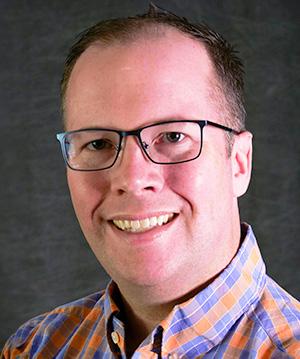
Eric Wilson works as a faculty member at the Elliott School, but back when he attended WSU he served as the sports editor of The Sunflower. During his time at the newspaper in the early 2000s, Wilson worked with students not just in communications, but anyone with a penchant for storytelling.
“It was just this really fun kind of patchwork of people,” Wilson said. “... I would say at the time, it probably wasn’t even the majority of students who were comm students.”
Wilson took over the role from former sports editor Dwight Miller, who was years ahead of him and graduated before Wilson.
“I kind of inherited this sport’s editor role,” Wilson said. “I earned his trust.”
During his time as sports editor, Wilson said he was often the “sports person” for The Sunflower, and spent many hours editing and writing.
“It’s not that long ago, but I remember standing by the fax machine in The Sunflower, waiting for box scores to come in from road basketball games,” Wilson said.
Wilson said he still carries skills and memories from his time at the newspaper.
“I’m certainly not the greatest writer ever, but that position really developed my writing skills,” Wilson said. “... Maybe not the most glamorous things, but just doing that, I remember sitting in my dorm room, across the street in Brennan Hall, late at night, just banging out stuff.”
Matt Crow
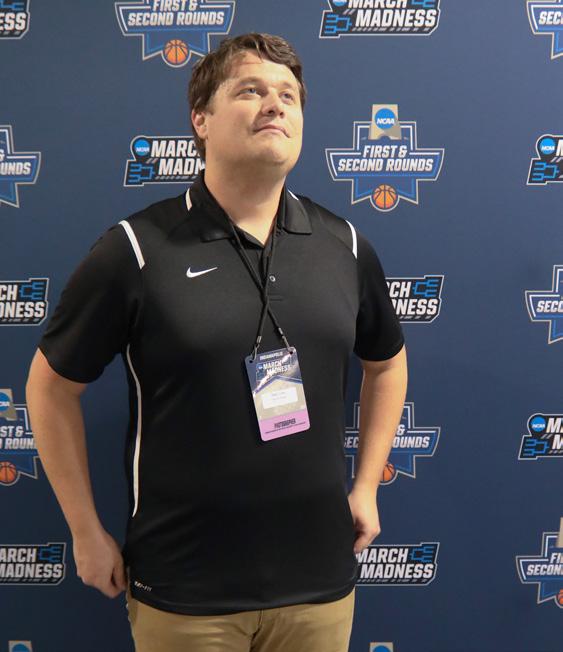
Matt Crow works as the multimedia coordinator for the Office of Admissions at Wichita State where he tells student stories on campus through film. Crow joined The Sunflower in 2016.
After graduating, Crow was looking for a job and “bombed” an interview for a position at KAKE. He mentioned the former sports director, Chase Shannon at the interview, who he knew from covering campus games, which was key to him landing the job.
“He [the interviewer] brings the sports director in and is like, ‘You know this guy?’ and he’s like, ‘Yeah, they do good work,’” Crow said. “… Chase leaves the room, and he goes, ‘Well, your work is good, and Chase is like a son to me, so if he says you’re good, you’re good.”
Crow didn’t begin his college days working at The Sunflower, though. He joined after participationing in the Flint Hills Media Project, an assignment where students helped tell the story of the Flint Hills Symphony, which officially had its last year in 2025.
“Several reporters and photographers were in there, so it’s just kind of natural,” he said. “We became really good friends over that summer… We all became very close pretty quickly on those production nights.”
Along with his student coworkers, Crow said the current advisor, Amy DeVault, was also an incredible presence for the staffers.
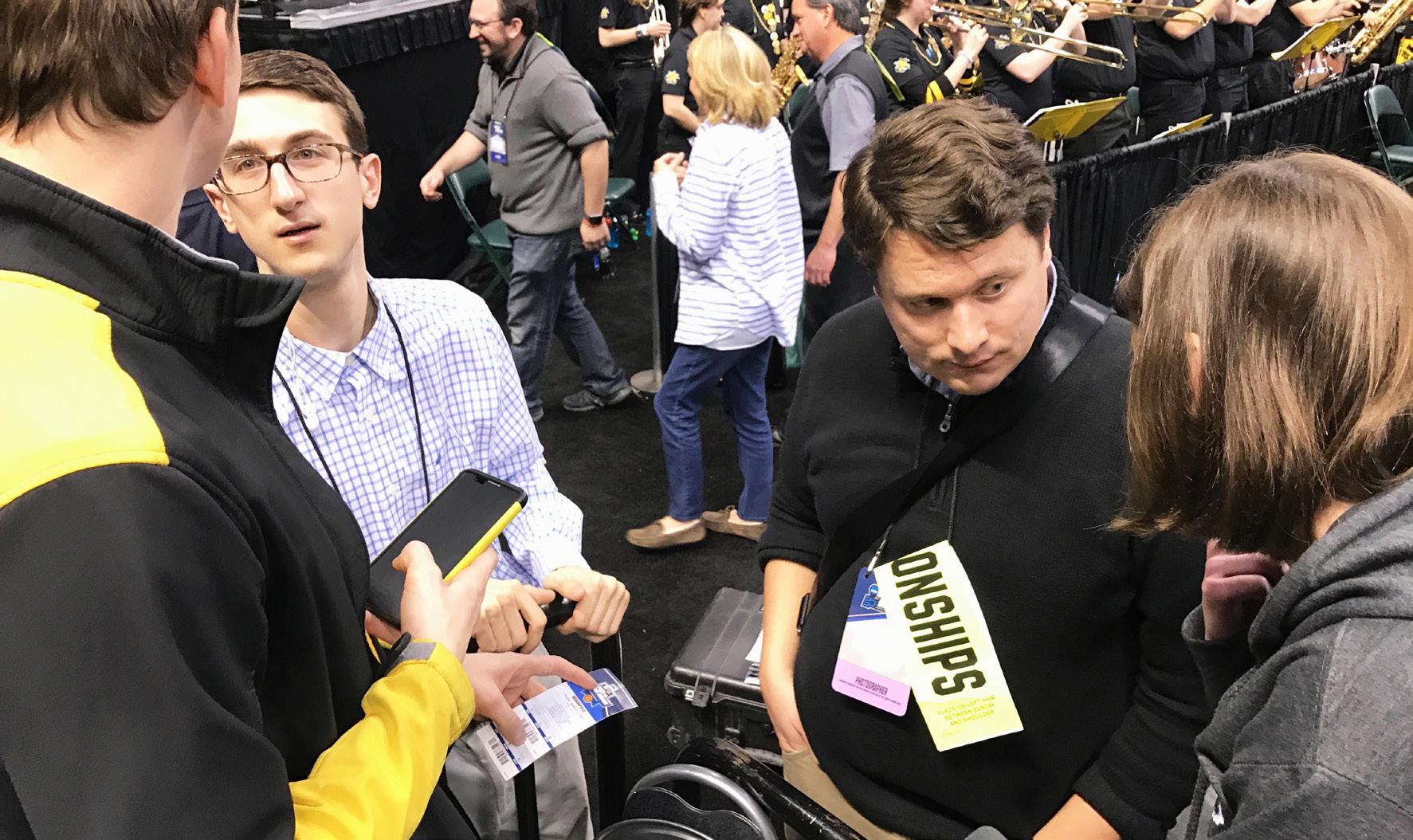
“Just the time and effort she puts in and the passion she has for teaching us, even when she rolls her eyes at us for something we want to do,” Crow said. “She drove once six of us all the way to Indianapolis for March Madness. I would not be where I am at without Amy.”
campus.
Lainie Mazzullo-Hart
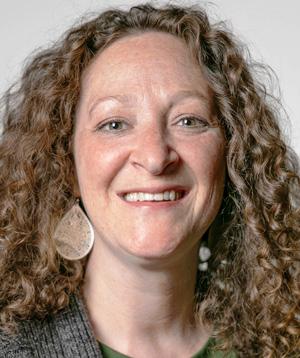
Lainie Mazzullo-Hart is WSU’s director of communications for the Office of Strategic Communications and Marketing where she writes and edits news releases, social media posts and helps inform students about the university. In the late 90’s, she served as managing editor at The Sunflower. She said she found her experience in college benefitted her career.
“I wouldn’t have my career without The Sunflower because (former advisor) Les Anderson, he’s the one who gave me recommendations for a couple of my jobs,” Mazzullo-Hart said. “So I’m not sure I would have been hired without those references, to be honest, because I didn’t have a ton of experience.”
Mazzullo-Hart initially began as a physical education major before attending classes and realizing it wasn’t for her, leaving her to choose another major.
“I remember literally going through the course catalog and looking at the humanities and being like, well, I’ve always liked writing,” she said.
Mazzullo-Hart said she later joined The Sunflower because of a class requiring her to publish work. She began as a writer, and later a copy editor because of the time and energy she spent in the newsroom.
“We loved it, that small group,” she said. “… We ate all of our meals down there. Whenever I go down to The Sunflower, I expect to smell pizza because we always ordered Papa John’s.”
Wichita newsroom leaders say they value experience of Sunflower alumni
BY KAMI STEINLE steinlekami@gmail.com
The Sunflower has produced journalists all around the Wichita area. Publications like The Wichita Eagle, The Wichita Business Journal and KMUW, Wichita’s local NPR affiliate, have newsrooms that are full of Sunflower alumni.
“Everyone comes in with a good sense for what Wichita business is all about,” editor of the business journal Kirk Seminoff said. “I’ve hired three in my seven years … all have come in with good experience because they get good experience at The Sunflower.”
Local news outlets in Wichita often look to college newspapers for employees and interns. There are currently four journalists on staff at the business journal who had worked for The Sunflower and six at The Wichita Eagle, the city’s legacy newspaper.
“I know that I learned much more from my work at my college newspaper, frankly, more than I ever did in a classroom,” KMUW’s news director Suzanne Perez said. “So, I really respect and value experience from college newspapers.”
Perez said having The Sunflower on a resume is often an advantage because, in her experience, it shows that candidates can meet deadlines and have at least basic reporting or editing skills.
“Journalism is a profession, but it’s also a trade, and I feel that just being in an environment where you are producing a product just teaches you how the news business works,” Perez said. “That’s practice that is really hard to replicate in a class. It’s just so important to just do the work and to do it consistently.”
Seminoff, a former Sunflower employee, said when he was at WSU in the 1980s, The Sunflower “was not as well run a newspaper” and “did not conduct itself as professionally as it does now.” One of the reasons he cited was the current faculty advisor, Amy DeVault.
“Amy brings that newspaper experience. She’s been through it. She knows how it works,” Seminoff said. “I think that’s really valuable. That’s something The Sunflower has had for decades, good people in the advising and teaching roles.” Executive editor of The Wichita Eagle, Michael Roehrman, also said one of the major benefits of working for The Sunflower is the faculty advisors because “they are heavily invested in the success of the students.”
“Wichita State was excellent for preparing them for this career,” Roehrman said. “They come in knowing what questions to ask and how to identify what is or what isn’t a story. Those instincts get honed when they’re at Wichita State.”
Nov. 22, 1965
Space Provided For 13,140 Occupants; Rations Include Candy, Crackers, Water
BY C. KAY ZIMMERMAN
WSU will have room for 13,140 persons in fallout shelters if an enemy should un-loose a nuclear attack on the United States.
Nine shelters have been completed to hold the 13,140 persons. Rations have been stocked for only 8,018. However, it is doubtful whether more than 8,000 students would be on campus at any one time. Where cases of food shortages would occur, half rations would be given.
Included in the rations are crackers, candy and water. Stocking of the shelters was started in 1963 and finished last year. Each person in the shelter has been allotted 1,200 calories per day for a ten day period.
Water supply, however, is not much of a problem as water already in the buildings may be tapped and drained to the shelter, explained Bill Friesen, Civil Defense Director for Wichita and Sedgwick County. Location and capacity of the campus fallout shelters include: DFAC-1,760, CAC-3,960, Ablah Library-3,875, Wilner-315, Math
Physics-240, Fieldhouse- 945, mens’ dorm-120, south mens’ dorm120, and the womens’ dorm-60, according to Friesen.
Shelters have been surveyed by the Army Corps of Engineers and occupants have each been given 10 square feet.
He also noted that danger of fallout in Kansas was low because of wind velocities and the flatness of the country. Friesen pointed out that radioactive fallout intensity deteriorates 90% every seven hours.
Sleeping would be done on the floor and in shifts. No bedding has been provided and each occupant would bring his own sleeping equipment. Recreational activities would involve only what is offered by the building and shelter manager.
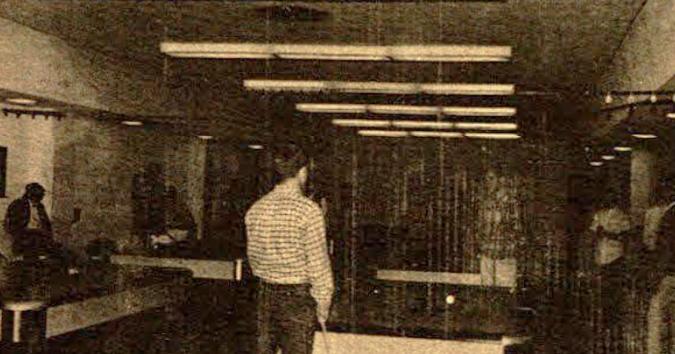
“The student union (CAC) building shelter has perhaps one of the best recreational facilities in Wichita,” said Friesen.
Each shelter has been marked with a black and yellow sign bearing the initials “CD.”
‘Mountain of Knowledge’: The yearbook through the eyes of its final editor
BY KASS LEWIS news@thesunflower.com
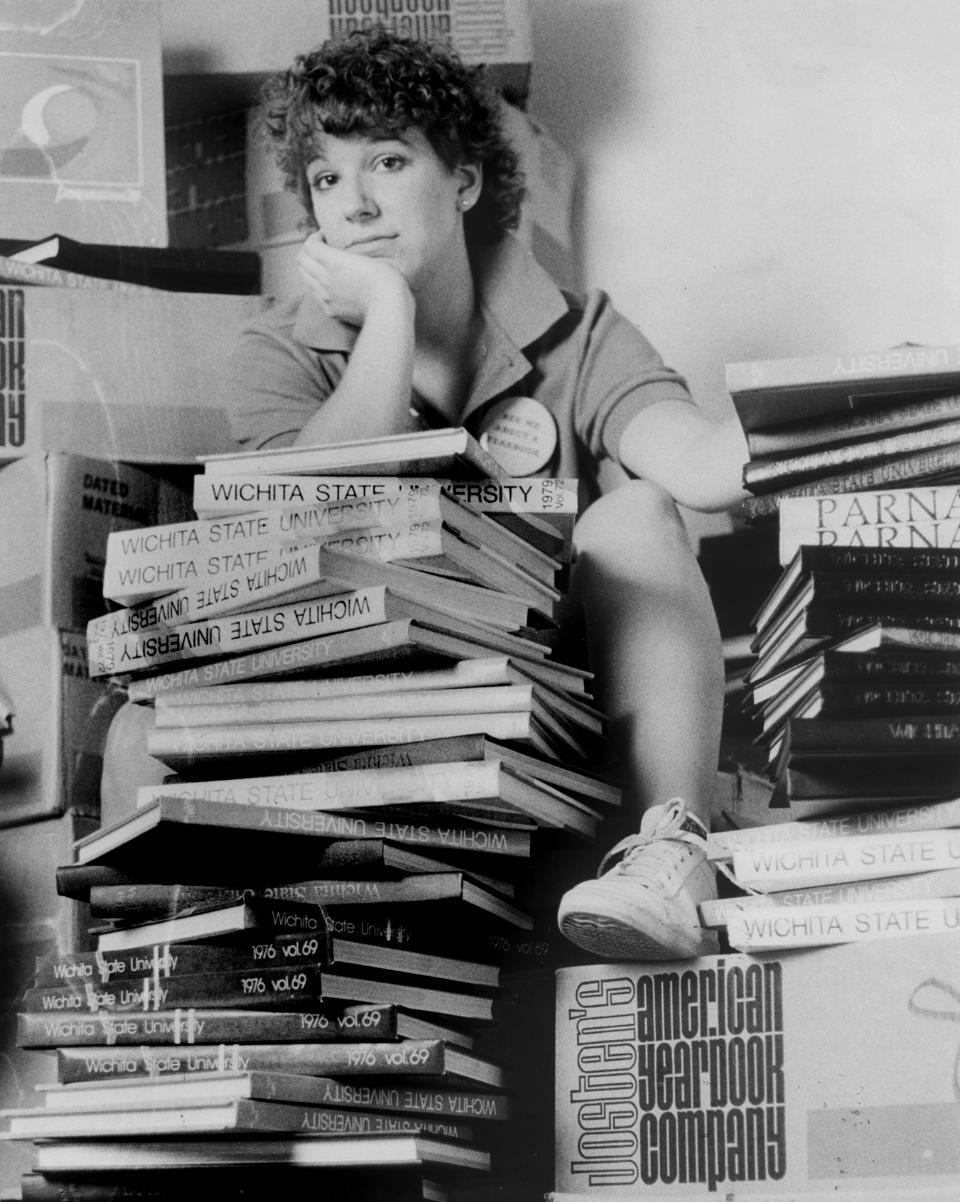
In 1986, in the now-demolished Blake Hall, the whir of a blender could be heard from the Parnassus office as Sara Quinn and her fellow designers crafted what would become the final edition of the Parnassus, Wichita State’s former student yearbook.
“I made margaritas, and we … would sit and design pages,” Quinn said.
Named after the mountain in Greece, Parnassus means “mountain of knowledge.” The formal definition of Parnassus is “a collection of poems or of elegant literature.” Quinn personally described it as “a little time capsule — a moment in time.”
Quinn started out working for The Sunflower and moved to the Parnassus in 1985 because of her interest in magazine design.
“It was just a really interesting opportunity to work doing magazine-style journalism,” Quinn said. “That’s the way I saw it at the time.”
Those moments in time came to a halt in fall 1986 when the Parnassus released its final edition apart from a one-off publication in 1994.
Prior to joining the Parnassus staff, Quinn said there was “friction” between SGA and Parnassus about student fee allocations to the student yearbook. After leading the Parnassus for a year, Quinn and her staff ended its 84-year run.
During its final year, Quinn and the Parnassus staff attempted to better popularize the yearbook by releasing a four-issue magazine.
“If you bought a yearbook,
you got this binder that was all printed by Jostens — which was the yearbook company up in Topeka — and you were able to put those issues together,” Quinn said. “We had things in there like organization pictures, and we had individual pictures, and then there was magazine content. So we were trying something a little bit different.”
The process of making the Parnassus was very different from making a yearbook today. With much more limited digital technologies, it was made by typesetting.
“It was a real mechanical process,” Quinn said. “... It was kind of cool.”
After sketching, waxing and burnishing the final drafts of the yearbook pages, the staff packaged them up, and Quinn drove them to Jostens in Topeka. As she made the trip, Quinn didn’t yet realize she’d be the last editor of the Parnassus.
Quinn said she enjoyed the independence of the Parnassus team as a student-led publication.
“It was just fun to have a space and to have a staff, and we just kind of figured it out as we went,” she said.
Her time at the Parnassus and The Sunflower helped her learn aspects of leadership.
“I look back on it now and there are so many things that I had no clue about,” Quinn said. “... I think that was kind of a pivotal experience.”
Quinn now passes her knowledge to new journalists at the University of Minnesota, where she is a Senior Fellow at the Hubbard School of Journalism and Mass Communication.
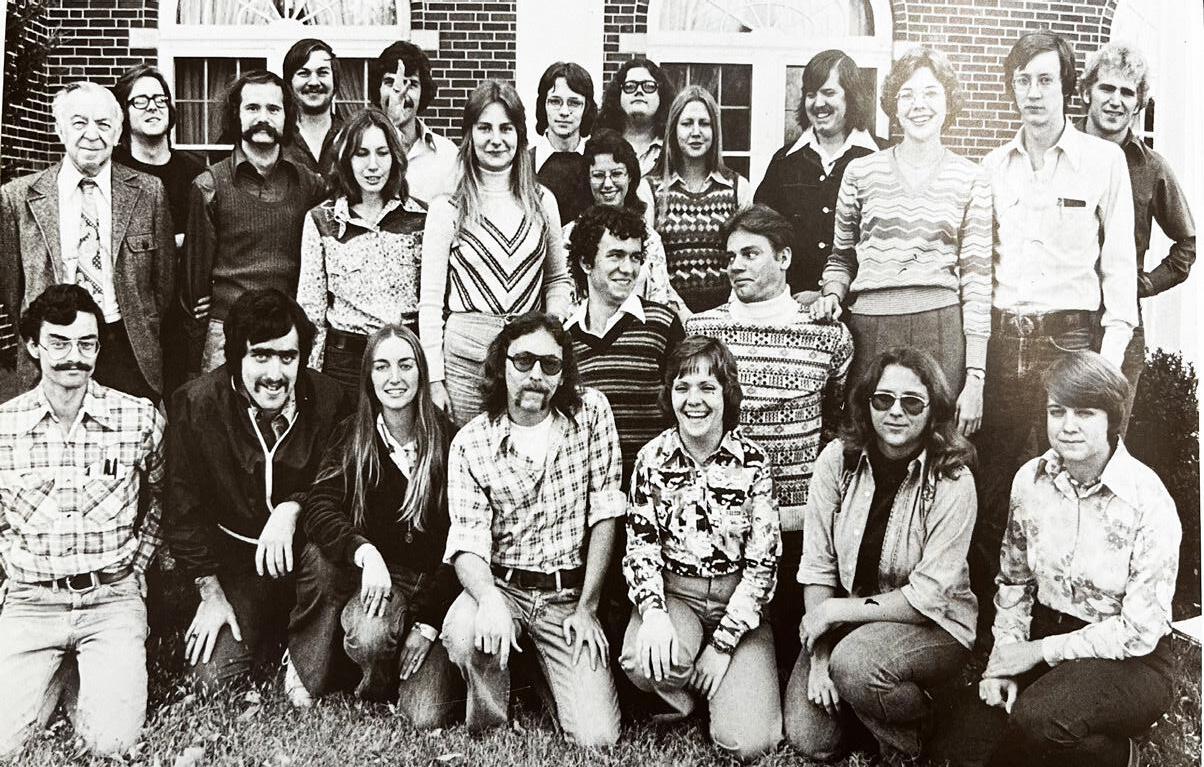
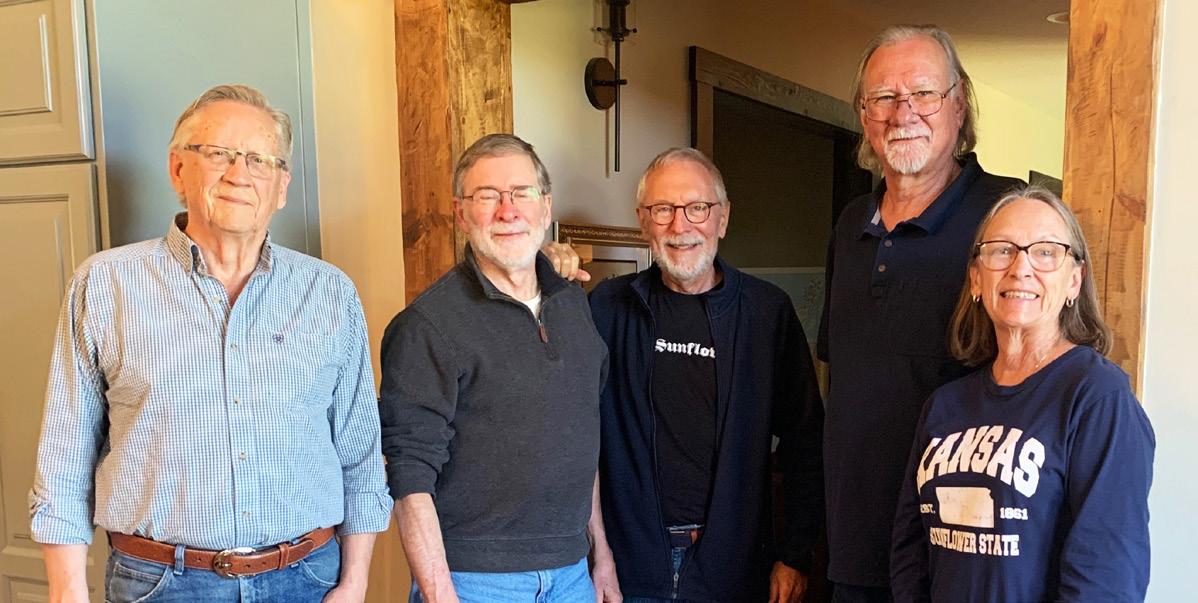
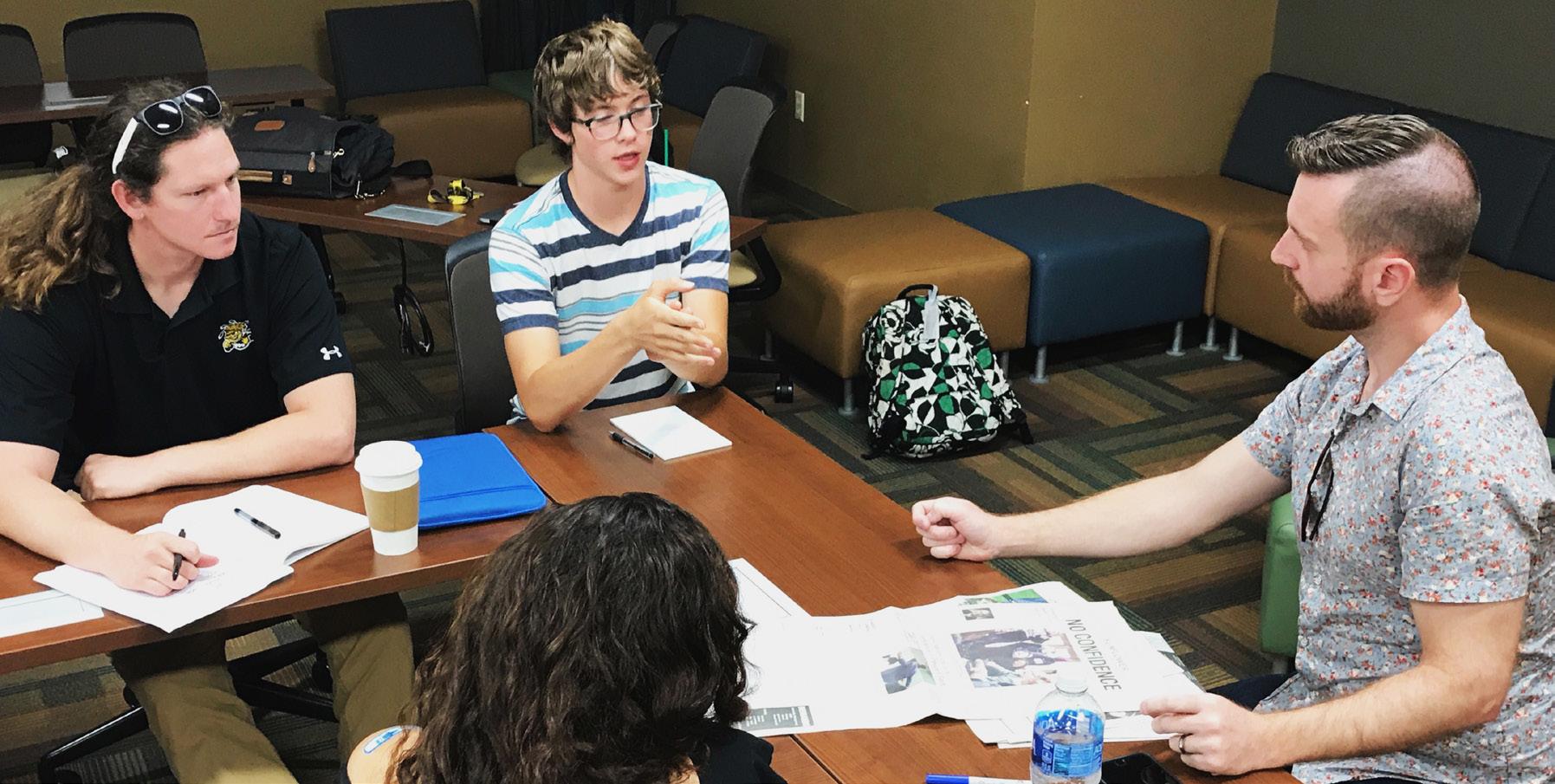
BY KAMI STEINLE steinlekami@gmail.com
Since 2000, Sunflower alumnus Philip Gray has had a wide ranging career in journalism, editing at prestigious publications like The New York Times and The Los Angeles Times, where he currently works. Gray also teaches at Wichita State’s Elliott School of Communication, helping future journalists build their own skill sets.
Gray started his journey at WSU in September 2000 when The Sunflower hired him as a copy editor. In the role, he would revise stories written by the other staff members. Gray said The Sunflower helped him learn about the “diplomacy of copy editing” and helping people make their work better.
“Journalism is a team sport. You can’t really do journalism alone,” Gray said. “I came to appreciate that at The Sunflower because I learned so much from the upperclassmen who had been doing it for longer.”
Though reporting hasn’t been a big part of his professional career, Gray said he learned a lot from his Sunflower editors just by observing them in the newsroom, specifically his news editor.
“I learned so much hearing half of those conversations just by sitting next to her,” Gray said. “The way she would ask questions, allow a person to answer, ask follow up questions … she did a lot of reporting and wrote lots of news stories, including really emotional, intense situations.”
At the publications he’s worked including The Wichita Eagle, The Washington Post and The New York Times, he was hired as a copy editor. He was at the NYT for about nine years and later he became the op-ed editor, managing the opinion section. He also worked for Bloomberg Opinion as an editor.
As an op-ed editor, he often works with people who are experts in certain fields, not necessarily trained writers, and helps them get their points across in the way a writer would.
“As an editor of people who aren’t writers, you are really supporting them in making the points they want to make,” Gray said. “You’re helping them speak in their own voice, which doesn’t come naturally to people who aren’t practiced at writing. I find that really rewarding.”
Currently, Gray is working as the op-ed editor for The LA Times. He was hired to work remotely in June 2021 while he was living in New York. Now he does that same job, but from Wichita.
“I needed to move back to Kansas, (from New York) where my family is, and I made that case to the LA Times that I could continue to do the job remotely,” Gray said. “That’s how I came to (be) living in Kansas while working in California.”
Journalism has changed in many ways over the past two decades. Some of the major shifts Gray has experienced during his career came with Google and social media. These innovations
Sept. 17, 1971
came into the picture while he was still at Wichita State, editing for The Sunflower.
“With the rise of Twitter and Facebook, people searching the internet became the main way that people would consume your work, and also it became important that your work be findable,” Gray said. “When you were writing for a print publication, you would only be read by individuals who sought out your newspaper.”
Gray said one of the biggest things he had to adjust to with the changes social media made in journalism was the audience. For the first time, there was a potential that someone who had never heard of The Sunflower or Wichita could read your story.
“(The) audience was primarily still a campus audience, but also a global audience,” Gray said. “You needed to present it with headlines and captions that would make it shareable and findable by search engines.”
With the different phases journalism has gone through, Gray said it’s hard to plan for the future and he often just goes where life takes him.
“I could’ve never dreamed of having the opportunities that I’ve had,” Gray said. “It felt like a huge break when The Sunflower hired me as a copy editor. I wouldn’t have dreamed of the break of getting an internship at the Washington Post … I didn’t even dare to hope they would hire me, but they did. Who knows what opportunities will come and so far, amazing ones have.”
BY LINDA HODDY
The women’s movement is “one of the deepest and most fundamental kinds of revolutions,”
Gloria Steinem told students at Wichita State Thursday.
As the first speaker in this year’s Forum Board Lecture Series, Steinem spoke warmly and confidently to a crowd of approximately 5,000 students and other Wichitans, with an audience ratio of perhaps three females to one male.
Opening her speech, the women’s rights champion offered what she termed “a new interpretation of what’s usually ignored as pre-history.”
She told the audience that the years of 12,000 to 8,000 B.C. comprised a period when paternity was not yet known, and women were worshipped because they bore children.
With the discovery of paternity, she said, came the beginning of marriage, which meant essentially that women were locked up long enough to make sure who the father was and “have been locked up ever since.”
Humorously she related that “paternity was discovered by women many years before they told men about it,” and that the period had been one of “wombenvy rather than penis envy.”
Steinem questioned the practice of the local newspaper’s listing job opportunities under columns of “help wanted female” and “help wanted male.” The practice is “illegal and discriminatory,” she said.
Steinem sharpened her point with a quote from Dorothy Puttman Hughes, a black woman
who often joins her for lecture tours.
When Dorothy comes up against the question of separate help wanted columns Steinem said, “she likes to say that ‘there are very few jobs which actually require a penis or a vagina.”
“All other jobs,” Steinem said, “must be open to everyone.”
Steinem also attacked the church and our present family structure as forces that perpetuate the subjugation of women.
“The church, is a male supremacist institution,” Steinem said. As the hierarchy came along, it can be observed that as the position of the priesthood goes up, the position of females goes down.
Attacking the family structure, Steinem said, “In the first place, the family is not holy.” It is a recent product of industrialization, which has “ghettoized the wife and children.” She says women are working to construct a “more human” family system.
Steinem emphasized that the liberation of women would benefit all groups of women and men.
“The movement is for all women, especially for housewives who work 99.6 hours per week and get no pay for it.” She attributed her statistic to the U.S. Department of Labor.
The movement is not attempting to make extinct the role of the housewife, she said, but is attempting to make society aware that housework “is an important and dignified” human activity.
Black women are part of the movement, she said, because they face two battles. “A black women with a college education makes less than a black man with an eight
grade education,” she said. The women’s movement is, “the only place in the country where cooperation between blacks and whites is growing,” she contended.
Chicano women are a part of the movement because their “role has run out after they have finished raising their children,” Steinem said. They are then discarded by society, while they have yet another 30 or 40 years to live.
The movement is for professional women, she said, who earn only 60 per cent of what men do, are not let into graduate schools, and must face, daily, questions about their femininity.
The movement is for beautiful women and ugly women, she said, because “we must defeat the system that classifies us on our skin.”
The movement is for men, she said. It could liberate men from having to be the only wage earner, from boring wives, and from being expected to give a women an identity, “something which no human being can give to another.”
Submissive Subculture
On sex, Steinem again called on the words of her colleague Hughes. “The trouble with you men, is you’re afraid you won’t be able to screw as much. I want to say to you, if women’s liberation comes about you’ll be able to screw more and better,” Hughes says.
“If we live every day, this revolution, after 5,000 years of the superiority of women and 5,000 years of the superiority of men,” Steinem said, “we could have 5,000 of humanism.”
For more than a century, you’ve chronicled campus life, held the powerful to account, launched careers, and proved that an independent student newspaper matters.
The headlines change. The medium evolves. But the mission endures.


Here’s to the next reporter finding their voice. To the next editor burning the midnight oil. To the next story that changes everything.
Here’s to 130 more years.
Here’s how campus has changed in 2025 and what’s coming in 2026
BY TALIYAH WINN editor@thesunflower.com
Construction is constant in city life. Wichita State is no exception. With campuses spreading throughout Wichita, the university has plans for transformation.
Two years ago, WSU unveiled its 10-year campus master plan, in compliance with state norms, as a roadmap for the future of the university. Though the plans are tentative, campus has already started to transform.
A noticeable change came with the demolition of the Brennan Hall buildings, which originated as dorms to respond to greater housing demand after WWII. More recently, the buildings housed the TRIO and Upward Bound programs, which have now moved into Grace Wilke Hall, also anticipated to be demolished.
We’ve also seen renovations at University Stadium, including a widened soccer field and a semblance of an expanded track.
Here’s a look at the projects expected this year, according to information from the university’s strategic communications and facilities departments.
CAC Theater
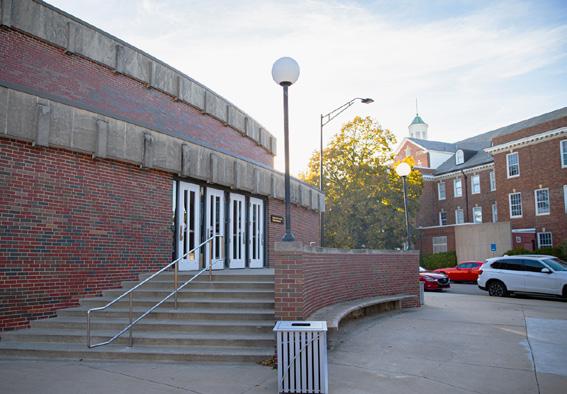
The Campus Activities Center Theater, located behind the Rhatigan Student Center, will undergo the first phase of a $20 million renovation to comply with the Americans with Disabilities Act. Phase 1 will cost around $300,000 with Student Government
Association paying half and the RSC Board of Directors paying the remainder.
Students may pay higher fees in the future to pay for the renovations, which are expected to be completed in three or four years. Or, the university may ask for a bond.
The theater closed last May, and assessments were done to see what it would take to become accessible for people with disabilities. The first phase will make upgrades to the front doors, add a lift, an ADA compliant bathroom and seating for wheelchair users.
Ablah Library
The second floor of the library is undergoing renovation to prepare for the relocation of the Lowell D. Holmes Anthropology Museum. The museum is currently located in Neff Hall, which is set for demolition in 2027.
Moving the museum is the first step to demolition. Next comes the relocation of the anthropology department, which will move into the Geology Building in early 2027. The Geology building will be renovated starting in summer 2026 to prepare for the move.
Wilkins Stadium
Though construction of the new indoor softball practice facility is complete, more is in store for Wilkins Stadium.
In early March, construction of the softball team and operations building is set to begin. The building will be south of the training facility and is projected to be completed in early 2027.
Parking impacts are expected in lot 15, south of the stadium, once construction slating begins.
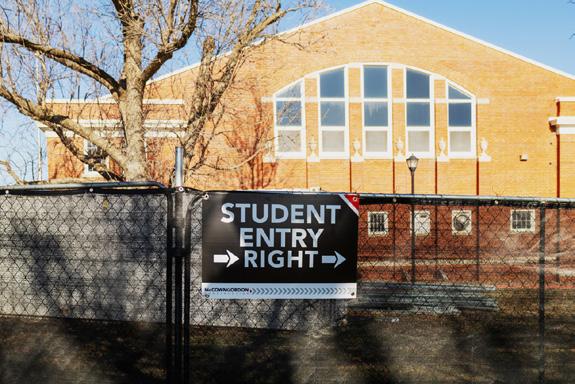
Air conditioning expansion is coming to Henrion Hall.
The university expects to provide air conditioning to the entire building by the end of 2026. The construction will be phased to allow the building to remain open, but building entrances will be impacted throughout the year.
Morrison Hall
A new elevator and updated interior on the first floor of Morrison Hall are projected to be completed next month.
NIAR Hub for Advanced Manufacturing Research
The Hub for Advanced Manufacturing Research, located behind Woolsey Hall, is expected to be completed early this year.
The 170,000 square foot building will house labs for manufacturing research for technology, materials, advanced machining and automation.
Researchers will use “digital twin” technology, allowing them to study manufacturing systems digitally.
The development was projected to cost $62 million, $26 million of which was funded by the Economic Development Association, as part of a federal program aimed at boosting local economies.
The building was originally set to open in the fall of 2025. University officials did not immediately respond to inquiries about the delay.
Partnership Building 3B
Located between Partnership
Building 3 and The Smart Factory @Wichita, Partnership Building 3B will house the Forensic Crime Gun Intelligence Laboratory for the Bureau of Alcohol, Tobacco, Firearms and Explosives (ATF).
The building is projected to be completed during the spring semester.
Heskett Center
The Student Government Association approved $100,000 from its special projects fund to replace the separation nets on the second-floor gym of the Heskett Center. The $212,828 total cost of the project will also be supported by Campus Recreation ($50,000), Student Affairs ($20,000) and Housing and Residence Life ($42,828).
The nets typically last 15 years, but have been up in the Heskett for over 30 years. Director of campus activities and recreation, John Lee, said in December that upgrades could be expected to finish by May.
Wichita Biomedical Campus
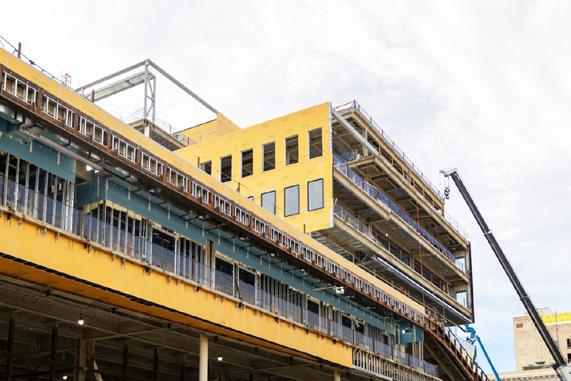
Phase one of the Wichita Biomedical Campus is set to be complete and start offering classes in summer 2027. The project is a partnership between WSU, WSU Tech, and Kansas University.
The $222 million, 350,000 square foot campus will host a variety of medical programs from the partnered colleges.
BY KASS LEWIS news@thesunflower.com
Over winter break, Wichita State welcomed three new restaurants to campus. While some feature familiar food, others are bringing new tastes.
Rhatigan Student Center
Sushi-Do replaced the FujiSan Sushi in the Rhatigan Student Center. According to an Instagram post from WSU dining, the new restaurant is starting the semester with sushi but will then slowly introduce more menu items like ramen, poke bowls, rice bowls and boba.
During the first week of spring classes, Sushi Do will be open
Tuesday through Thursday, 10 a.m. to 7 p.m., and Friday 10 a.m. to 5 p.m.
Braeburn Square
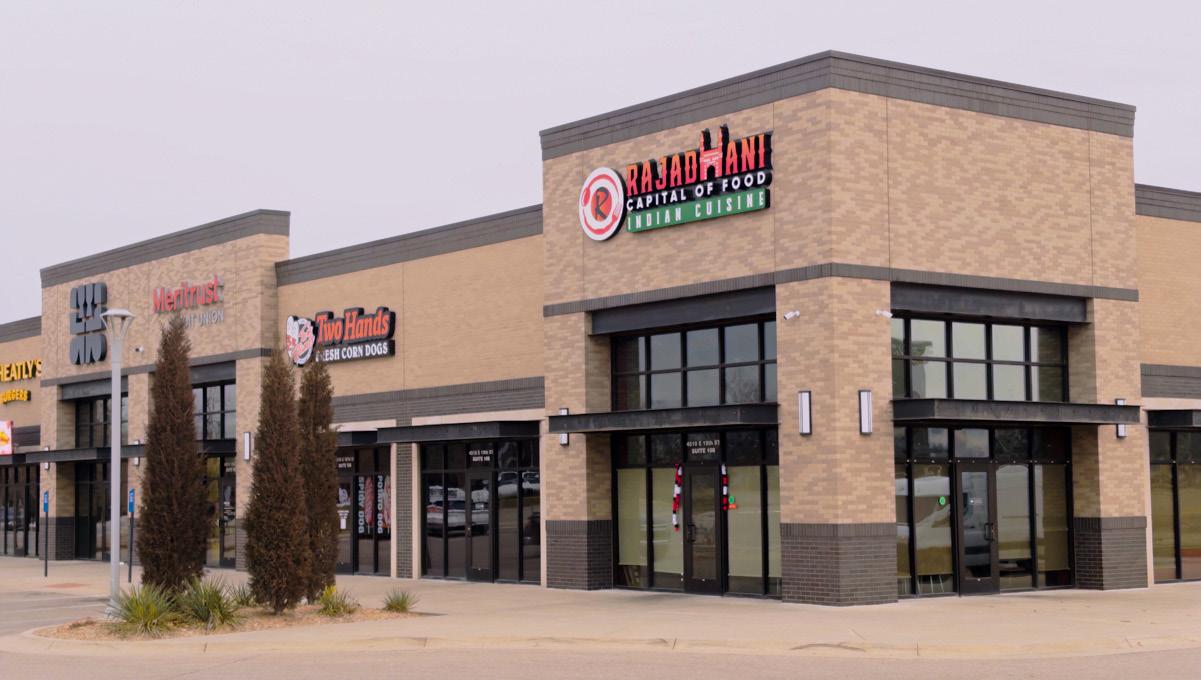
The spot that formerly held Sesame – Mediterranean Kitchen is now Rajadhani Indian Cuisine. Rajadhani has a range of Indian foods, from curries to biryanis. Rajadhani is open Monday through Thursday, 11 a.m. to 3 p.m. and 5 to 10 p.m., and Friday through Saturday, 11 a.m. to 10 p.m.
Jersey Mike’s is getting a new neighbor — Pizza Shuttle. Obvious from the name, this new restaurant will feature a variety of pizzas and says its “goal has been to provide a

quality meal at an affordable price and deliver it promptly,” according to its website. Pizza Shuttle’s Instagram says the pizza joint will be open sometime in January but
doesn’t give a specific date. Pizza Shuttle’s open hours are not currently available on its website.

BY PHILIP GRAY
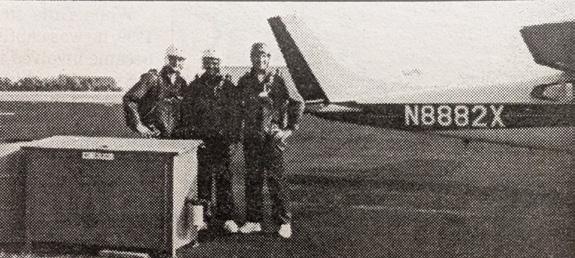
Matthew Hurd would never have gone skydiving alone. Neither would his high school friend Jeremy. But when one dared the other, he had to dare back. And then they were both committed to jumping.
So they did. And they loved it — just as they loved taking pictures for the school paper together, playing in the jazz band together and being in plays together.
These are Hurd’s fondest memories of Jeremy. The list ends there, though; Jeremy died Sept. 11 in the terrorist attacks. Hurd, a Wichita State sophomore in Liberal Arts and Sciences, is thinking now about the things he and Jeremy did together — and he is thinking about the abrupt end.
The morning of Sept. 11, Hurd was as tortured as every other American. The morning of Sept. 12, his pain grew a thousand times over.
That’s when he got a call from Jeremy’s mother. Jeremy, an architect, was en route from his home in Boston to bid a job in Los Angeles.
He was on American Airlines Flight 11, the flight that first hit the north tower of the World Trade Center — the flight that signaled the beginning of national terror.
“For me and his family, it’s easy,” Hurd said. “We know he’s gone.” Experts have said there will not be remains of the passengers. That and the extreme circumstances surrounding his death keep Jeremy’s family from mourning with a funeral.
Instead, they have gone to New York. What they can do there, Hurd isn’t certain, but he is going to go also, Sept. 28 through 30. He hopes to volunteer.
After hearing of Jeremy’s death, Hurd shut off the TV. He told his instructors not to expect him. He stayed in bed for two days.
Throughout the last week, Hurd was on the phone with Jeremy’s family, sharing memories and talking about him. He also called two of their mutual friends, John King in Nebraska and Mary Clark in Illinois. All three are going to New York Sept. 28.
Friday afternoon, Hurd went to a class. All he wanted to do was get in and get out. He did. Over the weekend, he talked to his wife about what Jeremy and his friendship with Jeremy meant to him. Monday evening, he finally was able to watch more news.
Hurd’s response to all this isn’t anger. He isn’t angry with the terrorists who crashed Flight 11. He isn’t angry with the Federal Aviation Administration. He isn’t angry with Immigration and Naturalization Services. He response, beyond sadness, is disappointment.
“We pay major league football and baseball players millions, while that baggage handler made minimum wage,” Hurd said. “America needs to figure out its priorities.”
To help Hurd raise money for his trip to New York, contact pgray@ thesunflower.com. Any access money will be given to a fund for the victims’ families.
Editor’s note: The copy of this story is reproduced here exactly as it originally appeared. Since this item is being republished for its historical value, no edits have been made.
BY AINSLEY SMYTH managing@thesunflower.com
As the spring semester starts for Wichita State students, keeping track of some important deadlines can help you save money and take the courses you need.
Jan. 20: Full-semester classes begin.
Jan. 22: Full-semester course registration for Kansas resident auditors aged 60 and up.
Jan. 26: Last day to add full-semester classes or change sections. Last day to opt out of an online “Access Now” textbook for a first-half eight-week course.
Feb. 2: Last day to drop a full-semester class without it appearing on your record. Last day to drop and receive a 100% refund. Last day to opt out of “Access Now” online textbooks for full-semester courses without being charged for the textbook.
March 18: Last day to opt out of an “Access Now” textbook for second-half eight-week courses.
April 3: Last day to withdraw from a full-semester class with a “W” instead of an “F.”
*The full spring academic calendar can be found at www.wichita.edu/ services/registrar/calendars/academic_calendar.php. Information about advising, including contact information, is available at www.wichita.edu/ academics/advising.
From its first edition 130 years ago when editors proclaimed, “The Sunflower is in the field to aid in the upbuilding of a college, and that is sufficient reason for its existence,” the Sunflower has been the clear and consistent voice of Shockers. On behalf of Shocker Nation, congratulations on this remarkable milestone. Your dedication to truth, creativity and community has shaped generations of Shockers, and we look forward to the next chapter of bold storytelling.
BY NAZJAI DICKSON nazjaidicksons@gmail.com
Two professors in Wichita State’s English department came up with an idea to fill an empty room in Lindquist Hall with a lab space that could improve students’ understanding of literature.
“A year and a half later, and here we are,” Associate Professor Francis Connor said.
On the sixth floor of Lindquist, students now have access to a Book Technology Lab.
“We have machines that are replicas of really old technologies, and then we have machines like our book eye scanner that are really new cutting edge technologies,” said Katie Lanning, an associate English professor.
The lab offers wax tablets with stylus tools, goose quills and dip pens with ink, linen papers, wax seals for letter writing, a Book Beetle tabletop screw platen press, a provisional cylinder press, and a replica 1/3-scale Gutenberg press, among other machines.
Lanning and Connor are co-directors of the lab, and went on various adventures to find some of their machinery, from auctions and eBay to Facebook
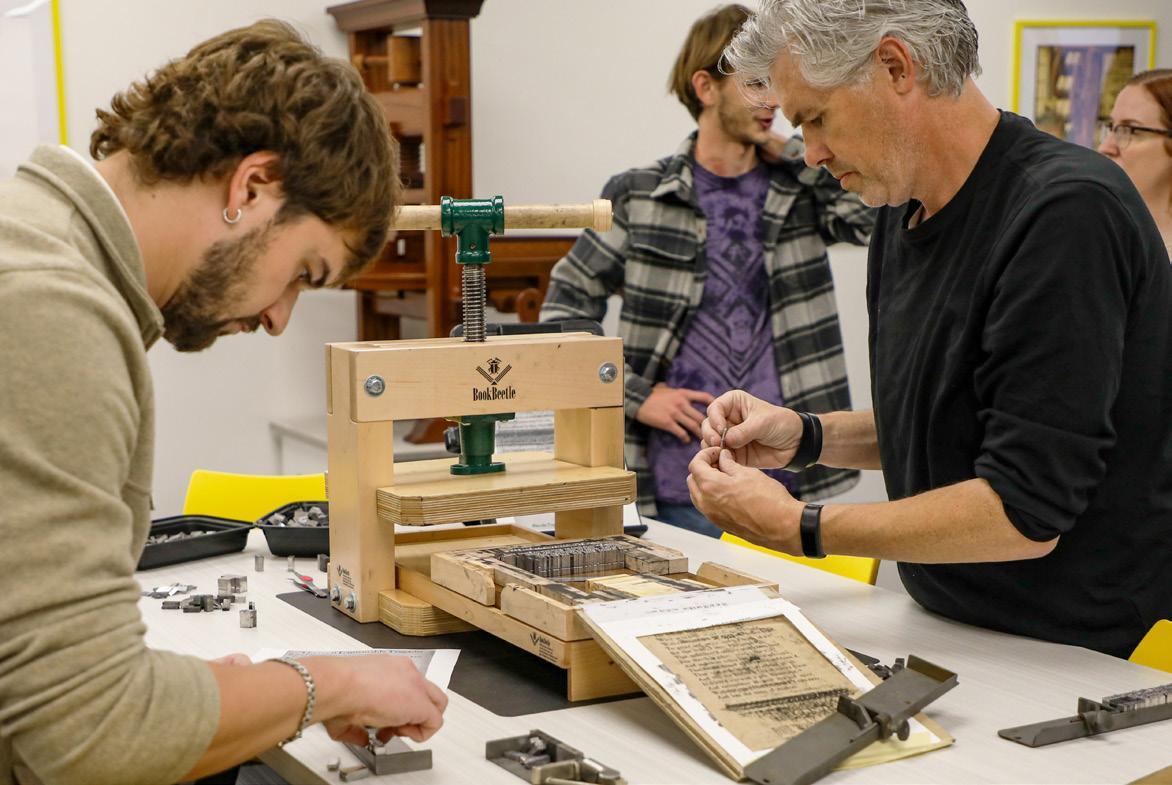
Marketplace.
“We think being an English major now isn’t just reading text, it’s about thinking about them,” Connor said.
Lindquist 601 originally housed the Writing Center, which is now in the Student Success Center. The book lab opened in the fall semester and offers new perspectives and learning experiences to students.
“Its important that we recognize the book as a collaborative object, as a communal object,” Connor said.
Feb. 26, 2014
“Every book is put together by humans whether we did it in the medieval period … or with word processors today.”
The Lab has a lineup of events and open hours for students to come in to use or learn about the equipment.
“We’ve got zine workshops coming up… we had a typography workshop this semester, but we are going to start doing some open hours this spring, where students can come and use the lab for a couple hours and make something,” Connor said.
BY JAKE TREASE
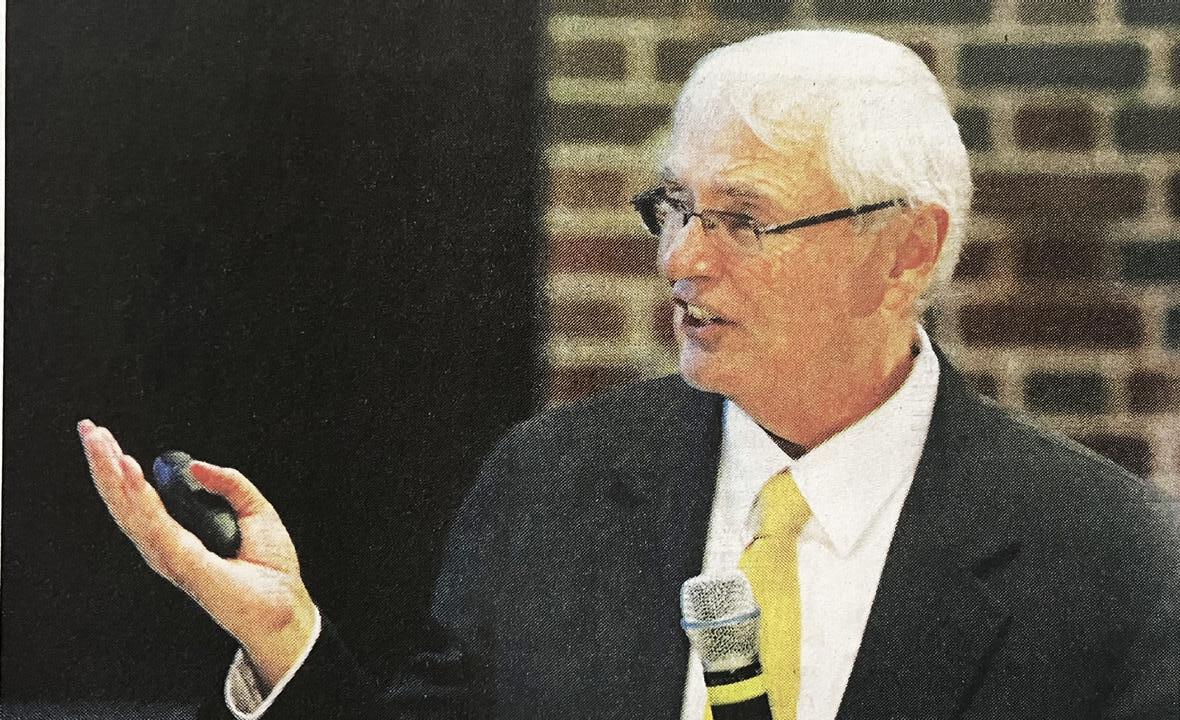
Years down the road, Wichita State University will be a drastically different place. President John Bardo addressed students and faculty Monday to discuss many topics about that road of change for a university whose landscape has already seen plenty of adjustments.
The topics also ranges in how soon the changes will be realized/ The president addressed possible enrollment numbers for the 201415 year and more distant plans that will take years to accomplish.
One of these changes is the “innovation campus,” a group of four buildings that will create “private-public partnerships” and provide research opportunities with Wichita businesses.
The buildings will be located near where Wheatshocker Apartment stands today on 17th Street, just west of Oliver Street. Bardo said he hopes to begin tearing down the apartments as early as mid-August, depending on the construction timeline of Shocker Hall.
The four “innovation buildings are simply called Tech 1, Tech 2, Tech 3 and Tech 4. A fifth building will be the future home for the Barton School of Business.
A new entrance will also be built on 17th Street to provide easy access to the new buildings and put more traffic of 17th Street.
Bardo said this is because private businesses use traffic
counts to help decide where to build new businesses. He said he hopes more traffic will stimulate private development of businesses on 17th Street.
“For those of you who went to school away from here, you know how important [business around the university] can be for the social life of the university and for the creative life of the university as well,” he said.
Bardo said the estimated enrollment for 2014-2015 would increase by 600 to 1,000 about a 5 percent increase to almost 16,000 students.
Bardo said that construction is tentatively set to begin in May 2016 with Tech 2 and Tech 3. He said these would house laboratory spaces.
Finally the president addressed what he called the “final frontier” of parking.
“You think it’s space,” he said.
“Oh no, it’s parking.”
Bardo said the university is studying to consider moving to a fee system to help manage future construction costs.
Fees would have a tier system with the cheapest option in the lots at the Metropolitan Complex at 29th Street and Oliver Street, he said. Because of this, Bardo forsees more students using the shuttle system in the future.
“If you look at most metropolitan campuses, that’s what it’s been for decades,” Bardo said. “It’s just new here.”
Bardo did not let here and now escape anyone’s attention either.
“What rank is Wichita State men’s basketball program?” he asked the crowd of faculty, students and media.
“Two,” they answered.
“And how many games have they lost?”
“None.

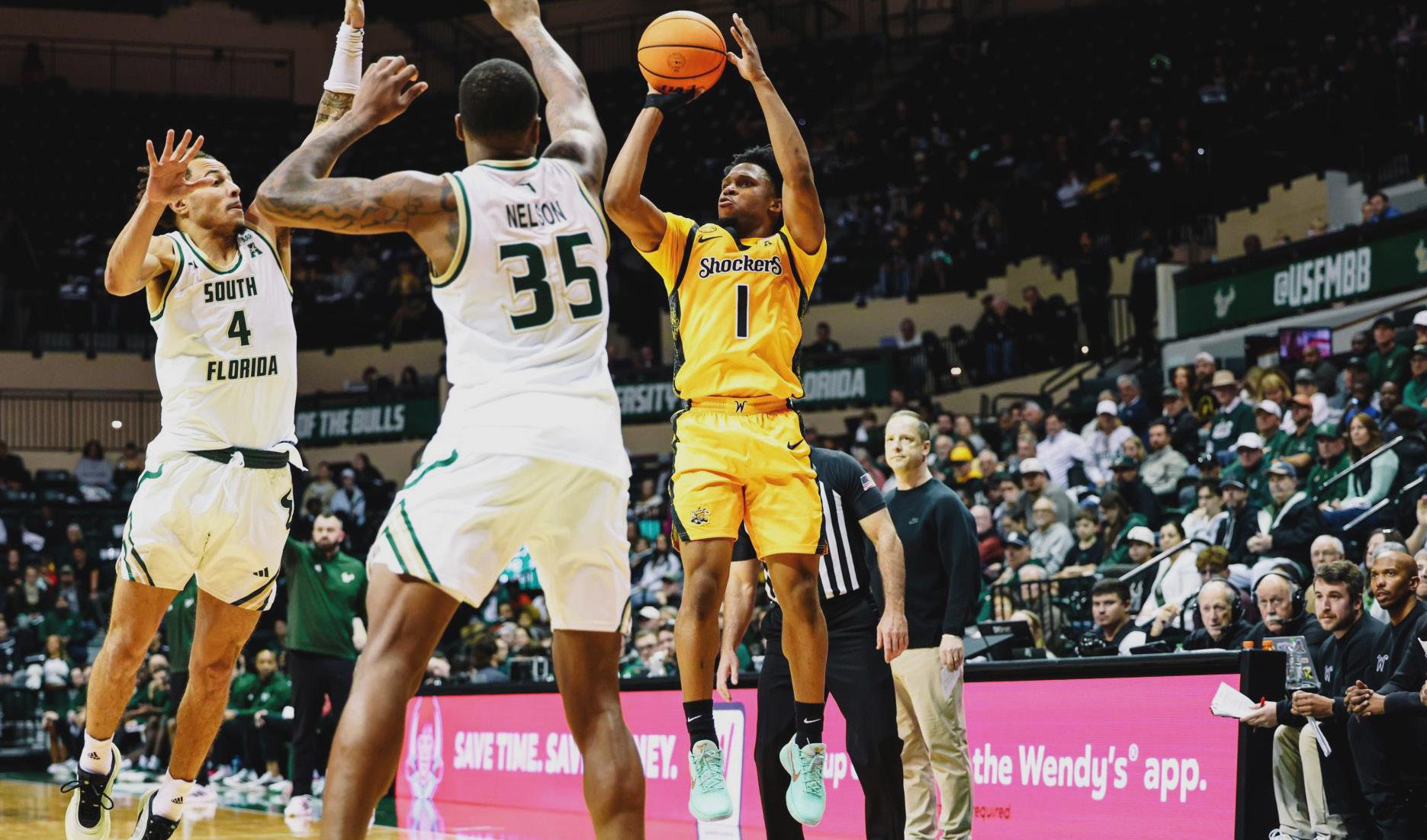
State men’s basketball
on Jan. 18 inside the Yuengling Center.
BY OWEN PROTHRO sports@thesunflower.com
It was a tale of two games for Wichita State men’s basketball during its trip to the Sunshine State over the weekend.
On Thursday, the Shockers were handed their most lopsided loss of the season against Florida Atlantic, 85-67. They bounced back Sunday against South Florida, beating the Bulls, 86-85, in overtime after leading by as many as 15 points in the first half before falling into a 13-point hole in the second.
After the Florida swing, WSU sits at 11-8 on the season and 3-3 against American Conference opponents, the team’s best start to league play since 2020-21. It hosts East Carolina and Memphis this week on Wednesday and Saturday, respectively.
vs. Florida Atlantic
For the first time all year, the Shockers looked outmatched from start to finish against Florida Atlantic.
The Shockers were blown out in an 85-67 loss inside Eleanor
R. Baldwin Arena, their most lopsided defeat of the season and worst in over a year.
In every previous setback though, WSU could at least lean on senior star Kenyon Giles, whose lowest output in those games was 13 points. But he struggled all night against an FAU defense that did a diligent scouting report, holding the scoring dynamo to a season-low two points on 1-of-5 shooting.
And with Giles in the back seat, the rest of the roster couldn’t compensate. The Shockers shot 40% from the field and 27% for three, while the Owls blitzed them for a 56% clip that produced four double-digit scorers. Couple that with nine blocks, and WSU simply ran into a test they couldn’t match.
Junior center Will Berg scored a team-high 14 points.
vs. South Florida WSU led by as many as 15 points in the first half, then a 28-point swing over the next 10 minutes of its Sunday matinee against South Florida and dropped it into a 13-point hole.
It looked like the Shockers were going to be ran out of the Yuengling Center, but they never folded and eventually forced overtime.
The Shockers weathered the extra period and escaped USF with an 86-85 win, splitting their games in the Sunshine State.
Giles responded from his two-point outing against FAU with a game-high 22 points on 8-for-22 shooting and converted the go-ahead bucket in overtime, which ended up winning the game for WSU.
But it wasn’t just Giles who made an impact. Senior forward Karon Boyd added 17 points of his own, and senior guard Mike Gray Jr. tacked on 15. Junior center Will Berg grabbed a career-high 15 rebounds, including eight on the offensive end.
Even junior guard Dre Kindell, who scored eight points on 2-for-4 shooting, came up big. With the shot clock winding in overtime, he side-stepped his defender and splashed his final 3-pointer of the game to give the Shockers a twopoint lead, 82-80.
Shockers enter land of the giants to prove they belong
BY AUSTIN COLBERT
LOS ANGELES — Call it a fairy tale if you want — Wichita State men’s basketball coach Gregg Marshall doesn’t care.
After WSU upset Ohio State on Saturday 70-66 in the Staples Center to advance to the Final Four for the second time in the program’s history — the other time coming in 1965 — the idea that the Shockers don’t belong among the elite holds little validity.
“I don’t think we’re Cinderella at all,” Marshall said. “Cinderellas usually are done by this stage. If you get to this point, you can win the whole thing. You beat a No. 1 seed and a No. 2 seed; I think Cinderella just found one glass slipper. I don’t think she found four.” And Marshall’s logic is solid. To win a national championship, a certain amount of luck has to be involved. While fate has certainly shined in WSU’s favor in its four NCAA Tournament games, the team’s dominance needs to be noted.
The Shockers defeated Big East power Pittsburgh by 18 points in the second round. Before needing a rally against No. 1 Gonzaga in the third round, WSU held a 13-point lead in the first half and canned 14 3-pointers. La Salle proved to be a complete mismatch in the Sweet 16, with the Shockers jumping out to a 17-3 lead and out-rebounding them by 21. Then came Big 10 champion Ohio State in the West Regional championship Saturday. A heavy favorite, the Buckeyes found themselves trailing by as much as 20 points with 12:39 to play.
Sure, like any good team, they rallied to cut the deficit to three with plenty of time to play. But
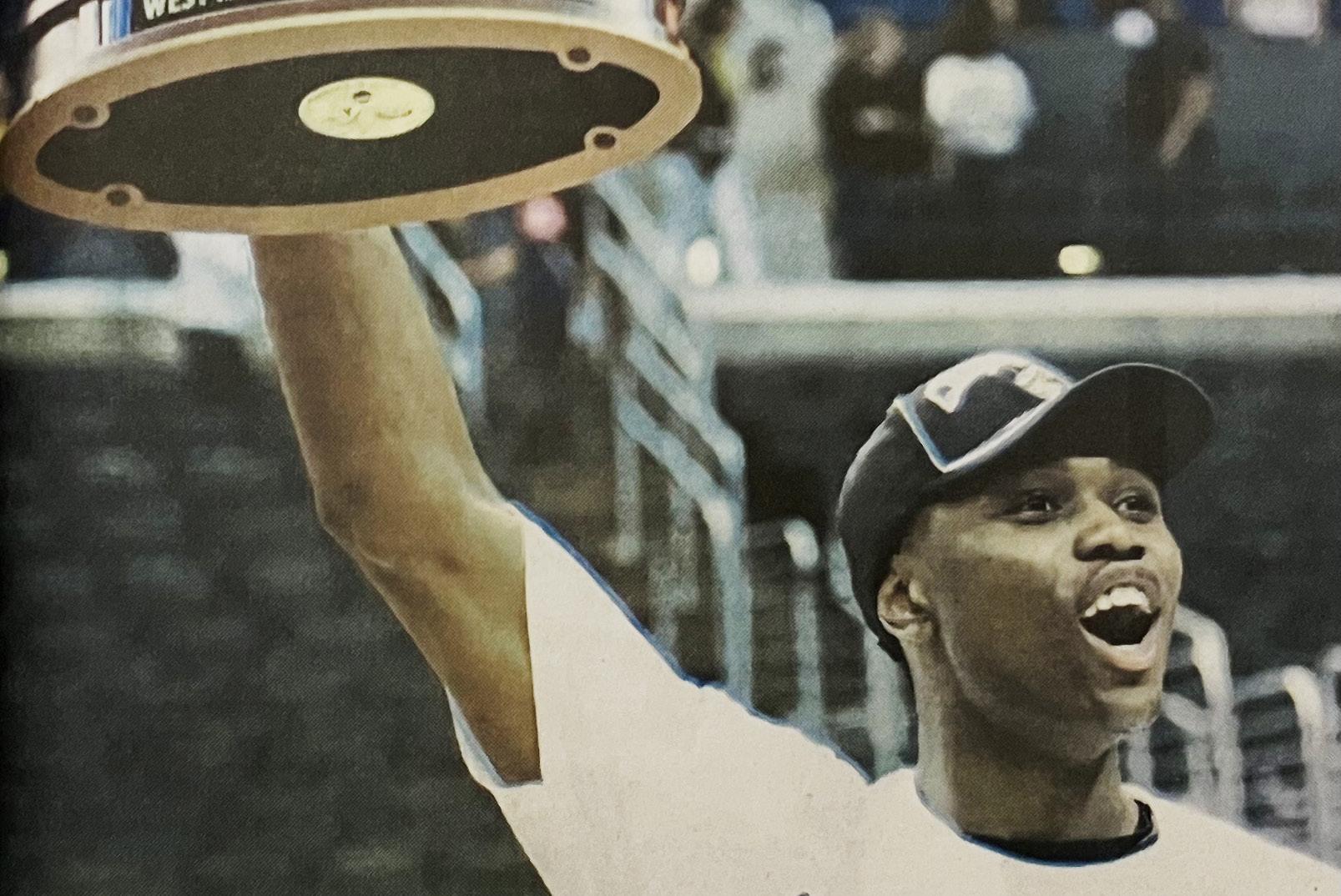
WSU never blinked. It wasn’t luck that got the Shockers to the Final Four. It was cold-blooded skill.
“I just feel like we’ve got that same potential as those guys, regardless if they know who we are or not,” WSU junior forward Cleanthony Early said. “We just tend to work hard. We know we have potential pro basketball players, and we’re just trying to continue to work hard.”
The Shockers’ approach has been to “play angry” and to be “never satisfied.” This has led to a dismantling of all their opponents with a minimal amount of celebrating.
To put into words how rare and historic WSU’s Final Four run has been difficult to do. While the fans celebrate — even greeting the team at 3 a.m. upon its arrival from California — the team continues to stay focused.
“It feels good, but I feel like this team, we aren’t done yet,” WSU senior forward Carl Hall said.
“So it’s on to the next game. We celebrate tonight, but tommorow
Dec. 13, 2025: Men’s basketball fell to DePaul inside Koch Arena, 61-58, in the team’s first loss at home this season. WSU shot 13-for-28 from the foul line, which was its worst outing at the stripe since a loss to Louisiana Tech in 2018. The 46% free throw shooting accounted for a season-low for the Shockers, as well.
-Story by Owen Prothro
Dec. 13, 2025: Women’s basketball snapped a nine-game losing streak against Loyola Marymount with a 74-61 win. WSU shot 49% from the field and held the Lions to 36% shooting. Graduate guard Abby Cater scored a game-high 23 points for the Shockers.
-Story by Mack Smith
Dec. 16, 2025: Women’s basketball completed a late-game comeback against Oral Roberts to secure the team’s second-consecutive win for the first time this season, 79-65. The Shockers trailed by nine points at halftime, but eventually created a double-digit lead late in the fourth quarter to seal the win in front of Wichita-area students. Graduate guard Abby Cater scored a season-high 24 points, and Wichitan Jaila Harding added 17.
-Story by Mack Smith
Dec. 21, 2025: Men’s basketball coach Paul Mills revealed after an 88-57 win over Eastern Kentucky that he suffered a major health scare after a game earlier in December. After tests showed that his right coronary artery was “100% clogged,” and hadn’t
received blood for six hours, he underwent cardiac surgery and had two stents placed in his heart.
“There’s death, and there’s life,” he said through tears. “I have life, and one that I’m grateful for. ... I would tell you: pursue life, man, and do it with force.”
-Story by Owen Prothro
Dec. 31, 2025: Men’s basketball won its first conference opener since the 2020-21 season against UAB inside Bartow Arena on New Year’s Eve, 75-70. The Shockers trailed by as many as 16 points and completed the second-half comeback against the Blazers. Senior guard Kenyon Giles scored a game-high 26 points, redshirt freshman TJ Williams tacked on 12, and junior center Will Berg nabbed 10 rebounds. After allowing UAB to shoot 50% in the first half, WSU held it to 32% in the second.
-Story by Owen Prothro
Jan. 17, 2026: Despite graduate guard Jaila Harding moving into fourth-place in WSU women’s basketball history for 3-pointers made in a season after making her 54th triple against South Florida, the Shockers dropped their seventh-straight game to fall to 3-16 overall and 0-6 against American Conference opponents. Even though the Shockers led, 19-18, after the first period, USF eventually handed WSU a 75-53 loss inside the Yuengling Center. Harding finished with a team-high eight points.
-Story by Mack Smith
BY OWEN PROTHRO sports@thesunflower.com
Junior forward Jaret Valencia was absent from Wichita State’s conference-opening road trip.
Against Rice, he was seen behind the Shockers’ bench on crutches with a cast on his lower left leg. By the morning of Jan. 9, head coach Paul Mills confirmed the severity of the situation: Valencia ruptured his Achilles during WSU’s first practice back after the holiday break on Dec. 27, 2025, and has undergone season-ending surgery.
“Knew it immediately,” Mills recalled. “There was quite a bit of quiet in the room. Everybody knew. … I really feel for the young man, simply because he was playing really, really well.”
we’re back to work against, so we’re just ready to go and make a fun for this thing.”
WSU will now head to Atlanta and to the biggest stage the school has ever been on. Joining the Shockers in the Final Four are powerhouse programs Louisville, Michigan and Syracuse.
Maybe Marshall’s name isn’t at the same level as Louisville’s Rick Pitino or Syracuse’s Jim Boeheim, and maybe the Shockers don’t have any NBA lottery picks, but what they do have is the ability to beat anyone.
They don’t care about rankings, seedings or name recognition. They don’t care about the team on the other side of the court. What WSU cares about is each other and shedding its Cinderella moniker once and for all.
“They’re a band of brothers,” Mashall said about his players. “They talk about being brothers. They act like they’re brothers and they continually pick each other up. That’s how we’ve been able to preserve and overcome so much adversity this season.”
The injury is another setback in an already stop-and-start season for Valencia. He’d missed the first two games this season with a preseason groin injury and struggled to find his footing early, averaging 2.3 points and 1.3 rebounds across nine games from Nov. 13 to Dec. 13, 2025. Those performances quietly hid the player that the Shockers expected they recruited through the transfer portal.
But in an article with the Roundhouse, Valencia said that phone calls from his mom back home in Quibdó, Colombia, and rewatching old tape helped to restore his confidence.
It showed. In the two games before his Achilles injury, he matched a season-high six points against Wofford and scored four against Eastern Kentucky. He grabbed a total of eight rebounds in both contests. That progress made the timing of the injury even more difficult for both Valencia and the coaching staff.
“He just had two games where he was playing well,” Mills said. “(We were) excited, metrically. He was the third-best defender — Will Berg being one, (Karon Boyd) being two.”
Since Valencia went down on Dec. 27, Mills said he’s had to experiment a bit with rotations and
lineups. Sophomore forward Dillon Battie has received extra minutes. Berg, a junior center, and senior center Emmanuel Okorafor have shared the floor together. Boyd has shifted to power forward at times, creating smaller lineups with three guards.
“It’s a group effort in order to make sure that we find a way to pick up the pieces that we’ve left,” Mills said. “... There’s been some experimentation, and we’ll see what it’s like moving forward.”
Valencia’s absence also accelerates the learning curve for younger players. TJ Williams was plugged in for Valencia while he recovered from his preseason injury. Battie is expected to get some valuable minutes.
“We’re playing some guys who just don’t have much in the way of playing (time),” Mills said. “TJ, and then at the same time Dillon, you just have two guys that just don’t have much in the way of experience. You kind of watch them learn on the go.”
Having already played 11 games this year, it’s unclear if Valencia will be eligible for another redshirt. Per NCAA medical hardship waiver requirements, he meets the timing of participation (he was injured after WSU’s 13th game, before the midway point of the season) but would be above the NCAA’s 30% participation limit should the season end after the Shockers’ 31 regular season games this year. Mills said he doesn’t know about Valencia’s eligibility either. What he does know is that the junior’s recovery will be a long one — typically nine to 12 months for Achilles ruptures — but he’s confident in the outcome.
“Feel for the kid, but he’ll come back really strong,” Mills said. WSU is now left without one of its most promising and efficient defenders when conference play is tightening. The Shockers’ next game is against East Carolina at 6:30 p.m. at Koch Arena. They then play Memphis Saturday at 3 p.m.
Back in high school, winter break was almost three weeks. By the time school inevitably rolled back around, I was still in schoolmode and had almost zero trouble falling back into the semester.
With college, it’s different. The break, depending on when your finals are, if you have any, can last well over a month. For me that means one month of lying around, eating copious amounts of sugar and hanging out with friends, with zero thoughts of university or assignments crossing my mind. It’s hard for me to get back
Mya Scott opinion@thesunflower.com OPINION
New year, new me.
If you literally just exist in the weeks before and after New Year’s, you’ve most likely heard this catch phrase. It’s a way of people saying they’re going to change in the upcoming year, hopefully for the better. Over the past few years, as I’ve entered adulthood and finally gained consciousness, I’ve realized

into thinking about homework, and I’ll take a risk and assume it’s difficult for other students to focus once again too. So here are some of my tips to lock back in so you don’t find yourself scrambling at midterms to raise those grades.
1: Plan your semester
This means not waiting until the day your classes start to see when and where you need to go. Plan where you’re going and when at least more than one day before classes start. Switching from having almost no schedule to falling back into the grind of schoolwork is difficult without proper preparation. I don’t care if you use a calendar app or a physical planner or a napkin from Freddy’s — write down your schedule and look at
New Year’s resolutions aren’t all they’re cracked up to be. It’s evolved, or devolved, to a point where it feels toxic — a way of keeping people ashamed of who they were before Jan. 1.
There’s this pressure surrounding what should be just a fun way to try to better yourself. As social media grows and more and more people attempt to be influencers and push their “perfect” lifestyles, it really feels rough when you “fail” your resolution. People shouldn’t create resolutions as their claim to fame or to seem better than everyone else. It should be for you, the
where you’re going.
Also, take the time to read through the syllabi before the first day of class if they are posted. Some instructors, on purpose or not, neglect to go over crucial details from it, so be prepared. If you really struggle with deadlines, you can also put those on your calendar ahead of time if they’re in the syllabus. Just be ready, don’t let your schedule and course expectations catch you off guard.
2: Remember academic advising Advisors exist, and they’re here to help. If something goes wrong with late class registration or you just need to drop a class for the sake of your GPA, talk to them. Many of the colleges have walk-in advising including LAS which is
individual, the one putting in the work. Sharing it with friends and family for motivation to continue your journey is totally fine, but sharing it as a way to make yourself seem better than everyone else that’s following you, while it gives momentary satisfaction, ruins the idea of the resolution.
The idea of a resolution is working to be better for yourself, not others. Don’t let a superiority complex ruin what should be a fun challenge.
There’s also a fear of failure surrounding resolutions. “Failing” your resolution, while not set in stone, is still a likely occurrence.
offering walk-in appointments until Jan. 26; there’s almost always no excuse not to meet with them if needed. Students can use the Naviagate360 app or call to schedule appointments if their college isn’t offering walk-ins. Remember to also connect with tutors, supplemental instruction and study groups if needed. There are tons of opportunities for out-ofclass learning if you take the leap. It’s not always easy to admit you need that extra help, but don’t let your pride be the reason you fail a class.
3: Set goals
It’s easy to fall into the trap of needing to be the best, but that’s not always necessary. Not every student needs a 4.0 GPA with 30 different clubs and 24 credit hours
under the title card of a resume. Set goals that are realistic for you and the situation you’re in. If you decide that C’s get degrees this semester because you want to focus on work experience or you’re just at a rough point in life, there’s no shame in that. If you want to join only one club, but stick with that the whole semester, do that. The possibilities are nearly endless in college.
There’s no need for pointless pressure to measure up to some invisible standard.
It’s rarely ever fun starting classes again, but it is possible to make it manageable. Take the time to prepare and get ready, and spring break will be here before you know it.
EDITORIAL STAFF
The publications issuing from the American press already number thousands. This issue begins the life of another periodical. We offer no apology. This journal represents a worthy cause; furthermore, all recognize the almost boundless influence of the press and that “printer’s ink” is the most effective agent in advancing the interests of any undertaking. The Sunflower will endeavor to become a thoroughly representative college journal, to present to its readers the purpose and interests of Fairmount students. The Sunflower is in the field to aid in the upbuilding of a college, and that is sufficient reason for its existence.
But that isn’t a bad thing. Bettering yourself, or changing, is a process, and it’s usually not linear. Someone can make a resolution to lose weight, work out and still not lose the weight they intended. Building muscle mass can cause you to gain weight, or maybe you’re just not built that way from health factors like metabolism. And every time you step on that scale and see the numbers rise, there’s this pit of shame building. Then you stop completely and promise to be better next year. But it doesn’t have to be like that, and it shouldn’t. You’re still putting in work and still working
on yourself in a way you find positive. People shouldn’t have to be ashamed of “failing” just because they’re not reaching goals when they originally wanted to. Failure means you’re learning, and learning means you’re getting closer to meeting your goals. Resolutions aren’t inherently evil; they’ve merely morphed as time has gone on. Still set goals for the new year if you want, but set them without fearing you’ll fail. Resolutions shouldn’t cause you to feel fear or be ashamed of you who were the year before.
BY MALEAH EVANS arts@thesunflower.com
With the start of a new semester, the Ulrich Museum of Art is bringing new exhibits.
The Ulrich Docents pop-up exhibition opens on Jan. 20 and will run through Feb. 7. The exhibit features pieces from the museum’s permanent collection chosen by Ulrich staff.
“Anne Samat: Avatars” opens Jan. 22 and will remain open until May 30. The exhibit is inspired by Malaysian culture and traditional indigenous artistic techniques.
The Faculty Exhibition, titled “Symbols of Greatness: Restoring Truth and Sanity to American History,” works to highlight various practices in the School of Art, Design and Creative Industries according to the Ulrich’s website. The Faculty Exhibition opens Jan. 22 and will be open until June 13.
The first of a series, “In Place Taiomah Rutledge: Origins/ Evolutions,” is a collection of works by a local indigenous artist who draws his inspiration from his heritage. This installation will open Jan. 22 and will remain open until July 25.
The last exhibit that opens Jan. 22, titled “With, Not For: Centering Community, Connection, and Identity,” is composed of highlights of the previous four years of the Ulrich Co-Lab, a collaborative and interactive exhibit designed by community members. This exhibit is the final phase of the Ulrich Co-Lab and will remain open until June 3.
All the above exhibits will be on display at the Ulrich, which is open Tuesday, Wednesday, Friday and Saturday from 11 a.m. to 5 p.m. and Thursday 11 a.m. to 8 p.m. with free entry.

BY MALEAH EVANS arts@thesunflower.com
Puppeted animals, a traveling circus and forbidden love, make up the show “Water for Elephants” at Century II.
The story is told non-linearly, with the main character Jacob Jankowski telling his story of working in a 1930s traveling circus to the audience via flashbacks. He talks about his parents’ death, how he came to work for the circus, how it fell apart and how he grew old but is still reminiscing on the old times.
‘Pippin’ meets ‘Newsies,’ the show encompasses the fairy tale imagery of train hopping and running away with the circus that some of us may have imagined growing up.
The casting of this production was phenomenal, with Robert Tully playing Jacob and Zarchary Keller playing the younger version of Jacob in his memories. There were several instances when a “flashback” would fade in which the two actors mirrored each other perfectly, enacting a seamless transition between past and present.
The transition that stuck out to me the most came at the beginning of the show, Jacob walked behind a moving sign and his younger self came out of the other side.
When the circus theme and setting became apparent, I found myself curious about how they would tackle the elephant and other circus animals, and they exceeded my expectations.
The animals were puppeted by cast members. The actors conveyed movement and the emotions of the animals through contemporary dance. It took five cast members to puppet Rosie, the elephant. I give my props to those playing the animals. I’m sure some attachments were heavy, and they seemed to be moved effortlessly.
Throughout the show, background cast members were performing circus acts, like aerial silks and gymnastics.
The feats of strength showcased through these performances were incredible. At one point, there was a trio of three people who balanced
‘Why Should I Read This?’ will
air biweekly starting Wednesday
on top of each other. And there were a couple of girls who were casually thrown across the stage, as background to the circus acts and to convey the movement of the circus.
Several times throughout the show, the stunts and the story itself astounded me and had me on the edge of my seat.
Musically, this show was a wonderful blend of jazzy chords and circus music.
My favorite vocal performance falls between “Silver Stars” and “Easy,” two of the solo songs in the show.
Keller’s performance of “Silver Stars” nearly brought me to tears. The song is an ode to Jacob’s struggles and the hope he has found from the circus. He poured so much emotion into the song, I felt myself feeling the sorrow of what has been lost but the inkling of hope of what the future can bring starting.
“Easy” is the first solo song of Marlena, the wife of the Ringmaster, who was played by Helen Krushinski. The song is a poignant but slow ballad that is about acceptance and finding peace when you are hurting. Marlena sings to the circus’ star horse, who she works with as the main act and who is hurt, but I felt myself moved.
A song that became my favorite due to the composition and clever lyricism, will make its way to my high-energy playlist is going to be “The Lion has got no Teeth.” I love how jazzy the music for it is while having some darker lyrics.
It’s a song led by the Ringleader August, who was played by Connor Sullivan, and tells the truth about the circus and the animals that they have on hand for performances. It was a fantastic commentary on the reality of the brutality that circus animals faced hidden under high energy and bouncy music.
Prior to seeing this show live, I knew nothing about it and had only heard the name in passing, but I highly recommend anyone who has the opportunity to see it live to take that chance. It is a show that I will continue to think about for a while.
BY TALIYAH WINN editor@thesunflower.com
Five English professors at Wichita State are aiming to give people an ‘in’ to classic literature with a new one-minute segment on KMUW, Wichita’s local NPR station.
“We have this idea of a program where a couple of English professors just do commentaries about books that we like,” associate professor and chair of the English department, Francis Connor, said. “Not the sorts of things we would do in a class, not the lectures. But, you know, ‘This play is really cool. Here’s why you should read it.’”
The show, fittingly titled ‘Why Should I Read This?’, will air every other Wednesday on Morning Edition starting Jan. 21. The hosts will rotate between Connor and other WSU English faculty members: Katie Lanning, Kerry Jones, Rebeccah Bechtold and Adam Scheffler.
Connor said the idea started between him and Lanning, who felt they could provide something new to KMUW’s audience.
“We feel we can hopefully offer them a new perspective,” Connor said. “That they’ll want to read something that might be something they haven’t heard of or something out of their comfort zone.”
He described the segment as an “elevator pitch” for classic literature.
“My goal is to just sort of give a very quick in,” Connor said. “You’ve heard these things about Ulysses, but here’s something that’s really interesting about it. Take that interesting fact and let
it be your guide to opening the book up, and I think you’ll enjoy it.”
When the idea first came to KMUW’s program director, Fletcher Powell, he wasn’t sure if it would translate to radio.
“You think about whatever, Moby Dick or the works of Christopher Marlowe, you know, classic stuff,” Powell said. “There’s a reason everybody knows about it, but hasn’t read it, right? It strikes you as possibly being pretty dry.”
But he saved judgment until he read the first scripts, which he said were “really fantastic,” and prompted a desire to read the books.
“They did a great job,” Powell said. “I mean, surprise, surprise, English professors know how to write something. And it was really fun.”
“We have this perception that old stuff is, you know, not necessarily as much fun as new stuff,” Powell said. “Almost like it’s, you know, you’re taking your medicine, or you’re eating your own meal. And that’s wrong, it turns out, fortunately. But you know, that’s an understandable perception.“
For Connor, and other English professors involved, transitioning to radio can be intimidating, from writing a script to going into the recording studio.
“When I talk like a professor, it’s like long sentences and big words and, you know, digression,” Connor said. “But you can’t do that when you have like a minute to speak on radio.”
The first batch of scripts had a limit of around 200 words, Powell said, in order to fit in a one-minute segment.
Dec. 10, 1957
“The craft that goes into that part is really difficult,” Connor said. “I was really afraid going into the booth recording.”
The professors received training from Lu Anne Stephens, assistant general manager of KMUW. Connor said Stevens told him to just be himself in the booth, not to worry about imitating a radio voice.
“And it worked, apparently, because they like my segments,” Connor said. “And I guess I did the promo that’s been airing for it. So yeah, it’s a little nerve-wracking.”
Overall, Connor hopes to break some of the stigma about English professors in an “ivory tower” with their “head in the clouds” and bring authenticity to their relationship with reading.
“We get into this because we love reading,” Connor said. “And I don’t want to lose touch with that. I want to share that. And I think speaking to the public, where I have to talk about these things like a human being instead of an academic, is a lot of fun. Because hopefully my trick, my enthusiasm transfers to the audience.”
As the show continues, Conner said to expect a lecture series that will premiere throughout the year. In the series, each of the five professors will give a 45-minute talk about a book featured on the show. To listen to the show, turn on the radio to 89.1 from 5 to 9 a.m. every other Wednesday, or tune in after it airs on the Morning Edition page, or the KMUW app. Individual episodes will also be available after they air under the podcast tab on KMUW’s website.
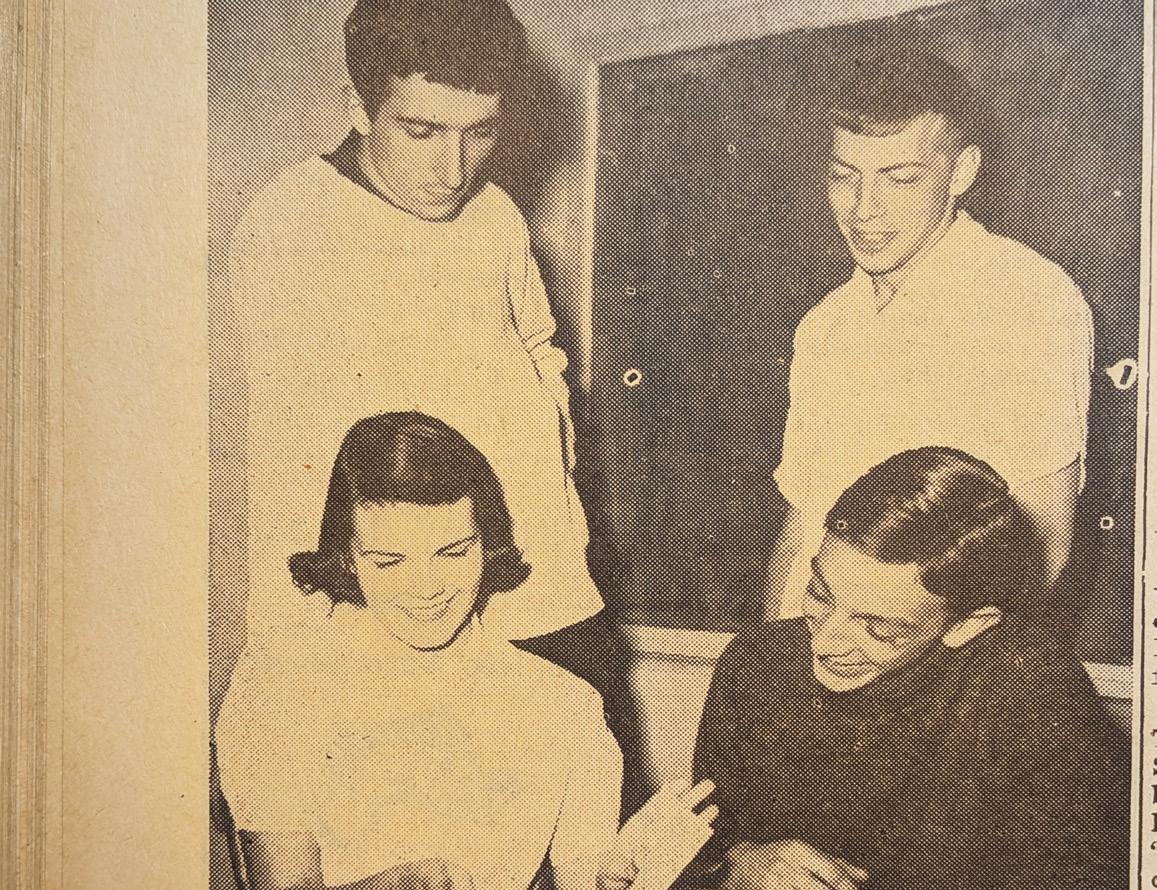
Editors of the proposed campus literary magazine, “Mikrokosoms,” are currently soliticiting manuscripts for publication this semester. The magazine will contain original works by both graduate and undergraduate students in the form of poems, plays, essays, short stories, general critical articles and drawings, according to George Van Arsdale, Liberal Arts sophomore and staff member.
Publication date has been set for sometime in January, he said. Van Arsdale said that any students wishing to submit material may leave it with Corban LePell, graduate art fellow, in care of the art department office or in Rm. 209 Fiske Hall. He stressed that material should be turned in as “soon as possible.”
Other staff members are Barbara McIlree, Jack McCune, Richard Slimon, Alan Russon and Dean
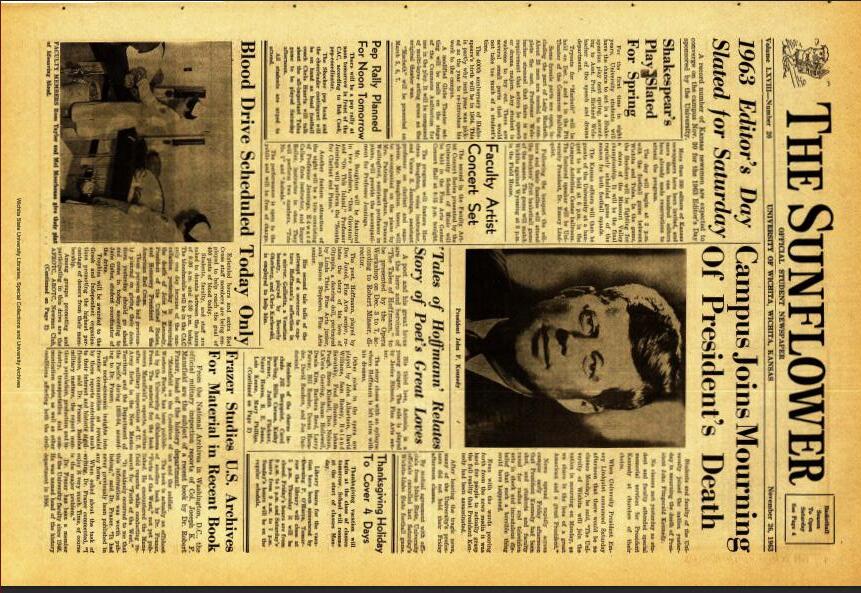
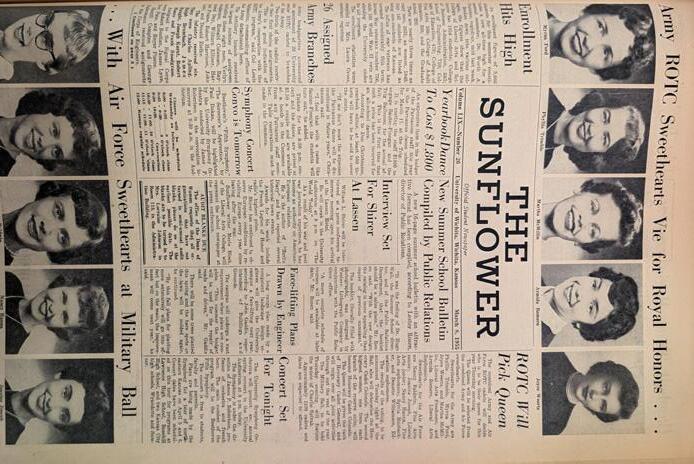
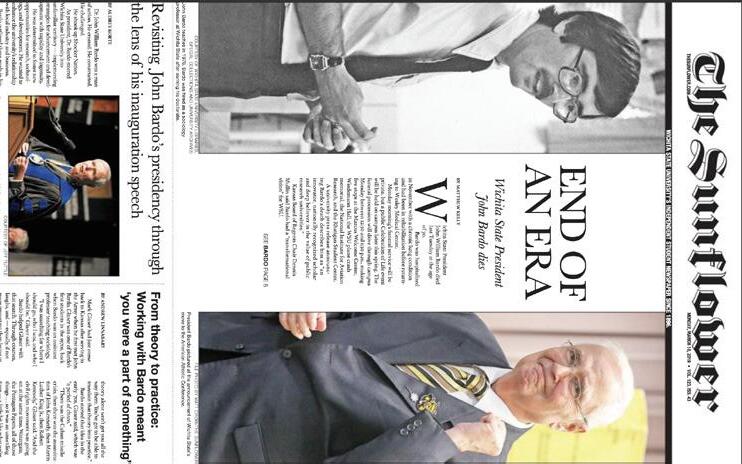
From student life and campus news to national issues and tragedies, The Sunflower has been here to cover it all. Here is just a small sample of the stories from the last 130 years.
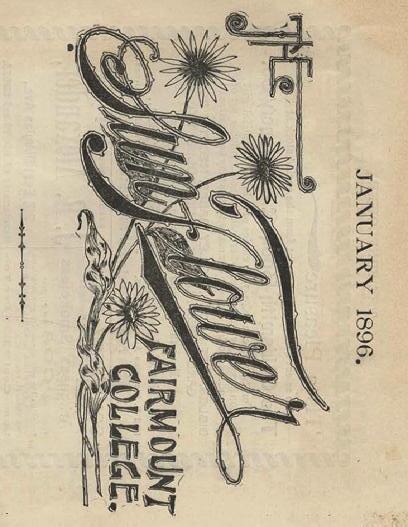
1896 THE SUNFLOWER PUBLISHES FIRST ISSUE In January, The Sunflower published its first issue. Originally it was a bi-monthly literary journal produced in Fairmount Hall.
June 3, Sunflower Staff The Sunflower won its first Pacemaker Award, the highest award in collegiate journalism, at the 15th All-American Newspaper Critical Service, hosted by the Associated Collegiate Press. ACP continues to recognize student news publications with Pacemaker Awards today.
1953 STUDENTS MOVE INTO NEW DORMS 249 students moved into new residence halls. 111 women moved into Grace Wilkie, and 138 men moved into the Male Residence Hall, eventually known as Brennan Hall. Sept. 17, Cathy Waters
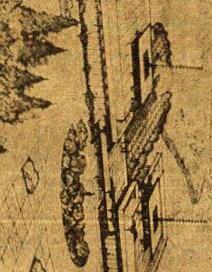
Oct. 23, Sunflower Staff
The McKnight Art Center was officially opened to students, intended to house multiple arts programs such as ceramics, printmaking and more.
FIRST PACEMAKER
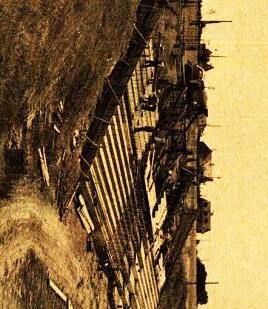
Sept. 29, Judy Fairhurst The Harry F. Corbin Education Center officially opened, having been designed by architect Frank Lloyd Wright and costing $936,436. Wright died before the building was constructed.
1974 MCKNIGHT ART CENTER OPENS
1997 RHATIGAN RETIRES, RSC DEDICATED
Jan. 9, Sunflower Staff The Wichita Mayor broke ground on the construction for the new $100,000 stadium, intended to host Wheatshocker Football Games.
1926
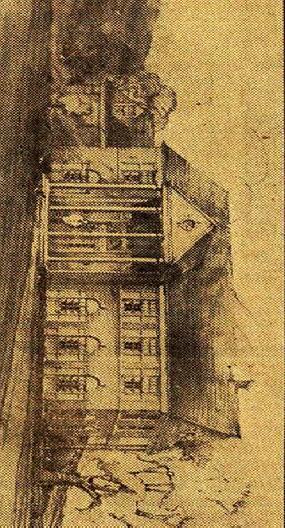
CORBIN
EDUCATION CENTER OPENS
1964
June 13, Robert Hite The Sedgwick County Court ordered reporter Jeff Fast to turn over all video, audio and notes connected to a lawsuit involving Kappa Sigma.
Oct. 5, Morgan Anderson
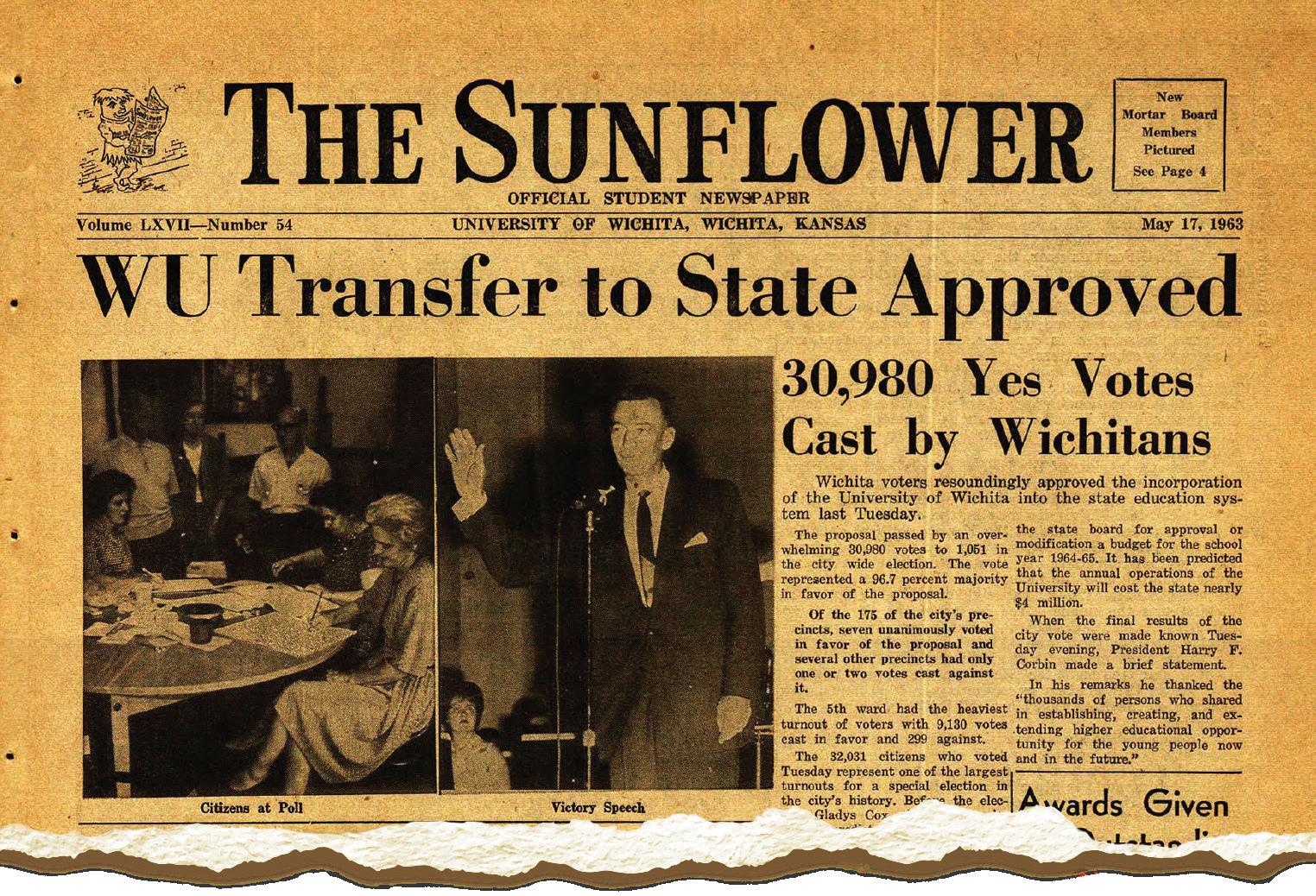
1963 WU BECOMES WICHITA STATE March 29, Sunflower Staff State legislature passed a bill to incorporate The University of Wichita into the state university system, later signed by Governor Anderson and voted on by citizens.
1956 STUDENT COUNCIL BECOMES SGA May 4, Sunflower Staff A copy of the proposed Student Government Association Constitution was printed in The Sunflower. The student body voted to approve it, creating SGA.
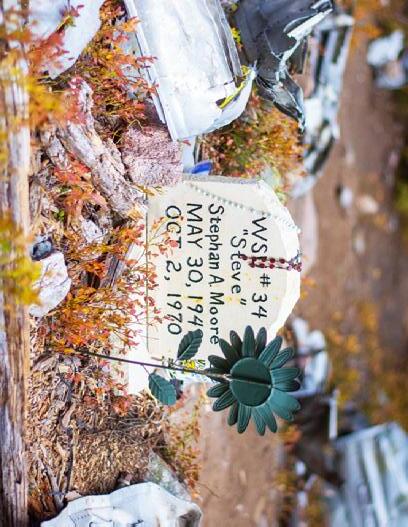
“Wichita State University fell victim to the worst disaster in the history of American college football Friday as a game-bound plane carrying 26 members of the Wichita State football team, head athletic officials and some of the most ardent Shocker fans crashed into a Colorado mountainside while trying to cross the Continental Divide.” The plane was headed to a game against Utah State, which was canceled due to the tragedy. 29 passengers were killed in the crash, with two more dying later in the hospital. Classes were canceled the following Monday, and memorial services were held both in Wichita and Utah. The surviving members of the team voted to continue the season.
1990 SUNFLOWER INVOLVED IN LAWSUIT
Jan. 18, Kirk Roberts Following multiple alleged NCAA rule infringements, the Shocker basketball program was placed on official probation.
1982 WSU BASKETBALL ON PROBATION
March 23, Lorraine Kee The Shocker men’s basketball team defeated the University of Kansas 66-65 in the semifinals of the NCAA Midwest Regional Tournament.
1970 FOOTBALL PLANE CRASH
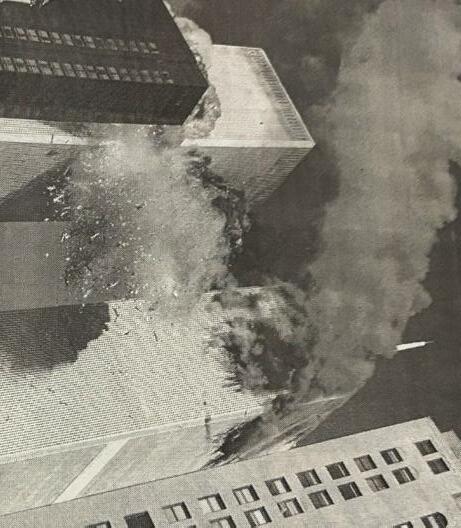
April 23, Lisa Henshall James Rhatigan retires as dean of students. Later, the university renamed the Campus Activities Center to the Rhatigan Student Center. 2001 WSU REACTS TO 9/11 ATTACKS
1981 WSU DEFEATS KU IN NCAA SWEET 16
UNIVERSITY ASSIGNS STUDENTS EMAILS Shockers got university email addresses for the first time. Faculty and students who were interviewed celebrated the change, saying it would make it communication easier. Sept. 11, Daz Spencer
2015 BOWLING’S 20TH CHAMPIONSHIP April 20, James Kellerman The Shocker men’s bowling team claimed the program’s 20th national championship (both mens and women’s teams) in Wichita. After the women’s team was knocked out of the running the day before, the men beat Midland University in three straight games to take the championship.
SHOCKERS LOSE IN NCAA FINAL FOUR The men’s basketball team made an unexpected run to the Final Four, losing to Louisville 72-68. The Sunflower sent staff members to cover the game in Atlanta. April 8, Austin Colbert
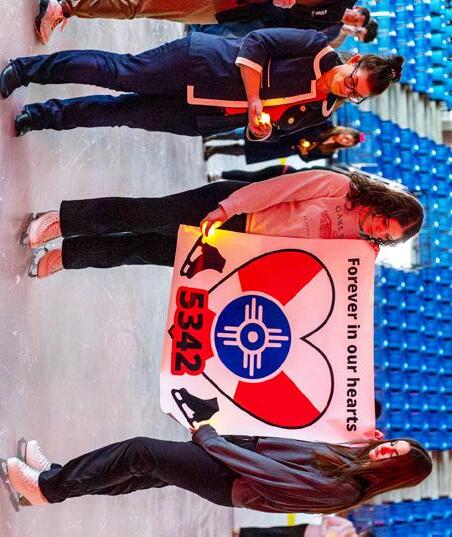
FLIGHT 5342 CRASHES IN D.C. American Airlines Flight 5342, which left from Wichita, collided with a US Army Black Hawk Helicopter mid-air over Washington D.C. claiming the
Sept. 12Oct. 3, Sunflower Staff
Following the Sept. 11 terrorist attacks, the Sunflower published a 12-page newspaper including facts, columns and student reactions to the events. International students faced racism and rumors. Immigration and Customs Enforcement reached out to the WSU General Council seeking personal information about international students. More than 1,000 students held a vigil for the victims in the RSC courtyard, followed nine days later by an anti-war protest.
After 11 months as acting president, Richard Muma was officially inaugurated as the 15th and first openly gay president of the university. Oct. 29, Lindsay Smith
PRESIDENT MUMA INAUGURATED
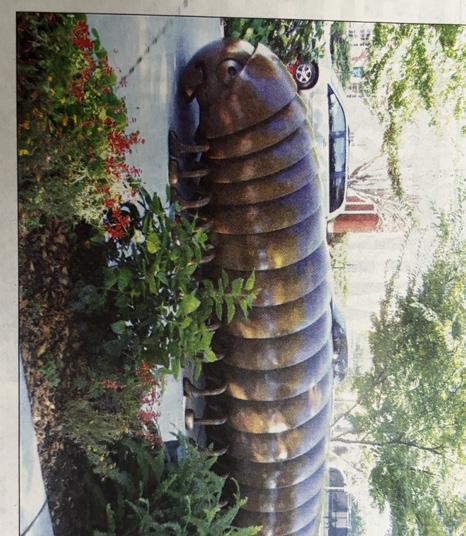
Tom Otterness’ Millipede sculpture, known today as Millie, arrived on campus despite pushback. The controversy arose over a resurfaced video of Otterness shooting a dog in the name of “art” and over the descision for SGA to help pay for the acquisition. Oct. 29, Chandra Stauffer
PRESIDENT GOLDEN RESIGNS President Jay Golden resigned after just short of nine months on the job. His tenure included controversy surrounding cancelling a scheduled Ivanka Trump speech and the departure of Basketball Coach Gregg Marshall. Sept. 28, Lindsay Smith