[The Stute] April 18, 2025 (Issue 23, Volume CXXII)
BY GAVIN RUBY, STAFF WRITER
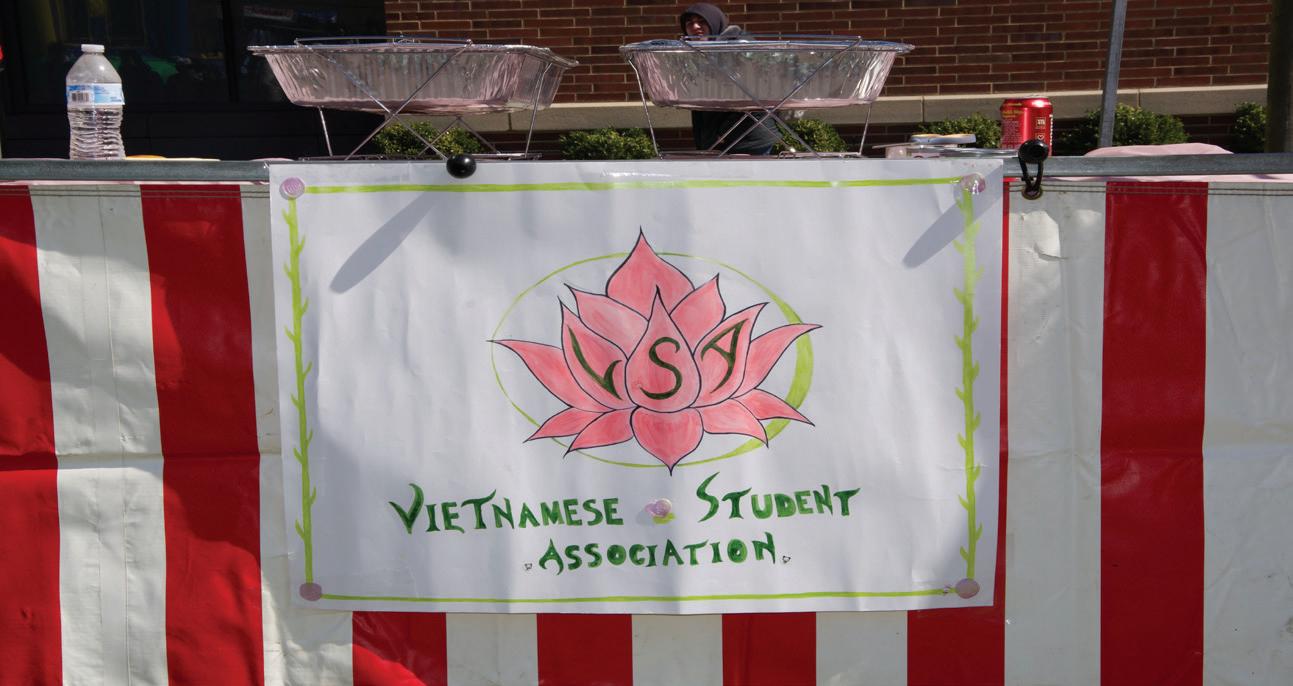
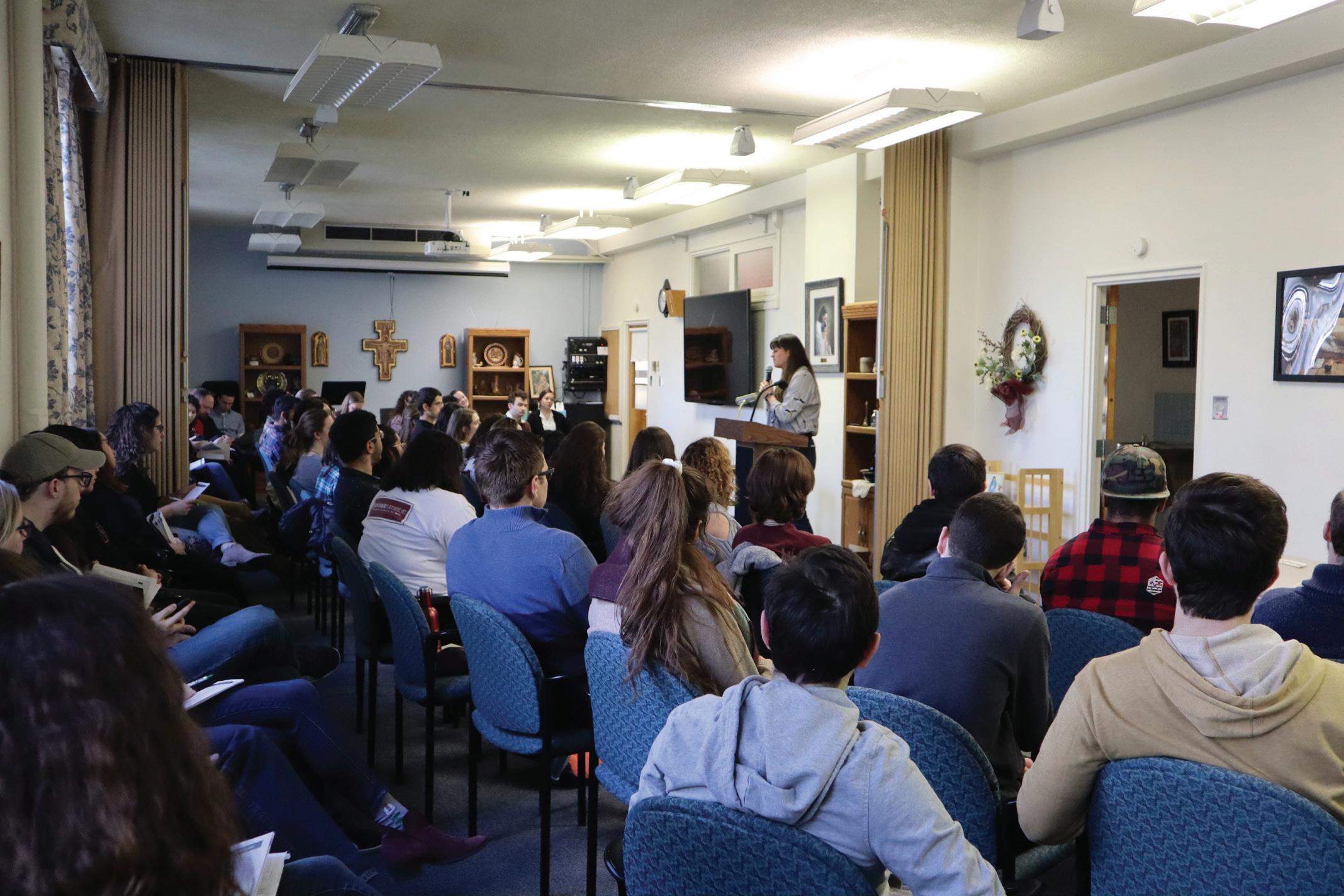
On February 4, the Vietnamese Student Association’s (VSA) GroupMe became visible to Stevens students. It wouldn’t be until April 8 that they held their first event: Ham Choi Game Night! During this event, they introduced their mainly non-Vietnamese general body to a variety of different games, including bầu cua cá cọp, a gambling game that uses three dice on a mat featuring a fish, a prawn, a crab, a cock, a calabash, and a stag (or a tiger). Another game was Choi Chuyen, which is similar to Gonggi, a traditional Korean game, where you time your moves by throwing one object in the air, grabbing another, and catching the one in the air.
For a general body meeting, the turnout was terrific. All different parts of student life were present, and that small room on Babbio’s third floor ended up being very loud and lively once the games started.
To get more insight, The
We write Stevens history
BY BENJAMIN KNOBLOCH, NEWS EDITOR
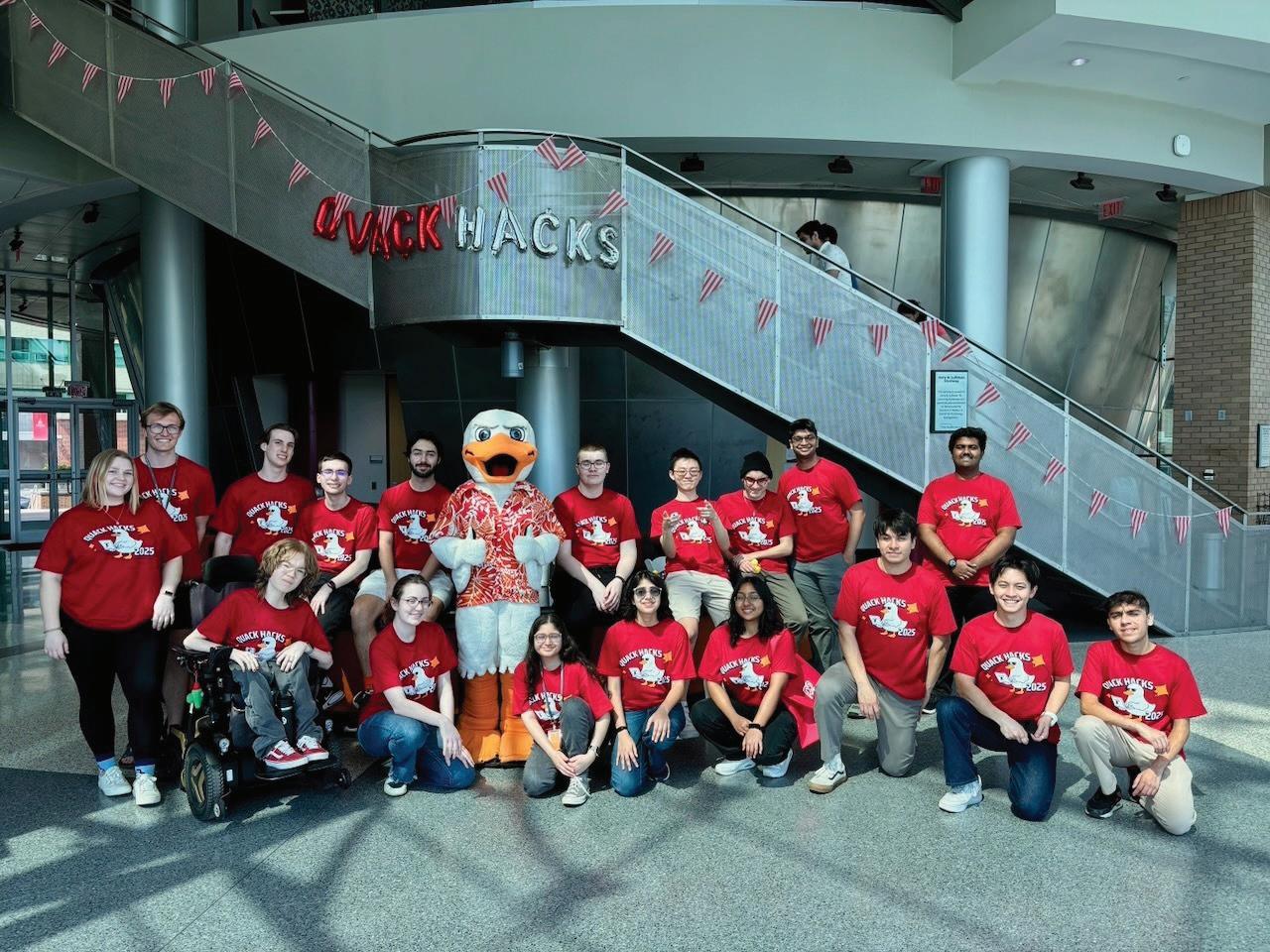
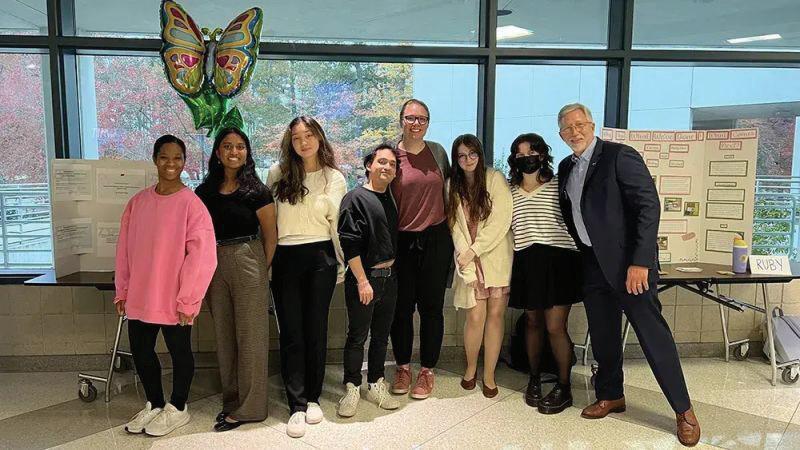
Stevens held Quack Hacks 2025, its first-ever student-run hackathon, on the weekend of March 29 and 30. Stevens students of all majors competed in themed and open-ended programming and electronics challenges over 29 hours. Nearly 400 participants—double the anticipated turnout—had the opportunity to take part in company networking,
University overhauls religious accommodations policy
BY BENJAMIN KNOBLOCH, NEWS EDITOR
University administration announced the implementation of a new policy governing the ability of students, staff, and faculty members to claim time away for religious observances. The new policy sets more specific requirements and expectations for the accommodation request process, including the ability to appeal denied requests.
The new Stevens Religious Accommodation Policy affirms the university’s commitment to religious inclusivity while outlining clear steps that will allow the school to afford community members time away from official responsibilities. Requests must be submitted and approved or denied in writing to maintain the transparency of the process. Separate request and appeal forms for both students and faculty or staff can be found attached to the policy sheet, which is now catalogued in the University Policy Library.
Examples of accommodations that may be granted include providing time off due to an observance,
rescheduling of an exam or assignment deadline, and adjusting an athletic uniform to be compatible with religious requirements.
The policy encourages forms to be submitted as early as possible in the semester, and mandatorily at least 14 days in advance of the requested date. Granted exemptions last up to a semester for students and up to an academic year for faculty and staff. In addition to form submissions, the policy requires that individuals notify key personnel and colleagues. For student athletes, a separate form for each sport must be submitted to notify coaches of requests.
Supervisors are told to engage in an “interactive” process with employees or student workers who ask for accommodations, and that they “should aim to respond in most cases” within five working days to requests.
Stevens says it will make “reasonable” efforts to provide accommodations and reserves the right to deny, amend, or revoke accommodations that would cause an undue burden. The Uni-
workshops, speaker events, food and merch giveaways, and more. To learn more, The Stute had the opportunity to speak with Anna Hauk, one of the lead organizers of the event.
Hackathons are typically 24-hour code competitions where teams build prototype solutions to specific challenges under time pressure. The concept for Quack Hacks was conceived in August 2024, when lead organizers Olof Persson, Humna Sultan, and a dedicated student team asked:
“Why not host our own?” in response to repeated requests from students for Stevens to host a hackathon. The eight-month planning process was inspired by hackathons popular with Stevens students, including New Jersey Institute of Technology’s Jersey Capture the Flag event. The competition officially kicked off at 11 a.m. on Saturday with a breakfast bar and keynote speeches from representatives of major sponsors ADP and Chubb. Additional sponsors
NATIONAL
NEWS
Trump declares “Liberation Day” and enacts huge tariffs
BY TANYA AVADIA, OUTREACH CHAIR
At the core of Trump’s presidential campaign in 2024 was his promise to reshape the economy. Now, as president, he has enacted tariffs worldwide as part of his “America First” policy. On April 5, during the White House Rose Garden ceremony, President Trump signed Executive Order 14257 which declared a national emergency citing “a large and persistent US trade deficit” which he aims to correct via tariffs. The specific policy this enacted is two-fold:
1) A 10% tariff on all imported goods effective April 5, 2025
2) Country-specific tariffs enacted on 57 countries that currently have large trade deficits with the US
The logic behind this policy, as explained by President Trump, is to protect American industries, promote American goods, and overall reduce the trade deficit of the country. This displays a dramatic change in
U.S. national and economic policy away from free trade to a level of protectionism and economic nationalism not pursued in generations. However, the effects of such universal tariffs have led to great economic uncertainty both domestically and worldwide.
Tariffs are an economic tool that governments utilize by enacting a tax on goods and services imported from other countries. Countries use tariffs to protect their local industries, as the additional tax on imported goods encourages consumers to purchase domestically. Tariffs can also be used as a political tool to pressure or punish other nations. In either case, the burden of paying the additional tax ultimately falls on the consumer. Overall, there are three types of tariffs:
• Ad Valorem tariffs: a percentage of an item’s value
• Specific tariffs: a fixed fee per unit
• Compound tariffs: combines Ad Valorem and
SEE TARIFF PAGE 3
Collection: The Largest in Jersey?
BY VINCENT OLIVIERI, CONTRIBUTOR
of Stevens Institute of Technology. While it may not broadcast to the general public, this community enables students to create their own space in the music world, providing listeners with a place to listen to niche music or learn obscure facts about the hosts or the artists. What isn’t well known about this club, however, is that it might hold the
included Amazon Web Services (AWS), Databricks, and Dyania Health, all of whom provided generous support through funding, prizes, and hands-on workshops. In total, 63 student teams registered, and 40 projects were submitted. Participants also enjoyed a variety of side activities, such as late-night yoga, Just Dance sessions, and constant food and merch giveaways. Hauk described
Starting in 1961, WCPR has been home to many music geeks and collectors across many generations. While many know them for hosting events around campus and providing an outlet for students interested in broadcasting, marketing, and recording, their record library often goes unnoticed. What likely started as a hobby in the ‘60s and ‘70s quickly grew into a tradi-
NCAN Leadership Summit
BY TASHA KHOSLA, OPINION EDITOR
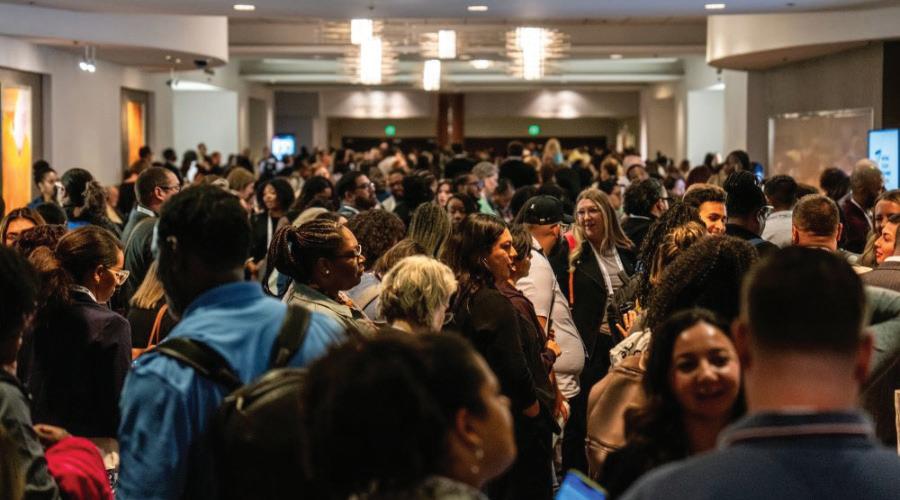
From March 31 to April 1, the National College Attainment Network (NCAN) hosted a Leadership Summit in Washington D.C. On March 31, the event consisted of “a mix of knowledge and skill-building sessions” and on April 1, participants traveled to Capitol Hill to “make their voices heard, and educate their representatives in the U.S. House and Senate on time-sensitive and pressing policy issues like a fully functional Free Application for Federal Student Aid (FAFSA) launch, and the need for increased funding for Pell Grants and other federal student aid.”
To learn more, The Stute interviewed Michelle Elias Flores, a Clark Scholar who attended the event. Elias Flores became aware of the Leadership Summit when Clark Scholar advisor Alida McKee reached out, asking her to represent Stevens Clark Scholars at the event.
“Being a first-generation student and a limited income student,” said Elias Flores, “I became very well versed in student financial aid.”
The biggest topic discussed at the event was the
Pell Grant, which the Congressional Budget Office (CBO) expects to have a $2.7 billion gap next fiscal year, which is expected to grow to $10 billion by 2027 if it is not addressed. Another major topic discussed was FAFSA, and efforts to ensure it is properly staffed and funded so the application can be accessible to all. As Elias Flores mentioned, “If the website is breaking all the time and there are no callers at the call center then we have a bigger problem on our hands.” Elias Flores spoke positively of the skill-building sessions, too. “We actually got to learn how financial aid [works] and talk to the developers and head of the FAFSA team! It was pretty cool to hear what they had to say and made them listen to our concerns and the kind of the hidden things of what happens that we don’t know. Allegedly, there are major changes coming to the FAFSA (yes, again) that would help make it more accessible and safer for mixed status families and students with certain circumstances. I really enjoyed seeing people put them on their toes, as we all deserve transparency about financial aid and
.................................UNIVERSITY CENTER ROOM 216B NOTICE A MISTAKE? Email us at eboard@thestute.com.
All opinions and editorials reflect the views of their respective author(s). No Part of The Stute may be reproduced in any form, in whole or in part, without the written consent of the Editor-in-Chief. Cited references of The Stute are permitted.
All members of the Stevens community are able to submit a Letter to the Editor to be published in The Stute. Letters must refer either to a piece published in The Stute or to The Stute in general and must be between 400 – 800 words in length. Submit letters to editor@thestute.com with your name and title (when applicable) or using our Google form. For writers who wish to write a Letter to the Editor anonymously, please see our policy on anonymity.
The Editorial Board reserves the right to choose whether or not to publish a submitted Letter to the Editor based on a majority rule vote, and additionally reserves the right to edit letters for clarity or request authors to revise. Provided that the author approves the final version, The Stute reserves the right to edit letters according to our copy editing procedures, defined in our policies.
All members of the Stevens community are able to submit a standalone opinion piece (otherwise known as an Op-Ed) to be published in The Stute. Op-Eds must be between 400 – 800 words, but longer submissions will be considered on a case-by-case basis. To submit an OpEd please email eboard@thestute.com with your name and title (when applicable) or using our Google form (tinyurl.com/submit-t0-stute). For writers who wish to write an Op-Ed anonymously, please see our policy on anonymity.
The Editorial Board reserves the right to choose whether or not to publish a submitted Op-Ed based on a majority rule vote, and additionally reserves the right to edit Op-Eds for clarity or request authors to revise. Provided that the author approves the final version, The Stute reserves the right to edit Op-Eds according to our copy editing procedures, de fined in our policies.
VSA
CONTINUED FROM PAGE 1
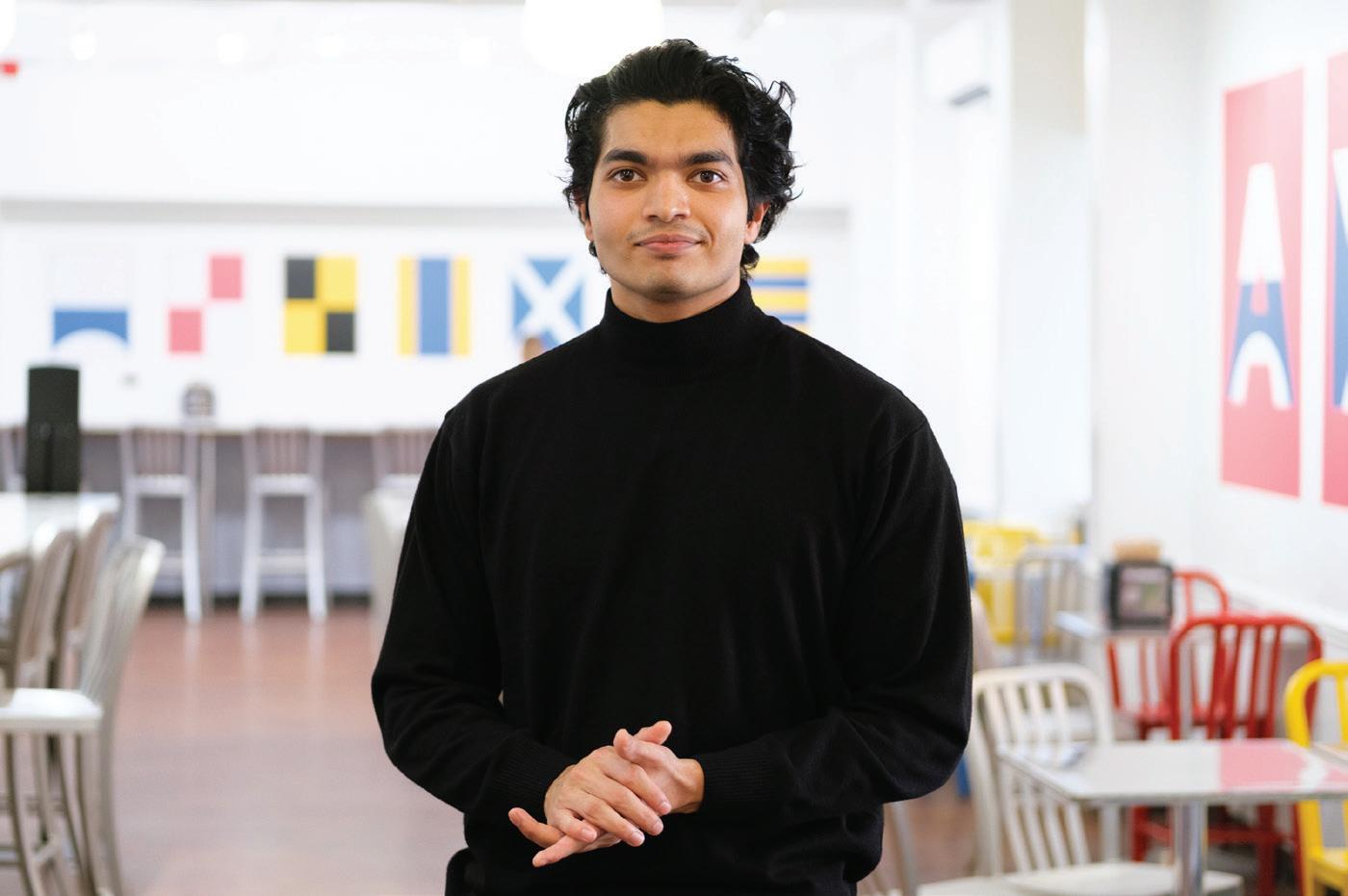
Stute spoke with VSA’s president, Jane Vu, a 2/4 Quantitative Finance major, to find out more about how the club came into existence, what it did for its most recent event, and what the future looks like.
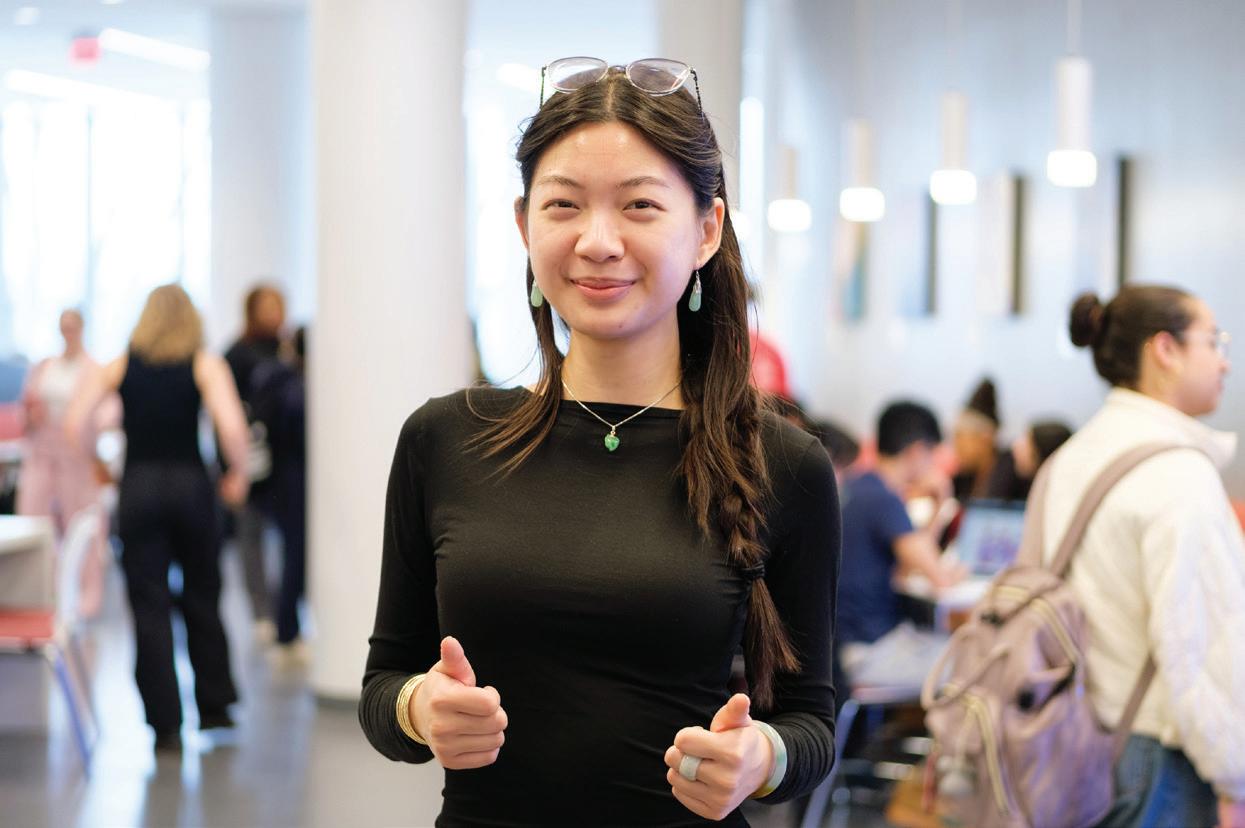
During her first semester of freshman year, Vu felt down because there weren’t many Vietnamese students she knew. After attending so many cultural clubs around campus, she felt that one was missing. Then, while talking to friends, one of them suggested she start her own VSA. After a conversation with Keenan Yates, a senior at the time who also wanted to start a VSA and co-found it with her, the idea began to take shape. But after she graduated, the torch to start the club ended up in Vu’s hands. “It felt super overwhelm ing at first—I had no idea what I was doing—but I started to treat it like my own little baby. I put my heart into it, and I think that made all the difference.”
When she saw that there were more Vietnamese students in the incoming freshman class, she took the opportunity to make sure that what she went through—feel ings of isolation, lack of repre sentation, and being new—didn’t
HACK
CONTINUED FROM PAGE 1
happen to them. So, with the help of her vice president, Karly Pham, a 2/4 Business major, they held weekly three-hour meetings working on presentations for the SGA, writing up the constitution, and figuring out the e-board structure. As a result, VSA was built.
After spending two weeks planning their first event, they wanted to start with something fun and welcoming—something where people could connect without feeling awkward or out of place. They weren’t expecting 60 people to show up for their GBM. It might sound like a small number, but even the largest organizations at Stevens typically see only a quarter of that at their GBMs. Vu deemed this event a success.
As for the future of the club, they have a Vietnamese Coffee
“teach people how to make traditional Vietnamese coffee using a phin filter, while also giving everyone a cozy space to hang out, sip coffee, maybe get some work done, and learn a bit about the culture. It’s meant to be low-pressure, chill, and of course, delicious.”
Moreover, to keep the club growing and increase their budget, they’re aiming for bigger and more fun events. One thing they’ve noticed is that people love food, so they’re going to try and incorporate that into future events. Overall, the entire E-board wants to expose the student body to “more food, more culture, and more chances for people to connect. [Vu] just [wants] to keep building a space where people feel excited to show up, learn something new, and feel
the atmosphere of the opening ceremony as full of energy and anticipation, stating, “Students were excited to participate in the first ever hackathon and were anxious to get hacking!”
AWS, Chubb, and ADP each held a major workshop for the benefit of participants on the first day of the competition. “AWS Cloud, GenAI and Amazon PartyRock fun workshop,” summarized those key services of Amazon’s cloud computing and interface services, including a demonstration of how to integrate them into projects large and small. “Using AI Agents to Tackle Community Risk,” presented by the consortium of insurance companies known as Chubb, showcased the group’s use of autonomous and decision-making artificial intelligence agents to address problems related to risk in the insurance business. “Application of Deep Learning Models,” presented by the payroll service company ADP, showed how data processing networks can be applied to address human resource and information technology needs.
Numerous organizations, students, faculty, and staff worked together to make the hackathon a success. Organizations including the Computer Science Department, Stevens Women in Computer Science (SWiCS), Stevens Computer Science Club (SCSC), Stevens Cyber Defense Team (SCDT), Blueprint, Stevens Linux User Group (SLUG), Institute of Electrical and Electronics Engineers (IEEE), and Software Engineering Club (SEC) collaborated with support from university figures such as Dave Naumann, Megan Whittemore, and Rekha Manohar, as well as volunteer judges Philippe Meunier, William
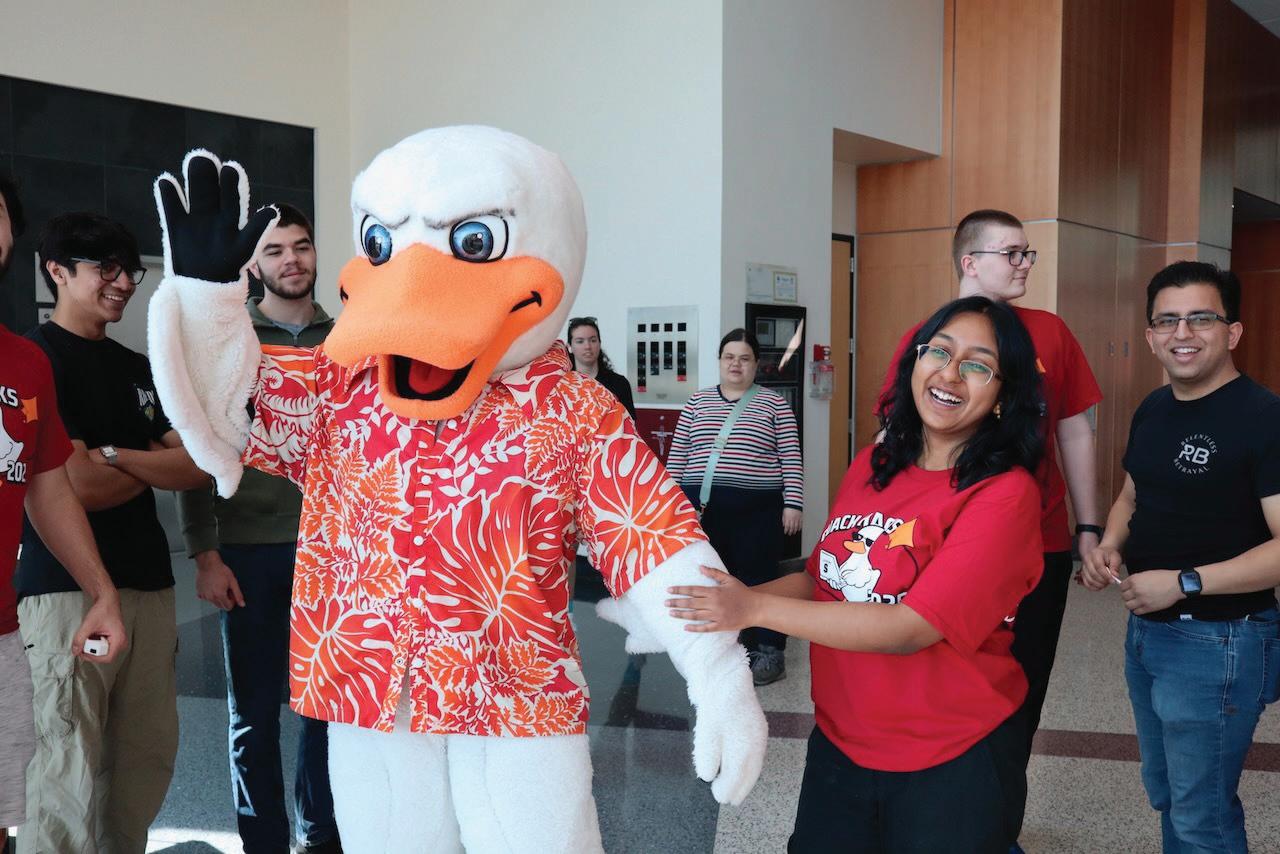
The closing ceremony featured Stevens professors and alumni as well as company representatives and guest speakers. Even Attila dropped by to take photos with participants and organizers. The winners of the inaugural hackathon prompts were as follows:
• Best Overall: Caremigo – A centralized health online health portal that demystifies doctoral jargon and makes medical documents understandable.
• ADP Prompt Winner: CareerIQ – An AI assistant that turns payroll and market data into actionable career advice.
• Chubb Prompt Winners: Caremigo and Community Risk Monitoring – Both addressing safety and health concerns using innovative tech solutions.
• Ari Birnbaum Community Impact Award: Frigid – A web app visualizing ICE detention data in New Jersey and offering legal resources.
• Best Design: Future Nest – A tool for evaluating sustainable housing based on climate risk.
• Most Innovative: Education Redefined Through Immersive AR – A storytelling and ARbased learning platform.
• Attila’s Favorite: The Duck Experience – Stevens student-made web interface that attempts to capture the classic duck experience by giving people an opportunity to share their ducks with the world.
“We knew we had a hit on our hands when attendees started asking us how they can be part of planning next year’s event,” said Hauk. She cited growing support from the University community, saying that Quack Hacks will grow in scope in the future. “We are very proud of our first-ever Stevens Quack Hacks Student Hackathon and we look forward to all the amazing hacks to come!”
CONTINUED FROM PAGE 1
tion, until the club built the collection featured today—now housing around 10,000 records.
The exact number of records, stored in a CubeSmart across Hoboken, is hard to determine due to its vast size. The task was made more difficult after a Sustainability, Activism, Volunteering, and Engineering (SAVE) event co-opted many of the vinyls to be used as canvases for painting. According to Daniel Korzen, the historian and former general manager for WCPR, these records were not carefully checked before being distributed. Due to such a large portion of the records being from the ‘70s, an unknown number of rare or limited edition records may have been lost.
The sorting and storage of this collection is already difficult due to its sheer size, and the location does not make this task any easier. Although the record collection is a major property of WCPR, they aren’t allowed to store the collection on campus for multiple reasons, including the many relocations of the club and strict safety regulations in place at Stevens.
In the spring of 1989, WCPR relocated to a newly built studio in the basement of Jacobus Hall. It was here where the club reached its grandest stature, with multiple rooms and an entire record library. The creation of this library also led to the creation of a new role in the club: a record librarian. This person would oversee the storage, usage, and sorting of the records that the club owned. In December of 2018, the demolition of Jacobus to make room for the UCC Towers relocated WCPR to the third floor of the Martha Bayard Stevens building—a space which is still its home today. While moving all of the studio’s equipment, the record collection was placed in a CubeSmart storage unit in Hoboken. This was also meant to be temporary, but the lack of sprinklers in Martha Bayard and the storage of vinyls in cardboard boxes has rendered the collection unable to return to campus for now. The station has also temporarily dismissed the role of record librarian, which will likely not return until a permanent and sortable home for the records is reinstated.
Although the current situation of this collection leaves much to be desired, a mass of roughly 10,000 records is still a remarkable feat. As there is no evidence of any larger privately owned collection in New Jersey, it can be inferred that Castle Point Radio currently has one of, if not the largest, record collection in the state of New Jersey.
PHOTO COURTESY OF GAVIN RUBY
ni.
PHOTO COURTESY OF ANNA HAUK
POLICY
CONTINUED FROM PAGE 1
versity says it will only consider an accommodation as causing undue burden after a careful and thorough evaluation of all relevant factors in each case, including financial, business, and education quality-related considerations.
In the case that an accommo-
dation is denied, an official appeal may be submitted within five days. All appeals will be considered by designated academic or administrative leaders depending on the role of the requester. The change comes as prominent American universities, like Columbia in New York City, have been making headlines after failing to reconcile competing student views involving free speech, the right to protest, and the obligation
of institutions of higher education to protect First Amendment rights while also maintaining smooth operations and community safety. Although Stevens has navigated recent national turbulence with comparatively little conflict, these policy refreshers are a reminder of the difficult work it takes to sustain an inclusive, respectful academic environment in a diverse and pluralistic community.
TARIFF
CONTINUED FROM PAGE 1
Specific tariffs
Trump’s tariffs are Ad Valorem, with a default of 10% on all imports and specific percentages on certain countries. China was hit with the highest specific tariff, totalling to 145%.
Impacts of this executive order were felt immediately. The stock market reacted negatively, with the Dow Jones Industrial Average falling almost 4,000 points over a two-day period. The S&P 500 and Nasdaq experienced severe declines as well. The tariffs announcement led to a large sell-off in the markets and many economists have also upped their forecast on the likelihood of a recession. From the perspective of the Federal Reserve, inflation concerns have also hiked as predictions for consumer pricing are up by 7.1%. In terms of consumer behavior, a lot of people have been exiting the stock market to ensure their savings and retirements aren’t being tampered with. Additionally, a lot of people fear that prices will rise, enabling them to stockpile on fundamental items now.
NCAN
CONTINUED FROM PAGE 1
how our government handles it.”
For “Hill Day,” attendees were able to walk around Washington D.C. to talk to legal aids at the offices of senators and representatives about their thoughts on federal financial aid. Elias Flores recalled, “It was so cool and Alida and I started a senator counter where we counted how many we saw (total was 5!). I would say I am pretty good at interviews but this definitely helped me learn a new way to talk to people and discuss issues our current education system has.”
In terms of international response, many countries have opposed the U.S.’ decision. Some countries are exploring alternative partnerships while others are applying retaliatory tariffs against the U.S.. China in particular has announced a 125% tariff on American imports and has halted the export of rare earth metals. In response, President Trump has also stated that he is open to conversation but will not be repealing the tariffs. Since then several exemptions have been made. For example, the higher reciprocal tariff on certain electronic items such as laptops, computers, smartphones and semiconductors will be exempt from the country-specific tariffs but will still have a baseline 10% tariff. A 90-day pause was also implemented starting April 9, due to the instability caused by the original tariff announcement. The country-specific tariffs are halted for a 90-day timeframe with the exception of China. The standard 10% tariff on all goods is still active.
Since then, the Trump administration is reviewing the trade agreements for several countries to reach common ground. However, no agreements have been reached yet. It remains to be seen what implications tariffs will have once this 90-day period concludes.
was particularly meaningful, allowing her to explore her interests and make an impact. As she summarized, “I definitely want to get more involved with advocacy and support for the fight to keep federal financial aid throughout this administration and I am not backing down.”
T h e s e s e a s o n e d c o m p e t i t o r s k n o w w h a t i t t a k e s t o w i n b u t
d o t h e y h a v e w h a t i t t a k e s t o
w i n a g a i n ? W a t c h a s t h e y r a c e a g a i n s t
t h e c l o
The event as a whole was informational and fostered an environment where attendees could be heard. For Elias Flores, this event
Elias Flores encourages others to remember that financial aid “quite literally opens up doors and pathways to the middle class for many limited income families and the Pell Grant is something super important to that notion. In the U.S. there are over 7 million Pell Grant recipients and by taking this away, we’re doing a lot of damage to people’s dreams and possibility to pursue higher education. Call your representatives, tell them to support shoring up the Pell Grant by 10 billion dollars and help save the Pell Grant!”
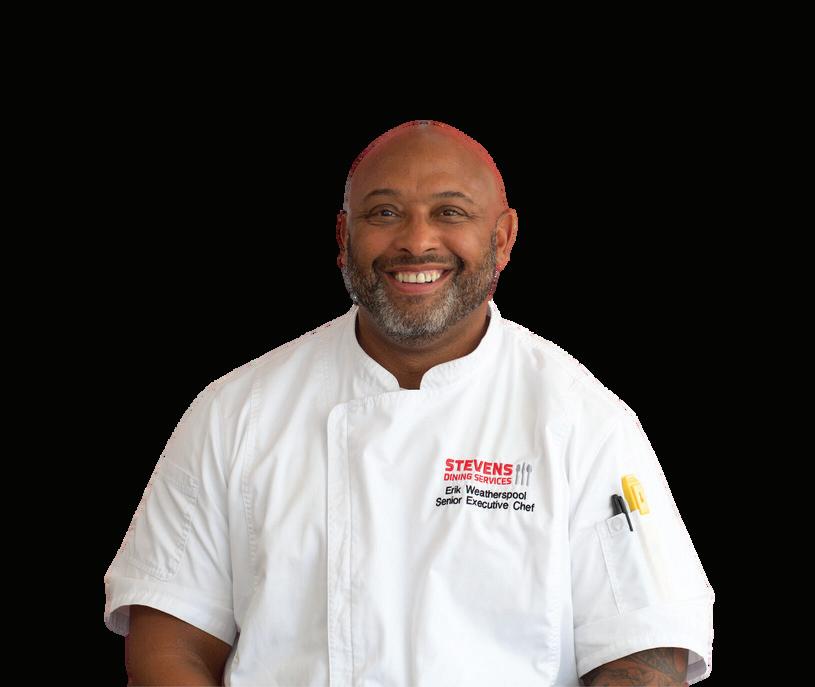
PHOTO COURTESY OF STEVENS.EDU
SPOTLIGHT: STEVENS AMNESTY
BY THE STUTE
Amnesty International is a global organization that focuses on human rights and social justice, with many chapters at universities and high schools, and here at Stevens, they have been continuing this line of work. Stevens Amnesty Club is another chapter, whose main projects at the moment include gaining the students’ support to speak out against mass deportations and advocate for justice in Palestine.
You may have heard of this club in the past couple of weeks due to the events they’ve planned; One of the more fun events that took place was “JAMnesty,” which was an open mic concert and a collaboration with other activism and cultural clubs at Stevens to help bring awareness to the mass deportations. If you weren’t one to take part in this, then maybe you saw the posters in front of the Walker Gymnasium that brought awareness to mass deportations happening in the U.S. at the moment during the National Week of Student Action. There are a lot of stories to be told about this club, most of which I uncovered when talking to the club’s president, Tanishka Kapoor, a ¾ Finance major. Stevens Amnesty is a “revival” club, which means it existed at some point but died out before being picked up again. Kapoor said that during COVID, the club had
died down a lot, but it was brought back last year. This year’s goal was to be more consistent in planning events along with their ongoing weekly meetings. They have also brought back their Instagram, where they have been promoting the club and events frequently.
So, what is the purpose of Amnesty at Stevens? Talking with Kapoor a bit more and also another member of the E-board, Eliza Curran, they mentioned that the hope for the club was to make social justice feel more accessible to the “average” person. One of the main assumptions we make about why people don’t get involved is not because they don’t care about the problems, but because they don’t understand the problem or don’t feel any personal obligation. Even when talking to Kapoor, she mentioned that she “finds it hard to believe that if people knew everything” and then stops herself and continues saying “well, actually, I don’t know; there are people that wouldn’t take action even if they know,” which introduces the nuance of human behavior. People can know about an issue at hand and feel sympathetic towards it, but still not take action to engage. This is something that each person may feel differently towards, but nevertheless contributes to the lack of action across the board.
Curran mentioned in the interview that she acknowledges how difficult it can be for people to feel
like taking action, as it can be very disheartening and discouraging to constantly see bad news. Curran explains, “ We have news that updates so fast, and a lot of especially young people who are tapped into it, and it comes out in a lot of ways [...] You see a lot of anger and frustration, but you also see a lot of people being absolutely hopeless and devastated and don’t know what to do.” Because there is always so much information coming out, it’s easy to get desensitized to it, or feel like anything you do is worthless. This is also sometimes known as compassion fatigue, where the constant learning about others’ traumas can cause exhaustion and apathy toward oneself. But, Amnesty emphasizes that by showing up and coming to the events, you ARE doing something and you are doing enough.
The club can put people on a
path and provide a place where people can take action. Many club meetings are spent having conversations about the current issues they are working on and how the members feel about it, and often this can be a great way to build new perspectives. By listening to others and challenging your beliefs, being in social justice spaces, or even by sharing events, fundraisers, and information on social media, you ARE helping the cause at hand, while doing it at your own comfort level.
With Amnesty, a conversation is started, and people gain the opportunity to learn more about the problem and hear different perspectives on it. Kapoor mentioned that one of the best ways to make people care about social justice issues is by sharing stories that make others empathize with the issues at hand, and it is that em-
pathy that can drive unmotivated students and people in general to help out these movements. And that, I think, is the core of the answer to the question proposed earlier—“So what is the purpose of Amnesty at Stevens?”— is that it is simply to give the Stevens community a place to be active in social reform, but more importantly, a place to learn. While there are platforms of bigotry, this is a place to connect, to be heard, and to listen. It is a place where a student who may not have had an opinion about current social justice issues can leave feeling like they have learned something, and feel empowered to do more and learn more themselves. This is where someone at Stevens could go to learn more than just math, science, economics, but about the greater world, and who they want to be as a person in it.
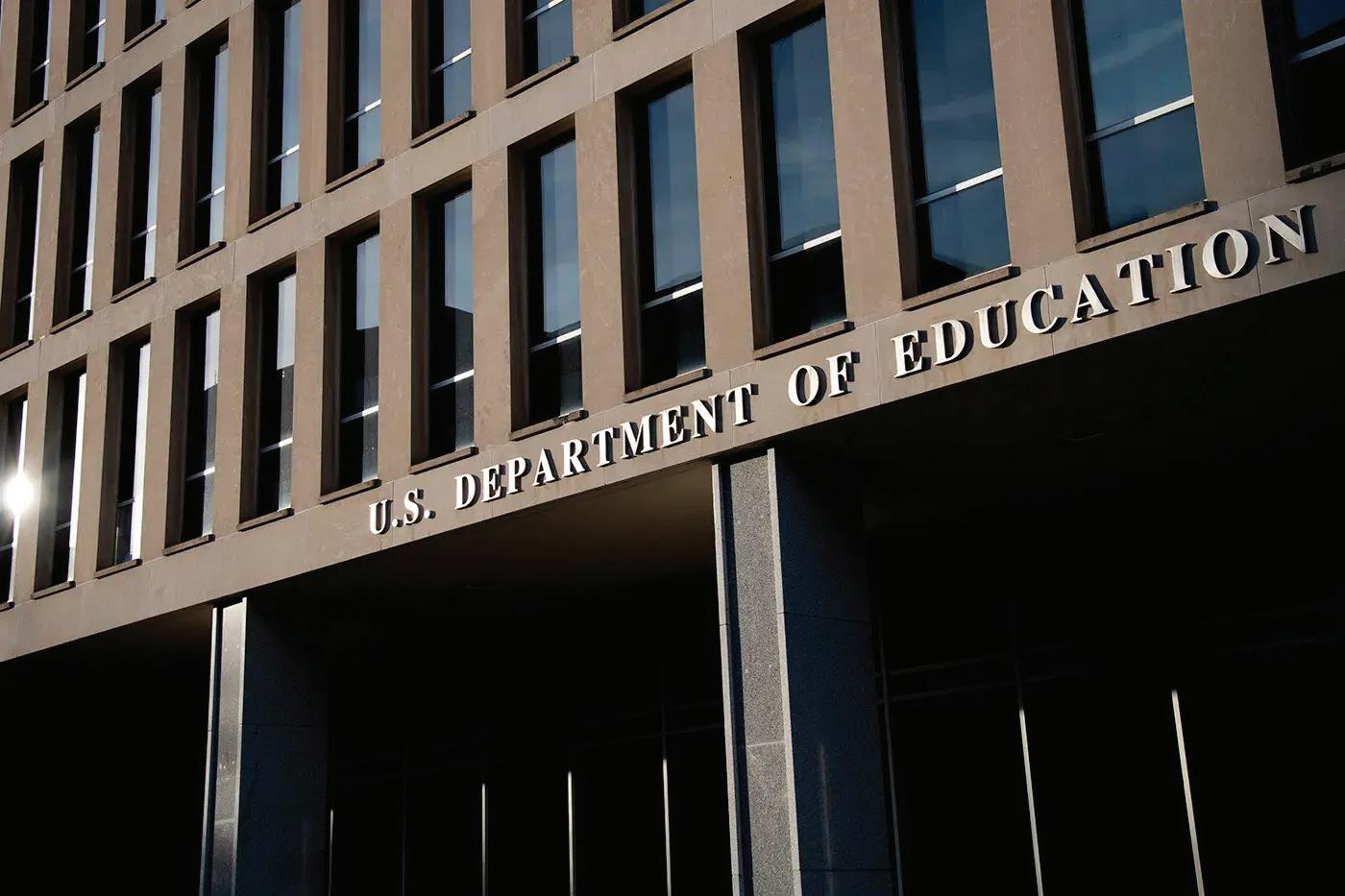
DOE is dying? What does this mean?
BY JEREMIAH CHINWENDU, STAFF WRITER
On March 10, the Trump administration carried out sweeping layoffs at the Department of Education (DOE), cutting nearly half of its workforce. The loss of over 1,300 employees had immediate consequences: offices overseeing vital federal aid and policy enforcements were left crippled, raising concerns about how this will impact the students and schools who depend on their support. The move is part of a broader effort to shrink the federal government and curb spending, with long-term plans reportedly aimed at dismantling the DOE entirely. With the ramifications of this decision impacting students and educational institutions, the future for higher education remains uncertain; these layoffs threaten the stability of vital programs, undermine access to federal support, and limit the government’s control over enforcing education policy according to critics.
Several key offices within the DOE have been severely weakened by these layoffs. The Office of Federal Student Aid has lost crucial personnel, limiting its capacity to oversee student loan practices and manage the rollout of federal financial aid programs. The Office for Civil Rights—tasked with investigating complaints of harassment and discrimination in schools—has been cut down to just five regional offices, significantly reducing its national reach. Beyond these departments, essential staff responsible for distributing
grants, implementing federal education programs, and providing customer service to students and families have also been drastically reduced, disrupting services that millions of students and educators rely on.
Trump saw the DOE as a wasteful organization punctuated by the high presence of liberal ideologies. In his order, he vowed to cut funding to schools and universities that promote “critical race theory and transgender ideologies.” Later in March, Trump sent “letters to 60 colleges and universities it says are under investigation for violations relating to alleged antisemitic harassment against Jewish students during pro-Palestinian protests on campuses nationwide,” NPR reports. Most notably, Columbia University, a hub for pro-Palestinian protests last spring, had “$400 million in grants and contracts cut due to the adminstration’s claims of their inability to protect Jewish students from antisemitism.” The move has sparked fierce debate over free speech, academic freedom, and the politicization of federal education funding.
In his executive order, President Trump directed the education secretary to begin taking steps to dismantle the Department of Education and shift authority back to states and local governments, despite the DOE’s support of state education systems in improving national standards. While he cannot dissolve the department without congressional approval, his push has already drawn sharp criticism. Opponents warn that the move would disproportionately harm low-income students who
depend on federal funding, grants, and support programs to aid them in higher education. With financial aid and work study programs at risk, Trump promised to preserve the Pell Grant program and redistribute it through other government agencies and departments. However, critics argue that shifting the program to other agencies would strip it of the oversight and coordination needed to ensure fair access to higher education— ultimately putting the students who rely on it most at greater risk.
As the Department of Education faces deep cuts and increasing political pressure, the future of higher education grows more uncertain—especially for students who depend on federal aid, grant programs, and policies to even attend the schools they go to. For many, these aren’t just support systems—they’re lifelines. Now, with the Trump administration targeting schools over their curriculum and campus climate, institutions are being forced to defend their principles in the face of political threats.
Harvard recently rejected the administration’s demands to eliminate diversity, equity and inclusion (DEI) programs, change their admissions and hiring practices, and reduce the power of the administrators deemed “more committed to activism than scholarship”, writes CNN. This refusal led to the freezing of $2.2 billion “in multi-year grants and contracts.” The clash signals a growing divide between government power and academic independence, with students caught in the middle.
You, banned books, and the freedom to read
BY JOSEPHINE CHOONG, SECRETARY
As you walked into Samuel C. Williams library, you may have noticed colorful art decorating the whiteboard or a spinner full of popular and new books. These additions celebrate National Library Week which is observed from April 6 to 12. In conjunction with the week, the American Library Association (ALA) published data about banned books from 2024. The data serves as a documentation of book challenges and advocates to end censorship within libraries.
During 2024, between January 1 and August 31, the ALA’s Office for Intellectual Freedom tracked 821 attempts to censor library materials and service, and 2,452 unique titles were challenged. Moreover, the majority of book censorship attempts came from organized movements. 72% of book censorship attempts in school and public libraries came from pressure groups and government entities including elected officials, board members, and administrators; 16% of attempts came from parents, and 12% came from other sources, including individual library users, teachers, librarians, and staff.
Last year, ALA tracked 1,247 attempts with 4,240 unique titles challenged. While the number of book ban attempts appeared to decrease, ALA cites underreporting, censorship by exclusion, and legislative restrictions as potential factors for lower numbers. ALA notes that several laws restricted certain material in schools and libraries based on the ideas and topics discussed within them. Because of these laws, many books exploring LGBTQ+ characters or themes, race or racism, and characters of color were removed from school districts because they included “sexual content” or controversial themes.
Within New Jersey, 47 library systems, including the Hoboken Library, and four municipalities are book sanctuaries, meaning that access to books and the right to read them are at the forefront of their mission. A book sanctuary commits to doing at least one of the following: protecting banned books, making those books accessible, hosting events about banned books, and educating others about their history and burning. In 2023, the City of Hoboken became the first book sanctuary city in New Jersey.
The Hoboken Library has three branches with the nearest, at 500 Park Avenue, only a five-minute walk from campus. Having a library card is a gateway to learning a wide array of subjects, including banned books. If you don’t live in Hoboken, you can still get a card. For applicants who go to school in Hoboken, a Photo ID with a current home address and a Letter from Bursar or The Office of Student Life displaying your enrollment and rooming assignment are required.
Obtaining a Hoboken library card means obtaining access to borrow a variety of books, including some of the most challenged books. Each year, on the Right to Read Day, ALA releases a list of the top 10 most challenged books. Many of these books can be found within the Hoboken library’s shelves. One example is All Boys Aren’t Blue by George M. Johnson, a Black journalist and LGBTQIA+ activist, a series of personal essays where Johnson explores his childhood and college years in New Jersey and Virginia. It was claimed to be sexually explicit and challenged for LGBTQIA+ content. Another book, Me and Earl and the Dying Girl revolves around Greg, a teenager, a part of every social group without any friends. However, his life changes when his mother forces him to befriend Rachel, a girl with leukemia whom he once knew in Hebrew school. It was challenged for profanity and claimed to be sexually explicit.
On a state-wide level, on December 9, 2024, Governor Murphy signed the Freedom to Read Act which prevents arbitrary book banning and protects the rights of communities to have free access to age-appropriate books and learning materials at schools and public libraries. “Across the nation, we have seen attempts to suppress and censor the stories and experiences of others,” Murphy states. “I’m proud to amplify the voices of our past and present, as there is no better way for our children to prepare for the future than to read freely.”
Books that contain diverse representation and tackle difficult real-world issues are being banned at significant rates. By banning these books, we ban access to better understanding the world around us. Everyone, especially children, deserves the freedom to read and the freedom to learn about the unique world around them.
PHOTO COURTESY OF WIKIPEDIA
BY CAMRYN WINANT, SPORTS EDITOR
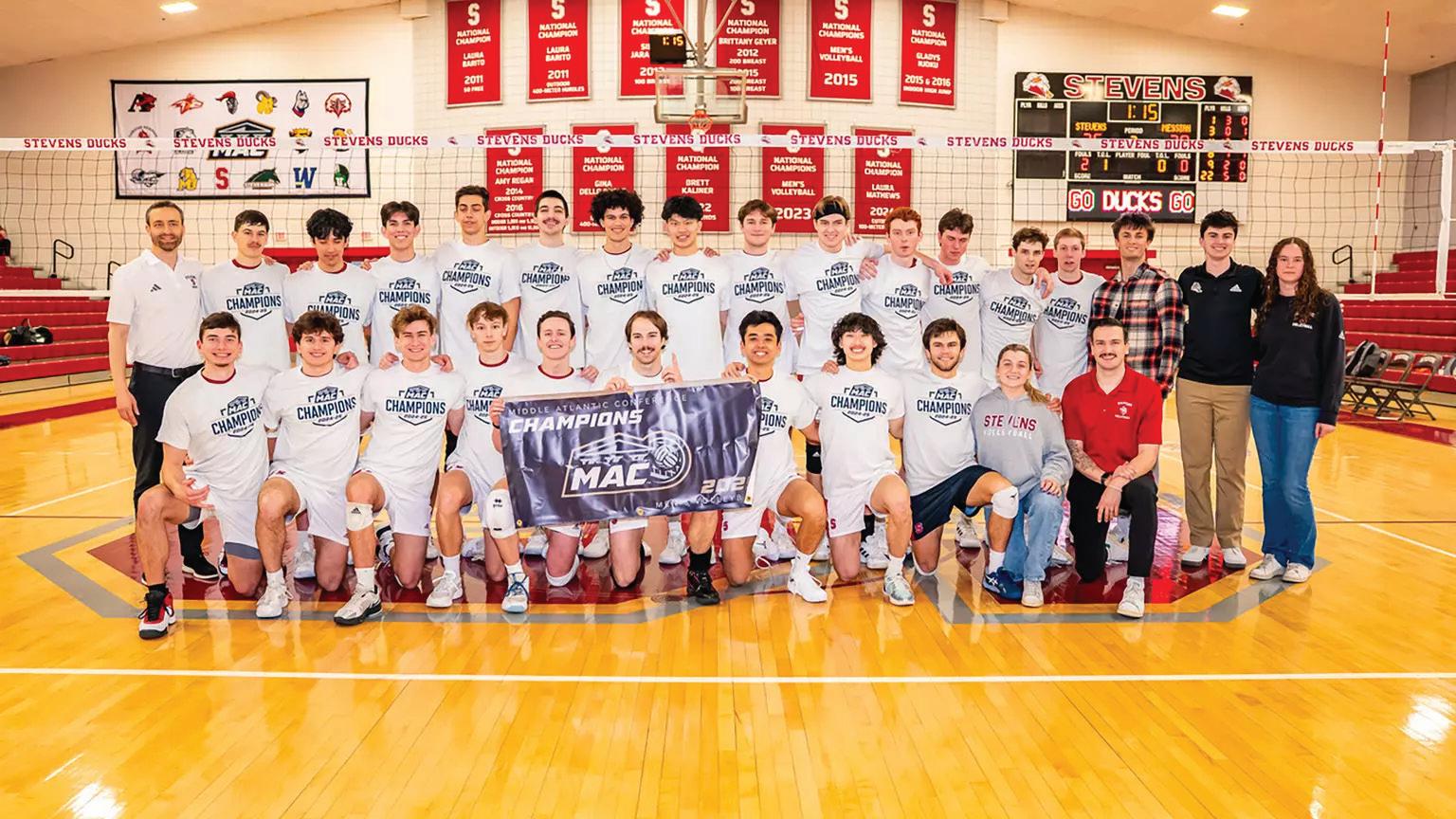
On Thursday, April 10, the men’s volleyball team advanced to the Middle Atlantic Conference (MAC) Finals after beating Stevenson University, and they were named MAC Champions on Saturday, April 10 after going against Messiah University.
The match against Stevenson opened with multiple ties and lead changes throughout the first set. By the end of the set, the Mustangs had managed to get a three-point lead on the Ducks, ending the first set at 25-22. They battled for the lead in the second set early on, The Ducks’ lead was extended to seven points, with the Mustangs not coming close to closing the gap again. After three kills and service aces, Stevens ended the second
set at 25-17. Despite the best efforts put forward by the Mustangs in the third period, after tying five times throughout the set the Ducks pulled through for the set ending it at 27-25. Stevenson took the quick lead in the fourth set, but the Ducks were quick to fight back, taking a quick lead on the Mustangs. Ending the night with eight kills from senior Koby Sherman, the Ducks took the set at 25-17 and the game at 3-1. The game’s success came from standout performances by Sherman with 25 kills, sophomore Joshua Levandoske and Esteban Schmitt with 15 and eight kills, respectively, and junior Tyler Hoke with six kills. Senior Sebastian Huyke managed 53 assists, and senior Jesse Knuckles got 13 digs.
The Ducks then moved on to the Championship against Messi-
ah, where they took their fourth championship in a row with a 3-0 win. Messiah took the lead in the first set, and eventually extended to a six-point lead. However, after a 9-1 run in favor of the Ducks, they were able to take the lead and end the set at 25-23. The second set tied at 4-4 early on, but after a 6-2 run and an ace, the Ducks got a six-point lead on Messiah. They managed to close the gap, but more effort from Stevens pushed the final score for the set to 25-18. Stevens took an early lead in the third set, and the two teams had battled back and forth for it throughout the set. After battling for the lead, an attack error ended the match, with the set ending at 25-20.
Continuing his hot streak, Sherman ended the game with 11 kills. Following him was Levandoske with eight, and Schmitt and
sophomore Alex Ocott with six. Huyke stayed a game leader with 30 assists, Knuckles and Huyke ending with five digs. After leading the Ducks through two wins, Sherman was named MAC Championship Most Valuable Player with 36 kills spanned across the two games. The Ducks are set to host a five team pod for the NCAA Division III Men’s Volleyball Tournament. Tournament action began yesterday on Thursday, April 17, with Randolph-Macon College going up against Nichols College. If the Ducks win in the second round, they will match up against either Juniata College or Wentworth Institute of Technology on Saturday, April 19. The winner of that matchup will be seen moving on to the National Semifinals in Salem, VA.
Three Days, Three Matches: Stevens Men’s Tennis Battles Through a Packed Weekend
BY RIYANA PHADKE SCIENCE EDITOR
Stevens’ Men’s Tennis team had a busy weekend, playing three competitive schools: University of Rochester, Lebanon Valley College, and Johns Hopkins University. This season, the Ducks are delivering a commanding performance, with a strong team consisting of many returning players.
On Friday, April 11, Stevens took down the University of Rochester 5-2 at the Edgewater Tennis Center. In doubles, Stevens won two of their three matches, with fourth-years Olof Persson and Vivek Harinarayan securing a smooth 6-4 win at the top court and first-year Aidan Miller and second-year Samvid Andhare
earning a decisive 6-3 victory on the second court.
The men’s team carried their performance into the singles matches with Harinarayan and Andhare receiving hard-earned wins over the opposing players. Miller pulled through a third win in straight sets. First-year Mihir Parcha dropped a tight match in the fourth seed, but Stevens was able to recover with strong finishes from first-year Dhaivik Chenemilla, who went 6-1, 6-0, and Persson who closed out with a 6-3, 6-3 win.
On Saturday, April 12, the Ducks traveled to Annville, PA where they continued their stellar performance to win all of their matches against Lebanon Valley College. The men set the tone early by winning all three dou-
bles matches. Miller and Andhare earned a 6-3 victory in the top spot, followed by an impressive show of skill from fourth-year Matt Luzzi and second-year Tristan Wroe, who claimed a decisive 6-0 victory. Chenemilla and Parcha walked away with another 6-0 victories against their opponents.
In singles, all six players won in straight sets. At number one, Miller turned in yet another strong performance. At number two, first-year Noah Pe brought an impressive game, taking down Jake Erb 6-2, 6-1. Chenemilla, Persson, and second-year Johnny Haase each secured smooth wins over their opponents as well.
On Sunday, April 13, the men’s team travelled to Baltimore to continue their run, but were bested
by the 19th seed, Johns Hopkins University. The Blue Jays took all three doubles matches, securing an early lead. The Ducks’ number two pairing, Miller and Andhare, held up strong but eventually fell 6-3. In singles, Miller earned Stevens’ only victory of the day at the third seat. After dropping his first set, Miller pushed through a second-set tiebreaker and came out on top in the 10-point tiebreaker. Andhare and Pe both endured tiebreakers as well, but were ultimately bested by their opponents.
The men’s tennis team will continue their season on Wednesday, April 16, when they host New York University at the Bayonne Tennis Courts.
STEVENS SCOREBOARD
WOMEN’S TENNIS Haverford College Bayonne, NJ 2 p.m
Delaware Valley University Weehawken, NJ 1 p.m.
MEN’S AND WOMEN’S TRACK AND FIELD
Paul Donahue InvitationalDay 2 Chester, PA Time TBA
MEN’S AND WOMEN’S TENNIS DeSales University Bayonne, NJ 11 a.m.
MEN’S GOLF Gettysburg Spring ShootoutDay 2 Fayetteville, PA 9 a.m.
Delaware Valley University Doylestown, PA 12 p.m.
Why miso tastes different in space
BY TANYA AVADIA, OUTREACH CHAIR
Have you ever copied your grandmother’s recipe and felt that it didn’t quite taste like hers? Similarly, researchers aimed to ferment miso onboard the International Space Station (ISS) and found that it tasted quite different to the traditional miso made on Earth. Like trying to figure out where your recipe differs from your grandma’s, researchers found that miso essentially fermented in space produced a nuttier, more roasted flavor compared to miso on Earth.
Miso is a Japanese condiment that consists of fermented soybeans and salt. It has many uses in Japanese culinary traditions and served a two-fold purpose to scientists. Firstly, scientists wanted to expand the food options available to astronauts aboard the ISS, and secondly, scientists wanted to understand if the process of fermentation was possible in space.
Eager to study the difference between Earth-made miso and space-made miso, researchers created three containers of the soybean-salt mix. Two of these containers were on Earth but at different locations with one in Cambridge, MA, in the U.S. and the other in Copenhagen, Den mark. The third batch was sent to space in 2020 where it fermented onboard the ISS for 30 days be fore returning to Earth as miso. To keep track of each batch, environ mental sensing was implement ed, and it tracked several factors including temperature, humidity, pressure and radiation levels.
Once the space miso returned to Earth, scientists immediately got to analyzing it. They focused on the miso’s microbial commu nities, flavor compounds, and sensory properties. The study’s co-authors, Maggie Coblentz, of the Massachusetts Institute of Technology (MIT) and Dr. Joshua Evans, of the Technical University of Denmark shared that while it is
World’s smallest pacemaker is activated by light
BY MATTHEW SOLTYS, CONTRIBUTOR
Researchers at Northwestern University have developed the world’s smallest temporary pacemaker. The device can be non-invasively injected via a syringe and naturally dissolves into the body after use, which may make it pivotal in treating babies born with heart defects. The details of this development were published in Nature on April 2, 2025.
“Our major motivation was children,” said Northwestern Professor of Biomedical Engineering and Cardiology Igor Efimov. “About 1% of children are born with congenital heart defects—regardless of whether they live in a low-resource or high-resource country.” In most cases, it will only take seven days for the heart to self-repair. However, having a temporary implant during that time is crucial for the baby’s survival. This is where the pacemaker being smaller than a grain of rice comes into play. The less load the device has on the body, the better the projected outcome for the patient, especially with newborn babies, who are at their most vulnerable.
The current procedure for temporary pacemaker implants involves surgeons sewing electrodes directly onto the heart. Those
electrodes are then attached to an external pacing box which deliv ers an electrical current to control the heart’s pacing using wires that exit a patient’s chest.
Aside from the bulky wires and external devices being un comfortable for patients, there are complications involving the invasiveness of the process. Placing foreign matter into the body presents the risk of infection. On top of this, if scar tissue forms on the wires by the time a physician goes to remove the device, removal could damage the heart muscle. The first man to walk on the Moon, Neil Armstong, died in 2012 from complications following the removal of a temporary pacemaker.
heartbeat the pacemaker should stimulate. The new power supply is a type of battery that transforms chemical energy into electrical energy called a galvanic cell, generating power through chemical reactions with surrounding bodily fluids. With these changes, they have created a pacemaker that is 1.8 millimeters wide, 3.5 millimeters long, and 1 millimeter thick.
Colossal revives the dire wolf
BY DISHA GOHIL, SCIENCE WRITER
Solving these problems is what drove teams led by Northwestern Professor of Neurological Surgery and Biomedical Engineering, John A. Rogers, to create the first iteration of this device in 2021, published in Nature Biotechnology. They were able to remove the wiring and large batteries required in current pacemakers.
The replacement for wiring was a built-in antenna that relayed radio frequency commands and also helped provide power, which required them to keep the pacemaker at least the size of a quarter.
Still too large for a non-invasive implant, Rogers’ team worked
“Now, we can place this tiny pacemaker on a child’s heart and stimulate it with a soft, gentle, wearable device. And no additional surgery is necessary to remove it,” Efimov said.
The incredible feat they have achieved has the team hoping that they can use the pacemaker in more ways than intended. “We can deploy a number of such small pacemakers onto the outside of the heart and control each one,” Efimov explained. “Then we can achieve improved synchronized functional care. We also could incorporate our pacemakers into other medical devices like heart valve replacements, which can cause heart block.”
The dire wolf has not been seen in over 10,000 years. However, hybrid grey wolves have been genetically modified to replicate the dire wolf, thanks to the biotechnology startup Colossal Biosciences.
Colossal scientists were able to decipher the dire wolf genome with the help of genetic engineering and ancient, preserved DNA. Using this, they rewrote the genetic code of the common gray wolf to match it and used domestic dogs as surrogate mothers. This process yielded three pups, two males named Romulus and Remus and their 2-month-old sister Khalessi, during three separate births between last fall and this winter. This marked the first de-extinction of a species whose gene pool vanished a long time
at Columbia University. “There’s a lot of suffering involved in that. There are going to be miscarriages.”
There are not many genetic changes between a living species and an extinct one. A wolf has 19,000 genes, but to create a dire wolf, only 20 edits in 14 genes are sufficient. The dire wolf genome was extracted from a 13,000-yearold tooth found in Sheridan Pit, Ohio, and a 72,000-year-old ear bone found in American Falls, Idaho.
Cloning typically requires a tissue sample from a donor and isolating a single cell, but in the dire wolf case, the isolated cell came from a donor gray wolf’s blood. The selected cells are known as endothelial progenitor cells, which form blood vessel lining. The scientists were then able to rewrite 14 key genes to match the dire wolf, and the edited nucleus was transferred into denucleated ovum. The scientists procured 45 engineered ova, which developed into embryos. Those embryos were then inserted into two surrogate mothers, who processed to a full-term pregnancy. This led to the birth of the two male pups. The same procedure was repeated with another group of embryos and surrogate mothers, giving birth to Khalessi. This allowed the company to produce replicas of the dire wolf from grey wolves with the help of engineered genes. Since their births, the wolves have lived on an ecological preserve in the U.S., a location that is kept secret to protect the animals. The preserve is surrounded by a ten-foot fence and includes a veterinary clinic, an extreme-weather shelter, and natural dens to satisfy the need for a secure re-
of the bioethics master’s program
“I think they are the luckiest animals ever,” says Beth Shapiro, Colossal’s Chief Science Officer. “They will live their entire life on this protected ecological reserve, where they have all sorts of space.”
PHOTO COURTESY OF FEINBERG NEWS CENTER
THE STUTE EDITORIAL
How are you?
“How are you feeling?” “How are you doing?” “How are you handling everything?” Are you seeing the pattern? How am I? Well, before I can answer that, let’s break down my week.
I work about a week and a half ahead of time for reference.
Sunday My homework days (I am a student after all). I get everything done for the week or study early for exams so I can be available anytime someone needs me during production. It’s boring.
Monday Tianna, my Managing Editor, presents article ideas to me for the following week’s issue. These are released the next day, Tuesday, for our writers to grab an article.
I am taking pictures of every flyer and every email I come across. Working a
week ahead of everyone else is difficult. We have to be on top of an event before any typical student has even thought of attending it.
I, simultaneously, decide how many pages that week’s issue will be. I try to keep my Layout Editor, Eiliyah, as prepared as I can for that coming week. As a former Layout Editor, I know the struggle of having to rush to put a paper together, and if I can help Eiliyah from feeling overwhelmed, I have done my job.
Tuesday GBM days. You should show up. Please.
Wednesday My favorite. Production days. I have my weekly Wednesday meetings for an hour, and then I sit in the office from 2 p.m. to the time I convinced my entire friend group to go to
MIND OF A FRESHMAN
Pierce.
I am required to do news layout. This past week, I also took on a feature page because I told myself this week was easy (why was I lying to myself?). I happened to bite off a lot more than I could chew this past Wednesday, and I will not be doing that again.
I also have to read all of the articles and confirm that they are ready for layout. Why did nobody tell me that getting all the articles in before 4 p.m. on Wednesday was DIFFICULT ? My sincerest apologies Eiliyah; they were not all done before 8 p.m. this past Wednesday.
Thursday
Everyone says Mondays are the worst day of the week….I disagree. After this past Thursday, I think Thursdays are in my burn book forever. Although this is not part of my job de -
Just relax or SENIORITIS
Ok so the semester is almost over, which means the year is almost over. I have successfully made it through all the stuff I was supposed to, and now there’s more stuff, but then it will actually be over, so it’s fine. I have been super stressed, writing essays, studying, and practicing piano for hours. I have finally had time to relax a little bit. I finally have time for three meals a day. I’ve been using a lot of my meal swipes and taking advantage of my pretend Grubhub money.
I have had so much time to watch TV again and it has been so nice to just relax and do something normal like that. I recently watched Pink Floyd’s The Wall, which was such an insane watch; I left a changed person. I just watched Sean Durkin’s The Iron Claw, which featured Zac Efron and Jeremy Allen White with mullets, and everyone watching it was crying or broken by the end. I couldn’t care less about wrestling, but that movie was so well made, and it induced a lot of feelings even if you don’t know anything about wrestling. I also recently watched Beau is Afraid, which still doesn’t make full sense to me, but it was such a good watch. It was confusing, surreal and full of commentary about anxiety and generational trauma. I also rewatched I Saw the TV Glow with some friends, and it was better to watch it again. My Letterboxd review for this movie is probably six pages long. I’ve also been rewatching some classic shows: ture Time, Regular Show and Rick and Morty been super fun to rewatch. And of course, I have been contributing to the greater good of my friend group by only speaking in phrases from the Minecraft movie.
I only recently discov ered that America’s Cup isn’t just coffee. I have been eating so many sandwich es, life is beautiful. I only now at the end of my fresh man year am discovering that my only options aren’t Pierce and UCC. No offense to Yella’s or their sauce, but I shouldn’t be eating that every day. I have been enjoying breakfast sandwiches and wraps from America’s Cup and full meals from Pierce Cafe, which I didn’t know existed. I also have like one million snack swipes left, so I have been stockpiling pudding cups from anywhere I can.
scription, I go through all the files and adjust them. I spent from 10 a.m. to 4:30 p.m. sitting in that tiny office looking like the Hunchback of Notre Dame staring at my computer screen and occasionally trying to smile at the people passing by.
I have to contact the printers, confirm delivery, PDF all the files, and then submit them.
Friday “Off-day” (it’s not). Some of the racks seemed to have been disassembled this past week. I went around at 9 a.m. in the morning and fixed them. Thank you to Evan, who I woke up from dead sleep and dragged outside in the rain to fix the racks with me.
Saturday
My actual day off to spend time with friends and family. This week may sound
answering texts, grabbing dinner, sharing laughs, and sometimes needing a minute to sit in silence. The hardest part is balancing it all. I love The Stute, but it’s important for me to remind myself that I am a human, then a student, and then Editor-in-Chief. Some days I am Editor-in-Chief above all else, and that is okay. It’s a learning curve. So to
answer the question of the day: yeah, I am doing okay, just a girl taking it one Slack message at a time.
Invisibility was not my superpower — And it’s not yours either
I love being at this part of the year because even though I am a Jonas Hall dweller, I can now bum in my upperclassmen friends’ places. I am basically an expert on the towers; I have conquered all the secret entrances and the best hallways to travel efficiently between floors. I’ve gained knowledge I am not supposed to have. I also have a good view of what housing is like for upperclassmen, so this is a good advantage to have. I’ve seen a lot of dorms, apartments, and other housing. I will technically be off campus next year, so I am interested to see how my life at Stevens will change.
I am responsible for a lot now, I am running for some leadership positions, studying hard, and playing a lot of music. What I have only learned now, is that I still NEED to take time to just relax. The longer you go without it, the harder it is to continue the hard work. Enjoy a sandwich and an episode of Scooby-Doo. Abuse your meal swipes on iced coffee and set up a speaker system to listen to loud music. Always remember that taking care of yourself and enjoying small things is never a hindrance to your work, and it is just fuel for your brain so you can keep working.
BY NICHOLAS SMITH
‘25
Like many of us, I grew up in a heteronormative world. My childhood was shaped by a loving family and a large public school, but it was a place where “normal” meant having a mom and a dad, boys with girlfriends, and cream-colored khakis — certainly not the pink chinos I preferred.
There wasn’t an “out culture” where I grew up. There was no language for queerness, no blueprint for what it meant to be different. So, I did what many kids do when they don’t see themselves reflected in the world around them: I hid. I became invisible.
Psychologists call this the “invisibility cloak” illusion — the idea that we see others more than they see us. And for a long time, I thought that cloak was my superpower. I didn’t think it was necessary to detail the intimate parts of my identity. I justified this to myself by “protecting my privacy.” Until a friend of mine perpetually reminded me that the longer I hide who I am, the more opportunities I miss and the more often I would feel misunderstood.
So I gave it a shot to come out to a friend; I remember standing on the Hoboken waterfront, breath caught in my throat, heart pounding, as I told one of my closest friends, Isha, that I was gay. She jumped with joy — literally. Her response stunned me as she was one of the first people I’d ever come out to. It was a pure, uninhibited celebration. I was still processing what it meant, but in that moment, I wasn’t invisible. I was seen, loved, and safe.
College gives us the rare gift of reinvention. Of trying things, breaking things, questioning who
we’ve been, and imagining who we might become. And as my time at Stevens comes to a close, I’ve realized just how sacred that This is not the story of an activist. This is the story of a student who finally felt like he belonged. And if you’re reading this—maybe navigating your own identity or struggling to feel seen—I didn’t write this to change the world. I’m not the first person to come out on the Stevens campus, but I’m writing this because I surely won’t be the last. For whomever comes across this article, I share here three things that helped me as I was coming to terms with myself at Stevens:
1. Explore everything; challenge your stereotypes; and find your space I did a lot here — fencing, student government, peer leadership, fraternity life, academic research. One thing I never saw myself trying was being in a frat. I was terrified that being gay might exclude me from this space. I had a certain stereotype of what a fraternity would be and who could be in them. But, ironically, being in a fraternity became the very place where I felt most affirmed. It gave me a home to go back to every day. A house full of supportive friends and people who tried to understand. That’s all I could’ve ever asked for.
I’ll never forget what my friend Will told me once, driving back from an event: “I would never want you to be in a place where you felt you couldn’t be anything but yourself.” That moment still anchors me. Challenge stereotypes. Defy assumptions. It’s idealistic to think every space is as welcoming. But the least you can do is have the courage to explore something you’re curious about.
2. Seek out mentors — all kinds
Tim Cook, the CEO of Apple, came out not to elevate himself, but to help others come to terms with who they are. He’s been one of my greatest inspirations and what I call a societal mentor. He’s a reminder that leadership and
authenticity can and must coexist.
But mentors don’t only live on podiums or Forbes covers. Look for people who reflect parts of your identity. For me, that was Chris Shemanski and Adrian Castellanos — two LGBTQ+ leaders at Stevens who showed me that queerness and confidence are not contradictions.
Sometimes you won’t even know these people closely but simply knowing they’re there if you need them will be enough. They both made me feel understood.
Then there are the everyday mentors. For me, few have invested more in my growth than Dr. Sara Klein. Her example, her care, and her belief in me became a kind of quiet lighthouse. Find people that you can look up to. People who are willing to invest in you and people who will understand you.
3. Kick the elephant out of the room to empower others
Starting to talk about your identity is so awkward. Once I started talking about my identity, I wasn’t sure who I should tell and how I should say it. I felt this odd urge to tell people I was gay, but at the same time was mortified by those conversations. Instead of feeling this need to share who I came to be, I tried to find purposeful ways to talk about my identity. For me, this was research and talking with younger students about parts of their identity they wanted to explore. Both gave me the opportunity to share my experiences in a more productive space.
So, I started creating
space — sometimes in long conversations over coffee, other times with just a quiet presence of support. And for research, I’m passionate about management and strategy, and I believe identity can be a supercharger in those spaces too. Inclusion isn’t a side project; it’s a core competency. It’s something I spent two years doing research with under Professor Wei Zheng. And yet after sharing these things, I’d be lying if I said the struggle disappears once you come out. Even now, I still battle moments of doubt — wondering if I truly belong in a community that still centers heterosexuality as default.
But what I’ve learned is this: being unapologetically yourself is simple, but not easy. It’s never been easy, and I can only hope as time goes on it gets a bit easier.
That’s why I shared names in this article. Because behind every moment of self-acceptance is someone who helped make it possible; you could say made it easier.
And to those who make space for others to belong— who listen, who affirm, who care—you matter more than words can say.
If you’re still figuring it out, that’s okay. You’re not alone. And if you’re in a place to help someone else feel seen, do it. Be the reason someone feels safe enough to take off their invisibility cloak. Because invisibility is not your superpower. Your story is. And there’s never been a better time to be
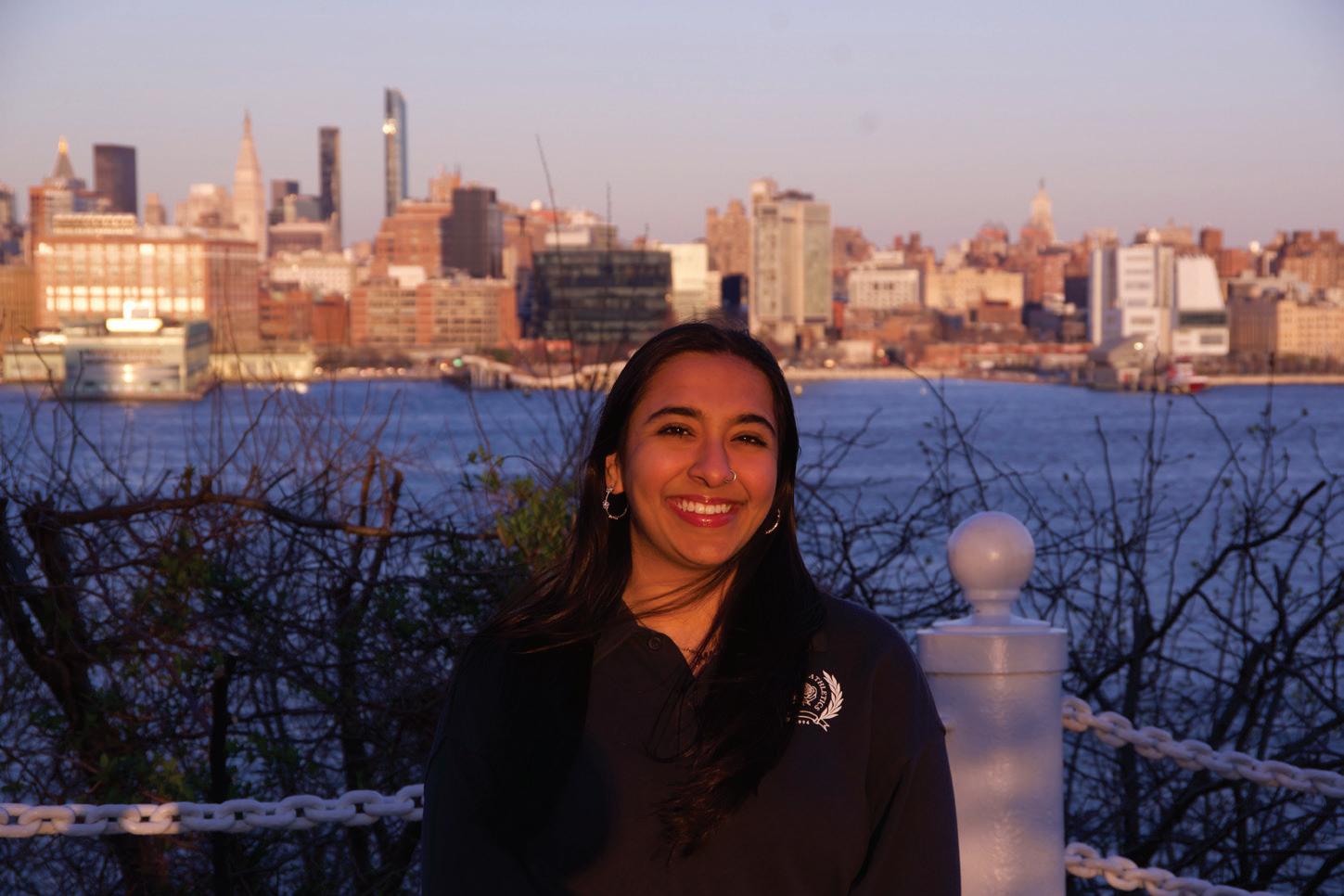
Jiya Jaisinghani ‘27 Editor-in-Chief
Twelve Angry Men
BY MADISON HELLER ‘27
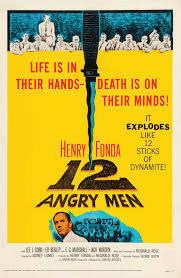
This past weekend, I was home spending time with my family, and for my younger sister this was a godsend. Between the two of us, I have always been the “reader,” meanwhile there is nothing she would like to do less. With assistance from my mother, they spent the better part of an hour begging me to help her with an English assignment. By help, they meant I would read what she was supposed to read and carefully walk her through answering the assignments questions. Thankfully, for this particular reading there is a popular movie to go with it. I am talking, of course, about Twelve Angry Men which for my district is read by hordes of eighth graders every year and talked about extensively in class. After spending my precious free time reading, and then watching, those
ON SHUFFLE
angry men pace and yell in a jury room over the innocence of a man, I became reminded of my first time ever reading the play. Honestly, it is one of my favorites because of how short and sweet it is. I like how the characters are not named by anything but their numbers, I like how it all takes place in one room, and I love that nothing is ensured to be true. Although the jury takes their time trying to initially find the guilt and then the innocence of the defendant, the audience themselves never see this trial or this evidence. We did not hear testimonies or see witnesses. So, it is up to us to also be convinced one way or another.
Now, Twelve Angry Men is so famous so it’s hardly giving away a spoiler, but they eventually decide that the defendant is not guilty of the crime. All of this is because of small details of evidence that add up to a much bigger picture, despite initially having the majority believe in his guilt. Each man has their own reasons to believe one way or another, but the heart of the story is not in the courtroom or directly said, but rather in the implications of why certain jurors lean one way or another. It is a story about a boy who may or may not
have killed his abusive father, and it is a story about a man who lost touch with his son, believing him ungrateful. It is a story about people who are impatient and people who want to argue for what they believe to be right. It’s about old age, grudges, family, attention, love, hatred, loss, pride, vanity, desire. Everything that makes up a full human experience is discussed in that room, and some leave all the better for it.
Twelve Angry Men was one of my family short reads in school, and despite the headache of assisting with homework under duress, it was really pleasant to return too. And honestly, if reading is unappealing but you love a good court drama, the 1957 film is just as good, if not better than reading the play itself.
Favorite songs on shuffle
I feel like it has been so long since I wrote for this column! I am so excited to be back. I thought that I would bring this week’s On Shuffle column a classic tradition. I am here to share some of my favorite songs right now. This is
ing to on repeat for days, weeks, almost months! I am a big fan of the gatekeeper technique, but these songs are just so good that I have decided to share. I hope you enjoy.
The first song is called “Cowboy Belt” by a small artist named Levi Roth. This guy is so cool. He combines a type of twangy guitar patterns with some pop music influence. This is the kind of song you listen to when you are riding the subway around the city with the person you love most. It is about a relationship that is full of questions, yet so much passion and excitement. I really love the lyrics in this song and I think the descriptive
BAFFLING BITS & BOBS
imagery really is something to be idolized. The next song is called “Simulation Swarm” by an alternative band called Big Thief. I need to be serious about this for a second. I honestly have never really listened to the lyrics of this song. It can very well be the saddest song ever, but I truly do not know. I love this song because of the music. The composition of this song is just absolutely insane. I love it so much. The lyrics are usually what makes me fall in love with a song, but this one defies my norms. This tune is full of quirky guitar and unique vocals. I can’t really explain any further, but I totally recommend this.
FOODIE FINDS Free ice cream, yes please!
BY PRISHA VAGVALA
Food is my safe haven. Projects, quizzes, homework, meetings — my life has been stuck in a constant loop lately, and the only things bringing me peace right now are chocolate, ice cream, and solitaire (that one’s not food). And don’t worry, I’m not just here to rant. This is a food article, and it’s my job to offer you some tasty recommendations. So, let’s get into it. By the time this is published, Ben & Jerry’s Free Cone Day will have passed, but I got my hands on their Half Baked ice cream, and brownie and cookie never go wrong. It was incredibly chocolatey and rich, and the bites of cookie dough made it all the more decadent. The versatile flavors, the simplicity, and the comfort ice cream instantly delivers, and just makes ice cream a top-tier dessert. I love it so much that I invested in a Cuisinart ice cream machine to make my
own butter pecan ice cream and dragon fruit sorbets. Every summer, we whip that machine out and experiment with different flavors and recipes, absolutely scrumptious. The butter pecan recipe is especially gooey and warm, slightly sweet and salty, with just the right crunch that makes it taste like the color gold. I toast the pecans in browned butter until that buttery movie-theater-popcorn aroma drifts through the air, then chop them up and toss them in the mix. Ice cream comes in so many different forms like ice cream sandwiches, popsicles, tubs, and even dots. Speaking of Dippin’ Dots, the Unity Carnival hosted by the Stevens Ethnic Student Council (ESC) had a station with cotton candy, popcorn, and Dippin’ Dots that instantly caught my attention. The carnival featured an amazing spread of food from different cultures, including sweet and spicy chicken from the Korean Student Association (KSA), savory skewers from the Chinese Student Association (CSA), and luscious Nutella-covered strawberries from the Italian Student Association. Dippin’ Dots are something I usually only have at places like Six Flags or other amusement parks, so seeing them on campus made
me really happy. I got the banana split flavor, and my friends got cotton candy and brownie blast. We all tried a bit of each other’s. Personally, the cotton candy was my favorite. It was soft, sweet, and had this whimsical taste to it. The banana split was a little too banana-heavy for me, but it was still fun to try. I also appreciated the brownie blast, because it had actual chunks of brownie in it. Then, when I came home from the carnival, my mom told me she filled the entire freezer with tubs of Häagen-Dazs ice cream. We got strawberry cheesecake, cotton candy, raspberry white chocolate truffle, and birthday cake flavored ice creams. The names of these new flavors are enough to make your mouth water. Ice cream flavors can get so creative. I remember wanting to create a line of French pastry-inspired ice creams, like éclair or macaron flavors, but honestly, the work sounded like too much. Still, as finals season slowly approaches, consider this your sign to pocket five dollars and grab a 14-oz pint of Häagen-Dazs. The flavor variety is impressive, and you’re bound to find something you like. It might even increase your dopamine levels. Also, a huge thank you to Ben & Jerry’s for making my whole week.
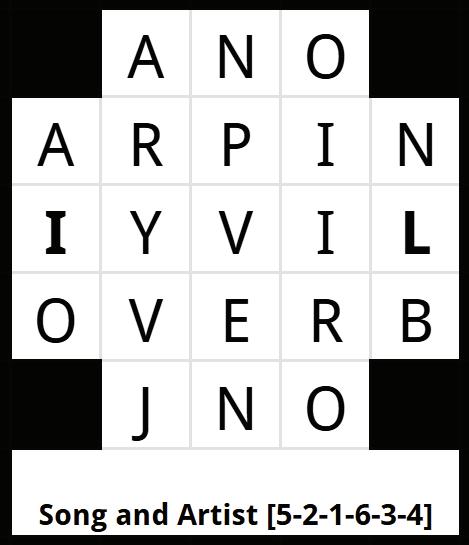
Moving on, we have a classic. Lately all I can play on guitar and listen to in my earbuds has been “Don’t Think Twice, It’s Alright” by Bob Dylan. I recently watched the Dylan biopic, A Complete Unknown , featuring Timothée Chalamet. To be fair, I’ve loved Bob Dylan ever since I was young, as my dad would play his songs around the house growing up. This movie revived my love for this classic folk tune. I really like the sarcasm and wittiness Dylan brought to this and I think this makes it timeless.
Finally, I leave you with only one more song. “Bullseye” by Lucy Dacus and Hozier. Oh my goodness.
The determinant of determination
I think this time around I’d like to start by saying that I am not a very smart man. At the time of writing this, I ran a marathon yesterday, and every step sends a wave of pain somehow all the way up to my shoulders. Running the marathon in itself was not unwise, but the total lack of preparation leading up to it sure was. I bought my running shoes five days before, did not break them in by running, and the last time I ran before the marathon was before Spring Break (one out
of only five runs I went on since signing up). This experience tempted me to write about how joints work or the kinematics of human motion. After some thought, I realized it’s not the motion but the emotion that’s far more important in these situations. What exactly drove me to finish this race, especially when I signed up for it on a whim? Nobody would have faulted me for quitting, I would have been quite happy to stop on that damned hill around mile 22. More broadly, what is it that keeps me going in general? From an evolutionary perspective, the early humans who put off hunting for a day, probably did not make it. The ones who walked that extra mile, even with their feet about to fall off, probably found water, shelter, and food. When you believe you’re close to an end goal, regardless of whether you
actually are, the brain fires off dopamine like nobody’s business. All of that makes enough sense. When one has things to strive toward, ideals to pursue, it almost goes without saying that you cannot stop. Dare I reference the favorite writer of every male pseudointellectual in their twenties?
“He who has a why to live can bear almost any how.”
– Nietzsche
What about when you can’t see the light at the end of the tunnel? What if you cannot even find the tunnel, much less a path? I was having a good old mutual trauma dump with a friend recently when they made a bold statement. They suggested that the only, or at least the most important, philosophical question is whether to take one’s own life. Your “why” could be a person, a thing, an animal, an idea, anything really. I, alongside many others, I am
sure, have had and lost a couple of “why”s throughout my life. There have been times when I have not had a single “why.” How is one to bear, to persevere without a why?
The search for meaning, the “why”s of life, I saw as something external for a long time. Just as important as the “why”s, perhaps moreso, are the “why not”s. Separate from external validation and approval, coming from oneself for oneself, the “why not” is how one can go on without seemingly any reason to. Why not run a marathon? Why not get out of bed today? Why not dare to live another day even when to take each breath is to drown? It is not selfish to insist upon oneself to do those things based on nothing but whimsy. The determination to go on is the determinant of being human just as much as it is to question it.
I have said over and over again how much I love lyrics. This song takes the cake for best lyrics right now. A song about being with somebody you love and having all of the complex emotions and associations. There is so much that goes into a relationship, and Lucy Dacus captures it perfectly. She explains the unexplainable. My all time ultimate most favorite line in this entire song is “I’ll miss borrowing your books to read your notes in the margins/ The closest I came to reading your mind/ The answers to the questions only made more questions/ I hope you’re never satisfied.” Guys, I can probably write novels
about these lyrics. Seriously. I love the idea of asking somebody questions to understand them better and then you just end up more confused and yearning for more answers. These lyrics truly show the human experiences we all go through that are just so raw it cannot be described. I hope one or two (or even three or four) of these songs end up in your playlists! I think they are all dynamic and give four different vibes. If you are in the mood to take a train around the city or sit around with someone you love, I hope these songs soundtrack your moments. For now, I hope you enjoyed some of my favorite songs!
‘28
THOMAS ‘26
BY KEVIN CASTNER
JR. B.E. ‘24 & M.E. ‘25
PHOTO COURTESY OF KEVIN CASTNER JR.
PHOTO COURTESY OF WIKIPEDIA
FOR MATH’S SAKE
Mathematics in a (more) dangerous time
BY CHARLES BEALL B.S. ‘23 & PHD STUDENT
7, 2023, as Israel’s violent military response in Gaza began in earnest, I wrote a For Math’s Sake column describing the difficulties of doing math in dangerous times, and also, the further difficulties math can present in these times. At one point, I said, “There have been massive failures to humanity recently, and as long as the violence continues, the failures will too.”
Tragically, this statement continues to apply today. Brutal violence persists in Gaza, as it does in Ukraine, Sudan, the West Bank, Yemen, and the Democratic Republic of Congo. These places may seem far away, but violent crackdowns or arrests have occurred in these countries too — targeting fellow college students whose views don’t “check out” in the minds of government authorities.
We have seen a different
kind of violence as well, through attacks on many longstanding institutions in the United States, including its oldest university, one of its “mainline” churches, and a global news organization founded across the Hudson River. For many, times feel far more dangerous now than they did at the end of 2023.
How do we carry on? As with last week’s column, I am not pretending that mathematics provides me with some indestructible and fool-proof answers. As I wrote, “Mathematical models always have some errors; elegant proof ideas may not hold in every case; axioms can be relaxed to allow a less rigid structure.” This field alone cannot provide the straight path to a perfect or even relatively safer world.
But, I, and others in STEM, can defend mathematical and scientific results when we believe them to be true, while always reasonably questioning underlying assumptions and biases as we strive to further our knowledge. This is what we can and must do with our political beliefs as well—even if we feel scared, we speak what we feel is true.
Moreover, it is vital to stay connected as we traverse through dangerous times. This is different than being united—it’s increasingly challenging, nor should it be desirable, to obtain uniform solidarity
CO-OP CHRONICLES My 5-9 after my 9-5
Like, actually ends. When I’m done for the day, I’m done. No Canvas notifications, no latenight group chats about who’s doing which slide, no wondering if I missed a surprise homework as -
on the set of issues currently facing us. But community is how people are saved, and how movements against powerful forces pierce through seemingly impenetrable walls.
This is a meager example, but I spent this past weekend singing the Palm Sunday service with my church choir. For those unfamiliar, it is a whirlwind of a service —beginning with celebration after reading the part of the Gospel where Jesus is crowned King of Kings, it abruptly moves on to Jesus’ betrayal, suffering and death, ending with a silent recession.
The point is, it all happened, and will all happen again. The violence will continue, but the forces of good may still triumph. I go through this experience with my church choir, there are many other experiences we can all point to, from our various religious, cultural, and political backgrounds, where the good guys, or the bad guys, win. Even in the latter, the story is not ever over—our friends, families, and mentors are still there for us, as we are for them. And there is power in that, which we must continue to wield.
“Peace I leave with you; my peace I give you. I do not give to you as the world gives. Do not let your hearts be troubled and do not be afraid.” - John 14:27
to be a person again.
And that’s its own kind of juggling act.
I’m learning to balance things I used to squeeze between problem sets and club meetings: cooking actual meals, doing laundry
most, though, is that even when I’m busy, co-op gives me choice. If I want to spend my evening working on a passion project, I can. If I want to watch Gilmore Girls, drink hot chocolate, and chill, I can do that too
your creative energy. And yeah, sometimes it’s hard. You miss out on campus things. You feel out of the loop. But you also gain a new kind of rhythm — one that’s calmer, more structured, and honestly, kind
all: breathe. Learn when to log off. Take that walk. Answer that FaceTime call from your friends. Join the club meeting even if you’re tired and want to go to bed. Because work may end at five, but the rest of
ROVING REPORTER
By Rafael Lee Li
“What was the
book you read?
Jeremiah Chinwendu ‘25 “The Catcher in the Rye by J. D. Salinger.”
Sekai Jones ‘28 “The Dictionary.”
Francesco Pedulla ‘27 “The Bible.”
Akbar Pathan ‘26 “Price and Value by Dr. George Calhoun.”
Elizabeth Knerr ‘27 “The Long Walk by Stephen King.”
Bao-Chau Nguyen ’25 “A Court of Mist and Fury. #dontrecommend”
Abhi Prajapati ‘27
“Dungeon Meshi.”
Gianna Felice ‘26 “Probably my heat and
Men’s March Madness concluded this week with Florida beating Houston 65