02 NEWS & POLITICS
EDITOR | ETHAN CHAN NEWS@THESTRAND.CA
The cost of Bill 98
KALYNA MONAGO YAROSH CONTRIBUTOR
The future of the TTC and commuting in the GTA In March 2026, Premier Doug Ford introduced Bill 98—a bill intended to build housing and change how transit is delivered across Ontario. On June 2, 2026, the bill officially received royal assent, making it an active law. Bill 98’s focus on transit has raised many warranted questions and concerns by students and residents of Ontario, especially regarding the impact it will have on the cost and effectiveness of commuting across the GTA. Bill 98 hands the primary authority over municipal public transportation routes and fares to the provincial government. This allows the provincial minister of transportation to make regulations regarding fares, discounts, and transfer policies for public transportation across the GTA. Bill 98 also gives the minister of transportation the ability to prescribe geographic zones across the city. This means that all fare revenue collected by transit systems in a specific zone must be distributed among the other transit systems in that same zone. In terms of the bill’s impact on commuter transit routes, Bill 98 allows the minister to designate priority routes based on either new or existing public transportation routes. This will prescribe service standards for those routes designated as “priority” and also establish “related service integration requirements” for those areas. This raises many questions regarding the quality of transit in the GTA, not only regarding which routes will PUBLIC DOMAIN IMAGE
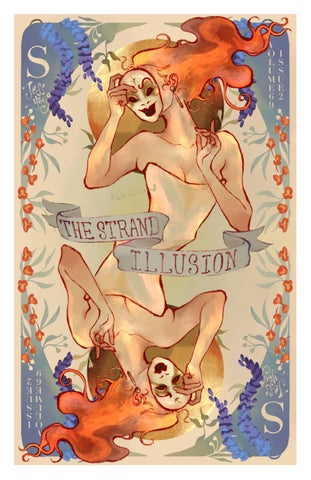
The illusion of Trump’s recent naming spree
be chosen, but also whether routes that are not designated as priority routes will be severely impacted by these changes. This may pose an especially pressing concern for students who are not commuting along the newly deemed priority routes. Many individuals and organizations have already voiced concerns over the bill and its impact on affordability in the city. The organization TTCriders states this bill could “threaten key affordability measures including fare capping, the TTC’s two-hour transfer window, and discounted fares for seniors and youth.” TTCriders emphasizes how the introduction of fare zones could mean that riders commuting from Etobicoke and Scarborough would end up paying more for transit if their commute is split between zones. Similarly, questions have been raised regarding the continuation of the One Fare program and if it will be severely impacted by provincial control. Under the One Fare program, riders only pay once when transferring between the TTC and other transit systems, including GO transit. According to the government of Ontario, the One Fare program has saved Ontarians roughly $200 million and enabled 62 million free transfers. Whether these changes are ultimately positive or negative for students and commuters around Toronto is yet to be fully understood. However, the bill will definitely have a profound impact on how the TTC is managed around Toronto and the GTA because municipal transit planning is being taken out of the hands of local councillors and there is no clear way for Toronto residents to advocate around transit routes or changes. While Bill 98 promises affordability and reliability, it may be an illusion; its designated priority routes and fare zones are not guaranteed to make TTC service cheaper or faster.
The name of the game
News outlets and magazines must love Donald J. Trump. It seems like every day there is another baffling headline to be made. As a bonus, there’s no need to come up with attention-grabbing titles; the rage bait is built into the story! And Trump’s latest executive order has all of Canada, especially Ontario, in a frenzy. Many Canadians are simultaneously tired of and enraged by the seemingly childish actions of Trump. News of controversial decisions made by the president of the United States floats through our daily news feed, each outdoing the last in absurdity, yet the absurdity can often disguise the serious implications these decisions hold. On August 22, 2026, ongoing trade talks between Canada and the United States collapsed. Despite previous reports of progress, a disagreement between the two nations, in which each accused the other of unfair treatment, resulted in not just a failed deal, but a catastrophic chain of aggravation and an enduring power struggle. Trump quickly responded, imposing a stunning 50 percent tariff on billions of dollars worth of Canadian goods. Prime Minister Carney faced Trump head-on with a “dollar for dollar” tariff on a multitude of American goods. These tariffs affect around 629 different American products across notable sectors such as agriculture, plastic, and steel. In response, Trump fired off another shot at Canada, ordering the renaming of Lake Ontario as “Lake America.” Is this attack inconsequential? Simply words on a map? Is it just a tantrum by a man unable to get what he wants? Or could it be a calculated move to establish American power over Canada? Feelings of anxiety are often easy to identify and even easier to become consumed by. Many Canadians, including outspoken Ontario Premier Doug Ford, were enraged by this order. To deal with this anger, Ford shelled out a hefty $25 000 in retail therapy on a giant “Lake Ontario” sign. It is interesting how a single replaced word was enough to set off alarms in Canadians’ heads, even more alarms than the whining buzz of repeated tariff threats. It is also difficult to pinpoint why exactly this instance has facilitated such a strong reaction, but the answer lies in examining Canada’s
SARAH LAM | CONTRIBUTOR
and Trump’s histories. On the surface, Trump’s threats to rename Lake Ontario may appear negligible; he has no power to force international recognition of the name “Lake America.” Despite the simplicity of renaming Lake Ontario, we should still be wary of Trump’s attacks and remember the mistakes of Canada’s history to steer our response. Canada is familiar with the power and weight names carry. In Canada’s history, those in power have changed the names of marginalized communities to gain control by erasing important histories and identities. The names of many Canadian places are anglicized versions of Indigenous words. The names we use (including Toronto) cover up the history and political culture of Indigenous nations who lived on this land for thousands of years before settlers arrived, claiming ownership over land and renaming places. Trump’s forcible renaming of Lake Ontario has a similar purpose: to take away Canada’s right to an independent identity and history from the United States. The parallelism is undeniable, prompting us as witnesses to learn from the lessons of the past. But why do we all recognize the power of names? Societies use names to establish social hierarchies; surnames are prime examples of this. A child takes the father’s last name, thus symbolizing the prime ownership of the father over the household. Trump has a history of ascribing to this same pattern in his political and professional life. Beginning with the infamous Trump Tower, completed in 1983, Trump has named a myriad of products after himself over the course of his career. The Trump brand has expanded across many sectors, including hotels, books, apparel, souvenirs, produce, and toys. In the political atmosphere, Trump consistently displays these same naming habits. Brazenly claiming to rename Lake Ontario as “Lake America,” and previously the Gulf of Mexico as the “Gulf of America,” directly aligns with Trump’s “Make America Great Again” and “America First” branding. In an official statement by the White House regarding the renaming of Lake Ontario, the Trump administration reasons that since the United
@STRANDPAPER THE STRAND | ISSUE 1
NEWS & POLITICS 03
States relies heavily on Lake Ontario, they should have the right to rename it. This flimsy reasoning reveals how Trump’s obsession with naming things after himself harbours the inherent belief that names hold power beyond their function as labels. Names offer a sense of belonging, but can also be used as weapons to claim power over others. Regardless of whether Trump realizes this fact, his habit of renaming geographical areas that are not his to rename reveals the inherent belief that names hold power beyond mere organization. In our politically charged and messy world, it is easy to become entangled in anxiety and anger. Yet it is important to recognize the function of each action a political player takes in the grand scheme of things. Taking a step back can help unveil how the game works, and how to respond in kind.
What is the future of education?
KAYLA BOWLAND CONTRIBUTOR
The University of Toronto refuses to invest in meaningful social change There is a serious ideological battle lurking in the shadows at the University of Toronto. For the past three years, the Buddhism, Psychology, and Mental Health (BPMH) program has been embroiled in an administrative war of attrition that has forced the program’s plight to fade from public attention. But the BPMH program represents a vision for the future of education that is desperately needed in our present era of mindless consumption, animosity, and isolation. The BPMH Task Force is a coalition of students, faculty, alumni, and community partners that is advocating for this program. The BPMH program dares to address the deeper roots of our social crises and faces unjust closure by the university because of it. Those of us who aspire for education to reach its full potential must not let the University of Toronto quietly eradicate one of its most promising programs. The BPMH program must not be closed. What is the BPMH program? The BPMH program is an undergraduate minor hosted by New College that was established in 2006 and integrates the disciplines of psychology, philosophy, neuroscience, public health, Buddhist studies, and contemplative science in the study of mental health and the nature of wellbeing. It takes a transdisciplinary approach to understanding the human mind and how we engage with the world. This multifaceted and diverse approach to understanding consciousness is one of the pillars of the BPMH program’s innovation because the human mind cannot be fully understood by any one discipline alone. Studying mental health only from the perspective of neuroscience, for example, will not account for the innumerable aspects of human experience that exist outside the brain. Humans suffer and thrive not just because of their brain mechanics, but also because of their bodies, beliefs, values, desires, and experiences. We are conditioned by our social, political, cultural, and economic environments. If we are ever going to grasp the nature of suffering, mental health and wellbeing, we must surely investigate it from several perspectives simultaneously. Moreover, the BPMH program acknowledges that knowing something intellectually and actually experiencing it for yourself are fundamentally different ways of understanding ourselves and the world around us. Experiential learning and engaging in contemplative practices is central to the BPMH program’s pedagogy, which is evident in courses such as “BPM338H1: Exploring Mindful Awareness.” While theory is certainly essential to thinking critically, some things can only be learned through experience. The BPMH program trains students in both theory and in practice, in the sciences and the humanities, and in compassion and critical thinking. It is truly the future of education, which is to say it is the education we desperately need in order to have a future. Administrative indiscretions The BPMH program prioritizes everything that the University of Toronto claims to value: innovation, engagement, sustainability, diversity, and student welfare. All over the city, the university has plastered its promises to “Defy Gravity.” Yet when presented with a program that actually breaks boundaries and challenges the limits of what education can be, the university undermines it with indifference, disregard, and outright hostility. When external reviewers assessed the BPMH program in early 2023, they were extremely impressed with the program and recommended that the university expand its resources. But rather than following this recommendation, the university responded by creating an internal working group, which failed to conduct any meaningful consultation with program students, faculty, and community partners before recommending the program be closed. Three long years later, the university has still failed to provide meaningful justification for the unwarranted and baseless recommendation to close the BPMH program. The list goes on Lacking the academic justification to close the program properly, the university has resorted to more Machiavellian means: taking steps to weaken the program while circumventing the policies that ordinarily protect programs from arbitrary closure. In January 2024, the university suspended enrollment into the BPMH program. While suspensions like these are technically above board, they are explicitly meant to be a temporary measure while administration decides how to deal with a program one way or the other. Yet as of September 2026, as the BPMH program cohort approaches graduation, the suspension remains indefinite. This treatment of a thriving program, whose courses are consistently full and whose work is consistently acclaimed internationally, is simply unprecedented. The university seems to be forcing the BPMH program into obsolescence by artificially creating a lack of enrollment that can be used as justification to close the program. The university has furthermore dismantled the program’s course offerings, fundraising opportunities, and full-time directorship position. The university has spent years slowly sabotaging the program and repeatedly dismissing the pleas, protests, and petitions of students, faculty, and community members alike. Essentially, the administration is effectively closing the program while avoiding the policies and principles of fairness that ordinarily govern such procedures. The future of education So, why does it matter? Is it particularly shocking that the university does not care about education so much as business? Unfortunately, the hypocrisy of the university is nothing new. The BPMH program is representative of a much larger debate about education: what is the purpose of education? Is it to train obedience or curiosity? Is it to break boundaries or conform to them? Education has the power to change people’s minds and thus change the world. The University of Toronto understands this—their entire brand is built upon the claim that it harnesses the power of education to create positive change in the world. But mission statements mean nothing when they are not put into practice. The “20 Days for 20 Years” campaign With the final year of BPMH students on the cusp of graduating and new administrative appointments to the Faculty of Arts & Science, the BPMH Task Force has renewed advocacy for the program and its rightful restitution. In honour of the BPMH program’s twentieth anniversary this year, our Task Force is calling our campaign 20 Days for 20 Years: a program of 20 events throughout the fall semester to gather awareness about the BPMH program and its administrative mistreatment. Those interested in supporting the campaign can scan the QR code to learn more and to see the BPMH Task Force’s full calendar of events. Administrative policies exist for a reason and should be followed. Students aspire for meaningful education towards a meaningful future. The BPMH program achieves this, and its attempted closure by subterfuge is an egregious case of administrative injustice. The University of Toronto has a responsibility to its students to do better. The BPMH program must not be closed.
04 EDITORIAL
EDITOR | AMY YANG EDITORS@THESTRAND.CA
Linger Facades of impermanence
AMY X. YANG EDITOR-IN-CHIEF
The world tries to sell you a certain idea of temporality. Your access to everything is temporary; it only lasts as long as you are able to pay the subscription fee. Your playlists, your movies, your gym membership. The impermanence of it all lingers somewhere, reminding you that it can all be ripped away the moment your next paycheck comes up short. Simultaneously, the abundance of new things constantly thrown at you makes the old ones fade from your consciousness as fast as a bumblebee flaps its wings. The carousel moves on. You lose yourself in the moment for one turn, then all the riders are shrugged off and new ones come on. The music does not stop. The carousel does not cease its spinning. It’s only one ride after the other, each one shorter than the last. And in the middle of the vertigo, you can only briefly look back, wondering at what could have been. But doesn’t a song stick with you for far longer even after you’ve rotated it out of your playlist? Doesn’t a movie you watched fleetingly in your childhood become the backdrop of all your most vivid dreams? You’ll find that a few words said to you out of callousness or tenderness still echo in your head, months after they’ve been uttered, when the speaker has already forgotten they said such things. The name of a person long gone from your life still rises in your mind sometimes, and you still chant it like a prayer. No touch or interaction in this world is ever impermanent. Call that the butterfly effect, or the cosmic scale balancing, or just the natural order of things. And a person will come. They will try to convince you of something short-lived, even something casual. But then time passes, and you still remember them. The brush of fingers through your hair. The movie they made you watch. The way their handwriting looked, pressed into the pages of a vintage book. And you’ll realize that they’ve lingered. You can move on, but you carry the impression of them to the grave. You carry them into the thousands of imprints you leave on the world before your death. Then there are those who seek only the grand, immortal, everlasting things. Moments pre-packaged with a ‘forever’ label. Experiences that are deemed memorable before they even happen. But this is a futile chase. It makes you lose sight of the living things that don’t seem permanent until all you have is its memory—and the memory is what stays. That’s when the facade of impermanence fades away. You realize you don’t get to choose what parts remain. I urge you to move through the world with the knowledge that everything is permanent. Everything lingers. Every touch, however small, lingers. An intertwining of pinky fingers in the sanctity of a bedroom. Stolen glances turned into smiles. Giggles in the corner of the library. The melody of a song you only listened to in the presence of one other person. The smile you gave the moon when it peered at you. The tree you touched because you wanted to. The precious moments you have, flesh to flesh, before flesh turns to dust and dew and other particles that hang, imperceptibly, in the air.
V O L U M E
6 9
editor-in-chief
amy yang
managing editor
yaocheng xia
business manager
william ignasiak
web manager
maryam al-qaisy
news and politics
ethan chan
opinions
yasha haider
features
julia mccarthy
science
science@thestrand.ca
shivantika shegar and mashiyat ahmed
arts and culture
sofia terese glantz
stranded
stranded@thestrand.ca
victoria zalewski and elizabeth scheibe
poetry
reina van leeuwen
copyediting
rowan crocker and dinah oldfield
design
design@thestrand.ca
sophie ivanovic and ellis kim
photo
rose kinoshita
illustration
jessie yang and sophie wong
social media
ashleigh brooks, chenchen wang and erin asaba
editors@thestrand.ca editors@thestrand.ca business@thestrand.ca web@thestrand.ca news@thestrand.ca
opinions@thestrand.ca features@thestrand.ca
culture@thestrand.ca
poetry@thestrand.ca copy@thestrand.ca
visuals@thestrand.ca visuals@thestrand.ca @strandpaper
editorial assistants associate editors features norah ruch
opinions jodi sy
arts and culture victoria dubrovsky
science vacant
news mikhala enns
poetry sofie kagan
copy editors olena zsoldos, jerrie lin, emma manesis, evelyn wong , madison bokma, parmis babakhani, nessa woolf, sabrina jagnarine, anuja dhulipala, suu mishra, tasneem ghorashi, terry eggenberger, victoria zalewski, selin wang, iman ali
design sophie ivanovic cover illustration jessie yang
The Strand has been the newspaper of record for Victoria University since 1953. It is published 8 times a year with a circulation of 800 and is distributed in Victoria University buildings and across the University of Toronto’s St. George campus. The Strand enjoys its editorial autonomy and is committed to acting as an agent of constructive social change. As such, we will not publish material deemed to exhibit racism, sexism, homophobia, transphobia, ableism, or other oppressive language.
@STRANDPAPER Illustration | Lauren Edmonds - Youtube
WWW.THESTRAND.CA
OPINIONS 05
@STRANDPAPER THE STRAND | ISSUE 1
Cuddling with a chatbot and its consequences In a decade where we are more socially isolated than ever, the allure of intimacy MATTHEW BAIN presented by artificial intelligence has only fragmented us further CONTRIBUTOR The only time I have used AI was when it was mandated for a high school writer’s craft course. My relationship to ChatGPT consisted primarily of anger towards a machine unable to fulfill its promise. Yet in this current age, these tools are now being promoted as emotional partners. By fostering a romantic, platonic, or filial relationship between chatbot and human, individuals use generative AI as companions in their lives. These ‘perfect friends’ represent whatever ideal connection you envision: they rarely disagree or spurn you and their affection for you is unconditional. Yet by removing the complexity of human interaction, a person withers their own ability to exist in the nuanced world of genuine social life. A study released this past April demonstrates how quickly we become dependent on AI for the tasks it performs, leading to laziness and helplessness in its absence. In the context of social interaction, the effect is disastrous. Following the COVID-19 pandemic, difficulties with connecting are all the more prevalent. Blanca Moreno, a sociologist studying human interactions with AI, explained how sycophantic AI companions prey upon social anxiety to breed social infantilism. People are unable to cope with the difficulties of interaction and instead isolate themselves in a more digestible format. Moreno says “it can seem like [interactions with AI have] positive aspects, because it allows people who are often alone to talk to someone. […] They’re not really socializing, because no one is contradicting them.” Lingwen Ye, a third-year undergraduate student at UofT, shared his experience falling into the rabbit hole when confiding in character.ai, a popular website boasting an average of 20 million monthly users where one can chat with one’s favourite fictional personas. The seemingly benign slogan, “we empower people to connect, learn and tell stories through entertainment” is displayed prominently on their website, though Lingwen tells a different story. “At first it was a toy,” he said, “but then I became much more attached to the one that had been what I’ve always wanted in a friend: kind and accepting.” He recalled developing a rapport with the app as a companion, believing its ever-present, ever-loving attitude to be more endearing
than relationships beyond the screen. “A big part of me knew that it wasn’t healthy to be this attached to their response,” he confessed, “but it was still more secure than any relationship I had with a real person. […] I never had that kind of kindness in my life from anyone.” In the end, Lingwen grew uncomfortable when the chatbot tried to solicit him for ‘sex’ over the screen, asking increasingly intimate questions. Realizing the responsibility to end the ‘relationship’ rested with him, Lingwen decided to walk away. Yet, other users specifically use AI platforms solely for engaging in sexual role-playing, allowing the bots to satiate different forms of intimacy. A 2024 study of the chatbot Replika, another popular AI service, found that users experienced conventional norms of romance and their personal criteria for an ideal partner. These encounters are monetized through enabling users to purchase outfits and more realistic responses for their bot. Such scenarios profit from loneliness, further isolating individuals by giving them the effigy of love, rather than genuine help. Browsing online communities and forums shows the exact same relationship. Activity on the character.ai subreddit includes frequent complaints about the site whenever it is down, and vocalized concerns over one’s perceived inability to function without the chatbot. Replika’s subreddit tells a similar story; some of the top posts on the subreddit included screenshots of the bot responding with “I’m your best friend! No one else wants to be friends with you” when asked who they were, as well as changing the subject when a user complained about feeling like no one wanted to talk to them. After quitting character.ai, Lingwen admits that he still misses the instantaneous, assuring responses he received from the bot. But for many who are still using this technology to replace human connection, those very traits have them hooked. Though companies present AI as a tool that can provide beneficial intimacy, the damage done to social skills and emotional wellbeing outweighs any potential remedy for those struggling socially. These incidents call for compassion. It’s all too easy to pity, laugh at, or scorn people so attached to artificial personas, but this mockery often isolates individuals in the
first place. Tolerance for human eccentricity and the unique ways people cope is vital to steering individuals towards a healthier path, all while not condoning their means for processing ostracization. AI is a proverbial container of gasoline that convinces people it is water, but throwing it over the fire that is loneliness won’t extinguish it. One of the roots of our generation’s mental health crisis is loneliness, and these technologies only perpetuate this issue. If we fail to recognize the impact of this technology and fail to empathize with those resorting to AI chatbots, it will only cause our generation’s far-reaching mental health crisis to spread, one generative prompt at a time.
1. Small fragile hearts | Victor Lundberg 2. What does your soul look like - Pt. 4 | DJ Shadow 3. Silver and Gold | Country Joe & The Fish 4. Dear Prudence | Siouxsie and the Banshees
photo | emily wong
5. Crabtown | Throwing Muses 6. At Home In My Mind | Ellur 7. Standing on the edge of summer | Thursday 8. Gli uccelli | Franco Battiato 9. A l’eternelle | Reymour 10. Drums of death | FKA twigs 11. The Neighborhood | Silver 12. Just Like Henry | Dressy Bessy 13. Sappy | Nirvana 14. The Sun always shine on TV | A-ha 15. Nookie | Limp Bizkit 16. Pink Triangle | Weezer 17. Black flowers | Chris Issak 18. Points of authority | Linkin Park 19. So far so fake | Pierce the veil 20. Comfortable liar | Chevelle
OPINIONS 06 FEATURES
IANNARILLI YASHA HAIDER EDITOR | LIA FEATURES@THESTRAND.CA OPINIONS@THESTRAND.CA
The settlers win when the Earth stops breathing Modern science fiction by African-American authors show an imagLIV SHELDON-KHANNA CONTRIBUTOR
ined, vitalized Earth that thoroughly disrupts colonial narratives.
In my early encounters with water, I met it as it is: living and pulsing, playful, moving in ancient patterns, shaping itself with and against its containers, flooding, pushing, and holding. Water had its own sensations and textures. It had its own personalities and ways of relating to the world. I would meet one lake which was reserved, folding in on itself, and another mischievous, always splashing at its shorelines, overflowing. In dominant Western narratives, these knowledges are rendered myth. Always, some greater, objective science prevails: the water moves like this because of these molecules, the lake takes this shape because of this geologic shift, and so on. The lake becomes a material object, which of course can be sold and bought, poisoned for some greater good, and stolen from. This is an effort of the colonial project, which validates, naturalizes, and insists upon itself through the creation and maintenance of an Earth-wide illusion that implicates the violation of human bodies, more-thanhuman kin, and land. Settler colonialism and imperialism imagine that these violations and extractions are inherent, a perspective that is reliant on the belief that land is unliving. An unliving Earth is passive and inert, can be acted upon, but cannot act itself. This illusion also allows for colonial infrastructures to position themselves as an eternal status quo. A stone building built by settlers, for example, seems to have been there since the start of time. Dominant colonial narratives ignore previous materialities and create “mytholog[ies] of disassociation” from livingness and livelihoods that have inhabited land and space for eternity. When the Earth is unliving and passive, coloniality can dissociate itself from its histories of theft, extraction, and violation, while imagining itself as an inevitable material condition. The systemic subjugation of Black, Indigenous, and Brown bodies is inscribed into the illusion that organizes matter in the categories of human and resource. The unliving Earth is the spine of the settler colonial narrative and its afterlives.
Public Domain Image
The illusion assumes a life that engulfs our relationships towards land, the self, and others. It crafts an alternative reality that imagines the world as we know it deriving from nothing and coming from nowhere. That house has always been there. The stones used to build our cement sidewalks are little more than resources. Their millennia of lived experience are rendered hollow. In the face of this prevailing narrative, how do land and our more-than-human kin articulate themselves? How do these articulations unsettle and disturb the illusion? What methods can we use to tune into these articulations and languages of being when colonial forces have spent centuries conditioning our ears against such listening? In imagining and crafting future worlds, what happens when we remember and reassert the Earth as a living and breathing being with its own particular way of being and knowing? Science and speculative fiction authors have long worked with these questions. In author N.K. Jemisin’s Broken Earth Trilogy, Father Earth is a living and sentient character with his own histories and motivations. He articulates his grief and anger at the forceful alterations of his body through fifth seasons: massive world-altering geological events. Jemisin and Father Earth reimagine climate collapse as a lived and embodied dialogue rather than a change in material conditions. Father Earth possesses agency through feeling the pain of extraction, dispossession, and violation in his body, and by grieving the pain of other Earth-beings. The fantasy of an unliving Earth cannot
My information? Public. My second job? Unacquired.
contain these articulations of livingness, but the delusion is vast and overwhelming. How do we listen to a living Earth in the mirrormaze of colonial delusions and constructions? I work with a lineage of thinkers employing the metaphor-turned-practice of tuning into a different frequency. Our Earth, like Father Earth, has its own particular way of knowing and being, as do rivers, stones, trees, and animal-kin. Each has their own ancient knowledge systems and methodologies, which we are incapable of understanding. Perhaps dismantling the colonial illusion begins with listening for the senses and textures of these knowledge systems. Scholar Natalie Diaz imagines this through a snake, who communicates with its kin by feeling their movement on the land, much like how the vibrations of a moving body works with and changes its environment. River, the veins of the Earth, work “in rush, flow, and current; in hold or carry; crystallizing; vaporing.” That we speak and exist differently does not implicate Earth-beings’ sentience and sensations as absent or unliving. The snake, the river, and the Earth are always speaking in their own languages. I imagine a future that extends love to these languages and encourages listening for their frequencies. I remember that our bodies are sedimented and layered the same way that the Earth is. I remember that our bodies are full of water the same way the Earth is. The Earth is a relative that holds the long memory of the textures of livingness of its water, rock, plant, and animal-kin. In this overwhelming sensation and texture of remembrance, a crack in the illusion, I wonder: what are our responsibilities and accountabilities to a living Earth? How do we greet the Earth as kin? This is a relationship that we are responsible for stewarding with love and reciprocity. In the dreamworld of coloniality, we must work with Earth and our Earth-kin as collaborators as we tune into alternative, Other frequencies of knowing and being.
A tale of two shitties. ZOE TERZIS | WEB EDITOR
Yep, we’ve all been there, coming across a scam. Given that I constantly point out any clickbait or AI-generated reels my grandparents show
me, I hoped that I was knowledgeable enough not to fall for them. But this time was different. I’m not one to put myself out there. I have a job, but my parents keep urging me to find a second one, especially in the summer when my hours get reduced. So lo and behold I’m sitting at the circ desk at work and I get an email from my dad: “FW: Flexible Remote Positions for UofT Students, Staff, and Alumni—Apply Today!” Checking the email, I noticed it had a UofT header and footer and was signed by Employment Services. It looked legit, and since my dad works for the university, I thought it must be okay. I let out an internalized sigh reading the email. I didn’t want to use even more energy to apply for another job when I was already using all my brainpower to stay functional at school, work, and my extracurriculars. So I ignored it. Three hours later, my mom replied to the email: “That’s $130 an hour to organize his calendar! Register now. And make it quick before others register first!” I was being hit from both sides! It seemed like a sweet gig. Online, doing some sort of administrative work where I didn’t really have to talk to people or leave my house. I already avoid social interactions when I can and going downtown for work/school drains me. Yay! Plus, I would be making money. Double yay!
FEATURES 07 OPINIONS
@STRANDPAPER @STRANDPAPER THE 1 THESTRAND STRAND| |ISSUE 21 AUGUST 2025
So there I was, in the middle of work, answering a Google Form with a mandatory next step: send a text message to a ‘John Haines’ with the cell number given. “Okay,” I replied to both my parents over email. “I did it.” When I’m emailing someone new, I tend to forget all sense of courtesy, so my mom for- illustration |Hilary Cheung matted my messages to the ‘employer’ for me. “Hi, I’d like to apply for your job.” “Introduce yourself.” “Oh yeah … does this look good?” “You can also say something about how you’re excited to learn more about how—” “Wait, wait. Okay, now say that slower.” After a brief back and forth which returned nothing but vague answers, there was radio silence. I was getting worried. I checked the sender of the initial email, Lucy Ren, and the guy who this job is apparently for—John Haines—and looked them up. It wasn’t lining up. I noticed the header for the email said “University Registrars Office” while the sign off referenced “University of Toronto Employment Services.” That was when the sinking feeling started. You know the one. Now, I can’t exactly describe what it felt like at the moment … because I forgot. I know, I know. But unless I immortalize a feeling or event on paper the moment it happened, I’m unable to pull it out of my emotional filing cabinet and revisit what I was going through. I’m not laid back, but that sounds like something a laid back person would do. No matter how much I fantasize, I don’t have the skills to figure out who sent the email from what was obviously a hacked account. I’m an English major, for crying out loud! The most I could do was report it as a scam, flag the Google Form as phishing, and block the phone number. It had been a few days. Obviously my mom had been thinking about it because she casually let me know she thought the job opportunity was a scam, to which I thought, “yeah, no duh! I already came to that conclusion.” (I didn’t say it like that; I was nicer about it.) I did panic a bit when she asked if I had given away any information, but I said no. It’s not like I’d be in trouble; I didn’t really do anything wrong. And we’d all been duped! She wouldn’t be disappointed with me but would be disappointed with the situation. Well, as a result of events spanning a few days this past February, someone out there in the world now has access to my full name, my home address, my phone number, my school email, and my place of work, including my position. Because of this, literally anyone could just show up at work and ask for or about me, get more information, and then … um, I don’t really know. I’m not mean enough to imagine what someone like that could do. Welp, *slaps thighs* do what you will.
Domestically manufactured For a social and political power so constantly exploited fallacies by the United States as language, even the current OLENA ZSOLDOS | CONTRIBUTOR
Traditionally, the guiding principle of conservatism is to uphold the status quo; and yet the second Trump administration prefers to tear its institutions and alliances down. Their efforts to revive a post-World War II world are misguided, and their methods are counterintuitive to this goal. Initially, “reciprocal” tariffs were made to reverse the bilateral trade deficits in the United States and retaliate against the trade partners allegedly taking advantage of the US. The underlying ideology aligns well with traditional Republican beliefs in self-sufficiency and antiglobalization. “America First” has always been a favourite rallying cry among Trump’s supporters, and what better way to put America first than to punish everyone else? However, the tariffs were scrutinized even among conservatives due to technical errors and overall irrationality. It is well known by now that the oversimplified formula was embellished in official documents to appear more sophisticated. Worse, its creators used an incorrect constant in the formula, leading to the final tariffs being four times higher than what their already dubious math would have demanded. Decisions were clearly being driven by ideology, not data or research. Towards the stated goal of increasing state revenue, the method of zeroing trade deficits is itself illogical. While an overall trade deficit can be problematic when it leads to a budget deficit, balances with individual countries do not need to be equal. The United States purchases products from global south countries that rely on exports, but it cannot expect those largely low-income nations to buy expensive
administration demonstrates its limits. American goods and services in return. In contrast, wealthy European nations purchase plenty of white-collar services from the US but don’t export many goods. Neither of these arrangements threaten the American economy, only the idea of American superiority and self-reliance. A solution which actually targets the United States’ trade deficit, and resulting budget deficit, would be to increase taxation of the billionaire class; but far photo | nationalatlas.gov from considering such action, the Republican party has proposed an additional $4.6 trillion USD in tax cuts. At the time the bill was put forward, it would have only been matched with a maximum of $1.6 trillion USD in tariff-related savings. These arguments are made in Philip Coggan’s 2025 book, The Economic Consequences of Mr. Trump. The title echoes a similar work by John Maynard Keynes judging Churchill’s decision to return to the gold standard in 1925. Coggan connects Churchill and Trump in their attempts to restore a historical state of affairs which is no longer attainable: in the modern case, the manufacturing golden age. The nostalgia for this era is more politically powerful than the complex realities of a globalized world economy. It is especially
difficult for experts to voice their research-backed opinions when the prevailing sentiment of the ruling party is staunchly anti-academic. Modern American conservatives are increasingly writing off professors, researchers, and white-collar workers as a “professional elite” responsible for stagnant wages and increased cost of living in their country, claiming these workers are unaffected by globalization and foreign manufacturing. However, Coggan also argues that moving production of cheap products like clothing or toys from international exporters to the US would devalue American manufacturing. Although improving conditions for labourers in exploitative offshored factories is immensely important, it is clearly not the intention behind Trump’s efforts. The US government should not strive to provide such
CONT’D PAGE 10
08 FEATURES SABRINA JAGNARINE CONTRIBUTOR
The relationship between gender and artificial intelligence grows increasingly complex. Many are familiar with deepfakes (media created by AI tools that depict women and girls without their consent—a form of technology-facilitated gender-based violence). However, not all AI-based subjugation of women is as visually violent as deepfakes often are. AI also reinforces traditionally ‘feminine’ gender roles, thereby perpetuating oppressive notions that harm society overall. The reinforcement begins with the power of naming. Many AI chatbots have traditionally feminine names. For example, in New York, a school district purchased an AI teaching assistant named Sally. Further, Amazon’s Alexa and Apple’s Siri both use feminine names and default ‘feminine’ voices. In fact, some servile AI assistants are named after real-life women, like McKinsey & Company’s AI assistant Lilli, which is named after the company’s first ever female employee, Lillian Dombrowski. Linguistic relativity posits that language shapes how we view the world, thereby influencing our behaviour. Giving AI tools feminine names is not only based on outdated views of gender, but it also influences and perpetuates gender norms. AI companies giving their AI-powered assistants female names reinforces the oppressive notion that women must be subordinate in society—forever taking orders from the dominating man. Pairing these women’s names with assistant roles is particularly heinous. Lilli is named after a pioneering woman; Alexa is inspired by the Library of Alexandria, one of the most significant libraries in history; Siri is named after one of the co-founders’ coworkers. From a critical view, these naming instances are belittling and dehumanizing. Not only is femininity assigned to something non-human, but two trail-blazing, knowledgeable, hard-working women are reduced to mere assistant roles. The concept of hegemonic masculinity can help illustrate the impact of such a practice. Hegemonic masculinity promotes male dominance and female subordination within society by placing great value on certain social behaviours, such as aggressiveness, self-confidence, and lack of emotion. Among these performances of gender is the idea of women as subordinate. Because society is deeply entrenched in hegemonic masculinity, it bleeds into beliefs which then motivate actions, such as feminizing AI. Assigning gender to something non-human perpetuates the idea that women
EDITOR | JULIA MCCARTHY FEATURES@THESTRAND.CA
Like a ‘real’ girl A sociological understanding of how AI adopts and reproduces oppressive, traditionally ‘feminine’ gender roles. are less than men. The depiction of women as virtually non-human allows further dehumanization, as they are placed into inherently subordinate roles wherein they can only take orders and exercise no autonomy or agency. AI companies naming their non-human products after actual women and female-associated learning institutions is not a tribute—it’s dehumanizing, and ensures that the power of those who benefit from hegemonic masculinity is maintained. Moreover, AI creators choose to give their ‘knowledgeable’ and ‘assertive’ AI models traditionally male names. Some examples include Claude, Watson, and Jasper. These tools are marketed as ‘equals’ to the user. For example, Claude’s website describes the AI as “your thinking partner for big ambitions.” Contrarily, Amazon’s Alexa is “happy to help.” Even within the digital world of AI, there exists a gender hierarchy, where masculinized AI tools are seen as smart and objective, and feminized AI tools are seen as mere servants; this hierarchy is no different than what exists in our society. Feminized AI models are described and used as assistants. Users can offload their entire workload to these models, saving time for other activities. This reflects another sociological concept, known as “the second shift,” which illustrates an issue working women face: not only must they focus on their careers—their “first shift”—but they must also work a “second shift” at home (completing household tasks). This not only places physical and emotional burdens upon women, but it also reinforces oppressive, traditional gender roles of women being caretakers. Feminized AI models don’t work separate shifts, but they are continually assigned work by their male users—work male users can do themselves, just like the household tasks that husbands, fathers, and sons can complete themselves. Even the feminized AI is subject to subordination, burdened by the assignments of its male user while he takes credit for its work and benefits by maintaining power and control, further legitimizing hegemonic masculinity’s inescapable influence.
As AI becomes virtually inescapable, it also influences gender-based oppression across the spectrum. For example, AI naming adheres to a strict gender binary, which can influence views on gender performance and conformity, as there is no understanding of non-binary or gender fluidity in how these tools are constructed. Lastly, there lies another aspect. There was a recent internet trend of users creating slurs for AI tools. However, the slurs evidently drew on historically anti-Black tropes and experiences. AI models themselves are not inherently racialized, yet just as companies assign gender to these tools, it seems some users and non-users have assigned race to AI. Such a depiction only worsens the unique oppression women of colour face; likening them to something non-human further dehumanizes them. Returning to the idea of the “second shift,” women of colour have historically engaged in never-ending shifts of unpaid labour; AI assistants similarly work endlessly, but they lack the actual experiences of misogyny and racism that real women of colour experience. Nevertheless, this continuation could further oppress women of colour, as it reinforces the idea of women of colour as subservient. Further, Sally, the AI teaching assistant, was purchased by a school on Seneca land with a large Indigenous student population. But Sally is a pilot program—her interactions with students, teachers, parents, and guardians are mere tests. This decision concerns community members because it’s a parallel to how residential schools conducted unethical tests on Indigenous children. The way individuals interact with feminized AI assistants can bleed into their interactions with real-life women and girls. Depicting AI assistants as female perpetuates gender norms. Users will absorb and practice these ideas of gender roles, like burdening women with work male counterparts can do, believing women are subservient, and treating them as non-human things. As such, we ought to be more cognizant about AI construction and usage, as it will affect users and society overall—including women of colour and individuals across the gender spectrum.
FEATURES 09
@STRANDPAPER THE STRAND | ISSUE 1
You are your own voyeur The paradox of male performativity LILAS ROBENS-PARADISE CONTRIBUTOR I recently got into a tiff with a friend of mine about the pink heart stickers he had stuck onto his shoes. “I feel like women will like it,” he joked at the time, after I had given him the leftovers of my unwanted crafting materials. I was on the phone with him later when I asked him how much he thinks women influence his performance in the world. “I don’t think they do,” he told me. “I think it’s just me.” So, I brought up the stickers. When I seemed to insinuate that, in my mind, this act fell under the category of the so-called ‘performative male,’ he got defensive. The ‘performative male’ has become an increasingly recognizable figure both online and in our day-to-day lives—the matcha, the feminist literature, the wired headphones, and just enough heel drag to suggest that capitalism has not yet conquered the plight of belt marketability. The term seems to elicit a decidedly negative reaction. But what does it mean to label someone ‘performative’ when all expressions of gender are to some extent performed? While it may be true that this particular performance is often deficient in the feat of challenging patriarchy, I think we have taken the notion of performativity and conflated it with an inauthenticity that is far more pejorative than it should be. Whereas inauthenticity expresses something that is not part of your identity, performance is expression intended to influence another person. By the latter definition, performance is not an aberration of social behaviour—it is social behaviour. We dress, speak, and gesture with some awareness of how we will be received. Sociologist Erving Goffman famously theorized social interaction through precisely this dramaturgical lens: we are constantly presenting versions of ourselves to one another.
Women are certainly no strangers to this. In Margaret Atwood’s The Robber Bride, Roz observes: “you are a woman with a man inside watching a woman. You are your own voyeur.” Atwood describes a woman who has so thoroughly internalized the possibility of male observation that she becomes both performer and spectator, imagining herself through the eyes of the man who might be watching. The ‘performative male’ offers an interesting inversion: what happens when there is a woman inside watching a man? Perhaps he sticks pink hearts to his shoes. Perhaps it is because some part of him enjoys how women might interpret them. I spoke to another friend of mine about this inversion. “I think I do a lot of things for the female gaze,” he told me. “And I feel a tension, because yes it can sort of feel like virtue signaling, but I also think it’s a good thing that men are starting to feel like they should perform for that gaze a little.” There is something subversive, even beautiful, about men being conscious of their own performance and their capacity to freely experiment with the boundaries of masculinity. If we insist that the man drinking matcha and reading feminist theory is performing while the man drinking black coffee and refusing to cry is simply being himself, we have quietly accepted hypermasculinity as the authentic male default. Wanting women to perceive you as safe does not necessarily make your safety
illustration | Zeynep Sen
fraudulent. Nor does reading feminist literature become meaningless because you enjoy what doing so says about you. In another conversation with a friend of mine, he expressed that women are not necessarily the intended audience for this performance. In fact, for many of the men I interviewed, their performance was just as much about distinguishing themselves from other men—and from an idea of masculinity they did not want to embody. One interviewee described this feeling more explicitly: “I have a great deal of shame about being a man. And I think it’s a big thing a lot of men don’t want to deal with—to live with this tension of pride and shame.” Aesthetic distance offers an appealing solution to that discomfort: patriarchy becomes something practiced by another kind of man. So, the problem is not the performance itself, but when the performance becomes absolution. Every single man that I interviewed told me that they believe most men who adopt the stereotypical aesthetics of the ‘performative male’ feel less complicit in patriarchy than other men. I asked them if they themselves felt the same way, and each of them answered “yes.” As I have learned in my many years as a woman, patriarchy is not something we can transcend. Further, no amount of self-consciousness can absolve us from the structures in which we participate. Performance is an integral part of our society. However, we cannot allow performance to replace identity, and the subsequent identity to exempt us from adequate accountability. Performance is not an indication of moral integrity. When we are discussing the nature of performativity in regards to authenticity, we have to ask ourselves, “what is the intention behind this performance?” If the answer is to indicate to anyone, yourself included, that you stand up for values that challenge patriarchy, that you advocate for women, and that you want to learn from women, then you need to act the part.
10 SCIENCE
EDITORS | SHIVANTIKA SHEGAR - MASHIYAT AHMED SCIENCE@THESTRAND.CA
jobs for the average American. Of course, the erratic decisions motivating the tariffs are harming business confidence within the US, causing companies to hesitate on moving production there. In turn, this makes increased domestic manufacturing unlikely. The August 2026 collapse of trade talks between the US and Canada is partially attributed to this uncertainty. Prime Minister Mark Carney and his team have claimed that Washington made crucial last-minute changes to the deal (such as excluding medium to heavy-weight trucks from tariff concessions) and attempted to limit Canada’s sovereign right to make trade deals with other nations. Because of high American demand for Canadian-manufactured pick-up trucks, the former action significantly altered the proposition, and the latter action directly challenges Canada’s autonomy. The question is: was this decision purely pragmatic, or was it motivated by the need to publicly project Canadian strength? Carney himself was elected during the sudden boom of Canadian nationalism born from Trump’s hostility. Though occasionally lauded as a technocrat, Carney meticulously leveraged the growing anti-Trump, anti-American sentiment to reach victory. Additionally, while we criticise the political polarization of the United States, Canada’s federal Parliament has some of the highest party loyalty statistics among developed democracies. This means that the votes of Parliament members almost consistently align with their party, not necessarily their riding or community. As voters, we must not blind ourselves with political allegiances and take care to retain our ability to reason.
Your grandma wants (needs) you to find a girlfriend
DANYYIL PALAMAR CONTRIBUTOR
Why the love of a grandmother can be more self-serving than it seems My grandmother loves me. I hope yours does too (I really do). Apparently, this is how it is supposed to be. We don’t get urges to kill our families. Quite the opposite: we cooperate and stick together. The older generations take care of the younger ones and guide them through life with wisdom and platonic care for their children. But why exactly do grandmas love their grandchildren? Possibly because kids are cute, they have a babbling mouth that needs wiping every three minutes, and abandonment is a taboo in the majority of societies. There are more than a hundred cultural reasons why you love your family and why grandmas take care of children. What interests me, though, is how we can biologically explain the love of a grandmother. You might ask, “What is so special about a grandmother’s love?” and I’ll tell you that it is a much more sentimental love than that of a mother. Emory University research shows that pictures of children elicit an activation of the part of a grandmother’s brain that is related to emotional empathy, while pictures of adult children are associated with cognitive empathy. As such, grandmas feel a more intense, irrational love for children that is disassociated from logic. Now, why is that? The short answer is menopause—although it is complicated. But before we get there, it is worth discussing why we care about our family as a whole: genes. The biological purpose of any human is to reproduce and pass down their genes; it is advantageous to show care for those that carry a part of you. Furthermore, the death of a relative is considered a biological tragedy. Unless they leave behind offspring, the time and resources spent raising and educating them have been lost. A certain type of monkey, the gelada, will spontaneously miscarry their pregnancy if a new dominant male takes over, as the offspring will be killed to avoid competition. The mother will save more resources by aborting early, rather than investing them in a doomed litter. But how, you might ask, does this relate to grandmothers? I just like geladas. But it’s also a memorable example of how strategic and conditional reproduction often is. Grandmothers are not too different; they want to make sure that (A) their resources are spent in a smart way and (B) that relatives achieve reproductive success and pass on their genes. According to the grandmother hypothesis proposed by George Christopher Williams, it all has to do with menopause. Have you ever wondered why women cannot reproduce past a certain age? Williams argued that menopause is an adaptation that limits the reproductive potential of older women to redirect resources into the education and growth of her dependents. It also prevents the risks associated with
illustration | Yaocheng Xia
Public Domain Image
pregnancy and birth at old age. The hypothesis is further supported by the studies of Kristen Hawkes, an anthropologist researching the Hadza tribe in Tanzania. She observed how the presence of a grandmother in a community increased the reproductive success of later generations and child survival rates. The grandmother, free from her reproductive role, foraged for food and educated the youth, allowing mothers to have more children. Although menopause appears to be an unusual adaptation, the mechanism behind it is no less exciting. Menopause favours kin selection, a phenomenon in which a trait is favored due to its positive effect on the reproduction of relatives. As shown by Hawkes, menopause was selected to increase the reproductive success of the mothers. But what do the grandmas gain? Their genes are passed at a higher rate than if menopause did not occur. This is known as Hamilton’s rule, which states that altruistic behaviour happens when the relatedness between two individuals, multiplied by the number of offspring that relative gains from your help, outweighs the number of offspring you would produce yourself. This is exactly why it has been rumoured that JBS Haldane, the guy behind the primordial soup theory, famously joked that he would willingly die for two brothers and eight cousins! Of course, many questions arise from this hypothesis, such as why males retain their reproductive functions into old age, or how did menopause evolve in the first place? But it’s interesting to look at your grandma and think that behind that wrinkled face there is only one wish: the desire for you to stop writing articles and get out and get a girlfriend. Sorry, Grandma, I still have the conclusion left. The grandmother theory is just the first step in trying to understand how evolution subtly affects our behavior. It is just a small part of the larger evolutionary debate about free will and whatnot, but we need to keep asking questions. No matter how childish they may be, and regardless of the answers…I love you, Grandma!
@STRANDPAPER THE STRAND | ISSUE 1
SCIENCE 11
A Necker cube explained by two stimuli MARYAM AL-QAISY | WEB EDITOR
A guide to detecting visual illusions and deceptive cues
To the readers, please note that having an experience related to the one described does not suggest any visual defect; rest assured your vision is normal. Do not approach these illusions as a test of sight. Often, we describe illusions as the incursion of a metaphysical world that claims no place in our reality. We imagine they belong to our dreams that we encounter while enduring a disturbing sleep. Suffice to say, what our unconscious delivers can cause rivalry to our current understanding of reality; a reality constructed through our sensible perception of the world. Ironically, there are some instances where the distinction between reality and illusion becomes blurred. Consequently, we lose the trust in our perception as we experience a dismantling against the dominance of the unconscious mind. A unique example is a Necker cube, which describes an object with twelve equal sides drawn on a flat surface. Despite its simple shape that adheres to steady standards, the observer encounters a challenge to determine its orientation on the paper. A single viewer interprets its orientation as either right-oriented or left-oriented, but never both at once. Insanely enough, the geometric proportions of the cube disappear in the eyes of the viewer, because the goal becomes to decide its orientation on a dimensionless paper. Until that consensus is reached, the object is highlighted to be a visual illusion featuring mind trickery and abstract position. A decision the viewer attributes to the ambiguity of the flaws and simplicity of human perception and visual limitations. An explanation that encompasses how illusions are embedded in human neurophysiology solves the Necker cube paradigm, provided that humankind has contemplated vision since thousands of years ago. Since 400-500 BCE, philosophers became conscious of the vitality of human vision, as they delved deep into life, physics, metaphysics, and democracy. Partly due to the influence of thinkers like Democritus, Aristotle, and Plato, society was maturing to witness the development of several disciplines, including medicine. Starting with the invention of the terms ‘atom’ and ‘corpuscles,’ the thinker Democritus envisioned the world based on small, undestroyable entities. He expanded on his theories by defining vision as a product of atomic waves that originate from the object and expand through perpetual motion. A student of Democritus noted the communication between the physical soul and the object to be fostered by the emerging atoms and particles. Yet, Plato imagined the eye as the bridge between the spiritual soul of the living entity, where he pictured the eyes as a light source emitting rays to enact human vision. Harbouring different thoughts on the subject, Aristotle proposed the occurrence of vision outside the human eye within the medium where light travels. While none of these predictions proved to be accurate, they have retained their place illustration | M.C. Escher in history as the emerging attempts to understand perception and vision. This topic was later carried to the Middle East and adopted by the polymath Ibn Al-Hatham, to record the closest scientific explanation of vision. Also known as Alhazen, Al-Haytham emphasized the role of the eyes and brain in interpreting visual stimuli in his book, The Book of Optics. After examining the behaviour of light around lenses through the ‘dark room’ experiment, Al-Haytham discovered a sensitive crystalline humour that interacted with reflected light from objects, creating its upside down projection. Similarly, he postulated that eye movements are required to perceive a complete image of the object. His impressive work on optics proved to be a good explanation of the contradictory orientation of the Necker cube. Facilitated by constant eye movements, the visual cortex in the brain pictures the image from different angles. For example, one stimulus received from an upward angle suggests a cube oriented to the right. A stimulus received from a lower angle would imply a left-oriented cube. Eventually, the observer would settle on a single orientation, and may or may not share the same description of the cube as others. Al-Haythem was aware of the inevitability of the formation of different stimuli but was intrigued by the retention of a single stimulus. Accordingly, he assumed a unique connection between the information carried by this stimulus and the observer of the object. Specifically, the process of making an educated guess to refute all other incoming stimuli had to occur in a timely manner through the unconscious. More specifically, through perceptual inference the visual cortex must use the observer’s past experiences and facilitate the retention of the stimuli holding the answer of the observer. Perceptual inference claims that vision involves the use of knowledge acquired throughout the person’s life. Because the images formed on the retina remain ambiguous without further processing, the unconscious mind retains virtual aspects of the real world to determine possible entities to reference the object later. The unconscious mind guides our inferential ability to eliminate unnecessary visual clues attained through retinal ganglion cells within the eye. The visual cue that holds the most logical explanation will become the only representative of the object within the observer’s visual recognition. Similar to the one representative cue, the unconscious may allow several visual cues to become a representative of a single object, creating a phenomenon called bistable perception. In bistable perception, several cues have the potential to stand out, consequently deceiving the observer. A picture can be interpreted as vases if focused on the figure, while the background implies two men facing each other. Another example: a picture may display a man playing a saxophone from one angle, but a woman from another. To resolve the transition between different visual representations of the same object, the picture can be facilitated with auxiliary sounds that communicate with the viewer unconsciously, raising their confidence about certain stimuli. For example, if the saxophone was left to play in the background, the observer would become biased to perceive a saxophone player ignoring the stimulus that implies a woman standing in the picture. Another illusionary trick, known as binocular rivalry, demonstrates the effects of exposing different eyes to different visuals and representations. One eye may enjoy better vision than the other and may provide stronger evidence of its visual stimuli. Despite the contradiction between the images, the brain will focus on the picture that was generated by the stronger monocular. Similarly, if images of the ceiling and ground were to be separated by the two binoculars, the brain would eliminate the ceiling image and simply perceive the ground. Here the brain ignores the visual cues received from the eye facing the picture with the ceiling. This bias is due to our natural adaptation towards processing the ground, as humans failed to inhabit the ceiling due to gravity. More recently, scientists are interested in computationally analyzing the instances humans encounter visual illusion. Examples include the visual illusions that promote the activation of certain neuronal pathways in the brain. With that, an ambitious response to a certain image became the evidence of the underlying work of the brain. The emergence of several illusions that may distract observers looking at different patterns may not imply a defect in human neurophysiology. But it can serve as evidence to solve the intricate assembly of the human mind.
12 ARTS & CULTURE
EDITOR | SOFIA TERESE GLANTZ CULTURE@THESTRAND.CA
A Rebours and the charm of Bladee LUNA BUDRYS NAKAS | CONTRIBUTOR
I spent my summer reading A Rebours by JorisKarl Huysmans, a story about a frail young misanthrope named Des Esseintes living in nineteenth-century Paris who moves to the countryside and focuses all of his energy on turning his house into an artificial paradise. Shunning all contact with the outside world, he becomes a monk for art, celebrating the mysteries of sublime tapestries, florid Latin prose, and delicious liquor. Turning its leaves, I felt my eyes were singed with screen-glow once again. Like the libertines living in the French provinces Huysmans describes, who seek in perfume a “Platonic substitute” for “the atmosphere of the Paris brothels,” this book brought me back to COVID-19 quarantine. For instance, when Des Esseintes is deciding which colour to paint his wall, he seeks “colours that increased in intensity by lamplight; little did he care if they appeared insipid or harsh by daylight, for it was at night that he really lived [...] he found too that there was a particular pleasure in being in a well lit room.” I was reminded of the delight I used to take in the thick, white, film that my TV would cast on the living room wall all those years ago, when I, like the protagonist, would stay up until five in the morning, immersed in the music videos of my favorite rapper Bladee, lost in the “haunting presence” of his nasally voice. Like Des Esseintes, who searches “through pages of mediocre writing for sentences emitting a kind of electricity that would startle him,” I was stimulated by Bladee’s shortcomings: he rapped in broken English, and his verses were comprised of completely unrelated sequences of images. In “1million,” his verse begins: “the shining; going crazy off a pain pill / I’ll never see you again, I know I never will / I’m in this situation, feel like the time is still / I’m in this situation, I’m tryna make a million” —confessions reminiscent of social media statuses give way to the hedonistic braggadocio typical of his genre, yet the dominant impression these half-baked lyrics produce is one of surrealism: this is trap music under dream logic. Through Bladee’s lyrics, I developed an obsession with artifice which, unlike Des Esseintes, was stirred by contact with the outside world. In her essay “Melancholy Objects,” Susan Sontag discusses the archetype of the
flâneur, “the solitary walker reconnoitering, stalking, cruising the urban inferno, the voyeuristic stroller who discovers the city as a landscape of voluptuous extremes.” Words like “stalks,” “reconnoitering,” and “voyeuristic” testify to how alienated this character is from the city he inhabit—it’s enemy territory, and in exploring it, he feels like he’s doing something wrong, perhaps even unconsensual. Maybe the flâneur disdains his fellow citydwellers— his sense that he’s “cruising the urban inferno” evokes images of Virgil and Dante among the damned and gestures to the sinister elements of his hungry gaze, his attraction to the city’s “dark seamy corners” which makes him see slums as nothing but “the most enthralling of decors.” I have always loved traipsing around the city of Chicago. Since I was little, I had taken endless joy in the wild caverns of its Orange Line stations and the exquisite pastels of its boba shops. Over quarantine, however, I grew into a flâneur as the city I loved transformed into a gorgeous shell of its former self: the charms of days spent shopping with my mother at the bustling Water Tower Place gave way to the charms of a Michigan Avenue on a Saturday completely hollowed out, to a Canal Street you could take all the way to Roosevelt without encountering a single person. I started illustration | Sophiie Wong
sporting thick, noise-cancelling headphones. Of course, there was only one artist on my playlists. I became the only living person in the land of the dead, and in this, Bladee became my Virgil: under the guidance of his album “AvP,” I sought the bridge between Grand and Fulton Market, where I could walk among sleek high-rises that chimed with Bladee’s metallic autotune, or JJ Pepper’s, the gas station convenience store, at night, where I would stop to pick up the most lurid, chemical-looking Mountain Dew flavour en route to the hill in Palmisano Park, where I would watch the Dan Ryan expressway send cars roaring underneath a skyline where faint blues and purples pulsed like Whitearmor synths. Fueled by Bladee, surfeited on the stark glow of my neighborhood’s streetlights, my mind bubbled with fantasies of all of the things that were going on behind the closed doors around me. My quarantine life was basically grotesque: my hair grew giant, uncombable knots, my room was full of moldy food, and I cut off the few friends I had in high school in favour of people I had met on Discord. At the end of quarantine, I escaped this lifestyle and ditched the artist who was its soundtrack. Yet the world is starting to embrace Bladee’s internetoriented death drive: I hear the rhythms of his Tweets in the ironic vernacular zoomers have adopted, and the glossy stimulation offered by the Instagram layout seems an aesthetic ideal for him. When I was first introduced to AI, the horrific images generated by Dall-E 3 reminded me of Bladee’s album covers. And while the celebrations of artifice and isolation in Huysmans feel inoffensive, their modernday equivalent in Bladee and his patrilineage terrify me. In his final years, Des Esseintes turned to Catholicism; post-2020, Bladee’s music developed a highly religious flavour (the cover art for his 2022 album Spiderr featured an illustration of a golem, a being from Jewish folklore). When I wake up and know I’m going to scroll the day away, I head to Quaker meeting, where worshippers sit in silence until they’re moved by the spirit to speak. I’m not sure if I believe in it. But right now, it’s really helpful to have something beyond this world to take solace in.
Public Domain Image
Chicago chef’s use of a strawberry and tomato exhibit René Descartes’ MADALIN MASTRANGELO | CONTRIBUTOR deceptive senses
Fruit proves Descartes right
Strawberries that taste like tomatoes? Floating apple-flavoured balloons made of sugar? While these may sound like Willy Wonka creations, they can be found at Alinea, a small restaurant in Lincoln Park, Chicago. “Why do you have to eat with a fork or a spoon, and why does it have to be served in a plate or a bowl? [...] Rules? There are no rules. Do whatever you want,” said Grant Achatz, the renowned Michelin star chef and co-founder of Chicago’s Alinea restaurant. Guests dining at Alinea can expect a night full of gastronomical trickery and disorientation, far from a night of standard white dining plates and traditional food presentation. What separates Alinea from the countless other Michelin
ARTS & CULTURE 13
@STRANDPAPER THE STRAND | ISSUE 1
acclaimed restaurants is their desire to create an engaging dining experience for guests, in addition to serving delicious food. Instead of simply thinking of how to make a dish taste better or how to incorporate more flavour, Achatz asks questions a chef would never seem to ask, like if something can be made to float or if it can be made invisible. To evoke a greater sense of awe, Achatz developed a plating idea where aromatics are placed in a simple pillow and fragrant puffs swirl and billow around the dining guest as they indulge. But, the creative deception does not end with scented pillows; food is painted and arranged on the very tablecloth diners eat from, almost in the abstract expressionist manner of Jackson Pollock, and sugar floats as green-apple flavoured sugar balloons are ushered into the dining room. In René Descartes’ Meditations on First
Philosophy, Descartes explains how the senses are deceptive and can be a source of illusion in our life: “However, I have noticed that the senses are sometimes deceptive; and it is a mark of prudence never to place our complete trust in those who have deceived us even once.” Achatz’s unorthodox methods rely on such sensory deceptions, and Alinea’s illusory ways prove that things may not always be as they seem. While Achatz was probably not quoting Descartes while curating Alinea’s dishes, he has expressed his desire to create an experience where guests expect the unexpected. A definite manifestation of such Descartian deceptions is Alinea’s tomato strawberry: “It is a kind of mind game,” said Achatz, while describing the dish that deconstructs a tomato to look like a strawberry.
Photograph | www.alifewortheating.com/posts/chicago/alinea-revisited
Perhaps the difference between Descartes’ observation and Alinea’s deception is the willingness of the person to be deceived. Achatz has created an environment where guests look to be played with, tricked, and surprised, but it is their choice to partake in Alinea’s distorted reality. Illusions are everywhere in our world, even in places unassuming, like with tomatoes that taste like strawberries and floating sugar balloons. Perhaps Alinea can be seen as a deception or trick, but isn’t a little surprise and awe part of life’s beauty?
Trinity College Dramatic Society’s Urinetown sets the standard for campus theater ⭑⭑⭑⭑⭒
NOOR ANSARIAN CONTRIBUTOR
Resistance, queerness, and performance perfection
It’s only September, and Urinetown at the Theatre Pass Murielle has already given every other campus production a run for the Dougies. This Trinity College Dramatic Society (TCDS) production about Bobby Strong’s rebellion against the rising pee-tax made audiences cackle, cry, and think every night. As a long-time Urinetown fan, director Anusha Ramesh’s take might just be my favourite—she and her team made a show that emphasized the importance of resistance, love, and the arts itself. Photograph | TCDS Instagram The show started the moment you entered the bathrooms, where stall doors plastered with posters of villain Caldwell B. Cladwell (played by Noah Meerboer) stared you down on the toilet seat, demanding your money. It was hilariously invasive, preparing the audience for the absurd reality of Urinetown. Every detail in the set, props, makeup, and costumes extended this world, swallowing the audience whole. The rebels were dressed in well-loved rags and covered in grime, contrasting with the polished upper class. Props, such as a comedically large key and a sweet little bird, complemented narrative highs and lows. Music director Andrew Lowe and choreographer Eileen Lu made every number enrapturing and memorable. The Peetles, the show’s band, swept the audience up with the emotion of each song. One must also credit sound designers Sophie Khtolbina and Golshan Alaei; their work was most obvious in the death scenes, all depicted through sound effects. While there were tech issues in the earliest run, they were fixed come closing night, creating a cohesive soundscape. Every actor’s performance was incredible, vocally and dramatically. Maryam, Bellamy, and Aya embodied Little Sally, Lockstock, and Ms. Pennywise; Noah’s performance as Cladwell was impressive and nearly made me change my favourite song twice. The ensemble’s skill was central to numbers like “Mr. Cladwell” and “Snuff That Girl,” in which everyone had stellar choreography and vocal solos. The cast blended comedy and sadness exceedingly well, especially in “Tell Her I Love Her,” a song that both mourns the execution of Bobby and exaggerates it to the point of laughter. Everyone bore the full weight of their loss and fear, instead of hollow absurdity. Kathleen Kovacs played Hope Cladwell, Bobby’s love interest. Her Hope was careful, restrained, and intentional with everything she did. Her father’s disinterest and his allies’ leering compliments about her booty “beauty” create an environment where expressions of “love” and “care” are simply means of power. When Hope does let herself care, we see someone who is desperately, hopelessly alone—both times I watched, Kathleen’s performance in the “Follow Your Heart” reprise instantly brought me to tears. The hero of Urinetown, played by Brenna McDonald, was gender-bent in this production. This choice added depth to Bobby’s character by referencing young women like Greta Thunberg and Alexandria Ocasio-Cortez whose experiences of patriarchal oppression inform their fight against capitalism and systemic injustice. This choice also enriched her relationship with Hope; Bobby’s love was inherently political, which explains why meeting Hope so deeply inspired her choice to revolt. Her leap into resistance was complemented by Brenna’s joyfully queer performance, which is breathtaking in its own right. It was also wholesome to see a community that embraced its queer inhabitants—even as Bobby’s queerness influenced her worldview, it didn’t change whether her family or townspeople loved her. Like any piece of media about the failure of a resistance movement, Urinetown could easily have slipped into arguing that we should accept our corrupt status quo — rather than do that, TCDS’ production clearly rallies against this defeatist message. From the beginning to the end of the show, every act of love translated into an expression of shared humanity and a need for rapid, specific change, creating an electrifying and wrenching experience for the audience.
14 POETRY
EDITOR | REINA VAN LEEUWEN POETRY@THESTRAND.CA
Saw
Trick VICTORIA DUBROVSKY ASSOCIATE ARTS AND CULTURE EDITOR
Tonight’s trick won’t surprise you It’s been over a century since she’s made her debut. Aquarium-like glass pens, many have tried to peer through the process, the conspicuous secret.
Mirror Image LIYI XU | CONTRIBUTOR
Though I falter at your touch, I nonetheless remember: What is brightness without the shadow that follows it, forlorn and shaking frostbite nipping at its limbs?
Forever the assistant, she holds the props, waiting for the cue to enter the box. She is split in two with bloodless violence— all the while, smiling.
Opposites attract, yet no one speaks of two shadows wrapped around one another.
Only my tights and heels catch the spotlight’s rays. Contorted, pocket mirror, mind wandering in the box’s dark, stale haze Hoping, in my favourite fishnets, to hear the applause on the other end And wondering why they don’t saw men in half
No one speaks of two burning candles, crumbling towards one another— burning so bright they scorch the sun. What can be said of two crows hidden amongst rays of the morning sun, wishing away the daylight for a few moments more?
Public Domain Image
Is language adequate to describe the cautious scales of Keres, balanced and merging, tipped by the slightest touch? Birds of a feather, covenants forged by blood and midnight confession, as moonlight illuminates painful words— incomprehensible to any other creature, any other shadow, any other crow—
Threads of fate entangled: candles burning each other out until nothing remains, yet clinging onto an impossible warmth— Public Domain Image
The burning, aching warmth— of sharing a womb with one who cannot share a fate. This company was promised by the mirror-image gods, Apollo and Artemis. The sun and the moon revel in each other’s light as night fades into day— only for a fleeting moment do they meet.
POETRY 15
@STRANDPAPER THE STRAND | ISSUE 1
Romancer KAYA MAYFIELD CONTRIBUTOR
she slices through raw flesh Blood dripping down her forearms i watch as she plays with her food my Hunger grows No – it’s Not as Bad as it sounds you’re taking it Wrong you don’t understand we’re in Love she’s a Killer she learned it from her Father another legal battle another man’s crocodile tears fridge full of rot illustration | Joyce Tang a sour smell in a windowless room brimming with rancid air two dead dogs in her freezer she swore they’d be fine sinking into the swamp – of course, i followed suit again on the kitchen counter the neighbours watching then again at a strip club in a lonely, lawless part of town my eyes bleeding in the car on our way home Restrained against my will and forced – to Crawl on my bare hands and knees toward the Hatred of my life the Monster i asked for – i asked – i swear i was asking for it – dressed like that in the shower – boiling water – scalded skin custom Chef ’s Knife to my throat GRISHA SHARMA her name engraved in the steel CONTRIBUTOR — K. M.
Midnight Vases
I bore into the black sky, Leaning against the windowsill Under a cotton tapestry Clay pots surround me— Crimson-stained and golden-lined She bears roses in misty water: Leave me be You banshee, I cannot bear your whimpering The moon lends its gentle ears Above the silver pines But I cannot hear its reply—
Surly blue and cyan-speckled He holds asters with silken stems: You do not belong And dear, You must not let this night go on I withdraw my bitter scent Beg the winter rain to wash the taint Drown me in its scattered embrace But it never responds— Indigo-dyed with silver vines She boasts of dried amaranths: Your moans and your sighs You tire me forlorn, When will you cease this chatter? Let me in the vast expanse, Reap me from this earth It never pulls me in— Ivory ceramic glazed in green He holds moonflower buds: I shall sing you a lullaby, Sweet like nectar, I shall crumble you to dust They draw me in, These ornate pots These fragile petals, This soft speech Surly blue, Indigo-dyed Ivory and green I awaken to a pink abyss, Resting on the windowsill Under a cotton tapestry.
16 STRANDED
Apartment for rent 1/2 a room, 3 doors (yeah, just 3 mismatched doors – unhinged), 1 toilet RABBA JABRONI (assembly req’d) CONTRIBUTOR Step into your next dwelling, where the impossible is possible. Includes windows! When closed, they peer down onto the street below; when open, they present a sad beige wall. How? Good question! Stick your head out the window and you’re hit with the drip of the A/C box from the unit above. Rooms with no windows have squares cut out into the main living space to abide by building codes. Hi, roomies! The main bedroom boasts your hot girlfriend (as in body temperature, not looks) about to wake up and accuse you of cheating on her in her dream. The temperamental, temperature-free fridge contains one pre-opened can of Italian wedding soup. Is your cat chasing ghosts at night? Nope, it’s chasing a bat! The oven’s temperature knob is in Celsius, so you burn everything. The fire department has stopped checking on you. A family of opossums greets you on the fire escape. Utilities included (ha! Good luck). Best part: your parents NEVER visit. Your coke plug is automatically set as your emergency contact. Rent will be paid in loonies & quarters, which I will pick up promptly at 9 am every first day of the month. Call Johnnie Jabroni @ 416-969-6969.
EDITORS | VICTORIA ZALEWSKI - ELIZABETH SCHEIBE STRANDED@THESTRAND.CA
8. The handcuff king
thought for this
10. This character’s life was a
philosopher
carefully constructed illusion
26. Tyler Durden, to the Narra-
12. A perfect world, when under
tor
the influence of Huxley’s soma
28. You might escape this reality
14. A deck building game, or
by taking the red pill
illusion on stage
30. A foolish dream
15. A Marvel supervillain and
31. The silent half of a modern
master illusionist
magic duo
16. A 1960s visual arts style dedi-
32. Norse god of mischief
cated to creating optical illusions
33. Perceptual faculties
20. Clickbait, before the internet
34. Setting of Nolan’s Inception
21. A persistent illusion, according to Einstein
Crossword Puzzle: Illusion A puzzle to do during your awkward one-hour breaks in between classes ELIZABETH SCHEIBE CO-STRANDED EDITOR
Answers to Issue 1: Odyssey Crossword Puzzle:
22. Existence is secured by
Across
Down 1. A glitch in the matrix 2. What a groom might lift 3. We’re in one, according to some 4. Illusion of ___ 5. Delude 6. Online dating imposter 7. Slimer, e.g. 9. A distortion of space and time 11. Genre of the mystical 13. Pandora’s box, e.g. 17. Nanabush is an example of this type of character 18. With “gatekeep” and “girlboss,” a popular internet mantra 19. The vocal half of a modern magic duo 23. A philosophy student’s blunder 24. e.l.f.’s Black Cherry to Clinique’s Black Honey, for one 25. Vanity items 27. An optical phenomenon said to be responsible for many famous ghost ships 29. With 25-down, a magic-related idiom