VICTORIA
1. Sex Life (feat. Riko Dan) BY: Tracey
2. win win BY: Clust.r
3. Laugh It Off BY: Ambu Bambu
4. Don’t Bother BY: Sam Prekop
5. Buddha (Field) BY: Wild up & Christopher Rountree
6. Green Clementine BY: EEJUNGMI & Nick P
7. Eutow BY: Shane Parish
8. Dead in a posttruth world BY: Hen Ogledd
9. on opsidian expanse BY: James Ginzzburg
10. Nao Sabes BY: DJ Narciso
11. Red Haired Clown BY:Lenxi
12. Astero BY: 37500 Yens
13. THROAT GAME BY: Janet
14. GIRL MUSIC BY: Clothesline From Hell
15. Philistine Wavelength BY: Shackleton
16. The Bonnie Black Hare BY: Tunng
17. Tteosintae BY: Bogdan Raczynski
18. Ma BY: Zoh Amba
19. Everything (Live) BY: Micachu & The Shapes
20. New Games BY:goat
HANIYA WAHEED CONTRIBUTOR
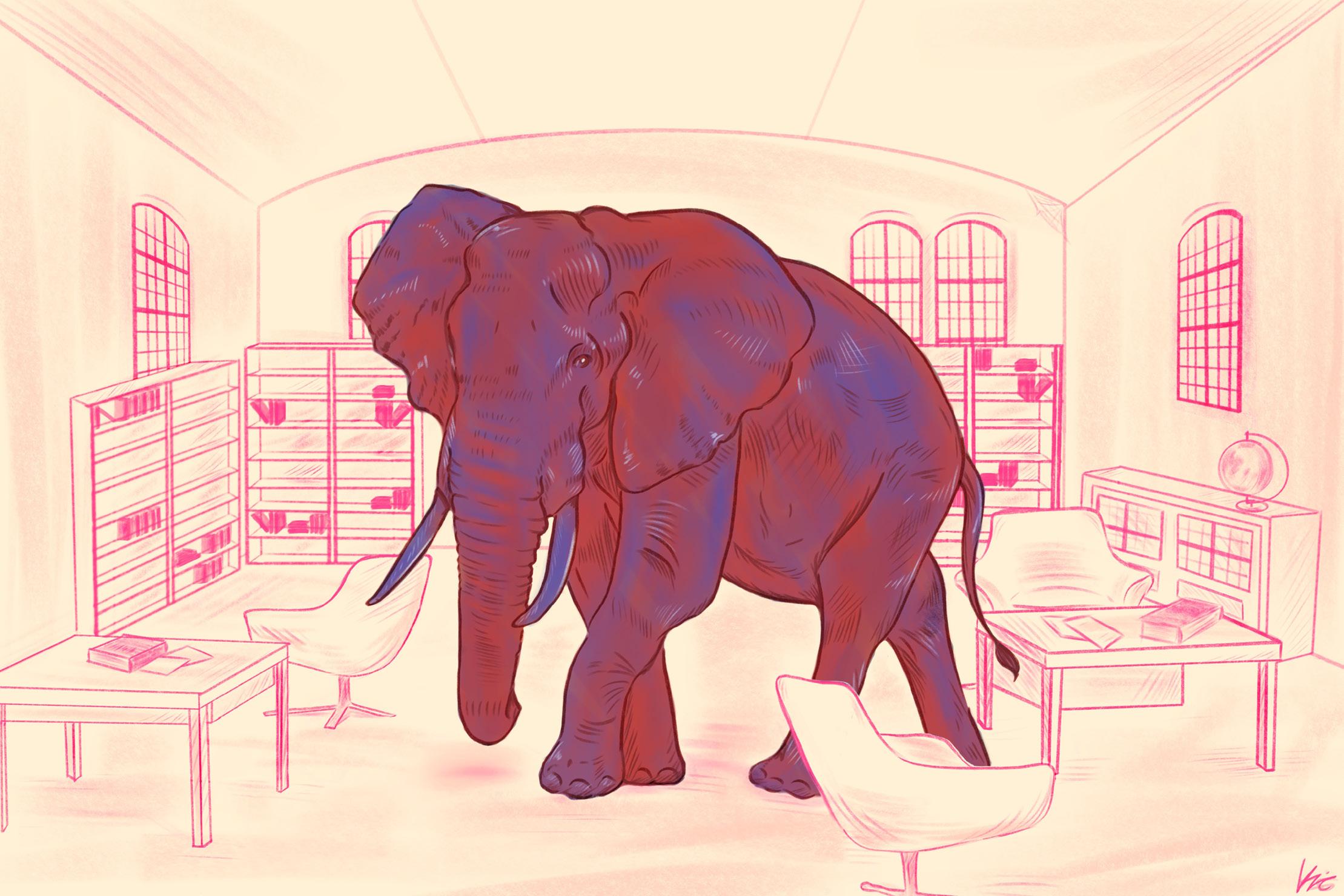
Between the horrors of the Epstein files, ICE raids, and war in the Middle East, the international scene is messy, to say the least. The news we consume helps us unravel this mess, but according to Media in Canada, only 15 percent of Canadians subscribe to e-news. Let’s be real—for some of us, the only news channel we’re consuming is the constant run of CP24 in Ned’s Café. Most updates on current events come to us through social media platforms like Instagram, TikTok, and X. This is not inherently a bad thing; in fact, one of the many benefits of social media is that it makes information more accessible. It is debatable, however, if the consumption of news through the medium of social media is appropriate. This goes beyond the fact-checking of information online. This debate surrounds the use of memes, many of which concern current events. Is humour really acceptable when people are being beaten, brutalised and starved, when adults and children alike are being killed, and when people are being ripped from their homes? Humour is promoted by algorithms, which push this content down our throats whether we want to see it or not. Our consumption of information is shrouded in hilarity, normalising violence. Through memes, people have become comfortable with the cognitive dissonance of vehemently opposing the fall of democracy in conversation, then jumping online to laugh at all the memes surrounding the American president. According to Dr. Tine Munk, “memes can carry strategic political messages that shape beliefs, normalize aggression, and distort reality.” In his article on
‘Memetic warfare,’ he explains that memes are modern-day propaganda: they carry implicit or explicit messaging that shapes the way we perceive information, impacting our attitudes and appealing to our emotions. The concept of memetic warfare has gained some traction online, and some individuals claim that it’s a propaganda tactic used by the CIA. Regardless of the CIA’s involvement, we are engaging in memetic warfare every time we engage with memes on these issues.
The use of memes as information warfare is not a new concept. Memes played a part in the 2016 American presidential election; a decade later, they still heavily influence our views on modern-day politics. Since we consume so many memes, it’s easy to view them as harmless, which is what makes them such an effective propaganda tool, says Dr. Munk. According to Tom Ascott, Digital Communications Manager at RUSI, there are ‘trolls’ who get paid to create and spread politically charged memes. The fact that people are able to capitalize on the usage of memes as propaganda hints at their efficacy.
By no means does this suggest that we abandon political memes entirely. They can be an excellent way to push back against the dominant social order. If they can be used as propaganda to support one cause, they can also be used to support other causes. But critical thinking is necessary when consuming media, to spot when content is designed to manipulate. Understanding the severity of normalisation through humour and using this to drive our critical thinking, mitigates the harm and positions us to take action.
SIJIL JINDANI NEWS AND POLITICS EDITOR
Winter Caucus was held on Friday, March 13th, at Emmanuel College. The meeting was organised by Isha Mathur, VUSAC Vice President External (VPE) and consisted largely of Q&A. A form to submit questions was circulated in advance and remained open during the meeting, and students could ask questions in person as well.
This semester diverged from previous Caucuses, as admin did not give reports. Students had criticised admin reports exceeding their time limits during Fall Caucus. According to VPE Mathur, the “decision of moving directly to student questions was to allow more time for open communication…this choice was met positively both from the admin and student perspective.”
Registrar Yvette Ali was asked about plans to extend drop-in advising, and informed students that additional staff have been added and wait times are 15-20 minutes. She encouraged students to book in advance to meet particular advisors. Ali answered a question by The Strand about financial support for students in light of OSAP cuts. She highlighted Vic bursaries and was confident that there are enough funds for students who need them. She suggested everyone look into the University of Toronto Advanced Planning for Students (UTAPS) grants.
Principal Hernandez discussed students’ plans to create a union for the Education and Society Minor, which his Office is “strongly in support of.” He acknowledged Vic iTeach’s role as a quasi-union and added that funding for a union would come from the Arts and Sciences Student Union (ASSU). He addressed a question about the Office’s implementation of wellness, discussing the Faculty Mentorship Program’s support for second-year students, the Care and Creativity Workshop, and a new firstyear course on mental health literacy. He highlighted the role of First-Year Programs Liaison Officer Lavinia Ford in increasing direct engagement in Vic One and supporting increased student and mentorship events.
Dean of Students Kelly Castle received questions about mental wellness as well, especially pertaining to commuter students. Castle said commuter-focused initiatives are successful, but often apply to residence students as well. The Dean’s Office was also asked about expanding programming in Wymilwood’s new study space, which Castle mentioned is being worked on. A student raised concerns about disruptive noises in the Commuter Lounge, which Castle committed to looking into.
President McEwen believes “students will be pleased with the new direction” of the first draft of the Strategic Plan, which is being edited to include accountability measures. Equity Commissioner Hana Greenberg inquired about the lack of a Vic Director of Equity, which McEwen stated will soon be hired. The Strand asked about public transparency in terms of budget funds allocation and distribution, available to students without attending Dean’s Advisory Committee (DAC) or Board of Regents (BoR) meetings. McEwen directed students to look at financial statements and BoR meeting minutes online and said budgets cannot be transparent without Board approval. She suggested students meet with Vic’s finance team. Responding to a question regarding progress on fossil fuel divestment, McEwen stated that Vic is on track to meet the 2030 divestment goal. Regarding updates on this, which were promised on an annual basis in a 2024 BoR report, McEwen suggested looking at the BoR website and meeting minutes and emphasised that BoR membership is voluntary, which may affect the publication of reports.
McEwen, speaking on behalf of the Bursar and Chief Administrative Officer’s Office, addressed accessibility and snowy weather. She informed students that snow clearance has improved this year but is continuing to be worked on, with heated walkways being added.
Levies and VUSAC Reports
Levy representatives summarised activities and hiring updates. VicPride! have ordered gender affirming gear and are hosting Queer Prom. Cat’s Eye made space improvements and are hiring a new Co-Manager in April. The Strand will publish three more issues and a magazine, and faced website issues recently. Caffiends held a crafting social, raised $1000 in fundraiser drinks for Romero House, and are hiring new execs starting March 20th. The Student Projects Fund (SPF) approved nine applications so far out of 17 received, and encourage more people to apply. The Victoria College Drama Society (VCDS) have Chess running, won three awards for What’s Killing the Poets, and improved their structure and collaboration. BLVCK
Vic hired their first full executive team. Acta Victoriana are working on a large 150th anniversary edition. The Victoria College Athletic Association (VCAA) built new intramural teams and are planning their banquet for 150 attendees. Several levies failed their Fall Audits and will be re-assessed, possibly due to the limited timeframe VUSAC provided for submitting materials.
VUSAC President Rohini Patra discussed Highball tickets, which were $25-$35 (cheaper than the previous several years). According to Patra, these were not subsidised using VUSAC’s reserves. $10,000 from the Highball revenue will fund the Vic Pride Scholarship, which VUSAC hopes will become endowed and functional soon. Patra also mentioned VUSAC’s plans to apply for SPF funding to increase Vic merchandise and sell it at the VUSAC Office.
Vice President Internal (VPI) Aiden Kong discussed hiring and onboarding the Finance Chair, supporting Budget Steering meetings, managing volunteers for Gardiner Gala and Highball, conducting Council check-ins, and beginning work on VUSAC’s Constitution review. VPE Isha Mathur supported Highball planning, worked on Crescams, organised Caucus, implemented the new Accessibility Committee, and leads the Eat After Eight program, which recently partnered with Friendlier to implement a reusable container system. Vice President Student Organisations (VPSO) Anya Ivantchenko managed Equity Training for levy and club heads, hosted Winter Clubs Fair, supported levy hiring, and is doing check-ins. Due to logistics issues, the levy space reallocation project has stalled.
VUSAC was asked why its budget did not reflect that revenue from Highball would fund the Vic Pride Scholarship. Patra said this decision was taken after the Budget Ratification meeting and has thus not been added. This response does not clarify why the budget was not updated during any of the VUSAC meetings following Budget Ratification, as it was discussed at every single one. As of March 22, 2026, this has still not been added to the Budget document.
The Strand questioned why Fall Levy Audit materials were due during Reading Week and why levies were only given a four-day notice. Patra stated the intention was to ensure levies had access to money as soon as possible, although this did not clarify why VUSAC did not simply start the process sooner in the semester and ensure levies were given a realistic time frame to prepare materials. The VPSO added that finances have been complicated due to the first Finance Chair resigning.
The Strand raised concerns about Vic’s investments in companies supporting colonial projects in Gaza, Iran, and Sudan, and VUSAC’s lack of discourse with admin about this. Patra stated that investments are difficult to track due to a lack of transparency, not addressing what the Council has done to advocate for transparency. She described her “triaging” approach, focusing on “things that concern the students at present”, such as cheap meals. It should be noted that Vic’s investments and complacency with the genocide of Palestinians have come up at Caucus for the past three years, suggesting it is a ‘present concern.’ The Strand questioned the process for determining Council’s priorities, given the uneven treatment of different cultural identities seen through VUSAC’s events and actions. VPI Kong suggested students reach out to the Equity Commission. Greenberg stated she is open to conversations with admin and has discussed the Coburn Award with McEwen, who reiterated her response from the Fall Caucus.
Concluding the meeting, Mathur encouraged students to submit concerns to a VUSAC feedback form. She has been open to suggestions on improving accountability and considered feedback from last term in planning Winter Caucus. In a statement to The Strand regarding improvements this semester, she said, “I personally felt there was more engagement from students and it was a more fruitful discussion as we heard a variety of perspectives and were able to go through a greater volume of topics.” Mathur plans to put out a summary of discussions. Ideas about implementing other methods of communication and accountability at Vic have been discussed by current VUSAC election candidates, suggesting that next year’s procedure may look different if these commitments are taken seriously.
SOFIJA STANKOVIC EDITOR-IN-CHIEF
I’mforever fascinated by the normative urge to destroy the artefacts of your past relationships. When you’re first moving on from a particularly catastrophic friendship breakup, I can understand the “out of sight, out of mind” mentality of removing any and all residual traces of the person’s presence. Truly, little can be more irksome than Apple’s featured photos bringing a face you’d rather forget to the fore. Nevertheless, to discard the photographs, figurines, and handmade gifts of a fallen friend feels akin to erasing the past. To destroy that one keychain, crochet stuffed animal, or set of clay figurines that reminds you of your lost friendship fixates on the final explosion of feeling more than the years of laughter and late-night soirees. What, then, do we do with these artefacts of the past, these unwelcome reminders of friendship failure and bittersweet mementos of a cherished past?
The Museum of Broken Relationships (or Muzej prekinutih veza), located in Zagreb, Croatia, was founded in 2006 by Olinka Vištica and Dražen Grubišić as a permanent home for these very artefacts. Originating with the founders’ own relationship dissolution, the museum houses a collection of objects with attached anecdotes of lost love. In an essay detailing her experience of navigating the museum, Leslie Jameson writes, “When it comes to breakups, we are attached to certain dominant narratives of purgation, liberation, and exorcism: the idea that we’re supposed to want to get the memories out of us, free ourselves from their grip.” Indeed, these narratives of purgation encourage rituals of forgetting. Rather than detach our hearts from the carnage of a relationship’s final hour, we detach ourselves from portions of our own past. Your friends tell you to forget is to be free, and with little hesitation, you smash the ‘Delete’ button on old photos and dump boxes of old belongings. As if an object’s destruction can simultaneously destroy the person’s hold on your head (empirical studies on catharsis suggest otherwise). More importantly, if we forget the failures of the past, how will we then prevent failures in the future?
With everything from toaster ovens, crumbling gingerbread cookies, and sole stilettos, the museum’s online archive enshrines a space for the mundane. Jameson remarks, “The museum’s objects understood that a breakup is powerful because it saturates the banality of daily life, just as the relationship itself did: every errand, every annoying alarm-clock chirp, every late-night Netflix rental. Once love is gone, it’s gone everywhere: a ghost suffusing daily life just as powerfully in its absence.” Perhaps we’re so quick to axe the artefacts populating our homes because the banal becomes the bane of our daily life. The old birthday cards buried in your junk drawer are no longer a growing collection but a grave, filled with artefacts of absence.
How is it that something as simple as a “Stupid Frisbee,” as one poster titles their donation, can carry so much emotional weight? Carrying forward the themes from our last issue (of “situationships” and their incredible psychological turmoil), I’d speculate the root cause remains the fantasy of what could have been: of “that time we dreamed the same dream.” Thinking in potentials, you incidentally allow the dream to replace reality. The present has the wool pulled over its eyes, and the moment things go awry, your former hopes only harm. Does that mean we should stop dreaming? Of course not. Should we burn the relics of the past in protest? I dare say no, we’d be missing the point.
The museum’s exhibit allows us to understand these objects not as a graveyard of unrealised hopes, but as layers to various lives—relationships lamented, but not forgotten. Irreplaceable parts of your nesting ball of selfhood, aspects of the coming-of-age stories adults pass on to the younger generations. This archive of artefacts allows for a method of “seeing every self as an accumulation of its loves,” rather than an ether of ends. And what better way to memorialise your estranged primary school playmates than in frisbees, glass frogs, or in lyrics encapsulating your love? In the words of Alfred Tennyson, in a phrase well-known yet oft-forgotten in moments of photo-purgation, “‘Tis better to have loved and lost / Than never to have loved at all.”
editor-in-chief editors@thestrand.ca
Managing editor editors@thestrand.ca
Business Manager business@thestrand.ca
weB Managers web@thestrand.ca
news & politics news@thestrand.ca
opinions opinions@thestrand.ca features features@thestrand.ca science science@thestrand.ca arts & culture culture@thestrand.ca poetry poetry@thestrand.ca stranded stranded@thestrand.ca copy editing copy@thestrand.ca design design@thestrand.ca photo visuals@thestrand.ca illustration visuals@thestrand.ca
social Media @strandpaper
associate editors
sofija stankovic
kariM arif
tan tan jongrengpian
nour gatti
sijil jindani
roMina eMtyazi
lia iannarilli
yaocheng xia
Bosko garaca
zoe deligianis
Max friedMan-cole
aMy yang
patrick ignasiak
olivia tsoi
chiara zehnder
jessie yang
jersey Myke-toMlinson erin asaBa
arts & culture sofia terese glantz
news & politics
eMManuella nwaBuoku haniya siddiqui
features vacant photo vacant
copy editors dinah oldfield rowan crocker laís caputo Mikhala enns chendafei li haley tangente harMan Banga cover illustration kate Mochina
opinions julia Mccarthy
science shivantika shegar
stranded christina pizzonia
poetry reina van leeuwen
weB vacant
The Strand has been the newspaper of record for Victoria University since 1953. It is published 10 times a year with a circulation of 500 and is distributed in Victoria University buildings and across the University of Toronto’s St. George campus.
The Strand enjoys its editorial autonomy and is committed to acting as an agent of constructive social change. As such, we will not publish material deemed to exhibit racism, sexism, homophobia, transphobia, ableism, or other oppressive language.
EUNSAE LEE STAFF WRITER
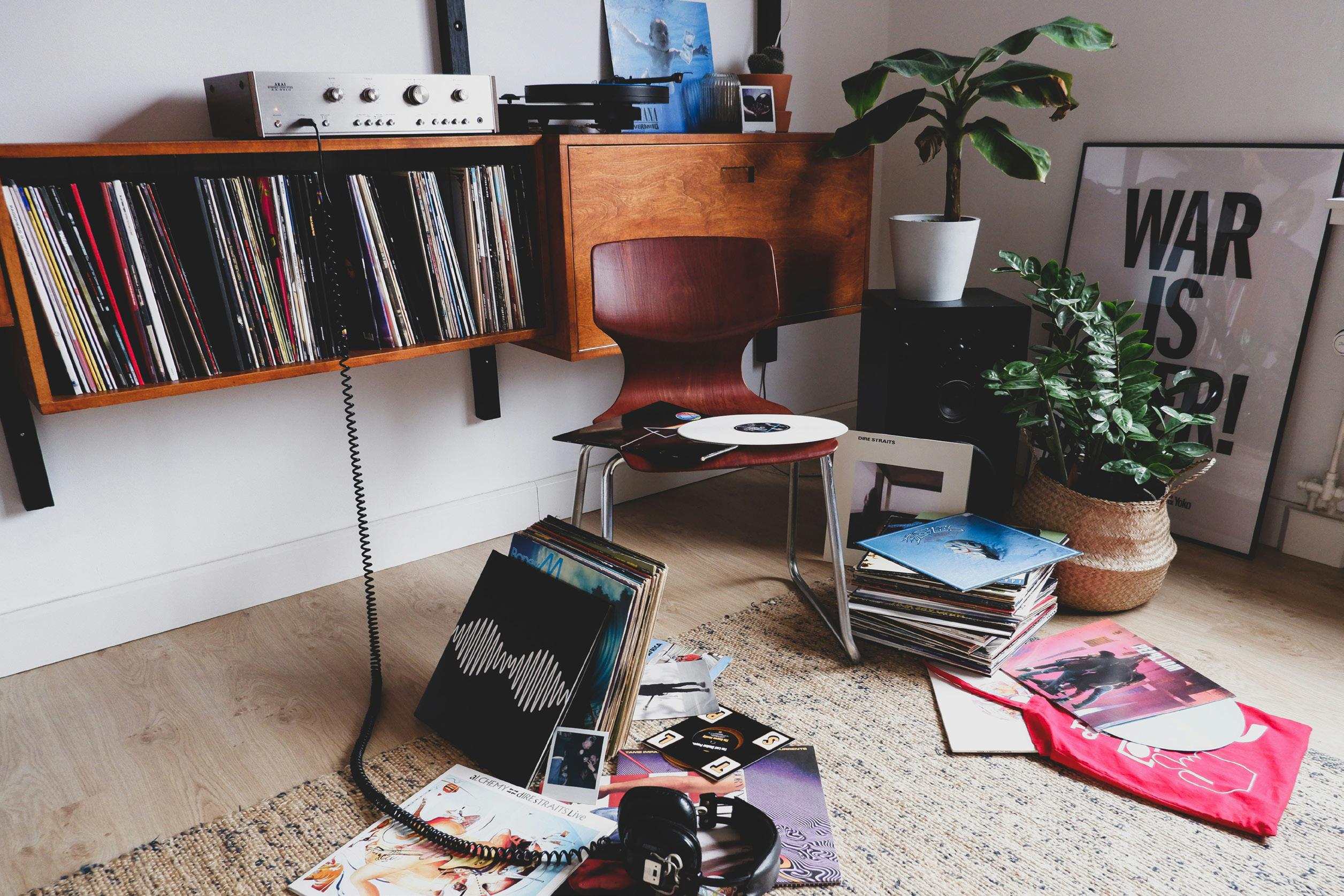
The ‘old,’ ‘worn,’ and ‘analog’ capture our cultural attention. Thrifted clothing and furniture, film photography, and vinyl records are sought after as part of the concept and aesthetic of ‘vintage.’ These objects are loaded with feelings of authenticity and meaningfulness. They are subject to imperfections that make them unique, and are often imbued with the human history of their previous owners, which makes them feel more human. Our attraction to all of this makes sense, considering that all aspects of our lives are submerged in mass-produced things that feel too perfect and impersonal. Objects appear into our lives, shiny and new, and an exact replica of many, many others. No explanation for why that specific clone made it to you, no personal relationship that makes sense between it and your life. It’s repulsive, and this meaninglessness pervades the materiality of our lives. To this weariness, ‘vintage’ offers stories behind the object, of the hands that have touched it before—whether that’s how it was created, where it’s been, or who had loved it in the past. Its gleaming traits of being ‘authentic’ and ‘meaningful’ are rooted in the mode of production and the interaction and effort required by analog technologies, or mending old things, which build a relationship with the object.
However, in ‘vintage trends,’ these traits are commodified. They become feelings that the individual can attain by association with certain products—and by “association with,” I mean purchasing. By owning old, analog things, it seems like we become imbued with the feeling of authenticity and uniqueness. As a trend and a consumer pattern, a direct appreciation of the qualities of ‘vintage’ objects is distorted into a construction of our own identity through them. Our own value, and the value of our experiences, seem to be elevated through our association with them. Like how a closet full of thrifted clothes makes the wearer more authentic and unique, or how a photo taken on film makes the actual experience captured more meaningful.
This distortion is maybe clearest in mass-produced artificial replicas of the vintage aesthetic. Consider social media filters that replicate the aesthetic of film, promising that feeling of ‘realness’ for what we capture with our phones. Or fast fashion trends that make fabrics look worn to imitate a lived-in quality, offering a contentless semblance of an object with history. The authenticity and humanness that were appealing in ‘vintage’ things are thus stripped from its essence, commodified, and
sold back to us. In his article, “Manufacturing Authenticity: How We Yearn for the Real and Fall for the Fake,” Martijn Visser elaborates on how the intrinsic value of personal, unique relationships to objects are commodified through mass production. Visser states “there is a blatant paradox at work [...] Our desire for the real appears to be satisfied with manufactured authenticity.” He then goes on to suggest that the consumer isn’t oblivious to this artificiality—a disappointment that falls into irony towards authenticity in general.
Returning to our problem of vintage, however, even with genuinely old and worn things, we suffer from a reliance on external objects for our identity construction. When the actual human history of these objects is de-personalised and aggregated into the mere concept of authenticity, we enter into a strange relationship with objects. Having charged such objects with the feeling of being more ‘human,’ we then draw on them to feel unique and authentic ourselves. Somehow, we affirm our own humanness with material products. It’s a weird outsourcing, like our own bodily nature and individuality doesn’t cut it. Any object we interact with carries our human history, but that doesn’t seem to be enough— we want visual affirmation of it as a publicly recognisable aesthetic. Maybe it’s the intensified craving for authenticity coming from our unease with being constantly surrounded by products that are perfect copies of each other. Or it’s a distorted yearning for intentional relationships with the objects in our lives, in a time of constant consumption and disposal. Appreciating slow technologies and second-hand things makes sense as a response. Nevertheless, somewhere down the line, we fall into the trap of projecting our own humanness onto external objects. Maybe we need to recognize that our problem stems from an excess of products, and that we need to stop looking to more products for a solution.
gleaming traits of being ‘authentic’ and ‘meaningful’ are rooted in the mode of production [...] which build a relationship with the object.
KATRINA EILENDER CONTRIBUTOR
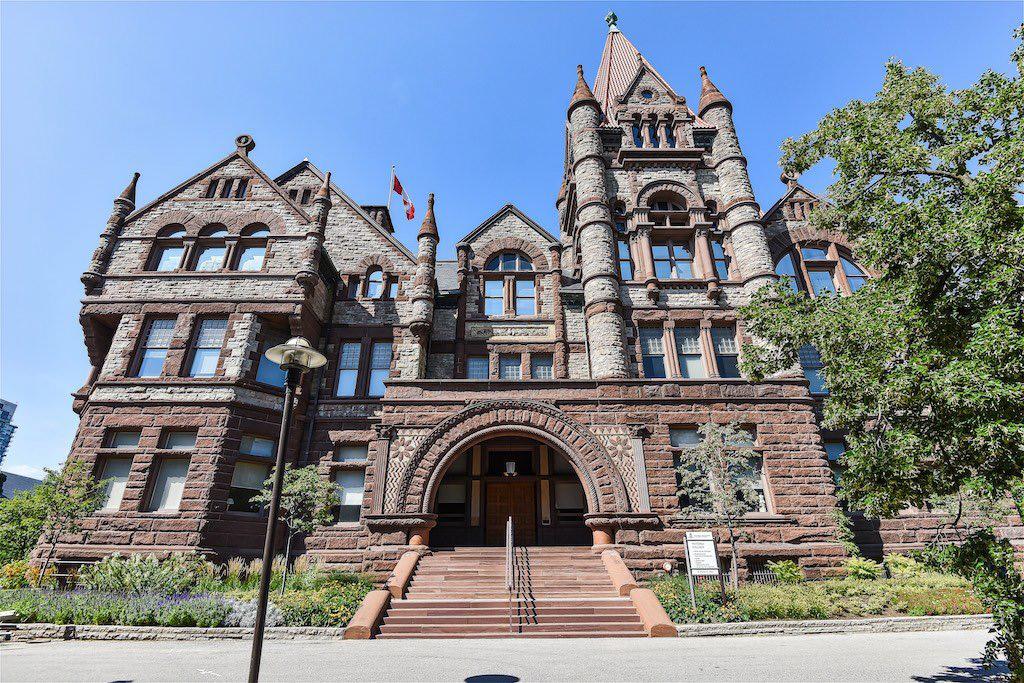
Abeunt studia in mores: studies pass into character. If you’re a Vic student, you have seen this phrase plenty of times. It’s plastered on the Vic tote bags, in Ned’s Cafe, and it is certainly referred to during Vic’s famously enthusiastic orientation. However, I have not heard it come up much in conversation or spark much interest among my fellow ‘Vickies,’ save perhaps for the ones who were Classics Conference nerds in high school and take any opportunity to show off their Latin.
Yet, as I reflect on my time at Vic, which is somehow already more than halfway over, it seems worth thinking about what that creed—Studies pass into character—says about our beloved institution, and about us.
Vic has a habit of holding itself apart from the other colleges, considering itself special or distinct in some way. To me, the source of this distinction is the enormous amount of effort and money that Vic puts into engaging with the world in ways that reflect its moral values, and it isn’t afraid of hard moral conversations. I’ve experienced this through my Vic One stream, which opened my eyes to everything from Indigenous lawmaking to democratic backsliding and global inequality. More recently, I’ve seen it as a mentor in the Ideas for the World program, which provides dinner and an academic seminar to ordinary people in Toronto, bringing students and professors together with people who have never had a reason to set foot on a university campus. It even comes with free childcare for people who would not otherwise be able to attend..
Another example that caught my attention is the Difficult Conversations program, especially its recent iteration for the Iranian community to discuss what is going on in Iran. Another, which isn’t very publicised, is the WUSC program, through which Vic sponsors and fully funds a refugee student’s studies every year. These are the experiences that changed my worldview in the way education is supposed to. They are what I will remember ten years from now when I think about Vic engaging with the world; not the dances, the campus gossip, or the fancy catering at events. Vic is special because its students, faculty, and staff are earnest about their values—to use the current parlance, they are ‘chalant.’ They care about the world around them and engage with it in this myriad of ways.
Don’t worry though, I’m not just ‘glazing’ Vic. It seems our college can also be quick to forget the moral component of its mission. At times, it can feel like any meaningful values we might hold as a community are being
dissolved in a sea of buzz words about leadership and innovation whose purpose is to deflect any substantive moral thought. A perfect case is the fact that Vic rents one of its buildings to McKinsey & Co, an infamous elite consulting firm so evil that an entire book was written about their negative impact. Most saliently, it advises ICE. It also played a key role in the opioid promotion strategies that led to the opioid crisis, and in developing some of the most predatory financial playbooks of the twenty-first century, such as cutting employee benefits and encouraging companies to buy back their own stock, practices that have contributed to the extreme inequality of our time. They don’t have many signs, but they rent the building next to the Margaret Addison field. Even worse, they have a deal with Vic to promote hiring Vic students. In effect, Vic is actively building a pipeline to McKinsey. Amazingly, during the 2023 outrage about RBC, a fossil fuel funder, having a location on campus, very few people raised concerns about McKinsey, which I would argue is even more egregious for a college whose motto is Studies pass into character
As one of the most prestigious (and wealthiest) educational institutions in Canada, Vic has a lot of power, and with great power comes great responsibility. These institutions should not just be ladders for students to climb to the top of the socioeconomic pyramid and grab the bag. They should instill moral values, such as kindness, integrity, resolve, and social responsibility, just as much as they instill intellectual values.
However, it is not just up to the administration to build such a character for Vic. If we students want that motto to be more than a symptom of hypocrisy, we need to hold Vic accountable—at town halls, in VUSAC, in building occupations, and in the pages of The Strand: in every place we have a voice. If you are not the confrontational type, maybe it is building up something you care about: joining a new club, starting a new project on campus, having a genuine conversation with a professor without thinking about your recommendation letter, or even talking to the person in your residence hall who seems awkward or lonely.
Let’s dust off that old creed and make it mean something to us. With the world we are graduating into, we could really use it. Besides, in that way, next time Trin students make fun of Vic, we can feel better about defending it whole-heartedly.
ZACHARY XERRI & ZIAD NASHED SCIENCE COLUMNISTS
“Discovery consists of seeing what everybody has seen and thinking what nobody has thought.” - Albert Szent-Györgyi, Nobel Laureate in Physiology or Medicine
We tend to picture scientific discovery as a sequence of ideas: a question posed, a hypothesis formed, a subsequent experiment designed to test it. In this familiar narrative, thought leads and the natural world follows. The universe becomes a stage upon which intellect performs. The language of discovery reinforces this image. We speak of lone geniuses, unprecedented breakthroughs, wholly novel ideas. Yet, history tells a different story. Again and again, it is the material world that interrupts, complicates, and redirects inquiry. A stain on glass. A glow in the dark. A seed clinging to fabric. Before theory, there is encounter. Before explanation, there is surprise.
An eighteen-year-old chemistry student named William Henry Perkin once peered into his flask and saw what appeared to be failure. He had been attempting to synthesize anti-malarial quinine. Instead, a dark, sticky mass clung to the glass. It looked like waste: the kind of residue that marks the end of an experiment. Many would have discarded it, but Perkin paused. Curious, he rinsed the substance with alcohol and watched the liquid bloom into a vivid purple. At a time when purple dye was rare and costly, the colour was extraordinary. That accidental pigment, later called ‘mauveine,’ became the first synthetic dye, catalyzing the modern chemical industry. The breakthrough did not arise from the triumph of his hypothesis, but from attention to its collapse. Chance provided the stain. Attentiveness made it meaningful.
Not all such encounters occurred within laboratories. In the Swiss countryside, Georges de Mestral returned from a walk covered in burrs.
WIntrigued by how firmly they clung to his clothing, he examined them under a microscope. What appeared to be botanical nuisance revealed a system of microscopic hooks, precisely shaped to be able to cling to loops of fur and fabric. The mechanism he observed would later be formalized as Velcro. A seed’s architecture was translated into fastening technology. Nature had engineered the mechanism long before it was named.
These stories share a compelling structure. Discovery does not always begin with bold conjecture. The physical world presents phenomena already rich with possibility. When scientists respond with patience and attentiveness, those encounters become moments of transformation. Louis Pasteur once wrote, “Chance only favours the mind which is prepared.” Preparation, however, is not only technical skill. It is also a posture of openness – a willingness to see significance in the small, to trust that the world has something to teach. Scientific progress, viewed in this light, is not a conquest of matter, but a collaboration with it.
This perspective offers a hopeful vision of creativity. Innovation is not the lonely triumph of intellect over nature. It is a partnership. The world is filled with structures, patterns, and processes that invite understanding. Our greatest advances emerge when we notice them.
The artefacts of science remind us that discovery is grounded in attention. In laboratories and in daily life, the ordinary around us continues to offer quiet invitations. The future of knowledge may very well begin with your next hike, your next chat with a friend, or your next botched chemistry lab.
SHIVANTIKA SHEGAR ASSOCIATE SCIENCE EDITOR
e think we’ve seen it all—landfills that spread miles, oceans brimming with waste, with detritus, with debris. Every day we are reminded of this: of all the things we have tainted and all the things we have destroyed. We’ve polluted our lands, our rivers, and our seas. Who’s to stop us from reaching the stars?
On October 4, 1957, the first human-made satellite, Sputnik 1, was launched by the Soviet Union. Sputnik 1 weighed approximately 84 kilograms and orbited the Earth with a period of 90 minutes, sending out various signals to global radio operators. Determined to outmaneuver Sputnik 1, the United States established the agency that is now known as NASA. This marked the beginning of one of the most monumental eras of known history: The Space Age, a period of expansive nuclear power, rapid progression in rocketry, and an intense race between nations to reach the moon. It was a race between daring people and daring things. It was a race of countless crusades into the sky and of victories marked by flags on distant craters on distant moons. Of course, it was also a race that produced an enormous amount of waste.
Space junk (or ‘space debris’) is usually defined as pieces of machinery or debris that humans have left behind in space. This includes large objects, such as dead satellites that failed or were left in orbit, and small objects, such as paint flecks, nuts, bolts, spatulas, and screwdrivers. The amount of space debris rapidly rises each year; according to the 2025 European Space Agency report, approximately 40 000 orbiting objects are tracked by space surveillance networks. Moreover, the number of debris objects larger than 1 cm in size (both tracked and untracked) is estimated to be over 1.2 million. But why, one might ask, is this really an issue? The pollution that we’ve induced on Earth might have glaringly obvious effects on humanity, but why should we be concerned about scraps of distant debris?
First of all, numerous studies have shown that the debris may not remain in orbit forever. As space junk degrades over time, its motion may decrease to the point of escape from its orbital trajectory, instead plummeting into Earth’s atmosphere. This was a case that occurred in January 2025, when a half-ton piece of space junk landed in Kenya. Additionally,
space junk that burns up as it falls to Earth pollutes the atmosphere with metals and microplastics. This increases the atmosphere’s reflectivity, thus causing it to reflect more sunlight, which triggers an extreme cooling of the planet.
But, according to Northeastern University space policy professor Anncy Thresher, the more serious issue is the space junk that stays in lowEarth orbit. A worst-case scenario that increases in likelihood each year is Kessler Syndrome. Kessler Syndrome was proposed by NASA scientists Donald Kessler and Burton Cour-Palais in 1978, and describes a situation in which an abundance of low-Earth orbit objects leads to a chain reaction of collisions. As objects collide and break up, Earth’s air space would fill up with a wall of junk that shreds anything that humans try to launch into space. In an extreme situation, this could prevent future attempts of space travel to the moon or to different planets.
Fortunately, solutions are currently being devised to remedy the issue of space junk. The United Nations has proclaimed that all companies should remove their satellites from orbit within 25 years after mission completion. Of course, the removal of a satellite is a difficult task, and several companies have come up with ways this can be done: using a harpoon to catch a satellite, grasping it in a huge net, grabbing it with a large magnet, or firing lasers at it until it loses its orbital velocity. However, no solutions have yet been found for the removal of smaller pieces of debris, such as paint flecks or astronaut tools, which pose their own dangers.
But why, though, must these dangers occur? It is a strange thing to think about—that our planet’s halo of debris was crafted from man-made ambition and man-made greed. Maybe it is a symbol. Maybe it is a consequence of something; of not simply the Space Race but of our constant hunger for more territory, for more victories, for more. We might reach the stars, but this barricade of debris could be a sign that they will not host us.
MALAIKA BUNZIGIYE & LIA IANNARILLI CONTRIBUTOR & FEATURES EDITOR
After Congolese Prime Minister Lumumba’s body was dissolved in acid, a Belgian police officer, Gerard Soete, kept his gold tooth as a sordid memento. Championing pan-Africanism, Patrice Lumumba was detested by Western nations, who ultimately assassinated him in 1961. Soete kept Lumumba’s tooth as a morbid trophy and brought it to Belgium where it remained until 2022. For centuries, every aspect of the Congolese body politic has been and continues to be exploited, from forced labour to stolen artefacts.
In recent years, there have been calls for Western nations to return the art they stole from their former colonies. Activists in this effort are calling for repatriation – the return of cultural artefacts from metropolitan institutions to the local communities from which they emerged. However, their efforts are being thwarted by museums and institutions who claim that all cultural artefacts are “universal” and need to be safekept in European hands.
Established in 1898, the Royal Museum for Central Africa (RMCA) operates in Tervuren, Belgium, and displays art, weapons, musical instruments, grave goods, and even human remains violently taken from the region. Sovereignty is tied to ownership: ownership of land, financial resources, and culture. During imperial conquests, colonial powers stole cultural heritage as trophies of war and later decontextualised them to the status of art.
The possession of these art objects, held mostly by Europeans, is a power signal, announcing to the world that they own cultural heritage. Forced and coerced removal of these objects erases the colonised’s memory; they lose knowledge of their cultural heritage. Statues currently held in the RCMA are meant to bring fertility, prosperity, and trap the spirit of death within them. But labelled behind glass, these stolen objects are removed from their culture and desacralised into property of the museum and of Belgium. The museum controls representation and history, projecting a reality to the viewer who is trained to see sacred objects as nothing more than a commodity. Ownership brings with it power, and those who have the power to own art, hold the power of the ones who made it.
In a world set on objectifying everybody, everything becomes a profit.
Yet, artefacts carry meaning of their own. As opposed to the European conception of artefacts, Achilles Mbembe points to African modes of thinking, where spiritual meaning and autonomy are embedded in these objects. In European ways of thinking, human beings, specifically white human beings, were viewed as completely separate from objects and animals. Mbembe surmises that “in a world set on objectifying everybody, everything becomes a profit.”
Underlying this objectification is what Mbembe terms ‘necropolitics,’ where “sovereignty is to exercise control over mortality and to define life as the deployment and manifestation of power.” Mbembe describes how the spatial relations of colonisation were needed to reconfigure social hierarchies. Belgium’s power over human life was translated into the economy: Congolese people were treated as instruments of slave labor and production, losing their homes, bodily autonomy, and political enfranchisement. Belgium presented their colonial agenda as a war between a state and an “uncivilised” group of people, dehumanised so as to not legitimate Congolese sovereignty.
These philosophies transferred to the cultural artefacts of the Congolese: the art objects became subsumed to the narrative of the Belgians. Artefacts are equal to human beings in terms of spiritual significance. Their necropolitical position in these museums—reduced to commodities for consumption—mirror the exploitation actual Congolese people experience as a form of violence.
For Mbembe, the “ultimate expression of sovereignty” is one where the object becomes the subject. The project of politics is one of fully realised autonomy reached through recognition and self-representation, for both objects and humans. There is much sovereignty in having power over one’s body and being able to represent oneself: the
personal body relates directly to the body politic.
One of Mobutu’s notable acts was the authenticité movement in the 1970s to instill a sense of cultural pride for the Congolese people. Colonial names were changed to traditional Congolese: Leopoldville became Kinshasa, even the country, formerly Congo Belge, became Zaïre. His most fervent goal was a policy one, urging that all traditional art be returned to Zaïre. By inspiring contemporary artists and acknowledging Congolese history, authenticité aimed to legitimize the nation-state. Mobutu said as much to the UN General Assembly: the transfer of such goods from Zaïre was due to colonial occupation.
But, colonial powers have long avoided restitution. Cultural heritage is a multifaceted resource for the process of decolonisation, which is not lost on the Belgians. The government has a financial incentive to hold on to these artefacts, further undermining the postcolonial sovereignty of the Democratic Republic of the Congo and downplaying their brutal occupation. By steering clear of restitution in favour of conserving universal heritage, the unequal
power balances between both nations seldom gets acknowledged, and so is never remedied on an economic level. Those who have the power to display, to buy, and to own cultural heritage hold a firmer grasp on their history, and, by extension, their countries.
Cultural heritage could be deployed to unify and mobilise the Congolese towards the construction of postcolonial sovereignty; nationalising these objects brings the Congolese one step closer to nationalising other natural resources. Restitution differs from repatriation, focusing not only on the return of objects, but of knowledge, reinstating goods to their appropriate communities and families. Letting go of the colonial categories inscribed in museums can re-appropriate the artefact and the power for the Congolese by inverting the colonial hegemonic relationship.
The story of looted art from the Democratic Republic of the Congo is inseparable from broader struggles of political sovereignty. By holding on to these items, European powers are holding on to the narrative of their colonial rule. In a world shaped by imperial legacies, the decolonial project must be both material and symbolic. To repatriate art is to repatriate power.
ADELAINE ANIAG CONTRIBUTOR
Since its invention, the camera has been a powerful tool. Not only for preserving memories, but also for communicating perspectives, raising awareness, and recording history. In our highly digitised generation, cameras are everywhere. Smartphones now make it possible to capture nearly every moment of our lives. Yet, there is something distinct for me between the quick tap of a phone screen and the tactile experience of using a ‘traditional’ camera: an object of substance requiring manual skills.
I often ask myself why I feel this difference. These devices achieve the same basic goal: capturing a photo. But, there is a subtle distinction between an analog camera and its photograph—a frozen moment of time that resonates more deeply within me. As an archaeologist, I study the evolution of technology throughout time and space to understand human behaviours, allowing my tendency to hyperanalyse the past to influence my attachment to material culture.
As a result, I view my cameras as artefacts. Each camera I’ve used captures a unique moment of my world, as though they are artefacts with their own temporal and emotional weight. My very first camera was a digital point-andshoot. Its brick-like build felt enormous in my small hands. Its size and weight forced me to handle it with as much care as my nimble toddler fingers could muster. I remember taking pictures where the camera was tilted, and just maybe, there would be a subject in front of the lens. Yet, more importantly, the digital camera captured the feeling of how a younger me experienced life: an artefact that encapsulated the past perspective of the world I once lived in—unfocused, spontaneous, and full of curiosity.
As I got older, my interest in capturing moments grew. I went to a photography camp, where I first learned how to use a film camera. What I found so special about film photography was the anticipation of not knowing how the photo would turn out. I fell in love with the whole process. The idea of bringing a roll of negatives to life felt as though I was excavating the past: a past uniquely defined by my own memories. The winding of film and the clicking of the shutter, shaped by curated chemical processes, ultimately became a formative way of capturing my life, of personalising images into a feeling.
In high school, I wanted to develop my skills and started using my parents’ DSLR camera. Holding that heavier, more technical camera—and lugging around its big case—felt ‘professional’ in a way, almost like I had unlocked a new level in photography. I experimented with settings, confused by the number of buttons, interested in the struggles of trying something new. As I grew older and developed, so did the technology of my cameras—my so-called artefacts.
These days, I still use the same waterproof Nikon Coolpix Digital Camera that I brought to sleepaway camp to document the fleeting moments of my young adulthood. The current film camera I use is a Pentax Point-and-Shoot passed down from my parents from the 90s. Ironically, in this digitised generation, trends have brought back the usage of more ‘traditional’ cameras—a hands-on experience that requires intention. In 2018, there was a resurgence in Polaroid cameras, and everyone started carrying around the modern Fujifilm Instax camera. Around 2020, film cameras reappeared, and my friends and I would bring our disposable 27-exposure cameras wherever we went. As if the development of images became a story through altering the frame of a memory.
In the past few years, digital cameras have officially made a comeback, causing everyone, including myself, to start rummaging around our parents’ houses for our childhood cameras. Now, we use our ‘digis’ to capture moments on a night out.
Perhaps this resurgence speaks to cameras’ material importance as objects—and, potentially, as artefacts. The return to ‘older’ cameras suggests that, much like artefacts, they hold enduring value, a tangible bridge between the past and present that reminds us of the original event. The in situ, but frozen, if you will: a deliberate, intentional act of capturing a moment.
One of the reasons why artefacts hold so much significance is due to their status function. Enacting said status function allows us to impose meanings on objects that go beyond their physical form. In my case, I have categorised a camera as a “tool for preserving memory.” This significance, to me, works in a similar fashion to how artefacts embody human intentions and meanings. Despite a camera being a physical object, it continues to shape my experience in perceiving the world through a multitude of lenses as I take photos.
The word ‘artefact’ should define the status of an object rather than its property; temporality is a critical component of what distinguishes artefacts from other objects. As I continue to use cameras, shifting my intentions and assigning new meanings, they, much like artefacts, evolve over time through my interactions with them. The impact of artefacts on us as humans emphasises material agency. Despite their inanimate nature, these objects have the power to shape our actions, perspectives, and even our sense of self.
Despite a camera being a physical object, it continues to shape my experience in perceiving the world through a multitude of lenses as I take photos.
While the camera is objectively a tool, a “personal artefact” is how I define it. I choose which camera to use, which artefact to dig up, in order to freeze a specific feeling before it passes me by. Cameras become an extension of my body and mind, especially in the way they each reflect different aspects of myself. Beyond the mechanics of a camera, I believe that nostalgia is the true meaning that fosters this bond between me and the inanimate. Nostalgia overpowers the static nature of an object, imbuing something as simple as a camera with meaning. Enough meaning for my cameras to become a series of artefacts, turning my bedroom into a museum of treasured images, memories, and a mosaic frieze of all the moments I have decided to keep with me.
Returning to the resurgence of ‘traditional’ cameras, I ask whether these trends reveal a nostalgia for more tangible, intentional forms of media creation—if this resurgence is a response to the rapid pace of digital consumption. Could the sensory aspects of film photography, for instance, create a more vivid or ‘authentic’ memory compared to smartphone photos? Do cameras, as material objects, foster a unique form of agency in the way they allow us to curate and construct our lives visually? How much control do we really have over our self-representation, if the technologies we use to capture our lives impose their own form of influence on us?
ACE MELTZER CONTRIBUTOR
The purpose of a history museum is to make knowledge accessible to the public. However, how can we appreciate the beauty and information of these artifacts when so much of them have been stolen from their rightful places? When filled with ill-gotten goods, museums cease to reflect the virtues of knowledge and humanism, and begin to resemble colonial shrines instead.
Tawnya Plain Eagle, in a 2023 interview with CBC, discussed the experience of seeing Blackfoot artifacts on display in Canadian museums. She stated that when Indigenous artifacts are displayed by non-Indigenous people, the lives of Indigenous people are forcibly kept in the past. When century-old Blackfoot items are displayed with contemporary photos, “it keeps us in a time capsule. Many of these exhibitions do not acknowledge how we have evolved in society. More importantly, they do not recognize the genocide that happened to the Blackfoot people and other Indigenous cultures that led to these items being obtained and sold for profit by non-Indigenous people.” The sterile environment of the museum makes Indigenous craftsmanship seem lost to antiquity, furthering the colonialist belief that Indigenous peoples and cultures are stuck in the past.
MUSEUM
Frequently, items in museums are assumed to be gifts or fairly-bought. This is often not the case, especially when the items are displayed on unceded land and/or by the colonisers of the people who created the artifacts. When researching the history of obtained artifacts in Canada, Clavir and Moses found that the Canadian government has a policy for the respect and care for sacred and/or holy objects in museums, emphasizing that knowledge of care should be deferred to whichever people created the object in the first place. It does not, however, have information on museum repatriation or the acquisition of artifacts. The informational void on the government of Canada’s website begs the question: what is being hidden?
Chika Okeke-Agulu, a Nigerian art historian and African art professor at Princeton University, speaks on the accessibility of stolen art. In an interview with CBC, he said, “What if we emptied the Metropolitan Museum and moved all the objects to Lagos and said, ‘Well, let’s keep them in Lagos for the rest of the world to come to Lagos and study and appreciate these cultural heritages of the world.’ I don’t think any one of them is going to like that proposition.” Okeke-Agulu refers to the Benin Bronzes: hundreds of bronze artifacts plundered from Benin in the nineteenth century and housed in the Berlin Ethnological Museum and the British Museum, until repatriation in 2025. Okeke-Agulu’s argument raises a powerful point about what the Western public considers to be a ‘suitable’ place for art.
The idea of autonomy is also central to this debate. Why should one country have the right to tell another country what they can and cannot do with their own artifacts? In the early 2000s, the Denver Art Museum was approached by the Blackfoot Nation, who were hoping to borrow back their horse shawl for a ceremony. The curators were “eager to oblige, but they worried that the ritual would expose the early-twentieth-century relic to the damaging effects of horse sweat. After a delicate negotiation, a compromise was reached: The tribe would use the object in the ceremony without actually putting it on the horse.” In the spring of 2006, settler
archivists and librarians began working with “a committee of indigenous leaders to establish Protocols for Native American Archival Materials… [the protocol draft] states that Indian communities have ‘primary rights’ for all ‘culturally sensitive materials’ that are affiliated with them,” but the Blackfoot Nation was still unable to use the shawl as they had wished, as this protocol is still in draft 19 years later.
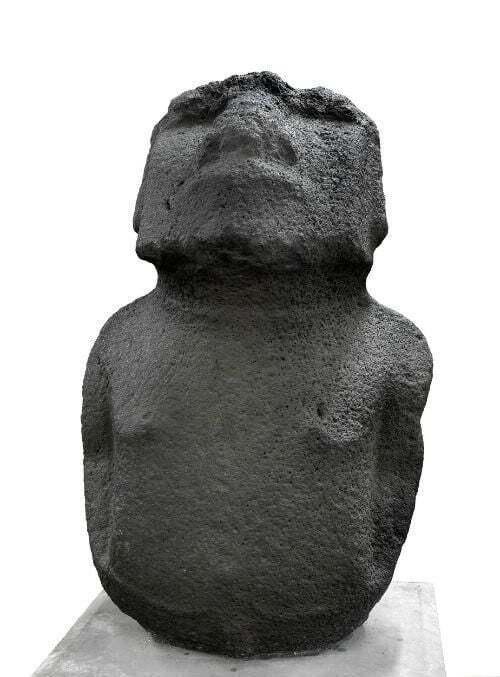
In another case, the British Museum has the Moai sculptures Hoa Hakananai’a and Moai Hava from Rapa Nui in their permanent collection. These pieces were stolen from Rapa Nui, as stated on the British Museum’s website; yet, the British Museum does not give a justifiable reason for keeping them, as they have with other stolen sculptures. Instead, their website reads, “The Museum recognises the significance of Hoa Hakananai’a and Moai Hava for the Rapanui community today, and acknowledges the impact of their removal from the island in 1868. The Museum is developing a long-term relationship with the community of Rapa Nui, to bring staff time and resources to collaborative research and reinterpretation of the Rapanui collections for the benefit of the community and the wider world.” They aspire to reinterpret the Rapa Nui collections, not return the Maoi sculptures. Why should the piece need to be ‘reinterpreted’ by some white museum curators? Is it not whole already?
This strategy of purposefully ignoring the desires of the Rapa Nui representatives regarding the Moai statues is further exemplified in the collaborative project of the “soundscape offering for the Rapanui tao’a… This audio piece, composed of sounds recorded by the artists on Rapa Nui… attempt[s] to shrink the space between the treasures and their home.” This bridge may seem like a fair compromise, but does not in any way make efforts towards the repatriation of the Moai statues. It is a way to “shrink the space between the treasures and their home”—even the Museum itself acknowledges that the statues do not belong in London. In fact, this feels like a step in the wrong direction, as now when the return of the Moai statues are requested again, the British Museum will point to these collaborative exhibits as false evidence of repatriation. Much like the Blackfoot Nation’s saddle, the museum currently housing the artifact is sidestepping the issue in an effort to keep control over their stolen goods.
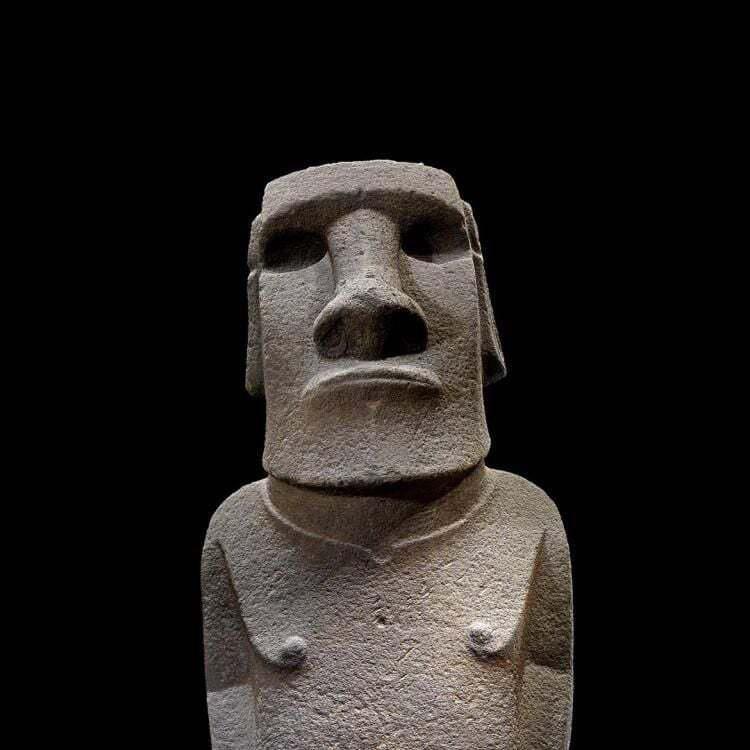
The Rapa Nui people created their sacred statue, and yet the British Museum insists on treating them as if they are incapable of caring for it. The Rapa Nui museum in Chile has a museum displaying other Moai relics; it is more than capable of containing this culturally important artifact. If someone is truly worried about a lack of funds, they should consider the fact that tourism is a massively profitable industry. The movement of the statues would increase the number of tourists and visitors, raising more money for the upkeep and care of the artifacts. Again, there is no solid case against the idea of replacing the statues with a replica. Having made an artifact does not necessarily mean your country or people have ownership over it. Though museum curators and art historians should be included in discussion and debate over ownership rights, they should not be able to veto the repatriation of artifacts. Arguing for the deprivation of Indigenous creators from their histories for the purposes of putting them in a ‘time capsule’ is a colonialist mindset: patronising and infantilising. Privilege and history can obscure the clear truth that stolen art deserves to be returned home.
PATRICK IGNASIAK DESIGN EDITOR
Egyptrixx released The Only Way Up with Night Slugs in 2010. It’s upfront and misshapen club music. Youtube user @danielboose comments: “them tonesss drool.” This was a dominate aesthetic direction when I was six years old — an anachronic selection of samples, deep basslines, and pretty disgusting noise injections. “Everybody Bleeding” is a stand-out track. Egyptrixx is born in Toronto, but his work here is distinctly British in that typical molly-mothered and nostalgic fashion.
Pole’s 3 album has a Wikipedia page, so I’ll be brief. You should take clicksand-clacks seriously. All the percussion is collected from a deconstructed 4-pole filter, so the rhythms seethe in these heavily restricted sheave processes that’ve been electroacoustically magnified. It results in some ambient null volumes and residues. Pretty important for dub techno, and very danceable.
BADSISTA’s relatively new ep, CUTEBOYZ, is a little riddim-esque, but mostly develops according to the diverse micro-traditions of Baile Funk(s). “PSYCHODELIA” is conceptually minimal and, in terms of the instrumentation, pretty sparse, so the danceable complexity is instead extracted via a sheer repetition of modulation — something usually taken for granted. The trappings of an acid sound palette are redeployed here to accommodate the swing-y gallop of tight house-y kicks, maintaining the blown-out
tuin of that bruxaria style by means of rhythmic syncopation.
One last ep: Ueno Masaaki’s Vortices was released by Raster in 2014, and it’s a four-track division of hyper-percussive spirochetees with incredible timbrel variety. Ueno Masaaki has seventy-seven monthly listeners on Spotify — none of these are me, because I use Apple Music. The rhythm distribution pattern is defined by these hinge articulations in a snare drum’s envelope. It’s a super rewarding listen. Ueno Masaaki’s symmetrical compositions decompose into radical dissymmetries and recompose and warp and diffuse in magnitude. Step-by-step, it’s some of my favourite music. The artificial schema of repetitious machine beats becomes intimately physical after a certain series of successions — like the best dance music, it’s a discombobulation of the dance floor’s sense organs.
BOSKO GARACA ARTS AND CULTURE EDITOR
The Opinionated University: Academic Freedom, Diversity, and the Myth of Neutrality in American Higher Education by Brian Soucek University of Chicago Press, 202 pp., US$25.00 (paper)
In1967, the University of Chicago published a document entitled, “Report on the University’s Role in Political and Social Action.” Authored by a faculty committee under the chairmanship of Harry Kalven, Jr., the colloquially referred to ‘Kalven Report’ broadly outlined what the committee identified as justifiable freedom of expression by a university. Both as it applies organisationally and for each of its individual members, seeking to maintain academic integrity and the university’s guiding values.
While the Kalven Report was quickly adopted by Chicago, and a variety of United States universities thereafter, it has never engendered such scrutinous discourse as today. The contemporary rise in student protests, amid governmental dissent on academia, along with institutions’ expansive advocacies of so-called ‘woke ideology,’ namely ‘diversity, equity, and inclusion’ (DEI) standards, has brought renewed interest in the report. Questions of universities’ expressive rights, their responsibilities to both individual and broader academic communities, and most pressingly their influence on public opinion, have all fallen under a single phrase prescribed by the report: “The neutrality of the university.” For, as proponents of the report rightly note, the Kalven Report concludes, “Our basic conviction is that a great university can perform greatly for the betterment of society. It should not, therefore, permit itself to be diverted from its mission into playing the role of a second-rate political force or influence.”
Brian Soucek, the Martin Luther King, Jr. Professor of Law at the University of California at Davis, and longtime free speech and equality law advocate, addresses the university’s so-called ‘neutrality.’ In a furtive array of studies, ranging from DEI, institutional and campus speech, and what he deems genuine threats to academic freedom like biased student teaching evaluations and acquiescence to university rankings charts, Soucek proposes a unifying theme: what is the university’s mission and what are its values? Without a reorientation of our discourse on this theme, no productive—and certainly no genuine—headway can be made in the debate over the university’s academic freedoms and its actions thereof.
Soucek, a Kalvenist of sorts, distinguishes himself from the hardliner crowd by introducing throughout his book the very simple, yet crucial, self-critical lens of the university’s values. While hardliners argue that the
report’s advocacy for neutrality requires absolute silence on all sociopolitical issues, Soucek reorients neutrality to the self-defining and valued principles that each university must decide for itself. As Soucek notes, and the report makes explicit, no university can maintain silence when its fundamental mission—“discovery, improvement, and dissemination of knowledge. … A university faithful to its mission will provide enduring challenges to social values, policies, practices, and institutions”—is threatened. Silence is itself a manner of speaking, simply in the negative.
With an observant eye to the legal and juridical implications of his arguments, Soucek faithfully attends to both his and opponents’ claims concerning politics and demands of expressive freedoms. On DEI, he faithfully engages with arguments against, discussing dissenters’ concerns over political and viewpoint discrimination. Demanding that DEI not be a “political litmus test,” as its dissenters fear, but instead an “evaluation,” Soucek argues in its favour. DEI is no more discriminatory than requesting job applicants submit a teaching statement. If a university values the dissemination of knowledge across socioeconomic and racial divides as indicative of its mission, and as critical of dominant modes of thought (as prescribed by the Kalven Report), then professors who attend to these matters fulfill an educative responsibility aligned with their chosen university. A responsibility no different than ensuring one is sufficiently qualified (teaching experience and education, for example) to teach in one’s field of study. What DEI demands are required in each field of study is unique, and thus Soucek argues for deference to experts in each individual field over vague requirements.
Of the more genuine threats to academic freedom Soucek identifies are student teaching evaluations and universities’ catering to rankings charts, most notably U.S. News & World Report, at the cost of students’ educations. Soucek notes the blatant discrepancy of students, i.e., non-experts, evaluating their professors on their quality of knowledge, and the frequently documented sexism of these evaluations. Students are more willing, for example, to give a score of “10” to male professors over female ones (23 against 13 percent, respectively), along with using the term ‘genius’ along the same divide. That universities, upon hiring new faculty (almost always on a contractual, part-time basis, by the way), give exceptional credence to these evaluations even with their biases, indicates the favouritism of academia over its commitments to rigorous inquiry.
It falls upon each of us, now, to question what our universities’ missions and values are, such that we may continue the free and unfettered pursuit of inquiry and the discovery of knowledge.
ANDREA YIP CONTRIBUTOR
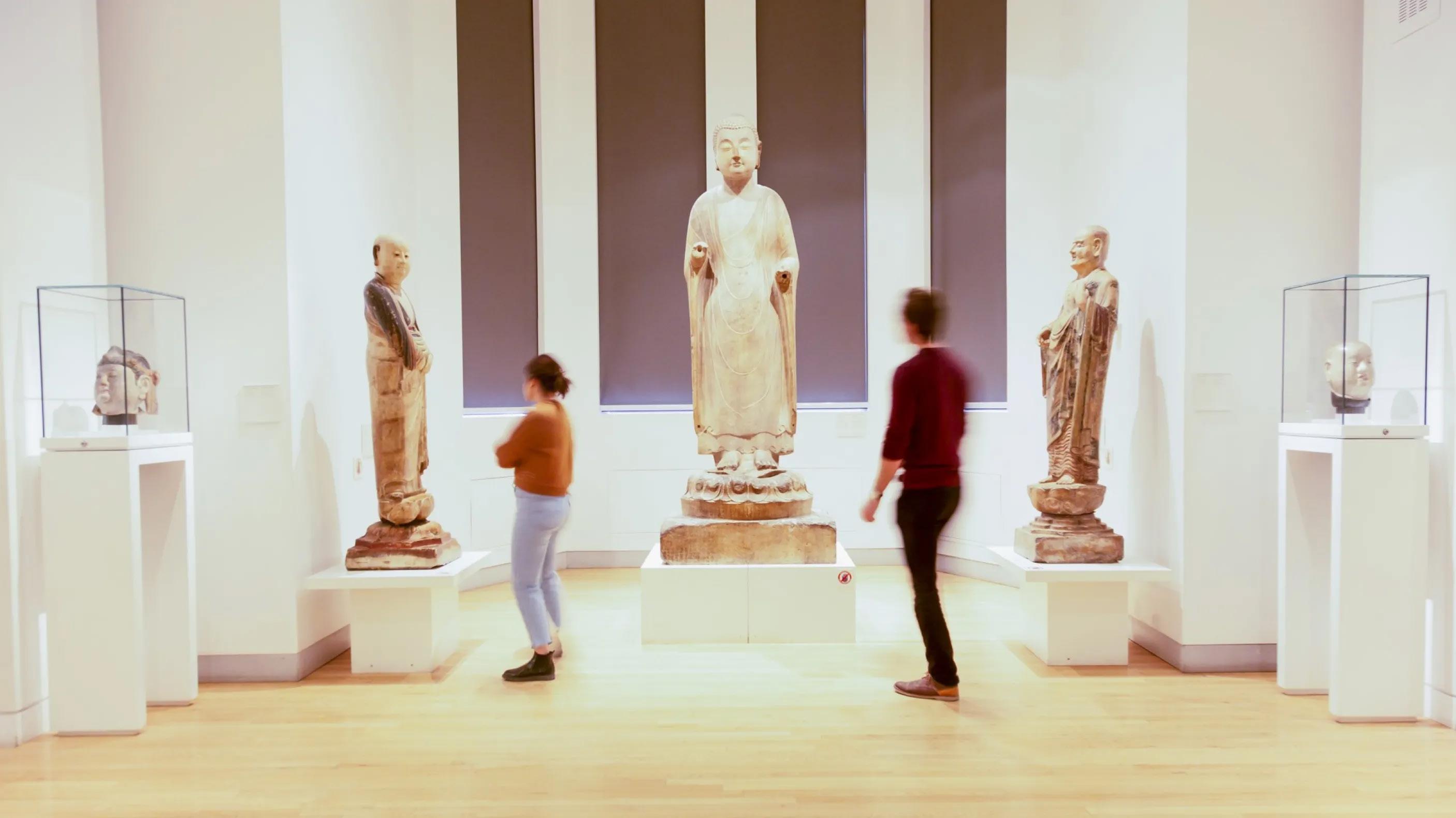
What is a museum? According to emeritus professor of museum development Graham Black, museums are memory-constructing spaces and centers for collective knowledge. Artefacts contain memories of people from past civilizations who made and used them. Objects serve cultural memory in a variety of ways and functions, revealing important information about their users and makers. However, many of these artefacts are no longer found in their countries of origin, where they could serve to educate the current members of their civilization. Instead, through various methods of calculation, exploitation, and collection disguised as souvenirs taken by well-meaning Western benefactors, artefacts are scattered across the globe where they should not be. In this article, I will look at the Royal Ontario Museum and the British Museum as national museums that build a collective narrative while ignoring the original contexts of artefact acquisition, focusing specifically on Chinese artefacts.
Let’s look closely at our very own Royal Ontario Museum (ROM) in Toronto. Founding director Charles Trick Currelly enthused in his memoir I Brought The Ages Home that he was able to buy large shipments of Chinese artefacts from dealer George Crofts, alongside acquisitions from missionary Bishop William White. What he does not mention is the questionable practices used to acquire such artefacts, such as engaging with backwater ‘curio dealers’ while North China was in a vulnerable political and economic state. Similarly, the ROM’s official promotional material does not mention the shady background behind its artefacts. A video talking about the acquisition and preservation of the Chinese mosaic “The Paradise of Maitreya” (1271-1368) by Zhu Haogu discusses its transportation to the ROM in fragmented sections and its painting restoration. However, Currelly’s memoir notes that Bishop White acquired the artefact via a Chinese monastery selling the mosaic to avoid starvation, a dubious origin that was not mentioned in the video nor the ROM’s official website. This raises questions about how an artefact’s origins are ignored to create a harmonious narrative for a national museum.
Another example is the British Museum in London. In his article China in Britain: the imperial collections, Oxford professor Craig Clunas touches upon the concept of “possessive individualism,” claiming that museum collections of different objects (both indigenous and international) validate a state’s claim to sovereignty. He notes that, although we
would like to pretend Chinese objects in Britain have an untouchable status, curators impose their own bias onto these objects. By collecting non-British things, the British vision as well as its power are expanded. Clunas also mentions how Chinese signs of traditional ownership (i.e. crowns, scepters, etc.) were seen as more valuable and beautiful than modern items created after the end of Qing rule, which coincided with the end of WWI in Britain. I believe this demonstrates nostalgia for the British colonial period, as the vanishing British empire frantically holds on to souvenirs of Chinese royal extravagance to remind them of what they once had. Through national museums, Western governments can reminisce about the extravagance and splendor of royal artefacts in other cultures. At the same time, they can establish the superiority of European progress and maintain a post-colonial moral high ground.
Acknowledging that artefacts are displaced and wrongly decontextualized as national treasures in the present day raises a question: how do we ensure they are returned to their rightful cultures? Social media reception on this topic has been divided. A Chinese video drama series went viral on TikTok in 2023, made by two Chinese social media influencers, called Escape from the British Museum. A jade teapot in the British Museum is turned into a woman, who enlists the help of a Chinese journalist to help her return to China. Centuries-old artefacts are portrayed as synonymous, and having a close relationship, with the modern Chinese identity; the teapot quotes that “Anyone with black eyes, yellow skin, and who understands what I say is family.” The Chinese state media has done the same, calling for the British government to repatriate Chinese cultural relics. On the other hand, a common argument that was exhibited on Reddit for the British Museum to keep Chinese artefacts notes the destruction of many Chinese artefacts during the Chinese Cultural Revolution. Some netizens argue that it is unfair for China to demand their artefacts back now, when it destroyed so many of them in the 1950s. However, I believe that this argument is unfair: artefacts from China are still from China, and that is a fact that cannot be diminished.
The next time you step into the ROM’s China galleries, instead of taking an artefact’s description at face value, try to think about who wrote the description and who put the artefact there.
JIA BAWA CONTRIBUTOR
Moveaside, Seven Wonders of the World! There’s now an eighth, and it’s currently located on the third floor of a residence building. None other than (drumroll please): a university student’s filthy dorm room.
Now, before anyone tries to alert residence services or file a wellness check, know this: there is a stark difference between “messy” and “toxic radioactive waste-brewing factory.” I am not an advocate for black mold (though these dorms may already come with mold baked into the walls), unidentified liquids, or ecosystems developing sentience. What I am here to defend are rooms that look like they’ve been hit by a whirlwind encompassing the entirety of your university life.
Before you ask, yes, those test papers from my first-year courses absolutely still exist somewhere in the corner of my fourth-year dorm room. No, I do not know where exactly. And yes, I might still need them. You never know which late-night spiral might lead to an urgent need to revisit classical conditioning. Similarly, the stacks of bangles and mismatched earrings that have acquired prime real estate across my bed and dresser are not clutter; they are artefacts. Each glistening pile represents a memory: of the night I played poker for the first time, of frantically running to make my job interviews, of meeting a girl who would go on to become my closest friend.
Let us begin with Exhibit A: The Floor. To the untrained eye, it may seem like an abyss of chaos. But look closer, and you will notice that the objects sit in different layers, much like the sediment an archaeological dig cuts through. The bottom layer dates back to the beginning of the semester – a time marked by perfectly organised notes and a spoken promise to stay on top of things. The middle layer signifies Hell Week (midterm season). Above that, most recently, finals season, when any semblance of structure burned down completely, leaving no identifiable remains. Scholars believe the crumpled lecture notes near the door may have been abandoned during a mental breakdown, perhaps brought on by seeing a catastrophic grade on Quercus. Each item on the floor is not evidence of laziness, but a tale of carefully thought-out decisions. Laundry requires time. Time is a scarce resource. When forced to choose between washing clothes and passing a course, sacrifice is inevitable (thank God for deodorant).
Next, we move to Exhibit B: The Desk, where I make a sad attempt at being productive. The land of half-written essays stopped
The ignominy of the UofT merch store Gloves will be provided upon entry Why we may want to tone our demand down a little.
mid-sentence, not because the argument was weak, but because the writer mentally checked out. Coffee cups in various stages of decay surround unread research articles. The notes strewn across the desk have been circled in varying shades of pink, purple, and blue, to the extent that the page is more colour than intelligible words.
This exhibit highlights the disconnect between how learning is portrayed and how it actually takes place. Imagination calls for a neat desk, minimal, colour-coded notes, with a candle burning and a view of the window. I think I was able to execute that fantasy a grand total of once this semester.
And the crème de la crème: Exhibit C, The Bed. It comprises a mattress thin enough for me to feel every ridge of the wooden slats underneath and heart-print bedsheets. This multifunctional, creaky, state of the art installation serves as a sleeping area, lecture hall, cafeteria, and, on particularly bad days, a therapist’s office. When coursework hits like a tidal wave, I retreat to bed and attempt to physically fuse into it, as if becoming one with the mattress might pause the semester.
This is where lectures are watched at 2.0× speed, research spirals begin, and emails begging for academic consideration are drafted, all amid well-earned tears and the occasional pen mark on the pillowcases. When your bed becomes your desk, rest ceases to be restorative and becomes strategic: a resource allocated between deadlines. When this exhibit is in use, let it be known: the occupant is operating entirely on borrowed time, sustained only by the last Red Bull consumed and the fragile hope that nothing else is due at midnight.
A note to all: this museum exists because students are encouraged to “embrace the chaos,” as if resilience is a personality trait rather than a response to systemic overload. The mess is not a moral failure. It is unwavering evidence of too many expectations, too little time, and the quiet normalisation of exhaustion.
Like any museum worth boasting about, we end in the gift shop. Here, you can purchase chocolate granola bars, a collection of overpriced vintage mugs, and a plethora of free stickers and stationery hoarded from every student club event on campus. The museum itself is temporary – dismantled every semester, rebuilt again under new deadlines – but the exhaustion is permanent.
Thank you for visiting. Please exit through the side door. The front is blocked by laundry.
MAX FRIEDMAN-COLE STRANDED EDITOR
Look, I get it. University is a special time in any young person’s life, and I totally understand the impulse to flaunt and commemorate one’s university experience through the acquisition of some sort of physical artefact. The conceptual existence of the UofT merch store and the demand that necessitates it does not bother me. However, the degree to which students seem to want merch and the resulting business practices of the merch store are a little bit more objectionable. Let me tell you why.
Tucked deceptively behind the academic facade of the UofT Bookstore, the merch store seems on its surface to be fairly normal. The website first confronts you with the apparel section, which offers a wide variety of fairly tasteful UofT branded clothing and accessories (save for their inexplicable and extremely fugly Lululemon collaboration line). Problems only begin to arise when you glance at the prices, and then (I assume) immediately look around the room for your copy of Capital Fifty dollars for a plain hoodie! Eighty dollars for a full-zip! One hundred and forty-eight dollars for the aforementioned fugly Lululemon pants! The choice is yours: either buy groceries for a month or be a proud owner of a UofT Crest Jacket. This stuff better have been sewn by only the most skilled and nimblest-fingered of child sweatshop labourers. Overpriced clothing on its own would be forgivable: anyone who’s ever shopped in an airport or at a sports stadium has seen far worse, and perhaps this is how they have to fund operations after Vic was forced to sell their oil rig. The real horror comes when you navigate to the “Gifts and Lifestyle” tab. Consider, for example, the idea of
spending eighty-five dollars on a pony plushie which has no visible connection to the university save the deadened look in its glass eyes. Or, perhaps, navigate to the “Jewellery and Watches” tab and buy yourself a gold ring for the competitive price of five thousand three hundred and fifty-five dollars. It takes a great deal of effort and audacity to overprice pure gold, but the brave pioneers at the UofT merch store have done it. This pricing also arouses suspicion about the more reasonable items around it – you can buy a UofT pendant necklace for a very acceptable thirty dollars, but you’ve gotta wonder about the corners they’re cutting to reach that low of a price point (I imagine it’s been forged from leftover soda cans they found on the street, or perhaps taken off the corpse of an alumnus).
Let us diplomatically ignore the store’s attempts to snare graduates on their way out (the three hundred dollar diploma frames may be worth more than certain diplomas) and move on to our conclusion. I’m not normally one to espouse any belief in the invisible hand of the free market, but judging by the amount of merch I see being worn around campus, it’s pretty clear that they can justify these prices based upon the amount of students buying them. So, students, here’s my very measured rallying cry: don’t stop buying merchandise forever, merely for long enough to make them respond to a lack of demand and lower the prices. That, or you could just keep buying stuff so I can walk around campus feeling shrewd and superior for not having bought anything. Either works.
AMY YANG SENIOR COPY EDITOR
What is the difference between a person and an artefact?
Where is my love? he once asked.
Worrying too much, probably. Cursed to be a bit self-absorbed. Weighing the amount she puts into the world with the amount that she gets back.
We have to live for ourselves, don’t we? We cannot be empty vessels floating through this world.
And where is he? Where did he go?
Sitting in a jar somewhere. A bundle of ash. Bending spacetime with the little weight that he has left.
He never took up much space. He was not small—he was not loud, either. Did artefacts take up space when they were just objects?
Before we carved out space for them.
Before we encased them in glass, shone spotlights on their preserved shells, fantasised about the memories they hold in place?
Before we made an effort to remember them.
Everyday objects become artefacts. Can’t people too?
Decaying flesh is the scary part. Everything is fine when all that’s left is bone; when the human bits are gone.
Do bones not hold memory the way wood and ceramics do?
Flesh and blood do not account
For all the parts of him that remain here.
Flesh and blood do not account
For the dreams I have where he is still alive.
CHARLIE SHEEN ZEN MASTER
We nibble as we work our
legs: my fingers nightreading a colon of striations. Shearing through stillness and it permeates under ten-thousand-footed passages, and bleeding, and multiples. The very hemorrhage is gathering… it strokes. Brittleness. Crowning. Some tenderness, quickened and reddening pools. Whose wakefulness itself, compose
Such circuits of exchange, that is Begin –solder-
ing birchwise, Tongue, and Ballistics There are no stars
Again –
Prior to this split Black pawprints through Are you listening?
Stake everything on what you have now Closing your eyes:
The state of a single particle
We collaborate, grind into powder as we sleep. Your shadow is poppy-swimming. Foucault is harvesting. A member may begin to whistle: such is social constructivism. Pamphlets. Pamphlets in the magnetic fruits of your lungs, and I’m so sorry.
One evening, you couldn’t bear to contain your blue. Like bullets in a bed of soil, one member couldn’t be sweet nor cybernetic. Whose wakefulness itself couldn’t touch. Greened out; greened in. We’ve established the locality of you, that you have hair, even, your given volume. A very delicate egg gathers in the symbolic exchange. Some signs are like this; other signs are like that. Observational comedy. My members mimic the syrinx of a woman I once knew. The rifle is closest to my chest. Are you gossamer? Are you gown? Are you horses’ heads, were toward eternity?
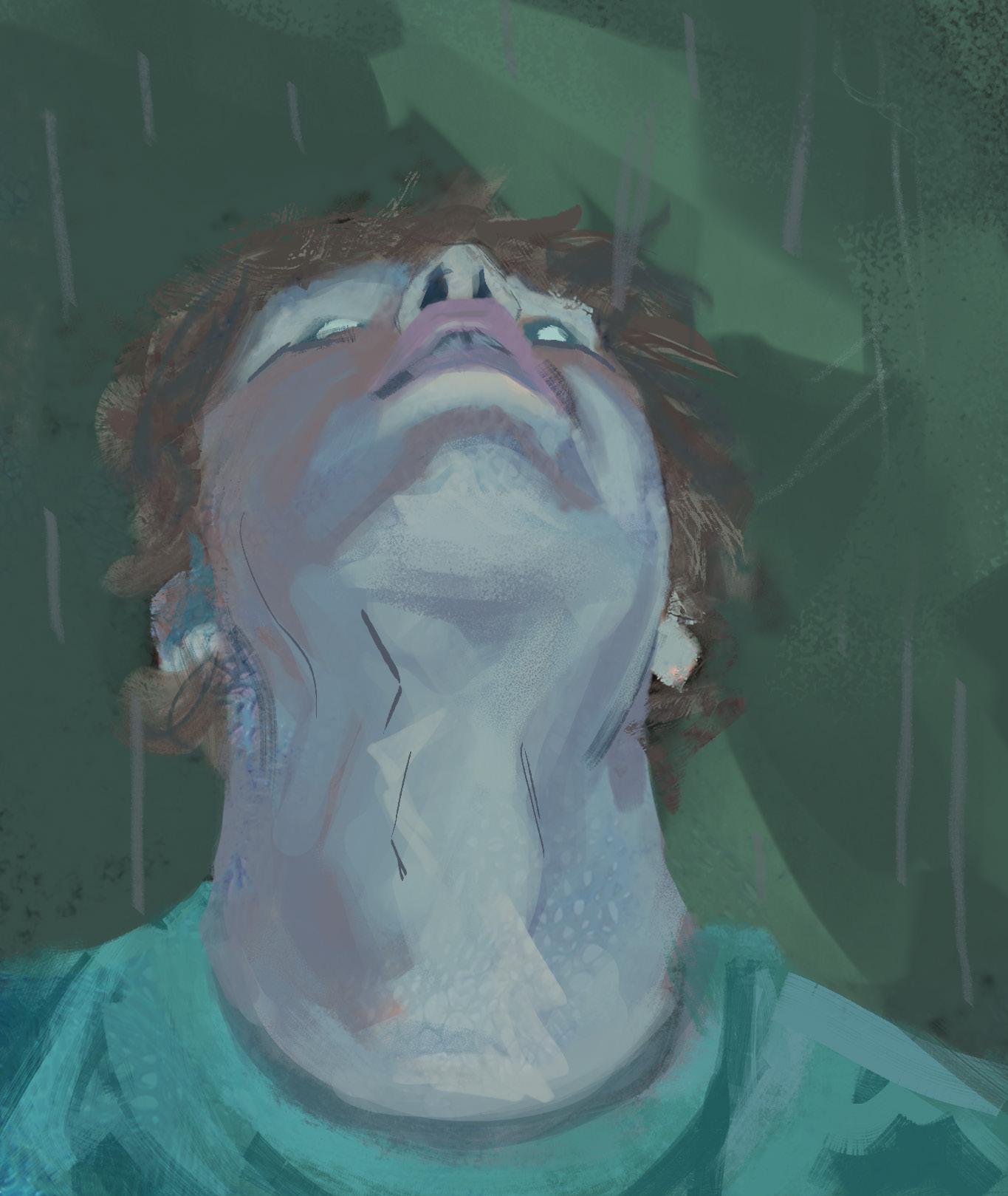
AVA REITMAIER STONE CONTRIBUTOR
Motivations can be understood as they manifest in the reactions to each moment, everyone is coming together in the Now—this cannot be transcended as it is the truth of the condition, of the condition’s form (1). If you are unreactive to the Now you can look at it better while it’s happening (2). From chaos we come, fragmented, all the varied images behind us (3).
There are methodologies—ways of seeing (4). Some are more confusing than others, the confusion to arrive. The philosophical pursuit is the same as the yogic, the same as the mystic, the prophetic, the ascetic, the musical—each a principled life. So, methodologies. And a capacity for a multitude of them within each self. Every methodology produces a different way of seeing, a different way of encountering the Now, of witnessing genesis upon each rebirth of breath.
Some are visions as I walk in the dark November and the trees hang over the winding road, coming around the turn voices skidding across the planes of my skull. They shatter behind my head. What is that shadow? It could be the white van parked at the end of the road—running headlights past 11 pm. A man sits behind the wheel, behind the panel of red and green lights. Passing him now and so that is behind me too. And I am just helpless to it, it is in front of and then beside and then behind me in such secure succession and then, upon the moment of their occurrence each of these moments came to be true all together—one after the other and now all gathered, existing. Mine to pick from I suppose, and so am not so helpless after all.
They cast a shadow behind me. In memory time goes both ways, the Now is the future because you are watching it from the past. The future is memory, is known in memory, is known right now. It is happening, has happened already. You are of, coming from, every moment you have lived. This will always be an aspect of the condition.
All that can be contained in the moment is all that truly exists (5). Each moment is as separate from the next as a cycle of breath, the depths of within as the depths of the sea.1 A multitude of methodologies exist inside the potential of each moment, they coincide, the body is where they intersect and through the body they are practiced: made. There are considered actions and there are reactions (6). The latter belong to a class of egocentric practices—they are performances of identities, characterisations, particular prejudices, fictions—confusion.
Methodologies produce images when applied to the perpetual sequence of moments, the shape of the hand makes the shadow (7). A particular kind of image is begotten by application of aparticular kind of methodology. We all practice the discipline of witnessing the Now. We share in power, a mist through all of us, to exercise the moment. It is not power over, it is power through. This is the gift of consciousness, this is what we all have in common.
Fragments behind me having in the past come from my future into the Now, through presence becoming real. They arrived, each of them, they cast shadows as I approached them they cast shadows that lay behind me. Rebirth is perpetual as passing as running water it is always ending it is always beginning. Life will come to its final truth at its end, its entirety knowable and held in my body and this will be the ultimate moment, the singular moment. The self alone holds the epitome of its own truth at its end and if I want to, if I am paying attention, I can watch it happen. Through the methodology of detachment you may practice removal, not identify with any practice or any thought, may simply be and witness the entire truth of the moment which is infinite possibility. It is contained inside the body, it is the capacity of the self (8).
It is the one that is happening already and right now.
It will always be true, the singularity of that moment.
The truth is not contingent on recognition. It does not become more true because you
1 A pond is a great way of putting it. Ponds are mysterious, ponds are surrounded by muck. Are singular. Ponds have thin fish that slip through fingers and are a kind of sperm that turn into frogs.
are looking, it does not become less true because you stop.
The altered state is the primal state—the state from which you can bear witness to origin—to the creation.
It is dark, shadows come down from the sky, leaves cut up by light from lamposts—the trees look spied upon now, caught in headlights.
Each moment is creation, is birth because we participate in it. By participating in it we are part of it, as constituents of the moment we cannot be separated from its intrinsic meaning.
I do not know if I can answer your question until you have asked, I can only speak the truth and sometimes I do not know where it lives in the shadow of the question; glinting like a needle, like a silver fish, catching in the light of my pocket mirror. If I am not looking I cannot find it, lurking as it is—a sliver in the shadows catching for a moment the light across its entire self a glowing line. I will turn the mirror more than once looking for the needle. At times I will turn the mirror and will want to know what vanity feels like so I’ll rotate my wrist aimlessly and my head and eyes will roll completely away from the mirror and towards the empty wall and I will become futile.

ZOE DELIGIANIS POETRY EDITOR
For the second time now, I am reading the words back to myself: “I do not love you, I will not grow to love you. This is solid. This is enduring”. I think back to those meditation workshops I went to in high school, and the CBT I did when I was 12, to ask myself where the feeling sits in my body. I hesitate— the gut? The obvious choice, an idiom of clear, distinctive value drawing associations between action and the body’s innate physical response to stimuli and information. I search for guidance in my stomach and intestines, I turn up John Franklin with no clarity and no gut feeling. I trail over what’s left of me— can I feel it in my spine? Can it live in the vertebrae where the ends of my hair grace my bare back when I’m hunched over like this, utterly desperate? Desperation— I’ve known it years long. I see it on the outer part of my arms and the skin below my clavicle, the way it flushes crimson as my mothers once did.
I remember the nightengale, my date on Saturday, her copper hair, and my slowly declining grade point average. Disappointment leaks from the salivary glands under my tongue; they provoke me to make myself sick. I swallow slowly and calculate. I would like to punish myself for this, not because I think I deserve it, but it has become a ritual of mine, and I’m not sure who to turn to without god these days, so I turn to hurt. I turn to myself. It would satisfy me to pinpoint a defendable cause for my academic inaptitudes so far into my degree, but I cannot wrap my tongue around anything tenable. This is the worst outcome. Struggling for the sake of struggle is not a fight worth winning.
So once more, I do not love you. Avoidance has migrated my radial nerves through my vagus and safely into the folds of my larynx. Without intention or perhaps with halfhearted mindlessness, whatever the cause, I remember the lovelessness. I let all the things I haven’t said grow like a tonsil stone in my throat, it will fester and become infected, swelling my lymph nodes and thyroid until I cut it out cleanly, just like the last. Maybe I’m conspiracizing again, or maybe Rockefeller did play god with the Flexner Report. Is the only way to treat the sickened part of me to cut around the illness? How thin is the barrier that separates me from the bad? How much can I let it grow before I am secondary to the badness? I presently find it easy to thin the barrier of mind and body in search of the feelings without disgust. This is new. Maybe I’ve become kinder to myself, or perhaps I’ve simply gotten more perverse.