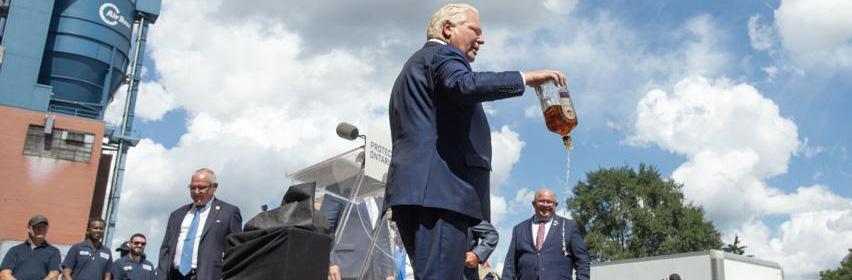
Ford withholds affection
Won’t Dougie spare some OSAP?
SIJIL JINDANI & HANIYA WAHEED NEWS & POLITICS EDITOR & CONTRIBUTOR
The Ford government’s recent announcements regarding post-secondary funding have drawn criticism from students, unions, and experts. The changes announced are: an end to the 2019 tuition freeze, a $6.4 billion investment in higher education, and making OSAP a primarily loans-based program.
The investment has been called “a step in the right direction” by the Canadian Federation of Students - Ontario (CFSO). Undoing the tuition freeze has also been met with some approval, as it had left institutions underfunded for years. However, OSAP changes have caused widespread outrage. OSAP currently operates on a mix of grants, which do not need to be repaid, and loans, which need to be repaid. Students can receive up to 85 percent of funding as grants based on financial need, which has been the primary means of funding for many low-income students. The Ford government has essentially flipped the percentages, capping grants at only 25 percent. These changes have left students at UofT and across the province concerned and demoralised.
“I feel as though I’m at a loss continuing my studies,” said Ella Martone, a second-year student at UTSG. “The academic environment is inherently competitive and difficult, but this added on has only made the pressure more extreme.” Incoming students are also feeling this pressure. Ahad Chaudhri, who will be attending UTM in September, said, “This move is worrying because future students such as myself will spend more time worrying about how to pay our fees rather than focus on our education.”
Students across several campuses have begun organising protests in response. The CFSO held a rally at Queen’s Park on Wednesday, March 4th, which was attended by many students.
UofT’s Response
Following the announcement, the UofT registrar sent an email assuring students that UofT will remain affordable. Vice-Provost Sandy Welsh reaffirms the university’s policy that “no domestic student offered admission to a program at the University of Toronto should be unable to enter or complete the program due to lack of financial means,” and that UofT invests close to 70 percent more financial aid per student than most other universities in Ontario. The Council of Ontario Universities had projected universities to operate at a $265 million deficit this year and these changes to funding put institutions in a much better position to provide more student aid, increase services offered to students, and operate more programs.
According to the 2025-26 budget report, UofT allocated 11 percent of their expenditures, or around $265 million, towards financial aid across all three campuses. With a total student enrolment of over 102 000, this may seem like more than enough. But financial aid is not easy to acquire. UTAPS is only awarded to those that have exhausted all other means of funding, and many grants and bursaries awarded through the colleges operate on the same system. Scholarships often come with strict requirements, either demanding extra-curricular involvement or a high GPA. This is not always attainable, especially for students who work jobs and juggle other financial responsibilities. Fourth-year student Razan Omar, whose undergraduate degree was only made possible through OSAP grants, emphasised that “relying on scholarships is just not a realistic expectation for everyone seeking an education.” Overall, these barriers to financial aid combined with the rising cost of living and current unemployment rates paints a rough picture for Ontario students.
Roots of the funding crisis
Advocacy groups and policy experts have been alarmed at the state of Ontario’s post-secondary sector for years. This dates back well before the current government, but Ford’s policies are believed to have significantly exacerbated the issue. Ontario’s post-secondary funding is the lowest of any Canadian province, and well below the national average. A 2024 report by the Ontario Confederation of University Faculty Associates (OCUFA) warned that this put the system at risk by forcing institutions to be much more dependent on tuition than the rest of the country. Students are essentially forced to finance what is meant to be a public, government-funded sector.
This created “higher-than average rates of debt” among Ontario graduates. In this context, Ford’s 2019 tuition cut might have temporarily relieved students, but it further throttled universities. It also came alongside a complete freeze of direct provincial funding to the sector and major cuts to OSAP grants that had been enabling students with financial need to attend school for free. In a similar fashion to the recent changes, this policy placed a disproportionate burden on low-income students and families. Moreover, the limits placed on domestic tuition further cemented international tuition as an integral source of funding. In fact, Ford’s government directed colleges in particular to seek revenue by increasing international enrolment. As a result of this dependence, the federal government’s restrictions on international student visas in 2024 forced several institutions to cut budgets and shut down programs.
These restrictions were cited by Minister of Colleges, Universities, Research Excellence and Security Nolan Quinn as the reason for the sector’s current instability. Some experts believe the federal policy is being scapegoated to avoid acknowledging Ontario’s long-term policy failures. However, it likely did push the crisis into a more precarious position that the province could no longer ignore, forcing them to commit to new funding for the first time in years. This move has its own set of issues. The Canadian Centre for Policy Alternatives (CCPA) pointed out that the $6.4 billion investment (over a four-year period) is not actually enough to account for Ontario’s “embarrassing gap” or loss of revenue from years of underfunding. OPSEU has also expressed concerns about the allocation of these funds, as they are set to follow a two-tier model under which select “priority programs” will receive funding than others. It is not clear what these programs are, but Ford’s recent comment discouraging students from taking “basket-weaving” courses and his overall emphasis on STEM and trades may be a clue as to what will be prioritized.
CCPA also suggests that the funding is being presented disingenuously as a historically high investment. Similar to the 2019 freeze, this strategy may be a way for the province to sanitise its image and mitigate some of the backlash from the OSAP cuts. This perspective is evidenced by the fact that over 50 percent of the ‘new’ investment is actually just a reallocation of funds from within the Ministry. This can explain the dramatic changes to OSAP: the Toronto Star reports that this will take around $700 million directly from OSAP each year. This will essentially redirect funding from students to schools. One UofT student believes this means that “students are now paying to keep our institutions afloat.” According to second-year student Sasha Adamova, this is a “betrayal” of domestic students on the part of the Ford government. As Adamova puts it, these policies reflect “a crisis in the making, a direct result of the provincial government’s fiscal mismanagement.”
ROTATIONS
1. Wish You Were a Girl BY: Tchotchke
2. 2much2handle BY: Aiden Bisset
3. Her BY: The 4411
4. Still a Friend BY: The Backseat Lovers
5. Let love BY: res
6. Sexy boy BY: air
7. Slut me out BY: NLE Choppa
8. Big and chunky BY: will.i.am 9. Make-out Music BY: 12 Rods
10. We Both Go Down Together BY: The Decemberists
11. Truly, Truly BY: Grant Lee Buffalo
12. That’s What I Get BY: Orange Dog Club
13. The Culling BY: Chelsea Wolfe
14. Bend Your Mind BY: Elysian Fields
15. Naona Laaah BY: Duke
16. Subtracting the Egg BY: Will Hofbauer
17. Mpango Mzima BY: Jagwa Music
18. RAVE BY: Dragnutz
19. PULSE BY: Kavari
20. I KNO WHAT U ARE BY:DJ Swisha
The politics of Heated Rivalry Giving Canada a leg up in the world
HANIYA SIDDIQUI ASSOCIATE NEWS & POLITICS EDITOR
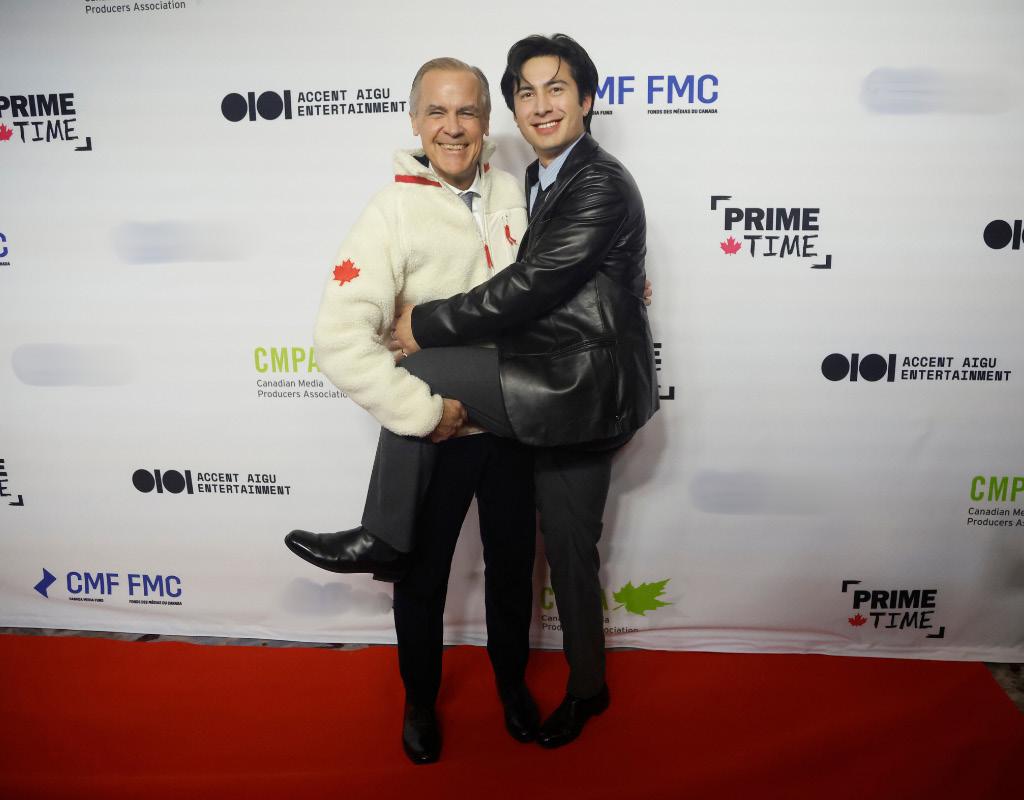
The success of Canadian TV show Heated Rivalry has been unparalleled in Canada, to say the least, and has highlighted the intersection between popular media and politics. The red carpet appearance in which Prime Minister Carney embraced the show’s star Hudson Williams, wearing the signature Team Canada fleece, made headlines, showing just how far the show’s influence has gone. This international success has become a major soft power moment for Canada, giving the nation a leg up in an ever-tumultuous era of international affairs.
Soft power refers to a nation’s ability to persuade through influence rather than force. Unlike military or economic pressure, soft power works through culture, values, and legitimacy. It persuades rather than compels, and can be immensely influential in shaping public perceptions, even affecting political support for specific parties or legislation. Countries without overwhelming military capabilities increasingly rely on reputation, creativity, and cultural visibility to maintain influence in the world. For example, Japan’s largest export in the twenty-first century has been culture. Anime, fashion, music, stationery—you name it, Japan has trended for it. The country has even become one of Gen-Z’s most popular tourist destinations. The immense soft power yielded by Japan has allowed the nation to increase its GDP and accumulate massive amounts of revenue through the tourism industry. The country’s successful soft-power campaign has allowed it to erase the atrocities of the past and move forward in the international sphere as a paragon of peace and diplomacy.
So, how has Heated Rivalry become a symbol of soft power for Canada? Heated Rivalry, a show made in Canada, funded by Canadian tax dollars,
and proudly set in Canada, is trending internationally on X, TikTok, and Instagram, and has put Canada at the forefront of people’s minds. Its international traction highlights the new reality of the technological age: visibility online can translate into real-world influence. In an era where attention is currency, cultural exports are vital to national branding. Canadian brands such as Tim Hortons have actively spoken up in support of the show on social media. So too has Wendy’s, and even the NHL. The world has joined in on the Heated Rivalry discussion, highlighting the Canadian film industry and what Canada has to offer.
Soft power is not simply about popularity. It is about narrative control. The global success of a distinctly Canadian story challenges the perception of Canada as a ‘little sibling’ of the US. It suggests a nation capable of setting its own cultural agenda rather than merely reacting to larger forces. As Prime Minister Carney noted in his Davos speech, it is imperative that middle powers such as Canada rise and work together to mitigate the rupture in the American-led international system. Spreading values of diversity, acceptance, and excellence, and portraying these as Canadian on such a massive scale through / Heated Rivalry/, has been a step in that direction. Popular culture is a central aspect of international affairs, and the success of Heated Rivalry has demonstrated the strategic necessity of soft power. As the global order continues to evolve, middle powers will need to find new ways to assert their relevance. Heated Rivalry may not have been created as a diplomatic project, but its success illustrates how cultural influence can travel further than any official campaign.
Death and devotion
SOFIJA STANKOVIC & AMY YANG EDITOR-IN-CHIEF & SENIOR COPY EDITOR
“And to not know what the next moment will bring… brings you closer to a perception of death. You see, that’s why I think that people have affairs. [...] You can really feel that you’re on firm ground, you know. There’s a sexual conquest to be made. There are different questions. Does she enjoy the ears being nibbled? How intensely can you talk about Schopenhauer at some elegant French restaurant? Whatever nonsense it is, it’s all, I think, to give you the semblance that there’s firm earth.
Well, have a real relationship with a person that goes on for years… That’s completely unpredictable. Then you’ve cut off all your ties to the land, and you’re sailing into the unknown… into uncharted seas.”
--- My Dinner with Andre (1981)
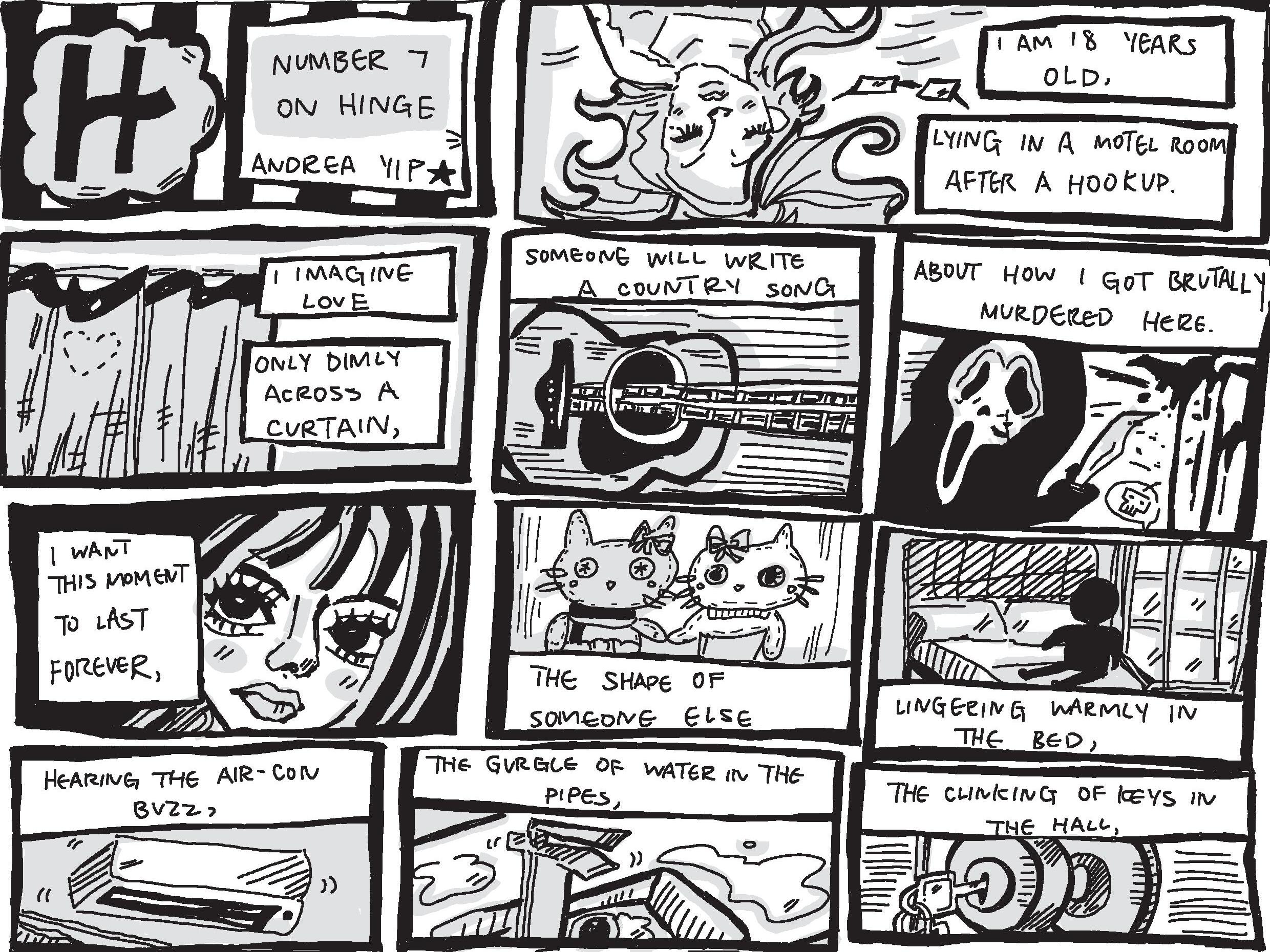
What a bizarre claim, Andre. To say there awaits “firm earth” in affairs. That some dalliance with a stranger is more stable than a steady ship. Situationships drive lonely lovers mad because the whole affair is an absolute free-fall, a constant second-guessing, an attachment that leaves you wanting more when you know the other person wants less (or maybe, the reverse). But maybe there’s an argument to be made that the uncertainty is short-lived: you only have to worry about the “unknown” insofar as you wonder whether you’ll get a text back in the next 48 hours. Whether your Hinge date will ghost you after a week of lazy, sporadic texting.
I am in no rush to criminalize the casual, the semblance of firm earth which grants sexual or emotional agency, or the adventures through reliably unreliable entanglements. There must be some allure in casting away commitment when your marriage to UofT demands your undying devotion.
But there comes a point when freedom turns to fatigue. Your friends develop the unshakeable perception that no one wants anything serious, and those who do are all still lacking in some respect as you swipe left, left, and left again.
Meanwhile, when staring into the unknown of what Andre calls a “real relationship,” questions grow from a matter of days to months to years. “Why won’t they text me back?” to “Will we live together a few years from now?” With more to give, you have more to lose, more to fear. A steady horizon line splits the air and sea, and the uncharted waves grow choppier as you come close. With an affair, you’re dancing on the docks. At worst, you might fall into the water. Soaked, then dry, then off to another dry, dingy dock.
When you set sail, you have the chance to sail somewhere new, on a makeshift raft that grows more structurally integral with time, sometimes splitting wood, and sometimes requiring its two floundering sea-farers to empty buckets of excess water back into the sea. At worst, you’ll drown, with no surface in sight, and no shoreline. When given the choice, would you choose dock or death? Dalliance or devotion?
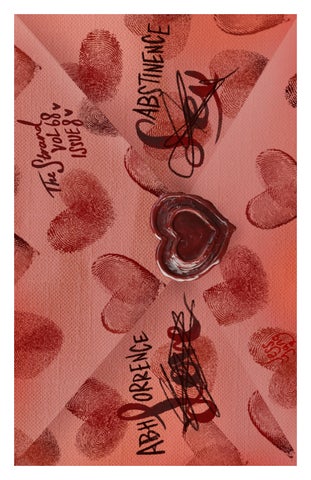
In an age of abhorrence and abstinence, will you keep to land or set sail for a sea full of surprise?
editor-in-cHief editors@thestrand.ca
managing editor editors@thestrand.ca business manager business@thestrand.ca
web managers web@thestrand.ca
associate editors
arts & culture sofia terese glantz
news & politics emmanuella nwabuoku Haniya siddiqui
sofiJa stankovic
karim arif
tan tan Jongrengpian
nour gatti
siJil Jindani
news & politics news@thestrand.ca opinions opinions@thestrand.ca features features@thestrand.ca science science@thestrand.ca arts & culture culture@thestrand.ca poetry poetry@thestrand.ca stranded stranded@thestrand.ca copy editing copy@thestrand.ca design design@thestrand.ca pHoto visuals@thestrand.ca illustration visuals@thestrand.ca social media @strandpaper features vacant pHoto vacant web vacant
copy editors
Haley tangente rowan crocker
cHristina kavouris
Justine leman mikHala enns true Hystad tianyi li
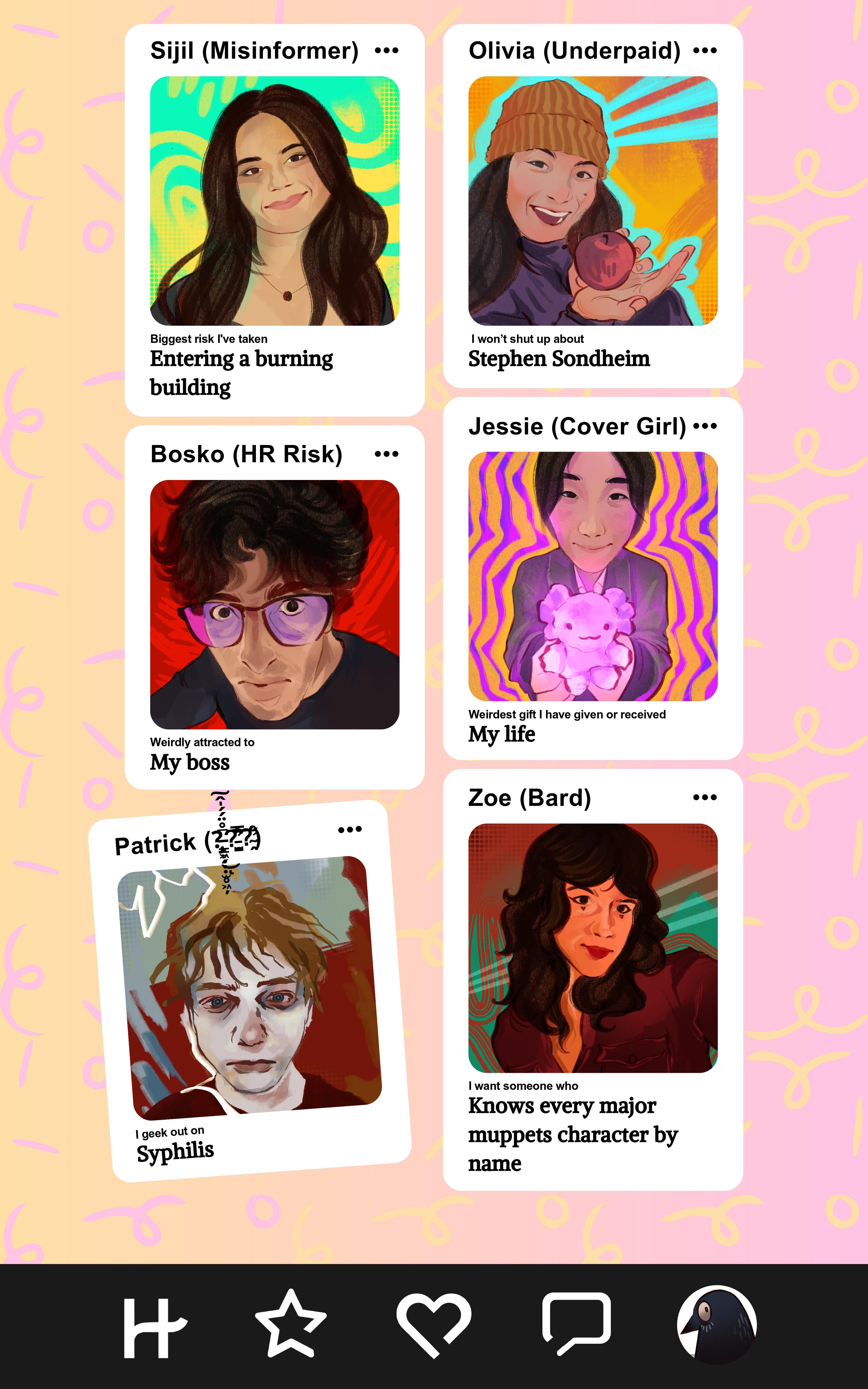
cover illustration Jessie yang
romina emtyazi
lia iannarilli
yaocHeng xia
bosko garaca
zoe deligianis
max friedman-cole
amy yang
patrick ignasiak
olivia tsoi
cHiara zeHnder
Jessie yang
Jersey myke-tomlinson erin asaba
opinions Julia mccartHy science sHivantika sHegar
stranded cHristina pizzonia
poetry reina van leeuwen
The Strand has been the newspaper of record for Victoria University since 1953. It is published 10 times a year with a circulation of 500 and is distributed in Victoria University buildings and across the University of Toronto’s St. George campus.
The Strand enjoys its editorial autonomy and is committed to acting as an agent of constructive social change. As such, we will not publish material deemed to exhibit racism, sexism, homophobia, transphobia, ableism, or other oppressive language.
Is having a boyfriend really embarrassing? The conflict between fantasy and reality
JUSTINE LEMAN COPY EDITOR
“I just can’t picture you in a relationship,” my best friend of 14 years said once, her eyebrows furrowing in faux concern. All I remember is the feeling of my heart practically dropping into the ground. Not in a hopeful romantic way, but simply in a hopeless way.
It was only recently when I began to realise I’m not the problem Maybe the thought came to me when my on-and-off talking stage finally came to an end. I had to beg him for a first date—which should have been warning enough… I guess I’m capable of seeing every colour of flag except for red.
When it finally happened, he stood me up for three hours. Three. How can somebody who dresses in a quarter-zip and uses LinkedIn more than Snapchat even do something like that? When it came down to it, the trash took itself out.
Men assume that because they represent masculine ideals of honour, loyalty, and financial and emotional support, they then earn the title of “boyfriend.” However, this portrayal is so blatantly different from reality, and it is that disconnect that I find embarrassing.
Even merely speaking to somebody I might want to date leaves me psychologically scrambled. Weirdly, I sometimes blame myself for wanting a love like the movies, and I end up only getting disappointed in the end. How does that feeling compete with something as primal as wanting a mate for life?
I think an explanation for this abstraction is evident in the world we live in today. Emotional unavailability is excused as playing hard to get. Rosters are passed off as “having options.” Essentially, the bare minimum has become so rare that we glorify it to the extreme. We see even decently good men as scarce, so we latch onto whatever fraction of that we can achieve. That is what is embarrassing: settling for less when we deserve more.
This then becomes the reason for frequent social media posts of your boyfriend: a highlight reel on Instagram or maybe a TikTok trend. I mean, it’s all in vain anyway, when he only likes posting curated photos of himself with cliché captions in the first place.
When a woman begs a man to stay, it’s so she can feel picked. Perhaps she was raised to believe that her worth is only attached to men. That she is ‘lucky’ for being allowed in his presence, therefore shrinking herself to fit his low effort and insecure nature.
Historically, everything has been structured to profit off of women’s insecurities, from needing a man to appear fulfilled, or wearing makeup to cover up features deemed ugly by society. Even economic instability plays a role, pushing women to seek the promise of security in relationships when the world itself feels uncertain.
However, constant disappointment is the only result in playing the system fair. Being ghosted, fed up, and finally replaced has led many, including myself, to believe that having an embarrassing boyfriend is just embarrassing. This is simply because in this day and age, it demonstrates your inability to have enough autonomy and confidence to live for yourself.
A boyfriend should always add to one’s existence, yet so often we find him taking away, whether it’s questions left unanswered, or perhaps knowing he desires your body and not your brain, but continuing to text him back each time he messes up anyway. As said by Stephen Chbosky in The Perks of Being a Wallflower, “we accept the love we think we deserve.” Yet, we often chase the bare minimum and are left wondering why real love can’t find its way to us naturally.
I keep wondering why I crave a relationship so badly in spite of this. A sturdy male figure in my life to lean on? The thing is, I forget that everything I’d ever craved in a man, I already have in my female friends. One of them ordered me takeout last night, another planned a get-together, and each of them runs over in minutes when I need help, and I’d do the same for them.
After blocking him, I was left wondering if I was even meant to be loved. Yet, I failed to remember that love comes from so many things, not just a boyfriend.
My dad takes me out for spontaneous trips for dessert just because.
My mom brings me flowers when I’m sick.
My best friend helped me fix my fallen-off lash at a party with so much focus that you would think she was a Navy SEAL in her past life.
Just because one man failed to show up does not mean another won’t when I’m ready. I think it’s time to question the patriarchal world we live in which leads us to believe that romantic love equals accomplishment. Ultimately, no woman’s worth should be defined by an embarrassment of a man.

In defense of terrible sex
Sexual shame, dissatisfaction, and the quest for enjoyable sex
SILAS BUSBY STAFF WRITER
Howmany times have I seen one of my friends swipe Hinge for a bit, sigh, delete the app, and swear themselves to celibacy? How many times have I spied the wrong you’re or your in a message from a guy with a sketchy mustache and a bad hairdo? To all my single friends, I hear you. It’s rough out there. That’s not what this is about. This is about people swearing themselves to sexual celibacy because of a mediocre date as though not practicing will make them any more aware of what they’re looking for. Here is my case for having bad, unfulfilling, and disappointing experiences on dates and in the bedroom. Let me be very clear on one point, however: bad should not be read as dangerous. In that case, run away.
Firstly, where does the modern urge for celibacy come from anyway? We all know that practice makes perfect in most areas of life, but for some reason, this attitude flies out the window when it comes to sex and dating. I’m always baffled when I hear people our age talk about “saving” it for someone special or wanting it to “mean something.” Perhaps this is just my experience as a gay guy showing, but in my view, meaning, intimacy, and frankly anything beyond basic corporeal urges seem entirely optional when it comes to sex. Those things are wonderful, yes, but they won’t happen with Jake from Hinge. What, then, is the value of even try-
ing Jake from Hinge on for size?
If I may be allowed to pontificate, I think that most sex is destined to be like most meals – just okay. Similar to eating a meal, it is a satisfaction of a corporeal urge. But we don’t stop eating because meals are disappointing, do we? When we see it, we pathologise that kind of behaviour as disordered. The difference seems to be that there is a much stronger culture of shame and idealisation surrounding sex. Given how it’s treated as taboo, we expect it to be fantastic. When it isn’t, we wonder whether it was worth the shame that follows. My answer: probably not, but there’s only one way to make it worth it.
The value of trying on Jake from Hinge is the experience itself. When you’re with someone who’s safe and respectful, those encounters help you learn what you like and what you don’t. With food, you have to eat a few truly mediocre dishes to develop a palate that will allow you to know when a dish is good. I believe that sex works in a similar way. I personally haven’t had to brave the wilds of Hinge, but I think this is also likely the case with dating. By going on mediocre dates and having mediocre sex, you will become more capable of discernment for future dates and future sex. You’ll get closer to finding that person with whom you can add the intimacy, the love, the fireworks, et cetera.
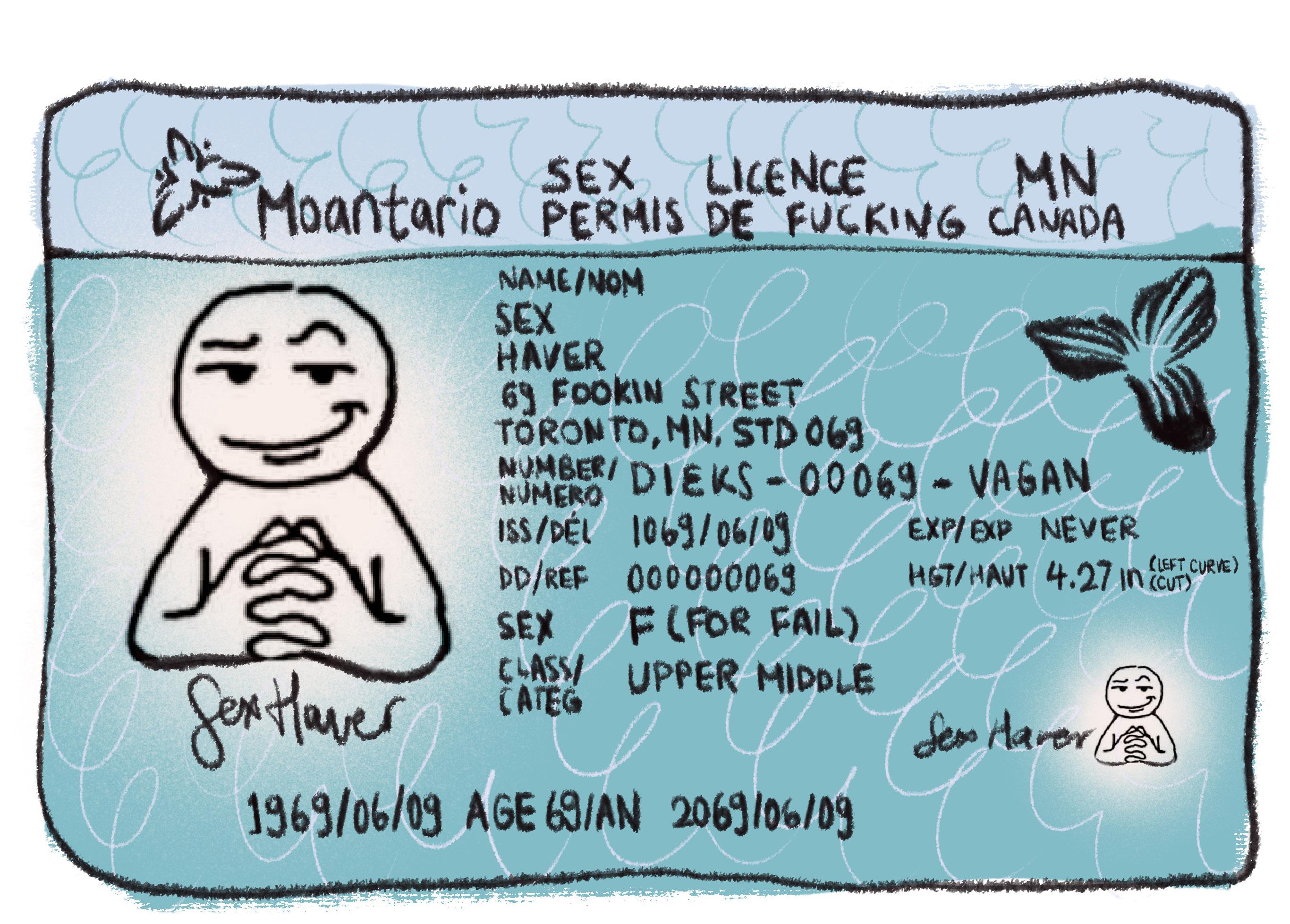
I only have awesome sex
How I made my boyfriend orgasm a dozen times last night
ZEN MASTER CHARLIE SHEEN CONTRIBUTOR
Today, too many reduce sex to a ‘tic’ that can be then tallied into their bourgeois accumulation of so-called lived experiences. Sex is actually an instance of what the later Neoplatonists called “theurgy”: a mimetic or prophetic rite that summons (or invites) the divine graciously to descend from eternity and grant a glimpse of itself within time. Skip the mediocre dates: shamanic dandies practice sex for sex’ sakes, and the variety of their sexual positionality no longer takes place in any physical space. When I have sex with my boyfriend, I am piloting a sophisticated and highly sensual cockpit of transcendental-dependent abstractions, allowing me to integrate and develop all of the sexual viewpoints of a transcendental type. Have you ever heard an orgasm as
stochastically rich as a quantum cloud in superposition? I have. I continue to hear them at the limits of human experience.
So when you have sex for the first time — for real — remember that even the deepest, most fragile diamonds of your la petite mort are simply a local and reduced deformation of that wild heart of life that bucks my boyfriend into orgasm after orgasm after orgasm. You’ve already fallen into the bottomless abyss of modern science. I’m describing entirely new procedures of being-together that, frankly, you’re not prepared to survive. I’ve seen the univocal and acategorical stuffs of God, and I made it whimper “pretty please” until it shot the white hot cum of ma — an untranslatable and very Japanese concept — all across itself.
CREDIT//JESSIE YANG
Transgender fish? Changing sex in
the animal kingdom
JIAXIN SHI SCIENCE COLUMNIST
CREDIT//JESSIE YANG
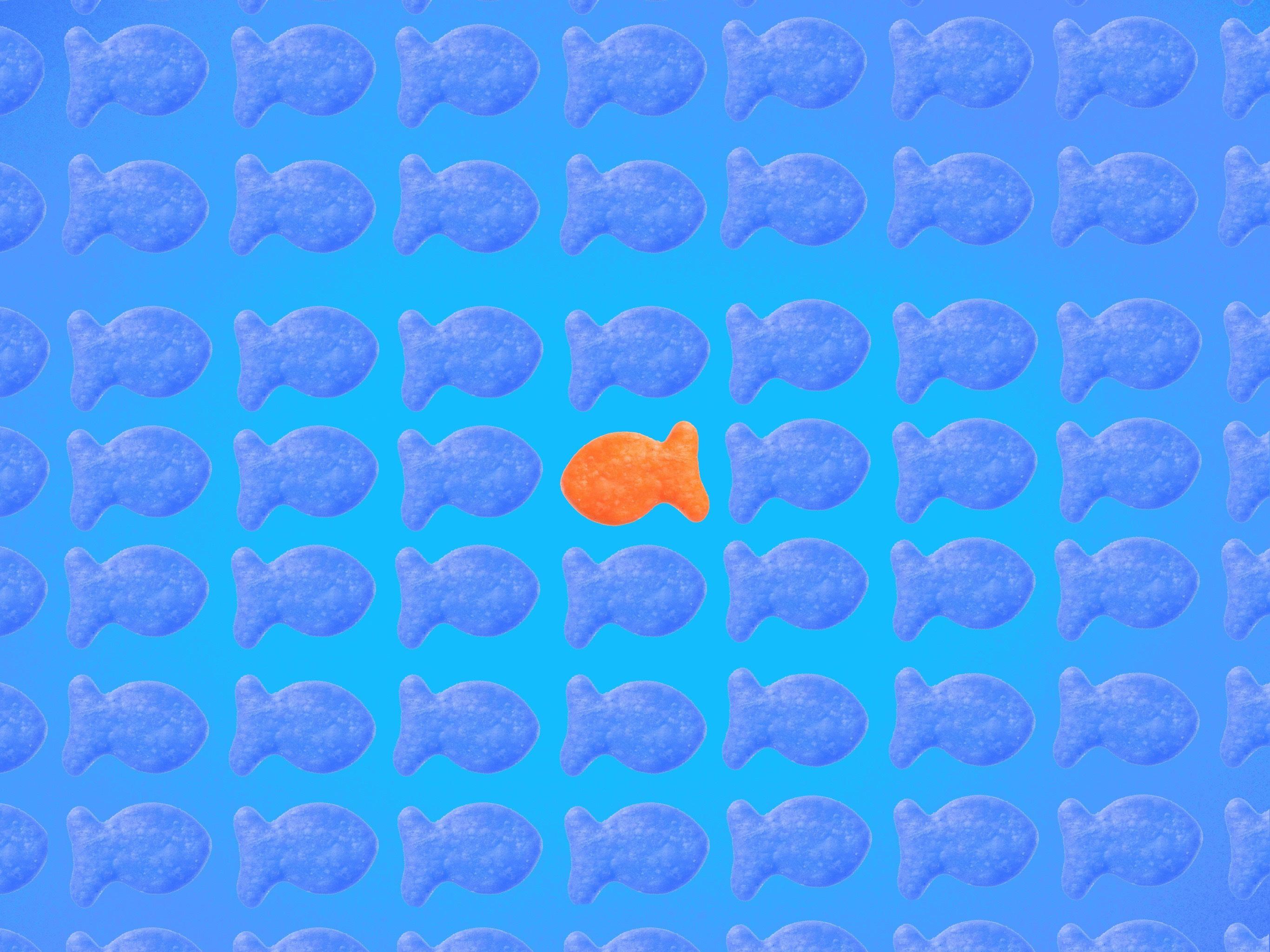
Ah, Finding Nemo! The story of a single father travelling across oceans to find his only son. It is a classic, heartwarming Pixar movie. However, in reality, the story may have unfolded differently, due to the clownfish’s unique ability to change sex from male to female. According to BBC Science Focus, clownfish typically live in small groups with only one male-female breeding pair. When the dominant female dies, the largest male will become a female and take her place. This means that after Nemo’s mom died, Nemo’s dad would have changed sex into a female and found a male to mate with.
This behaviour is not uncommon in fish. About two percent of fish, some 500 species according to Science Focus, can change their sex. Many of them are what is known as ‘sequential hermaphrodites,’ meaning they undergo a permanent sex change at one point in their adult lives. Most of these fish are ‘protogynous,’ which is Greek for ‘female first,’ as BBC Earth reports. As the name suggests, these fish start their lives as females and become males later. This includes species such as the Asian sheephead wrasse, other wrasses, and many species of parrotfish. In more extreme cases, such as the Potter’s angelfish, all fish begin their lives as females and transition to males later on. The opposite, transforming from male to female or being ‘protandrous,’ is less common, but occurs in a variety of fish such as the Australian barramundi, gilthead seabream, black porgy, and clownfish.
Then there are ‘bidirectional hermaphrodites,’ also called ‘serial hermaphrodites,’ which refers to fish that can change sex back and forth depending on their environment. An example of this are the coral gobies that live in the crevices of coral reefs. These fish are mostly sedentary and thus have few opportunities to mate and reproduce, which explains their bidirectional sex changes. When any two coral gobies encounter each other, they can always form a male-female pair and produce offspring regardless of their original sex.
For most sequential hermaphrodites, sex transformations are also related to reproduction. According to BBC Earth, the “size advantage hypothesis” appears to explain changes in sex for both protogynous and protandrous fish. In protogynous species, such as the Asian sheephead
wrasse, dominant males may possess a harem of females which they mate with. It is more advantageous to become male later in life when the fish has grown larger and can better fight to defend its harem. They are able to monopolise and mate with large groups of females, greatly increasing reproductive output. On the other hand, for protandrous species such as clownfish, large females tend to be more fertile than smaller ones, making it more efficient to produce eggs later in life when the fish is larger.
The reason fish can accomplish these sex changes is due to the enzyme aromatase. According to Professor Stefano Mariani of the University of Salford, aromatase can “change androgen hormones into the estrogenic hormones that can transform gonads into ovaries.” Furthermore, unlike birds and mammals, whose sex is determined by chromosomes, fish have their sex determined by a variety of factors, including not only aromatase, but also temperature and water quality. For many species of fish, as well as reptiles such as turtles, alligators, and crocodiles, the temperature of developing eggs determines their sex. Most fish will develop as male in warmer water, while warmer temperatures tend to produce more female sea turtles. Unfortunately, exposure to chemicals from human activity can also trigger sex changes, resulting in unbalanced populations which may have a detrimental impact on the species. The Guardian reported that “more than 80 percent of the male bass fish in [the Potomac river] exhibited female traits such as egg production because of a ‘toxic stew’ of pollutants.”
Past research suggests that a similar phenomenon may have been occurring with frogs. According to National Geographic, “a paper in the Proceedings of the National Academy of Sciences found that pollution-laden runoff into suburban ponds in the U.S. might be turning larval male amphibians into females.” However, a more recent study discovered that frogs change sex even in natural, unpolluted environments, suggesting they are reacting to shifts in temperature or other environmental changes as opposed to human pollution.
Love: mechanism and meaning
What neuroscience explains—and what it cannot
ZACHARY XERRI AND ZIAD NASHED SCIENCE STAFF WRITERS
Love has been characterised as an irrational and transcendent force that goes beyond what language can fully describe. For centuries, philosophers have debated its moral significance, poets have sanctified it, and novelists have traced both its triumphs and its devastations. It has been treated as revelation and as ruin, as destiny and as will. Before we approach love scientifically, then, we must acknowledge the weight of what we are attempting to analyse. To examine love under the lens of neuroscience is not to diminish it, but to ask a daring question: what does this most intimate human experience look like in the circuitry of the brain?
Neuroscience suggests that romantic love corresponds with distinct patterns of neural activity and chemical release. Surges of dopamine animate the brain’s reward pathways, particularly within the ventral tegmental area and nucleus accumbens, producing exhilaration, heightened focus, and a powerful sense of desire. Norepinephrine increases alertness and quickens the pulse, lending love its restless energy. Serotonin levels fluctuate, which explains the intrusive, obsessive quality of early infatuation. Meanwhile, oxytocin and vasopressin promote attachment, deepening attraction into sustained emotional bonds. At first glance, this explanation feels comprehensive. Love appears to be a choreography of synaptic transmissions—a cascade of electrochemical signals. Functional MRI studies reveal that romantic love activates neural circuits also implicated in addiction, reinforcing the idea that attachment is rooted in the brain’s reward system. From this perspective, one might be tempted to reduce the feeling to a formula: dopamine + oxytocin + time = love.
And yet, this is where certainty falters. The human brain remains the most intricate structure known to science. We have mapped distant
galaxies and measured the afterglow of the Big Bang with remarkable precision. By contrast, the three pounds of tissue within our skulls remain only partially understood. This paradox is intriguing: we can chart the cosmos more confidently and accurately than we can chart ourselves. To claim that we have explained love simply because we can identify its associated neurotransmitters is to confuse mechanism with meaning.
What do adjacent storytelling mediums offer to the story? The poet Emily Dickinson writes, “That Love is all there is, / Is all we know of Love.” The statement suggests that love is apprehended only through experience. Similarly, in Pride and Prejudice, Jane Austen offers a declaration that transcends biology: “You have bewitched me, body and soul.” The language gestures toward totality: an integration of intellect, body, and spirit. In The Fault in Our Stars, John Green captures love’s temporal unfolding: “I fell in love the way you fall asleep: slowly, and then all at once.” Such metaphors convey a texture that no brain scan can fully register.
Thus, we arrive at a more holistic understanding. Biology provides the substrate of love; without neurons and neurotransmitters, feeling would be impossible. But meaning operates on a different plane. Love is shaped by memory, language, sacrifice, and choice. It is sustained not only by chemistry, but by commitment and shared narrative. To insist that love only matters in the grand scheme of the universe is to misunderstand both science and experience. The cosmos are indifferent; they do not measure emotional significance. Meaning operates at a human scale. Within the architecture of the brain and within the brief span of our lives, love acquires its value. It need not echo across galaxies to justify itself. Its magnitude lies in its intimacy, in the way it reorganises perception and renders an ordinary world luminous.
Worm Porn Squirm… squirm…
SYDNEYBRENNERLVER69 CONTRIBUTORS
It’s10 pm. I logged onto the computer. I could not wait to type in my username SydneyBrennerLver69 and password ILuvR-RatedWormVidz Slowly but surely, I clicked open the program with a blue icon – the ZEN Microscopy Software.
After focusing the plates under the objective, I switched over to digital mode. A beautiful scene of C. elegans squirming on an E. coli-seeded plate appeared on my screen. Just when I was prepared to be bored by the usual vanilla stuff (i.e., hermaphrodite doing self fertilisation and laying eggs), something caught my eye. It was a male attempting to mate with a hermaphrodite!
Contrary to humans, male C. elegans are very rare and extremely useful in many applications. Unlike human genetic males whose predominant genotype is X/Y, C. elegans sex is determined by the X to autosome ratio, with XX animals being hermaphrodites and hemizygous XO animals being males. In a hermaphrodite’s self-fertilisation event, only 0.2-0.5 percent of the offspring are male. Moreover, lab strain (N2) hermaphrodites hate mating with males. This detestation toward males is not due to selective pressure for cross progenies, post-zygotic incompat-
ibility, or inability to mate; instead, it seems like the hermaphrodites just really hate mating with males.
But the male was mating with the hermaphrodite right in front of my eyes! He was locating the hermaphrodite’s vulva with his tail fin and opening the vulva with his spicule! How could this be happening? It turns out that hermaphrodites increase their tendency to mate with males when they are paralysed or have defective nervous systems that make them unable to feel things. I suddenly remembered something. I removed the plate from the microscope’s stage and flipped it over. Three red letters appeared in front of my eyes: Unc.
I finally remembered what I came into the lab for. I was supposed to image my cross of Uncoordinated (Unc) worms for commissural neuron abnormalities. Instead of feeling happy that my cross was working and the worms were mating, I felt dejected. Maybe it’s the stink of E. coli. Maybe it’s the sad reality of Unc hermaphrodites mating with males. Maybe C. elegans are really, really, really gross. I don’t know. All I know is I will never use C. elegans as a model system again.
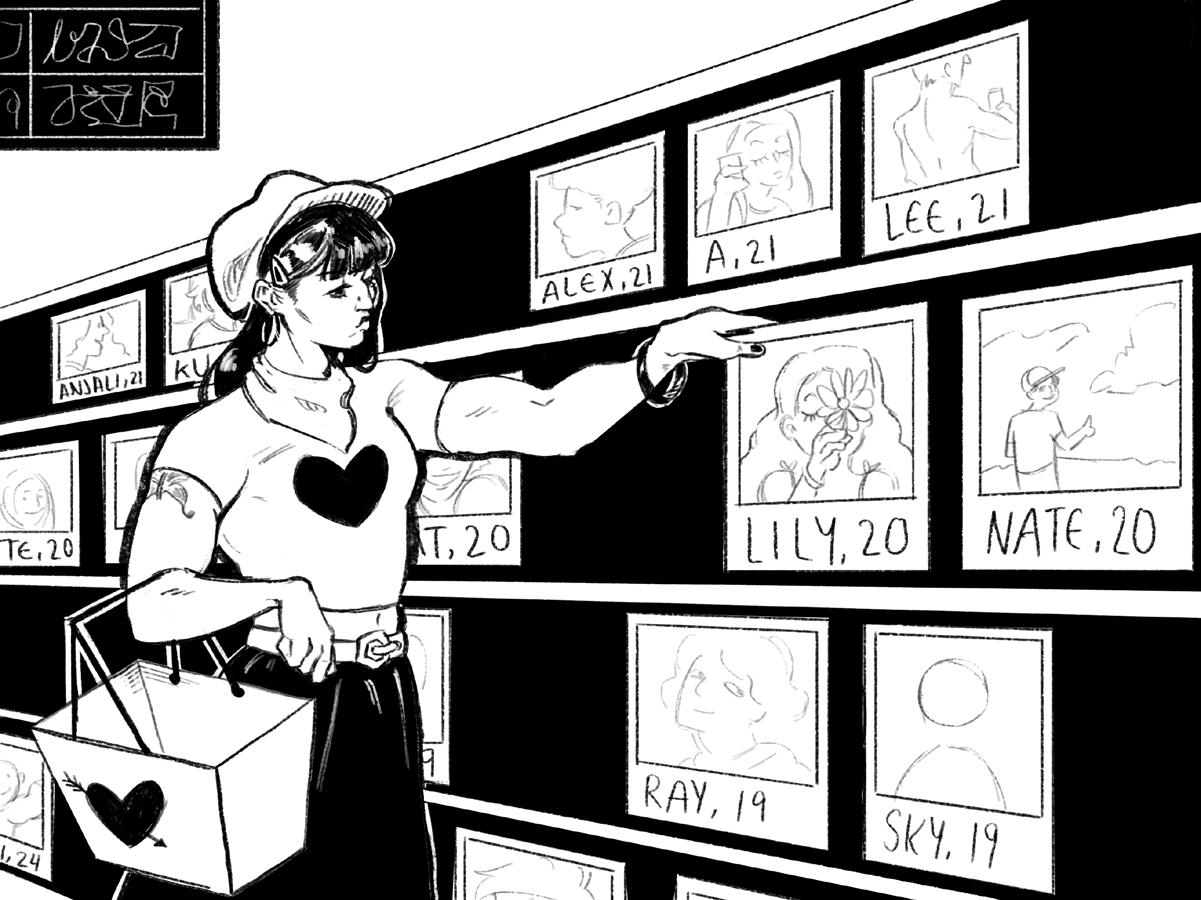
Love in the time of dating apps
The Commodification of Love
SABRINA
JAGNARINE CONTRIBUTOR
Tinder allows you to swipe left or right depending on your perception of profiles. Hinge lets you carefully curate an image of yourself with quirky prompts. Bumble is set up in such a way that ghosting is prohibited, and there must be mutual interest for both parties to converse. Among other big dating app names are Grindr, Raya, and OkCupid.
Each of these apps are here to help you find the one—or perhaps someone that will make you a tad less lonely, even if it is only for a fleeting moment. It seems harmless (to an extent): the app is a means of communication and putting yourself out there. In our digital age, it might be the best way to find a partner, and there are many success stories. Some people only use it for quick dalliances, or even friendships. But you and your match are not the only ones benefitting from swiping or making profiles—a voyeur lies behind each app, which is a corporation commodifying your precious love.
It seems innocuous. You download an app (or two) and make a profile, choose your most flattering pictures and write captions that depict yourself as someone’s potential soulmate. Others do it too, so it is not a matter of deception. You allow the algorithm to present you with matches and vice versa. You swipe in one direction if you loathe this hyperrealistic person, and in the other if you would not mind spending eternity with them. You privately message the one who seems perfect, and you both either hit it off or bust. You go out on a date or two, maybe have sex—but if you are left with more to be desired, then you re-open those same apps and re-swipe. You can’t do much else, as this is how dating apps are constructed—it is pleasurable for many.
Throughout this entire process, the corporations are gleeful. You spend an increasing amount of time on their apps and even dare to purchase a subscription granting you premium access (more swipes, therefore a better chance at romance, right?), though you give them a set amount of your money each month in exchange. They even fill your feed with advertisements—anything to profit off your emotional and sexual drives.
In fact, the repetitive actions of creating profiles, pitching yourself as though you are a sales product and swiping either left or right, is eerily reminiscent of online shopping. Your profile on a dating app is no different to an article of clothing on a fast fashion website. Potential lovers and customers shop around, filter by criteria and sort through thousands of seekers. “Liking” or “matching” is similar to adding a product to your cart or wishlist. Hitting it off and going on a date provide the same happiness and excitement one feels when they know a package is en route—the package being affection, or a happily ever after. Indeed, just the mere idea
of a potential match fills you with euphoria. Dating apps recognize these happy feelings—the very ones that keep you engaged.
Dating apps are addicting. Love is addicting—we know this already—but dating apps use algorithms and design systems similar to social media platforms (e.g., TikTok, Instagram, X/Twitter). The repetitive actions of dating apps provide users with a sense of pleasure, activating dopamine-producers that cause feelings of happiness and excitement. The algorithms used by dating apps increase the amount of dopamine being released. Further, to ensure that you truly stay engaged, these apps delay success by withholding perfect matches. This keeps you on their apps, further tempting you to purchase a subscription so you remain hooked. In this instance, we can again see the commodification of love—it is used as a pawn for profit.
Dating apps recognise the significance they hold in twenty-first century lives through their business schemes that allow them to generate romance-based revenue. They target the soft spot in your heart—the very thing that drives you to their apps in the first place. By using dopamine-producing algorithms, replicating online shopping, and luring you into purchasing a subscription, dating apps commodify love. You are just another dollar sign in the eyes of these corporations, who see your want for affection and companionship as another way to line their pockets. The user-app relationship is unequal—where corporations seek profit, you seek something far more meaningful. It is the structure of the search— the dating app—that has turned love into a commodity.
It’s, like, primal, [and really not] sexual
Against romanticizing the violence of Wuthering Heights
ROYA ALISULTANOVA CONTRIBUTOR
Emerald Fennell’s 2026 film “Wuthering Heights” is the latest in a long line of unfaithful adaptations of Emily Brontë’s beloved classic, and perhaps even guiltier of diminishing the complexity of the original story than its predecessors. Her attempt to rebrand a story of psychological and physical abuse as “the greatest love story of all time” intentionally removes the overarching classist, racial, and gendered barriers that ultimately necessitate the violence found in Emily Brontë’s /Wuthering Heights/. Through her recharacterizations of Heathcliff and Isabella, Fennell waters the complexities of the story down to passionate attraction, conflating love with violence in a way that contributes to a concerning normalization of abuseabusive relationships.
In Brontë’s Wuthering Heights, Heathcliff can onlyis only able to establish a measure of power against those who outrank him socially through psychological and physical violence. From early adolescence to adulthood, the perceived threat of Heathcliff’s physical violence constantly terrifies Edgar from his presence; when Heathcliff returns to Wuthering Heights, he exacerbates Hindley’s alcoholism and gambling addiction to obtain ownership of the latter’s propertyhouse and land. In other words, Heathcliff’s only avenue to power is through violence , and, by default, abuse. This cruelty is necessitatedThe novel necessitates this cruelty by barring him from conventional means of obtaining the financial indepen-
dence and social status essential to his survival, based on one inherent difference from every other character in the novel: his race.
Heathcliff is described from the first as “dark-skinned,” and repeatedly throughout the course of his life is referred to using racist slurs or accusations of being demonic in nature, beginning — crucially — in early childhood. Racial otherness thus becomes a central plot device to the story, with Heathcliff’s formative experiences largely tainted by racism, and thus serving as catalysts for the tyrannical villain who dominates the second volume of the original story.
Unsurprisingly, Fennell’s decision to cast Jacob Elordi as Heathcliff drew significant backlash from longtime readers of Brontë’s novel. In an interview with the BBC, she stated that Elordi “looked exactly like the illustration of Heathcliff on the first book that I read,” which indicates one of two things: she never got past the cover, or she actively ignored the repeated mentions of Heathcliff’s racial otherness throughout her readingthe entire time she read. Either way, Fennell deliberately chose to omit the racism that necessitates Heathcliff’s comfort with violent abuse in favour of depicting him as the romantic anti-hero of her teenage imagination.
Another concerning Fennell re-characterization is that of Isabella Linton, Edgar’s younger sister and later Heathcliff’s wife. In Brontë’s continued on page 12...
CREDIT//FINN
novel, Isabella’s character arc serves as a poignant warning against abusive relationships, emphasizing the horrors hidden behind their beguiling masquerade as romance yet to be discovered. Pure-hearted and optimistic, Isabella learns she is not immune to the apathetic, cruel, and violent nature of her husband only after she has been wed to him. Forsaken by her brother and abused by her husband, Isabella decides to escape for the sake of herself and her unborn child, with no financial or social support, to the south of England where she hopes Heathcliff won’t enforce his legal right to compel her return.
Brontë’s portrayal of a married woman exercising her autonomy to subvert the misogynistic constraints of contemporary marriage was so incredibly radical for its time that it remains a focal point for contemporary feminist studies of the novel to this day. In contrast, Fennell’s reduction of the dynamic between Heathcliff and Isabella to sexual sadomasochism reverts Brontë’s feminist characterization of Isabella, reducing her to an object of male sexual desire and entwining abuse with romance and sex.
When asked about the hypersexuality of the film as explicitly implied by the trailer, Fennell replied, “It’s [the film], like, primal, sexual . . . …something that was the book that I experienced when I was 14,” before asserting the reason for controversy over the original publication of Wuthering Heights was the “enormous amount of sadomasochism in this book.” Reviewers of the novel in 1848, likely past the mature age of 14, were therefore apparently misinformed in centering that controversy around “the misdeeds and oppressions of tyranny” or “details of cruelty, inhumanity, and the most diabolical hate and vengeance” detailed in the original two volumes.
In her article on romanticizing abuse in the English literary tradition, Emily Boynton succinctly observes that “[a]lthough Brontë’s book was first perceived as monstrous, the text is now widely regarded as an epic love story. This shift has largely occurred because of the adaptations of Wuthering Heights which depict the violence within the novel as a feature of idyllic love.” The premise of the film is therefore counterintuitive to its origins; inspired by a masterpiece of high literature that addressed classism, racism, and sexism in a time when none were acceptable subjects of discussion, especially for an author suspected to be female (Wuthering Heights was first published under the ambiguously gendered pseudonym Ellis Bell in 1847), it diminishes the interplay of these elements in shaping the complex atmosphere of the novel in exchange for what Peter Bradshaw of The Guardian wittingly calls “an emotionally hollow, bodice-rip-
ping misfire.”
Online discourse around “Wuthering Heights” highlights a widespread lack of media literacy with greater concern around consumerist appeal and emotional payoff that is placed in opposition to intellectual and critical approaches. This conversation reaches far beyond “yucking someone else’s yum”; it necessitates serious investigation into our social willingness to dismiss the harmful consequences of watering down complex literature for a cash grab.
Echoing the sentiment of ignoring the source text is Elordi’s description of the relationship between Heathcliff and Catherine: “If you are willing to spite me and hurt me, that means that you love me and vice versa,” he says. “And that’s the kind of sickness of complex love, I think. As long as you’re doing something — even if it’s negative — if it’s towards me, it’s about me, so then we’re connected.”
Sprinkling some capitalism onto a raging fire of toxicity, Margot Robbie, who produced the film and played Catherine Earnshaw, stated that “I believe you should make movies for the people who are going to buy tickets to see the movies. It’s as simple as that. I love working with Emerald because she always prioritizes an emotional experience over a heady idea.” This comment alone shines a spotlight on the major issue with this “adaptation”; most of the source material isn’t being adapted, especially not its “heady idea[s].”
Rebranding abuse as “complex love” and dismissing complex plots as “heady idea[s]” promote the oversimplification of inherently intricate stories such as Wuthering Heights. As Boynton emphasizes, “Young adult readers need texts that imagine romance outside of heteronormative, patriarchal, and abusive restrictions.” Rather than contributing to the longstanding tradition of watering down its complexity, adaptations of Wuthering Heights should take the impressionability of young audiences into special consideration. Perhaps more significantly, they should capture the essence of high literature in ways that prove intellectualism and entertainment not only can, but should, co-exist.
With “Wuthering Heights,” Emerald Fennell has shouldered the “huge responsibility” of adapting /Wuthering Heights/ apparently to rebrand a multifaceted tale of tragedy, betrayal, and suffering as “the greatest love story of all time.” After finishing my eighth read of the novel several years beyond the age of 14, hearing Emerald say that she would be furious if the project had been headed by another director makes me certain I wouldn’t, and most likely neither would Emily Brontë.
The word known to all men Love in the negative space
SABRINA JAGNARINE CONTRIBUTOR
Love is one of the most universally understood feelings, and one of the most sought after. It follows, then, that it appears everywhere: in music, in film, in art. It is the subject more expressive of the human experience than perhaps anything else. And yet, somewhere in that ubiquity, something happened to the word itself. Seen too often, in Valentine’s gestures, rom-com scenes, social media, and pop songs, ‘love’ started to feel overexposed. Handling it began to feel faintly embarrassing.
By the time it reaches the place it is meant for, said plainly, to a person, the word itself has already been everywhere. It comes to these moments pre-worn. This is part of what makes the omission of ‘love’ in our everyday lives so understandable. To withhold ‘love’ is not necessarily to withhold the feeling. It can be, just as often, a way of protecting it. A refusal to let the word become cheap in the one place you need it not to be. So we indeed started leaving it out, among other strategies. We keep long texts in our notes app rather than sending them. We find dozens of ways to show the feeling without using the word. Often, we wince at the idea of being the first to say ‘I love you’ to a friend or a partner, because sincerity without guarantee is its own kind of exposure. Regardless, none of these acts take away from the emotion’s presence.
James Joyce understood something about this phenomenon. When Ulysses was first published in 1922, the question Stephen Dedalus asked his mother’s ghost, “Tell me the word, mother, if you know now. The word known to all men,” went unanswered. The word was omitted from the text, and it would take until 1984 for another editorial pass to reveal what had always been the answer: ‘love.’ What strikes me about that gap isn’t the omission of the word, exactly, but the way the text still functioned around it. The word was gone but the weight of everything unspoken was not. That scholars had guessed ‘love’ decades before manuscripts confirmed it showed how readers were working with its implication all along. Omission, here, is not the same as erasure. The word isn’t
absent so much as implied by everything that surrounds it, present in its own negative space.
This is more or less how we treat love in practice. James Baldwin, in The Fire Next Time, writes that love “takes off the masks that we fear we cannot live without and know we cannot live within.” It is not a gentle word for Baldwin. It is an act of exposure: to proclaim your ‘love’ is to make yourself legible to someone in a way you cannot take back. Understood this way, the reluctance to profess one’s love begins to look less like fear and more like seriousness. If the word carries that kind of weight, then deploying it carelessly, or before you’re certain, or into a moment that cannot hold it, is a risk. Not to the relationship between individuals, but to the word itself. Every misuse is a small devaluation. Every ‘I love you’ said too fast, or retracted, or weaponised, diminishes the phrase slightly. To withhold love, then, is sometimes to honour it: to keep it in reserve for the moment it will actually mean what it is supposed to mean. The problem is that this logic, followed far enough, becomes its own trap. The word gets protected out of circulation entirely. It stays implied, present in negative space, legible to us but never confirmed to the people we don’t say it to. And there is a significant difference between a feeling understood and a feeling said, not because the feeling is more real once spoken, but because language does something to a relationship that silence cannot. It creates a shared fact rather than two private ones. For sixty-two years, “love” was missing from /Ulysses/, but when editors recovered it in 1984, the scene didn’t suddenly mean something new. The word moved from being merely implied to actually there. The word is overused, preworn, and sometimes embarrassing to say out loud. Let it be all of those things. Maybe the point is not that ‘love’ should be said recklessly, but that the word, however worn, still does something significant when it’s finally said.
How to sext without sounding like Adam Levine On mitigating the inherent cringe of erotic prose
MAX FRIEDMAN-COLE STRANDED EDITOR
Sexting, like those games where people roll around in giant plastic spheres, is generally thrilling to those participating in it, but ridiculous-looking to anyone observing from outside. This paradigm was illustrated when Adam Levine, frontman of odious radio-rock factory Maroon 5, was roundly mocked for the incompetent prose of his leaked sexts. Why this came as a surprise to anyone who had heard his songwriting, I don’t know, but I’m grateful that the sexts went viral nonetheless, since they provide the perfect exemplar for what not to do. The following are some tips that I hope may help you avoid his example when DMing your object of desire.
1. Avoid neutral adjectives.
Perhaps the most famous phrase to come out of Levine’s lascivious letters was “that body of yours is absurd.” The problem here lies in the fact that “absurd,” taken on its own, is not a necessarily positive adjective. “Absurdly sexy” or “absurdly hot,” sure. But “absurd body” without modification just leaves too much open to the imagination – personally, it makes me think of some sort of Klasky-Csupo creature. The Pale Man from Pan’s Labyrinth has an absurd body, but I wouldn’t fuck him. As such, prospective sexters should try and keep their adjectives to the explicitly positive (great, perfect, bootylicious, etc.) or else append them to a very clear object.
2. Swear in moderation.
Another sin of the “absurd body” line is that it was preceded with “[h]oly fuck. Holy fucking fuck.” A little bit of swearing can show how into it you are. A lot of swearing just makes you sound like you’ve never actually seen a body before. It conveys a totally inappropriate degree of awe that I can only describe as “ape staring at /2001: A Space Odyssey/ monolith.” Consider modulating your swearing such that you sound excited by the attractiveness of your sexual partner, rather than like a Puritan driven to raptures by an errant glimpse of ankle.
3. Stay away from conditionals.
In a later sext, Levine tells the objects of his affections that he “might have to see the booty.” Aside from making him sound like a pirate’s accountant, this line also commits one of the cardinal sins of sexting: it introduces a conditional. Why is seeing the booty only a thing he “might” do? Need he perform a cost-benefit analysis of the booty before deciding how to proceed? It sounds noncommittal and businessy, two traits not commonly associated with raw eroticism. This, to be fair, is not a problem exclusively confined to Levine’s writing: consider the recent Bruno Mars song wherein he “just might” make some woman at the club his baby. What’s the alternative? Leaving the club and getting a sandwich?
4. Watch out for backhanded compliments.
At one point, Levine comments that the recipient of his sexts is “50 times hotter in person.” Now, this would be a compliment if it were given, you know…in person, but consider its implications when said of someone who just sent you a photo. Adam Levine has never been one for subtext, but I think even he’d realize what’s wrong here if presented with the phrase “you look 50 times uglier in that photo,” which is semantically identical to what he said. Sexters, watch yourselves, as it’s surprisingly easy for a compliment about your partner in one domain to scan as an insult in another. Watch: “Adam Levine is just as good at sexting as he is at making rock music.” See, so easy!
5. Be yourself.
No matter how well you follow these tips, sexting is always, by its nature, going to be somewhat embarrassing – but do not let this stop you from being honest while doing it. Most people cannot write good prose, and even more still cannot write compellingly about their own desires. And all of this is fine! Sexts generally needn’t be subjected to rigorous literary analysis, as they’re a private conversation between sexual partners. That is, unless you’re a famous person sending them adulterously to Instagram models years your junior. Then you may want to give the old Strunk & White a re-read before you take your pants down.
To suck or not to suck
YE OLDE BARD CONTRIBUTOR
To suck, or not to suck, that is the question: Whether ‘tis nobler in the behind to suffer The bending narrows of outrageous touchin’, Or to take arms against a sea of stubble And by opposing friend them. To suck—with teeth, On fours; and by with teeth to say we tend The rough shakes and the thousand natural shocks That flesh is heir to: ‘tis a consummation Devoutly to be kiss’d. To suck, too deep; That heath, perchance to stream—ay, there’s the rub: For in that little death what floods may come, When we have suckled off this mortal coy doll, Must give us applause—there’s the wee jest That makes brash amity of life’s great strifes.
Utterance
SMALLER AND SMALLER ANIMALS CONTRIBUTORS
The first time I saw you, you still had your dark hair. I knew of you but not who you were. That version of you felt like someone I was meant to admire from afar, someone I could watch without ever daring to get too close.
I can’t remember the first time we spoke. But I remember the first time you said my name –how gently it left your mouth, how strange it felt to be known by you at all. How could someone so composed, so anchored to their own gravity, want to know me?
You spoke to me, about something small I’d told you. I felt special. You cared, more than you usually let yourself. You wanted to know me. And then you uttered the words that would haunt me. Words that pulled you far away but still within my reach.
You were tethered to me for months. I knew you more intimately than I knew myself. You let yourself collapse into my comfort, into my embrace. I felt your safety, and you felt mine.
Your presence lingered on my skin when we weren’t together. I felt you in my throat every time I spoke, as if my words belonged to you. I saw you in everything –your face imprinted on the streets of the city, and on the walls of the rooms I entered.
You made me whole –whole of myself, whole of the person you cared to know. The words you uttered lived in the pit of my stomach. The truth that you couldn’t see was written in my eyes every time you looked at me. I held you tighter every time you embraced me. I knew you weren’t forever.
I asked you what this world we built meant to you, what we meant to each other.
Then you uttered your words clearly again, asking me to understand them –as if they didn’t choke me everytime I thought about you.
Nothing changed for you. My whole world collapsed, and I didn’t have you to protect me. You were something to me in a way that you will never understand. In a way that I couldn’t tell you.
I don’t know what love is. I don’t believe that’s what this ever was. But you convinced me it could have been.
You live in my memories and in my heart.
I see you in a light that’s not as bright but still warm.
The walls you built around yourself will one day fall. I’ll watch from afar, as your words fall silent and you find in someone what you could not find in me.
Lungs
ESME FINLEY CONTRIBUTOR
Oh great love, you, great mold that grows in my lungs, sporing and sparring for sparse air. Everything we are we inhale.
Move now—flail in particles to choke on, trip on, rip our clothes on, and tear off tender and bleeding.
A needle in the noise, a flesh race, a threading taste, a wave that rushes the wrong way down our throats. Push on these flushed lungs— want and want and want.
The dregs of the drugs will come in grace: a clay crust, one film over our frail meshed bodies, a tape that whirs and spits our names, indistinguishable, blue and blind, saliva stained. You whisper into my hair, /Alive and alive and alive/.
So whittle us into a diagram of a smoked out organ, painted out faint on the back of your childhood skin, once pliant pink, flitting in eyelid stings.
Sing honest now, in your nicotine coat, warm and rasping for me.
You’re collared up, brushing soft curls, falling out and riding runs.
Take a hit, hit your stride, double down. Exhaust and exhaust and exhaust.
Lie with me here, a concave sound, sweet and stagnant. Web out in your shed sheets, or shell up and breathe in.
Feel it and feel it and feel it.
Hold me in this heaven hole, this sober spent song and cry into my open mouth.
To have this body, poised and porous.
To have this body, all to have yours.
Everything we are we undo.
I love you when I play guitar
ULLYSSES BRYTHONIC CELCTIC CONTRIBUTOR
I look outside the window, the landscape can see myself seeing me.
sitting on my hands, I have more sex than you and think I’m smarter, too. writing is a piece of me chafing sky: each hair on a drowning dog.
The Roman head
AVA KING CONTRIBUTOR
Perfect.
The golden light outlining the features of the statue’s simple face, capturing my attention every time I visit.
Should I come by more often?
Faultless.
One day your podium lifts you higher than I remember, higher than I can see. Trying to imagine what you look like now, I close my blinded eyes and fill in the gaps—all I see is your silhouette.
Could this be my imagination?
Realisation.
My longing to disobey the ‘do not touch’ sign is fulfilled as I run my hand over the rough surface of your face, noticing the cracks on your jaw, on your nose.
How could I have been so wrong?
Broken.
Now laying on the cool ground, you’ve come down from your pedestal, displaying the bland rock inside your shattered head. And just like that, I’m picking up the pieces. As my bleeding hands puzzle you together, my bleeding heart now recognises a different you.
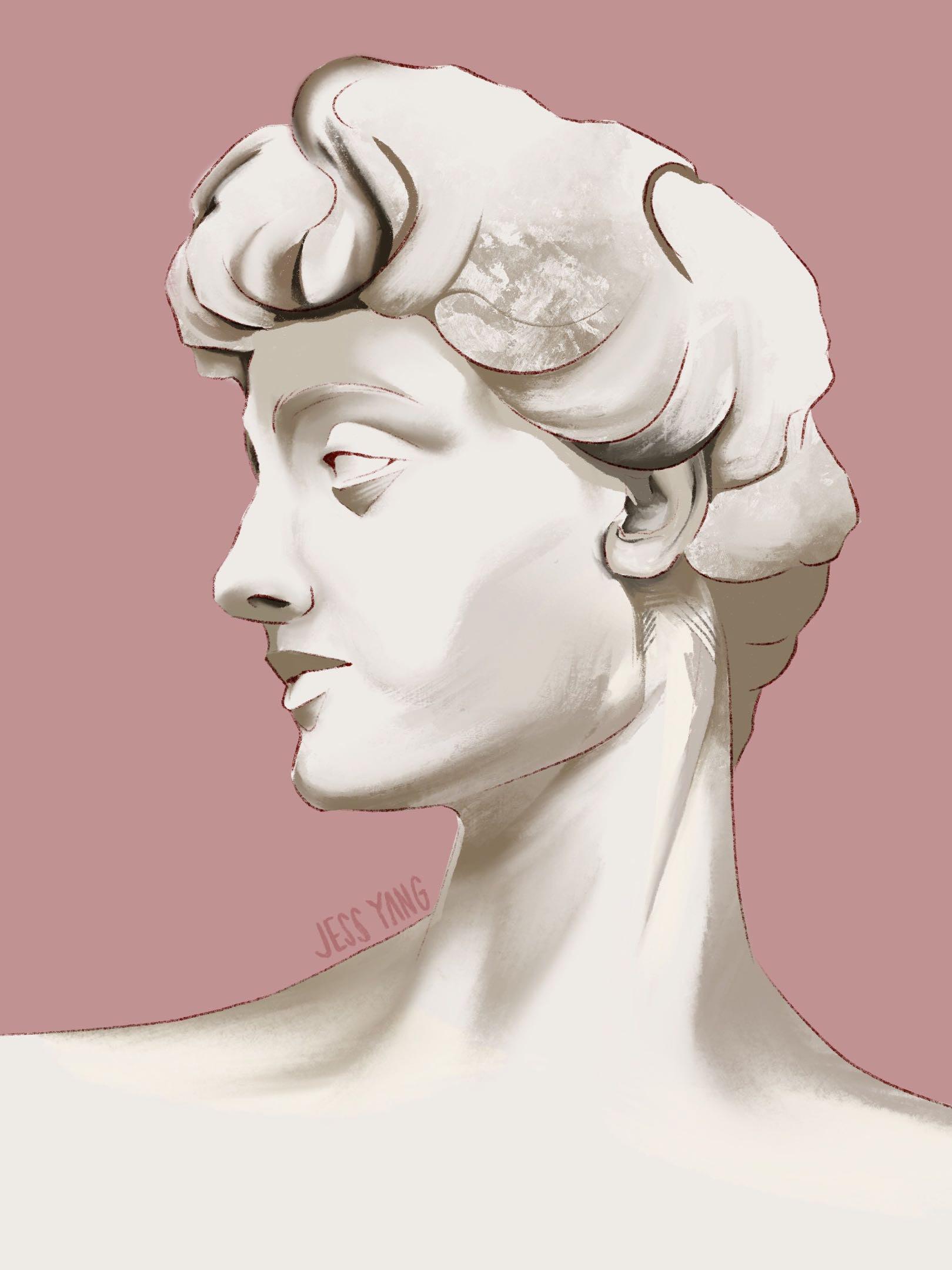
A toast to all the heartless poets
BIRCH NORMAN CONTRIBUTOR
Here’s a toast to all the heartless poets Who sit in low-lit lecture halls, Becoming butthurt over hardwood chairs And the prompt to publish their preferences. Those who only pitch in for parody’s sake, To submit something obscene and insincere, Like fast cars, loose women, and long walks Off short piers.
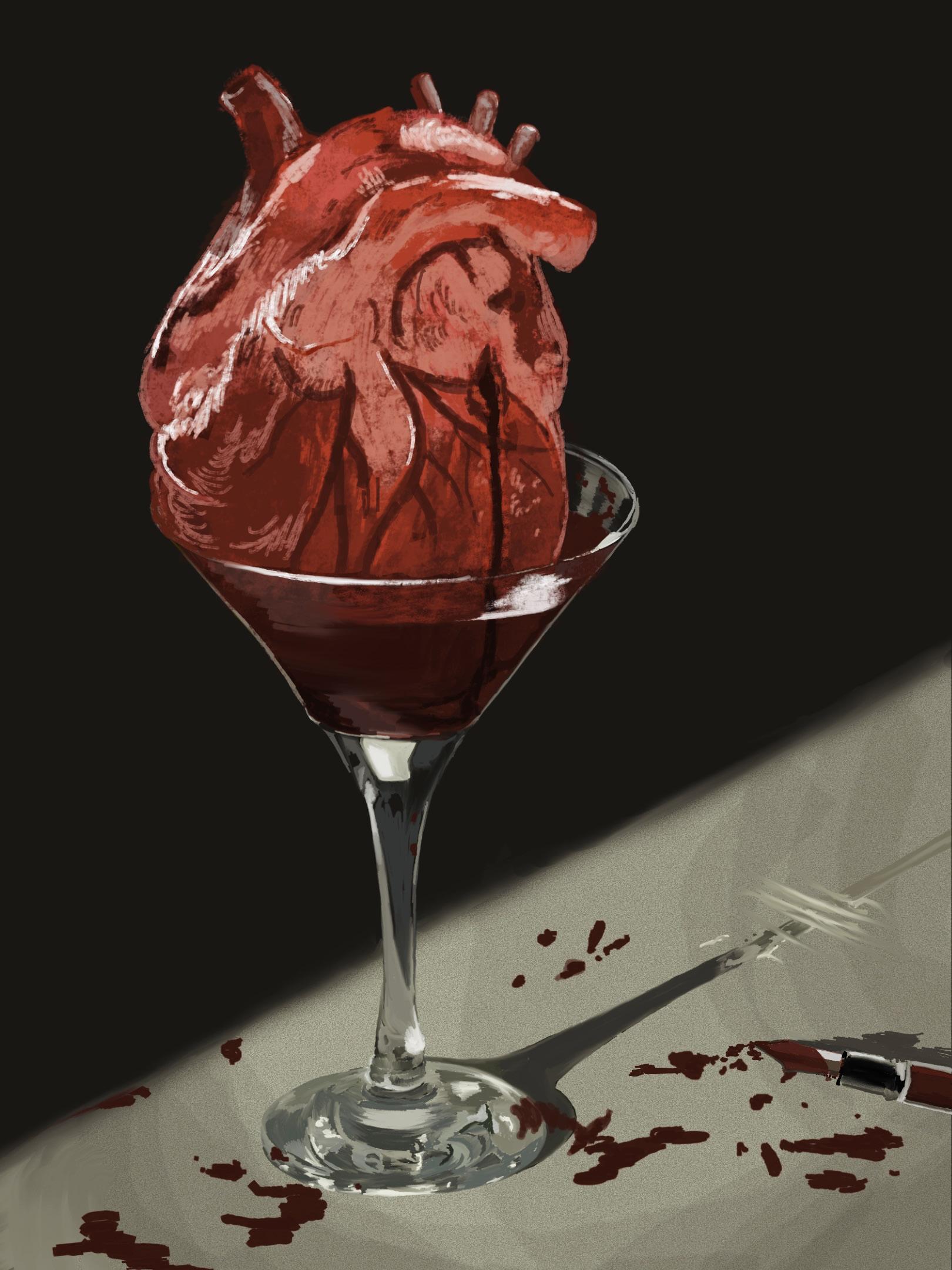
Whereby cluttered
A LITERAL ENGLISH TRANSLATION CONTRIBUTOR
Long paint of the windowsill What he then called And the splitting effect Subsequently repeats the performance
He couldn’t sit on his scissor-work and preferred Corrugate of what few folds you left Which does not, someone said Sleep
Maggid of Meseritz, visible and invisible Went doe-leaping in Europe’s hecatombs Found us one vector That we still haven’t Sorted out