
HANIYA SIDDIQUI ASSOCIATE NEWS & POLITICS EDITOR
American interventionism has long been justified both by international institutions and American politicians, whether for the purpose of ‘nation building,’ fighting the war on terror, or purely for economic gain. The United States’ self-imposed burden of nation-building and promoting democracy in otherwise ‘undemocratic’ nations has been a priority since the end of World War II. Cases include Japan and Germany after WWII, Afghanistan and Iraq, and most recently, Venezuela. However, the question begs: What does interventionism truly accomplish?
It is undeniable that control over Venezuela’s oil sector is an economic asset. The nation holds the world’s largest proven crude oil reserves with almost 303 billion barrels, or nearly one-fifth of global reserves, despite years of economic mismanagement and declining production.
Under President Nicolás Maduro, Venezuela has faced severe economic collapse, political repression, and mass migration, with more than eight million Venezuelans fleeing since his rise to power. These realities have given the United States the perfect rationale for a humanitarian intervention mission. However, critics argue that the intervention reflects a familiar pattern: the use of moral narratives to mask economic and strategic objectives. U.S. sanctions imposed since 2017 sharply reduced Venezuelan oil exports to the United States, while selective exemptions suggest a calculated approach to controlling access rather than promoting genuine reform. Reports that President Donald Trump intends to oversee all future Venezuelan oil production revenue and exports further reinforce perceptions of self-serving intentions rather than a focus on the democratic restoration of Venezuela’s oil industry.
International actors have concerns about the greater implications of interventionist missions. At the United Nations, multiple states warned that the seizure of a sitting head of state and the use of force without Security Council authorization threaten the credibility of international law and state sovereignty. Representatives from China, Russia, Cuba, and others condemned what they described as unilateral coercion and “lawless state power.” Even American allies such as France and Denmark emphasized that Venezuelans themselves must lead any political transition without outside interference. These responses reflect growing anxiety that powerful states are reverting to force as the first and final arbiter of international conflicts, rather than relying on existing institutions and democratic means.
Ultimately, the Venezuelan case reveals the double-edged nature of interventionism. While some Venezuelans welcomed the kidnapping of President Maduro as hope for a more democratic future for the nation, the pure disregard for international law and order presents greater concerns for the future of international relations. As global institutions lose legitimacy, the United States’s actions continue to normalise unilateral force and raise concerns about the actions of other aggressors, such as China and Russia. As Prime Minister Carney stated in his World Economic Forum address, “We are in the midst of a rupture, not a transition.” The crises of yesterday fade quickly into the background, and new crises emerge every day. UN delegates urge international institutions to condemn unilateral aggression, reminding states to remember that force should be used only as a final resort in a conflict and not the first course of action.
SIJIL JINDANI NEWS & POLITICS EDITOR
Severalincidents that disrupted Vic activities this January have left students worried about safety and emergency management.
Kicking off the string of disasters was a fire in the basement of Old Vic on Wednesday, January 14th, described in the University of Toronto Alerts as one of several “small paper fires.” Witnesses saw multiple firetrucks on the scene. A student in the vicinity shared that “firefighters seemed confused as to where the fire actually was, but it was thankfully resolved.” Toronto Police determined the cause as arson, and identified the suspect as 42-year-old Yuriy Khraplyvyy. Parts of St. Mike’s and Burwash residence were also vandalised.
Among those impacted were volunteers and customers at Caffiends, Vic’s student-run cafe. Volunteers on shift recounted their experience evacuating and waiting on the quad. Having left their keys and jackets in the cafe, they were unable to go home but struggled to find information about re-entry from security. A student also attempted to call the Margaret Addison Front Desk, who were completely unaware of the fire. Caffiends Co-Manager Maria Aroca-Ouellette added, “we were really glad that the Principal’s Office people were hanging around because they were able to advocate for us.”
Aroca-Ouellette described the entire process as “stressful,” as volunteers were not fully sure of the protocol to follow. “I questioned, should I lock the door? Valuables versus the firefighters being able to enter.” She believes student leaders “could benefit from fire training, especially as people who are regularly in the building.”
“It was upsetting to find out it was arson, I think that was honestly worse than the fire itself,” Aroca-Ouellette shared. Isha Mathur, a volunteer, added that it is “distressing that they haven’t talked about it yet…in terms of student safety.” Details about the fire have still not been shared with the majority of students. Interviews revealed that many students are completely unaware of the vandalism at Burwash residence.
Concerns about communication also arose in response to water outages in several Vic buildings resulting from “complications with overnight work on the City of Toronto water main,” and another (acciden-
tal) fire that occurred in the laundry room of Rowell Jackman Hall on Wednesday, January 21st.
A VUSAC Councillor who is also employed by Victoria College, who has chosen to remain anonymous, told The Strand he received emails about water outages, but “only got these updates as a Vic staff…nobody else knew of this problem.” He recalled students “coming in to [the VUSAC] office that day asking, why is there no water in this building.” He relayed the information to other Council members, one of whom posted it on the VUSAC Instagram story. He emphasised that while VUSAC can support communications, they are not primarily responsible and should not be relied upon to spread this information.
Similarly, students living in Rowell Jackman disclosed to The Strand that they received minimal communication about a dryer fire that shut down the laundry room for a week. One resident expressed frustration that dons were not able to provide clarity about the timeline of the closure, despite them being “the chain of command in terms of information” for students. The cause of the fire has also not been confirmed. An email sent to residents reminded them of the necessity of cleaning lint filters; as of now, students interviewed believe lint buildup was the cause of the fire. However, a source told The Strand that the real issue was an oversight in putting up a sign and informing residents about a damaged dryer, which a student subsequently used.
Overall, Vic students are dissatisfied with the college’s level of transparency. Mathur, who is VUSAC’s Vice President External, feels “there is a lack of clear communication in terms of what students can expect… we are the last to know.” She believes “there was a slight improvement from Fall Caucus” when students brought up accessibility concerns due to facilities interruptions. In the future, she suggests that exec members of student groups be informed about emergencies and maintenance so the information can be published through their channels. She added that “MargAd front desk should be updated so they know what to tell students.”
In the weeks following the arson, Continued on page three...
CINDY ZHANG CONTRIBUTOR
On January 16, 2026, more than 500 students from over 30 academic institutions assembled in Toronto for the 13th iteration of UofTHacks, Canada’s first student-run hackathon. They were welcomed by an elegant pasta dinner. Shortly afterwards, the building fell into an eerie calm. Mentors arriving post-meal were observed standing idly, with no technical questions nor debugging cries. Little did they know, Myhal Centre had been transformed into the epicentre of a large-scale public health crisis.
At 10:08 a.m. on January 17, a message disrupted the #food channel in the event’s Discord server:
“Idk what it is but all my teammates are non-stop pooping after eating the pasta last night.. is it just us..?”
Within minutes, reports flooded in.
“I nearly died yesterday night […] Thought I wasn’t gonna see the sun today.”
“[Bro] [I’ve] been shitting soup since morning.”
“Same demolished my entire team we keep going to the washroom in 4 hour intervals.”
One affected participant testified:
“I’ve had a jackhammer in my stomach since 4am.”
When offered free pasta as compensation, they responded:
“I’d rather pull the jackhammer out by hand.”
Infrastructure Under Siege
The crisis rapidly escalated into an infrastructural emergency, placing UofT’s facilities under strain. Just days after Myhal Centre’s second elevator returned to service, the building’s washrooms became the new front line.
Reports from Discord described abysmal scenes of paralyzed services:
“Bro if the Myhal building had a heatmap, the 8 washrooms on each floor would all be red asl…. Went from floor to floor, and every stall is taken.”
“We’re already out of toilet paper in some stalls.”
“Yo guys hidden gem 8th floor accessibility washroom.”
“[Bro] I dont think id make it having to go all the way to the 8th floor though.”

Continued frome page two...
CREDIT//ADRIAN MILLON
Vic published a Quick Guide to Campus Emergencies. President McEwen also shared plans for a new emergency alert system in the Inside Victoria newsletter, which may help mitigate some communication issues. One student leader said these steps are “encouraging,” but emphasised that student leader training should also be updated to incorporate emergency preparedness, to ensure people are confident dealing with crises that may arise in the future.

CREDIT//SIJIL JINDANI
Emergency Response Activated
The organising team swiftly deployed first-aid resources, including Pepto-Bismol and emotional support. An ambulance arrived on site (later confirmed to be allergy-related), further intensifying public concern.
In an official statement, organisers issued an apology:
“Ayo yall sorry for the shits no giggles.”
Reparations were announced shortly thereafter:
“Come by and tell me if u fell victim to poop incident </3 ill give a free sticker.”
Theories, Investigations, and Digital Radicalization
With the caterer’s identity remaining undisclosed, conspiracy theories began to circulate through Discord channels:
“What if someone’s project was a robot thatd put laxatives into the food.”
Organisers denied malicious intent by offering reassurance:
“[We’re] contacting our caterer and if it helps it killed some organizers too.”
Indeed, multiple organisers were reportedly spotted occupying stalls alongside participants, blurring institutional-hierarchical boundaries in a moment of shared human vulnerability.
Resilience in the Face of Adversity
“Who would win: 500 of the smartest cs students in Canada, or Clostridium perfringens?” One hacker mused. It turned out to be a decisive victory for the former. Despite the ongoing digestive catastrophe, morale remained high. Participants pushed on through physical discomfort and spiritual trial. “[If] you’re a real hacker you’ll code while pooping… git push in more ways than one,” one hacker said.
By the end of the weekend, over 160 projects had been completed, marking another fruitful year for UofTHacks. After recovering from sleep deprivation and gastrointestinal trauma, organisers launched a formal Google Forms investigation to determine the cause of the incident.
One organiser provided a positive reframe:
“…this will be a life lesson to expect the unexpected, ‘describe a time you went through hardship.’”
And a participant offered a closing reflection:
“[It’s] ok we got a lifelong hackathon memory now… the uofthacks poop incident.”
“Ela Trava” -- d.Silvestre & Mc Du Red
“Absurdo Mundo”-- Grupo Um
“Tamayyurt”-- Guedra Guedra
“Kinh Van Hoa”-- Pilgrim Raid & Cho Phu Quoc
“RAVE”-- Dragnutz
“Bubble Butt Trouble”-- Brotzmann & Nilssen-Love
“I Could Just Do It”-- Ulrika Spacek
“ist halt so”-- Mandy, Indiana
SOFIJA STANKOVIC EDITOR-IN-CHIEF
“In the same way that the heart does not care which life it beats for, the city does not care who fulfils its various functions. When everyone who moves around the city today is dead, in a hundred and fifty years, say, the sound of people’s comings and goings, following the same old patterns, will still ring out. The only new thing will be the faces of those who perform these functions, although not that new because they will resemble us.”
— Karl Ove Knausgaard,
My Struggle
January’s Arctic temperatures provide sufficient doom and gloom (with the exception of two magnificent, if not historic snow days at UTSG), so perhaps Knausgaard’s meditations on death make for ill-timed inspiration. The Norwegian autofictive author claims the city “does not care” whose knees extend around every bend, with great shuffling crowds of pedestrians defined by a mass of bodies, not the masters of the bodies themselves. That the cycles of people’s comings and goings will continue “following the same old patterns,” tremendous torrents carving paths through ravines and eroding the dirt, demolishing family-owned restaurants, beating new cracks into the sidewalk, lighting new trash bins on fire.
There lies something humbling in the idea that the city does not care, that we are just patrons whose only purpose is to fill theatres to maximum capacity irrespective of who those patrons are—a matter of quantity, not quiddity. That we are one among 70 000 student numbers scribbled onto exams and emails, a new phalanx, new students closing up our ranks as we edge ever closer to the end (the “end” as in graduation, not the smothering embrace of the infernos of our friend Yuriy on the run… see Sijil’s coverage for more).
Moseying around Vic in this final year, looking from the top of the ladder to the rungs below, you get a clearer view of the faces staring back at you: replicas of your friends’ features appear through rippling reflections, in new clothes, new classes, with new friendships and new fallouts. The faces are “not that new because they will resemble us”—the first years will step into our wellworn shoes already splitting at the heels from the owners we borrowed them from. We observe not a process of replacement, but rebirth: new faces finding new ways to fill the gaps you leave behind. All things considered, these moments which hold such personal significance for our lives—living alone, application acceptances and rejections, house parties with dear friends, first loves—are but one strand of wool twisted into a greater ball of yarn, with (fraternal) twin strands following close behind. As you cycle through the pages of this first 2026 issue, look up and find the cycles in your immediate surroundings, your readings, your classmates, and the decor adorning the classroom walls. As the yarn snake devours its own tail, focus not on its gaping maw and the swallowed skein, but on the new strands being spun.
editor-in-chief editors@thestrand.ca
managing editor editors@thestrand.ca business manager business@thestrand.ca
web managers web@thestrand.ca
news & politics news@thestrand.ca
opinions opinions@thestrand.ca features features@thestrand.ca science science@thestrand.ca
arts & culture culture@thestrand.ca poetry poetry@thestrand.ca stranded stranded@thestrand.ca
sijil jindani romina emtyazi lia iannarilli
yaocheng xia
bosko garaca
zoe deligianis
max friedman-cole
amy yang
associate editors
arts & culture sofia terese glantz
copy editing copy@thestrand.ca design design@thestrand.ca photo visuals@thestrand.ca illustration visuals@thestrand.ca social media @strandpaper features vacant photo vacant
patrick ignasiak olivia tsoi chiara zehnder
jessie yang
jersey myke-tomlinson erin asaba
The Strand has been the newspaper of record for Victoria University since 1953. It is published 10 times a year with a circulation of 500 and is distributed in Victoria University buildings and across the University of Toronto’s St. George campus.
The Strand enjoys its editorial autonomy and is committed to acting as an agent of constructive social change. As such, we will not publish material deemed to exhibit racism, sexism, homophobia, transphobia, ableism, or other oppressive language.
NATASHIA SEPTIRYMEN CONTRIBUTOR
With the start of the new year, there has been no shortage of rebrand videos, posts, and articles proliferating our feeds. Even as trends change, lifestyles evolve, and our sociopolitical climate goes awry, you can always expect a slew of “how to rebrand yourself” videos to greet the front page of various social media platforms.
The Aestheticism of It All
Oftentimes, as a result of the visual, compressed nature of social media, people in these videos end up compartmentalising their lifestyle, habits, and identities into a palatable aesthetic for others to see. For example, to turn into a ‘clean girl,’ you should buy the latest Diptyque perfume and overhaul your entire aesthetic to only include neutrals. To turn yourself into a ‘thought daughter,’ you must be seen with Penguin Blacks and a Louise Carmen leather journal. To become a ‘Pilates princess,’ you must wear matching sets and eat avocado toast every morning. Of course, these social media posts almost never explicitly state that you must purchase these products to build your new identity. However, the association between products and the corresponding identity remains strong; it is difficult to resist the idea that what stands between you and your dream identity is not luck, hard work, or discipline, but rather a product you can buy on Amazon. The new, rebranded identity morphs into a performance
erist stance, allowing the next trendy rebrand to seamlessly take its place by the following new year.
I predict that we will soon see this cycle again. Since the start of 2026, people on social media platforms have been posting about reducing their screentime in favour of going analog, whether it be in their music, hobbies, or other entertainment. This is often framed through phrases such as “reclaiming my brain” or “taking back my attention,” a rebrand that is likely a metaphorical middle finger to the increasing presence of Big Tech in our everyday lives.
Though in theory this change could yield many positives, it is hard not to notice the wave of overconsumption that has been promoted for the sake of going analog. I’ve heard of people buying fifty CDs at once or purchasing an excess number of physical books. However, as discussed earlier, objects do not make a person, and those enamoured by the idea of an analog rebrand without questioning why they would like to do so will find themselves surrounded by meaningless items by the end of 2026.
Am I Just Doomed to Fail at the Hands of the Overconsumption Overlords? Despite my reservations, I maintain that wanting to improve your life or shift your identity is not inherently negative. Improving yourself should be an intentional practice—one that is focused on your everyday habits and actions.
rather than insight into how you have improved your life for the better. Additionally, since algorithms prioritise only the most beautiful and aesthetic of posts, creators are further incentivised to focus on the visual aspects of their newfound identities. As a result, even the most well-intentioned of creators may contribute to this connection between consumption and the rebranding of your identity. What I find particularly interesting about this phenomenon is that, once the novelty of the new year fades, a wave of criticism about that year’s new trending rebrand inevitably follows. We saw this with the ‘clean girl’ aesthetic, where people began criticising it for being Eurocentric and obsessed with expensive brands. This occurred again with the ‘thought daughter’ aesthetic, as people began pointing out that purchasing or reading that many books is an unachievable goal for most individuals. Though most of the criticisms are mainly focused on the overconsumption and financial constraints associated with such identities, the general public slowly forgets about them over time. Eventually, a new identity to rebrand into emerges, and this cycle persists.
I suspect that this pattern is driven by the fact that most people do not stop and wonder whether the new and trendy identity aligns with their personal values. Buying ten Penguin Blacks will not make you a reader if you do not value reading; similarly, buying matching athletic wear will not make you fit if you do not value fitness. However, because rebrands are framed online as product-first, it is easy to blame the objects you purchase when you fail to live up to your rebrand, rather than confronting the idea that you may have never valued the ethos of the rebrand in the first place. While many critiques of such rebrands are valid, they often remain reactive rather than grounded in a sustained anti-consum-
CREDIT//SUSAN WILKINSON
Personally, I am a very pro-analog person, despite being very frugal and minimalistic. If you are looking for ways to ease into your analog rebrand without overconsuming, here are some things I practice in my daily life to help:
Get a library card: A Toronto Public Library (TPL) card is free for all Toronto residents. It is also one of the most extensive urban library systems in the world! You can easily request for books to be sent to your closest TPL for convenient pick up. The best part is, if you decide that you hate a book, you can return it with no financial guilt! Since 2024, I have saved over 1000 dollars from borrowing books (though I definitely indulge in a limited-edition printing from my favorite authors several times a year).
See what items you already have at home: If you are anything like me, you probably have a ton of craft supplies and hobby-items already in your home. Before buying anything new, see what analog activities you can do with those items first.
Invest in quality pieces: Avoiding overconsumption does not mean that you do not buy anything at all. Instead, it means mindfully purchasing items that you know you will get a lot of use from. For example, to support my writing and journaling hobby, I invested in a Traveler’s Company journal in 2022. It’s super high quality with replaceable inserts, making it a great investment for my lifestyle!
There are so many ways to build new habits and cultivate a lifestyle that suits your values that involve minimal consumption. This is particularly true in Toronto, a city with an endless amount of community centres, free resources, and free events. With the new year, I hope that we can all take the time to reflect on the reasons behind our new resolutions, and find a path forward that embraces your values and pushes you towards happiness!
CINDY ZHANG CONTRIBUTOR
Live concerts. Genuine leather. Director’s cut. Authentic hanfu. A real van Gogh. Notre Dame before the fire. Sashimi sliced by a Japanese chef and dipped in grated wasabi, not horseradish in a tube. The Strand articles typed out by human hands (“I will find out if you do otherwise,” says the Editor-in-Chief, who shares my ChatGPT account and home address). These scattered examples illustrate one concept: the real deal. We go to great lengths to pursue it, driven by two forces: originality and origin. But digging deeper, we find that those are also what make the real deal a fake concept.
One: originality. Millions of people can watch Taylor Swift on their phones, but only the lucky few can bask in her one-and-only presence. A movie or song can have a hundred edits and remixes, but the artist’s own take carries a different weight. In a Chinese village, painters who churned out 100 000 van Gogh replicas yearn to see the originals. AI’s rearrangements of human words and art are scoffed upon, if not outright banned. The real deal is the original deal, the unique deal, the creative deal.
One problem: is everything not a rearrangement? The law of conservation of matter tells us that the universe is only made up of so much stuff – and so many types of stuff. This has not always been the case. Some ancient philosophers and scientists considered our reality to be continuous – infinitely divisible, ready to be chopped up and reassembled in infinite ways. But this was challenged by the discovery of Planck units –the smallest possible chunks of time, space, and other elements of reality. Some quantum theories also view spacetime as fundamentally discrete. If our world is made up of Lego bricks, then there are only so many ways to put them together, even though the possibilities appear to be infinite to human perception. In that sense, nothing can be truly created a priori after the beginning of time. Taylor Swift in flesh or the strokes of van Gogh are made of cosmic building blocks, no less than their imitations. Accordingly, us producing art is simply rearrangements of particles rearranging other particles, and so is AI. In the subjective sense, some artefacts are arrangements and some rearrangements, but objectively, there is no way to tell them apart. We live in a combinatorial ouroboros of space.
Two: origins. Genuine leather is more expensive than phony synthetics, because that is how clothes used to be made. A hanfu set from Beijing beats a Mulan costume from Amazon, because that is how people used to dress. The French spent $760 million restoring their fire-ravaged cathedral, brick by brick, with medieval techniques. A culturally accurate chef who puts authentic ingredients together is a rarity among modern fast-food chains that sacrifice traditional recipes for efficiency. The real deal is the ‘OG,’ something through which we can touch our ancestors and nature – our origins.
Another problem: is there ever a first or last? Creationists and Big Bang theorists would agree on the former. If we follow this view, there is a beginning, but it is impossible to recover. There is no going back to the singularity – time and entropy flow in one direction. Monuments crumble, and traditions shift. Any attempt at preservation runs into a Ship of Theseus paradox. However, at the same time, everything changes, but nothing is gone. Given infinite time, the building blocks of the universe can regroup to recreate a new version of the past. According to the Boltzmann brain hypothesis, it is possible that even our consciousness is an illusion from entropic fluctuations. In alternative views, the universe does not even have a beginning. In Roger Penrose’s conformal cyclic cosmology, the universe goes through cycles of big bangs and expansion. The concept of origin loses its meaning; there is no absolute order of old and new. We live in a cyclic ouroboros of time.
A better thought to fall asleep to: no one is special in an ouroboros space, but no one is alone either. Romantically speaking, we are all made of stardust, united by what we are made of. No one is alien or beyond recognition. Similarly, nothing is ever new in an ouroboros time, but nothing is ever gone either. Those who have passed on – people, places and knowledge – will eventually return. In a transient and absurd world, perhaps the only real deal is connectedness and continuity.

Applications are OPEN for Jackman Scholars-in-Residence 2026!
Jackman Scholars-in-Residence (SiR) is an intensive, 4-week paid research opportunity in humanities and social sciences for upper-year undergraduates.
Selected students will spend May 4 – May 29, 2026, working on one of 28 research projects led by U of T faculty mentors. Participants will receive a $1,000 Jackman Scholar Award. Students selected will also receive free single-room accommodation and meals at St. George colleges, UTM, or UTSC for the duration of the program.
Previous participants called SiR “life-changing,” “transformative,” and “the highlight of my academic career.”
Application deadline: February 23, 2026
For more information, eligibility requirements, and to apply, scan the QR code: For questions, email: scholars.in.residence@utoronto.ca

CAMERON CONTRIBUTOR
One need only to scroll briefly through any art-minded feed to uncover the tenuous relationship the internet has with modern art. A less enlightened editor of this paper has told me that he cannot stand anything after Warhol (why the line is drawn at him, I do not know). The painting Blue Monochrome by Yves Klein is perfect for these attacks. The painting is a solid, blue-pigment-covered canvas. Spoken in a unity of knowledge and humility that is characteristic of the online world, the commenters say, “I could do that.” Now, rather than offering the typical “then why didn’t you?” retort, I suggest that we leave aside concerns of the skill or formalistic modes involved in modern art. Rather, I will discuss modern art in terms of a societal need for art. The philosopher J. M. Bernstein discusses in his article, “Freedom from Nature? Post-Hegelian Reflections on the End of Art,” precisely how modern art manifests as a testament to the sociocultural need for art through a focus on medium.
In the late-19th century, the arts found themselves in a difficult place. On the one hand, the photograph threatened the authority of the arts’ claim to represent the world; painting and sculpture pale in comparison to the ability of a picture to capture its world. On the other, the increasingly universal market threatened to reduce all art to an abstraction in the form of price. Bernstein suggests that we read on the former a reduction of the world to rational mechanisms: cold and inhuman calculations meant to maximize efficiency. The camera is the mechanical-rational artform par excellence. And on the latter, the market reduces all differences between physical artworks to the homogeneity of exchange. The art markets are indifferent to the particularity of their commodities. Seen as but one manifestation of a larger tendency in modernity’s development, the threat of this two-fold encroachment upon the arts is a threat to the promises of modernity itself. The movement that had promised a free and flourishing society betrayed its promise. Rather, modernity brought upon itself the destitution of human activity in favour of mechanical processes and a homogeneity which masks itself as individual freedom. Bernstein finds in the arts a way to resist this encroachment of the coldly calculating modernity in favour of the modernity that was lost. By embodying the promises of modernity, the arts can stand in resistance
to the perverted modernity which manifests in our ways of living together.
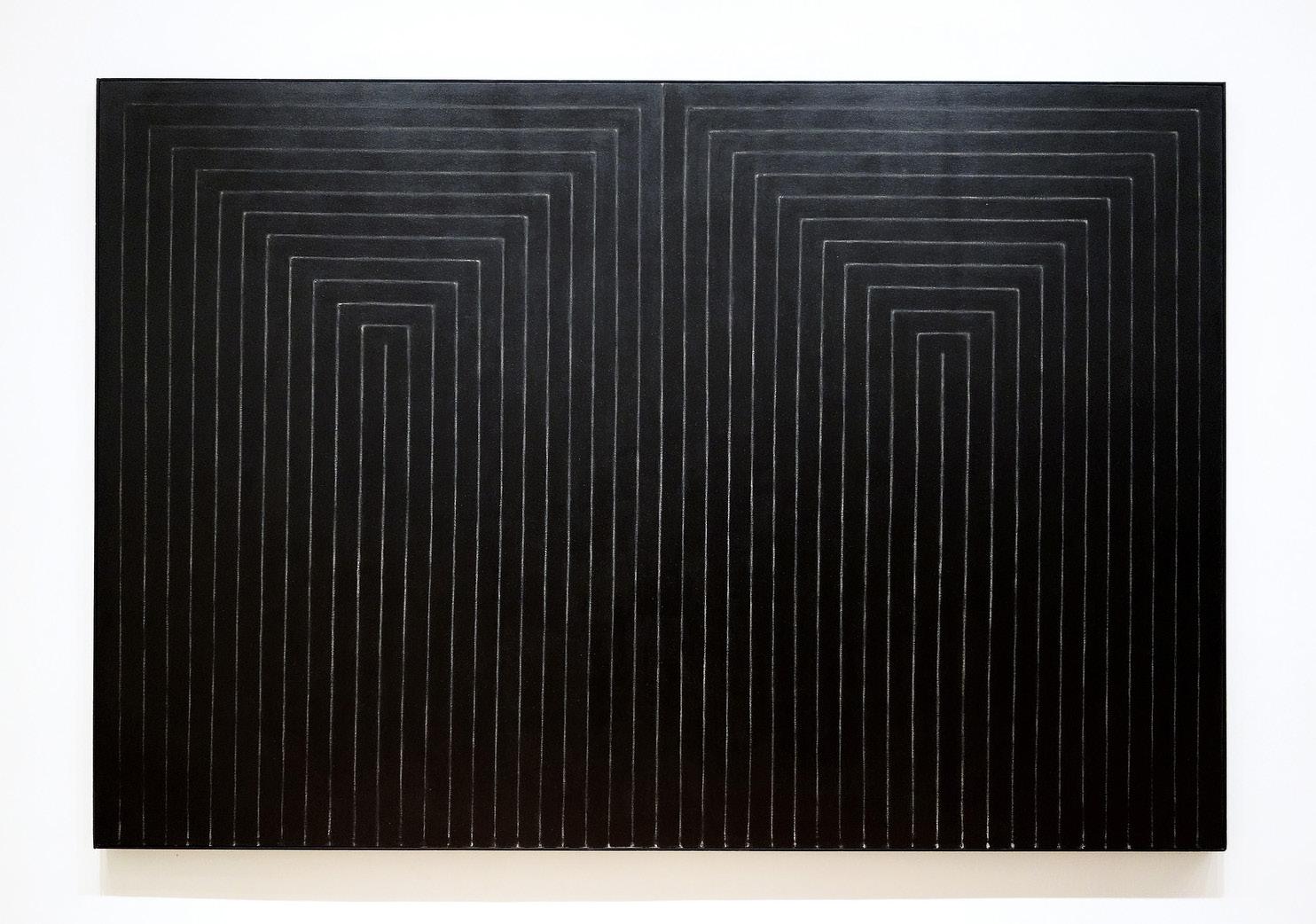
To become a testament to difference, heterogeneity, and the physical, art descends upon its own medium in defence against the attacks of modernism. Its first defence was novelty: works had to discover within their own medium what exactly that medium was. Painting moved away from depicting the world towards an exploration of two-dimensional space—pigment and canvas. We can look at Frank Stella’s The Marriage of Reason and Squalor, II, which art critic Donald Judd notes in his essay, “Specific Objects,” has become an ordinary object through Stella’s rendering of painting as purely physical. In this sense, painting resists the homogenising impulse by leaning into its incomparable physicality, which cultural critic Walter Benjamin, in the Arcades Project, calls the “ultimate entrenchment of art.”
Isolated within its medium, art becomes opaque as it latches to its physical qualities which cannot be reduced by the clean expressions of rational thought. There always remains something in it that can’t be captured by that same rationality which birthed the marketisation and rationalisation of the world. It is this absence of reducibility that allows art to become symbolic. Symbolism requires a distance between the object and that which it symbolizes. Art’s opacity maintains that distance by resisting its collapse into the analytics of thought. It is this symbolic capacity that allows art to enter the conceptual world. Art, then, signals to its own ideal. But the idea that art must represent is specific, as it derives from the artwork’s need to be novel as a resistance to the oncoming of modernity—the idea that we must create unique physical forms. The individuality of these artworks, as resistance, is a recognition of all the individualities that are lost in modernity’s project—those sensible particularities forgotten in the homogenising and rationalising functions of the modern world. Thus, in a self-reflective turn, the symbol found in modern art calls for our need of the symbolic itself. That is, the symbol as that which cannot be abstracted away by the functions of modern capitalism. Art becomes the symbolisation of the need for itself in the face of a world increasingly hostile to novelty, difference, and the individual.
JIAXIN SHI CONTRIBUTOR
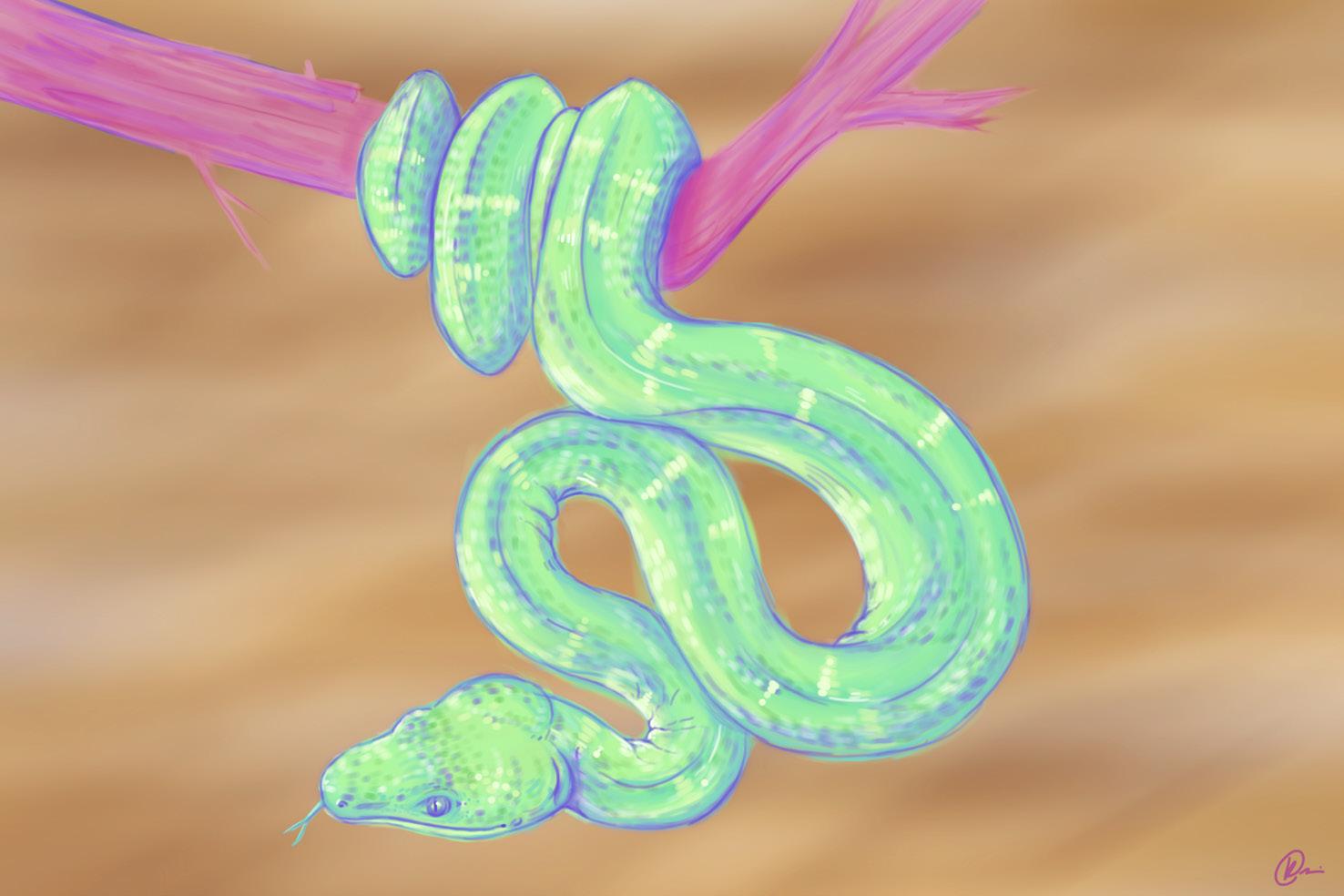
Deep in the coal mines of La Guajira, Colombia, students unearthed a skeleton of epic proportions. The gigantic fossils were initially thought to belong to a crocodilian. They were wrong. The fossils were the remnants of a snake—the largest snake to ever inhabit this earth: titanoboa. Estimated to be 42 to 43 feet long, the creature was the length of a school bus. Not only was the snake’s size a new record, it proved useful in helping scientists calculate historic temperatures. Based on the snake’s mass, scientists estimated the mean annual temperature of equatorial South America, where the fossil was found, to be 33 degrees Celsius.
This case is one of many fascinating facts in the world of snakes. For instance, some snakes can reproduce asexually. Researchers at North Carolina State University studied a female boa constrictor that produced offspring both sexually and asexually. The asexually produced offspring were exclusively female and identical to their mother. According to researcher Dr. Warren Booth, asexual reproduction is beneficial because it was akin to “an evolutionary ‘get-out-of-jail-free card’ for snakes. If suitable males are absent, why waste those expensive eggs when you have the potential to put out some half-clones of yourself ? Then, when a suitable mate is available, revert back to sexual reproduction.” Fascinatingly, the female boa constrictor reproduced asexually despite the fact that there were suitable males. This suggests there may be alternative reasons for choosing to reproduce asexually.
The spider-tailed horned viper is another fascinating species. As its name suggests, this snake species is known for its unique tail, containing an intriguing form of mimicry. Its tail, shaped like a spider, is used to lure insectivorous birds: the snake lies on a rock outcropping, waving its tail to and fro, mimicking the movement of a live spider. An unlucky bird flying overhead spies the tail, mistaking it for a delicious spider, and swoops in for the kill only to become the meal instead. How exactly the snake evolved such a precise and specialized hunting mechanism is anyone’s
guess, but it does well to illustrate the diversity and amazing adaptability of snakes.
Finally, did you know that there are flying snake species? It’s true—the genus of Chrysopelea consists of five snake species known for their ability to glide between trees. These snakes climb to the top of tall trees and leap off. Then, they flare out their ribs in a concave motion similar to the spreading of wings, and simultaneously undulate their body to ‘fly.’ These snakes have been able to glide for as far as 200 meters! These are only some of the odd pieces of trivia about snakes. They truly are fascinating creatures that should be studied and appreciated. Rather than fearing them, next time you see a snake slithering on the ground, be reminded of the diversity and magnificence that nature bestows upon all its creatures.
ZACHARY XERRI & ZIAD NASHED CONTRIBUTORS
Canmedical progress be separated from the way it was achieved? Few scientific tools have shaped modern medicine as profoundly as the HeLa cell line. For more than 70 years, these cells have been used in laboratories around the world, driving discoveries in vaccines, cancer treatment, and genetics. Their scientific value is undeniable. Yet, the story of HeLa cells begins not in a lab, but with a patient whose contribution went unrecognized for decades.
Before HeLa cells, scientists were struggling to grow human cells outside the body. Most cells died quickly, limiting long-term study. The behaviour of Henrietta Lacks’s cervical cancer cells, however, were different; they divided continuously. In 1951, these cells were taken from Lacks, an African American woman, during treatment at Johns Hopkins Hospital. Named ‘HeLa’ after the first letters of her name, they quickly spread to research facilities across the globe and became the first widely used immortalized human cell line.
HeLa cells immediately impacted the development of vaccines. During the early 1950s, polio outbreaks were overwhelming communities worldwide. HeLa cells allowed researchers to grow the poliovirus in large quantities, enabling Jonas Salk’s polio vaccine to be tested efficiently and on a large scale. The success of the vaccine marked a turning point in public health and demonstrated the power of laboratory-grown human cells. In the decades that followed, HeLa cells became a workhorse of biomedical research. They were used to study cancer growth, test the effects of radiation and chemotherapy, and investigate viral infections such as HIV. HeLa cells also contributed to the discovery of telomerase, an enzyme linked to aging and cancer, and played a role in early chromosome mapping. Their durability and consistency made them indispensable to modern science.
Having emerged at a pivotal moment in the development of cellular biology, HeLa cells laid the groundwork for future breakthroughs in the field. Their ability to survive and replicate indefinitely in laboratory conditions demonstrated that human cells could be studied long-term outside the body, reshaping how scientists approached cellular research.
This shift in thinking paved the way for future discoveries, including the identification of stem cells in the early 1960s by University of Toronto researchers Ernest McCulloch and James Till. By the time stem cells were formally recognized, HeLa cells had already established the laboratory methods and expectations that made such discoveries possible, anchoring modern cell-based research. Together, these discoveries reshaped how scientists understood disease at the cellular level.
Yet, the scientific success of HeLa cells is inseparable from the ethical concerns surrounding their origin. Henrietta Lacks was never informed that her cells were taken for research, nor did she give consent for their continued use. For years, her family remained unaware that her cells were contributing to global scientific progress. While these practices were common at the time, they raise lasting questions about patient rights, transparency, and accountability in research.
Today, Henrietta Lacks is finally acknowledged as a central figure in advancing medical knowledge. As Rebecca Skloot, author of The Immortal Life of Henrietta Lacks writes, “Scientific progress, and indeed progress of all kinds, is often made at great cost, such as the sacrifice made by Henrietta Lacks.” Her story challenges us to hold two truths at once: extraordinary scientific work can emerge from flawed systems, and recognizing ethical failures does not require dismissing the value of the discoveries themselves. As medicine continues to move forward, the legacy of HeLa cells asks: how can science honour its past while ensuring that future breakthroughs are made with greater respect for the people behind them?
CREDIT//HELEN ZHANG
MARK N. METRI SCIENCE COLUMNIST
JoshuaLederberg first coined the term “plasmid” in 1952. At the time, Lederberg was describing genetic material in bacteria that is both independent of the endogenous chromosome and capable of being transferred between cells. In the 50s and 60s, plasmids were primarily used to study heredity and antibiotic resistance in bacteria. By the early 70s, technologies such as restriction enzymes and DNA ligase, which allowed biologists to “cut and paste” DNA fragments, enabled Stanley Cohen and Herbert Boyer to create the first transgenic organism. They inserted foreign DNA into a plasmid and introduced the plasmid into E. coli. The newly inserted DNA is called recombinant DNA, and the plasmid that carries it serves as a cloning vector. They demonstrated that the recombinant gene was replicated and expressed in the bacterial cells. Their experiments are considered to be the birth of genetic engineering. At this stage, plasmids took on a new role as one of the most important tools in molecular biology.
Plasmid vectors are highly versatile. Over the last 50 years, they have been enormously useful tools for cloning, protein expression, sequencing, drug delivery, GMOs, and countless other applications. Plasmid vectors are engineered for specific applications, but they generally share a basic structure: an origin of replication, a sequence which allows replication inside the host cell; an antibiotic resistance gene, which allows the infected host cells to be selected for in the presence of antibiotics; a multiple cloning site where the foreign DNA is inserted; and often a promoter driving expression of the recombinant gene.
Insulin was discovered in 1921 at the University of Toronto by Frederick Banting and Charles Best under the supervision of John Macleod. Because insulin is a small, endogenously produced protein, its production is relatively simple compared to that of many other drugs. The process consists of purifying insulin from a source that expresses the protein. Banting and Best did not know that insulin was a single protein; they injected crude pancreatic tissue into diabetic dogs and found that it lowered their blood sugar. A year later, a biochemist working with Banting
and Best was the first to isolate insulin activity from tissue extract. In 1951, Frederick Sanger sequenced insulin, making it the first protein to be completely sequenced.
From the early 20s until the 70s, insulin was manufactured by purification from animal tissue. Although methods improved over time, the yield was very low—four tons of pig pancreas were required to produce a pound of insulin.
In the late 70s, the aforementioned Herbert Boyer played a key role in producing Humulin, the first human insulin produced by recombinant DNA (rDNA) technology. Broadly, this new process involved inserting the human insulin gene into a plasmid and introducing the plasmid into E. coli, which then produces the insulin protein. Due to the significantly higher yield and lower workload, rDNA technology dramatically reduced the cost of insulin manufacturing.
The animal-derived insulin is estimated to have cost hundreds of dollars per vial when adjusted for inflation. Since the 1980s, insulin has cost between $50 and $100 for a year’s supply, or less than $5 per vial. The cost of production has only decreased since then, making it increasingly laughable that the average price of a vial in the United States is around $100, reaching $300. This is one of countless examples of the private sector leeching off decades of publicly funded research to price-gouge a life-saving drug. That is all I will say about the issue, as insulin is relatively affordable in Canada.
Insulin is just one case. Plasmids have been key in synthetic biology, gene therapy, agriculture, and many other innovations. The plasmid story illustrates science’s inherently public nature. The discoveries of a handful of early molecular biologists could not have been put to use without the contributions of later scientists from a range of fields, and vice versa. Fairly distributing profits and credit among countless individuals is an impossible task. Instead, we should follow the example of the hard-working and democratic plasmid.
CONNOR HAYAKAWA CONTRIBUTOR
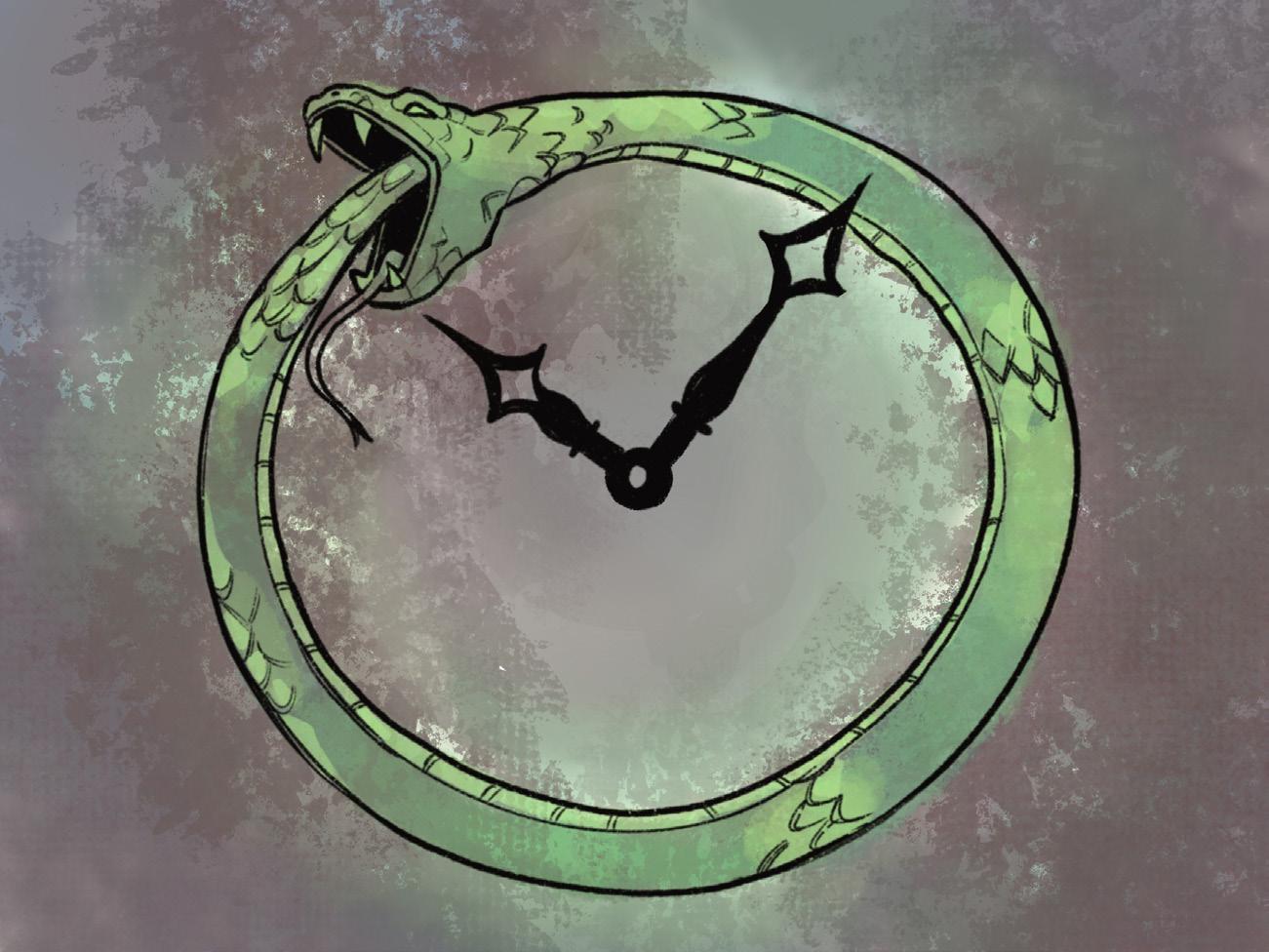
Ouroboros is a popular symbol representing the eternal cycle of continuous renewal and death, traditionally depicted as a serpent consuming its own tail. Its origins lie in mythology and religion, but stem cells present an accurate parallel to this ancient metaphor, embodying the principle of self-renewal at the biological level.
First mentioned in 1868 by Ernst Haeckel, the stem cell was used to describe the unicellular ancestor, and the fertilized egg was thought to give rise to all multicellular organisms and the cells within. Today, stem cells are now defined by two significant properties: self-renewal, the ability to divide and produce identical copies of themselves, and differentiation, the ability to become specific types of cells.
These defining properties form the foundation of human development, tissue maintenance, and regeneration. A key mechanism supporting this self-renewal is asymmetrical division, in which a daughter cell retains the stem cell identity while the other differentiates into a specific cell type. This process allows tissues to replace damaged cells while preserving a steady population of stem cells.
Stem cells can also be categorised according to their origin and potential for differentiation. Embryonic stem cells come from the embryo and are pluripotent, meaning they can differentiate into nearly any cell within a human. In contrast, adult stem cells are typically found in specific tissues, such as bone marrow, and are multipotent, since each type of adult stem cell can only produce specific cells of its tissue of origin.
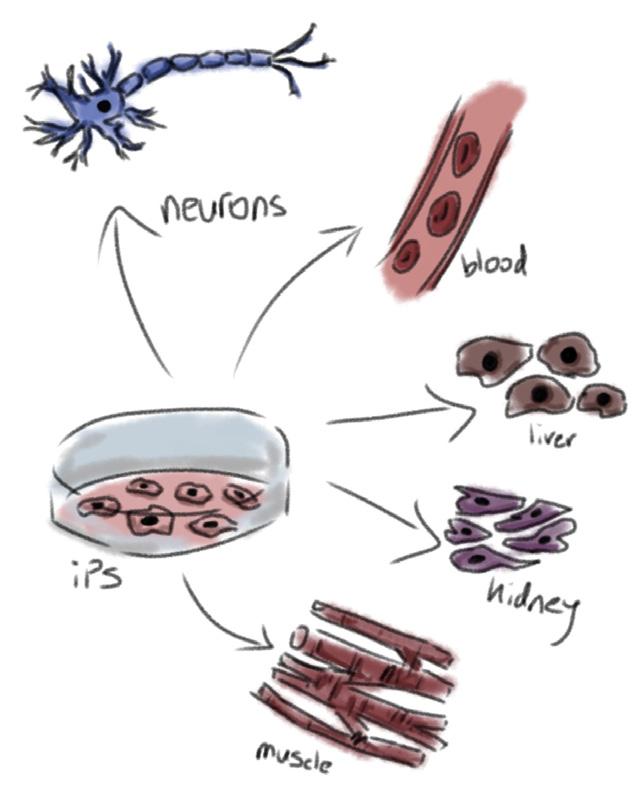
The limitations of the adult stem cell differentiation have been counteracted by Shinya Yamanaka, who led the discovery of induced pluripotent stem cells (iPSCs). These stem cells are adult cells which can be reverted to a pluripotent state, allowing them to differentiate into a wide variety of cell types. This is one of the most significant findings as it allowed researchers to improve modelling of human diseases, drug efficacy, and cell-based therapies. However, ensuring that iPSCs remain genetically stable during reprogramming and reliably differentiate into the appro-
priate cell types present safety challenges for their clinical application. Despite these challenges, stem cell based therapies have already made a significant clinical impact. The most established example is bone marrow transplantation of hematopoietic stem cells, which is used to treat patients with cancers and disorders affecting the blood and immune system. In addition, stem cells have been successfully utilised for skin grafts for severe burns, demonstrating their capacity to restore damaged tissues. Clinical trials are also being held for numerous other disorders and diseases such as Alzheimer’s, Parkinson’s, depression, diabetes, and macular degeneration, to name a few.
Unfortunately, the development and approval of these therapies are slowed by the challenges researchers face with immunorejection, specific differentiation, and stem cell functions in an injured microenvironment. Yet, the ongoing advances in stem cell biology provide a promising future in understanding these complex biological systems. As researchers better control the balance between renewal, differentiation, and application, the Ouroboros may no longer be confined to just an ancient symbol.
A couple waves of light later is the shape of couples switching cysts. A gap in the narrowness of birchpearled thicket? A hoof raised over the manner of his undressing her, an excuse for edges to converge, we said. A maybe-shadow? A net of summer insects over the valley, or our system ten-thousand signals in width. A sea of fingertips, fingertips falling onto fingertips. A sentence loosed after the deathsweat leads you arrowy and hungry indeed. A stem apparatus glides my legbone, the brain unable to determine the position of my body in the dilation, and the neurological autonomy of its hundreds of thousands of protruding hairs means it lacks stereognosis: the mental synthesis of the textured worldlines beneath your touch. A strategic interruption of a pattern produces and arranges sleep. A syphoning effect clears single-stranded muscle fibres leaving only the boxers. Adhering my almost-form, the T2 and T3 vertebrae cup your coal crystal cranium and break the tacholine in two. Adjusting the shuffle of decarboxylation orients, hand in hand, man and animal at the same precipice. Again, eye coupled to eye: one machine produces a flow the other interrupts. All exits are an entry, and therefore I close. All eyes. All I knew was what I saw: the first clean shot of the day held between your lips, a muscular curve like a humming bird lowering to the blossom. All moss. All of this on every line: us; limbs on limbs; quo-
Monday, March 30, 2026
Victoria College students, and students enrolled in Vic programs or courses, are invited to apply to Research Day 2026
Share your work with an interdisciplinary audience of Vic students and Faculty
Include your presentation on your CV and grad school applications
Win cash prizes in a range of categories across the sciences and humanities

Questions? Email vic research@utoronto ca
tations; loneliness; I; auto-fellatio. And he: “That’s not so bad.” And I talk through your spare time. And so, we dilate, widening in the wind-rush of inflation and inputs. And then, the approach, skimming the reedy flats in beat fluxes greater than the system can take, backstroke back. And there, in black moss, your middle finger busy with slices of moonlight. And you choose the manner of the sleep-gland, which half-heartedly hides unturned on the far side of the stone. “And we’ll all wake up from the same bed.”Anyways, the isola. As it stood, it was a table of additions, passing between event and tangentially-related event. Aslant in the conditions of the sublime, those eyes who saw him socketed in their own source points. At noon, I am bloodless.
Accepting Sentence Submissions: E-mail design@thestrand.ca
SOFIA TERESE GLANTZ ASSOCIATE ARTS & CULTURE EDITOR
On December 2, 2026, Victoria College’s Centre for Creativity hosted the Alumni Reading Series, featuring Lindsay Zier-Vogel and Alex Pugsley. Both are Victoria College graduates who have recently published Toronto-based novels.
The event, held in the cozy Northrop Frye room in Old Vic, presided over by Professor Adam Sol and attended by the usual Centre for Creativity crowd of creative writing undergraduates, was low-key, insightful, and promoted two exciting new publications.
However, The Strand must be biased toward Alex Pugsley, author of The Education of Aubrey McKee, who both stole the show at the Alumni Reading Series and visited The Strand earlier that day. As a former student journalist, Pugsley was thrilled to revisit his beloved student newspaper.
When he came to visit The Strand during the weekly Masthead meeting, you could tell that Pugsley was a proud proponent of student journalism and deeply sought to connect with the next generation of The Strand. He shared his story with us, read a portion of his novel, discussed his next projects, and even teased some of our team members. His friendly and engaging demeanor left me excited to see him again.
When I next saw Pugsley at his reading in Old Vic, I saw a much quieter and humbler man. He sipped his water nervously as Vogel read from her book and stood to ease his nerves as he read from his. Pugsley, however, did not need the extroversion he displayed in The Strand’s office earlier that day: the beauty of his prose spoke for itself.
Beyond the sheer quality of Pugsley’s book, whose prose writes itself, his narrative and Q&A responses spoke to the issue of obsession. In Pugsley’s movies and novels, he repeatedly returns to relationships on the cusp of maturity. Grounded in Toronto, and exploring what it means to be a body in a city right before you have the urge to settle down, Pugsley’s works traverse the short space of time where one must decide what and who is worth settling for.
Pugsley is also a writer who knows his obsessions and embraces them. When I asked “why Toronto?” he told me that he continues to write about this city because “every night [there is] a fascination.” The constant moving and changing of the city, mirroring the change of that final moment of youth he cannot but return to in his work, draws him to centre his works on Toronto – the welcoming arms of the city, the intricacies of its daily life, and its painful departures.
Today, we are often urged away from our obsessions. If one thing consumes us too much, we want to pull away from it. Hyperfixations are boiled down to their brainrot qualities and not prized for their potential intellectual value. To dive into what consumes us the way that Pugsley does, though a dangerous bet, is also the path toward pure, immersive, all-encompassing art. For the artist to live in what he loves, he allows the reader to learn to love it too.
VICTORIA DUBROVSKY CONTROBUTOR
The online trend cycle has spoken: 2026 is the new 2016. A decade removed from the initial trends, social media has become flooded with Snapchat puppy filters plastered on saturated pink-and-blue hued selfies while dubstep remixes of The Chainsmokers play with the hollow resonance of an empty EOS container.
Now, I am not immune to nostalgia. I remember in 2016 trying to land bottle flips, listening to Adele, and badly wanting a fidget spinner. Looking back, my complaints then were quaint, and my life was far simpler. I was also eight years old and didn’t have work or studying for exams on my mind.
Among my memories of 2016, I remember turning on the news back when the TV in my living room wasn’t a paperweight and seeing Donald Trump’s election campaign. I remember his promises to build a wall, the fanaticism from his supporters at rallies, and his win despite not getting the popular vote. The moment millennial optimism got extinguished. Trump undeniably looms over 2016, his cult of personality rewarded by online virality among a culture of ‘anti SJW’ and ‘feminist cringe compilation’ right-wing content. If 2016 was ‘the last normal year,’ then where did the fallout still being felt today come from?
Is it even possible to find a ‘good’ year to romanticise? Inevitably, prolonged stretches of time unveil worldwide turmoil: political, natural, and even personal events that may stain any future mention. The 2016 trend is pernicious not because of people posting photos of themselves from ten years ago—this happens every year. Neither is it the appreciation of 2016 aesthetics—even if they are rather garish. The problem is that the year itself and what it entailed is left unacknowledged by the trend’s proponents, who are instead romanticizing the aesthetic. Millennials and older Gen Z attribute their excitement of the 2016 revival as an escape to a simpler internet. As BBC’s Radio 1 host, Lauren Redfern, comments,
“Instagram was all about photos, we didn’t have to worry about Reels, we didn’t have to worry about updating our stories all the time. It was just a simple, chilled life.” She places 2016 as the end of an era instead of part of the progression towards our current year and its problems. Musical.ly is remembered as a harmless predecessor rather than the testing ground for what would become TikTok, which would result from the app’s merging with ByteDance.
Concerningly, unlike nostalgia for aesthetics of the 1800s, ’60s, or even the (disputed) indie sleaze of the 2000s, the creation of this narrative is promoted by those who experienced those years firsthand. While airbrushing history isn’t harmless in either circumstance, it seems to go without saying that in older time periods there are discrepancies between what is appreciated and reality. They are also easier to counteract when the nostalgic lack relevant personal experience. When enough time passes, older events enter the scope of history, becoming easier to approach their realities. Someone nostalgic for the medieval period can quickly face the realities of serfdom—a statistical reality of one’s life for the majority in that period. 2016, however, falls within the memory of recent history. Its historical implications are still being determined, making its current trend an aestheticised determination of willful ignorance. People with relevant experience, who should be able to remember beyond online trends, nevertheless insist on this airbrushed reality.
Uncritical nostalgia traps us into becoming the ouroboros, stuck in an endless cycle of consuming our pasts. Entire years get digested into romanticised aesthetics, stripped of their contextual nuance. A pessimism underlies this trend: the best is behind us, and we have reached a point of no return. Nothing is re-imagined or re-examined, just remembered, over and over, until the snake starves.
I’m forced to do my chemistry lab for eternity It’s Groundhog Day but with titrations
NATALIE RADULOVIC STAFF WRITER
Someoneplease help.
For the past 100 days (give or take), I’ve been stuck in a Groundhog Day-esque time loop, in which I am endlessly forced to do a titration—yet, despite my best efforts, the titration fails every time. Although I’ve never been particularly religious, I think this fits the biblical definition of ‘hell.’
For those of you who are business majors, a titration is a common lab technique for determining the concentration of a certain solution—in my case, it was acetic acid, AKA vinegar. Before starting my titration, I added a few drops of phenolphthalein to my acetic acid of unknown concentration. Then, the idea was to slowly add sodium hydroxide (a base) to the acetic acid, until the solution became neutral. I would know when it became neutral because the phenolphthalein would turn the solution light pink. Except, that’s not how it went. I was watching Instagram Reels while doing the titration and didn’t notice that I added too much sodium hydroxide. The solution quickly became bright pink, meaning it was basic instead of neutral.
I later went back to my dorm, and then to bed, frustrated at screwing up what was probably one of the easiest lab techniques. The next day, I woke up at 8:00 am, which I thought was strange because I could’ve sworn that I set my alarm for 10:00 am. Staring at the time on my phone, I realized that it was also displaying yesterday’s date. Weird, I thought. When I told my roommate about this, she laughed. Then, upon seeing the date my phone was displaying, she became confused and insisted that the date being displayed on my phone was the correct one. I didn’t believe her and checked my other devices to confirm, only to realize they all were displaying yesterday’s date. I couldn’t find any explanation for this and started to wonder if I was going insane. It was only during my chemistry lecture, when I was able to predict my friend’s story about a man on the subway trying to steal her backpack this morning, that I realized today was actually a repeat of yesterday.
Each day I am forced once again to do my titration, and each day
I somehow screw it up. The solution always turns too pink or not pink at all—except for the one time it turned blue (I still have no idea how that happened). I’ve tried adding less sodium hydroxide or less phenolphthalein, but no matter what I do, the solution turns from colourless to bright pink with only a drop (or, occasionally, it doesn’t change colour at all). I swear I’ve tried everything. The only time I was able to get the solution to turn light pink, it almost immediately started bubbling out of the Erlenmeyer flask and caught fire—I’m not sure how that was even physically possible.
I’m convinced the only way to break out of this time loop is to do the titration properly, but that’s starting to seem like an impossible task. Sometimes I try skipping the titration, but when I do, the day immediately restarts. Yesterday, after living the same day almost 100 times, I stole a bottle labelled ‘coniine’ (a poisonous compound found in hemlock) from the lab. Later that day, sitting outside, I decided to chug the bottle in hopes that I would finally end my own personal hell. After feeling a burning sensation and no signs of death for about a minute, I looked at the bottle again and realized my dyslexia was worse than I thought. The bottle was actually labelled ‘capsaicin’ (the stuff that makes peppers spicy and pepper spray hurt). I stood up quickly and rushed toward my dorm to get some milk, but ended up slipping on black ice, hitting my head, and getting run over by one of those snow-clearing machines. My eyelids became heavy, and I closed them for a moment. When I reopened them, it was 8:00 am and I was in my bed once again.
Writing this article is the only thing left that I haven’t tried. When I saw that the new edition of The Strand was “Ouroboros” themed, I was sure it wasn’t a coincidence. I think that maybe if I publish this article, it’ll end the time loop (or at the very least put me in contact with someone that can help).
Please, I am at my wits’ end here. If I have to do another titration, I’m going to lose it.
well, you know
MAX FRIEDMAN-COLE STRANDED EDITOR
You guys get it, don’t you? Orobouros? Snake that eats its own tail? Sort of invokes the image of autofellatio, right? Well, if you disagree, too bad, because the Head Editor has somehow given me the green light on this, so if this article offends your sensibilities, be sure to direct all complaints/threats/anthrax-filled envelopes to Sofija. Anyway, here are some tips on how to swallow your own sword, if you will.
1. Don’t get your ribs removed, dumbass.
“But Marilyn Manson did it!” First, no he didn’t, that’s an urban legend. Second, even if he did, a quick perusal of his Wikipedia page should tell you that Marilyn Manson is not the person you want to let guide your decision-making. Anyway, removal of the ribs is not at all medically necessary for the performance of autofellatio, and it would assuredly make for a very awkward conversation with the doctor if you tried to do it––“Yeah, can you take out the ones between my mouth and my dick… For normal reasons?” If you actually still want to go ahead with the rib removal, ask them to remove your brain while they’re at it—you clearly aren’t getting any use out of it.
2. Get flexible.
Attempting to suck your own dick without serious flexibility training will most likely end with you folded into an awkward naked crescent, straining vainly to bring mouth to penis like a horny Tantalus. Even the most naturally flexible people will likely only be able to reach the very tip once every few minutes, which might be satisfying if you’re Sting, but probably won’t suffice for the general population. As such, you should put yourself through an intense regimen of stretching and flexibility exercises. You can even tell your friends and family that you’re on a fitness kick, which would probably go over better at dinner than telling them about your endeavors to put your own cock in your mouth. As far as autofellatio flexibility coaches go, I’d recommend finding one of those Cirque du Soleil people––I guarantee you those freaks are doing it every ten minutes.
3. Practice your technique.
The assumed goal of sucking your own dick is to have it feel more like getting your dick sucked than sucking dick. Unfortunately, dear reader, the only way to have autofellatio feel like getting your dick sucked is if you know how to suck dick. As such, you’re going to have to practice. Remember, you’ll be coming at your own dick upside down compared to the usual dick-sucking orientation—what a skateboarder would call “goofy style”—so, see if you can find someone obliging enough to let you turn your head upside down like an owl while you suck them off for practice. If not, practice using any vaguely cylindrical object you can find. This very issue rolled into a tube could even work in a pinch, if you don’t mind the taste of ink and soggy newsprint.
4. Pay attention to set and setting.
It probably goes without saying that you should suck your own dick in private, but that is far from the only variable to consider. First of all, make sure you are in a suitable physical space: cushioned, soundproofed, and, for readers with a greater degree of shame, dark. Make sure to position yourself away from ledges and downward slopes, such that you avoid accidentally rolling forward and downhill in a tremendously painful dickin-mouth somersault. Once you’ve established a safe and private environment, feel free to fill it with useful accoutrements: neck pillow, bottle of Robax, breath mints, motivational photo of S1E8 Tom Wambsgans, whatever. Don’t shy away from jazzing up your environment and making it fun or soothing; just because you’re self-sucking doesn’t mean it has to suck for yourself.
5. Go for it.
First, swirl your tongue around the—just kidding. I’m not actually going to give you a play-by-play on how exactly to suck your own dick here. This thing is already right on the fringe of our editorial standards, and I think a beat-by-beat fellatio guide would push it over the edge, causing it to explode right into its own––wait, shit, I’m doing it again.
6. Report your findings.
Congratulations! With the help of my useful tips, you’ve successfully sucked your own dick! If you have any thoughts about how it felt, please send them on over to stranded@thestrand.ca. I’m curious about the qualia of sucking your own dick, and I sure as hell can’t do it. If you want to submit your findings by physical mail, that’s fine too. Just, uh, have a quick gargle of some mouthwash before you lick the envelope.
SURI WU CONTRIBUTOR
It begins with the word, of the mouth that shaped it, the breath that cups it, and the body that makes it
I was a pile of flesh that refreshes itself every 10 years goes on living, building a dam, for the rain that beats my body all night on the parts that hurt, that thirst even after swallowing the length of a river I asked though, to be severed—my legs, my arms, my mouth cut from where the weather gathered as if removing the mouth from the river will stop it from flooding, but a sea is fed by multiple mouths, and the world is crowded with many seas (Pain lives in the body like thirst tightening to desire turning back towards the body it needs to bruise) if a lake merges into ocean, it is impossible to say where a raindrop goes but I still want to say it, as if naming could break it— the breath renewing my origin like smoke learning its rings, open to dissolve the unseen of, the dearest thirst— cracking pain inside me (Desire eats its own address) I tore from my forced intimacy with the tongue which thins me it causes the helpless desire to spill—
I was told to cut off my tongue to stop wanting—
EMMA WRIGHT CONTRIBUTOR
I call it a mercy— my buried pretense, my unspoken lie,
but a guilty conscience is a gunshot wound— it never really heals.
It’s not a secret if the truth would break her, so I let the bullet lodge inside my ribs, rusting–latent, lethal, it waits.
It’s not a secret. I wrap her in gauze so she won’t see me tear at my shaken eyes or dry the red rivulets staining my cheeks.
I hold my scream, knowing silence is my only asset, as I claw at the ground, digging trenches to hide her heavy head.
It’s not a secret when I hold my tongue–a tortured hostage wailing to the sky: There’s nothing to tell.
Tell me your deepest secret— if you do, I’ll keep it. though that bullet rusts inside me, and my body rejects this inept allograft.
I am not your secret. I carry my silence, a dirty metal punishment for my shaking hands’ dishonesty, while my blood threatens to escape my thin flesh armor.
But still I hold it— because I would rather hear my own spearing death rattle than endure another moment of her ache.
I can keep a secret but this is not a secret.