Jeans and meanings passed down How clothes reflect the zeitgeist
Before appearing on Sydney Sweeney in the viral American Eagle jean/gene double entendre ad, denim was once synonymous with the working class. Images of stained, deep indigo trousers on blue-collar workers came to mind prior to the double denim—also known as the ‘Canadian tuxedo,’ as featured on Britney Spears and Justin Timberlake at the 2001 American Music Awards. Today, denim’s origins and demographic ties are largely obscure. Instead, it has become a recurring staple in North American closets. All in all, denim’s newfound association with the mainstream mirrors other materials or styles. The move from staples among the ostracised to everyday pieces highlights the link between clothes and our zeitgeist
A brief look into denim’s origin strengthens that link. Denim’s introduction to North America as a working-class staple coincided with the Gilded Age, a time of industrial production and wealth disparity. Such a gap between the rich and poor calls for class identifiers—during that era, clothes became those identifiers. By the 1900s, denim became a staple for bluecollar workers and cowboys. This link to cowboys aided denim’s propagation into the mainstream and denim’s connotation with Americana. The Americana style, as the name implies, encompasses aesthetics essential to the American identity. Rugged cowboys, country music, apple pies, and blonde women posing next to an American flag are some things that encapsulate Americana. The callbacks to cowboys as integral to the Americana aesthetic include denim by virtue of its pre-established connection. These symbols were imprinted onto denim because of the era. The early 1900s were categorised by two world wars, which encouraged and bred nationalism, the idea that one’s nation should take precedence over others. Regardless of previous meanings, by the 1960s, jeans had shifted from a class signifier to a political symbol.
The 1960s in the United States were marked by political turmoil. Social movements against the US-Vietnam War draft and for granting civil liberties to marginalised groups were prevalent. In one of those social movements, denim became a notable political symbol. During the 1965 Voting Rights protests, Black demonstrators donned their blue denim uniforms as they advocated for their civil liberties, as a reference to African Americans’ history as involuntary labourers. To suburban Americans, denim gained its rebellious status
emmanuella nwabuoku contributor
through James Dean’s movie Rebel Without a Cause. In the film, Dean, dressed in a plain white tee, a red jacket, and blue jeans, seeks meaning within suburbia. Dean’s fight resonated with viewers who were in similar circumstances. Denim’s shift from a nationalist symbol to a revolutionary one highlights how fashion reflects politics, status, and class.
Nowadays, denim’s revolutionary history has largely been forgotten. Instead, it has become a part of the average North American’s daily wardrobe. According to Civic Science, 57 percent of US adults wear jeans regularly, likely due to mass consumerism: wide access to items that were once difficult to find can lead to lost symbolism, despite historical ties to ostracised groups. In its increased access, jeans have lost their significance.
Ever since the creation of ready-to-wear attire, consumers have been able to purchase large quantities of clothing. According to the University of North Carolina, the average consumer in 2024 buys 60 percent more clothing than they did seventeen years ago. The increased buying, alongside incessant social media algorithms, means consumers spend less time curating “personal styles.”
curated glimpses into trendsetters’ lives, social media has now made others’ styles instantly accessible. Each factor accumulates to create the phenomenon of young people dressing the same and clothing losing its revolutionary meaning.
But how does this explain the Sydney Sweeney advert? That ad exists because most have forgotten denim’s working-class history. An item of clothing once symbolising resistance by marginalised groups was worn by a wealthy woman in an ad accused of parroting eugenicsrelated dog whistles. This advertisement’s release would imply the zeitgeist is conformist and fraternising with the far right. However, the current backlash towards the ad shows that most consumers reject far-right ideologies.
Additionally, as people reject mass consumerism, opting to be environmentally conscious, they are forced to build wardrobes over time. In doing so, they ascribe meaning to the clothes they purchase, thereby constructing unique and solid identities attached to ideologies.
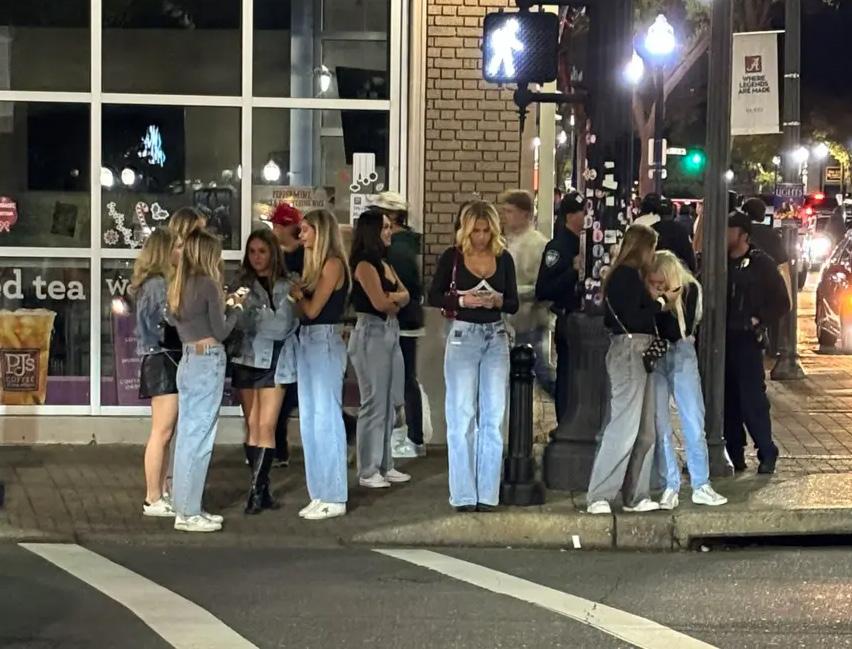
This phenomenon has, according to The New York Post, been dubbed by Gen Z as “Generation Zero style.” The pejorative title originated from a picture of a group of Gen Z girls wearing identical shirts and blue jeans. Part of the reason the article gives for this homogeneity is the desire to imitate wealthy and stylish celebrities like Hailey Bieber, who is often pictured wearing blue jeans. Denim has served as a class signifier historically as well, likely because mimicking the rich was more difficult. Where people once relied on
These changes, although subtle, could alter the fast-paced and arguably vapid culture to one that acknowledges and celebrates the time and effort needed to craft style and its politics. And perhaps then, clothes can regain their revolutionary meaning.
photo
The New York Post, X/@LordPFJoyde
Is AI the future of the art world?
Examining the intertwined history of art and technology
libby blostein contributor
Recently, humanity has witnessed a rapid evolution in the quality of artificially-generated images. From humble six-fingered and disproportionate beginnings, AI images have become nearly indistinguishable from the hand-drawn. As AI grows more sophisticated, it continues to creep into our everyday lives. Businesses are adopting AI logos and clipart, and our social media feeds are flooded with generated images in a soulless Studio Ghibli-like art style. We’ve reached a point where intimate reflection about whether what we see is real has become necessary.
When discussing the future of AI with peers, the period of the invention and the international spread of camera technologies comes to mind— especially its impact: how it shook the art world and its consumers. Many people dismissed camera photography as inferior to painting and resisted its integration into the art world as a medium and tool. Today, those individuals are deemed closeminded, as photography has fully assimilated into the art world. At this juncture in history, we might wonder whether those who stand against AI today are the same as the naysayers of the past. Is AI the future? And if so, how will the human art world adapt and distinguish itself? To properly answer these questions, we must examine the impact of photography on the art world and compare its process to AI image generation.
The camera was invented in 1839. Throughout the rest of the nineteenth century, photograph development studios opened and camera technology rapidly expanded. By the start of the twentieth century, almost anyone could capture the world around them in perfect detail within seconds. Expensive portraits that once took hours, if not days to paint, could now be completed in twenty seconds, more accurately, and for a lower price. But not everyone approved of photography. Charles Baudelaire, the famous French art critic and author of Les fleurs du Mal, stated that “the photographic industry was the refuge of every would-be painter, every painter too ill-endowed or too lazy to complete his studies.” Baudelaire was not alone in this sentiment, as many artists and critics dissented the use of photography. Photography was seen as a lazy shortcut, hindering people from pursuing proper artistic education and lowering the standards of artistic accomplishment.
Regardless of public approval, the value of art shifted from the accuracy with which an artist could reproduce their subject to the emotion and perspective their subject could convey (this is not to say that realistic artwork lacked
emotion and symbolism). Realistic paintings, while still popular in the nineteenth century, were no longer as impressive compared to the precision of photography, leaving many artists in need of stylistic reinvention. This led to the birth of the impressionist movement in the late nineteenth century. Artists like Manet and Degas were inspired by the ability of cameras to capture individual moments. Their paintings explored light and movement through their vibrant colours. Bold and visible brushstrokes become definitive. Impressionism then gave way to other movements such as post-impressionism, fauvism, abstract expressionism, and many more movements in the wake of the twentieth century. Artists like Norman Rockwell also began to utilize photographs for easy reference to their paintings. Over 150 years after the invention of the camera, photography had fully integrated into the art world as a tool for photo referencing, mixed media work, and as a medium of its own. Much like cameras were similarly denounced, AI art is criticised for being lazy and ‘cheating’ the creative process, removing opportunities from real artists. Many advocates of AI state that AI art is simply the next step of progress in the art world: a tool to streamline creativity.
Returning to our first question regarding those against AI-generated images and whether they differ from yesterday’s camera critics, the answer is no. The surface-level critiques mentioned before of both AI and photography are similar, sure. But concerns about the actual function of these technologies are different. Photography captures the world as it is—its artistry lies in how the subject is captured rather than the subject itself. Additionally, most photographers do not claim to have created what they capture. AI imaging is, however, quite different—and this is the crux of the issue. The products of generative softwares are not sourced from any creative process but rather from scraping billions of images, including real artists’ works, to create what is then labelled an original image. Unlike photography, which exists as an artistic medium independent of the paintings it once competed with, AI generated images cannot exist without the work of the artists that it is replacing. With this, an ethical dilemma arises for artists whose works are scraped by AI. Artists are typically uncompensated and not asked for consent before AI integrates their works into a database. This is especially problematic as freelance and corporate-world artists are replaced by these softwares.
There also comes a comparison of necessary skills
required for photography and AI. Where critics of photography went wrong was their statement that photography required no artistic skills. This is not the case at all. Photography requires understanding of composition, colour grading, lighting, and post-processing to be considered successful. AI image generation, however, only requires its users to write a prompt, which the software then creates. Users of these softwares can request changes and possibly learn what words to use to generate their desired images. Knowledge of colour theory, anatomy, composition and other fundamentals of art are not required. If anything, the role of the producers of AI images is more similar to that of a client than an artist, requesting art rather than creating it.
Regardless of opinion, it seems that AI images are here for the long haul, entailing drastic considerations for the art world. Artists cannot adopt new styles as the impressionists did, as these AI models adapt within days, but two methods of artistic protection stand out. The first is through the law. AI, despite its rapid development, is still new, and the law is playing catch-up. As AI software utilises scraped data, much of the images it integrates are copyrighted—the question of whether their use of these materials counts as infringement is currently debated. As more lawsuits are issued against generative AI companies, precedents and legal protections are bound to arise. The second method is through consumers. As consumers, we dictate value. When we consume and interact with AI content, we give it value and contribute to the growth of its industry. If we resist and even vocally reject generated content, it loses its value. Now, more than ever, it is important to be intentional with our consumption. Supporting local artists has become increasingly crucial. While this is, admittedly, easier said than done in our economy, mere interaction with local artists can make a difference.
Despite unprecedented times, hope mustn’t be lost. We are currently in the wild west of AI, but as time passes and restrictions on AI and artistic protections are implemented in conjunction with AI technology’s development (hopefully becoming less burdensome on the planet), AI can serve as a tool for artists much like photography does.
One and done I see, therefore I know
syeda zauraiz s contributor charlize marshall contributor
I read a quote once, “It is weak and silly to say you cannot bear what it is your fate to be required to bear.” Why must I –with the strength of my solitude, bear it Why must I, adorn the strife and wear it, like the other would wear jewellery Gilded in gold and unburdened by guilt. So my question to whomever predetermined my fate is Why must I be ensnared While the other goes unscathed – spared.
Glorious writer of fate, tell me, Why am I, silly, and thoughtless like the common fool Why am I, consumed so much and used as a tool With only one functional side, while the other has more pressing roles, it must abide.
O writer O fate, I ask you once more: Why was I, weak enough to fall and keep falling more Why was I, splattered on the beach like waves on a shore I came and I splashed, on the rocks I alone crashed, and watched the other smoothly slither back into the ocean of blue, ready to start over.
Why is this my fate, and why must I bear it? Will there ever be anyone willing to share it?
Oil paintings
amy yang senior copy editor
There is a power in watching, noticing, and remembering. On the subway, I sit, I see a woman wearing the exact same shoes as me I hold our connection with recognition of this intimacy, one that only I can see She got off the train, but I see her still I’m not certain when I’ll stop seeing her, I don’t think it’s necessary
I collect thoughts, things, people; they morph into me
There is nothing more human than waiting, what separates waiting from remembering? And what separates me from action, doing, being? How can I be someone without doing something? It is not the shoes, nor the wearer I am grounded in connection, but to something simpler than the object I objectify connection, and place value into the thoughts I manufacture We think we need connection, Yet thoughts seek and find me regardless I feed off it, I write off it I will not be as you say I should, I cannot as you say I should be Therefore, I know I see I see, therefore I know. Sometimes we never arrive, We never materialise, but there is merit in the minute Should I revolt when asked? Revolt then I never have Yet the verity of life is divorced from the most respected forms of action.
The fire sees everything as it feeds. Gold filigree peels away under the heat. Skeletal wooden beams come crashing in succession.
The oil paintings hanging on the walls drip down, colours and faces crawling from the canvas onto the ground. Red and black and flesh warp into one as hungry brushstrokes flee their gilded frames. Mary on the altar screams as she falls to her knees. Calloused hands hold her gently when she dies.
Thousands of small cuts dissolve; she is nothing once again.
Indulgences are licked away by starving flames, divine favour carried to ash by the unforgiving wind.
Open windows blow fury into twisting tongues of fire.
Oxygen, oxygen, freedom.
Silk dresses in the wardrobe catch like dry kindling. Before combustion, it turns flesh — writhing, bleeding pennies, spinning threads with swollen empty fingers.
The chandelier hangs, suspended. Hundreds of brilliant cut crystals rain from their brief heaven, crying blood, glinting malice, landing as dull ore in soft plinks against the marble floor.
Little shattering sounds go unheard, in death as in life — buried beneath the weight of a crumbling house, swallowed by the destruction before they have the chance to screech.
Art is brief, and the fire is hungry; it wants to eat. It undoes stitches into tears, turns stone walls into shrieks of tortured slaves, each slab of marble a lashing against their outturned skin.
A cacophony screams where the mausoleum once stood. The fire burns on, reaching higher and higher and higher, as little wisps of secrets creep silently out of the smoke.
Remember me as I am, for every inch I bring. Let not my hesitations paint me lethargic For each time I rise—I see anew. Those who watch, notice, and remember are privy to knowing We are privy to the woman with the blue Reebok shoes We are privy to the idea of it all. One day, I may stand up taller, but let me not be misremembered, as I have always risen
How to fake a hunger strike
A beginner’s guide to looking like you’re protesting hard, while you’re hardly protesting
max friedman- cole stranded editor
Throughout history, from the Suffragettes to Gandhi, the hunger strike has been one of the ultimate symbols of nonviolent protest. It is a daring and powerful act—a radical sacrifice of the body itself on the altar of a revolutionary cause. But it’s also really hard, so here are some tips on how to have a wildly successful hunger strike without all that pesky hunger.
1. Employ some plausibly deniable substitutes.
In order to appear like you’re on a hunger strike, experts agree it’s generally best not to not be seen eating food. However, food is delicious, so try and find some ways to sneak it into your daily striking routine. Replacing solid food with beverages is easiest: hunger strikers often still drink water, but who would be able to notice if you replaced your water with flat 7-Up, or one of those clear electrolyte drinks that they squirt at hockey players so that they don’t pass out? Sneaking solid food past the eyes of the public may be harder: consider eating only vegetables that could reasonably be dropped on the ground and passed off as foliage at a moment’s notice, or maybe get one of those show-offy Instagram bakers to sneak you cakes that look exactly like everyday objects.
2. Use the power of distraction.
The hunger strike is an act of public protest, so eyes will generally be on you at all times. The key to enabling your fakery lies in creating moments when you aren’t the centre of attention, such that you can quickly sword-swallow a chocolate bar from inside your sleeve. Your audience will generally be sympathetic to your cause, so the line “Hey, look, [thing I’m protesting against] is happening right over there!” will usually buy you some time as they look away. Note that this becomes less effective with repeated use, especially when your cause is something like disaster relief – there are only so many times you can make people believe a tornado just popped up behind them. Having friends who are also protestors helps with distraction; try getting them to organize a flashmob that takes attention away from your comparatively dull act of fake self-sacrifice. Consider also planting food in the bathroom you’re using – few people will suspect that you’re sous-viding an egg in the toilet tank.
3. Perform some sartorial trickery.
If your fake hunger strike stretches out for more than a few days, people may begin to wonder why you still look as healthy and hale as you did when you started. Like it or not, the public performance of suffering is the driver behind a hunger strike’s effectiveness, and you can’t pull that off if you’re sitting there looking as pleasantly plump as ever. Consider having a co-conspirator bring you identical clothing of progressively larger and larger sizes so it looks like you’re slowly becoming malnourished. Is this disrespectful to the people who suffered from starvation on actual hunger strikes due to their unwavering commitment to justice? Probably! Will you care about that while you’re tucking into a nice steak instead of sitting and listening to your organs slowly devour themselves? Probably not!
4. Don’t drag it out too long.
A fake hunger strike has an inherent time limit – if you do it for much longer than a few weeks, people are eventually gonna catch on due to the simple fact that you’re still alive. As such, when you sense that you’re approaching the limits of your credibility, find a dignified way to end the strike. If your cause is achieved, this is easy; you can end it in victory and feign infinite bliss at finally eating the same meal you’d been secretly eating the whole time. If your enemies prove unmoved, however, you’ll have to find a way to make ending the strike seem like a moral victory. Luckily, due to people’s tendency to side with the little guy, this isn’t that hard: tell them that your foes have proven their inhumanity by bringing you to the point of starvation or something.
With that, you’re now prepared to put on a fake hunger strike that’ll fool even the shrewdest of onlookers. So go forth, and take with you some final advice: keep your wits about you, avoid thinking about the ethics of what you’re currently doing, and have fun!
Top ten reasons to walk out of a class
Some scenarios in which you might want to give the term “class
audrey
lai stranded editor
max
friedman- cole stranded editor
1. The classroom only has those weird metal chairs with three inches of built-in desk space.
2.The professor’s slideshow images all have twelve fingers and have clearly been generated by Midjourney.
3. Someone behind you is loudly and messily breaking up with their boyfriend of two weeks.
4. The person in front of you is failing at the Wordle in an unimaginably annoying fashion.
5. The professor starts the lecture on X topic with a slide reading “What is X topic? Scholars disagree.”
revolt” a new meaning
6. You are placed in a discussion group with five people who clearly have not done the reading.
7. The professor’s pre-class playlist is horrendously grating.
8. There was a faculty breakfast in the next room over and the whole hall smells noticeably of bacon grease.
9. You’re paired in a group project with the person who spends all of class asking ChatGPT what they should do after they graduate.
10. You just want to, for no particular reason. Live free! Revolt against the idea that you should spend time in the classes you paid for! You have nothing to lose but your education!