

Iran fires missile barrage at Israel, denies Trump talks






Iran fires missile barrage at Israel, denies Trump talks
By Charles Dantes, Ram Superable, and Maricel V. Cruz
RESIDENT Ferdi-
Pnand Marcos Jr. on Tuesday declared a state of national energy emergency, creating an “UPLIFT” committee to coordinate the government’s response to the fuel crisis and mitigate the impact of the Middle East conflict on the country.
Marcos signed Executive Order No. 110, citing heightened geopolitical tensions in the Middle East and the closure of the Strait of Hormuz as threats to the Philippines’ fuel supply and energy stability.
The declaration came as lawmakers expressed support for emergency measures during a Senate hearing of the Proactive Response and Oversight for Timely and Effective Crisis Strategy (PROTECT) committee, convened to address rising fuel prices and supply uncertainty linked to the Middle East conflict.
Meanwhile, Congress moved to support emergency powers and fasttrack legislation to cushion the impact of surging oil prices, transmitting Senate Bill 1982 to the President last night for his signature.
However, other officials acknowledged that the government’s ability to directly control fuel prices remains limited.
DOE Oil Industry Management Bureau Director Rino Abad said the Oil Deregulation Law of 1998 transferred pricing control to private oil companies, leaving the government to monitor prices and request staggered adjustments. Oil firms have raised pump prices for the 10th consecutive week, driven largely by supply disruptions linked to the Middle East conflict, prompting lawmakers to call for urgent intervention.
By Othel V. Campos
By Alena Mae Flores, Ram Superable, and Joel Zurbano


By Charles Dantes and Darwin G. Amojelar
By Maricel V. Cruz
PRESIDENT Ferdinand Marcos Jr. said it would be “futile” to use the Philippines’ foreign reserves to prop up the peso against the US dollar, stressing the need to “redraw” the country’s economic plan to meet its growth target by 2028.
“I think it would even be futile to try to spend all our foreign reserves on defending the peso,” Mr. Marcos told Bloomberg. In the Bloomberg piece, the President said: “We also recognize that there’s only so much you can do because the dollar is going to move the way it does."
President Marcos made the remarks as the Philippine peso earlier weakened to the P60 level against the US dollar.
From A1
Under EO 110, Marcos directed the implementation of a coordinated response framework known as the Unified Package for Livelihoods, Industry, Food, and Transport (UPLIFT).
The whole-of-government strategy aims to ensure stable energy supply, uninterrupted delivery of essential services, and protection of vulnerable sectors amid the crisis.
The order creates an inter-agency UPLIFT Committee chaired by the President and composed of key Cabinet officials, including the Executive Secretary and the heads of the Departments of Energy, Transportation, Social Welfare and Development, Agriculture, Finance, Economy, Planning and Development, and Budget and Management.
The body is tasked with monitoring fuel supply and distribution, ensuring continuity of public transportation and essential services, and safeguarding
From A1
Chicken could jump from P200 to P324 per kilo, while pork, particularly kasim and liempo, will see sharp increases. Well-milled rice prices may rise by 49 percent, from P45 to P67 per kilo.
Fertilizers, crucial for crop production, are also projected to spike. Granular urea prices could climb by P288 per 50-kilogram bag, and drilled
From A1
Agence France Presse (AFP) images showed rubble-strewn streets and the side of a building in Israel's commercial hub in ruins, as first responders scrambled to assist at least four people lightly injured at four different locations.
Tel Aviv mayor Ron Huldai told reporters a "direct strike" had damaged a building in the upscale neighborhood, with AFP video showing the facade of the three-storey block torn open.
According to several Israeli media outlets, police believe the damage was caused by a cluster munition missile equipped with three to four warheads, each carrying around 100 kilograms of explosives.
Iranian media reported US-Israeli warplanes had struck two gas facilities and a pipeline, hours after President Donald Trump stepped back from his threat to attack energy sites citing "very good" talks to end the war.
Trump said his administration was speaking with an unidentified "top person," warning if talks failed in the next five days "we'll just keep bombing our little hearts out."
But Tehran's parliamentary speaker, Mohammad Bagher Ghalibaf, reportedly involved in talks, said "no negotiations" were underway, accusing Trump of seeking "to manipulate the financial and oil markets."
Stock markets soared and oil prices saw brief respite after Trump's abrupt about-turn that came ahead of a deadline he had set to reopen the Strait of Hormuz shipping lane or see the US "obliterate" Iran's power plants.
US media outlet Axios reported US negotiators Steve Witkoff and Jared Kushner may meet an Iranian delegation for talks in Pakistan as soon as this week, with Vice President JD Vance possibly joining.
White House spokeswoman Karoline Leavitt did not deny the reports, saying "speculation about meetings should not be deemed as final until they are formally announced by the White House."
Pakistan's Prime Minister Shehbaz Sharif said Monday he spoke with Iran's President Masoud Pezeshkian, promising Islamabad's help to bring peace to the region.
"Pakistan is one of the few coun-
PBBM...
From A1
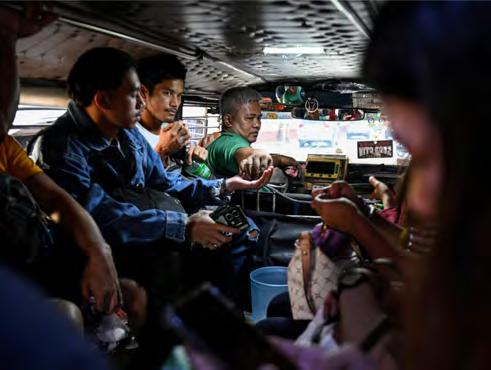
At the same time, the MMDA) said it was ready to deploy free shuttle services if needed during a planned transport strike on March 20 and 26. Speaking at the Parañaque Integrated Terminal Exchange, Mr. Marcos said the government will provide P10,000 in fuel subsidy for each bus unit, with distribution beginning immediately across the country.
The President said the program seeks to minimize fare increases and ease the burden on commuters amid
economic stability.
The Department of Energy (DOE) was authorized to enforce conservation protocols, optimize fuel use, and coordinate with other agencies and state-owned firms to stabilize domestic supply.
It was also directed to prevent hoarding, profiteering, and price manipulation, and may recommend regulatory interventions to the Energy Regulatory Commission, including actions affecting the Wholesale Electricity Spot Market, if price volatility threatens power supply reliability.
“The declaration of a state of national energy emergency will enable the government, through the DOE and other concerned agencies, to implement responsive and coordinated measures under existing laws to address the risks posed by disruptions in the global energy supply,” the order stated.
It noted that hostilities involving the United States, Israel, and Iran have driven volatility in global oil prices and disrupted supply chains, underscoring the Philippines’ vulnerability as a net
urea by P237. If the worst-case scenario persists, the cost of production at the farmgate level could increase by P1 to P1.50 per kilo, further straining farmers’ costs. Rice production is similarly threatened, as first-semester output is projected to fall by 7,169 metric tons (MT), followed by a possible secondsemester decline of 104,075 MT, from the annual target of 19.87 million MT. With a yearly target of 19.87 million metric tons (MT), first-semester output could fall by 7,169 MT, while
tries with warm ties with both Tehran and Washington," said Michael Kugelman from the Atlantic Council think tank.
"It's been engaging heavily at the highest levels with both capitals over the last year, going back to the brief Iran conflict last summer," he noted.
Traditional mediator Qatar said Tuesday it "supports all diplomatic efforts" to end the war.
'There's nothing left'
Prime Minister Benjamin Netanyahu said he had spoken to Trump and acknowledged Washington thought a deal was possible, but vowed to continue striking Iran and Lebanon to protect Israel.
Israel kept up its bombardment on Beirut's southern suburbs throughout the night, while a strike on Bshamoun, south of the capital, killed two people on Tuesday, according to Lebanon's health ministry.
"There's nothing left. It's all burned or destroyed... No walls, the windows are gone, the facade is gone, all my hard work has been lost," said Abbas Qassem, 55 from Bshamoun, weeping at the damage to his flat.
In Beirut, AFP images showed smoke billowing from gutted buildings, as rescuers picked through the rubble and twisted metal.
Strikes also targeted several service stations linked to Iran-backed Hezbollah that Israel has vowed to dismantle.
Israel's attacks in Lebanon have killed more than 1,000 people, according to Lebanon's health ministry, and displaced more than a million.
The war has killed at least 3,230 Iranians, including 1,406 civilians, according to the US-based Human Rights Activists News Agency. AFP cannot access strike sites nor independently verify tolls in Iran.
The conflict has upended global energy markets, threatening a worldwide economic shock, and spiralled quickly through the region, pulling in even former safe-havens in the Gulf.
Underscoring the war's broad impact, Iraq's autonomous Kurdistan region accused Iran of killing six of its fighters on Tuesday in the first deadly attack on the regional security forces since the start of hostilities.
'Sudden pivots' Iran's neighbors had breathed a sigh of relief after Trump stepped back from his threat to target the country's power infrastructure. AFP
rising fuel costs.
“They won’t feel too burdened by the fare because, as we all know what’s happening — oil prices are changing all over the world,” he said. The subsidy may be accessed through multiple payment channels, including digital platforms such as e-wallets, automated teller machines, and government-issued cards.
Mr. Marcos said non-digital options, including checks and cash, will remain available for beneficiaries who prefer them, but encouraged operators and drivers to shift to digital payments for efficiency and convenience.
importer of petroleum products.
To cushion the impact, the Department of Transportation is tasked with providing fuel subsidies and expanding public transport services, while the Department of Social Welfare and Development will extend assistance to vulnerable sectors.
The Department of Trade and Industry and the Department of Agriculture will monitor prices and food supply, while the Department of Migrant Workers will assist affected overseas Filipino workers.
Economic managers, including the Bangko Sentral ng Pilipinas, were directed to monitor potential effects on the peso, remittances, and the broader economy.
The order also mandates coordination with local governments and private stakeholders to ensure equitable fuel distribution and continuity of essential services.
Senator Bam Aquino said many legislators backed granting the President emergency powers to allow swift intervention, including regulating
second-semester production could decrease by 104,075 MT.
Corn, a key feed ingredient, may drop by 156,636 MT from the projected annual output of 3.2 million MT. Vegetables are not spared as lowland “pinakbet” crops may decline by 81,230 metric tons and highland vegetables by 22,287 metric tons. Onions, sensitive to storage and fuel costs, are also expected to face supply pressures.
Livestock is also at risk, given the projection that two to three percent of
From A1
On Monday, the peso closed at P60.30 to the dollar, its weakest level on record.
The Bangko Sentral ng Pilipinas (BSP) reported that the country’s gross international reserves rose to $112.5 billion as of end-January 2026.
“The latest GIR level provides a robust external liquidity buffer,” the BSP earlier said. It will be “tough” to achieve 8 percent economic growth by 2028, Mr. Marcos said, referring to the final year of his term in Malacañang.
“With the war in the Middle East, those have to be redrawn—everything has to be redrawn,” the President said.
“The impact of the war is really on middle-income and lower-middleincome countries,” he added.
From A1
where it is set to lay down ground rules, tackle key motions, and initiate hearings on the complaints ahead of the evidentiary phase.
Under the agenda, the panel will proceed to the initial hearing on the two remaining complaints—the third and fourth impeachment complaints against the Vice President.
The third complaint was filed by Rev. Fr. Joel Saballa and endorsed by ML Party-list Rep. Leila de Lima, while the fourth complaint was filed by lawyer Nathaniel Cabrera and endorsed by Manila Rep. Bienvenido Abante Jr. and Deputy Speaker Francisco Paolo Ortega V.
The committee will also act on pending motions, including requests for the issuance of subpoenas for documents.
Also up for resolution is the petition to place under the panel’s custody a key witness, Ramil Madriaga, who claims to be a former “bagman” of the Vice President, as well as the issue of an alleged conflict of interest involving two members of Duterte’s legal team.
Luistro said the panel is prepared to move swiftly into the evidentiary phase once these matters are resolved.
“If the complainants are ready, we can actually proceed to the presentation of evidence and witnesses,” Lu-
The initiative is being implemented with support from the Department of Transportation, which briefed the President on the system’s rollout and facilities at the transport hub.
Mr. Marcos called for cooperation among government agencies, transport operators, and drivers to ensure the program’s success, stressing the need for a responsive system as fuel prices continue to fluctuate.
“Tell us if there’s a problem or if there’s a better system… so it can be faster and more convenient,” the President said.
Mr. Marcos earlier led the distribution of fuel subsidies to tricycle driv-
prices of essential goods and ensuring adequate supply, although they also criticized Mr. Marcos for not declaring it soon enough. “Under a state of national emergency, we can implement measures to regulate the prices of essential goods and ensure that there is sufficient supply in our market,” Aquino said. He added that broader authority is needed as the crisis continues to affect Filipino households, proposing targeted subsidies for healthcare workers and a comprehensive repatriation and reintegration program for overseas Filipino workers.
Senator JV Ejercito warned that the crisis is already hitting minimum wage earners, transport workers, and breadwinners, calling for systemic protections beyond immediate relief.
“We do not know how long this crisis will last or how far it will go, so the preparation of our government and its agencies must be just as extensive, and our response must go beyond shortterm relief,” he said. With senators transmitting Senate
smallholder farmers could go bankrupt or shift to other ventures if the crisis worsens. In fisheries, prolonged high oil prices could severely affect motorized fishing operations, raising fuel costs to P1,000 per day per fisher. Manalo underscored the urgency of monitoring both domestic supply and global developments, noting that current inventories, such as the National Food Authority’s nine-day rice stock, may not be sufficient under sustained pressure.
The Philippines is among the most affected countries in Southeast Asia, as it imports about 90 percent of its petroleum requirements, while the domestic oil market remains deregulated.
Fuel prices have posted doubledigit increases in recent weeks, with pump prices hovering near P100 per liter, putting pressure on motorists.
Mr. Marcos earlier certified as urgent a measure allowing the executive to suspend or reduce excise taxes on oil to help ease the impact of rising global prices, but the bill has yet to be signed a week after its passage in Congress.
The peso, however, rebounded on Tuesday, closing at P59.95, after US President Donald Trump said progress had been made in talks with Iran aimed at ending the conflict in the Middle East.
istro said.
“We are prosecutors here. So, the justice members will study all the evidence presented by the complainant and the respondent,” she added.
Luistro emphasized that the proceedings will remain strictly rulesbased, with only committee members allowed to conduct cross-examination of witnesses.
The hearing proper follows the committee’s finding of sufficient grounds to proceed on the two remaining impeachment complaints, effectively closing the determination stage and advancing the case to full hearings.
The complaints include allegations of misuse of confidential and intelligence funds, unexplained wealth, violations of Statements of Assets, Liabilities and Net Worth (SALN) requirements, bribery, and an alleged threat against President Ferdinand R. Marcos Jr., First Lady Liza AranetaMarcos, and former Speaker Ferdinand Martin G. Romualdez.
The justice panel was authorized by the House plenary to continue its proceedings even during the congressional recess, ensuring the uninterrupted conduct of the impeachment process.
It has set subsequent hearing dates on April 14, April 22, and April 29, when the panel is expected to continue receiving evidence and testimonies from both sides.
ers, expanding the program to include smaller public transport operators among those most vulnerable to rising fuel costs.
Transport Secretary Giovanni Lopez said terminal fees for airports operated by the Civil Aviation Authority of the Philippines (CAAP) will be reduced by P200 starting April 1, 2026. Additionally, airport fees—including landing and terminal charges—will be lowered by as much as P5,000. Lopez said the fee reductions will be in effect for three months, after which they will be subject to review.
Bill 1982 to the Office of the President on Tuesday, Mr. Marcos now has the authority to suspend or reduce excise taxes on oil, Ejercito added.
Senator Francis Pangilinan urged the government to use the crisis to strengthen food and energy security systems.
“Our mandate is clear: to protect food, energy, jobs, and daily life, especially for the most vulnerable. This is not just about responding to a crisis, it is time to fix the system and strengthen the country’s self-reliance,” he said. Senator Risa Hontiveros called for a clear contingency plan, warning against delays in government action.
“We should no longer wait for the turmoil in the Middle East to subside before taking full action. Together, let us show that in times of danger, there is a government ready to support, assist, and protect Filipino families,” she said.
PROTECT committee chairman Sherwin Gatchalian emphasized the need for a unified national plan, noting supply uncertainties despite existing reserves.
From A1
pump prices to between P82.60 and P112.40 per liter, while kerosene could increase by P12 to P22 per liter, reaching as much as P165.79 per liter, the department added.
During a briefing, Garin said the state-run Philippine National Oil Co. (PNOC) is targeting to secure a maximum of two million barrels of diesel, equivalent to roughly 10 days of additional supply. She said PNOC has already contracted about 400,000 barrels from Southeast Asian suppliers, while another 600,000 barrels are under negotiation with sources outside the region.
“Currently, we are trying to purchase 1 million barrels, and that’s good enough for only one week for the country,” Garin said. “And that will likely cost us about more than P10 billion already for just one week of supply.”
Budget Secretary Rolando Toledo, meanwhile, said the Marcos administration plans to tap P20 billion from the Malampaya natural gas fund to finance the oil buffer procurement. With its inclusion, the total funding being mobilized by the government to address the crisis has risen to P230 billion, Toledo said.
Speaking at the Senate’s Proactive Response and Oversight for Timely and Effective Crisis Strategy (PROTECT) committee hearing, the Department of Budget and Management chief said the request has already been submitted.
“In addition, just last Saturday, we spoke with Secretary Sharon Garin… We are looking at tapping the Malampaya fund of P20 billion. The request is already with us. We will release that for the back purchases of oil,” Toledo said.
“So, I think it’s not a problem now na magkakaroon tayo ng shortfall because Secretary Garin already requested from us how to release the P20 billion fund, charging it from Malampaya,” he added.
The Malampaya fund, created under Presidential Decree No. 910 in 1976, is traditionally used to finance energy resource development projects.
Garin said the government is also exploring additional financing sources, including P15 billion in unused PNOC funds and a P10-billion letter of credit or revolving credit facility from the Land Bank of the Philippines. Toledo noted that the broader funding package includes P63.8 billion for the Department of Social Welfare and Development’s protective services program, P4.2 billion for the Department of Migrant Workers, P2 billion for the Department of Trade and Industry’s support to micro, small and medium enterprises, and P1.2 billion for the Department of Foreign Affairs’ assistance to nationals and legal assistance funds.
A portion will also be allocated for fuel subsidies for farmers and the transport sector.
Despite these efforts, domestic fuel prices are expected to surge sharply this week.
“The increase is still attributed to the events in the Middle East, but the smaller increase compared to the 20-peso hike the last two weeks is because there has been a slowdown in the per-barrel price in the international market,” Garin said.
As of Tuesday, the country’s total oil supply remains sufficient for 45.1 days. Gasoline stocks
to curb consumption temporarily while awaiting additional supply.
By Ram Superable
SENATOR Francis ‘Chiz’ Escudero said Tuesday the upcoming Association of Southeast Asian Nations (ASEAN) Summit offers an opportunity to advance the ASEAN Petroleum Security Agreement, which would allow member states to supply petroleum to neighbors facing shortages.
“By accelerating APSA’s completion, ASEAN can establish its own mechanism for emergency fuel supply, triggered when a member state experiences a shortfall of at least 10 percent,” he said in a statement. Escudero added that oil-producing members, including Brunei, Indonesia,
By Vito Barcelo
BISHOP Mel Rey Uy of Lucena called on the faithful to fast, abstain, and pray on March 27 amid escalating tensions in the Middle East and rising prices globally.
According to him, the observance of “Viernes de Dolores” is in solidarity with those suffering from conflict, political division, and economic hardship.
“In solidarity with our Mother of Sorrows in her suffering, may she lead us to order and peace,” Uy said.
The Catholic bishop entrusted overseas Filipino workers (OFWs), especially those in the Middle East, to the care of Our Lady of Sorrows, describing her as a refuge for migrants facing uncertainty.
Parishes across the diocese have been directed to hold extended vigils and Eucharistic adoration, with priests made available throughout the day for communal prayers.
“All these we do to ask our loving Father for peace and order throughout the world,” Uy said. He added that similar overnight vigils will be held on Holy Thursday, leading into Good Friday, when Catholics are called to observe fasting and abstinence.
and Malaysia, are expected to anchor the system by providing reserves and production capacity.
He said the initiative aligns with ASEAN’s strategic priorities of peace and security, economic integration, and community empowerment.
“The current volatility in the Middle East highlights the urgency of a regional action, with oil prices rising and supply chains vulnerable. We have to act as one ASEAN,” Escudero said.
Meanwhile, Senate leaders expressed support for a proposal to postpone the Philippines’ hosting of the 2026 ASEAN Summit to save over P17 billion.
The Philippines assumed ASEAN chairmanship vice Myanmar in 2026 with a budget of nearly P17.5 billion previously approved by Congress for summit meetings.
By Joel E. Zurbano
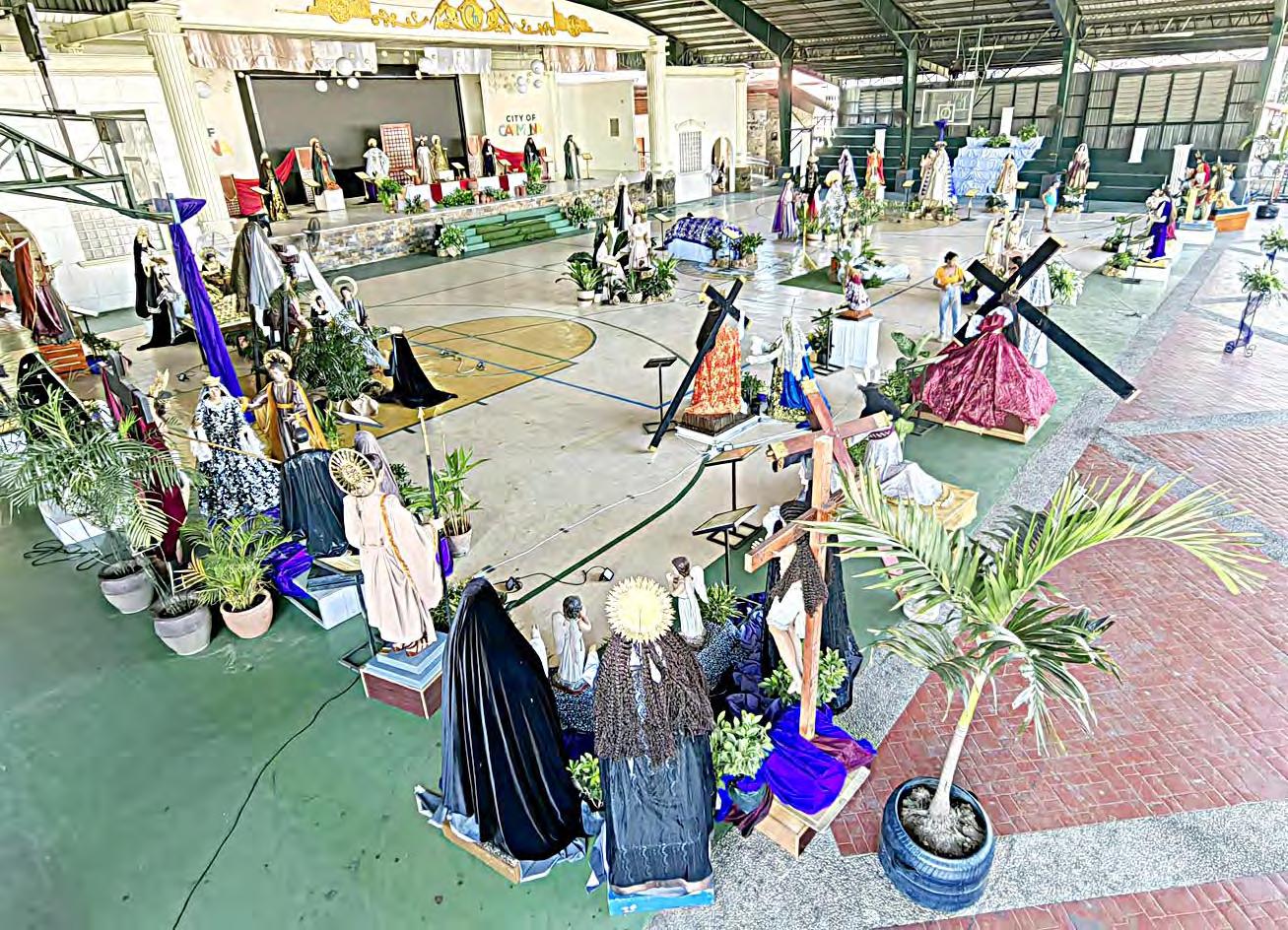
THE Metropolitan Manila Development Authority (MMDA) will permit provincial buses to ply Epifanio de los Santos Avenue (EDSA) beginning at 9 p.m. on April 1 and continuing until 6 a.m. on April 6 to accommodate the anticipated influx of passengers during the observance of Lent.
Provincial buses originating from North Luzon will conclude their journeys at the bus terminals in Cubao, Quezon City, while those from South Luzon will end their trips at the Paranaque Integrated Terminal Exchange (PITX).
MMDA General Manager Nicolas Torre III said the agency will assign 2,476 personnel to major thoroughfares, transportation hubs, and other significant locations within the National Capital Region (NCR) to guarantee public safety and convenience.
“We will implement a no day-off and no-absent policy for all traffic and field personnel during periods of heavy traffic anticipated due to the Holy Week exodus,” Torre said. Areas of concern encompass terminals, seaports, airports, and roadways leading to churches.
Torre said the MMDA will also suspend the number coding scheme in Metro Manila starting April 1 (Wednesday) at 12 noon.
The number coding scheme will be automatically lifted on Maundy Thursday and Good Friday (April 2 and 3), which are recognized as regular holidays.

PH observers in Thailand and Cambodia conflict
THE Philippines will send military observers to help prevent the escalation of tensions between Thailand and Cambodia, AFP Chief Gen. Romeo Brawner Jr. said on Tuesday.
In an ambush interview at a Stratbase forum, Brawner confirmed that two generals will be sent as part of the country’s role in leading the Association of Southeast Asian Nations (ASEAN).
“Two generals… I cleared this with the President and we are very serious in that role that we are playing as lead of the ASEAN observer team because we want to establish our leadership role as ASEAN chair,” he said.
“One way to do this is by making sure that the conflict between Thailand and Cambodia will not escalate. That is our role,” he added.
Brawner did not provide specific details on the deployment timeline. In December last year, Foreign Secretary Theresa Lazaro said the Philippines, as ASEAN chair, is ready to assume the role of mediator between Thailand and Cambodia, the Department of Foreign Affairs said. Rex Espiritu
Phivolcs says continued unrest at Mayon Volcano
THE Philippine Institute of Volcanology and Seismology (Phivolcs) on Tuesday reported Mayon Volcano in Albay continues to show signs of unrest, including lava fountaining.
Time-lapse videos taken by the Department of Science and Technology–Phivolcs Quick Response Team from the Mayon Volcano Observatory showed minor strombolian activity and shortlived lava fountaining at 3:02 a.m. and 3:34 a.m.
“Effusive eruption at Mayon Volcano continues for the 79th consecutive day, generating incandescent lava flows, pyroclastic density currents (PDC) or ‘uson,’ and rockfalls,” Phivolcs said.
“Alert Level 3 prevails over Mayon and entry into the six-kilometer Permanent Danger Zone should be prohibited,” it warned. Rio N. Araja
Supreme Court women justices honored at forum
THE Supreme Court (SC) held on Tuesday the “Ladies of Justice,” its first distinguished women’s forum in celebration of Women’s Month.
The forum focused on the journeys of female SC justices as they advanced their careers in the legal profession and the judiciary. It also aimed to discuss the challenges faced by women magistrates and inspire aspiring women to achieve gender parity in the judiciary. Among the panelists were Associate Justice Maria Filomena Singh, retired Chief Justice Teresita Leonardo-De Castro, retired Associate Justice Angelina Sandoval-Gutierrez, and former Ombudsman and Associate Justice Conchita Carpio-Morales. Pot Chavez
By Rio N. Araja
THE Department of Agrarian Reform (DAR) on Tuesday clarified that a document now circulating online on the removal of a requirement to secure its clearance for certain land transactions has not been officially issued by Secretary Conrado Estrella III.
The agency’s head executive assistant, lawyer Nestor Ifurung Jr., confirmed the document is still in draft form and remains under review, including consultations with concerned government agencies and key stakeholders.
An investigation is in progress to determine how the draft document was circulated without authorization, he said. He warned that those found responsible may face appropriate administrative, civil, or criminal sanctions in accordance with laws and regulations. DAR is advising the public to refrain from relying on or further circulating the draft document and to wait for official issuances released through proper government channels. It pointed out that the circulating document has no legal force or effect and cannot be used as a basis for any land transaction, proceeding, or official action.
By Vito Barcelo
THE Bureau of Immigration (BI) has raised alarm over rising cases of human trafficking using the country’s “backdoor” routes after two Filipino men who left the country through illegal channels were repatriated.
Immigration Commissioner Joel Anthony Viado said the case highlights the continued exploitation of unauthorized departure points, particularly along the country’s southern borders, by trafficking syndicates using small boats to transport victims abroad.
Viado stressed the need to intensify monitoring of these routes and strengthen enforcement through closer coordination among government agencies to boost border security and protect Filipinos from transnational crimes.
The two victims, aged 27 and 30, arrived in the Philippines before dawn on March 20 from Vientiane aboard a Philippine Airlines flight. They were reportedly recruited for supposed job opportunities abroad.
Initial investigation showed the victims left the country in 2025 through an irregular migration corridor via the waters off Zamboanga, bypassing official immigration controls.
The men said they were promised legitimate work as a waiter and a farm worker, with salaries ranging from ₱40,000 to ₱60,000 per month.
However, upon arrival in Laos, they were instead forced to work as “love scammers,” targeting foreign nationals in online romance schemes.
According to Ifurung, discussions are being conducted to ensure that any future policy remains consistent with existing laws and protects the rights and interests of all parties involved.
Estrella’s signature appearing in the draft document was affixed only as a preparatory administrative measure in anticipation of his official travel abroad and does not mean that the document had been approved for release or finalized.
“As of now, the studies and consultations on the matter have not yet been completed, and the document therefore remains unissued and non-binding,” DAR said.
By Katrina Manubay
THE Manila Economic and Cultural Office (MECO) on Tuesday rejected allegations that it colluded with an employer or was involved in forced laborrelated issues, calling the claims “unfounded and inconsistent with facts.”
In a statement, the Philippines’ de facto embassy in Taiwan emphasized that it has repeatedly urged all parties with differing views to keep open and constructive communication to resolve misunderstandings and protect everyone’s rights and interests.
“Recently, Mr. Ying-Da Wang, Secretary-General of the Taidoc Labor Union, made statements on social media alleging that MECO colluded with the employer and was involved in matters related to forced labor,” the statement read.
“These allegations are unfounded and inconsistent with the facts. In order to prevent any misunderstanding regarding MECO’s position, this clarification is hereby issued,” it added.
On March 15, migrant workers protested outside MECO in Taipei, accusing Taiwanese medtech firm Taidoc Technology and Philippine labor officials of allegedly collaborating to weaken their union.
The protest followed a letter from Taidoc, signed by the Migrant Workers Office–Taipei under the Overseas Workers Welfare Administration (OWWA), questioning the union’s legitimacy. Labor advocates condemned the move, viewing it as part of a broader pattern of intimidation against migrant worker organizers.
MECO noted that several Filipino migrant workers employed by Taidoc have recently submitted petitions to the office, raising concerns about deteriorating workplace conditions and potential impacts on their rights, and requesting assistance in communicating these concerns to relevant parties. In response, it clarified that it merely collected and forwarded these petitions to Taidoc and the appropriate authorities to ensure transparency and a fair review.
“MECO sincerely appreciates the concern shown by the competent authorities in Taiwan, Taidoc, the Taidoc Labor Union, and both Taiwanese and Filipino stakeholders regarding the labor rights of migrant workers. At the same time, MECO respectfully calls upon all parties to communicate rationally, respect the rights of others, and refrain from making statements or engaging in conduct that may cause distress or fear to others,” the de facto embassy said.

By Joel E. Zurbano

THE House of Representatives is wasting no time in passing the priority bills of the Legislative-Executive Development Advisory Council (LEDAC). In fact, under the leadership of Speaker Faustino G. Dy III and Majority Leader Alexander Marcos, the House has already passed 18 out of 52 LEDAC bills before the Holy Week break next week.
This means that the proposed laws have already advanced to the bicameral stage, reflecting an aggressive but disciplined push to move the Marcos Jr. administration’s legislative agenda in the 20th Congress.
For House Majority Leader Sandro Marcos, the chamber’s LEDAC record shows that it has not allowed the session calendar to blunt its momentum on measures tied to economic reform, public services, education, governance and social protection.
“We are proud of what we have accomplished,” he pointed out.
The young legislator gave credit to Speaker Dy for keeping the chamber focused on legislative work, saying the House has moved with urgency amid the Middle East crisis the country has been facing recently.
“We even passed the bill giving the President the power to reduce or suspend the excise tax on petroleum products, because this what is needed by our countrymen. We all need immediate relief from high fuel prices and the corresponding increases in the costs of basic goods, transport and other commodities,” he explained.
Let’s take a look at how these 18 bills, if passed by the Senate, would benefit the country as a whole.
1. Resetting the BARMM first regular elections: Ensure a lawful, orderly, and peaceful first parliamentary election in the Bangsamoro region after legal changes (including the exclusion of Sulu) required redistricting and adjustments to the Bangsamoro Organic Law.
2. The creation of a National Center for Geriatric Health: Establish a specialized national facility for elderly care, training, and research to address the growing aging population and improve geriatric health services.
3. Amendments in the Electric Power Industry Reform Act (EPIRA) and Strengthening the Energy Regulatory Commission (ERC): Improve regulation of power rates, increase transparency, and stabilize electricity prices.
4. Waste-to-Energy Act: Promote technologies that convert waste into electricity or fuel in order to reduce landfill use, improve waste management, and increase domestic energy supply.
5. Amendments to the Government Assistance to Students and Teachers in Private Education (GASTPE) Act: Expand subsidies and support mechanisms for students and teachers in private schools to help decongest public schools and improve access to education.
6. Assistance to Individuals in Crisis Situations (AICS) Act: Institutionalize and standardize financial and medical assistance programs of the DSWD so aid can be delivered faster and with clearer rules.
7. Amendments to the National Building Code: Modernize construction standards to improve safety, disaster resilience, environ-
mental compliance, and urban planning.
8. Blue Economy Act: Develop marine resources sustainably by promoting fisheries, shipping, offshore energy, tourism, and coastal industries while protecting marine ecosystems.
9. National Reintegration Bill: Provide stronger support for returning OFWs through livelihood, training, and financial programs to ensure economic reintegration.
10. Amendments to the Teachers Professionalization Act: Update licensing, training, and professional standards for teachers to improve education quality and align with modern teaching requirements.
All this will no doubt enhance political stability, sustain economic growth and expand social services in the years to come
11. Extension of Estate Tax Amnesty: Give heirs more time to settle unpaid estate taxes, formalize land ownership, and bring idle assets into the formal economy.
12. Department of Water Resources Bill: Create a single department to manage water supply, irrigation, flood control, and resource conservation, replacing the fragmented system of multiple agencies.
13. Amendments to the Bank Deposits Secrecy Law: Allow limited access to bank records in cases of corruption, tax evasion, or money laundering to strengthen financial transparency and meet global standards.
14. Travel Tax Abolition: Remove the travel tax to lower the cost of international travel and make tourism more competitive while funding tourism programs through the national budget instead.
15. Digital Payments Act: Expand electronic payments, reduce reliance on cash, improve financial inclusion, and make government and private transactions faster and more transparent.
16. Amendments to the Universal Access to Quality Tertiary Education Act: Improve implementation of free college education by fixing funding rules, clarifying coverage, and ensuring sustainability of subsidies.
17. Presidential Merit Scholarship Program: Create a national scholarship system for top students to support higher education in priority fields such as science, technology, and public service.
18. Amendments to the Biofuels Act: Increase the use of locally produced biofuels to reduce oil imports, support farmers, and improve energy security.
Taken together, the 18 measures fall into four strategic clusters: Governance and institutions; economic reform; social services; and sustainability and resources.
All this will no doubt enhance political stability, sustain economic growth and expand social services in the years to come.
(Email: ernhil@yahoo.com)

THIS year, the Christian season of Lent and the month-long observance of Ramadan fall almost at the same time. It is a quiet coincidence in the calendar, but it carries a deeper meaning. It reminds us that the world’s largest faith traditions share common roots and many similarities. Both Lent and Ramadan are penitential seasons. They are marked by prayer, fasting, and almsgiving. These are simple practices, yet they ask something difficult from us: humility, discipline, and generosity.
In a world that often speaks about religion through the language of conflict, these shared practices invite us to look again. Christianity and Islam are often portrayed as if they belong to opposing sides of a civilizational divide.
But history tells a more complicated story. Together with Judaism, both faiths trace their origins to Abraham. They honor many of the same prophets. They hold Jerusalem as a holy city, even if the wider Christian world looks toward Rome and Muslims turn to Mecca for prayer. Islam even recognizes Jesus as a prophet. The Qur’an devotes an entire chapter to Mary, his mother.
When you pause and reflect on it, the lines between traditions appear less like walls and more like branches growing from the same ancient root. Three practices, in particular, reveal this
shared inheritance. The first is prayer. For Muslims, prayer forms the rhythm of daily life. Five times a day, the faithful pause, wherever they may be, to turn their hearts toward God. It is one of the pillars of Islamic life.
Christians have a similar tradition, especially in monasteries.
Different traditions. A familiar rhythm. Human beings pausing throughout the day to remember God
Long before phones reminded us of meetings and appointments, bells marked the hours of prayer.
The day unfolded in a pattern: Lauds at dawn, the middle hours during the day, Vespers at sunset, and Compline before rest. Even today, many Christians still observe this cycle of prayer. Different traditions. A familiar rhythm. Human beings pausing throughout the day to remember God.
The second practice is fasting.
AFTER weeks of talking tough against Iran and giving it an ultimatum to open the Strait of Hormuz to passage or face relentless attacks, United States President Donald Trump has softened his stance. He now says he is postponing attacking Iranian power plants for five more days because of “very good talks” with Tehran. He did not give details, except that he was talking to somebody besides the new supreme leader, and it was them, not the US, who called to initiate.
Markets across the globe felt the shift in energy and recovered after a prolonged beating.
Iranian media however denied that any talks were happening at all between the two countries. At that point, nobody had an inkling that any form of negotiations was happening at all.
While secret negotiations may not be new, it could be difficult to get to the truth in the Age of Trump. This is a person given to hyperbole and sweeping declarations. Self-aggrandizement is the norm, and sensitivity and compassion especially for civilians caught in the crossfire appear to be alien concepts.
In fact, in a previous interview, Trump said he would end the war when he felt it in his bones, making no mention at all of other considerations like casualties, capabilities, and economic consequences. Certainly negotiations did not come up
as a factor. Here at home, the Palace said there was no oil crisis, just a price disruption, amid accusations that President Ferdinand Marcos Jr. is playing down the situation.
—“—
It would
be a grave disservice to the people to paint reality in mere spins
Fuel prices have sharply risen in the past few weeks, affecting the transport sector. As of press time Tuesday, the price of diesel has hit P140/liter, according to the Department of Energy.

IF YOU were a journalism student in the 1960s, flirting with Olivetti and Olympia 30 years before the birth of internet, chances are great your professors who darted straight to the classrooms from their air-conditioned advertising offices told you to “beware of Aghanistanism.”
The old journalism school admonition, endorsed by American editors, to “beware of Afghanistanism” – the practice of focusing on remote, foreign issues to avoid tackling challenging, controversial local problems – remains highly applicable in 2026, though the digital age has fundamentally altered how this phenomenon operates.
While the digital age has increased access to global information, making “distant” stories more relevant, it has also introduced new forms of “digital Afghanistanism” where local news is neglected for viral international content or algorithmic trends.
“Afghanistanism” – mouthed by mentors who were reading US-published textbooks without subsequent printings and editions –is an old journalism school adage and newsroom term used to describe the practice of concentrating on foreign or distant news stories while ignoring significant, controversial, or “hard” news in one’s own backyard.
Without much thought against what the professors read from old books, the term “fascinated” unquestioning students who accepted the same as filled with truth, a warning to journalists to focus on local accountability rather than prioritizing safe, exotic, or far-flung reporting.
The term refers to writing about issues in remote, obscure places – traditionally Afghanistan – where reporters can seem knowledgeable without risk of being contradicted or challenging local power structures.
Coined in the late 1940s, popular origin stories attribute the term to Jenkin Lloyd Jones of the Tulsa Tribune at a 1947/1948 American Society of Newspaper Editors
During Ramadan, Muslims fast from sunrise to sundown. The fast becomes both a physical discipline and a spiritual exercise. Hunger sharpens the soul. It reminds the believer of dependence on God and of solidarity with the poor.
Many people forget that Christianity once had a similar discipline. In the Middle Ages, Lenten fasting was far more demanding. Meals were limited. Certain foods were avoided. The fast stretched across weeks.
Eastern Orthodox Christians still observe this strict pattern today. In the Western Christian world, the discipline has become lighter, often concentrated on Ash Wednesday and Good Friday. Still, the intention remains the same. To step back. To simplify life. To remember what truly sustains us. The third practice is almsgiving. Charity stands at the center of both traditions. In Islam, zakat is a pillar of faith, a duty to care for the poor and those in need. During Ramadan, this responsibility be-
A nationwide transport strike is scheduled Thursday and Friday this week as drivers and operators demand an increase in fares.
Despite the Executive’s denial that a “crisis” has set in, however, it has created a crisis committee that would address the impact of the Middle East conflict. Details of the committee will be made available as soon as they are finalized, promised Communications Undersecretary Claire Castro. Both cases illustrate the supremacy of words especially in these perilous times. One leader makes declarations that likely do not have a basis in fact. That he holds a reputation for exaggeration does not make his words more acceptable, or any less offensive. The other leader is much too careful with his words. While the Palace may just be trying to prevent panic among the people, it could also come across as callous, out of touch with reality, and insensitive to the plight of ordinary citizens already feeling the adverse effects of a war not of their own making. With the instant availability of information these days, what will be fair for the people is for their leaders to just tell it like it is – what the situation is, what its causes are, what the options are, what the repercussions of each course of action could be. No exaggeration but no downplaying either. There is simply too much at stake for the people who are simply trying to live decently from one day to the next. It would be a grave disservice to the people to paint reality in mere spins.
‘Afghanistanism’: Is it still relevant?
convention, where he was quoted as saying : “The tragic fact is that many an editorial writer can’t hit a short-range target.
“He’s hell on distance. He can pontificate about the situation in Afghanistan with perfect safety. It takes more guts to dig up the dirt on the sheriff.”
It was a critique of laziness or fear in journalism and suggested that while it was easy to discuss global events, it took more courage to tackle the local city council, school board, or corruption in one’s own community.
McLuhan’s theory regained significant popularity following the introduction of the internet, which effectively realized his ‘global village’ prediction roughly 30 years later
Newsroom gatekeepers and senior editors
said it was believed that no one in the local audience cared enough, or knew enough, about a place like Afghanistan to know if the reporter was wrong.
The concept has been described as “ignoring the uncollected local garbage to take a stand on foreign issues” and while used to prioritize local news, some media historians noted it was also used to dismiss legitimate, important foreign coverage as simply being “irrelevant” to local readers.
News honchos say following 9/11 and the rise of interconnected global politics, many observers argued that “Afghanistanism” be-
comes even more pronounced. In Christianity, almsgiving developed from personal acts of charity into something much larger. Across the world today, churches, charities, and faith-based institutions serve the poor, the sick, the hungry, and the displaced. During Lent, believers are encouraged to give more, share more, and open their hearts wider.
Prayer, fasting, and charity remain practices shared by both traditions. They reveal something deeper about faith itself. At its heart, faith calls people to humility, discipline, and compassion. Perhaps the distance between people is often smaller than we imagine. Yet when conflict erupts, the first instinct is to highlight differences. Differences become headlines. Differences become weapons in arguments. Differences become reasons to distrust entire communities. This feels especially true today as tensions in the Middle East once again domi-
came obsolete, as distant local events (like in Kabul) immediately impact local communities worldwide.
9/11, a definitive, universally recognized shorthand for the Sept. 11, 2001, terrorist attacks on the United States, is used as a neutral, concise abbreviation for complex events involving four hijacked planes, the destruction of the World Trade Center, and damage to the Pentagon.
“Afghanistanism” remains a poignant reminder that a journalist’s first duty is to report on the immediate, tangible realities affecting their local communities.
Not so, when you consider what is happening in the Strait of Hormuz – 11,000 kms from Washington, DC, a, massive, transcontinental span, stretching from the Middle East across the Atlantic Ocean to the US East Coast,.and 8,000 kms from journalism schools in Manila.
But there are those who say that “Afghanistanism” is an obsolete idea, after the world has become, in the words of Canadian philosopher Marshall McLuhan, a “global village” which concept introduced how new electronic media, like radio and television, were connecting people worldwide so quickly the world was being transformed into a single, interconnected village. McLuhan predicted as early as 1962 that “new electronic interdependence” would shrink the world, allowing people in one part of the world to experience events in real-time with those in other parts.
While often used today to describe a positive, interconnected world, McLuhan did not necessarily see this as inherently positive.
But he warned of potential information overload and “re-tribalization,” where people turn toward smaller social groups, causing tension.
The theory regained significant popularity following the introduction of the internet, which effectively realized his “global village” prediction roughly 30 years later.
nate the news. War has a way of narrowing how we see the world. It encourages people to divide humanity into opposing sides. But while the world argues and divides itself, millions of Christians enter Lent and millions of Muslims begin Ramadan. Quietly and faithfully, they pray, fast, and remember the poor. These quiet acts rarely make the headlines. Yet they reveal a truth that is easy to forget. Beneath the language of politics and conflict are ordinary believers trying to become better people. Perhaps that is the real invitation of this moment.
To look at our neighbors with more generosity. To listen more carefully. To recognize the shared values that lie beneath the noise of division.
Because when two of the world’s great faiths walk through a season of prayer, fasting, and charity at the same time, it reminds us that faith, in its deepest form, has always called humanity toward humility, mercy, and peace.
TEHRAN — IRAN
LAUNCHED
a new wave of missiles against Israel Tuesday, hours after US President Donald Trump hailed “very good” talks to end the war despite Tehran denying any dialogue had taken place.
Trump’s surprise disclosure -which prompted a positive response from jittery markets and pushed oil prices down -- came ahead of a deadline he imposed for Iran to reopen the Strait of Hormuz shipping lane or see the US “obliterate” its power plants.
Trump said his administration was speaking with an unidentified “top person”, while warning if talks failed in the next five days “we’ll just keep bombing our little hearts out”.
Axios, citing an unnamed Israeli official, identified Trump’s interlocutor as Mohammad Bagher Ghalibaf, Iran’s speaker of parliament and one of its most prominent non-clerical figures.
The outlet reported US negotiators Steve Witkoff and Jared Kushner may meet an Iranian delegation for talks in Pakistan as soon as this week, with Vice President JD Vance possibly joining.
White House spokeswoman Karoline Leavitt did not deny the reports, saying “speculation about meetings should not be deemed as final until they are formally announced by the White House”.
Pakistan’s Prime Minister Shehbaz Sharif said Monday he spoke with
Iran’s President Masoud Pezeshkian, promising Islamabad’s help to bring peace to the region.
But Ghalibaf said on X that “no negotiations” were underway, insisting Trump was seeking “to manipulate the
financial and oil markets”.
Iranian foreign ministry spokesman Esmaeil Baqaei said messages were received from “some friendly countries indicating a US request for negotiations aimed at ending the war”, but denied
any such talks had taken place, Iran’s official IRNA agency reported.
Israeli Prime Minister Benjamin Netanyahu said he had spoken to Trump and acknowledged Washington thought a deal was possible, but vowed to con-
tinue striking Iran and Lebanon to protect Israel.
“Trump believes there is a chance to leverage the tremendous achievements of the IDF and the US military... in an agreement,” he said. AFP

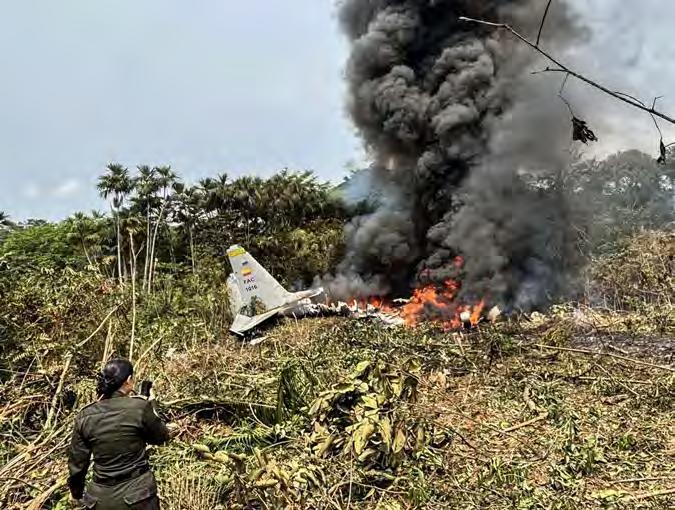
BOGOTÁ, COLOMBIA -- A COLOMBIAN military plane carrying 125 soldiers and crew members crashed on takeoff early Monday, killing at least 66 people and injuring dozens of others, officials said.
The C-130 Hercules aircraft went down shortly after departure from Puerto Leguizamo, near the southern border with Ecuador and Peru, strewing burning wreckage on the jungle floor.
A military source told AFP that 58 soldiers had died, along with six air force personnel and two police officers.
The updated toll came shortly after the local government secretary Carlos Claros told RCN television that 33 people had died, and that efforts were being made to treat and evacuate dozens of others injured.
He added that investigators were probing the cause of the crash.
The border area where the plane went down has been the scene of heavy military activity in recent weeks, as the Colombian and Ecuadoran militaries try to tackle drug-running cartels and militias.
AFP images from the scene showed civilians clambering around the broken tail of the aircraft, marked FAC 1016, as smoke and flames billowed above the trees.
Defense Minister Pedro Sanchez expressed his "deep sorrow" over the disaster, saying it was too early to determine the cause of the crash.
"It is a deeply painful event for the country. May our prayers bring some measure of comfort," Sanchez said.AFP
SEOUL -- NORTH KOREA will never give up nuclear weapons, leader Kim Jong Un said, indicating that the country will soon designate South Korea the "most hostile state", state media reported Tuesday.
Kim also told the country's rubber-stamp legislature in a policy address on Monday that the United States was committing "state terrorism" in an apparent reference to its military attacks on Iran.
"We will continue to firmly consolidate our status as a nuclear-armed state as an irreversible course, while aggressively stepping up our struggle against hostile forces," Kim told the Supreme People's Assembly.
"We will, in line with the mission entrusted by the Constitution of the Republic... further expand and advance our self-defensive
WASHINGTON — Senate on Monday confirmed Markwayne Mullin as the new chief of the Department of Homeland Security (DHS), the agency reeling from a partial government shutdown as it works to enforce President Donald Trump's immigration crackdown.
Senators voted 54-45 for 48-year-old Republican Mullin, a former wrestler and martial arts fighter who previously served as a senator for Oklahoma.
Mullin replaces Kristi Noem as DHS head, after she was fired earlier this month in part for her handling of the recent large-scale operation against undocumented migrants in Minnesota, during which federal immigration agents shot dead two protesters who were US citizens.
At his confirmation hearing before the Senate last week, Mullin said one of his goals would be to steer DHS and its flashpoint Immigration and Customs Enforcement (ICE) agency away from the spotlight.
"My goal in six months is that we're not the lead story every single day," Mullin said.
"I want to protect the homeland," he added. "I want to bring peace of mind. I want to bring confidence back to the agency."
Democratic Senator Dick Durbin of Illinois expressed skepticism of Mullin's promises, saying in a statement: "While the problems at DHS are larger than any one person, I remain concerned that Senator Mullin will not rein in ICE abuses."
"I voted no, because I will not vote to install another yesman to enable Donald Trump's worst instincts."
Mullin had also signaled openness to requiring judicial warrants for immigration enforcement operations, a potential shift from current policy and a key demand from Democrats in ongoing funding negotiations. AFP
nuclear deterrent," Kim said, according to the official Korean Central News Agency.
While the United States and Israel have said that their attacks on Iran are to stop the Islamic republic from developing nuclear weapons -- an aim Tehran denies -- Pyongyang's atomic activities are thought to be light years ahead by comparison.
Despite years of sanctions and diplomatic isolation, the Chinese ally is estimated to have dozens of nuclear warheads and the fissile material for many more.
The poor communist country has also unveiled increasingly sophisticated delivery systems, including new solid fuel intercontinental ballistic missiles that can launch with little warning. It has done six nuclear tests.
WASHINGTON — Police in the US capital are searching for two suspects after gunmen ambushed an unmarked police car and shot a veteran officer, authorities said Monday.
The US Park Police officers were taking part in an investigation in southeast Washington when their vehicle was "ambushed by at least two gunmen" and "an officer was struck," Chief of US Park Police Scott Brecht told reporters late Monday.
FBI Director Kash Patel said the FBI was supporting the investigation.
The officer managed to continue driving and pull over, where he received first aid and was airlifted to a hospital, Brecht said.
Brecht said the officer's injuries were not life-threatening. He described the officer as a veteran of the force but provided no additional details.AFP
Kim, a day after his reappointment as head of the authoritarian nation's highest policymaking body, the State Affairs Commission, also did not mince words about his southern neighbor.
"We will designate South Korea as the most hostile state and deal with it by thoroughly rejecting and disregarding it," Kim said.
The announcement came despite repeated overtures by South Korean President Lee Jae Myung, a doveish leader who took office in June, for dialogue without preconditions. Pyongyang has ignored these gestures.
Pyongyang will "make it pay mercilessly -- without the slightest consideration or hesitation -- for any act that infringes upon our Republic," Kim added. AFP
KYIV, Ukraine — Russian missile and drone strikes triggered air raid alerts across Ukraine on Tuesday, with attacks killing two people in Poltava and another person in Zaporizhzhia, regional military administrations said. Air raid alerts were issued in the small hours in all of Ukraine except for Odesa region, according to regional authorities.
"As a result of the enemy attack on Poltava community, damage was recorded to residential buildings and a hotel. Fires broke out," Vitali Dyakivnych, head of the Poltava regional military administration, posted on Telegram.
"Unfortunately, two people died and seven were wounded as a result of the attack," he said, later revising the number of wounded to 11. AFP


and GNPower Dinginin (GNPD), continues to promote responsible corporate citizenship by going beyond power generation and actively supporting environmental protection and community development. Butch Gunio
PNP chief ags health risks due to intense heat
Group pushes bill on gender equality, teenage pregnancy
AS the country marks National Women’s Month and Week of the Girl Child, the Philippine Legislators’ Committee on Population and Development (PLCPD) called on lawmakers to the pass long-overdue measure addressing adolescent pregnancy and advancing gender equality.
The call came as serious concerns were raised during the first hearing on 17 versions of the Adolescent Pregnancy Prevention (APP) bill in the House of Representatives, including the case of an eight-year-old girl who got pregnant and gave birth at nine – the youngest documented childbirth in the country.
“No girl deserves this. All of us adults in this room, especially the duty bearers, should not let this situation continue,” PLCPD executive director Au Quilala said. Quilala noted that adolescent pregnancy is also a public health and development concern. Children born to adolescent mothers face higher risks of low birth weight and malnutrition – conditions that can have lifelong, irreversible effects on their physical and cognitive development, she added.
“Even while still in the womb, complications already abound, Let us not allow this problem to persist,” Quilala said. Data from the Commission on Population and Development (CPD) also showed a troubling rise in teenage pregnancies, with many cases involving significantly older male partners.
The PLCPD stressed that passage of the Adolescent Pregnancy Prevention Bill was critical to closing gaps in the Reproductive Health Law and scaling up local responses to what the Department of Economy, Planning, and Development has called a “national social emergency.”
By Ram Superable
The resolution directs the Senate Committee on Women, Children, Family Relations and Gender Equality to conduct an inquiry in aid of legislation on safety standards in digital gaming environments.
It aims to recommend mandatory age verification protocols and stronger child protection measures to curb online threats.
The Cybercrime Investigation and Coordinating Center (CICC) previously gave Roblox a 30-day deadline to ad-
dress child safety concerns and alleged illegal activities involving minors.
Failure to comply could prompt authorities to impose a nationwide ban, including coordination with telecommunications companies and app stores to block access to the platform in the Philippines.
Roblox is an online platform and game creation system where users can play games created by other users, build their own games using Roblox Studio, customize avatars and
socialize in virtual worlds, and buy and sell virtual items using the ingame currency, Robux.
Considered a YouTube for games—a massive ecosystem of usergenerated experiences—Roblox has struggled with sexual content and “bypassed” clothing, violent or disturbing games, and users finding ways to circumvent filters, despite the platform marketing itself as kid-friendly.
“The Philippines continues to face a persistent and evolving threat of online sexual abuse and exploitation of children (OSAEC) and child sexual abuse and exploitation material (CSAEM), with digital platforms increasingly used to facilitate grooming, coercion, and abuse of minors,” Hontiveros said in the resolution.
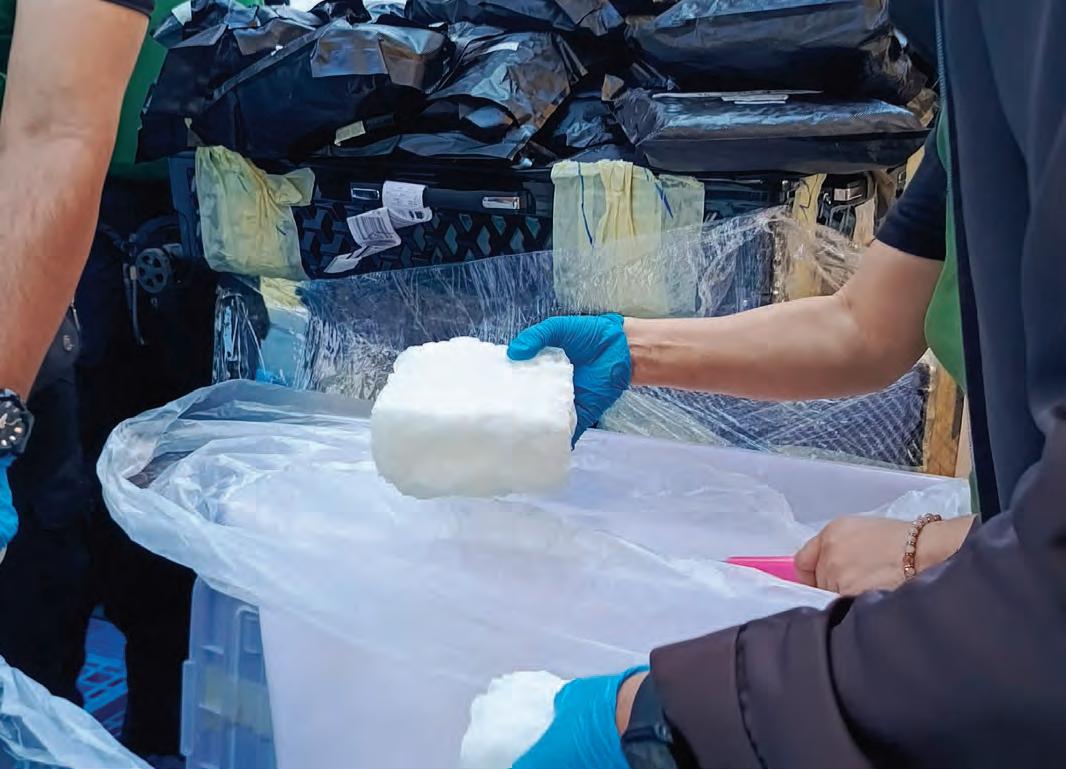
ILLEGAL DRUGS DESTRUCTION.
An estimated P4.56 billion worth of dangerous drugs went up in smoke at a governmentrun incinerator in Trece Martires City, Cavite initiated by the Philippine Drug Enforcement Agency. Roy Tomandao
WITH the onset of the dry season, Philippine National Police (PNP) chief. Gen. Jose Melencio Nartatez Jr. on Tuesday, March 24, tasked local police units to ensure wellbeing of officers at the front lines, especially those conducting patrols and checkpoints.
Nartatez pointed out that officers on duty should be protected from health problems associated with the hot weather, including heat stroke and cramps.
He said policemen on field duty must stay hydrated at all times and have reasonable working hours or shifts to avoid overexposure to the heat.
“While your PNP is working to ensure everyone’s safety, we also have to look after the welfare and protection of our personnel on the ground from the threat of health problems during this dry season,” said Nartatez. Vince Lopez
Bill mandates LGUs to identify bike lanes
A BILL filed at the House of Representatives aims to institutionalize secure travel systems by establishing a network of pedestrian-friendly and safe ‘bike-able’ road lanes across the country.
House Bill (HB) 7863 or the proposed Safe Pathways Network Act authored by Parañaque 2nd District Rep. Brian Yamsuan seeks to provide Filipinos with these alternative means of travel by mandating cities and municipalities, in coordination with national government agencies, to identify and develop walkable and bike-friendly lanes in their respective localities. Yamsuan underscored the need to pass this measure now that walking, bicycling and other means of active or non-motorized transport have become practical options for many Filipinos as a means to help cushion the impact of spiraling fuel prices. Maricel V. Cruz

By Maricel V. Cruz
BATANGAS Rep. Leandro Legarda Leviste on Tuesday said he would he was willing to pay for Palace Information Undersecretary Claire Castro’s “sleepless nights and anxiety” in light of a countersuit he filed against her.
“USec Claire Castro is asking me to pay her for the ‘sleepless nights and anxiety’ allegedly caused by the case I filed against her,”
By Rex Espiritu
THE Philippine Coast Guard (PCG) has contained a fire that broke out aboard one of its patrol vessels while docked at the Puerto Princesa International Cruise Ship Port early Monday morning. The incident involved BRP Cape Engaño (MRRV-4411), which was
COMPACT SIGNING. AboitizPower earmarks P37.4 million to boost its mangrove rehabilitation and turtle conservation initiatives in Bataan, marked by the forging of agreements with like-minded
in
in
berthed at the port in Barangay Bagong Silang, Puerto Princesa City.
According to the PCG, crew members detected black smoke coming from the bosun’s store at around 5:29 a.m., prompting the vessel’s skipper to immediately order a fire alarm and muster of personnel. All crew members were accounted for.
The ship’s engineering team quick-
ly secured the power supply while onboard firefighting teams were deployed to contain the blaze and prevent it from spreading to other parts of the vessel. Firefighting operations were later reinforced by personnel from the Coast Guard District Palawan and the Bureau of Fire Protection, who helped bring the situation under control.












“With the course being relatively wide, I was able to trust my ball striking all day, which really helped me go low,” he added.

Quiban surpassed Reymon Jaraula’s 65 from the tournament’s inaugural staging in 2024, though he remained grounded about the achievement.
in the last five holes – not only shattered the course record but also drove a commanding wedge between himself and his nearest pursuers.
“I consider myself more of a ball striker, and on a course like this, everything just clicked,” said Quiban, who is chasing his fourth Philippine Golf Tour title while balancing his schedule between the Asian Tour and the local circuit.


“Did I expect to break it? Yes and no. I’ve been working on the right things leading up to this week. I stayed focused on the process and didn’t dwell on expectations for today’s round – and I ended up shooting this low.”
Miki Ryoma turned in a 66, highlighted by a frontside 33, to finish just one stroke behind Quiban, who surged late with a blazing closing stretch at Lakewood to wrest a commanding fourstroke advantage.








CABANATUAN City—Yvon Bisera delivered a clutch finishing kick, draining a pressure-packed birdie down the stretch to card a three-under 69 and wrest a two-shot lead over Sarah Ababa at the start of the ICTSI Lakes Championship at Lakewood Golf and Country Club here on Tuesday.
Bisera leaned on steady ball-striking and a sizzling putter, needing just 27 putts to outduel a crowded leaderboard that shifted throughout a sweltering, windless day. Her round, highlighted by an eagle on the par-5 No. 4, saw her close with a gritty par-birdie-par stretch to wrest control late.
“My driving and irons were good, but I really banked on my putting,” said Bisera. “Finishing with only 27 putts is an achievement.”
Unfazed by the heat, the Davao native noted the conditions were nothing new.
“Medyo sanay naman tayo sa ganitong kondisyon. Ganito din kainit sa Davao,” she said.
Bisera also drew confidence from the course setup, which she said mirrors her home track. “Similar ang layout sa South Pacific, so medyo familiar din,” she added. Looking ahead, she aims to capitalize on the par-5s to widen her advantage. “I need to birdie the par-5s kasi malalapit sila for me,” said Bisera.

BEA Quiambao conquered one of the sport’s most challenging courses in down south, powering through the punishing heat with a dominant, grit-filled performance in the IRONMAN 70.3 Davao last Sunday.
The 25-year-old ace seized not one but two titles in a race that tested every ounce of endurance.
Clocking in at 5:19:29, Quiambao powered through the 1.9-km swim, 90-km bike, and 21-km run with relentless consistency, posting splits of 34:49, 2:53:22, and 1:48:46. Despite the heat and fatigue, the Malaybalay, Bukidnon native rose above the rest to claim the overall women’s championship while also taking the Filipino Elite Category crown – a division designed to spotlight the country’s top national team talents.
She shared the spotlight with men’s overall champion Irienold
By Randy M. Caluag
OLYMPIC silver medalist
Nesthy Petecio is setting her sights on unfinished business as she targets a podium, if not the gold medal, at the 2026 Aichi–Nagoya Asian Games—a prize that has long eluded one of the Philippines’ most decorated boxers.
Petecio, a two-time Olympic medalist, said she remains determined to secure an Asian Games’ gold, while also keeping her hopes alive for a berth in the 2028 Los Angeles Olympics, acknowledging that time is no longer on her side, but her motivation remains strong.
“May hangganan, tumatanda din po tayo, pero pipilitin ko pa rin makapasok sa next Olympics. Gusto ko pa ring makalaro sa Asian Games talaga, kasi zero pa ako dito—wala pa akong medal. ’Yan na lang listahan ko na wala
Reig Jr., who mirrored her two-title feat with a commanding 4:33:41 finish, also topping the 18-24 division. The event’s much-anticipated return to the racing calendar transformed Davao Coastal Road into a theater of endurance, where athletes pushed limits in pursuit of glory. Organized by Sunrise Events, Inc. with support from key national agencies, including the Philippine Sports Commission, TIEZA and the National Sports Tourism Inter-Agency Council, the race also reinforced the Philippines’ growing reputation as a premier destination for world-class endurance competitions. Beyond Quiambao’s brilliance, the women’s division showcased depth and determination across age groups. Moira Aves ruled the 1824 class (6:58:50), while Aira Lo-
pez topped 25-29 (5:45:49). Leyann Ramo dominated the 30-34 division (5:23:06), and Lyllian Banzon led the 35-39 field (5:42:39). Joanna Cruz (5:40:52) and Rhen Marte (6:36:22) claimed the 40-44 and 45-49 titles, respectively, while Catherine Arias triumphed in 50-54 (5:55:38). Norisa Goc-Ong and Celma Hitalia completed the roster of champions in the 55-59 and 60-64 divisions. On the men’s side of the event sponsored by BYD and presented by Aboitiz, Romeo Calamohoy topped the 25-29 class, while Mervin Santiago grabbed the 3034 title, Michael Acas held firm in 35-39, and Czech athlete Petr Lukosz dominated the 40-44 division with a 4:34:29 finish, good for second overall. Arthur Abogado surged late to win 45-49, while Ian Solana led 50-54. Hiroyuki Fu-
pa akong medal,” Petecio said in a recent radio interview.
At 34, Petecio admitted uncertainty about how long she will continue competing at the highest level.
“Hindi ko pa rin masabi kung last Olympics na ba, or last Asian Games,” she added. Despite her extensive list of achievements, including podium finishes on the Olympic stage, Petecio said an Asian Games’ gold remains her top priority in 2026. Her campaign, however, comes with added challenges.
The women’s 57kg division, Petecio’s natural weight class, has been removed from the Asian Games’ program, forcing her to decide whether to move down to 54kg or up to 60kg. The adjustment could significantly impact her preparation and strategy against a new set of opponents.
Petecio bagged a silver in the Tokyo 2020 Olympics and a bronze in Paris in 2024.
Ababa, the reigning Ladies Philippine Golf Tour Order of Merit champion, kept within striking distance with a 71. She highlighted her round with an eagle on the par-5 eighth, then rebounded from back-to-back bogeys on Nos. 11 and 12 with a birdie on the 14th.
Unlike Bisera, Ababa aims to stay steady with her putting in the final two rounds of the P1.2 million championship sponsored by ICTSI.

She had previously competed in the Asian Games in 2014 and 2018 but has yet to secure a medal, with her best result being a second-round finish.
Still, her resolve has not wavered, even as she received recognition as one of the Flame Awardees at the Women in Sports Awards 2026.

and
By Peter Atencio
FRESH off a historic qualification run, the Philippine national women’s football team is setting its sights on the next step -- building momentum for the 2026 Asian Games as part of its long-term preparation for the 2027 FIFA Women’s World Cup.
Filipinas midfielder Alessandrea Carpio said the Asian Games is the only confirmed tournament on their schedule following their successful campaign in the 2026 AFC Women’s Asian Cup qualifiers in Australia.
“The Asian Games is the
Philippine Sportswriters

Association held at the Philippine Sports Commission conference room in Vito Cruz, Manila.
The Filipinas are coming off a packed 2025 campaign, highlighted by a historic gold-medal finish at the 2025 Southeast Asian Games last December.
To manage fatigue, the team will skip the upcoming FIFA April window—a series of international friendlies involving 48 teams across six confederations.
“The April window, we will have no tournaments. We want to focus on rest. We were heavy on activities in 2025,” Carpio explained, referring to the squad under coach Mark Torcaso.
That demanding buildup paid off in the Asian Cup, where the Filipinas secured qualification to their second straight FIFA Women’s World Cup, making them the first Southeast Asian nation to achieve back-to-back appearances on football’s biggest stage.
MIAMI—Jannik Sinner and Aryna Sabalenka kept their “Sunshine Double” dreams alive with emphatic victories at the ATP/WTA Miami Open on Monday as defending men’s champion Jakub Mensik joined a slew of seeds who crashed out. Sinner and Sabalenka are bidding to join an elite band of players who have won Indian Wells and the Miami Open back-to-back, and arrived in Florida brimming with confidence after their respective victories in the California desert earlier this month.
Women’s world number one Sabalenka, defending the Miami title she won for the first time last year, cruised into the quarter-finals with a 6-3, 6-4 demolition of China’s 2024 Olympic champion Zheng Qinwen. Sinner, who is chasing a second victory in Miami after lifting the title in 2024, was similarly comfortable in his third-round clash with French 30th seed Corentin Moutet, winning 6-1, 6-4 to advance to the last 16. Sabalenka is aiming to become only the fifth woman to complete the Indian Wells-Miami double after Steffi Graf, Kim Clijsters, Victoria Azarenka and Iga Swiatek.
On Monday’s form, few would bet against the big-hitting four-time Grand Slam champion from Belarus, who comfortably disposed of 23rd seed Zheng in 1hr 25min. Sabalenka faces unseeded American Hailey Baptiste in the quarter-finals. Baptiste was one of three American women to advance to the last eight on Monday.
Fourth
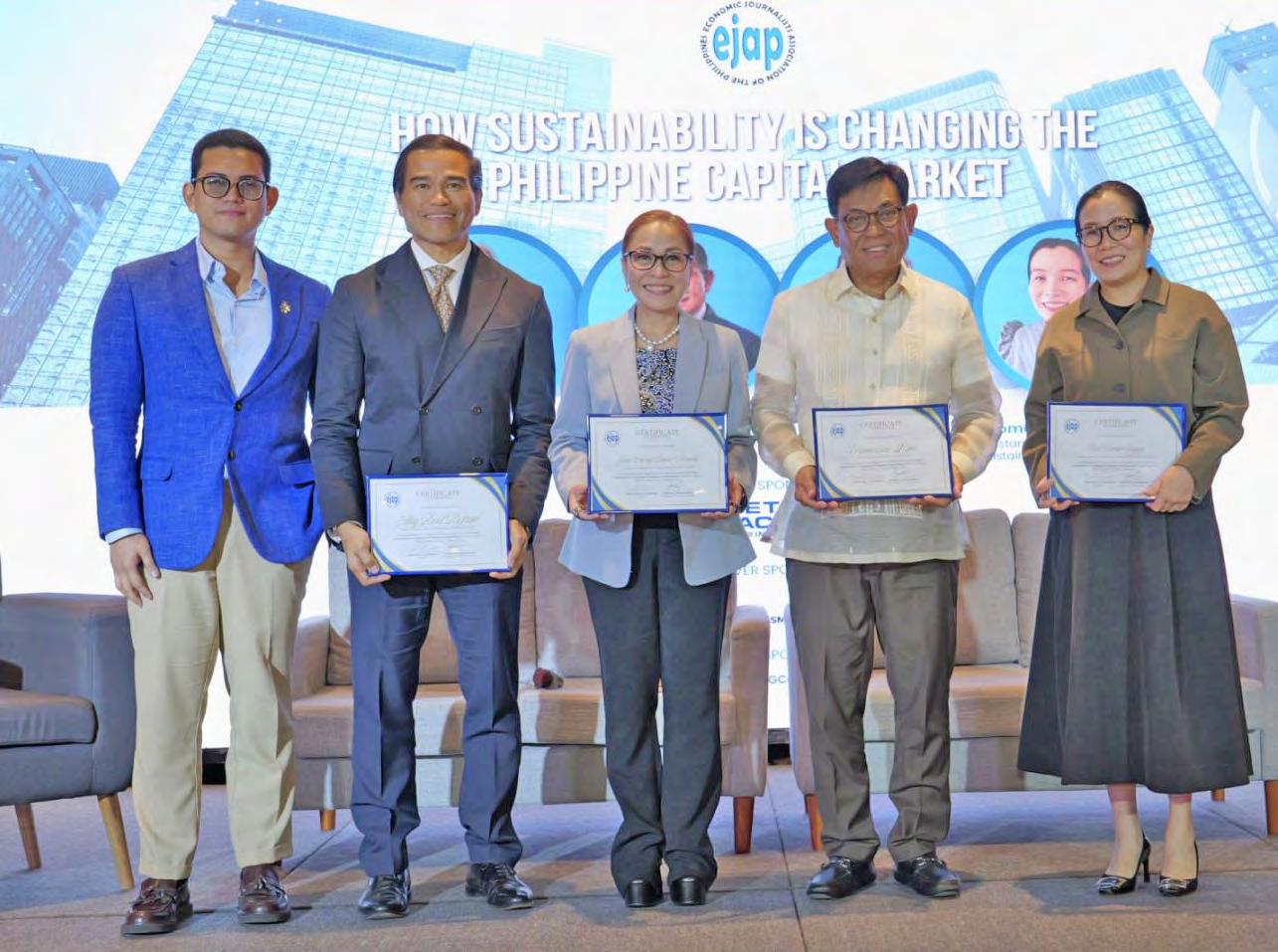
Regulators and business leaders agree at the inaugural Economic Journalists Association of the Philippines (EJAP) Sustainability Forum on Monday that sustainability should be embedded into corporate operations — and that quality reporting has become a factor that increasingly determines how investors allocate capital and how markets assign value. The forum, held at the Securities and Exchange Commission (SEC) eCenter in Makati, carried the theme ‘From Disclosure

By Jenniffer B. Austria
Tdelivered in another thing,” ConsunjiGotianun said.
The energy executive warned that if the supply disruptions persist, the company may seek state intervention to secure fuel stocks.

BCDA, InfiniVAN to build La Union cable landing hub
THE Bases Conversion and Development Authority and InfiniVAN have signed a long-term lease to develop the Poro Point Cable Landing Station in La Union province into an open gateway for international submarine cables.
The project is expected to increase data capacity, improve network reliability, and reduce connectivity costs across the country.
The agreement involves facilities within the Luzon Bypass Infrastructure, a joint initiative between the Department of Information and Communications Technology, BCDA and Meta. The 240-kilometer corridor connects Baler, Aurora to San Fernando, La Union. While BCDA constructed the backbone, including two cable landing stations and 4 repeater stations, DICT oversees the operations.
Operating as an open cable landing station, the Poro Point facility will host multiple submarine cable systems and allow domestic providers to colocate equipment.
The model is designed to encourage market competition and attract new investments into the Philippine digital landscape.
“This partnership with InfiniVAN’s nationwide fiber-optic network will expand access and service coverage, help lower the cost of internet services for enterprises and households, and accelerate the country’s digital transformation as it keeps pace with its ASEAN neighbors and the broader global digital economy,” BCDA president and chief executive Joshua Bingcang said.
InfiniVAN chairman Koji Miyashita said the integration will enable more efficient distribution of cable capacity nationwide and strengthen network resiliency. Othel V. Campos Smart,
IGHT fuel supplies are threatening the operations of major Philippine corporations, with conglomerate DMCI Holdings and budget carrier Cebu Pacific warning that a global energy crunch linked to the Middle East crisis is disrupting logistics and elevating costs.
The volatility has led some fuel suppliers to back out of contracts, leaving even secured orders in doubt.
DMCI Holdings president and chief executive Isidro Consunji said fuel availability has become a primary concern as deliveries are no longer assured.
While requirements for April have been booked, the conglomerate remains uncertain if the physical supply will arrive.
Semirara Mining and Power Corp. president Cristina Consunji-Gotianun said this is the first time fuel supply has surfaced as a critical issue for the company. She said that while they hold notices of award for their requirements, no supplier is willing to guarantee delivery.
“Nobody would want to guarantee the supply. While we have notice of award but there is no guarantee. So April is booked but whether it can be
She cited the stakes for the national grid, noting that “with no coal, we have no electricity.”
The crisis is already being felt in the aviation sector, where Cebu Pacific has announced cuts to both local and international flight schedules.
The airline cited the surge in global prices and the precariousness of the supply chain as the primary drivers for the reductions.
Beyond energy and transport, the DMCI group is seeing a ripple effect across its diverse portfolio.
DMCI Homes president Alfredo I. Austria said the housing business is

By Othel V. Campos
TAIWANESE semiconductor firm
Tong Hsing Electronics Phils. Inc. broke ground on its new P2-billion facility at Carmelray Industrial Park I in Laguna on March 18, 2026 to expand its local manufacturing capacity.
The Philippine Economic Zone Authority (PEZA) led the ceremonies for the 26,000-square-meter plant, which will focus on producing custom hybrid microcircuits and optically isolated solid-state relays for international markets.
PEZA acting deputy directorgeneral for policy and planning
Emmanuel Cortero said the project reinforces the role of the Philippines in building resilient supply chains through its skilled workforce and competitive business environment.
“This project further reinforces the Philippines’ role in building resilient and future-ready supply chains, supported by our highly skilled workforce, competitive business environment, and strong partnerships with global industry leaders like Tong Hsing,” Cortero said.
Tong Hsing Industries Ltd. president Heinz Ru expressed gratitude to the investment agency and affirmed the company’s commitment to strengthening

its long-term presence in the country.
Founded in 1994, Tong Hsing specializes in integrated circuit hybrid assembly solutions and advanced Chip Scale Package technologies.
Its operations include printed circuit board assembly, multi-chip modules for radio frequency applications and ceramic assembly.
The company maintains cleanroom facilities ranging from Class 10 to Class 100,000 to meet high-quality manufacturing standards.
Since registering with PEZA, the firm has invested over P3 billion, generated about $90 million in exports and created 3,000 direct jobs for Filipinos.
bracing for a slowdown in demand as high inflation and rising interest rates dampen consumer appetite. While the group has three projects ready for launch, the timing remains unconfirmed due to market conditions. In the cement sector, the group has already begun passing additional production costs to customers. DMCI Holdings said its operating costs are being revisited to account for the growing disparity in raw material prices.
Despite these headwinds, the conglomerate is maintaining its 2026 capital expenditure program of P24.6 billion. This represents an 11-percent increase from the P22.2 billion it spent in 2025 and is intended to fund residential construction, off-grid power expansion and cement facility upgrades.
Authorities seize P1.4-b illicit vape products in Navotas
THE Bureau of Customs and the Department of Trade and Industry (DTI) seized an estimated P1 billion to P1.4 billion worth of illicit vaporized nicotine products during a raid on a warehouse in San Rafael Village, Navotas City.
Authorities confiscated about 3.17 million units of illegal vape devices and pods following a letter of authority served on March 21. The operation, triggered by intelligence gathered by the Customs Intelligence and Investigation Service, also uncovered promotional materials such as T-shirts, jackets and lanyards featuring brands already suspended from trading.
DTI Office for the Special Mandate on Vaporized Nicotine and Non-Nicotine Products assistant secretary Marcus Valdez II said several brands were suspended in 2024 for packaging violations. These infractions included failures to comply with tax-stamp placement and graphic health-warning requirements.
“The seized items will undergo condemnation proceedings to ensure they are permanently removed from circulation,” Valdez said, warning consumers to avoid unlicensed brands due to the risks posed by unregulated products.
BOC Commissioner Ariel Nepomuceno said the operation highlighted growing public trust, noting that authorities located the warehouse through information provided by an informant. Othel V. Campos
THE Department of Tourism (DOT) is expediting efforts to increase arrivals and investments through new international partnerships and the revival of a national cruise committee to streamline maritime travel. Department of Tourism officer-incharge Secretary Verna Buensuceso met with Montenegro Tourism Minister Simonida Kordic on March 18, 2026 to coordinate preparations for high-impact
on
By Darwin G. Amojelar
SMART Communications
Inc. has teamed up with independent tower company EdgePoint Towers Inc. to deploy solar-powered telecommunication towers across the Philippines, beginning with 20 sites in off-grid areas.
This aims to scale up connectivity in the country’s most underserved regions while enhancing energy security and network resilience.
The move is designed to optimize EdgePoint’s solarization efforts by replacing diesel with solar energy as the primary power source for telco towers.
The shift fortifies operations in areas where electricity supply is inconsistent, ensuring services remain active during prolonged outages and severe weather. The transition is also expected to reduce costs associated with transporting fuel to facilities in remote locations.
Across the solarized towers, installed solar capacity exceeds 181-kilowatt peak with a battery capacity of over 20,000 ampere-hours. The project is expected to reduce diesel consumption by approximately 198,000 liters annually and avoid
around 545 tons of carbon emissions each year.
PLDT chief operating officer and network head Menardo Jimenez Jr. underscored the importance of the measure amid the volatility of global oil prices and supply. He said the project lowers operational exposure to price surges and reduces reliance on fossil fuel.
“Ensuring reliable connectivity is our foremost priority, especially in communities where power supply is unstable. Solarizing these towers significantly improves uptime and service continuity by giving our equipment a more dependable energy source for our network,” Jimenez said. This supports the PLDT Group’s decarbonization roadmap, which aims to reduce Scope 1 and Scope 2 greenhouse gas emissions by 40 percent by 2030 from a 2019 baseline. PLDT and Smart chief sustainability officer Melissa Vergel de Dios said sustainability strengthens network performance rather than being separate from it.
“By shifting to cleaner energy sources, we reduce emissions while making our network more reliable and future-ready. Our partnership with EdgePoint accelerates our progress toward building a low-carbon and resilient digital infrastructure,” Vergel de Dios said.
In August 2025, EdgePoint joined a PLDT and Smart supplier workshop to integrate biodiversity conservation and sustainability into network rollout and supply chain operations.

By Jenniffer B. Austria
THE Philippine peso and local stocks rose Tuesday after US President Donald Trump announced a five-day pause on military attacks against Iran, sparking a wave of relief across regional markets.
The peso closed at 59.95 against the US dollar, recovering from a record low of 56.30 on Monday. The recent weakness of the local currency has exacerbated domestic fuel prices as conflict in the Middle East continues to disrupt global commodity flows.
The benchmark Philippine Stock Exchange index gained 37.02 points, or 0.63 percent, to finish at 5,936.20, but it remained below the 6,000 level. The broader all-shares index added 18.64 points, or 0.57 percent, to end at 3,295.23.
Wall Street and other Asian markets similarly rebounded as investors welcomed signs of de-es-
By Othel V. Campos
TOYOTA Motor Philippines expects electrified vehicles to account for about 20 percent of its total sales in 2026 as the company expands its lineup despite global supply uncertainties, a top executive said Tuesday.
Speaking on the sidelines of the PhilippinesJapan Diplomatic Partnership Forum, Toyota Motor Philippines chairman and GT Capital Holdings Inc. vice-chairman Alfred Ty said the automaker continues to introduce more electrified models, including hybrids and fully electric vehicles, as part of its transition strategy.
“We’re bringing in more volume and more models this year,” Ty said, noting that the introductions were planned before rising tensions in the Middle East sparked concerns over logistics. He said the local and global situations remain
calation. However, market participants remained cautious after Iran denied that any formal talks with the United States were taking place. Philstocks Financial Inc. said bargain-hunting activities supported the recovery after the index plummeted below the 5,900 level during the previous session.
Most sub-indices tracked the general gain. Mining and oil surged 3.4 percent, followed by financials at 1.63 percent, property at 1.51 percent, holding firms at 0.94 percent and industrial indices at 0.74 percent. The services sector was the sole decliner, falling 0.49 percent. Trading remained thin with value turnover at P5.78 billion, despite gainers outnumbering decliners 129 to 63. Foreign investors continued to pull back, recording a net outflow of P755.5 million and marking the 14th consecutive day of net selling.
said the company is monitoring the
and has not yet determined
By Alena Mae S. Flores
HE Department of Energy (DOE) has secured assurances from Indonesia for a stable coal supply as the government moves to shift its power generation mix and mitigate the impact of the Middle East crisis.
Secretary Sharon Garin said
costs by as much as P2 per kilowatthour.
Electricity prices in Manila Electric Co. (Meralco) service areas are projected to jump 16 percent due to the ongoing conflict.
“It’s a combination; almost 60 percent is coal and imported also,” Garin said.
“Because of this oil price hike, the prices of diesel and LNG — which is the imported natural gas, liquefied natural gas — all went up,” she said.
Garin said the current dependence on expensive diesel and liquefied natural gas (LNG) poses a significant risk to the domestic economy.
“The effect is the constraint in the budget of each household as well as the constraints in the whole economy,” Garin said.
“It will affect our trade, our economy, even the basic services of the government,” she said.
To address the spike, the DOE is
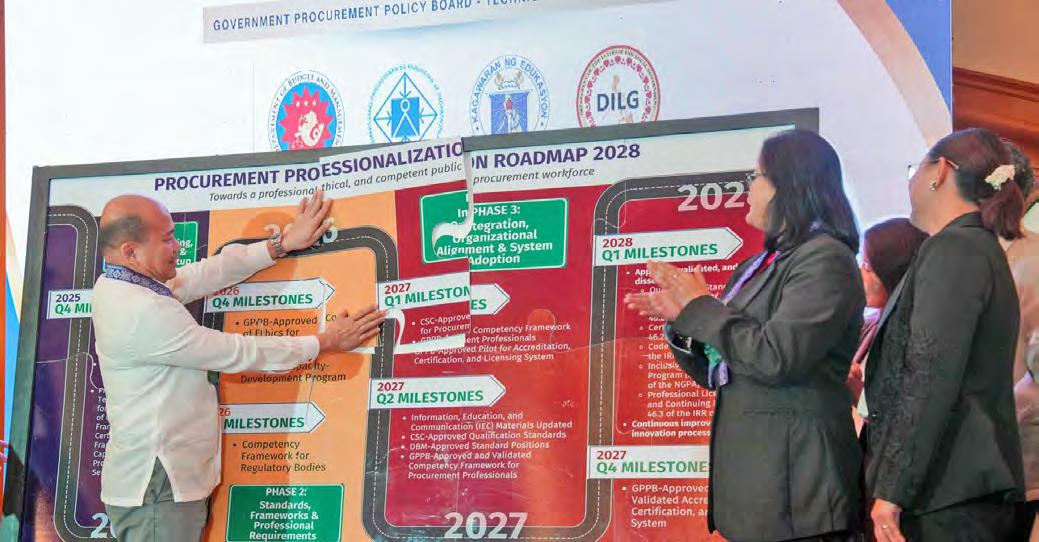
Rolando Toledo (left) reaffirms the DBM’s commitment to investing in the continuous growth of
of procurement reform—during the 2026 GPPB Trainers’ Renewal and Onboarding Summit on
consulting with the Energy Regulatory Commission to implement a temporary shift in the energy mix.
Garin met with the Indonesian ambassador to guarantee fuel security and held talks with generation companies to determine how much coal-fired power plants can increase their output.
While the Philippines is seeking stability from Indonesia, Garin suggested that a massive surge in imports might not be immediate because domestic plants currently maintain available stocks.
“There’s no restriction on our importation of coal from Indonesia as of
today,” Garin said.
“Maybe it’s not necessary because they have stock. We also have our own coal with certain limitations on who can use them,” she said. Beyond coal, the DOE is accelerating renewable energy projects.
The department aims to advance 300 megawatts of the 900 megawatts scheduled for late 2026 to be completed as early as next month. These measures form part of a broader contingency plan to improve self-sufficiency and lower the anticipated rate hikes caused by international instability.
23,
in
City. Toledo led the launch of the Procurement Professionalization Roadmap, which not only institutionalizes procurement as a recognized profession but also raises the standards for public procurement professionals, strengthening accountability and helping rebuild the nation’s trust.
By Thony Rose Lesaca
THE value of digital payments in the Philippines surged 43.1 percent yearon-year to P2.58 trillion in January 2026 on sustained growth in InstaPay and PESONet transactions, according to Bangko Sentral ng Pilipinas (BSP) data. The BSP said transfers through InstaPay reached P1.24 trillion at the end of January, up 65.52 percent from P750.62 billion a year earlier. PESONet transactions rose 27.11 percent to P1.34 trillion from P1.05 tril-
By Darwin G. Amojelar
DIGITAL bank Maya has launched a new incentive program to support Filipino families who receive remittances from the Middle East by offering transaction rebates and mobile load cashbacks.
Maya said that from March 23 to April 10, 2026, users receiving funds from countries including Bahrain, Kuwait, Oman, Qatar, Saudi Arabia, the United Arab Emirates, Israel, Lebanon and Jordan can unlock exclusive benefits. This is designed to help households manage their budgets by reducing the costs associated with accessing and distributing international funds.
The Middle East is a critical financial corridor for the Philippines, housing about 2.4 million Filipinos
lion in January 2025. By volume, InstaPay transactions jumped 350 percent to about 678.32 million in January. PESONet transactions increased 8.62 percent to 10.48 million during the same period. Both systems operate as automated clearing houses under the National Retail Payment System of the BSP.
InstaPay provides real-time, lowvalue electronic fund transfers for transactions up to P50,000, while PESONet serves as a batch electronic fund transfer alternative to paper-
according to Department of Foreign Affairs data. Preliminary figures from the Bangko Sentral ng Pilipinas show the region contributed over $6.4 billion in remittances in 2025.
“With many overseas Filipinos in the Middle East supporting their families back home, we aim to make it easier for households to access and make the most of these remittances by reducing everyday transaction costs,” Maya Group president and Maya Bank co-founder Shailesh Baidwan said.
Under the program, eligible users who activate the Maya XP feature will receive rebates of P18 per ATM withdrawal and P15 per InstaPay bank transfer. These amounts are credited directly back to user accounts on the same day the transaction is completed.
based checks.
Rizal Commercial Banking Corp. chief economist Michael Ricafort said the double-digit growth reflects the growing adoption of digital banking and payment channels in a lowcost environment.
“Strong double-digit growth reflects continued increase in online/ digital banking transactions, increased adaptation of digital payment systems as alternative to checks amid lower costs and greater convenience, also reflecting increased use of e-wallets,” Ricafort said.

TACTICAL INSPECTION. Security guards of SM City Sucat stand in formation during the Annual Joint Tactical Inspection of the CRS Central 5 Division of SM Supermalls, in cooperation with the Parañaque City Police, represented by Police Lt. Col. Paul Bryan Dino Torres, deputy chief for administration of the Parañaque City Police Station, in Parañaque City, on March 24, 2026. The inspection assessed personnel compliance with uniform, equipment and operational protocols, aligned with company standards and the Philippine National Police – Civil Security Group requirements. The Parañaque City Police underscored the strong partnership between SM Supermalls and local law enforcement in promoting a safe and secure environment for the public. Norman Cruz

that
financial institutions
MALAYAN Insurance Co. Inc. has launched a zero-interest installment payment facility, allowing clients to purchase insurance policies through staggered payments at no additional cost.
The new facility enables customers to divide total annual premiums into flexible terms, such as three or sixmonth plans, without incurring interest or hidden financing fees. Policyholders receive immediate and full protection coverage once approved.
Malayan Insurance said the payment structure aims to make essential products, such as AutoMaster car insurance and Home Protect, more accessible without requiring a one-time lump-sum payment.
“Our mission has always been to give our clients peace of mind and financial security during life’s unexpected events. Through these 0 percent installment options, we aim to remove financial barriers to protection and ensure that every Filipino can safeguard what matters most—easily and affordably,” Malayan Insurance president and chief executive Paolo Abaya said. The company said the installment options are available through select participating credit card partners and via the Malayan Insurance official website. Thony Rose Lesaca




THE world is in a climate emergency. Unless greenhouse gas emissions fall dramatically, warming could pass 2.9°C this century, which would have catastrophic consequences for life on this planet.
The United Nations Environment Program (UNEP), the UN’s leading global authority on the environment, has warned that the world is ironically nature’s decline. For every dollar the world invests in protecting or restoring nature, $30 are spent on activities that degrade it.
UNEP’s new State of Finance for Nature 2026 report shows how this imbalance is accelerating climate change, biodiversity loss and pollution — and why shifting financial flows is now one of the most powerful levers available to governments, businesses and investors.
“Whether investments flow into nature’s destruction or into its protection will determine if we live in climate-vulnerable concrete jungles or in climate-resilient green cities,” says Inger Andersen, UNEP Executive Director.
The report sets out a clear path: phase out harmful investments, scale up high-integrity naturebased solutions (NbS), and build an economy that works with nature instead of against it.
In 2023, an estimated US$7.3 trillion flowed into activities that damage ecosystems and undermine climate and biodiversity goals. Most of this came from private capital in energy, utilities, industrials and basic materials, as well as public subsidies to the fossil fuels, agriculture, water, transport and construction industries.
By contrast, only US$220 billion supported NbS. Nearly 90 percent of that came from public spending; private-sector contributions amounted to just US$ ]23 billion. The imbalance—30:1 in favur of nature-negative finance—is clear. How far off are we from where we need to be?
To meet global biodiversity, climate and land restoration targets, annual NbS finance must increase 2.5 times to US$ 571 billion by 2030. This is equivalent to roughly 0.5 percent of the global gross domestic product—a modest shift compared to the scale of harmful flows already in the system.
Redirecting even a fraction of the trillions currently spent on naturenegative activities would close the gap.
Turn to C2







GLOBE emerged as the highest-ranked company in Southeast Asia in the 2026 Digital Inclusion Benchmark of the World Benchmarking Alliance (WBA), placing 11th out of 200 companies globally. This marks a significant improvement from its 43rd place ranking in 2023, reflecting stronger performance under a more rigorous framework that now requires full compliance with each indicator.
The 2026 DIB results reveal global gaps, noting that 79 percent of companies scored zero in child rights and only 39 percent provide targeted technical or professional development programs for underrepresented employees. Against this backdrop, Globe’s improved standing reflects strengthened governance, clearer accountability for digital risks, and sustained focus on inclusive access, digital skills, cybersecurity, data privacy, and climate action aligned with a 1.5°C pathway.
“Digital inclusion is a fundamental principle of doing business at Globe. As global standards become more demanding, we are raising our own to ensure that digital progress in the Philippines remains secure, inclusive, and sustainable,” said Yoly Crisanto, Chief Sustainability and Corporate Communications Officer at Globe.
The 2026 benchmark follows a new methodology where companies are assessed against six (6) measurement areas: Access, Skills, Use, Innovation, Sustainable Value Creation, and Core Social Indicators. This framework measures how businesses bridge the digital divide through affordable connectivity and digital literacy while ensuring a safe, ethical, and secure digital environment. Furthermore, it holds companies accountable for their environmental footprint and fundamental socially responsible business conduct, such as human rights and workplace diversity.
Inclusive Access and Advancing Digital Skills Globe actively bridges the digital divide through the Bayanihan SIM initiative, providing connectivity to students in remote areas. Furthering this mission, Globe partners with Khan Academy Philippines to expand access to STEM and digital literacy lessons through its connectivity platforms and the GlobeOne app. The company also supports financial inclusion by donating refurbished smartphones to Pantawid
Pamilyang Pilipino Program (4Ps) beneficiaries, enabling them to participate in the digital economy.
A cornerstone of Globe’s digital literacy efforts is the Digital Thumbprint Program (DTP), which has reached more than two million students and educators nationwide since its launch in 2016. The initiative equips learners with practical skills to navigate the online world safely, from protecting personal data to practicing cyber ethics and responsible technology use. In 2025 alone, over 16,500 students and teachers participated in DTP workshops and learning sessions across the country, reflecting Globe’s continued commitment to building digitally responsible communities.
Superior Cybersecurity and Data Privacy
With cybersecurity as a top priority, Globe’s Chief Information Security Officer (CISO) reports directly to the President and CEO to manage digital risks effectively. The company employs a RiskBased Vulnerability Management (RBVM) program featuring 24/7 monitoring and prioritized threat response. To ensure 100% compliance with the Data Privacy Act, projects undergo a Privacy and Security Risk Assessment (PSRA). The company also continues to block harmful domains and URLs containing child sexual abuse or exploitation material.
Sustainable Value and Climate Action
Aligned with a 1.5°C pathway, Globe is the first publicly listed Philippine firm with approved science-based net-zero targets. The company has successfully increased its renewable energy share from 14% in 2021 to 24% in 2024 by deploying solar solutions in off-grid communities and securing power purchase agreements for its main facilities. This integration of resource efficiency into digital expansion ensures that growth does not come at the cost of the planet.
The WBA, with headquarters based in the Netherlands, is an independent, multi stakeholder organization that develops and publishes global corporate benchmarks focused on sustainable development. It assesses how the companies are contributing to the 17 United Nations Sustainable Development Goals.
To learn more about Globe, visit www.globe.com.ph.


MADRID, Spain—Spain endured its wettest January and February in almost half a century, with a string of deadly storms lashing the country, national weather agency AEMET said.
The Iberian Peninsula is considered a frontline region for climate change, experiencing increasingly long heatwaves that sometimes start before summer, along with more frequent episodes of intense rainfall.
Eleven major storms swept the country from late December to mid-February, bringing heavy rain and strong winds, said AEMET spokesman Ruben del Campo.
“January and February 2026 has been the rainiest in the last 47 years, highlighting the extraordinary nature of these events,” he told reporters.
Grazalema, one of the hardest-hit municipalities in southern Spain, saw more than a full year’s expected rainfall in just a few days during the passage of Storm Leonardo in February.
The intense flooding and risk of
landslides prompted the authorities to evacuate the entire town and two people died as a result of the storm.
Del Campo said the severity of Leonardo was “the footprint of climate change,” noting that warmer oceans increase evaporation, while a warmer atmosphere retains more water vapour, resulting in heavier rainfall.
Neighboring Portugal also experienced its wettest February in 47 years, the Portuguese meteorological agency IPMA reported.
This was the eighth consecutive warm or very warm winter in Spain, with temperatures above average, a streak unprecedented in AEMET records, Del Campo said.
He forecast a 50 percent to 70 percent probability that the coming spring will also be warmer than usual. AFP

How can the world begin this financial shift?
The report introduces the Nature Transition X-Curve, a new framework guiding how governments and businesses can redirect capital flows. It outlines two simultaneous, mutually reinforcing transitions. Phasing out destructive investments and harmful subsidies; and scaling up high-integrity NbS and nature-positive investments catalysing a “nature transition economy.”
This is the blueprint for moving from a nature-negative to a nature-positive economy. Are nature-positive options realistic for business? Yes—and they cover every major sector. Opportunities include regenerative agriculture and sustainable forestry; deforestation-free supply chains; biodiversity credits and highintegrity carbon markets; nature-linked bonds and innovative green finance; urban greening and resilient urban development
by UNEP
Momentum is building. Over 700 organizations, representing US$20 trillion in assets, have already adopted the Taskforce on Nature-related Financial Disclosures (TNFD) to assess and manage their nature dependencies and impacts. Is the shift already happening anywhere?
Yes. governments and businesses around the world are already taking steps toward a nature-positive transition. Examples include: geening cities to counter heat-island effects and improve liveability; embedding nature directly into infrastructure design; producing building materials that store carbon instead of releasing it; supporting debt-fornature swaps; and scaling up ecosystem protection and restoration. A trillion-dollar nature transition economy is within reach. But reaching it requires shifting where money flows: away from activities that harm nature and toward solutions that restore it.


By Alena Mae S. Flores
THE Philippines has reached a renewable energy share of 25 percent in its power generation mix as of 2025 from 22.2 percent in the past four years, nearing its goal of 35 percent by 2030 under the Philippine Energy Plan.
Latest Department of Energy data showed that coal still dominated the generation mix last year at 56.6 percent, dropping from 62.52 percent in the past two years. Natural gas was at 17.4 percent from 14.22 percent while oil declined to 0.6 percent from 1.06 percent in 2024.
“We have set ambitious RE targets: 35 percent RE share in the energy generation mix by 2030, 50 percent by 2040 and more than 50 percent by 2050. By the end of last year, RE already accounted for 25 percent of the generation mix, just 10 percent short of our 2030 target,” DOE Undersecretary Rowena Guevara said in a recent forum.
“This is a significant progress after years of being at 22 percent, and this progress strengthens our resolve to move decisively from ambition to action,” she said. In terms of installed capacity, or the maximum rated output of power plants, renewable energy reached 10,532.81 megawatts in 2025, representing 32 percent.
Hydro projects captured 3,856.64 MW or 12.04 percent, solar at
3,543.58 MW or 11.06 percent, geothermal at 2.057.32 MW or 6.42 percent, biomass at 573.39 MW or 1.79 percent and wind at 501.90 MW or 1.57 percent.
Guevara said the continued implementation of the Renewable Portfolio Standards (RPS) and the Green Energy Auction Program (GEA) remain central to accelerating renewable energy deployment.
“Additional auction rounds covering various RE technologies are forthcoming. On the demand side, programs such as the Green Energy Option Program (GEOP) and NetMetering Program are empowering consumers to actively participate in the energy transition,” Guevara said.
To foster a more attractive investment environment for renewable energy, Guevara said the DOE streamlined processing for securing Renewable Energy Service Contracts (RESC) and enacted a major policy allowing up to 100 percent foreign ownership for the exploration, development and utilization of indigenous RE resources, a transformative step that signals the Philippines’ openness to
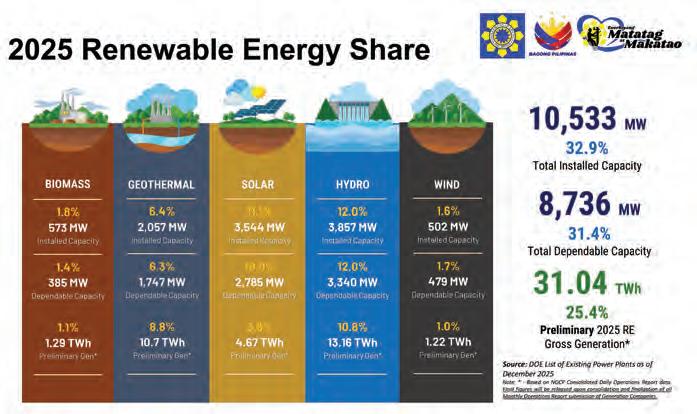
global partnerships.
“Complementing this is Renewable Energy Market (REM) that now provides a transparent platform for trading RE Certificates (RECs),” she said.
Guevara said as RE penetration increases, so does the need for grid modernization and enhanced system balancing.
The DOE, in coordination with the Institute of Integrated Electrical Engineers of the Philippines, has initiated a review of the Philippine Grid Code (PGC) to account for gridforming inverters, energy storage systems, and the operational realities of a high-variable renewable energy penetration power system.
“We are also studying the potential enhancements to ancillary services categories to
strengthen frequency regulation, reserve adequacy, and real-time system balancing to ensure efficiency, proper cost allocation, and accountability among the market participants,” she said.
As the Philippines accelerates the energy transition, Guevara said the message must be clear: with the expected influx of RE capacity in the coming years, market institutions, must be fully prepared.
“The scale and speed of RE integration will test our systems, our rules, and our operational readiness,” Guevara said adding that institutions such as the Independent Electricity Market Operator of the Philippines, must be ready to manage a more dynamic, more complex, and increasingly renewable-driven market environment.
UN chief calls for fair shift to clean energy
THE world has “entered the age of clean energy” and renewables are now the cheapest, fastest and safest source of new electricity almost everywhere, UN Secretary-General
António Guterres said in a video message to the International Energy Agency ministerial meeting in Paris last week.
He warned that the world’s addiction to fossil fuels remains “one of the greatest threats to global stability and prosperity,” and criticied efforts by some fossil fuel interests to slow progress and spread disinformation.
“Those who lead this transition will lead the global economy of the future,” he added.
Mr. Guterres called for the creation of a dedicated global platform to coordinate an orderly, affordable and fair transition away from fossil fuels, aligned with the 1.5°C climate goal. The platform, he said, should unite producers, consumers, financial institutions and civil society to sequence the decline of fossil fuel investments while scaling up clean energy.
“We face a choice,” the SecretaryGeneral said. “Design the transition together–or stumble into it through crisis and chaos.” UN News
FOR every Filipino, the dream of a comfortable home has always been anchored in family. But today, that dream is being tested by a world in flux.
As the ongoing conflict in the Middle East continues to disrupt a major shipping route and destabilize global markets, the ripples are felt right here at home — most acutely in fluctuating fuel costs and the pass-through in monthly electricity bills.
The Philippines consists of more than 26 million households, most of whom are already paying for the second most expensive electricity in Southeast Asia. This is in part due to the fact that the Philippines does not subsidize its electricity, unlike many of its neighbors in Southeast Asia.
With the rising technological transition to more decentralized electric power systems, residential solar holds enormous potential for Filipino households looking to take control of their energy needs and reduce costs in their electricity bills.
But while the benefits are clear, the path to large-scale
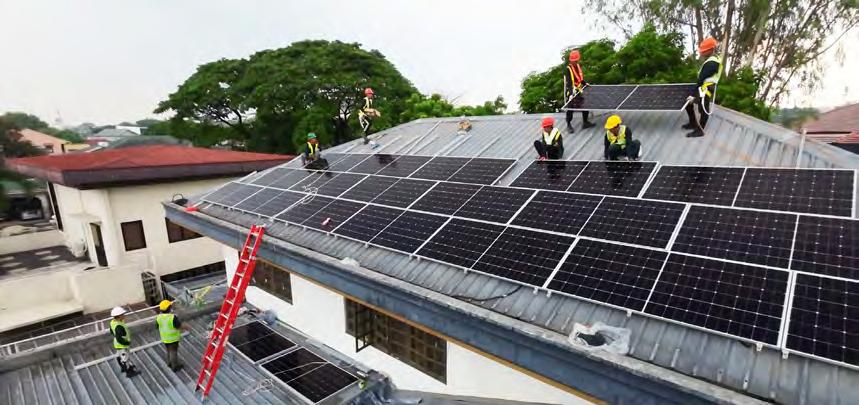
adoption hasn’t been easy. Challenges to adoption Globally, the cost of generating solar electricity has fallen by 90% since 2010, from $0.46 to $0.044 per kilowatt hour (kWh), according to the International Renewable Energy Agency, due to technological progress, manufacturing scale, and global competition. In contrast, the rate of the Philippines’ top electric power distributor has risen by 57% in just four years,

At zero upfront cost, homeowners pay P0 down and their first payment only kicks in 30 days after installation — by then, the savings from solar are already helping cover it.
from P8.56 per kWh in 2021 to P13.47 per kWh today.
Data from the Energy Regulatory Commission showed that, as of March 2026, there are over 22,000 customers from Luzon, Visayas, and Mindanao who adopted solar photovoltaic (PV) technology and even exported surplus power generation to their distribution utility, hence realizing rebates and savings under the Net-Metering Program.
But according to a study conducted by the Ateneo de Manila University, there is still low adoption of solar PV technology in the Philippines due to its high upfront cost and a lack of public awareness. From its survey of 430 respondents, 82% expressed interest in adopting solar panel technology but only 20% had “firm intentions” of pushing through.
“While most survey respondents said they understood the broad concept of renewable energy and its role in addressing climate change, few were aware of the specific advantages of [rooftop solar power] and how to access reliable installation services,” Ateneo explained. “Concerns over the quality of materials, maintenance needs, and provider credibility also added to their reluctance.”
“Respondents said that the trustworthiness of providers, clarity on warranties, and the perceived quality of the installations themselves were just as important considerations as cost, if not more so,” it added.
It is clear that installing solar panels meant shouldering a huge upfront cost, often requiring trust and patience before there is a return on investment.
One big expense… into smaller, manageable monthly payments
A new generation of solar power companies are working to bridge the gaps, introducing solutions that can help maximize the benefits of solar PV for Filipino homeowners.
Solviva Energy, a company under Aboitiz Power Corporation, has helped address this barrier to accessibility, doing away with the lump sum and offering a rent-to-own model.
Solviva rolled back its prices for a limited time (until May 31, 2026), with monthly payments for a 5 kilowatt-peak system— previously P7,800—now starting at just P7,089. Larger system sizes are also available for bigger homes and higher electricity bills.

then, the savings from solar are already helping cover it. Solviva handles everything, from home assessment and custom system design to installation and energization, usually completed within days of approval. After installation, every Solviva customer gets after-sales support for the life of their system.
Solviva uses only Tier 1 solar panels and equipment—the same standard used by the world’s largest energy developers, rated to perform for 30 years. Customers on the smallest system save an average of 30% to 50% a month on their electricity bill—with savings starting from day one and a full payback period of three to five years. Over the life of the system —which typically lasts ~25 years— that’s decades of protection against fluctuating rates. For Filipino families, the home is a sanctuary. Yet unpredictable global fuel costs and expensive electricity continue to challenge that peace of mind. Even so, the sun continues to rise over the Philippines every single day. While the journey to widespread adoption has its hurdles, there is a developing path to greater consumer choice. Solutions to energy efficiency and conservation are becoming more and more accessible, serving as a front-line defense to bill shock in the long run. Under Solviva’s model, adopting solar PVs gives homeowners predictable costs and a pathway to true ownership. Filipino families can finally redirect what used to go to electricity bills into something that’s theirs. For more information on Solviva Energy, please visit their website: http://www. solvivaenergy.com

ROME—The Food and Agriculture Organization of the United Nations (FAO) marked International Day of Forests 2026 and World Water Day 2026 with a series of high level and technical events at its headquarters in Rome.
The two UN global observances, celebrated annually on March 21 and 22, respectively, underscore the critical role of forests and water in sustaining local economies, resilient agrifood systems and the Sustainable Development Goals.
In a video message opening the celebrations, FAO Director General QU Dongyu emphasized the intrinsic connection between forests, water and agriculture.
“Forests need water, water needs forests, and we depend on both,” the Director General said. “FAO is celebrating these international days together to highlight the powerful linkages between the two natural resources that underpin our agrifood systems.”
At the heart of economies
The theme of the 2026 International Day of Forests–Forests and Economies–draws attention to the essential contributions forests make to economic prosperity and livelihoods worldwide.
Forests and trees contribute trillions of dollars to the global economy annually and support billions of people who rely on forest products for income, food, energy
and well being. Forests sustain family and community agriculture, enhance agricultural productivity, and safeguard watersheds.
As natural infrastructure, they filter and infiltrate water, reduce erosion, improve water quality, and mitigate floods—services that are indispensable to rural livelihoods and national economies.
More than half of global GDP–an estimated $44 trillion–depends on nature, including forests. Demand for forest products is at an all-time high, with about 4 billion cubic meters of wood produced per year.
Based on current trends, this volume is projected to rise by as much as 1 billion cubic meters of industrial roundwood by 2050 as the population grows and the world seeks to replace carbon-intensive products with renewables—adding to the imperative of ensuring sustainable forest management.
In addition, non wood forest products such as foods, medicines, resins and ornamental plants are used by up to 5.8 billion people and are valued at over $9.4 billion annually, with significant potential
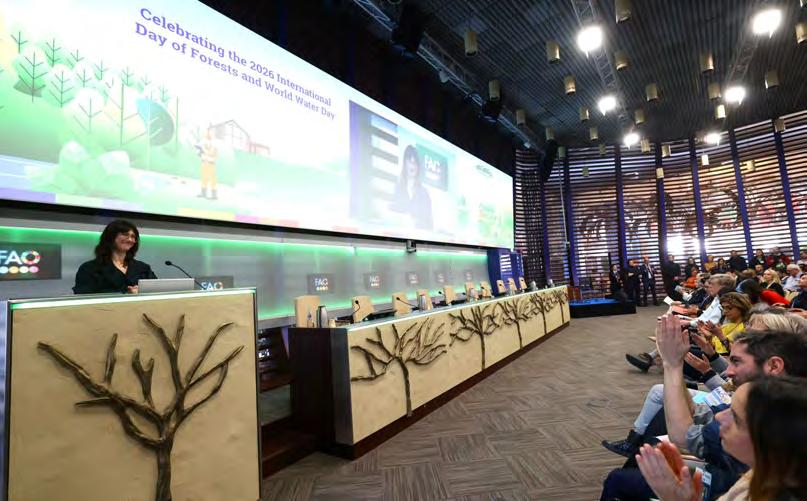
for expansion.
The many essential products obtained from forests underscores the importance of securing a sustainable supply based on the efficient use of forest resources and meeting goals to halt deforestation, restore degraded landscapes and protect biodiversity.
Investing in forest conservation, restoration and sustainable use delivers substantial returns. Forest loss, by contrast, leads to soil erosion, flooding, climate impacts and long term productivity decline.
FAO continues to support countries in scaling up forest based solutions. For example, the Forest
and Farm Facility assists producer organizations in 15 countries to build value added enterprises while restoring landscapes and reducing poverty.
The Great Green Wall Initiative has, meanwhile, generated more than 335 000 jobs for communities across the Sahel, diversifying incomes and strengthening resilience.
Water and Gender
World Water Day shines a spotlight on the 2.1 billion people still living without access to safe water. This year’s theme, Water and Gender, highlights the structural barriers that rural women and girls face in accessing and managing water for
domestic use, irrigation, livestock, aquaculture and economic activities. Women are often excluded from water governance bodies and experience limited access to land rights, irrigation and financial services. Climate induced water shortages exacerbate workloads, reduce productivity and deepen vulnerabilities.
Promoting gender equality in water access is essential to building efficient, inclusive and resilient agrifood systems. The theme aligns with the International Year of the Woman Farmer and the International Year of Rangelands and Pastoralists, both led globally by FAO. FAO News
LEADING fiber broadband and technology provider Converge ICT Solutions Inc. has come back to Brgy. Baclayan in Oriental Mindoro in celebration of Safer Internet Month, bringing its online safety campaign at the Baclayan Mangyan School, while strengthening the digital capabilities of its students.
Through its Corporate Governance and Data Privacy (CGDP) Group, Converge engaged pupils in Grades 5 and 6 in its Project PIGLET (Privacy Integration through Guided Learning of Emerging Technologies), a program that aims to enhance digital literacy and privacy awareness among school children.
Converge AVP and Head of Data Privacy and Information Security Compliance Team Eumir Paolo Espiritu highlighted that kids nowadays are more susceptible to cyber threats such as deception, fraud, identity theft, malware and computer viruses. He noted that as early as possible, children should be educated on ways to protect themselves against these, which was why they launched Project PIGLET in 2024.
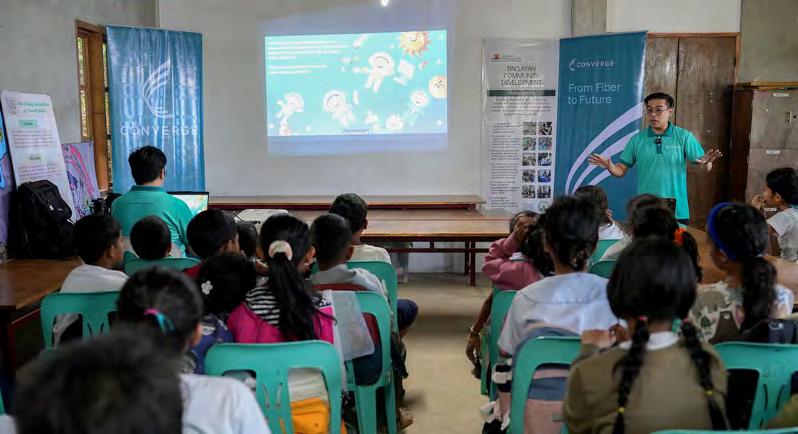
“Converge
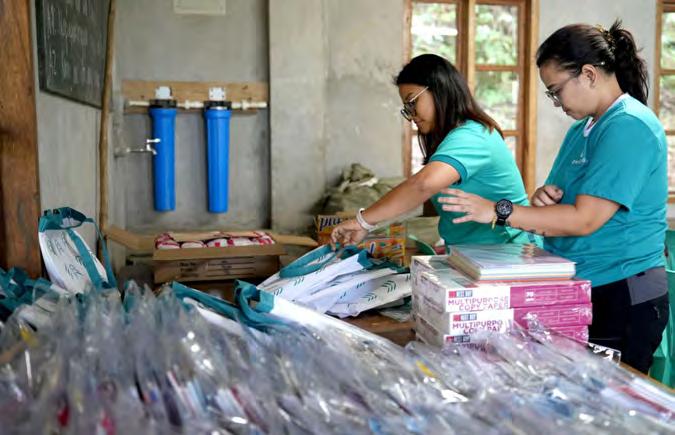
Converge hosted a story telling session, and distributed school supplies and snacks to the kids. The company also strengthened the school’s digital capabilities as it donated learning tablets and a smart TV at the Stairway Foundation ICT Learning Center, which has been supporting the students’ learning activities, through the help of Mindoro-based child-care organization Stairway Foundation.
“Dahil nga Mangyan school ang aming paaralan, kaunti ang access namin sa equipment kaya malaking tulong ang mga dagdag na kagamitan para sa pag-aaral ng mga bata. Mahalaga rin ang ganitong mga initiative para maging aware ang mga estudyante sa mga nangyayari sa kapaligiran at hindi lang sila gumagamit ng gadgets basta-basta,” said Baclayan Mangyan School Head Teacher III Noemi Bonquin.
The Baclayan Mangyan School provides education to nearly 250 pupils from the different Mangyan tribes in Puerto Galera.

Converge first engaged with the Mangyan community in Brgy. Baclayan in 2023, in collaboration with Stairway Foundation. The team up paved the way for the powering of free fiber internet by Converge at the said ICT learning center and its donation of learning tablets to support the students in honing their digital skills.
Moreover, the company has also worked with the nonprofit in its online safety advocacy in an effort to combat cyber threats, particularly online sexual abuse and exploitation of children (OSAEC).
By Othel V. Campos
THE Philippines
is sharpening its pitch for agriculture to global investors, recasting the sector as a sustainable, bankable growth engine anchored on modern, climate-resilient practices.
In partnership with the Asian Development Bank (ADB), the Department of Agriculture (DA) reaffirmed its commitment through the recent Hand-in-Hand National Investment Forum 2026, an enduring collaboration to mobilize capital for a more resilient and sustainable farm sector.
Agriculture Secretary Francisco P. Tiu Laurel Jr. said the initiative forms part of a broader push to align investments with the DA’s sustainability agenda, from climate-smart farming to more efficient, low-waste value chains.
“This is a shared vision for the agri-fisheries sector. We redefine Philippine agriculture from being a legacy of the past to a sustainable engine for growth,” he said, noting that the initiative brings together development institutions and private investors to accelerate rural growth while advancing sustainable practices.
The forum, organized with the Food and Agriculture Organization, is designed to channel private capital into farming, fisheries and rural infrastructure, with emphasis on projects that strengthen resilience, improve productivity and promote responsible resource use.
Sustainable investment
The Hand-in-Hand (HIH) initiative is a global FAO platform that matches data-driven agricultural priorities with financing and technical expertise.





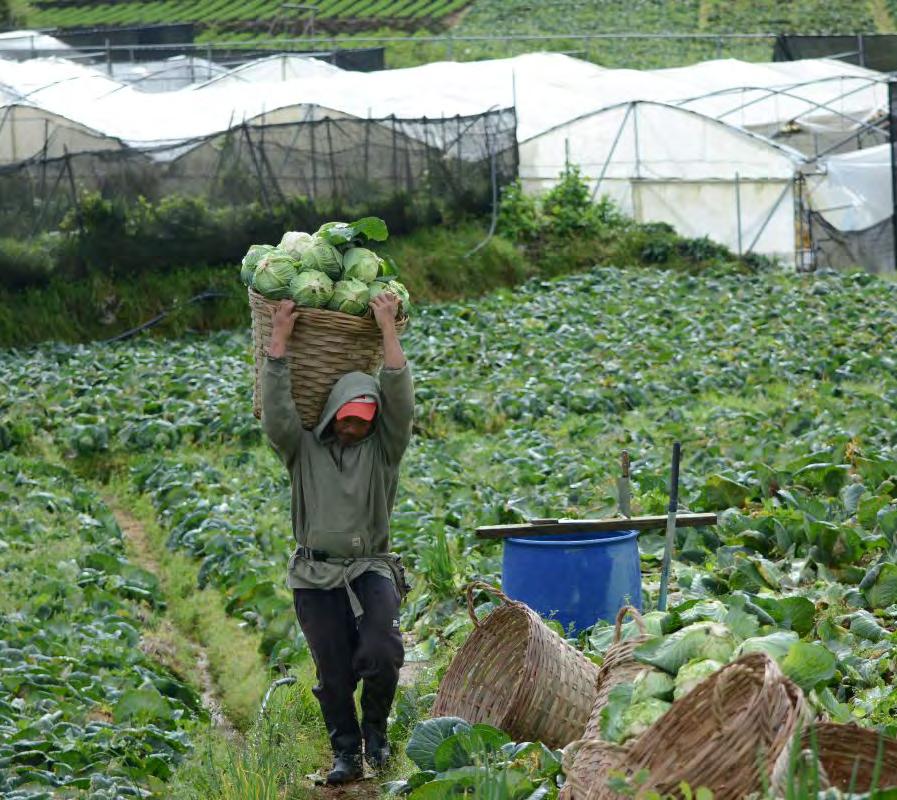
Hosting the forum in Manila underscores the Philippines’ push to convert global interest into investments that build inclusive, sustainable value chains—aligned with President Ferdinand Marcos Jr.’s agenda of strengthening food security, boosting farm productivity and advancing climate resilience.
Tiu Laurel said the country’s participation in the FAO Global Hand-in-Hand Investment Forum in 2024 and 2025 demonstrated that Philippine agriculture could attract global financiers.
Bringing the forum to Manila, he said, is meant to bridge global capital with local stakeholders, particularly in scaling up sustainability-driven, investment-ready projects.
Climate-resilient programs
The DA has been laying the groundwork for a more sustainable sector through a range of climate-focused programs, such as the Adaptation and Mitigation Initiative in Agriculture (AMIA), which supports climate-resilient farming and fishing communities through risk management tools, enterprise development and localized climate adaptation strategies.
The initiative is complemented by the Adapting Philippine Agriculture to Climate Change (APA) project, which expands access to climate information, strengthens agri-enterprises and
helps farmers adopt adaptive practices that improve productivity and incomes.
The DA has also been mainstreaming climatesmart agriculture across its programs, including farmer training on water management, soil health and sustainable production systems, alongside the use of modern technologies to enhance efficiency and reduce losses.
Path to sustainability
Despite employing millions, agriculture has struggled to attract large-scale investment due to fragmented supply chains, climate risks and infrastructure deficits—challenges the DA is addressing through modernization efforts that embed sustainability across production and postharvest systems.
By promoting agriculture as a “highly bankable sector,” the DA is signaling a shift toward investment-led transformation that supports climate-adaptive farming, reduces losses and enhances supply chain efficiency.
The DA noted that private-sector participation proves that public funds alone cannot drive the transition. While institutions such as ADB and FAO provide frameworks, technical support and credibility, scaling sustainable agriculture will depend on mobilizing commercial capital.
RMED with clipboards and cameras, the scientists from the Baekdudaegan National Arboretum climbed slowly up a steep hillside in Uljin, a county in the mountainous east of the Republic of Korea, inspecting and assessing small green trees that stood out amid a landscape charred by fire.
“Right here, the tree growing best is kalopanax,” team leader Tae-Im Heo said, referring to Kalopanax septemlobus, a fast-growing species native to the Republic of Korea also known as the prickly castor oil tree.
“The reason we planted kalopanax is because the young shoots are harvested by residents as a wild edible plant,” she said. “Even in seemingly barren land, it grows well, helping restore the vegetation and also contributing to residents’ livelihoods.”
Achieving social and environmental goals simultaneously is at the heart of the ambitious effort underway to restore the forests of Uljin, which in 2022 suffered the country’s second-worst wildfire on record.
The holistic approach and future-proofing methods are at the heart of the Republic of Korea’s efforts to revitalize forests after fire. This has earned the country the status of a World Restoration Flagship, an award bestowed by the United Nations to inspire large-scale action to revive critical ecosystems around the globe.
“Devastating forest fires around the world are one of the most shocking demonstrations of how our climate is changing,” said Natalia Alekseeva, Coordinator of the UN Decade on Ecosystem Restoration at the UN Environment Program (UNEP). “Creative initiatives like this show that,
by anticipating the future, restoration can give nature the resilience to keep delivering its priceless benefits for generations to come.”
A resilient approach
Fanned by drought and strong winds, the monthlong blaze in Uljin destroyed an estimated 20,000 hectares of forest along with dozens of homes and farms before firefighters backed by soldiers and helicopters could bring it under control.
While no lives were lost, there was anguish over the harm done to the region’s famed red pine forests, especially in protected areas holding centuries-old specimens, and the matsutake mushrooms that grow among them–a national delicacy and an important source of income for many rural households.
The fire also triggered a debate about how to carry out restoration in a way that respects traditions and the needs of local people while making forests more resilient.
While residents in Uljin wanted to re-plant the familiar and easily available but fire-prone pines, civil society groups pressed for a more ecological approach that addressed growing climate-driven risks.
“We started to see calls to move beyond a standard tree-planting approach to a more rational restoration method that takes the surrounding ecosystem into account,” said Shin Jaesoo, Deputy Director at the Korea Forest Service.
Meeting local needs
To find a solution, experts, civil society groups and residents joined government officials in a novel governance arrangement to design and steer the project. After completing a detailed assessment of the forest ecosystem and the damage it had suffered, the stakeholders jointly developed a fiveyear masterplan to revive about 4,700 hectares of
forest with high conservation value by 2027.
A priority was re-vegetating areas left vulnerable to soil erosion and landslides, especially near residential areas, including with species favored by residents including gingko and fir–work that was completed in 2023.
To protect the wider forest from future conflagrations, the plan also includes planting belts of fire-resistant native broad-leaved tree species.
However, most of the land is being left to regenerate naturally, with scientists closely monitoring progress, reflecting how forest restoration in the country is shifting from single-species plantations toward more resilient approaches.
“Where recovery is slow or disaster risk is high, we plan to intervene ecologically and manage those
spots,” Shin said.
The decision-making model adopted in Uljin has since been replicated in other fire-affected locations, including the Jirisan National Park in the south of the country, and Inwangsan Mountain Urban National Park in the capital, Seoul.
Sustaining impact
To generate enough seedlings for Uljin and other restoration areas, the Korea Forest Service has established two Native Plant Supply Centers, with four more planned. The centers produce saplings of resilient native species such as oak using seed gathered near the affected areas, meaning they are well adapted to local conditions. Local growers have been contracted to supplement production, creating jobs and income. UNEP News
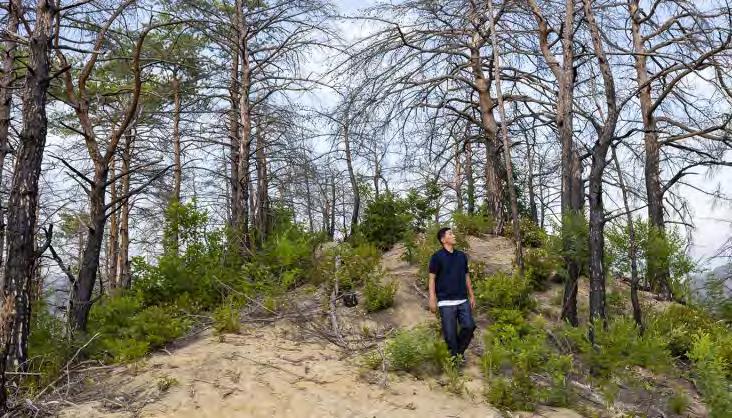

METRO Pacific Investments Foundation (MPIF), together with partner local government units and environmental organizations, is set to mount Shore It Up! Weekend 2026, a nationwide marine conservation initiative that will be implemented across eight partner sites: Del Carmen in Surigao del Norte, Alaminos City in Pangasinan, Puerto Galera in Oriental Mindoro, Medina in Misamis Oriental, Cordova in Cebu, the Province of Marinduque, Tubbataha Reefs Natural Park, and the Resort Owners Association of Mabini in Batangas.
A Growing Nationwide Effort
Now in its 18th year, Shore It Up! continues to serve as MPIF’s flagship environmental program, bringing together communities, volunteers, and partners in a shared effort to protect marine ecosystems and restore coastal environments. Over the years, the initiative has grown beyond cleanup drives into a more integrated approach that includes mangrove planting, marine conservation, and sustained community engagement.
What’s taking place across participating sites
Each participating site will carry out activities tailored to the most pressing environmental needs of their respective communities, ensuring that efforts are both relevant and responsive to local conditions. On March 29, volunteers across all sites will take part in coordinated coastal and underwater cleanups, as well as mangrove planting activities designed to support long-term ecosystem restoration. These efforts are expected to draw participation from various sectors, including local residents, schools, youth groups, civic organizations, dive groups, and environmental advocates.
As part of the weekend’s program, participating communities will also observe Earth Hour on the evening of March 28 at 8:30 PM, serving as a symbolic moment that complements the handson environmental efforts taking place throughout the weekend.
A Growing Nationwide Effort From Shared Effort to Lasting Impact Shore It Up! has consistently demonstrated how collective action at the community level can contribute to broader environmental impact. By mobilizing volunteers and strengthening partnerships with LGUs and local stakeholders, the program continues to build a culture of shared responsibility for the country’s coastal and marine resources.
MPIF President Melody del Rosario shared that the strength of Shore It Up! lies in its ability to turn simple actions into meaningful, long-term impact.
“Shore It Up! has always been about bringing people together around a shared responsibility for our seas and our communities. These efforts may begin with a single weekend, but they reflect a much bigger commitment—to be more mindful of how our actions affect our environment and to take part in protecting it in ways that are both practical and meaningful,” she said. She added that while coastal and underwater cleanups are sometimes viewed as immediate interventions, they remain important in raising awareness and encouraging communities to take ownership of their environment. Over time, these efforts have helped strengthen partnerships on the ground while supporting longer-term initiatives such as mangrove restoration and marine conservation.

A Call to Take Part As Shore It Up! Weekend 2026 approaches, MPIF is calling on volunteers to take part in the nationwide effort and contribute to a growing movement of environmental stewardship.
Across participating coastal communities, the initiative continues to turn intent into action, one weekend at a time, while reinforcing the idea that caring for the environment is a shared responsibility that extends far beyond a single event.



THE Climate Change Commission (CCC) underscored the importance of strengthening climate resilience through strategic investments during the 2nd Adaptation Investment Forum.
CCC vice chairperson and executive director Robert E. A. Borje said that strengthening climate adaptation requires not only identifying solutions but also building the systems and investment pathways needed to implement them effectively
“The challenge of adaptation does not stop at discovering solutions. It also involves organizing institutions and creating investment pathways so solutions can actually happen,” Borje said.
The Philippine Adaptation Investment Platform (AIP), launched at the Forum, is an innovative mechanism designed to mobilize investments for climate adaptation initiatives, particularly those that protect and strengthen economically important yet highly climate-exposed food crops across the Philippines.
The AIP will support pilot implementations in several areas across the country, including Negros Occidental, Iloilo, Bukidnon, and Isabela, focusing on climate-resilient initiatives for key crops such as sugarcane, rice, coffee, corn, and other high-value agricultural products. These initiatives aim to help protect the livelihoods of farming communities whose incomes depend on climate-sensitive agricultural production.
The AIP supports the implementation of the country’s National Adaptation Plan (NAP), which adopts a sciencebased and risk-informed approach to strengthening resilience across sectors and communities.
Developed under the leadership of Ferdinand R. Marcos Jr., the NAP serves as the Philippines’ longterm roadmap to-
ward building climate-resilient and climate-smart communities.
CCC Commissioner Rachel Anne S. Herrera urged local government units and development partners to take a proactive approach in prioritizing climate initiatives and investments.
“To our local governments: bring forward your priority projects—we are building mechanisms to help you structure, finance, and scale them.
To our development partners and financial institutions: strengthen early-
stage support, deploy catalytic capital, and help scale what works.”
Complementing the launch was the graduation ceremony for the first cohort of the Adaptation Investment Learning Course (AILC), which aims to support the localization of the NAP by equipping local governments and stakeholders with the knowledge and tools needed to develop viable adaptation investment projects.
The learning course is designed to help translate local climate knowl-
edge into actionable and bankable adaptation initiatives that can attract investments and deliver tangible benefits to communities.
Borje stressed the importance of strengthening knowledge and capacity to help turn climate plans into concrete investments at the local level.
“Knowledge and capacity-building must become a launchpad for a pipeline of evidence-based adaptation investments. When investments reach
the local level, the results are immediate and practical,” he added. The event was co-presented by key national government agencies together with the CCC, with support from the United Kingdom Government led by Ambassador Sarah Hulton. The CCC continues to advance partnerships and financing mechanisms that transform climate plans into concrete actions that protect communities, livelihoods and the country’s food systems. CCC News



LISTED natural resources development company Nickel Asia Corp. (NAC) measured progress in its environmental, social and governance (ESG) commitments as it assessed its sustainability performance at the midpoint of its 2030 Agenda, aligned with the United Nations Sustainable Development Goals (SDGs).
Marking the fifth year since the launch of its sustainability journey in 2021, NAC recently held a hybrid conference bringing together data owners and collaborators, resident mine managers and project managers, verifiers and sector heads to review and assess the company’s sustainability performance.
The evaluation was conducted
using a digital platform that provides a science-based progress report on NAC’s sustainability initiatives over the last five years.
“One of NAC’s biggest accomplishments highlighted during this activity is securing accurate data on GHG emissions accounting, growth of coverage of biodiversity protection in mining areas, and solid waste and energy consumption management, to name a few,” said NAC environment programs assistant manager Anaelle Milano.
Milano explained that the data allow for the interpretation of NAC’s sustainability progress, providing insights into the gains and challenges encountered in pursuing the goals
set at the start of the company’s Sustainability Roadmap.
NAC social programs assistant manager Paolo Alonzo pointed to the data showing strong performance in gender equality, with women now comprising 35 percent of employees in middle-management roles –surpassing the company’s internal target of 30 percent.
Alonzo also stressed data on economic growth generated through local procurement which reached P11.5 billion in 2025. This underscores the role of NAC’s direct purchases in supporting local value chains and driving economic activity in host communities, including the creation of indirect employment.
QUITO, Ecuador—More than 150 giant tortoises have been reintroduced to Floreana Island in Ecuador’s famed Galapagos archipelago where they disappeared more than a century ago, the environment ministry said last week.
Park rangers carried large crates containing the 158 tortoises on their backs, hiking seven kilometers (four miles) across volcanic terrain and hard-to-access areas before releasing them, the ministry said in a statement.
“For the first time in over a century, Floreana is once again home to giant tortoises, a species that plays a strategic role as ecosystem engineers: seed dispersers, vegetation regulators, and promoters of natural habitat regeneration,” it said.
The Galapagos Islands, a World Heritage Site, are situated some 1,000 kilometers off the coast of Ecuador. They are famous for their unique flora and fauna and are where British scientist Charles Darwin developed his theory of evolution.
An NGO, Island Conservation, said it was the first time that giant tortoises have walked on Floreana since the native species, Chelonoidis niger niger, was driven to extinction there in the mid-1800s after the introduction of invasive mammals.
There are 13 living species of Galapagos tortoises on other islands in the archipelago, according to National Geographic. They can weigh more than 250 kilograms (550 pounds). The oldest on record lived to be 175 years old.
The Ecuadoran ministry said the released tortoises come from a breeding center of the Galapagos National Park, where a specialized program was developed using tortoises with a high genetic load of the island’s endemic species that was found on Isabela island, which lies about 180 kilometers from Floreana.
Each tortoise underwent an extensive quarantine and was microchipped for identification before their release, it said.
For a decade, researchers have been working to reintroduce 12 other endemic species to Floreana as part of a rewilding program.
Floreana, covering 173 square kilometers, was the first to be inhabited by humans in the entire archipelago. AFP


IN THE northernmost reaches of the Philippines, along its vast coastline, fishers have long enjoyed the bounty of the sea for their sustenance. Mahi Mahi, marlin, mackerel, grouper and octopus: the species abound. While inland, the fertile soil also gives generously, producing fresh fruits and vegetables for its attentive farmers.
Natural resources are abundant across this province of Cagayan, making it one of the most important agricultural areas in the country. Paradoxically, this same location that gifts the region with these treasures is also the location of yearly powerful typhoons that endanger lives and livelihoods.
In 2024 alone, six tropical cyclones barreled through this area of the country and devastated boats, nets, coastal shelters, agricultural fields and the livelihoods of those who depend on them.
By September 2025, the local department of agriculture estimated the damage to fisheries and agriculture in the province at more than US$13.7 million (P807.14 million), the highest across any region in the Philippines.
Many fishers and farmers had not yet rebuilt what they had lost when a new threat emerged two months later: Super Typhoon Fung-Wong (Uwan). This time, the community resolved not to endure the same losses again. With extreme weather conditions becoming the new normal, the community has understood that their work now goes beyond farming and fishing: it includes protecting their harvests, equipment and
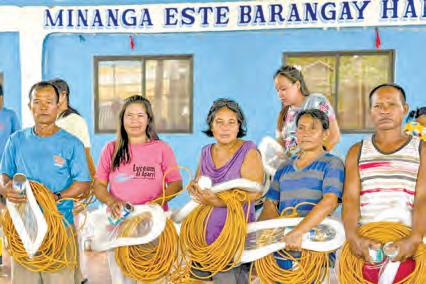
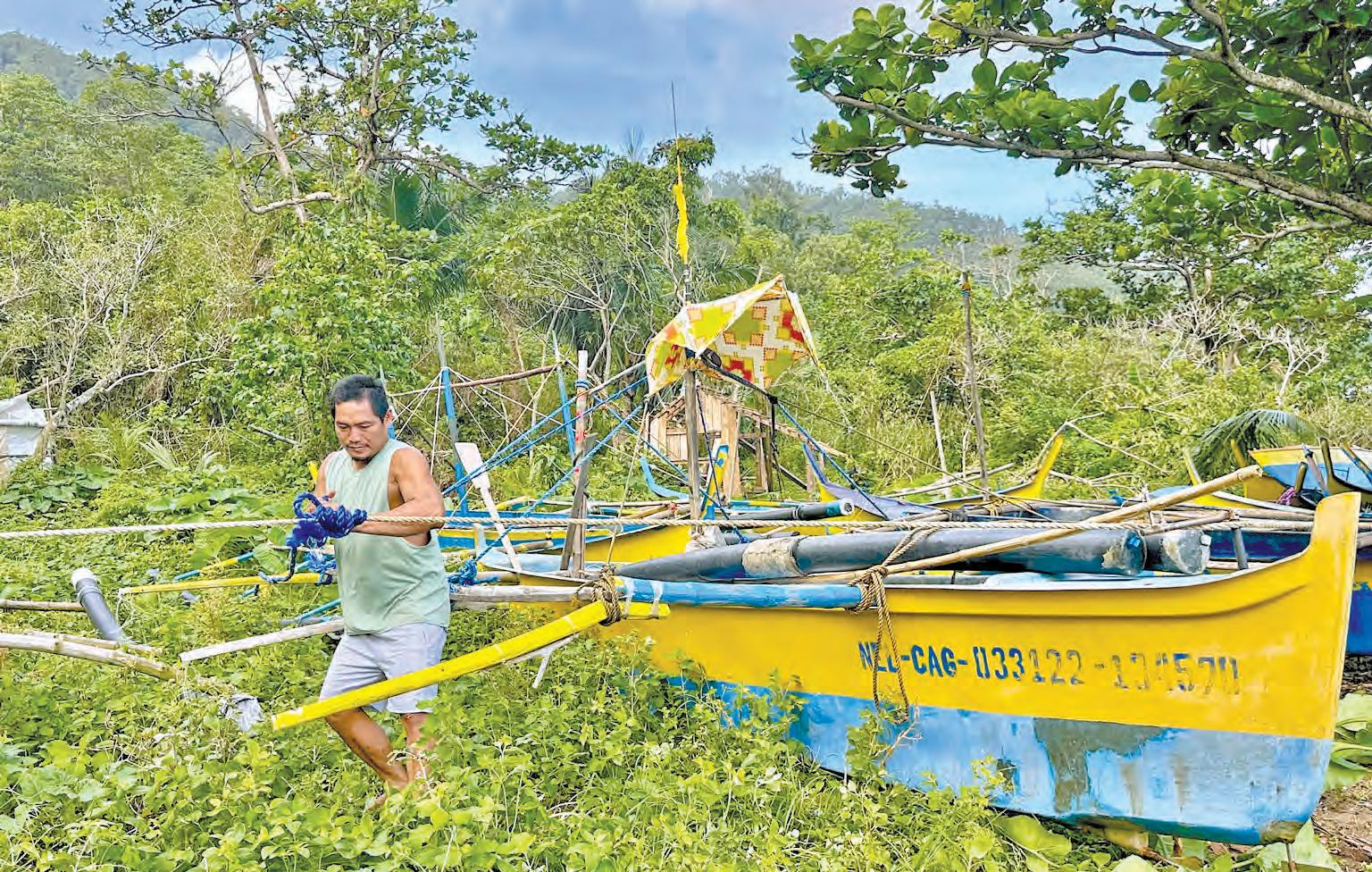
infrastructure from typhoons and acting well before one hits.
When the weather forecasts warned of the approaching Super Typhoon Uwan, the fishers of the Sinag Fisherfolk Association in San Juan, Santa Praxedes wasted no time.
They trekked for an hour from their upland homes to reach their coastal village and retrieve their fishing boats. The Food and Agriculture Organization of the United Nations (FAO) and the local government supported the fishers in evacuating boats from the coast, bringing them inland and then tying them down with ropes and nylon, purchased as part of an unconditional cash transfer from FAO.
Further east in the province in Buguey, 55 members of the Minanga Este Fisherfolk Association coordinated the same feat, moving boats
THE disruption of global energy supplies is being felt worldwide, the UN’s top climate change official warned last week, as conflict in the Middle East drives oil and gas prices sharply higher—echoing the market turmoil triggered by the war in Ukraine.
Speaking at the 2026 Green Growth Summit in Brussels, Simon Stiell, Executive Secretary of the UN Framework Convention on Climate Change (UNFCCC), said the volatility underscored the strategic value of renewable energy.
“Renewables turn the tables,” he said during a keynote address to the event, which brings together European climate and environment ministers alongside businesses, investors and other key stakeholders.
“Sunlight doesn’t depend on narrow and vulnerable shipping straits, wind blows without
massive taxpayer-funded naval escorts [and] renewable energy allows countries to insulate themselves from global turmoil and to side-step might-is-right politics.”
Indeed, renewable energy also delivers on people’s top priorities across the continent: security, well-paid jobs, better health and relief from rising living costs, he added.
Fossil fuel dependency
“Fossil fuel dependency is ripping away national security and sovereignty and replacing it with subservience and rising costs,” he said, adding that the reality is what most voters are demanding, climate action delivers at scale.
“Renewables and resilience keep bills down and create far more jobs,” he said. “Cutting out fossil fuel pollution cleans our air, improving health and quality of life.” UN News


ROLANDO


to safer ground.
Meanwhile, women in both communities prepared meals, repacked goods and ensured families had enough provisions ahead of landfall.
This was bayanihan—the Filipino spirit of mutual support in times of need—in its purest form. And it was anticipatory action in practice.
Farmers securing their future
While fishers moved quickly along the coast, farmers inland were also preparing. With support and technical expertise from FAO and the Department of Agriculture, three farmer groups moved stored seeds and fertilizers to safe areas, reinforced livestock shelters and made sure other assets were protected using materials purchased locally through anticipatory cash assistance.
Amor Daluson, president of the
“We did not have much equipment to use, but we were very happy when support from FAO arrived because we now have additional tools to help us take care of our crops and livestock,” he said. “This assistance means food security for the community.”
Cabaleng San Isidro Farmers Agriculture Cooperative chairman Gilbert Respicio emphasized the timeliness of the assistance. “The materials we received enabled us to secure our facilities, livestock, equipment and crops,” he said.
The collective effort protected US$37,000 (P2.15 million) worth of agricultural assets, demonstrating the effectiveness of proper planning and early action. FAO News
THE Philippines has taken further steps to protect its forests to preserve livelihoods and reduce climate change risks.
The Department of Environment and Natural Resources (DENR) has officially adopted the Philippines’ Roadmap to Readiness in the Voluntary Forest Carbon Market (2026–2030) through a newlysigned department administrative order (DAO).
The roadmap seeks to establish a strategic framework for policy development, data analytics, institutional mechanisms and sustainable financing for forest carbon.
It was developed by the DENR with support from the United Nations Development Program (UNDP) under the Accelerating Green and Climate Finance (AGCF) Project funded by the government of Canada.
Recognizing the country’s rich forest ecosystems as vital assets for absorbing carbon dioxide while promoting sustainable land use and socio-economic development, the roadmap identifies and addresses key gaps in policy, institutional capacity, data infrastructure and financing mechanisms.
It outlines a clear approach to strengthen the country’s readiness for forest carbon initiatives, centered around four priority areas: Policy Framework for Voluntary Carbon Market (VCM) Engagement Data Analytics, Monitoring, Reporting and Verification (MRV), and Carbon Registry Systems
“We must view our carbon forestry projects not as simple ventures, but as initiatives with profound implications for climate action, environmental stewardship, and natural resource governance,” said Analiza Rebuelta-Teh, DENR Undersecretary for Finance, Information Systems and Climate Change. UNDP Philippines News WEDNESDAY,



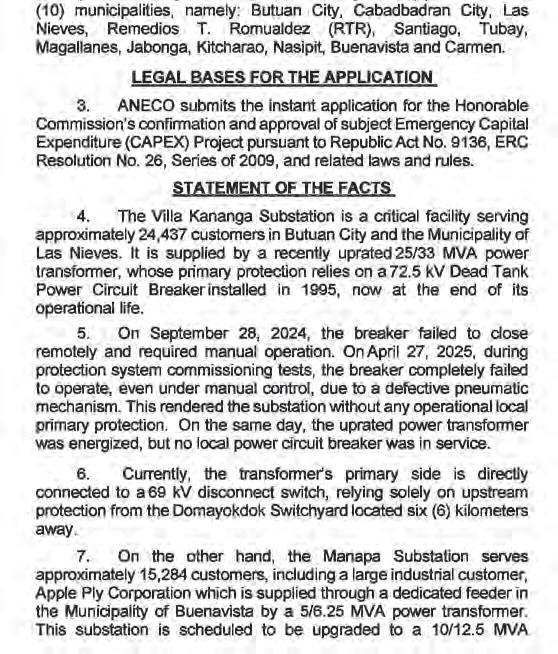

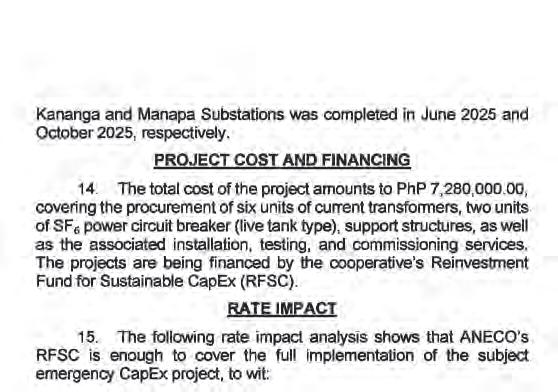
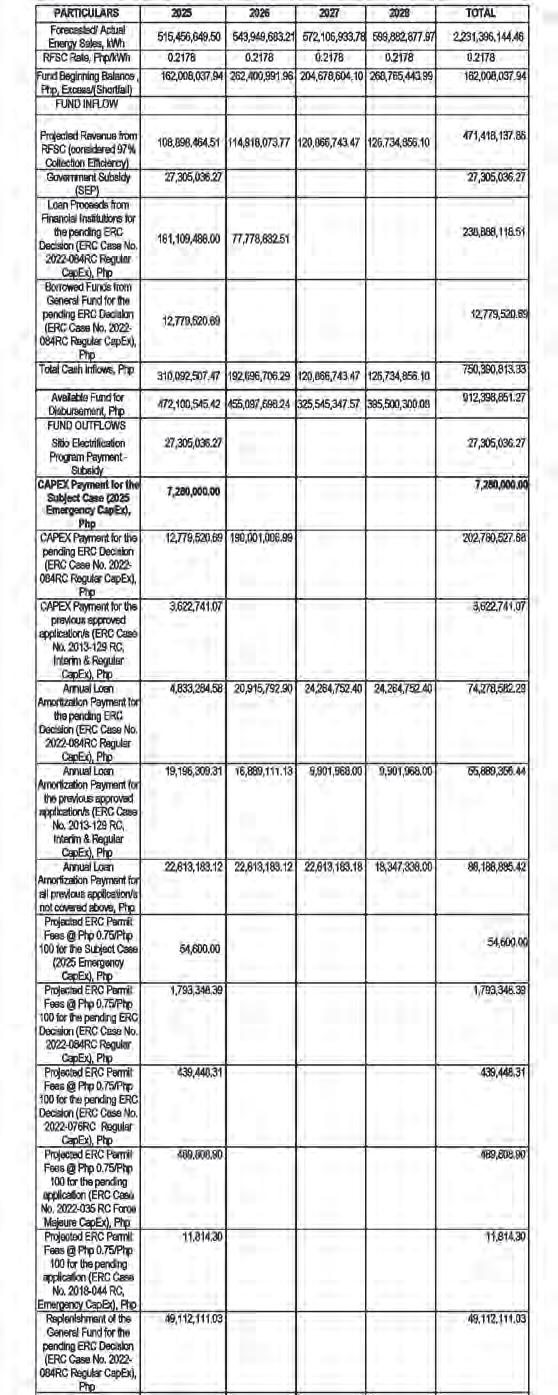
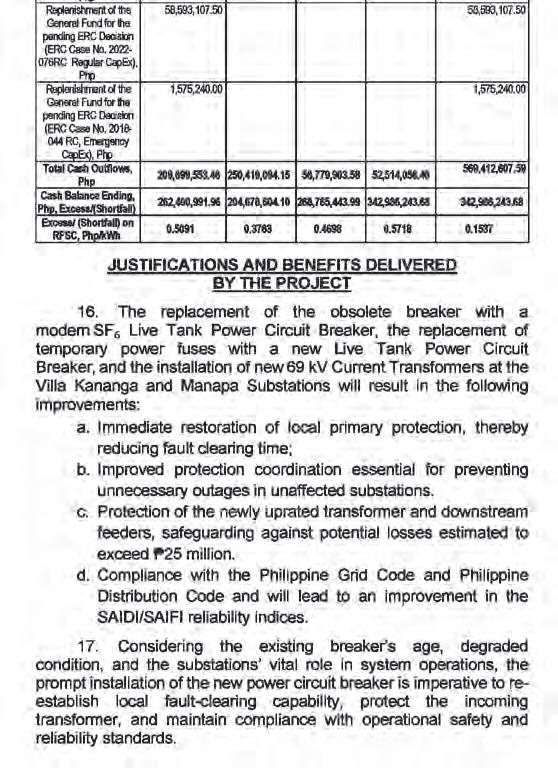



AT a recent press junket, showbiz scribes played a guessing game trying to figure out the stars of an upcoming Filipino-Korean film. The only clues? The female lead should be “cute, bright, and energetic,” while the male lead will be a big-name Korean actor.


Cha Eun-woo and Park Bo-gum topped the list for the Korean side, while Filipina actresses like Andrea Brillantes, Kathryn Bernardo, Nadine Lustre, Liza Soberano, Francine Diaz, Fyang Smith, and Barbie Forteza were floated as possibilities.
But then again, these are just hopeful guesses. An actual audition will be held, and the production team has already been in talks with major studios and networks to find this special actress.
The project is a collaboration between Trifecta Brand Lab CEO Tristan Cheng , acclaimed Korean director Nam Ki Hoon , and Korean producer Ilho Lee . Their first venture promises a lighthearted romantic comedy to be shot partly in the Philippines.
“Whenever there’s a foreign collaboration, most of the time the project is shot 10 to 20 percent in the Philippines and 80 percent abroad. We wanted to change that. I’m working with the team who made the trending Boyfriend on Demand Cebu scene possible, so I’m confident we can deliver the same excitement this time, shooting around 80 percent of the film in the country,” Cheng told Manila Standard Entertainment
“We know that tourism is down at the moment, and this is our way to showcase the Philippines to the world,” he added.
The team is actively developing the script and seeking Filipino writers to ensure the story feels authentic and culturally grounded.
Nam Ki Hoon, known for Kiss Sixth Sense (2022),
SHARES of Korean entertainment giant Hybe fell more than 15 percent Monday after BTS ’s Seoul comeback concert drew fewer fans than anticipated. Police had prepared for crowds of 260,000 at Gwanghwamun Square, prompting a heavy law enforcement presence that frustrated local merchants. In the end, about 104,000 fans attended, according to Hybe, based on ticket sales and data from South Korea’s three major mobile carriers.
Big Bet (2022), and Confidence Queen (2025), said this project is a departure from his usual darker themes.
“After experiencing the Philippines, I saw how warm, kind, and bright the Filipinos are,” Nam said. “This film will focus on the human side, the good side of the Philippines, and how our main character experiences Filipino warmth and passion.”
The director has visited Boracay, Cebu, and Manila, but for this project, he and his team are scouting lesser-known locations to showcase the country’s hidden beauty.
“We want to introduce the Philippines to those who may not know it well, beyond the typical tourist spots,” Nam explained.
Importantly, the film will also spotlight Filipino talent behind the camera. Nam revealed that unlike previous shoots where Koreans made up most of the crew, this project will be 90 percent Filipino staff.
“It’s a new experience, and I’m learning how to work closely with Filipino creatives,” he said.
For the female lead, Nam is searching for someone who radiates charm and can harmonize with the Korean male star. Meanwhile, producer Ilho Lee confirmed that several Korean actors are being considered, with fanbase strength in the Philippines a key factor.
Cheng admitted the project is personal to him. “We admire Korean showmanship and work ethic. I want to learn, be part of it, and help start something new in filmmaking here,” he said.
Authorities had initially estimated the crowd at 42,000. The one-hour concert on Saturday featured 12 songs, including tracks from BTS’s new album Arirang and hits like “Dynamite” and “Butter.”
The event was live-streamed on Netflix, which is expected to release viewership figures later this week.
BTS returned to the stage after nearly four years, during which the members completed
mandatory military service. They are embarking on their largest tour, with 82 stops already sold out. The group’s new album topped Spotify charts and sold four million copies on its first day.
Hybe’s stock suffered its biggest intraday drop since June 2022, when the group began its hiatus. Despite the company’s global expansion, BTS remains its primary earnings driver, and the concert’s reception is seen as a key indicator for Hybe’s near-term prospects.


ABS-CBN is bringing seven of its hit dramas to India, including It’s Okay to Not Be Okay , 2 Good 2 Be True , Can’t Buy Me Love , Senior High Love in 40 Days , and both seasons of He’s Into Her The shows will stream on Amazon MX Player in 2026, one of India’s largest free streaming platforms. This marks the first time Filipino dramas will appear on MX Player, which hosts popular Chinese, Korean, Turkish, and Thai series and reaches around 250 million
monthly users. The dramas will be dubbed in Hindi and potentially other Indian languages. The same package of titles has also been acquired in other Asian markets, further expanding ABSCBN’s presence across South and Southeast Asia. The media company has sold over 50,000 hours of content to more than 50 countries worldwide, broadening the reach of Filipino storytelling across broadcast, streaming, and digital platforms.

ACTRESS and TV host Marian Rivera opened up about a parenting challenge after her daughter Zia Dantes admitted feeling uncomfortable during school field trips due to public attention.
Speaking on the KC After Hours podcast, Marian shared that Zia sometimes struggles with being recognized.
“Napi-feel embarrassed daw siya kasi minsan ‘yung mga classmates niya na parang ‘Paano ka nakilala nu’n?’” the 41-year-old GMA star said. Zia also expressed confusion about the situation.
“I don’t know, Mama, how to feel kasi parang I feel so embarrassed na Instead of magiging happy ako or I’m
enjoying my field trip, parang nagwoworry ako about
WEDNESDAY, MARCH 25, 2026 lifeandshow.manilastandard@gmail.com
NICKIE WANG, Editor
ANGELICA VILLANUEVA, Writer
JASPER VALDEZ, Writer
by the resilience and determination of Filipino mothers
By Angelica Villanueva
WHEN sculptor Eric Masangkay began sketching ideas for this year’s Gawad Madiskarte trophy, he thought about a familiar figure whose resilience and determination inspired the very form of the sculpture—a mother.

The result is a slender, upward-reaching form cast in mixed metals, balanced on rough stone, a visual metaphor for perseverance. The sculpture will be awarded to outstanding mompreneurs at the fourth Gawad Madiskarte ceremony, an initiative of PLDT Home’s Madiskarte Moms PH community.
Masangkay said the idea felt familiar. Many of his works focus on perseverance, aspiration, and the quiet strength people show in everyday life. He created a figure in motion for the trophy, reaching upward to reflect determination and the pursuit of possibility.
“Moms and women in general are the backbone of our society. The sculpture represents their perseverance to reach their goals while redefining the traditional notion of being the ‘light of the home,’” he said.
Masangkay created the trophy using brass and other mixed metals, materials he often explores in his work. The sculpture also incorporates wood and stone, a combination he said reflects the diverse backgrounds and experiences of Filipino women.
“Different materials, different stories. It’s also like a reflection of women,” he stated.
The concept took about a month to develop, starting with sketches before moving into three-dimensional form. Masangkay worked on the trophy himself, from design to completion, a process he described as both technical and intuitive.
While his sculptures are often displayed in galleries and exhibitions, the artist said designing a trophy for everyday Filipinas carries a different kind of meaning.
“I’m also proud to see the trophy I made for them. We all know how resourceful women are, especially moms,” Masangkay shared.


THREE women artists share their stories of love and loss through their works
I often hear how the arts nurture identity, deepen empathy, strengthen communities, and enhance overall well-being. Yet, when faced with deep, pressing emotions that mirror one’s present reality, it can be difficult to see art as something essential—though, at times, it may be exactly what helps one hold on.
A few weeks ago, I met the women artists Bing Famoso, Jamie Samson, and Gretchen Taruc, who stand as living proof of how art can shape and transform lives. They are the featured artists in Robinsons Land ARTablado’s latest exhibit, In Her Warmth, on view until the end of May at The Gallery Bar of Crowne Plaza Manila Galleria.
Each artist brings her own story of loss, healing, and discovery to the exhibit, expressed in a distinct and personal voice that reflects the warmth, tenderness, and resilience art can provide. From intimate emotions to powerful reflections on womanhood, their works reveal the many ways art can illuminate the world around them—and how their spirit as women strengthens their resolve.
Mothering nature
Known for her paintings of Philippine flora and fauna, particularly the Philippine Eagle, Famoso has long been a dedicated environmental
The theme of perseverance is also personal for Masangkay. He was raised by a single mother, whose determination left a lasting impression on him.
“When my father passed away, my mother was the one who supported us. She was a vendor. She was truly resourceful,” he added.
Today, his mother remains one of his strongest supporters, often present during exhibitions and award ceremonies throughout his career.
Masangkay’s path to sculpture began with drawing and painting. As a child, he spent hours studying the images in comic books and cartoons around his neighborhood, drawn to the visuals even before he learned how to read. He later pursued fine arts at the University of the Philippines Diliman, where he eventually discovered his talent in sculpting, which allowed him to express movement and emotion in ways painting could not.
After graduating, he briefly worked for an export company producing sculptures, an experience that helped refine his craft before he established his own artistic voice.
Now, through the Gawad Madiskarte trophy, his work will find its way into the hands of women whose stories echo the resilience he has long explored in art.
“Hard work and perseverance. That’s what it represents,”
Organized by PLDT Home, the 4th Gawad Madiskarte will be held on March 28 at Seda BGC, recognizing outstanding mompreneurs across several categories.
The Gawad Madiskarte is created using brass, wood, and stone, reflecting the diverse backgrounds of Filipino women
‘In Her Warmth’

advocate. She uses her art as a platform to promote environmental awareness and conservation, while also educating others about the richness of Philippine wildlife. Her foray into Philippine flora and fauna began at a tree-planting event in Benguet, where cherry blossom saplings were introduced despite not being native to the country. This led her to explore indigenous flowers, eventually discovering Flora de Filipinas, a 19th-century botanical work by Augustinian botanist Manuel Blanco, which revealed uncredited Filipino contributors and outdated species names.

GLOBE Telecom joined the festivities for Art in the Park’s 20th anniversary, reinforcing its role in supporting Filipino creativity and culture. The country’s most accessible art fair, held at Jaime Velasquez Park in Salcedo Village, brought together galleries, artists, and creative communities in a relaxed outdoor setting.
This year’s edition featured 55 exhibitors, including galleries, art collectives, independent art spaces, and student groups. All artworks were priced to remain approachable, encouraging young and first-time collectors to engage with the local art scene. Globe’s support offered visitors opportunities to experience Filipino art while helping nurture the broader creative community.
At the Globe Experience Booth, powered by Globe AT HOME, attendees explored a blend of art and technology. Limited edition Globe AT HOME 5G WiFi router skins, created in collaboration with Scarletbox and the Artivive app, featured artworks from Philippine National Artists that came alive through augmented reality, turning static designs into interactive digital experiences.
Globe subscribers received exclusive perks, from treats by partner merchants to personalized experiences, including the chance to customize Globe merchandise.
“Art in the Park has always been about building a space where Filipino artists and audiences can celebrate creativity and community. Long-time partners like Globe make that possible,” said Trickie Lopa and Lisa Periquet, co-founders of Art in the Park.
The celebration also welcomed 60 Student Media Ambassadors from Metro Manila universities, who captured and shared the event on social media. Globe prepared the students with a Social Media 101 masterclass, equipping them with practical skills and insights from marketing and social media experts.
“Globe’s support for Art in the Park reflects our belief that creativity drives progress. We champion platforms that highlight Filipino artistry while giving customers meaningful experiences that merge culture and technology,” said Roche Vandenberghe, Globe chief marketing officer.
By backing two decades of Art in the Park, Globe continues its mission to make art accessible, empower creative communities, and inspire the next generation of storytellers, fusing creativity and connectivity in ways that celebrate both culture and innovation.

subjects to Philippine endemic flowers in 2017. A year
later, she approached the National Museum of Natural History to propose a floral artists’ group, where she met botanists Dr. Edwin Tadiosa and John Rey Callado and shared her vision of reviving botanical art.
“Who would have thought that I, a 44-year-old housewife who had never held a nine-to-five job, would go on to start something so significant?” shared Famoso.

Yet her early connection to art never fully disappeared, quietly waiting until she found her way back.
As a child, she enjoyed drawing, often tracing Japanese anime cards, which helped shape her visual sensibilities. She later pursued an art degree at the UP College of Fine Arts, where she was introduced to the experimental approaches of Pablo Picasso and the cultural dynamism of Andy Warhol, influences seen in her Cubist Pop Art style.
During the COVID-19 pandemic, while navigating bipolar disorder, she returned to art as a refuge. Her style—with fractured forms, layered compositions, and recurring motifs of eyes—reflects her journey through emotional complexity toward clarity.
In 2023, she left the corporate world and returned to her first love, beginning to make her mark through exhibitions in Manila and abroad.
Continuing the promise
One of the most painful moments for a mother is holding the hand of her dying child. This was true for artist Gretchen Taruc when her eldest son passed away at the age of 16 after battling cancer. Her experience was marked not only by grief but also by an overwhelming sense of helplessness and quiet surrender. For her, it was a moment where love and loss exist side by side, as she tries to find comfort while facing the reality of saying goodbye.
The discovery prompted a shift from her usual mother-andchild


She later established the Philippine Botanical Art Society (FilBAS) and the Philippine Fauna Art Society (PhilFAS), promoting conservation through art and supporting scientific illustration.
A graduate of Philippine Arts at the University of the Philippines–Manila, with further training from the University of Newcastle, Australia, she also donates Philippine Eagle paintings through her AGILAkbay Project to Philippine Foreign Service Posts worldwide.
Several years ago, Famoso was diagnosed with lupus, a turning point that deepened her resolve to continue documenting the country’s biodiversity through art while staying grounded in her purpose. Reclaiming the canvas
“Art has saved me.”
This is something that struck me the most when I was talking to Jamie Samson during the exhibit opening. It underscores the impact of art in one’s life, serving as proof of its intangible influence and how creativity can become both a refuge and a means of rediscovering oneself.
For two decades, Samson set aside her first love—the arts—for the demands of the corporate world, where earning and providing took priority. In the pace of the corporate rat race, creativity took a backseat as she focused on building a career and meeting practical obligations.
Art became a shared bond between her and her late son. Like her own experience learning from her father, her son was self-taught, discovering his love for art through her.
Even during hospitalization, he continued creating art—driven by a desire to leave something behind and inspire fellow patients with hope. After his death, Taruc set aside painting for months, as grief made it difficult to return to what once connected them. She could no longer find joy in their shared love for art or see canvases the same way.
Months later, she dreamed of her son holding two white balloons and one red one, smiling gently. The image felt like a message, reminding her of her promise to continue painting. She began to see it as a sign to release her grief and slowly found her way back.
In Her Warmth is among her first exhibits after her loss. Here, she returns to a more vibrant palette, shifting from the darker tones of her earlier works. Her compositions feature faceless figures within geometric blocks of warm color, directing attention to body language and quiet family moments.