Southern Accent
The student voice since 1926
'Your vote is your

'Your vote is your
Editor’s Note: The Accent is publishing this article, written by a senior history major at Southern, to provide information to students about the voting process and help them prepare for the upcoming elections. This article is informative in nature and not written like a traditional news story.
Do you want to make your community and your country better? Lucky for you, this year has an upcoming national election that will be the first presidential election for many students.
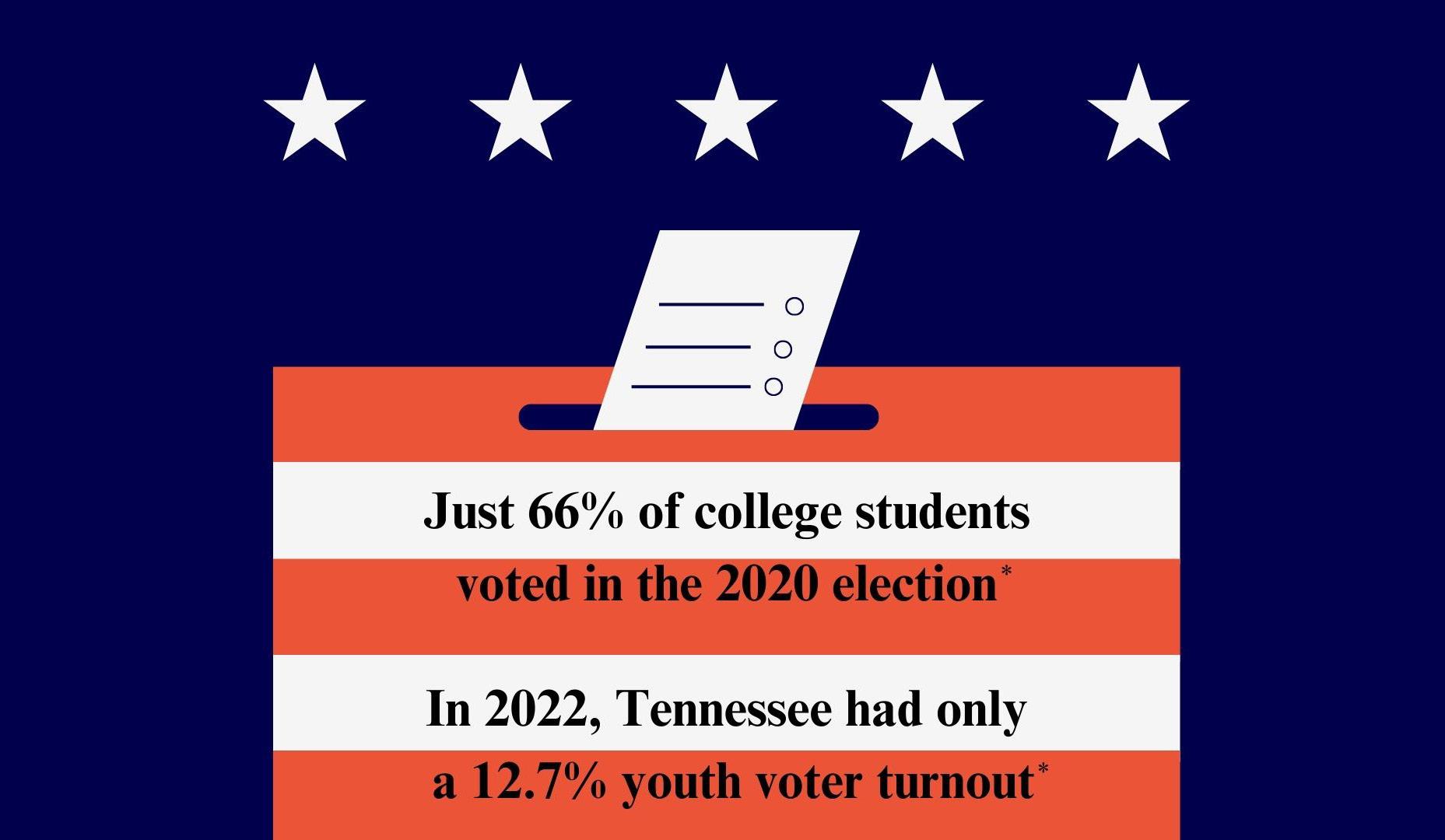
However, according to a survey conducted by Tufts Univer-
sity, only 66% of college students voted in the 2020 election. Despite youth voting increasing in the 2020 election, overall low youth turnout is likely because many students attend colleges out-of-state and don’t know if or how they can vote.
As long as you are over 18 and an eligible citizen of the United States, “YOU CAN VOTE!” Every state has its own deadlines and requirements for voting, so the following is only a rough guide to get you started. Nov. 5 will be here before we know it, and some registration deadlines are even sooner.
If you are from a state other than Tennessee, you should learn about the absentee voting process in your home state. This will help you decide whether you
want to register with your home address and vote by mail, or if you would rather register with your university address and vote in person in Collegedale.
1. Register to Vote
Unless you live in North Dakota, you’re required to register to become a voter before you can vote. Only 23 states have some form of automatic voter registration, usually through a form at the DMV or other state agency. If you think that you are already registered to vote, it’s worth checking to ensure that you are still registered as states sometimes purge voter rolls. Your state may let you register to vote online, or you may have to mail in a registration application. Thirty-six states
Matthew Orquia
Editor-in-Chief Alexis Dewey News Editor
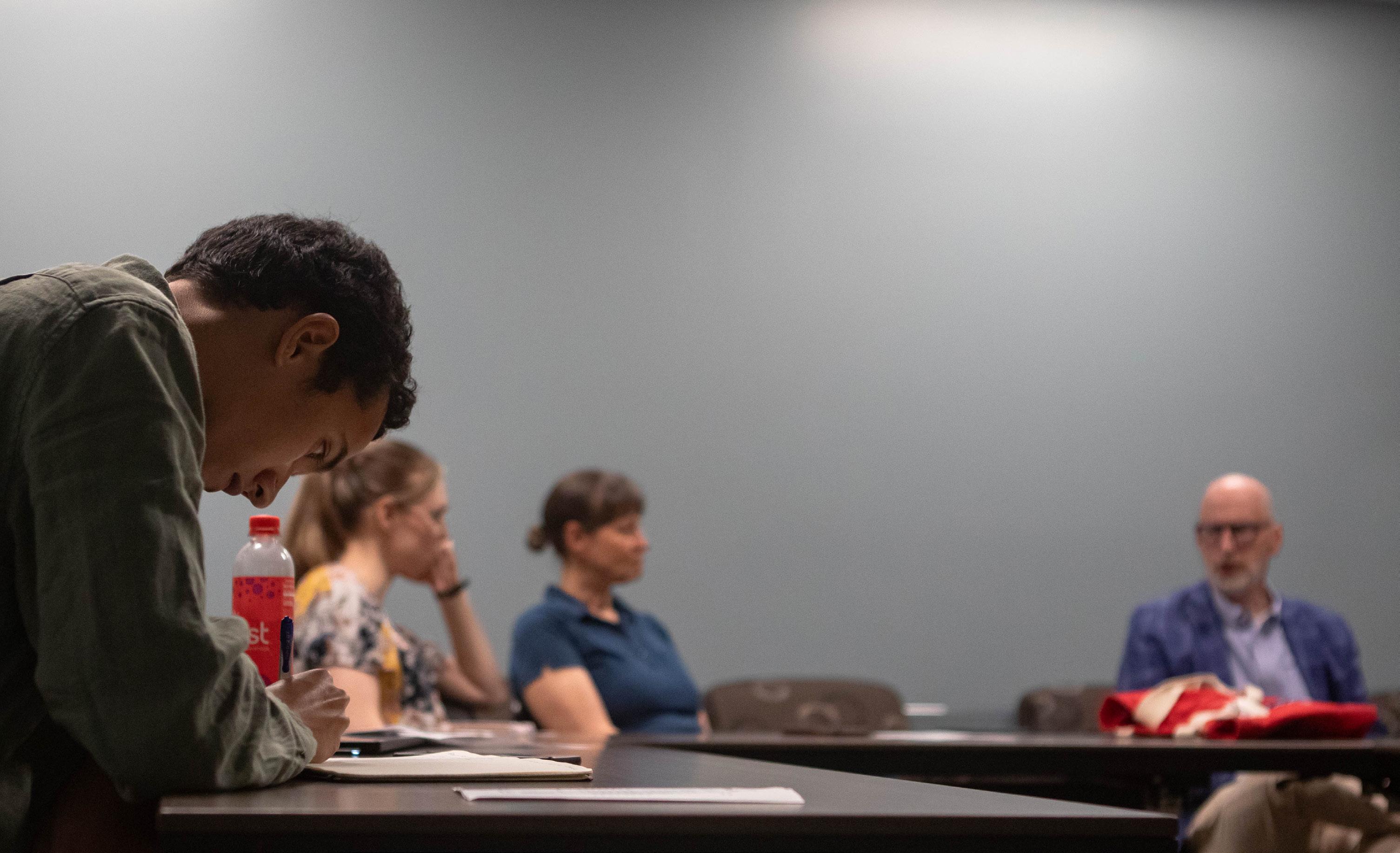
On Thursday, Sept. 19, David French, best-selling author and New York Times columnist, visited Southern Adventist University's campus to speak to students, faculty and the greater Collegedale community.
During his presentation, titled “A Nation Divided: Where Do We Go From Here?” French discussed what he believes are some of the underlying causes of the country’s internal conflicts.
"Our opinions about the other party have only gotten worse,” he said. “We don't just disagree, we have animosity."
According to French, division in America is not new, but the depth of people’s hatred for each other has gotten worse and nowadays, people harbor more animosity towards others.
French also discussed “lethal mass partisanship,” which is an individual’s belief that the country would be better off if a substantial portion of their political opposition was gone. He cited a statistic stating around 20% of Americans held this belief.
The speech was delivered as part of the annual Lynn Sauls Lecture Series organized by the School of Journalism and Communication (SJC), which aims to enlighten and inspire students, faculty and the community by bringing renowned journalists and newsmakers to campus, according to Southern’s website.
Prior to walking on stage at the Iles Physical Education Center, French was introduced by Alexis Dewey, senior communication-writing and editing major. Following his presentation, he was joined by LaTrice Currie, a news anchor and co-anchor for Local 3 News.
Currie was the moderator for the Q&A segment of the event, which allowed the audience to ask French questions through online submissions. While answering the questions, French addressed Christian nationalism, gun control and his expectations for post-election violence.
French graduated with a Bachelor of Arts from Lipscomb University, then went on to study at Harvard Law School, where he graduated cum laude with a juris doctor degree, according to the New York Times.
Over the years, he has worked as a senior coun -

also have varying voter ID requirements. To complicate matters, every state has its own voter registration deadline, from as soon as Oct. 6 to Election Day. Vote.org, a nonpartisan organization, will help you check the status of your voter registration and redirect you to your state’s voter website. You can also Google “(Your state) + voter registration.”
Registering to Vote in Tennessee To register online, you must have a Tennessee driver’s license or Tennessee Department of Safety and Homeland Security ID. If you don’t, you will have to submit a paper registration application and use a federal photo ID such as a passport
at your polling place. All forms of voter registration must be received by Oct. 7. It’s possible that changing your residency from a different state to register in Tennessee could affect your eligibility for residency-related scholarships and grants. Tennessee only allows absentee voting-by-mail for specific circumstances, including if you’re a full-time student at a university outside of the county where you are registered. If you are eligible, your application for a by-mail ballot must be received by mail, fax, or email no later than October 29.
Anaya Parker Reporter
The Diversity Educational Exchange Program (DEEP) Sabbath returned to Southern Adventist University’s campus on Sept. 14 after the event was held at Oakwood University last year. DEEP Sabbath aims to bring cultural awareness to students across Adventist colleges, according to a previous Accent article.
Oakwood University is the only university owned and operated by the Seventh-day Adventist church that is a Historically Black College and University. The university is located in Huntsville, Alabama, about a two-hour drive from Southern. Several of the students who attended DEEP Sabbath are members of Oakwood’s student government, the United Student Movement.
Southern’s Student Association (SA) prioritized bringing DEEP Sabbath back to campus this year, according to Edvan Benitez, SA president and senior theology major. This was important to Benitez to show the inclusivity of Southern and teach students about worship and fellowship between different cultures.
“We made plans, and we
arranged the budget, and we fixed a date with Oakwood,” he said. “So we could have it back.”
SA planned the event in collaboration with organizers of the Renewal service at Collegedale Church of Seventh-day Adventists. Oakwood students attended the service, which included a performance from the Merge choir.
“[The choir] was really what I was there for because I knew that Merge was going to be helping with that,” Edward Backer, a Southern senior psychology major, said. “I was excited to listen to some soulful music.” Several other Southern students spoke about how the music at DEEP Sabbath impacted them, helping build a connection between the two universities. During the song service, the audience, which was composed of Oakwood students and the Southern community, stood and clapped along with the music.
“What I loved most about this was watching Oakwood students, one by one, getting up in praise to God because of the music,” Larissa Deoliveira, junior theology major, said. “And in this crowd of people getting up was the pastor, too. And that feeling and scene of unity just made my heart melt,
See
VOTE continued from page 1
2. Request an Absentee Ballot
If you decide to register to vote using your residency in a state other than Tennessee, or if you aren’t from Hamilton County, you’ll need to request an absentee vote-by-mail ballot that will be mailed straight to your Southern mailing address. In the handful of states that have all-mail elections, this may be as simple as changing your mailing address. Some states may require you to provide a “valid” excuse for needing an absentee ballot in a separate application. Requesting an absentee ballot has a separate deadline that varies from state to state, but you’ll want to be sure to do so with enough time for it to be mailed to you before Election Day and for you to mail it back in time to be counted. Even student missionaries and students studying abroad can vote this year by requesting an overseas ballot.
3. Make a Voting Plan If you’re voting absentee in
your home state, make sure you know the absentee ballot return deadline: In some states your ballot must be received by a certain time on Election Day, and in other states it only needs to be postmarked by Election Day. You should also be prepared to pay postage to return your absentee ballot if your state doesn’t provide pre-paid return envelopes. If you’re going to vote in-person in Tennessee, you will need to go to the specific polling place of the precinct you live in, which you can locate using the GoVoteTN app or website.
In Hamilton County, the early voting period is Monday through Saturday, Oct. 16-31. If you’d prefer to vote on Election Day, Nov. 5, be prepared to stand in line for several hours waiting to vote. Make sure you take a federal or Tennessee state ID with your name and photograph on it with you— your college student ID is considered unacceptable!
4. Vote! If you aren’t sure who you want to vote for in the presidential election or other races, it is legal to leave
blanks for some races on your ballot. It’s better to vote than not at all, and your local elected representatives such as your state senator or your mayor may make policies that affect your life more than the decisions of federal officials. If you want to learn more about what and who is on your ballot, read the candidates’ websites, check if your state publishes official voter guides or search Ballotpedia.org, a nonpartisan organization that provides information on most candidates from the local to the federal level.
According to the Bipartisan Policy Center, the United States has secure and reliable elections, and there is no evidence of increased voter fraud from absentee ballots.Your vote is completely confidential—not even your family members will know who you voted for unless you tell them. Your vote is your voice: Use it!
Writer’s note: If you have any questions about the voting process, please feel free to contact me at amyv@southern.edu, and it would be my pleasure to help you!
continued from page 1 and [I was] overjoyed!”
Backer stated, “They were clapping, standing up, praising. It was fantastic, and like each time someone stood up I would start to smile more and more cause they were really connecting with the music.”
“At the end, we are here to praise God, and we all praise God in different styles, different ways, and I think there’s beauty in that,” Benitez said.
After the church service, Oakwood students ate lunch with Southern students and community members in the Collegedale Academy gymnasium. Southern's President, Ken Shaw, and SA helped serve food at the event.
Following lunch, DEEP Sabbath attendees were split into small groups for an afternoon program with activities to help further the connection between Oakwood and Southern students. Each group had a mix of students from both universities. There were several activity stations, including
painting, prayer journaling and songwriting, according to Benitez.
“[The students] were able to connect in a small setting,” Benitez said. “And I think that that's what I love the most –seeing people come together and have fun and for a spiritual purpose, as well.”
There are 13 accredited Adventist universities in the United States, and Oakwood is located closest to Southern, offering the most possibilities for interaction. Some students, such as Backer, said they would be interested in increased interaction with more Adventist universities. There are organizations on campus, such as the Gymmasters and Symphony Orchestra, that travel to other Adventist colleges for performances. However, students who are not involved in those activities have little opportunity to interact with other students who attend Adventist universities.
“Something I have noticed coming here is that we have gotten in this little bubble that we have in Collegedale,” said Backer. “We’re forgetting that there’s a whole world out there, that there are other Adventists out there.”
Marian Polanco Reporter
Southern Adventist University is exploring the possibility of adding a Doctor of Physical Therapy (DPT) program to its academic degree options. The proposed DPT program could significantly benefit both Southern and its students.
In an email to the Accent, Bob Young, senior vice president for Academic Administration, stated, "The university has developed a program prospectus approved by the university graduate curriculum committee, the Board of Trustees and its Academic Life and Student Success Committee. In addition, the university's accreditor, the Southern Association of Colleges and Schools Commission on Colleges (SACSCOC), has received notice of the university's intention to begin this program of study at the doctoral level."
A key step in moving forward is hiring a qualified director recognized by the Commission on Accreditation in Physical Therapy
continued from page 1
sel for the Alliance Defending Freedom, a lecturer at Cornell Law School and a litigator with a focus on constitutional law. In 2006, he obtained an age waiver from the U.S. Army and joined the JAG Corps as a military lawyer.
French was also president of the Foundation for Individual Rights and Expression, where he advocated for the freedom of speech, religion and due process. He worked as a writer for the National Review and was co-founder of The Dispatch, a conservative news organization.
In his speech, French emphasized the lack of Amer -
The Accent encourages readers to write articles and voice their opinions. However, the views expressed do not necessarily reflect the opinions of the Accent, Southern Adventist University or the Seventh-day Adventist Church. For any questions, comments and article submission information, email the editor at morquia@southern.edu
For all advertising inquiries, email studentadmgr@southern.edu.
Education (CAPTE). Young noted the difficulty in finding someone with the necessary credentials and alignment with the Seventh-day Adventist church's values.
He explained that the ideal candidate must have "a graduate degree in physical therapy, an academic doctorate not in physical therapy (PhD, DA, DSci, etc.), a current, valid P.T. license, significant clinical experience, and experience teaching in a doctoral-level physical therapy program and a track record of research and scholarship."
Young also shared that the financial outlook for the program is promising.
“A fiscal analysis showed that a program admitting 35 students per year would pay back the cost of program initiation within five to six years,” he said.
According to Young, the total estimated cost for launching the program is $3.5 million, including $1.3 million for building renovations, $1.7 million for operational costs during the start-up phase and $500,000 for equipment.
ican friendships as a major concern. He said 10 percent of Americans with a college degree reported having no friends at all, and 24 percent without a college degree reported the same.
French said many people can no longer disagree and remain friends. However, he recalled his military deployment to Iraq having the opposite effect. Despite arguing nearly every day with a fellow comrade who had a different point of view, the two naturally became friends.
“So you would think, ‘What do we have in common?’” French said. “But from day one, we loved each other. We looked out for each other.”
Since people do not typically remain friends with people they disagree with, they often
At full implementation, the program would require nine full-time faculty members, two non-faculty staff members and 18,000 square feet of laboratory, classroom and office space, which is tentatively planned for the Collegedale elementary school building when the university takes ownership.
Despite the challenges, Young sees significant benefits in adding the DPT program, particularly as the need for physical therapists is projected to grow.
“Especially as the population is aging, the need for the type of care provided by physical therapists is expected to increase,” Young stated.
Moreover, this program aligns with Southern’s mission of service, he further explained, emphasizing that those in the DPT program would be trained to integrate their professional skills with a life of service.
“The mission of the university is grounded in Jesus Christ and dedicated to the beliefs of the Seventh-day Adventist Church,” Young stated. “We
end up in like-minded communities, according to French. People move to places where there are lots of people who share a similar worldview.
“This makes all the sense in the world on an individual basis,” French said.
“Sometimes it can be hard to be a solitary dissenter in a community where everyone disagrees with you, or often you can feel oppressed or intimidated sometimes in hyper-partisan cultures where you’re on the outside looking in.”
However, this gathering of like-minded people causes further division because it leads to more extreme viewpoints, which he said is an effect called the “law of group polarization.”
Throughout the speech,
equip students to embrace biblical truth, embody academic and professional excellence and pursue Spirit-filled lives of service.”
Corjena Cheung, associ -
ate vice president for Academic Administration and dean of Graduate and Professional Studies, emphasized that student interest drives the proposal.
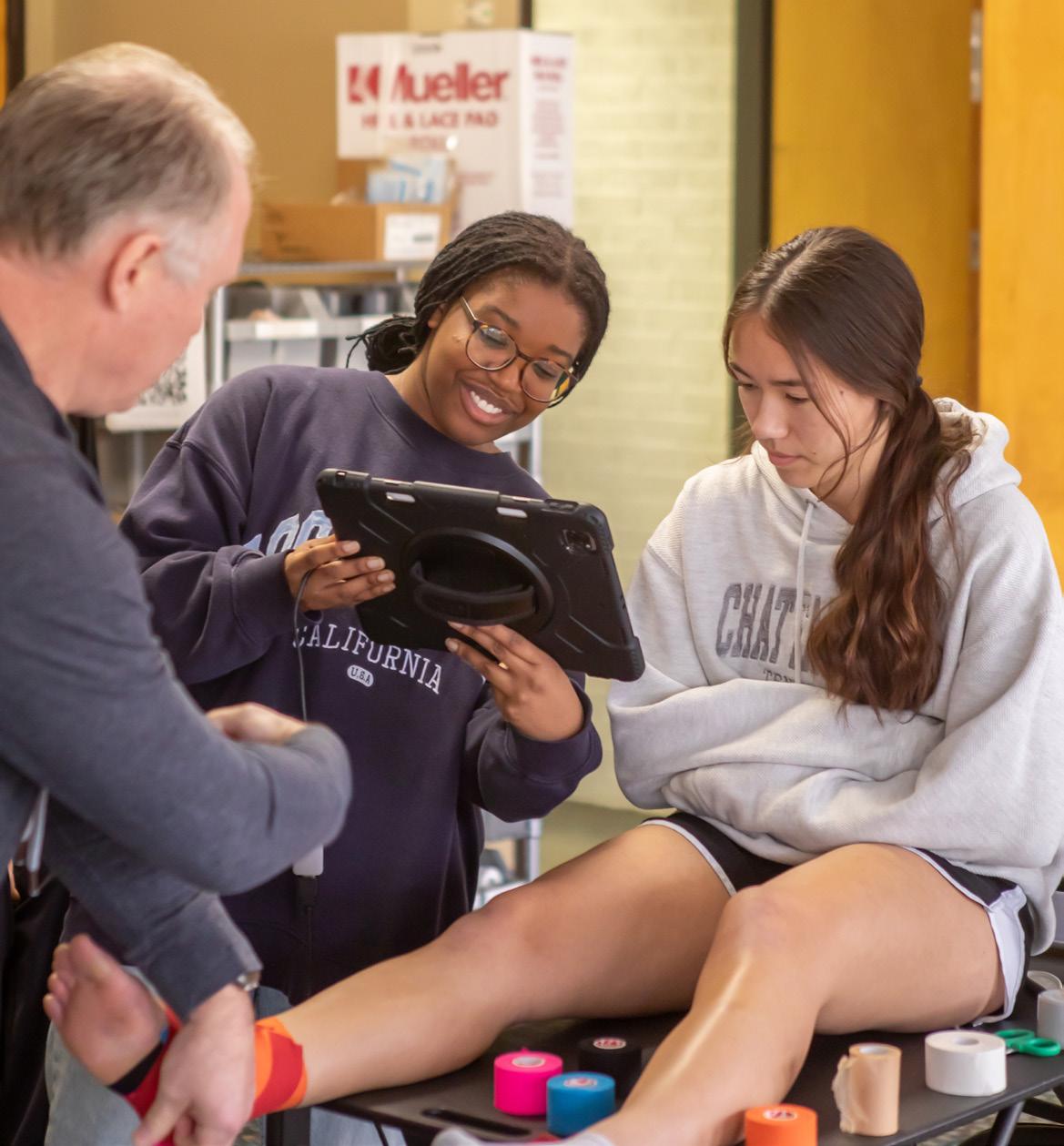
French cited the Bible and made specific appeals to Christians about what their response should be to division in the country. He said the church is a participant in the division and often lives in fear and anger.
“[Christians] have the antidote, and I feel as if we’re withholding it from the American people … because [of] our own fears and concerns and insecurities,” French said. “ … We are part of the problem so many times, not part of the solution.”
In his conclusion, French shared an anecdote regarding the backlash he faced after a 2022 article he wrote disagreeing with the ban on teaching Critical Race Theory in schools. After the article
was published, French said, he received death threats, one of which came while he was traveling and his son was home alone.
French said he called the sheriff’s department, and a deputy agreed to park in front of his house to keep his son safe. During a phone conversation, the deputy – a military vet who also served in Iraq – told him something that has stuck with him ever since.
“He said, ‘You keep talking, and I’ll stand guard,’” French recalled, his voice breaking with emotion. “ … I can’t think of a better expression of American pluralism and love for your neighbor than that.”
continued from page 2
"One of the key factors includes a strong presence of pre-physical therapy students who have expressed a desire to complete their doctoral studies on campus," she said.
Cheung added that the U.S. Bureau of Labor Statistics predicts a 21% increase in physical therapy jobs over the next decade, further supporting the program's need, she stated, "this will be our second doctoral program. Another strong graduate program would help buffer against a single program's downturn and provide an additional revenue stream."
The other graduate program at Southern is a Doctorate of Nurse Practice in the School of Nursing.
Cheung remains optimistic about this potential program, stating, "We have strong connections with local and national rehabilitation companies, which will support the development of the physical therapy degree. Our alumni network is also a valuable asset."
However, both Young and Cheung acknowledge that
challenges are to be overcome, including securing sufficient funding, hiring qualified faculty, and meeting the accreditation requirements necessary to launch the program successfully.
Some Southern students have already shown strong interest in the potential program.
Giancarlo Leonor, a junior pre-physical therapy major, said, "A DPT program at Southern would be great. It would mean not having to move away and could offer a unique opportunity to be part of a new program."
"If the program starts, I would definitely apply and attend Southern instead of going elsewhere. Having the program here would be a big draw for me."
However, Leonor expressed concerns about how the program might affect Southern's relationships with other Adventist universities, noting that "students may find bias when trying to choose a DPT program, especially if other schools are not allowed to send their reps anymore."
Editor
A new Lebanese cuisine food truck has opened in Collegedale with the recent arrival of Thyme Machine, a food truck that has opened at Four Corners, right off Southern’s campus.
Located at 9407 Apison Pike, Thyme Machine is currently in the Four Corners parking lot near Southern.
Larry Barkanian, the owner, told The Accent that Thyme Machine’s story began when his wife, Joelle Akiki Barkanian, was called to serve as a finance professor at Southern Adventist University.
“From the very first day, we felt at home, thanks to the kind-
ness and warmth of the community,” Barkanian said. “It's this sense of belonging that inspired us to bring a taste of our home, Lebanon, to our new home in Tennessee.”
Thyme Machine officially launched on July 3 at the Collegedale Community Church. The truck offers an authentic taste of Lebanese cuisine, with a menu designed to cater to a wide range of dietary preferences.
When asked about a favorite dish from the menu, Barkanian chose the Man'ouche, a traditional Lebanese flatbread cooked on a saj—a domed griddle topped with various ingredients, most notably thyme, which “is a staple of Lebanese cuisine” Barkanian says.

“This special dish is where our name, Thyme Machine, comes from,” Barkanian explained. “It's a must-try and truly captures the essence of Lebanese street food.”
In addition to the Man'ouche, Thyme Machine’s falafel has quickly become a favorite among local customers, according to the owner. However, the truck also serves a variety of wraps, plates, and sides.
Trinity J. McBrown, senior animation student, recently visited the food truck and shared his excitement for the addition of a new eatery near Southern’s campus.
“After years of craving falafels, I finally found my place. I also really liked the Mediterranean-style rice,” McBrown said. “If somebody is looking for Lebanese food, Thyme Machine is a great choice.”
In the future, Thyme Machine plans to expand its menu with new dishes, keeping the experience fresh and exciting for its customers.
Barkanian said “What makes us most proud is the connection we’ve made with the community. It’s not just about serving great food; it’s about creating a place where everyone feels welcome.”
Marian Polanco Reporter
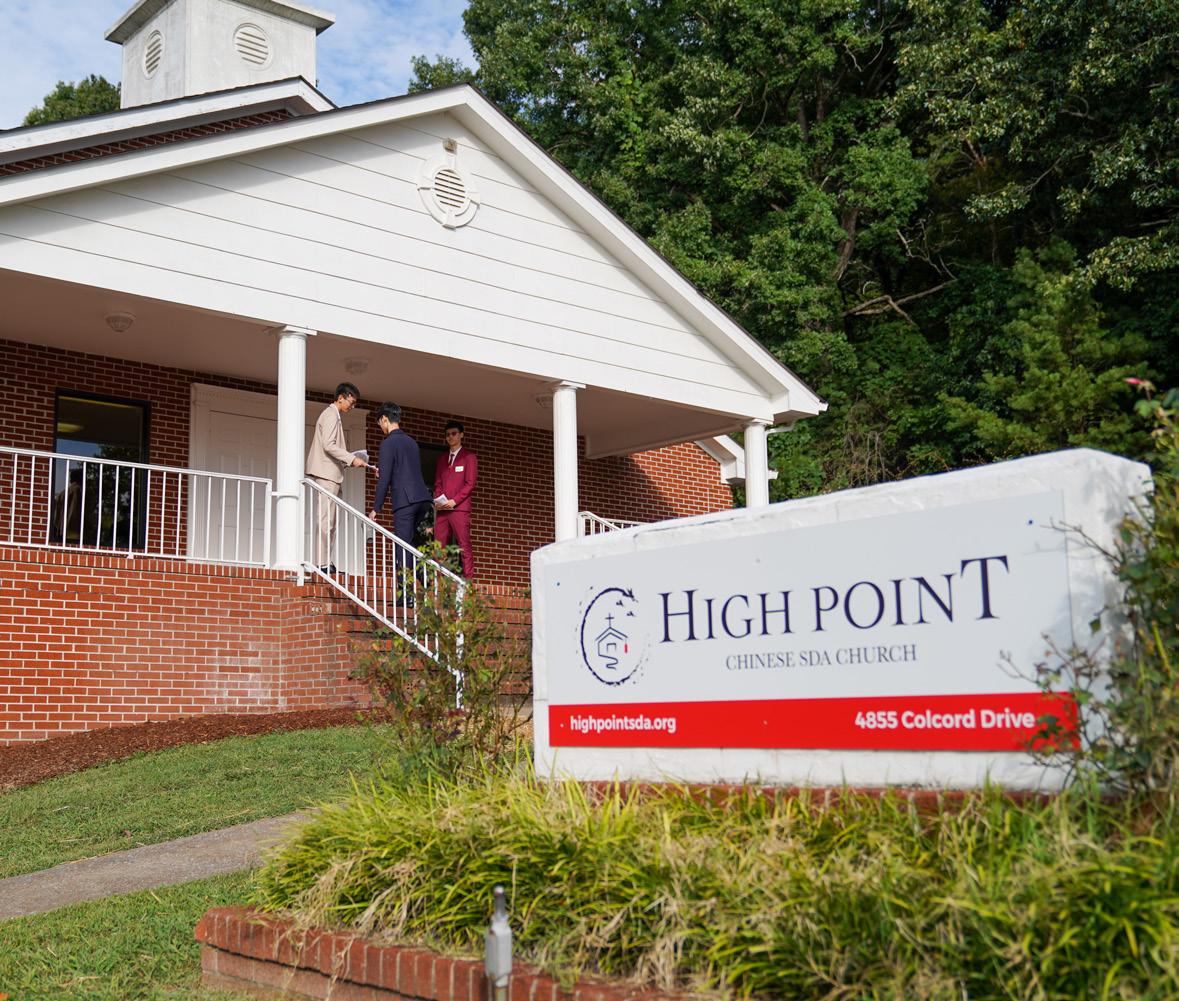
High Point Chinese Seventh-day Adventist Church, which had been holding worship services in Mabel Wood Hall since May 2023, recently moved to the old SuCasa building. The church now worships in the church building located on Colcord Drive behind the Bietz Center for Student Life, which is the former location of the Collegedale Spanish-American Seventh-day Adventist Church (SuCasa).
On Sept. 7, High Point held its first worship service at the new location. The week before, volunteers gathered to prepare the space for worship services by repainting the interior, according to Dennis Li, pastor of High Point.
The new location will serve as a temporary home for the congregation, as it hopes to raise funds to build a new church building. The new church building will be a multi-purpose church built on S. Lee Highway on a 3.6 acre plot, according to Li. He plans to incorporate a community
center, school and church within the future building.
Li said the High Point church has a burden for student involvement and everyone is welcome to come to the new location to use their talents for God’s glory.
“High Point is there on campus for students,” Li said in an interview with the Accent. “If you are anxious about getting involved with different ministries, then High Point is there for you.”
Li said, “God has blessed everyone with their uniqueness, and everybody plays a crucial part in the church family. We want everybody to come together as a family and reach out. We want people to know that we are the group who are here to serve.”
In a past interview with the Accent, Li described High Point as a family atmosphere where students can find belonging and a place to actively participate in various ministries, including church leadership, youth ministries, music and sports.
“We want people to know [that] no matter where you're from, what language you speak, what culture you
have in Jesus Christ, we have one family,” Li said.
According to Li, the change has allowed him to plan more ways for the church to be involved in students’ and community members' lives.
Previously, High Point held its church service in Ackerman Auditorium in Mabel Wood Hall and held its Sabbath School classes in Advent Health Hall. While the space was appreciated, Li was looking for a location where the congregation could become more involved in leadership, outreach and Bible studies.
“I really appreciate the School of Nursing and the School of Music for opening a door for us, for allowing us to use that for a year,” said Li, “But it's different because we can use that for a day, which is good, but it's really not a church setting.”
According to Li, the university had other plans for SuCasa’s previous church.
“But they saw our needs,” he said. “They understand that this is very important for our church family, also for students. So they allow us to use this building for church and for our tempo -
rary home.” Although this is a temporary building, Li said, “It's such a blessing. We have been praying for a place we can use seven days a week, and everybody's so excited to be able to have this new location. Now, we have our own kitchen, and we have all our classrooms as well.”
Daniel Zhao, sophomore nursing major, has been attending High Point since he arrived
at Southern in 2023. He shared that having the new building has been a positive change in his experience at High Point. Zhao said, “This is the first time I found an actual Chinese church in America, and we always sing a song at the end of every sermon, called 'In Jesus Christ We are One Family.' The church really gives me a feeling of belonging, a family away from my family.
est rivers in America in terms of microplastics.
Southern Adventist University’s business club, Enactus, is kickstarting a new project titled Clearwater. The project aims to find a solution for the “microplastic” pollution in the Tennessee River and improve the quality of Chattanooga’s water.
According to Southern’s website, Enactus is an international non-profit organization composed of student, academic and business leaders, dedicated to empowering students to create positive change through entrepreneurial action.
The idea for Clearwater came about when Seth Mace, Enactus president and junior marketing major, discovered a study by Andreas Fath, a chemist at the University of Furtwangen in Germany who specializes in wastewater treatment.
While traversing the 652-mile Tennessee River in 2017, Fath collected water samples that revealed alarming pollution levels. The study identified the Tennessee River as one of the dirti-
After learning about the river’s pollution, Mace proposed the idea for Enactus, eventually launching the Clearwater initiative. Needing a project manager, he appointed Preston Waters, senior marketing major, to the position.
“I was super interested in managing a project,” Waters said. “Getting to start a nonprofit from the ground up is super exciting.”
With the project still in the early developmental stages, Clearwater’s team currently consists of four additional members, including sophomore marketing major Steve Mota, sophomore accounting major Jaziel Soto, senior accounting major Mike Narita and sophomore accounting major Nick Veal.
“My project manager, Preston Waters, introduced the initiative to me, and I was immediately drawn to its mission,” Mota said.
The team is currently focused on conducting research and finding methods that can reduce the level of microplastic
pollution in the river.
“Currently, we are all working as researchers,” Mota said. “[We are] focused on gaining a comprehensive understanding of the microplastics issue in the Tennessee River and identifying effective strategies to address it.”
Clearwater team members said they have found key realizations while delving into the research, including where the microplastics originate and their harmful effects. In addition to plastic bags, noted as a contributing factor in Fath’s research, there are other causes.
Jill Crossman, a hydrogeologist from the University of Windsor in Ontario, Canada, attributes some of the microplastics polluting America’s waterways to clothing particles washed down drains.
“What we've been researching is the clothes that you wear, a lot of them are made out of synthetics,” Waters said. “That's where a lot of the microplastics come from because you have the water in the washing machine. But where does
all that water go? It goes to a waste management plant. And oftentimes, waste management plants don't do a good job at cleaning all the microplastics, and they just release it into the river.”
When asked about the danger of microplastics, Waters shared that through his research, he learned about its harmful effects on the human reproductive system and the dangers it can present to Chattanooga residents.
“They have found microplastics in human placenta and breastmilk,” Waters said.
After learning where microplastics come from and what threats they can cause, Enactus is now looking into ways to combat that issue, according to Waters. The team is exploring the possibility of using filters.
“We know there's a way to stop it,” Waters said. “We just want to create filters to help those waste management plants filter out the water.”
Beyond the researching process, the team plans to make steps towards collab -
orating with potential partners in Chattanooga.
“We are establishing a solid foundation and connecting with local organizations for collaboration,” Mace explained. “Once the planning phase is complete, we will work with our partners hands-on to address the issue. At that point, we will expand our team to enhance our impact. We will need a range of skill sets, including engineers, biologists, marketers and others to tackle the microplastics problem facing our river.”
As the Clearwater team members look towards the future, they are hopeful that they can make big steps towards a cleaner Tennessee River.
“I envision Project Clearwater making substantial contributions,” Mota said. “… Through fostering interdisciplinary collaboration, we aim to advance research efforts that will ensure the long-term safety and sustainability of our water resources.”
To learn more about Project Clearwater and Enactus, go to www.southern.edu/academics/ business/enactus.




Abby Dizon Contributor
Editor’s Note: The following articles are written by counseling professionals from Counseling Services in partnership with the Southern Accent.
You may have encountered warnings about the adverse effects of caffeine, particularly from energy drinks. However, when faced with the pressure of upcoming exams or the exhaustion of sleepless nights, such cautions often slip our minds. Instead of reiterating the wellknown effects of energy drinks that can increase your anxiety and disrupt sleep patterns, here are fresh insights into how they can negatively impact your physical well-being.
Elevated blood pressure, increased risk of hemorrhaging, strokes
The excessive caffeine found in energy drinks causes adrenal glands to release more adrenaline, increasing blood pressure. Furthermore, energy drinks have the potential to cause strokes due to the condition known as reversible cerebral vasoconstriction syndrome (RCVS), which involves sudden spasms of blood vessels in your brain that can result in either restricted blood flow or lead to hemorrhaging.
Kidney disease
An ingredient in energy drinks, taurine, is an amino acid found in sports supplements. Elevated levels of taurine in the bloodstream have the poten
tial to result in acute renal failure. Additionally, as excessive consumption of energy drinks leads to dehydration, this can also impact kidney function and increase the risk of kidney stones and other renal issues.
Convulsions
Energy drinks contain large amounts of sugar and caffeine, both of which are stimulants and are known to be a potential trigger of epileptic seizures for sensitive individuals. Caffeine also inhibits adenosine receptors, which helps prevent seizures.
Impact on blood pressure and heart problems
Research shows that consuming high levels of caffeine can potentially lead to heart conditions such as Tachycardia and atrial fibrillation, a form of arrhythmia (irregular heartbeat). Left unattended, atrial fibrillation can result in blood clots, strokes, heart palpitations and even heart failure.
Although there is insufficient empirical evidence to conclusively prove energy drinks are damaging to your health, the ongoing discussion surrounding the issue is enough cause for concern. Caffeine consumption can be safe in moderation and within the recommended consumption levels. Here are
some healthier alternatives that offer lower amounts of caffeine:
Matcha Green Tea
This green tea is full of antioxidants, enabling you to fight diseases and cancer, reduce inflammation, and promote slow aging. Since the tea’s caffeine releases slowly, it regulates your energy levels, providing you with a smoother and longer hit of energy, Moreover, the L-Theanine ingredient found in matcha can promote better sleep and induce a sense of calmness.
Kombucha A flavorful fermented drink that contains antioxidants and anti-inflammatory substances
called polyphenols and B vitamins, which promote energy, metabolism and nerve function
Coconut water
A delicious way to stay hydrated, providing electrolytes, magnesium, potassium and sodium. It is a healthier option with fewer calories than most sports drinks.
Choosing healthier alternatives over energy drinks will protect your immediate well-being and long-term health from potential adverse effects connected with excessive sugar and caffeine consumption. Rather than going for the flavor, choose a healthy alternative to save you and your body the impact later.

Out with the old and in with the new: Young athletes from LSU begin to become superstars
Jacob Nevis Sports Editor
Every couple of years, there is a cycle for athletes. Older athletes in the different major sports leagues begin to retire. And, with the departure of many of the older stars, there arises a need for young athletes to become superstars in their place.
Right now is no different, with many young athletes in different sports beginning their rise to stardom and fame.
In the National Football League (NFL), many fans have recently seen the departure of several old-
er stars. Some, who used to be the face of the NFL, such as Tom Brady, Peyton Manning and Larry Fitzgareld, have retired. This has led to the rise of certain young athletes in their place.
One of those young stars who has a chance to become one of the greatest receivers the league has ever seen is Justin Jefferson.
Jefferson, drafted out of Louisiana State University by the Minnesota Vikings in 2019, instantly became one of football’s best receivers. Since Jefferson burst onto the league, he has already broken some of the major NFL
records. Jefferson became the first player to record 11 career games with 150 receiving yards in his first four NFL seasons. He became one of only four receivers to record 1,000 receiving yard seasons in their first four NFL seasons. Jefferson also had previously set the record for most receptions and yards in an NFL player’s first three seasons with 324 receptions and 4,825 receiving yards.
After outplaying his rookie contract and exceeding all expectations, Jefferson, during this offseason, signed an extension for a four-year $140 million contract
with a yearly salary of $35 million.
At only 25-years-old, Jefferson has done things most football players can only dream of. He will continue to perform as one of the NFL’s premier receivers and is already well on his path to the Hall of Fame.
In Major League Baseball this season, one young player has become one of the MLB’s most hyped up players in a while.
Paul Skenes, a pitcher drafted out of LSU by the Pittsburgh Pirates as the number one pick, has become one of baseball’s most premier aces on the mound. Skenes was called up by the Pirates this season and his debut has been


nothing short of exciting.
Skenes was selected already for his first All-Star appearance and even started the game for the National League. Skenes, this season, also boasts ridiculous stats for a rookie. He has a 1.99 ERA this season and has a K-BB ratio of 176-32. Skenes is a player that baseball fans will want to keep an eye on in the upcoming seasons.
These young players are just a couple of examples of some of the rising young stars in sports. While some fans might reminisce about older players and those on their way out, sports will be just fine in the hands of these young stars.
Intramural
Wednesday
6 p.m.
- Bat-itude v. Batties (Ladies)
- Glitter Gloves v. Hits And Giggles (Ladies)
- Bubble Boy Warriors v. Nothing But Gas (Men’s B)
7 p.m.
- Talge! v. Benchwarmers (Men’s B)
- Lone Pairs v. Big Ballers Club (Men’s B)
- Stags v. Ellen G White Sox (Men’s A)
9 p.m.
- Geeks v. Old School (Men’s B)
- Pitch Perfect v. Southern Breeze (Ladies)
- Los Papis MMG v. Love Muffins (Men’s B)
Thursday
6 p.m.
- Talge! v. Lone Pairs (Men’s B)
- Calebs N Em v. Geeks (Men’s B)
- Zeke’s Freaks v. This Is Our Colts (Men’s B)
7 p.m.
- Home Run Homies v. Bat-itude (Ladies)
- Bat Attitude v. Bat To The Bone (Ladies)
- Batties v. Catch me Outside (Ladies)
9 p.m.
- Big Baller’s Club v. Love Muffins (Men’s B)
- Bats And Balls v. Soft Ballers (Men’s B)
- Old School v. Sigma (Men’s B)
- Batties v. Catch Me Outside (Ladies)
Allison Grundy Opinion Editor
There’s nothing better than stretching out after a long day with a new book in your hands.
A year ago, in my search for new reads, I heard of Colleen Hoover’s most popular novel
“It Ends With Us” time and time again, especially following its film adaptation release.
According to an article by The Slate, Hoover’s books became widely popular from reviews on social media, and by December 2022, the author held six of the top ten spots on the New York Times paperback fiction best seller list.
Over time, however, it seemed like just as many people were critiquing her stories as promoting them. On Aug. 9, 2024, “It Ends with Us” premiered in theaters and received a 57% rating on the popular review website Rotten Tomatoes.
I would describe myself as a well-rounded reader, picking up books from all genres. When I finally read her book, “It Ends with Us,” I wanted to be able to join the discussion and say that it was in poor taste like everyone was saying. But actually, I felt like a lot of the hate she was getting was misplaced, and I understood why her work is so popular.
Although Hoover’s writing does not exactly place her as the fourth Brontë sister, nor is she an Orwell-esque prophet, undoubtedly she’s changed the expectations for what contemporary readers want. When discussing books, it’s
important to recognize that literature serves many purposes: to entertain, to educate and to evoke emotion.
Reading Hoover’s most popular book, I was entertained, as the writing style pulled me in. Even though her story may lack nuance, the simple writing style makes her work accessible and easy to digest. Many people intimidated by reading have picked up Hoover’s books and have gone on to read more stories.
Critics may argue that Hoover’s books are “just” romance. However, romance, in its many forms, can explore deeper truths about human nature, relationships and the complexities of life. Hoover’s narratives often illustrate that love is not just an end goal, but a journey filled with challenges that require strength and understanding.
All of Hoover’s stories feature a female protagonist that overcomes personal challenges such as domestic abuse, mental health issues or familial conflict. Hoover’s popularity is a testament to the fact that the masses are seeking stories that reflect their realities.
It could be argued that in a book with such sensitive topics like abuse, romantic themes seem out of place or offensive. But when I read “It Ends with Us,” any romanticization of the abuser seemed, in my understanding of domestic violence, realistic.
The cliche and unrealistic circumstances in the story,
such as the antagonist being a renowned brain surgeon at a shockingly young age, seem to be unfortunate symptoms of novels in this genre.
I would argue that the romanticization of the abuser serves a literary purpose. And spoiler alert, in the book, despite how hard it can be to end a relationship, the protagonist has the courage to leave her abusive husband, ending a generation cycle of violent relationships.
So, Hoover has a primar-
ily female audience with her stories that explore women’s universal struggles, conveying a largely positive message, even if it’s somewhat idealized. Despite this, her books have received considerable criticism. Due to these factors, it begs the question: Are these stories in poor taste because women enjoy them?
Alternatively, it seems that these stories are popular because women are looking for comfort and expression through relatable writing.
Although I do not recommend Hoover’s stories and think they deserve some criticism, I do want to urge readers to seek out their own opinions, and to be especially alert to societal patterns when an author’s work and audience is overly criticized.
Editor’s Note: The Opinion Section encourages multiple perspectives, so please feel free to send a response or other opinions for future articles to allisongrundy@southern.edu.

Lucas Bueno Religion Editor and therefore forever lost? Such questions can cause great anxiety, pain and doubt.
The unpardonable sin is an ominous concept when holding the belief in a God who can and will forgive all of our sins.
It appears antithetical to the hopeful and beautiful verse of 1 John 1:9, which says, “If we confess our sins, He is faithful and just to forgive us our sins and to cleanse us from all unrighteousness.”
Questions are raised in our minds. If God forgives all sins, then what is the unpardonable sin? Have I committed this sin,
To bring clarity, answers and hope concerning this topic, we must examine the words of Christ Himself on the topic. He speaks on this in Matthew 12:31-32.
“Therefore I tell you, every sin and blasphemy will be forgiven people, but the blasphemy against the Spirit will not be forgiven. And whoever speaks a word against the Son of Man will be forgiven, but whoever speaks against the Holy Spirit will not be forgiven, either in
this age or in the age to come.”
First, Jesus clarifies the blessed truth, that all sins will be forgiven. However, he makes an exception regarding blasphemy against the Holy Spirit. Sometimes, blasphemy is primarily thought to regard one calling themself God. While this is true, blasphemy also refers to blatant disrespect or rejection.
Here Jesus says that a blatant disrespect, disregard or rejection of the Holy Spirit will not be forgiven. Now all of us have fallen short, we have disregarded the guidance of the
Spirit, but Jesus, with all His mercy, is not referring to our daily shortcomings.
A blasphemy of the Holy Spirit is a continual rejection of the convictions, urgings and guidance from the Holy Spirit, who was sent to guide and comfort.
If one continues to rebel against this guidance and warnings, he or she will enter a path where they will not be able to hear the Spirit anymore.
God has given us free will, and if we so choose to continually reject His plan and counsels by not heeding and obeying the
Holy Spirit, then that sin cannot be forgiven. For God will not force us to follow Him.
If you have ever wondered if you have committed the unpardonable sin, take hope in the fact that even wondering about that is an indication that you have not committed this sin. Though everyday we fall short, if we continue to seek God and His forgiveness and His will, if we continue to follow the guidance of the Holy Spirit, then we are safe in the blessed salvation of Christ.

Emily White Lifestyle Editor
Since I moved out of the dorm last year, I have had the freedom to cook my own meals. However, I cannot cook to save my life (or anyone else’s), so I had to resort to other options to get my nutrition, namely frozen meals.
I credit the local Trader Joe’s with my being able to survive this long because it offers an excellent selection of tasty and somewhat inexpensive frozen meals. Being a frequent patron of the store, I have tried many of its products, both frozen and not.
I have culminated my findings thus far into a tier list for those of you who are looking to try (or avoid) something new!
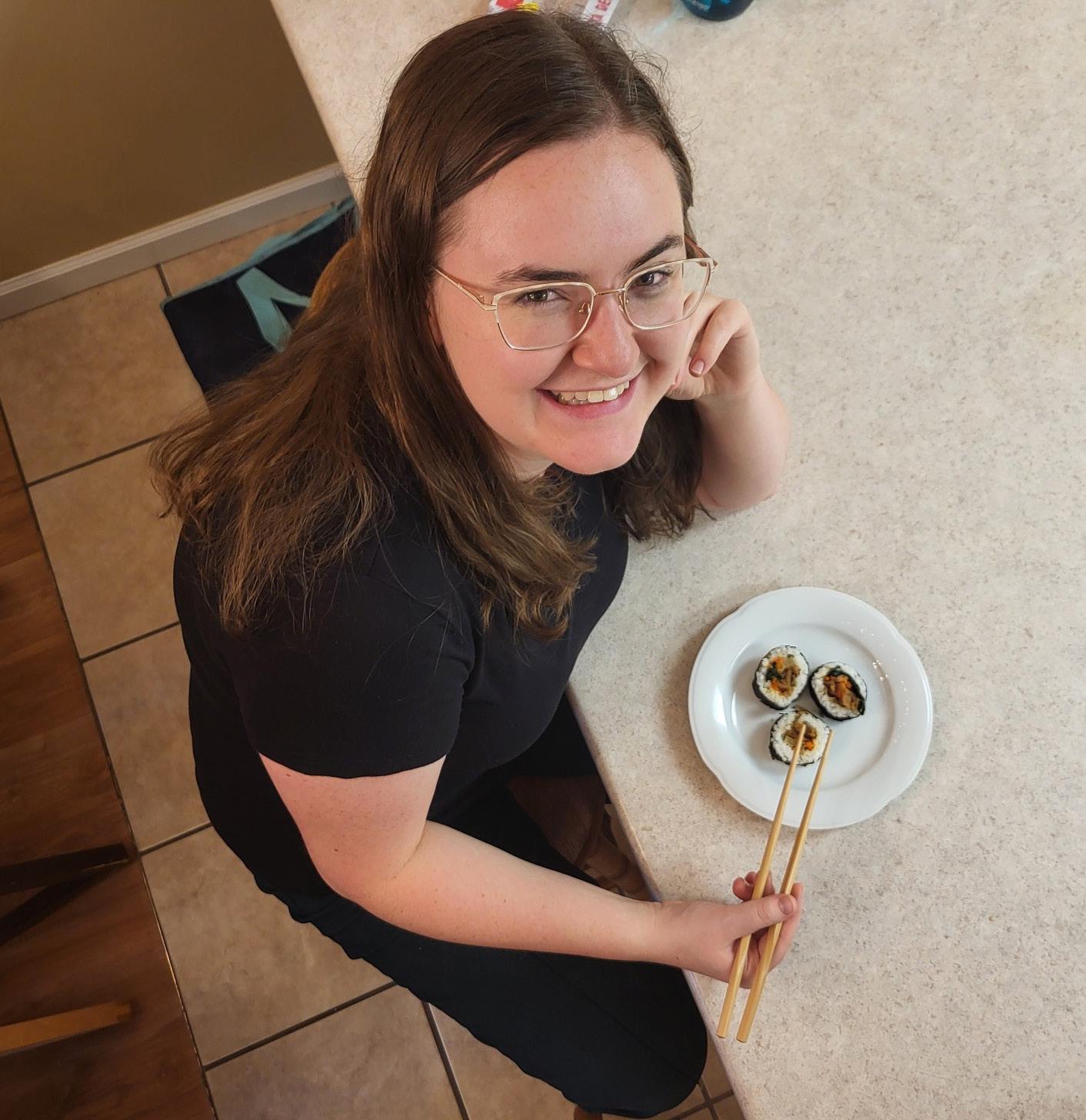
S Tier Frozen kimbap: Depending on how hungry you are, this can function as a meal or a side. It doesn’t take too long to cook in the microwave, and the mix of tofu and vegetables is scrumptious!
I recommended the kimbap to my friend Linda Kirby, a senior music education major, and it’s become a regular part of her meal planning. One day after dinner she told me, “I couldn’t wait to get home and eat it because I had been craving it all day.”
Spicy tempura seaweed snack: Salty, spicy and perfectly crunchy, these bite-sized crisps are perfect to share with a friend or two. Everyone I’ve given these to likes them!
“I’m not the biggest seaweed fan, but those are pretty good,” Ethan Braun, sophomore outdoor education major said.
“I like the almost seafood-ish kind of flavor,” Dr. Kurt Miyashiro, an associate professor in the School of Music faculty, enthusias-
tically expressed. “ . . . I 100 percent endorse that.”
A Tier
Japchae: Last year, my housemates and I would stock up on this, there was always at least one box in the freezer. This tastes best made in a frying pan, but it does well in the microwave, too.
Penne arrabbiata: I first tried this my sophomore year in the dorm, and it did fine in my little 600-watt microwave, though it tastes best cooked in a pan. The sauce is just spicy enough, and the penne is the perfect texture — not too soft, not too firm.
Mini vegetable samosas: These cook well in the microwave and are tasty and not too spicy. You will, however, need a plate to make this (unless you want to use the cardboard box as a plate — I won’t judge).
B Tier
Crumpets: These are a favorite of my family. Every time I visit home, I take a couple of packs. They taste best toasted and topped with butter and jam or preserves.
Peanut noodle udon salad: This isn’t something I get on the regular, but it’s nice to have every once in a while. The sauce, fresh vegetables and cold noodles make for a light but somewhat filling meal.
C Tier
Frozen pad thai: Yes, I love pad thai, but the Trader Joe’s version is always a little too watery, and if I cook it in the microwave for longer, it ends up burning. This might be rectified if I heat it up in a pan — I will have to try that.
Sparkling peach black tea: This was on my list to try for over a year, and I was underwhelmed when I finally tried it. It’s a little too fizzy, and it has a weird aftertaste, but it’s not terrible.
D Tier
Blueberry frozen waffles: The
For a chance to be featured, use or tag @sauaccent on Instagram in your posts!
blueberry taste is overwhelming (and it seems pretty artificial, too).
If I want blueberry waffles, I think I’ll just top some regular ones with fresh blueberries instead.
Vegan Italian-style sausage: This is not very flavorful; the texture is also a little tough. Sometimes I forget I don’t like this very much and end up buying it, only to remember my dislike after I’ve spent ten min-
utes pan-frying it and have gotten two bites into eating it.
F Tier
Baked pizza-flavoredpillowcrisps: These taste like thin, crunchy cardboard that used to be part of a pizza takeout box — very bland and unsatisfying.
Strawberry jalapeno crisps:
This quote from Bianca Amaya-Hernandez, sophomore English major,
sums it up perfectly:
“They look good, but they taste like rancid wheat . . . blegh.”
Well, there you have it. Though this is certainly not a comprehensive list, I hope that my recommendations inspire some of you to try something new. If any of you visit the music department and see me there, come try a seaweed snack!

• Within the nine words presented are three groups of three that share a theme. (Ex. Characteristics of a Bear: PAW, CLAW, FUR)
• Identify the 3 groups. There is only one solution!








12:00
ViewSouthern 11:00 am Convocation: Fall Week of Worship @ Collegedale Church of Seventh-day Adventists
pm Deadline to Request Dec/May Graduation
• 6:30 pm Vespers: Fall Week of Worship @ Collegedale Church of Seventh-day Adventists
• 7:29 pm Sunset
• 7:30 pm - 9:30 pm Ministerial Candidate Recognition: Chester Clark III @ Thatcher Chapel

School of Social Work: SWIP Trip
8:30 pm Vespers: Fall Week of Worship @ Collegedale Church of Seventh-day Adventists National Domestic Violence Month 12:00 pm Tornado Siren Test
10:00 am - 12:00 pm Ministerial
Candidate Recognition: Chester Clark III @ Thatcher Chapel 11:45 am Merge Worship @ Collegedale
Academy Elementary Gym 11:45 am Renewal @ Collegedale
Church of Seventh-day Adventists
• 7:00 pm Evensong: Alumni Spotlight (Joshua Knight, organist) @ Collegedale Church of Seventh-day Adventists
• 8:30 pm - 5:00 am “For Love of the Game” All Night Softball


Answers to Links: Homophones of eating: Choose, byte, eight Types of governments, -cracy: Pluto, demo, auto Characteristics of voting: register, in-person, elect
Payday: Salary • 6:00 pm Flag Football Intramurals Begin


Southern’s Master of Business Administration degree helps you acquire the skills you need to be successful in today’s workforce—based on the biblical principles of honesty, integrity, and high ethical standards.
It’s convenient
All classes are online. Full- and part-time tracks are available, and the MBA can be completed in as little as one year. With careful planning, you can complete a bachelor’s degree AND a master’s degree in five years!
It’s affordable
Southern’s competitively priced program is a valuable investment in your future
Prep for CPA Review. Students with an MBA Accounting emphasis may take the Wiley CPAexcel review courses for six of their 12 elective hours.