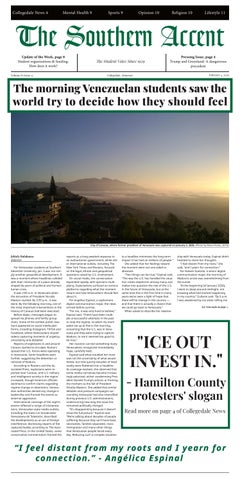
The morning Venezuelan students saw the world try to decide how they should feel
For Venezuelan students at Southern Adventist University, Jan. 3 was not simply another geopolitical development. It was a moment where headlines collided with their memories of a place already shaped by years of political and humanitarian crisis.
It was 2:05 a.m. in Venezuela when the extraction of President Nicolás Maduro started. By 3:39 a.m., it was done. By the following morning, one of the most important interventions in the history of Caracas had been executed.
Before dawn, messages began to spread via phones and family group chats. Some of the earliest public reactions appeared on social media platforms, including Instagram, TikTok and Facebook, where Venezuelans shared videos capturing moments of urgency, uncertainty and disbelief.
Reports of explosions in and around Caracas started to circulate. Rumors spread that U.S. forces were operating in Venezuela. Some headlines went further, suggesting the detention or removal of Maduro.
According to Reuters and the Associated Press, explosions were reported near Caracas, and U.S. military and intelligence activity in the region increased, though American officials declined to confirm claims regarding regime change or detentions. Venezuelan authorities denied any change in leadership and framed the events as external aggression.
International coverage of the night’s events reflected a range of interpretations. Venezuelan state media outlets, including the state-run broadcaster Venezolana de Televisión, described the developments as an act of foreign interference, dismissing reports of the captured leader, according to The Associated Press. In the United States, some conservative commentators framed the
reports as a long-awaited response to an authoritarian government, while other international outlets, including The New York Times and Reuters, focused on the legal, ethical and geopolitical questions raised by U.S. involvement.
On social media, the conversation expanded rapidly, with opinions multiplying. Expectations surfaced on various platforms regarding what the moment meant and how Venezuelans should feel about it.
For Angélica Espinal, a sophomore digital communication major, the news arrived before sunrise.
“For me, it was very hard to believe,” Espinal said. “There have been multiple unsuccessful attempts in the past to stop the regime, so when my mom woke me up at five in the morning, screaming that the U.S. was in Venezuela and they were trying to capture Maduro, to me it seemed too good to be true.”
Her reaction carried something many Venezuelans recognized immediately: hope, carefully held.
Espinal said what troubled her most was not the uncertainty of what would follow, but how quickly decades of lived reality were flattened into a headline.
As coverage evolved, she observed that some media narratives became increasingly polarized, either condemning President Donald Trump’s actions or framing the moment as the fall of President Nicolás Maduro. She added that similar debates and pressure campaigns surrounding Venezuela had also intensified during previous U.S. administrations, underscoring how long the issue has remained politically charged.
“It’s disappointing because it doesn’t show the full picture,” Espinal said.
“We’re talking about decades of people suffering because they can’t have basic necessities, families separated, mass immigration and many other things that Venezuelan people faced every day. Reducing such a complex situation
to a headline minimizes the long-term impact it has had on millions of people.”
She added that her feelings toward the moment were not one-sided or absolute.
“Two things can be true,” Espinal said. “The way the U.S. has handled the situation raises skepticism among many and makes one question the role of the U.S. in the future of Venezuela, but at the same time this is the first time in many years we’ve seen a light of hope that there will be change in the country — and that there is actually a chance that we could go back to Venezuela.”
When asked to describe her relation-
ship with Venezuela today, Espinal didn’t hesitate to share her thoughts.
“I feel distant from my roots,” she said, “and I yearn for connection.”
For Nolwin Guilarte, a senior digital communication major, the morning of Maduro’s arrest was overwhelming from the outset.
“At the beginning [of January 2026], I went to sleep around midnight, not knowing what had started happening in my country,” Guilarte said. “By 6 a.m. I was awakened by my sister telling me
“I feel distant from my roots and I yearn for connection.” - Angélica Espinal
See Venezuela on page 3
Jehiely Balabarca Reporter
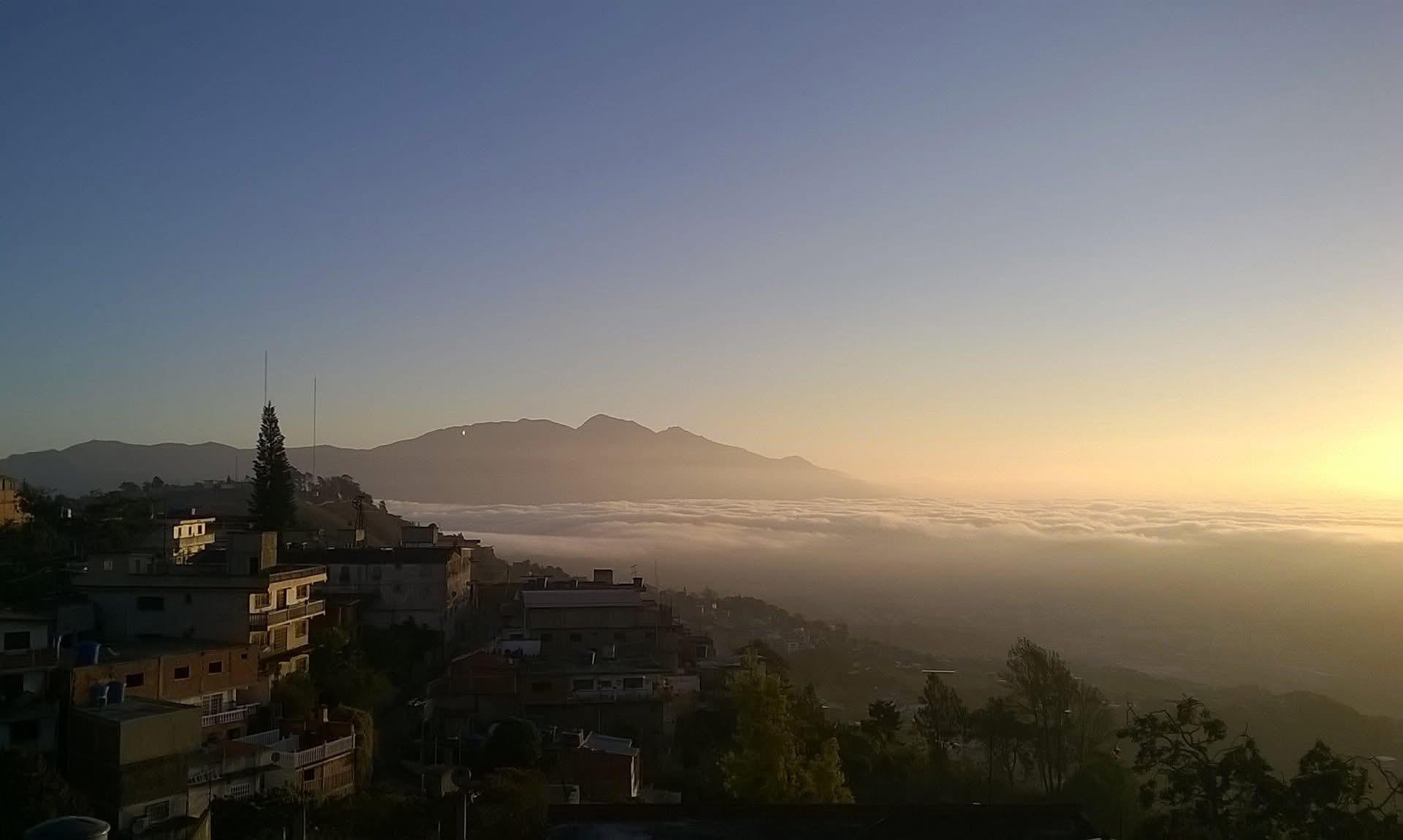
City of Caracas, where former president of Venezuela was captured on January 3, 2026. (Photo by Maria Flores, 2016).
Beyond the Brackets: A behind-the-scenes look at how Southern runs its intramural program
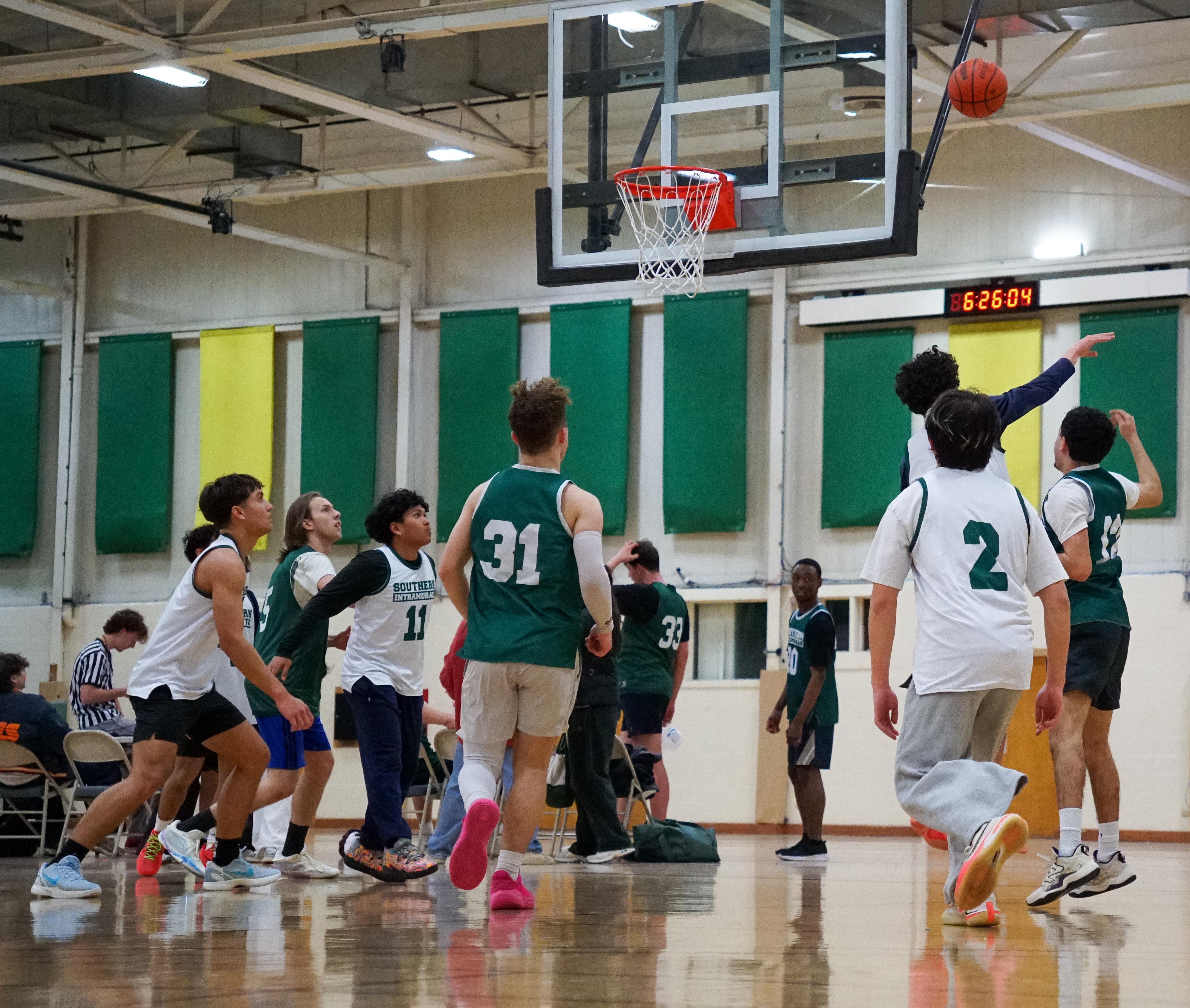
On their first day of classes following winter break, Southern students were already on the courts vying for the basket. Every year, hundreds of students across campus sign up and join different teams to compete. While players scuffle for the glory of winning, much of the work to make these events possible takes place off the court.
Southern alum Troy Walker, director of intramurals for the past 13 years, said careful planning is essential to ensure that all the sport seasons run smoothly. When asked what's his favorite intramural, Walker did not hesitate. “Softball,” he said. “It’s always going to be softball.” Basketball, he added, is a close second.
Judy Sloan, dean of the School of Health and Kinesiology, assists Walker with his responsibilities. Graduate student Jordan McCullough, who is pursuing his master’s in biblical studies, is a recent new addition to their team.
Additionally, there are four new student assistants who also referee. According to Walker, these are the core referees who work the most shifts. They
do not just make calls and judge games while trying to be objective to their peers; they also help set up, tear down and clean to make sure the gym is reorganized.
Walker said players and refs are obviously a huge part of the impact that goes into keeping intramurals going, but also the fans and people who show up to watch and cheer on from the stands really bring up the energy of the game as well as publicity and making sure that other students on campus hear or know about upcoming games or tournaments.
As far as moving forward with new sports, Walker confirmed that new programs are already in the works. Kickball is set to begin in early spring, and water polo will be introduced in the fall.
Even before a sports season begins, work must be done behind the scenes to get ready. Registration sign-ups are sent out two to three weeks in advance so that Walker and his team can coordinate team captain meetings, make the team rosters, make sure team names are appropriate, and check for players’ eligibility.
Eligible participants include students enrolled in at least six credits, graduate students tak-
ing a minimum of three credits, as well as full-time faculty and staff and their spouses.
Amber Kishihara, senior biology major, said that playing on a team helps her to unwind outside of classes.
“Personally, it’s a great stress outlet where I can play on a team with my friends,” Kishihara said. “Intramurals give us a break from school, whether we’re playing a game or showing up for support.”
Another benefit of participating in intramurals is practicing athlete sportsmanship, which can be just as important as the physical challenges of the game. According to Walker, intramural games can help students learn “to lose with grace and win with class.”
Walker also talked about bringing religious aspects into the game.
“You don’t realize it, but having prayer before every game, as minimal as that sounds, [and] bringing the spiritual focus into it, too, matters,” he said.
As a result, students can expect much more to come with regard to intramurals. New sports, new faces, and new games to win or lose.
The Accent encourages readers to write articles and voice their opinions. However, the views expressed do not necessarily reflect the opinions of the Accent, the Southern Adventist University or the Seventh-day Adventist Church.
For any questions, comments and article submission information, email the editor at haydenjkobza@southern.edu.
For all advertising inquiries, email alvajohnson@southern.edu.
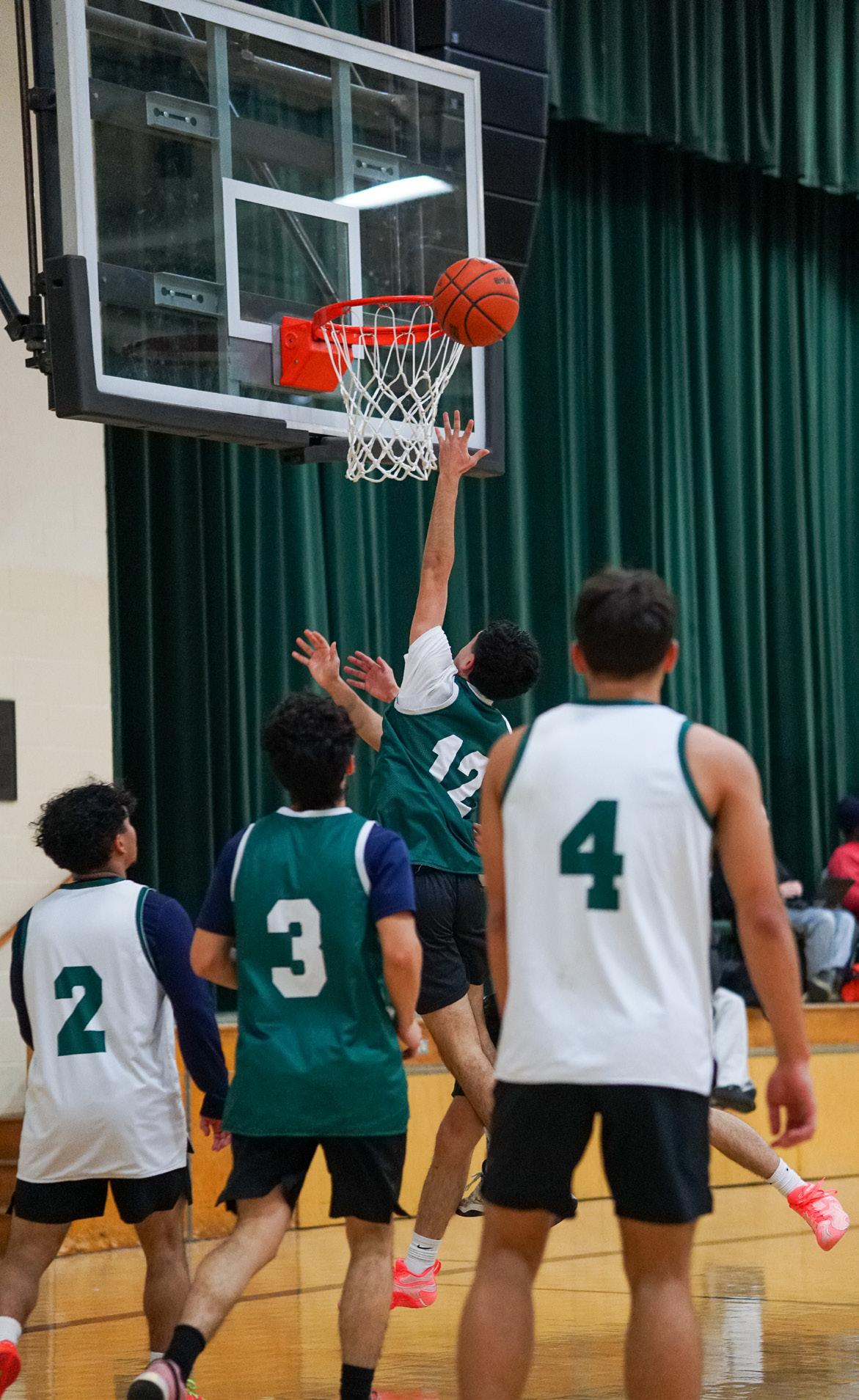
Basketball season in full swing at Southern. (Photo by Sam Tooley).
Ava-Caroline Schmidt Contributor
"New sports, new faces, and new games to win or lose." (Photo by Sam Tooley).
Venezuela continued from page 1
that Caracas had been bombed all night and that Maduro was captured by the U.S. government.” He explained that the moment was difficult to understand.
“Waking up with this news was a lot to take and a truly shocking moment,” he said. “I could barely process what was happening that Saturday morning.”
Guilarte said that for him, the reports triggered more reflection than celebration.
“For Venezuelans all around the world, it felt like a unique moment,” he said. “The politics and humanitarian struggles that have been part of most of my life, and my family’s, felt like they were finally over, after more than two-and-a-half
decades of resilience.”
Before long, his initial sense of possibility gave way to uncertainty.
“Even though I know it was good news for the people of Venezuela, I wasn’t sure about the consequences,” Guilarte said. “I kept wondering what doors this might open — not only for Venezuela, but for the rest of the world.”
As the day went on, clarity did not arrive for Guilarte, whose social media feed became saturated with conflicting narratives.
“My social media was full — just news after news from different outlets,” he said. “Venezuelan state media called the attacks an aggression, while some diaspora communities celebrated the end of Maduro’s rule. The coverage was heavy, with a lot of questions and no answers.”
What unsettled him most
was how quick others were to make assumptions.
“To my surprise, I saw people outside Venezuela, and even some Venezuelans, reacting with confusion or criticism of U.S. actions, often without knowing anything about Venezuela,” he said. “This event showed me how deep perspective and context matter in how news is received and remembered.”
For Biangel Guilarte, the younger sister of Guilarte and a sophomore business administration major, the moment resurfaced something deeper than politics.
“I don’t believe U.S. media fully reflects my experience,” she said. “People outside the situation can’t completely understand what living in Venezuela is like.”
She said public conversations often feel detached from lived reality.
“I think many people talk about Venezuela without really understanding what’s happening,” Biangel Guilarte said. “I wish they took the time to understand the situation better instead of forming opinions based only on the news.”
She went on to explain that her frustration is tied closely to identity.
“Honestly, I want to feel proud because Venezuela is my country,” she said. “But it makes me sad how it’s often interpreted as a poor, communist or socialist country, especially since it wasn’t always like that.”
Before its economic collapse, Venezuela was once one of Latin America’s wealthiest nations, driven by vast oil reserves that made it a major global exporter, according to the U.S. Energy Information Administration. That history, students said, is often absent from news coverage.
“Venezuela was more than just a home to me,” Biangel Guilarte said. “It was my life. I had to leave it behind, knowing that even if I return, it may never feel like home again.”
In the weeks following Maduro’s arrest, analysts and international organizations cautioned against simple conclusions. According to the U.S. Congressional Research Service, Venezuela’s future remains uncertain. The United Nations High Commissioner for Refugees continues to document one of the largest displacement crises in the world, with more than 7.7 million Venezuelans living abroad.
For Venezuelan students at Southern, the story is not about choosing sides. It is about contradictions: hope and fear, relief and unease, while witnessing how the world perceives a country they once called home.
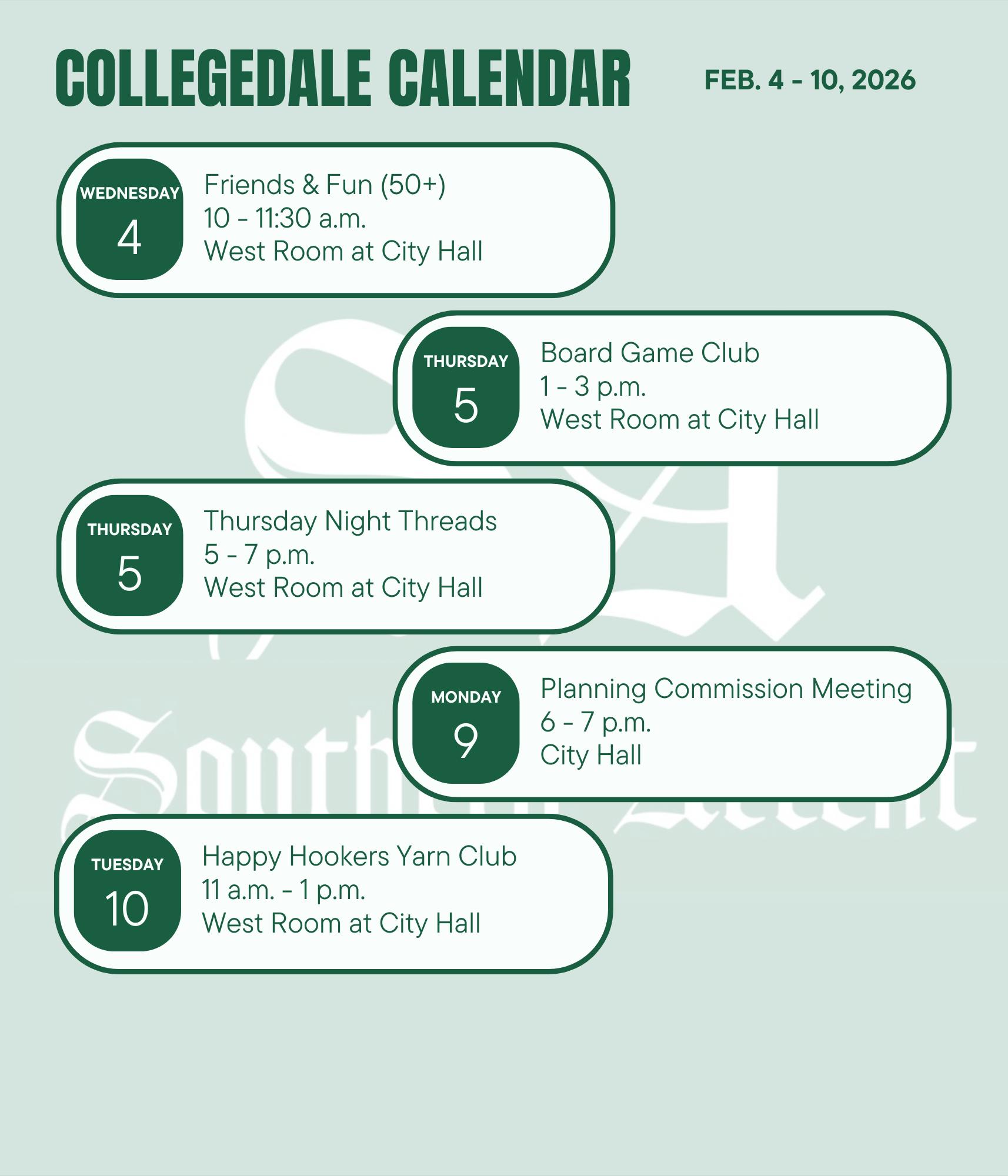
COLLEGEDALE NEWS
Editor's Note: The Southern Accent has produced a two page Collegedale News section this issue as part of a national initiative to enhance community news coverage. The local effort, led by Southern's School of Journalism and Communication in conjunction with the Center for Community News (CCN) at the University of Vermont, places student journalists at the forefront of addressing the news desert crisis, a phenomenon caused by the decline of newspapers in local communities. The Accent believes local news is vital to a thriving democracy, and we remain committed to reporting about important issues, novel occurrences and interesting people in the greater Collegedale area. We will publish this special section in five issues of the newspaper this semester. To submit tips or press releases, go to https://southern-accent.org.
Over 150 residents in Hamilton Count y protest sheriff’s agreement with ICE
Hayden Kobza Editor-in-Chief
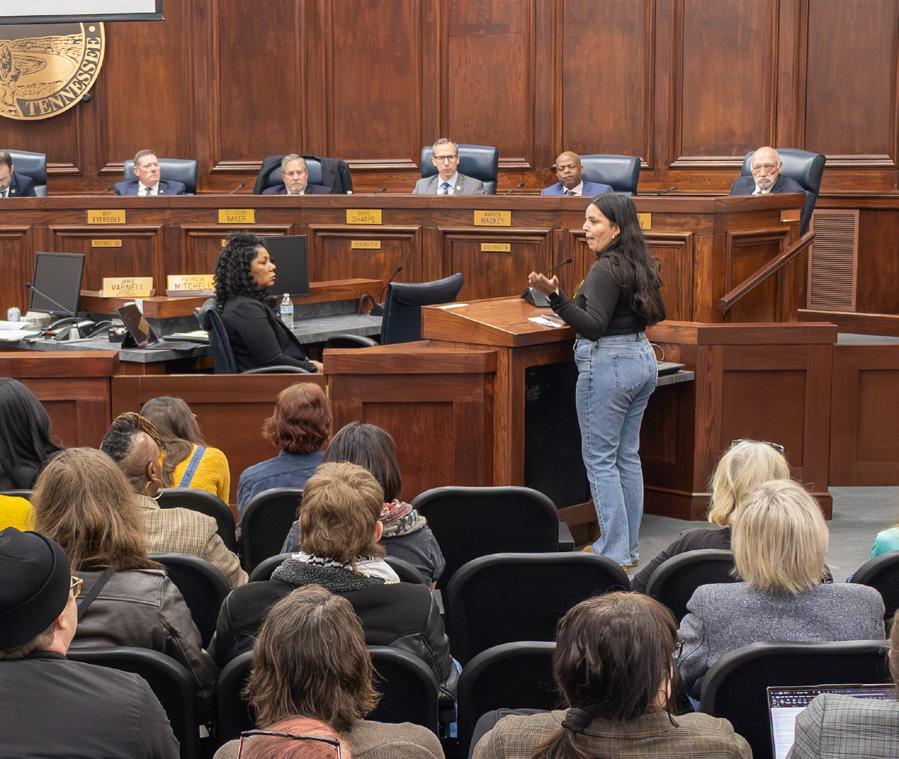
Anti-U.S. Immigration and Customs Enforcement (ICE) protestors filled Hamilton County Commission room 402 to capacity, peacefully protesting federal agreement 287(g). Almost all of the participants wore a matching neon yellow sticker reading “ICE OUT, INVEST IN.”
Speakers represented the groups' views to commissioners during the Jan. 28 meeting, urging them to end the 287(g) agreement between Hamilton County Sheriff’s Office (HCSO) and ICE.
What 287(g) allows
The program facilitates cooperation between federal ICE agents and state and local law enforcement.
According to the ICE website, the agreement takes its name from a section added to the Immigration and Nationality Act in 1996, authorizing "ICE to delegate to state and local law enforcement officers the authority to perform specified immigration officer functions under the agency’s direction and supervision.”
The Department of Homeland Security website states that the agreement allows for federal funds to help pay the officers’ salaries and overtime during ICE training.
Under the program, local law enforcement can ask about individuals' immigration status during routine interactions, such as traffic violations, and can investigate the immigration status of detainees in the jail system.
Participation in the 287(g) program is voluntary and, in Hamilton County, is determined by a memorandum signed by the sheriff.
According to the Tennessee Department of Safety & Homeland Security website, Hamilton
County is one of 44 out of 95 Tennessee counties that are part of the program.
Sheriff defends participation In an interview with WDEF 12, Hamilton County Sheriff Austin Garrett said that his main priority with endorsing a jail-based 287(g) program is to keep the residents of Hamilton County safe from undocumented immigrants.
“Some people are here for the American dream,” Garrett said. “Some people are here to cause a nightmare. There's poison flowing into this country, across the board, from not just coming out of Mexico. It's coming from all kinds of places, but it's coming across the board. I'm going to do what the people of this county elected me to do, and I'm going to work to keep them safe.”
Garret continued, stating that police officers in the county will be making arrests.
“You're going to see your sheriff assisting with making arrests on some of those people that are here illegally and committing crimes,” Garrett said. “We're going to work to get them out of this county. “
Organizers mobilize turnout Days prior to the commission meeting, the organization Chattanoogans Action for Love Equality and Benevolence (CALEB), a community non-profit, posted the time and location of the meeting to their Instagram account, with a call for community members to attend and “tell decision makers to end Hamilton County’s 287(g) agreement with ICE.”
In an interview with the Accent, Michael Gilliland, organizing director of CALEB, said the event was to put out a call nationwide, specifically from partners in Minnesota.
“We're a part of a national network called the Gamaliel network that has partners and partnering organizations in Minnesota that are on the front lines of what's going on, the travesty and the attack on immigrant communities,” Gilliland said. In response to CALEB and
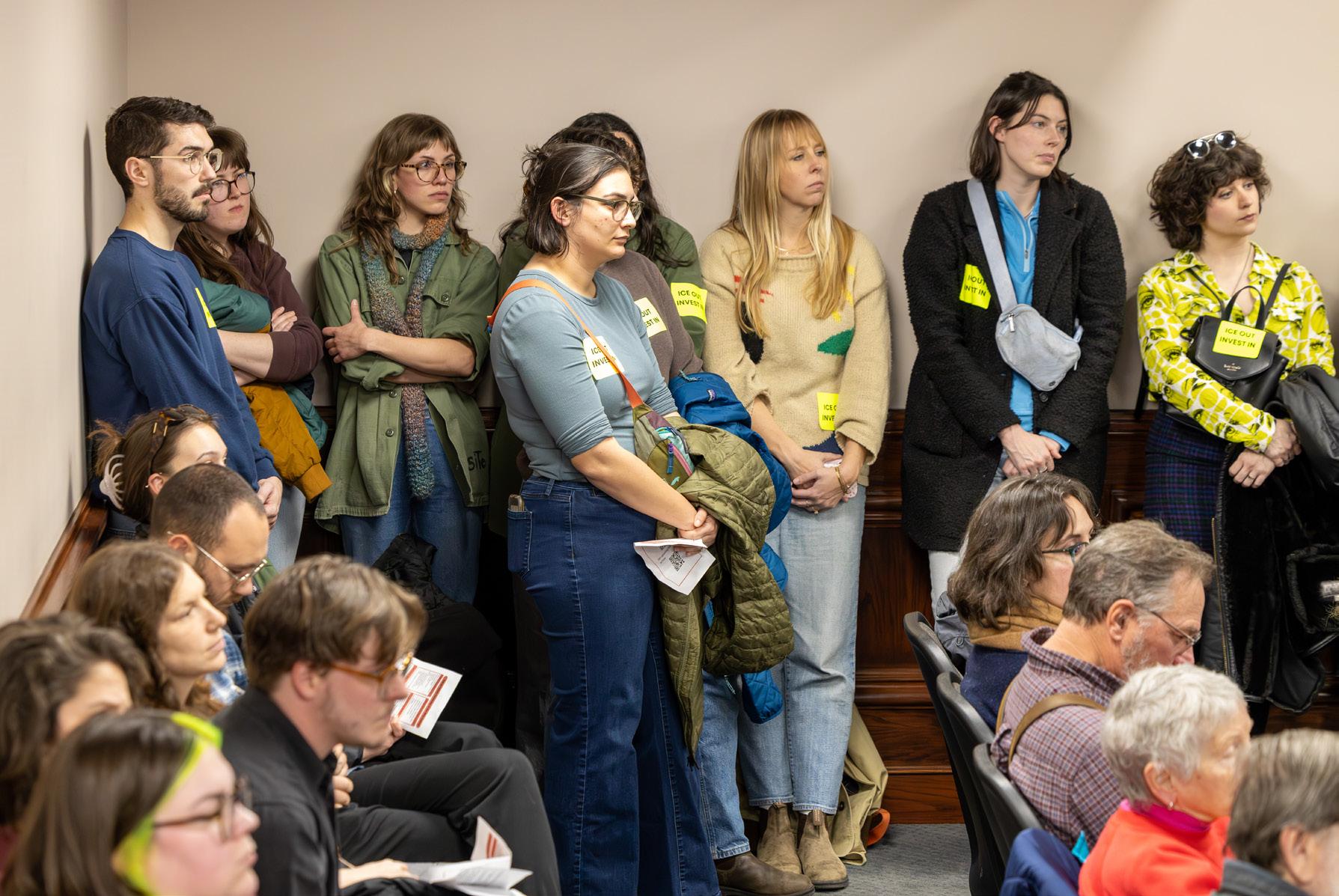
other organizers, over 150 people attended the meeting or waited in the lobby while 15 individuals presented their thoughts to the Commission.
To accommodate the number of people present, the Commission agreed to extend the usual 10 minutes for community speakers to 25 minutes.
“I love to see this kind of a crowd here about an issue,” said Commissioner David Sharpe.
Commissioner Ken Smith agreed and emphasized the commissioners’ desire to connect with their engaged constituents.
“I would love to see more people and more involvement and more engagement directly in these meetings,” Smith said. “Don’t let this be the only opportunity to engage with this body. Everybody up here is accessible.”
Attendee Emma McDonell said that, for her, success at the meeting meant gaining increased transparency from city commissioners about their future actions.
“At this moment, we don’t even know where these individual commissioners stand,” McDonell said. “I want to know what their positions are, and I want them to demonstrate to
us that they are listening, that they are taking clear steps to end this agreement.”
Crowd listens from lobby
After officials said the room had reached its established capacity of 163 persons about 10 minutes before the meeting was scheduled to begin, more than 45 of the attendees were asked to wait outside the commission room during the meeting. The heavy wooden doors prevented those outside from hearing most of what went on inside.
A majority of the attendees stayed despite the setback, sitting on benches, on the floor or talking in loose circles across the lobby. The group members ranged from retirees to parents with infants.
As the meeting progressed, some of those gathered outside the doors tuned in to the meeting livestream with their cellphones and shared the audio with their neighbors, leaning in to hear over the chatter and cheering for the presenters inside.
Community shows solidarity
Rachel Fortin, one of those outside the meeting, said that she came that day to be more informed and to represent
those community members concerned about ICE’s actions. Fortin, who was born in Minnesota, said she felt a personal connection to the issue of ICE involvement because of events happening there.
“I’m worried about [ICE’s] accessibility to information, their lack of training, their lack of accountability, and overall, their willingness to be violent and act with very little oversight,” said Fortin. “I’m hearing and seeing what’s happening to my friends and family who still live [in Minnesota] and wanting to represent that pain and solidarity here in Chattanooga.”
Several of the attendees at the event were young children or infants with their parents. Abby Phillips, a local ICU nurse, said she brought her two-yearold daughter to similar events, including city councils, association meetings and other local protests.
“Raising the next generation to care about others and their greater community is very important,” Phillips said. “I’m just trying to show her a living example of what it looks like to be invested in and care about others, especially people who might not look like us or have the same privilege that we do."
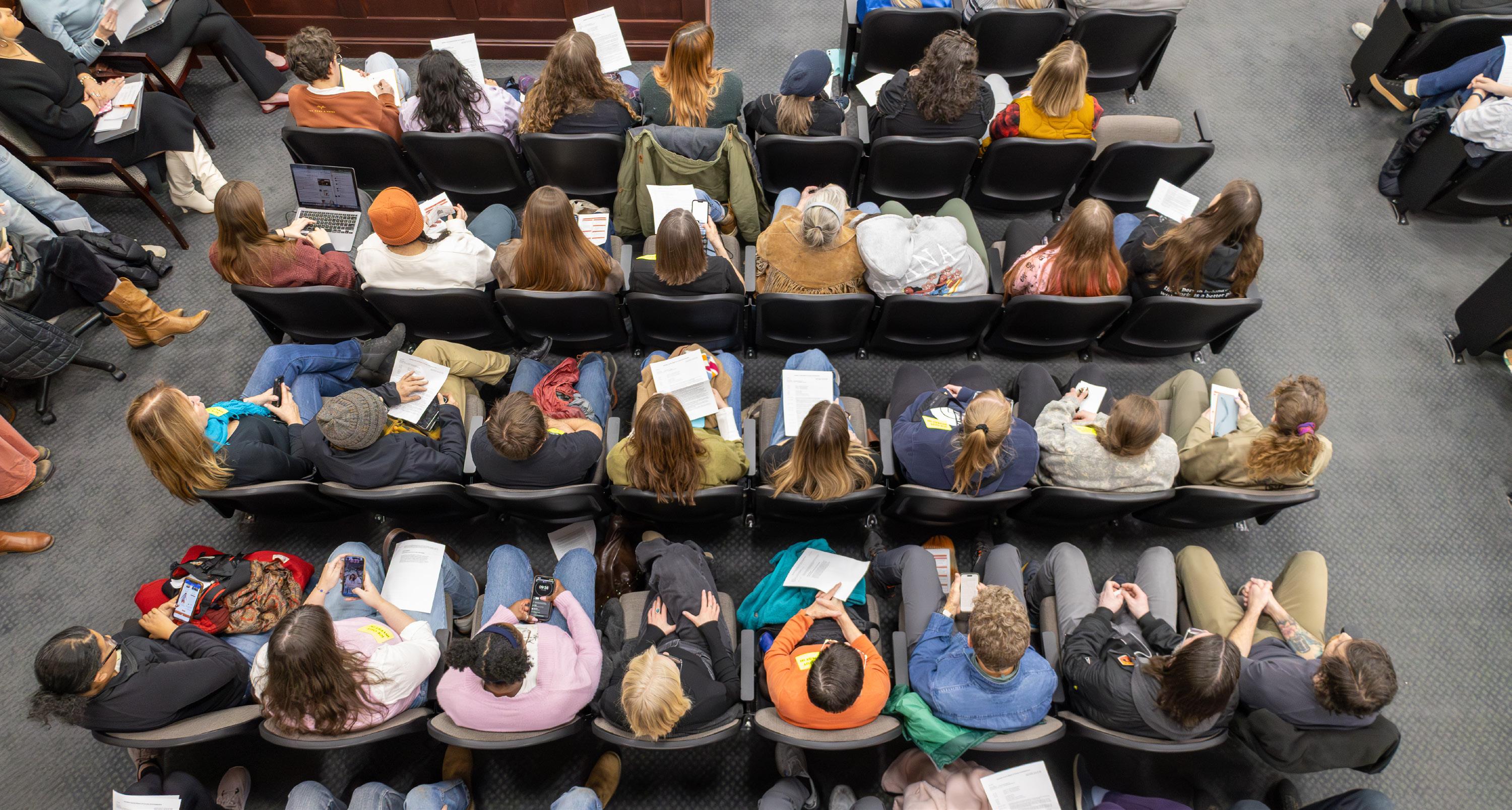
Protestors focusing on others presenting to the commission on January 28, 2026. (Photo by Katie McConnell).
Kyla Wetmore Reporter
Sienna Escobar Copy Editor
Hamilton County residents wait for commission meeting to begin on January 28, 2026. (Photo by Katie McConnell).
COLLEGEDALE NEWS
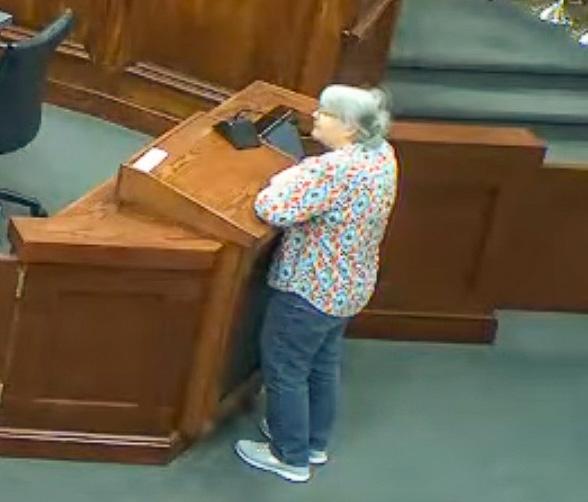
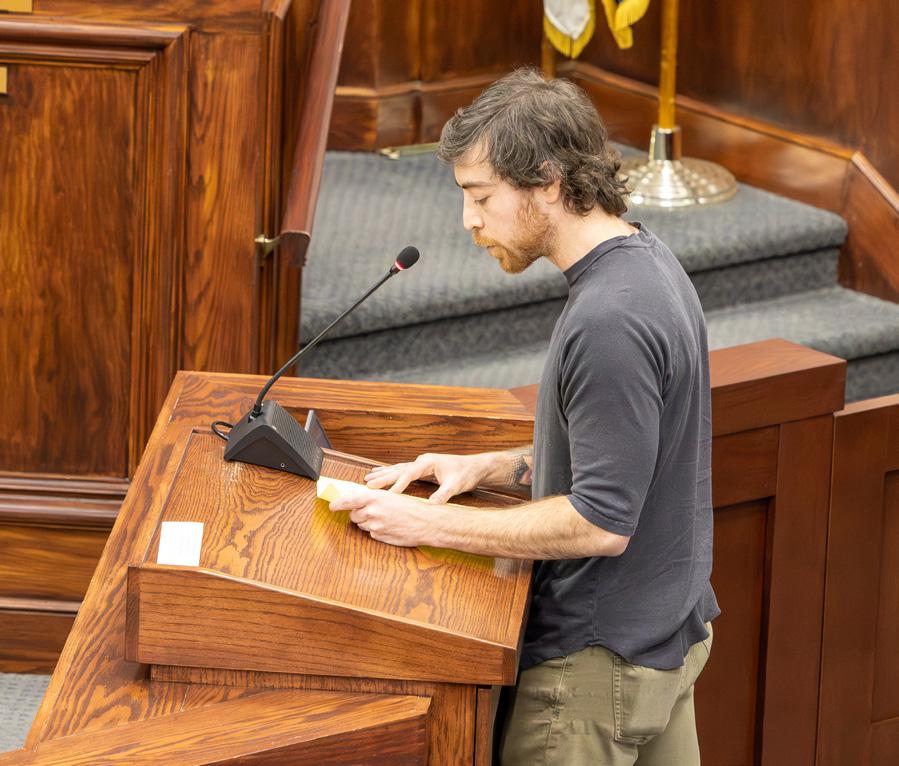
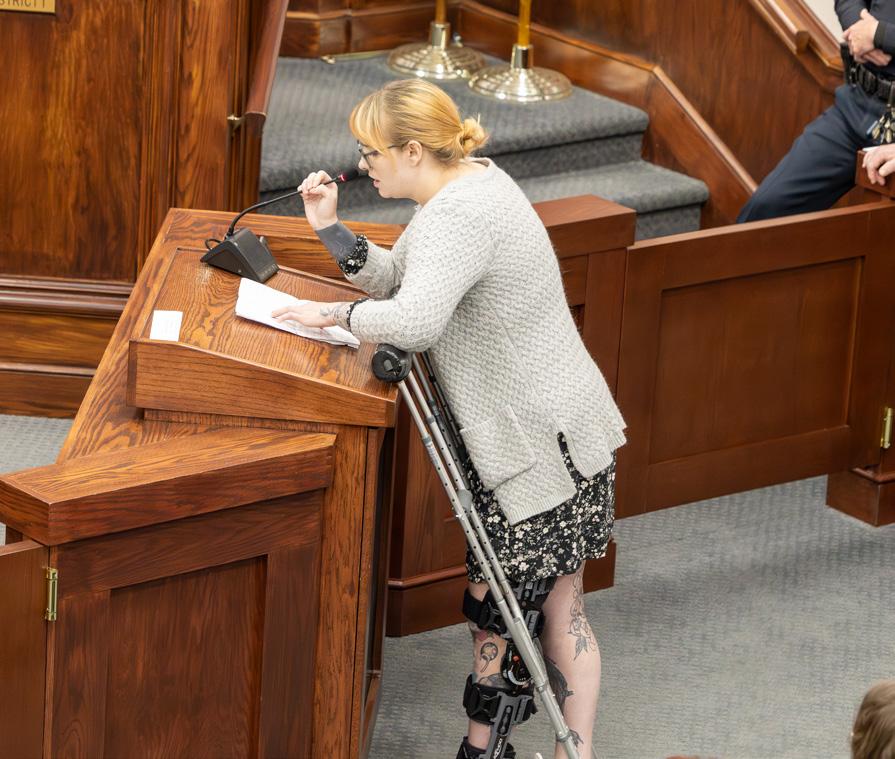
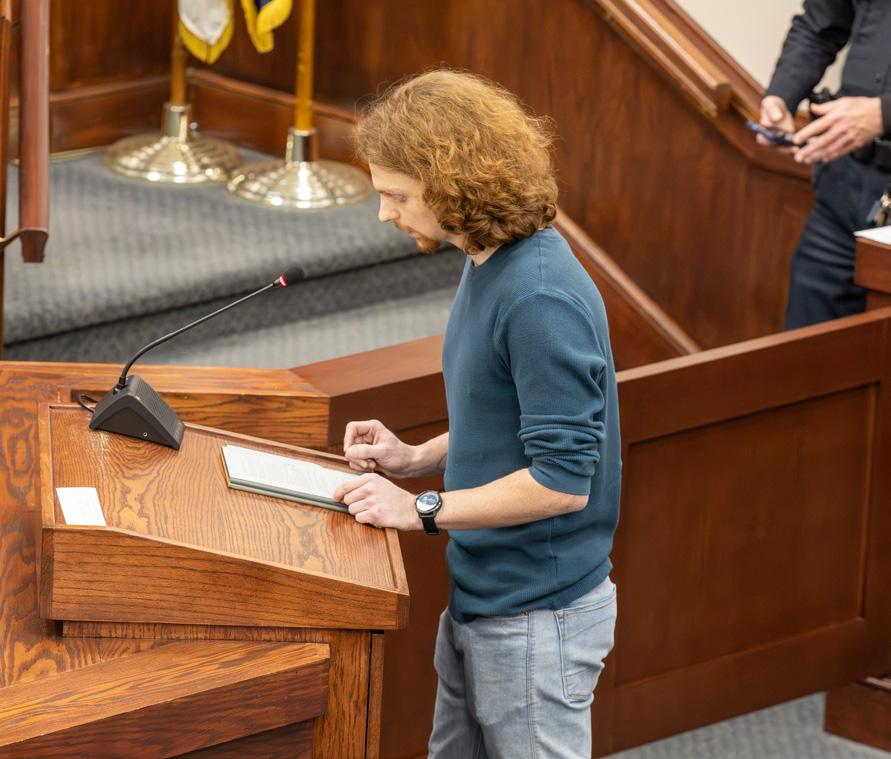
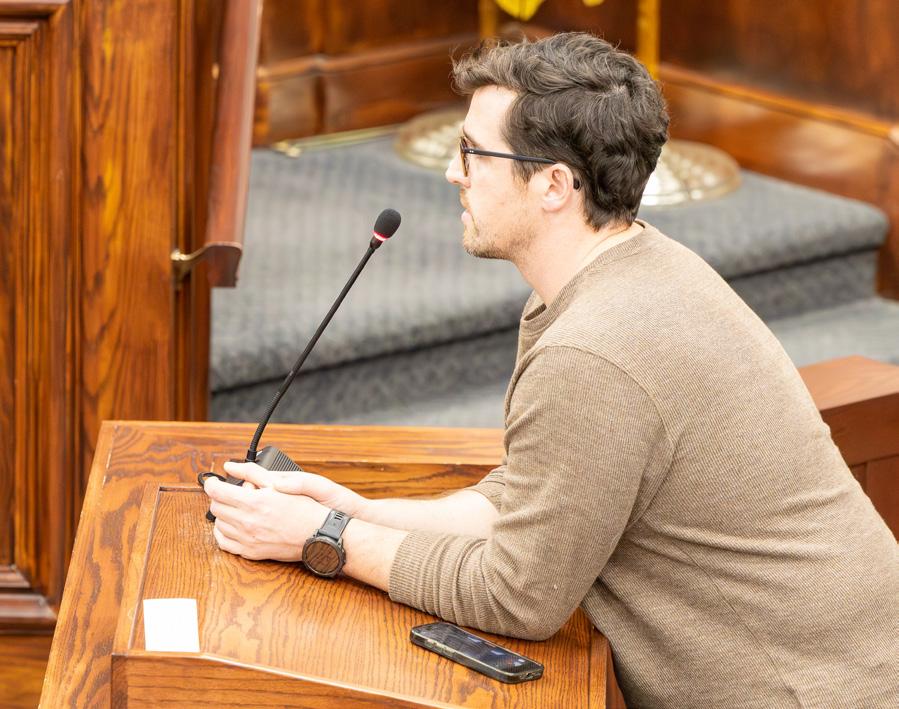
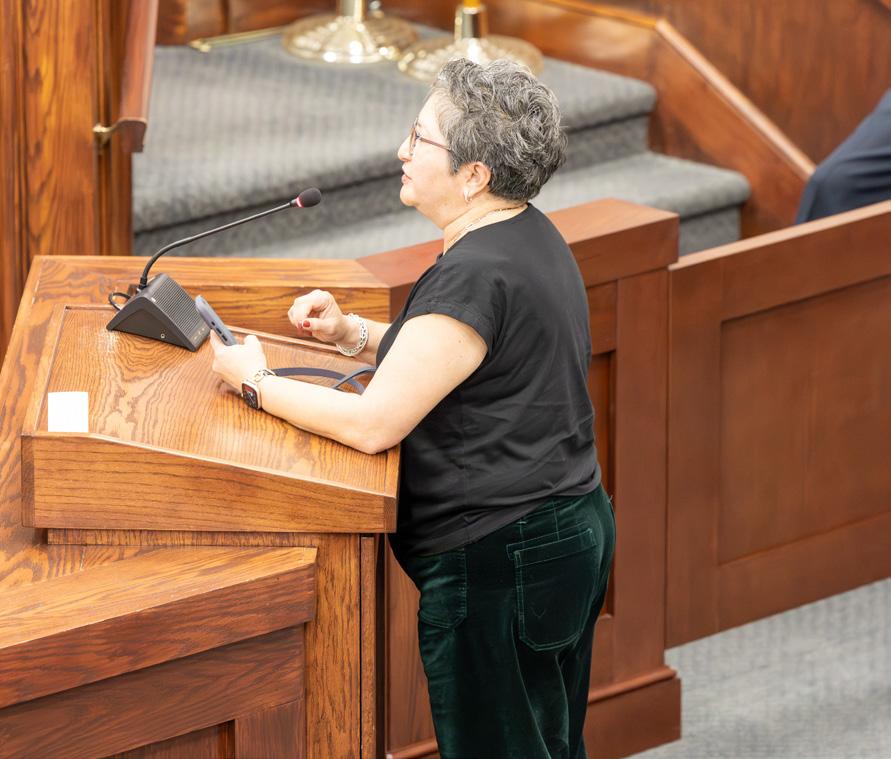
Hamilton County protesters in their own words
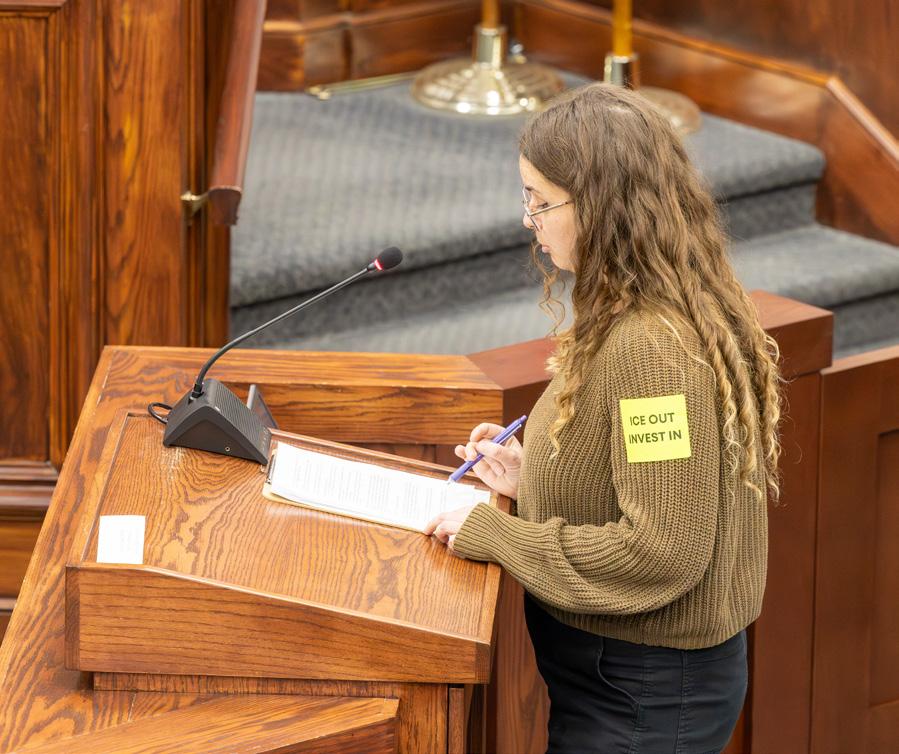
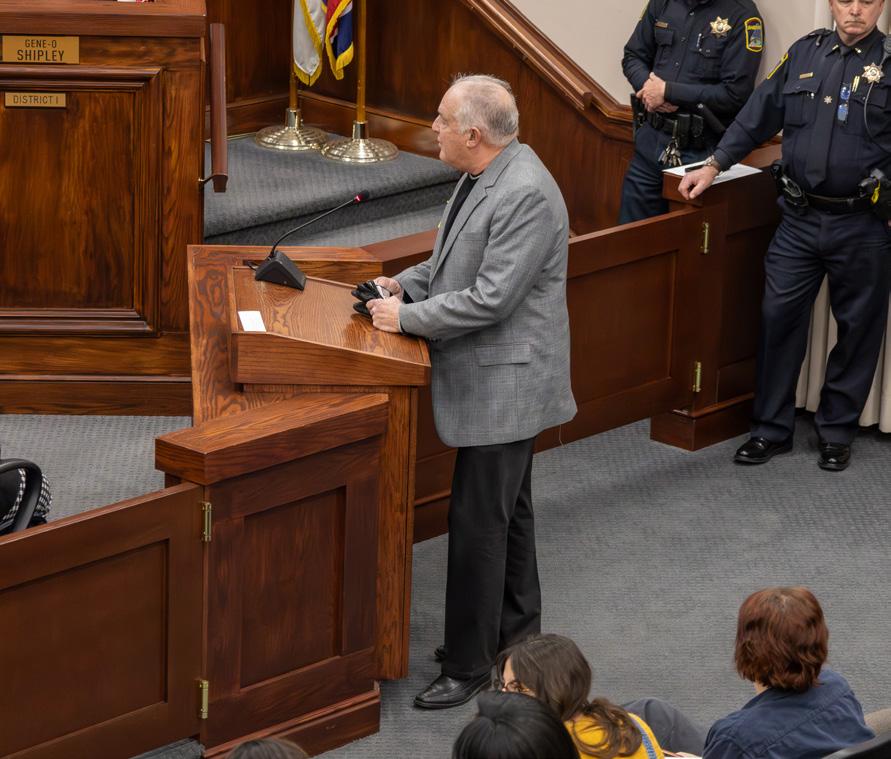
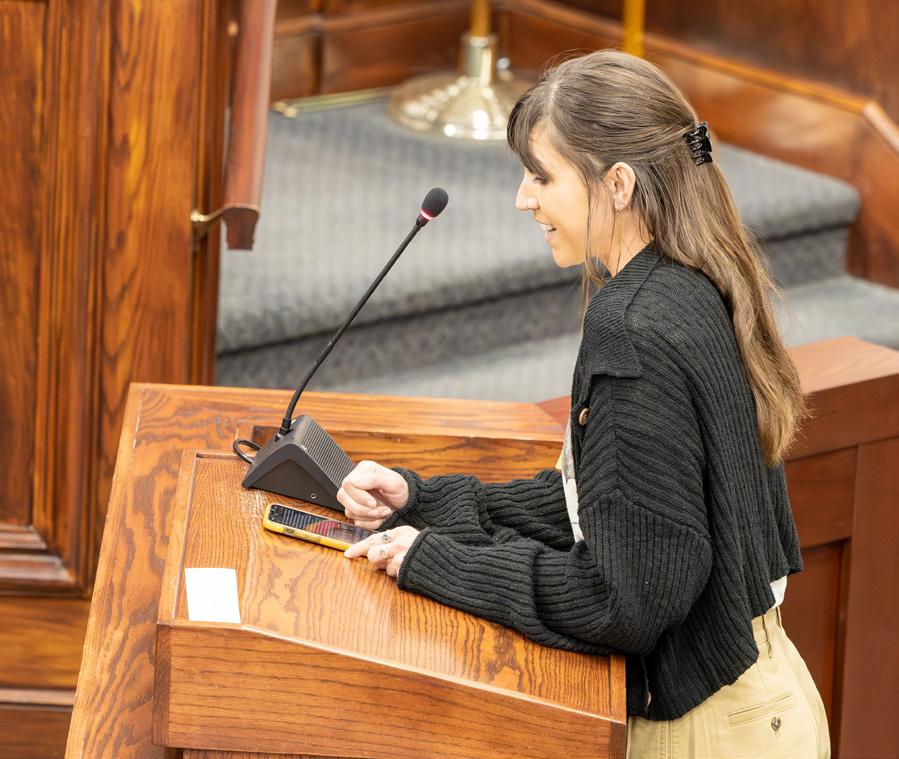
“There
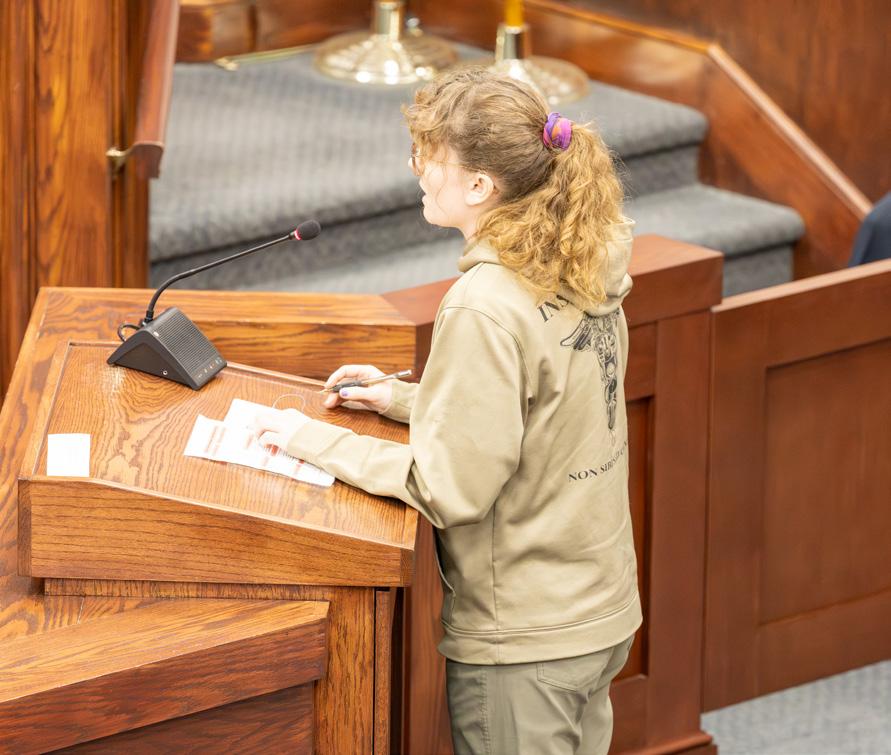
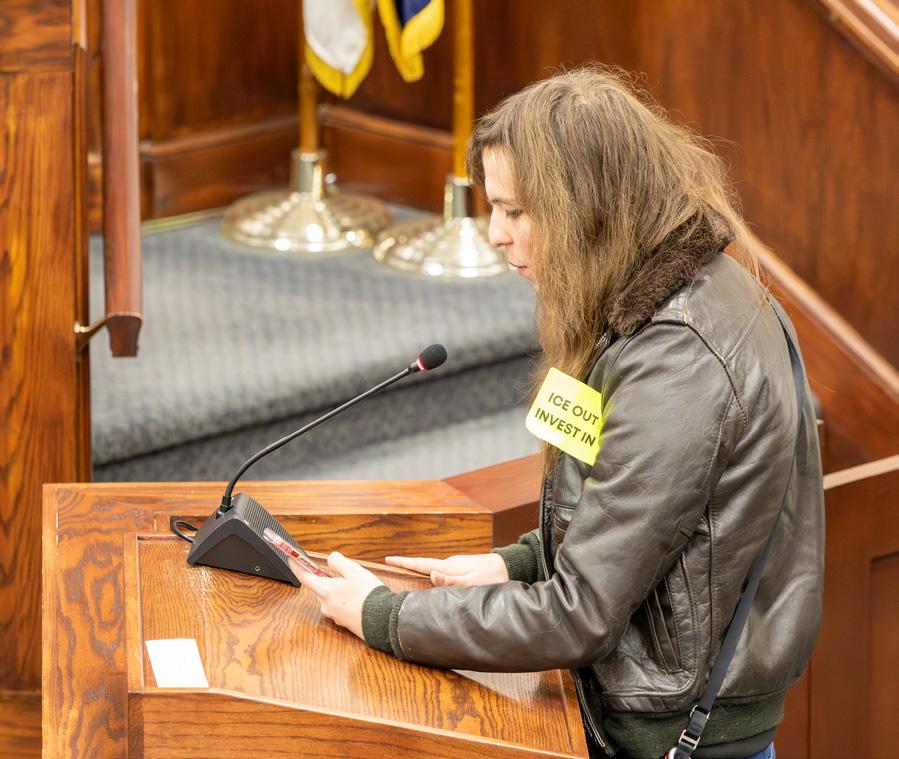
have been arrested immediately on return of that mission.”
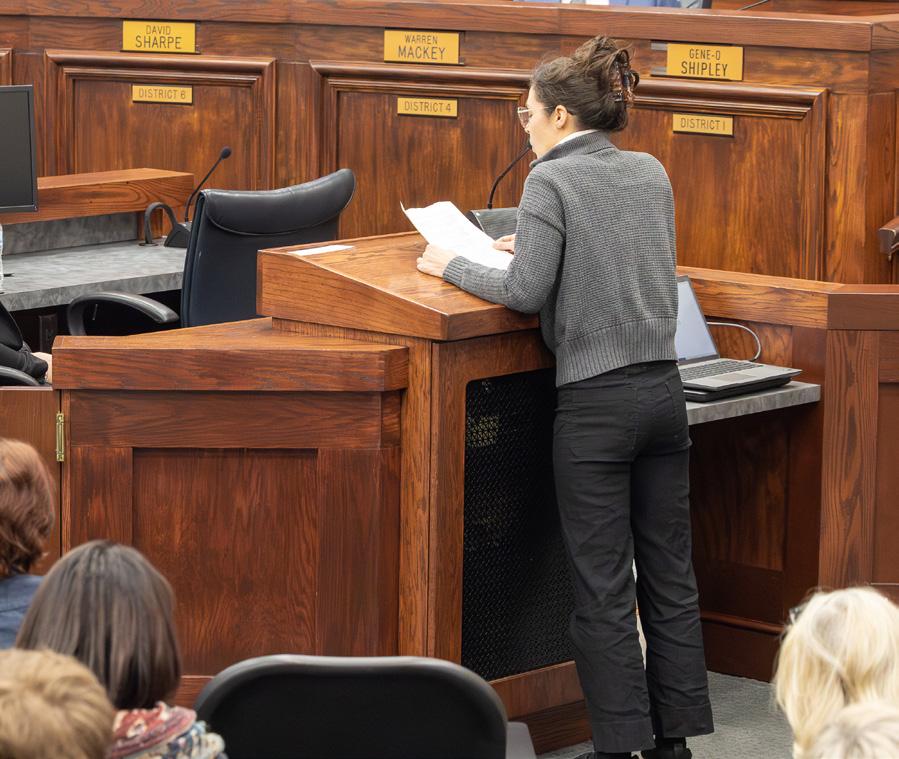
“There’s a wealth of documentation that illustrates the specific harms 287(g) agreements introduce into local communities. They increase racial profiling, create a pervasive police state, isolate immigrant communities, lead to civil rights violations, cause family separation and drain taxpayer dollars.”
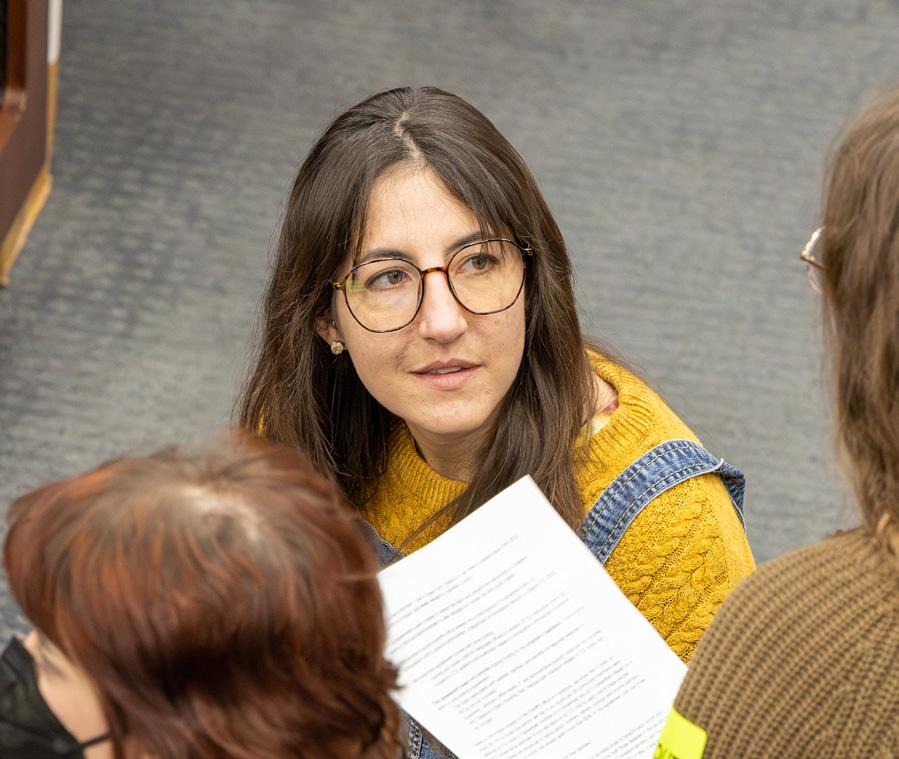
Jess Bonham, District 4.
Amir Hamid Andalib, District 3.
Summer Swaford, District 6.
Daniel Garner, District 3.
Ben Ranken, District 6.
Evelina Cotay, District 3.
Leah Morris, District 4.
may come a time when our cooperation with the federal government becomes mandatory. But until such time, it is [the commissioners’] civic and moral responsibility to do right by your neighbors."
Jessica Alexander, District 4.
Ilsa Hampton, District 6.
Eddy Bell, District 1.
Edith
District 3.
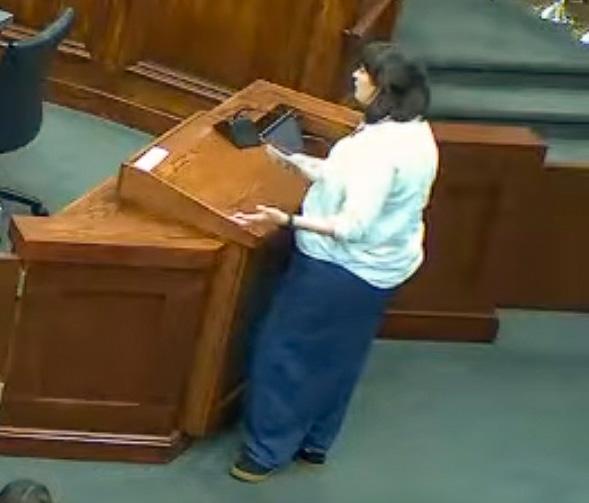
Judy Fargo, District 3. (Photo sourced from livestream).
Christine DiPietro, District 3. (Photo sourced from livestream).

Cameron Guild, a junior nursing major, prints notes for study in McKee Library. (Photo by Katie McConnell).
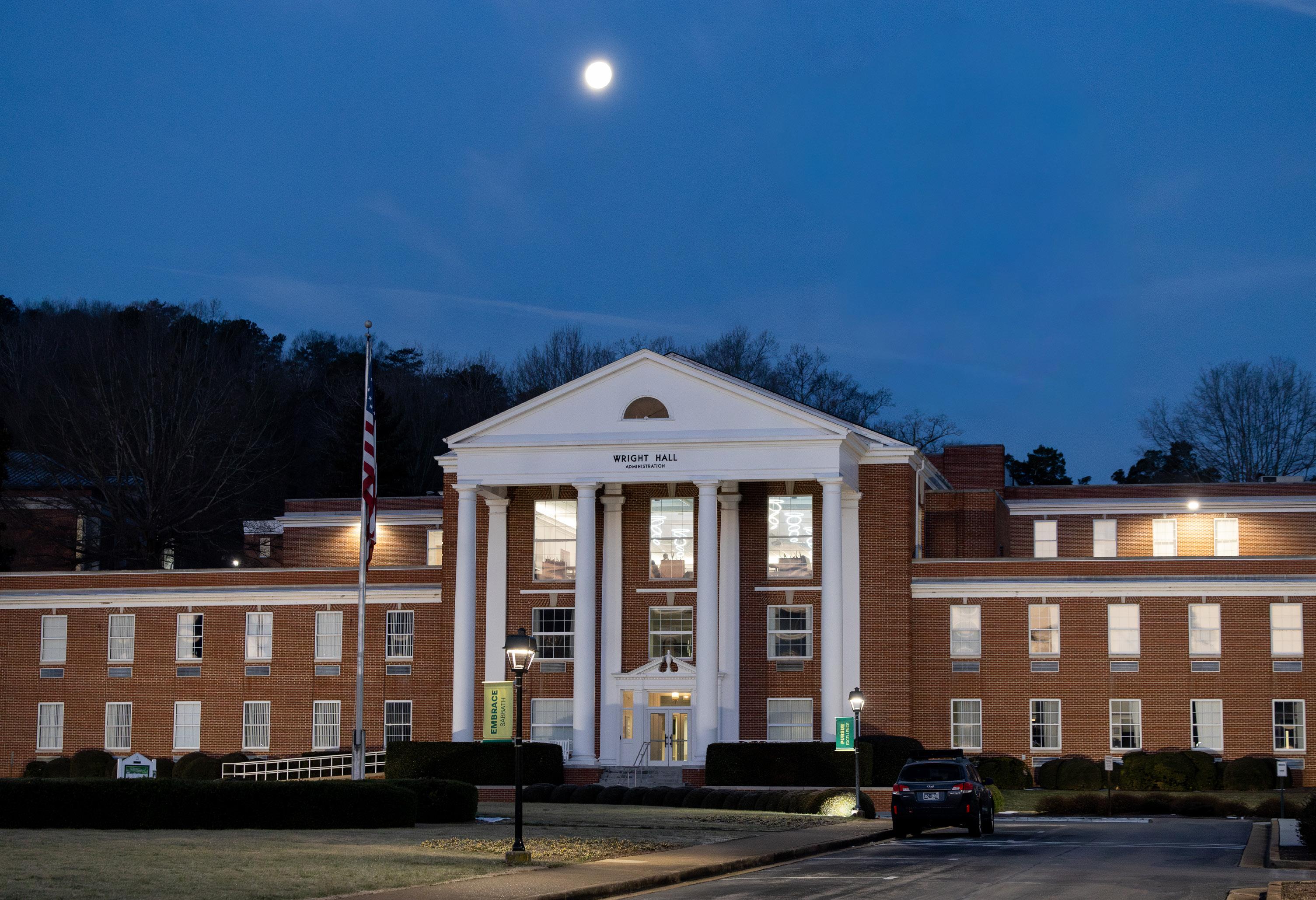
The moon sits quietly above the hill behind Wright Hall.” (Photo by Katie McConnell).
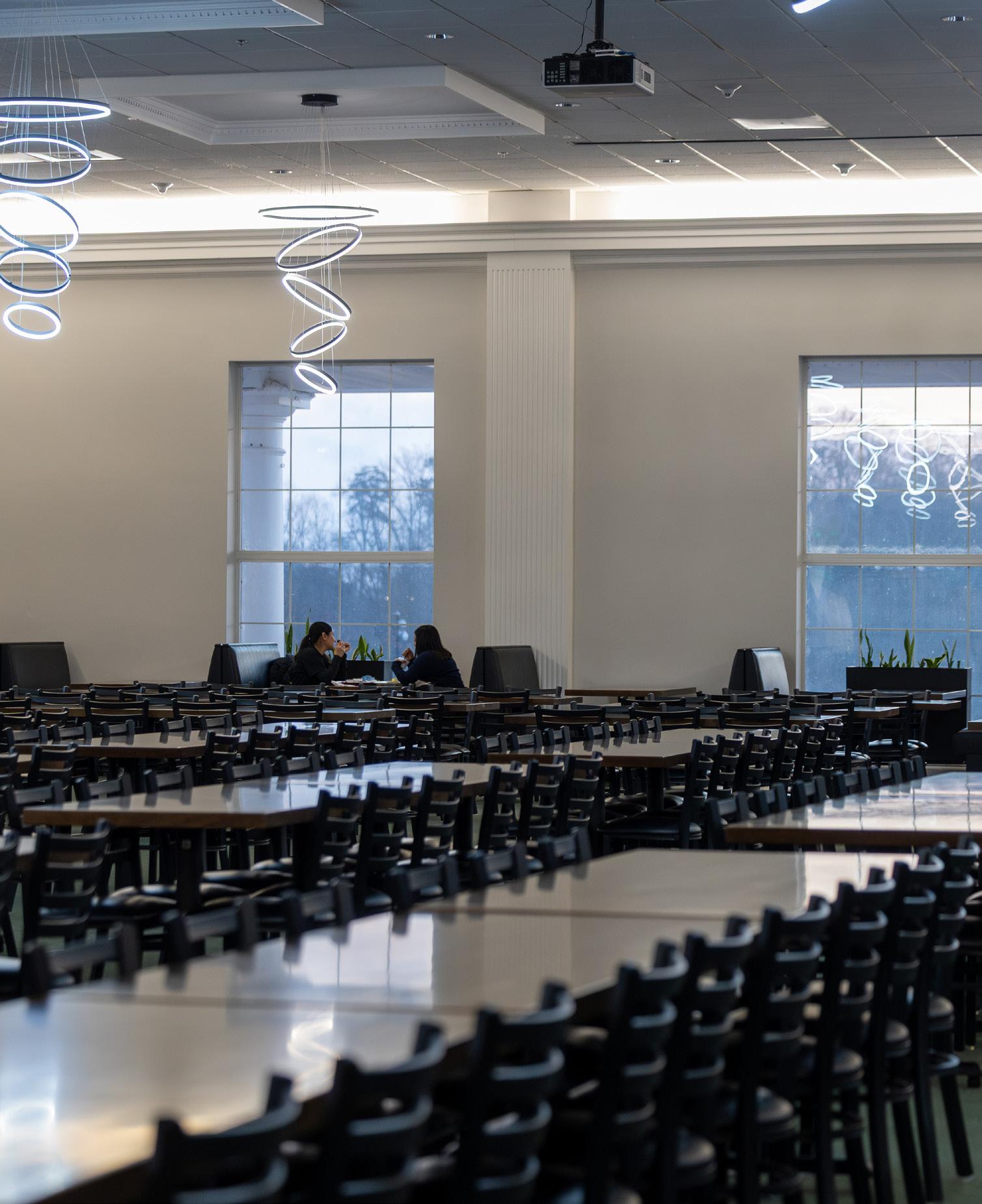
A nearly empty cafeteria greets people stopping for breakfast. (Photo by Katie McConnell).
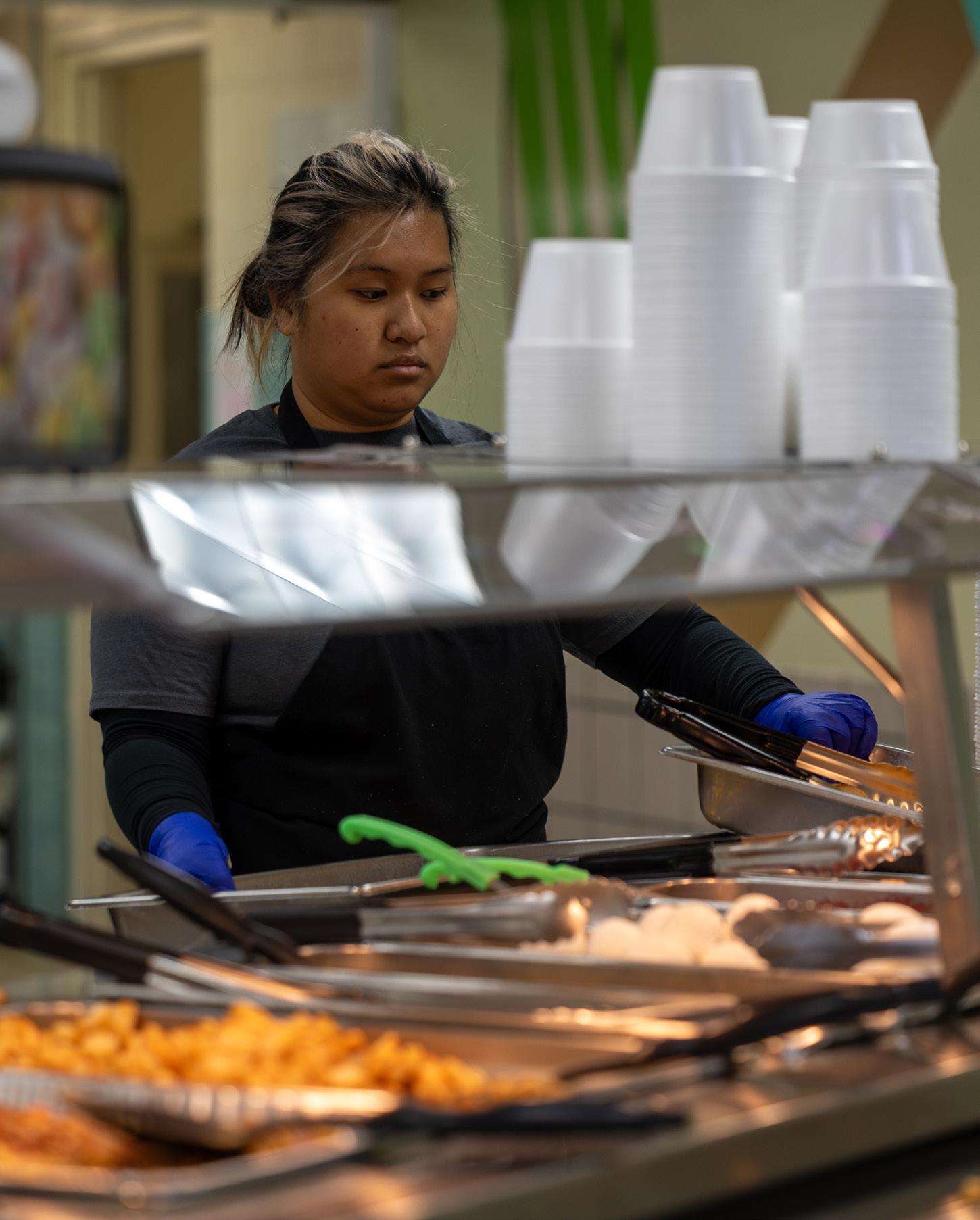
Nica Ramirez, a senior character animation major, refills the pancakes on the breakfast line. (Photo by Katie McConnell).
POLITICAL COMMENTARY
Trump and Greenland: A dangerous precedent
Leif Bromme Collegedale Reporter
On Sept. 5, 2025, workers at the Pentagon tore the name “Department of Defense” off their walls and replaced it with “Department of War.” Though President Donald Trump’s rebranding seems benign, it indicates a significant foreign policy shift. His actions have ranged from vague threats against Panama and Canada to military action in Venezuela. But most notorious of the president’s foreign interests is Greenland, an autonomous territory within the Kingdom of Denmark.
The Trump administration has been salivating over Greenland since his first term. His tactics have ranged from monetary offers to economic coercion and military threats. At the core of the issue lies rare earth minerals and strategic positioning.
At the Jan. 21 World Economic Forum in Davos, Switzerland, Trump explained that his primary interest in the territory was for security reasons.
“To get to this rare earth,” Trump said, “you have to go through hundreds of feet of ice. That’s not the reason we need it. We need it for strategic national security and international security.
a more peaceful expansion of power does not erase these dangerous precedents. Trump’s rhetoric has already normalized a new form of imperialism, damaged NATO and other alliances and associated the United States with a chaotic, callous form of world leadership.
A New Form of Imperialism
Though Trump’s foreign policy is more aggressive than his predecessors, it is not without precedent. Trump’s plan is heavily influenced by the Monroe doctrine, described by the National Archives as an effort to prevent European involvement in the Western Hemisphere. Notably, President Theodore Roosevelt expanded the doctrine to justify further intervention in Latin American countries, still under the guise of preventing European involvement. In an official White House statement, Trump seems to be reviving this policy with his “Trump Corollary.” Though the statement emphasizes trade agreements, his
them.
Trump’s tamer “framework of a future deal” may not be enough to reduce his impact. Even without an invasion, his threats against Greenland and his actions in Venezuela have already normalized a new type of foreign policy – one based not on diplomacy, but on domination. At best, this new direction for our country is outdated and sets a dangerous precedent; at worst, it threatens to fracture our strongest economic and military alliances.
Damaged Alliances
One such alliance is the North Atlantic Treaty Organization (NATO). According to its website, the groundbreaking partnership was formed for the purposes of “deterring Soviet expansionism, forbidding the revival of nationalist militarism in Europe through a strong North American presence on the continent, and encouraging European political integration.”
Since its establishment in 1945, the
member states for not contributing enough money to NATO. His claims are at least partly justified; 2023 figures reported by The Independent show that only eleven countries met the spending threshold, 2% of the national GDP, which is encouraged by the alliance.
The United States was the second highest contributor by percentage at 3.24%, second only to Poland, at 3.92%. The president’s quarrels with NATO have not stopped with finances, however.
His rhetoric surrounding Greenland has put the United States at odds with Europe – a reality that New York Times reporter Katie Rogers addressed in the paper’s recent interview with President Trump.
“If you had to choose between obtaining Greenland and preserving NATO, what’s your higher priority there?” she asked.
“Well,” Trump answered, “I don’t want to say that to you, but it may be a choice.”
True military attacks aren’t
trade partnerships and alliances across the globe, calling world leaders to resist American hegemony and determine their own futures.
As Trump exits global partnerships, new alliances will inevitably form in our absence. The countries we alienate may not wait for us—they will move on. Whether they turn toward Russia or China, or simply embrace a world without American influence, the outcome is likely to undermine Trump’s vision for the nation. In expanding America’s global reach, he risks diminishing its true power: its global influence.
Respect on the World Stage
Amid world conflict, The New York Times reporters who interviewed Trump asked a question that pierced to the core of his aspirations.
“Do you see any checks on your power in the world stage?” they asked. “Is there anything that could stop you if you wanted to?”
“Yeah, there is one thing,”
This enormous unsecured island is actually part of North America, on the northern frontier of the Western Hemi sphere. That's our territory.”
In the same speech, he argued that United States inter vention in World War II entitled our country to ownership of the Arctic island.
“We saved Greenland and successfully prevented our en emies from gaining a foothold in our hemisphere. So, we did it for ourselves also. And then af ter the war . . . we gave Green land back to Denmark. How stupid were we to do that?”
The desire for a stronger mil itary Greenland is redundant; in 1951, Denmark and the United States signed a military treaty concerning Greenland. The treaty was reinforced in 2004 and continues to grant the U.S. military freedom of movement throughout the territory. It also authorizes operations within designated defense regions, including Pituffik Space Base, an installation used for surveil lance and missile detection. The only major restraint de fined in the treaty is the need to consult the Danish govern ment before building more military infrastructure.
In response to Trump’s demands, Greenland’s prime minister, Jens-Frederik Nielson, pointed to the existing treaty and emphasized the territory’s desire for self-governance.

From the Danish perspective, Prime Minister Mette Frederiksen released a statement urging the United States to “stop the threats against a historically close ally and against another country and another people who have said very clearly that they are not for sale.”
Trump emerged from the World Economic Forum with what he called the “framework of a future deal” for Greenland, marking a softer stance. Still,
ezuela a threat due to fentanyl imports, despite insignificant amounts originating from there, according to experts. In the case of Greenland, Trump’s concerns relate more to potential threats than to imminent danger. Russia could easily manufacture “threats” that justify intervention elsewhere, as could China. And if the other superpowers attack, we will have no moral or legal standard with which to confront
grown to include 32 countries in Europe and North America, all committed to collective security and stability. The Wilson Center states that NATO provides the United States with trade benefits.
In addition, the alliance grants us soft power: the ability to extend our cultural and political influence across the globe.
During both his terms, Trump has criticized other
“the end of a pleasant fiction and the beginning of a harsh reality.”
“The other countries,” Carney said, “especially intermediate powers like Canada, are not powerless. They have the capacity to build a new order that encompasses our values, such as respect for human rights, sustainable development, solidarity, sovereignty and territorial integrity of the various states.” He later outlined new
ations that will test our resolve and stress our alliances.
As students, we are not only spectators of these events, but growing participants and leaders who will shape the future. Rarely does a case so effectively illustrate power and influence as does the Greenland conflict, and rarely do we get the opportunity to observe, analyze, and learn from its consequences in real time.
Donald Trump planting flag on Greenland graphic.
(Photo by sourced from Donald Trump's Truth Social account. Graphic created by Hayden Kobza, and Lindsey Hazen. PNG outline of Greenland sourced from P Thanga Vignesh from the Noun Project).
LETTERS TO THE EDITOR
Student organizations & funding: how does it work?
Houston Beckworth Contributor
Jacob Koh Contributor
“Are they [Student Association] laundering money? How do they have enough to pay for this?”
If you’ve spent more than a semester on campus, you probably know that Southern’s student organizations spend lots of money, whether it’s on big events like cultural nights or on the drippiest merch. Have you ever wondered where that money is coming from?
Student Association (SA) is pushing for financial transparency. If you are a student, your senator has likely sent you a report of SA’s budget for the semester. However, we -- SA Senate’s finance committee --want to give you some more information about how we fund student organizations (clubs).
If you didn’t know, as a student, you gave 153 big Washingtons to SA by enrolling at Southern, and we set aside about $5 for funding student organizations (totaling $15,000). Last semester, we took $10,000 from that pool and gave it to 33 different groups, but there was drama. There were 43 different groups that applied, but some did not meet eligibility requirements.
We require several super simple requirements:
1. We want each group to have done community service last semester or explain how they will do community service if they are new.
2. We want to know that an organization is doing fundraisers so that we’re not wasting money on people who don’t need it.
3. We also want to know why the money is needed.
4. We want each group to have reported member dues (i.e., how many people paid to be part of their group).
We then split the pool of $10,000 among the 33 remaining groups. In past years, this has been a bit subjectively based on membership, but this year, one member of the finance team built a calculator to simplify the process and minimize bias.
The calculator first evenly divides the money by the number of clubs before further thinning the amount of money deserved on three criteria:
1. How many members have paid to be part of the group (45%)?
2. Has the group been consistent in submitting in reporting meetings (15%)?
3. How active is the group (40%)? To minimize subjectivity that might come with simply giving a lump sum of money for these criteria, each group was graded on a scale of 1 to 3 in several different categories (fundraising plans, event plans, and why the money is needed). The more ambitious and purposeful your plans, the higher your score!
After all of this, we have a starting amount for each club. However, there is still money
in the pool since the percent-based thinning of money saves some for more deserving organizations. To fix this, we do the cycle again, multiplying the previous allocations by membership, which gives us our final numbers. To give mercy to new clubs, we give them a 40% boost. We also reduce the money going to departmentally-funded clubs (30%) and penalize those who applied late (10%).
Having said all of this, we just want your money to be used fairly. For example, some groups last semester were frustrated because they were service-oriented and didn’t get any funding. If they had simply run a service event (for example, the kind that takes place on MLK service day), we could have given them money. We don’t want anyone to lose out. It is easy to raise questions about money with ongoing issues such as low wages or the cost-to-quality ratio of food, but we don’t want it to be this way. We believe it starts with us, the students, through our transparency.
-Houston Beckworth
“We in the Senate prioritize transparency and collaboration with the student body. We are dedicated to the success of our student organizations and campus clubs. We hope that the financial support we are able to provide can help them all thrive, contributing to the positive and uplifting atmosphere of Southern Adventist University.”
-Jacob Koh
Come to IGNITE Live: Saturday, Feb. 7
Raegan Blake Contributor
Hey, Editor-in-Chief,
Every year, there are students who say, “I’ll go to IGNITE Live next year.” Then, the next year comes… and they say it again.
IGNITE Live is one of those campus events people assume will always be around, so they keep putting it off without realizing what they’re missing.
IGNITE Live is the kind of night where campus actually feels alive. There’s music, games, live interviews and the rare moment when it feels like everyone you know is in the same place at the same time.
This year’s show features Christian artist Terrian and a first-ever IGNITE Live collaboration with Oakwood University’s Aeolians, so waiting until “next year” might mean missing something that won’t happen again. The event is free for students, but tickets must still be reserved at southern.edu/ignite Bonus: if students arrive in groups of 15 or more at 7:20 p.m., you get early seating and access to AdventHealth’s booth (boba and other freebies).
So, if students are debating whether to go, this is their sign to stop saying “next year” and just go. This Saturday night, Feb. 7, at 8 p.m.!
questions
at


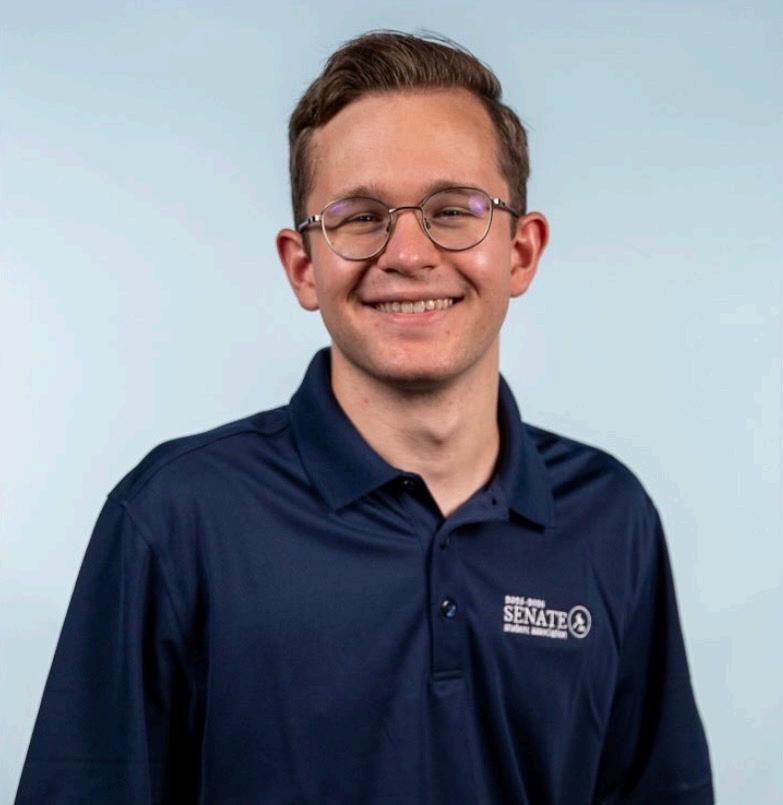
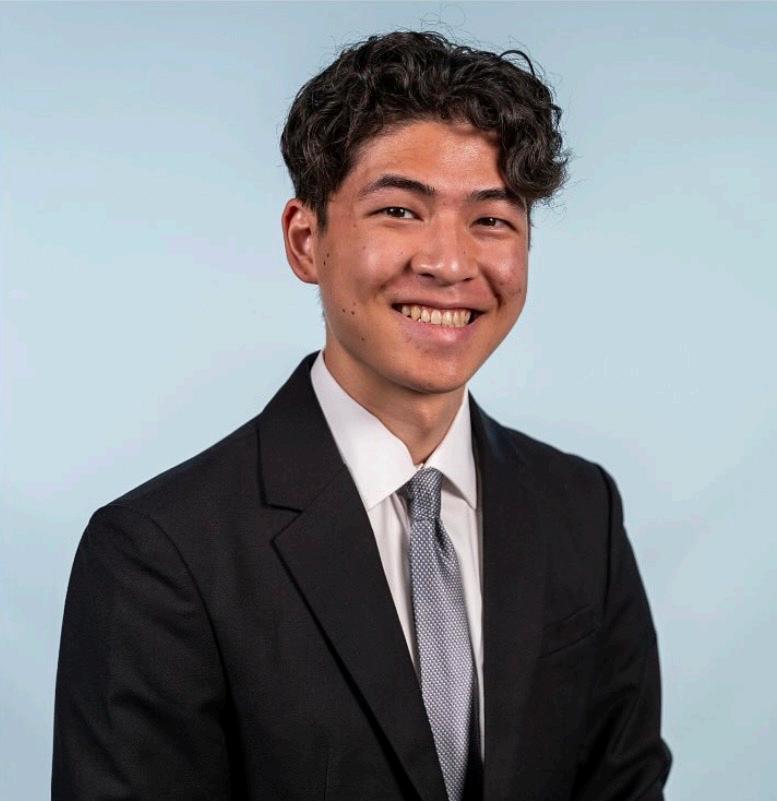
Portraits of Houston Beckworth (top) and Jacob Koh (bottom).
(Photos provided by Student Senate).
"The event is free for students, but tickets must still be reserved at southern.edu/ignite."
Johanne Mendoza Contributor
I love reading for pleasure because it eases my mind and helps me de-stress from school. Reading can be used as a therapeutic device in an approach called bibliotherapy.
In an April 2023 article in the online magazine Psyche, lifelong educator Peter Leyland wrote about how reading served as a form of therapy during challenging times in his own life, such as coping with “burnout” or adjusting to hearing loss. Leyland found that bibliotherapy offers immense benefits for people’s mental and emotional health, since it can provide mental stimulation and even companionship.
Packed with interesting examples from a 10-hour course that he taught on bibliotherapy, Leyland’s article offers a blueprint on how reading can enhance our lives. He discusses memoirs, the significance of poetry and the selection of books for various emotional conditions.
In another article, “Reading Is Therapeutic: How to Heal Yourself With Books,” the Thinkerspool Book Club explores the therapeutic aspects of both writing and reading. In addition to highlighting how reading can provide comfort and healing, they share personal experiences of using writing as therapy and witnessing the transformative impact of reading on others. They also explain how literature can be used in bibliotherapy to address emotional and mental health issues. Incorporating reading
Reading books is healing our minds SPORTS
into a person’s life can offer perspective, especially during challenging times. Overall, both articles find bibliotherapy to be immensely valueable in promoting mental and emotional well-being. By
sharing personal stories and engaging with the narratives of others, individuals can tap into the profound power of literature. Bibliotherapy not only cultivates empathy but also offers valuable perspectives
and avenues for escapism. As a result, it becomes a supporting factor to help transform many people’s lives, offering insight and inspiration. Encouraging readers to prioritize reading, even if it’s just for a few
minutes daily, underscores the therapeutic potential of books. All in all, bibliotherapy is powerful for nurturing mental and emotional health and fostering personal growth.

“Incorporating
Milano and Cortina to host 2026 Winter Olympics
Matthew Taylor Sports Editor
The 2026 Winter Olympics are set to kick off during their opening ceremony on Friday, Feb. 6. For the first time in history, the Olympic Games will be officially named after two co-hosting cities: Milan and Cortina d’Ampezzo. These will be the fourth Games to be hosted in Italy, as well as the second time the Winter Olympics have visited Cortina d’Ampezzo, after its hosting in 1956.
There are a number of things that make these Games special. The venues will be spread over 22,000 square kilometers (~8,500 square miles) in Northern Italy. As a result, the traditional single Olympic Village will be replaced by six separate housing locations near the venues for each type of Olympian. The host cities are nearly a 5-hour drive apart, so there will be two cauldrons lit simultaneously for the first time in history.
For those interested in the new sports and events being added to the Games, there is a lot to look forward to. Ski Mountaineering (sometimes referred to as “Skimo”) is the only brand-new sport, involving competitors racing uphill on skis or on foot before skiing back down. For the first time, women will compete in their own Large Hill Ski Jumping competition, an event previously reserved only for men. Other newly added events include a Skeleton Mixed Team Relay, allowing a team of one male and one female per nation to compete together for gold; and Dual Moguls, which will feature two skiers racing side-by-side in an intense bracket-style elimination.
Star players from the NHL
are set to return to the Olympic Winter Games for the first time since Sochi 2014. After 12 years of disagreements and the disruptive effects of the COVID-19 pandemic on the 2022 schedule, an agreement was finally reached for the International Ice Hockey Federation (IIHF) to cover costs for travel, insurance, and accommodations.
A major narrative has evolved around the return of Lindsey Vonn. Vonn is a three-time Olympic medalist, having become the first American woman to win gold in the downhill at the 2010 Vancouver Games.
She has received countless accolades beyond the Olympics, including 20 World Cup Crystal Globes—a milestone that set a historic record for the sport—as well as eight World Championship medals. She retired in 2019 due to chronic pain yet chose to return with Team USA at 41 years old. Vonn is set to make history as the oldest woman to ever compete in Olympic Alpine racing.
Despite the excitement of Vonn’s return, she suffered a heartbreaking accident on Friday, Jan. 30, when she lost control in a low-visibility World Cup race in Switzerland. After receiving medical attention on the slope, she was seen clutching her left knee in distress and was airlifted to the hospital by helicopter. After she was forced to withdraw from her final pre-Olympic races, Vonn later confirmed she was diagnosed with a hairline fracture. Despite the injury, she remains hopeful that she will be able to compete in Italy in just a matter of days. These games will be the most gender-balanced Winter Games in history. Women make up 47% of the athletes, a significant increase from the 44.7% recorded at the previous Winter Games in Beijing 2022. While
the program falls just short of the 50% parity achieved during the Paris 2024 Summer Olympics, the shift represents a major historical achievement for winter sports.
In another major change from historical events, 92% of the venues are pre-existing structures, rather than being built specifically for the Games.
The Opening Ceremony will be held at San Siro Stadium, the home of Italian football clubs AC Milan and Inter Milan, while the Closing Ceremony will take place on Feb. 22 in the Verona Arena, a historic Roman amphitheater. Despite this focus on reuse, local experts have still criticized the environmental impact of projects like the new bobsled track, which required the felling of hundreds of ancient trees, and the massive water demands required to produce millions of cubic yards of artificial snow. Organizers have promised to plant up to 10,000 new trees as compen-
sation.
As it has many times in the past, the Olympics have also become a stage for the current status of the world’s political environment to be put on full display. Members of the United States delegation will be protected by a unit known as the Homeland Security Investigations (HSI). While the HSI is an investigative arm that has supported previous Olympics, it is part of the same agency currently carrying out a high-profile immigration crackdown in the U.S. After the fatal shootings of two U.S. citizens by federal agents in Minneapolis, Milan’s Mayor, Giuseppe Sala, declared that the agency is “not welcome” in his city. On Saturday, Jan. 30, hundreds of Italian protesters gathered in Milan’s Piazza XXV Aprile—a site significant for Italy’s historical liberation from fascism—to demonstrate against the deployment. While these political tensions remain
high on the ground in Italy, for those watching from across the Atlantic, the focus remains on how to witness these historic moments as they unfold in real-time.
For Southern students hoping to watch, NBC and Peacock are the primary homes for all U.S. coverage. The Opening Ceremony will stream live on Friday, Feb. 6 at 2:00 PM EST, with a primetime replay following at 8:00 PM EST. The Peacock app will be the standout option for fans, offering every single one of the 116 medal events live and on-demand. Because Italy is 6 hours ahead of Eastern Standard Time, most live events will occur in the morning or early afternoon. While these are likely to conflict with class times, the Games provide a unique opportunity to connect with fans across the globe or simply study with some high-stakes international competition in the background.

“The 2026 Winter Olympics are set to kick off during their opening ceremony on Friday, Feb. 6.”
(Photo courtesy of Pexels).
during challenging times.” (Photo sourced from Pexels).
OPINION
Is there such a thing as a “wrong” opinion?
Maddie Schmidt Opinion Editor
The other day while sitting in class, I faced a situation that I believe many of us meet every day as college students. The professor mentioned an event that sparked political controversy and asked us to share our opinion on the event with the class. I sat there for a few seconds, thinking about how I would respond if I were called on. I had not heard about the event previously, so I hesitated. I felt that I didn’t know enough about the topic, and I was nervous that by sharing my opinion I would expose myself as “uneducated” in the discussion. I held back from commenting, even though my own opinion was taking shape.
This led me to wonder, “Is there such thing as a wrong opinion?” It certainly feels like it sometimes. I held back from speaking in class, fearful that my peers would deem my opinion as “incorrect” or lacking in some way. When I feel like I don’t know the whole picture or a topic is new to me, I hesitate to share my views.
And to some extent, this should be the case. It seems unproductive to make grand, opinionated statements when we have not learned all the nuances and facts of the topic at hand. It also seems foolish to root ourselves in an opinion without giving it intentional thought and looking at the conversation from every possible angle. On the other hand, how will any discussion happen if we wait until we know everything there is to know about a given topic or event before we
take part in the conversation?
The great thing about opinions is that they are flexible. They can change and morph as we ingest new information. The danger is when we are unwilling to let our opinions change and grow. This is not to imply that our opinions should give way easily, but that we should be willing to stretch our minds to think critically about why our opinions take the shape that they do. When we don’t offer them room to stretch, our opinions turn rigid with stubbornness, and we risk becoming an ideologue.
An ideologue is a “proponent or adherent of a political, economic or other ideology, especially one who is uncompromising or dogmatic,” according to the Oxford English Dictionary. Simply put, an ideologue is someone who will not change their opinion, no matter what evidence you produce. Critical thinking goes out the window. Now, most of us have at least one stance that we are unwilling (or at least very resistant) to challenge, but we must be self-aware about our ability or inability to stretch our opinions. But are any opinions wrong? Since it is sometimes difficult to distinguish between opinion and fact, many people make the mistake of using them interchangeably. If I were to say that I believe all dogs to be vicious, that opinion would be easily debunked. It is not a wrong opinion; it is an unsubstantiated fact that I presented as an opinion. But if I have never met a dog that is not vicious, saying that I think all dogs are dangerous is an opin-
RELIGION
ion. Even if I had come across a dog that was not vicious, I might still have perceived it as a threat. And no one would be able to argue with me. Someone could argue that nice dogs exist, but no one could combat the idea that I believe dogs to be dangerous. Now, this is only a hypothetical situation; I love dogs in real life. So, I have come to the conclusion that wrong opinions do not exist, but that unsubstantiated facts presented or
perceived as opinions do exist. And this is why it is important to ingest nuance and detail before spitting out what we believe to be our own opinion. We might accidentally present an unsupported fact instead. Even still, this should not hold us back from taking part in group discussions. It merely motivates us to really think about what we say before letting our mouths run away from us. There is beauty in realizing
our mistakes and letting our opinions change as we take in more of the world around us. The fact that we can grow and transform through conversation and debate is what makes humanity so interesting. We should strive both to form solid opinions and to adjust our mindset. If we allow ourselves flexibility in our thinking, then the idea of changing our minds does not seem so scary.
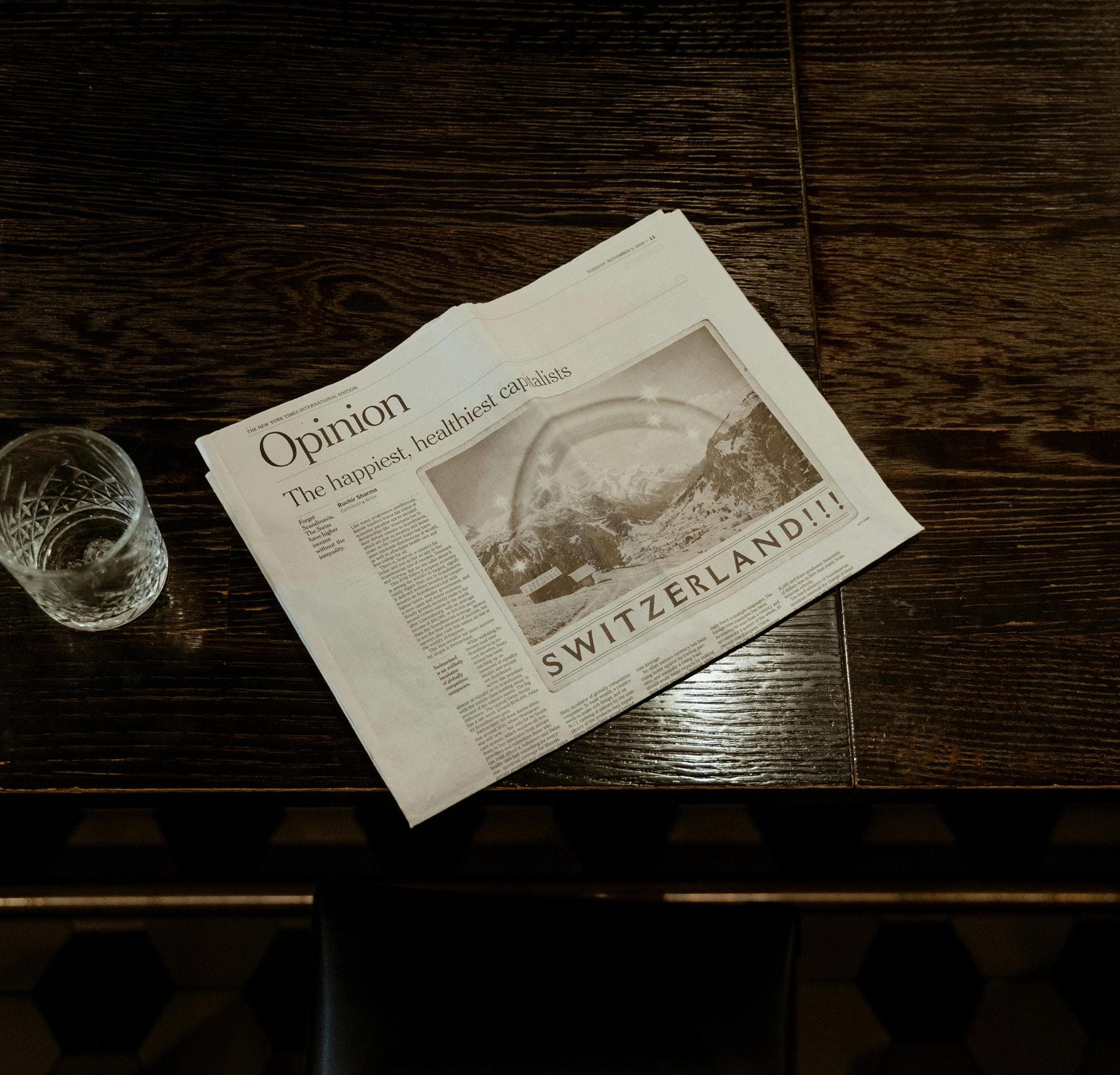
In your weakness, Christ is strong
Nina Bueno Religion Editor
Have you ever gotten so sick that you couldn’t get out of bed and do things for yourself? Have you ever been in a situation where you’re too emotionally weak to take control? Have you ever felt so broken that you sensed you would never be whole again? Have you ever felt so weak and weighed down by all your responsibilities?
I know I’ve felt and still feel these ways from time to time. Sometimes life is just too overwhelming, and I just can’t do it. But most of the time I don’t want to acknowledge the weakness and brokenness that I feel.
Weakness is not a desirable trait. It is not looked upon as a virtue or a great quality of someone’s character. It is often seen as a lack of character, strength and maturity.
Brokenness is also not a state that people want to be in. Most people see brokenness as a sign of continued weakness. It’s generally looked down upon, even though we all struggle with it in our lives.
That’s because a life on this sinful earth is a recipe for weakness and brokenness. We simply can’t avoid it. And yet the focus of our lives a lot of times is to do everything we can to avoid these painful attributes.
As humans, we despise the feeling of not having a plan and not knowing what to do or how to feel. We can’t stand not being able to get ourselves out of certain situations. Perhaps sometimes it’s better to simply ignore our struggles and try to get on with life. At least, that’s what one side of the story says. In his letters, Paul often talks about weakness and broken-
ness. But he doesn’t talk about them as something to ignore. Instead, he notes that they are one of God’s ways to show His power. Paul is confronted with his own shortcomings many times in his life. But every time, we see that Paul realizes that it’s God’s strength that allows Paul to overcome his weaknesses.
In 2 Corinthians 12, Paul speaks about some specific weaknesses and times of discouragement. At first, he asks the Lord to simply remove them, because Paul, like all of us, just wants to get through life without the plague of weakness and brokenness.
But God has a different answer. 1 Corinthians 12:9 states, “But He said to me, ‘My grace is sufficient for you, for my power is made perfect in weakness.’”
The moments and times that we are the most weak and the most broken are literally the times that God comes through the most and works powerfully on our behalf!
The moments when you’re too emotionally weak to take control are the moments God can take control for you (and trust me, He’s a better driver than all of us!). Your broken situations are the very situations that God steps in to heal and perform miracles. When you’re weighed down with responsibilities and assignments, God can fill you with His wisdom and greater endurance than any you’d have on your own.
The rest of verses 9 and 10 say, “Therefore I will boast all the more gladly about my weaknesses, so that Christ’s power may rest on me. That is why, for Christ’s sake I delight in weaknesses, in insults, in hardships, in persecutions, in difficulties. For when I am weak, then I am strong.”
Do you see, friend, what Paul is saying here? Contrary to the world, Paul says that he boasts and delights in weakness! Paul sees this as an ultimate trait that Christians should want to have! When we are weak and
broken but acknowledge it and surrender to Christ, then we are truly strong. That’s because Christ fills us with His strength, and His power rests on us.
My friends, if you’re just as weak or broken as I am, take this to heart. You are just where
you need to be; you are in the perfect place to receive God’s overwhelming strength and miraculous power. Don’t try to avoid the struggle, the weakness or the brokenness. Surrender it to God and just let Him do the heavy lifting.
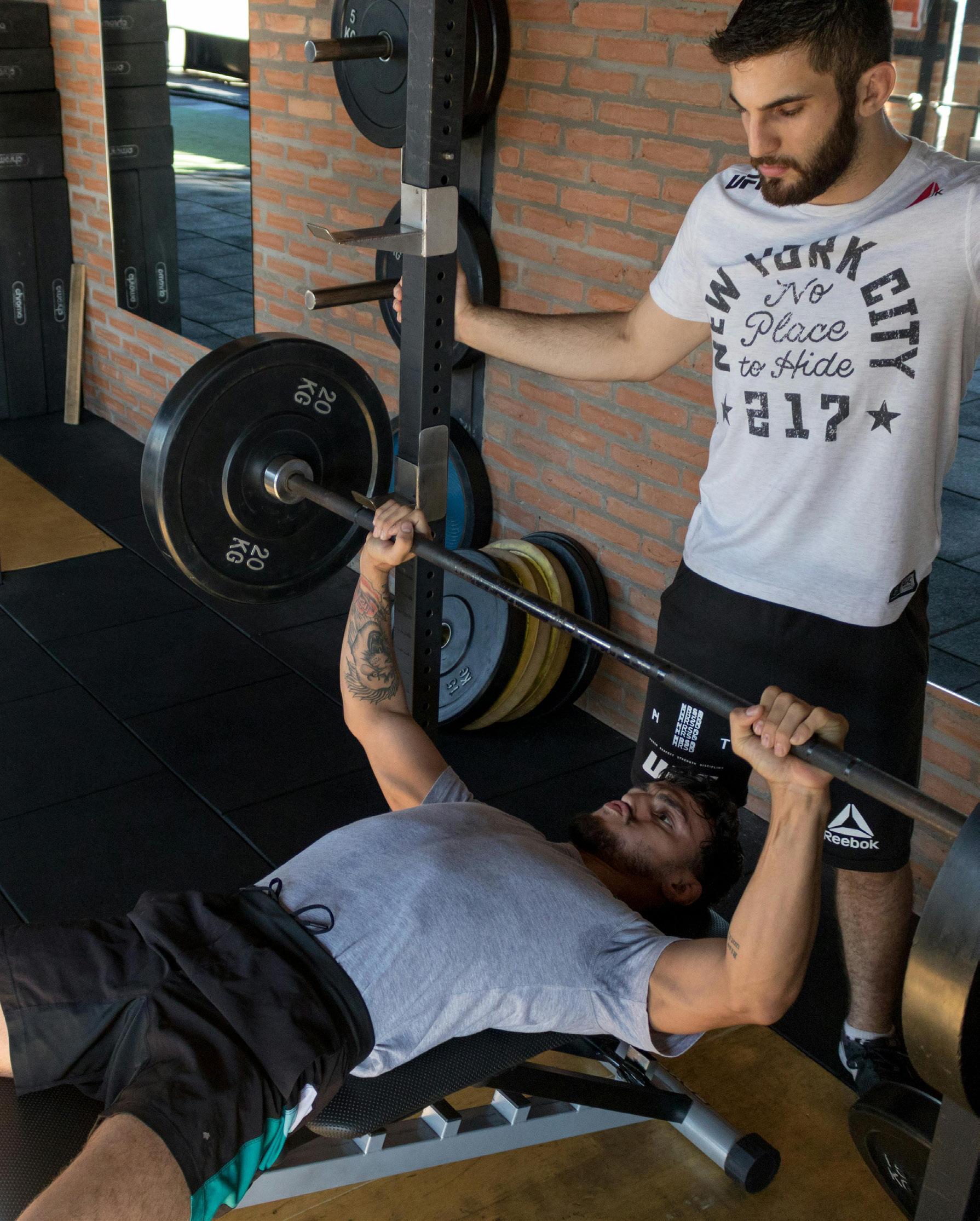
“The great thing about opinions is that they are flexible.” (Photo sourced from Pexels).
“For when I am weak, then I am strong.” (Photo sourced from Pexels).
Who decides which stories are worth telling?
Rhett Seitz Lifestyle Editor
During Student Week of Prayer, a small number of students stepped onto the stage and shared testimonies that were raw, personal, and deeply moving. The room fell silent as speakers spoke about loss, faith, failure and redemption. For many, the week served as a spiritual reset, a reminder that God is working in the lives of students on this campus.
But for others, the takeaway may have been more subtle and far less discussed. As the week ended, many students might have walked away thinking the same thing: I don’t have a story like that.
That thought—more than fear, insecurity or lack of faith— may be the biggest reason most people never tell their story at all.
At the top of the unspoken hierarchy of stories sit the dramatic ones: the crisis, the comeback, the moment when everything almost fell apart before being miraculously restored. We celebrate these stories, affirming them as powerful testimonies that are worthy of sharing publicly. Some of these stories might even make headlines and become part of history. At the bottom are the quieter, less splashy stories— about steady, ordinary people whose lives didn’t implode but also didn’t produce a cinematic turning point.
And so, most people disqualify themselves from sharing before they ever begin. The assumption is simple and damaging: if a story isn’t dramatic,
it isn’t worth telling.
Many students suppose that unless they survived a tragedy, overcame a public failure or experienced a clear, dramatic intervention, their life is not spiritually significant enough to share. Faith becomes something you only talk about once it has been tested in extreme conditions. Anything less feels unworthy of attention.
This assumption quietly shapes how we see ourselves and others. We attend classes with people whose names we know but whose lives we do not. We recognize faces but rarely ask questions beyond surface-level introductions. In a culture that values productivity, achievement and presentation, we rarely slow down long enough to remember that everyone around us is carrying a story, even if it does not come packaged as a testimony.
The irony is that often the most formative stories are not dramatic at all.
For some, the story is perseverance—choosing faith consistently when it would be easier to drift away. For others, it is growth that happened slowly and privately without applause.
For many, it is simply the fact that they are here: enrolled, present and continuing forward despite unseen challenges.
None of that makes headlines. But it shapes character all the same.
We often say that stories have power, yet we subconsciously treat them like résumés—impressive only if they contain standout moments. The result is a campus full of people waiting until
their life becomes “interesting enough” before they believe it is worth sharing, whether that is on stage or with the person next to us.
That waiting comes at a cost.
Sometimes the clearest way to see God is not through a single dramatic moment but through the accumulation of ordinary faithfulness in someone else’s life. In a world saturated with constant bad news and curated perfection, quiet hope is often more countercultural than spectacle. A student who lives with integrity, humility and consistency and is a good friend to all may never step onto a stage, yet their life may speak louder than any microphone.
This does not mean that everyone should feel pressured to share everything or turn their past into public property. Vulnerability does not require an audience. But it does require permission to believe that your life matters even if it does not shock anyone. When I began to notice this, I found myself grateful for ordinary days—the unremarkable Mondays and Tuesdays that quietly shape who we become.
If we want a more connected campus, that permission must start internally. Perhaps the starting point is simply allowing yourself to share—or live—your story. People are more likely to listen to a story told than a talk full of statistics and facts. After all, Jesus communicated in parables and stories.
How to begin embracing your story: Stop ranking experi-
ences. Faithfulness is not measured by how extreme your past was.
• Notice patterns, not just moments. Growth is usually gradual, not sudden. Sometimes you recognize progress only in hindsight, which might take years, instead of days or weeks. Share with one person first. Meaningful stories often begin in small conversations. One small conversation of vulnerability may lead to a new roommate, a new significant other, or a lifelong friend.
LIFESTYLE GAME
Let actions speak. Character is often the loudest testimony.
• Give yourself permission to matter. You do not need validation to be significant.
The most dangerous lie people believe is not that they have nothing to offer; it is that their story does not qualify. But stories are not powerful because they are dramatic. They are powerful because they are real.
Chances are good that the story you think no one would care about is exactly the one someone else has been waiting to hear.
Celebrating Black History Month

Across
2. First black president of the U.S.
4. Drafted the first African-American player, Chuck Cooper, into the NBA.
5. Journalist Ida B. Well-Barnett founded the National Association of _____ Women’s Club.
6. Dr. Martin Luther King Jr. had a _____.
8. First black woman to become vice president of the U.S.
Down
1. _____ refused to give up her bus seat in 1955.
3. First black woman to win a Grammy.
7. First black professional baseball player.
Created by Nyah Jackson
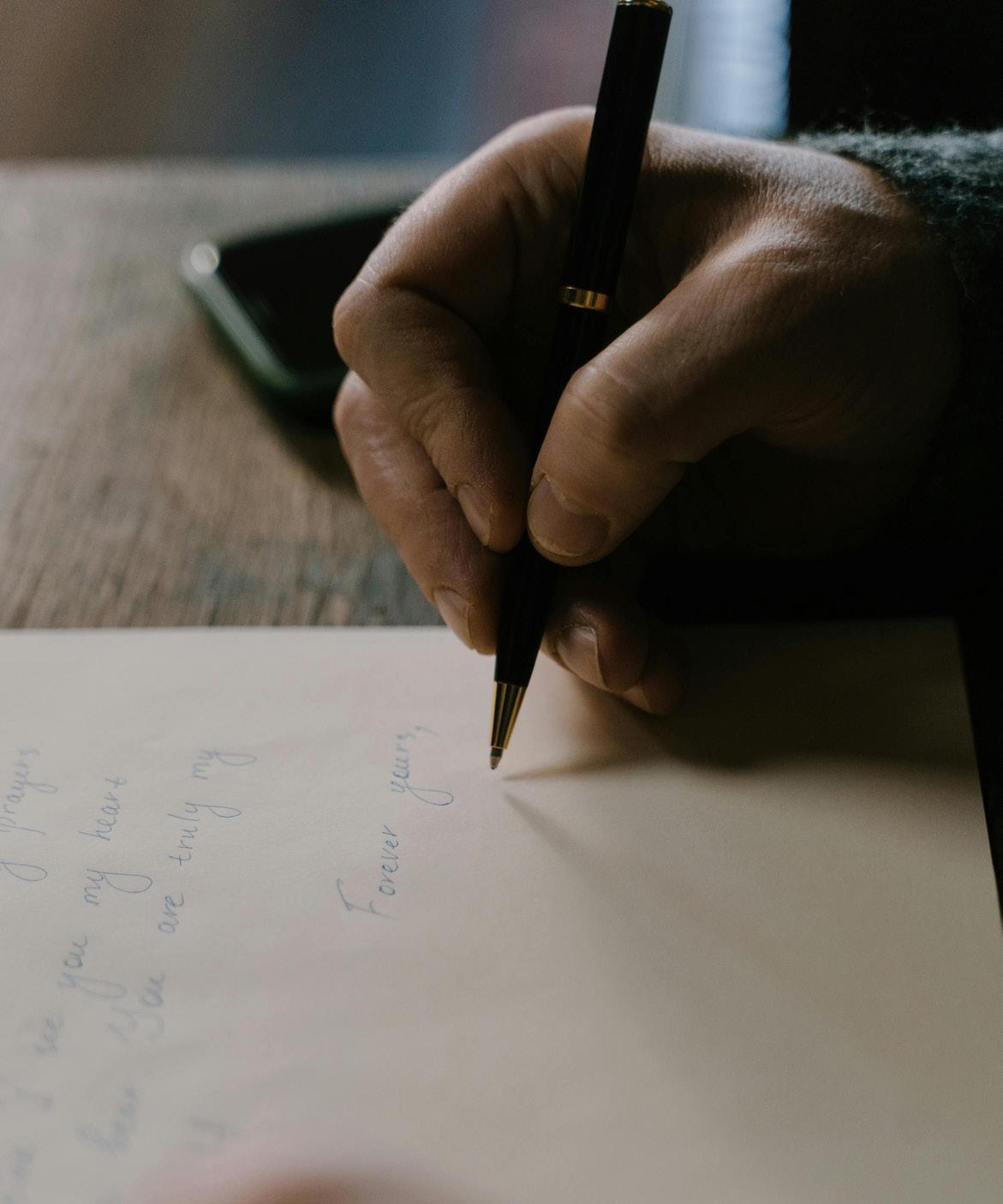
“We celebrate these stories, affirming them as powerful testimonies that are worthy of sharing publicly.” (Photo sourced from Pexels).


Friday — 6
• Student Association Executive Applications Due Payday: Hourly/Students
• 6:15 pm Sunset.
6:30 pm Vespers: Black Christian Union, Christa Horton @ Collegedale Church of Seventh-day Adventists
7:30 pm AfterGlow @ Collegedale Church of Seventh-day Adventists South Atrium

Sunday — 8 Tuesday — 10
8:30 pm Vespers: Black Christian Union, Christa Horton @ Collegedale Church of Seventh-day Adventists Last Day for 80% Refund
• Office of Ministry and Missions Winter Retreat ends
• 3:30 pm Academic Administration Council @ Wright Hall Robert Merchant Room
• 11:00 am Convocation: Black Christian Union, Christa Horton @ Collegedale Church of Seventh-day Adventists
Office of Ministry and Missions Winter Retreat begins
• 10:00 am SOAP: Caving @ Outdoor Education Center
• 10:00 am - 11:15 am
— 4 Thursday — 5 Saturday — 7 Monday — 9
and SmartStart Registraion Opens 7:00 pm Archaelogical Musuem Lecture: Chris McKinny, PhD @ Lynn Wood Hall Chapel
Basketball Intramurals
Wednesday 6:00 pm
- Southern Breeze vs BounceyBiggityBouncy (Women’s A)
- Chick-fil-Layups vs Tall Tale (Women’s A)
- Israel GPT vs Dear Jadd and friends (Men’s C)
7:00 pm
-Larry Legend’s Lunatics vs happy birthday alden (Men’s C)
- Basketball vs mermaids (Women’s A)
- Wasabi vs Court queens (Women’s B)
8:00 pm
- Shyla vs absolute zero (Women’s A)
- Big Bounce vs princess fall (Women’s B)
- Walter Melon vs Love muffins (Men’s C)
9:00 pm
- 2025-2026 Wizards vs SY (Men’s C)
- Coughing baby vs The Last (Men’s C)
- Foul baiters vs Buddy’s Villain Arc (Men’s C)
Thursday 6:00 pm
- Compa vs Matcha Men (Men’s C)
- Shalom Yahweh vs Cambodian National Team (Men’s C)
7:00 pm
- SY vs Love muffins (Men’s C)
- mismatch repair system vs The Great Whites (Women’s A)
Become an advanced practice nurse and earn a doctor of nursing practice at the same time.
The BSN to DNP program mentors bachelor’s degree-level graduates as they gain necessary RN experience through an advanced nursing practice emphasis of their choice.
Options include:
• DNP/MBA
• Lifestyle Medicine
• Nurse Educator
• Nurse Practitioner (emphases include Acute Care–Adult/Gerontology, Primary Care–Adult/Gerontology, Family, and Psychiatric Mental Health)
Call or visit online to find out how to get started.

BSN DEGREE TO DNP