The Southern Accent
Update of the week page 3
A new era of learning: Southern to offer Doctor of Education degree
Pressing Issue page 2
Senate prompts student involvement with the new “You Matter” Initiative
Update of the week page 3
A new era of learning: Southern to offer Doctor of Education degree
Pressing Issue page 2
Senate prompts student involvement with the new “You Matter” Initiative
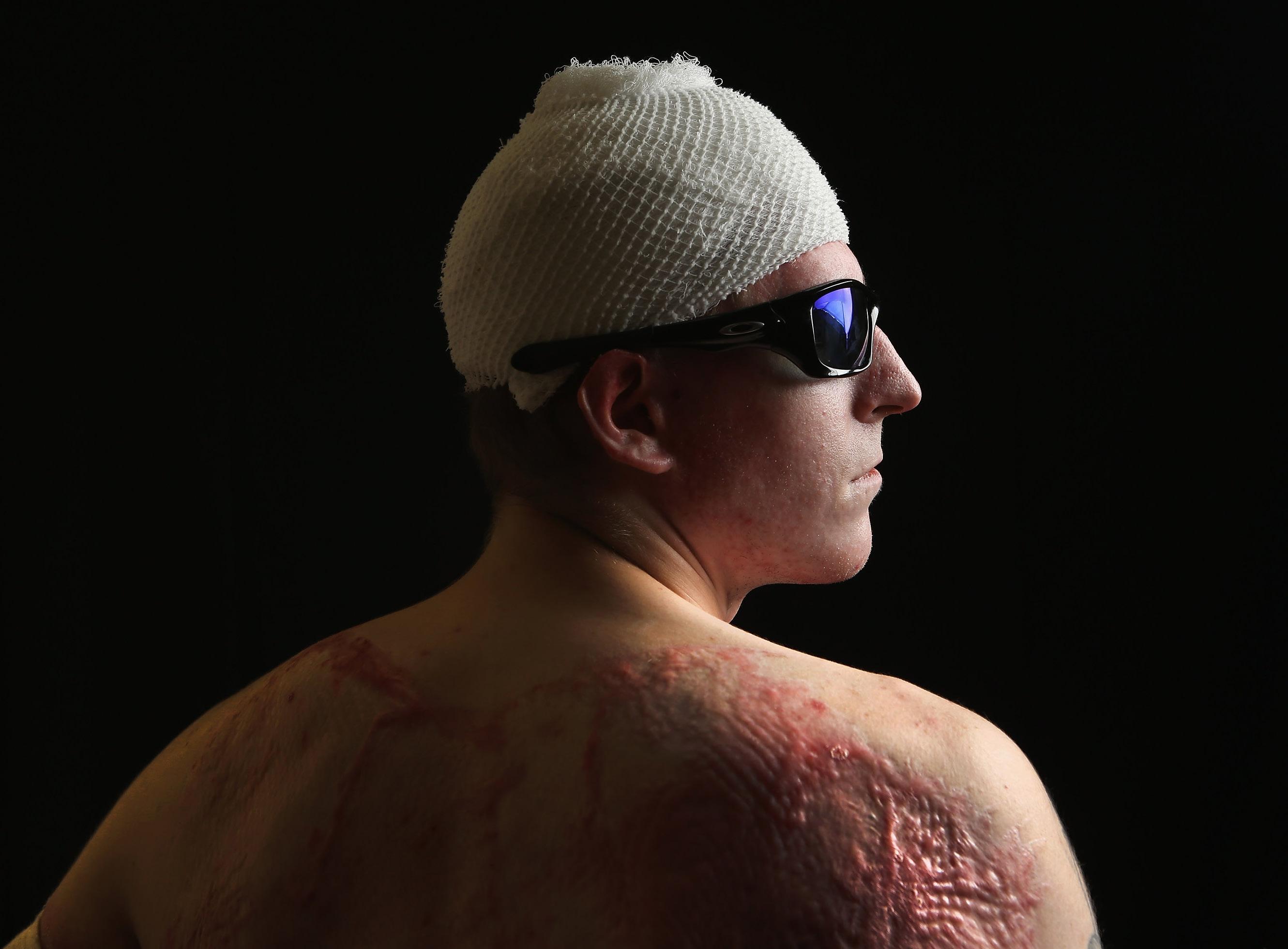
SAN ANTONIO, TX - AUGUST 08: Burn patient Spc. Bobby Bernier, 26, displays scar tissue from skin grafts at the U.S. Army burn center on August 8, 2012 in San Antonio, Texas. Bernier, a U.S. Army artileryman, was burned over much of his body on May 18, 2012 when Taliban insurgents attacked his unit in Nangahar, Afghanistan, wounding himself and a comrade and killing two of his fellow soldiers. The facility, officially called the U.S. Army Institute of Surgical Research Burn Center, has treated more than 930 military personel burned during combat operations in Afghanistan and Iraq since 2003 and is the only burn center under the U.S. Department of Defense. It has also treated some 2,500 civilian emergency burn patients from the South Texas region. (Photo by John Moore/Getty Images).
Hayden Kobza Editor-in-Chief
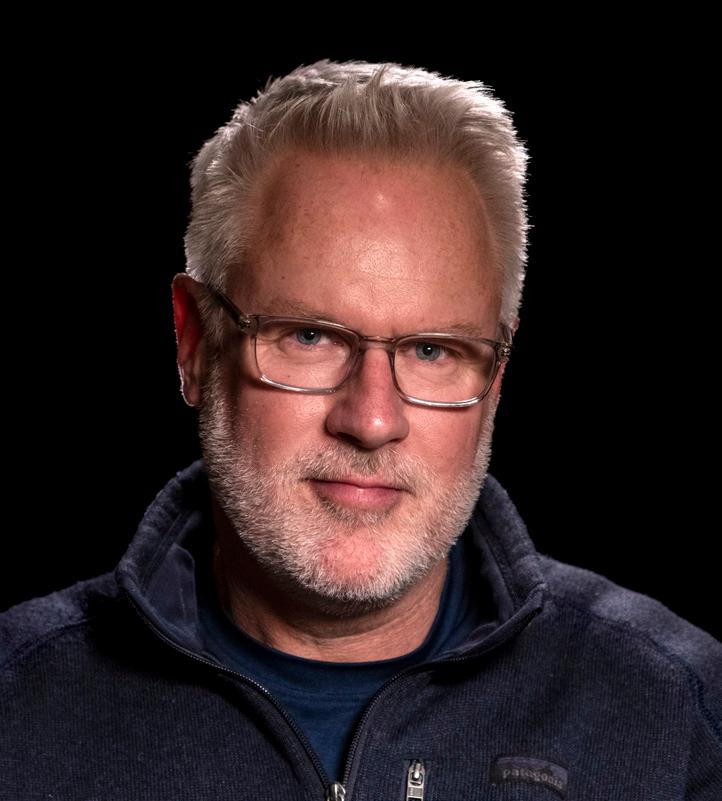
From Afghanistan and Iraq to India and Bosnia, John Moore, a senior staff photographer and special correspondent for Getty Images, has covered wars around the world during his work as a conflict photographer. After spending
John
a considerable amount of time photographing people in combat, Moore felt it was his duty to portray what happens after the conflict, when the headlines have been published, and the news cycle has moved on.
“These millions of Americans have worn the uniform, and many are often forgotten,” Moore said in a recent interview with the Accent. “It's important for me to show that the fighting that was done was only a sliver of their life; the rest of their lives await afterward. And I think, as a photojournalist, it's important to show the totality, and not just a small piece—a small, violent piece—of someone's life.”
As Veterans Day approaches on Nov. 11, Southern has invited Moore to speak at this week’s Convocation. The event will be held at 11 a.m., Thursday, in the Iles P.E. Center. Students, faculty, staff and community members are invited to attend.
The 2005 Pulitzer Prize winner for Breaking News Photography during the Associated Press’s Iraq War coverage will present a collection of photos depicting veterans, aiming to dignify those who return from their duty not only with physical injuries, but with invisible struggles as well. Moore, who resides in Stamford, Connecticut, joined Getty Images in
2005 and has documented conflict and migration in more than 70 countries on six continents. In addition to his Pulitzer Prize, the University of Texas at Austin graduate won five World Press Photo honors, including the 2019 “Photo of the Year” for “Crying Girl on the Border,” and the 2025 photo “Night Crossing.”
He has also been awarded the Robert Capa Gold Medal for courage from the Overseas Press Club and the Robert F. Kennedy journalism award for his longterm immigration coverage. Published in 2018, Moore is the author of “Undocumented: Immigration and the Militarization of the United States-Mexico Border”.
“Although I’ve concentrated on immigration issues for the last few years, I've also worked covering conflict, and part of that coverage has been my continued photography on veterans' issues,” Moore said.
The New York Times and other media outlets have described Moore’s work as humanizing—a descriptor he said can be complicated to recognize when absent, as each instance of dehumanization is situationally dependent.
“I think it’s important for viewers to see the people I photograph as fellow human beings,” Moore said. “And that might sound simplistic, but oftentimes, when we see the news, we see it in
terms of statistics, and people will really only care about a story and the people I photograph if I can establish some sort of human connection.”
According to Moore, a key part of humanizing people in photography is establishing trust with the subject. Moore discussed how people can generally determine if someone is trustworthy by the way the person approaches them, even if there is a language barrier. He also warned about taking photos without the proper level of consent, which can leave the subject intimidated.
In spot news, where coverage is on the street or during events, Moore said photojournalists can photograph almost anything, but emphasized that in more private situations, it’s important for them to reach out to the subject first.
“We’ve all seen pictures where the subject of the photo looks uncomfortable or self-conscious,” he said. “That’s always a danger in this profession; we have to establish a certain level of trust very quickly with those we photograph, and often that’s a skill that one learns over time.”
Some students at Southern expressed appreciation for the upcoming Convocation’s focus on Moore’s work with veterans.
“I think it’s important for viewers to see the people I photograph as fellow human beings.” - John Moore
Maddie Schmidt Contributor
Southern Adventist University is launching a new Doctor of Education (EdD) degree in Fall 2026. This degree will focus on innovation in leadership and learning, according to a press release written by Becky Brooks, editorial manager of Marketing and University Relations.
“The scholar-practitioner program emphasizes both research and real-world practice, equipping students to make an immediate impact,” Brooks stated. “Participants will benefit from interdisciplinary approaches, hands-on learning, and partnerships with diverse organizations— all while advancing their careers.”
Brooks said she believes that this new program will provide a great opportunity for professionals in various fields, such as business, education, nonprofit leadership, pastoral ministry and public service.
In an email to the Accent, Tammy Overstreet, dean of the School of Education, Psychology and Counseling, explained that the doctoral degree is designed for anyone who has successfully completed a master’s degree program.
“The program is delivered fully online,” Overstreet stated. “There are no on-campus or off-site locations required; all courses and requirements can be fulfilled remotely, making it accessible for working
professionals and students who cannot relocate.”
Overstreet said that the EdD program comprises a total of 60 credit hours.
“The projected schedule indicates that the program is designed to be completed in approximately two to three years by full-time students, depending on their pace and course load,” she stated.
According to Overstreet, Southern anticipates a high level of interest in this new doctoral degree.
“Market research and documented inquiries show frequent, ongoing requests from educators and leaders wishing to pursue the terminal degree at Southern,” Overstreet said. “National and regional data further confirm strong demand for doctoral-level leadership education.”
Allie Leker, a freshman elementary education major, believes that this new program will have a positive effect on the university.
“The launch of the Doctor of Education program at Southern in 2026 will bring a significant advancement in the university’s academic offerings,” Leker said. “By introducing this program, Southern will not only expand opportunities for students to complete their advanced degrees but also attract more students to this school.”
Andre Evans, a junior elementary education major, expressed excitement at the news.
“I think the new Doctor of Education program is exactly
what Southern needs to add to our campus,” Evans said. “I was considering doing a doctorate in education in the future and hopefully being able to teach college education classes. I am so excited that Southern is doing this, because I can complete the doctorate program with a college that I am familiar with, and with professors that I know will support me.”
In an email to the Accent, Corjena Cheung, associate vice president for Academic Administration, shared that Southern has not yet appointed a program director for the doctoral degree.
“The search for the program director has just begun, and we are excited about the possibilities ahead,” Cheung stated. “While the process is still in its early stages, we trust that the Lord will bring us the right person to lead and support the program’s success.”

Ken Kelly Contributor
The former Collegedale Academy (CA) Elementary School building could be the future home of the Mathematics Department and the School of Computing.
An email from Tom Verrill, senior vice president for Financial Administration, detailed plans for the renovations.
CA Elementary, originally called A.W. Spalding Elementary, was founded in 1928 and served as a demonstration school for Southern Adventist University (then named Southern Junior College), according to CA’s website.
The CA board approved plans for a new school building in 2022, and on Sept. 13, 2023, a groundbreaking ceremony was held at the site of the new CA Elementary.
According to CA’s website, the academy expanded an existing building on College Drive to create a facility that combines both the elementary and middle schools under one roof.
Southern Accent
Renovations for the old building have already been planned, and the first phase of three is expected to be completed in 2026, according to Verrill.
He said Phase 1 of renovations is expected to modify the upper portion of the building, which includes several offices and nine classrooms.
Recent outdoor renovation included the removal of the playground next to the building. Since the playground was a popular recreation spot, some members of the community expressed their disappointment over its relocation.
It appears the playground was not only used by elementary students.
“I wish it came back; playgrounds are fun for people of all ages,” said Calvin Nesmith, a junior business public relations major.
Madeline Grunden, a senior communication major, said: "It was sad because the children can’t play, but also, I can’t go and play.”
The playground and its
See Math department on page 3
Editor-in-Chief
Web
Lifestyle
The Accent encourages readers to write articles and voice their opinions. However, the views expressed do not necessarily reflect the opinions of the Accent, the Southern Adventist University or the Seventh-day Adventist Church.
For any questions, comments and article submission information, email the editor at haydenjkobza@southern.edu.
For all advertising inquiries, email alvajohnson@southern.edu.
Hayden Kobza
Managing Editor Eliana Morales
News Editor Chloe Smith
Photo Editor Katie McConnell
Opinion Editor
Religion
Sports
Staff
Collegedale
Circulation
continued from page 1
Alier Vega-Morales, a freshman computer science major, said he believes people should be aware of the time veterans have given and the sacrifices they have made for the United States. His grandfather, who served in the Marines, has affected how Vega-Morales empathizes with veterans.
“They’ve been through something that we [civilians] won’t be able to understand,”
Vega-Morales said. “... I think that there needs to be more recognition for veterans, because there are veteran benefits like health care for them and their families. But I think that just a day to honor them isn't enough. There should be more history of what they've done so that we could honor them better.”
Vega-Morales recognizes how Moore’s efforts towards veterans are crucial in spreading awareness, expressing appreciation for photojournalism’s ability to capture the reality of a moment.
“I think it needs to be raw. We can’t understand if people sugarcoat it, so it has to be as truthful as it can be,” he said.
Joshua Chotobar, a freshman clinical psychology major, expressed that since he doesn’t have a veteran in his family, he is not knowledgeable
Math department
continued from page 2
equipment was donated to Beacon Academy.
about veterans' benefits. With awareness, he believes that the public would understand better what it means to be a veteran.
“I would definitely go to that [Convocation] just to get more knowledge,” he said.
Lysandra Diaz, a biology major with an emphasis in biomedical, described how her life with her father has been affected during his time of service in the Air Force.
“I feel like there should be [more] programs put into place after you retire, especially since [my father] served his whole life,” Diaz said. “I mean, ever since he was a teenager, he was in the Air Force, and so it’s such a big adjustment to be in it and then get out of it.”
Diaz said that having a photojournalist with projects focused on veterans feels more personal to her because she has someone close to her who served in the military.
Moore hopes that students will leave Convocation with more certainty in the media, as said he has seen that distrust has made it more difficult to tell people’s stories.
“So many people have cameras now that they assume that everyone with a camera is the same,” said Moore. “Well, that's not true. Photojournalists are trying to tell a story, and I wish people were more visually literate on the importance of photojournalism.”
Many look forward to moving to the old CA Elementary building. Professors at the School of Computing and the Mathematics Department expressed their excitement.
“I’m excited about the possibilities of moving the School of Computing to a new place,” said Harvey Alférez, a professor in the School of Computing. “It will provide us with more space for our classes and activities, as well as a tremendous opportunity to expand our programs
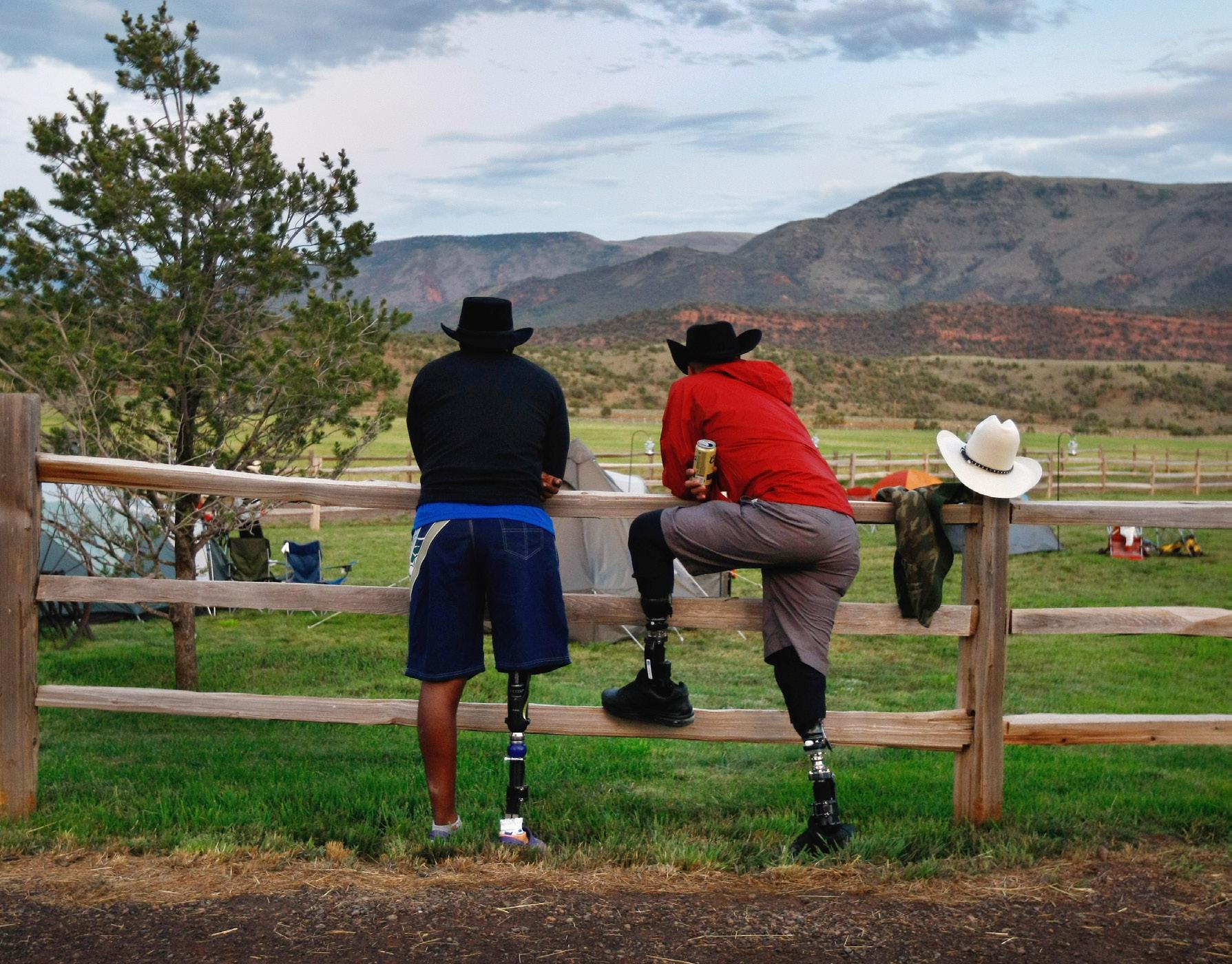
MCCOY, CO - JULY 30: U.S. Army Ssg. Freddy De los Santos, 39, (L), and Marine Lcpl. Jose Daniel Gasca, 22, both amputees from war injuries, speak on July 30, 2009 at Yarmony
Colorado. They were part of a group of a dozen war wounded and their families participating in the Vail Veterans Program summer retreat. The program is designed to help recently severely wounded U.S. military forces rehabilitate and rebuild confidence through outdoor activities, including rafting, fly fishing, skeet shooting and horseback riding. Most of the wounded are flown in from Walter Reed Army Medical Center in Washington, D.C. Some 250 wounded troops have participated, both in the summer and winter programs since 2004. The visits to the Rocky Mountain retreat have been incorporated into Walter Reed's rehabilitation program for troops who have suffered from traumatic injuries, including amputations, brain injuries and other severe wounds, most of which sustained in combat in Afghanistan and Iraq. De los Santos, a Special Operations soldier, was wounded when his humvee was struck by a rocket propelled grenade in Afghanistan Oct. 19, 2008, killing the other two American soldiers in his vehicle. Gasca was wounded when his vehicle hit an
with adequate space to accommodate more students.”
Ryan Loga, a professor in the Mathematics Department, shared his thoughts on what impact the move may have.
“I am generally excited for a change of space,” he said. “This move across the street should result in more space for every-
one, not just [for] computer science and mathematics, but also [for] biology and chemistry to expand in Hickman. The past few years, we have had to teach a lot of classes outside of Hickman due to [increases in] scheduling and class sizes."
But Loga also cited smaller offices and less-convenient ac-
cess to the building among his concerns with the new location.
“I am very interested in how crossing University Drive will work for students,” he said.
“Many years back, when I was a student at Southern, there was a cross walk at the end of the promenade, but they removed it at some point.”
Jaeda Goode Contributor
Southern’s Student Association (SA) Senate is putting the spotlight on student voices with its new “You Matter” initiative, which encourages students to speak up to help shape campus life.
The initiative, launched on Aug. 24, is an online forum created for students to anonymously vocalize their ideas about what they would like to see happen on campus.
Heidi Burke, junior history major and first-year senator, stated that she wants this platform to help everyone contribute and make their voices heard, whether they are outspoken or shy.
“To be able to tell students they matter, we have to first make sure they do matter,” Burke said. “We have to first make sure there are avenues for their voices to be heard very clearly.”
According to Burke, students could previously print and hand deliver a form to the SA president if they wished to present ideas. However, she believes this method could deter students who would prefer to make suggestions anonymously.
Burke also explained that the name “You Matter” reinforces the idea that the students’ voices are the reason Senate exists.
“The phrase ‘You Matter’ to students is almost a simplification, like [they] are the fundamental core of why Senate exists,” Burke said.
Arianne Milosavljevic, senior nursing and international studies major, who serves as chair of Senate’s Social Committee, spoke about Senate’s dedica-
tion to the student body and how the initiative is a way to encourage student involvement in Senate.
“We’re trying to get students involved in realizing that you can vote for stuff, you can ask things, you can change things,” she said.
Milosavljevic also expressed that she wants students to think about the changes they want to see on campus and use their voices, even if their sug-
gestions cannot become reality.
“I want students to be able to feel like they have agency—that they can actually do something and their voice matters,” she said.
Brianna Pubien, a junior nursing major, believes the forum will be a good way to bridge the communication gap between Senate and the student body.
“If you have direct communication, then you could see
what everybody needs,” Pubien stated.
Eri Jorge, a junior computer science major, thinks some students may not have adequate time to use the forum.
“I personally wouldn’t use the suggestion box, but that’s just because I don’t have time in my day,” he said.
Jorge also shared his belief that students may be more likely to speak up when presented with potential problems or solutions, instead of voicing their opinions unprompted. With the “You Matter” being introduced, Burke encourages students to make their voices heard by seeking out the online forum. The forum can be accessed by going to the SA Senate page on Southern Adventist University’s website and clicking the link under “project proposals.”
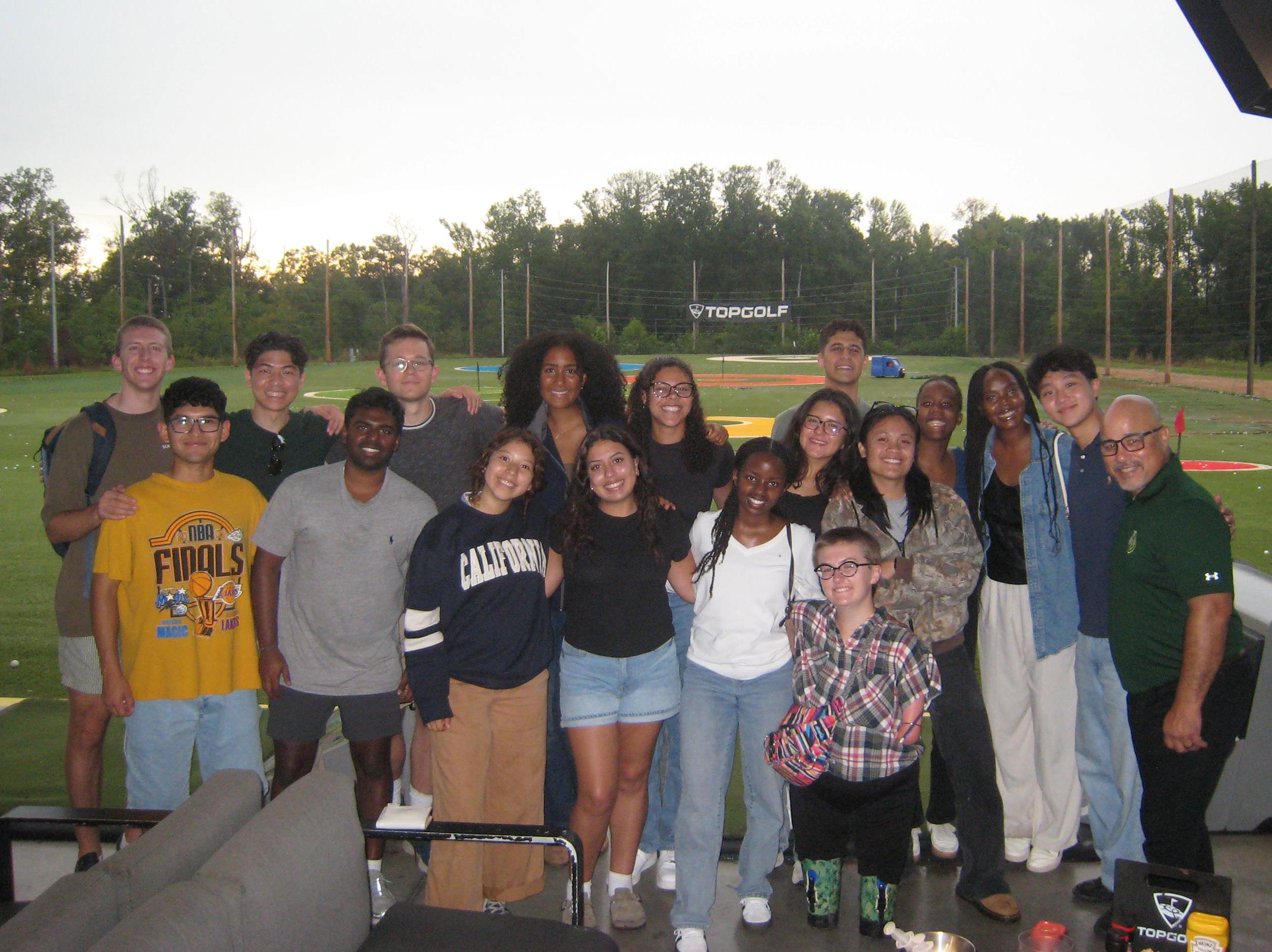
Editor's Note: The Southern Accent has produced a two page Collegedale News section this issue as part of a national initiative to enhance community news coverage. The local effort, led by Southern's School of Journalism and Communication in conjunction with the Center for Community News (CCN) at the University of Vermont, places student journalists at the forefront of addressing the news desert crisis, a phenomenon caused by the decline of newspapers in local communities. The Accent believes local news is vital to a thriving democracy, and we remain committed to reporting about important issues, novel occurrences and interesting people in the greater Collegedale area. We will publish this special section in five issues of the newspaper this semester. To submit tips or press releases, go to https://southern-accent.org.
Leif Bromme Collegedale Reporter
Tri-Community Volunteer Fire Department Chief Duane Pitts wore a navy uniform shirt bearing the words “We Volunteer Because Your Life Depends on It” as he reflected on his many years with the department.
His lengthy career with the Collegedale fire department started when he was an accounting freshman at Southern Adventist University in 1966. He had gotten an ice cream cone from the Campus Kitchen with an older friend when, all of a sudden, a siren blared and his friend took off running. Pitts was perplexed until his friend explained that the siren was a call to a fire meeting and encouraged him to join.
Pitts sat in on the meeting and before the night was over, he made the decision to join the team. At the time, the roughly 15-person department was made up of mostly Southern students, who voted in officers—including chief, assistant chief and training officer—at the beginning of each school year. In a time before pagers, radios or cell phones, student volunteers ran to the trucks whenever an oscillating siren placed atop Lynn Wood Hall alerted them to emergencies in the community.
In 1970, Pitts was drafted to the military to serve in the Vietnam War, but returned home early in 1972 and took on one of the three paid jobs at the fire department when the station expanded its services to Highway 58. He has worked at Tri-Community ever since.
Now, the department is staffed by over 15 paid employees and approximately 142 volunteers, hosting a vibrant community that many describe as a big family, according to Pitts.
Senior chemistry student Morgan Baldwin began volunteering with Tri-Community in late September after taking an Emergency Medical Responder (EMR) class through Southern that was taught by leaders at the fire department. For Baldwin, volunteering is a valuable opportunity to get hands-on medical experience.
“[As a pre-med student], we can’t really have patient interactions or patient care, but the fire department is the complete opposite... one of the only things I’m allowed to do is patient care,” Baldwin said. “I really just wanted to do it so I can connect with people and really have a conversation with someone before I’ve become a physician."
Baldwin added that another reason he serves with the Tri-Community is because the Collegedale area is his home, and he wants to serve it.
“It’s great to interact with people and really serve them and be a beacon of hope if you can in dire situations,” said Baldwin.
According to Pitts, there has been a gradual downward shift in the percentage of Southern students in the volunteer force over the years.
“As things went along, then
it kind of became half students and half community people,” Pitts said. “Now the percentage of their students is pretty slim.”
City Commissioner Tim Johnson is one of the community members who decided to dedicate his time to the fire department. In an interview, he recalled the day he began volunteering at the station.
“It was January second of 1982,” he said. “I volunteered as an EMT back then. ... I had it in my blood.”
Though Johnson has never been involved with the firefighting side of things, he emphasized that the station has room for a wide variety of talents and interests.
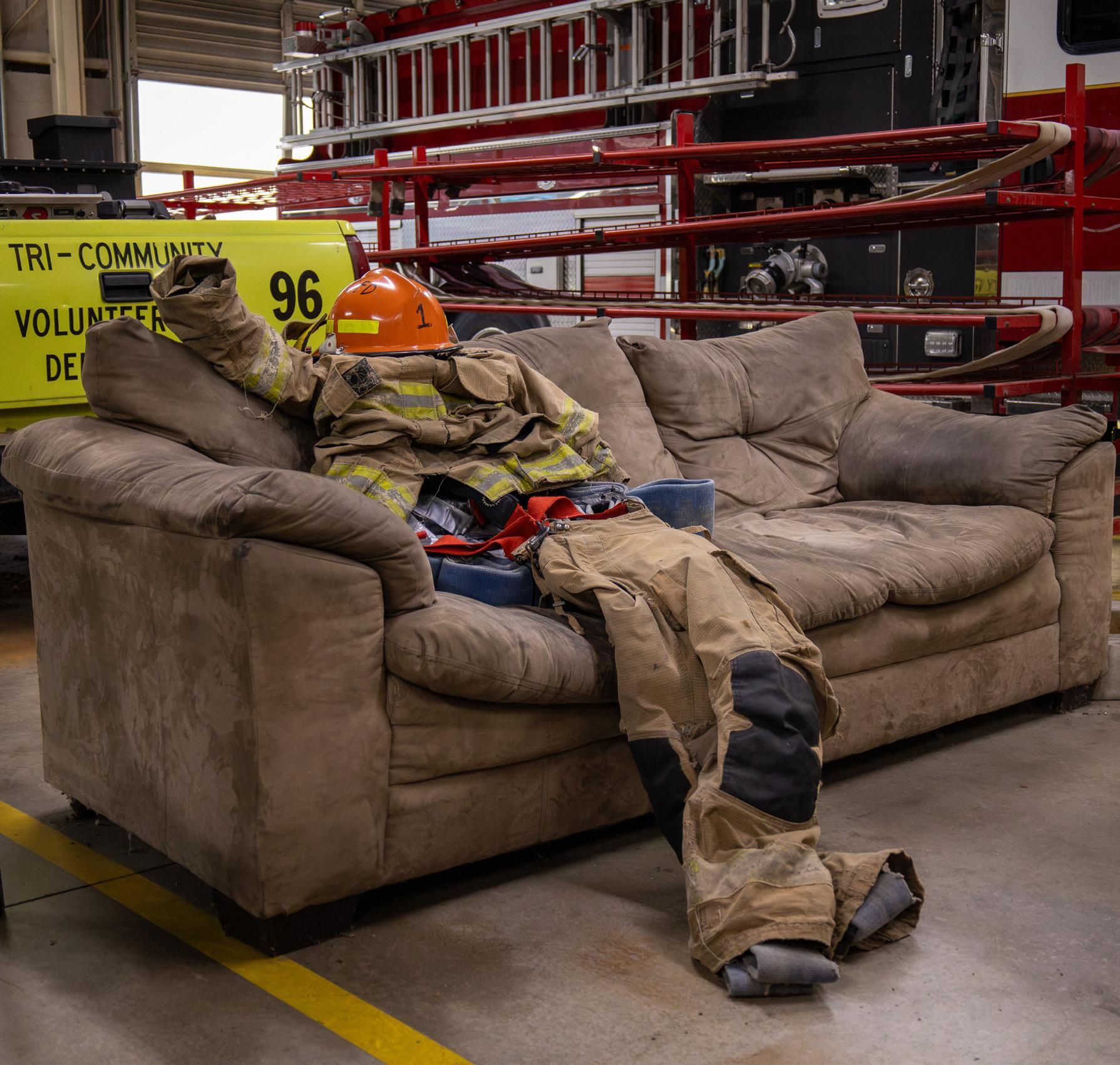
Firefighters handle fire-related emergencies and provide emergency assistance, drivers transport gear and first responders, station employees ensure that the operation runs smoothly and EMTs like Johnson specialize in emergency medical aid.
The EMTs and firefighters at Station 1, like those across the nation, are often the first to arrive at the scene of an emergency. Consequently, they see firsthand the reality of situations most see on the news: shootings, house fires, tragic wrecks and medical crises. It only takes one 911 call to remind a first responder of the impact of these events.
“We [responded to an emergency] over at the music building,” Johnson said. “We were there within a couple of minutes, and luckily a nurse anesthetist and two nurses were working there. They started [CPR] immediately, and we came with our life pad and put shock pads on him. We shocked him three times and got him back. He was talking in the ambulance, [and] I ended up knowing him. We went to high school together. I asked the name and recognized him from years ago.”
Even without personal connections, exposure to such tense situations can take a toll on someone’s psyche. The fire department has a counselor on staff to address mental health needs and encourages volunteers and firefighters to be open about their emotions.
Though any job can bring stress, Johnson continued to emphasize how much the opportunity has impacted his life for good.
“I met my wife here,” he said with a smile. “We weren’t interested in each other at that point, but we got back together later on. We’ve now been married for 33 years. It all started here.”
His eyes scanned the day room, recliners lining the walls with the Tri-Community Fire Department logo stitched into their backs. The room seemed to remind him of both the volunteer community and his family. Johnson’s eldest daughter served in the department before becoming a nurse at Erlanger Health. His younger daughter, Ashley Finley, also a full-time nurse, currently serves alongside her family as a Medical Lieutenant. His wife Cindy also assists the department in a medical capacity.
For those who serve as volunteers, the role carries notable benefits. For those
pursuing medical or paramedical careers, EMT experience is incredibly valuable. According to Johnson, Tri-Community also helps volunteers by paying for their EMT and EMR certifications courses in exchange for service. Pitts mentioned that some volunteers can even utilize complimentary apartments. Beyond the physical benefit is the fulfillment that comes with community and the ability to help others.
“I love it. It’s part of me. The department is like family to me,” said Finley. “Some are like my brothers and sisters; others are like another set of parents.”
Since joining as a student at Collegedale Academy, Finley has been passionate about volunteering with Tri-Community. Now, she enjoys responding to calls along with her husband when she isn’t working at the hospital.
“It’s a really important thing
for me to take care of those that are in my community and help serve the community,” Finley said. “We are volunteers, what we call a dying breed, so to me, it’s still a really important part of my life to volunteer and give up some of my own personal time.”
Finley explained that she describes volunteers as a dying breed because people can spend their free time doing whatever they want. She has seen that it can be hard to find staffing at times.
Pitts shared a similar sentiment when reflecting on the differences in volunteers when he began almost 60 years ago and volunteers today. When he was a student, he remembered that freshmen were not allowed to have a car on campus, and most could not afford one even if they had been permitted to drive. According to Pitts, there were also no bus or rent-
al services on campus.
“When you're kind of left in a little bowl up there, you find things to do in that bowl,” Pitts said, gesturing toward Southern’s campus. “The students have a whole lot more things to be able to do and to a lot of them, those other things are more exciting.”
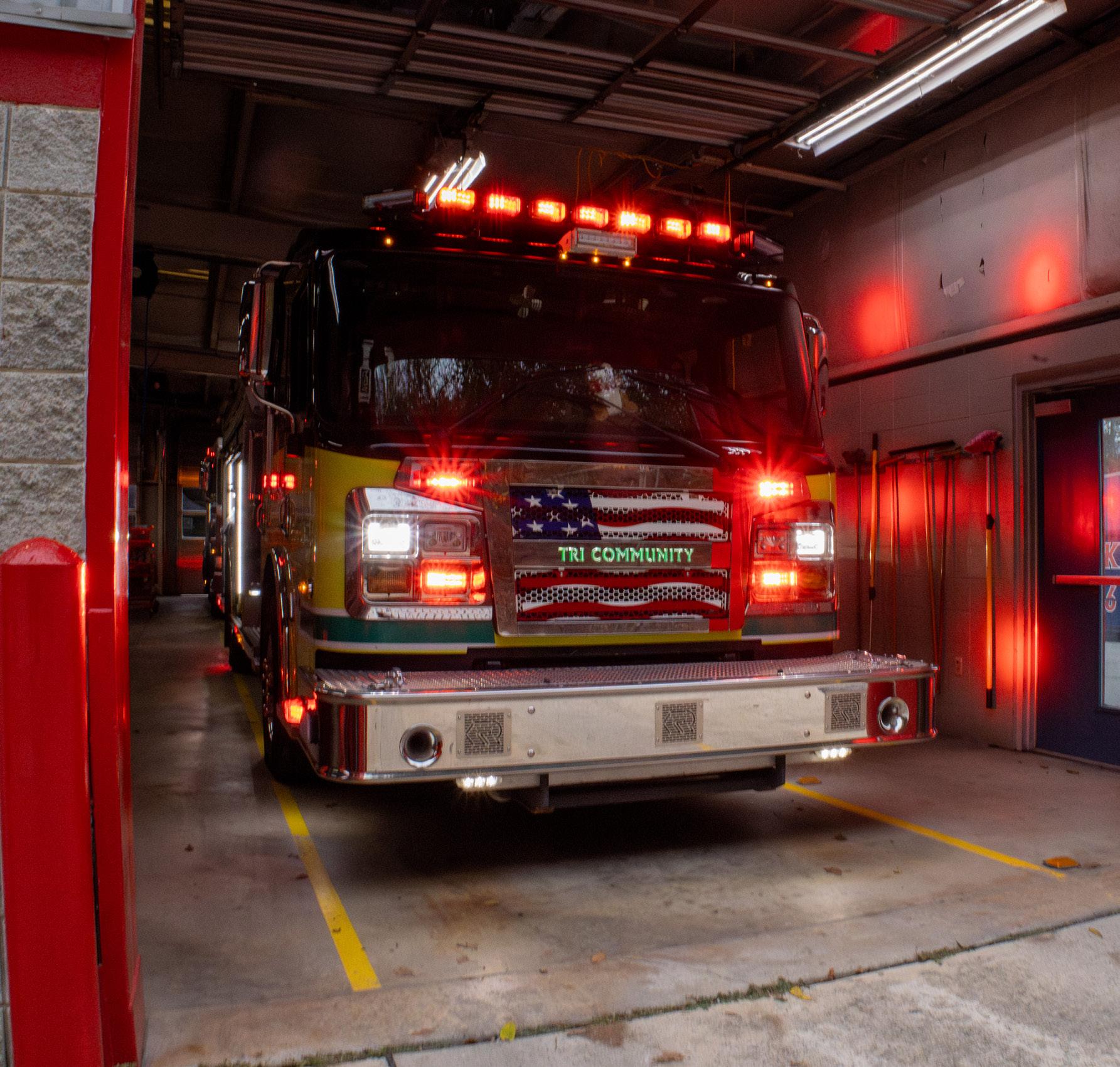
Though some students may not view fire protection as exciting, it is a service that requires willing volunteers and ongoing support. From the years when its alarm sat atop Lynnwood Hall to today, when its sleek new engines sit within Fire Station 1, Tri-Community Volunteer Fire Department has always been built on community and the desire to help.
Finley’s words reflect the mindset of many in the crew:
“Knowing that I was able to at least give someone support during their worst time—that’s why I do it.”
Are questions keeping you up at night? Too scared to go to vespers because you don’t have the guts to ask out your crush? Is the CIA stalking you?
Scan the QR code to let us know!

Last week, the Anton Heiller story was cut off. Scan the QR code to read the full story online.

Edward Backer Contributor
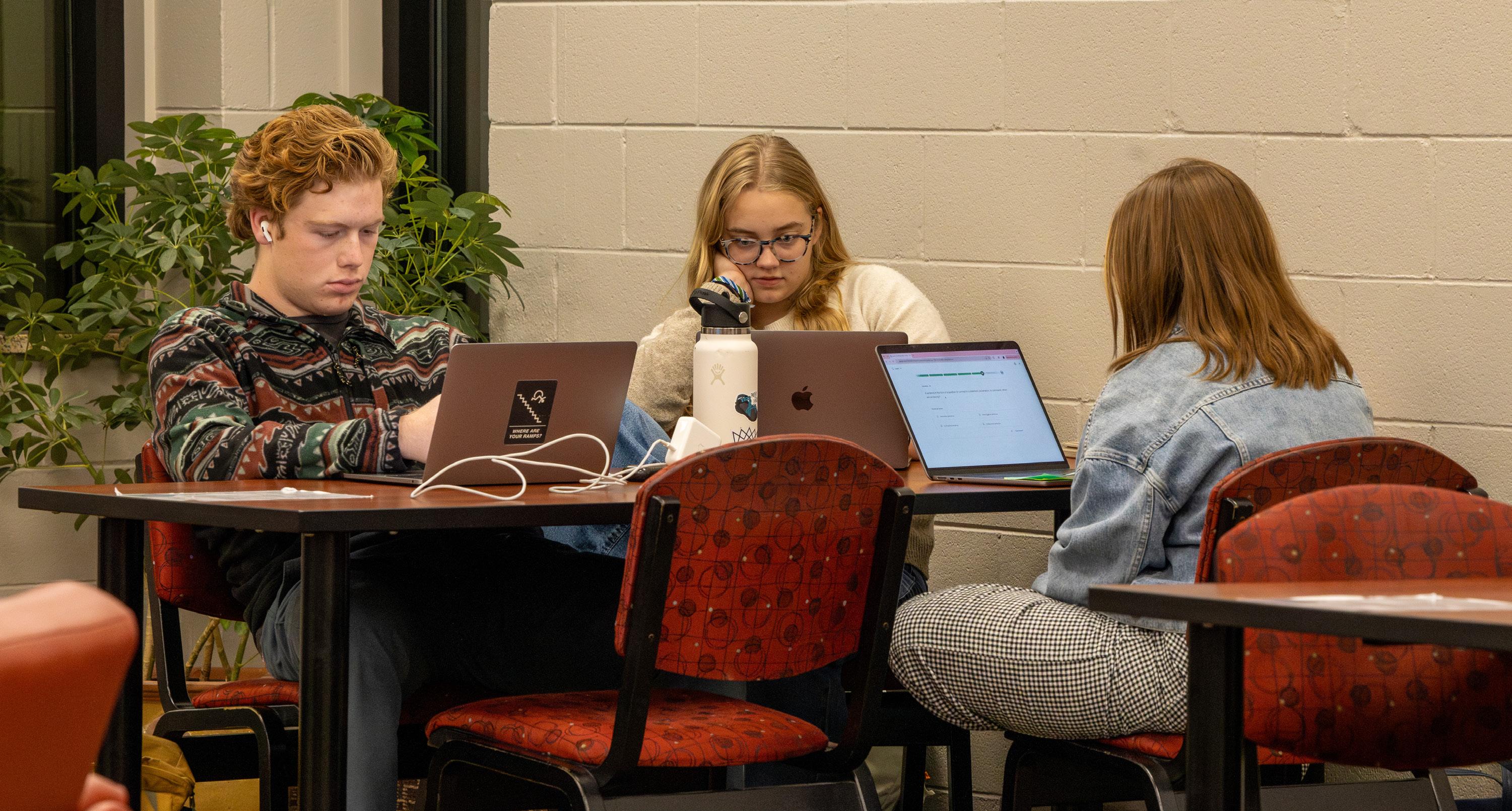
Procrastination is a common struggle among college students, and it’s a hurdle that can stagger our academic performance and personal growth.
Overcoming procrastination requires a blend of self-awareness, strategic planning and practical techniques. Here, I’ll share some effective methods to help you solve this persistent problem and boost your productivity.
Before diving into solutions, it’s essential to understand what procrastination is and why it happens. According to
Wikipedia, procrastination is “when one delays beginning or completing an intended course of action.” This “irrational delay of behavior” often stems from a lack of motivation and interest, fear of failure or simply feeling overwhelmed. By acknowledging these underlying causes, we can better address them. One of the primary ways to combat procrastination is through effective time management. Breaking tasks into smaller, manageable chunks can make them seem less daunting. For instance, instead of writing a 10-page paper in one sitting, break it down into sections and tackle one at a time.
Tools such as the Pomodoro Technique, which involves working for 25 minutes and then taking a five-minute break to do a healthy activity, can help maintain focus and prevent burnout. An additional strategy to combat procrastination is using a reward system. For example, after completing a task, treat yourself to a social media break or eat your favorite snack.
One of the hardest parts of dealing with procrastination is setting realistic goals. Unrealistic expectations can lead to procrastination due to the fear of failure. To avoid this pitfall, start by setting goals that are
specific, measurable, attainable, relevant and time-bound (SMART).
The goals you set should (1) focus on specific area of improvement, (2) allow you to evaluate progress, (3) be reasonable and realistic for your skill level, (4) be related to a greater objective and (5) have realistic deadlines that work with your schedule. For example, instead of saying, “I will study all weekend,” try “I will review chapters 1-3 for two hours on Sunday morning.”Making sure you set reasonable standards and expectations for yourself is crucial to creating a pattern of progress. Mak-

“Procrastination is a common struggle among college students.”
ing sure you set reasonable standards and expectations for yourself is crucial to creating a pattern of progress.
Many factors can affect your attention level, including lighting, noise, comfort and temperature. Choose a study spot that is free from distractions. Whether it’s the library, a quiet café or a designated corner in your dorm room, make sure it’s a place where you can concentrate. One suggestion is to study in an empty classroom, ideally one used for your classes.
This is because of “context-dependent memory,” according to Cynthia Vinney, PhD, a psychology columnist for the online resource VeryWellMind.com. Vinney explains in a 2023 article that an individual will have improved recall “when the context during encoding is the same as the context during retrieval.” This can be especially helpful when preparing for an exam, since studying in the same (or similar) room may later assist you in recalling that information.
Overcoming procrastination is a journey that involves self-discovery and consistent effort. By understanding the roots of this problem and by managing your time effectively, setting realistic goals and creating a conducive environment, you can significantly reduce procrastination and enhance your academic performance. All success starts somewhere, but you must take the first step.
Ava-Caroline Schmidt Sports Editor
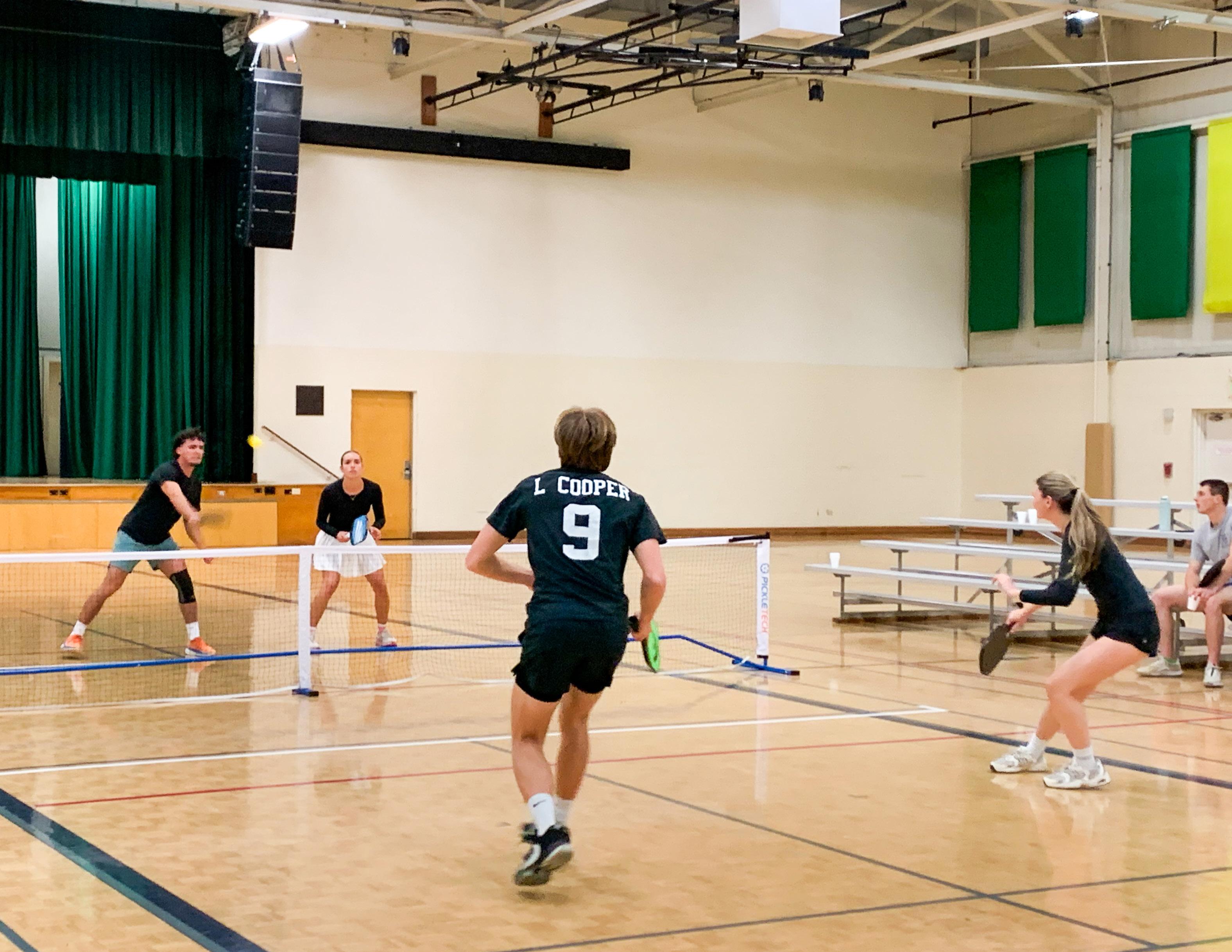
Southern’s first Saturday night event this month was the Allied Health Club’s third annual pickleball tournament, which took place in the Iles Gym. The tournament started at 7:30 p.m. and the final match ended around 1 a.m.
According to Michell Nino, a junior health science major and the Allied Health Club’s vice president, the fundraiser was designed to reflect the organization’s mission.
“We do this fundraiser to promote more events where we can incorporate our aim or motto, which is mind, body and soul, since we are an academic club,” she said.
Unlike the general intramural tournaments that have been happening for the past few weeks, this event was sponsored by the Allied Health Club. The official intramural pickleball season, including same-sex, co-ed singles and double matches will begin next semester under the direction of Troy Walker, director of intramural sports.
Fourteen teams competed in the pickleball tournament on Saturday night, each consisting of two males and two females. The atmosphere was lively, with family members and peers cheering from the stands. Though the crowd was small, enthusiasm was high. During the first half of the tournament, no court was empty for long. When a match ended or a court opened, teams quickly took advantage of the space to warm up or practice for the next match. By around 10 p.m., the games were condensed to the three main courts to minimize
the space for the remaining games.
Just for fun, some teams dressed up in themed costumes. Outfits ranged from pajamas and business attire— complete with bow ties—to creative M&M candy designs.
The three teams with the best costumes received awards.
Third place went to TEAM for their firefighter- house themed outfits, Swampies took the second prize with their Shrek-in-
spired look and Stranger Dinks won first place for their pickleball-themed costumes.
In the end, team Water won the tournament, defeating TEAM in the final match. Team Water included seniors Preston Waters, a business marketing major; Summer Nash and Raegan Moore, both nursing majors; and Bruno Rondinelli, a business administration major.
“One of the best moments besides winning the tourna-
ment was when Raegan got a really amazing cross-court dink,” said Nash, who has been playing pickleball for five years. Waters highlighted another standout play.
“Bruno had an amazing ATP—around the pole—shot,” he said. “He hit it around the pole then got it in.”
When asked about their winning strategies, Waters said that it came down to smart tactics.
“Our main strategy was to target the weaker player,” he said.
Rondinelli added, “The biggest tactic was the small game – easy shots, completed shots, and waiting for me to clutch up.”
The tournament was a success, encouraging fun and fitness, and the Allied Health Club plans to host it again next fall.
Samuel Guerra Opinion Editor
Imagine if you were to wake up and for some reason, on your music streaming app, you have access to only a single music genre: stadium pop— relentlessly upbeat, engineered for maximum energy, designed to dominate every playlist.
You’d never again be able to sit with a melancholic folk song or jazz improvisations, listen to that one love song you once dedicated to a special someone, or let Lofi wash over you while you study. Instead, you’d have only upbeat, “epic” music. I’m sure you’ll quickly feel exhausted. And not only that, but most importantly, you’d miss out on the entire dimensions of human emotions.
Yet, that’s how we often treat movies today. Since the rise of the Hollywood blockbuster in the 1970s (Jaws, Star Wars, etc.), we’ve come to expect every film to be packed with action, twists, emotional crescendos and tidy resolutions. If a movie doesn’t keep us “on the edge of our seat,” we call it boring, slow or pointless. But what if keeping us on the edge of our seat is not the point at all?
Like books, music or even clothing, movies should be chosen for how they fit the moment—not judged by a single standard of excitement. We don’t wear tuxedos to the gym or flip-flops for a job interview. We don’t read thrillers when we need comfort or self-help books when we need poetry. So why do we act as if every film
must be a cinematic fireworks display?
Cinema is as varied as life itself. Some movies are, indeed, rollercoasters—and that’s great. I gasped along with everyone else in a packed theater six years ago when Captain America lifted Thor’s hammer in “Endgame.” That doesn’t mean I can’t enjoy a slow film, though. Some films can feel like late-night conversations or long walks in the park. Films like “Perfect Days,” “In the Mood for Love” or “Taste of Cherry” don’t rely
on mind-blowing plot twists or chases; they create spaces for reflection, atmosphere and emotional honesty. They ask different things of us—not “What happens next?” but rather “How does this make you feel?” or “Have you ever noticed this before?”
There’s a quiet stigma around enjoying “slow” or “plotless” movies; some may think these viewers were bored but too stubborn to say so. But to call a film “boring” often says more about our expectations than about the film itself.
Maybe it wasn’t boring but was just asking for a different kind of attention—one that we’ve forgotten how to give. As an avid movie watcher and someone who enjoys learning narrative structure, character arcs and visual language, I’ve realized that not every story needs to shout to be meaningful. Some of the most powerful moments in cinema are the quietest: a character staring out a window, the sound of wind in an empty field, a silence that speaks louder than dialogue ever could.
You don’t need to love every film that you see—and you don’t need to give up blockbusters. But give yourself permission to explore the full range of what movies can be. Next time you choose one, I encourage you not to just ask, “Will this thrill me?” Maybe think about the moment, and ask: “What do I need right now?” Is it wonder? Is it grief? Could it be stillness? Cinema is vast enough for all of it.

Samuel Calvelage Contributor
Have you ever had someone tell you how to do something when you already know how? You probably felt as if the person were treating you as a child, and it caused frustration. It can seem as if whoever is doing this just wants to upset you. They may say something that is general knowledge, like telling you to put both hands on the steering wheel or not give a dog chocolate. Maybe they didn’t intend to belittle you but, often, comments like this aren’t helpful and only make you resentful.
Jesus once made one of these seemingly unhelpful comments. In Luke 5, Jesus was teaching multitudes about the kingdom of God. As He was teaching, the crowd became so large He got into a boat, pushed off from shore and taught from the water. Later, after the sermon was over and the people began to go home, Jesus turned to Simon, the owner of the boat, and told him to push out to the deep part of the lake to do some fishing.
Fishing today is generally done with a pole, a hook and worms. Simon and his fellow fishermen instead used large nets that could bring in hundreds of fish at a time.
Simon grew up in Galilee and, because his career was fishing—he knew how to catch fish. But that night they had caught nothing.
Then, at this moment, Jesus asks Simon to let down his nets in broad daylight. Jesus tells Simon to do something that was just not done. Simon probably felt insulted to have this Rabbi tell him, a career fisherman, how to catch fish. Simon knew that he would come back with
no fish. But still, he went out and let down the net.
As soon as he let down the net, it flooded with so many fish that the net began to break. He and his friends asked other fishermen nearby for help with this huge catch, but there were so many fish that the other boats began to sink as well.
None of us are planning to make a living by fishing, right? However, in every one of our careers, Christ is calling us to surrender our jobs and our goals to Him. Maybe you have been doing something that has worked out pretty well. Maybe your goals are lining up, and you’ve been making progress. But, maybe, your plans don’t always work, or you don’t even have any.
Just as Jesus asked Simon to trust Him with his night of fishing, Christ is calling us to trust Him with our careers. Luke 5:10-11 states, “Jesus said to Simon, ‘Don’t be afraid; from now on you will fish for people.’ So, they pulled their boats up on shore, left everything and followed Him.” When we surrender our goals and our career and our relationships to Christ, He will work out something better than we could ever imagine.
So, I offer these three takeaways: (1) Allow Christ into whatever you are doing, (2) do things that God is calling you to do, even when you don’t know how it will work out, (3) and finally, open your heart to God’s plans even if they are different than what was expected.

Rhett Seitz Lifestyle Editor
Since as far back as I can remember, I’ve always been someone who loves to research. Whether scrolling through articles, watching YouTube videos, or googling late at night, I’ve always been curious—maybe even a little obsessed—with learning.
I thought that the secret to success was to constantly stay informed. I wanted to know everything that was happening, whether in the job market or the latest sports news.
For years, I thought the formula was simple: research, research, research. Stay up to date, thus stay ahead. But over time, I realized something was off. No matter how much I consumed—news, videos, posts, podcasts—I still felt behind. I had to do more and research more. Somewhere along the way, “staying informed” turned into an addiction.
Looking back, I think what I was afraid of was falling behind. I thought that if I just consumed more, I’d be safer, smarter or more prepared. But instead of feeling fulfilled, I felt drained.
That’s when it hit me. I was doing what the world wanted me to do: consume.
We live in a culture that’s built around consumption. Every scroll, every click, every ad, is designed to grab your attention and keep you coming back for more. We’re constantly bombarded with information, entertainment and distractions. It’s never been easier to consume and never been harder to
think for yourself. But here’s the truth: we weren’t made solely to consume. We were made to create. When I finally started crafting, writing, building and designing, something changed in me. It was like a spark returned. I realized that creation isn’t just about producing something cool; It’s about expressing who you are and what God put inside you. In Genesis, the Bible says that we were made in the image of God and describes God Himself as a Creator. That means creating is
part of our design.
I think one of the biggest reasons people feel unfulfilled today is that we’ve replaced creation with consumption. We chase quick dopamine hits. Whether it be a new post, a funny video or a trending topic, nothing truly satisfies. Creation, on the other hand, takes time. It’s messy. It’s imperfect. But it’s real. And when you make something from your own effort and imagination, it gives you a deeper kind of joy that no amount of scrolling can replace.
If you’re feeling stuck the consumption cycle, here are a few things that helped me:
1. Just start. Don’t wait to feel ready. Most of us never begin creating because we’re scared to look foolish. But failure is part of the process. You’ll probably fail at first, but that’s how you learn.
2. You don’t have to do everything. Write a song. Paint a picture. Build something. Start small and go all in.
3. Set boundaries. Doomscrolling is a trap. Set limits on how much you consume each
day. Replace that time with creative energy. You’ll be amazed by all that you are capable of. In the end, the goal isn’t perfection. It’s participation. God didn’t make us to simply watch the world happen. He made us to shape it, build it and bring beauty into it. So stop waiting for inspiration. Pick up your tools, whatever they are, and start creating. That’s where real fulfillment begins.


Across 4. She served as an interpreter and guide for Lewis and Clark
5. Tribe that published the first Native American newspaper
6. Adobe structures resembling apartments
Down 1. ___ Confederacy: an alliance of six tribes
2. Largest tribe in the U.S.
3. Tribe originally from southern Arizona and New Mexico
Created by Nyah Jackson

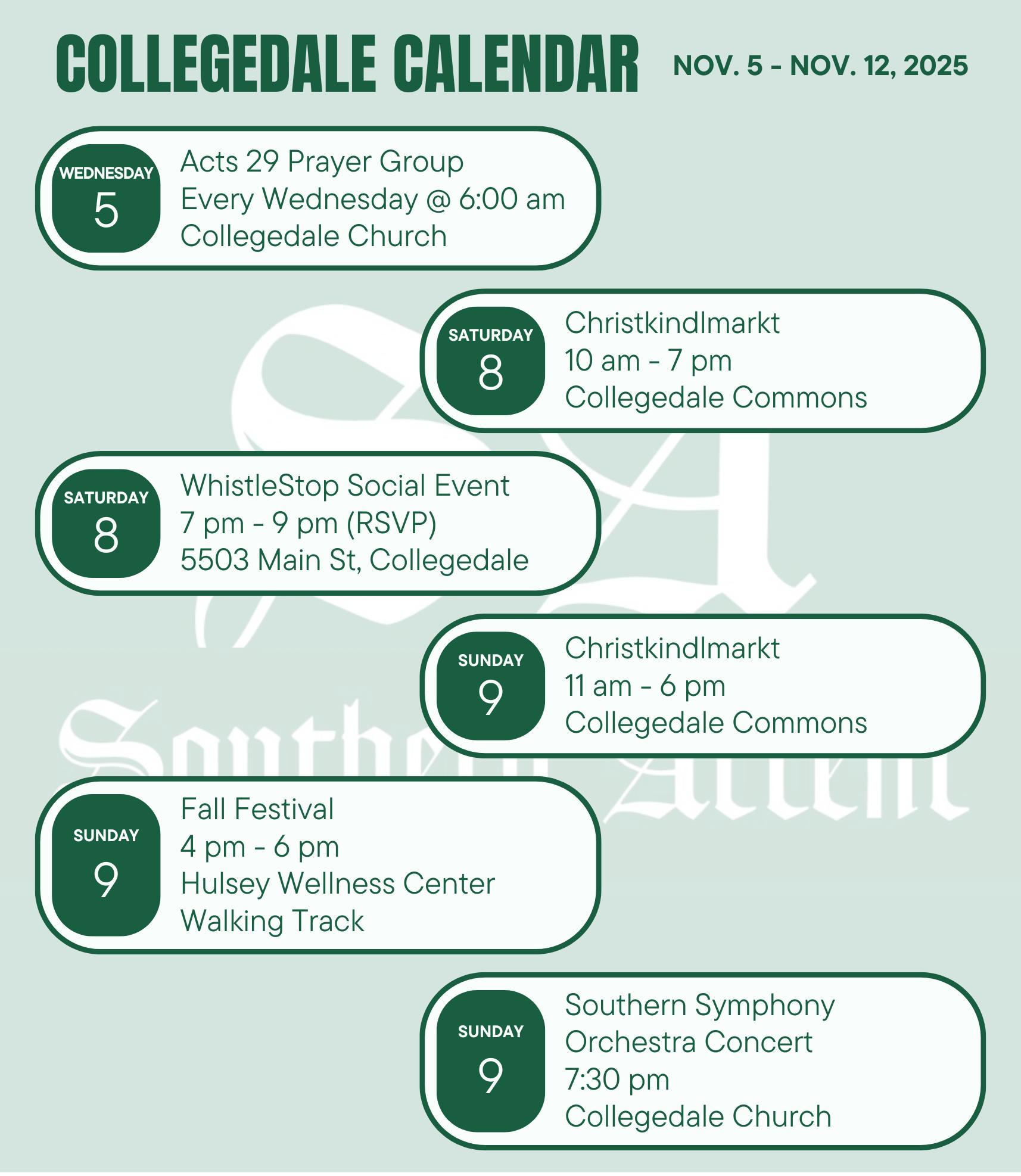
Wed
Art

• SOAP: Overnight Backpacking Trip (November 7 - 8) @ Wright Hall ($25)
• 6:30 pm Vespers: Office of Ministry and Missions/Vision Trips @ Collegedale Church of Seventh-day Adventists
7:30 pm School of Religion: Pierson Evangelism and Missions Weekend @ Thatcher Chapel
7:30 pm AfterGlow @ Collegedale Church of Seventh-day Adventists
7:41 pm Sunset
8:30 pm Vespers: Office of Ministry and Missions/Vision Trips @ Collegedale Church of Seventh-day Adventists

•
3:30 pm Academic Administration Council @ Wright Hall Robert Merchant Room • 9:00 pm Juniors Pre-Registration (55 Earned Hours) @ Online MyAccess
• 5:00 pm Evensong: Collegedale Academy Opus @ Collegedale Church
Floor Hockey
6:00 pm
- Goal patrol vs Goal Getters (Women’s)
- Pucker Up vs Stick Chicks (Women’s)
7:00 pm
- The Mountie Patrol vs Heavenly Pucks (Men’s)
- Biscuit blasters vs Love Muffins (Men’s)
8:00 pm
- LPC vs Goal diggers (Women’s)
- Stick Boyz vs Cold Blooded (Men’s)
9:00 pm
- Puckingham Palace vs Monster Pucks (Men’s)
- Shalom Yahweh vs Wranglers (Men’s)
Intramural Schedule: Thu
Floor Hockey
6:00 pm
- Old School vs Jagerbombs (Men’s)
- Eh Team vs Puck Patrol (Women’s)
7:00 pm
- Pucker Up vs SSIYPT (Women’s)
- Zambroni’s vs Dr. Chang (Men’s)
8:00 pm
- queenies vs ugly pucklings (Women’s)
- not fast, just furious vs Flockey flockerinas (Women’s)
Nothing Scheduled
9:00 pm
- Stick Chicks vs Goal diggers (Women’s)
- Seal team sticks vs Heavenly Pucks (Men’s)
Become an advanced practice nurse and earn a doctor of nursing practice at the same time.
The BSN to DNP program mentors bachelor’s degree-level graduates as they gain necessary RN experience through an advanced nursing practice emphasis of their choice.
Options include: • DNP/MBA
• Lifestyle Medicine
• Nurse Educator
• Nurse Practitioner (emphases include Acute Care–Adult/Gerontology, Primary Care–Adult/Gerontology, Family, and Psychiatric Mental Health)
Call or visit online to find out how to get started.