The Southern Accent
Update of the Week, page 7
Letter from the incoming editor: A story that's still being written
The Student Voice Since 1929
Pressing Issue, page 10
Enthusiastic consent: It's more than yes or no

Update of the Week, page 7
Letter from the incoming editor: A story that's still being written
Pressing Issue, page 10
Enthusiastic consent: It's more than yes or no

said, recalling the pivotal moment.
Early in her teaching career, Professor Lorraine Ball stood in a classroom full of students and explained the importance of using pathos, ethos and logos in persuasive speeches. To emphasize her point, she used as an example the warnings against smoking—and how, despite compelling evidence, many people still smoked cigarettes.
After hearing her lecture, one of Ball’s students who had been experimenting with smoking decided to quit. It was then that Ball realized the real impact she could have on students as a professor.
“You’re like, ‘Oh, I’m so humbled that the Lord could use me that way,’” she
Now, 25 years later, Ball is retiring from the School of Journalism and Communication (SJC), where she has taught speech, public relations and communication courses to hundreds of students, leaving an indelible mark both as a professor and an adviser.
Rachel Williams-Smith, dean of the SJC, described Ball as someone always willing to do her part and serve others.
“She exemplifies dedication and excellence in teaching, consistently receiving high marks on her teaching evaluations,” Williams-Smith said. “She is always willing to go the extra mile to help students rise to the standard, rather than taking the easier route of lowering it for them.”
“Along with the other faculty and staff in the School of Journalism and Communication, I will deeply miss Professor Ball,” she continued. “She is not the kind of person who can simply be replaced. She leaves behind a legacy that challenges those of us who remain and will continue to influence the many students who have learned and grown under her guidance.”
Stephen Ruf, an SJC professor, has worked with Ball for 25 years. Ruf said he will miss her positive, cheerful disposition and strong connection with students.
“Mrs. Ball is so many things—a wise adviser, a well-connected PR professor and the most gracious host who opens her home to students,” Ruf said. “Always
organized and prepared, she expects a lot but is always there to coach a student who needs one-on-one help. I think her secret weapon is how deeply she really listens.”
Currently, Ball advises more students than any other professor in the SJC, and she was named the university’s “Adviser of the Year” on two occasions.
In 2022, Sharon Rogers, assistant director of Records and Advisement, wrote about Ball’s role as adviser in an article for The WIRE, the SJC’s departmental magazine. Rogers described great advisers as those who successfully assist, guide and encourage students, while helping their advisees meet grad-
“I think her secret weapon is how deeply she really listens." - Stephen Ruf
Editor’s Note: This article completes a year-long series featuring the directors behind cultural night on campus. To read profiles of Latin American Club (LAC) and Black Christian Union (BCU) directors, go to southern-accent.org.
For junior health science major Maryjoy Guirnalda, Asian Night is not just an event on the calendar, but a responsibility she has been building toward all year.
Guirnalda serves as the vice president of Asian Club and this year’s Asian Night director. She was the club’s community service director for two years before becoming vice president, and admired how previous Asian Night productions came together. She was also involved in dancing for Latin American Club (LAC) Night, becoming close with directors who inspired her.
“From then on, I just had this really big passion to share our culture with the community and especially with our school,” she said.
As preparation began for Asian Night, Guirnalda expected to use a planning template left by previous directors, but she found none.
“I was very shocked,” she said. “I thought, ‘Oh, this is completely different from what I was envisioning.’”
Guirnalda had to start building the script from the ground up, a process she describes as a lot of brainstorming and trial and error.
One of her biggest challenges was figuring out how to bring seven different Asian cultures together in a way that felt cohesive. The cultures represented will be the Philippines, India, Korea, China, Japan and the Oceanic Islands. As she developed early ideas, she quickly ran into limitations around production scale and approval processes.
Eventually, Guirnalda said she moved toward an “Asian Bachelorette” structure, building on a format used at an Asian Night several years ago. Guirnalda said the theme reflects the pressures many young adults feel around life milestones, especially the expectation to quickly move into careers and marriage following college. She said the production encourages students to slow down and approach relationships with patience and faith.
“I know we can be hyper-fixated on finding ‘the right one’ and feeling that pressure, especially culturally,” she said. “We want to do all these things to impress that person, but I don’t think God ever requires that from us. We don’t have to perform, we don’t have to produce; we just have to be ourselves and submit it to God, and it’ll be the right person.”
Guirnalda says the production's theme is personal to her and reflects a period of growth in her life. She shared that if people had met her a year or two ago, they likely would not recognize the person she is now; back then, she says, she was more withdrawn and suffering from poor mental health.
“But I learned that with community and the people you surround yourself with, you can literally feel the love from God in all those areas,” she said, “and that’s why He puts opportunities around us. I think that’s the biggest thing I’m learning from this experience.”
Guirnalda also described a point earlier in the semester where she experienced burnout as the production began to feel overwhelming. Scheduling became difficult, especially as actors, videographers and other participants balanced graduation or heavy academic workloads. She recalled moments when she questioned whether the show would come together and felt close to giving up.
“I remember a moment of surrender,” she recalled. “I said, ‘Lord, just one day at a time. I will give you this task. I’m not going hyper-fixate and hold on to it anymore.’”
From there, she said things slowly began to come together as people responded, shared their availability and worked collaboratively. Guirnalda also described having to step into the technical side of production in ways she didn’t fully expect.
With multiple scenes that needed to be filmed for the script, she worked closely with videographers and learned about lighting and editing.
Production has faced logistical challenges, making it difficult to keep everything running smoothly. Those delays have required constant coordination and communication between teams, something Guirnalda admits has can be difficult to manage.
“One of the bigger lessons I’ve learned is delegating,” she said. “I used to be very shy with it, so now I’m just learning to fairly share the tasks with everyone.”
Dannika Olea, a VP associate for Asian Club, has worked closely with Guirnalda throughout the planning process. She acknowledged that preparing for Asian Night is a huge task that requires a community to make it happen.
“Maryjoy embodies what it means to be a servant leader,” she said. “She doesn’t skip over the small details but puts her full effort into what needs to be done.”
Guirnalda said she is looking forward to seeing everything come together after months of planning. The night will begin with a pre-show featuring live performances in multiple languages, plus interactive elements such as a photo booth and a 360-degree camera experience. Students representing
The Accent encourages readers to write articles and voice their opinions. However, the views expressed do not necessarily reflect the opinions of the Accent, the Southern Adventist University or the Seventh-day Adventist Church.
For any questions, comments and article submission information, email the editor at haydenjkobza@southern.edu.
For all advertising inquiries, email alvajohnson@southern.edu.

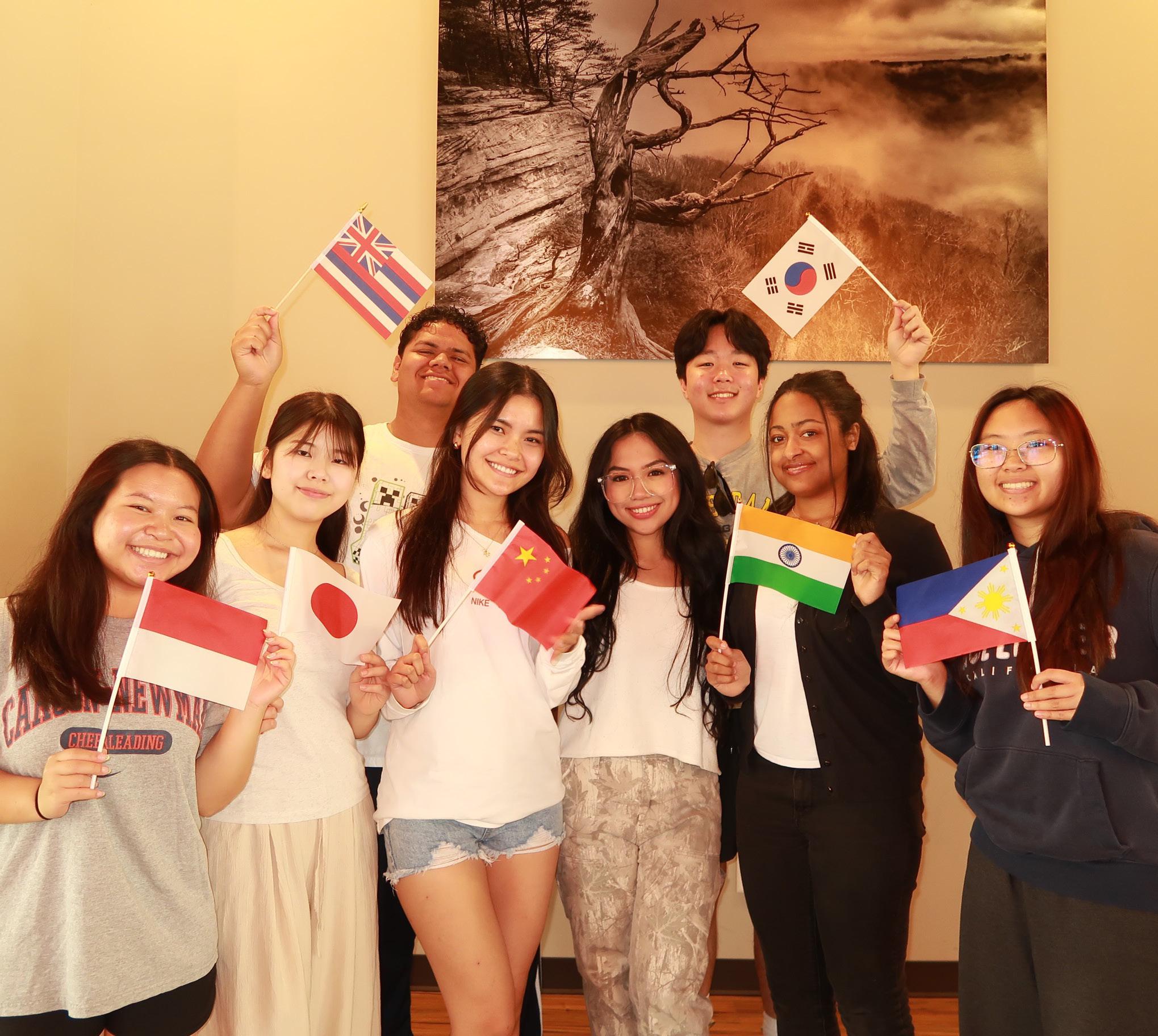
different Asian countries will be contributing food or drinks that reflect their culture. For example, students representing India, China and Japan will serve mango lassi, fried rice and mochi, respectively.
For Guirnalda, Asian Night is meant to offer a break from academic pressure and be a space where students can unwind, learn about other cultures and feel represented. When asked about the importance of non-Asian students attending Asian Night,
Lifestyle Editor
Rhett Seitz
Editor-in-Chief Hayden Kobza
Managing Editor Eliana Morales
News Editor Chloe Smith
Photo Editor Katie McConnell
Social Media Management
Emma Boughman
Religion Editor Nina Bueno
Sports Editor Matthew Taylor
Staff Sponsor
Alva James-Johnson
Opinion Editor Maddie Schmidt
Guirnalda said she believes it is an important opportunity for cultural understanding and connection. She encourages her non-Asian friends to participate, emphasizing that involvement in Asian Club and Asian Night is open to everyone, not just Asian students. She said it has been encouraging to see more students from different backgrounds getting involved in the show.
“I really love seeing the unity of different cultures just coming together,” she said. “It
Web Management
Eri Jorge
Jaziel Gomez
Reporters
Nyah Jackson
Jehiely Balabarca
Kyla Wetmore
Asher LeVos
Anaya Miller
Yoly Viera
Ava Schmidt
Collegedale Reporter
makes me so happy that even though we have our differences, we can still be united, whether through dancing, acting or different creative art expressions.”
Jeriel Leal, a co-director of Asian Night, described Guirnalda’s leadership as inspiring.
“Although at times [production] has been overwhelming,” he said, “her persistence through everything has been incredible to watch, so she can deliver a night where everyone feels seen and represented.”
Copy Editors
Gabrielle Young
Sienna Escobar
Lilian Lelko
Kyla Wetmore
Photographers
Sam Tooley
Yoly Viera Southern Accent
Julie Herter
Gianelli Banuchi
Circulation Manager
Norelie Cabrera
Christian Bass
Layout Designers
Nyah Jackson
Lindsey Hazen
Office Manager
Leif Bromme
Professor Ball continued from page 1
uation requirements.
“Prof. Lorraine Ball has been one of those advisers that cares and helps her advisees succeed in graduating,” Rogers stated in the article. “She has been on the Adviser Honor Roll lists for years, and it is no wonder that she was nominated and voted as ‘Adviser of the Year’ twice in her years at SAU.”
During her career at Southern, Ball chaired not only task forces and university committees, but she also served on the Collegedale Academy School Board and in the Faculty Senate, where she was eventually elected chair. Her leadership skills are a natural result of her childhood.
Ball is a “pastor’s kid” who grew up in Glendale, California. By the time she turned 10, her father, Philip Follett, had become president of the Ohio Conference of Seventh-day Adventists. Follett went on to become president of the Chesapeake Conference in Maryland, Northern California Conference, Atlantic Union and a vice president of the General Conference. His career shifts caused the family to move frequently, which had a significant impact on Ball's life.
While her father was president of the Chesapeake Conference, Ball attended Columbia Union College, now Washington Adventist University, majoring in elementary education her freshman year. However, after taking a communication class, she realized she wanted to become a communication major. So, Ball transferred to Andrews University for their communication program and to be with her then-boyfriend, now-husband, Scott Ball.
After getting married, the couple spent a few years at Ohio State University while Scott Ball completed his PhD in
music history and literature. In 1990, Ball moved with her husband to New England, where they lived for 10 years, during which he taught music courses and she served as director of career services at Atlantic Union College.
Ball holds a bachelor’s degree in communication from Atlantic Union College in South Lancaster, Massachusetts, and a master’s degree in professional communication from Clark University in Worcester, Massachusetts.
She and her husband transitioned to Southern Adventist University in 2000, when Scott Ball received an invitation to serve as dean of the School of Music. Ball began her tenure at Southern as an adjunct professor in 2001, teaching three back-to-back speech sections, and was hired full-time the following year. Because speech classes allow students to write about their own experiences, Ball said that teaching those classes allowed her to get to know her students more deeply, leading to meaningful friendships.
Jehiely Balabarca-Martinez, a strategic communication-public relations major, said Ball has been a positive influence on her life.
“Sometimes she knows what I need, even though I don’t want to hear that,” she said. “She’s like a mom—in a good way—when she listens to you. She’s always there for you.”
Kyla Wetmore, a student with three majors, including business-public relations, commented on Ball’s success as an adviser.
“As my adviser, Professor Ball was such a calm and grounding force in helping me decide what to prioritize,” said Wetmore. “She has helped me believe in myself and take on challenges with confidence. I will miss stopping by her office at whim to talk about anything and everything. Professor Ball
always made me feel heard, understood and valued. I know the impact she made on this department is so much bigger than she will ever know.”
So, what’s next for Professor Ball?
“Well, obviously, after retirement, you have two paths,” Ball said. “You have a rocking chair on the front porch, and you have, ‘Let’s just go for the next act.’”
The latter aligns more closely with her plans for an active, vibrant life.
Ball hopes to become more involved in her home congregation, Collegedale Community Church, volunteering in the hospitality, children’s and women’s ministries, and possibly even in the elementary school. She wishes to spend more time with her children and grandchildren, some of whom reside in California. She also wants to travel abroad.
“So as long as we have our health, I think we’re probably going to be kind of active that
way,” she said, “and [I’ll be] working with my flowers, of course, and all of the projects that I say, ‘Oh, I’ll do that when I retire.’” When asked what she wants her legacy to be, Ball said, “Probably what makes me [most] proud is when an alum comes back and says, ‘You know when you said this in class? It changed my life.’”
“Those,” she said, “are mission moments.”
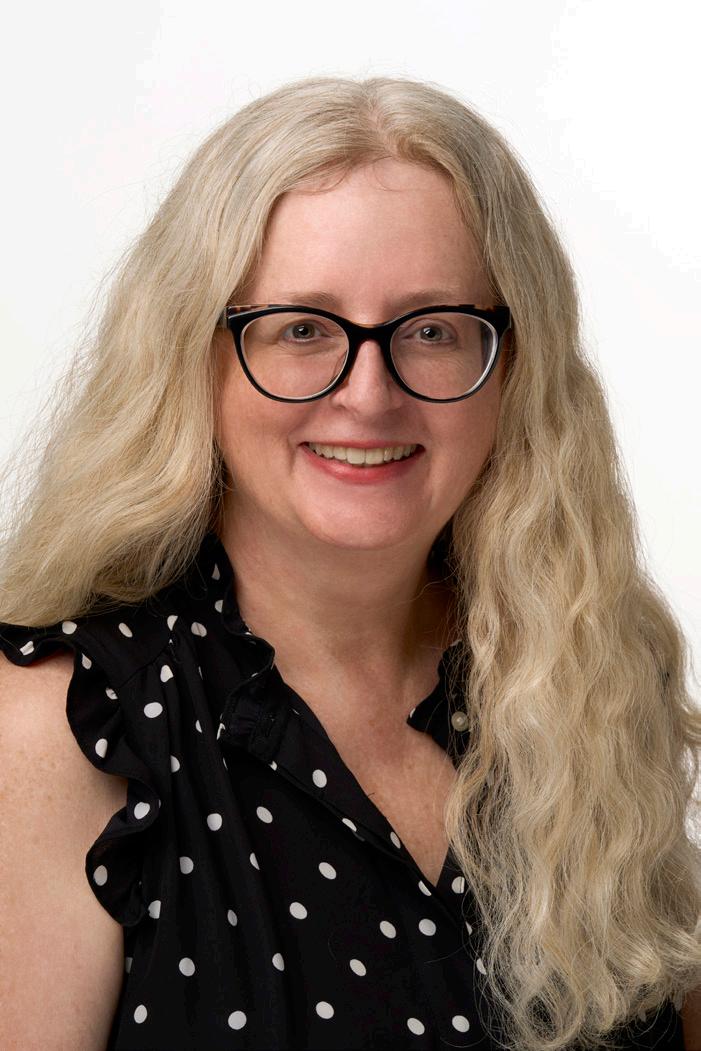
Tamara Wolcott Watson, a 1991 graduate of the School of Journalism and Communication (SJC) at Southern Adventist University, will return to her alma mater this summer to replace retiring professor Lorraine Ball. Watson will join the SJC faculty beginning July 1.
Watson comes to the university with nearly five years of teaching experience— the past three as an assistant professor at Andrews University in Michigan and two years at Southwestern University in Texas. She also brings more than 30 years of extensive professional experience in public relations, including serving as the director of communication for th Georgia-Cumberland Conference for 14 years. In 2018, she earned a master’s degree in leadership, creativity, and innovation from Andrews University. Currently, she is completing the coursework phase of a doctoral degree in Strategic Communication at Regent University.
Watson’s son, Jacob Fisher, graduated from the SJC in 2020 with a BS in Strategic Communication–media production and is currently a news producer at News Channel 9, Chattanooga’s local ABC affiliate. Her daughter, Olivia Fisher, graduated in 2024 with a double-major in International Development Studies and Spanish, and will be returning to the Collegedale area with her mother.
Watson describes her teaching philosophy as “grounded in the belief that the most meaningful lessons happen when communication theory and practice intersect. I bring the realities of the industry into the classroom to prepare undergraduate students not only to understand communication concepts, but to apply them ethically, creatively and strategically in real-world contexts.”
Yoly Viera Reporter
Norelie Cabrera, a senior biology major, has served as circulation manager for the Southern Accent since 2022.
While most students experience campus through classrooms and dorms, her job has offered her a different kind of map—one built building by building, route by route.
“It gave me an opportunity to view all of the buildings on campus,” she said. “I feel like a normal student probably wouldn’t have the opportunity to do that.”
What began as a spontaneous opportunity quickly became something more meaningful. Cabrera described getting the job as “very random,” but said she was grateful it happened when it did.
“I actually enjoyed the fact that I did get a job when I first came here to Southern,” Cabrera said. Since then, she has remained in the role, quietly ensuring each issue reaches its audience.
On distribution days, her routine is simple, yet essential.
“I’ll just make sure I have the large storage bin to collect the old newspapers,” she explained. From the Accent office, she drives across campus in a golf cart provided by the Bietz Center for Student Life’s Student Development department, stopping at academic buildings, common spaces and community areas.
“I would just drive around [to] all of the buildings and put up the new newspapers and then take the old ones,” she said.
While the task may appear simple at first glance, Cabrera has established a dedicated
routine for her deliveries. Each week, she collects approximately 400 to 500 copies of the latest newspaper and makes her way around campus to refill the distribution areas.
Along her journey, Cabrera takes the time to gather any old newspapers she encounters in various locations, returning them to the Accent office. This entire process typically consumes about two and a half hours of her day.
However, it is in these small, unscripted moments that she finds genuine joy, turning a routine task into a delightful experience.
“I saw [students] grabbing their newspaper, and it was just really nice to see people still actually reading paper newspapers,” she said, recalling her stops at the Village Market and the Collegedale Seventh-day Adventist Church.
Watching students and faculty pick up a copy reminds her that her work matters, which made the decision to stay in the position for nearly four years an easy choice. When asked why she continued, Cabrera explained the connection it gave her not only to the campus, but also to the community.
Now in her final year, the experience feels “very bittersweet.” Thinking about leaving the role makes her emotional, as it has remained a steady part of her college journey.
As she prepares to graduate, Cabrera reminisced about the experiences this position has provided for her and wishes the same for future candidates.
“I’m really grateful for the opportunity,” Cabrera said. "I just hope that the next person can enjoy it, as well.”
Editor's Note: The Southern Accent has produced a two page Collegedale News section this issue as part of a national initiative to enhance community news coverage. The local effort, led by Southern's School of Journalism and Communication in conjunction with the Center for Community News (CCN) at the University of Vermont, places student journalists at the forefront of addressing the news desert crisis, a phenomenon caused by the decline of newspapers in local communities. The Accent believes local news is vital to a thriving democracy, and we remain committed to reporting about important issues, novel occurrences and interesting people in the greater Collegedale area. We will publish this special section in five issues of the newspaper this semester. To submit tips or press releases, go to https://southern-accent.org.
Kyla Wetmore Reporter
On May 5, Collegedale residents will have the opportunity to cast their votes in the primary election for District 10’s new Hamilton County commissioner. Early voting began on April 15 and continues until April 30.
According to the National Association of Counties, a county commissioner attends commission meetings, makes important decisions and builds teams within the commission to get things done. The county commissioner is also expected to stay connected to constituents by listening to their views on decisions, attending community events and conducting meetings to share information.
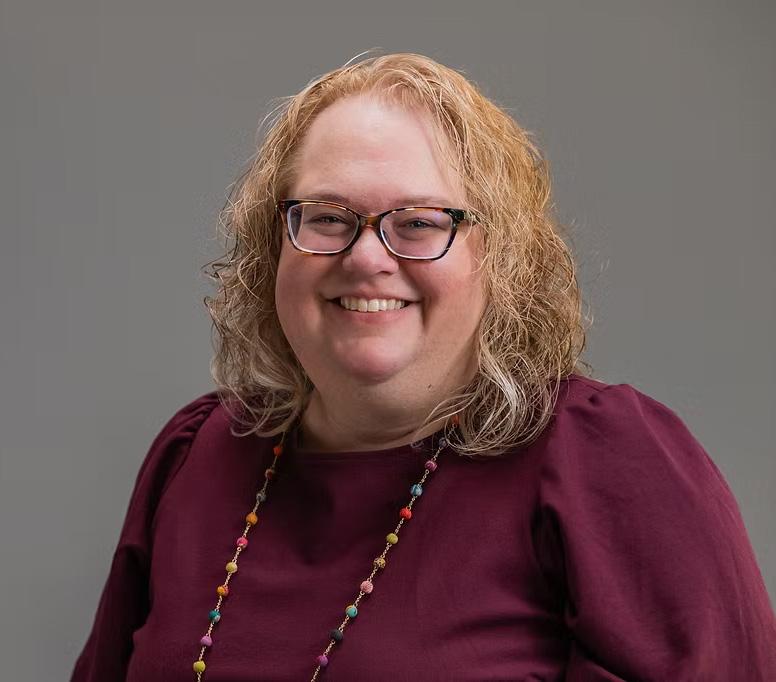
Two candidates, the incumbent District 10 Commissioner Jeff Eversole and Collegedale’s Vice Mayor Tonya Sadler, are running for the seat.
Sadler’s Platform
According to Sadler’s campaign website, her platform is the following:
The Front Porch Accessibility Act
YouTube Transparency:
“Every committee meeting—where the real deals are made—will be livestreamed and archived on YouTube. No more “off-cam-
era” decision-making.”
Direct Correspondence: “I write and send my own mail. When you contact me, you get me—not a taxpayer-funded “gatekeeper.”
Infrastructure
No More Data Centers: “I am 100% Anti-Data Center. They suck up our water and power while providing almost zero local jobs. I will protect our land for better uses.”
District 10 Splash Pad:
“The County has already built amenities in Lookout Valley and Heritage Park. It’s our turn. I will pursue funding for a District 10 splash pad for our families.”
Roads Over Mileage: “I am not here for a travel budget or mileage reimbursements. Every dollar saved on 'administrative perks' will go directly into paving our roads and improving our intersections.”
The Hamilton County Infrastructure Blueprint
1. Implement a Permanent Local “DOGE” (Dept. of Government Efficiency)
We cannot ask for another dime until we stop the bleeding.
The Goal: A full-scale audit of every county department to identify “administrative fat.”
The Reality: The Wamp administration’s efficiency task force already identified $3.7 million in immediate annual savings by eliminating frozen positions and giving up county-funded cell phones.
The Promise: “I will push to double these efforts. Every dollar saved on ‘county perks' is a dollar that goes into a paving machine.”
2. Tax the Visitors, Not the Victims Our infrastructure is crumbling because of growth, yet we are placing the burden on long-time homeowners.
The Plan: Increase the room tax on Hotels, Motels, and STVRs (Airbnb/ VRBO) and rental cars.
• The Impact: “Currently, millions in occupancy tax revenue are capped or diverted. I will lobby the State Legislature to allow Hamilton County to capture more of this ‘Tourism Equity’ to fund road maintenance and drainage. If you’re visiting our county and using our roads, you should help fix them.”
3. Smart Growth vs. Bad Development
We are currently reacting to growth instead of planning for it.
The Policy: “I support a moratorium on 'Bad Development’—specifically
projects that don’t have the sewer capacity or road width to support them.”
The Stance: “No more'Automatic Approvals.' If a developer wants to build a high-density subdivision, they need to pay their fair share for the infrastructure upgrades required to support it—not leave the bill for current taxpayers.”
4. Direct Accountability (The YouTube Standard)
Infrastructure projects often disappear into “Committee Meetings” where the public can’t see the progress.
• The Fix: “I will lobby that all committee meetings regarding public works and infrastructure are livestreamed and archived on YouTube.
The Result: “You will know exactly which projects are being prioritized, which ones are behind schedule and why.”
5. Prioritize “Essential” over “Extra” We need to stop chasing “shiny objects” like data centers that drain our grid and provide zero jobs.
• The Focus: “My priority is simple: Roads, Drainage, and Schools.”
The Action: “While my opponent is calculating his mileage, I’ll be working with the Highway De-
partment to ensure that District 10 isn’t the last in line for reflectors, striping, and paving.”
“Tourism Equity”: Making Visitors Pay Their Share
• The Problem: Short-Term Vacation Rentals (STVRs) and rental cars bring traffic into our communities, but the current tax structure doesn't return enough to fix them.
• The Fix: “I am calling for an increase in the room tax for STVRs and hotel/ motels.”
• The Goal: “Shift the tax burden off homeowners and onto the tourists. If they drive on our roads, they help pave our roads.”
School Board Collaboration
The Annual Joint Summit:
“No more being 'out of sync.' I will spearhead a yearly joint workshop between the School Board and the County Commission to focus on how we can all work together to serve our next generation best. Priority conversations this year would be teacher pay and re-investments into our special education departments.”
Commissioner continued from page 4
The following statements are Eversole’s solutions to issues that he plans to address if reelected, according to his campaign website:
Intentional Planning:
As a community, we’ve made significant progress over the past four years in navigating intentional development the right way, and this remains an important role of the Hamilton County Commission. We've learned to consider not only the structures on properties but the infrastructure around them. We’ve been updating our plans constantly to effectively address wastewater needs, roads, facilities, new neighborhoods and government services, including police and fire protection.
When planning neighborhoods and their surrounding infrastructure, I’ve proven that I can make decisions that are right for the community. Intentional development means that some projects aren’t right at that moment in time, and over the past four years, I’ve shown that I can be decisive about it.
The Hamilton County budget
has grown toward a billion dollars during my tenure, and as your commissioner, I’ve risen to that challenge.
I’ve worked successfully with my fellow commissioners to address issues and collaborated with our state and national elected officials and agencies to secure additional state and federal funding. With over four years of experience, I’ve proven that to achieve a successful commission, we must work together to find solutions that benefit everyone. A rising tide lifts all boats.
Schools:
In my role at Walmart, I’m responsible for thousands of associates. In the hiring process, one of the first questions that comes up is always on education. Over my four years as commissioner, I’ve seen firsthand how our schools face overcrowding challenges, and I’ve worked to address the needs of our teachers and students as our community continues to develop. Instead of short-term fixes, I’ve focused on building structures that work in the long run. I’ve fought to increase teacher pay and applied intentional planning with our facilities, especially when it comes to technology. It’s changing rapidly, and I’ve worked to ensure our aging
buildings and infrastructure keep pace.
As your commissioner over the past four years, I’ve brought people together, including residents throughout the district, to be strategic about gaining resources and ensuring responsible development of Hamilton County Schools.
Education funding has been one of the most important aspects of my service on the commission over these four years. With your continued support, we can keep building on this progress together. Our kids are our future.
Job Creation:
While vocational training has been removed from most high schools, over the past four years, I’ve worked to increase opportunities for students, starting in middle school. I’ve built strong partnerships with Chattanooga State and the training programs already offered by area manufacturers and other companies.
The state of Tennessee offers a significant amount of tech and vocational training at no cost, and there are currently available jobs. This includes not only manufacturing but also IT, carpentry, engineering, healthcare, criminal justice,
culinary arts, logistics and robotics among many others.
A student can earn a degree or a certificate in two years for free, graduate with no debt and go right into the workforce earning a substantial wage and great benefits.
For those that choose the more conventional four-year experience, I’ve worked with city, county, state and federal elected officials and organizations in the region to recruit new companies and help existing companies expand. Over my four years as commissioner, I’ve helped create opportunities for graduating students and for underpaid workers.
Public Safety:
Over the last 20 years, I have been an auxiliary officer for the Hamilton County Sheriff’s Department. We’re citizens who volunteer our time performing public safety duties for the community such as traffic control, security at large events and many other activities.
I’ve given over 6,000 hours to Hamilton County as a reserve deputy to help support the department. I have ridden many miles throughout the county with other officers. I have seen first-hand the tremendous stress and challenges the law enforcement, firefighters and
all the first responders have to face day in and day out. These men and women are true heroes in our community.
As your commissioner over the past four years, I’ve been committed to strengthening the resources and working with our fellow commissioners to give first responders the tools to make our district and neighborhoods safe and secure.
I’ve also worked to evaluate how we can improve fire protection, which is almost entirely volunteer-based in the county. We’ve addressed the challenge of sending people to paid training classes and then losing them to neighboring agencies that can pay them. It impacts the safety of our community when there are medical and fire calls that first responders are struggling to get to. They’re volunteering to put their life on the line and taking on life threatening risks to serve our district and Hamilton County.
Over my four years on the commission, we’ve worked to find ways to pay our officers more so we can be competitive with other counties and other states. We’ve provided incentives for more effective recruiting. I’ve brought people together, including all of you in my district, to create solutions that work for everyone.

Juanita Sampson Contributor
Editor's Note: This article is senior social work major Juanita Sampson’s passion project, meant to bring awareness to the impact of the rise in tuition, meal plans and residential housing on student workers.
Due to the State of Tennessee’s adherence to the federal minimum wage, an incoming freshman at Southern Adventist University is paid $7.25 per hour. This amount increases by 50 cents each time a student’s class standing advances.
This school year, tuition for residence hall students increased by 5.8%, and for community studentsby 5.9%. For the 2026–2027 academic year, overall tuition will increase by 5.2% for both groups. Despite these tuition increases, there is no corresponding increase in student wages.
I have noticed, however, that student worker wages have remained the same. Since my arrival at Southern from the Caribbean, my mother has worked two jobs as a registered nurse and has been unable to support both my sister and me at a four-year institution, simultaneously.
While I have worked on campus and received scholarships, for which I am extremely grateful, I have not been able to turn a blind eye to the struggles of my fellow students and classmates.
I have presented my findings to Amy Steele and Kaylie Ackerman, both of whom are part of our Human Resources Department. They understand the challenges student workers face and support raising wages; however, it is important to note that increasing student wages does not fall within the HR department’s authority.
I also presented my findings to Tom Verill, senior vice president of Financial Administration, who was very receptive to the information. He informed me that student wages have not been formally discussed in some time and that he will bring the matter back to senior administrators for review.
This meeting is scheduled for this week. My request to senior administrators is to increase student worker wages for the next academic year. However, I have learned that there are many fiscal considerations involved, so I have also requested that, if wages cannot be increased, the student body be informed of the reasons why.
My first step in advocacy involved creating and administering a survey to undergraduate students at Southern. The survey was open for roughly four weeks and received 117 responses.
Most respondents had worked on campus for four to six semesters and reported that their primary reasons for working were to cover personal expenses, gain work experience and contribute toward tuition. Most students reported that current wages are insufficient to fully cover tuition costs (including meal plans and campus housing) and discretionary spending (entertainment, dining out, hobbies). At the same time, wages were viewed as only slightly sufficient to cover food (excluding meal plans) and personal expenses (gas, books, hygiene, phone bills, etc.).
From personal experience, I have noticed that wages are closely tied to the stress students experience. Of the 117 respondents, 62 reported frequently experiencing wage-related stress, 35 sometimes, 13 rarely and 7 never.
These responses indicate that financial strain is a consistent issue for many students, with a majority reporting at least occasional stress related to wages. Moreover, financial stress is affecting students in multiple ways. Many students (64) reported working more hours than they would prefer. In the survey, 58 reported taking on multiple on-campus jobs, which can interfere with academic priorities.
This strain is reflected in 78 students reducing their study time and 39 considering taking fewer classes altogether. Additionally, 28 students have taken out more loans to manage their financial situation. Beyond academics, financial stress is also

impacting student well-being. A total of 64 students reported a lack of sleep, and 54 indicated that their mental health has been negatively affected.
Despite these challenges, many students remain at Southern because they have built a strong community, feel called by God and value the education they are receiving.
As part of my research, I interviewed four students. I would like to highlight one interview with an international student, who shared several financial challenges related to tuition, work limits and living expenses.
At one point, the student needed to pay $54 to file taxes but only had $45 available, so he had to delay filing until payday. He explained that this contributed to ongoing stress while balancing 16–18 work hours per week alongside an above-average courseload.
Because extending his time at Southern would increase costs for tuition, housing and meals, he is currently taking 20 credit hours. He also noted that, as an international student, he is required to maintain at least 12 credit hours per semester, which limits his ability to spread coursework across terms.
The student shared that he has received only one wage
increase since transferring to Southern 2.5 years ago. He also described budgeting challenges related to food and transportation, including limiting grocery trips due to time and cost constraints. A large portion of his income (75%) goes toward tuition, with about $600 contributed monthly.
Despite these challenges, the student remains committed to completing his degree. He expressed appreciation for the value of his work on campus, noting that full-time staff are often surprised by the level of responsibility he carries as a student worker. He also emphasized that financial constraints sometimes require strict budgeting, including using food pantry resources when necessary.
In my survey, I asked students to share, in their own words, how they are affected by stagnant wages while university costs continue to rise. With their permission, I have included direct quotes from some responses:
“Raising university costs have forced one of my parents to take out multiple [federal] parent PLUS loans, as paying tuition from my work wage would take out all of my personal funds to provide for my own needs.”
“It has made me more stressed
about money, and I have had to face the idea that I may have to drop out of school due to not being able to afford it.”
“I haven’t been able to drive my car in weeks. I just don’t have the money to afford gas. It’s hard to get a job off campus, and most of my wages have been going toward my school bill, which has been slowly increasing over the course of the semester. Out of my entire paycheck, I see maybe $30 for myself.”
I want to thank everyone who has supported me throughout my advocacy journey.
To my fellow students, thank you for filling out my survey, sharing it with friends and being willing to share your experiences with honesty and courage.
Professor Kristy Wilder, thank you for being my guide throughout this project and for consistently believing in my strengths and passion.
To the office managers and supervisors I have interacted with, thank you for sharing my flyer with student workers and for providing valuable information and encouragement. I am sincerely grateful for all the support I have received along the way.
Joshy Kasahara Contributor
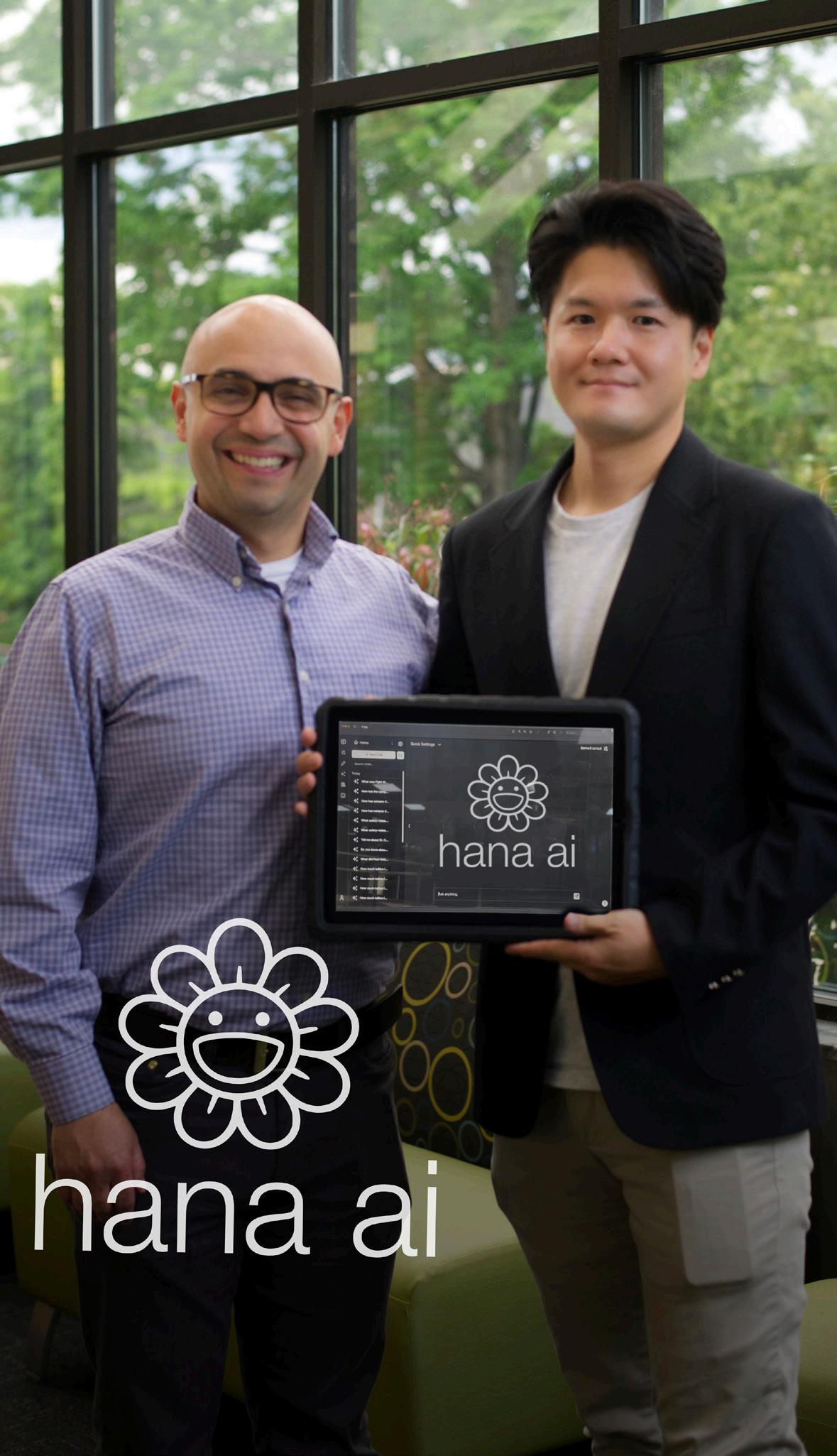
I am a graduate student from Tokyo, Japan, currently studying at Southern Adventist University as I work toward becoming an AI engineer.
I built Hana AI from the ground up as part of my graduate work in applied computer science. It is a self-hosted AI research assistant built using Retrieval-Augmented Generation (RAG), a method in which the AI looks up relevant information from a document collection before answering a question. This allows the system to work with local knowledge collections, such as materials related to the university, and helps it produce responses that are grounded in source material rather than relying only on general AI knowledge.
Hana AI is designed to answer questions based on specific collections of text documents through a chat-style interface similar to ChatGPT. Google’s NotebookLM also offers a similar kind of experience, but Hana AI runs entirely on the School of Computing server, which gives the university more control over its data and deployment. It can also be offered as a centrally managed login-based service, giving the university more flexibility in providing access, while NotebookLM sharing is managed at
the notebook level, and public sharing depends on the type of account being used.
The name “Hana AI” reflects the personality and purpose behind the project. It is partly inspired by the name “Hannah,” giving the system a more human and approachable feel.
In Japanese, hana means “flower” and can also suggest something special. The name reflects sensitivity to discovery, which aligns with the project’s goal of helping users uncover meaningful details in large collections of documents.
The project began as an extension of a class project for Data Mining and Analytics. For that class, Dr. Bob Young from the Academic Administration office provided about 1,200 typewritten university letters as a dataset. I later expanded the system by adding over 200 issues of the Southern Accent from 2014 to 2025. Because the university has archived Accent issues dating back to 1929, the system has the potential to work with more than a century of campus newspaper history.
To answer a question, the AI can read through many pages across the archive. It then uses semantic search powered by FAISS, an open-source technology developed by Meta, to retrieve the most relevant passages before generating a response.
One practical use is exploring long-term changes on campus. For example, asking Hana, “How has the campus changed over time?” can draw from years of Southern Accent coverage and produce a source-based summary about construction projects, enrollment-driven expansion, accessibility improvements and changes in student life spaces.
Because it can read across more than a decade of archived articles, it can show how a topic developed over time rather than simply returning isolated facts.
The system behind Hana AI is designed to work with very large collections of documents—potentially ranging from? 10 million to 100 million textbook-sized pages, roughly comparable to between 8,000 and 80,000 NIV Bibles’ worth of text, depending on formatting and edition.
I recently presented Hana AI at a Science Department luncheon, where I shared the technology behind the system and demonstrated its capabilities. At this stage, Hana AI is intended for internal and research-oriented purposes, but it shows how AI can strengthen university research infrastructure and make institutional knowledge more accessible in an intuitive and practical way.
Demo page: https://report-to-southern-accent.vercel.app/
Hayden Kobza Editor-in-Chief
Since 2005, over 2,500 newspapers have been closed across the United States, resulting in over 250,000 jobs lost, according to Courthouse News Service. Vital services such as election coverage, fact-checking misinformation, and exposing corruption have been lost, resulting in communities that have no one to tell their stories.
Experts call these regions ‘news deserts’ (areas with no news), but I prefer to call them ‘news vacuums,’ because there is no one qualified to cover the area, and building the infrastructure to break the vacuum can be almost impossible.
News vacuums are dangerous because fragmented versions of the truth can filter through, which can lead to long-term institutional harm and create systemic problems if left untreated.
For instance, during the mid-20th century, the Southern Accent fell into a news vacuum. Civil rights coverage was almost never reported. For instance, in a 1952 article, issues such as Jim Crow and the Ku Klux Klan were quoted from one department head, H. E. Westermeyer, as “largely rumors.” Additionally, the reporting placed little emphasis on the diversity of sources and even failed to report on race issues across campus.
As the decades have rolled past, the Accent has become more aware of its blinders, and today, as the Editor-in-Chief, I am officially apologizing to all current and former alumni, students and employees who were not given their voice in the “Student Voice Since 1929.”
We must recognize our past so this publication can continue breaking down the news vacuum in Collegedale.
Two years ago, when I first started working at the Accent under former Editor-in-Chief
Amanda Blake, one of her goals was community coverage. I was the Collegedale Editor, collaborating with two reporters, and every two weeks, there was a one-page special insert with articles on topics from taxation to police awards.
This year, we have expanded the paper to include that special insert every week, an accomplishment that I am very proud of. Another feat that I am happy to share is we have reached over 1 million online viewers overall in our coverage, breaking publication records exponentially.
There were so many restless nights because my team and I stayed up late and sometimes early into the morning to bring you trustworthy articles. At times we made mistakes, and that’s why I chose for us to have a corrections box to be as transparent as possible.
Democracy dies without journalism, for there is no one to fill the news vacuum. While this publication may be small, we have strived to shine a light on all issues.
Recognition of all those who supported the Accent Behind the scenes is a dedicated group of students who work in addition to their schooling, sacrificing their time and energy to our paper each week. There were so many times when I felt so strained, and all the staff members helped alleviate the stress and pressure as we were all in the same boat.
At the beginning of the school year, there were so many breaking news stories before our official publication, that most of my top editorial staff had to write over 4 articles each to keep up with all the current events. Chloe Smith, Eliana Morales, Kyla Wetmore and I worked day and night to bring those breaking news stories to life.
Nyah Jackson, by far, has shown the most dedication to the craft of journalism by being the only consistent layout designer building the paper you read each week. Additionally, by our side late into the night was Wetmore, who was only supposed to help on occasion but kept going, producing investigations into human trafficking arrests in Collegedale and human-interest pieces.
To everyone who has worked for me this year, your contribution is not unseen, and I thank you for all the details that only the staff will know.
To our readers, thank you for your continued support in our student publication; without you, there would be no newspaper.
To my parents, who have always allowed me to dream big, I love you so much, and I hope that I have made you proud by following the truth no matter the circumstances. I remember when I was little, and you both had told me the world was my oyster. I am so glad you gave me the gift of life. I will always be grateful for everything you have provided to me. As we always say: “Thank you in advance.”
To, Professor Alva Johnson, you saw my potential three years ago when I was a freshman. I cannot thank you

enough for pushing me and putting up with my antics, as we had many “discussions” (arguments) about almost everything related to the paper. I have always dreamed of having a mentor who is by my side, helping me along the way and making me grow. Without your leadership, I would never have become the Accent Editor, and you have directly helped me find my calling in life. I am so privileged and honored to be part of your family, and I will not let you down in my future endeavors.
Chloe Smith will be next year's Editor-in-Chief, and I have firsthand seen her skills develop in the classes we shared and this year as news editor. I am so excited to see all the things that you will do next year. Remember, one issue at a time. With this, I pass the torch to continue the legacy of this great paper.
Best regards, Hayden Kobza
Chloe Smith News Editor
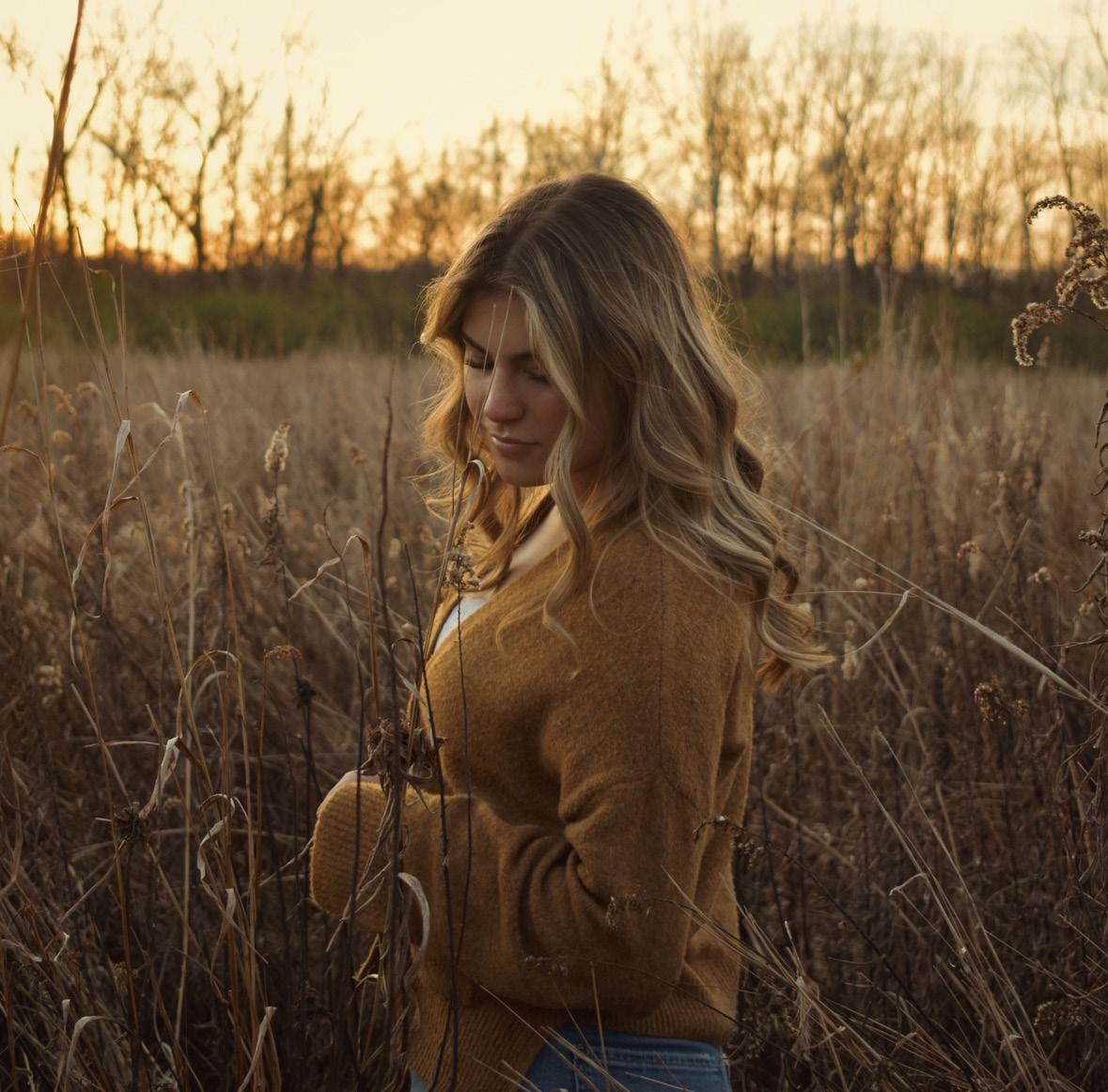
Coming to Southern for the first time was both the most exciting and the most horrifying moment of my entire life. Having attended the same school for 13 years, I was the girl who knew everything and everyone, and I found my identity in that. As the daughter of a pastor, it was a comfort to know I had a constant community around me and never had to know a stranger.
I was the person who always wanted to be in a leadership role, be involved in any way that I could and fulfill the high expectations that I thought were on me. But so much of that changed the moment I dropped my bags in my new dorm room.
Suddenly, I felt myself losing the passions I once had, growing distant from people I once knew so well and, by the end of the year, scrambling to find my identity again. People say change is hard, but it’s nearly impossible when you have experienced so little of it. Because of my rough start, I viewed that year as my makeup year, only to realize I had tipped the scales too far. I quickly found myself involved in more things than I could count, finding it hard to turn down anyone’s request. To say that year was been busy would be an understatement, but I am truly so grateful for the immense experience it gave me. Fast forward three eventful college years, and I can confidently say I still have not fully figured it out. It’s fun to sound
inspiring and share a story of complete transformation, but really, my testimony is still continuing, and I see the Accent as part of that continuation.
Struggling to find an identity in college is such a universal experience, and not many can say that they had a constant through it all. I am fortunate to say that the Accent was that constant for me. It found me at an all-time low, at a time when I didn’t think I was good enough, and has led me to where I sit now as the incoming editor-in-chief.
For as long as I can remember, writing has been my escape. Even when I was a kid, I can remember sitting in class and writing my own stories for fun. Looking back on some of those stories, I can say my writing has actually transformed. I now find joy not only in the creativity, but in giving a voice to people who are often voiceless.
Looking forward to next year, my goal is for more community involvement. At Southern, it’s easy to feel like we are in our own bubble, but really, we are one part of a blossoming city. In my time with the Accent, I have had the opportunity to make connections with city officials and members of Collegedale and have seen firsthand the need for stronger community news.
As editor, I see my role as a chance to make a difference on this campus and on the city as a whole. My dream is to have a paper full of stories that truly matter and, along with my amazing team, I am beyond confident that we can fulfill that.
Through my years in college and all the opportunities that have come along, the one key takeaway that I have gotten from it all is that you will never expect what God has in store for you. There have been many difficult times in my years at Southern, and I never thought I would end up here. My favorite verse, Romans 8:18, is a reminder of this very lesson; it says, “Yet what we suffer now is
nothing compared to the glory He will reveal to us later.”
With all the change life throws at us, it can be difficult to see past the present moment, but take it from me, so much can happen when you allow yourself to grow from those moments. If 18-year-old me were told where I am now, I would not have believed it. From a little reporter who had no idea what they were doing
to your incoming editor, there are no words to express how excited and nervous I am for this next chapter of life. So, thank you to all who have been by my side, through all the ups and downs, through the many chapters, and thank you to my Southern and Collegedale communities for entrusting me to share your stories.



Kimpu Kim Contributor
For many students, senior year is exciting and often seen as the final page toward becoming a professional. But for some, it becomes one of the most challenging and emotionally difficult periods of their academic lives.
According to the Psychology Today article, “Helping Your
College Senior Cross the Finish Line,” this stage of a student’s life is marked by heightened stress, anxiety and uncertainty about the future. The pressure to finish strong academically while preparing for life after university takes a serious toll on mental health. As graduation approaches, seniors undergo major life transitions. They are expected to move from the structured
environment of college into professional or graduate settings that may feel unfamiliar and demanding. Students start to question career paths, deal with financial responsibilities and gain more personal independence, which can trigger anxiety and self-doubt.
For some, these worries can lead to depression or stress that interferes with daily lives, even making it hard to attend
classes or complete assignments.
These mental health problems can even affect academic progress, such as delayed graduation or failing classes.
The Psychology Today article emphasizes that these challenges are more common than many realize and do not reflect a lack of ability or motivation.
Instead, they often come from the stress of change and the
fear of going into the unknown. It is important for seniors to keep in mind that they don’t need to be perfect to be successful. Acknowledging mental health challenges and seeking support will help them navigate this transition from student to professional with resilience and confidence as they prepare for the next important chapter of life.

Matthew Taylor Sports Editor
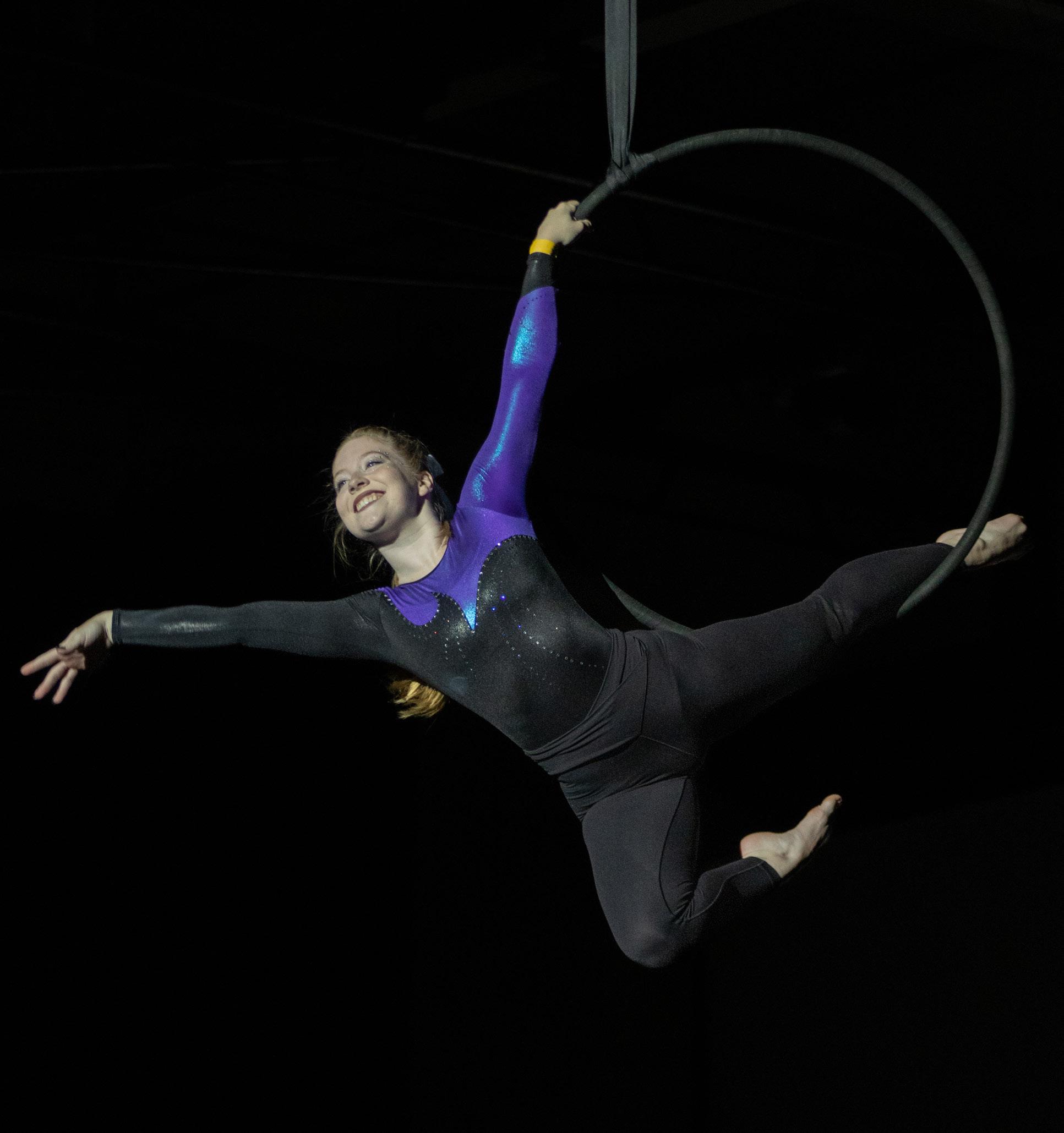
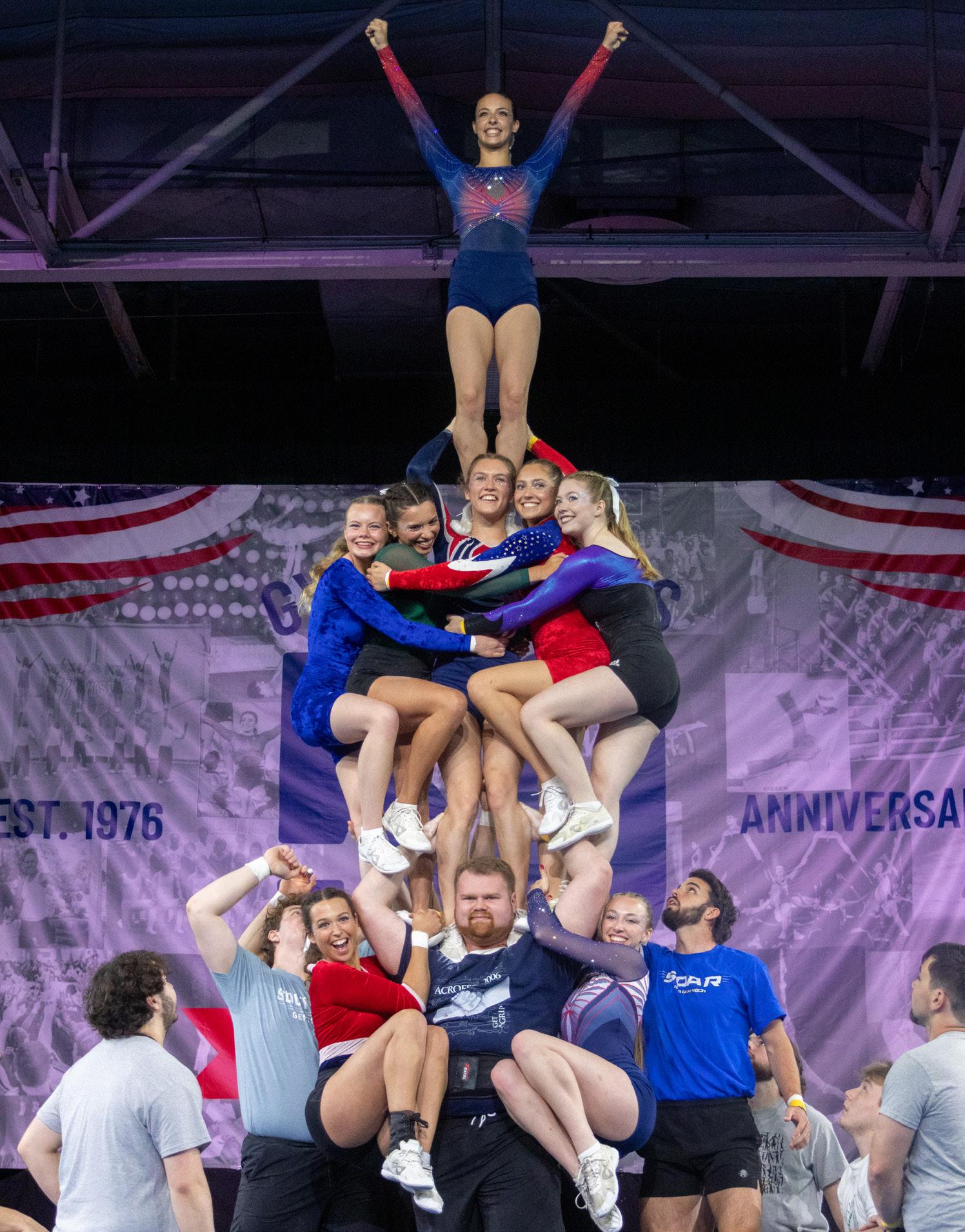
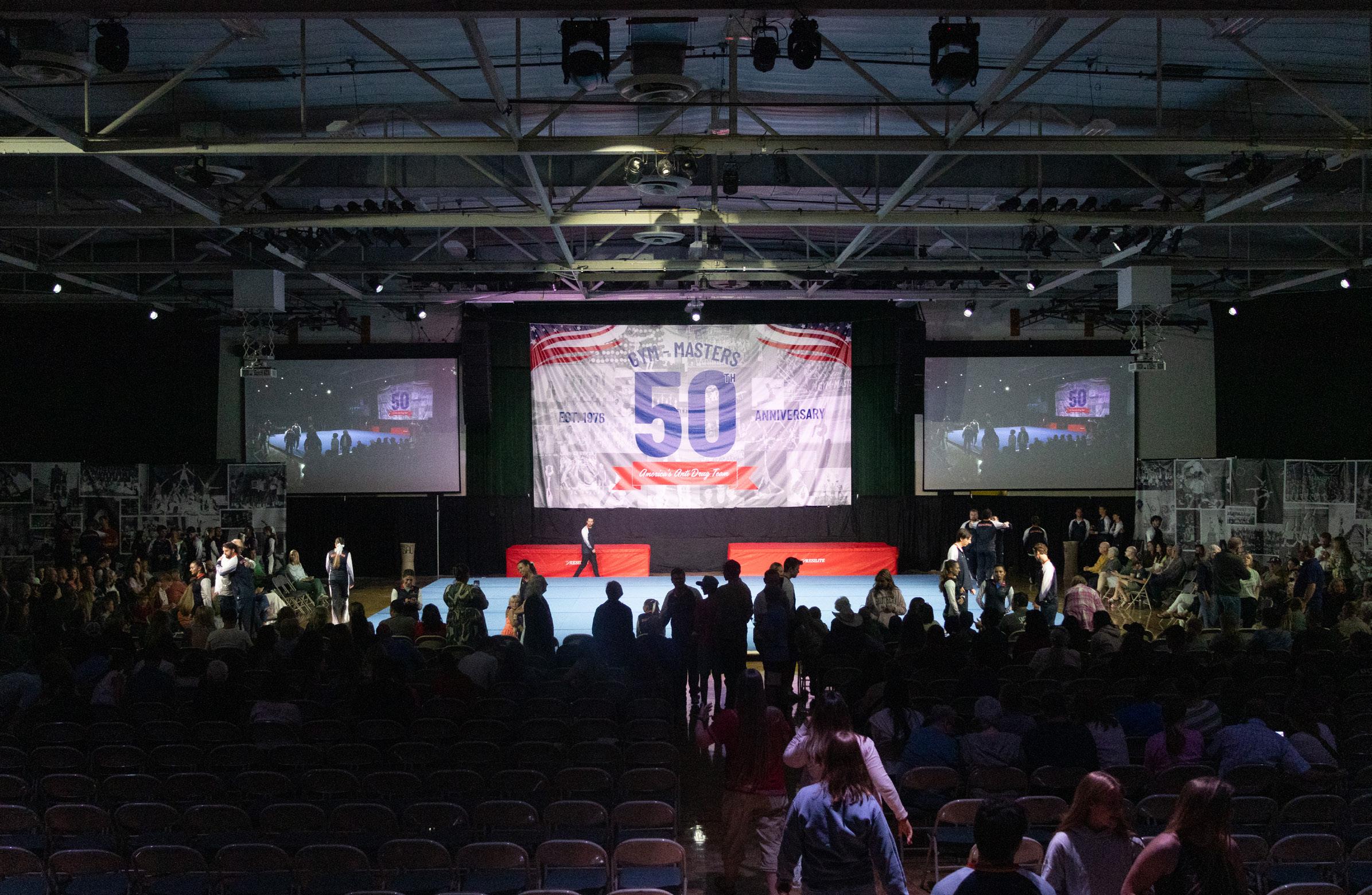
This past weekend, the Iles P.E. Center became home to a milestone celebration for the Southern Adventist University Gym-Masters. The team celebrated their 50th home show through an impressive showcase of towering pyramids, flips and tumbling routines.
Performing in front of a crowd of over 2,000 attendees across Saturday night and the Sunday afternoon matinee performance, the team of 50 student-athletes capped off an incredible season. It was a nostalgic weekend, serving as a heartfelt tribute to the five decades of athletes who paved the way for the current roster.
“Because this was the 50th anniversary of Gym-Masters, we wanted to celebrate all the people that have paved the way up to this point,” said coach Craig Johnson.
To honor that legacy, the team hosted an alumni gathering on Friday, integrated classic songs and moves into the current sets, and even put on a fashion show highlighting team apparel from across the eras.
The highlight of the weekend, however, was a special routine featuring returning alumni taking the floor alongside the current roster.
“It was so cool getting to look out and see all different ages and generations of Gym-Masters performing together on the mats again,” the guys’ captain, Seth Mitchell, said. “It was like they had never left.”
That sentiment was echoed across the team’s leadership.
The pressure of executing highly technical routines in front of thousands melted away into a comfortable and supportive atmosphere.
“It felt less like performing for a crowd and more like performing for your big family,” noted team manager Kylie Root.
“We got to perform for many of the past Gym-Masters and remind them why the team was so special to them all those years ago and still to this day,” team captain Sam Schmidt reflected. “We also enjoyed performing together as a family one last time.”
While the weekend shows were polished and joyous, the road to the mats was anything but easy. The 2025-2026 season was a grueling test of endurance for the Gym-Masters.
On top of the task of hosting Acrofest in November, which brought 32 visiting teams to
campus, the squad faced severe internal hurdles.
Team pastor Sarah Andrews shed light on the intense struggles happening behind the scenes leading up to the Home Show.
“It was an extremely challenging year with several team members leaving halfway through the semester for various reasons, lots of injuries, shows canceled, having to rewrite routines, and to be honest, I did not feel prepared at all walking into Saturday night,” Andrews shared. “I think that the show going as well as it did was 100% a blessing. I think for myself and for the team, it was the most fun I’ve ever had performing in my life.”
Beyond the physical feats, the Gym-Masters remain anchored to a mission that transcends the sport. Known affectionately by its members as “the blue church,” the team places a heavy emphasis on spiritual growth and ministry. Whether they are running clinics for high schoolers across the country or ministering internationally on mission trips, as they did recently in Peru, the acrobatic performances are ultimately a vehicle for connection.
“The best stories so far in my four years of coaching center around team members getting married, getting baptized and telling me how important this team has meant to their social
and spiritual life,” said Johnson. “One team member said [that] Gym-Masters brought them back to Jesus.”
Since much of the current roster is graduating, Sunday afternoon marked the last time they would ever touch the blue mats as active members. As the final routine concluded, the emotional weight of a 50year legacy, a grueling season and lifelong friendships finally settled in.
“After finishing our last routine, we came to the center of the mats and gave our last ‘SAU’ chant all together to end the show,” Root recalled. “What followed were sighs of relief and bittersweet tears.”
Anaya Parker Contributor
Enthusiastic consent. I first heard the term in my Human Sexuality class with my professor, Matt Tolbert, and it was the first time I truly realized that what had happened to me wasn’t consensual. I blamed myself because I had said “yes.” But looking back, the tears in my eyes and the trembling in my voice told a very different story: one of fear, not desire.
In a recent email to the Accent, Tolbert explained the concept.
“Enthusiastic consent refers to sexual encounters where both individuals are equally enthusiastic, excited and engaged in the encounter,” he stated. “This goes beyond verbal consent, which can sometimes be given while under coercive pressure. So, it guards against coercion in sexual encounters as well as any ambiguity in understanding the desire of each individual to enter a sexual encounter.”
Ideally, according to Biblical principles, such encounters should occur within a marriage relationship. Tolbert explained that consent — though just as important in that context to avoid abusive scenarios — may function differently.
“In some relationships, such as long-time married couples, ‘enthusiastic’ consent may not be a threshold necessary to meet for a sexual encounter. But it is a good position to take for most situations.”
When I used to think of sexual assault, I imagined someone screaming “no” while the aggressor ignored their cries. But that’s not what all assaults look like, according to experts. While the fight response does happen, many survivors instead freeze or fawn – trauma responses that are less understood.
According to SimplyPsychology, freezing during an assault may appear as going silent or feeling trapped in your own body. Fawning can appear as agreeing or playing along, with the intention of minimizing the danger. Survivors often go silent or even agree, not because they want to, but because they’re scared of what will happen if they don’t. When someone does not feel free to say “no,” there is no true “yes.”
The “Red Zone,” the first few months of college, is known as the period when about 50% of campus sexual assaults occur, according to Purdue University Center for Advocacy, Response & Education. It’s a vulnerable time, full of change and exploration. Students are learning who they are, testing new boundaries and, for many, encountering situations that blur lines of safety and consent.
It was during that time, September of my freshman year, that I found myself in a situation far too common. I’ve struggled to label what happened to me as sexual assault. Like many survivors, I told myself, “It could have been worse.” I also believe the perpetrator didn’t fully understand what he was doing. He convinced himself that he was helping me, that I’d start liking it, that it was okay because I wasn’t saying “no.” None of that excuses his actions. Intent does not erase impact. He made choices I will always have to live with.
In my case, it was not rape, but inappropriate touch. The young man was a fellow student I was simply friends with, and I truly believe he did not have malicious intent.
The truth is, people who commit assault often aren’t monsters hiding in shadows. Sometimes, they’re people who genuinely like you, who think “a
little push” is harmless. That’s what makes education about consent so critical. Violent assaults are real, but so are the quiet ones, where fear replaces choice.
Initially, I filed a Title IX report for sexual assault on campus, but like many survivors, I ended up dropping my case shortly after. According to an article by the Accent published on Jan. 18, 2023, a total of 42 Title IX reports were made in 2022, but 36 of those cases were dropped by the complainant. Dennis Negrón, vice president of Student Development, explained in a recent email to the Accent that some of those cases did not to rise to the level of a violation.
“Only 10 percent went to hearing,” Negrón explained.
However, a case being dropped doesn’t mean it didn’t happen. Cases may be dropped for a variety of reasons, including self-blame, insufficient evidence and re-traumatization during the reporting process. The process of reporting and going to court is lengthy and potentially equally as traumatic as the assault itself.
According to the Rape Crisis Center in Texas, 70% of survivors know the person who assaulted them. It’s not a stranger in a dark alley, but someone they trusted: a classmate, a partner, a friend or a family member. These are not random attacks; they happen within relationships where safety should exist.
I strongly believe that misunderstanding consent is one of the most dangerous gaps in our culture today, especially in religious communities, where open conversations about sex are often rare or discouraged.
A study published in Violence and Gender vividly illustrates this distorted understanding.
Researchers found that 31.7% of men said they would force a woman to have sex if there were no consequences, yet only 13.6% said they would “rape” a woman under the same conditions. This difference in language matters. This small but striking study reveals how people often separate “forcing sex” from “rape,” even though they are the same act.
This study, though small (86 participants), highlights a broader issue: Many people still imagine sexual assault only as violent attacks by strangers, rather than recognizing that coercion, pressure and the absence of consent are also assault. This confusion doesn’t only apply to perpetrators; it also affects survivors.
According to the National Sexual Violence Resource Center, over 90% of college sexual assault survivors never report their assault. Some fear not being believed; others don’t realize that what happened to them “counts.” They, too, have internalized this misunderstanding.
It’s also important to recognize that sexual violence isn’t limited to one gender or type of person. Though most cases involve male aggressors, women can also commit sexual
assault, and men can also be victims. At its core, sexual violence is a human problem rooted in power, silence and a lack of education.
I often wonder what might have been different if the young man and I had both understood what consent really meant. Consent is necessary for more than just intercourse, including everything from kissing to touching. It should be enthusiastic. It should be free of coercion. It should be given willingly, in safety and mutual respect. But we must always remember God’s original intent for such activities to occur within the context of marriage. Consent is not just a word; it’s a language of care, respect and freedom. The better we learn to speak it, the fewer people will have to grapple with trauma in silence.
My hope is that conversations about enthusiastic consent don’t end in classrooms, but that they begin there, and keep going, in dorms, in churches, in friendships and in relationships. Because until everyone knows that “yes” must be free, enthusiastic and safe, we still have work to do. And that work begins with listening to survivors and examining our own internal beliefs.

“Consent
Asher LeVos Reporter
Southern Adventist University boasts of its beautiful outdoor spaces. Pink blossoms cover trees in the spring as students walk to class. Students lie in the green grass near the Hulsey Wellness Center, while others walk alongside the Greenway.
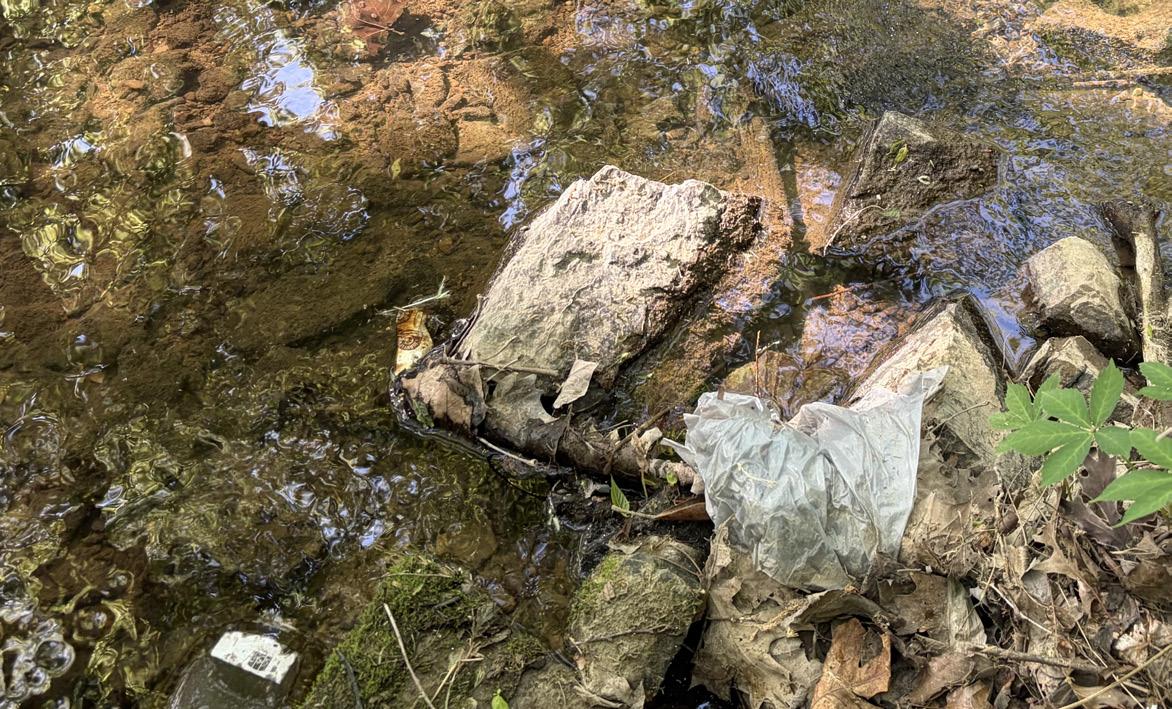
Among the beautiful scenery, a single-use plastic bag lay in stark contrast to the rocks and leaves surrounding it. I was walking along the Wilkerson Branch Creek that eventually flows into the Tennessee River, near the Goliath Wall, when the bag caught my eye. It was almost camouflaged below the bank, while a plastic Village Market container floated nearby. As I picked up the polluting trash, I felt frustrated at the prevalence of single-use plastics on our campus.
When asked about waste management and sustainability, Southern’s public relations department shared insights from Vinnie Schober, an associate vice president for Financial Administration.
“Southern is continually working to become a greener campus by improving the efficiency of our infrastructure and prioritizing sustainability in building upgrades,” stated Schober.
According to Schober, Southern is currently prioritizing energy efficiency while also proactively relining sewer and water lines and installing LED lights.
Southern has a recycling program on campus, yet single-use plastics are incompatible with on-campus recycling, according to the WestRock Recycle Residential Single Stream Guidelines flyer that Landscape Services uses and provided to
the Accent. According to those who work in Landscape Services, plastic bags can damage sorting machines, making them non-recyclable.
Discarded plastic and styrofoam that enter our stream at Southern speak to broader trends and issues surrounding microplastics in Tennessee.
In 2018, Andreas Fath, an athlete and professor at Furtwangen University in Germany, swam all 652 miles of the Tennessee River and collected water samples throughout the 34-day journey, according to a Herbert W Hoover Foundation report.
After conducting a lab analysis on the samples, Fath found an incredibly high amount of microplastics in the water. The Tennessee Aquarium Conservation Institute reported that microplastic concentrations found in the Tennessee River were 8,000% higher than those of the Rhine River and over 80% higher than the Yangtze River in China. According to the Tennessee Aquarium Conservation Institute, at the current rate, there will be more plastic in our waters than fish by 2050.
Martin Knoll, a professor of hydrology at the University of the South, stated in a Tennessee Aquarium Conservation Institute report that among measured rivers on Earth, the Tennessee River has some of the highest rates of microplastics suspended in the water. According to Knoll, the majority of the Tennessee River’s microplastics are polyethylene, which is the substance single-use plastic bags are made from.
This growing concern led me to contact Brook Fleeman at Waterways, a non-profit based in Chattanooga that focuses on protecting watersheds . Fleeman serves as the director of operations and the Tennessee
River rescue coordinator.
“Every year our number goes up for how much [plastic] we collect out of the Tennessee River watershed,” said Fleeman. “This last year, nearly 60,000 pounds of trash was collected. That’s not including bulk trash like tires or furniture that were collected and recycled.”
According to Fleeman, the emphasis should be directed towards reducing plastic use and dependency while inspiring lasting behavior changes.
Single-use plastics and the microplastics they create are not only environmental health hazards, but human health hazards. Recent research by experts at Stanford University supports growing evidence of plastic health issues. Dr. Juyong Brian Kim conducted studies suggesting microplastics enter humans’ bloodstreams and contribute to vascular disease progression. According to another researcher, Dr. Desiree LaBeaud,is data is still limited, but obesity, cardiovascular disease and cancer-related epidemics may be linked to plastics.
Young people are especially at risk. A pediatric head and neck surgeon at Stanford, Dr. Kara Meister, connected microplastics with increased cases of thyroid cancer and autoimmune disease.
At the beginning of 2024, Meister and her research team started examining the removed tonsils of young patients and found high amounts of microplastics deep within the tissue. Meister acknowledges the need for increased research and better quantifying techniques.
Recently, I called for the Student Association Senate to send a letter to Southern’s administration recommending a low fee of 5 to 10 cents for Village Market plastic bags. If
implemented, this letter of recommendation would serve as a starting point to address plastic dependency.
It is important to note that the proposal is a letter of recommendation and that the decision is not ultimately made by Senate. If Senate was to vote in favor of my letter proposal, the proposal would be sent to Southern’s Administration and would be determined by their response.
Additionally, the sustainability proposal is moderate and is backed by credible research. Southern students who oppose a bag fee may be unaware that twelve states have enacted single-use plastic bag bans.
Many studies and resources point to the effectiveness of single-use plastic bag bans and fees.
After Washington DC issued its first disposable bag fee, the Department of Energy and Environment (DOEE) commissioned a study. Survey results in the initial study found that 75% of residents reduced their reliance on single-use plastic bags. According to the report, businesses reported at least a 50% reduction in disposable bag distribution.
On April 12, following the Senate meeting where I
presented, I was notified of a change.org petition to “stop the proposed plastic bag fee at Village Market.” I contacted the creator of the petition, but they were not immediately available for comment. The emails and descriptions I read from students who strongly opposed single-use bag fees argued that a fee would create added financial strain.
However, the point of a fee is to reduce single-use plastic use; students shopping at the Village Market do not have to rely on plastic bags. Instead of relying on single-use plastic bags from the Village Market, either bring a reusable bag or leave without any bags.
It is important to consider Biblical ideals in our actions. God created humanity and tasked us with caring for his creation. The Bible says in Genesis 2:15 that God created people to work in the garden and take care of it. When we believe God tasked us with cultivating His creation, why should we neglect reducing the harmful effects of single-use plastic? When the spaces around us thrive, we thrive. When our outdoor areas heal from pollution, it creates healthier spaces for humans to inhabit. 28:18-20 NIV).
Rhett
Seitz Lifestyle Editor
Well, friends, here we are.
This is the last lifestyle article for the last Accent issue of the 2025-2026 school year. It is hard to believe that we are here at this moment. It feels like just yesterday when I wrote my first-ever “Welcome Back,” detailing “How to level up your semester.” Now, here we are on the other end of the spectrum.
When writing this article, I really had to hit the brakes and think hard about what to write for this last issue. After all, how do you say farewell after a whole year of writing?
For this last issue, I decided to do something a little different. I wanted to make this issue more personal, talking about the lessons I have learned both in this role and during my time here at Southern.
But to give these lessons, I first need to go back to the beginning.
Last August, I was walking outside at my grandmother’s house, doing what every productive person does: scrolling on Instagram. I stumbled upon the Accent’s Instagram story, which was seeking new writers. It said to respond to the story if you were interested.
Since I was heading into my last year of college, I wanted to do something fun that I had never done before. After all, I believe it’s good to get out of your comfort zone and try new things (if you couldn’t tell from my previous articles).
Intrigued, I decided to go out in faith and respond to the story.
I honestly did not expect a reply back, assuming I’d be
ghosted like many people who apply for jobs online.
However, an editor messaged me back on Instagram and asked, “What type of writing would you like to write?” I responded, “Whatever options are needed, but more focused on mental health, life advice or just general life stories. What is needed?”
The editor said that was actually what they were looking for, and they would be in contact with me.
A few days later, I got a phone call from a number I did not recognize. When I answered, it was Hayden Kobza, the editor-in-chief. He told me he wanted me to join the team as the lifestyle editor and thought that I would be a great fit.
I was shocked. I was expecting only to write maybe a piece or two, as I didn’t realize the Instagram story was asking for section editors. I was honored to have the invitation extended to me; however, I was still a little hesitant. I had writing experience, and I loved writing, but I had never written an article before, nor did I ever expect myself to be an editor.
I asked Hayden for some time to think before deciding. I thought to myself, “What if my articles aren’t good? Is writing an article every week too much for me? What if I run out of ideas? What if, what if, what if?”
But then, I thought this was exactly the position for me. I love sharing advice and helping others, so why not treat the people reading my articles as my parishioners being “fed”?
After that thought, I had my answer.
I called Hayden back and committed. I never looked back and have enjoyed the journey ever since. These articles were not just lessons for my readers, but also insights for me to grow and develop as a person. I have tried to make every article unique and compelling, so that people think, “I never considered that before.”
As I write my last article, I wanted to offer some final encouraging, uplifting advice that I have learned during my time here at Southern and in my life.
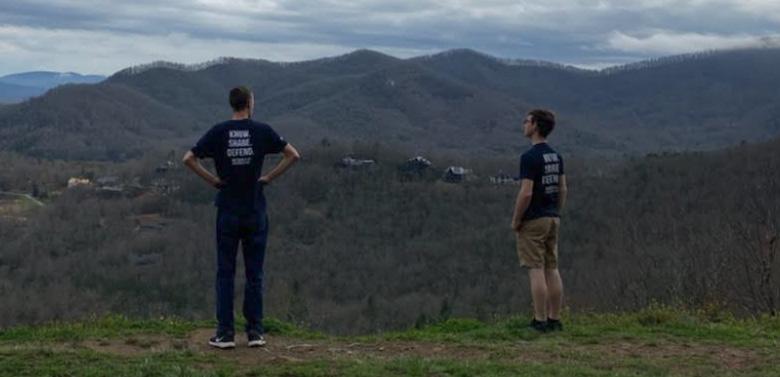
All of us are reaching some kind of goal in life, a summit of some kind. True satisfaction comes not from finally standing at the peak and being done, but from the continual climb itself, the journey along the way. Keeping your eyes focused on the upward journey will motivate you to live the life God wants for you. Never stop climbing that summit, as that is what life is all about.
Whether you realize it or not,
wherever you go in life, you are creating, building and leaving a legacy behind you. That legacy can be either good or bad. No matter what others think or say about it, what do you want your legacy to look like, especially after you are gone?
Answering that question with a goal in mind will help you decide how to live your life now. Granted, this doesn’t mean you won’t make mistakes, nor does it mean that you shouldn’t, because you learn more from your mistakes than your successes—and trust me, I have made plenty.
Your legacy isn’t built by being perfect; it is built by how you treat and relate to other people.
Ralph Waldo Emerson famously said, “To leave the world a bit better... to know even one life has breathed easier because you have lived. This is to have succeeded.”
After all, people are what make the world go around. The path of life is full of failures,
but life itself is one big success, as it is always a blessing to be alive. What makes life rewarding is knowing that we all have each other to join us on the climb.
When it’s all said and done, nothing will be greater than seeing Jesus and hearing the words of Matthew 25:21, “Well done, my good and faithful servant.”
I want to thank the entire Accent team for allowing me to be part of this journey over the past year. I want to thank Hayden Kobza for extending this invitation to me and Eliana Morales for being an amazing manager this year and helping me in this role.
Lastly, I want to thank every single one of you, readers, for taking the time out of your schedules to read my articles. I have enjoyed hearing your feedback and how you have been blessed by my articles.
And for the last time, my friends, I will see you all later. It truly has been a joy!
Hayden Kobza Editor-in-Chief
Galatians 5:16-26 talks about what the flesh of humans strives for and how we, as Christians, should live by the Spirit. These verses contain many allusions and parallels to other biblical texts.
Specifically, they reference Jesus’ words in Matthew 5:17: “Think not that I am come to destroy the law, or the prophets: I am not come to destroy, but to fulfill.”
I believe this verse presents the central theological theme of Galatians 5:16-26: total union with God.
In Galatians 5:18, Paul writes that “if you are led by the Spirit, you are not under the law.”
Here, Paul was not refuting the law of God but stating that our need to hold ourselves to
the law is fulfilled by walking in the Spirit.
In verse 16, Paul continues, saying, “I say then, walk in the Spirit, and ye shall not fulfill the lust of the flesh.”
According to openbible. info, this verse has over 21 cross-references, 17 of which are outside Galatians.
One of the most fascinating verses within these references is from Romans 8:4-5, that states: “Those who live according to the flesh set their minds on the things of the flesh, but those who live according to the Spirit set their minds on the things of the Spirit.”
These related texts intensify the meaning of Galatians 5:16 by expounding on the thought that Paul had written.
Scholars such as Douglas Moo have stated that Galatians was most likely the first letter written by Paul, written around
the year A.D. 48. It is no surprise that Paul wrote in more detail to the Romans almost a decade later, approximately A.D. 56-57.
Later in Galatians 5, verse 25 demonstrates that God did not say that the law is no more; rather, the law is fulfilled through the Spirit: “And those who are Christ’s have crucified the flesh with its passions and desires.”
What is the central theme of the Bible? According to the General Conference website, Adventists believe the point of the Bible is God’s plan of redemption for humanity.
To become new vessels for the Lord, we must be born again into the Spirit, as Jesus stated in John 3:5: “Very truly I tell you, no one can enter the kingdom of God unless they are born of water and the Spirit.” Continuing this point, the
entire book of Galatians was intended to point believers in the right direction so they would not be deceived by false teachers that “pervert the gospel of Christ.”
Paul likely raised these issues in response to Jewish teachers demanding Gentiles follow Jewish law, a conflict he addressed throughout his letters and faced personally in Jerusalem, where he was accused of bringing Gentiles into restricted areas, an offense punishable by death
In broader Adventist circles, Ellen G. White believed that walking in the Spirit was more than doing away with the law; it was a process of daily devotion.
In Steps to Christ, she states, “But when the heart yields to the influence of the Spirit of God, the conscience will be quickened, and the sinner will discern something of the
depth and sacredness of God’s holy law, the foundation of His government in heaven and on earth.”
White goes on to quote from John 1:9 to set up a beautiful passage about how Jesus, the light of the world, shines into the darkest places of our minds and makes us self-aware that we need to change to walk in the Spirit.
These passages in Galatians, along with the larger context of the New Testament and works by other writers, demonstrate the power of allowing God to work in us through His Spirit. Once God has entered our hearts and minds, we no longer have to struggle to fulfill the law out of our own power; rather, God moves in us to redeem us and guide us to a life of service to Him.



8:00 pm Student Association Senate @ Bietz, Old Southern Shoppe
Friday — 24
• 6:30 pm Vespers: Asian Club, Toakase Vunileva @ Collegedale Church of Seventh-day Adventists
• 7:30 pm AfterGlow @ Collegedale Church of Seventh-day Adventists South Atrium
8:21 pm Sunset
8:30 pm Vespers: Asian Club, Toakase Vunileva @ Collegedale Church of Seventh-day Adventists
9:00 pm Star Watch @ Hickman Science Center Parking Lot

Sunday — 26
• 9:30 am SOAP: Ocoee Rafting ($10) @ Wright Hall
7:30 pm Concert: Southern Symphony Orchestra @ Collegedale Church of Seventh-day Adventists

Tuesday — 28
Nothing Scheduled
• 11:00 am Convocation: Asian Club, Toakase Vunileva @ Collegedale Church of Seventh-day Adventists
• 3:30 pm Graduate Curriculum Committee @ Wright Hall Robert Merchant Room
Soccer
6:00 pm
- Grass Kickers vs wiz khafifa (Women’s)
- Cleats & beats vs The Dribbling Idiots (Men’s B)
- clankers fc vs Andrew Murphy (Men’s B)
7:00 pm (Men’s B)
- Bearly Atletico FC vs Perfectly Aged
- KOALA FC vs kyle lowry
- Zero Ball Knowledge vs Slightly illegal
8:00 pm (Men’s B)
- Lionel Ronaldo vs The Grass stains
- Bardrid vs Suiiii
- Yawa FC vs Bodo/Glimt
9:00 pm (Men’s B)
• 10:00 am SOAP: Hiwassee Rafting, Outdoor Church @ Wright Hall
• 7:30 pm Evensong: Voice Students @ Collegedale Church of Seventh-day Adventists
• 9:00 pm Asian Cultural Night @ Iles P.E. Center
— 25 Monday — 27
- Monarcas FC vs Always Offside
Playoffs (Racket Sports)
5:00 pm (Badminton Men’s Singles)
- Z kwon vs B Kang
- Z Cai vs G Lin
5:00 pm (Tennis Singles Men’s B)
- Y Raulino vs C alvarez
- K Castro vs J Cirigliano
6:00 pm (Pickleball Mixed Doubles B)
- T Trumbull vs K McCoon
- E Chang vs M Suvichai
- C Cabezas vs I moody
- C No vs M Mambo
6:00 pm (Pickleball Mixed Doubles A)
- N Gatling vs L Lee
- B Beaman vs J Nerona