Southern Accent

Chattanooga theater
pre-premieres ‘The Hopeful’: Sharing Adventism’s story with a modern audience
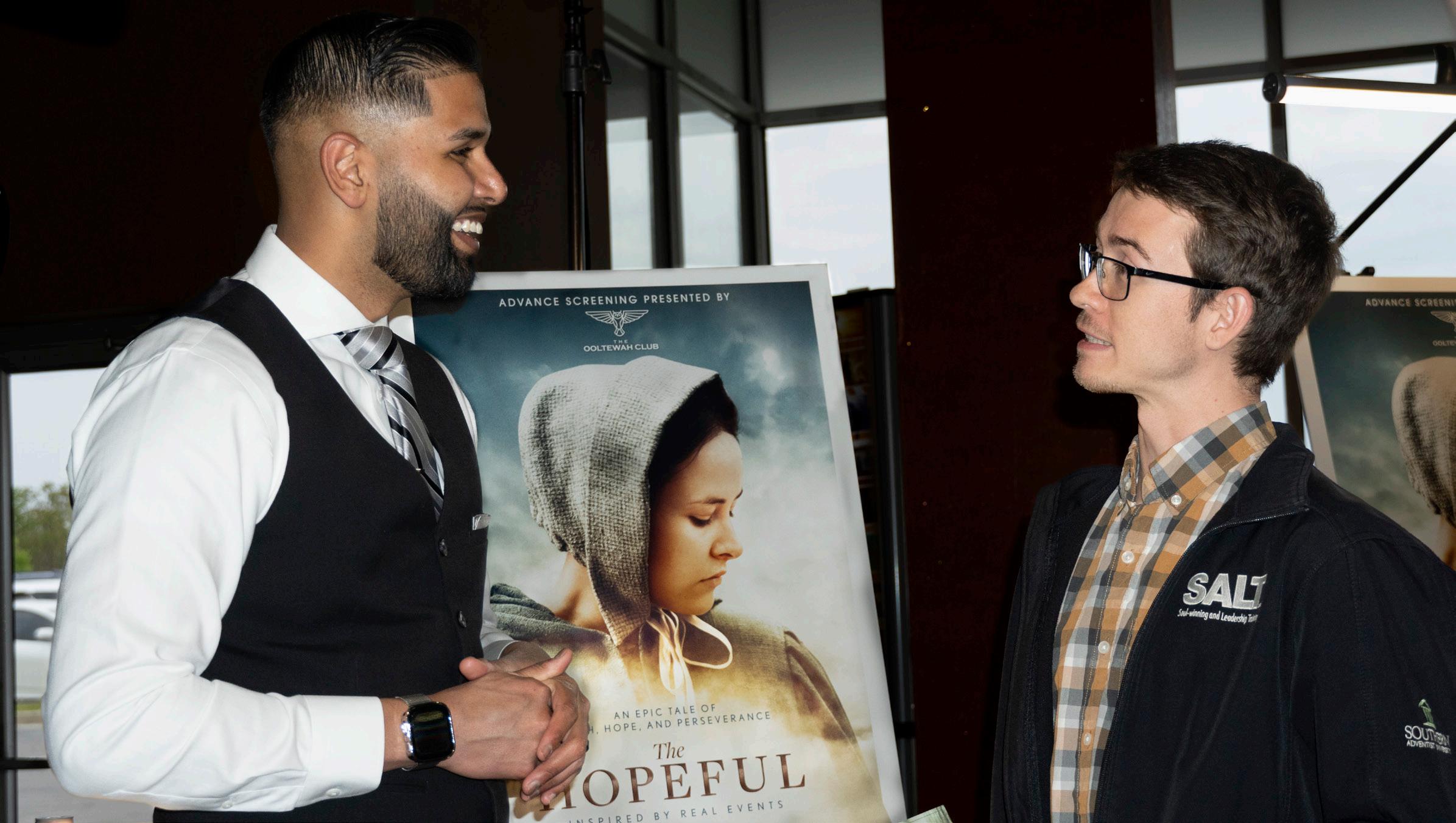
Jitesh Ram, a
Amy Mejias Reporter
On the evening of April 10, Regal Cinema Theatre at Hamilton Place was full of enthusiastic attendees for the Chattanooga preview screening of the movie, “The Hopeful.” The film tells the story of the Seventh-day Adventist church’s beginnings, starting with the preachings of William Miller and then depicting the story of Ellen G. White and the spread of Adventism overseas by John N. Andrews.
The film’s preview included a red carpet, photographers, Southern students and staff, representatives from Hope Studios, the film’s investors and its Emmy Award-winning director, Kyle Portbury. The pre-premiere was held in Chattanooga due to the majority of investors being from this area.
While describing his motivation for creating “The Hopeful,” Portbury, himself a Seventh-day Adventist, said he wanted to share stories about the 19th-century pioneers of Adventism in a way that brought them to life and made them relat-
able, even to those watching in the 21st century. “People always try to say, ‘We don’t want to get stuck in the past,’” he said. “Well, it’s not about getting stuck in the past. It’s about understanding that the things they were grappling with, the stuff that they doubted and the arguments they had with their spouses are all the same arguments that we’re having today.
“I think the value of art is to provoke us and challenge us to assess ‘Who am I in this story? Would I be the person who
Beloved sushi chef for VM passes away
Gabriella Grundy Staff Writer
Naw Lawn Dumhpya, a man known for crafting the sushi offered at the Village Market at Southern Adventist University, passed away in his home on April 3 at the age of 62.
Born in Njang Yang, Myanmar, Dumphya immigrated to the United States and has lived in Ooltewah since 2006, according to his obituary posted on Heritage Funeral Home’s website. He was a member of the Tennessee Kachin Baptist Church in Nashville.
Since 2010, Dumhpya had been an independent contractor for the Village Market, operating his business, Lawn Village Market, which offered Southern students and community members a wide variety of vegetarian and vegan sushi, according to Nick Johnson, assistant store manager of the Village Market.
Several staff from the Village Market took time off from work April 8 to attend the memorial service for Dumhpya, held at Heritage Funeral Home in Chattanooga, according to Johnson. He said Dumphya will be deeply missed by the Village Market family.
“We all loved him here; he was a very hard-working Christian man,” said Johnson. “He had a really positive attitude and energy about him and was always smiling, laughing and joking around with us.”
Jehlyssa Kennedy, senior nursing major, would frequently pur-
chase Dumhpya’s sushi from the Village Market when she was on a meal plan. She noted that Dumhpya was very accommodating to students.
“I’m allergic to sesame seeds and got to meet him and tell him about my allergy, and from then on he would make special orders for me without sesame seeds,” said Kennedy. “I used to call him ahead to pick up my order, and he always knew it was me calling, and he’d specifically bring it out to me when I got there.” Kennedy also said that Dumhpya was “a very sweet man and so joyful and intentional about the food he made.”
Dominick Cheers, junior public relations major, worked for Dumhpya during the 2022-2023 school year.
“I worked at the Village Market three days a week during my sophomore year, and on one of those days, I would help [Dumhpya] make sushi,” said Cheers. “He taught me how to properly roll, cut and package the sushi and would tell me about how he was using his business to support his family.”
According to Cheers, Dumhpya wanted to make his sushi as affordable as possible for Southern students.
“He knew saving money is important for college students, so he charged as low as he could while still making a profit,” said Cheers.

gives up? Would I be the person who stays the course? Who am I in this?’” he added. “That’s the whole point of cinema. You’re not trying to convince people of anything. All you’re doing is trying to provoke thought and reflection and create a conversation, which is the best part about cinema.” For audience members who had seen “Tell the World,” a 2016 series about the beginnings of the Adventist Church, several aspects of “The Hopeful” seemed
Southern faces enrollment and housing uncertainties
Htet Myint Reporter
Southern Adventist University’s continued growth has raised questions about how the university will adapt its campus to accommodate an influx of new students expected to join the student body.
While discussing enrollment projections at the Feb. 29 faculty town hall meeting, University President Ken Shaw said Southern anticipates a freshman enrollment for Fall 2024 that is higher than originally budgeted. The university budgeted for 730 freshmen and will have beds available for 750, but projected enrollment is now closer to 800.
However, according to Ryan Harrell, website and analytics
See HOUSING on page 2
EYA choir grows into active ministry
Eliana Morales Staff
Writer
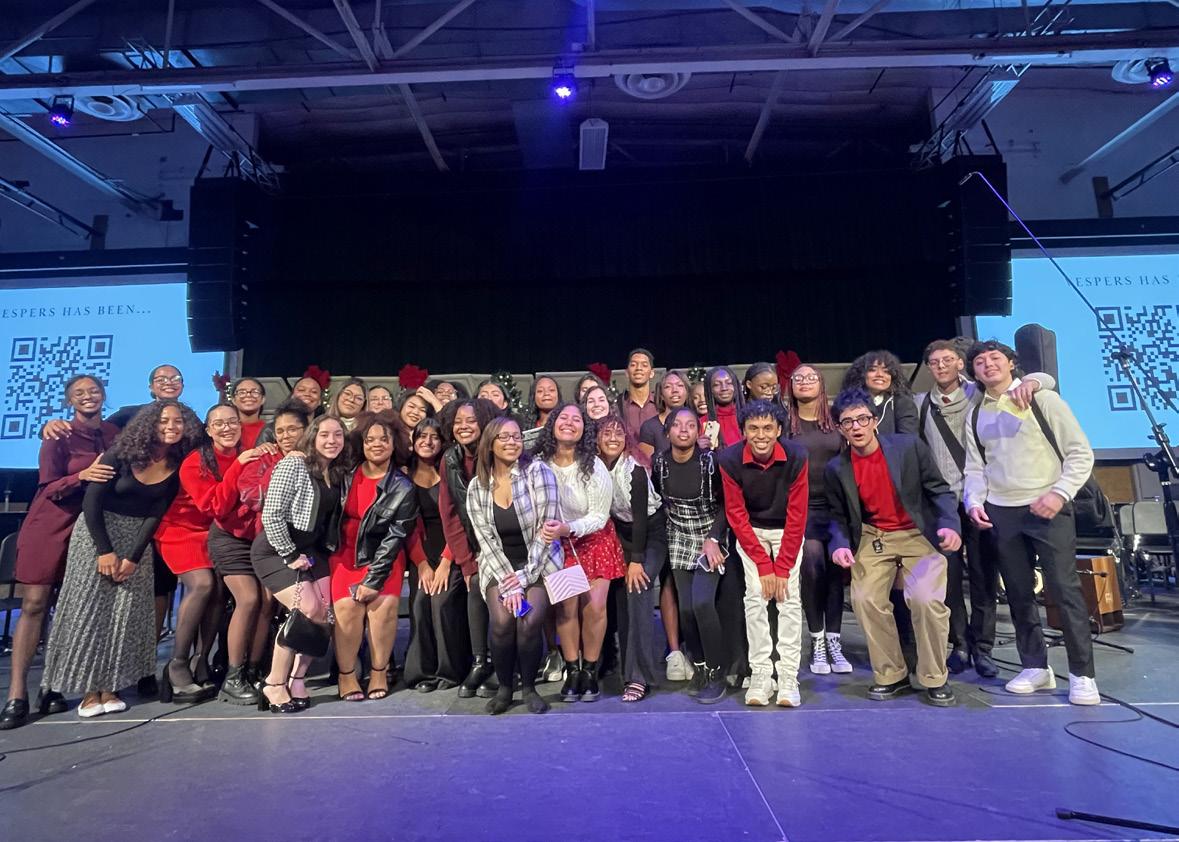
The EYA choir, which began as a spontaneous suggestion within Jhoan Ogando’s friend group his freshman year, has blossomed into an active ministry on campus. Ogando, sophomore graphic design major, said that EYA stands for “esperanza y amistad,” the Spanish words for hope and friendship. He decided to create a choir that embodied those two ideals. “I wanted to make a different community, where I welcomed everyone,” he said. “I realized there wasn’t a Latino choir [on campus] where we sing in Spanish.”
Auditions are not required. To those who want to join but are worried because they don’t speak Spanish, Ogando says, “I don’t care. Come.”
Although many of the songs contain parts sung in English, Ogando takes time during practice to review the pronunciation of parts sung in Spanish with everyone, without separating fluent speakers from non-Spanish speakers.
Carlie Alvarez, a recent EYA choir member and freshman vegetarian culinary arts major, said, “I enjoy how we are not limited to one language but are able to worship God through many.” Sophomore computer science major Erika Peralta loves music
and also found a community when she joined the choir last semester.
“It was pretty cool to see people from different Hispanic backgrounds, and even non-Hispanic backgrounds, join together to share a language and a God we love to praise,” she said.
Ogando and his friends were the original members of the group, but today the choir has grown to 70 individuals. Although the EYA choir is not an official Southern choir, Ogando believes that more students have become aware of it. The choir's first performance took place a year ago at Lawn Vespers, and the group performs mainly for worship services, such as those at Merge Worship and Iglesia Adventista Hispana de la Comunidad.
To Ogando, the EYA choir is unique because it is not heavily structured.
“I go with the flow,” he said. “I just let God tell me how everything should go.”
The group practices once a week on Fridays, and its performances are spread throughout the semester at various locations. Those who attend do so out of their free will and not because they will receive worship credit.
The student voice since 1926 April 17, 2024 Collegedale, Tennessee Vol. 79 Issue 23 Q&A with student missionaries to Laos and Hong Kong Facing anxieties that come with life after graduation Mental Health | 7 Reflections on identity as a Chinese adoptee Religion | 8
Hope Channel International employee who acted as a host at the advanced screening of "The Hopeful," speaks with Southern Adventist University student Dawson Stephens. Several Southern students and staff attended the event. Wednesday, April 10, 2024. (Photo by Andre Ottati)
See CHOIR on page 3
had
“He was the nicest guy and always
a smile on his face.”
‘THE HOPEFUL on page 2 Collegedale News on page 5
Pike expansion continues Sports | 7 The impact of Asian American and Pacific Islander athletes Editor’s Note: Dumhpya’s name was spelled differently in two separate obituaries. The Accent elected to use the spelling “Dumhpya” because that was the spelling used by his family in an obituary posted at the Village Market. Furthermore, two obituaries listed different ages for Dumhpya at the time of his passing. The Accent elected to use the age listed on Heritage Funeral Home’s website because that obituary included the year of Dumhpya’s birth. Writer’s Note: Although some of Dumhpya’s family members were named in his obituary, I was unable to find any leads on their contact information. Out of respect for those grieving and due to the time restraint for this article, I have personally refrained from pushing to locate more sources, and instead focused on writing this feature to inform the Collegedale community of Dumhpya’s passing.
See
Apison
What to do in Collegedale this summer
Naw Lawn Dumhpya. (Photo courtesy of source)
Writer Lifestyle | 9
Gabriella Grundy Staff
HOUSING
continued from page 1
manager at Southern, the university’s ability to predict enrollment has been impacted by what’s happening with the college application process in the federal arena.
“Unfortunately, due to delays in federal financial aid applications (FAFSA) this year, we have a pretty low degree of certainty on our enrollment projections for this coming fall at this point of the year,” he wrote in an email to the Accent. “The changes in the federal financial aid system are a huge unknown in terms of how it will impact student decision making.”
According to Bob Young, senior vice president for Academic Administration, the university models incoming freshman numbers using past history of inquiries, applications, acceptances and campus visits and deposits. The model resets for each semester.
‘THE HOPEFUL’
continued from page 1
familiar, including the majority of actors in the film and many of the same scenes. “Tell the World” was a collaborative project produced by the Australian Union Conference, the Hope Channel and the General Conference. It was also directed by Portbury.
Both “Tell the World” and “The Hopeful” were filmed at the same time, but “Tell the World” was a six-episode mini series, while “The Hopeful” condensed footage into a 90-minute film with a different character perspective.
“‘Tell the World’ was looking at the story from this angle through [particular] characters. But “The Hopeful” is over here looking at it through different characters’ lenses, and there is a very different structure in storytelling,” Portbury said.
“The Hopeful” is a frame story, meaning it tells two stories, one set within the other and narrated by a main or supporting character. In this film, the narrating character is John Nevins Andrews, the
“We do not explicitly model freshman numbers out more than the next semester, although we do look at the total number of Seventh-day Adventist young people in general and the number of students enrolled in Seventh-day Adventist elementary and secondary schools as a mild predictor of future enrollment,” wrote Young.
According to a previous Accent article, Fall 2023’s freshman class of 758 students was the largest the institution has ever seen. It was the first time a freshman class at Southern not only reached, but also surpassed 700 students.
In the same article, Dennis Negrón, vice president for Student Development, noted that early projections last year suggested that Fall 2024’s freshman class would also be very large.
A graph shared during the faculty town hall meeting depicted a rapid increase in enrollment compared to the number of available beds. By 2026, the graph projected that Southern will have a total of 2,273 beds,
namesake of Andrews University, an Adventist institution in Battle Creek, Mich. Throughout “The Hopeful,” Andrews tells his children the story of the Adventist Church’s origins.
Portbury said he hopes the story will help Adventists be a little prouder of who they are and where they came from.
That was the impact it had on Lauryn Daniels, senior business public relations major at Southern Adventist University.
“Coming out of the movie, I feel a sense of pride in the denomination that I was born into and inspired to learn more and do my own readings,” Daniels said while speaking to the Accent after the preview screening.
Carlos Torres, junior public relations major, said the movie was a realistic representation of the beginnings of Adventism and that, as a lifelong Adventist, he was excited to see his religion portrayed in a film.
“I thought it was really cool to see that,” Torres said. “The Adventist world is going to be influencing a lot more people.”

while the demand is expected to reach 2,290 beds, highlighting a potential housing deficit.
In an email to the Accent, Young stated that Southern does not assume a closed system in response to student growth. Rather, the university continues to respond to the growth by implementing new initiatives to increase housing, classroom and office space.
“Because of student growth this year, the university is adding student housing next year with one additional Southern Village building and 25 to 30 cottages, and there are plans to add three additional Southern Village buildings in subsequent years and perhaps more cottages,” wrote Young.
He noted that the university will also gain a significant amount of square footage in the next couple of years to be used for classroom and office space.
“In approximately 2025 the university will open the Ruth McKee School of Business building,” Young wrote. “ … In about
Lizbeth Rodriguez-Diep, senior public relations major, had the opportunity to intern for Hope Studios, which is the cinematic arm of Hope Channel International, according to its website. Rodriguez-Diep discovered the opportunity to work for Hope Studios while struggling to find a 300-hour internship approved by the School of Journalism and Communication. She shared her dilemma with her boss, Christalee Crary, campus experience manager for Enrollment Management at Southern. Crary saw an opportunity to help.
“Crary is good friends with Kevin Christenson, head of Hope Studios and a Southern alumni, who had mentioned how he was looking for help in the public relations/marketing side of things for the upcoming film,” Rodriguez-Diep said. “She connected the two of us with hopes that we could help one another. After much discussion, letters written, five previously declined internships and faith, [my]public relations [internship] for Hope Studios was finally approved.”
Rodriguez-Diep gained a lot of experience, as her role encompassed a lot of research, social media management, writing articles, attending local events and strategy, as well as other public relations tasks.
“I’ve been in the coolest spaces surrounded by extremely experienced and successful people, like two-time Grammy winner and singer-songwriter artist Jonas Myrin, as well as Kevin Olusola from Pentatonix, and have been able to have inspiring conversations with them,” Rodriguez-Diep
that timeframe, the university will also take ownership of the [current] Collegedale Academy Elementary School building, adding another 66,000 square feet of classrooms and offices.
As you can see, as the university enrollment grows, so do the resources available to support students, faculty, and staff.”
When asked what the student-to-faculty ratio will look like with the enrollment projections, Young wrote that “as enrollment grows the student-faculty
ratio will also increase because of larger enrollments in upper division courses that have in the past had lower enrollments.
“As freshman and sophomore numbers increase, so do the number of sections provided to handle the increased enrollment,” he said. “ As with physical resources, human resources can be added where needed to support increased student enrollment. This is done carefully so that the university continues to maintain financial viability.”
ing this question of purpose and ‘Who am I?’
“And what’s so fascinating is — and we didn’t plan this — one of the main songs for [“The Hopeful”] is called ‘Made For You,’” he added.
Last year, a plastic woman asked the question posed by Eilish’s Oscar-winning song, Christenson said, and this year, in “The Hopeful,” a real woman answered: “I was made for you.”
“Those two songs really changed the way that I approached the narrative, because of the way that they inspired me,” Portbury said.
Portbury said Myrin’s songs were so powerful they prompted alterations in the final stages of production.
“We ended up getting these really beautiful collaborative narratives, using these songs in a very unique three-act structure of their own,” he explained. “And they almost function as the internal expression of where the characters are at very key moments.”
Christenson, a Southern alum, emphasized the significance of films’ influence on culture, highlighting how one of Myrin’s original songs for “The Hopeful” mirrored a song created for the popular blockbuster movie “Barbie.”
“What was interesting about that was the thesis question for ‘Barbie,’ which was summarized in the song that Billie Eilish wrote for it: ‘What Was I Made For?’” Christenson said. “It’s ask-
In addition to Myrin, several other experienced talents in the film industry were involved in creating “The Hopeful.” Brett Manson, who color graded the 2022 movie “Elvis” for director Baz Luhrmann, helped create the look and feel of the film, according to Portbury. He also said many people on the sound and post-production teams for “The Hopeful” have worked on major films.
“It is a fabulous thing [to] get to work with really skilled people. It’s a collaborative effort,” Portbury said. “This is as much their story now as it is mine. I get messages from them. They’re posting about it. None of them are Adventists. I don’t think that they’d ever even heard of Adventists before they started working on [this film]. They fell in love with the character stories like I did, and that’s pretty special when it ceases to become your film. And it’s now our story. I think that’s been a pretty special experience.”
“The Hopeful” is coming to select theaters on April 17 and 18. Those interested in watching the film can visit thehopefulmovie.com, which lists options to screen the movie and stream it after its theatrical release.
and
strive
the core parts of my job became more familiar, and I started to see how important journalism was to this campus and this community.
Watching community members and professors pick up copies of the Accent and hearing
I am especially grateful for the leadership of Amanda during the past year. I aspire to be the level of journalist that she has proven herself to be, and I am constantly impressed by her ability to lead. I also need to thank Professor Johnson for seeing a shy, scared kid in her class and believing that I had a future as a journalist. I will continue to pursue that goal, and I will always appreciate her faith in me.
My goals for the Accent next year are for us to continue estab-
students talk about the stories in the paper was so exciting to me once I started working for the paper. It made me realize that all the effort and time we poured into stories really did matter. The appreciation I have for journalism has only grown during my time at the Accent, where I’ve had the pleasure of watching the two previous Accent editors, Alana Crosby and Amanda Blake, diligently strive to create a newspaper that serves as a voice for Southern’s students and community. Their example, along with the guidance of Accent adviser Alva James-Johnson, has been and continues to be invaluable in my efforts to better understand what it means to be a journalist and a leader.
lishing ourselves as a trusted news source in Collegedale, to represent the constantly growing student body and to publish stories that people care about. None of that will be possible without an excellent team, which I look forward to building and working with.
I’ve learned a lot in the past few years, but I’ve also discovered that over time a shy, scared kid can eventually become a slightly less shy, still scared kid.
Despite what I know will be a difficult path ahead of me, I am excited for the opportunity to continue the tradition of the Accent Matthew Orquia
NEWS If you would like to be a contributor, contact Amanda Blake at ablake@southern.edu 2 | Wednesday, April 17, 2024
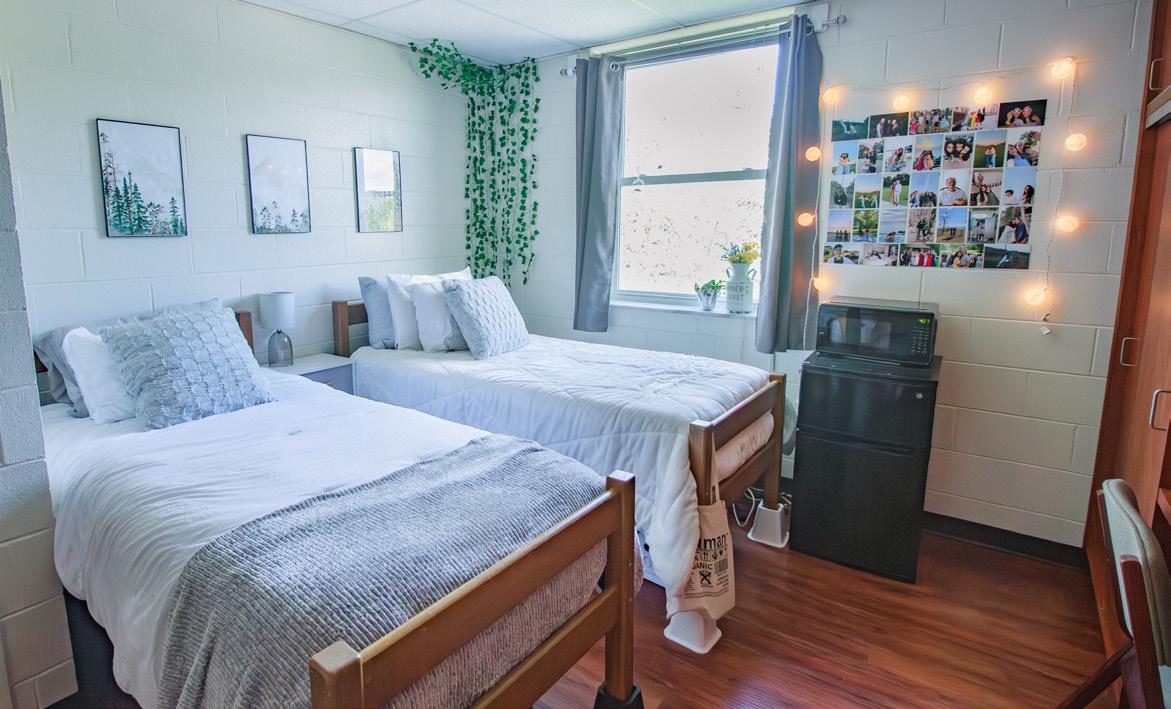
A Thatcher Hall room. Southern plans to build housing to provide more beds for an expected increase in students. (Photo by Gabriella Grundy)
Director Kyle Portbury works on his film "The Hopeful." (Photo courtesy of source)
Editor-in-chief Amanda Blake Managing Editor Matthew Orquia News Editor Lesieli Savelio Collegedale News Editor Hayden Kobza The Accent encourages readers to write articles and voice their opinions. However, the views expressed do not necessarily reflect the opinions of the Accent, Southern Adventist University or the Seventh-day Adventist Church. For any questions, comments and article submission information, email the editor at ablake@southern.edu For all advertising inquiries, email studentadmgr@southern.edu. Web Manager Meg Ermer Reporters Emma Boughman Alissa Flores Amy Mejias Htet Myint Layout Designers Anton Kannenberg Conner Bartsch Social Media Manager Lia Colon Photo Editor Preston Waters Opinion Editor Alexis Dewey Religion Editor Madison Wilcox Sports Editor Jacob Nevis Lifestyle Editor Emily White Copy Editors Kathy Zelidon Debra Hicks Photographers Andrew Boggess Mila Bales Ron Cabacungan Andre Ottati Circulation Manager Norelie Cabrera Staff Sponsor Alva James-Johnson Southern Accent stated. “I can also now say that, in my last semester of college, not only was I a student but also a contributor to the success of the first SDA film to ever be featured in theaters with the highest level of quality and intention. I’ve been able to expand my network and grow my skills in writing, collaboration, social media management and research. This opportunity gives me front-row seats and an ‘in’ to the film industry.” Myrin
wrote two original songs for the film, “Hope Is on The Way” and “Made for You,” which were both used at various points in the movie to help set the scene and share the characters’ emotions.
Letter from the incoming editor: Less shy, still scared Matthew Orquia Managing Editor I started my time at the Accent as a shy, scared kid who had no idea what he was doing. Even my (now ex) best friend, the Oxford comma, was taken away from me. Over time, I got more comfortable and started learning the ropes;
(Photo by Adam De Lisser)
will
to meet the standards set by the hard work and dedication of previous Accent staff.
Letter from the outgoing editor: Find the anchor for your soul
Amanda Blake Editor-in-chief
“The Accent is hiring, and you should apply,” my sister told me. She sent an Instagram story posted by the student newspaper to prove her claim.
I asked why I should join. I didn’t know what the “Southern Accent” was. “If you’re majoring in journalism,” she said, “working for the Accent would help you gain experience.”
“That’s a rare valid point by my sister,” I thought. It was the summer of 2020. Soon, I would be a freshman at Southern Adventist University. At the time, I was bored from weeks of a COVID-19-induced quarantine and unfulfilled from a senior year I concluded by pressing “Leave Meeting” on Zoom. So, I applied to work as a reporter for the Accent. “It might be fun,” I thought.
Paola Mora Zepeda, then editor-in-chief, hired me, trusting me to report accurately and ethically despite my limited experience. I jumped into the deep end; I did a hard thing. I learned how to think like my audience, work hard under tight deadlines, get both sides of the story and make tough phone calls despite my innate aversion to speaking on the phone as a member of Generation Z.
By the fall of 2021, I was news editor for the Accent. A year later, I became managing editor, and that spring, I applied for and attained the editor-in-chief position. Who needs sleep their senior year, right?
Eighty-five articles and 79 issues later, here I am — ready to be done, admittedly — but also experienced, fulfilled and
anchored to the greatest source of strength there is: hope in Jesus.
In 2022, the Chattanooga Times Free Press published a news article I wrote for the Accent. This school year, I also was able to aid my peers and watch their articles be published by the metropolitan paper, accomplishments derived from the Accent’s community news initiative and partnership with Center for Community News (CCN) at the University of Vermont. Several recent Accent articles have also been republished by Adventist Review and Adventist World. Helping other young journalists grow has been the highlight of my tenure as editor-in-chief.
“Eighty-five articles and 79 issues later, here I am — ready to be done, admittedly — but also experienced, fulfilled and anchored to the greatest source of strength there is: hope in Jesus.”
Of course, my journey and the Accent’s growth were made possible with the help of editors-in-chief I worked under. Paola Mora Zepeda (20192021), Megan Yoshioka (20212022) and Alana Crosby (20222023) are outstanding leaders, and I am remarkably grateful for each of these women. Their professionalism, drive and friendships encouraged me to continue the paper’s legacy. I am also grateful for the editors before them, including Dennis
Negrón, now vice president for Student Development.
Thank you, Negrón, Director of Student Life and Activities Alexis Grentz and Administrative Assistant for Student Development Teri Reutebuch, for helping me serve my team and this university. I have enjoyed working with and getting to know each of you.
I am also thankful for the support I have received from the School of Journalism and Communication (SJC). My SJC professors trained me to report well and act ethically, to always remember Whom I serve first.
I have also received constant support from my fellow Student Association Cabinet officers. Working alongside each of you has taught me valuable lessons about leadership and teamwork.
I am excited for the student body to experience the work of my fellow student media directors: Jennifer Corral, Memories editor, and Houston Beckworth, Strawberry Festival director. You both have inspired me to continue working hard throughout this school year, and I know students will be blessed by your final creations. I must thank my team. It was my editorial staff, reporters, photographers, designers and managers who created the 79th volume of the Accent. I was just the person annoying them with text messages and emails all year. To my managing editor, Matthew Orquia, thank you for going above and beyond to make my life easier. You not only managed writers exceedingly well but also produced excellent articles yourself. I am leaving the Accent in talented hands.
Professor Alva James-Johnson, I could write pages upon pages
Southern updates online login system
Lia Colon Staff Writer
Since Spring Break, Southern Adventist University students and faculty have experienced a change when logging into their Southern accounts, as the institution has removed the multi-factor authentication requirement for logins.
Southern changed to a different authentication system over the break, according to Derek
Sherbondy, associate director of Information Technology. Multi-factor authentication is still required to log into MyAccess, the university’s online portal, but only on a new device or if the “remember me” option is not selected. According to Sherbondy, the device will remember the user for up to 90 days. Chloe Smith, sophomore public relations major, expressed relief at the reduced authentication burden.
“I am so happy that I don’t always have to do the authentication anymore,” Smith said. “It would take so much time to get into eClass, especially if I want to go into residential life.”
Many other students and faculty are feeling the same way. Karina Savelio, office manager in the School of Journalism and Communication, said, “I don’t always have my phone on me, so it saves me time.”
In an email to the Accent, Sherbondy stated that the change was due to the “old authentication method being deprecated, so we need to move to this new one.”
He explained that the outdated authentication method is being phased out, prompting the transition to a new authentication method to maintain security and functionality.
“It improves our online security by giving us more [multi-factor authentication] options,” Sherbondy said. “This transition was undertaken to enhance the security and efficiency of our authentication systems, and I’m glad to report that it has been executed smoothly.”
upon pages expressing my appreciation for you. A hundred pages would not be enough. I will try my best to express myself meaningfully in a single paragraph (No one knows better than you that condensing material has proven to be my greatest challenge. But you’ve taught me well, although perhaps not well enough. This is getting long. Two paragraphs, it is!)
Professor Johnson, you have apologized numerous times for your ambition as the Accent’s staff sponsor. Each apology was unnecessary. You equip and encourage your students and staff. This year, you worked just as hard, if not harder, than I did to ensure the Accent maintained its high and ever-growing standards of reporting. Thank you for partnering the paper with CCN, and thank you for pushing me to be the best leader I could be. I was prepared to serve as editor-in-chief because I had three years of your mentorship under my belt, and I was able to maintain my joy and passion for the paper throughout the year because of your friendship.
Finally, I must thank my friends and family. My parents taught me to work hard, my sister introduced me to the Accent and my friends kept me going, even when apathy and exhaustion threatened to pull me under.
Leadership does not come easily to me. I struggle conveying my expectations, delegating and remembering that a good leader learns the individual communication styles of their followers. I’ve made mistakes. I’ve stared at the computers in the Accent office teary-eyed, yet too dehydrated to actually cry. I’ve mixed up my priorities and watched my phys-
CHOIR continued from page 1
“It’s been kind of cool seeing how people still come, but at the same time when they don’t … it starts to get into your head a little, because you start to think, ‘What have I done wrong or what can I do better?’” he said. “I have to pray to God to help me get through these feelings, because I know they’re not productive.”
When people come, Ogando believes it is important because it shows that students can still come together without needing
ical health suffer. I’ve looked in the mirror and thought: “If Southern wants a raccoon mascot, I’m available for hire.”
However, I know myself far better now than I did in August, and that’s because I did a hard thing.
Readers, thank you for supporting the Accent and challenging me each week to produce better content. As I prepare to leave my role as editor-in-chief, please allow me to impart one last tidbit of truth. This time, it is based on my own experience:
If you do not challenge yourself, you will never learn who you are and Whom you need.
Hebrews 6:19 paints a picture of the hope we who believe in Jesus may have because of His unchanging character, a hope that acts “as an anchor for the soul, firm and secure.” When the dangerous waters of work, weakness and doubt grew stronger than my resolve this year, I relied on my anchor to see me through. Do hard things. Toss yourself in the deep end. Learn that God’s strength is necessary. Find the anchor for your soul, the unfailing hope that is not of this world.
worship credit. He says it shows that they can take time out of their day to “be there and just sing and worship together.”
As current Latin American Club (LAC) vice president, Ogando hopes to promote the EYA choir to new freshmen alongside the LAC booth at the organizational showcase next fall.
When he graduates, Ogando hopes to pass on the torch to someone else.
“This is not even about me,” he said. “It’s a voice on campus, specifically a Latino voice. I just really hope it becomes something bigger than me.”
American Red Cross Club to host blood drive on campus
Emma Boughman Reporter
The American Red Cross Club at Southern Adventist University has organized a blood drive for Friday April 26th. The event will be held in the Presidential Banquet Room in Wright Hall from 10 a.m. to 4 p.m., according to club president Perla Catalan, junior health science major, and club secretary Angel Hernandez, junior finance major. The club, which partners with the American Red Cross to host blood drives on campus, holds a blood drive each semester open to everyone, which Catalan shared in an email with the Accent. She added that donors must wait a few months between each donation. Catalan believes it is important to hold blood drives where student donors do not have to leave campus to participate, offering
them the opportunity to help their community.
“I think not a lot of people know about blood donations,” she said. “ … It’s so helpful, and there is such a big need for blood.”
According to Catalan, giving blood through the drive is simple. She suggested individuals prepare ahead of time by drinking lots of water, eating well and getting plenty of sleep. At the drive, potential donors first take a quick survey covering the health information needed before drawing blood, then nurses check their iron levels to make sure they can donate. If everything is okay, a nurse will draw out a pint of blood, which takes less than 10 minutes. The entire process takes approximately 30 minutes, according to Catalan.
The club is required to host both a fundraiser and community
service event, according to Catalan and Hernandez. Since the club was organized last school year, its members have hosted a 5k race, participated in Fall Fest, hosted biannual blood drives, and volunteered in the community. Since the club is service-oriented, students can obtain community service credits at the blood drives.
“My biggest goal for the next year is to grow our member numbers,” Catalan said. She said the club currently has six officers and five other members.
According to Catalan, students who become club members can participate in community service events, help host blood drives and access special benefits. Hernandez said the club’s recent CPR training event, which would normally cost a fee, was free for members.
In addition to the club’s goal of raising awareness about donating blood, Catalan said she personally also wants students to feel like they can be involved in saving lives.

NEWS For more related news, visit our website at southern-accent.org 3 | Wednesday, April 17, 2024
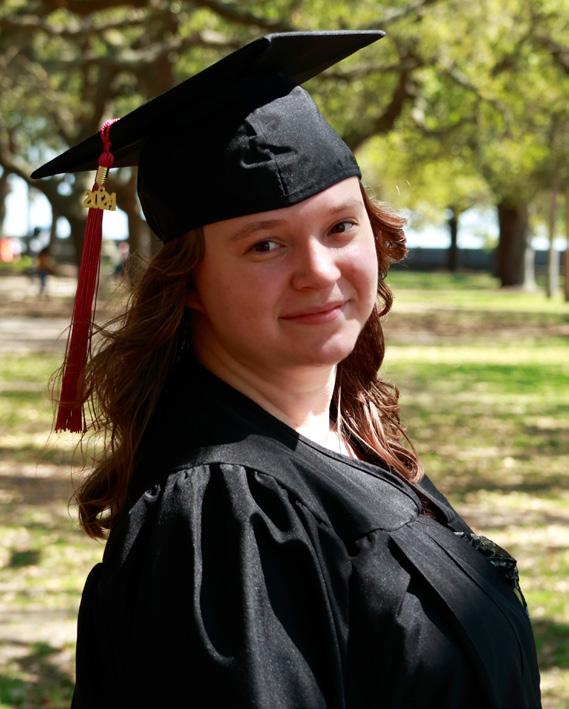
Amanda Blake (Photo courtesy of source)
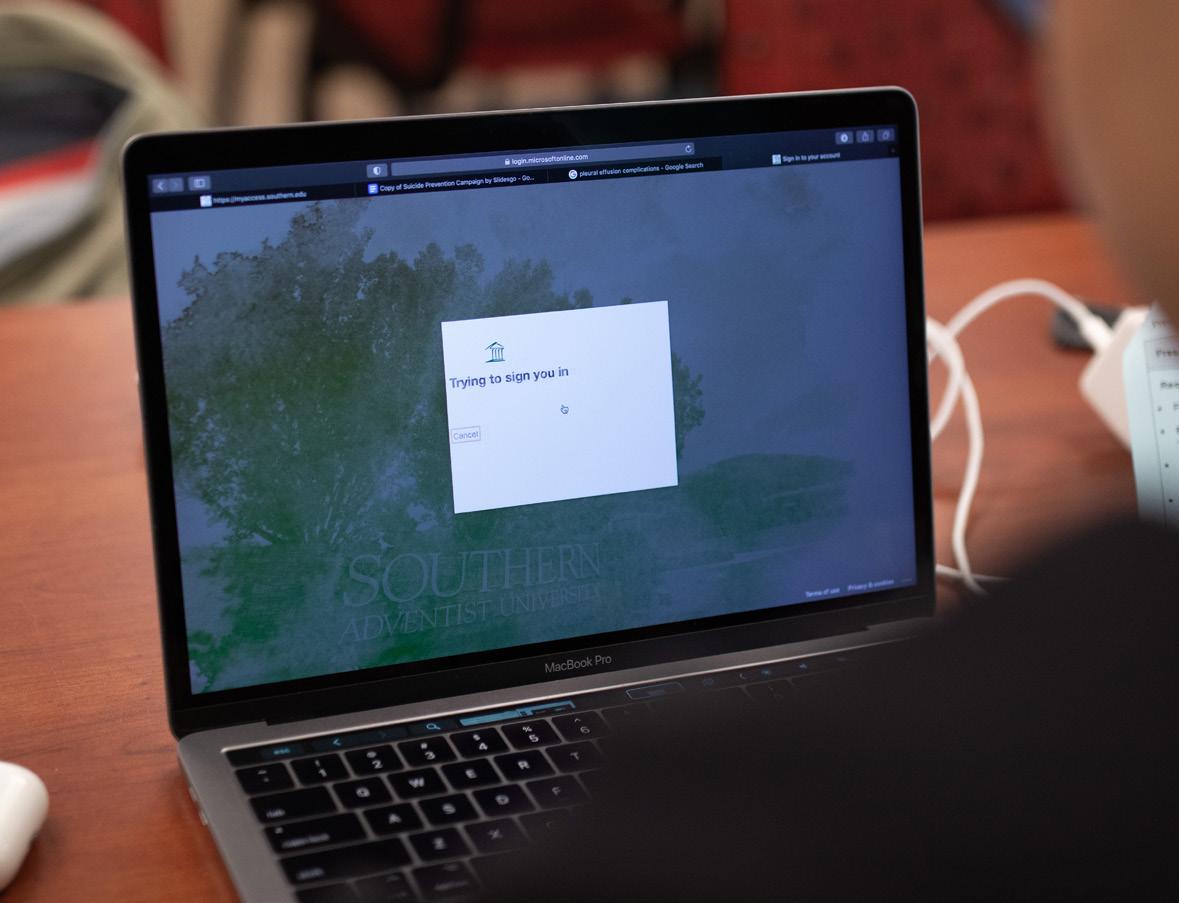
Student logging in to their Southern Account. Sunday, April 14, 2024 (Photo by Ron Cabacungan)
EYA choir members pose for a group photo. (Photo courtesy of source)
Corrections: A photo caption included in the story “Auto Program to provide free vehicle inspections,” published in Issue 22 of the Accent, misidentified an individual. Nic Johnson was depicted in the photo accompanying the article, not Skyler Pangkey. Captions in Issue 22's photospread contained misspellings. Bri Zepeda was incorrectly spelled as "Bri Zapeda," and Colin Glenn was incorrectly spelled as "Colin Glen." The Accent corrected these errors on its website soon after learning of them. We are committed to accuracy and apologize for these mistakes. American Red Cross Club members smile for a photo. (Photo courtesy of source)



If you would like to be a contributor, contact Amanda Blake at ablake@southern.edu NEWS 4 | Wednesday, April 17, 2024
in
Asian Club members perform on the stage
Iles Gym. Saturday, April 14, 2024. (Photo by Andrew Boggess)
(From left to right) Hayley Ro, Esther Kim, Rachel Yoon and Allison Kim perform a skit while repre- senting Korea. Saturday, April 14, 2024. (Photo by Andrew Boggess)
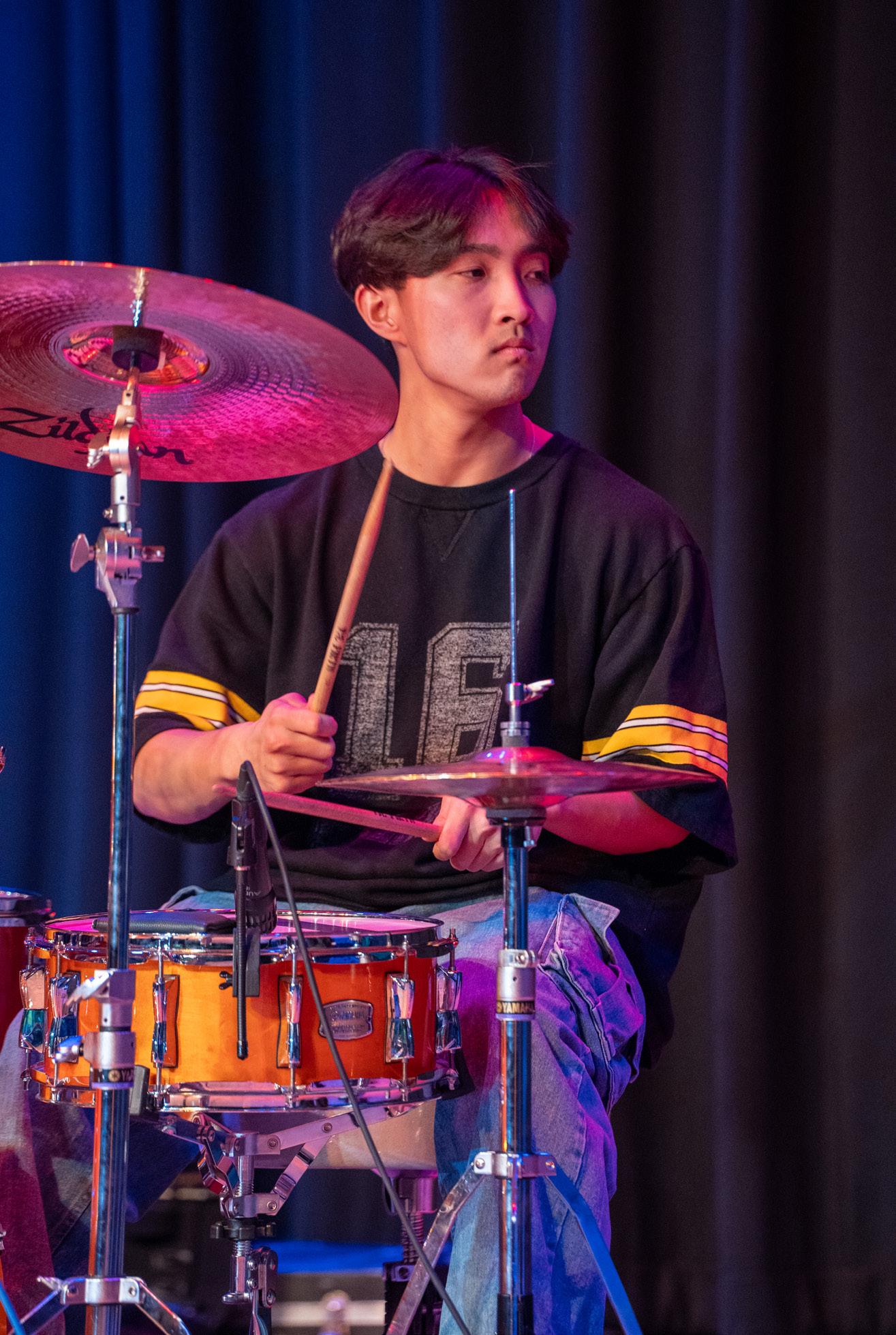
Caleb Shim plays the drum kit before Asian Night. Saturday, April 14, 2024. (Photo by Andrew Boggess)
Just Weley and Fred Hutagaol perform a choreographed fight scene. Saturday, April 14, 2024. (Photo by Andrew Boggess)
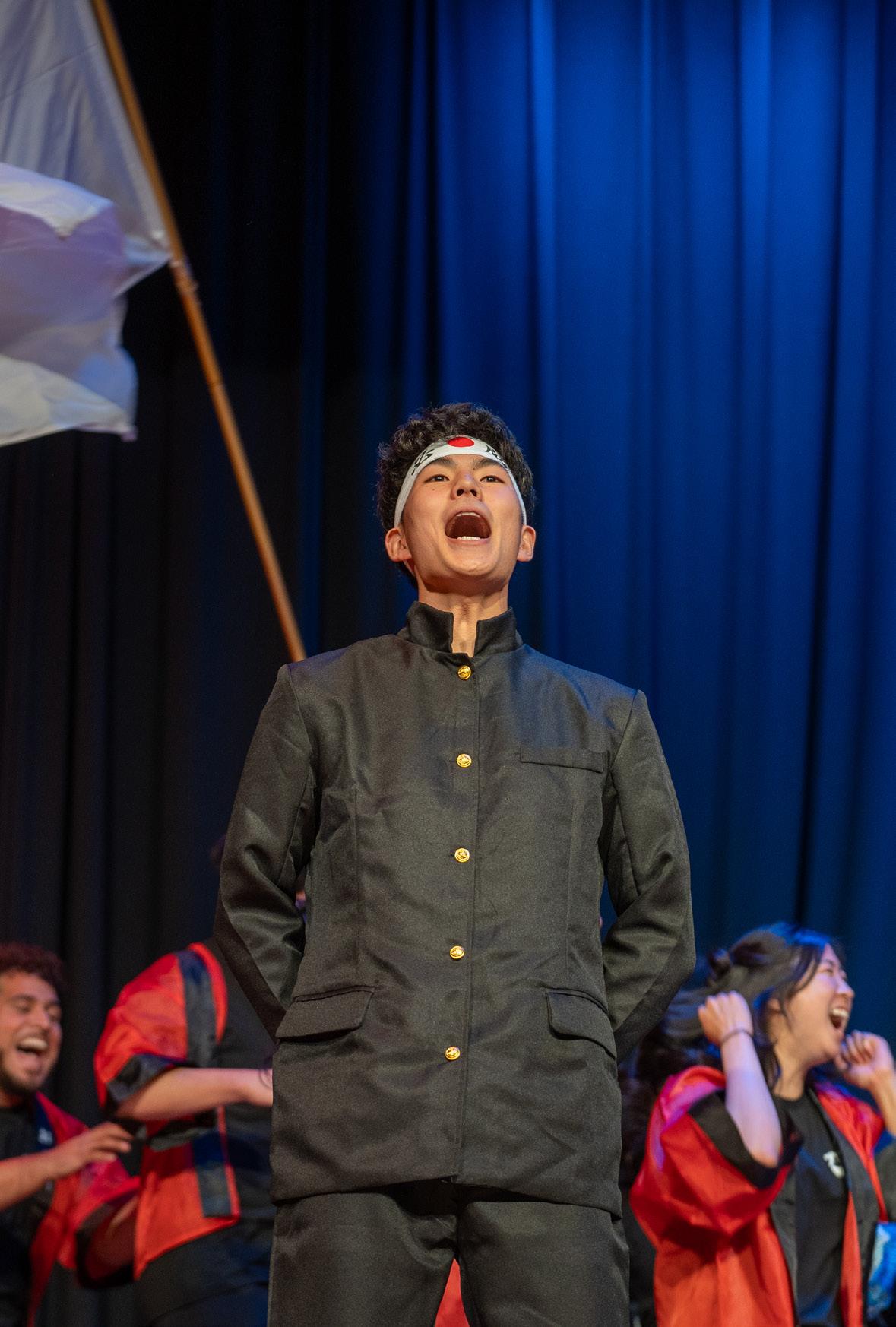
Ken Hongo shouts during a performance representing Japan. Saturday, April 14, 2024. (Photo by Andrew Boggess)
ASIAN NIGHT
Editor's Note: The Southern Accent produces this two-page Collegedale News section as part of a national initiative to enhance community news coverage. The local effort, led by Southern's School of Journalism and Communication in conjunction with the Center for Community News (CCN) at the University of Vermont, places student journalists at the forefront of addressing the news desert crisis, a phenomenon caused by the decline of newspapers in local communities. The Accent believes local news is vital to a thriving democracy, and we remain committed to reporting about important issues, novel occurrences and interesting people in the greater Collegedale area. We will publish this special section in five issues of the newspaper this semester. To submit tips or press releases, go to https://southern-accent.org.
Apison Pike expansion continues: An updated look at the multimillion-dollar TDOT project
Due to current safety and capacity issues caused by the growth of the City of Collegedale and the communities of Ooltewah and Apison, the Tennessee Department of Transportation (TDOT) is building a multimillion-dollar road expansion from I-75 to East Brainerd Road, according to the TDOT website. The expansion will cover approximately 6.2 miles, with the current section under construction set to be finished next year.
According to the TDOT website, the project is divided into four sections: I-75 to Old Lee Highway, Old Lee Highway to Ooltewah-Ringgold Road, Ooltewah-Ringgold Road to Layton Lane and Layton Lane to East Brainerd Road.
Two sections from I-75 to Ooltewah-Ringgold Road were completed in 2012 and 2017, costing $7.9 million and $24.2 million, respectively. The section from Ooltewah-Ringgold Road to Layton Lane is currently under construction, with an estimated cost of $97.5 million and a completion date of June 2025. The section from Layton Lane to East Brainerd Road is under development, with preliminary engineering close to completion.
Future Expansion
Rae Anne Bradley, the regional communications officer for TDOT, stated in an email to the Accent that the East Brainerd Road plans are ready to acquire Right-ofWay (ROW) when funding for all remaining phases is available.
She wrote, “This portion of the project was included in the prioritization of projects during the development of the 10-year plan but was not ranked high enough to allocate funding.”
According to Bradley, the East Brainerd Road expansion will cost an estimated $22 million; however, an estimated completion date for the improvement of East Brainerd Road cannot be given until construction begins.
The Ooltewah-Ringgold Road to Layton Lane project is being funded by a mix of state and federal funds, which have financed the section from Ooltewah-Ringgold Road to Layton Lane, according to the TDOT website.
The Accent contacted Eric Sines, the director of Public Works for the City of Collegedale, to ask if any local funding will be used to finance construction and if taxes could increase for the city. Sines said in a phone interview that the city was only paying for the relocation of some sewer infrastructure and that taxes would not be raised.
Current Expansion
According to a video by TDOT, features of the Ooltewah-Ringgold Road to Layton Lane construction include two lanes in opposite directions, with a dedicated turn lane, sidewalks and bike lanes in each direction. The video also mentions that construction added a new roundabout at Tallant Road and a new bridge being constructed over the Norfolk Southern railroad to “separate the tracks from the state route.” Current construction includes five bridges and

nine walls. All the bridges are completed except the one on Spalding Drive, where the greenway goes underneath.
When asked if the expanded section from Ooltewah-Ringgold Road to Layton Lane will be able to keep up with the continual growth of the City of Collegedale and the communities of Apison and Ooltewah, Bradley mentioned that TDOT projects are usually designed with a 20-year timeframe in mind from the opening year.
What to do in Collegedale this summer
Amanda Blake Editor-in-chief
In two weeks, Southern Adventist University students will pack their bags and begin leaving Collegedale for summer break. Although the university campus might grow quieter as spring winds down, the city will not.
Since the Accent is not regularly active during the summer, the student newspaper researched and contacted local event organizers to learn more about what is happening in the City of Collegedale in the upcoming months.
Library Events
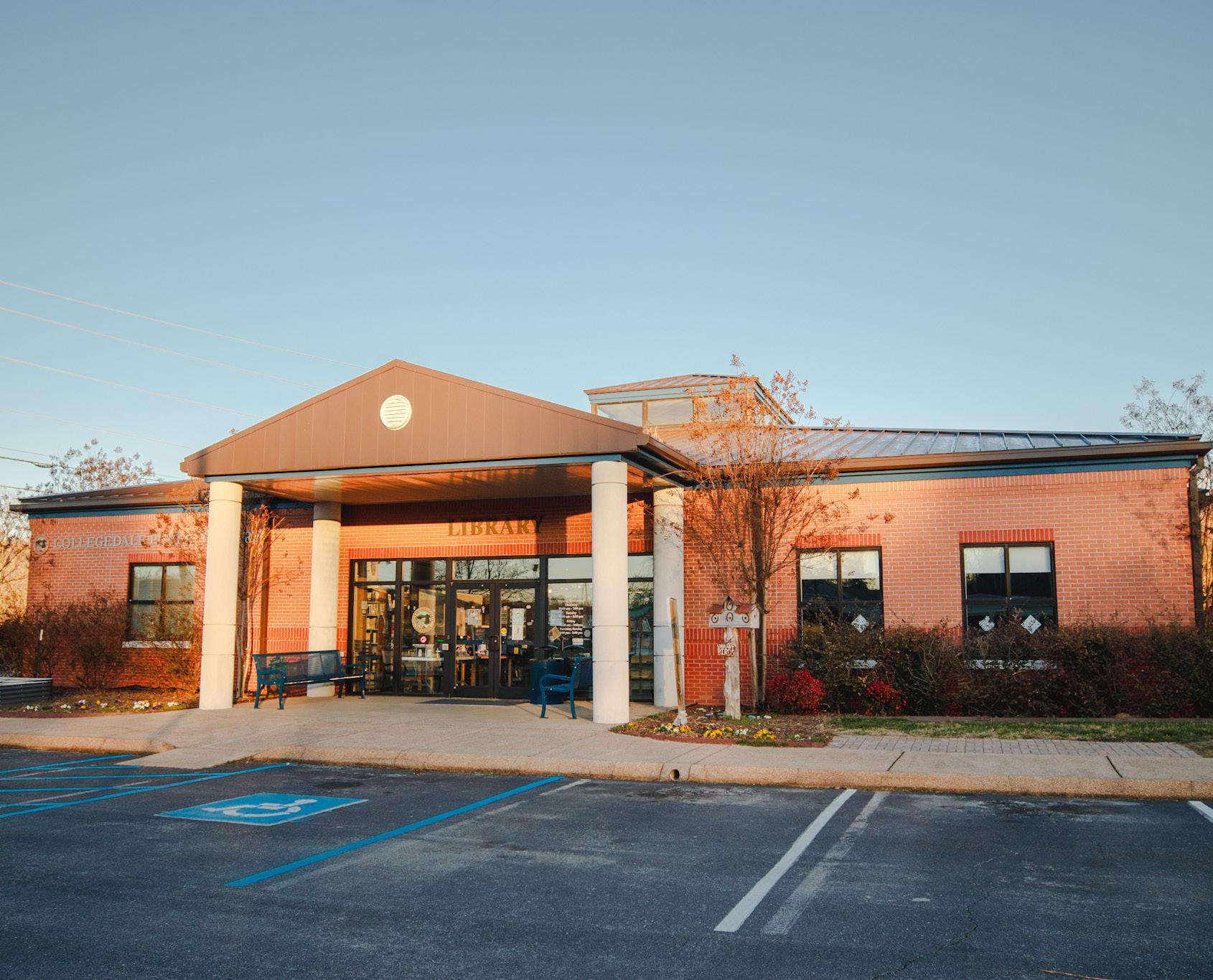
In a phone interview with the Accent, Collegedale Public Library assistant director
Sarah Richardson described the library’s upcoming events.
Next week, the library will organize two activities related to Earth Day. First, it plans to partner with Collegedale’s Parks and Recreation Department on Monday to perform a park cleanup. On Tuesday, the library will host an Earth Day origami workshop. These events can be viewed on the library’s online calendar.
Several of the institution’s May events, however, have not
yet appeared on the calendar. One such activity, family bingo, is scheduled for May 7 in the Collegedale Municipal Building’s West Room.
“Family bingo is very, very popular,” Richardson said. “We normally have around 100 people who come for it. It’s really competitive, [with] lots of cool prizes. We love to see families come out for that.”
The next day, the library plans to launch its salsa garden by allowing kids to plant produce onsite. Later in the summer, the library will host
She stated, “The Layton Lane segment, for instance, was designed for [the] 2045 forecasted traffic. Our traffic forecasts do include future growth and factors.”
When asked about the completed sections and if they have been successful, Bradley wrote, “We believe the completed segments of Apison Pike have been very successful, especially in contrast to the sections that have not yet been widened.
At a March 25 Collegedale City Commission workshop meeting, city officials discussed new regulations governing park usage. In response to the growing popularity of Collegedale’s parks and concerns over potential misuse, the decision to implement these rules comes as part of ongoing efforts to maintain a safe and enjoyable environment for all park visitors.
The affected parks and greenways include Imagination Station, Collegedale Dog Park, Veterans Memorial Park, the Greenway, Thatcher
Bridge Delays While there have been some successes in the completed sections and the one currently under
issues, including park hours, prohibited activities and pet regulations. Parks will now operate from sunrise to sunset, with varying hours based on location and usage. Several activities are now strictly prohibited within park premises, including the use of fireworks, bows, slingshots and other projectile-throwing devices. Additionally, alcoholic beverages, smoking and the use of vapor products are banned to uphold a family-friendly environment. City implements new park rules Htet Myint Reporter
For more related news, visit our website at southern-accent.org 5 | Wednesday, April 17, 2024
COLLEGEDALE NEWS
Hayden Kobza Collegedale News Editor
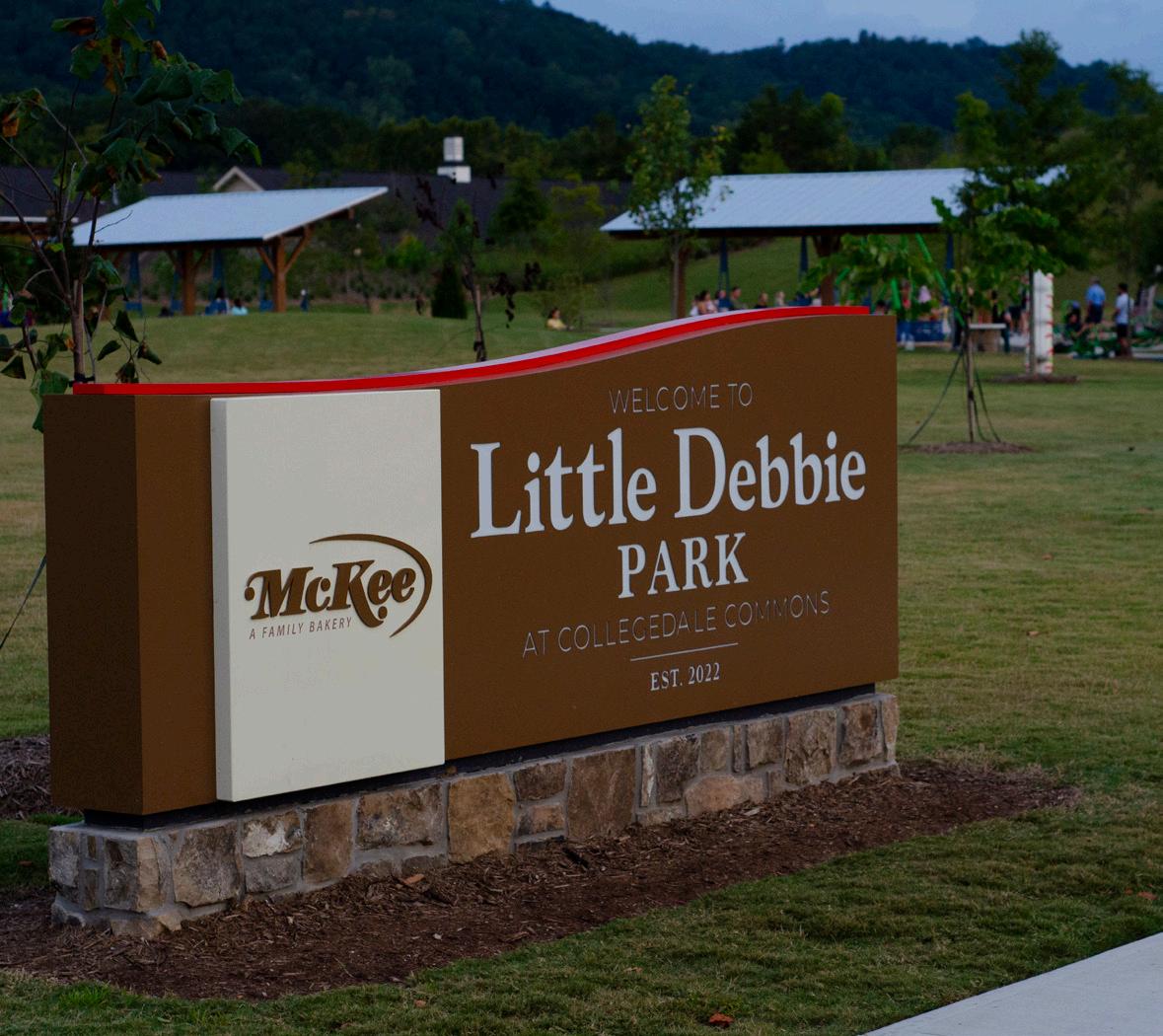
Switch Recreational Area, Nature Nook, Collegedale Commons and the recently built Little Debbie Park. City officials cited the need for formalized rules to address various issues and ensure the preservation of park facilities. According to City Manager Wayon Hines, “We
have
The
aim
estab-
clear
etiquette
raised by community
The new
cover
range
Little Debbie Park is Collegedale's newest park. Sunday, September 24, 2023.
See PARK RULES
did not
a formalized set of rules, though most folks had an expectation that the rules we passed would be followed.”
regulations
to
lish
guidelines for park
and address past concerns
members.
rules
a
of
(Photo by Adam De Lisser)
on page 6
Collegedale Public Library plans to host several events this summer, including Creature Features visits and a murder mystery date night. Monday, February 19, 2024. (Photo by Ron Cabacungan)
The newly widened sections of SR 317 are still relatively new, within the 20-year traffic forecasting horizon, to where drivers are still enjoying improved travel conditions and reduced delay and congestion.”
See
APISON PIKE on page 6
Transportation's
12,
See SUMMER on page 6
Wright Brothers Construction Co. is building a bridge over the Norfolk Southern railroad as part of Tennessee Department of
Apison Pike expansion project. Friday, April
2024. (Photo by Andrew Boggess)
APISON PIKE
continued from page 5
construction, Ooltewah-Ringgold Road to Layton Lane has faced some delays, including the bridge over the Norfolk Southern railroad.
The bridge’s delay is partially due to a train derailment that happened near the bridge on Dec. 20, 2022. An Accent article published on Dec. 20, 2023, about the one-year anniversary of the Collegedale train derailment stated that a concrete I-beam was going over the Norfolk Southern railroad and headed for the bridge’s construction site. However, the driver, stuck behind traffic stopped at a light on Apison Pike, did not cross over the track entirely, and a train hit the I-beam.
Sines said in an interview with the Accent that work on the bridge was delayed after the train derailment, due to the I-beam getting destroyed. However, he added that completion of the bridge was also being delayed by permit changes by Norfolk Southern, which owns the ROW.
When the Accent contacted Sines about this story, he stated that problems due to permit
PARK RULES
continued from page 5
Pet owners are required to keep their dogs on a maximum 6-foot leash at all times and are responsible for cleaning up after their animals. Specialized rules have been established for facilities such as pickleball courts and the dog park to optimize user experience and safety.
Furthermore, violations of these rules will result in penalties of up to $50 for each offense, emphasizing the city’s commitment to enforcement and park preservation according to the minutes of the commission workshop. The regulations are set to take effect 15 days after their final passage.
Hines shed light on the motivations behind the new rules, stating, “We did take into account concerns raised over the years when drafting the rules. Issues such as electric bicycles, dogs off leash, camping, etc. had been raised in the past.”
According to Hines, the city aims to address issues raised by its constituents to ensure the safety and enjoyment of park visitors.
“It is no secret the city’s park system is incredibly popular,”
changes were still delaying work on the bridge, and he suggested the Accent contact the Wright Brothers Construction Company for clarity on the specific issues it was having with Norfolk Southern. However, the company did not respond to the Accent’s emails or phone calls.
Total Project On Schedule
Last year, however, Sines did mention that the crew working current construction completed so much work on other aspects of the project, apart from the bridge, that the Ooltewah-Ringgold Road to Layton Lane section will still be completed on time.
Referencing the bridge, Bradley stated that delays in construction projects of this size are normal. She confirmed Sines’ statement: “The total Ooltewah-Ringgold Road to Layton Lane project, including bridge construction, is still expected to be finished by the end of June 2025.”
Ecological Concerns
Some may have concerns about the damaging ecological impact that construction could have on Wolftever Creek, which runs under the incomplete bridge.
he said. “We hope that the rules will allow everyone to safely enjoy our parks, playgrounds and greenways.”
Siua Tyler, a senior health sciences major at Southern Adventist University who is currently organizing a 5K run, expressed his enthusiastic support for
Bradley stated that as a part of the National Environmental Policy Act process for this project, TDOT conducted ecological studies and species coordination with the U.S. Fish and Wildlife Service and the Tennessee Wildlife Resources Agency.
“The roadway alignment was chosen to avoid and minimize water resource impacts to the extent that was feasible while still accomplishing the purpose and need for the project,” she wrote.
According to Bradley, TDOT obtained water quality permits for project-related impacts from the U.S. Army Corps of Engineers and the Tennessee Department of Environment and Conservation (TDEC). TDOT prepared a Stormwater Prevention Pollution Plan and obtained coverage from TDEC under the National Pollution Discharge Elimination System for stormwater discharges associated with the project, she added. Bradley wrote, “TDOT has a rigorous erosion prevention and sediment control inspection program to monitor permitting compliance.”
the new regulations, stating, “I appreciate how Collegedale has maintained its runways clean, providing a picturesque setting for our community’s activities.
With the introduction of these new rules, it’s clear that our city is prioritizing the safety and well-being of its citizens.”

SUMMER
continued from page 5
an event on how to make salsa from ingredients grown in the garden.
“We have a garden almost every year. I don’t know that we’ve ever done a follow-up event where we’ve done some sort of cooking,” Richardson said, “so this is kind of an exciting first for us.”
On May 23, the library plans to host a Disney-themed trivia night for families. Then, the library will launch its big summer book sale on the following Monday, May 27. On June 7 and 8, shoppers can fill a large paper bag with any books, audio books, or magazines they select from the sale. Each bag, regardless of its contents, will cost $6.
Starting May 29, community members can register for the library’s annual reading challenge for kids, teens and adults. This summer, to celebrate the challenge theme “Adventure Begins at Your Library,” various sections of the building will be decorated as distinct biomes, such as the ocean, desert and forest.
Those who complete the first phase of the challenge, 20 days of reading (or listening to) a book for at least 20 minutes, can claim a prize and pick out a book at the library. They can also enter their name in a prize raffle. Completion of the challenge a second time yields another entry in the raffle. In the past, the library has partnered with local businesses to provide quality raffle prizes, such as Amazon Fire tablets and tickets to activities including bowling, skating or the zoo.
In both June and July, Creature Features, a local organization emphasizing the educational value of interacting with animals, will visit the library. Pre-registered visitors will be able to meet a collared peccary named “Tortilla,” as well as a wallaby.
“I’m really excited to see Creature Features again,” Richardson said. “They came this past year and brought their baby kangaroo. It was really exciting … just seeing the kids and families light up, getting to experience being with the animals. That’s really a lot of fun.”
For the first time ever, the library will host a murder mystery date night on July 30 in the West Room. An outside organization will orchestrate the occasion and transform the event space, and participants are encouraged to dress up. Admission, handled by Parks and Recreation, will cost $5. “We’re going to have kiddos in one space, doing a movie, hanging out,” Richardson explained, “and then we’re going to have parents in another area participating in a murder mystery party. … We really see a need in our community for events that
cater to both [adults and kids]. We’re going to try something like this for the first time, and I think it’s going to be a really big hit.”
Those interested in learning more about upcoming events at the library are welcome to grab a printed calendar from the library’s front desk or view the library’s online calendar. According to Richardson, however, the most up-to-date event information can be found on the library’s Facebook page.
She added that community members do not need a library card to participate in library events. However, the institution will be offering $5 library cards this summer.
“In the past it’s been $10,” she said, “but this year we received money from the county in order to lower the library card rates. That [reduced rate] for our summer card will start June 1 and will go all the way through Aug. 31.”
Markets at The Commons
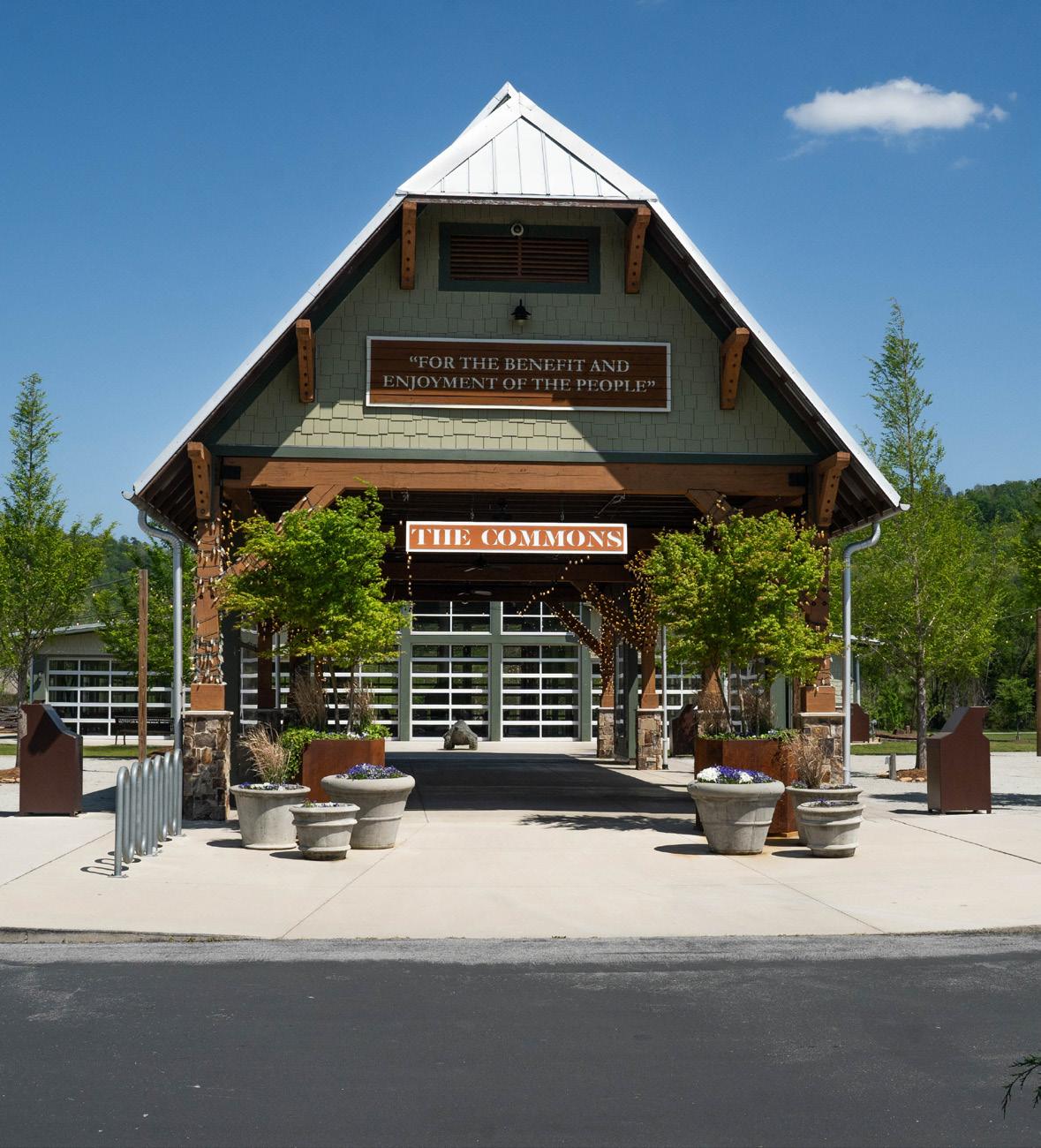
The Commons in Collegedale is a cultural and recreational center, as well as a private event venue, that regularly hosts farmer’s markets and vendors.
According to a text response to an Accent inquiry, The Commons plans to host six public events from May to September: Mother’s Day Market on May 11, Healthy Taste Vegan Food Expo on May 19, Ready for Summer Market on May 24, Freedom Festival (including music, food and fireworks) on July 3, Summer Market on Aug. 17 and Ready for Fall Market on Sept. 14. Each event is scheduled from 10 a.m. to 4 p.m., and information about events at The Commons can be found on its Facebook page.
Church Events
The Accent tried contacting each church located in Collegedale by phone and email.
The Collegedale Korean Seventh-day Adventist Church responded by email, stating: “We are a very active church, and so week by week we are planning new activities and events that people can join. But all our public events are put onto our online calendar: cksda.church/calendar.”
The church added that each Saturday it provides a potluck, and a post-collegiate group meets at 2:30 p.m. in its parking lot to go hiking, weather permitting.
Rosa Ashley, church secretary for Collegedale Community Church, also sent an email, stating that the church’s online calendar, found on its website, contains information about upcoming events. However, Ashley highlighted two events: a Vacation Bible School held from June 3-8 and a 4th of July social held on July 3.
If you would like to be a contributor, contact Amanda Blake at ablake@southern.edu COLLEGEDALE NEWS 6 | Wednesday, April 17, 2024
Collegedale's new park rules also pertain to The Commons. (Photo by Preston Waters)
Although the bridge over Norfolk Southern railroad has faced delays, TDOT's total expansion of Ooltewah Ringgold Road to Layton Lane is on track for its estimated completion date of 2025. Friday, April 12, 2024.
(Photo by Andrew Boggess)
Johanne Mendoza Contributor
Editor’s Note: The following
articles are written by counseling professionals from Counseling Services and psychology students in partnership with the Southern Accent.
As a graduating senior, I’m often asked, “So what’s your plan after?” and “How are you?”
Although I know these mostasked questions come from a genuine place of curiosity, they tend to stress me out. This stress stems from the overwhelming pressures of expectations coming from myself and my parents.
Not only am I keeping my GPA up, but I am also trying to uphold my senior requirements for internship hours, have creative hobbies, balance my social life, figure out my post-grad plans and stay active with a healthy lifestyle.
On top of this, I am also heavily involved with my business, Angel Iris, where I arrange fashion shows and pop-up markets.
Although I am grateful for making it this far, I am also struggling to hit the pause button on all of the anxieties that race through my mind.
I have asked my fellow graduating classmates how they feel, and many of them lead with a heavy sigh and tell me that they are just “going through it.” I have spoken to a few students who have figured out their plans, but many of them are apprehensive and feel that they are not ready for what comes after graduation. Most of our anxiety stems from venturing into unknown waters. It is clear that not all of us are prepared to
face the harsh reality of becoming an adult, but we are also ready to be done with school.
I looked at reliable sources that eased my mind about graduation. For instance, an article by Johnson Wales University gave practical tips for seniors who are “going through it.” The first tip for staying organized is having a to-do list for graduation and a system for tracking all of your homework/tests so that you don’t fall behind.
The second tip was to celebrate small wins, such as passing those challenging courses, working through that intern-
ship, meeting our closest friends and possibly even meeting a significant other. Those small wins call for celebration and acknowledgment as we continue our journey to graduation. This could also motivate us to keep pushing forward.
According to the article, the third tip is to set goals that are SMART: “Specific, Measurable, Achievable, Realistic, and Timely.” Students who are still unsure about what they want to do after graduation can follow these recommendations to set attainable goals and organize their thoughts.
MENTAL HEALTH
Next, it’s essential to focus on caring for our physical and mental health by keeping active and making time for hobbies that bring us joy. They also mention staying motivated, having an optimistic mindset, finding a support system, scheduling intentional breaks, being involved in study groups, using school resources for support and managing stress through proper sleep. Lastly, they want seniors to get excited about the future by knowing that although there is a lot of the unknown, we can tackle some of the anxiety head-on by making our plans more concrete. This could be
done by applying for jobs, looking at apartments and scouting for locations where you want to live.
Living in the present sounds corny and obvious, but time has passed very quickly, and now I am weeks away from graduating. I am trying to embrace all of the small joys and moments with friends, many of whom I won’t live near after this May. You have only one life, and although they are small, I have learned to love the mundane moments. If you’re still reading this, know I am grateful for everything that led me here and what will come.

SPORTS
The impact of Asian American and Pacific Islander athletes
Every May, the United States celebrates Asian American and Pacific Islander (AAPI) Heritage Month. The month honors the influences and contributions of Asian and Pacific Islander Americans to the history, culture and achievements of the United States. Asian American and Pacific Islander athletes have not only left an impact on American
sports and society, but also on my life.
In the NFL, players of Asian and Pacific Islander heritage have long been underrepresented, with 0.1 percent of NFL athletes falling within that group. While this number is tiny, one of the players who makes up that 0.1 percent has made a massive impact on my life as a sports fan.
I have been a Miami Dolphins fan my whole life, and
our fanbase has been waiting for a quarterback (QB) to lead us back to the Super Bowl since Dan Marino. In 2020, however, the Dolphins drafted Tua Tagovailoa out of Alabama as the 5th overall pick. Tagovailoa, who was born in a Samoan family and grew up in Hawaii, has helped the Dolphins get to back-to-back playoff appearances in the past two seasons.
This past season, Tagovailoa became the first QB ever born in
Hawaii to be selected to the Pro Bowl. Many Dolphins fans, including myself, will now look for Tagovailoa to lead us back to the playoffs to help us see the Dolphins’ first playoff win since 2001.
Another athlete of Asian and Pacific Islander descent who has made an impact on my life is Tiger Woods. I remember watching golf with my grandparents when I was younger, and he used to always be in the lead when I was watching.

Woods, a child of a Thai mother and Black father, has been considered by many to be the best golfer of all time. He has many accomplishments that other golfers could only dream of, and his impact for Asian American athletes will resonate for years to come.
These celebrities are only two of the many Asian American and Pacific Islander athletes who have left their mark on the world of sports. I hope that during this AAPI Heritage Month, you can think about an Asian American and Pacific Islander athlete who has inspired you.
Today’s Southern Soccer Intramurals schedule
6 p.m.
LPC v. She’s A Keeper (Womens)
Las Comadres v. Sarang Stealers (Womens)
Gettin’ Messi v. Good Aim FC (Mens B)
7 p.m.
Soccer Moms v. Birimbola
Biddies (Womens) Yellow Lock v. KFC (Mens B)
8 p.m.
Twinkle Toes v. The King’s Men (Mens B)
Disciples v. Green
B)
Las Co-
Fanduel Flyers v. ABCD F.C. (Mens B) Giddy’s
Cards (Mens
She’s a Keeper v.
madres (Womens)
Green Cards FC v. Two Goals One Cup (Mens A) Kicks and Giggles v. Birimbola Biddies (Womens) Sweet Kicks v. Soccer Moms (Womens) For more related news, visit our website at southern-accent.org 7 | Wednesday, April 17, 2024
9 p.m. No
Tua Tagovailoa plays quarterback for the Miami Dolphins. (Photo sourced from Wikimedia Commons)
into unknown waters’: Facing anxieties
Learn to love the mundane moments; live in the present. Many are facing the fast-approaching end of their college experience.
Jacob Nevis Sports Editor
‘Venturing
that come with life after graduation
Unsplash)
(Photo sourced from
OPINION
Women’s soccer: Love for the game should trump love for activism
Alissa Flores Contributor
It’s no secret that women’s sports draw fewer viewers than men’s. In the 1950s and 1960s, women’s sports saw advancements in participation at a professional level, but mainly in the Olympics. Then, in 1972, Title IX was signed and implemented. One of its goals was to grant women the ability to participate with equal opportunity in sports at educational institutions and facilities.
However, women’s prominence in competitive sports only started to become popular in recent years, starting in the 1990s. The ability to play freely and enjoy sports at a professional level was a big step for women and will forever be appreciated by future generations of female athletes.
A recent report from Statista stated that tennis, volleyball, soccer and basketball are the top
sports that women around the world play today. When looking at all four sports, the nature of tennis and volleyball seem a little bit more conducive to women, thus explaining why women don’t have to fight men on the popularity platform in these sports.
A recent data report by Data Skrive stated that within the last seven years, women’s tennis had higher viewership than men’s tennis in the United States. Additionally, volleyball’s player demographic is dominated by women. According to Zippia, 78.1% of volleyball players are women.
While these sports are dominated by women, they still lie very low on the sports viewing scale overall. At the top of the list of popular women’s sports lies women’s soccer, and while viewership has risen, it still does not compete with the fanaticism that follows the men’s version of the sport. Statistically speaking, women’s soccer will never be as
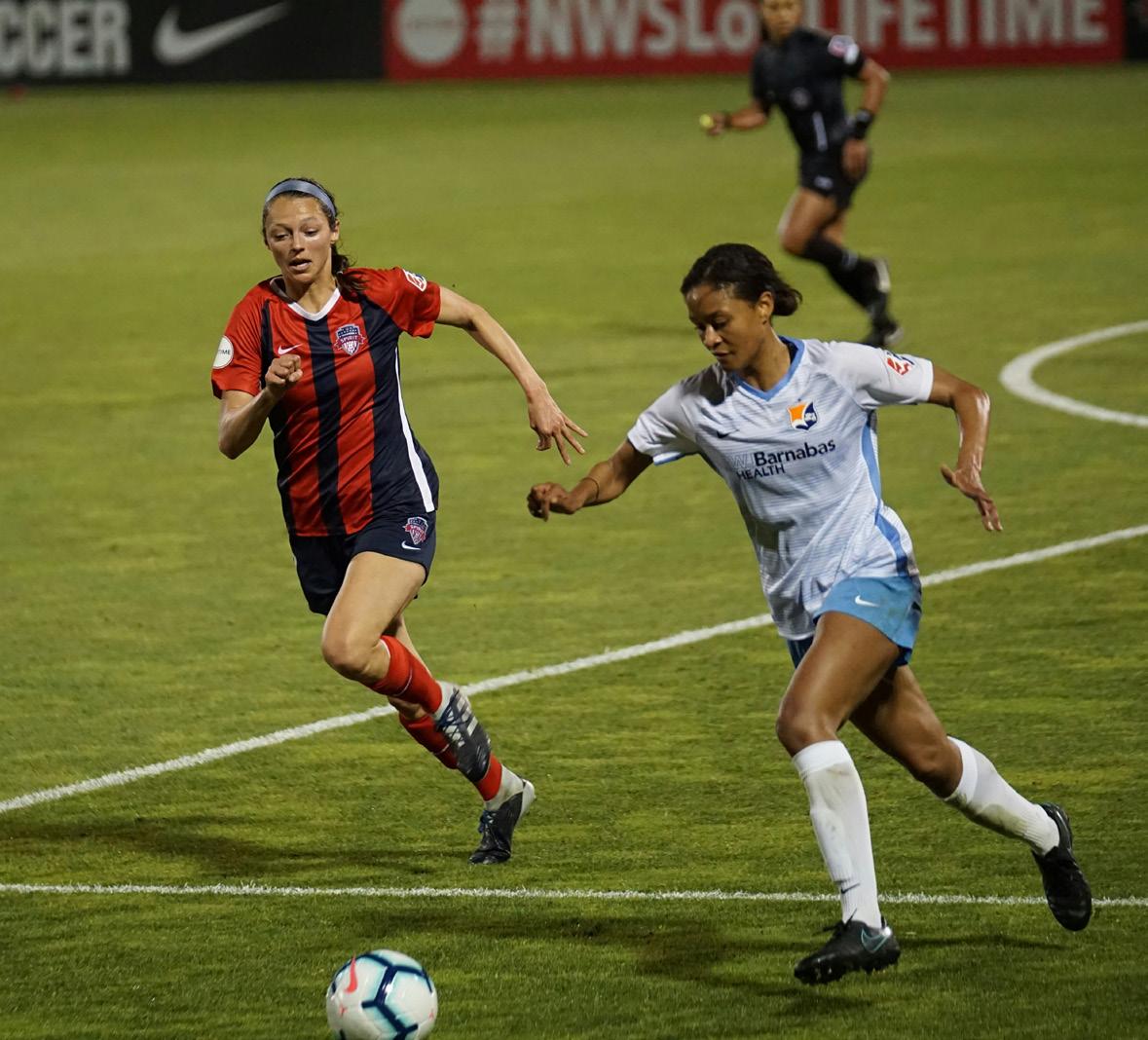
being the most popular
“With
in the world, there is so
RELIGION
popular as men’s soccer. This begs the question, “Why not?”
Soccer, the world’s favorite sport, has a following of over 4 billion fans worldwide. Men’s viewership for the 2022 World Cup averaged at 1.5 billion viewers, whereas the women’s World Cup viewership average reached only 260 million.
A lot of factors go into why the viewership of women’s soccer just cannot keep up with men’s soccer. (We’re talking at an international level, because that’s the most popular version of women’s soccer at the moment.)
Soccer is a very physical and high-intensity sport. It requires speed, agility and strength, and while women have these attributes, men have them at a different level. Soccer, at its highest level, is fast-paced, and even in men’s soccer, different leagues have different-paced games. American soccer, in the MLS leagues, is a considerably slower-paced game than in Europe and is often less viewed, because the competition in Europe is just more entertaining.
This slower paced game can apply to women’s soccer, as well. Of course, there are many women with amazing skills who excel in the sport, but their pace and physicality differ largely from that of men. Soccer is competitive, and those who watch and play it want to watch the best version of it they can, and that has always been men’s soccer.
Women’s bodies are biologically built differently than men’s. Men have the ability to be more aggressive and move faster than women, making the game more interesting. That doesn’t mean that women shouldn’t play the sport, but it does mean that speed is an undeniable factor that adds to the popularity of men’s soccer.
Instead of accepting this, many women’s teams have taken it upon themselves to get involved in activism instead of focusing on their love for the game. Women’s soccer players, especially the women’s world reigning champs, the U.S. Women’s National Team (USWNT), have appeared in the tabloids quite often over the last few years after expressing their opinions on matters of pay, LGBTQ+ and the unfairness of gender roles in sports. While their motives may have been good, their activism seemed to take away from the sport itself.
“The USWNT members seemed to get caught up in using their platform to promote their opinions rather than the sport they were playing.”
When you are a professional athlete, it’s important to carefully analyze how you portray yourself and your team. The USWNT members seemed to get caught up in using their platform to promote their own opinions rather than the sport they were playing. Instead of reporting about the games and players’ skills, news cycles would circulate the social issues the USWNT would support.
For example, in 2018, during Pride Month, the USWNT decided to switch the American flag on their jerseys for a Pride flag. This spiked controversy, because it seemed like the team was representing a group rather than the country. There was good and bad press over this, yet was it necessary at all? The team had already made it clear what they supported.
Decisions like these caused them to be considered less as an official soccer team and seen more as activists. It took away from the game itself. To a certain degree, it is important to push for causes, but it should not take away from the game itself, and in my opinion, I believe it has.
As sports fans, we should look at a team and a sport and see its history, its culture and its beauty. Women have achieved so much in sports since Title IX. They play professionally, they get recognition and they get paid — maybe not as much as men, but that is solely because men’s soccer generates more revenue as a whole. Yet, instead of the positives, like the fact that women play freely as they please, issues just keep arising. This is not seen on the men’s side of sports as often. Sure, sometimes it comes out that a team supports a certain cause, but that is not their identity. If women’s soccer had a little bit more of that mentality, perhaps viewership would grow.
I don’t think women’s soccer will ever be as popular as men’s. It’s nothing against gender; this is solely based on the fact that men’s soccer is more interesting and involving and is oftentimes very focused on the love of the game rather than the love of activism.
With soccer being the most popular women’s sport in the world, there is so much power in that role to enhance the image of the game and also other issues that are less political.
Q&A with student missionaries to Laos and Hong Kong
Women should be proud of how far they have come and understand that big steps have been made to get them this far. In turn, it’s up to them to show their love of the game on a larger scale. Editor’s
to Laos to protect the mission work there.
Where did you serve as a student missionary and what were your duties?
Anonymous: I served as a student missionary in Vientiane, Laos, for almost two years. My primary job was teaching English in a language center, but the overall goal of the missionaries was to become friends with the students and local people and introduce them to Jesus. Since Laos is a communist country and proselytizing is illegal, we weren’t allowed to talk about God in class or to share our faith with others, unless they asked us about it first.
Edvan Benitez:
I was serving with my friend Mauricio in Hong Kong at a small Adventist university called Hong Kong Adventist College. As “friendship evangelists,” we took eight credit hours every semester, lived in the dormitory with two other locals, ate in the cafeteria with them, played sports and went out to explore the city together with the purpose of building connections for eternity. Some students would come later and ask questions about our faith and God, and that’s when we would invite them to start studying the Bible.
Tell me about the culture. What was difficult for you?
What do you miss?
Anonymous: Laos is beautiful and unique.
The people are laid-back, and hospitality is important to them. If locals invite you to their house, it is expected that you will bring some food with you, and when you get there, the first thing you will do is eat it together. I loved this environment. Lao people don’t like to rock the boat, and they give generously to help the group succeed. They don’t worry about competition or outdoing each other. The social pressures that I experience in the United States were almost nonexistent there.
Benitez: It wasn’t hard for me to adapt to my location, since I really like Asian culture and I wanted to know more about it. Hong Kong is also a very international city. I would call it the “United States of Asia,” because Asian people go to Hong Kong to find a “better life.” Hong Kong Adventist College is also an international school, and I think that really helped with the culture shock.
Which religions are represented in the country where you served? What have you found to be the biggest spiritual barrier to receiving the gospel message?
Anonymous:
Laos is primarily Buddhist. The religion is woven throughout their entire societal structure and culture. Many parts of Laos are also animist and worship the spirits of their ancestors. Some of my students had experienced spiritual attacks and harassment by demons. This makes Christianity extremely difficult for Lao people. In order to give up their religion, they must give up both their culture and their ancestors. That might not seem like a big deal for us in America, because our lives are so independent from each other. However,
in Laos, it would be like asking someone to betray their family and everything they care about.
Benitez:
Hong Kong is located in what is called “the 10/40 window,” which is the world region with the least Christian presence. When we arrived at the Adventist College, only five students were Adventist. The rest of the students were Muslims, Buddhist, Taoists and atheists. However, all of these students were studying on an Adventist campus, so they were exposed to some Christian beliefs. We only had to be careful about how we presented the beautiful gospel message.
Who is one person you will never forget from your time as a student missionary?
Anonymous:
One day I was really struggling. I was going through something personal that nobody around me could understand, so I begged God to send me someone I could talk to. A few days later, one of my students invited me to go hang out with her. From our very first conversation, I found out that she was dealing with the same exact struggle that I was. I knew that God had answered my prayer and sent me a friend. She is still so special to me, and I know that we will be friends for life. Even though she isn’t Christian, God used her to help me when I needed it the most.
Benitez: I would say my two roommates. At the beginning, it was very hard for me to connect with them because of differences in our personalities and backgrounds. As a Latino, I tend to be very loud, affectionate and extroverted. My roommates were shy, quiet and intro-
verted. But as the days went by, I tried to get to know them better and was able to connect with them in different ways. They taught me a lot of lessons, and I was able to share very beautiful memories with them. I was also able to study the Bible with them, and by the grace of God, they both got baptized before we left Hong Kong.
Can you identify a theme in the growth you’ve experienced as an SM?
Anonymous:
For a long time, I considered myself a failure as a missionary. I didn’t make a single convert. I worked hard to be a good teacher, but in the end, our school was permanently closed.
I still don’t know if I did things right or if I messed up my opportunity. Things just didn’t go how I imagined.
I believe that the mission field is a place that will change peo-
ple. The grace, kindness and generosity I experienced from people who had never heard of Jesus made me want to become that kind of person, too. I thought that I could bring Jesus into their hearts, but they brought Him into mine instead.
How would you encourage someone who is thinking about being a student missionary?
Benitez:
If you are thinking of being a student missionary, God is planting that seed in your heart for a reason. Mission work is not easy; it is not heaven. Satan will constantly try to discourage you. But during those times of trouble, your faith will be strengthened and you will realize how much you need God. After you have this experience, you realize that there is no better thing in this life than to live a life of service to God and others.
If you would like to be a contributor, contact Amanda Blake at ablake@southern.edu 8 | Wednesday, April 17, 2024
soccer
women’s sport
much power in that role to enhance the image od the game and also other issues that are less political.” (Photo sourced from Unsplash)
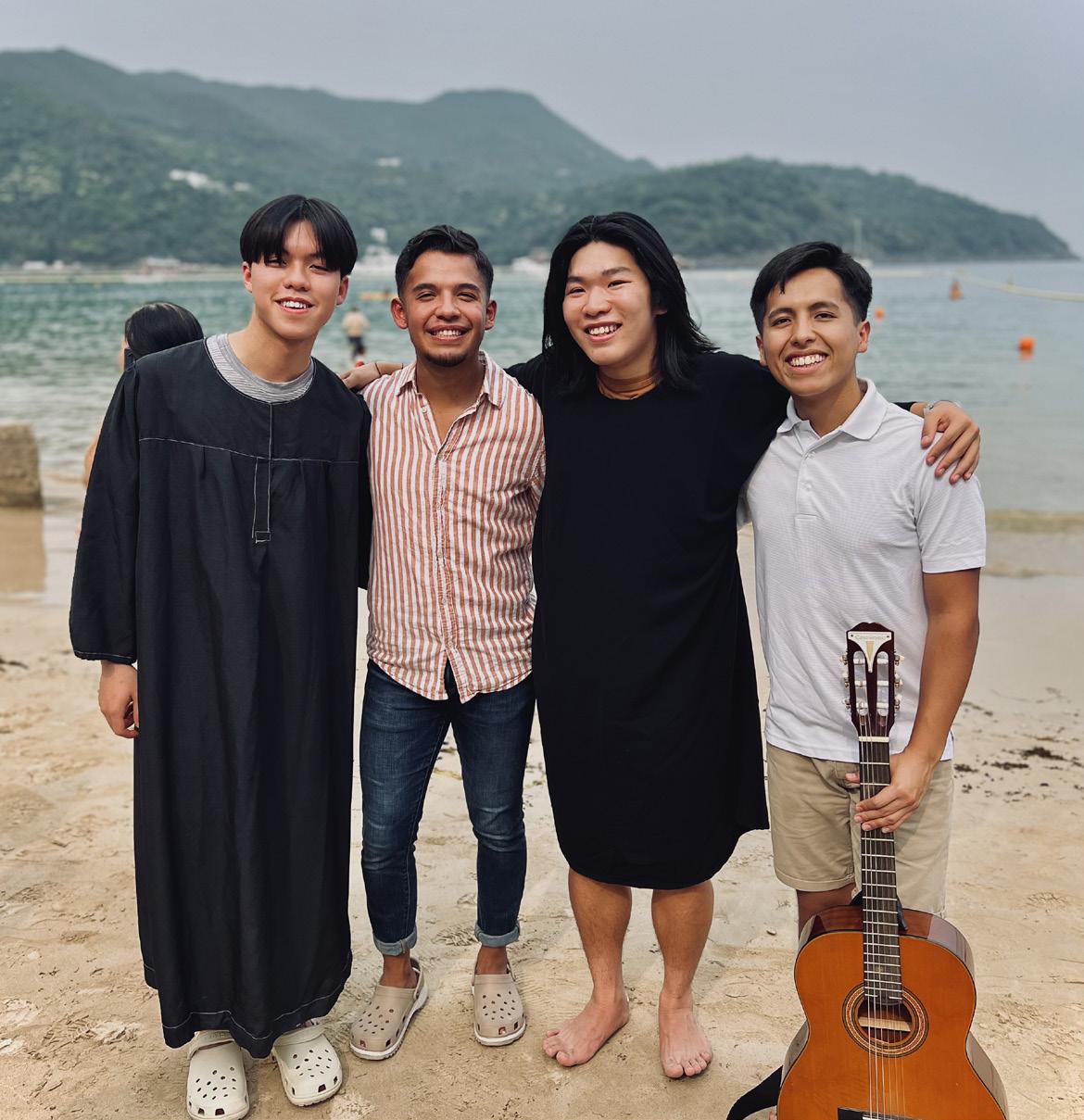
Edvan Benitez (middle left) and Mauricio Jaldin (right) pose with their roommates who chose to be baptized. (Photo courtesy of source)
Note: The following article has
edited for length and clarity. The
to
the
of
student missionary
been
Accent has also chosen not
publish
name
the
Madison Wilcox Religion Editor
Who is that girl I see? Reflections on identity as a Chinese adoptee
Meg Ermer Contributor
Who is that girl I see?
Staring straight back at me
Why is my reflection someone I don’t know?
So go the lyrics of Reflection, a musical number featured in Disney’s 1998 animated hit Mulan. This movie has always occupied a special place in my heart, and its message about reckoning with and searching for one’s identity, as the lyrics of Reflection sum up, rings true of my own life.
From 1980 to 2016, China instituted the one-child policy to combat overpopulation. Under this policy, families were limited to having one child each, with few exceptions. The consequences of breaking this policy were dire, ranging from fines equivalent to a year’s wages to forced abortions. Because male children inherited the family name and property, baby boys were not only preferred, but necessary to ensure the well-being of their parents in old age.
As a result, more than 110,000 children from China, mostly girls, were adopted by families in other countries. More than 80,000 of these children found homes in the United States, and I was one of them.
In most ways, I had a typical American childhood. My sister was also adopted from China, and our mom prioritized integrating our heritage into our lives through celebrating Chinese New Year, attending family-focused Mandarin classes at the local community college, and even traveling back to China and visiting our home prov-
inces. I never felt very different from my friends at my primarily white elementary school. This feeling of belonging and normalcy continued into high school, where I laughed off the occasional “Do you eat dogs?” joke without thinking much of it. But when February 2020 came, the world completely changed.
In addition to the general COVID anxieties that the pandemic brought, a growing sense of unease began to weigh on me. Suddenly, China was the topic of every other conversation, and not in a positive way.
While never directed toward me, comments I heard at school — including “people in China eat any random s***” and “Chinese people are genetically inferior and more susceptible to disease” — made me feel a
sense of otherness that I had never experienced before. Even though I hadn’t really affiliated myself with my Chinese identity up until that point, the antiAsian sentiment during the pandemic still felt deeply personal. Whatever “whiteness” that I had ascribed to myself came crumbling away that year.
With college, came new opportunities to explore my heritage, so I joined Asian Club and participated in their cultural nights and events. While I’ve enjoyed getting to know the club members, I’ve often felt like a fraud, knowing that I don’t have the experience of growing up in Asian (often immigrant or international) families, as most of the other members have.
I can’t speak Mandarin, and I can cook only a few Chinese
recipes. Every time I reach for the frozen dumplings at Trader Joe’s, I inwardly cringe. During Lunar New Year, I wear my qipao and accept red envelopes and wonder if I’m appropriating from a culture that I have little right to claim. A well-meaning comment from a friend sums up my imposter syndrome in a nutshell: “When I first met you, I thought you were really Asian, but now I know you’re not.”
It’s a unique position. Being born in another country but not speaking your native language. Checking the “Asian/Pacific Islander” box on applications but knowing you’re not the target demographic. Having a foot in two worlds, neither of which you feel completely accepted in, but both of which are so deeply ingrained in your experiences

For a chance to be featured, use or tag @sauaccent on Instagram in your posts!
Dear Kevin
Dear Kevin, How can I control myself with sweets when the cafe keeps serving delicious desserts everyday? Like they had tres leches and donuts today. How can a salad compete with that?
Dear Dessert Diana, The cafeteria is a place where students are expected to build character — this includes you. Think of every endeavor into the cafe as another chance to gird up your mental loins and walk past the temptations that ensnare you so. By waddling away from the sweets stand, you can stay healthier and have more money on your meal plan. If you cannot control your cravings, can you control anything?
Dear Kevin, If you could change one action, one moment in your life that changed everything, what would it be?
Dear Existential Esmeralda, The action I would change in my life would be every time I stayed away from the nest a little too long. Over my career, I’ve learned that family is more important than a job. My addiction to work has landed me in a few unfortunate situations, and that’s how I truly learned that not all birds of a feather flock together. Make every memory with your loved ones count.

This week’s winner is @ana.beiling. To collect your prize, go to the Student Development office.
Knowing that students might need a little extra cash, Kevin is offering a:
#SAUlife



that you can’t imagine yourself without them.
As AAPI month approaches, I continue to wrestle with how to relate to my heritage. While I’ve prioritized reading books by Chinese authors that have opened my eyes to the Chinese experience in the Western world, I can find only a few bits and pieces of their stories that match my own.
I’m coming to realize that reckoning with my identity will be a slow process, and it won’t depend on a singular factor such as where I’m from, what I look like or where I grew up. Hopefully, one day I will look in the mirror and my reflection will be someone I not only know, but someone whose story I celebrate and truly understand to be my own.


For more related news, visit our website at southern-accent.org 9 | Wednesday, April 17, 2024
Meg Ermer dances during Asian Night 2023. (Photo courtesy of source) “Our mom prioritized integrating our heritage into our lives.” (Photo courtesy of source)
LIFESTYLE
us
with
SOCIAL kaitlynlayson Strawberries and Nutella cravings Photo Credit: April Lin-Ao dylanmwaters Turning tassels, chasing dreams on May 5 Photo Credit: Anna Kaitlyn Layson Dylan Waters K D raidenjoie muahahaha ����♀ Photo Credit: Tylor Einhellig Raiden Scott R cecichilerican Album 3:’24 Photo Credit: Carson Miller karismcconnell03 Sonrise 2024 – Selling tear bottles in the Market of Jerusalem Photo Credit: Afton Logan Cecilia Moreno Karis McConnell C K
DM
on Instagram
a photo of where Kevin is hiding! $10 Gift Card
Do you have a question for Kevin? Scan the QR code or click on the link in the Accent’s Instagram bio to submit
question.
your
edvanjzbm If you want to go fast, go alone. If you want to go far, go together Photo Credit: AU student Edvan Benitez E



p.m. Sunset, 8:16 p.m. Vespers - Ron Halvorsen Jr., Next Steps
No Field Trips Student Appreciation Day, 10:00 a.m. - 3:00 p.m. Campus Research Day
John Plake, 11:00 a.m. @ Collegedale Church
Deans Luncheon, 12:00 p.m. @ Presidential Banquet Room
Connect, 9:00 a.m. @Collegedale Church Merge Worship, 11:45 a.m.
Harp Ensemble, 7:30 p.m. @
Tournament,
@
This Week’s Poll:
Duck, bear, or “Who cares?”
Tell us your thoughts by scanning the QR code and submitting your answer.
Last Week’s Results:
Which year of college is the hardest: freshman, sophomore, junior or senior year?
I guess sophomores and seniors are living the good life.

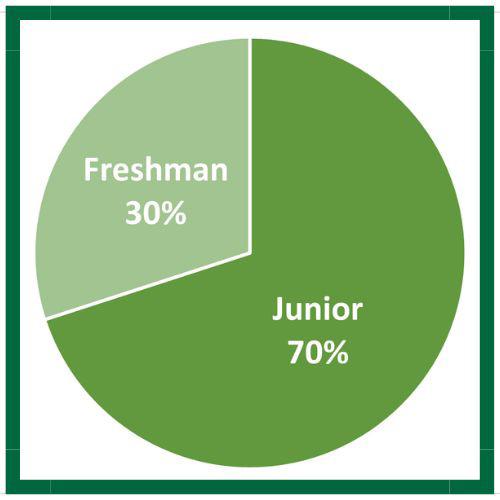



If you would like to be a contributor, contact Amanda Blake at ablake@southern.edu 10 | Wednesday, April 17, 2024 Weekly Birthdays TODAY |17 Emily Cho Dairin De Leon Macauley Huston Max Huston Seth McPherson Carley Quintrell Katie Rose Shelly Trinidad Eduardo Velazquez Salinas Thursday |18 Houston Beckworth Brandon Belz Josiah Myaing Jeannette Simpson Wella Slough Eliyah Sprenkle Aidan Sullivan Tata Tsikirai Witt Witt Friday |19 Elan Anderson Landon Burgin Katie Hamilton Zach Kirstein Isaiah Lee Melanie Moraes Joshua Scott Gina Tatum Nicholas Thompson April West Jason Williams Saturday |20 Kevin Andreu Lucy Berecz Justin Childers Tracia Howell-West Crisbel Mendez Lara Soares Nathan Vidal Izzy Wood Sunday |21 Stroud Duncan Jaylen Gomes Mallory Haynes Brayan Lopez Giselle Marsollier Peter Ni Meagan Shields Aiden Wilhelm Monday |22 Lucas Aedo Pierre Bowrin Sharna Ebanks Edison Garcia Ruthann Hartman Kole Lopez Tanner Moran Jesus Prieto Castillo Joshua Sutherland Kaitlyn Vasquez Kyle Williams Ingrid Yanes Tuesday |23 Traverse Brown Isabella Eklund Connor E. Grant Cameron Hall Ariel Lantigua Sahyii Lozano Mcclure McClure Macy McIntosh Reyes Miguel-Perez Jj Moon David Quintana Ronan Teel CHATTER 76 - 62 87 - 63 73 - 54 69 - 48 81 - 61 62 -48 75 - 52 Today — 17 Thursday — 18 Saturday — 20 Monday — 22 Friday — 19 Sunday — 21 Tuesday — 23 MASTER’S DEGREE IN COUNSELING Let Us Help You Help Others Southern’s counseling program provides practical knowledge combined with a highly-supervised clinical experience. Scheduled for Your Convenience Hybrid classes support your work-life balance. Designed for Your Success Southern’s CACREP-accredited programs in Clinical Mental Health Counseling and School Counseling prepare students for state licensure and provide practical knowledge and clinical experience. Grounded in Christian Principles The training you receive at Southern will be grounded in Christian principles and designed to prepare you for work in a variety of settings. Master of Science in Counseling • Clinical Mental Health Counseling • School Counseling 1.800.SOUTHERN • southern.edu/graduatestudies Faculty Development, 12:00 p.m. @ Presidential Banquet Room Southern Steel Band Concert, 7:30 p.m. @ Ackerman Auditorium Payday: Hourly/Students • Vespers - Ron Halvorsen Jr., 6:30 & 8:30 p.m. @ Collegedale Church • SOAP Bat Vespers, 7:00 - 10:00 p.m. @ Wright Hall Steps Afterglow, 7:30-8:20
Convocation:
Southern
Collegedale Church ERC Futsal
9:00 p.m.
Iles PE Center No Field Trips Faculty Senate, 3:30 p.m. Staff Advisory Council, 3:30 p.m. Southern Horn Ensemble, 7:30 p.m. @ Ackerman Auditorium
No Field Trips SOAP Ocoee Rafting, 9:00 - 4:00 p.m. @ Wright Hall Steps Symphony Orchestra Concert, 7:30 p.m. @ Collegedale Church
