The
Mental Health
March 27, 2024 Collegedale, Tennessee
Tradition vs. progress: It’s time to drum up change in the church
3 songs for the spiritually exhausted

The
March 27, 2024 Collegedale, Tennessee
Tradition vs. progress: It’s time to drum up change in the church
3 songs for the spiritually exhausted
The student voice since 1926
‘The violence was all that we were used to growing up in the camps’
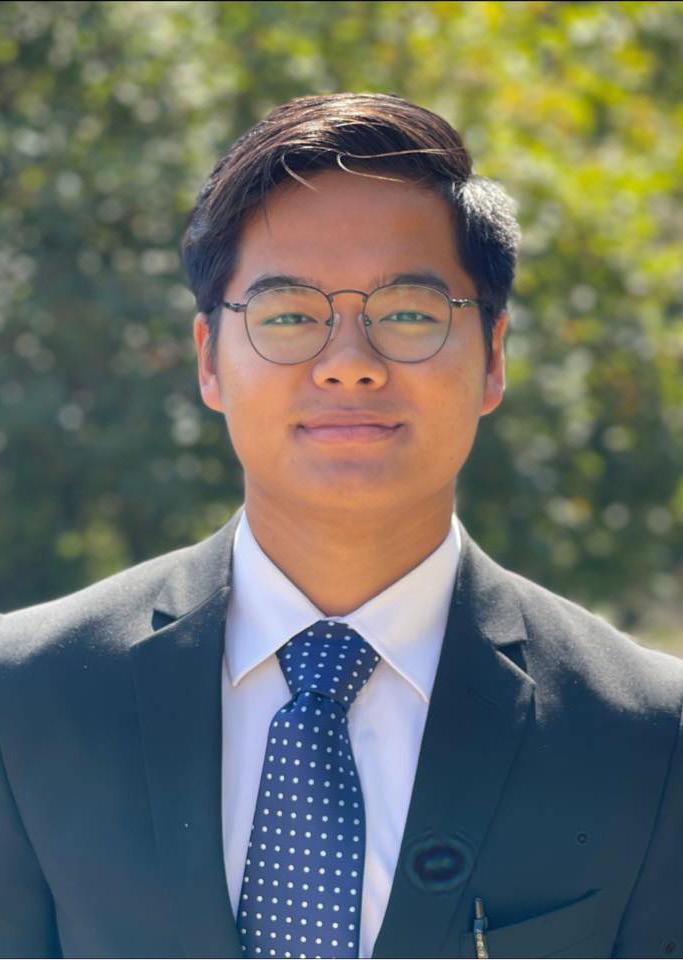
 Htet Myint Reporter
Writer’s Note: As the son of political refugees who sought sanctuary in America in the winter of 1999, my upbringing is firmly embedded in the soil of Burma/ Myanmar’s complex history. My parents’ journey shapes my perspective and has ignited my passion for uncovering tales of my homeland. Through my writing, I aim to shine a light on the forgotten narratives of Myanmar’s refugees, weaving threads of resilience and hope to inspire readers.
“Back in those days, there were times when we would go without food. Sometimes we would only be able to eat rice with water and sugar, and that was it,” reminisces Issac Eh, an alumnus of Southern Adventist University. His poignant words offer a glimpse into the harrowing experiences endured by refugees like him.
Southern is a sanctuary of diverse stories. Among them are
the stories of two refugees, Isaac Eh and Joseph Htoo, both born in a refugee camp on the border of Myanmar and Thailand, who now call Southern home.
“Back in those days, there were times when we would go without food. Sometimes we would only be able to eat rice with water and sugar, and that was it.”
Isaac Eh, a 2022 graduate from Southern with a Bachelor of Science in Nursing, vividly recalls his early years in the Mae La camp, located along the border of Myanmar and Thailand, before moving to Fort Wayne, Ind., at the age of 8. The eldest of four children, he was born in the refugee camp to his mother, Eh Gay, and his father, Eh Dah. Reflecting on his time in such surroundings,
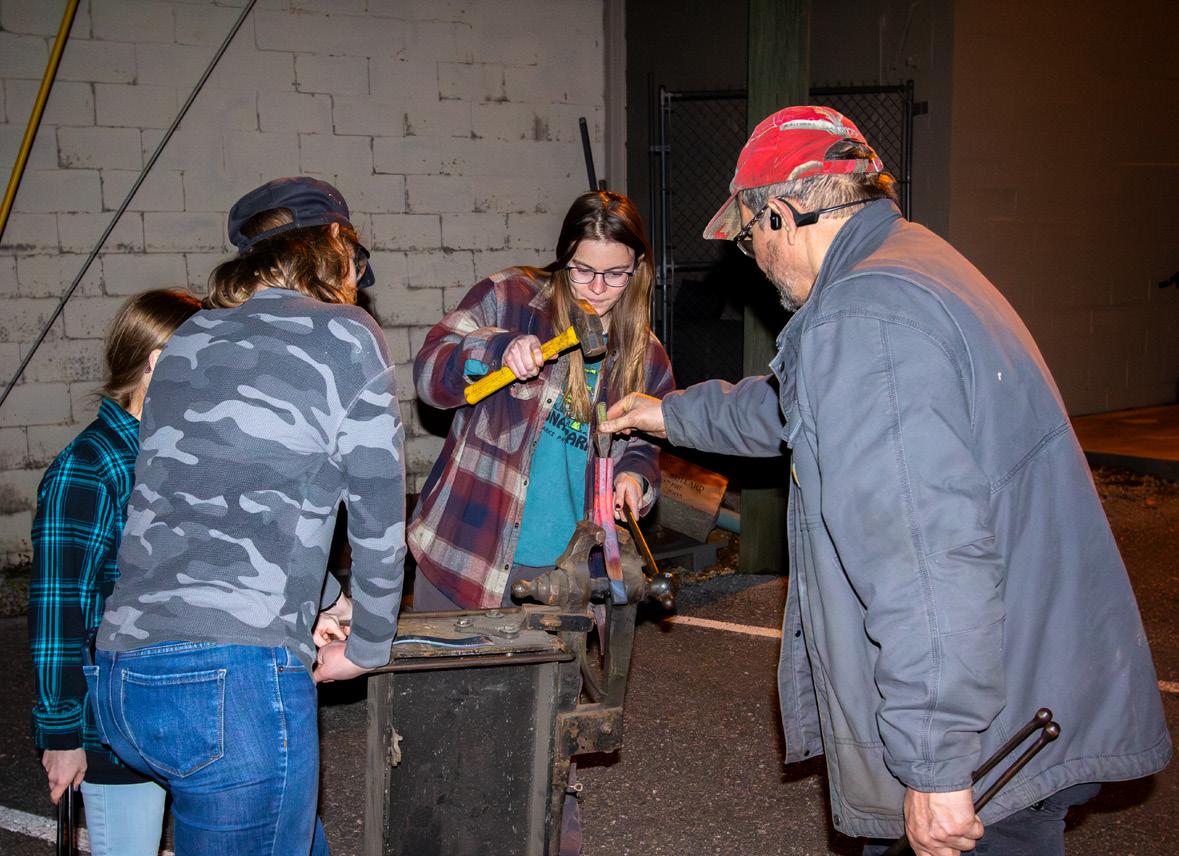
The Southern Smiths, a student-run blacksmithing club, recently relocated because Southern Adventist University began preparing the area surrounding its former meeting place, the hill behind the Art Annex, for new housing.
Now, the Southern Smiths meets in the warehouse next to WSMC Classical 90.5. The club is fundraising to get the infrastructure needed to safely forge inside the building.
“We’ve worked hard to use the move as an opportunity for growth,” said Chehalis Eno, a junior English licensure major and president of the club. “We’re now located closer to campus, so it’s easier for students to
find us. In addition, once we’ve raised the funds and have fully moved into our new location, we’ll actually have a larger footprint than before, allowing more room for growth and the potential introduction of welding and pewter casting.”
Eno said she is thankful for Marty Hamilton, senior vice president for financial administration, who has been working closely with the club, updating leaders on their moving deadline and helping them search for a new building.
The Southern Smiths is comprised of students and community members interested in the art of blacksmithing. In addition to Eno, other club officers are
See SMITHs on page 2
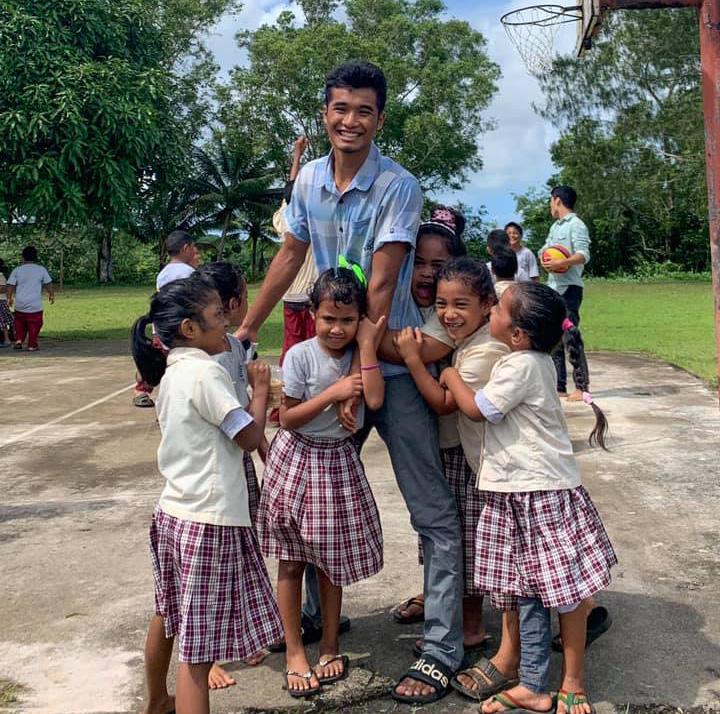
Eh vividly remembers living in the bamboo houses, walking to school with friends and helping his mom sell snacks in her shop. He recalls the absence of electricity and having to use torches for light.
“I remember living in the refugee camps a lot more vividly than going to elementary school here in the States, actually,” Eh said.
Describing the unsettling atmosphere in the camps, Eh recalled the regular sound of gunshots and yelling. He shared a particularly harrowing incident where internal conflicts involving the Thai and Burmese military prompted his family to flee into the woods, where they remained for several days before returning to the refugee camp.
“I woke up to people screaming,” Eh said. “My dad came into the house with a machete, and I heard gunshots. Because it wasn’t safe, we had to run back into the woods for a few days.”
Eh recalled how the sight of soldiers on guard with guns was
commonplace for him in the refugee camps.
“I was pretty scared growing up, but I trusted my parents and did whatever they told me to do,” Eh said. “The yelling and shouting became normal. People in the village would be yelling and fighting. This one time I saw a person chop off another person’s hand with a machete. I was about 7 years old when that happened.”
Food was scarce in the refugee camps, according to Eh. He recalls rations delivered sporadically by the Thai government and people lined up behind a truck that would hand out bags of rice. He also recalls missionaries dispersing supplies, bags of food and snacks, which helped lead to his survival.
Political Upheaval
Myanmar’s political landscape has long been defined by military rule and ethnic tensions, despite efforts toward democratic government since
See MYANMAR on page 2
Vol. 79
Issue 20
The cost for Southern Adventist University’s upcoming cottage housing project has increased in order to build infrastructure required by the City of Collegedale, according to Marty Hamilton, senior vice president for financial administration.
Some requirements included a 26-foot paved road for emergency vehicle access and a residential sprinkler system in each housing unit. Due to these additions, the expected infrastructure cost rose from $500,000 to $3,315,000.
Hamilton said even though some aspects of the increase were unexpected, the cost also serves as an investment in future housing. Having this infrastructure in place will reduce the cost per unit for additional cottages in the future. The university already plans to build additional cottage units in the future, based on Southern’s housing needs, according to Hamilton.
“I think the irony here is [that] fast-tracking this is basically costing us more,” Hamilton said. “If we had a little more time to work through the process, we probably could have saved some money.”
According to Hamilton, Southern didn’t anticipate all of the
Collegedale News on page 5
Changing the game: A local tennis star's journey to fame Split on the field: City adds bike ramps to Thatcher Switch
Lesieli Savelio News Editor
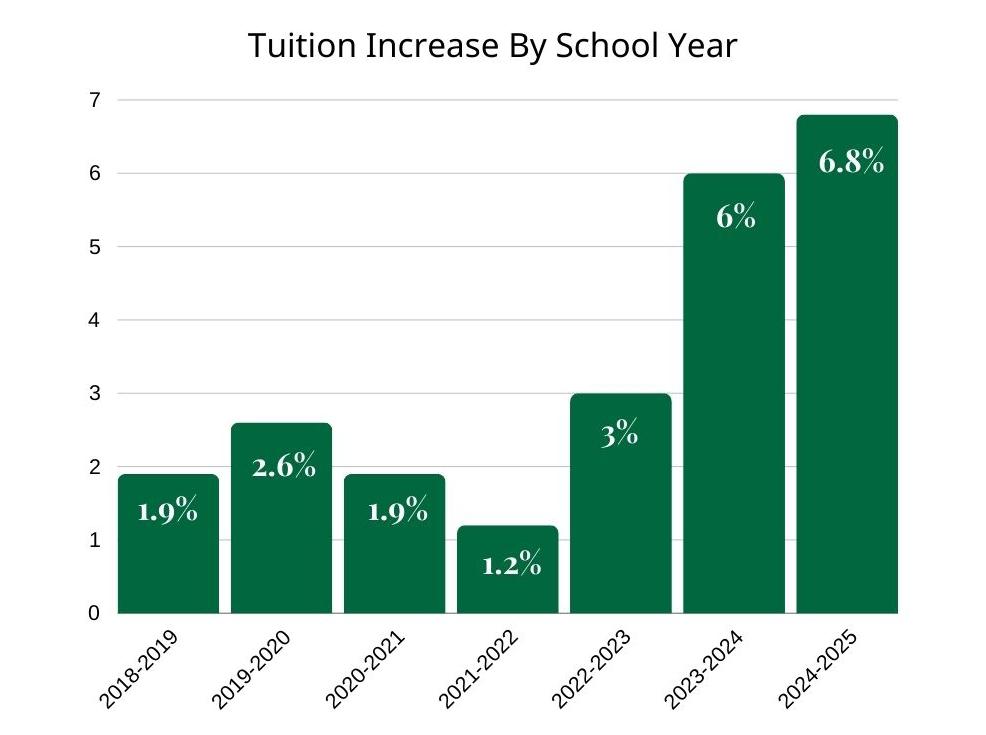
Southern Adventist University will increase tuition by 6.8% for the 2024-2025 school year, according to Ken Shaw, university president. In an email to the Accent, Shaw said that students will pay approximately $165 more per month in tuition compared to this school year.
According to Southern’s website, the total cost during the 20232024 school year for students living on campus is $34,050, and for community students it is $25,590.
For the upcoming academic year, the total cost will be $36,200 for students living on campus and $27,300 for community students.
Shaw said one of the main reasons for the tuition increase is the 5% cost of living increase for Southern employees.
“This cost of living increase is a recommendation from the North American Division that we have followed for many years,” he wrote in the email.
Steven Miller, vice president for financial administration, shared with the Accent via email that keeping up with high inflation is another reason for the increase.
“High inflation rates have impacted everyone the past few years, as the U.S. annual inflation rates were 8.0% and 4.1% in 2022 and 2023, respectively,” Miller said. “This inflation directly impacts the school’s operating expenses
through utility, supply, labor and other costs.”
Even with the increase in tuition costs, Shaw and Miller said that Southern is on the lower end of the tuition spectrum compared to other Adventist universities in the United States. Shaw also said that Southern’s cost is not high compared to institutions in the state of Tennessee.
“During our February Board of Trustees Meeting and at our recent Town Hall meeting, I shared a recent comparison showing our tuition and fees compared to the national and state averages,” Shaw said. “The average tuition and fees expense to attend private colleges and universities are $41,540. In Tennessee, that figure is $29,112. At Southern, our tuition and fees for this [past] year are $25,590.”
Miller said several steps are taken before making a deci-
sion like this. It goes through the financial committee and the Board of Trustees, and they use comparable information from the Adventist institutions in the discussion and decision-making process. Ultimately, the Board of Trustees is the last step, and any changes must be approved by them, according to Miller.
“There is a lot of research and planning that goes on before the recommendation is taken,” Miller said. “Multiple departments around campus work to forecast the university’s financial situation, enrollment and external factors, all of which could impact tuition.”
Though tuition is increasing, student wages will not go up next year. Shaw said that to raise student wages, the university would have to increase tuition costs even more.
secretary Josie Amstone, sophomore general studies major; pastor Vitor Doy, junior theology major; and treasurer Hayden Rigsby, senior history major.
The Southern Smiths host meetings every Thursday from 6 to 10 p.m, during which members work on individual projects and help each other. The club also hosts a LifeGroup called “In the Forge,” which works to share Christ with people by teaching them blacksmithing. Southern is sponsoring the club to attend this year’s International Pathfinder Camporee, which will take place on Aug. 5-11 in Gillette, Wyo. While there, club members will help Pathfinders earn the blacksmithing honor. The Southern Smiths also sets up a booth at SonRise each year and hands out thousands of nail swords.
Eno encouraged anyone interested in learning more about
continued from page 1
gaining independence from British rule in 1948. The brief period of democracy was abruptly halted by General Ne Win’s military coup in 1962, ushering in decades of authoritarian rule marked by the systematic persecution of ethnic minorities, notably the Karen people. The Karen, also known as K’nyaw, primarily located in southeastern Myanmar and along the Thai border, have faced severe oppression and genocidal actions. Particularly under General Ne Win’s regime, the Karen people endured tactics such as forced relocations, forced labor, rape and murder.
the club to stop by the shop and participate. The first visit is free, allowing individuals to get a full blacksmithing experience. If an individual would like to join the club full-time, they will be charged a $20 fee to cover the costs of materials, such as propane and new tools. Even the inexperienced can join the club and participate because club members will help them learn the basics.
At first, Eno only wanted the LifeGroup credit. However, she decided to give forging a try and hasn’t looked back. More experienced club members taught her all the skills s he needed.
“There’s always more to learn,”
Eno said, “and I don’t claim to be an expert. But because of the club, I know exactly who to talk to in order to realize my creative goals. I’ve gained the skills I need to pursue a lifelong hobby, and I’ve made friends and connections that are invaluable to me.”
tion against the military regime, leading to renewed clashes and further instability.
“Now personally for me, I hate when people start yelling. It makes me feel anxious, jittery; it’s probably a form of PTSD.”
continued from page 1
requirements they would have to meet, which is why their early cost projections were incorrect. He said that building the cottages is a new type of project for Southern.
“We’re basically creating a subdivision,” Hamilton said, “so I should have thought that through more and realized it was going to require a whole lot more investment.”
Hamilton also mentioned that rising costs in labor, material and equipment have had an impact on the cottages, as well as other building projects around campus.
“That’s hard, you know, but we’ve got wonderful donors,” Hamilton said. “Southern’s got great support.”
The number of cottages being built has changed from 25 to 27, according to Hamilton. Southern’s goal is still to have the units completed for next fall semester, despite the unexpected issues.
for 80% of all refugees arriving since 2007 in Indiana.
Contrasting life in Indiana with his time in the refugee camps, Eh noted the ease of affording food, emphasizing his family’s newfound ability to consistently enjoy meals without anxiety.
“That’s where we’re pushing really hard, and so, yeah, there’s been setbacks,” Hamilton said. “In my work here at Southern, this is typical because we all have a vision of, ‘Okay, we’re gonna get this done,’ and there [are] always surprises.”
In addition to rising costs, it also took longer than expected for the manufacturer of the cottages to receive certification under the state of Tennessee’s modular building program, Hamilton explained. According to the Tennessee Department of Commerce and Insurance website, the builder must follow “construction standards for factory built structures.”
“So when they get certified,that means that this kind of modular house can be built in any city, any county in the state of Tennessee,” Hamilton said. “You don’t go through inspections, because it’s certified by the state.”
Despite some of the hurdles they have faced with the cottages project, Southern still sees value in growing their housing developments, according to Hamilton.
“I think you have to look to the future, and that’s kind of where we can say, ‘Look, it makes sense,’” he said. “We don’t have any additional housing for students right now, so we need to do something.”
In response to these atrocities, the Karen people have engaged in armed conflicts while seeking autonomy within Myanmar’s complex ethnic and political landscape, contributing to the country’s enduring civil war, the world’s longest-running conflict. This struggle intersects with the political upheaval following the 2021 military coup, when the military seized control of the government, detaining State Counsellor Aung San Suu Kyi and other members of the ruling National League for Democracy (NLD) after the NLD’s landslide victory in the 2020 elections. The military has alleged rampant fraud.
The refugee population from Myanmar has surged due to ongoing displacement and humanitarian crises. In 2017, around 86,000 predominantly Karen refugees were recorded in nine main camps along the Thai-Myanmar border. Additionally, between 2006 and 2017, 109,402 refugees from these camps were resettled in third countries, including the United States, according to The Border Consortium. This number has continued to rise following the 2021 coup d'état.
A New Life
Eh arrived in America in 2007 with his mother, father and two siblings, Peeter and Eh Htee. They are among more than 35,000 people from varying ethnic backgrounds originating from Myanmar who call Indiana home, according to statistics reported in the Indiana Capital Chronicle. Immigrants from Myanmar account
“I woke up to people screaming. My dad came into the house with a machete, and I heard gunshots. Because it wasn’t safe, we had to run back into the woods for a few days.”
The coup marked a severe setback for Myanmar’s already fragile journey toward democracy, sparking widespread domestic and international condemnation. For the Karen and other ethnic minorities, the coup added another layer of complexity to their long-standing conflicts. Some ethnic armed organizations, including those from the Karen community, intensified their opposi-
Southern Accent
advertising inquiries, email studentadmgr@southern.edu.
When asked about the effects of trauma experienced while living in the refugee camp, he said, “Now personally for me, I hate when people start yelling. It makes me feel anxious, jittery; it’s probably a form of PTSD. Everytime someone starts yelling, even if it’s within my relationship, if she even starts talking with a loud tone of voice, I have to step out and take a breath.”
He also shared the effects that growing up amid so much violence has had on his family.
“I noticed my brother and I were very violent growing up,” Eh said. “We would get into fights. The violence was all that we were used to growing up in the camps. We grew out of that eventually.”
Eh credited his journey of healing to the guidance and support of mentors and teachers he encountered along the way. He recalled the profound impact certain individuals had on his life at Aboite Christian School (ACS)and Indiana Academy during elementary and high school, respectively.
Eh is particularly grateful for the influence of a man named Mr. Schultz. SMITHS continued from page 1

Photo Editor
Preston Waters
Opinion Editor
Alexis Dewey
Religion Editor
Madison Wilcox
Sports Editor Jacob Nevis
Web Manager
Meg Ermer
“Especially in the U.S., I wasn’t the most obedient kid,” he said. “There were a lot of family problems at home, but I remember that at ACS he would notice that I would be going through something, and he would check up on me, sometimes more than once a week. He would talk to me, and eventually, I opened up about life. There were also times he would open up his home to my siblings and [me].”
“We would get into fights. The violence was all that we were used to growing up in the camps. We grew out of that eventually.”
In addition, Eh mentioned the pivotal role of Mr. Riechert at Indiana Academy, particularly in addressing the violence prevalent in his family.
“Mr. Riechert and Mr. Schultz were father figures to me,” he said. “They helped me with my discipline and emotional control. There were times I would talk to Riechert about feelings, outbursts of thoughts, and he would help me.”
Eh’s path eventually led him to Southern, but it wasn’t a direct route. When choosing a college, he opted for Indiana University for its affordability but desired to stay connected to the Adventist world. After being baptized his junior year of high school, Eh began his college journey, eventually feeling drawn to serve as a student missionary. After serving in Micronesia for a year,
Reporters
Emma Boughman
Alissa Flores
Amy Mejias
Htet Myint
Marian Polanco
Layout Designers
Anton Kannenberg
Conner Bartsch
Copy Editors
Ana K. Zelidon
Debra Hicks
he sought a school and environment better aligned with his beliefs, because he missed the Adventist atmosphere.
Looking ahead, Eh plans to pursue further education in nurse anesthesia while also seeking medical mission trips.
Overcoming Obstacles
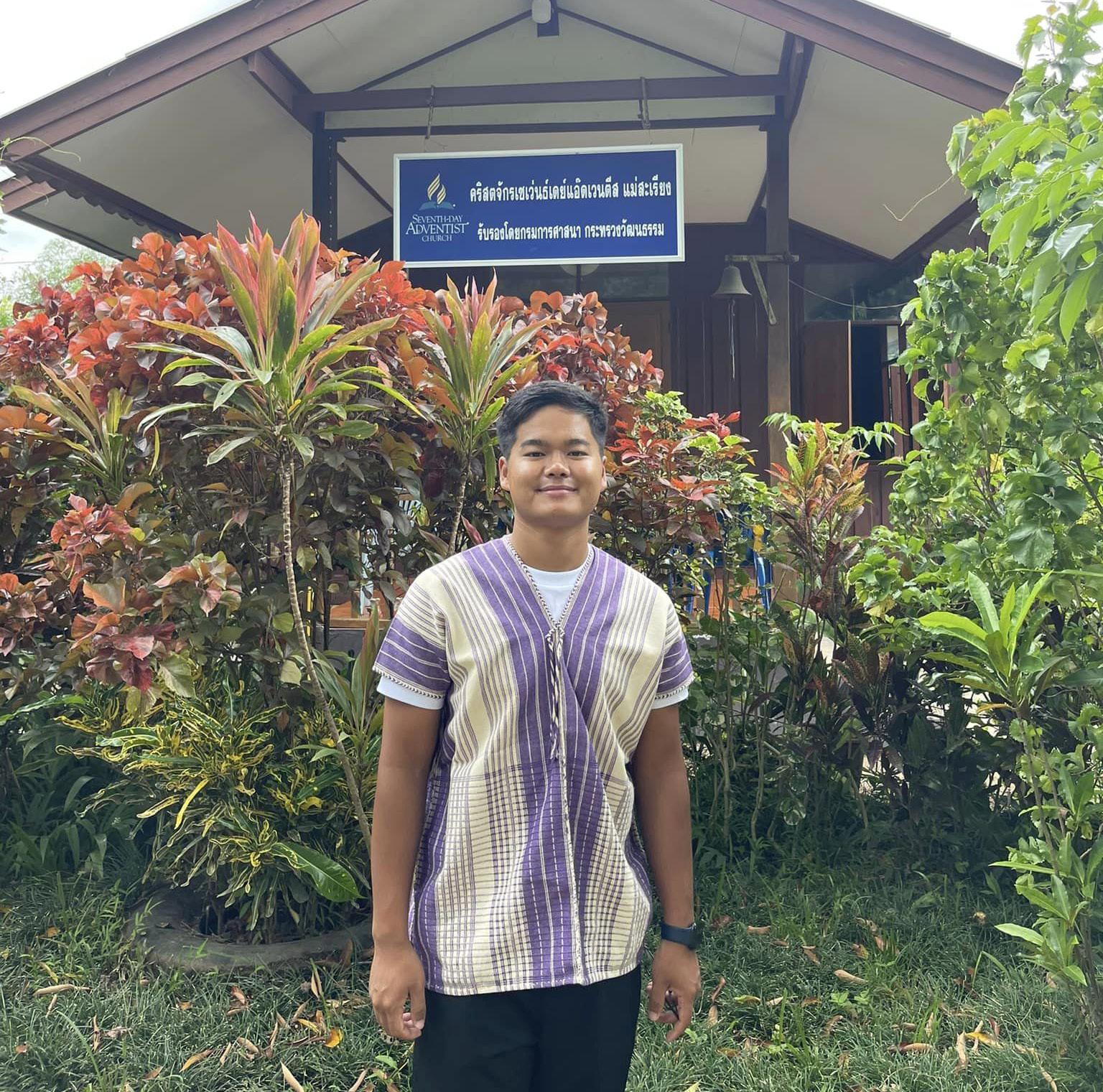
Joseph Htoo’s journey from the Mae La refugee camp to Southern is another testament of resilience and faith. A junior theology major, his family resettled in Utica, N.Y. An alumnus of Union Springs Academy, he attributes his family’s success to help from sponsors and fellow church members at Utica International Seventh-day Adventist Church.
Facing discrimination due to their religious beliefs, Htoo’s family sought refuge in 2000 at the Mae La refugee camp.
Htoo arrived in America when he was only 4 years old. The youngest of four children, he was also born in the Mae La refugee camp. He remembers being in a pre-kindergarten class at the refugee camp.
As refugees, Htoo’s family faced uncertainty about their future in the United States. Htoo explained how, unsure of the entire resettlement process, they simply followed the protocol of signing up, receiving vaccinations and ensuring that their ID and shots were up-to-date. Unfortunately, Htoo’s grandmother couldn’t join them in the United States, because she had left the camp and therefore couldn’t fulfill the vaccination requirements.
Basic tasks such as taking out the trash forced a learning curve, and they had no prior knowledge of household items such as bed sheets and mattresses.
Htoo also shared the history of his family’s origins in Ohn Daw, a village in Karen
See MYANMAR on page 3
Social Media Manager
Lia Colon
Photographers
Andrew Boggess
Mila Bales
Ron Cabacungan
Andre Ottati
Circulation Manager
Norelie Cabrera
Staff Sponsor
Alva James-Johnson
continued from page 2
State in Myanmar, where his great-grandmother had been baptized by Eric B. Hare, a celebrated Adventist missionary. His grandmother worked under Hare’s son, who returned to Myanmar after World War II, as a caretaker for his kids.
Reflecting on his mother’s hardships, Htoo revealed that malnutrition had resulted in her small stature, so she prioritized feeding her children well, despite the challenges of obtaining balanced nutrition in the camp, where they relied mainly on rice and vegetables.
The decision to leave Ohn Daw stemmed from religious per-
secution, as Buddhist authorities took control and destroyed churches and schools. Facing discrimination due to their religious beliefs, Htoo’s family sought refuge in 2000 at the Mae La refugee camp, where they hoped for a safer and more stable environment.
After seeking asylum in Upstate New York in November, Htoo’s family encountered unexpected challenges adapting to their new environment. Accustomed to a different climate, they were bewildered by their first glimpse of snow falling from the sky. Basic tasks such as taking out the trash forced a learning curve, and they had no prior knowledge of household items such as bed sheets and mattresses.
The family received support from the city of Utica’s ESL program. Social workers assisted with job placement during the six-month program, while church members volunteered as designated drivers to transport them to church. The parents, unfamiliar with the language and struggling to find work due to their lack of education, faced particular challenges. Htoo’s mother eventually secured a cleaning job at a casino in 2011, while his father worked various jobs, including as a nursing home employee and a quality inspector of aluminum.
Htoo’s mother made Adventist schooling a top priority for her children. From kindergarten through eighth grade, all four siblings received their education
in church schools before transitioning to Adventist academies. Htoo and one of his sisters seized the chance to further their education at Adventist universities, with his older sister graduating from La Sierra University in California, while his other siblings opted for public colleges.
“The ethnic cleansing, the civil war [it's] sad to see, but knowing that God has been good has been a blessing.“
Choosing Southern was influenced by its strong practical theology program, diverse community and abundant scholar-
ship opportunities. Htoo appreciated the internships and connections with conferences offered by the university, which aligned with his future goals in pastoral and refugee ministry. He feels well-represented within the Asian student population at Southern and looks forward to continuing his education and service in various global contexts. When asked whether his family has healed from the traumas they experienced, he said, “Yes, this past summer my family and I got the opportunity to go back to Thailand; we got to see other relatives still in the camps. The ethnic cleansing, the civil war [it’s] sad to see, but knowing that God has been good has been a blessing.”
Amy Mejias Reporter needed,”she said. ”Their dedication to working from the wee hours of the morning until nearly midnight truly showed the caring hand of Jesus.” Anderson also reflected on how long she had to wait to be able to join one of these mission trips.
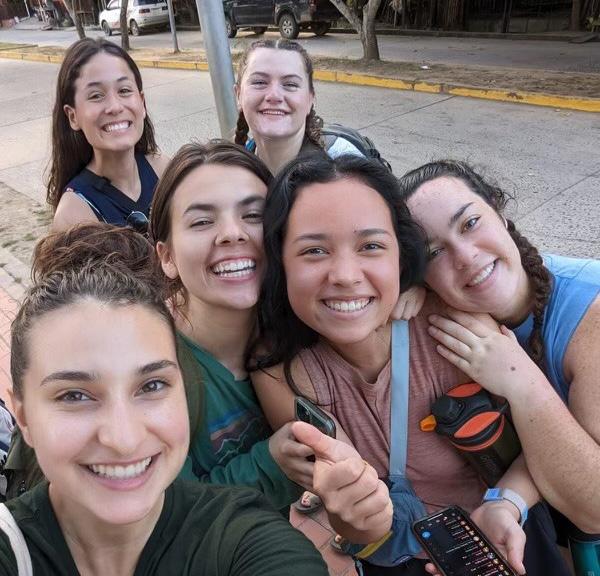
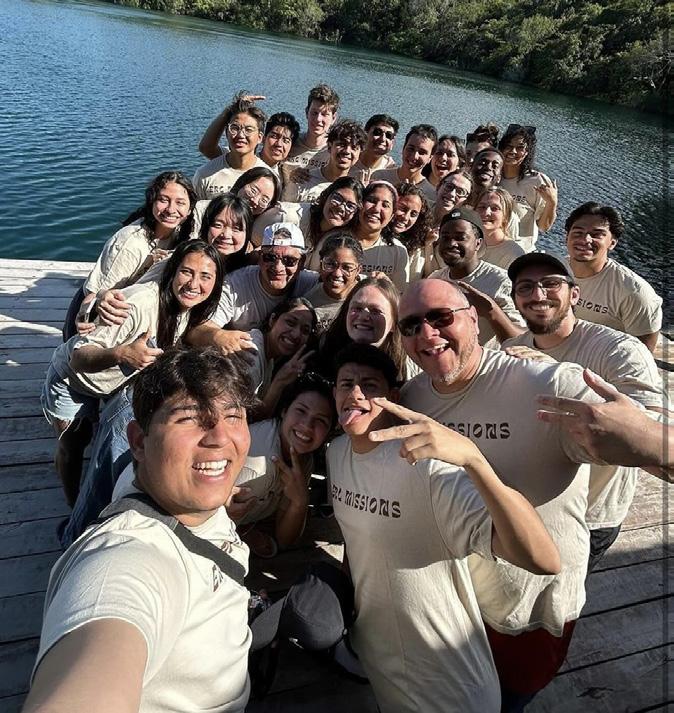
This past Spring Break, students traveled to several destinations as part of short-term mission trips organized by Southern Adventist University. Two separate Vision Trips included 24 people who volunteered at Familia Feliz in Rurrenabaque, Bolivia, and 23 people who served at AMOR Projects in Pucallpa, Peru.
Additionally, the Evangelistic Resource Center (ERC) sponsored 33 people who held public meetings in Chetumal, Mexico, and 16 people who preached in Ponce, Puerto Rico.
The Vision Trip to Peru was medical-focused, according to Cheryl Craven, Christian Service director. She said AMOR Projects has been a well-loved location for years, and this was Vision Trips’ first opportunity to return since the outbreak of COVID-19 and the unstable political environment in Peru last year.
“I know many lives in Bolivia were changed, and I know the lives of our team were equally impacted by God’s work and mercy through the experience.”
Craven stated that the trip sponsor, School of Nursing professor Tony Lazcano, shared that “there was a medical focus with six days of mobile medical clinics. Four medical providers saw 100 patients in all but one day. One day they saw 150. There were dental tooth extractions and a family practice primary care, which included ultrasounds.”
Students shadowed the medical providers and connected with the patients, Lazcano shared. They saw up close the humanitarian focus, the needs of an underserved population and what it takes to care for others in a challenging environment. People came from far away. A few shared that they hadn’t seen a doctor in 20 years due to lack of access. One lady traveled by boat 4-5 hours and then by car 4-5 hours, according to Lazcano.
The work in Bolivia focused on assisting long-term missionaries at the Familia Feliz orphanage, Craven said. Volunteers assisted with maintenance, such as helping with plumbing and electrical issues, as well as installing a new ceiling and helping with dental cleanings and medical checkups for children at the orphanage.
Sierra Anderson, senior nursing major who was the student leader for the trip to Familia Feliz, added: “Not only were many projects completed, but students led an evening Vacation Bible School and were divided into houses of children for the week.”
Anderson said even through some difficult situations they encountered, God’s timing was perfect.
“Our 24 volunteers jumped in and helped take care of every house and child when it was
“When COVID-19 was declared a pandemic, I was boarding a plane to India for [one of the 2020 Spring Break Vision Trips,” she said. “We were distraught as we were sent away from the gate and back to Southern. Since then, I have wanted to go on [one of the university’s] Vision Trips. I am so grateful to see that the program is growing once again and that I had the privilege to lead this trip. I know many lives in Bolivia were changed, and I know the lives of our Vision team were equally impacted by God’s work and mercy through the experience.”
Raul Rivero, associate director of the R. H. Pierson Institute of Evangelism and World Missions, shared that the ERC mission trips were mostly focused on evangelistic meetings.
“In Mexico, the team held evangelistic meetings in 25 churches. In addition, a team of eight went to film a documentary based on what ERC does, led by [School of Journalism and Communication Professor] Pablo Fernandez,” Rivero said. “In Puerto Rico, the team held evangelistic meetings in 15 churches.”
Romany Moussa, a junior biochemistry major, was part of the team that flew to Puerto Rico. Moussa said the trip was a blessing and helped him to grow in God’s love and share His gospel with others.
“It is a memory that I will forever cherish,” Moussa said. “I learned a lot about people and how we can [be] such a blessing to others. God has created us as creatures to be more like Him.”
Moussa said he got to preach while in Puerto Rico but was disappointed when Friday came and no baptisms had occurred.
“I was really praying to bring more people closer to God, and just as God answered prayers, there were two people who decided to be baptized on Sabbath morning,” he explained.
“I was blessed with my group, and everyone else was blessed to bring a revival to the churches there, where we [could] bring a seed of hope, a seed of faith, a seed of optimism and joy in Jesus of His coming and His return,” Moussa said. “The Holy Spirit has been with each one of us and directed with knowledge and wisdom to be a blessing to His people. I was extremely thankful to be used [by] God and to let Him lead me wherever and to let His will be done in my life!”
Nathalie Jacome, a junior clinical psychology major, said it was her third mission trip with ERC Missions. One thing she loved about this trip to Chetumal, Mexico, was that it brought her back to using her talents such as preaching.
“Something different from this trip was that I got to
preach outside a house, in the street,” Jacome said. “And that was very different from my experiences before. That also allowed me to mingle with more people and get closer to my church.”
Jacome continued to share, “There are so many people in need in this world. …When I discovered the need, I understood the purpose of this mission trip.
“ … Everything brought me back to Jesus and his way of liv-
ing,” she added. “He was always looking to help others and understand their needs. Jesus was a giver, and during this mission trip, I was able to give all that I had.”







Editor's Note: The Southern Accent produces this two-page Collegedale News section as part of a national initiative to enhance community news coverage. The local effort, led by Southern's School of Journalism and Communication in conjunction with the Center for Community News (CCN) at the University of Vermont, places student journalists at the forefront of addressing the news desert crisis, a phenomenon caused by the decline of newspapers in local communities. The Accent believes local news is vital to a thriving democracy, and we remain committed to reporting about important issues, novel occurrences and interesting people in the greater Collegedale area. We will publish this special section in five issues of the newspaper this semester. To submit tips or press releases, go to https://southern-accent.org.
Alice Tym, who has lived in McDonald, Tenn., for 48 years, achieved the 13th rank globally as a professional tennis player in 1969, and in 2013, she was inducted into the Tennessee Tennis Hall of Fame.
Not only was Tym distinguished throughout her tennis career, but she was also a crucial figure in advancing women’s opportunities in professional tennis.
Tym said she was a tomboy growing up and frequently enjoyed playing baseball for fun, but her true love, tennis, wasn’t a common activity among women in the mid ‘50s.
On a summer afternoon at Glencoe Park in Peoria, Ill., 15-year-old Alice — at the time Alice Luthy — heard about a clinic being held by Wimbledon winner Maureen Conley and jumped at the opportunity to attend.
“I took one look at her, and I said, ‘That's what I want to be.’ I never looked back,” Tym said.
By age 16, Tym was thoroughly involved in tennis and had decided she wanted to pursue it as a career. After graduating from Peoria High School, it was time to transition to college. Tym’s father and brothers had all attended Yale University, and although she wanted to go there also, Yale was strictly a men’s university at the time. Tym was determined to play tennis in college, but her challenge was finding a location where she could play.
“In those days, there weren’t indoor tennis courts. So if you wanted to learn how to play, you had to go [to] Texas, California or Florida — someplace warm,” Tym said. “So I went to the University of Florida.”
Tym said that during the mid- to late-1900s, competitive women’s sports were practically non-existent, so she had to take matters into her own hands.
“You get to a point in time where you have to make a choice,” Tym said. “You can either accept that things are the way they are, or you can change them. And I wanted to play.”
With a set goal in mind, she marched to the University of Florida dorms, determined to find any talented and willing young women to join her team.
“There were good women tennis players; there was just no way to play [against other college-level women’s teams].
So I started the women’s tennis team,” Tym said.
“You get to a point in time where you have to make a choice; you can either accept that things are the way they are, or you can change them. And I wanted to play.”
With this new team, the Lady Gators, Tym competed and served as captain in Division 1 from 1960 to 1964, traveling throughout the United States

while still managing regular classes and the pangs of missing her family at home. As a sophomore around age 18, she ventured to Europe on her own to compete in the European tennis circuit. She said in her early college years, she had to write letters to her family instead of calling home, because phone calls in those days were very expensive.
Despite the obstacles she faced in achieving her dream tennis career, Tym was able to push through them and ended up playing on the international circuit after she graduated from the University of Florida in 1964.
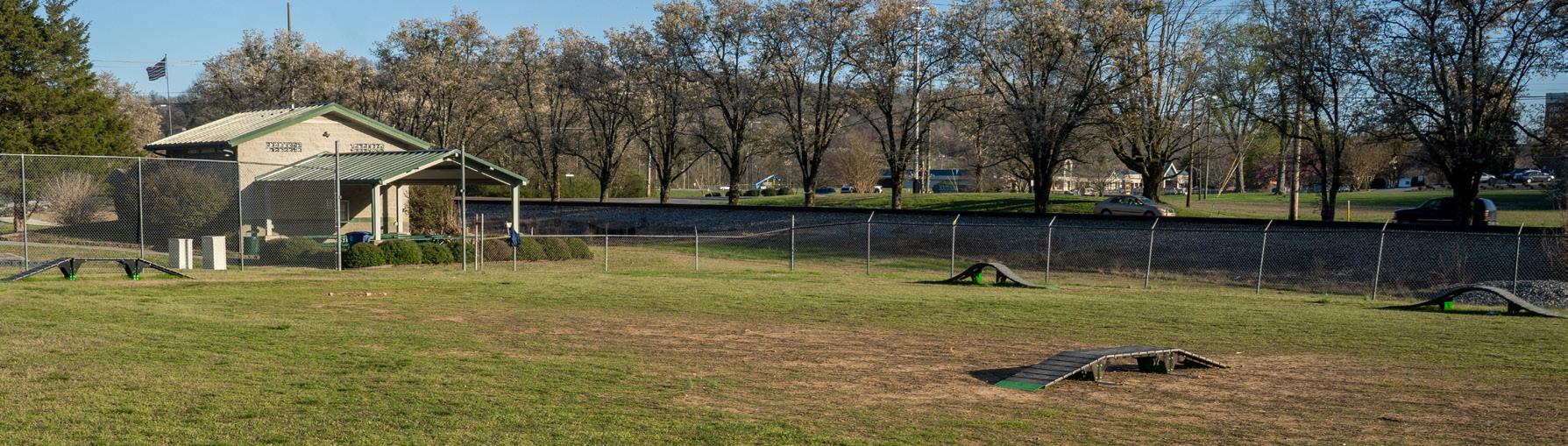
Recent changes to the Thatcher Switch Recreation Area include the installation of a new mountain biking ramp track.
The park is located across from Southern Adventist University’s campus and is commonly referred to as the beginning of the Collegedale Wolftever Greenway.
The area includes a playground and event pavilion, as well as a recreational field that was well-known to soccer athletes in the Collegedale area. Now half of the field is available for soccer, and half is devoted to the new biking course.
According to Christina Clark,
Parks & Recreation supervisor for the City of Collegedale, the city received feedback that beginner mountain bikers needed an entry-level track to ride.
“Local bike coordinators and users of local mountain bike trails gave feedback of how the mountain bike ramp track could be beneficial for new riders,” Clark stated in an email to the Accent. “We received lots of positive feedback from the community after installation.”
However, this change has sparked some concern in the community.
Alissa Flores, a junior journalism major at Southern and an avid soccer player, believes the soccer field brings many benefits to the community.
She has often seen people practicing on the field and has personally frequented it to play soccer with friends.
“Local bike coordinators and users of local mountain bike trails gave feedback of how the mountain bike ramp track could be beneficial for new riders.”
“I don’t think it’s fair to take away a place specifically for soccer when that’s one of the only locations to play, while there are

Two years later, as a Ford Foundation Fellow, she completed a master’s degree in geography.
After graduating, Tym was on the international circuit for 52 weeks a year in more than 11 countries. She competed in all four Grand Slam events and won 44 career tournaments between 1962 and 1970.
“I’d start in Chicago. I’d play San Francisco, Los Angeles, Honolulu, then go up to Tokyo, then down to Hong Kong and then drop down to Australia, and 52 weeks later, I’d buy another ticket in Chicago and do it again. All with one suitcase,” Tym said.
Throughout her time on the international circuit, Tym recalled her adventures traveling. While certain milestone moments — like the one at Monte Carlo, when she was able to hit a “backhand down the line,” or the experience of winning the Kenyan nationals — are important to her, the people and the countries are what she remembers most fondly. “You do remember those [achievements], but it’s nothing like the jungles and the interesting cultures and people,” Tym said.
The City of Collegedale recently renovated the pond located along the Wolftever Creek Greenway and near Main Street. According to Eric Sines, the city’s director of Public Works, the pond had not been worked on for many years, and debris that had settled at the bottom of the water needed to be cleaned out.
Last November, the city dredged the pond with an excavator and carried away the debris in trucks. Some trees that surrounded the pond were removed because they were preventing grass growth and dropping debris into the pond, according to Sines. Other trees around the pond were trimmed to allow more sunlight into the area.
According to Sines, the domestic ducks that usually inhabit the pond were moved so the project could be completed. The fish and turtles in the pond were moved to the nearby Wolftever Creek. The pond was restocked in December and January.
“All pond wildlife was humanely relocated,” Sines stated in an email to the Accent.
Although wild ducks and Canadian geese sometimes occupy the pond based on their migration patterns, some of the domestic ducks living at the pond had parasites that were harming the fish, which is why they were not returned, according to Sines.
He added that the pond was also drained into Wolftever Creek for the renovation. After completion, it was refilled with rain water and a nearby water main leak.

If
continued from page 5
Tym recalled a specific time when she was 21 and in Northern India, attempting to fall asleep, when she found a rat licking the salty residue of dried sweat from the back of her neck. She informed the concierge where she was staying, but because the Hindu religion in India considers animals sacred, they would do nothing about it. It was moments like those, learning about people’s cultures, that stand out to Tym.
Life on the circuit wasn’t always perfect, Tym explained. Whether it was the physical challenges of non-stop traveling and competing, or the language barriers that come with entering numerous countries, Tym experienced it all.
She also had to learn to deal with the mental pressure of intense competition.
“You either win or move on,” Tym said “If you didn’t win, you went home.”
She also emphasized that while playing tennis, she hardly
continued from page 5
plenty of mountain biking trails all around the City of Collegedale,” she said in an interview.
According to Trailforks, a popular trail-finding app for mountain biking, more than 23 biking trails are located in Collegedale.
Trace Rolle, a community member and mountain biking fan, doesn’t think the newly installed tracks are at the level they should be, and he would rather “hit the trails,” since plenty are at his disposal.
Some students and Collegedale community members who regularly played soccer at the park have expressed frustration with the change, as it reduces their options for playing soccer in the area.
made any money, and in order to pay her way, she had to play a lot. An alternate source of income she managed to gain was to write for tennis magazines. While on the circuit, she was able to cover different stories in the locations she was competing in.
“At one time I wrote for five different magazines a month,” Tym said with a grin.
“The women who accepted that little girls couldn’t play are now very bitter. I didn’t win them all, but I fought them all.”
After coming off the circuit in 1970, Tym moved to the Bahamas with her husband, Bill Tym, a tennis player for the Florida Gators men’s team. Shortly after they married in 1963, they were hired to coach the children of Alex Guerry, a popular tennis personality in Chattanooga. Then, after they moved to Tennessee, both became coaches at the University of Tennessee at Chattanooga,
“One of the closest locations [to Southern’s campus] that has nets out is 10-15 minutes away, and not everyone has a car to get there,” Flores said, in reference to Redoubt Soccer Field, a public county park at 6900 Bonny Oaks Drive.
Clark cited the lack of use of the Thatcher Switch recreational field and the fact that the field is not regulation-sized as reasons for building the ramp track.
where Alice established the Lady Mocs and coached them from 1974 to 1978. She then became the head coach of the Yale Bulldogs tennis team, and after just four seasons, her team won Ivy League Championships in 1980 and 1981.
Due to the traveling requirements Tym had as a coach, she wasn’t able to be at home with her three kids very often.
“It was hard, because I wasn’t home a lot,” Tym said. “I had to decide to either let someone else raise my children or [make changes so that] I could raise my children.”
Eventually Tym decided to quit coaching and dedicate time to raising her family.
“One of my boys played professional tennis. He played number one for Vanderbilt, and then he played professionally for Germany,” Tym stated proudly. “Then he met this girl, fell in love and ruined his tennis; [it] broke my heart,” she joked.
Tym always looked for ways to give back to her community and her sport, such as by going to Latin America and helping smaller countries with their ten-
Clark stated that at this time, there are no current plans to relocate the soccer fields.
Flores hopes the City of Collegedale will consider building a community park that would provide the growing population with a gathering place to enjoy sports they love. She also hopes the city’s Parks and Recreation Department will get more community involvement, even if it means moving the course to a
nis programs, or by promoting the upkeep of the Chattanooga area. Now living in nearby McDonald, sheenjoys her life on the outskirts of the Scenic City.
“I really fell in love with Chattanooga on its own because of the rivers. I just finished testifying in a case of [district] zoning, because this is a beautiful area, and if they trashed this place, it’ll be gone forever,” Tym said in reference to the local government and board’s efforts to install more urban plans to the Chattanooga area.
Tym has been fighting to keep her town, McDonald, rural. She hopes the city planners will impose restrictions on the building of more large communities and shopping centers, because she believes it’s a gorgeous place and very historic. She wants to preserve it.
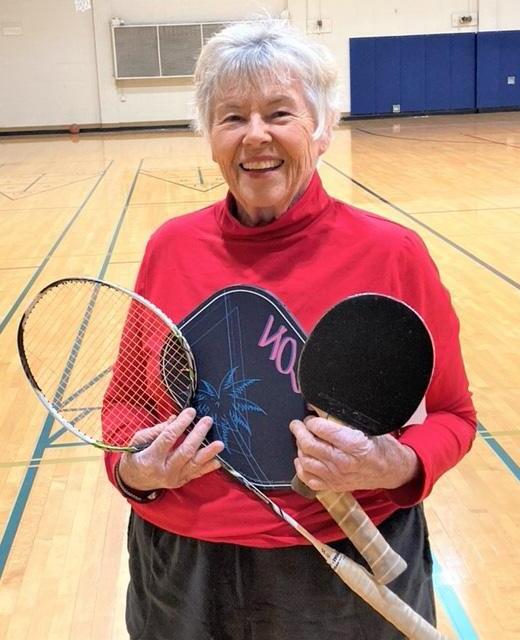
Despite her retirement, Tym continues to play competitive sports, including badminton, table tennis and pickleball, with local friends. She also won the 2023 National Senior Games in the sport of pickleball and has been writing for PickleBall magazine.
Tym ended her interview by mentioning the importance of
different location to preserve the community’s soccer field.
According to Clark, the city wants community members to be involved and share their thoughts and ideas.
“Community members are encouraged to attend Commission meetings, speak during the public comment period to propose ideas and can also email commissioners@collegedaletn. gov,” Clark stated.
SonRise March 30th Hours:11a.m. - 5 p.m .
Title IX, her role in it and how it impacted her life.
“The women who accepted that little girls couldn’t play are now very bitter. I didn’t win them all, but I fought them all,” Tym said, referencing her early equal rights activism for girls and women to play school sports.
“I’m just ready for the next fight. It’s up to [the newer] generation to keep Title IX in place. “I had so many opportunities to make a difference,” she added. “ … I had fun doing it; I got to travel everywhere in the world.”
Correction:
The story “K9 excellence: Maxim and Krino stand out at 2024 police awards,” published in Issue 19 of the Southern Accent, contained two errors. Sammy Previlus, a trooper with the Tennessee Highway Patrol, was incorrectly identified as an officer. The Collegedale Police Department’s motto was incorrectly written as “to protect and to serve.” Its motto is “Service before Self.” The Accent corrected these errors on its website soon after learning of them. We are committed to accuracy and apologize for these mistakes.


Editor’s Note: The following articles are written by counseling professionals from Counseling Services in partnership with the Southern Accent.
Hello, Southern! My name is Emma Gheen, and if you do not know this already, I am the new student director of the Activate Southern program. Today we’re going to be diving into how our brains are affected when we choose to workout outside.
Working out provides many proven benefits to the brain and the body, including increased focus, better memory, improved blood circulation and many other physical and mental benefits. But is it possible that the environment you workout in can affect the results that you are getting? It is possible.
An article published by the National Library of Medicine described a study that found improvement in cognitive function, specifically in the areas of “attention and working memory,” when comparing a 15-minute walk inside to a 15-minute walk outside. A simple walk outside was able to boost the participants’ brain function and help them do a task better.
Besides an increase in cognitive function, exercising outside makes people happier and boosts self-esteem. Working out outdoors may also take their focus off exercise for a while, since they may be more focused and engaged with their surroundings.
We all need vitamin D, which has been proven to prevent almost every disease when taken in a moderate amount. If you
devote time to exercising outside, you will gain the benefits from taking your daily dose of vitamin D. Working out outside engages more of the senses, and from a Christian perspective, gives us a deeper connection with our Creator.
According to a post by Franklin County Public Health in Ohio, people burn approximately 10% more calories by walking or run-
ning outdoors when compared to people walking or running at the same speed indoors. Perhaps this is because it is important for our bodies to get fresh air. In volume 1 of her book Testimonies for the Church, Ellen G. White writes that “air is the free blessing of heaven, calculated to electrify the whole system.”
So how can we as Southern students get these benefits?
We have many places on campus where we can enjoy being outdoors. The track outside of Hulsey is a great place to get a few minutes of walking and a lot of fresh air. The Biology Trails are another great place to explore, if you’re looking for somewhere to workout outside. Simply walking for 10 or 15 minutes across the Promenade is a quick way to give your body and
mind some love and rejuvenation. Getting those few minutes of outdoor exercise can also be good for anyone taking a P.E. class, as we all have to track 150 minutes or more of exercise per week. I hope that these tips will encourage you to get out there and enjoy exercising outside! Your body and mind will appreciate it, and you’ll be getting tons of benefits!

It’s spring once again, and that means the return of America’s favorite pastime: baseball.
The MLB teams have already started their spring training games, with the regular season already underway for some teams.
Last week, MLB saw a return to international games, with the San Diego Padres taking on the Los Angeles Dodgers in the Seoul Series in South Korea.
The series was split, with both teams winning a game.
This offseason, the Dodgers put a lot of money into their team to try and bring another World Series trophy back to Los Angeles. The Dodgers gave two-time MVP Shohei Ohtani the biggest contract in baseball
history with a 10-year, $700 million deal. Ohtani, a designated hitter (DH) and pitcher, will not pitch this season after injuring an elbow ligament last season. Ohtani has been in the news very recently after firing his longtime interpreter, who was accused by Ohtani and his lawyers of massive theft. The interpreter, Ippei Mizuhara, allegedly stole millions of dollars from Ohtani to place bets with a bookmaker. Sports gambling is legal in 38 states, but is still illegal in California, where the bets were being made. Ohtani’s representatives and Mizuhara have changed their statements to ESPN, first telling reporters that Ohtani knew about the gambling debt that Mizuhara had accrued but later saying that he had no knowledge or involve-
ment. The league is now investigating these allegations, as well.
Other teams this season are looking to replicate their success from last season. Breakout star Corbin Caroll and the Arizona Diamondbacks are trying to get back to the World Series this season after a magical run ended in heartbreak to the Texas Rangers in the World Series.
Reigning MVP Ronald Acuna Jr. is looking to lead the Atlanta Braves back to the postseason after last season ended in disappointment. The Braves, who had the best record in MLB, fell to the Philadelphia Phillies in the Divisional Series.
The American League West will be a race to see who can finish on top, with the defending World Series champions the Rangers facing the Houston Astros. The
Rangers were able to eliminate the Astros in the ALCS last season en route to the World Series. The Oakland Athletics will also most likely be playing their final season in Oakland. The lease on the Oakland Coliseum will expire after the 2024 season. The team had previously announced a move to Las Vegas, but the stadium there will not be done till 2028 at the earliest. Neither the league nor the team has made any official announcement about where the team will play after this season.
Today’s Southern Soccer Intramurals Schedule
6 p.m.
Birimbola Biddies v. Kickin It (Womens) Kicks and Giggles v. Ken Shaw-
ties (Womens)
Las Pub Subs v. Sweet Kicks (Womens)
7 p.m.
Tigres FC v. KFC (Mens B)
Good Aim FC v. Gettin’ Messi (Mens B)
Sarang Stealers v. Offside Outlaws (Womens)
8 p.m.
Two Goals One Cup v. No Green
Cards FC (Mens A)
Cleat Freaks United v. Brawlstars (Mens B)
Abgs x Latinas v. Fanduel Flyers (Mens B)
9 p.m.
Beaners FC v. Giddy’s Disciples (Mens B)
LPC v. Shes a Keeper (Womens)
We Kick Grass v. Wiz Khafifa (Womens)


In recent years, the Seventh-day Adventist Church has found itself at a crossroads, grappling with the tension between tradition and progress, conservatism and adaptation. While conservatism can be a source of strength that fosters unity and preserves cherished values, it can also hinder growth and alienate those seeking a more inclusive community. Today, it is time for some Adventist members to confront the reality that conservatism may be holding them back from fully embracing their mission in the modern world.
This debate has returned to the forefront following a January 13 Facebook post by Advent Messenger, which condemned the use of loud drums and jumping/dancing during a worship service at the Southern Union’s recent Academy Prayer Conference. The post showcased students from Southern Adventist University singing and playing instruments, as well as academy students jumping and singing along. Advent Messenger’s criticism of the video argued that there was no distinction between the worship scene in the video and what takes place at secular rock concerts.
“Tragically, Adventism is reaching a point where anything we do is legitimate and acceptable as long as it is done in God’s name. There are no longer any boundaries. Worship is evolving nowadays to imitate as much of the outside world as possible,” stated Advent Messenger. “We no longer seek worship that is different, distinctive, or unique from the common-
place ‘cheap, miserable inventions’ that we witness in dance hall club scenes.”
This incident sheds light on a broader issue within the Adventist Church: its struggle with conservatism.
The stance that Adventists often take on the use of musical instruments, particularly drums, is excessively conservative. This stance is not only regressive, but also ironic in many ways. The church aims to preach love, acceptance and inclusivity, but members continue to ostracize and condemn elements that do not align with its traditions. In one of the 90 comments posted in response to the Facebook entry by Advent Messenger, a user wrote: “Agreed! The devil has come into the church through music to reach our young people and older adults as well.”
The argument against drums in the church lacks biblical support and fails to consider cultural context. The Bible references the use of drums and other percussive instruments in times of worship. In the book of Psalms, we find verses exalting the use of instruments, including drums, to praise God. Psalm 150:4 says, “Praise him with the timbrel and dance: praise him with stringed instruments and organs.” If these instruments were deemed acceptable for worship in biblical times, why should they be considered inappropriate in modern church settings?
Some Adventists argue that maintaining specific worship practices, including limitations on musical instruments such as drums, is essential for preserving the church’s identity and doctrinal purity. They believe that straying from established
traditions may lead to theological compromise and dilution of spiritual values. Additionally, they argue that embracing too much change could risk alienating long-standing members who value familiarity and stability in their worship experience.
Thus, while acknowledging the need for adaptation, they emphasize the importance of upholding foundational principles and practices that have defined Adventism throughout its history.
However, clinging excessively to tradition can risk hindering the church’s growth and relevance in an ever-changing world. The Adventist church prides itself on spreading the gospel and making disciples of all nations. Still, this mission becomes increasingly challenging when members fail to adapt to contemporary society’s cultural and social shifts.
It is time for conservative Adventists to re-evaluate their stances on issues like music and to embrace a more inclu-
sive and progressive approach. Instead of shunning change, let us embrace diversity and celebrate how individuals connect with their faith. After all, isn’t the essence of Christianity rooted in love, acceptance and understanding?
Editor’s Note: The Accent invites those with differing views to submit a piece or pitch an idea to the opinion column by emailing our opinion editor at apdewey@ southern.edu.

Madison Wilcox Religion Editor and more about just scraping by and trying to feel better while I’m at it. Christy Nockels’ “Joy Pours Out” challenges me to open my eyes to the delight that is available to me in the present moment. The chorus invites, “Won’t You come and lay my weary heart down, down / Where Your peace flows in and Your joy pours out.”
Have you ever been so spiritually exhausted that you couldn’t read your Bible, couldn’t listen to a sermon, couldn’t even whisper a prayer? I’ve chosen the following three songs that speak to me when I have no words left. The first inspires hope by reminding me of where I have been. The second inspires hope by reminding me of Who is with me now. And the third inspires hope by reminding me of where I am going.
1) “Sirens” by the Gray Havens
Sometimes the most powerful weapon against temptation is remembering past grace. I distinctly recall listening to “Sirens” by the folk-duo Gray Havens during a difficult spiritual battle several years ago. Facing near-magnetic temptation, I played “Sirens” in my headphones and fought for my life. I nearly shouted the chorus to myself, pleading with my heart to resist for the sake of the relationship I had known with God in the past:
“Hold on
Hold on, my heart
You once were full and sang of grace
Hold on
Hold on, my heart
You’ve tasted joy that’s more than this”
The memory of past joy in Christ helped me push forward through the allure of present temptation. If you, too, have forgotten the grace of your past amid the noise of your present, listen to this song to find hope.
2) “Joy Pours Out” by Christy Nockels
Maybe this is the fate of a college student, but I often think less about peace and joy
By taking refuge in Jesus, I can have peace — congruence between my desires and His, trust in His power and His love — and from this place, real joy will erupt. Not the artificial joy I create for myself and consume in bite-sized pieces throughout the day. This divine joy pours. It flows from an eternal, limitless Being and pervades all things, good and bad, within my life.
If you struggle to appreciate the Person who walks beside you in the present, listen to this song to find hope.
3) “All Things New” by Andrew Peterson
Andrew Peterson is by far my favorite Christian songwriter. His lyrics are deeply honest, covering both sides of life, the broken and redeemed, with equal grace. His poetry captures glimpses of the glory of God as it interacts with fallen humanity, and his songs revive hope in the truths I claim to believe but often forget.
“All Things New,” in particular, speaks tangible hope, juxtaposing my fallen condition with the powerful love of Christ: “Come frozen with shame / come burning with guilt. / My Jesus He loves you still, / He loves you still.” These lyrics remind me that I can never be an obstacle to Jesus’ love. He is not intimidated by my sin, and His power to transform me remains constant, despite my imperfection and inconsistency.
As if that truth isn’t encouraging enough, the bridge leads the song into a crescendo of hope.
In only three lines, Peterson surveys the history of God and humanity: “The world was good, the world is fallen, / the world will be redeemed.” Simple, yes. But somehow, it is all I need to find
rest in God again. Covering the past, present and future, these lines reorient my expectations to reality, drawing me upward to a firm hope: the world will be redeemed. Every day draws closer
to the fulfillment of this promise of promises.
If you’re struggling to focus on the future that is promised to you, listen to this song to find hope.

Over the past 10 years or so, I have journaled nearly 800 entries and have nine notebooks filled with stories to show for it. Though I initially began regularly journaling because I was inspired by a diary-keeping book character, I’ve kept it up because I have found value in being able to reflect on who I once was and comparing that to where I am now.
I started my first journal in fifth grade, but I wrote in it only once or twice a month. It wasn’t until my seventh grade year that I modeled my personality after Nikki Maxwell from “Dork Diaries.” I would spend around an hour each night detailing the important events of that day, accompanied by drawings, diagrams and short comics. Looking back on those entries transports me to a simpler time when I spent hours playing with dolls and voraciously read as many books as I could check out from the library at a time.
When I reread my entries as a university student, I find that although I have grown in many ways, I still deal with the insecurities that have held me captive for more than three years. My general shyness, aversion to new experiences and bouts of imposter syndrome are still hindrances in my daily life. However, even though I sometimes feel like I have not made much progress, I can see the small steps I’ve taken to work through these issues when I compare my entries now to my entries from freshman year.
Both journaling and rereading my journal entries help me
to learn a lot about myself, and they encourage me as I see how I’ve grown over the years. By having a physical record of my past self, it’s easier for me to recognize the differences between who I once was and who I am now.
Do you want to start your own history book, too? Here is a list of miscellaneous tips and tricks that I’ve accumulated over the years.
Consider how you want to preserve your history. Do you want to use an electronic device (Google Docs, notes app, journal app, etc.), or do you want a tangible copy (journals, scrapbooks, photo albums)?
A note on physical journals: Think about what sort of note-
books you want to use. Lately I have been splurging on journals with decorative covers and high-quality paper. My favorite feature is the pocket in the back, where I can keep photographs, handwritten notes, and other small mementos that correspond with events I record. I currently get my journals from Paperblanks; if you’re looking for something simpler in design, try a journal from MUJI, Moleskine or LEUCHTTURM1917. There’s nothing wrong with composition notebooks from your local department store, either.
The good and bad thing about journaling is that you can choose what to write down — or what to not write down. Some-
times I wish I had decided to write about painful instances so I can see how I worked through them. Unfortunately, I often choose to not write about emotionally draining events.
The act of writing down a bad experience makes me have to relive it in that moment; if I choose to reread that entry in the future, I will have to relive it again then, as well. Only in rare instances do I journal on hard topics, and in even rarer instances will I choose to not skip those entries when I do my semi-annual journal readthroughs. Keep this in mind as you choose what to record for your personal history, and try to balance what you want to remember with what you need
to write down to organize your thoughts.
Don’t be surprised if your journaling style changes over time. In this season of life, my journaling is mostly lists of things I hope to write about later, when I have more time to set aside. Writing for hours on end, as I did in my youth, is no longer practical for me as a fulltime student.
Remember that journaling is about what you want to preserve and how you want to preserve it. Don’t feel pressured to journal like what you see promoted on social media or copy what your friends do, but don’t be afraid to use them as inspiration, either.

For a chance to be featured, use or tag @sauaccent on Instagram in your posts!
Dear Kevin, I’m in this class working with people who shall not be named, on this project that’s worth at least 35% of my grade. However, NO ONE is doing anything, and I feel so stressed. We’re supposed to have it done by next week. How do you deal with group projects? Also, send thoughts and prayers, and maybe some cash.
Dear Stressed Stewart, Group projects suck, I’m sorry. My thoughts and prayers are on the way. As for the cash, get a job. I think you should try talking to your groupmates about it; maybe they are just as stressed as you are. If they’re still uncooperative, you might have to talk to your professor. Have you thought of dropping
the class? That’s always worked out for me.
Dear Kevin, I recently fell asleep in a class and now my professor keeps giving me the side-eye when I walk in. How can I repair my image and get back in my professor’s good graces?
Dear Tired Tina, In cases like these, actions speak louder than words. Apologizing to your professor may be a good start, but you need to prove yourself to them by consistently staying awake and being engaged in the class, as well as turning in assignments on time as much as possible. Once your professor learns that you can be dependable again, you might be able to avoid their glaring gaze.
Do you have a question for Kevin?
Scan the QR code or click on the link in the Accent’s Instagram bio to submit your question.







Today — 27

Thursday — 28
If you would like to be a contributor, contact Amanda

Makayla Villanueva
Friday — 29
Sunday — 31
TODAY |27
Dean Alamo
Rachel Baraks
Elijah Oyoyo
Golda Ruckle
Brad Stern
Alyssa Wolf
Thursday |28
Lilyann Adams
Daniel Amann
Terry Bokombe Boke-
fele
Jessica Galdamez
Maravilla
Genesis Gresham
Jesse C. Hoffman
Camila Leonor
Emma Leonor
Abigail Segovia-Santos
Aaron Simmons
Friday |29
Wendy Chacon
Noah Warner
Matt Woodward
Saturday |30
Jared Barlow
Grant Early
Wendy Harris
Isaiah Lawrence
Diana Lozano
Jacquelyn Mannerberg
Shirley Sanchez
Nicole Seheult
Matt Wong
Yoo-Hyun Ha
Sunday |31
Andrew Harris
Elijah Mafnas
Glenda Rasmussen
Jillian Colleen Roberts
Larnell Samuel
Mark Simushov
Monday |1
Daryl Illangovan
April Lin-Ao
Ricardo A. Navas Ruano
Chase Rodriguez
Tuesday |2
Josue Camarena
Jennifer Fancher
Ashton Figueiredo
Zoe Gariepy
Alexandra Skye Leonor
Molly Man
Seth Mitchell
Nic Pfeiffer
Gloriana Phan
Kayla Ramos
Michael Ratliff
Andrew Sangar
Sydney Whitmill
Courtney Williams
Saturday — 30
Jonathan Bond
Abby Buttery
Jessica Stapel
Megan Stapel
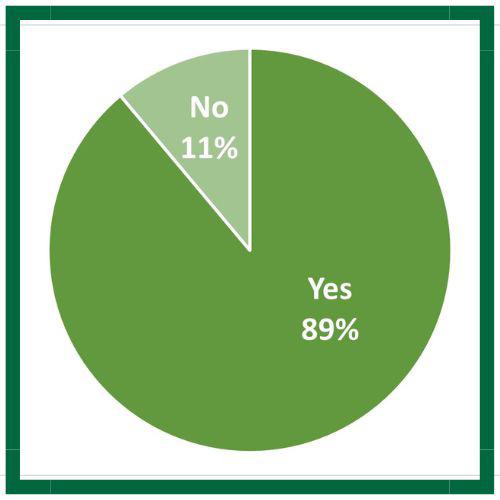
This Week’s Poll:
Is “Oppenheimer” overrated?

Tuesday — 2
Monday — 1


Last Week’s Results: Is Pluto a planet?

Southern’s Master of Business Administration degree helps you acquire the skills you need to be successful in today’s workforce—based on the biblical principles of honesty, integrity, and high ethical standards.
It’s convenient
All classes are online. Full- and part-time tracks are available, and the MBA can be completed in as little as one year. With careful planning, you can complete a bachelor’s degree AND a master’s degree in five years!
It’s affordable
Southern’s competitively priced program is a valuable investment in your future
Prep for CPA Review.
Students with an MBA Accounting emphasis may take the Wiley CPAexcel review courses for six of their 12 elective hours.